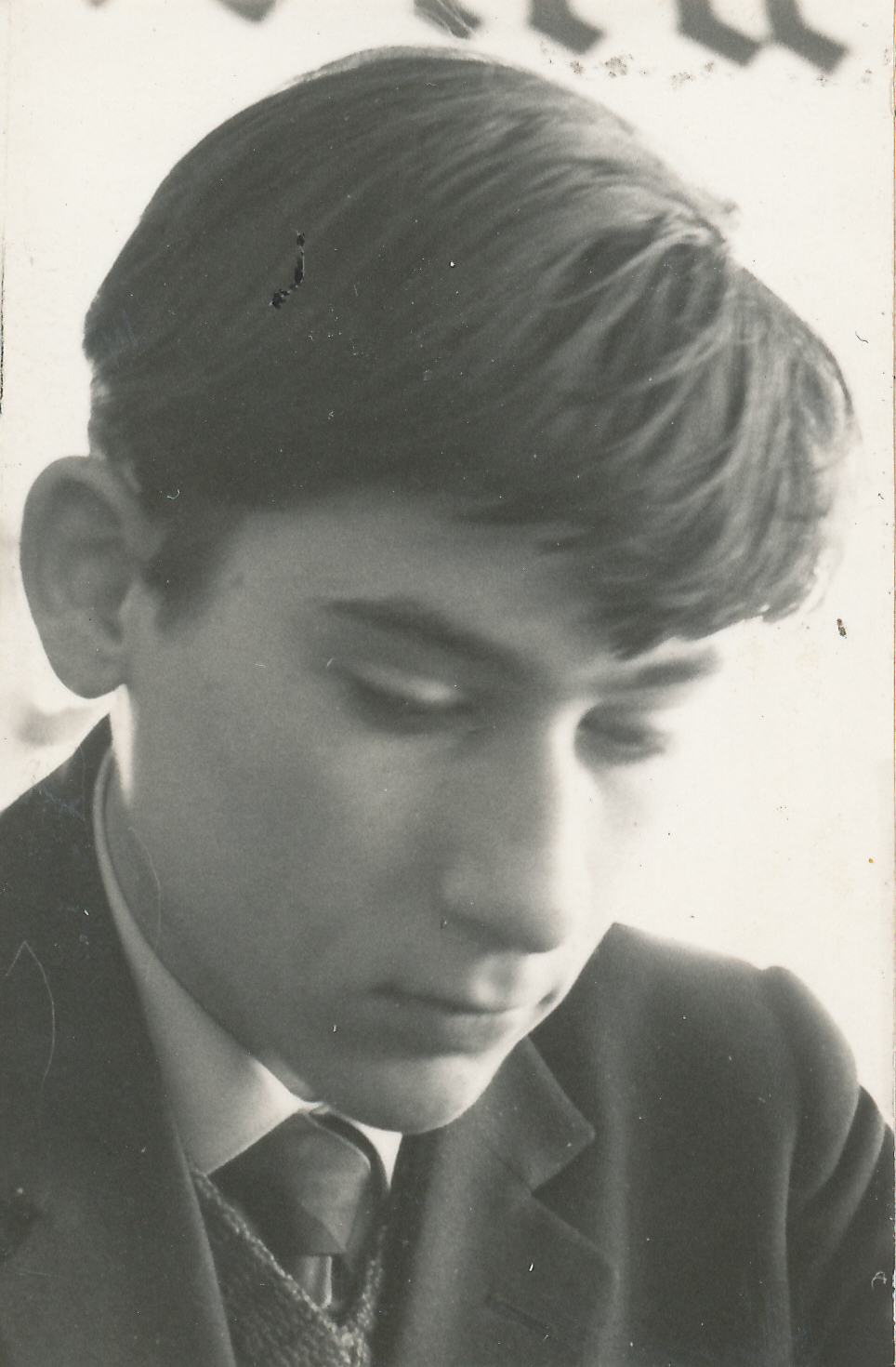
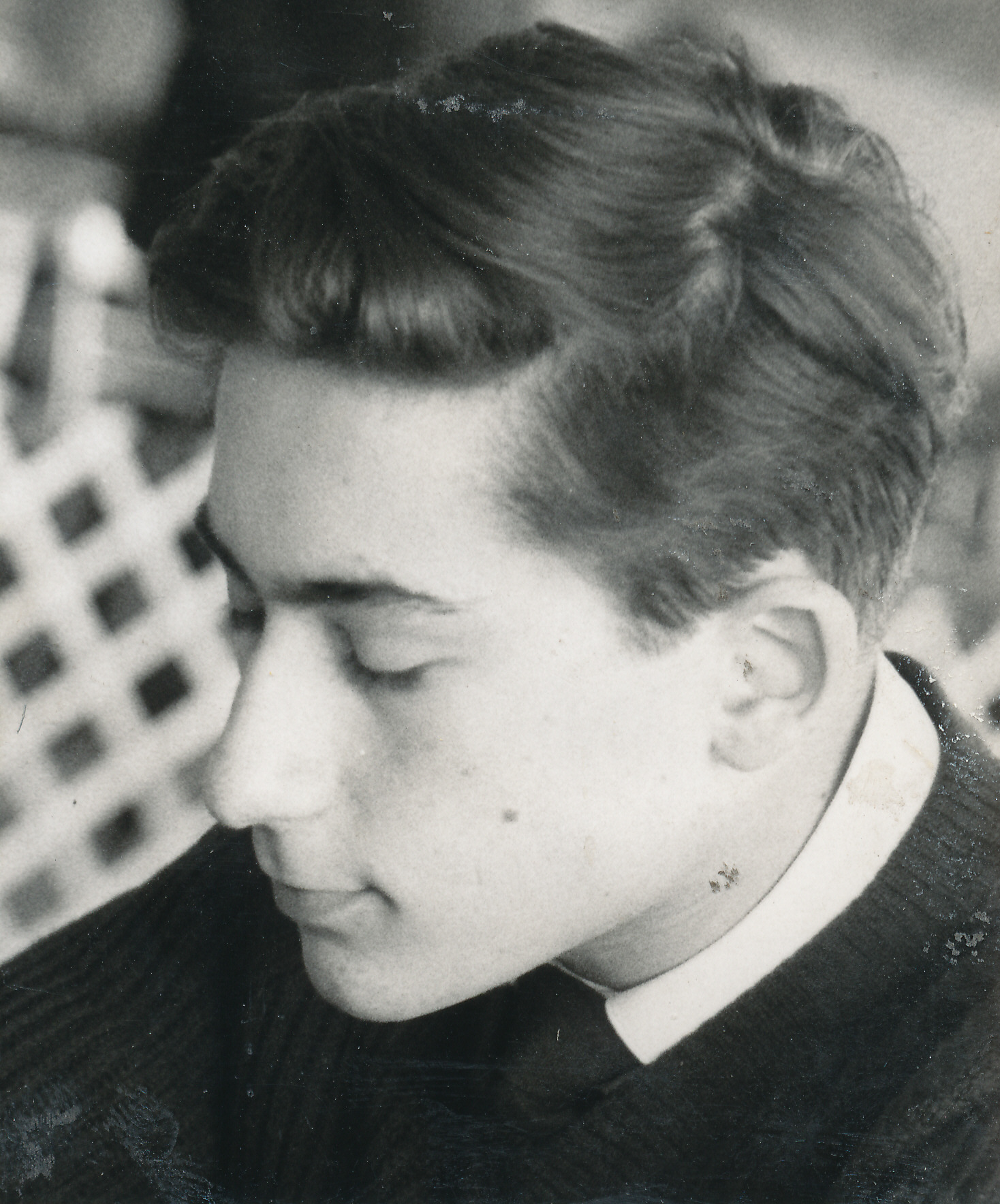
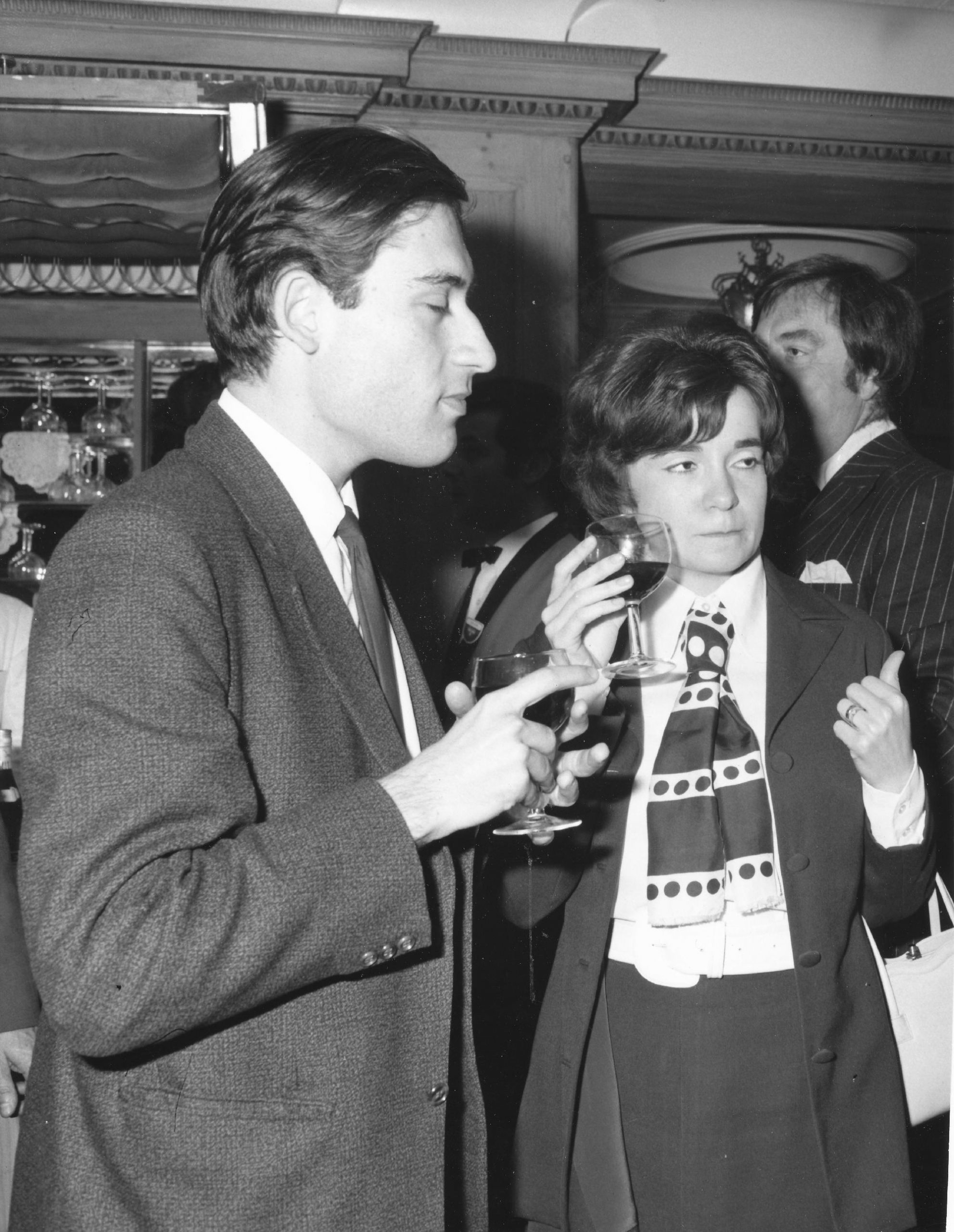
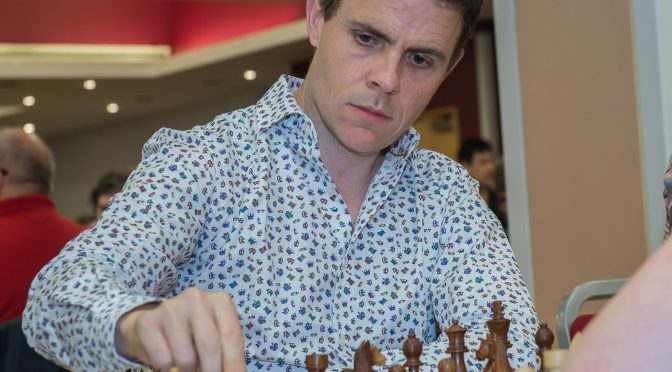
BCN offers best wishes to Aaron Summerscale on his 52nd birthday.
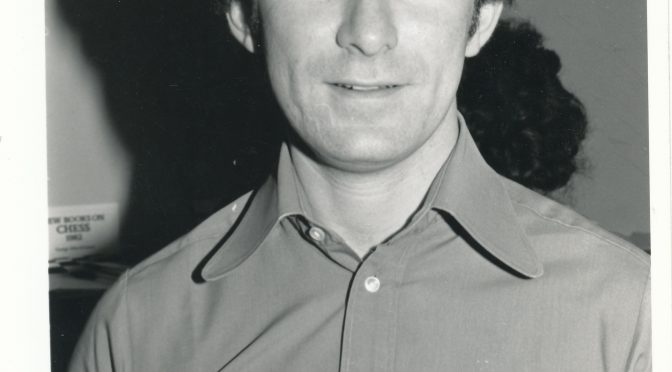
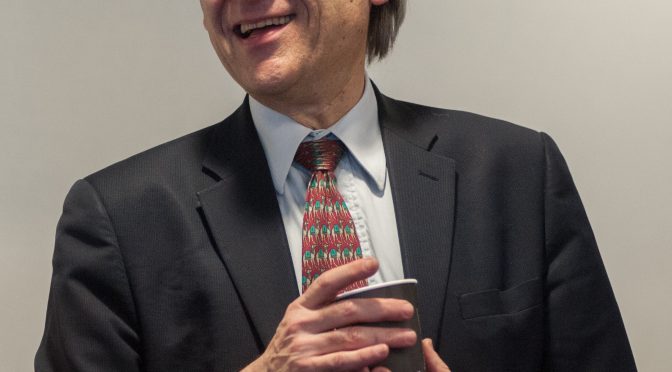
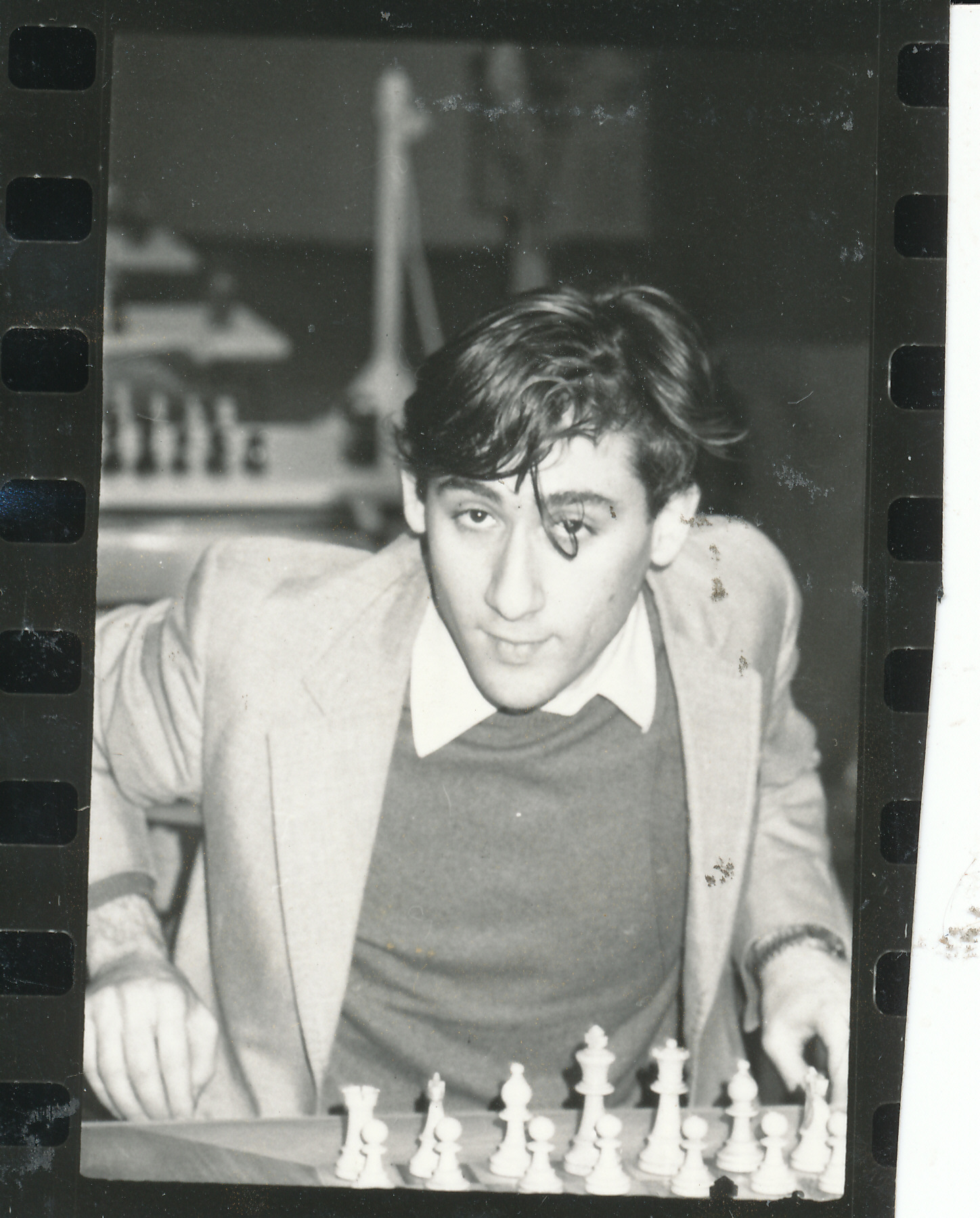
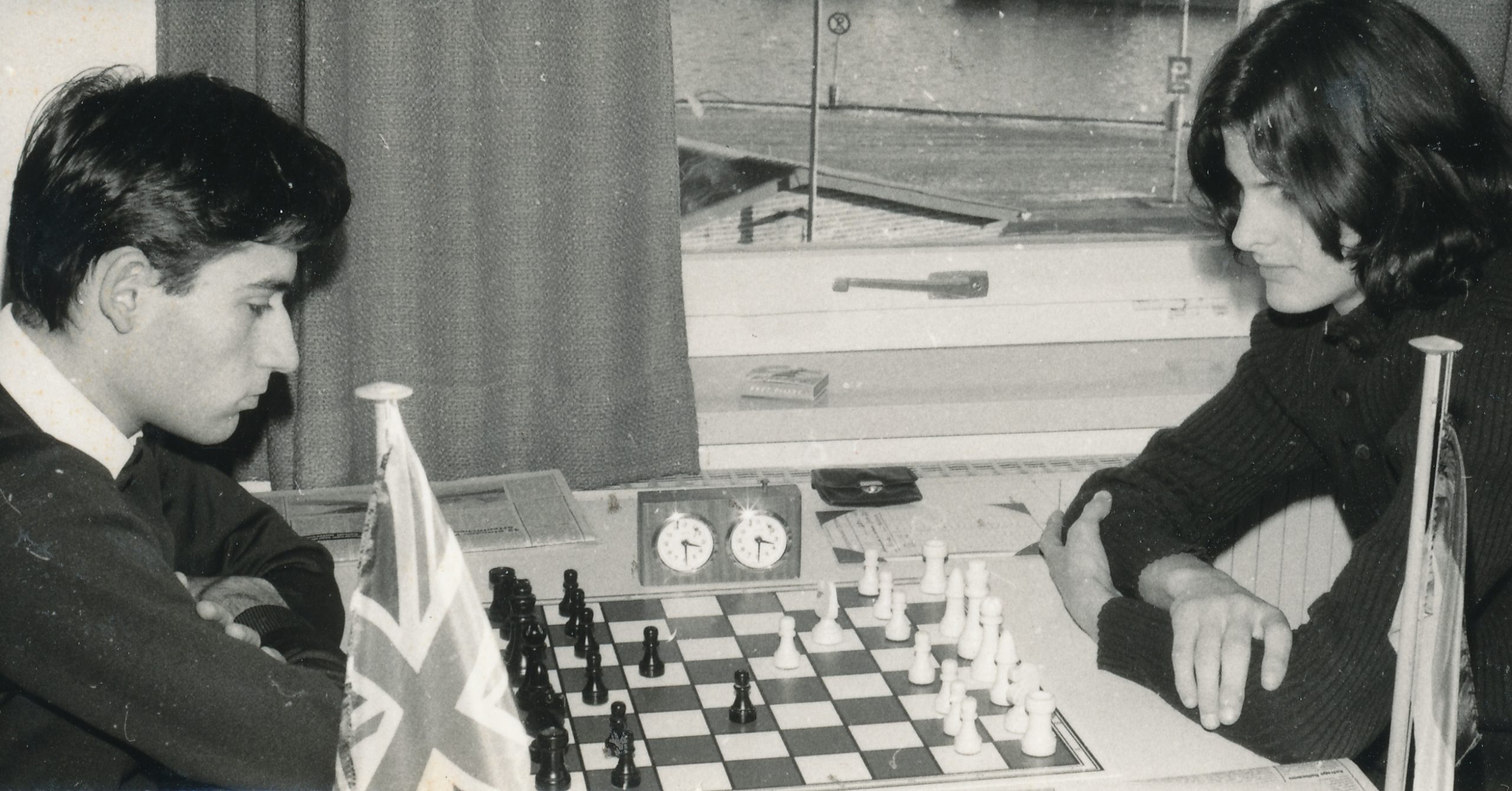
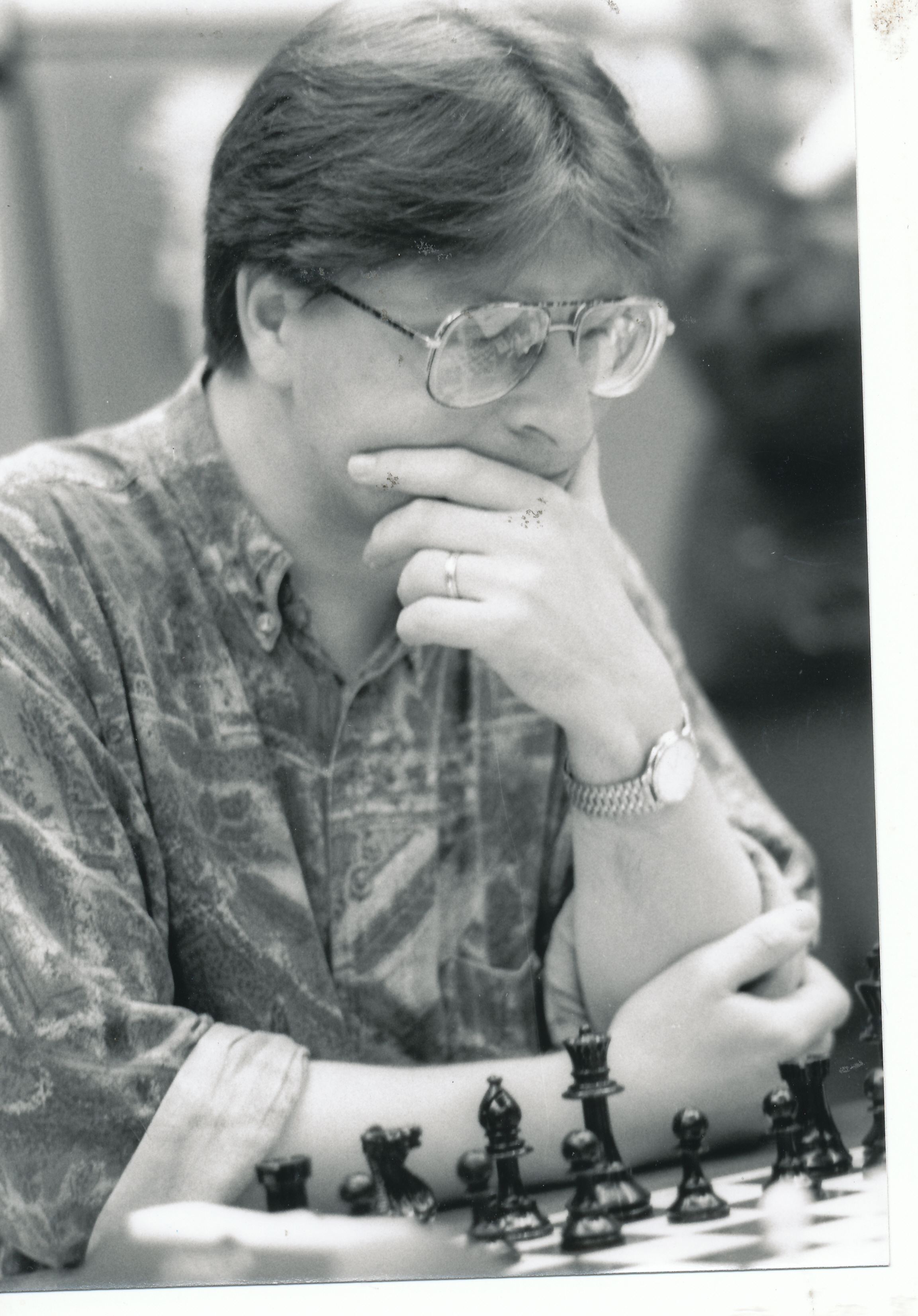
Aaron Piers Summerscale was born on Tuesday, August 26th 1969 in Westminster, Greater London. His mother’s maiden name is Mayall. Aaron lives in SW18 and teaches chess. He married Claire Lusher (Basingstoke) but they are now separated.
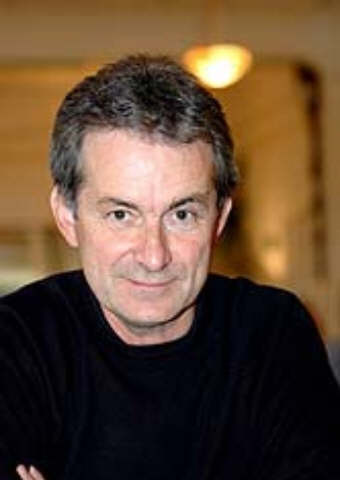
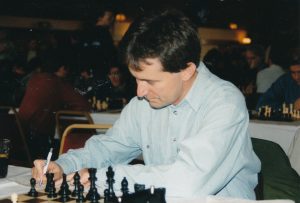
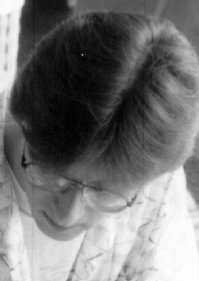
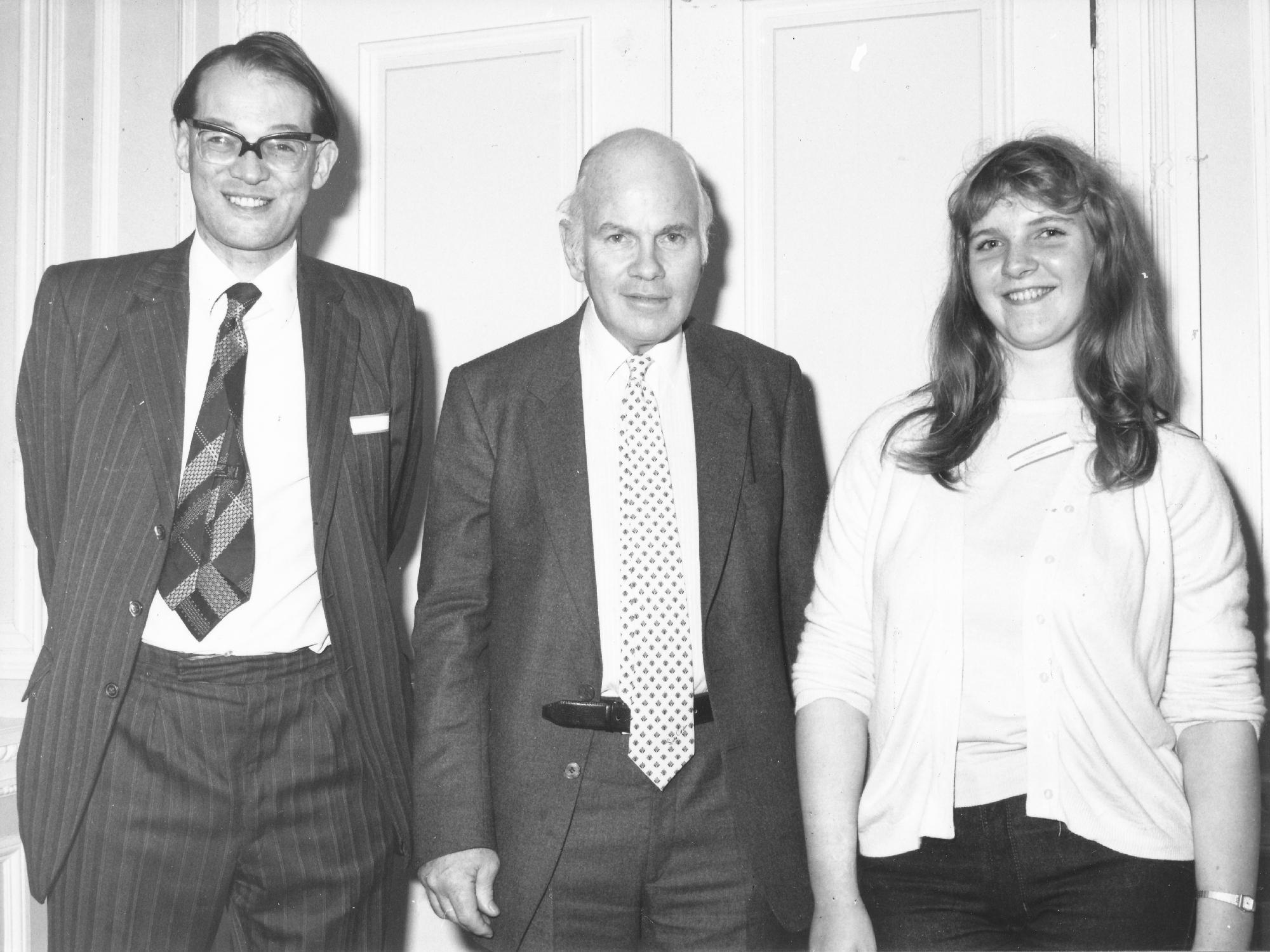
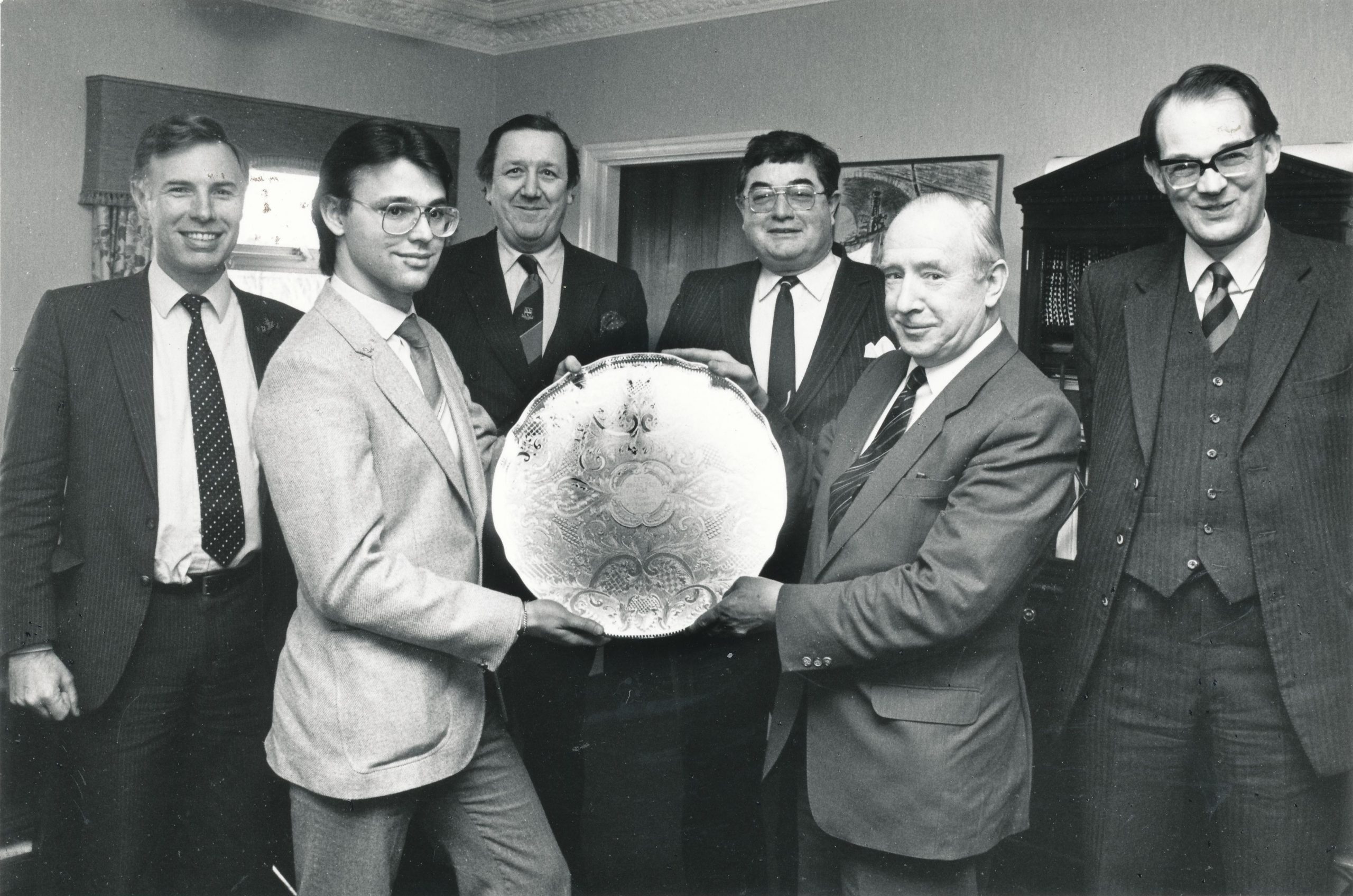
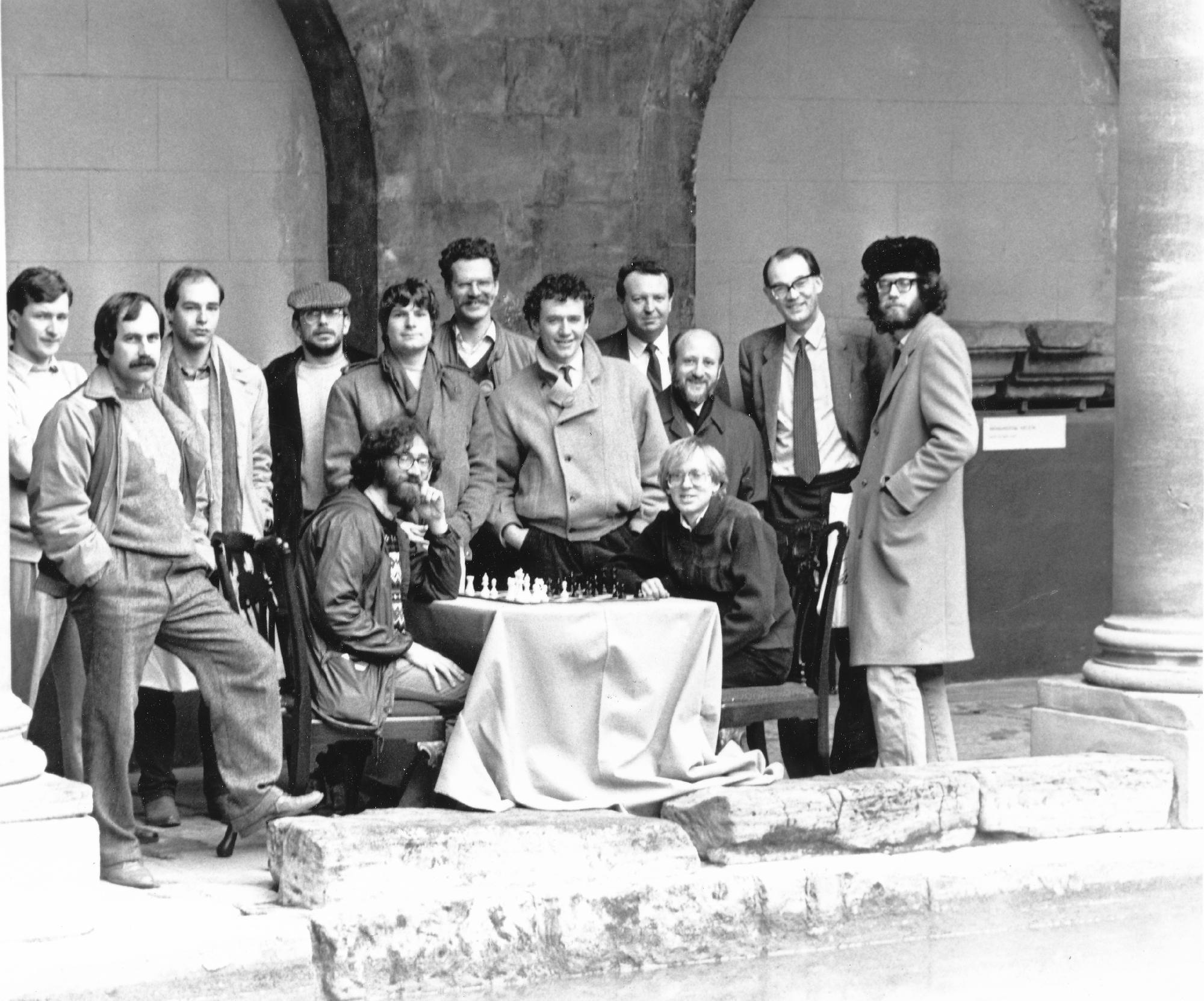
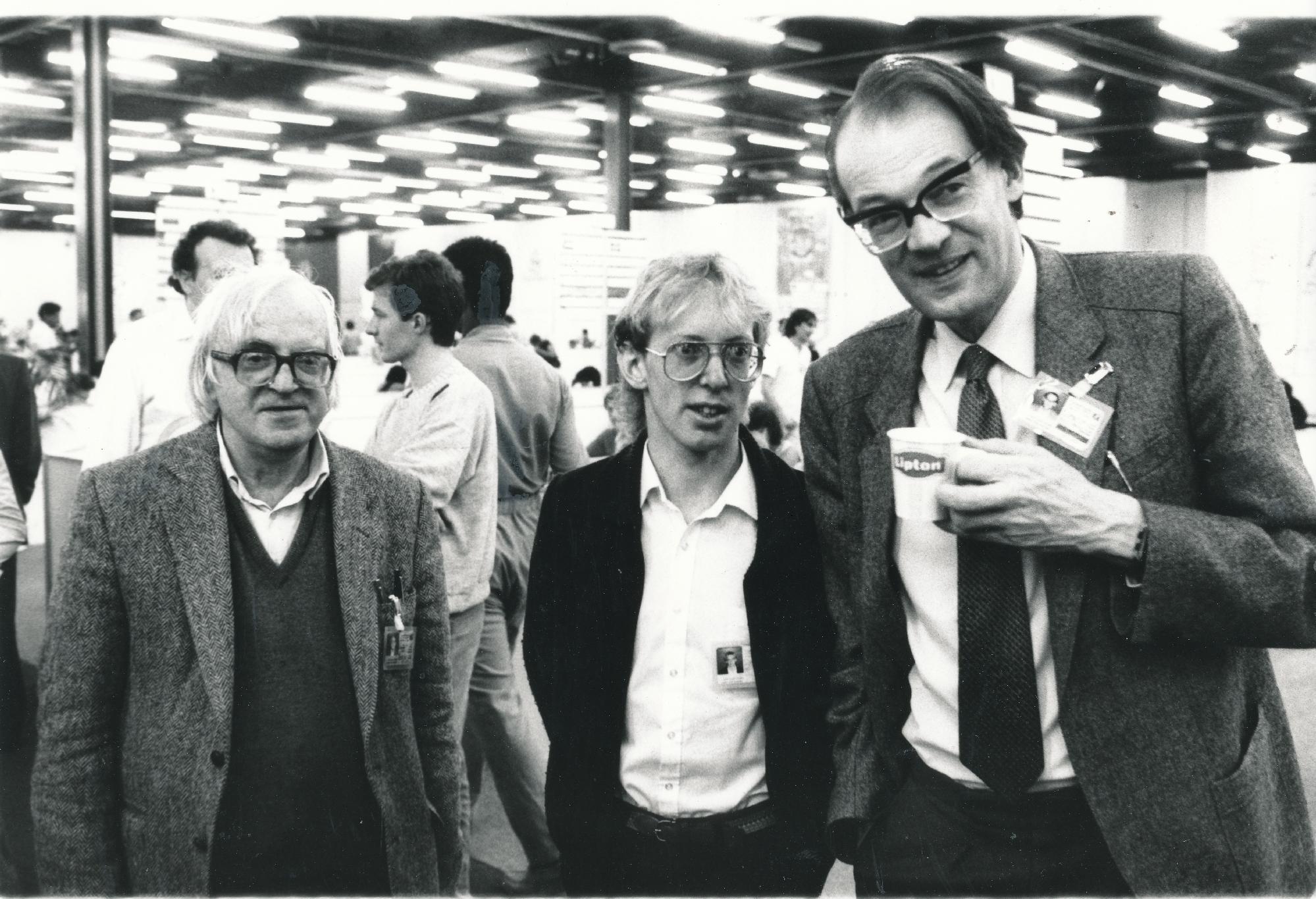
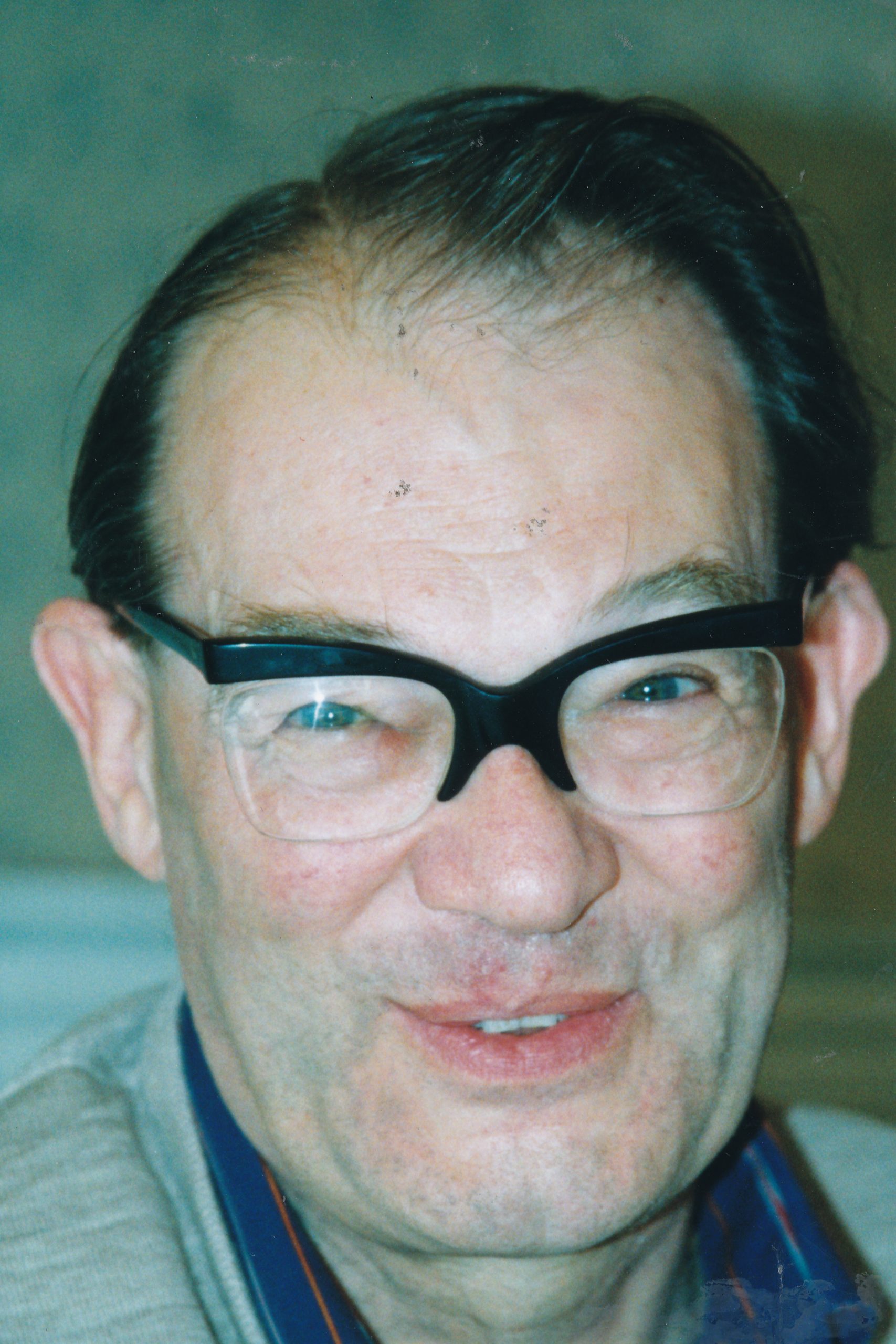
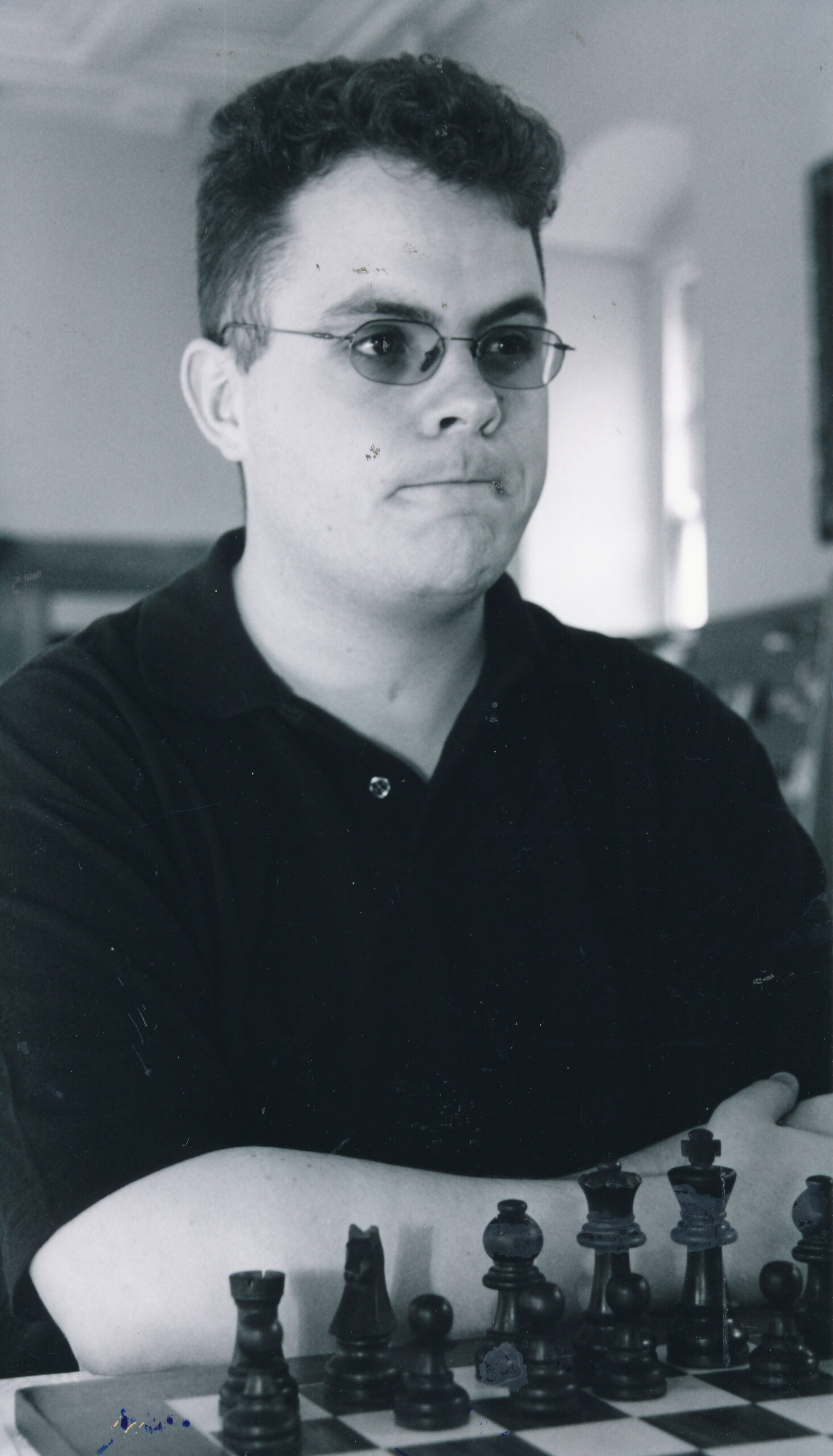
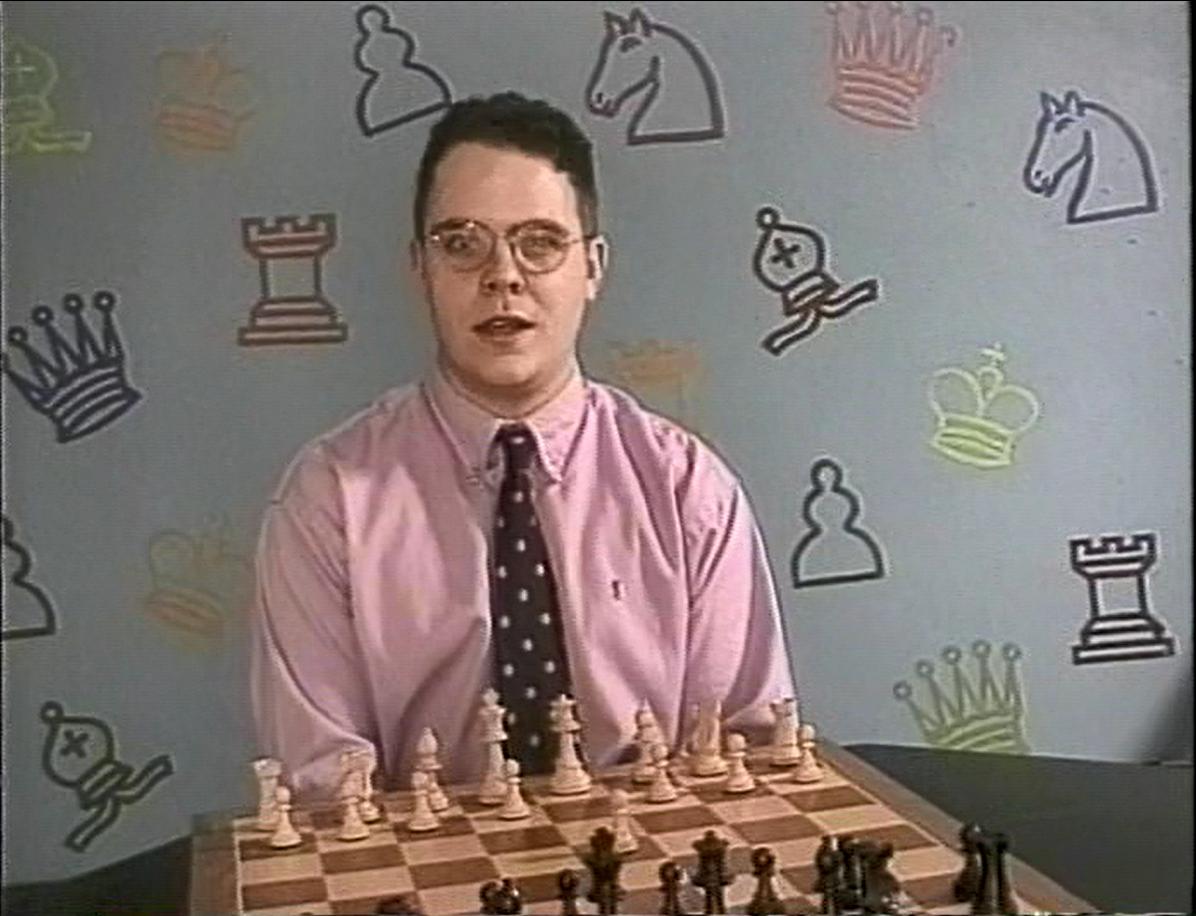
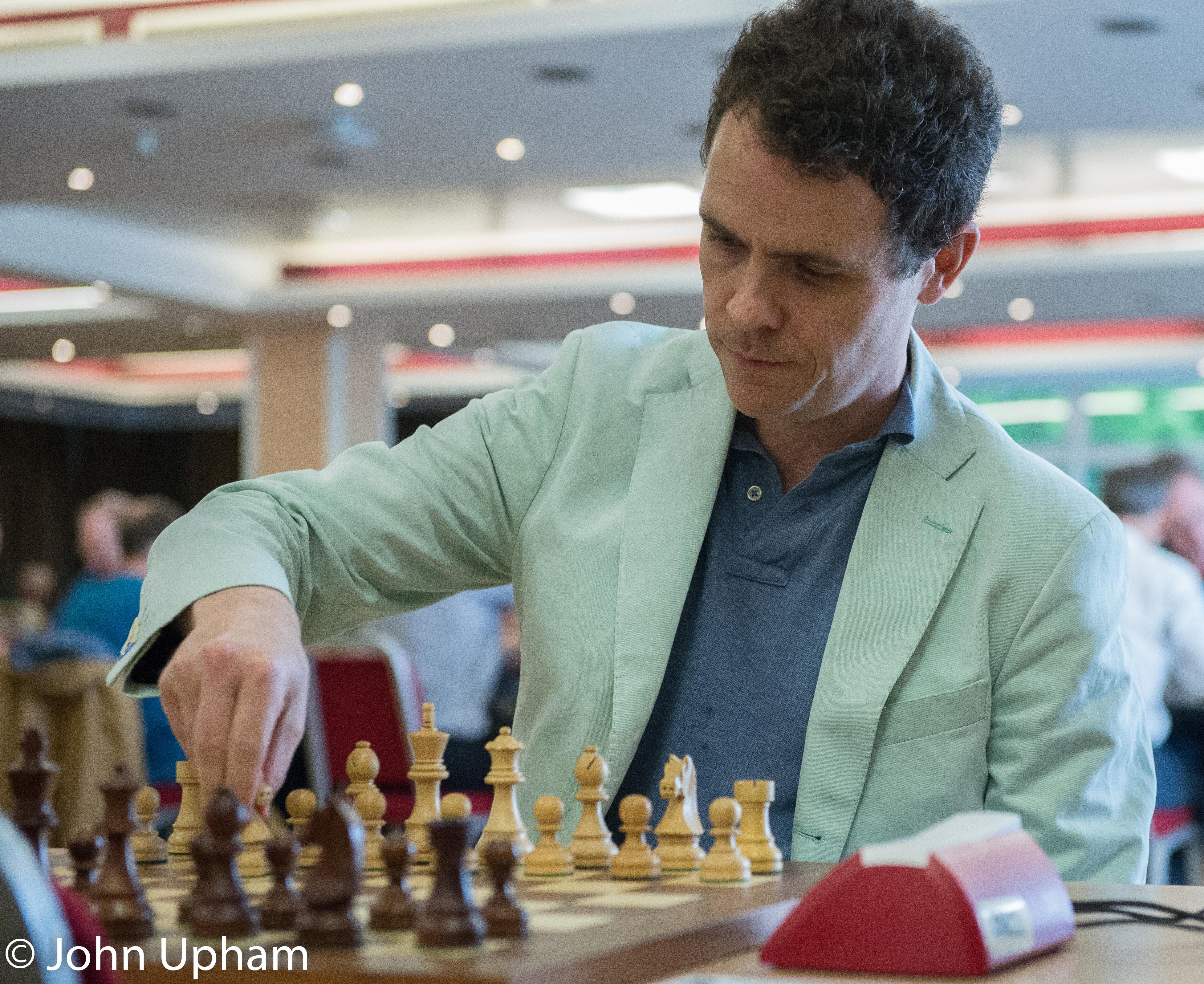
Aaron Summerscale
He became a FIDE Master in 1992, an International Master in 1994 and a Grandmaster in 1997.
Aaron was runner-up (to Matthew Sadler) with 8/11 in the 1995 British Championship in Swansea.
His highest FIDE rating was 2513 in October 2000 and was joint (with Ameet Ghasi) British Rapidplay Chess Champion in the same year.
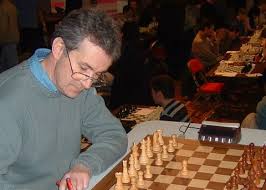
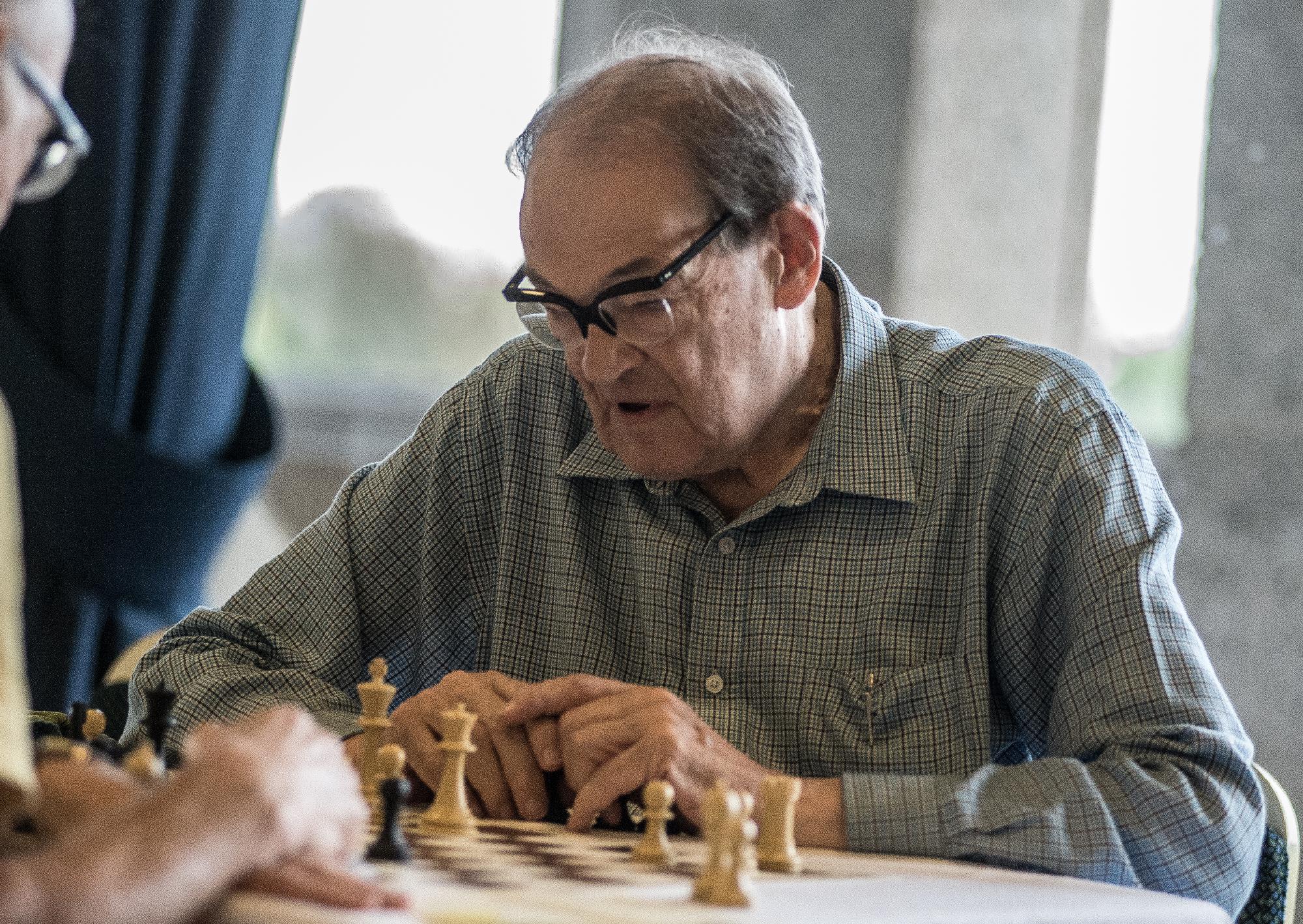
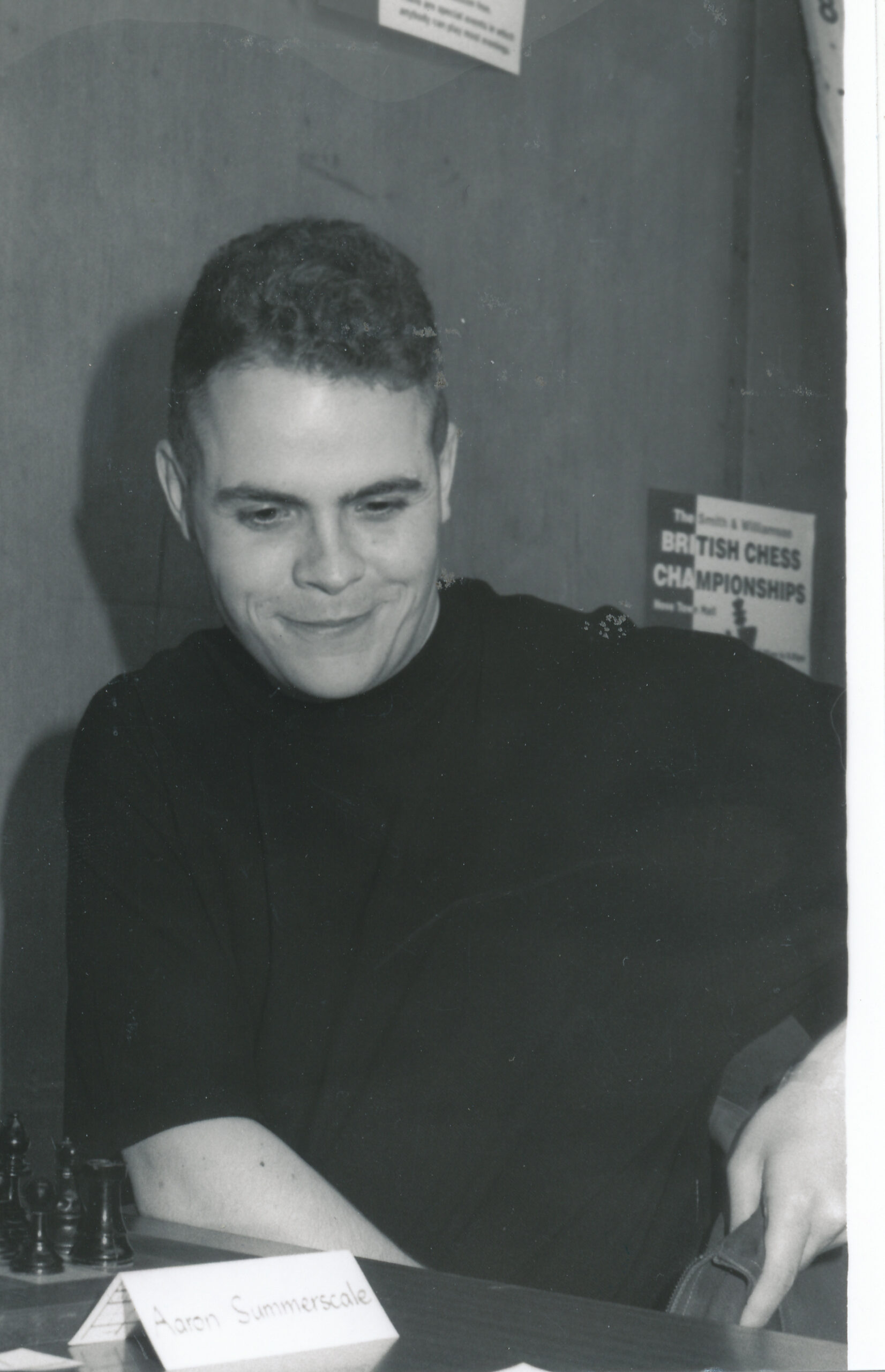
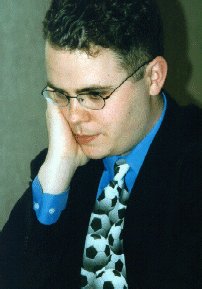
Aaron Summerscale courtesy of John Henderson
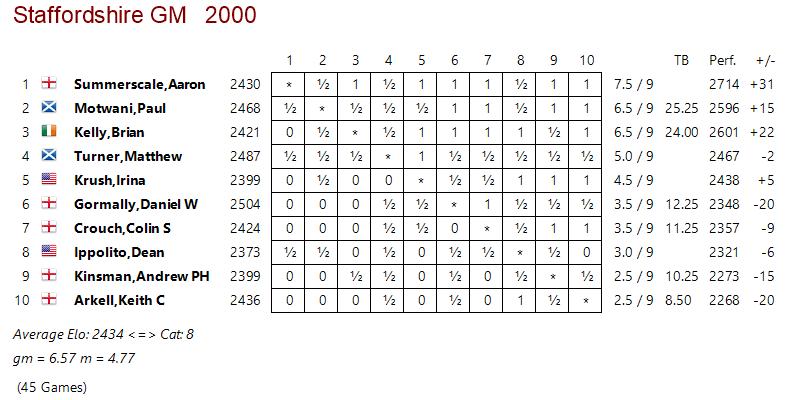
His highest ECF grading was 244A in 2001 and he won the Staffordshire GM tournament in the same year :
Staffordshire GM Tournament 2000 Crosstable
Aaron plays for Wood Green in the Four Nations Chess League (4NCL) and has played for Pride and Prejudice.
BCN wishes IM Jeff Horner, all the best on his birthday.
Jeffrey Horner was born in Bolton, Lancashire on Thursday, August 25th, 1949.
Jeff played for Poulton-le-Fylde Teacher Training College and is registered for Lancashire CA.
Jeff became a FIDE Master in 1989 (aged 40) and an International Master in 2008 (at the age of 58) and a gap of some 19 years!
(Compare this with John Pigott : John became a FIDE Master in 1984 and an International Master in 2017, a gap of some 33 years!)
He achieved a peak rating of 2450 in January 1975 at the age of 26.
His most recent ECF grading was 233E in January 2017. His last recorded game was played on June 30th 2018 and was a win with black versus Andrew Ledger graded 227.
Jeff played 1.e4 playing 1.g3 once against Graham Lee and winning and the Trompowski once against Murray Chandler and losing. In recent years he favoured the Wormald (Alapin) Attack in the Ruy Lopez.
With the black pieces Jeff defended the main line Ruy Lopez and the King’s Indian Defence.
Here is a comment from PQB4 from chessgames.com :
“A pity we don’t have more games here by this gifted attacking player, arguably the most respected amateur in the North of England. 220 BCF/2300+ for about 30 years, he’s beaten a string of grandmasters, but his best stuff probably occurs in weekend congresses, hence we don’t have enough recorded. I hope there are many such players in the world whose respect for the game and other players shows more of the quality of a true chess black belt than that of some of the more famous. Off the board he’s a schoolteacher, and presumably a pretty inspiring one, to judge by his infectious love of chess and the encouraging words he invariably has for opponents. I’ve had the pleasure of playing Jeff a few times and… let’s just say that The Day of My Revenge will surely come.”
“There have been so many headlines about Britain’s 12-year-old chess prodigy, David Howell, that it nice to turn our attention to someone at the other end of the spectrum. Perhaps few readers will have heard of 53-year-old Jeff Horner- unless, that is, you have played on the north of England chess circuit, where Jeff has been dominating events since before I was born. My first meeting with Jeff was at Bolton Chess Club at the age of six, but it was another ten years before I fancied my chances against him. And it wasn’t just me who feared him. Few indeed were the top players who travelled “Up North” and got the better of Horner.”
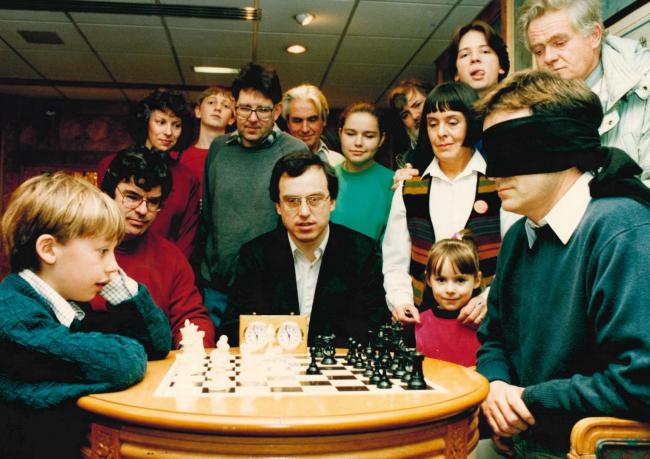
1993 : Jeff Horner takes on world under-10 chess champion Luke McShane blindfolded
“IT’S hard enough challenging a world champion to a game of chess, but to then say you’ll do it blindfold is bordering on the ridiculous.
But that’s exactly what Jeff Hormer from Radcliffe did back in 1993.
Teacher Jeff’s showdown with Luke McShane, the world under-10 chess champion from London was the main attraction at a two-day chess festival held at Bolton’s Moat House.
Jeff, 43, faced off against nine-year-old, Luke, with a thick black cloth placed over his eyes.
The youngster had full view of the board, but Mr Horner was forced to play with the aid of an assistant who placed his pieces and let him know the moves Luke was making
Jeff’s amazing memory and powers of concentration coupled with his greater experience proved too much for the young chess champion.
And despite the handicap of the blindfold, he beat the world champion relatively easily..
It ended up being one of the few matches that Luke McShane lost as he gained international recognition as a chess prodigy.
Jeff Horner, Isle of Man 2008, Photograph : John Saunders
Aged just 16 he became the youngest British chess player to be awarded the title of Grandmaster by the International Chess Federation in 2000 and now, although he works as a trader in the City of London, Luke is regarded as the best amateur chess player in the world.
Jeff Hormer was a long-standing member of Bolton chess club and was renowned for his ability on the board, often taking on – and beating – internationally-renowned players.
He famously beat British Grand Master Tony Miles, who himself had only recently defeated the reigning world champion Anatoly Karpov.
Jeff was awarded the title of International Master by the International Chess Federation.”
“I still remember Tony Miles, fresh from his historic victory against World Champion Anatoly Karpov, stopping off at the Blackpool Open. Miles had become a legend overnight but nobody bothered to tell Jeff, who calmly trounced him just as he would us. Two weeks ago David Howell had to play Jeff Horner in Blackpool. Both players needed two wins from their last two games to earn an international master (IM) result. Would it be Britain’s youngest new IM or our oldest new IM?”
We wish WFM Helen Milligan all the best on her birthday, this day (August 25th) in 1962.
Helen became a Woman’s FIDE Master in 2000 and a Candidate Master in 2013.
Her highest FIDE rating was 2138 in July 1999.
Helen Milligan (born Helen Scott; 25 August 1962) is a Scottish-New Zealand chess player holding the FIDE titles of Candidate Master (CM) and Woman FIDE Master (WFM), and five-times Asian senior women’s (50+) champion. The CM title was earnt at a FIDE open zonal.
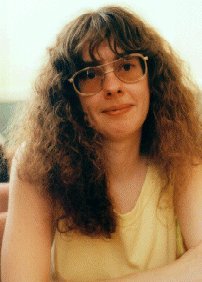
WFM Helen Milligan
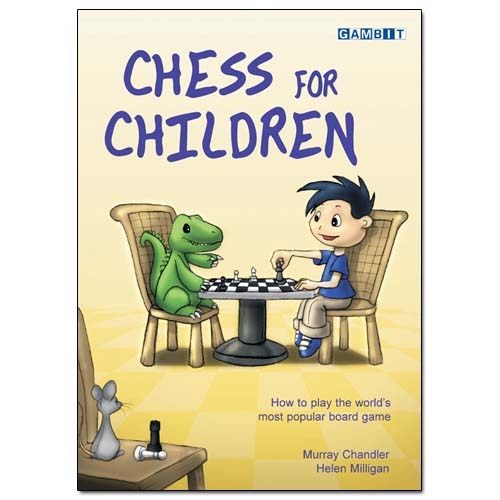
In 2004 Milligan co-authored the book “Chess for Children” with Grandmaster Murray Chandler. She has been an officer of the New Zealand Chess Federation, and has worked as a coach at Murray Chandler’s National Chess Centre in Auckland. She currently works as a self-employed chess coach. The National Chess Centre has since been sold by Murray Chandler.
Milligan has won or jointly won the Scottish women’s championship three times: in 1982, 1986 and 1988. In 1983 she was joint British Ladies’ champion with Rani Hamid.
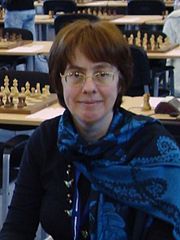
WFM Helen Milligan in 2010
Milligan represented Scotland in eleven Women’s Chess Olympiads between 1982 and 2006. Since 2008 she has played for New Zealand in this competition, having transferred national federations in 2007.
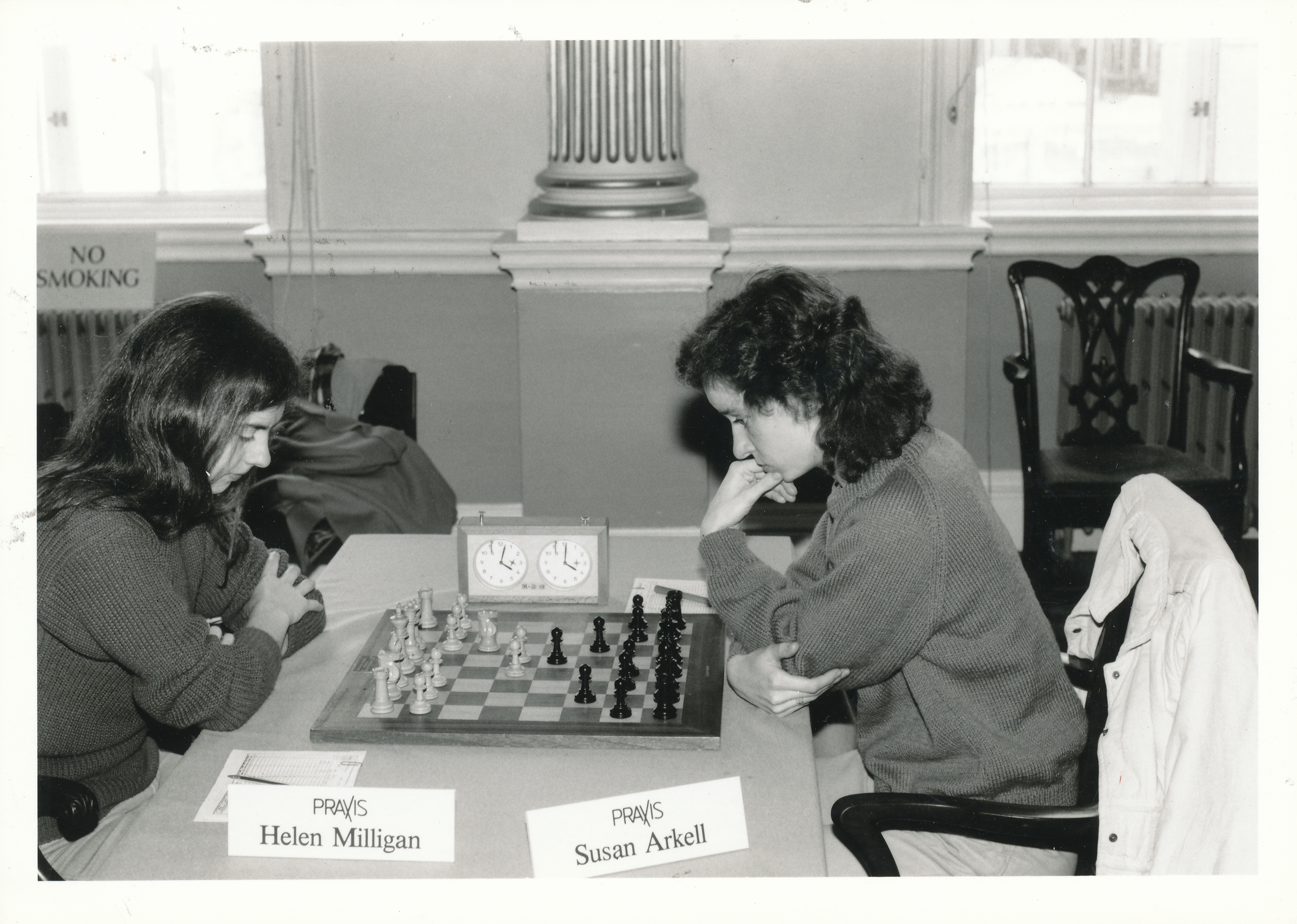
WFM Helen Milligan vs Susan Arkell
Milligan became Oceania women’s champion at the Queenstown Chess Classic tournament in January 2012. She also competed in Women’s Zonal Chess Championships in Bath 1987, Blackpool 1990, Delden 1993, Saint Vincent 1999, and the open zonal at Gold Coast in 2009.
She won the Asian senior women’s (50+) champion title in 2014 in Kalutara, Sri Lanka; 2015 in Larestan, Iran; 2016 in Mandalay, Myanmar; 2017 in Auckland, New Zealand; and 2018 in Tagaytay, Philippines.
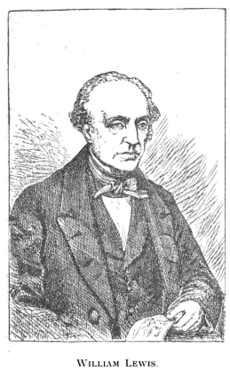
We note the passing today (August 22nd) in 1870 of William Lewis of the Lewis Counter Gambit.
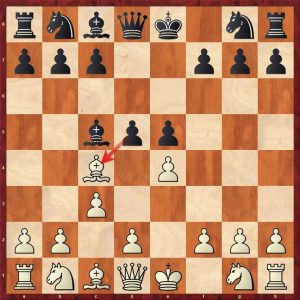
The Lewis Counter Gambit
From The Oxford Companion to Chess (OUP, 1984) by Hooper & Whyld :
“English player and author. He left his native Birmingham as a young man and worked for a time with a merchant in London. He learned much of his chess from Sarratt, a debt that was not repaid.
Around 1819 he was operator of the Turk, meeting all-comers successfully. With Cochrane he visited Paris in 1821, received odds of pawn and move from Deschapelles, and defeated him in a short match (+ 1=2), Lewis had already begun to write and of the more useful books he published around this time were translations of Greco and Carrera which appeared in 1819 and 1822 respectively.
Although he considered Sarratt’s A Treatise on the Game of Chess (1808) a poorly written book, Lewis published a second edition in 1822 in direct competition with Sarratt’s last book, published in 1821 by his impoverished widow, (In 1843 many Englishmen contributed to a fund for Mrs Sarratt in her old age, Lewis’s name is not on the subscription list,}
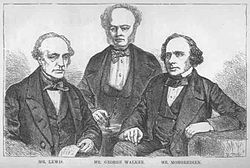
William Lewis, George Walker and Augustus Mongredien
In 1825 Bourdonnais visited England. Lewis recalled that they played about 70 games, and according to Walker seven of them constituted a match which Lewis lost (+2—5). With no significant playing achievements to his credit Lewis acquired such a high reputation that a correspondent writing to the weekly magazine Bell’s Life in 1838 was moved to call him grandmaster.
From 1825 he preserved this reputation by the simplest means: he declined to play on even terms. In the same year he opened a club where he gave lessons at half a guinea each. McDonnell and Walker were among his pupils. Speculating unwisely on a piano-making patent, Lewis went bankrupt in 1827, and the club closed. After three precarious years of teaching chess (rich patrons were becoming fewer) Lewis became actuary of the Family Endowment Society and enjoyed financial security
for the rest of his life.
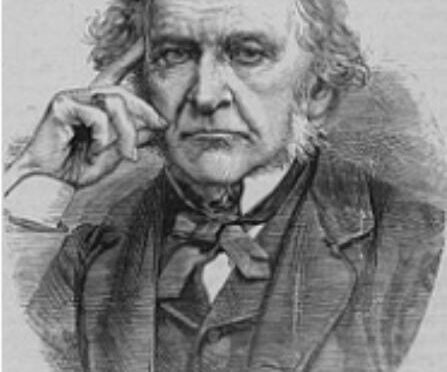
William Lewis
Circumstances now made it possible for him to concentrate on his writing and he published his two most important works: Series of Progressive Lessons (1831) and Second Series of Lessons (1832), both republished with various revisions. Lewis continued to write but gradually withdrew from other chess activities; his last notable connection with chess was as stakeholder for the Morphy-Lowenthal match of 1858.
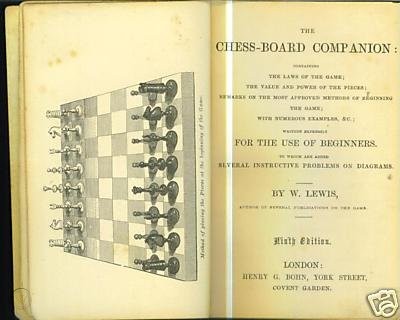
Chess Board Companion by William Lewis
Lewis’s Lessons contain extensive analyses of many opening variations, examined in the closeness of his study. Subsequent writers, notably Lasa, were influenced by these books, but more on account of the form than the content, which, adequate for the 1830s, were soon out of date.
Around 1840 writers no longer worked in isolation (a circumstance Lewis found unavoidable) and new positional ideas were being shaped. Because Lewis failed to assimilate these his judgements were faulty, and his voluminous Treatise on the Game of Chess (1844) was out of date when published.
Industrious rather than inventive, he made only one innovation, the Lewis Counter-Gambit; but it had no practical value in 1844, for simpler defences had already been discovered. Lewis’s work commands respect, but he is more aptly described as the last and one of the best of the ‘old’ writers than the first of the new, a more fitting description for Jaenisch and the authors of Bilguer’s Handbuch. ”
From The Encyclopedia of Chess (Robert Hale, 1970 & 1976) by Anne Sunnucks :
Chess theoretician, teacher, author and one of the leading players in England in the nineteenth century.
William Lewis was born in Birmingham on 9th October 1787. As a young man he went to London and took chess lessons from JH Sarratt. Within a short time he was making chess his principal means of livelihood.
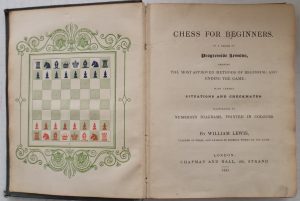
In 1819 he was engaged as the player concealed in the chess-playing automaton, ‘The Turk’, when it was exhibited in London. In 1825 he opened some chess rooms in St. Martin’s Lane in London, where he taught chess. Among his pupils was Alexander McDonnell. After going bankrupt in 1827, the chess rooms were closed, and Lewis decided to put his lessons into a book. He soon became a highly-successful writer, His Chessboard Companion published in 1838 ran into nine editions, and his Series of Progressive Lessons of the Game of Chess has been described as one of the landmarks in the history of the game. This book included some completely new analyses of various chess openings and later formed the basis of the Handbuch des Schachspiels. Lewis also translated the work of Greco and Stamma and was author of The Elements of Chess (1882), Fifty Games of Chess (1832) and Chess for Beginners (1835).
Chess Board Companion by William Lewis
Towards the end of his life, Lewis rarely played chess, and his last public appearance in chess circles was 12 before he died, when he acted at stake-holder in the match between Morphy and Lowenthal in 1858. He died on 22nd August 1870.
From The Encyclopedia of Chess (Batsford, 1977) by Harry Golombek :
“Author of The Chessboard Companion, London, 1838, and several other popular works on chess (including translations of Greco and Stamma). Lewis was also a leading chess teacher – his most famous pupil was Alexdander McDonnell – and for a time he ran chess rooms in St. Martin’s Lane. In 1819 he operated the chess-playing automaton ‘The Turk’ when it was exhibited in London. The Lewis Counter-Gambit is 1.P-K4, P-K4; 2.B-B4 B-B4; 3.P-QB3,P-Q5!?”
Chess for Beginners
From “Chess : A History” by Harry Golombek there are two references to WL on pages 98 and 123 alluded to above.
“William Lewis (1787–1870) was an English chess player and author, nowadays best known for the Lewis Countergambit and for being the first player ever to be described as a Grandmaster of the game.
Born in Birmingham, William Lewis moved as a young man to London where he worked for a merchant for a short period. He became a student of chess player Jacob Sarratt, but in later years he showed himself to be rather ungrateful towards his teacher.
Although he considered Sarratt’s Treatise on the Game of Chess (1808) a “poorly written book”, in 1822 Lewis published a second edition of it three years after Sarratt’s death in direct competition with Sarratt’s own superior revision published posthumously in 1821 by Sarratt’s poverty-stricken widow. In 1843, many players contributed to a fund to help the old widow, but Lewis’ name is not on the list of subscribers.
Around 1819 Lewis was the hidden player inside the Turk (a famous automaton), meeting all-comers successfully. He suggested to Johann Maelzel that Peter Unger Williams, a fellow ex-student of Sarratt, should be the next person to operate inside the machine. When P. U. Williams played a game against the Turk, Lewis recognised the old friend from his style of play (the operator could not see his opponents) and convinced Maelzel to reveal to Williams the secret of the Turk. Later, P. U. Williams himself took Lewis’ place inside the machine.
Lewis visited Paris along with Scottish player John Cochrane in 1821, where they played with Alexandre Deschapelles, receiving the advantage of pawn and move. He won the short match (+1 =2).”
“Lewis’ career as an author began at this time, and included translations of the works of Greco and Carrera, published in 1819[5] and 1822[6] respectively.
He was the leading English player in the correspondence match between London and Edinburgh in 1824, won by the Scots (+2 = 2 -1). Later, he published a book on the match with analysis of the games. In the period of 1834–36 he was also part of the Committee of the Westminster Chess Club, who played and lost (−2) the match by correspondence with the Paris Chess Club. The other players were his students McDonnell and Walker, while the French line up included Boncourt, Alexandre, St. Amant and Chamouillet. When De La Bourdonnais visited England in 1825, Lewis played about 70 games with the French master. Seven of these games probably represented a match that Lewis lost (+2 -5).
Lewis enjoyed a considerable reputation as a chess player in his time. A correspondent writing to the weekly magazine Bell’s Life in 1838 called him “our past grandmaster”, the first known use of the term in chess. Starting from 1825 he preserved his reputation by the same means that Deschapelles used in France, by refusing to play anyone on even terms. In the same year Lewis founded a Chess Club where he gave lessons to, amongst others, Walker and McDonnell. He was declared bankrupt in 1827 due to bad investments on a patent for the construction of pianos and his chess club was forced to close. The next three years were quite difficult until in 1830 he got a job that assured him of solid financial security for the rest of his life. Thanks to this job, he could focus on writing his two major works: Series of Progressive Lessons (1831) and Second Series of Progressive Lessons (1832). The first series of the Lessons were more elementary in character, and designed for the use of beginners; the second series, on the other hand, went deeply into all the known openings. Here, for the first time we find the Evans Gambit, which is named after its inventor, Capt. Evans.
The works of Lewis (together with his teacher Sarratt) were oriented towards the rethinking of the strictly Philidorian principles of play in favour of the Modenese school of Del Rio, Lolli and Ponziani. When he realised that he could not give an advantage to the new generation of British players, Lewis withdrew gradually from active play (in the same way that Deschapelles did after his defeat against De La Bourdonnais).
After his retirement he wrote other chess treatises, but his isolation prevented him from assimilating the positional ideas of the new generation of chess-players. For this reason, Hooper and Whyld in their Oxford Chess Companion describe the last voluminous work of Lewis, A Treatise on Chess (1844), as already “out of date when published”.”
According to Edward Winter in Chess Notes Lewis lived at 12 Chatham Place, Blackfriars, London, England (Chess Player’s Chronicle, 1841, pages 9 and 34*)
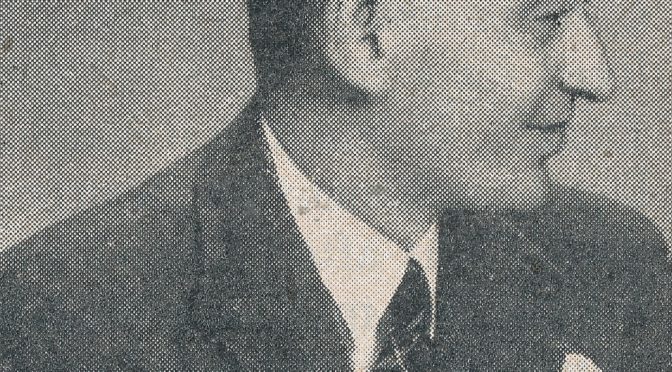
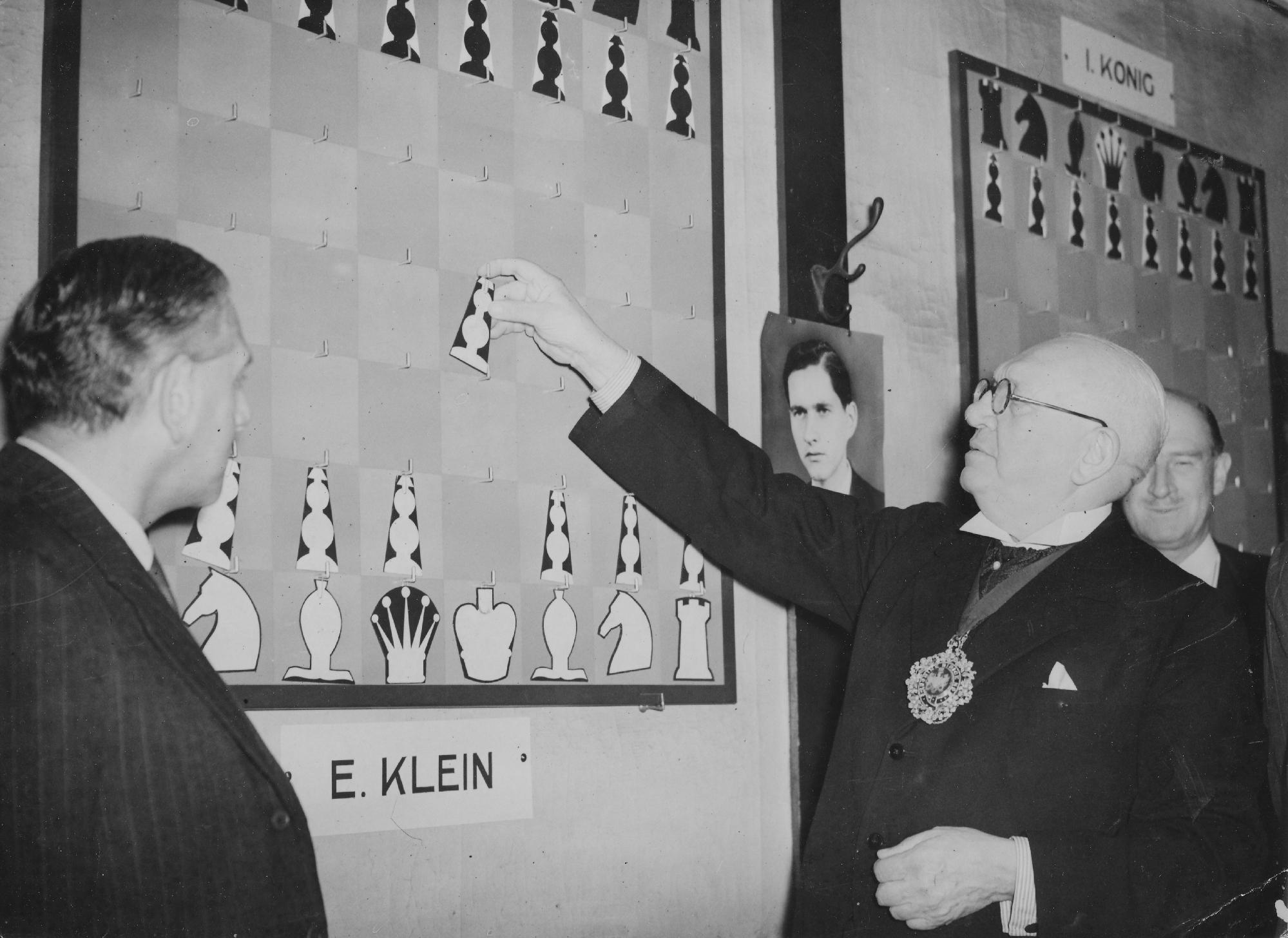
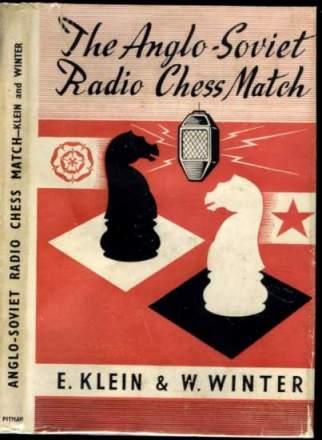
From CHESS, July 1946 (and also The Anglo-Soviet Radio Chess Match) :
Since Ernst Klein came to England in 1935 his play has earned our ungrudging admiration. Born in Vienna, 1910, he learned chess at the age of eleven. His grandmother taught him the moves, his father having died when he was eight. Steinitz was a frequent guest in his grandparents house. At eighteen, he shared first, second and third prizes in the Championship of Vienna. Before coming to England, he had lived for some years in Switzerland, France and Italy and his French, German and English are equally impeccable. In his last tournament at Bournemouth, in 1939, he finished equal with Flohr after Euwe ahead of König, Landau, Aitken and others. He met his wife, who is an Englishwoman, during the blitz. They were married in 1944. He holds a London University degree and teaches mathematics in Southend.
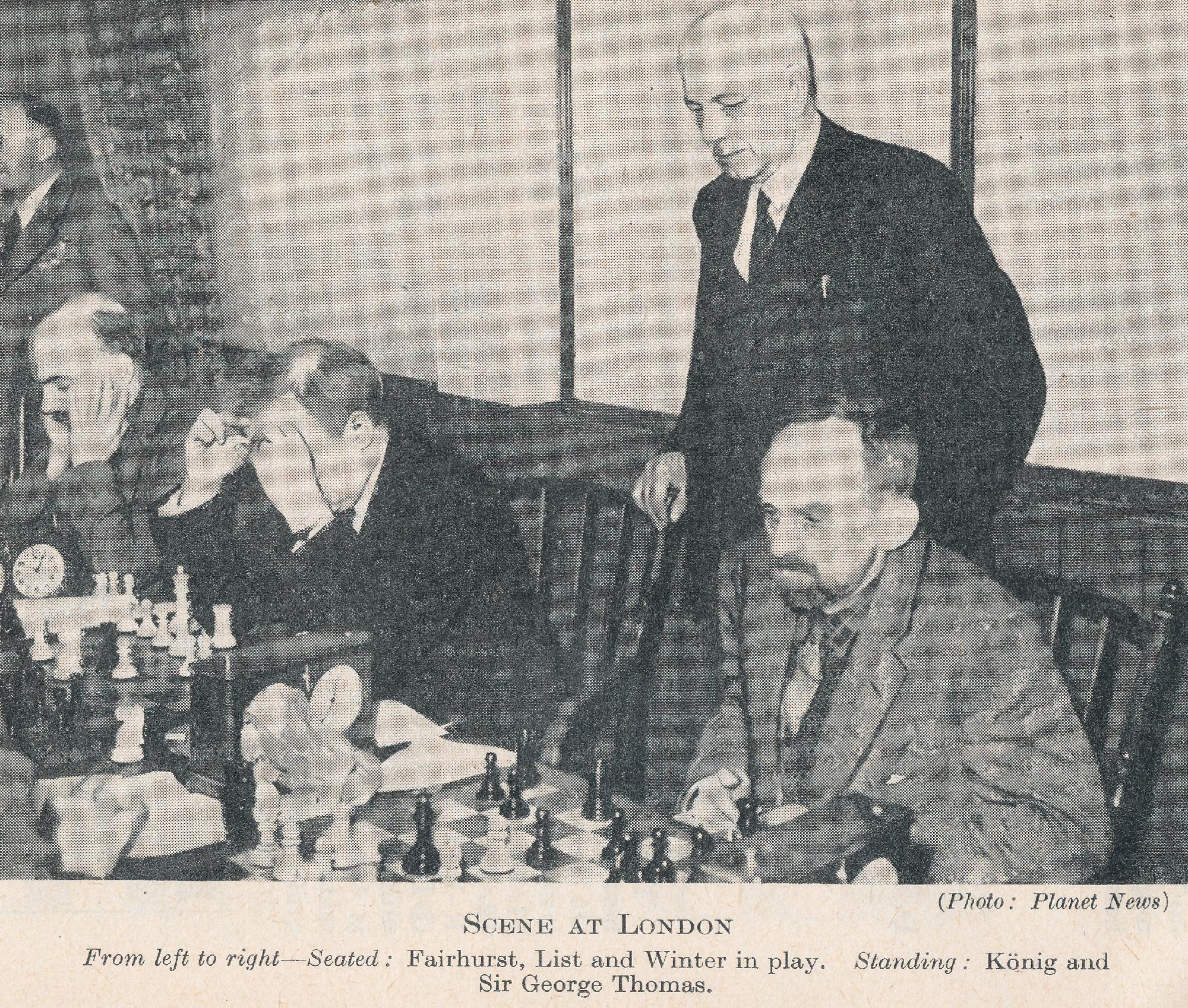
Scene at London. From left to right – Seated : Fairhurst, List and Winter in play. Standing König and Sir George Thomas
About 1940, he offered to give any opponent in Great Britain the odds of the draw.; his challenge was never taken up, no doubt owing to the conditions of the moment, but we imagine there would be many “takers” if it were repeated now.”
Later, Klein clarified matters by writing What I said was: “I am ready to accept the challenge of any player in this country and am prepared to give the odds of a draw in a contest at least twelve games if he so wishes. That is, I offered to concede victory on a score of 6 : 6 draws counting, which is the necessary and sufficient condition to justify my offer. It is still open.
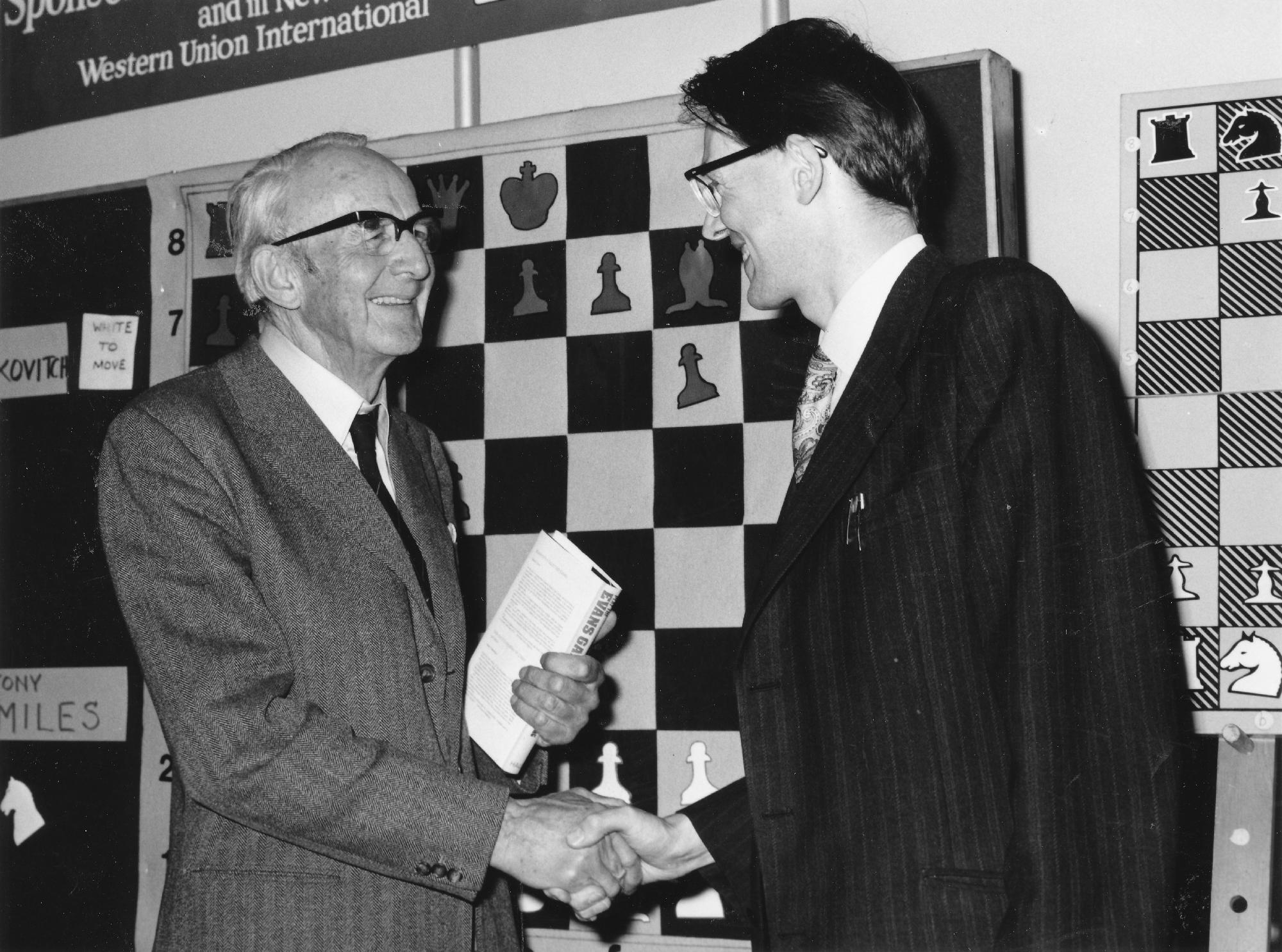
See below photograph for captionCaption for above photograph
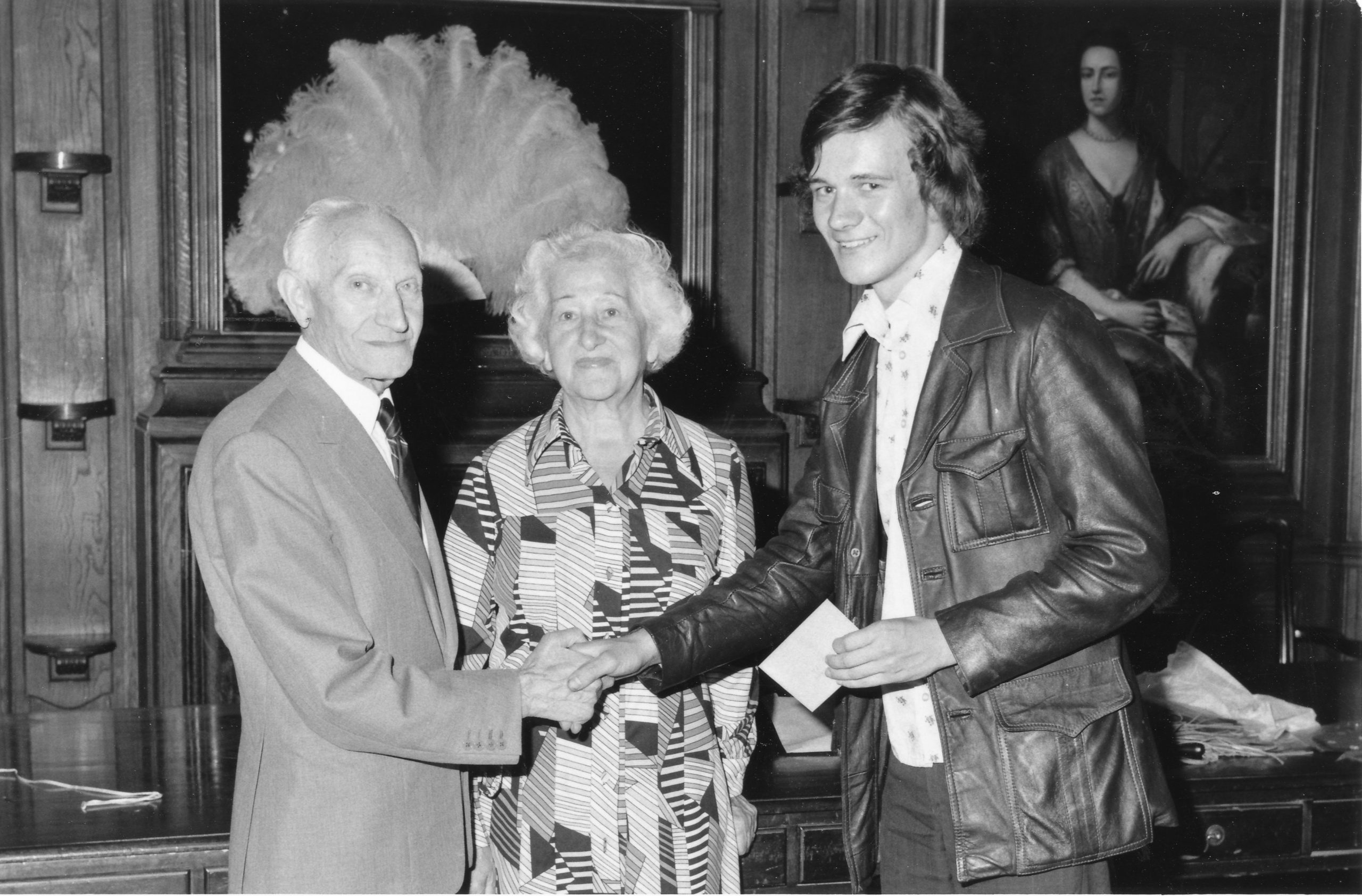
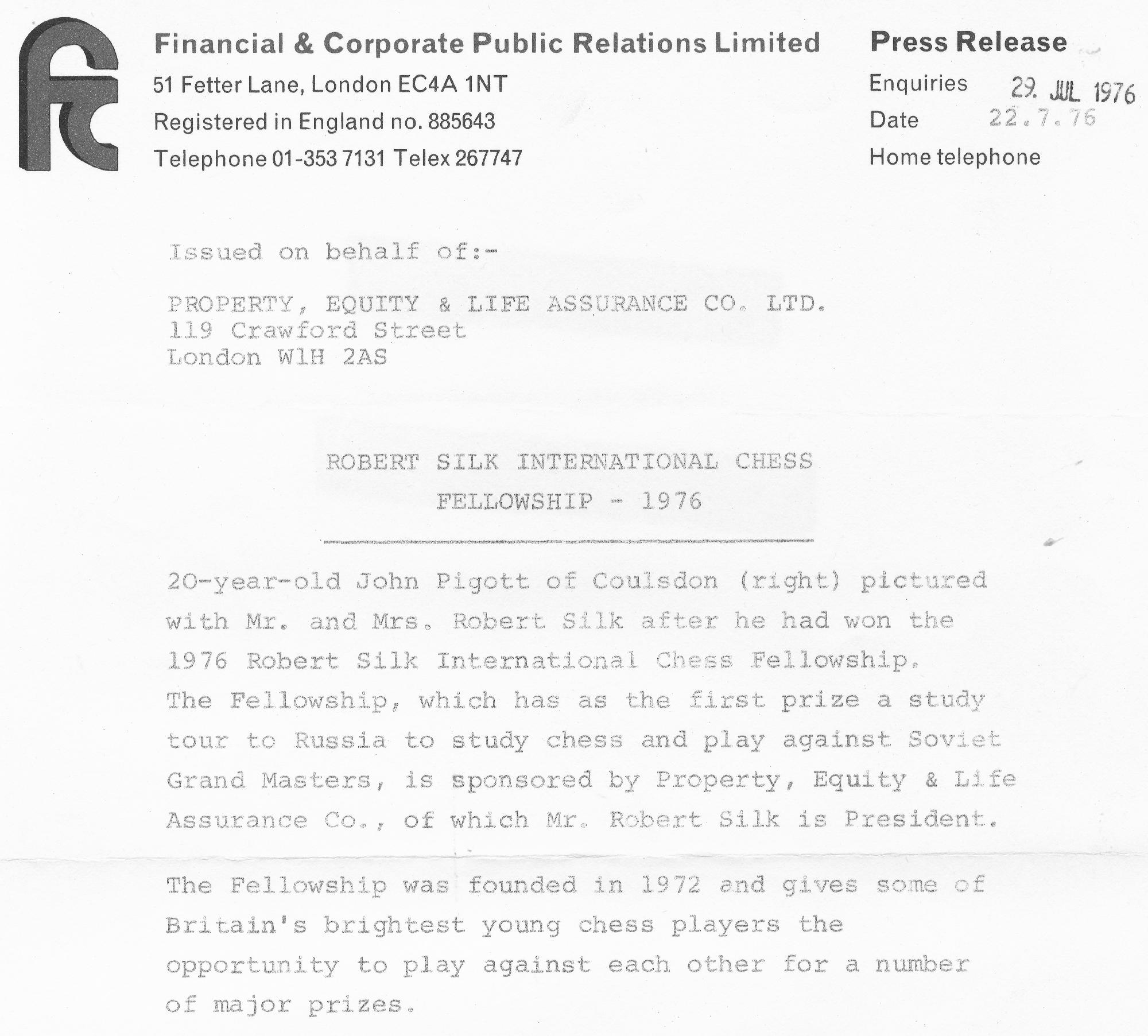
BCN wishes IM John Pigott all the best on his birthday (15-viii-1957)John Christopher Pigott was born in Croydon, Surrey and his mother’s maiden name was Fletcher.
In 1975 John was selected by the BCF junior selectors and travelled with Jonathan Speelman and Peter J Lee (Hampshire) to the 8th Biel International Open in Switzerland. Leonard Barden wrote in the October 1975 British Chess Magazine (the cover was of Geller and Smyslov) :
“17-year-old John Pigott’s 8.5/11 included wins against IM Kluger, IM Messing and the 1975 Budapest Champion Rajna and earned him 2,000 Swiss francs in prize money. The three English juniors who competed, Pigott, Speelman and Lee were chosen by the BCF junior selectors and travelled to Switzerland with the help of grant from the Slater Foundation and the London Chess Club.”
John represented England at the 1975 Anglo-Dutch match (25th and 26th of October) scoring 0.5/2 versus Paul van der Sterren. The game scores appear to either have been lost on not recorded.
In 1976 John scored 4.5/5 in the Surrey Open and shared the 3rd, 4th and 5th prize.
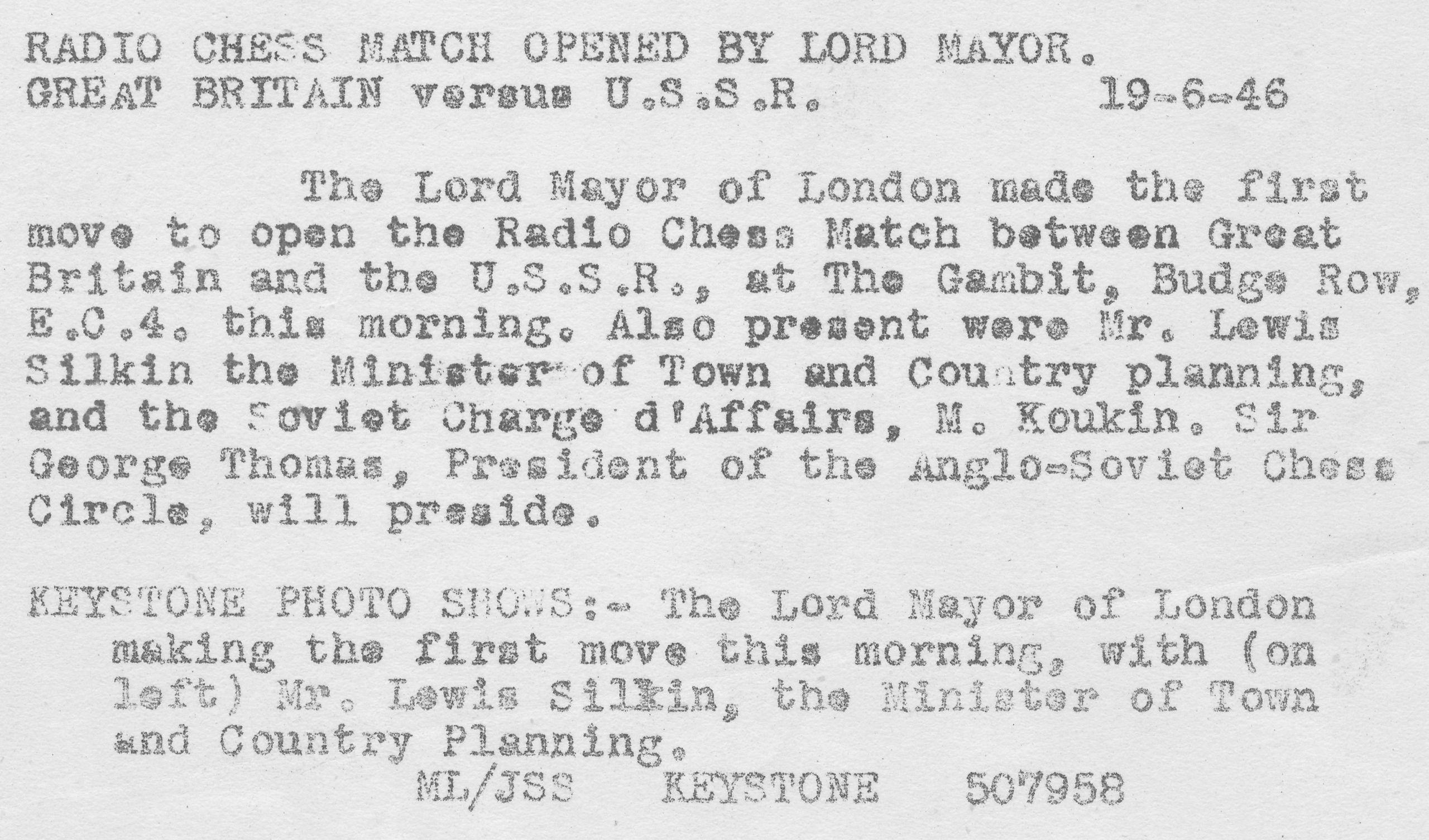
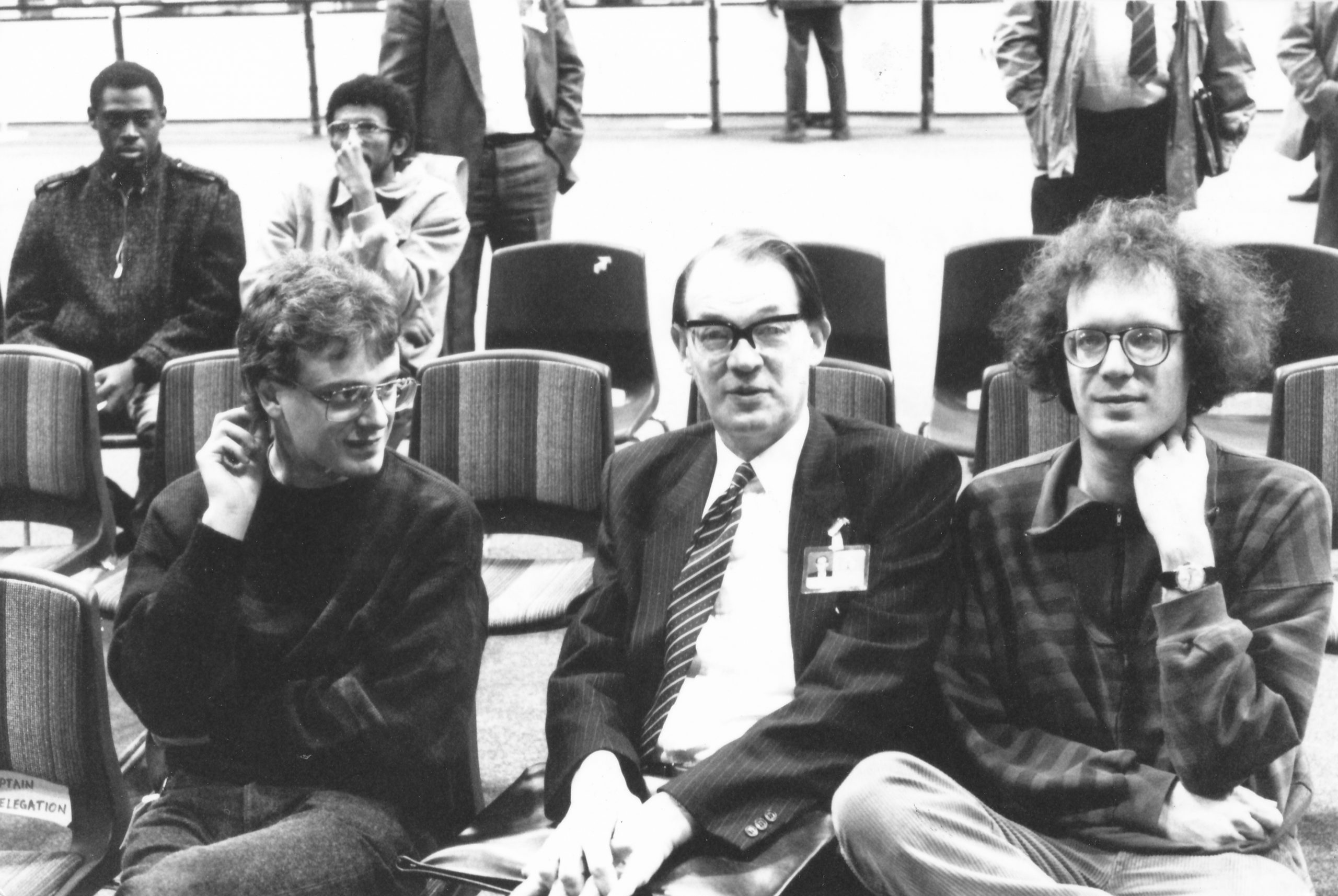
The caption is in the photograph belowThe caption is in the photograph above
John became a FIDE Master in 1984 and an International Master in 2017, a gap of some 33 years!
John plays for Little Heath, 4NCL Barbican, Hon Members LCCL and King’s Head chess clubs.
After a sojourn from chess John returned to the ECF grading list in January 2015 with a grading of 269F attracting some attention.
His highest FIDE rating was 2419 in February 2018 at the age of 61.
With the white pieces John plays the Queen’s Gambit and the Giuoco Piano.
As the second player John enjoys the Sicilian Najdorf and the Nimzo Indian Defence.
On the “glorious twelfth” of August we celebrate the birthday of one of England’s most popular chess players and writers, IM Bill Hartston.
William Roland Hartston was born in Willesden, Middlesex on Tuesday, August 12th, 1947. His father was William Hartston, a significant member of the Royal College of Physicians who was married to Mary Roland. Bill has a sister.
Bill Hartston
He studied at the City of London School and then studied mathematics at Jesus College, Cambridge and graduated with a BA in 1968 and an MA in 1972, but did not complete his PhD on number theory.
An early Bill Hartston, event unknown
While studying for his PhD at Cambridge, Hartston developed an intricate system for balancing an entire chess set on top of a single rook. Here is an article with an explanation letter from Bill.
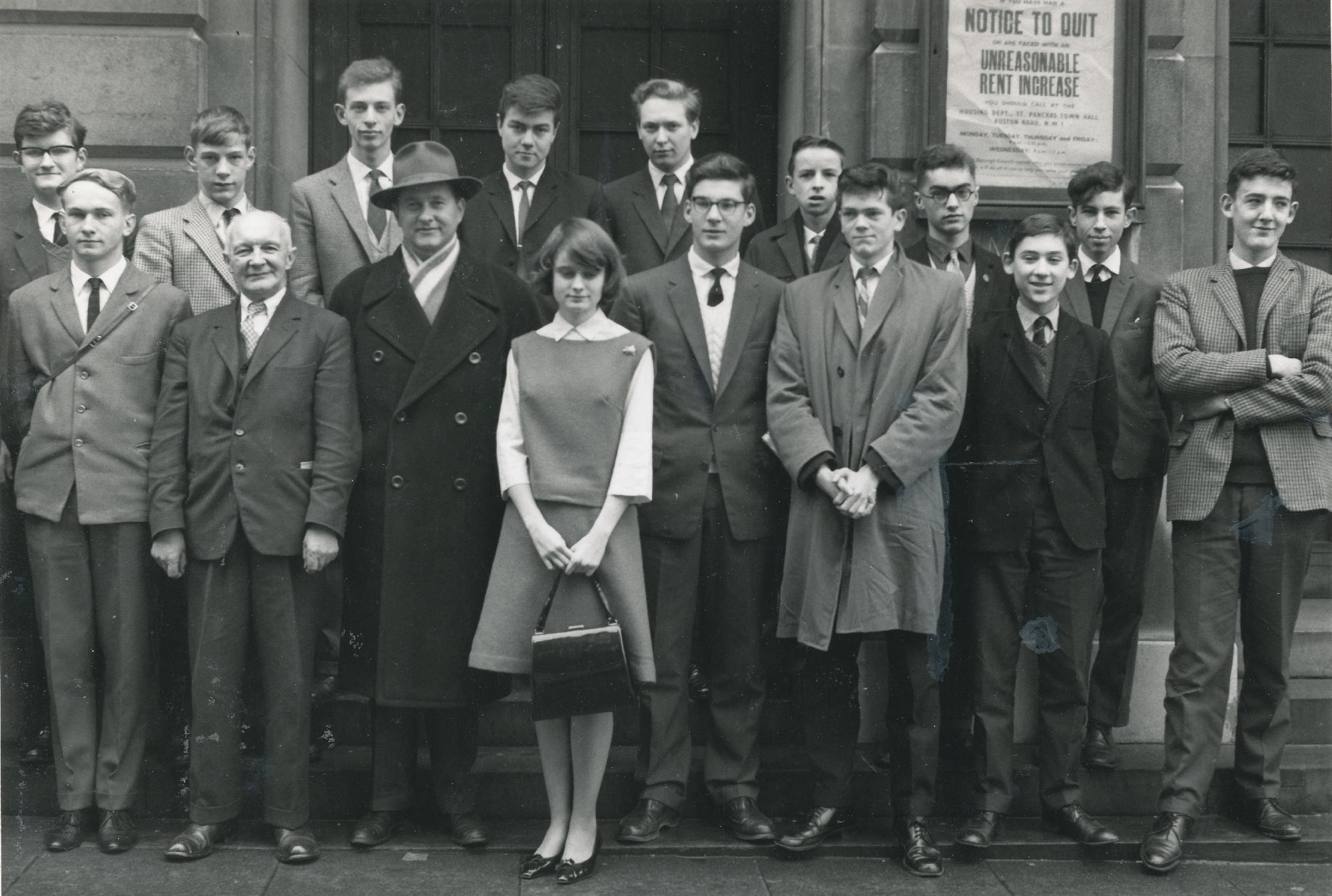
Some of the participants in the Paul Keres display on November 25th, 1962, at St Pancras Town Hall, London WC1. Back row : AJ. Whiteley, D, Floyer, PJ Collins, PJ Adams, RC Vaughan, KB Harman, D. Parr, DNL Levy, Front row : MV Lambshire, AE Hopkins (selector) Paul Keres, Miss D. Dobson, RE Hartley, BC Gillman, WR Hartston and PN Lee. Photograph by AM Reilly. Source : BCM, 1963, page 13
Bill married Dr. Jana Malypetrova in January, 1970 in Cambridge. In 1978 Bill married Elizabeth Bannerman, also in Cambridge and from that marriage he had two sons, James and Nicholas.
Bill and Dr. Jana Hartston (née Malypetrova)
Bill became an International Master in 1972 and his highest FIDE rating was 2485 in January 1979.
William Hartston
With the white pieces Bill almost exclusively played 1.e4 and the Ruy Lopez.
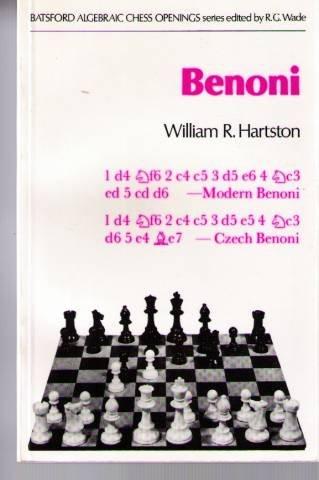
With the black pieces Bill played the Sicilian Taimanov and the Czech Benoni.
Bill plays his trusty Sicilian Taimanov against an unknown opponent
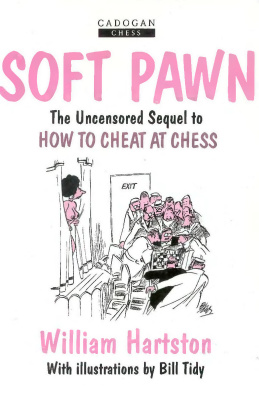
Bill is a self-proclaimed follower of Prof. AJ Ayer (See the Acknowledgements in “Soft Pawn”) Clint Eastwood and Tottenham Hotspur Football Club.
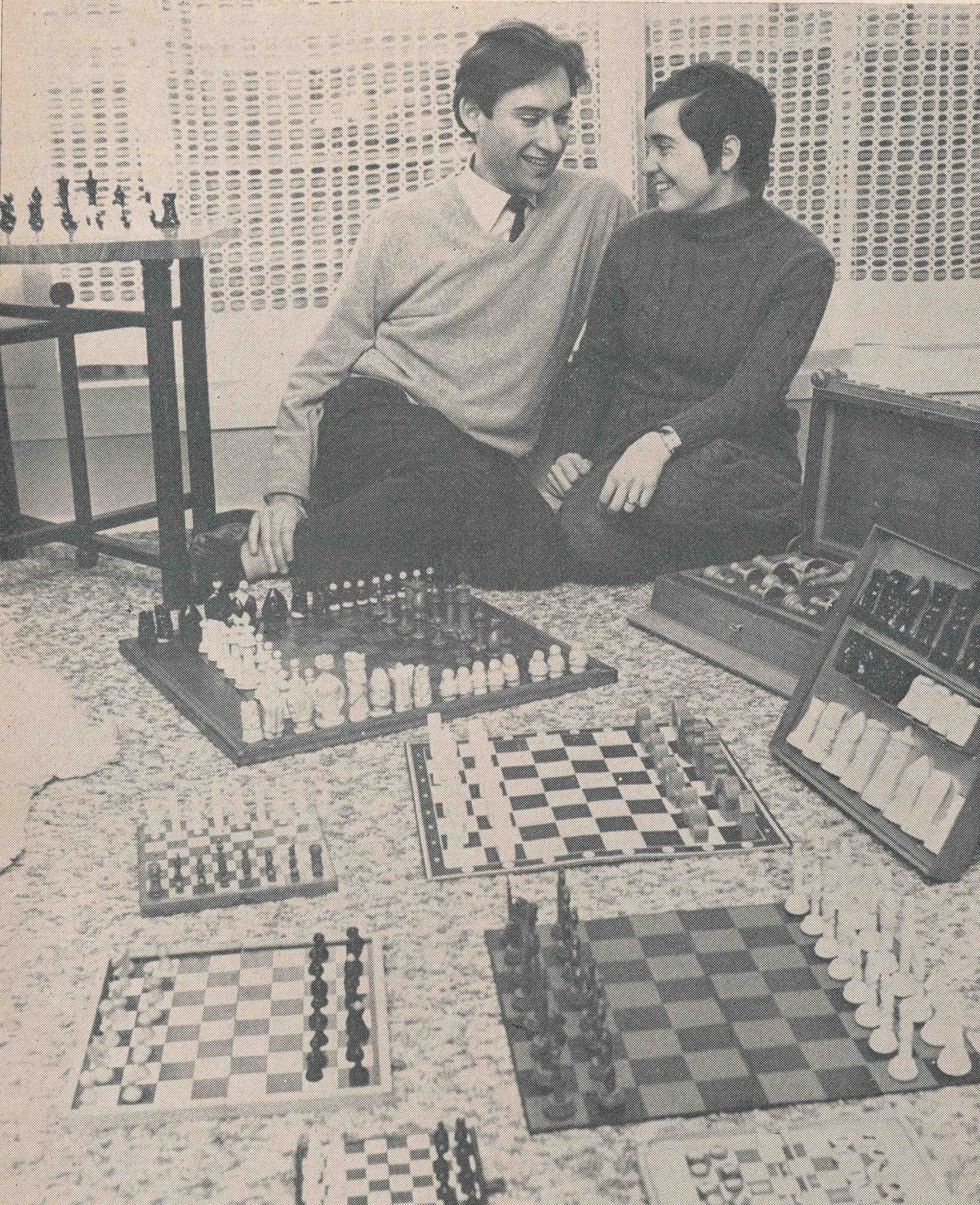
Bill and Jana Hartston are shown with some of their many chess sets. CHESS, August 1973, page 323
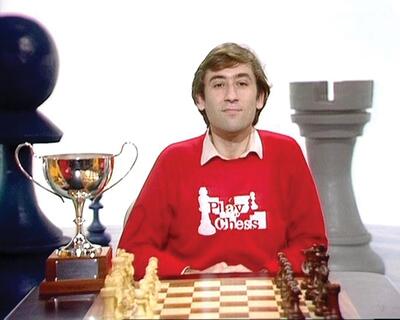
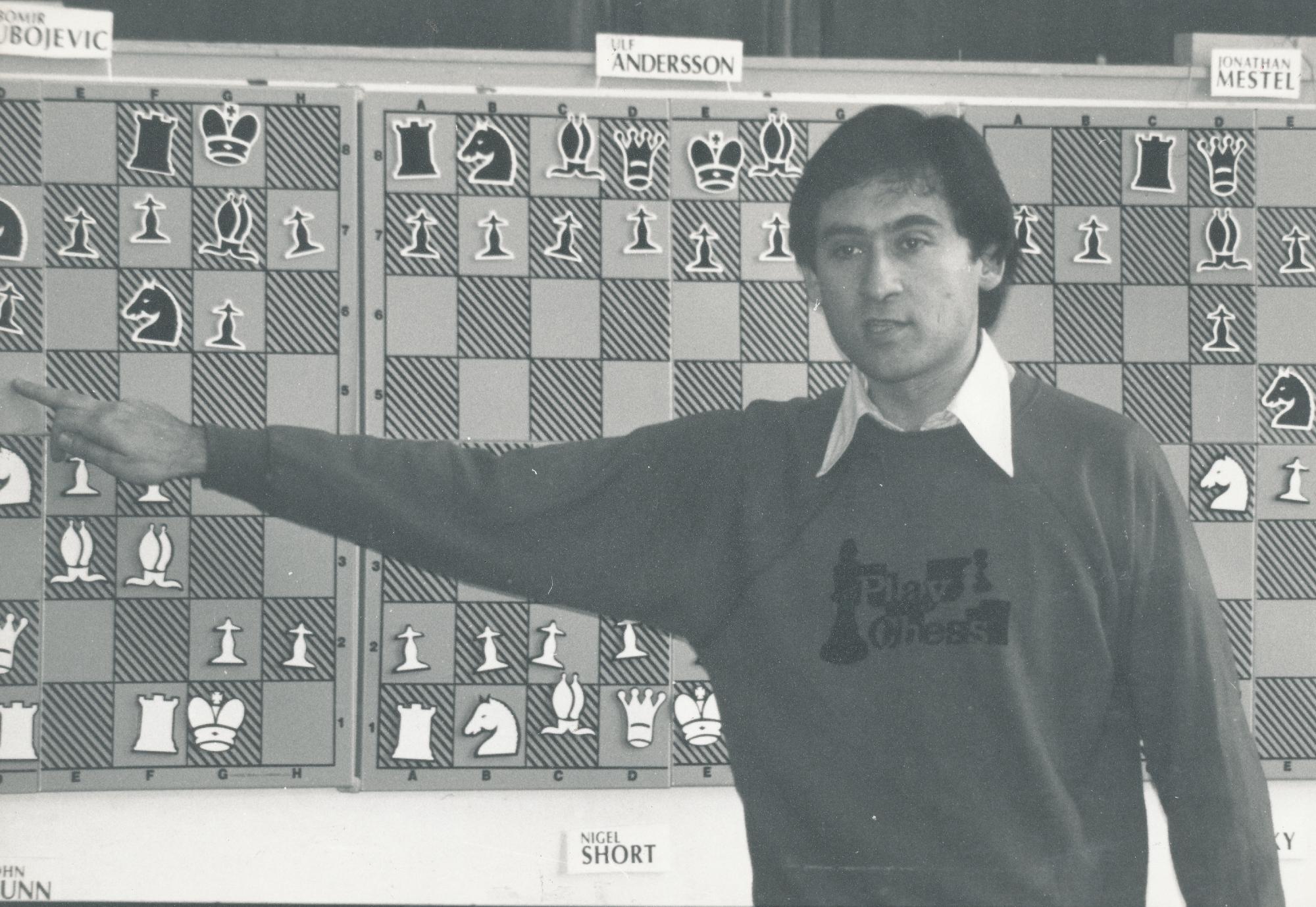
Bill was the chess correspondent of The Independent and The Mail on Sunday. He was also a regular presenter and commentator for television. He worked with Jeremy James on the BBC’s Master Game. and has appeared on ITVs Play Chess
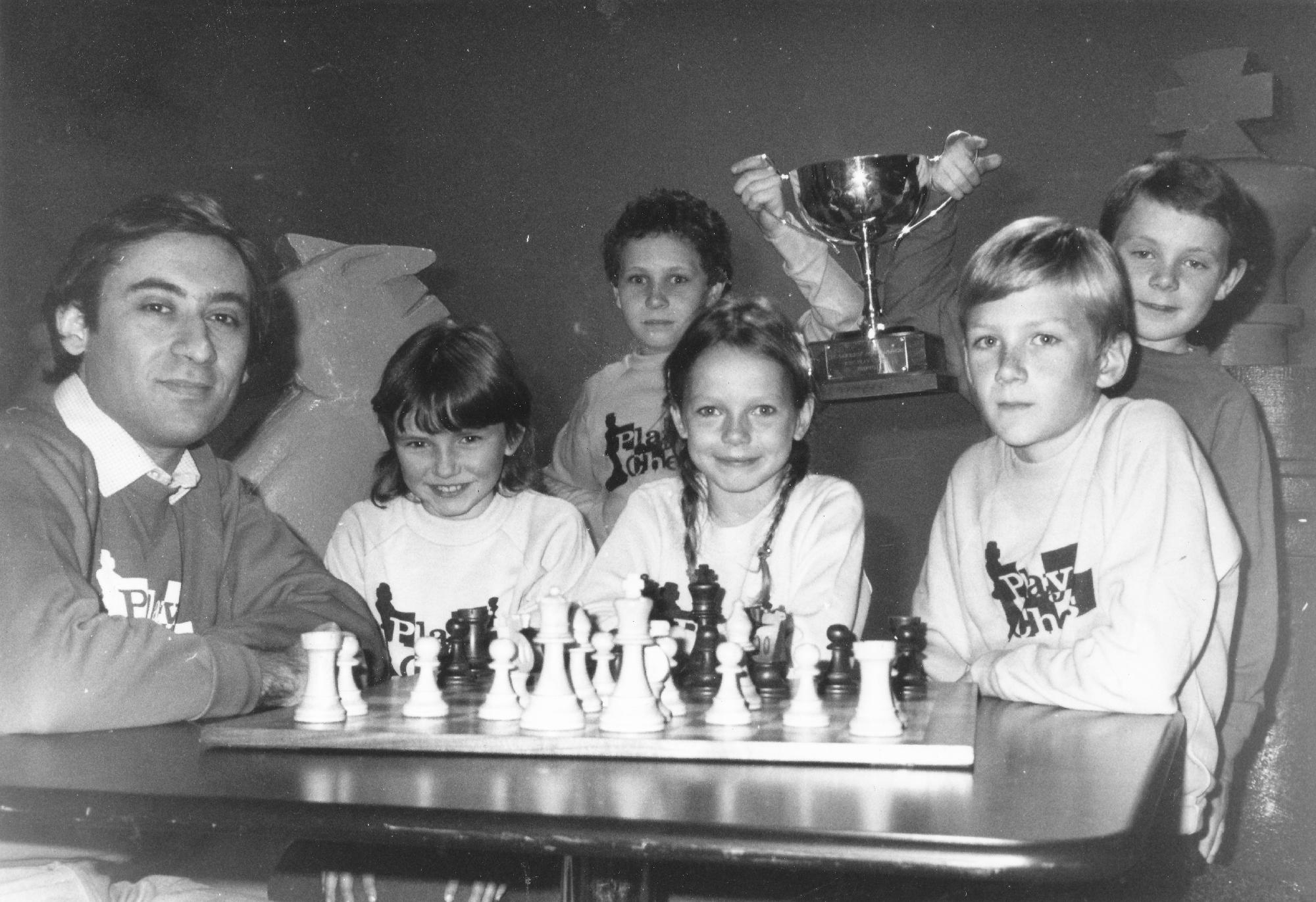
Bill Hartston on Play Chess
In modern times Bill has made regular appearances with World Cluedo champion, Josef Kollar on Channel Four’s Gogglebox with a pair of painted breasts as background.
In modern times Bill has made regular appearances with World Cluedo champion, Josef Kollar on Channel Four’s Gogglebox
Bill revived the Beachcomber column in the Daily Express.
The Master Game, Series 6&7 with Jeremy James and Bill Hartston
Bill is an industrial psychologist.
Curiously the 1984 edition of the usually reliable The Oxford Companion to Chess by Hooper and Whyld does not have an entry for the twice British Champion : was this simply an oversight ? Jana is also not mentioned.
Bill wrote about himself in British Chess (Pergamon, 1983) :
“To summarise more than 20 years of playing competitive chess in a few hundred words is an impossible task. My attitude to the game has changed a great deal, especially in recent times, but I have always enjoyed and felt at home in the tense and lively atmosphere of chess tournaments, whether as a competitor, spectator or journalist.
Caption as per photograph belowCaption for above photograph
I consider myself lucky to have been a ‘promising junior’ just at the time when chess was beginning to be taken seriously as a sport in England. The English team consisted mainly of amateurs and there were clear opportunities for anyone willing to work at the game.
As a result of the changing attitudes to the game in this country, the development between 1965, when I first played for the national team, and 1975 was far greater than in any other decade.
One statistic which I have always found personally amusing is that I progressed from youngest player in 1967 for the Clare Benedict tournament to become the oldest in the 1971 team. From promising junior to veteran in four years = is this a record ?
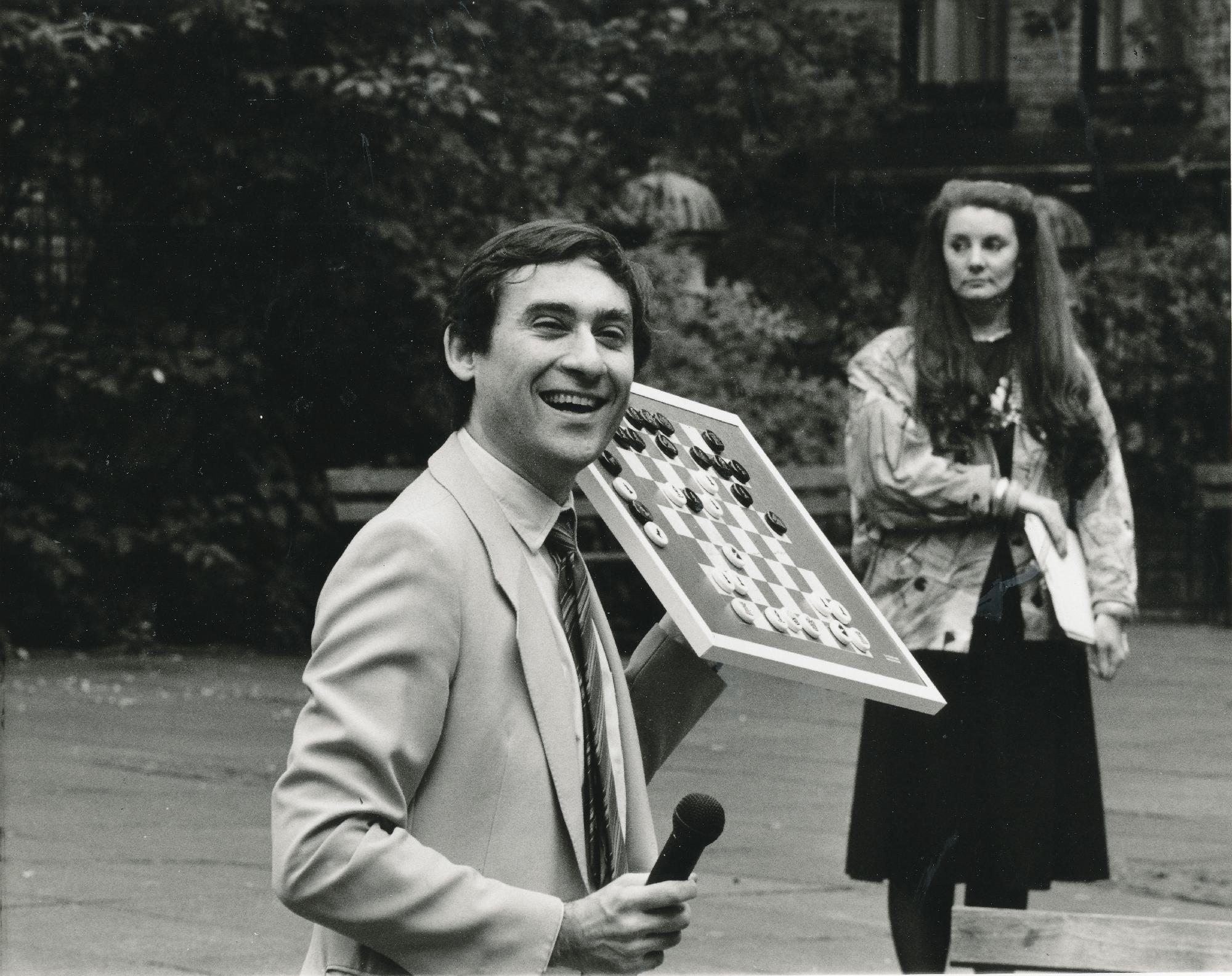
Bill Hartston commentating on games from the Phillips & Drew King’s 1982
Since my second British Championship win in 1975, I have been writing more and playing less. I always realised that I was not going to become a sufficiently strong player to be happy just wandering round the tournament circuit, but giving up chess entirely is, of course, unthinkable.
I believe now that the time is ripe for chess to be presented to far wider audiences and I like to think that some of what I do will help in that aim. If the Master Game television series and “Soft Pawn” cannot sell chess to the masses then nothing will.”
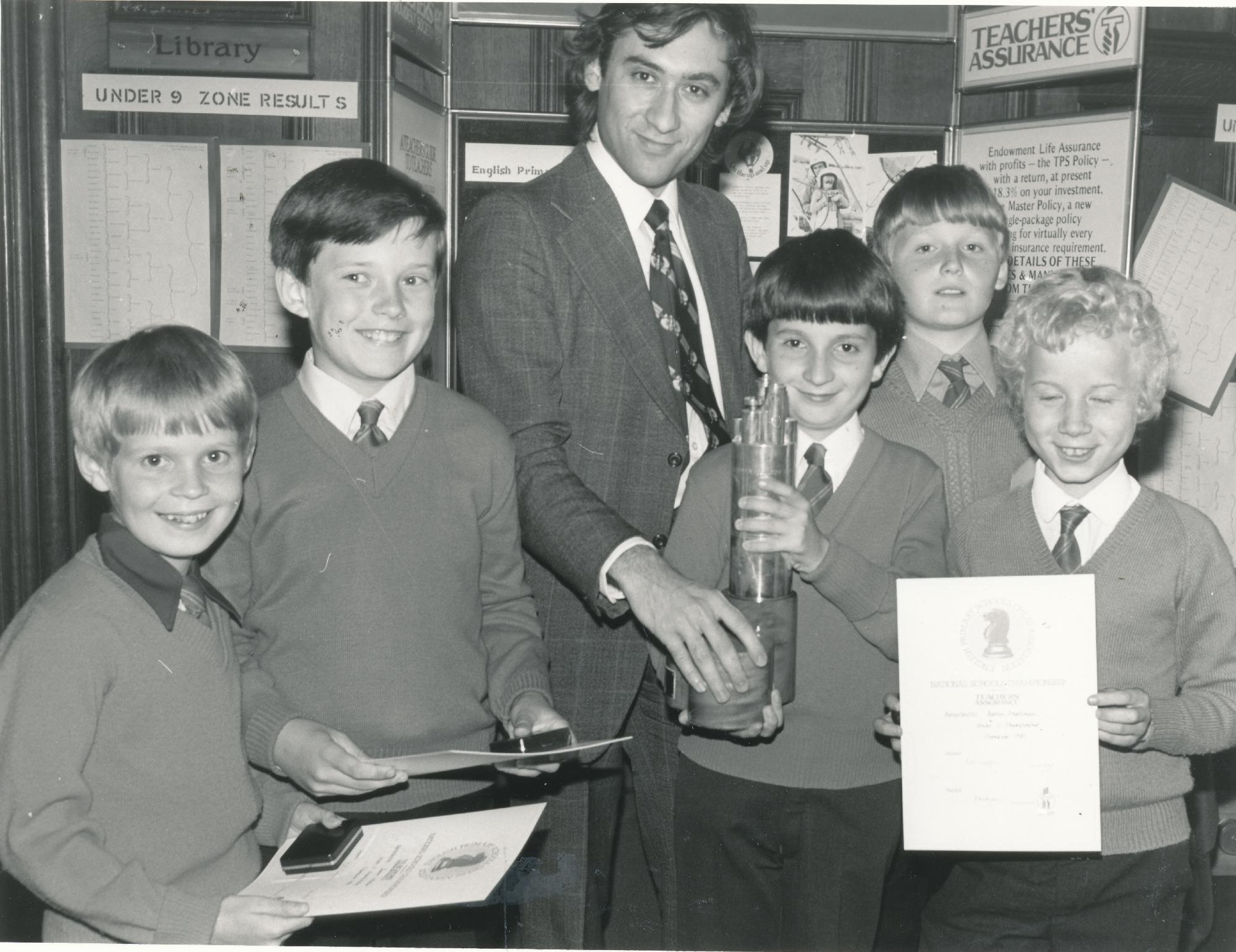
Bill was always a keen supporter of junior chess. Here at the Teachers Assurance National Schools Championships in 1980
Harry Golombek wrote the following in a 1980 Dataday chess diary :
“Hartston played hardly at all during the period from my last entry of him in the 1977 diary and that little, though respectable, was hardly the performance of an active master. His equal 3rd to 5th at the big Aaronson’s Masters Tournament (a swiss system event with 72 players) did not really affect his rating and indeed he finished up without changing his Elo rating at all.
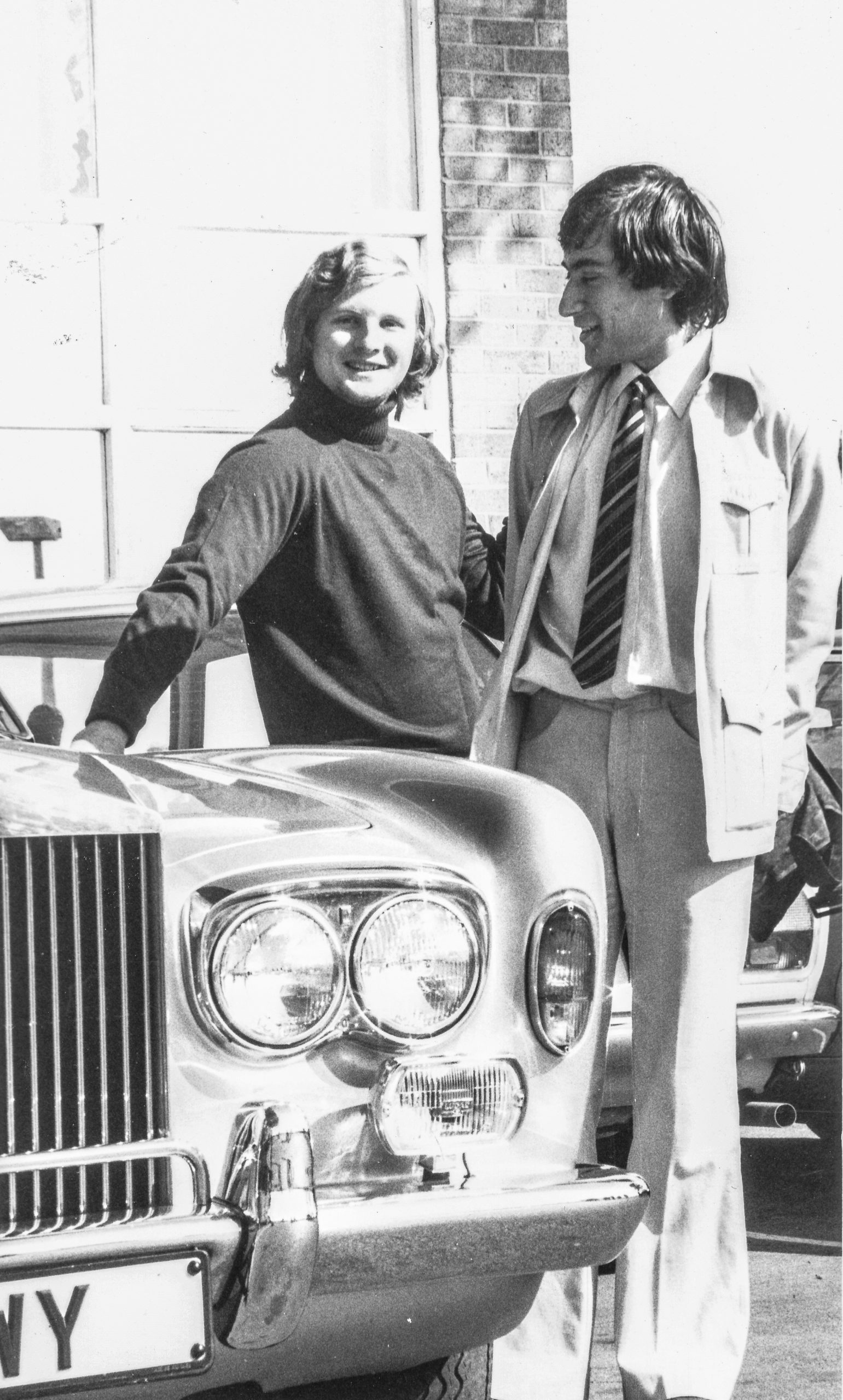
Tony Miles & Bill Hartston admire a Rolls-Royce
Nevertheless, this glimpse of his true powers was impressive as can be seen in the following game which was played in the 6th round of the Aaronson tournament.”
From The Encyclopedia of Chess(Robert Hale, 1970 & 1976) by Anne Sunnucks :
“International Master (1972) and British Champion (1973) William Hartston was born in London on the 12th August 1947. He was taught to play chess by his father when he was seven and five years later joined Enfield Chess Club. His results in junior events included 1st in the London Boys’ Under 16 Championship and 2nd in the British Boys’ Under 15 Championship in 1962 and =2nd in the British Boys Under 18 Championship in 1963.
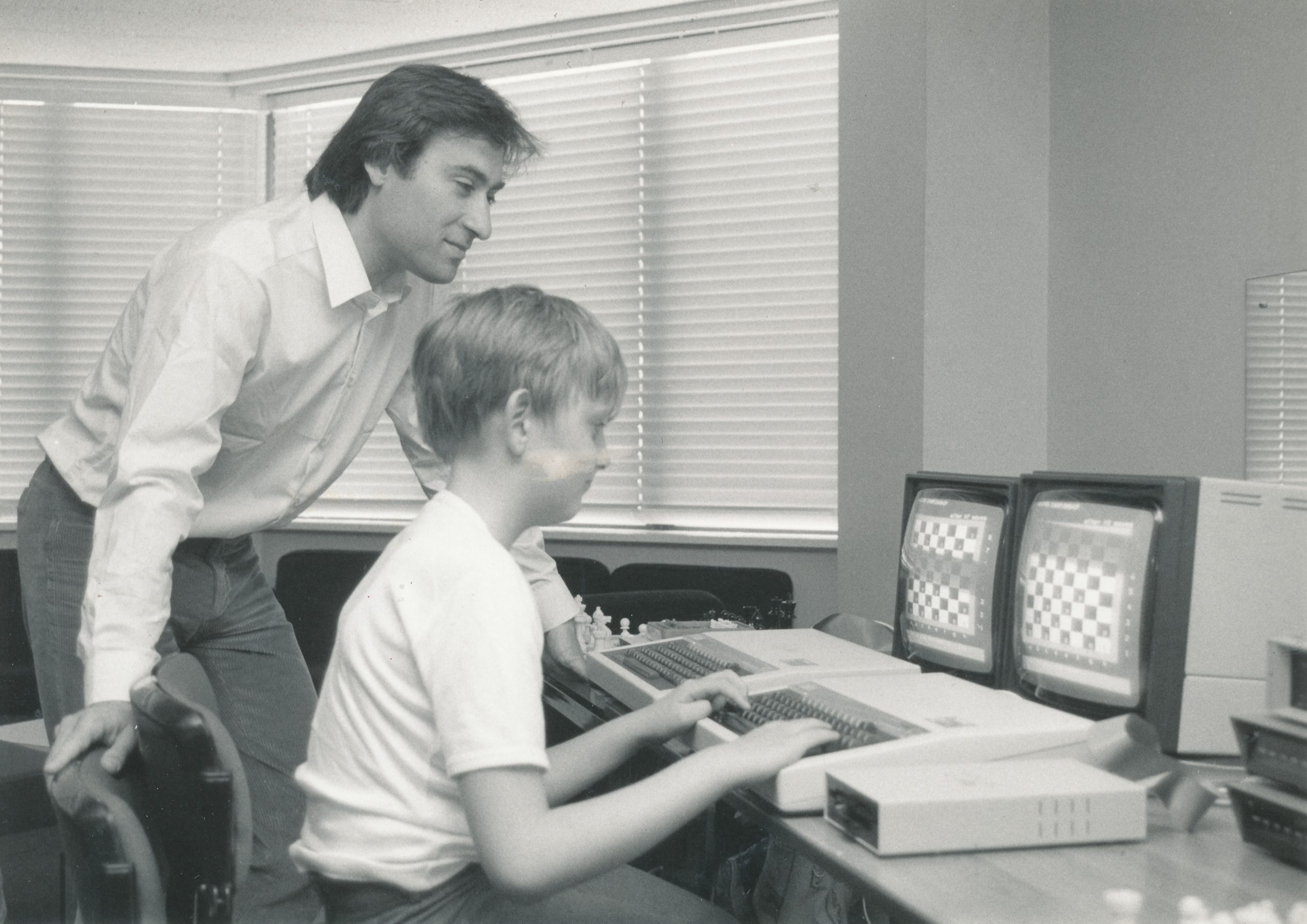
Bill had a keen interest in computer chess and technology
In 1965, Hartston made his first appearance in the British Championship and came =5th. In the same year he won the Ilford and Paignton Premier tournaments. Playing on board 3 for England in the 1966 Olympiad. Hartston scored the best result of any British player, 66.7%.
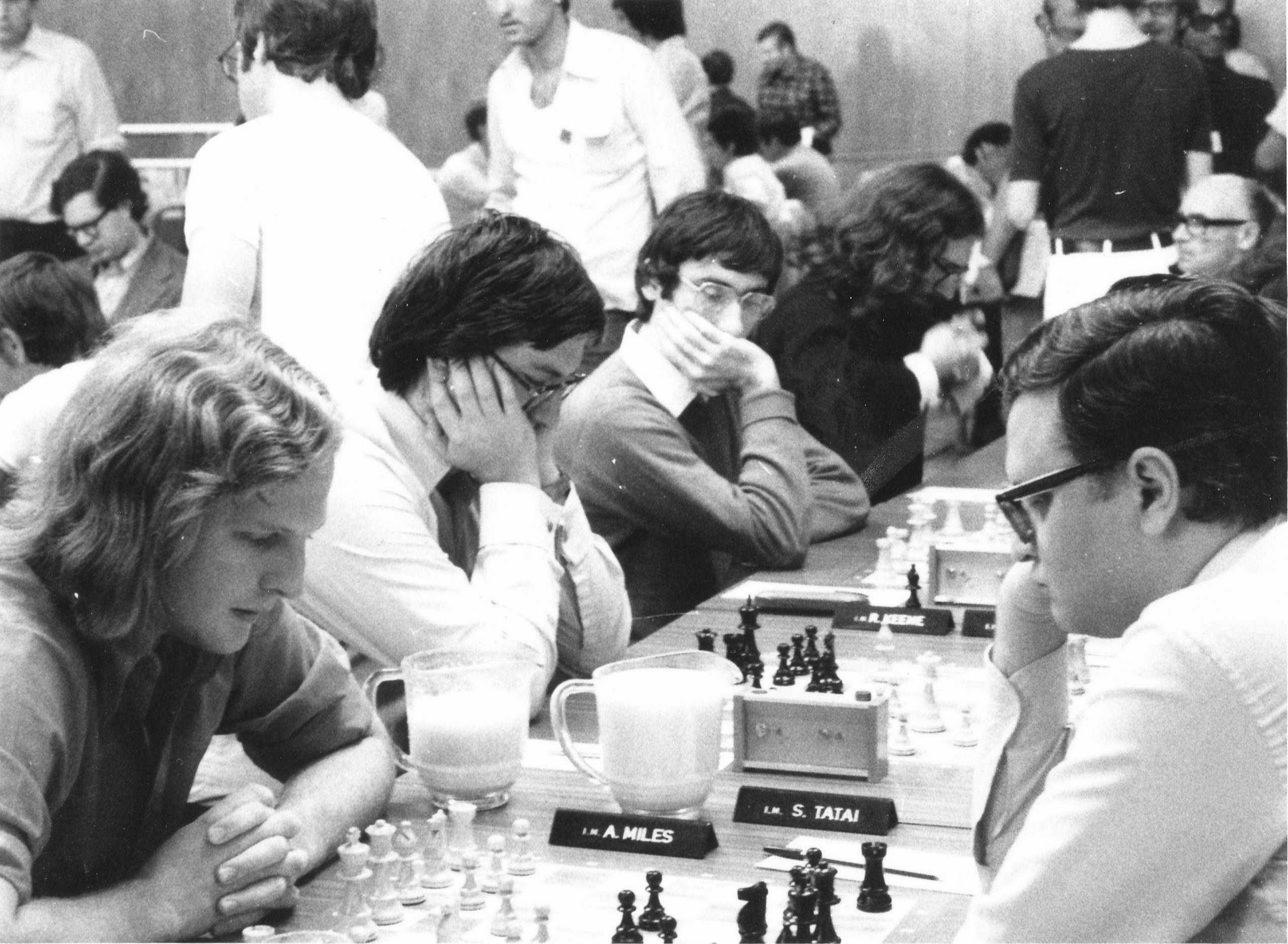
England plays Italy at Haifa 1976. Miles played Tatai, Keene played Toth, Hartston played Grinza and Mestel played Micheli
In the Olympiad of 1970, he had the best overall score on board 3, 12.5 out of 16 and in the Olympiad of 1972 he won the prize for the 3rd best score on board 2, 12.5 out of 18. In 1972 he narrowly failed to qualify for the Interzonal tournament, when he came 3rd in the Zonal tournament at Vranjacka Banja.”
Mike Basman plays Bill during the play-off for the 1973 British Championship
From The Encyclopedia of Chess (Batsford, 1977) by Harry Golombek :
“British International Master and twice British Champion. Hartston was born in London and his early chess was played there., where he became London Boy (Under-16 Champion in 1962.
He was educated at the City of London School and Jesus College, Cambridge, where he took a degree in mathematics.
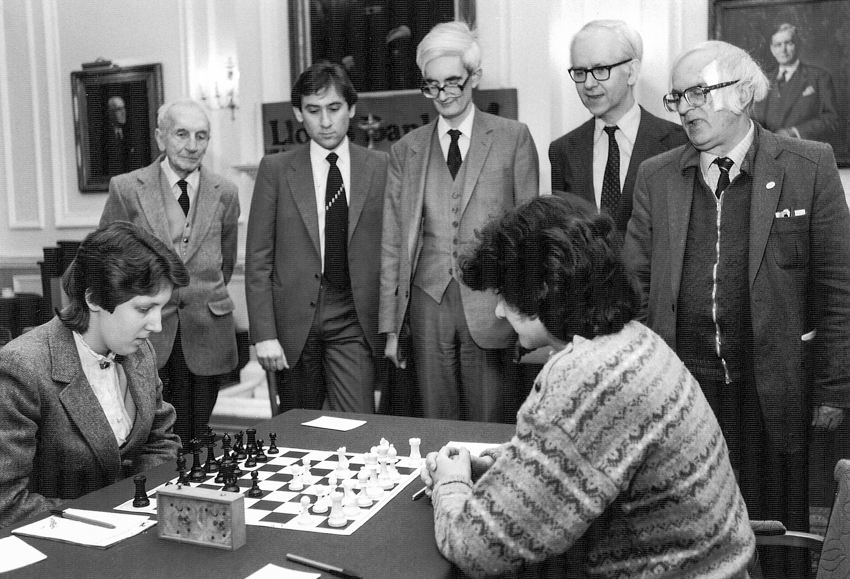
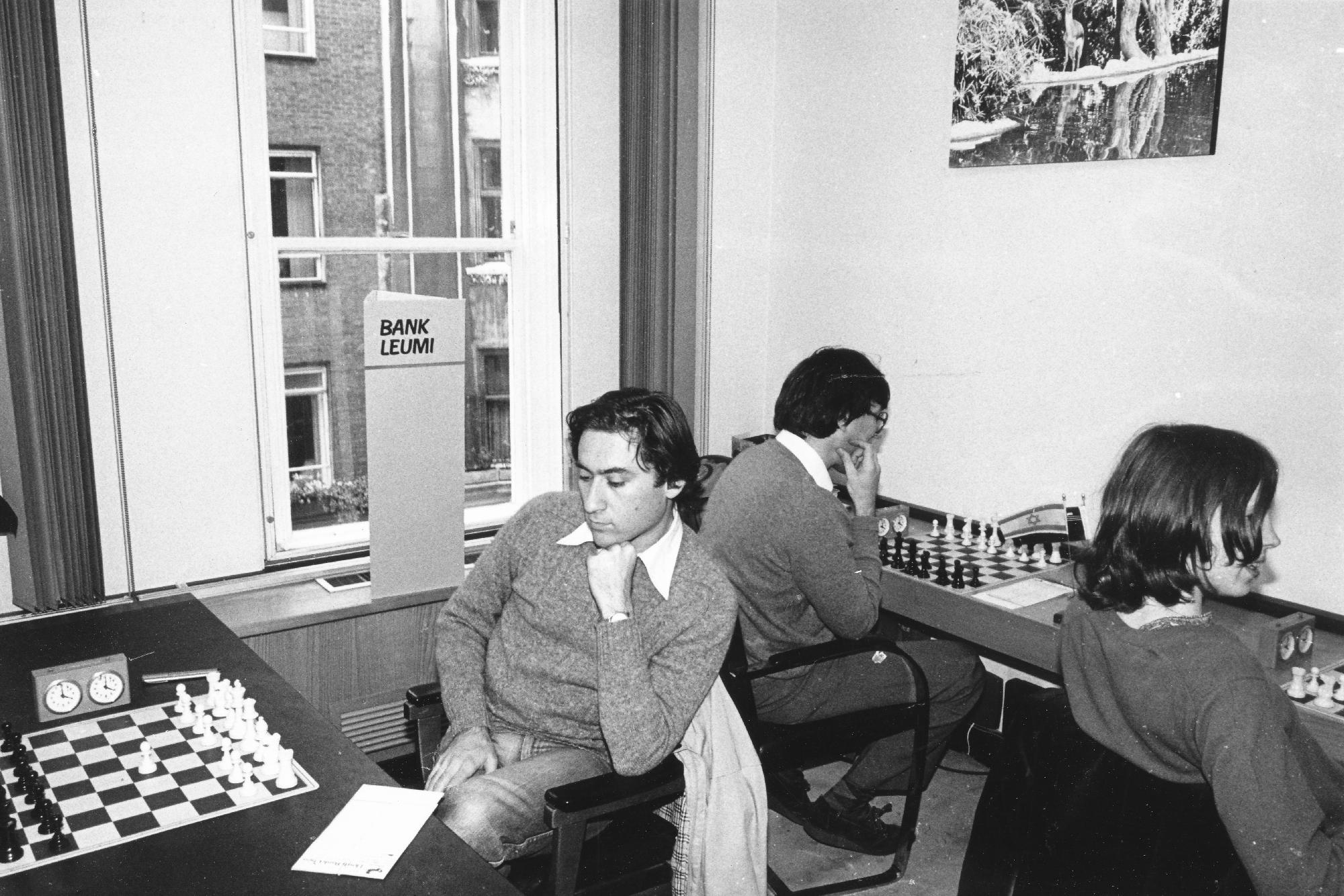
Bill Hartston (far left) at the Lloyds Bank Masters
It soon became clear that he was one of the leading young players in England and a rivalry developed between him and Raymond Keene in which first one and then the other obtained the upper hand.
After a number of near misses he won the British Championship at Eastbourne in 1973 and again at Morecambe in 1975.
Jana & Bill Hartston celebrate a family double at the British Championships in 1973 at Eastbourne
Internationally he has already had a distinguished career and has been especially good and consistent in his representation of England at the Olympiads. At Havana in 1966 he scored 66.7% on board 3 but did not play at Lugano in 1968. Again on board 3 at Siegen in 1970 he obtained the best score on board 3 with 78.1%.
From the 1985 Varsity Match : Laura Cohen (Newnham), Brian Reilly (BCM), Bill Hartston (Cambridge), Adrian Hollis (Oxford), Anita Rakshit (St. Hilda’s), Leonard Barden (The Guardian etc) and Bob Wade (BCF)
At Skopje 1972 he fulfilled the second norm of the international master title with 12.5 points out of 18 on second board. Playing on first board at Nice 1974 he attained 52.7% and had a most meritorious and well fought draw with the World Champion, Karpov.
Bill Hartston draws with Anatoly Karpov at Nice 1974
He achieved a breakthrough in the field of international tournament chess when he came third in a strong Premier tournament at Hastings 1972/3
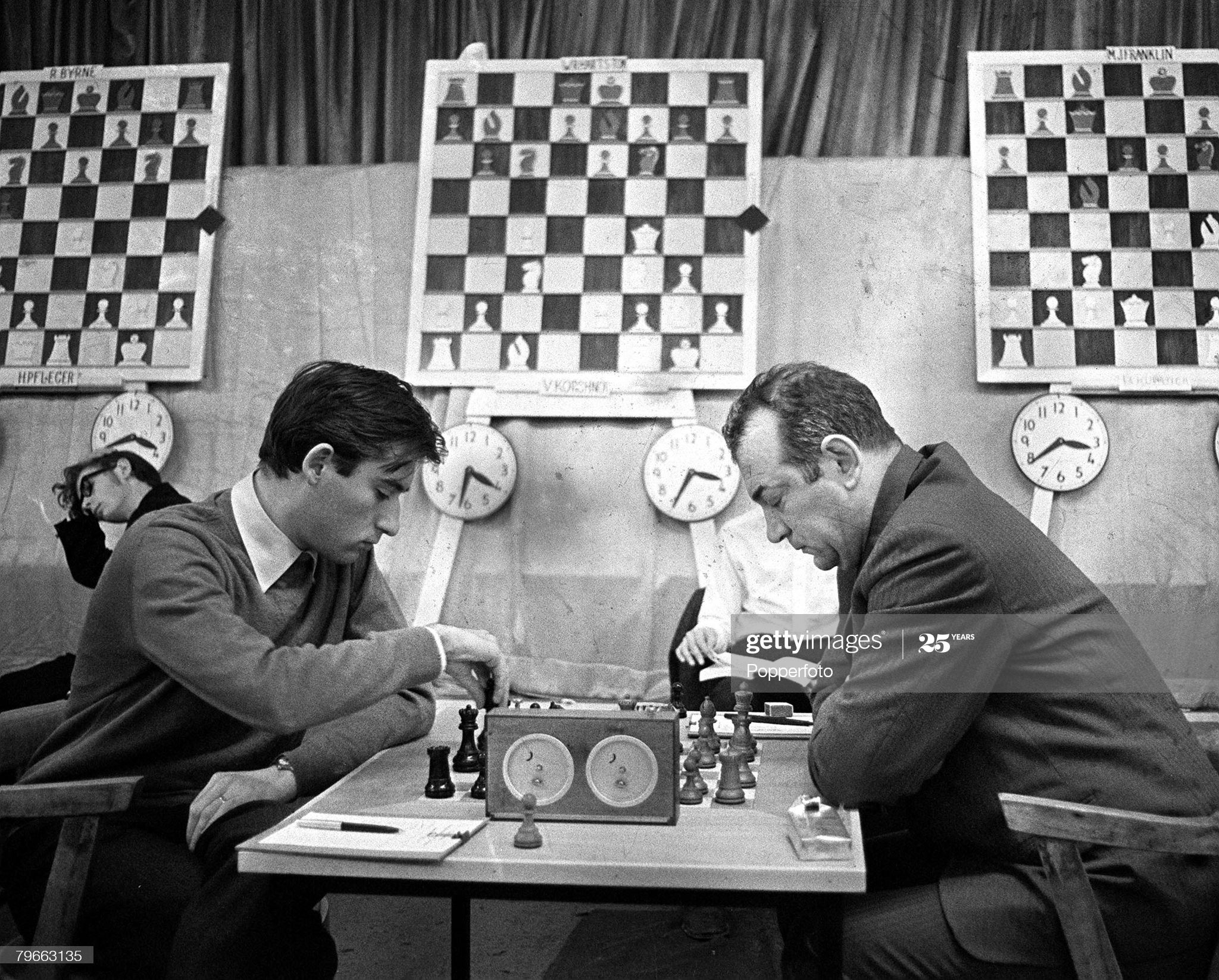
Hastings, England, 4th January 1972, Chess, Russian Grand Master Viktor Korchnoi (right) is pictured in a match with William Hartston (UK) during the 47th Hastings International Chess Tournament (Photo by Popperfoto via Getty Images/Getty Images)
and in 1973 he scored a first at Alicante.
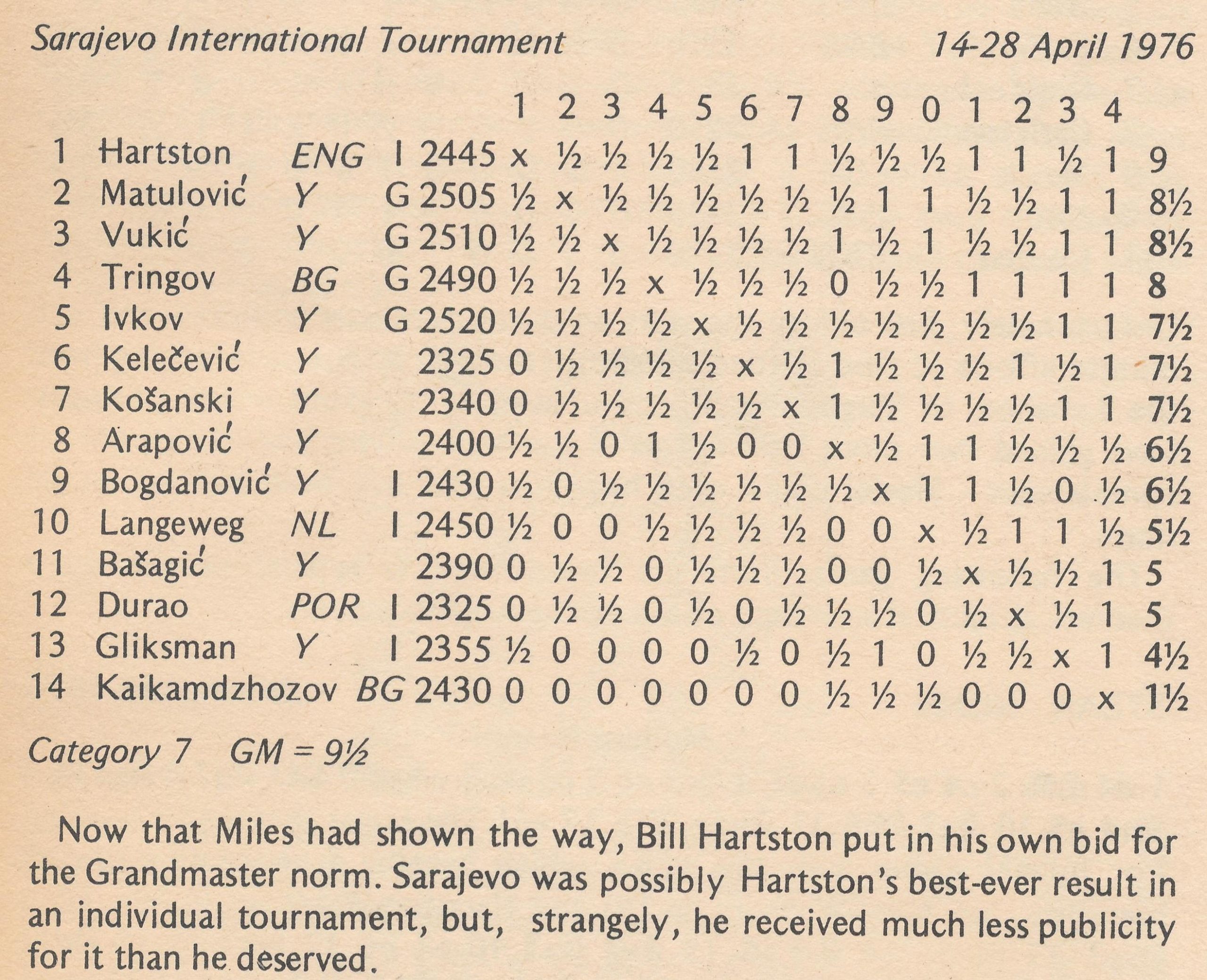
His best tournament result came three years later when he won 1st prize at Sarajevo 1976.
Sarajevo 1976 Crosstable from English Chess Explosion (1980)
His style of play is sound and competent in all the spheres of the game. That he can be brilliant when necessary he demonstrated his beautiful brilliancy game against the Finnish grandmaster Westerinen at Allicante in 1973. He has a fine, broad knowledge of the openings and has written a number of articles and books on that theme.
Bill was always a keen supporter of junior chess. event unknown.
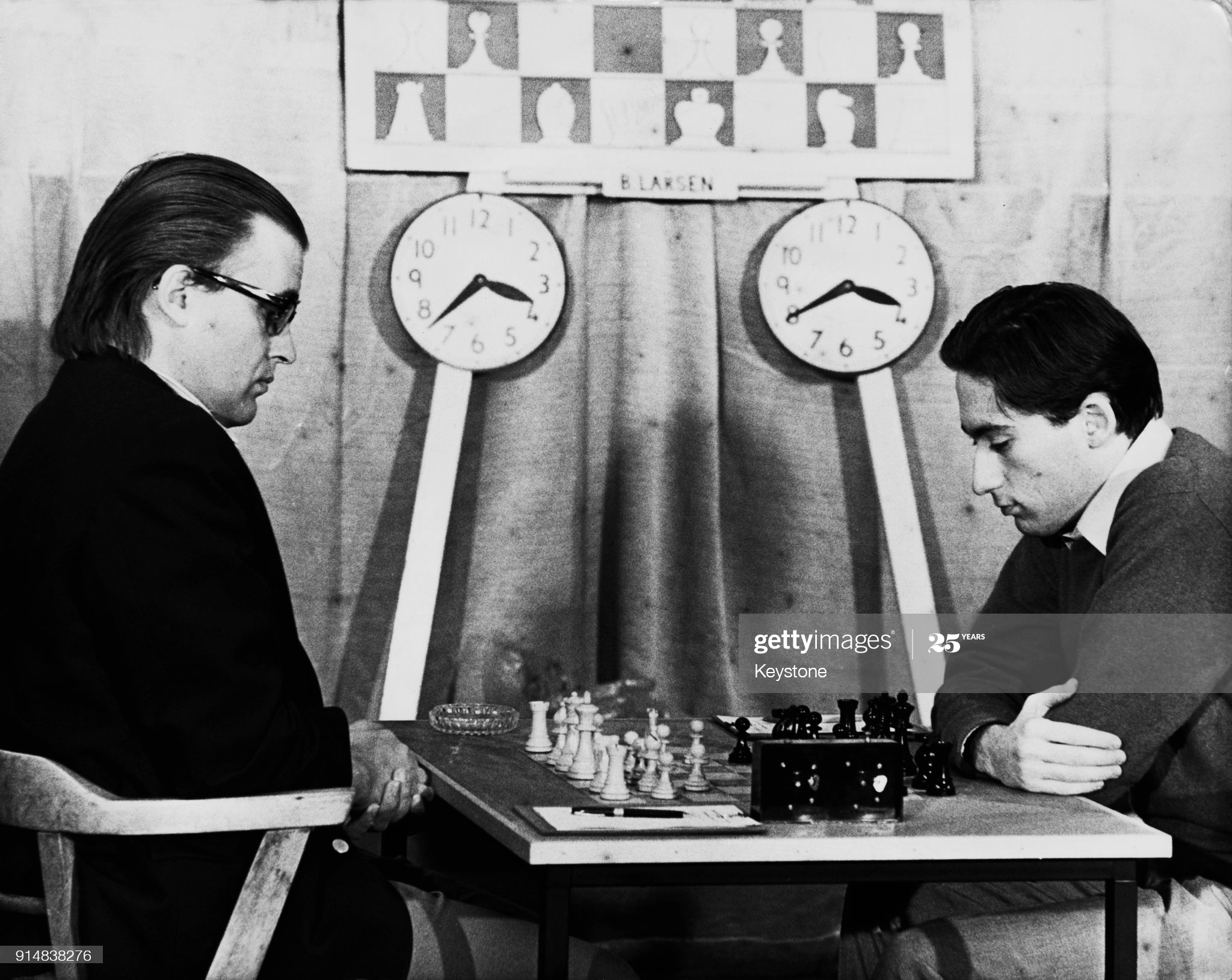
Danish chess grandmaster Bent Larsen (1935 – 2010, left) takes on English player William Hartston (right) during the annual Hastings International Chess Congress, UK, 13th January 1973. Larsen won the game. (Photo by Keystone/Hulton Archive/Getty Images)Bill plays board 5 for England versus Israel Telechess Olympiad match in September 1981. Board 6 was Paul Littlewood and board 7 was Nigel Short.
A lucid and entertaining writer, he has also appeared with success in BBC Television chess programmes.
Bill Hartston at a promotional event
Among his chief works are :
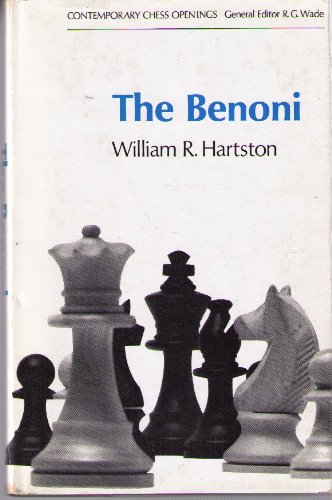
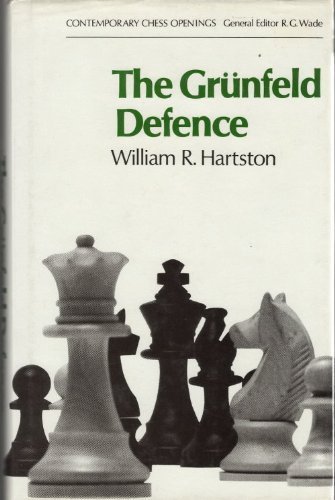
The Benoni, London, 1969 The Grunfeld Defence, London, 1971 The Best Games of CHO’D Alexander (with H. Golombek), Oxford, 1976.”
Here is an interesting interview published in the Streatham & Brixton Chess Club blog concerning the alleged “turning down the Hastings draw offer” story.
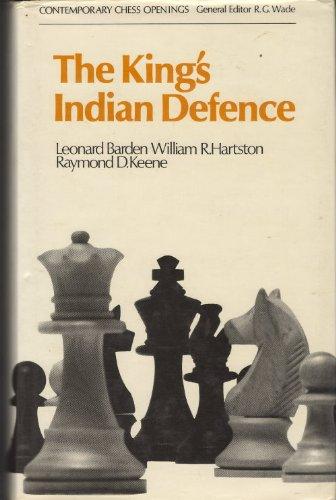
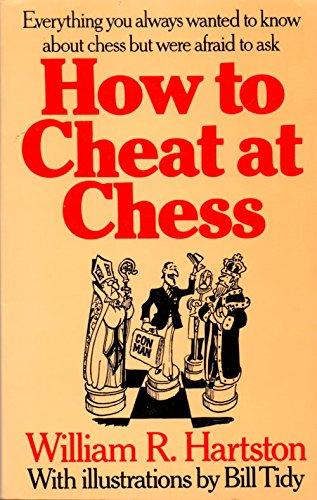
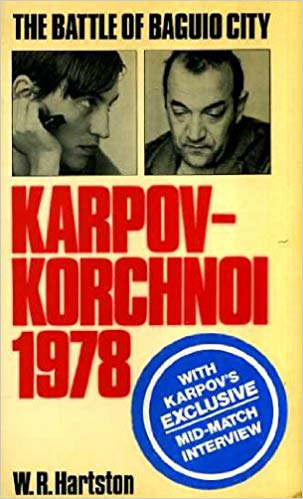
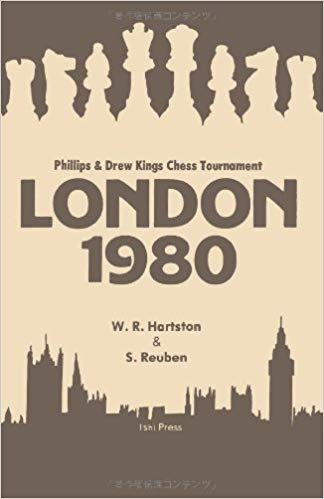
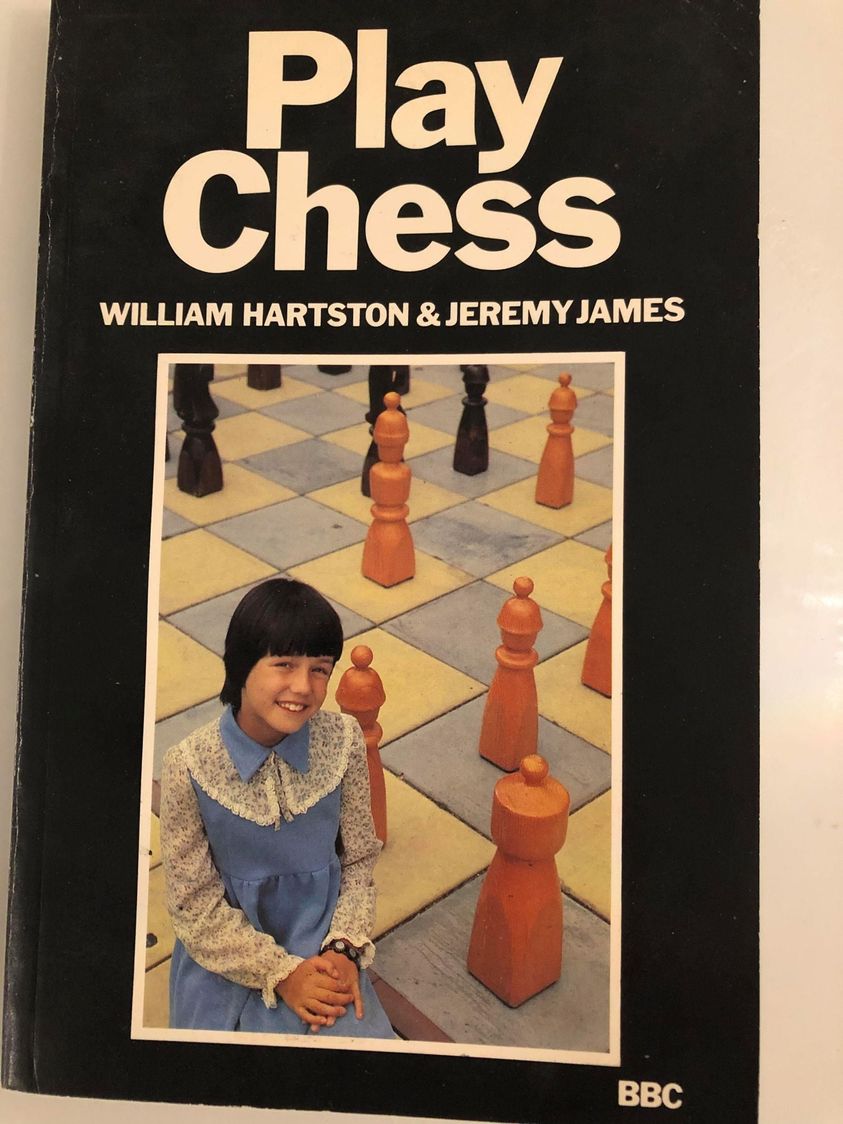
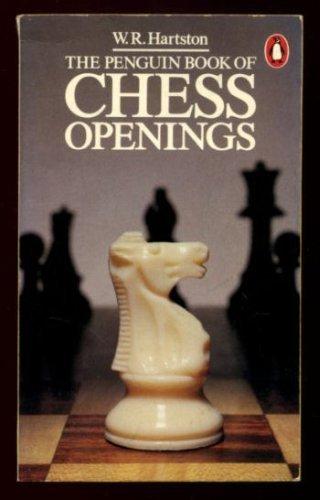
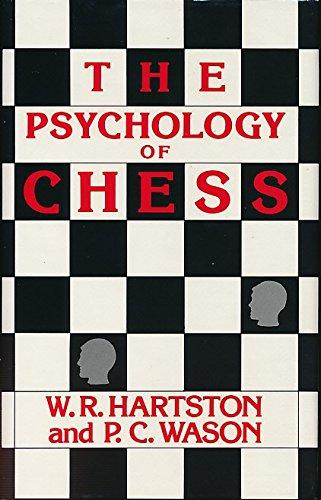
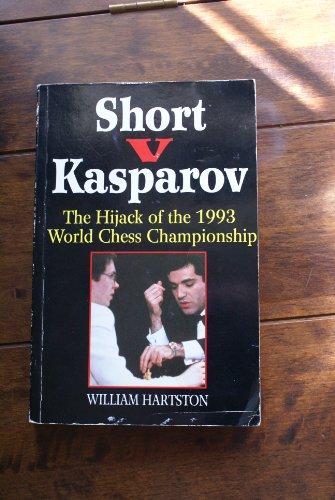
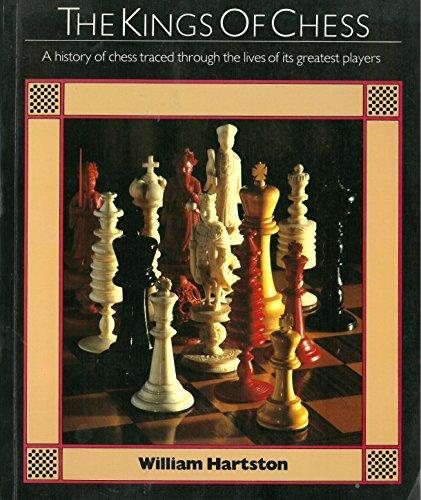
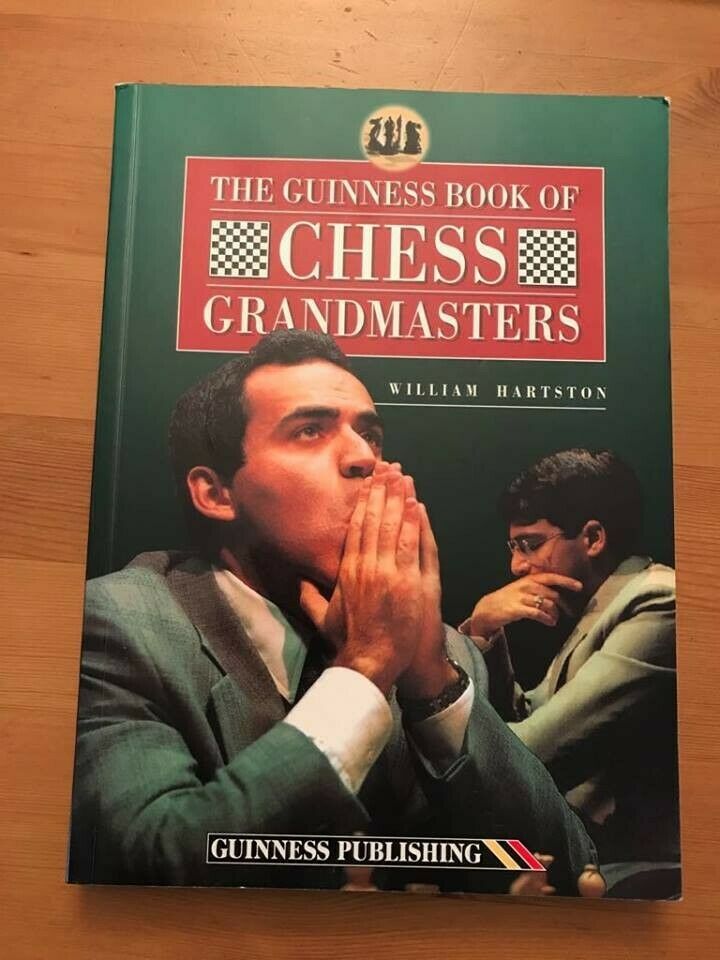
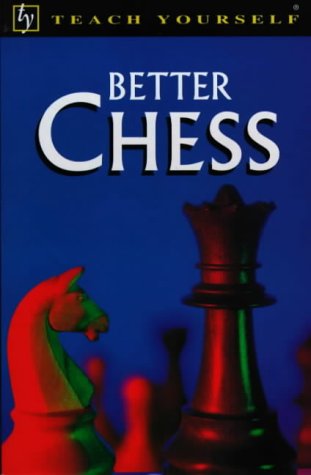
The King’s Indian Defence, 1969The Benoni, 1969How to Cheat at Chess, 1976The Best Games of C.H.O’D. Alexander, 1976The Grünfeld Defence, 1977Benoni, 1977Karpov-Korchnoi, 1978Soft Pawn, 1980The Phillips & Drew King’s Chess Tournament, 1980Play Chess, Hartston & Jeremy James, BBC, 1980The Penguin Book of Chess Openings, 1981The Psychology of Chess, 1984Short vs Kasparov, 1993The Kings of Chess, 1995The Guinness Book of Chess Grandmasters, 1996Teach Yourself Better Chess, Bill Hartston, Teach Yourself Books 08/01/1997, ISBN 13: 9780340670408
BCN wishes Happy Returns to IM Angus Dunnington (09-viii-1967)
Angus James Dunnington was born in Wakefield, West Yorkshire, his mother’s maiden name was Townend.
He has lived in Castleford, West Yorkshire and most recently in Lockerbie, Dumfriesshire.
Angus became a FIDE Master in 1990 and an International Master in 1991.
Angus has been a recipient of a Chess Journalists of America award and was chess correspondent for The Yorkshire Post. He has been an Olympiad trainer.
Angus has played for 4NCL White Rose and his peak FIDE rating was 2450 in January 1996, aged 29.
He won Toulouse 1993 with 6.5/9, we was first equal (3) in the London Agency tournament on 1997 with 6/9, we was equal first in the 1999 Hampstead IM tournament with 6.5/9.
As White Angus prefers a Reti style double fianchetto, the King’s Indian Attack and also the Queen’s Gambit and is an expert on the Catalan and KIA.
As Black Angus essays the Modern Defence most of the time.
His most recent ECF grading was 212E in 2005 and was 232A in 1996.
In 2018 after a lengthy absence Angus made a welcome return to the Scottish Championship Open with a strong =3rd place.
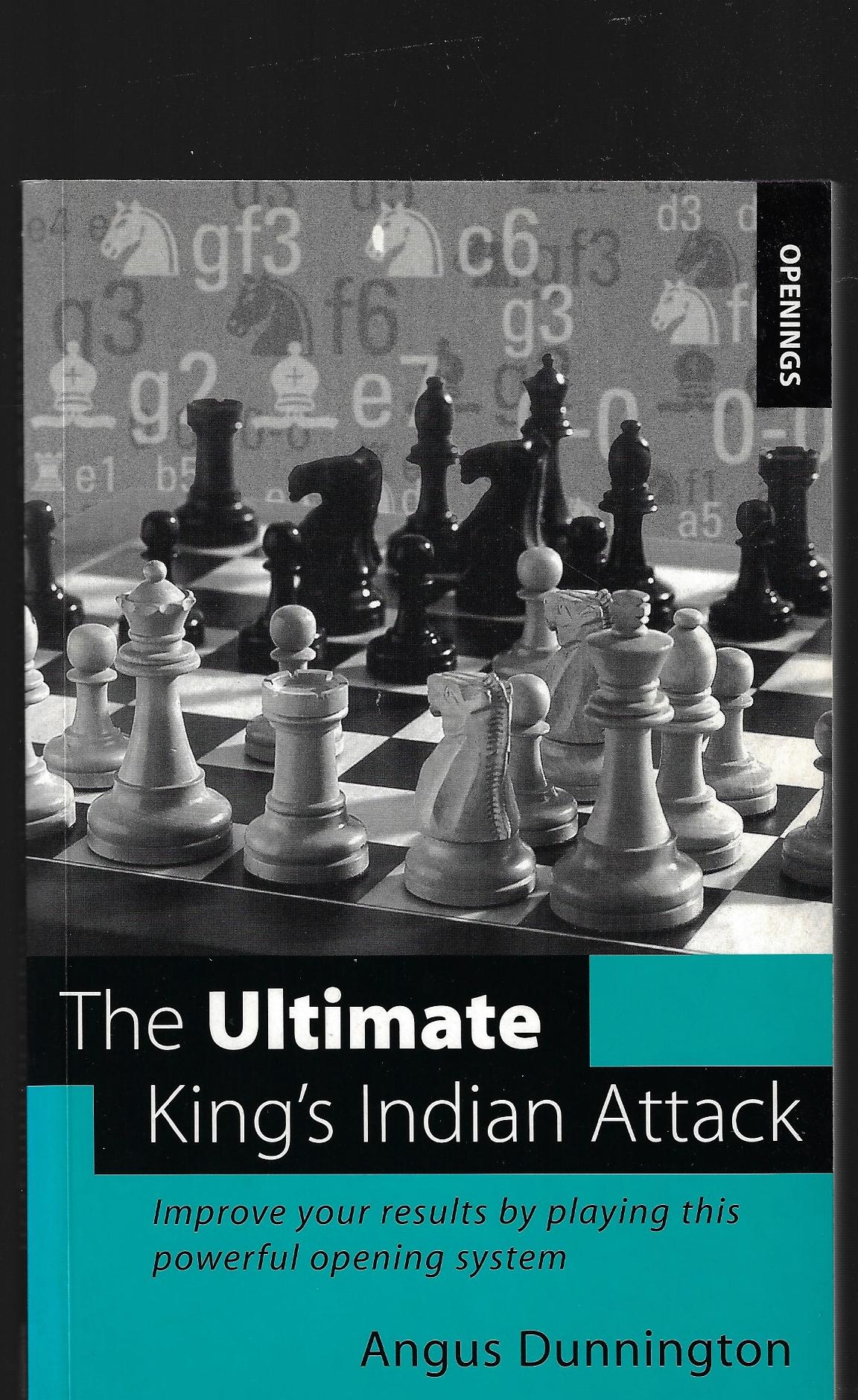
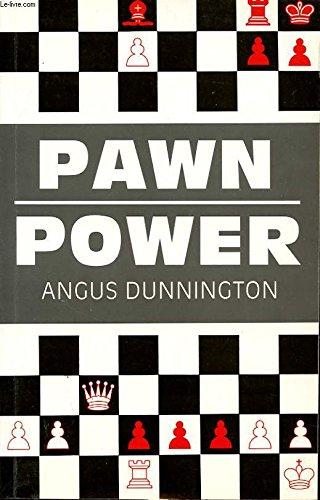
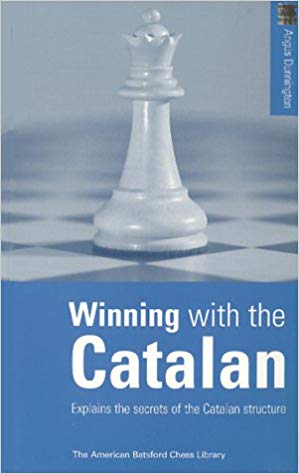
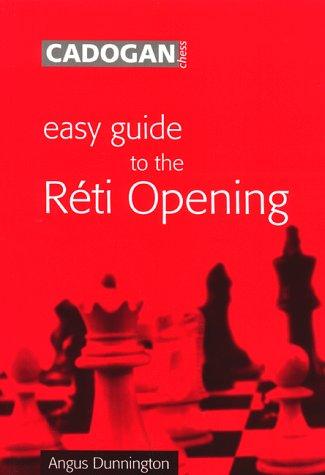
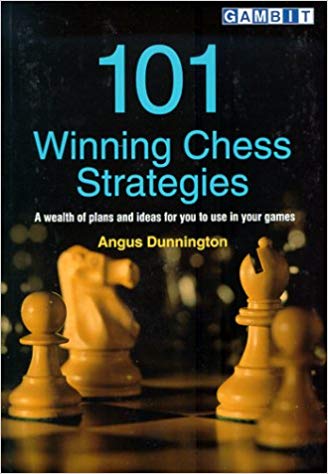
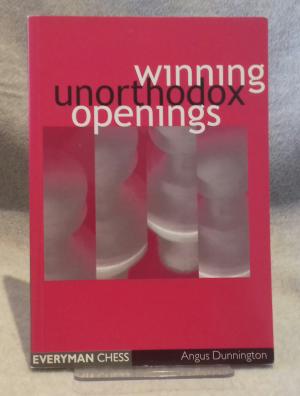
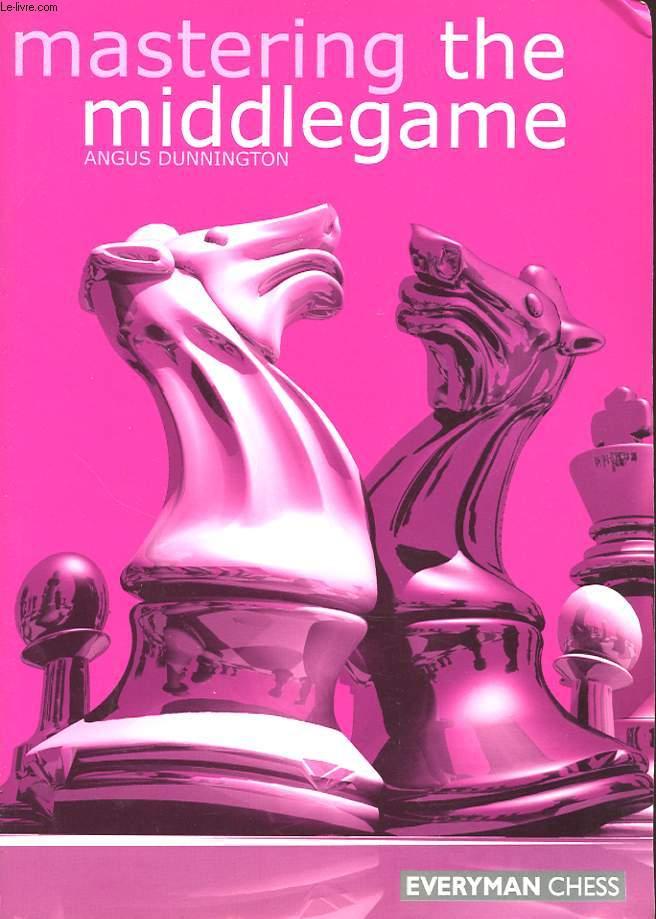
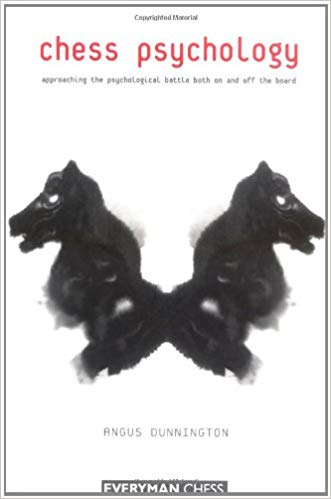
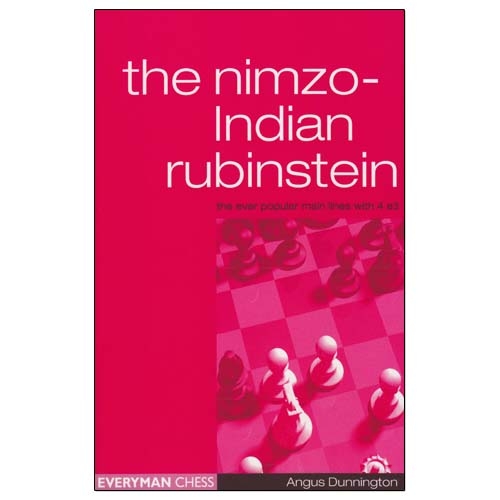
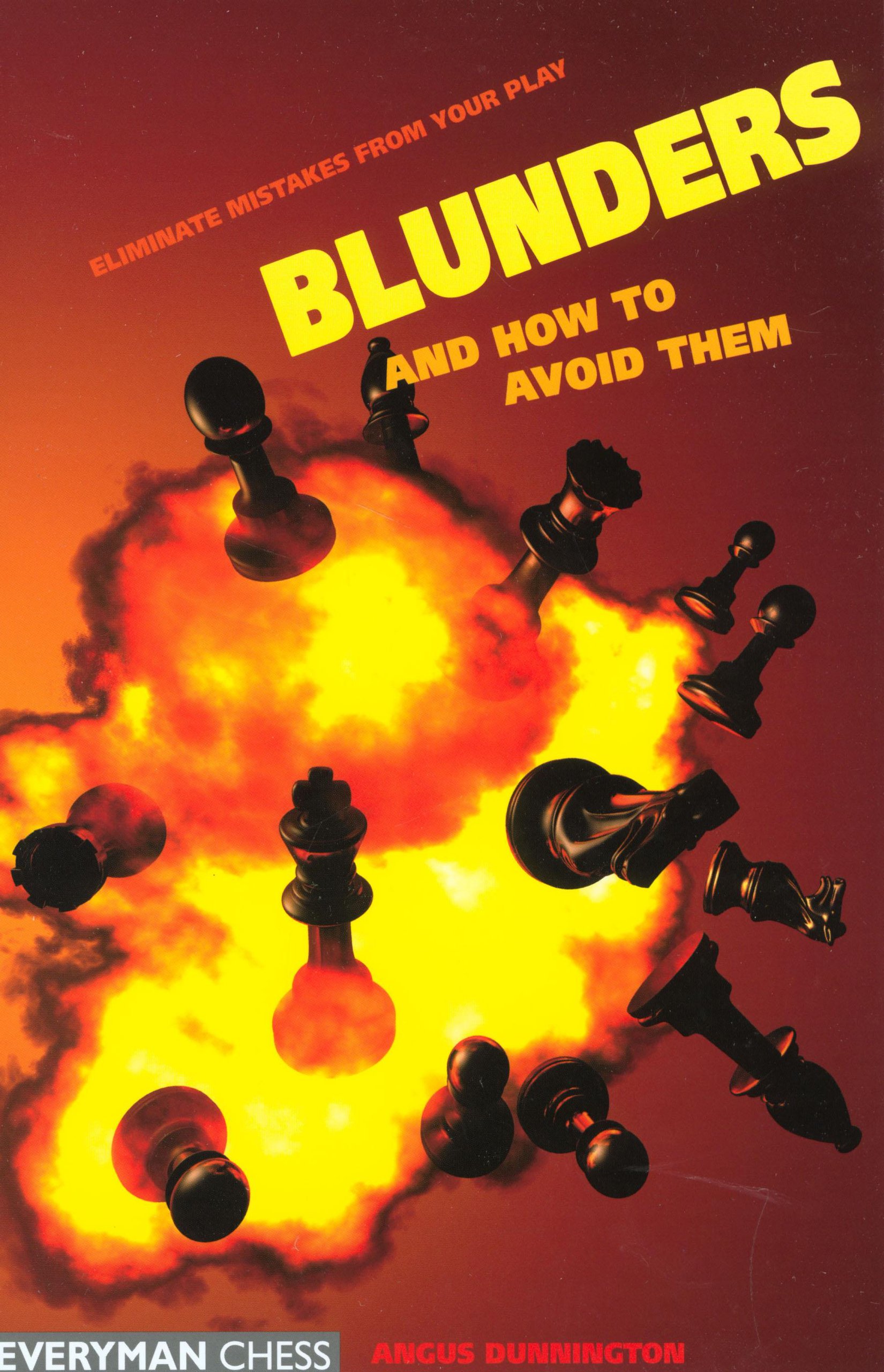
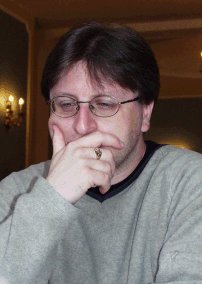
The Ultimate King’s Indian Attack, 1993Pawn Power !, 1994Winning with the Catalan, 1997Easy Guide to the Reti Opening101 Winning Chess Strategies, 1999Winning Unorthodox Openings, 2000Mastering the Middlegame, 2001Chess Psychology, 2003Nimzo-Indian Rubinstein: Complex Lines with 4e3, 2004Blunders and How to Avoid Them, 2004IM Angus Dunnington, photograph by Cathy Rogers
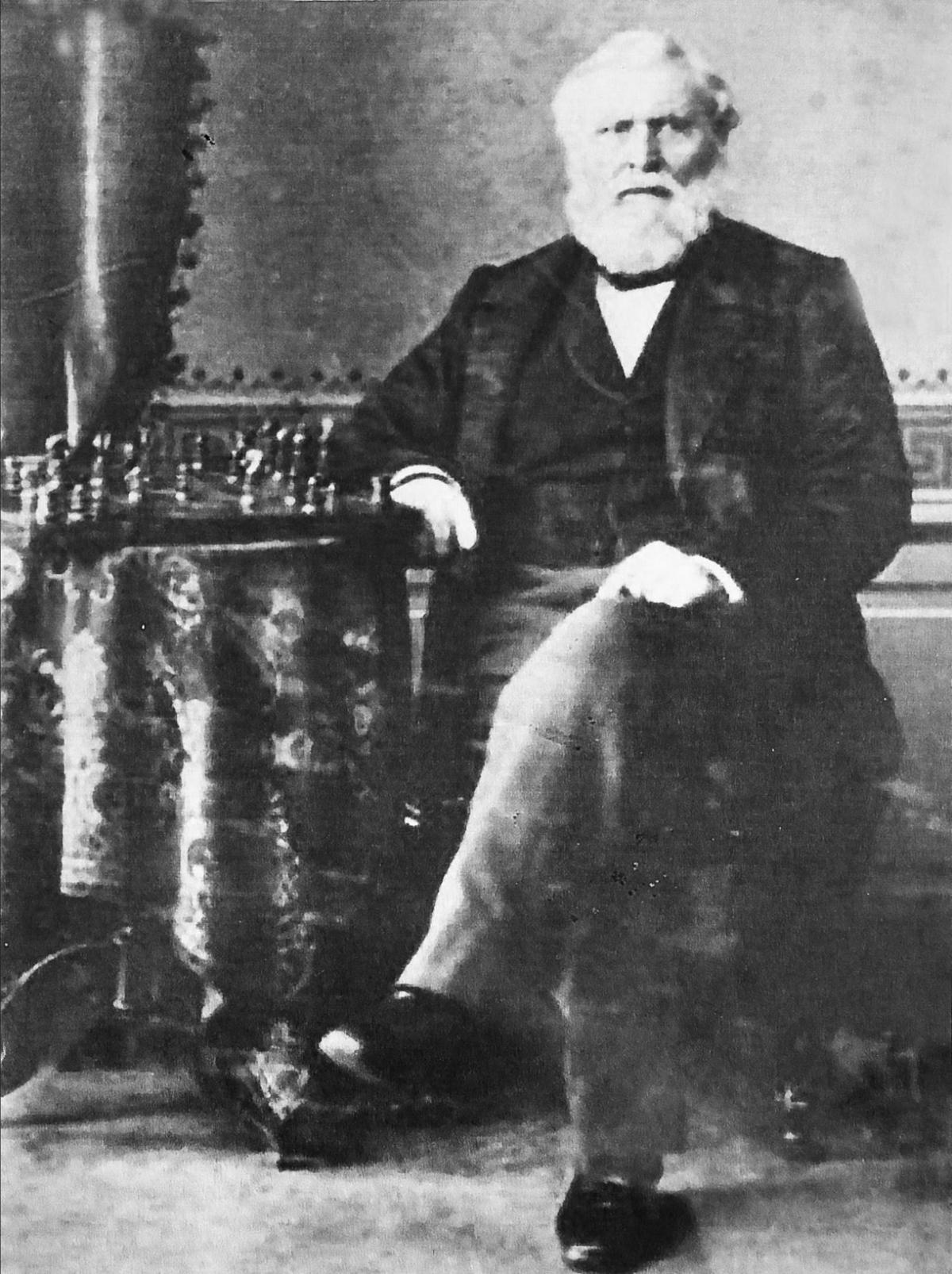
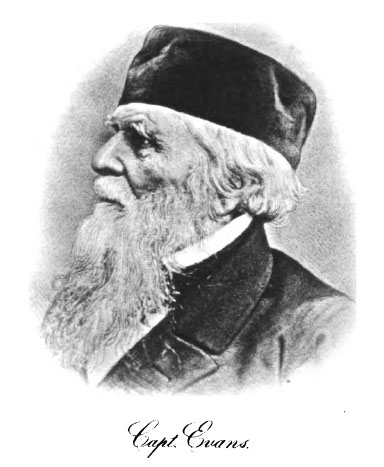
Captain William Davies Evans (27-i-1790 03-viii-1872)
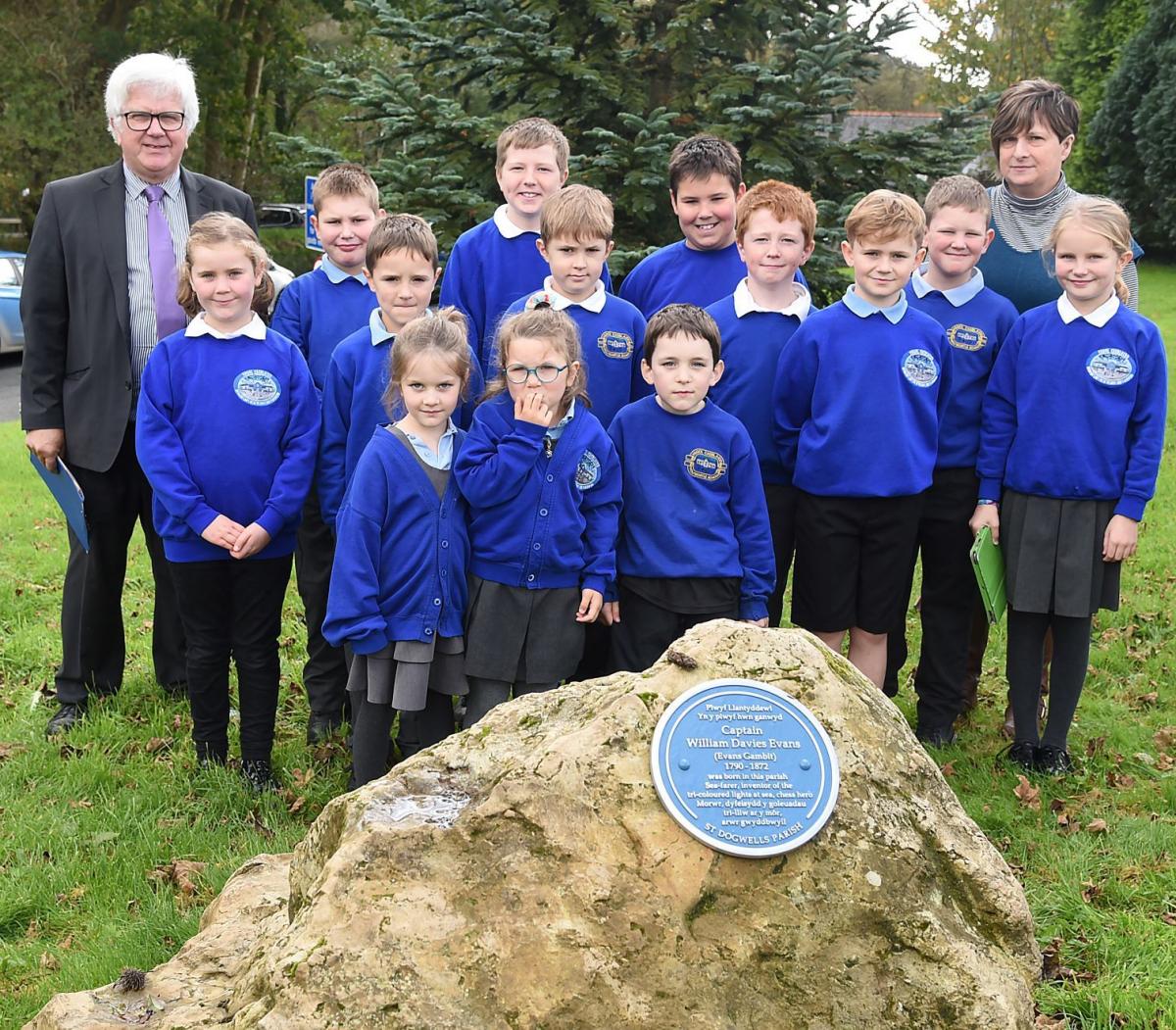
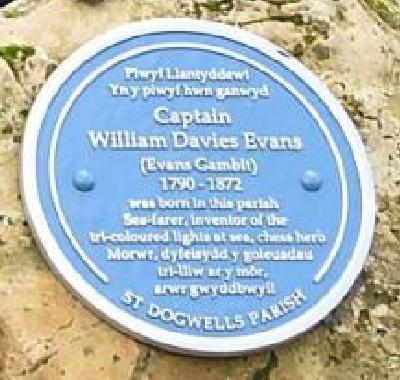
William Davies Evans was born on the 27th of January, 1790 at Musland Farm in the parish of Saint Dogwells, Haverfordwest, Pembrokeshire, SA62 5DT. His parents were John (a farmer by trade) and Mary Davies. William was baptised on September 21st 1814 in Steynton, Pembrokeshire. The service was conducted by WM Lloyd, Curate of Burton, Pembrokeshire.
It would appear from baptism records (Steynton) that WD had a younger brother Robert Joseph, baptised on the same day in September.
Captain William Davies Evans (27-i-1790 03-viii-1872)
From The Oxford Companion to Chess (OUP, 1984) by Hooper & Whyld :
“Inventor of the Evans gambit, for about half a century one of the most popular attacking weapons. He was born in (Musland Farm in the parish of Saint Dogwells,) Pembroke, Wales, went to sea at the age of 14, was employed by the Postal Department from about 1815, and rose to the rank of captain four years later. In 1824, soon after taking command of the first Royal Mail steam packet to sail from Milford Haven to Waterford, and while aboard, he invented his gambit.
Evans was a keen player. He gathered a small chess circle in Waterford, and when on leave in England played chess in London, notably in 1826 when he showed his gambit to Lewis and McDonnell, and in 1838 when he played a long series of games with Staunton at the Westminster Chess Club.
In Jan. 1840 he was pensioned off on account of ill-health. He went to Greece, became captain of a steamer that sailed the Mediterranean, and returned to London at the end of 1842. During the next 13 years there are several accounts of his presence in London, and then he settled abroad. He died and was buried in Ostend,
Evans claimed to have solved the three pawns problem (See below) , which, however, had already been solved by others.
His claim to the invention of tri-coloured lighting for ships has not been verified independently, although he is known to have investigated the subject. For this invention he states that the Tsar of Russia gave him a gold chronometer, and that he also received money. For a more detailed life of Captain Evans see British Chess Magazine, 1928, pp, 6-18.”
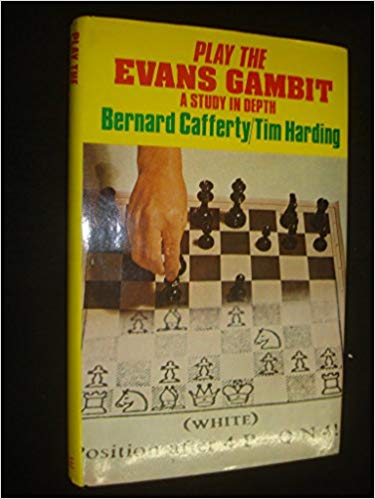
The Evans Gambit is a variation of the Giuoco Piano or Italian Game:
When Evans originally devised his gambit the move order was slightly different :
in which White sacrifices the b-pawn for increased central control and development viz :
From The Encyclopedia of Chess (Robert Hale, 1970 & 1976) by Anne Sunnucks :
“Inventor of the Evans Gambit, an opening described by a player in the last century as ‘A yellow fever attack : if you live through the initial stages and avoid any carelessness that may bring on a relapse, you will come out alright’.
Captain Evans discovered the gambit in about 1824. It was a favourite opening during the last century and was adopted by a number of leading players including La Bourdonnais and Morphy.
For some years Commander in H.M. Royal Mail Packet Service on the Milford and Waterford station, Captain Evans later became Commander in the P.& O. Company’s service and agent for the Royal Mail Steampacket Company, Port Grande. On retirement he lives for many years in Holland and Belgium.
The story is told of how, in 1870, the Grand Duke Nicholas of Russia, brother of the Tsar, was visiting Bruges when he heard that the inventor of the Evans Gambit was living in Ostend. Being a keen chess player he invited Evans to play a game. When Evans had won, the Grand Duke turned to his adversary and said : ‘I believe you invented the Evans Gambit ?’, ‘Yes’ replied Evans ‘and it’s not the only thing I’ve invented for which you have not paid me.’ ‘What’s the other?’ asked the Grand Duke.
Evans then explained that he was the inventor of the ship’s lights which were being used by the Russian Navy, in which the Grand Duke held the rank of Admiral. Several months later Evans was invited to the Russian Consulate in Ostend, where he was handed a letter from the Grand Duke, a gold chronometer, a gold chain and a draft of money, ostensibly in payment for the Russia’s rights to use the captain’s invention in her ships. ”
Evans analyzed the “Little Game of Chess” (an endgame composition involving only two kings with three pawns each)
to independently discover that it actually won for the player who moves first, not drawn as had been believed for over a hundred years.
From The Encyclopedia of Chess (Batsford, 1977) by Harry Golombek we have :
“After his retirement Evans went to live abroad and eventually found a haven in Ostend and there, ill, and almost blind and in very straightened circumstances, he dictated a letter on 22 March 1871, which was published in the Gentlemen’s Journal supplement for June 1872, along with an appeal for him organised by George Walker.
The letter gives the authentic facts of his life and is worth quoting in full, if only to refute various unfounded reports about a meeting with the Tsar’s brother, or according to that rich source of misinformation, the Rev GA MacDonnell, that the Evans Gambit was discovered off the coast of Africa by a middle-aged lieutenant in the Royal Navy -perhaps the reverend gentleman was confusing Waterford with the Canary Islands.
The letter runs :
Williams Davies Evans is a native of Pembrokeshire, South Wales, and was born on 27 January 1790. He commenced a naval career at the age of fourteen. He was about twenty-eight years of age when he first learnt the moves of the game of Chess. Having the advantage of frequent practise with Lieutenant H. Wilson, R.N., who was a player of some reputation in his time, beside corresponding on the subject of the game with the late Mr. W. Lewis, and also with George Walker, the able Chess Editor of Bell’s Life , he made a rapid progress in the game. Captain Evans received at first the odds of a Rook from Lieut. Wilson. After a continuance of play for some years, the odds were greatly reduced, until ultimately Captain Evans succeeded in defeating his formidable antagonist playing even.
About the year 1824, being then in command of a Government Mail Steamer, the passages between Milford Haven and Waterford were favourable to the study of the game of Chess and at this time he invented the Gambit, which bears his name. The idea occurred to him while studying a narration of Giuoco Piano in Sarratts’s Treatise on Chess.
Captain Evans was the first who gave to the world a true solution of that very difficult end game, the King and three Pawns unmoved against King and three Pawns also unmoved. This position was handed down to us through a period of some centuries as a drawn game, but Captain Evans proved that the first player can always win.
Captain Evans acquired some celebrity as “Inventor of the System of Tri-Coloured Lights for Ships to Prevent Collisions at Night”, which has been adopted by all nations possessing a marine. For this invention the English Government awarded him the sum of £1,500 , and the Czar of Russia a gold pocket chronometer, value £160, together with a donation of £200.
The subscription that amounted to over £200 was too late. He died in 1872 and was buried in Ostend where his grave bears the inscription :
To the sacred memory of William Davies Evans, formerly Commander in the Post Office and Peninsular and Oriental Steam Services, Superintendent In the Royal Mail Shipping Company, and inventor of the system of tri-coloured light for shipping. Also well known in the Chess World as the author of the Evans Gambit
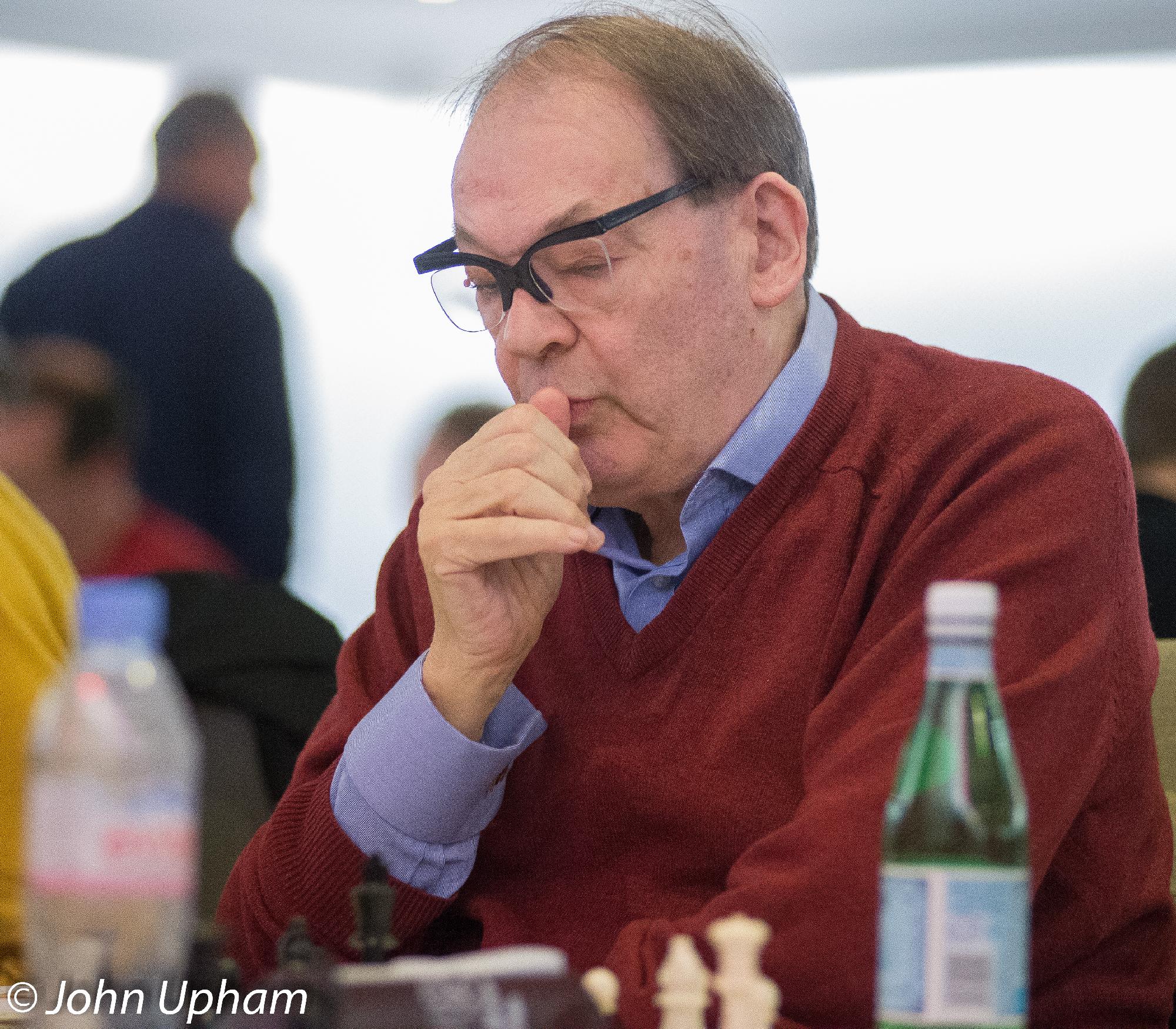
David Anderton OBE from the final 4NCL weekend of 2014, courtesy of John Upham Photography
BCN remembers CM David Anderton OBE who passed away on Friday, April 1st 2022.
In the 1977 New Years Honours List, Civil Division, David was awarded the OBE. The citation read simply : “For services to Chess”
David William Anderton was born in the district of Walsall, Staffordshire, West Midlands. His mother’s maiden name was Coltart and David resided in Walsall.
David was married to Doreen in 2005.
David Anderton (rhs) congratulates Sir Philip Stuart Milner-Barry for winning the “Board of Honour ” game versus Edward Lasker at the 1976 Lloyds Bank Match by Telex, London – New York. From BCM, volume XCVI (96) Number 11 (August), Page 494. The venue was the Bloomsbury Hotel, London. Photo courtesy of Lloyds Bank
David was an Honorary Life Vice-President of the English (formerly British) Chess Federation.
John Nunn, David Anderton and Jonathan Speelman
“David won the ECF President’s Award in 2009 following his stepping down as ECF legal expert. This is the citation from the 2010 ECF Yearbook :
“As this is Gerry Walsh’s last year as President it was considered appropriate that he be allowed to choose someone receive the award. Gerry has worked with David for all his time with BCF and ECF and has selected him due to his tireless and selfless devotion to both the BCF and ECF over many years.
David Anderton OBE, ? and Teresa Needham
Most of you will know David and will agree that this is a well deserved award. It is fair to state that David’s assistance over the years has been invaluable and that without it many areas of the Federation would have found it difficult, if not impossible to operate.
Jim Plaskett with David Anderton OBE at the 1983 Benedictine International (Manchester)
Since my election David has been a constant friend and confidante. He has invariable given sound advice throughout my term of office. It was John Wickham who rang me and suggested that due to my length of tenure, a special award might be in order.
Jim accepts the 1981 Grand Prix shield from David Anderton OBE
After years of selfless and generous devotion serving as ECF President, International Director, Captain of the England Team and legal adviser, this seems to be a fitting tribute.
From the Praxis Bath Zonal Tournament of 1987. David Anderton OBE is second from right
David’s advice both legal and general, has been invaluable in such matters as the John Robinson legacy and the change of name from BCF to ECF Limited, and I certainly hope that this advice will continue.
Gerry Walsh”
Bob Wade OBE, Murray Chandler MNZM and David Anderton OBE
David is a FIDE Candidate Master.
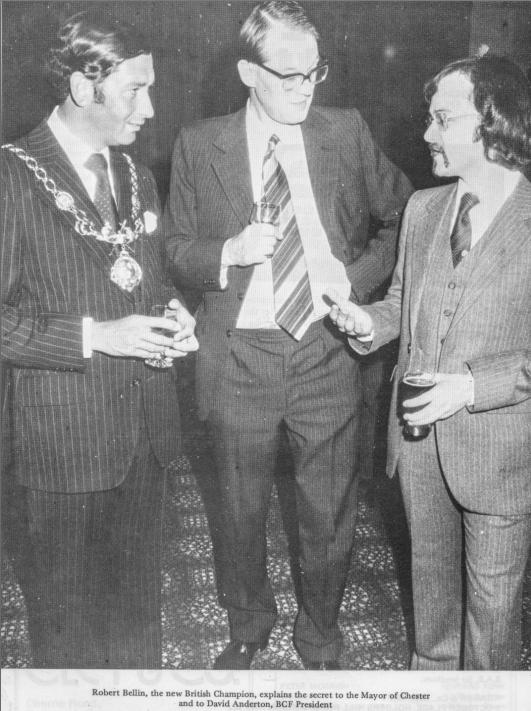
From the BCF 1979-80 Year Book of Chess : Robert Bellin, the new British Champion, explains the secret to the Mayor of Chester (?) and to David Anderton, BCF President
With the White pieces David exclusively plays 1.d4 aiming for a Queen’s Gambit and main lines.
With Black David plays the Winawer and the Classical French plus the Lenningrad Dutch.
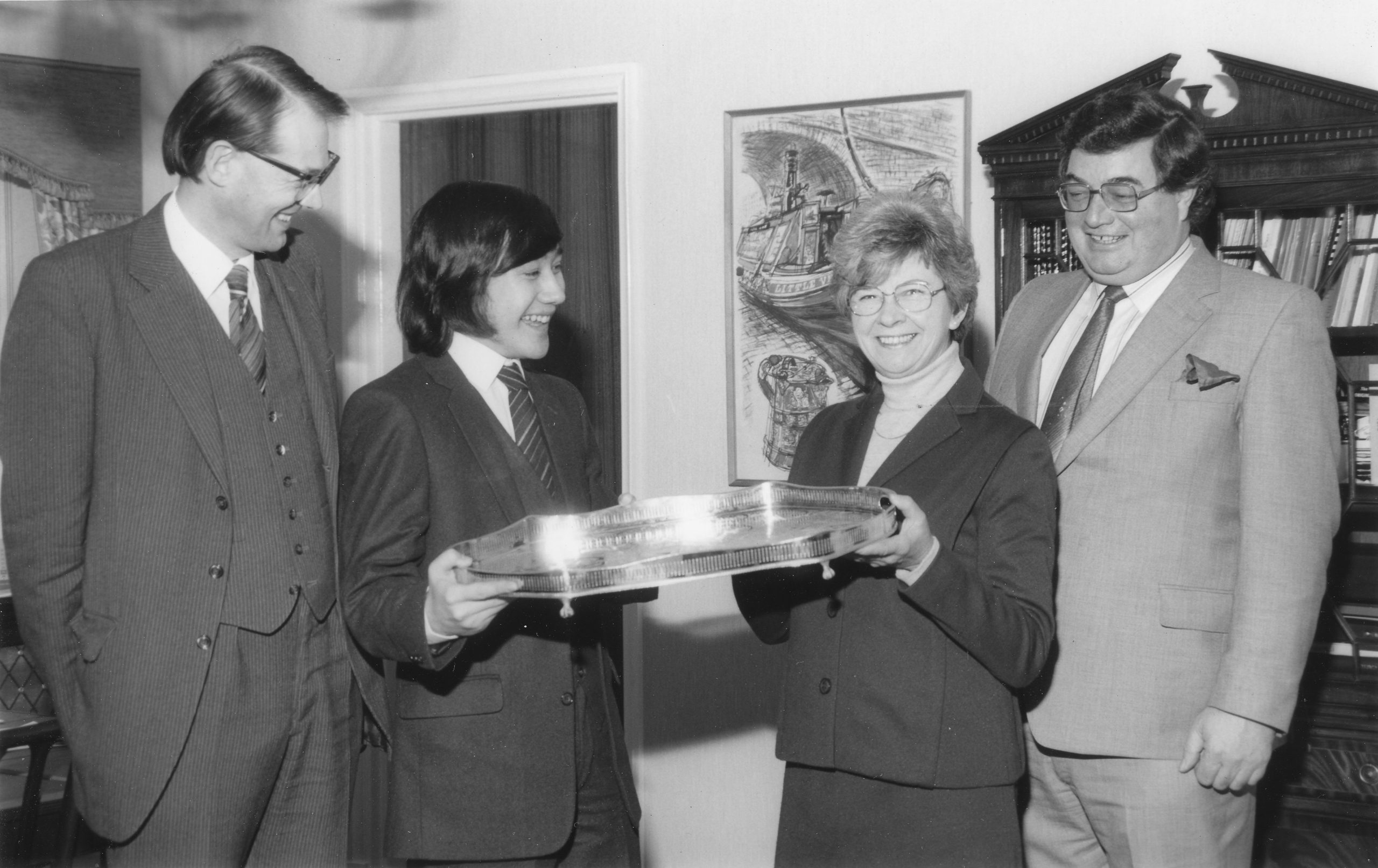
Mrs. Joan Agar; Chairman of Leigh Interests, presents the Leigh trophy (for 1981) to Mark Hebden. Left, David Anderton, BCF President; on the right Malcolm Wood, Leigh’s Chief Executive. BCM, 1981, page 104
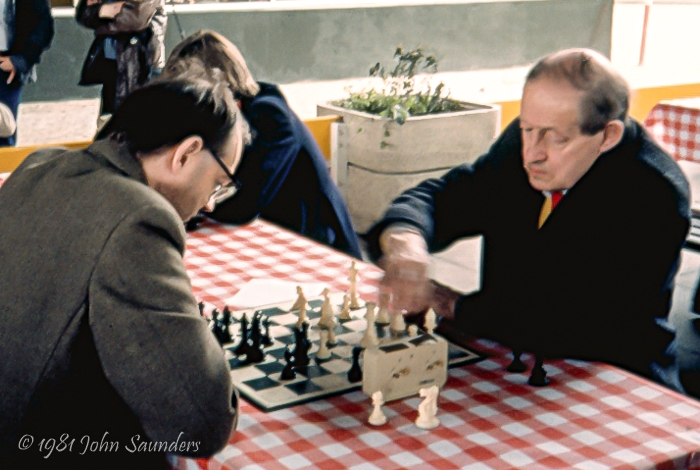
DW Anderton OBE plays BH Wood MBE in 1981 in a Blitz tournament outside of the National Film Theatre. Photograph courtesy of John Saunders
During 1989-93 David was an Executive Board Member of FIDE.
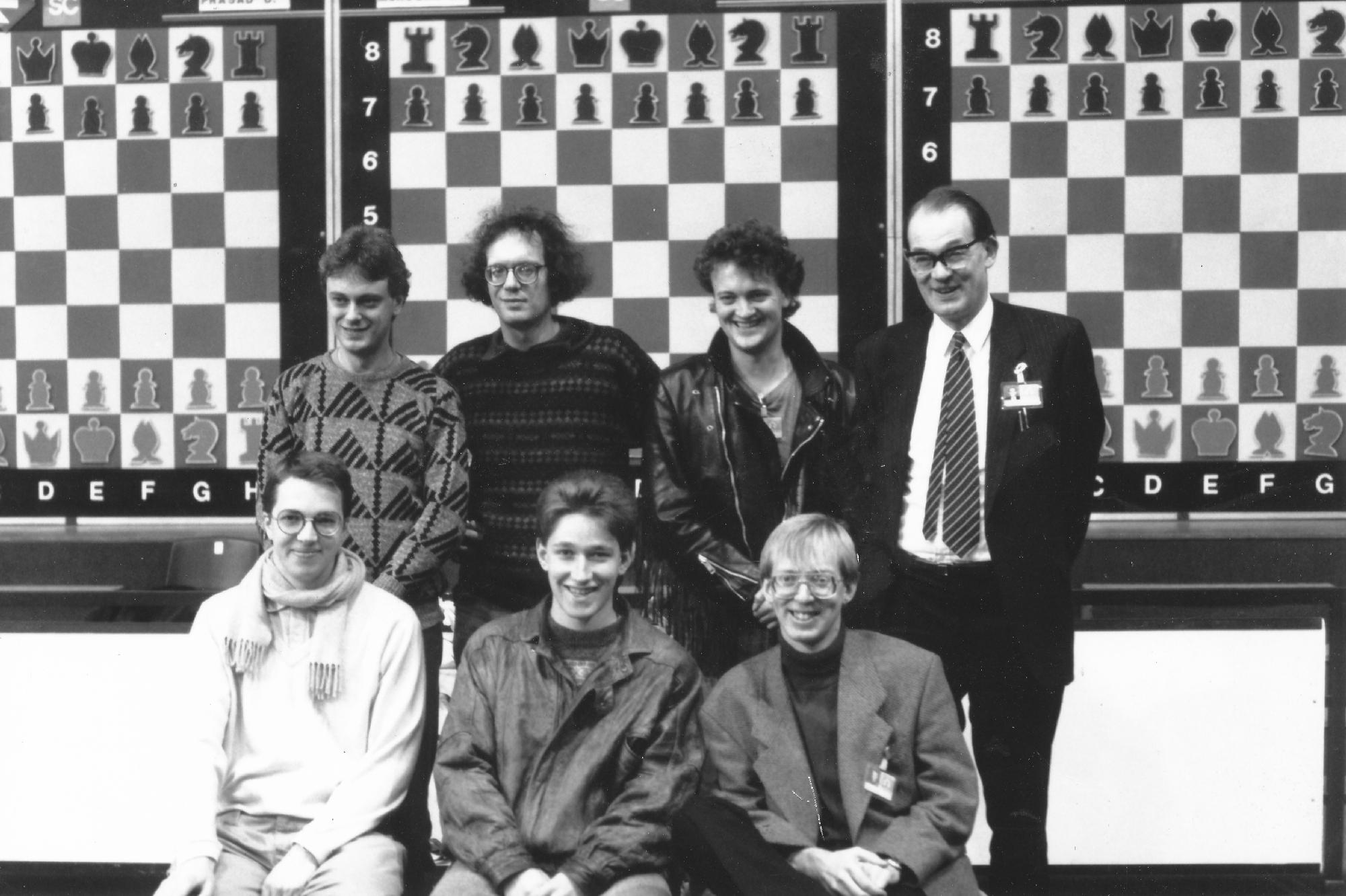
The England Team from the 1990 Novi Sad Olympiad : John Nunn, Jon Speelman, Julian Hodgson, David Anderton OBE (Captain), Nigel Short, Michael Adams and Murray Chandler
In 2015 David stood down from all of his roles within the ECF.
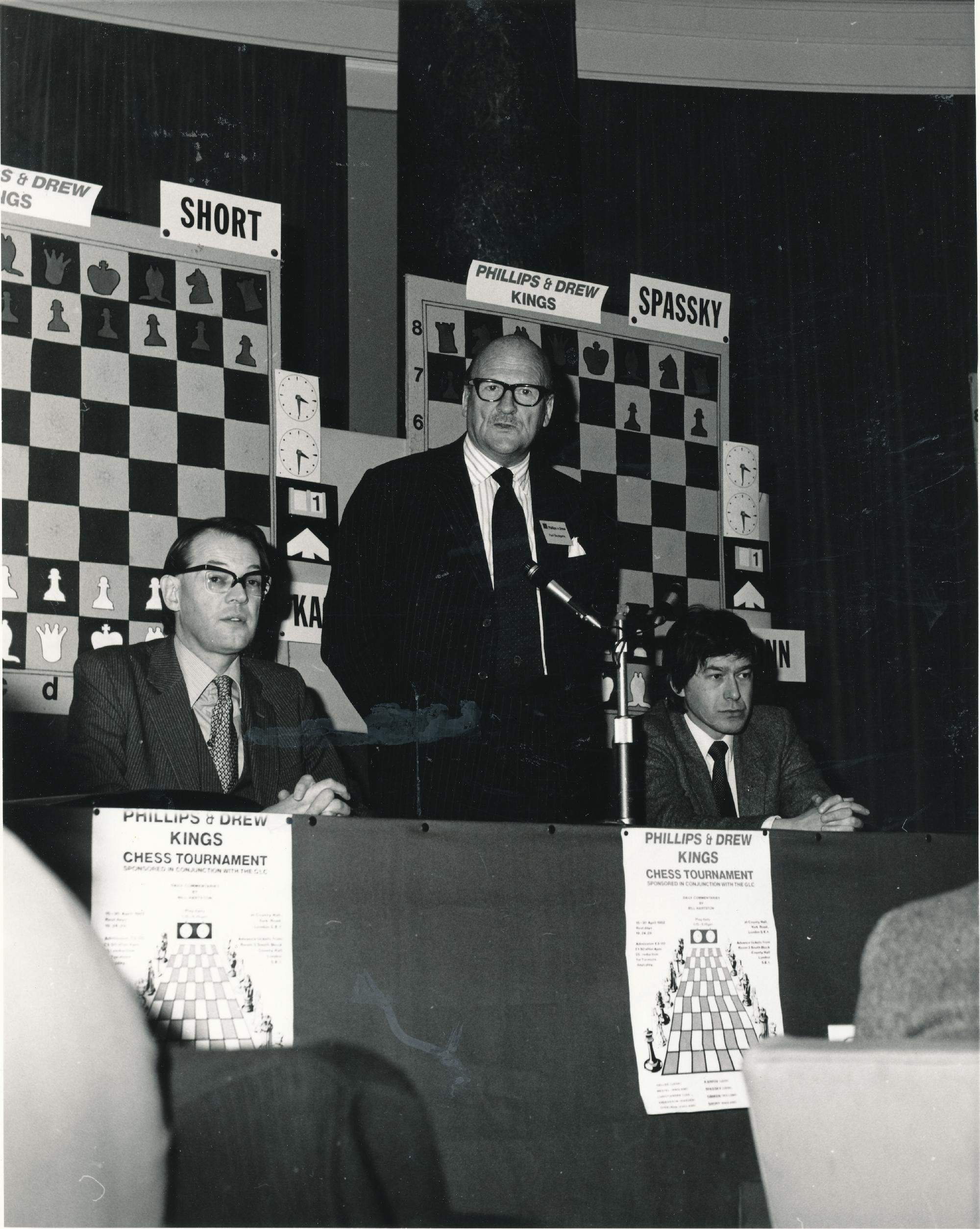
David Anderton OBE, Paul Bazalgette (Senior Partner at Philips & Drew) and Tony Banks (GLC Arts & Recreation Department) at the 1982 Philips and Drew Kings Tournament Opening Ceremony. Photograph by Clive Field
David has won the British Seniors Championship in 2003 (shared), 2005, 2007 (shared), 2009 (shared) and 2011.
We focus on the British Chess Scene Past & Present!
This website uses cookies to improve your experience. We'll assume you're ok with this, but you can opt-out if you wish. Cookie settingsACCEPT
Privacy & Cookies Policy
Privacy Overview
This website uses cookies to improve your experience while you navigate through the website. Out of these cookies, the cookies that are categorized as necessary are stored on your browser as they are as essential for the working of basic functionalities of the website. We also use third-party cookies that help us analyze and understand how you use this website. These cookies will be stored in your browser only with your consent. You also have the option to opt-out of these cookies. But opting out of some of these cookies may have an effect on your browsing experience.
Necessary cookies are absolutely essential for the website to function properly. This category only includes cookies that ensures basic functionalities and security features of the website. These cookies do not store any personal information.

 Save as PDF