FIDE Master Graham Burgess needs no introduction to readers of English language chess books ! Minnesota, USA based, Graham has authored more than twenty five books and edited at least 250 and is editorial director of Gambit Publications Ltd. In 1994 Graham set a world record for marathon blitz playing and has been champion of the Danish region of Funen !
FM Graham Burgess
Readers may remember “101 Chess Opening Surprises” published in 1998, also by Gambit Publications, was well received and added to GKBs reputation for originality, accuracy and encyclopedic knowledge of openings.
Chess Opening Traps for Kids is the fifth in a series of “for Kids” books and is robustly (!) hardbound in a convenient size such that weights are not need to keep it propped open (unlike some A5 paperbacks) meaning studying with this book is more convenient than with many books. The layout and printing is clear (as you would expect with Gambit) with numerous diagrams at key moments in each, relatively short, game. In essence, players under 18 (for whom this book is intended) will find it easy to dip in out of and it can be used without a board (although BCN would always recommend following each game on a “proper” board).
As you would expect with Gambit, the notation is English short form algebraic using figurines for pieces. One slight criticism is that the diagrams do not have “whose move it is” indicator. We know that many readers like to see this on all diagrams. However, each diagram does have coordinates; welcome for the junior readership.
Graham has identified and described 100 unique themes (usually tactical) that lead to relatively short wins out of the opening, many of which could be termed “miniatures”. An example theme is “Drag the King Out with Nxf7” : “Sometimes players leave f7 so weak that a knight sacrifice on that square wins by force. The signs to look out for are a queen that can invade on e6 and other pieces ready to support the raid.” Under this theme the author presents three examples (typical for each theme) from different openings plus supporting analysis and explanation.
A range of openings are demonstrated that yield a similar trap. For example, The Siberian Trap is shown from the usual perspective of the Sicilian Defence and the Queen’s Gambit Accepted. In the main, the author does not get bogged down giving details of who were the players of the games and when and where they were played but does in a few cases where the players are especially well known.
The author’s explanations and language are clear, concise and presented with a friendly and engaging style. There are numerous cross references to other themes when an idea uses a previously mentioned one. All of this contributes to the learning experience and the pattern recognition aspects of chess that are especially important for young players in their formative years. Thankfully, there is no recourse to engine evaluations and the emphasis is to use one’s personal brain engine in making an assessment. (One of our bugbears as chess teachers and coaches is juniors increasingly relying on engine assessments rather than their own brains).
Having worked through the 100 themes the student is presented with 48 exercises (with solutions) that test the students understanding (not memory) of what they hopefully have learnt.
Finally there are useful tips on further improvement and how to make progress.
In summary, this is an excellent book with much original material presented in a clear and friendly way and therefore to be recommended.
One negative comment we would make concerns the cover. “Never judge a book by its cover” we are told and you might look at this book cover and think it was suitable for say primary aged children. I would say not but I would suggest it suitable from secondary aged children. I would say strong juniors from 12 upwards would read this book and enjoy it.
Apart from the “move indicator” we would like to see an index of openings from which the theme examples were obtained.
The title and cover might, perhaps, put off the adult club player market. However, the content is totally suitable for adult club players upto say 180 ECF or 2000 Elo.
This book, written by the young English GM Daniel Fernandez and published by Thinkers Publishing, is (as the sub-title suggests) a repertoire book for Black players of the Caro-Kann defence. As such, Fernandez does not cover all possible black lines, but instead he recommends lines against each of the systems that White can employ against the Caro-Kann – and in many instances he recommends more than one line so that the reader can choose according to preference.
GM Daniel Fernandez
His repertoire consists of one or two solid (but not sterile) lines against each system, but additionally he throws in the occasional not-so-sound line (and always warns that he is doing this) that can be tried as a surprise weapon, or perhaps at faster time controls.
This is an excellent book, Fernandez manages to mix detailed analysis, explanations and personal opinion in a way which makes the book readable and enjoyable to go through (and believe me, some of the analysis is very detailed). The book is well produced and organised, and quite substantial at 416 pages. There is no detailed Index of Variations (usually a bugbear of mine!), but it is easy to find the line you’re looking for from the Table of Contents and the beginning of the book and a mini-Table of Contents page at the beginning of each chapter for the sub-variations.
I would highly recommend this book for anyone thinking about taking up the Caro-Kann, and for that matter to anyone who already plays it – it is one of the best opening books I have seen.
It is difficult to discuss this book without comparing it to Jovanka Houska’s book “The Caro-Kann” produced by Everyman Chess. Both books are recent (Houska 2015, Fernandez 2018) repertoire books by top English players who play the Caro themselves. (It is the Houska book that I used when I started using the Caro a couple of years ago.) In my opinion, both books are top-notch and provide the prospective Caro player with a good repertoire. If asked which book I would recommend this prospective Caro player to buy I would answer “both of them” – despite the overlap there are substantial differences in some lines (for example Houska recommends 4 …Bf5 after 1 e4 c6 2 d4 d5 3 Nc3 dxe4 4 Nxe4 whereas Fernandez recommends 4 …Nd7 here) and this gives players more choice over the lines they select. Of course, if budget does not permit buying both books then either one will do the job. I would be reluctant to choose only one of these excellent books, so I will not do so.
In summary: The Modernized Caro-Kann is an excellent choice for prospective Caro-Kann players, or indeed for those who already play the Caro-Kann and are looking to update their repertoire.
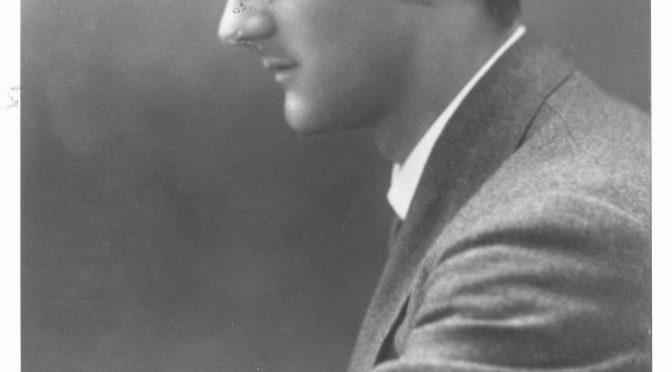
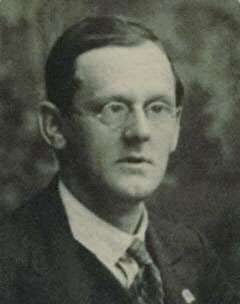
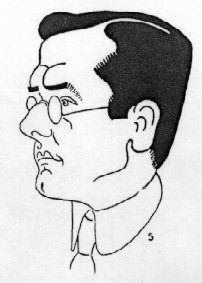
We remember Fred Yates who passed (or, at least was recorded as passing) on Friday, November 11th, 1932.
Fred (not Frederick) Dewhirst (not Dewhurst) was born in Birstall, Leeds on Wednesday, January 16th 1884, the same year as Harry S Truman and Eleanor Roosevelt.
An obituary appeared in Volume LII (52, 1932), Number 12 (December), pp.525-528 of the British Chess Magazine by PW Sergeant :
“The chess world has had many heavy bereavements during the year which is coming to an end; but to the British section of it there has been no bereavement like the last, which robbed it of F.D.Yates, when still in the prime of his chess career. The circumstances of his end were tragic. On the night of Tuesday, November 8th, he gave a very successful exhibition at Wood Green, only dropping one half-point in 16 games. On the following night he was in the company of a chess friend until fairly late, and then went back to his room in Coram Street, Bloomsbury. He was never seen alive again. It was not until Friday morning that anxiety was felt at Coram Street as to what he might be doing; for he was in the habit of secluding himself for many hours at a stretch when busy with work.
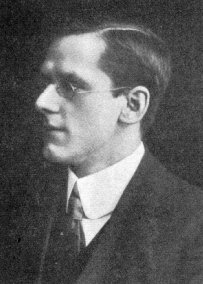
Fred Dewhirst Yates
On Friday, however, when no answer could be got to knocks on the door of his room, which was locked, and a smell of gas was noticed, the door was at last broken open, and he was found dead in bed.
It came out at the inquest before the St. Pancras coroner on November 15 that , though the gas-taps in the room were securely turned off, there had been an escape from what a gas companies official described as an obsolete type of fitting attached to the meter in the room. The meter, it appears, was on the floor, and the fitting must have been accidentally dislodged. A verdict was recorded of Accidental Death; and the coroner directed that the gas-pipes from the room should remain in the custody of the court. The body was conveyed to Leeds for burial on the morning of November 16.
So prematurely passed away one who may with justice be called one of the finest exponents of British chess, and an international master whose strength was recognised all over the world.
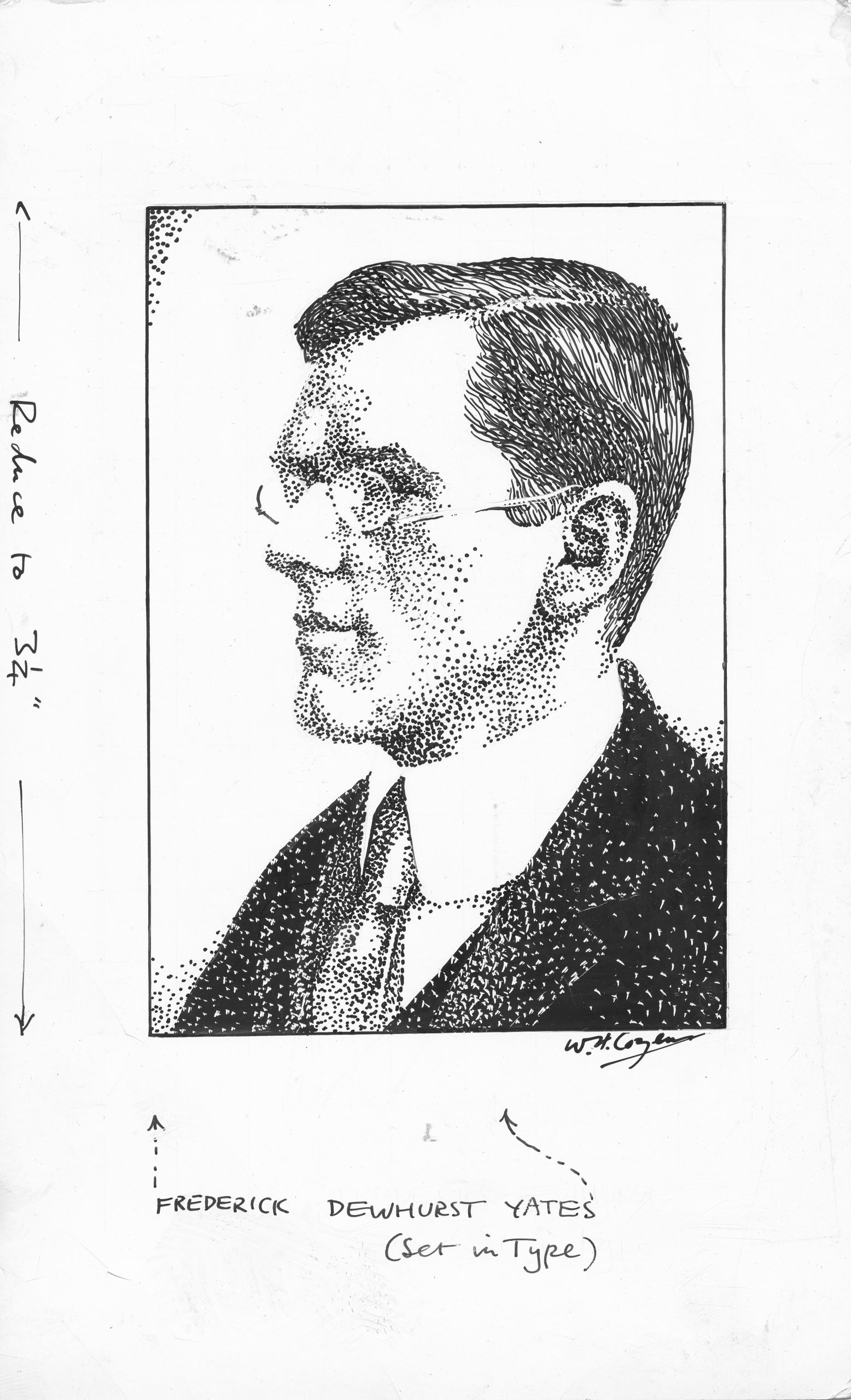
Fred Yates as drawn by WH Cozens for BCM
Frederick Dewhurst (sic) was born at Birstall, near Leeds, on January 16, 1884. He did not develop his chess power very young, at the B.C.F. congress at the Crystal Palace in 1907 only playing in the Second Class, though he then won first prize in one of the two sections. At Tunbridge Wells next year he tied for fourth place in a section of the First Class. He was admitted to the British Championship at Scarborough in 1909 (in which year he was Yorkshire Champion), and there tied with Blackburne for fourth and fifth prizes, after HE Atkins, JH Blake, and W. Ward.
In the same event at Oxford in 1910 he again tied with Blackburne, but this time for second and third prizes, Atkins being first, though losing in his individual encounter with Yates. In 1911, at Glasgow, Yates still further improved his position, this time tieing with Atkins for first place; but in the tie-match Atkins won somewhat easily.
Atkins stood down for the first time at Richmond in 1912; but the success of RC Griffith left Yates second, in company with the late HG Cole. At last in 1913, Yates gained his ambition, and at Cheltenham won the British Championship with the fine score of 9 out of a possible 11, 1.5 points above J. Mahood and 2 above Blackburne. In the ruined Congress at Chester in 1914 he tied for first place with Blackburne; and, as Blackburne was unable to play a deciding match, Yates won his second championship.
Fred Dewhirst Yates, Jacoby Archive
Since the War he gained the title again in 1921, 1926, 1928 and 1931, thus making a record of six championships, second only to Atkin’s record of nine (ed : in 1969 at the Rhyl Congress Jonathan Penrose OBE was to surpass Atkin’s record by one.)
Yate’s six victories were gained in sixteen attempts In addition must be mentioned his success in the Hastings tournament, in the New Year of 1921, for holders of the British Championship only.
Fred Yates
His other successes in this country, including his two wins in the in the Anglo-American cable match, in 1910-11, need not detain us; for limitations of space demand that we shall come to Yates as an international master. His first essay was at Hamburg in 1910, on the invitation of the German Chess Federation. Though he did badly, only getting one win in 16 games, the win was a remarkable effort, at the expense of no less a celebrity than Dr. Tarrasch.
At Pistyan two years later he did a little better. He had to wait until after the War for a third attempt; but it will be best to give what we believe to be a full record of his performances in international event:- (to be added).
These lists, however, furnish no just view of the strength of Yates’s play, which always was most fully exhibited against the leading competitors in tournaments. Among his triumphs must be noted his particularly his wins against Alekhine at Hastings, 1922, and Carlsbad 1923 (a brilliancy prize game); against Euwe, Scarborough, 1928; against Nimzowitsch , Carlsbad, 1929; against Bogoljuboff, London, 1922, and Baden-Baden, 1925; against Tartakover, Hastings and Kecskemet, 1927; against Kmoch and Rubinstein, Budapest, 1926; against Spielmann and Vidmar, San Remo, 1930; and his draws with Alekhine and Capablanca at New York, 1924. The harder the opposition, the better his play. Conversely, against what should have proved easier opponents he was apt. at times, to show less of his skill. In this, of course, he was not peculiar, even among the experts.
Generally speaking, however, he was a remarkably tenacious player, who would not abandon a game while there was the slightest chance of a win or a draw. This was not due to mere obstinacy, as may sometimes have appeared, but to the depth of his vision, which gained for him among the German commentators the title of ein tiefe Denker(ed : a deep thinker) – no small testimony from those from whom it came. With a robuster physique there is no knowing to what a position he might have attained in the chess world. The late Amon Burn always had the highest opinion of is powers, and always pointed out, too, the handicap under which a player labours who has to report the events in which he takes part – equivalent, he would say, to giving the other competitors Pawn and move!
Yates was unfortunate in embracing professionalism in an era when the rewards were becoming less and less, and finally reached a stage when they scarcely provided the means of a bare existence. He was a fine simultaneous player, whose exhibitions always delighted by their combination of speed, precision and flashes of brilliance.
As commentator he was very good indeed, and his contributions, especially to The Manchester Guardian, where noted alike for their accuracy and for a sense of style.
He had a journalistic training, outside chess. He was not, in fact, ‘a mere chessplayer’, in spite of his intense devotion to the game. It was his extreme reticence which gave such an impression to all but those whom he admitted to intimacy. They at least knew his widespread interest in other things; and W. Winter’s recent tribute to him in the Guardian in no way exaggerates his charm as a companion among those who knew him best. To them his loss is one which cannot be replaced.”
An Appeal
No doubt all chessplayers in England will have read with sorrow of the death of F.D.Yates at the early age of 46, and more especially will the circumstances of it be a shock to many.
An inquest was held, as has already been reported, and was attended by his two sisters, who have practically no means, as was the case of Yates himself. Certain chessplayers who attended the funeral agreed to make themselves responsible for the funeral expenses, but as the body was removed to Birstall in Yorkshire for burial in the family grave, the expenses were considerably heavier than was anticipates and, with the money owing to the landlady, comes to a total of £51 2s and 0d.
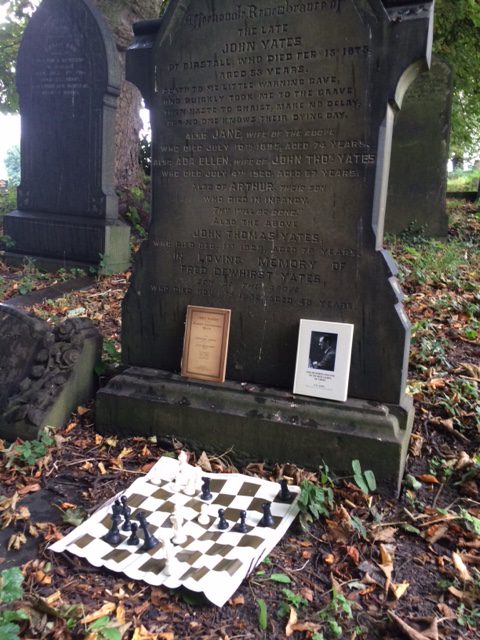
The Gravestone of FD Yates, courtesy of Matthew Sadler
We feel quite sure that when our readers know, they will like to show their last recognition of the value which F.D.Yates was to English chess by giving a donation towards the sum.
The London Chess League, whose finances are not in a very satisfactory state, as in the case of most chess concerns, has agreed to donate £3 towards this. Their president has given £1 1s 0d., and one or two other members have promised donations. We shall be happy to receive any contributions towards this fund, and will give acknowledgment in future issues.”
From The Oxford Companion to Chess (OUP, 1984) by Hooper and Whyld :
“English player. British Champion 1913,1914,1921,1926,1928, and 1931, Around 1909 he gave up his profession in accountancy to become a chess professional. Of the many international tournaments in which he competed from Hamburg 1910 to Hastings 1931—2 he made his best results in the B Final, Kecskemet 1927, first (+4=2-1) equal with Tartakower, and at San Remo 1930, the strongest tournament of the year, when he came fifth after Alekhine,, Nimzowitsch, Rubinstein, and Bogoljubow ahead of Spielmann,
Vidmar, and Tartakower.
A tenacious player, he could be a dangerous opponent. In tournament play he defeated most of the greatest masters of his time on one occasion or another, and among these victories were two defeats of Alekhine (Hastings 1922, Carlsbad 1923), and three defeats of Bogoljubow (London 1922, Baden-Baden 1925, Scarborough 1927) and Rubinstein (London 1925, Moscow 1925, Budapest 1926), A careful and conscientious writer, he conducted a chess column in the Yorkshire Post, was chess correspondent of the Manchester Guardian , and wrote three books (see foot of article) in collaboration with William Winter (1898-1955).
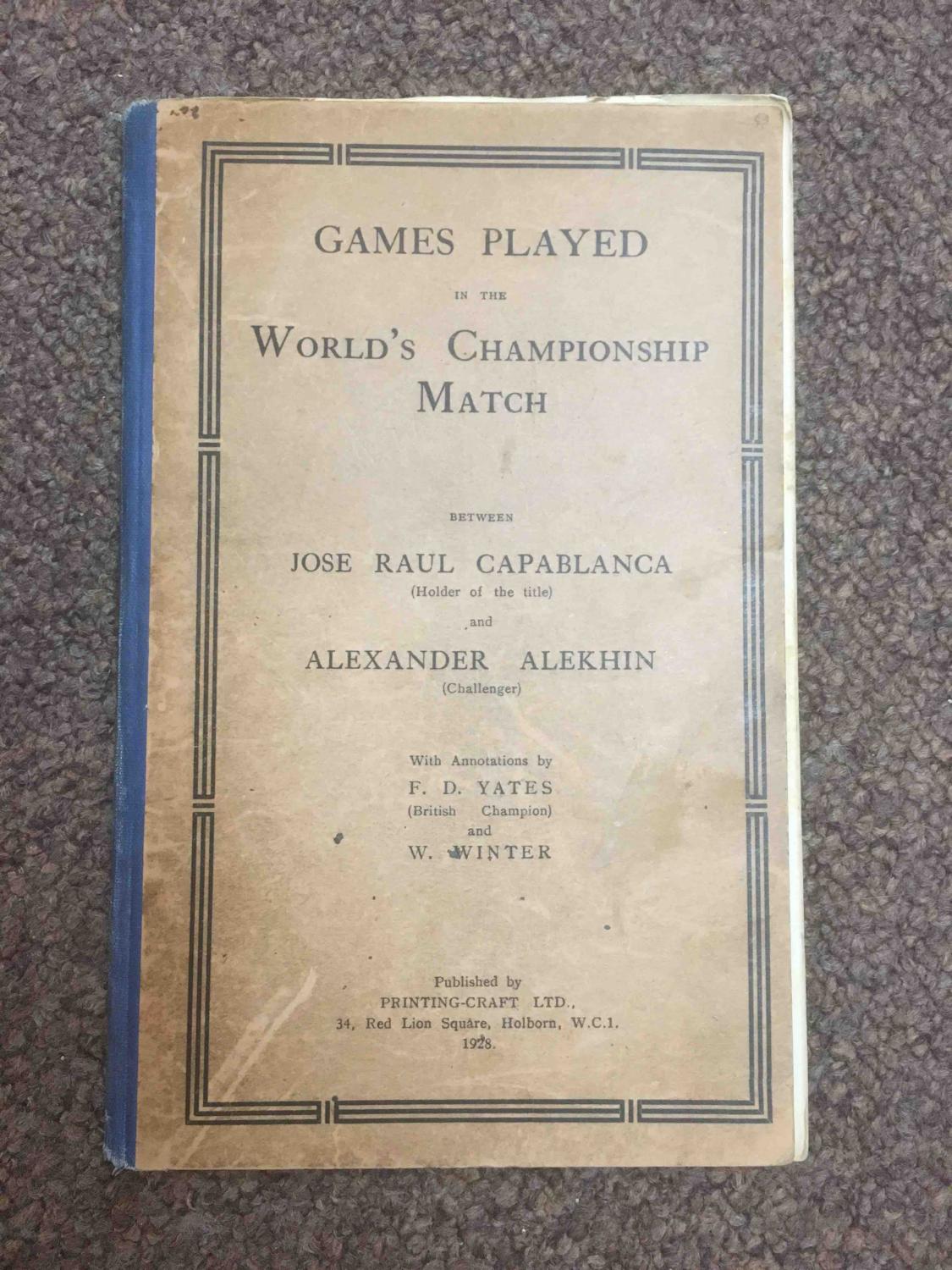
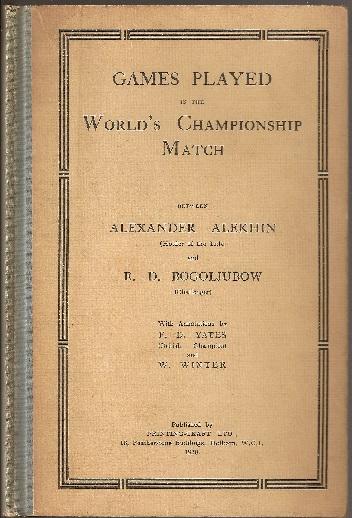
Games Played In the World’s Championship Match between Jose Paul Capablanca and Alexander Alekhine, FD Yates and W, Winter, 1928, Printing Craft LimitedGames Played in the World’s Championship Match between Alexander Alekhine (Holder of the Title) and E D Bogoljubow (Challenger), Printing Craft Limited, 1930, FD Yates and W. Winter
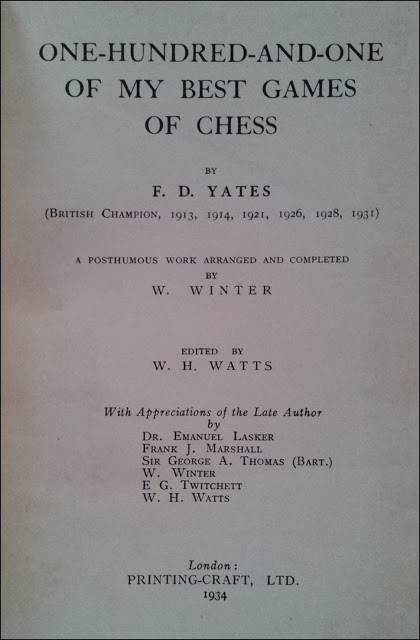
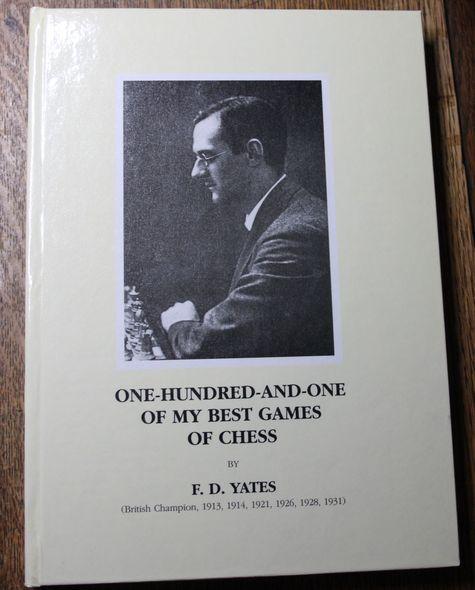
A leak from a faulty gas pipe connection killed Yates while he was asleep. His book One-hundred- and-one of My Best Games of Chess was published in 1934.”
From The Encyclopedia of Chess (Robert Hale, 1970 & 1976)by Anne Sunnucks :
“International Master and British Champion in 1913, 1914, 1921, 1926, 1928 and 1931.
Born in Birstall, near Leeds in Yorkshire, on 16th January 1884, Yates was 25 before he played in the British Championship for the first time. In 1909, having won the Yorkshire Championship, his entry was accepted for the British Championship at Scarborough, and he tied with Blackburne for 4th prize. The following year he again tied with Blackburne, this time for 2nd prize, and in 1911 he tied with Atkins for 1st prize but lost the play-off for the title. In 1913, he succeed in winning the British Championship for the first time.. During his career he competed in the British Championship 16 times and won the title on six occasions.
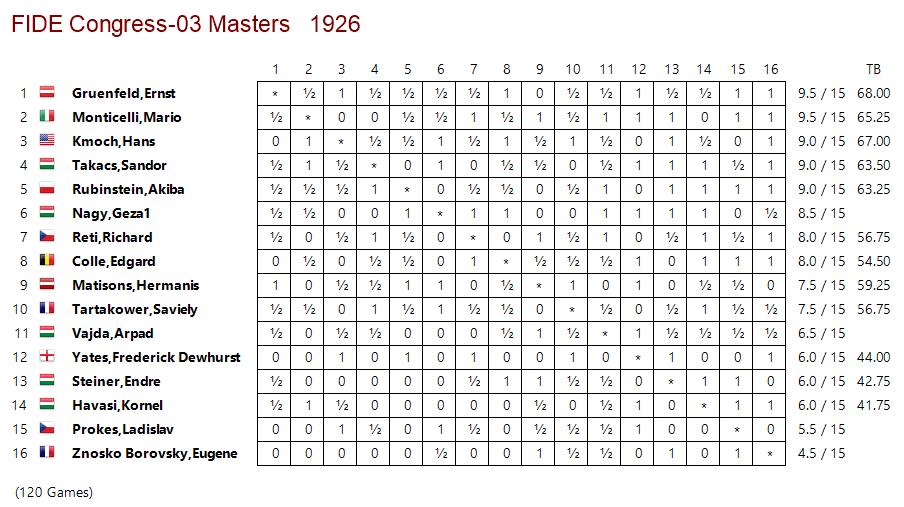
In International tournaments his record did not do him justice as far as his final placings were concerned. However, in studying his performance in detail, his wins were often against the strongest players and his losses against those at the bottom of the tables. This was particularly apparent in the results of the 1926 Budapest tournament.
Cross Table for Budapest 1926
During the course of his career, Yates beat practically every contemporary Grandmaster, with the exception of Lasker and Capablanca. His victory over Alekhine at Carlsbad 1923 came at the end of a combination 18 moves deep and won the brilliancy prize, while his victory over Vidmar at San Remo in 1930 was described by Alekhine as the finest game played since the war.
Other outstanding wins were against Bogoljubow at London 1922, against Rubinstein at Budapest 1926, against Tartakover at Hastings 1927, against Euwe at Scarborough 1928 and against Nimzowitsch at Scarborough 1929. The stronger the opposition the better Yates played.
His losses against weaker players may well have been due to ill-health and lack of necessary stamina to play consistently throughout a long tournament. He was continually troubled by a hacking cough and could not afford to carry out the medical advice that he should go to the Riviera for a cure.
He was a professional chess player at a time when it was difficult to make a livelihood out of chess and he was often handicapped by having to report an event in which he was playing. A number of his contemporaries believed that, had he lived in different circumstances his talent would have placed him among the contenders for the World Championship.
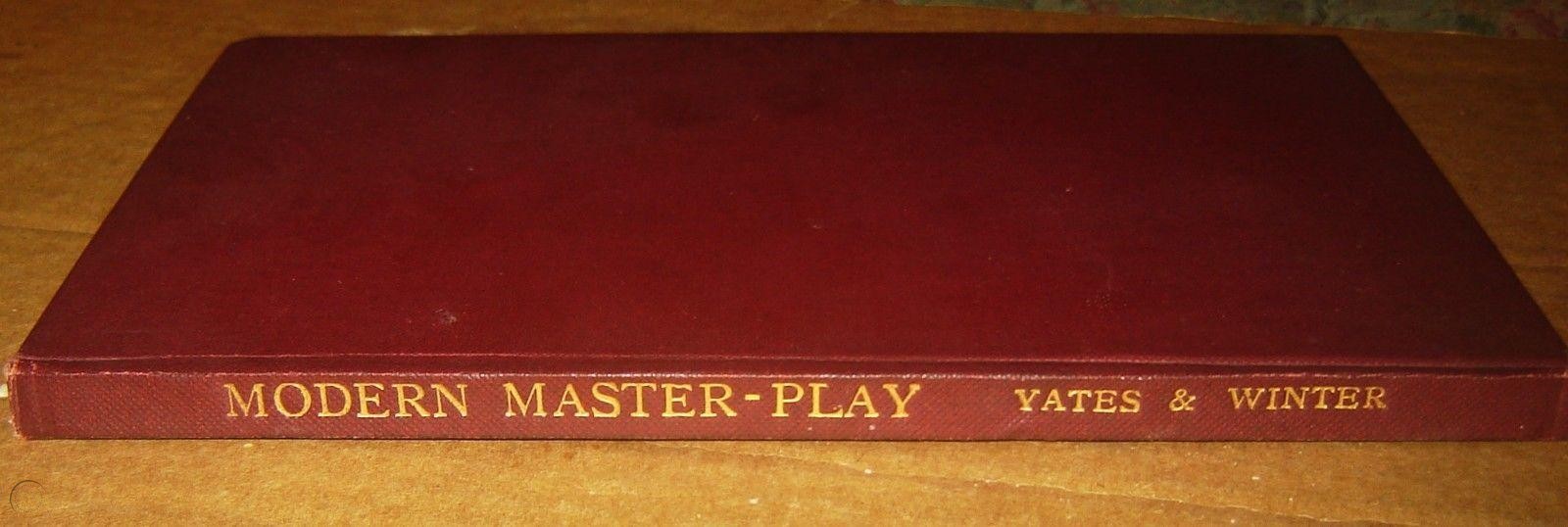
For some years Yates ran the chess column for The Manchester Guardian. He was co-author with Winter of Modern Master Play and of books on the Capablanca vs Alekhine and Alekhine v. Bogoljubov World Championship matches.
Modern Master Play, FD Yates and W. Winter, 1930
Yates had a great number of interests apart from chess and had a very versatile mind which enabled him to talk on a wide range of subjects. He was extremely modest and rarely kept the scores of his games and never submitted them to the press.
He died in tragic circumstances, On 11th November 1932, he was found dead in his bedroom from gas poisoning. At the inquest it was established that there was a faulty connection in the gas meter in his room and a verdict of accidental death was returned.”
From The Encyclopedia of Chess (Batsford, 1977) by Harry Golombek :
“A British master. Yates trained as an accountant but in 1909 abandoned this career in favour of chess and journalism. In 1911 he tied for first prize with Atkins in the British Championship losing the play-off match. Two years later he won the event – the first of six such victories (1913, 1914, 1921, 1926, 1928 and 1931).
In international tournaments Yate’s results were generally mediocre, but he was capable on occasion of defeating the strongest opposition and his victims included Alekhine, Reti, Bogoljubow, Tartakower, Rubinstein, Euwe, Nimzowitsch and Vidmar. He was a regular competitor at the Hastings Christmas Congresses, winning in 1920/1 and finishing in 3rd place on four occasions: 1923/4, 1924/5, 1926/7 and 1929/30.
Yates was for many years the chess correspondent of The Manchester Guardian and, in addition, wrote Modern Master Play, London, Philadelphia 1929 (with W. Winter as co-author) and books of the 1927 Capablanca-Alekhine, London 1928, and the 1929 Alekhine-Bogoljubow World Championship matches, London, 1930.
He died from being accidentally asphyxiated in his rooms by a faulty gas connection.”
“Yates almost won the British Championship in 1911, when he tied for first place with Henry Atkins, but lost the play-off. He went on to secure the title in 1913, 1914, 1921, 1926, 1928 and 1931
Despite considerable domestic success, his record in international tournaments did not do him justice. Often the winner against his strongest opponents, he would then lose to those at the bottom of the table. This was particularly apparent at the Budapest tourney of 1926.
His lack of consistency was attributed to poor health and loss of stamina. A constant hacking cough went unchecked, as his funds did not stretch to a holiday in warmer climes; the advice given by his doctor. He was also subjected to journalistic pressures, frequently reporting on the tournaments in which he was playing. Yet, dedicating himself to the playing side of chess would have earned him insufficient sums to make a living. A number of his contemporaries believed that his talent could have placed him among the world championship contenders, had his circumstances been different. Nevertheless, in his time, he defeated most of his illustrious adversaries, the most notable exceptions being Emanuel Lasker and José Raúl Capablanca. His victory against Alexander Alekhine at Karlsbad in 1923 won the brilliancy prize, while his win against Milan Vidmar at San Remo in 1930 was described by Alekhine as the finest game played since the war.”
As a journalist he was the chess columnist of The Manchester Guardian and with William Winter, the co-author of Modern Master Play (1929). He wrote accounts of two world championship encounters; those between Capablanca and Alekhine, and Alekhine and Bogoljubow.
In team competition, he played at the first, third and fourth Olympiads, representing the ‘British Empire’ team. On each occasion, he made a plus score and at London 1927, earned a team bronze medal/
His life ended prematurely, when a leaking gas pipe caused him to asphyxiate during his sleep.
According to the inscription on Yates’ gravestone,[7] his birth name was actually Fred Dewhirst Yates. However, throughout his chess career he was known by the name at the head of this article or simply as F.D. Yates, both of which featured in his posthumously published, part-biographical, ‘My Best Games’ Collection.
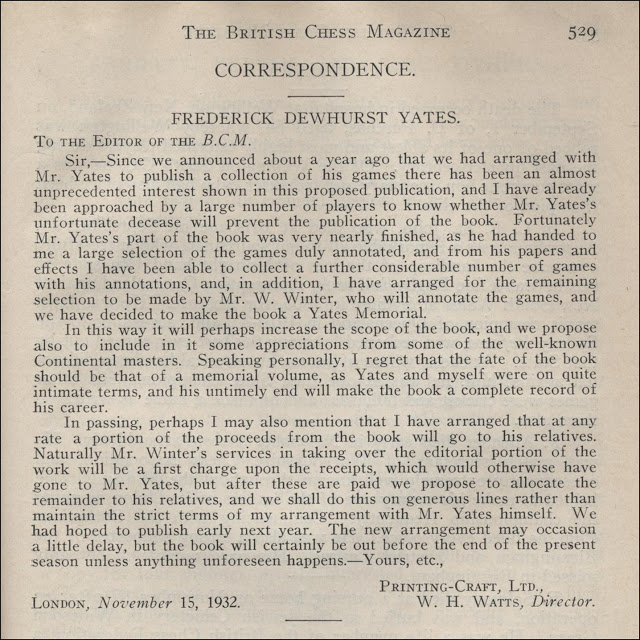
Letter to BCM from WH Watts of Printing Craft Limited announcing the publication of One-Hundred-and-one of my Best Games of Chess, by F. D. Yates, London 1934.One-Hundred-and-one of my Best Games of Chess, by F. D. Yates, London 1934.One Hundred and One of My Best Games of Chess, FD Yates
We remember Fred Yates who passed (or, at least was recorded as passing) on Friday, November 11th, 1932.
Fred (not Frederick) Dewhirst (not Dewhurst) was born in Birstall, Leeds on Wednesday, January 16th 1884, the same year as Harry S Truman and Eleanor Roosevelt.
An obituary appeared in Volume LII (52, 1932), Number 12 (December), pp.525-528 of the British Chess Magazine by PW Sergeant :
“The chess world has had many heavy bereavements during the year which is coming to an end; but to the British section of it there has been no bereavement like the last, which robbed it of F.D.Yates, when still in the prime of his chess career. The circumstances of his end were tragic. On the night of Tuesday, November 8th, he gave a very successful exhibition at Wood Green, only dropping one half-point in 16 games. On the following night he was in the company of a chess friend until fairly late, and then went back to his room in Coram Street, Bloomsbury. He was never seen alive again. It was not until Friday morning that anxiety was felt at Coram Street as to what he might be doing; for he was in the habit of secluding himself for many hours at a stretch when busy with work.
Fred Dewhirst Yates
On Friday, however, when no answer could be got to knocks on the door of his room, which was locked, and a smell of gas was noticed, the door was at last broken open, and he was found dead in bed.
It came out at the inquest before the St. Pancras coroner on November 15 that , though the gas-taps in the room were securely turned off, there had been an escape from what a gas companies official described as an obsolete type of fitting attached to the meter in the room. The meter, it appears, was on the floor, and the fitting must have been accidentally dislodged. A verdict was recorded of Accidental Death; and the coroner directed that the gas-pipes from the room should remain in the custody of the court. The body was conveyed to Leeds for burial on the morning of November 16.
So prematurely passed away one who may with justice be called one of the finest exponents of British chess, and an international master whose strength was recognised all over the world.
Fred Yates as drawn by WH Cozens for BCM
Frederick Dewhurst (sic) was born at Birstall, near Leeds, on January 16, 1884. He did not develop his chess power very young, at the B.C.F. congress at the Crystal Palace in 1907 only playing in the Second Class, though he then won first prize in one of the two sections. At Tunbridge Wells next year he tied for fourth place in a section of the First Class. He was admitted to the British Championship at Scarborough in 1909 (in which year he was Yorkshire Champion), and there tied with Blackburne for fourth and fifth prizes, after HE Atkins, JH Blake, and W. Ward.
In the same event at Oxford in 1910 he again tied with Blackburne, but this time for second and third prizes, Atkins being first, though losing in his individual encounter with Yates. In 1911, at Glasgow, Yates still further improved his position, this time tieing with Atkins for first place; but in the tie-match Atkins won somewhat easily.
Atkins stood down for the first time at Richmond in 1912; but the success of RC Griffith left Yates second, in company with the late HG Cole. At last in 1913, Yates gained his ambition, and at Cheltenham won the British Championship with the fine score of 9 out of a possible 11, 1.5 points above J. Mahood and 2 above Blackburne. In the ruined Congress at Chester in 1914 he tied for first place with Blackburne; and, as Blackburne was unable to play a deciding match, Yates won his second championship.
Fred Dewhirst Yates, Jacoby Archive
Since the War he gained the title again in 1921, 1926, 1928 and 1931, thus making a record of six championships, second only to Atkin’s record of nine (ed : in 1969 at the Rhyl Congress Jonathan Penrose OBE was to surpass Atkin’s record by one.)
Yate’s six victories were gained in sixteen attempts In addition must be mentioned his success in the Hastings tournament, in the New Year of 1921, for holders of the British Championship only.
Fred Yates
His other successes in this country, including his two wins in the in the Anglo-American cable match, in 1910-11, need not detain us; for limitations of space demand that we shall come to Yates as an international master. His first essay was at Hamburg in 1910, on the invitation of the German Chess Federation. Though he did badly, only getting one win in 16 games, the win was a remarkable effort, at the expense of no less a celebrity than Dr. Tarrasch.
At Pistyan two years later he did a little better. He had to wait until after the War for a third attempt; but it will be best to give what we believe to be a full record of his performances in international event:- (to be added).
These lists, however, furnish no just view of the strength of Yates’s play, which always was most fully exhibited against the leading competitors in tournaments. Among his triumphs must be noted his particularly his wins against Alekhine at Hastings, 1922, and Carlsbad 1923 (a brilliancy prize game); against Euwe, Scarborough, 1928; against Nimzowitsch , Carlsbad, 1929; against Bogoljuboff, London, 1922, and Baden-Baden, 1925; against Tartakover, Hastings and Kecskemet, 1927; against Kmoch and Rubinstein, Budapest, 1926; against Spielmann and Vidmar, San Remo, 1930; and his draws with Alekhine and Capablanca at New York, 1924. The harder the opposition, the better his play. Conversely, against what should have proved easier opponents he was apt. at times, to show less of his skill. In this, of course, he was not peculiar, even among the experts.
Generally speaking, however, he was a remarkably tenacious player, who would not abandon a game while there was the slightest chance of a win or a draw. This was not due to mere obstinacy, as may sometimes have appeared, but to the depth of his vision, which gained for him among the German commentators the title of ein tiefe Denker(ed : a deep thinker) – no small testimony from those from whom it came. With a robuster physique there is no knowing to what a position he might have attained in the chess world. The late Amon Burn always had the highest opinion of is powers, and always pointed out, too, the handicap under which a player labours who has to report the events in which he takes part – equivalent, he would say, to giving the other competitors Pawn and move!
Yates was unfortunate in embracing professionalism in an era when the rewards were becoming less and less, and finally reached a stage when they scarcely provided the means of a bare existence. He was a fine simultaneous player, whose exhibitions always delighted by their combination of speed, precision and flashes of brilliance.
As commentator he was very good indeed, and his contributions, especially to The Manchester Guardian, where noted alike for their accuracy and for a sense of style.
He had a journalistic training, outside chess. He was not, in fact, ‘a mere chessplayer’, in spite of his intense devotion to the game. It was his extreme reticence which gave such an impression to all but those whom he admitted to intimacy. They at least knew his widespread interest in other things; and W. Winter’s recent tribute to him in the Guardian in no way exaggerates his charm as a companion among those who knew him best. To them his loss is one which cannot be replaced.”
An Appeal
No doubt all chessplayers in England will have read with sorrow of the death of F.D.Yates at the early age of 46, and more especially will the circumstances of it be a shock to many.
An inquest was held, as has already been reported, and was attended by his two sisters, who have practically no means, as was the case of Yates himself. Certain chessplayers who attended the funeral agreed to make themselves responsible for the funeral expenses, but as the body was removed to Birstall in Yorkshire for burial in the family grave, the expenses were considerably heavier than was anticipates and, with the money owing to the landlady, comes to a total of £51 2s and 0d.
The Gravestone of FD Yates, courtesy of Matthew Sadler
We feel quite sure that when our readers know, they will like to show their last recognition of the value which F.D.Yates was to English chess by giving a donation towards the sum.
The London Chess League, whose finances are not in a very satisfactory state, as in the case of most chess concerns, has agreed to donate £3 towards this. Their president has given £1 1s 0d., and one or two other members have promised donations. We shall be happy to receive any contributions towards this fund, and will give acknowledgment in future issues.”
From The Oxford Companion to Chess (OUP, 1984) by Hooper and Whyld :
“English player. British Champion 1913,1914,1921,1926,1928, and 1931, Around 1909 he gave up his profession in accountancy to become a chess professional. Of the many international tournaments in which he competed from Hamburg 1910 to Hastings 1931—2 he made his best results in the B Final, Kecskemet 1927, first (+4=2-1) equal with Tartakower, and at San Remo 1930, the strongest tournament of the year, when he came fifth after Alekhine,, Nimzowitsch, Rubinstein, and Bogoljubow ahead of Spielmann,
Vidmar, and Tartakower.
A tenacious player, he could be a dangerous opponent. In tournament play he defeated most of the greatest masters of his time on one occasion or another, and among these victories were two defeats of Alekhine (Hastings 1922, Carlsbad 1923), and three defeats of Bogoljubow (London 1922, Baden-Baden 1925, Scarborough 1927) and Rubinstein (London 1925, Moscow 1925, Budapest 1926), A careful and conscientious writer, he conducted a chess column in the Yorkshire Post, was chess correspondent of the Manchester Guardian , and wrote three books (see foot of article) in collaboration with William Winter (1898-1955).
Games Played In the World’s Championship Match between Jose Paul Capablanca and Alexander Alekhine, FD Yates and W, Winter, 1928, Printing Craft LimitedGames Played in the World’s Championship Match between Alexander Alekhine (Holder of the Title) and E D Bogoljubow (Challenger), Printing Craft Limited, 1930, FD Yates and W. Winter
A leak from a faulty gas pipe connection killed Yates while he was asleep. His book One-hundred- and-one of My Best Games of Chess was published in 1934.”
From The Encyclopedia of Chess (Robert Hale, 1970 & 1976)by Anne Sunnucks :
“International Master and British Champion in 1913, 1914, 1921, 1926, 1928 and 1931.
Born in Birstall, near Leeds in Yorkshire, on 16th January 1884, Yates was 25 before he played in the British Championship for the first time. In 1909, having won the Yorkshire Championship, his entry was accepted for the British Championship at Scarborough, and he tied with Blackburne for 4th prize. The following year he again tied with Blackburne, this time for 2nd prize, and in 1911 he tied with Atkins for 1st prize but lost the play-off for the title. In 1913, he succeed in winning the British Championship for the first time.. During his career he competed in the British Championship 16 times and won the title on six occasions.
In International tournaments his record did not do him justice as far as his final placings were concerned. However, in studying his performance in detail, his wins were often against the strongest players and his losses against those at the bottom of the tables. This was particularly apparent in the results of the 1926 Budapest tournament.
Cross Table for Budapest 1926
During the course of his career, Yates beat practically every contemporary Grandmaster, with the exception of Lasker and Capablanca. His victory over Alekhine at Carlsbad 1923 came at the end of a combination 18 moves deep and won the brilliancy prize, while his victory over Vidmar at San Remo in 1930 was described by Alekhine as the finest game played since the war.
Other outstanding wins were against Bogoljubow at London 1922, against Rubinstein at Budapest 1926, against Tartakover at Hastings 1927, against Euwe at Scarborough 1928 and against Nimzowitsch at Scarborough 1929. The stronger the opposition the better Yates played.
His losses against weaker players may well have been due to ill-health and lack of necessary stamina to play consistently throughout a long tournament. He was continually troubled by a hacking cough and could not afford to carry out the medical advice that he should go to the Riviera for a cure.
He was a professional chess player at a time when it was difficult to make a livelihood out of chess and he was often handicapped by having to report an event in which he was playing. A number of his contemporaries believed that, had he lived in different circumstances his talent would have placed him among the contenders for the World Championship.
For some years Yates ran the chess column for The Manchester Guardian. He was co-author with Winter of Modern Master Play and of books on the Capablanca vs Alekhine and Alekhine v. Bogoljubov World Championship matches.
Modern Master Play, FD Yates and W. Winter, 1930
Yates had a great number of interests apart from chess and had a very versatile mind which enabled him to talk on a wide range of subjects. He was extremely modest and rarely kept the scores of his games and never submitted them to the press.
He died in tragic circumstances, On 11th November 1932, he was found dead in his bedroom from gas poisoning. At the inquest it was established that there was a faulty connection in the gas meter in his room and a verdict of accidental death was returned.”
From The Encyclopedia of Chess (Batsford, 1977) by Harry Golombek :
“A British master. Yates trained as an accountant but in 1909 abandoned this career in favour of chess and journalism. In 1911 he tied for first prize with Atkins in the British Championship losing the play-off match. Two years later he won the event – the first of six such victories (1913, 1914, 1921, 1926, 1928 and 1931).
In international tournaments Yate’s results were generally mediocre, but he was capable on occasion of defeating the strongest opposition and his victims included Alekhine, Reti, Bogoljubow, Tartakower, Rubinstein, Euwe, Nimzowitsch and Vidmar. He was a regular competitor at the Hastings Christmas Congresses, winning in 1920/1 and finishing in 3rd place on four occasions: 1923/4, 1924/5, 1926/7 and 1929/30.
Yates was for many years the chess correspondent of The Manchester Guardian and, in addition, wrote Modern Master Play, London, Philadelphia 1929 (with W. Winter as co-author) and books of the 1927 Capablanca-Alekhine, London 1928, and the 1929 Alekhine-Bogoljubow World Championship matches, London, 1930.
He died from being accidentally asphyxiated in his rooms by a faulty gas connection.”
“Yates almost won the British Championship in 1911, when he tied for first place with Henry Atkins, but lost the play-off. He went on to secure the title in 1913, 1914, 1921, 1926, 1928 and 1931
Despite considerable domestic success, his record in international tournaments did not do him justice. Often the winner against his strongest opponents, he would then lose to those at the bottom of the table. This was particularly apparent at the Budapest tourney of 1926.
His lack of consistency was attributed to poor health and loss of stamina. A constant hacking cough went unchecked, as his funds did not stretch to a holiday in warmer climes; the advice given by his doctor. He was also subjected to journalistic pressures, frequently reporting on the tournaments in which he was playing. Yet, dedicating himself to the playing side of chess would have earned him insufficient sums to make a living. A number of his contemporaries believed that his talent could have placed him among the world championship contenders, had his circumstances been different. Nevertheless, in his time, he defeated most of his illustrious adversaries, the most notable exceptions being Emanuel Lasker and José Raúl Capablanca. His victory against Alexander Alekhine at Karlsbad in 1923 won the brilliancy prize, while his win against Milan Vidmar at San Remo in 1930 was described by Alekhine as the finest game played since the war.”
As a journalist he was the chess columnist of The Manchester Guardian and with William Winter, the co-author of Modern Master Play (1929). He wrote accounts of two world championship encounters; those between Capablanca and Alekhine, and Alekhine and Bogoljubow.
In team competition, he played at the first, third and fourth Olympiads, representing the ‘British Empire’ team. On each occasion, he made a plus score and at London 1927, earned a team bronze medal/
His life ended prematurely, when a leaking gas pipe caused him to asphyxiate during his sleep.
According to the inscription on Yates’ gravestone,[7] his birth name was actually Fred Dewhirst Yates. However, throughout his chess career he was known by the name at the head of this article or simply as F.D. Yates, both of which featured in his posthumously published, part-biographical, ‘My Best Games’ Collection.
Letter to BCM from WH Watts of Printing Craft Limited announcing the publication of One-Hundred-and-one of my Best Games of Chess, by F. D. Yates, London 1934.One-Hundred-and-one of my Best Games of Chess, by F. D. Yates, London 1934.One Hundred and One of My Best Games of Chess, FD Yates
We remember Fred Yates who passed (or, at least was recorded as passing) on Friday, November 11th, 1932.
Fred (not Frederick) Dewhirst (not Dewhurst) was born in Birstall, Leeds on Wednesday, January 16th 1884, the same year as Harry S Truman and Eleanor Roosevelt.
An obituary appeared in Volume LII (52, 1932), Number 12 (December), pp.525-528 of the British Chess Magazine by PW Sergeant :
“The chess world has had many heavy bereavements during the year which is coming to an end; but to the British section of it there has been no bereavement like the last, which robbed it of F.D.Yates, when still in the prime of his chess career. The circumstances of his end were tragic. On the night of Tuesday, November 8th, he gave a very successful exhibition at Wood Green, only dropping one half-point in 16 games. On the following night he was in the company of a chess friend until fairly late, and then went back to his room in Coram Street, Bloomsbury. He was never seen alive again. It was not until Friday morning that anxiety was felt at Coram Street as to what he might be doing; for he was in the habit of secluding himself for many hours at a stretch when busy with work.
Fred Dewhirst Yates
On Friday, however, when no answer could be got to knocks on the door of his room, which was locked, and a smell of gas was noticed, the door was at last broken open, and he was found dead in bed.
It came out at the inquest before the St. Pancras coroner on November 15 that , though the gas-taps in the room were securely turned off, there had been an escape from what a gas companies official described as an obsolete type of fitting attached to the meter in the room. The meter, it appears, was on the floor, and the fitting must have been accidentally dislodged. A verdict was recorded of Accidental Death; and the coroner directed that the gas-pipes from the room should remain in the custody of the court. The body was conveyed to Leeds for burial on the morning of November 16.
So prematurely passed away one who may with justice be called one of the finest exponents of British chess, and an international master whose strength was recognised all over the world.
Fred Yates as drawn by WH Cozens for BCM
Frederick Dewhurst (sic) was born at Birstall, near Leeds, on January 16, 1884. He did not develop his chess power very young, at the B.C.F. congress at the Crystal Palace in 1907 only playing in the Second Class, though he then won first prize in one of the two sections. At Tunbridge Wells next year he tied for fourth place in a section of the First Class. He was admitted to the British Championship at Scarborough in 1909 (in which year he was Yorkshire Champion), and there tied with Blackburne for fourth and fifth prizes, after HE Atkins, JH Blake, and W. Ward.
In the same event at Oxford in 1910 he again tied with Blackburne, but this time for second and third prizes, Atkins being first, though losing in his individual encounter with Yates. In 1911, at Glasgow, Yates still further improved his position, this time tieing with Atkins for first place; but in the tie-match Atkins won somewhat easily.
Atkins stood down for the first time at Richmond in 1912; but the success of RC Griffith left Yates second, in company with the late HG Cole. At last in 1913, Yates gained his ambition, and at Cheltenham won the British Championship with the fine score of 9 out of a possible 11, 1.5 points above J. Mahood and 2 above Blackburne. In the ruined Congress at Chester in 1914 he tied for first place with Blackburne; and, as Blackburne was unable to play a deciding match, Yates won his second championship.
Fred Dewhirst Yates, Jacoby Archive
Since the War he gained the title again in 1921, 1926, 1928 and 1931, thus making a record of six championships, second only to Atkin’s record of nine (ed : in 1969 at the Rhyl Congress Jonathan Penrose OBE was to surpass Atkin’s record by one.)
Yate’s six victories were gained in sixteen attempts In addition must be mentioned his success in the Hastings tournament, in the New Year of 1921, for holders of the British Championship only.
Fred Yates
His other successes in this country, including his two wins in the in the Anglo-American cable match, in 1910-11, need not detain us; for limitations of space demand that we shall come to Yates as an international master. His first essay was at Hamburg in 1910, on the invitation of the German Chess Federation. Though he did badly, only getting one win in 16 games, the win was a remarkable effort, at the expense of no less a celebrity than Dr. Tarrasch.
At Pistyan two years later he did a little better. He had to wait until after the War for a third attempt; but it will be best to give what we believe to be a full record of his performances in international event:- (to be added).
These lists, however, furnish no just view of the strength of Yates’s play, which always was most fully exhibited against the leading competitors in tournaments. Among his triumphs must be noted his particularly his wins against Alekhine at Hastings, 1922, and Carlsbad 1923 (a brilliancy prize game); against Euwe, Scarborough, 1928; against Nimzowitsch , Carlsbad, 1929; against Bogoljuboff, London, 1922, and Baden-Baden, 1925; against Tartakover, Hastings and Kecskemet, 1927; against Kmoch and Rubinstein, Budapest, 1926; against Spielmann and Vidmar, San Remo, 1930; and his draws with Alekhine and Capablanca at New York, 1924. The harder the opposition, the better his play. Conversely, against what should have proved easier opponents he was apt. at times, to show less of his skill. In this, of course, he was not peculiar, even among the experts.
Generally speaking, however, he was a remarkably tenacious player, who would not abandon a game while there was the slightest chance of a win or a draw. This was not due to mere obstinacy, as may sometimes have appeared, but to the depth of his vision, which gained for him among the German commentators the title of ein tiefe Denker(ed : a deep thinker) – no small testimony from those from whom it came. With a robuster physique there is no knowing to what a position he might have attained in the chess world. The late Amon Burn always had the highest opinion of is powers, and always pointed out, too, the handicap under which a player labours who has to report the events in which he takes part – equivalent, he would say, to giving the other competitors Pawn and move!
Yates was unfortunate in embracing professionalism in an era when the rewards were becoming less and less, and finally reached a stage when they scarcely provided the means of a bare existence. He was a fine simultaneous player, whose exhibitions always delighted by their combination of speed, precision and flashes of brilliance.
As commentator he was very good indeed, and his contributions, especially to The Manchester Guardian, where noted alike for their accuracy and for a sense of style.
He had a journalistic training, outside chess. He was not, in fact, ‘a mere chessplayer’, in spite of his intense devotion to the game. It was his extreme reticence which gave such an impression to all but those whom he admitted to intimacy. They at least knew his widespread interest in other things; and W. Winter’s recent tribute to him in the Guardian in no way exaggerates his charm as a companion among those who knew him best. To them his loss is one which cannot be replaced.”
An Appeal
No doubt all chessplayers in England will have read with sorrow of the death of F.D.Yates at the early age of 46, and more especially will the circumstances of it be a shock to many.
An inquest was held, as has already been reported, and was attended by his two sisters, who have practically no means, as was the case of Yates himself. Certain chessplayers who attended the funeral agreed to make themselves responsible for the funeral expenses, but as the body was removed to Birstall in Yorkshire for burial in the family grave, the expenses were considerably heavier than was anticipates and, with the money owing to the landlady, comes to a total of £51 2s and 0d.
The Gravestone of FD Yates, courtesy of Matthew Sadler
We feel quite sure that when our readers know, they will like to show their last recognition of the value which F.D.Yates was to English chess by giving a donation towards the sum.
The London Chess League, whose finances are not in a very satisfactory state, as in the case of most chess concerns, has agreed to donate £3 towards this. Their president has given £1 1s 0d., and one or two other members have promised donations. We shall be happy to receive any contributions towards this fund, and will give acknowledgment in future issues.”
From The Oxford Companion to Chess (OUP, 1984) by Hooper and Whyld :
“English player. British Champion 1913,1914,1921,1926,1928, and 1931, Around 1909 he gave up his profession in accountancy to become a chess professional. Of the many international tournaments in which he competed from Hamburg 1910 to Hastings 1931—2 he made his best results in the B Final, Kecskemet 1927, first (+4=2-1) equal with Tartakower, and at San Remo 1930, the strongest tournament of the year, when he came fifth after Alekhine,, Nimzowitsch, Rubinstein, and Bogoljubow ahead of Spielmann,
Vidmar, and Tartakower.
A tenacious player, he could be a dangerous opponent. In tournament play he defeated most of the greatest masters of his time on one occasion or another, and among these victories were two defeats of Alekhine (Hastings 1922, Carlsbad 1923), and three defeats of Bogoljubow (London 1922, Baden-Baden 1925, Scarborough 1927) and Rubinstein (London 1925, Moscow 1925, Budapest 1926), A careful and conscientious writer, he conducted a chess column in the Yorkshire Post, was chess correspondent of the Manchester Guardian , and wrote three books (see foot of article) in collaboration with William Winter (1898-1955).
Games Played In the World’s Championship Match between Jose Paul Capablanca and Alexander Alekhine, FD Yates and W, Winter, 1928, Printing Craft LimitedGames Played in the World’s Championship Match between Alexander Alekhine (Holder of the Title) and E D Bogoljubow (Challenger), Printing Craft Limited, 1930, FD Yates and W. Winter
A leak from a faulty gas pipe connection killed Yates while he was asleep. His book One-hundred- and-one of My Best Games of Chess was published in 1934.”
From The Encyclopedia of Chess (Robert Hale, 1970 & 1976)by Anne Sunnucks :
“International Master and British Champion in 1913, 1914, 1921, 1926, 1928 and 1931.
Born in Birstall, near Leeds in Yorkshire, on 16th January 1884, Yates was 25 before he played in the British Championship for the first time. In 1909, having won the Yorkshire Championship, his entry was accepted for the British Championship at Scarborough, and he tied with Blackburne for 4th prize. The following year he again tied with Blackburne, this time for 2nd prize, and in 1911 he tied with Atkins for 1st prize but lost the play-off for the title. In 1913, he succeed in winning the British Championship for the first time.. During his career he competed in the British Championship 16 times and won the title on six occasions.
In International tournaments his record did not do him justice as far as his final placings were concerned. However, in studying his performance in detail, his wins were often against the strongest players and his losses against those at the bottom of the tables. This was particularly apparent in the results of the 1926 Budapest tournament.
Cross Table for Budapest 1926
During the course of his career, Yates beat practically every contemporary Grandmaster, with the exception of Lasker and Capablanca. His victory over Alekhine at Carlsbad 1923 came at the end of a combination 18 moves deep and won the brilliancy prize, while his victory over Vidmar at San Remo in 1930 was described by Alekhine as the finest game played since the war.
Other outstanding wins were against Bogoljubow at London 1922, against Rubinstein at Budapest 1926, against Tartakover at Hastings 1927, against Euwe at Scarborough 1928 and against Nimzowitsch at Scarborough 1929. The stronger the opposition the better Yates played.
His losses against weaker players may well have been due to ill-health and lack of necessary stamina to play consistently throughout a long tournament. He was continually troubled by a hacking cough and could not afford to carry out the medical advice that he should go to the Riviera for a cure.
He was a professional chess player at a time when it was difficult to make a livelihood out of chess and he was often handicapped by having to report an event in which he was playing. A number of his contemporaries believed that, had he lived in different circumstances his talent would have placed him among the contenders for the World Championship.
For some years Yates ran the chess column for The Manchester Guardian. He was co-author with Winter of Modern Master Play and of books on the Capablanca vs Alekhine and Alekhine v. Bogoljubov World Championship matches.
Modern Master Play, FD Yates and W. Winter, 1930
Yates had a great number of interests apart from chess and had a very versatile mind which enabled him to talk on a wide range of subjects. He was extremely modest and rarely kept the scores of his games and never submitted them to the press.
He died in tragic circumstances, On 11th November 1932, he was found dead in his bedroom from gas poisoning. At the inquest it was established that there was a faulty connection in the gas meter in his room and a verdict of accidental death was returned.”
From The Encyclopedia of Chess (Batsford, 1977) by Harry Golombek :
“A British master. Yates trained as an accountant but in 1909 abandoned this career in favour of chess and journalism. In 1911 he tied for first prize with Atkins in the British Championship losing the play-off match. Two years later he won the event – the first of six such victories (1913, 1914, 1921, 1926, 1928 and 1931).
In international tournaments Yate’s results were generally mediocre, but he was capable on occasion of defeating the strongest opposition and his victims included Alekhine, Reti, Bogoljubow, Tartakower, Rubinstein, Euwe, Nimzowitsch and Vidmar. He was a regular competitor at the Hastings Christmas Congresses, winning in 1920/1 and finishing in 3rd place on four occasions: 1923/4, 1924/5, 1926/7 and 1929/30.
Yates was for many years the chess correspondent of The Manchester Guardian and, in addition, wrote Modern Master Play, London, Philadelphia 1929 (with W. Winter as co-author) and books of the 1927 Capablanca-Alekhine, London 1928, and the 1929 Alekhine-Bogoljubow World Championship matches, London, 1930.
He died from being accidentally asphyxiated in his rooms by a faulty gas connection.”
“Yates almost won the British Championship in 1911, when he tied for first place with Henry Atkins, but lost the play-off. He went on to secure the title in 1913, 1914, 1921, 1926, 1928 and 1931
Despite considerable domestic success, his record in international tournaments did not do him justice. Often the winner against his strongest opponents, he would then lose to those at the bottom of the table. This was particularly apparent at the Budapest tourney of 1926.
His lack of consistency was attributed to poor health and loss of stamina. A constant hacking cough went unchecked, as his funds did not stretch to a holiday in warmer climes; the advice given by his doctor. He was also subjected to journalistic pressures, frequently reporting on the tournaments in which he was playing. Yet, dedicating himself to the playing side of chess would have earned him insufficient sums to make a living. A number of his contemporaries believed that his talent could have placed him among the world championship contenders, had his circumstances been different. Nevertheless, in his time, he defeated most of his illustrious adversaries, the most notable exceptions being Emanuel Lasker and José Raúl Capablanca. His victory against Alexander Alekhine at Karlsbad in 1923 won the brilliancy prize, while his win against Milan Vidmar at San Remo in 1930 was described by Alekhine as the finest game played since the war.”
As a journalist he was the chess columnist of The Manchester Guardian and with William Winter, the co-author of Modern Master Play (1929). He wrote accounts of two world championship encounters; those between Capablanca and Alekhine, and Alekhine and Bogoljubow.
In team competition, he played at the first, third and fourth Olympiads, representing the ‘British Empire’ team. On each occasion, he made a plus score and at London 1927, earned a team bronze medal/
His life ended prematurely, when a leaking gas pipe caused him to asphyxiate during his sleep.
According to the inscription on Yates’ gravestone,[7] his birth name was actually Fred Dewhirst Yates. However, throughout his chess career he was known by the name at the head of this article or simply as F.D. Yates, both of which featured in his posthumously published, part-biographical, ‘My Best Games’ Collection.
Letter to BCM from WH Watts of Printing Craft Limited announcing the publication of One-Hundred-and-one of my Best Games of Chess, by F. D. Yates, London 1934.One-Hundred-and-one of my Best Games of Chess, by F. D. Yates, London 1934.One Hundred and One of My Best Games of Chess, FD Yates
We remember Fred Yates who passed (or, at least was recorded as passing) on Friday, November 11th, 1932.
Fred (not Frederick) Dewhirst (not Dewhurst) was born in Birstall, Leeds on Wednesday, January 16th 1884, the same year as Harry S Truman and Eleanor Roosevelt.
An obituary appeared in Volume LII (52, 1932), Number 12 (December), pp.525-528 of the British Chess Magazine by PW Sergeant :
“The chess world has had many heavy bereavements during the year which is coming to an end; but to the British section of it there has been no bereavement like the last, which robbed it of F.D.Yates, when still in the prime of his chess career. The circumstances of his end were tragic. On the night of Tuesday, November 8th, he gave a very successful exhibition at Wood Green, only dropping one half-point in 16 games. On the following night he was in the company of a chess friend until fairly late, and then went back to his room in Coram Street, Bloomsbury. He was never seen alive again. It was not until Friday morning that anxiety was felt at Coram Street as to what he might be doing; for he was in the habit of secluding himself for many hours at a stretch when busy with work.
Fred Dewhirst Yates
On Friday, however, when no answer could be got to knocks on the door of his room, which was locked, and a smell of gas was noticed, the door was at last broken open, and he was found dead in bed.
It came out at the inquest before the St. Pancras coroner on November 15 that , though the gas-taps in the room were securely turned off, there had been an escape from what a gas companies official described as an obsolete type of fitting attached to the meter in the room. The meter, it appears, was on the floor, and the fitting must have been accidentally dislodged. A verdict was recorded of Accidental Death; and the coroner directed that the gas-pipes from the room should remain in the custody of the court. The body was conveyed to Leeds for burial on the morning of November 16.
So prematurely passed away one who may with justice be called one of the finest exponents of British chess, and an international master whose strength was recognised all over the world.
Fred Yates as drawn by WH Cozens for BCM
Frederick Dewhurst (sic) was born at Birstall, near Leeds, on January 16, 1884. He did not develop his chess power very young, at the B.C.F. congress at the Crystal Palace in 1907 only playing in the Second Class, though he then won first prize in one of the two sections. At Tunbridge Wells next year he tied for fourth place in a section of the First Class. He was admitted to the British Championship at Scarborough in 1909 (in which year he was Yorkshire Champion), and there tied with Blackburne for fourth and fifth prizes, after HE Atkins, JH Blake, and W. Ward.
In the same event at Oxford in 1910 he again tied with Blackburne, but this time for second and third prizes, Atkins being first, though losing in his individual encounter with Yates. In 1911, at Glasgow, Yates still further improved his position, this time tieing with Atkins for first place; but in the tie-match Atkins won somewhat easily.
Atkins stood down for the first time at Richmond in 1912; but the success of RC Griffith left Yates second, in company with the late HG Cole. At last in 1913, Yates gained his ambition, and at Cheltenham won the British Championship with the fine score of 9 out of a possible 11, 1.5 points above J. Mahood and 2 above Blackburne. In the ruined Congress at Chester in 1914 he tied for first place with Blackburne; and, as Blackburne was unable to play a deciding match, Yates won his second championship.
Fred Dewhirst Yates, Jacoby Archive
Since the War he gained the title again in 1921, 1926, 1928 and 1931, thus making a record of six championships, second only to Atkin’s record of nine (ed : in 1969 at the Rhyl Congress Jonathan Penrose OBE was to surpass Atkin’s record by one.)
Yate’s six victories were gained in sixteen attempts In addition must be mentioned his success in the Hastings tournament, in the New Year of 1921, for holders of the British Championship only.
Fred Yates
His other successes in this country, including his two wins in the in the Anglo-American cable match, in 1910-11, need not detain us; for limitations of space demand that we shall come to Yates as an international master. His first essay was at Hamburg in 1910, on the invitation of the German Chess Federation. Though he did badly, only getting one win in 16 games, the win was a remarkable effort, at the expense of no less a celebrity than Dr. Tarrasch.
At Pistyan two years later he did a little better. He had to wait until after the War for a third attempt; but it will be best to give what we believe to be a full record of his performances in international event:- (to be added).
These lists, however, furnish no just view of the strength of Yates’s play, which always was most fully exhibited against the leading competitors in tournaments. Among his triumphs must be noted his particularly his wins against Alekhine at Hastings, 1922, and Carlsbad 1923 (a brilliancy prize game); against Euwe, Scarborough, 1928; against Nimzowitsch , Carlsbad, 1929; against Bogoljuboff, London, 1922, and Baden-Baden, 1925; against Tartakover, Hastings and Kecskemet, 1927; against Kmoch and Rubinstein, Budapest, 1926; against Spielmann and Vidmar, San Remo, 1930; and his draws with Alekhine and Capablanca at New York, 1924. The harder the opposition, the better his play. Conversely, against what should have proved easier opponents he was apt. at times, to show less of his skill. In this, of course, he was not peculiar, even among the experts.
Generally speaking, however, he was a remarkably tenacious player, who would not abandon a game while there was the slightest chance of a win or a draw. This was not due to mere obstinacy, as may sometimes have appeared, but to the depth of his vision, which gained for him among the German commentators the title of ein tiefe Denker(ed : a deep thinker) – no small testimony from those from whom it came. With a robuster physique there is no knowing to what a position he might have attained in the chess world. The late Amon Burn always had the highest opinion of is powers, and always pointed out, too, the handicap under which a player labours who has to report the events in which he takes part – equivalent, he would say, to giving the other competitors Pawn and move!
Yates was unfortunate in embracing professionalism in an era when the rewards were becoming less and less, and finally reached a stage when they scarcely provided the means of a bare existence. He was a fine simultaneous player, whose exhibitions always delighted by their combination of speed, precision and flashes of brilliance.
As commentator he was very good indeed, and his contributions, especially to The Manchester Guardian, where noted alike for their accuracy and for a sense of style.
He had a journalistic training, outside chess. He was not, in fact, ‘a mere chessplayer’, in spite of his intense devotion to the game. It was his extreme reticence which gave such an impression to all but those whom he admitted to intimacy. They at least knew his widespread interest in other things; and W. Winter’s recent tribute to him in the Guardian in no way exaggerates his charm as a companion among those who knew him best. To them his loss is one which cannot be replaced.”
An Appeal
No doubt all chessplayers in England will have read with sorrow of the death of F.D.Yates at the early age of 46, and more especially will the circumstances of it be a shock to many.
An inquest was held, as has already been reported, and was attended by his two sisters, who have practically no means, as was the case of Yates himself. Certain chessplayers who attended the funeral agreed to make themselves responsible for the funeral expenses, but as the body was removed to Birstall in Yorkshire for burial in the family grave, the expenses were considerably heavier than was anticipates and, with the money owing to the landlady, comes to a total of £51 2s and 0d.
The Gravestone of FD Yates, courtesy of Matthew Sadler
We feel quite sure that when our readers know, they will like to show their last recognition of the value which F.D.Yates was to English chess by giving a donation towards the sum.
The London Chess League, whose finances are not in a very satisfactory state, as in the case of most chess concerns, has agreed to donate £3 towards this. Their president has given £1 1s 0d., and one or two other members have promised donations. We shall be happy to receive any contributions towards this fund, and will give acknowledgment in future issues.”
From The Oxford Companion to Chess (OUP, 1984) by Hooper and Whyld :
“English player. British Champion 1913,1914,1921,1926,1928, and 1931, Around 1909 he gave up his profession in accountancy to become a chess professional. Of the many international tournaments in which he competed from Hamburg 1910 to Hastings 1931—2 he made his best results in the B Final, Kecskemet 1927, first (+4=2-1) equal with Tartakower, and at San Remo 1930, the strongest tournament of the year, when he came fifth after Alekhine,, Nimzowitsch, Rubinstein, and Bogoljubow ahead of Spielmann,
Vidmar, and Tartakower.
A tenacious player, he could be a dangerous opponent. In tournament play he defeated most of the greatest masters of his time on one occasion or another, and among these victories were two defeats of Alekhine (Hastings 1922, Carlsbad 1923), and three defeats of Bogoljubow (London 1922, Baden-Baden 1925, Scarborough 1927) and Rubinstein (London 1925, Moscow 1925, Budapest 1926), A careful and conscientious writer, he conducted a chess column in the Yorkshire Post, was chess correspondent of the Manchester Guardian , and wrote three books (see foot of article) in collaboration with William Winter (1898-1955).
Games Played In the World’s Championship Match between Jose Paul Capablanca and Alexander Alekhine, FD Yates and W, Winter, 1928, Printing Craft LimitedGames Played in the World’s Championship Match between Alexander Alekhine (Holder of the Title) and E D Bogoljubow (Challenger), Printing Craft Limited, 1930, FD Yates and W. Winter
A leak from a faulty gas pipe connection killed Yates while he was asleep. His book One-hundred- and-one of My Best Games of Chess was published in 1934.”
From The Encyclopedia of Chess (Robert Hale, 1970 & 1976)by Anne Sunnucks :
“International Master and British Champion in 1913, 1914, 1921, 1926, 1928 and 1931.
Born in Birstall, near Leeds in Yorkshire, on 16th January 1884, Yates was 25 before he played in the British Championship for the first time. In 1909, having won the Yorkshire Championship, his entry was accepted for the British Championship at Scarborough, and he tied with Blackburne for 4th prize. The following year he again tied with Blackburne, this time for 2nd prize, and in 1911 he tied with Atkins for 1st prize but lost the play-off for the title. In 1913, he succeed in winning the British Championship for the first time.. During his career he competed in the British Championship 16 times and won the title on six occasions.
In International tournaments his record did not do him justice as far as his final placings were concerned. However, in studying his performance in detail, his wins were often against the strongest players and his losses against those at the bottom of the tables. This was particularly apparent in the results of the 1926 Budapest tournament.
Cross Table for Budapest 1926
During the course of his career, Yates beat practically every contemporary Grandmaster, with the exception of Lasker and Capablanca. His victory over Alekhine at Carlsbad 1923 came at the end of a combination 18 moves deep and won the brilliancy prize, while his victory over Vidmar at San Remo in 1930 was described by Alekhine as the finest game played since the war.
Other outstanding wins were against Bogoljubow at London 1922, against Rubinstein at Budapest 1926, against Tartakover at Hastings 1927, against Euwe at Scarborough 1928 and against Nimzowitsch at Scarborough 1929. The stronger the opposition the better Yates played.
His losses against weaker players may well have been due to ill-health and lack of necessary stamina to play consistently throughout a long tournament. He was continually troubled by a hacking cough and could not afford to carry out the medical advice that he should go to the Riviera for a cure.
He was a professional chess player at a time when it was difficult to make a livelihood out of chess and he was often handicapped by having to report an event in which he was playing. A number of his contemporaries believed that, had he lived in different circumstances his talent would have placed him among the contenders for the World Championship.
For some years Yates ran the chess column for The Manchester Guardian. He was co-author with Winter of Modern Master Play and of books on the Capablanca vs Alekhine and Alekhine v. Bogoljubov World Championship matches.
Modern Master Play, FD Yates and W. Winter, 1930
Yates had a great number of interests apart from chess and had a very versatile mind which enabled him to talk on a wide range of subjects. He was extremely modest and rarely kept the scores of his games and never submitted them to the press.
He died in tragic circumstances, On 11th November 1932, he was found dead in his bedroom from gas poisoning. At the inquest it was established that there was a faulty connection in the gas meter in his room and a verdict of accidental death was returned.”
From The Encyclopedia of Chess (Batsford, 1977) by Harry Golombek :
“A British master. Yates trained as an accountant but in 1909 abandoned this career in favour of chess and journalism. In 1911 he tied for first prize with Atkins in the British Championship losing the play-off match. Two years later he won the event – the first of six such victories (1913, 1914, 1921, 1926, 1928 and 1931).
In international tournaments Yate’s results were generally mediocre, but he was capable on occasion of defeating the strongest opposition and his victims included Alekhine, Reti, Bogoljubow, Tartakower, Rubinstein, Euwe, Nimzowitsch and Vidmar. He was a regular competitor at the Hastings Christmas Congresses, winning in 1920/1 and finishing in 3rd place on four occasions: 1923/4, 1924/5, 1926/7 and 1929/30.
Yates was for many years the chess correspondent of The Manchester Guardian and, in addition, wrote Modern Master Play, London, Philadelphia 1929 (with W. Winter as co-author) and books of the 1927 Capablanca-Alekhine, London 1928, and the 1929 Alekhine-Bogoljubow World Championship matches, London, 1930.
He died from being accidentally asphyxiated in his rooms by a faulty gas connection.”
“Yates almost won the British Championship in 1911, when he tied for first place with Henry Atkins, but lost the play-off. He went on to secure the title in 1913, 1914, 1921, 1926, 1928 and 1931
Despite considerable domestic success, his record in international tournaments did not do him justice. Often the winner against his strongest opponents, he would then lose to those at the bottom of the table. This was particularly apparent at the Budapest tourney of 1926.
His lack of consistency was attributed to poor health and loss of stamina. A constant hacking cough went unchecked, as his funds did not stretch to a holiday in warmer climes; the advice given by his doctor. He was also subjected to journalistic pressures, frequently reporting on the tournaments in which he was playing. Yet, dedicating himself to the playing side of chess would have earned him insufficient sums to make a living. A number of his contemporaries believed that his talent could have placed him among the world championship contenders, had his circumstances been different. Nevertheless, in his time, he defeated most of his illustrious adversaries, the most notable exceptions being Emanuel Lasker and José Raúl Capablanca. His victory against Alexander Alekhine at Karlsbad in 1923 won the brilliancy prize, while his win against Milan Vidmar at San Remo in 1930 was described by Alekhine as the finest game played since the war.”
As a journalist he was the chess columnist of The Manchester Guardian and with William Winter, the co-author of Modern Master Play (1929). He wrote accounts of two world championship encounters; those between Capablanca and Alekhine, and Alekhine and Bogoljubow.
In team competition, he played at the first, third and fourth Olympiads, representing the ‘British Empire’ team. On each occasion, he made a plus score and at London 1927, earned a team bronze medal/
His life ended prematurely, when a leaking gas pipe caused him to asphyxiate during his sleep.
According to the inscription on Yates’ gravestone,[7] his birth name was actually Fred Dewhirst Yates. However, throughout his chess career he was known by the name at the head of this article or simply as F.D. Yates, both of which featured in his posthumously published, part-biographical, ‘My Best Games’ Collection.
Letter to BCM from WH Watts of Printing Craft Limited announcing the publication of One-Hundred-and-one of my Best Games of Chess, by F. D. Yates, London 1934.One-Hundred-and-one of my Best Games of Chess, by F. D. Yates, London 1934.One Hundred and One of My Best Games of Chess, FD Yates
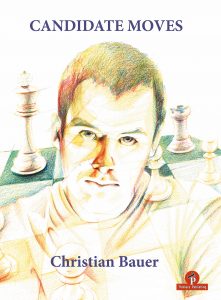
Christian Bauer (born 11 January 1977) is a French Grandmaster and author. He is a three-time French Champion and the author of three opening books. This collection of the authors best games is his first book for Thinkers Press.
GM Christian Bauer
What makes this book unique is that each game is annotated twice, firstly from the perspective of the white player followed by the same game with the annotations this time from the black player. The book contains 38 very deeply annotated games from the perspective of both players played between 2007 and 2017.
The book is divided up into four chapters : chapter 1 covers the topic of the exchange sacrifice, chapter 2 covers tactically complex positions, chapter 3 covers games where one king remains in the centre, and finally, chapter 4 covers “quieter games”.
This a very well produced book. Recently I have had the pleasure of reviewing two other books from Thinkers Publishing and, as with this book I have been impressed with the high quality of the publication. But, the book does not come with an index of games or a list of openings. My first criticism of this book is the title “Candidate moves” : when you start to read this book you would assume that the book is going to discuss the selection of candidate moves, but the book doesn’t do that, in fact I would go as far as saying that the title bears no relation to the contents whatsoever. Does this mean that this is not a good book? Far from it, there are many interesting and hard fought games here and the standard of annotation is consistently high throughout. I did however notice a number of inconsistencies with the annotations where for example a move is considered bad or dubious in one ‘version’ but is passed over without comment when annotated from the other players perspective.
The author does like to side step mainstream opening theory and play offbeat or even unsound openings, e.g. In Chapter 4, Game 17 against R Wojtaszek (2724) the game begins 1d4 a6 and in Game27 against D Semcesen (2469) starts 1. c4 e5 2.a3!? and the rationale was that as his opponent likes to play the line 2Nc3 Bb4 against the English opening he thought that he would see if opponent would be bothered by 2. a3. These are games from classical tournaments played by a top ranking chess professional, not games from a blitz or rapidplay event. Could you play like that?
The double annotation method was to try and diminish the subjectivity in the annotations and is a unique and innovative approach. I have seen the idea of multiple perspectives work in films but I don’t think that it really works here. I did enjoy playing through several of the games in the book and I may even try out some of the opening ideas myself but overall I don’t think that the idea works. You can achieve the same result by including all the annotations within one game.
Ivan Salgado Lopez was born in Spain June 29th 1991 and learned to play chess at the age of seven thanks to his brother Oscar and became a Grandmaster at the age of 16.
GM Ivan Salgado Lopez
Amongst the best results in his chess career Ivan has twice been Spanish Champion and has won many international tournaments. He was the second of ex-world champions Topalov and Ponomariov amongst other strong Grandmasters.
Spanish grandmaster Ivan Salgado Lopez has taken a close look at a variety of gambit lines that can arise after 1. d4 and the main chapters are as follows: Budapest Gambit 34 pages Blumenfeld Gambit 30 pages, Tarrasch and Marshall Gambits 8 pages, Von Henning Shara Gambit 36 pages, Slav Gambits 12 pages, Dutch Gambits 20 pages, Easily Refuted Gambits 4 pages, Albin Gambit 10 pages and finally a chapter containing model games and exercises.
The book covers these gambits in sufficient detail to enable you to sit down and play them with confidence and equips the reader with the main tactical ideas behind the gambit together with a detailed understanding of the typical middlegame positions that may arise.
The author strikes a good balance between analysis and explanations, and, has a very engaging writing style
One thing that became clear to me when I started reading this book is that this is not a complete guide to all d4 gambits. There are a number of omissions from this book that I would expect to see, for example there is no mention of the Marshall Gambit in the Semi Slav, which is an essential to know if you are playing that opening. Also the coverage of gambits against the Dutch defence is not complete. While the Staunton Gambit (2. e4) is covered well together with the Krejecik Gambit (2. g4) the variations after 2 h3 (an idea of Korchnoi’s : Ed) followed by 3 g4 are not covered.
Another issue that I would like to point out is that the book does not contain any index of games or opening variations, something that I would normally expect to find in an opening book.
Does this book ‘kill’ the gambits? Well, not exactly ! It provides a refutation for the more dubious and unsound lines and neutralises the dangerous but playable lines. A lot of the gambits covered in the book are completely playable but risky and may be met head on provided that you are suitably prepared. Some of the gambits are recommended for blitz and rapid play games!
However, overall this is a good book despite reservations regarding the scope of the coverage.
Chess Calculation Training : Volume 3 : Legendary Games by Romain Édouard
Chess Calculation Training Volume 3
This is the third book in the current series following on from previous volumes covering Middlegames and Endgames.
Romain Édouard (born 28 November 1990) is a French grandmaster and is Editor-in-Chief of Thinkers Publishing. Édouard has played for the French national team at the Olympiads of 2010, 2012, 2014 and 2018, won several major tournaments including equal first place in the 2015 World Open and Montreal Open 2015.
GM Romain Édouard
The material is arranged into fifteen chapters and each chapter covers a particular theme e.g. “Deliver Mate” and “Hidden Moves” . Four chapters employ examples from the games of famous players (Fischer, Karpov, Kasparov and Kramnik) covering one particular aspect of their play which made them stand out from their contemporaries e.g. Kasparov’s checkmating attacks or Karpov’s outstanding precision in technical positions.
Volume 3 has fifteen chapters and 480 exercises. In this book, we encounter many subjects, for example attack, defence, “surprises” and hidden moves, while some chapters will be especially dedicated to four great players – Kasparov, Karpov, Fischer and Kramnik – in order to learn about their styles. The last two chapters are a little different, ‘Extraordinary Wins’, where you will see moves of the kind you won’t meet very often in life, and a ‘Special Section’, with exercises requiring special instructions.
The material is presented in a workbook format which is generally popular and no doubt influenced by the techniques of famous trainer Mark Dvoretsky. The author provides guidance at the beginning of each chapter on how difficult the material is and which positions in particular are extremely difficult where the student should devote additional time.
The range of material is varied, from simple to solve right up to extremely complex positions. The author recommends starting out by solving a small number of warm-up exercises from chapter one before tackling the more challenging material. This type of study, solving positions on specific themes can be a double edged sword, as on the one hand providing an opportunity to study a specific theme in depth and reinforce the theme by repetition but, on the other hand, you can become too narrowly focused : expecting a type of solution. If you have just solved 100 tactical exercises, involving pins you will probably spend a lot of effort in your own games looking for pins and not focusing on other tactical opportunities. The author avoids this trap as the material in each section is broad enough within the overall theme and you may not always know exactly what the winning motif is only that there is one there.
It is also very easy to organise your own study around a workbook, as you can set aside a certain target, say to study a given number of positions and log your progress. In addition, if you are familiar with memorising techniques you can easily create a schedule to periodically repeat the material.
Overall, I found this and challenging and entertaining book to read. I have not read the previous two volumes but would expect that they have been produced to the same high standard as the volume under review.
If you are an aspiring player looking to improve your game you should find that the material is challenging enough to help you on your journey. If you are just a casual player who enjoys sitting down and solving some interesting and challenging problems then there is something there for you as well.
We focus on the British Chess Scene Past & Present!
This website uses cookies to improve your experience. We'll assume you're ok with this, but you can opt-out if you wish. Cookie settingsACCEPT
Privacy & Cookies Policy
Privacy Overview
This website uses cookies to improve your experience while you navigate through the website. Out of these cookies, the cookies that are categorized as necessary are stored on your browser as they are as essential for the working of basic functionalities of the website. We also use third-party cookies that help us analyze and understand how you use this website. These cookies will be stored in your browser only with your consent. You also have the option to opt-out of these cookies. But opting out of some of these cookies may have an effect on your browsing experience.
Necessary cookies are absolutely essential for the website to function properly. This category only includes cookies that ensures basic functionalities and security features of the website. These cookies do not store any personal information.
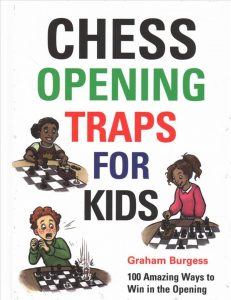
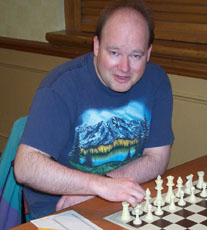
 Save as PDF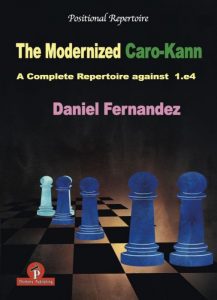
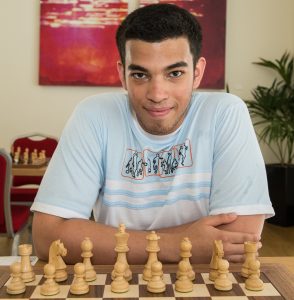
 available