From The Oxford Companion to Chess by Hooper & Whyld :
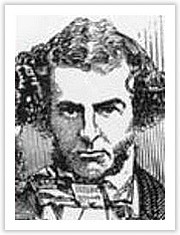
He was winner of second prize in the first international tournament, London 1851. He developed his chess skill in the 1840s, meeting Dubois in Rome, Kieseritzky in Paris, and many players, including Buckle, in London, His style was that of the English school, and he understood well the positional ideas of the English opening and the Sicilian Defence. In 1847 he was elected Member of Parliament for Richmond, Yorkshire, a seat he held until 1868 except for a break of two years. The London 1851 tournament consisted of a series of knock-out matches. After defeating Williams (+4-3) in the third round and losing to Anderssen ( + 2=1-4) in
the fourth and final round, Wyvill was placed second. His score against Anderssen was better than that made by other players (Kieseritzky
“1—2, Szen +2—4, Staunton +1—4), Wyvill had
proved himself one of the leading players of his time. Although he played in no more tournaments he retained an interest in the game throughout his
life.
Regarded by Staunton as “one of the finest players in England”. Wyvill was primarily an enthusiastic amateur of chess, yet in his sole tournament appearance at London 1851 he took second prize behind Anderssen, but ahead of Williams, Staunton, Horwitz, Szen, etc.
In the course of this event Wyvill defeated Lowe by +2-0, Kennedy by +4-3=1 and Williams by +4-3. In the final he succumbed to Anderssen by the honourable score of +2-4=1. At the time of the tournament Wyvill was Member of Parliament for Richmond, Yorkshire.
An adherent of the same playing style as Staunton and Williams, Wyvill possessed a fine appreciation of the English Opening and the Sicilian Defence, both of which he employed to deadly effect in the London tournament.
Long after he had retired from competitive play he retained a great interest in the game and his name appears as one of the members of the General Committee in the book of the London 1883 tournament, together with his contribution to the tournament funds of the sum of £100. £100 in 1883 would be worth £2,500 today.
Here is an example of the Wyvill pawn formation :
The Wyvill formation is a name given by Tarrasch to a pawn formation with doubled pawns as shown above. This formation was not unfamiliar to Wyvill but could with more justification have
been named after Winawer who so frequently doubled his opponent’s c-pawns that this and similar formations became known as his trademark. The technique for attacking the Wyvill formation was also understood by Neumann and before him by Carl Hamppe (1814-76), the leading
Viennese player of the 1850s.
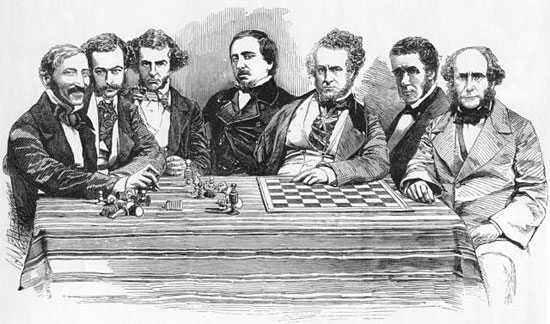
Marmaduke Wyvill at Leamington Spa, seated third from left.
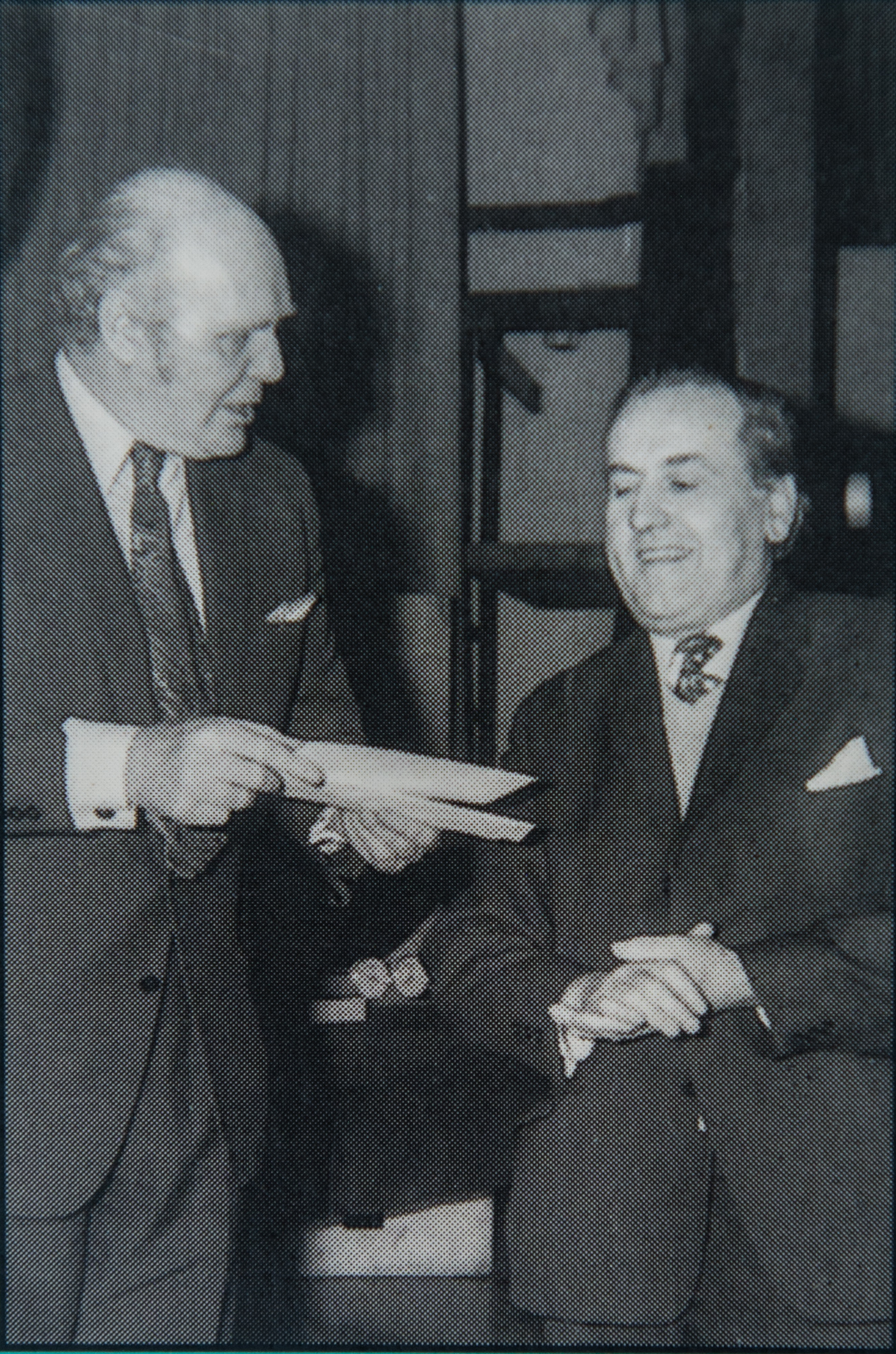
Alan Phillips (riight) receives his prize from television celebrity and magician David Nixon for his equal second placing at the 1973 Islington Open, photographer unknown
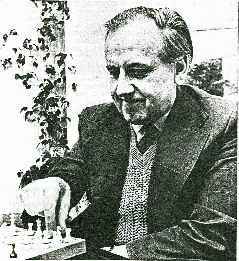
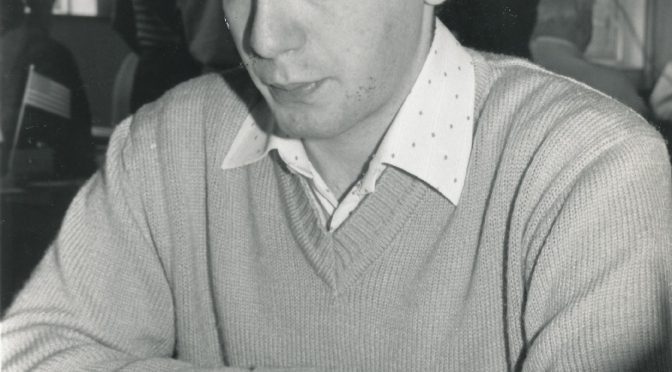
BCN remembers Alan Phillips (28-x-1923 24-vi-2009)
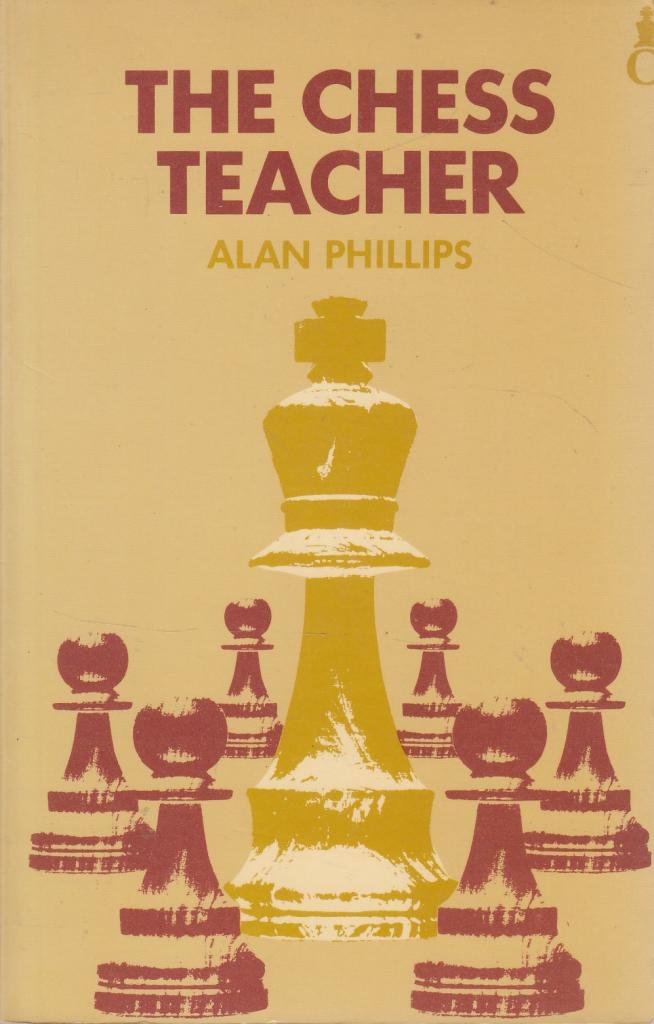
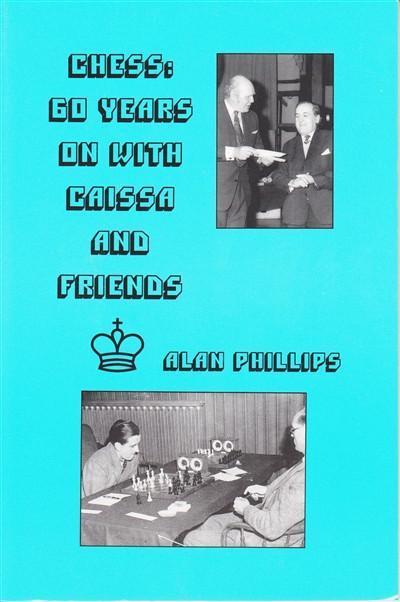
“Alan Phillips, joint British Champion in 1954, was born in England in 1923. He was the author of Chess: 60 Years on with Caissa and Friends (Caissa Editions, 2003) and The Chess Teacher (Cadogan, 1995).”
Here is an item from the Shropshire Chess web site
Here is Alan Phillips autobiography from his own book, Chess: Sixty years on with Caissa & Friends
“Born in Stockport in 1923,I was playing pontoon in an air-raid shelter in the autumn of 1940 with a friend from our school, Stockport Grammar, when he suddenly announced that he knew a better game, being the school chess champion. Ostensibly studying for a Cambridge Scholarship with a view to reading Classics, I played about 200 games with Norman Stephens, emerging the victor perhaps because I studied Alekhine’s and Euwe’s games, obtained from the Public Library, whence I had been borrowing difficult piano works for the previous two years. When I got up to Magdalene in 1941, I found standing next to me in the University Chess Club Wykehamist James Lighthill, destined to become, arguably, our greatest applied mathematician of the second half of the last century; I played chess with him one evening a week and piano duets another, and as Match Captain and Hon.Sec. in my second year – shared top board, while now supposedly reading Italian, as a War Office scheme, and French, languages I unfortunately then considered beneath contempt, compared with the glory that was Greek.
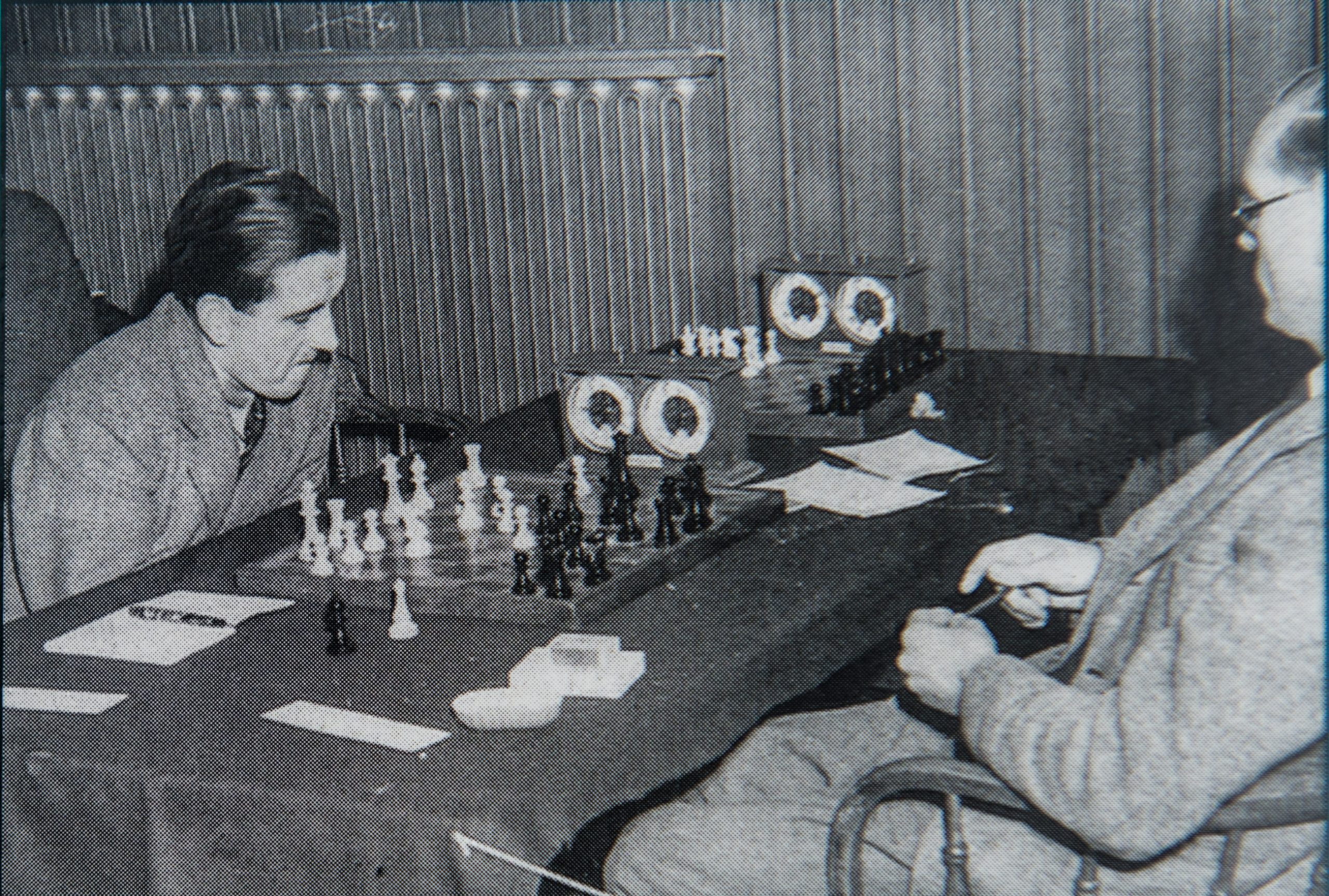
Alan Phillips plays David Hooper on August 20th 1954 in round five of the British Championships in Nottingham, photographer unknown
Enrolled but not commissioned – the War Office having ratted on its promise to a large bunch of first-class linguists – in the Army Intelligence Corps from August 1943 to October 1946,I spent nearly three years abroad in Sicily and Palestine, riding a motor-bike – our American equivalents in the CIC were mostly majors or colonels and rode in Cadillacs – and playing, when stationary, much music with singers and violinists, especially in Palestine, and chess with the Captain of the Harbour in Sicily, a charming moustached Neapolitan who got about three draws in 300 games, and then in Haifa, Hadera and Jerusalem chess clubs, beating the youth champion of Palestine and Aloni when he played simultaneously, but losing to Porath, and enjoying ‘skittles’ in cafes with many other players of near-master rank. Demobilised and put, like the Goons, on the Z-reserve in autumn 1946, I went back to Cambridge to read Classics Pt II and found Peter Swinnerton-Dyer, as far as I know our best number theorist of the past fifty years, waiting for me – we tied for the University Championship having begun a series of trips to Hastings with Alan Truscott, and later continued to Birmingham for the Midland Championship, which I won in 1951.
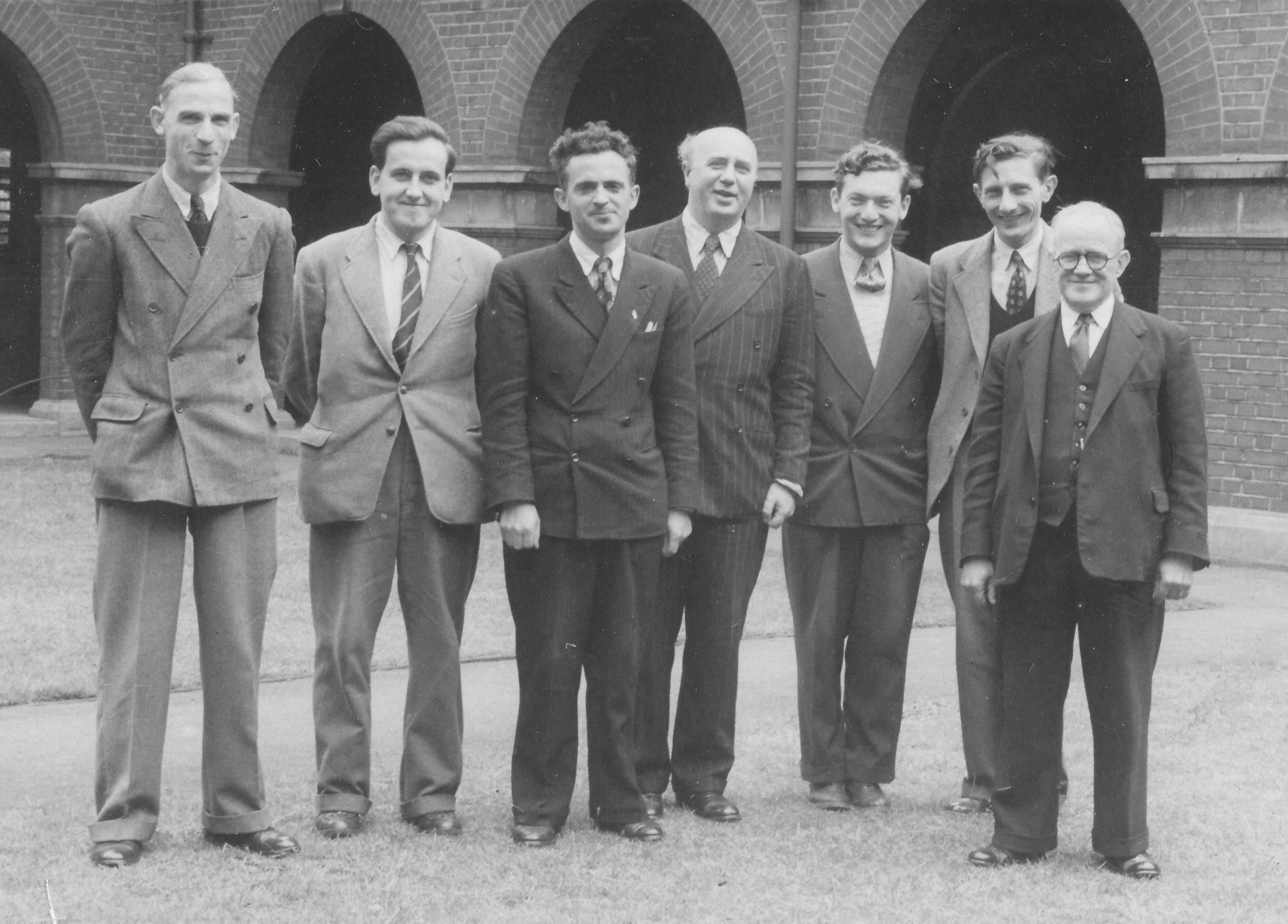
From the 1952 Ilford Congress (30 May – 2 June) and originally published in BCM, July 1952, page 187. (l-r) : Harold Israel, Alan Phillips, Bob Wade, Otto Friedman, Abe Yanofsky, Alfred William Bowen and Harold Meek. Thanks to John Saunders and Leonard Barden
I usually won prizes in increasingly strong sections at Hastings except in two Premiers, 1950-1 and 1954-5, when my emotions were otherwise engaged, as happened in the British Championship in 1952, when, after I had beaten all the best players and scored 7/8 with three rounds to go, a girl-friend turned up and I lost my last three games, refusing a draw in round nine in a not superior position, not out of arrogance, but in order to clinch the title.
Alan Phillips and Leonard Barden are joint British Champions of 1954 in Nottingham, photographer unknown
Otherwise, with one or two exceptions, I only lost to the strongest players in the British Championships I played in, i.e. 1949-55 and 1961, tying for first place at Nottingham 1954 and coming third equal in a very strong Championship at Aberystwyth 1955, which earned me a place as Board 6 on the English team at the Moscow Olympiad in 1956, where I only drew against Luxembourg, and lost to Geller, but drew in two cases from bad positions with Johner, Sanguinetti and Ghitescu.
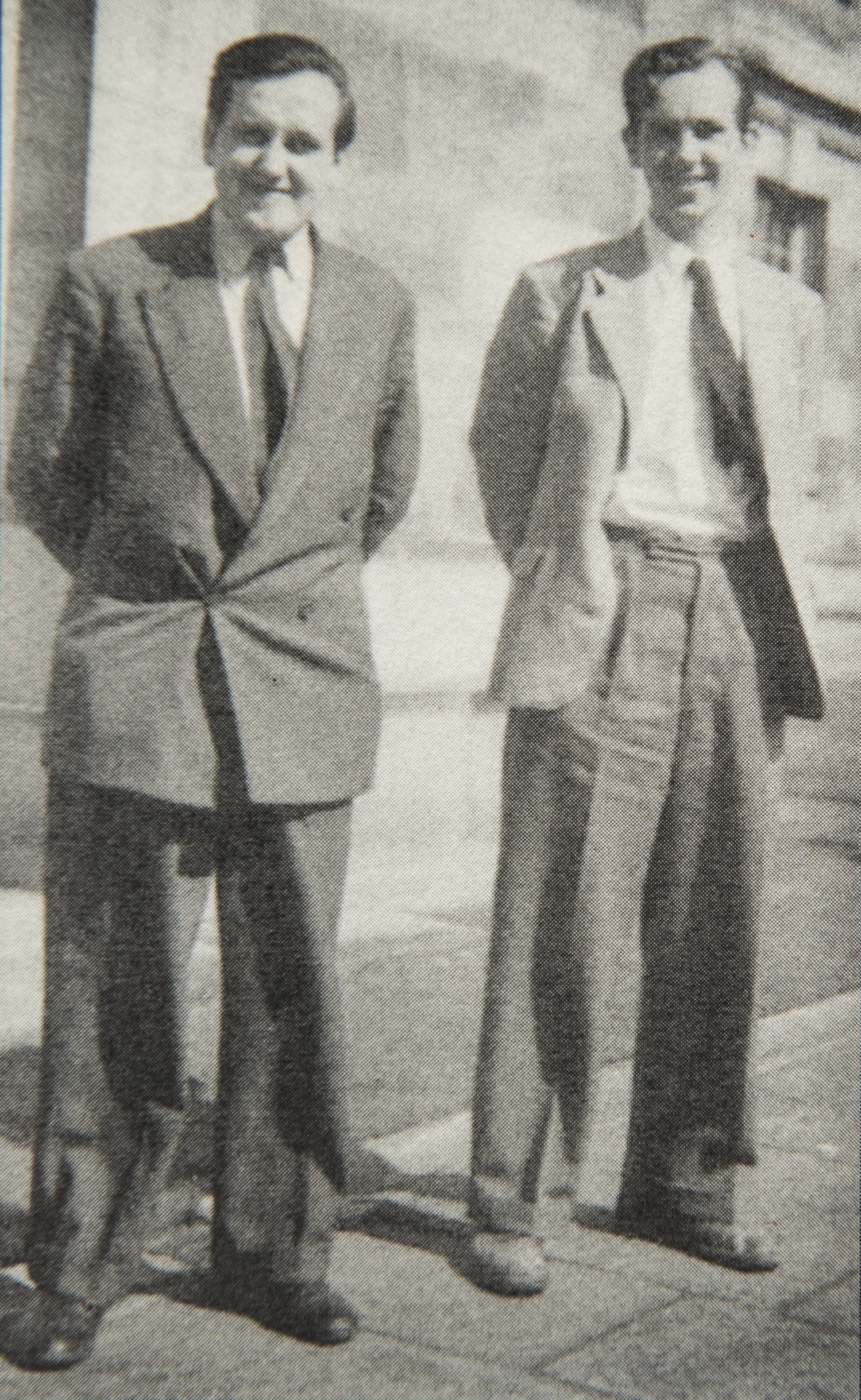
David Hooper (left) in conversation with Alan Phillips. Location and photographer unknown.
In l96l I moved up to Derbyshire, where – though playing top board for Manchester as well as the county – having switched to Maths teaching after several years part-time study at Birkbeck and acquired offspring as well as promotion, I also started annual visits to Dartington Summer School of Music, now totalling 38 out of a possible 40, all of which made it virtually impossible for me to play in tournaments, apart from the odd visit to Hastings or fairly strong week-end tournaments, e.g. Ilford, which I won for the second time in 1973, beating Basman. My responsibilities on my return to London as Head of Charlton School in 1967, where I got Bob Wade to teach chess as part of mathematics in the Lower School, and then of Forest Hill School, where we organised many tournaments, although I played generally as top board for Kent, whom I led twice to victory in the County Championship in 1975 and 1976, meant that I had even less time for tournament chess, except at Islington and in the Challengers, so that my real heyday ended there, with a final move to a ‘quiet’ county, Shropshire – as far as chess was concerned – as Adviser for Secondary Education and Area Adviser, 1976-82, in which capacity I avoided as much paper-work as I could and taught chess in the lunch-hour to all the primary and handicapped pupils I visited. I should say most of my successes at chess have been at County Level, where I played top board for Cambridgeshire and London University, as well as the counties mentioned, and in the very strong London League, as far as I can estimate I had a success rate of some 70% in those contests. In general the games in this book, with one or two exceptions for historical or anecdotal reasons, were played at high levels, and won by the right player, not suddenly lost by a blunder, like some games published nowadays because the blunder is perpetrated by a famous player.
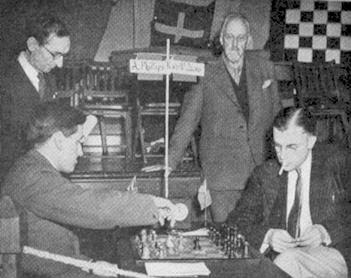
Photograph taken in Hastings on 28 December 1950. Lord Dunsany (standing on the right) is watching the first-round game between Alan Phillips and Weaver Adams, source : http://boylston-chess-club.blogspot.com/
With regard to the general assessment of players and tournaments, I have only one comment “Look at the games!” When even, or especially, David Bronstein wails “They give me a number”, I think it time to end a spuriously precise system and revert to the earlier English practice or the traditional Soviet one of putting players in classes, preferably according to a sufficiently large number of results in tournaments or strong club or county matches. And when players are inhibited, when the match is won, from offering an opponent, who has played well, a draw, that is a diminution of sportsmanship, so a draw, even with Kasparov, should not count in grading. Finally the use of seconds or computers once a game is started should be
regarded as totally unsporting, and players should be put on their honour, as bridge-players are in matters of cheating, not to use them.
I should like to dedicate this book to the memory of my good friends, David Hooper, Stuart Milner-Barry, and A.R.B.Thomas, men of integrity, humour, and many other talents, who brought to their chess the same qualities of courage and sportsmanship they showed in the rest of their lives.
Alan Phillips (28-x-1923 24-vi-2009) : Source : https://www.shropshirechess.org/History/1970s.htm
Alan Phillips
British Master, Joint British Champion 1954
Thorn Cottage, Appleton Thorn, Warrington, Cheshire
September 2003″
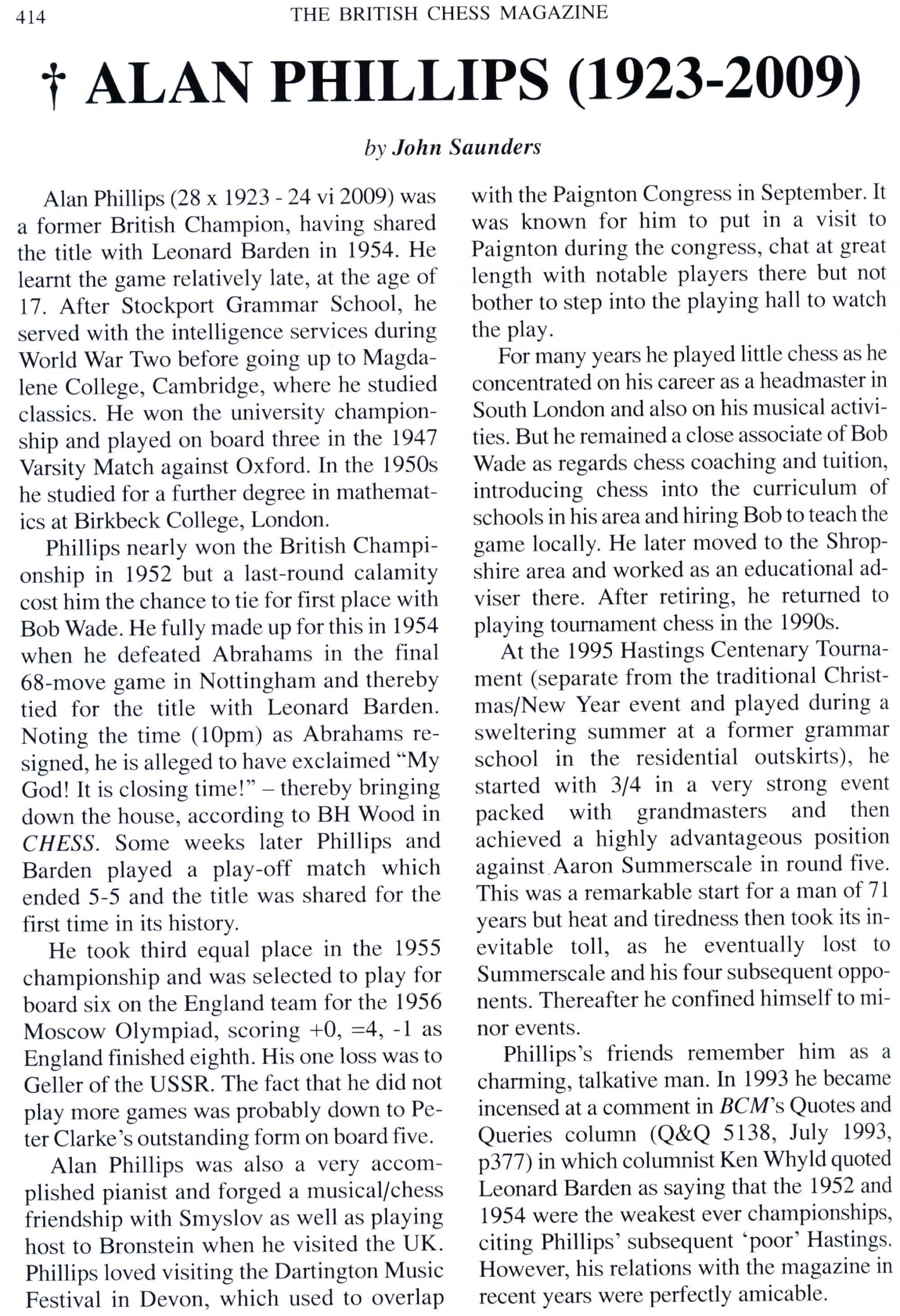
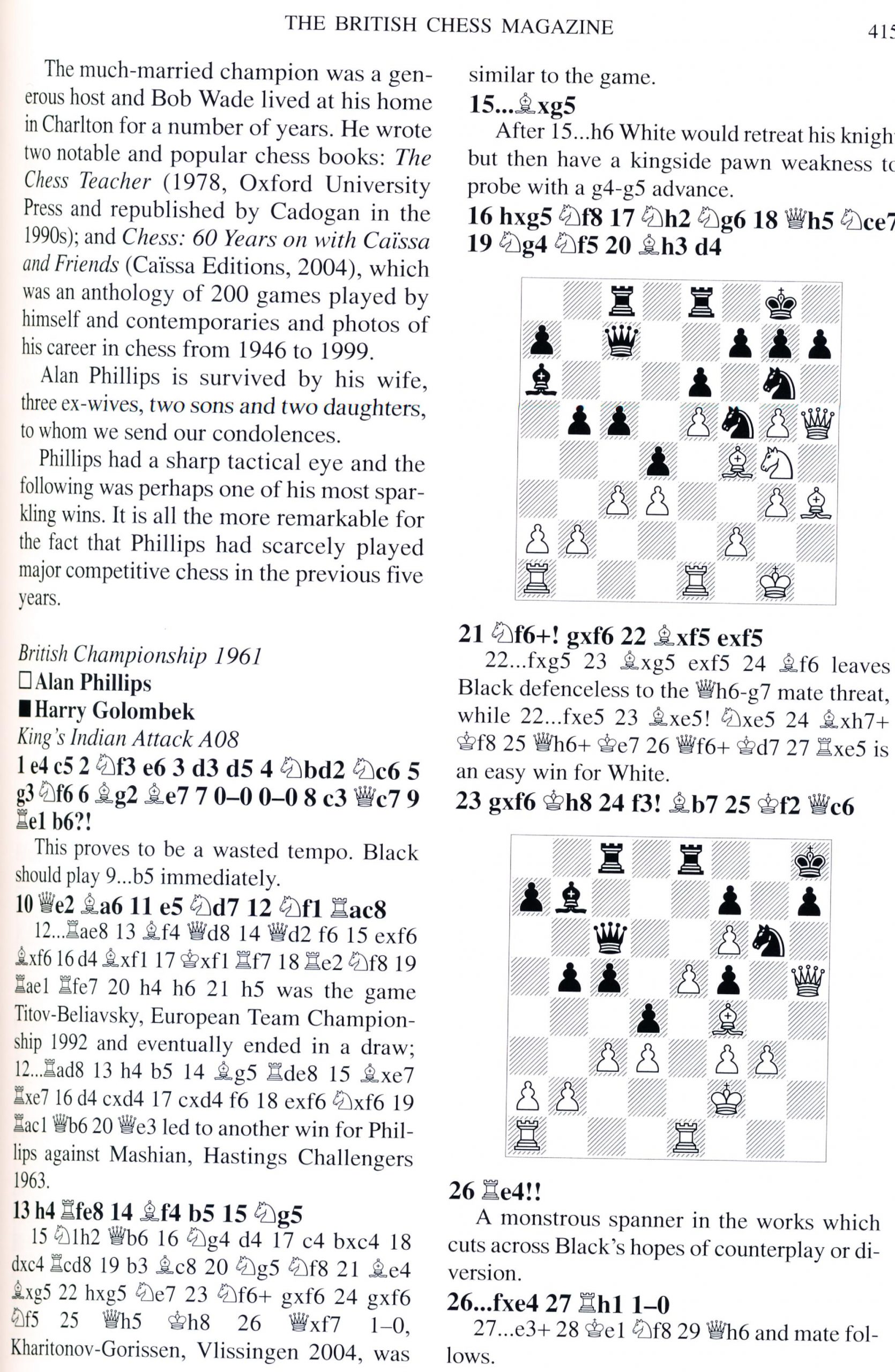
Obituary of Alan Phillips by John Saunders from British Chess Magazine, 2009. Part OneObituary of Alan Phillips by John Saunders from British Chess Magazine, 2009. Part Two
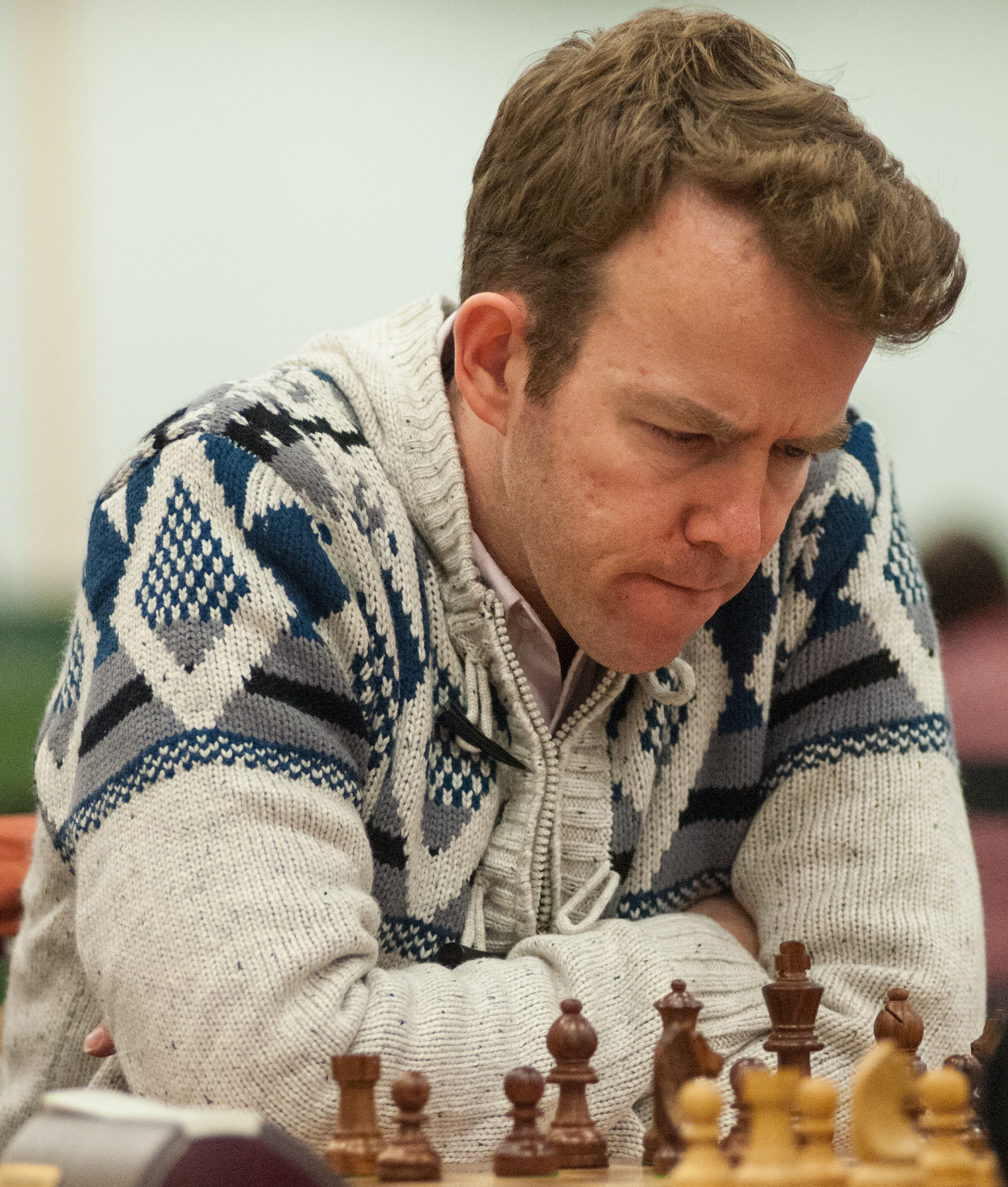
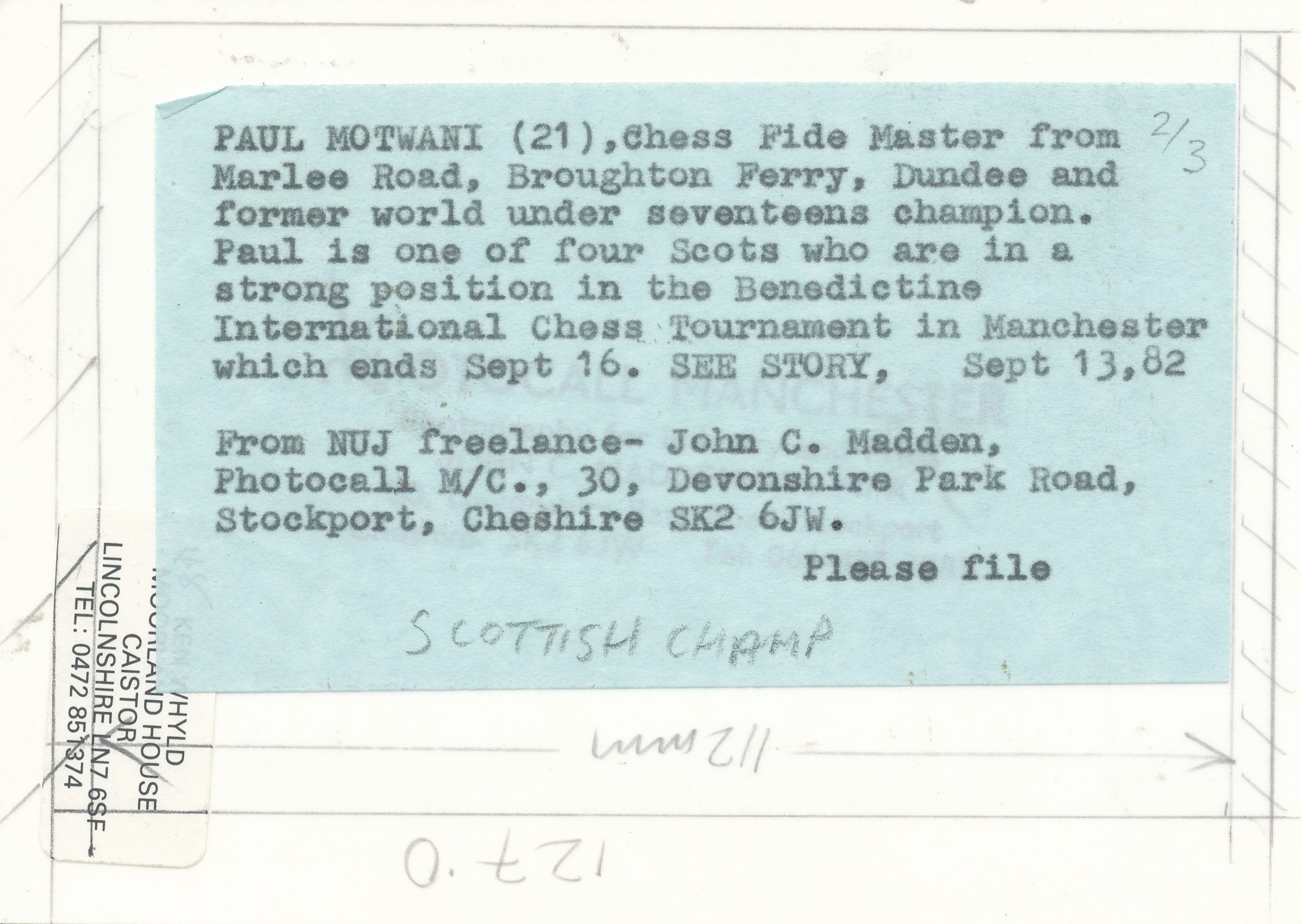
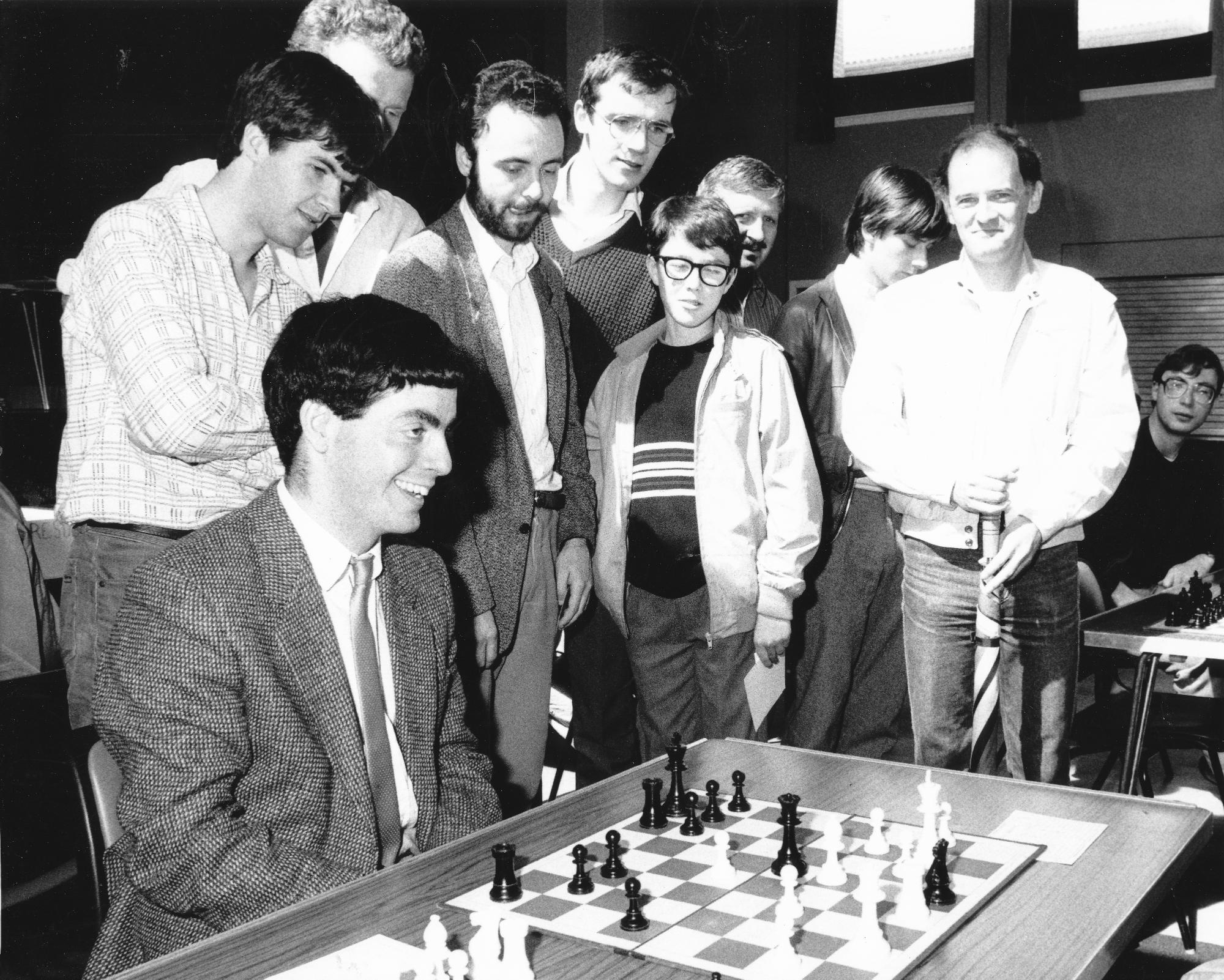
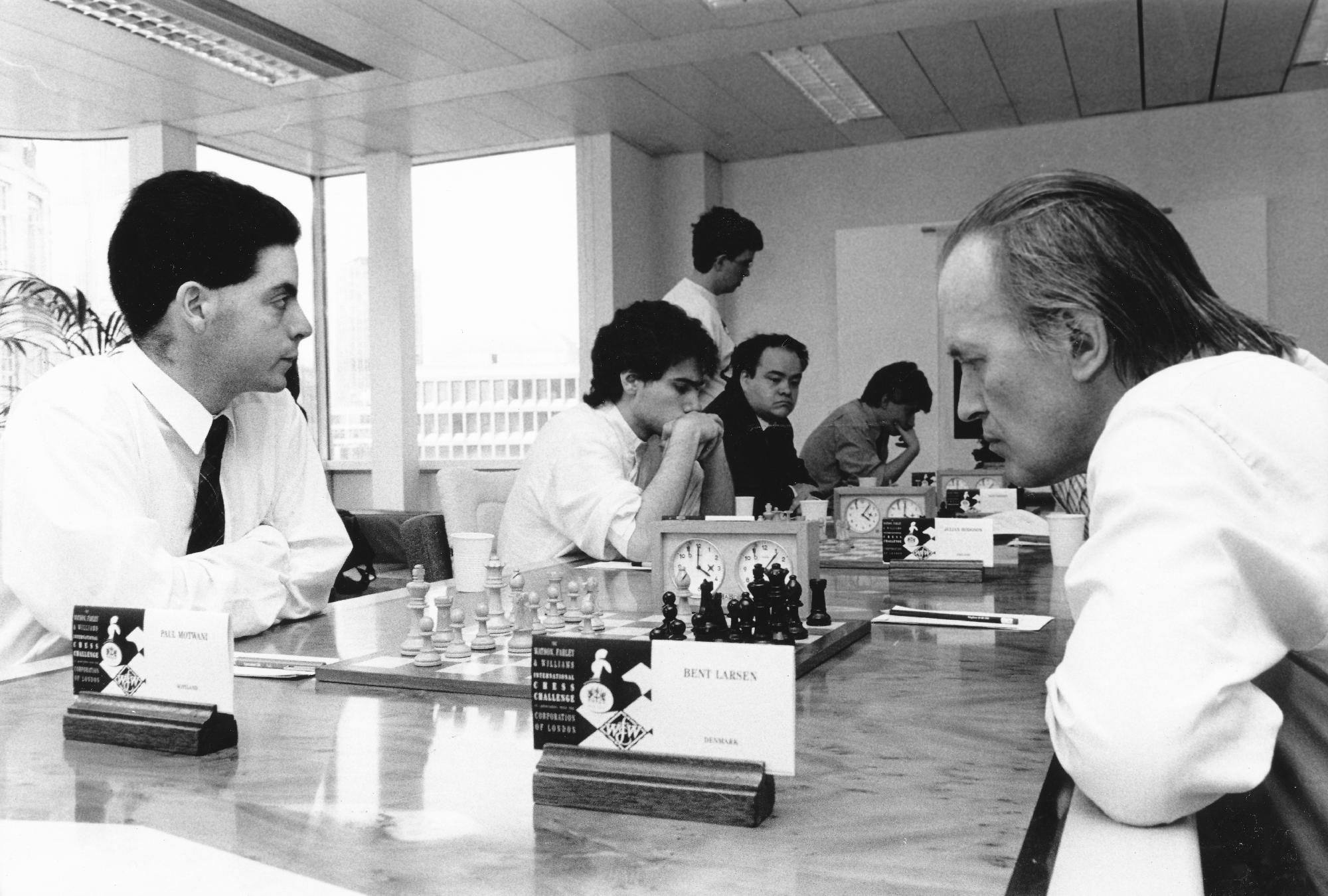
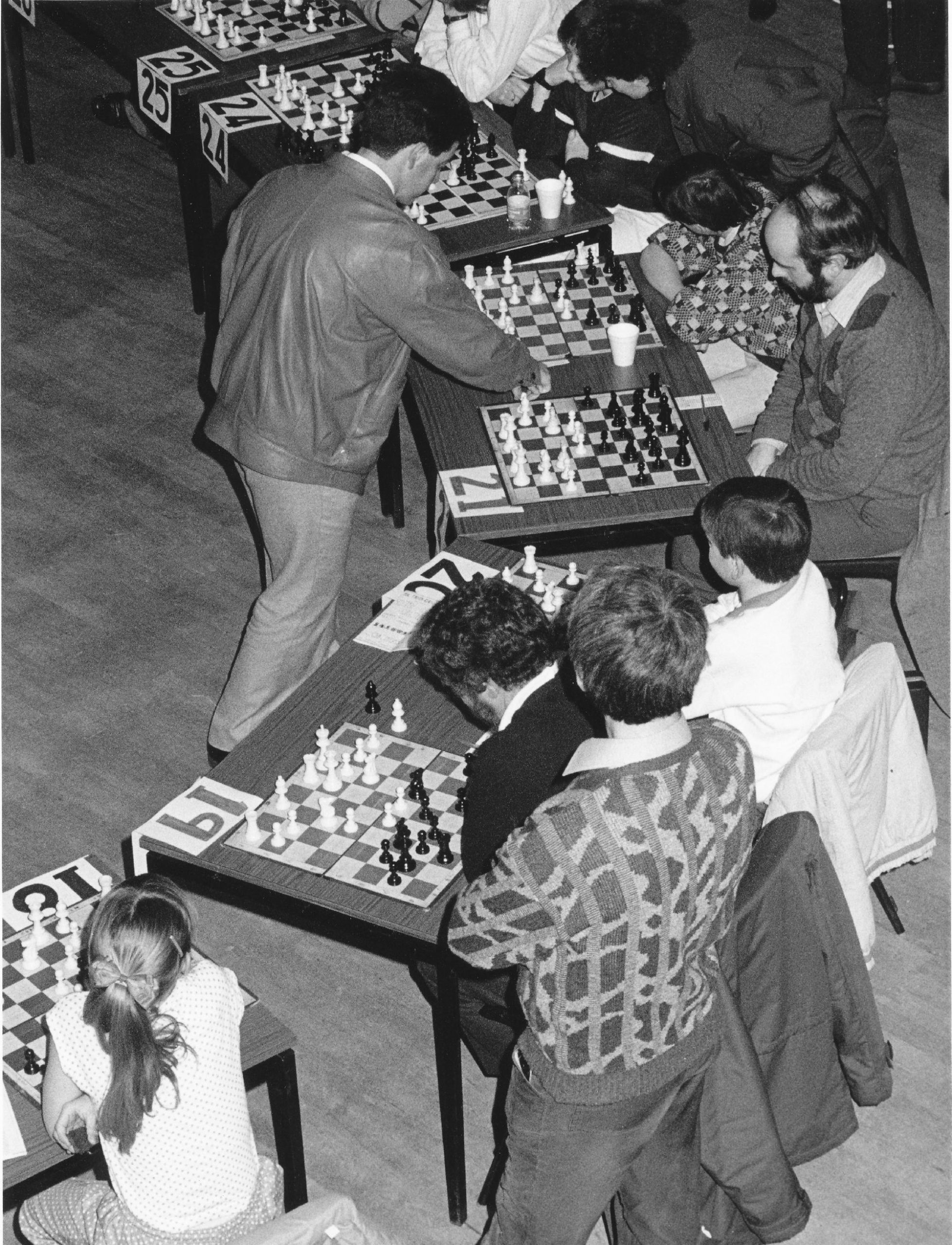
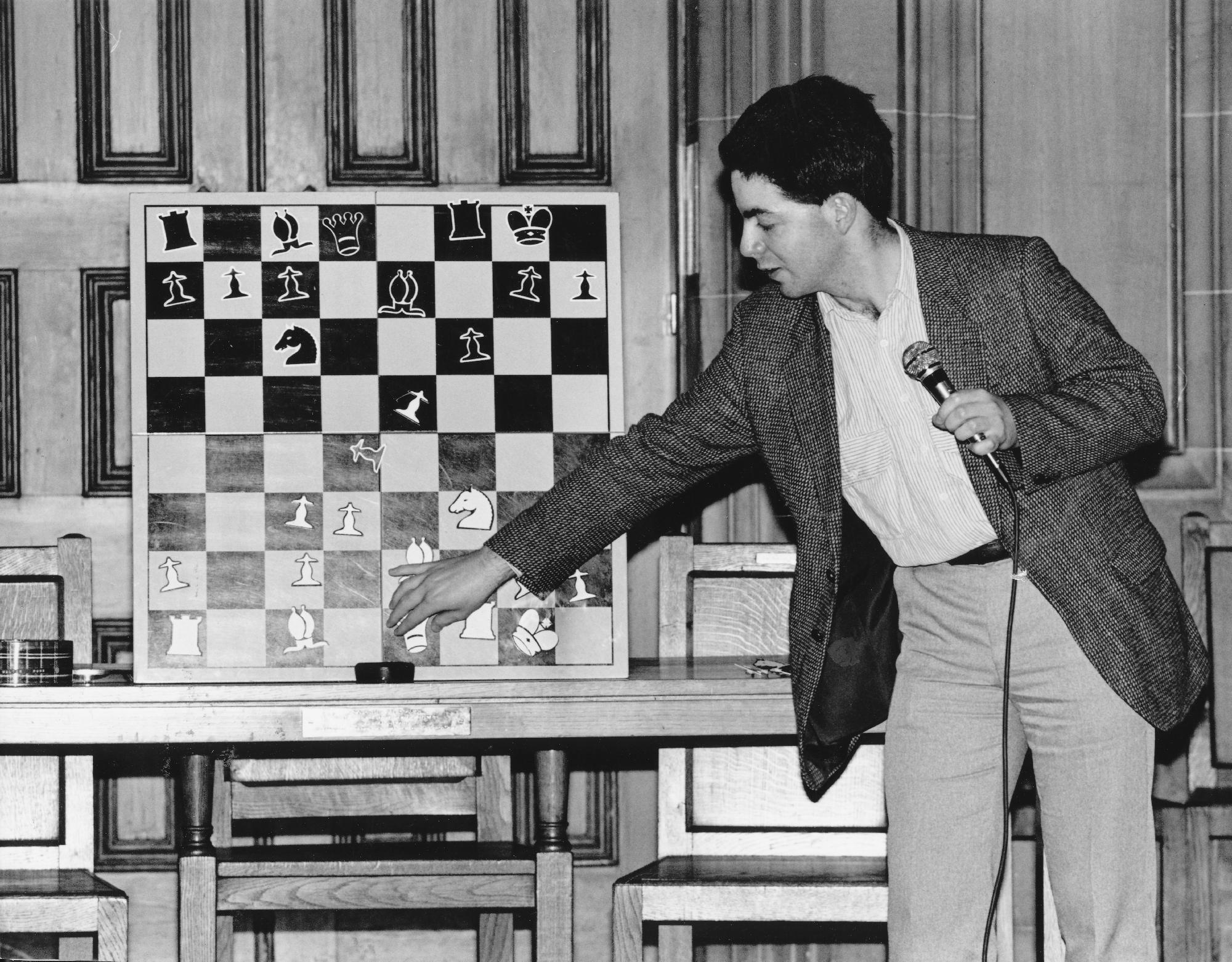
GM Paul Motwani has just played a brutal double check in the 1990 Scottish Lightning Championship. Photograph by Alistair MulhearnPaul Motwani plays Bent Larsen at the 1990 Watson, Farley and Williams International Chess Challenge. The game was a 3.Lb5 sicilian which was drawnPaul Motwani during a simultaneous displayGM Paul Motwani demonstrates one of his games
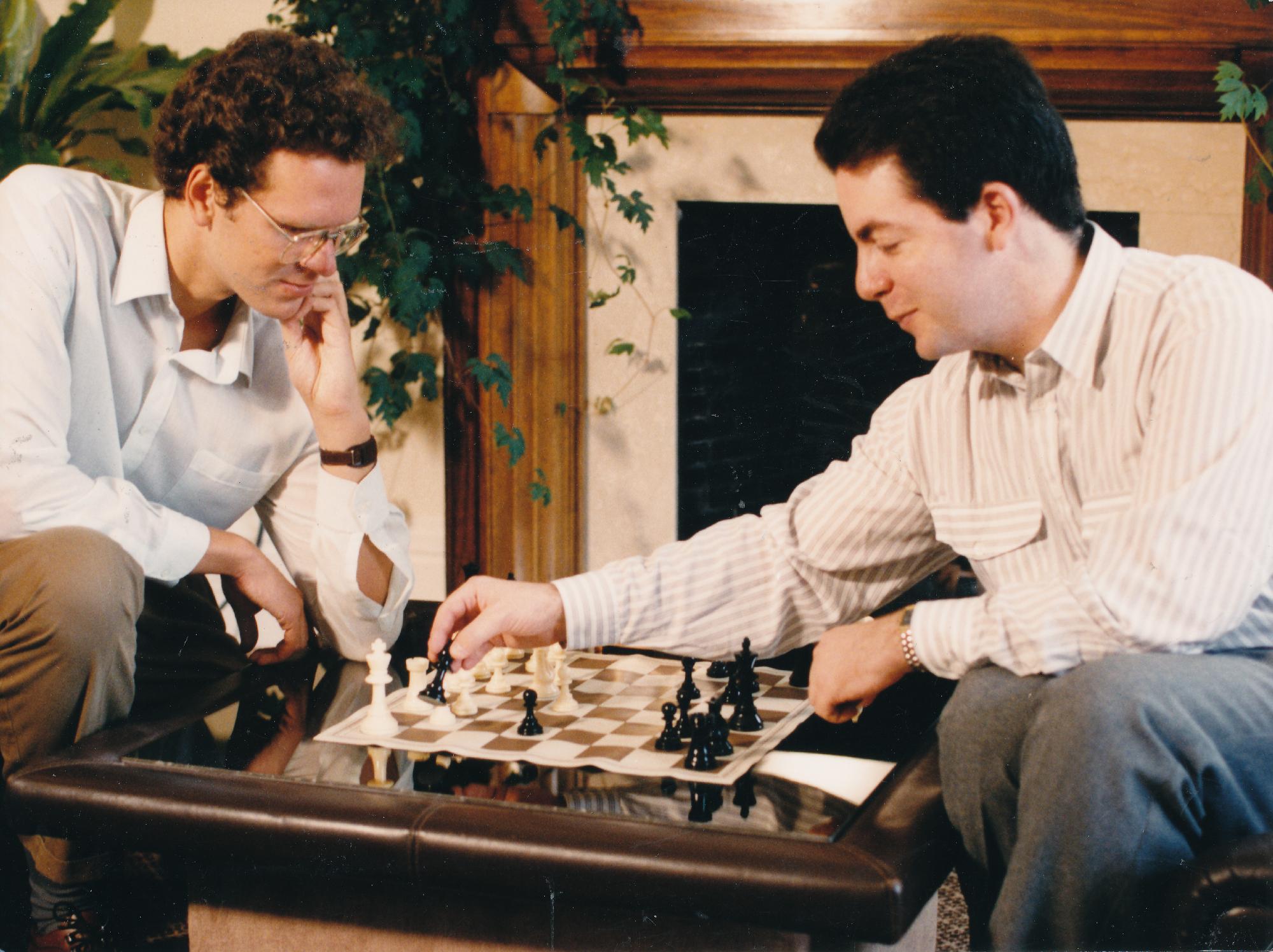
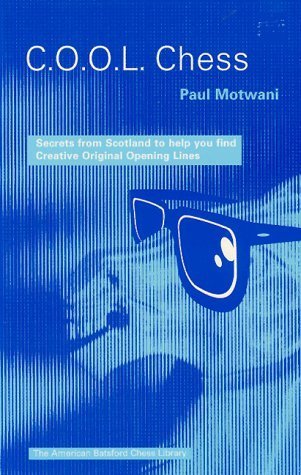
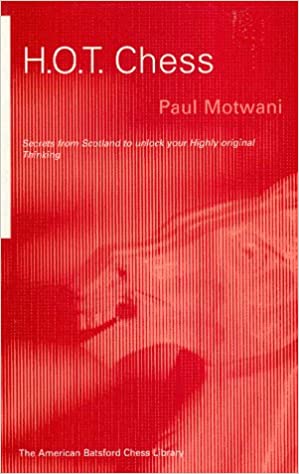
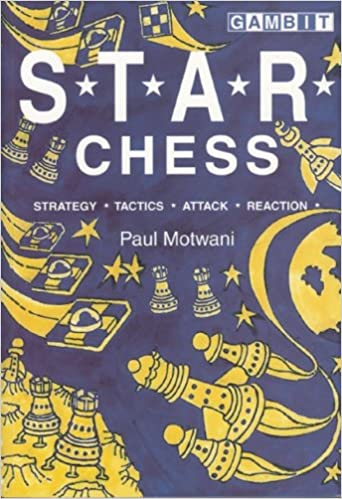
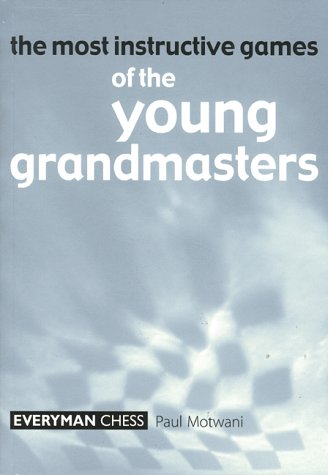
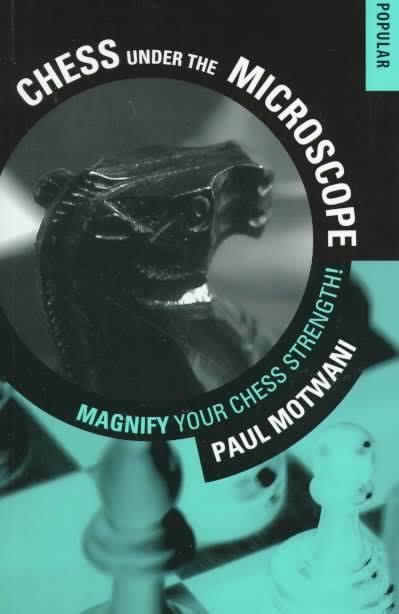
Colin McNab and Paul Motwani in post mortem analysisC.O.O.L. ChessH.O.T. ChessS*T*A*R* ChessThe Most Instructive Games of the Young GrandmastersChess Under the Microscope
GM Paul Motwani has just played a brutal double check in the 1990 Scottish Lightning Championship. Photograph by Alistair MulhearnPaul Motwani plays Bent Larsen at the 1990 Watson, Farley and Williams International Chess Challenge. The game was a 3.Lb5 sicilian which was drawnPaul Motwani during a simultaneous displayGM Paul Motwani demonstrates one of his games
Colin McNab and Paul Motwani in post mortem analysisC.O.O.L. ChessH.O.T. ChessS*T*A*R* ChessThe Most Instructive Games of the Young GrandmastersChess Under the Microscope
We focus on the British Chess Scene Past & Present!
This website uses cookies to improve your experience. We'll assume you're ok with this, but you can opt-out if you wish. Cookie settingsACCEPT
Privacy & Cookies Policy
Privacy Overview
This website uses cookies to improve your experience while you navigate through the website. Out of these cookies, the cookies that are categorized as necessary are stored on your browser as they are as essential for the working of basic functionalities of the website. We also use third-party cookies that help us analyze and understand how you use this website. These cookies will be stored in your browser only with your consent. You also have the option to opt-out of these cookies. But opting out of some of these cookies may have an effect on your browsing experience.
Necessary cookies are absolutely essential for the website to function properly. This category only includes cookies that ensures basic functionalities and security features of the website. These cookies do not store any personal information.