Tag Archives: 2020

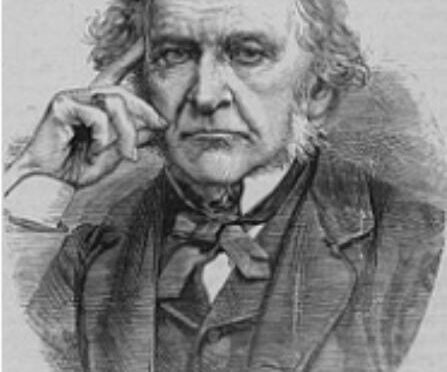
Death Anniversary of William Lewis (09-x-1787 22-viii-1870)

We note the passing today (August 22nd) in 1870 of William Lewis of the Lewis Counter Gambit.
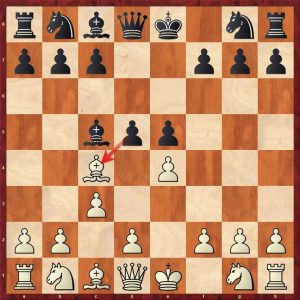
The Lewis Counter Gambit

From The Oxford Companion to Chess (OUP, 1984) by Hooper & Whyld :

“English player and author. He left his native Birmingham as a young man and worked for a time with a merchant in London. He learned much of his chess from Sarratt, a debt that was not repaid.

Around 1819 he was operator of the Turk, meeting all-comers successfully. With Cochrane he visited Paris in 1821, received odds of pawn and move from Deschapelles, and defeated him in a short match (+ 1=2), Lewis had already begun to write and of the more useful books he published around this time were translations of Greco and Carrera which appeared in 1819 and 1822 respectively. Although he considered Sarratt’s A Treatise on the Game of Chess (1808) a poorly written book, Lewis published a second edition in 1822 in direct competition with Sarratt’s last book, published in 1821 by his impoverished widow, (In 1843 many Englishmen contributed to a fund for Mrs Sarratt in her old age, Lewis’s name is not on the subscription list,}
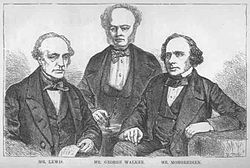
William Lewis, George Walker and Augustus Mongredien

In 1825 Bourdonnais visited England. Lewis recalled that they played about 70 games, and according to Walker seven of them constituted a
match which Lewis lost (+2—5). With no significant playing achievements to his credit Lewis acquired such a high reputation that a correspondent writing to the weekly magazine Bell’s Life in 1838 was moved to call him grandmaster.

From 1825 he preserved this reputation by the simplest means: he declined to play on even terms. In the same year he opened a club where he gave lessons at half a guinea each. McDonnell and Walker were among his pupils. Speculating unwisely on a piano-making patent, Lewis went bankrupt in 1827, and the club closed. After three precarious years of teaching chess (rich patrons were becoming fewer) Lewis became actuary of the Family Endowment Society and enjoyed financial security
for the rest of his life.
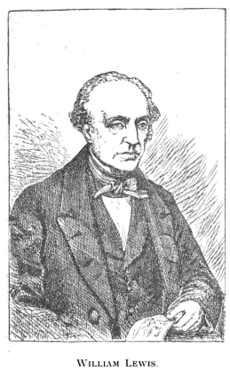
William Lewis
William Lewis

Circumstances now made it possible for him to concentrate on his writing and he published his two most important works: Series of Progressive Lessons (1831) and Second Series of Lessons (1832), both republished with various revisions. Lewis continued to write but gradually withdrew from other chess activities; his last notable connection with chess was as stakeholder for the Morphy-Lowenthal match of 1858.
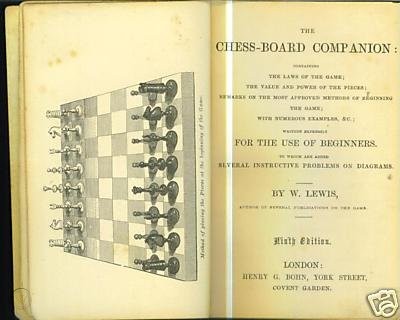
Chess Board Companion by William Lewis

Lewis’s Lessons contain extensive analyses of many opening variations, examined in the closeness of his study. Subsequent writers, notably Lasa, were influenced by these books, but more on account of the form than the content, which, adequate for the 1830s, were soon out of date.

Around 1840 writers no longer worked in isolation (a circumstance Lewis found unavoidable) and new positional ideas were being shaped. Because Lewis failed to assimilate these his judgements were faulty, and his voluminous Treatise on the Game of Chess (1844) was out of date when published.

Industrious rather than inventive, he made only one innovation, the Lewis Counter-Gambit; but it had no practical value in 1844, for simpler defences had already been discovered. Lewis’s work commands respect, but he is more aptly described as the last and one of the best of the ‘old’ writers than the first of the new, a more fitting description for Jaenisch and the authors of Bilguer’s Handbuch. ”

From The Encyclopedia of Chess (Robert Hale, 1970 & 1976) by Anne Sunnucks :

Chess theoretician, teacher, author and one of the leading players in England in the nineteenth century.

William Lewis was born in Birmingham on 9th October 1787. As a young man he went to London and took chess lessons from JH Sarratt. Within a short time he was making chess his principal means of livelihood.

In 1819 he was engaged as the player concealed in the chess-playing automaton, ‘The Turk’, when it was exhibited in London. In 1825 he opened some chess rooms in St. Martin’s Lane in London, where he taught chess. Among his pupils was Alexander McDonnell. After going bankrupt in 1827, the chess rooms were closed, and Lewis decided to put his lessons into a book. He soon became a highly-successful writer, His Chessboard Companion published in 1838 ran into nine editions, and his Series of Progressive Lessons of the Game of Chess has been described as one of the landmarks in the history of the game. This book included some completely new analyses of various chess openings and later formed the basis of the Handbuch des Schachspiels. Lewis also translated the work of Greco and Stamma and was author of The Elements of Chess (1882), Fifty Games of Chess (1832) and Chess for Beginners (1835).
Chess Board Companion by William Lewis

Towards the end of his life, Lewis rarely played chess, and his last public appearance in chess circles was 12 before he died, when he acted at stake-holder in the match between Morphy and Lowenthal in 1858. He died on 22nd August 1870.

From The Encyclopedia of Chess (Batsford, 1977) by Harry Golombek :

“Author of The Chessboard Companion, London, 1838, and several other popular works on chess (including translations of Greco and Stamma). Lewis was also a leading chess teacher – his most famous pupil was Alexdander McDonnell – and for a time he ran chess rooms in St. Martin’s Lane. In 1819 he operated the chess-playing automaton ‘The Turk’ when it was exhibited in London. The Lewis Counter-Gambit is 1.P-K4, P-K4; 2.B-B4 B-B4; 3.P-QB3,P-Q5!?”
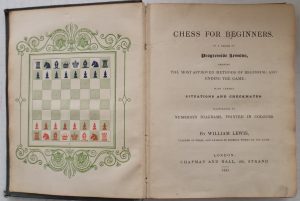
Chess for Beginners
Chess for Beginners

From “Chess : A History” by Harry Golombek there are two references to WL on pages 98 and 123 alluded to above.

Here is an interesting article from Chess.com

From Wikipedia :

“William Lewis (1787–1870) was an English chess player and author, nowadays best known for the Lewis Countergambit and for being the first player ever to be described as a Grandmaster of the game.[1]

Born in Birmingham, William Lewis moved as a young man to London where he worked for a merchant for a short period. He became a student of chess player Jacob Sarratt, but in later years he showed himself to be rather ungrateful towards his teacher.[1] Although he considered Sarratt’s Treatise on the Game of Chess (1808)[2] a “poorly written book”, in 1822 Lewis published a second edition of it three years after Sarratt’s death in direct competition with Sarratt’s own superior revision published posthumously in 1821 by Sarratt’s poverty-stricken widow. In 1843, many players contributed to a fund to help the old widow, but Lewis’ name is not on the list of subscribers.[1]

Around 1819 Lewis was the hidden player inside the Turk (a famous automaton), meeting all-comers successfully. He suggested to Johann Maelzel that Peter Unger Williams, a fellow ex-student of Sarratt, should be the next person to operate inside the machine. When P. U. Williams played a game against the Turk, Lewis recognised the old friend from his style of play (the operator could not see his opponents) and convinced Maelzel to reveal to Williams the secret of the Turk. Later, P. U. Williams himself took Lewis’ place inside the machine.[3]

Lewis visited Paris along with Scottish player John Cochrane in 1821, where they played with Alexandre Deschapelles, receiving the advantage of pawn and move. He won the short match (+1 =2).”

“Lewis’ career as an author began at this time, and included translations of the works of Greco and Carrera, published in 1819[5] and 1822[6] respectively.

He was the leading English player in the correspondence match between London and Edinburgh in 1824, won by the Scots (+2 = 2 -1). Later, he published a book on the match with analysis of the games.[7] In the period of 1834–36 he was also part of the Committee of the Westminster Chess Club, who played and lost (−2) the match by correspondence with the Paris Chess Club. The other players were his students McDonnell and Walker, while the French line up included Boncourt, Alexandre, St. Amant and Chamouillet.[8] When De La Bourdonnais visited England in 1825, Lewis played about 70 games with the French master. Seven of these games probably represented a match that Lewis lost (+2 -5).[9]

Lewis enjoyed a considerable reputation as a chess player in his time. A correspondent writing to the weekly magazine Bell’s Life in 1838 called him “our past grandmaster”, the first known use of the term in chess.[1] Starting from 1825 he preserved his reputation by the same means that Deschapelles used in France, by refusing to play anyone on even terms. In the same year Lewis founded a Chess Club where he gave lessons to, amongst others, Walker and McDonnell. He was declared bankrupt in 1827 due to bad investments on a patent for the construction of pianos and his chess club was forced to close. The next three years were quite difficult until in 1830 he got a job that assured him of solid financial security for the rest of his life. Thanks to this job, he could focus on writing his two major works: Series of Progressive Lessons (1831) and Second Series of Progressive Lessons (1832). The first series of the Lessons were more elementary in character, and designed for the use of beginners; the second series, on the other hand, went deeply into all the known openings. Here, for the first time we find the Evans Gambit, which is named after its inventor, Capt. Evans.[10]

The works of Lewis (together with his teacher Sarratt) were oriented towards the rethinking of the strictly Philidorian principles of play in favour of the Modenese school of Del Rio, Lolli and Ponziani.[11] When he realised that he could not give an advantage to the new generation of British players, Lewis withdrew gradually from active play[1] (in the same way that Deschapelles did after his defeat against De La Bourdonnais).

After his retirement he wrote other chess treatises, but his isolation prevented him from assimilating the positional ideas of the new generation of chess-players. For this reason, Hooper and Whyld in their Oxford Chess Companion describe the last voluminous work of Lewis, A Treatise on Chess (1844),[12] as already “out of date when published”.”
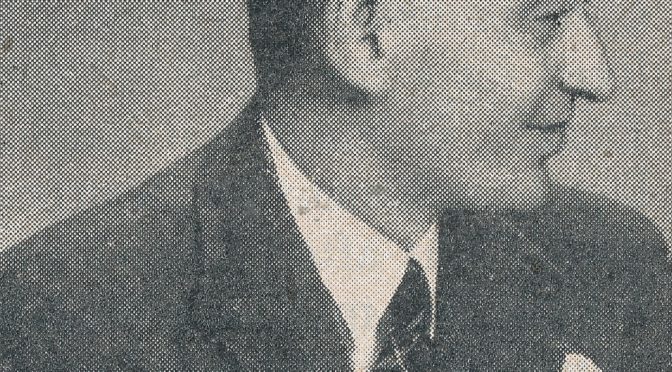
Remembering William Lewis (09-x-1787 22-viii-1870)

We note the passing today (August 22nd) in 1870 of William Lewis of the Lewis Counter Gambit.

The Lewis Counter Gambit

From The Oxford Companion to Chess (OUP, 1984) by Hooper & Whyld :

“English player and author. He left his native Birmingham as a young man and worked for a time with a merchant in London. He learned much of his chess from Sarratt, a debt that was not repaid.

Around 1819 he was operator of the Turk, meeting all-comers successfully. With Cochrane he visited Paris in 1821, received odds of pawn and move from Deschapelles, and defeated him in a short match (+ 1=2), Lewis had already begun to write and of the more useful books he published around this time were translations of Greco and Carrera which appeared in 1819 and 1822 respectively.

Although he considered Sarratt’s A Treatise on the Game of Chess (1808) a poorly written book, Lewis published a second edition in 1822 in direct competition with Sarratt’s last book, published in 1821 by his impoverished widow, (In 1843 many Englishmen contributed to a fund for Mrs Sarratt in her old age, Lewis’s name is not on the subscription list,}

William Lewis, George Walker and Augustus Mongredien

In 1825 Bourdonnais visited England. Lewis recalled that they played about 70 games, and according to Walker seven of them constituted a match which Lewis lost (+2—5). With no significant playing achievements to his credit Lewis acquired such a high reputation that a correspondent writing to the weekly magazine Bell’s Life in 1838 was moved to call him grandmaster.

From 1825 he preserved this reputation by the simplest means: he declined to play on even terms. In the same year he opened a club where he gave lessons at half a guinea each. McDonnell and Walker were among his pupils. Speculating unwisely on a piano-making patent, Lewis went bankrupt in 1827, and the club closed. After three precarious years of teaching chess (rich patrons were becoming fewer) Lewis became actuary of the Family Endowment Society and enjoyed financial security
for the rest of his life.

William Lewis
William Lewis

Circumstances now made it possible for him to concentrate on his writing and he published his two most important works: Series of Progressive Lessons (1831) and Second Series of Lessons (1832), both republished with various revisions. Lewis continued to write but gradually withdrew from other chess activities; his last notable connection with chess was as stakeholder for the Morphy-Lowenthal match of 1858.

Chess Board Companion by William Lewis

Lewis’s Lessons contain extensive analyses of many opening variations, examined in the closeness of his study. Subsequent writers, notably Lasa, were influenced by these books, but more on account of the form than the content, which, adequate for the 1830s, were soon out of date.

Around 1840 writers no longer worked in isolation (a circumstance Lewis found unavoidable) and new positional ideas were being shaped. Because Lewis failed to assimilate these his judgements were faulty, and his voluminous Treatise on the Game of Chess (1844) was out of date when published.

Industrious rather than inventive, he made only one innovation, the Lewis Counter-Gambit; but it had no practical value in 1844, for simpler defences had already been discovered. Lewis’s work commands respect, but he is more aptly described as the last and one of the best of the ‘old’ writers than the first of the new, a more fitting description for Jaenisch and the authors of Bilguer’s Handbuch. ”

From The Encyclopedia of Chess (Robert Hale, 1970 & 1976) by Anne Sunnucks :

Chess theoretician, teacher, author and one of the leading players in England in the nineteenth century.

William Lewis was born in Birmingham on 9th October 1787. As a young man he went to London and took chess lessons from JH Sarratt. Within a short time he was making chess his principal means of livelihood.

In 1819 he was engaged as the player concealed in the chess-playing automaton, ‘The Turk’, when it was exhibited in London. In 1825 he opened some chess rooms in St. Martin’s Lane in London, where he taught chess. Among his pupils was Alexander McDonnell. After going bankrupt in 1827, the chess rooms were closed, and Lewis decided to put his lessons into a book. He soon became a highly-successful writer, His Chessboard Companion published in 1838 ran into nine editions, and his Series of Progressive Lessons of the Game of Chess has been described as one of the landmarks in the history of the game. This book included some completely new analyses of various chess openings and later formed the basis of the Handbuch des Schachspiels. Lewis also translated the work of Greco and Stamma and was author of The Elements of Chess (1882), Fifty Games of Chess (1832) and Chess for Beginners (1835).

Chess Board Companion by William Lewis

Towards the end of his life, Lewis rarely played chess, and his last public appearance in chess circles was 12 before he died, when he acted at stake-holder in the match between Morphy and Lowenthal in 1858. He died on 22nd August 1870.

From The Encyclopedia of Chess (Batsford, 1977) by Harry Golombek :

“Author of The Chessboard Companion, London, 1838, and several other popular works on chess (including translations of Greco and Stamma). Lewis was also a leading chess teacher – his most famous pupil was Alexdander McDonnell – and for a time he ran chess rooms in St. Martin’s Lane. In 1819 he operated the chess-playing automaton ‘The Turk’ when it was exhibited in London. The Lewis Counter-Gambit is 1.P-K4, P-K4; 2.B-B4 B-B4; 3.P-QB3,P-Q5!?”

Chess for Beginners
Chess for Beginners

From “Chess : A History” by Harry Golombek there are two references to WL on pages 98 and 123 alluded to above.

Here is an interesting article from Chess.com

From Wikipedia :

“William Lewis (1787–1870) was an English chess player and author, nowadays best known for the Lewis Countergambit and for being the first player ever to be described as a Grandmaster of the game.

Born in Birmingham, William Lewis moved as a young man to London where he worked for a merchant for a short period. He became a student of chess player Jacob Sarratt, but in later years he showed himself to be rather ungrateful towards his teacher.

Although he considered Sarratt’s Treatise on the Game of Chess (1808) a “poorly written book”, in 1822 Lewis published a second edition of it three years after Sarratt’s death in direct competition with Sarratt’s own superior revision published posthumously in 1821 by Sarratt’s poverty-stricken widow. In 1843, many players contributed to a fund to help the old widow, but Lewis’ name is not on the list of subscribers.

Around 1819 Lewis was the hidden player inside the Turk (a famous automaton), meeting all-comers successfully. He suggested to Johann Maelzel that Peter Unger Williams, a fellow ex-student of Sarratt, should be the next person to operate inside the machine. When P. U. Williams played a game against the Turk, Lewis recognised the old friend from his style of play (the operator could not see his opponents) and convinced Maelzel to reveal to Williams the secret of the Turk. Later, P. U. Williams himself took Lewis’ place inside the machine.

Lewis visited Paris along with Scottish player John Cochrane in 1821, where they played with Alexandre Deschapelles, receiving the advantage of pawn and move. He won the short match (+1 =2).”

“Lewis’ career as an author began at this time, and included translations of the works of Greco and Carrera, published in 1819[5] and 1822[6] respectively.

He was the leading English player in the correspondence match between London and Edinburgh in 1824, won by the Scots (+2 = 2 -1). Later, he published a book on the match with analysis of the games. In the period of 1834–36 he was also part of the Committee of the Westminster Chess Club, who played and lost (−2) the match by correspondence with the Paris Chess Club. The other players were his students McDonnell and Walker, while the French line up included Boncourt, Alexandre, St. Amant and Chamouillet. When De La Bourdonnais visited England in 1825, Lewis played about 70 games with the French master. Seven of these games probably represented a match that Lewis lost (+2 -5).

Lewis enjoyed a considerable reputation as a chess player in his time. A correspondent writing to the weekly magazine Bell’s Life in 1838 called him “our past grandmaster”, the first known use of the term in chess.  Starting from 1825 he preserved his reputation by the same means that Deschapelles used in France, by refusing to play anyone on even terms. In the same year Lewis founded a Chess Club where he gave lessons to, amongst others, Walker and McDonnell. He was declared bankrupt in 1827 due to bad investments on a patent for the construction of pianos and his chess club was forced to close. The next three years were quite difficult until in 1830 he got a job that assured him of solid financial security for the rest of his life. Thanks to this job, he could focus on writing his two major works: Series of Progressive Lessons (1831) and Second Series of Progressive Lessons (1832). The first series of the Lessons were more elementary in character, and designed for the use of beginners; the second series, on the other hand, went deeply into all the known openings. Here, for the first time we find the Evans Gambit, which is named after its inventor, Capt. Evans.

The works of Lewis (together with his teacher Sarratt) were oriented towards the rethinking of the strictly Philidorian principles of play in favour of the Modenese school of Del Rio, Lolli and Ponziani.  When he realised that he could not give an advantage to the new generation of British players, Lewis withdrew gradually from active play (in the same way that Deschapelles did after his defeat against De La Bourdonnais).

After his retirement he wrote other chess treatises, but his isolation prevented him from assimilating the positional ideas of the new generation of chess-players. For this reason, Hooper and Whyld in their Oxford Chess Companion describe the last voluminous work of Lewis, A Treatise on Chess (1844), as already “out of date when published”.”
According to Edward Winter in Chess Notes Lewis lived at 12 Chatham Place, Blackfriars, London, England (Chess Player’s Chronicle, 1841, pages 9 and 34*)

Remembering Ernst Klein (29-i-1910 22-viii-1990)

Remembering Ernst Klein (29-i-1910 22-viii-1990)

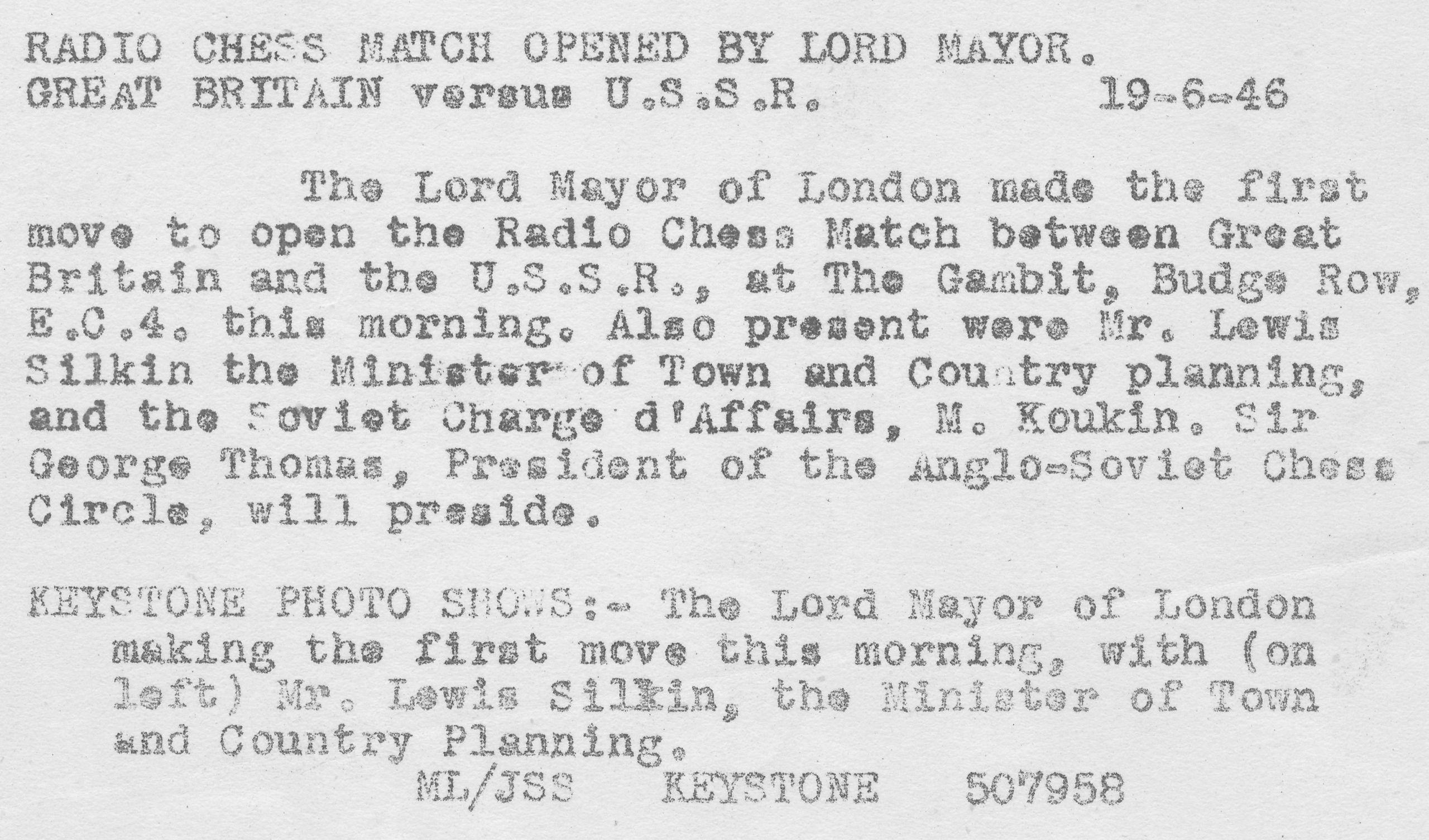
From CHESS, July 1946 (and also The Anglo-Soviet Radio Chess Match) :

Since Ernst Klein came to England in 1935 his play has earned our ungrudging admiration. Born in Vienna, 1910, he learned chess at the age of eleven. His grandmother taught him the moves, his father having died when he was eight. Steinitz was a frequent guest in his grandparents house. At eighteen, he shared first, second and third prizes in the Championship of Vienna. Before coming to England, he had lived for some years in Switzerland, France and Italy and his French, German and English are equally impeccable. In his last tournament at Bournemouth, in 1939, he finished equal with Flohr after Euwe ahead of König, Landau, Aitken and others. He met his wife, who is an Englishwoman, during the blitz. They were married in 1944. He holds a London University degree and teaches mathematics in Southend.

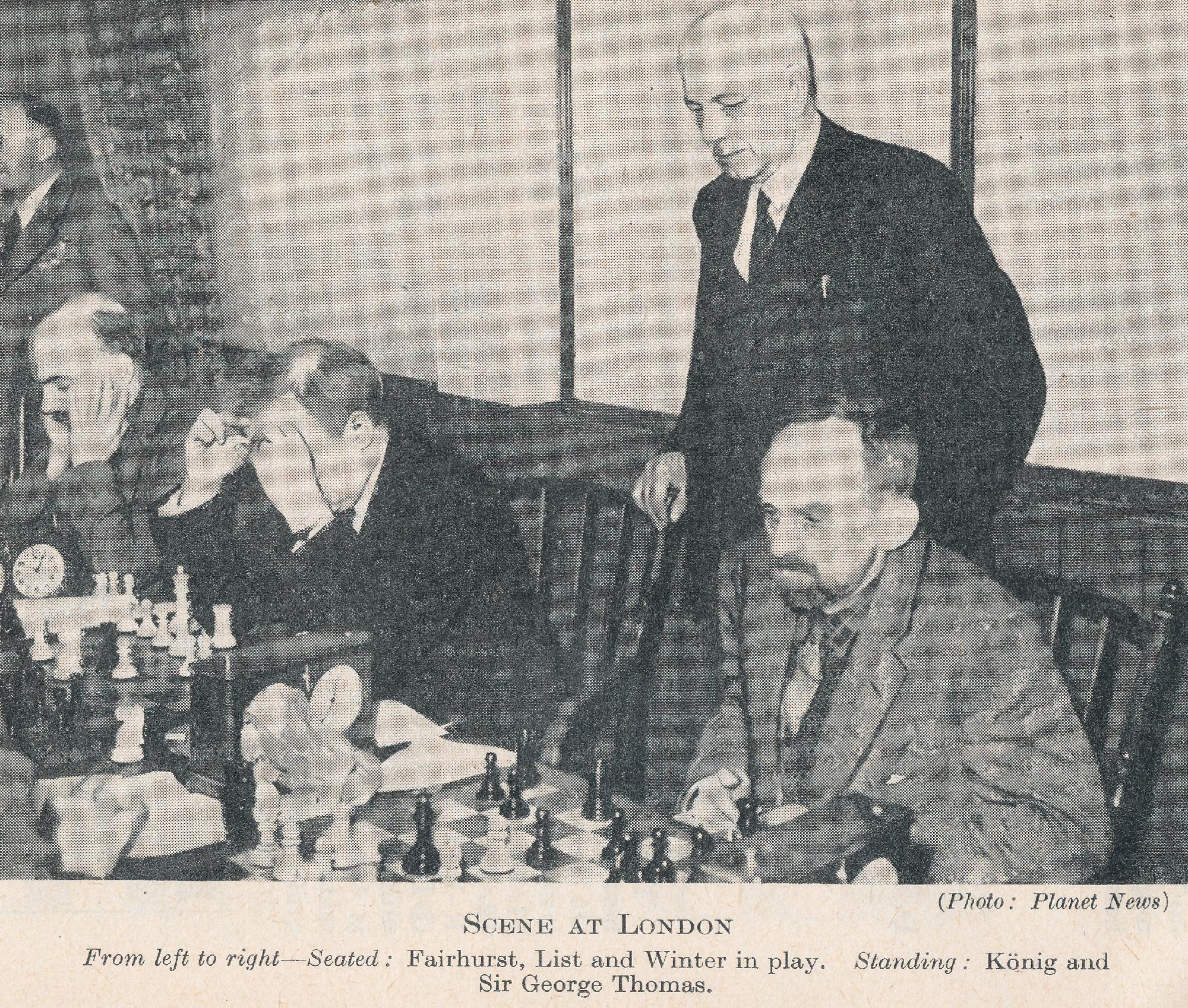
Scene at London. From left to right - Seated : Fairhurst, List and Winter in play. Standing König and Sir George Thomas
Scene at London. From left to right – Seated : Fairhurst, List and Winter in play. Standing König and Sir George Thomas

About 1940, he offered to give any opponent in Great Britain the odds of the draw.; his challenge was never taken up, no doubt owing to the conditions of the moment, but we imagine there would be many “takers” if it were repeated now.”

Later, Klein clarified matters by writing What I said was: “I am ready to accept the challenge of any player in this country and am prepared to give the odds of a draw in a contest at least twelve games if he so wishes. That is, I offered to concede victory on a score of 6 : 6 draws counting, which is the necessary and sufficient condition to justify my offer. It is still open.

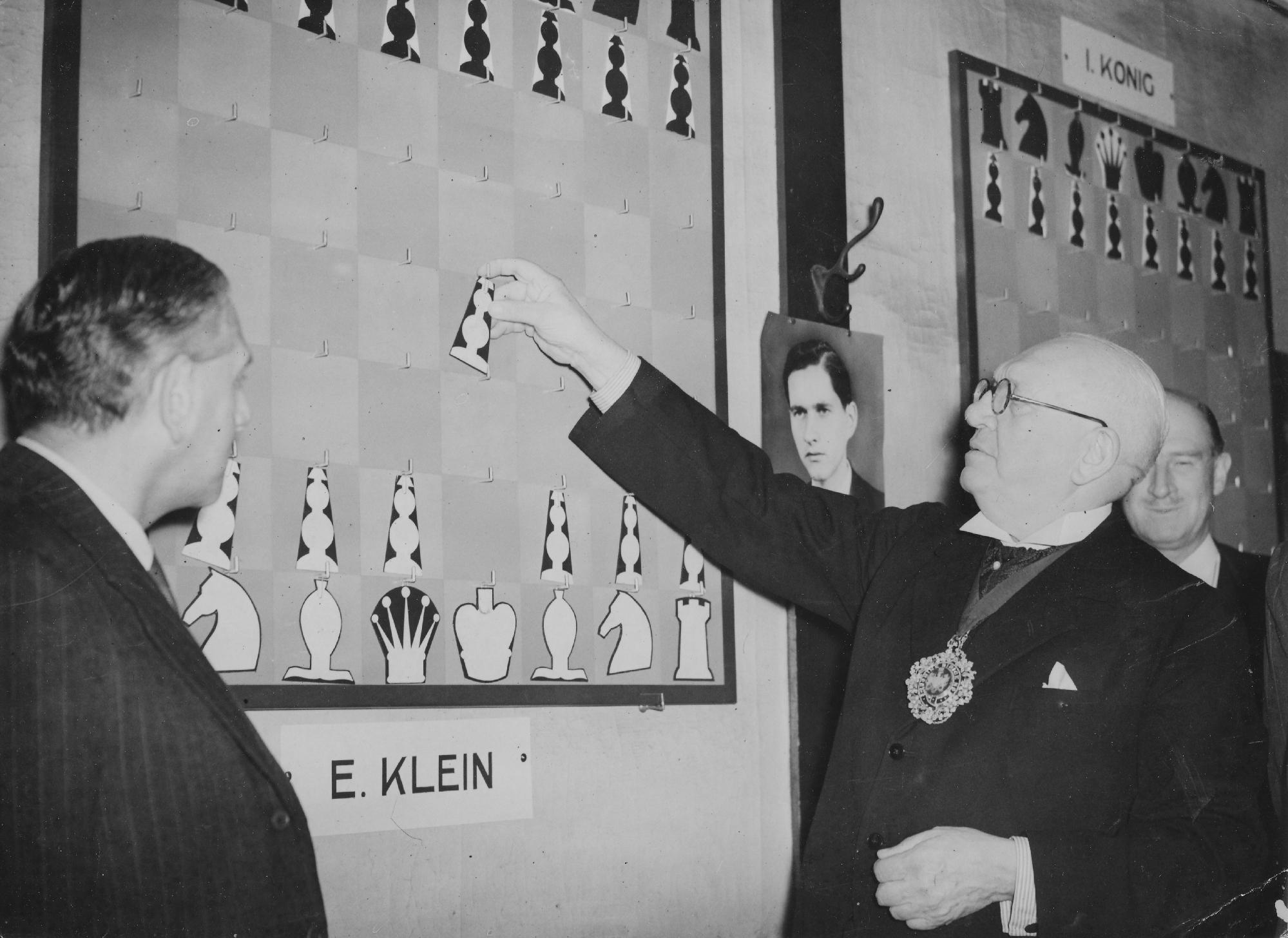
See below photograph for caption
Caption for above photograph


Here is his Wikipedia entry

Edward Winter has written a detailed article here.

According to Edward Winter in Chess Notes Klein lived at 4 St George’s Drive, Westcliff-on-sea, Essex, England (The Times, 11 March 1978, page 13).

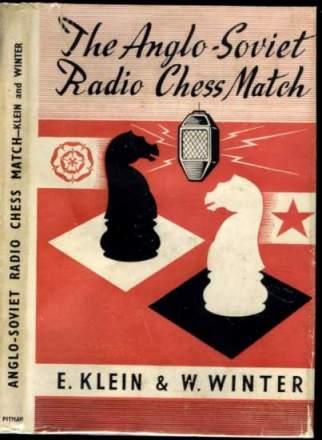
The Anglo-Soviet Radio Chess Match (1947, Pitman)

Birthday of Mandy Hepworth (12-iii-1968)

BCN wishes Mandy Hepworth Happy Birthday (12-iii-1968)

Mandy Allison S. Hepworth was born in Scunthorpe, (now) Humberside (but at the time Lincolnshire) on Tuesday, March 12th 1968 to Neville Ian Hepworth and Alice Hepworth (née Ma). Neville was a Computer Manager and Alice Ma was originally from Singapore. The family moved to “Mulgoa”, The Fleet, Fittleworth, Pulborough, RH20 1HS, West Sussex.

(Thanks to David Mills who updated us on the Lincolnshire / Humberside issue)

Neville taught Mandy how to play chess.

She attended Westergate Comprehensive and Community School where Peter Barton coached both the boys and the girls teams.

From The Bognor and Arun Chess Club Archive we have :

“One particular junior, Mandy Hepworth, came to notice. In the British championships at Brighton in 1980 she came first equal in the girls under-14 competition. Peter Barton also organised some external competitions and from 1981 for a few years he organised young masters’ tournaments at the Westergate School after receiving sponsorship from the Amey Roadstone Corporation. ”

From The Bognor Regis Observer we have :

Westergate girls were chess queens in 1980

This group of girls had every reason to smile ‘“ they had just pulled off the school chess world’s equivalent of David v Goliath.

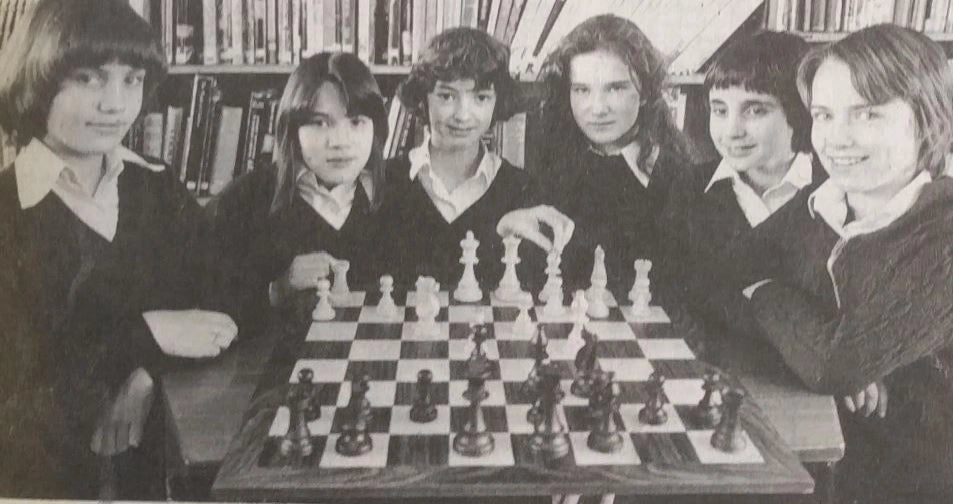
It was January 1980 and they all attended Westergate Comprehensive and Community School and had just beaten the mighty Dorothy Skinner High School, in Brighton, to qualify for the final of the Sussex Girls under-16 chess championships. Pictured from left: Melaine Wright, 11, Mandy Hepworth, 11, Lesley Glen, 11, Deborah Baxter, 12, Gail Curryer, 11, and Tracey Redding, 12.

“It was January 1980 and they all attended Westergate Comprehensive and Community School and had just beaten the mighty Dorothy Skinner High School, in Brighton, to qualify for the final of the Sussex Girls under-16 chess championships.

The team’s captain, Mandy Hepworth, who was just 11-years-old at the time, was lauded by the school’s chess teacher as “one of the hottest properties in junior chess”.

His name was Peter Barton and, according to the report published in the Observer on January 25 1980, he had masterminded something of a chess resurgence at Westergate.”

Some 50 youngsters at the school were playing chess proficiently and 10 of them were girls.

Even though junior chess was somewhat dominated by boys at the time, Mr Barton was confident his girls could deal with any challenge thrown at them by anyone – and he had high hopes for Mandy.

He told the paper: ‘For a girl she has remarkable ability and we would hope to enter her for the British junior championships later this year.

In the past it has always been a boys’ game but, if you can catch the girls when they are young and keep their enthusiasm, there is no reason why they cannot go on to become masters.’

Does anyone know if the girls won the final? Did Mandy make it to the British junior championships?”

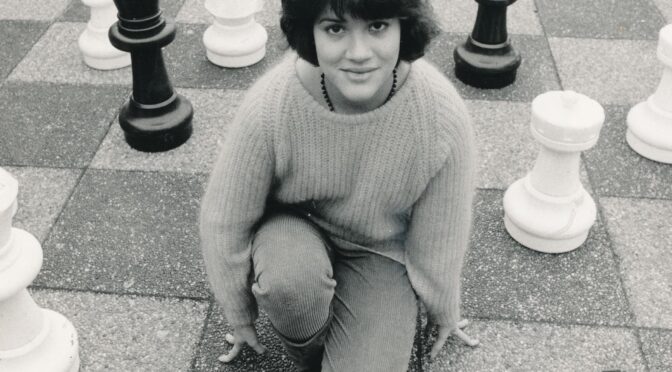
Mandy Hepworth
Mandy Hepworth

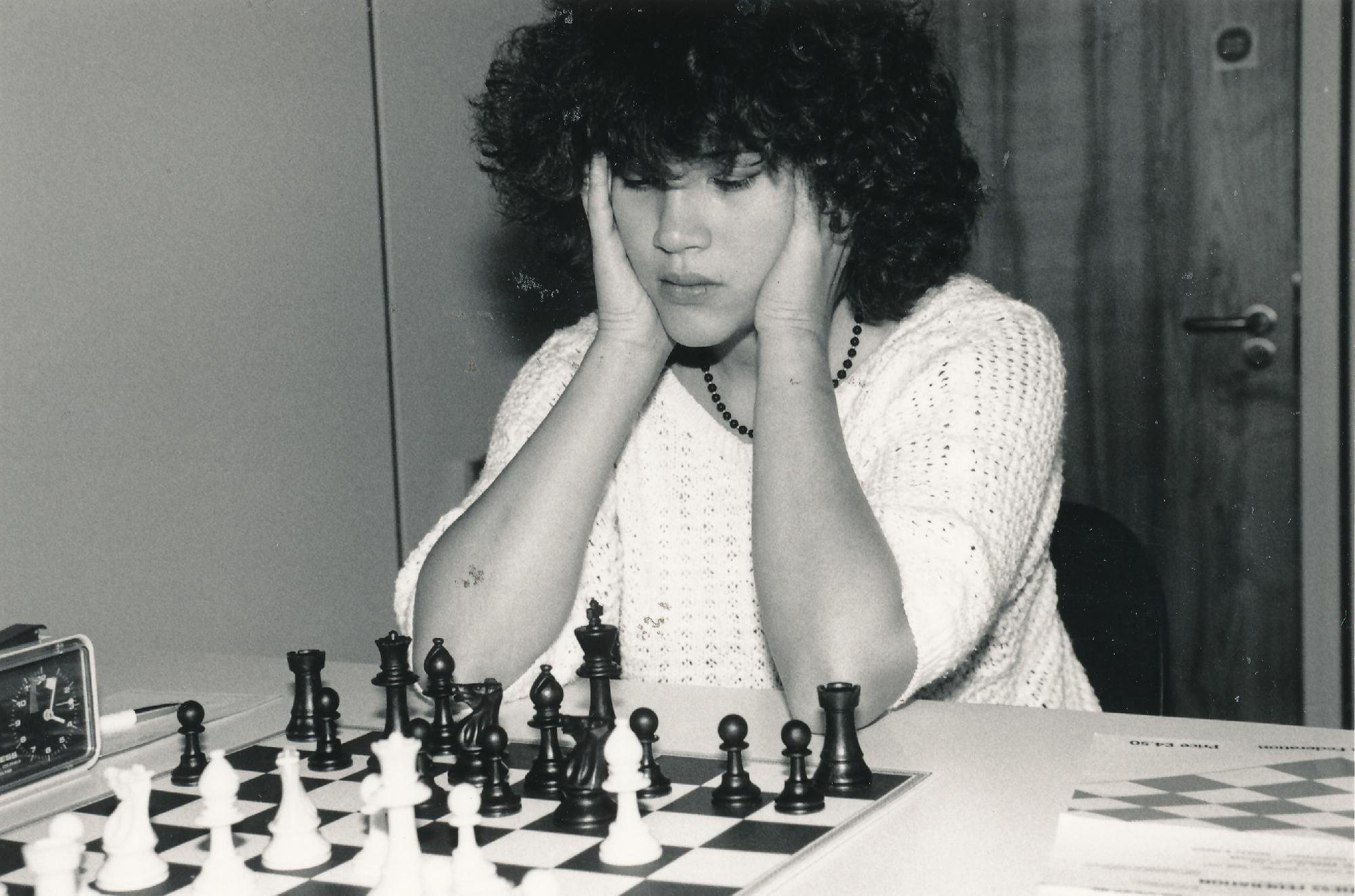
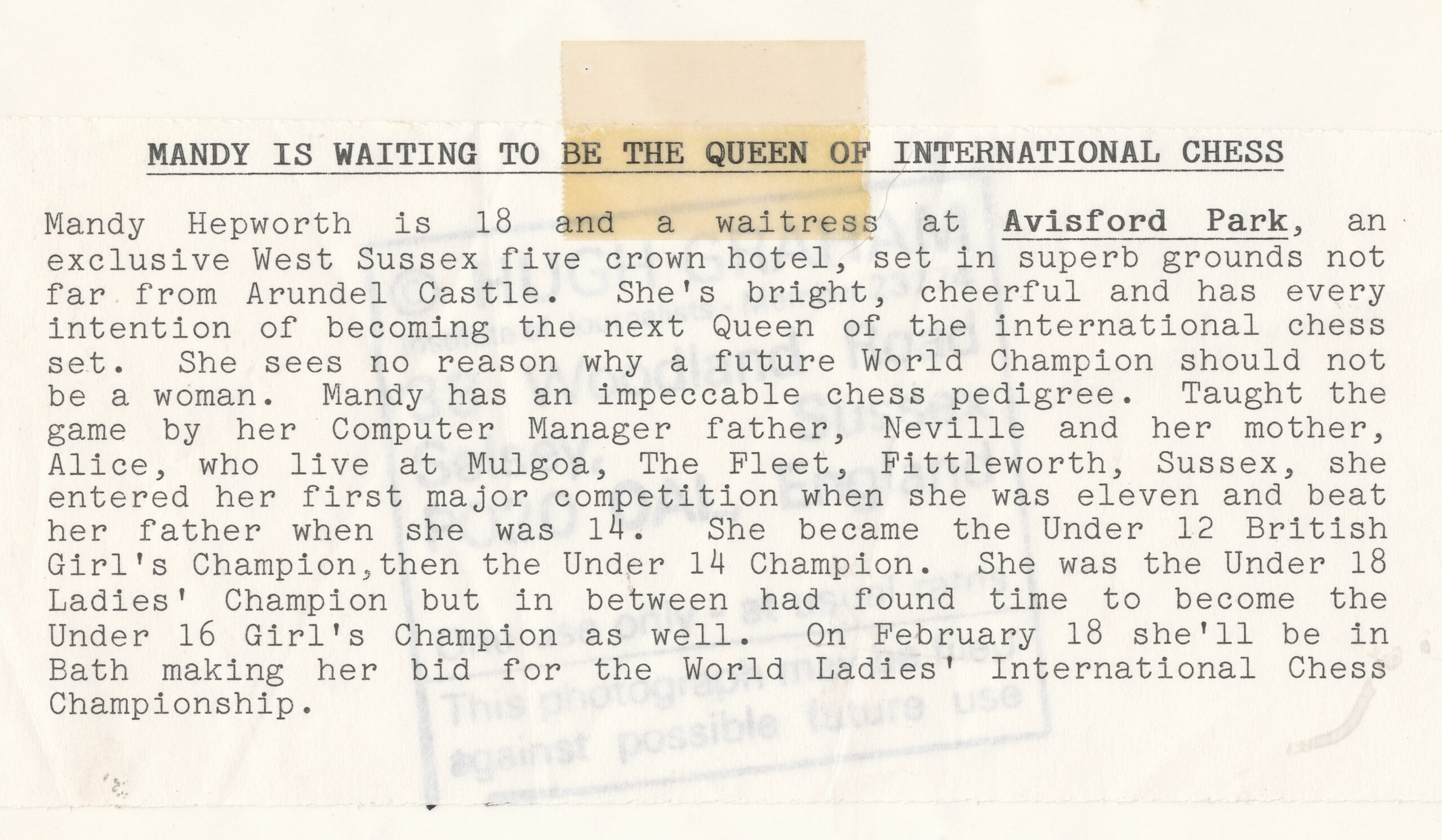
Mandy entered her first major competition when she was 11 and beat her father when she was 14. She became the Under-12 British Girls’ Champion (Ed: this is not correct) and the Under-14 Champion in Brighton, 1980 (shared with Susan Walker), the Under-16 Champion in Brighton, 1984

In 1985 she played in the Eileen Tranmer Memorial in Brighton. All the players resided in the same guest house. The event was organised by Ray Keene. Mandy was 4th with a TPR of 2296.

In 1986 she represented England in the Women’s Olympiad (Dubai) and scored an excellent 75% on the Reserve Board.

In 1988 she played at the Oakham Young Masters and had a tough time scoring 2.5/9

In October 1988 she travelled to Adelaide, Australia to play in the World Under-20 Girls’ Championship.

Following that we have no further information. It would appear (perhaps you can help?) that Mandy gave up competitive chess and did not play again.

1986 Press Release for Mandy Hepworth. Warning : some details are not entirely accurate.

We end with this against an experienced opponent :

Birthday of Mandy Hepworth (12-iii-1968)

BCN wishes Mandy Hepworth Happy Birthday (12-iii-1968)

Mandy Allison S. Hepworth was born in Scunthorpe, (now) Humberside (but at the time Lincolnshire) on Tuesday, March 12th 1968 to Neville Ian Hepworth and Alice Hepworth (née Ma). Neville was a Computer Manager and Alice Ma was originally from Singapore. The family moved to “Mulgoa”, The Fleet, Fittleworth, Pulborough, RH20 1HS, West Sussex.

(Thanks to David Mills who updated us on the Lincolnshire / Humberside issue)

Neville taught Mandy how to play chess.

She attended Westergate Comprehensive and Community School where Peter Barton coached both the boys and the girls teams.

From The Bognor and Arun Chess Club Archive we have :

“One particular junior, Mandy Hepworth, came to notice. In the British championships at Brighton in 1980 she came first equal in the girls under-14 competition. Peter Barton also organised some external competitions and from 1981 for a few years he organised young masters’ tournaments at the Westergate School after receiving sponsorship from the Amey Roadstone Corporation. ”

From The Bognor Regis Observer we have :

Westergate girls were chess queens in 1980

This group of girls had every reason to smile ‘“ they had just pulled off the school chess world’s equivalent of David v Goliath.

It was January 1980 and they all attended Westergate Comprehensive and Community School and had just beaten the mighty Dorothy Skinner High School, in Brighton, to qualify for the final of the Sussex Girls under-16 chess championships. Pictured from left: Melaine Wright, 11, Mandy Hepworth, 11, Lesley Glen, 11, Deborah Baxter, 12, Gail Curryer, 11, and Tracey Redding, 12.

“It was January 1980 and they all attended Westergate Comprehensive and Community School and had just beaten the mighty Dorothy Skinner High School, in Brighton, to qualify for the final of the Sussex Girls under-16 chess championships.

The team’s captain, Mandy Hepworth, who was just 11-years-old at the time, was lauded by the school’s chess teacher as “one of the hottest properties in junior chess”.

His name was Peter Barton and, according to the report published in the Observer on January 25 1980, he had masterminded something of a chess resurgence at Westergate.”

Some 50 youngsters at the school were playing chess proficiently and 10 of them were girls.

Even though junior chess was somewhat dominated by boys at the time, Mr Barton was confident his girls could deal with any challenge thrown at them by anyone – and he had high hopes for Mandy.

He told the paper: ‘For a girl she has remarkable ability and we would hope to enter her for the British junior championships later this year.

In the past it has always been a boys’ game but, if you can catch the girls when they are young and keep their enthusiasm, there is no reason why they cannot go on to become masters.’

Does anyone know if the girls won the final? Did Mandy make it to the British junior championships?”

Mandy Hepworth
Mandy Hepworth

Mandy entered her first major competition when she was 11 and beat her father when she was 14. She became the Under-12 British Girls’ Champion (Ed: this is not correct) and the Under-14 Champion in Brighton, 1980 (shared with Susan Walker), the Under-16 Champion in Brighton, 1984

In 1985 she played in the Eileen Tranmer Memorial in Brighton. All the players resided in the same guest house. The event was organised by Ray Keene. Mandy was 4th with a TPR of 2296.

In 1986 she represented England in the Women’s Olympiad (Dubai) and scored an excellent 75% on the Reserve Board.

In 1988 she played at the Oakham Young Masters and had a tough time scoring 2.5/9

In October 1988 she travelled to Adelaide, Australia to play in the World Under-20 Girls’ Championship.

Following that we have no further information. It would appear (perhaps you can help?) that Mandy gave up competitive chess and did not play again.

1986 Press Release for Mandy Hepworth. Warning : some details are not entirely accurate.

We end with this against an experienced opponent :

Birthday of Mandy Hepworth (12-iii-1968)

BCN wishes Mandy Hepworth Happy Birthday (12-iii-1968)

Mandy Allison S. Hepworth was born in Scunthorpe, (now) Humberside (but at the time Lincolnshire) on Tuesday, March 12th 1968 to Neville Ian Hepworth and Alice Hepworth (née Ma). Neville was a Computer Manager and Alice Ma was originally from Singapore. The family moved to “Mulgoa”, The Fleet, Fittleworth, Pulborough, RH20 1HS, West Sussex.

(Thanks to David Mills who updated us on the Lincolnshire / Humberside issue)

Neville taught Mandy how to play chess.

She attended Westergate Comprehensive and Community School where Peter Barton coached both the boys and the girls teams.

From The Bognor and Arun Chess Club Archive we have :

“One particular junior, Mandy Hepworth, came to notice. In the British championships at Brighton in 1980 she came first equal in the girls under-14 competition. Peter Barton also organised some external competitions and from 1981 for a few years he organised young masters’ tournaments at the Westergate School after receiving sponsorship from the Amey Roadstone Corporation. ”

From The Bognor Regis Observer we have :

Westergate girls were chess queens in 1980

This group of girls had every reason to smile ‘“ they had just pulled off the school chess world’s equivalent of David v Goliath.

It was January 1980 and they all attended Westergate Comprehensive and Community School and had just beaten the mighty Dorothy Skinner High School, in Brighton, to qualify for the final of the Sussex Girls under-16 chess championships. Pictured from left: Melaine Wright, 11, Mandy Hepworth, 11, Lesley Glen, 11, Deborah Baxter, 12, Gail Curryer, 11, and Tracey Redding, 12.

“It was January 1980 and they all attended Westergate Comprehensive and Community School and had just beaten the mighty Dorothy Skinner High School, in Brighton, to qualify for the final of the Sussex Girls under-16 chess championships.

The team’s captain, Mandy Hepworth, who was just 11-years-old at the time, was lauded by the school’s chess teacher as “one of the hottest properties in junior chess”.

His name was Peter Barton and, according to the report published in the Observer on January 25 1980, he had masterminded something of a chess resurgence at Westergate.”

Some 50 youngsters at the school were playing chess proficiently and 10 of them were girls.

Even though junior chess was somewhat dominated by boys at the time, Mr Barton was confident his girls could deal with any challenge thrown at them by anyone – and he had high hopes for Mandy.

He told the paper: ‘For a girl she has remarkable ability and we would hope to enter her for the British junior championships later this year.

In the past it has always been a boys’ game but, if you can catch the girls when they are young and keep their enthusiasm, there is no reason why they cannot go on to become masters.’

Does anyone know if the girls won the final? Did Mandy make it to the British junior championships?”

Mandy Hepworth
Mandy Hepworth

Mandy entered her first major competition when she was 11 and beat her father when she was 14. She became the Under-12 British Girls’ Champion (Ed: this is not correct) and the Under-14 Champion in Brighton, 1980 (shared with Susan Walker), the Under-16 Champion in Brighton, 1984

In 1985 she played in the Eileen Tranmer Memorial in Brighton. All the players resided in the same guest house. The event was organised by Ray Keene. Mandy was 4th with a TPR of 2296.

In 1986 she represented England in the Women’s Olympiad (Dubai) and scored an excellent 75% on the Reserve Board.

In 1988 she played at the Oakham Young Masters and had a tough time scoring 2.5/9

In October 1988 she travelled to Adelaide, Australia to play in the World Under-20 Girls’ Championship.

Following that we have no further information. It would appear (perhaps you can help?) that Mandy gave up competitive chess and did not play again.

1986 Press Release for Mandy Hepworth. Warning : some details are not entirely accurate.

We end with this against an experienced opponent :

Birthday of Mandy Hepworth (12-iii-1968)

BCN wishes Mandy Hepworth Happy Birthday (12-iii-1968)

Mandy Allison S. Hepworth was born in Scunthorpe, (now) Humberside (but at the time Lincolnshire) on Tuesday, March 12th 1968 to Neville Ian Hepworth and Alice Hepworth (née Ma). Neville was a Computer Manager and Alice Ma was originally from Singapore. The family moved to “Mulgoa”, The Fleet, Fittleworth, Pulborough, RH20 1HS, West Sussex.

(Thanks to David Mills who updated us on the Lincolnshire / Humberside issue)

Neville taught Mandy how to play chess.

She attended Westergate Comprehensive and Community School where Peter Barton coached both the boys and the girls teams.

From The Bognor and Arun Chess Club Archive we have :

“One particular junior, Mandy Hepworth, came to notice. In the British championships at Brighton in 1980 she came first equal in the girls under-14 competition. Peter Barton also organised some external competitions and from 1981 for a few years he organised young masters’ tournaments at the Westergate School after receiving sponsorship from the Amey Roadstone Corporation. ”

From The Bognor Regis Observer we have :

Westergate girls were chess queens in 1980

This group of girls had every reason to smile ‘“ they had just pulled off the school chess world’s equivalent of David v Goliath.

It was January 1980 and they all attended Westergate Comprehensive and Community School and had just beaten the mighty Dorothy Skinner High School, in Brighton, to qualify for the final of the Sussex Girls under-16 chess championships. Pictured from left: Melaine Wright, 11, Mandy Hepworth, 11, Lesley Glen, 11, Deborah Baxter, 12, Gail Curryer, 11, and Tracey Redding, 12.

“It was January 1980 and they all attended Westergate Comprehensive and Community School and had just beaten the mighty Dorothy Skinner High School, in Brighton, to qualify for the final of the Sussex Girls under-16 chess championships.

The team’s captain, Mandy Hepworth, who was just 11-years-old at the time, was lauded by the school’s chess teacher as “one of the hottest properties in junior chess”.

His name was Peter Barton and, according to the report published in the Observer on January 25 1980, he had masterminded something of a chess resurgence at Westergate.”

Some 50 youngsters at the school were playing chess proficiently and 10 of them were girls.

Even though junior chess was somewhat dominated by boys at the time, Mr Barton was confident his girls could deal with any challenge thrown at them by anyone – and he had high hopes for Mandy.

He told the paper: ‘For a girl she has remarkable ability and we would hope to enter her for the British junior championships later this year.

In the past it has always been a boys’ game but, if you can catch the girls when they are young and keep their enthusiasm, there is no reason why they cannot go on to become masters.’

Does anyone know if the girls won the final? Did Mandy make it to the British junior championships?”

Mandy Hepworth
Mandy Hepworth

Mandy entered her first major competition when she was 11 and beat her father when she was 14. She became the Under-12 British Girls’ Champion (Ed: this is not correct) and the Under-14 Champion in Brighton, 1980 (shared with Susan Walker), the Under-16 Champion in Brighton, 1984

In 1985 she played in the Eileen Tranmer Memorial in Brighton. All the players resided in the same guest house. The event was organised by Ray Keene. Mandy was 4th with a TPR of 2296.

In 1986 she represented England in the Women’s Olympiad (Dubai) and scored an excellent 75% on the Reserve Board.

In 1988 she played at the Oakham Young Masters and had a tough time scoring 2.5/9

In October 1988 she travelled to Adelaide, Australia to play in the World Under-20 Girls’ Championship.

Following that we have no further information. It would appear (perhaps you can help?) that Mandy gave up competitive chess and did not play again.

1986 Press Release for Mandy Hepworth. Warning : some details are not entirely accurate.

We end with this against an experienced opponent :

Birthday of Mandy Hepworth (12-iii-1968)

BCN wishes Mandy Hepworth Happy Birthday (12-iii-1968)

Mandy Allison S. Hepworth was born in Scunthorpe, (now) Humberside (but at the time Lincolnshire) on Tuesday, March 12th 1968 to Neville Ian Hepworth and Alice Hepworth (née Ma). Neville was a Computer Manager and Alice Ma was originally from Singapore. The family moved to “Mulgoa”, The Fleet, Fittleworth, Pulborough, RH20 1HS, West Sussex.

(Thanks to David Mills who updated us on the Lincolnshire / Humberside issue)

Neville taught Mandy how to play chess.

She attended Westergate Comprehensive and Community School where Peter Barton coached both the boys and the girls teams.

From The Bognor and Arun Chess Club Archive we have :

“One particular junior, Mandy Hepworth, came to notice. In the British championships at Brighton in 1980 she came first equal in the girls under-14 competition. Peter Barton also organised some external competitions and from 1981 for a few years he organised young masters’ tournaments at the Westergate School after receiving sponsorship from the Amey Roadstone Corporation. ”

From The Bognor Regis Observer we have :

Westergate girls were chess queens in 1980

This group of girls had every reason to smile ‘“ they had just pulled off the school chess world’s equivalent of David v Goliath.

It was January 1980 and they all attended Westergate Comprehensive and Community School and had just beaten the mighty Dorothy Skinner High School, in Brighton, to qualify for the final of the Sussex Girls under-16 chess championships. Pictured from left: Melaine Wright, 11, Mandy Hepworth, 11, Lesley Glen, 11, Deborah Baxter, 12, Gail Curryer, 11, and Tracey Redding, 12.

“It was January 1980 and they all attended Westergate Comprehensive and Community School and had just beaten the mighty Dorothy Skinner High School, in Brighton, to qualify for the final of the Sussex Girls under-16 chess championships.

The team’s captain, Mandy Hepworth, who was just 11-years-old at the time, was lauded by the school’s chess teacher as “one of the hottest properties in junior chess”.

His name was Peter Barton and, according to the report published in the Observer on January 25 1980, he had masterminded something of a chess resurgence at Westergate.”

Some 50 youngsters at the school were playing chess proficiently and 10 of them were girls.

Even though junior chess was somewhat dominated by boys at the time, Mr Barton was confident his girls could deal with any challenge thrown at them by anyone – and he had high hopes for Mandy.

He told the paper: ‘For a girl she has remarkable ability and we would hope to enter her for the British junior championships later this year.

In the past it has always been a boys’ game but, if you can catch the girls when they are young and keep their enthusiasm, there is no reason why they cannot go on to become masters.’

Does anyone know if the girls won the final? Did Mandy make it to the British junior championships?”

Mandy Hepworth
Mandy Hepworth

Mandy entered her first major competition when she was 11 and beat her father when she was 14. She became the Under-12 British Girls’ Champion (Ed: this is not correct) and the Under-14 Champion in Brighton, 1980 (shared with Susan Walker), the Under-16 Champion in Brighton, 1984

In 1985 she played in the Eileen Tranmer Memorial in Brighton. All the players resided in the same guest house. The event was organised by Ray Keene. Mandy was 4th with a TPR of 2296.

In 1986 she represented England in the Women’s Olympiad (Dubai) and scored an excellent 75% on the Reserve Board.

In 1988 she played at the Oakham Young Masters and had a tough time scoring 2.5/9

In October 1988 she travelled to Adelaide, Australia to play in the World Under-20 Girls’ Championship.

Following that we have no further information. It would appear (perhaps you can help?) that Mandy gave up competitive chess and did not play again.

1986 Press Release for Mandy Hepworth. Warning : some details are not entirely accurate.

We end with this against an experienced opponent :

Happy Birthday IM John Pigott (15-viii-1957)

BCN wishes IM John Pigott all the best on his birthday (15-viii-1957)John Christopher Pigott was born in Croydon, Surrey and his mother’s maiden name was Fletcher.

In 1975 John was selected by the BCF junior selectors and travelled with Jonathan Speelman and Peter J Lee (Hampshire) to the 8th Biel International Open in Switzerland. Leonard Barden wrote in the October 1975 British Chess Magazine (the cover was of Geller and Smyslov) :

“17-year-old John Pigott’s 8.5/11 included wins against IM Kluger, IM Messing and the 1975 Budapest Champion Rajna and earned him 2,000 Swiss francs in prize money. The three English juniors who competed, Pigott, Speelman and Lee were chosen by the BCF junior selectors and travelled to Switzerland with the help of grant from the Slater Foundation and the London Chess Club.”

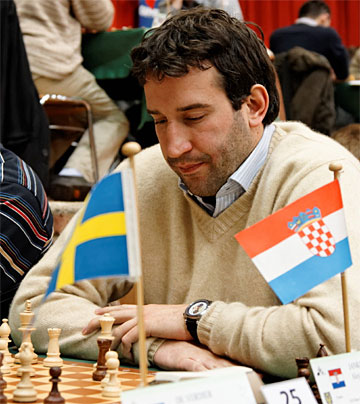
John represented England at the 1975 Anglo-Dutch match (25th and 26th of October) scoring 0.5/2 versus Paul van der Sterren. The game scores appear to either have been lost on not recorded.

In 1976 John scored 4.5/5 in the Surrey Open and shared the 3rd, 4th and 5th prize.

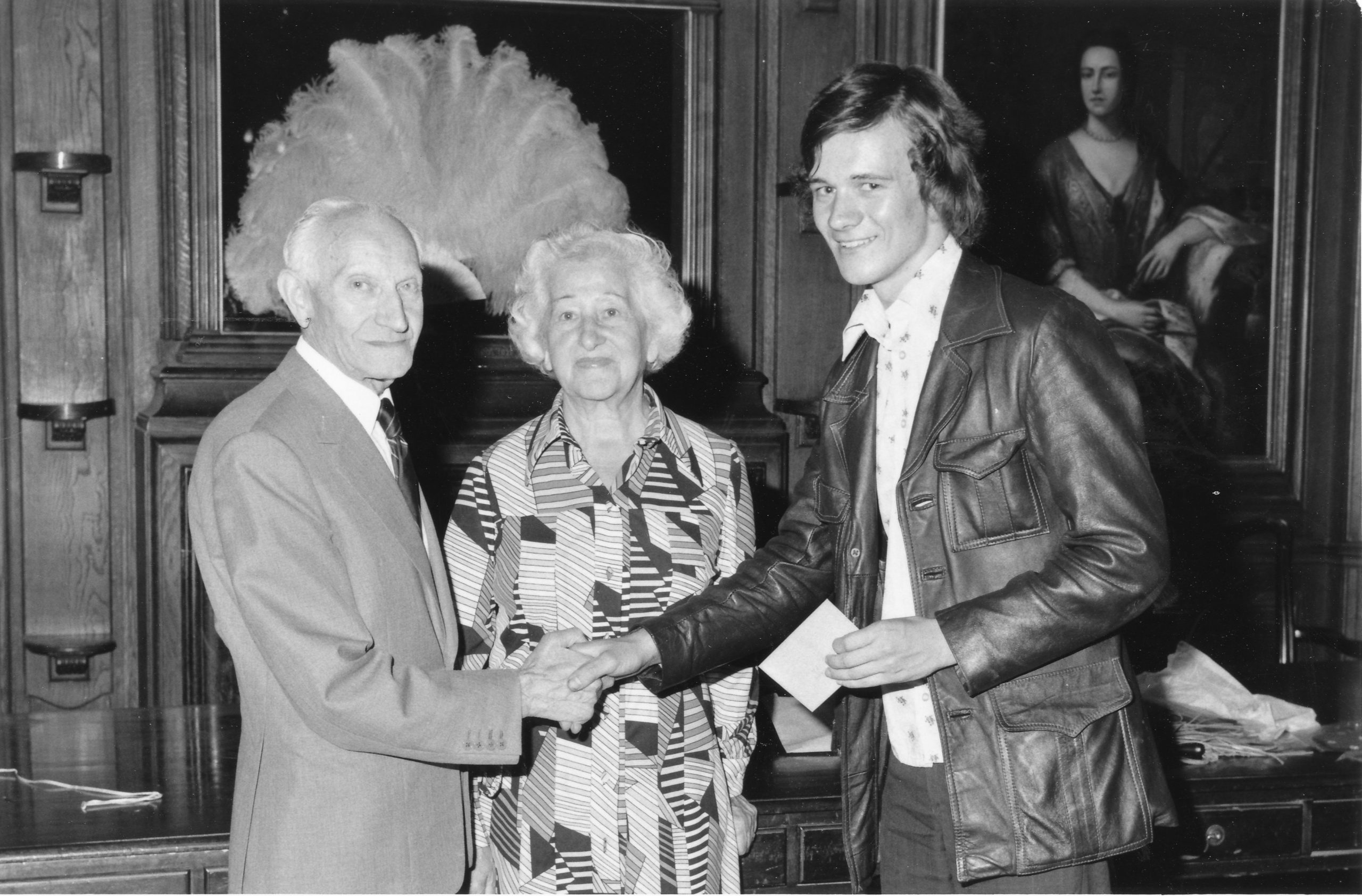
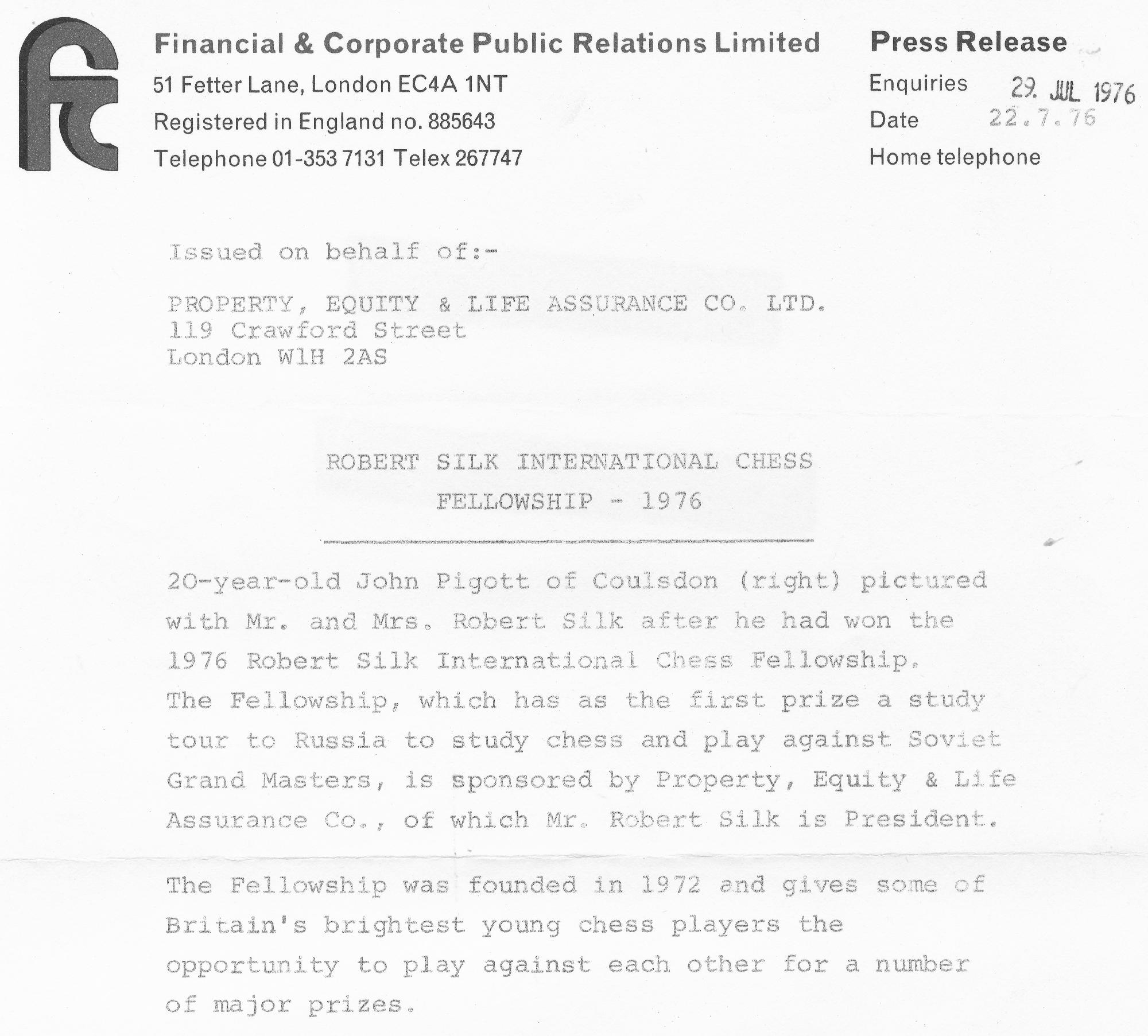
The caption is in the photograph below
The caption is in the photograph above

John became a FIDE Master in 1984 and an International Master in 2017, a gap of some 33 years!

John plays for Little Heath, 4NCL Barbican, Hon Members LCCL and King’s Head chess clubs.

After a sojourn from chess John returned to the ECF grading list in January 2015 with a grading of 269F attracting some attention.

His highest FIDE rating was 2419 in February 2018 at the age of 61.

With the white pieces John plays the Queen’s Gambit and the Giuoco Piano.

As the second player John enjoys the Sicilian Najdorf and the Nimzo Indian Defence.

Jon Speelman’s Agony Column #40

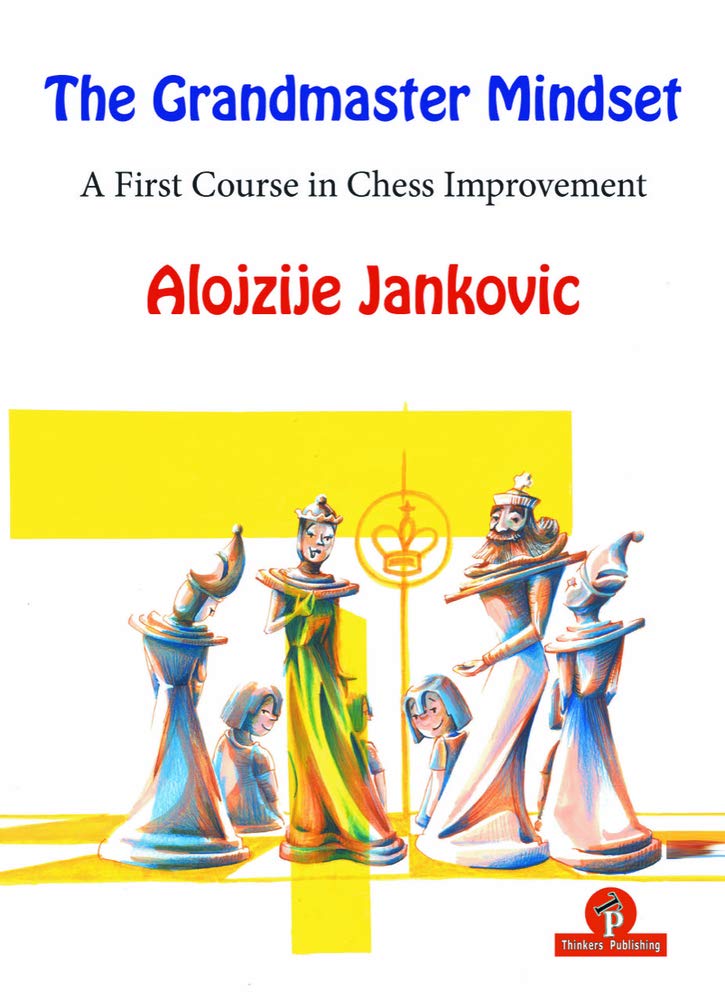
The Grandmaster Mindset

The Grandmaster Mindset

From the book’s rear cover :

“By going through the chapters, you will get acquainted with my way of grandmaster type thinking. I can assure you of one thing: there are better and weaker grandmasters, but you won’t find a GM who is playing without ideas or, let’s say, without his way of thinking! As you will find out, I am basically trying to detect the problem or goal of the position and then I am starting to scan factors which can lead to the solution. That process you will find in many examples in the book. GM Alojzije Jankovic, April 2020.”

“Alojzije Jankovic (1983) is a Grandmaster and FIDE trainer from Croatia. In 2010 he shared first place in the Croatian National Championship, was national champion in 2015, shared third place with Croatia in the European Team Championships 2017 and played for Croatia in the Chess Olympiad. He won several international tournaments and also hosts weekly the broadcast ‘Chess commentary’, Croatian national tv, third channel. This is his second book for Thinkers Publishing, after his successful co-edition with GM Zdenko Kozul on the ‘Richter Rauzer Reborn‘ updated version 2019.”

GM Alojzije Jankovic

As with every recent Thinkers Publishing publication high quality paper is used and the printing is clear. The book can easily be laid flat next to the board and does not require weights to prevent it from “self-closing” (a particular bugbear of ours !). Each diagram is clear and the instructional text is typeset in two column format, which, we find, enables the reader to maintain their place easily. Figurine algebraic notation is used throughout and the diagrams are placed adjacent to the relevant text and each diagram has a “to move” indicator.

A bibliography of sources along with suggestions for further reading would have been helpful.


I was rather confused when I first saw this book. The title, The Grandmaster Mindset, suggests a book for advanced players , while the subtitle A First Course in Chess Improvement suggests a book for novices.

Let’s take a look inside and find out.

The first chapter concerns pins. We start off with Légal’s Mate, which is important for novices but hardly necessary for advanced players.

En passant, we learn what Jankovic means by the Grandmaster Mindset. First, you assess the position, just as recommended by many other authors, such as Silman. Then you look for candidate moves: you consider all checks, captures and threats, as recommended by Kotov and many others, including me, over the past half century or so. Other authors, notably Willy Hendriks, will tell you to ignore protocols of this nature, to use your intuition and ‘move first, think later’.

We soon find ourselves in deeper waters, and by the end of the chapter we’re faced with a beautiful endgame study (M Matouš 1975) which is analysed in depth.

The second chapter, Candidate Moves, only seems to repeat the lessons from Chapter 1: if you assess the position and look for forcing moves you can find brilliant queen sacrifices.

Chapter 3, the longest in the book, brings with it a change of scenery. Useful endings: we have some pawn endings, rook against pawn, queen against rook, the bishop and knight checkmate explained in some detail, and finally rook against knight, again at length.

We’re back to tactics in Chapter 4, Knight Geometry.

This is Zvjaginsev-Schwarz (Novi Sad 2016).

White won with the aesthetically pleasing 44. Rxa6!! bxa6 45. b7 Qd8 46. Qxh6+!! Kxh6 47. Nxf7+. Beautiful, to be sure, with symmetrical major piece sacrifices on a6 and h6, but the queen sacrifice wasn’t necessary: 45. f4 Rg6 46. b7 was just as effective. (Note that 44. f4 also worked, but not, in the game, 46. f4? Qa5! and Black has a perpetual.) Perhaps this might have been mentioned.

The tactical ideas continue: Back Rank Mate (Chapter 5), Lure the King (Chapter 6: sacrificing a piece to expose the enemy king to danger), Unexpected Moves (Chapter 7: a collection of fairly random examples which you can discover by looking for Checks, Captures and Threats), Power of the Rooks (Chapter 8), Sudden Attack on the King (Chapter 9).

Chapter 10  is entitled Burying, which is a new one to me. The explanation, that it’s a very important tactical element when attacking the opponent’s king,  didn’t leave me much wiser. It seems to be something to do with taking away the king’s escape squares, but who knows?

In this position (Dizdarevic-Miles Biel 1985) Tony played a classic double bishop sacrifice: 13… Bxh2+! 14. Kxh2 Qh4+ 15. Kg1. Now after the immediate and obvious 15… Bxg2, 16. f3 defends. Instead, 15… Bf3!! (‘Burying!’) 16. Nd2 Bxg2!, and as the queen can no longer defend along the second rank, Black wins in short order.

There’s more to come: Underpromotion to a Knight in Chapter 11, and Different Tactical Motives in Chapter 12, but the whole book seems to me fairly random.

If you want to see some beautiful and spectacular chess, you’ll find a lot of great examples in this book: some hackneyed (the queen sac and knight fork from the 1966 Petrosian-Spassky match must have been in almost every tactics book for the past half century, and the Topalov-Shirov bishops of opposite colours ending for the past 20 years) but many unfamiliar.

Jankovic, by and large, explains his examples well and has an attractively friendly style of writing.

However, for this reviewer at least, the whole is rather less than the sum of its parts. With its mixture of elementary and advanced examples the book’s target market is not clear. The ‘Grandmaster Mindset’ advice (assess the position and consider candidate moves looking at checks, captures and threats) is far from original and, you might think, rather too simplistic. The contents seem fairly random (showy sacrifices, with some technical endings thrown in for good measure) but typical of what appears to pass for chess tuition in some circles. I’ll be writing a lot more about this at some point in the future.

It would require quite a lot of fleshing out, but there were potentially two much more useful books here. A book on finding tactical surprises, using the examples here but with the addition of exercises for the reader to solve. And then a much expanded version of Chapter 3 dealing with technical endings.

A qualified recommendation, then, but perhaps a missed opportunity which would have benefited from a more proactive approach from the publishers.

Richard James, Twickenham 13th August 2020

Richard James
. Richard James

Book Details :

  • Hardcover : 200 pages
  • Publisher:Thinkers Publishing; 1 edition (14 July 2020)
  • Language: English
  • ISBN-10:9492510774
  • ISBN-13:978-9492510778
  • Product Dimensions: 16.8 x 1.8 x 23.4 cm

Official web site of Thinkers Publishing

The Grandmaster Mindset