Death Anniversary of Richard Griffith (22-vii-1872 11-xii-1955)
See Chess World, Volume 11, Number 6, June 1956, page 128.
Here is his Wikipedia entry.
Death Anniversary of Richard Griffith (22-vii-1872 11-xii-1955)
See Chess World, Volume 11, Number 6, June 1956, page 128.
Here is his Wikipedia entry.
Death Anniversary of Richard Griffith (22-vii-1872 11-xii-1955)
See Chess World, Volume 11, Number 6, June 1956, page 128.
Here is his Wikipedia entry.

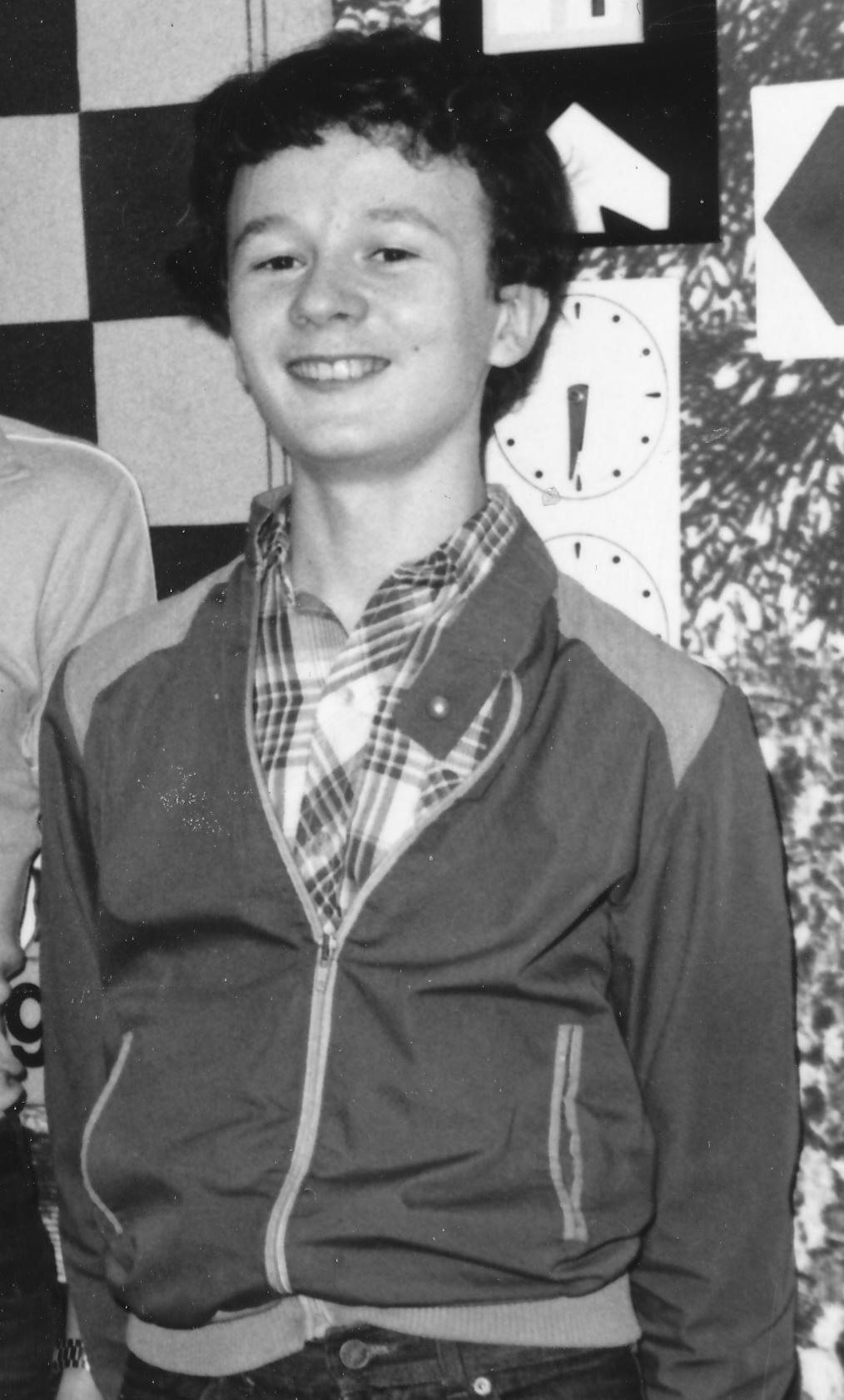
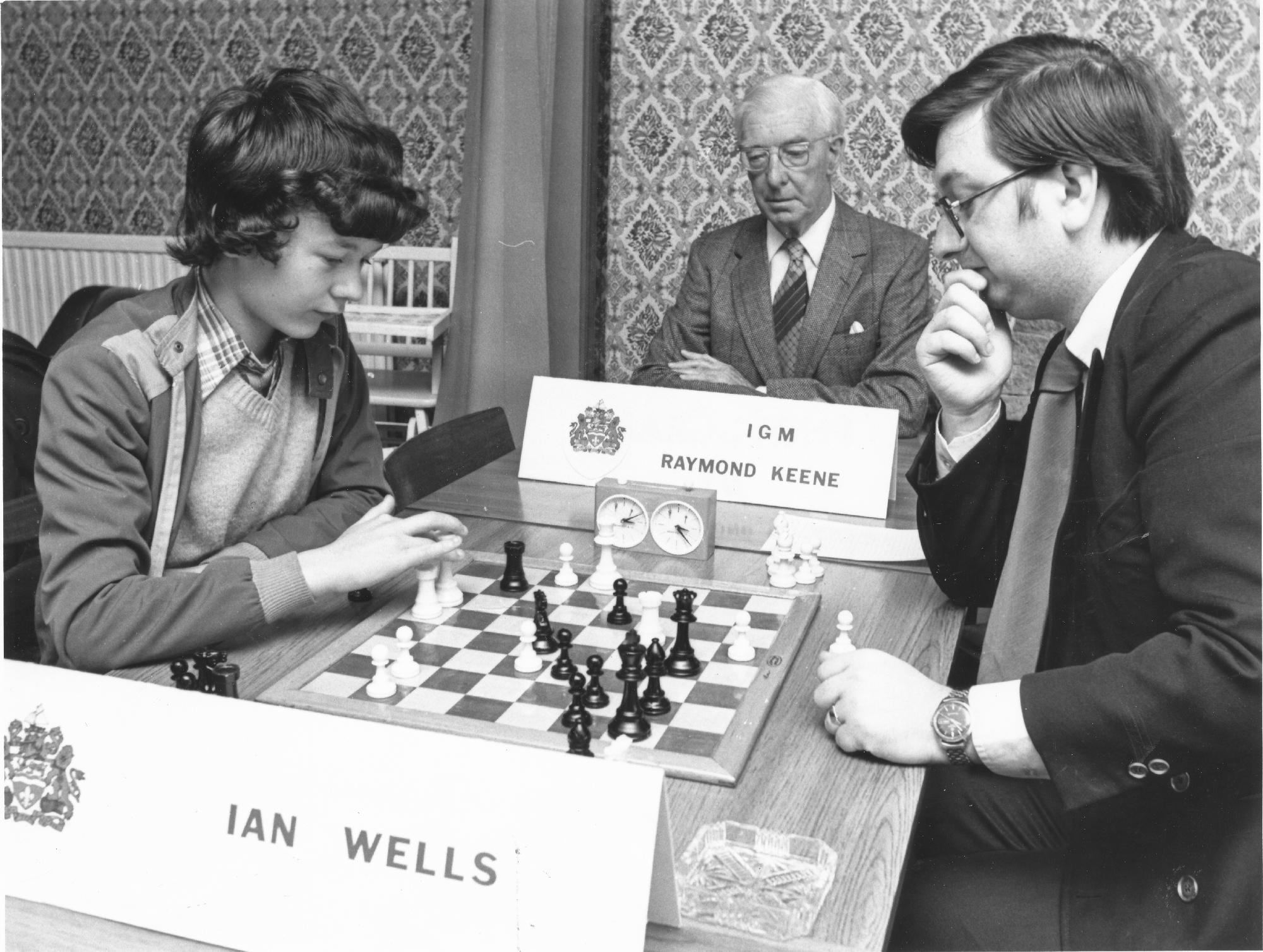
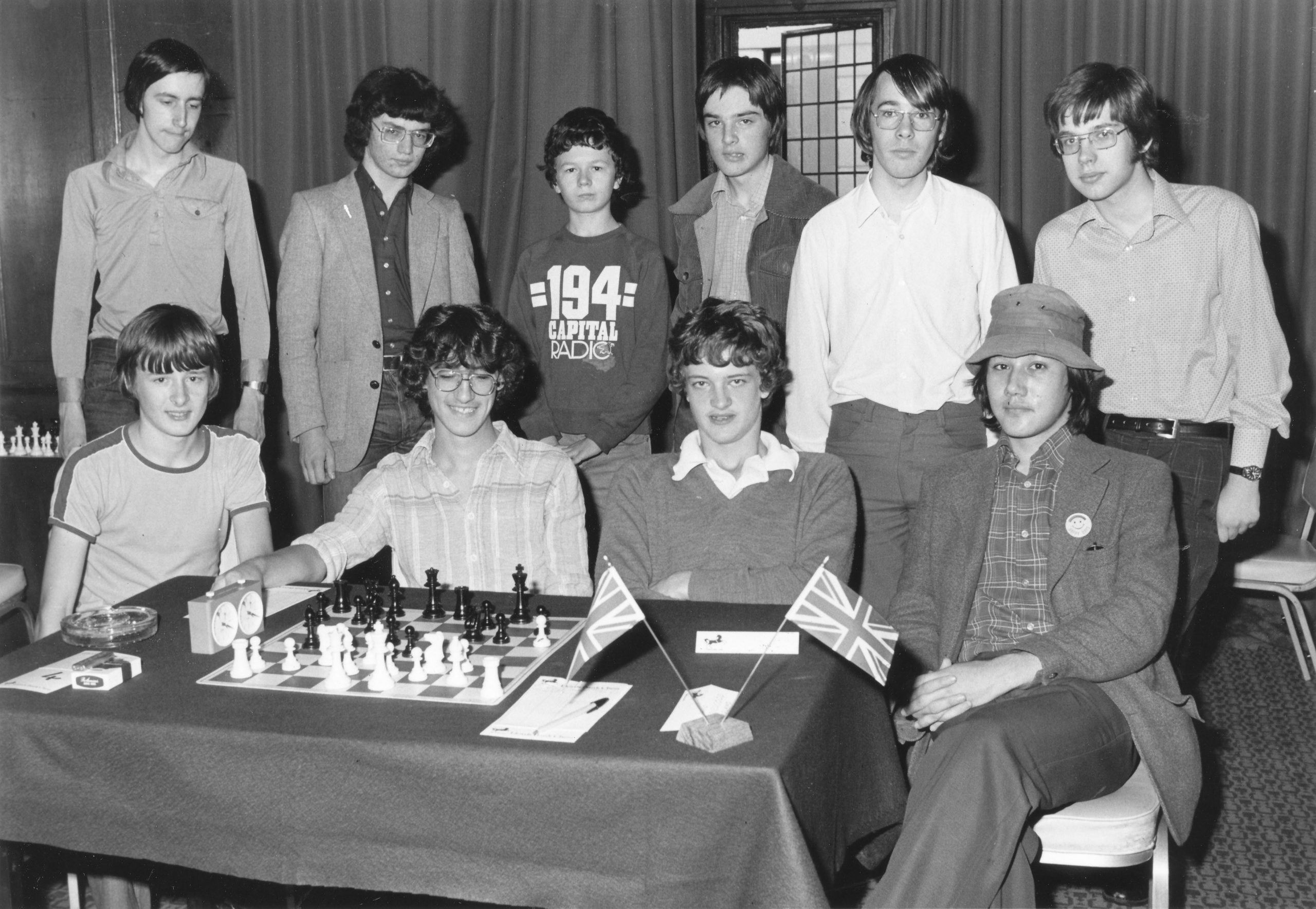
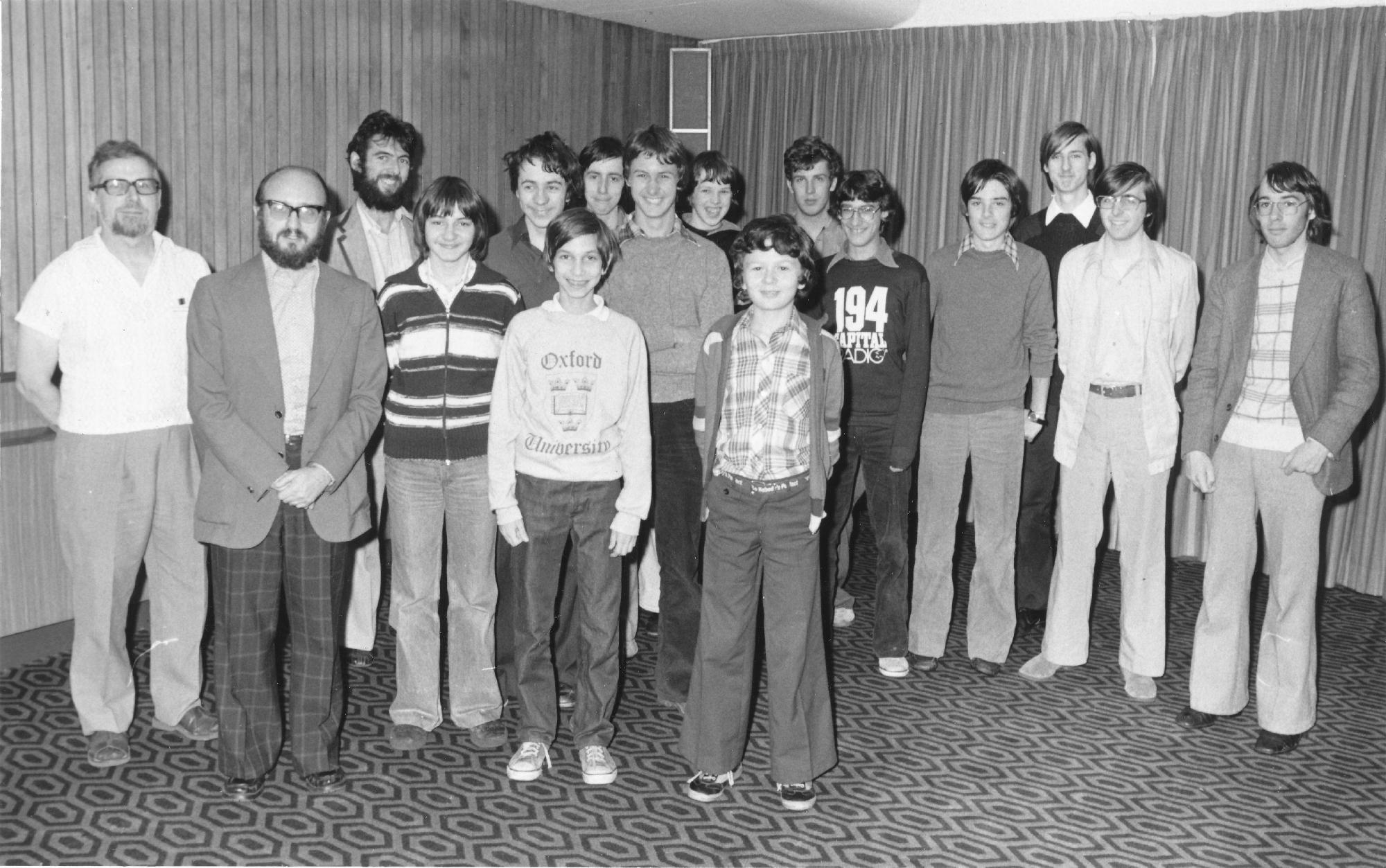
We remember Ian Duncan Wells who very sadly passed away on this day (January 25th) in 1982 aged seventeen years.
From Chessgames.com :
Ian Duncan Wells was born in Scarborough, England. He was awarded the FM title in 1982. At the Islington Open in December 1981 he finished 1st= with John Nunn and Tony Miles. Following a 5th= placing in the Golden Pawn of Brazil Junior tournament held in Rio de Janeiro he and other players went swimming outside their hotel. He got into difficulties and although he was brought ashore by lifesavers he died after six days in a coma.
Here is an excellent article from chess.com written by Neil Blackburn.
We remember Samuel Boden, who passed away on this day, Friday, January 13th in 1882 at 3 Tavistock Street, Bedford Square, Middlesex.

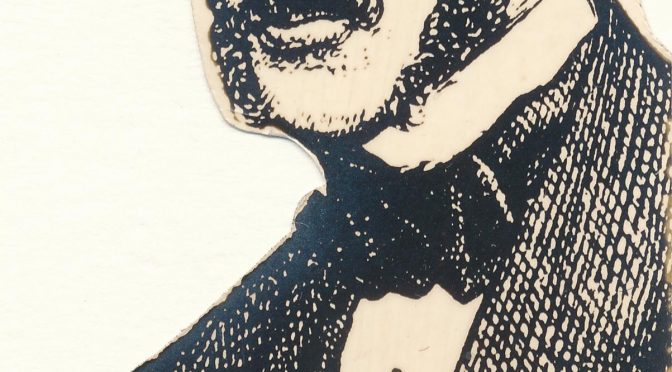
Samuel Standidge Boden was born on Thursday, May 4th, 1826 in East Retford, Nottinghamshire. His parents were James (b. 1795/96) and Mary Frances Boden (b. 1800/01).
(Several secondary and tertiary sources give the birth month as April. It would appear that a transcription error was responsible.)
James was an Independent Congregational Minister who worked in West Retford and was responsible for recording parish birth and baptismal (and probably marriage) records including those of his own children.
Samuel was baptised by his father (for the first time!) on July 27th at Chapel Gate (independent) Church.

Samuel had at least nine siblings and the details of these plus other family members (including multiple baptisms) may be found on Steve Mann’s Yorkshire Chess History.
From The Encyclopaedia of Chess by Anne Sunnucks :
“Boden was considered by Paul Morphy to be the strongest player in England in 1858. However, he is generally considered to have ranked below Staunton and to have been either the second of third strongest player, the other player being Buckle.
Born in Hull on 4th April 1826, Boden first came to the notice of British chess players when he won a provincial tournament in 1851. In 1858 he played two matches against John Owen , winning both, the first by +5 -3 =1 and the second by +5 -1. He played in very few major tournaments and his strength ws judged mainly from friendly games and small tournaments. He was the author of A Popular Introduction to Chess and conducted the chess column in The Field for 13 years.
He died of typhoid fever on 13th January 1882 and is buried in Woking, Surrey.”
According to Steve Mann :
“He was buried on 17/01/1882 at Brookwood Cemetery, Brookwood, Surrey. This cemetery was also known as the London Necropolis, having been specially instituted to take London’s dead at a time when space within London was becoming scarce. A transcription of the Surrey Burial Registers gave his name as “Samuel Standage Boden” and his age to be 55. The burial date, the deceased’s age, and the nature of the cemetery, together make it clear this was the chess-player, even though they misspelt his middle name.”
From The Oxford Companion to Chess by David Hooper & Ken Whyld :
English player active in the 1850s. In 1851 he wrote A Popular Introduction to the Study and Practice of Chess, an excellent guide introducing the Boden-Kieseritzky Gambit which at once became popular. In the same year he won the ‘provincial tournament” run concurrently with the London international tournament. At Manchester 1857, a knock-out event, he came second to Lowenthal— he drew one game of the final match and then withdrew. In 1858 Boden defeated Owen in a match ( + 7=2-3) and he played many friendly games with Morphy, who declared him to be the strongest English player; since Staunton and Buckle had retired this judgement was probably right. Also in 1858 he restarted the chess column in The Field , handing over to de Vere in 1872. The column has continued uninterruptedly ever since. Besides chess and his work as a railway company employee Boden found time to become a competent amateur painter and an art critic.

From The Encyclopaedia of Chess by Harry Golombek OBE :
British master, considered by Morphy to have been the strongest opponent whom he played while in England (Boden’s record against Morphy in casual games was +1-6=4). Tournament results include 2nd Manchester 1857 and 2nd Bristol 1861. Chess editor of The Field 1858-1873. His name is linked with the Boden-Kieseritsky Gambit : 1.e4 e5 2.Bc4 Nf6 3.Nf3 Nxe4 4. Nc3 Nxc3 5.dxc3 f6 (article authored by Ray Keene).

Boden’s name is associated with a variation of the Philidor Defence:
and a line of the Ruy Lopez:
Most players will be familiar with this mating pattern that is Boden’s Mate using two bishops in a cross pattern.
Here is an example puzzle from 1001 Chess Exercises for Club Players that demonstrates the pattern :
White to play and checkmate.
Here is an in-depth article about Boden’s Mate from Edward Winter


We remember Brian Patrick Reilly who passed away on December 29th, 1991, thirty years ago today.

From The Encyclopaedia of Chess (Batsford, 1977), Harry Golombek OBE (written by Wolfgang Heidenfeld) :”Irish master born at Menton, of Irish descent, who has represented Ireland in nine Olympic team tournaments between 1935 and 1968; three times on top board.

He was also Irish representative at seven FIDE congresses. Reilly played in a number of small international tournaments, wining first prize at Nice 1931 and sharing fourth prize with Klein and EG Sergeant behind Reshevsky, Capablanca and Sir G. Thomas at Margate 1935.

Winner of Irish championship in 1959 and 1960. General Editor of British Chess Magazine since 1949.”

His obituary in British Chess Magazine was written by Bernard Cafferty and appeared in Volume CXII (112, 1992), Number 2 (February), page 70:

“With great regret we have to report that Brian Patrick Reilly has, to use the older term, ‘joined the great majority’.

B. P. Reilly (Menton, 12 xii 1901-Hastings, 29 xii l99l) was born into an expatriate family on the French Riviera, and so was bilingual. He learned his chess in France where he had many friends and acquaintances. He knew Alekhine in the 1920s and 1930s and was a witness at Alekhine’s wedding.
Many years later he was to do extensive research on Alekhine’s life, and was the first to establish (though he did not publish the fact) that the Russian did not complete his doctorate studies at the Sorbonne, so that “Dr” Alekhine must be considered a purely honorary title.
Brian won the Nice tournament of 1931, ahead of Noteboom, Mieses, . . . Sir George Thomas . . . Znosko-Borovsky. . . and played for Ireland at the 1935 Olympiad beating Fine.

These results, taken with his fourth place at Margate 1935, behind Reshevsky, Capablanca and Sir George Thomas, made it clear that he was of IM strength.

We are grateful to Tony Gillam for providing the following score which has only recently come to light. See Warsaw Olympiad 1935, The Chess Player, Nottingham, 2020.
During the war Brian was interned in France as a British citizen, coming close to starvation for a time. He described all this in the very detailed account of his life in the September 1980 BCM, on which we have drawn, along with the many reminiscences Brian passed on to the present writer.

After working for the Sutton Coldfield magazine just after the war (he did not get on well with B. H. Wood, thinking him not very business-like – do we put this too diplomatically?) Brian was a freelance translator in the pharmaceutical industry before taking over BCM in 1949. At the time the magazine was technically bankrupt.

In 1964 he moved the office from London to St Leonards, showing his business acumen yet again. He ran the bookstall for many years at the Hastings Congress at the Sun Lounge and the Falaise Hall.

After the union troubles of 1970-71 and the Fischer boom he arranged for the magazine to be typeset by his son Freddy at the family home in West Norwood. This led to an expansion in the pagination after some teething troubles.

All this while, Brian was playing for Ireland in Olympiads, and attending to FIDE affairs as a FIDE delegate.

After the death of his son Freddy in 1980, the magazine was sold to the BCF and Brian retired as editor in September 1981, remaining as a consultant for nearly a decade.

His last years were spent in Hastings, where it was his wont to carry on with the long sea-front walks that he had practised since a breakdown in health due to overwork. He had strong views on correct diet and exercise which he could expound to anyone willing to listen. The fact that he could walk up to six miles a day in his late eighties and that his faculties, including his memory, only seemed to be weakening in his last two years, is proof enough of the validity of his theories.

On his 90th birthday he attended the office and drank a glass of champagne to celebrate the occasion. We have the testimony of Mrs Arnold, who worked with him so long, that he was still talking of visiting the Hastings Congress. This was on Boxing Day, the day after he had been admitted to St Helen’s Hospital with a chest infection. He assured her he would be up and about again, but old friends such as Harry Golombek and Ritson Morry waited for him in vain as Hastings got under way. . .


BCM readers, too, must be counted amongst his old friends who will miss him. They should be aware that, but for Brian, and his decades of hard work. there would now be no BCM.”

From British Chess Magazine, Volume CI (101), Number 8 (August), pp 352 – 369 a conversation between B.P. Reilly and W.H. Cozens :


He won the BCF President’s Award in 1983 along with BH Wood
Here is his Wikipedia entry