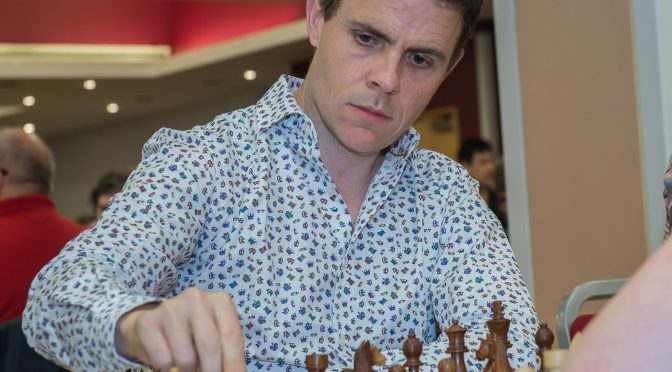
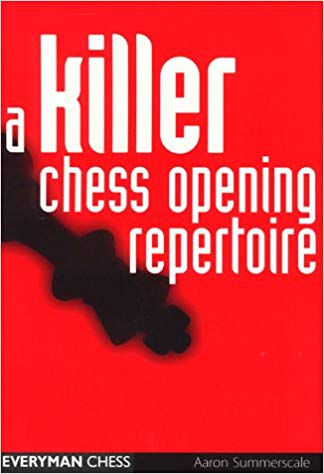
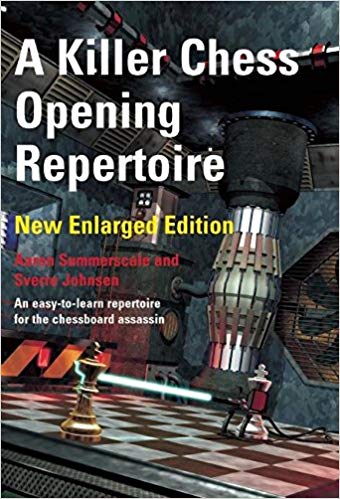
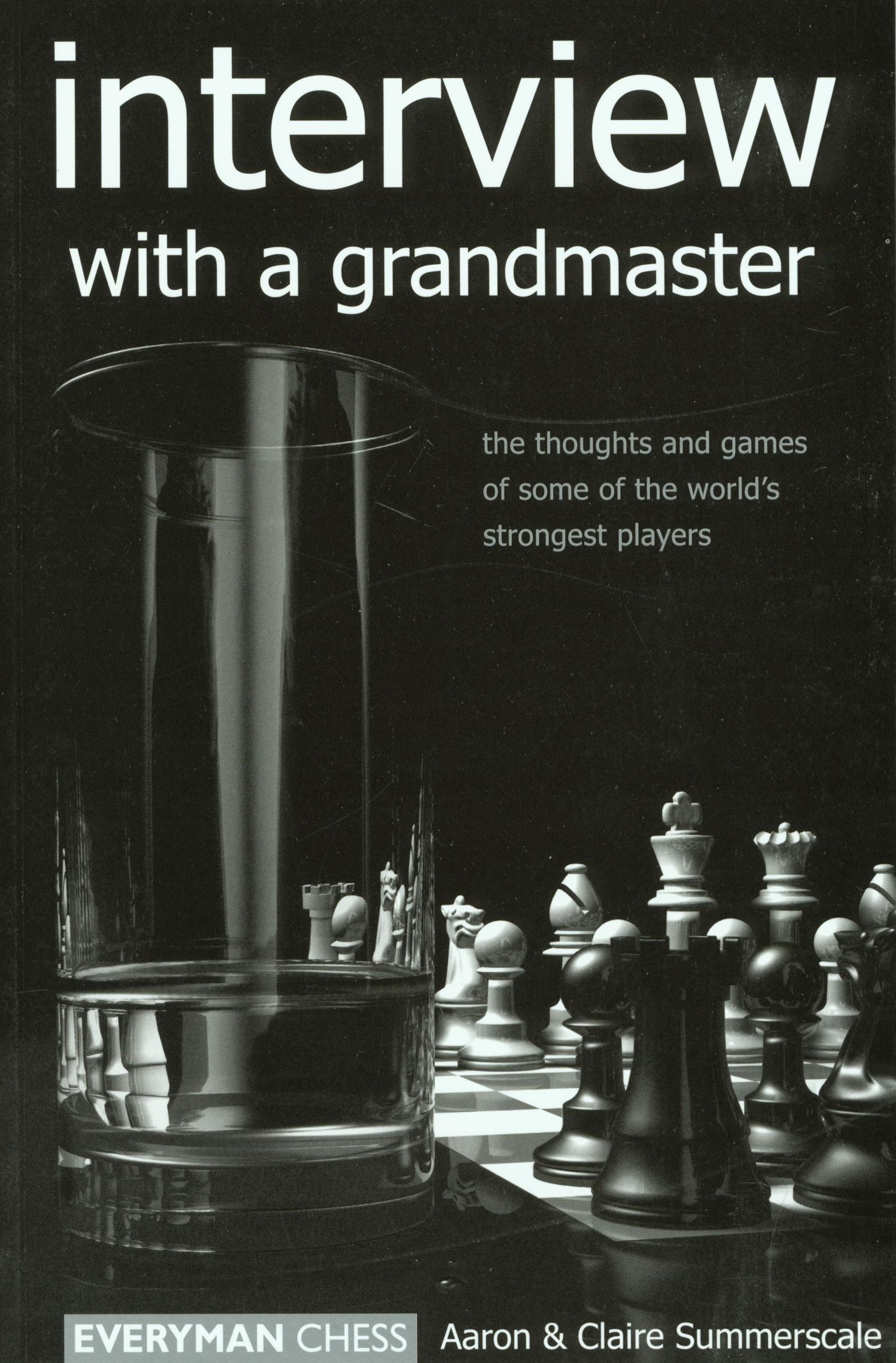
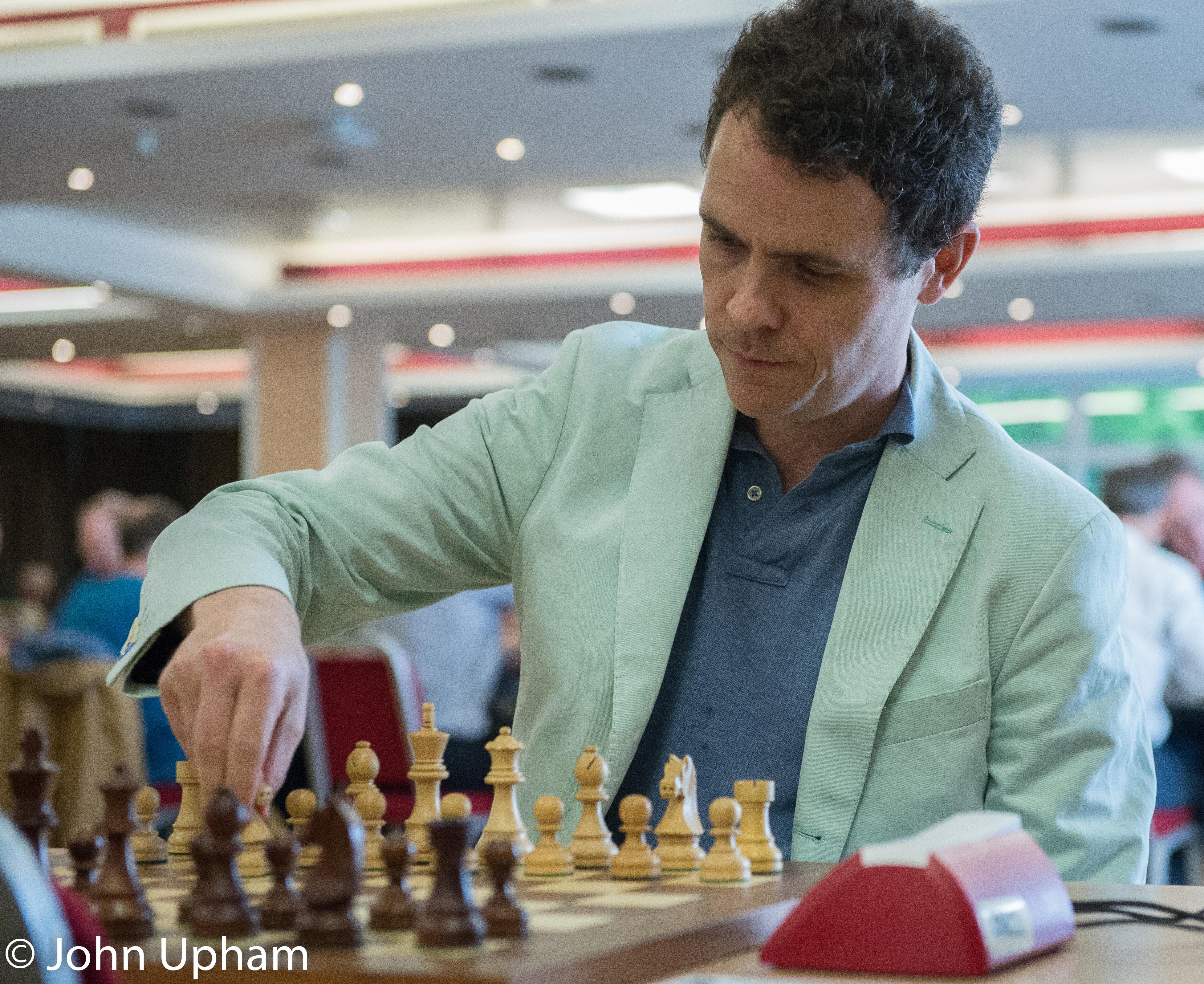
BCN offers best wishes to Aaron Summerscale on his 52nd birthday.
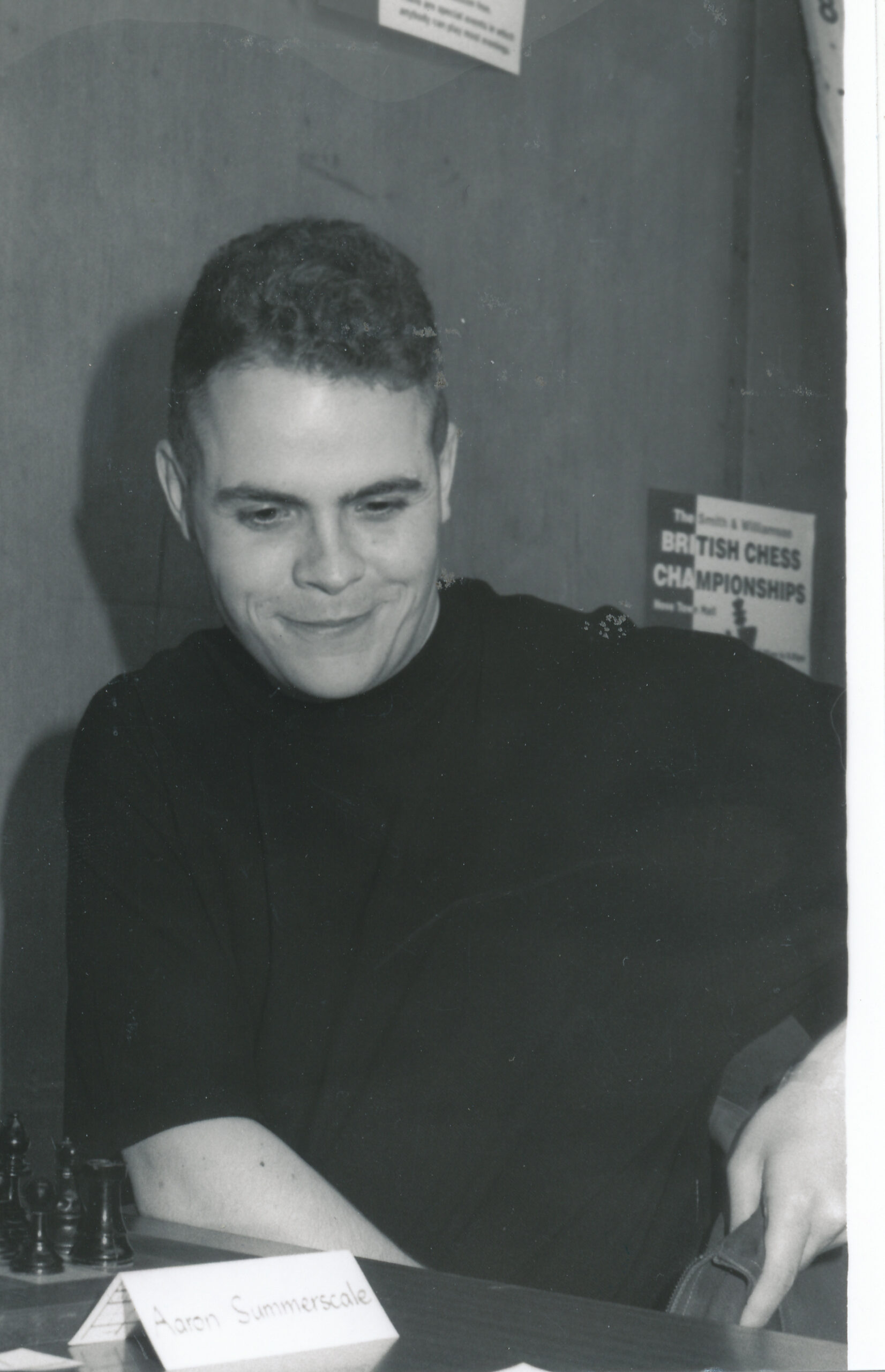
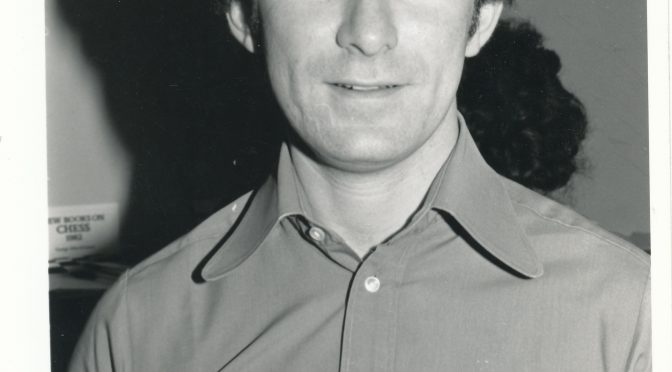
Aaron Piers Summerscale was born on Tuesday, August 26th 1969 in Westminster, Greater London. His mother’s maiden name is Mayall. Aaron lives in SW18 and teaches chess. He married Claire Lusher (Basingstoke) but they are now separated.
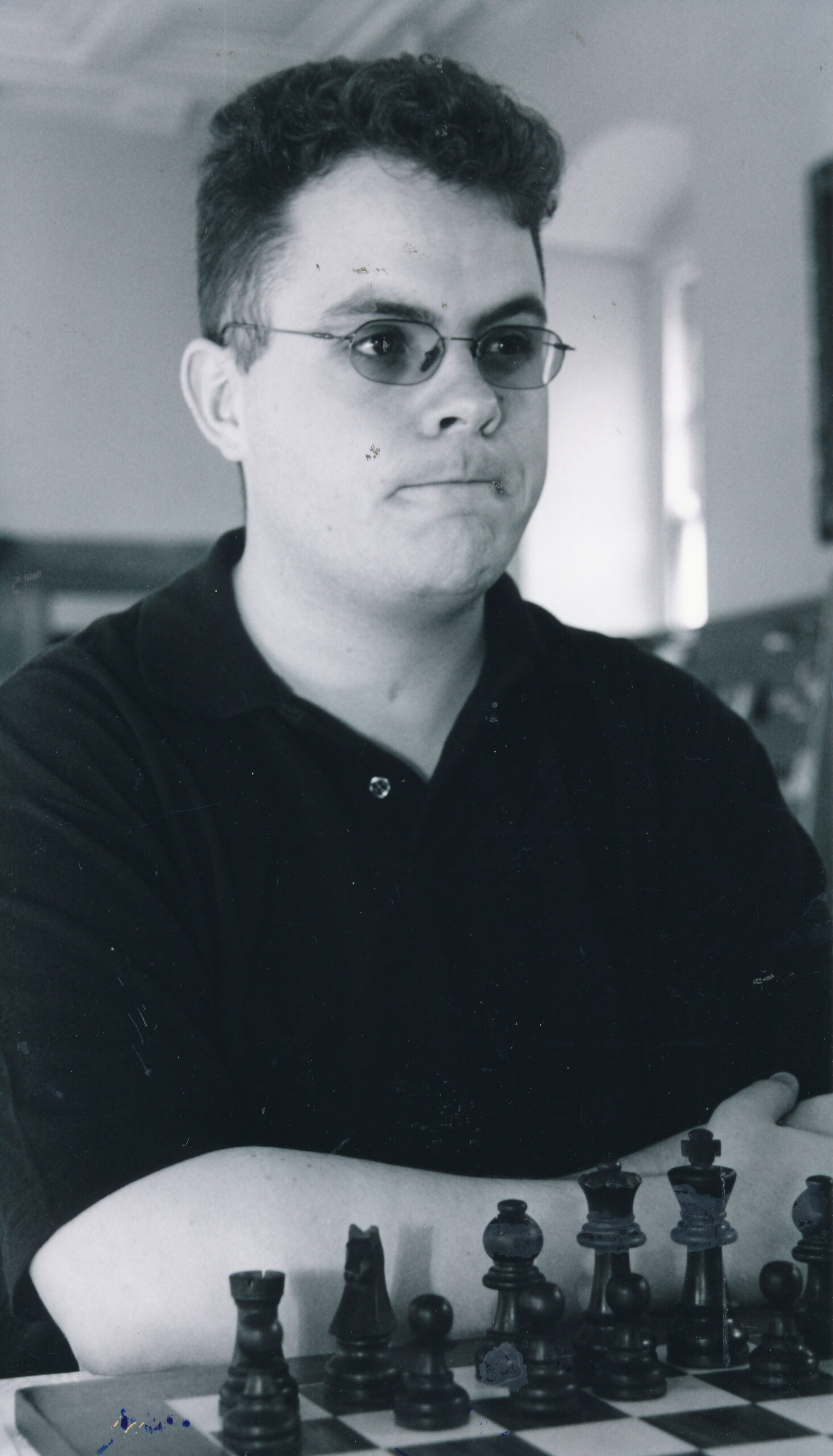
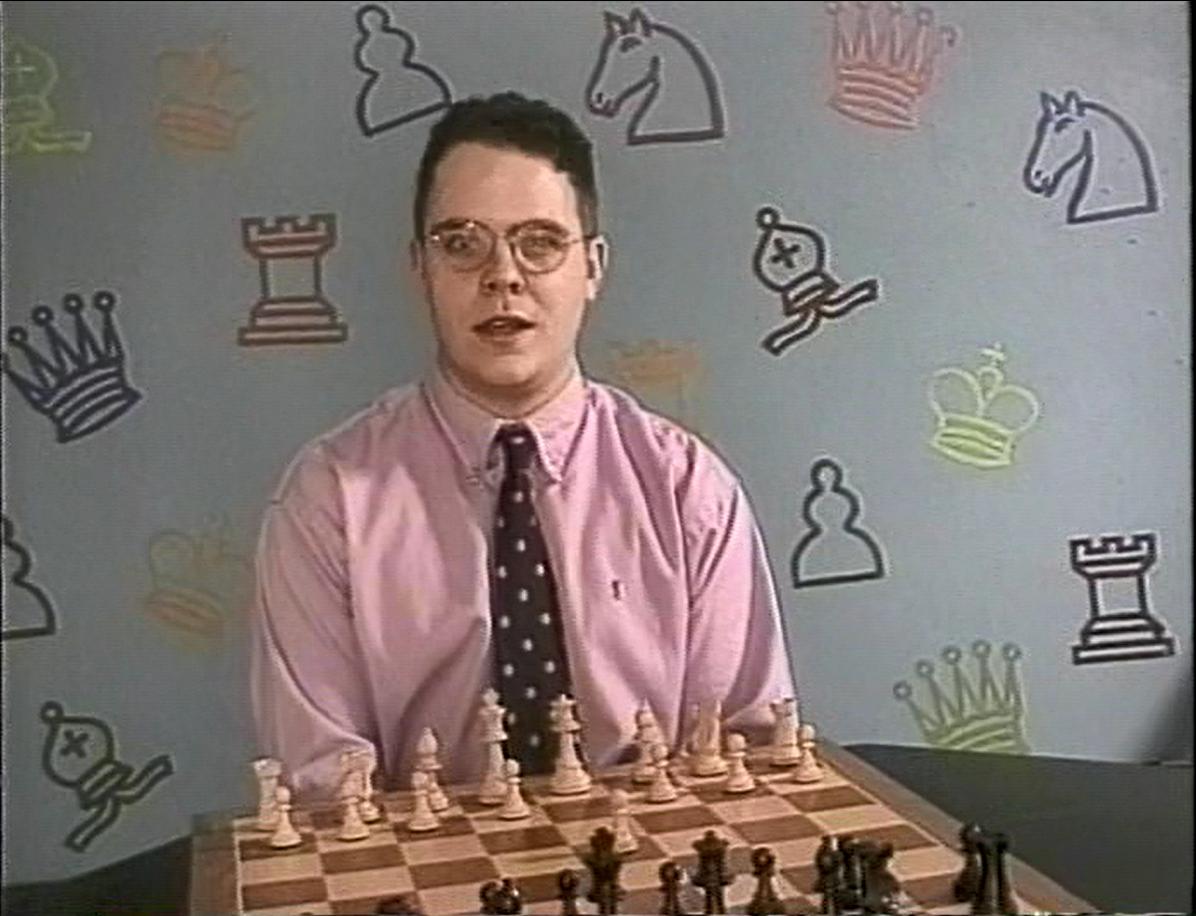
Aaron Summerscale
He became a FIDE Master in 1992, an International Master in 1994 and a Grandmaster in 1997.
Aaron was runner-up (to Matthew Sadler) with 8/11 in the 1995 British Championship in Swansea.
His highest FIDE rating was 2513 in October 2000 and was joint (with Ameet Ghasi) British Rapidplay Chess Champion in the same year.
Aaron Summerscale courtesy of John Henderson
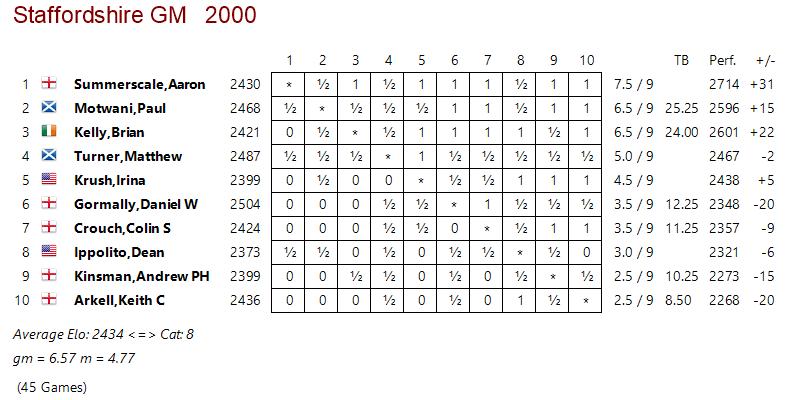
His highest ECF grading was 244A in 2001 and he won the Staffordshire GM tournament in the same year :
Staffordshire GM Tournament 2000 Crosstable
Aaron plays for Wood Green in the Four Nations Chess League (4NCL) and has played for Pride and Prejudice.
BCN sends greetings to GM Alexander Cherniaev on his 52nd birthday.
Alexander Sergeevich Cherniaev was born on Tuesday, August 26th 1969 in Arkhangelsk, Western Russia.
He became an International Master in 1993 and a Grandmaster in 2004.
He became a FIDE Senior Trainer in 2016.
His peak FIDE rating (according to Megabase 2020 and Felice) was 2509 in July 2002, aged 33.
(Gaige is silent on Alexander).
Alex is registered with the Russian Federation and plays for Hackney, Wood Green, Russia (unsurprisingly!) and 4NCL Barnet Knights and makes regular appearences in Richmond, Golders Green and other rapidplay events, the London Chess Classic and 4NCL amongst others.
He made his first appearance in a UK event in 1991 at the Lloyds Bank Masters whilst a revolution was in progress in the USSR. His first appearance at Hastings was for the 1991/92 event in the Open section and then in Hastings 1993/1994.
Since 1999 he has been London based playing in many UK events.
He won the Coulsdon Easter Congress in 2007 with 7.5/9 and the Canadian Open in 2019 with 9/9
As the first player Alex mainly champions the Ruy Lopez and with the Black pieces he enjoys the Sveshnikov Sicilian and the Old Indian Defence.
Alex is a well-known player on the English chess scene and has enjoyed a lively relationship with organisers and arbiters alike.
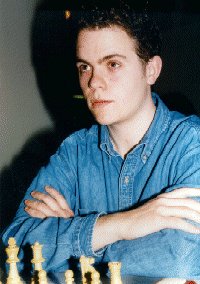
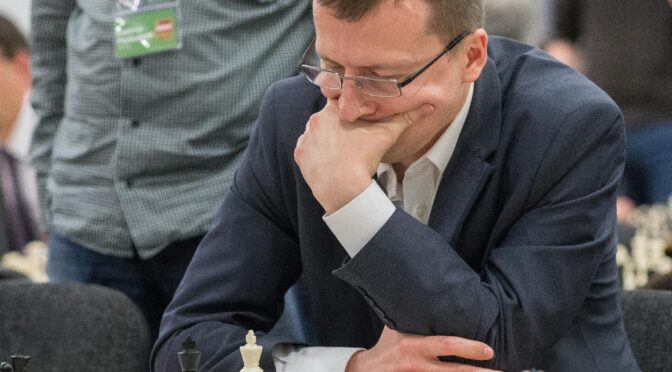
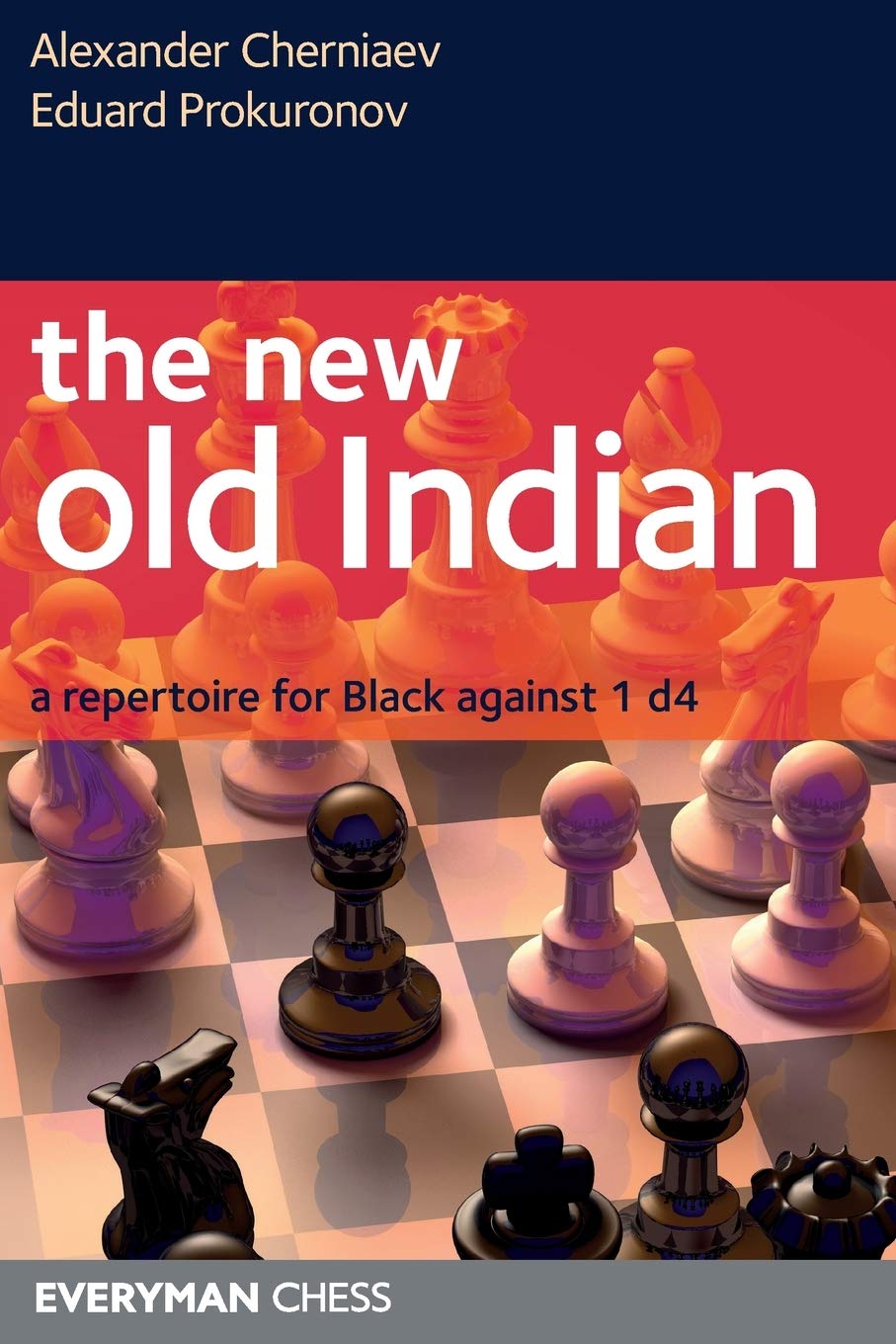
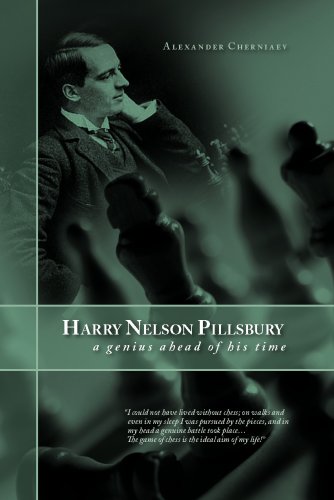
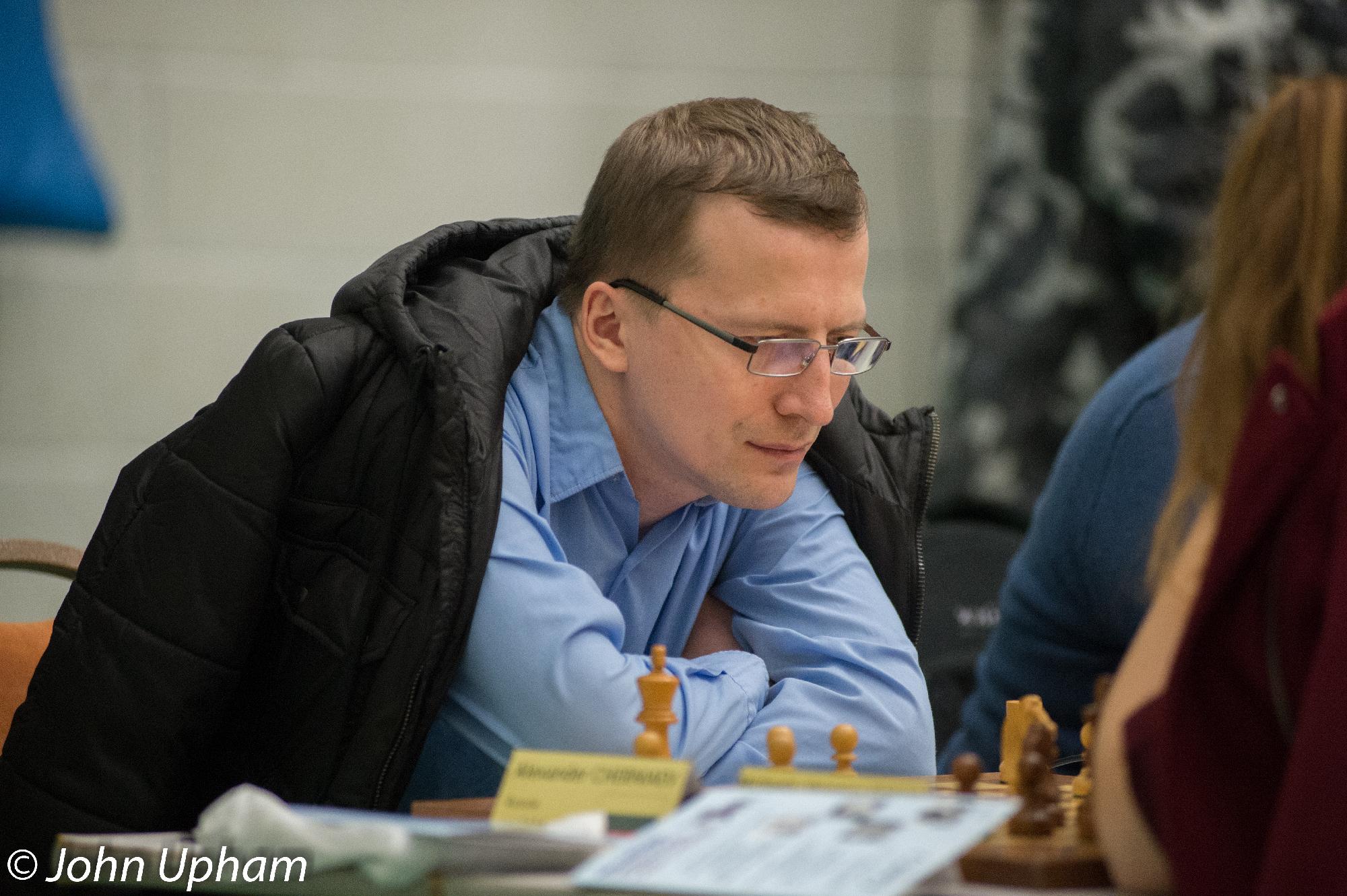
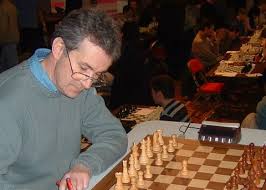
The Samisch King’s Indian UncoveredThe New Old IndianDavid Janowski: Artist of the Chess BoardHarry Nelson Pillsbury ( 5 December 1872 – 17 June 1906): A Genius Ahead of His TimeGM Alexander Cherniaev, Hastings 2013-2014, courtesy of John Upham Photography
BCN wishes IM Jeff Horner, all the best on his birthday.
Jeffrey Horner was born in Bolton, Lancashire on Thursday, August 25th, 1949.
Jeff played for Poulton-le-Fylde Teacher Training College and is registered for Lancashire CA.
Jeff became a FIDE Master in 1989 (aged 40) and an International Master in 2008 (at the age of 58) and a gap of some 19 years!
(Compare this with John Pigott : John became a FIDE Master in 1984 and an International Master in 2017, a gap of some 33 years!)
He achieved a peak rating of 2450 in January 1975 at the age of 26.
His most recent ECF grading was 233E in January 2017. His last recorded game was played on June 30th 2018 and was a win with black versus Andrew Ledger graded 227.
Jeff played 1.e4 playing 1.g3 once against Graham Lee and winning and the Trompowski once against Murray Chandler and losing. In recent years he favoured the Wormald (Alapin) Attack in the Ruy Lopez.
With the black pieces Jeff defended the main line Ruy Lopez and the King’s Indian Defence.
Here is a comment from PQB4 from chessgames.com :
“A pity we don’t have more games here by this gifted attacking player, arguably the most respected amateur in the North of England. 220 BCF/2300+ for about 30 years, he’s beaten a string of grandmasters, but his best stuff probably occurs in weekend congresses, hence we don’t have enough recorded. I hope there are many such players in the world whose respect for the game and other players shows more of the quality of a true chess black belt than that of some of the more famous. Off the board he’s a schoolteacher, and presumably a pretty inspiring one, to judge by his infectious love of chess and the encouraging words he invariably has for opponents. I’ve had the pleasure of playing Jeff a few times and… let’s just say that The Day of My Revenge will surely come.”
“There have been so many headlines about Britain’s 12-year-old chess prodigy, David Howell, that it nice to turn our attention to someone at the other end of the spectrum. Perhaps few readers will have heard of 53-year-old Jeff Horner- unless, that is, you have played on the north of England chess circuit, where Jeff has been dominating events since before I was born. My first meeting with Jeff was at Bolton Chess Club at the age of six, but it was another ten years before I fancied my chances against him. And it wasn’t just me who feared him. Few indeed were the top players who travelled “Up North” and got the better of Horner.”
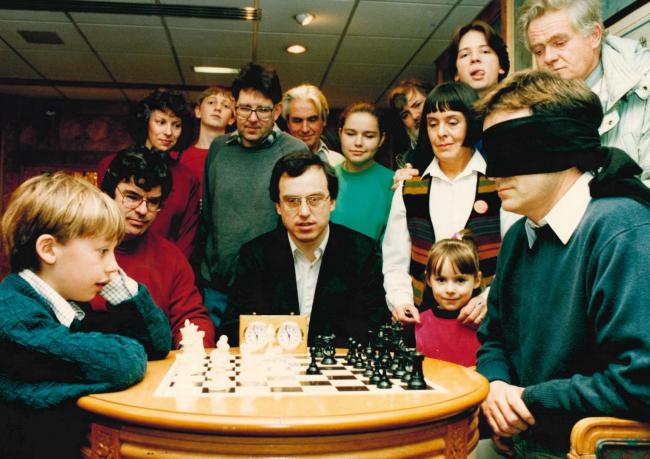
1993 : Jeff Horner takes on world under-10 chess champion Luke McShane blindfolded
“IT’S hard enough challenging a world champion to a game of chess, but to then say you’ll do it blindfold is bordering on the ridiculous.
But that’s exactly what Jeff Hormer from Radcliffe did back in 1993.
Teacher Jeff’s showdown with Luke McShane, the world under-10 chess champion from London was the main attraction at a two-day chess festival held at Bolton’s Moat House.
Jeff, 43, faced off against nine-year-old, Luke, with a thick black cloth placed over his eyes.
The youngster had full view of the board, but Mr Horner was forced to play with the aid of an assistant who placed his pieces and let him know the moves Luke was making
Jeff’s amazing memory and powers of concentration coupled with his greater experience proved too much for the young chess champion.
And despite the handicap of the blindfold, he beat the world champion relatively easily..
It ended up being one of the few matches that Luke McShane lost as he gained international recognition as a chess prodigy.
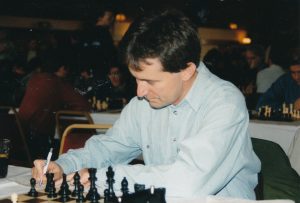
Jeff Horner, Isle of Man 2008, Photograph : John Saunders
Aged just 16 he became the youngest British chess player to be awarded the title of Grandmaster by the International Chess Federation in 2000 and now, although he works as a trader in the City of London, Luke is regarded as the best amateur chess player in the world.
Jeff Hormer was a long-standing member of Bolton chess club and was renowned for his ability on the board, often taking on – and beating – internationally-renowned players.
He famously beat British Grand Master Tony Miles, who himself had only recently defeated the reigning world champion Anatoly Karpov.
Jeff was awarded the title of International Master by the International Chess Federation.”
“I still remember Tony Miles, fresh from his historic victory against World Champion Anatoly Karpov, stopping off at the Blackpool Open. Miles had become a legend overnight but nobody bothered to tell Jeff, who calmly trounced him just as he would us. Two weeks ago David Howell had to play Jeff Horner in Blackpool. Both players needed two wins from their last two games to earn an international master (IM) result. Would it be Britain’s youngest new IM or our oldest new IM?”
We wish WFM Helen Milligan all the best on her birthday, this day (August 25th) in 1962.
Helen became a Woman’s FIDE Master in 2000 and a Candidate Master in 2013.
Her highest FIDE rating was 2138 in July 1999.
Helen Milligan (born Helen Scott; 25 August 1962) is a Scottish-New Zealand chess player holding the FIDE titles of Candidate Master (CM) and Woman FIDE Master (WFM), and five-times Asian senior women’s (50+) champion. The CM title was earnt at a FIDE open zonal.
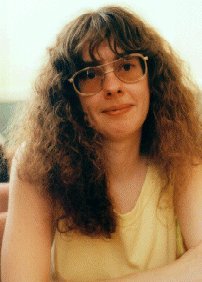
WFM Helen Milligan
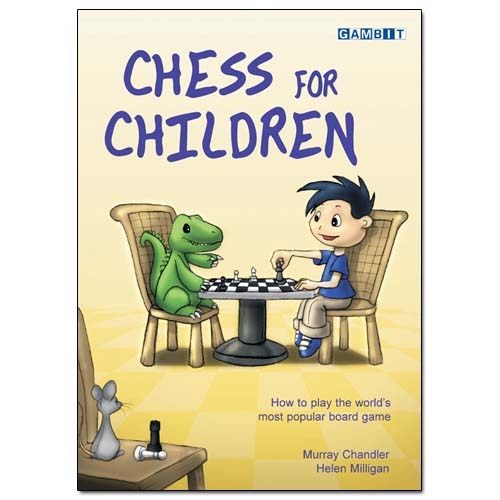
In 2004 Milligan co-authored the book “Chess for Children” with Grandmaster Murray Chandler. She has been an officer of the New Zealand Chess Federation, and has worked as a coach at Murray Chandler’s National Chess Centre in Auckland. She currently works as a self-employed chess coach. The National Chess Centre has since been sold by Murray Chandler.
Milligan has won or jointly won the Scottish women’s championship three times: in 1982, 1986 and 1988. In 1983 she was joint British Ladies’ champion with Rani Hamid.
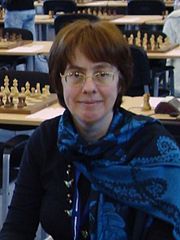
WFM Helen Milligan in 2010
Milligan represented Scotland in eleven Women’s Chess Olympiads between 1982 and 2006. Since 2008 she has played for New Zealand in this competition, having transferred national federations in 2007.
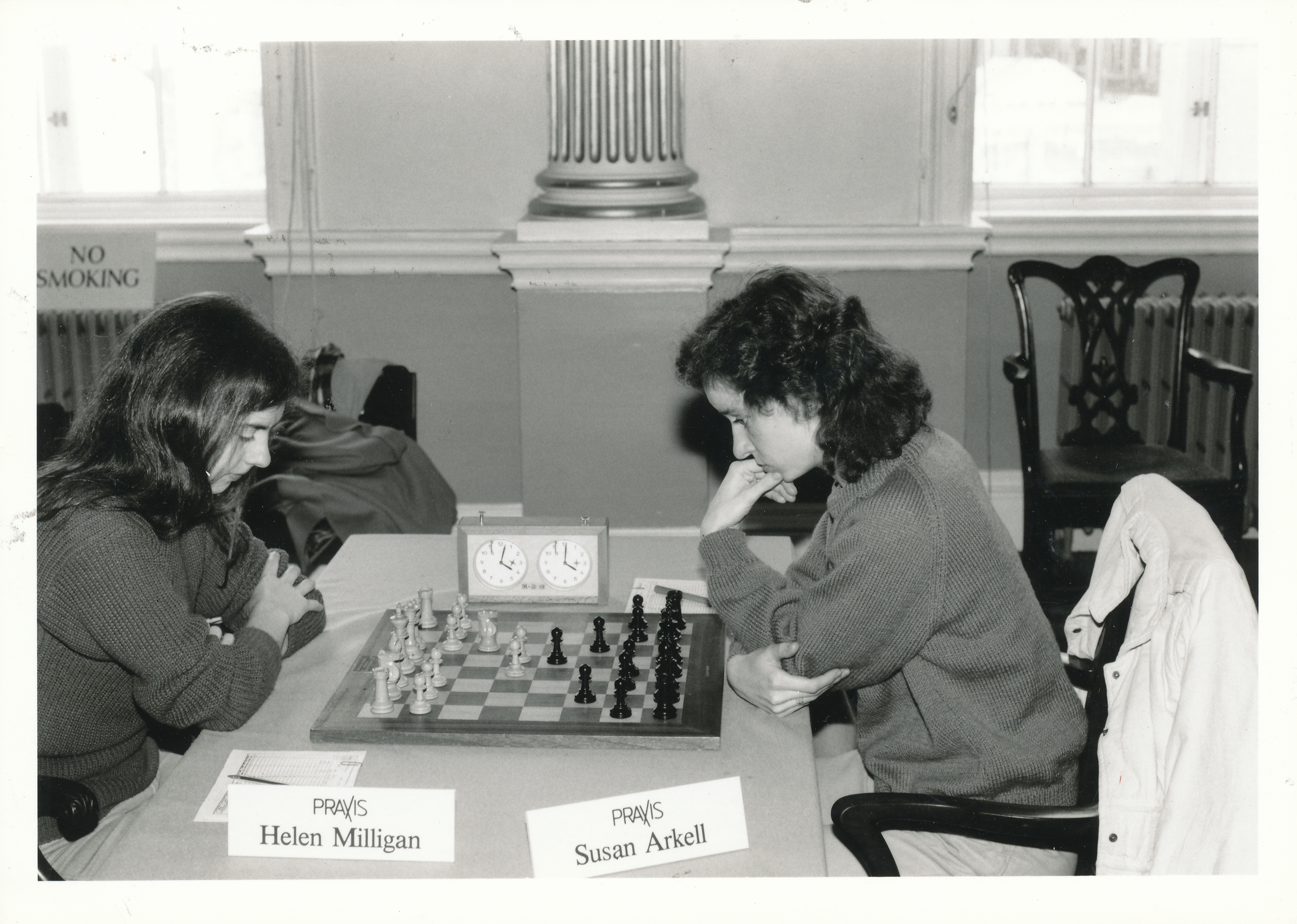
WFM Helen Milligan vs Susan Arkell
Milligan became Oceania women’s champion at the Queenstown Chess Classic tournament in January 2012. She also competed in Women’s Zonal Chess Championships in Bath 1987, Blackpool 1990, Delden 1993, Saint Vincent 1999, and the open zonal at Gold Coast in 2009.
She won the Asian senior women’s (50+) champion title in 2014 in Kalutara, Sri Lanka; 2015 in Larestan, Iran; 2016 in Mandalay, Myanmar; 2017 in Auckland, New Zealand; and 2018 in Tagaytay, Philippines.
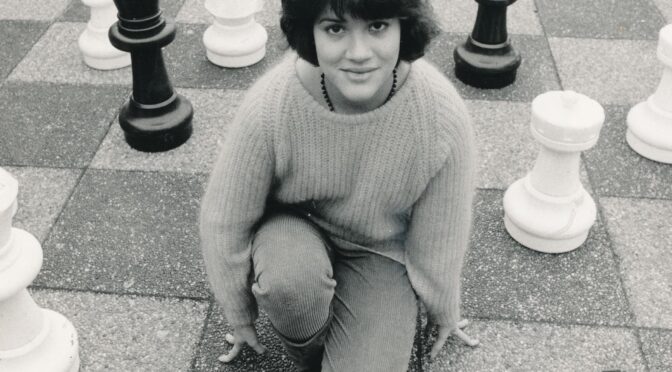
Mandy Allison S. Hepworth was born in Scunthorpe, (now) Humberside (but at the time Lincolnshire) on Tuesday, March 12th 1968 to Neville Ian Hepworth and Alice Hepworth (née Ma). Neville was a Computer Manager and Alice Ma was originally from Singapore. The family moved to “Mulgoa”, The Fleet, Fittleworth, Pulborough, RH20 1HS, West Sussex.
(Thanks to David Mills who updated us on the Lincolnshire / Humberside issue)
Neville taught Mandy how to play chess.
She attended Westergate Comprehensive and Community School where Peter Barton coached both the boys and the girls teams.
“One particular junior, Mandy Hepworth, came to notice. In the British championships at Brighton in 1980 she came first equal in the girls under-14 competition. Peter Barton also organised some external competitions and from 1981 for a few years he organised young masters’ tournaments at the Westergate School after receiving sponsorship from the Amey Roadstone Corporation. ”
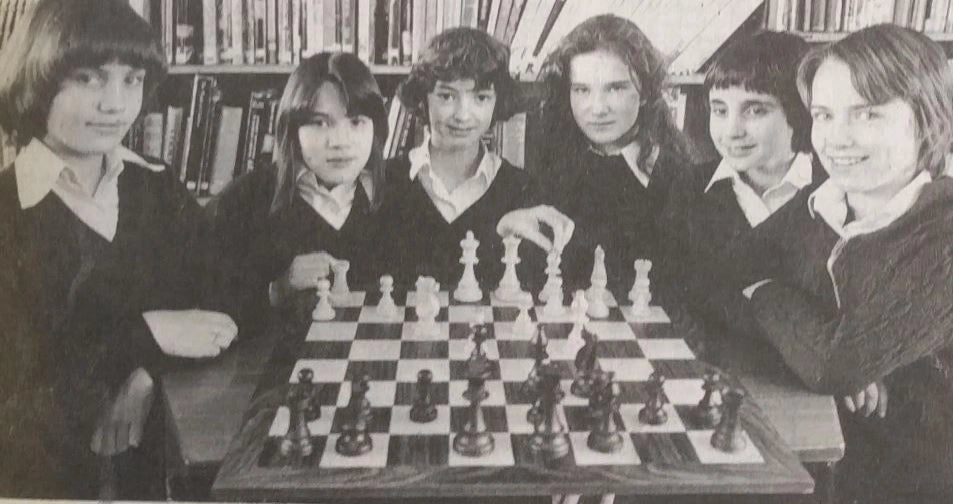
This group of girls had every reason to smile ‘“ they had just pulled off the school chess world’s equivalent of David v Goliath.
It was January 1980 and they all attended Westergate Comprehensive and Community School and had just beaten the mighty Dorothy Skinner High School, in Brighton, to qualify for the final of the Sussex Girls under-16 chess championships. Pictured from left: Melaine Wright, 11, Mandy Hepworth, 11, Lesley Glen, 11, Deborah Baxter, 12, Gail Curryer, 11, and Tracey Redding, 12.
“It was January 1980 and they all attended Westergate Comprehensive and Community School and had just beaten the mighty Dorothy Skinner High School, in Brighton, to qualify for the final of the Sussex Girls under-16 chess championships.
The team’s captain, Mandy Hepworth, who was just 11-years-old at the time, was lauded by the school’s chess teacher as “one of the hottest properties in junior chess”.
His name was Peter Barton and, according to the report published in the Observer on January 25 1980, he had masterminded something of a chess resurgence at Westergate.”
Some 50 youngsters at the school were playing chess proficiently and 10 of them were girls.
Even though junior chess was somewhat dominated by boys at the time, Mr Barton was confident his girls could deal with any challenge thrown at them by anyone – and he had high hopes for Mandy.
He told the paper: ‘For a girl she has remarkable ability and we would hope to enter her for the British junior championships later this year.
In the past it has always been a boys’ game but, if you can catch the girls when they are young and keep their enthusiasm, there is no reason why they cannot go on to become masters.’
Does anyone know if the girls won the final? Did Mandy make it to the British junior championships?”
Mandy Hepworth
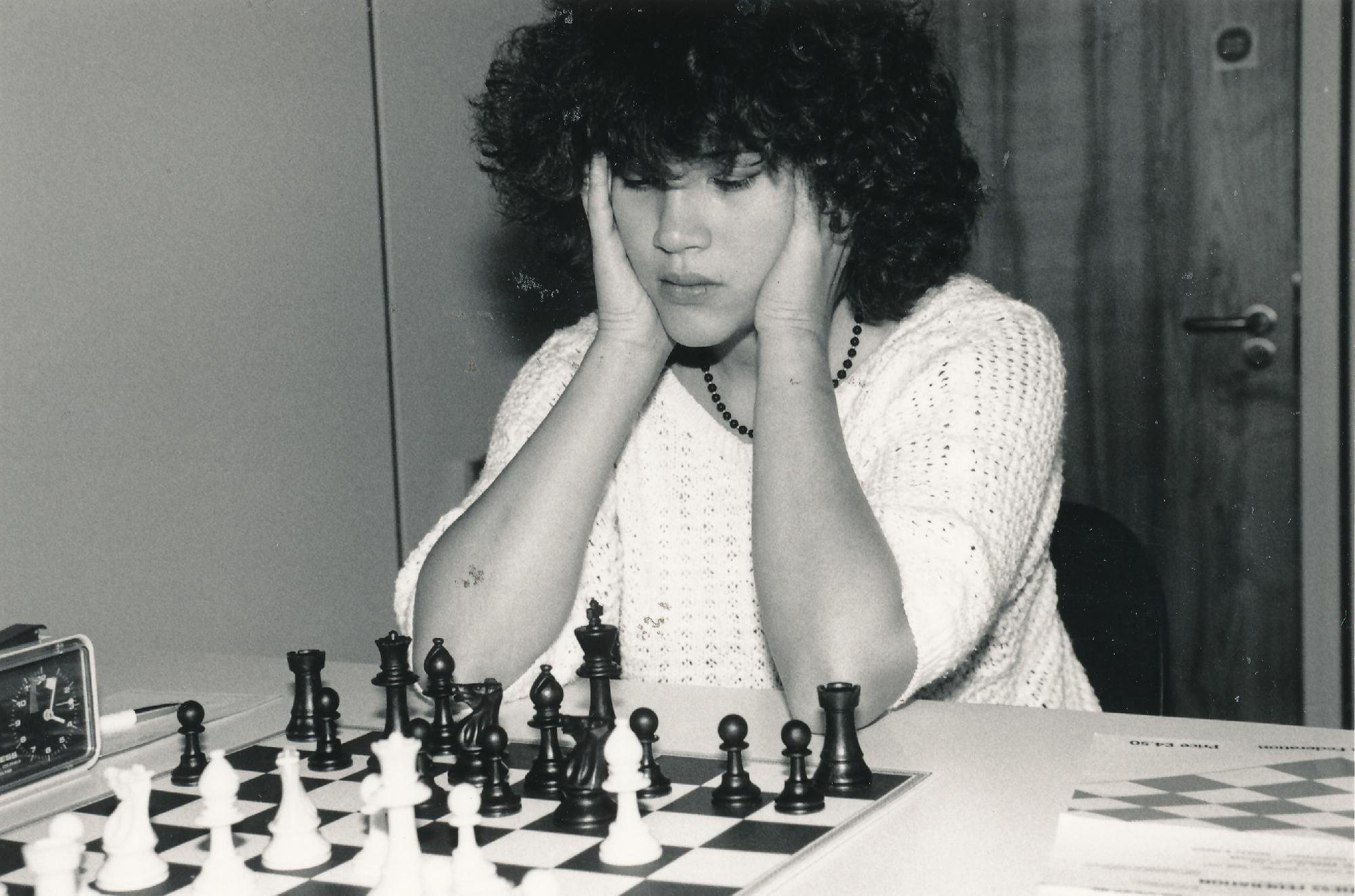
Mandy entered her first major competition when she was 11 and beat her father when she was 14. She became the Under-12 British Girls’ Champion (Ed: this is not correct) and the Under-14 Champion in Brighton, 1980 (shared with Susan Walker), the Under-16 Champion in Brighton, 1984
In 1985 she played in the Eileen Tranmer Memorial in Brighton. All the players resided in the same guest house. The event was organised by Ray Keene. Mandy was 4th with a TPR of 2296.
In 1986 she represented England in the Women’s Olympiad (Dubai) and scored an excellent 75% on the Reserve Board.
In 1988 she played at the Oakham Young Masters and had a tough time scoring 2.5/9
In October 1988 she travelled to Adelaide, Australia to play in the World Under-20 Girls’ Championship.
Following that we have no further information. It would appear (perhaps you can help?) that Mandy gave up competitive chess and did not play again.
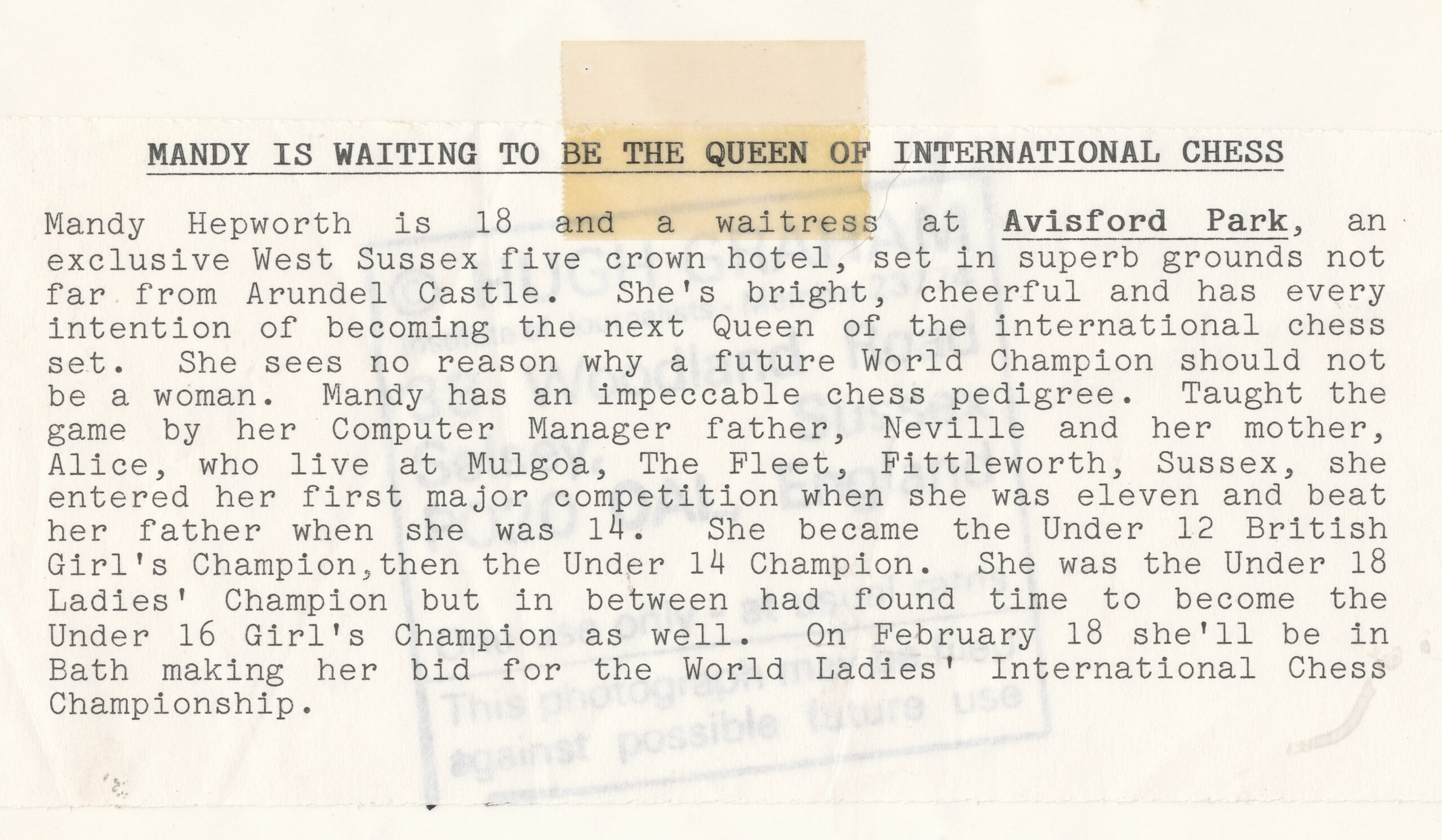
1986 Press Release for Mandy Hepworth. Warning : some details are not entirely accurate.
We end with this against an experienced opponent :
Mandy Allison S. Hepworth was born in Scunthorpe, (now) Humberside (but at the time Lincolnshire) on Tuesday, March 12th 1968 to Neville Ian Hepworth and Alice Hepworth (née Ma). Neville was a Computer Manager and Alice Ma was originally from Singapore. The family moved to “Mulgoa”, The Fleet, Fittleworth, Pulborough, RH20 1HS, West Sussex.
(Thanks to David Mills who updated us on the Lincolnshire / Humberside issue)
Neville taught Mandy how to play chess.
She attended Westergate Comprehensive and Community School where Peter Barton coached both the boys and the girls teams.
“One particular junior, Mandy Hepworth, came to notice. In the British championships at Brighton in 1980 she came first equal in the girls under-14 competition. Peter Barton also organised some external competitions and from 1981 for a few years he organised young masters’ tournaments at the Westergate School after receiving sponsorship from the Amey Roadstone Corporation. ”
This group of girls had every reason to smile ‘“ they had just pulled off the school chess world’s equivalent of David v Goliath.
It was January 1980 and they all attended Westergate Comprehensive and Community School and had just beaten the mighty Dorothy Skinner High School, in Brighton, to qualify for the final of the Sussex Girls under-16 chess championships. Pictured from left: Melaine Wright, 11, Mandy Hepworth, 11, Lesley Glen, 11, Deborah Baxter, 12, Gail Curryer, 11, and Tracey Redding, 12.
“It was January 1980 and they all attended Westergate Comprehensive and Community School and had just beaten the mighty Dorothy Skinner High School, in Brighton, to qualify for the final of the Sussex Girls under-16 chess championships.
The team’s captain, Mandy Hepworth, who was just 11-years-old at the time, was lauded by the school’s chess teacher as “one of the hottest properties in junior chess”.
His name was Peter Barton and, according to the report published in the Observer on January 25 1980, he had masterminded something of a chess resurgence at Westergate.”
Some 50 youngsters at the school were playing chess proficiently and 10 of them were girls.
Even though junior chess was somewhat dominated by boys at the time, Mr Barton was confident his girls could deal with any challenge thrown at them by anyone – and he had high hopes for Mandy.
He told the paper: ‘For a girl she has remarkable ability and we would hope to enter her for the British junior championships later this year.
In the past it has always been a boys’ game but, if you can catch the girls when they are young and keep their enthusiasm, there is no reason why they cannot go on to become masters.’
Does anyone know if the girls won the final? Did Mandy make it to the British junior championships?”
Mandy Hepworth
Mandy entered her first major competition when she was 11 and beat her father when she was 14. She became the Under-12 British Girls’ Champion (Ed: this is not correct) and the Under-14 Champion in Brighton, 1980 (shared with Susan Walker), the Under-16 Champion in Brighton, 1984
In 1985 she played in the Eileen Tranmer Memorial in Brighton. All the players resided in the same guest house. The event was organised by Ray Keene. Mandy was 4th with a TPR of 2296.
In 1986 she represented England in the Women’s Olympiad (Dubai) and scored an excellent 75% on the Reserve Board.
In 1988 she played at the Oakham Young Masters and had a tough time scoring 2.5/9
In October 1988 she travelled to Adelaide, Australia to play in the World Under-20 Girls’ Championship.
Following that we have no further information. It would appear (perhaps you can help?) that Mandy gave up competitive chess and did not play again.
1986 Press Release for Mandy Hepworth. Warning : some details are not entirely accurate.
We end with this against an experienced opponent :
Mandy Allison S. Hepworth was born in Scunthorpe, (now) Humberside (but at the time Lincolnshire) on Tuesday, March 12th 1968 to Neville Ian Hepworth and Alice Hepworth (née Ma). Neville was a Computer Manager and Alice Ma was originally from Singapore. The family moved to “Mulgoa”, The Fleet, Fittleworth, Pulborough, RH20 1HS, West Sussex.
(Thanks to David Mills who updated us on the Lincolnshire / Humberside issue)
Neville taught Mandy how to play chess.
She attended Westergate Comprehensive and Community School where Peter Barton coached both the boys and the girls teams.
“One particular junior, Mandy Hepworth, came to notice. In the British championships at Brighton in 1980 she came first equal in the girls under-14 competition. Peter Barton also organised some external competitions and from 1981 for a few years he organised young masters’ tournaments at the Westergate School after receiving sponsorship from the Amey Roadstone Corporation. ”
This group of girls had every reason to smile ‘“ they had just pulled off the school chess world’s equivalent of David v Goliath.
It was January 1980 and they all attended Westergate Comprehensive and Community School and had just beaten the mighty Dorothy Skinner High School, in Brighton, to qualify for the final of the Sussex Girls under-16 chess championships. Pictured from left: Melaine Wright, 11, Mandy Hepworth, 11, Lesley Glen, 11, Deborah Baxter, 12, Gail Curryer, 11, and Tracey Redding, 12.
“It was January 1980 and they all attended Westergate Comprehensive and Community School and had just beaten the mighty Dorothy Skinner High School, in Brighton, to qualify for the final of the Sussex Girls under-16 chess championships.
The team’s captain, Mandy Hepworth, who was just 11-years-old at the time, was lauded by the school’s chess teacher as “one of the hottest properties in junior chess”.
His name was Peter Barton and, according to the report published in the Observer on January 25 1980, he had masterminded something of a chess resurgence at Westergate.”
Some 50 youngsters at the school were playing chess proficiently and 10 of them were girls.
Even though junior chess was somewhat dominated by boys at the time, Mr Barton was confident his girls could deal with any challenge thrown at them by anyone – and he had high hopes for Mandy.
He told the paper: ‘For a girl she has remarkable ability and we would hope to enter her for the British junior championships later this year.
In the past it has always been a boys’ game but, if you can catch the girls when they are young and keep their enthusiasm, there is no reason why they cannot go on to become masters.’
Does anyone know if the girls won the final? Did Mandy make it to the British junior championships?”
Mandy Hepworth
Mandy entered her first major competition when she was 11 and beat her father when she was 14. She became the Under-12 British Girls’ Champion (Ed: this is not correct) and the Under-14 Champion in Brighton, 1980 (shared with Susan Walker), the Under-16 Champion in Brighton, 1984
In 1985 she played in the Eileen Tranmer Memorial in Brighton. All the players resided in the same guest house. The event was organised by Ray Keene. Mandy was 4th with a TPR of 2296.
In 1986 she represented England in the Women’s Olympiad (Dubai) and scored an excellent 75% on the Reserve Board.
In 1988 she played at the Oakham Young Masters and had a tough time scoring 2.5/9
In October 1988 she travelled to Adelaide, Australia to play in the World Under-20 Girls’ Championship.
Following that we have no further information. It would appear (perhaps you can help?) that Mandy gave up competitive chess and did not play again.
1986 Press Release for Mandy Hepworth. Warning : some details are not entirely accurate.
We end with this against an experienced opponent :
Mandy Allison S. Hepworth was born in Scunthorpe, (now) Humberside (but at the time Lincolnshire) on Tuesday, March 12th 1968 to Neville Ian Hepworth and Alice Hepworth (née Ma). Neville was a Computer Manager and Alice Ma was originally from Singapore. The family moved to “Mulgoa”, The Fleet, Fittleworth, Pulborough, RH20 1HS, West Sussex.
(Thanks to David Mills who updated us on the Lincolnshire / Humberside issue)
Neville taught Mandy how to play chess.
She attended Westergate Comprehensive and Community School where Peter Barton coached both the boys and the girls teams.
“One particular junior, Mandy Hepworth, came to notice. In the British championships at Brighton in 1980 she came first equal in the girls under-14 competition. Peter Barton also organised some external competitions and from 1981 for a few years he organised young masters’ tournaments at the Westergate School after receiving sponsorship from the Amey Roadstone Corporation. ”
This group of girls had every reason to smile ‘“ they had just pulled off the school chess world’s equivalent of David v Goliath.
It was January 1980 and they all attended Westergate Comprehensive and Community School and had just beaten the mighty Dorothy Skinner High School, in Brighton, to qualify for the final of the Sussex Girls under-16 chess championships. Pictured from left: Melaine Wright, 11, Mandy Hepworth, 11, Lesley Glen, 11, Deborah Baxter, 12, Gail Curryer, 11, and Tracey Redding, 12.
“It was January 1980 and they all attended Westergate Comprehensive and Community School and had just beaten the mighty Dorothy Skinner High School, in Brighton, to qualify for the final of the Sussex Girls under-16 chess championships.
The team’s captain, Mandy Hepworth, who was just 11-years-old at the time, was lauded by the school’s chess teacher as “one of the hottest properties in junior chess”.
His name was Peter Barton and, according to the report published in the Observer on January 25 1980, he had masterminded something of a chess resurgence at Westergate.”
Some 50 youngsters at the school were playing chess proficiently and 10 of them were girls.
Even though junior chess was somewhat dominated by boys at the time, Mr Barton was confident his girls could deal with any challenge thrown at them by anyone – and he had high hopes for Mandy.
He told the paper: ‘For a girl she has remarkable ability and we would hope to enter her for the British junior championships later this year.
In the past it has always been a boys’ game but, if you can catch the girls when they are young and keep their enthusiasm, there is no reason why they cannot go on to become masters.’
Does anyone know if the girls won the final? Did Mandy make it to the British junior championships?”
Mandy Hepworth
Mandy entered her first major competition when she was 11 and beat her father when she was 14. She became the Under-12 British Girls’ Champion (Ed: this is not correct) and the Under-14 Champion in Brighton, 1980 (shared with Susan Walker), the Under-16 Champion in Brighton, 1984
In 1985 she played in the Eileen Tranmer Memorial in Brighton. All the players resided in the same guest house. The event was organised by Ray Keene. Mandy was 4th with a TPR of 2296.
In 1986 she represented England in the Women’s Olympiad (Dubai) and scored an excellent 75% on the Reserve Board.
In 1988 she played at the Oakham Young Masters and had a tough time scoring 2.5/9
In October 1988 she travelled to Adelaide, Australia to play in the World Under-20 Girls’ Championship.
Following that we have no further information. It would appear (perhaps you can help?) that Mandy gave up competitive chess and did not play again.
1986 Press Release for Mandy Hepworth. Warning : some details are not entirely accurate.
We end with this against an experienced opponent :
Mandy Allison S. Hepworth was born in Scunthorpe, (now) Humberside (but at the time Lincolnshire) on Tuesday, March 12th 1968 to Neville Ian Hepworth and Alice Hepworth (née Ma). Neville was a Computer Manager and Alice Ma was originally from Singapore. The family moved to “Mulgoa”, The Fleet, Fittleworth, Pulborough, RH20 1HS, West Sussex.
(Thanks to David Mills who updated us on the Lincolnshire / Humberside issue)
Neville taught Mandy how to play chess.
She attended Westergate Comprehensive and Community School where Peter Barton coached both the boys and the girls teams.
“One particular junior, Mandy Hepworth, came to notice. In the British championships at Brighton in 1980 she came first equal in the girls under-14 competition. Peter Barton also organised some external competitions and from 1981 for a few years he organised young masters’ tournaments at the Westergate School after receiving sponsorship from the Amey Roadstone Corporation. ”
This group of girls had every reason to smile ‘“ they had just pulled off the school chess world’s equivalent of David v Goliath.
It was January 1980 and they all attended Westergate Comprehensive and Community School and had just beaten the mighty Dorothy Skinner High School, in Brighton, to qualify for the final of the Sussex Girls under-16 chess championships. Pictured from left: Melaine Wright, 11, Mandy Hepworth, 11, Lesley Glen, 11, Deborah Baxter, 12, Gail Curryer, 11, and Tracey Redding, 12.
“It was January 1980 and they all attended Westergate Comprehensive and Community School and had just beaten the mighty Dorothy Skinner High School, in Brighton, to qualify for the final of the Sussex Girls under-16 chess championships.
The team’s captain, Mandy Hepworth, who was just 11-years-old at the time, was lauded by the school’s chess teacher as “one of the hottest properties in junior chess”.
His name was Peter Barton and, according to the report published in the Observer on January 25 1980, he had masterminded something of a chess resurgence at Westergate.”
Some 50 youngsters at the school were playing chess proficiently and 10 of them were girls.
Even though junior chess was somewhat dominated by boys at the time, Mr Barton was confident his girls could deal with any challenge thrown at them by anyone – and he had high hopes for Mandy.
He told the paper: ‘For a girl she has remarkable ability and we would hope to enter her for the British junior championships later this year.
In the past it has always been a boys’ game but, if you can catch the girls when they are young and keep their enthusiasm, there is no reason why they cannot go on to become masters.’
Does anyone know if the girls won the final? Did Mandy make it to the British junior championships?”
Mandy Hepworth
Mandy entered her first major competition when she was 11 and beat her father when she was 14. She became the Under-12 British Girls’ Champion (Ed: this is not correct) and the Under-14 Champion in Brighton, 1980 (shared with Susan Walker), the Under-16 Champion in Brighton, 1984
In 1985 she played in the Eileen Tranmer Memorial in Brighton. All the players resided in the same guest house. The event was organised by Ray Keene. Mandy was 4th with a TPR of 2296.
In 1986 she represented England in the Women’s Olympiad (Dubai) and scored an excellent 75% on the Reserve Board.
In 1988 she played at the Oakham Young Masters and had a tough time scoring 2.5/9
In October 1988 she travelled to Adelaide, Australia to play in the World Under-20 Girls’ Championship.
Following that we have no further information. It would appear (perhaps you can help?) that Mandy gave up competitive chess and did not play again.
1986 Press Release for Mandy Hepworth. Warning : some details are not entirely accurate.
We end with this against an experienced opponent :
BCN wishes IM John Pigott all the best on his birthday (15-viii-1957)John Christopher Pigott was born in Croydon, Surrey and his mother’s maiden name was Fletcher.
In 1975 John was selected by the BCF junior selectors and travelled with Jonathan Speelman and Peter J Lee (Hampshire) to the 8th Biel International Open in Switzerland. Leonard Barden wrote in the October 1975 British Chess Magazine (the cover was of Geller and Smyslov) :
“17-year-old John Pigott’s 8.5/11 included wins against IM Kluger, IM Messing and the 1975 Budapest Champion Rajna and earned him 2,000 Swiss francs in prize money. The three English juniors who competed, Pigott, Speelman and Lee were chosen by the BCF junior selectors and travelled to Switzerland with the help of grant from the Slater Foundation and the London Chess Club.”
John represented England at the 1975 Anglo-Dutch match (25th and 26th of October) scoring 0.5/2 versus Paul van der Sterren. The game scores appear to either have been lost on not recorded.
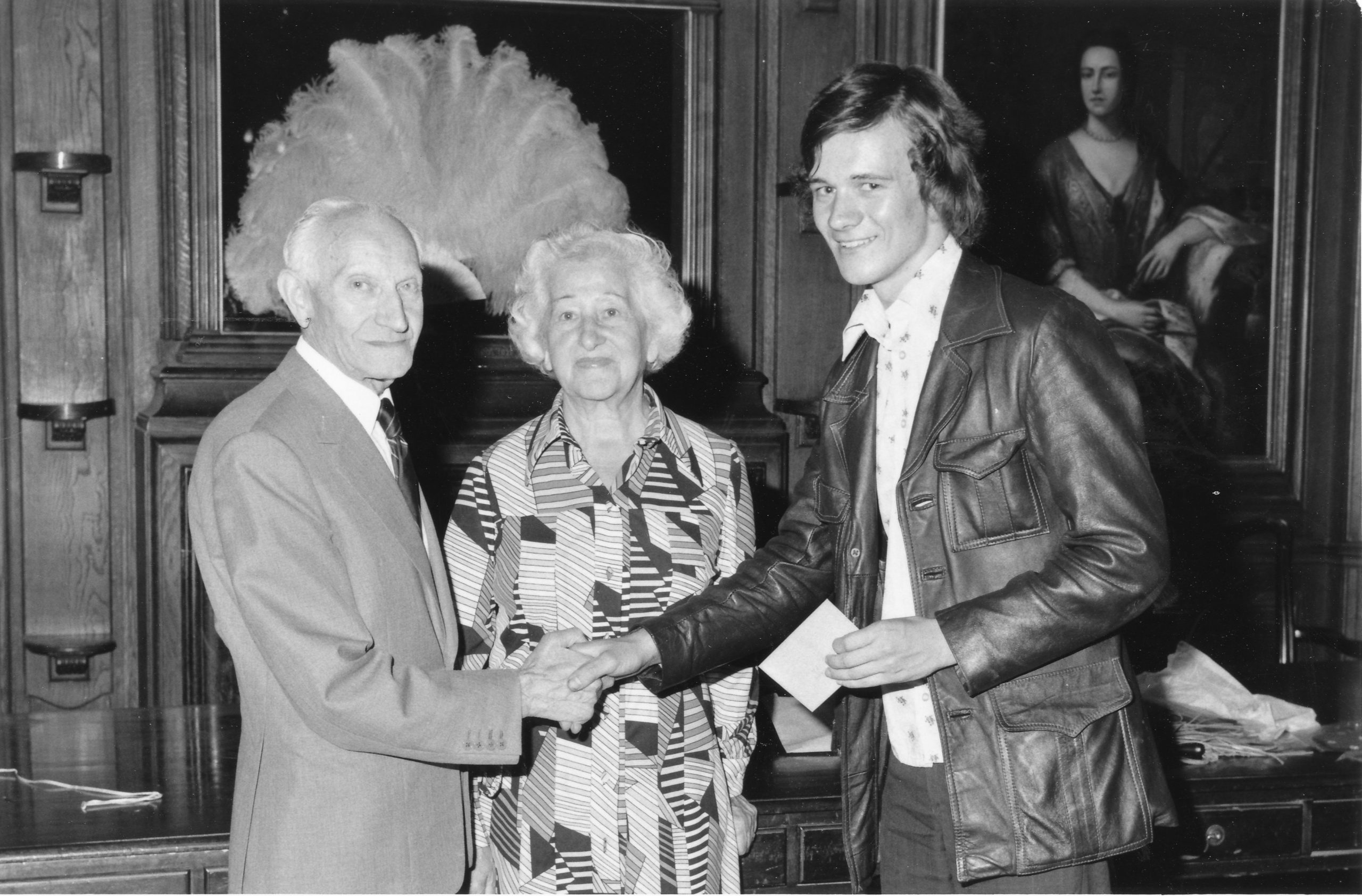
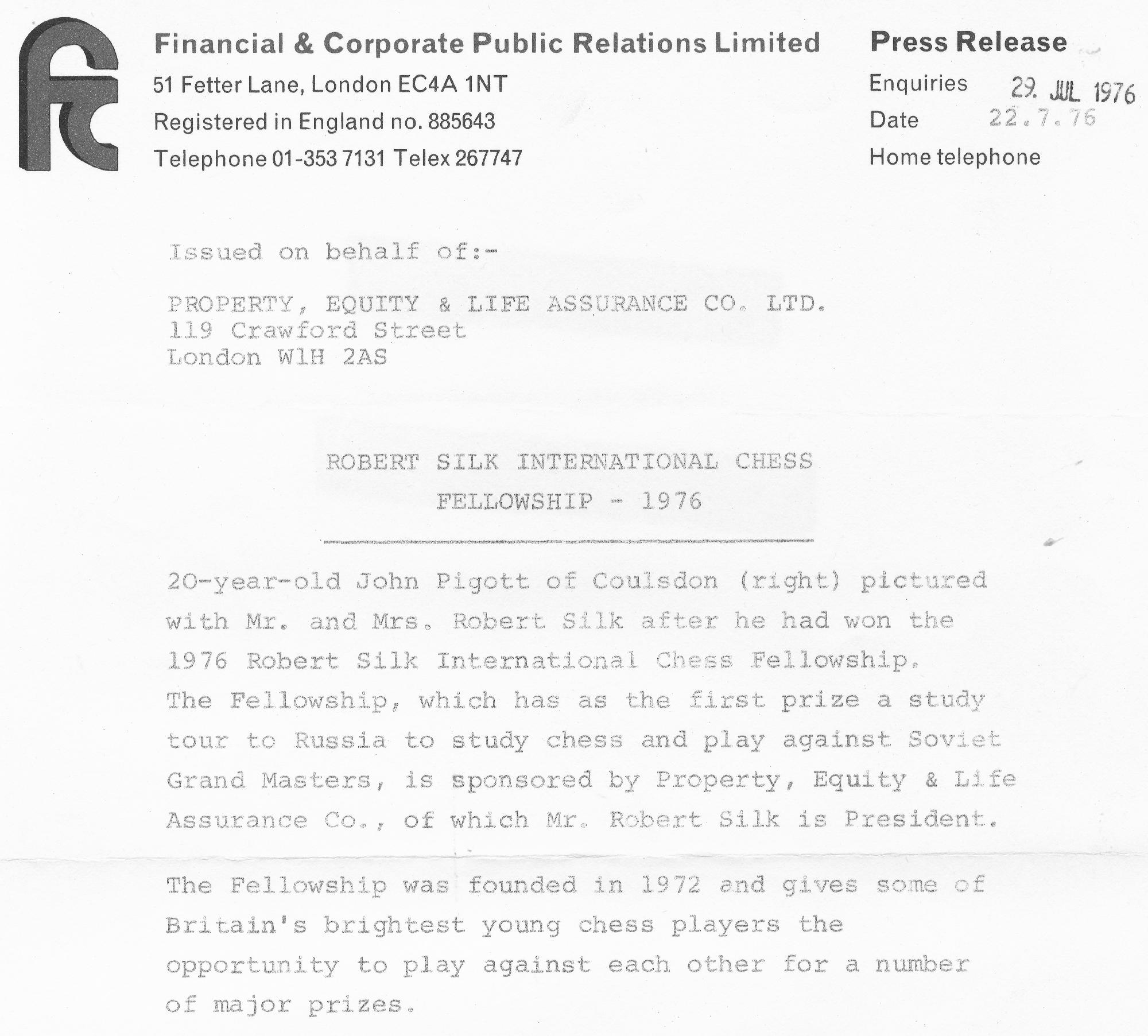
In 1976 John scored 4.5/5 in the Surrey Open and shared the 3rd, 4th and 5th prize.
The caption is in the photograph belowThe caption is in the photograph above
John became a FIDE Master in 1984 and an International Master in 2017, a gap of some 33 years!
John plays for Little Heath, 4NCL Barbican, Hon Members LCCL and King’s Head chess clubs.
After a sojourn from chess John returned to the ECF grading list in January 2015 with a grading of 269F attracting some attention.
His highest FIDE rating was 2419 in February 2018 at the age of 61.
With the white pieces John plays the Queen’s Gambit and the Giuoco Piano.
As the second player John enjoys the Sicilian Najdorf and the Nimzo Indian Defence.
We focus on the British Chess Scene Past & Present!
This website uses cookies to improve your experience. We'll assume you're ok with this, but you can opt-out if you wish. Cookie settingsACCEPT
Privacy & Cookies Policy
Privacy Overview
This website uses cookies to improve your experience while you navigate through the website. Out of these cookies, the cookies that are categorized as necessary are stored on your browser as they are as essential for the working of basic functionalities of the website. We also use third-party cookies that help us analyze and understand how you use this website. These cookies will be stored in your browser only with your consent. You also have the option to opt-out of these cookies. But opting out of some of these cookies may have an effect on your browsing experience.
Necessary cookies are absolutely essential for the website to function properly. This category only includes cookies that ensures basic functionalities and security features of the website. These cookies do not store any personal information.