Death Anniversary of Frank Parr (17-xii-1918 28-xii-2003)
Tag Archives: History
Death Anniversary of Frank Parr (17-xii-1918 28-xii-2003)
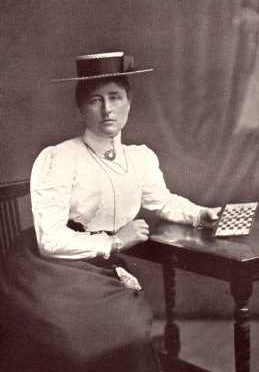
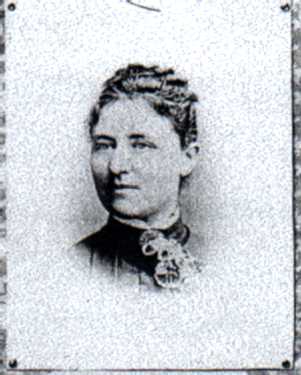
Remembering Edith Baird (née Winter-Wood) (??-??-1859 01-ii-1924)
We remember Edith Baird (née Winter-Wood)
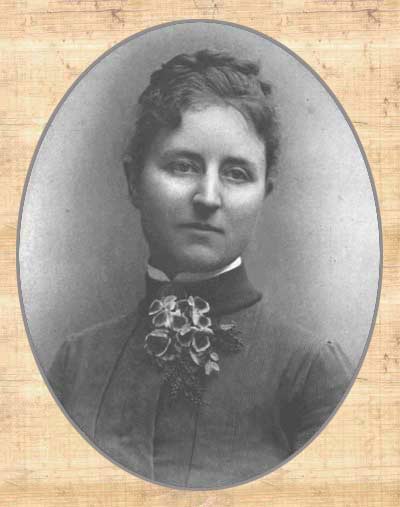
Edith Elina Helen Winter-Wood was born, probably in 1859*, to Thomas Winter-Wood, a writer and poet, and Eliza Ann (née Sole) Winter-Wood in Boulogne, France.
(*Despite 22nd February 1859 appearing in Wikipedia we are unable to locate a primary source for this date. Contemporary secondary sources always just gave 1859 as her year of birth. Census records imply that she was born between April 1859 and March 1860. Her marriage record from 1st December 1880 describes her as being ‘of full age’: at least 21 years old, so born before December 1859. However, her death record from 1st February 1924 gives her age as 63, implying that she was born between February 1860 and January 1861. Either her death record is incorrect or she added a couple of months to her age when she married. )
Many secondary and tertiary sources incorrectly give the Winter-Wood family home of Hareston Manor (now a venue for weddings) near Brixton, Plymouth, Devon as her birthplace.
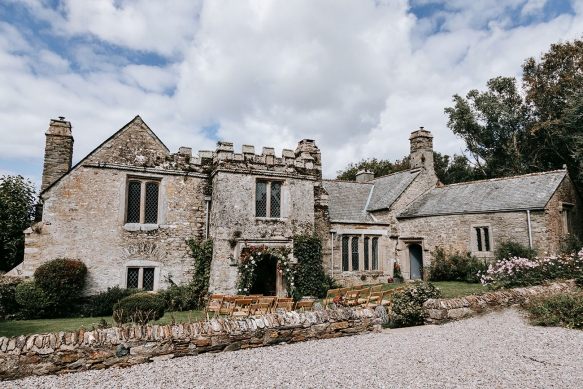
The family was resident in Boulogne in at least 1858 (as discussed below) and a UK birth certificate for Edith does not appear to exist. Having said that, a French birth certificate has yet to be located. Both Brian Denman and Chris Ravilious are satisfied that Edith was born in Boulogne and various census records attest to this. Ed: both Richard James and myself (JEU) have examined the evidence carefully and Boulogne would appear to be correct.
Thomas Winter-Wood was born in Har(e)ston, Devon in 1819 and was himself a strong player having been educated at Plympton Grammar School (now known as Hele’s School). Thomas was the son of John Wood-Winter who, in 1824, reversed the order of the family surname. Thomas sold the family estate leaving the Winter-Woods with substantial means, with each family member able to pursue their leisure interests whilst retaining a number of domestic staff.
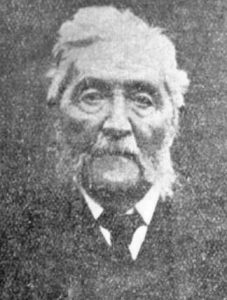
Thomas taught all of his family to play chess and Edith learnt at an early age. Both Edward J and Carslake W also learnt early on, Edward (aged 11 in 1858) played members of Boulogne Chess Club giving them rook odds and ten years later Edward joined London Chess Club.
According to Tartajubow :
“(Edward) played in several tournaments and in blindfold simuls he drew two games against Lowenthal and one against Blackburne. In 1878 he joined the Croydon Chess Club and once in one of their tournaments scored 23-7. He also enjoyed success in many other club tournaments, correspondence chess and problem solving tournaments. Many of his problems appeared in leading publications of the day.”
and, also according to Tartajubow :
“Her other brother, Carslake W. Wood (1849 – 1924), lived with his mother’s brother, Major Sole of the 5th Militia of West York, in Torquay. While travelling Europe with the Soles, he also developed a taste for painting and on many occasions donated his paintings as prizes in chess tournaments.”
According to F. R. Gittins (in The Chess Bouquet 1897):
“The moves came to her, as she says, by a kind of instinct before she was out of her first decade. She did not, however, commence composing problems until some years after her marriage, which took place in 1880, to Deputy Inspector-General W. J. Baird, M.D., R.N., whose distinguished services have been mentioned in despatches and rewarded with four medals and two clasps. Eight years later she composed her first problem, and commenced a wonderful series of successes, having gained eleven first, nine second, and six third prizes, and been honourably mentioned nine times.”
According to the old ChessDevon web site (sadly only available via the WayBack Machine)
“In 1893, for instance, she entered The Hackney Mercury 3-mover tournament, with a limit of 6 pieces. Most of the great composers of the time had entered, – B. G. Laws, P. H. Williams and James Raynor among them, but she won 1st prize. As one American critic observed, ‘The fact that the tourney assumed an almost international character rendered the triumph of the distinguished lady victor as noteworthy as it was creditable’.”
Here is this first prize (1):
Baird, Edith Elina Helen
Hackney Mercury, 1893
1st Prize
The problem solutions may be found at the foot of this article.
She very quickly progressed and was soon producing problems that were described as being “exceedingly pretty” and which ‘displayed unmistakable aptitude for the intricacies of chess.’ Her work 700 Chess Problems was published by Henry Sotheran Ltd in 1902 and took her 14 years to complete.”
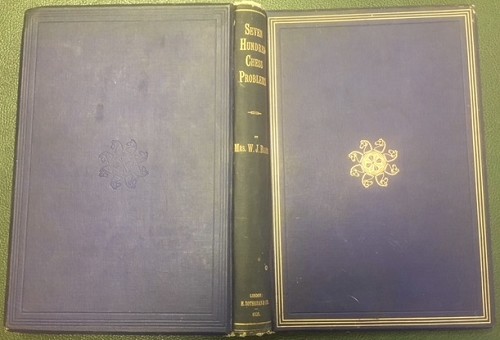
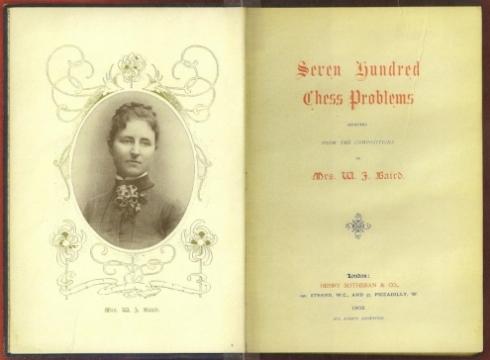
700 Chess Problems may be downloaded from here.
Edith also had a brief career in chess competitions in the 1890s, winning the 1897 Sussex Ladies Championship without losing a game.
Few samples of her play survive, but they show her to be a proficient player with, as you might expect from a problemist, a keen tactical eye. In this game she finishes neatly with a queen sacrifice.
In this game, from a blindfold simul against the London-based Dutch organist and chess master Rudolf Loman (1861-1932), she uses a tactic to reach an equal ending.
According to the 1871 census the Winter-Wood household lived at “Hareston”, Tavistock Road, Croydon, Surrey and consisted of Thomas (52 and Landowner), Eliza (44) plus Edith’s brothers Edward J (23 and Banker) and Carslake W (22 and retired banker), Marie A (17), Edith (11) plus three (!) domestic servants.
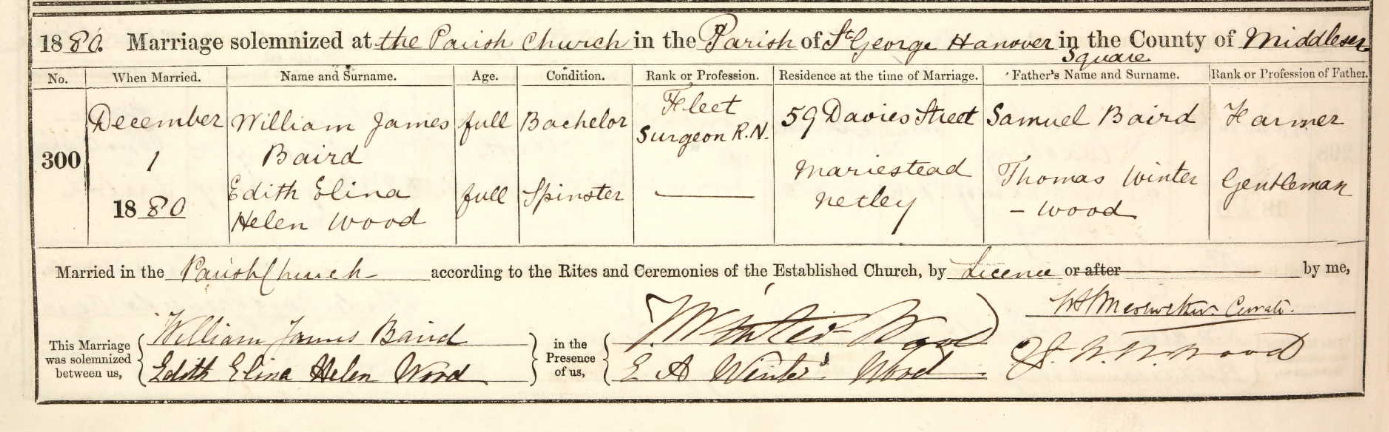
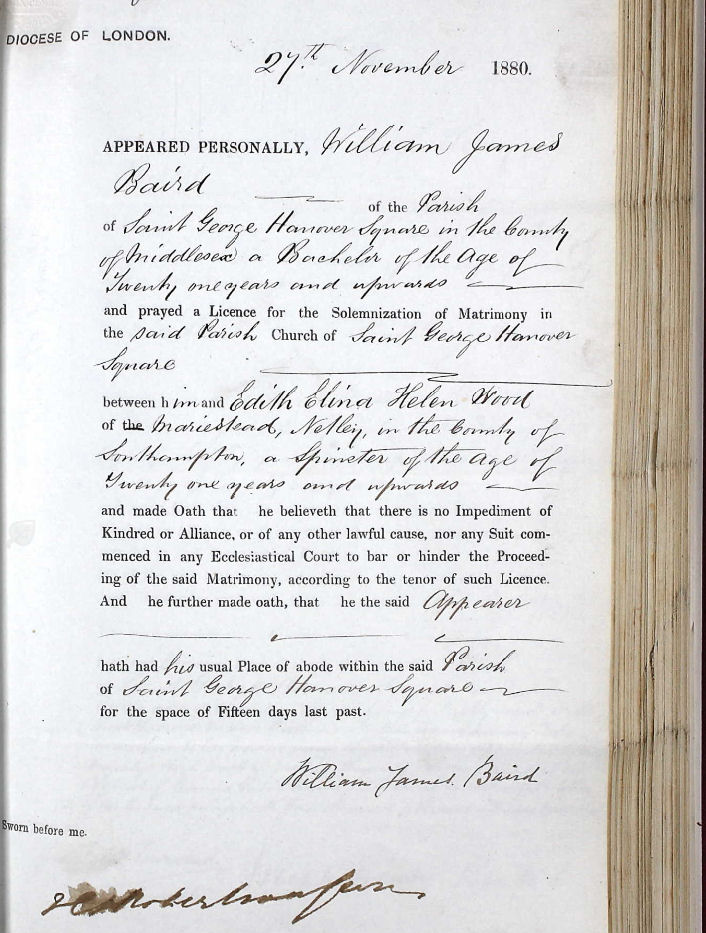
In 1880 (‘of full age’) Edith married the Deputy Inspector-General of Fleets and Hospitals, William James Baird, MD, of the Royal Navy, in the parish church of St George Hanover Square. (You’ll see that she married under the surname Wood rather than Winter-Wood.) William was almost thirty years her senior, having been born in Londonderry in 1831. The 1881 census found them in lodgings in Durham House, Hotspur Street, Tynemouth, North Tyneside: presumably William was there in connection with his work. Later the same year, their only child, Lilian Edith Baird, was born in the same place.
Lilian would become a child prodigy whose first problem was published before she was 10 years old. She was also an accomplished poet and painter like her mother. Although she had over 70 problems published by the age of thirteen, Lilian gave up chess composing while still in her teens.
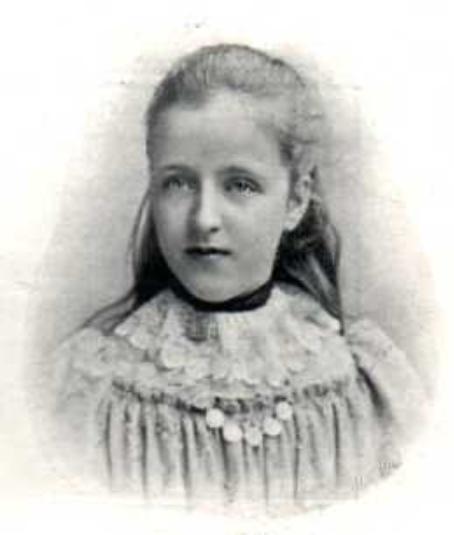
(Lilian merits a full article in this place in her own right : added to ToDo list!)
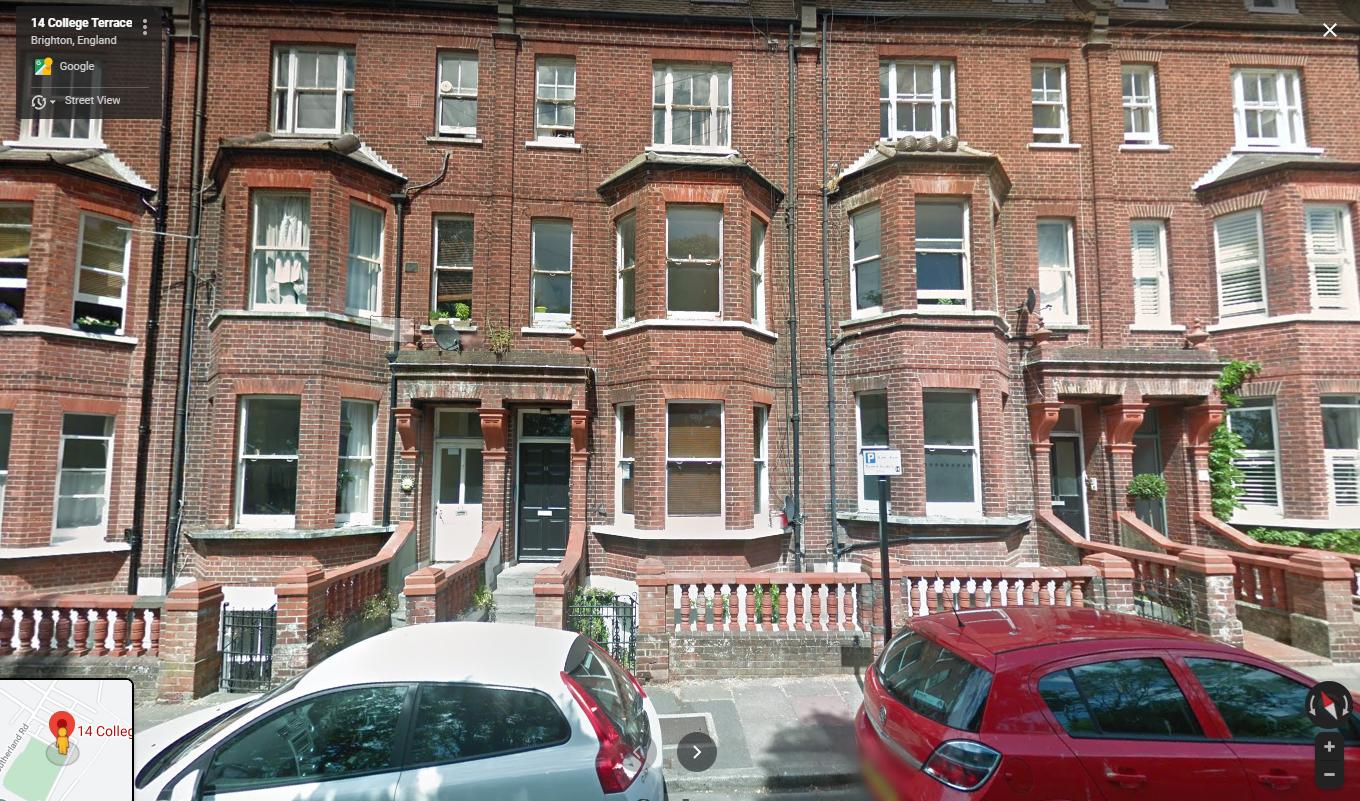
By 1891 William had retired and the family had settled in Brighton living at 14 College Terrace, where they employed a servant, Louisa Howard (23). In 1901 the census enumerator found them at the same address, their servant now being Lilian Millard (25).
William died in 1907, and Lilian had married in 1910: the 1911 census found Edith living in a boarding house named Mountcoombe in Surbiton. The house no longer exists, but its name, minus a letter, survives in Mountcombe Close, now a location for residential flats. Shortly afterwards, she joined her brothers in Paignton, Devon, close to her family’s ancestral roots.
Returning to Edith’s family, by the time of the 1881 census the Winter-Wood household (bar Edith) had relocated to “Mariestead”, Netley Abbey, Southampton and had shrunk to Thomas, Eliza and a mere two servants. Edith gave this address when she married William Baird.
In the 1891 census the Winter-Wood household consisted of Thomas (72), Eliza (64) plus Edith’s brothers Edward (43) and Carslake (42) all of whom were described as “living on means”. They had returned to three domestic servants : Mary Scoble (65), Carrie Stephens (22) and Kate Truman (just 12). They lived at 14, The Crescent, Plymouth, PL8 2AP. Nothing remains of this property, it would appear. By 1901, the family had moved again, to “Kenwick”, Paignton, Devon. They were back down to two servants: Florence Gagg (18) was the housemaid and Sarah Chambers (59) the cook. Thomas died in 1905, and the 1911 census gives their address as “Hareston”, Totnes Road, Paignton. Eliza, Edward and Carslake’s servants were now Laura Ellen Gagg (25 – presumably related to Florence) and Sarah Tulley.
In an interview with the Westminster Gazette (1st September 1894) Edith was asked why chess has always been a man’s game.
“Frivolous and fashionable women would begrudge the time and thought it requires; busy mothers of families could not, of course, spare time for it, and the great majority of unmarried girls have not, I’m afraid, the necessary patience. Then, too, it is, I must confess, an unsociable game. It is most suitable for quiet and reflective people, and for invalids. It seems always to have attracted clever strategists like military and naval commanders, and also great politicians. I wish girls would take to it more, because it is such excellent mental discipline, and brings out one’s patience. It would also be a useful corrective to the tendency to jump at conclusions which many women have. The great charm is that it is a home accomplishment. A woman is not expected to leave her fireside for the sake of chess. It is a stable kind of amusement for which she never need sully her womanliness or her good reputation. Many of the outdoor sports, innocent and healthy enough, lead to a great deal of flirtation and general frivolity.”
F.R. Gittins (op. cit.) described her as follows:
“Mrs. Baird, however, is something more even than the Queen of Chess-problem composers. She is, for example, an enthusiastic and skilful archer, and, living as she does in Brighton, has for some time been a prominent member of the Furze Hill Archery Club, of which she is a member of the committee, and in which, she has, for two years in succession, taken the medal for the highest aggregate score of the season. She also paints and illuminates charmingly, and has a pretty inherited talent for writing verse. Her book of illuminations, in fact, is described as “so chaste and delicate in design as to recall the ancient illuminated books which are treasured in museums and art galleries.” In politics she is a staunch Liberal, while the modern movement against all cruelty to animals – whether inflicted under the name of sport or in the interests of science – finds in her one of its most ardent champions. Besides the déclassement derived from chess, she is also a great believer in girls making themselves independent of marriage, from a monetary point of view, by having a definite occupation. When it is added that she never allows chess, painting, or any other favourite pursuit to occupy her time until all the domestic matters of home have been seen to, we have said sufficient to show how finely-rounded and complete a life this brilliantly clever woman leads. It is only left to add that her manner is kind and charming, and that she is thoughtfulness and considerateness itself to all her friends. She is, moreover, the most loving of mothers, and has been heard to declare that if anything were to happen to “Lily”, she would never compose another chess problem.”
Edith was also an avid bicyclist who was known to have ridden 25 miles (on one of those old style bicycles) to discuss an adjourned chess game.
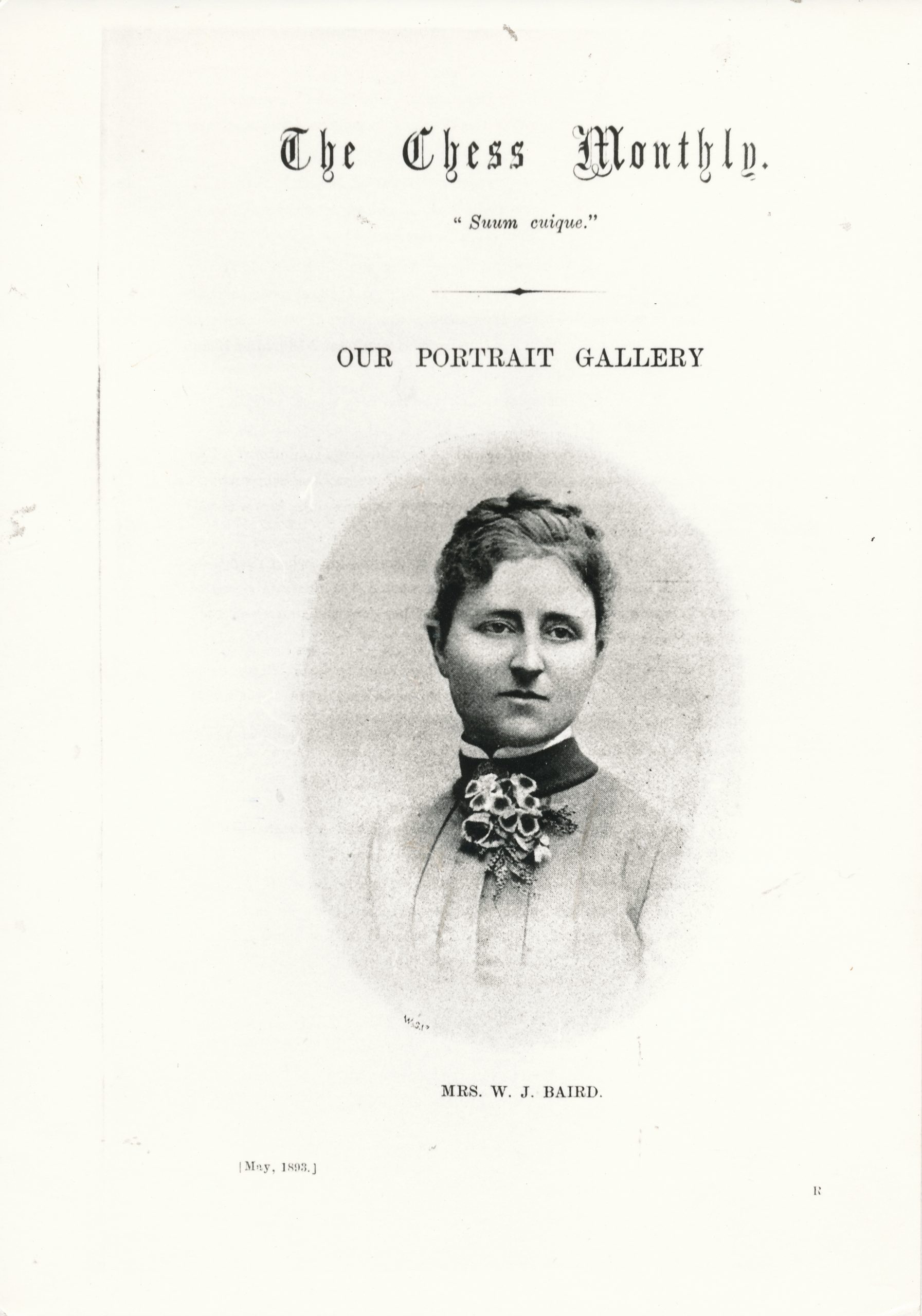
On Friday, February 1st, 1924 Edith passed away. The probate record is dated April 29th and was granted to Herbert Percy Strong, a Lieutenant-Colonel in the Indian Army, who was Lilian’s husband. The initial value of the effects was £18110 5s 7d which was subsequently resworn to £16627 13s 11d.

Both Sunnucks and Golombek are silent on Edith. This is somewhat surprising since Anne liked to mention female players and problemists.
From The Oxford Companion to Chess by Hooper & Whyld :
EDITH ELINA HELEN (née Winter Wood) (1859-1924), British problem composer. Her parents, two brothers, and daughter were all good players or clever problemists.
She composed over 2,000 problems which were not profound but were noted for their soundness; only a dozen or so were faulted. Her Seven Hundred Chess Problems was published in 1902. She became deeply absorbed in retractors, and her other book The Twentieth Century Retractor appeared in 1907. They are two of the most beautiful chess books ever to appear, printed and bound by the King’s printer Henry Sotheran, and sold at less than cost.
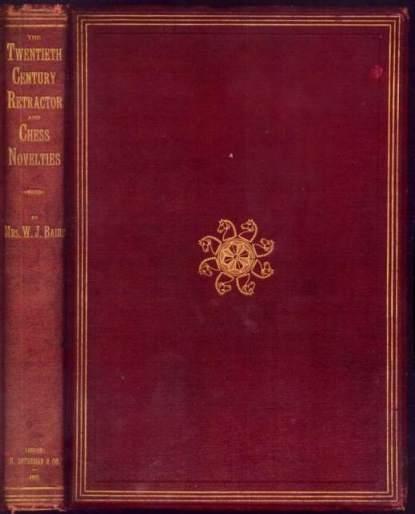
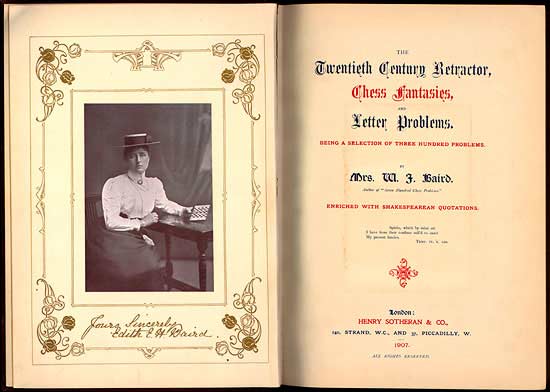
The Twentieth Century Retractor may be read online here.
The dedication for The Twentieth Century Retractor was somewhat unusual :
“Dedicated to
The Sun
The Glorious Orb which
Animates and Beautifies
The Earth
By Giving It
Warmth, Light and Life”
and Edward Winter discusses the beauty of the book in Chess Note 3164.
From British Chess Magazine, Volume XLIV, (44, 1924), page 103 we have this brief obituary notice written by RC Griffth :
“We much regret to hear of the death, at Paignton, on February 1st, of Mrs. W.J. Baird, much of the distinguished of women problem composers throughout the world. As our problem editors will no doubt deal fully with her work and her triumphs, we shall say no more here that she took a keen interest in chess over-the-board also, and in 1897 secured the county championship of Sussex among players of her own sex. By birth she was a Winter-Wood and thus a member of a distinguished West of England chess family”
From British Chess Magazine, Volume XLIV, (44, 1924), page 125 we have this obituary written by RC Griffth :
“A deep shadow has been cast over the chess world by the death of Mrs. W.J. Baird, which occurred on 1st February last at Paignton. The end was most unexpected, but it is a comfort to her relatives that the passing away was peaceful. She was the daughter of Mr. T. Winter-Wood, who and whose family have been identified with chess for generations. She was born in 1859 and composed her first problem in 1888, and it was not long after this date that she was given the title of the “Queen of Chess,” since not only did she distinguish herself in a happy way as a prolific composer, but proved a valiant opponent over the board, testified by her securing the ladies’ championship of Sussex in 1897.
Mate in Two (2)
Among her other accomplishments were painting, particularly illuminating, poetry (which may have been inherited from her gifted father) and archery, in which sport she was skilful. Her chess problems were generally of the light texture order never profound, but always pleasing to the ordinary solver. She must have composed over 2,000 problems of one sort or another, and this large output in about thirty-five years could not be conducive to highest results. Her problem tourney honours were numerous, though she did not as a rule see these, generally entering her problems to oblige admiring conductors of competitions.
Mate in Two (3)
In 1902 she published Seven Hundred Chess Problems and in 1907 The Twentieth Century Retractor, Chess Fantasies and Letter Problems, 320 illustrations (Sotheran & Co.). Both were editions de luxe. Mrs. Baird was credited with the being the originator of the complicated retractor of which she was a proficient exponent, but since she ceased composing these fancies, interest in them has waned.
Mate in Three (4)
During the last few years her activity, after a period of quiescence has been marked, her attention being directed principally to ‘Mutates’ and Picture or Letter Problems. In addition to the enthusiasm which, shown by her actual work, she has generously promoted several competitions, one still current in the Morning Post, particulars of which we announced last month. A remarkable feature of the deceased’s problems was their soundness less than one per cent. being cooked after leaving her hands, evidence of painstaking application!
Mate in Three (5)
There is now, since the decease of Mrs. Baird’s father, Mr. T. Winter-Wood and her brother, Mr. E.J. Winter-Wood, only Mr. Carslake Winter-Wood left to represent the family in the chess circle, Mrs. Strong, her daughter, who at one time promised to emulate her mother, having apparently abandoned the game and its problems. There can be no question that Mrs. Baird stood in front of all lady composers, her nearest rival probably being the late Mrs. T. B. Rowland, and indeed a number of her compositions rank high in the world’s collection. We have not space this month to quote specimens, but hope to do so next issue.
Mate in Three (6)
Since the above was in type we have been informed of the sudden death of Mr. Carslake Winter-Wood on the 24th February.”
The Late Mrs. W. J. Baird,
The Masters said:-
“Lay by the board, the problem is not sound;
There’s none can solve unless a Morphy’s found.”
* * *
A knight I saw, his royal head bowed;
Methought a bishop moved and prayed aloud.
The Queen, alas, and their attendants gone,
Only did the Kings linger sadly on.
And roaming far afield a Rook forlorn,
And here and there a long-forgotten pawn.
“Oh! is there none who can this problem solve?”
“Seek her round who our highest hopes revolve”
And so we brought it to our ‘Problem Queen’
Who faced the field with heart and eye serene.
* * *
“Go leave me now and I will rest awhile,”
Then hand outstretched and swift triumphant smile :
“The Bishops move! with him the key,” she cried –
“Life’s problem solved at last! I’m satisfied.”
M.S.M.
White retracts his last move; then plays. Black moves so that White can mate at once. (7)
(Please note that there are factual errors in most of the sources quoted below.)
Here is her Wikipedia entry
Here is more from chessproblem.net
Article from Tartajubow (but the author mistakenly conflates Edith and Lilian) on Edith Baird and other Bairds
Queens of Problem Chess by Satanick Mukhuty from chessbase.com
More from Sarah Beth Durst (aka BatGirl), quoting from Gittins.
Via the Wayback Machine Chess Devon have this excellent article
British Chess News would like to thank Brian Denman for providing a file of Edith Baird’s games, and Tim Harding, for sending us the pdf of The Chess Bouquet.
Solution to problems:
(1)
1.Qg7! (2.Qc7#)
1…Kc6 2.c5 Kxc5 3.Qc7#
1…Kxc4 2.Qd4+ Kb3 3.Qb4#
1…Kb6 2.Sb5 Ka6/Ka5, Kc6/Kc5 3.Qa7, Qc7#
1…Kd6 2.Sb5+ Ke6, Kc7/Kc5 3.Sd4, Qc7#
(2) 1.Bg2
(3) 1.Qb2
(4) 1.Qh8
(5) 1.Nc1
(6) 1.Rd8
(7) White retracts Nd5xRb6, then 1. Nd6 Rc6 2. Nb7#
Remembering Henry Atkins (20-viii-1872 31-i-1955)
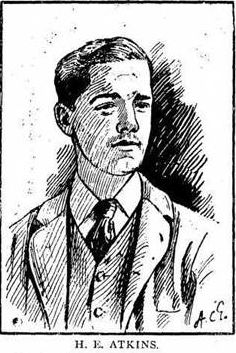
We remember Henry Atkins who passed away, Monday, January 31st, 1955.
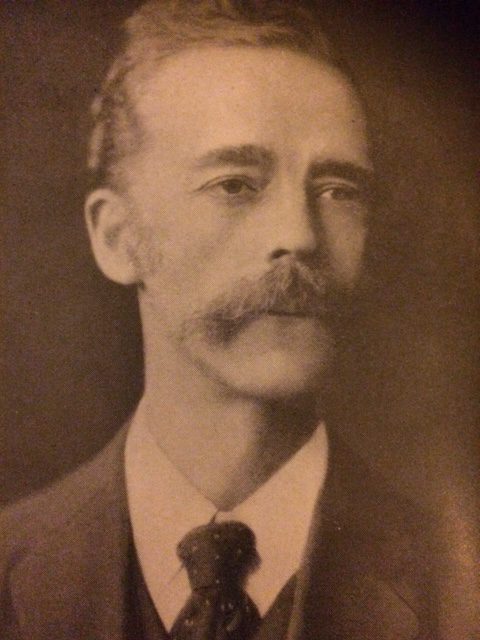
Henry Ernest Atkins was born in Leicester on Tuesday, August 20th, 1872 to Edward (a schoolteacher) and Jane Atkins (née Threapland).
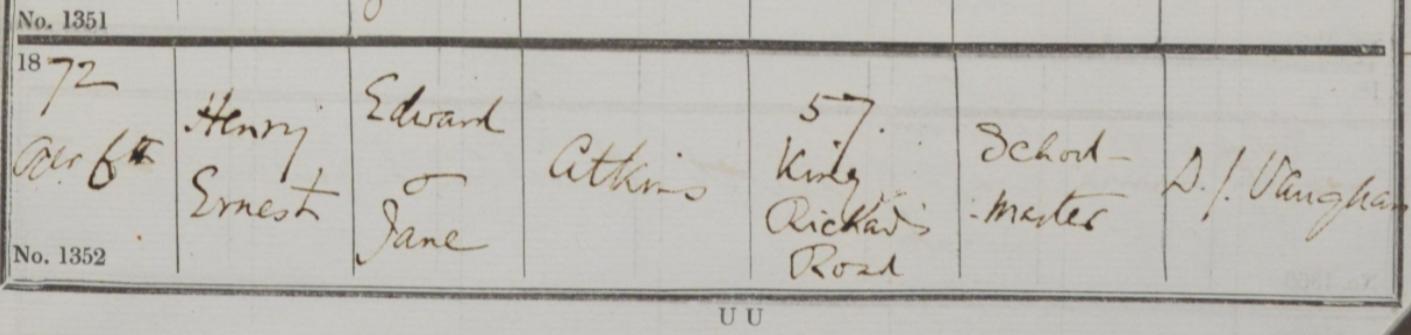
He was baptised on August 6th, 1872 in the Anglican Cathedral Church of St. Martin, Leicester. At the time of the baptism the Atkins family was living at 57, King Richard’s Road, Leicester. The address in 2021 appears to be occupied by an industrial premise for Sunco Knitwear Specialists. The signatory on the baptism record is that of DJ Vaughan.
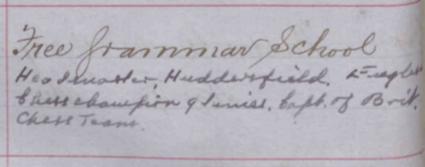
Henry was admitted to Wyggeston Boys Grammar School, Leicester on March 30th 1880 when eight years old. He was expected to leave at the end of the Winter Term in 1890.

Curiously his school admission record includes the following addition (although we don’t know exactly when) :
Henry, aged 18, went up to Peterhouse College, Cambridge in 1890 to study mathematics. From his year of entry he was ranked as 9th “Wrangler” studying for the Mathematical Tripos. As part of his Part II examinations he did well enough to be “mentioned” for the Smith’s Prize for examination performance.
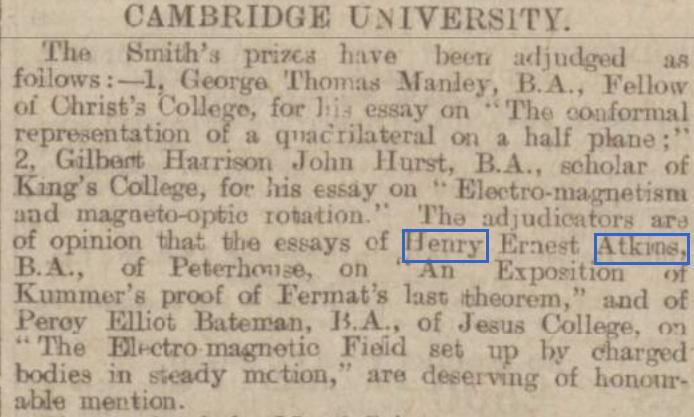
(Here is more on Kummer’s Proof of Fermat’s Last Theorem.)
Following University Henry became a teacher of mathematics at Northampton County Modern School and then returned to Wyggeston Boys Grammar School from 1902 – 1908. He then became the principal of Huddersfield College in 1909 and continued until 1915. Huddersfield College (founded in 1839) was merged with Hillhouse Technical School to form a new boys’ grammar school at a new campus at Salendine Nook with 950 boys.
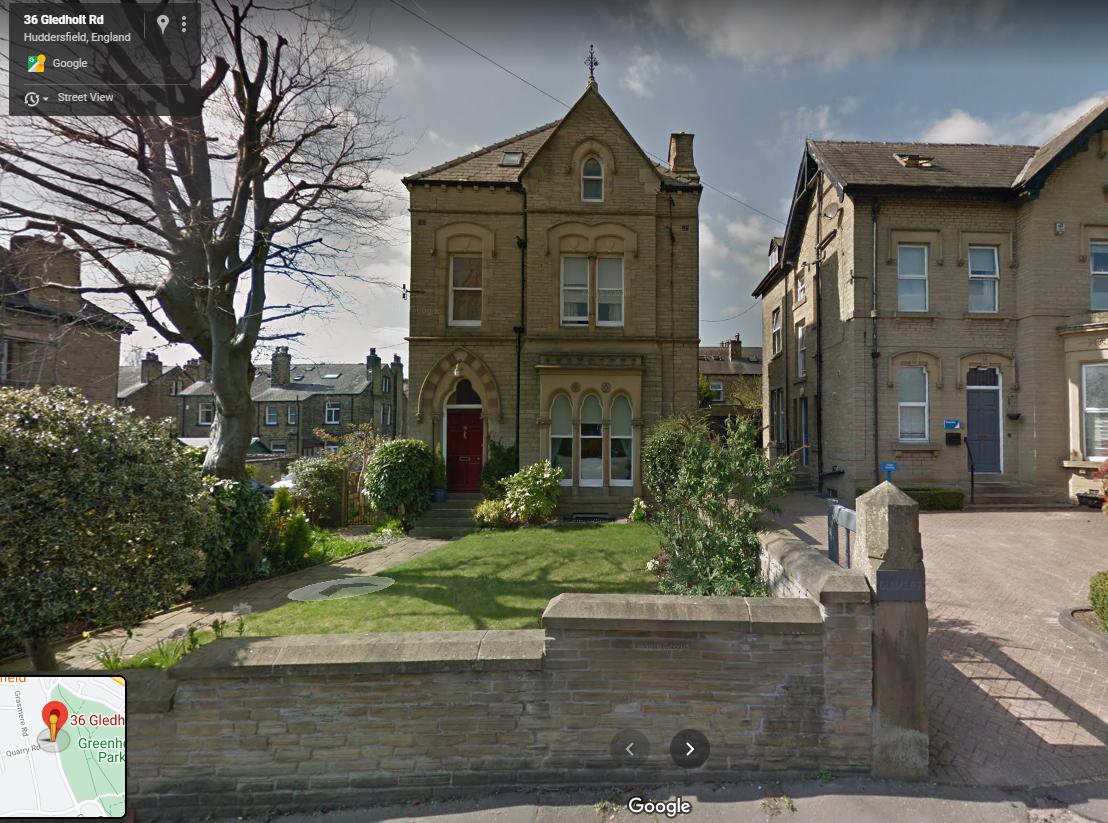
According to Ranneforths Schach-Kalender (cited by C.N.), 1915, page 55, during the period at Huddersfield College Henry lived firstly at 49 New North Road, Huddersfield, Yorkshire :
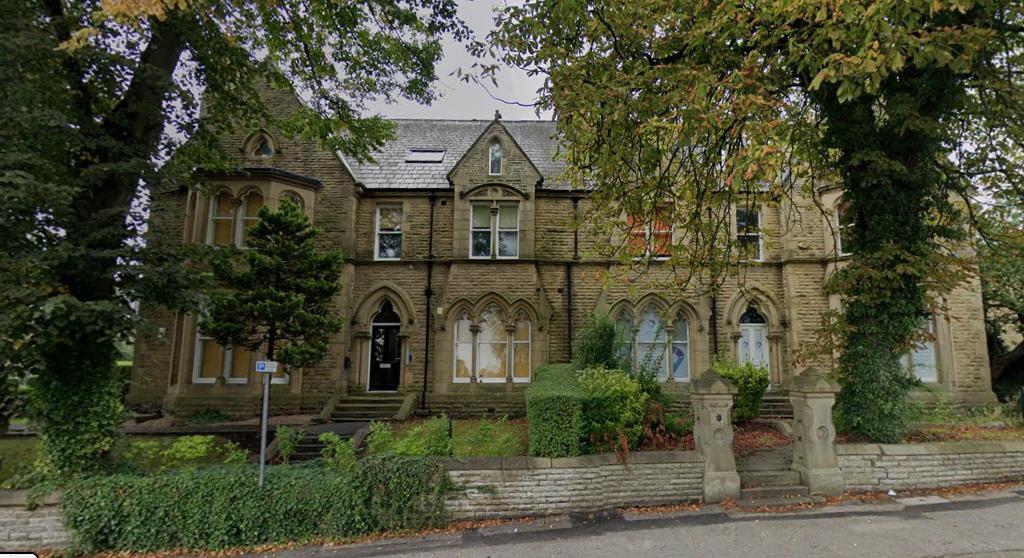
and then
36 Gledholt Road, Huddersfield, Yorkshire, HD1 4HP :
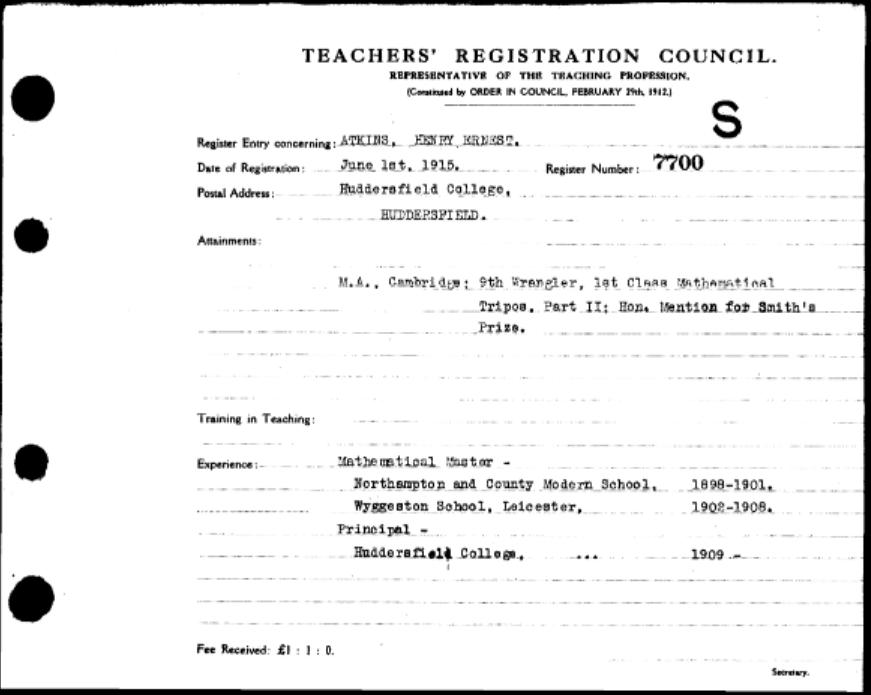
On June 1st, 1915 (aged 43) Henry was registered as a teacher whilst at Huddersfield College for the fee of one guinea :
Henry retired from teaching in 1936.
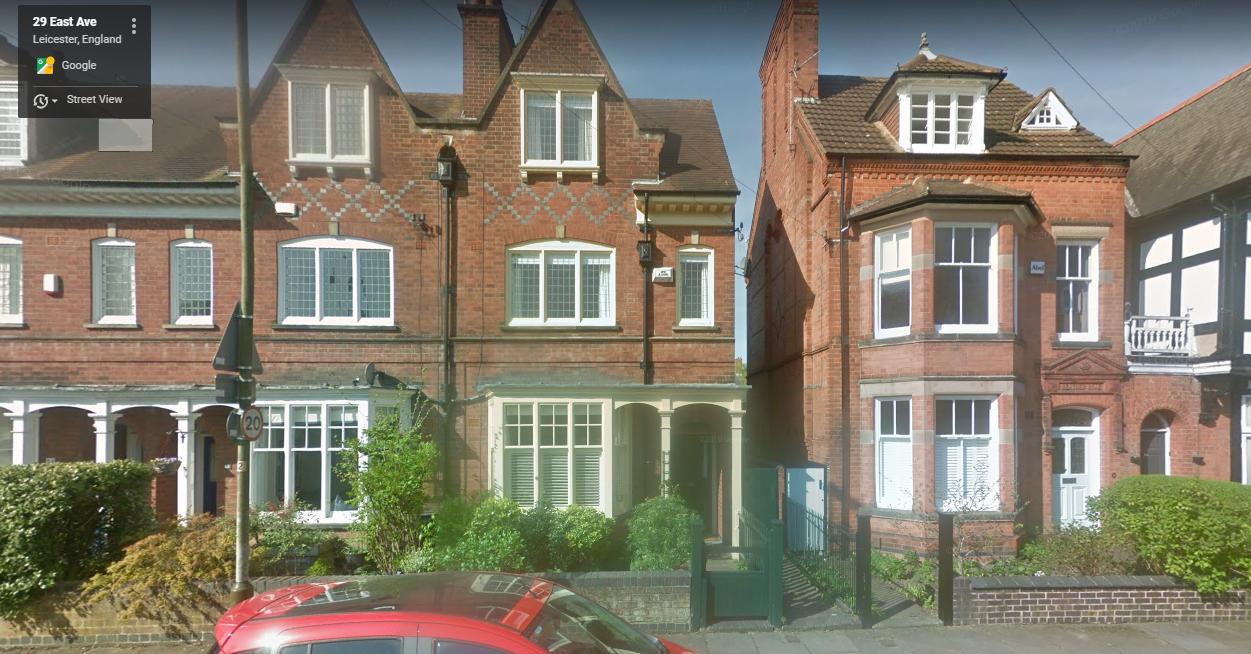
In the 1939 register Henry (now a retired schoolmaster) was recorded as living with his wife, Elspeth Skene Atkins (née Wilson) at 29 East Avenue, Leicester, Leicestershire :
Elspeth was born on August 5th 1880 and was therefore roughly eight years his junior. She carried out “unpaid domestic duties” but as a member of the Women’s Voluntary Service (WVS) she was a surgical dresser. The WVS transformed into the RVS. It would seem that Henry and Elspeth did not have children. She outlived Henry passing away in 1973 in Southampton.
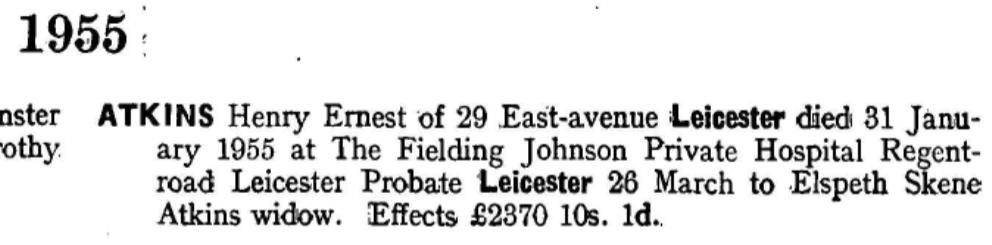
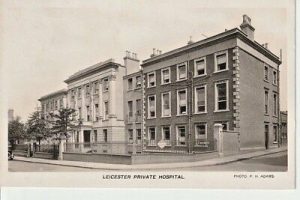
On Monday, January 31st 1955 passed away in The Fielding Johnson Private Hospital :
Henry was buried at Gilroes Cemetery and Crematorium, Groby Road, Leicester, Leicestershire, LE3 9QG.
In the October 1976 issue of Newsflash Badmaster (aka GH Diggle) wrote :
“… we well remember his giving a “simultaneous” at the Lincoln Chess Club in 1924, winning 17 and drawing two. One of his more elderly opponents (a notorious non-resigner) who for 30 moves had been wobbling along with a piece down until “time” had to be called, then proceeded to “demonstrate a draw” by concocting a continuation so optimistic that even clubmates with lifelong experience of his powers stood aghast. Atkins, with his greatcoat on ready to go home, made no attempt to refute this analytical masterpiece but merely remarked with great deference: “I don’t think we can play it quite like that!” and then beat a craven retreat “escorted by Club Officials”
From British Chess Magazine, Volume LXXV (75, 1955), Number 3 (March), pp.102-3 we have this obituary written by RN Coles :
“With the passing, on January 31st, at the age of eighty-two of Henry Ernest Atkins the chess world has lost a recognized international master, and British chess one of its strongest players of all time. Yet Atkins was the despair of chess enthusiasts because he played so little international chess and confined himself largely – and at that intermittently – to local affairs, where the strength of most of his opponents could hardly extend him. One leading player recently regretted that Atkins spent so much time “in the wilds,” but Atkins would have taken an opposite view and have considered that he was “in the wilds” if he had spent more of his time playing chess; teaching was his whole life, and the game of chess he insisted on treating as a game.
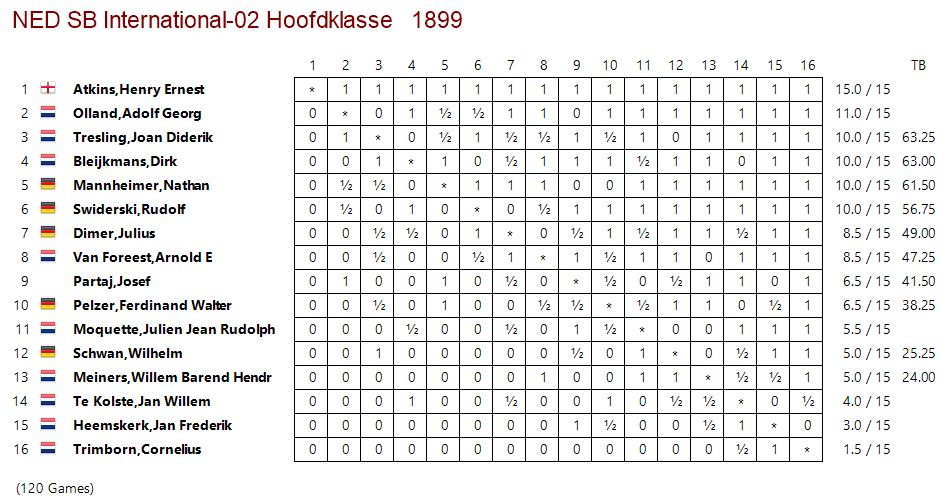
Consequently as a chess-player Atkins was almost always out of practice and playing below his true strength, yet in his five international events-Amsterdam, 1899; Hanover, 1902; London, 1922; London Team Tourney, 1927; and Warsaw Team Tourney, 1935-he scored 63.2 per cent, or if Amsterdam which was virtually a Hauptturnier is excluded, 53.5 per cent.
Sir George Thomas considered that only lack of opportunity prevented him from establishing himself in the world championship class. As it is, he will be remembered chiefly by chess-players as the man who played eleven times in the British Championship and won it nine times, failing only at the first attempt in 1904 after a tie for first place, and at the last in 1937, at the age of sixty-five, when he shared third place, a record which has never been remotely approached by any other player and is not likely to be. Atkins played in a clear-cut strategical style which makes his games ideal studies for the beginner, and he finished them with the elegance to enchant the artist; like the Etudes of Chopin, they provide technical exercises and works of art in one.
But I believe that if Atkins had his wish – and this wish I am sure he will have – he would wish to be remembered by his many pupils, whether they be pupils of the chess master or of the schoolmaster, not for any practical achievements but for being a true guide, philosopher, and friend to all who came under his tutelage.-R. N. C.”
From The Oxford Companion to Chess by Hooper & Whyld
English player, born in Leicester, International Master (1950), schoolmaster. Between 1895 and 1901 he played in seven minor tournaments, winning four, taking second place in three, and losing only three out of 70 games. In one of these events, Amsterdam 1899, he made a clean score against 15 opponents. In his first international tournament, Hanover 1902, he came third (+8=7-2) after Janowski and Pillsbury ahead of Mieses, Chigorin, and Marshall. Emanuel Lasker believed that Atkins would have joined the leading grandmasters had he continued his international career, but Atkins played in only one more big tournament (London 1922). He had a genuine concern for his profession, and preferred not to give more of his life to chess. He played in 12 of the Anglo-American cable matches, won the British Championship nine times (1905-11, 1924, 1925), and represented the British Chess Federation in the Olympiads of 1927 and 1935.
From The Encyclopedia of Chess by Anne Sunnucks :
International Master (1950) and nine times British Champion. Born in Leicester on 20th August 1872, Atkins learned the game at school in Leicester at the age of 12. When he was 15, he joined Leicester Chess Club and within two years was playing on top board. In 1890 he went up to Peterhouse, Cambridge, and played top board for the University. On leaving Cambridge he became a schoolmaster.
His first appearance in the British Championship was in 1904, when he came 2nd. The following year he won the championship and repeated his success every year up to and including 1911. He did not compete between 1912 and 1923, and on reappearing in the event in 1924, he regained his title and held it the following year. His final appearance in the British Championship was in 1937, when at the age of 65 he came =3rd.
In the five international events in which he played – Amsterdam 1899, Hanover 1902, London 1922 and the Chess Olympiads of 1927 and 1935 – he scored over 60 per cent.
His devotion to teaching and his insistence on treating chess as merely a game was all that prevented him from becoming one of the leading players in the world.
He died on 31st January, 1955.
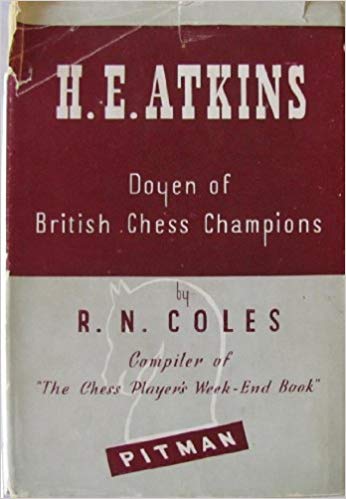
In the above book RN Coles points out that Atkins regularly played f4 or …f5 early in the game and claims this was HEAs pet or signature move.
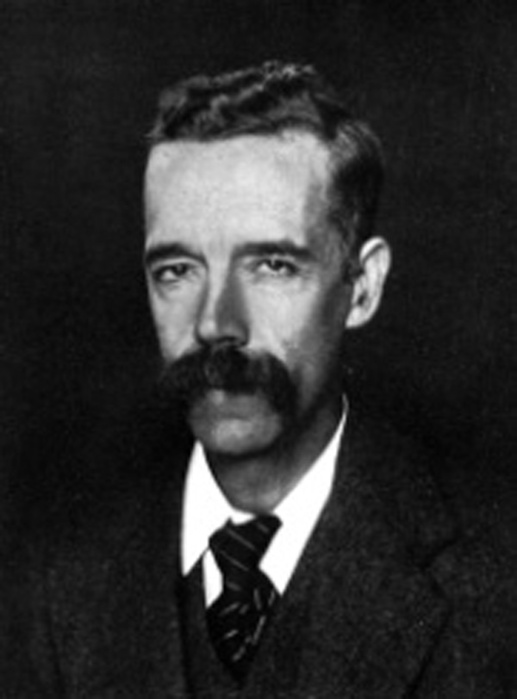
From The Encyclopaedia of Chess by Harry Golombek :
British international master and regarded by many as Britain’s more talented player in the history of the game. Born in Leicester and never very fond of leaving England. Atkins was a schoolmaster and devoted relatively little time to chess, and yet he became one of the strongest amateurs every known to chess. He was known on the Continent as “the little Steinitz“.
His record in British Championship is unique; out of eleven appearances he won the event nine times : 1905, 1906, 1907, 1908, 1909, 1910, 1911, 1924 and 1925. I t should be added that in 1904 (his first attempt) he finished 1st= and only lost to Napier after a play-off and in 1937 (his last championship) he finished =3rd at the age of 65!
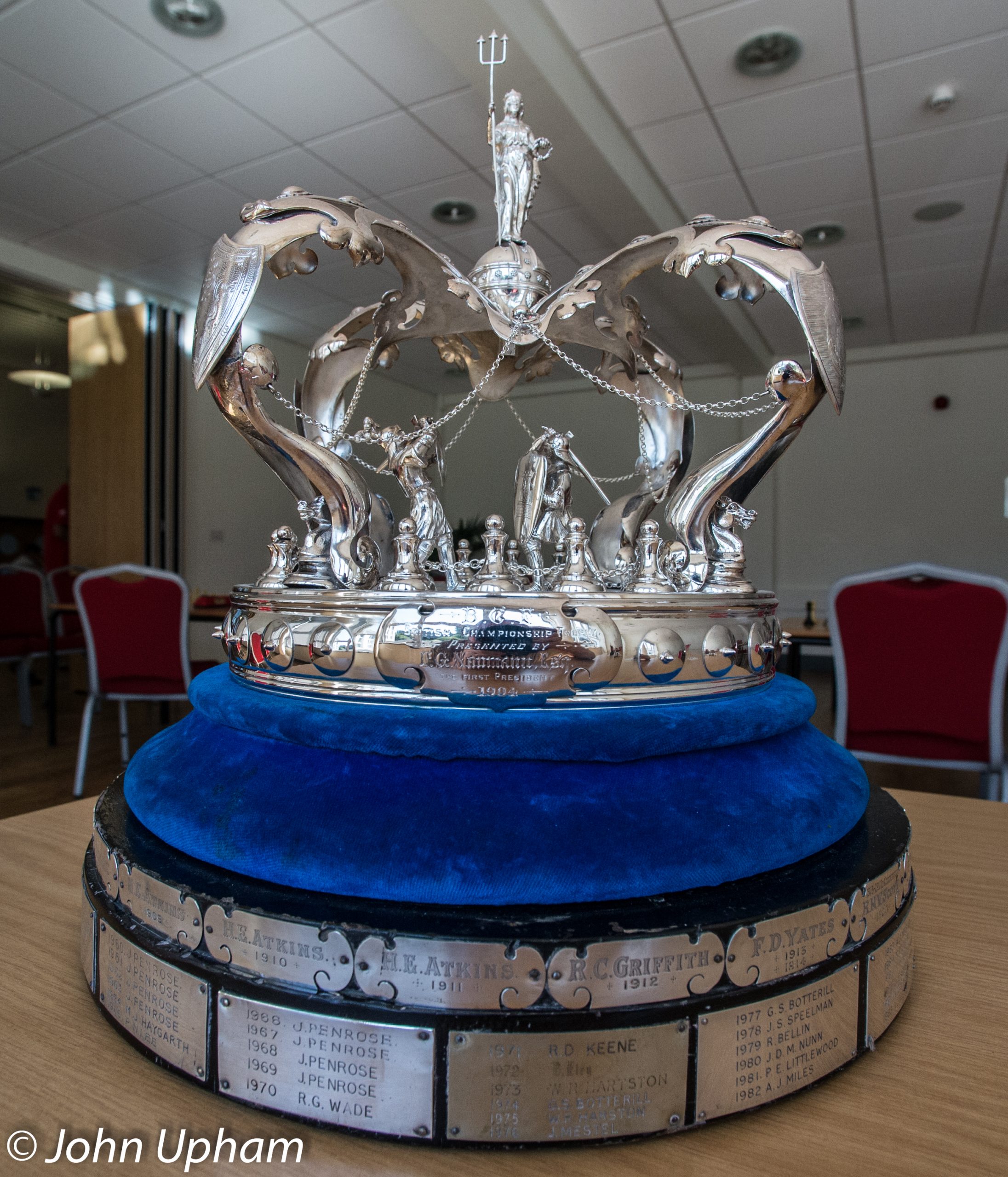
His international career comprises only six events. In 1895 Atkins was placed =2nd behind Maróczy in the Hastings Minor Tournament and in 1899 he won the Amsterdam tournament, leading the field by 4 points. At Hanover 1902 he scored his most notable result : 3rd prize behind Janowski and Pillsbury but ahead of Chigorin and Marshall among others. At London 1922 he finished only 10th of 16 but still claimed Rubinstein and Tartakower among his victims. He represented the B.C.F. in the Olympiads of 1927 and 1935.
Atkins was retrospectively awarded the title of international master in 1950 on his pre-war record. (Ray Keene).
According to chessgames.com : “He graduated from Cambridge and taught mathematics at Northampton and Wyggeston. In 1909, he was appointed Principal of Huddersfield College.”
Here is an article from the Yorkshire Chess History site
and here is an obituary from the MCCU site
Here is an excellent article from Neil Blackburn
Here is his Wikipedia article
and here is an excellent article on chess.com
Recently renowned journalist and write John Saunders has turned his attention to HEA.
Remembering Ian Wells (22-vi-1964 25-i-1982)
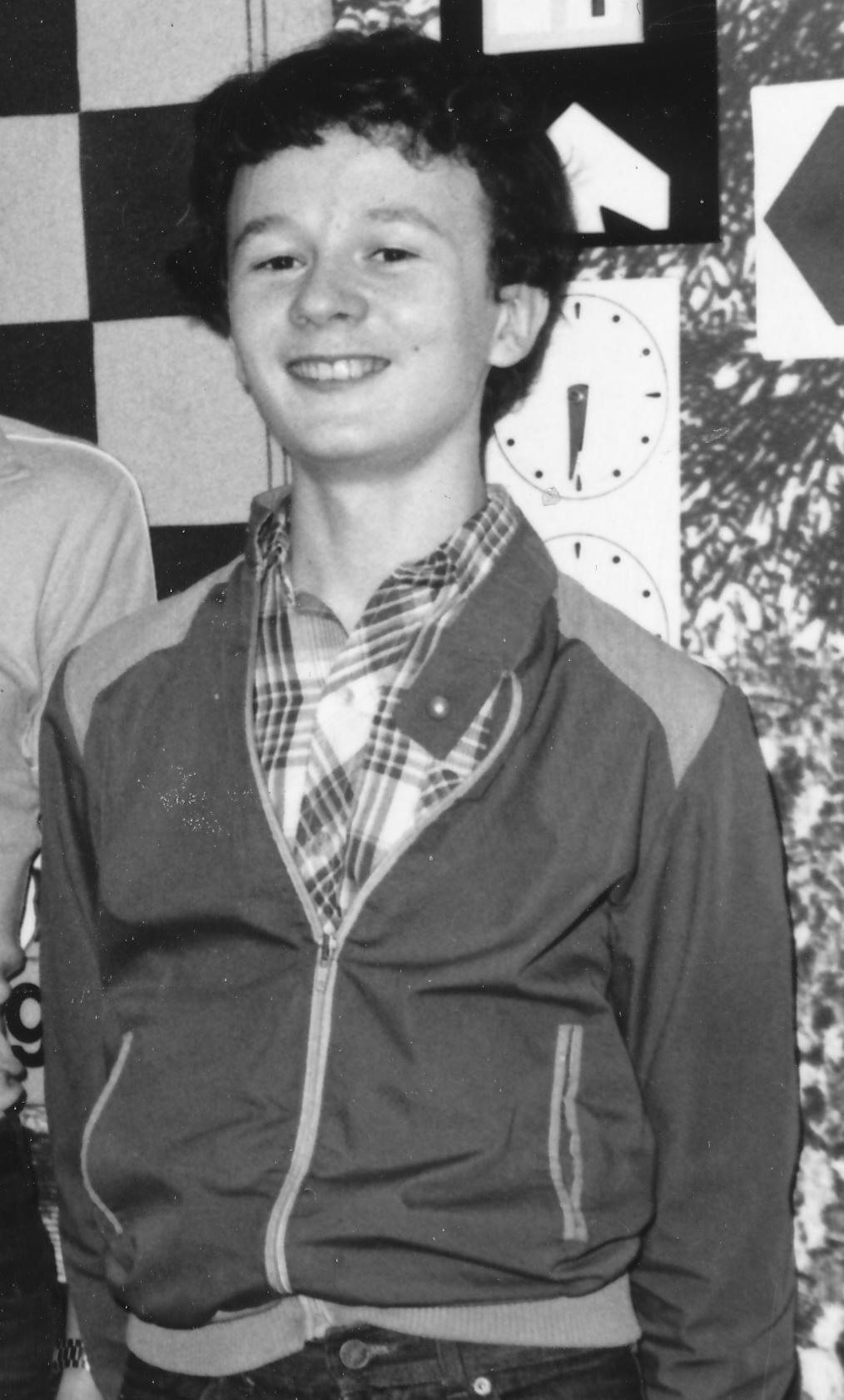
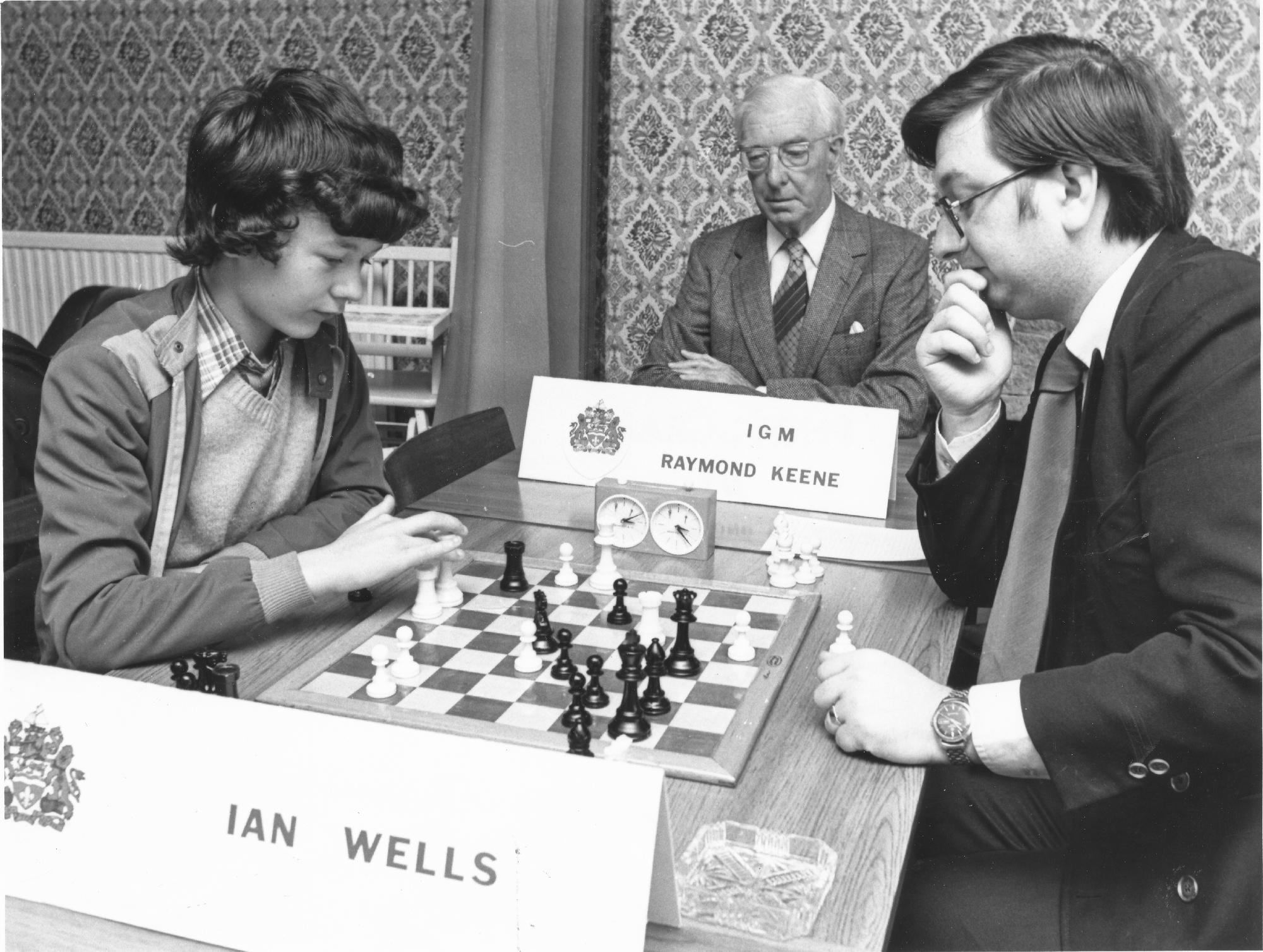
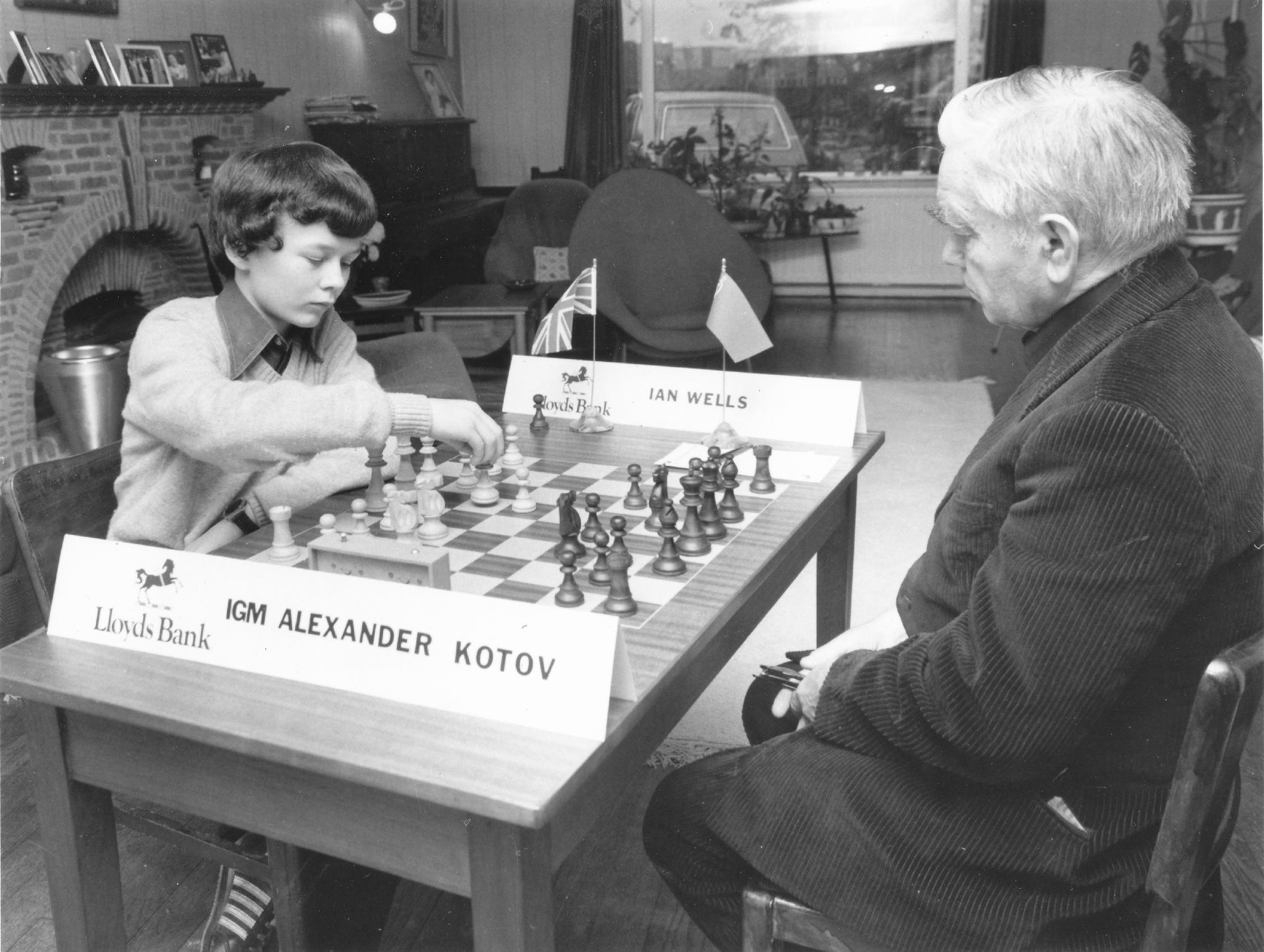
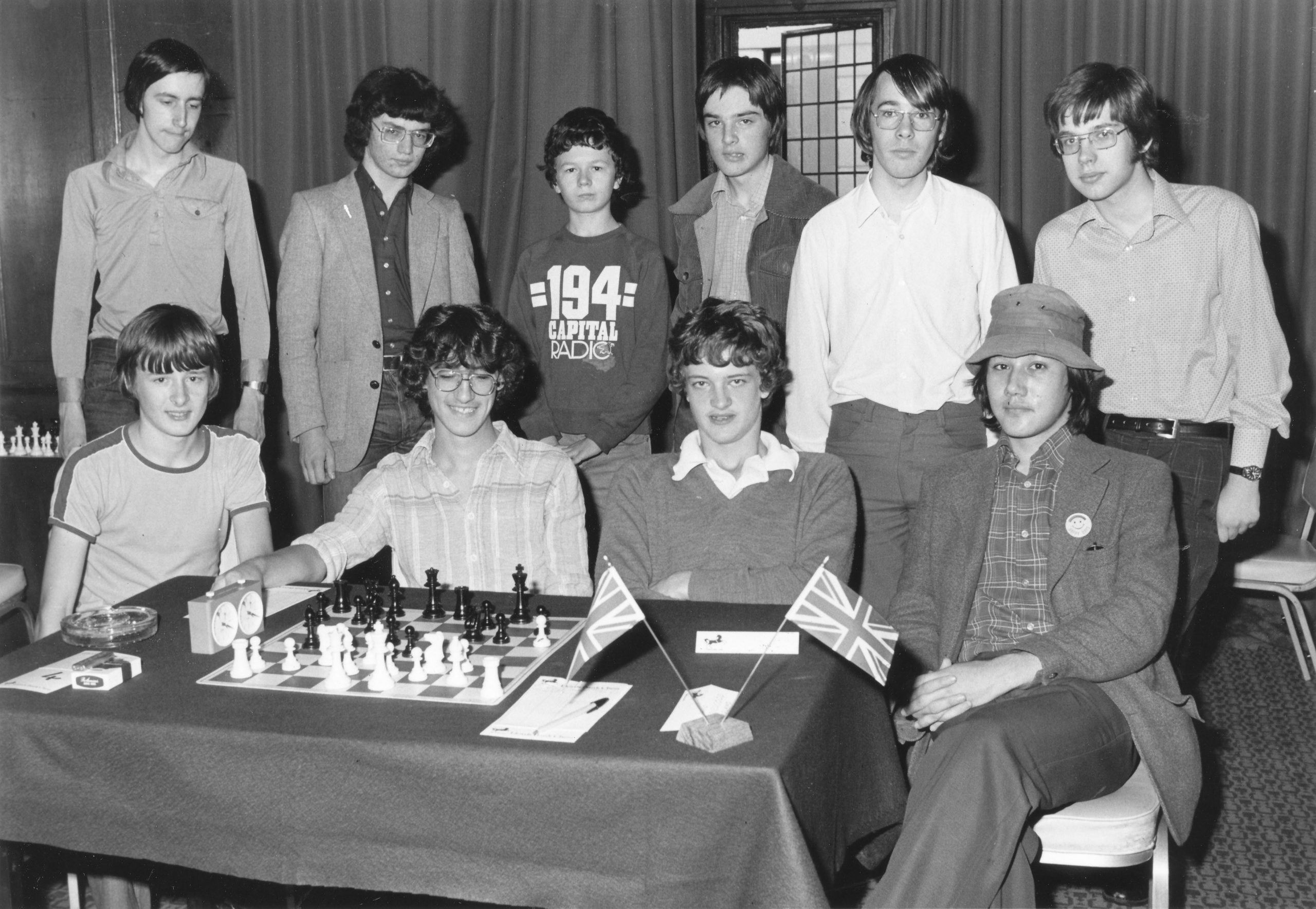
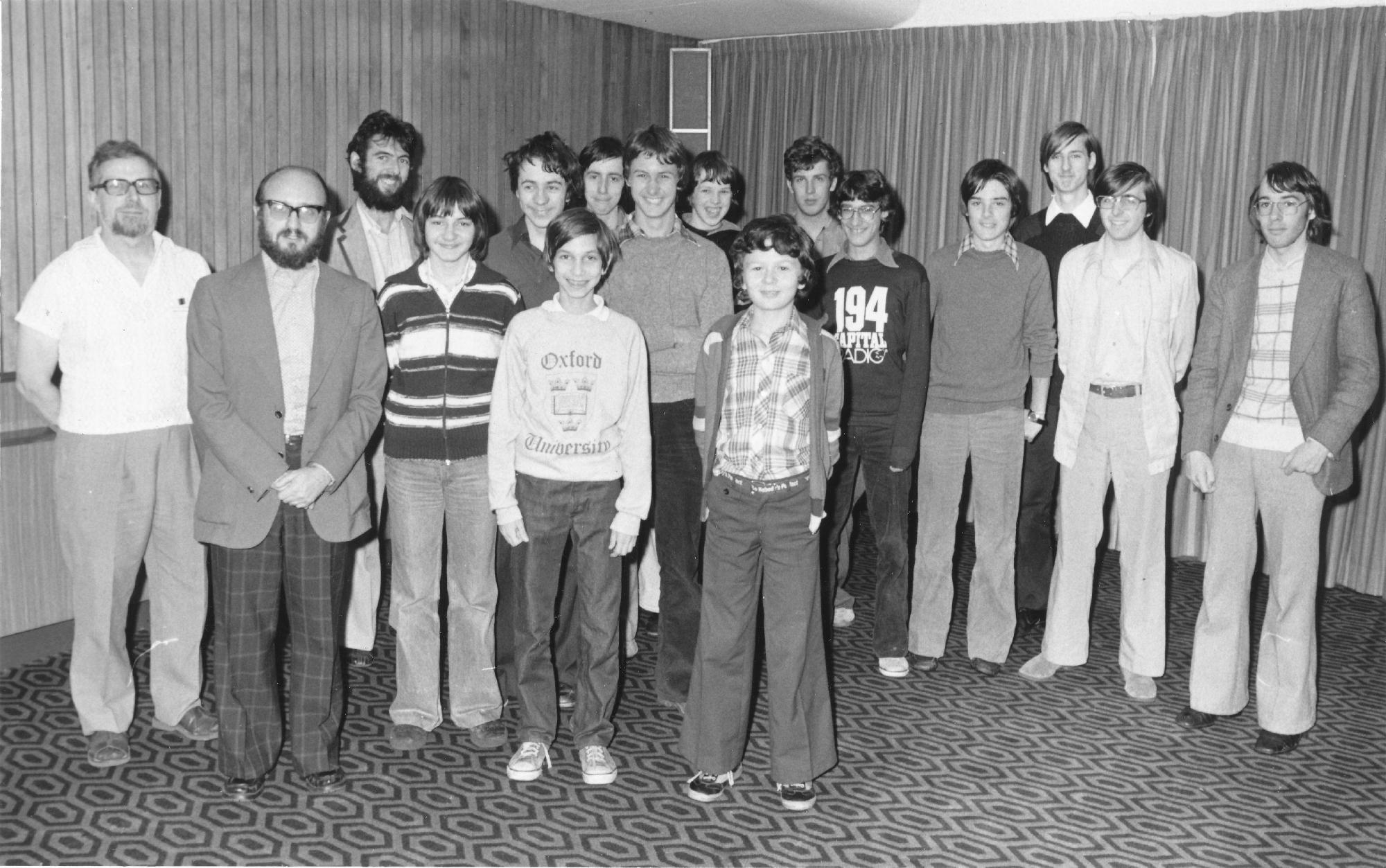
We remember Ian Duncan Wells who very sadly passed away on this day (January 25th) in 1982 aged seventeen years.
From Chessgames.com :
Ian Duncan Wells was born in Scarborough, England. He was awarded the FM title in 1982. At the Islington Open in December 1981 he finished 1st= with John Nunn and Tony Miles. Following a 5th= placing in the Golden Pawn of Brazil Junior tournament held in Rio de Janeiro he and other players went swimming outside their hotel. He got into difficulties and although he was brought ashore by lifesavers he died after six days in a coma.
Here is an excellent article from chess.com written by Neil Blackburn.
Death Anniversary of Johann Löwenthal (15-vii-1810 24-vii-1876)
Death Anniversary of Johann Löwenthal (15-vii-1810 24-vii-1876)
Death Anniversary of Johann Löwenthal (15-vii-1810 24-vii-1876)
Death Anniversary of Johann Löwenthal (15-vii-1810 24-vii-1876)
Remembering Samuel Boden (04-v-1826 13-i-1882)
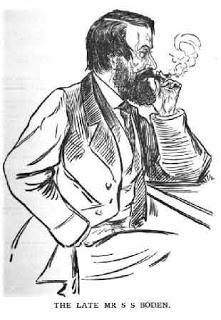
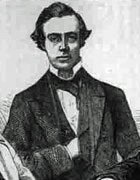
We remember Samuel Boden, who passed away on this day, Friday, January 13th in 1882 at 3 Tavistock Street, Bedford Square, Middlesex.
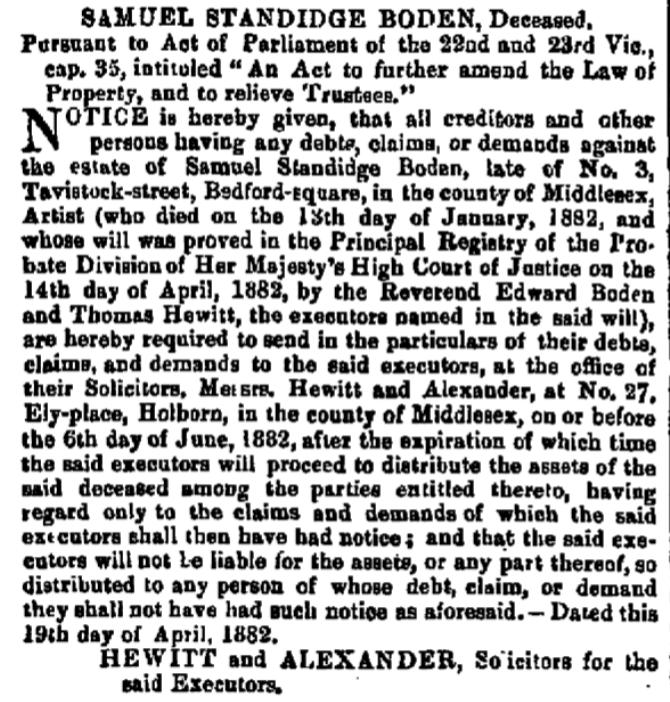
Samuel Standidge Boden was born on Thursday, May 4th, 1826 in East Retford, Nottinghamshire. His parents were James (b. 1795/96) and Mary Frances Boden (b. 1800/01).
(Several secondary and tertiary sources give the birth month as April. It would appear that a transcription error was responsible.)
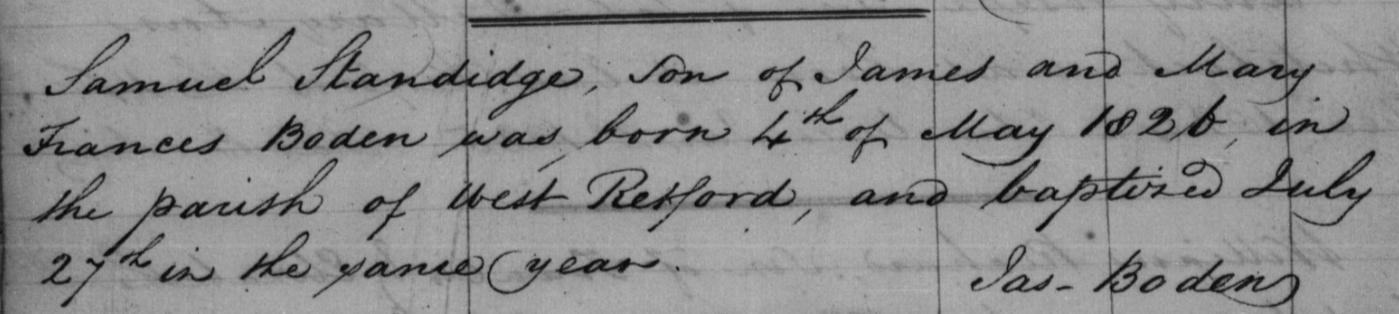
James was an Independent Congregational Minister who worked in West Retford and was responsible for recording parish birth and baptismal (and probably marriage) records including those of his own children.
Samuel was baptised by his father (for the first time!) on July 27th at Chapel Gate (independent) Church.
Samuel had at least nine siblings and the details of these plus other family members (including multiple baptisms) may be found on Steve Mann’s Yorkshire Chess History.
From The Encyclopaedia of Chess by Anne Sunnucks :
“Boden was considered by Paul Morphy to be the strongest player in England in 1858. However, he is generally considered to have ranked below Staunton and to have been either the second of third strongest player, the other player being Buckle.
Born in Hull on 4th April 1826, Boden first came to the notice of British chess players when he won a provincial tournament in 1851. In 1858 he played two matches against John Owen , winning both, the first by +5 -3 =1 and the second by +5 -1. He played in very few major tournaments and his strength ws judged mainly from friendly games and small tournaments. He was the author of A Popular Introduction to Chess and conducted the chess column in The Field for 13 years.
He died of typhoid fever on 13th January 1882 and is buried in Woking, Surrey.”
According to Steve Mann :
“He was buried on 17/01/1882 at Brookwood Cemetery, Brookwood, Surrey. This cemetery was also known as the London Necropolis, having been specially instituted to take London’s dead at a time when space within London was becoming scarce. A transcription of the Surrey Burial Registers gave his name as “Samuel Standage Boden” and his age to be 55. The burial date, the deceased’s age, and the nature of the cemetery, together make it clear this was the chess-player, even though they misspelt his middle name.”
From The Oxford Companion to Chess by David Hooper & Ken Whyld :
English player active in the 1850s. In 1851 he wrote A Popular Introduction to the Study and Practice of Chess, an excellent guide introducing the Boden-Kieseritzky Gambit which at once became popular. In the same year he won the ‘provincial tournament” run concurrently with the London international tournament. At Manchester 1857, a knock-out event, he came second to Lowenthal— he drew one game of the final match and then withdrew. In 1858 Boden defeated Owen in a match ( + 7=2-3) and he played many friendly games with Morphy, who declared him to be the strongest English player; since Staunton and Buckle had retired this judgement was probably right. Also in 1858 he restarted the chess column in The Field , handing over to de Vere in 1872. The column has continued uninterruptedly ever since. Besides chess and his work as a railway company employee Boden found time to become a competent amateur painter and an art critic.
From The Encyclopaedia of Chess by Harry Golombek OBE :
British master, considered by Morphy to have been the strongest opponent whom he played while in England (Boden’s record against Morphy in casual games was +1-6=4). Tournament results include 2nd Manchester 1857 and 2nd Bristol 1861. Chess editor of The Field 1858-1873. His name is linked with the Boden-Kieseritsky Gambit : 1.e4 e5 2.Bc4 Nf6 3.Nf3 Nxe4 4. Nc3 Nxc3 5.dxc3 f6 (article authored by Ray Keene).
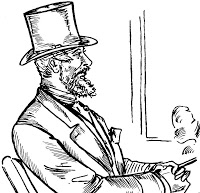
Boden’s name is associated with a variation of the Philidor Defence:
and a line of the Ruy Lopez:
Most players will be familiar with this mating pattern that is Boden’s Mate using two bishops in a cross pattern.
Here is an example puzzle from 1001 Chess Exercises for Club Players that demonstrates the pattern :
White to play and checkmate.
Here is an in-depth article about Boden’s Mate from Edward Winter