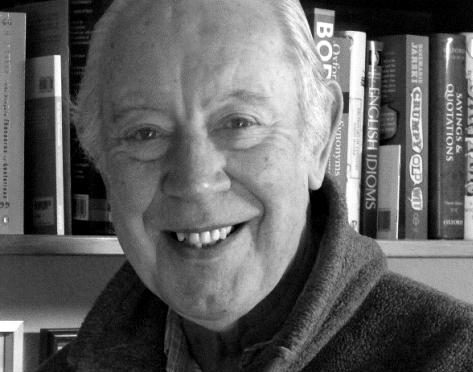
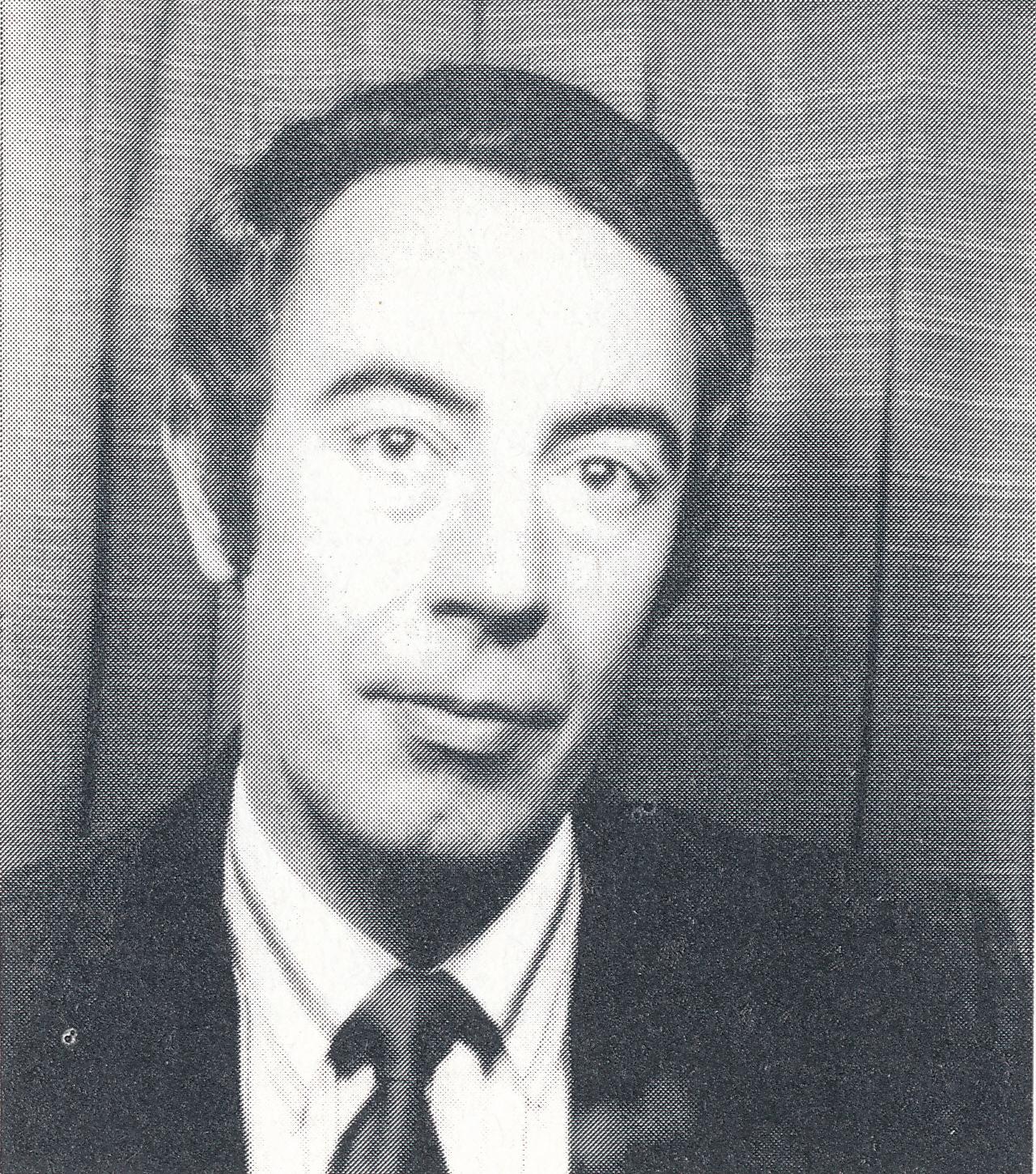
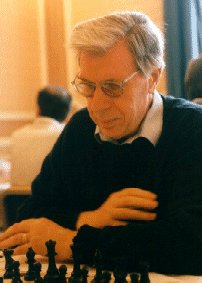
BCN remembers IMCC Barry Barnes who passed away on Tuesday, January 14th 2025 aged 87.Barry Peter Barnes was born in Brighton and his mother’s maiden name was Simpole. (Barry is a cousin of Julian Ivan Peter Simpole, who was a Brighton school teacher and who taught Edward Gerard Winter to play chess).
Barry most recently lived in Halling, Rochester, Kent with his wife Jean.
From The Encyclopedia of Chess (Robert Hale, 1970 & 1976) by Anne Sunnucks :
“International Master of FIDE for Chess Compositions (1967) and International Judge of FIDE for Chess Compositions (1967).
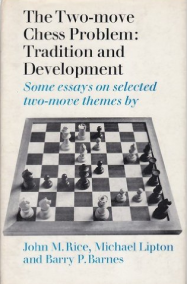
Born on 1st August 1937, Barnes works in transport advertising. He has composed about 250 two-move problems. With Lipton and Rice, he has contributed to the advance of the modern two-mover. Problem Editor of Two-Move and Twin sections of The Problemist. Co-author with M.Lipton and JM Rice of The Two-Move Chess Problem : Tradition and Development (Faber and Faber 1966).
“A promising career as a county chess player came to an end when I was given Brian Harley’s classic book Mate in Two Moves in the belief that it would help my chess, but it had quite the opposite effect. My interest in competitive chess waned, and I was on the road to an an International Master title for problems!
Early influences in my problem career were the weekly chess problem solving competition in The Observer (my first problem published there was in 1955), a teenage friendship with J. M. Rice and M. Lipton (both now lnternational Masters), Herbert Grasemann’s book Problem Schach / with its near revolutionary post-war German problem ideas, and the expert British problemist, A. R. Gooderson who had I but known it only a few years earlier was the officiating master when my Hove Grammar School played Steyning Grammar at chess.
In the late 1950s and early 1960s, the genuinely original problems I was making in cooperation and in competition with Rice and Lipton were being published mostly abroad in such specialist problem magazines as Die Schwatbe (with its inspired two-move editor, Hermann Albrecht) where I gained the epithet the English prize-snatcher’! It was also written that the work of the avant-garde composers, Rice, Lipton and Barnes, was like a fresh two-move wind blowing from our island. It was sad but true at that time that the specialist magazine of the British Chess problem Society (founded 1918), The problemist, was unreceptive to change and our often bizarre ideas.
A milestone of sorts was reached when I won lst prize for problem I in 1958, a prize for the best new problem by a member of the British Commonwealth aged under 21. In 1966, I was invited by problemist Grandmaster Comins Mansfield, who was President of the FIDE Problem Commission, to act as Secretary at the Barcelona meeting. With Mr. Mansfield’s retirement, I became the British Member to the Commission, and at the Wiesbaden meeting, 1974, I was elected 2nd Vice-President. (1st Vice-President from 1982)
The FIDE Problem Commission meets annually to discuss matters relating to all branches of problem chess, to organize the World Chess Composing Tournament (WCCT), the World Chess Solving Competition (WCSC), and to publish FIDE Album anthologies of the best problems. It was on the strength of my success in these FIDE Albums that the Commission granted me the titles in 1967 of ‘lnternational Master of the FIDE for Chess Composition’ and ‘lnternational Judge of the FIDE for Chess Composition’. Since 1974, I have been Chairman of the Titles Sub-Committee of the Commission.
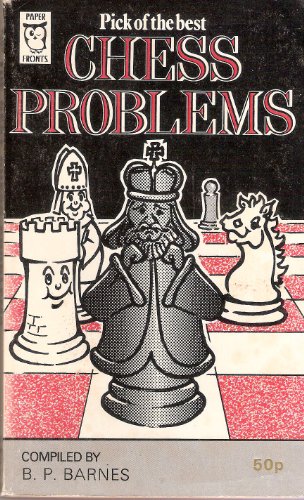
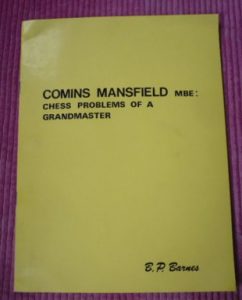
Since 1965, I have been the two-move editor of The Problemist and have served almost without break on the BCPS Committee. I have contributed to The Encyclopaedia of Chess by Anne Sunnucks (Robert Hale, 1970), I am co-author, with J. M. Rice and M. Lipton, of The Two-Move Chess Problem: Tradition & Development‘ (Faber A Faber, 1966), and I am the sole author of Comins Mansfield MBE: Chess Problems of a Grandmaster: (British Chess Problem Society, 1976) and Pick of the Best Chess Problems (Elliot Right Way Books, 1976)
To date I have made just over 300 two-movers and some helpmates.”
From The Encyclopaedia of Chess (Batsford, 1977), Harry Golombek OBE, John Rice writes:
“British problem composer, output about 400, nearly all modern style two-movers. Two-move sub-editor of The Problemist. Secretary of the FIDE Problem Commission during C. Mansfield’s Presidency. Co-author of The Two-Move Chess Problem: Tradition and Development (1966).”
The Two Move Chess Problem : Tradition and Development
Author of Pick of the Best Chess Problems (1976)
Pick of the best Chess Problems
Comins Mansfield MBE : Chess Problems of a Grandmaster (1976).
Comins Mansfield MBE: Chess Problems of a Grandmaster, BP Barnes, 1976
International Judge (1967); international master (1967).
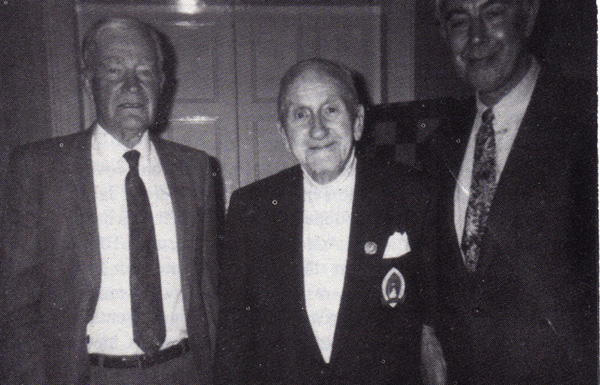
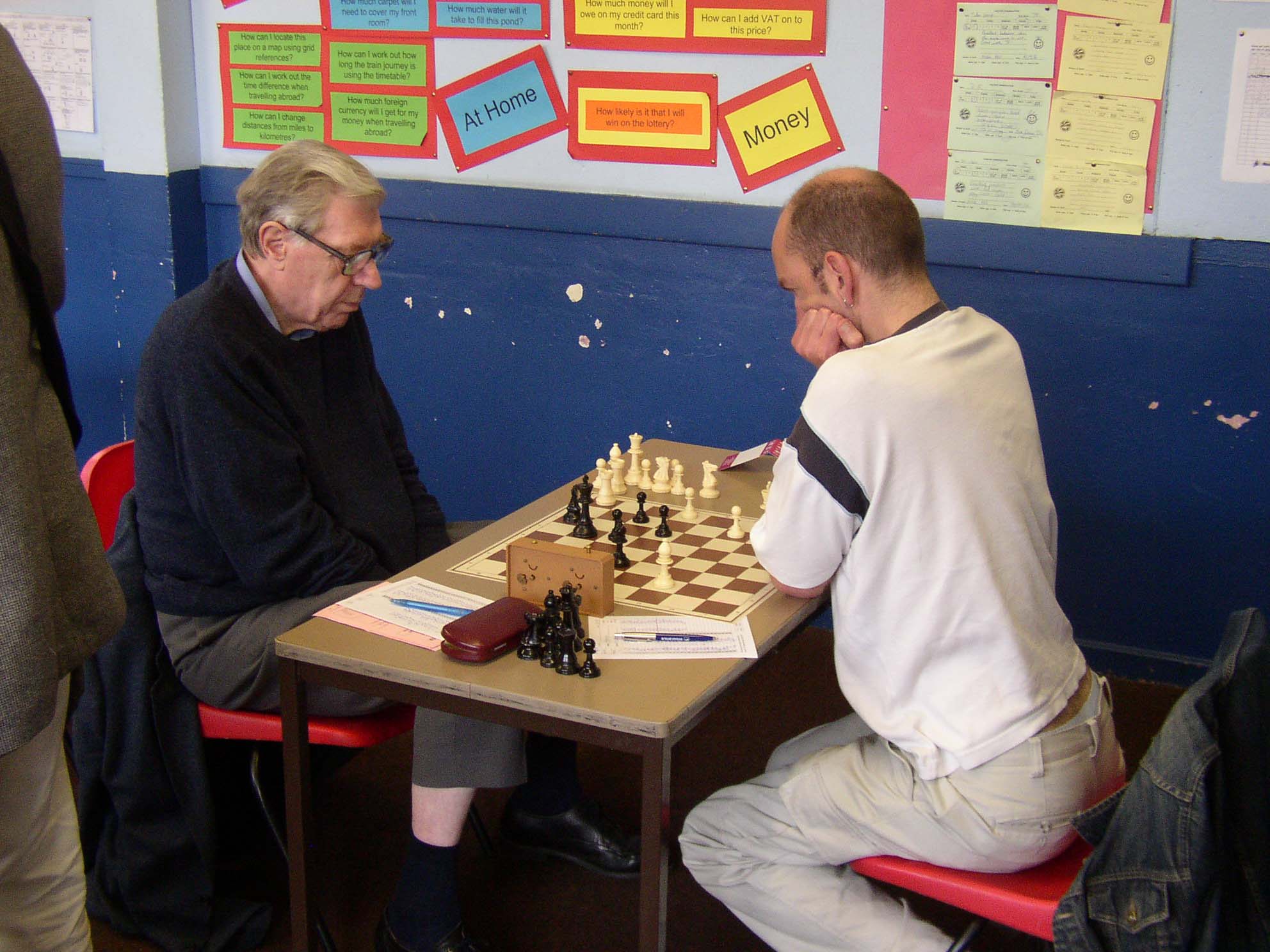
Source: The Problemist, May 1996. Photo taken March 1996 at the Mansfield Centenary Meeting at Paisley, when Barry Barnes delivered a lecture on Comins Mansfield. Left to right: Geoffrey Mansfield (son of Comins), Robert Gray and Barry Barnes, International Master of Chess Composition.
BCN is sorry to report the passing of FM Mike Franklin on Tuesday April 25th 2023: one of England’s most respected and well regarded players.
Growing Up
Michael John Franklin was born on Monday, February 2nd, 1931 in Battersea, London to Albert George (27 ix 1906, Dover – ? iii 1983, Wandsworth) and Helen Ann Franklin (née Colson, 1908-2003) who married in the third quarter of 1928 in Wandsworth. Albert was a clerk as was his father.
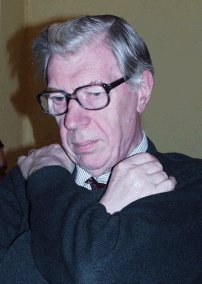
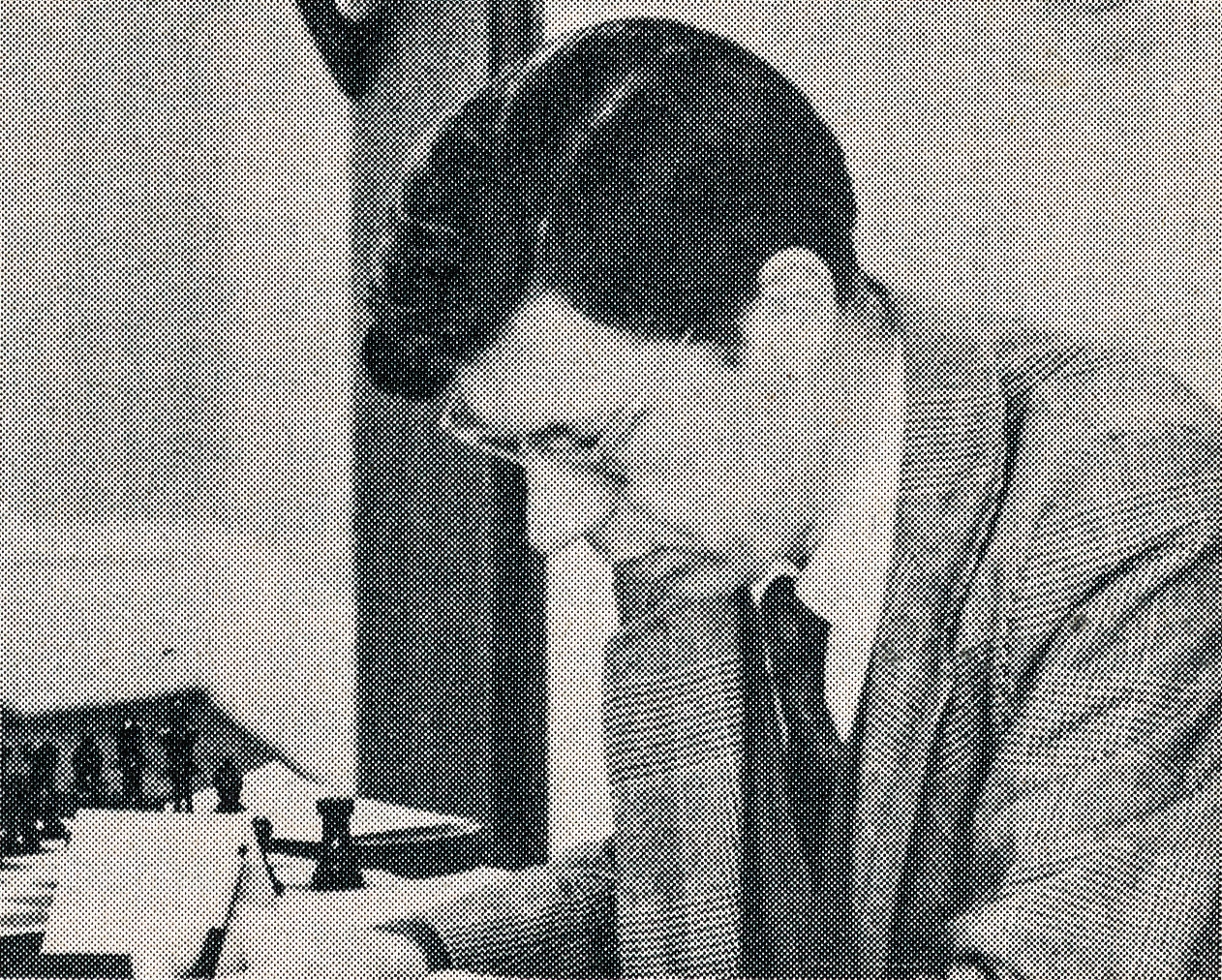
FM Michael Franklin, Photo by Cathy Rogers
At the commencement of the Second World War, when eight years old, Michael was evacuated to Frome in Somerset. As a consequence Michael would delight in playing in the Frome Congress whenever possible. He played in the first event in 1990 organised by Leon York (whose name is the memorial trophy for the Major section). The story of Michael’s return to Frome made its’ way in to the local newspaper and was reported by Gary Lane as follows :
From British Chess Magazine, Volume CX (110, 1990), Number 7 (July), page 296 :
“A special presentation by the sponsor, Mrs. Jean Mackereth, Managing Director of Keyford Frames, was made to Londoner Michael Franklin, who was returning for the first time in 51 years to the town to which he was evacuated during the war. His final appearance at Frome was in the 2010 event.
The Early Years
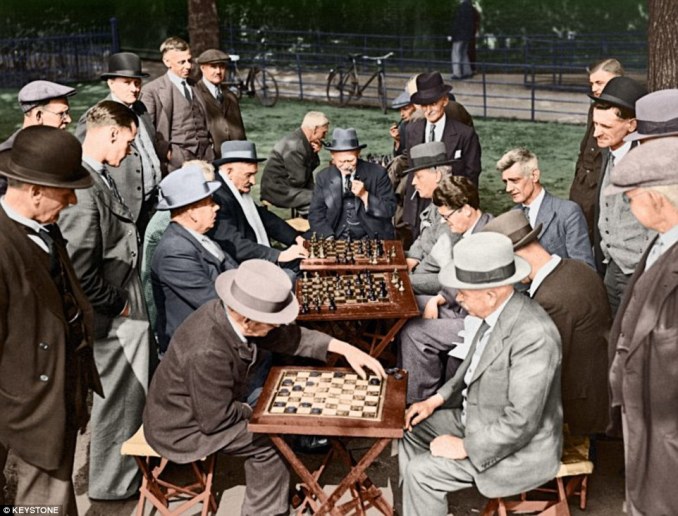
Michaels interest in chess started in 1944 aged 13 when he witnessed games being played on Clapham Common. He was fascinated by the pieces and taught himself to play, never receiving any formal coaching. He joined the Clapham Common Chess Club in 1944. (CCCC became incorporated into Battersea Chess Club some time later).
CHECK MATES: Elderly members of the Clapham Common Open Air Chess and Draughts Club, circa 1920. The club met regularly during the afternoons to play on Clapham Common in south London. Copyright : Keystone
Apart from summer events such as the above the club had a Winter Section that played matches in the London League. The club won the first division (now known as the Brian Smith Trophy) of the London League in the 1946-47 and 1947-48 seasons. Michael played his final game in the London Chess League for Richmond & Twickenham on April 14th 2010 drawing with John Hodgson, giving a sixty year span.
In his formative years he played at the Gambit Chess Café, Budge Row, Cannon Street, London, EC4N. Many strong players regularly visited the Gambit to play skittles, blitz and the frequently held lightning tournaments hosted by the proprietor Mr GH White.
Events such as these enabled Michael to develop his quick sight of the board and his flair for tactical play.
Leonard Barden added :
“Michael made his name as a young player first by his successes in the Saturday evening Gambit Guinea speed events at the Gambit Chess Café in Cannon Street which he often won ahead of master level rivals. He remained a strong speed player all his life.”
In the early 1950s Michael was persuaded by his friends Aird Thomson (who was Scottish Boys’ Champion in 1932, and 1933 ( equal-first). In 1951 he was Scottish Champion. In 1954 he moved to London. He married Susan Mary Hamilton in 1961 who went on to become Scottish Ladies’ Champion in 1965.) and oriental carpet expert Robert Pinner to join the Richmond and Twickenham Chess Club playing for the club in the London League, Surrey Trophy and National Club Championship until he retired from competitive play 2010.
Making Progress
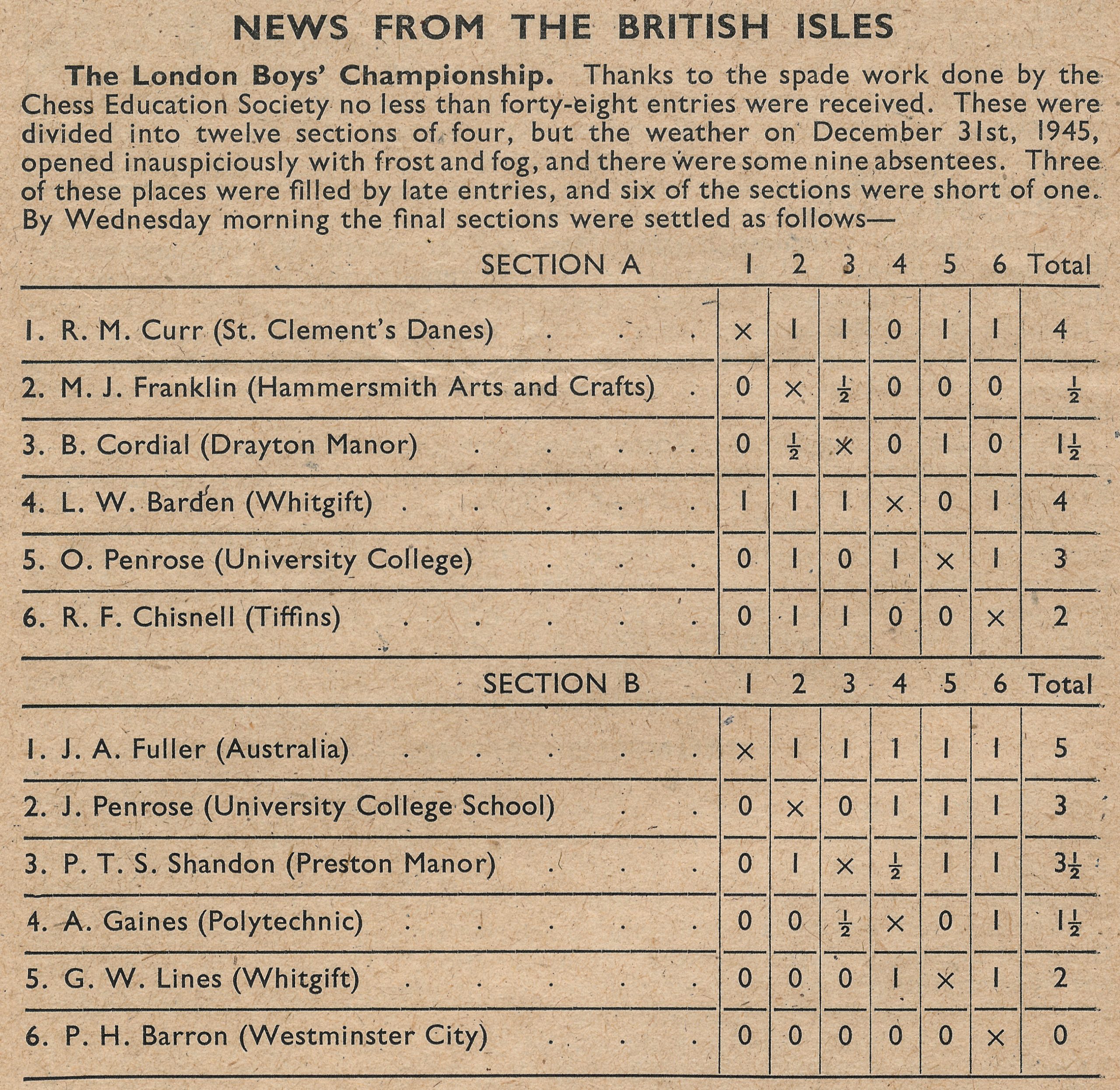
Michael’s first appearance in British Chess Magazine was in Volume LXVI (66, 1946), Number 2 (February). Page 52 contained this report of the 1945 London Boy’s Championship in which Michael reached the final A section :
British Chess Magazine, Volume LXVI (66, 1946), Number 2 (February), page 52
On leaving school Michael joined a firm of Patent Agents remaining in their employ in the accounts department for around forty years before retiring in the late 1980s. His retirement was prompted by the firm’s adoption of electronic computers. When he retired he was Chief Cashier.
On June 18th 1960 Michael’s happiest day was when he married Jean Fey. They celebrated their diamond anniversary in 2020.
To the present day Michael has maintained an aversion toward modern technology. He did, however, concede to the ownership of a mobile telephone. This was for the specific purpose of updating Jean on his days progress in any chess tournaments where he was away from home.
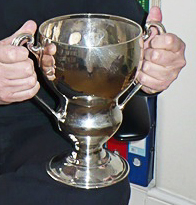
In 1946 (aged 15) Michael won the Felce Cup awarded by the Surrey County Chess Association. A result indicating rapid improvement since Michael had only started playing competitively in 1944.
The Felce Cup held by the hands of Stephen Moss in 2014
In 1951 Michael finished third in the Surrey Championships behind the winner Frank Parr and runner-up David Hooper. In 1961, 1966, 1968, 1969 and 1970 Michael won the Surrey Championship outright and made many appearences in county matches for Surrey from 1950 onwards until 2010.
Unfortunately Michael’s rapid progress was threatened by two bouts of ill health. In 1948 aged 17 Michael was diagnosed with Tuberculosis which lasted for eighteen months including a twelve month stay in the Royal National Hospital for Diseases of the Chest in Ventnor on the Isle of Wight. Aged twenty the TB returned leading to yet another twelve months illness.
Michael has suffered from ill health all of his life interrupting his chess career at various times. Fortunately the TB has not returned.
Michael won the National Chess Centre Championship in 1953 and 1955 being runner-up in 1954. The venue was Hill’s Restaurant, 158 Bishopsgate, London, EC2 opposite Liverpool Street Station since the original John Lewis department store venue was bombed in 1940.
The British Chess Federation first published a National Grading list in 1953 (using the Richard Clarke system). In the 1954 list MF appeared with a grade of 2A (225-232) and from then on with a grade of either 2A or 2B. In 1964 a numeric system had him at 225 ranking Michael 4th in England behind Penrose 244, Kottnauer 238 and Clarke 231.
Michael played many times in the annual Battle of Britain Tournament organised by Squadron Leader David Pritchard and his committee. He won it four times : 1959, 1960, 1961 and 1962.
The Ilford Whitsun Congress
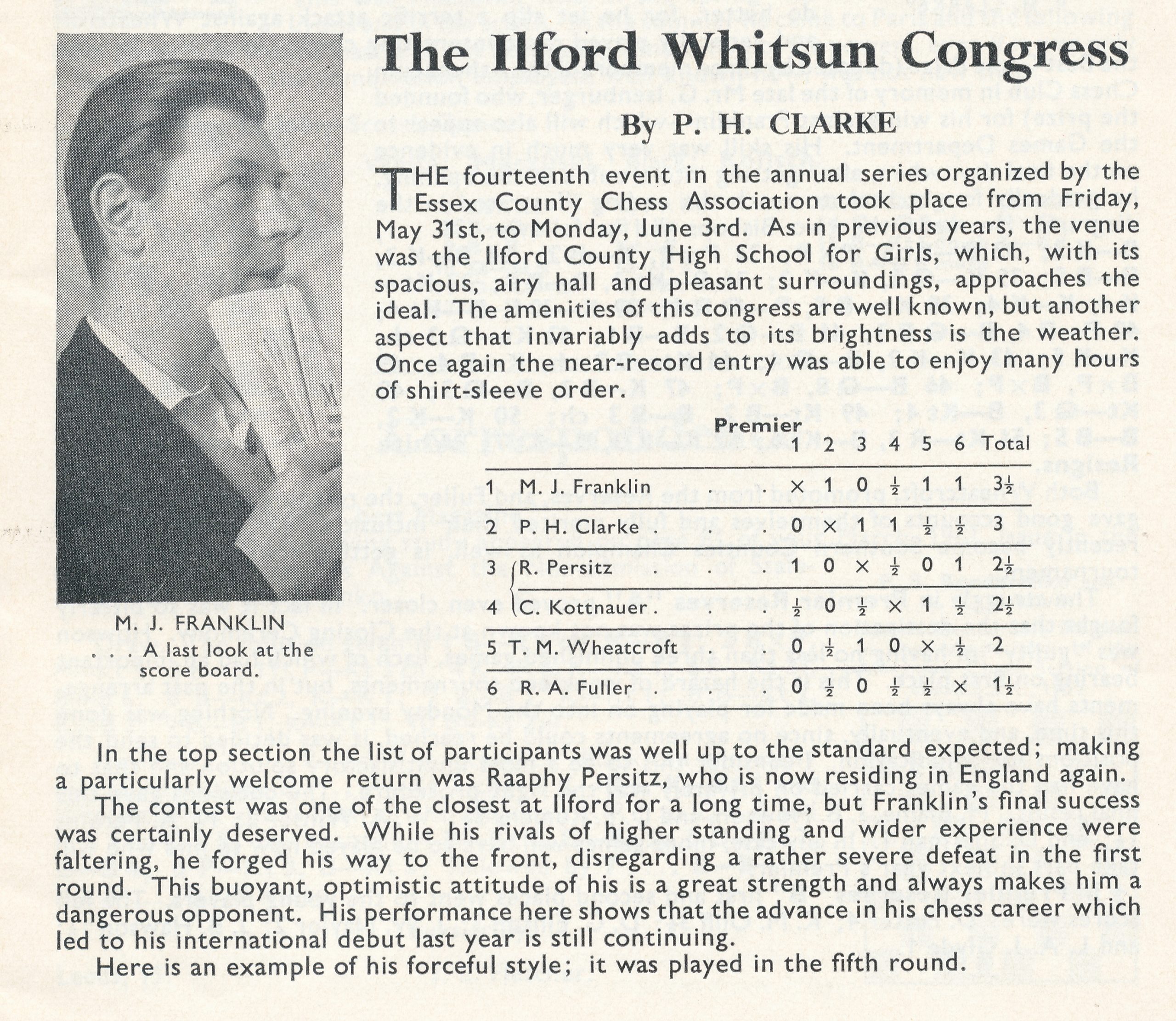
The Ilford Whitsun Congress was a regular part of Michael’s season throughout the sixties. He won the Premier Reserves in 1961 ahead of Hilton, Hindle, Howson, Sales and Blaine and was runner-up to Kottnauer in 1962. In 1963 he went one step better by winning the Premier :
A report of Mike Franklin’s success at the 1963 Ilford Whitsun Congress by Peter Clarke. Source : British Chess Magazine, Volume LXXXIII, Number 7 (July), page 193
and here is the fifth round game :
In his tournament report PH Clarke wrote :
This buoyant, optimistic attitude of his is a great strength and always makes him a dangerous opponent.
Away from Home : International Progress
1964 saw selection by the BCF to play in the Tel Aviv Olympiad :
The 1964 England Olympiad (Tel Aviv) Team : Owen Hindle, Čeněk Kottnauer, Peter Clarke, Michael Franklin, Norman Littlewood & Michael Haygarth
and scored a creditable 4/6. This was followed in 1965 with 3/5 in Clare Benedict tournament held in Berlin.
He played in the annual Anglo-Dutch match on no less than six occasions in 1962, 1963, 1964, 1965, 1968 and finally in 1969. His aggregate score was an impressive 8/12.
Hugh Alexander, Čeněk Kottnauer, Michael Franklin and Owen Hindle
On the national scene Michael repeated his 1963 victory at the 1969 Ilford Premier with a clear first place : Franklin 4; RG Wade and D Wright 3; JB Howson 2.5; BH Wood 2; PH Clarke 0.5.
In 1970 Michael won the London Championship which was also known as the Budget Cup which had last been held in 1956 . He followed this in 1972 by rightly earning the (now defunct) title of British Master.
Michael’s final appearance for England was in 1971 in the Cheltenham based Anglo-German match with a somewhat disappointing 0.5/2 against Juergen Dueball.
Owen Hindle, Michael Franklin, Harry Golombek and Michael Haygarth
Michael played board two for London in a Telex match versus Belgrade playing Marjanovic. The game was drawn.
Michael Franklin playing board two in the London – Belgrade Telex Match on April 3rd, 1976 from the St. James Hotel, Buckingham Gate. Sourced from BCM, Volume XCVI (96), Number 5, page 192. Photographer probably Freddy Reilly.
The Ultimate Prize : The Aaronson Masters
The Aaronson Masters at *Imperial Hotel, Russell Square, Bloomsbury, London, 1978 brought his best individual success at the age of 47, sharing first place with IM Aldo Haik of France and to boot, earning an IM norm.
(*Venue location thanks to Ken Norman)
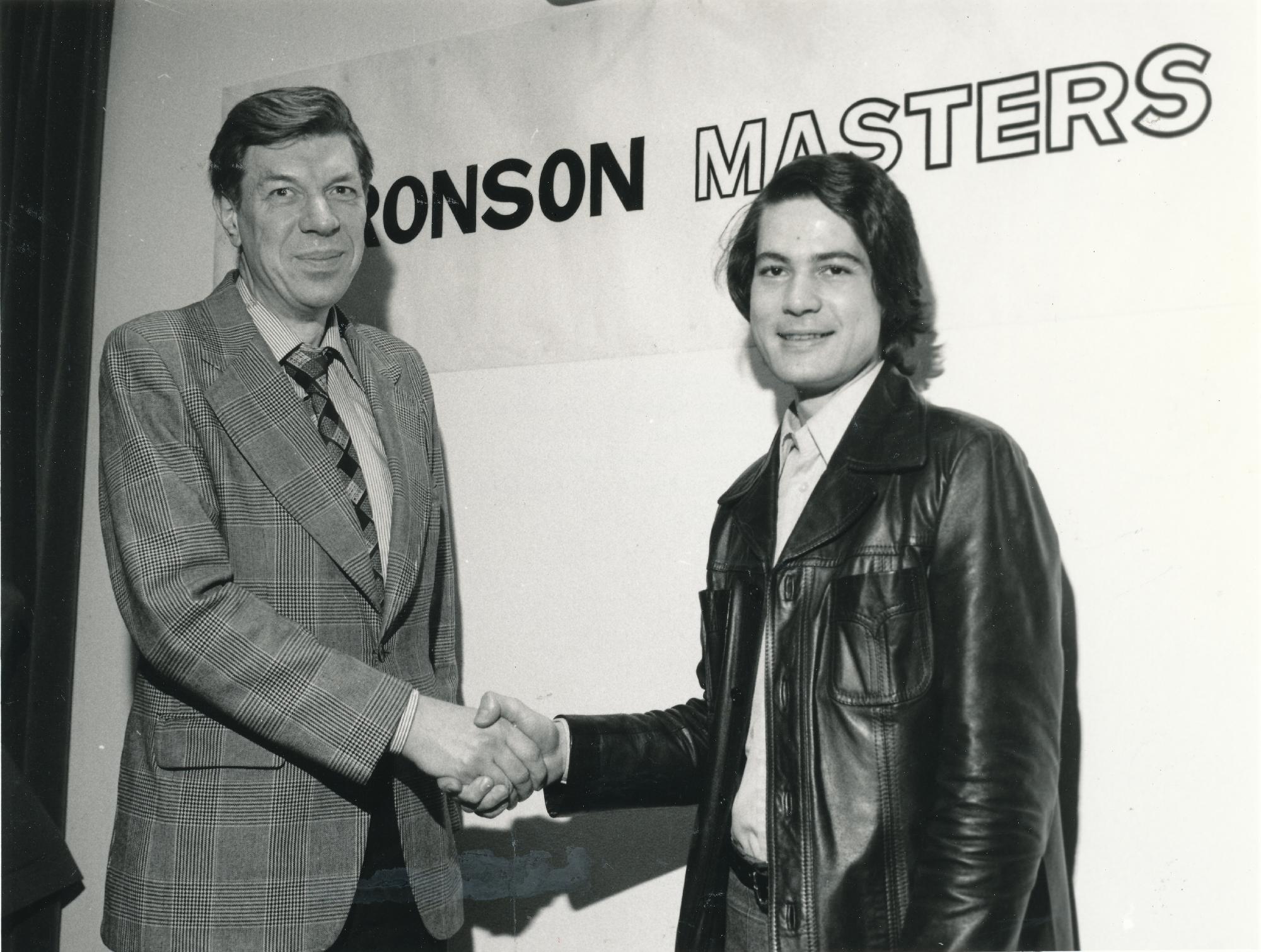
Joint winners of the 1978 Aaronson Masters : Michael Franklin and IM Aldo Haik
Michael scored an undefeated 7.5/10 and finished ahead of Short, Speelman, Nunn, Hartston, Mestel, Webb, Basman, Botterill and numerous other illustrious players. Michael remarked of his lifetime best result that it was
just one of those occasions when everything went right!
But he scored 3.5/5 against the IMs, was alert to every opportunity, and the games show he owed little to luck.
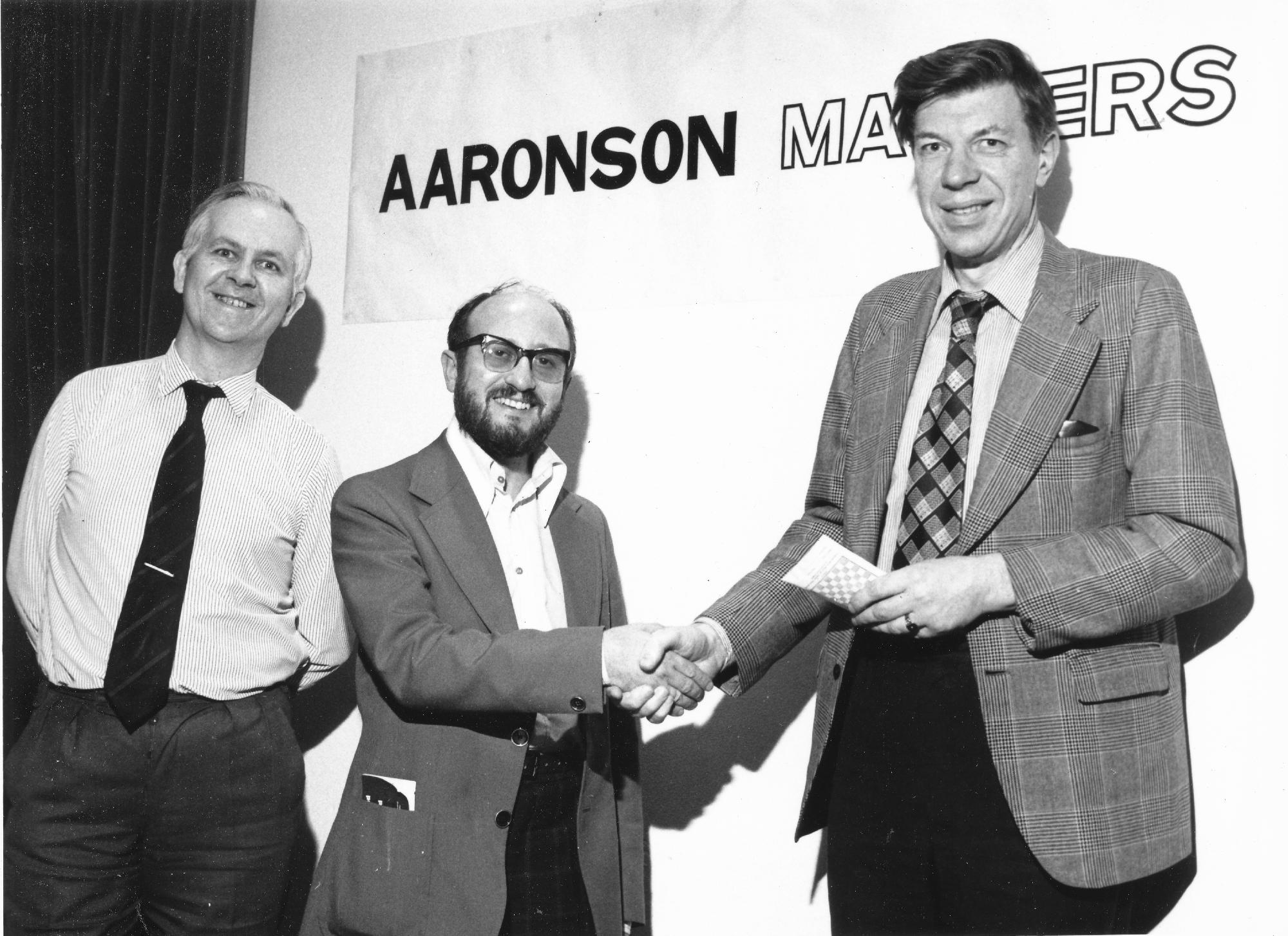
Leonard Barden, Stewart Reuben and Michael Franklin at the 1978 Aaronson Masters
Like many others Michael made appearences in Lloyds Bank events of 1977, 1978, 1984, 1989, 1991, 1993 and 1994.
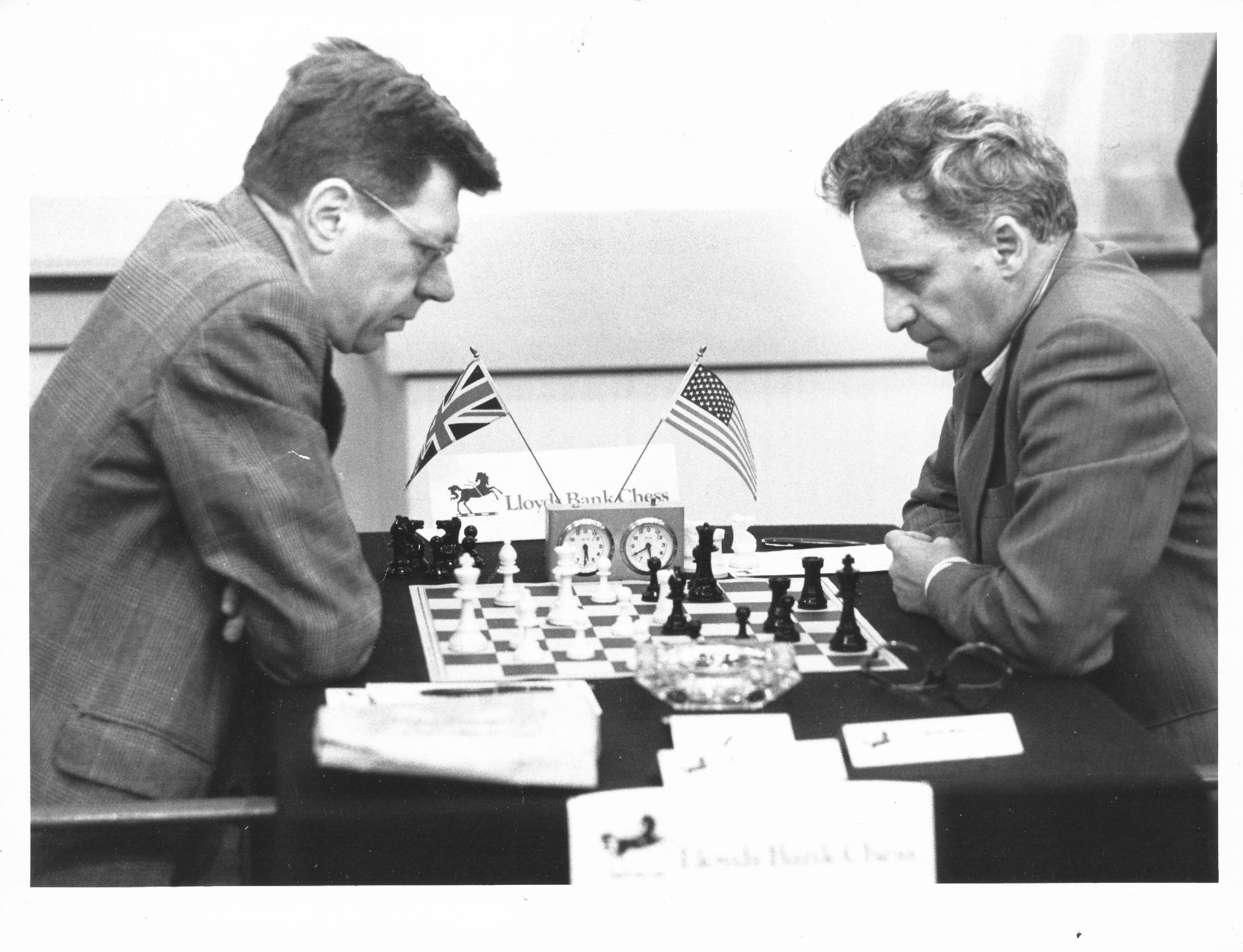
Michael Franklin (left) at the 1978 Lloyds Bank Masters playing IGM Leonid ShamkovichMichael and friends during the 1978 Lloyds Bank Masters
The Hastings Years
Michael first played at Hastings in 1964 when he was invited to play in the Premier Tournament. The tournament was won by Mikhail Tal and Michael finished in last place.
Undaunted he returned to Hastings in 1968 to play in the Challengers tournament. One of the attractions of playing in the Challengers was that the winner received a place the following years Premier. Frustratingly Michael finished second three years in a row! In 1968 the Challengers was won by Danny Wright, in 1969 by Martyn Corden and in 1970 by Peter Markland. Finally, in 1971 his patience was rewarded and he won the Challengers and qualified to the following years Premier.
The 47th Hastings Premier of 1971-72 had been changed from the traditional 10 player all-play-all to a 16 player tournament. Also, having obtained sponsorship from various organisations the committee were able to invite some of the top names of the day. The sponsors were:
So, the entry included Karpov, Korchnoi, Andersson, Najdorf, Mecking, Gligoric, Unzicker and Robert Byrne to name but a few. This was undoubtedly the strongest Hastings Premier since World War Two and possibly the strongest Hastings Tournament since 1895.
Michael started well with a draw against the Rumanian GM Ciocaltea followed by a draw in with the Brazilian prodigy Mecking. In round three he surprised everyone by beating Ray Keene. With 2/3 things were looking promising. However, after this bright start Michael only managed a draw against Unzicker and a draw with Hartston finishing in a disappointing last place with a score of 3/15.
In the tournament report Peter Clarke opined
Franklin suffered the usual fate of the gifted amateur in a professional field of simply not being accustomed to this kind of chess.
Despite this Michael continued to play in the Hastings Challengers. He played in nineteen out of the next twenty-five years! He came close to winning the tournament in 1982: he was leading the tournament with a score of 7/8 when he was informed that Jean’s Father had passed away. Having drawn his ninth round game and needing only a draw in the last round to ensure at least a tie for first place he withdrew from the tournament and immediately left for home.
The Weekend Scene
Like all players with a full time job Michael had to play most of his chess at the weekend so the explosion of weekends tournaments in the early 1970’s gave him ample opportunities. His habit of playing quickly was ideally suited to the fast time limits of the weekend tournament. During the 1970 and 1980’s he was very successful. He won numerous events and was more often than not in the prize list.
FM Michael Franklin, Photo by Cathy Rogers
In later years he restricted himself to London based tournaments and those in the West Country. His regular tournaments being Exeter, Torquay and old favourite, Frome. Michael at the age of 78 shared first place at Frome 2009. Frome 2010 was his farewell appearance.
FM Michael Franklin
Michael played for a number of clubs viz : Richmond & Twickenham, Coulsdon CF, Surrey CCA, 4NCL Richmond, 4NCL Bristol and Richards Butler to name but a few.
Finally, in 1980, Michael was awarded the FIDE Master title and achieved his highest rating (in the Elo era) of 2345 in January 1979. It is most likely that his highest ever rating would have been more like 2450.
FM Michael Franklin vs Paul Helbig
Appropriately enough Michael was the inaugural winner of the BCF/ECF Senior Prix in 2000 and won it again in 2002 and 2003. The event last ran in 2006.
When Surrey won the counties championship a few years back the team took the trophy around to Michael’s home in Norbury, such was their regard for his contributions.
The London System
Any currently active club player cannot have missed the explosive rise to prominence of the system for White he developed :
The London System and Accelerated London System has acquired a huge cohort of followers in recent times probably not realising the debt they (and many authors, book and DVD publishers!) owe to Michael. If only he could have earnt a royalty every time it was played!
Also Michael had notable success as Black with the O’Kelly Sicilian 1.e4 c5 2.Nf3 a6.
Life Outside of Chess
Michael had many interests apart from Chess. He was for many years a member of the Surrey County Cricket Club. After he retired he would arrange to meet fellow Surrey Member Frank Parr at the Oval and after lunch in the Pavilion they would spend the day enjoying the Cricket. Tennis was another sport that Michael followed. Michael was also interested in horseracing. Several players were surprised when visiting one of the racetracks around London to find Michael also attending the race meeting.
Michael was the typical “natural” player. He never studied the game and his only sources of opening information were the British Chess Magazine and the chess columns in The Times and the Guardian. He never kept the scores of his games. Once the game was finished it was time to move on. One of Michael’s greatest strengths was his optimistic attitude at the chessboard. No matter how bad the position he was confident of ultimate success.
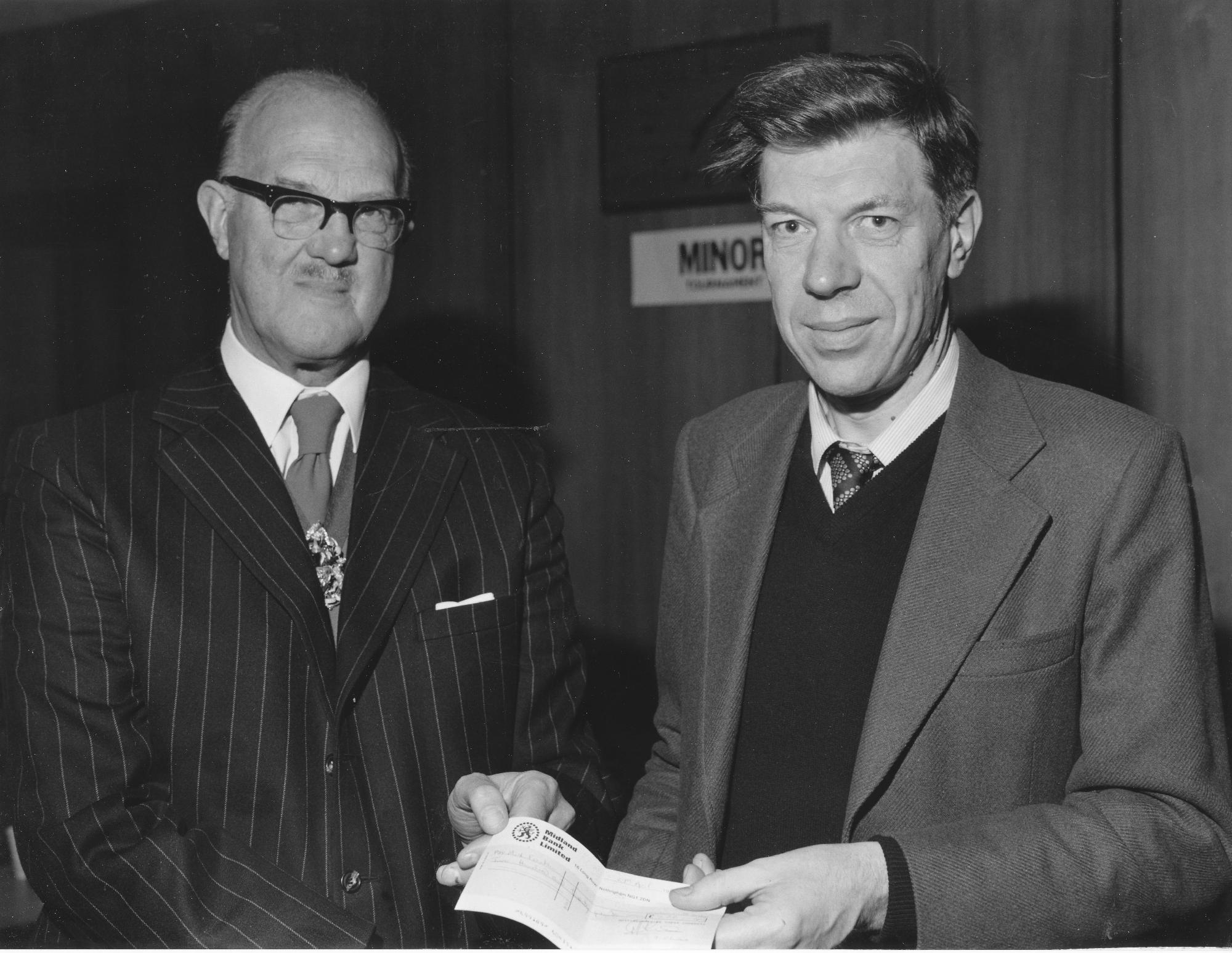
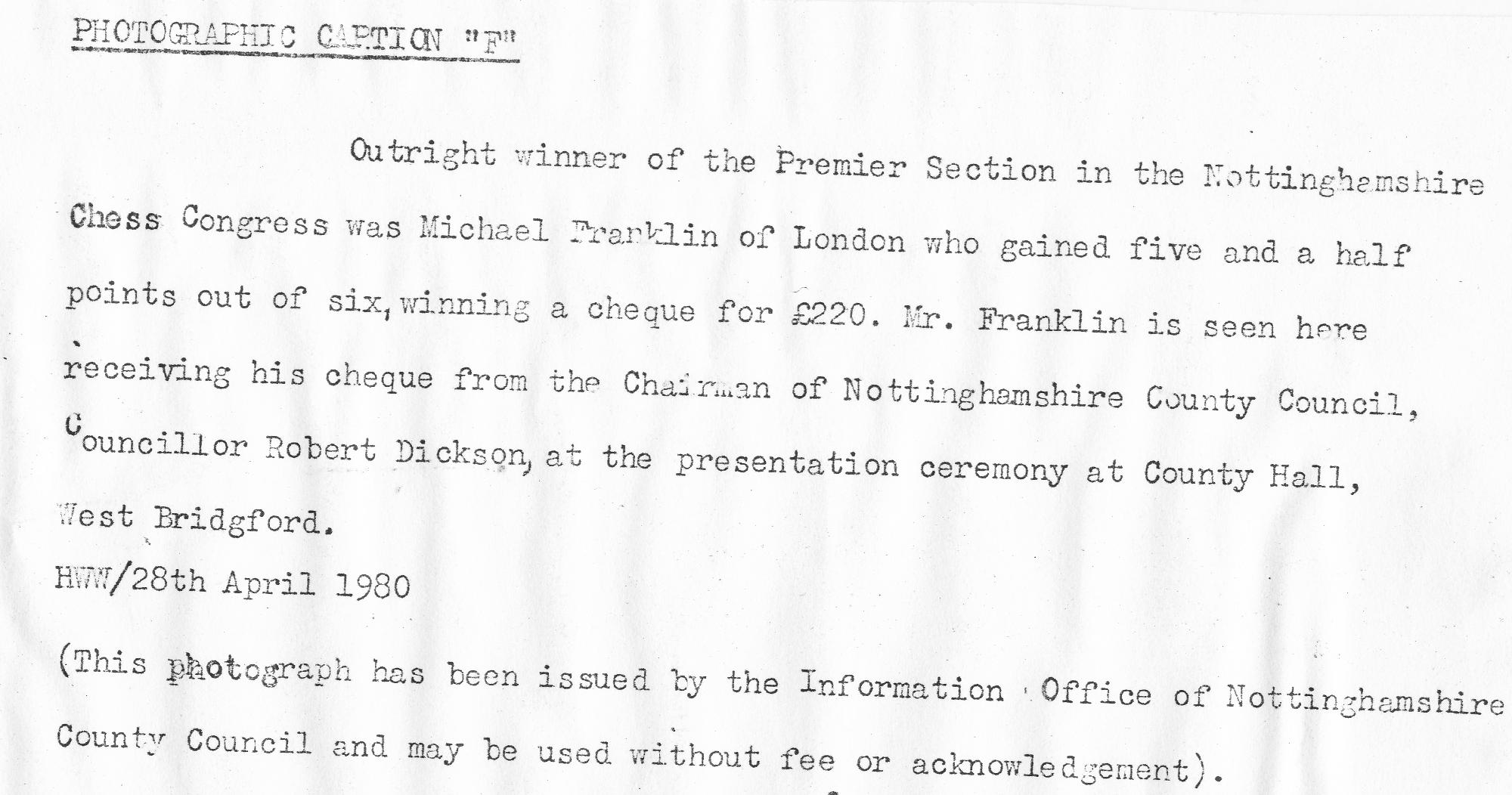
Michael Franklin receives £220 from Councillor Robert Dickson at the 1980 Nottinghamshire CongressCaption for above photograph
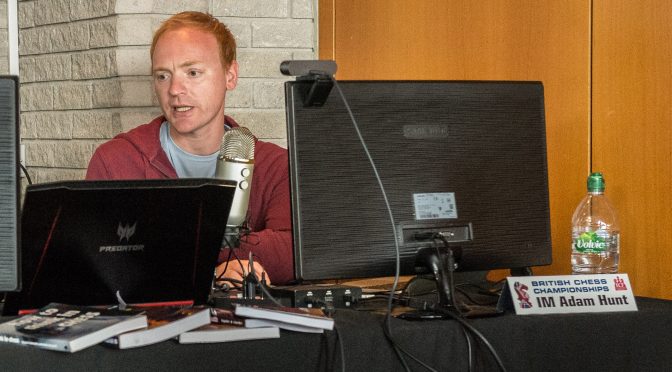
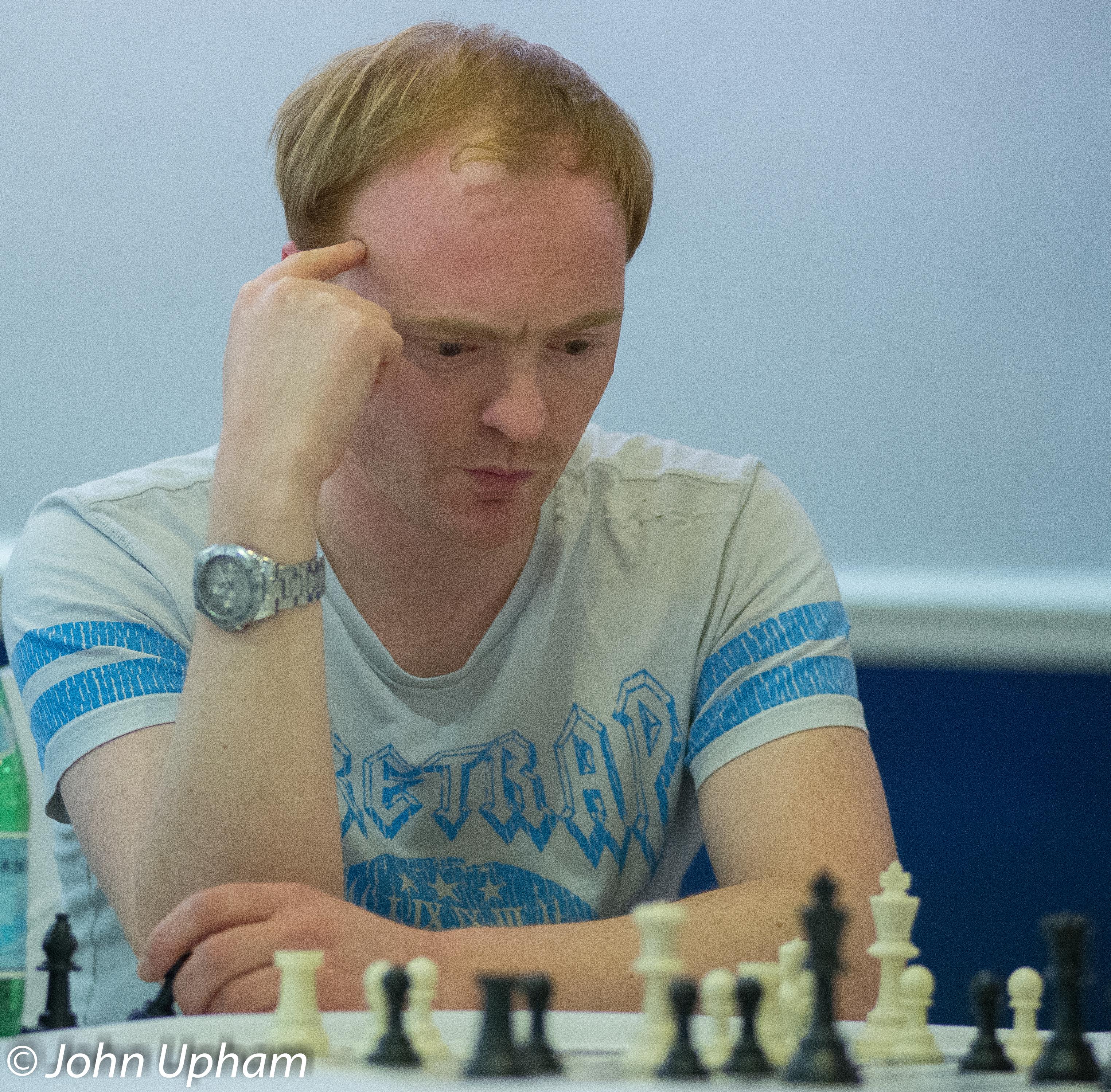
We remember IM Adam Hunt who passed away on Tuesday, December 3rd 2024 following a nine year battle with cancer.
Adam Ceiriog Hunt was born on Tuesday, October 21st, 1980 in Oxford and his mother’s maiden name was Williams. The UK Number one single was “Woman in Love” by Barbara Streisand. Adam shares his birthday with Kim Kardashian.
Adam attended The Cherwell School and The University of Sussex to study general biology.
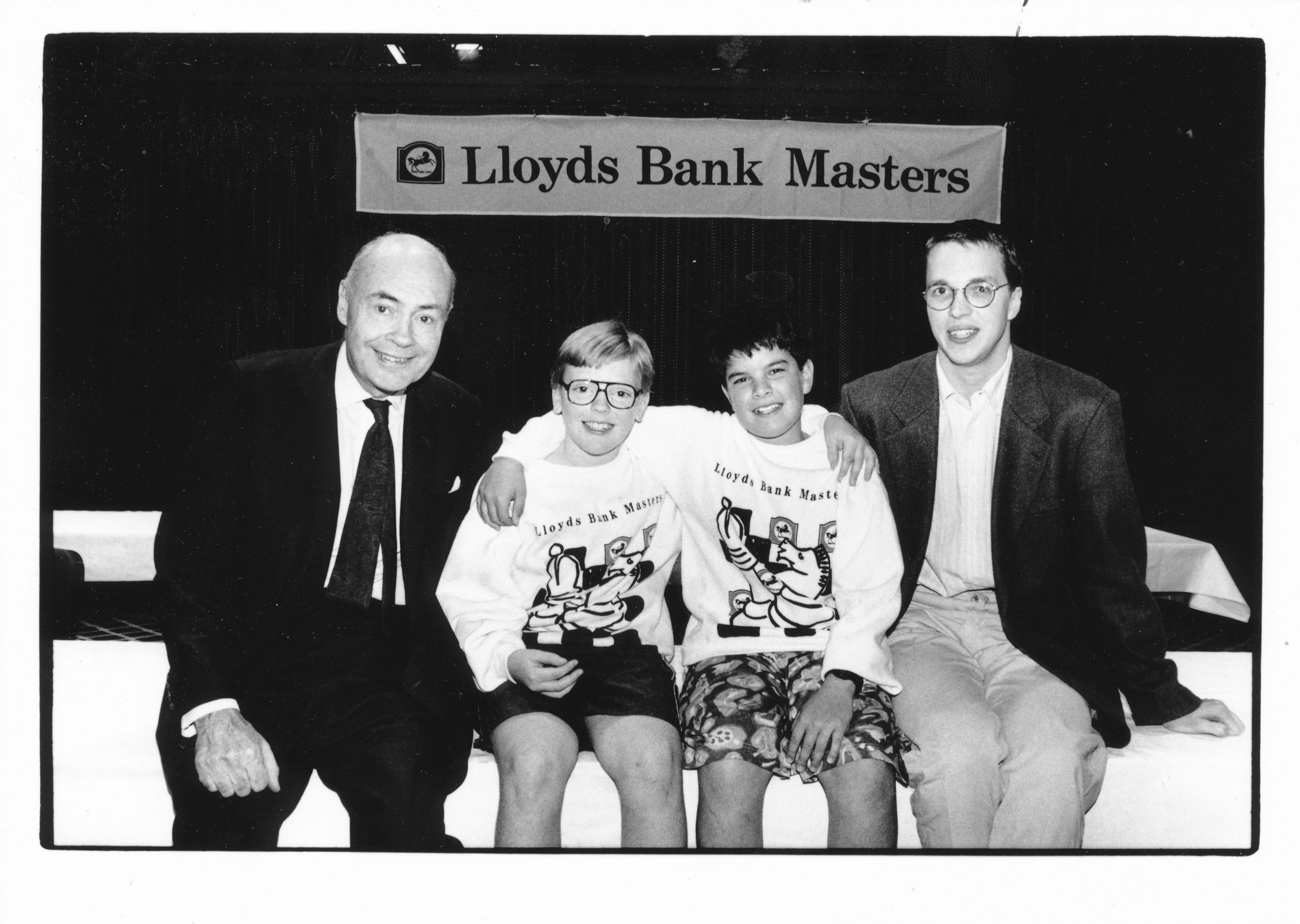
Jeremy Morse, Adam Hunt (12), Nick Pert (11) and Nigel Short at the Lloyds Bank Masters
Adam became an International Master in 2001 and then a FIDE Trainer in 2016. According to Felice and Megabase 2020 his attained his peak FIDE rating of 2466 in January 2008 at the age of 28.
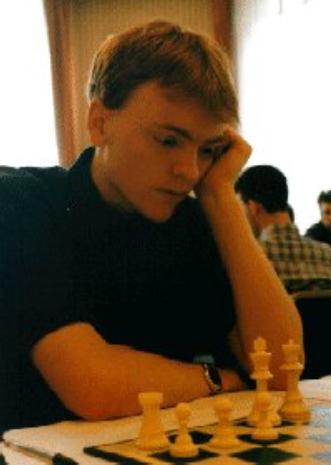
Adam Hunt in 1998 Cathy Rogers
In 2004 Adam was living in Headington, Oxfordshire and in 2007 he moved to Ipswich in Suffolk and was married in 2019. Recently, Adam and his partner became parents to Henry.
As a junior (and together with Harriet) Adam first played for Cowley Chess Club.
Most recently Adam has played for 4NCL Blackthorne Russia, prior to that Bettson.com, Midlands Monarchs and Perceptron Youth with Witney being his original team.
He is Director of Chess at Woodbridge School in Suffolk and is the brother of IM Harriet Hunt
With the white pieces is (almost exclusively) an e4 player playing the main line of Ruy Lopez (8.c3) and favouring the Fischer-Sozin against the Najdorf.
As the second player Adam plays the Sicilian Najdorf and a 50:50 mixture of the King’s Indian and Grünfeld Defences.
We focus on the British Chess Scene Past & Present!
This website uses cookies to improve your experience. We'll assume you're ok with this, but you can opt-out if you wish. Cookie settingsACCEPT
Privacy & Cookies Policy
Privacy Overview
This website uses cookies to improve your experience while you navigate through the website. Out of these cookies, the cookies that are categorized as necessary are stored on your browser as they are as essential for the working of basic functionalities of the website. We also use third-party cookies that help us analyze and understand how you use this website. These cookies will be stored in your browser only with your consent. You also have the option to opt-out of these cookies. But opting out of some of these cookies may have an effect on your browsing experience.
Necessary cookies are absolutely essential for the website to function properly. This category only includes cookies that ensures basic functionalities and security features of the website. These cookies do not store any personal information.