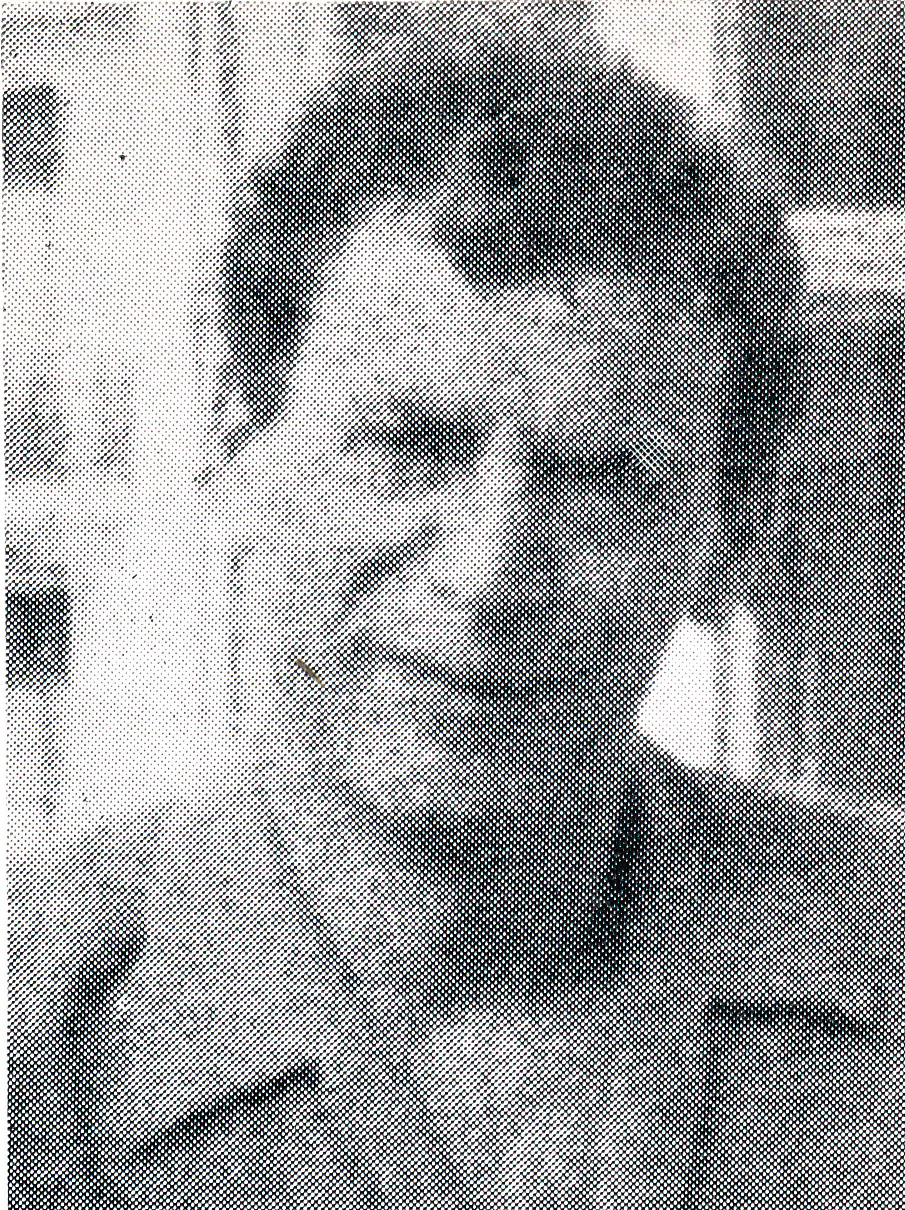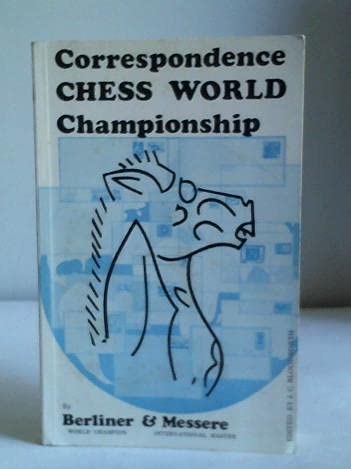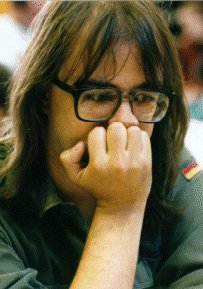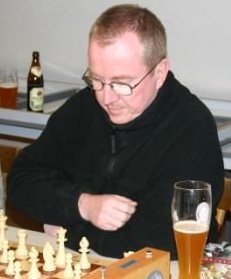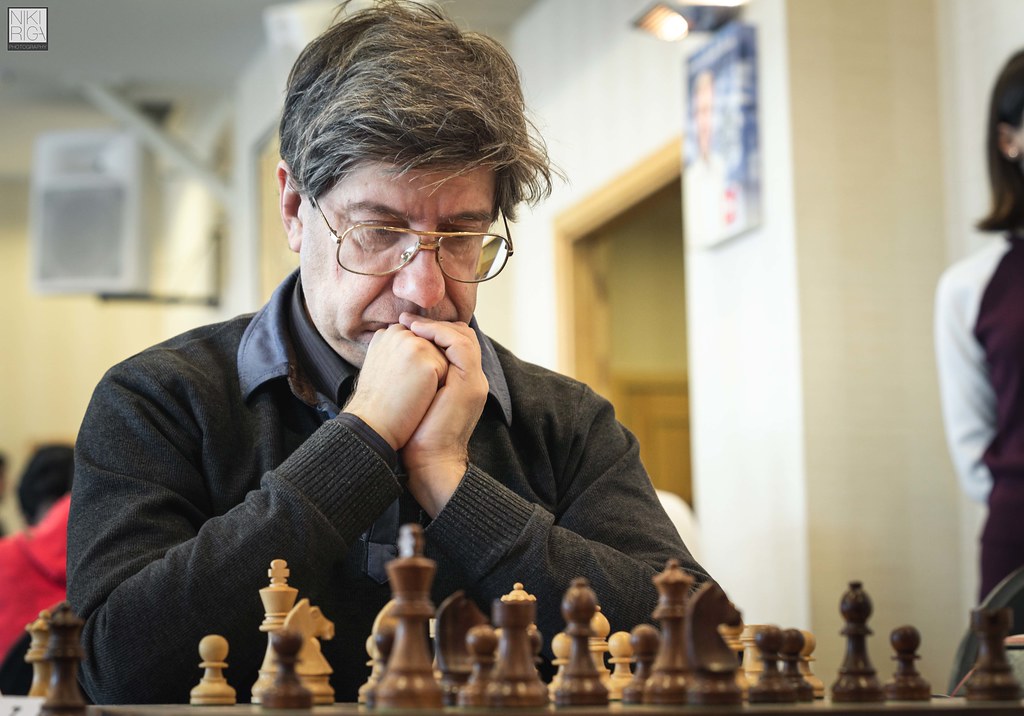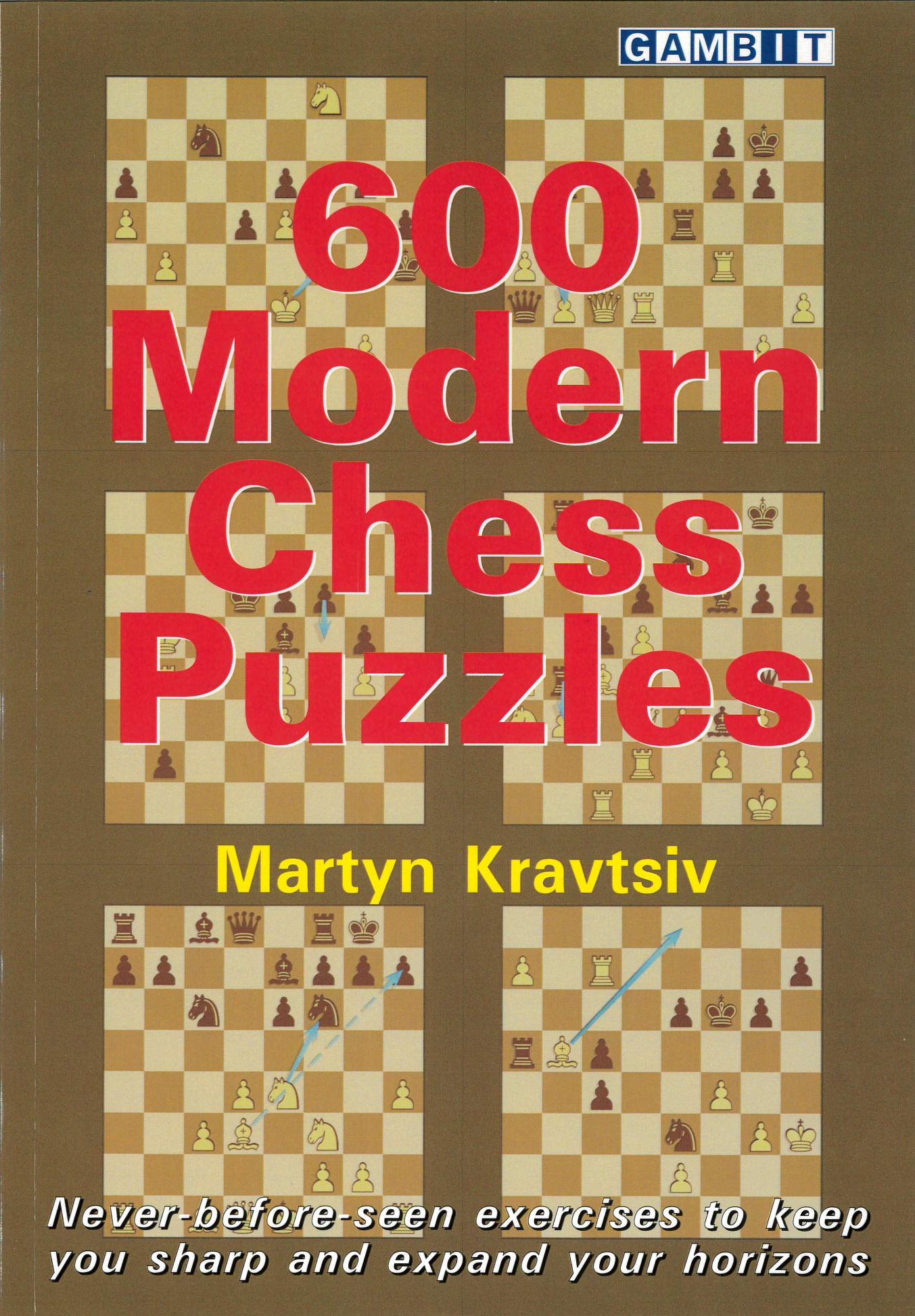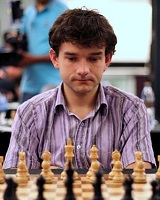
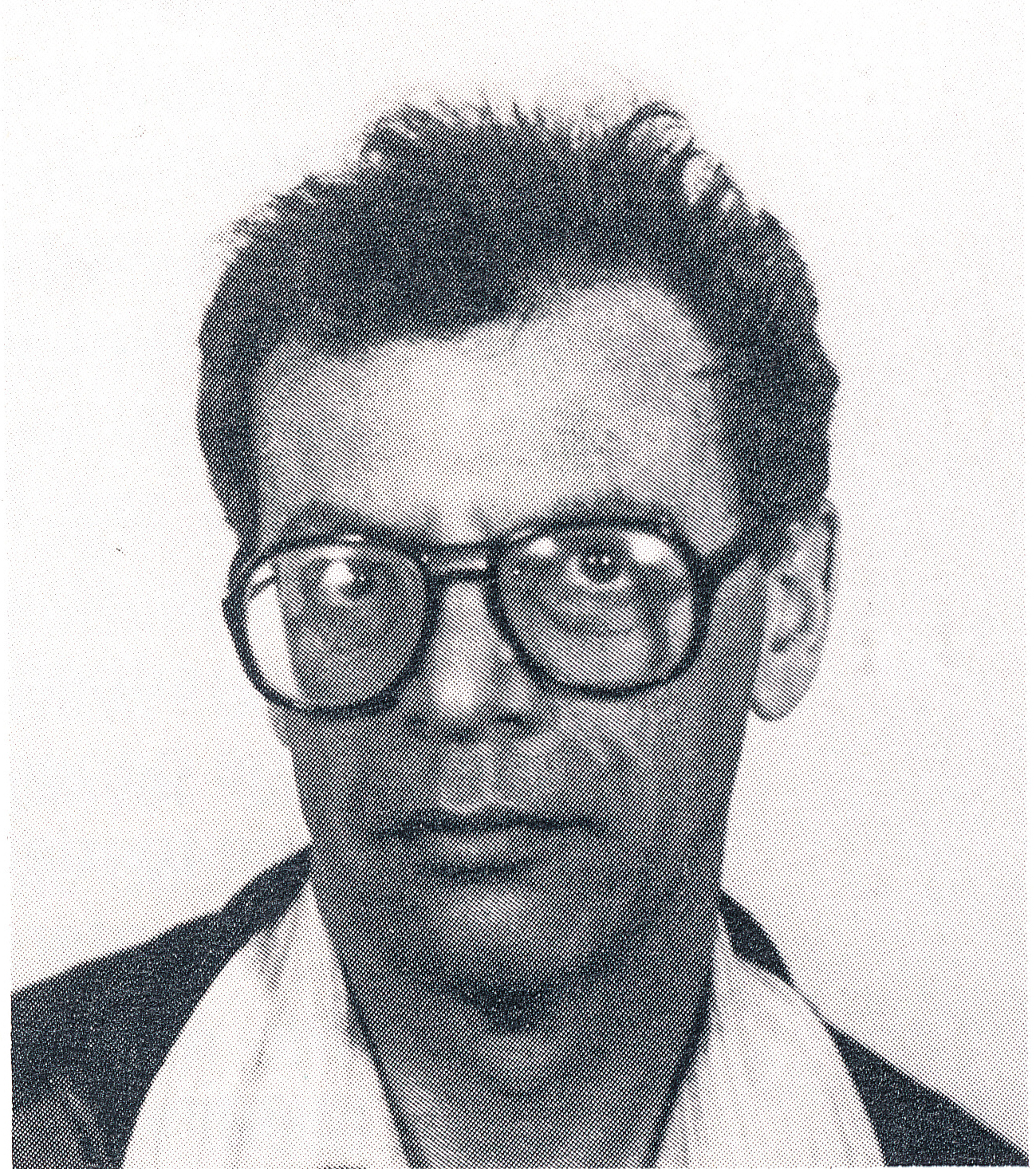
John Upham is the founder of British Chess News, staff photographer and the IT Manager.
John performed similar roles for British Chess Magazine from 2011 until 2015.
John is an English Chess Federation accredited coach and has taught in schools and privately since 2009. John started chess relatively late(!) at the age of twelve following the huge interest in the Spassky-Fischer World Championship match in 1972.
John is Membership Secretary of Camberley Chess Club and an ordinary member of Crowthorne and Guildford Chess Clubs.
John plays for Hampshire and for 4NCL Crowthorne.
John is Secretary of the Hampshire Junior Chess Association and the Berkshire Chess Association and manages the Chess for Schools partnership.
Memorable Games of British Chess, Neil Hickman, Amazon Publishing, 3rd September 2019, ISBN-13 : 978-1794053564
From the back cover:
A collection of the classic games of British chess, including one or two which, though truly memorable, are by no means masterpieces; with a few more included by way of a little light relief. We shouldn’t be serious all the time, even at the chess board.
Neil is a retired county court judge who, after living in Bedford for over 40 years and playing for Bedford (and on Bedfordshire on occasions when they got desperate), now lives near Norwich and plays for Wymondham chess club.
Before going further please take this opportunity to Look Inside.
Despite being published in 2019 BCN was recently offered a copy of Memorable Games of British Chess and was unable to resist the chance to review this self-published Amazon book from Neil Hickman, a friend of Jim Plaskett.
The book is a paperback and of a size making it physically easy to read. Unlike some Amazon published efforts the paper is of decent quality (not yellowing) and the printing is clear. The diagrams are frequent and excellent of a decent size. Each diagram has a [Position after 24.0-0] type caption.
Many of you will be familiar with
British Chess Masters, Past and Present, Fred Reinfeld, George Bell and Sons Ltd., London, 1947.
and
A Treasury of British Chess Masterpieces, Fred Reinfeld, George Bell and Sons Ltd., 1950
and
British Chess, Pergamon Press, 1983. Editors : GS Botterill, DNL Levy, JM Rice and MJ Richardson, ISBN 0 08 024134 4
and especially
The English Chess Explosion (from Miles to Short), Murray Chandler & Ray Keene, Batsford, 1981, ISBN 0 7134 4009 0
which highlight successes by British chess players.
The authors book presents ninety OTB and correspondence games (which is a nice touch) covering the period 1788(!) to 2016 and selecting just this number must have been challenging to say the very least. Confidence in the book is derived early from a truly excellent List of Sources demonstrating an academic and studious attitude to the job in hand.
Each game is prefaced by background information on the game, venue, circumstances and details of the players all of which is most welcome. The book started well since the first game Bowdler-Conway, London, 1788 was unknown to myself. Instantly memorable however since Thomas Bowdler caused the creation of the verb “Bowdlerise” and the game was one of the very first recorded double rook sacrifices that is also discussed in the charming
Take My Rooks, Seirawan and Minev, International Chess Enterprises, 1991, 1-879479-01-X
To give you some idea of the annotations here we have game 66, Ligterink-Miles, Wijk aan Zee, 1984:
A wonderful finish to be sure.
and secondly we have Game 58 played in Luton in 1976 between Viktor Korchnoi and Peter Montgomery:
also delightful in its own modest way.
The other 88 games all have their own significance including games of historical significance covering many of the greats with detailed articles on this review web site.
The author clearly has done his homework and a nice touch is the listing for each game of where in the literature it had been previously annotated. The notes are chatty and friendly and not spoilt by reams of dull engine analysis. It was delightful to find mentions of British players who rarely get a mention such as Edward Jackson, Thomas Lawrence, Francis William Viney of the General Post Office, Herbert Francis Gook of HM Customs, Harold Saunders and Kenneth Charlesworth to name but a few.
Of course, the old favourites are given the treatment including Alekhine-Yates, Capablanca-Thomas, Bronstein-Alexander, Penrose-Tal etc plus our modern heroes such as Michael Adams, Luke McShane, Gawain Jones, David Howell, Julian Hodgson, Nigel Short and John Nunn.
I particularly like the annotations which include those from other notable authors and sources and in summary, this is a charming book that would make an excellent coffee table book for any chess enthusiast and you won’t be disappointed.
The Modernized Philidor Defense, Sergio Trigo Urquijo, Thinker’s Press, September 20th, 2021, ISBN-13 : 978-9464201208
From the publisher:
“Pawns are the soul of chess.” We have all heard this phrase more than once in our chess life and we owe it to the great French player François-André Danican, so-called Philidor, considered one of the best chess players of the 18th century.
It’s not surprising that with this way of thinking, he revolutionized chess, which until then was almost all about direct attacks on the king. With this, he also changed the way of understanding and playing openings, in which he introduced a new concept for the time – that the pawns should be ahead of the pieces.
Bearing this in mind, the defense he created can be much better understood, in which all these rules are fulfilled and the importance of the pawn structure is maximal.”
Sergio Trigo Urquijo
“Sergio Trigo Urquijo was born in the Basque Country (Spain) in 1989. He learned to play chess at age of six. As a junior he won local many championships from u-12 to u-18. He performed successfully as a player and captain of the Sestao Chess Club winning the national team Championship in 2012, 2013, 2016, 2017 and 2018, including 9 times Basque Team Champion.
He won the silver medal in the Portugal Club Cup in 2015 and has played in the European Club Cup in 2014. He is known as being a second of several grandmasters during many important evens.”
End of blurb.
As with every recent Thinkers Publishing publication high quality paper is used and the printing is clear. We were hoping that the excellent glossy paper of previous titles would be used for this one but never mind.
Each diagram is clear and the instructional text is typeset in two column format, which, we find, enables the reader to maintain their place easily. Figurine algebraic notation is used throughout and the diagrams are placed adjacent to the relevant text and each diagram has a “to move” indicator and a “position after: x move” type caption.
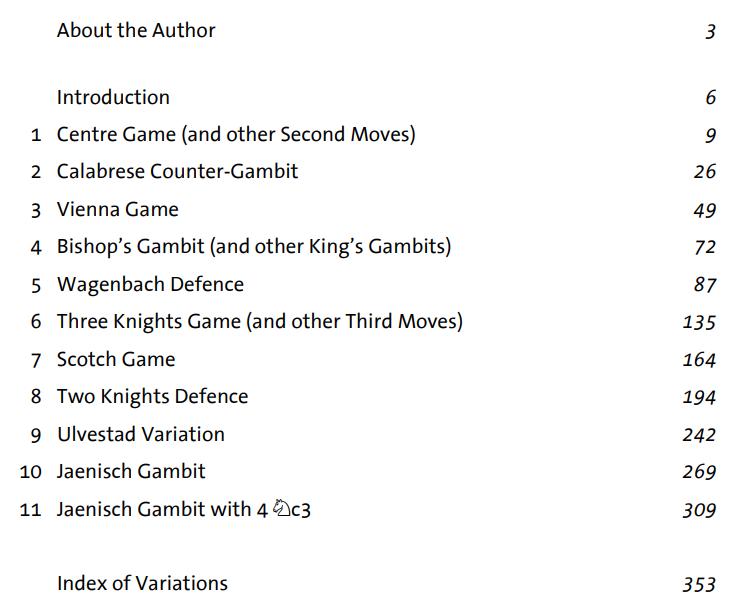
There is no Index or Index of Variations but, despite that, content navigation is relatively straightforward as the Table of Contents is clear enough.
This is the author’s first chess book and he is an active player of the Modern Philidor with the black pieces and has a healthy score of 70.6% with it.
Here is the detailed Table of Contents:
Table of Contents : The Modernized Philidor Defense
It is strange to think that the “Modern Philidor” has more or less stepped into the main stream of defences to 1.e4 from a time of relative obscurity. This 2021 tome from Sergio Trigo Urquijo is the latest on 1…d6 since around 2016. One of the first questions I wanted to answer was “Does this work cover the off-shoot Lion Defence?” The characteristic of the Lion variant is that Black plays an early h6,g5 and re-routes the d7 knight to f8 and then g6 and maybe f4. This book does not cover this variant.
The critical lines appear in chapters 15, 14, 12 and 10 since I don’t regard the queenless middlegames as particularly critical, they are simply at least equal for Black.
The core start position is
and Chapter 15 examines the tabiya
emphasizing that a4 is almost always going to happen these days compared with 7.Re1 (chapter 14) of previous times.
Somewhat surprisingly the author recommends the capture 7…exd4 rather than more expected and popular 7…c6 in order to activate the d7 knight. He suggests using the c6 square for a knight rather than the usual gradual queenside pawn push from Black. Interesting. From either White recapture the author provides a great deal of detailed analysis suggesting that the move seven capture is a sensible alternative to 7…c6.
Various seventh move alternatives are discussed in Chapter 13 of which 7.dxe5 might be the most popular.
A significant chapter is 12 covering the various important sacrifices on f7. Again, new analysis is introduced demonstrating that Black emerges with better chances after any of the f7 tries. This gives me an excuse to include:
which is probably one of the most well-known and entertaining games in this line.
Chapter 10 considers Alexi Shirov’s attempt to blow Black off the board with one of his signature g4 ideas:
Any player of the Modern Philidor must take this line seriously and the author provides a great deal of fresh ideas and analysis of how to combat 5.g4.
At lower levels the early exchange of queens following 4.dxe5 has to be respected despite its rare appearance at the elite level and at 59 pages Chapter 8 is the largest chapter.
Curiously, after the easily most popular 6.Bg5 the author eschews the common wisdom to play 6…Be6 (which scores best for Black and is easily the most popular) and recommends the curious 6…Nbd7 allowing 7.Bc4
I find it odd that the author does not discuss the reasons for recommending 6…Nbd7 over 6…Be6. 6.Bg5 then gets a mere seven pages of treatment in little detail. I have to say that I am not convinced and that this section deserves more work.
Moving on to the runner-up in the popularity stakes, 6.Bc4, there is greater depth and here 6…Be6 is selected rather than the increasingly popular 6…Ke8 of Zurab Azmaiparashvili which is entirely playable and the choice of the elite players.
Remaining chapters cover such important ideas for White as 4.Nge2, 3.f3 so that nothing important is left out.
In summary this work is a comprehensive repertoire book for Black for those players wishing to employ the trendy Modern Philidor (but not the Lion variant).
I very much like the treatment of 7.a4 and 7. Re1 with new ideas for Black avoiding the conventional slow …c6 and queenside expansion strategy using active piece play as an alternative. The 5.g4 treatment is detailed as is the sacrifices on f7 chapter.
I’m slightly less convinced of the queenless middlegame ideas and it seems to me that the the author is attempting to be novel for the sake of it: this might not be the way forward.
However, the title of the book includes “Modernized” and therefore the book “does what it says on the tin” and cannot be criticised for that reason. As a player of 1…d6 I would definitely buy and enjoy this book.
John Upham, Cove, Hampshire, 10th November, 2021
John Upham
Book Details :
Hardcover : 410 pages
Publisher:Thinkers Publishing; 1st edition (20 September 2021)
Forgotten Genius – The Life and Games of Grandmaster Albin Planinc, Georg Mohr & Adrian Mikhalchishin, Thinker’s Publishing, 20th September 2021, ISBN-13 : 978-9464201291
From the publisher we have:
“Albin Planinc was born in the middle of the Second World War, on 18th April 1944, in the little village of Briše, near the small town of Zagorje ob Savi, approximately 30 kilometers from Ljubljana, the capital of Slovenia. He spent his childhood with his mother Ljudmila (unofficially Milka), a simple, uneducated woman who earned money from various unskilled jobs’.
This fascinating biography of over eighty-five annotated games and stories are being presented by grandmasters Georg Mohr and Adrian Mikhalchishin. It covers Planinc’ entire life and chess career, including his most fascinating games. This fitting tribute of a forgotten chess genius should be found in anyone’s chess library. Thanks to this colorful book Albin Planinc will continue to inspire us all and will keep his spirit alive.”
GM Albin Planinc, circa 1973
About the authors we have:
“Georg Mohr was born in Maribor, Slovenia in 1965 becoming a Grandmaster in 1997. He joined as a member of the FIDE Trainers Commission from 2002, becoming a FIDE Senior Trainer in 2004 and a FIDE International Organizer in 2011. Georg has been a professional chess trainer for many years. He was coach and captain of Slovenian national team from 2003 – 2010 and since 2011 he has been Turkish national youth trainer. He is a chess writer and was editor of Slovenian chess magazine Šahovska Misel from 1999 and editor of Fide Trainers Commission trainers’ surveys. He is also an organiser of chess events acting as tournament director of the European Club Cup (Rogaška Slatina 2011), the World Youth Championship (Maribor 2012) and the World Senior Championship (Bled 2018). This is his second book for ‘Thinkers Publishing’.
FIDE Senior Trainer Georg Mohr
Adrian Bohdanovych Mikhalchishin was born in Lvov, Ukraine in 1954 and became a Grandmaster in 1978. In 1995 he took Slovenian citizenship and became a FIDE Senior Trainer from 2002 and was chairman of FIDE Trainers Commission from 2009. Adrian was a trainer of many famous chess players. Amongst others he was in Anatoly Karpov’s team during matches with Garry Kasparov. He has worked with Maja Chiburdanidze, Nana Aleksandria, the Polgar sisters, Alisa Maric and Nana Dzagnidze. He was coach and captain of the national teams of Slovenia and the Netherlands. In recent years he has been coach of the Turkish woman team. He has written many chess books and thousands of articles for many chess magazines. This is his second book for ‘Thinkers Publishing’.”
FIDE Senior Trainer GM Adrian Mikhalchishin
Albin Planinc (1944-2008), the late Slovenian grandmaster, was an extraordinary chess player and so the title ‘Forgotten Genius’ is not hyperbole.
Planinc’s games are characterised by enormous energy and by creative, daring sacrificial play. Mohr and Mikhalchishin have selected eighty-six of his best games for this volume.
They assert rightly on page 9 that ‘the reader of this book will soon discover that these games are not commonplace. They are imbued with incredible energy, interwoven with so many imaginary climaxes, with so much of what most people think of as beautiful in chess’.
It is very much a labour of love as Mohr, himself a Slovenian grandmaster, sees Planinc as the player who inspired him to dedicate his life to chess. However the book is not only games; plenty of biographical material is provided.
Indeed, the book starts with a brief synopsis of Albin’s childhood positing that Albin’s unidentified father may well have been a German soldier. Hence it is reasonable to speculate that Albin’s childhood was clouded by shame and stigma as well as being marred by the evolving mental illness of his mother, Ljudmila.
Parallels with a certain Robert James Fischer are suggested. Both players nursed their troubled childhoods with a love of chess. However the authors suggest on page 27 that ‘there was an important difference between him [Planinc] and Fischer. While the American was content with victories, Planinc was never content with victory itself. It needed an accessory, an aesthetic input, preferably one that would turn chess games into works of art’.
The next sections of the book offer a year by year selection of games from 1961-1979 interspersed with further biographical material. All the classics are there (v Bogdanovic 1965, v Matulovic 1965, v Ljubojevic 1971,
and Minic 1975)
and most notably his game with Vaganian from Hastings 1974/75 which involves the charming manoeuvre Na1 followed by a crisp Queen sacrifice.
The games are annotated with plenty of explanation. It should also be noted that the book is sumptuously produced with plenty of photographs and a typeface and layout pleasing to the eye. However more diagrams would have been appreciated. Furthermore an index of players would have been most useful.
The book ends with the revelation that Albin spent the last 20 years of his life in and out of institutions playing very little chess. This part of the book is handled sensitively and compels me to dig deeper into the creative genius of Albin Planinc. This tome is hence a welcome addition to chess literature.
Forgotten Genius – The Life and Games of Grandmaster Albin Planinc, Georg Mohr & Adrian Mikhalchishin, Thinker’s Publishing, 20th September 2021, ISBN-13 : 978-9464201291
I was surprised to hear of the sponsorship deal between FIDE and Establishment Labs. If this is the only sponsor FIDE can find, after the success of The Queen’s Gambit and the increase in the number of women playing chess online, they need to seriously improve their commercial game.
While the money will doubtless be welcome to female professional players, a deal with a company whose main focus is breast enlargement sends all the wrong messages and potentially exposes the promotion of women’s chess to ridicule and could inhibit other potential sponsors.
I am writing in support of my candidature for the role of ECF Chair of Governance.
During the recent past I have been subjected to a campaign of disinformation and downright untruths by Mike Truran and John Reyes and I am writing to set the record straight on both my record as Director of Women’s Chess and my qualifications for the role I am standing for.
Mike Truran has tried to argue that my time as Director of Women’s Chess has not been a success. Mr. Truran is currently undergoing formal investigation for this assertion and is the subject of a second complaint about his behaviour from another ECF Director.
He is without doubt a divisive figure who has caused division and unrest in the ECF Board.
I attach my election statement herewith which demonstrates my record in office.
Clearly, Mr Truran does not share my wish to improve the position of women in English chess. As you can see from the ECF Board minutes in 2018, at his initiative, the post was abolished
I have also had sight of a document from Mr Reyes where he claims that I have no experience of Governance and Government for this role. This has been repeated by other supporters of the status quo. As it happens, I am far more experienced in Governance and Government than my opponent.
I outline some relevant qualifications and experience
Honours degree in Governance/Politics
Worked with 2 UK Prime Ministers and several Cabinet Ministers on policy development and implementation.
Worked with and continue to work with the United Nations and UNEA/UNEP
Worked with and continue to work with European Union bodies
Chair a major EU-wide Committee
Leader of and the most senior political adviser to major UK Local Authorities including those with budgets of around £2 Billion per annum and a senior member of the Local Government Association.
I could list many more, but just wished to give these few examples to counter the on-going smear campaign against me by Mr. Truran and Mr. Reyes.
BCN remembers Colin Russ who passed away on Wednesday, September 22nd 2021.
This news was revealed to the English Chess Forum by David Sedgwick as follows:
I have been notified by the British Chess Problem Society that Colin A H Russ died on Wednesday 22nd September 2021 at the age of 91. He had been in hospital for some weeks, with no hope of recovery.
Colin Albert Henry Russ was born on Wednesday, March 19th, 1930 in Croydon, Surrey. His father was Albert HW Russ (born November 1st, 1898) who was an instructor of woodworking crafts. His mother was Delcie A Russ (née Dye, born November 7th, 1901) who carried out unpaid domestic duties.
According to the 1939 register Colin was listed as a scholar and the family resided at 42, Poplar Road, Sutton, Surrey which is now SM3 9JX.
42, Poplar Road, Sutton, Surrey which is now SM3 9JX
In 1972 Colin, aged 42, married Zsuzsanna Kelemen in Sittingbourne, Kent.
Colin Russ was a chess expert and edited a chess problem column in the CHESS magazine. He wrote the anthology “Miniature chess problems from Many Lands” in 1981 and it was republished several times, for instance in 1987 under the title “Miniature chess problems from Many Countries”.
Miniature Chess Problems From Many Countries, Colin Russ, A&C Black, London, 1987, ISBN 13: 9780047940248
John Ballard wrote the following of this book:
An unusual book in several respects. Firstly the positions are miniatures, that is 7 pieces or less. Secondly the solutions are in algebraic notation for the most part, with the main line being also given in descriptive. Lastly many of the ‘ usual suspects’ in the compostion field are not there, which meant for me learning new names and of course problems.
Familiar names here are Cheron, Dijk, Fleck, Havel, Kipping, Kubbel, Lipton, Loyd, Mansfield, Marble, Skinkman, Speckman, and Wurzburg. So that leaves dozens of composers (including one allegedly by Wojtyla, later to become Pope John Paul II), as a moderate solver I have never come across before, a special delight.
My favourite 3 mover is the one by Sam Loyd that starts with a check, and has a spectacular queen sacrifice. Sam reckoned this was a mere trifle, composed in a ride downtown, but it is a thing of beauty, and I bet many problemists wish they were as quick and adept at composing as The Puzzle King?! There is an interesting introduction to solving, not too heavy, but comprehensive enough. Many of the solutions are given with helpful comments.
The layout of the work is that 3 or 4 problems are given on the left page, and solutions are to be found opposite on the right. If the book is reprinted I would suggest the solutions be removed to an appendix, to remove the temptation for intermittent solvers like myself to take a sneak peak if a problem was proving intractable!
He served the British Chess Problem Society in various roles, as President from 1987 to 1989, Secretary from 1980 to 2001, and delegate to the PCCC from 1987 to 1994. He was also responsible for introducing the late Michael Ormandy to the Society, which led to the establishment of The Problemist Supplement.
The problem below was selected in the FIDE Album 1956-1958:
Colin was an accomplished over-the-board player and has 117 games recorded in MegaBase 2020 spanning from 1993 to June 2009. Most of these games arise from the Seefeld (Austria) Open and the Jersey Open in St. Helier.
In England Colin represented the Athenaeum club and remained active until 2015.
David Sedgwick went on to write:
Colin, always genial, amusing and engaging, was for decades a pillar of the BCPS and for many years its Secretary. He was a considerable composer of problems and he published a number of books on the subject.
As a player he was of good Club standard, BCF 160 -170 or thereabouts. He remained active until 2015, although his strength dropped off somewhat in the later years.
I got to know him at the Hastings International Chess Congress 1991 – 1992. One of the players in the Hastings Premier that year was the Russian GM Alexei Suetin, who spoke German but not English. I discovered that Colin spoke German well and he proved invaluable as a translator. (I learned only today that by profession he was a university lecturer in German.)
During that Hastings Premier we arranged to have a ceremonial first move made each day by a “name”. Colin was delighted to be chosen for this honour.
(With acknowledgments to Christopher Jones, who succeeded Colin as BCPS Secretary and remains in office.)
Elsewhere on the BCN Facebook group Henrik Mortensen wrote:
He was a great man. In the tournament in Oostende 1992 he beat me with Black in the first round (19th. September 1992). He was much lower rated than me, so … Later in the tournament my travelmate and I both had problems with our cards and he kindly offered to lend us money. Our problems were solved, but it was very kind of him to offer his help. HVIL I FRED.
His best win is probably this one:
but he will be best remembered for his contribution to the world of problems.
Putting the Record Straight: Answering John Reyes and Mike Truran
Statement by Malcolm Pein, 20th September, 2021
For British Chess News / Immediate Release
The recent message from ECF Silver Members’ Representative John Reyes, posted on the forum is such an awful misrepresentation of my position that I can only conclude it’s deliberately designed to mislead. It’s quite an intellectual leap for John Reyes to read my election address, which lists, as the first possible use of the BCF Legacy assets as:
‘1) To build the reserves to an amount specified by the Finance Committee, likely £100,000’ and allege that I intend to, and I quote the Silver Members’ rep here:
“If you feel you want to blow the pif funds and spend money on development officers till the money is gone and it’s will vote (sic) for Malcolm but if you want the chess trust to kept (sic) hold of the money and used calculated and logic risk (sic), then vote for Mike”
Perhaps John couldn’t work out that I was referring to the ECF reserves which had shrunk to a dangerously low level of 33K last time the Board were updated. I am proposing allocating about 20% of the legacy assets (circa £200K) to reserves and then about 20% into engaging Development Officers with a well-defined role that includes fund raising.
As for his:
“Malcolm wants to transfer circa £200K into the ECF from the BCF/PIF according to his Election Address, how much of that would be needlessly lost to tax?”
Obviously I have considered this. I will shortly publish a road map of how these assets can be deployed to the benefit of the ECF while minimising any tax liability. We are fortunate to have an ECF NED who is a tax lawyer and I have been consulting him on this matter.
Silver Members really deserve better representation.
I would also like to set the record straight about a number of misleading statements sent out by Mike Truran in a ‘message to Council members’ on Sunday 19th September which do not stand up to basic fact-checking.
FACT-CHECK #1: Mike Truran claims that funds transferred to charitable funds outside ECF control are subject to more oversight.
NOT TRUE – It’s different oversight. ECF nominees to the Chess Trust & the John Robinson Youth Chess Trust are not accountable for how they spend funds to the ECF Board & Council. I will be proposing safeguards for any future transfers of BCF legacy assets to the Chess Trust.
In contrast, the spending of funds held directly by the ECF is democratically controlled by the ECF Board, ECF Council & the ECF Finance Committee.
FACT-CHECK #2: Mike Truran claims that I plan to use the Permanent Invested Funds transferred from the trust funds back to ECF control on “uncosted tactical adventures.”
NOT TRUE – All of my proposals to develop & grow English chess will be carefully costed out & put to the Board & PIF Trustees and run alongside a fund-raising campaign to generate income from private sponsors and government – a desperately-needed campaign that has been noticeable by its absence under this CEO.
FACT-CHECK #3: Mike Truran claims that the existence of three employees of the non-profit educational charity Chess in Schools and Communities on the 12-member ECF Board would represent a threat to good governance.
NOT TRUE: Firstly, only 2 CSC candidates are standing for voting Director positions, the other stands for Chair of Governance. Mike seems to be a little forgetful if not hypocritical here. If it is a governance problem having ECF directors from the same organisation, why was this not raised at any time in the three years prior to October 2020, when three 4NCL Directors (Mike Truran, Alex Holowczak and David Thomas) sat simultaneously on the ECF Board?
Also, as an educational charity, CSC is mainly focused on teaching chess in primary schools, it rarely interfaces with the ECF, while 4NCL is a for-profit private limited company, whose leagues and congresses compete to an extent with ECF events and already give it lots of votes at ECF Council.
FACT-CHECK #4: Mike Truran claims that I recently stated I would hand over to a new CEO after a ‘time-limited period,’ rather than serve a full term in office.
NOT TRUE: Of course, if elected I intend to serve the full term. This may refer to an email exchange from July 28, nearly two months ago, at a very early stage of negotiations between me, Mike and the Non-Executive Directors, when I thought it was still possible to reach a compromise on the way forward without a contested election. I made strenuous efforts to reach agreement with Mike, but his rejection of every offer to meet him halfway has left me no option but to stand for CEO to achieve the objectives that I believe are in the best interest of English chess.
There are, however, two circumstances in which I would consider leaving the post early:
1) Arkady Dvorkovich decides it was all a mistake, he wants to jack it in and he asks me to replace him as FIDE President.
2) Everton win the Premier League.
BCN remembers IMC James Adams who passed away aged 91 on July 27th, 2013 in Worcester Park, Kingston Upon Thames, Surrey.
James Frederick Adams was born on September 4th, 1921 in Lambeth. His parents were James J Adams (DoB: 10th October 1884) who was a plumber’s mate and Lucy M Adams (née Ayres, DoB: 22nd December 1886). He had an older brother who was William A Adams who was also a plumber’s mate and and Uncle George T (DoB: 8th March 1882) who was the plumber who presumably had many mates.
At the time of the 1939 register James was a telephone operator.
The Adams family lived at 52, Broadway Gardens, Mitcham, Surrey, CR4 4EE (rather than 001 Cemetery Lane)
52, Broadway Gardens, Mitcham, Surrey, CR4 4EE
From CHESS, 1991, March, page 91 we have:
“Whatever Happened to Human Effort?
I am giving up postal chess after 57 years for the reason that, like Jonathan Penrose and recently Nigel Short, I am increasingly disturbed over the increase in the use of computers in correspondence play. It is impossible to prove but one has the feeling that many opponents see nothing wrong in using a machine and I see no pleasure in having to bash one’s brains out against a computer. I am happy in the knowledge that I won my FIDE IM title long before dedicated chess computers were ever heard of. I shudder to think of the proliferation in the use of computers in a competition like the World CC Championship. I don’t wonder that Penrose objects.
Unfortunately, this is the sort of thing against which it is impossible to legislate. The BCCA has banned their use but it doesn’t mean a thing.
The latest monstrosity is where Kasparov plays a match against another GM and both are allowed to use computers whilst the game is in progress. To me, this is absolutely shocking. Dr. Nunn admits to the use of computers in the compilation of one of his books and I see that even ordinary annotators use a programme like Fritz to assist with their notes to a game. What happened to human effort?
Anyway, I have about five postal games left in progress and when they are finished I will call it a day.
Jim Adams
Worcester Park, Surrey
So who was Jim Adams?
From British Chess (Pergamon Press, 1983) Botterill, Levy, Rice and Richardson we have this:
The smoke-laden atmosphere of the chess rooms of St. Bride’s Institute, in the heart of the City of London, could hardly be considered a positive encouragement to any ambitions to become an International Master, but certainly this was so in my case. Let me explain the sequence of events.
Face-to-face, or over-the-board chess, had been my main interest since my war-time days as a member of the Civil Defence. Passing time between air-raids led to the adoption of many pastimes and an absorbing game such as chess was ideal. Fortunately for me, one of my ambulance station colleagues was a very fine player named A. F. (Algy) Battersby, later to become General Secretary of the British Correspondence Chess Association.
He had spent the greater part of the First World War playing chess in the Sinai Desert and, with his tremendous experience, he brought to the game strategical ideas and tactical skills that, in those early days, were well beyond my comprehension.
Arthur Frank Battersby, BIRTH 2 JUN 1887 • Brixton, Surrey, England DEATH 11 APR 1955 • Surrey, England
‘Algy’ was kind enough to say some years afterwards that I was ‘the best pupil he ever had’, but whether this was true or not, he certainly passed on to me the theoretical groundwork that was to be so useful to me in later years. Among other books, he encouraged me to purchase the Nimzowitch classic My System, with the kindly warning that I would not understand it at first reading but would perhaps get some grasp of the ideas at a second or third attempt.
My System was a revelation to me and proved to be the greatest help to an understanding of the game that I had ever received. Up to my fortuitous meeting with ‘Algy’, my games had been of a simple tactical nature. Pieces were left en prise, oversights and blunders were the order of the day and an actual checkmate came as a surprise not only to the loser but often to the winner as well!
To win a game through sheer strength of position was completely unknown to me, but ‘Algy’ and Nimzowitch changed all that! Under their combined influence my general playing strength improved enormously and I was soon second only to ‘Algy’ in such tournaments as were held in my home town of Mitcham, where the local chess club was revived after the war.
Our club soon attracted a few strong players and we played regularly in county competitions and, later, the London Chess League. During those years chess was an absolute joy to me and all my spare time was spent at the local club or at chess matches, whilst Saturday afternoons were spent at the now defunct Gambit Chess Room, in Budge Row, where I passed countless hours playing chess, pausing only to order light refreshment from the indefatigable ‘Eileen’, a waitress of somewhat uncertain age who almost certainly regarded all chess players as raving lunatics!
The ‘Gambit’ could never have been a viable commercial proposition on what we bought and it was eventually thought necessary to introduce a minimum charge depending on the time of day. Gone for ever were the days when one could spend the entire evening playing chess, analysing, or having a crack at the local Kriegspiel experts, all for the price of two cups of tea and the occasional sandwich. Sadly, it all disappeared in the aftermath of the
war.
By 1950 I had become Match Captain of the Mitcham Chess Club and, of course, responsible for arranging various matches. Getting a team together was not difficult as the club membership was quite large for such a lowly club. The playing standard too was surprisingly high and whilst I, myself, was fortunate enough to win the club championship several times it was never easy.
On one occasion a ‘friendly’ match had been arranged with the BBC and all was well until a ‘flu epidemic a few days before the date of the match laid most of the Mitcham players low. On the morning of the match I was left with five players for a 1O-board match! As it was only a ‘friendly’ and in order to avoid disappointing all concerned I took myself off to the Gambit and recruited a few of the ‘regulars’ to help us out. It must be remembered that most of the strongest players in London frequented the ‘Gambit’ and since those pressganged into service were extremely strong players it seemed only courteous to give them the honour of playing on the top five boards, leaving the Mitcham ‘stars’ who, coincidentally, were our usual top board players, to bring up the rear.
Now this composite team, in my judgement, was probably good enough to win the London League A Division and it was no surprise when we won 10-0. Only a friendly indeed! Any Match Captain would have given his queen’s rook for such a team but, whilst the BBC players were warned beforehand of the composition of our team, they were not amused and further matches were not arranged!
Mr A Corish (right), receives the Chess Champion cup from Mr J Adams. 18th September 1958 from the Merton Advertiser, Photographer unknown.
Round about this time I was playing regularly in London League matches, nearly all of which were held at St. Bride’s Institute, where my story began. A non-smoker myself, I found the conditions intolerable. The place seemed to be completely airless and Government warnings about the dangers of smoking did not exist! not exist! Consequently, the entire playing area was reminiscent of the Black Hole of Calcutta! Always susceptible to headaches, I began to return home physically ill after every match. If this was playing chess for pleasure then something was wrong!
Mr A Corish (right), receives the Chess Champion cup from Mr J Adams. 18th September 1958 from the Merton Advertiser, Photographer unknown.
However, salvation was at hand. Ever since the war I had been playing a few games by post under the auspices of the BCCA (British Correspondence Chess Association ), and my somewhat traumatic experiences at St. Bride’s were beginning to make postal chess a far more attractive way of playing the
game. And so my chess career started all over again!
My correspondence chess activities up to the 1960s were not particularly successful, although I had managed to win three Premier Sections and finish
equal third in the British Correspondence Championship of 1962-63. However, during that time a group of BCCA players, of whom I was one, were
becoming somewhat dissatisfied with the Association’s attitude towards international chess and eventually a splinter group formed a rival organization which became known as the British Correspondence Chess Society.
The BCCS was, almost from the start, internationally orientated and it was possible to play foreign players, many of master strength. With strong opposition it seemed easier to improve and my first real success came in the Eberhardt Wilhelm Cup in 1966-67 when I was able to obtain the lM norm giving me a half=master title. However, gone were the days when a superficial analysis was enough before posting a move, which even if it was not the best, was generally good enough to hold one’s own with even the best of British CC players at that time. Fortunately for British chess, the situation is now vastly different and the strongest British CC players are recognized as being among the best in the world.
The Eberhardt Wilhelm Cup consisted of players all of master or near-master strength and it was in one of the games I played in this tournament that I played probably the most surprising move of my life.
To win the full IM title involved getting one more IM norm and happily for my prospects, I was selected for the British team in both the Olympiad Preliminary of 1972 and the European Team Championships of 1973.
Although I was trifle unlucky to miss the IM norm by half a point in the European Championship I finally clinched the coveted IM title in the Olympiad Preliminary which, although starting a few months before the European tournament, went on so long that I was in suspense long after the European games finished.
One of my most interesting games in the European Team Championship of 1973 was against F. Grzeskowiak, himself an IM and a feared attacking player.
The Modernized Modern Benoni, Alexey Kovalchuk, Thinker’s Publishing, 2021, ISBN-13 : 978-9464201048
From the publisher:
“The Modern Benoni is one of the most controversial but also dynamic answers to 1.d4. This opening remained the favourite of famous attacking players as Tal, Kasparov, Gashimov and Topalov. From the outset, Black creates a new pawn structure and deploying his active piece play against White’s central majority.
In his book Alexey Kovalchuk focuses on a set of new ideas and deep analyses supported by his silicon friends. His book supplies all Black needs to know to fight for the initiative from move two!”
FM Alexey Kovalchuk
“Alexey Kovalchuk was born in 1994 in Russia and learned to play chess at the “late” age of 12. In November of 2017 he reached his highest Elo yet of 2445 and is considered an IM without the norms. Alexey has never had a coach having studied with the aid of books and other materials.
His tournament successes include winning the Rostov Championship in both classical and rapid. He is a three-time winner of the Taganrog Championship and has won prizes in many events including Taganrog, Togliatti, Astrakhan, Lipetsk, Kharkov and Donetsk. His reputation as a theoretician is well known and he has previously published a book on the Grünfeld Defense. Currently Alexey serves as a second for several grandmasters as well as coach for several aspiring students.”
End of blurb.
As with every recent Thinkers Publishing publication high quality paper is used and the printing is clear. We were hoping that the excellent glossy paper of previous titles would be used for this one but never mind.
Each diagram is clear and the instructional text is typeset in two column format, which, we find, enables the reader to maintain their place easily. Figurine algebraic notation is used throughout and the diagrams are placed adjacent to the relevant text and each diagram has a “to move” indicator and a “position after: x move” type caption.
There is no Index or Index of Variations but, despite that, content navigation is relatively straightforward as the Table of Contents is clear enough.
This is the author’s second book, we reviewed Playing the Grünfeld : A Combative Repertoire previously.
Here is the detailed Table of Contents:
Classical Main Line
Knight’s Tour Variation
Modern Main Line
Kapengut Variation
Nge2 Systems
Bg5 & Bb5 Systems
f4 System
Fianchetto Variation
Bf4 Variation
Sidelines
Anti-Benoni Systems
Before we continue we will declare an interest. We only play a couple of these positions from the White side and none from the Black side.
The Preface provides a couple of tremendous Tal games in which White is crushed in short order. The Introduction nicely provides an overview of the coverage of each of the main chapters.
Chapter 1 kicks-off with the so-called “Classical Main Line” which is initially reached via:
ending up at
as the tabiya position for this chapter. The author looks at various move 11 alternatives for White concluding that 11. Bf4 is the most troublesome for Black which scores 56.4% for White and features in 260 MegaBase 2020 games.
The approach is typically that of working through the moves of a variation in detail making reference to played games which is a Thinker’s Publishing “house style”.
Chapter 2 examines a favourite idea of Vladimir Kramnik for White namely the, at one time, incredibly popular 7.Nd2 i.e.
ending up at
which is discussed in detail.
The third chapter is dubbed the Modern Main Line (as labelled by Richard Palliser in his excellent Modern Benoni tome) and has White playing h3 instead of Be2 and placing the f1 bishop on d3 instead leading to
which may be arrived at in several different ways at which point Kovalchuk strong advocates the immediate 9…b5!? instead of the more familiar and less violent 9…a6.
Clearly this is a critical line for the Benoni and is given much detailed analysis. 9…b5!? has featured in 2123 MegaBase 2020 games and of these 727 are designated as “Top Games”.
Chapter Four brings the joys of the Kapengut Variation which was analysed in detail by Albert Kapengut in 1996:
and appears 1037 times in MegaBase 2020 with a white success rate of 57%.
After 7…Bg7 various ideas for White are examined.
As the Chapter Five’s title suggests various move orders are covered in which develops the King’s knight to e2 rather than f3 without playing f3 quickly.
For example:
Chapter 6 covers ideas for white involving an early pin with Bg5 or an early check with Bb5+ (but without f4) . The author considers neither of these to be dangerous for Black and provides analysis of his antidotes.
However, much more exacting is the daunting Taimanov Attack (dubbed by David Norwood as the Flick-Knife Attack such was its ferocity) which is examined in Chapter 7.
This famous line made popular in the 1980s begins
and there are 38 pages on this line alone. 9.a4 is given detailed treatment with the main line reaching:
which is then analysed thoroughly.
In the same chapter is the more modern treatment of 9.Nf3 (omitting a4) continuing to
where both 14.f5 and 14.Qe1 are looked at in considerable detail with the latter having the highest database hit rate.
Chapter 8 explores the somewhat innocuous Fianchetto Variation of 7.g3:
and this is given 19 pages of discussion.
The somewhat rare 7.Bf4 system is covered in Chapter 9 with 15 pages of text.
Chapter 10 “tidies up” with coverage of some rarer third and fourth move sidelines which as 3.dxc5 and 4.dxe6 whilst the final Chapter (11) looks at some White Anti-Benoni systems including where c4 is omitted or delayed.
All in all the author provides comprehensive coverage of all of White’s reasonable tries focusing on the critical main lines such as the fearsome Flick-Knife and Modern Main Lines.
This book surely is a must for any player of the Modern Benoni with the black pieces and will be invaluable for the White player who wishes to take Black on in the main lines.
It might have been helpful to sequence the chapters in some kind of order of precedence with perhaps the least significant ones first and then build-up to the most important ones. It is not clear to us that the sequence chosen has any significance since Chapters 1, 3 and 7 perhaps are the most critical variations and 8, 10 and 11 the least.
Any tournament player that either plays the Benoni or who faces it will benefit from this modernised approach.
Gawain Jones is an English grandmaster, twice British Champion and winner of the 2020 European Blitz Championship.
GM Gawain Jones at the 2013 London Chess Classic courtesy of John Upham Photography
From the publisher:
“Coffeehouse Repertoire is a 1.e4 player’s dream: an arsenal of ideas from a world-class grandmaster to surprise and confound your opponents, combining coffeehouse trickery with complete theoretical soundness.
In Volume 1, GM Gawain Jones shows how to put pressure on the Sicilian, Caro-Kann, Scandinavian and Alekhine’s Defences, using lines which feature a potent combination of surprise value, objective soundness and practical effectiveness.
The Coffeehouse 1.e4 Repertoire will be completed in Volume 2, which covers 1…e5, plus the French, Pirc, Modern, Philidor and other miscellaneous Defences.
Gawain Jones is an English grandmaster, twice British Champion and winner of the 2020 European Blitz Championship. He has defeated some of the world’s best players using the ideas recommended in this book.”
End of blurb…
Quality Chess live up to their name by being one of the few publishers who offer a hardback as well as softback version of all of their titles.
The production values are superb with a “McFarland-like” feel. Of course, you could save a few pence and go for the paperback version but we would definitely treat ourselves with an early Christmas present and savour the hardback. In addition, high quality paper is used and the printing is clear: excellent glossy paper has been used. The weight of this paper gives the book an even better feel to it!
The book can easily be laid flat next to the board and does not require weights to prevent it from “self-closing” (a particular bugbear of ours). Each diagram is clear and the instructional text is typeset in two column format, which, we find, enables the reader to maintain their place easily. Figurine algebraic notation is used throughout and the diagrams are placed adjacent to the relevant text.
A small (but insignificant) quibble: the diagrams do not have a “to move” indicator (but they do have coordinates). There is an Index of the Main Games section which is most welcome.
Before we take our first sip of coffee Quality Chess have provided a pdf excerpt.
As before, we are examining Volume 1 which provides a repertoire for White starting 1.e4 against the Sicilian, Caro-Kann, Scandinavian and Alekhine defences. Volume 2 is expected in September 2021 and will cover other replies to 1.e4
Gawain is a consistent 1.e4 player and has scored 67.1% according to MegaBase 2020. Having said that he has scored even more convincingly with other first moves!
This is his fifth book having written four previous volumes on the Sicilian Dragon and Grand Prix Attack.
The books main content is divided into two main sections, Sicilian Defence and Other Defences and these sections are further divided into eight chapters viz:
Carlsen Variation (of the Sicilian)
2…Nc6 3.Bb5
2…Nc6 3.Nge2
2…e6 3.Nf3
Move 2 Alternatives
Caro-Kann
Scandinavian
Alekhine
followed by a useful Index of Variations.
Before we continue further we have a warning. If, for you, the book title suggests a feast of dodgy gambits, tricks and cheapos to take to the chess club and online platforms then look away now. You will be disappointed.
Most space in Volume 1 is dedicated to ideas for White versus the Sicilian Defence and no doubt most would predict a Grand Prix Attack based repertoire from the author. Well, not quite.
Gawain recommends
and against 2…d6 we have the interesting
as favoured by Magnus Carlsen and Chapter 1 examines the less common positions that arise from this.
Here is an example:
Should Black prefer 2…Nc6 then the author provides both the Rossolimo Variation, 3.Bb5 (also examined by IM Ravi Haria) and the clever move-order Chameleon, 3.Nge2:
3.Nge2 is also an annoying move order nuance against Najdorf and Dragon experts.
Against 2…e6 Gawain advocates the flexible 3.Nf3 followed by f1 bishop development to either b5 or g2 dependant on what Black plays. For example:
For completeness Gawain devotes Chapter 5 to second move alternatives such as 2…a6, 2…g6 and even 2…b6.
Moving on to the Caro-Kann Gawain recommends the Exchange Variation but in really quite a novel way with an early jump of the f3 knight to e5. This is quite unusual and tricky to meet and CK players almost certainly will be quite surprised. He presents two related move orders:
and the more (according to GCBJ) outlandish:
breaking the “not moving the same piece twice in the opening guideline”.
An example game presented in the book is:
Next up is the Scandinavian Defence which quickly branches into 2…Qxd5 and 2…Nf6.
Against the former the author proposes the line in which White plays 3.Nf3 instead of 3.Nc3 and, at the right time, plays c4.
Here is a tough game in this variation:
For some time Scandinavian experts have realised that the c4 idea is tough to meet and probably therefore fear 3.Nf3 more than the routine 3.Nc3 getting in the way of the c-pawn.
Against 2…Nf6 Gawain recommends the “Modern Treatment” as dubbed by 2…Nf6 expert David Smerdon in his Smerdon’s Scandinavian from 2015 and the detailed analysis commences after:
Finally, we turn to the hyper-modern Alekhine Defence in which a more conventional approach based on the Four Pawns Attack is discussed.
Here is a significant stem game that Jones considers:
For each of Black’s move one replies Gawain presents an overview of the ideas including a “What We’re Hoping for” section. This is the followed by detailed theory with a few illustrative games sprinkled in. The discussion and explanations are friendly, clear and pragmatic talking about the responses one is likely to face rather than a torrent of engine analysis and “best move” labelling.
It is not clear who chose to use the word “Coffeehouse” in the book’s title. The repertoire choices are most definitely not speculative or bordering on unsound. This is a extremely playable set of recommendations and most are used by elite players in the current decade.
Our overall impression can perhaps be best conveyed by likening the repertoire to a collection of choices from the well-known “Dangerous Weapons” series from Everyman brought together under one roof.
We are convinced that, despite the title, this book will be found to be extremely useful by the strongest and club players alike. If you are a Blackmar-Diemer or Latvian Gambit fan then this, perhaps, it not the book for you.
We look forward to Volume 2 in September 2021 when Gawain gets to grips with 1…e5, 1…e6, 1…d6, 1…g6 amongst the remainders.
We focus on the British Chess Scene Past & Present!
This website uses cookies to improve your experience. We'll assume you're ok with this, but you can opt-out if you wish. Cookie settingsACCEPT
Privacy & Cookies Policy
Privacy Overview
This website uses cookies to improve your experience while you navigate through the website. Out of these cookies, the cookies that are categorized as necessary are stored on your browser as they are as essential for the working of basic functionalities of the website. We also use third-party cookies that help us analyze and understand how you use this website. These cookies will be stored in your browser only with your consent. You also have the option to opt-out of these cookies. But opting out of some of these cookies may have an effect on your browsing experience.
Necessary cookies are absolutely essential for the website to function properly. This category only includes cookies that ensures basic functionalities and security features of the website. These cookies do not store any personal information.