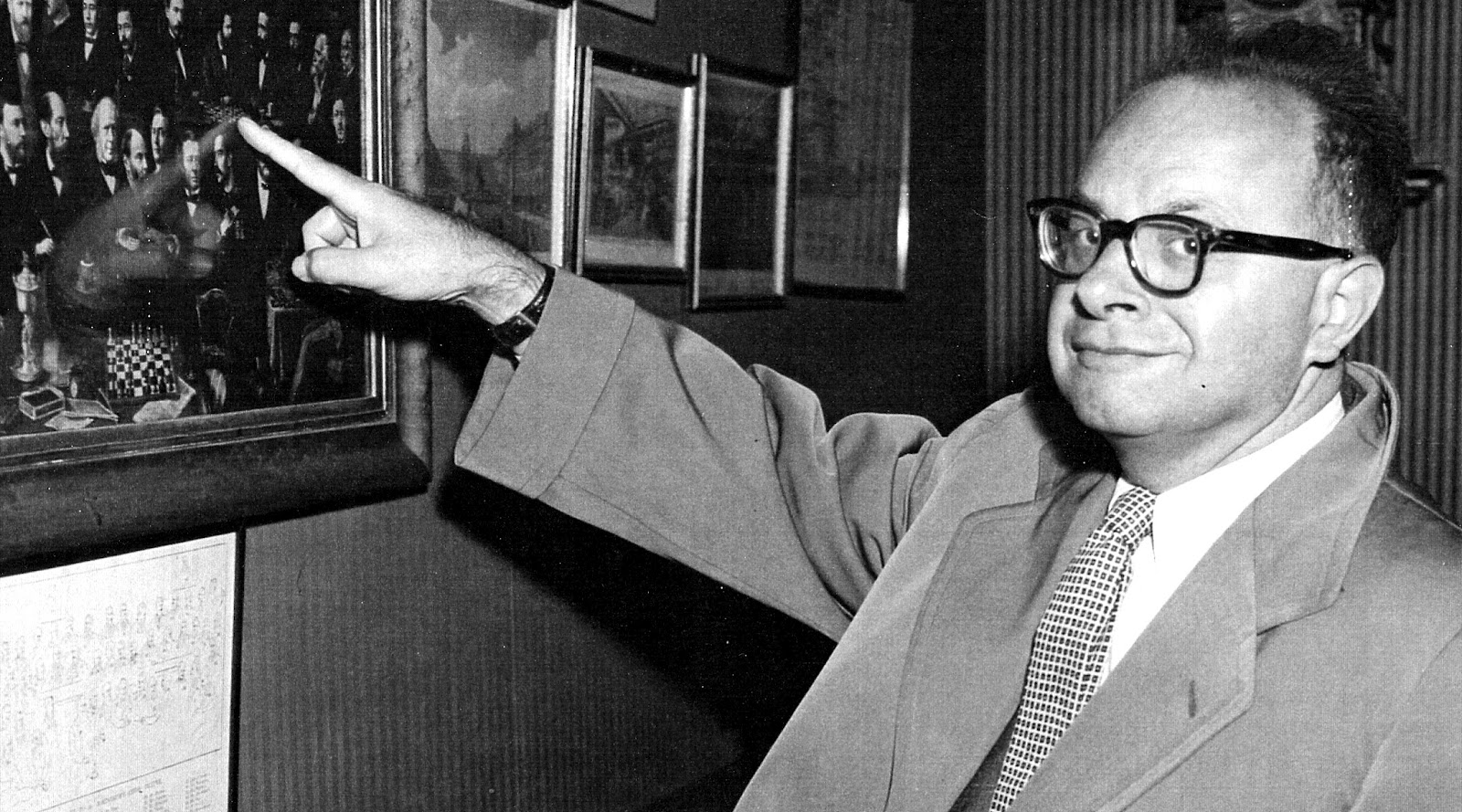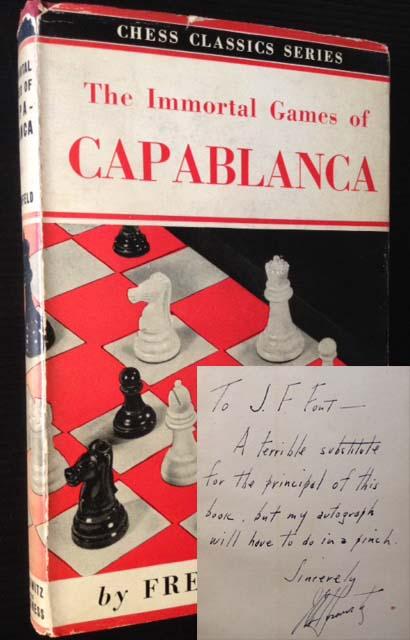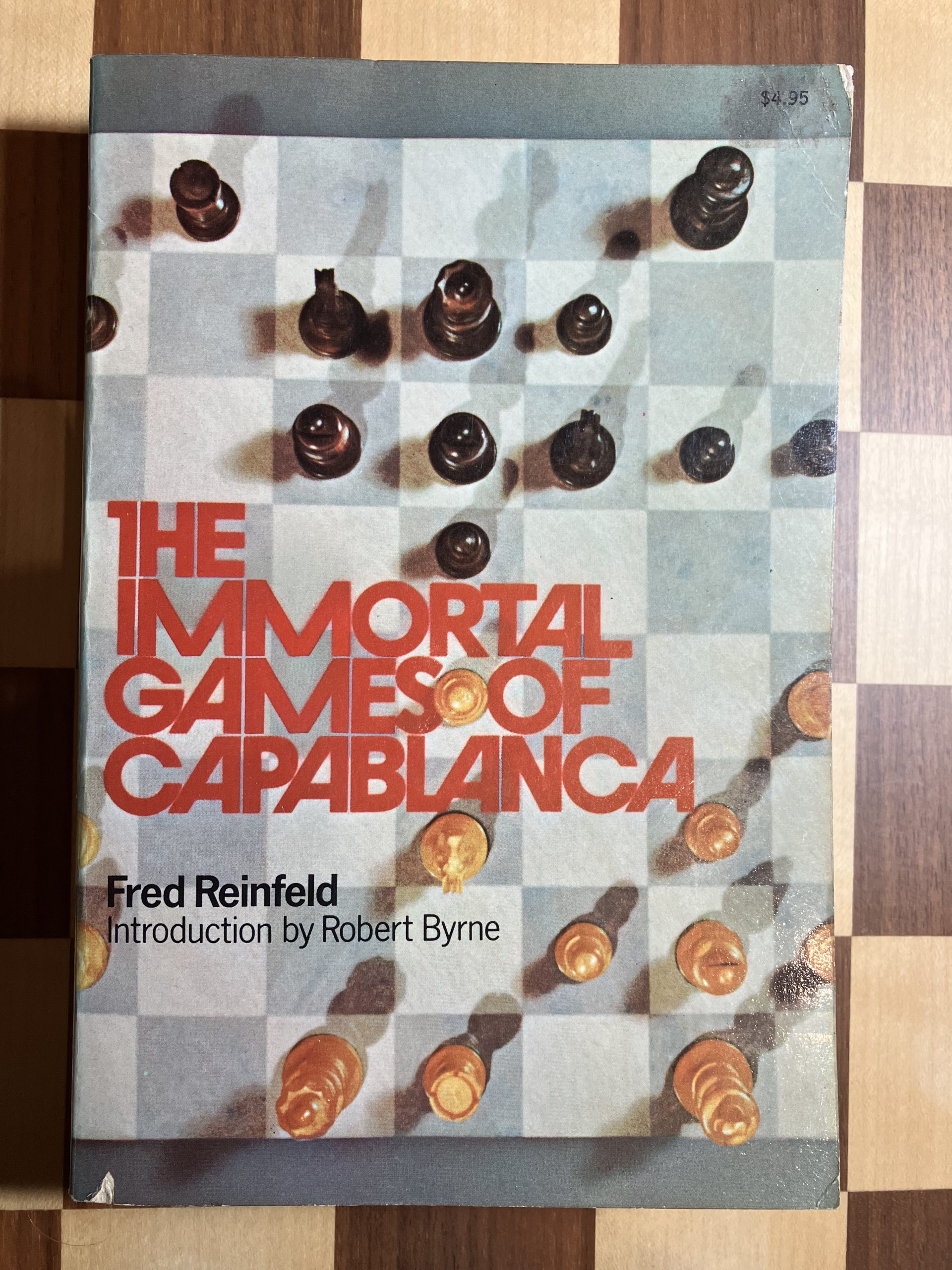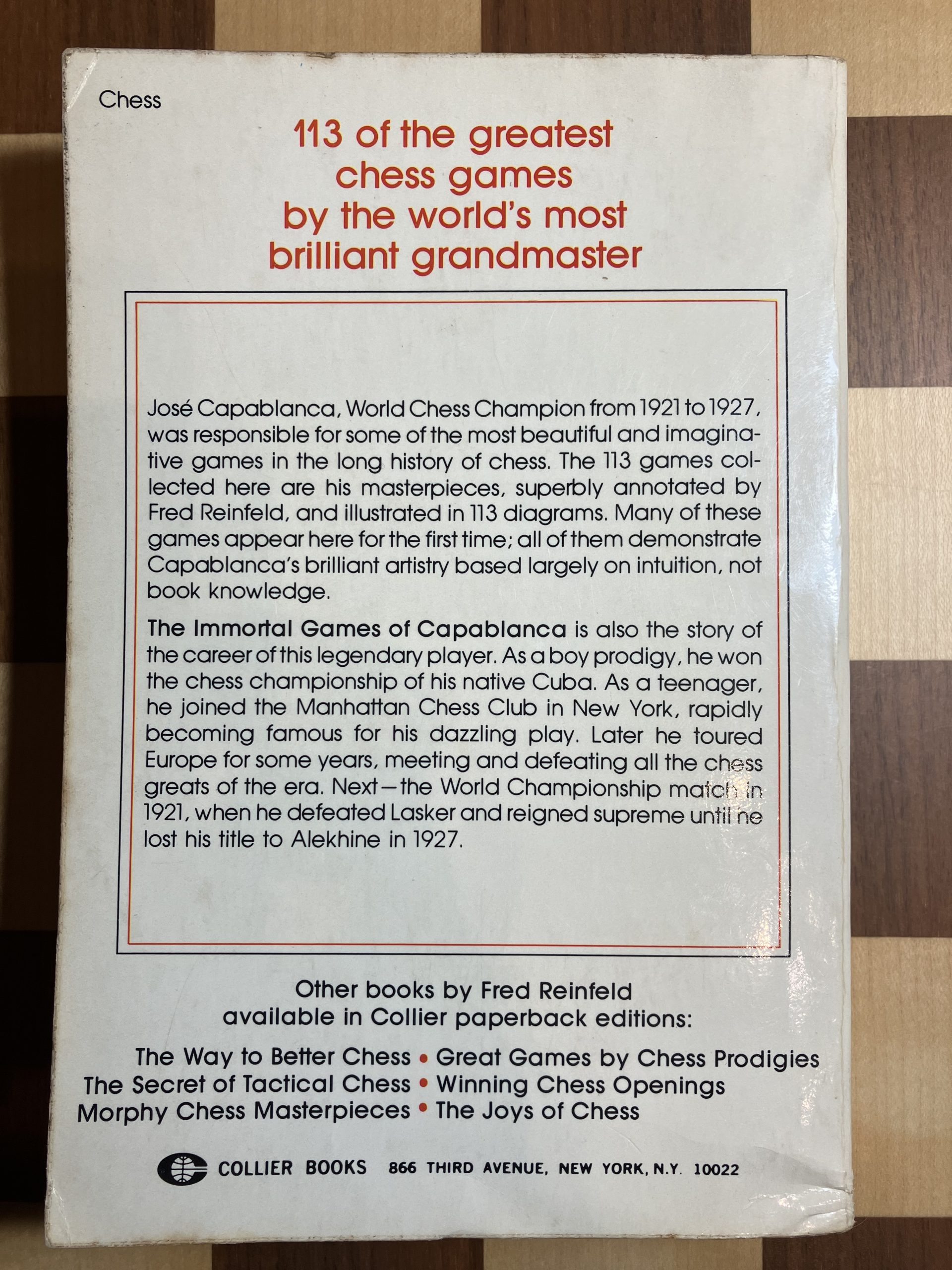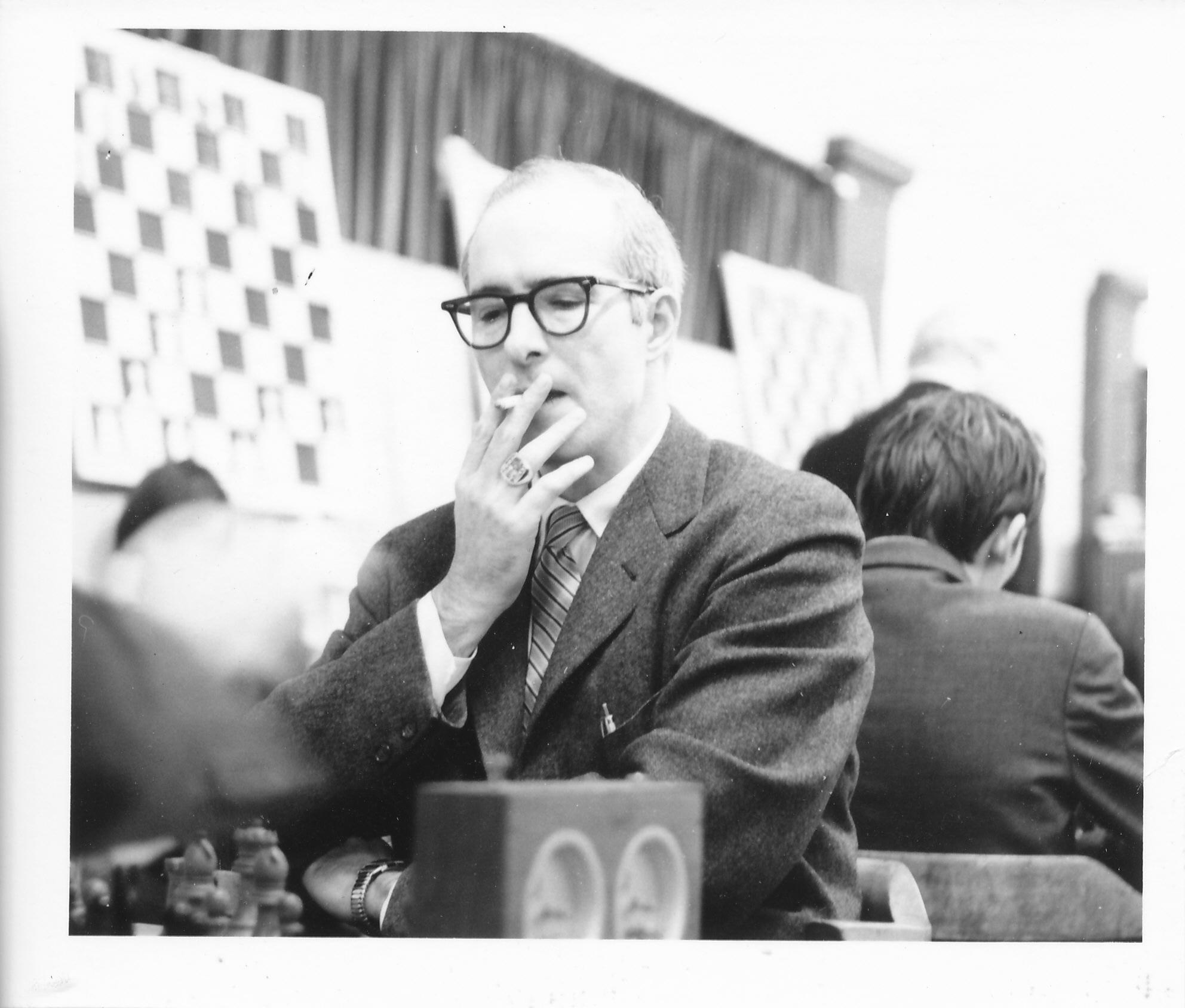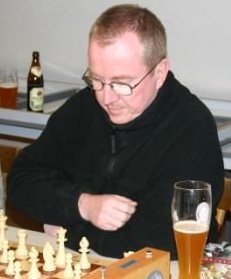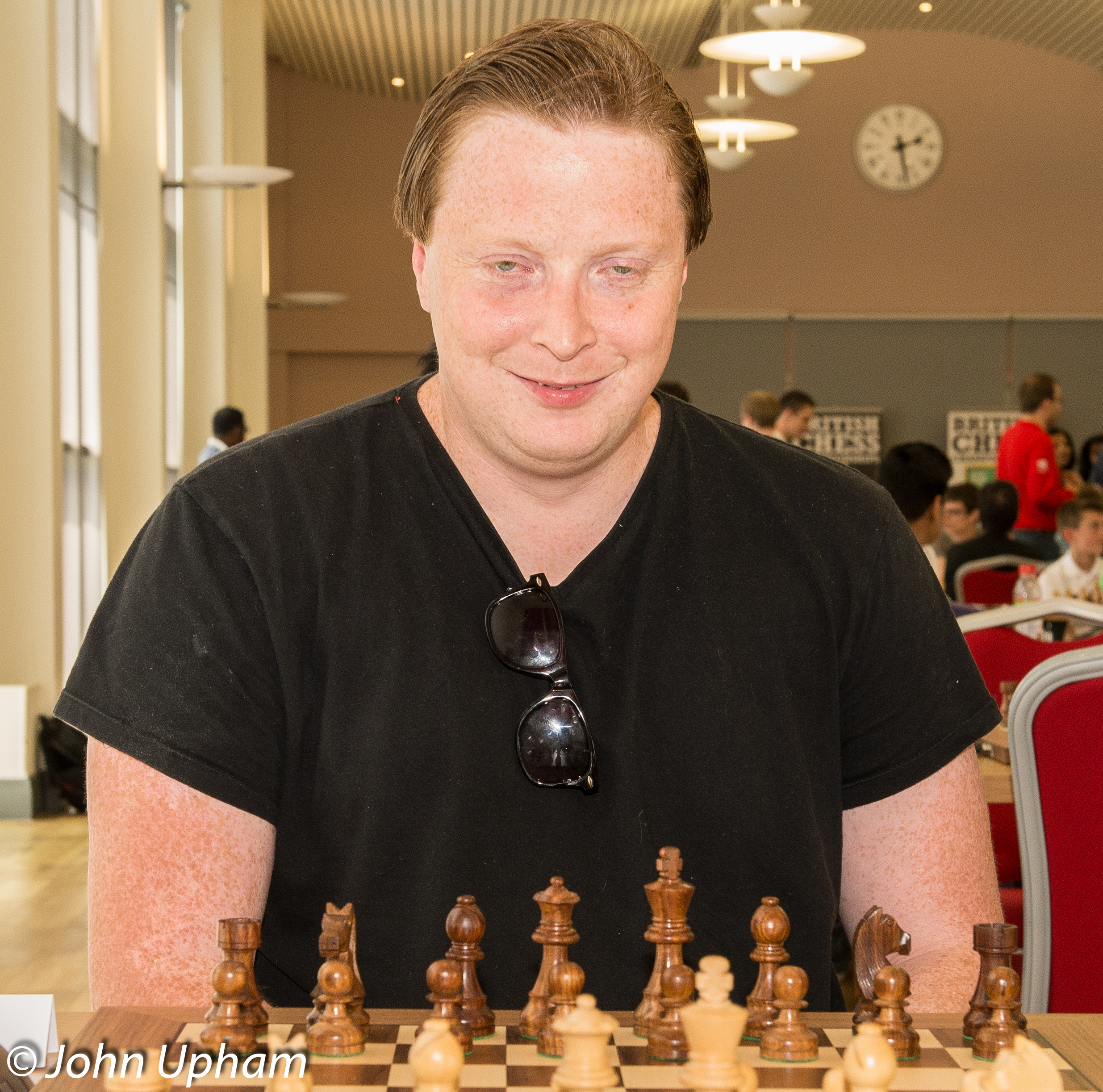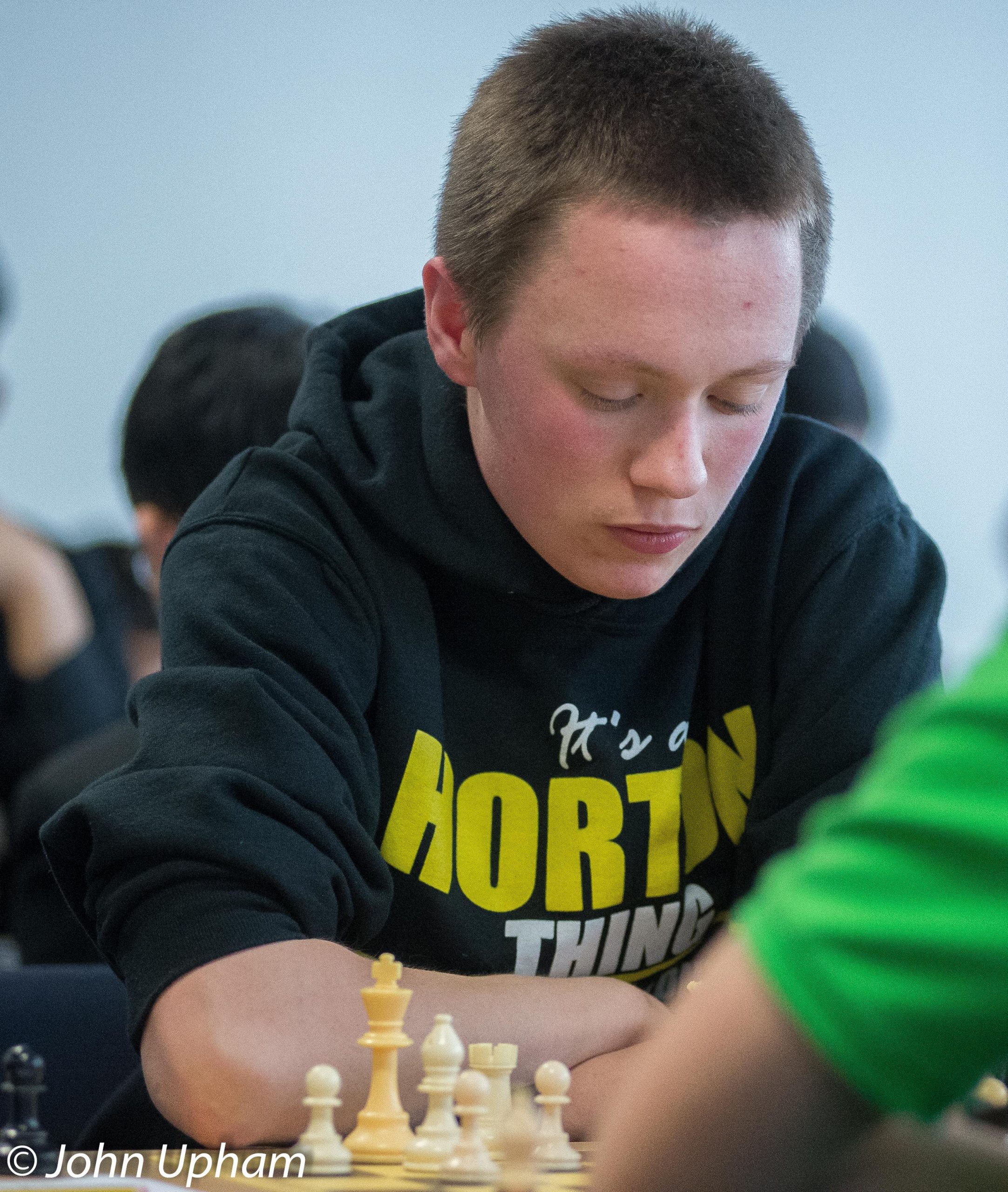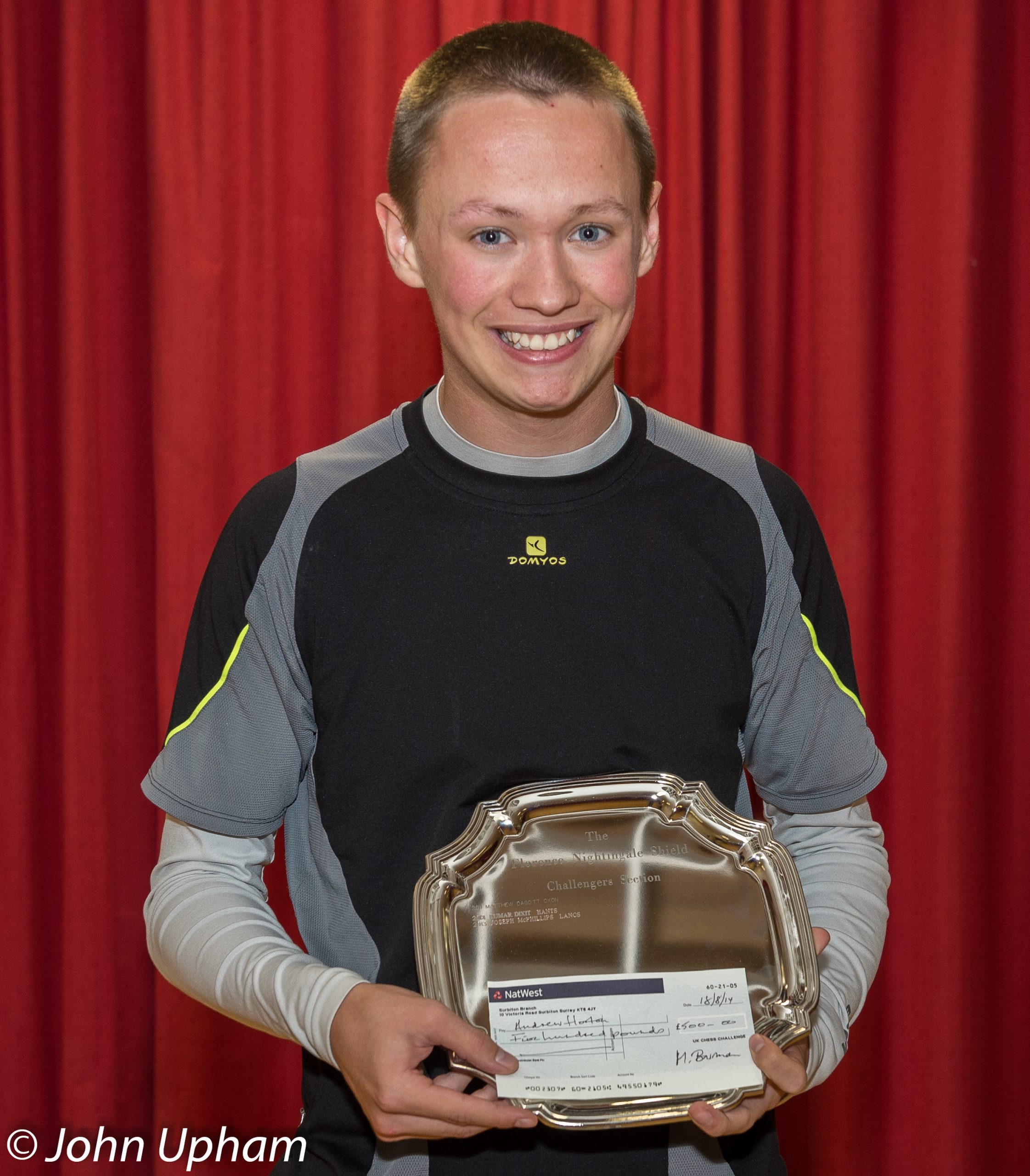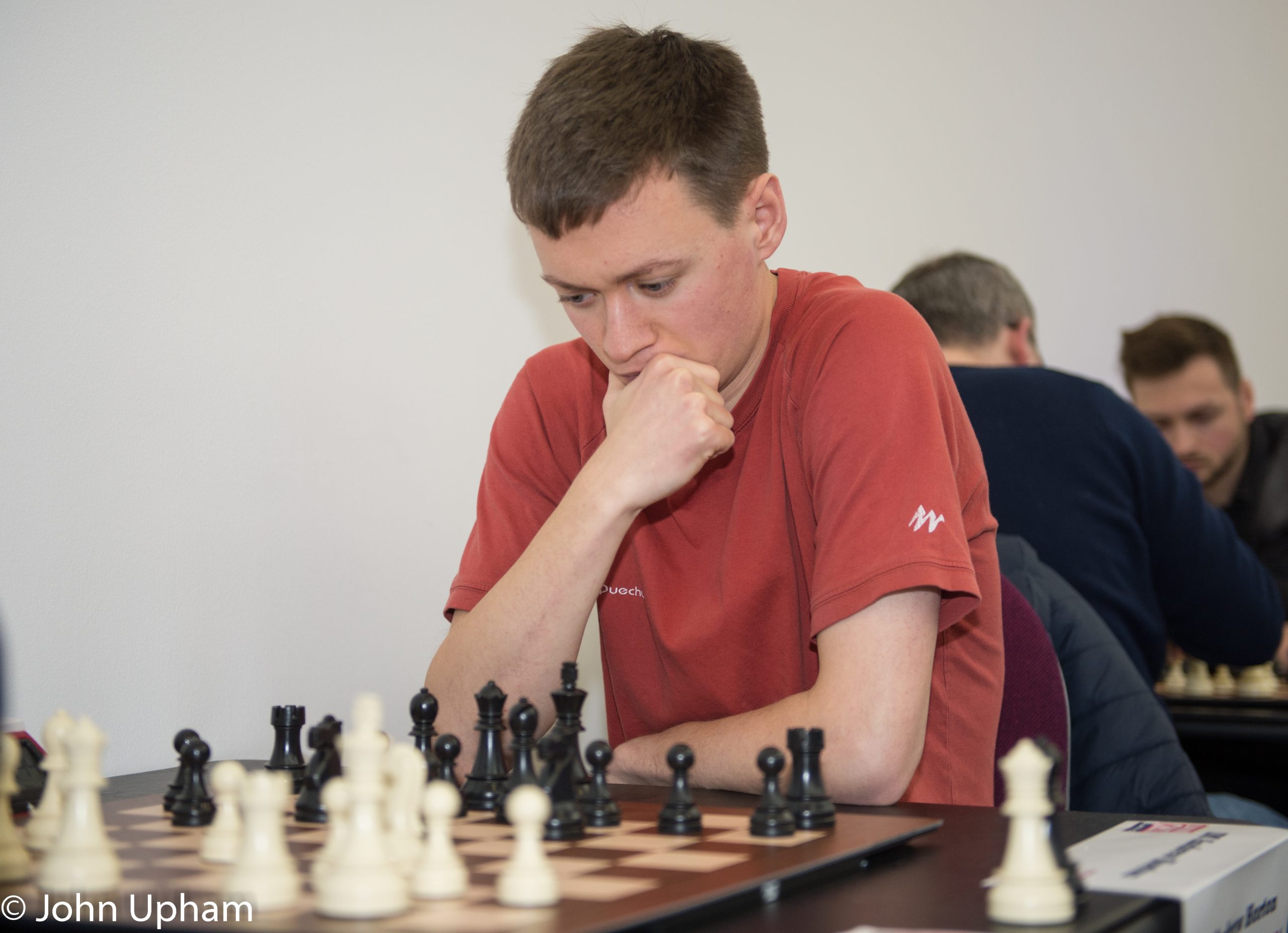
John Upham is the founder of British Chess News, staff photographer and the IT Manager.
John performed similar roles for British Chess Magazine from 2011 until 2015.
John is an English Chess Federation accredited coach and has taught in schools and privately since 2009. John started chess relatively late(!) at the age of twelve following the huge interest in the Spassky-Fischer World Championship match in 1972.
John is Membership Secretary of Camberley Chess Club and an ordinary member of Crowthorne and Guildford Chess Clubs.
John plays for Hampshire and for 4NCL Crowthorne.
John is Secretary of the Hampshire Junior Chess Association and the Berkshire Chess Association and manages the Chess for Schools partnership.
600 Modern Chess Puzzles, Martyn Kravtsiv, Gambit Publications Ltd., 16th September 2020, ISBN-13 : 978-1911465478
Blurb from the publisher:
“The easiest, quickest and most effective way to improve your overall game is to increase your tactical vision. Many good positions are lost because a key moment is passed by and a player misses the opportunity to win by a beautiful combination. This book is designed simply to help you improve your play by seeing tactics better.” – Martyn Kravtsiv
Written along similar lines to Gambit’s earlier Ultimate Chess Puzzle Book, this new work presents 600 puzzles, mostly from the last two years, that are chosen for instructive value and maximum training benefit. To ensure that few will be familiar to readers, Kravtsiv has deliberately chosen positions from obscure games or from analysis. If you find the right answers, it will be because you worked them out yourself!
The solutions feature plenty of verbal explanations of the key points, and cover most of the logical but incorrect answers. The book is completed with a set of ‘no clues’ tests, and an index of themes that will be useful to coaches and those looking to focus on specific aspects of tactics – or just seeking extra clues!”
GM Martyn Kravtsiv
From the rear cover:
“The author is an experienced grandmaster from Lviv, Ukraine. His tournament results include tied first places at Cappelle in 2012 and the 2015 Ukrainian Championship, as well as being blitz champion of the 2008 World Mind Sports Games (at age 17). He represented his country at the 2017 World Team Championship and was a coach for the team that won silver medals at the 2016 Olympiad.”
Gambit Publications have their own YouTube channel to promote and publicise their products. Here we have GM John Nunn introducing this book :
Before going further we suggest you make use of the Look Inside option. This will reveal the Table of Contents.
Just like “Snakes on a Plane” you might imagine, from the title, you know what this book is about without reading it: well let us see!
The first mystery to clear up is what does the author mean by “Puzzles”? Almost all 600 positions presented are taken from actual gameplay during 2018 and 2019 or from analysis derived from those games. Strangely, there is a tranche from 2012
mostly from the author’s own games.
If you do have a phobia of problems, fairies or endgame studies etc then have no fear here: there are none of these.
From the “Warming Up” Chapter we have position #36:
Theodor Kenneskog – Klavs Stabulnieks, 48th Rilton Cup, Stockholm, 2nd January 2019
Does Black have a way to get the upper hand?
*(We have added the previous move arrow and these are not shown in the book.)
71 warming up puzzles of multiple themes are followed by solutions with explanations which is the continuing pattern for each chapter.
Chapter 3 contains 29 forced mates and here is an example, #92:
Vahe Danielyan – Chinna Reddy Mehar, Novi Sad, 20th April 2019
Can you see White’s mating idea?
Rather pleasing!
Chapter 3, Your Choice, asks the solver to select between two plausible options more reminiscent of one’s thinking in a practical game situation when the clock is ticking. Here is an example (#106):
Marc Narciso Dublan – Kratvtsiv, Olivier Gonzalez Memorial, Madrid, 8th September 2012
Choose between 74…Ke4 and 74…Kg5
Chapter 4 (“Getting Tricky”) ups the ante and the difficulty is raised followed by 58 endgame puzzles graded into four levels.
Here is example #283:
Anthony Fred Saidy – Thomas Kung, Bay Area Open, Burlingame, 3rd January 2019
The game ended in a draw. Show how Black could have done better.
Tough Nuts is the title of Chapter 6 containing 43 challenging positions for example #313:
Jonathan Hawkins – Bogdan Lalic, Hastings 2018/19, 5th January 2019 (Analysis)
Black has a beautiful path to victory. Can you find it?
Chapter 7 is a tougher version of Chapter 3.
In Part 2 the book changes tack slightly in that the clue or clues for each position are not present. You are placed in a much more game like situation thinking for yourself. The Part is broken down into sections of Not Too Hard, Tricky Tasks, Endgame Challenges and finally Chapter 11 entitled Nightmare! including #562 featuring Hastings once more:
Thomas Villiers – PU Midhun, 98th Hastings Masters, 4th January 2019
Unfortunately, White did not find the killer blow and went on to lose.
The exercises are followed by an Index of Themes which is a clever touch removing this “clue” from the position as posed.
As is to be expected from a Gambit publication the explanations are crystal clear and instructive and expertly translated and edited by Graham Burgess. Petra Nunn does an excellent job of typesetting.
To have found 600 instructive puzzles from 2018, 2019 and 2012 is a real achievement and then to organise them for a range of students makes this book both enjoyable and hard work!
The author has produced another reliable publication from the Gambit stable and we are sure he will be asked to produce another in due course. We particularly liked the puzzles that created a game-like feel to the task. Highly recommended.
I Was a Victim of Bobby Fischer, Mark Taimanov, Quality Chess, 29th November 2021, ISBN-13 : 978-1784831608
From the publisher:
“In 1971 Robert James Fischer defeated Mark Taimanov by the sensational score of 6-0 in Vancouver, but the match games were far more competitive and tension-filled than the final score would suggest.
Twenty years later Taimanov put pen to paper, reflecting on the experience. Exactly 50 years after the match, this is the first English translation of Taimanov’s original Russian text. Taimanov provides a richly detailed, honest and emotional account of the drama on and off the board. Despite the catastrophic match score, his love for the game of chess is evident throughout.
Taimanov also discusses his early acquaintance with Fischer from 1960, including detailed annotations of both of their pre-1971 games, as well as the personal consequences of the match result. With fascinating additional archive material and analytical contributions from some of the brightest young stars of the American chess scene today, I was a Victim of Bobby Fischer is the ultimate insight into one of the most famous matches in chess history.”
End of blurb…
Isaac Boleslavsky plays Mark Taimanov in round one of the 24th USSR Championship on January 21st 1957. Peace broke out after fifteen moves of a Nimzo-Indian Defence
Quality Chess live up to their name by being one of the few publishers who offer a hardback as well as softback version of all of their titles.
The production values are superb. You could save a few pence and opt for the paperback version but we would definitely treat ourselves with a Christmas / New Year present and savour the hardback. In addition, high quality paper is used and the printing is clear. The weight of this paper gives the book an even better feel to it as the pages are turned.
The book can easily be laid flat next to the board and does not require weights to prevent it from “self-closing”. Each diagram is clear and the instructional text is typeset in two column format, which, we find, enables the reader to readily maintain their place. Figurine algebraic notation is used and the diagrams are placed adjacent to the relevant text.
A small (and insignificant) quibble: the diagrams (except for Chapter 19, Interesting Positions) do not have a “to move” indicator (but they do have coordinates).
Before we take our first look at this book Quality Chess have provided a pdf excerpt.
Over the years there have been numerous books with Taimanov somewhere in the title but almost all are concerned with his famous variation of the Sicilian Defence:
We are aware of two English language books covering Taimanov’s career. One is Taimanov’s Selected Games published in 1995 by Everyman Chess covering 60(!) games selected and annotated by MT. The second is Smyslov, Bronstein, Geller, Taimanov and Averbakh: A Chess Multibiography (McFarland, 2021) with 220 Games by Andrew Soltis reviewed here.
This Quality Chess title helps to address this surprising shortfall.
The title is perhaps the first worthy discussion point and we learn the interesting reason for it. Is it clear from the outset just how in regard MT held Fischer when he wrote this manuscript in 1993.
You might think that the events of 1971 had left a bitter taste with MT, and degree of resentment, especially when we read in Chapter 5 of his post match treatment by the Soviet authorities. The latter even restricted his career in music which was gratuitously cruel. There is no evidence of that here, in fact, quite the opposite. Taimanov stipulated in his will that should the book be published then “I Was a Victim of Bobby Fischer” must be its title.
Let us not forget that Taimanov jointly holds (and will always) a record with Efim Geller of twenty-three appearences in the Soviet Championships apart from his many other achievements on the chess board.
Taimanov played Fischer a total of eight times and their first meeting was on June 4th, 1960 in the good air of Buenos Aires.
This game was a monumental battle (drawn after eighty-seven moves) when Fischer was a mere seventeen and MT was a more plausible thirty-four.
Here is the game devoid of any notes simply because you really should treat yourself to the fourteen(!) pages of glorious annotations including 20 diagrams. What a struggle!
Much of the book is taken up with discussion of Fischer’s development and eventually his downfall (but nether MT nor Spike Milligan played any part) and this is particularly apposite on the eve of the Reykjavik match 50th anniversary.
Chapters 6-12 cover each game of the 1971 match (ten games were planned) in Vancouver. Each game is very much worthy of close study and a model of sporting attitude from the loser. It is painful to see how well Taimanov plays compared with the game results. At no point did he “do a Nepo” and collapse into a heap. His emotions and reactions to the match are rather revealing.
Chapter 13(!) discusses the causes of Fischer’s eventual reclusion comparing RJFs fate with players of the past with an update in Chapter 14 on more recent events.
You might predict “That must be the end of the book”. Well, not at all. Part IV contains the substantial Appendices which include additional deeply annotated games of Taimanov and of Fischer, a biography of MT and a fascinating interview of MT from 2016.
Almost last and by no means least we have Chapter 19 which presents a number of key positions from the previously discussed games and the reader is asked a pertinent question about each.
“We will look at three positions from this complicated game, all of them very interesting. In the first, Black has a difficult strategic decision to make”
Chapter 20 (titled “Thoughts and Solutions”) takes the Chapter 19 positions and analyses them in detail courtesy of a team of strong players (Shankland, Liang, Xiong and Aagaard) providing their individual opinions of each position. This is really rather innovative and most welcome. Note that these “thoughts” are not usurped by reams of unwelcome engine analysis.
In summary, this is a significant book quite unlike any other we have read. Beautifully produced it brings you into the mind of a great chessplayer and person who gave his all and was treated appallingly.
We commend to you this book without doubt: you will not be disappointed. One of our favourites of 2021.
Edgard Colle: Caissa’s Wounded Warrior, Taylor Kingston. Russell Enterprises, 20th April 2021, ISBN-13 : 978-1949859270
Edgard Colle: Caissa’s Wounded Warrior : Taylor Kingston
From the publisher:
“One of Caissa’s Brightest Stars!
Mention the name “Colle” and many if not most chessplayers think about an opening that is both easy to play as well as one with dynamic potential. Rarely is any thought given to the man himself.
Plug the word “Colle” into your favourite search engine, and, if you are lucky, you might find a reprint of the slim 1936 book by Fred Reinfeld, Colle’s Chess Masterpieces. Books on the Colle System – of which there are many – will be your main search results. However, Belgian master Edgard Colle is much more than a name connected to an opening system. He was one of the most dynamic and active chess players of the 1920s and early 1930s.
Though his international career lasted barely ten years, Colle played in more than 50 tournaments, as well as a dozen matches. Moreover, he played exciting and beautiful chess, full of life, vigour, imagination and creativity. As with such greats as Pillsbury and Charousek, it was a tragedy for the game that his life was cut short, at just age 34.
Author Taylor Kingston has examined hundreds of Colle’s games, in an effort to understand his skills and style, his strengths and weaknesses, and present an informed, balanced picture of him as a player.
Colle emerges as a courageous, audacious, and tenacious fighter, who transcended the limitations his frail body imposed, to battle the giants of his day and topple many of them. 110 of Colle’s best, most interesting, and representative games have been given deep and exacting computer analysis. This often revealed important aspects completely overlooked by earlier annotators, and overturned their analytical verdicts. But the computer’s iron logic is tempered always with a sympathetic understanding that Colle played, in the best sense, a very human kind of chess.
Though not intended as a tutorial on the Colle System, the book of course has many instructive examples of that opening. Additionally, there are several memorial tributes, biographical information about many of Colle’s opponents, his known tournament and match record, and all his available tournament crosstables. We invite the reader to get acquainted with this wounded but valiant warrior, whom Hans Kmoch called a “chess master with the body of a doomed man and the spirit of an immortal hero.” You are invited to explore the fascinating, fighting chess of one of the great tactical masters.”
Taylor Kingston
“Taylor Kingston has been a chess enthusiast since his teens. His historical articles have appeared in many chess journals, including Chess Life, New In Chess, Inside Chess, and Kingpin. He is the editor of the recently released Emanuel Lasker: A Reader. In this book, he combines history and analysis in a new look at one of the early 20th century’s most variable but brightest stars.”
Edgard (not Edgar) Colle’s name is well known to most chess players through his highly popular opening (of two main variants), The Colle System. You might argue that this was the club player’s opening of choice possibly usurped, in recent times, by the unfortunately ubiquitous London System.
However, rather unfairly, Colle himself is almost certainly not as well known as he deserves to be. Players of all levels really ought to take time to study his games with both colours since his attacking style is rather attractive and instructive.
The biographies section of the BCN library somewhat disappointingly only had one other book about Colle and that was the not-so-easy to obtain “Colle Plays The Colle System” by Adam Harvey published by Chess Enterprises in 2002.
Colle Plays The Colle System, Adam Harvey, Chess Enterprises, 2002, ISBN 0-945470-88-6
but the above tome spends very little text on the master himself and only covers games with the white pieces and the Colle System.
Taylor Kingston’s book (also available as a Kindle eBook) is divided into two main parts as follows :
Part I: Biographical Basics, Historical Background, Colleague’s Reminiscences and Memorial Tributes
Part II: Annotated Games
and each of these is further sub-divided.
To see the extensive Table of Contents you may Look Inside the Kindle edition.
The book kicks off with a rather insightful Foreword from GM Andrew Soltis suggesting ECs lack of eminence stems from his premature early demise aged 34.
Pages 12 – 28 present biographical material from varied sources, some fairly obscure. We like obscure sources!
Fairly quickly (page 29) we find ourselves at Part II and the Annotated Games and this part, in turn, is divided into eleven sections with the following titles:
Marvellous Miniatures
An abundance of Brilliances
Colle Lucks Out
Follies, Failures, and Might-Have-Been
Colle and the Endgame
Colle and Positional Play
Colle’s Fighting Games
Salvaging the Draw
Colle and Yates
Colle’s Gem
Swan Song
Each game is complete with historical background and context allowing one to learn more of Colle, his opponents and the tournaments they met at. The text is joyfully sprinkled with monochrome photographs of many opponents and potted biographies including that of Englishman George M. Norman (1880 – 1966) with whom we were unfamiliar until this book.
“Follies, Failures, and Might-Have-Been” is particularly unusual since the author selects games where our hero goes astray and does not win in crushing fashion but loses himself providing a healthy balance. The opposition here includes players such as Euwe, Capablanca, Nimzovitsch, Vidmar and Tartakower so nothing to be ashamed of.
“Colle and the Endgame” was another delightful chapter and perhaps not to be expected. Here is a game (here not annotated by TK but by Fred Reinfeld) from Budapest 1929 between Akiba Rubinstein and EC:
You will need to buy the book to appreciate the authors fuller annotations.
From the chapter “Colle’s Gem” we could not resist giving you this game but, again, without TKs superb annotations:
Wonderful stuff indeed but please enjoy the full author annotations.
In summary, this is a delightful book that all in the BCN office wanted to take home. In many ways this volume could of easily been a McFarland publication with a hard cover to be found in a library and all the gravitas that publisher brings. Hats off to Russell Enterprises for landing this one.
If you haven’t realised by now this one of our favourite books of 2021.
1001 Chess Exercises for Advanced Club Players : Frank Erwich
1001 Chess Exercises for Advanced Club Players, Frank Erwich, New in Chess, 31 December 2021, ISBN-13 : 978-9056919702
“Tactics is knowing what to do when there is something to do; strategy is knowing what to do when there is nothing to do.” – Savielly Tartakower
From the publishers blurb:
“In this follow-up to his acclaimed 1001 Chess Exercise for Club Players, FIDE Master Frank Erwich teaches you how to reach the next level of identifying weak spots in the position of your opponent, recognizing patterns of combinations, visualizing tricks and calculating effectively.
Erwich repeats the themes of his previous book, focusing on exercises in which the key move is less obvious. He also introduces new, more sophisticated tactical weapons. They are geared towards the reality of the advanced club player (Elo 1800 2300): it is not enough to spot simple combinations, at this level you must be able to resist your reflexes and look deeper. In variations that look forcing you will always search for that deadly Zwischenzug. Quiet moves in general should be your new best friends.
In short: an advanced club player should expect the unexpected. One of the celebrated elements of Erwichs previous book, which is neglected in other books on tactics, is back: defence! You will also learn how to defend against tactics, as well as how to use tactical weapons when you are under heavy pressure. This is a complete and structured course, and not just a collection of freewheeling puzzles. Erwich starts every chapter with an instructive explanation of the tactical concept at hand and has carefully selected the most didactically productive exercises.
FIDE Master Frank Erwich is a a professional chess teacher for the Royal Dutch Chess Federations, coach and active player. In 2012 he established a teaching company and, from his own web site
He holds a Masters degree in Psychology.
He works as an editor for New in Chess, he helps with the development of material for chess books and chess apps, he writes about chess (including author of 1001 Chess Exercises for Club Players and the e-book Basic Chess rules for Kids ), he makes online lessons for starting chess players and he is regularly active as a coach during a chess tournament (including during the European Youth Championship in 2014, 2015 and 2016).
FM Frank Erwich
Tactics books are, of course, part of the staple publishing diet of many chess specialists. What is the USP of this one?
Erwich has collected 1001 (no, this is nothing to do with carpet cleaning*) positions from recent tournament praxis the majority of which (just like the preceding volume) are from the last ten years.
They have been organised into ten groupings viz :
Main Tactics
In-between moves
Automatic moves
Surprises and traps
Diagonals, ranks and files
The walking King
Manoeuvres
Special threats and quiet moves
Calculation and move order
Defence
which are followed by a chapter entitled “Mix” which combines many of the previous themes and of course, a Solutions to each exercise chapter.
As with every recent New in Chess publication high quality paper is used and the printing is clear. The book can easily be laid flat next to the board and does not require weights to prevent it from “self-closing” (a particular bugbear of mine !). More or less each diagram clearly shows who is to move but for a curious reason the diagrams showing analysis are left without one. I’ve no idea of the reasoning for this decision.
The instructional text is typeset in two column format, which, I find, enables the reader to maintain their place easily. Figurine algebraic notation is used throughout and the diagrams are placed adjacent to the relevant text.
You might have noticed that in the list of categories the author has inserted “Trapping a piece” and “Defending” which are welcome (not often discussed) themes among the more familiar ones.
Each chapter kicks-off with a description of the theme in question followed by high quality examples. All jargon and terms are explained in detail making each section self-contained eliminating the need to go elsewhere to cross-reference. Sometimes the author invents his own terminology (such as “away” and “chasing”) in cases where there is a need and all is carefully explained.
Following the instructional text and examples there are, on average 100 test positions given as groups of twelve per page. Each diagram clearly indicates who is to move and underneath most is a hint such as “King hunt: series of checks”. I prefer to hide the hint but some will value these clues. Of course, after say a dozen in one section, one gets a feel for what is expected and this forms part of the training. Each solution provides useful analysis (which has been engine checked) plus contextual information about the source game, players and event.
To give you some idea of the content here are some samples:
A fairly straightforward but pleasing example (#102) from “In-between moves”:
and from “Automatic moves” we have #193 which is rather lovely but not difficult:
and this pleasing example (#325) from “Surprises and traps”
Finally, as before, a detailed glossary in itself provides learning opportunities to improve one’s knowledge.
Once again It was a pleasure to work through some of the exercises and I’m confident the book will provide ideas for my student lessons and coaching.
The most enjoyable section (one again, as before) was Chapter 11 entitled “Mix”. This is the best test of what has gone before since there is no declared theme, and, more often than not, no visible hint. You are on your own and you might start a chess timer with each new position to provide motivation and test your speed and accuracy of solution.
In summary this is an excellent follow-up book that goes highly recommended. If I hadn’t had it to review then I would have purchased it anyway! Most excellent and deserving of the accolades and a great stocking filler.
From British Chess (Pergamon Press, 1983) by Botterill, Levy, Rice and Richardson : (article by George Botterill)
“Penrose is one of the outstanding figures of British chess. Yet many who meet him may not realize this just because he is one of the quietest and most modest of men. Throughout the late 1950s and the whole of the 1960s he stood head and shoulders above any of his contemporaries.
See caption belowPress agency caption for photograph above
His extraordinary dominance is revealed by the fact that he won the British championship no less than ten times (1958-63 and 1966-69, inclusive), a record that nobody is likely to equal in the future.
At his best his play was lucid, positionally correct, energetic and tactically acute. None the less, there is a ‘Penrose problem’: was he a ‘Good Thing’ for British chess? The trouble was that whilst this highly talented player effectively crushed any opposition at home, he showed little initiative in flying the flag abroad. There is a wide-spread and justifiable conviction that only lack of ambition in the sphere of international chess can explain why he did not secure the GM title during his active over-the-board playing career.
See caption belowPress agency caption for above photograph
It would be unjust, however, to blame Penrose for any of this. The truth is simply that he was not a professional chessplayer, and indeed he flourished in
a period in which chess playing was not a viable profession in Britain. But even if the material awards available had been greater Penrose would almost certainly have chosen to remain an amateur. For he was cast in that special intellectual and ethical tradition of great British amateurs like H. E. Atkins, Sir George Thomas and Hugh Alexander before him.
Travel Chess 2nd January 1951: British chess champions Jonathan Penrose and Leonard Barden ponder over a portable travel game in a restaurant. (Photo by Walter Bellamy/Express/Getty Images)
His family background indicates early academic inclinations in a cultural atmosphere in which chess was merely a game something at which one excelled through sheer ability, but not to be ranked alongside truly serious work. It is noteworthy that Penrose, unique in this respect amongst British chess masters, has never written at any length about the game. He has had other matters to concentrate on when away from the board, being a lecturer in psychology. (His father, Professor L. S. Penrose, was a distinguished geneticist.)
IM Dr. Jonathan Penrose OBE
Being of slight physique and the mildest and most amiable of characters, it is probably also true that Penrose lacked the toughness and ‘killer instinct’ required to reach the very top. Nervous tension finally struck him down in a dramatic way when he collapsed during play in the Siegen Olympiad of 1970. We can take that date as the end of the Penrose era.
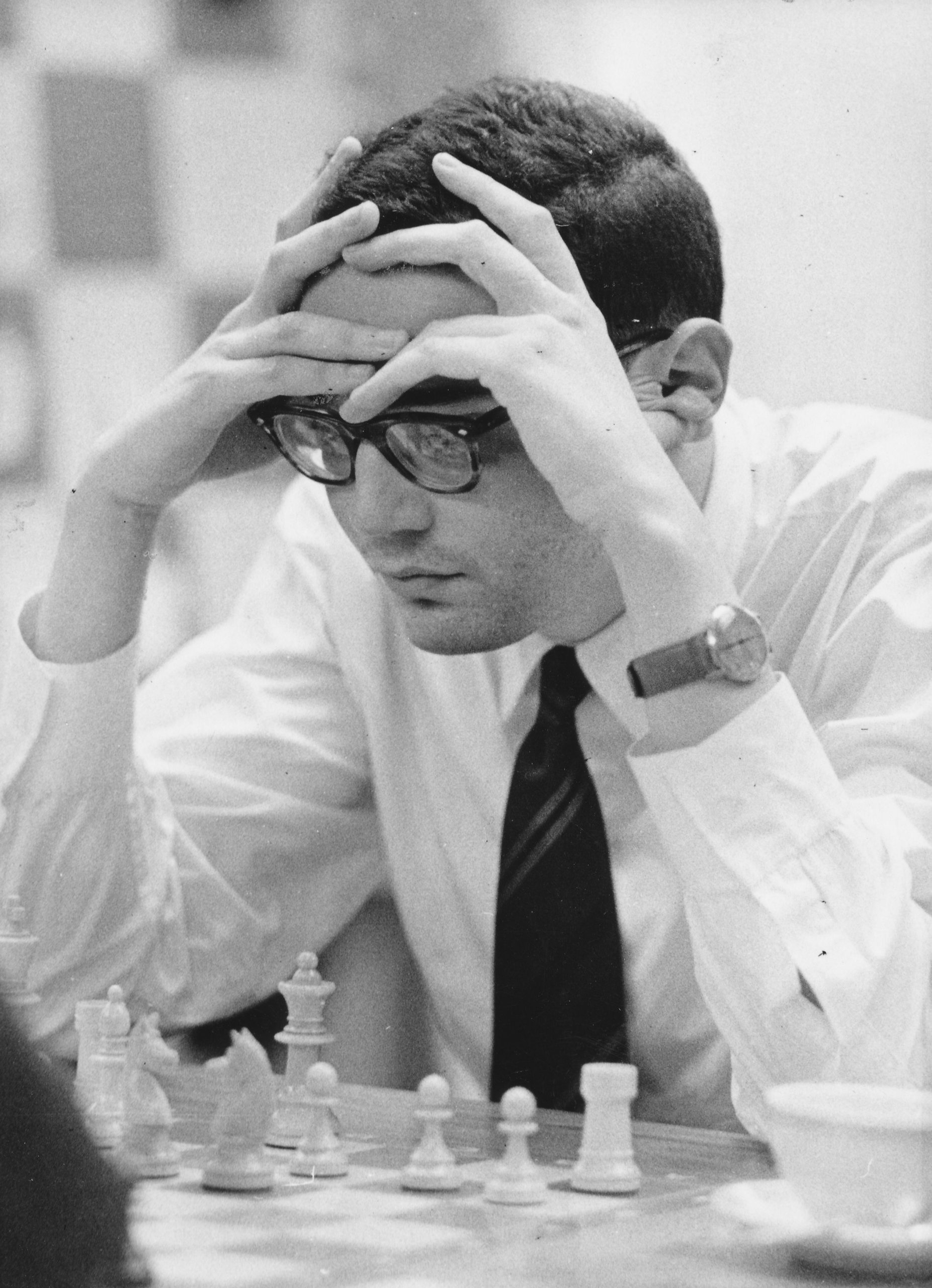
Jonathan Penrose Chess Grandmaster Jonathan Penrose pictured during a chess match, circa 1960. (Photo by Fox Photos/Hulton Archive/Getty Images))
Since, then though he has not by any means entirely given up, his involvement in the nerve-wracking competitions of over-the-board play has been greatly reduced. instead he has turned to correspondence chess, which is perhaps the ideal medium for his clear strategy and deep and subtle analysis. So Penrose’s career it not over. He has moved to another, less stressful province of the kingdom of chess.
IM Dr. Jonathan Penrose OBE
For the first game, however, we shall turn the clock right back to 1950 and the see the Penrose in the role of youthful giant killer.
From The Encyclopedia of Chess (BT Batsford, 1977) by Harry Golombek :
“British international master and ten times British Champion, Penrose was born in Colchester and came from a chess-playing family.
Lionel Sharples Penrose, FRS (11 June 1898 – 12 May 1972)
His father and mother (Margaret) both played chess and his father, Professor Lionel Sharples Penrose, in addition to being a geneticist of world-wide fame, was a strong chess-player and a good endgame composer. Jonathan’s older brother Oliver, was also a fine player.
Oliver Penrose FRS FRSE (born 6 June 1929) is a British theoretical physicist
Roger Penrose won the Nobel prize for physics in 2020.
Roger Penrose. Nobel Laureate
Shirley Hodgson (née Penrose) is a high flying geneticist.
Prof. Shirley Hodgson
Jonathan learnt chess at the age of four, won the British Boys championship at thirteen and by the time he was fifteen was playing in the British Championship in Felixstowe in 1949.
Press agency caption for photograph abovePress agency caption for photograph above
A little reluctant to participate in international tournaments abroad, he did best in the British Championship which he won a record number of times, once more than HE Atkins. He won the title consecutively from 1958 to 1963 and again from 1966 to 1969.
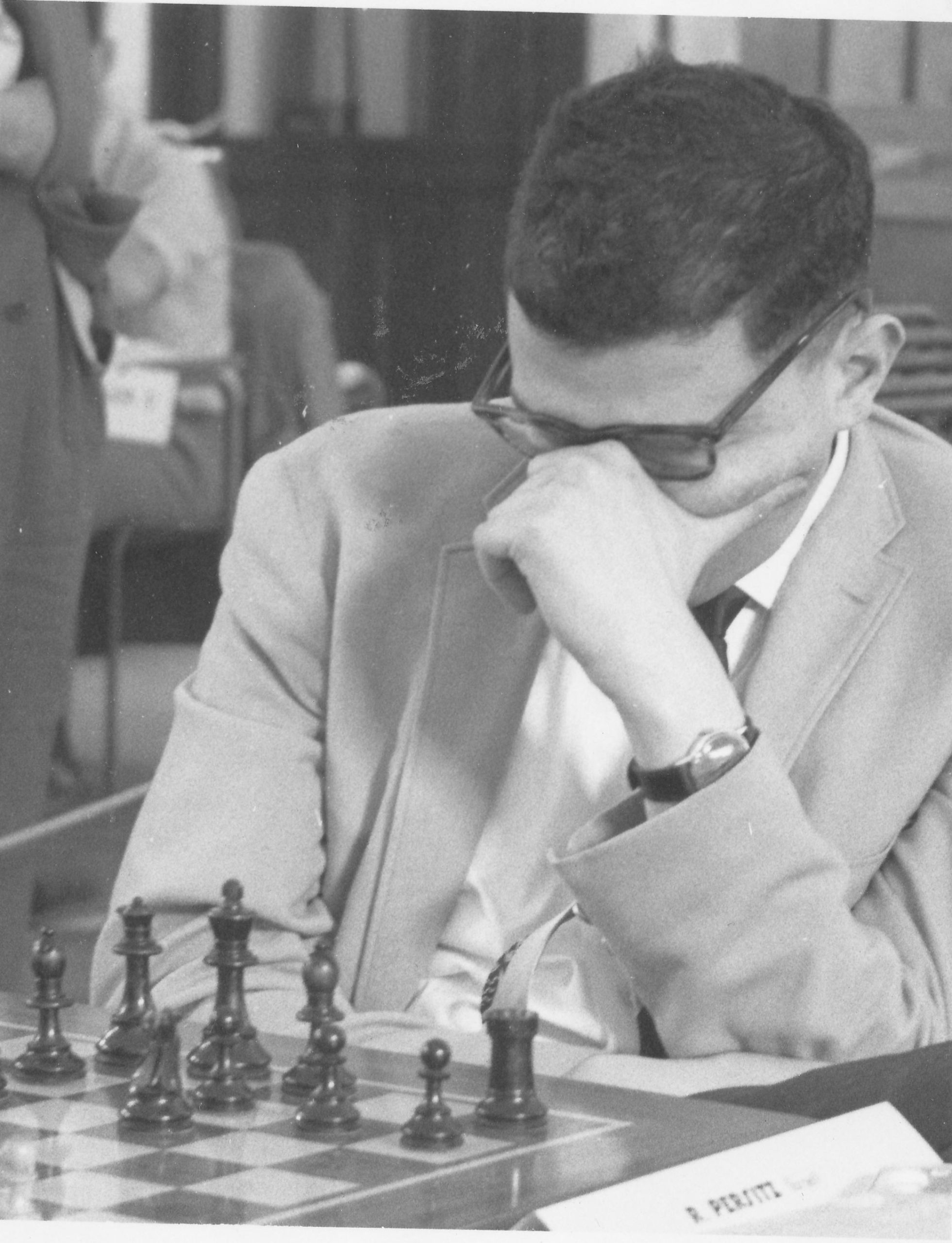
Boy Chess Champion. New York Times photo shows 14 year old J. Penrose 14 year old by chess champion of Britain, in play at the British Chess Championships at Bishopsgate Institute today. He has had great success in the tournament so far, beating men far above his age and experience. 2nd September 1948. Photograph by Reginald WebsterPress agency caption for photograph above
He also played with great effect in nine Olympiads. Playing on a high board for practically all the time, he showed himself the equal of the best grandmasters and indeed, at the Leipzig Olympiad he distinguished himself by beating Mikhail Tal, thereby becoming the first British player to defeat a reigning World Champion since Blackburne beat Lasker in 1899.
ARB Thomas and Jonathan Penrose at the Hastings Congress of 1950/1951
Jonathan Penrose vs Mikhail Tal, Leipzig Olympiad, 1960, 1-0, Modern Benoni
A deep strategist who could also hold his own tactically, he suffered from the defect of insufficient physical stamina and it was this that was to bring about a decline in his play and in his results. He collapsed during a game at the Ilford Chess Congress, and a year later, at the Siegen Olympiad of 1970, he had a more serious collapse that necessitated his withdrawal from the event after the preliminary groups had been played. The doctors found nothing vitally wrong with him that his physique could not sustain.
He continued to play but his results suffered from a lack of self-confidence and at the Nice Olympiad of 1974 he had a wretched result on board 3, winning only 1 game and losing 6 out of 15.
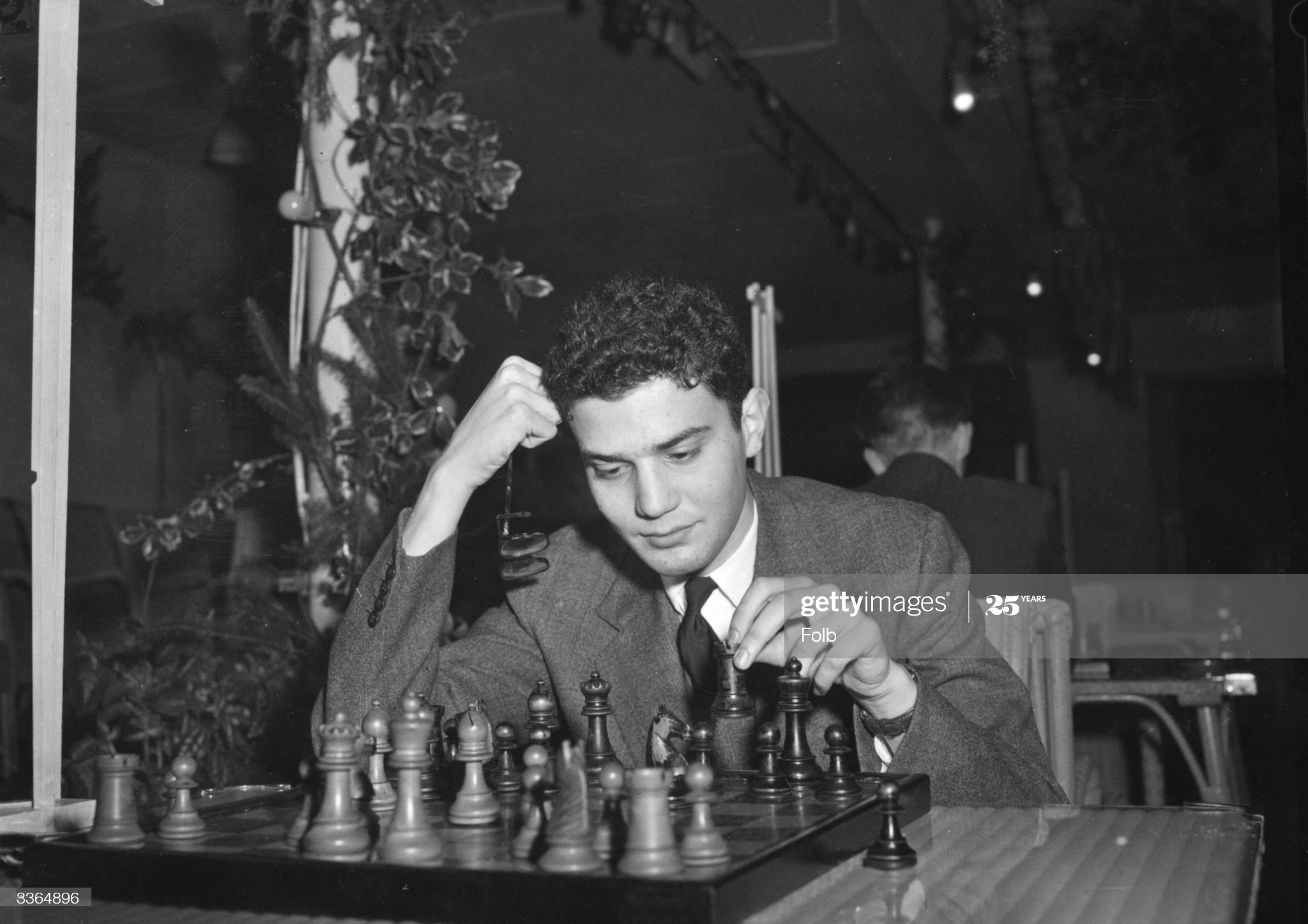
Darga V Penrose 29th December 1955: Klaus Darga of Germany in play against Britain’s Jonathan Penrose during the International Chess Congress at Hastings. (Photo by Folb/Topical Press Agency/Getty Images)
Possibly too his profession (a lecturer in psychology) was also absorbing him more and more and too part less and less in international and national chess.
Jonathan Penrose
Yet, he had already done enough to show that he was the equal of the greatest British players in his command and understanding of the game and he ranks alongside Staunton, Blackburne, Atkins and CHO’D Alexander as a chess figure of world class.”
From The Oxford Companion to Chess by Hooper & Whyld :
“The leading English player during the 1960s, International Master (1961), International Correspondence Chess Master (1980), lecturer in psychology. Early in his chess career Penrose decided to remain an amateur and as a consequence played in few international tournaments. He won the British Championship from 1958 to 1963 and from 1966 to 1969, ten times in all (a record); and he played in nine Olympiads from 1952 to 1974, notably scoring + 10=5 on first board at Lugano 1968, a result bettered only by the world champion Petrosyan.
IM Dr. Jonathan Penrose OBE
In the early 1970s Penrose further restricted his chess because the stress of competitive play adversely affected his health.”
The second edition (1996) adds this :
“He turned to correspondence play, was the highest rated postal player in the world 1987-9, and led the British team to victory in the 9th Correspondence Olympiad.”
From The Encyclopedia of Chess (Robert Hale, 1970 & 1976) by Anne Sunnucks :
“International Master (1961) and British Champion in 1958 1959, 1960, 1961, 1962, 1963, 1966, 1967, 1968 and 1969.
Jonathan Penrose was born in Colchester on 7th October 1933, the son of Professor LS Penrose, the well-known geneticist, who was also a strong player and composer of endgame studies.
The whole Penrose family plays chess and Jonathan learned the game when he was 4. At the age of 12 he joined Hampstead Chess Club and the following year played for Essex for the first time, won his first big tournament, the British Boys’ Championship, and represented England against Ireland in a boy’s match, which was the forerunner of the Glorney Cup competition, which came into being the following year.
By the time he was 17 Penrose was recognised as one of the big hopes of British Chess. Playing in the Hastings Premier Tournament for the first time in `1950 – 1951, he beat the French Champion Nicholas Rossolimo and at Southsea in 1950 he beat two International Grandmasters, Effim Bogoljubov and Savielly Tartakower.
Penrose played for the British Chess Federation in a number of Chess Olympiads since 1952. In 1960, at Leipzig, came one of the best performances of his career, when he beat the reigning World Champion, Mikhail Tal. He became the first British player to beat a reigning World Champion since JH Blackburne beat Emmanuel Lasker in 1899, and the first player to defeat Tal since he won the World Championship earlier that year. Penrose’s score in this Olympiad was only half-a-point short of the score required to qualify for the International Grandmaster title.
IM Dr. Jonathan Penrose OBE
His ninth victory in the British Championships in 1968 equalled the record held by HE Atkins, who has held the title more times than any other player.
Penrose is a lecturer in psychology at Enfield College of Technology and has never been in a position to devote a great deal of time to the game. He is married to a former contender in the British Girls Championship and British Ladies’s Championship, Margaret Wood, daughter of Frank Wood, Hon. Secretary of the Oxfordshire Chess Association.
Again from British Chess : “In updating this report we find striking evidence of Penrose’s prowess as a correspondence player. Playing on board 4 for Britain in the 8th Correspondence Chess Olympiad he was astonishingly severe on the opposition, letting slip just one draw in twelve games! Here is one of the eleven wins that must change the assessment of a sharp Sicilian Variation.”
Penrose was awarded the O.B.E. for his services to chess in 1971.”
Memorable Games of British Chess, Neil Hickman, Amazon Publishing, 3rd September 2019, ISBN-13 : 978-1794053564
From the back cover:
A collection of the classic games of British chess, including one or two which, though truly memorable, are by no means masterpieces; with a few more included by way of a little light relief. We shouldn’t be serious all the time, even at the chess board.
Neil is a retired county court judge who, after living in Bedford for over 40 years and playing for Bedford (and on Bedfordshire on occasions when they got desperate), now lives near Norwich and plays for Wymondham chess club.
Before going further please take this opportunity to Look Inside.
Despite being published in 2019 BCN was recently offered a copy of Memorable Games of British Chess and was unable to resist the chance to review this self-published Amazon book from Neil Hickman, a friend of Jim Plaskett.
The book is a paperback and of a size making it physically easy to read. Unlike some Amazon published efforts the paper is of decent quality (not yellowing) and the printing is clear. The diagrams are frequent and excellent of a decent size. Each diagram has a [Position after 24.0-0] type caption.
Many of you will be familiar with
British Chess Masters, Past and Present, Fred Reinfeld, George Bell and Sons Ltd., London, 1947.
and
A Treasury of British Chess Masterpieces, Fred Reinfeld, George Bell and Sons Ltd., 1950
and
British Chess, Pergamon Press, 1983. Editors : GS Botterill, DNL Levy, JM Rice and MJ Richardson, ISBN 0 08 024134 4
and especially
The English Chess Explosion (from Miles to Short), Murray Chandler & Ray Keene, Batsford, 1981, ISBN 0 7134 4009 0
which highlight successes by British chess players.
The authors book presents ninety OTB and correspondence games (which is a nice touch) covering the period 1788(!) to 2016 and selecting just this number must have been challenging to say the very least. Confidence in the book is derived early from a truly excellent List of Sources demonstrating an academic and studious attitude to the job in hand.
Each game is prefaced by background information on the game, venue, circumstances and details of the players all of which is most welcome. The book started well since the first game Bowdler-Conway, London, 1788 was unknown to myself. Instantly memorable however since Thomas Bowdler caused the creation of the verb “Bowdlerise” and the game was one of the very first recorded double rook sacrifices that is also discussed in the charming
Take My Rooks, Seirawan and Minev, International Chess Enterprises, 1991, 1-879479-01-X
To give you some idea of the annotations here we have game 66, Ligterink-Miles, Wijk aan Zee, 1984:
A wonderful finish to be sure.
and secondly we have Game 58 played in Luton in 1976 between Viktor Korchnoi and Peter Montgomery:
also delightful in its own modest way.
The other 88 games all have their own significance including games of historical significance covering many of the greats with detailed articles on this review web site.
The author clearly has done his homework and a nice touch is the listing for each game of where in the literature it had been previously annotated. The notes are chatty and friendly and not spoilt by reams of dull engine analysis. It was delightful to find mentions of British players who rarely get a mention such as Edward Jackson, Thomas Lawrence, Francis William Viney of the General Post Office, Herbert Francis Gook of HM Customs, Harold Saunders and Kenneth Charlesworth to name but a few.
Of course, the old favourites are given the treatment including Alekhine-Yates, Capablanca-Thomas, Bronstein-Alexander, Penrose-Tal etc plus our modern heroes such as Michael Adams, Luke McShane, Gawain Jones, David Howell, Julian Hodgson, Nigel Short and John Nunn.
I particularly like the annotations which include those from other notable authors and sources and in summary, this is a charming book that would make an excellent coffee table book for any chess enthusiast and you won’t be disappointed.
The Modernized Philidor Defense, Sergio Trigo Urquijo, Thinker’s Press, September 20th, 2021, ISBN-13 : 978-9464201208
From the publisher:
“Pawns are the soul of chess.” We have all heard this phrase more than once in our chess life and we owe it to the great French player François-André Danican, so-called Philidor, considered one of the best chess players of the 18th century.
It’s not surprising that with this way of thinking, he revolutionized chess, which until then was almost all about direct attacks on the king. With this, he also changed the way of understanding and playing openings, in which he introduced a new concept for the time – that the pawns should be ahead of the pieces.
Bearing this in mind, the defense he created can be much better understood, in which all these rules are fulfilled and the importance of the pawn structure is maximal.”
Sergio Trigo Urquijo
“Sergio Trigo Urquijo was born in the Basque Country (Spain) in 1989. He learned to play chess at age of six. As a junior he won local many championships from u-12 to u-18. He performed successfully as a player and captain of the Sestao Chess Club winning the national team Championship in 2012, 2013, 2016, 2017 and 2018, including 9 times Basque Team Champion.
He won the silver medal in the Portugal Club Cup in 2015 and has played in the European Club Cup in 2014. He is known as being a second of several grandmasters during many important evens.”
End of blurb.
As with every recent Thinkers Publishing publication high quality paper is used and the printing is clear. We were hoping that the excellent glossy paper of previous titles would be used for this one but never mind.
Each diagram is clear and the instructional text is typeset in two column format, which, we find, enables the reader to maintain their place easily. Figurine algebraic notation is used throughout and the diagrams are placed adjacent to the relevant text and each diagram has a “to move” indicator and a “position after: x move” type caption.
There is no Index or Index of Variations but, despite that, content navigation is relatively straightforward as the Table of Contents is clear enough.
This is the author’s first chess book and he is an active player of the Modern Philidor with the black pieces and has a healthy score of 70.6% with it.
Here is the detailed Table of Contents:
Table of Contents : The Modernized Philidor Defense
It is strange to think that the “Modern Philidor” has more or less stepped into the main stream of defences to 1.e4 from a time of relative obscurity. This 2021 tome from Sergio Trigo Urquijo is the latest on 1…d6 since around 2016. One of the first questions I wanted to answer was “Does this work cover the off-shoot Lion Defence?” The characteristic of the Lion variant is that Black plays an early h6,g5 and re-routes the d7 knight to f8 and then g6 and maybe f4. This book does not cover this variant.
The critical lines appear in chapters 15, 14, 12 and 10 since I don’t regard the queenless middlegames as particularly critical, they are simply at least equal for Black.
The core start position is
and Chapter 15 examines the tabiya
emphasizing that a4 is almost always going to happen these days compared with 7.Re1 (chapter 14) of previous times.
Somewhat surprisingly the author recommends the capture 7…exd4 rather than more expected and popular 7…c6 in order to activate the d7 knight. He suggests using the c6 square for a knight rather than the usual gradual queenside pawn push from Black. Interesting. From either White recapture the author provides a great deal of detailed analysis suggesting that the move seven capture is a sensible alternative to 7…c6.
Various seventh move alternatives are discussed in Chapter 13 of which 7.dxe5 might be the most popular.
A significant chapter is 12 covering the various important sacrifices on f7. Again, new analysis is introduced demonstrating that Black emerges with better chances after any of the f7 tries. This gives me an excuse to include:
which is probably one of the most well-known and entertaining games in this line.
Chapter 10 considers Alexi Shirov’s attempt to blow Black off the board with one of his signature g4 ideas:
Any player of the Modern Philidor must take this line seriously and the author provides a great deal of fresh ideas and analysis of how to combat 5.g4.
At lower levels the early exchange of queens following 4.dxe5 has to be respected despite its rare appearance at the elite level and at 59 pages Chapter 8 is the largest chapter.
Curiously, after the easily most popular 6.Bg5 the author eschews the common wisdom to play 6…Be6 (which scores best for Black and is easily the most popular) and recommends the curious 6…Nbd7 allowing 7.Bc4
I find it odd that the author does not discuss the reasons for recommending 6…Nbd7 over 6…Be6. 6.Bg5 then gets a mere seven pages of treatment in little detail. I have to say that I am not convinced and that this section deserves more work.
Moving on to the runner-up in the popularity stakes, 6.Bc4, there is greater depth and here 6…Be6 is selected rather than the increasingly popular 6…Ke8 of Zurab Azmaiparashvili which is entirely playable and the choice of the elite players.
Remaining chapters cover such important ideas for White as 4.Nge2, 3.f3 so that nothing important is left out.
In summary this work is a comprehensive repertoire book for Black for those players wishing to employ the trendy Modern Philidor (but not the Lion variant).
I very much like the treatment of 7.a4 and 7. Re1 with new ideas for Black avoiding the conventional slow …c6 and queenside expansion strategy using active piece play as an alternative. The 5.g4 treatment is detailed as is the sacrifices on f7 chapter.
I’m slightly less convinced of the queenless middlegame ideas and it seems to me that the the author is attempting to be novel for the sake of it: this might not be the way forward.
However, the title of the book includes “Modernized” and therefore the book “does what it says on the tin” and cannot be criticised for that reason. As a player of 1…d6 I would definitely buy and enjoy this book.
John Upham, Cove, Hampshire, 10th November, 2021
John Upham
Book Details :
Hardcover : 410 pages
Publisher:Thinkers Publishing; 1st edition (20 September 2021)
Forgotten Genius – The Life and Games of Grandmaster Albin Planinc, Georg Mohr & Adrian Mikhalchishin, Thinker’s Publishing, 20th September 2021, ISBN-13 : 978-9464201291
From the publisher we have:
“Albin Planinc was born in the middle of the Second World War, on 18th April 1944, in the little village of Briše, near the small town of Zagorje ob Savi, approximately 30 kilometers from Ljubljana, the capital of Slovenia. He spent his childhood with his mother Ljudmila (unofficially Milka), a simple, uneducated woman who earned money from various unskilled jobs’.
This fascinating biography of over eighty-five annotated games and stories are being presented by grandmasters Georg Mohr and Adrian Mikhalchishin. It covers Planinc’ entire life and chess career, including his most fascinating games. This fitting tribute of a forgotten chess genius should be found in anyone’s chess library. Thanks to this colorful book Albin Planinc will continue to inspire us all and will keep his spirit alive.”
GM Albin Planinc, circa 1973
About the authors we have:
“Georg Mohr was born in Maribor, Slovenia in 1965 becoming a Grandmaster in 1997. He joined as a member of the FIDE Trainers Commission from 2002, becoming a FIDE Senior Trainer in 2004 and a FIDE International Organizer in 2011. Georg has been a professional chess trainer for many years. He was coach and captain of Slovenian national team from 2003 – 2010 and since 2011 he has been Turkish national youth trainer. He is a chess writer and was editor of Slovenian chess magazine Šahovska Misel from 1999 and editor of Fide Trainers Commission trainers’ surveys. He is also an organiser of chess events acting as tournament director of the European Club Cup (Rogaška Slatina 2011), the World Youth Championship (Maribor 2012) and the World Senior Championship (Bled 2018). This is his second book for ‘Thinkers Publishing’.
FIDE Senior Trainer Georg Mohr
Adrian Bohdanovych Mikhalchishin was born in Lvov, Ukraine in 1954 and became a Grandmaster in 1978. In 1995 he took Slovenian citizenship and became a FIDE Senior Trainer from 2002 and was chairman of FIDE Trainers Commission from 2009. Adrian was a trainer of many famous chess players. Amongst others he was in Anatoly Karpov’s team during matches with Garry Kasparov. He has worked with Maja Chiburdanidze, Nana Aleksandria, the Polgar sisters, Alisa Maric and Nana Dzagnidze. He was coach and captain of the national teams of Slovenia and the Netherlands. In recent years he has been coach of the Turkish woman team. He has written many chess books and thousands of articles for many chess magazines. This is his second book for ‘Thinkers Publishing’.”
FIDE Senior Trainer GM Adrian Mikhalchishin
Albin Planinc (1944-2008), the late Slovenian grandmaster, was an extraordinary chess player and so the title ‘Forgotten Genius’ is not hyperbole.
Planinc’s games are characterised by enormous energy and by creative, daring sacrificial play. Mohr and Mikhalchishin have selected eighty-six of his best games for this volume.
They assert rightly on page 9 that ‘the reader of this book will soon discover that these games are not commonplace. They are imbued with incredible energy, interwoven with so many imaginary climaxes, with so much of what most people think of as beautiful in chess’.
It is very much a labour of love as Mohr, himself a Slovenian grandmaster, sees Planinc as the player who inspired him to dedicate his life to chess. However the book is not only games; plenty of biographical material is provided.
Indeed, the book starts with a brief synopsis of Albin’s childhood positing that Albin’s unidentified father may well have been a German soldier. Hence it is reasonable to speculate that Albin’s childhood was clouded by shame and stigma as well as being marred by the evolving mental illness of his mother, Ljudmila.
Parallels with a certain Robert James Fischer are suggested. Both players nursed their troubled childhoods with a love of chess. However the authors suggest on page 27 that ‘there was an important difference between him [Planinc] and Fischer. While the American was content with victories, Planinc was never content with victory itself. It needed an accessory, an aesthetic input, preferably one that would turn chess games into works of art’.
The next sections of the book offer a year by year selection of games from 1961-1979 interspersed with further biographical material. All the classics are there (v Bogdanovic 1965, v Matulovic 1965, v Ljubojevic 1971,
and Minic 1975)
and most notably his game with Vaganian from Hastings 1974/75 which involves the charming manoeuvre Na1 followed by a crisp Queen sacrifice.
The games are annotated with plenty of explanation. It should also be noted that the book is sumptuously produced with plenty of photographs and a typeface and layout pleasing to the eye. However more diagrams would have been appreciated. Furthermore an index of players would have been most useful.
The book ends with the revelation that Albin spent the last 20 years of his life in and out of institutions playing very little chess. This part of the book is handled sensitively and compels me to dig deeper into the creative genius of Albin Planinc. This tome is hence a welcome addition to chess literature.
Forgotten Genius – The Life and Games of Grandmaster Albin Planinc, Georg Mohr & Adrian Mikhalchishin, Thinker’s Publishing, 20th September 2021, ISBN-13 : 978-9464201291
I was surprised to hear of the sponsorship deal between FIDE and Establishment Labs. If this is the only sponsor FIDE can find, after the success of The Queen’s Gambit and the increase in the number of women playing chess online, they need to seriously improve their commercial game.
While the money will doubtless be welcome to female professional players, a deal with a company whose main focus is breast enlargement sends all the wrong messages and potentially exposes the promotion of women’s chess to ridicule and could inhibit other potential sponsors.
I am writing in support of my candidature for the role of ECF Chair of Governance.
During the recent past I have been subjected to a campaign of disinformation and downright untruths by Mike Truran and John Reyes and I am writing to set the record straight on both my record as Director of Women’s Chess and my qualifications for the role I am standing for.
Mike Truran has tried to argue that my time as Director of Women’s Chess has not been a success. Mr. Truran is currently undergoing formal investigation for this assertion and is the subject of a second complaint about his behaviour from another ECF Director.
He is without doubt a divisive figure who has caused division and unrest in the ECF Board.
I attach my election statement herewith which demonstrates my record in office.
Clearly, Mr Truran does not share my wish to improve the position of women in English chess. As you can see from the ECF Board minutes in 2018, at his initiative, the post was abolished
I have also had sight of a document from Mr Reyes where he claims that I have no experience of Governance and Government for this role. This has been repeated by other supporters of the status quo. As it happens, I am far more experienced in Governance and Government than my opponent.
I outline some relevant qualifications and experience
Honours degree in Governance/Politics
Worked with 2 UK Prime Ministers and several Cabinet Ministers on policy development and implementation.
Worked with and continue to work with the United Nations and UNEA/UNEP
Worked with and continue to work with European Union bodies
Chair a major EU-wide Committee
Leader of and the most senior political adviser to major UK Local Authorities including those with budgets of around £2 Billion per annum and a senior member of the Local Government Association.
I could list many more, but just wished to give these few examples to counter the on-going smear campaign against me by Mr. Truran and Mr. Reyes.
Best wishes,
Chris Fegan
We focus on the British Chess Scene Past & Present!
This website uses cookies to improve your experience. We'll assume you're ok with this, but you can opt-out if you wish. Cookie settingsACCEPT
Privacy & Cookies Policy
Privacy Overview
This website uses cookies to improve your experience while you navigate through the website. Out of these cookies, the cookies that are categorized as necessary are stored on your browser as they are as essential for the working of basic functionalities of the website. We also use third-party cookies that help us analyze and understand how you use this website. These cookies will be stored in your browser only with your consent. You also have the option to opt-out of these cookies. But opting out of some of these cookies may have an effect on your browsing experience.
Necessary cookies are absolutely essential for the website to function properly. This category only includes cookies that ensures basic functionalities and security features of the website. These cookies do not store any personal information.