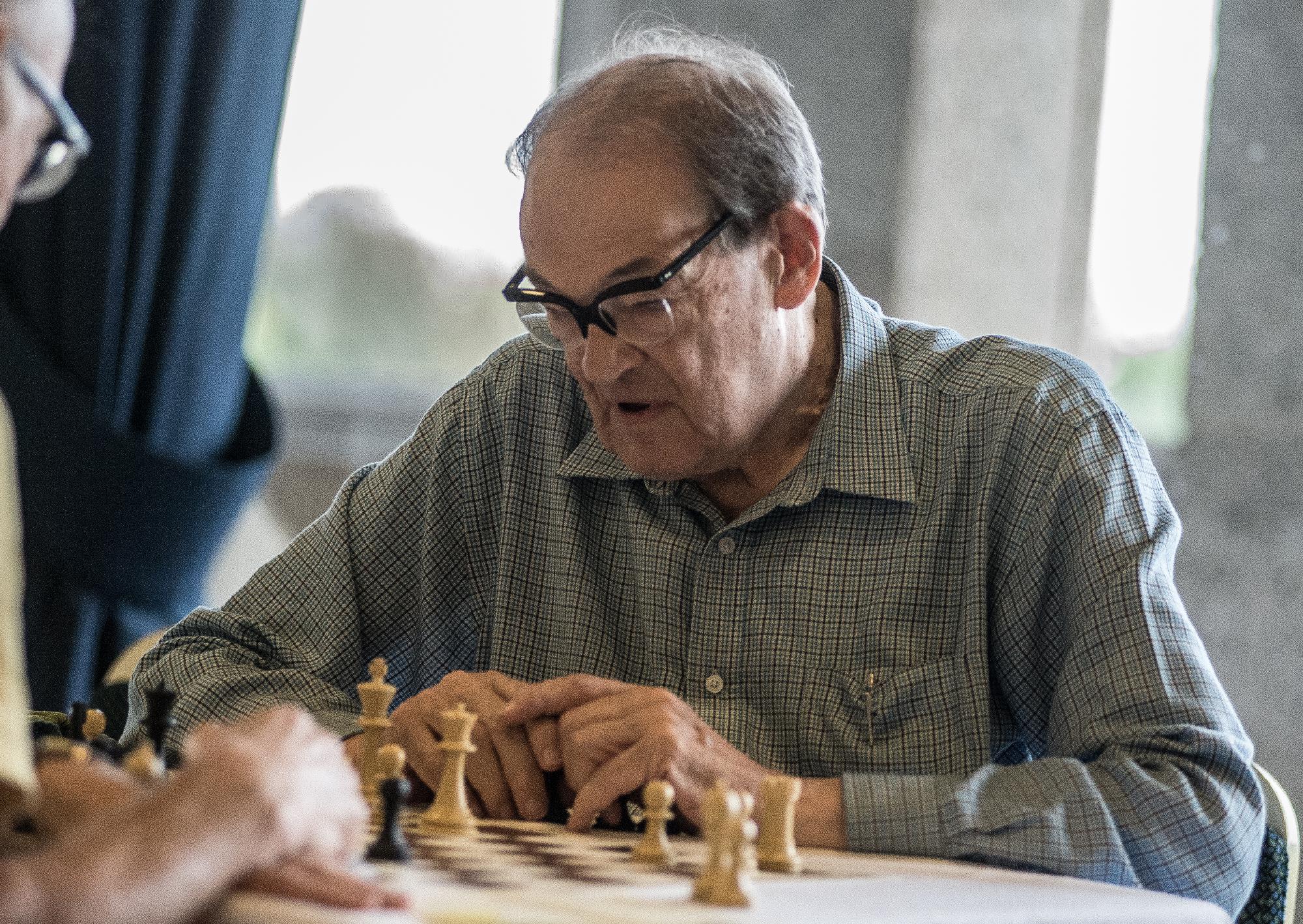
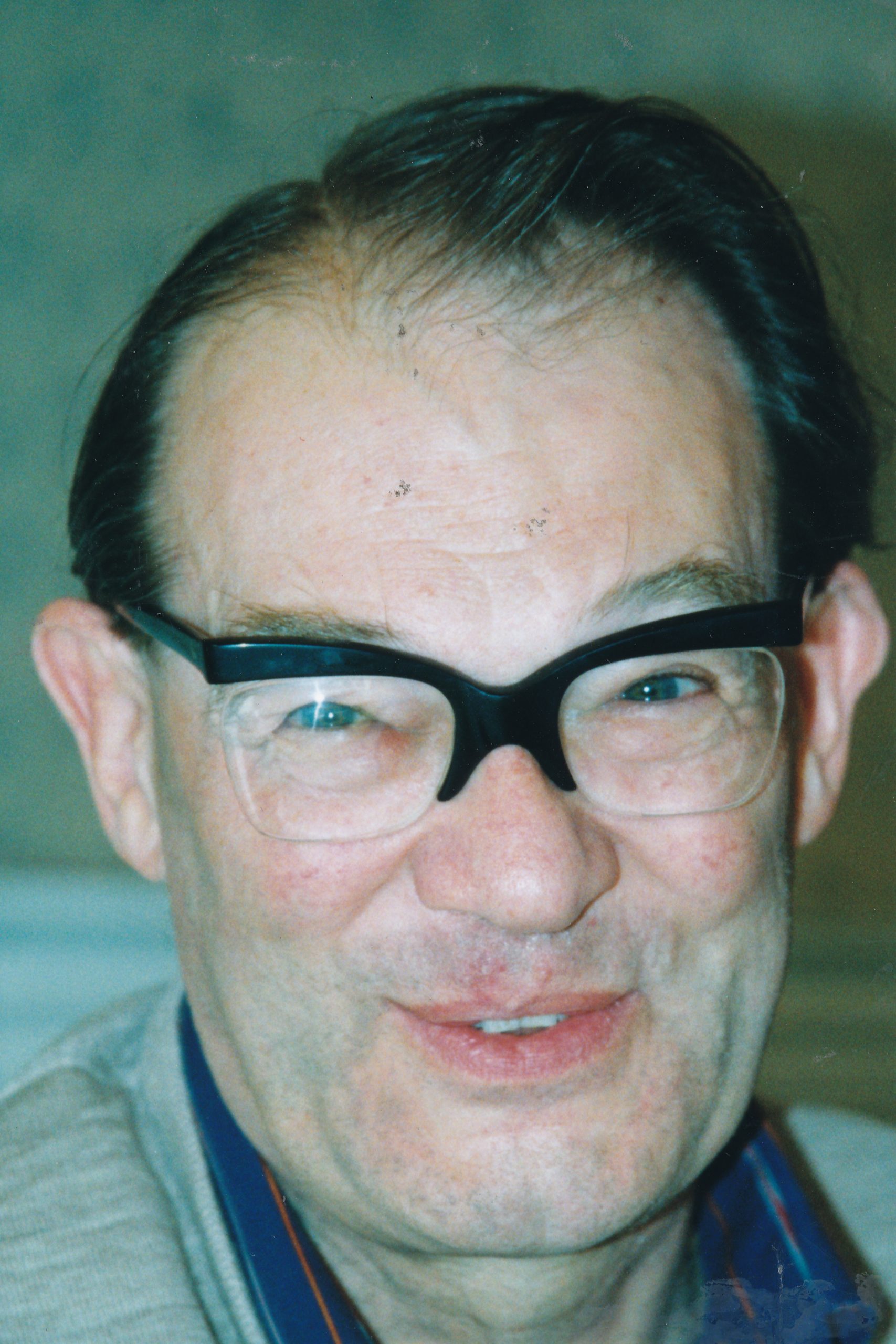
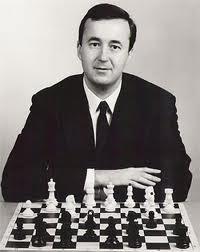
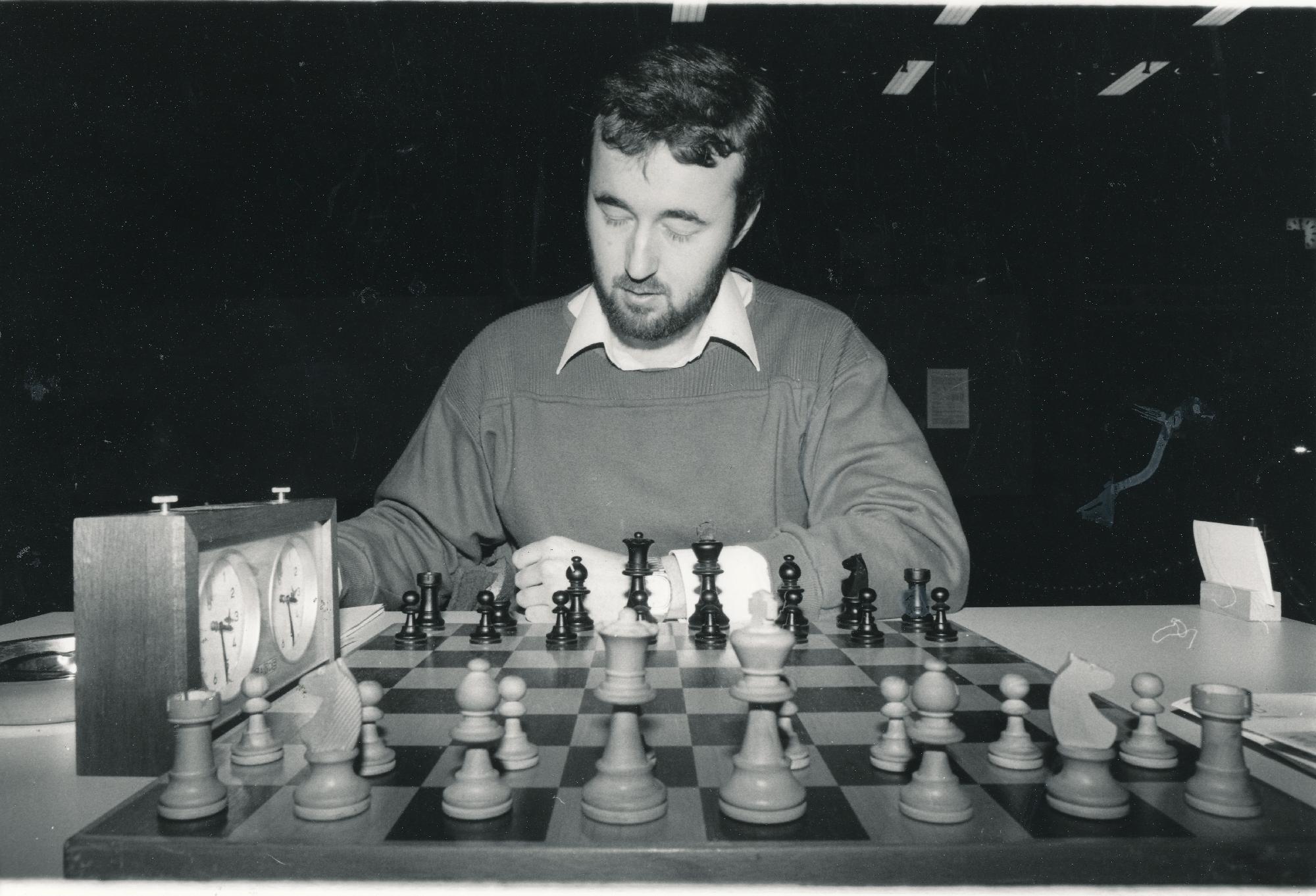
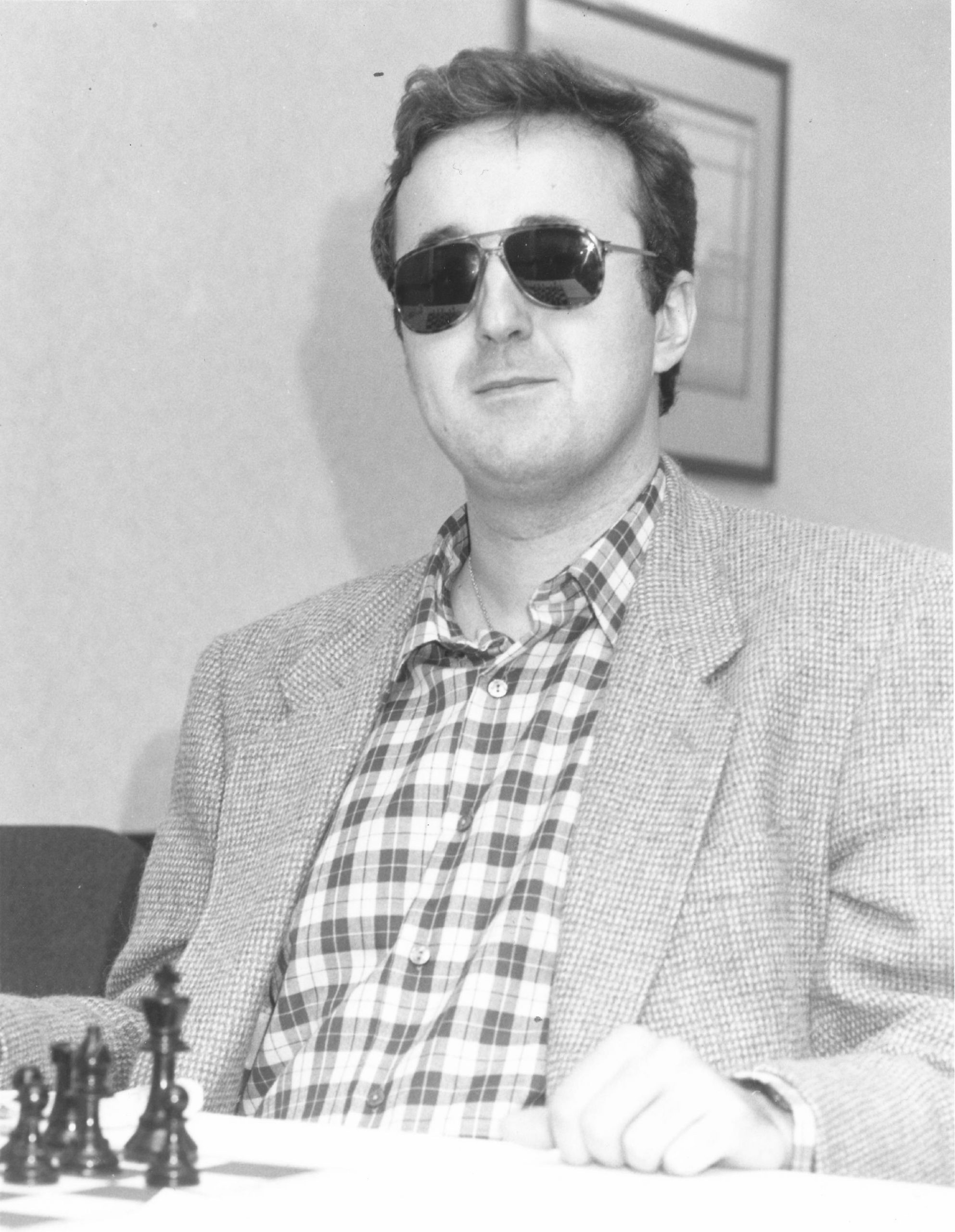
BCN wishes Happy Returns to IM Angus Dunnington (09-viii-1967)
Angus James Dunnington was born in Wakefield, West Yorkshire, his mother’s maiden name was Townend.
He has lived in Castleford, West Yorkshire and most recently in Lockerbie, Dumfriesshire.
Angus became a FIDE Master in 1990 and an International Master in 1991.
Angus has been a recipient of a Chess Journalists of America award and was chess correspondent for The Yorkshire Post. He has been an Olympiad trainer.
Angus has played for 4NCL White Rose and his peak FIDE rating was 2450 in January 1996, aged 29.
He won Toulouse 1993 with 6.5/9, we was first equal (3) in the London Agency tournament on 1997 with 6/9, we was equal first in the 1999 Hampstead IM tournament with 6.5/9.
As White Angus prefers a Reti style double fianchetto, the King’s Indian Attack and also the Queen’s Gambit and is an expert on the Catalan and KIA.
As Black Angus essays the Modern Defence most of the time.
His most recent ECF grading was 212E in 2005 and was 232A in 1996.
In 2018 after a lengthy absence Angus made a welcome return to the Scottish Championship Open with a strong =3rd place.
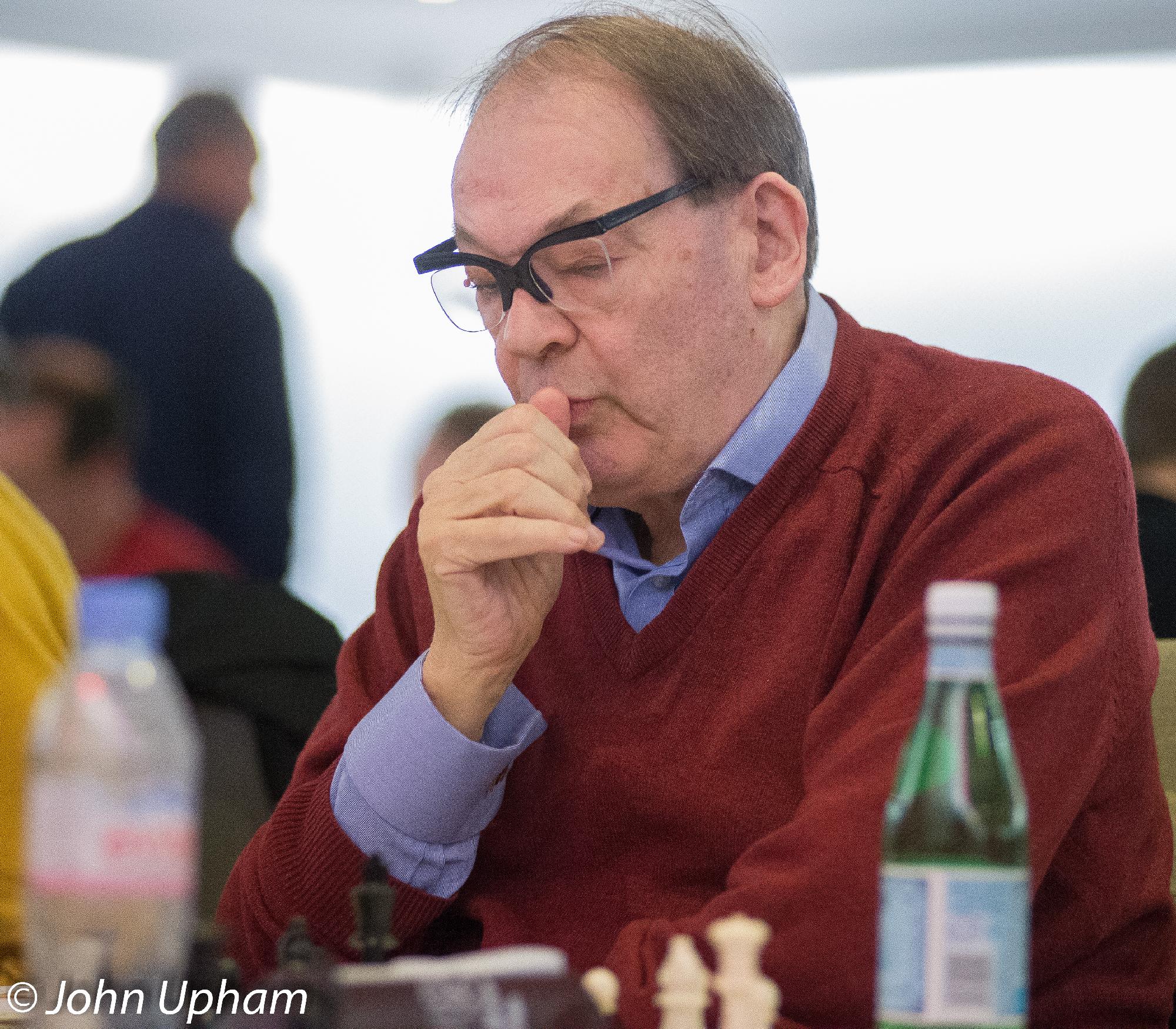
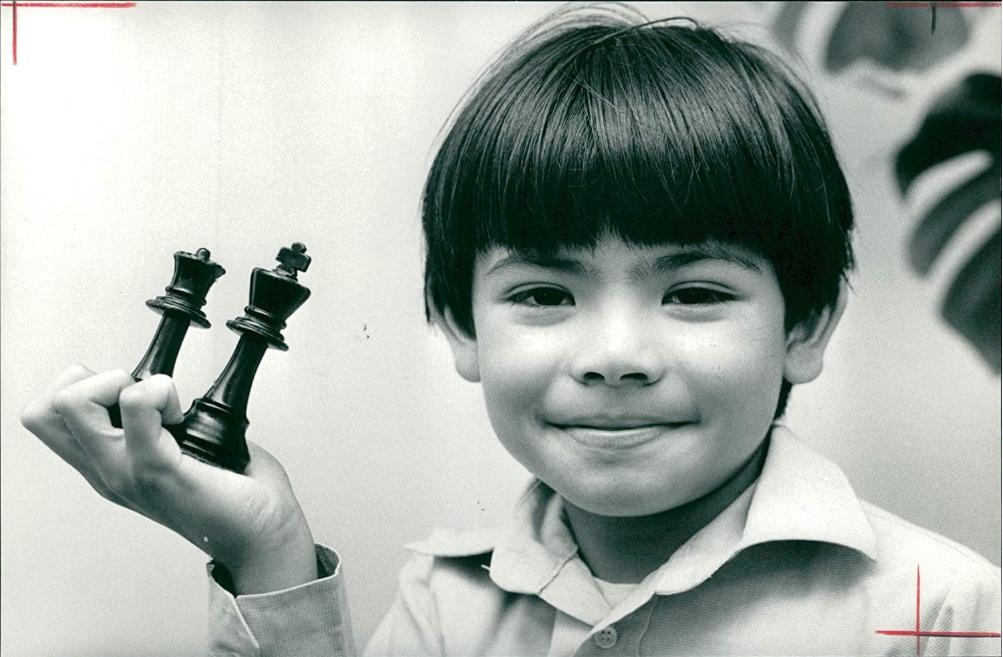
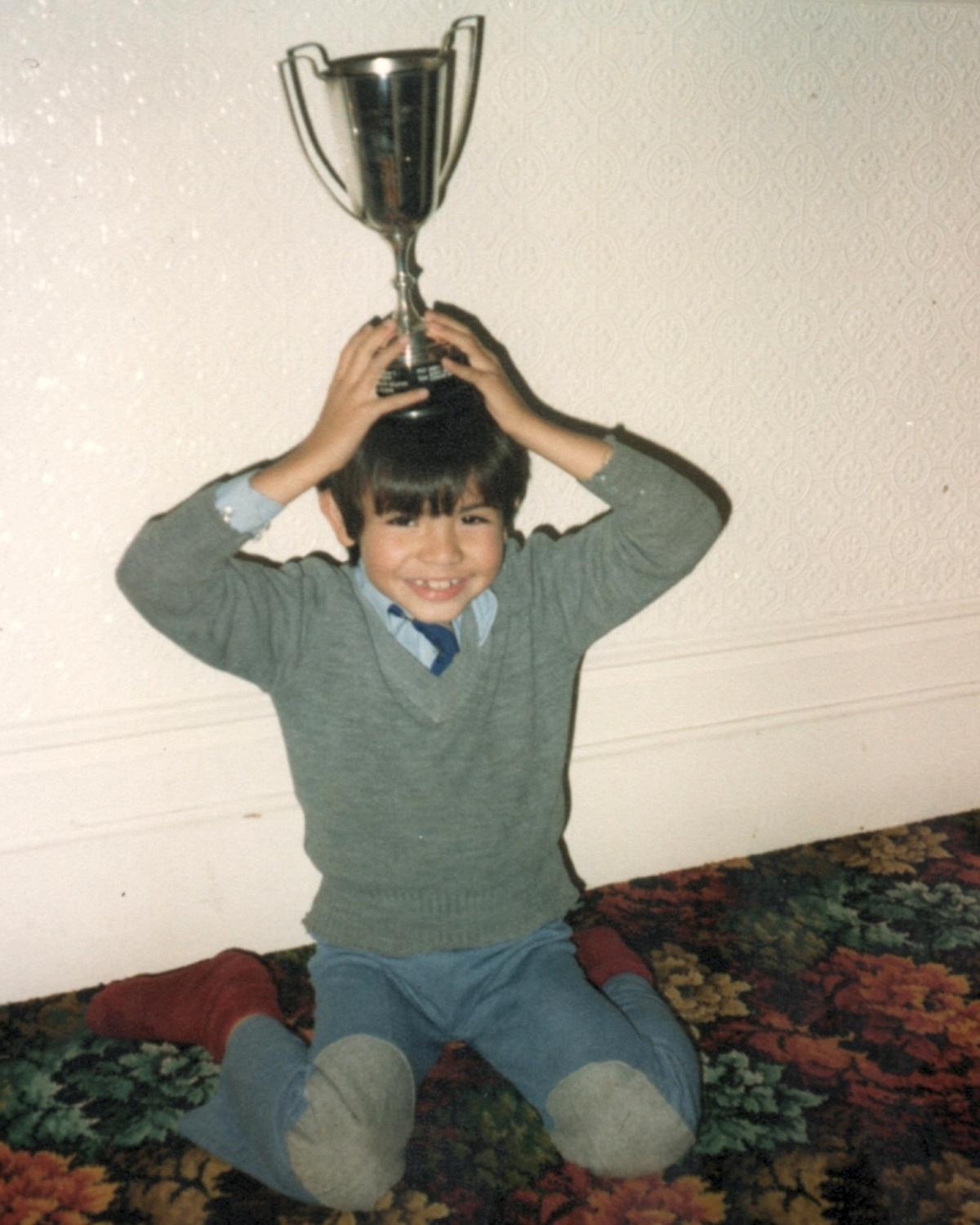
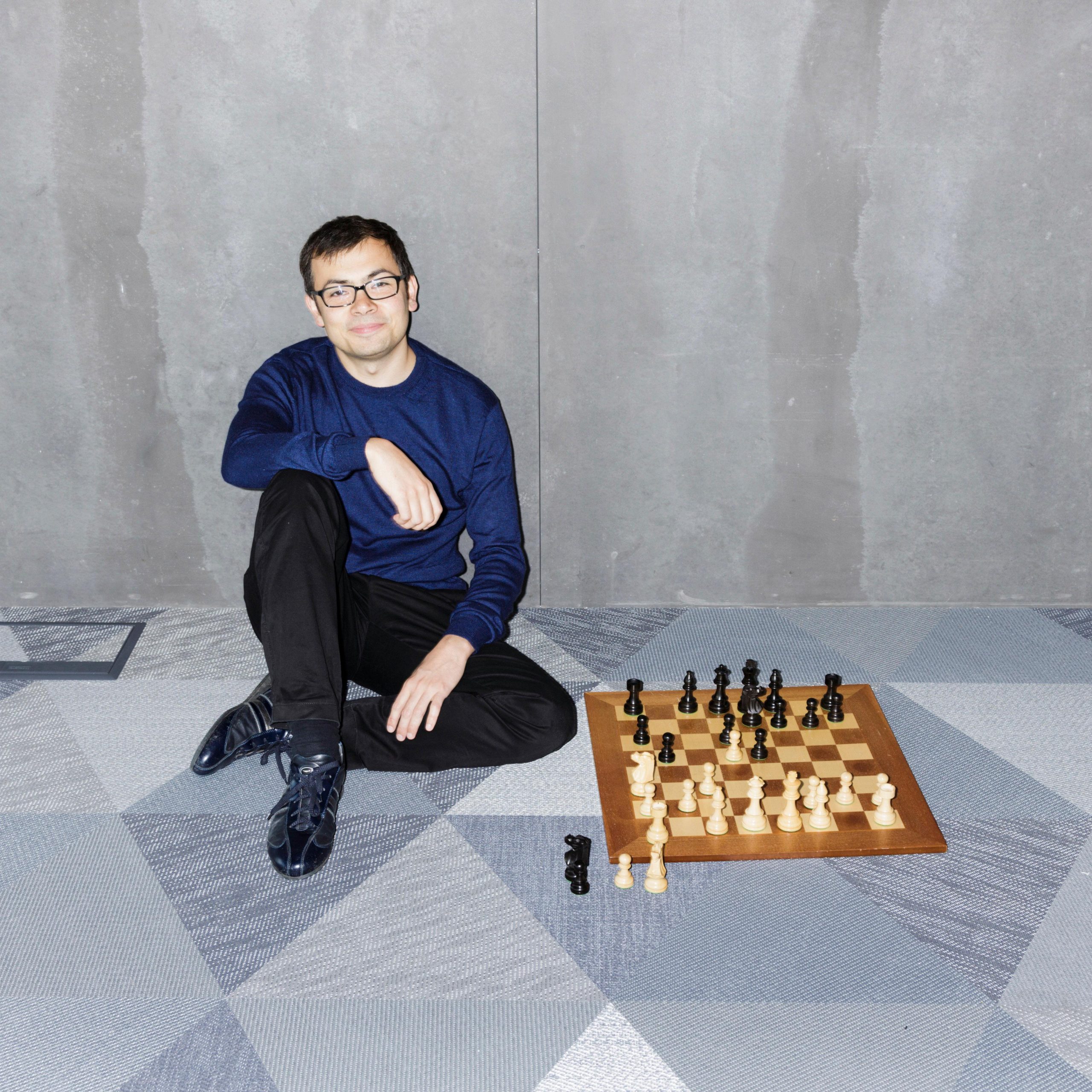
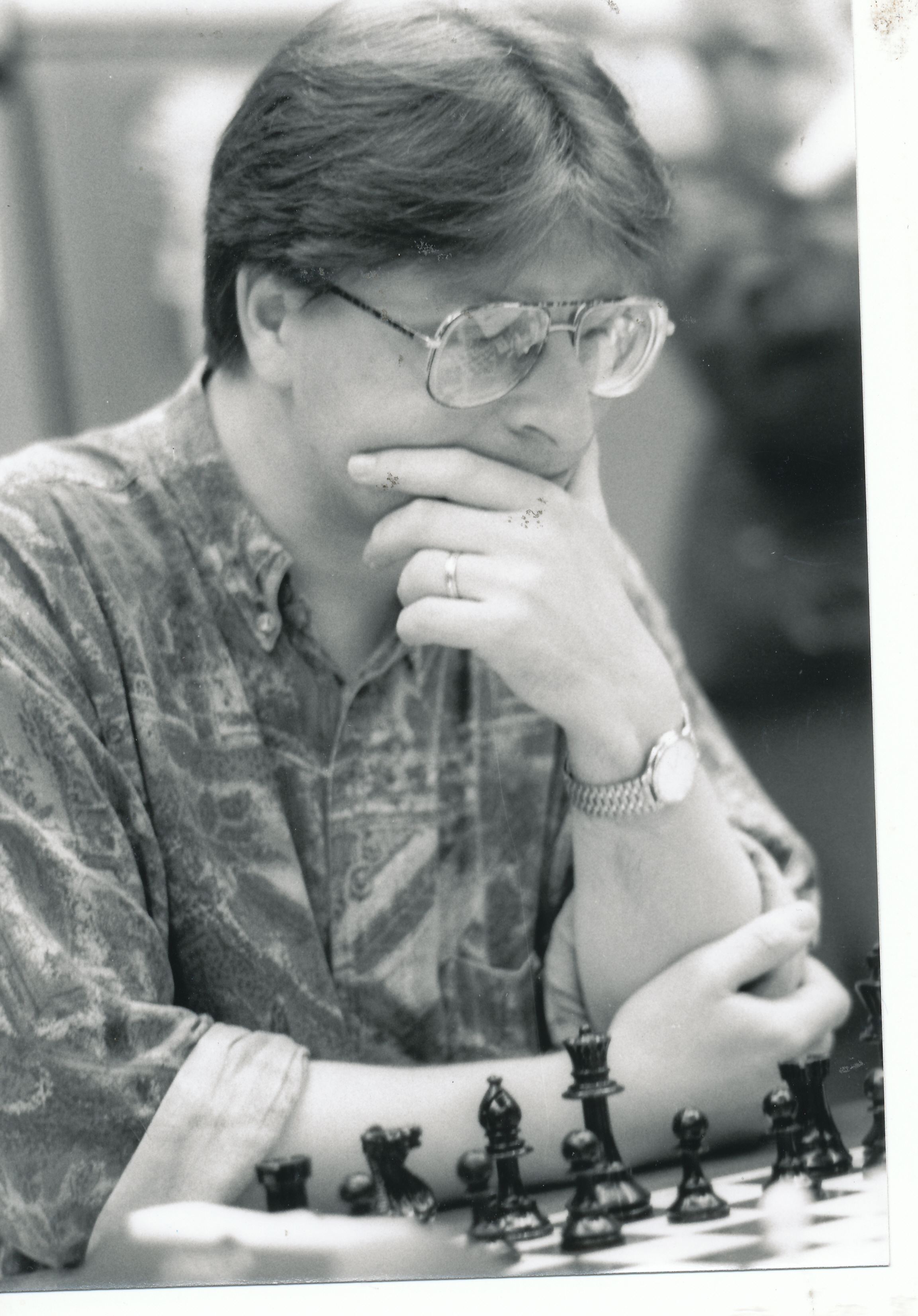
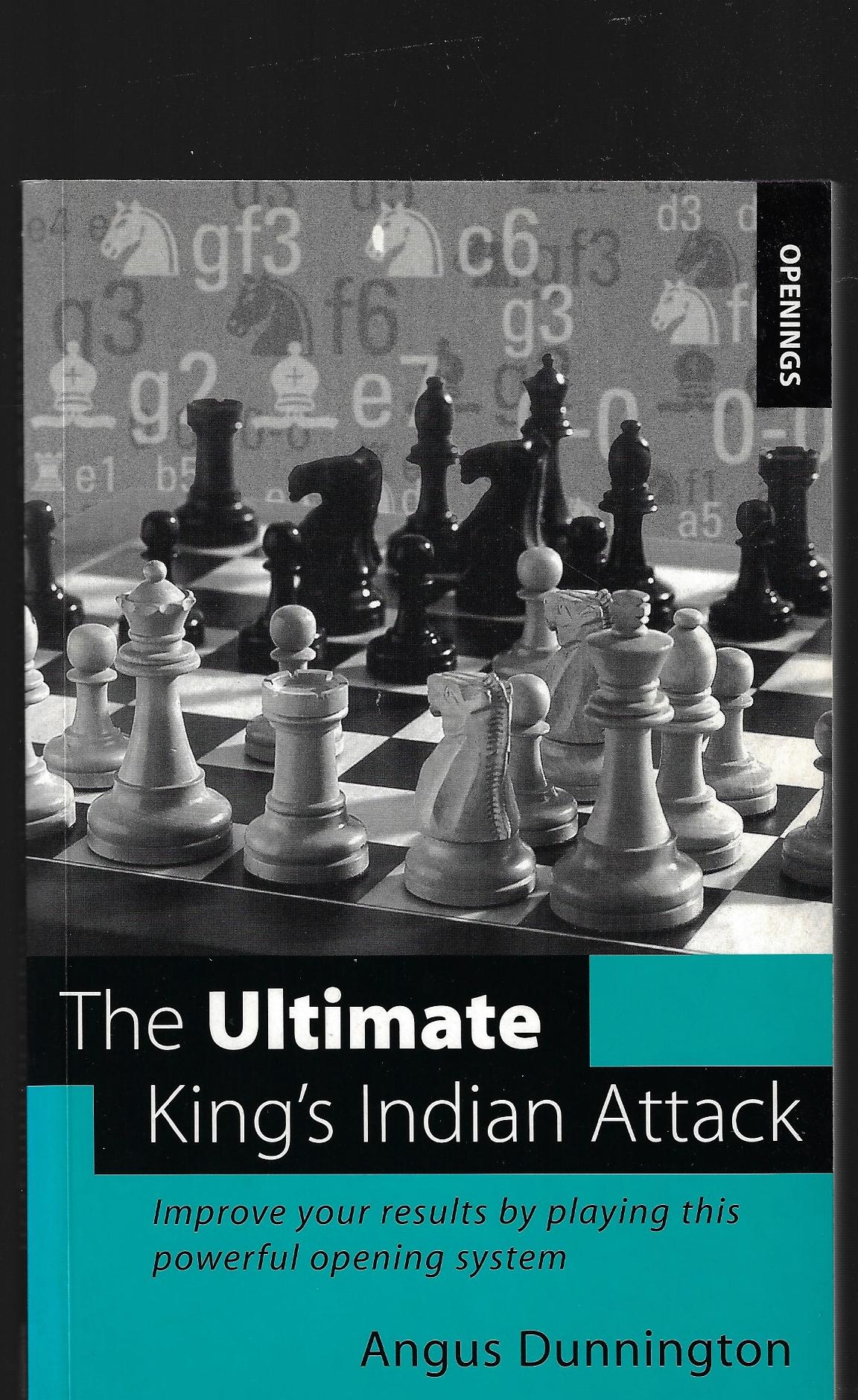
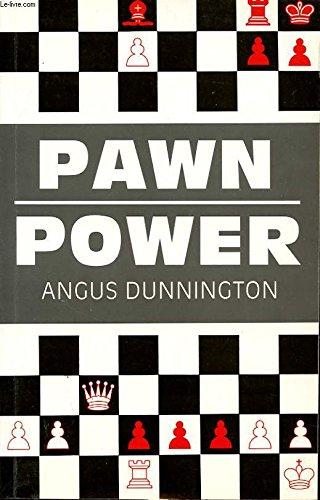
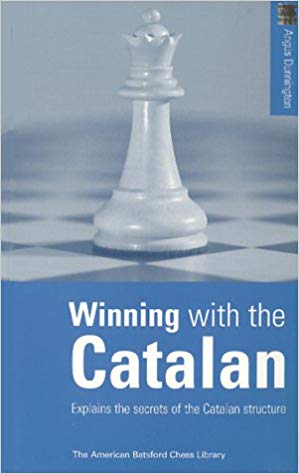
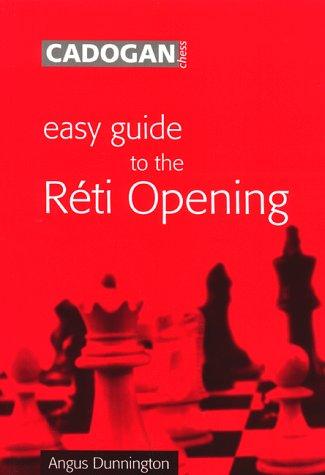
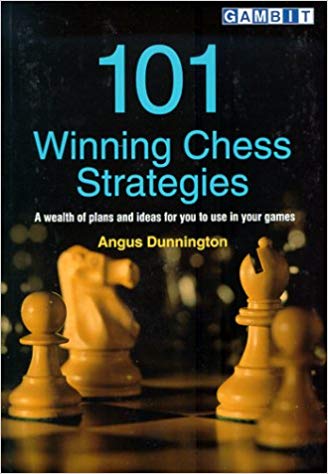
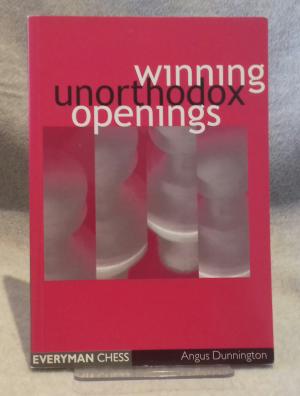
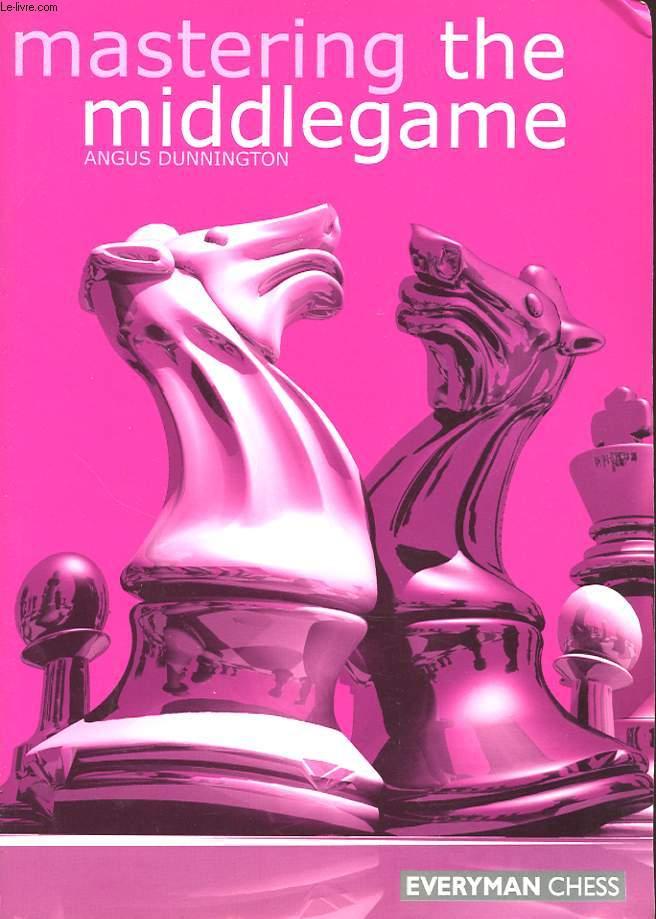
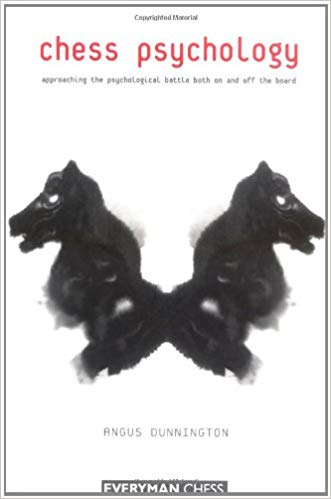
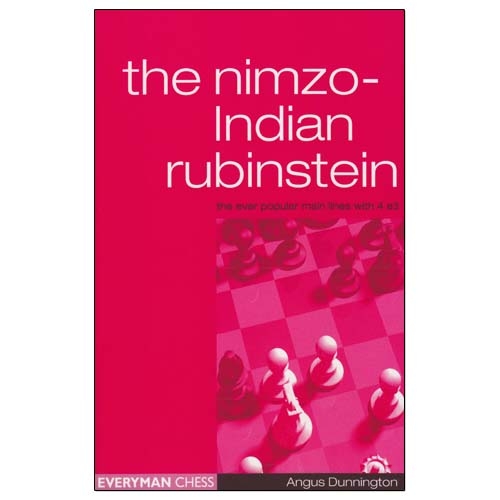
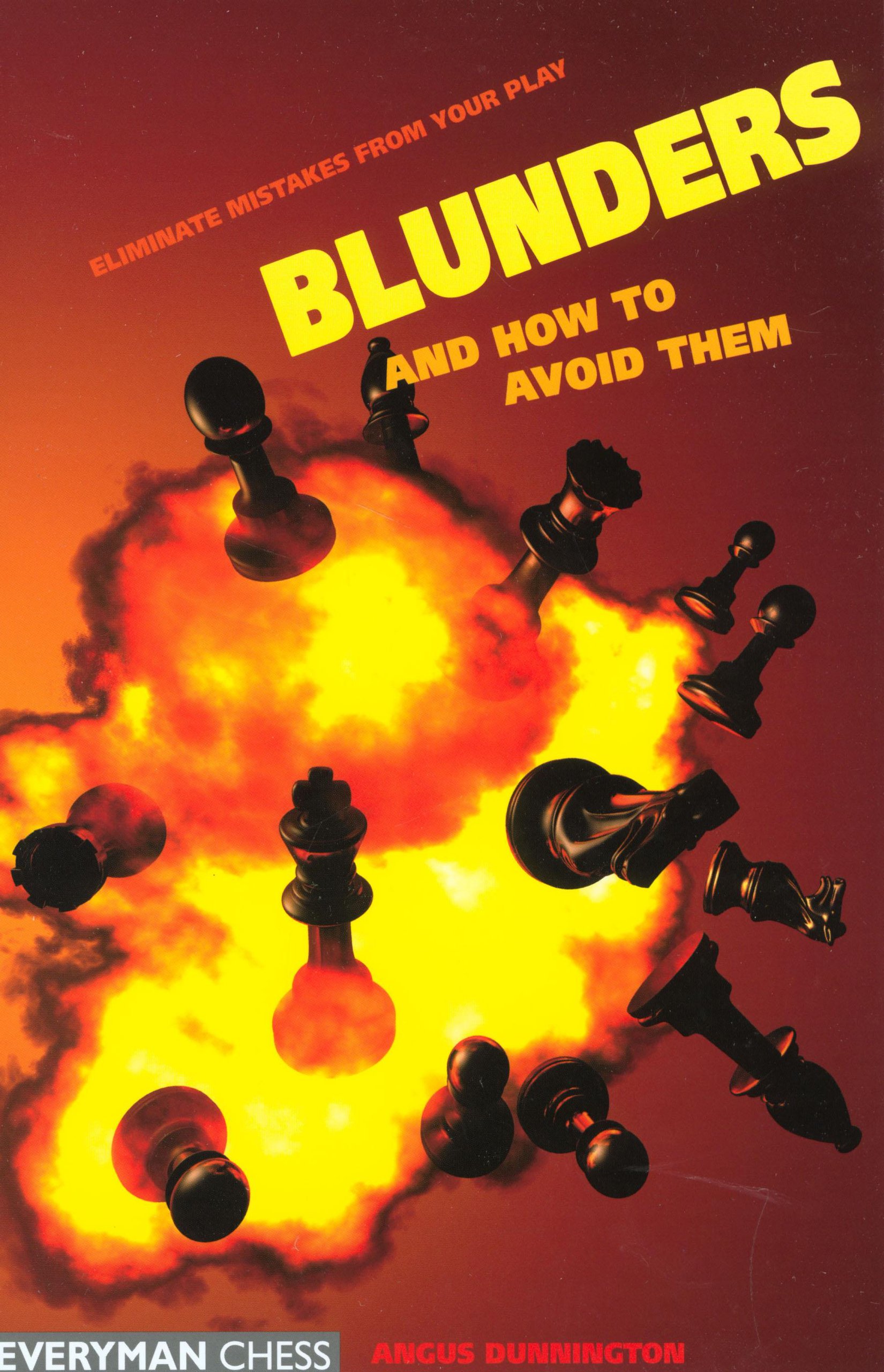
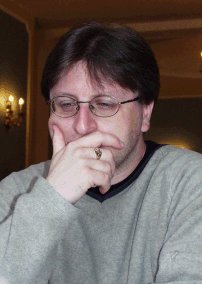
The Ultimate King’s Indian Attack, 1993Pawn Power !, 1994Winning with the Catalan, 1997Easy Guide to the Reti Opening101 Winning Chess Strategies, 1999Winning Unorthodox Openings, 2000Mastering the Middlegame, 2001Chess Psychology, 2003Nimzo-Indian Rubinstein: Complex Lines with 4e3, 2004Blunders and How to Avoid Them, 2004IM Angus Dunnington, photograph by Cathy Rogers
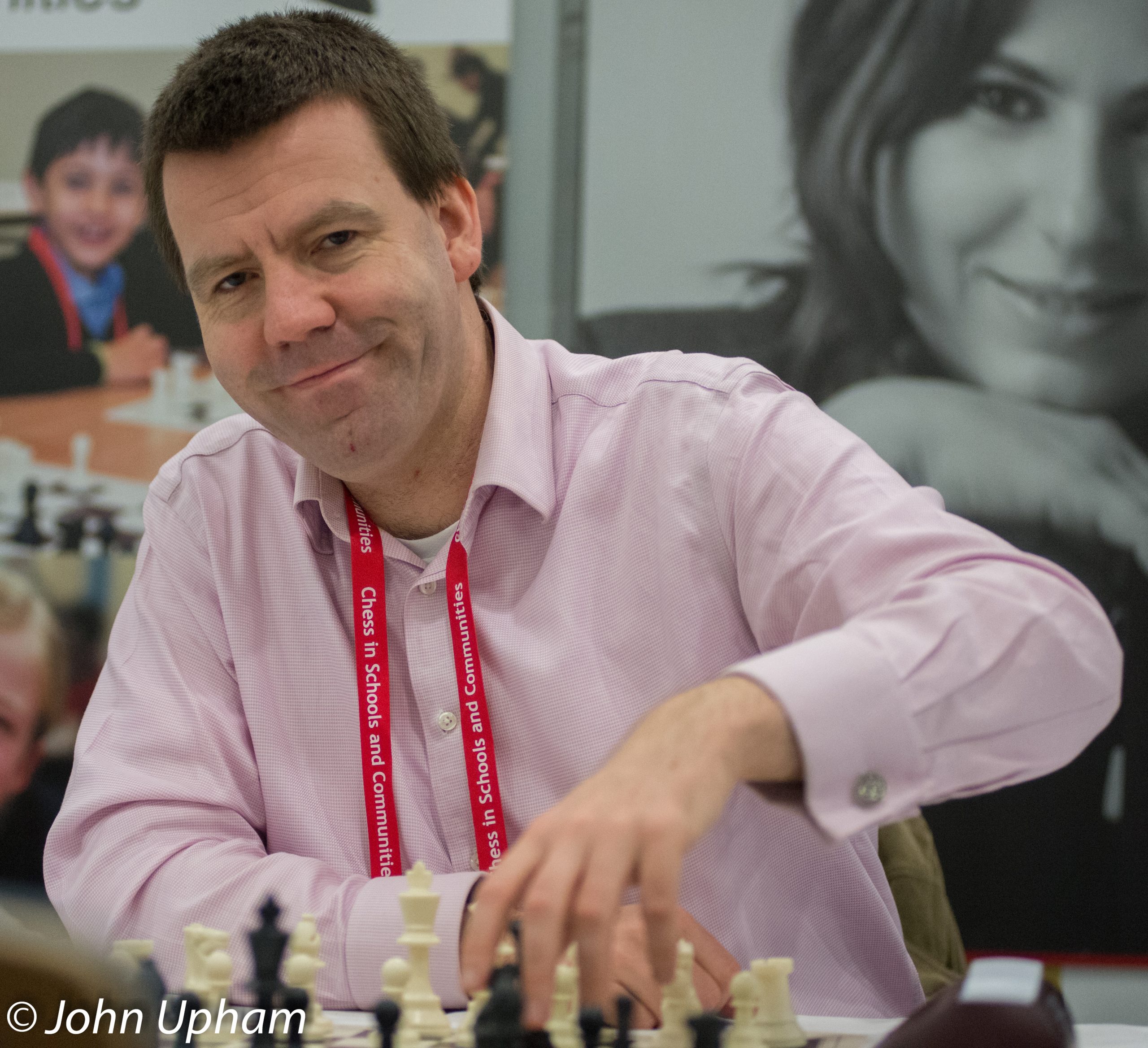
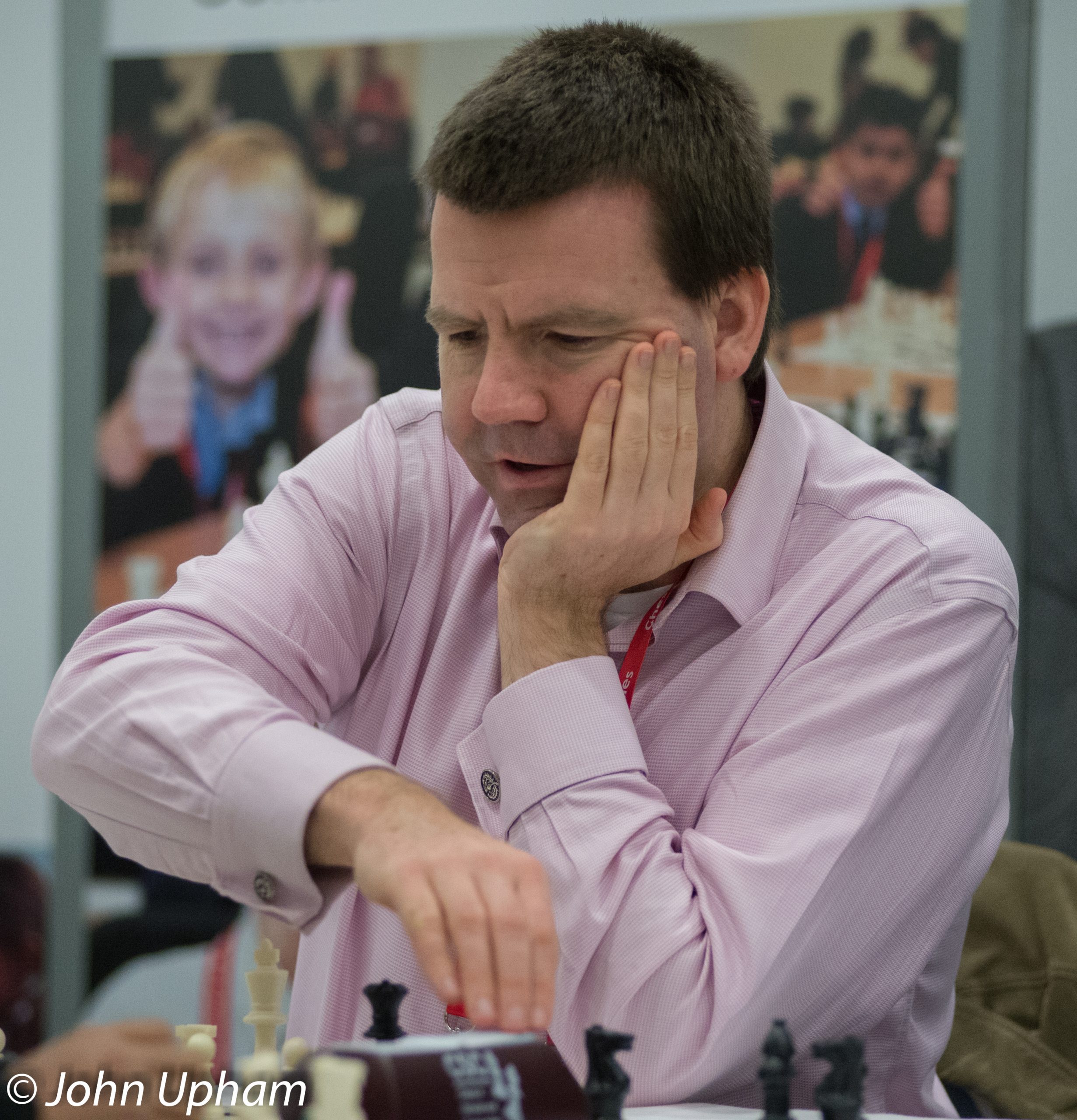
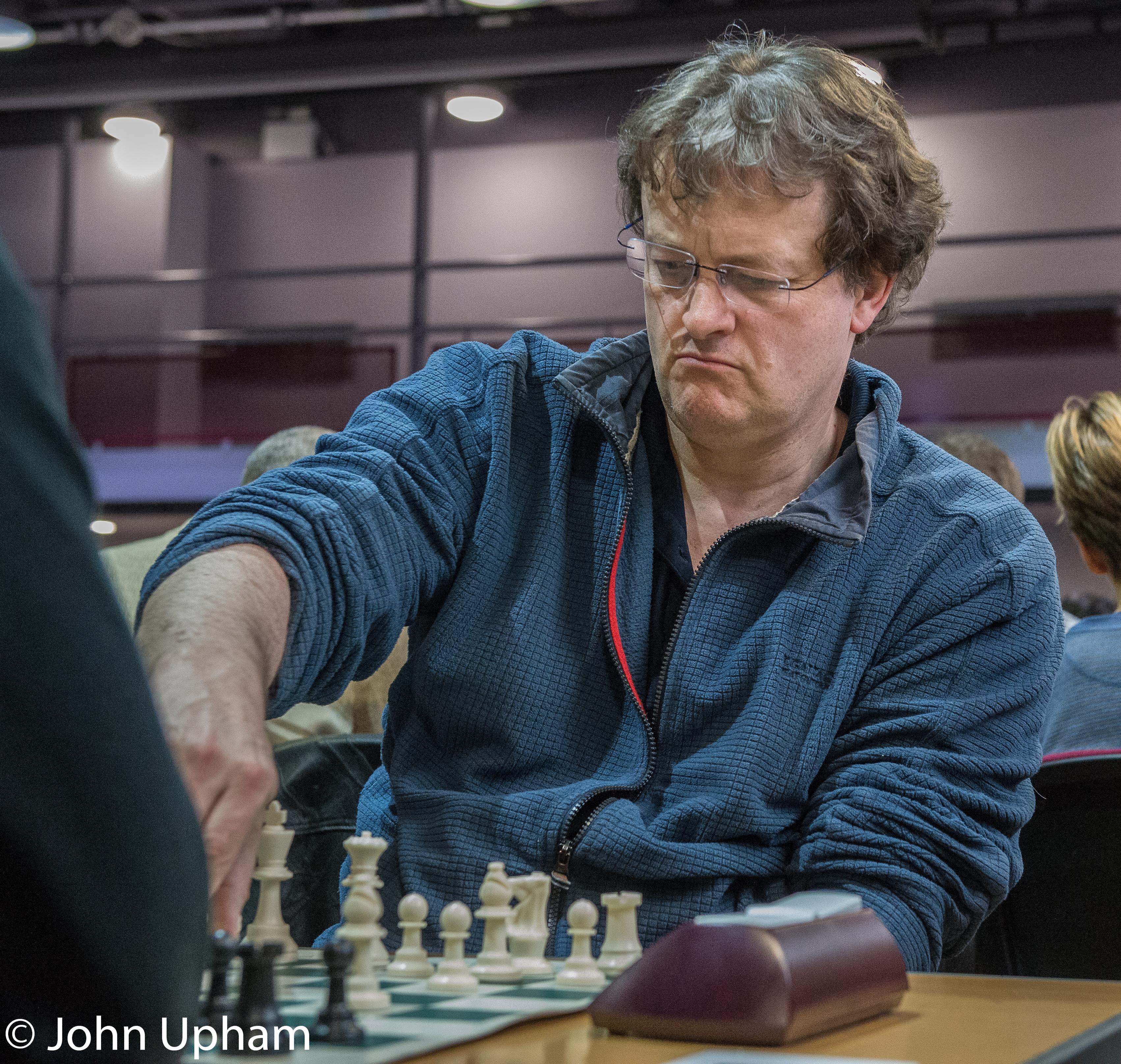
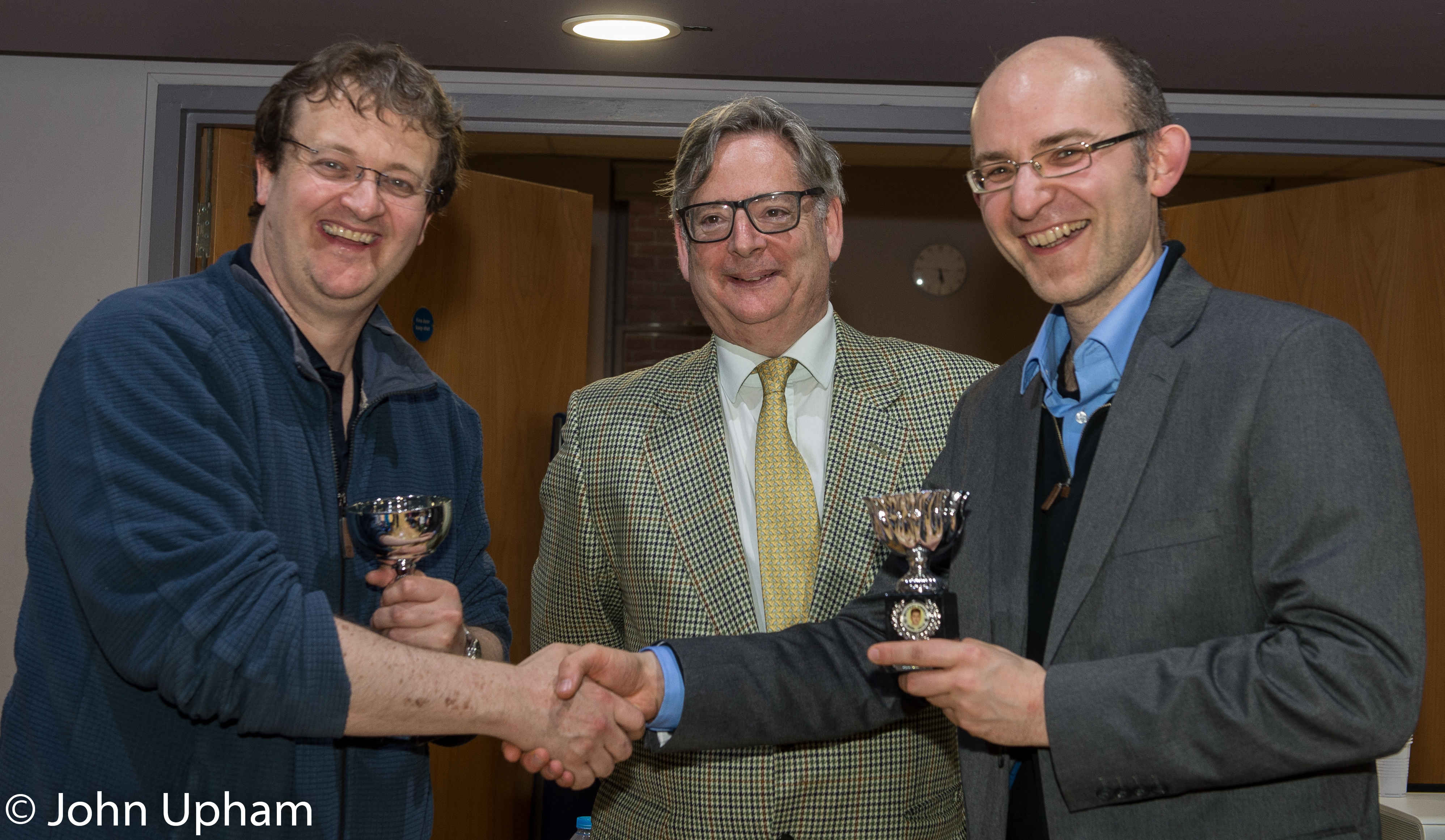
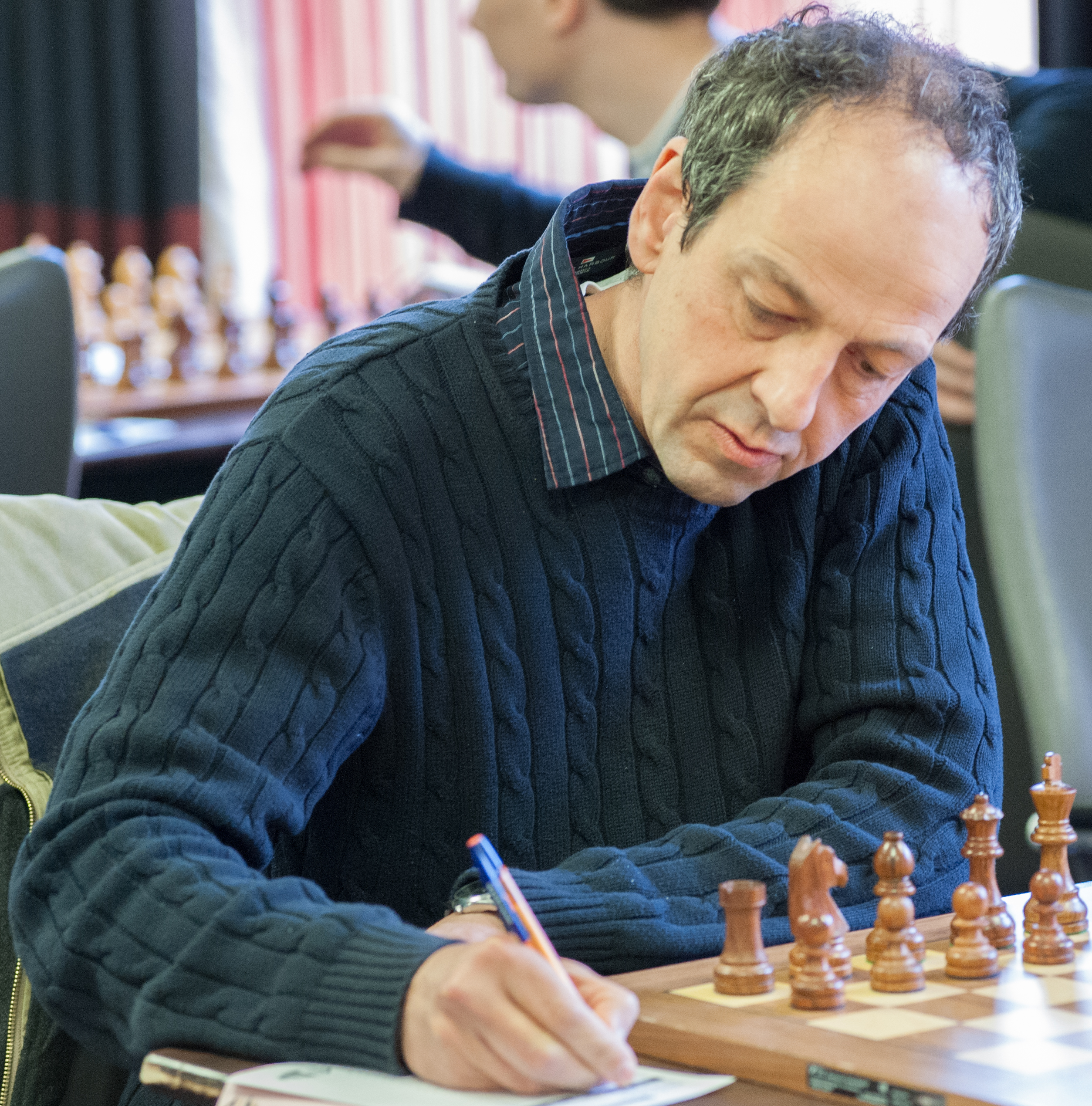
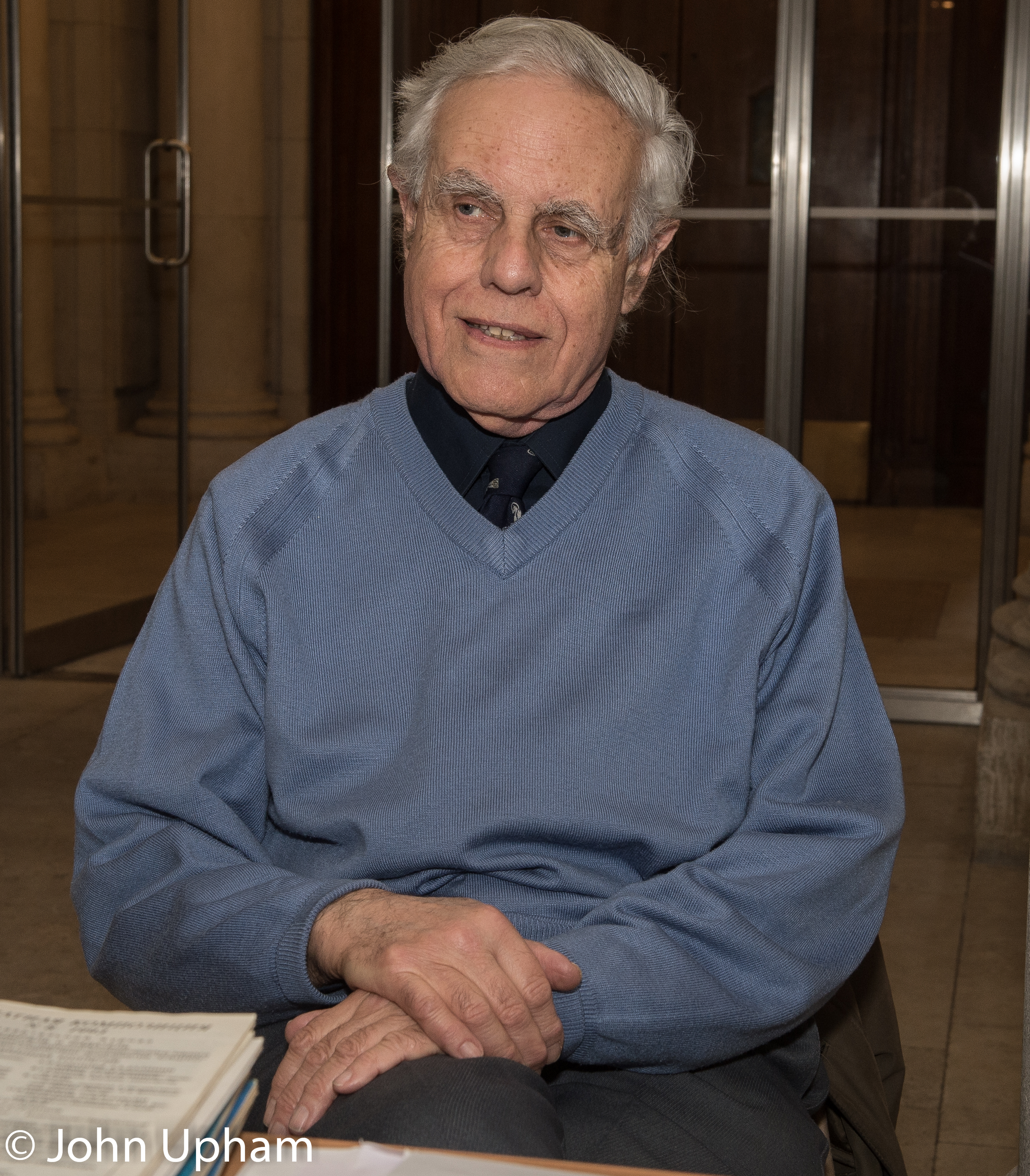
David Anderton OBE from the final 4NCL weekend of 2014, courtesy of John Upham Photography
BCN remembers CM David Anderton OBE who passed away on Friday, April 1st 2022.
In the 1977 New Years Honours List, Civil Division, David was awarded the OBE. The citation read simply : “For services to Chess”
David William Anderton was born in the district of Walsall, Staffordshire, West Midlands. His mother’s maiden name was Coltart and David resided in Walsall.
David was married to Doreen in 2005.
David Anderton (rhs) congratulates Sir Philip Stuart Milner-Barry for winning the “Board of Honour ” game versus Edward Lasker at the 1976 Lloyds Bank Match by Telex, London – New York. From BCM, volume XCVI (96) Number 11 (August), Page 494. The venue was the Bloomsbury Hotel, London. Photo courtesy of Lloyds Bank
David was an Honorary Life Vice-President of the English (formerly British) Chess Federation.
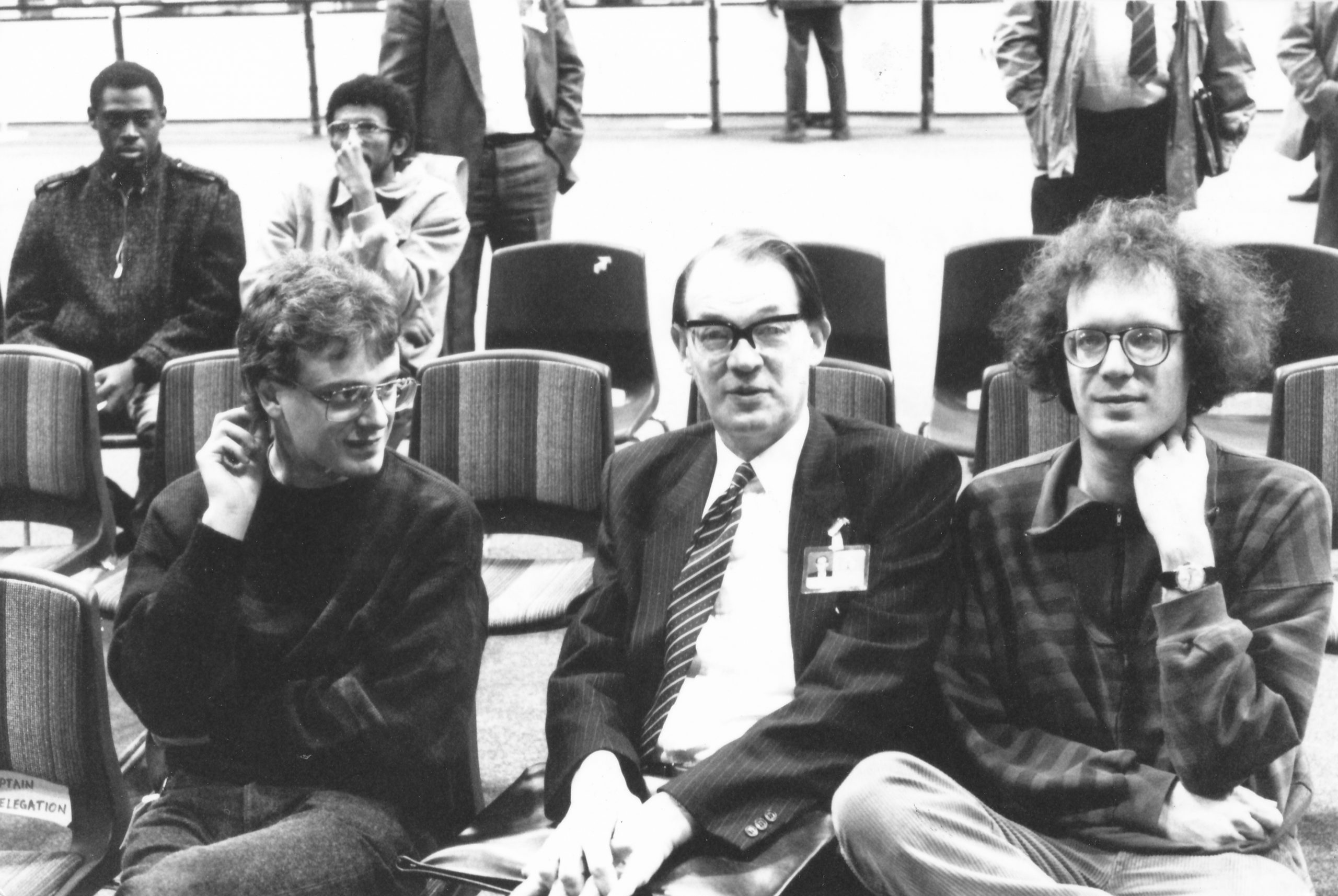
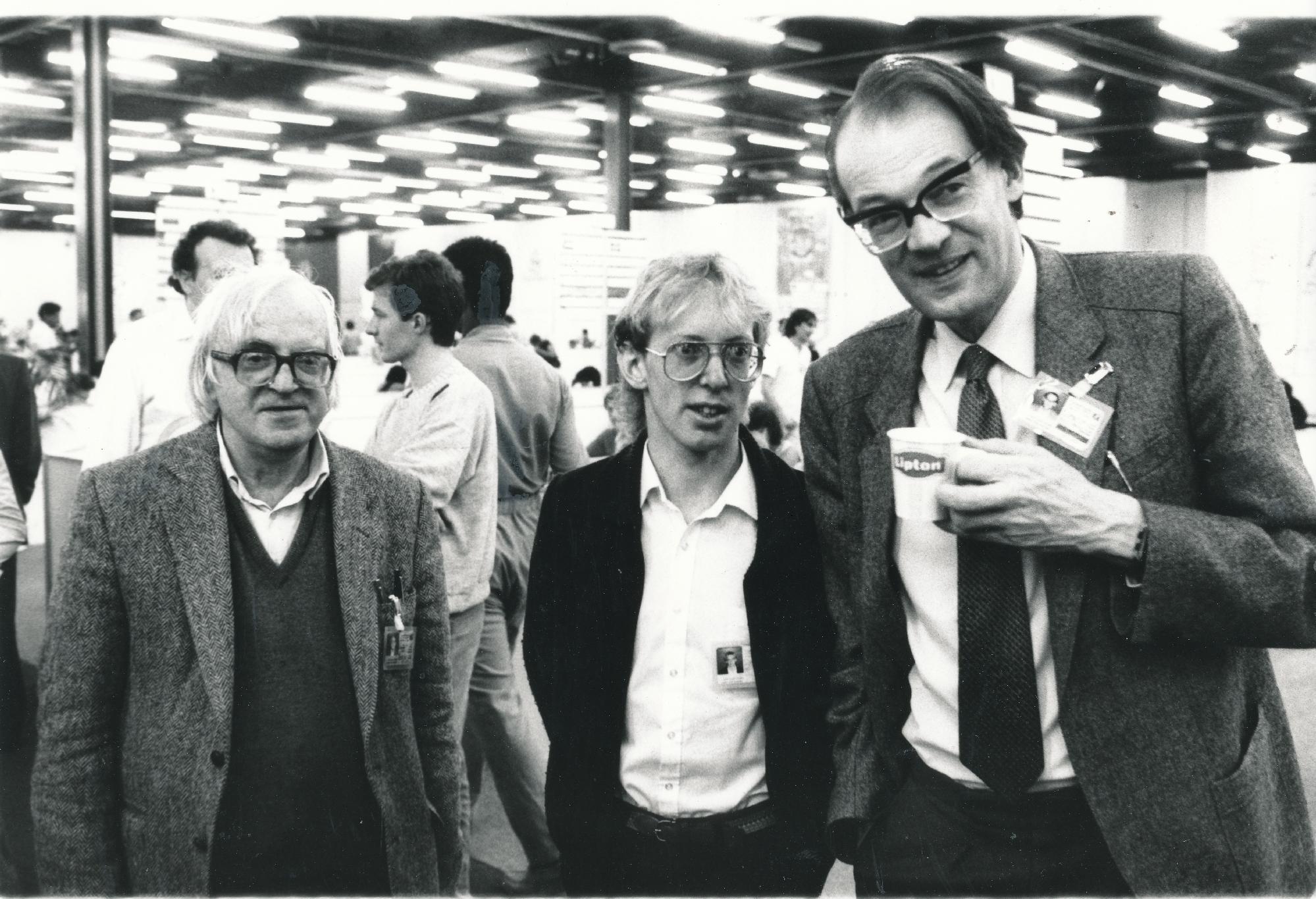
John Nunn, David Anderton and Jonathan Speelman
“David won the ECF President’s Award in 2009 following his stepping down as ECF legal expert. This is the citation from the 2010 ECF Yearbook :
“As this is Gerry Walsh’s last year as President it was considered appropriate that he be allowed to choose someone receive the award. Gerry has worked with David for all his time with BCF and ECF and has selected him due to his tireless and selfless devotion to both the BCF and ECF over many years.
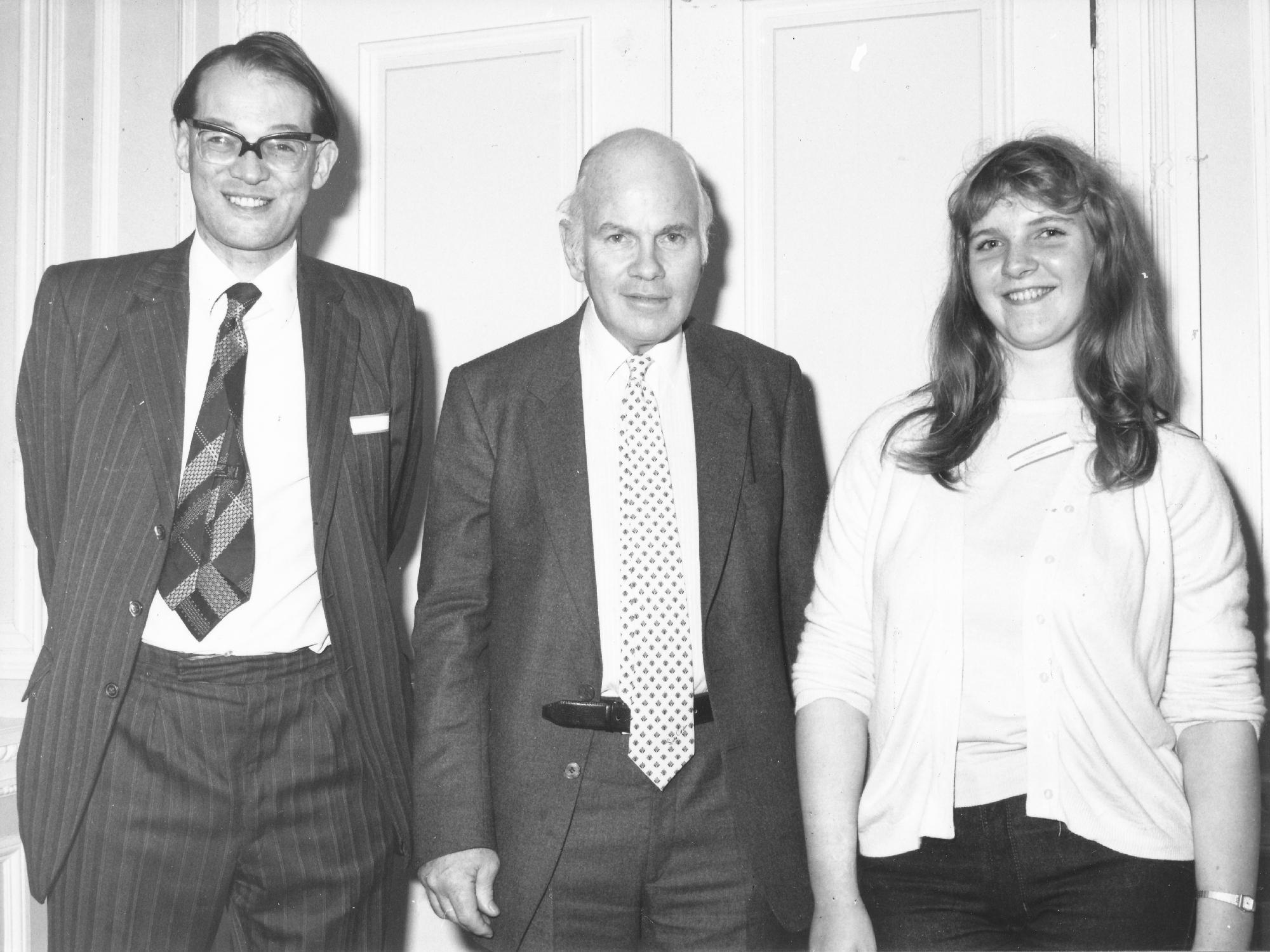
David Anderton OBE, ? and Teresa Needham
Most of you will know David and will agree that this is a well deserved award. It is fair to state that David’s assistance over the years has been invaluable and that without it many areas of the Federation would have found it difficult, if not impossible to operate.
Jim Plaskett with David Anderton OBE at the 1983 Benedictine International (Manchester)
Since my election David has been a constant friend and confidante. He has invariable given sound advice throughout my term of office. It was John Wickham who rang me and suggested that due to my length of tenure, a special award might be in order.
Jim accepts the 1981 Grand Prix shield from David Anderton OBE
After years of selfless and generous devotion serving as ECF President, International Director, Captain of the England Team and legal adviser, this seems to be a fitting tribute.
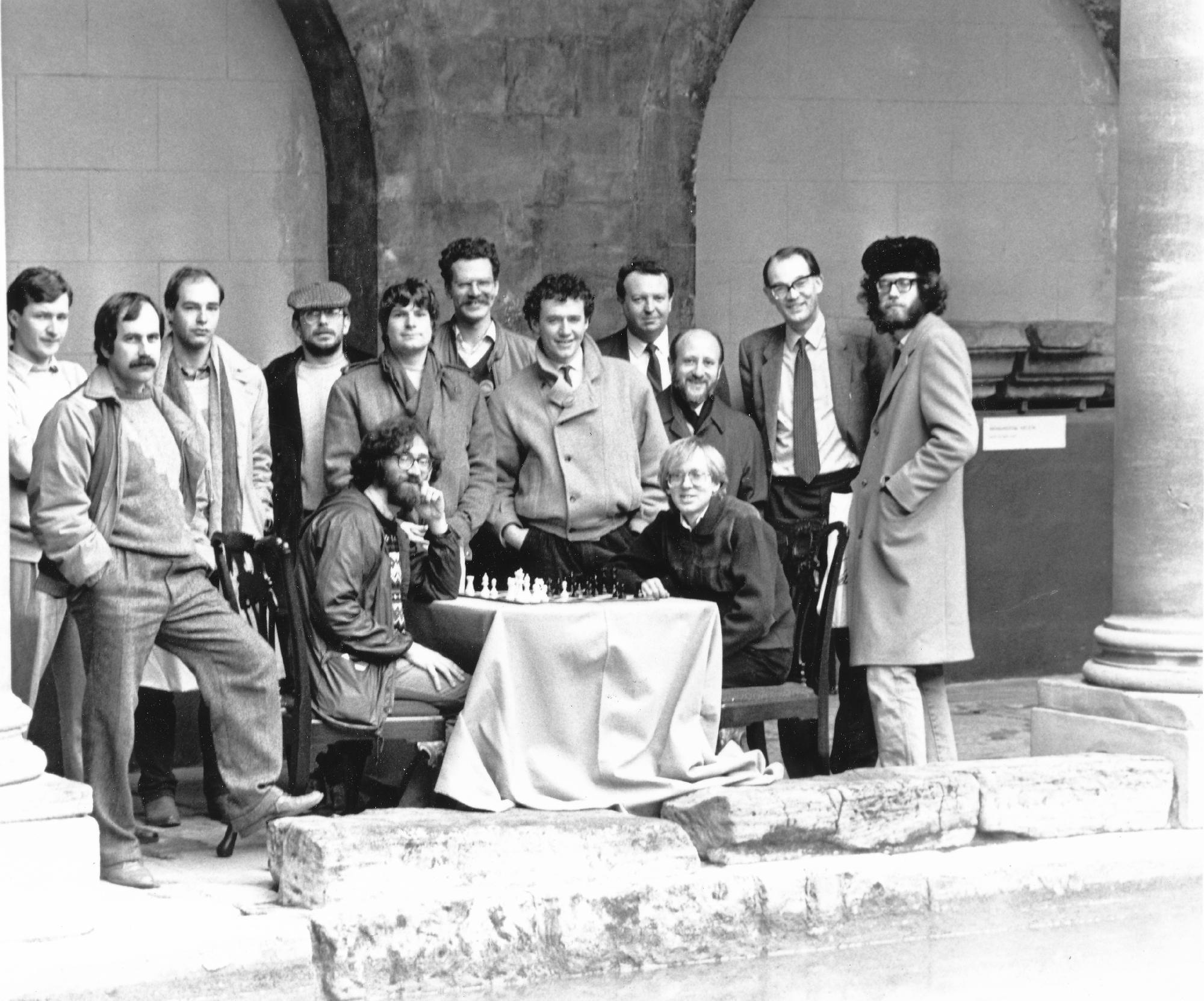
From the Praxis Bath Zonal Tournament of 1987. David Anderton OBE is second from right
David’s advice both legal and general, has been invaluable in such matters as the John Robinson legacy and the change of name from BCF to ECF Limited, and I certainly hope that this advice will continue.
Gerry Walsh”
Bob Wade OBE, Murray Chandler MNZM and David Anderton OBE
David is a FIDE Candidate Master.
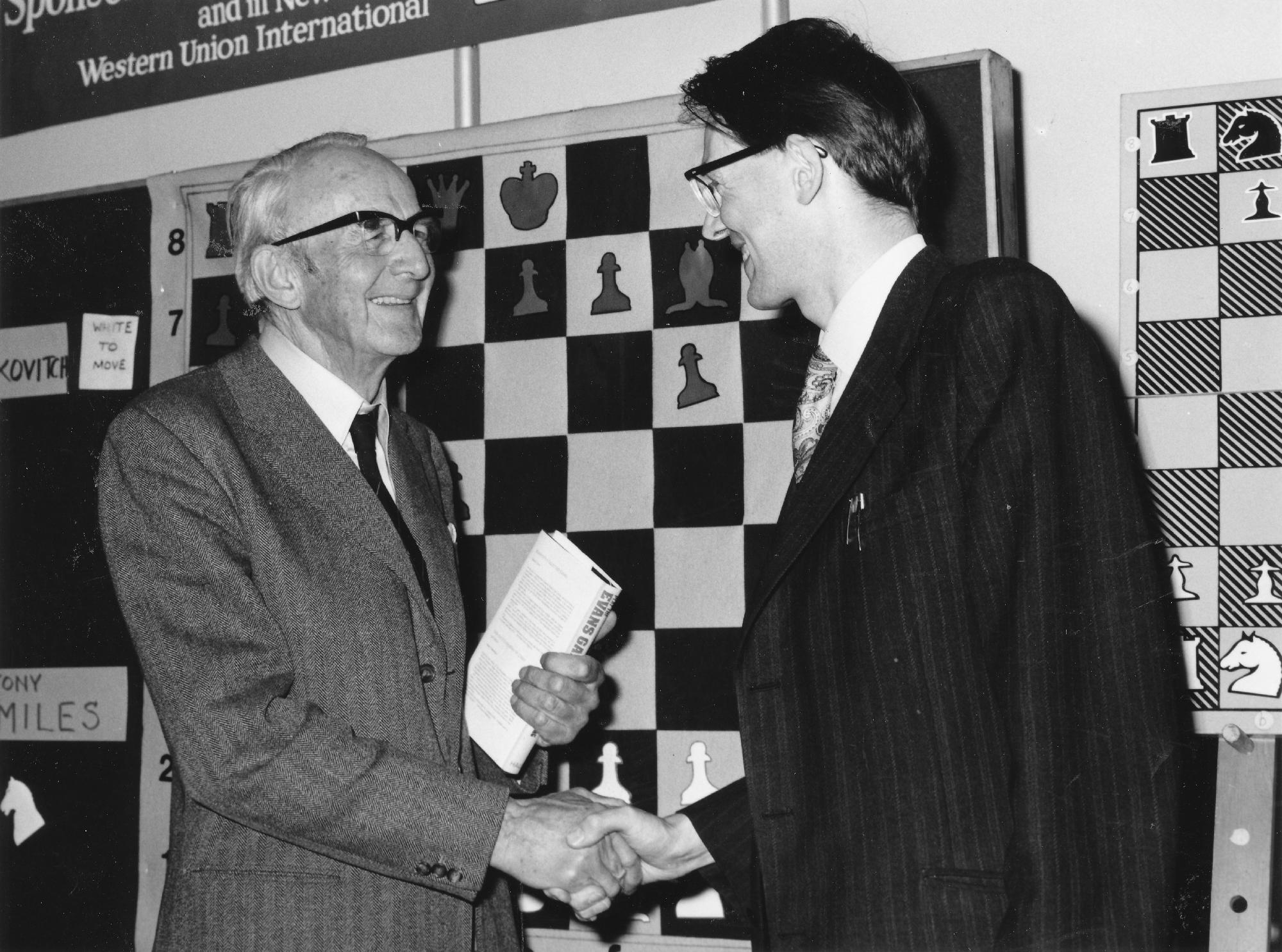
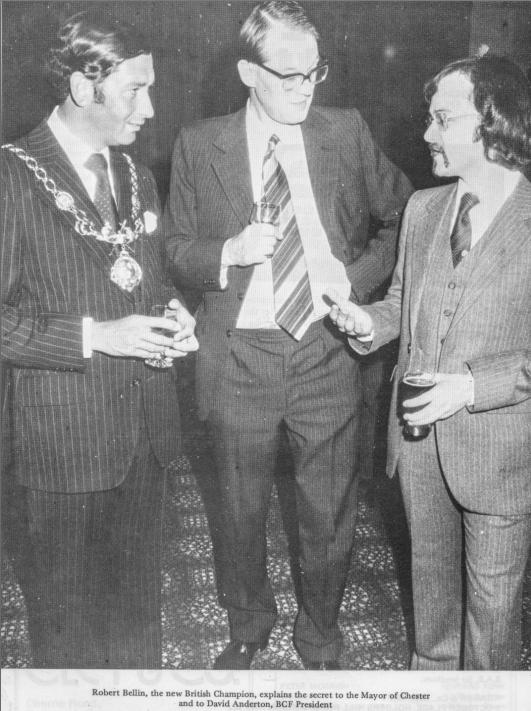
From the BCF 1979-80 Year Book of Chess : Robert Bellin, the new British Champion, explains the secret to the Mayor of Chester (?) and to David Anderton, BCF President
With the White pieces David exclusively plays 1.d4 aiming for a Queen’s Gambit and main lines.
With Black David plays the Winawer and the Classical French plus the Lenningrad Dutch.
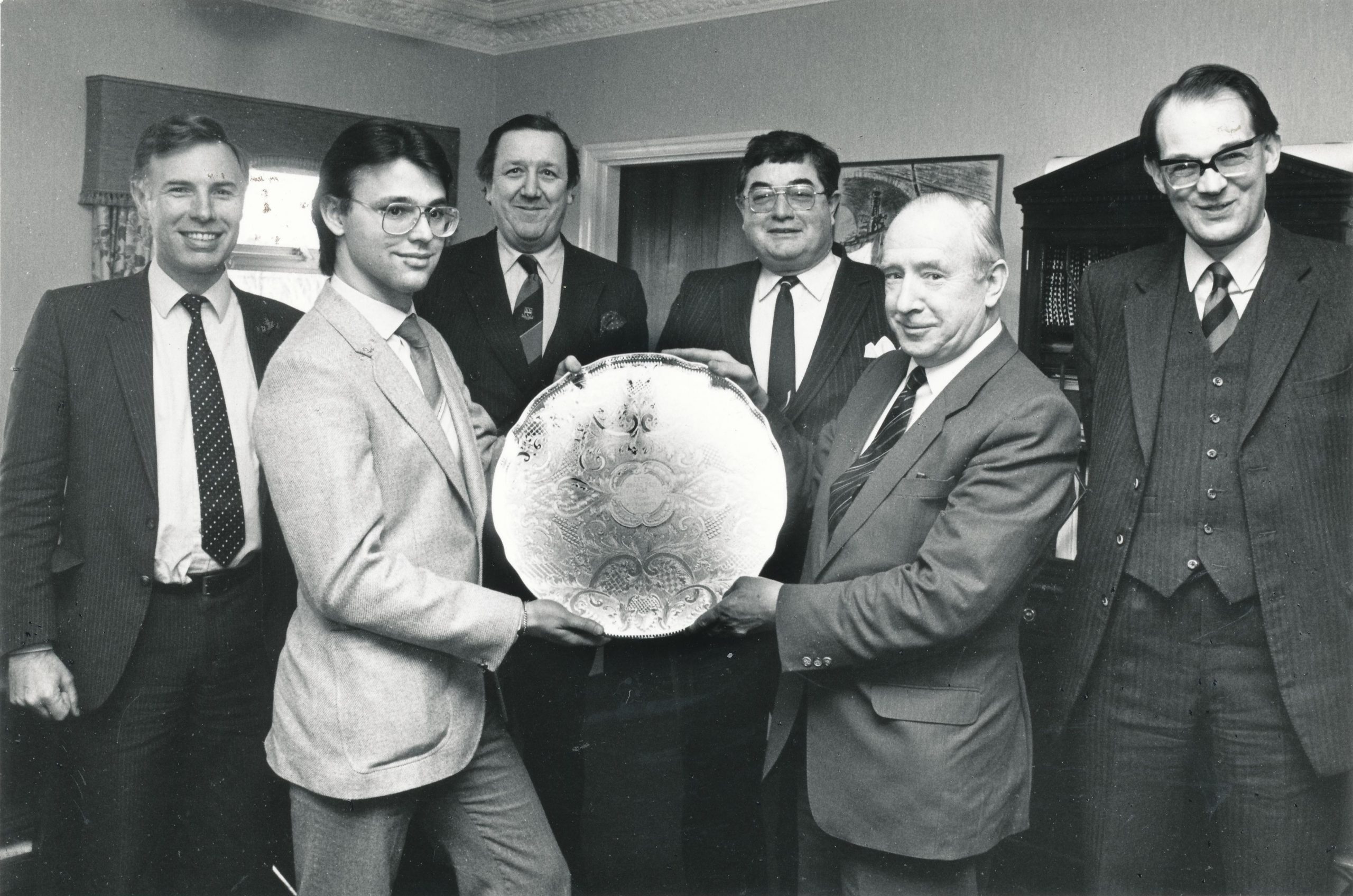
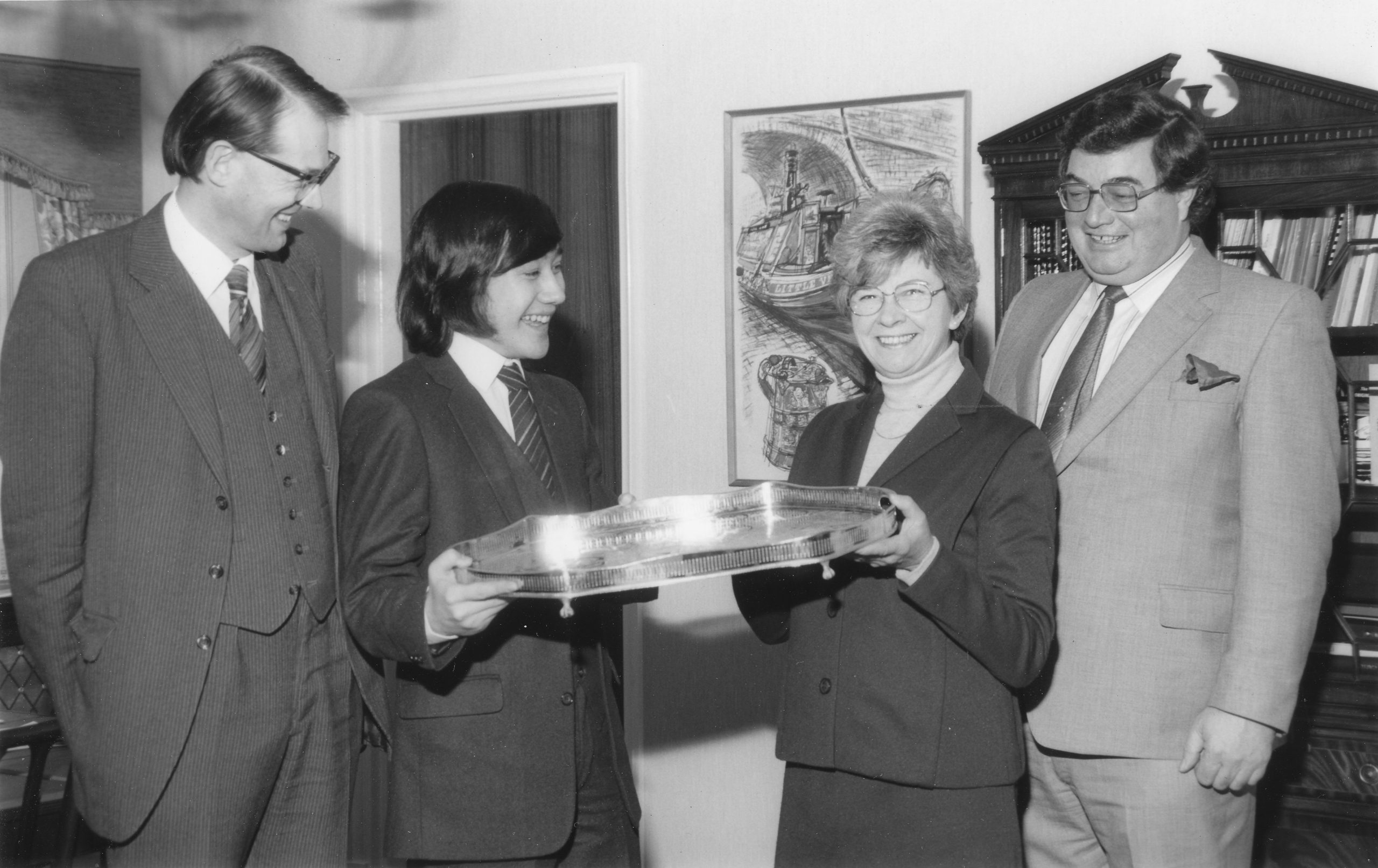
Mrs. Joan Agar; Chairman of Leigh Interests, presents the Leigh trophy (for 1981) to Mark Hebden. Left, David Anderton, BCF President; on the right Malcolm Wood, Leigh’s Chief Executive. BCM, 1981, page 104
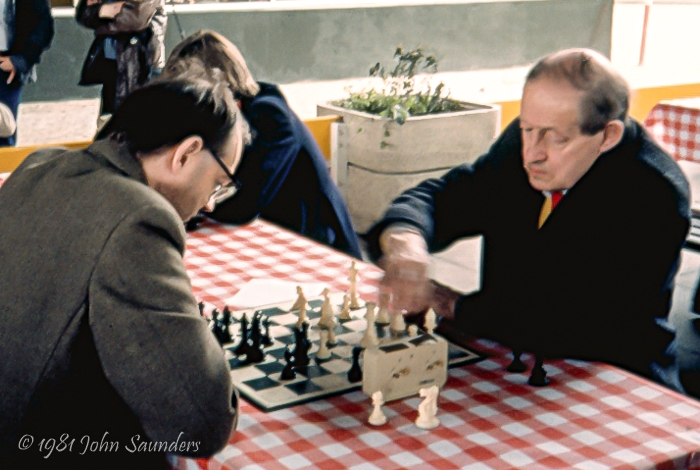
DW Anderton OBE plays BH Wood MBE in 1981 in a Blitz tournament outside of the National Film Theatre. Photograph courtesy of John Saunders
During 1989-93 David was an Executive Board Member of FIDE.
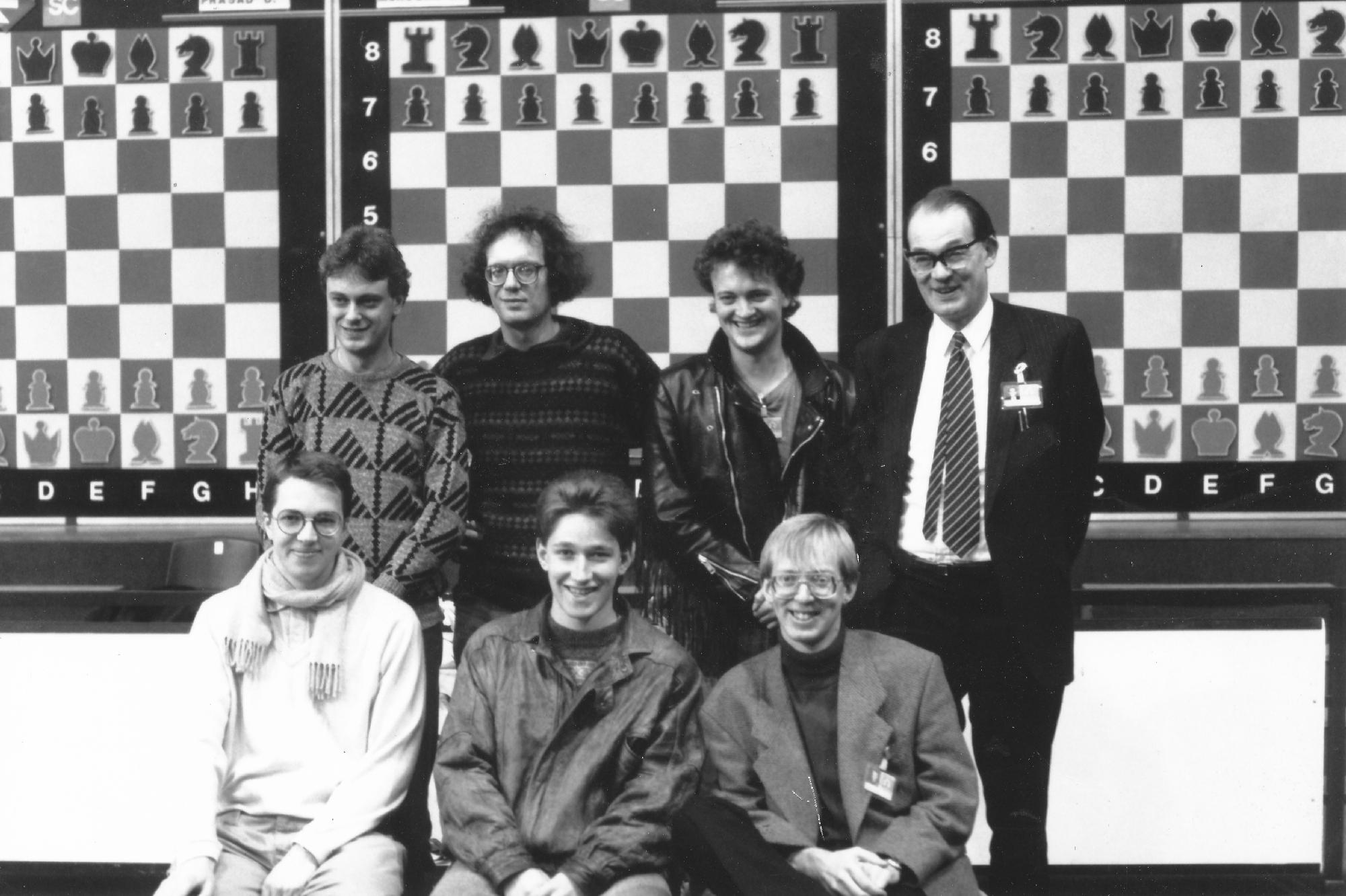
The England Team from the 1990 Novi Sad Olympiad : John Nunn, Jon Speelman, Julian Hodgson, David Anderton OBE (Captain), Nigel Short, Michael Adams and Murray Chandler
In 2015 David stood down from all of his roles within the ECF.
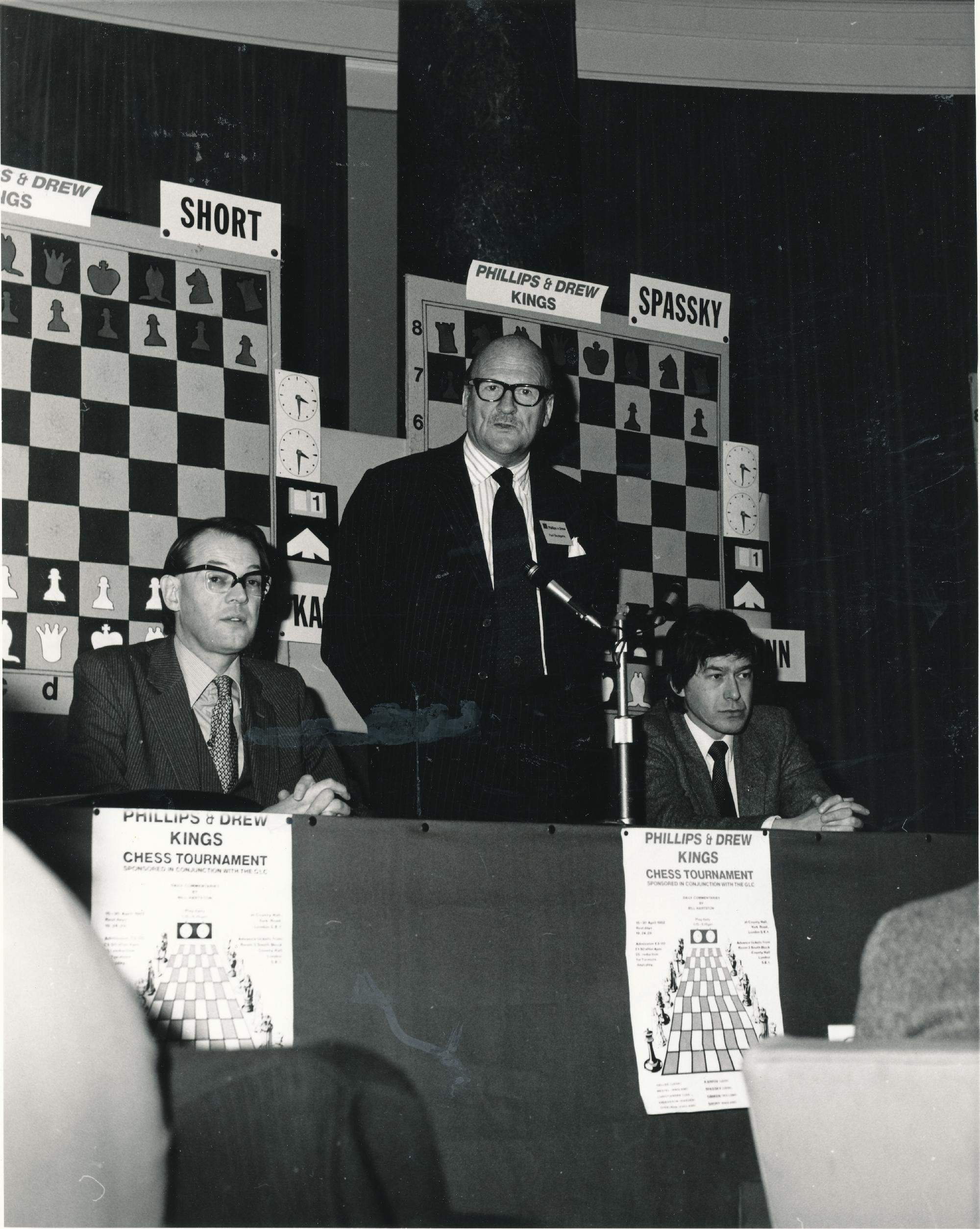
David Anderton OBE, Paul Bazalgette (Senior Partner at Philips & Drew) and Tony Banks (GLC Arts & Recreation Department) at the 1982 Philips and Drew Kings Tournament Opening Ceremony. Photograph by Clive Field
David has won the British Seniors Championship in 2003 (shared), 2005, 2007 (shared), 2009 (shared) and 2011.
We send best wishes to GM Nigel Davies on his birthday, this day (July 31st) in 1960.
Nigel Rodney Davies was born in Southport, Merseyside.
He lived in the Wirral, Merseyside, moved to Sidcup and then to St. Helen’s, Merseyside where he resides with his chess playing son, Sam who is ECF 1928A currently.
In July 2020 Nigel graduated with a BSc (Hons) in Computing from Edge Hill University.
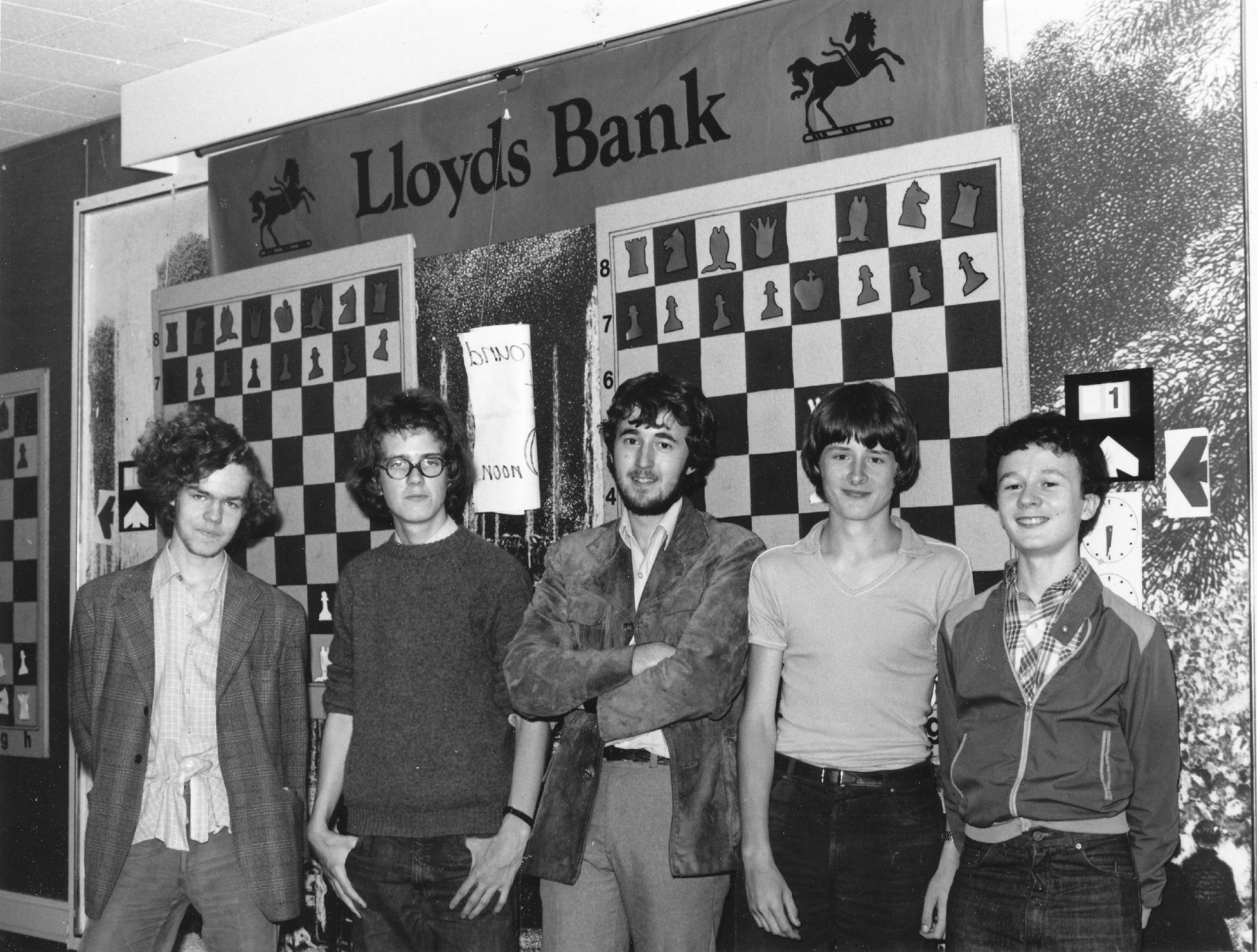
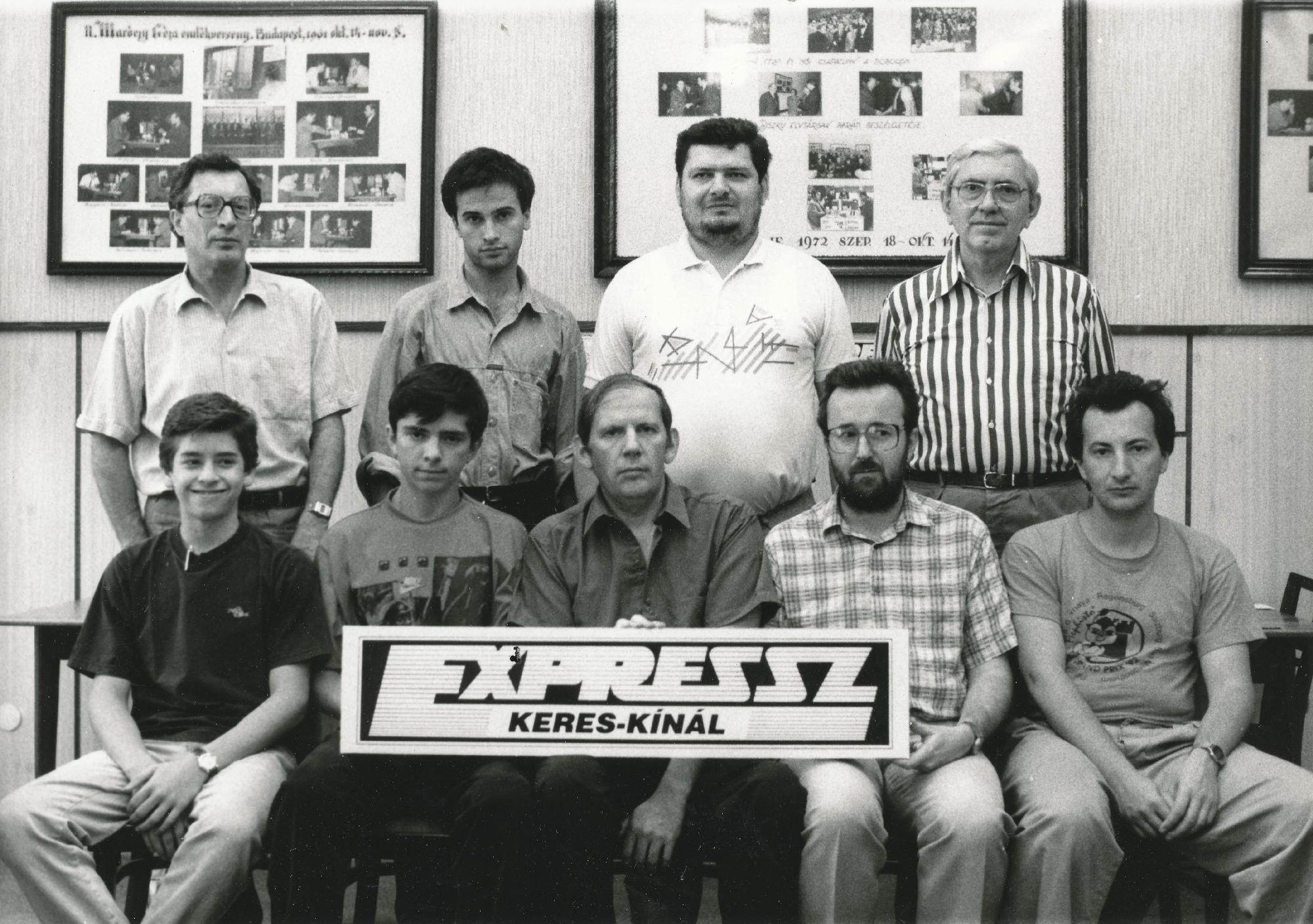
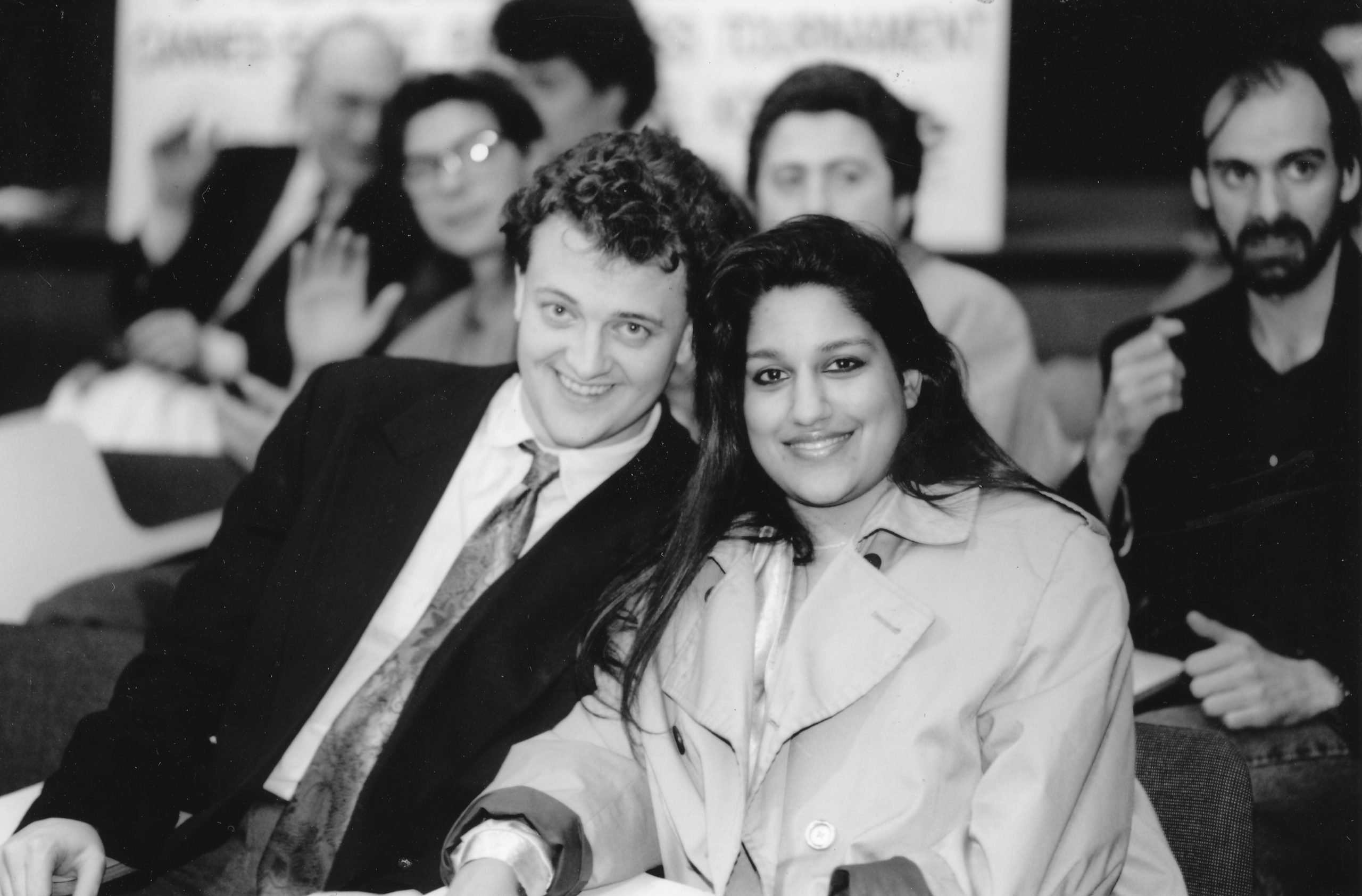
Nigel Davies (centre) at a Lloyds Bank event
He became an FIDE Master in 1980, an International Master in 1982 and a Grandmaster in 1993.
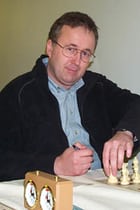
Nigel Davies
He won the British Under-21 Championship in 1979 (Chester) and the British Rapidplay Championship in 1987.
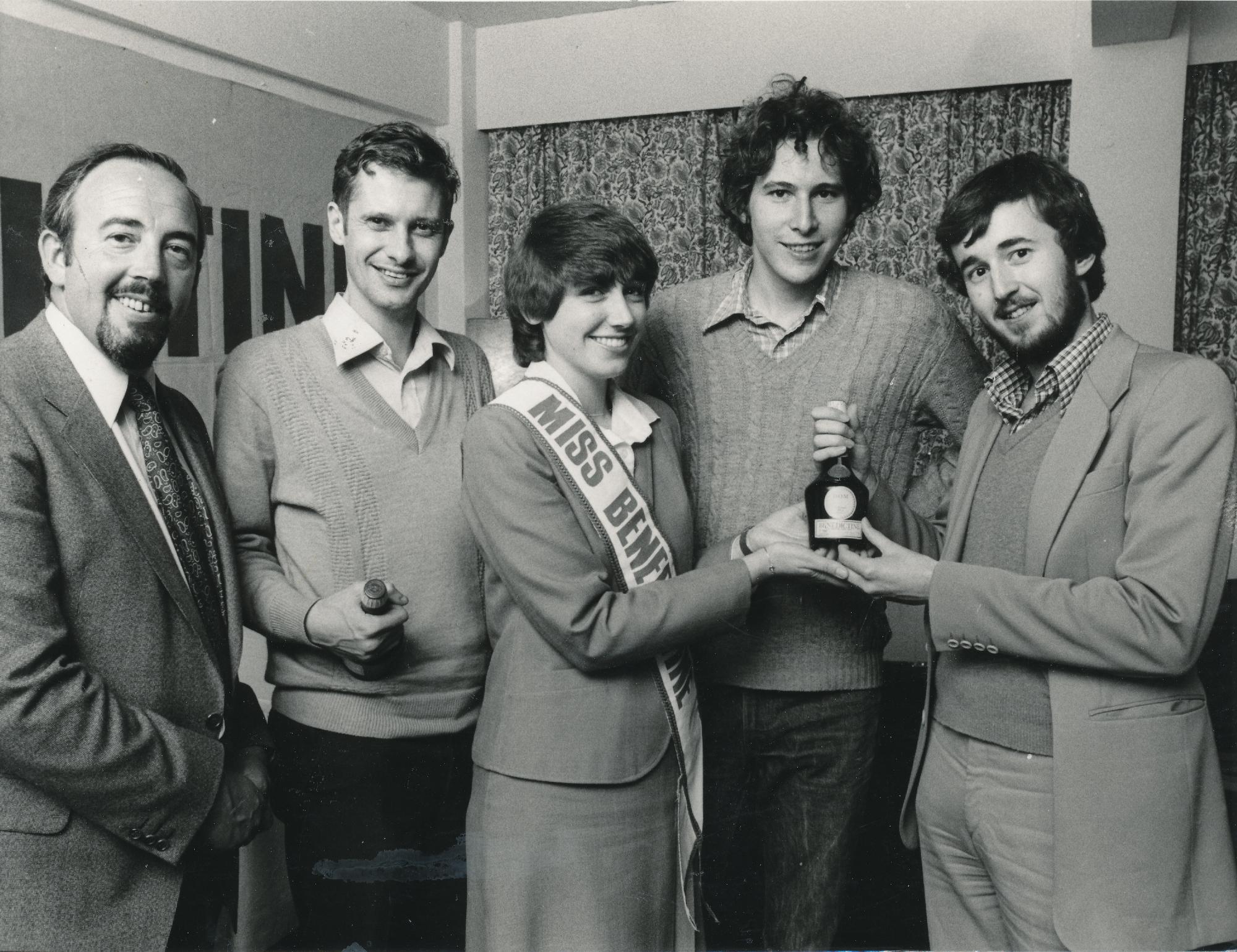
Nigel receives a much welcome prize (in Manchester) from Miss Benedictine in 198?
He won The Regency Ramsgate Masters 1980, Wrexham 1994, Katrineholm 1995 and the Blackpool Hilton Premier in 2003.
In 2015 Nigel transferred his international allegiance from England (the English Chess Federation) to Wales (Welsh Chess Union). He maintains an ECF standard play rating of 2448E.
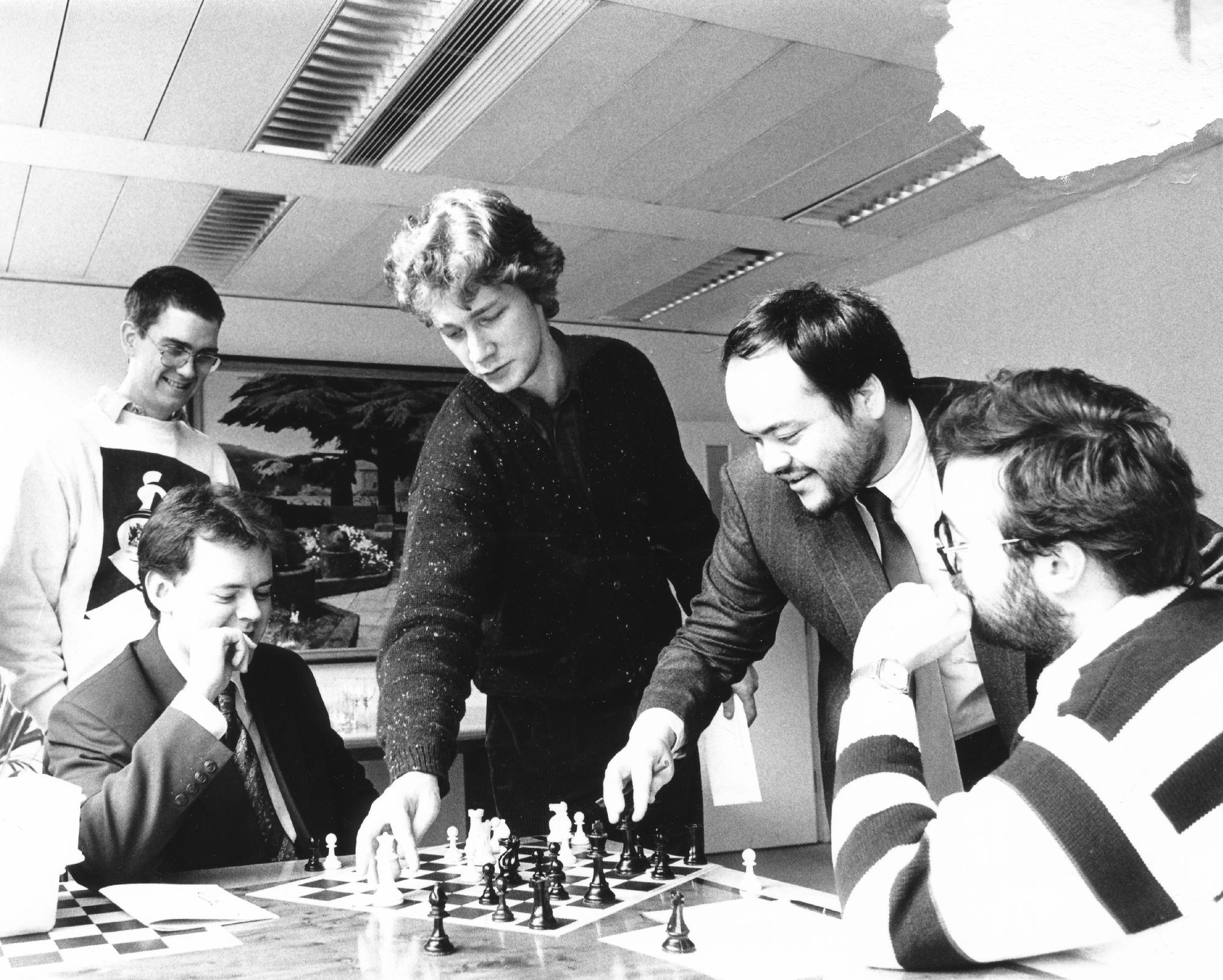
William Watson, Jonny Hector, Alexander Khalifman, Jonathan Tisdall and Nigel Davies at the 1991 Watson, Farley, Williams tournament in London.
His peak FIDE rating was 2530 in January 1995 at the age of 35.
Nigel’s repertoire with White is wide including Queen’s Gambit, King’s Indian Attack, English/Reti and the Ruy Lopez.
As black Nigel’s repertoire is also varied and difficult to pin down. The Modern Defence is a favourite and is the Nimzo-Indian Defence.
Nigel is an active user of Twitter and may be found @GMNigelDavies
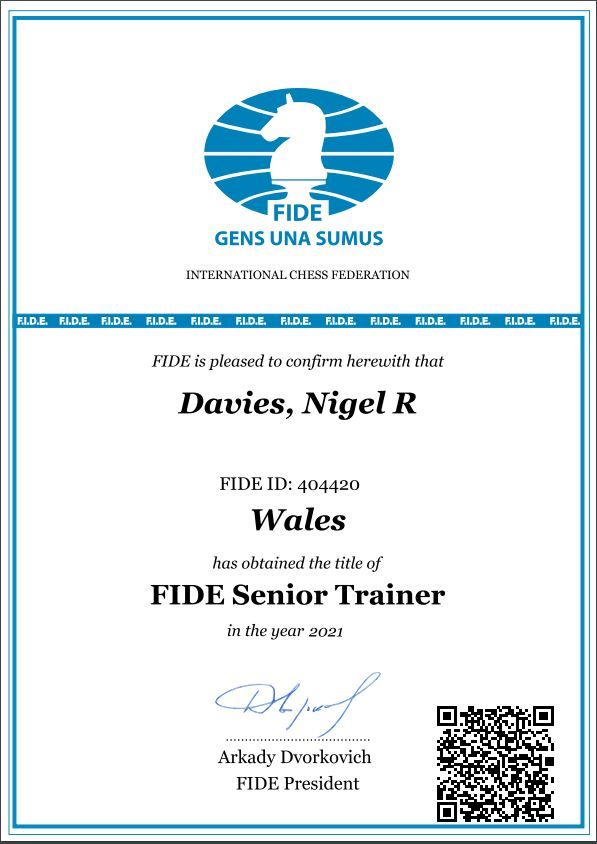
In 2020 the Welsh Chess Union successfully endorsed Nigel’s application to FIDE to become a FIDE Senior Trainer which he became in 2021:
Nigel Davies, FIDE Senior Trainer
Nigel has had many books and DVDs published :
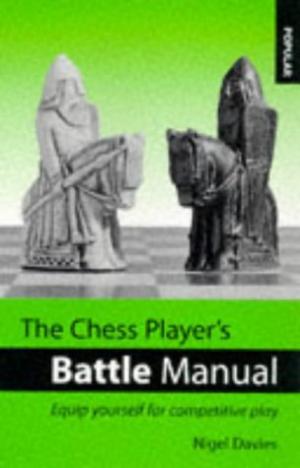
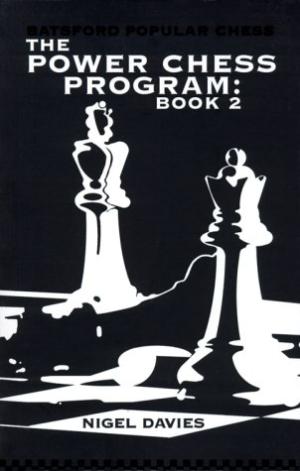
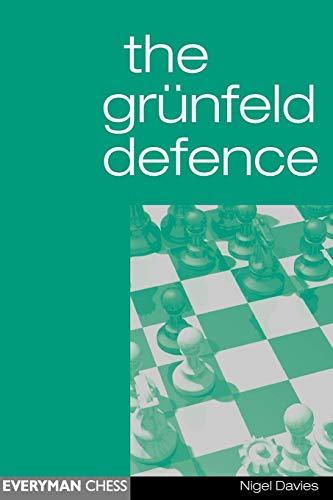
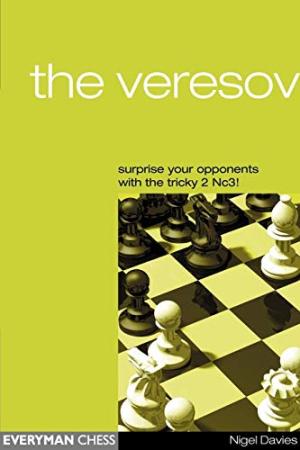
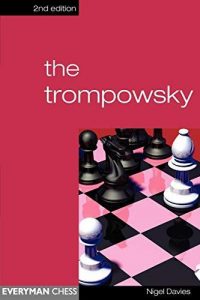
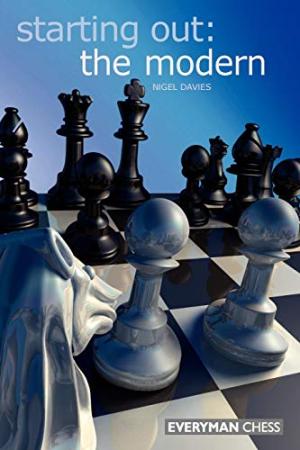
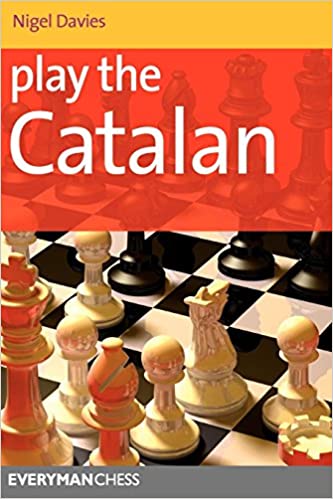
The Chess Player’s Battle Manual. Batsford. ISBN 0-7134-7043-7The Power Chess Program. Batsford. ISBN 0-7134-8415-2.The Grünfeld Defence. Everyman Chess. ISBN 1-85744-239-3.The Veresov. Everyman Chess. ISBN 9781857443356.The Dynamic Reti. Everyman Chess. ISBN 9781857443523.The Trompowsky. Everyman Chess. ISBN 1857443764.King’s Indian Attack. Hamburg: ChessBase. ISBN 978-3-86681-071-6.Starting Out: The Modern. Everyman Chess. ISBN 9781857445664.Play the Catalan. Gloucester Publishers plc (formerly Everyman Publishers plc). ISBN 9781857445916.
From https://achievement.org/achiever/demis-hassabis-ph-d/ :
Demis Hassabis, the eldest of three, was born in London on July 27, 1976, to a Greek Cypriot father and a Chinese Singaporean mother.
(Originally his surname was spelt Hassapis and his brother George retained this spelling.)
“Demis Hassabis was born in London, England. He is of both Greek and Chinese ancestry; his father came from Cyprus, his mother from Singapore. Demis and his family moved frequently as his father pursued a variety of business and creative ventures.
Demis was four years old when he saw his father and an uncle playing chess and asked them to teach him the game. He took to it quickly and was soon beating both of them. He showed a precocious aptitude for all games employing logic and strategy. ”
Demis Hassabis
When 13 (in 1989) Demis achieved a FIDE rating of 2300 which, at the time, was the second highest rating for his age. First highest was Judit Polgar.
Demis was SCCU Under-18 champion in 1989 and was presented with the “old Trophy” according to the SCCU report.
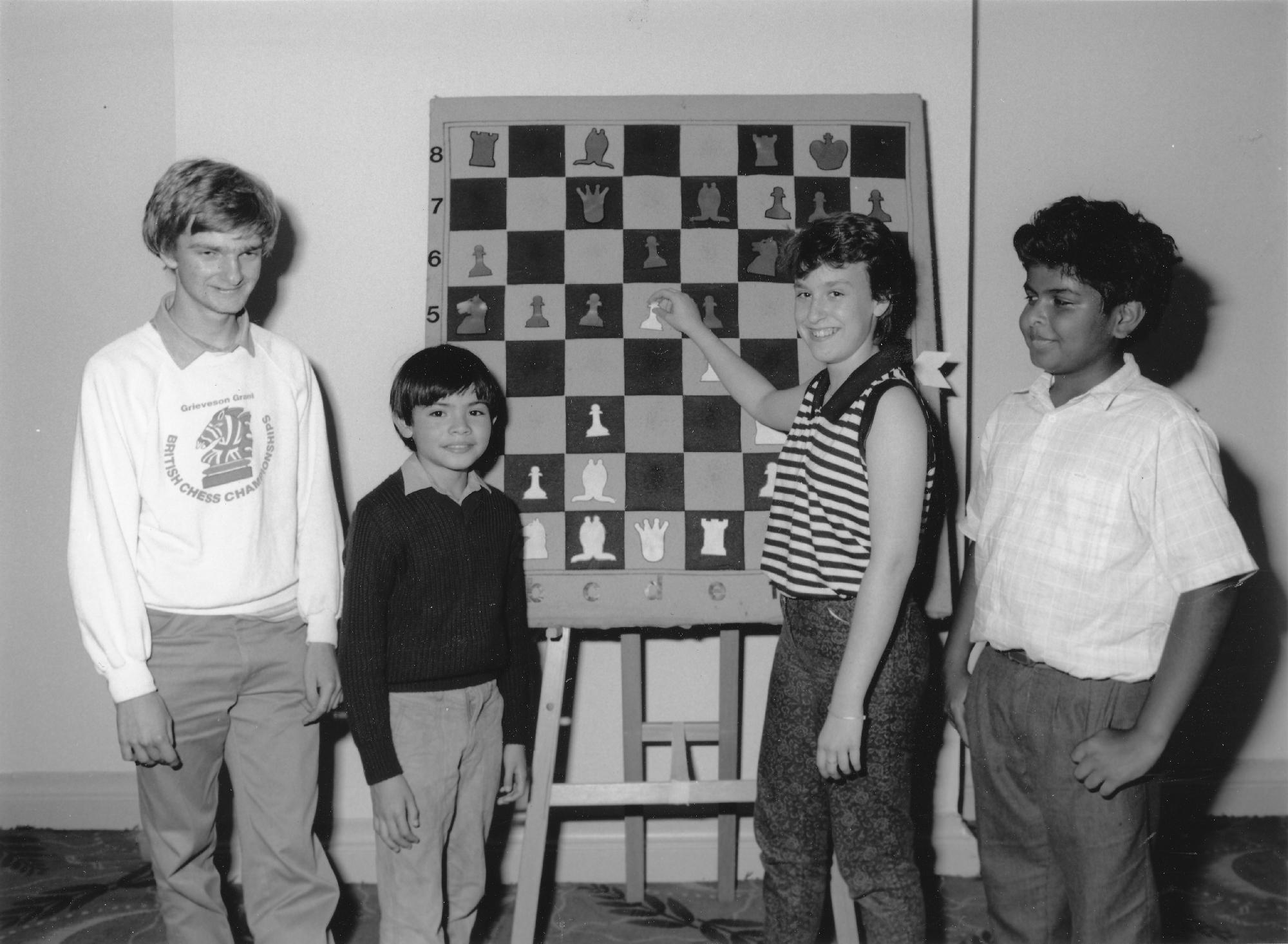
Lawrence Cooper, Demis Hassabis, Cathy Haslinger and Dharshan Kumaran in around 1986. Possibly at a Lloyds Bank event.
Demis was a Candidate Master and brother of George Hassapis.
Demis started off with Hampstead Junior Chess Club.
He then played for Barnet Knights, Queens College College Union and Finchley chess clubs.
Demis Hassabis courtesy of Cathy Rogers
According to Tryfon Gavriel :
Demis wrote a hit computer game called “The theme park”, that was at the top of the charts for six months and sold than more 3.5 million copies. He also did quite well in the 1997 Mind Sports Olympiad.
Demis Hassabis, IMMO KLINK/CONTOUR BY GETTY IMAGES
Hassabis returned to academia to obtain his PhD in cognitive neuroscience from University College London (UCL) in 2009 supervised by Eleanor Maguire. He sought to find inspiration in the human brain for new AI algorithms.
Danny Gormally wrote (in March 2014) this :
“Demis Hassapis is a former chess prodigy who recently sold his company to Google for £400 million. Demonstrating that if you have the brainpower to be good at chess, you are far better off putting that intelligence to use in some other activity where you might actually get rewarded. Then in fairness, even most strong chess players aren’t as bright as Demis.”
In May 2021 Demis was cited by Dominic Cummings in his evidence to the Commons Heath, and Science and Technology committees as having played an important contribution to managing and understanding the PHE and NHS data during the early stages of the Covid-19 pandemic in the UK.
We send best wishes to GM Julian Hodgson on his birthday, this day July 25th) in 1963.
Julian Michael Hodgson was born at St. Mary Abbott’s Hospital, Marloes Road, Kensington, West London son of (Ronald) George Hodgson and Johanna Hodgson (née Birch) and the birth was registered in the district of Hammersmith.
Julian’s father has asserted to be a descendent of George Jeffreys, 1st Baron Jeffreys and we are looking to establish this claim following further research.
Julian attended St. Paul’s School (See below) and then attended The University of Leicester for one year.
Julian married Lizette and David Norwood was his Best Man.
Julian and Lizette Hodgson
(Curiously both Felice and Gaige state Julian was born in Saint Asaph in Wales. This is incorrect.)
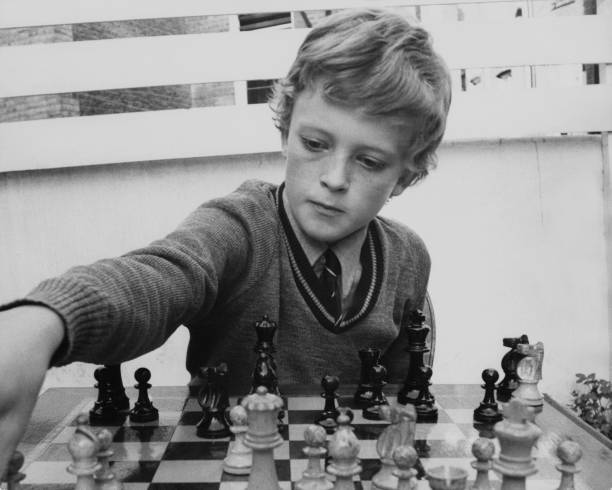
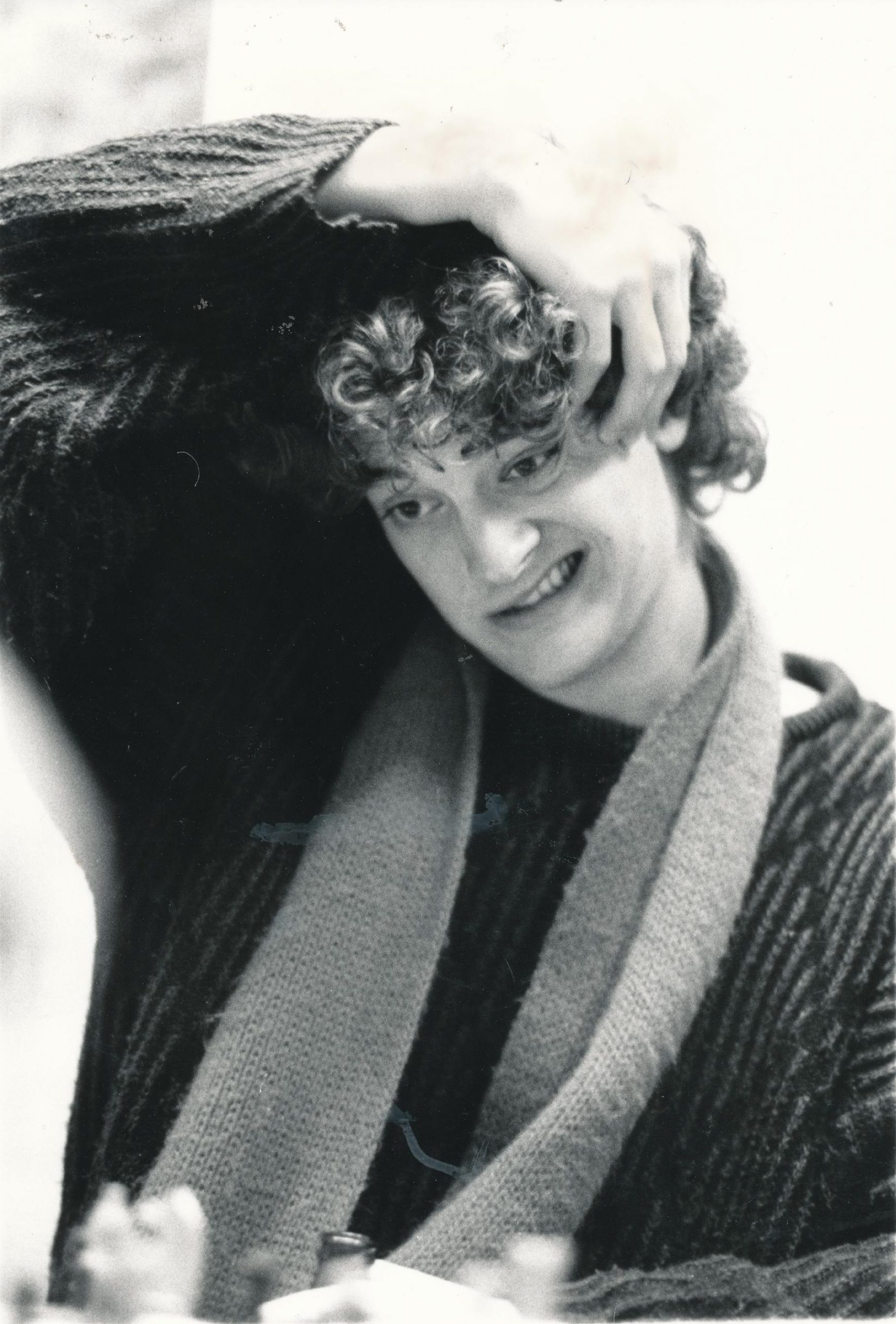
Julian Hodgson
Harry Golombek wrote this about Julian in a 1980 Dataday chess diary :
“I think that the first time I saw Julian Hodgson in play was some four years ago in a London tournament. Upon my arrival Leonard Barden told him that he must now be careful how he played as Golombek was watching.
Julian and Nigel Short play Korchnoi in a simul. Leonard Barden observes.
“Who”, enquired the twelve-year old Julian, “is Golombek?”
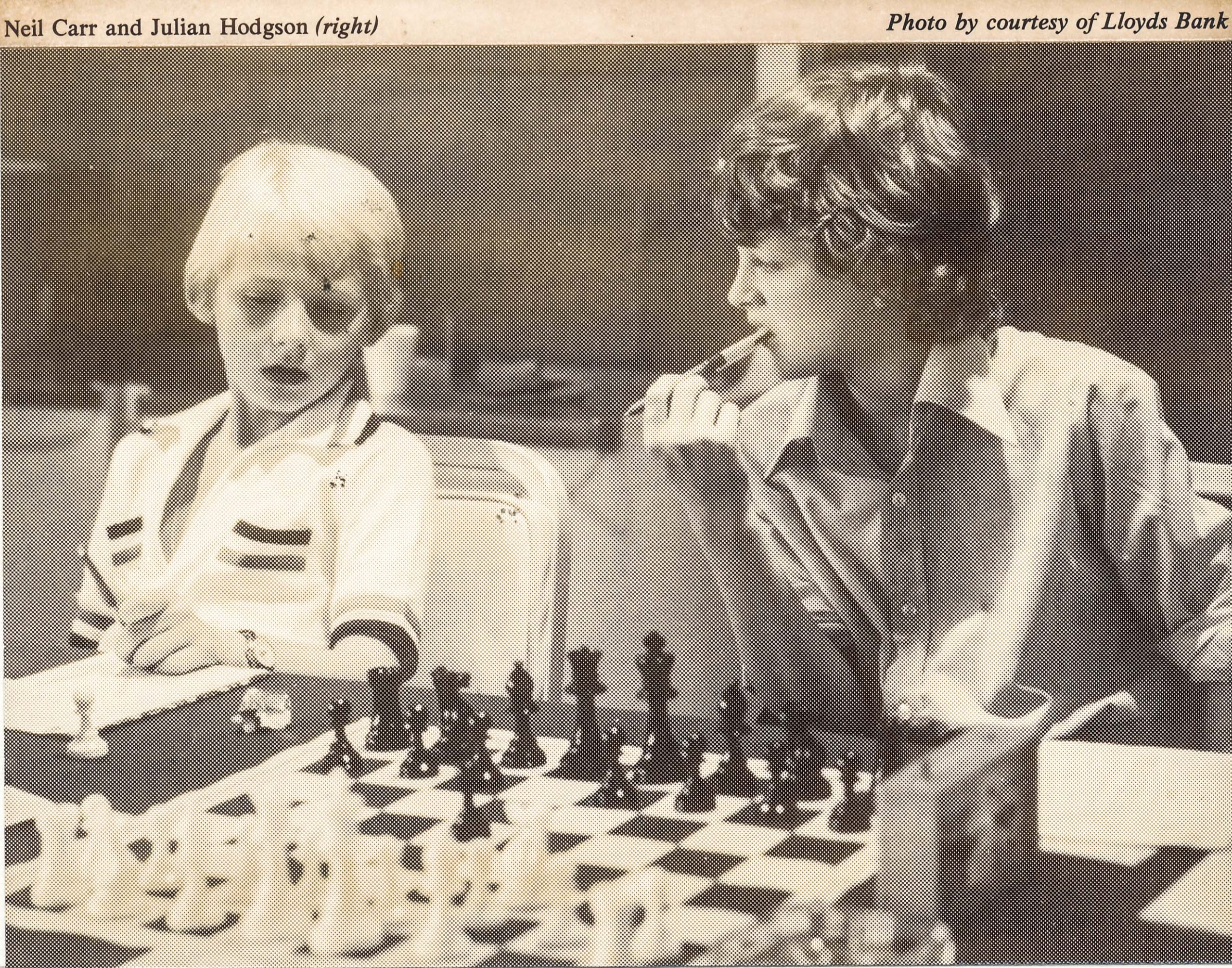
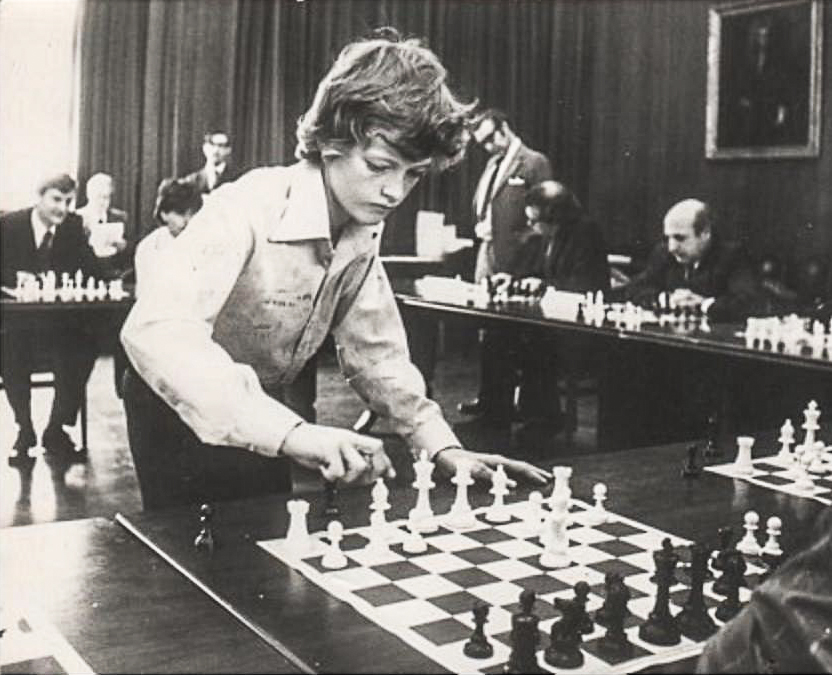
Neil Carr and Julian Hodgson at the 1976 Lloyds Bank Match by Telex, London – New York. From BCM, volume XCVI (96) Number 11 (August), Page 494. The venue was the Bloomsbury Hotel, London. Photo courtesy of Lloyds Bank.Julian Hodgson aged 13 in 1976 giving a simultaneous display at the Guildhall in London scoring +14=2-4. Photograph courtesy of the Keystone agency.
I felt grateful at the time that he did not say who or what is Golombek but I tell this story chiefly to show the cheerful insouciance with which Master Hodgson treated all comers whether chess masters or chess rabbits.
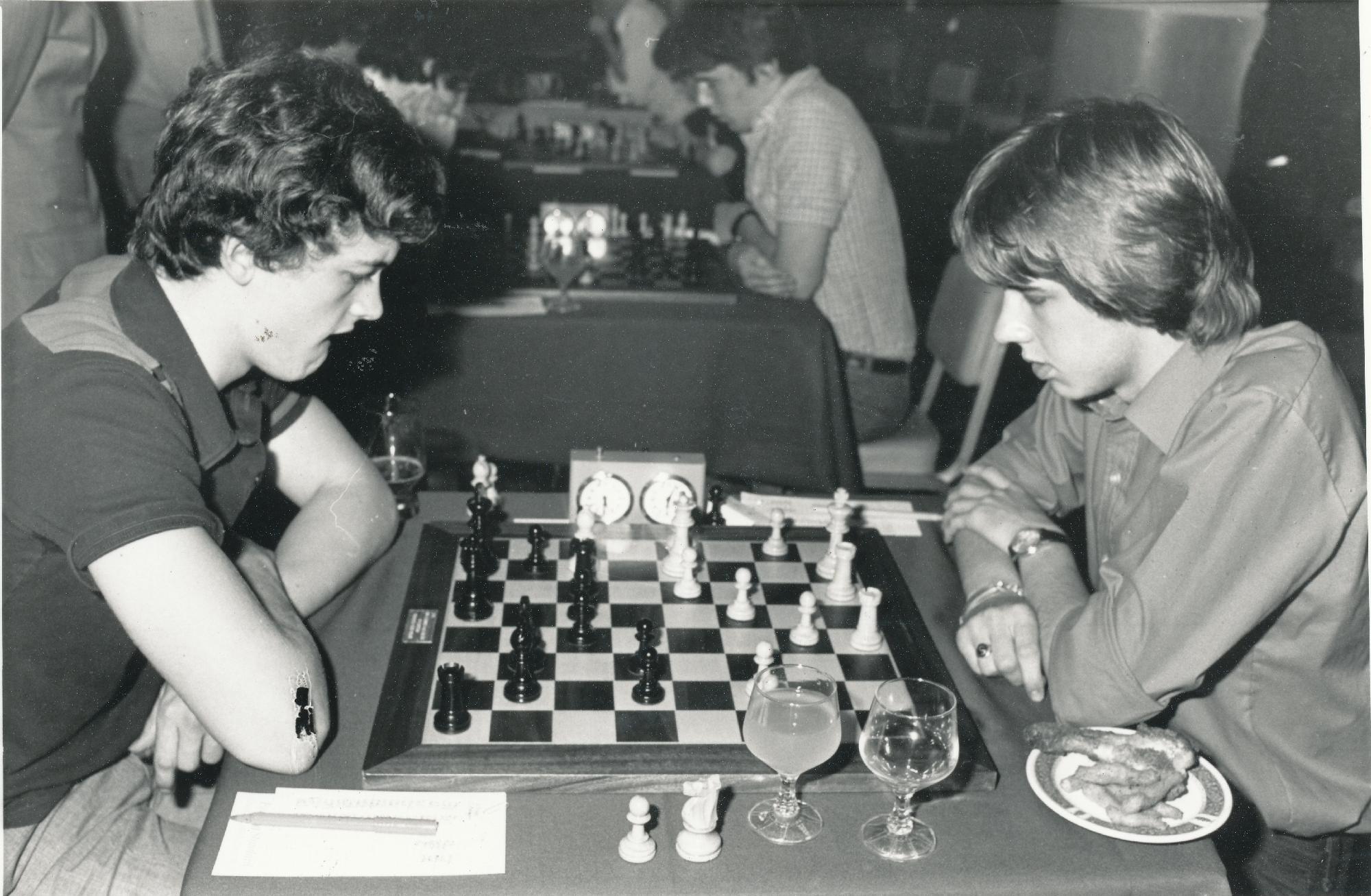
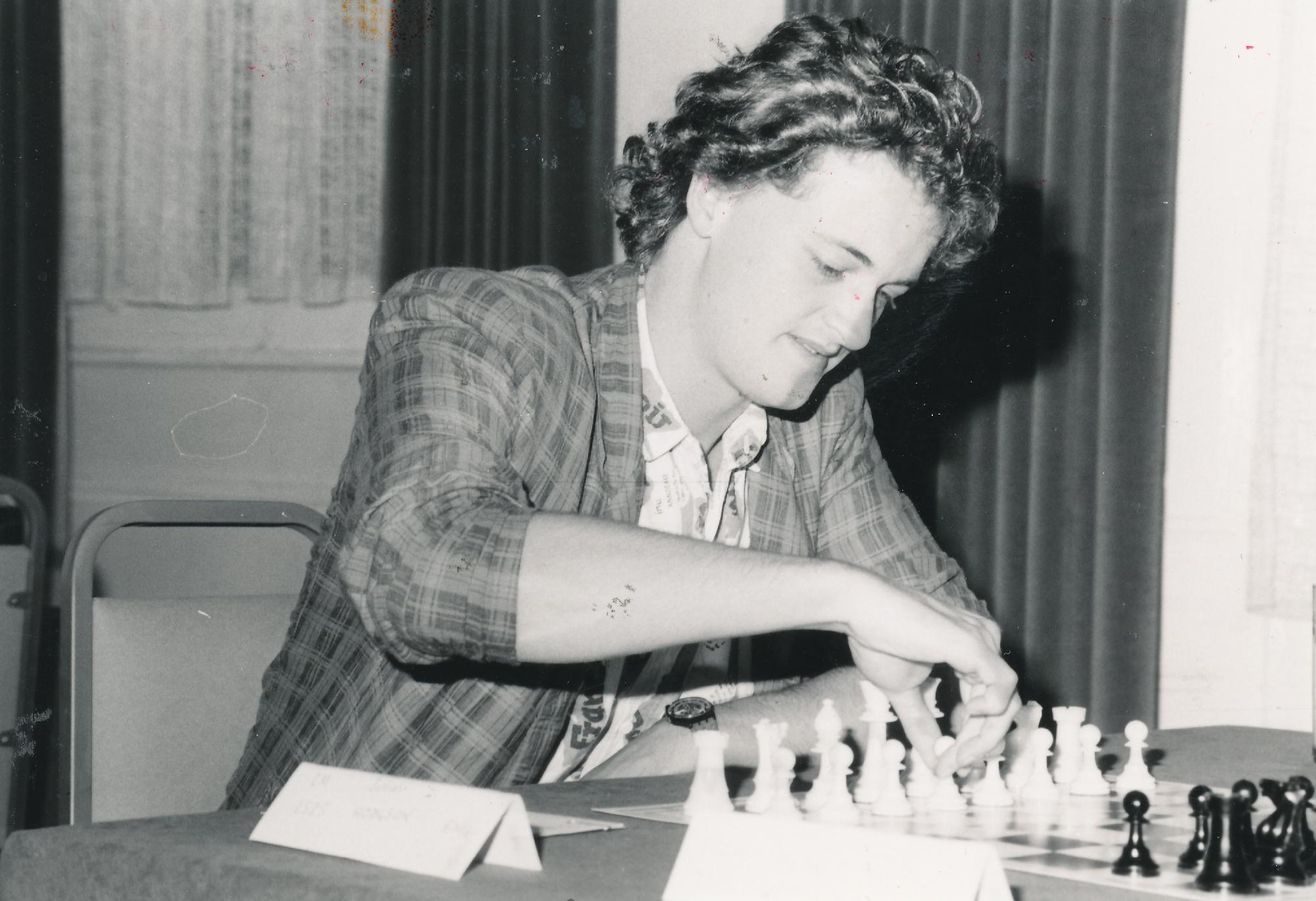
Julian playing Simon L Triggs. Event and photographer unknown
Julian astonishing maturity as a player has been impressive ever since at the age of ten, he won the Southern Counties Under 14 Championships in 1973. Since then he has acquired a host of such championships culminating in the British Under-21 Championship in 1977.
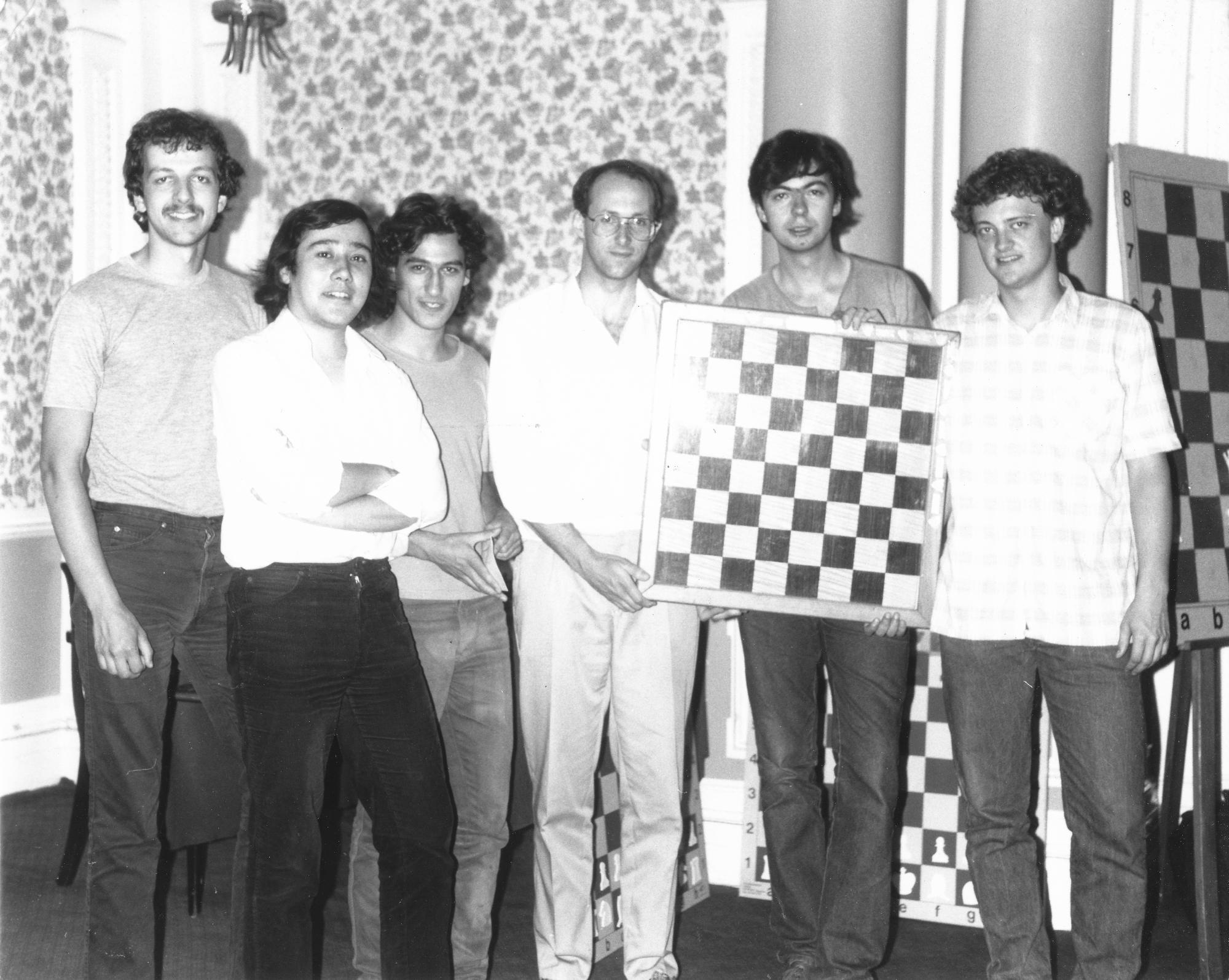
Streatham & Brixton becoming BCF National Club Champions in 1989. The team was Tony Kosten, Mark Hedben, Daniel King, Nigel Povah (Captain), Joe Gallagher and Julian Hodgson : quite a strong team
Perhaps his most remarkable performance so far has been his equal 3rd in a strong challengers section at Hastings where he scored 7.5 out of 10. 1977 was a good year for him and here, from the Lloyds Bank Silver Jubilee Tournament of that year is his fine win over a strong opponent :
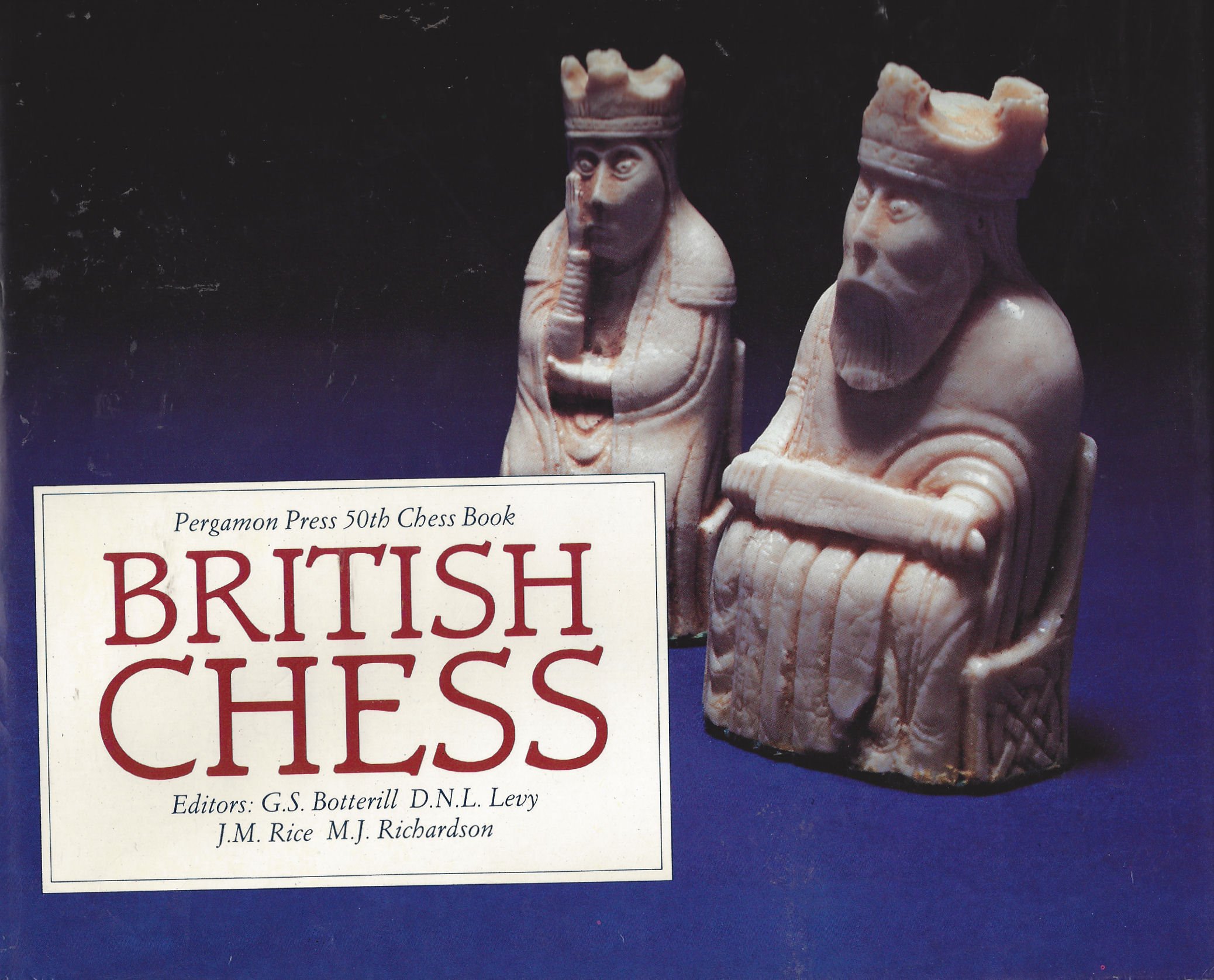
Here is his entry (written by Richard W O’Brien) in British Chess (Pergamon Press, 1983, Botterill, Levy, Rice and Richardson) :
“Following a series of excellent results Julian, at the tender age of 11, became the second youngest ever to play in an international tournament when he took part in the London Chess Club International Invitation tournament in September 1974. Only Reshevsky had been younger. Julian’s first opponent was Michael Woodhams, an Australian international who had just scored 15.5/18 in the recent Olympiad (Nice)
The following year he became the youngest player ever to win the London Amateur Championship. A year later he reached a grading of 200 (BCF), only Reshevsky, Pomar, Karpov and Kasparov had done so at an earlier age.
By now he was at St. Paul’s School, which was in the process of becoming one of the strongest chess playing schools in the country. In 1977 he shared first place with WN Watson (also St. Paul’s) in the British U21 Championship. Progress was however not as fast as had at one time been anticipated
It was at Ramsgate, late in 1980 before his first IM norm. A month later he finished second in the Hastings Challenger. Other good results followed in 1981. First he was selected for the Glorney Cup and shortly afterwards did well to come fourteenth in the British Championship (Morecambe). He represented England in the World Youth Team championships scoring 4/6. His second IM norm followed when he shared fifth place at Manchester in the same year. Good results in weekend congresses meant that he finished fourth in the Leigh Grand Prix. The year had finished with Julian needing a draw in the last round at Ramsgate to get his title. He lost and was to wait another 12 months to achieve his final norm.
The England Team from the 1990 Novi Sad Olympiad : John Nunn, Jon Speelman, Julian Hodgson, David Anderton OBE (Captain), Nigel Short, Michael Adams and Murray Chandler
When the final norm came it arrived out of the blue. With a score of 2.5/5 at Lewisham in November 1982 the chances seemed remote, 3.5/4 was required against a strong field and it even seemed doubtful whether he could actually play those he needed to play. He scored 2.5/3 and now had to play Jon Tisdall, who still had a chance of winning the tournament.
Julian finished second equal in the tournament behind Jim Plaskett who had beaten him earlier.
Julian Hodgson
The next six weeks saw Julian come equal first in the Pergamon sponsored British Lightning championship, a highly creditable sixth in the Nightflight International at Brighton (equivalent to an IM rating) and second place yet again in the Hastings Challengers.
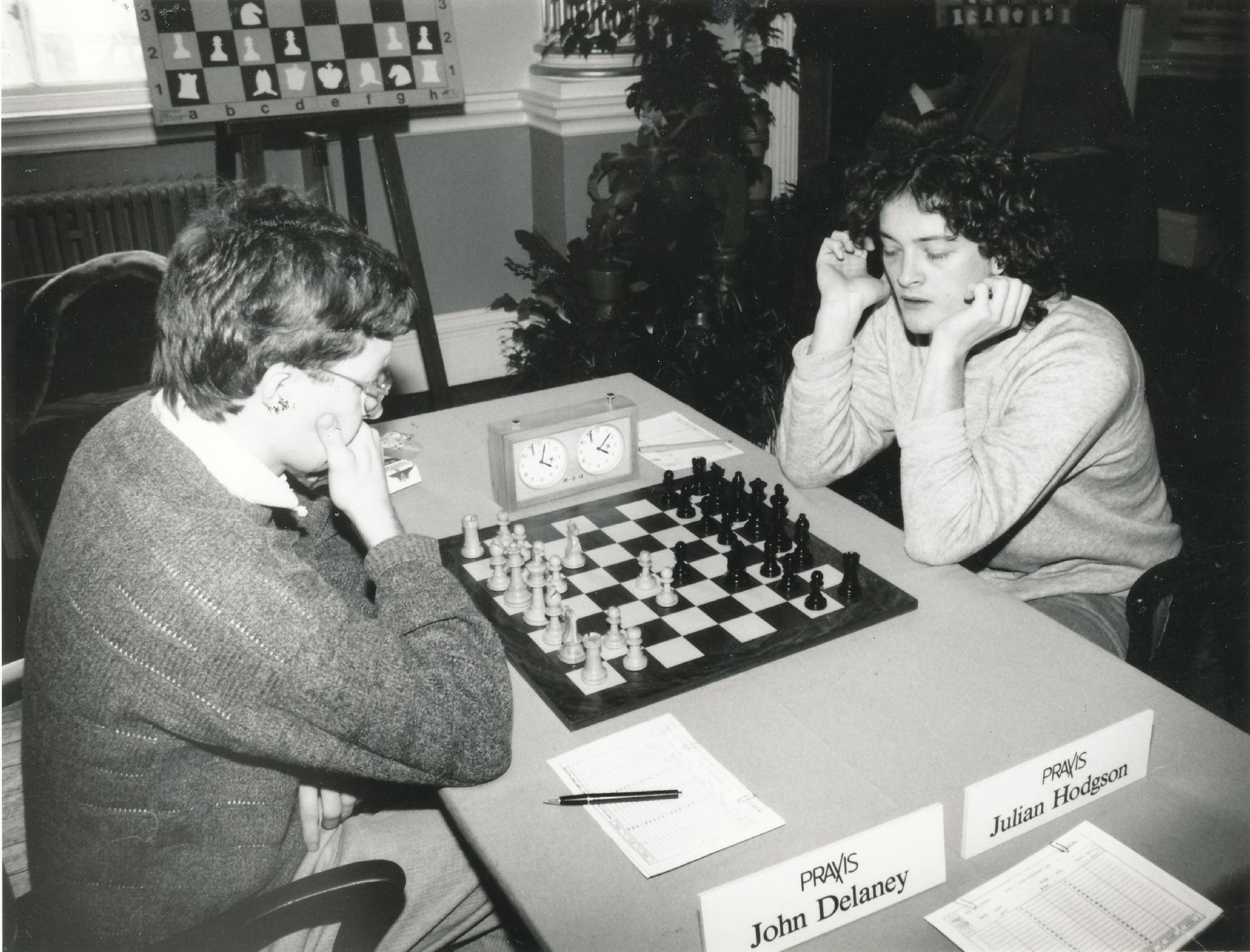
John Delaney plays Julian Hodgson at the Bath Zonal Tournament in 1987
Earlier in 1983 he scored 6.5/9 at Lugano, probably Europe’s strongest ever Swiss (Swiss !) tournament, losing narrowly to Jan Timman.
Julian Hodgson. Event and photographer unknown.
He left Leicester University after just one year preferring to concentrate on chess.
FM Andrew Whiteley, IM Julian Hodgson and FM Byron Jacobs at Cappelle Le Grand, 1988. Photograph by Caroline Winkler
He plays fairly regularly for Streatham & Brixton Chess Club which encouraged juniors for several years. Daniel King is another junior who also played frequently for Streatham. ”
This is what was written about Julian prior to the 1979 Spassky vs the BCF Junior Squad simultaneous display : “St Paul’s and Shepherds Bush. Rating 210. Standard London Amateur Champion at age 12, 1975.
Standard London under-18 champion, 1976. British under-21 co-champion, 1977. Youngest ever to beat two grandmasters in successive games, 1978.”
Aside from more formal achievements, he developed a sharp, relentless, attacking style of play and against lesser opponents this frequently resulted in devastating quick wins, earning him the epithet “Grandmaster of Disaster”.
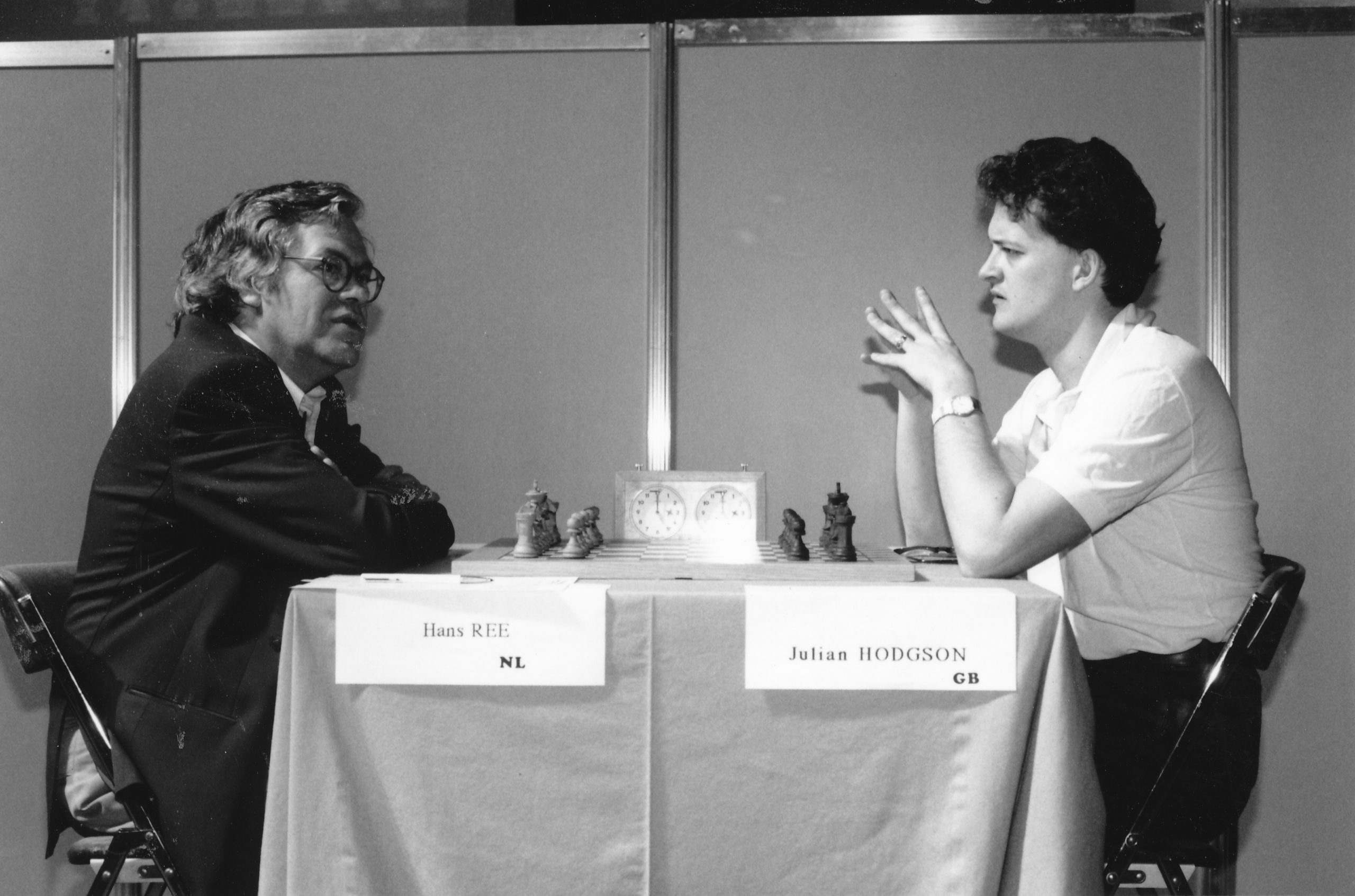
Hans Ree plays Julian Hodgson at the Cannes Team Tournament, 1992
Hodgson’s greatest legacy as a chess player may however lie in his resurrection of an almost forgotten opening system. The Trompowsky Attack (1.d4 Nf6 2.Bg5) had floundered in the doldrums for many years, prior to his adoption and development of the opening. In interviews, he reveals that this was born out of laziness and a reluctance to learn established chess opening theory. It soon became his weapon of choice with the white pieces, leading to a surprising popularisation of the system, the spawning of a whole generation of devotees and ironically, a number of theoretical guides, containing a high quota of Hodgson’s own games and analysis. Indeed, his expert treatment of the system once prompted fellow grandmaster Joe Gallagher to write that it should be renamed the Hodgson–Trompowsky Attack, a view shared by many other masters. A chess journalist once wrote that Hodgson put the ‘romp’ into Trompowsky.
A related, but more obscure version of the system (1.d4 d5 2.Bg5), has been dubbed by some the Hodgson Attack and by others the Pseudo-Trompowsky or Queen’s Bishop Attack.
and
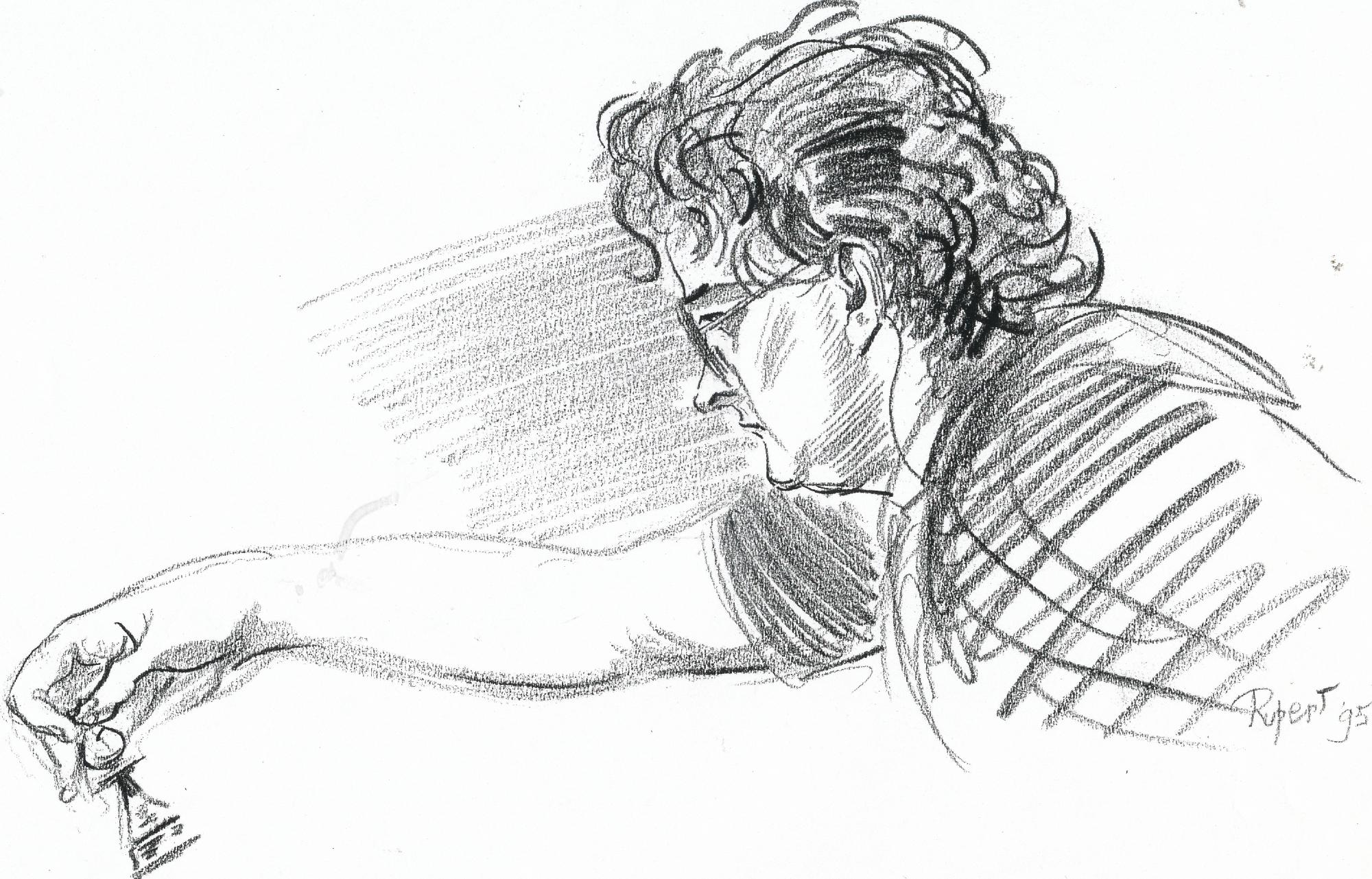
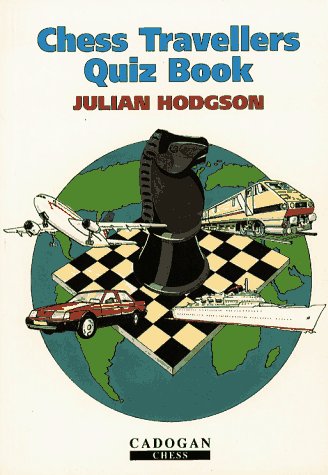
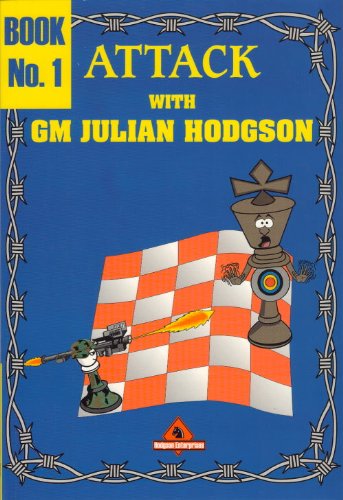
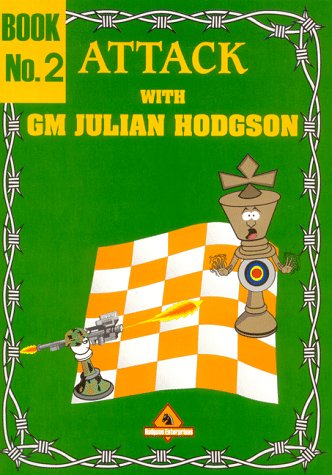
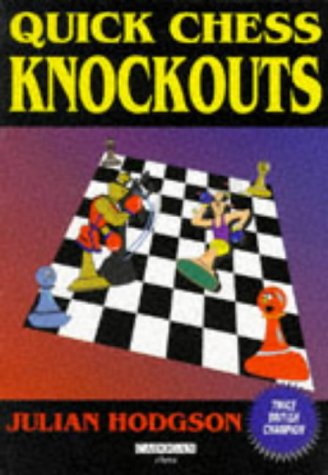
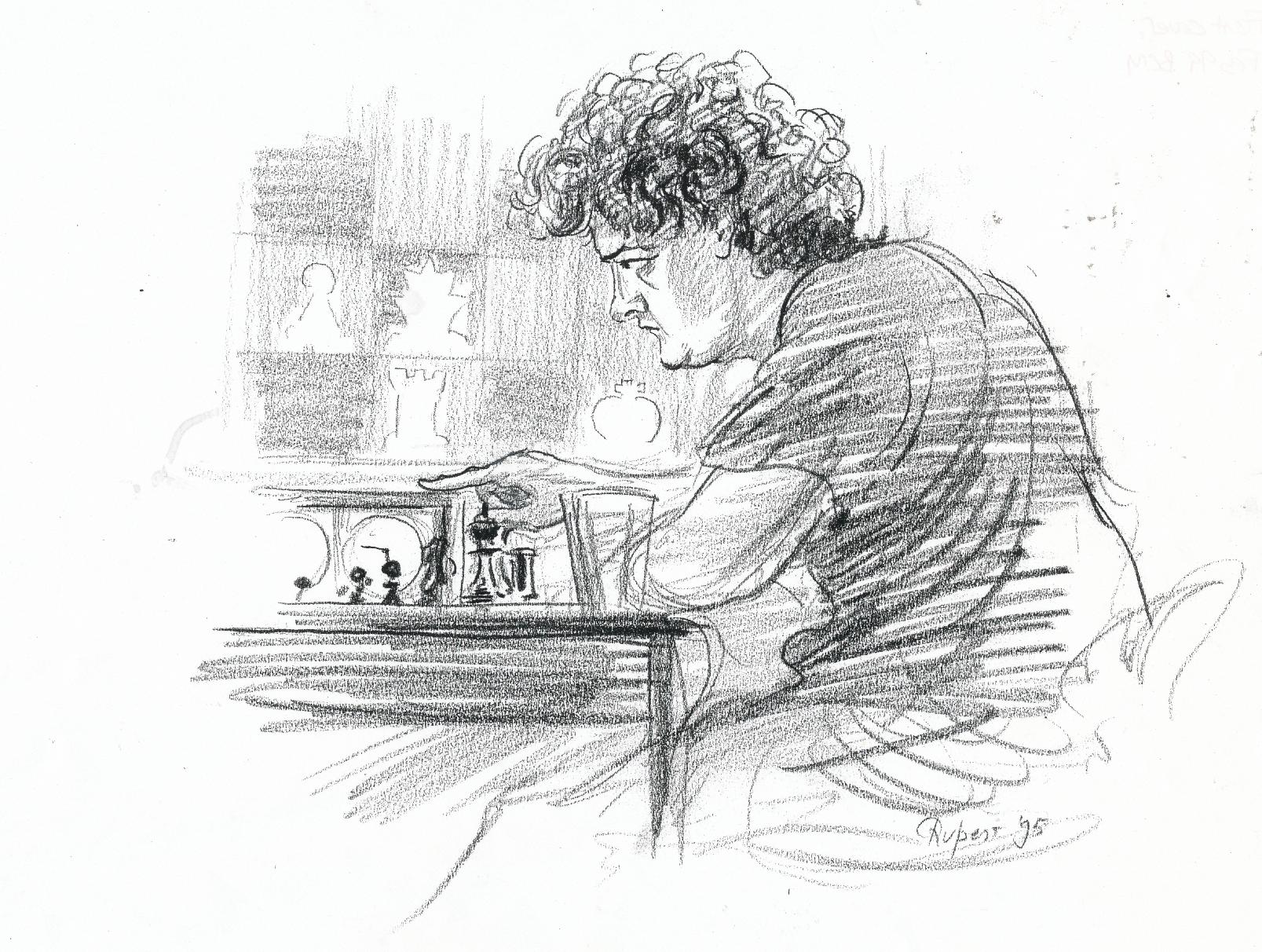
Julian, Dominic Lawson and Matthew SadlerChess Traveller’s Quiz Book, Julian Hodgson, Cadogan Press, 1996, ISBN-13 : 978-1857440300Attack with Julian Hodgson, Book No.1Attack with Julian Hodgson, Book No.2Quick Chess KnockoutsJulian Hodgson drawn by Rupert van der Linden
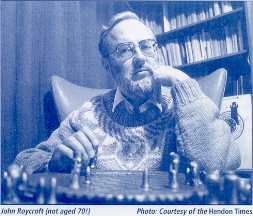
We are delighted to offer (Arthur) John Roycroft best wishes on his birthday, this day (July 25th) in 1929.
John was born in Hendon, London and his mother’s maiden name was Banks.
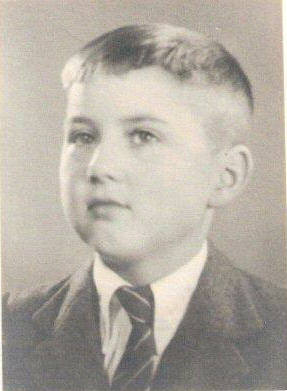
AJR aged 9, courtesy of the BCPS web site.
John moved to Brighton and then evacuated to Calcot, North Wales and returned to Brighton when the threat of war had subsided.
He married Betty in 1961 and they had a son and a daughter and now have several grand children.
He claimed that he had never suffered a common cold.
John is Platinum Life Member of the English Chess Federation and an “ECF Supporter”.
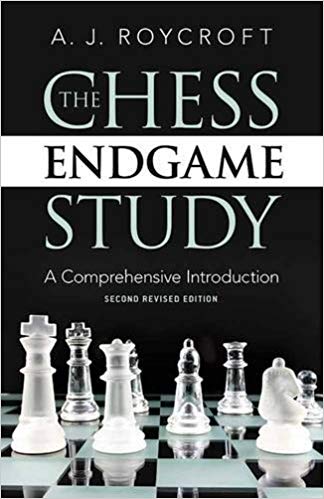
The Chess Endgame Study
“From The Oxford Companion to Chess (Oxford University Press, 1984) by David Hooper and Ken Whyld :
English study composer and author, International Judge of Chess Compositions (1959), Computer systems analyst.
In 1965 he founded EG, a quarterly publication which became the world’s first and only long-running magazine devoted wholly to studies.
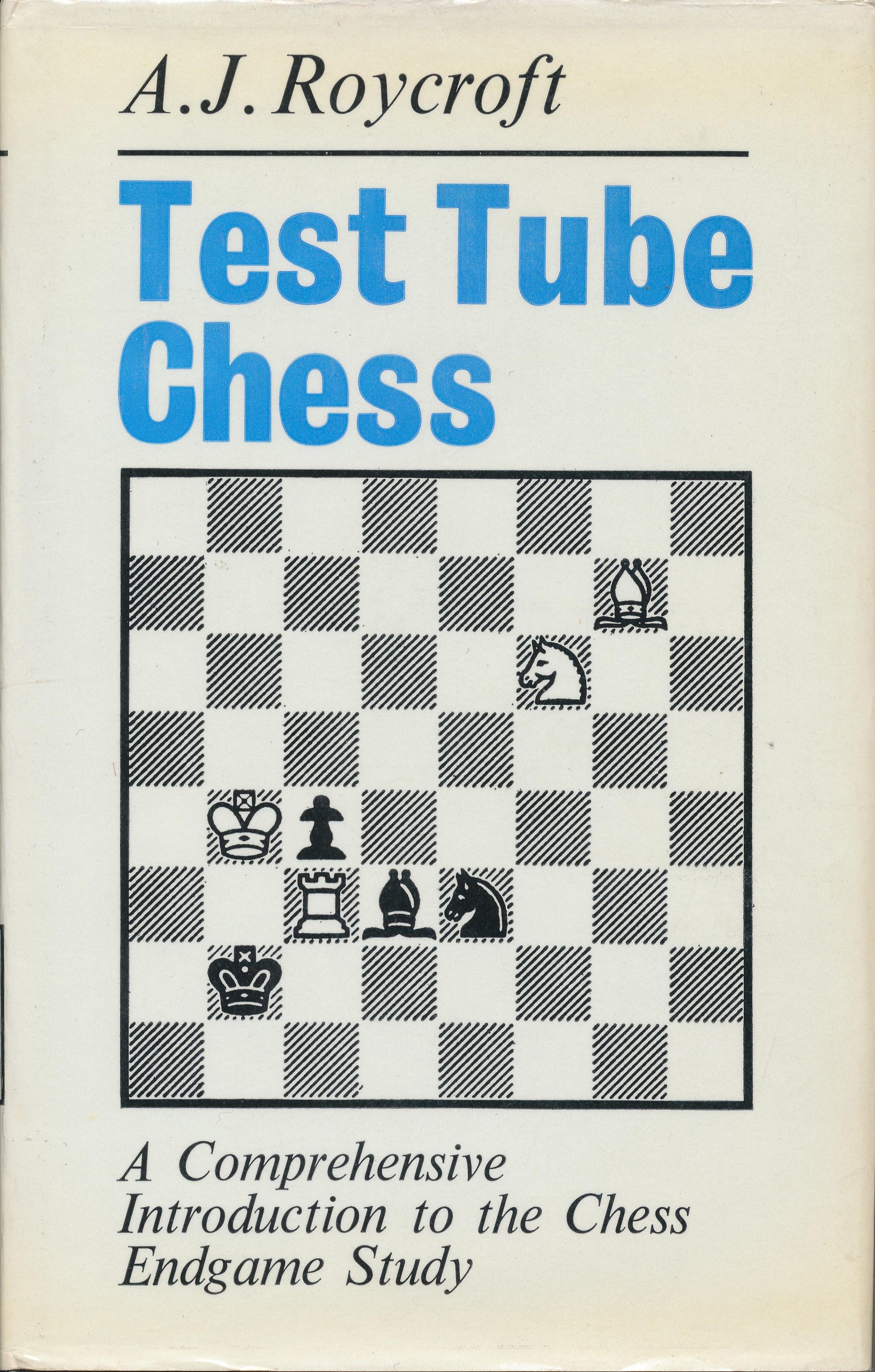
His Test Tube Chess (1972), the best English language guide to the art of studies., was revised and republished as The Chess Endgame Study (1981).
Test Tube Chess, AJ Roycroft, Faber and Faber Limited, 1972, ISBN 0 571 09573 9
Studies are commonly classified by means of the GBR code of which he was co-inventor.”
From The Encyclopedia of Chess (Robert Hale, 1970 & 1976) by Anne Sunnucks :
“FIDE Judge of Endgame Studies. Born on 25th July 1929. Founder of the Chess Endgame Study Circle in London in March 1965.and its quarterly magazine EG, the first and only publication exclusively devoted to the composed chess ending. Roycroft who is a computer systems analyst and lives in London, has composed about 20 endgame studies.”
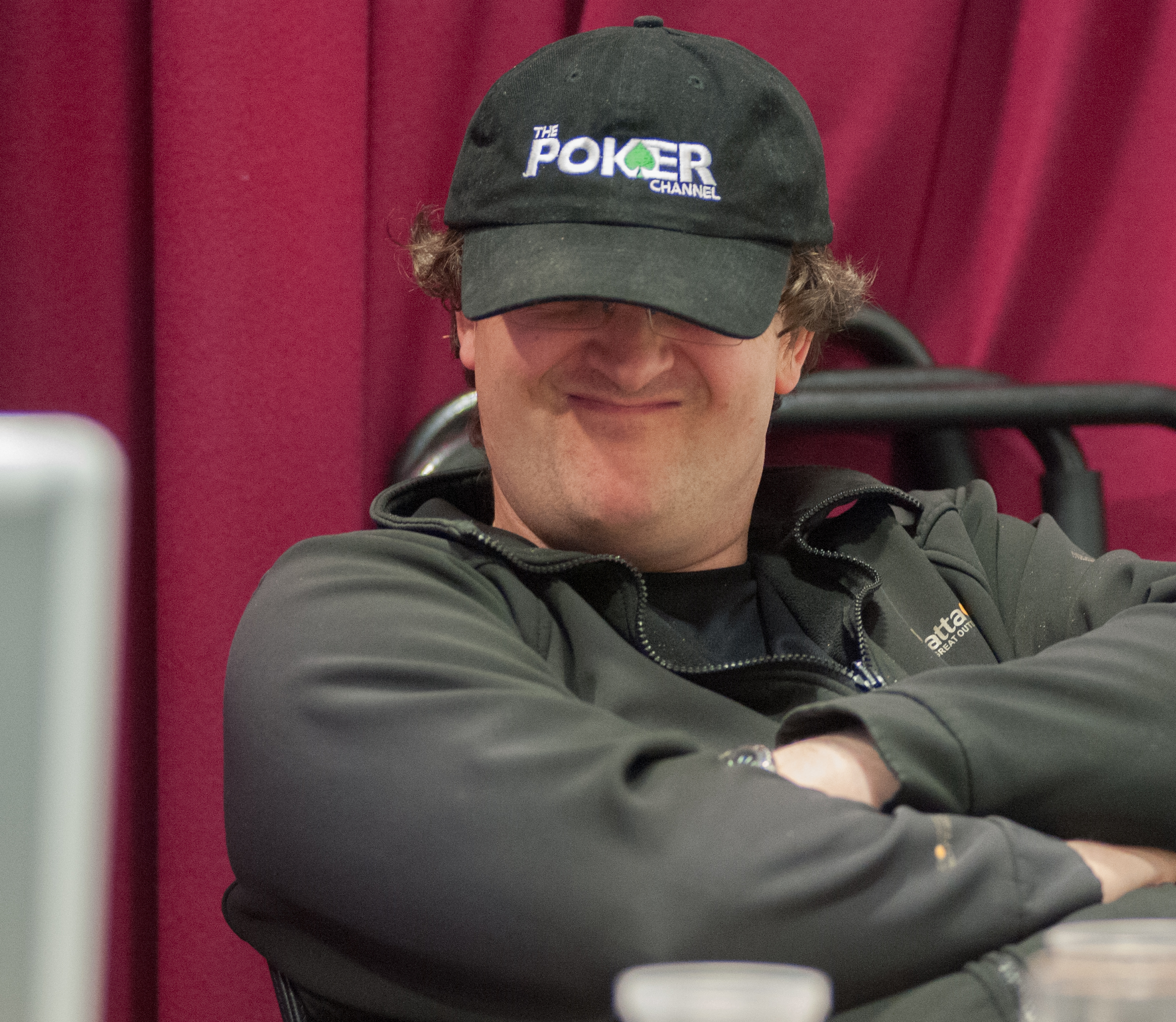
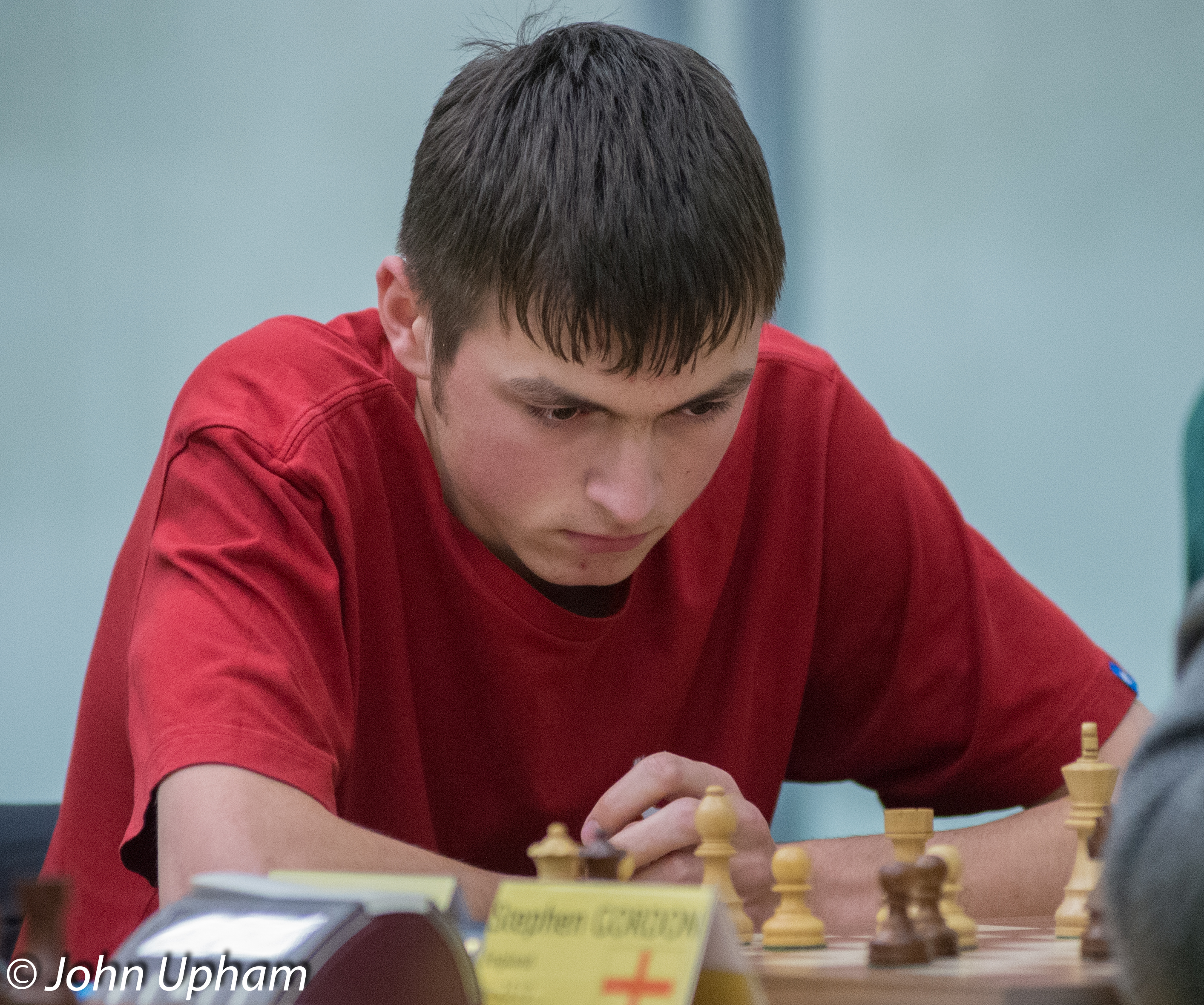
Marcus Harvey at the 2013 Hastings International Congress, Courtesy of John Upham Photography
BCN wishes Happy Birthday to IM Marcus Ross Harvey born on this day (Wednesday, July 24th) in 1996. Killing Me Softly by the Fugees was top of the hit parade.
Marcus was born in Oxford and attended The Marlborough School, Woodstock, Oxfordshire and then (in 2014) at The University of Southampton he studied mathematics.
Originally playing for Bicester Marcus now represents Witney Chess Club in local leagues.
Marcus first played in the British Championship in 2011 (Sheffield).
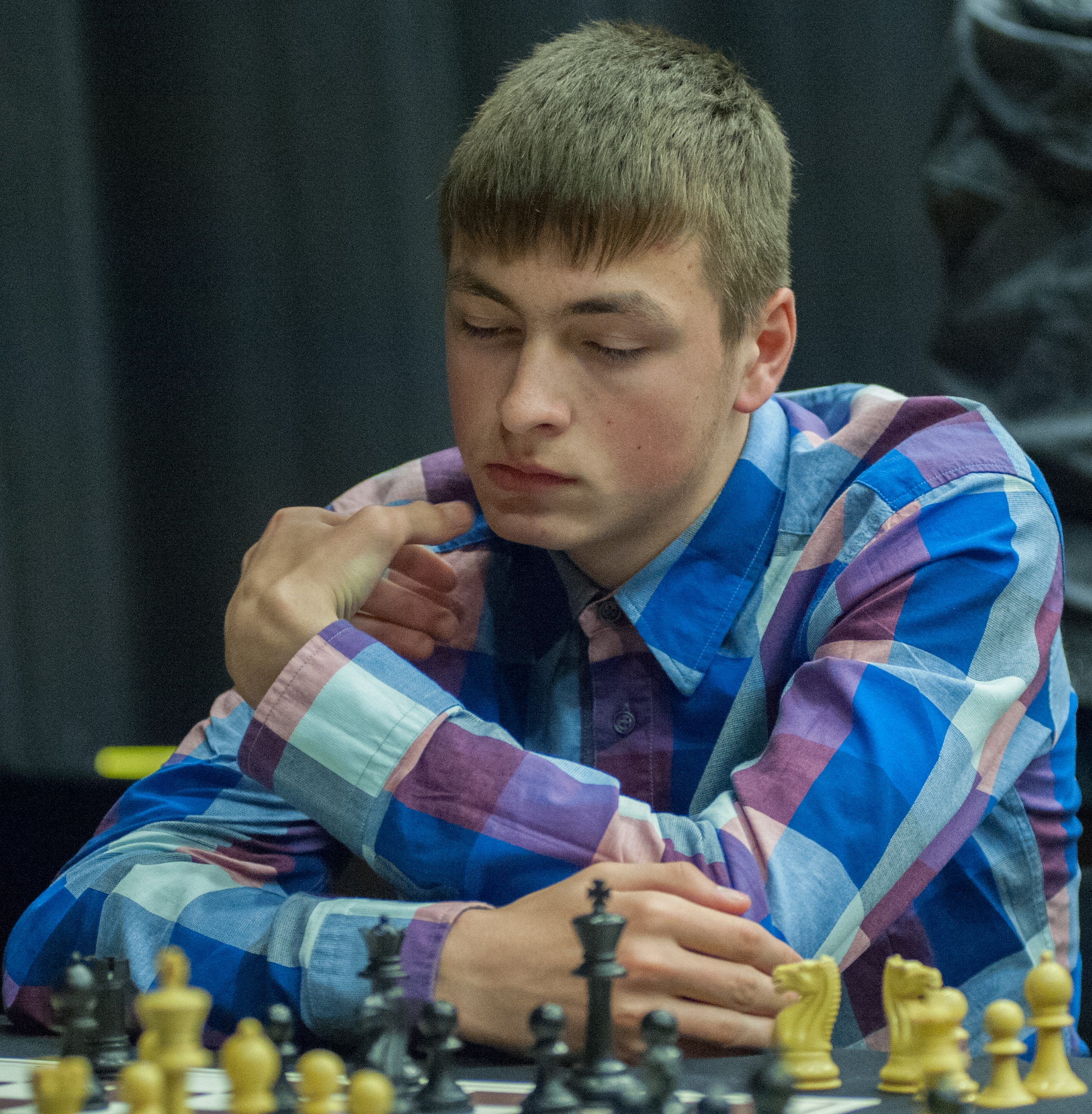
Marcus Harvey at the 2013 King’s Place Rapidplay, courtesy of John Upham Photography
Originally playing for Oxford he now plays for Wood Green in the Four Nations Chess League (4NCL) and Southampton University in the Southampton League.
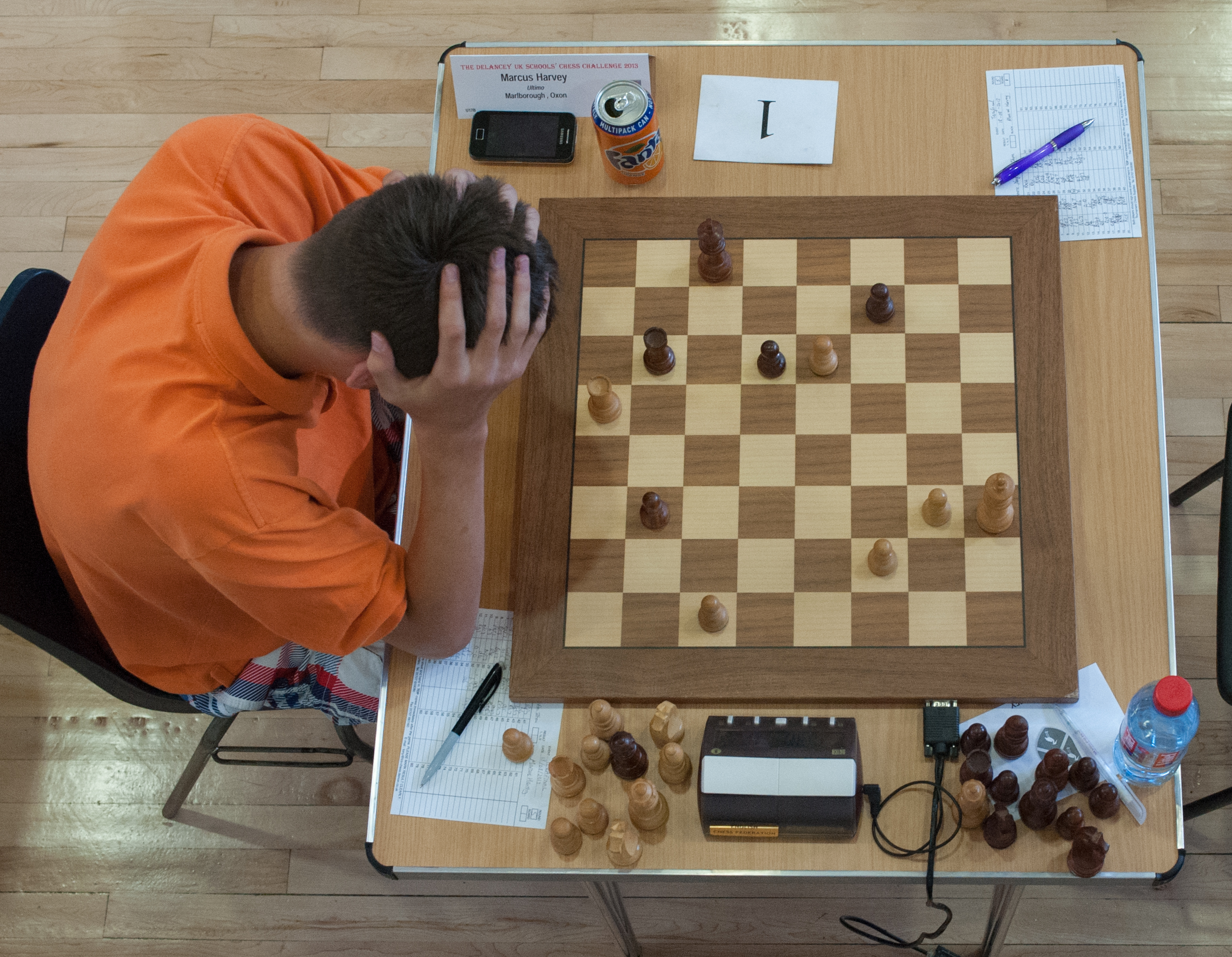
Marcus playing IM Yang-Fan Zhou at the 2013 Delancey UKCC Terafinal at Loughborough Grammar School. Courtesy of John Upham Photography.
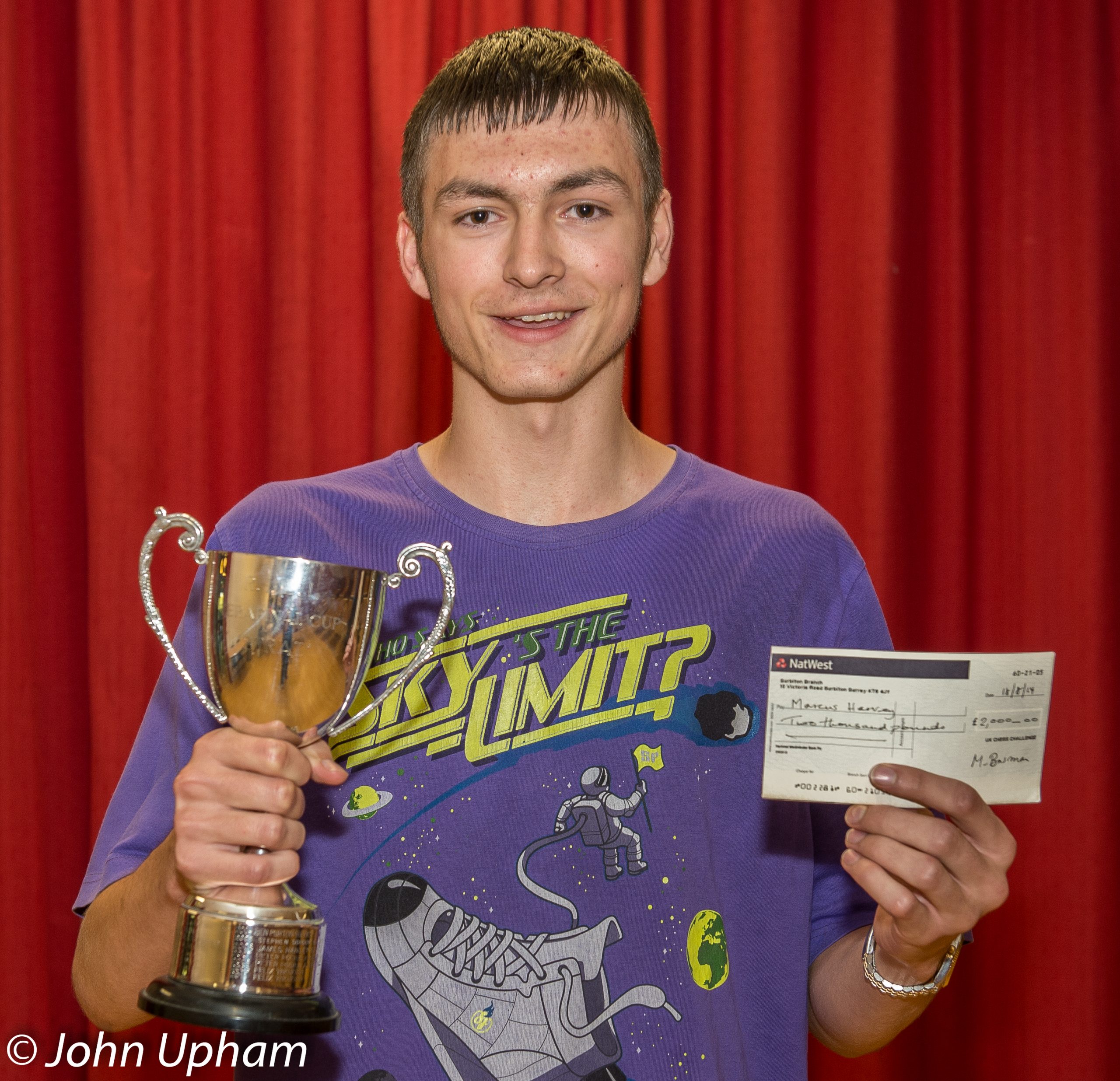
In 2014 Marcus won the title of “Strat” (the overall Terafinal winner) of the 2014 Delancey UK Chess Challenge at Loughborough Grammar School.
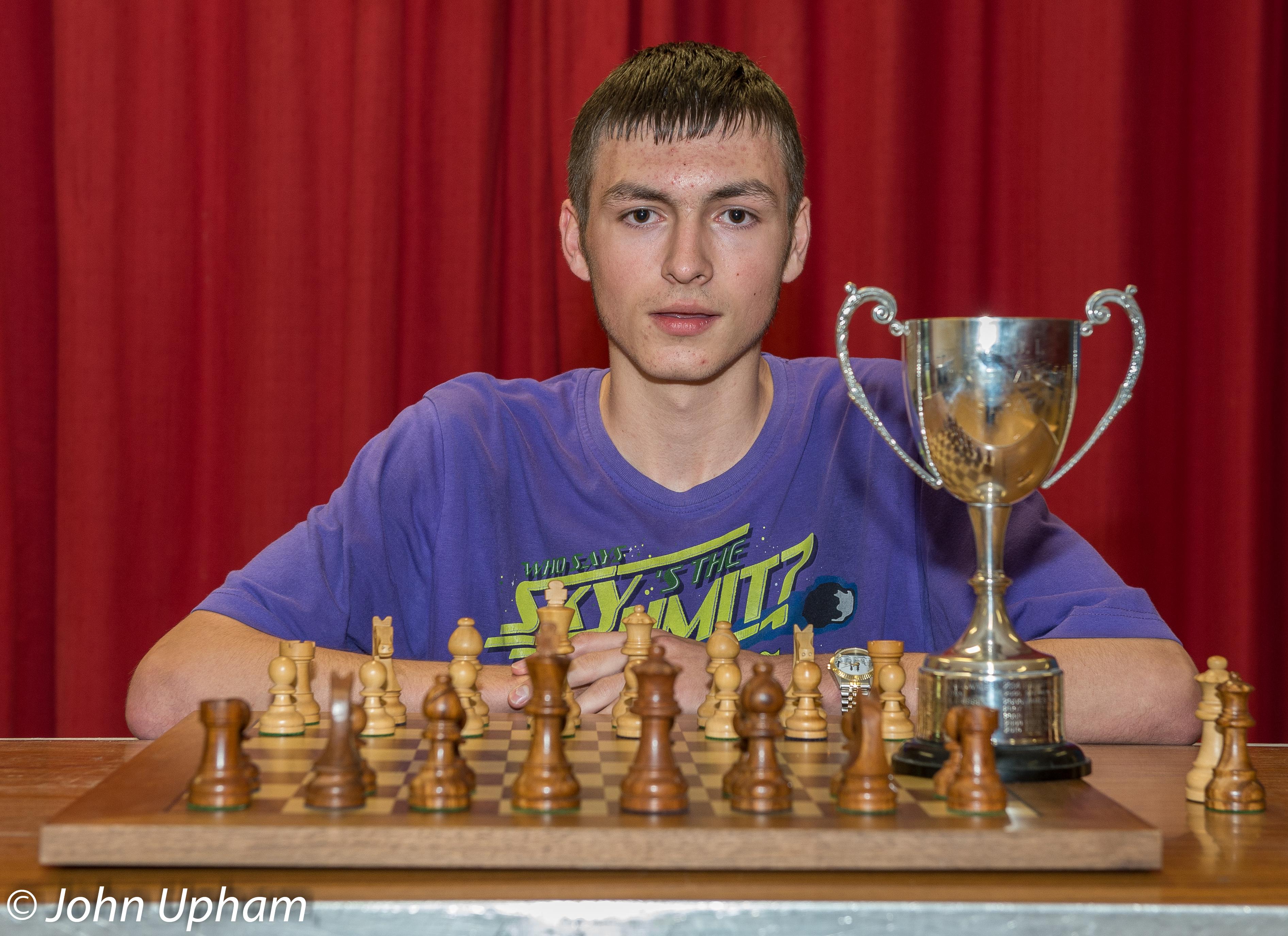
Marcus Harvey at the 2013 Delancey UKCC Terafinal at Loughborough Grammar School, courtesy of John Upham Photography.
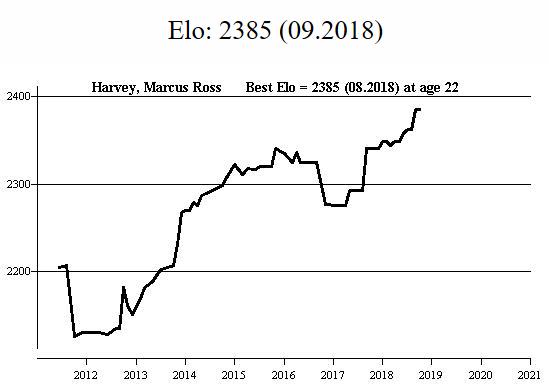
Marcus has a FIDE rating of 2440 and an ECF grading of 240.
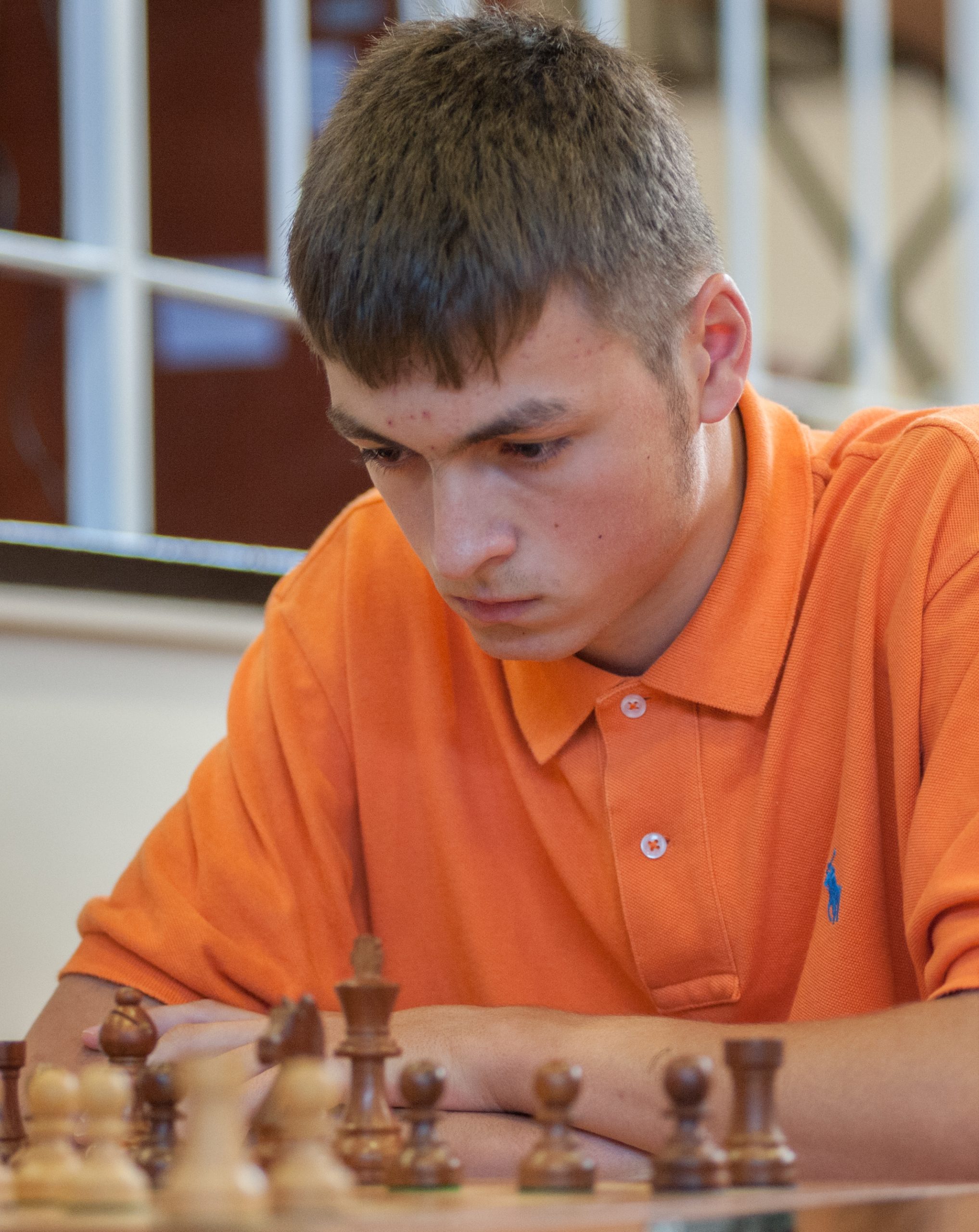
2014 Delancey UKCC Terafinal winner, Marcus Harvey at Loughborough Grammar School. Courtesy of John Upham Photography
In 2018 he won the Witney Open outright with 4/5 and, in the same year, was runner-up to David Howell in the UK Blitz Open with 12.5/15 and a of 2589.
In 2019 he was =1st (with Mark Hebden) in the 4NCL Easter Open in Stevenage. Later that year Marcus was losing semi-finalist (to Gawain Jones) in the London Classic Blitz Knockout.
Marcus, on home ground, won the 43rd Kidlington Open in 2020 and followed this with and is the current 2020 English Online Blitz Champion beating IM Andrew Greet, FM Jonah Willow, IM Ameet Ghasi and IM Andrew Horton in the final.
In the Pro chess league he represents UK Lions.
Marcus Harvey’s FIDE rating profile according to Megabase 2020
Marcus overcame Rory McLean, Theo Koury, Steven Coles, FM Alexis Harakis, CM Jonathan Pein and rapidplay / blitz specialist IM Ameet Ghasi to share first place.
Over the 19th – 23rd August 2021 Marcus played in the Wood Green Invitational round-robin event at Oddfellows Hall, Stafford.
Marcus scored 6/9 and secured his second International Master Norm and a TPR of 2532.
<img class=” wp-image-18696″ src=”http://britishchessnews.com/wp-content/uploads/2021/02/untitled_wgi.jpg” alt=”Wood Green Invitational Round-Robin event at Oddfellows Hall, Stafford. August Bank Holiday Weekend, 2021″ width=”654″ height=”229″ /> Wood Green Invitational Round-Robin event at Oddfellows Hall, Stafford. August Bank Holiday Weekend, 2021
Over the August Bank Holiday weekend of 2021 Marcus played in the Northumbrian Masters GM Tournament at the splendid Marriott MetroCentre, Gateshead scoring 6/9 and TPR of 2559 and earing his fourth IM norm. His standard play rating of 2451 (September 2021) is sufficient and now only requires the next FIDE Congress to ratify the IM title.
Marcus enjoys playing the Smyslov-Larsen opening with white
and the classical French and the Nimzo-Indian Defence.
It is clear that Marcus is now surely a strong candidate for England’s next Grandmaster.
We wish Tony Kosten best wishes on his birthday, this day (July 24th) in 1958.
Tony was born in North Eastern Surrey, and eventually relocated to France where he now resides.
Tony is married to Gyongyver Kosten-Forintos, the daughter of Hungarian Grandmaster Győző Forintos.
Streatham & Brixton becoming BCF National Club Champions in 1989. The team was Tony Kosten, Mark Hedben, Daniel King, Nigel Povah (Captain), Joe Gallagher and Julian Hodgson : quite a strong team
Tony played for Lower Earley Chess Club in the Berkshire League and for Streatham & Brixton in the National Club competition.
He was =3rd in the 1982 British Championship in Torquay (won by Tony Miles)
He was =2nd in the 1984 Robert Silk Young Masters.
He won the Berkshire Chess Association Quickplay title in 1985.
Tony was runner-up to Yuri Balashov at Minsk 1986.
He won Naujac 2000 with 7.5/9
Tony won many other events : See his Wikipedia entry for details.
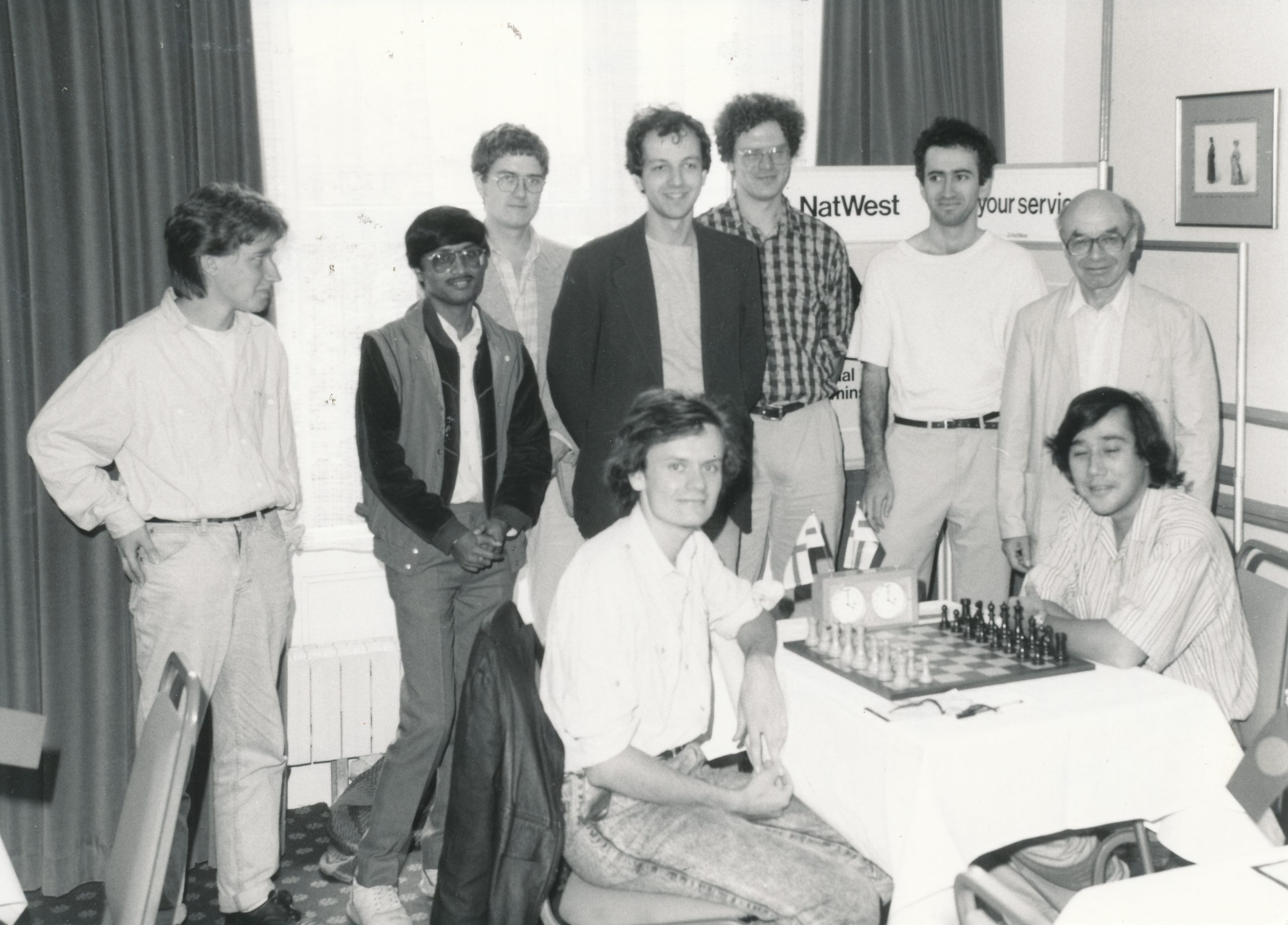
Tony Kosten (fourth from left) at a NatWest Bank sponsored event
Tony is the founder of chesspublishing.com, a subscription based web site specialising in cutting edge opening theory with many contributors.
He plays for Guildford in the Four Nations Chess League (4NCL) is registered as a member of the French federation. He also plays for Schott Mainz in the German Team Championship.
According to Megabase 2020 his highest FIDE rating was 2551 in July 2002 at the age of 44.
With the white pieces Tony prefers the Ruy Lopez and Giuoco Piano with the English coming a close second.
With black Tony defends the Lopez and the Nimzo-Indian defence.
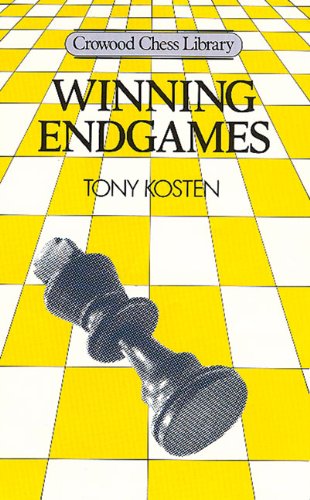
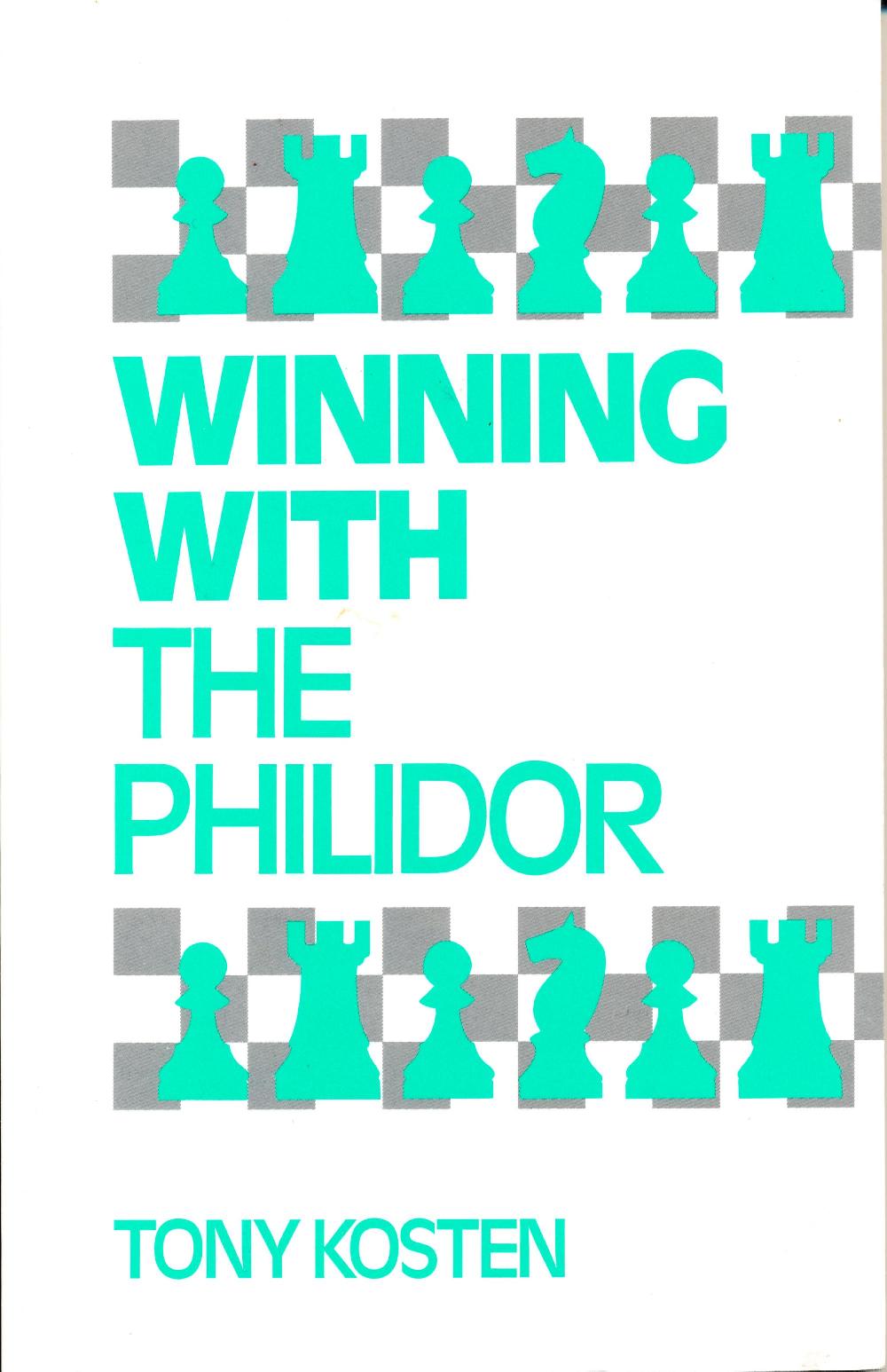
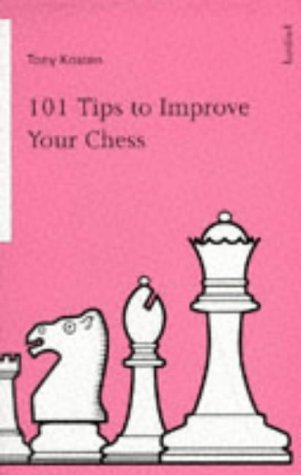
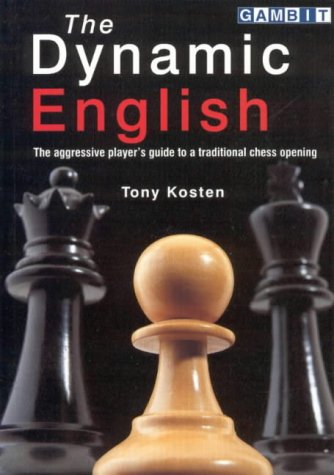
Tony KostenWinning Endgames, Crowood, 1987Winning with the Philidor, Batsford, 1992101 Tips to Improve your Chess, Batsford, 1996The Dynamic English, Gambit, 1999
BCN sends best wishes to John Rice on his birthday, July 19th in 1937.
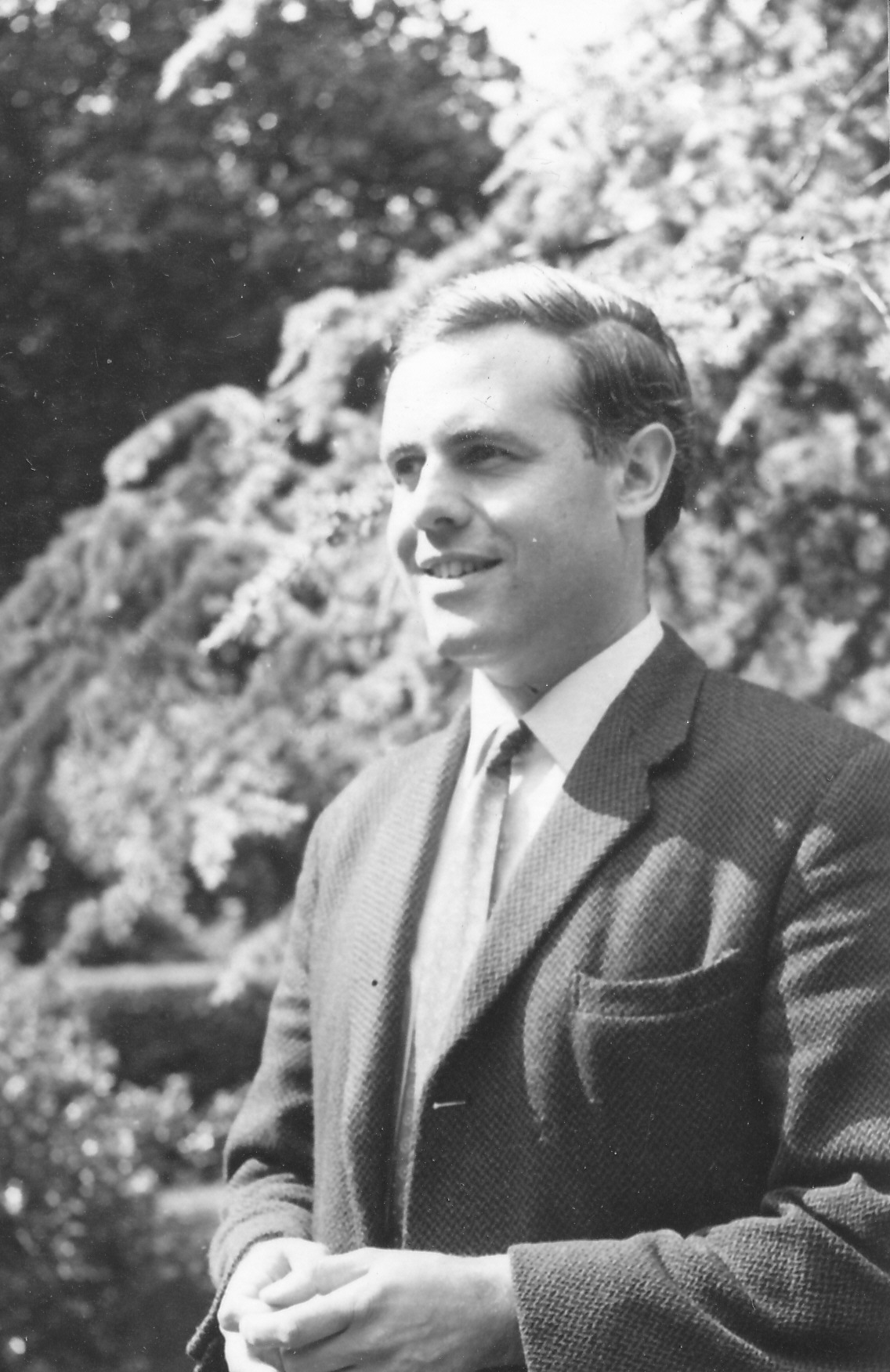
John Michael Rice was born in Scarborough, Yorkshire, North Riding, his mother’s maiden name was Blake. John lives in Surbiton, Surrey and teaches Modern Languages at Tiffin School, Kingston-Upon-Thames.
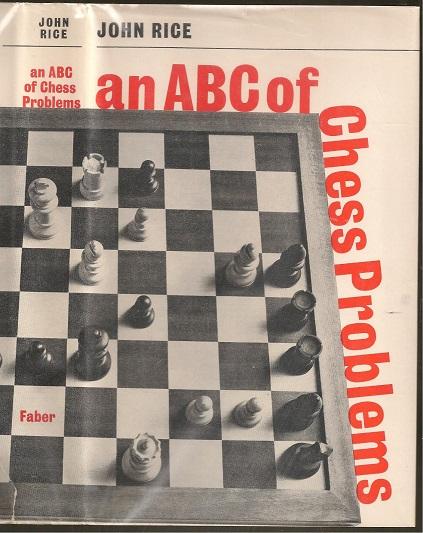
An ABC of Chess Problems
From An ABC of Chess Problems :
“The author is one of the country’s most prolific foremost composers and problem critics. He has gained mainly tourney honours, both at home and abroad, and since 1961 has been editor of a flourishing problem section in the British Chess Magazine, the country’s leading chess periodical. He lives in London and teaches Modern Languages at Tiffin School, Kingston-Upon-Thames.”
From chesscomposers.blogspot.com :
John Rice was the chief editor of the problems section of the “British Chess Magazine” from 1961 until 1974 and is a faithful collaborator of “The Problemist“. He has written “Chess Problem: Introduction to an Art” (1963) together with Robin Matthews and Michael Lipton and “The Two-Move Chess Problem” (1966), “Serieshelpmates” (1978) with Anthony Dickins or “Chess Wizardry: The New ABC of Chess Problems” (1996).
Translated from https://peoplepill.com/people/john-michael-rice/ :
“Since the mid-fifties he has composed problems of all kinds, but above all in two moves. In the 1960s he was editor of the problems section of the British Chess Magazine. Since 1999 he has been editor of The Problemist magazine.
International Master of Composition since 1969 and International Judge for Composition since 1972.
President of the PCCC (Permanent Commission for Chess Composition) from 2002 to 2006.
He worked as a teacher of modern languages in a school in Kingston-upon-Thames.
Winton Capital British Chess Problem Solving Championships 2016
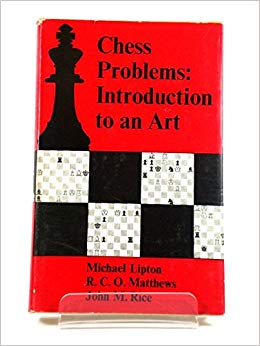
Together with Barry Barnes and Michael Lipton he wrote the book Chess Problems: Introduction to an Art (Faber & Faber, London 1963).
Chess Problems : Introduction to an Art
He composes mostly direct mates, but can composes as well in other genres, including fairies. He is an International Judge for twomovers, helpmates and fairy problems and the former President of the PCCC from 2004 until 2006.
John was awarded the title of “International Grandmaster for chess compositions” in 2015.
From British Chess, Pergamon Press, 1983 by GS Botterill, DNL Levy, JM Rice and MJ Richardson :
“I was taught the moves of chess in 1947 at the age of ten and quickly realised that I liked the game no more than Ludo or Snakes and Ladders where the chances of losing seemed to me unfairly high. But the chess pieces and their moves fascinated me, so it is hardly surprising that before long I had turned to problems and become an ardent fan of Brian Harley in his Observer column, especially as I had come across and paid two shillings (!) for his Mate in Two Moves in a second-hand bookshop in Reigate. Harley, together with T. R. Dawson in the British Chess Magazine and C. S. Kipping in CHESS, provided the sources of my first solving pleasure and the inspiration for my first efforts at composition. Among my early successes was problem l, heavily constructed but strategically rich, a first prize winner in a tournament for composers under 21, one of a series organised by the British Chess Problem Society.
I had grown up in Scarborough (Yorkshire), out of contact with other problem enthusiasts, and a chance meeting in December, 1954 with Michael Lipton in Cambridge, where we were both taking Scholarship examinations, brought the realisation that there was far more to the two-move chess problem than the solidly entrenched traditionalism espoused in those days by the columns of The Problemist and CHESS. Very soon the bulk of my output was in the modern style (with set and try-play) and published abroad, notably in Die Schwalbe, whose two-move editor, Hermann Albrecht, did much to stimulate my interest. Problem 2 gained a coveted prize in an extremely strong formal tournament judged by Michael
Lipton, following an article of his on the potentialities of the half-battery theme (illustrated here by the arrangement on the c-file).
2
5th prize, 133rd Theme Tournament, Die Schwalbe, 1961.
The half-battery is only one of several themes which have commanded my attention over the past 20 years, others being white self-pin in try and key (illustrated by problem 3), Grimshaw and Nowotny (problem 4), reciprocal and cyclic play (problem V, the first published example of cyclic mates in three phases), pawn-promotion effects, and tasks of various types, especially open gates. My total problem output numbers about 600.
3
The Tablet, Commended, BCPS Ring Tournament 1958; Brian Harley Award
In 1961 I took over from S. Sedgwick the editorship of the problem section of the British Chess Magazine, which post I held until December, 1974. It was a source of pride to me that I was now doing the job once done by the great T. R Dawson, though I knew that I could never bring to it the same tireless energy and all-round expertise which he had displayed so impressively. At about the same time I embarked with Michael Lipton and Robin Matthews on a venture which was to have repercussions throughout the entire problem world,
namely a series of books on problems published by Faber and Faber. The first, Chess Problems: Introduction to an Art (Lipton, Matthews and Rice), appeared in 1963, and was followed three years later by The Two-move Chess Problem: Tradition and Development, also with Michael Lipton, but this time the third collaborator was Barry Barnes, who has long been a close friend and influence. The third book in the series, An ABC of Chess Problems (1970), was a solo effort.
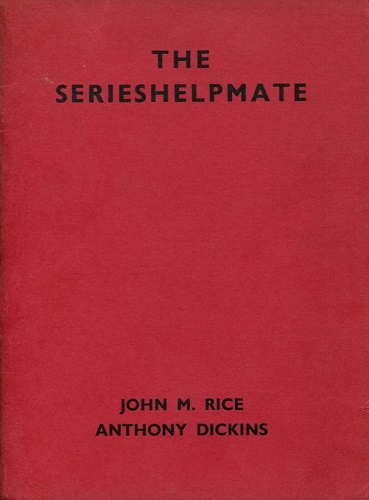
My interest in Fairy Chess dates from a meeting in the mid-1960s with the late John Driver, whose enthusiasm for the pleasures to be derived from non-orthodox forms I found highly infectious. Fairy problems soon began to appear in the BCM column and were favourably received. The serieshelpmate, where White remains stationary while Black plays a sequence of moves to reach a position where White can mate in one, has perhaps interested me more than any other non-orthodox form (see problem Vl), and in 1971 I collaborated with Anthony Dickins to produce a book on the subject, The Serieshelpmate (published by the Q Press, first edition 1971, second edition 1978).
5
1st Prize, Problem 37th Theme Tournament, 1961-62
White mates in 2
Set: 1…Kc6; 2. Qe8 (A)
1…Ke6; 2. Qc8 (B)
Try: 1.Nb6+?, Kc6;2.Qc8 (B)
Ke6;2.Qd6 (C)
Ke7!
Key : 1.Nf6+! Kc6;2.Qd6 (C)
Ke6;2.Qe8 (A)
Since 1974 my problem activities have necessarily been restricted by the demands of family life (wife and two sons, none of them much interested in chess) and my career (schoolmaster, formerly Head of Modern Languages Department and now Director of Studies at Tiffin School, Kingston Upon Thames. Other leisure-time interests (not that there is much leisure time) include cricket and classical music.”
From The Encyclopaedia of Chess (Batsford, 1977), Harry Golombek OBE, John Rice write about himself:
“British problem composer, output about 500, mainly modern-style two-movers but also several helpmates, serieshelpmates and fairy problems. Editing: problem section of British Chess Magazine (1961-1974). Author of An ABC of Chess Problems(1970), and co-author of Chess Problems: Introduction to an Art (1963), The Two-move Chess Problem: Tradition and Development (1966) and The Serieshelpmate (1971). International master (1969): International Judge (1972).”
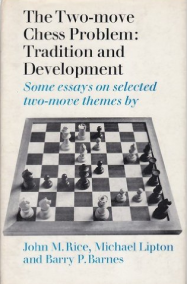
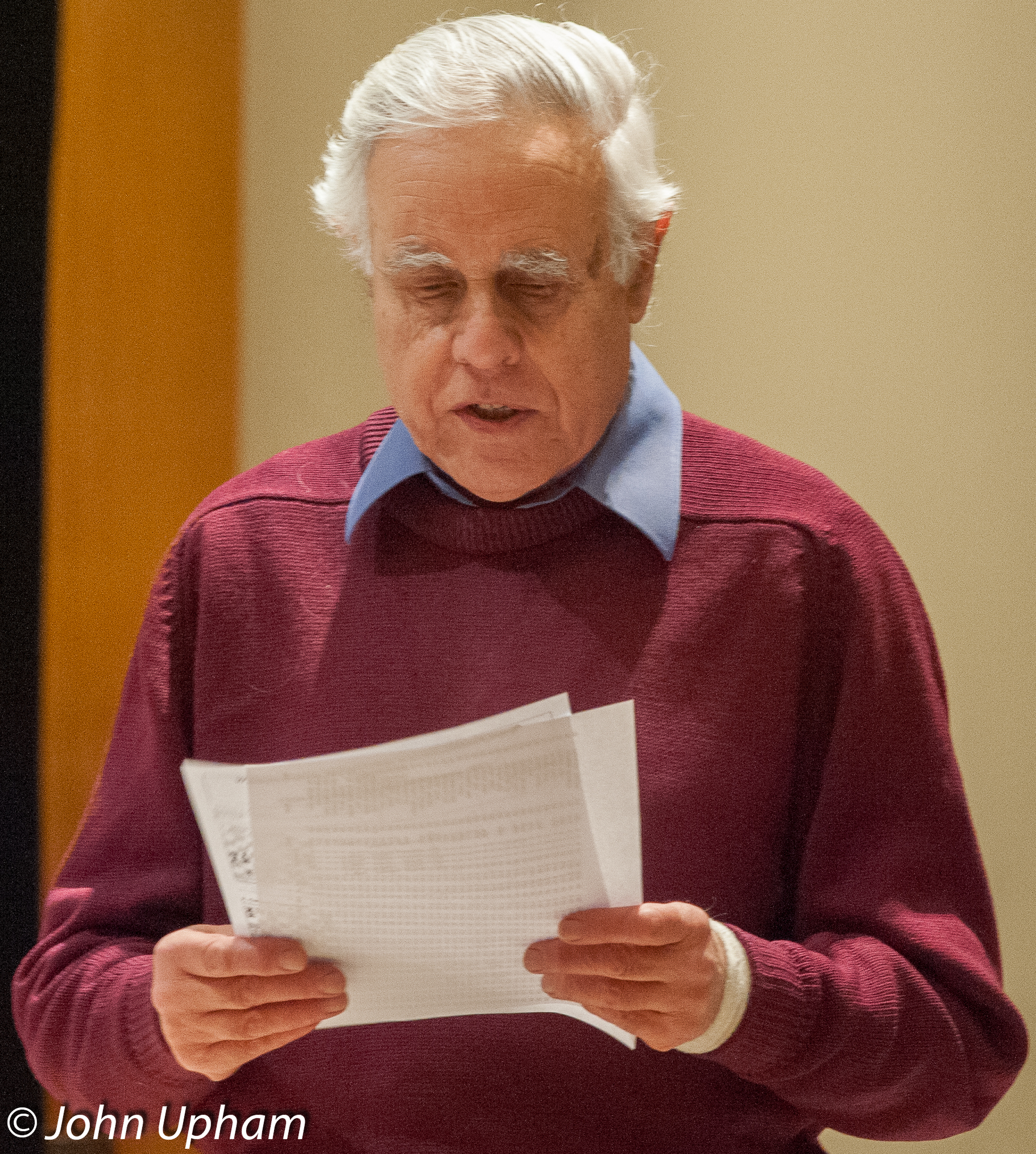
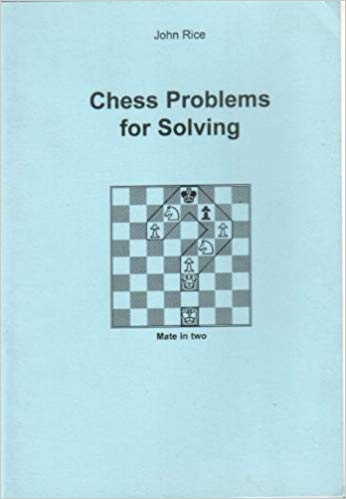
The Two Move Chess Problem : Tradition and DevelopmentJohn Rice at a Winton Capital BCPS Problem Solving event at Eton CollegeChess Problems for SolvingThe SerieshelpmateBritish Chess, Pergamon Press, 1983. Editors : GS Botterill, DNL Levy, JM Rice and MJ Richardson
Save as PDF
We focus on the British Chess Scene Past & Present!
This website uses cookies to improve your experience. We'll assume you're ok with this, but you can opt-out if you wish. Cookie settingsACCEPT
Privacy & Cookies Policy
Privacy Overview
This website uses cookies to improve your experience while you navigate through the website. Out of these cookies, the cookies that are categorized as necessary are stored on your browser as they are as essential for the working of basic functionalities of the website. We also use third-party cookies that help us analyze and understand how you use this website. These cookies will be stored in your browser only with your consent. You also have the option to opt-out of these cookies. But opting out of some of these cookies may have an effect on your browsing experience.
Necessary cookies are absolutely essential for the website to function properly. This category only includes cookies that ensures basic functionalities and security features of the website. These cookies do not store any personal information.
 Save as PDF