BCN wishes Happy Birthday to IM Ezra Kirk (02-ix-1996)
Ezra Gillie Kirk was born on Monday, September 2nd 1996 in Waltham Forest, Essex.
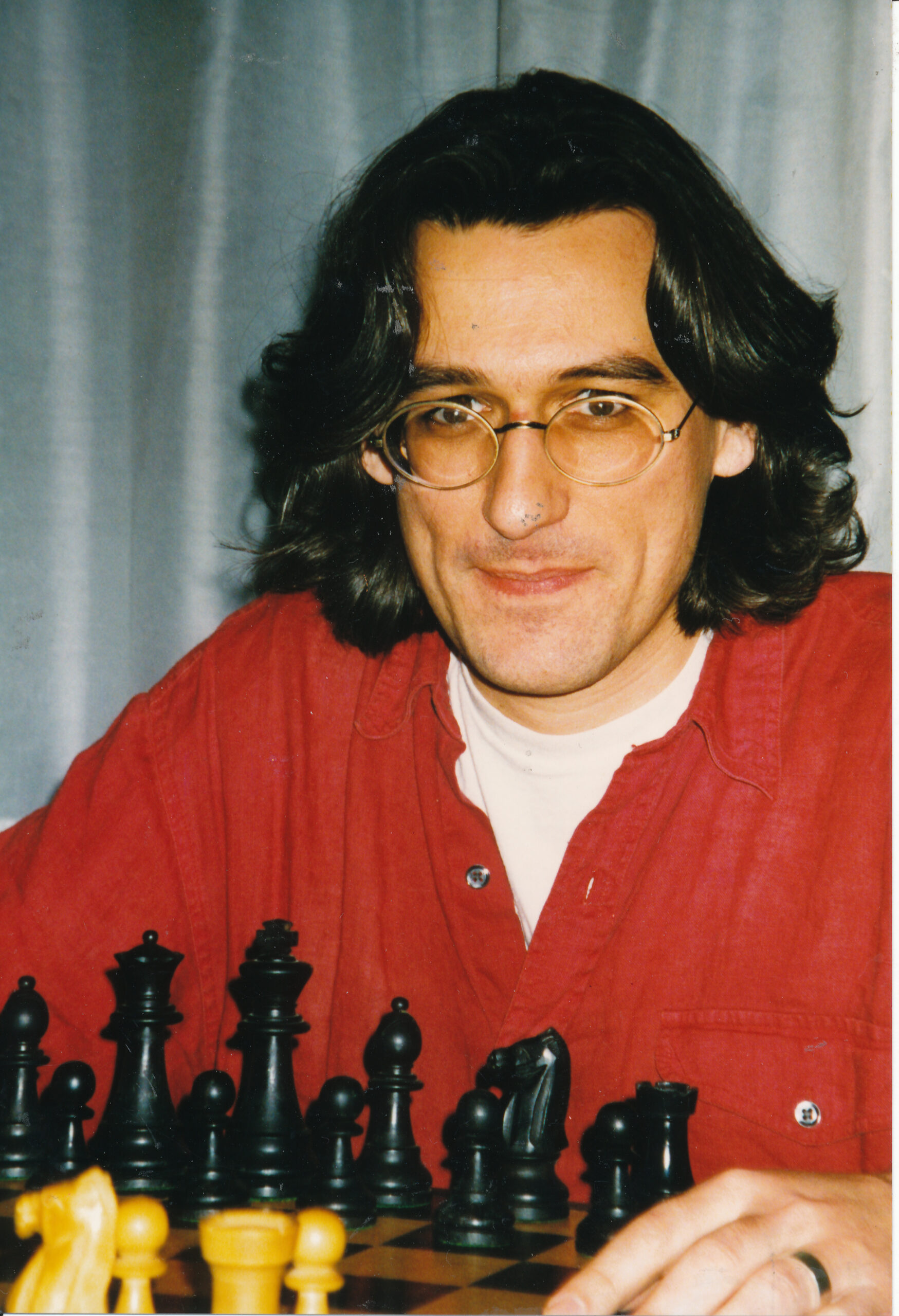
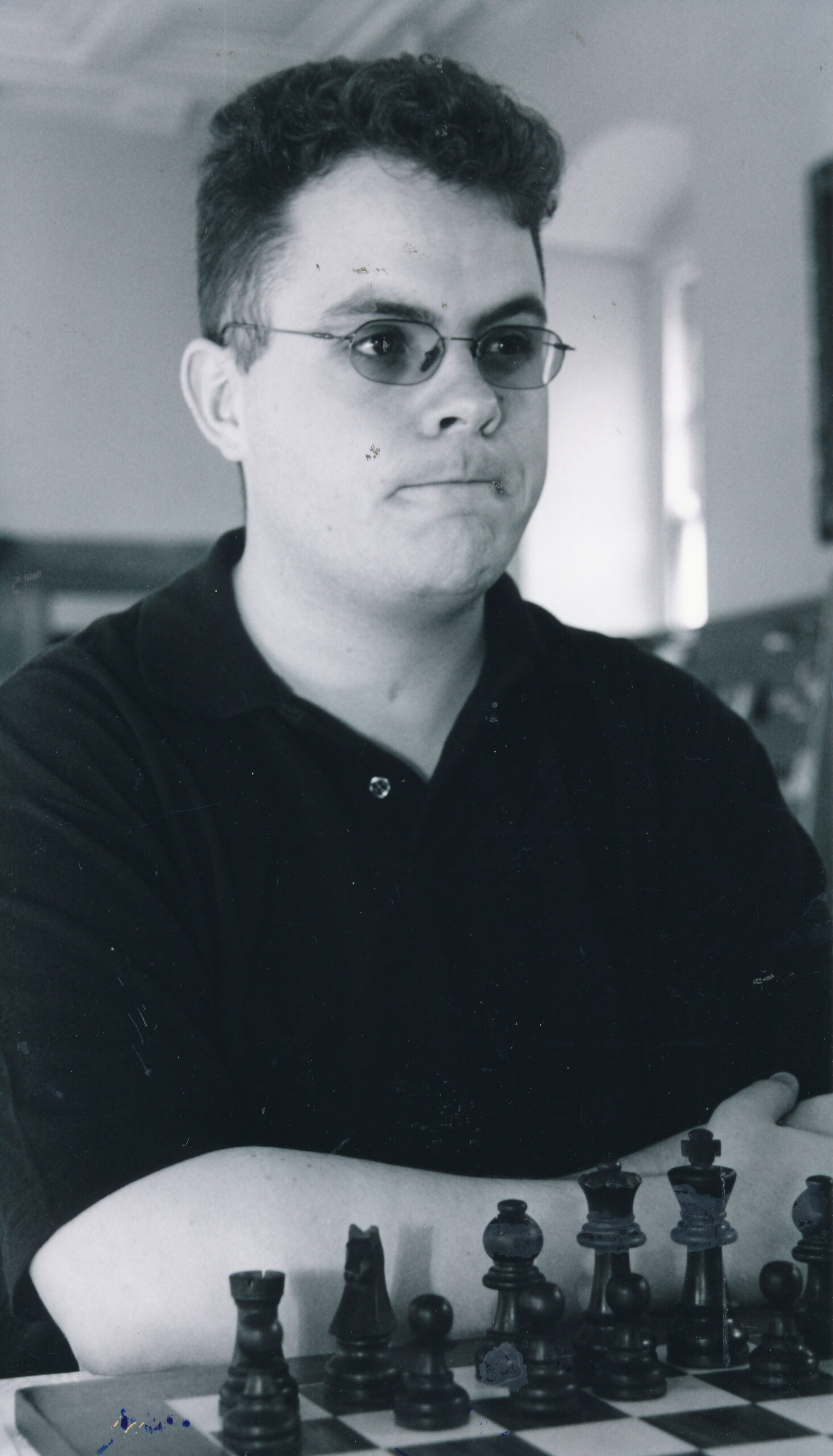
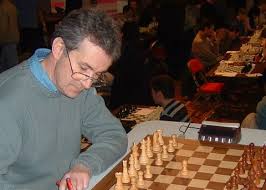
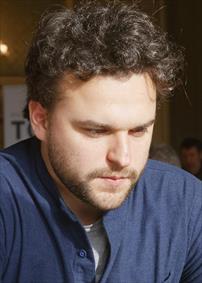
Ezra Kirk, Sautron, 2007, Courtesy of Dominique Primel / Chessbase
Ezra attended Varndean College, Brighton and then the University of Bath to read Natural Sciences and was an intern at AIR INDUSTRIE THERMIQUE and is currently a Data Product Consultant at the Kubrick Group and is based in France.
He edits chess books written by non-English speaking authors and is an accomplished musician publishing works on Spotify.
Ezra became a FIDE Master in 2013 and an International Master in 2018
His peak rating is likely to be in the future but currently is 2445 in December 2018 aged 22.
Ezra plays for 4NCL Cheddleton in the Four Nations Chess League.
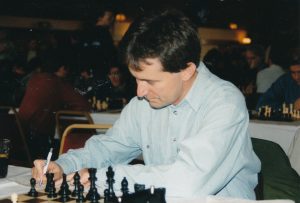
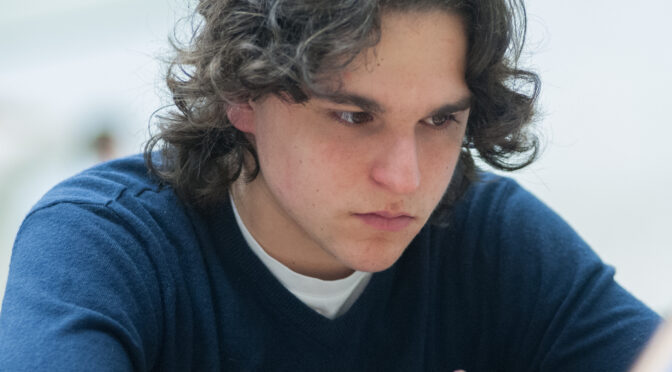
IM Ezra Kirk, Tours, 2020, Courtesy of Dominique Primel / Chessbase
Here is one of Ezra’s best wins :
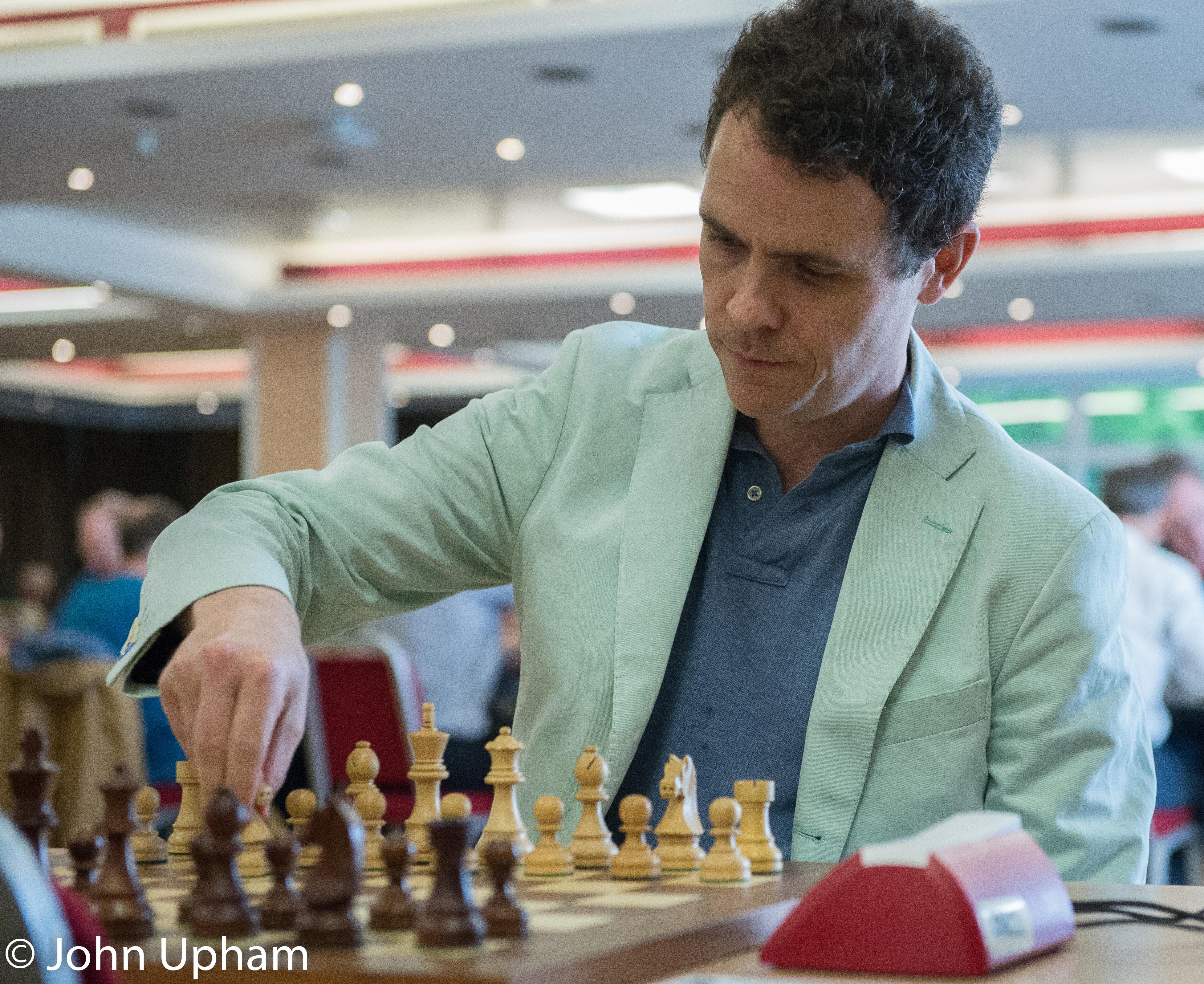
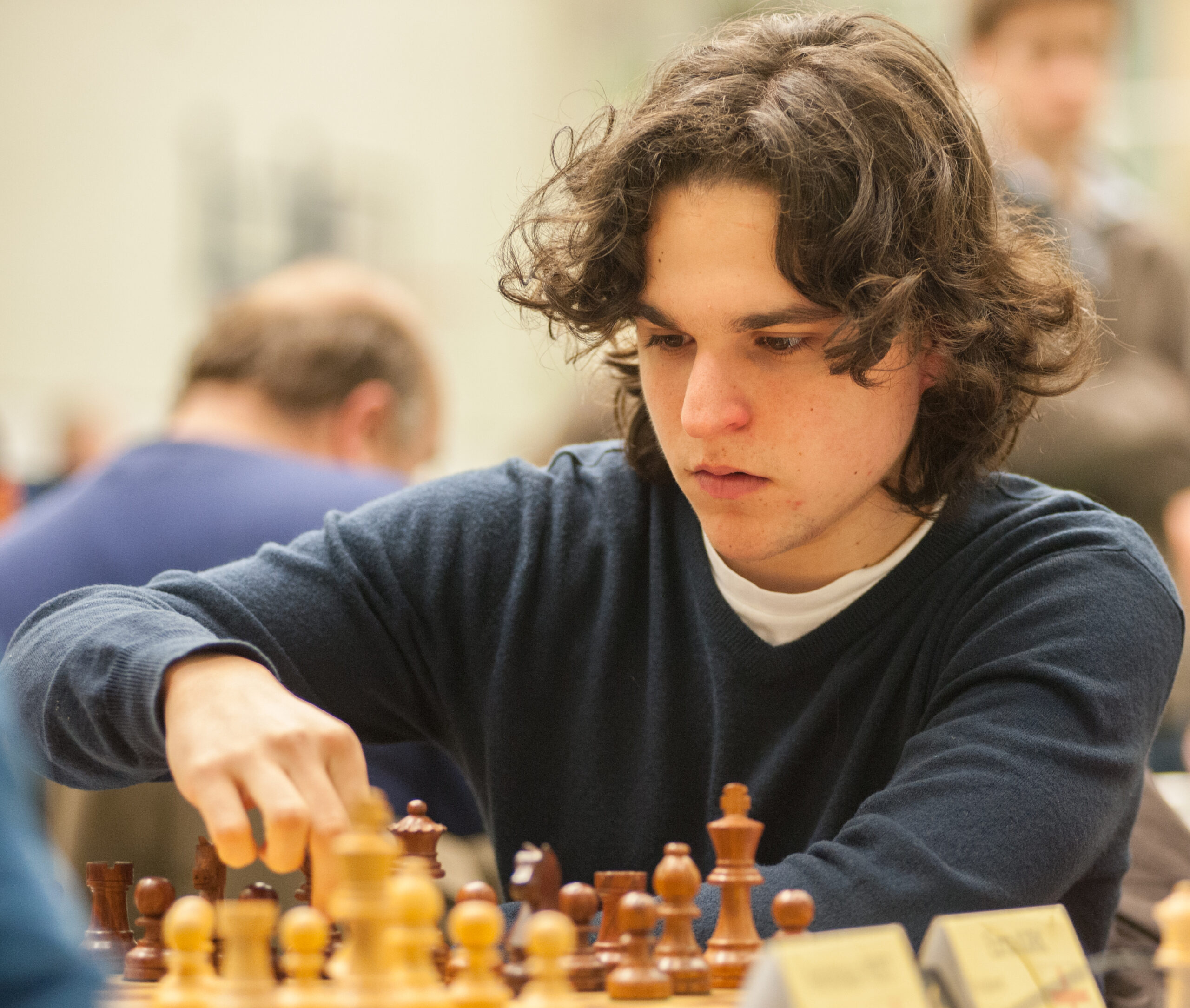
IM Ezra Kirk, Hastings 2012-2013, courtesy of John Upham Photography
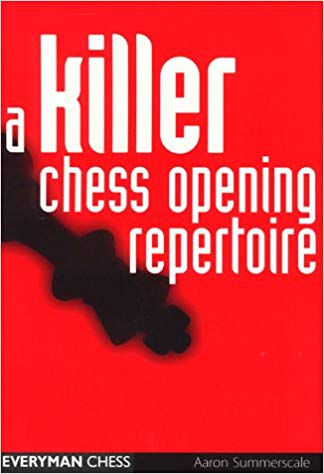
“Book of the year…this reviewer admits to consulting it more frequently than any other book on his shelf”
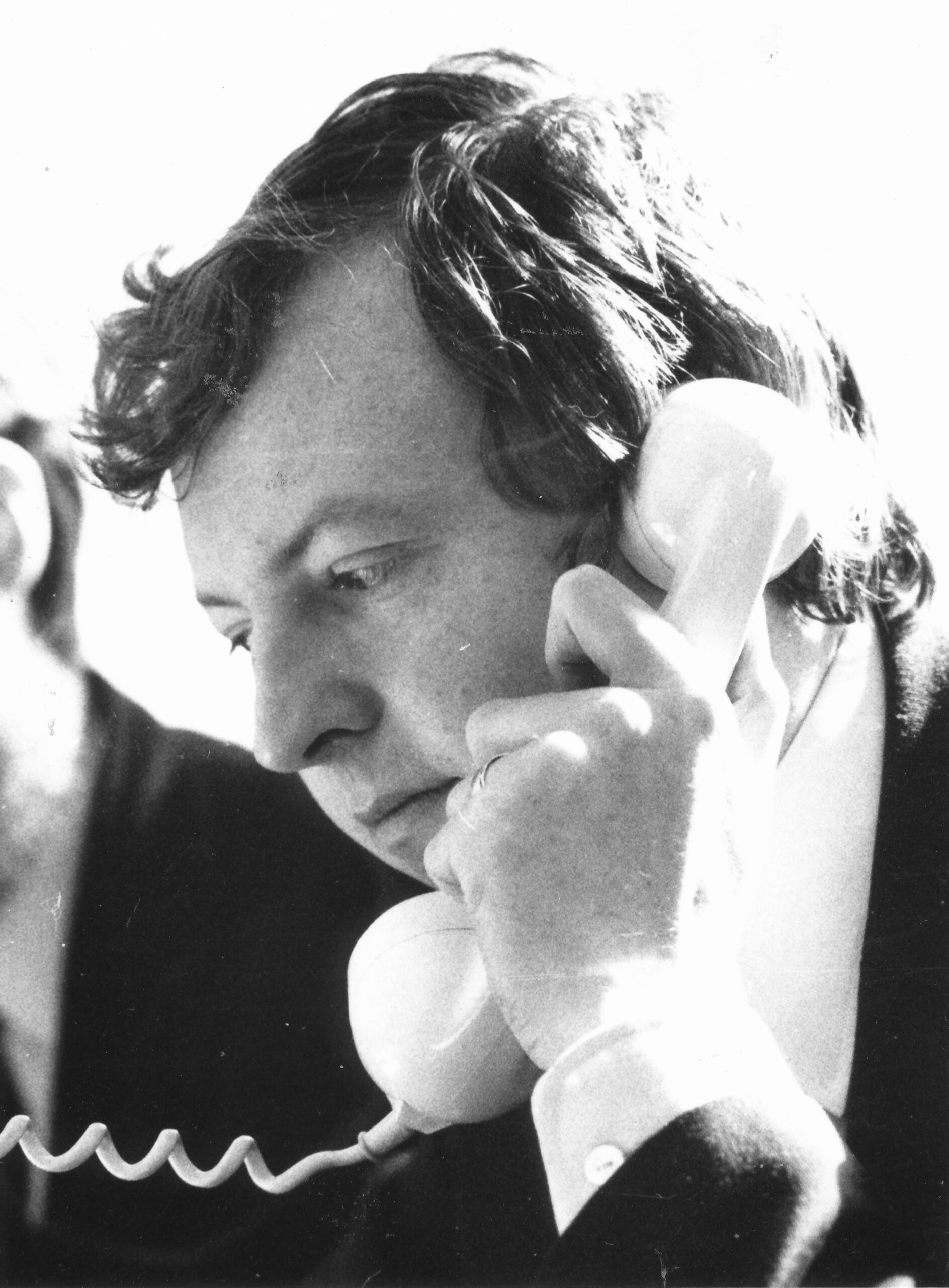
Kevin makes a telephone call
Kevin was coach (they lived in the same road in Suffolk) to GM Nick Pert and IM Richard Pert
Kevin became a FIDE Master in 2006 and his peak rating (according to Felice) was 2360 in July 1993 at the age of 44.
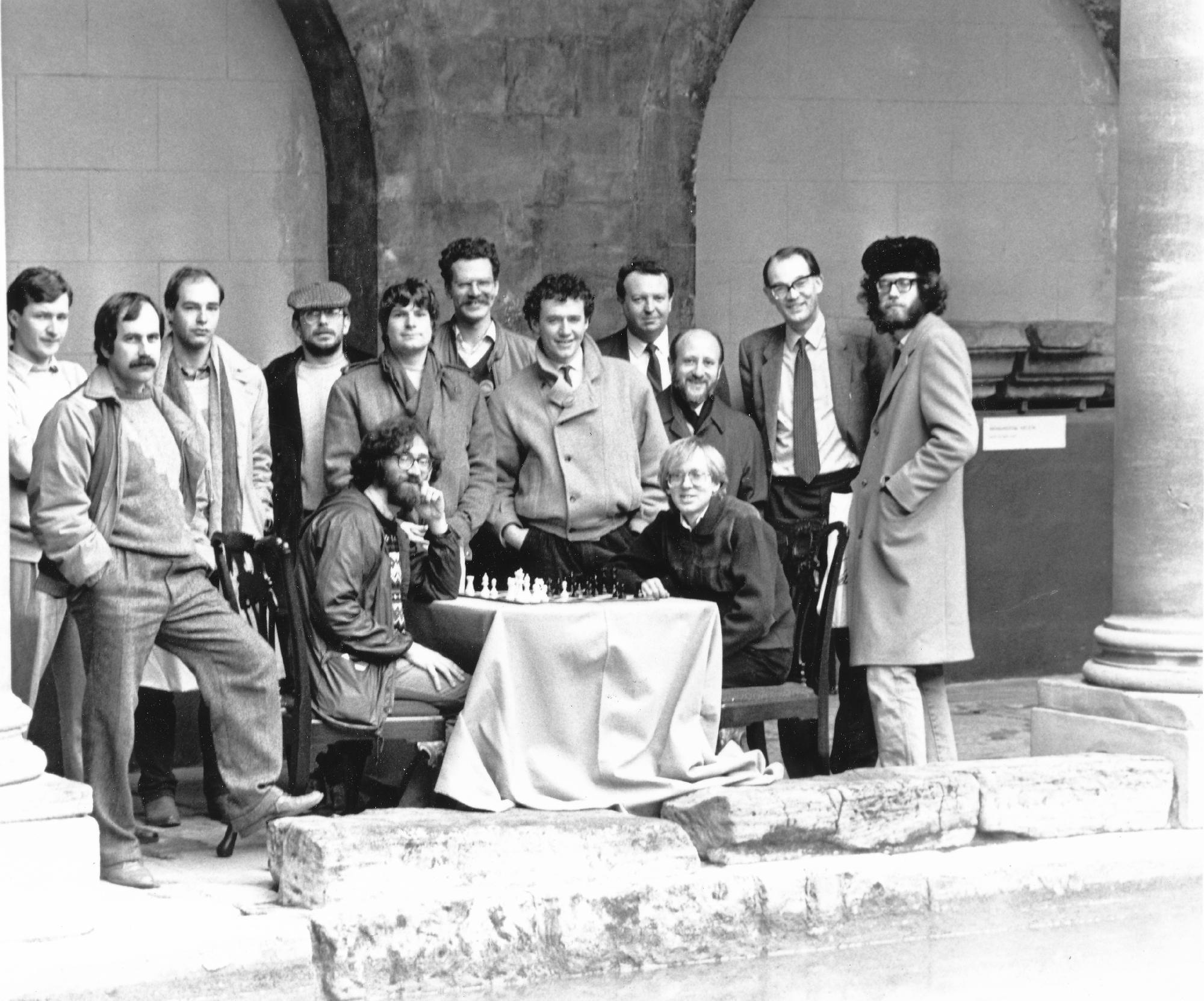
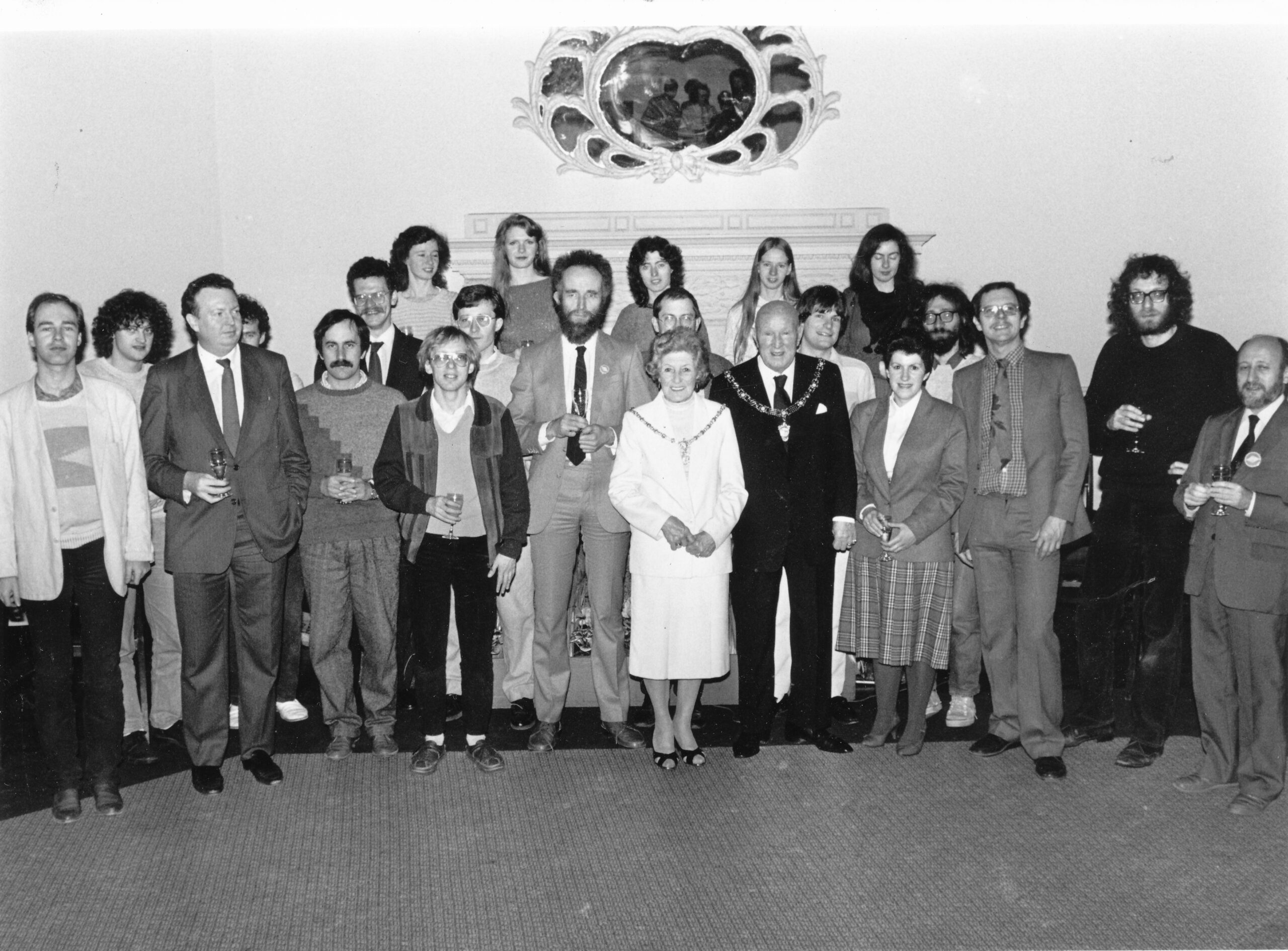
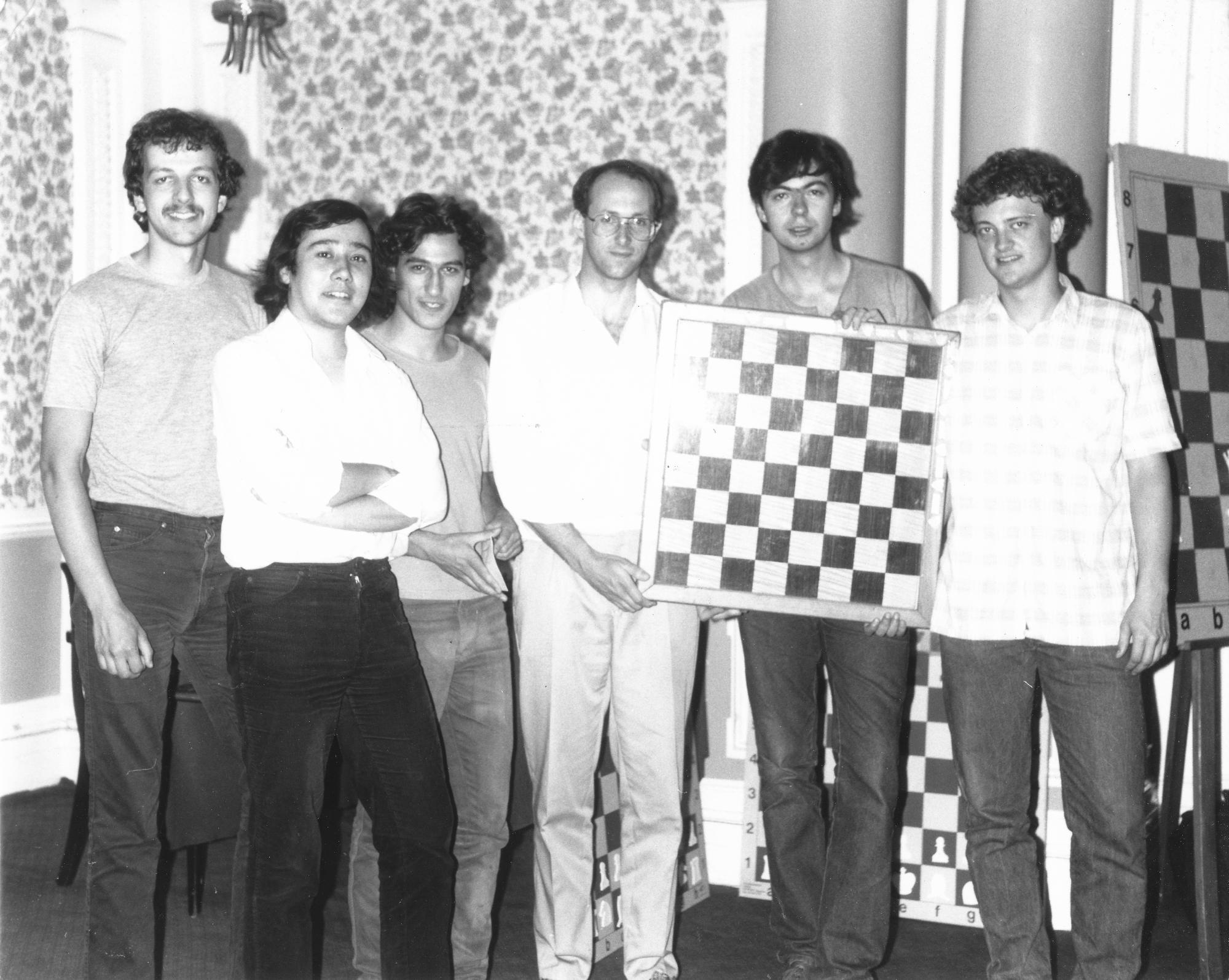
From the Praxis Bath Zonal Tournament of 1987. Kevin J O’Connell is third from left
Kevin became a FIDE International Arbiter (IA) in 1998. He is the FIDE Delegate for the Republic of Ireland and is Honorary Chairman and Secretary of the FIDE Chess in Education Commission (EDU). He is also a FIDE Senior Trainer.
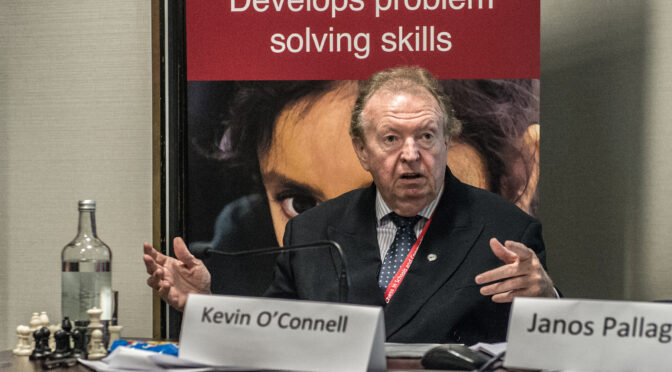
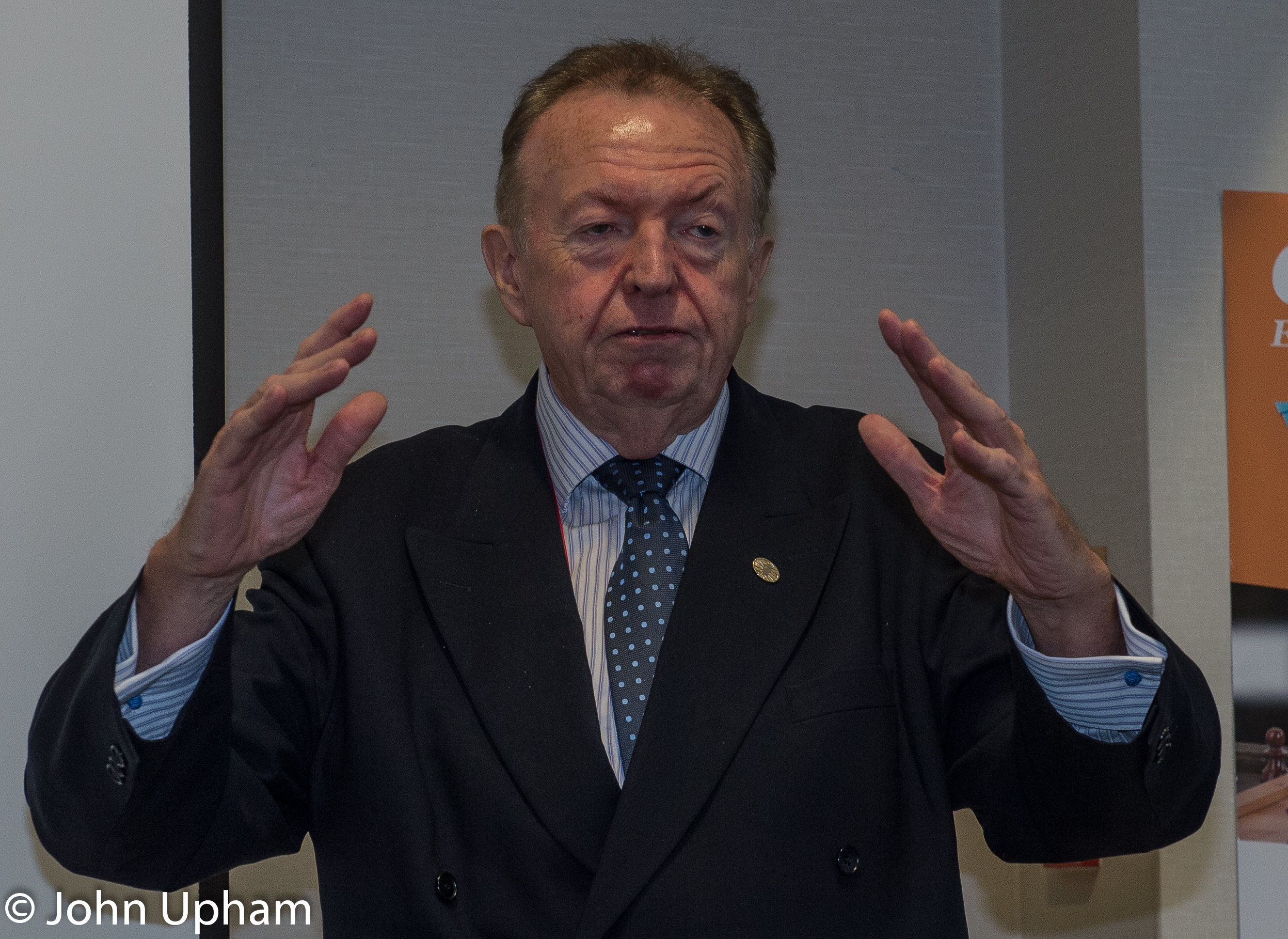
Kevin O’Connell at the London Chess Conference, 2016, courtesy of John Upham Photography
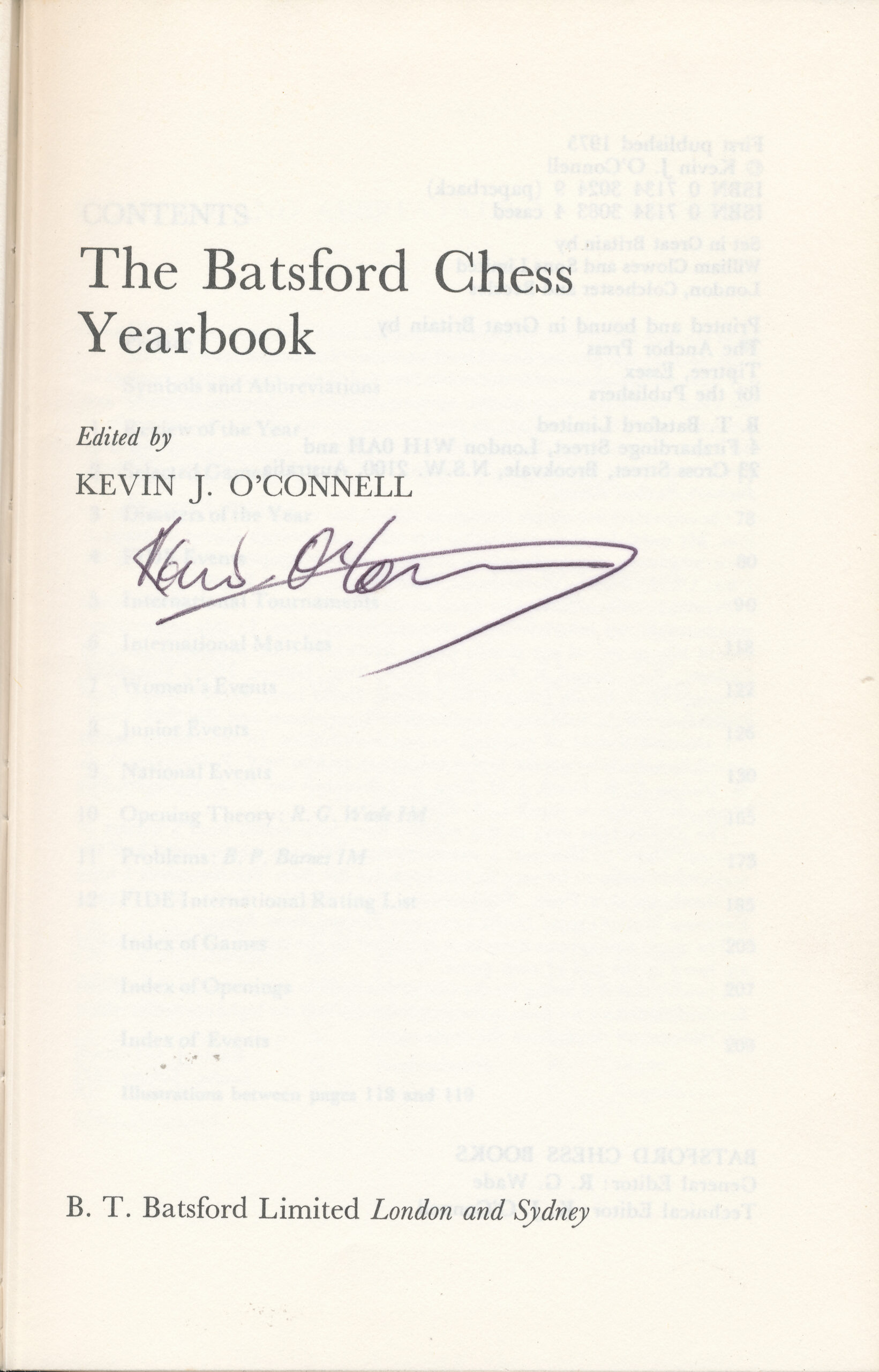
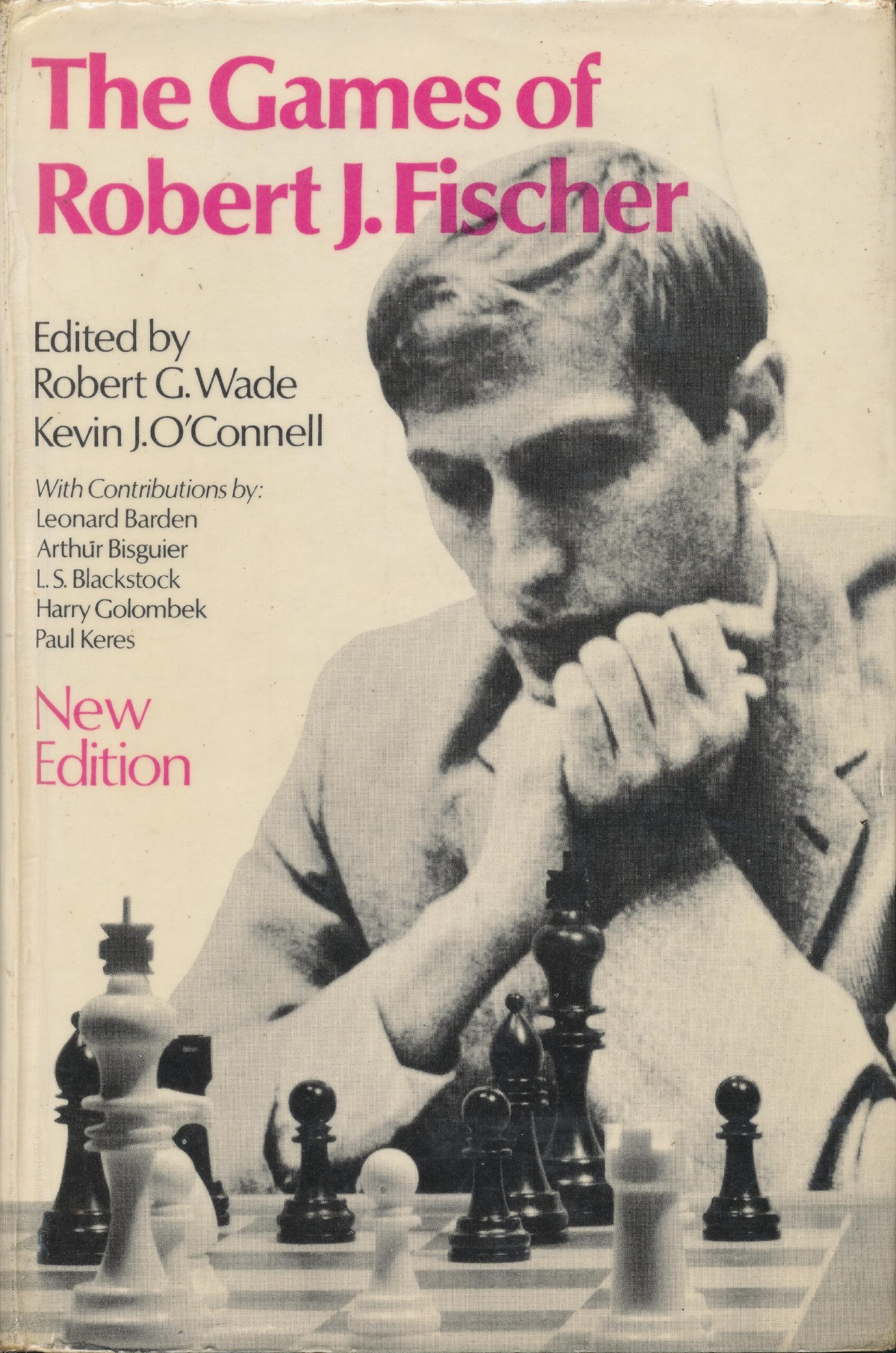
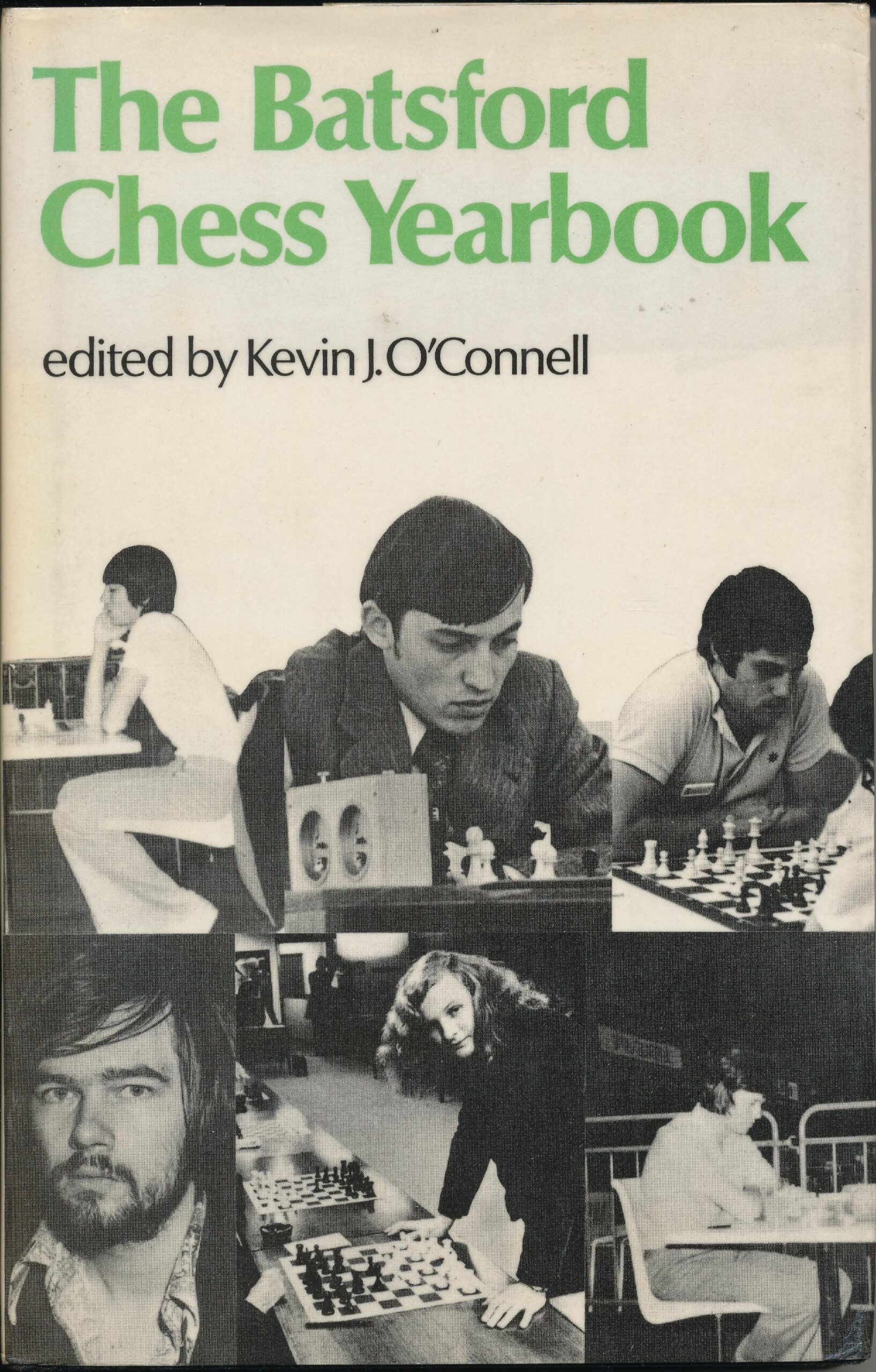
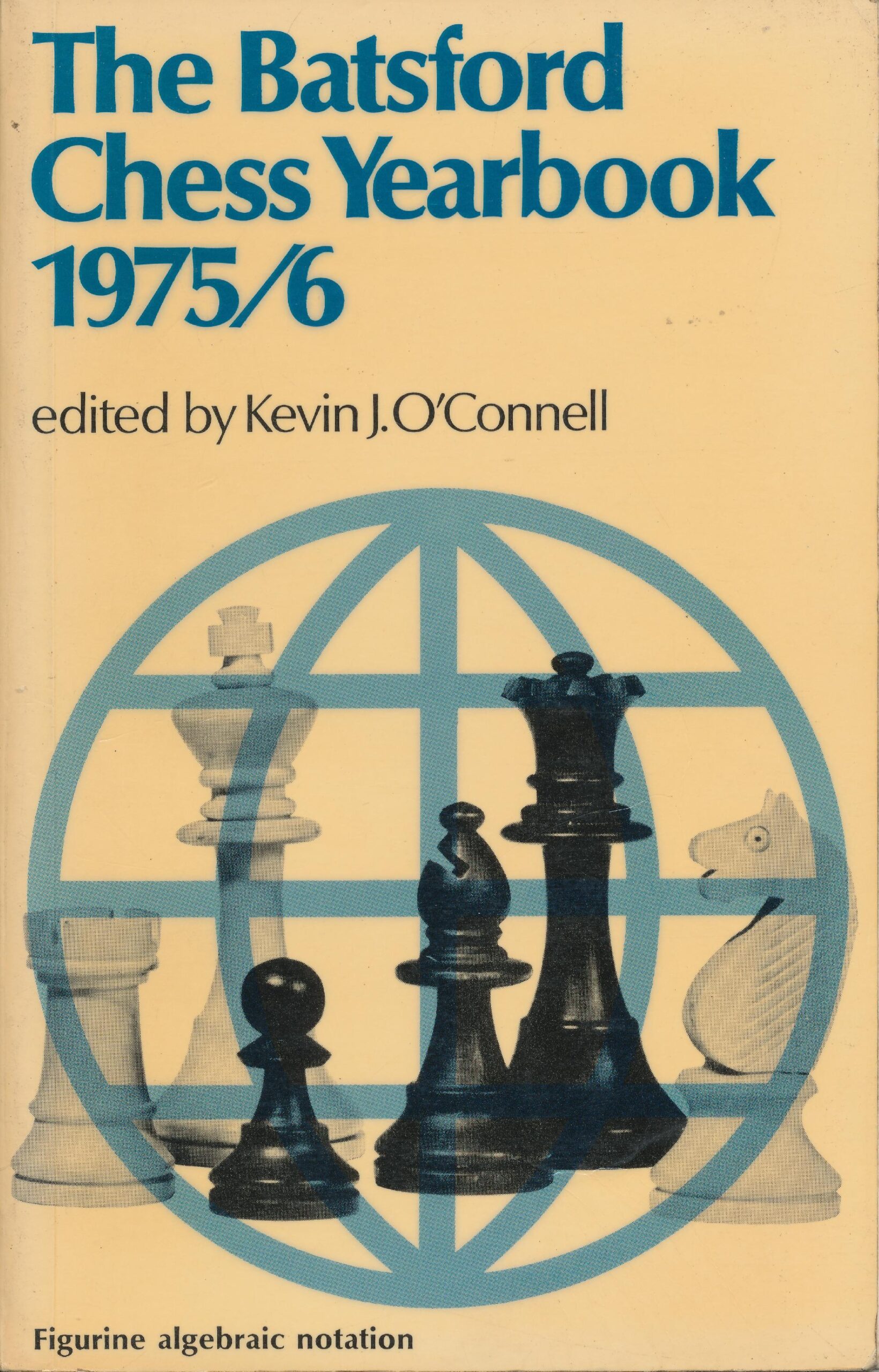
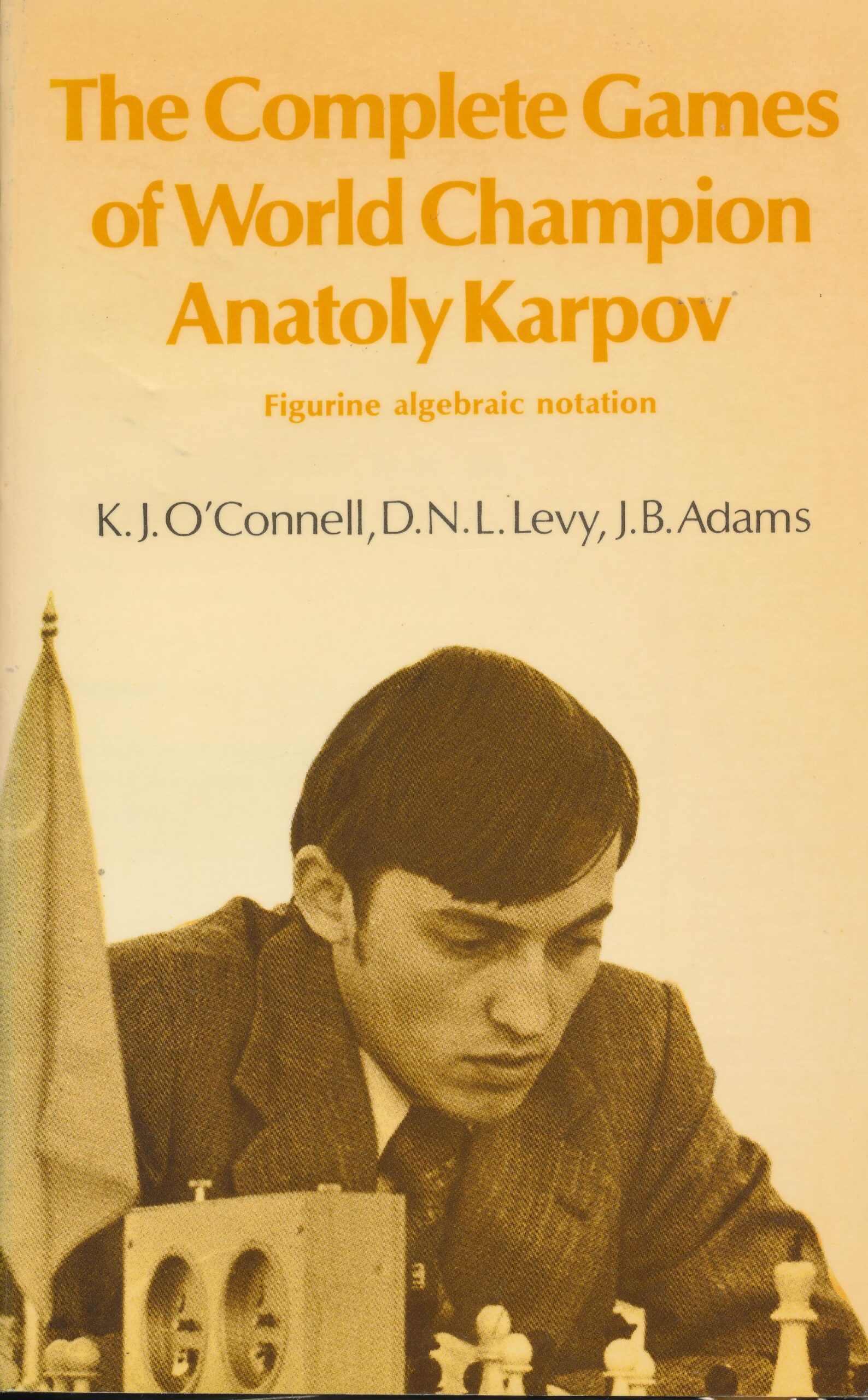
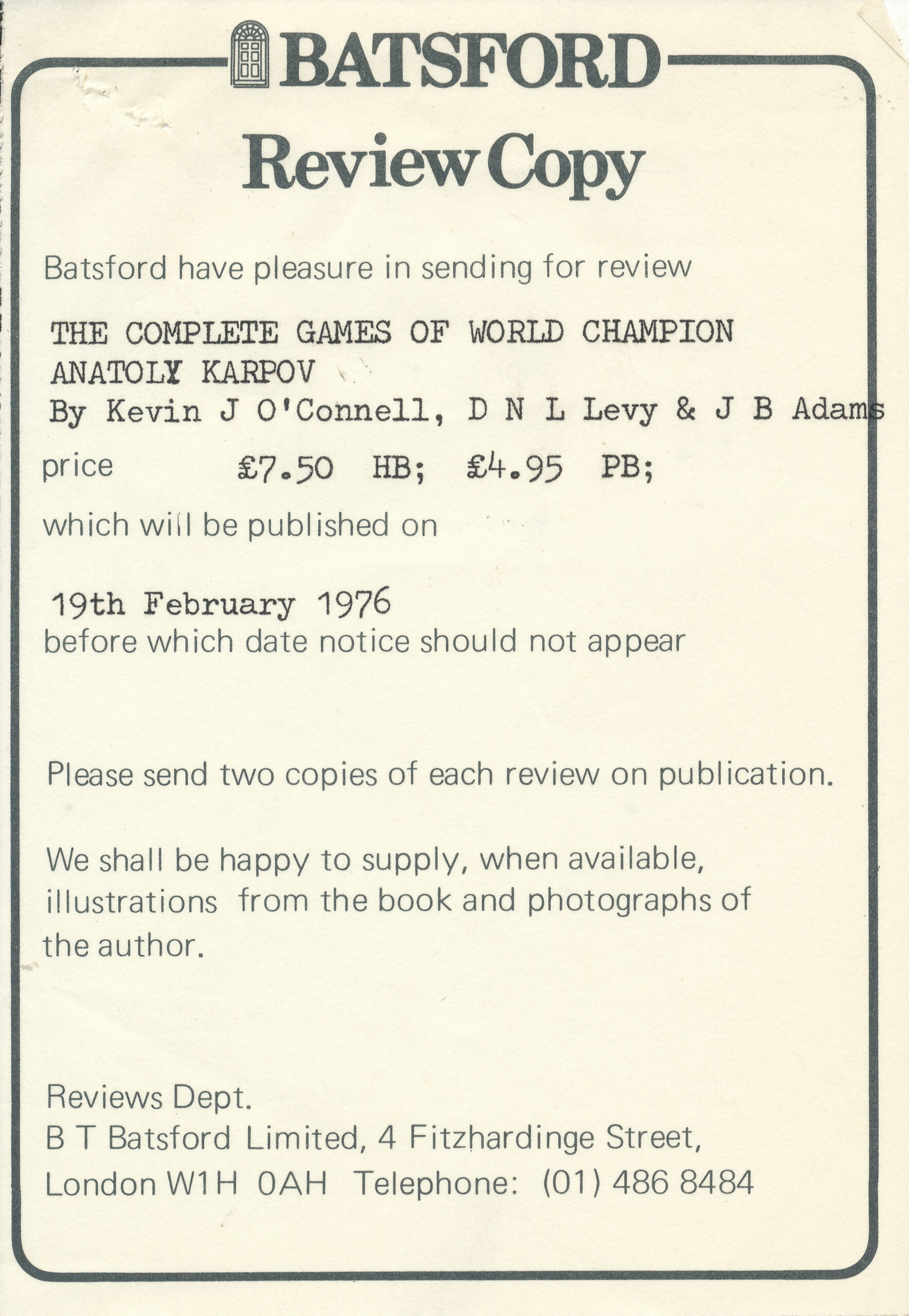
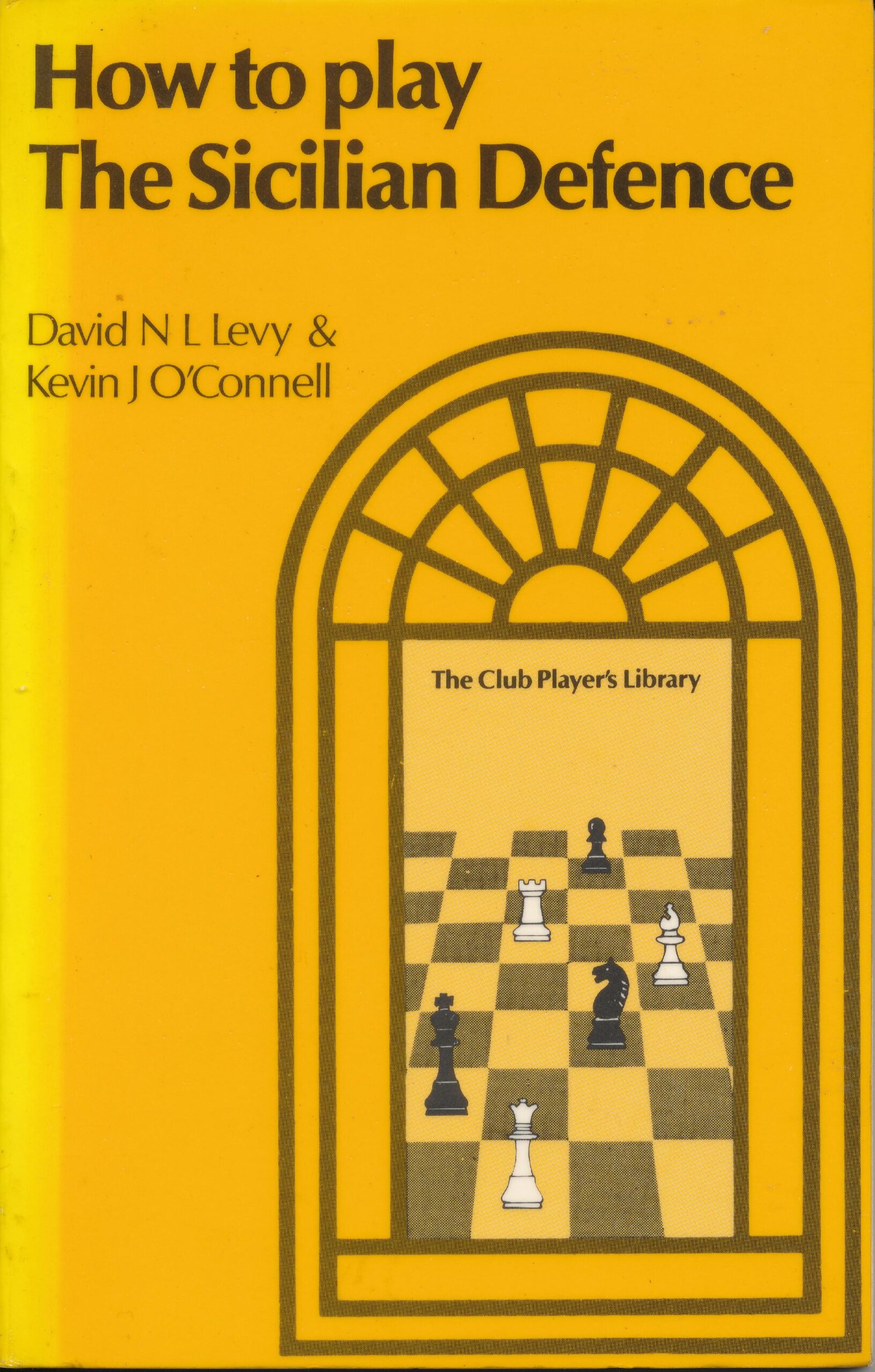
The Games of Robert J. Fischer, Robert Wade and O’Connell, Batsford 1972, 2nd ed. 1972, reprinted 1973, First limp edition 1981, Reprinted 1985, 1981, 1989, Second edition (The Complete Games of Bobby Fischer) 1992The Batsford Chess YearbookThe Batsford Chess Yearbook 1975/6The Complete Games of World Champion Anatoly KarpovThe Complete Games of World Champion Anatoly KarpovHow to Play the Sicilian Defence, Batsford, 1978Oxford Encyclopedia of Chess Games, Volume 1 1485-1866., OUP, 1981Oxford Encyclopedia of Chess Games, OUP, 2009
We offer best wishes to GM Daniel King on his birthday
Daniel John King was born on Wednesday, August 28th 1963 (the same day as the Martin Luther King “I have a dream” speech) in Beckenham, Kent.
He attended Langley Park School whose motto is “Mores et Studia” meaning “good character and learning” or “morals and study”.
Daniel has a brother Andrew (AJ King) who is also a strong player.
Daniel became an International Master in 1982 and a Grandmaster in 1989.
Daniel King
His peak FIDE rating (Felice) was 2560 in July 1990 at the age of 27.
Daniel plays for Guildford in the Four Nations Chess League (4NCL) and has played for Guildford in local leagues.
This was written (by Leonard Barden) about Daniel who was 15 just prior to the 1979 Spassky vs the BCF Junior Squad simultaneous display :
“Langley Park School, Shortlands and Bromley. Rating 201. British under-14 co-champion, 1977. 2nd Lloyds Bank junior international, 1979.”
Danny was Southern Counties (SCCU) champion for the 1983-84 and 1985-86 seasons.
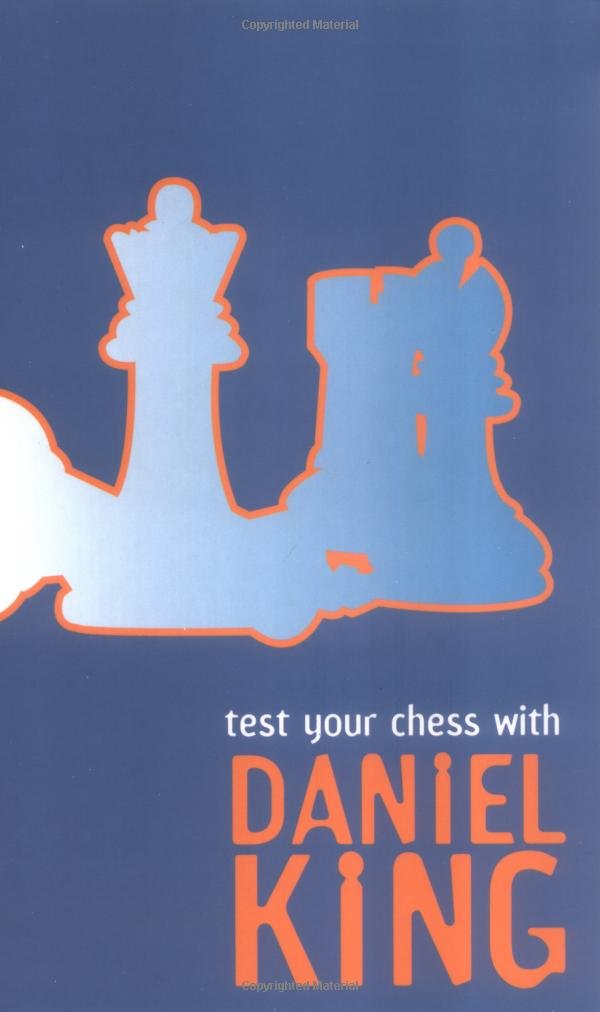
According to Test Your Chess With Daniel King, Batsford, 2004 :
“Grandmaster Daniel King has been a professional chess player for 20 years. During that time he has represented his country on many occasions including an historic match victory over the Soviet Union in Reykyavik, 1990. Besides his chess career, Daniel has built up a reputation as a commentator on TV and radio,
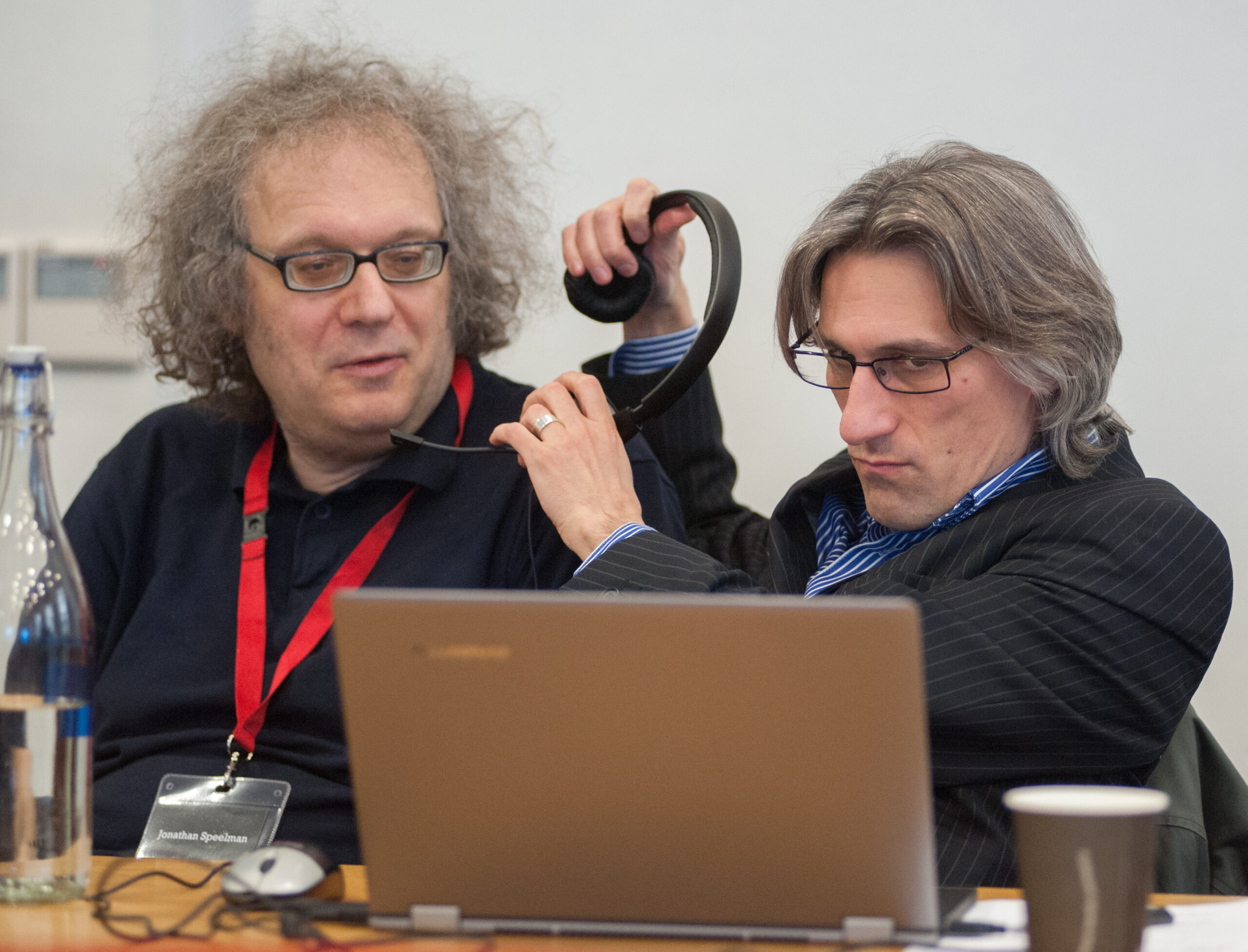
Jonathan Speelman and Daniel King share headphones at the 2013 FIDE Candidates event in London, courtesy of John Upham Photography
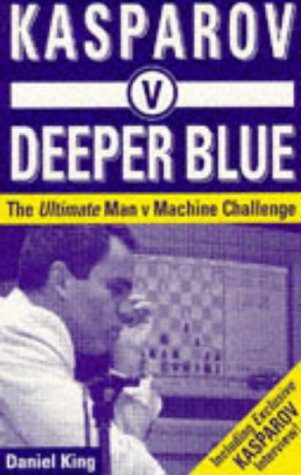
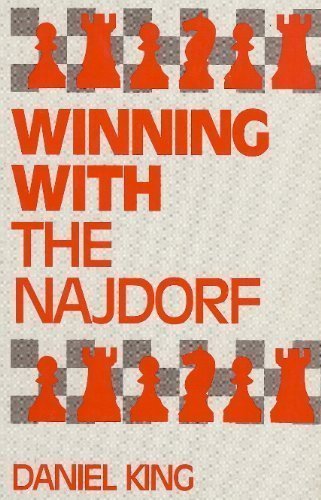
and has reported on four World Championship matches and several Man vs Machine events, including the controversial Kasparov vs Deep Blue encounter in New York, 1997. He is an award-winning author of 15 books, including Winning with the Najdorf, Mastering the Spanish, and Kasparov vs Deep Blue for Batsford. ”
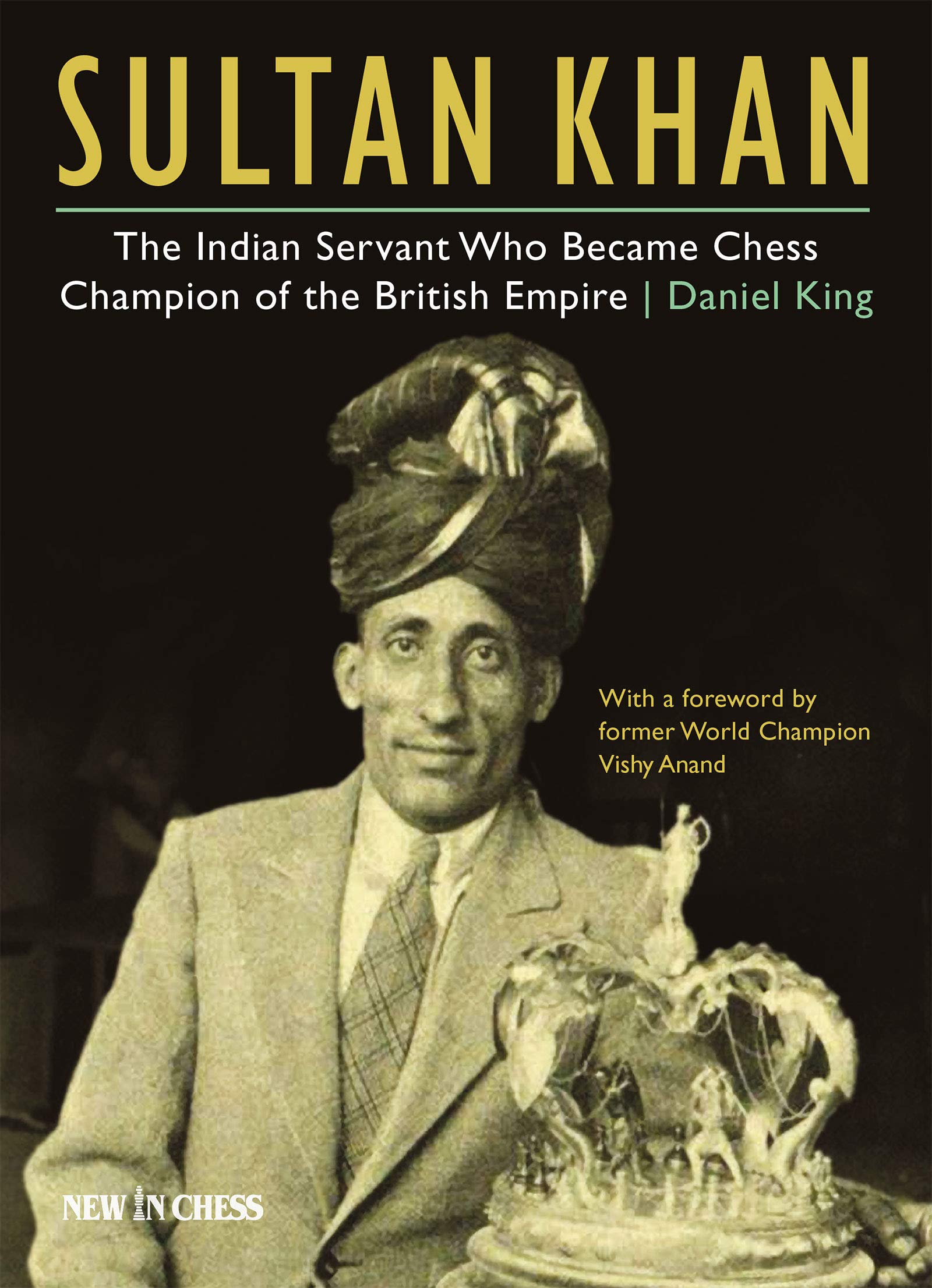
On April 8th, 2020 New in Chess released Sultan Khan: The Indian Servant Who Became Chess Champion of the British Empire which is Daniel’s most recent book.
According to British Chess (Pergamon, 1983) by Botterill, Levy, Rice and Richardson :
1977 British Under 14 Champion
1979 Lloyds Bank 6/9 (aged only 16)
1980 First Ilford Open
1981 Represented England in Glorney Cup scoring 4.5/5
1981 Fourteenth equal British Championship
1981 IM norm Manchester 5.5/9
1981 Second equal Ramsgate Regency Masters 6.5/9 IM norm with a round to spare
1982 First Equal Guernsey 6/7
1982 First Hamar IM norm and title
1982 Second equal Molde
1982 Second equal Hallsberg Junior
1982 Third equal Phillips and Drew Knights
1982/3 Tenth equal Ohra, Amsterdam 5/9
1982/3 Fifth European Junior
1983 Fourth equal Gausdal
1983 First Portsmouth Open
In the same article Daniel gave the following game as his favourite up to 1983:
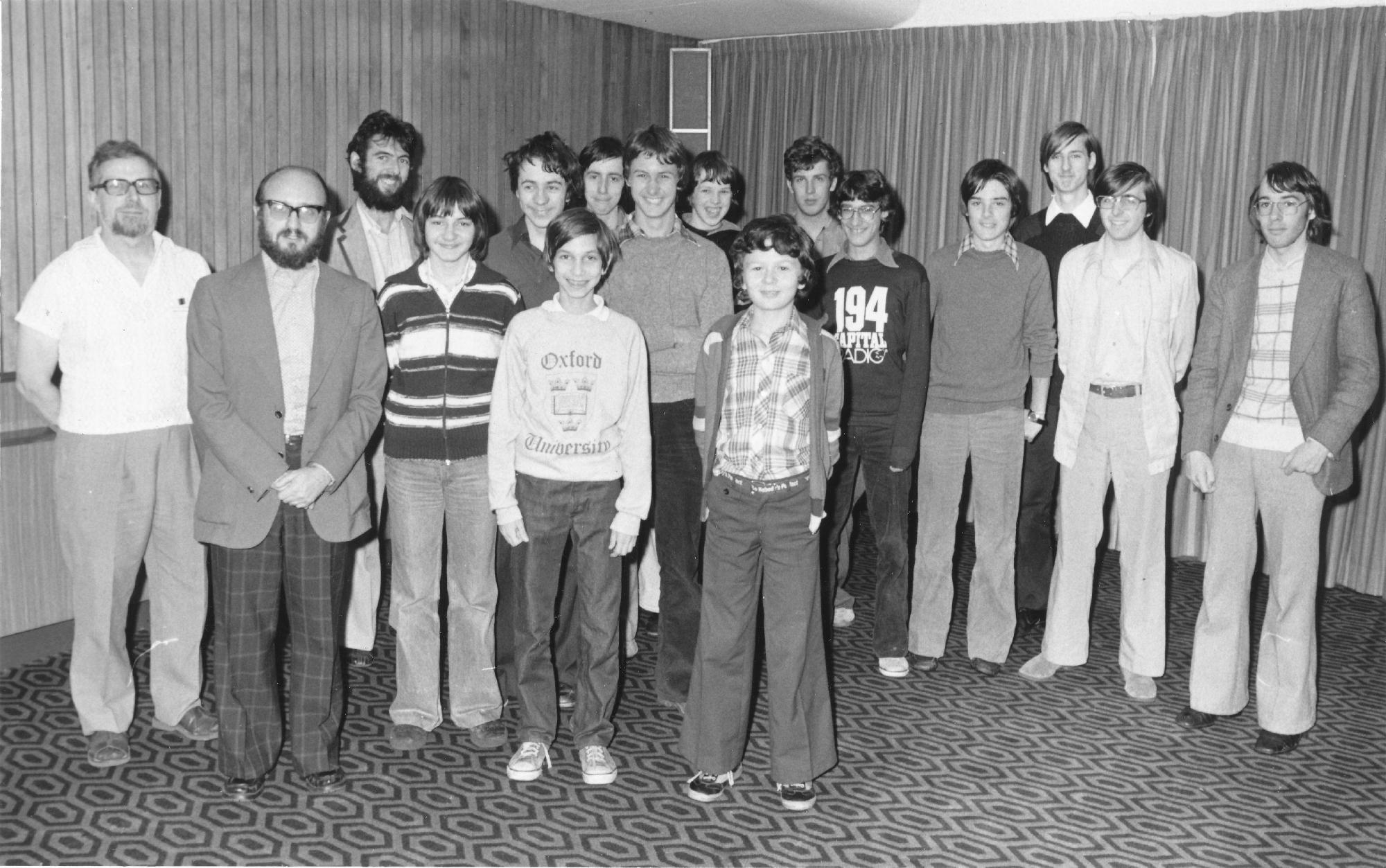
Streatham & Brixton becoming BCF National Club Champions in 1989. The team was Tony Kosten, Mark Hedben, Daniel King, Nigel Povah (Captain), Joe Gallagher and Julian Hodgson : quite a strong teamDaniel King (seated, second from left)
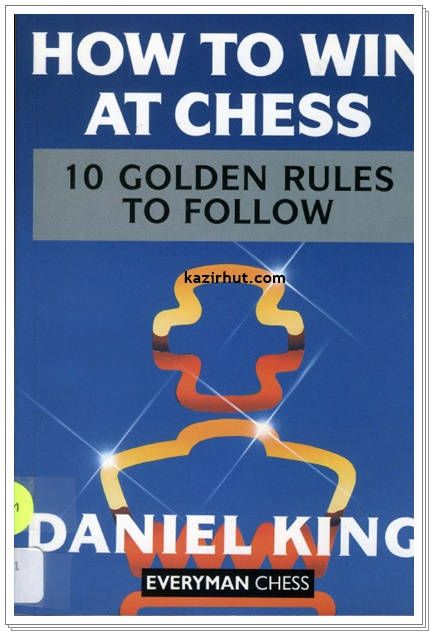
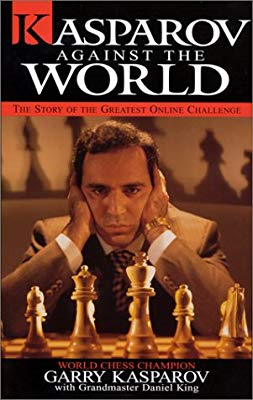
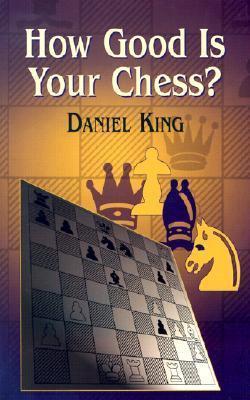
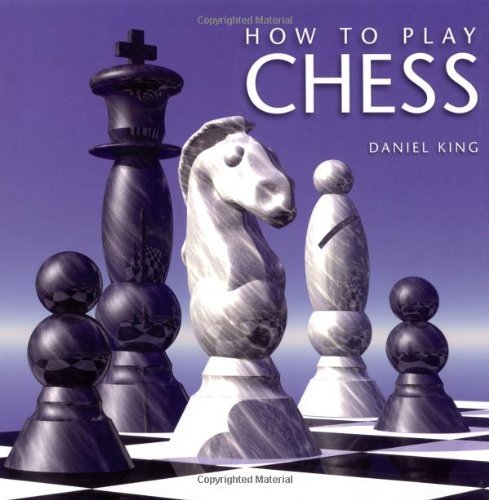
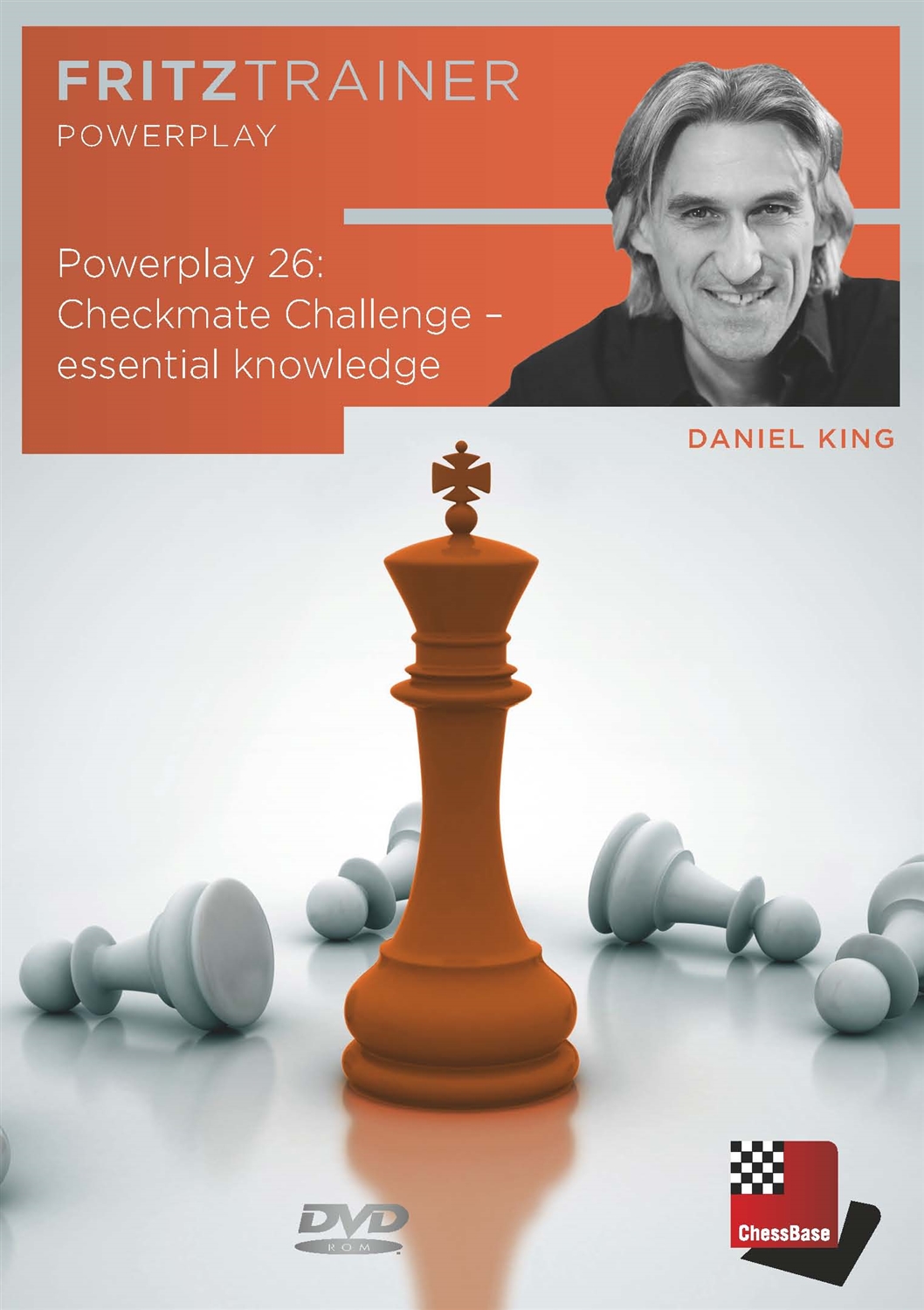
At the Lloyds Bank Masters : Front (l-r) : Joel Benjamin, Ian Wells, Rear : Peter Morrish, Stewart Reuben, Richard Beville, Gary Senior, Richard Webb, John Hawksworth, Andrew King, Nigel Short, Mark Ginsburg, Daniel King, David Cummings, Erik Teichmann, John Brandford and Micheal PagdenMastering the Spanish, Batsford, 1993Kasparov v. Deeper Blue: The Ultimate Man v. Machine Challenge. Batsford. ISBN 0-7134-8322-9., 1997How to Win at Chess: The Ten Golden Rules (Cadogan Chess Books), 2000Kasparov Against the World: The Story of the Greatest Online Challenge. KasparovChess Online. ISBN 0970481306., 2000Winning With the Najdorf. Sterling Pub Co Inc. ISBN 0713470372., 2002How Good Is Your Chess?. Dover. ISBN 048644676X., 2003Test Your Chess With Daniel King, Batsford, 2004How To Play Chess. Kingfisher. ISBN 0753419181., 2009Chessbase Fritz TrainerChessbase TutorialsSultan Khan: The Indian Servant Who Became Chess Champion of the British Empire
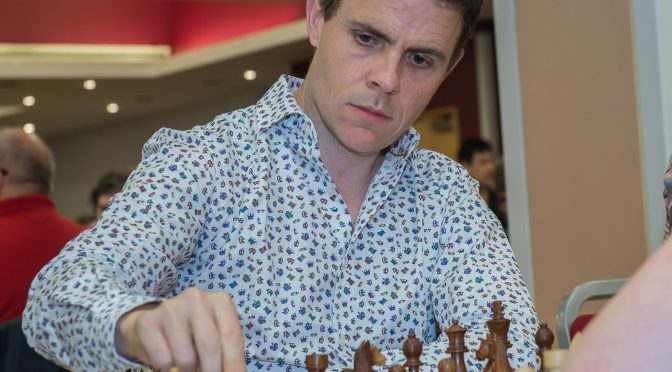
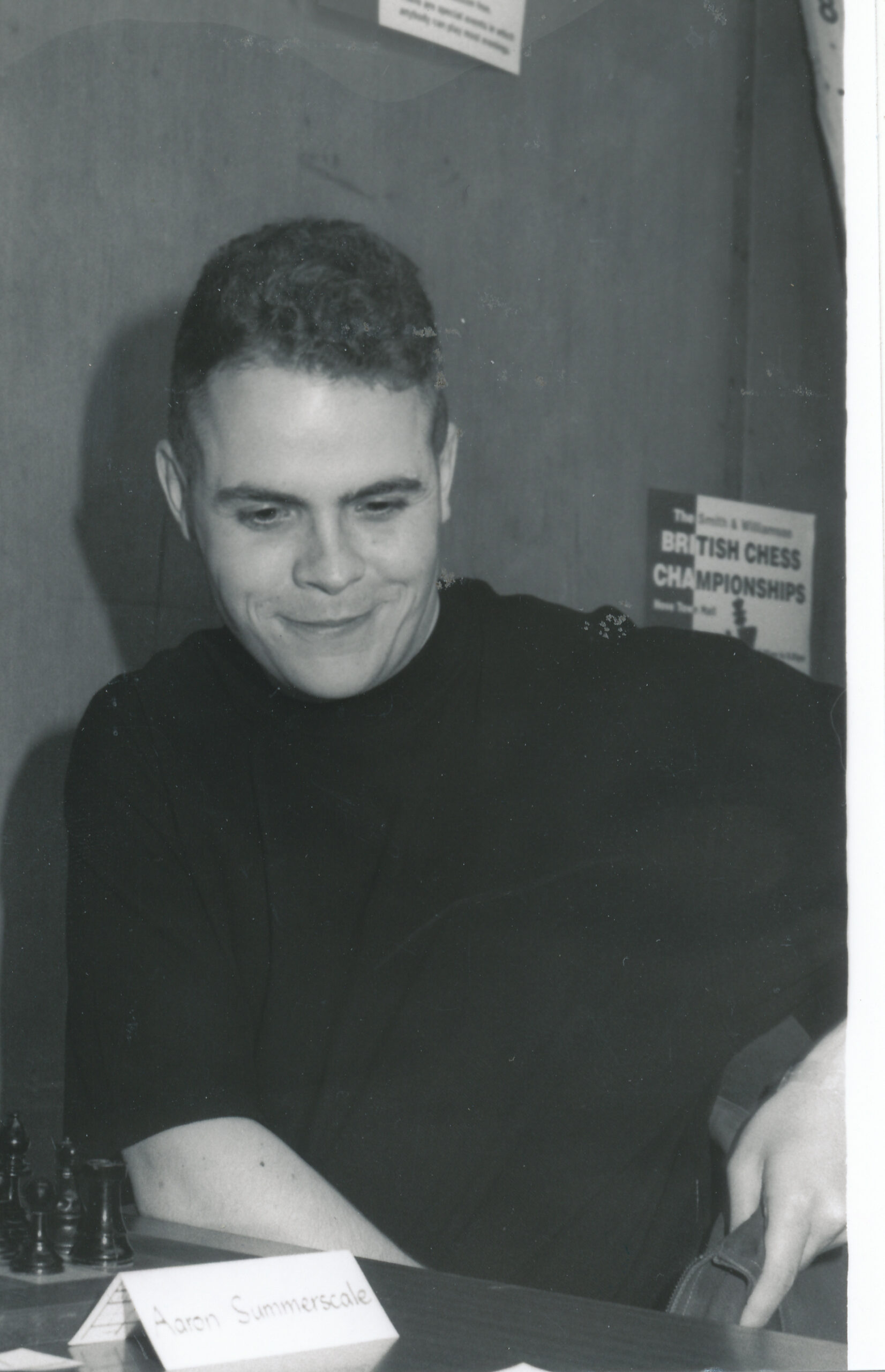
BCN offers best wishes to Aaron Summerscale on his 52nd birthday.
Aaron Piers Summerscale was born on Tuesday, August 26th 1969 in Westminster, Greater London. His mother’s maiden name is Mayall. Aaron lives in SW18 and teaches chess. He married Claire Lusher (Basingstoke) but they are now separated.
Aaron Summerscale
He became a FIDE Master in 1992, an International Master in 1994 and a Grandmaster in 1997.
Aaron was runner-up (to Matthew Sadler) with 8/11 in the 1995 British Championship in Swansea.
His highest FIDE rating was 2513 in October 2000 and was joint (with Ameet Ghasi) British Rapidplay Chess Champion in the same year.
Aaron Summerscale courtesy of John Henderson
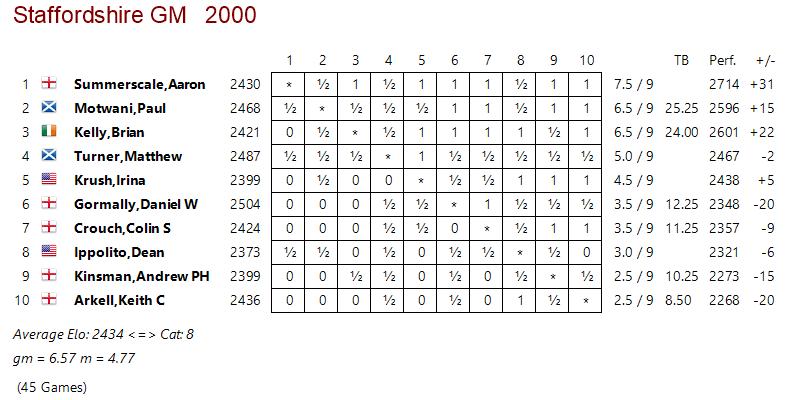
His highest ECF grading was 244A in 2001 and he won the Staffordshire GM tournament in the same year :
Staffordshire GM Tournament 2000 Crosstable
Aaron plays for Wood Green in the Four Nations Chess League (4NCL) and has played for Pride and Prejudice.
BCN sends greetings to GM Alexander Cherniaev on his 52nd birthday.
Alexander Sergeevich Cherniaev was born on Tuesday, August 26th 1969 in Arkhangelsk, Western Russia.
He became an International Master in 1993 and a Grandmaster in 2004.
He became a FIDE Senior Trainer in 2016.
His peak FIDE rating (according to Megabase 2020 and Felice) was 2509 in July 2002, aged 33.
(Gaige is silent on Alexander).
Alex is registered with the Russian Federation and plays for Hackney, Wood Green, Russia (unsurprisingly!) and 4NCL Barnet Knights and makes regular appearences in Richmond, Golders Green and other rapidplay events, the London Chess Classic and 4NCL amongst others.
He made his first appearance in a UK event in 1991 at the Lloyds Bank Masters whilst a revolution was in progress in the USSR. His first appearance at Hastings was for the 1991/92 event in the Open section and then in Hastings 1993/1994.
Since 1999 he has been London based playing in many UK events.
He won the Coulsdon Easter Congress in 2007 with 7.5/9 and the Canadian Open in 2019 with 9/9
As the first player Alex mainly champions the Ruy Lopez and with the Black pieces he enjoys the Sveshnikov Sicilian and the Old Indian Defence.
Alex is a well-known player on the English chess scene and has enjoyed a lively relationship with organisers and arbiters alike.
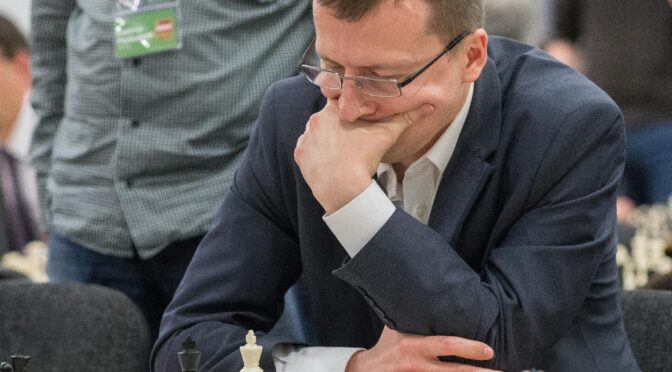
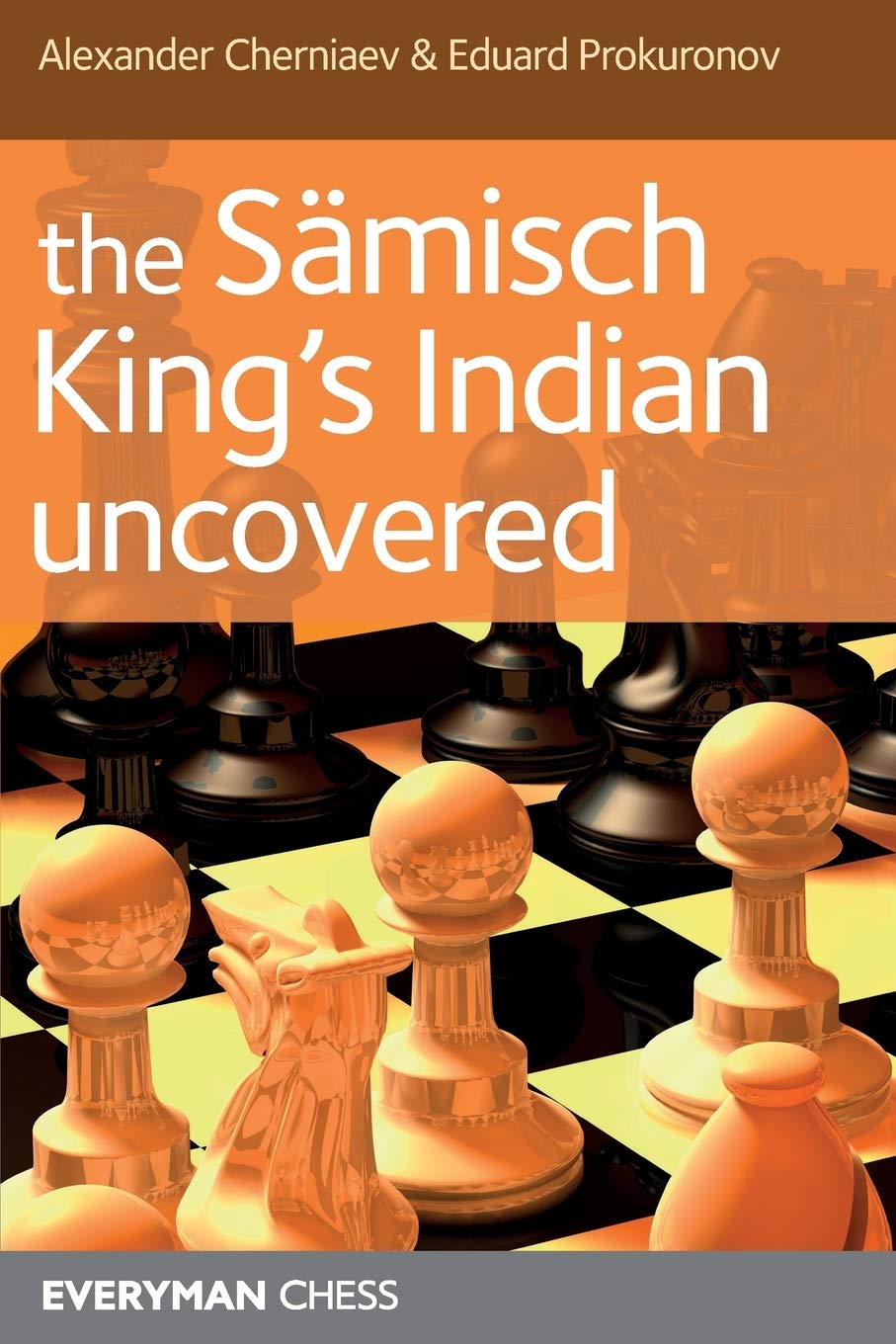
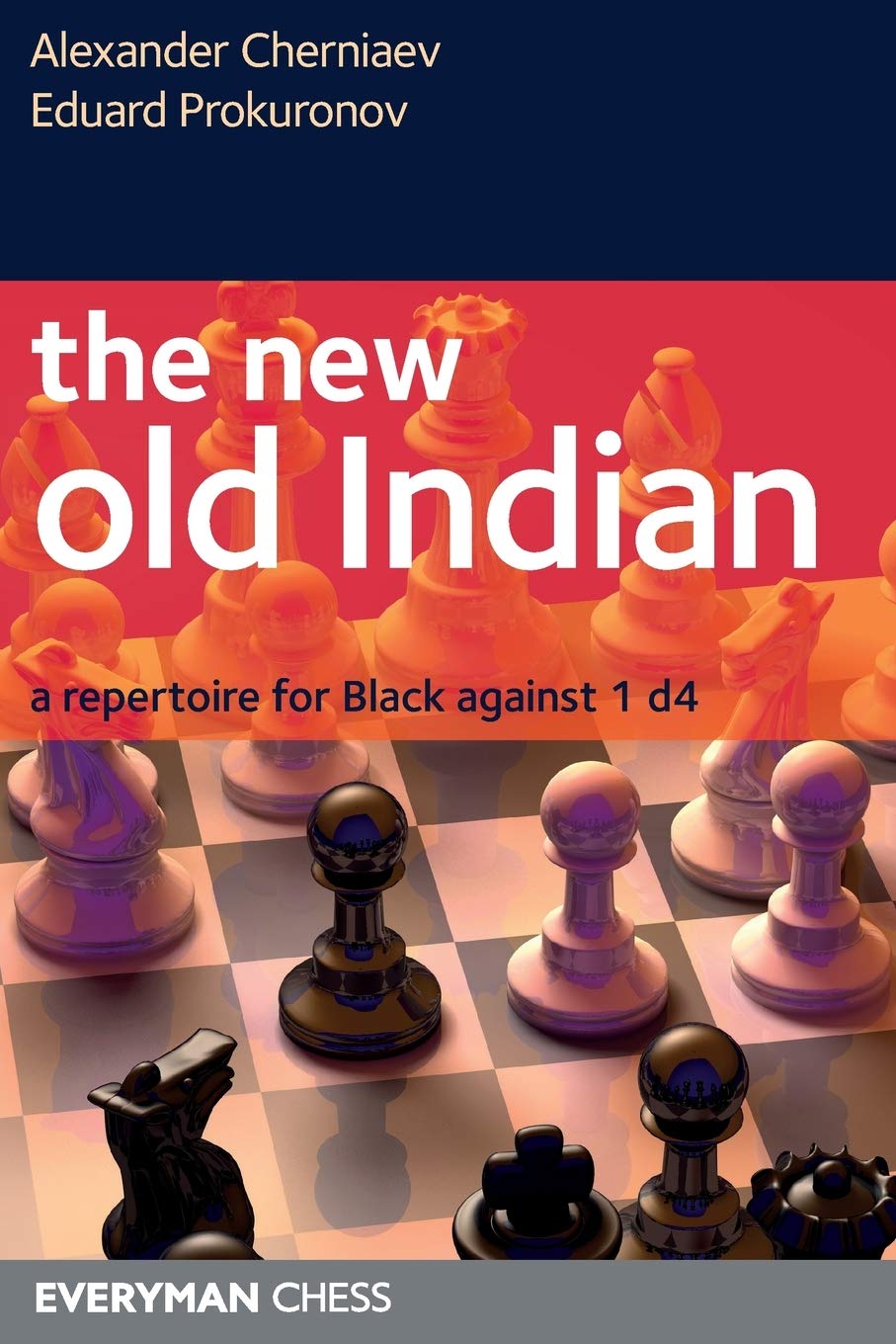
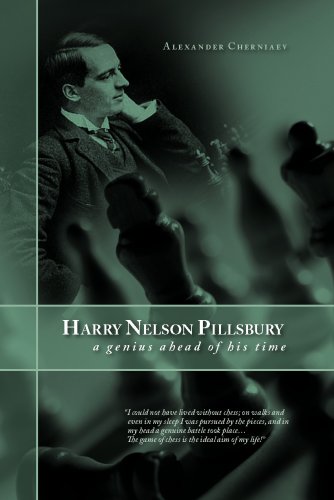
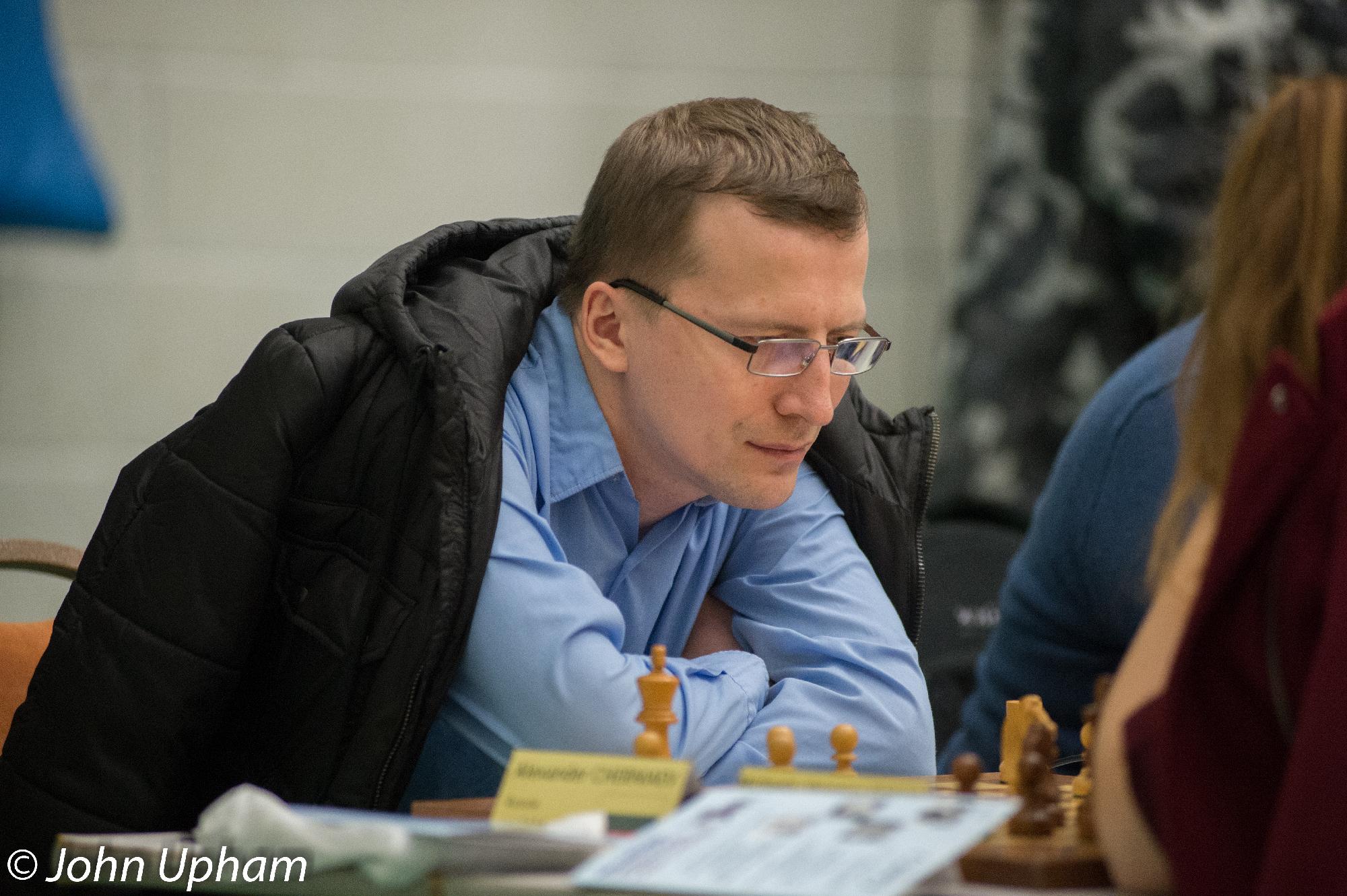
The Samisch King’s Indian UncoveredThe New Old IndianDavid Janowski: Artist of the Chess BoardHarry Nelson Pillsbury ( 5 December 1872 – 17 June 1906): A Genius Ahead of His TimeGM Alexander Cherniaev, Hastings 2013-2014, courtesy of John Upham Photography
BCN wishes IM Jeff Horner, all the best on his birthday.
Jeffrey Horner was born in Bolton, Lancashire on Thursday, August 25th, 1949.
Jeff played for Poulton-le-Fylde Teacher Training College and is registered for Lancashire CA.
Jeff became a FIDE Master in 1989 (aged 40) and an International Master in 2008 (at the age of 58) and a gap of some 19 years!
(Compare this with John Pigott : John became a FIDE Master in 1984 and an International Master in 2017, a gap of some 33 years!)
He achieved a peak rating of 2450 in January 1975 at the age of 26.
His most recent ECF grading was 233E in January 2017. His last recorded game was played on June 30th 2018 and was a win with black versus Andrew Ledger graded 227.
Jeff played 1.e4 playing 1.g3 once against Graham Lee and winning and the Trompowski once against Murray Chandler and losing. In recent years he favoured the Wormald (Alapin) Attack in the Ruy Lopez.
With the black pieces Jeff defended the main line Ruy Lopez and the King’s Indian Defence.
Here is a comment from PQB4 from chessgames.com :
“A pity we don’t have more games here by this gifted attacking player, arguably the most respected amateur in the North of England. 220 BCF/2300+ for about 30 years, he’s beaten a string of grandmasters, but his best stuff probably occurs in weekend congresses, hence we don’t have enough recorded. I hope there are many such players in the world whose respect for the game and other players shows more of the quality of a true chess black belt than that of some of the more famous. Off the board he’s a schoolteacher, and presumably a pretty inspiring one, to judge by his infectious love of chess and the encouraging words he invariably has for opponents. I’ve had the pleasure of playing Jeff a few times and… let’s just say that The Day of My Revenge will surely come.”
“There have been so many headlines about Britain’s 12-year-old chess prodigy, David Howell, that it nice to turn our attention to someone at the other end of the spectrum. Perhaps few readers will have heard of 53-year-old Jeff Horner- unless, that is, you have played on the north of England chess circuit, where Jeff has been dominating events since before I was born. My first meeting with Jeff was at Bolton Chess Club at the age of six, but it was another ten years before I fancied my chances against him. And it wasn’t just me who feared him. Few indeed were the top players who travelled “Up North” and got the better of Horner.”
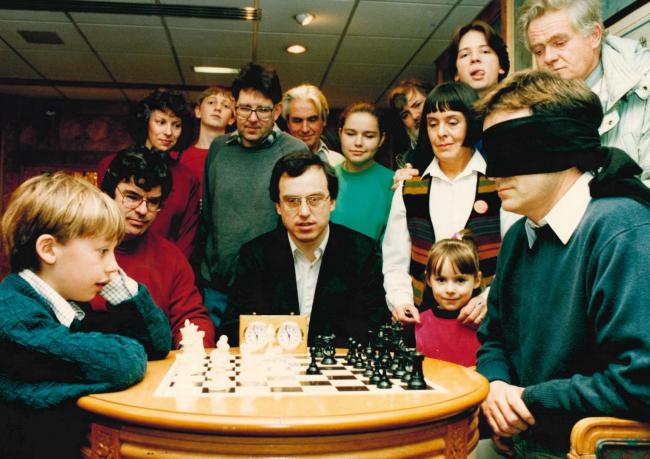
1993 : Jeff Horner takes on world under-10 chess champion Luke McShane blindfolded
“IT’S hard enough challenging a world champion to a game of chess, but to then say you’ll do it blindfold is bordering on the ridiculous.
But that’s exactly what Jeff Hormer from Radcliffe did back in 1993.
Teacher Jeff’s showdown with Luke McShane, the world under-10 chess champion from London was the main attraction at a two-day chess festival held at Bolton’s Moat House.
Jeff, 43, faced off against nine-year-old, Luke, with a thick black cloth placed over his eyes.
The youngster had full view of the board, but Mr Horner was forced to play with the aid of an assistant who placed his pieces and let him know the moves Luke was making
Jeff’s amazing memory and powers of concentration coupled with his greater experience proved too much for the young chess champion.
And despite the handicap of the blindfold, he beat the world champion relatively easily..
It ended up being one of the few matches that Luke McShane lost as he gained international recognition as a chess prodigy.
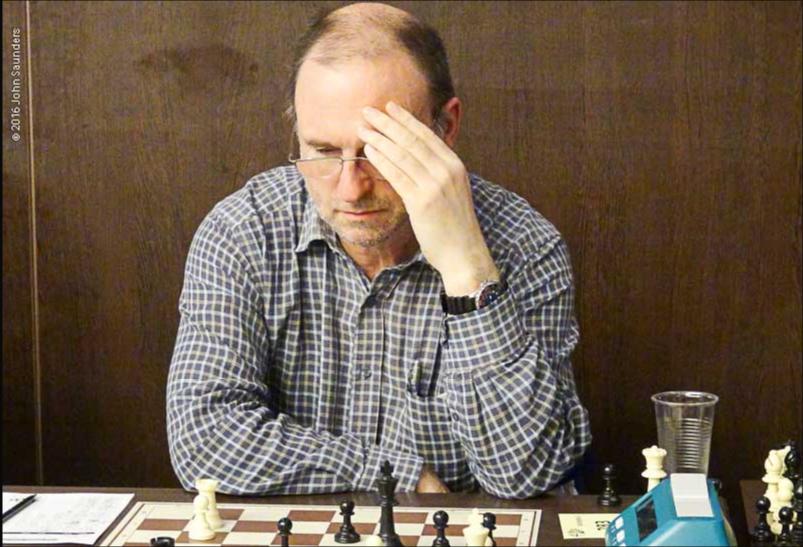
Jeff Horner, Isle of Man 2008, Photograph : John Saunders
Aged just 16 he became the youngest British chess player to be awarded the title of Grandmaster by the International Chess Federation in 2000 and now, although he works as a trader in the City of London, Luke is regarded as the best amateur chess player in the world.
Jeff Hormer was a long-standing member of Bolton chess club and was renowned for his ability on the board, often taking on – and beating – internationally-renowned players.
He famously beat British Grand Master Tony Miles, who himself had only recently defeated the reigning world champion Anatoly Karpov.
Jeff was awarded the title of International Master by the International Chess Federation.”
“I still remember Tony Miles, fresh from his historic victory against World Champion Anatoly Karpov, stopping off at the Blackpool Open. Miles had become a legend overnight but nobody bothered to tell Jeff, who calmly trounced him just as he would us. Two weeks ago David Howell had to play Jeff Horner in Blackpool. Both players needed two wins from their last two games to earn an international master (IM) result. Would it be Britain’s youngest new IM or our oldest new IM?”
We wish WFM Helen Milligan all the best on her birthday, this day (August 25th) in 1962.
Helen became a Woman’s FIDE Master in 2000 and a Candidate Master in 2013.
Her highest FIDE rating was 2138 in July 1999.
Helen Milligan (born Helen Scott; 25 August 1962) is a Scottish-New Zealand chess player holding the FIDE titles of Candidate Master (CM) and Woman FIDE Master (WFM), and five-times Asian senior women’s (50+) champion. The CM title was earnt at a FIDE open zonal.
WFM Helen Milligan
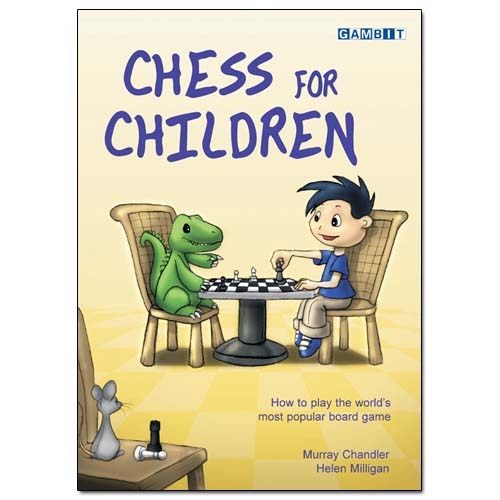
In 2004 Milligan co-authored the book “Chess for Children” with Grandmaster Murray Chandler. She has been an officer of the New Zealand Chess Federation, and has worked as a coach at Murray Chandler’s National Chess Centre in Auckland. She currently works as a self-employed chess coach. The National Chess Centre has since been sold by Murray Chandler.
Milligan has won or jointly won the Scottish women’s championship three times: in 1982, 1986 and 1988. In 1983 she was joint British Ladies’ champion with Rani Hamid.
WFM Helen Milligan in 2010
Milligan represented Scotland in eleven Women’s Chess Olympiads between 1982 and 2006. Since 2008 she has played for New Zealand in this competition, having transferred national federations in 2007.
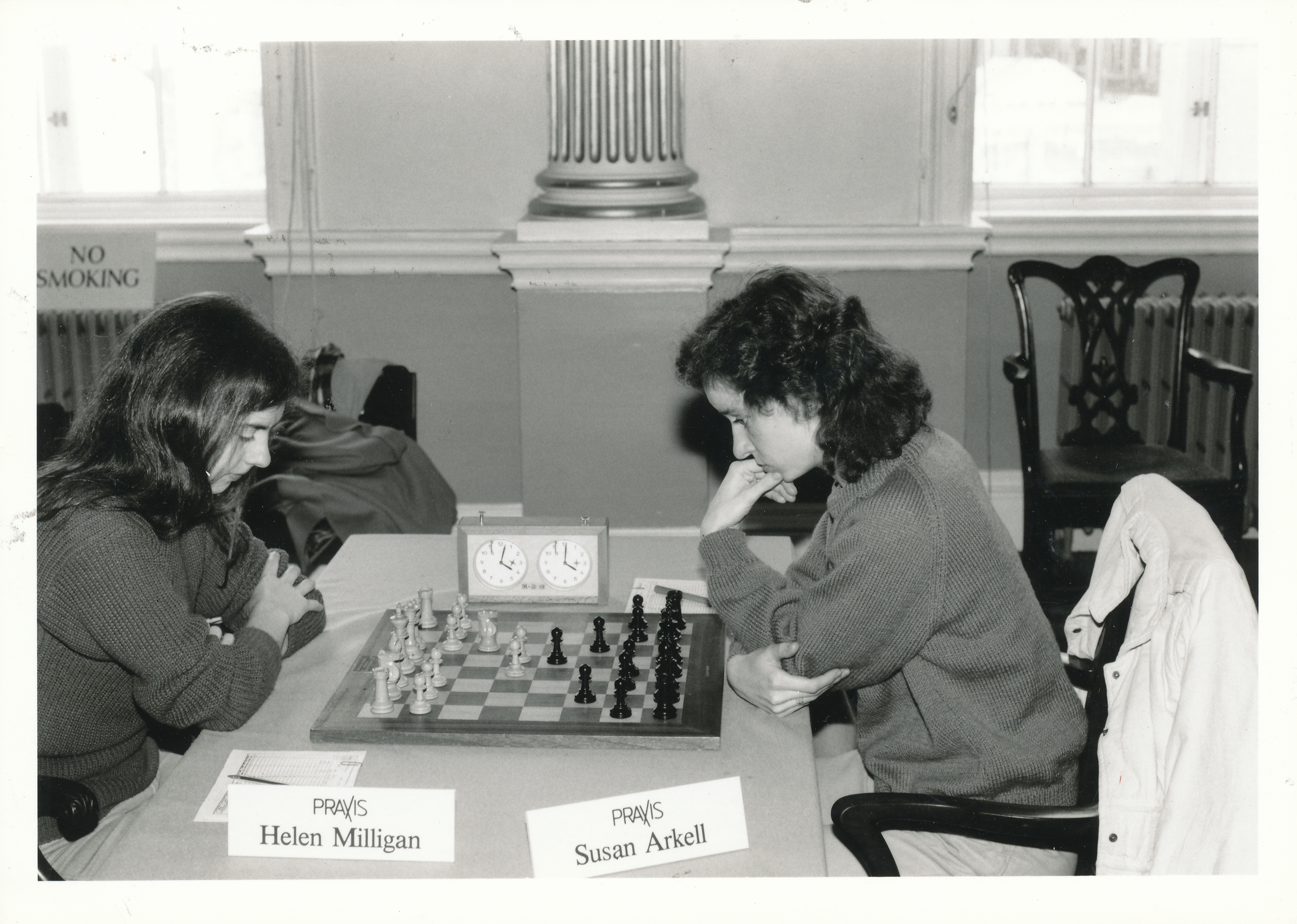
WFM Helen Milligan vs Susan Arkell
Milligan became Oceania women’s champion at the Queenstown Chess Classic tournament in January 2012. She also competed in Women’s Zonal Chess Championships in Bath 1987, Blackpool 1990, Delden 1993, Saint Vincent 1999, and the open zonal at Gold Coast in 2009.
She won the Asian senior women’s (50+) champion title in 2014 in Kalutara, Sri Lanka; 2015 in Larestan, Iran; 2016 in Mandalay, Myanmar; 2017 in Auckland, New Zealand; and 2018 in Tagaytay, Philippines.
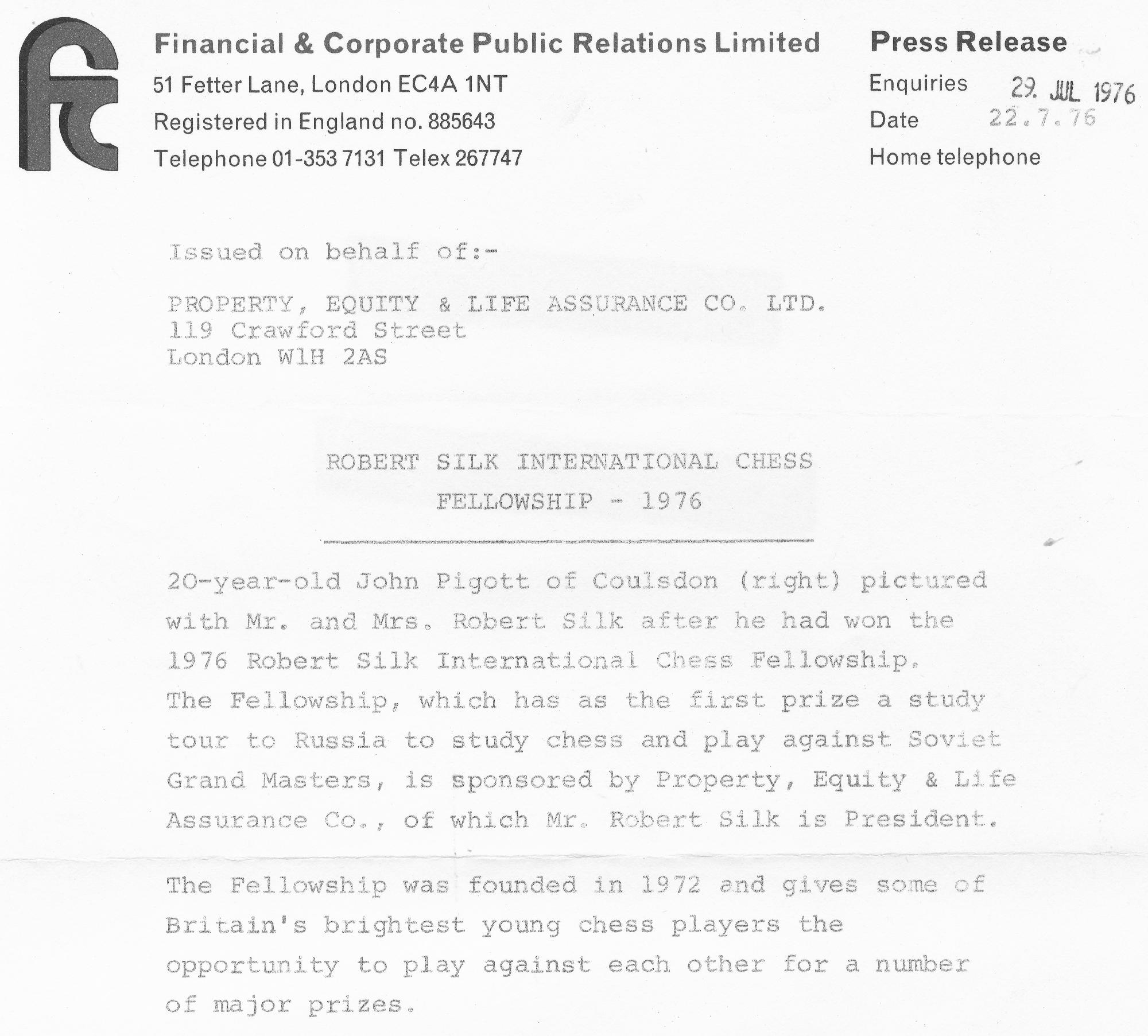
BCN wishes IM John Pigott all the best on his birthday (15-viii-1957)John Christopher Pigott was born in Croydon, Surrey and his mother’s maiden name was Fletcher.
In 1975 John was selected by the BCF junior selectors and travelled with Jonathan Speelman and Peter J Lee (Hampshire) to the 8th Biel International Open in Switzerland. Leonard Barden wrote in the October 1975 British Chess Magazine (the cover was of Geller and Smyslov) :
“17-year-old John Pigott’s 8.5/11 included wins against IM Kluger, IM Messing and the 1975 Budapest Champion Rajna and earned him 2,000 Swiss francs in prize money. The three English juniors who competed, Pigott, Speelman and Lee were chosen by the BCF junior selectors and travelled to Switzerland with the help of grant from the Slater Foundation and the London Chess Club.”
John represented England at the 1975 Anglo-Dutch match (25th and 26th of October) scoring 0.5/2 versus Paul van der Sterren. The game scores appear to either have been lost on not recorded.
In 1976 John scored 4.5/5 in the Surrey Open and shared the 3rd, 4th and 5th prize.
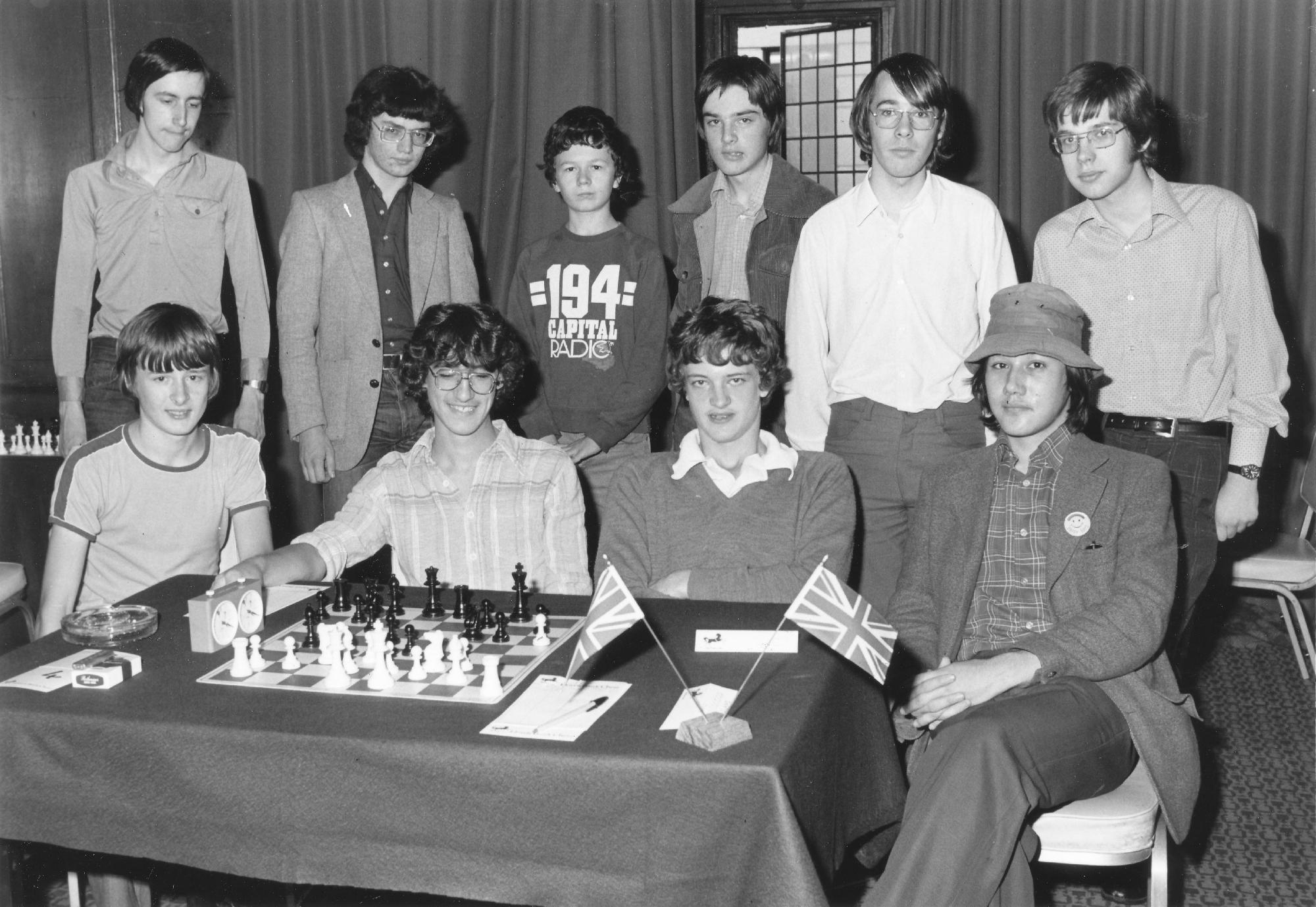
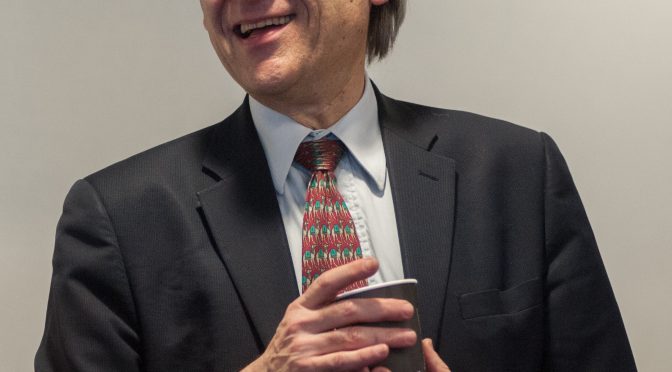
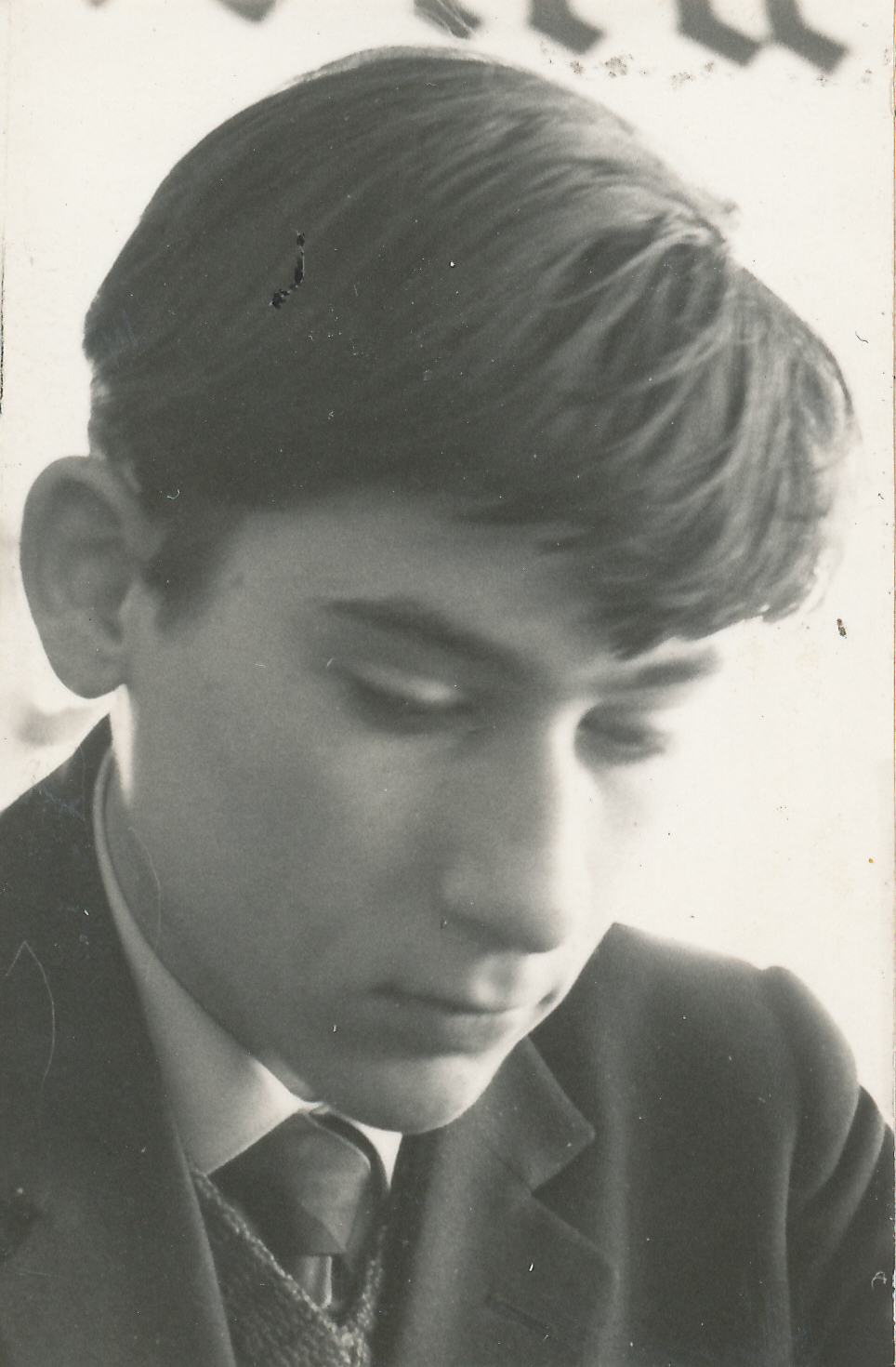
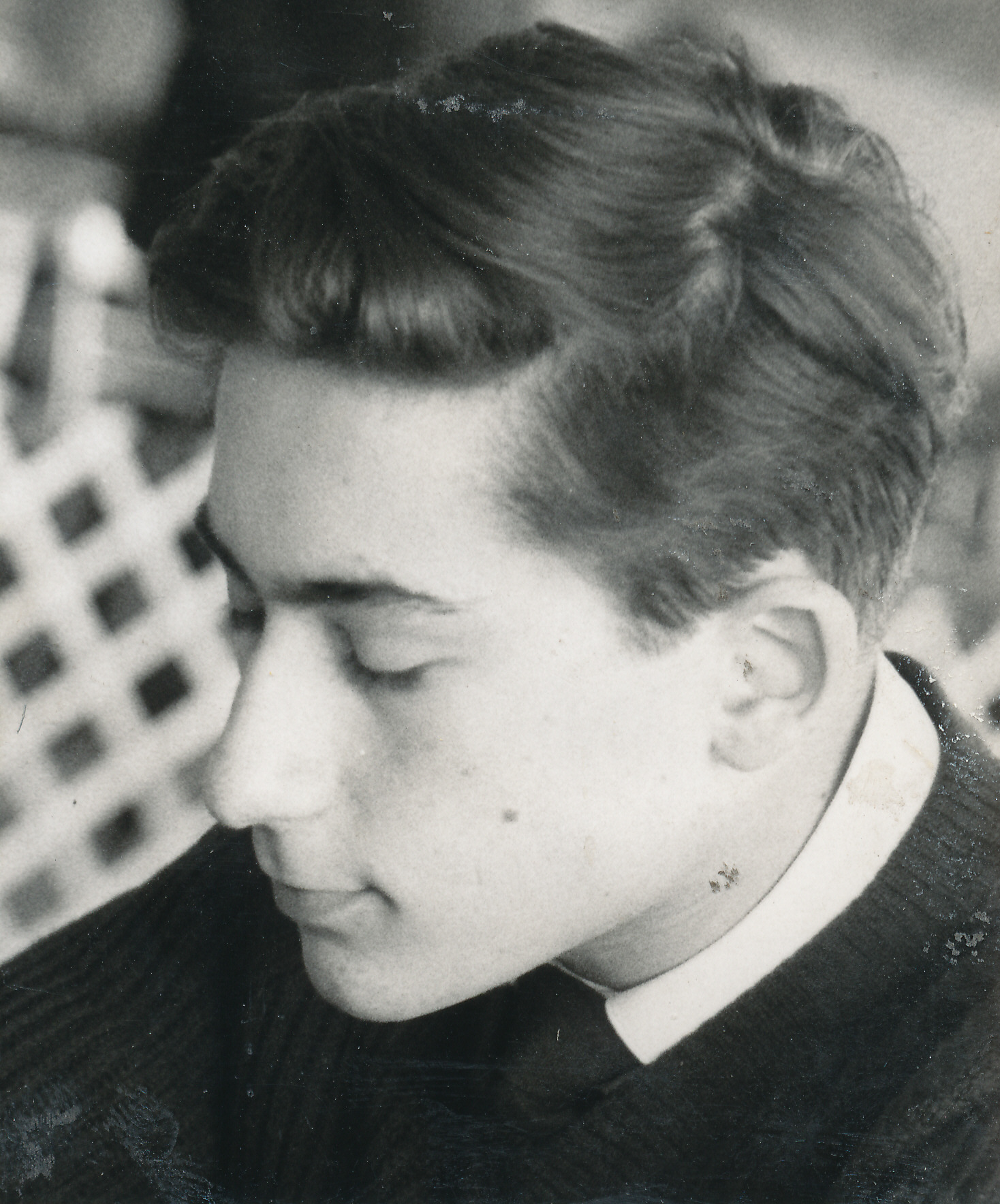
The caption is in the photograph belowThe caption is in the photograph above
John became a FIDE Master in 1984 and an International Master in 2017, a gap of some 33 years!
John plays for Little Heath, 4NCL Barbican, Hon Members LCCL and King’s Head chess clubs.
After a sojourn from chess John returned to the ECF grading list in January 2015 with a grading of 269F attracting some attention.
His highest FIDE rating was 2419 in February 2018 at the age of 61.
With the white pieces John plays the Queen’s Gambit and the Giuoco Piano.
As the second player John enjoys the Sicilian Najdorf and the Nimzo Indian Defence.
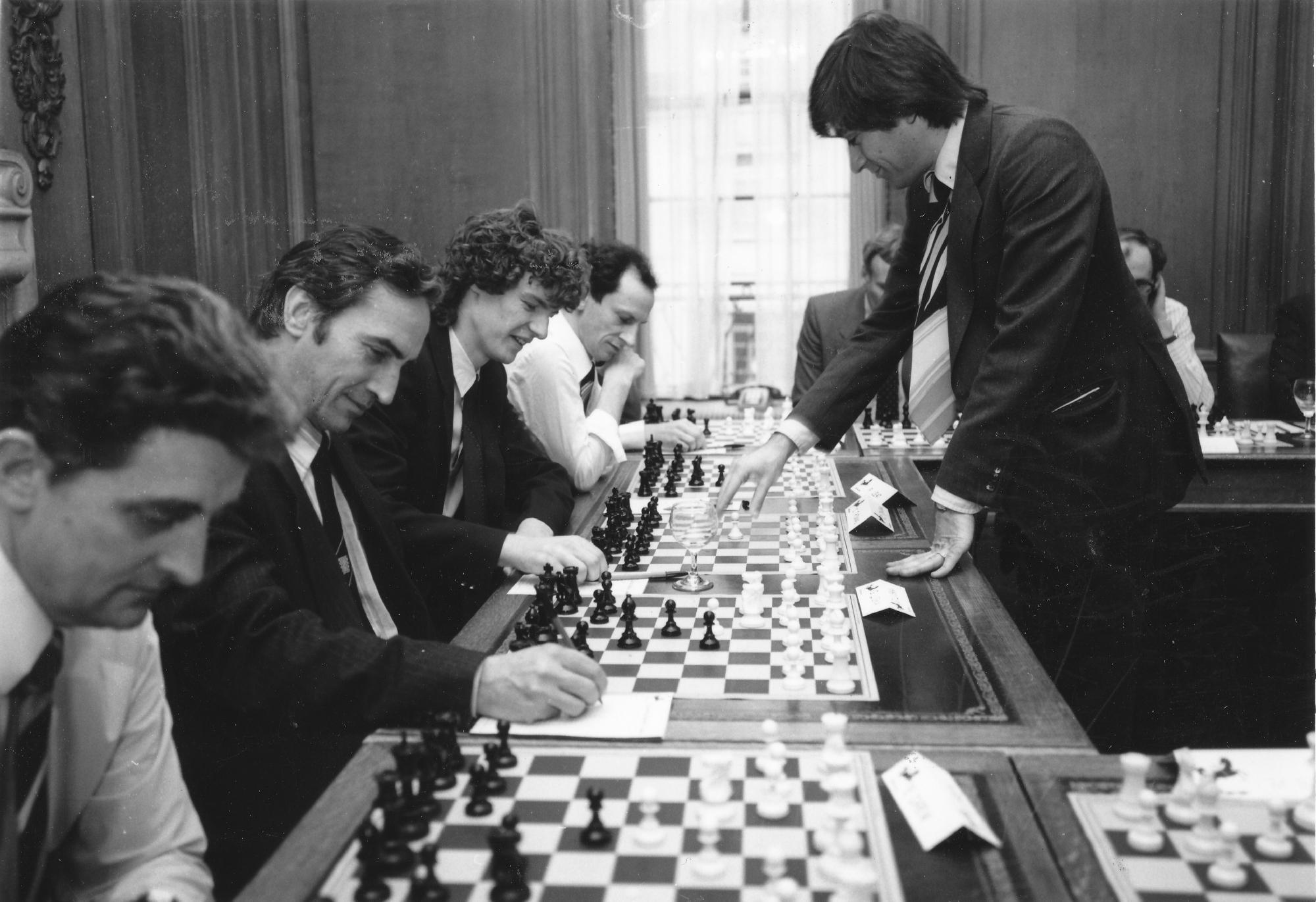
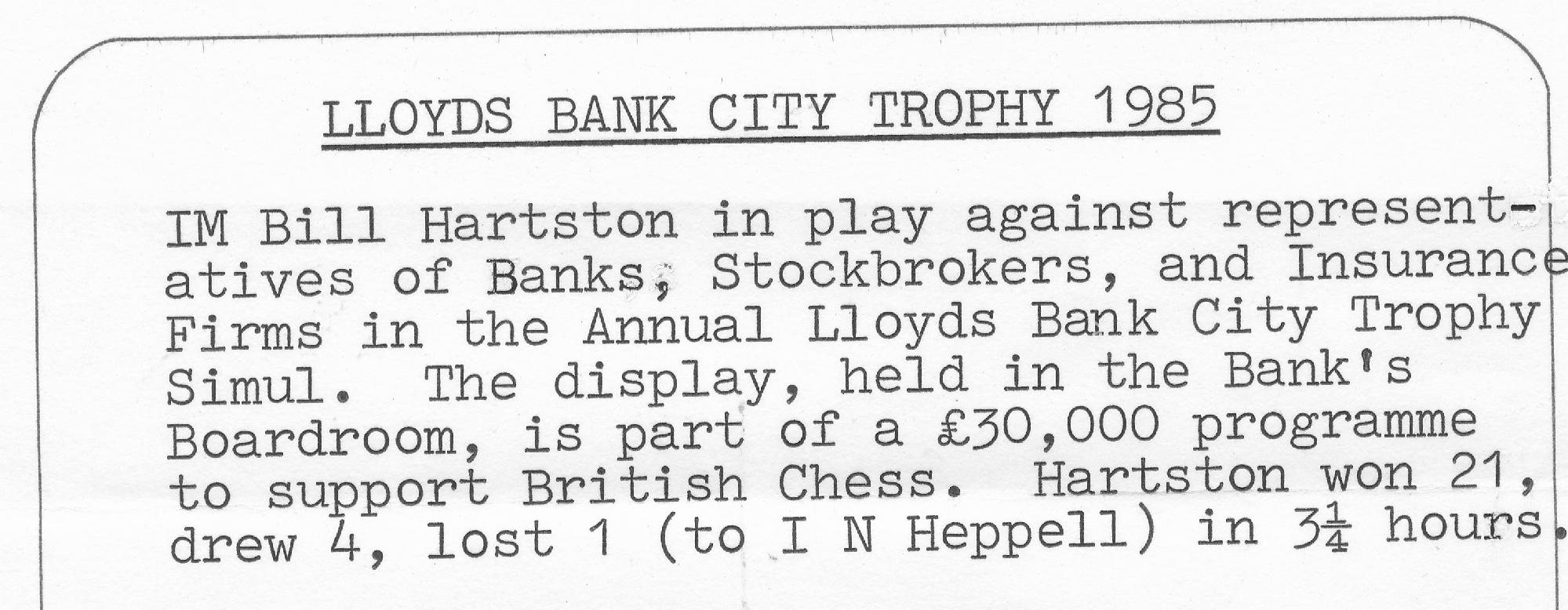
On the “glorious twelfth” of August we celebrate the birthday of one of England’s most popular chess players and writers, IM Bill Hartston.
William Roland Hartston was born in Willesden, Middlesex on Tuesday, August 12th, 1947. His father was William Hartston, a significant member of the Royal College of Physicians who was married to Mary Roland. Bill has a sister.
Bill Hartston
He studied at the City of London School and then studied mathematics at Jesus College, Cambridge and graduated with a BA in 1968 and an MA in 1972, but did not complete his PhD on number theory.
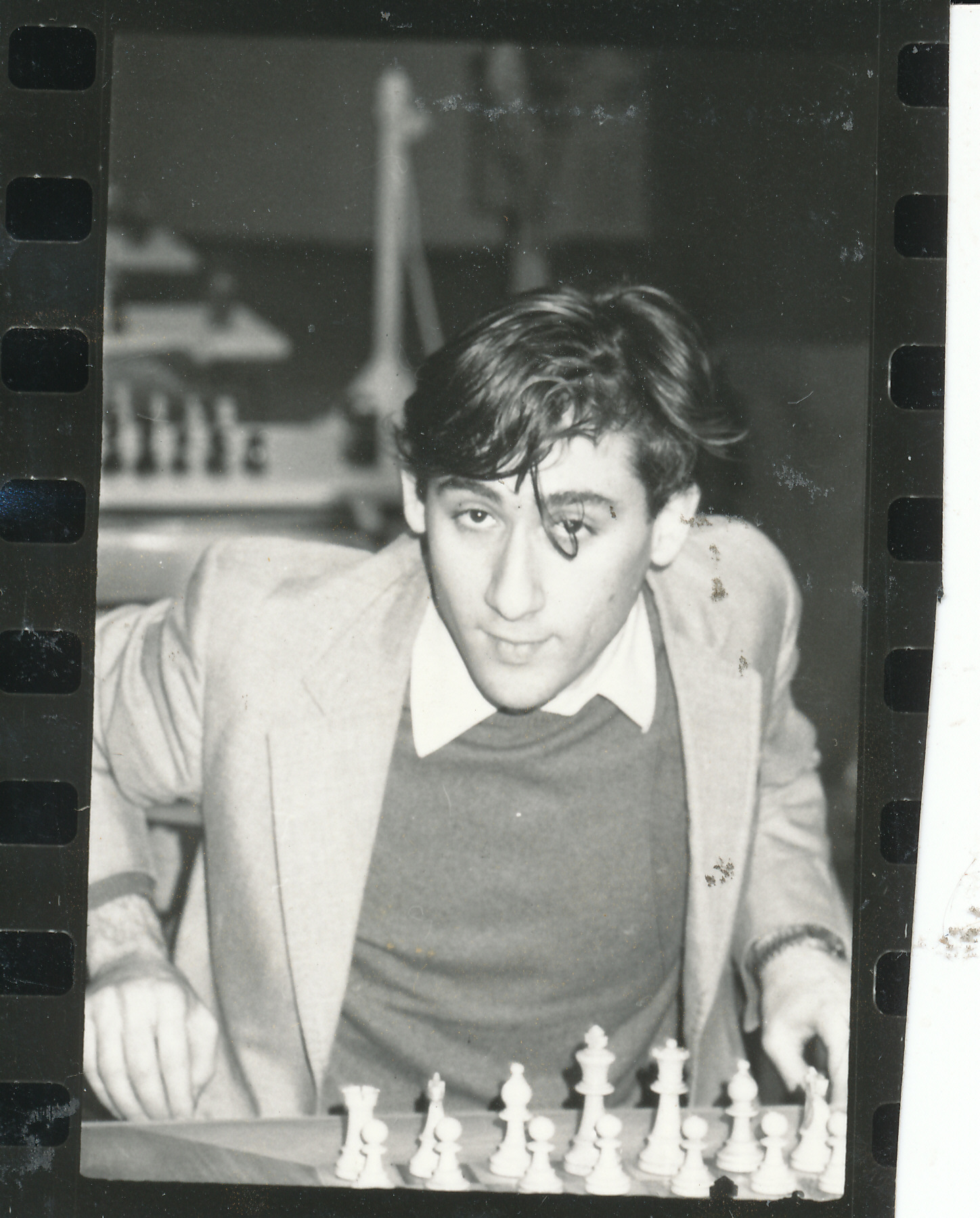
An early Bill Hartston, event unknown
While studying for his PhD at Cambridge, Hartston developed an intricate system for balancing an entire chess set on top of a single rook. Here is an article with an explanation letter from Bill.
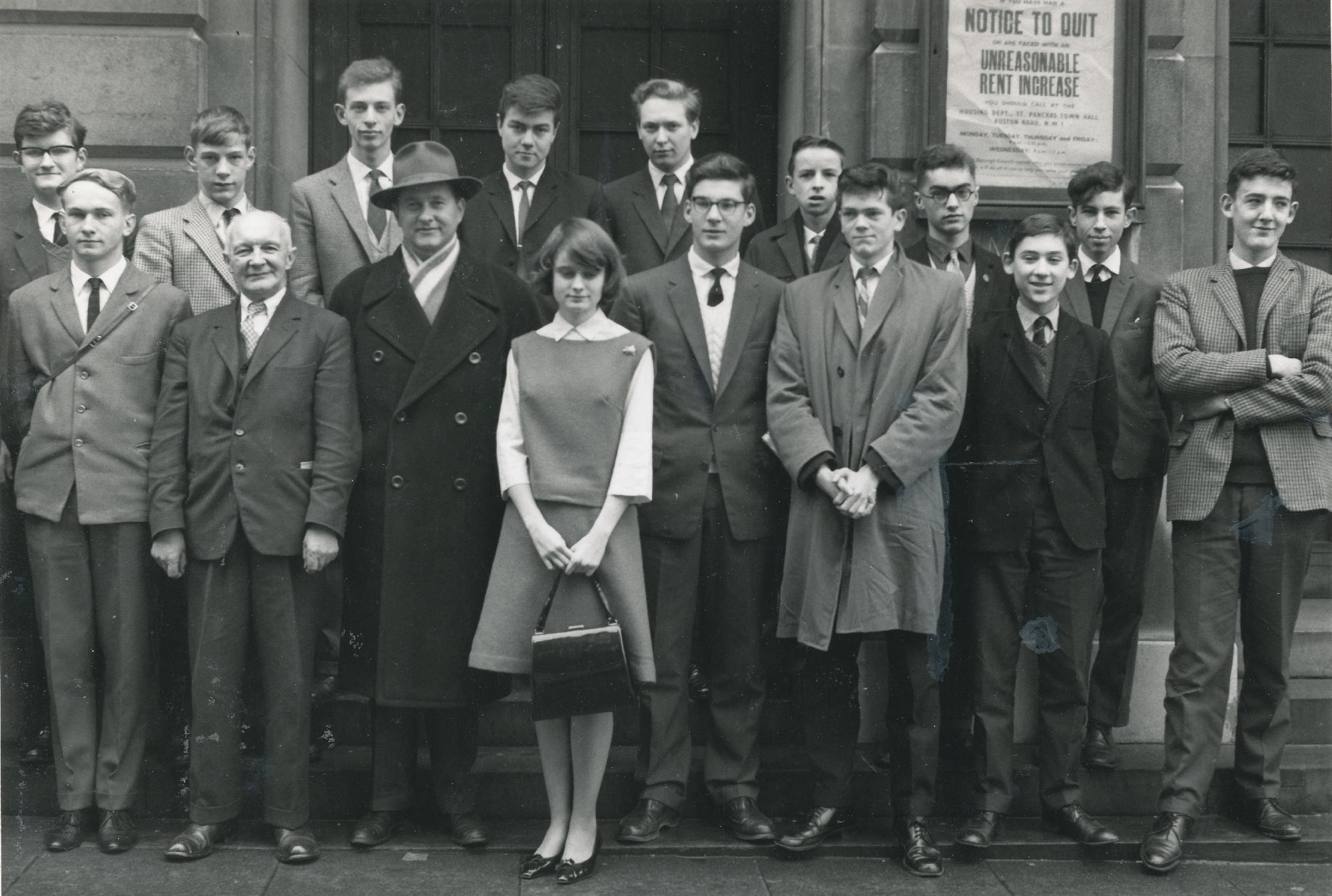
Some of the participants in the Paul Keres display on November 25th, 1962, at St Pancras Town Hall, London WC1. Back row : AJ. Whiteley, D, Floyer, PJ Collins, PJ Adams, RC Vaughan, KB Harman, D. Parr, DNL Levy, Front row : MV Lambshire, AE Hopkins (selector) Paul Keres, Miss D. Dobson, RE Hartley, BC Gillman, WR Hartston and PN Lee. Photograph by AM Reilly. Source : BCM, 1963, page 13
Bill married Dr. Jana Malypetrova in January, 1970 in Cambridge. In 1978 Bill married Elizabeth Bannerman, also in Cambridge and from that marriage he had two sons, James and Nicholas.
Bill and Dr. Jana Hartston (née Malypetrova)
Bill became an International Master in 1972 and his highest FIDE rating was 2485 in January 1979.
William Hartston
With the white pieces Bill almost exclusively played 1.e4 and the Ruy Lopez.
With the black pieces Bill played the Sicilian Taimanov and the Czech Benoni.
Bill plays his trusty Sicilian Taimanov against an unknown opponent
Bill is a self-proclaimed follower of Prof. AJ Ayer (See the Acknowledgements in “Soft Pawn”) Clint Eastwood and Tottenham Hotspur Football Club.
Bill and Jana Hartston are shown with some of their many chess sets. CHESS, August 1973, page 323
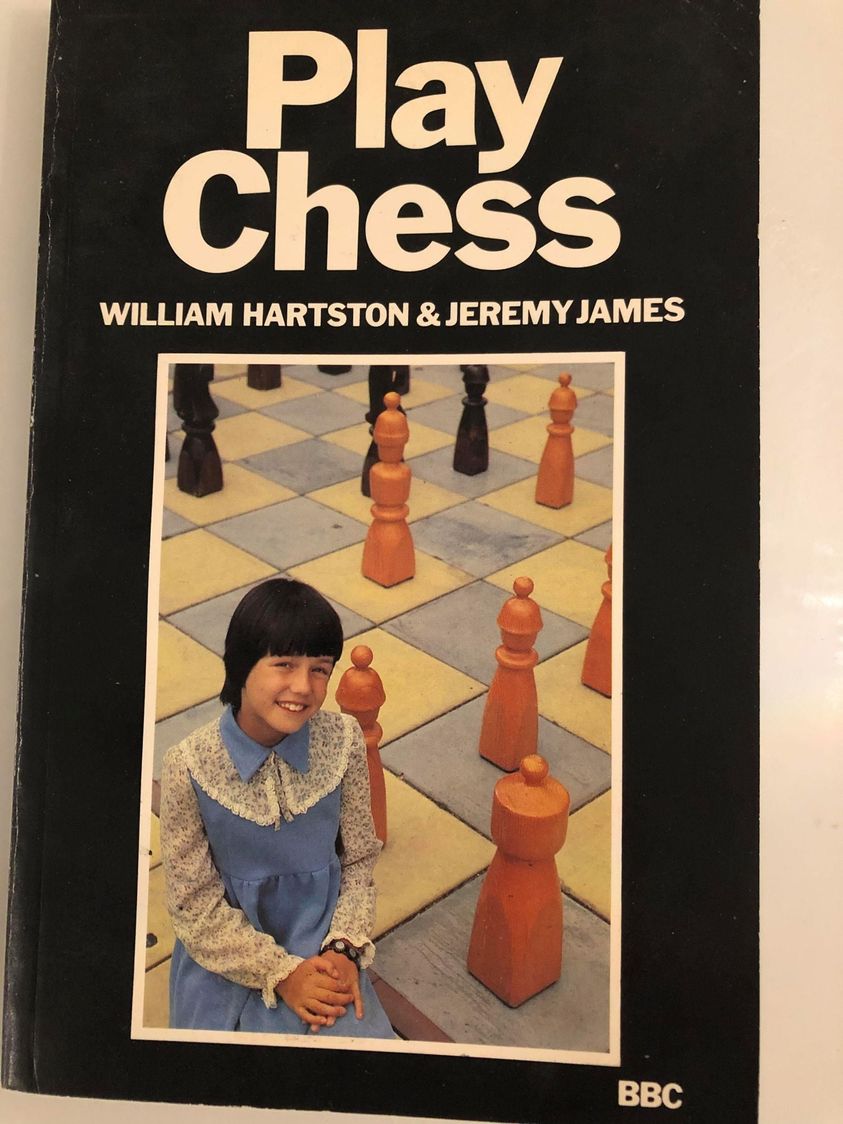
Bill was the chess correspondent of The Independent and The Mail on Sunday. He was also a regular presenter and commentator for television. He worked with Jeremy James on the BBC’s Master Game. and has appeared on ITVs Play Chess
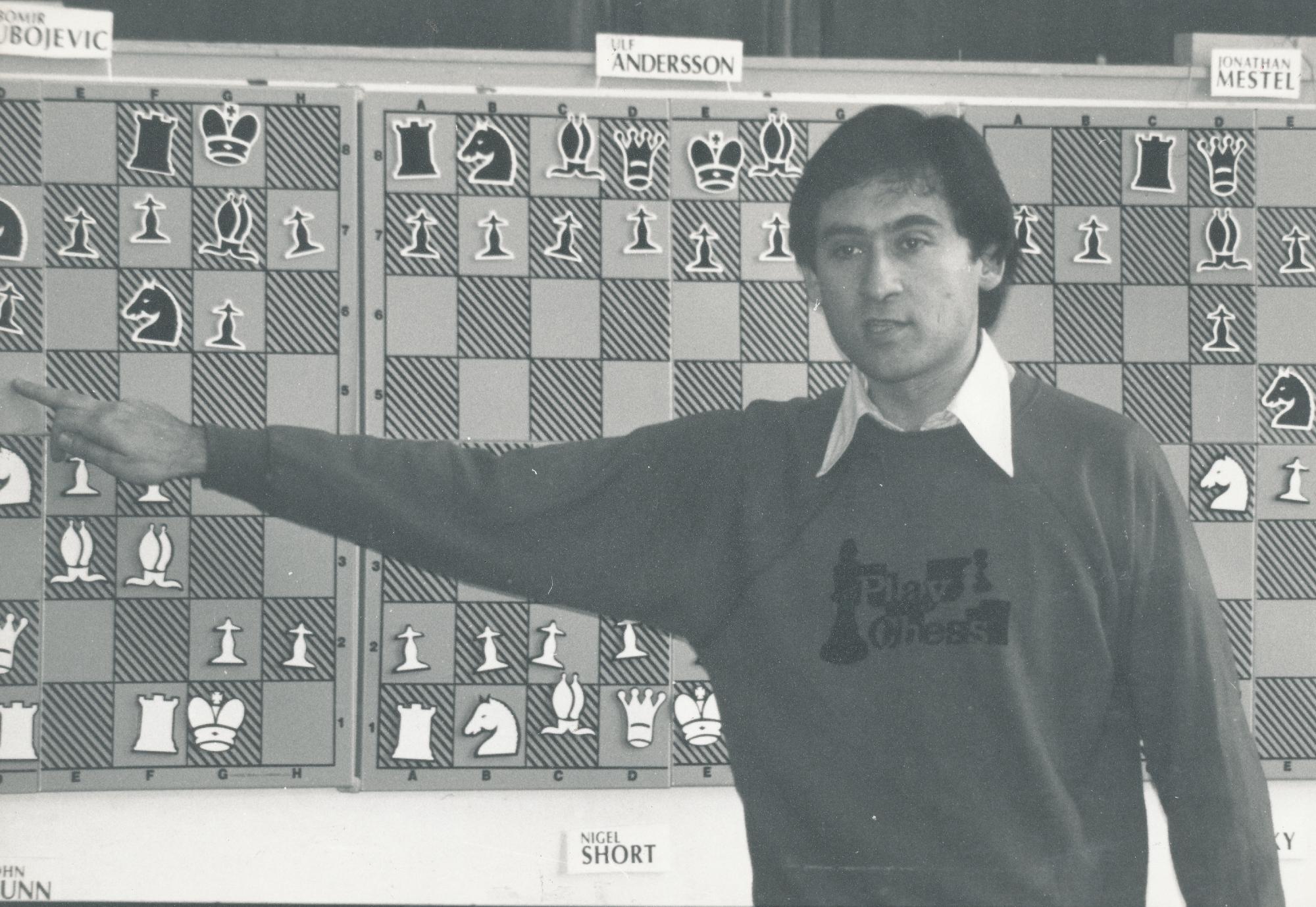
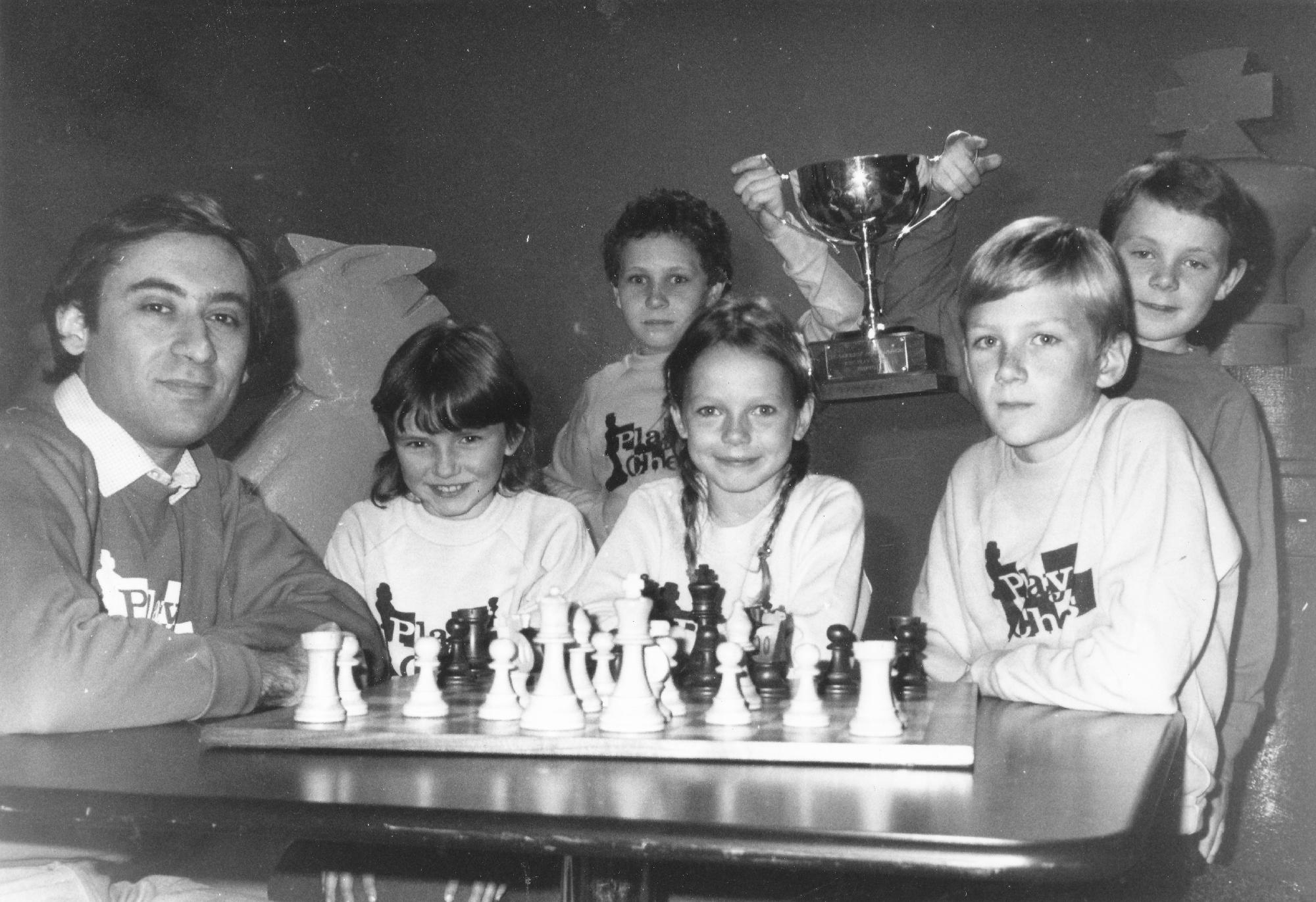
Bill Hartston on Play Chess
In modern times Bill has made regular appearances with World Cluedo champion, Josef Kollar on Channel Four’s Gogglebox with a pair of painted breasts as background.
In modern times Bill has made regular appearances with World Cluedo champion, Josef Kollar on Channel Four’s Gogglebox
Bill revived the Beachcomber column in the Daily Express.
The Master Game, Series 6&7 with Jeremy James and Bill Hartston
Bill is an industrial psychologist.
Curiously the 1984 edition of the usually reliable The Oxford Companion to Chess by Hooper and Whyld does not have an entry for the twice British Champion : was this simply an oversight ? Jana is also not mentioned.
Bill wrote about himself in British Chess (Pergamon, 1983) :
“To summarise more than 20 years of playing competitive chess in a few hundred words is an impossible task. My attitude to the game has changed a great deal, especially in recent times, but I have always enjoyed and felt at home in the tense and lively atmosphere of chess tournaments, whether as a competitor, spectator or journalist.
Caption as per photograph belowCaption for above photograph
I consider myself lucky to have been a ‘promising junior’ just at the time when chess was beginning to be taken seriously as a sport in England. The English team consisted mainly of amateurs and there were clear opportunities for anyone willing to work at the game.
As a result of the changing attitudes to the game in this country, the development between 1965, when I first played for the national team, and 1975 was far greater than in any other decade.
One statistic which I have always found personally amusing is that I progressed from youngest player in 1967 for the Clare Benedict tournament to become the oldest in the 1971 team. From promising junior to veteran in four years = is this a record ?
Bill Hartston commentating on games from the Phillips & Drew King’s 1982
Since my second British Championship win in 1975, I have been writing more and playing less. I always realised that I was not going to become a sufficiently strong player to be happy just wandering round the tournament circuit, but giving up chess entirely is, of course, unthinkable.
I believe now that the time is ripe for chess to be presented to far wider audiences and I like to think that some of what I do will help in that aim. If the Master Game television series and “Soft Pawn” cannot sell chess to the masses then nothing will.”
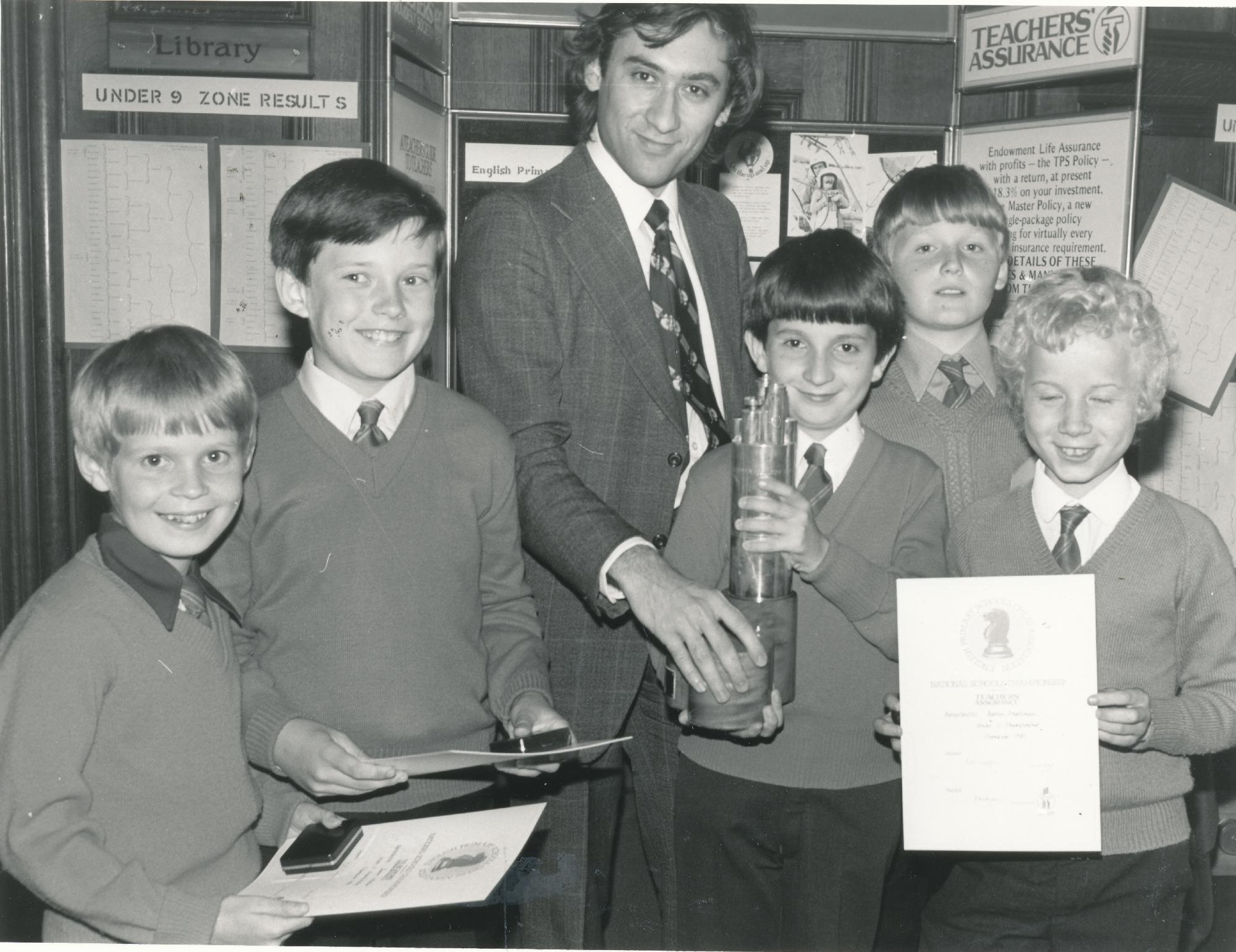
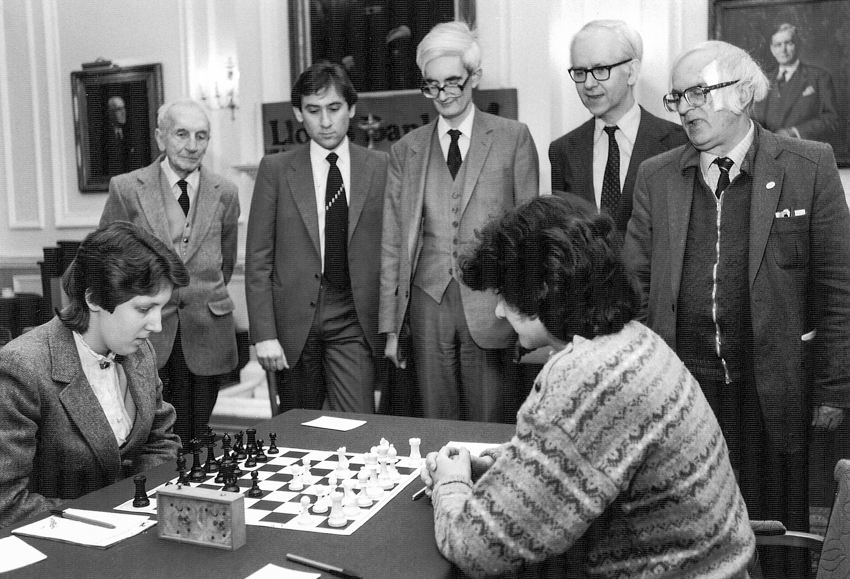
Bill was always a keen supporter of junior chess. Here at the Teachers Assurance National Schools Championships in 1980
Harry Golombek wrote the following in a 1980 Dataday chess diary :
“Hartston played hardly at all during the period from my last entry of him in the 1977 diary and that little, though respectable, was hardly the performance of an active master. His equal 3rd to 5th at the big Aaronson’s Masters Tournament (a swiss system event with 72 players) did not really affect his rating and indeed he finished up without changing his Elo rating at all.
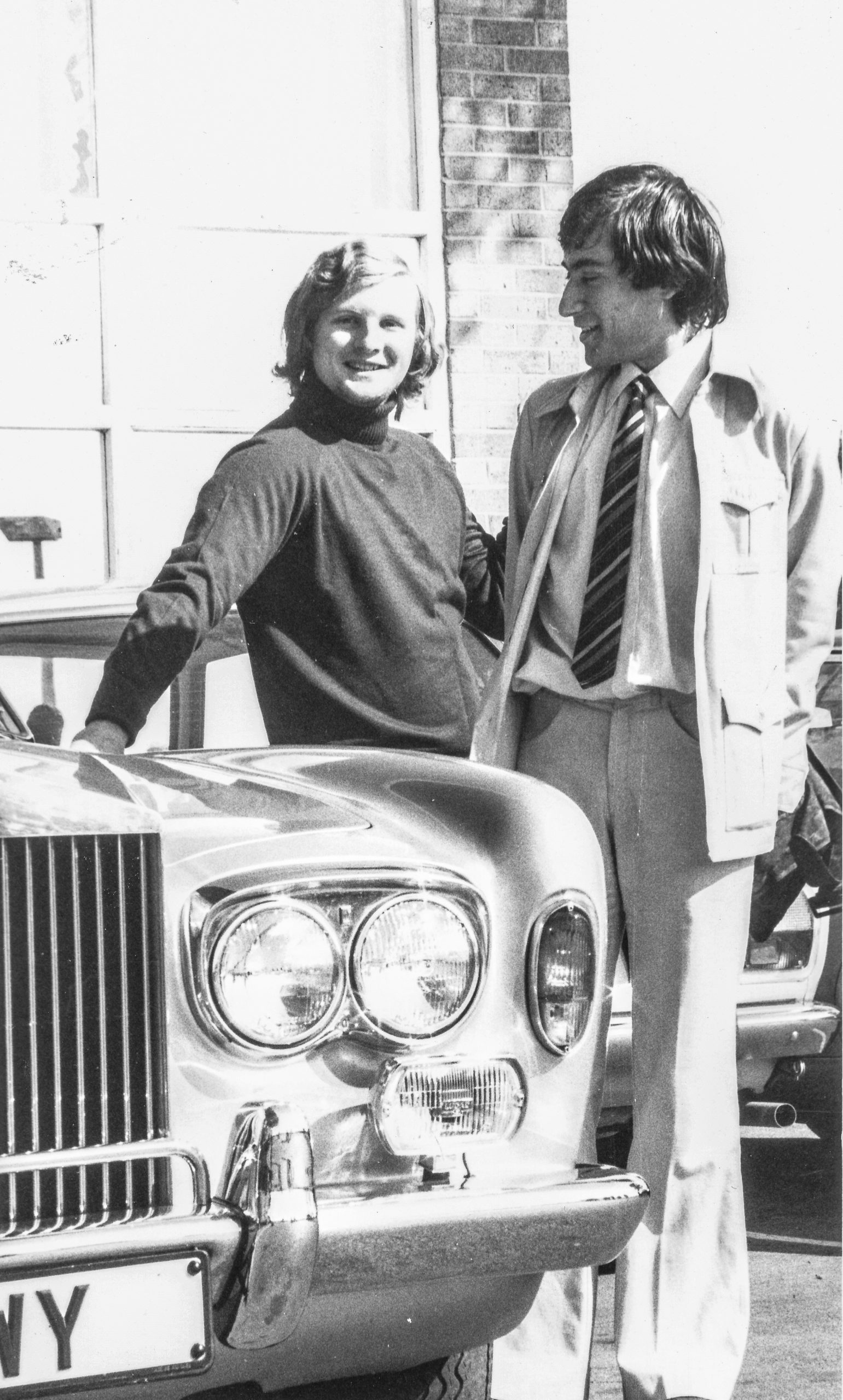
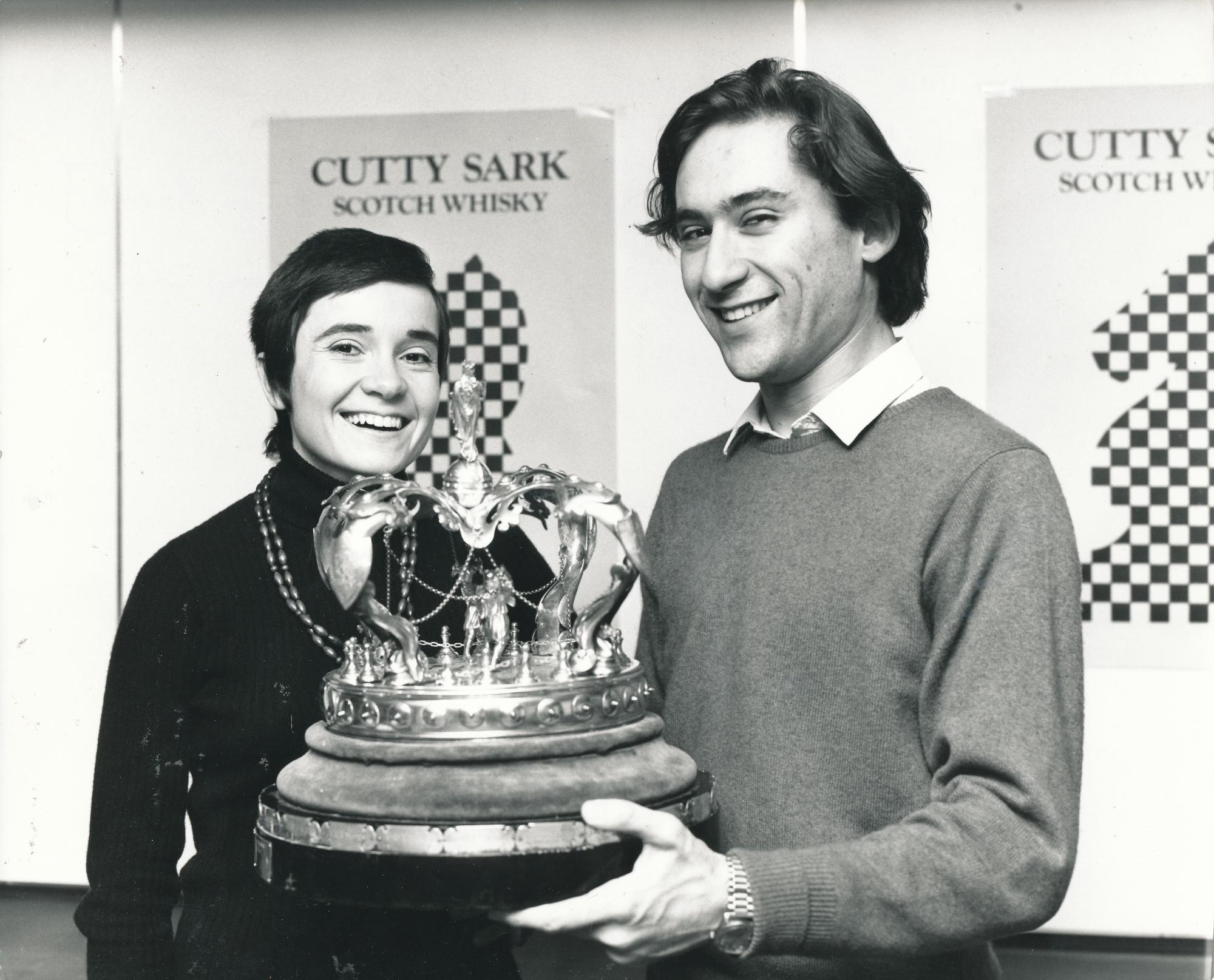
Tony Miles & Bill Hartston admire a Rolls-Royce
Nevertheless, this glimpse of his true powers was impressive as can be seen in the following game which was played in the 6th round of the Aaronson tournament.”
From The Encyclopedia of Chess(Robert Hale, 1970 & 1976) by Anne Sunnucks :
“International Master (1972) and British Champion (1973) William Hartston was born in London on the 12th August 1947. He was taught to play chess by his father when he was seven and five years later joined Enfield Chess Club. His results in junior events included 1st in the London Boys’ Under 16 Championship and 2nd in the British Boys’ Under 15 Championship in 1962 and =2nd in the British Boys Under 18 Championship in 1963.
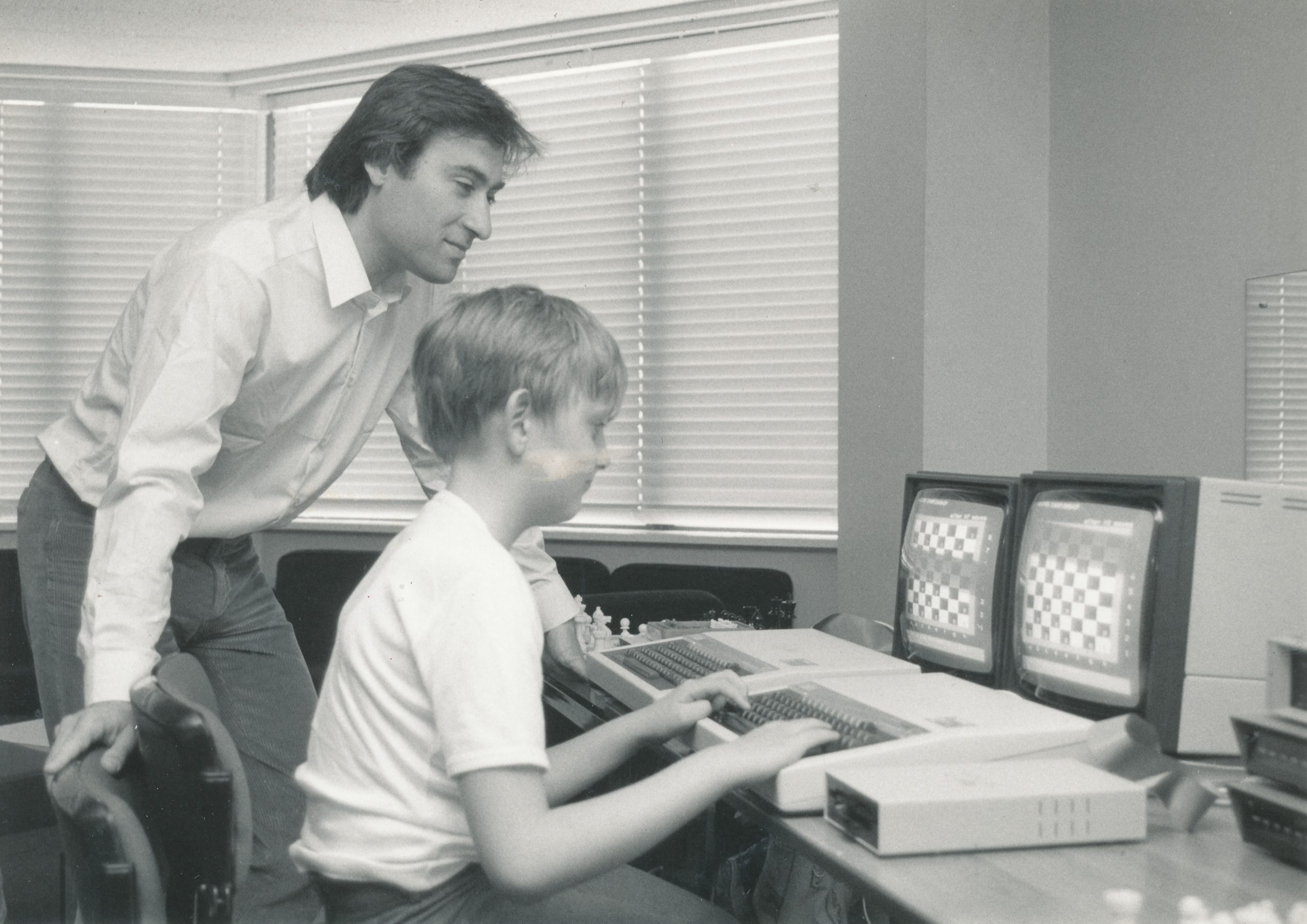
Bill had a keen interest in computer chess and technology
In 1965, Hartston made his first appearance in the British Championship and came =5th. In the same year he won the Ilford and Paignton Premier tournaments. Playing on board 3 for England in the 1966 Olympiad. Hartston scored the best result of any British player, 66.7%.
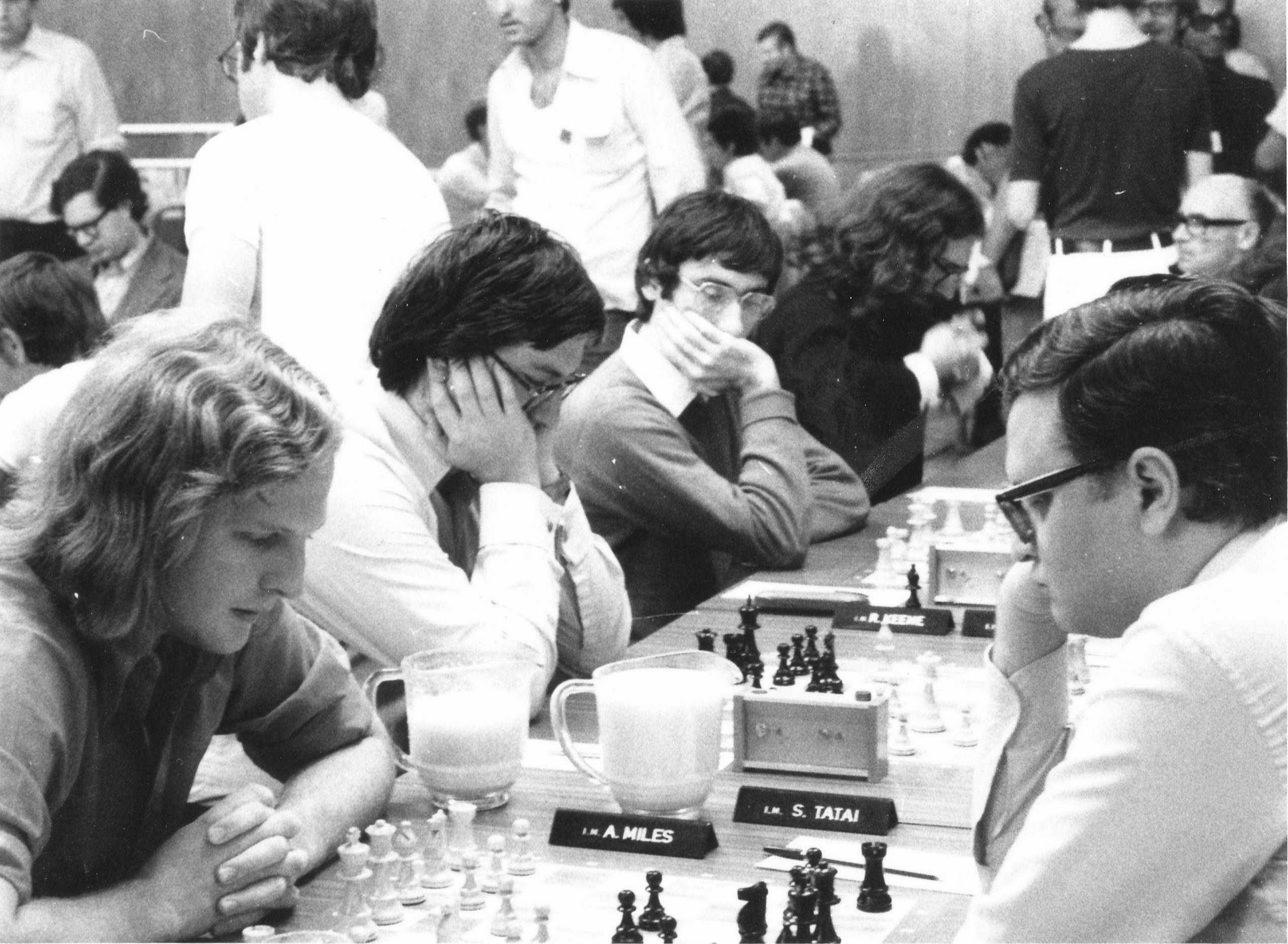
England plays Italy at Haifa 1976. Miles played Tatai, Keene played Toth, Hartston played Grinza and Mestel played Micheli
In the Olympiad of 1970, he had the best overall score on board 3, 12.5 out of 16 and in the Olympiad of 1972 he won the prize for the 3rd best score on board 2, 12.5 out of 18. In 1972 he narrowly failed to qualify for the Interzonal tournament, when he came 3rd in the Zonal tournament at Vranjacka Banja.”
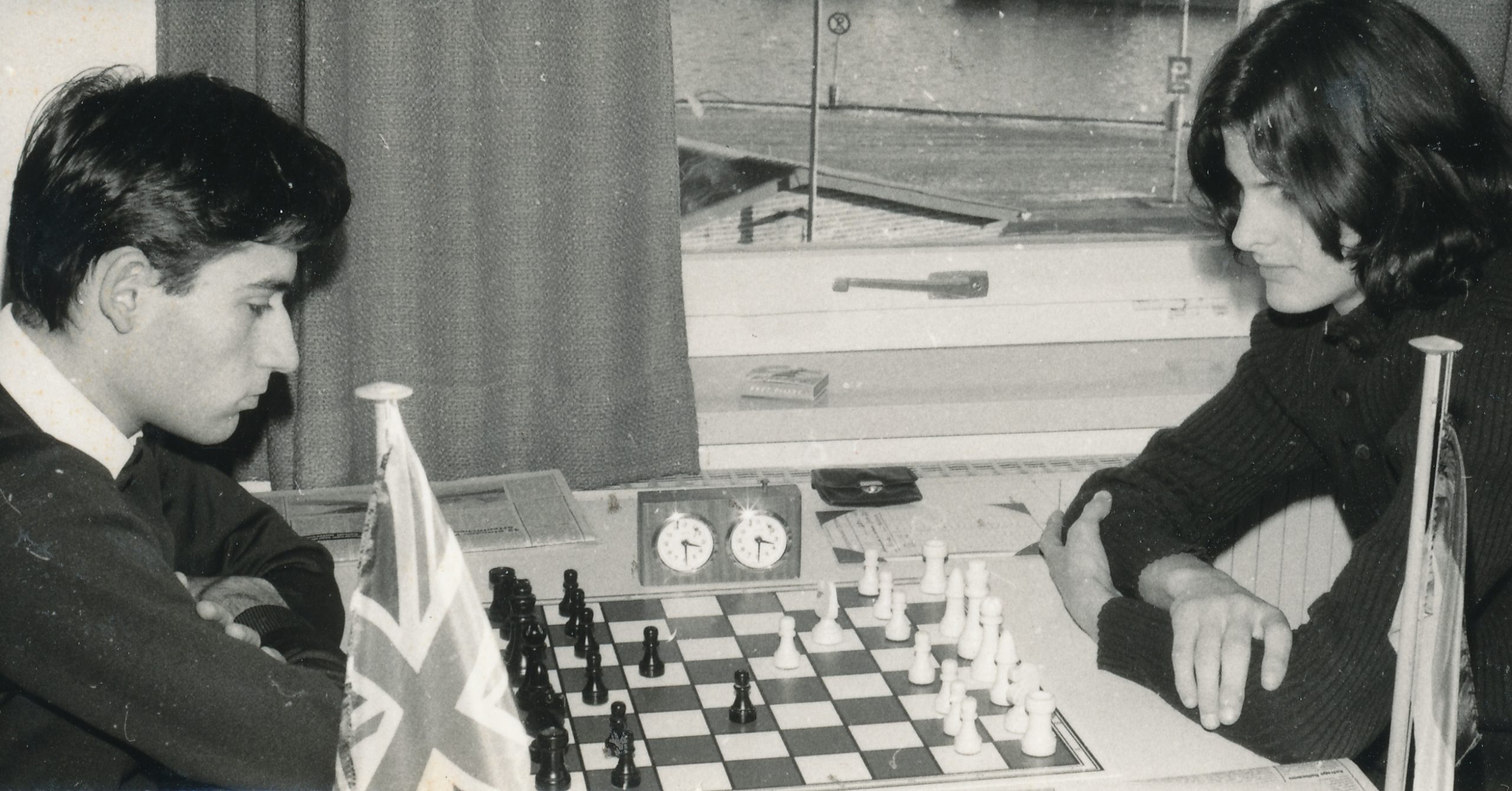
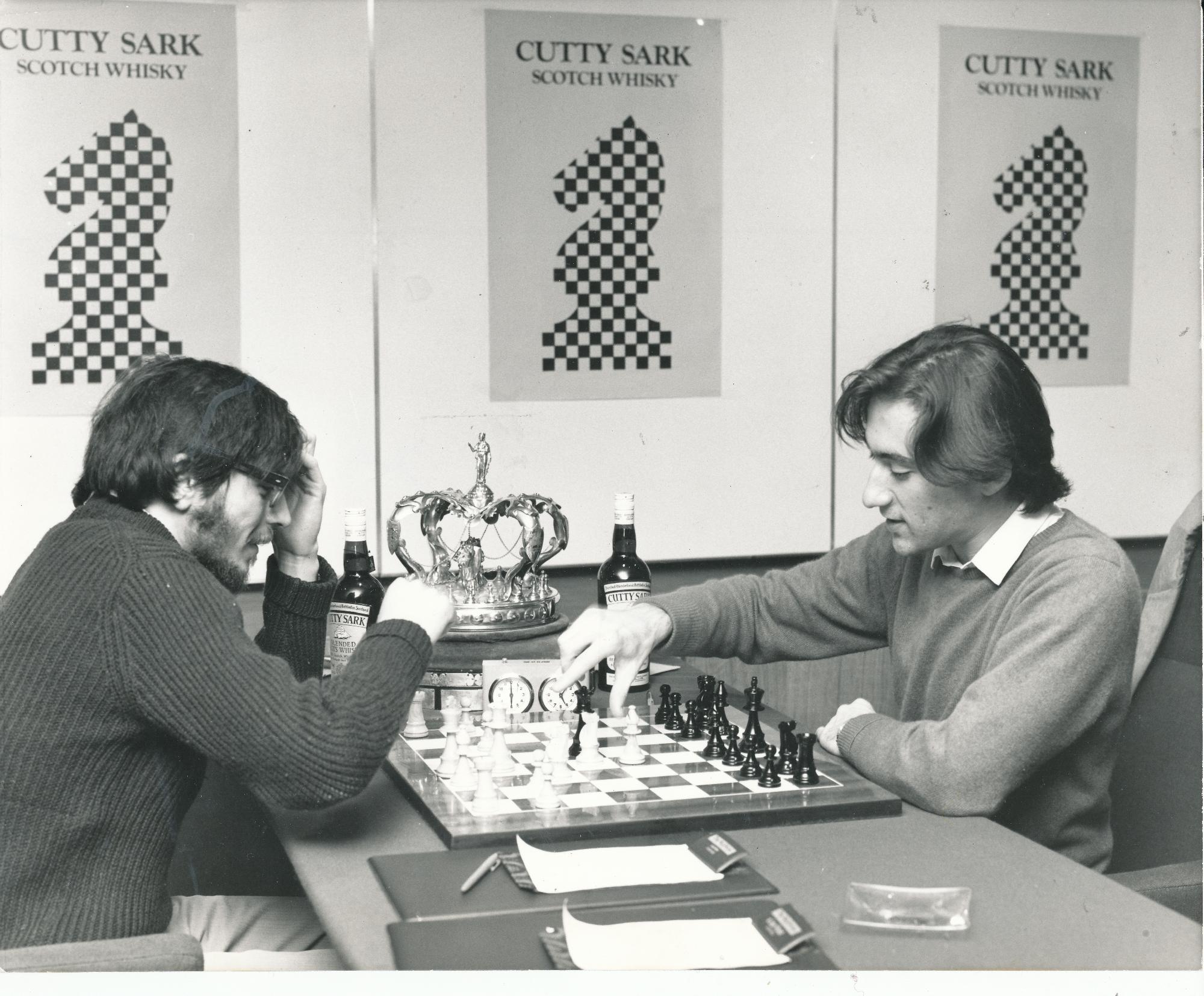
Mike Basman plays Bill during the play-off for the 1973 British Championship
From The Encyclopedia of Chess (Batsford, 1977) by Harry Golombek :
“British International Master and twice British Champion. Hartston was born in London and his early chess was played there., where he became London Boy (Under-16 Champion in 1962.
He was educated at the City of London School and Jesus College, Cambridge, where he took a degree in mathematics.
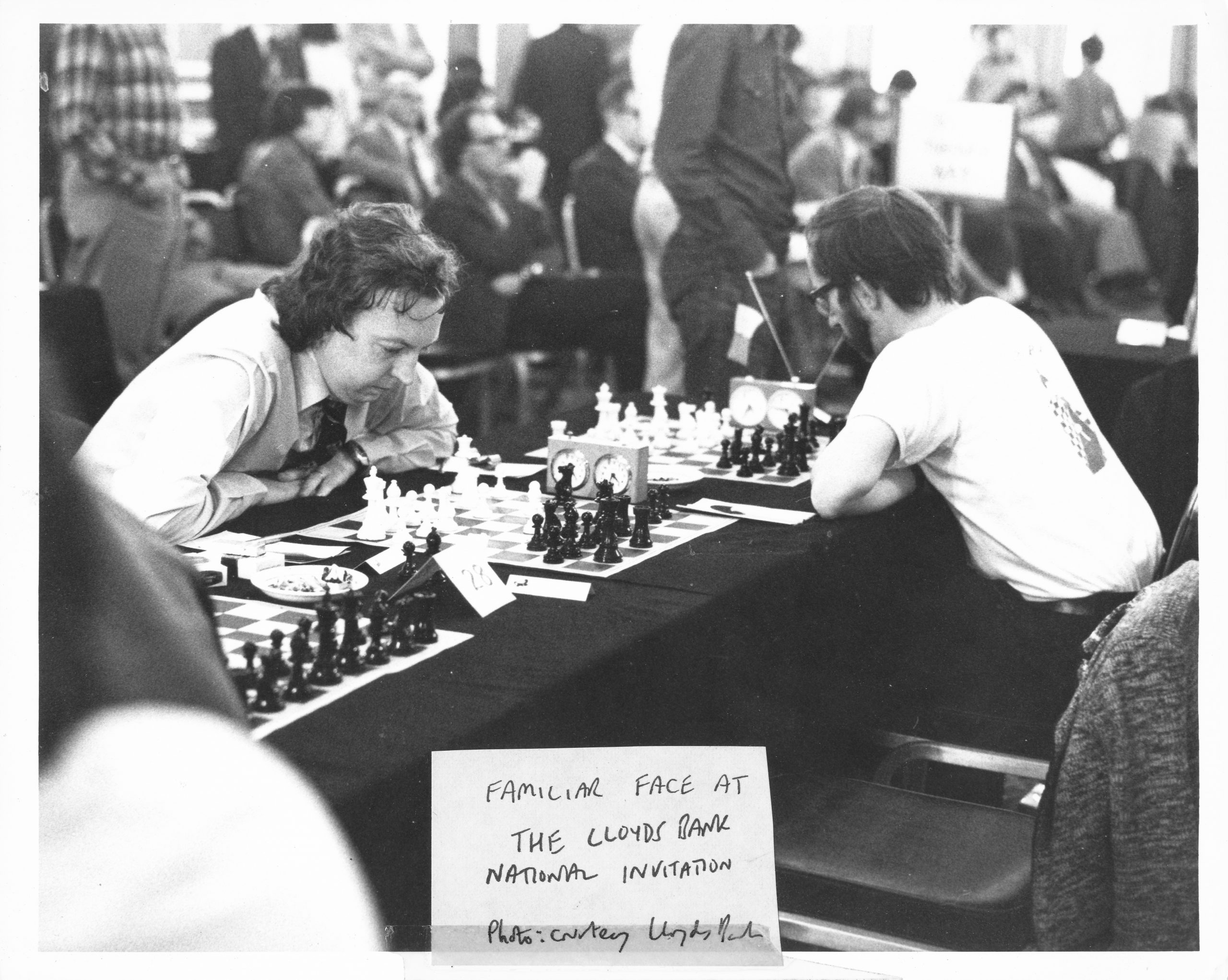
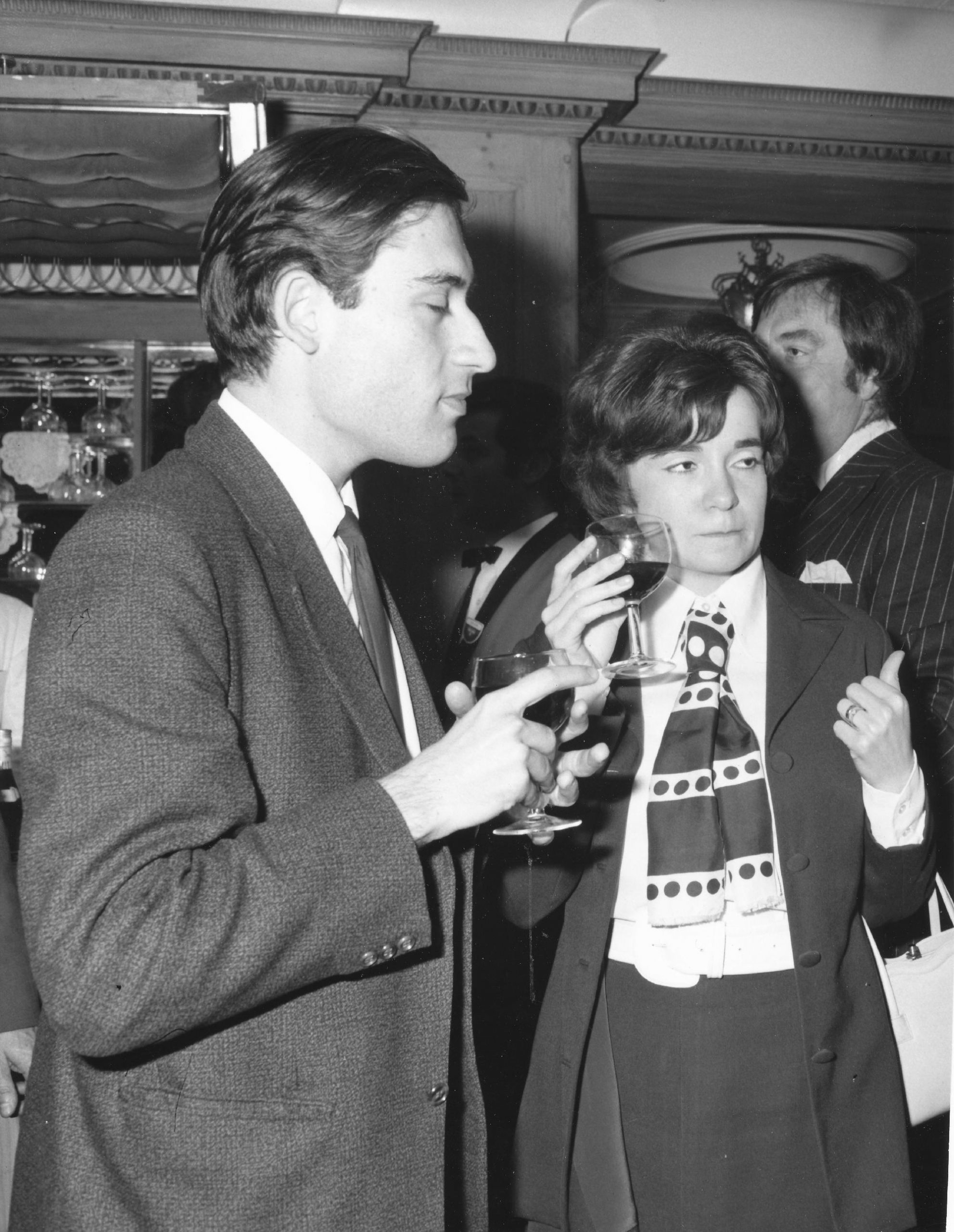
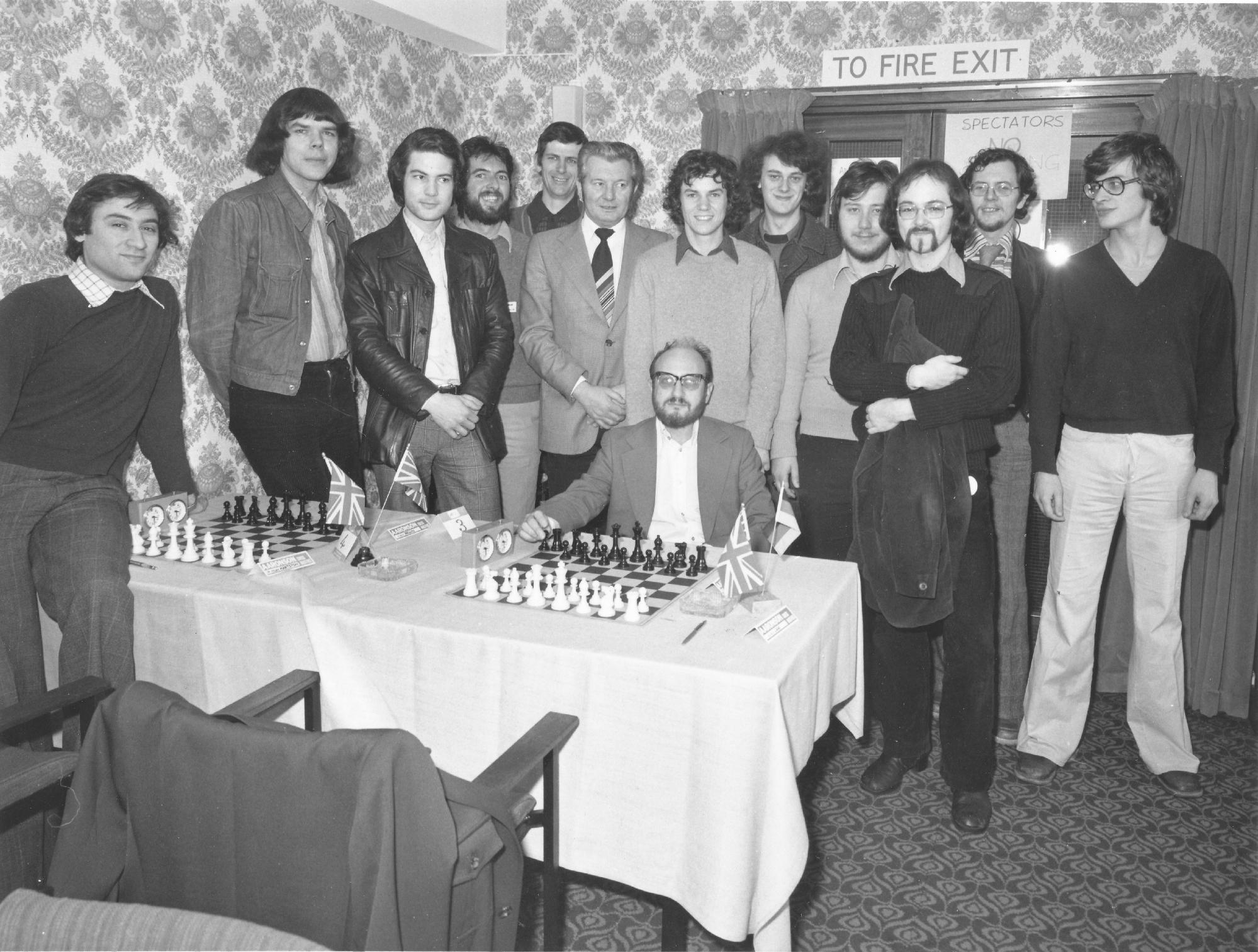
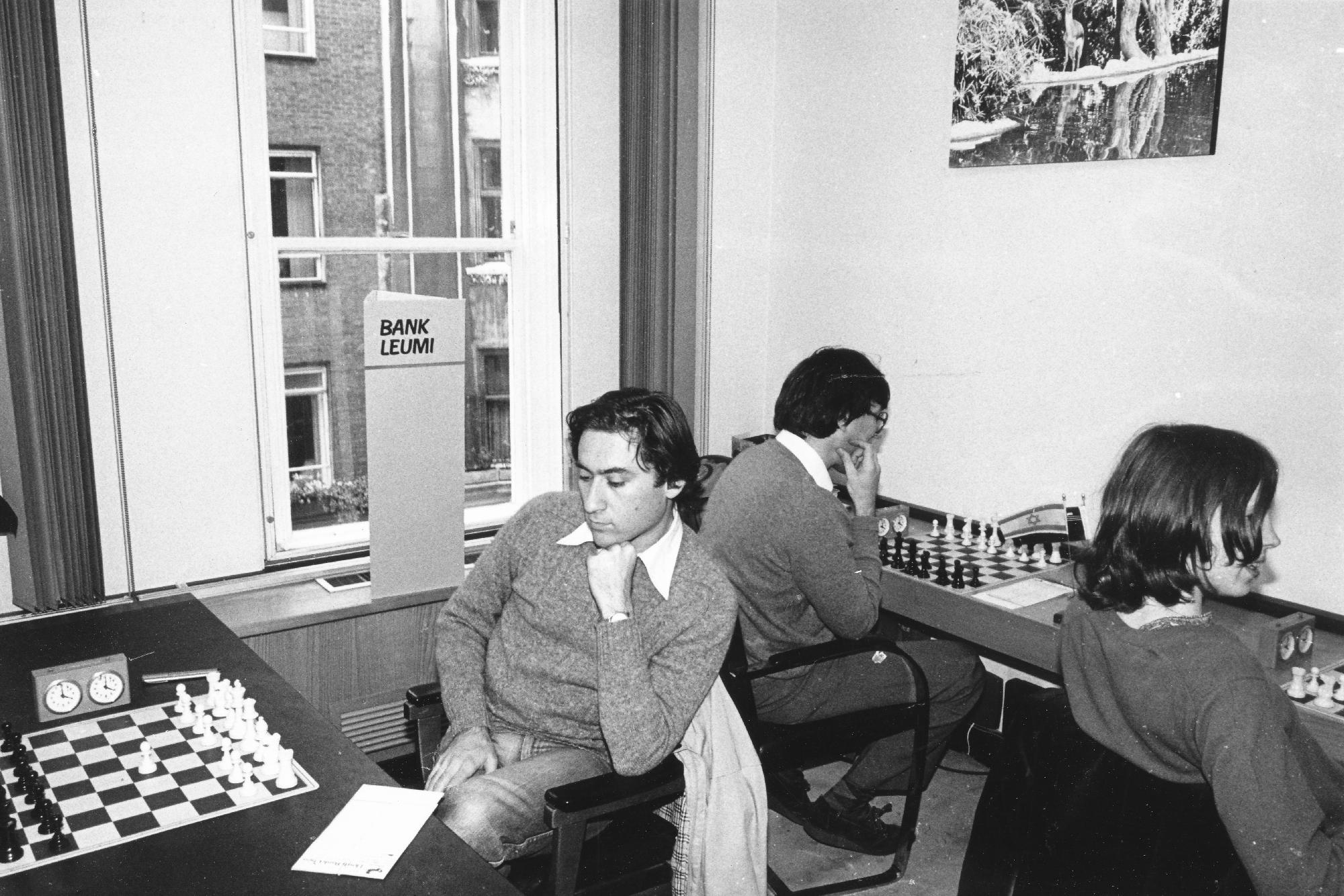
Bill Hartston (far left) at the Lloyds Bank Masters
It soon became clear that he was one of the leading young players in England and a rivalry developed between him and Raymond Keene in which first one and then the other obtained the upper hand.
After a number of near misses he won the British Championship at Eastbourne in 1973 and again at Morecambe in 1975.
Jana & Bill Hartston celebrate a family double at the British Championships in 1973 at Eastbourne
Internationally he has already had a distinguished career and has been especially good and consistent in his representation of England at the Olympiads. At Havana in 1966 he scored 66.7% on board 3 but did not play at Lugano in 1968. Again on board 3 at Siegen in 1970 he obtained the best score on board 3 with 78.1%.
From the 1985 Varsity Match : Laura Cohen (Newnham), Brian Reilly (BCM), Bill Hartston (Cambridge), Adrian Hollis (Oxford), Anita Rakshit (St. Hilda’s), Leonard Barden (The Guardian etc) and Bob Wade (BCF)
At Skopje 1972 he fulfilled the second norm of the international master title with 12.5 points out of 18 on second board. Playing on first board at Nice 1974 he attained 52.7% and had a most meritorious and well fought draw with the World Champion, Karpov.
Bill Hartston draws with Anatoly Karpov at Nice 1974
He achieved a breakthrough in the field of international tournament chess when he came third in a strong Premier tournament at Hastings 1972/3
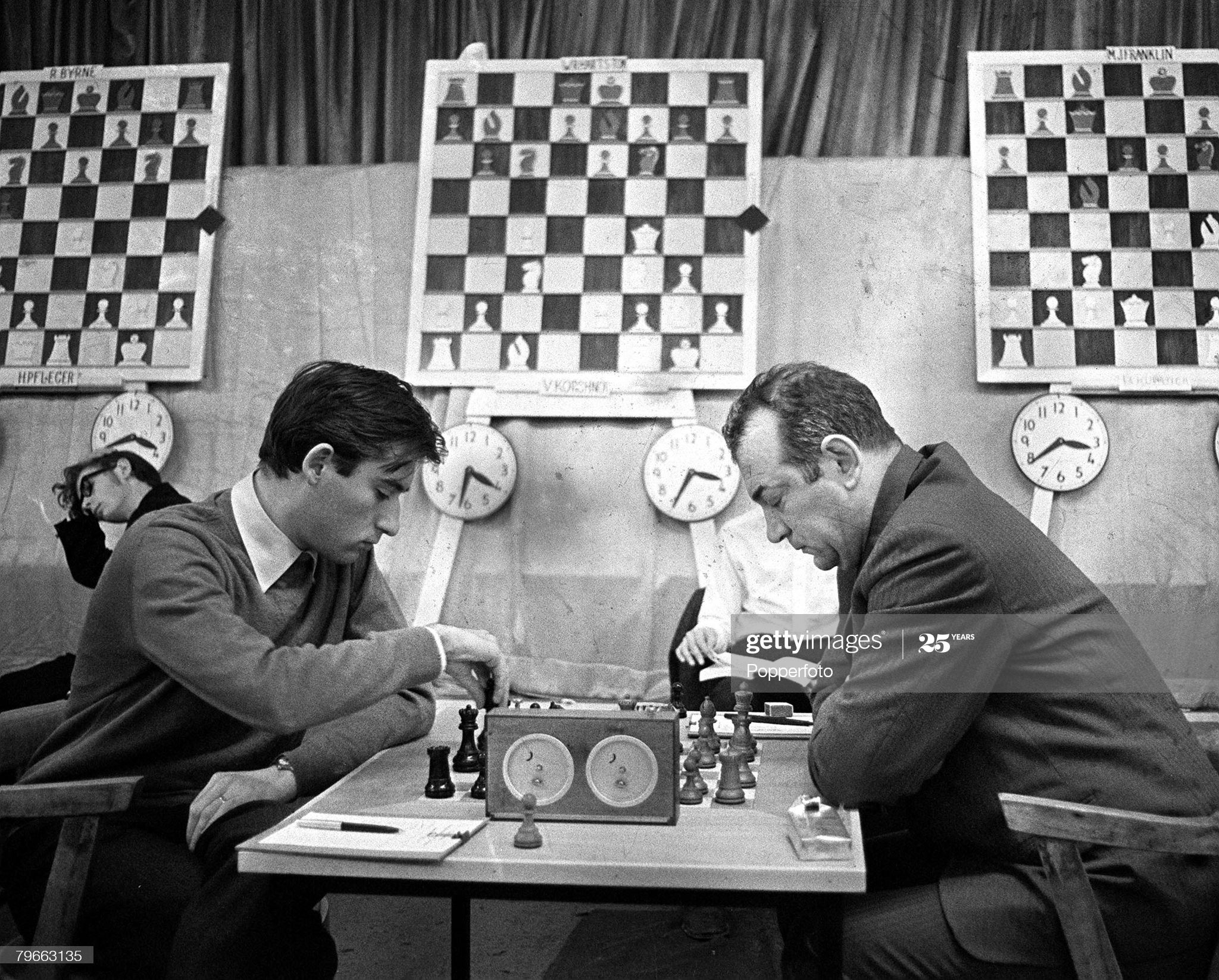
Hastings, England, 4th January 1972, Chess, Russian Grand Master Viktor Korchnoi (right) is pictured in a match with William Hartston (UK) during the 47th Hastings International Chess Tournament (Photo by Popperfoto via Getty Images/Getty Images)
and in 1973 he scored a first at Alicante.
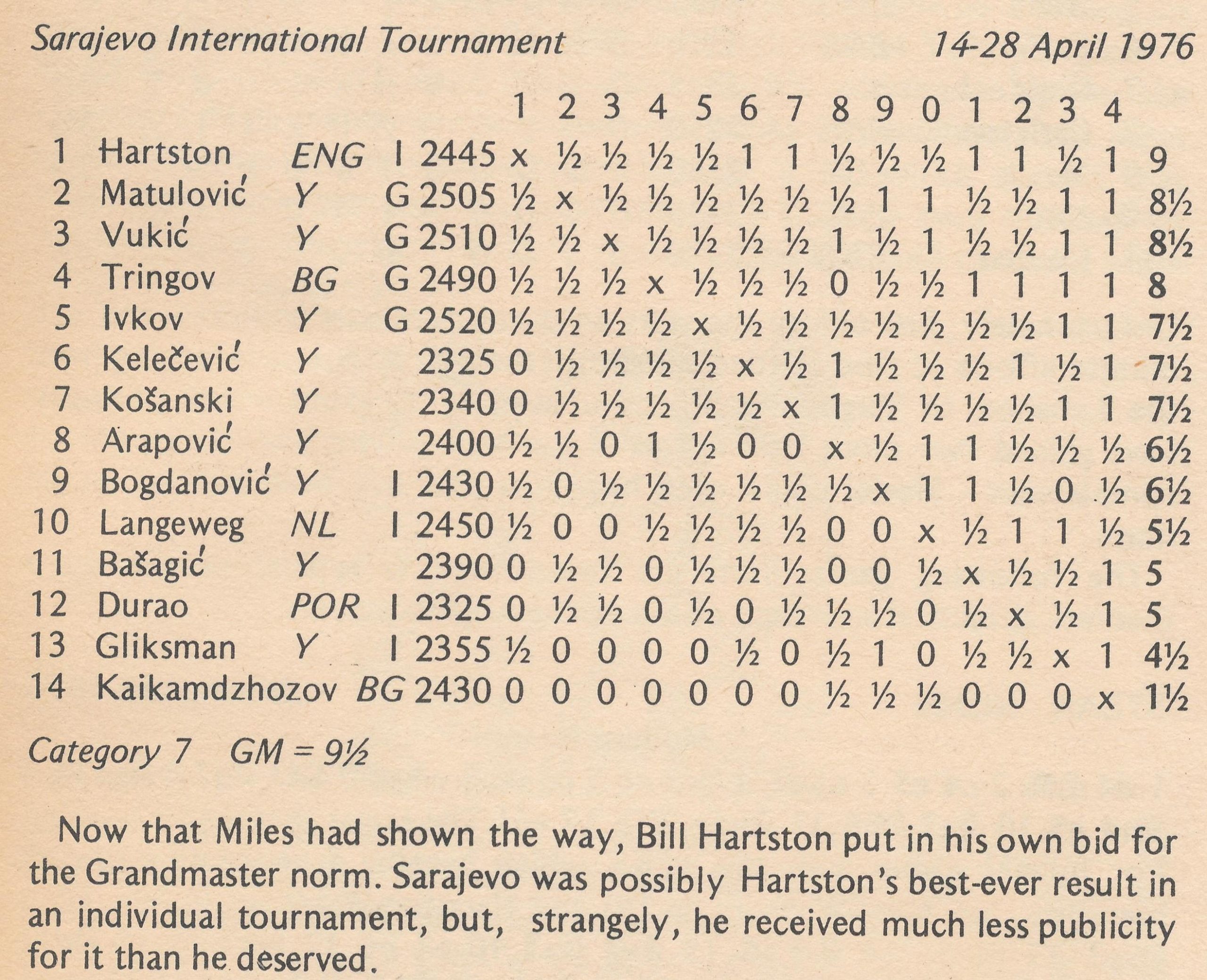
His best tournament result came three years later when he won 1st prize at Sarajevo 1976.
Sarajevo 1976 Crosstable from English Chess Explosion (1980)
His style of play is sound and competent in all the spheres of the game. That he can be brilliant when necessary he demonstrated his beautiful brilliancy game against the Finnish grandmaster Westerinen at Allicante in 1973. He has a fine, broad knowledge of the openings and has written a number of articles and books on that theme.
Bill was always a keen supporter of junior chess. event unknown.
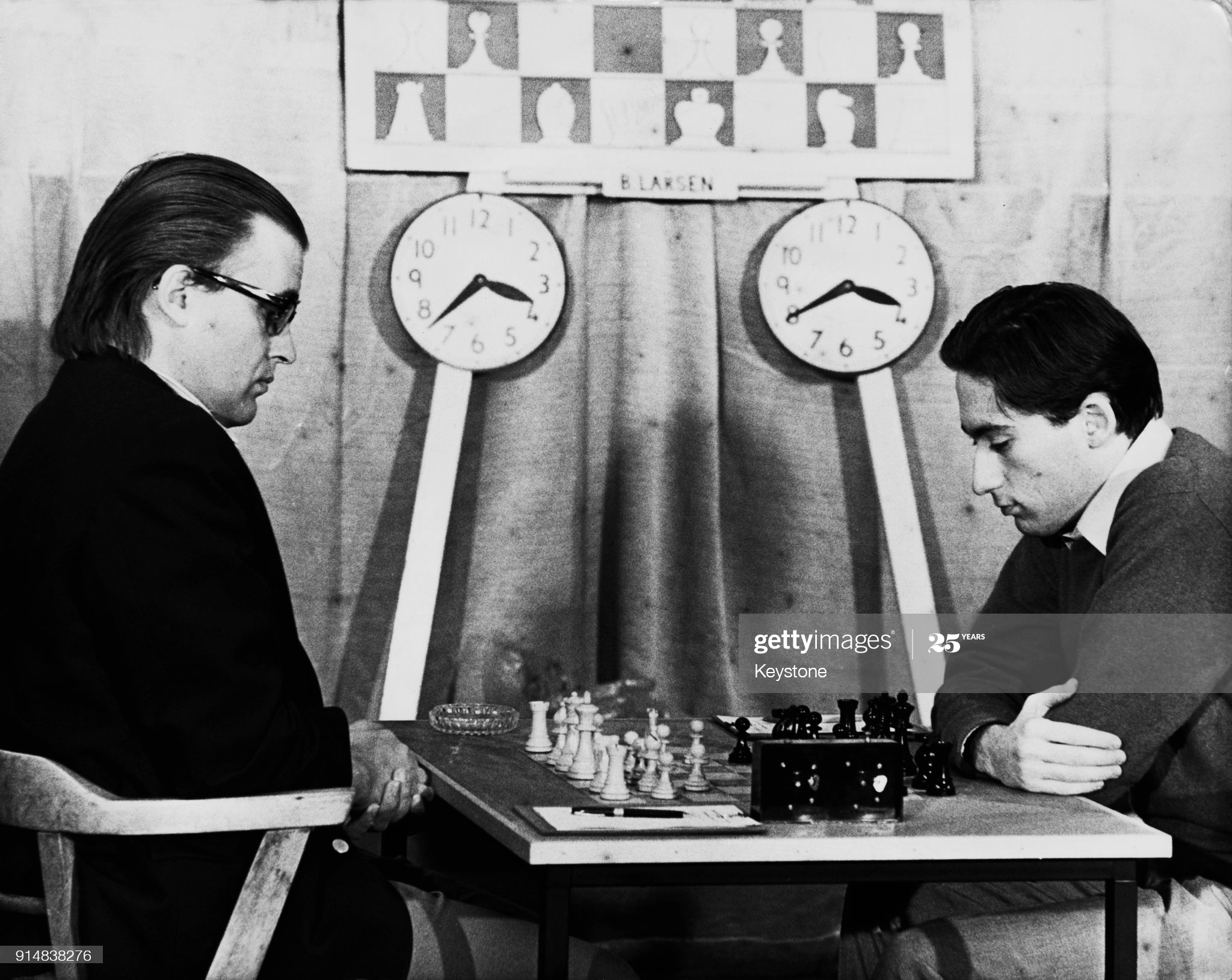
Danish chess grandmaster Bent Larsen (1935 – 2010, left) takes on English player William Hartston (right) during the annual Hastings International Chess Congress, UK, 13th January 1973. Larsen won the game. (Photo by Keystone/Hulton Archive/Getty Images)Bill plays board 5 for England versus Israel Telechess Olympiad match in September 1981. Board 6 was Paul Littlewood and board 7 was Nigel Short.
A lucid and entertaining writer, he has also appeared with success in BBC Television chess programmes.
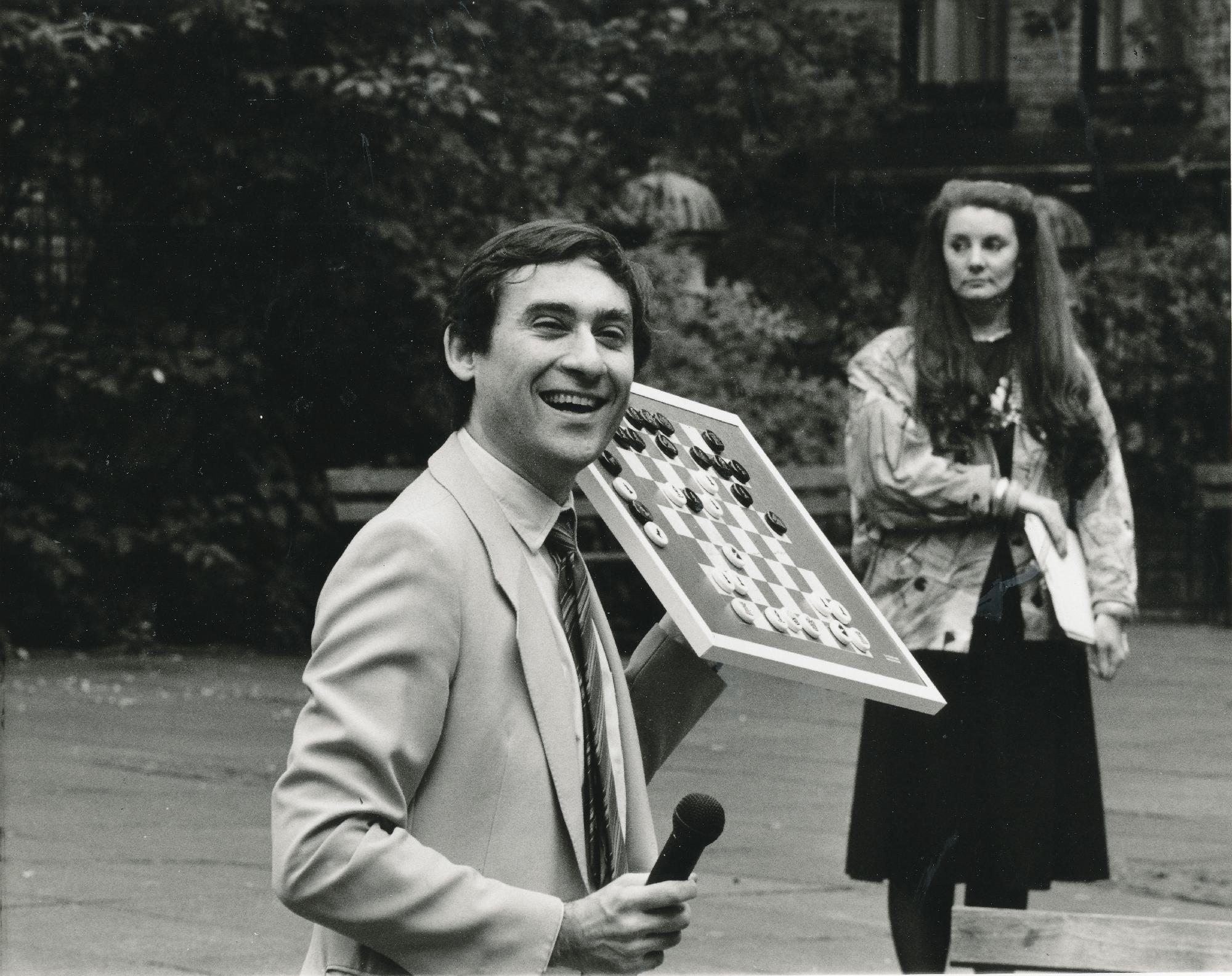
Bill Hartston at a promotional event
Among his chief works are :
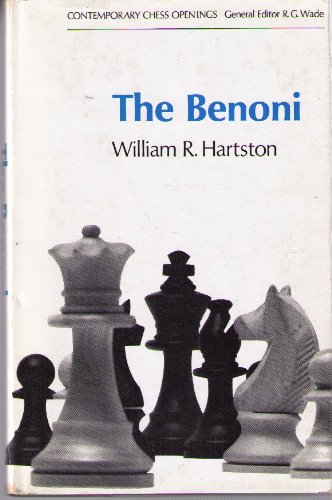
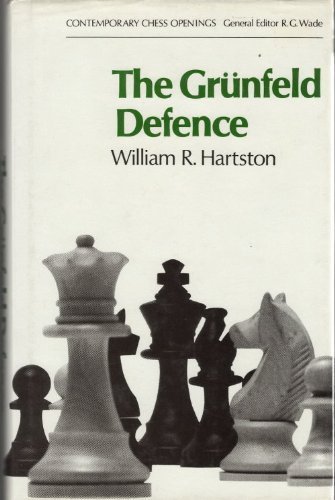
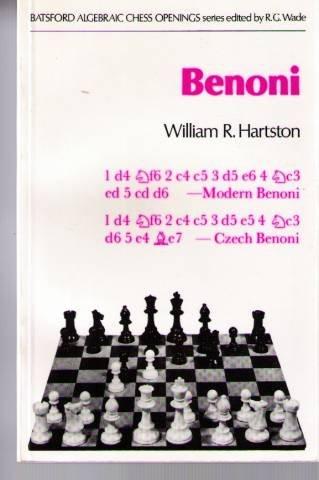
The Benoni, London, 1969 The Grunfeld Defence, London, 1971 The Best Games of CHO’D Alexander (with H. Golombek), Oxford, 1976.”
Here is an interesting interview published in the Streatham & Brixton Chess Club blog concerning the alleged “turning down the Hastings draw offer” story.
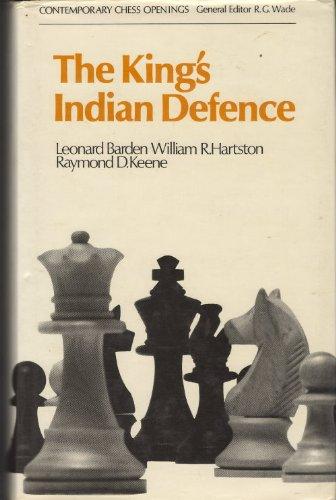
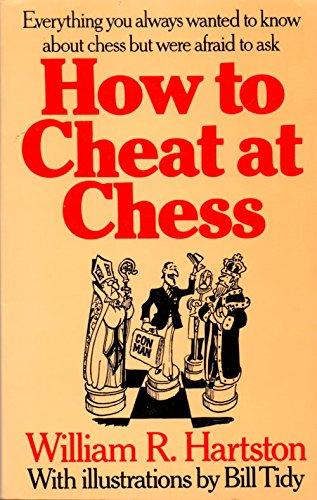
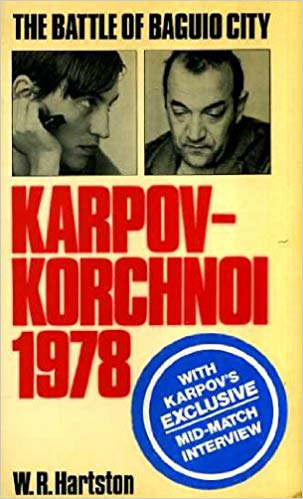
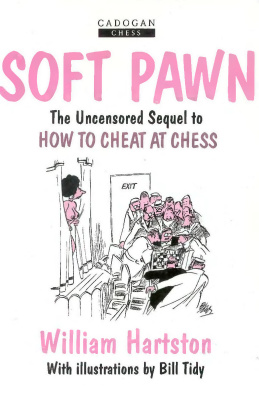
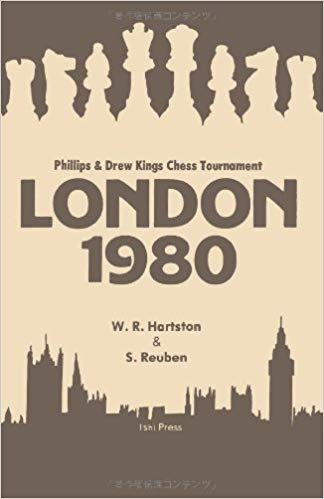
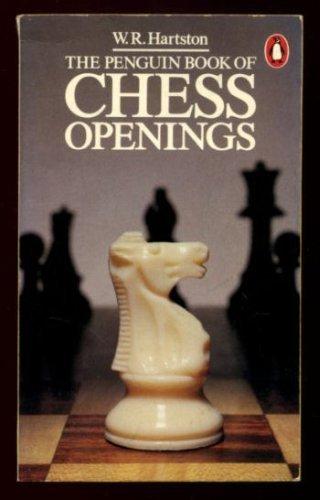
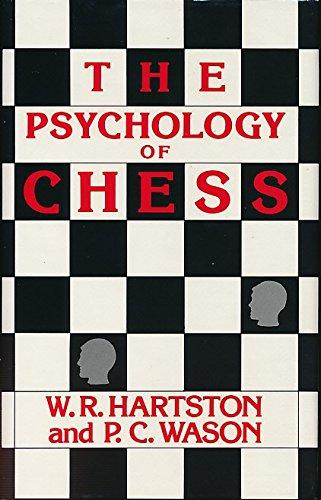
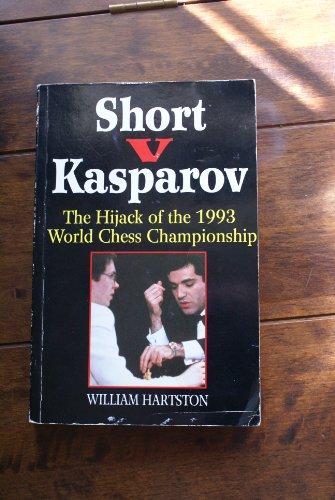
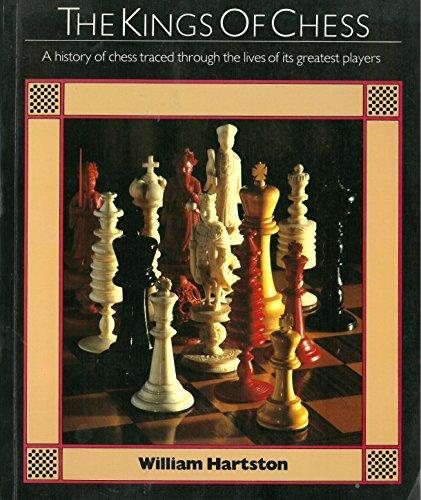
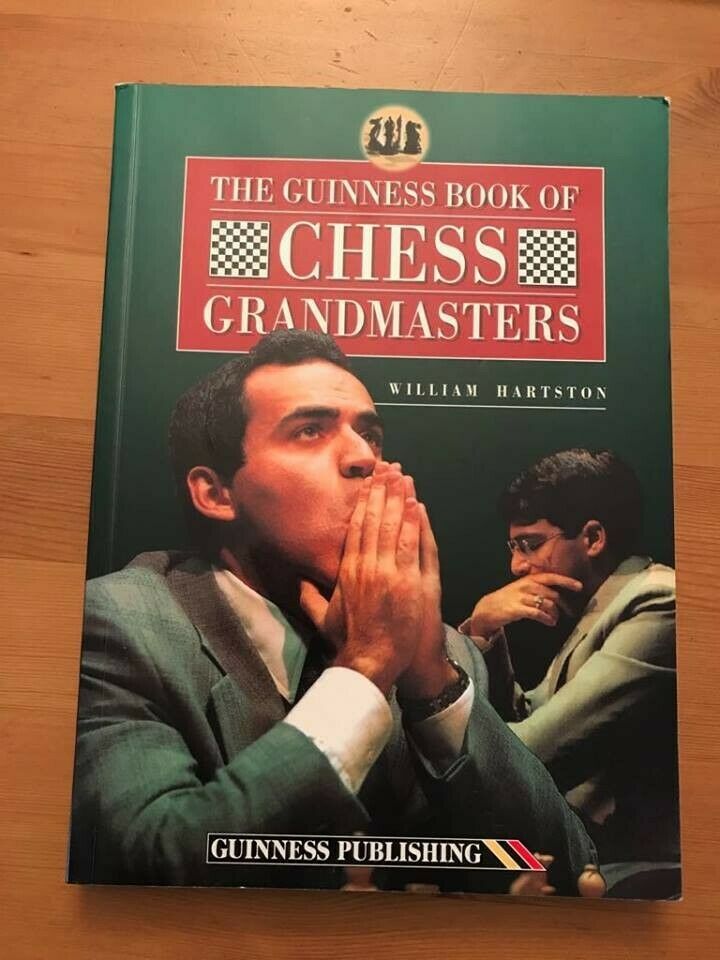
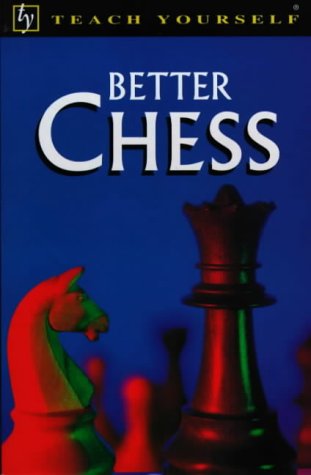
The King’s Indian Defence, 1969The Benoni, 1969How to Cheat at Chess, 1976The Best Games of C.H.O’D. Alexander, 1976The Grünfeld Defence, 1977Benoni, 1977Karpov-Korchnoi, 1978Soft Pawn, 1980The Phillips & Drew King’s Chess Tournament, 1980Play Chess, Hartston & Jeremy James, BBC, 1980The Penguin Book of Chess Openings, 1981The Psychology of Chess, 1984Short vs Kasparov, 1993The Kings of Chess, 1995The Guinness Book of Chess Grandmasters, 1996Teach Yourself Better Chess, Bill Hartston, Teach Yourself Books 08/01/1997, ISBN 13: 9780340670408
Save as PDF
We focus on the British Chess Scene Past & Present!
This website uses cookies to improve your experience. We'll assume you're ok with this, but you can opt-out if you wish. Cookie settingsACCEPT
Privacy & Cookies Policy
Privacy Overview
This website uses cookies to improve your experience while you navigate through the website. Out of these cookies, the cookies that are categorized as necessary are stored on your browser as they are as essential for the working of basic functionalities of the website. We also use third-party cookies that help us analyze and understand how you use this website. These cookies will be stored in your browser only with your consent. You also have the option to opt-out of these cookies. But opting out of some of these cookies may have an effect on your browsing experience.
Necessary cookies are absolutely essential for the website to function properly. This category only includes cookies that ensures basic functionalities and security features of the website. These cookies do not store any personal information.
 Save as PDF