Just over two years ago today we learnt the sad news that popular longtime Arbiter and Organizer David Welch had passed away at the age of 74 after a long illness: he was being cared for in The Royal Liverpool Hospital. The funeral took place at Landican Crematorium, Arrowe Park CH49 5LW at 12 noon on Friday 6th December. Following the funeral, the wake took place at the Grove House Hotel, Grove Road, Wallasey CH44 4BT.
David was born on Tuesday, October 30th 1945 in Brampton, Chesterfield, Derbyshire and attended Chesterfield Grammar School (see below).
He played for Wallasey Chess Club for many years having initially been a member of Liverpool Chess Club.
David attended Queens’ College, Cambridge reading Natural Sciences (Chemistry) and (according to John Swain) David served Cambridge University Chess Club as Junior Treasurer, Librarian and Bulletin Editor.
In 1968 David and Peter Purland started teaching at the same Liverpool school (Liverpool College) on the same day and continued their friendship from there. David also ran the college scout troop.
In the same year David joined Liverpool Chess Club and became a leading light fairly early on.
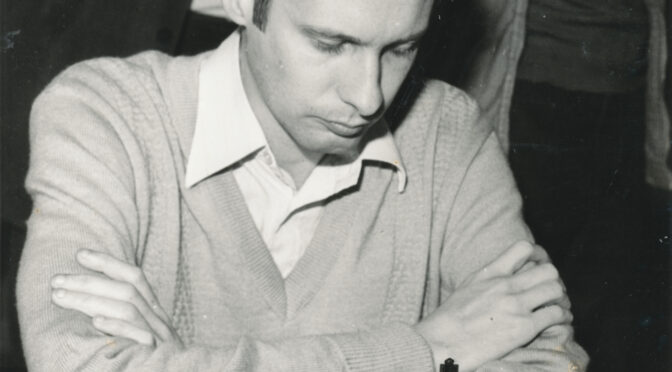
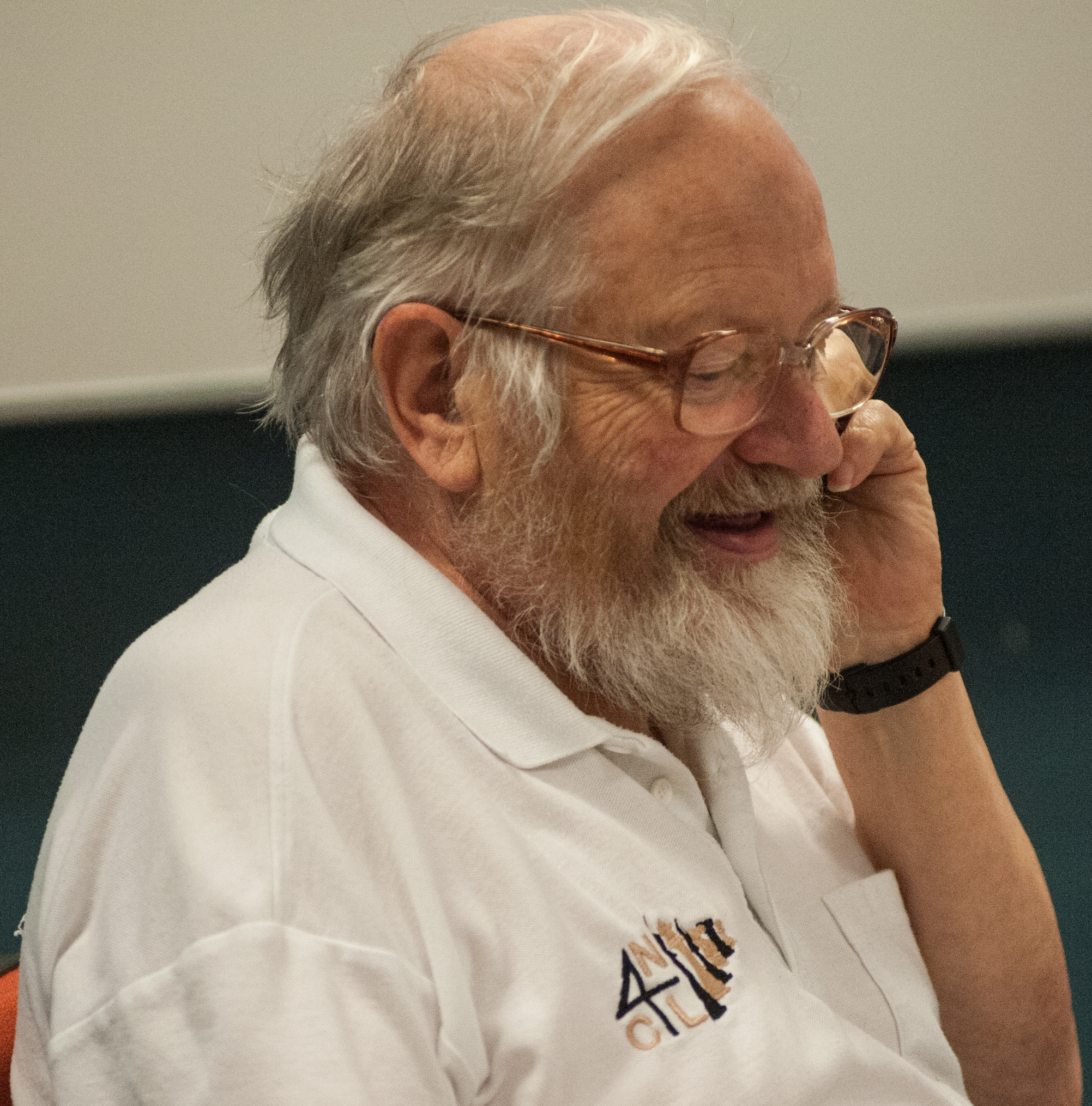
David Welch (30-x-1945 09-xi-2019), photograph by John Upham at 2012 4NCL
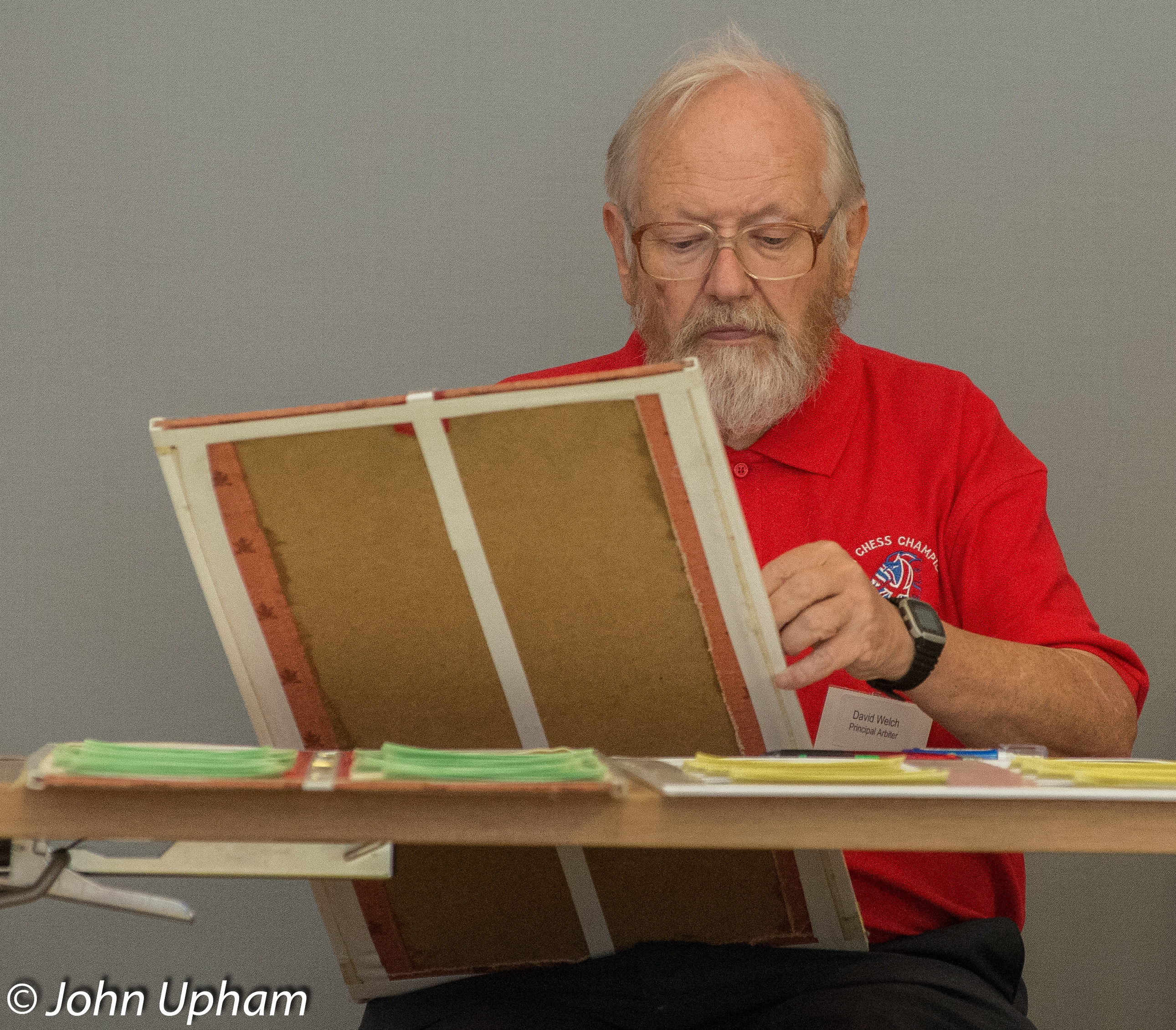
David became a BCF arbiter in the early 1970s eventually becoming the BCFs Chief Arbiter and then the ECFs Chief Arbiter and was heavily involved in many British Championships around the country.
David was curator of ECF equipment for some time and personally funded much of the BCFs and ECFs early equipment stock.
He became a FIDE International Arbiter as early as 1977 and was awarded the FIDE International Organizer title in 2010.
In 2007 David received the ECF Presidents Award from Gerry Walsh. Here is the citation in full (from the 2008 ECF Yearbook) :
“David Welch started chess organisation early being captain of the Chesterfield Grammar School team that played both in the school’s league and in the local adult league. He joined the Liverpool Chess Club after leaving University in 1968 and has held various posts with them , he is now their President. He set-up the Liverpool Chess Congress in about 1978.
Additionally, he was the director of the Liverpool Chess Congress. Although now defunct this was in its day the largest junior event in the UK (perhaps even the world) having 2000 entrants at the time of Spassky-Fisher (sic). He has also been involved in the Liverpool city of culture initiative.
He had also had a considerable involvement with the ECF. He is the the Merseyside representative to the ECF. He has been helping run the British Championships since 1981; starting at one of the arbiting team he has been Director/Manager of the congress since 2005. He has been Chief Arbiter of the Federation since about 1992. He also does the arbiting at a number of congresses and is, in particular, the Chief Arbiter of the 4NCL.”
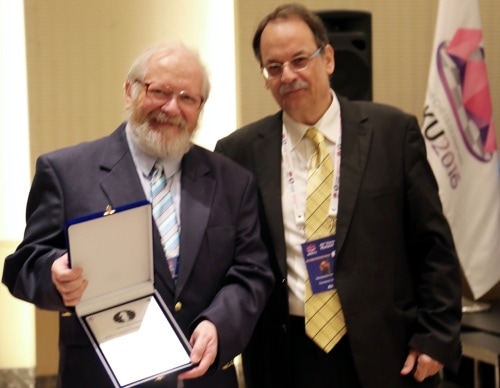
David Welch receives FIDE Arbiter Award
David shared the exact same date of birth as long time friend and fellow arbiter, Peter Purland.
in 2016 David received recognition from FIDE for his long service as an International Arbiter. David was the third English arbiter to receive the honour, following Stewart Reuben and Gerry Walsh in 2014.
We send our condolences to all of his many family and friends.
We remember Jacob Henry Sarratt who died 202 years ago today (November 6th) in 1819.
Chess historians will, of course, be familiar with JHS but the name is (probably) not well known outside these exalted circles.
Possibly his most obvious contribution to chess in England was in 1807 when he influenced the result of games that ended in stalemate. You may not know that in England prior to 1807 a game that ended in stalemate was recorded as a win for the party who was stalemated. JHS was able to encourage various major chess clubs so that the result be recorded as a draw. Much endgame theory would be different if it wasn’t for JHS !
“Jacob Henry Sarratt, born in 1772, worked primarily as schoolmaster but was much better known for his advocations which, of course, included chess.
After Philidor’s death, Verdoni (along with Leger, Carlier and Bernard – all four who co-authored Traité Théorique et Pratique du jeu des Echecs par une Societé d’ Amateurs) was considered one of the strongest players in the world, especially in England. Verdoni had taken Philidor’s place as house professional at Parsloe’s. He mentored Jacob Sarratt until he died in 1804. That year Sarratt became the house professional at the Salopian at Charing Cross in London and most of his contemporaries considered him London’s strongest player.
There he claimed the title of Professor of Chess while teaching chess at the price of a guinea per game.
By any measure Surratt was not a particularly strong player, but he was able to maintain the illusion that he was by avoiding the stronger players as he lorded over his students who didn’t know better.
Sarratt’s most important contribution to chess was that he mentored William Lewis who in turn mentored Alexander McDonnell.
Surratt had a strange notion that chess culminated in the 16th century and that everything since then had been a step backwards. This odd notion had a positive side. Philidor was the darling of the English chess scene. Almost all books at that time were versions of, or at least based on, Philidor’s book. Surratt at least kept open the possibility that there were ideas beyond those of Philidor.
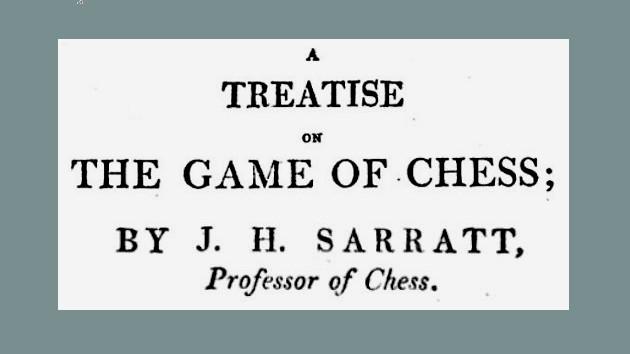
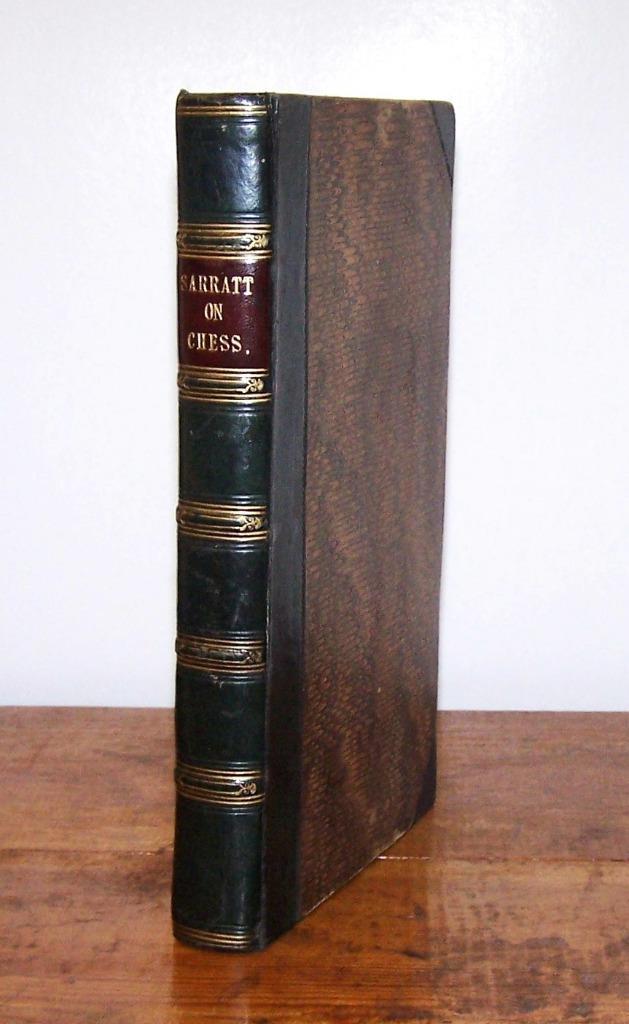
In 1808, true to his role as a teacher, Surratt published his Treatise on the Game of Chess, a book that mainly concentrated on direct attacks on the king which he lifted from the Modense writers.
He translated several older writers whom he admired (though his translations are not considered particularly good): The Works of Damiano, Ruy Lopez and Salvio in 1813. The Works of Gianutio and Gustavus Selenus in 1817.
In 1921 a posthumous edition of his Treatise, A New Treatise on the Game of Chess, was published. This copy covered the game of chess as a whole and was designed for the novice player. It also contained a 98 page analysis of the Muzio Gambit
In addition to his chess books, Surratt also published History of Man in 1802, A New Picture of London in 1803
He translated Three Monks!!! from French in 1803 and Koenigsmark the Robber from German in 1803.
His second wife, Elizabeth Camillia Dufour, was also a writer. In 1803 (before they were married, which was 1804), she published a novel called Aurora or the Mysterious Beauty.
They were married the following year. His first wife had died in 1802 at the age of 18. Both his wives were from Jersey.
Contrary to what one might expect, Sarratt has been described tall, lean and muscular and had even been a prize-fighter at one point. He had also bred dogs for fighting. He was regarded as a very affable fellow and very well-read but with limited taste (Ed : surely this applies to everyone ?)
William Hazlitt, in his essay On Coffee-House Politicians wrote:
[Dr. Whittle] was once sitting where Sarratt was playing a game at chess without seeing the board… Sarratt, who was a man of various accomplishments, afterwards bared his arm to convince us of his muscular strength…
Sarratt, the chess-player, was an extraordinary man. He had the same tenacious, epileptic faculty in other things that he had at chess, and could no more get any other ideas out of his mind than he could those of the figures on the board. He was a great reader, but had not the least taste. Indeed the violence of his memory tyrannised over and destroyed all power of selection. He could repeat [all] Ossian by heart, without knowing the best passage from the worst; and did not perceive he was tiring you to death by giving an account of the breed, education, and manners of fighting-dogs for hours together. The sense of reality quite superseded the distinction between the pleasurable and the painful. He was altogether a mechanical philosopher.”
Somewhere along the way there must have come about a complete reversal of his fortunes because Surratt died impoverished in 1819, leaving his wife destitute. But the resilient Elizabeth Sarratt was able to support herself by giving chess lessons to the aristocracy of Paris.
She must have been very well liked. In 1843 when she herself became old and unable to provide for herself, players from both England and France took up a fund to help her out. She lived until 1846.
From The Oxford Companion to Chess (OUP, 1984 & 1992) by Hooper & Whyld :
Reputedly the best player in England from around 1805 until his death. As a young man he met Philidor. Subsequently he developed his game by practice with a strong French player Hippolyte du Rourblanc (d. 1813), with whom he had a long friendship dating from 1798, and with Verdoni, Sarratt’s first important contribution to the game was in connection with the laws of chess: he persuaded the London club, founded in 1807, to accept that a game ending in stalemate should be regarded as a draw and not as a win for the player who is stalemated. He became a professional at the Salopian coffee house at Charing Cross, London,
Nos. 39-41, Charing Cross and the Timber Yard
and in 1808 wrote his Treatise on the Game of Chess.
Treatise on the Game of Chess by JH Sarratt, 1808
This, largely a compilation from the work of the Modenese masters, advocated that players should seek direct attack upon the enemy king, a style that dominated the game until the 1870s. An Oxford surgeon, W. Tuckwell, wrote that he learned chess ‘from the famous Sarratt, the great chess teacher, whose fee was as a guinea a lesson’. Lewis, who played many games with Sarratt from 1816, wrote in 1822 (after he had met both Deschapelles and Bourdonnais) that Sarratt was the most finished player he had ever met, Sarratt translated the works of several early writers on the game, making them known for the first time to English readers: The Works of Damiano, Ruy Lopez and Selenus (1813) and The Works of Gianutio and Gustavus Selenus (1817).
He died impoverished on 6 Nov. 1819 after a long illness during which he was unable lo earn a livelihood by teaching. Instead he wrote his New Treatise on the Game of Chess published posthumously in 1821, This is the first book to include a comprehensive beginner’s section: in more than 200 pages Sarratt teaches by means of question and answer. Another feature is a 98-page analysis of the Muzio gambit :
Had it been Sarratt’s ambition to become a chess professional there would have been scant opportunity during the lifetime of Philidor and Verdoni. A tall, lean, yet muscular man, sociable and talkative, he seems in his younger days to have had interests of a different kind, among them prize fighting and the breeding of fighting dogs. Hazlitt, who met Sarratt around 1812 wrote ‘He was a great reader, but had not the least taste. Indeed the violence of his memory tyrannised over and destroyed all power of selection. He could repeat Ossian by heart, without knowing the best passage from the worst.’
Sarratt’s early publications were History of Man (1802): translations of two Gothic novels, The Three Monks!!! (1803), from the French of Elisabeth Guénard (Baronne de Méré) , and Koenigsmark the Robber (1803), from the German of R. E. Raspe; A New Future of London (1803), an excellent guide that ran to several editions, the last in 1814, When war broke out with France in 1803 Sarratt became, for a short period, a lieutenant in the Royal York Mary-le-Bone Volunteers and published Life of Bonaparte * a propaganda booklet detailing Napoleon’s alleged war crimes, and warning of the desolation that would follow if he were to invade.
Not long after the birth of his second child in 1802 Sarratt’s wife died and in 1804 he married a Drury Lane singer, Elisabeth Camilla Du four. Tt would be difficult to find a more accomplished, a more amiable, or a happier couple than Mr and Mrs Sarratt’ – Mary Julia Young, Memoirs of Mrs Crouch (1806), Mrs Sarratt too was a writer contributing tales to various journals and publishing Aurora or the Mysterious Beauty (1803), a translation of a French novel. She survived her husband until 1846, ending her days giving chess lessons to the aristocracy in Paris. In 1843 Louis-Philippe and many players from England and France subscribed to a fund on her behalf. ”
From The Encyclopedia of Chess (Robert Hale, 1970 & 1976), Anne Sunnucks :
“Self-styled ‘Professor of Chess’, Sarratt was the first professional player to teach the game in England. He was the author of a A Treatise on the Game of Chess, The (1808), The Works of Damiano, Ruy Lopez and Salvio (1813), The Works of Gianutio and Gustavas Selenus (1817) and a New Treatise on the Game of Chess (1821).
There is no record of Sarratt’s date or place of birth, He began his career as a schoolmaster and later taught chess at Tom’s Coffee House, Cornhill, London, and at the London Chess Club, and was in his day considered to be the strongest player in London.”
From The Encyclopedia of Chess (Batsford, 1983), Harry Golombek OBE :
“Leading English player of the late eighteenth and early nineteenth century. Famed in his day as a teacher and author. Sarratt adopted the title of ‘Professor of Chess’, His writings include A Treatise on the Game of Chess, London 1808, The Works of Damiano, Ruy Lopez and Salvio (1813).
Sarratt is usually credited with introducing into England the Continental practise of counting a game ending in stalemate as a draw. (RDK)”
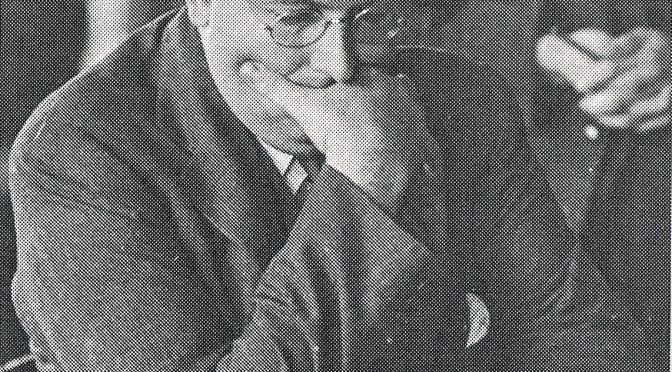
We remember Reginald Broadbent who passed away on October 29th 1988.
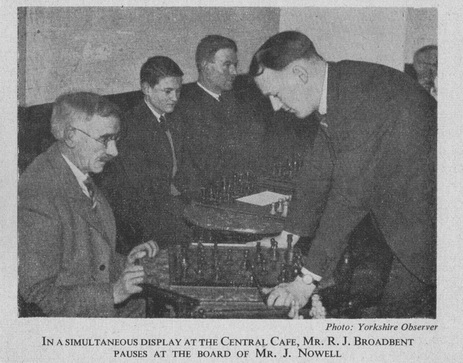
Reginald Joseph Broadbent was born on Friday, August 3rd 1906 (the year of the San Francisco earthquake) in Durban, South Africa. His father was Joseph Edward Broadbent (born 1879) who married Alice Cook on January 4th, 1903 in Durban.
According to the 1911 Isle of Man Census (FindMyPast, Richard James; thanks!) the Broadbent family (sans father) stayed at a guest house in Onchan on the night of February 2nd 1911. Reg (aged 4) was a boarder together with mother Alice (33), brother Roland (1) and sister Laura (4). Since Reg and Laura are both recorded as 4 years old it is reasonable to suppose that they were born as twins. We think that Reg had an additional sibling who had passed away and that the name is not recorded. Reassuringly Steve Mann agrees with this conclusion.
He married Catherine H Broadbent (née Crawford, born 19th September 1895) and were recorded as living (in 1939) in “Cheadle and Gately”, Cheshire. His profession was as a “Telephone Traffic Superintendent, Class II, Post Office Telephones” which was a a civil service occupation. Catherine carried out “unpaid domestic duties”.
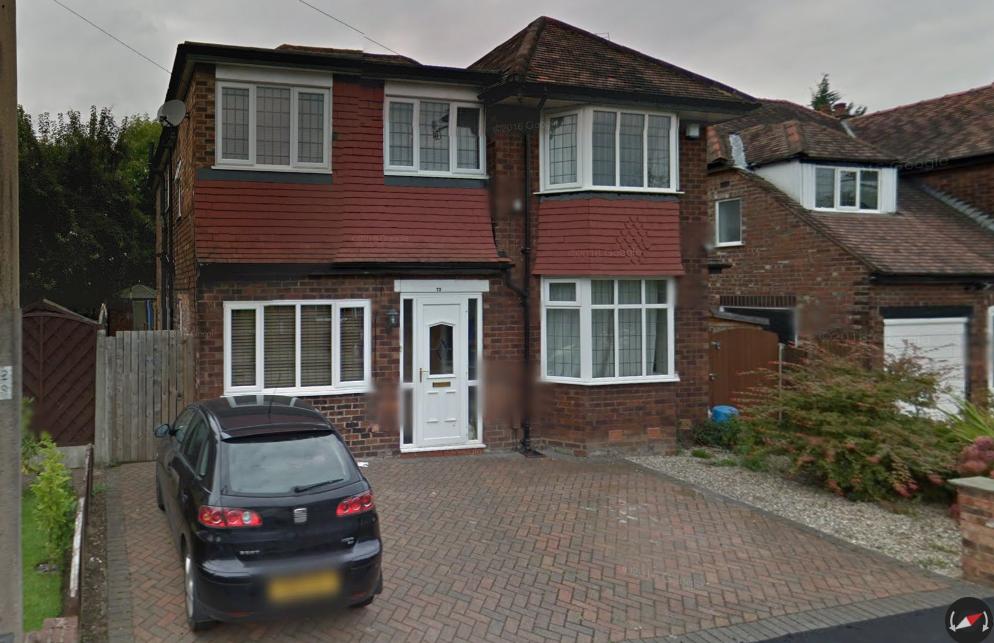
They resided at 72, South Park Road, Gatley, Cheshire :
“At some time in 1946 or 1947, Broadbent moved down south to live in the general vicinity of East Grinstead, at Far End, Limes Estate, Felbridge, 2 miles NW of East Grinstead, and later at Southway, Priory Road, Forest Row, 3 miles SE of East Grinstead”
Reg was eight times Northern Counties Chess Union (NCCU) Champion in 1933, 1934, 1935, 1936. 1937, 1938, 1945 and 1946.
The British Chess Magazine, Volume CVIII (108, 1988), #12 (December), p. 553 records this brief death announcement :
“Reginald J. Broadbent, British Champion 1948 and 1950 died on October 29 at the age of 82. He was a member of Manchester and Bradford Chess Clubs in his day, and was famous for his remarkable record in Anglo-Dutch matches.
After he moved to London around 1950 he was less free to play due to his senior post with the Post Office. A fuller notice will appear next month.”
As advertised in the British Chess Magazine, Volume CIX (109, 1989), #1 (January), p. 27 we have :
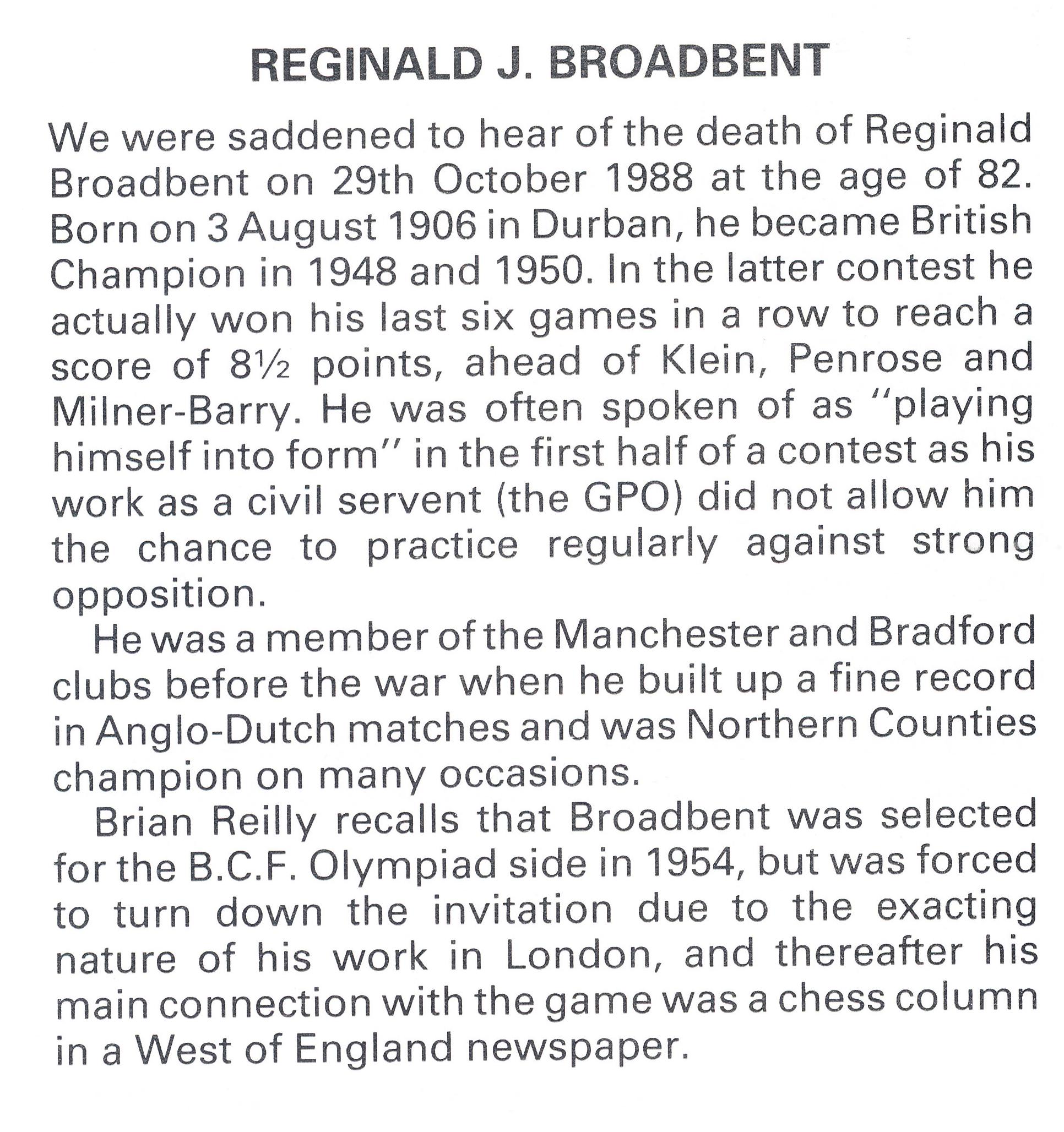
“Reginald Broadbent (3 viii 1906-29x 1988) was born at Durban and was British Champion in 1948 and 1950. In the latter content he actually won his last six games in a row to reach a score of 8.5 points, ahead of Klein, Penrose and Milner-Barry. He was often spoken of as “playing himself into form” in the first half of a contest as his work as a civil servant (the GPO) did not allow him the chance to practise regularly against strong opposition.
He was a member of the Manchester and Bradford clubs before the war when he built up a fine record in Anglo-Dutch matches and Northern Counties champion on many occasions.
Brian Reilly recalls that Broadbent was selected for the BCF Olympiad side in 1954, but was forced to turn down the invitation due to the exacting nature of his work in London, and thereafter his main connection with the game was a chess column in a West of England newspaper (The Western Morning News*) . He was a subscriber to BCM right up to his death.”
With the white pieces Broadbent was a die-hard 1.e4 player who allowed the Marshall Attack against the Ruy Lopez.
As the second player RJB defended the Nimzo-Indian Defence and played Open games.
In the March issue of CHESS for 1963, (Volume 28, Number 427, pp.147-155) William Winter wrote this:
R. J. Broadbent’s one weakness
R. J. Broadbent I consider to be typical of the best type of English amateur the Atkins type. A civil servant by profession he wins the Championship title, then retires to his country home in Surrey where he happily spends his time in gardening till the next championship comes along. Occasionally he is dragged out to play in a County match but he takes a lot of dragging. As a player he has great natural attainments and a temperament for the game, but he handicaps himself by the paucity of his opening knowledge. This compels him to start thinking almost from the word ‘go’ and the result is that he invariably gets on bad terms with his clock.
One of his great assets is his endgame in which he is perhaps superior to any practising British player. His skill in this department has rescued him from many a grim position. If he had studied the openings, and played in more tournaments, he might have gone far. As it is he is, and I fear will remain, just a first class British amateur. Probably he prefers it that way.
Here is one of his best games :
For an element of déjà vu here is RJBs obituary from the 1989 – 1990 BCF Yearbook, page 14 :
(The Yearbook editor was Brian Concannon and it would appear standard practise, at the time, not to credit or attribute sources for obituaries.)
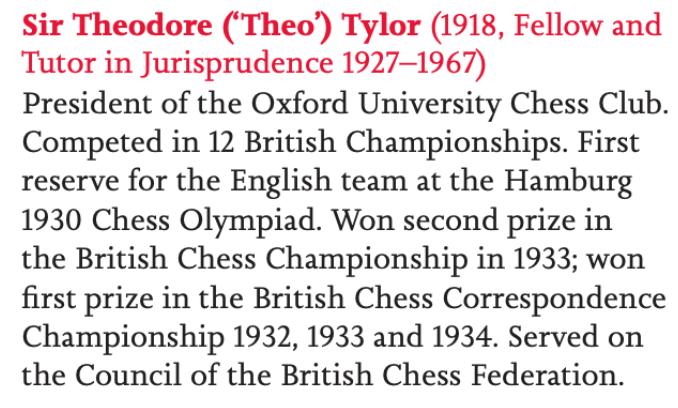
BCN remembers Sir Theodore Tylor who passed away on Wednesday, October 23rd, 1968.
Theodore Henry Tylor was born on Sunday, May 13th, 1900 in Bournville, (at the time) in northern Worcestershire. Now Bournville is in the metropolitan borough of Birmingham.
His father was Henry Bedford Tylor and his mother Minnie Belle Cater were both 29 when Theo was born. He had one sister Rachel Hope who was born on 1 November 1909 in Kings Norton, Worcestershire, when Theodore Henry was 9 years old.
In the 1911 census Theo is shown as living in Worcester as a student. His father passed away on 26 February 1915 in Birmingham, Warwickshire, at the age of 44.
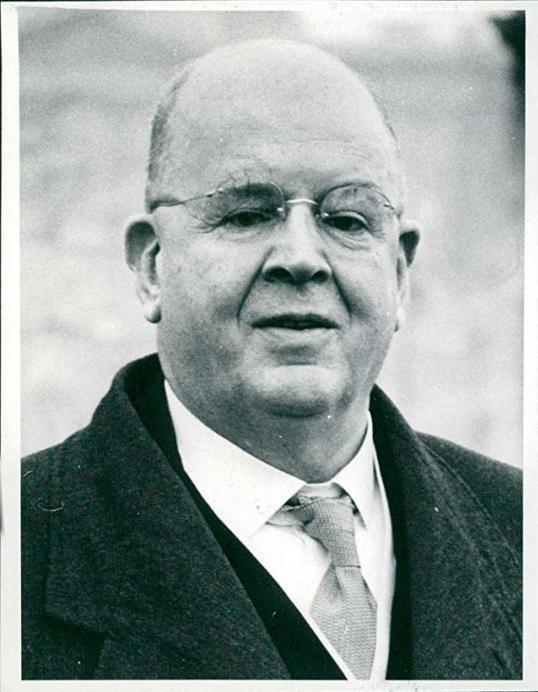
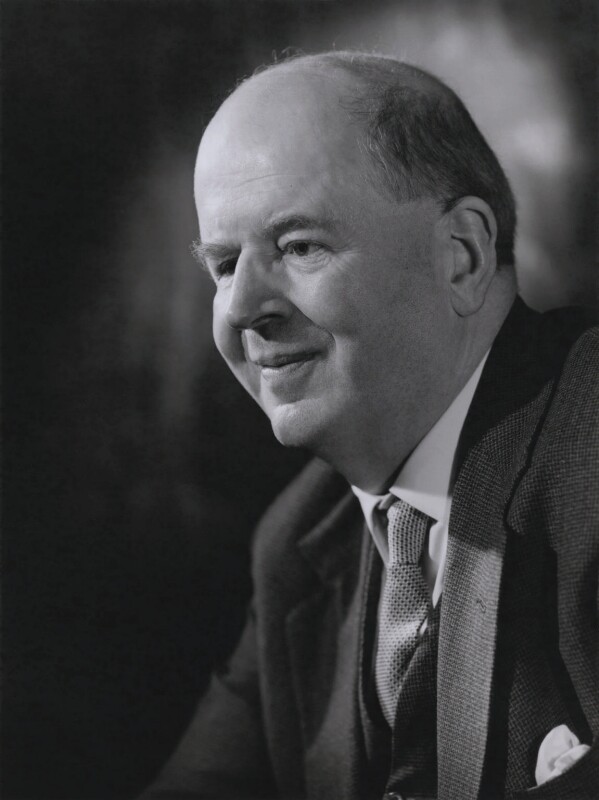
Theodore Henry Tylor, Courtesy of John Saunders and Britbase
In 1939 Theo was living at 2, Rawlinson Road, Oxford where he continued to live until his death.
We are grateful to John Foley writing in Floreat Domus (the Balliol College magazine) who wrote this about Tylor :
Article about TH Tylor by John Foley
and, following this, John reproduced an item from On the Basis of of Hearsay, Grosvenor House Publishing, 2018 :
Chess in the 1950s : Fred Fishburn Remembers
From British Chess Magazine, Volume LXXXIX (1969), Number 1 (January), pp 6-7 we have the following article :
“The death of Sir Theodore H. Tylor at the age of sixty-eight was reported in The Times of October 24th. The announcement will be received with deep regret by the many chess enthusiasts who will remember him as a cheerful and extremely resourceful opponent who triumphed over the handicap of near-blindness and lived such a full and distinguished life that it earned him the admiration and respect of the world.
The Times has already done full justice to his work as Fellow and Tutor in Jurisprudence at Balliol for nearly forty years and to his service to organizations for the blind for which he was most justly knighted in 1965, but it barely mentioned that side of his life with which we chess-players were more intimately acquainted.
His education at Worcester College for the Blind naturally brought him into contact with chess and he became a very strong player. ln 1925, at the age of twenty-five, he was among the twelve players selected for the British Championship at Stratford-on-Avon and fully justified the selectors’confidence by taking fourth prize, behind Atkins, Yates, and Edmund Spencer, and ahead of Winter.
It was another four years before he became really active, but in 1929 he again played in the Championship and shared fourth prize with J. H. Morrison and W. Winter behind, Sultan Khan, H. E. Price, and R. P. Michell. He followed this with his first visit to Hastings and in the 1929-30 congress put up the best performance of his career, sharing first prize with Koltanowski, in front of Flohr, Reijifir, Rellstab, Alexander, Jackson, Noteboom, Vidmar Jnr., and Winser. This, by the way, was only a Premier Reserves!
This performance evidently impressed the selectors, for the following summer brought an invitation to play for the B.C.F. team in the Hamburg Olympiad, where he won one, drew four, and lost two games. ln the 1930-31 Hastings Congress he made the first of nine appearances in the Premier Tourney, but he never managed to maintain sufficient consistency to win honours in this exalted company and was never able to finish higher than equal sixth (in
1936-7). ln the nine tournaments he won ten tames (of which only two were against non-British opposition-Feigin and Medina) and drew thirty-three (including World Champions Alekhine and Euwe and grandmasters Fine, Flohr (three times), Keres, Sultan Khan, Tartakower, and Vidmar). ln 1934-5 he again tied with Koltanowski for first place in the Premier Reserves.
Sir Theodore Henry Tylor
ln twelve British Championships his best performance was at Hastings in 1933 where he finished second, 1/2 point behind Sultan Khan and lost only to C. H. O’D. Alexander. In nine of the twelve he was in the first six, and was four times a prize-winner. He was chosen to play for England against Holland in 1938, 1948, and 1952, and against Yugoslavia in 1951. ln these games he won four and lost four. He was selected to play against
the U.S.S.R. in 1946, but had to withdraw at the last minute.
In 1936 he was chosen as one of the four British players in the Nottingham lnternational Tournament. This caused some dissatisfaction among other disappointed aspirants, but he came ahead of Alexander, Thomas, and Winter and captured the scalps of Flohr and Tartakower. ln the same year he was fifth at Margate, where he drew with Capablanca, Lundin, and Stahlberg.
Finally, a word should be said about his work away from the board. For six years he was President of the Chess Education Society, in whose work he took a lively interest from its foundation in 1943. He was President of the Midland Counties Union from 1946-9. He played top board for Oxfordshire for many years and captained the team for a period. We mourn a great friend of chess and a fine player who was a true amateur and obviously enjoyed every minute he spent among us.”
“In spite of the handicap of partial blindness, Tylor enjoyed a successful academic career and was for nearly forty years a Fellow and tutor in jurisprudence at Balliol College, Oxford. He took up chess seriously while a schoolboy at Worcester College for the Blind and later as an undergraduate captained the Oxford University chess team.
At Hastings 1929/30, Tylor shared first prize with Koltanowski in the Premier Reserves ahead of Flohr, Reijfir, Rellstab, Alexander, Jackson, Noteboom, Vidmar Jr. and Winser. He played in the Hastings Premier event on nine occasions, but never finished in the top half. He competed in the British Championship twelve times, his best result being 2nd to Sultan Khan in 1933. He was selected for the BCF team in the Hamburg 1930 Olympiad and was British Correspondence Champion in 1933, 1934 and 1935.”
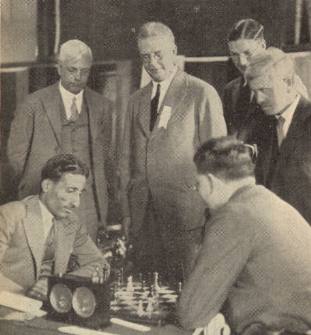
Worcester, circa 1931: Mir Sultan Khan (left) plays Theodore Tylor, while Sir George Thomas (far left) and Arthur Mackenzie (far right) spectate. Photo courtesy of Britbase.
“Sir Theodore Henry Tylor (13 May 1900 – 23 October 1968)[1] was a lawyer and international level chess player, despite being nearly blind. In 1965, he was knighted for his service to organisations for the blind. He was Fellow and Tutor in Jurisprudence at Balliol College, Oxford for almost forty years.[2]
Born in Bournville, Tylor learned to play chess at age seven. His chess skill increased while he attended Worcester College for the Blind from 1909 to 1918. He studied at Oxford University beginning in 1918, and captained the Oxford University Chess Club. Tylor received First-class Honours in Jurisprudence in 1922 and was made an honorary scholar of Balliol College. The next year, he became a Bachelor of Civil Law and a lecturer at Balliol College. Called to the Bar by the Inner Temple with a certificate of honour, he was made a Fellow at Balliol College in 1928.”
“Tylor competed in twelve British Championships, finishing fourth in his first appearance in 1925. His best result was in 1933, finishing second to Mir Sultan Khan.[2][3] He tied for first at the 1929/30 Hastings Premier Reserves alongside George Koltanowski ahead of Salo Flohr, Josef Rejfiř, Ludwig Rellstab, C.H.O’D. Alexander, Daniël Noteboom, and Milan Vidmar.[2] Tylor played in the top section, the Hastings Premier, nine times beginning in 1930/1. His best finish was 6th= in 1936/7.[3] He was first reserve for the English team at the Hamburg 1930 Chess Olympiad.
Tylor won the British Correspondence Chess Championship in 1932, 1933, and 1934.[1][2] He shared 5–6th at Margate 1936 with P. S. Milner-Barry, but he won their individual game and drew with 2nd- to 4th-place finishers José Raúl Capablanca, Gideon Ståhlberg, and Erik Lundin (Salo Flohr won). Although he finished 12th at Nottingham 1936, he had the best score of the British participants, ahead of C. H. O’D. Alexander, G. A. Thomas, and William Winter.[5] Mikhail Botvinnik noted that Tylor was using a tactile chess board that he incessantly fingered, as well as a device for counting the number of moves made.”
“Tylor was President of the Midland Counties’ Chess Union from 1947 to 1950, but his work for the university and for the welfare of the blind limited the time he had to devote to chess. Tylor also enjoyed bridge.[3] He died in Oxford on 23 October 1968.”
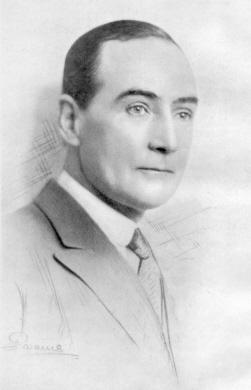
Philip Walsingham Sergeant from A Century of British Chess from a photograph by F.A. Swaine Ltd. (1934)
BCN remembers Philip Walsingham Sergeant who passed away on Monday, October 20th 1952.
PWS was born in Kensington on Saturday, January 27th, 1872 to Lewis Sergeant and Emma Louisa Sergeant (née Robertson) and was baptised at All Saints Church, Notting Hill. According to PWS’s baptism record Lewis was an author.
According to PWS in A Century of British Chess :
“When I was seven years of age – about the period, by the way, in which my father began to teach me Greek – he began also to initiate me into chess. Not that he designed it as a consolatory set-off to my application to Greek; for he loved the Classics well, though, going up to Cambridge with small classical exhibition, he had turned to Mathematics, and therein took his degree. ”
According to the 1881 census PWS (aged 9) lived with his parents and numerous siblings : Dorothy (aged 7), Winifred (6), Hilda (5), Bernard (2), John (his grandfather aged 76) and Mary (his grandmother aged 75). They had staff, Elizabeth Fraser and Sarah Martin. They lived at 10, Addison Road, North, Kensington.
According to “Joseph Foster. Oxford Men and Their Colleges, 1880-1892. 2 vols. Oxford, England: James Parker and Co, 1893″ :
PWS attended St. Paul’s School and then Trinity College, Oxford to read Classics where he attained Honour Moderations.
and here is the record from the above publication :
Entry for Philip Walsingham Sergeant in Joseph Foster. Oxford Men and Their Colleges, 1880-1892. 2 vols. Oxford, England: James Parker and Co, 1893
We do not know if PWS played in the Varsity matches of 1892 – 1895 : Britbase does not (yet) include player details for these matches.
PWS married Minnie Boundford (born 27th February 1889) in 1909 in Hampstead and they lived at 5, Dukes Avenue, Chiswick where PWS was listed as an author and Minnie as someone who carried out “unpaid domestic duties”. Minnie was 17 years younger than PWS. Minnie’s father was a joiner and a carpenter.
They had two daughters Margaret (born 1910) and Kathleen (born 1911).
In October 1946 Minnie and PWS remarried. Presumably this was rather unusual in that day and age.
According to The Oxford Companion to Chess (OUP, 2nd edition, 1996) by Hooper and Whyld :
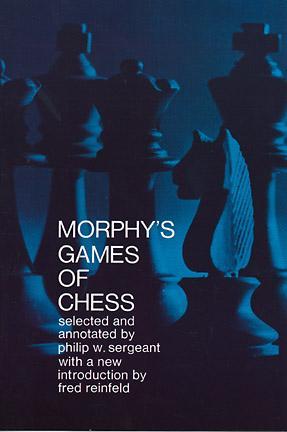
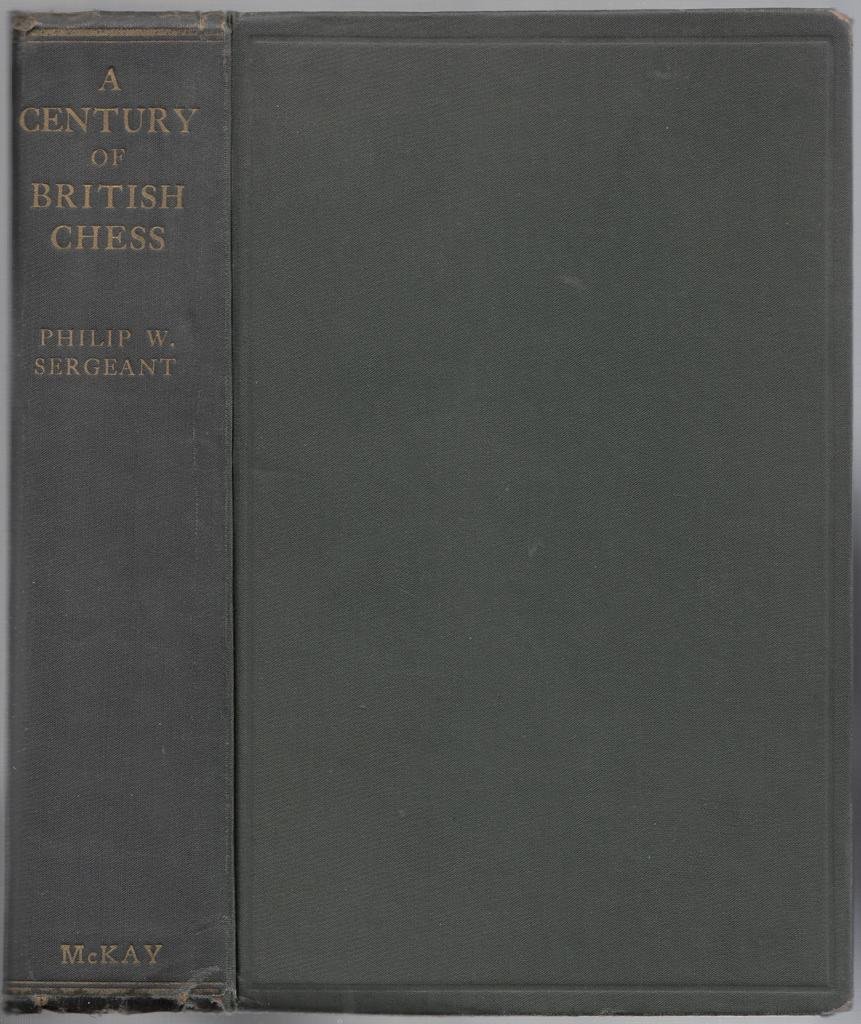
PWS was an English author of biographical games collections for Charousek, Morphy and Pillsbury as well as other works of importance such as A Century of British Chess (1943) and Championship Chess (1938).
From The Encyclopedia of Chess (BT Batsford, 1977) by Harry Golombek :
“A professional writer on chess and popular historical subjects. Without any pretentions to mastership, he represented Oxford University in the years 1892 – 5 and assisted RC Griffith in preparing three editions of Modern Chess Openings.
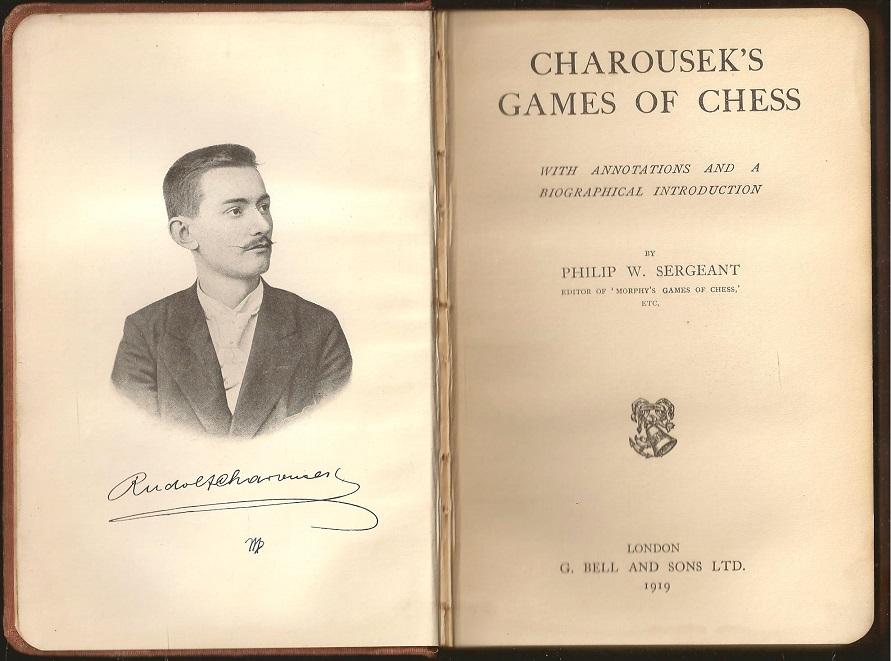
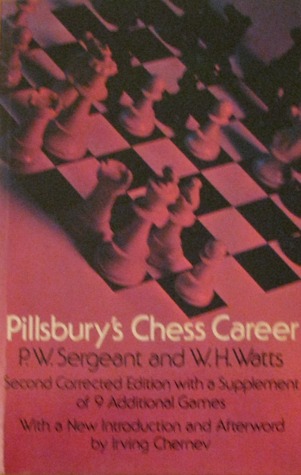
In chess he dealt with a number of important subjects : Morphy’s Games of Chess, London, 1916; Charousek’s Games of Chess, London, 1919; Pillsbury’s Chess Career (in collaboration with WH Watts), London, 1923; Championship Chess, London, 1938.
All these are lucidly and carefully written but suffer from the defect that, being neither a master player nor a professional annotator, he was not competent to deal with the annotational part of the work. Probably his best book on chess was A Century of British Chess, London, 1934.
From British Chess Magazine, Volume LXX11 (72), Number 11 (November), page 324 we have this rather brief obituary (presumably written by Brian Reilly):
“We regret to have to report the death, at the age of eighty-one of Philip W. Sergeant, the author of A Century of British Chess, which we imagine is in most chess libraries. He was the author of several well-known historical books – but we are only concerned here with his chess activities, which included representing Oxford University 1892-5; helping RC Griffith with two editions of Modern Chess Openings; playing for Middlesex, winning the chess championship of the authors’ club for several year, and latterly as an honoured member; and occasionally obtaining the championship of the Guildford Chess Club. Our sympathy with his widow and two daughters is sincere.”
”
“Philip Walsingham Sergeant (27 January 1872, Notting Hill, London[1] – 20 October 1952)[2] was a British professional writer on chess and popular historical subjects.[3][4] He collaborated on the fifth (1933), sixth (1939), and seventh (1946) editions of Modern Chess Openings, an important reference work on the chess openings. He also wrote biographical game collections of Paul Morphy (Morphy’s Games of Chess (1916) and Morphy Gleanings), Rudolf Charousek (Charousek’s Games of Chess (1919)), and Harry Nelson Pillsbury (Pillsbury’s Chess Career, with W. H. Watts, 1922), and other important books such as A Century of British Chess (1934) and Championship Chess (1938).”
Harry Golombek writes that, “Without any pretensions to mastership, he represented Oxford University in the years 1892-5”.[3] Golombek considers A Century of British Chess probably Sergeant’s best chess book, but opines that although Sergeant’s chess books are lucidly written, they suffer from the defect that, as a non-master, he was not competent to deal with the annotational aspect of his work.
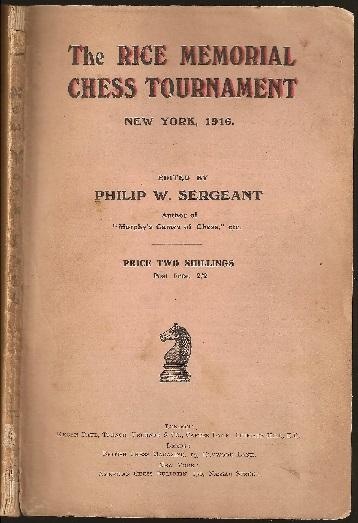
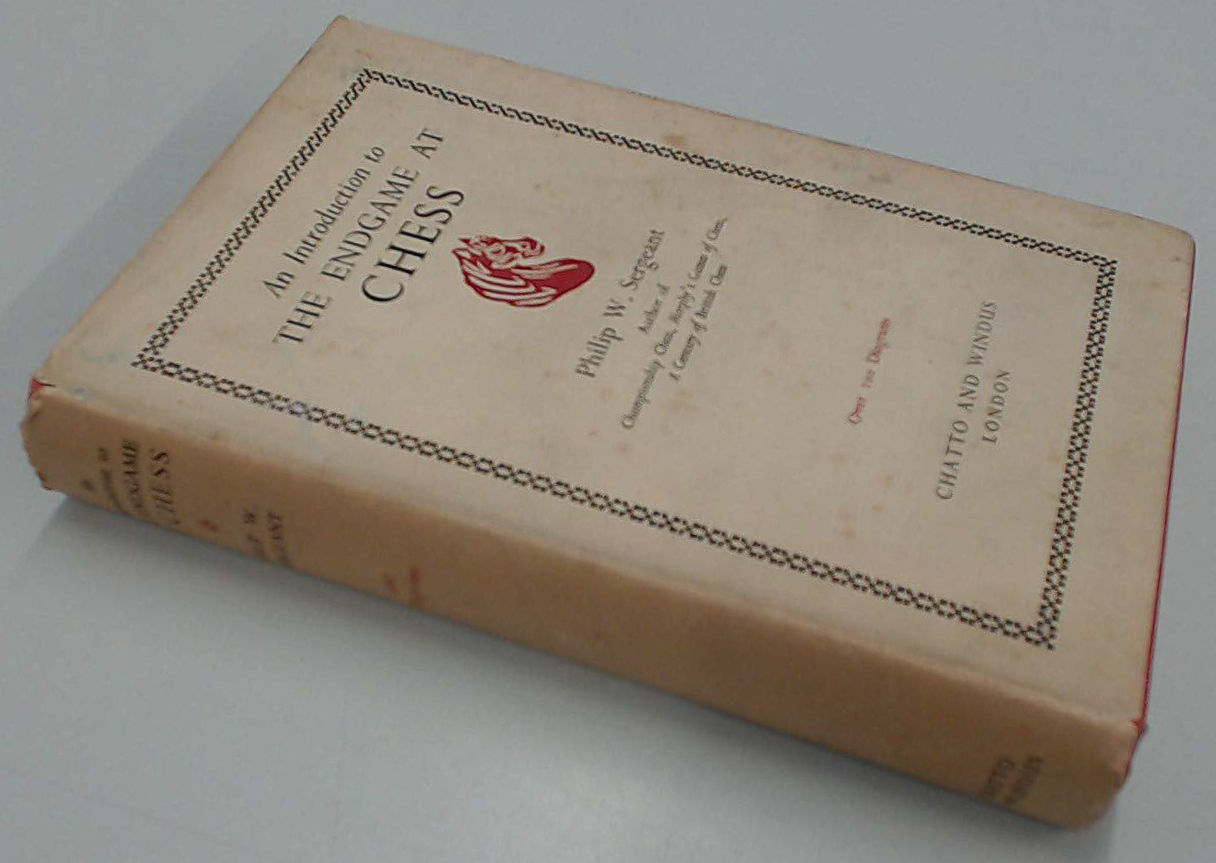
Philip Walsingham SergeantCharousek’s Games of ChessThe Rice Memorial Chess Tournament, 1916Pillsbury’s Chess Career, London, 1923A Century of British Chess, London, 1934An Introduction to the Endgame at Chess
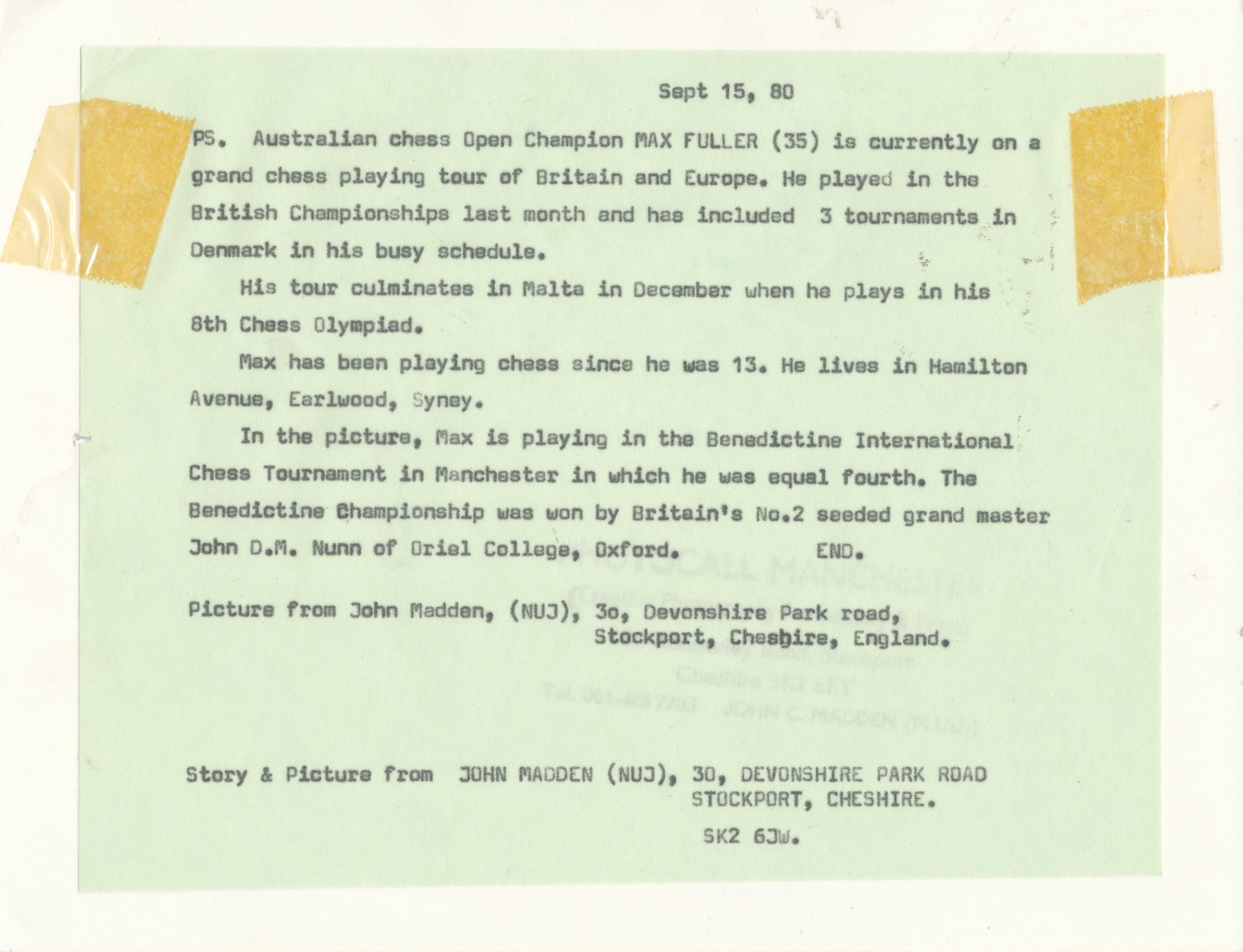
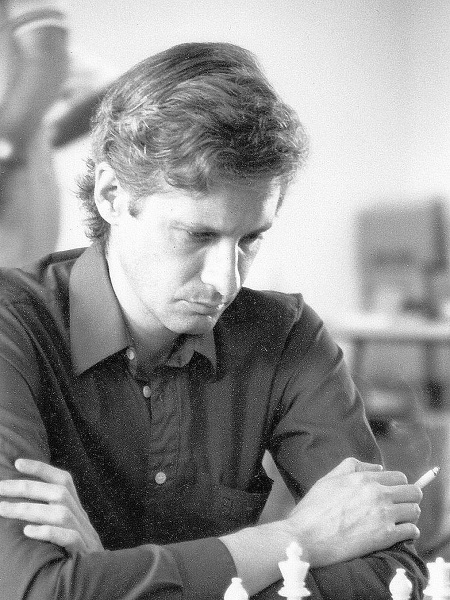
September 15th, 1980. Australian Open Chess Champion Max Fuller (35) is currently on a grand chess playing tour of Britain and Europe. He played in the British Championships last month and has included three tournaments in Denmark in his busy schedule. His tour culminates in Malta in December when he plays in his 8th chess Olympiad. Max has been playing chess since he was 13. He lives in Hamilton Avenue, Earlwood, Sydney. In the picture Max is playing in the Benedictine International Chess tournament in Manchester in which he was equal fourth. The Benedictine Championship was won by Britain’s number 2 seeded Grandmaster John DM Nunn of Oriel College Oxford. Picture from John Madden (NUJ)
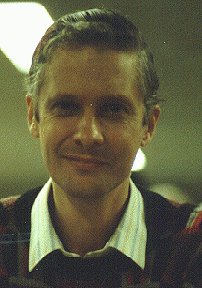
BCN Remembers FM Max Fuller (28-i-1945 27-viii-2013)
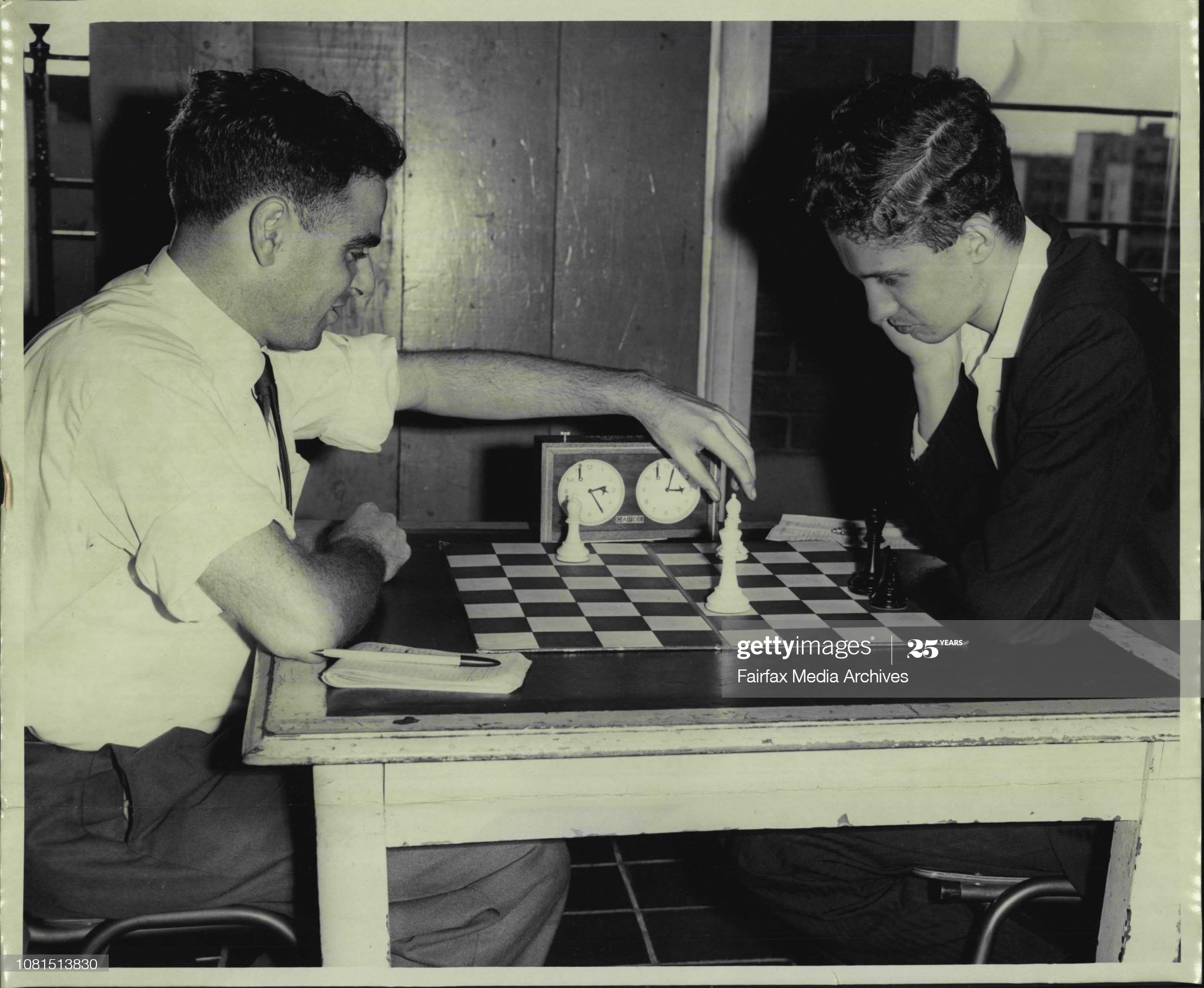
Tonight two Sydney ***** the N.S.W. Chess Championship at the Chess centre Liverpool St., City. They are Fred E Flatow, 28 of Belmore (left.) and Max Fuller, 21, of Kingsgrove (right). They have been playing for about 10 Hrs up till 6.15 p.m. and had move 121. The match will go on till move 144 at which stage a draw will be declared or until either man wins before then. February 23, 1966. (Photo by Richard John Pinfold/Fairfax Media via Getty Images).
Maxwell Leonard Fuller was born on Sunday, January 28th 1945 in Sydney, New South Wales. He was brought up by his mother and, according to Ian Rogers, his step-father with whom he did not get on.
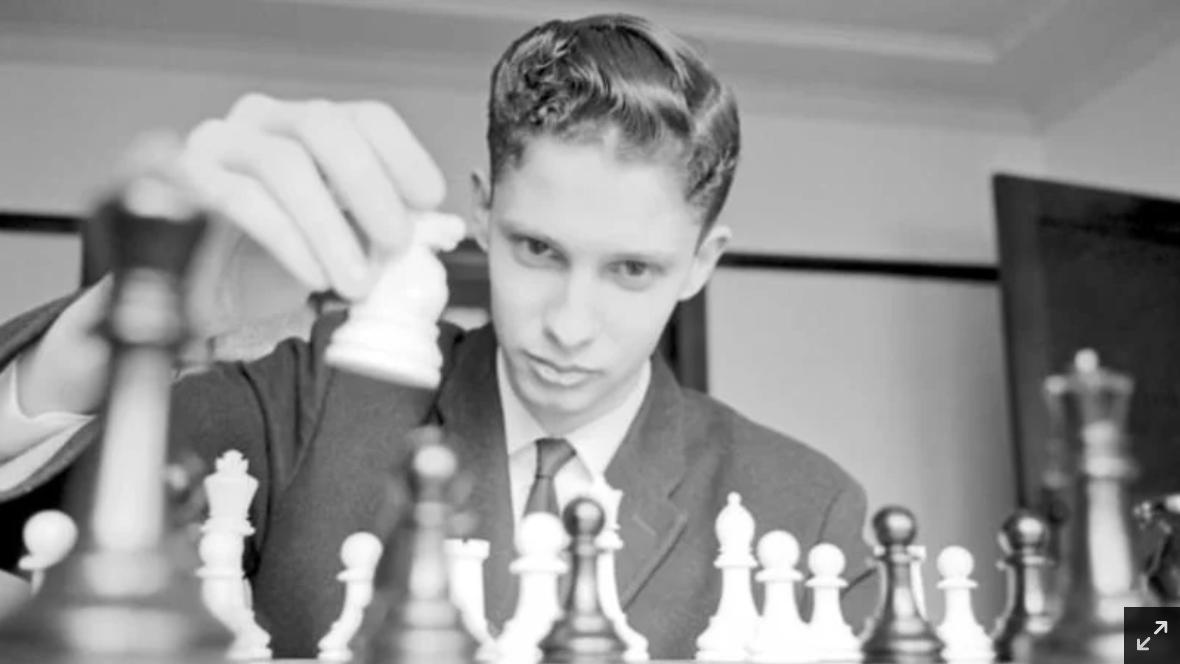
Knight moves: Max Fuller in 1964. He went on to become Australia’s No.1 player and toured the world.CREDIT:STUART MACGLADRIE
He was Australian Junior Champion in 1962.
He won the New South Wales title in 1965 (and then in 1986 and 1988).
Max came to England in late 1968 to play at Hastings and then chose to settle here. He played for Lewisham chess club. He won the Whitby Open in 1969 (See BCM, Volume LXXXIX, Number 8, page 264).
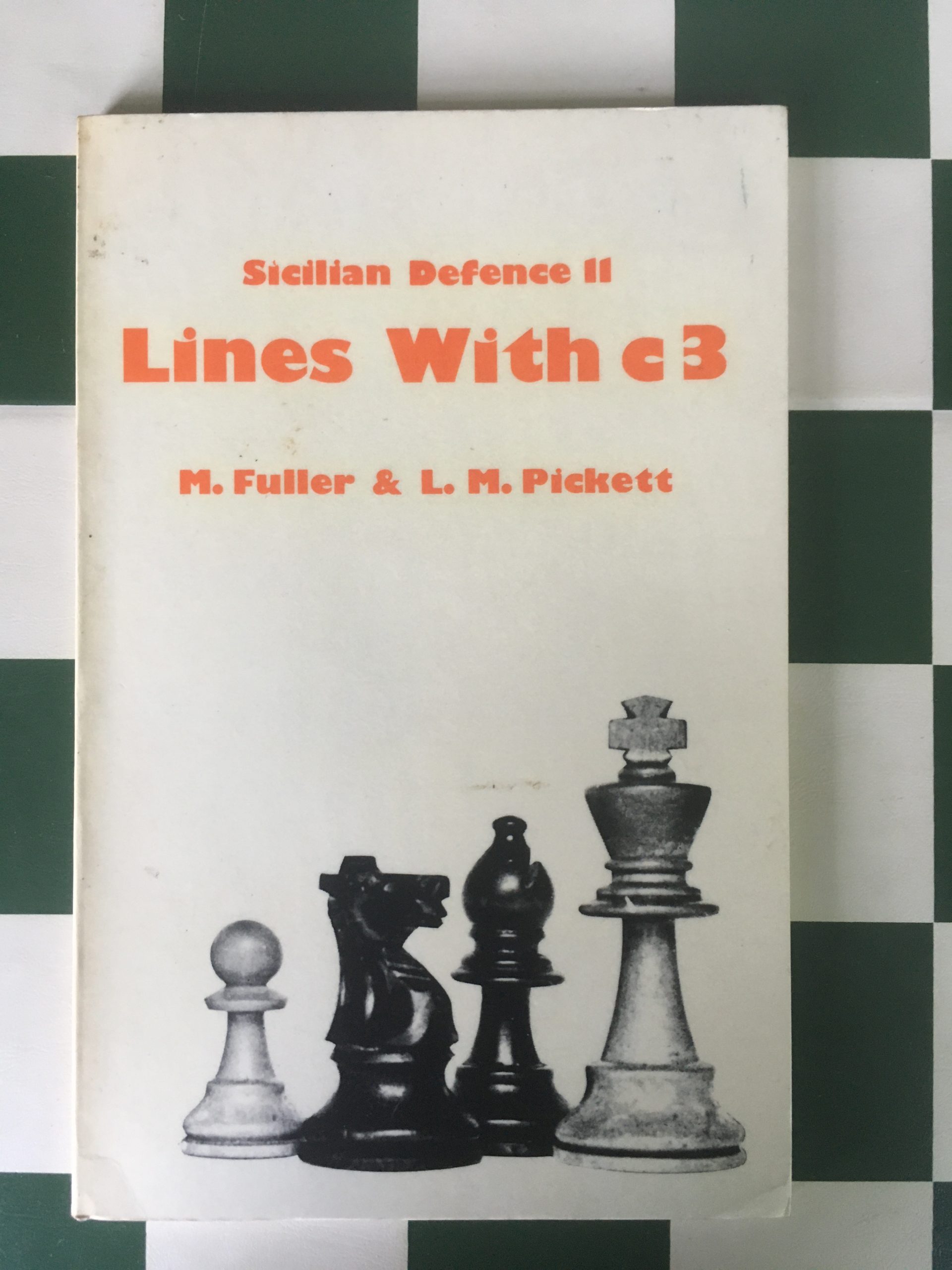
In the 1970s be played board one for Australia whilst maintaining a FIDE rating of 2450, and, according to chessgames.com : “Fuller finished equal second in the British championship in 1970 and 1975, winner of the Doeberl Cup three times, winner of the Australian Open three times, Joint Australian Champion 1972 with Trevor Hay and competed in nine Olympiads for Australia from 1964-1990. In 1974, he won the 101st Athenaeum Chess Club Jubilee tournament, held in London.”
He became a FIDE Master in 1980
Fuller returned to chess in 2004 after an eight-year absence and finished equal second in the 2004 and 2005 NSW championships.
According to IM Gary Lane : “Max had a heart attack and died on the day he was attending the funeral of his pal Peter Parr”
With the white pieces Max essayed the Ruy Lopez with a penchant for the exchange variation but nonetheless he was flexible and varied.
As the second player against 1.e4 he was versatile with a broad range of defences and likewise facing 1.d4/1.Nf3 he was difficult to prepare for.
According to British Chess Magazine, Volume CXXXIII (2013), Number 9 (September), page 450 :
“From Australia the saddest of news, the passing Maxwell Leonard Fuller (28 i 1945 Sydney – 27 viii 2013 Sydney). FM Max Fuller played in seven BCF Championships, 1969 -80. He later claimed the scalps of Short, Miles and Chandler. He was the most determined player imaginable and had the broadest of opening repertoires. (James Pratt)”
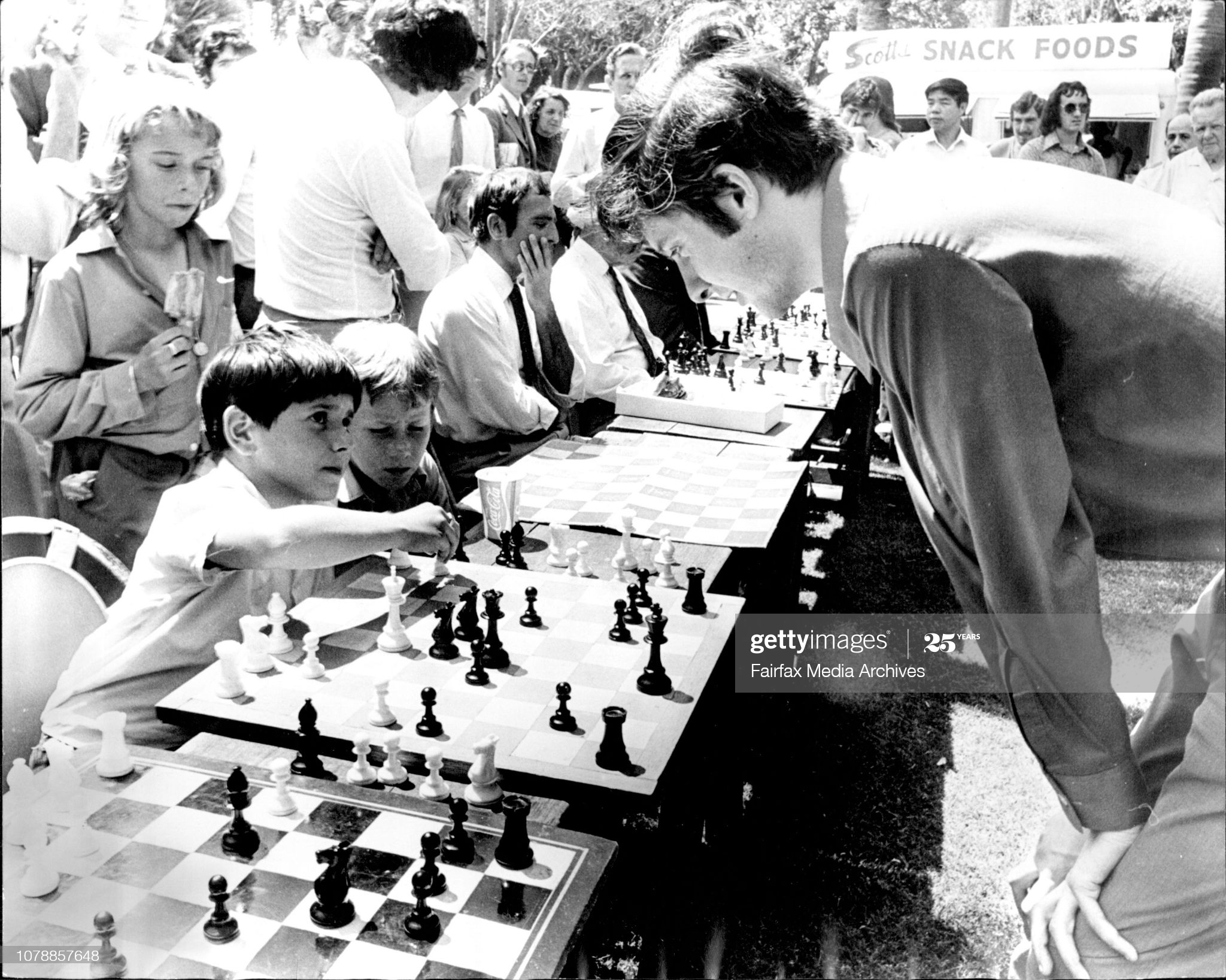
Aleandro Trimboli (10) of Leichhardt plays Mr Max Fuller of Newtown, Australian Open Chess Champion. As part of the Waratah Festival Celebrations the NSW Chess Association is conducting chess games with chess champions playing up to 30 players at once, in Hyde Park. October 17, 1973. (Photo by Golding/Fairfax Media via Getty Images).
In this obituary from Ray Keene, Ray very thoughtfully provides a game in which Max loses to Ray.
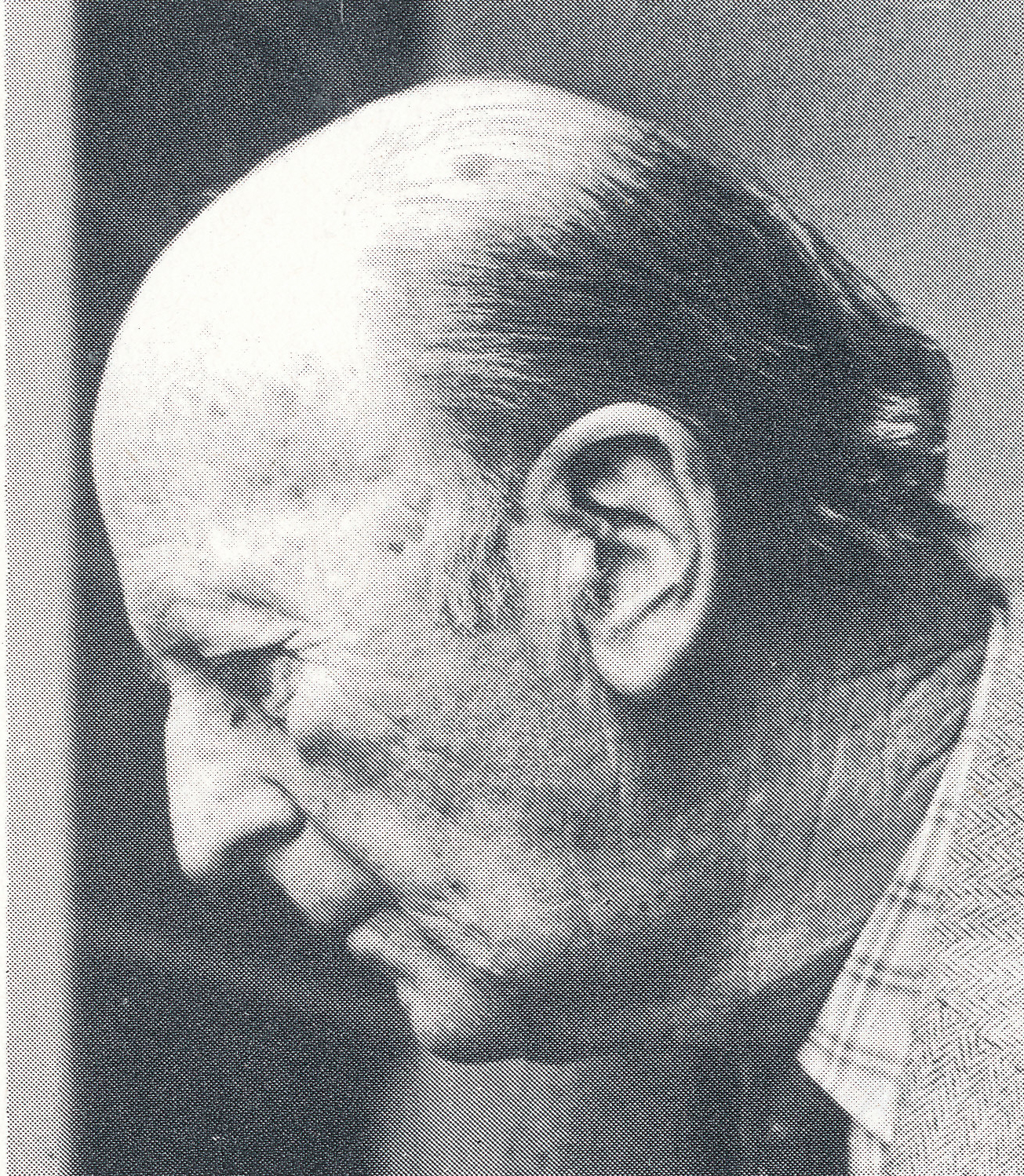
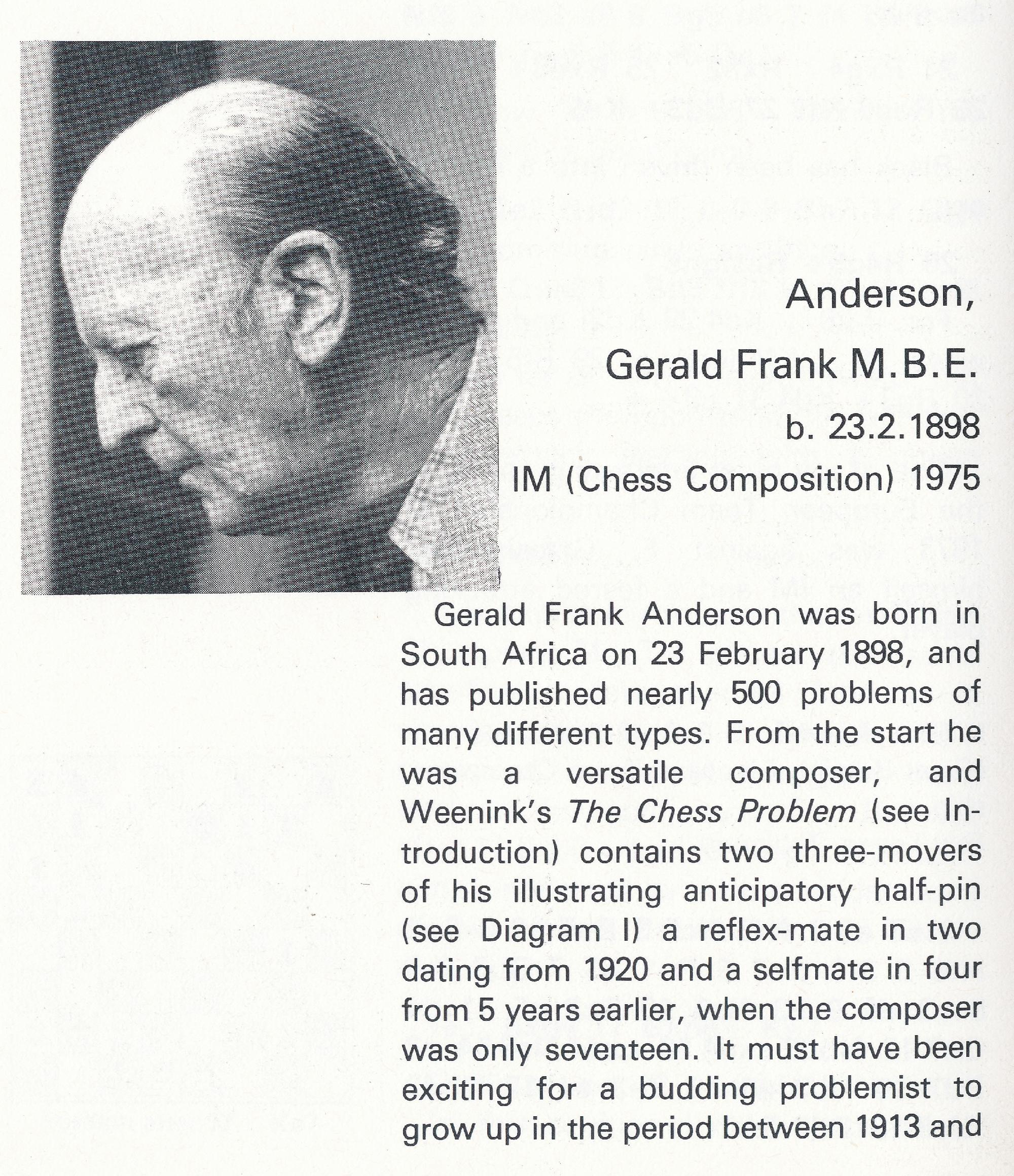
BCN remembers Gerald Frank Anderson MBE, DFC (24-ii-1898 23-viii-1984)
From British Chess (Pergamon, 1983) by Botterill, Levy, Rice and Richardson we have an article written by John Rice :
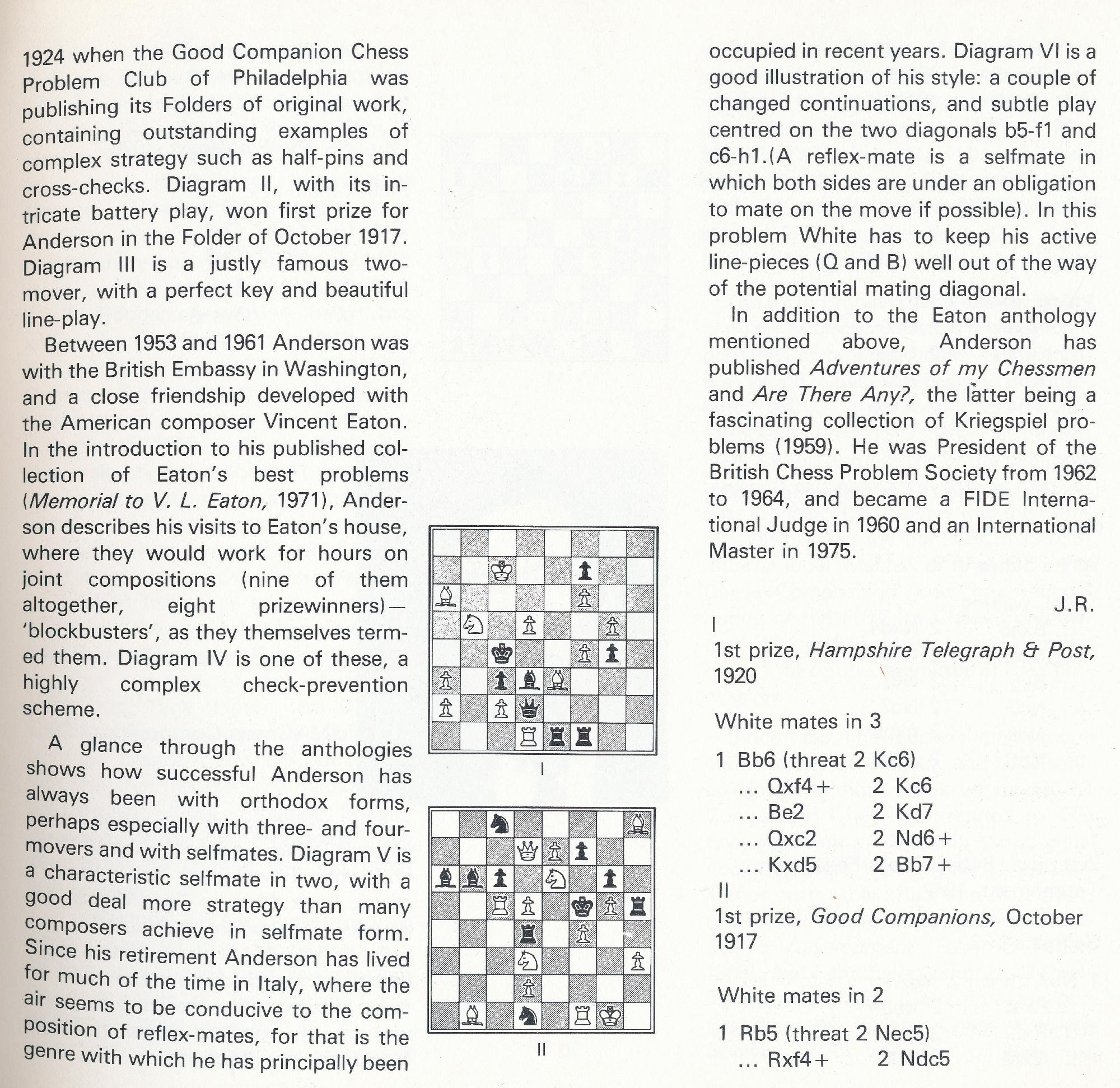
“Gerald Frank Anderson was born in South Africa on 23 February 1898, and has published nearly 500 problems of many different types. From the start he was a versatile composer, and Weenink’s The Chess Problem (see introduction) contains two three-movers of his illustrating anticipatory half-pin (see Diagram I) a reflex-mate in two dating from 1920 and a selfmate in four from 5 years earlier, when the composer was only seventeen.
Diagram I
1st prize , Hampshire Telegraph & Post, 1920
White mates in 3
(All Solutions contained in scan at foot of article.)
It must have been exciting for a budding problemist to grow up in the period between 1913 and 1924 when the Good Companion Chess Problem Club of Philadelphia was publishing its Folders of original work containing outstanding examples of complex strategy such as half-pins and cross-checks. Diagram II, with its intricate battery play, won first prize for Anderson in the Folder of October 1917.
Diagram II
1st prize, Good Companions, October 1917
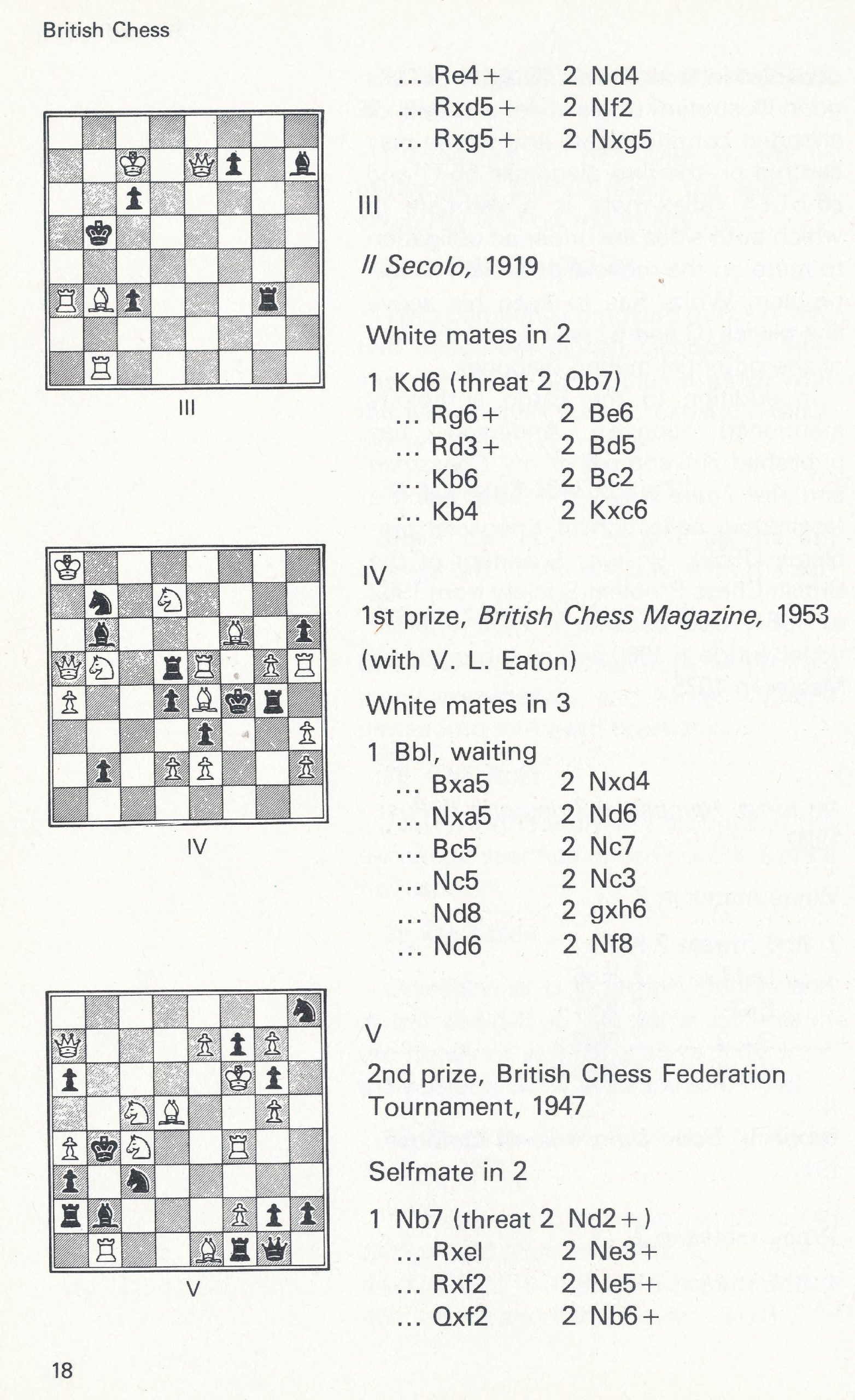
Diagram III is a justly famous two-mover, with a perfect key and beautiful line-play:
IL Secolo, 1919
White mates in 2
Between 1953 and 1961 Anderson was with the British Embassy in Washington and a close friendship developed with the American composer Vincent Eaton.
In the introduction to his published collection of Eaton’s best problems (Memorial to V. L. Eaton, 1971) Anderson describes his visits to Eaton’s house where they would work for hours on joint compositions (nine of them altogether, eight prize winners)- ‘blockbusters’, as they themselves termed them. Diagram IV is one of these, a highly complex check-prevention scheme.
Diagram IV
1st prize, British Chess Magazine, 1953
(with V.L. Eaton)
White mates in 3
A glance through the anthologies shows how successful Anderson has always been with orthodox forms, perhaps especially with three- and four- movers and with selfmates. Diagram V is a characteristic selfmate in two, with a good deal more strategy than many composers achieve in selfmate form:
Diagram V
2nd prize, British Chess Federation Tournament, 1947
Selfmate in 2
Since his retirement Anderson has lived for much of the time in Italy, where the air seems to be conducive to the composition of reflex-mates, for that is the genre with which he has principally been occupied in recent years. Diagram VI is a good illustration of his style; a couple of changed continuations, and subtle play centered on the two diagonals b5-f1 and c6-h1. (A reflex-mate is a selfmate in which both sides are under an obligation to mate on the move if possible). In this problem White has to keep his active line-pieces (Q and B) well out of the way of the potential mating diagonal.
Diagram VI
1st prize, The Problemist, 1975
Reflex-mate in 2
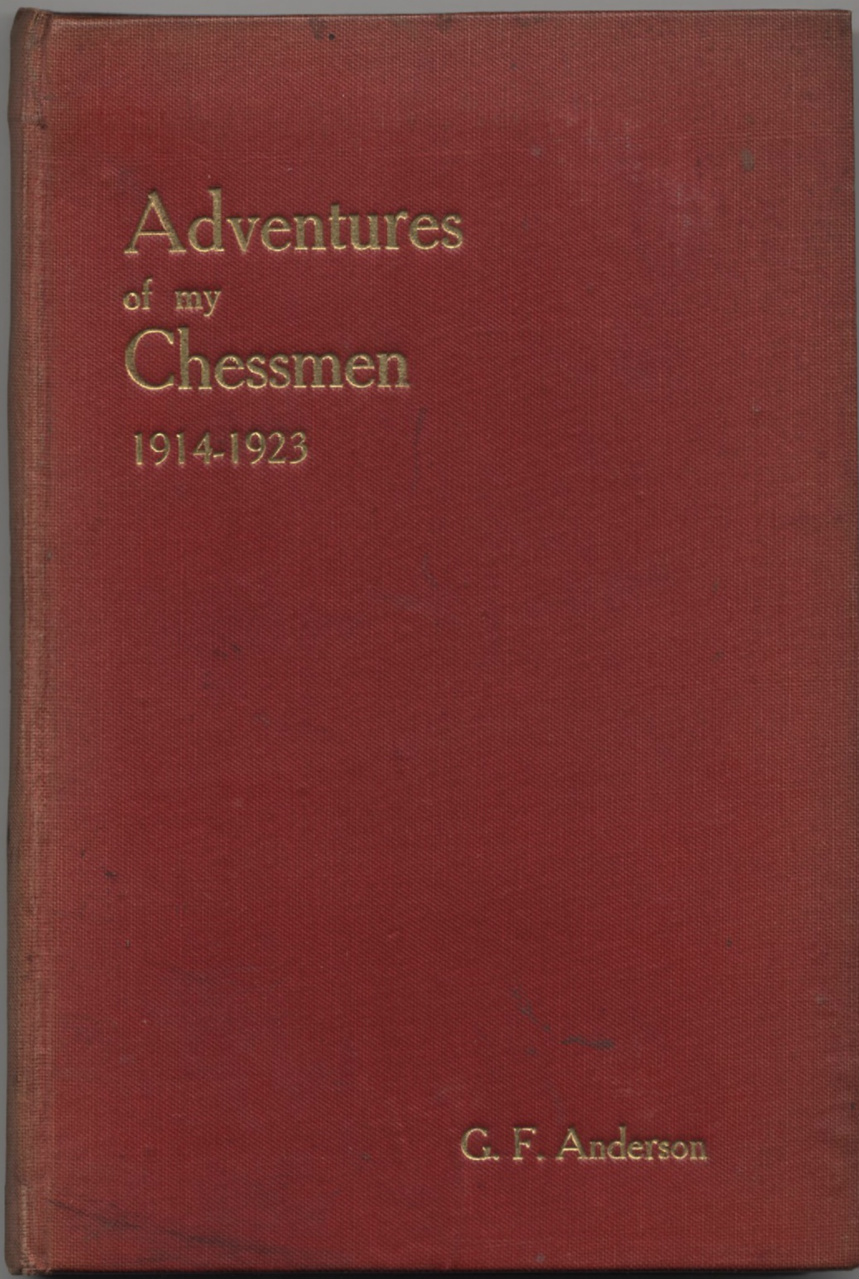
In addition to the Eaton anthology mentioned above, Anderson has published Adventures of my Chessmen
Adventures of my Chessmen 1914 – 1923 , GF Anderson, Chess Amateur, Stroud, 1924
and Are There Any?, the latter being a fascinating collection of Kriegspiel problems. He was President of the British Chess Problem Society from 1962 to 1964, and became a FIDE International Judge in 1960 and an International Master in 1975.”
Gerald Frank Anderson MBE DFC (24-ii-1898 23-viii-1984)
From The Encyclopedia of Chess (Robert Hale, 1970 and 1976) by Anne Sunnucks :
“International Judge of FIDE for Compositions (1960). Born on 23rd February 1898. Won the DFC in 1914-18 war. Foreign Office (Retd.) First problem published in 1912, since when he has composed nearly 500 problems, mostly 3 and 4 movers. but has latterly switched to Fairy chess problems. He is one of the the great reflex and self-mate composers. Edited a section Chess Amateur 1921, Nottinghamshire Weekly Guardian 1937-1938, Anglo-Portuguese News 1945-1946, and Self-Mate Section of The Problemist 1964-1966. Author of Are There Any? a book about Kriegspiel problems and A Memorial Volume of Chess Problems of VL Eaton.”
His MBE was awarded in the 1959 New Year Honours list. The citation reads : “Gerald Frank Anderson, DFC, Second Secretary, Her Majesty’s Embassy, Washington.”
From The Encyclopaedia of Chess (Batsford, 1977), Harry Golombek OBE we have this by John Rice:
“British problem composer, output about 550 problems., orthodox and fairy. Books : Adventures of My Chessmen; and Are there Any? (1959 – a fascinating collection of Kriegspiel problems); Vincent Eaton Memorial (1971 – an annotated anthology of Eaton’s work). President of British Chess Problem Society, 1962-4. International Judge (1960), international master (1975).”
From chessgames.com :
“G. F. Anderson, in 1946, was working in the British Embassy in Lisbon, and, as a highly skilled chess player (he was also known for composing chess problems as early as 1919), was nominated to deliver the challenge from Botvinnik to Alekhine. He played a game with the World Champion in the Embassy and it became the last recorded game by Alekhine.”
Here is the original article from British Chess (Pergamon, 1983) by Botterill, Levy, Rice and Richardson by John Rice :
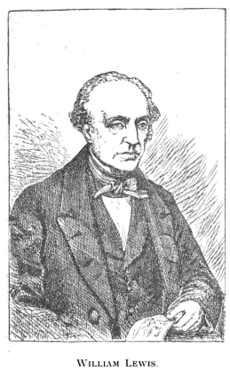
We note the passing today (August 22nd) in 1870 of William Lewis of the Lewis Counter Gambit.
The Lewis Counter Gambit
From The Oxford Companion to Chess (OUP, 1984) by Hooper & Whyld :
“English player and author. He left his native Birmingham as a young man and worked for a time with a merchant in London. He learned much of his chess from Sarratt, a debt that was not repaid.
Around 1819 he was operator of the Turk, meeting all-comers successfully. With Cochrane he visited Paris in 1821, received odds of pawn and move from Deschapelles, and defeated him in a short match (+ 1=2), Lewis had already begun to write and of the more useful books he published around this time were translations of Greco and Carrera which appeared in 1819 and 1822 respectively.
Although he considered Sarratt’s A Treatise on the Game of Chess (1808) a poorly written book, Lewis published a second edition in 1822 in direct competition with Sarratt’s last book, published in 1821 by his impoverished widow, (In 1843 many Englishmen contributed to a fund for Mrs Sarratt in her old age, Lewis’s name is not on the subscription list,}
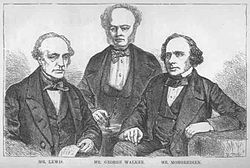
William Lewis, George Walker and Augustus Mongredien
In 1825 Bourdonnais visited England. Lewis recalled that they played about 70 games, and according to Walker seven of them constituted a match which Lewis lost (+2—5). With no significant playing achievements to his credit Lewis acquired such a high reputation that a correspondent writing to the weekly magazine Bell’s Life in 1838 was moved to call him grandmaster.
From 1825 he preserved this reputation by the simplest means: he declined to play on even terms. In the same year he opened a club where he gave lessons at half a guinea each. McDonnell and Walker were among his pupils. Speculating unwisely on a piano-making patent, Lewis went bankrupt in 1827, and the club closed. After three precarious years of teaching chess (rich patrons were becoming fewer) Lewis became actuary of the Family Endowment Society and enjoyed financial security
for the rest of his life.
William Lewis
Circumstances now made it possible for him to concentrate on his writing and he published his two most important works: Series of Progressive Lessons (1831) and Second Series of Lessons (1832), both republished with various revisions. Lewis continued to write but gradually withdrew from other chess activities; his last notable connection with chess was as stakeholder for the Morphy-Lowenthal match of 1858.
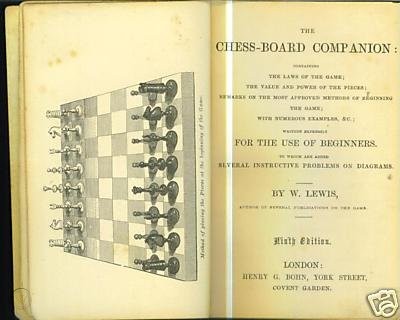
Chess Board Companion by William Lewis
Lewis’s Lessons contain extensive analyses of many opening variations, examined in the closeness of his study. Subsequent writers, notably Lasa, were influenced by these books, but more on account of the form than the content, which, adequate for the 1830s, were soon out of date.
Around 1840 writers no longer worked in isolation (a circumstance Lewis found unavoidable) and new positional ideas were being shaped. Because Lewis failed to assimilate these his judgements were faulty, and his voluminous Treatise on the Game of Chess (1844) was out of date when published.
Industrious rather than inventive, he made only one innovation, the Lewis Counter-Gambit; but it had no practical value in 1844, for simpler defences had already been discovered. Lewis’s work commands respect, but he is more aptly described as the last and one of the best of the ‘old’ writers than the first of the new, a more fitting description for Jaenisch and the authors of Bilguer’s Handbuch. ”
From The Encyclopedia of Chess (Robert Hale, 1970 & 1976) by Anne Sunnucks :
Chess theoretician, teacher, author and one of the leading players in England in the nineteenth century.
William Lewis was born in Birmingham on 9th October 1787. As a young man he went to London and took chess lessons from JH Sarratt. Within a short time he was making chess his principal means of livelihood.
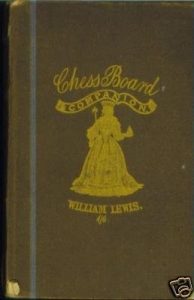
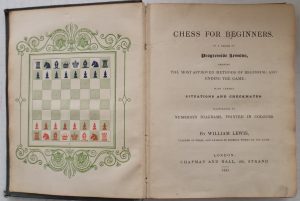
In 1819 he was engaged as the player concealed in the chess-playing automaton, ‘The Turk’, when it was exhibited in London. In 1825 he opened some chess rooms in St. Martin’s Lane in London, where he taught chess. Among his pupils was Alexander McDonnell. After going bankrupt in 1827, the chess rooms were closed, and Lewis decided to put his lessons into a book. He soon became a highly-successful writer, His Chessboard Companion published in 1838 ran into nine editions, and his Series of Progressive Lessons of the Game of Chess has been described as one of the landmarks in the history of the game. This book included some completely new analyses of various chess openings and later formed the basis of the Handbuch des Schachspiels. Lewis also translated the work of Greco and Stamma and was author of The Elements of Chess (1882), Fifty Games of Chess (1832) and Chess for Beginners (1835).
Chess Board Companion by William Lewis
Towards the end of his life, Lewis rarely played chess, and his last public appearance in chess circles was 12 before he died, when he acted at stake-holder in the match between Morphy and Lowenthal in 1858. He died on 22nd August 1870.
From The Encyclopedia of Chess (Batsford, 1977) by Harry Golombek :
“Author of The Chessboard Companion, London, 1838, and several other popular works on chess (including translations of Greco and Stamma). Lewis was also a leading chess teacher – his most famous pupil was Alexdander McDonnell – and for a time he ran chess rooms in St. Martin’s Lane. In 1819 he operated the chess-playing automaton ‘The Turk’ when it was exhibited in London. The Lewis Counter-Gambit is 1.P-K4, P-K4; 2.B-B4 B-B4; 3.P-QB3,P-Q5!?”
Chess for Beginners
From “Chess : A History” by Harry Golombek there are two references to WL on pages 98 and 123 alluded to above.
“William Lewis (1787–1870) was an English chess player and author, nowadays best known for the Lewis Countergambit and for being the first player ever to be described as a Grandmaster of the game.
Born in Birmingham, William Lewis moved as a young man to London where he worked for a merchant for a short period. He became a student of chess player Jacob Sarratt, but in later years he showed himself to be rather ungrateful towards his teacher.
Although he considered Sarratt’s Treatise on the Game of Chess (1808) a “poorly written book”, in 1822 Lewis published a second edition of it three years after Sarratt’s death in direct competition with Sarratt’s own superior revision published posthumously in 1821 by Sarratt’s poverty-stricken widow. In 1843, many players contributed to a fund to help the old widow, but Lewis’ name is not on the list of subscribers.
Around 1819 Lewis was the hidden player inside the Turk (a famous automaton), meeting all-comers successfully. He suggested to Johann Maelzel that Peter Unger Williams, a fellow ex-student of Sarratt, should be the next person to operate inside the machine. When P. U. Williams played a game against the Turk, Lewis recognised the old friend from his style of play (the operator could not see his opponents) and convinced Maelzel to reveal to Williams the secret of the Turk. Later, P. U. Williams himself took Lewis’ place inside the machine.
Lewis visited Paris along with Scottish player John Cochrane in 1821, where they played with Alexandre Deschapelles, receiving the advantage of pawn and move. He won the short match (+1 =2).”
“Lewis’ career as an author began at this time, and included translations of the works of Greco and Carrera, published in 1819[5] and 1822[6] respectively.
He was the leading English player in the correspondence match between London and Edinburgh in 1824, won by the Scots (+2 = 2 -1). Later, he published a book on the match with analysis of the games. In the period of 1834–36 he was also part of the Committee of the Westminster Chess Club, who played and lost (−2) the match by correspondence with the Paris Chess Club. The other players were his students McDonnell and Walker, while the French line up included Boncourt, Alexandre, St. Amant and Chamouillet. When De La Bourdonnais visited England in 1825, Lewis played about 70 games with the French master. Seven of these games probably represented a match that Lewis lost (+2 -5).
Lewis enjoyed a considerable reputation as a chess player in his time. A correspondent writing to the weekly magazine Bell’s Life in 1838 called him “our past grandmaster”, the first known use of the term in chess. Starting from 1825 he preserved his reputation by the same means that Deschapelles used in France, by refusing to play anyone on even terms. In the same year Lewis founded a Chess Club where he gave lessons to, amongst others, Walker and McDonnell. He was declared bankrupt in 1827 due to bad investments on a patent for the construction of pianos and his chess club was forced to close. The next three years were quite difficult until in 1830 he got a job that assured him of solid financial security for the rest of his life. Thanks to this job, he could focus on writing his two major works: Series of Progressive Lessons (1831) and Second Series of Progressive Lessons (1832). The first series of the Lessons were more elementary in character, and designed for the use of beginners; the second series, on the other hand, went deeply into all the known openings. Here, for the first time we find the Evans Gambit, which is named after its inventor, Capt. Evans.
The works of Lewis (together with his teacher Sarratt) were oriented towards the rethinking of the strictly Philidorian principles of play in favour of the Modenese school of Del Rio, Lolli and Ponziani. When he realised that he could not give an advantage to the new generation of British players, Lewis withdrew gradually from active play (in the same way that Deschapelles did after his defeat against De La Bourdonnais).
After his retirement he wrote other chess treatises, but his isolation prevented him from assimilating the positional ideas of the new generation of chess-players. For this reason, Hooper and Whyld in their Oxford Chess Companion describe the last voluminous work of Lewis, A Treatise on Chess (1844), as already “out of date when published”.”
According to Edward Winter in Chess Notes Lewis lived at 12 Chatham Place, Blackfriars, London, England (Chess Player’s Chronicle, 1841, pages 9 and 34*)
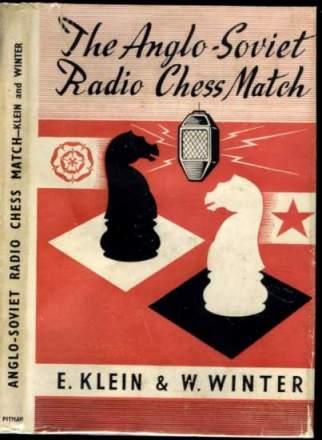
From CHESS, July 1946 (and also The Anglo-Soviet Radio Chess Match) :
Since Ernst Klein came to England in 1935 his play has earned our ungrudging admiration. Born in Vienna, 1910, he learned chess at the age of eleven. His grandmother taught him the moves, his father having died when he was eight. Steinitz was a frequent guest in his grandparents house. At eighteen, he shared first, second and third prizes in the Championship of Vienna. Before coming to England, he had lived for some years in Switzerland, France and Italy and his French, German and English are equally impeccable. In his last tournament at Bournemouth, in 1939, he finished equal with Flohr after Euwe ahead of König, Landau, Aitken and others. He met his wife, who is an Englishwoman, during the blitz. They were married in 1944. He holds a London University degree and teaches mathematics in Southend.
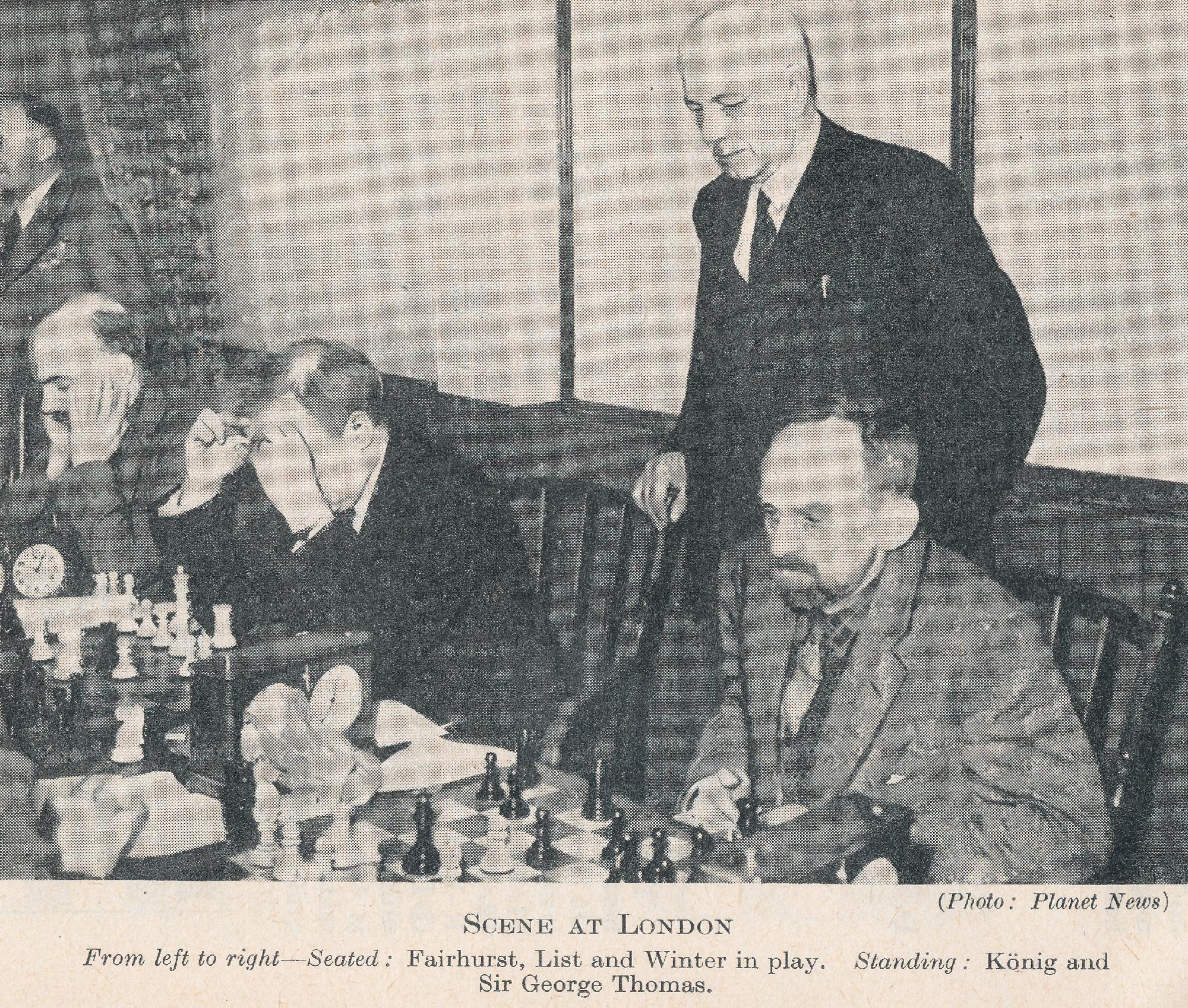
Scene at London. From left to right – Seated : Fairhurst, List and Winter in play. Standing König and Sir George Thomas
About 1940, he offered to give any opponent in Great Britain the odds of the draw.; his challenge was never taken up, no doubt owing to the conditions of the moment, but we imagine there would be many “takers” if it were repeated now.”
Later, Klein clarified matters by writing What I said was: “I am ready to accept the challenge of any player in this country and am prepared to give the odds of a draw in a contest at least twelve games if he so wishes. That is, I offered to concede victory on a score of 6 : 6 draws counting, which is the necessary and sufficient condition to justify my offer. It is still open.
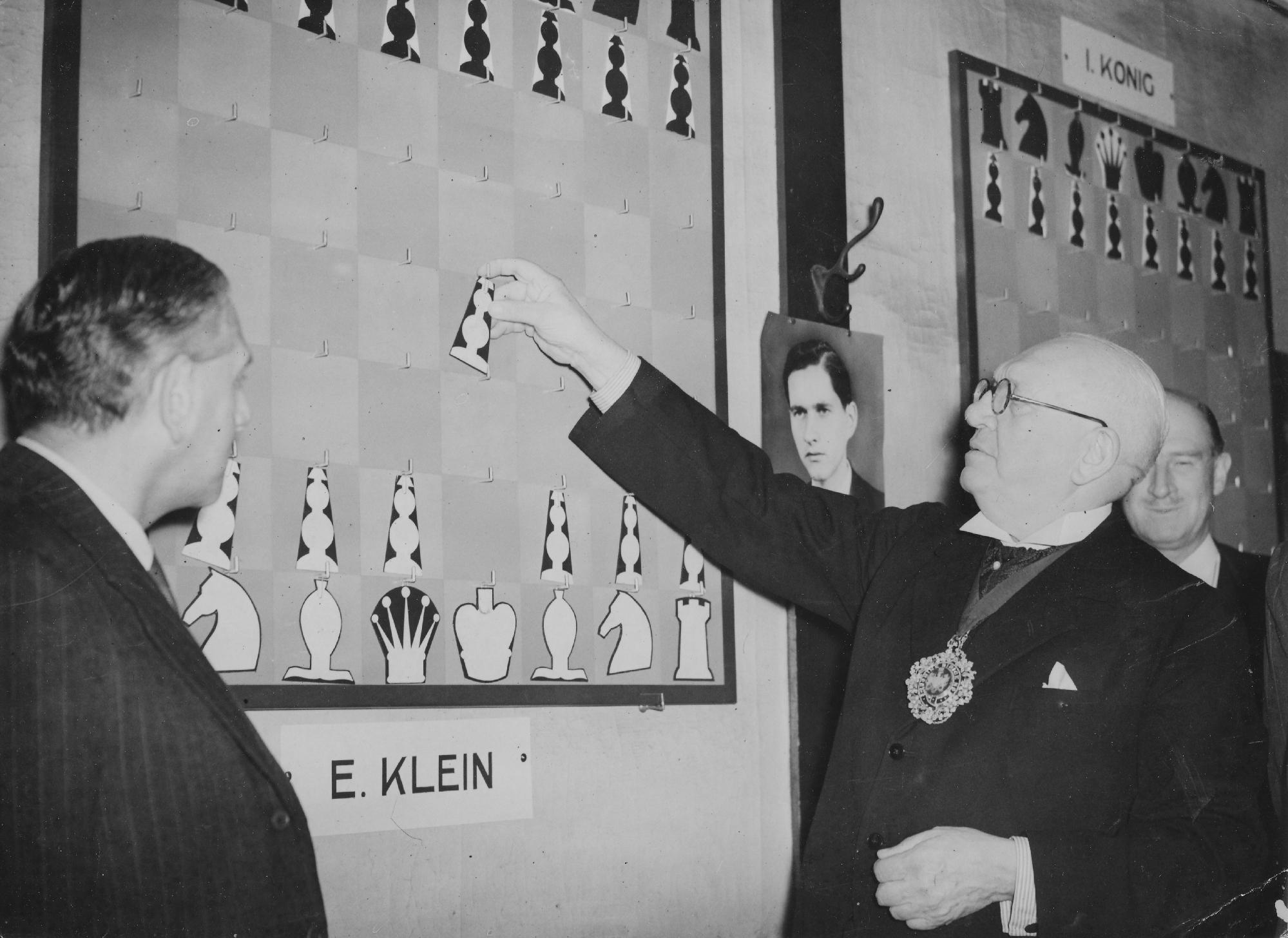
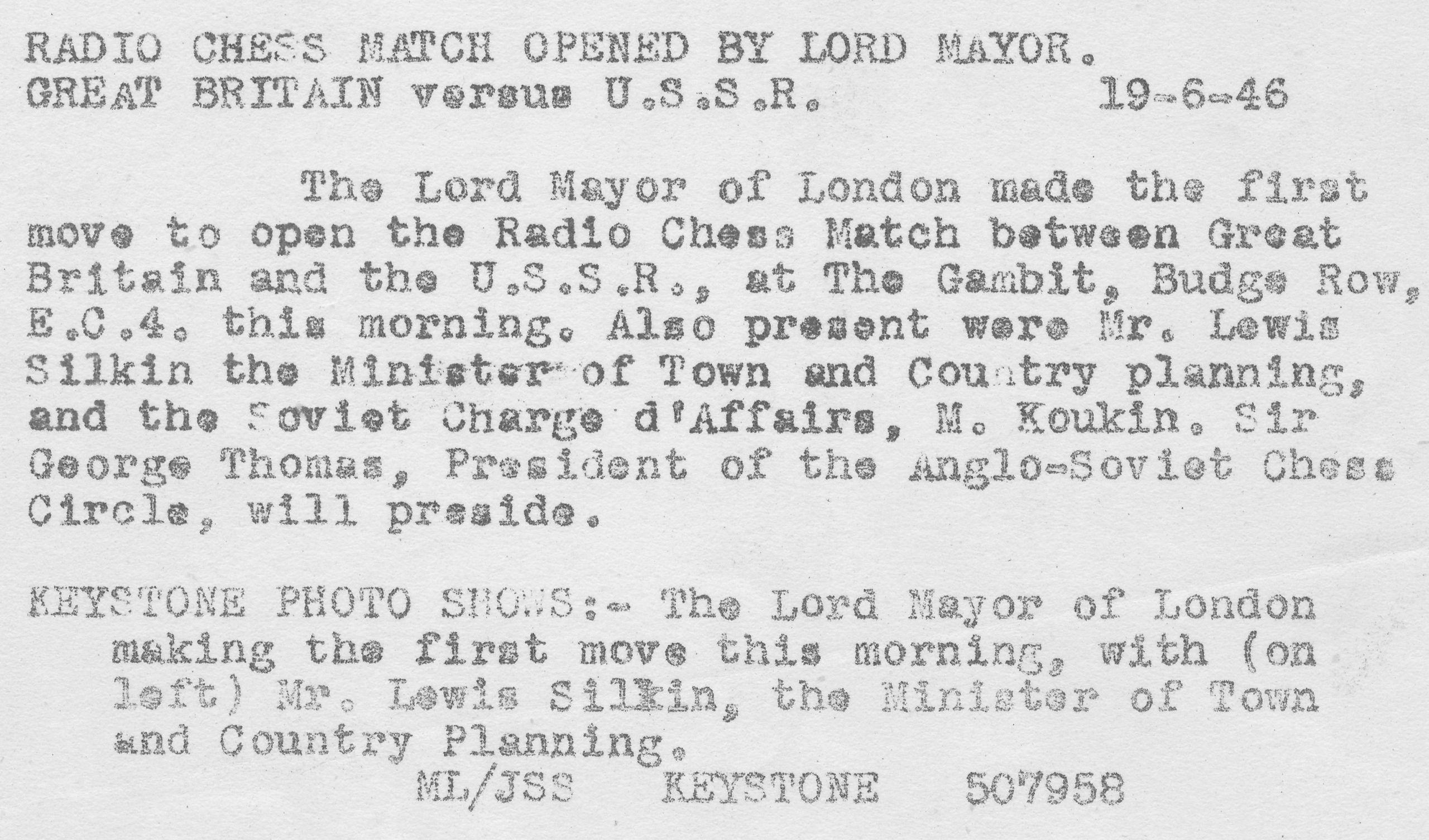
See below photograph for captionCaption for above photograph
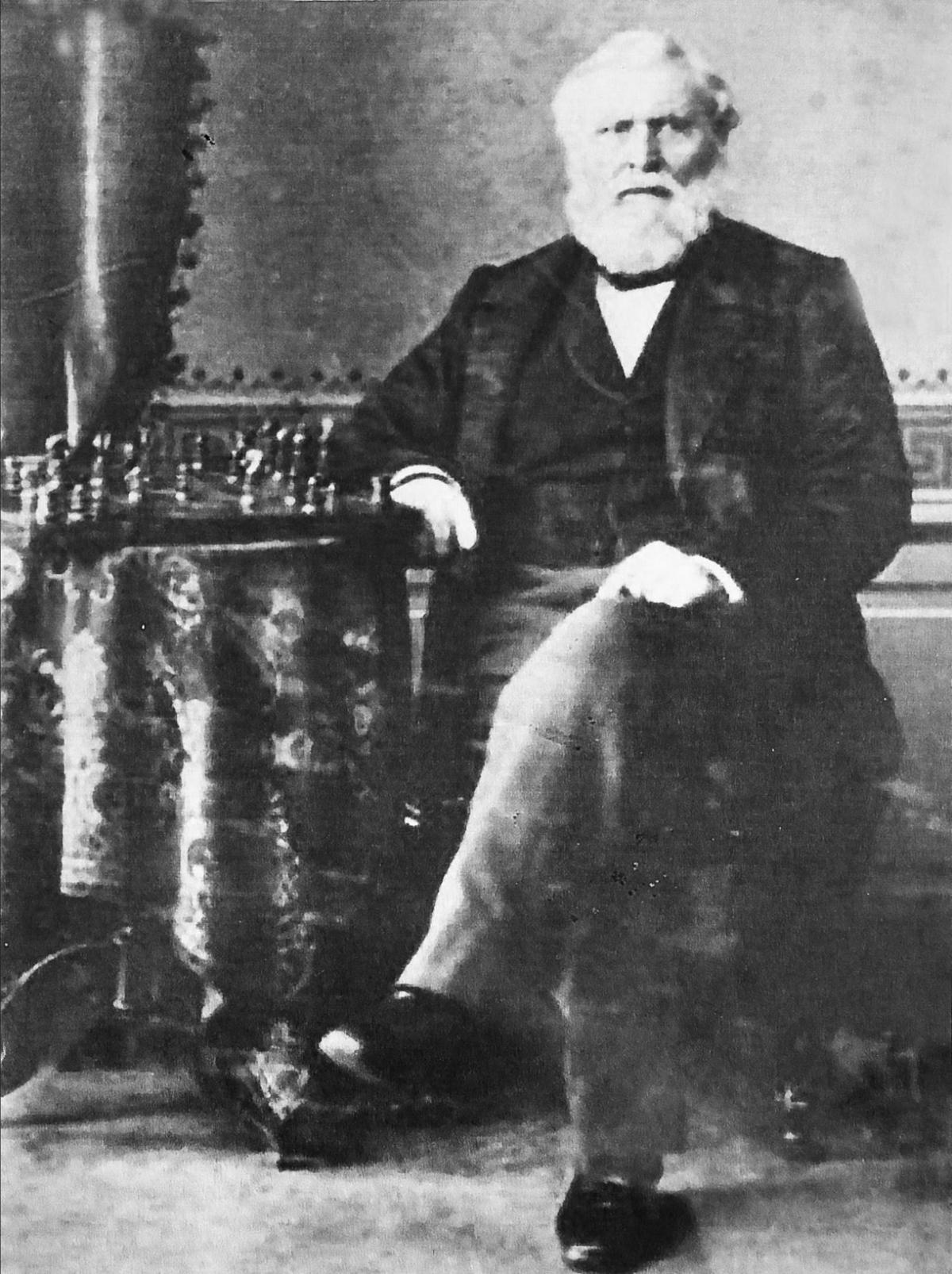
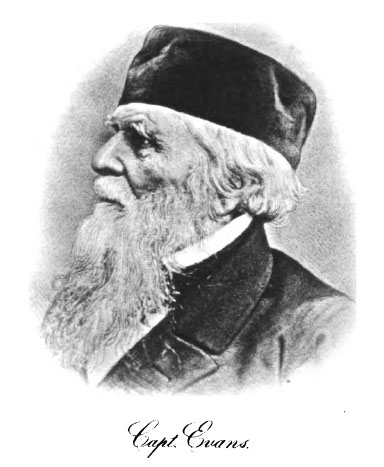
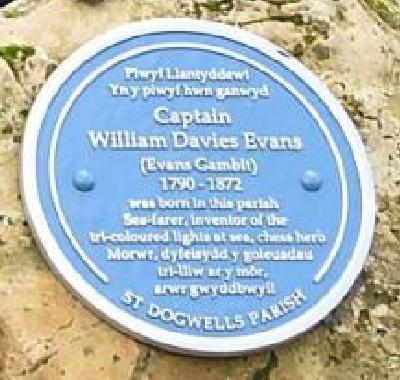
Captain William Davies Evans (27-i-1790 03-viii-1872)
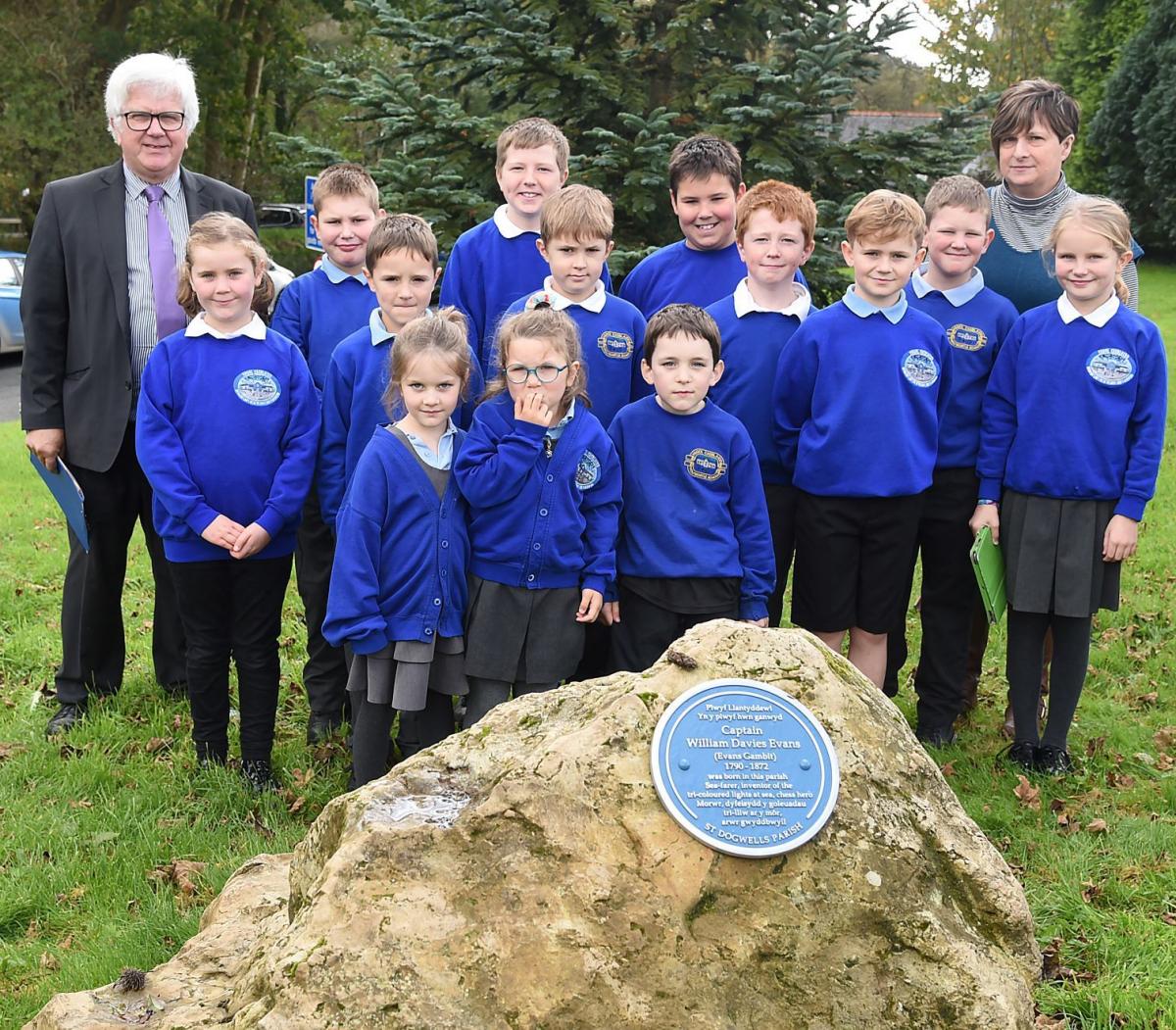
William Davies Evans was born on the 27th of January, 1790 at Musland Farm in the parish of Saint Dogwells, Haverfordwest, Pembrokeshire, SA62 5DT. His parents were John (a farmer by trade) and Mary Davies. William was baptised on September 21st 1814 in Steynton, Pembrokeshire. The service was conducted by WM Lloyd, Curate of Burton, Pembrokeshire.
It would appear from baptism records (Steynton) that WD had a younger brother Robert Joseph, baptised on the same day in September.
Captain William Davies Evans (27-i-1790 03-viii-1872)
From The Oxford Companion to Chess (OUP, 1984) by Hooper & Whyld :
“Inventor of the Evans gambit, for about half a century one of the most popular attacking weapons. He was born in (Musland Farm in the parish of Saint Dogwells,) Pembroke, Wales, went to sea at the age of 14, was employed by the Postal Department from about 1815, and rose to the rank of captain four years later. In 1824, soon after taking command of the first Royal Mail steam packet to sail from Milford Haven to Waterford, and while aboard, he invented his gambit.
Evans was a keen player. He gathered a small chess circle in Waterford, and when on leave in England played chess in London, notably in 1826 when he showed his gambit to Lewis and McDonnell, and in 1838 when he played a long series of games with Staunton at the Westminster Chess Club.
In Jan. 1840 he was pensioned off on account of ill-health. He went to Greece, became captain of a steamer that sailed the Mediterranean, and returned to London at the end of 1842. During the next 13 years there are several accounts of his presence in London, and then he settled abroad. He died and was buried in Ostend,
Evans claimed to have solved the three pawns problem (See below) , which, however, had already been solved by others.
His claim to the invention of tri-coloured lighting for ships has not been verified independently, although he is known to have investigated the subject. For this invention he states that the Tsar of Russia gave him a gold chronometer, and that he also received money. For a more detailed life of Captain Evans see British Chess Magazine, 1928, pp, 6-18.”
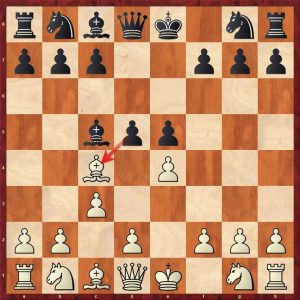
The Evans Gambit is a variation of the Giuoco Piano or Italian Game:
When Evans originally devised his gambit the move order was slightly different :
in which White sacrifices the b-pawn for increased central control and development viz :
From The Encyclopedia of Chess (Robert Hale, 1970 & 1976) by Anne Sunnucks :
“Inventor of the Evans Gambit, an opening described by a player in the last century as ‘A yellow fever attack : if you live through the initial stages and avoid any carelessness that may bring on a relapse, you will come out alright’.
Captain Evans discovered the gambit in about 1824. It was a favourite opening during the last century and was adopted by a number of leading players including La Bourdonnais and Morphy.
For some years Commander in H.M. Royal Mail Packet Service on the Milford and Waterford station, Captain Evans later became Commander in the P.& O. Company’s service and agent for the Royal Mail Steampacket Company, Port Grande. On retirement he lives for many years in Holland and Belgium.
The story is told of how, in 1870, the Grand Duke Nicholas of Russia, brother of the Tsar, was visiting Bruges when he heard that the inventor of the Evans Gambit was living in Ostend. Being a keen chess player he invited Evans to play a game. When Evans had won, the Grand Duke turned to his adversary and said : ‘I believe you invented the Evans Gambit ?’, ‘Yes’ replied Evans ‘and it’s not the only thing I’ve invented for which you have not paid me.’ ‘What’s the other?’ asked the Grand Duke.
Evans then explained that he was the inventor of the ship’s lights which were being used by the Russian Navy, in which the Grand Duke held the rank of Admiral. Several months later Evans was invited to the Russian Consulate in Ostend, where he was handed a letter from the Grand Duke, a gold chronometer, a gold chain and a draft of money, ostensibly in payment for the Russia’s rights to use the captain’s invention in her ships. ”
Evans analyzed the “Little Game of Chess” (an endgame composition involving only two kings with three pawns each)
to independently discover that it actually won for the player who moves first, not drawn as had been believed for over a hundred years.
From The Encyclopedia of Chess (Batsford, 1977) by Harry Golombek we have :
“After his retirement Evans went to live abroad and eventually found a haven in Ostend and there, ill, and almost blind and in very straightened circumstances, he dictated a letter on 22 March 1871, which was published in the Gentlemen’s Journal supplement for June 1872, along with an appeal for him organised by George Walker.
The letter gives the authentic facts of his life and is worth quoting in full, if only to refute various unfounded reports about a meeting with the Tsar’s brother, or according to that rich source of misinformation, the Rev GA MacDonnell, that the Evans Gambit was discovered off the coast of Africa by a middle-aged lieutenant in the Royal Navy -perhaps the reverend gentleman was confusing Waterford with the Canary Islands.
The letter runs :
Williams Davies Evans is a native of Pembrokeshire, South Wales, and was born on 27 January 1790. He commenced a naval career at the age of fourteen. He was about twenty-eight years of age when he first learnt the moves of the game of Chess. Having the advantage of frequent practise with Lieutenant H. Wilson, R.N., who was a player of some reputation in his time, beside corresponding on the subject of the game with the late Mr. W. Lewis, and also with George Walker, the able Chess Editor of Bell’s Life , he made a rapid progress in the game. Captain Evans received at first the odds of a Rook from Lieut. Wilson. After a continuance of play for some years, the odds were greatly reduced, until ultimately Captain Evans succeeded in defeating his formidable antagonist playing even.
About the year 1824, being then in command of a Government Mail Steamer, the passages between Milford Haven and Waterford were favourable to the study of the game of Chess and at this time he invented the Gambit, which bears his name. The idea occurred to him while studying a narration of Giuoco Piano in Sarratts’s Treatise on Chess.
Captain Evans was the first who gave to the world a true solution of that very difficult end game, the King and three Pawns unmoved against King and three Pawns also unmoved. This position was handed down to us through a period of some centuries as a drawn game, but Captain Evans proved that the first player can always win.
Captain Evans acquired some celebrity as “Inventor of the System of Tri-Coloured Lights for Ships to Prevent Collisions at Night”, which has been adopted by all nations possessing a marine. For this invention the English Government awarded him the sum of £1,500 , and the Czar of Russia a gold pocket chronometer, value £160, together with a donation of £200.
The subscription that amounted to over £200 was too late. He died in 1872 and was buried in Ostend where his grave bears the inscription :
To the sacred memory of William Davies Evans, formerly Commander in the Post Office and Peninsular and Oriental Steam Services, Superintendent In the Royal Mail Shipping Company, and inventor of the system of tri-coloured light for shipping. Also well known in the Chess World as the author of the Evans Gambit
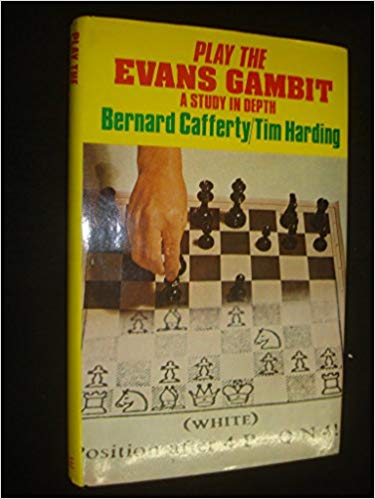
Blue Plaque for Captain William Davies Evans (27-i-1790 03-viii-1872)Play The Evans Gambit (co-author Tim Harding). Cadogan. ISBN 1-85744-119-2.
Save as PDF
We focus on the British Chess Scene Past & Present!
This website uses cookies to improve your experience. We'll assume you're ok with this, but you can opt-out if you wish. Cookie settingsACCEPT
Privacy & Cookies Policy
Privacy Overview
This website uses cookies to improve your experience while you navigate through the website. Out of these cookies, the cookies that are categorized as necessary are stored on your browser as they are as essential for the working of basic functionalities of the website. We also use third-party cookies that help us analyze and understand how you use this website. These cookies will be stored in your browser only with your consent. You also have the option to opt-out of these cookies. But opting out of some of these cookies may have an effect on your browsing experience.
Necessary cookies are absolutely essential for the website to function properly. This category only includes cookies that ensures basic functionalities and security features of the website. These cookies do not store any personal information.
 Save as PDF