Category Archives: Remembering

It’s Only Me! : Remembering Tony Miles (23-iv-1955 12-xi-2001)

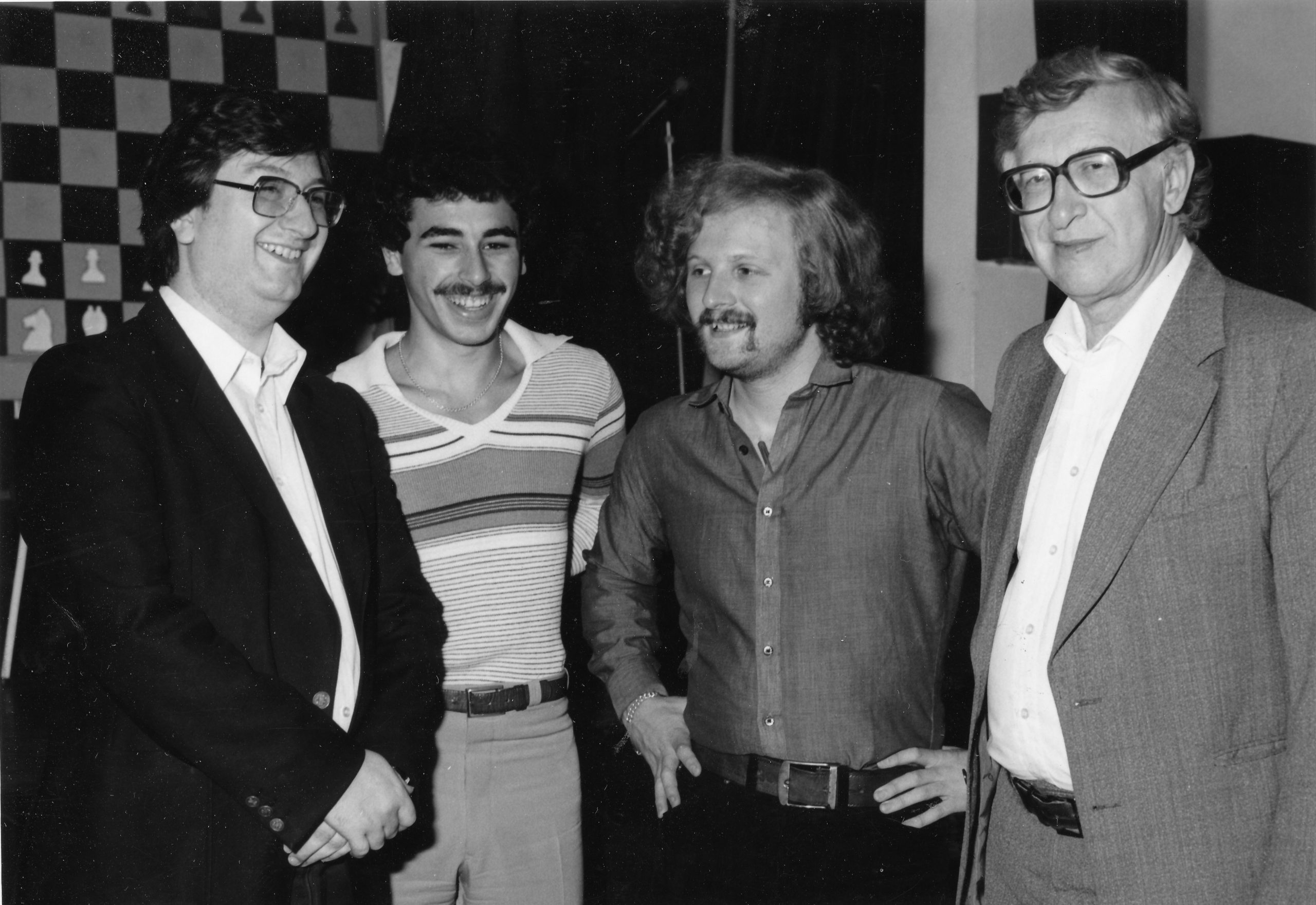
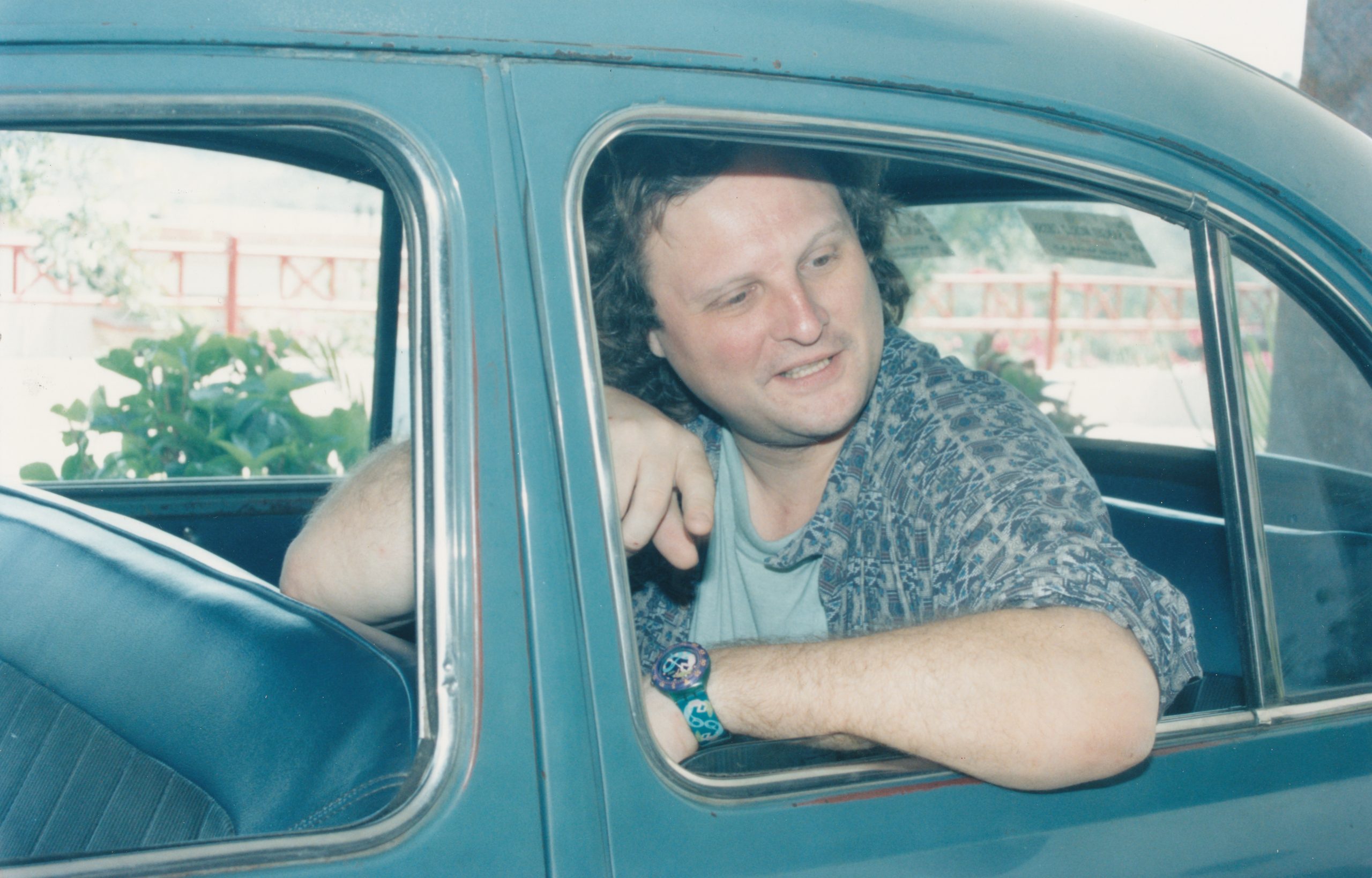
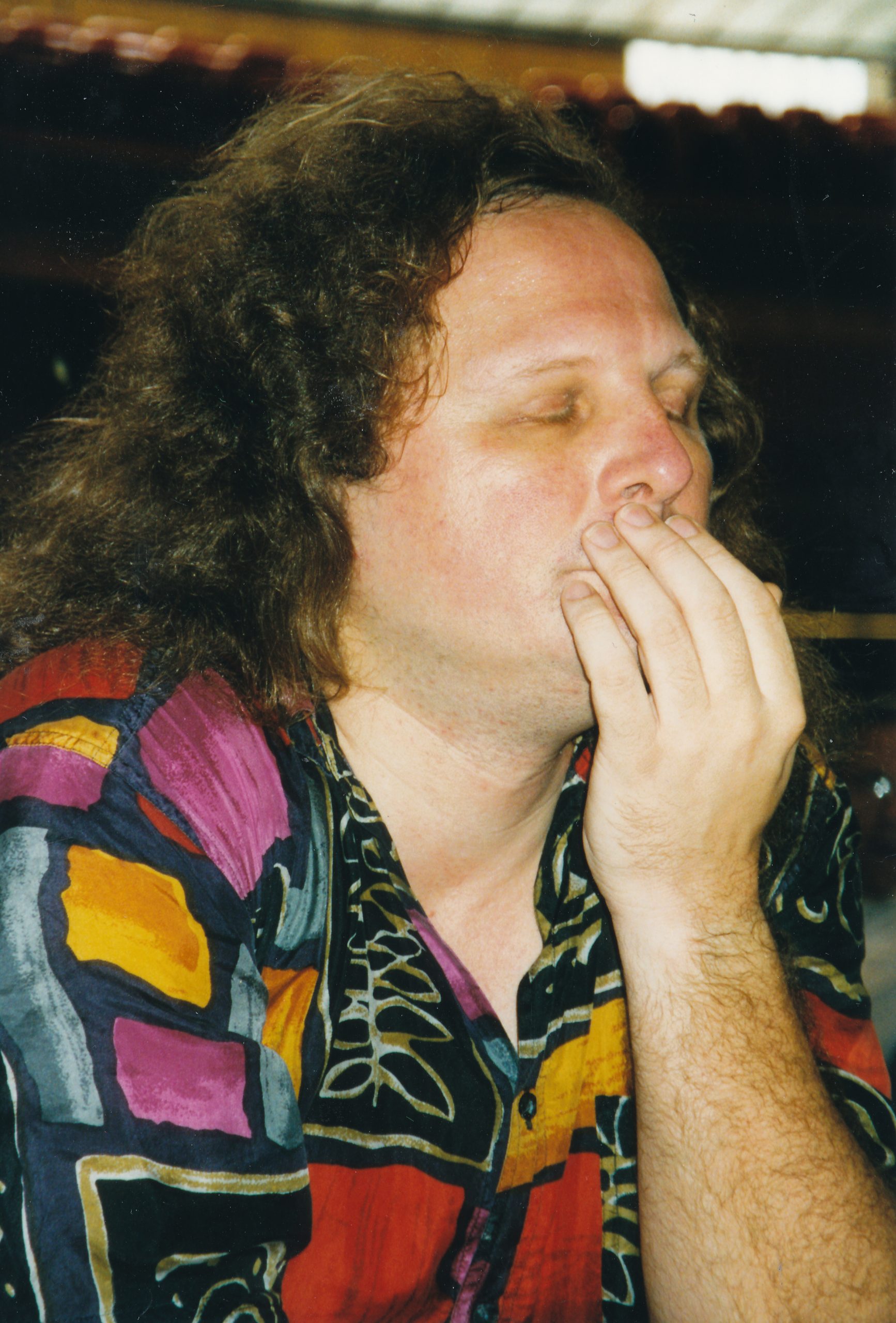
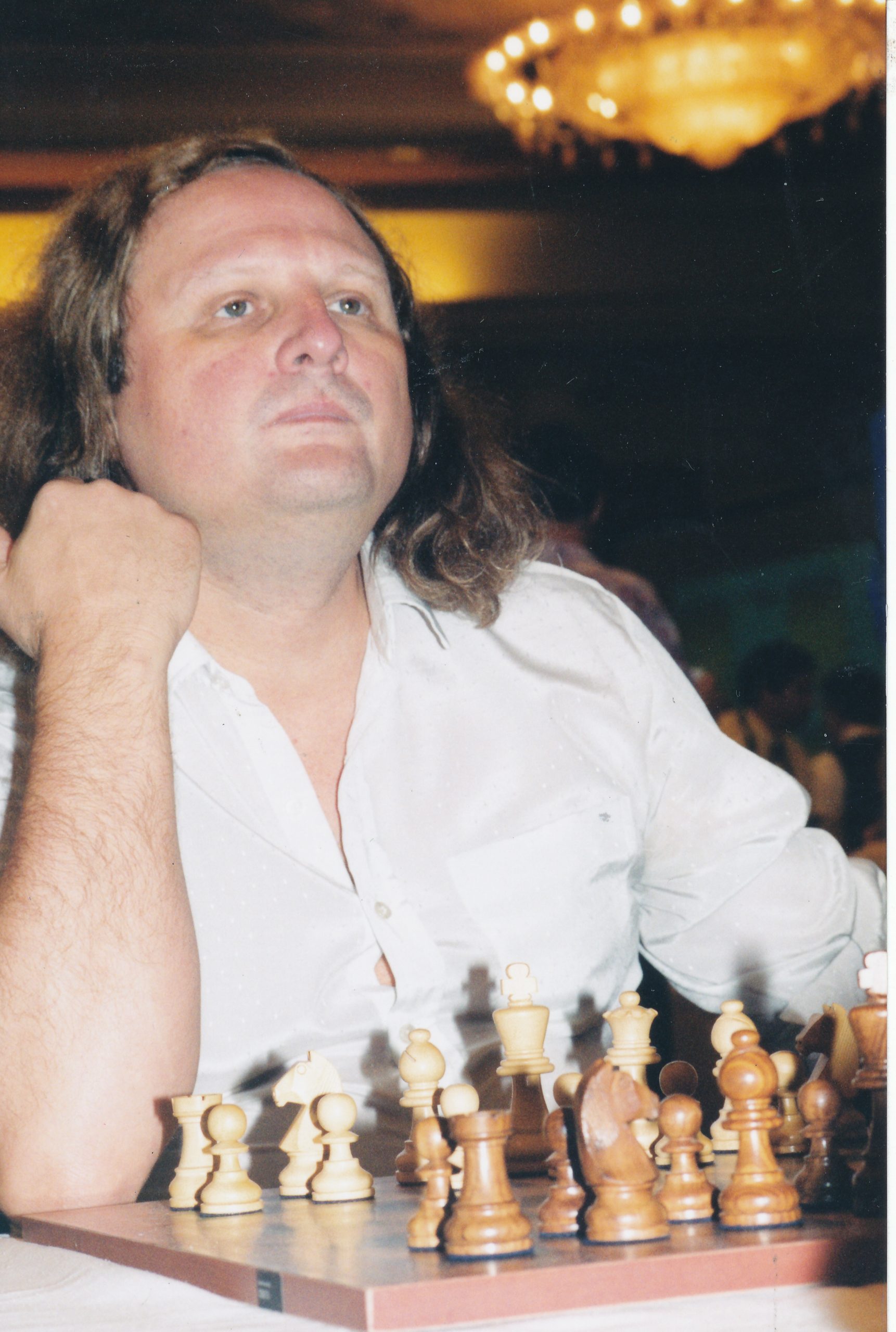
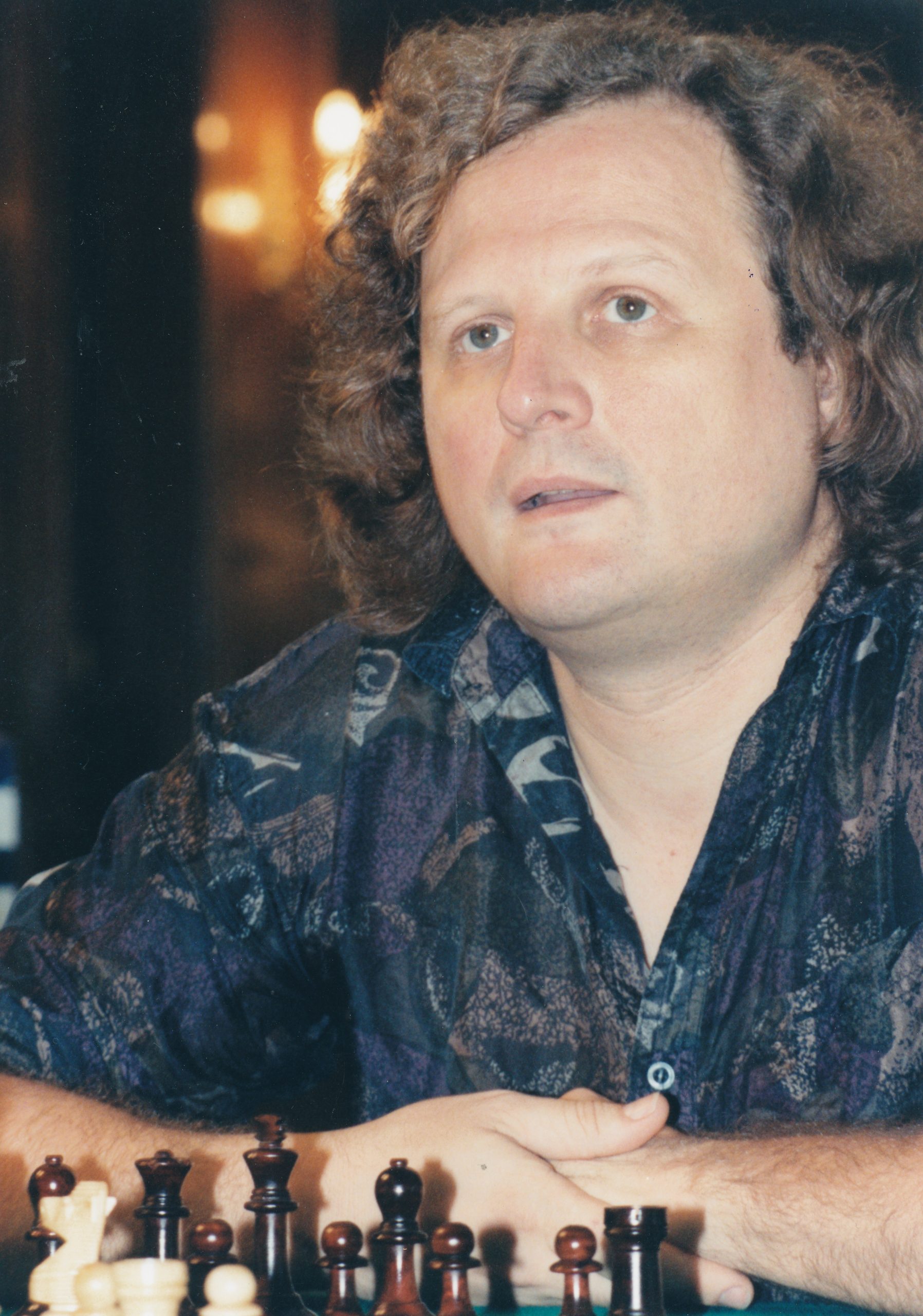
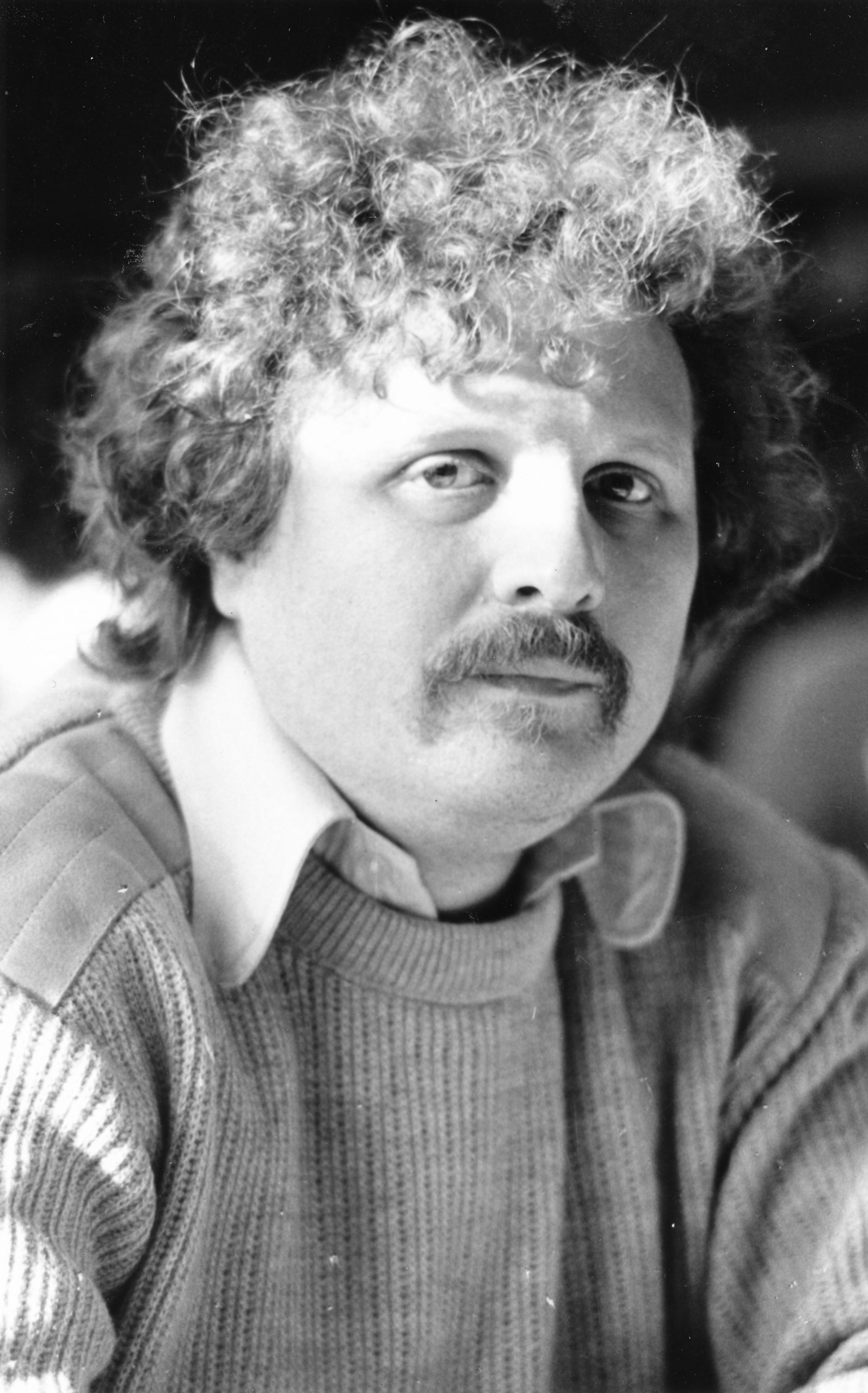
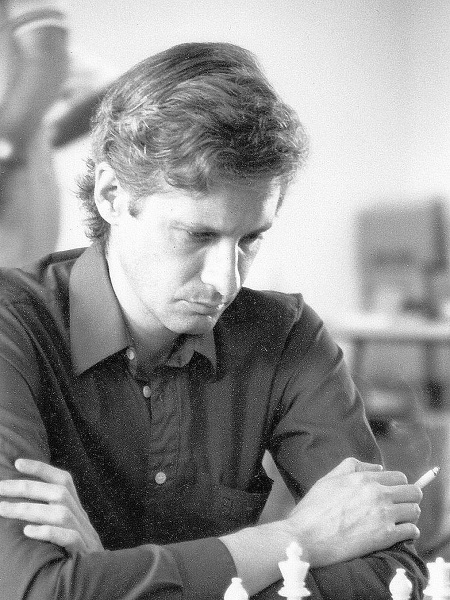
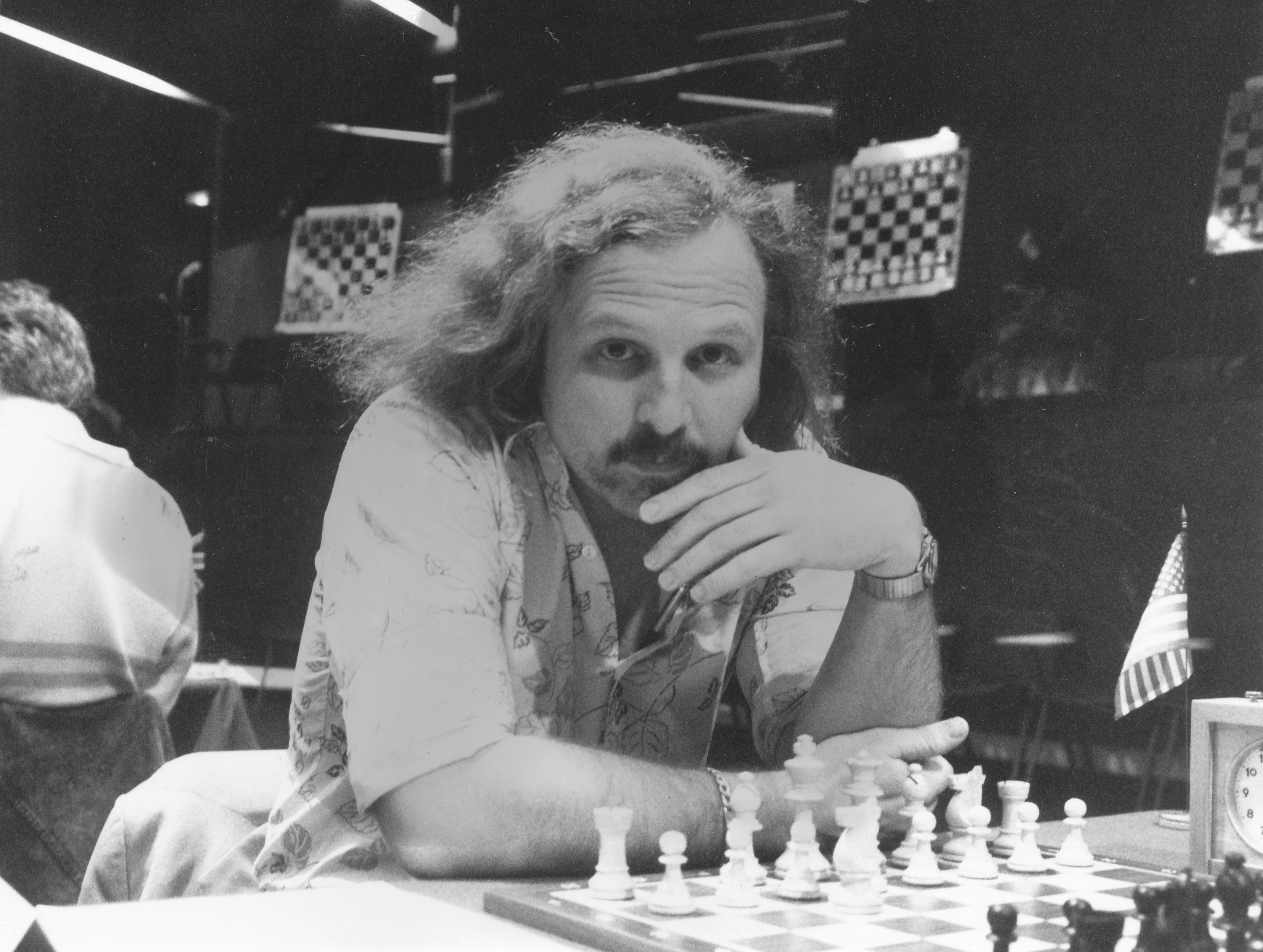
GM Anthony John Miles

We remember one of the most innovative and best loved English players of all time, Tony Miles.

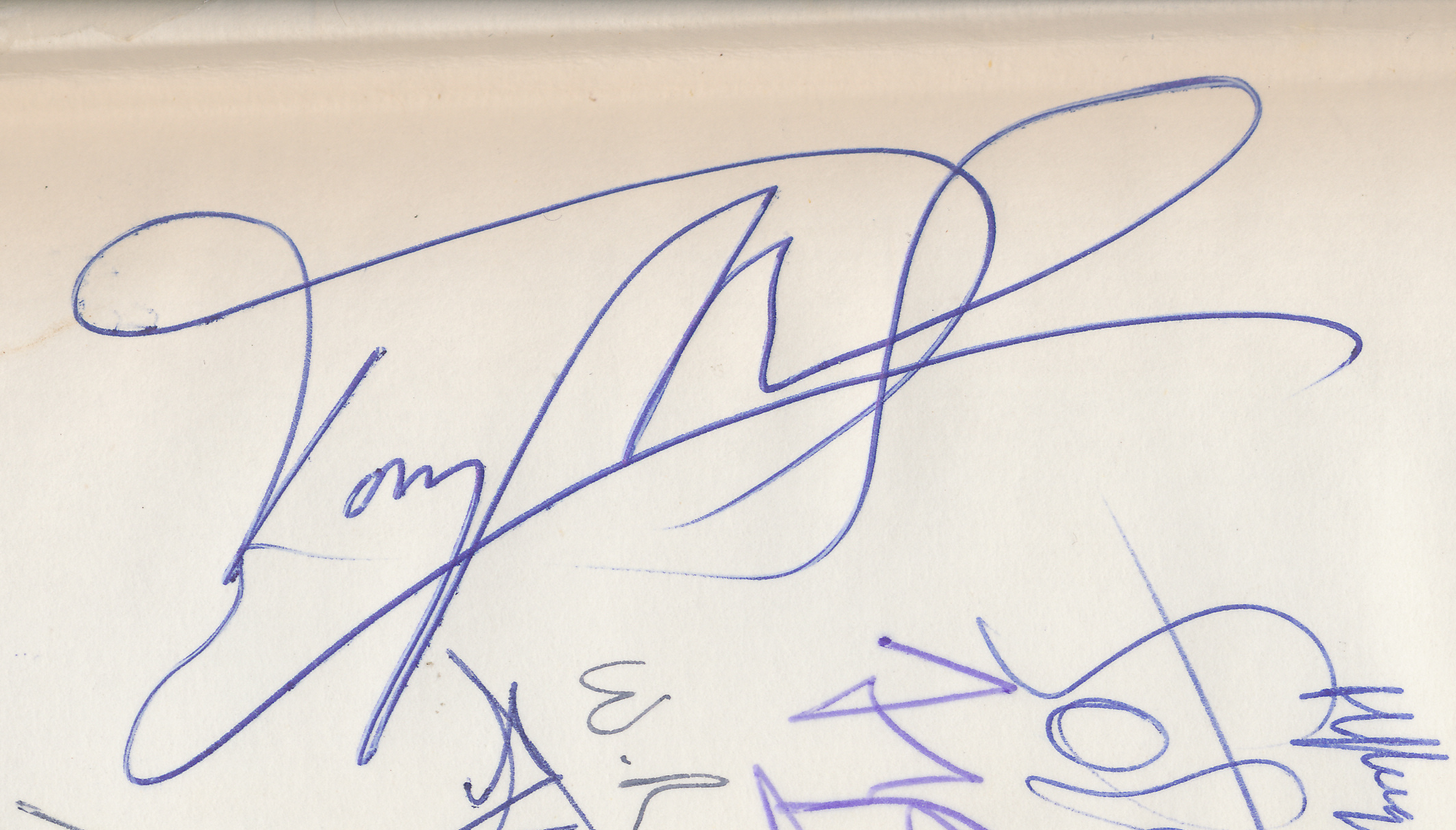
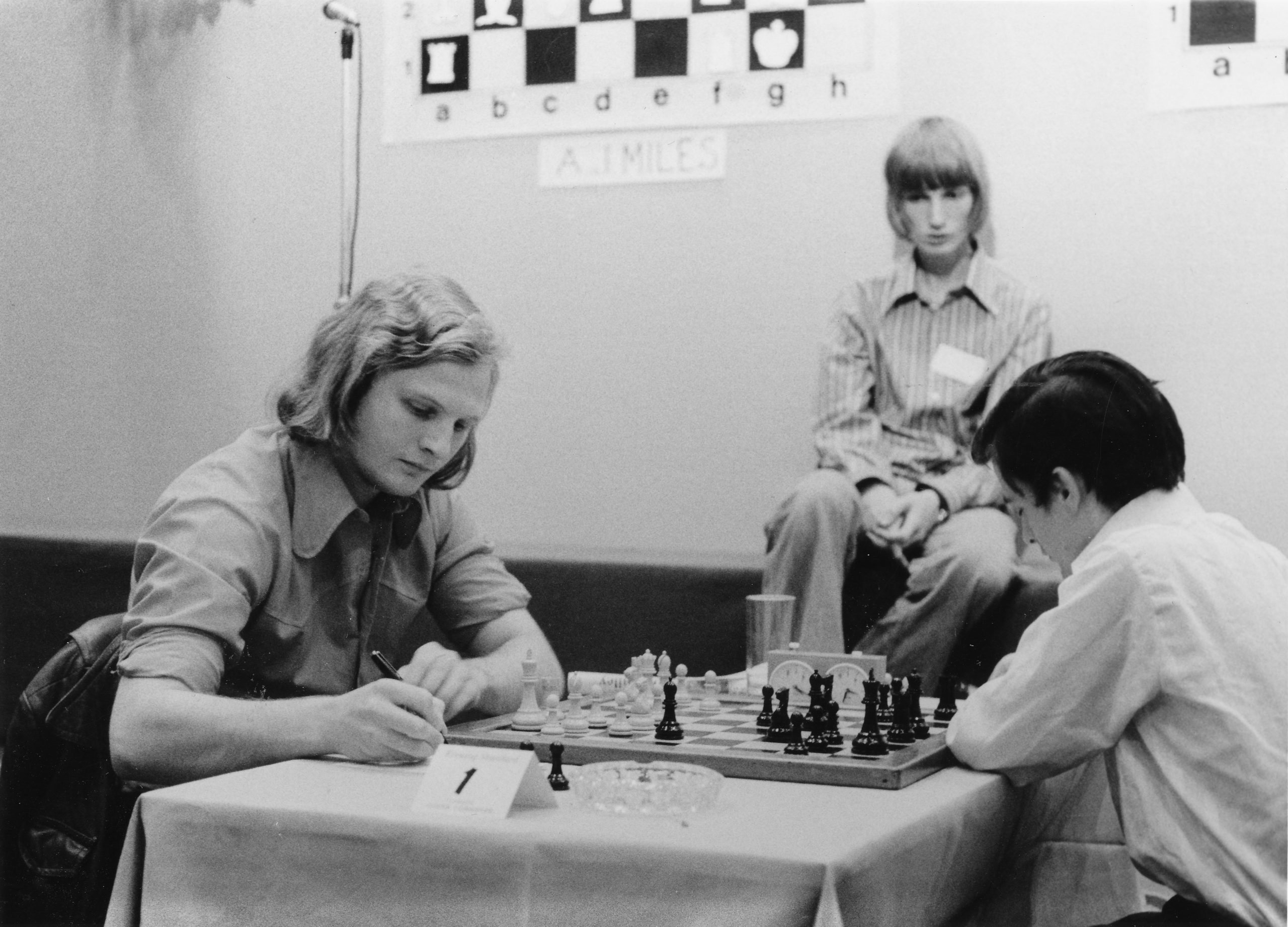
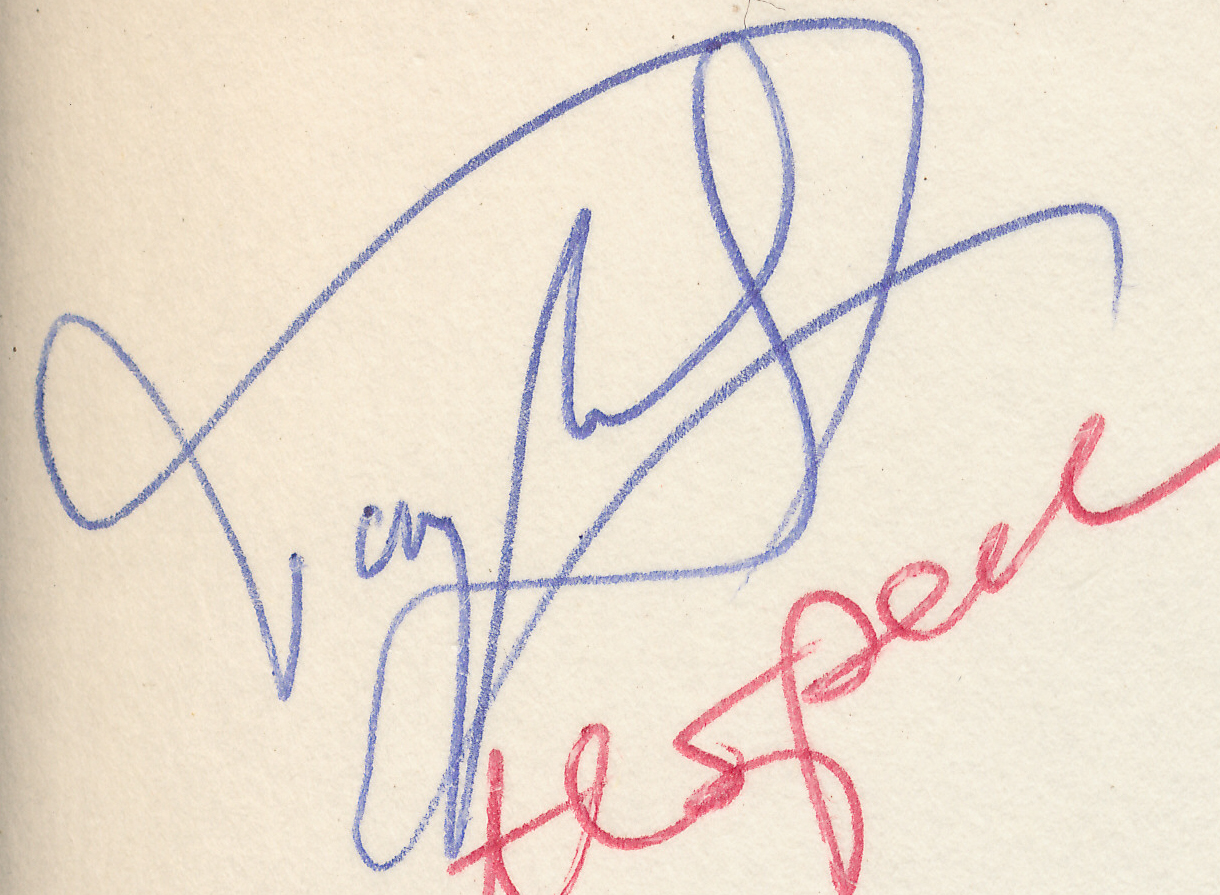
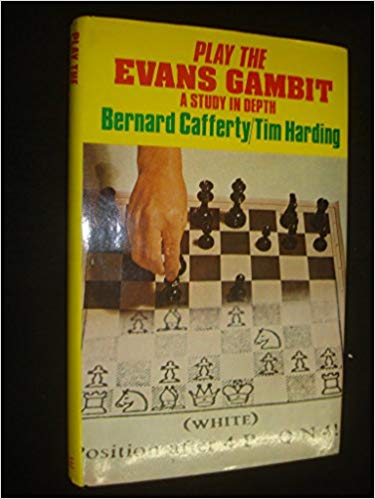
Tony's signature from a presentation copy of European Team Championship 1973. The event was the Anglo-Dutch match of October 1977 at Elvetham Hall
Tony’s signature from a presentation copy of European Team Championship 1973. The event was the Anglo-Dutch match of October 1977 at Elvetham Hall

From British Chess (Pergamon Press, 1983) by Bernard Cafferty :

“If one had to forecast at the start of the 1970s the British chess would have a player in the next decade who would win the World Junior Championship, make plus score against Soviet players in his first years of play against them, and beat such household names as Geller, Bronstein, Larsen, Gligoric, Smyslov, Spassky and Karpov…one would have been called a romantic dreamer.

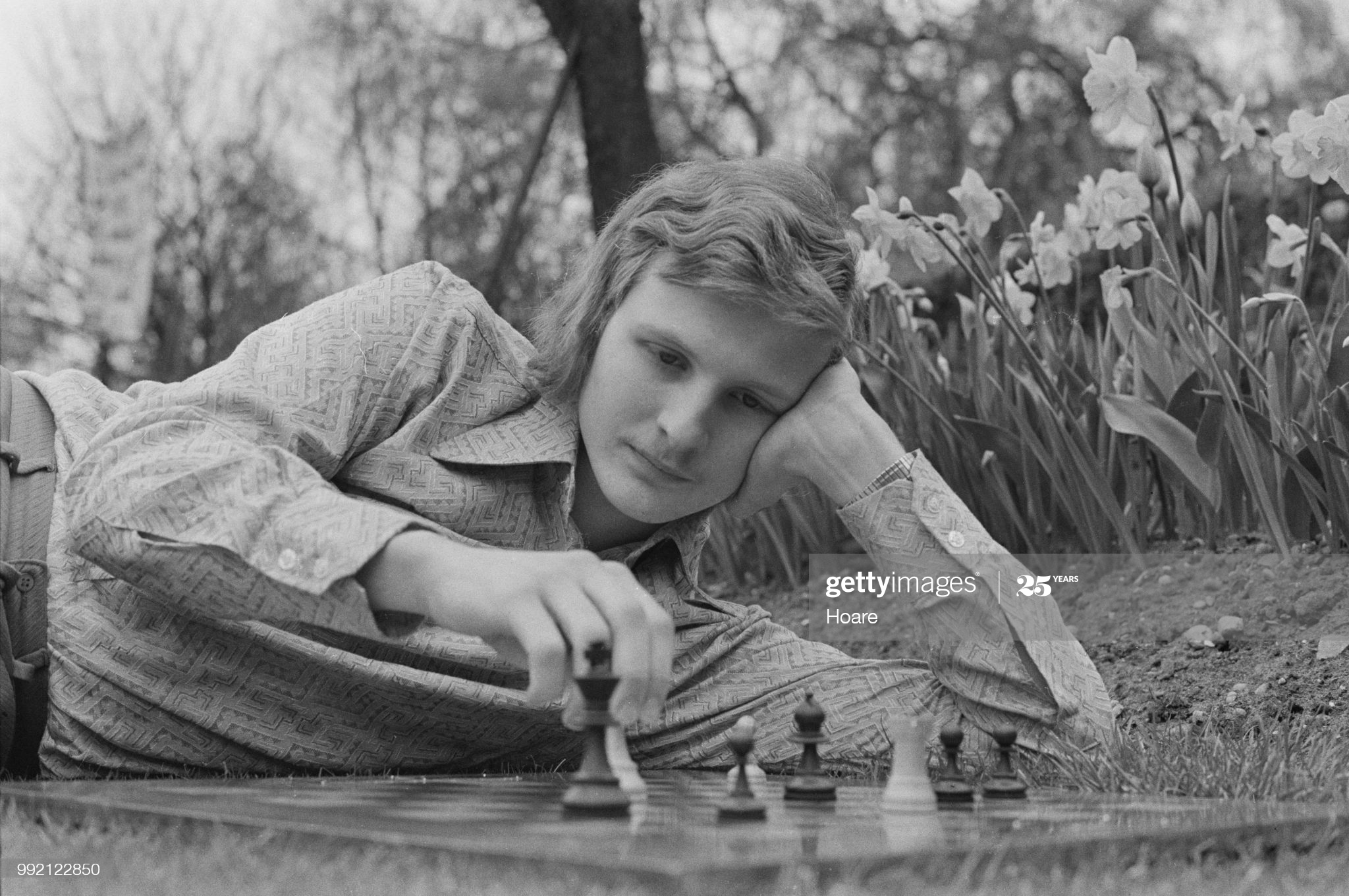
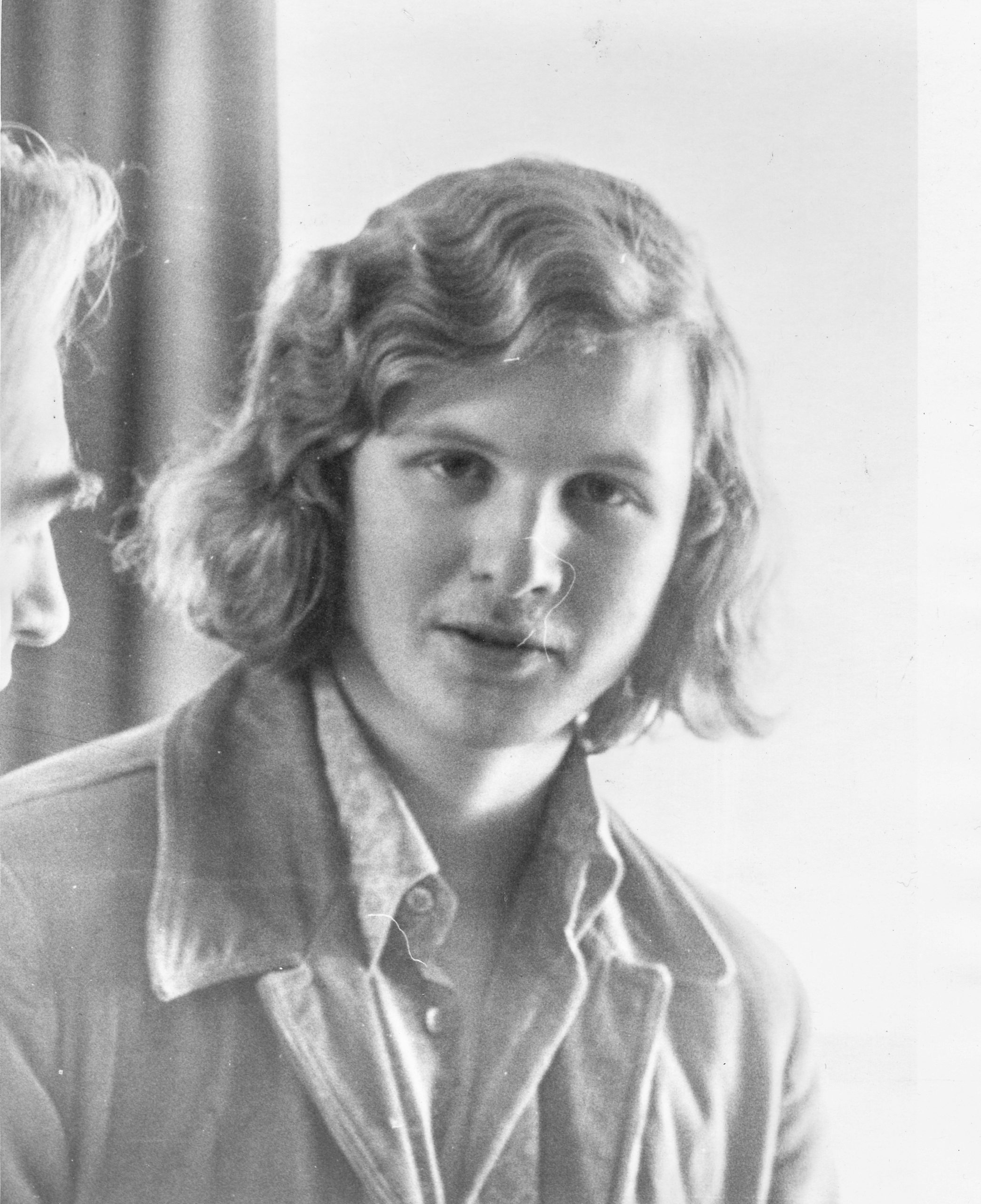
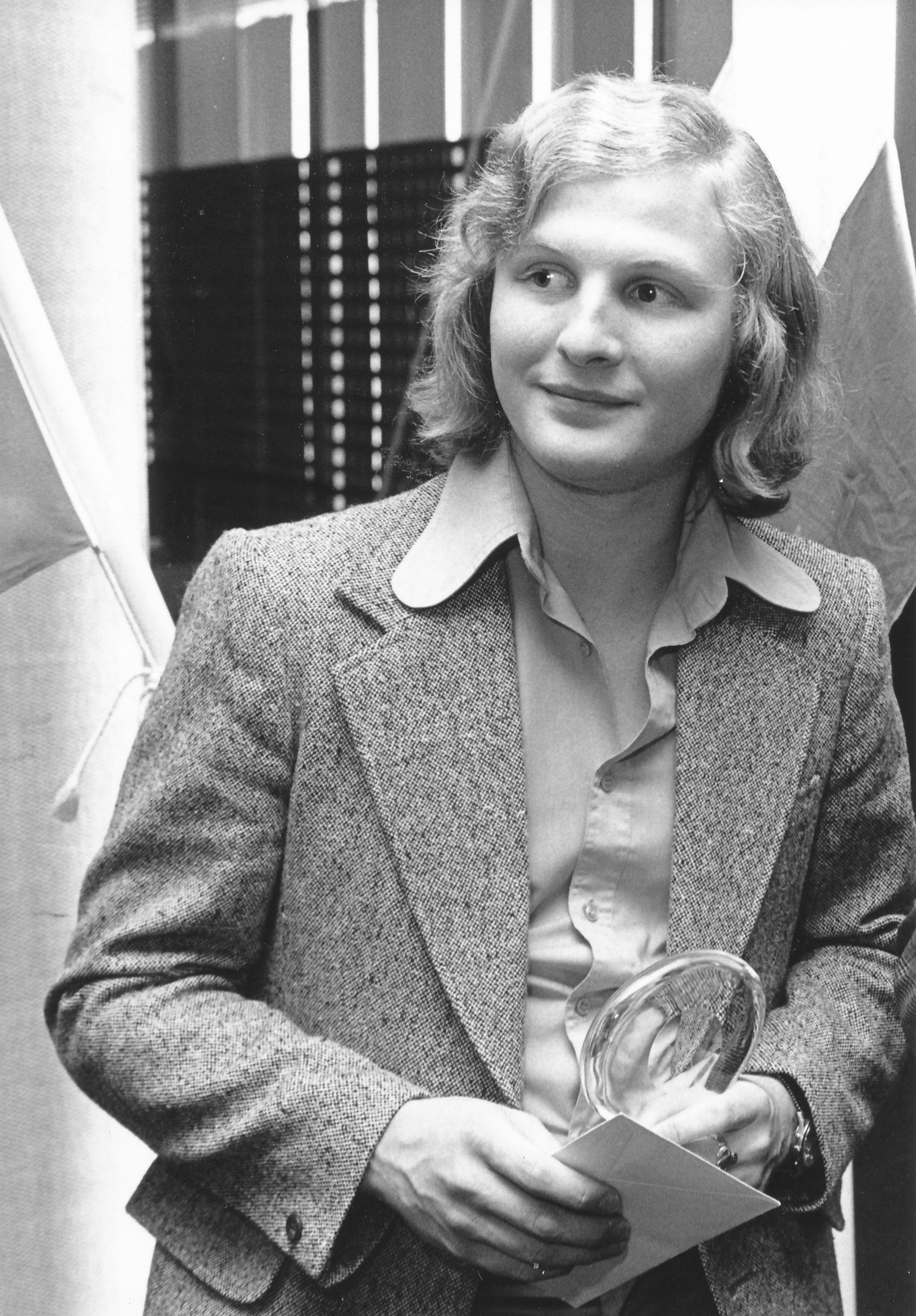
English chess grandmaster Tony Miles (1955 - 2001), UK, 6th May 1973. (Photo by Hoare/Daily Express/Hulton Archive/Getty Images)
English chess grandmaster Tony Miles (1955 – 2001), UK, 6th May 1973. (Photo by Hoare/Daily Express/Hulton Archive/Getty Images)

If one had gone further and said that the same grandmaster X would become only the second British player this century to beat a reigning world champion, and that as Black in an irregular opening (1 e4 a6 2 d4 b5) then incredulity would indeed have been a fitting reaction.

Yet all this has come to pass; all the above is fact not fiction, reality not a day dream. Who is grandmaster X? Where did he develop?

Anthony John Miles was born on the 23rd April, 1955, in Birmingham (his birthplace is incorrectly marked (Ed: as London) on the map in Elo’s book on ratings.) He learned the moves at the age of five, became seriously interested in the game at the age of nine or ten, and almost straight away won the Birmingham Primary Schools Championship.

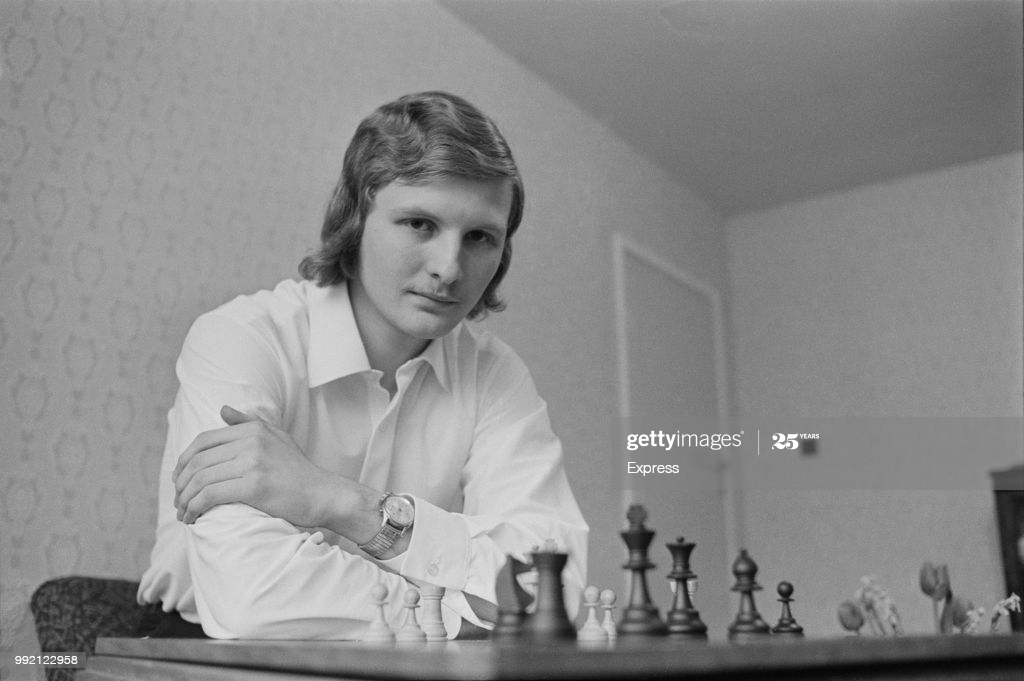
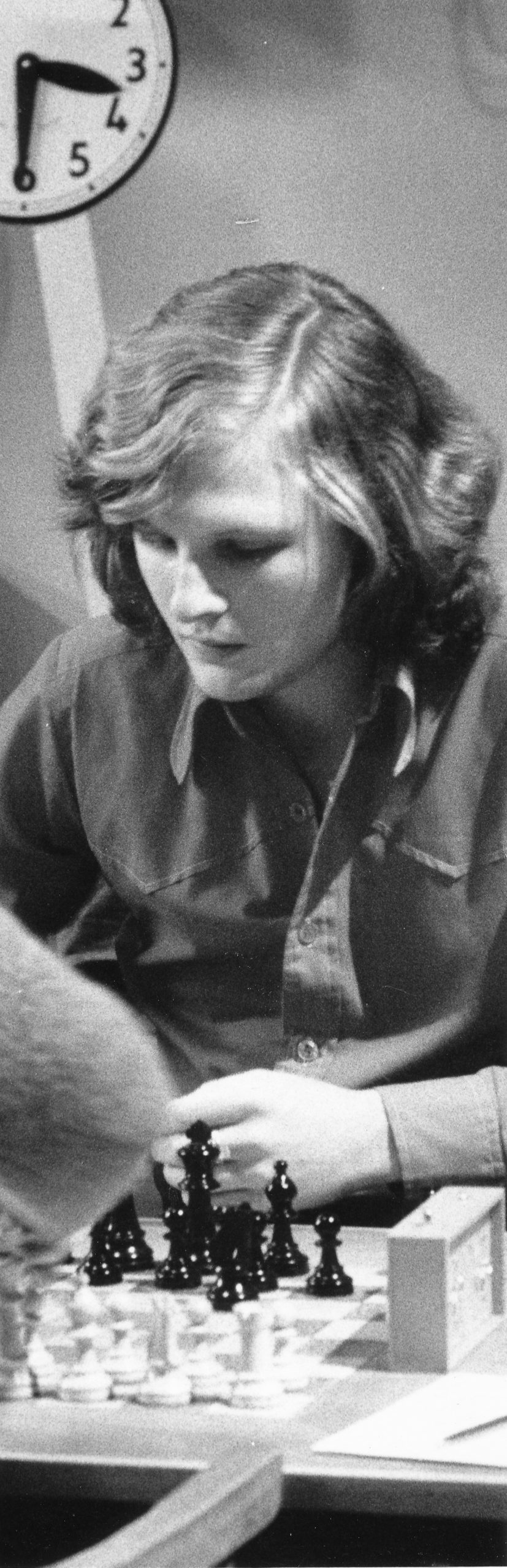
English chess grandmaster Tony Miles (1955 - 2001), UK, 15th May 1973. (Photo by Adam/Daily Express/Hulton Archive/Getty Images)
English chess grandmaster Tony Miles (1955 – 2001), UK, 15th May 1973. (Photo by Adam/Daily Express/Hulton Archive/Getty Images)

In 1965 he joined the Birmingham Chess club and the following year became a pupil at King Edward School (KES) (the alma mater of other strong British players, such as Hugh Alexander and Malcolm Barker, runner-up to Ivkov in the inaugural World Junior Championship held at Birmingham in 1951.)

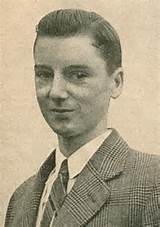
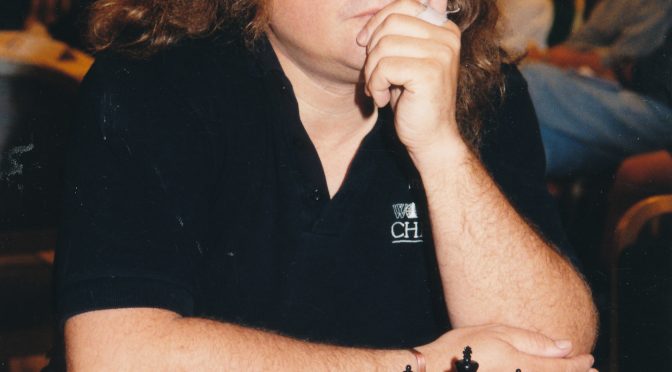
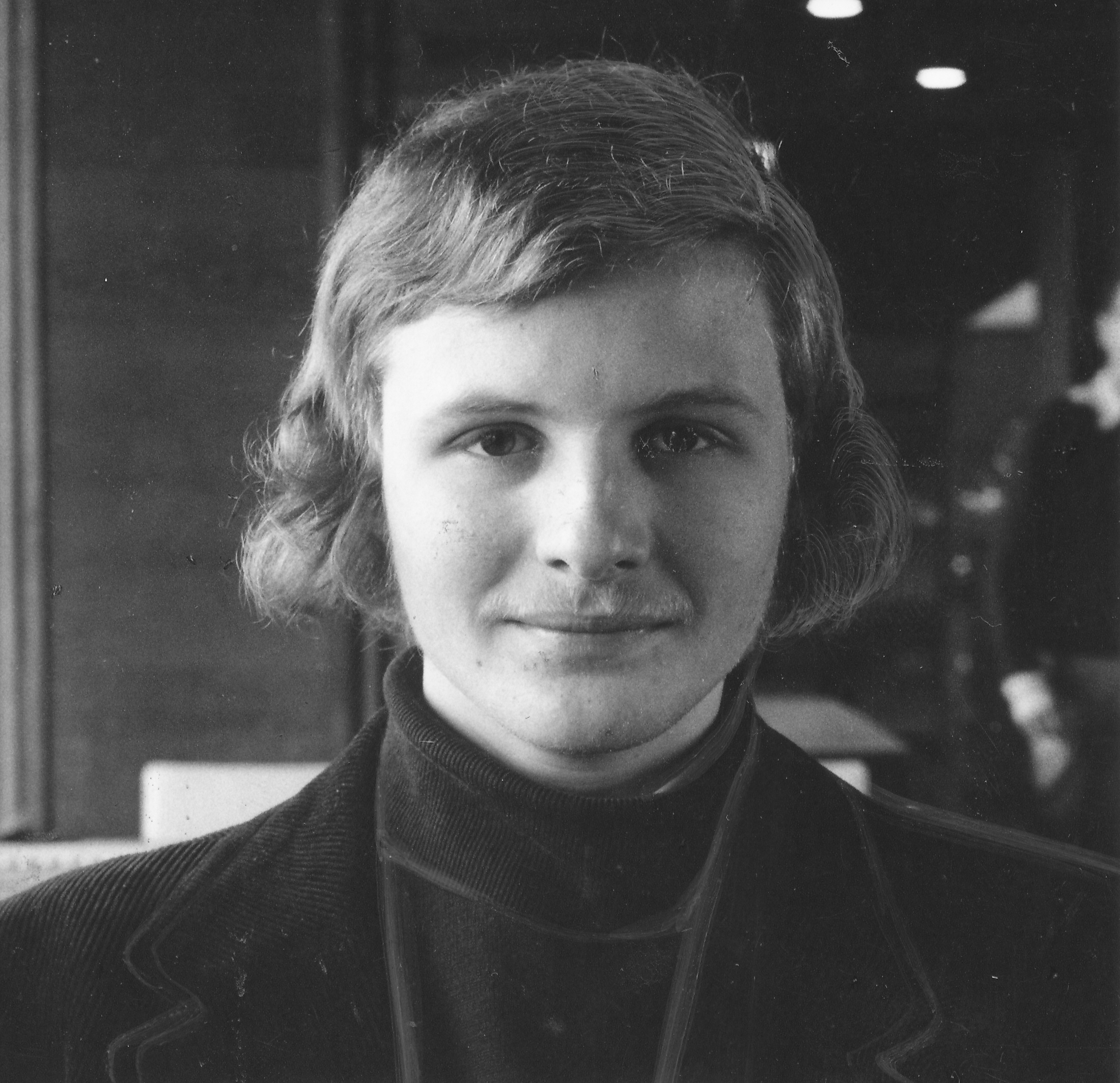
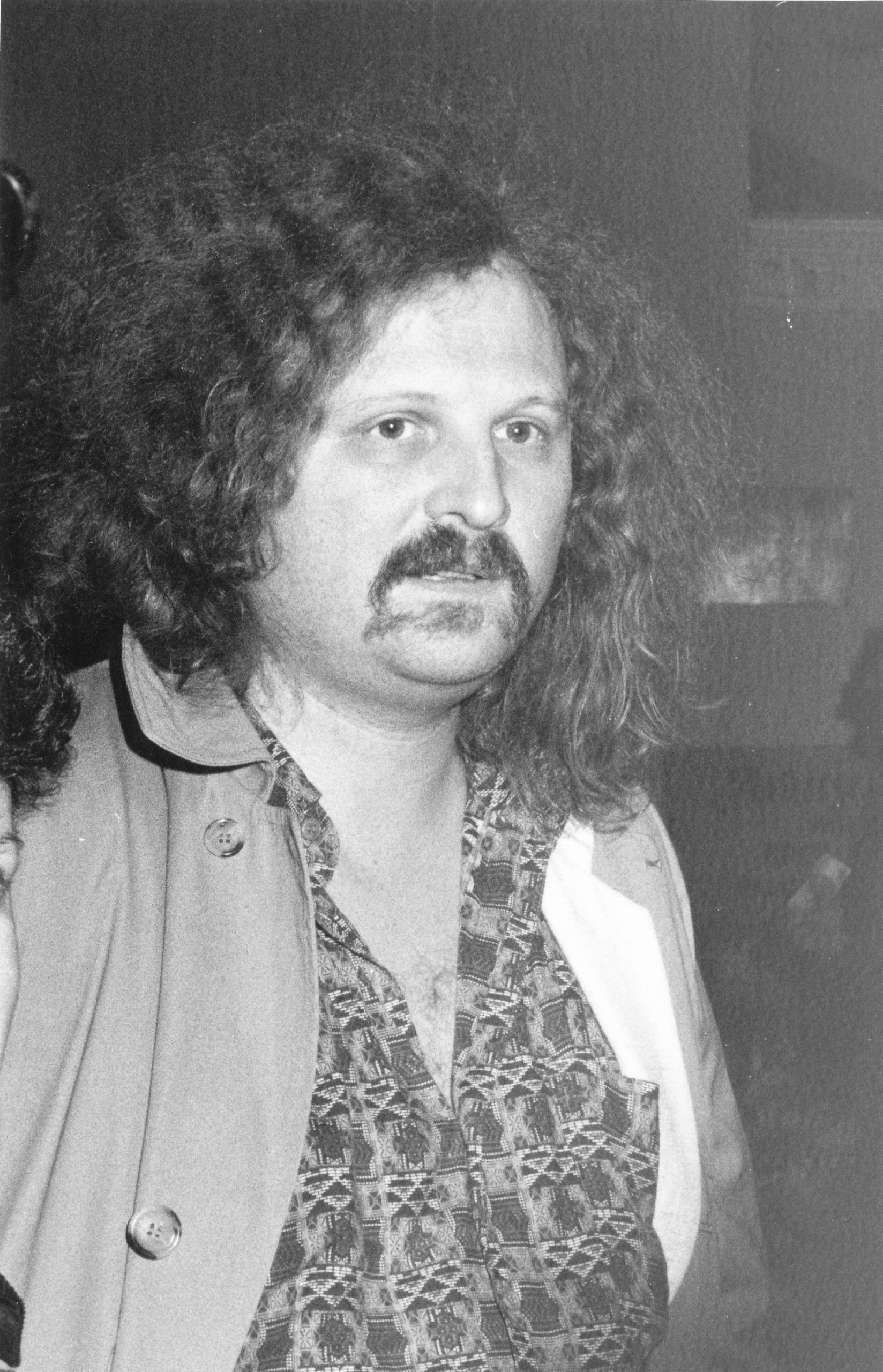
Tony Miles
Tony Miles

At the Birmingham Club he met strong opposition (another grandmaster-to-be, the postal player Keith Richardson was a member there for a time) since the club’s four teams were all in the higher divisions of the local league. Yet Tony’s school work meant that he could not be called a frequent attender at the club – he turned up for league matches and the club championship, but rarely for skittles except in the summer.

Tony Miles and possibly (?) Peter Clarke at Birmingham 1973

Soon he was playing in the Second Division, by 1968 he was in the First Division, and in the 1969-70 season he was on top board for one of the Club’s three teams in the top Division.

Tony made his debut in the BCF Congress at Oxford, 1967, where he was equal 11th in the under-14 Boys Championship won by another rising star, John Nunn. Strangely enough when Tony won this title the following year at Bristol Nunn was 3rd equal!

The Edgbaston player was also a regular competitor in the annual Easter Congress held in the same suburb of Birmingham where he lived.

Tony Miles
Tony Miles

The breakthrough to national status came when he was a sixth-former at KES. At the BCF Congress, Blackpool,
1971, he won the under-2l Championship (with Nunn and Jon Speelman equal 2nd and the same year made his international debut in a junior tournament at Nice which he won ahead of various prominent players including the Swiss Hug who was to win the World Junior championship some 4 months later!

Tony Miles and unknown opponent

In the 1971-72 Birmingham and District League season he set up a scoring record, mainly on top board, that may never be equalled (9.5 out of 10).

Tony Miles
Tony Miles

During these school years Tony was a rather taciturn teenager (perhaps to be expected in an only child) but he never fitted in with the conventional image of chessplayer as weedy bookworm.

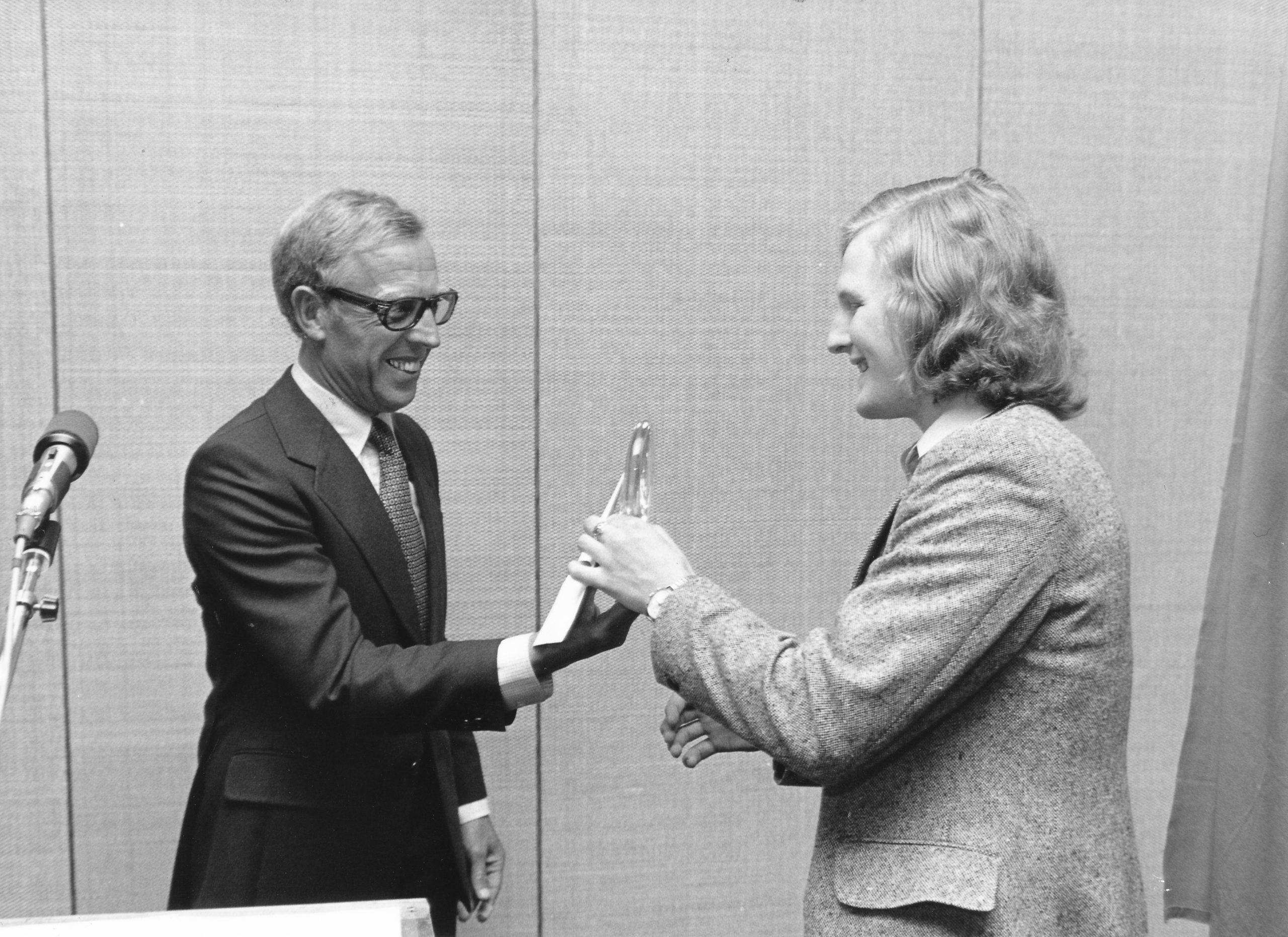
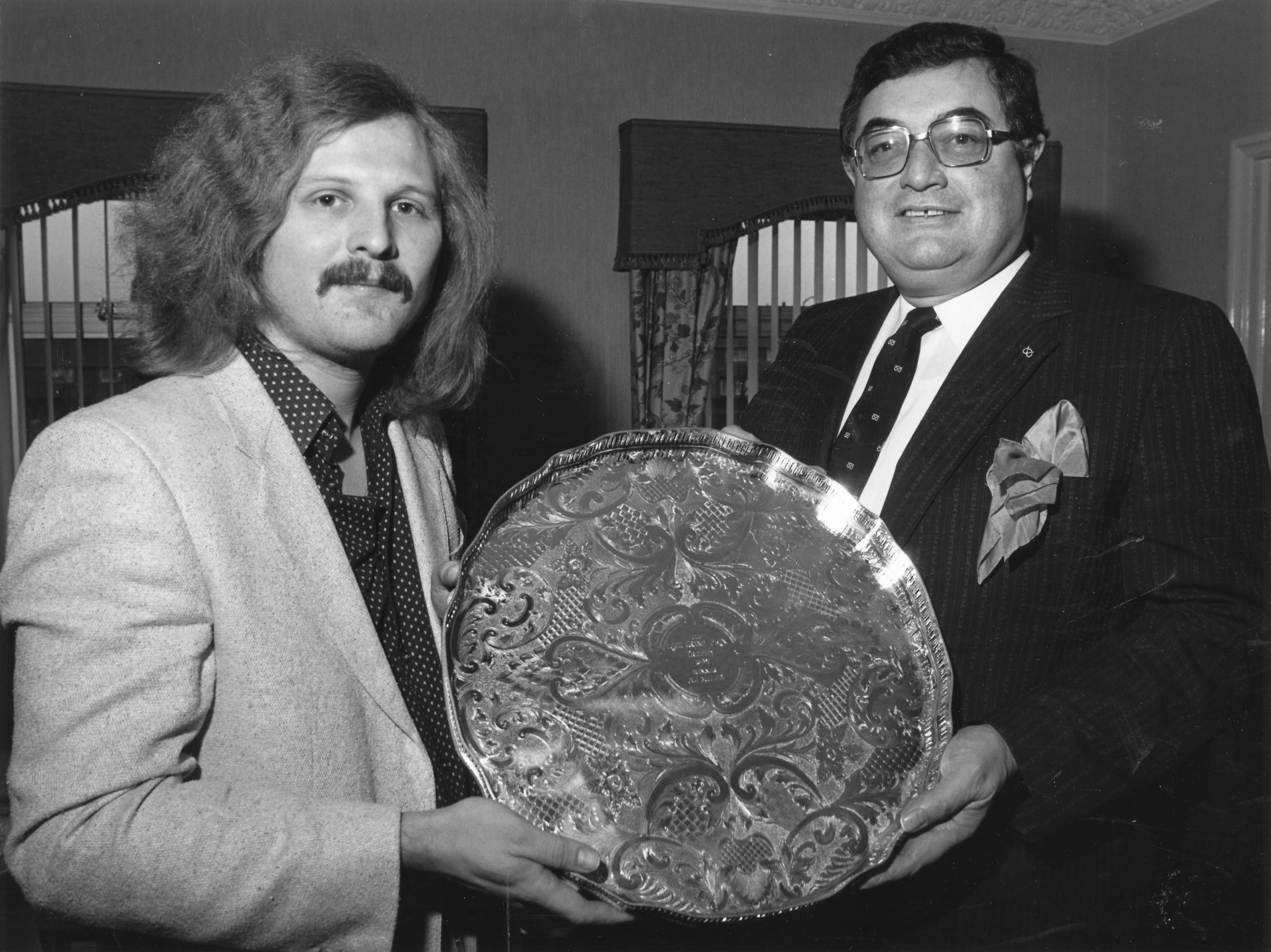
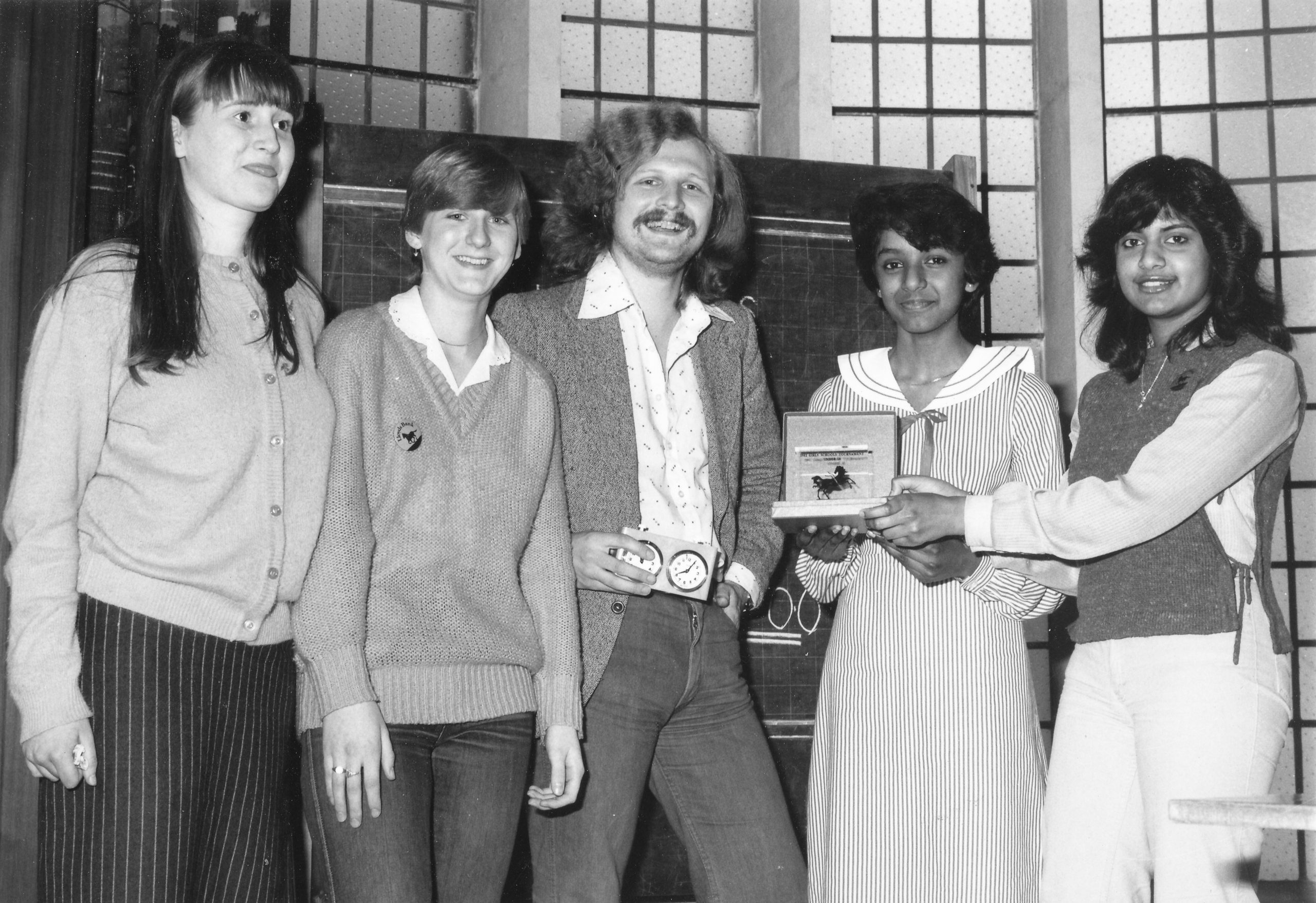
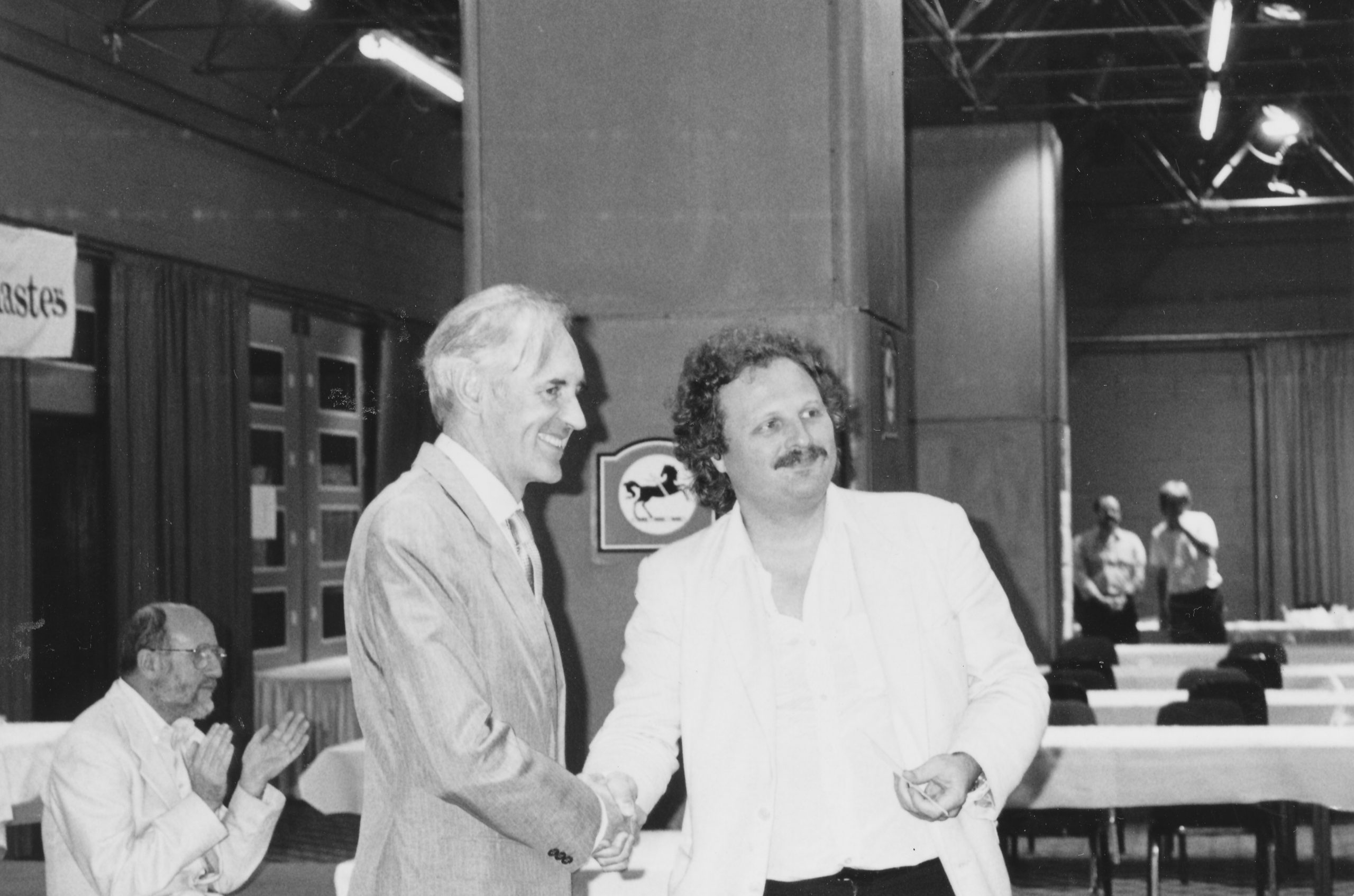
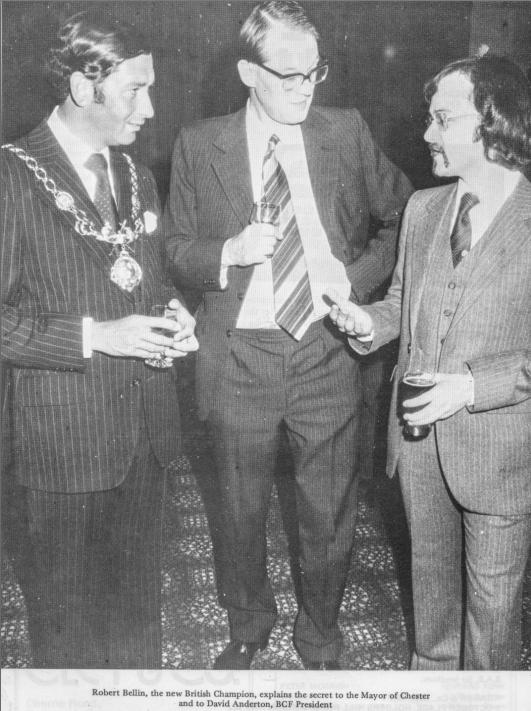
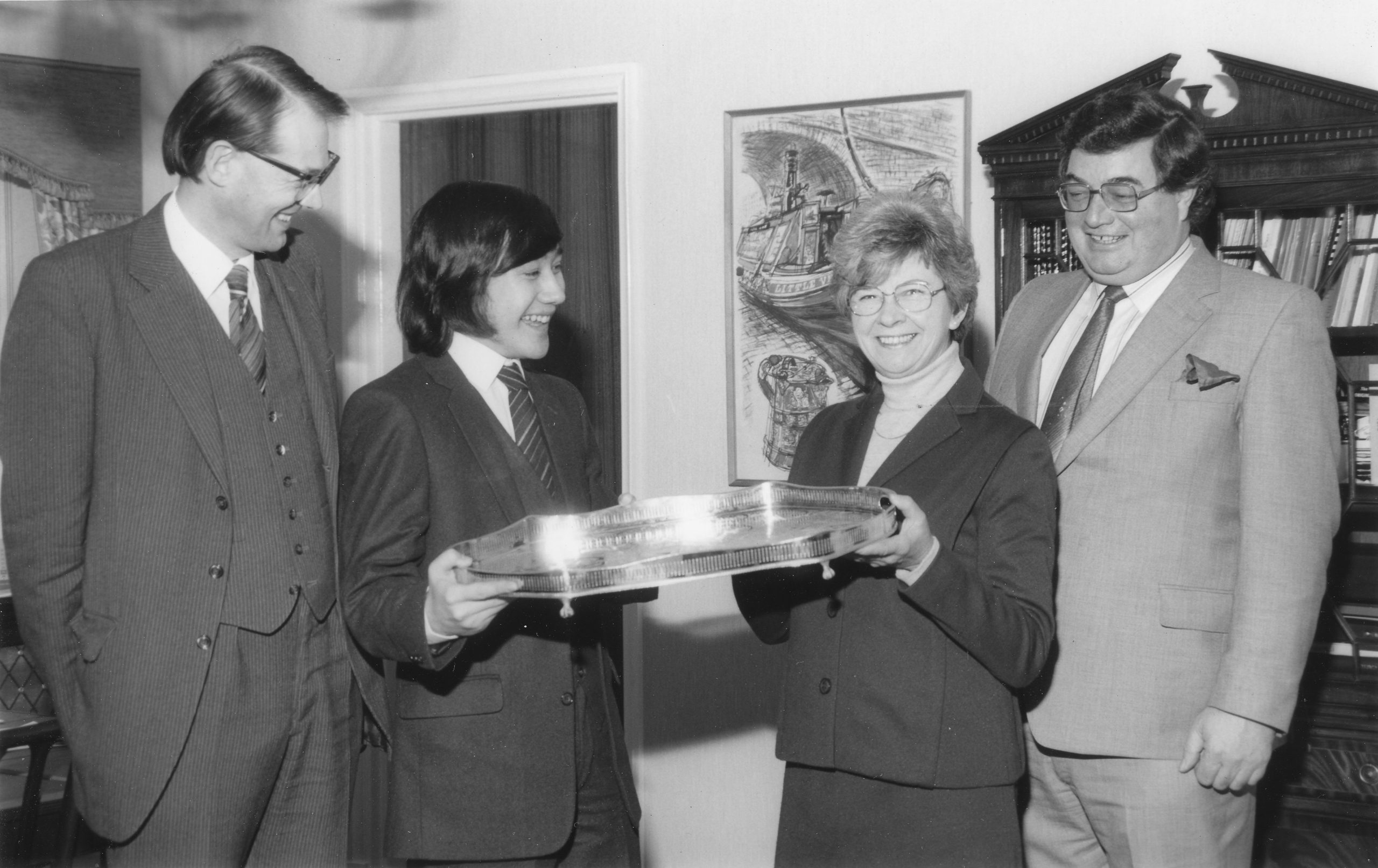
Tony being presented with the trophy in the photograph below

He always had a fine physique, played rugger at school and later became keen on squash and skiing as a means of keeping fit, though he is the first to admit that he can be rather lethargic (especially in the mornings!)

Tony Miles
Tony Miles

At the time I knew one of his teachers professionally, and heard the occasional report that he was not always up to the best academic standards of KES. My reaction must have seemed heresy at the time, but subsequent events in the post-Fischer era have confirmed that the ability to play chess to international standard may lead to a more worthwhile career than being a run-of-the-mill university graduate.

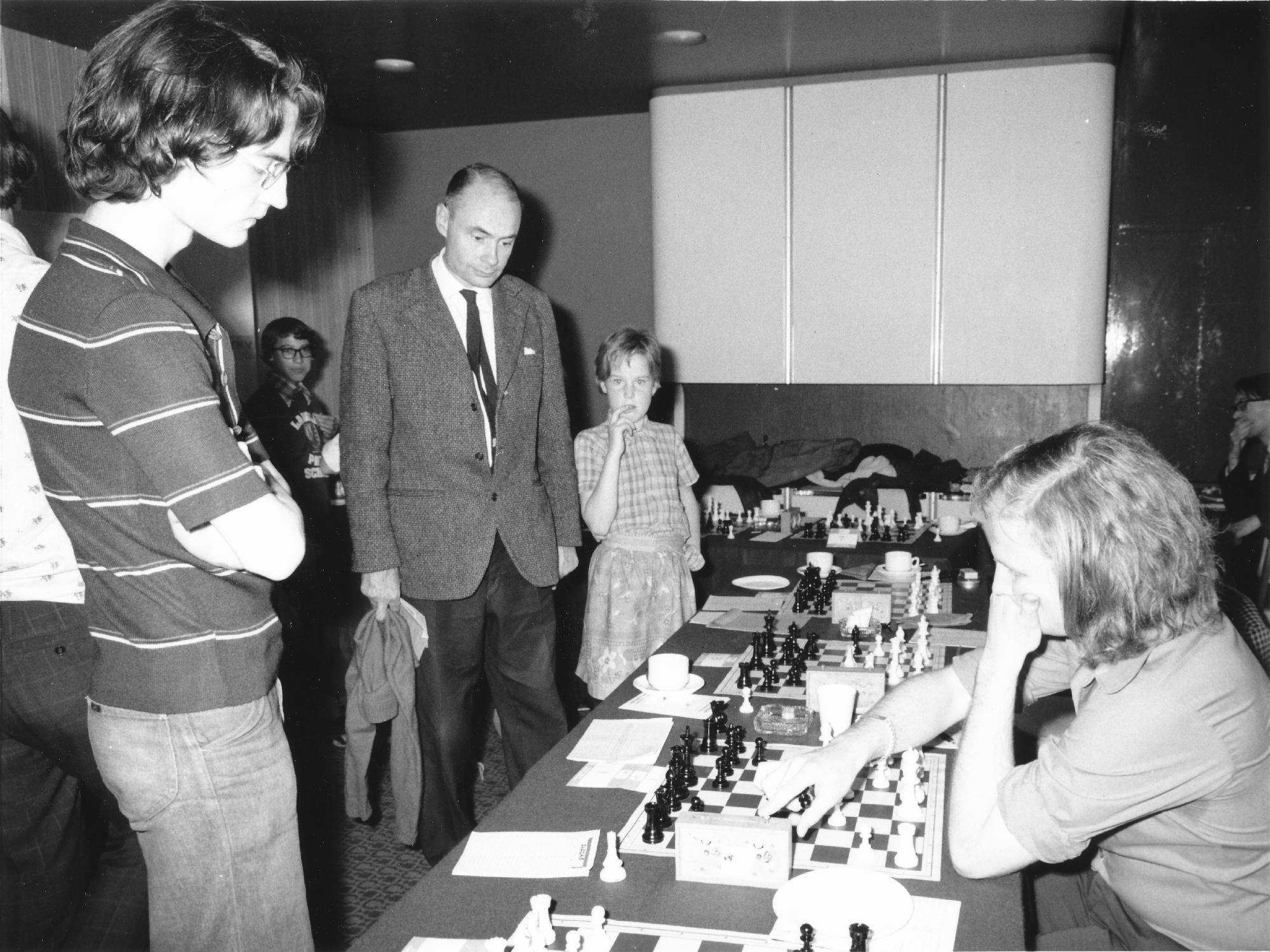
Tony Miles at Hastings

A sign of Tony’s growing understanding of the finer points of the game came when he strolled into the Birmingham Club the day after the first game of the Spassky-Fischer match and pointed out (correctly as was shown later) the reason why Fischer had made his famous Bxh2 sacrifice/oversight.

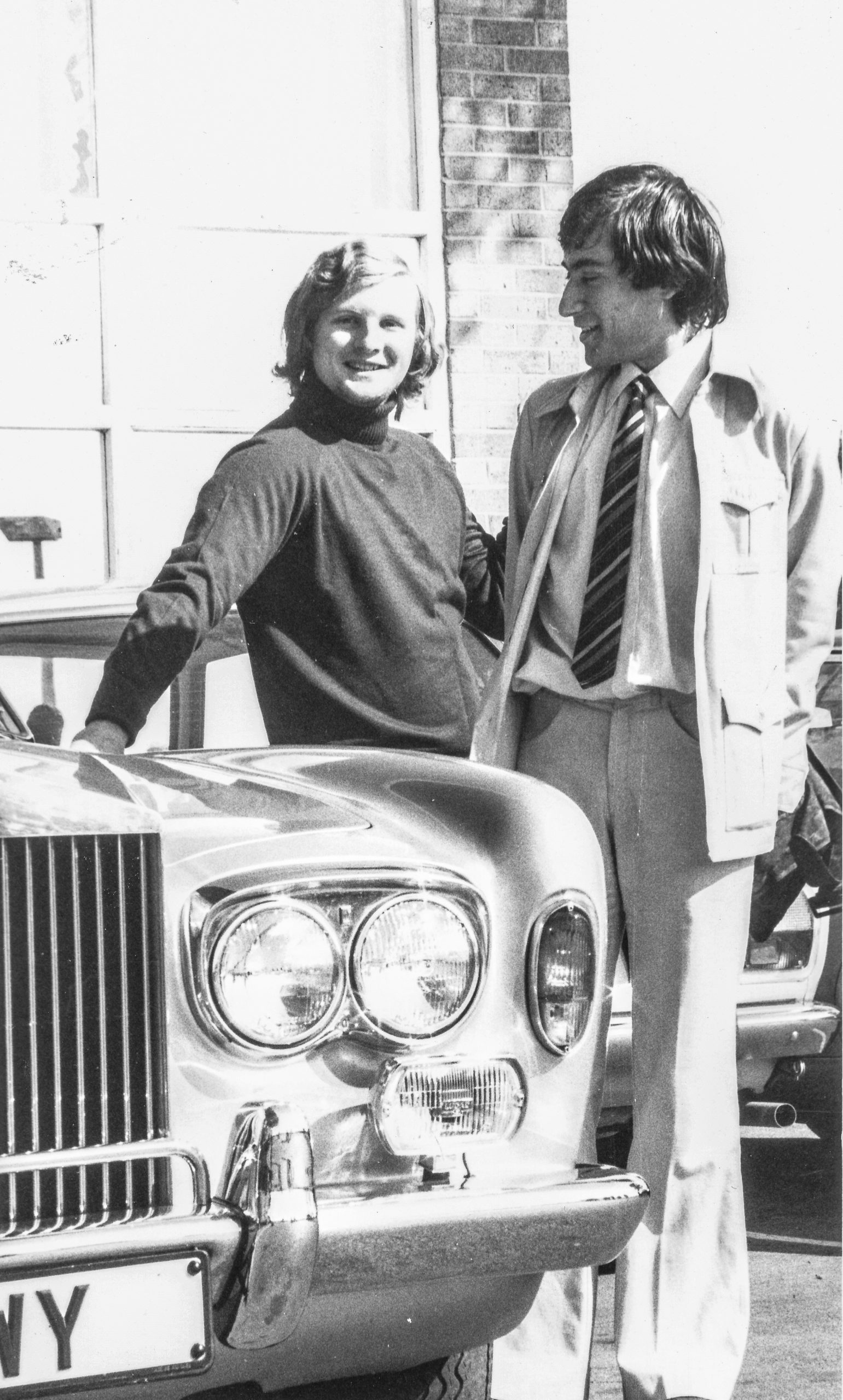
Tony Miles & Bill Hartston admire a Rolls-Royce

International recognition came in 1973 when he finished 2nd to Romanishin in the European Junior Championship at Groningen, and Second to Belyavsky in the World Junior at Teeside, as well as sharing 4-6th place in the British Championship at Eastbourne at only the second attempt. His first game to be published round the world was his victory over Bisguier in the Birmingham Easter tournament which he won ahead of Adorjan and Bisguier in the same year.

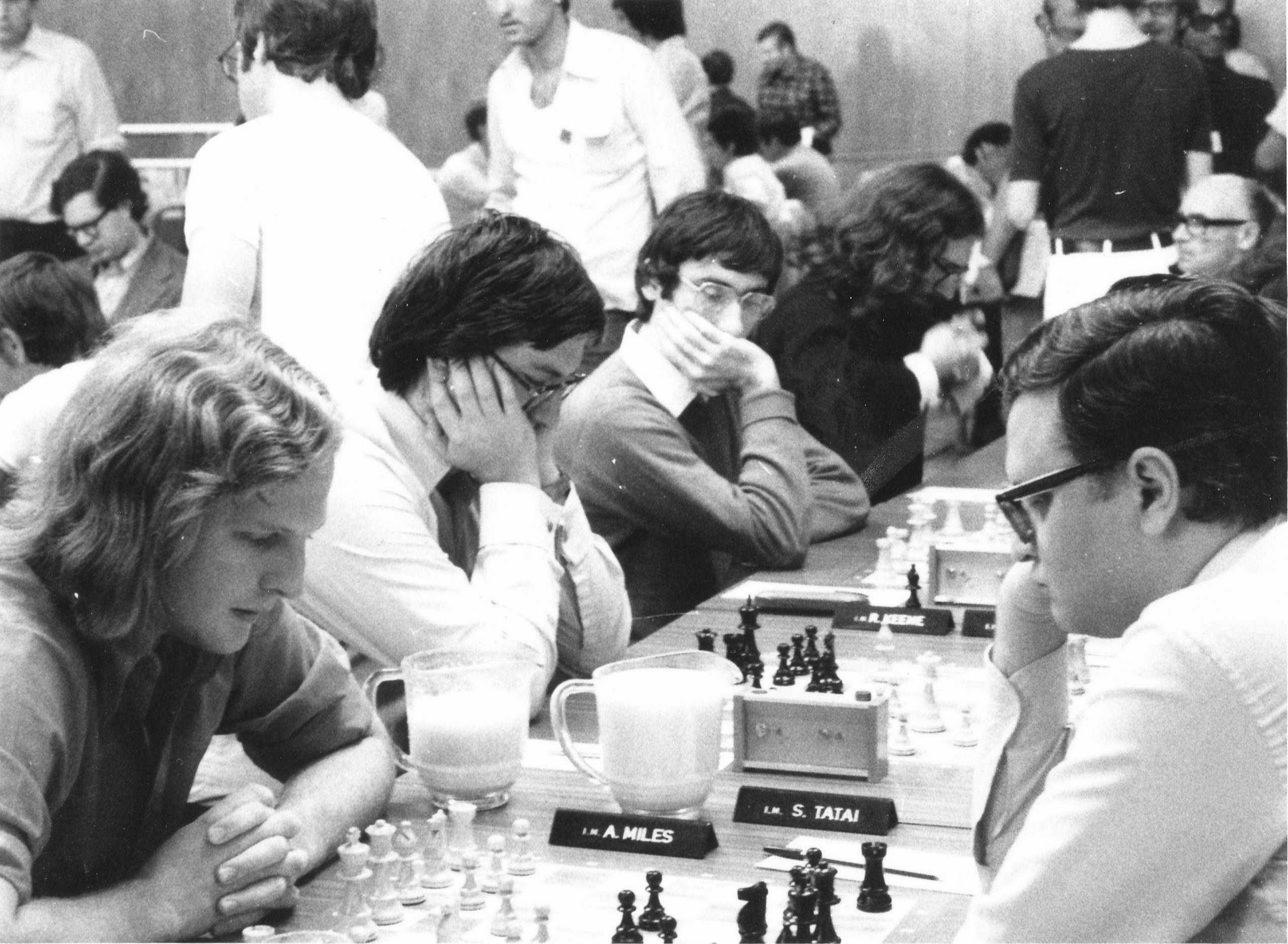
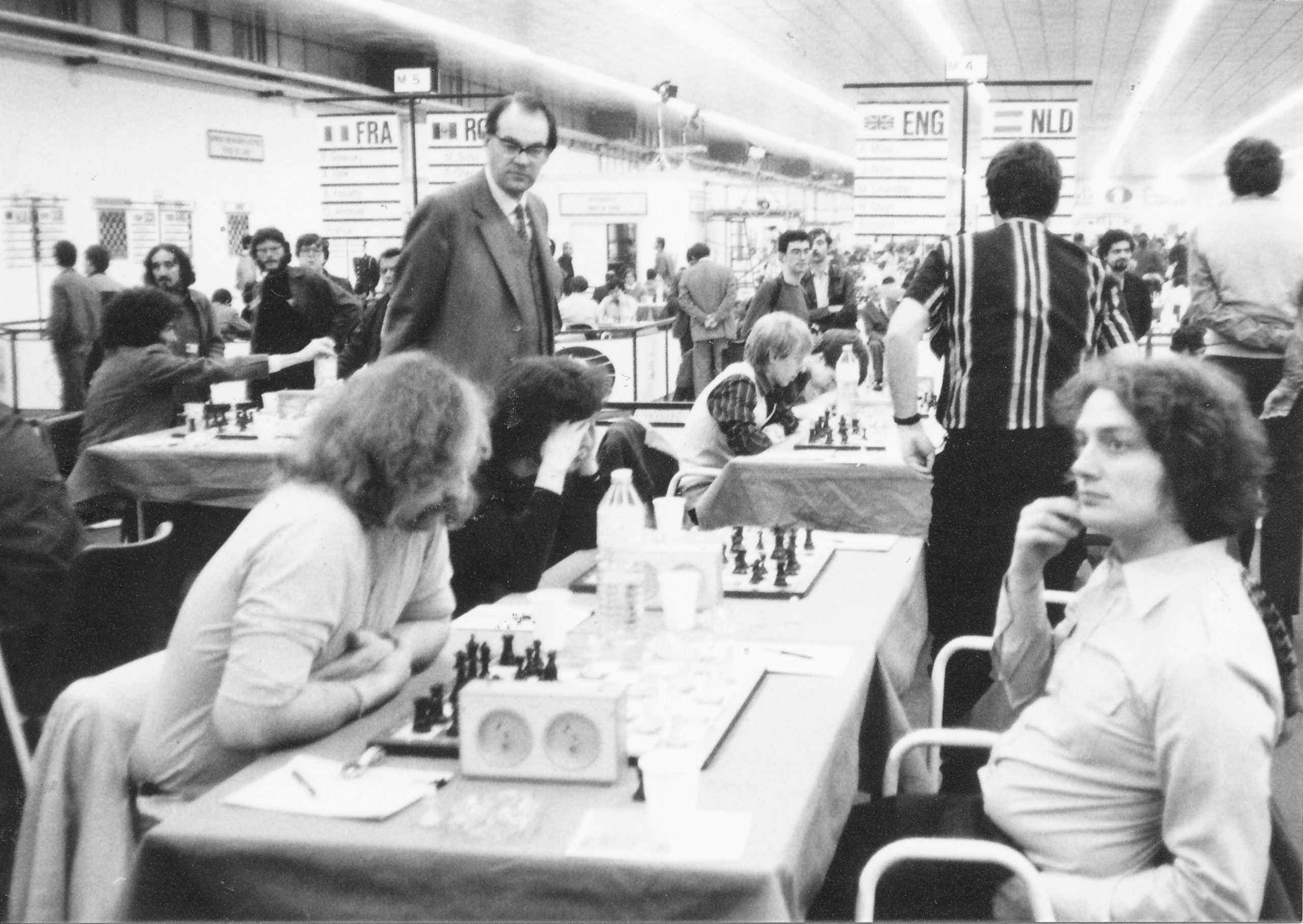
England plays Italy at Haifa 1976. Miles played Tatai, Keene played Toth, Hartston played Grinza and Mestel played Micheli

The main event of 1974, a break-through for British chess, was the World Junior Championship played in August in sub-tropical Manila. Here he played one of his finest games, against Kochiev, to take the title with a round to spare, thereby becoming lnternational Master.

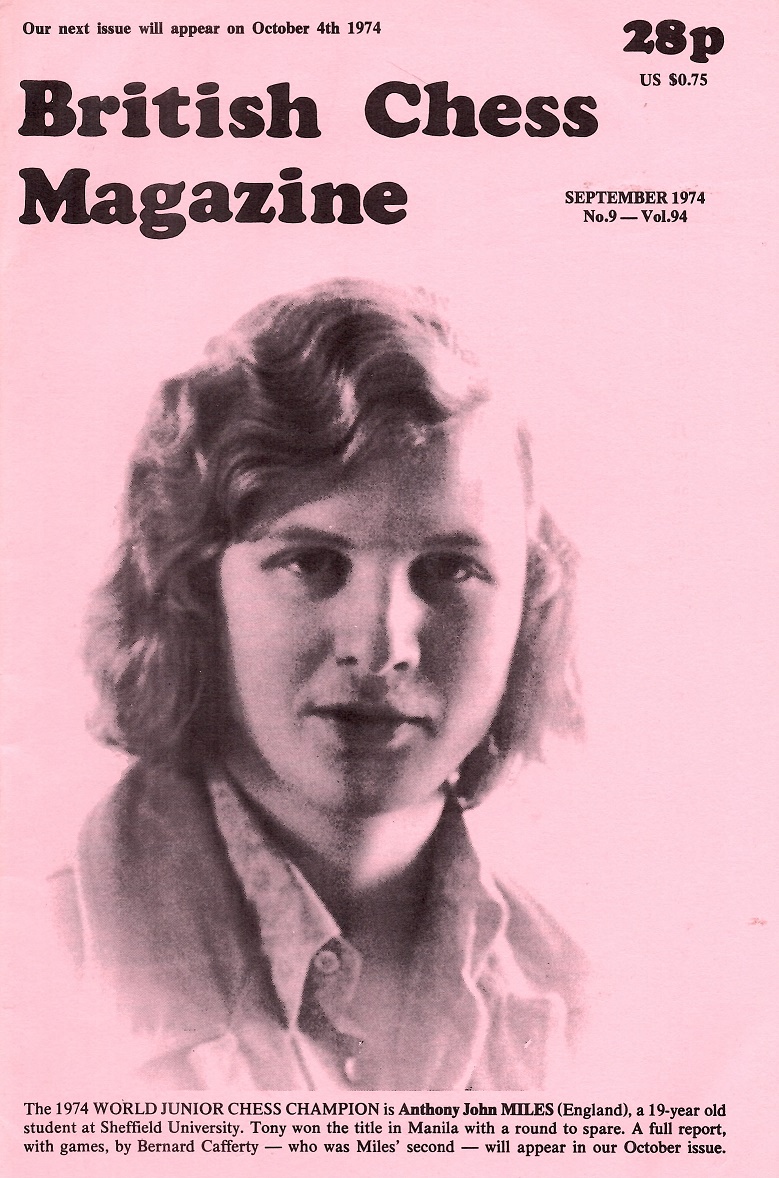
The 1974 World Junior Chess Champion is Anthony John Miles (England), a 19-year old student at Sheffield University. Tony won the title in Manila with a round to spare. A full report, with games by Bernard Cafferty - who was Miles' second  - will appear in our October issue.
The 1974 World Junior Chess Champion is Anthony John Miles (England), a 19-year old student at Sheffield University. Tony won the title in Manila with a round to spare. A full report, with games by Bernard Cafferty – who was Miles’ second – will appear in our October issue.

Tony’s physical strength showed up to good effect here, not just lasting out the 4 weeks in the baking humidity but coping with the huge load of luggage (on the outward journey huge cases full of Chess Player, Informator and the like; on the return journey this load reinforced with prizes and souvenirs!).

Tony Miles at Wijk aan Zee 1976. Korchnoi was first. Photo taken by Brian or Freddy Reilly

Gaining the title brought regular invitations to tournaments which could not be fitted in well with the demands of his maths course at Sheffield University. In the summer of 1975 he gave up the course after two years, while the University authorities showed their recognition of his distinction at chess by the award of an honorary MA degree.

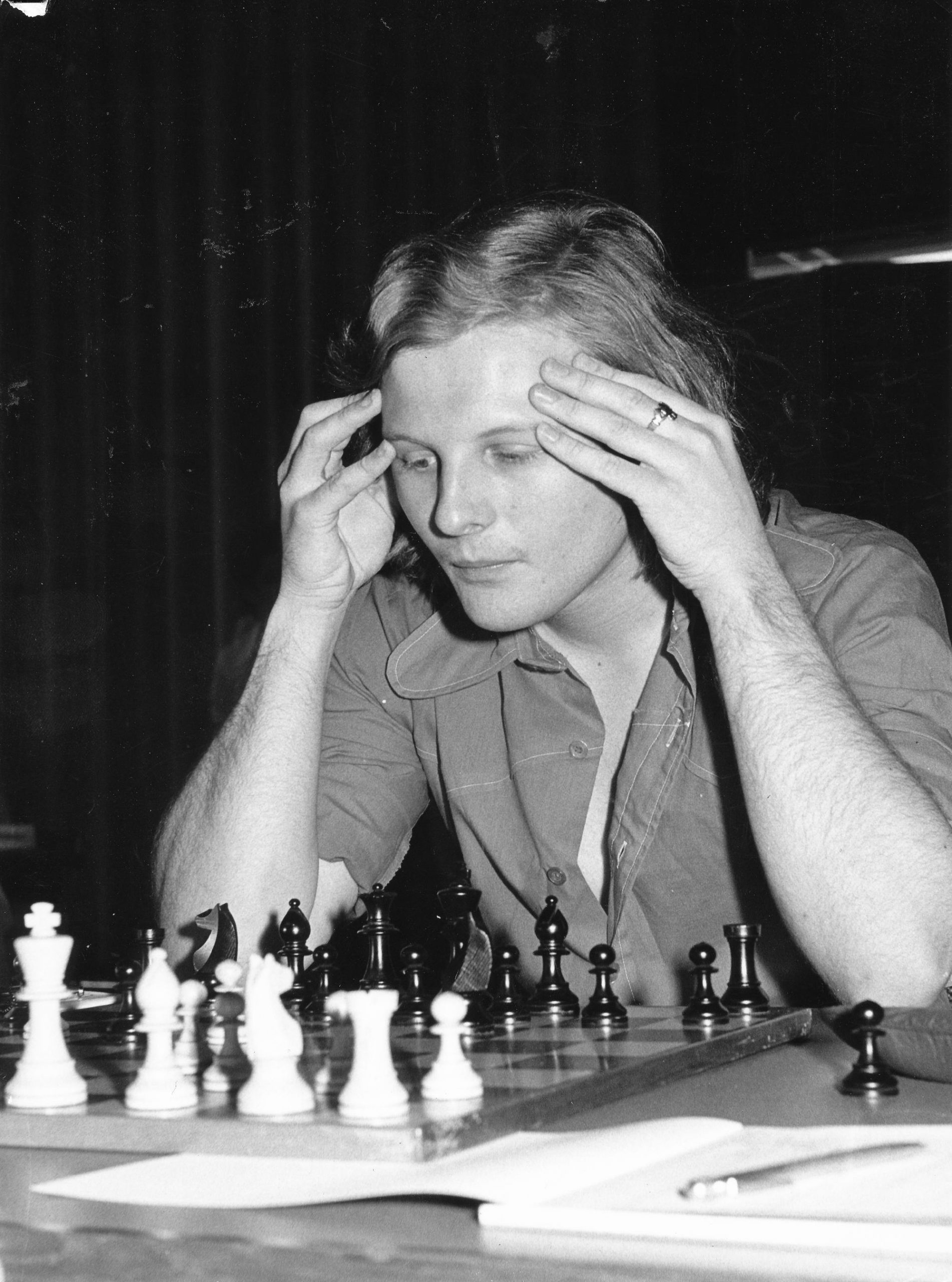
Tony Miles in relaxed mood

Once free to concentrate wholeheartedly on his true calling he took the grandmaster title in a rush. The first norm came with first prize, August, 1975, at the London Chess Fortnight ahead of Adorjan, Sax and Timman.

Tony Miles
Tony Miles

Hastings 1975-76 was not too good a result, but only a few weeks later he was on his way to a great triumph despite
forced late acceptance of the invitation to the USSR due to lack of finance. He got his visa just in time and went to snowy Dubna, a scientific centre near Moscow, to achieve that most difficult feat – a GM norm in a Soviet tournament ahead of eight GM’s and others
just as strong.

Tony Miles plays Tony Miles : see full caption below
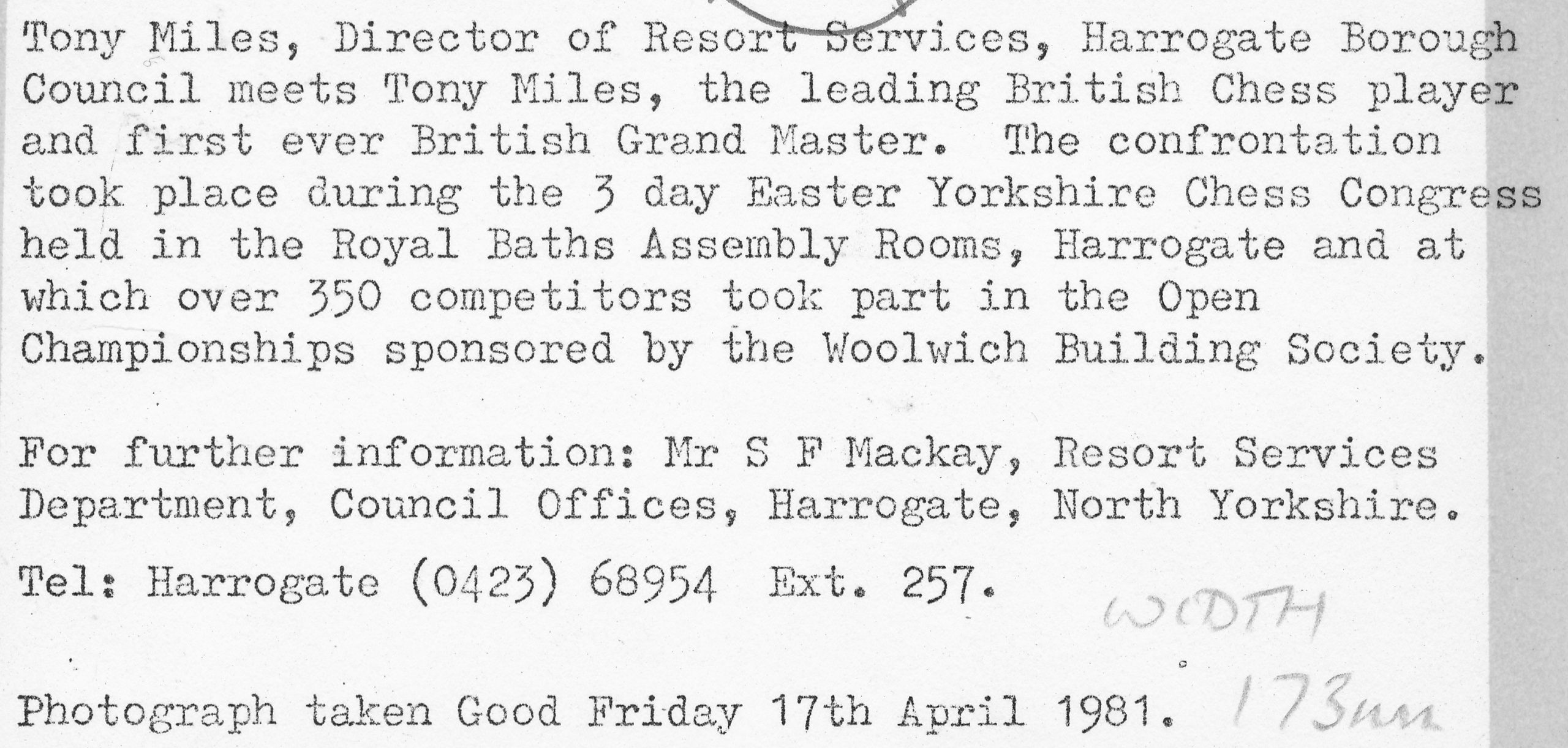
Caption for above photograph

Thus Tony Miles became the first official British grandmaster (the title dates officially only from 1949, so excluding the likes of Staunton, Blackburne and Burn) and took the £5000 Slater prize for the first British GM to add to the £1000 prize for victory in the 1975 Cutty Sark series of weekend and other tournaments. The availability of sponsorship, it goes without saying, has done much to encourage Tony on his chosen path as a chess professional, a far from easy vocation that demands will-power and strong nerves to be successful.

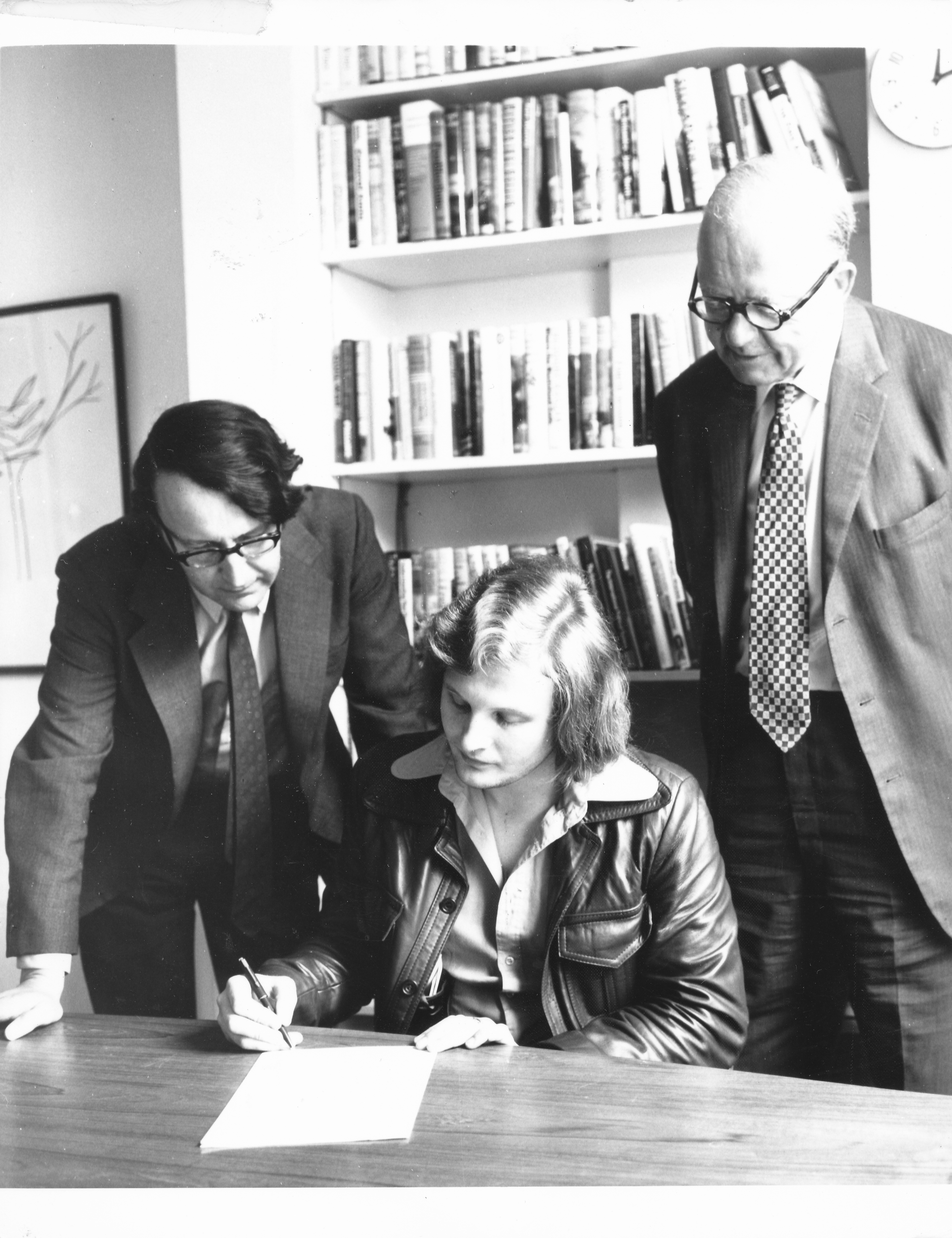
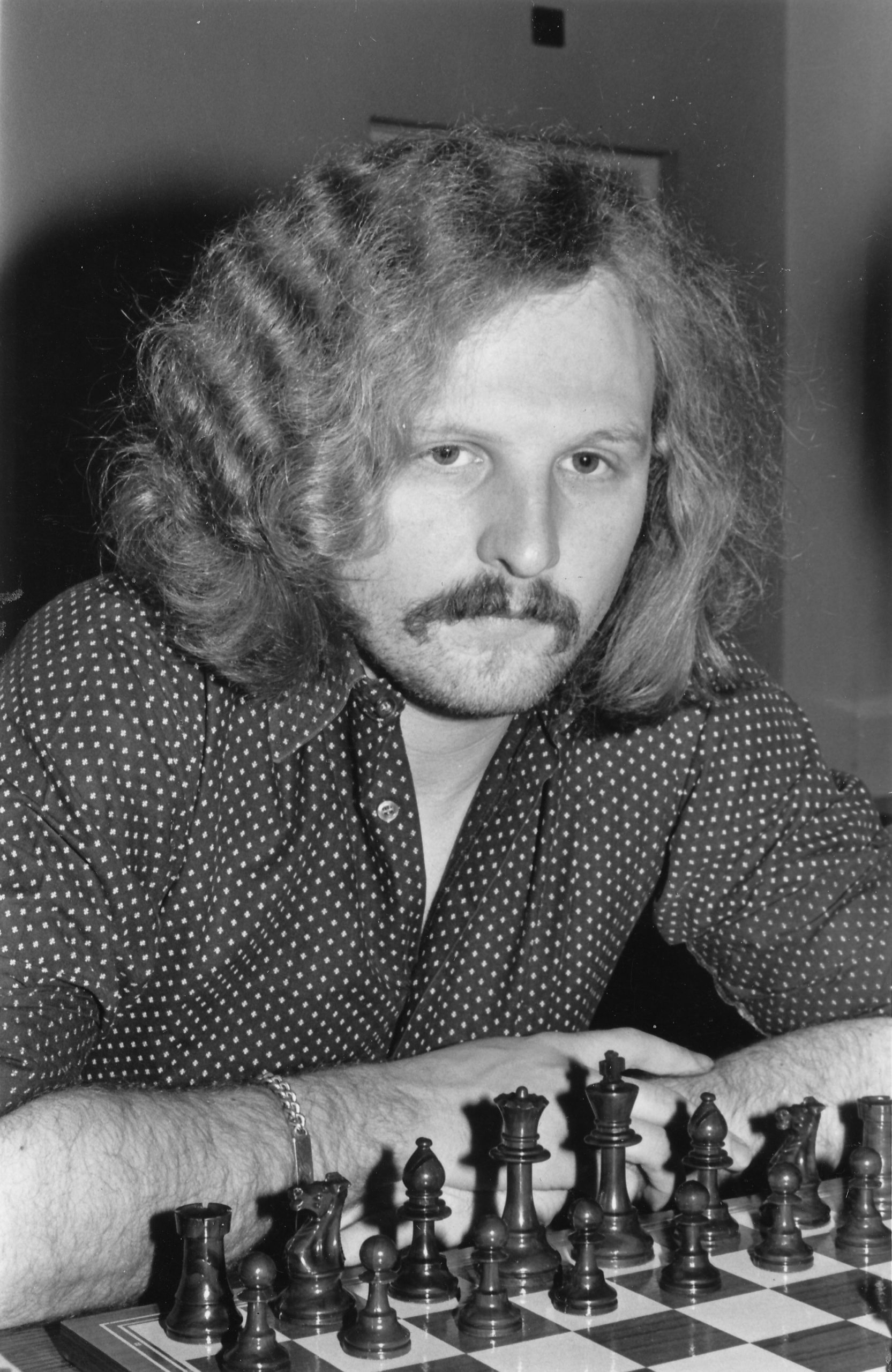
Tony Miles : See full caption below
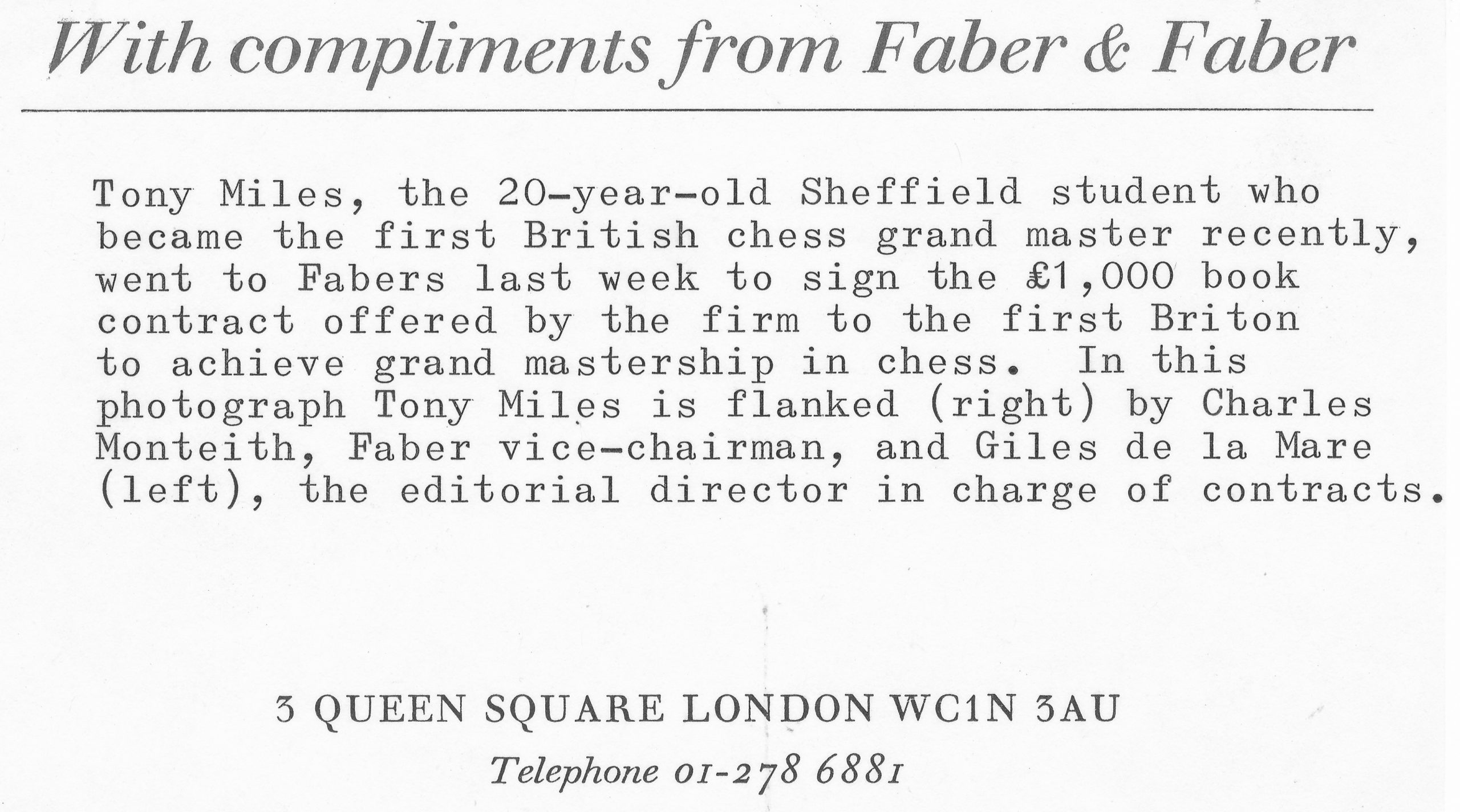
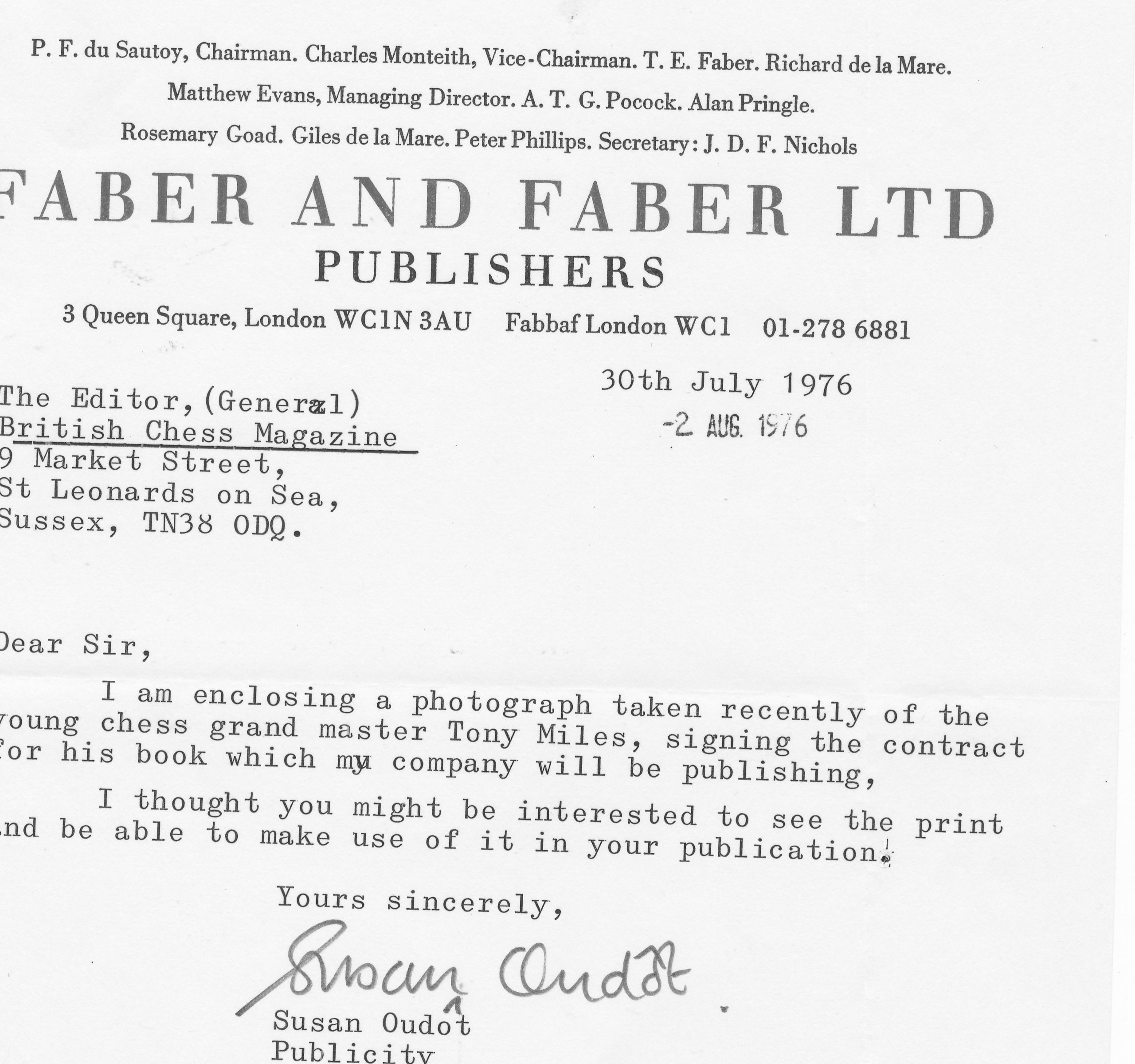
Full caption for above photograph
Accompanying letter for above photograph

1977 confirmed that here was a genuine grandmaster with first prizes at the Amsterdam IBM and Biel tournaments, and second prize behind Karpov
at the first of the new series of Super grandmaster tournaments (Tilburg, Holland.)

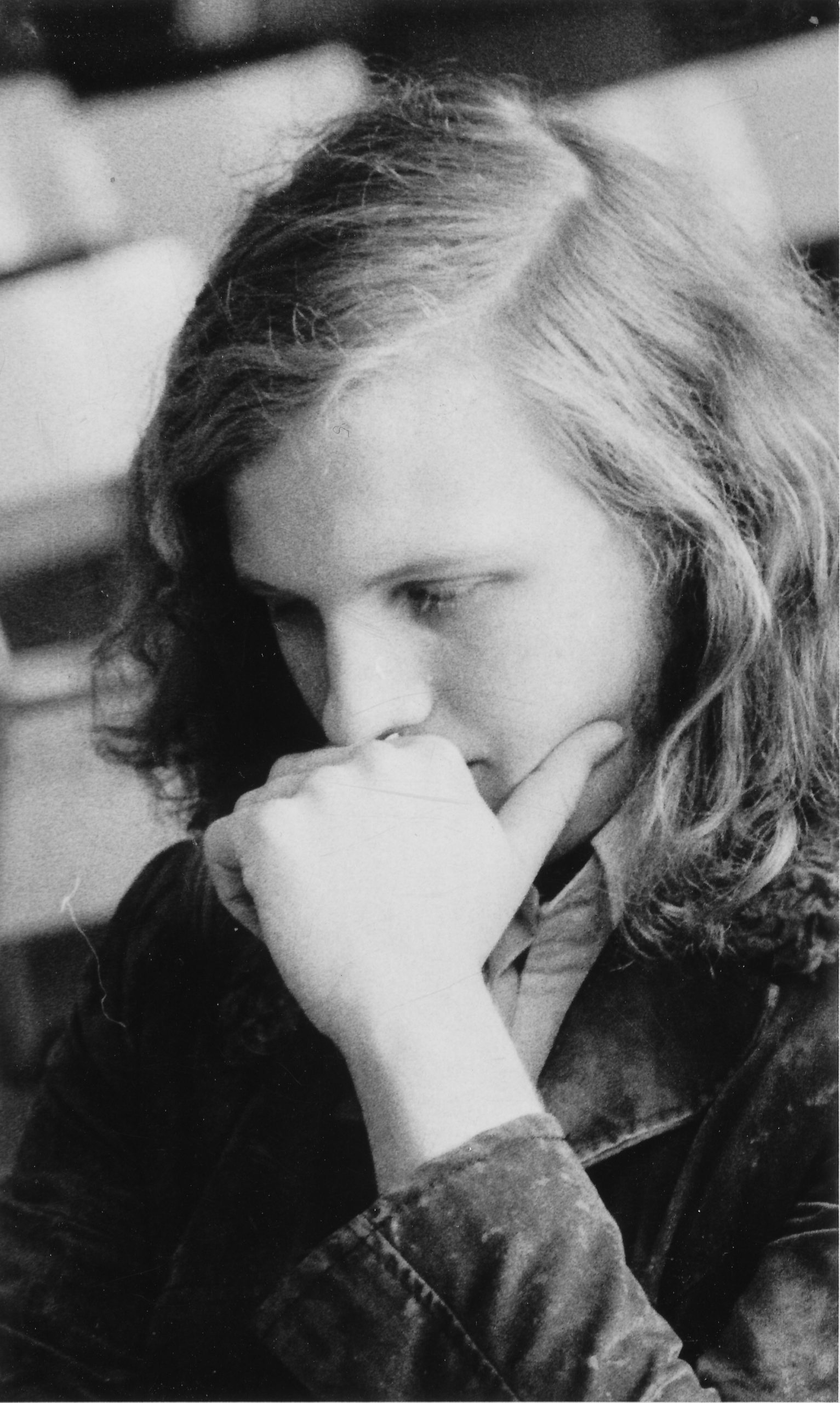
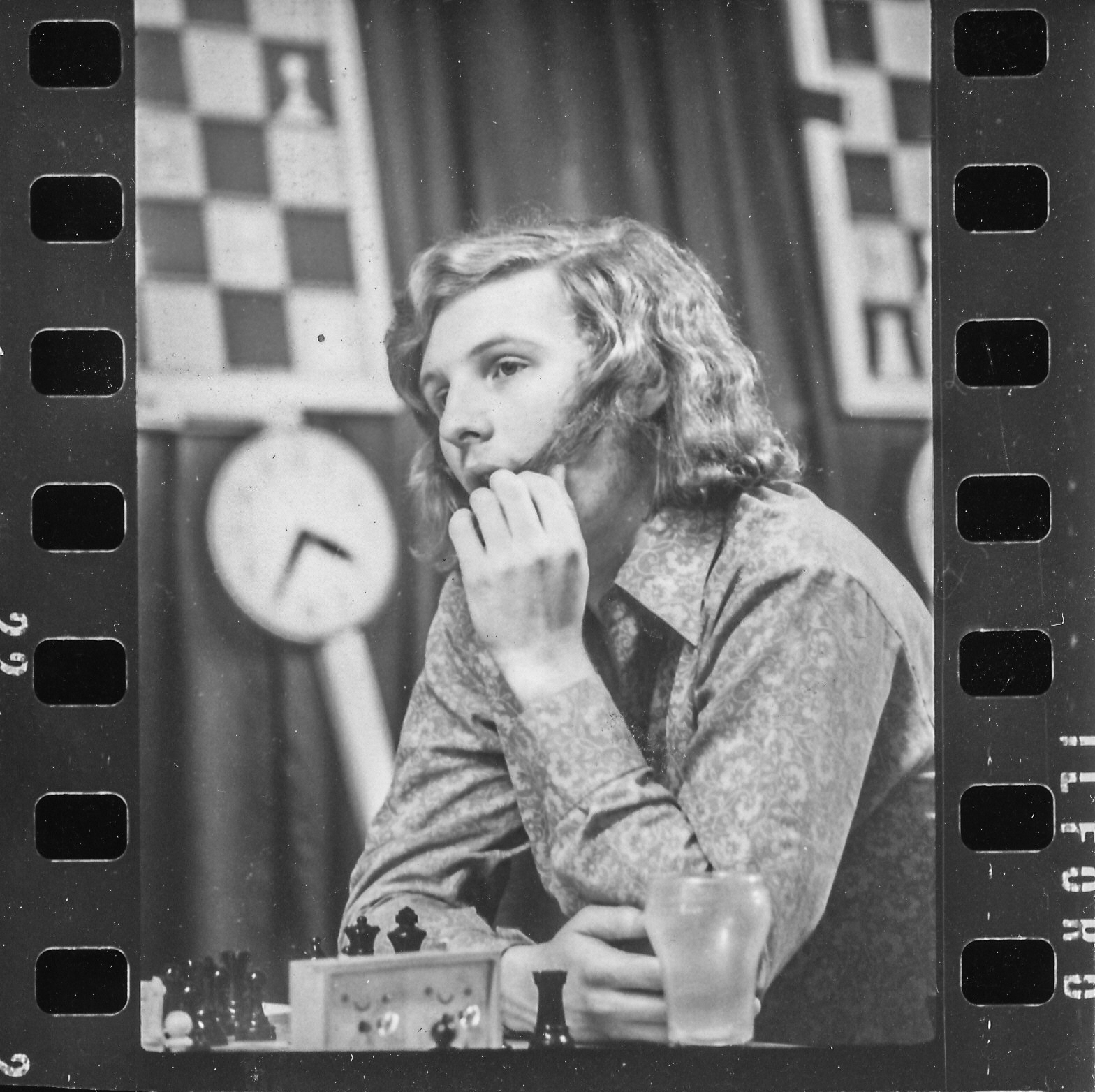
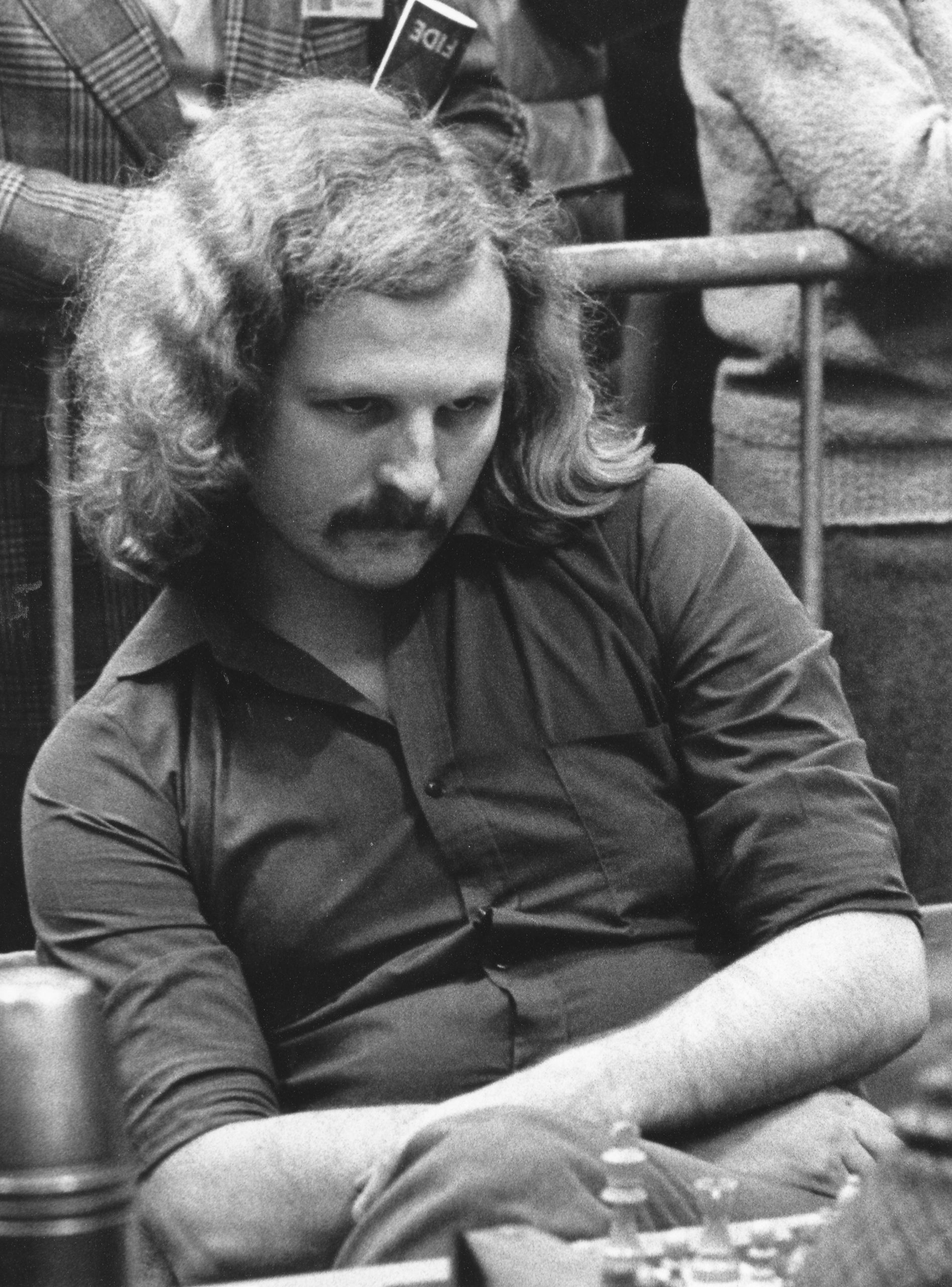
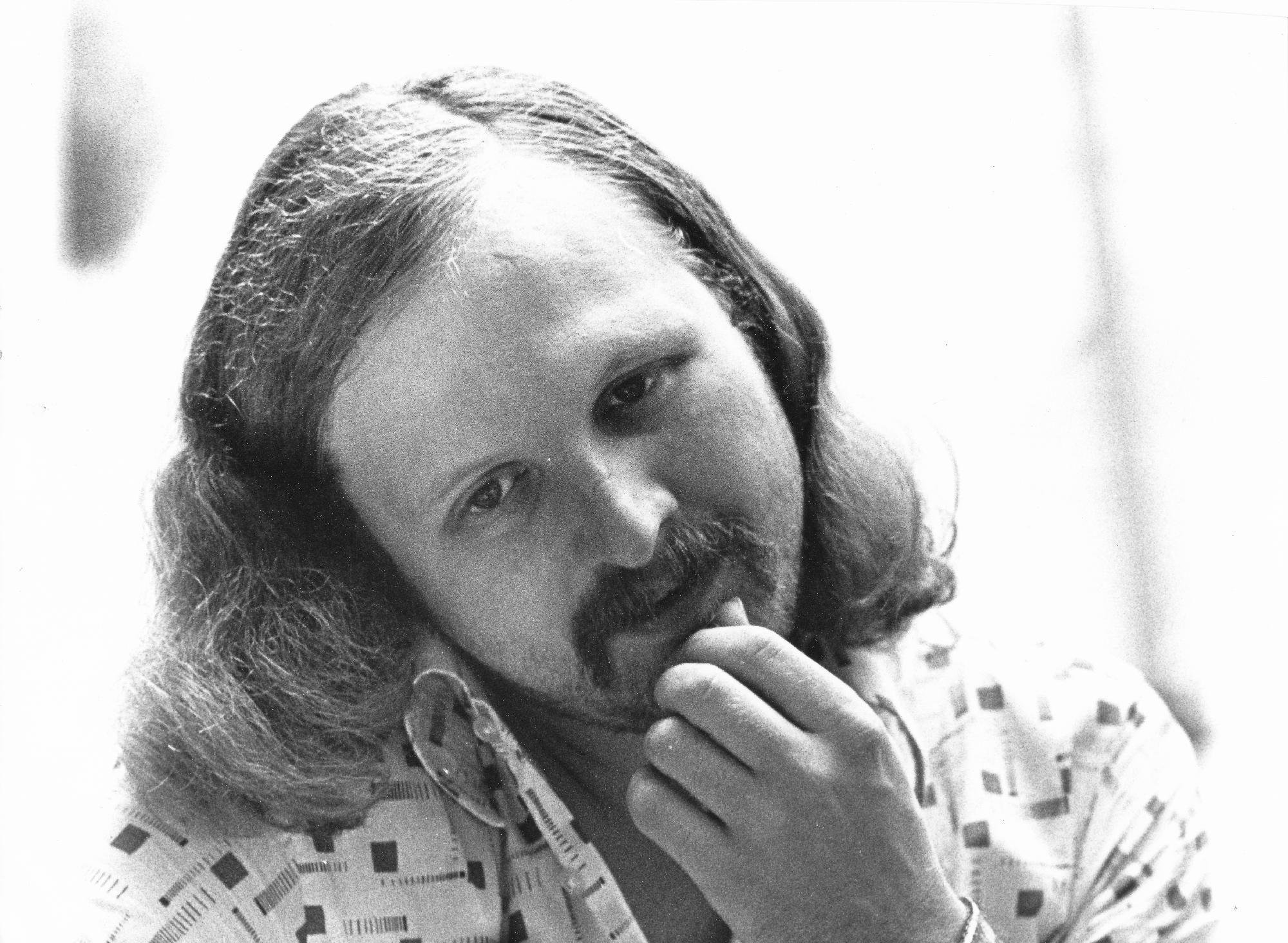
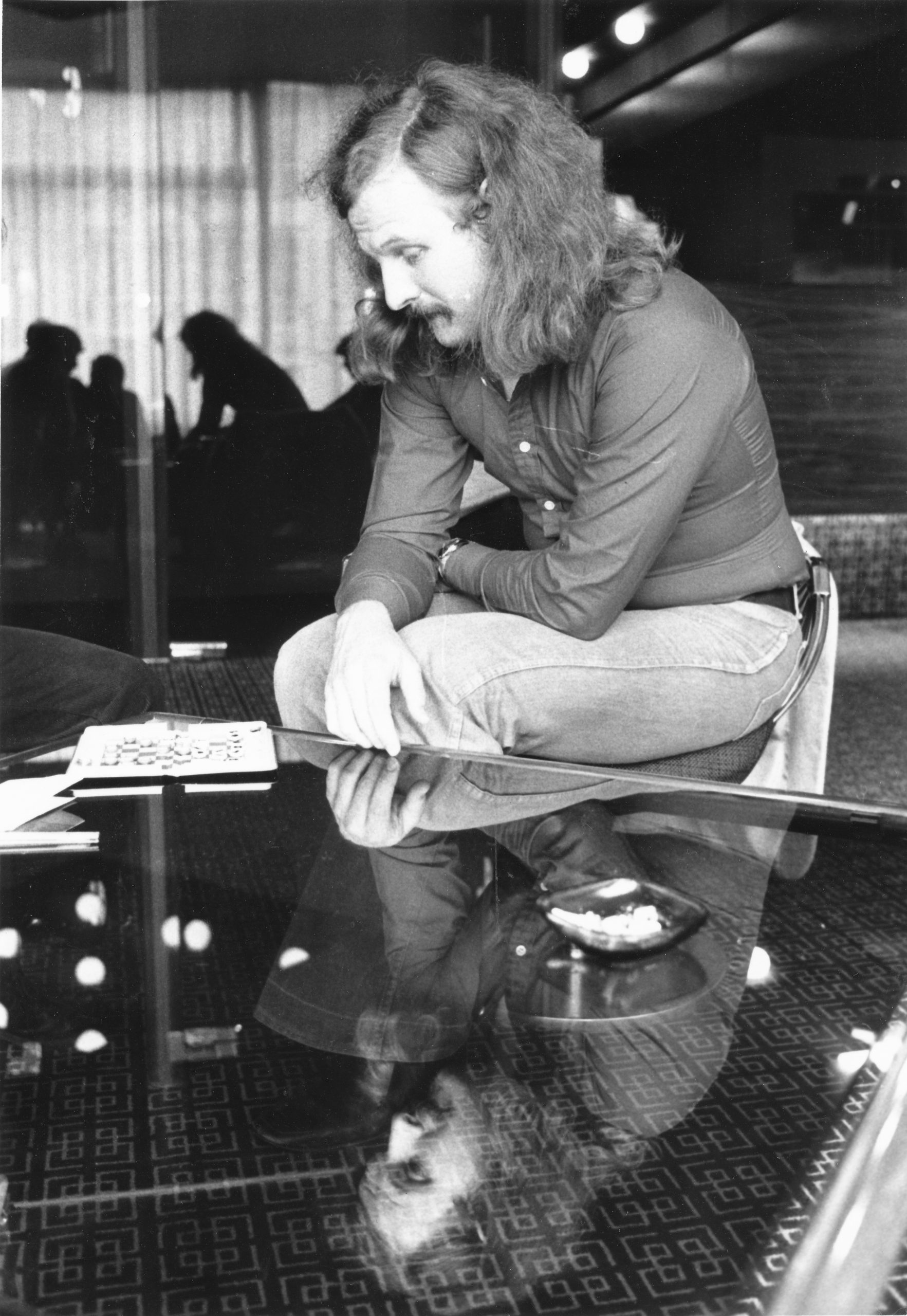
Tony Miles in pensive mood

After his Promotion to the ranks of grandmaster Tony, with his usual directness, said that the only thing left to achieve was to have a crack at Karpov. (His fans might react by saying that there were other mountains to climb such as first place at Hastings and in the British Championship, but then Karpov has not achieved the first either, and only became Soviet Champion after he had taken the world title!)

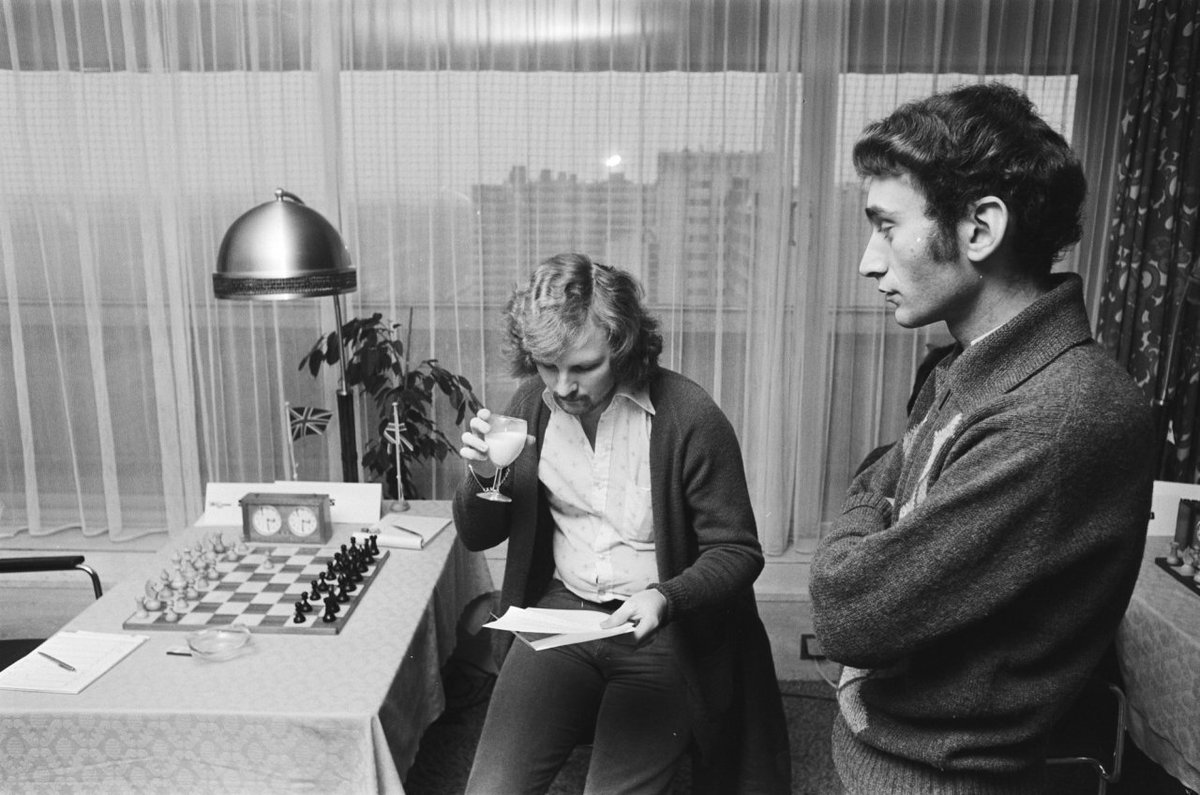
Tony Miles and Michael Stean at the FIDE Zonal in Amsterdam, 1978. (Source: http://gahetna.nl)

The first chance for this ‘crack’ came with their meeting in the super tournaments at Tilburg and Bugojno, as well as in the 1977 BBC2 TV Master Game’ The
results went much in favour of the (slightly) older man. Tony had to wait till January, 1980 before he could celebrate a victory over Fischer’s successor.

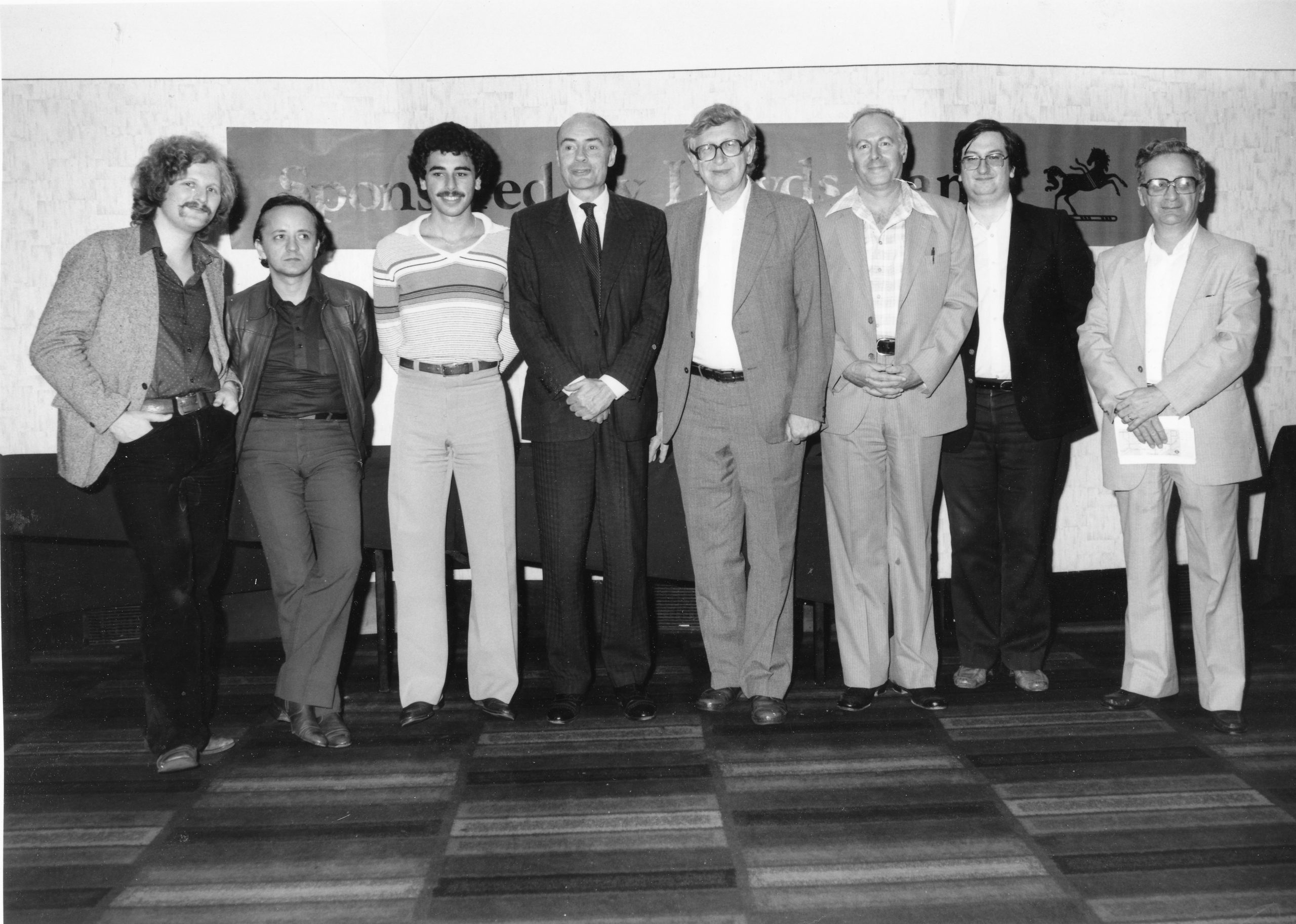
Peter Sowray watching Tony Miles at the Lloyds Bank Masters. Sir Jeremy Morse watches.

By this time Tony had failed in his first bid to get to a title match with the Russian when he fell away after a good start in the 1979 Riga Interzonal (the
second stage of the three-part qualifying cycle). It is a pity that our leading professional in Britain still has to accept so many invitations merely to make a
decent living. As Botvinnik has commented, some properly directed study and training at home may be preferable to too frequent public appearances at the board.

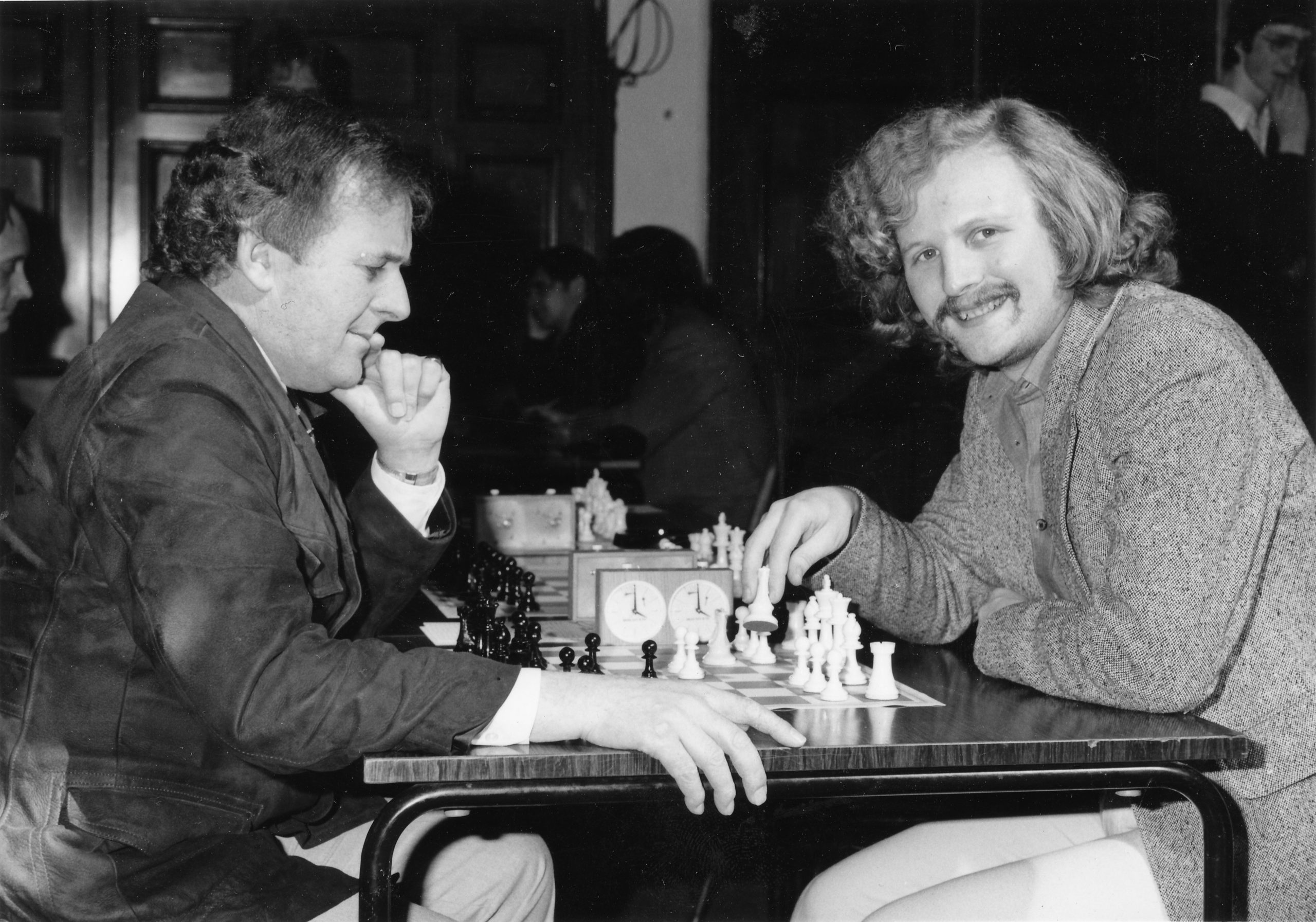
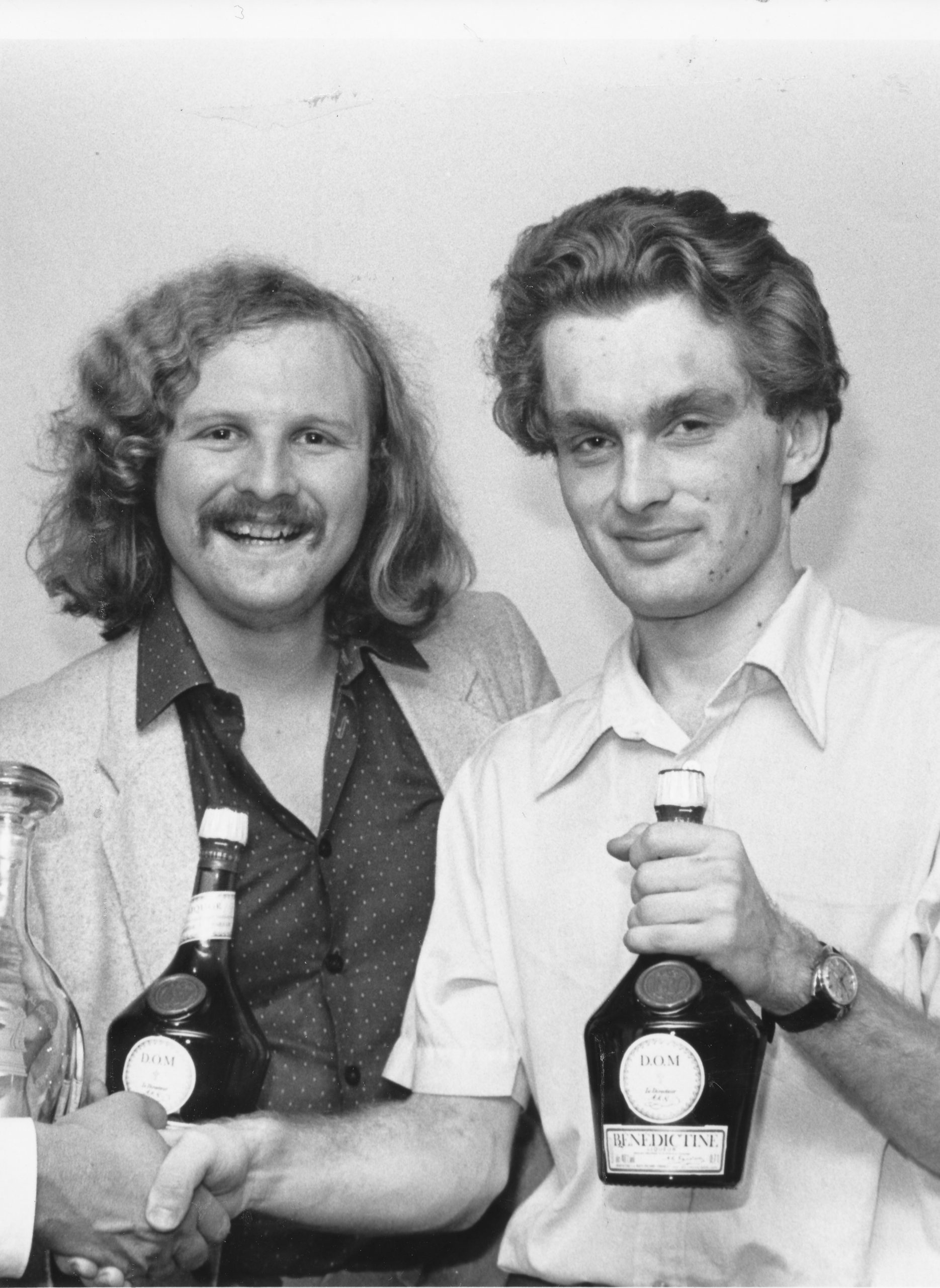
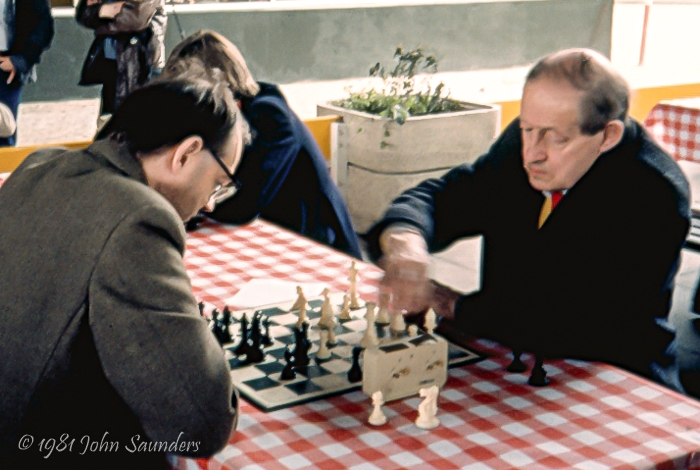
Tony Miles and ? at a Benedictine International in Manchester
Tony Miles and Sergey Kudrin at a Benedictine International in Manchester

What sort of person and player is Tony Miles? He has become a more outgoing person in recent years, and has even overcome his legitimate aversion to
media representatives who attempt to interview him without any background in the game.

Tony Miles
Tony Miles

His style has also gone through various changes. At first he was purely a 1 e4 player with a penchant for tricky Nc6 variations of the Four Knights. This repertoire brought him a string of wins, but once he began meeting masters regularly he had to change his repertoire to include the flank openings and 1 d4 as well as the Sicilian Defence. Some notable contributions to opening theory include Bf4 against the Oueen’s Indian, the defence 1…b6, perhaps now 1…a6.

Tony Miles, now playing under the US flag

Yet his real strength is not in the openings, and he rarely scores quick knockouts. His strength lies in the ability to play a wide variety of positions, to have the patience to play on when there is nothing special in the position and then to recognize the crisis (sometimes more psychological than positional). At this point his fitness and energy tell. It is significant that one of his best wins in the Dubna tournament came in a queen and pawn ending that demanded great patience and technical ability.

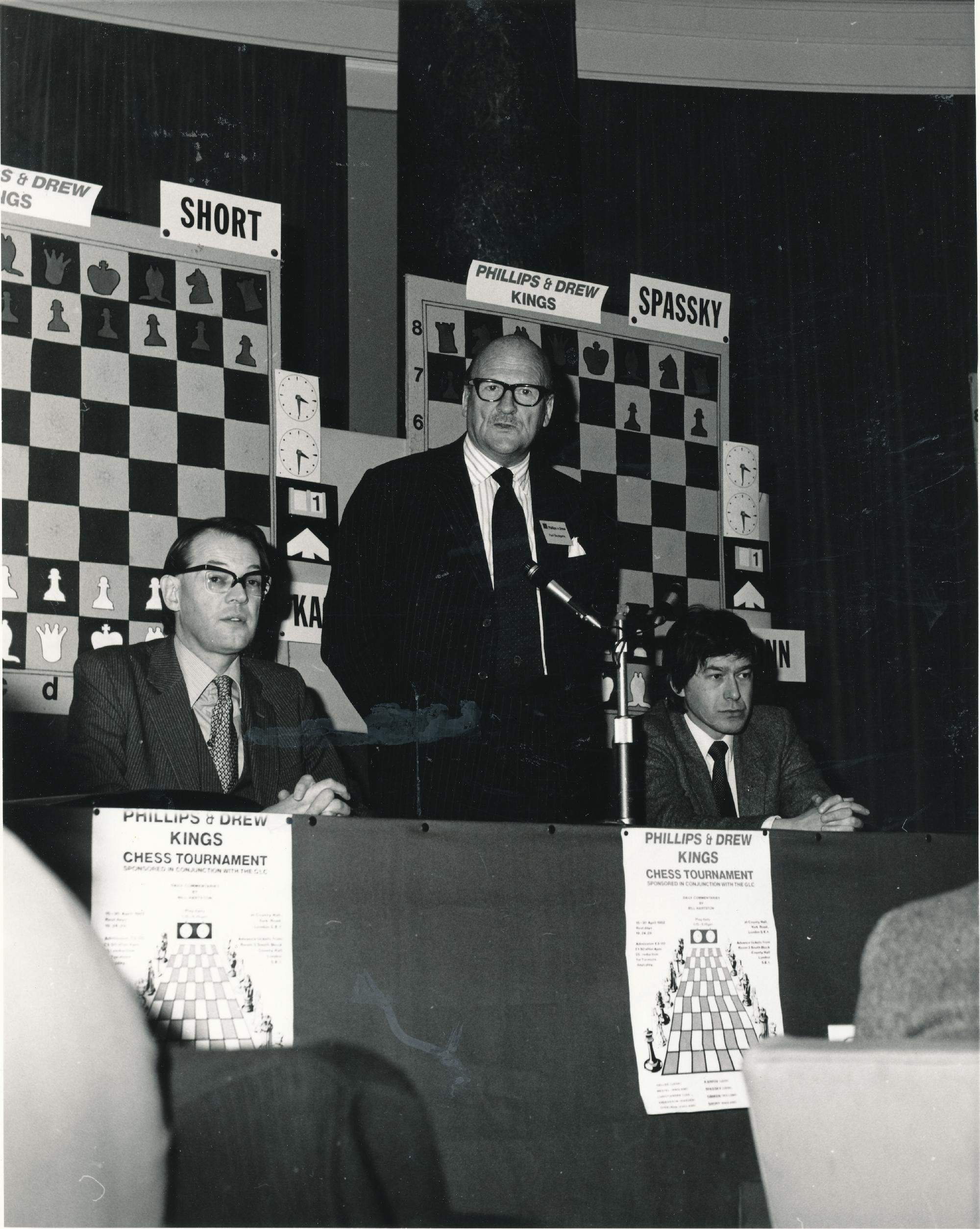
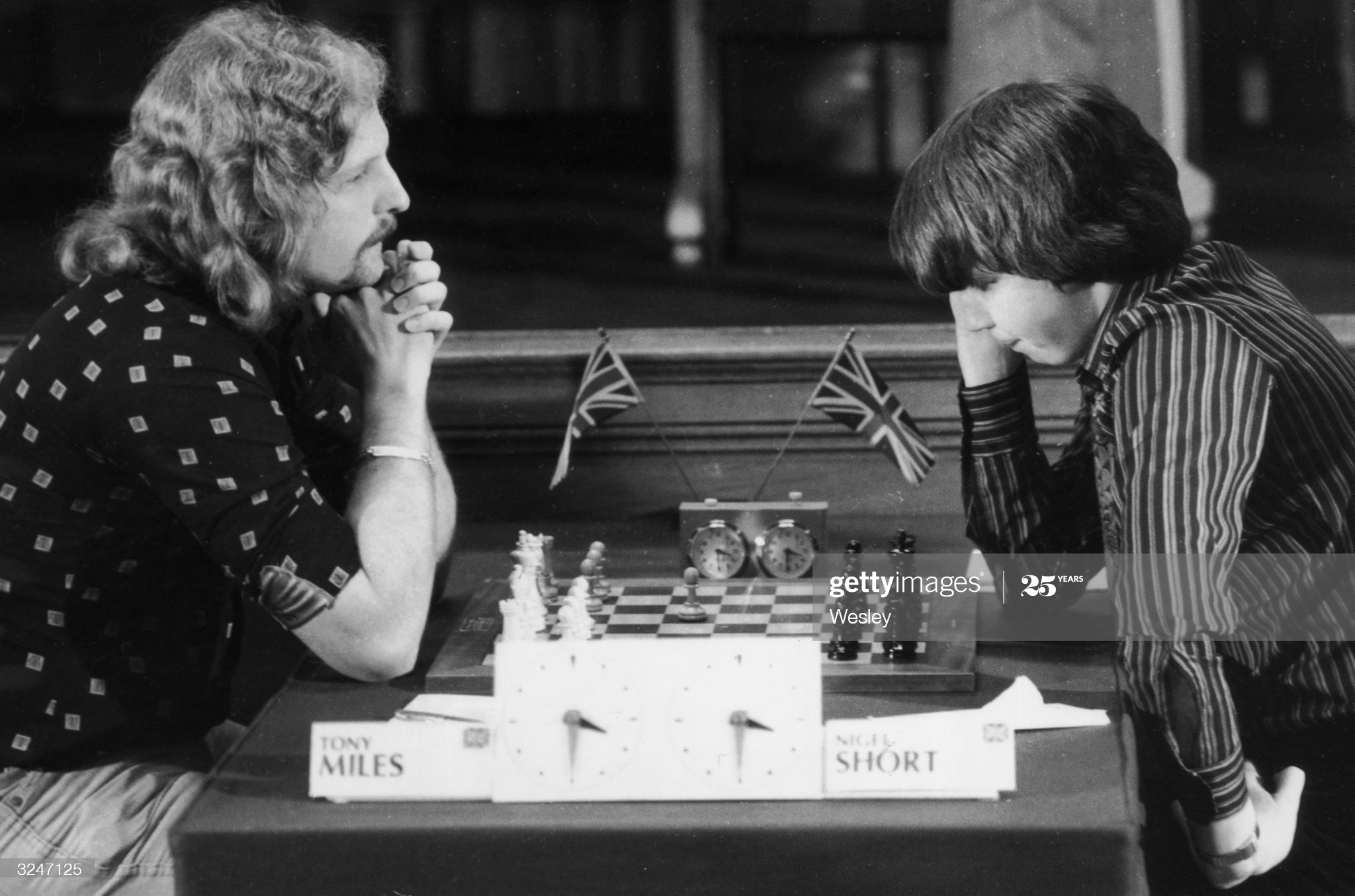
10th April 1980: Tony Miles (left) plays 14-year-old Nigel Short in the opening match of the Phillips and Drew Chess Tournament at County Hall, London. (Photo by Wesley/Keystone/Getty Images)

As readers of his weekly column will know he loves to analyse ever more deeply, and seems happier here than in taking intuitive decisions. In the play of the first British grandmaster we see a confirmation of the fact that modern competitive chess is more of a sport (Denksport as the Germans have it) than
an art, more a bitter struggle of strong personalities than an orthodox game.
Bernard Cafferty

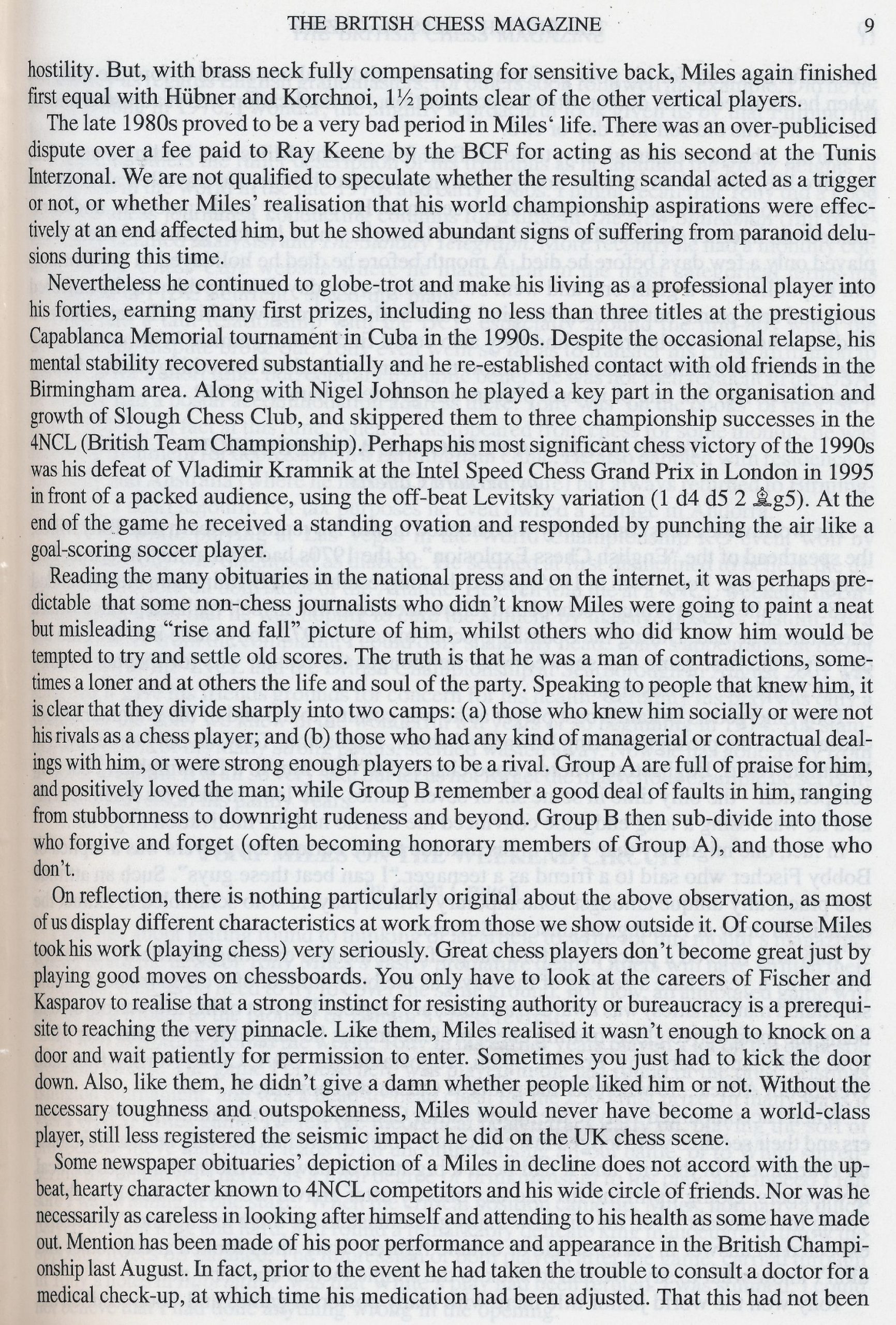
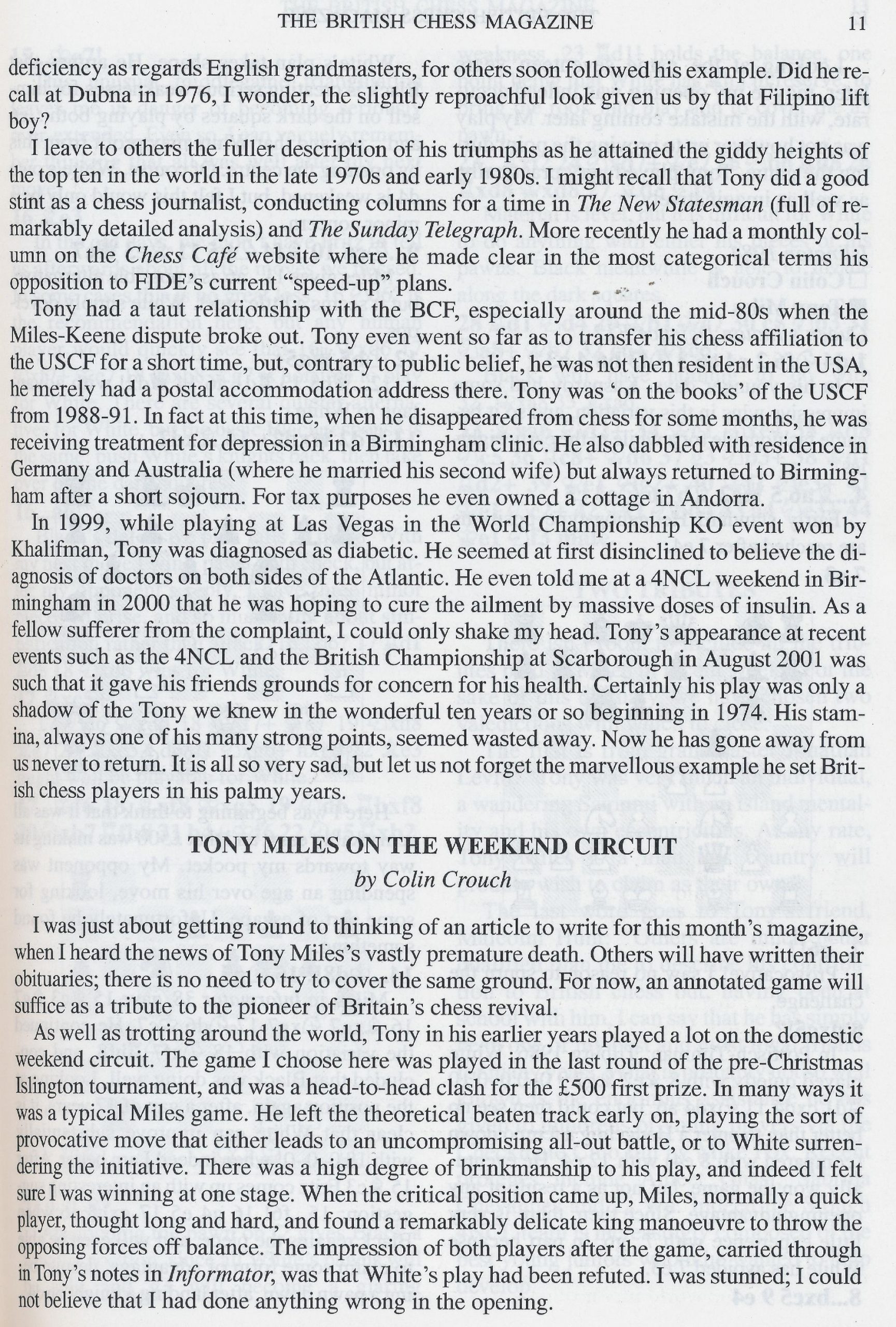
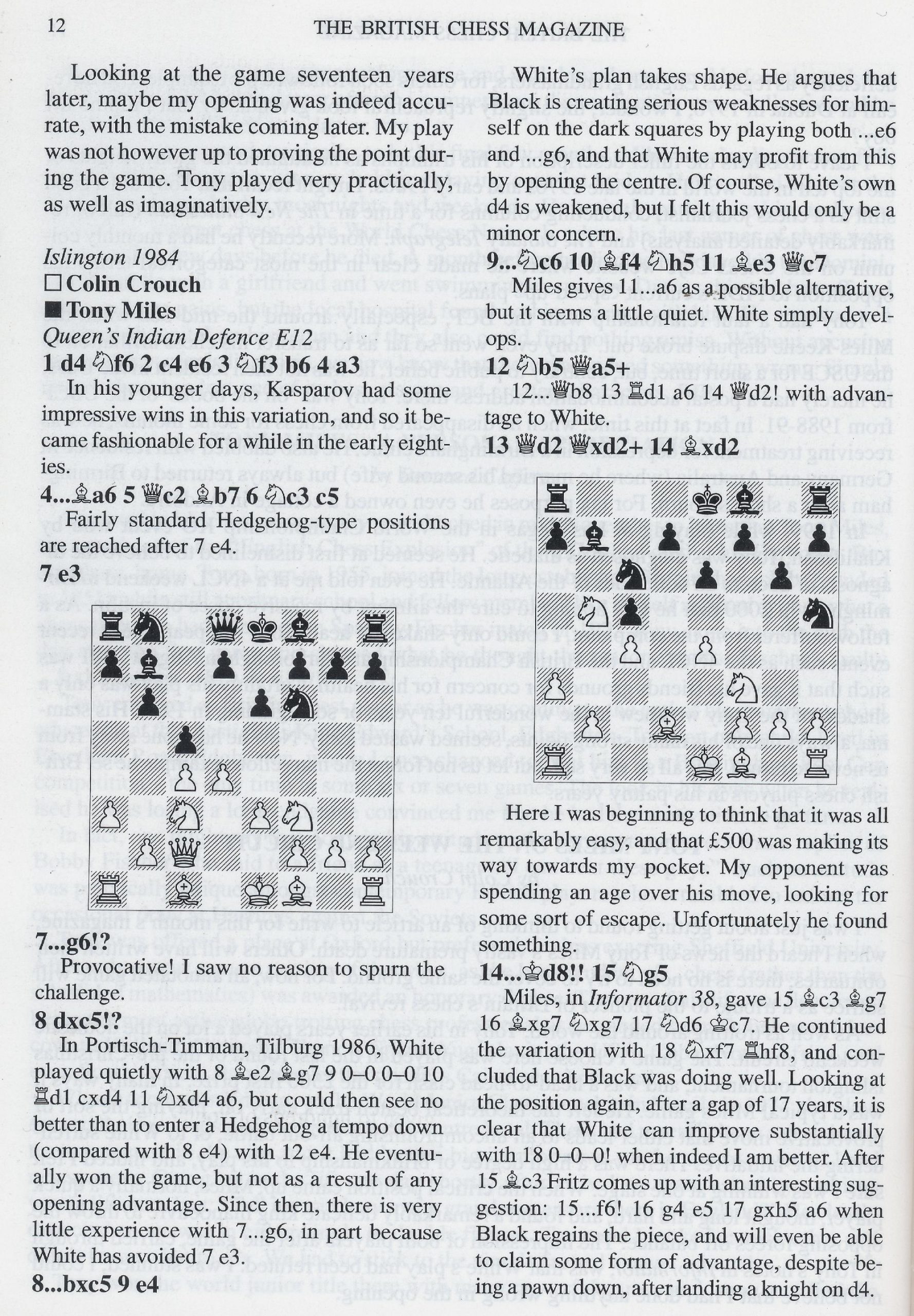
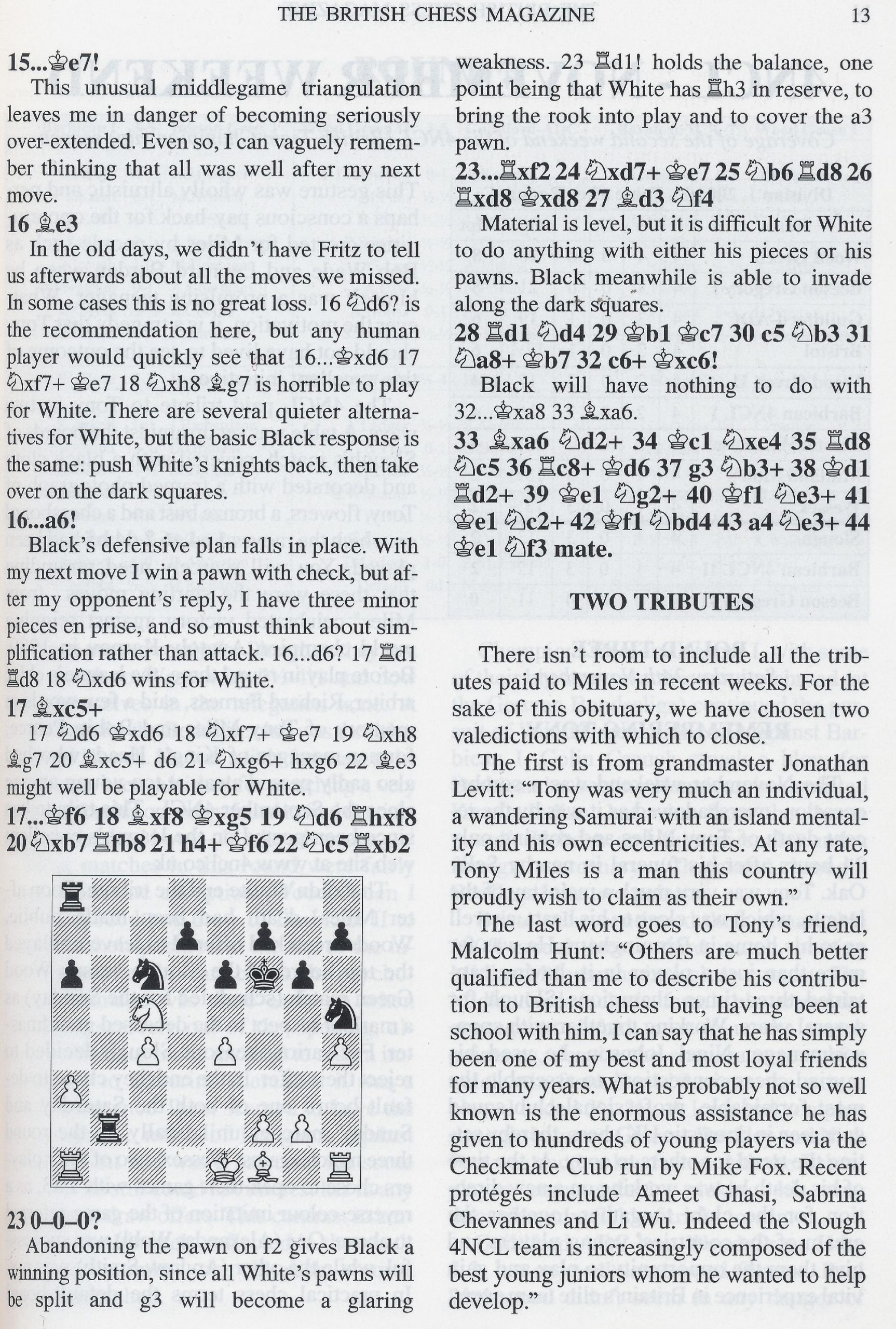
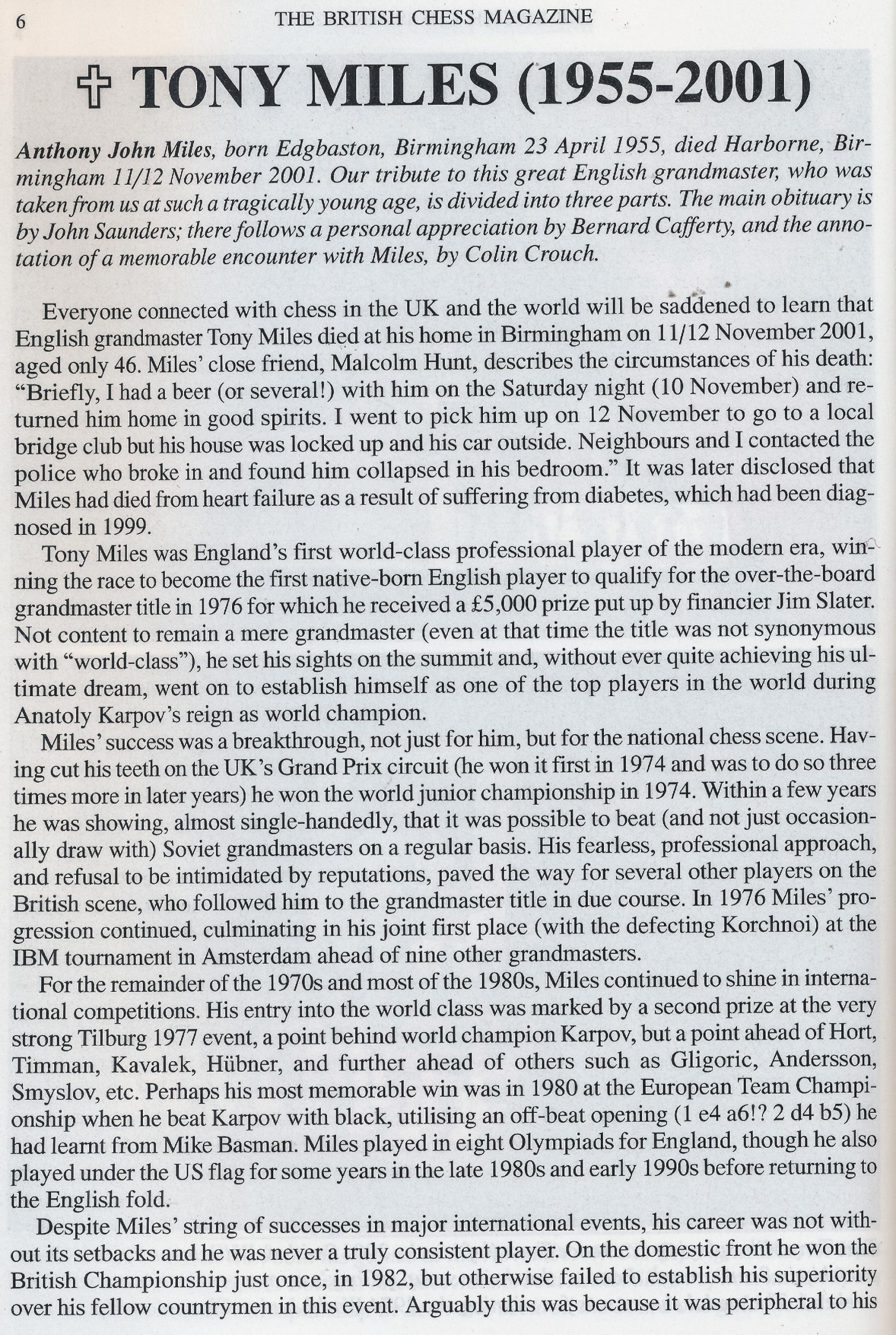
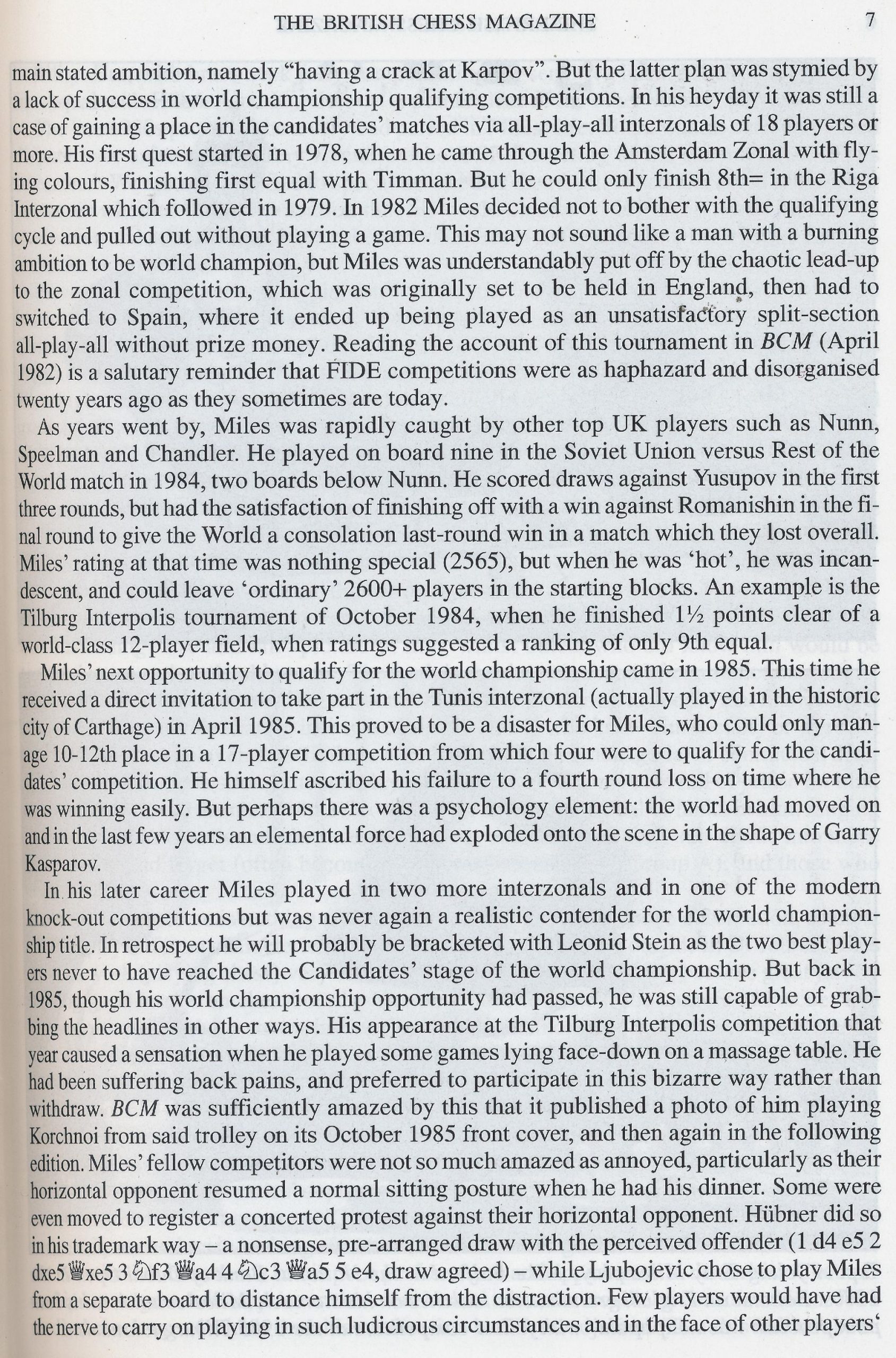
In British Chess Magazine, Volume CXXII (122, 2002), Number 1 (January) pp. 6-13 appeared this wonderful obituary from John Saunders with contributions from Bernard Cafferty, Colin Crouch, Jon Levitt and Malcolm Hunt :

British Chess Magazine, Volume CXXII (122, 2002), Number 1 (January) pp. 6-13
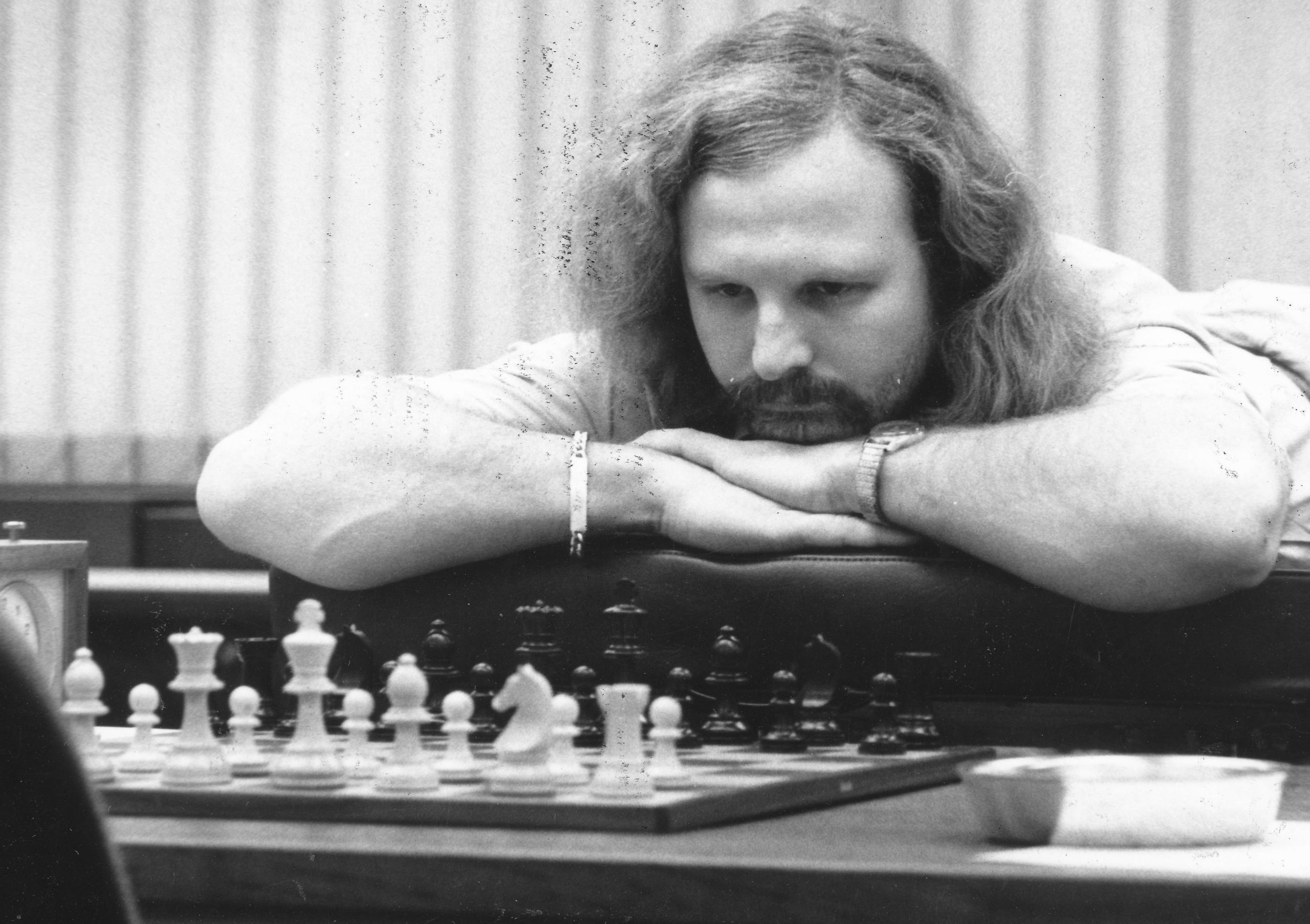
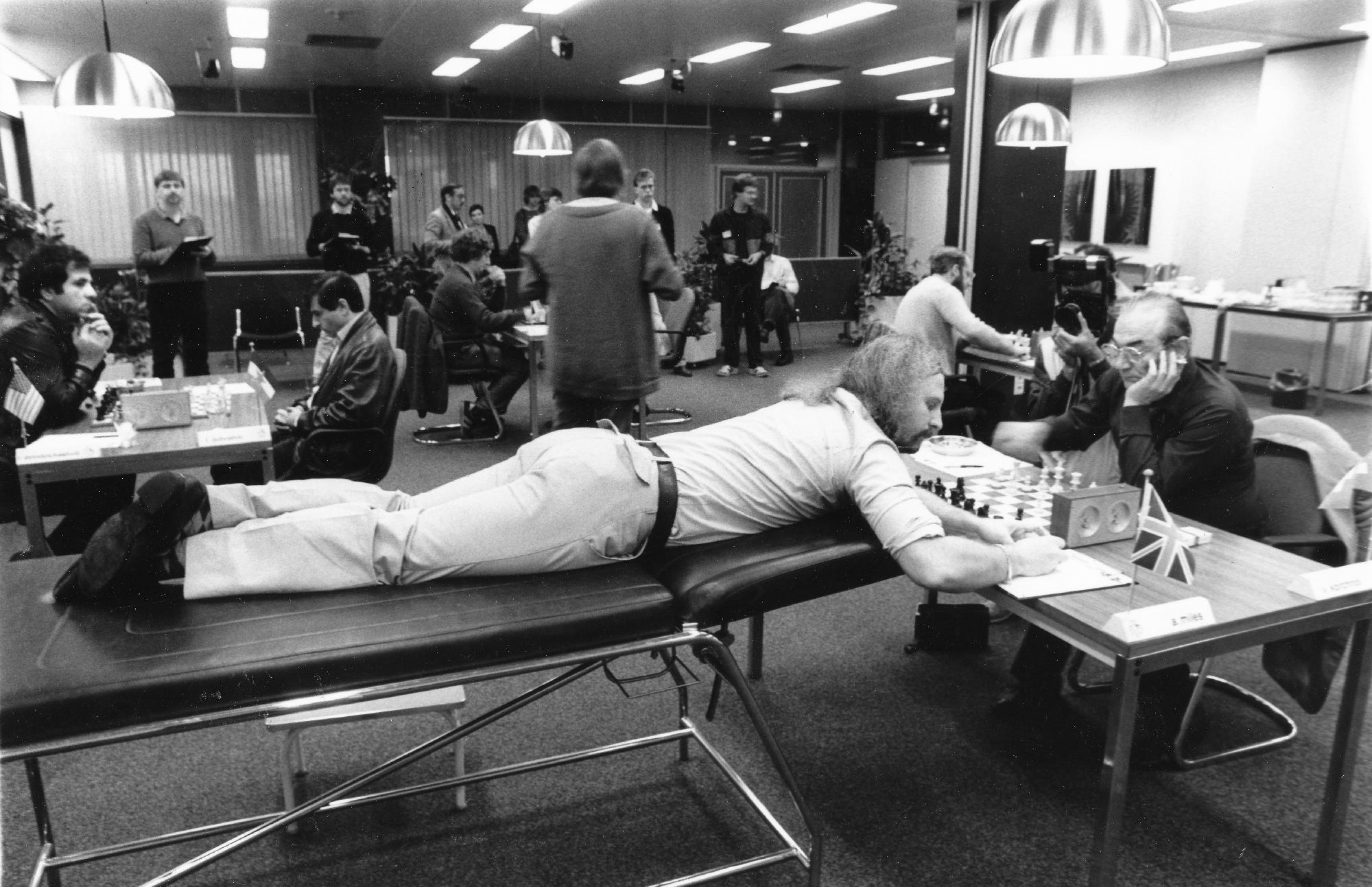
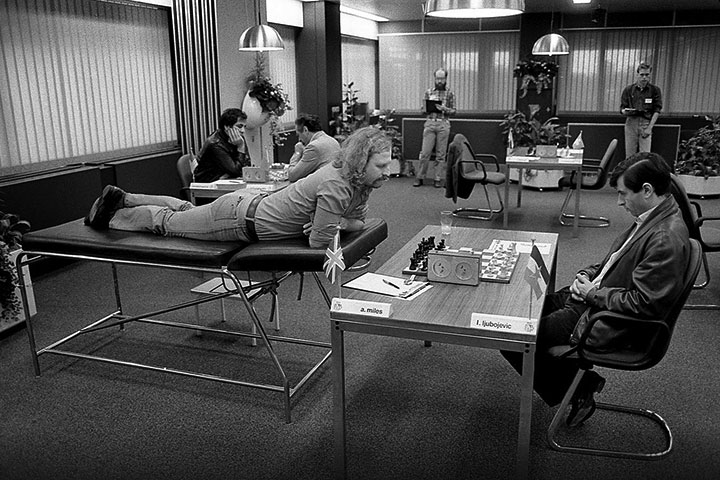
Tony Miles at Tilburg 1985
By Bogaerts, Rob / Anefo - Interpolisschaaktoernooi Tilburg; Miles (met rugklachten) ligt op massagetafel te wachten op zijn tegenstanderDutch National Archives, The Hague, Fotocollectie Algemeen Nederlands Persbureau (ANeFo), 1945-1989,Auteursrechthebbende Nationaal Archief, Nummer toegang 2.24.01.05 Bestanddeelnummer 933-4181, CC0, https://commons.wikimedia.org/w/index.php?curid=23134281
By Bogaerts, Rob / Anefo – Interpolisschaaktoernooi Tilburg; Miles (met rugklachten) ligt op massagetafel te wachten op zijn tegenstanderDutch National Archives, The Hague, Fotocollectie Algemeen Nederlands Persbureau (ANeFo), 1945-1989,Auteursrechthebbende Nationaal Archief, Nummer toegang 2.24.01.05 Bestanddeelnummer 933-4181, CC0, https://commons.wikimedia.org/w/index.php?curid=23134281
British Chess Magazine, Volume CXXII (122, 2002), Number 1 (January) pp. 6-13
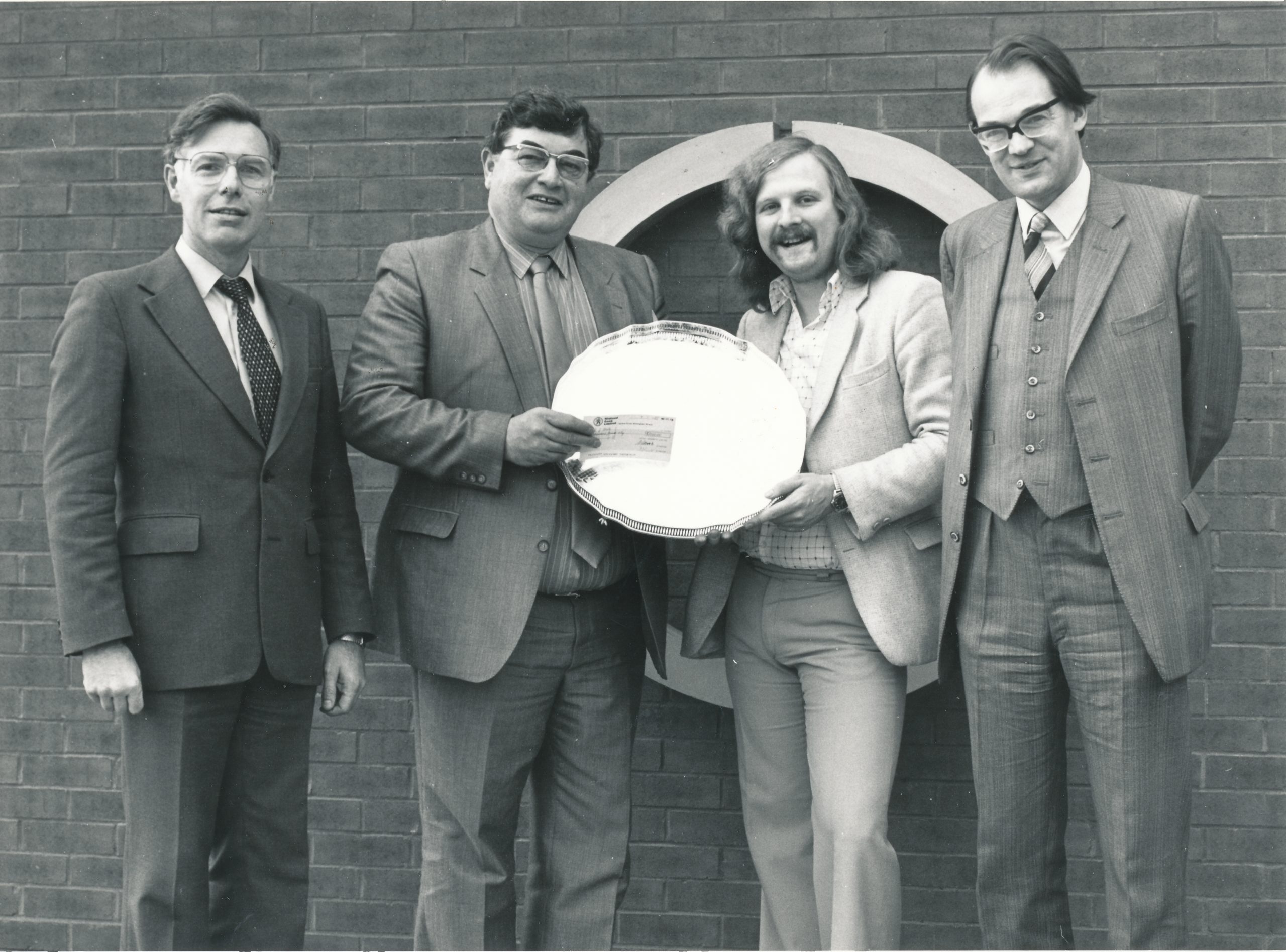
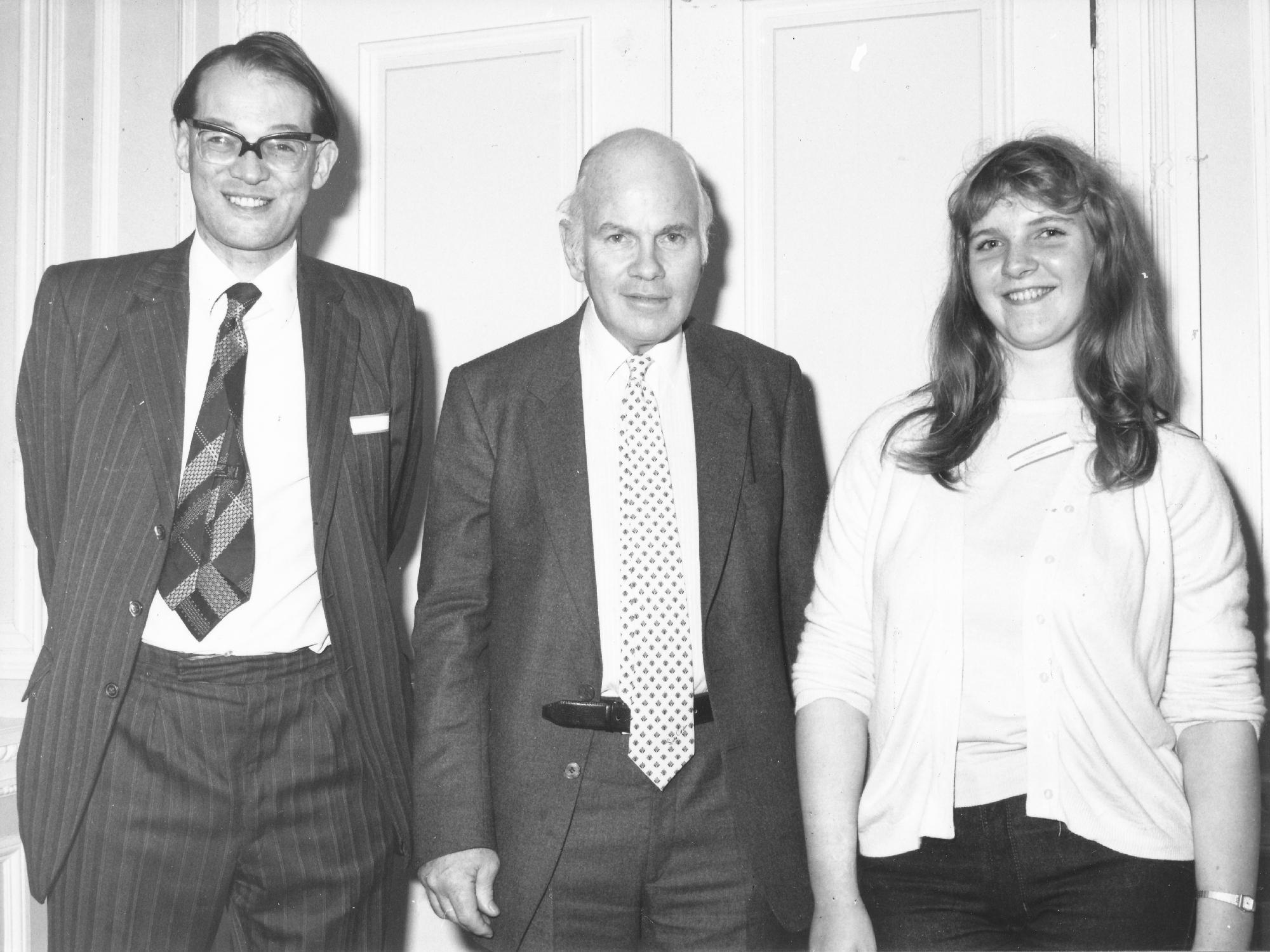
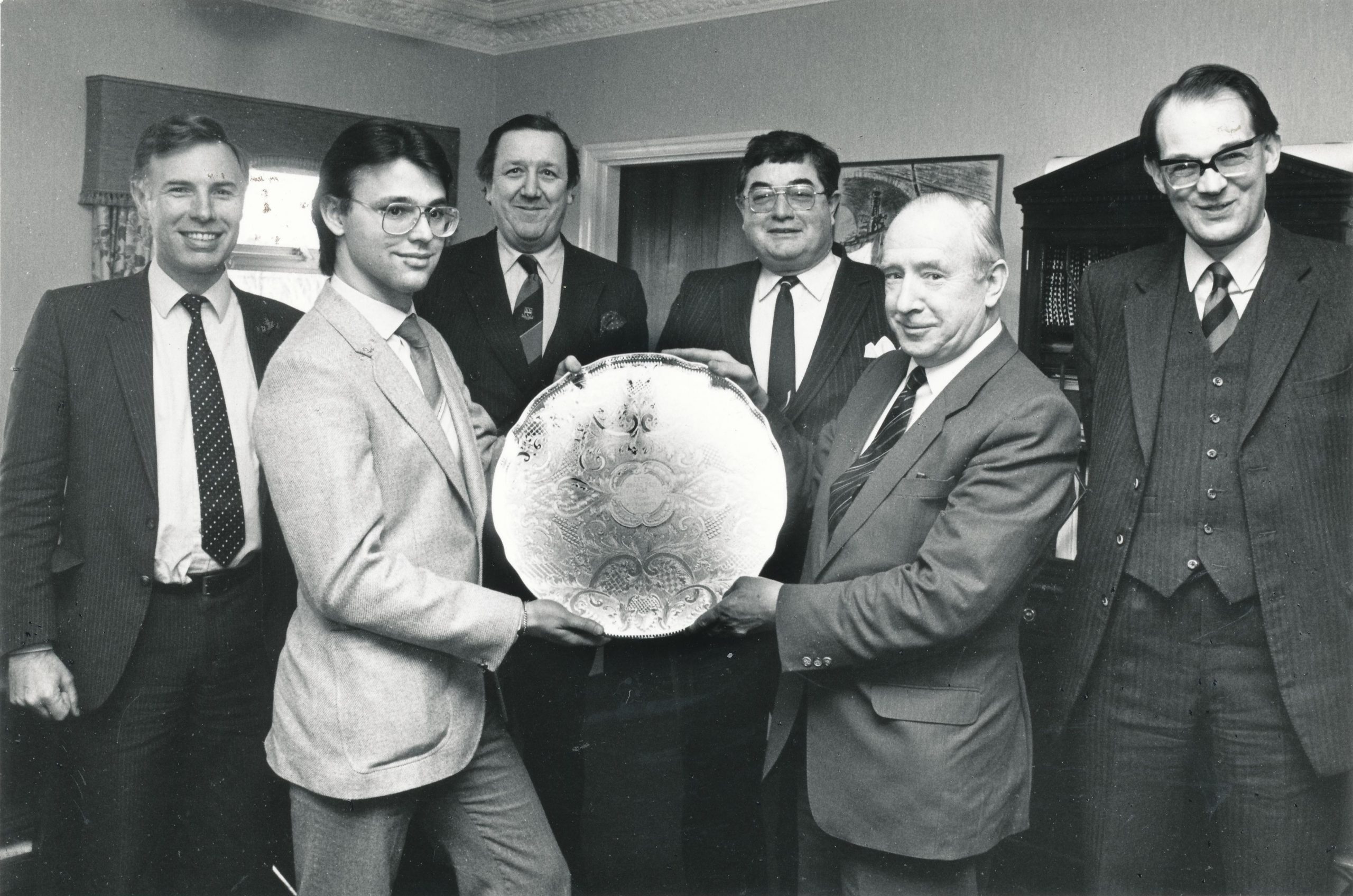
Tony receives the Leigh Grand Prix award from Malcolm Wood (Chief Executive)
Tony receives the 1984 Leigh Grand Prix award from Dr. A Kent, Malcolm Wood (Chief Executive) and David Anderton OBE
British Chess Magazine, Volume CXXII (122, 2002), Number 1 (January) pp. 6-13
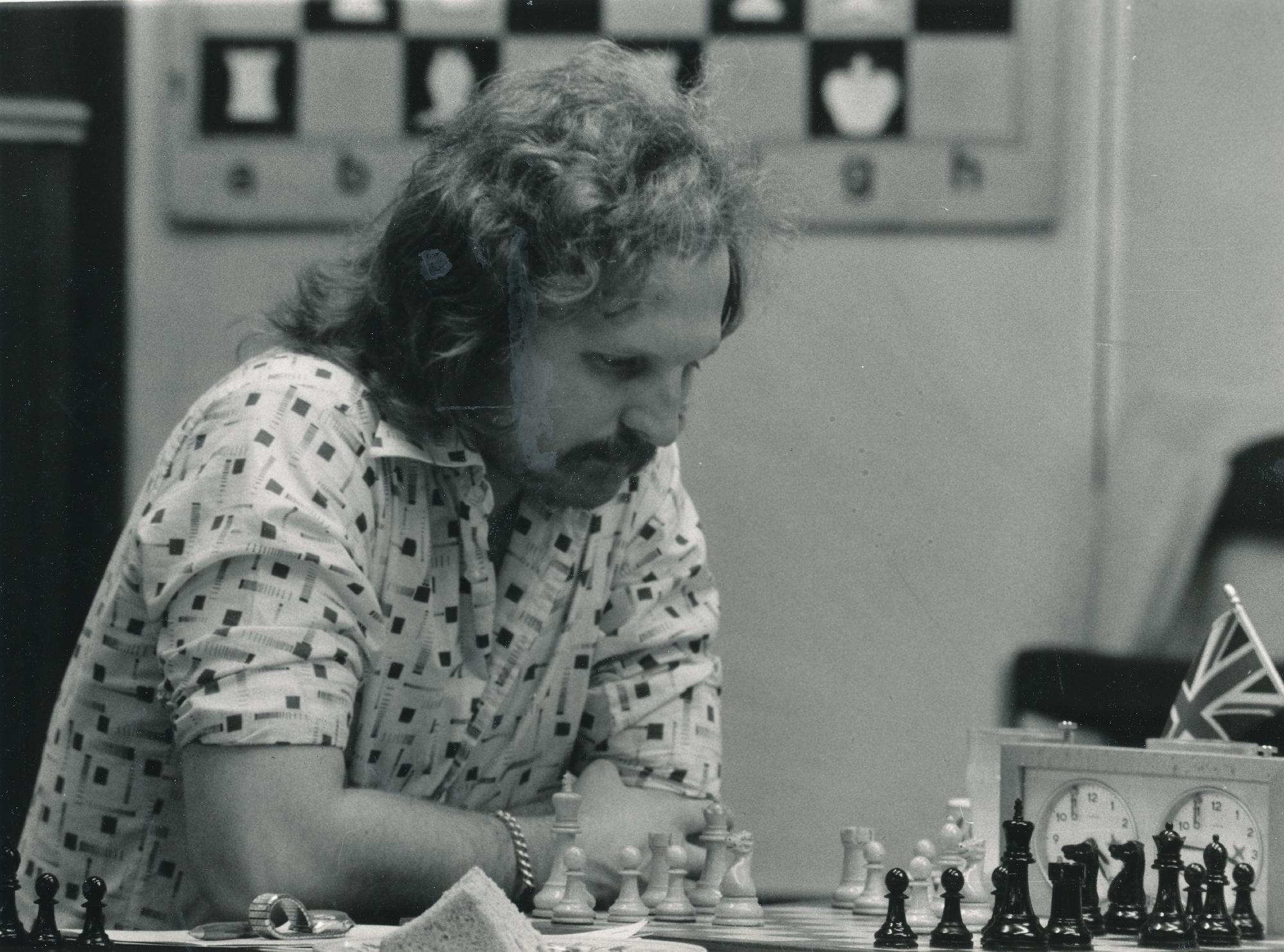
Tony playing under the Union flag
British Chess Magazine, Volume CXXII (122, 2002), Number 1 (January) pp. 6-13
Tony Miles reflecting on an adjourned position. Courtesy of Stephanie Bureau.
British Chess Magazine, Volume CXXII (122, 2002), Number 1 (January) pp. 6-13
Tony : always popular with the ladies at a Lloyds Bank event
British Chess Magazine, Volume CXXII (122, 2002), Number 1 (January) pp. 6-13
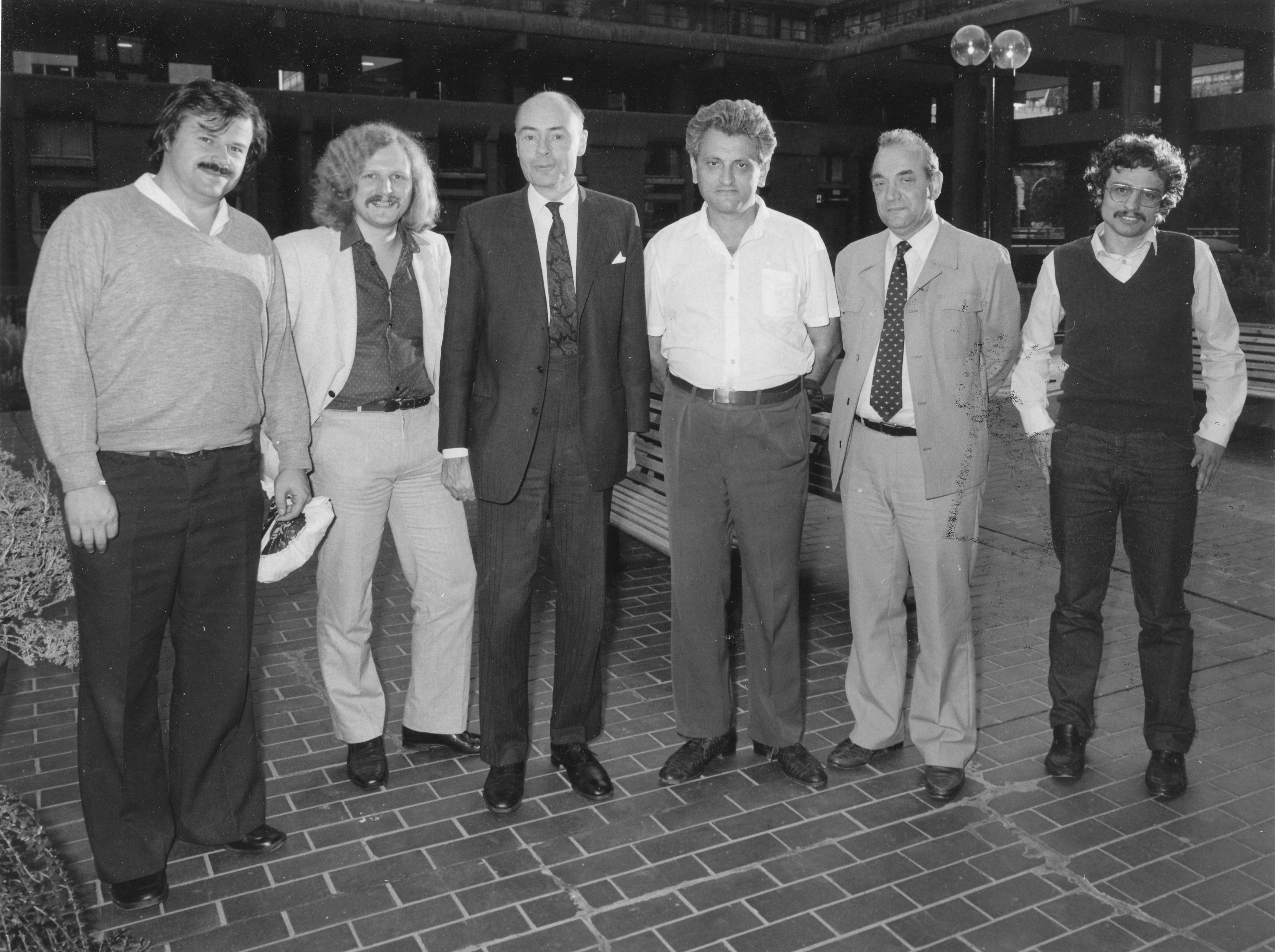
Tony at a Lloyds Bank event with Ray Keene, Yasser Seirawan and Vassily Smyslov

From The Oxford Companion to Chess, (OUP, 1984 & 1994), Hooper & Whyld :

“English-born player, International Grandmaster (1976). While an undergraduate he entered and won by a margin of one and a half points the World Junior Championship, Manila 1974. The following year his university, Sheffield, awarded him an honorary MA degree for his chess achievements, and he left without completing his studies, to become a chess professional. The successes came quickly; London 1975, first (+6=3-1); Amsterdam 1976, first equal with Korchnoi; Amsterdam 1977, first (+7=7-1); Biel 1977, first (+ 8=6-l); Tilburg 1977, second (+5:4-2), after Karpov, ahead of Hort and Hübner; Tilburg 1978, third (+4=4-3) equal with Dzindzichashvili and Hübner, after Portisch and Timman; London 1980, first (+6=5-2) equal with Andersson and Korchnoi; Las Palmas 1980, first (+6=5) equal with Geller and Petrosian; Baden-Baden 1981, first (+6=7) equal with Ribli, ahead of Korchnoi; Porz Koln l98l-2, second (+8=l-2), behind Tal, ahead of Hort; Biel 1983, first (+5=6), shared with Nunn; Tilburg 1984, first (+5=6), ahead of Belyavsky, Ribli, and Hübner; Portoroz-Ljubljana 1985, first (+4=6-l) equal with Portisch and Ribli; and Tilburg 1985, first (+6=5-3) equal with Hübner and Korchnoi.

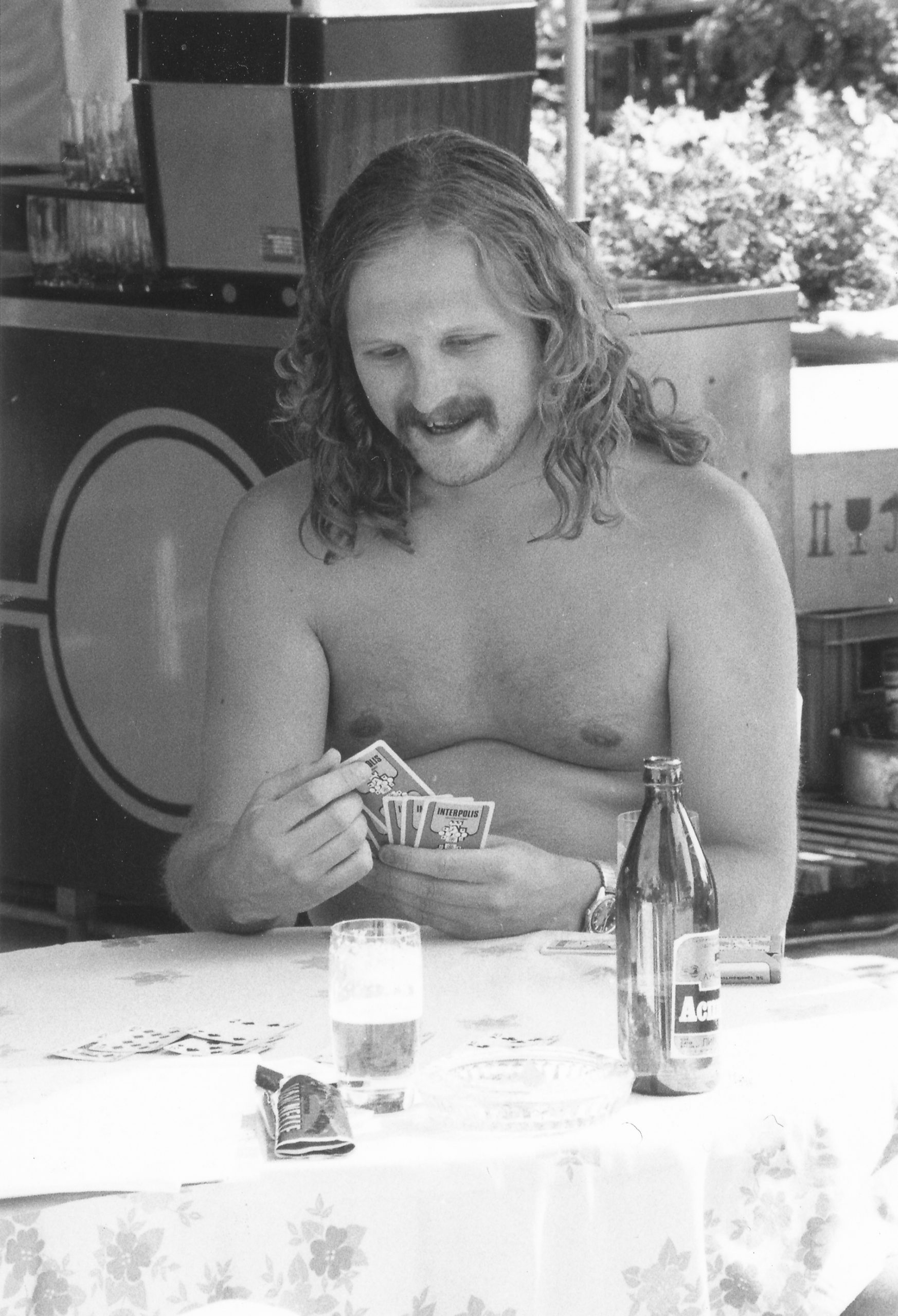
Tony making a getaway !

Around this time Miles began to feel the strain of ten years at the top. He was the first British player of modern times who could be seen as a possible challenger for the world title, and in the late 1970s he was well clear of his British rivals. However, largely inspired by Miles’s success, a new generation, led by Short, was in pursuit, and by the mid 1980s Miles was no longer top board in the Olympiad side. Successes became fewer, his marriage ended, and his confidence was weakened.

Tony enjoyed flamboyant shirts

Determined to make a new start, he transferred his allegiance to the USA in 1987, and immediately shared first place with Gulko, who won the play-off, in the US Open Championship.

Tony Miles
Tony Miles

The move was not a lasting success. Miles had indifferent results and was not selected for the US Olympiad team in 1988. He had maintained a home in Germany and commuted to play in the Bundesliga and by 1990 he was spending an increasing proportion of his time in Europe. His confidence began to return, and with it more victories. He was first in two Swiss system events, Rome 1990, ahead of Barayev, Chernin, Smyslov etc, and Bad Worishofen 1990 (shared), and at Biel 1990 was equal
third (+3=9-2) alter Karpov and Andersson.”

Tony Miles
Tony Miles

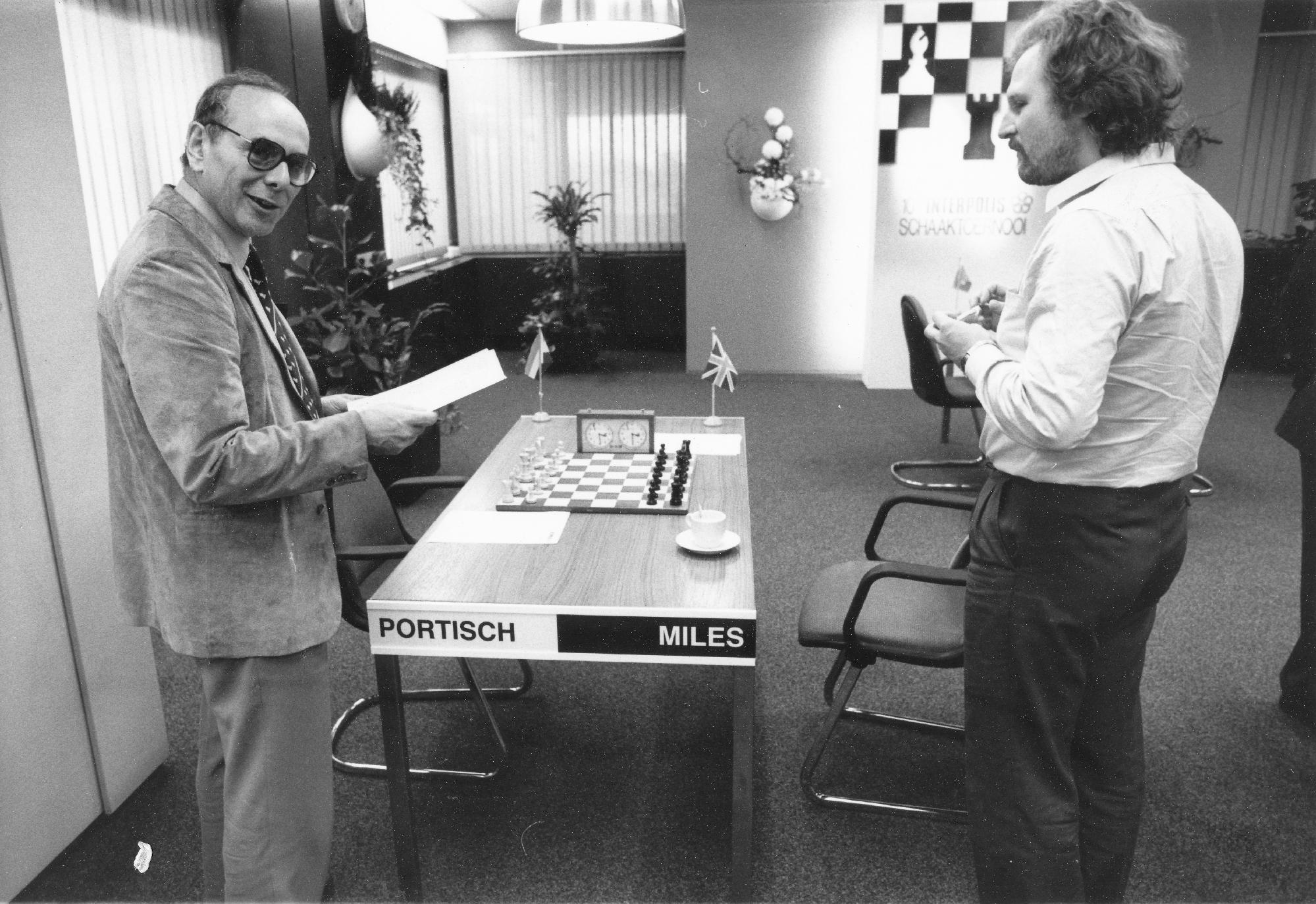
Lajos Portisch and Tony Miles

From Wikipedia :
“Personal life

Miles was an only child, born 23 April 1955 in Edgbaston, a suburb of Birmingham, and attended King Edward’s School, Birmingham.[1][2] He was married and divorced twice, and had no children.[1] Miles’ first wife was Jana Hartston, who had previously been married to William Hartston.[2]

Tony with friends at a Lloyds Bank event

Early achievements in chess
He learned the game of chess early in life and made good progress nationally, taking the titles of British under-14 Champion and under-21 Champion in 1968[1] and 1971,[3][4] respectively.

Tony with short hair

In 1973, Miles won the silver medal at the World Junior Chess Championship at Teesside, his first important event against international competition. Both he and compatriot Michael Stean defeated the tournament winner Alexander Beliavsky, but were unable to match the Soviet player’s ruthlessness in dispatching lesser opponents. Miles went on to win this prestigious title the following year in Manila, while a mathematics undergraduate of the University of Sheffield.[1][2]

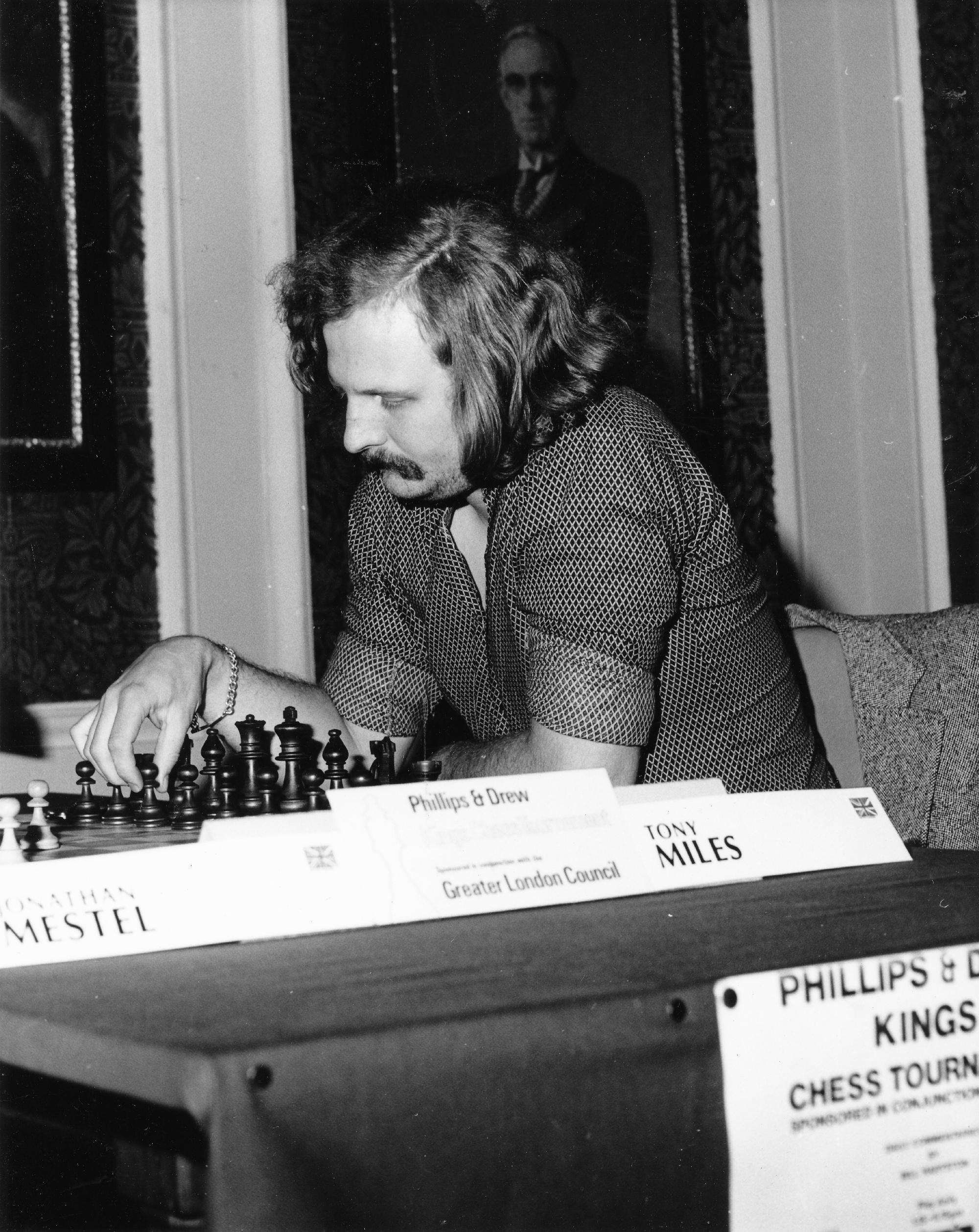
Tony faces Jonathan Mestel at the Philips & Drew Masters

Taking the decision to pursue the game professionally, Miles did not complete his studies, but, in 1975, was awarded an MA by the University in respect of his chess achievements.[2]

Tony in slightly less formal attire

Further career highlights
In 1976, Miles became the first UK-born, over-the-board chess grandmaster, narrowly beating Raymond Keene to the accolade.[2] The naturalised, German-born Jacques Mieses was awarded the GM title in 1950, while Keith Bevan Richardson had been awarded the GM title for correspondence chess earlier in 1975. For his achievement, Miles won a £5,000 prize, put up by wealthy businessman and chess backer Jim Slater.[1][2]

Tony and friends at a Lloyds Bank event

Miles had a string of good results in the late 1970s and 1980s. He matured into a world class player and won games against high calibre opponents, such as former World Chess Champions Vasily Smyslov, Mikhail Tal and Boris Spassky.

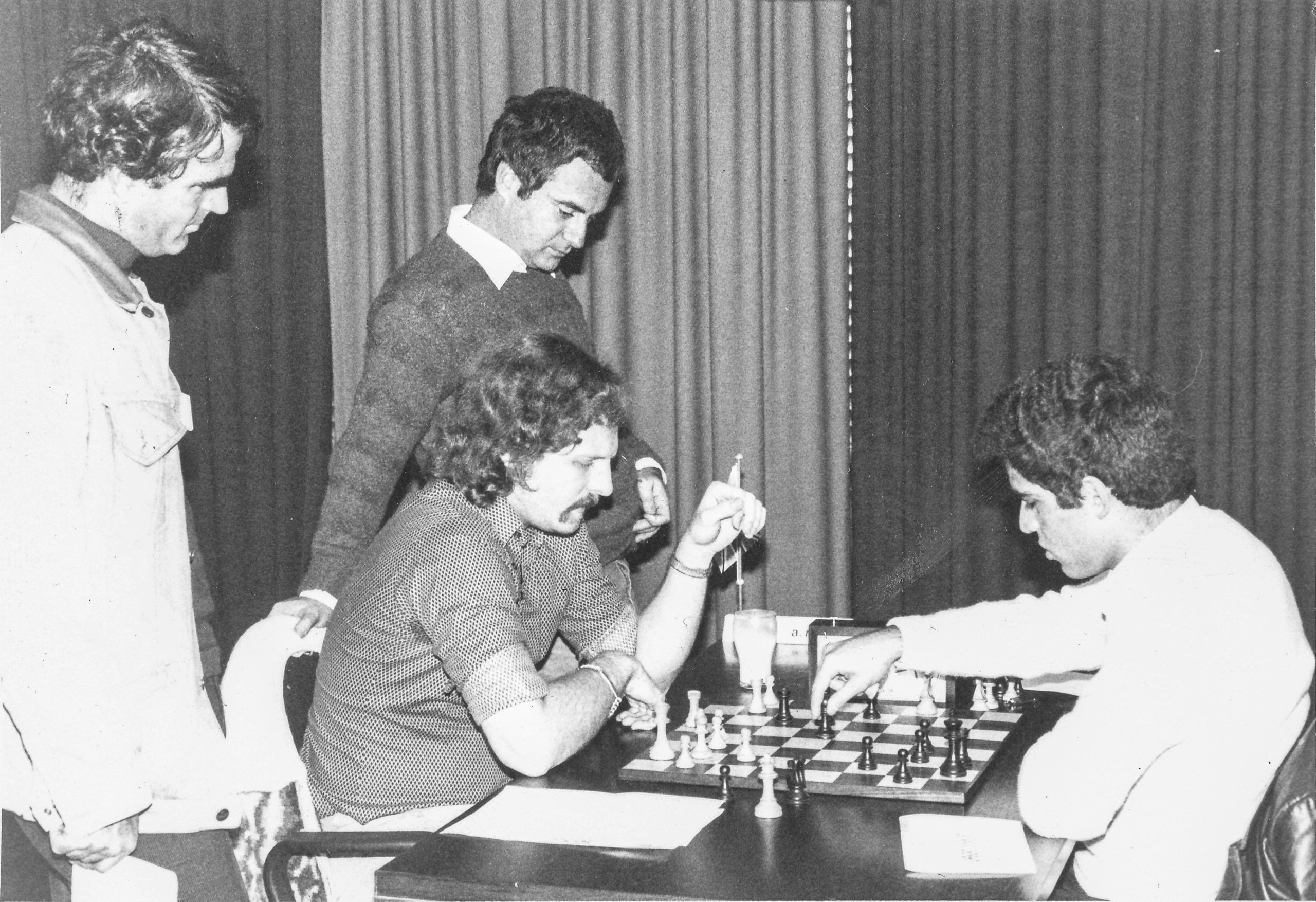
Post mortem analysis with Tony and Garry Kasparov

In 1980 at the European Team Championship in Skara, he beat reigning World Champion Anatoly Karpov with Black, using the extremely unorthodox opening 1. e4 a6!?, the St. George Defence. It is often said that Miles learned the line from offbeat openings enthusiast Michael Basman, but in his book Play the St. George, Basman asserts there is no truth to this. Miles beat Karpov again three years later in Bath in a game that was part of the BBC’s Master Game series, but it was shown only by the (co-producing) German television network, due to a BBC technicians’ strike at the time of broadcast.

Tony in Olympiad play with Jan Timman

Miles won the British Championship just once, in 1982 when the event was held in Torquay. His prime time as a chess player was the mid-1980s. On 20 May 1984 in Roetgen (Germany), Miles set a European record in blind simultaneous chess with 22 games (+10−2=10);[5] this record was not broken until 2009. On the January 1984 Elo rating list, he ranked No. 18 in the world with a rating of 2599. One of his best results occurred at the Tilburg tournament in 1984, where, from a strong field, he emerged sole winner by a clear margin of one and one-half points. The following year, he tied for first at the same event with Robert Hübner and Viktor Korchnoi, playing several of his games while lying face down on a table, having injured his back.[6]

Tony and ? at a Lloyds Bank Masters. Stewart Reuben applauds.

The result was controversial, as many of Miles’ opponents felt they were distracted by the unusual circumstances. A string of good performances culminated in a good showing on the January 1986 Elo rating list, where he climbed to a best-ever position of World No. 9 with a rating of 2610. During this period, there was considerable rivalry with Nunn over who was the United Kingdom’s best player, the two protagonists regularly leapfrogging each other in the world rankings. Nigel Short and Speelman soon added to the competition, as the English national squad entered its strongest period.

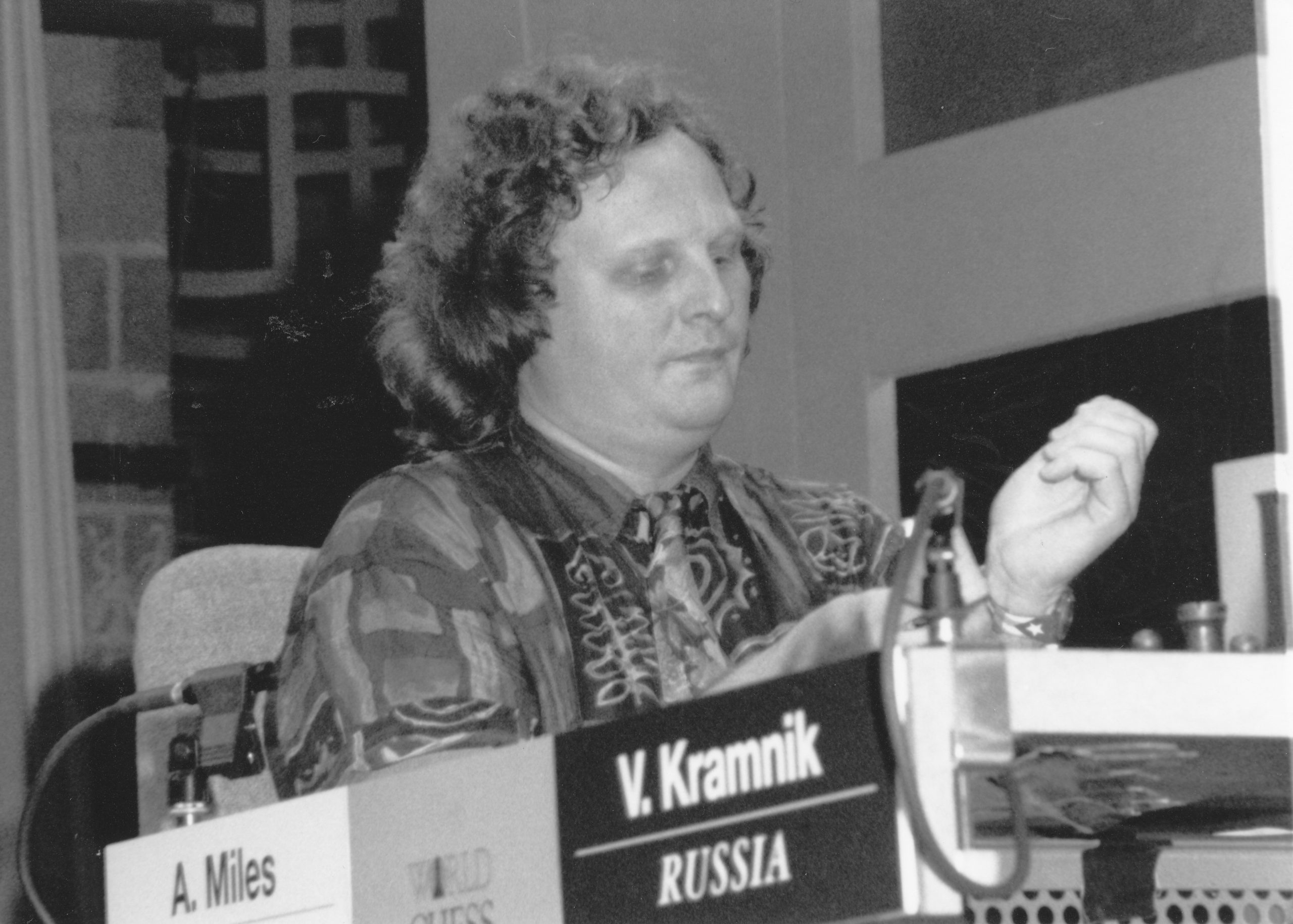
Tony about to play Vladimir Kramnik

Never able to qualify out of the Interzonal stages into the Candidates’ series, Miles eventually lost the race to become the first British Candidate when Short did so in 1985. However, he retained top board for England at the Thessaloniki and Dubai Olympiads of 1984 and 1986, helping the team to silver medals at each.

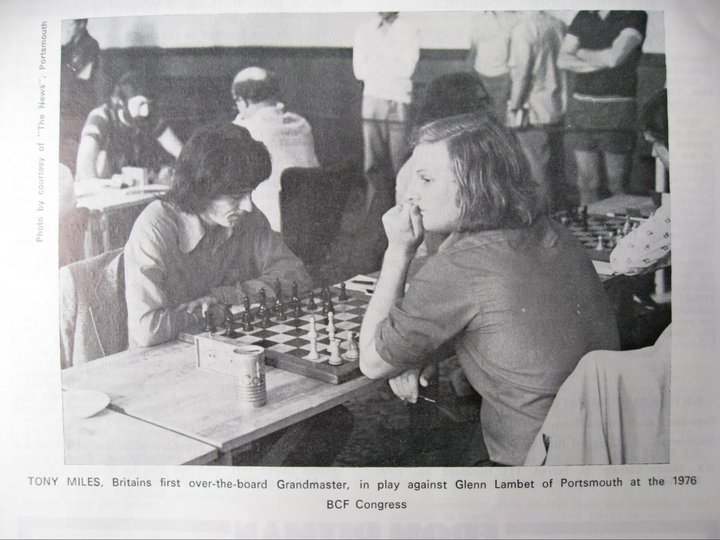
Tony plays Glenn Lambert during the 1976 BCF Congress in Portsmouth. Photo courtesy of Tony Williams

Against Garry Kasparov, Miles had little success, not winning a game against him, and losing a 1986 match in Basel by the score of 5½–½. Following this encounter, Miles commented “I thought I was playing the world champion, not a monster with a thousand eyes who sees everything” (some sources alternatively quote Miles as having the opinion that Kasparov had 22 or 27 eyes).

Miles on a stretcher with back pain, playing in Tilburg (1985)
After he was hospitalised because of a mental breakdown in late 1987, Miles moved to the United States. He finished last in the 1988 U.S. Championship, but continued to play there and had some good results. In 1991, he played in the Championship of Australia, but eventually moved back to England and began to represent his native country again. He was equal first at the very strong Cappelle-la-Grande Open in 1994, 1995, and 1997, and caused a shock at the PCA Intel Rapid Chess Grand Prix in London in 1995, when he knocked out Vladimir Kramnik in the first round and Loek van Wely in the second. His bid to win the event was finally halted in the semifinal by English teammate Michael Adams.

There were four notable victories at the Capablanca Memorial in Cuba (1994, 1995, 1996, and 1999). Miles also tied for first in the 1999 Continental Open in Los Angeles with Alexander Beliavsky, Ľubomír Ftáčnik and Suat Atalık. His last tournament victory was the 2001 Canadian Open Chess Championship in Sackville, New Brunswick.

Miles entered and played at the 2001 British Championship in Scarborough, but withdrew before the final round, apparently because of ill health. His final two games before his death were short draws in the Four Nations Chess League. Miles played in an extraordinary number of chess events during his career, including many arduous weekend tournaments.

The Miles Variation (1.d4 Nf6 2.c4 e6 3.Nf3 b6 4.Bf4) in the Queen’s Indian Defence is named after him.”

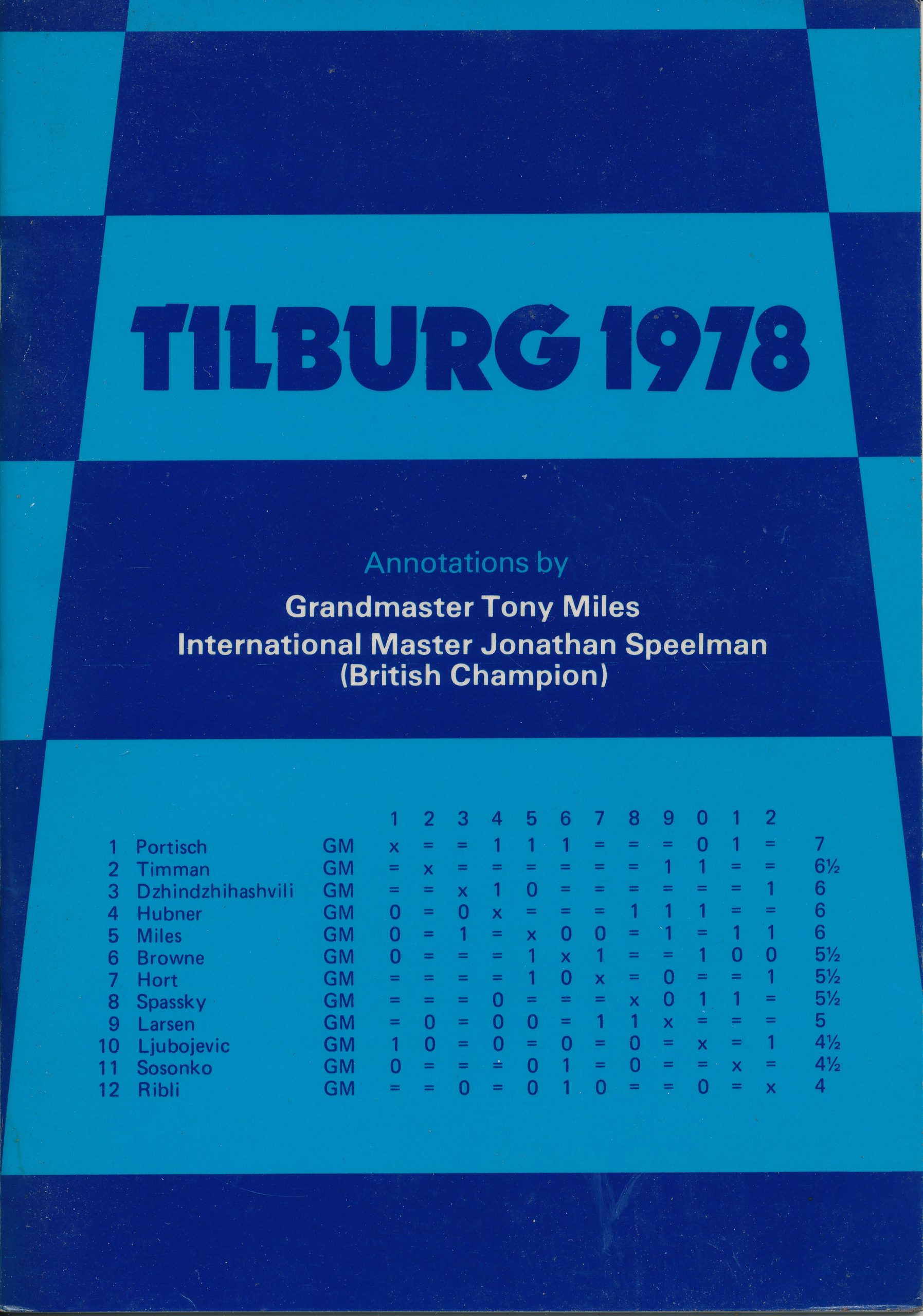
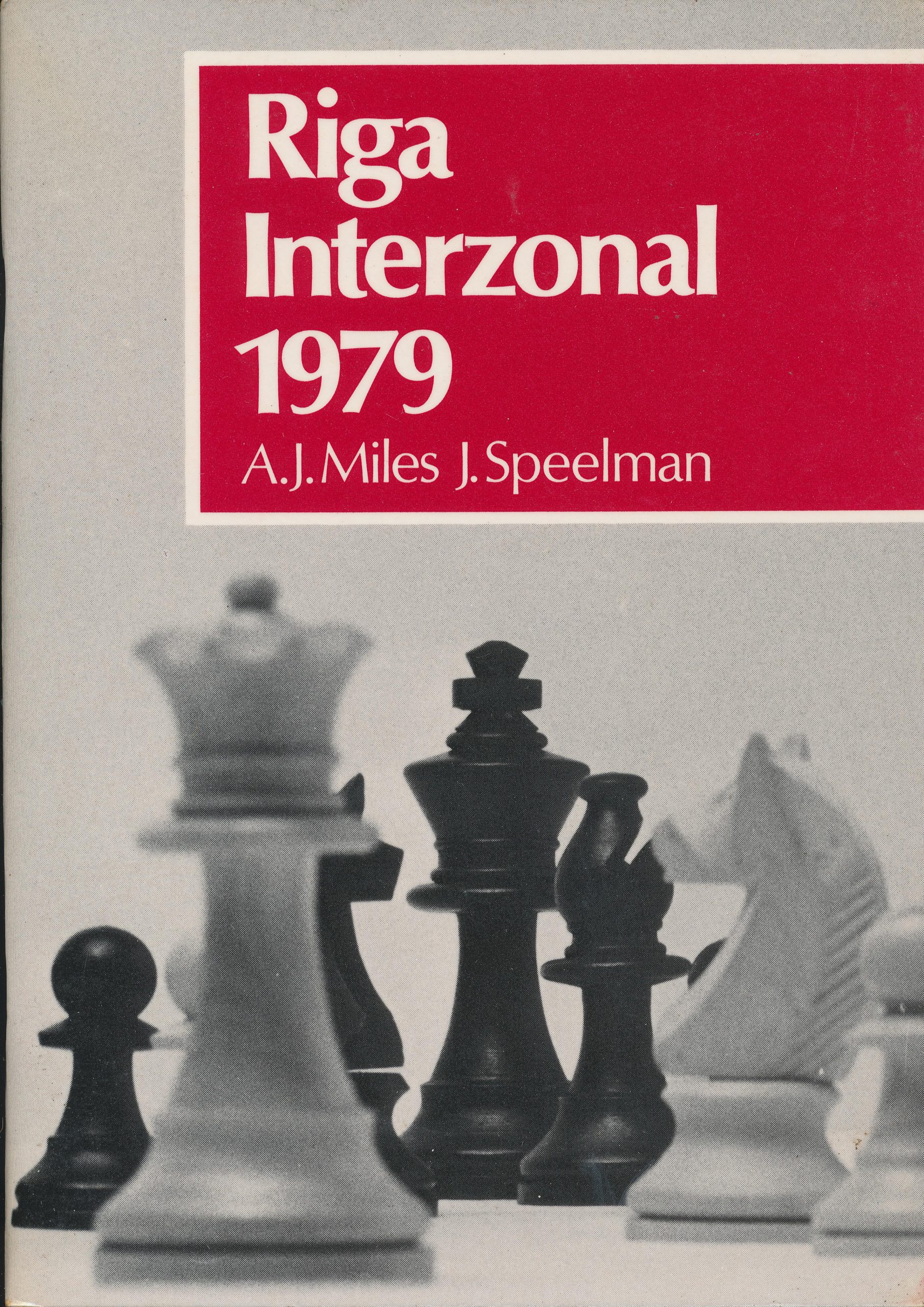
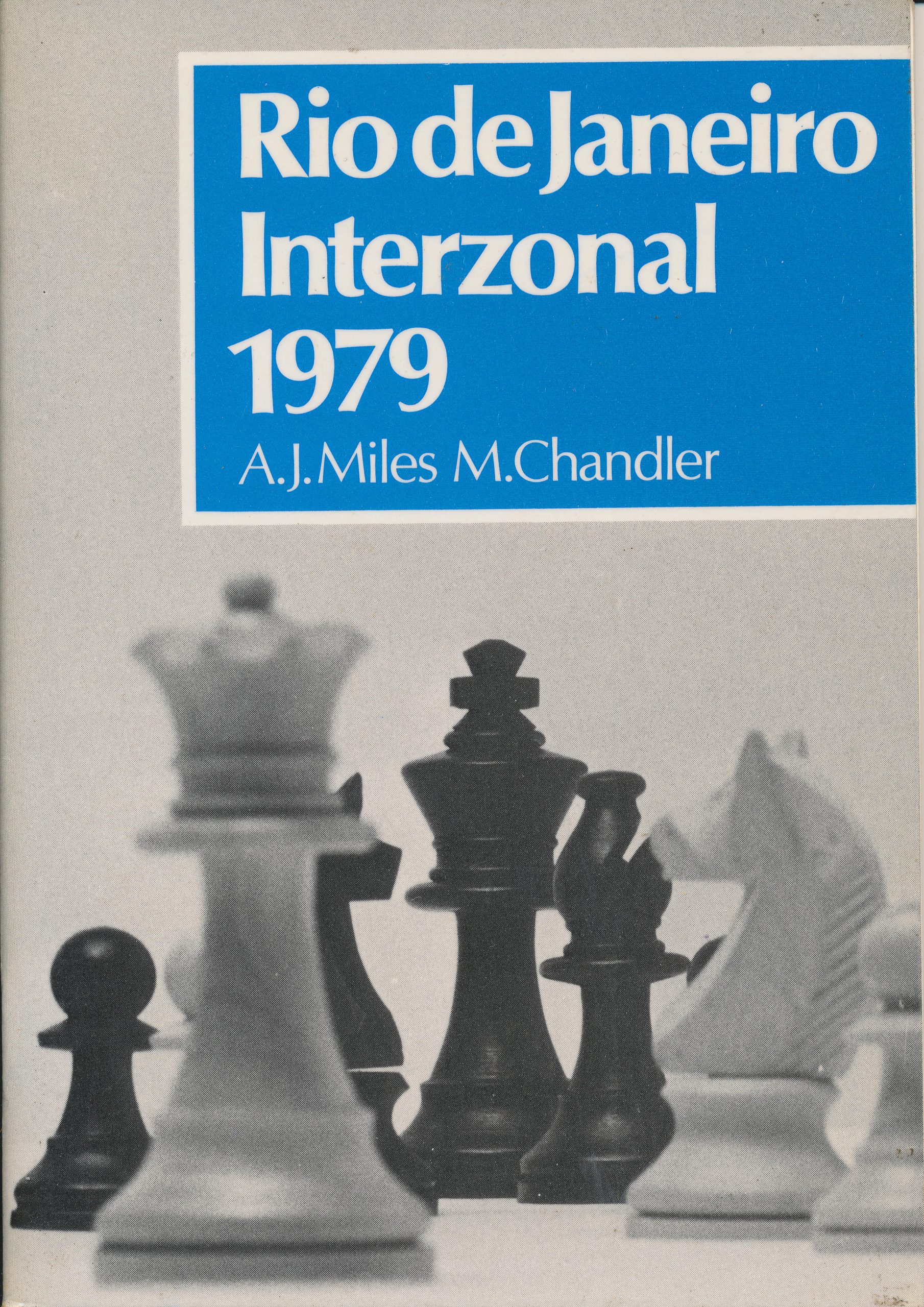
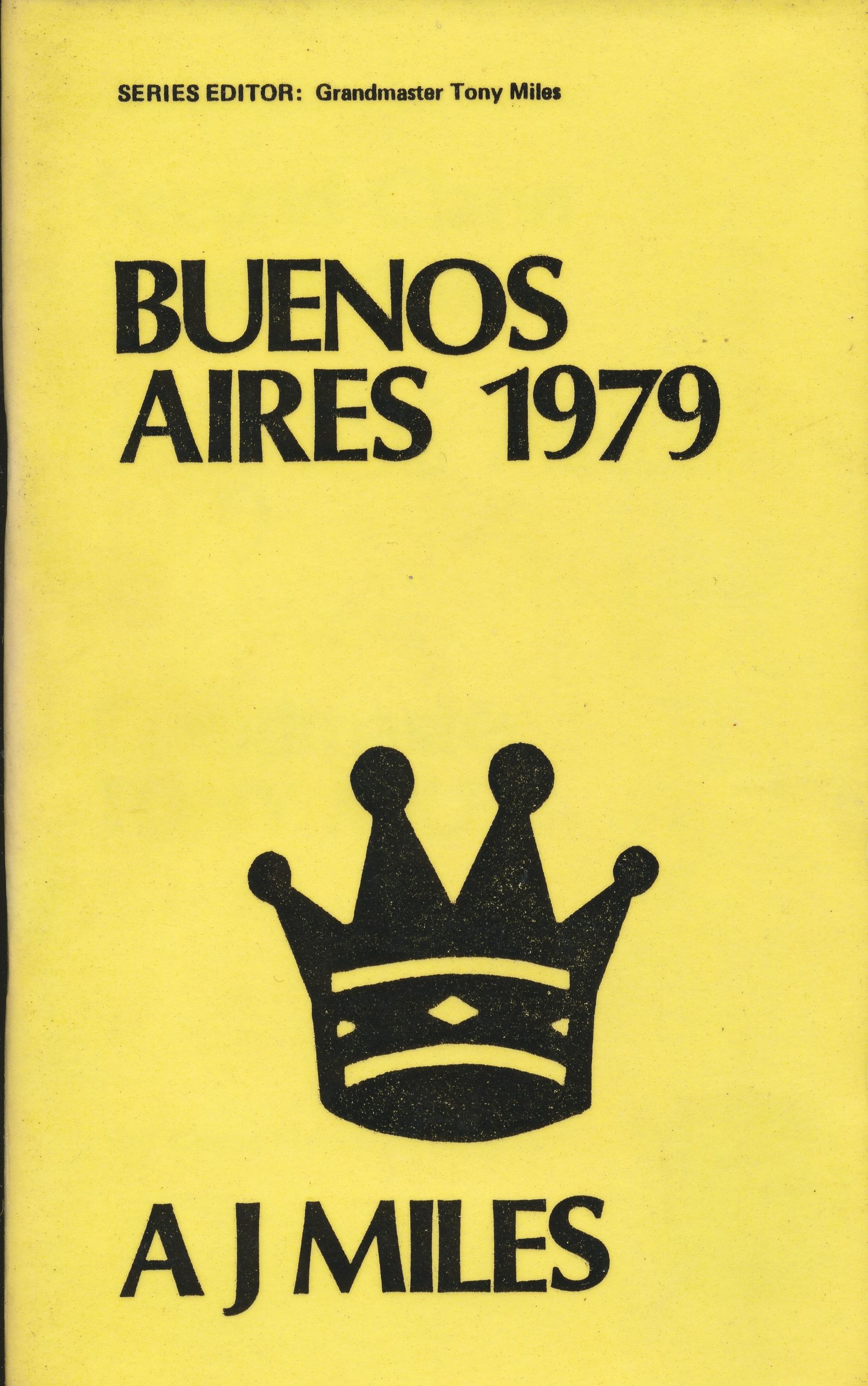
Tony started his chess writing career in around 1978 with a series of high quality annotated tournament bulletins of the top events of the period most of which he competed in himself.  For example:

Tilburg 1978, Tony Miles & Jonathan Speelman, Master Chess Publications, 1978
Riga Interzonal 1979, AJ Miles & J Speelman, Batsford, 1979, ISBN 0 7134 3429 5
Rio de Janeiro Interzonal 1979, AJ Miles & M.Chandler, Batsford, 1979, ISBN 0 7134 3427 9
Buenos Aires 1979. AJ Miles, The Chess Player, ISBN 0 906042 31 3
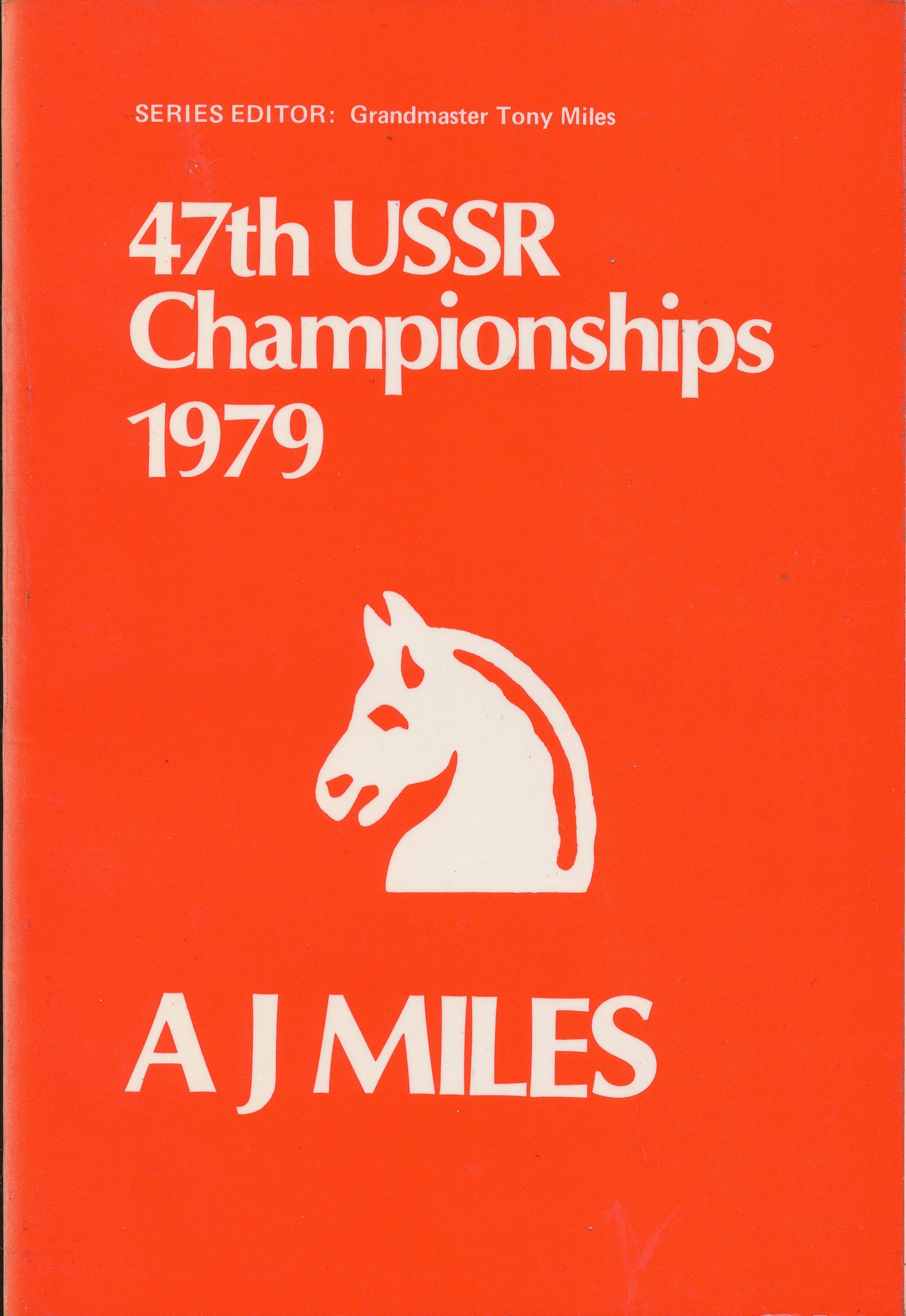
47th USSR Championships 1979, AJ Miles, The Chess Player, 1979, ISBN 0 906042 32 1
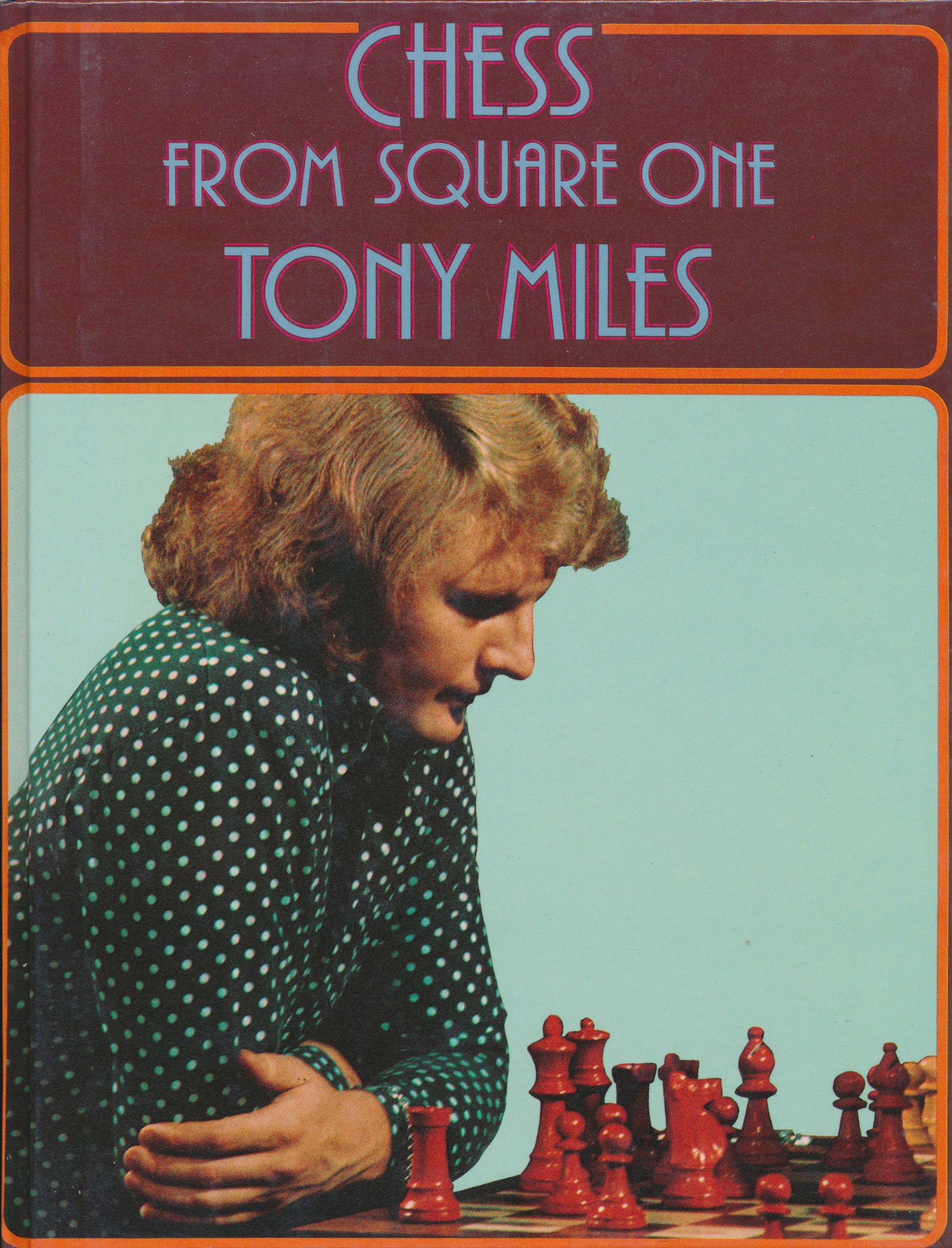
Chess from Square One, AJ Miles, Harper Collins, November 1979, ISBN 0713511168
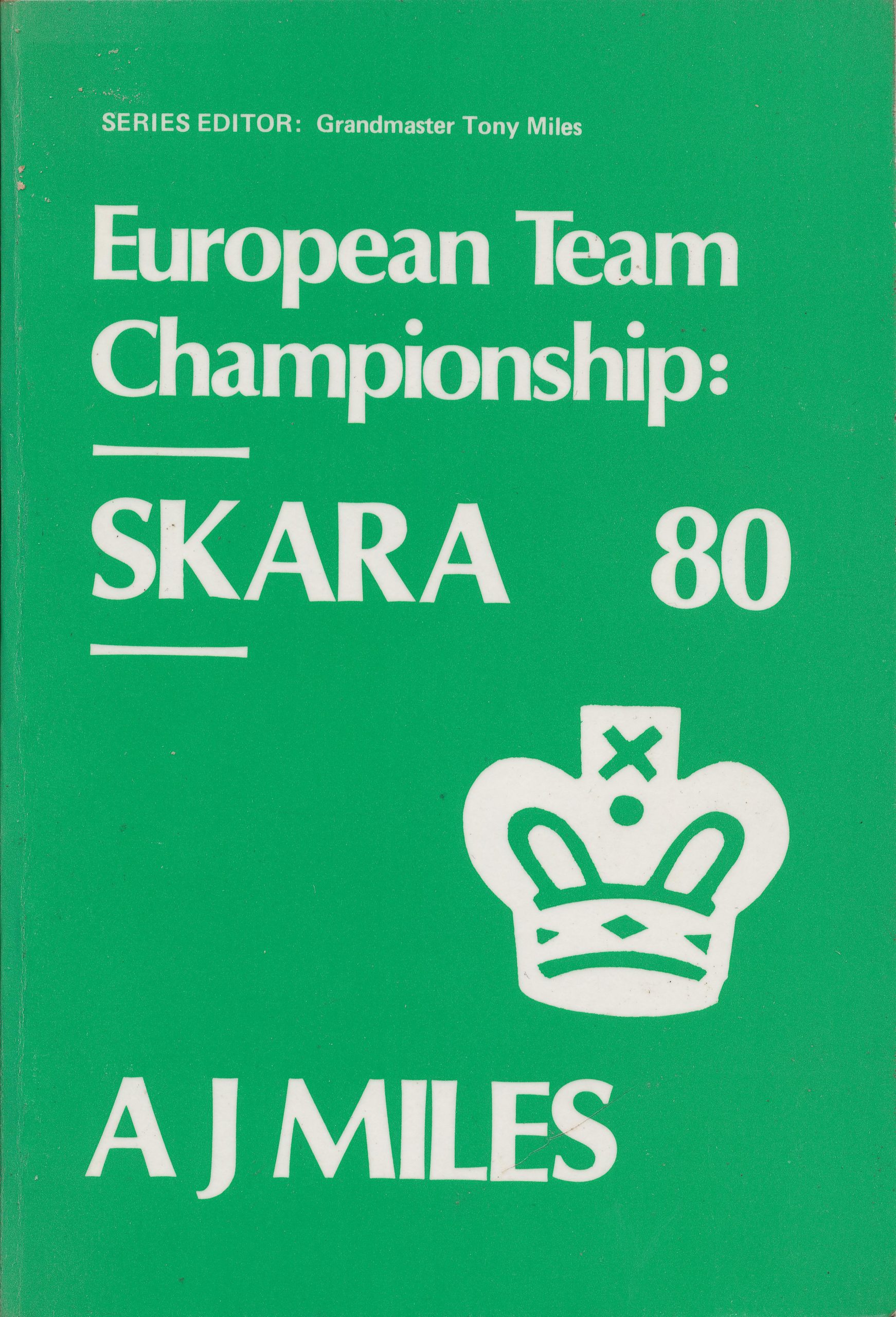
European Team Championship Skara 1980, AJ Miles, The Chess Player, ISBN 0 906042 33X

Of course there are numerous articles about Tony for example :

Vlastimil Hort Remembers Tony Miles

Hort stories: Wrong place wrong time

Chess Corner – Original Maverick: Remembering Tony Miles

Britain’s first chess grandmaster, he paved the way for today’s international competitors

Tony Miles 1955-2001

Kingpin

Tony Miles (1955-2001) by Edward Winter

How Anthony Miles beat a World Champion (Karpov-Miles, Skara 1980)

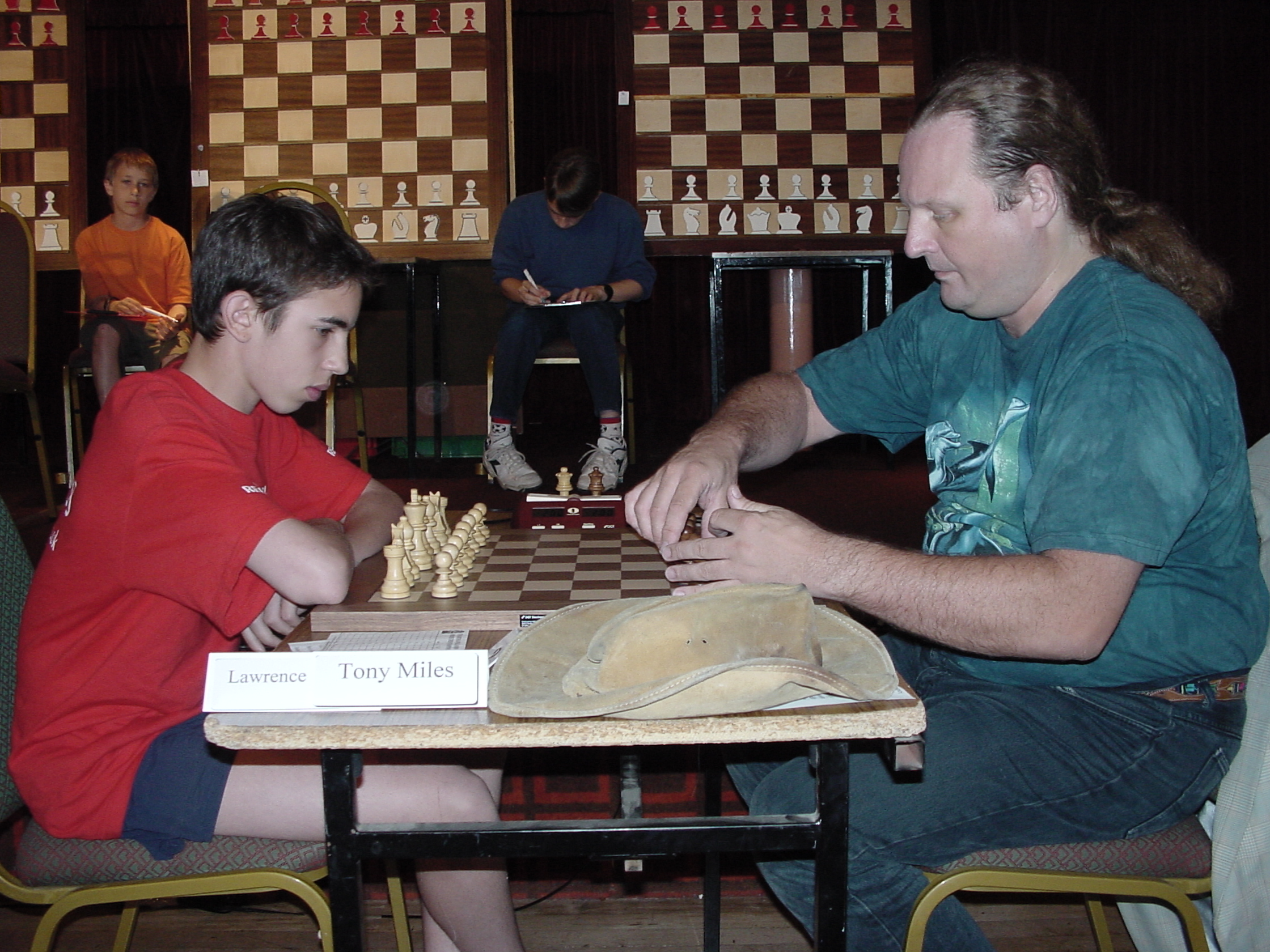
Lawrence Trent plays Tony Miles in 2001 at the British Championships in Scarborough
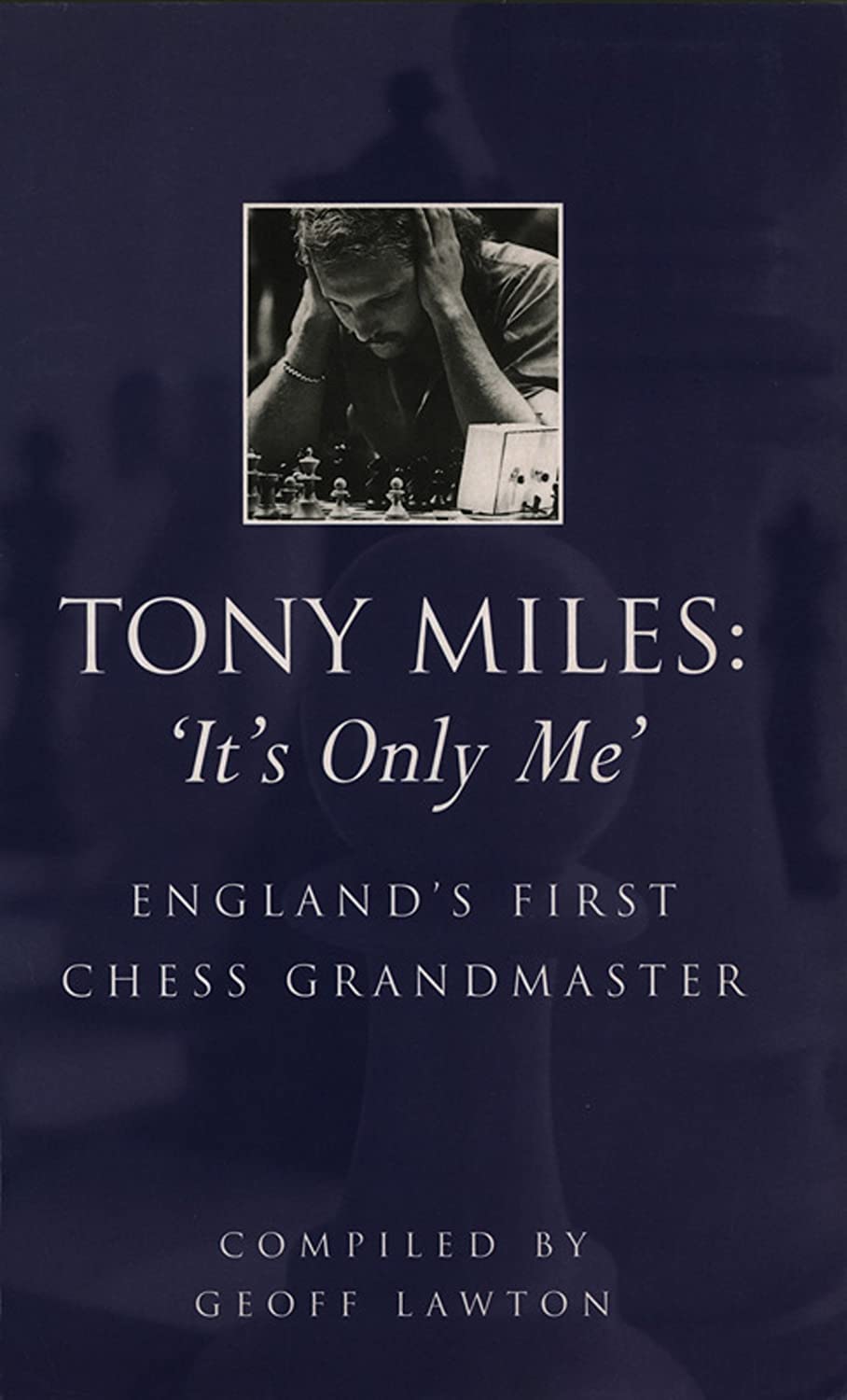
It's Only Me, edited by Geoff Lawton
It’s Only Me, edited by Geoff Lawton
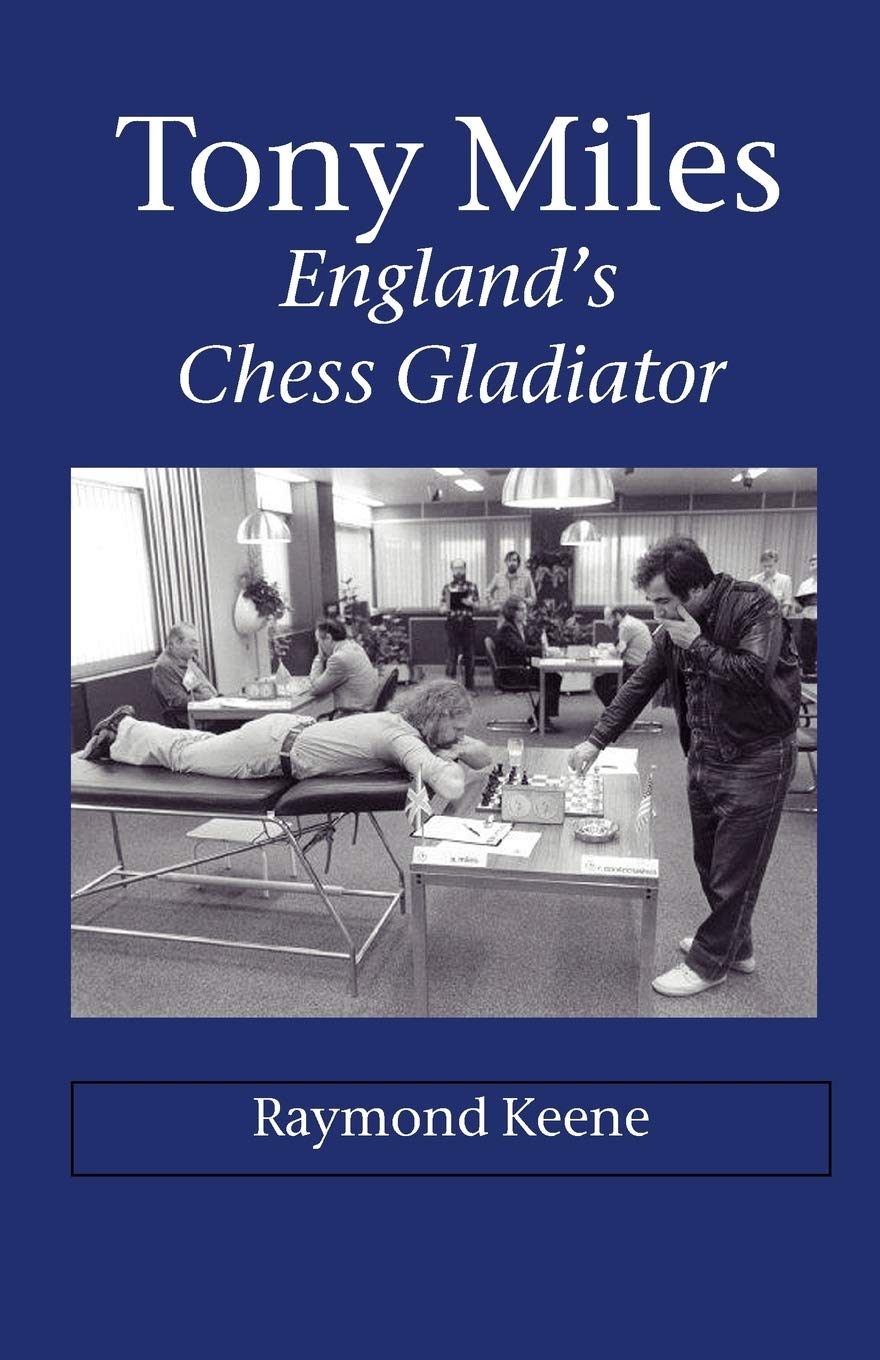
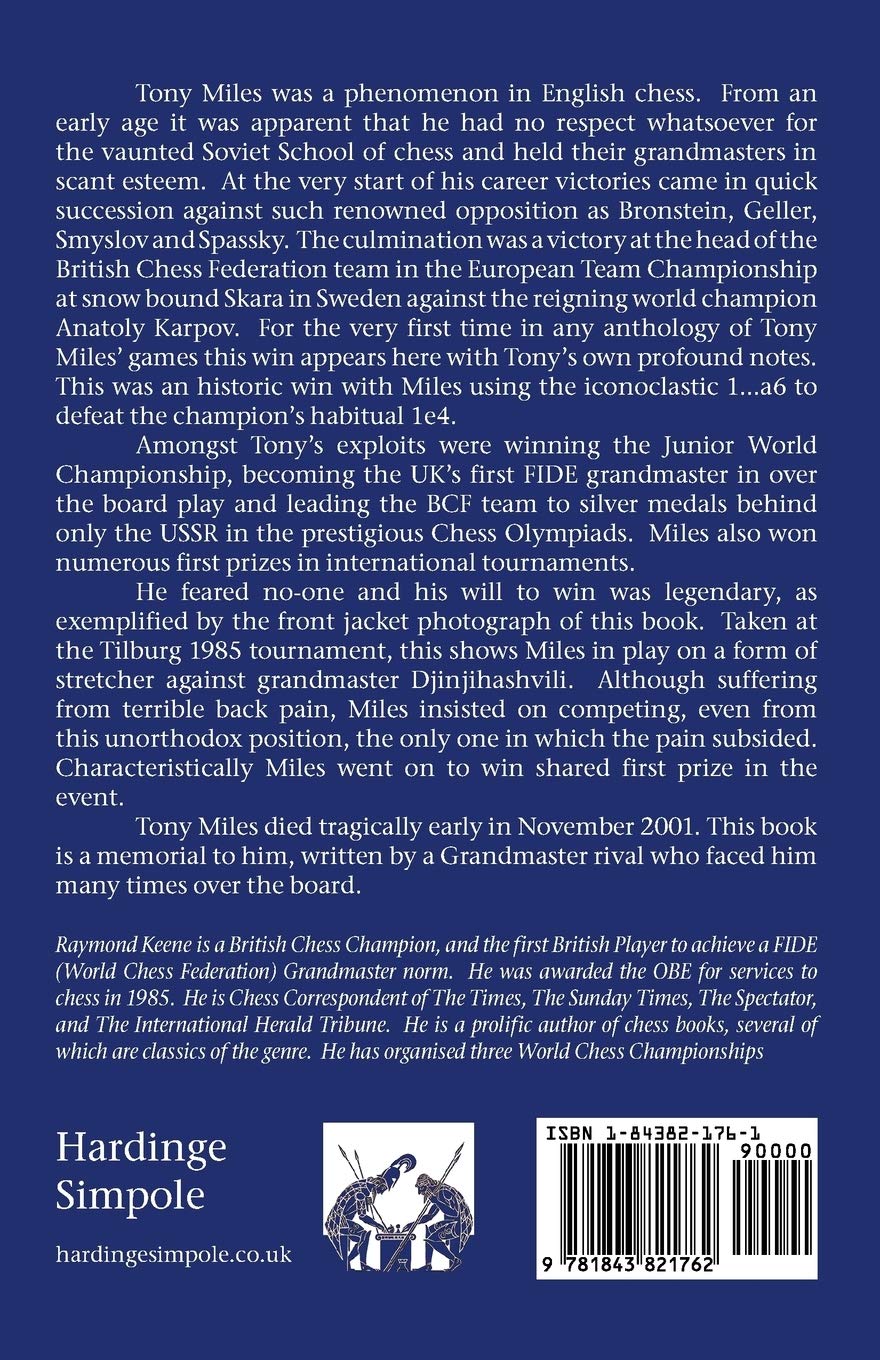
Tony Miles : England's Chess Gladiator, Ray Keene, 2006
Tony Miles : England’s Chess Gladiator, Ray Keene, 2006
Tony Miles : England's Chess Gladiator, Ray Keene, 2006
Tony Miles : England’s Chess Gladiator, Ray Keene, 2006
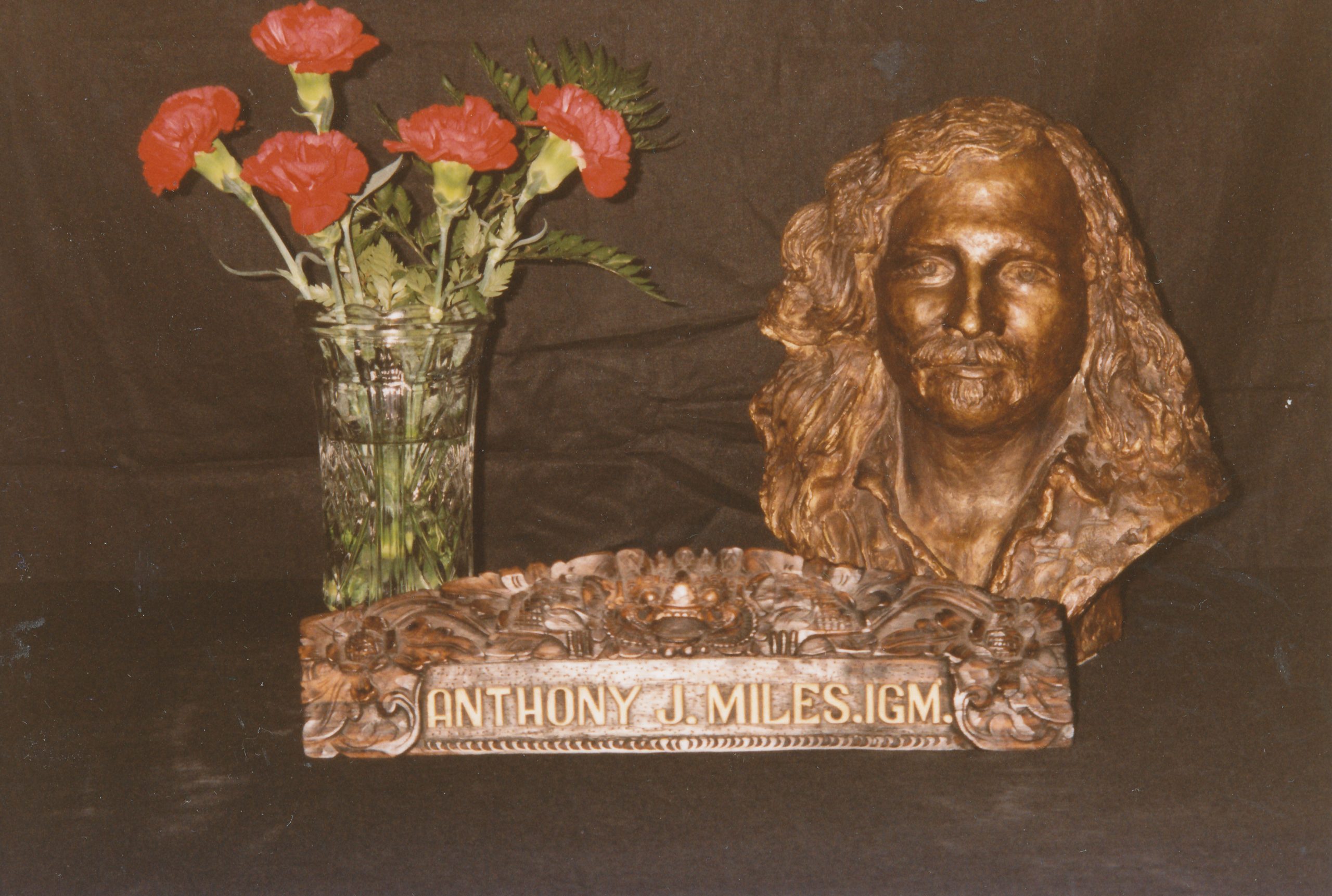
A Tony Miles memorial
Tony's signature from a presentation copy of Pachman's Decisive Games from Anglo-German match of February 1979 at Elvetham Hall
Tony’s signature from a presentation copy of Pachman’s Decisive Games from Anglo-German match of February 1979 at Elvetham Hall
 Save as PDF
Remembering Fred Dewhirst Yates (16-i-1884 11-xi-1932)

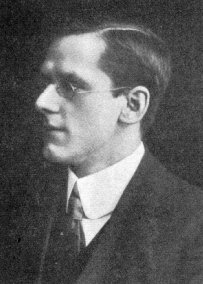
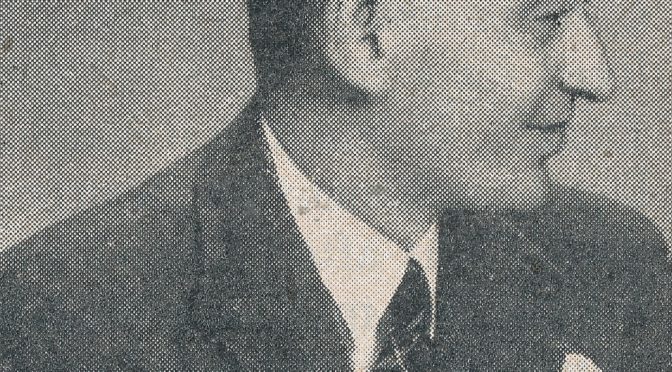
Fred Dewhirst Yates
Fred Dewhirst Yates

We remember Fred Yates who passed (or, at least was recorded as passing) on Friday, November 11th, 1932.

Fred (not Frederick) Dewhirst (not Dewhurst) was born in Birstall, Leeds on Wednesday, January 16th 1884, the same year as Harry S Truman and Eleanor Roosevelt.

An obituary appeared in Volume LII (52, 1932), Number 12 (December), pp.525-528 of the British Chess Magazine by PW Sergeant :

“The chess world has had many heavy bereavements during the year which is coming to an end; but to the British section of it there has been no bereavement like the last, which robbed it of F.D.Yates, when still in the prime of his chess career. The circumstances of his end were tragic. On the night of Tuesday, November 8th, he gave a very successful exhibition at Wood Green, only dropping one half-point in 16 games. On the following night he was in the company of a chess friend until fairly late, and then went back to his room in Coram Street, Bloomsbury. He was never seen alive again. It was not until Friday morning that anxiety was felt at Coram Street as to what he might be doing; for he was in the habit of secluding himself for many hours at a stretch when busy with work.

Fred Dewhirst Yates
Fred Dewhirst Yates

On Friday, however, when no answer could be got to knocks on the door of his room, which was locked, and a smell of gas was noticed, the door was at last broken open, and he was found dead in bed.

It came out at the inquest before the St. Pancras coroner on November 15 that , though the gas-taps in the room were securely turned off, there had been an escape from what a gas companies official described as an obsolete type of fitting attached to the meter in the room. The meter, it appears, was on the floor, and the fitting must have been accidentally dislodged. A verdict was recorded of Accidental Death; and the coroner directed that the gas-pipes from the room should remain in the custody of the court. The body was conveyed to Leeds for burial on the morning of November 16.

So prematurely passed away one who may with justice be called one of the finest exponents of British chess, and an international master whose strength was recognised all over the world.

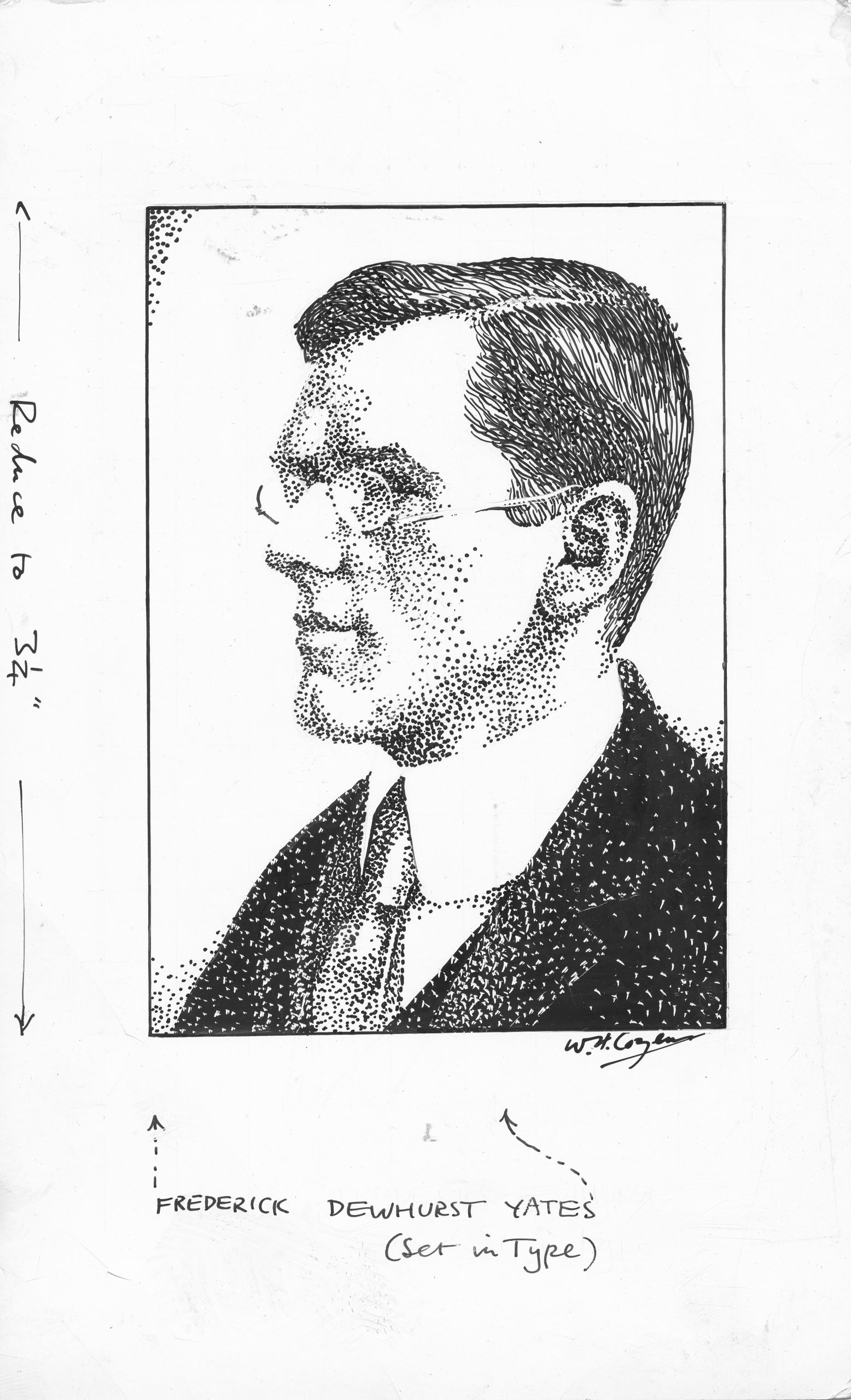
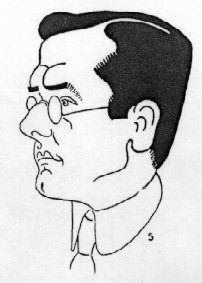
Fred Yates as drawn by WH Cozens for BCM

Frederick Dewhurst (sic) was born at Birstall, near Leeds, on January 16, 1884. He did not develop his chess power very young, at the B.C.F. congress at the Crystal Palace in 1907 only playing in the Second Class, though he then won first prize in one of the two sections. At Tunbridge Wells next year he tied for fourth place in a section of the First Class. He was admitted to the British Championship at Scarborough in 1909 (in which year he was Yorkshire Champion), and there tied with Blackburne for fourth and fifth prizes, after HE Atkins, JH Blake, and W. Ward.

In the same event at Oxford in 1910 he again tied with Blackburne, but this time for second and third prizes, Atkins being first, though losing in his individual encounter with Yates. In 1911, at Glasgow, Yates still further improved his position, this time tieing with Atkins for first place; but in the tie-match Atkins won somewhat easily.

Atkins stood down for the first time at Richmond in 1912; but the success of RC Griffith left Yates second, in company with the late HG Cole. At last in 1913, Yates gained his ambition, and at Cheltenham won the British Championship with the fine score of 9 out of a possible 11, 1.5 points above J. Mahood and 2 above Blackburne. In the ruined Congress at Chester in 1914 he tied for first place with Blackburne; and, as Blackburne was unable to play a deciding match, Yates won his second championship.

Fred Dewhirst Yates, Jacoby Archive

Since the War he gained the title again in 1921, 1926, 1928 and 1931, thus making a record of six championships, second only to Atkin’s record of nine (ed : in 1969 at the Rhyl Congress Jonathan Penrose OBE was to surpass Atkins record by one.)

Yate’s six victories were gained in sixteen attempts In addition must be mentioned his success in the Hastings tournament, in the New Year of 1921, for holders of the British Championship only.

Fred Yates
Fred Yates

His other successes in this country, including his two wins in the in the Anglo-American cable match, in 1910-11, need not detain us; for limitations of space demand that we shall come to Yates as an international master. His first essay was at Hamburg in 1910, on the invitation of the German Chess Federation. Though he did badly, only getting one win in 16 games, the win was a remarkable effort, at the expense of no less a celebrity than Dr. Tarrasch.

At Pistyan two years later he did a little better. He had to wait until after the War for a third attempt; but it will be best to give what we believe to be a full record of his performances in international event:- (to be added).

These lists, however, furnish no just view of the strength of Yates’s play, which always was most fully exhibited against the leading competitors in tournaments. Among his triumphs must be noted his particularly his wins against Alekhine at Hastings, 1922, and Carlsbad 1923 (a brilliancy prize game); against Euwe, Scarborough, 1928; against Nimzowitsch , Carlsbad, 1929; against Bogoljuboff, London, 1922, and Baden-Baden, 1925; against Tartakover, Hastings and Kecskemet, 1927; against Kmoch and Rubinstein, Budapest, 1926; against Spielmann and Vidmar, San Remo, 1930; and his draws with Alekhine and Capablanca at New York, 1924. The harder the opposition, the better his play. Conversely, against what should have proved easier opponents he was apt. at times, to show less of his skill. In this, of course, he was not peculiar, even among the experts.

Generally speaking, however, he was a remarkably tenacious player, who would not abandon a game while there was the slightest chance of a win or a draw. This was not due to mere obstinacy, as may sometimes have appeared, but to the depth of his vision, which gained for him among the German commentators the title of ein tiefe Denker(ed : a deep thinker) – no small testimony from those from whom it came. With a robuster physique there is no knowing to what a position he might have attained in the chess world. The late Amos Burn always had the highest opinion of is powers, and always pointed out, too, the handicap under which a player labours who has to report the events in which he takes part – equivalent, he would say, to giving the other competitors Pawn and move!

Yates was unfortunate in embracing professionalism in an era when the rewards were becoming less and less, and finally reached a stage when they scarcely provided the means of a bare existence. He was a fine simultaneous player, whose exhibitions always delighted by their combination of speed, precision and flashes of brilliance.

As commentator he was very good indeed, and his contributions, especially to The Manchester Guardian, where noted alike for their accuracy and for a sense of style.

He had a journalistic training, outside chess. He was not, in fact, ‘a mere chessplayer’, in spite of his intense devotion to the game. It was his extreme reticence which gave such an impression to all but those whom he admitted to intimacy. They at least knew his widespread interest in other things; and W. Winter’s recent tribute to him in the Guardian in no way exaggerates his charm as a companion among those who knew him best. To them his loss is one which cannot be replaced.”

An Appeal

No doubt all chessplayers in England will have read with sorrow of the death of F.D.Yates at the early age of 46, and more especially will the circumstances of it be a shock to many.

An inquest was held, as has already been reported, and was attended by his two sisters, who have practically no means, as was the case of Yates himself. Certain chessplayers who attended the funeral agreed to make themselves responsible for the funeral expenses, but as the body was removed to Birstall in Yorkshire for burial in the family grave, the expenses were considerably heavier than was anticipates and, with the money owing to the landlady, comes to a total of £51 2s and 0d.

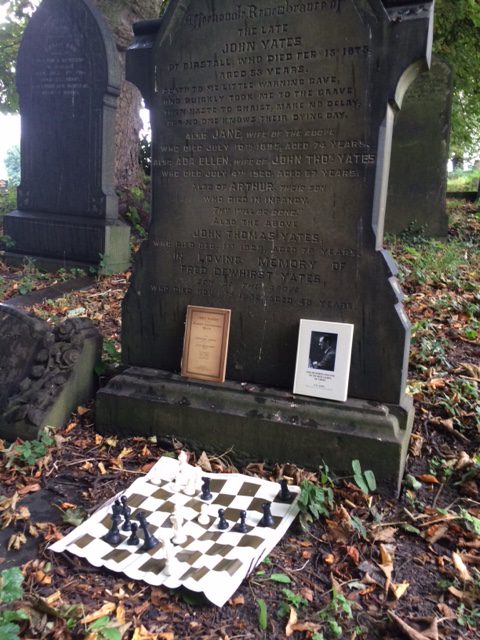
The gravestone of FD Yates, courtesy of Matthew Sadler

We feel quite sure that when our readers know, they will like to show their last recognition of the value which F.D.Yates was to English chess by giving a donation towards the sum.

The London Chess League, whose finances are not in a very satisfactory state, as in the case of most chess concerns, has agreed to donate £3 towards this. Their president has given £1 1s 0d., and one or two other members have promised donations. We shall be happy to receive any contributions towards this fund, and will give acknowledgment in future issues.”

Here is an in-depth article by Edward Winter in Chess Notes on the circumstances of FDYs death.

Here is a more modern article by Matthew Sadler

From The Oxford Companion to Chess (OUP, 1984) by Hooper and Whyld :

“English player. British Champion 1913,1914,1921,1926,1928, and 1931, Around 1909 he gave up his profession in accountancy to become a chess professional. Of the many international tournaments in which he competed from Hamburg 1910 to Hastings 1931—2 he made his best results in the B Final, Kecskemet 1927, first (+4=2-1) equal with Tartakower, and at San Remo 1930, the strongest tournament of the year, when he came fifth after Alekhine,, Nimzowitsch, Rubinstein, and Bogoljubow ahead of Spielmann,
Vidmar, and Tartakower.

A tenacious player, he could be a dangerous opponent. In tournament play he defeated most of the greatest masters of his time on one occasion or another, and among these victories were two defeats of Alekhine (Hastings 1922, Carlsbad 1923), and three defeats of Bogoljubow (London 1922, Baden-Baden 1925, Scarborough 1927) and Rubinstein (London 1925, Moscow 1925, Budapest 1926), A careful and conscientious writer, he conducted a chess column in the Yorkshire Post, was chess correspondent of the Manchester Guardian , and wrote three books (see foot of article) in collaboration with William Winter (1898-1955).

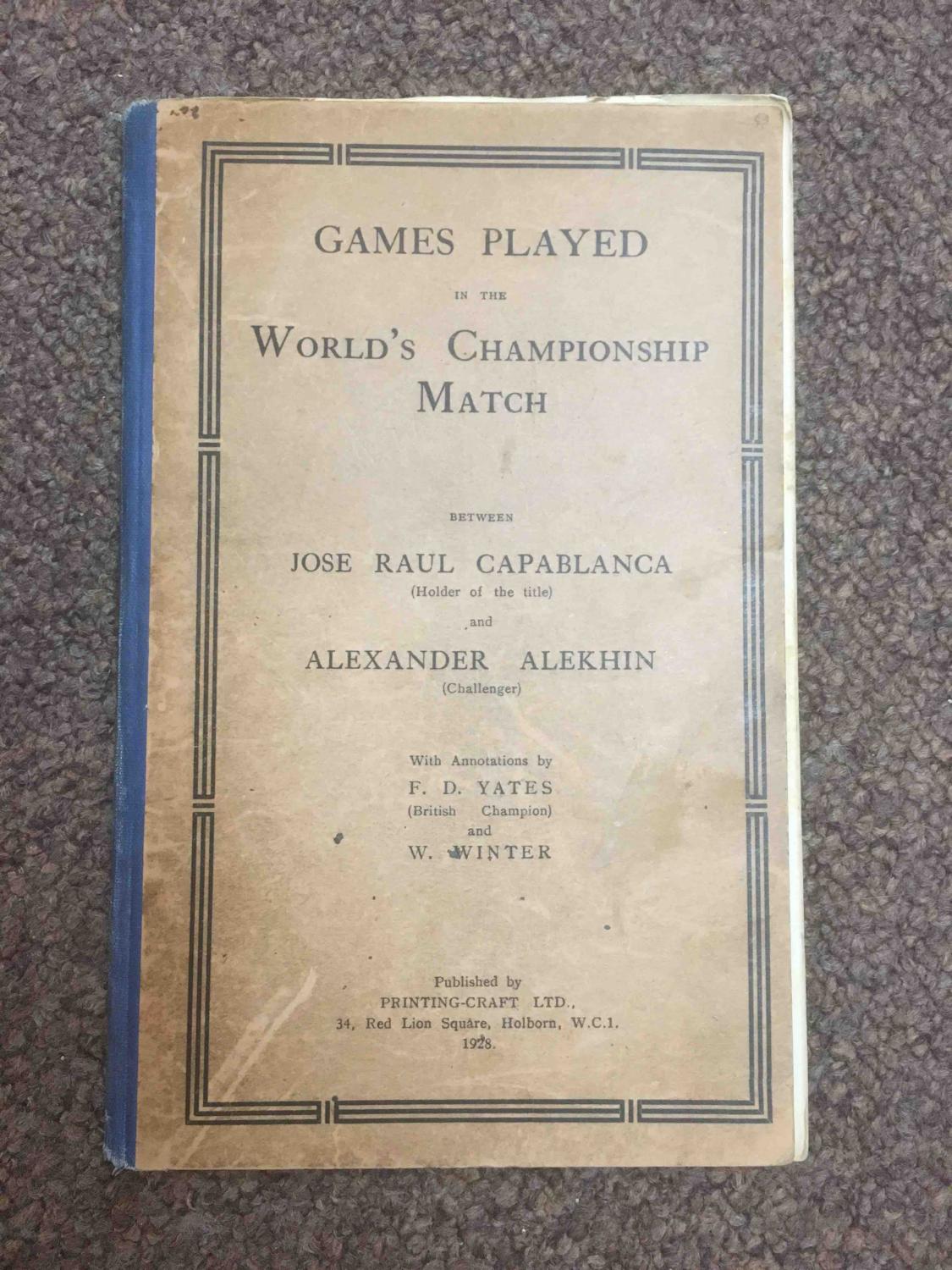
Games Played In the World's Championship Match between Jose Paul Capablanca and Alexander Alekhine, FD Yates and W, Winter, 1928, Printing Craft Limited
Games Played In the World’s Championship Match between Jose Paul Capablanca and Alexander Alekhine, FD Yates and W, Winter, 1928, Printing Craft Limited
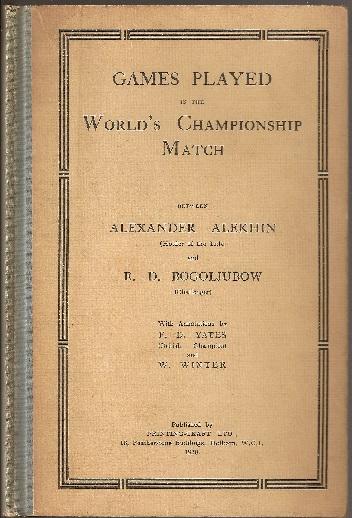
Games Played in the World's Championship Match between Alexander Alekhine (Holder of the Title) and E D Bogoljubow (Challenger), Printing Craft Limited, 1930, FD Yates and W. Winter
Games Played in the World’s Championship Match between Alexander Alekhine (Holder of the Title) and E D Bogoljubow (Challenger), Printing Craft Limited, 1930, FD Yates and W. Winter

A leak from a faulty gas pipe connection killed Yates while he was asleep. His book One-hundred- and-one of My Best Games of Chess was published in 1934.”

From The Encyclopedia of Chess (Robert Hale, 1970 & 1976)by Anne Sunnucks :

“International Master and British Champion in 1913, 1914, 1921, 1926, 1928 and 1931.

Born in Birstall, near Leeds in Yorkshire, on 16th January 1884, Yates was 25 before he played in the British Championship for the first time. In 1909, having won the Yorkshire Championship, his entry was accepted for the British Championship at Scarborough, and he tied with Blackburne for 4th prize. The following year he again tied with Blackburne, this time for 2nd prize, and in 1911 he tied with Atkins for 1st prize but lost the play-off for the title. In 1913, he succeed in winning the British Championship for the first time.. During his career he competed in the British Championship 16 times and won the title on six occasions.

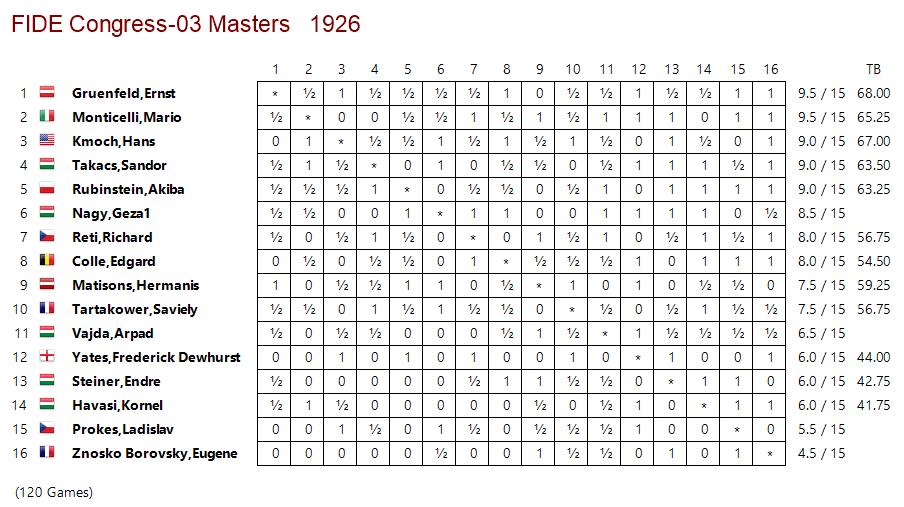
In International tournaments his record did not do him justice as far as his final placings were concerned. However, in studying his performance in detail, his wins were often against the strongest players and his losses against those at the bottom of the tables. This was particularly apparent in the results of the 1926 Budapest tournament.

Cross Table for Budapest 1926

During the course of his career, Yates beat practically every contemporary Grandmaster, with the exception of Lasker and Capablanca. His victory over Alekhine at Carlsbad 1923 came at the end of a combination 18 moves deep and won the brilliancy prize, while his victory over Vidmar at San Remo in 1930 was described by Alekhine as the finest game played since the war.

Other outstanding wins were against Bogoljubow at London 1922, against Rubinstein at Budapest 1926, against Tartakover at Hastings 1927, against Euwe at Scarborough 1928 and against Nimzowitsch at Scarborough 1929. The stronger the opposition the better Yates played.

His losses against weaker players may well have been due to ill-health and lack of necessary stamina to play consistently throughout a long tournament. He was continually troubled by a hacking cough and could not afford to carry out the medical advice that he should go to the Riviera for a cure.

He was a professional chess player at a time when it was difficult to make a livelihood out of chess and he was often handicapped by having to report an event in which he was playing. A number of his contemporaries believed that, had he lived in different circumstances his talent would have placed him among the contenders for the World Championship.

For some years Yates ran the chess column for The Manchester Guardian. He was co-author with Winter of Modern Master Play and of books on the Capablanca vs Alekhine and Alekhine v. Bogoljubov World Championship matches.

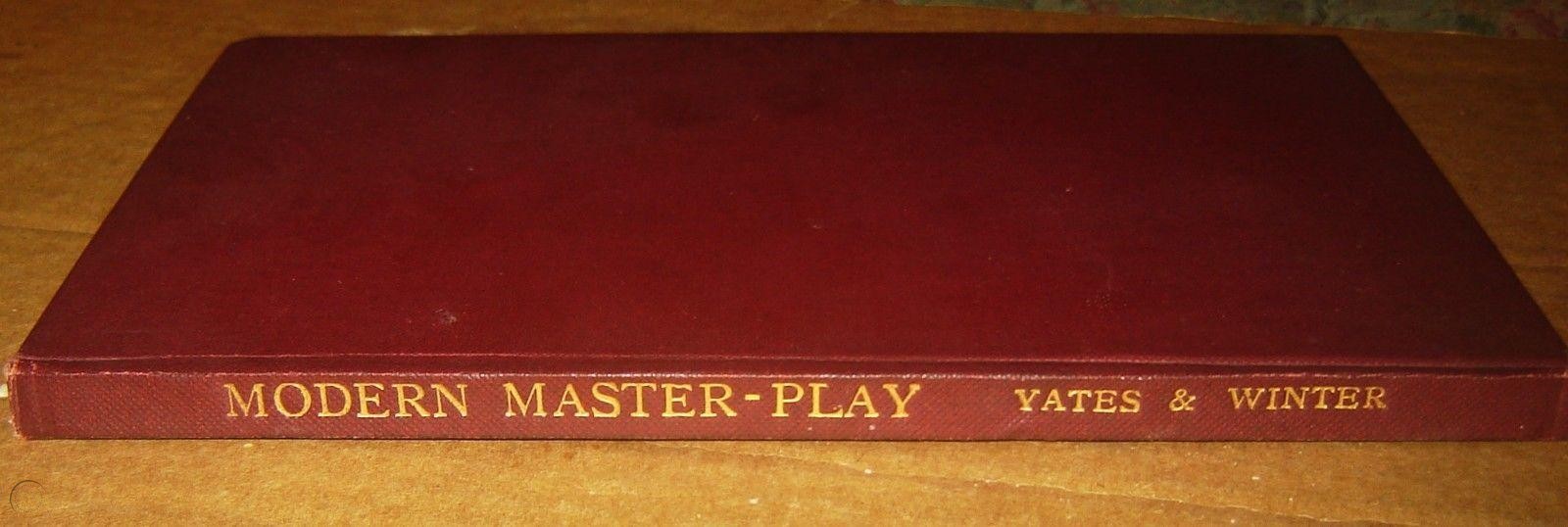
Modern Master Play, FD Yates and W. Winter, 1930

Yates had a great number of interests apart from chess and had a very versatile mind which enabled him to talk on a wide range of subjects. He was extremely modest and rarely kept the scores of his games and never submitted them to the press.

He died in tragic circumstances, On 11th November 1932, he was found dead in his bedroom from gas poisoning. At the inquest it was established that there was a faulty connection in the gas meter in his room and a verdict of accidental death was returned.”

From The Encyclopedia of Chess (Batsford, 1977) by Harry Golombek:

“A British master. Yates trained as an accountant but in 1909 abandoned this career in favour of chess and journalism. In 1911 he tied for first prize with Atkins in the British Championship losing the play-off match. Two years later he won the event – the first of six such victories (1913, 1914, 1921, 1926, 1928 and 1931).

In international tournaments Yate’s results were generally mediocre, but he was capable on occasion of defeating the strongest opposition and his victims included Alekhine, Reti, Bogoljubow, Tartakower, Rubinstein, Euwe, Nimzowitsch and Vidmar. He was a regular competitor at the Hastings Christmas Congresses, winning in 1920/1 and finishing in 3rd place on four occasions: 1923/4, 1924/5, 1926/7 and 1929/30.

Yates was for many years the chess correspondent of The Manchester Guardian and, in addition, wrote Modern Master Play, London, Philadelphia 1929 (with W. Winter as co-author) and books of the 1927 Capablanca-Alekhine, London 1928, and the 1929 Alekhine-Bogoljubow World Championship matches, London, 1930.

He died from being accidentally asphyxiated in his rooms by a faulty gas connection.”

In the March issue of CHESS for 1963, (Volume 28, Number 427, pp.147-155)  William Winter wrote this:

The genius of F. D. Yates

I use the words ‘one of the most talented chess players’ advisedly. I have known personally all the world champions of my time, as well as most of the principal challengers, and I have no hesitation in saying that, at his best, he displayed a chess genius second to none. His victory over Vidmar at San Remo was described by Alekhine in 1931 as the finest game played since the war, and his win against Alekhine himself at Carlsbad is in the same category. The final combination here is eighteen moves deep. There are other games nearly as good and I am quite sure that had Yates been born a Soviet player, encouraged to develop his natural genius along proper lines, he would have been a close challenger for the world title ! Even I never knew the number of great games Yates had played until I came to write his Memorial Book. He was one of those modest souls who never kept the scores of his games and never submitted them to the press, so the only way I could get hold of many true masterpieces was to delve them out of continental magazines and tournament books.

One of the noticeable things about his play was that it took the best opposition to get the best out of him. While the tournament scores of most players are built up on points below them in the list, with Yates the reverse was often the case. I remember in particular one tournament at Budapest in 1926 when his score was made up almost entirely of wins against those above him. Rubinstein, Reti, and Tartakover were among his victims on that occasion and, at one time or another, he secured the scalp of every contemporary grand master. excepting Lasker and Capablanca. He. always played particularly well against Alekhine who once told me he was always relieved when his game with Yates was over. I was not surprised. Alekhine actually lost twice and in several others had hairbreadth escapes.

One of the principal reasons for Yates’ inconsistency was the fact that he was continually troubled by a hacking cough aggravated during the winter by the long cold journeys he had to take in the course of the exhibition tours which formed his means of livelihood. He was medically advised that a winter spent on the Riviera would probably effect a cure, but of course Yates was only an English chess genius and he could not afford it. “Couldn’t afford it.” Of how many hopes and human aspirations have these words sounded the death knell. There is scarcely one of us who, at some period of his or her life has. not found a cherished ambition frustrated by them. That is why I always laugh when I see the way of life in capitalist countries described as free. Until economic obstacles to human aspirations are removed, the words, couldn’t afford it’ deleted from the language, and man permitted to develop his natural attainments without let or hindrance, it is farcical to talk about freedom. Compared with this it is surely of little importance that we have the right to choose which press Lord we allow to poison our minds, or to put a cross opposite the name of Tweedledum or Tweedledee on a ballot paper.

Chill penury

Yates certainly is a striking example of one who was precluded from real greatness by economic sanctions. None the less he left a fine reputation behind him. He won the British Championship on six occasions and on the international field won a number of high. prizes. Lasker rightly described him as Blackburne’s legitimate successor. Of Yates the man I have already given my opinion and there is no need to say any more of his high principles or his hatred of cruelty or meanness in any form, but I cannot leave the subject without drawing attention to the extraordinary versatility of his mind. He seemed to have read something of every subject and assimilated what he had read so that he could talk entertainingly on them all.

Had crossword puzzles been fashionable in his days he would have been a first class solver. From 1926 to his death in 1932 he and I lived on the terms of the closest intimacy and I learned much from him, particularly in the line of chess literature and journalism. I have already spoken of our work for the Manchester Guardian. We also wrote three books together, the Alekhine-Capablanca and the Alekhine-Bogolyubov match books, and a more ambitious work, Modern Master Play, in which we presented profiles of the leading players of the day with annotated examples of their best games. What impressed me most about this work was the meticulous care with which he used the English language. As a writer I had always been satisfied as long as I could find words to express my ideas, but Yates wanted far more than that and I was sometimes slightly irritated by the time he took to formulate a single sentence. I never knew him spend a whole morning putting in a comma and an afternoon taking it out again, but I can quite imagine him doing it. Such literary style as I do possess owes a great deal to him.

Shock of his death

During the six years we were associated he was more like an older brother than a friend and it took me a very long time to recover from the shock when, in the Gambit Café, I heard the terrible news that he had been found dead in his bedroom from the effects of gas poisoning. I had seen him two nights before when we made plans for a new book on the lines of Modern Master Play, dealing with the younger masters of the day.

An exhaustive enquiry was held by one of the most experienced coroners in London and it was conclusively proved that death was due to a faulty gas fitting. Wynne-Williams, Yates’s pupil whom he had been teaching on the very night of his death, gave evidence of his cheerful demeanour, and the Coroner went out of his way to state categorically that this was a case of a tragic accidental death. In spite of all this some of the vile calumniators I have mentioned before, who are always seeking for slime to throw at their betters, sank so low as to suggest that Yates committed suicide. I have even heard the report quite recently. No fouler lie could possibly be invented to smirch the memory of a courageous and noble man.

From Wikipedia : (https://en.wikipedia.org/wiki/Frederick_Yates_(chess_player))

“Yates almost won the British Championship in 1911, when he tied for first place with Henry Atkins, but lost the play-off. He went on to secure the title in 1913, 1914, 1921, 1926, 1928 and 1931

Despite considerable domestic success, his record in international tournaments did not do him justice. Often the winner against his strongest opponents, he would then lose to those at the bottom of the table. This was particularly apparent at the Budapest tourney of 1926.

His lack of consistency was attributed to poor health and loss of stamina. A constant hacking cough went unchecked, as his funds did not stretch to a holiday in warmer climes; the advice given by his doctor. He was also subjected to journalistic pressures, frequently reporting on the tournaments in which he was playing. Yet, dedicating himself to the playing side of chess would have earned him insufficient sums to make a living. A number of his contemporaries believed that his talent could have placed him among the world championship contenders, had his circumstances been different. Nevertheless, in his time, he defeated most of his illustrious adversaries, the most notable exceptions being Emanuel Lasker and José Raúl Capablanca. His victory against Alexander Alekhine at Karlsbad in 1923 won the brilliancy prize, while his win against Milan Vidmar at San Remo in 1930 was described by Alekhine as the finest game played since the war.”

As a journalist he was the chess columnist of The Manchester Guardian and with William Winter, the co-author of Modern Master Play (1929). He wrote accounts of two world championship encounters; those between Capablanca and Alekhine, and Alekhine and Bogoljubow.

In team competition, he played at the first, third and fourth Olympiads, representing the ‘British Empire’ team. On each occasion, he made a plus score and at London 1927, earned a team bronze medal/

His life ended prematurely, when a leaking gas pipe caused him to asphyxiate during his sleep.

According to the inscription on Yates’ gravestone,[7] his birth name was actually Fred Dewhirst Yates. However, throughout his chess career he was known by the name at the head of this article or simply as F.D. Yates, both of which featured in his posthumously published, part-biographical, ‘My Best Games’ Collection.

Here is an interesting discussion of Posthumous publications, part 1. by Michael Clapham

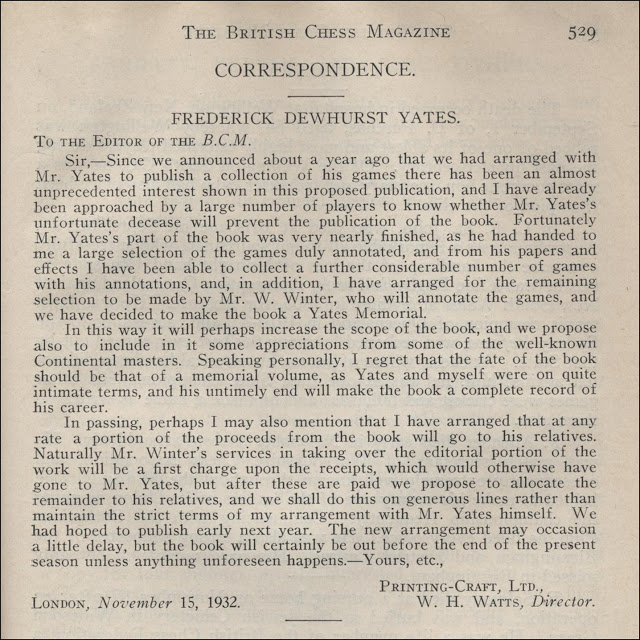
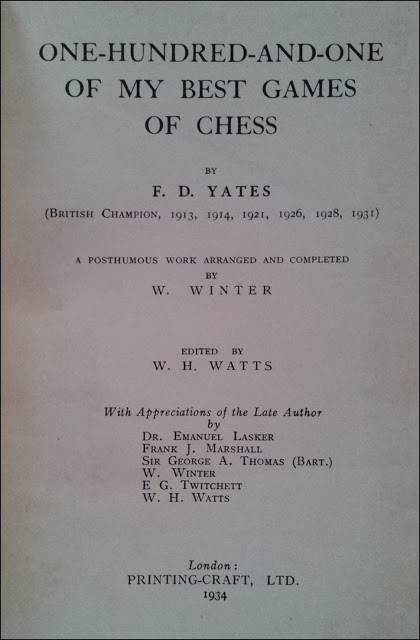
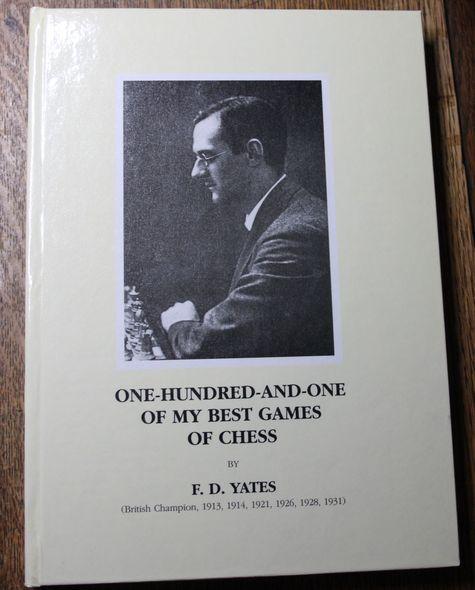
Letter to BCM from WH Watts of Printing Craft Limited announcing the publication of One-Hundred-and-one of my Best Games of Chess, by F. D. Yates, London 1934.
One-Hundred-and-one of my Best Games of Chess, by F. D. Yates, London 1934.
One Hundred and One of My Best Games of Chess, FD Yates
 Save as PDF
Remembering Reginald Broadbent (03-viii-1906 29-x-1988)

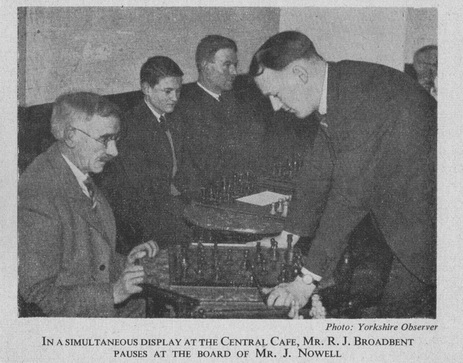
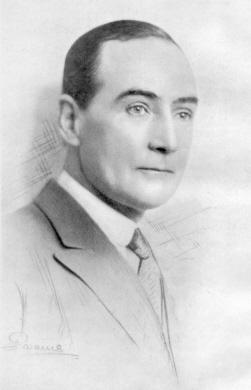
In simultaneous play at the central cafe, Mr. RJ Broadbent pauses at the board of Mr. J. Nowell, original source : The Yorkshire Observer

We remember Reginald Broadbent who passed away on October 29th 1988.

Reginald Joseph Broadbent was born on Friday, August 3rd 1906 (the year of the San Francisco earthquake) in Durban, South Africa. His father was Joseph Edward Broadbent (born 1879) who married Alice Cook on January 4th, 1903 in Durban.

According to the 1911 Isle of Man Census (FindMyPast, Richard James; thanks!) the Broadbent family (sans father) stayed at a guest house in Onchan on the night of February 2nd 1911. Reg (aged 4) was a boarder together with mother Alice (33), brother Roland (1) and sister Laura (4). Since Reg and Laura are both recorded as 4 years old it is reasonable to suppose that they were born as twins. We think that Reg had an additional sibling who had passed away and that the name is not recorded. Reassuringly Steve Mann agrees with this conclusion.

He married Catherine H Broadbent (née Crawford, born 19th September 1895) and were recorded as living (in 1939) in “Cheadle and Gately”, Cheshire. His profession was as a “Telephone Traffic Superintendent, Class II, Post Office Telephones” which was a a civil service occupation. Catherine carried out “unpaid domestic duties”.

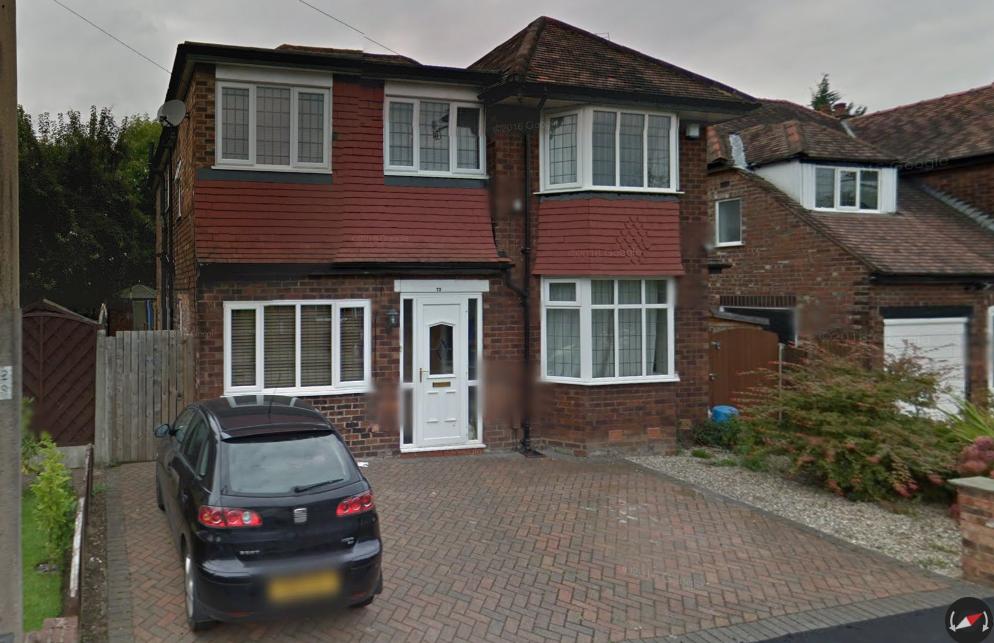
They resided at 72, South Park Road, Gatley, Cheshire :

72, South Park Road, Gatley, Cheshire. SK8 4AN

According to Steve Mann in his excellent Yorkshire Chess web site :

“At some time in 1946 or 1947, Broadbent moved down south to live in the general vicinity of East Grinstead, at Far End, Limes Estate, Felbridge, 2 miles NW of East Grinstead, and later at Southway, Priory Road, Forest Row, 3 miles SE of East Grinstead”

Reg was eight times Northern Counties Chess Union (NCCU) Champion in 1933, 1934, 1935, 1936. 1937, 1938, 1945 and 1946.

The British Chess Magazine, Volume CVIII (108, 1988), #12 (December), p. 553 records this brief death announcement :

“Reginald J. Broadbent, British Champion 1948 and 1950 died on October 29 at the age of 82. He was a member of Manchester and Bradford Chess Clubs in his day, and was famous for his remarkable record in Anglo-Dutch matches.

After he moved to London around 1950 he was less free to play due to his senior post with the Post Office. A fuller notice will appear next month.”

As advertised in the British Chess Magazine, Volume CIX (109, 1989), #1 (January), p. 27 we have :

“Reginald Broadbent (3 viii 1906-29x 1988) was born at Durban and was British Champion in 1948 and 1950. In the latter content he actually won his last six games in a row to reach a score of 8.5 points, ahead of Klein, Penrose and Milner-Barry. He was often spoken of as “playing himself into form” in the first half of a contest as his work as a civil servant (the GPO) did not allow him the chance to practise regularly against strong opposition.

He was a member of the Manchester and Bradford clubs before the war when he built up a fine record in Anglo-Dutch matches and Northern Counties champion on many occasions.

Brian Reilly recalls that Broadbent was selected for the BCF Olympiad side in 1954, but was forced to turn down the invitation due to the exacting nature of his work in London, and thereafter his main connection with the game was a chess column in a West of England newspaper (The Western Morning News*) . He was a subscriber to BCM right up to his death.”

*Thanks Gary Lane.

With the white pieces Broadbent was a die-hard 1.e4 player who allowed the Marshall Attack against the Ruy Lopez.

As the second player RJB defended the Nimzo-Indian Defence and played Open games.

In the March issue of CHESS for 1963, (Volume 28, Number 427, pp.147-155)  William Winter wrote this:

R. J. Broadbent’s one weakness

R. J. Broadbent I consider to be typical of the best type of English amateur the Atkins type. A civil servant by profession he wins the Championship title, then retires to his country home in Surrey where he happily spends his time in gardening till the next championship comes along. Occasionally he is dragged out to play in a County match but he takes a lot of dragging. As a player he has great natural attainments and a temperament for the game, but he handicaps himself by the paucity of his opening knowledge. This compels him to start thinking almost from the word ‘go’ and the result is that he invariably gets on bad terms with his clock.

One of his great assets is his endgame in which he is perhaps superior to any practising British player. His skill in this department has rescued him from many a grim position. If he had studied the openings, and played in more tournaments, he might have gone far. As it is he is, and I fear will remain, just a first class British amateur. Probably he prefers it that way.

Here is one of his best games :

For an element of déjà vu here is RJBs obituary from the 1989 – 1990 BCF Yearbook, page 14 :

(The Yearbook editor was Brian Concannon and it would appear standard practise, at the time, not to credit or attribute sources for obituaries.)

BCF Yearbook, 1989-1990, page 14

A detailed biography (from Steve Mann)  may be found here

 Save as PDF
Remembering Philip Walsingham Sergeant (27-i-1872 20-x-1952)

Philip Walsingham Sergeant from A Century of British Chess from a photograph by F.A. Swaine Ltd. (1934)

BCN remembers Philip Walsingham Sergeant who passed away on Monday, October 20th 1952.

PWS was born in Kensington on Saturday, January 27th, 1872 to Lewis Sergeant and Emma Louisa Sergeant (née Robertson) and was baptised at All Saints Church, Notting Hill. According to PWS’s baptism record Lewis was an author.

According to PWS in A Century of British Chess :

“When I was seven years of age – about the period, by the way, in which my father began to teach me Greek – he began also to initiate me into chess. Not that he designed it  as a consolatory set-off to my application to Greek; for he loved the Classics well, though, going up to Cambridge with  small classical exhibition, he had turned to Mathematics, and therein took his degree. ”

According to the 1881 census PWS (aged 9) lived with his parents and numerous siblings : Dorothy (aged 7), Winifred (6), Hilda (5), Bernard (2), John (his grandfather aged 76) and Mary (his grandmother aged 75). They had staff, Elizabeth Fraser and Sarah Martin. They lived at 10, Addison Road, North, Kensington.

According to “Joseph Foster. Oxford Men and Their Colleges, 1880-1892. 2 vols. Oxford, England: James Parker and Co, 1893″ :

PWS attended St. Paul’s School and then Trinity College, Oxford to read Classics where he attained Honour Moderations.

and here is the record from the above publication :

Entry for Philip Walsingham Sergeant in Joseph Foster. <em>Oxford Men and Their Colleges</em>, 1880-1892. 2 vols. Oxford, England: James Parker and Co, 1893
Entry for Philip Walsingham Sergeant in Joseph Foster. Oxford Men and Their Colleges, 1880-1892. 2 vols. Oxford, England: James Parker and Co, 1893

We do not know if PWS played in the Varsity matches of 1892 – 1895 : Britbase does not (yet) include player details for these matches.

PWS married Minnie Boundford (born 27th February 1889) in 1909 in Hampstead and they lived at 5, Dukes Avenue, Chiswick where PWS was listed as an author and Minnie as someone who carried out “unpaid domestic duties”. Minnie was 17 years younger than PWS. Minnie’s father was a joiner and a carpenter.

They had two daughters Margaret (born 1910) and Kathleen (born 1911).

In October 1946 Minnie and PWS remarried. Presumably this was rather unusual in that day and age.

According to The Oxford Companion to Chess (OUP, 2nd edition, 1996) by Hooper and Whyld :

PWS was an English author of biographical games collections for Charousek, Morphy and Pillsbury as well as other works of importance such as A Century of British Chess (1943) and Championship Chess (1938).

From The Encyclopedia of Chess (BT Batsford, 1977) by Harry Golombek :

“A professional writer on chess and popular historical subjects. Without any pretentions to mastership, he represented Oxford University in the years 1892 – 5 and assisted RC Griffith in preparing three editions of Modern Chess Openings.

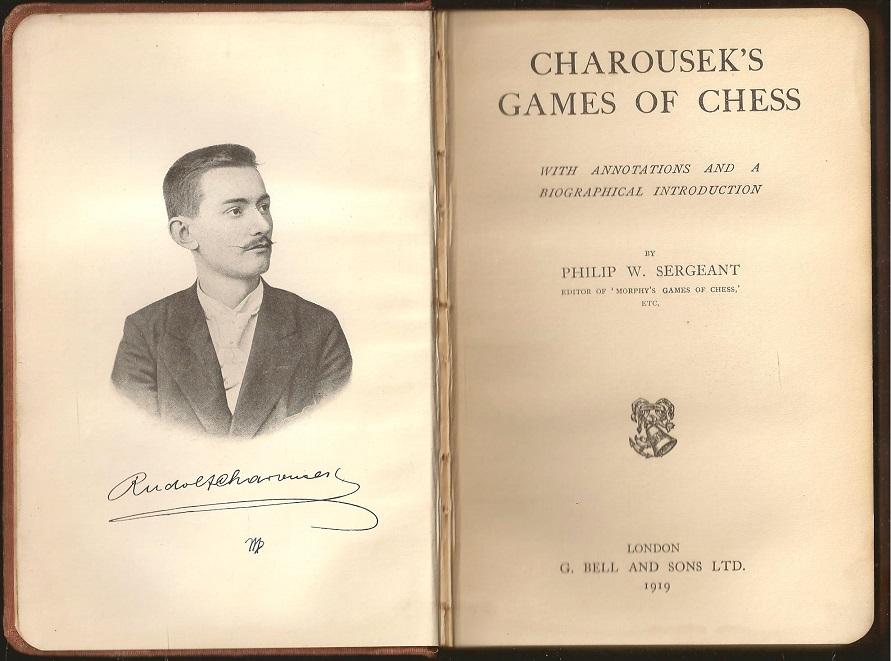
In chess he dealt with a number of important subjects : Morphy’s Games of Chess, London, 1916; Charousek’s Games of Chess, London, 1919; Pillsbury’s Chess Career (in collaboration with WH Watts), London, 1923; Championship Chess, London, 1938.

All these are lucidly and carefully written but suffer from the defect that, being neither a master player nor a professional annotator, he was not competent to deal with the annotational part of the work. Probably his best book on chess was A Century of British Chess, London, 1934.

From British Chess Magazine, Volume LXX11 (72), Number 11 (November), page 324 we have this rather brief obituary (presumably written by Brian Reilly):

“We regret to have to report the death, at the age of eighty-one of Philip W. Sergeant, the author of A Century of British Chess, which we imagine is in most chess libraries. He was the author of several well-known historical books – but we are only concerned here with his chess activities, which included representing Oxford University 1892-5; helping RC Griffith with two editions of Modern Chess Openings; playing for Middlesex, winning the chess championship of the authors’ club for several year, and latterly as an honoured member; and occasionally obtaining the championship of the Guildford Chess Club. Our sympathy with his widow and two daughters is sincere.”

He was a cousin of EG Sergeant.

From Wikipedia :

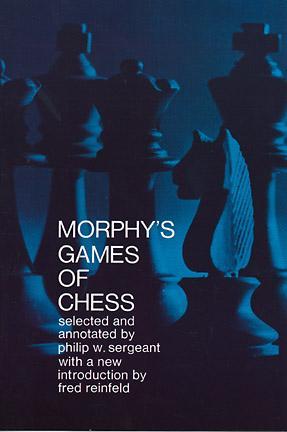
“Philip Walsingham Sergeant (27 January 1872, Notting Hill, London[1] – 20 October 1952)[2] was a British professional writer on chess and popular historical subjects.[3][4] He collaborated on the fifth (1933), sixth (1939), and seventh (1946) editions of Modern Chess Openings, an important reference work on the chess openings. He also wrote biographical game collections of Paul Morphy (Morphy’s Games of Chess (1916) and Morphy Gleanings), Rudolf Charousek (Charousek’s Games of Chess (1919)), and Harry Nelson Pillsbury (Pillsbury’s Chess Career, with W. H. Watts, 1922), and other important books such as A Century of British Chess (1934) and Championship Chess (1938).”

Harry Golombek writes that, “Without any pretensions to mastership, he represented Oxford University in the years 1892-5”.[3] Golombek considers A Century of British Chess probably Sergeant’s best chess book, but opines that although Sergeant’s chess books are lucidly written, they suffer from the defect that, as a non-master, he was not competent to deal with the annotational aspect of his work.

He was a second cousin of Edward Guthlac Sergeant.

Philip Walsingham Sergeant
Charousek's Games of Chess
Charousek’s Games of Chess
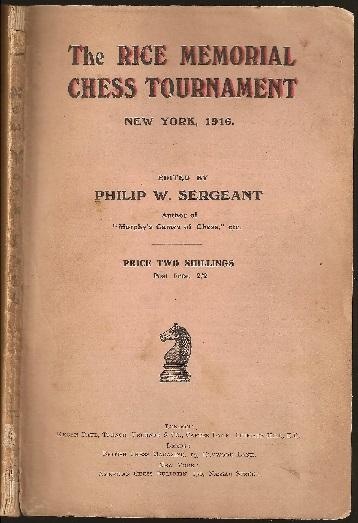
The Rice Memorial Chess Tournament, 1916
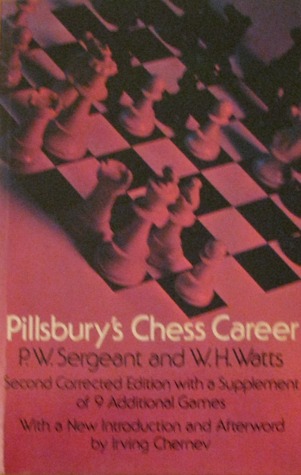
Pillsbury's Chess Career, London, 1923
Pillsbury’s Chess Career, London, 1923
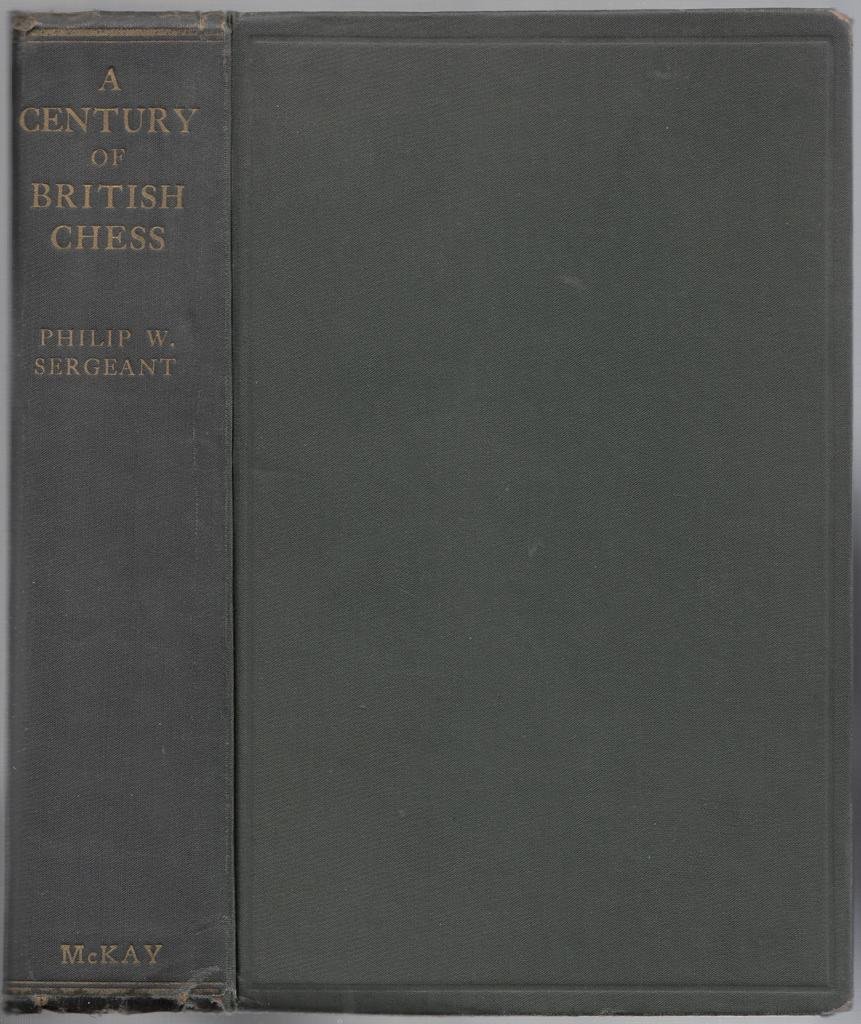
A Century of British Chess, London, 1934
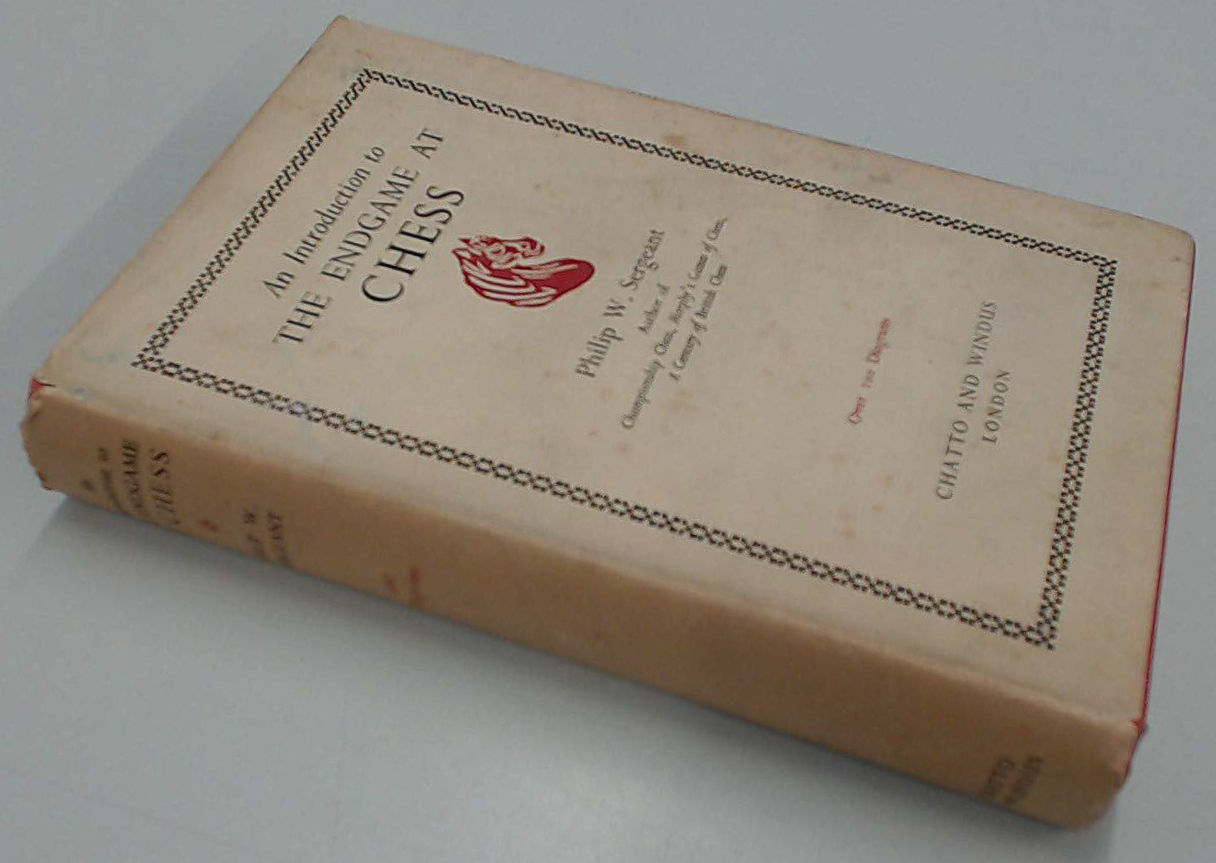
An Introduction to the Endgame at Chess
 Save as PDF
Remembering WIM Eileen Tranmer (05-v-1910 26-ix-1983)

We remember WIM Eileen Betsy Tranmer who passed away on September 26th, 1983.

Eileen Tranmer
Eileen Tranmer

She was the first English woman to be awarded by FIDE the Woman’s International Master title in 1950.

“From The Anglo-Soviet Radio Chess Match by Klein and Winter :

Miss E. Tranmer was born in Scarborough, North Yorkshire in 1910, and learned chess at the age of six. She did not take it up seriously, however, until 1936. Under the tuition of W. Winter she has made notable progress, and her performances include a second prize in the British Correspondence Championship 1944, as well as first prize in one of the subsidiary tournaments at Hastings, 1945.

By profession Miss Tranmer is a musician and has played principal clarinet in the Scottish and Sadler’s Wells Orchestras.”

From British Chess Magazine, Volume CIII (103, 1983), Number 11 (November), page 482-83 (presumably written by Bernard Cafferty) :

“Eileen Tranmer died in hospital at Ticehurst on September 26th after a long illness. Born in Scarborough, May 5th 1910, she was a professional clarinet player and played in a number of prominent British orchestras till forced to retire by deafness.

Mandatory Credit: Photo by ANL/Shutterstock (3880870a) Miss Eileen Tranmer The British Women's Chess Champion Pictured Here Playing A Clarinet In The Orchestra While Appearing At The Theatre Royal Glasgow.
Mandatory Credit: Photo by ANL/Shutterstock (3880870a)
Miss Eileen Tranmer The British Women’s Chess Champion Pictured Here Playing A Clarinet In The Orchestra While Appearing At The Theatre Royal Glasgow.

One of the leading British players in the two decades after the war, Eileen won the British Ladies Championship in 1947, 1949 (with a 100% score), 1953 and 1961, and played in the British Championship at Buxton, 1950. Her international record was sparse, as was the case with nearly all English players of that period. Nevertheless, she made her mark in the 1949-50 first post-war Women’s World Championship where she finished 5-7th in a field of 16, beating Bykova, again, and finished 7th in the field of 16.

37th Hastings International Chess Congress, 1962. USA Ladies champion Lisa Lane (L) playing against British Champion Eileen Tranmer

We are grateful to WCM Dinah Norman for sending us these memories :

“Eileen Tranmer was one of the best English chess lady players of her generation.

I only played her once at Oxford in an International Ladies Tournament held between 24 July and 1 August 1971. Eileen totally outplayed me and I lost the game.

Eileen was a member of Acton Chess Club where there were three active lady players at that time. They were Jean Rogers, Olive Chataway and Eileen. Eileen lived in Acton then.

Miss Eileen Tranmer The British Women's Chess Champion.
Mandatory Credit: Photo by ANL/Shutterstock (3880957a)
Miss Eileen Tranmer The British Women’s Chess Champion.

Eileen was a professional musician and had to stop playing when she became deaf which was dreadful for her.

In 1969 Eileen, Rowena Bruce and I were selected to play in the Ladies Chess Olympiad Team in Lublin, Poland. Sadly Eileen was taken ill just before the event so Rowena and I had to play all 13 rounds without a break. I was on Board 1 and at the end Rowena and I were exhausted and I had to withdraw from a tournament in the Czech Republic without playing a game. The food in Poland was awful so we said never again!


Miss Eileen Tranmer The British Women's Champion Chess Player Pictured Playing Some Of The Glasgow Ladies Chess Club At The Green's Playhouse Cafe Glasgow.
Mandatory Credit: Photo by ANL/Shutterstock (3880958a)
Miss Eileen Tranmer The British Women’s Champion Chess Player Pictured Playing Some Of The Glasgow Ladies Chess Club At The Green’s Playhouse Cafe Glasgow.

Eileen was very friendly with Harry Golombek. The expectation among the lady chess players was that they would get married but she never did. Harry did not drive and Eileen was very kind driving Harry and his elderly mother around.

Very sadly Eileen’s brother was killed in a car crash and after that Eileen suffered mental problems. Eileen lived near John and Jean Rogers and John said Eileen would turn up at their home in the middle of the night wanting to play chess.

At Hastings 1959-1960 : Yugoslavia's red-haired Milanka Lazarevic and Britain's Eileen Tranmer ran away with the Premier Reserves (afternoon event).
At Hastings 1959-1960 : Yugoslavia’s red-haired Milanka Lazarevic and Britain’s Eileen Tranmer ran away with the Premier Reserves (afternoon event).

The last time I saw Eileen was at Paignton. Her friend Olive Chataway brought her to Paignton and Eileen played in the bottom tournament and did badly. Eileen did not recognise myself or Rowena which was very sad.


Mandatory Credit: Photo by ANL/Shutterstock (4745287a) Miss Eileen Tranmer 43-year-old British Women's Chess Champion. Box 556. Miss Eileen Tranmer 43-year-old British Women's Chess Champion. Box 556.
Mandatory Credit: Photo by ANL/Shutterstock (4745287a)
Miss Eileen Tranmer 43-year-old British Women’s Chess Champion. Box 556.

Eileen later left Acton and moved to Tring. Eileen was a pleasant and modest person and was well liked. She had a good sense of humour.”

From the obituary in The Times of London we learn that her last few years were over-shadowed by an illness that preyed on her mind.

We take the following game from the August 1944 issue of BCM. The game was played in the BCCA Championship, and curiously enough there was an enquiry about that event to the BCF only a short while ago – a Georgian journalist wishes to quote that wartime performance as an early example of success by a woman in male chess company! ”

Gerald Abrahams in Not only Chess, wrote about Eileen (Chapter 18 : What Achilles Saw Among Women) as follows :

“To revert to the British Ladies, they were joined in the late 1930s by a very able pupil of Miss Menchik, the Yorkshire Clarinettist Eileen Tranmer; a woman whose chess I have seen to express some admirable qualities of mind and character. I had the privilege of watching her is Moscow in 1949-50, when, handicapped by influenza of a particularly virulent kind – what the Russians call “grippe” – she won some five or six consecutive games, to finish in the prize list of the new official Women’s World Championship. There had been two championships before, which Vera has won easily. Since Vera had unhappily perished in the Blitz, they looked at Moscow for her successor.”

Here is her Wikipedia entry

WIM Eileen Betsy Tranmer & WIM Rowena Mary Bruce at the 1946 Anglo-Soviet Radio Match
 Save as PDF
Remembering FM Max Fuller (28-i-1945 27-viii-2013)

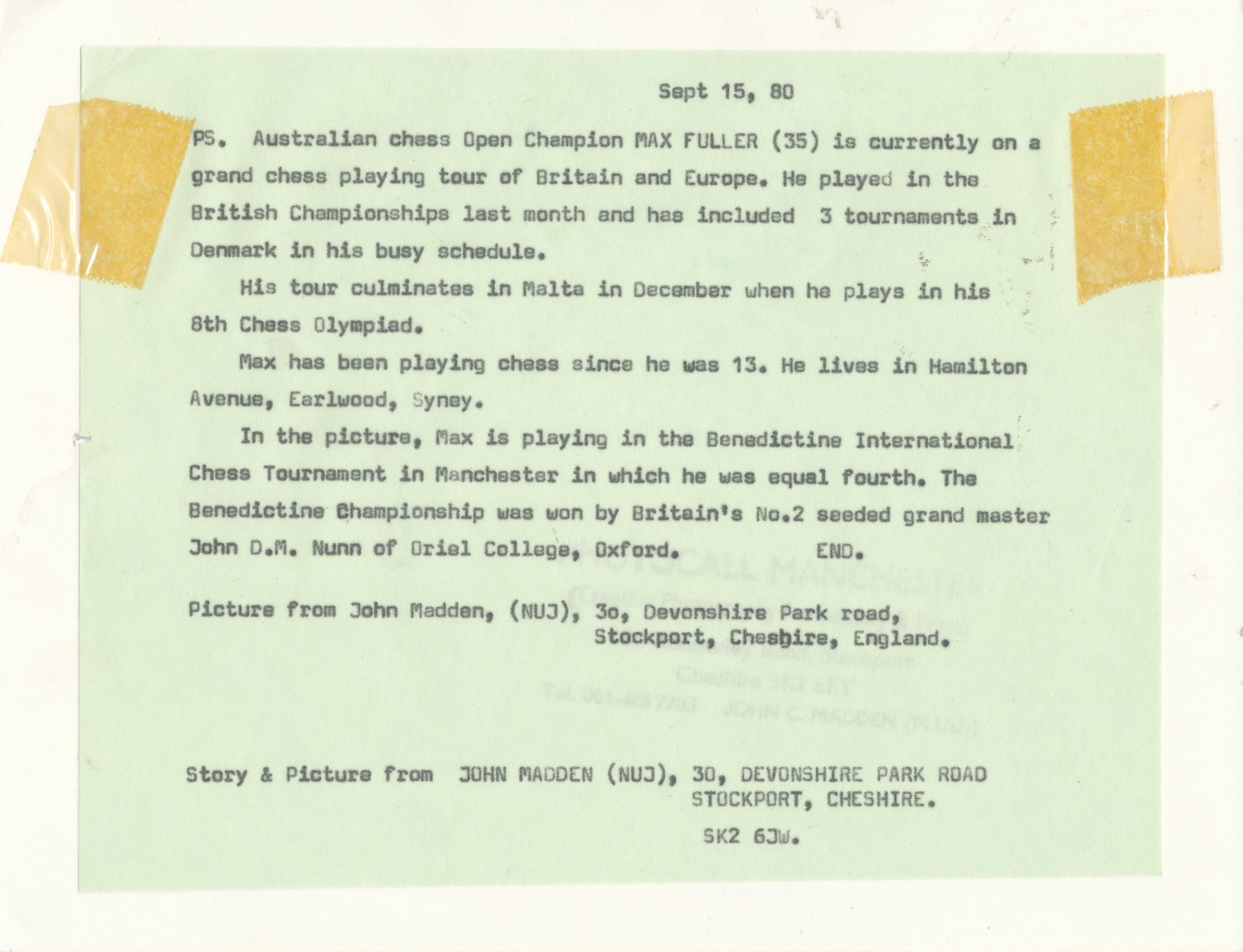
September 15th, 1980. Australian Open Chess Champion Max Fuller (35) is currently on a grand chess playing tour of Britain and Europe. He played in the British Championships last month and has included three tournaments in Denmark in his busy schedule. His tour culminates in Malta in December when he plays in his 8th chess Olympiad. Max has been playing chess since he was 13. He lives in Hamilton Avenue, Earlwood, Sydney. In the picture Max is playing in the Benedictine International Chess tournament in Manchester in which he was equal fourth. The Benedictine Championship was won by Britain's number 2 seeded Grandmaster John DM Nunn of Oriel College Oxford. Picture from John Madden (NUJ)
September 15th, 1980. Australian Open Chess Champion Max Fuller (35) is currently on a grand chess playing tour of Britain and Europe. He played in the British Championships last month and has included three tournaments in Denmark in his busy schedule.
His tour culminates in Malta in December when he plays in his 8th chess Olympiad.
Max has been playing chess since he was 13.
He lives in Hamilton Avenue, Earlwood, Sydney.
In the picture Max is playing in the Benedictine International Chess tournament in Manchester in which he was equal fourth.
The Benedictine Championship was won by Britain’s number 2 seeded Grandmaster John DM Nunn of Oriel College Oxford.
Picture from John Madden (NUJ)

BCN Remembers FM Max Fuller (28-i-1945 27-viii-2013)

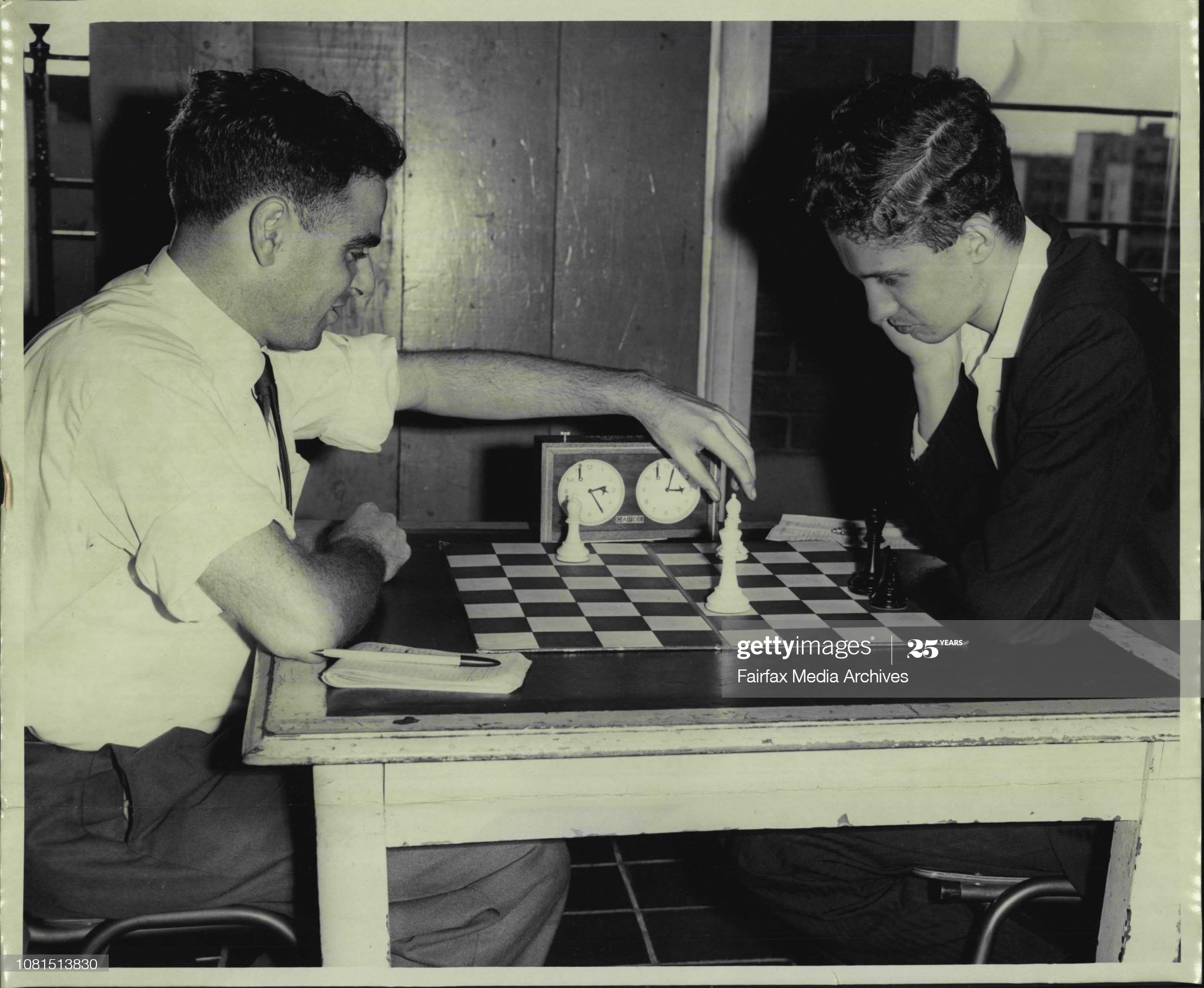
Tonight two Sydney ***** the N.S.W. Chess Championship at the Chess centre Liverpool St., City. They are Fred E Flatow, 28 of Belmore (left.) and Max Fuller, 21, of Kingsgrove (right). They have been playing for about 10 Hrs up till 6.15 p.m. and had move 121. The match will go on till move 144 at which stage a draw will be declared or until either man wins before then. February 23, 1966. (Photo by Richard John Pinfold/Fairfax Media via Getty Images).

Maxwell Leonard Fuller was born on Sunday, January 28th 1945 in Sydney, New South Wales. He was brought up by his mother and, according to Ian Rogers, his step-father with whom he did not get on.

Knight moves: Max Fuller in 1964. He went on to become Australia's No.1 player and toured the world.CREDIT:STUART MACGLADRIE
Knight moves: Max Fuller in 1964. He went on to become Australia’s No.1 player and toured the world.CREDIT:STUART MACGLADRIE

He was Australian Junior Champion in 1962.

He won the New South Wales title in 1965 (and then in 1986 and 1988).

Max came to England in late 1968 to play at Hastings and then chose to settle here. He played for Lewisham chess club. He won the Whitby Open in 1969 (See BCM, Volume LXXXIX, Number 8, page 264).

In the 1970s be played board one for Australia whilst maintaining a FIDE rating of 2450, and, according to chessgames.com : “Fuller finished equal second in the British championship in 1970 and 1975, winner of the Doeberl Cup three times, winner of the Australian Open three times, Joint Australian Champion 1972 with Trevor Hay and competed in nine Olympiads for Australia from 1964-1990. In 1974, he won the 101st Athenaeum Chess Club Jubilee tournament, held in London.”

He became a FIDE Master in 1980

Fuller returned to chess in 2004 after an eight-year absence and finished equal second in the 2004 and 2005 NSW championships.

According to IM Gary Lane : “Max had a heart attack and died on the day he was attending the funeral of his pal Peter Parr”

With the white pieces Max essayed the Ruy Lopez with a penchant for the exchange variation but nonetheless he was flexible and varied.

As the second player against 1.e4 he was versatile with a broad range of defences and likewise facing 1.d4/1.Nf3 he was difficult to prepare for.

According to British Chess Magazine, Volume CXXXIII (2013), Number 9 (September), page 450 :

“From Australia the saddest of news, the passing Maxwell Leonard Fuller (28 i 1945 Sydney – 27 viii 2013 Sydney). FM Max Fuller played in seven BCF Championships, 1969 -80. He later claimed the scalps of Short, Miles and Chandler. He was the most determined player imaginable and had the broadest of opening repertoires. (James Pratt)”

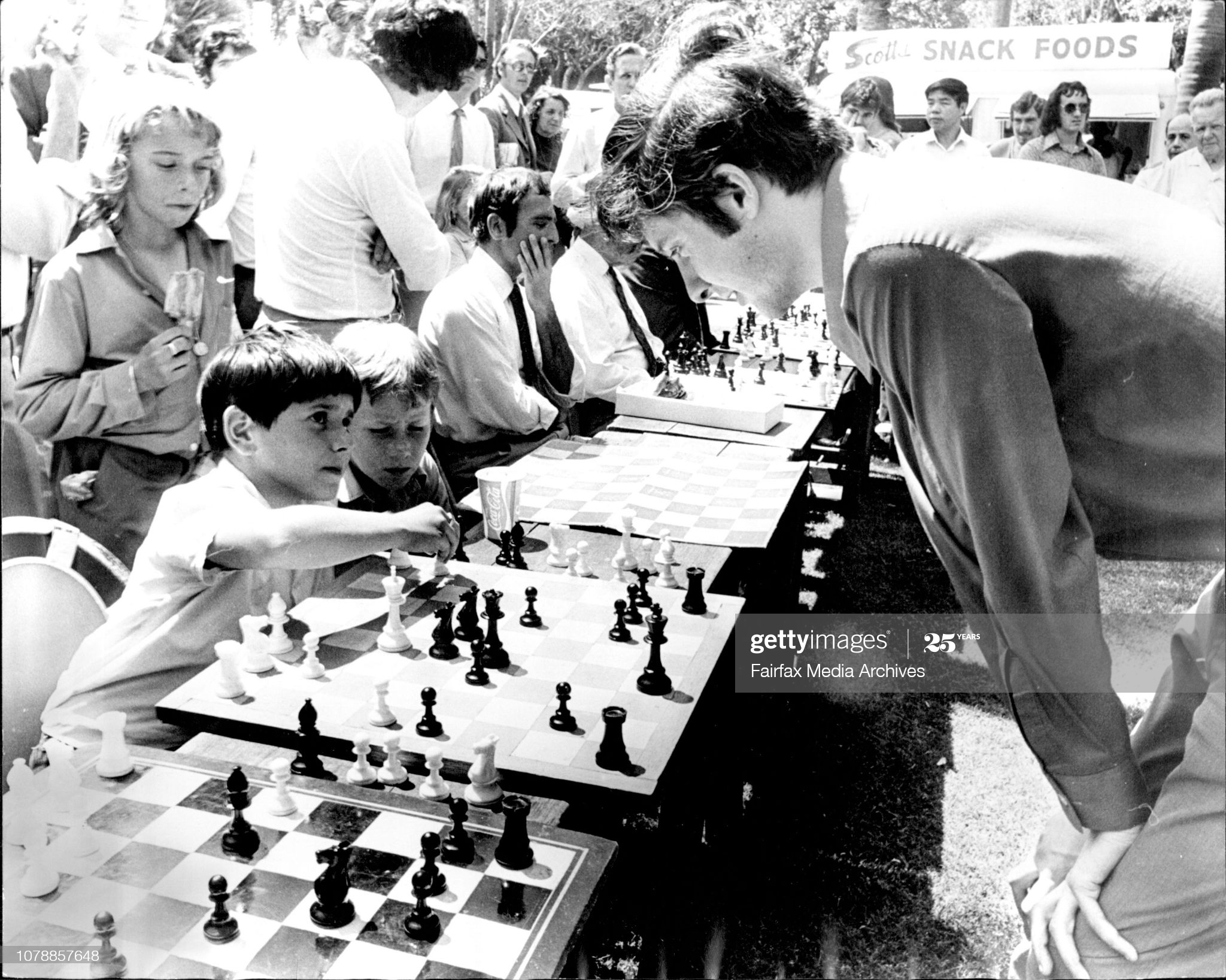
Aleandro Trimboli (10) of Leichhardt plays Mr Max Fuller of Newtown, Australian Open Chess Champion. As part of the Waratah Festival Celebrations the NSW Chess Association is conducting chess games with chess champions playing up to 30 players at once, in Hyde Park. October 17, 1973. (Photo by Golding/Fairfax Media via Getty Images).

In this obituary from Ray Keene, Ray very thoughtfully provides a game in which Max loses to Ray.

GM Ian Rogers wrote this detailed obituary

Greg Canfell posted this item

Max Fuller at the Doeberl Cup in 1985. Photo : William Anderson-Smith

Here is his Wikipedia article

FM Max Fuller (28-i-1945 27-viii-2013) from around 1992
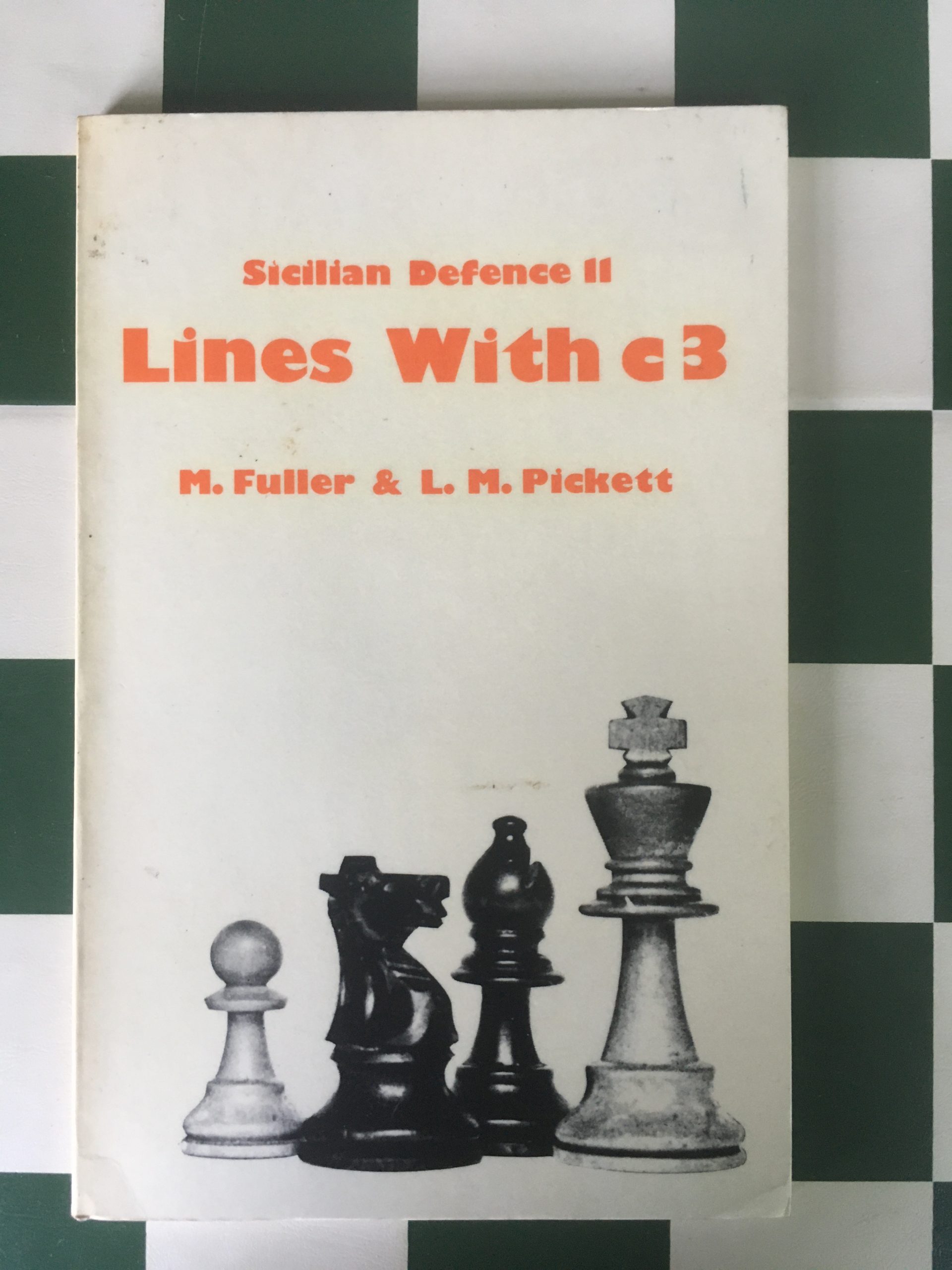
Sicilian Defence 11 Lines with c3, Max Fuller and Len Pickett, The Chess Player, 1977, ISBN ?


 Save as PDF
Remembering Ernst Klein (29-i-1910 22-viii-1990)

Remembering Ernst Klein (29-i-1910 22-viii-1990)

From CHESS, July 1946 (and also The Anglo-Soviet Radio Chess Match) :

Since Ernst Klein came to England in 1935 his play has earned our ungrudging admiration. Born in Vienna, 1910, he learned chess at the age of eleven. His grandmother taught him the moves, his father having died when he was eight. Steinitz was a frequent guest in his grandparents house. At eighteen, he shared first, second and third prizes in the Championship of Vienna. Before coming to England, he had lived for some years in Switzerland, France and Italy and his French, German and English are equally impeccable. In his last tournament at Bournemouth, in 1939, he finished equal with Flohr after Euwe ahead of König, Landau, Aitken and others. He met his wife, who is an Englishwoman, during the blitz. They were married in 1944. He holds a London University degree and teaches mathematics in Southend.

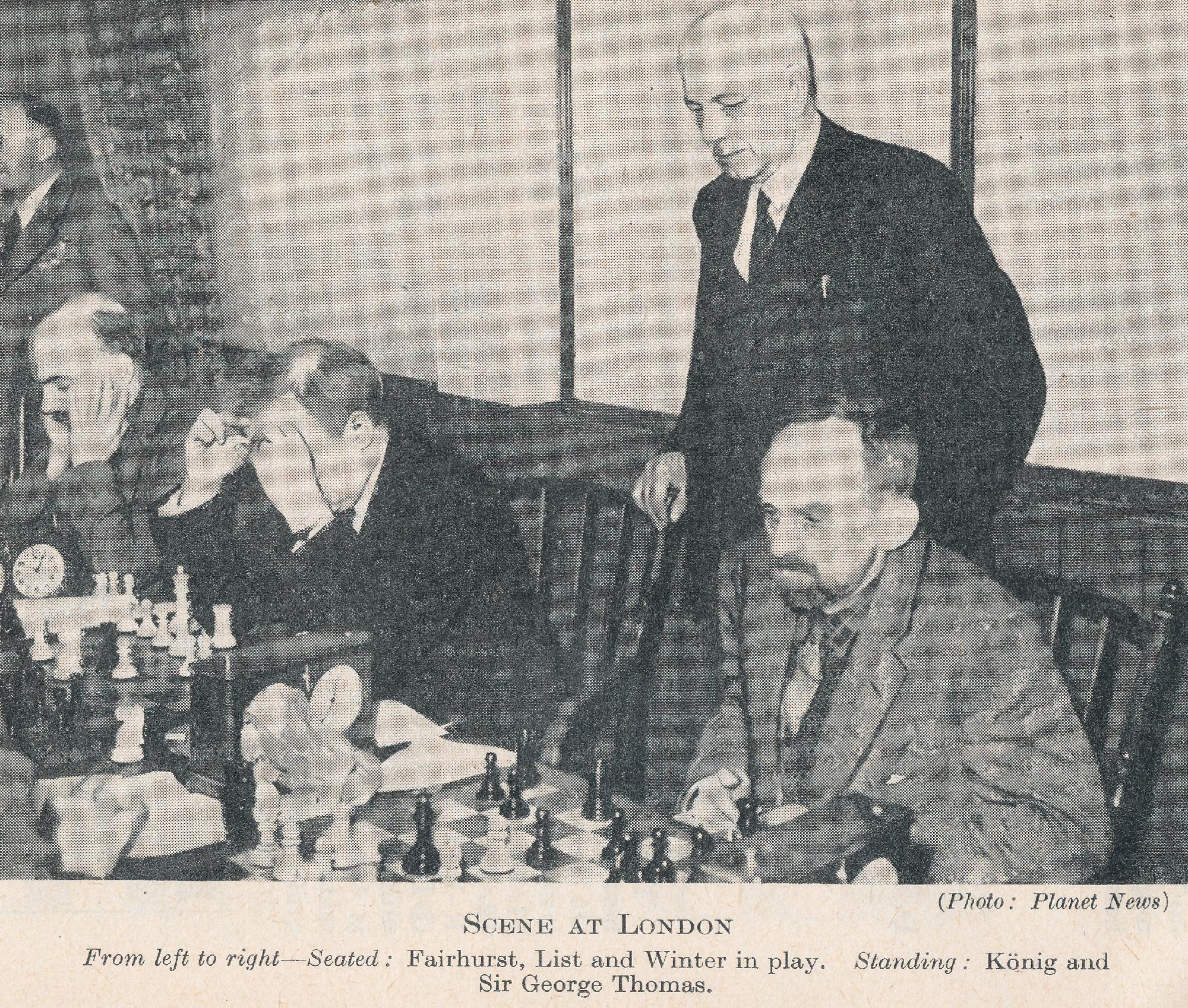
Scene at London. From left to right - Seated : Fairhurst, List and Winter in play. Standing König and Sir George Thomas
Scene at London. From left to right – Seated : Fairhurst, List and Winter in play. Standing König and Sir George Thomas

About 1940, he offered to give any opponent in Great Britain the odds of the draw.; his challenge was never taken up, no doubt owing to the conditions of the moment, but we imagine there would be many “takers” if it were repeated now.”

Later, Klein clarified matters by writing What I said was: “I am ready to accept the challenge of any player in this country and am prepared to give the odds of a draw in a contest at least twelve games if he so wishes. That is, I offered to concede victory on a score of 6 : 6 draws counting, which is the necessary and sufficient condition to justify my offer. It is still open.

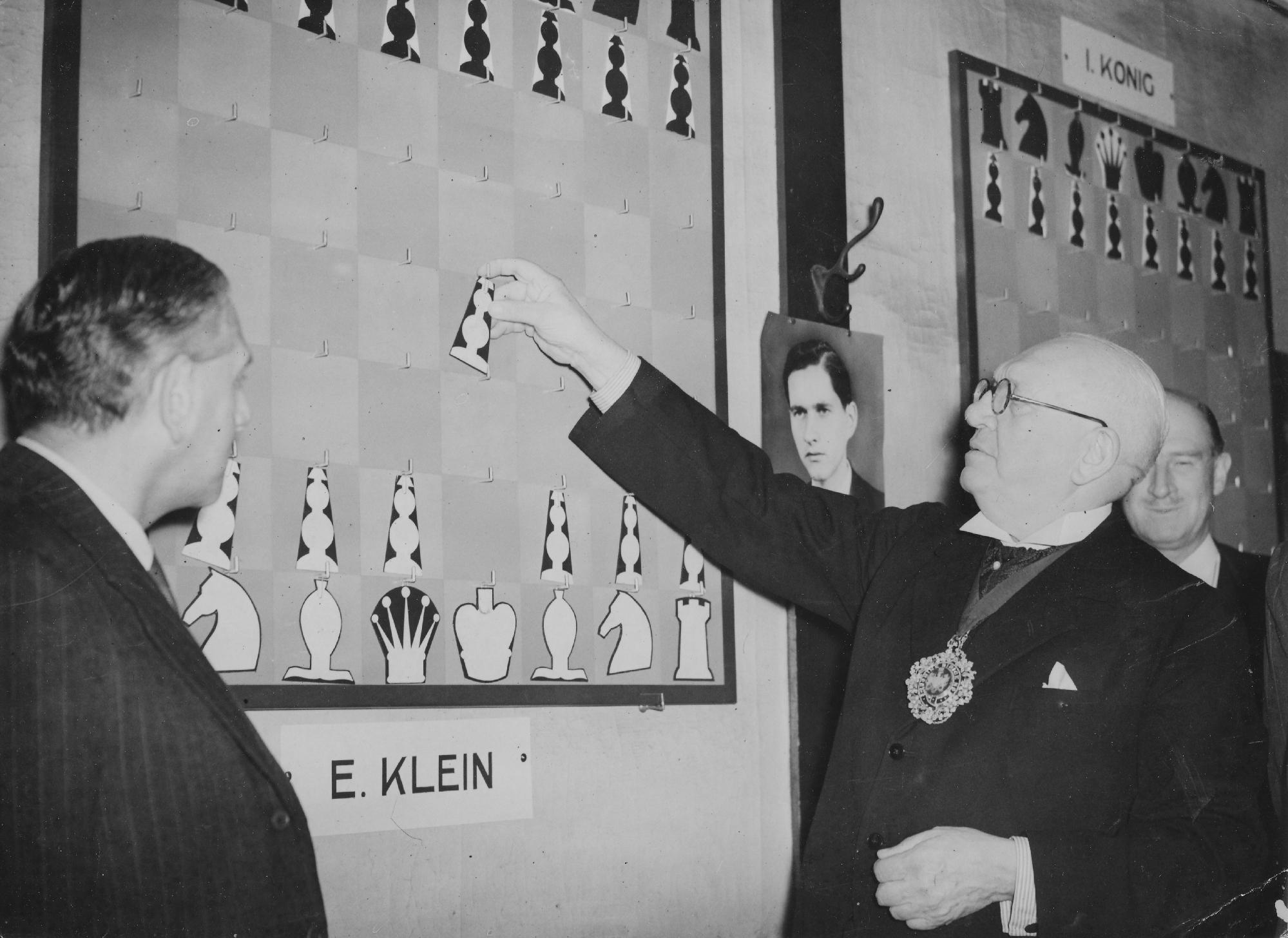
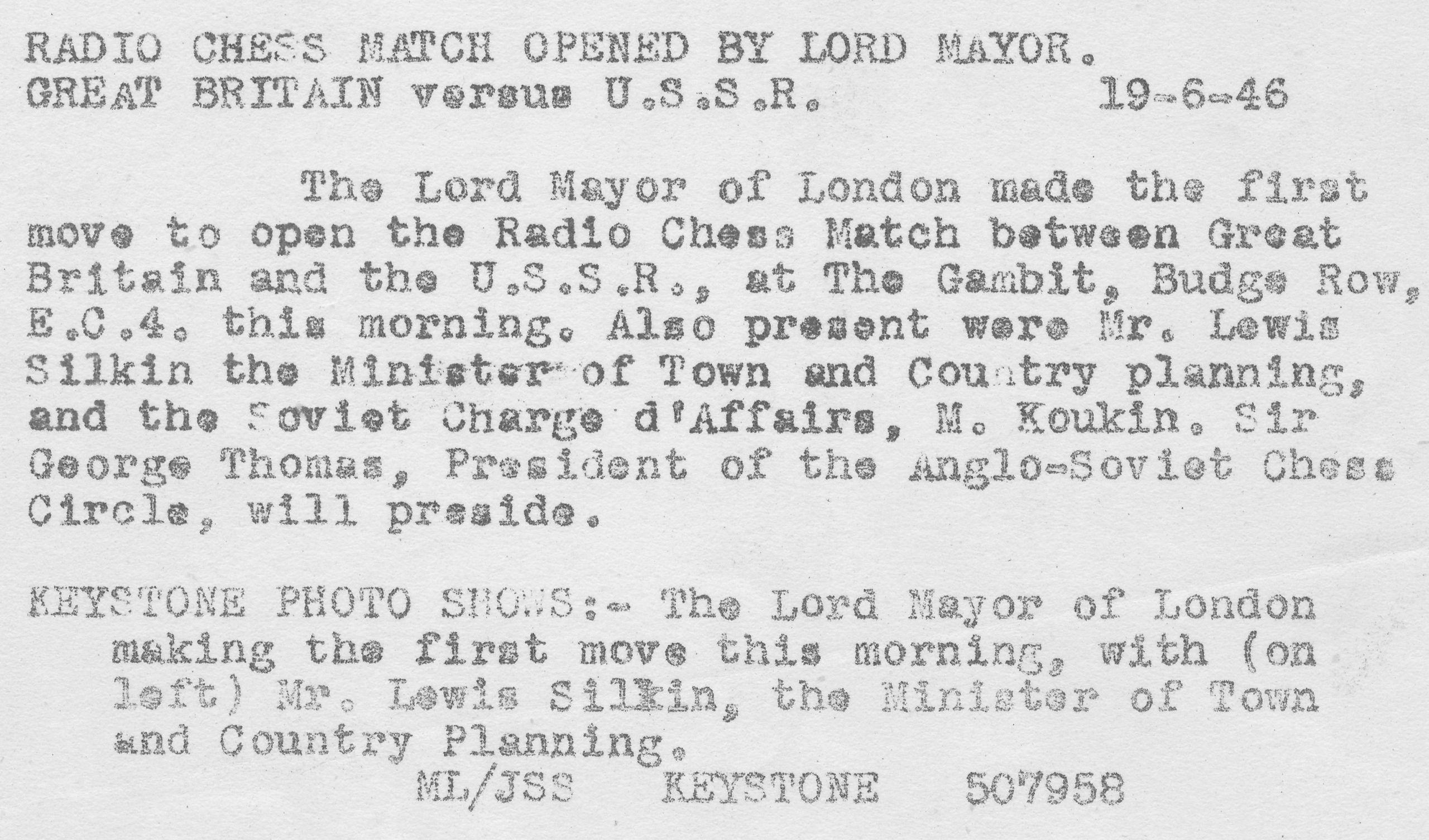
See below photograph for caption
Caption for above photograph


Here is his Wikipedia entry

Edward Winter has written a detailed article here.

According to Edward Winter in Chess Notes Klein lived at 4 St George’s Drive, Westcliff-on-sea, Essex, England (The Times, 11 March 1978, page 13).

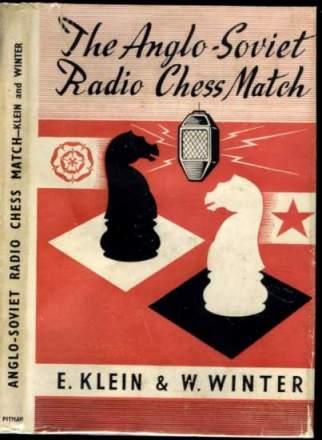
The Anglo-Soviet Radio Chess Match (1947, Pitman)
 Save as PDF
Remembering Captain William Davies Evans (27-i-1790 03-viii-1872)

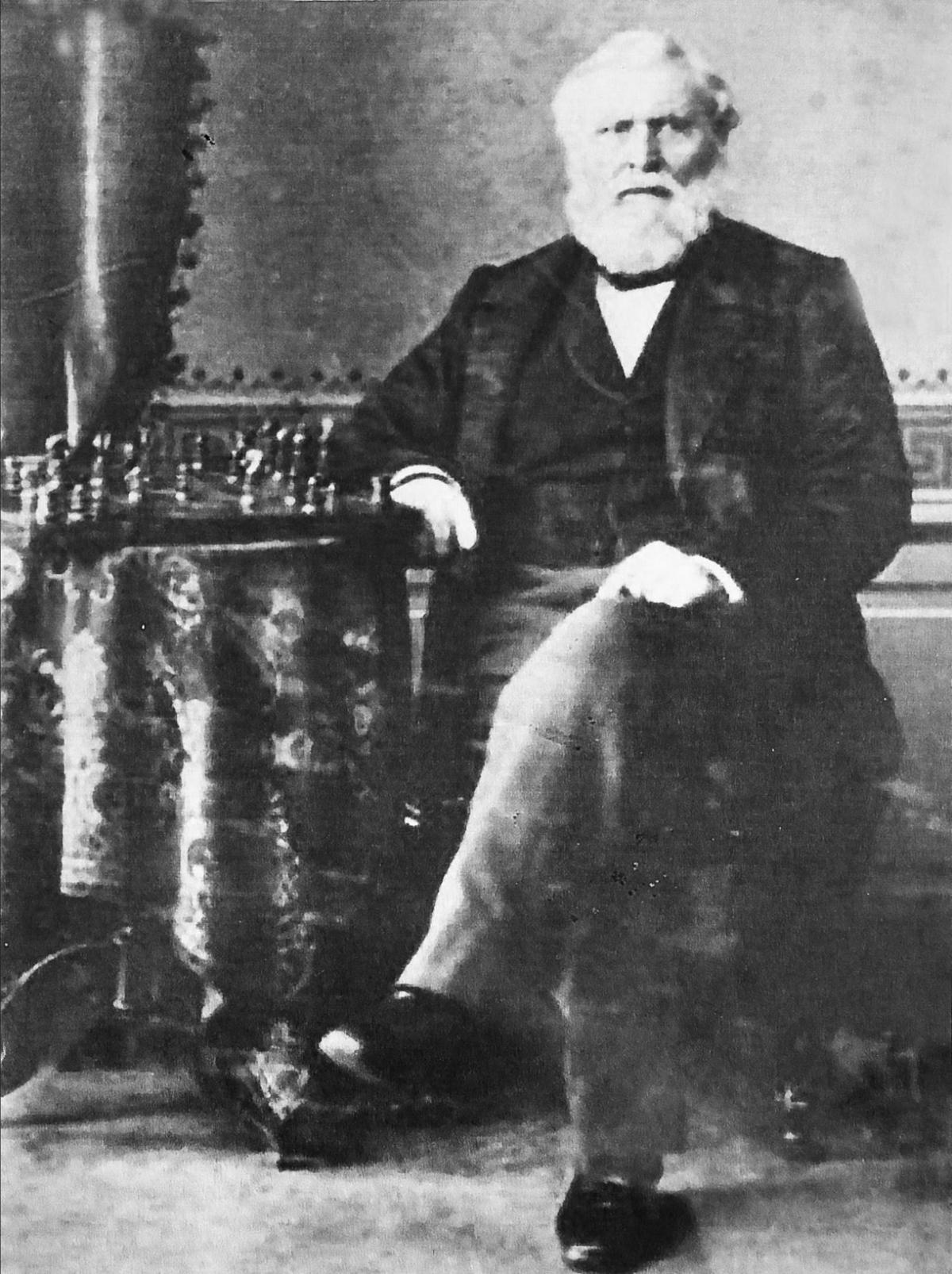
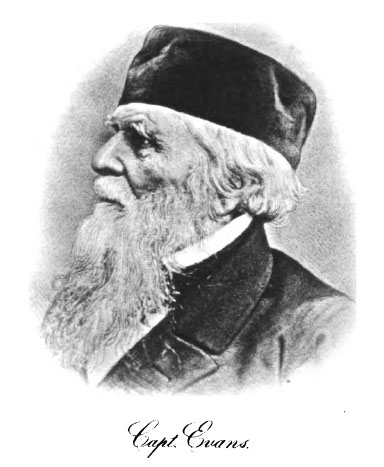
Captain William Davies Evans (27-i-1790 03-viii-1872)

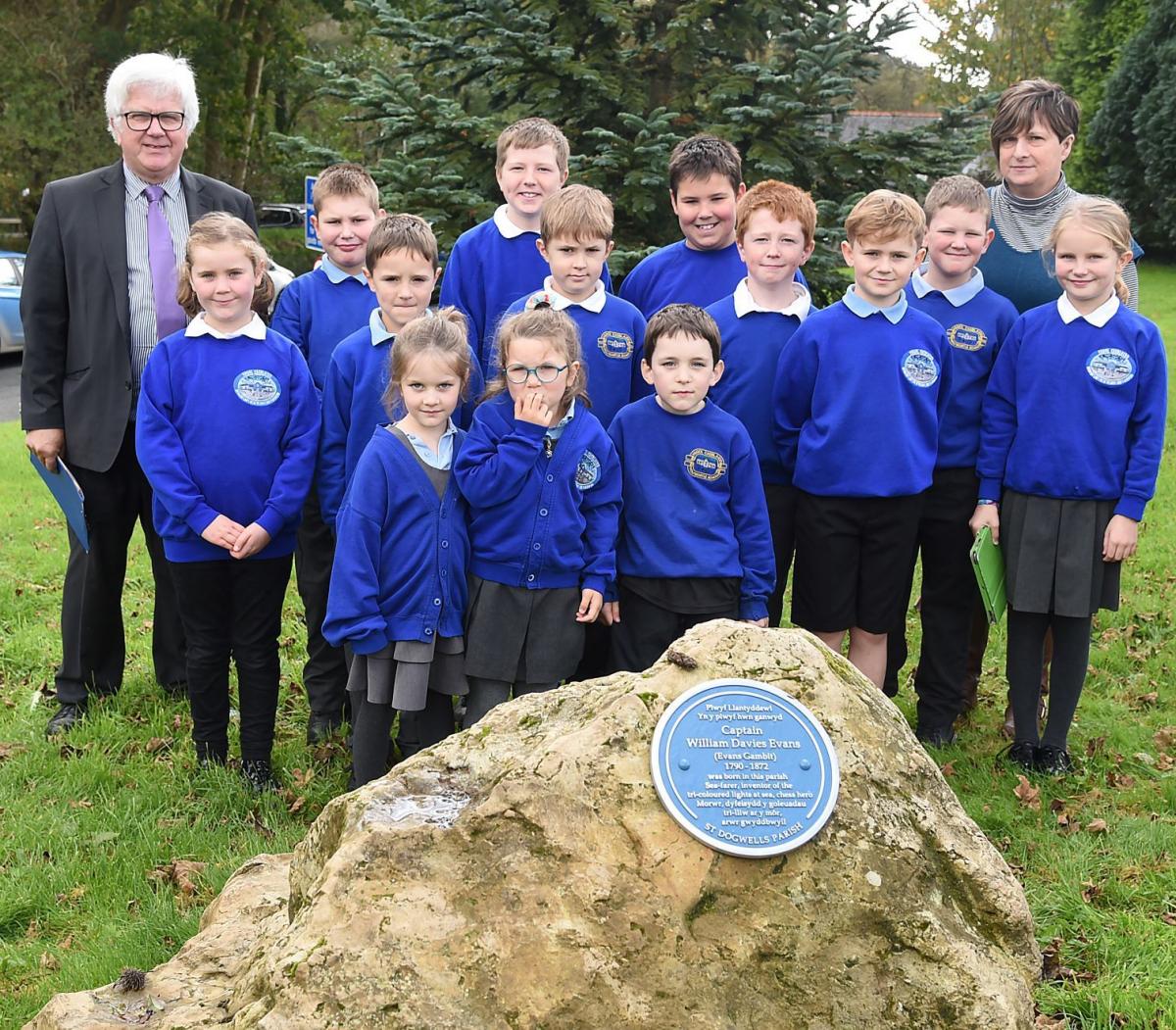
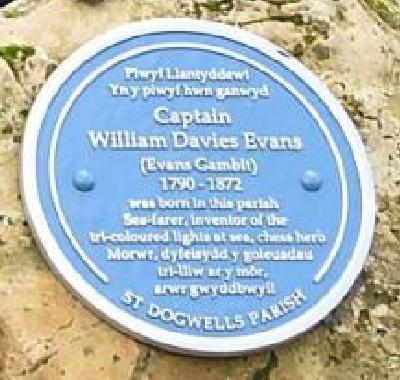
William Davies Evans was born on the 27th of January, 1790 at Musland Farm in the parish of Saint Dogwells, Haverfordwest, Pembrokeshire, SA62 5DT. His parents were John (a farmer by trade) and Mary Davies. William was baptised on September 21st 1814 in Steynton, Pembrokeshire. The service was conducted by WM Lloyd, Curate of Burton, Pembrokeshire.

It would appear from baptism records (Steynton) that WD had a younger brother Robert Joseph, baptised on the same day in September.

Captain William Davies Evans (27-i-1790 03-viii-1872)

From The Oxford Companion to Chess (OUP, 1984) by Hooper & Whyld :

“Inventor of the Evans gambit, for about half a century one of the most popular attacking weapons. He was born in (Musland Farm in the parish of Saint Dogwells,) Pembroke, Wales, went to sea at the age of 14, was employed by the Postal Department from about 1815, and rose to the rank of captain four years later. In 1824, soon after taking command of the first Royal Mail steam packet to sail from Milford Haven to Waterford, and while aboard, he invented his gambit.

Evans was a keen player. He gathered a small chess circle in Waterford, and when on leave in England played chess in London, notably in 1826 when he showed his gambit to Lewis and McDonnell, and in 1838 when he played a long series of games with Staunton at the Westminster Chess Club.

In Jan. 1840 he was pensioned off on account of ill-health. He went to Greece, became captain of a steamer that sailed the Mediterranean, and returned to London at the end of 1842. During the next 13 years there are several accounts of his presence in London, and then he settled abroad. He died and was buried in Ostend,

Evans claimed to have solved the three pawns problem (See below) , which, however, had already been solved by others.

His claim to the invention of tri-coloured lighting for ships has not been verified independently, although he is known to have investigated the subject. For this invention he states that the Tsar of Russia gave him a gold chronometer, and that he also received money. For a more detailed life of Captain Evans see British Chess Magazine, 1928, pp, 6-18.”

The Evans Gambit is a variation of the Giuoco Piano or Italian Game:

When Evans originally devised his gambit the move order was slightly different :

in which White sacrifices the b-pawn for increased central control and development viz :

From The Encyclopedia of Chess (Robert Hale, 1970 & 1976) by Anne Sunnucks :

“Inventor of the Evans Gambit, an opening described by a player in the last century as ‘A yellow fever attack : if you live through the initial stages and avoid any carelessness that may bring on a relapse, you will come out alright’.

Captain Evans discovered the gambit in about 1824. It was a favourite opening during the last century and was adopted by a number of leading players including La Bourdonnais and Morphy.

For some years Commander in H.M. Royal Mail Packet Service on the Milford and Waterford station, Captain Evans later became Commander in the P.& O. Company’s service and agent for the Royal Mail Steampacket Company, Port Grande. On retirement he lives for many years in Holland and Belgium.

The story is told of how, in 1870, the Grand Duke Nicholas of Russia, brother of the Tsar, was visiting Bruges when he heard that the inventor of the Evans Gambit was living in Ostend. Being a keen chess player he invited Evans to play a game. When Evans had won, the Grand Duke turned to his adversary and said : ‘I believe you invented the Evans Gambit ?’, ‘Yes’ replied Evans ‘and it’s not the only thing I’ve invented for which you have not paid me.’ ‘What’s the other?’ asked the Grand Duke.

Evans then explained that he was the inventor of the ship’s lights which were being used by the Russian Navy, in which the Grand Duke held the rank of Admiral. Several months later Evans was invited to the Russian Consulate in Ostend, where he was handed a letter from the Grand Duke, a gold chronometer, a gold chain and a draft of money, ostensibly in payment for the Russia’s rights to use the captain’s invention in her ships. ”

Enjoy this interesting article from “Introuble2” on chess.com

Evans analyzed the “Little Game of Chess” (an endgame composition involving only two kings with three pawns each)

to independently discover that it actually won for the player who moves first, not drawn as had been believed for over a hundred years.

From The Encyclopedia of Chess (Batsford, 1977) by Harry Golombek we have :

“After his retirement Evans went to live abroad and eventually found a haven in Ostend and there, ill, and almost blind and in very straightened circumstances, he dictated a letter on 22 March 1871, which was published in the Gentlemen’s Journal supplement for June 1872, along with an appeal for him organised by George Walker.

The letter gives the authentic facts of his life and is worth quoting in full, if only to refute various unfounded reports about a meeting with the Tsar’s brother, or according to that rich source of misinformation, the Rev GA MacDonnell, that the Evans Gambit was discovered off the coast of Africa by a middle-aged lieutenant in the Royal Navy -perhaps the reverend gentleman was confusing Waterford with the Canary Islands.

The letter runs :

Williams Davies Evans is a native of Pembrokeshire, South Wales, and was born on 27 January 1790. He commenced a naval career at the age of fourteen. He was about twenty-eight years of age when he first learnt the moves of the game of Chess. Having the advantage of frequent practise with Lieutenant H. Wilson, R.N., who was a player of some reputation in his time, beside corresponding on the subject of the game with the late Mr. W. Lewis, and also with George Walker, the able Chess Editor of Bell’s Life , he made a rapid progress in the game. Captain Evans received at first the odds of a Rook from Lieut. Wilson. After a continuance of play for some years, the odds were greatly reduced, until ultimately Captain Evans succeeded in defeating his formidable antagonist playing even.

About the year 1824, being then in command of a Government Mail Steamer, the passages between Milford Haven and Waterford were favourable to the study of the game of Chess and at this time he invented the Gambit, which bears his name. The idea occurred to him while studying a narration of Giuoco Piano in Sarratts’s Treatise on Chess.

Captain Evans was the first who gave to the world a true solution of that very difficult end game, the King and three Pawns unmoved against King and three Pawns also unmoved. This position was handed down to us through a period of some centuries as a drawn game, but Captain Evans proved that the first player can always win.

Captain Evans acquired some celebrity as “Inventor of the System of Tri-Coloured Lights for Ships to Prevent Collisions at Night”, which has been adopted by all nations possessing a marine. For this invention the English Government awarded him the sum of £1,500 , and the Czar of Russia a gold pocket chronometer, value £160, together with a donation of £200.

The subscription that amounted to over £200 was too late. He died in 1872 and was buried in Ostend where his grave bears the inscription :

To the sacred memory of William Davies Evans, formerly Commander in the Post Office and Peninsular and Oriental Steam Services, Superintendent In the Royal Mail Shipping Company, and inventor of the system of tri-coloured light for shipping. Also well known in the Chess World as the author of the Evans Gambit

Blue Plaque for Captain WD Evans

Here is his Wikipedia entry.

Read here of the Plaque in Wolfscastle

Blue Plaque for Captain William Davies Evans (27-i-1790 03-viii-1872)
Play The Evans Gambit (co-author Tim Harding). Cadogan. ISBN 1-85744-119-2.
 Save as PDF
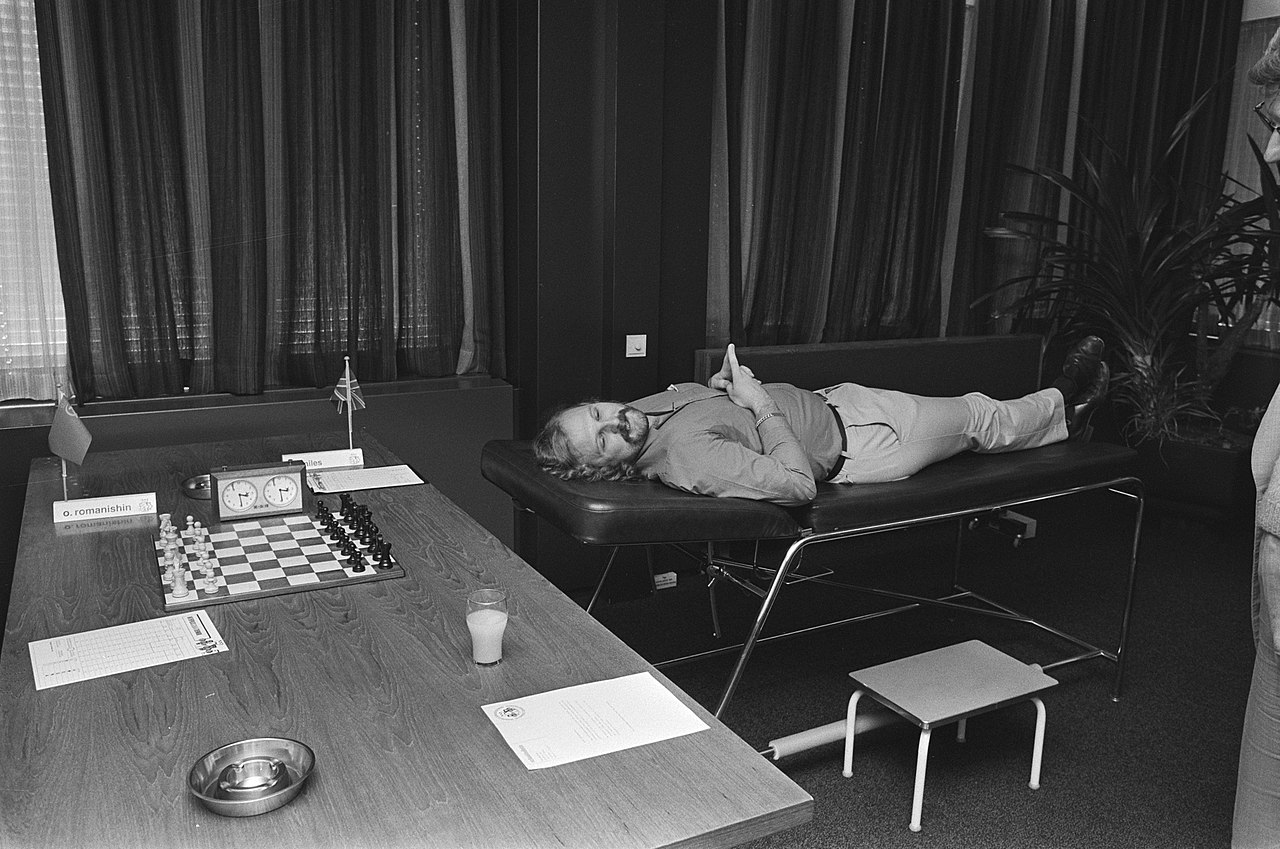
Remembering CM David Anderton OBE (02-viii-1941 01-iv-2022)

David Anderton OBE from the final 4NCL weekend of 2014, courtesy of John Upham Photography

BCN remembers CM David Anderton OBE who passed away on Friday, April 1st 2022.

In the 1977 New Years Honours List, Civil Division, David was awarded the OBE. The citation read simply : “For services to Chess”

David William Anderton was born in the district of Walsall, Staffordshire, West Midlands. His mother’s maiden name was Coltart and David resided in Walsall.

David was married to Doreen in 2005.

David Anderton (rhs) congratulates Sir Philip Stuart Milner-Barry for winning the "Board of Honour " game versus Edward Lasker at the 1976 Lloyds Bank Match by Telex, London - New York. From BCM, volume XCVI (96) Number 11 (August), Page 494. The venue was the Bloomsbury Hotel, London. Photo courtesy of Lloyds Bank
David Anderton (rhs) congratulates Sir Philip Stuart Milner-Barry for winning the “Board of Honour ” game versus Edward Lasker at the 1976 Lloyds Bank Match by Telex, London – New York. From BCM, volume XCVI (96) Number 11 (August), Page 494. The venue was the Bloomsbury Hotel, London. Photo courtesy of Lloyds Bank

David was an Honorary Life Vice-President of the English (formerly British) Chess Federation.

John Nunn, David Anderton and Jonathan Speelman

“David won the ECF President’s Award in 2009 following his stepping down as ECF legal expert. This is the citation from the 2010 ECF Yearbook :
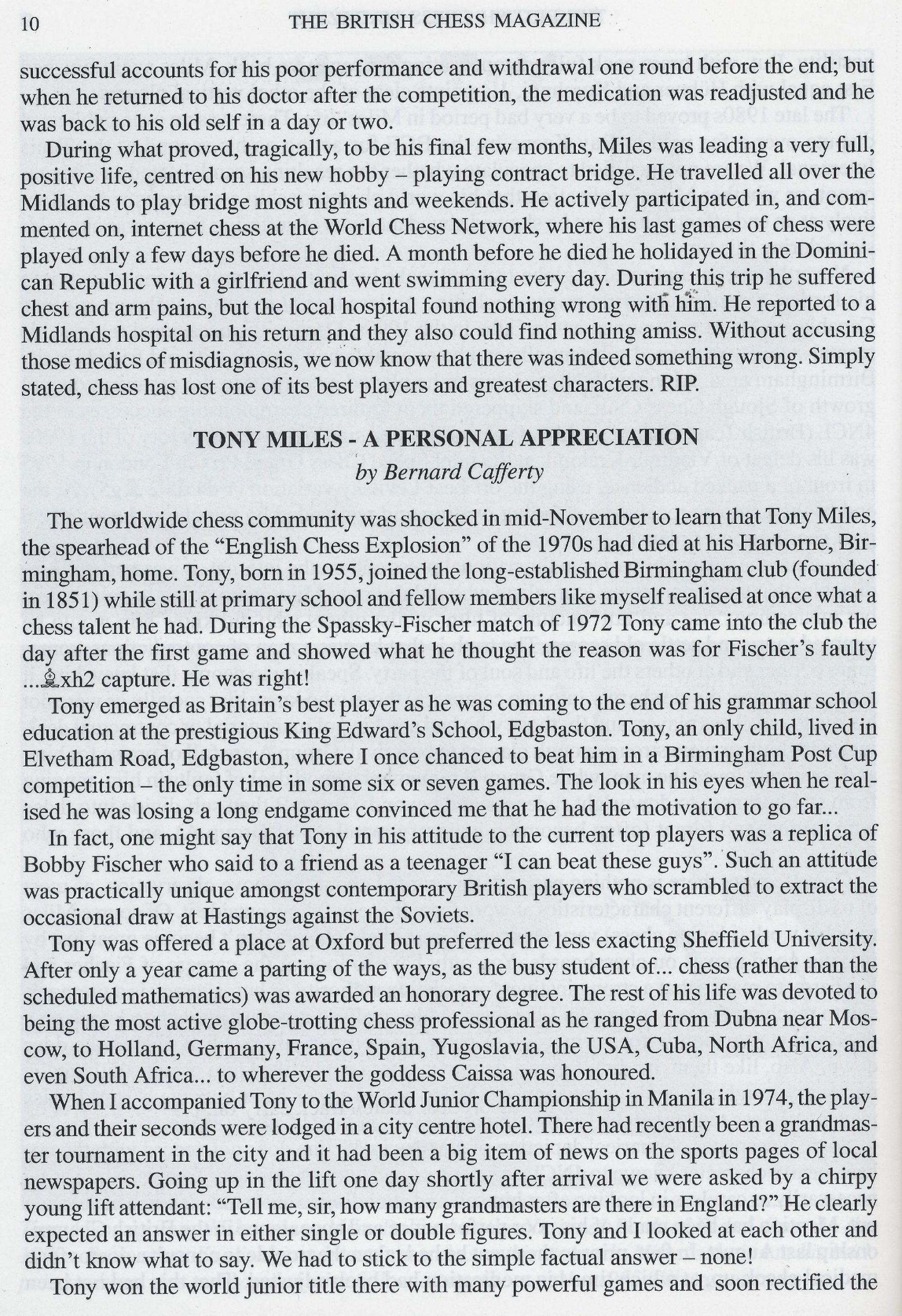
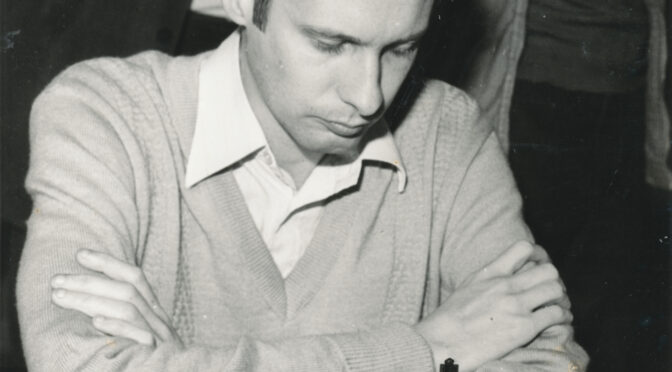
“As this is Gerry Walsh’s last year as President it was considered appropriate that he be allowed to choose someone receive the award. Gerry has worked with David for all his time with BCF and ECF and has selected him due to his tireless and selfless devotion to both the BCF and ECF over many years.

David Anderton OBE, ? and Teresa Needham

Most of you will know David and will agree that this is a well deserved award. It is fair to state that David’s assistance over the years has been invaluable and that without it many areas of the Federation would have found it difficult, if not impossible to operate.

Jim Plaskett with David Anderton OBE at the 1983 Benedictine International (Manchester)

Since my election David has been a constant friend and confidante. He has invariable given sound advice throughout my term of office. It was John Wickham who rang me and suggested that due to my length of tenure, a special award might be in order.

Jim accepts the 1981 Grand Prix shield from David Anderton OBE

After years of selfless and generous devotion serving as ECF President, International Director, Captain of the England Team and legal adviser, this seems to be a fitting tribute.

From the Praxis Bath Zonal Tournament of 1987. David Anderton OBE is second from right

David’s advice both legal and general, has been invaluable in such matters as the John Robinson legacy and the change of name from BCF to ECF Limited, and I certainly hope that this advice will continue.

Gerry Walsh”

Bob Wade OBE, Murray Chandler MNZM and David Anderton OBE

David is a FIDE Candidate Master.

From the BCF 1979-90 Year Book of Chess : Robert Bellin, the new British Champion, explains the secret to the Mayor of Chester (?) and to David Anderton, BCF President
From the BCF 1979-80 Year Book of Chess : Robert Bellin, the new British Champion, explains the secret to the Mayor of Chester (?) and to David Anderton, BCF President

With the White pieces David exclusively plays 1.d4 aiming for a Queen’s Gambit and main lines.

With Black David plays the Winawer and the Classical French plus the Lenningrad Dutch.

Mrs. Joan Agar; Chairman of Leigh Interests, presents the Leigh trophy (for 1981) to Mark Hebden. Left, David Anderton, BCF President; on the right Malcolm Wood, Leigh's Chief Executive. BCM, 1981, page 104
Mrs. Joan Agar; Chairman of Leigh Interests, presents the Leigh trophy (for 1981) to Mark Hebden. Left, David Anderton, BCF President; on the right Malcolm Wood, Leigh’s Chief Executive. BCM, 1981, page 104

Here are his games.

DW Anderton OBE plays BH Wood MBE in 1981 in a Blitz tournament outside of the National Film Theatre. Photograph courtesy of John Saunders

During 1989-93 David was an Executive Board Member of FIDE.

The England Team from the 1990 Novi Sad Olympiad : John Nunn, Jon Speelman, Julian Hodgson, David Anderton OBE (Captain), Nigel Short, Michael Adams and Murray Chandler

In 2002 David was awarded the title of International Master by the ICCF (correspondence chess)

In 2015 David stood down from all of his roles within the ECF.

David Anderton OBE, Paul Bazalgette (Senior Partner at Philips & Drew) and Tony Banks (GLC Arts & Recreation Department) at the 1982 Philips and Drew Kings Tournament Opening Ceremony. Photograph by Clive Field

David has won the British Seniors Championship in 2003 (shared), 2005, 2007 (shared), 2009 (shared) and 2011.

Here is a potted biography from The Express and Star Newspaper

David Anderton OBE at the 2019 British Championships in Torquay
David Anderton OBE at the 2019 British Championships in Torquay, courtesy of John Upham Photography

David was Head of Regulatory Law at Anson’s Solicitors. He was also Secretary of the Erasmus Darwin Foundation (03270753) and Director of Unionist Buildings Ltd., Wallsall Conservative Investments Ltd. and Wallsall Unionist Holdings Ltd.

CM David William Anderton OBE
 Save as PDF