BCN wishes many Happy Returns to IM Jovanka Houska ! (10-vi-1980)
From Wikipedia :
Jovanka Houska is an English chess player with the titles International Master (IM) and Woman Grandmaster (WGM). She is an eight-time winner of the British Women’s Chess Championship.
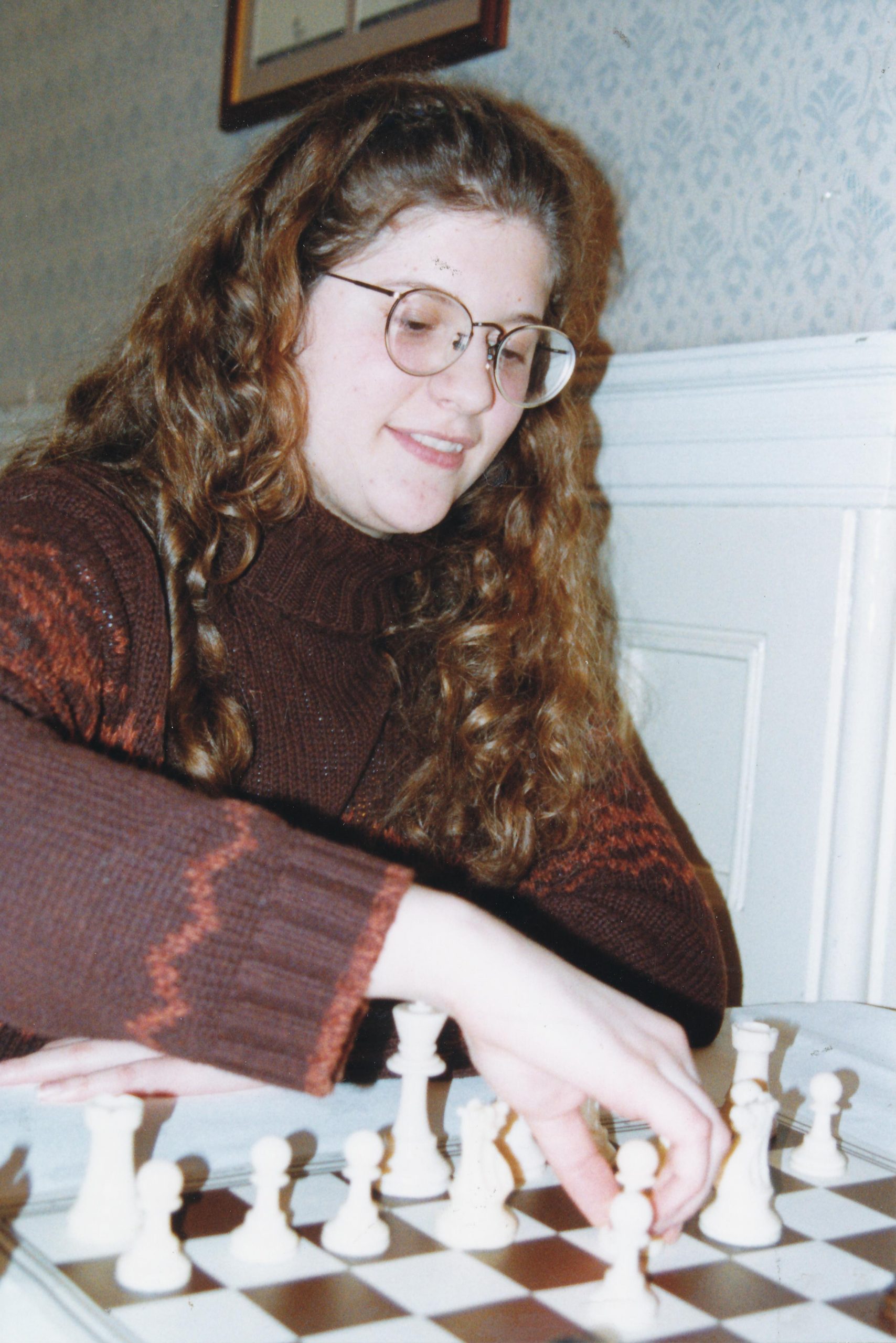
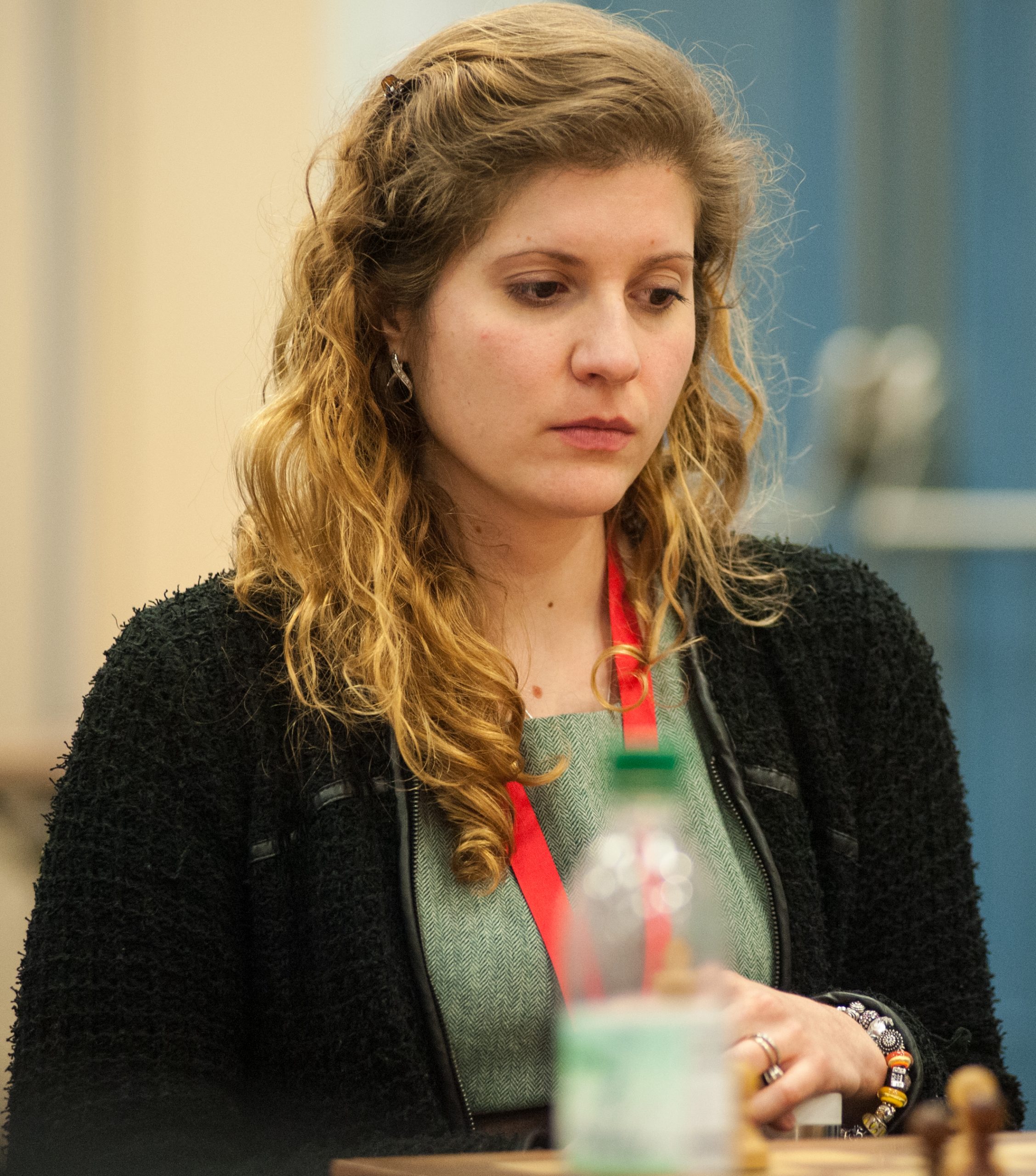
Jovanka Houska, photographer unknown
Jovanka was born in London and became a Women’s International Master in 1999, a Woman’s Grandmaster in 2000 and an International Master in 2005. Her peak rating was 2443 in July 2010 at the of 30.
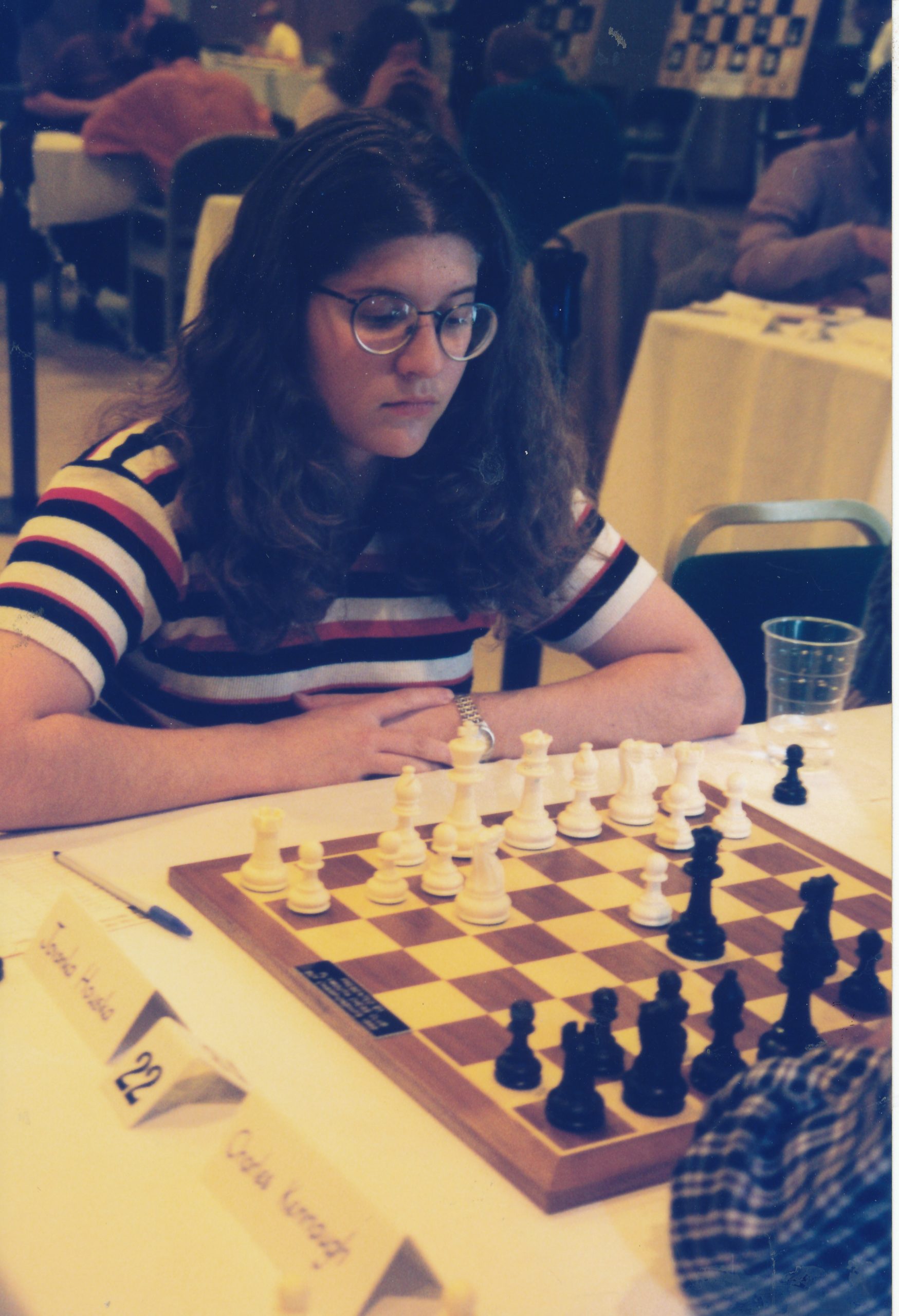
Jovanka Houska, photographer unknown
She plays for 4NCL Wood Green and her brother is IM Miroslav Houska. Her father Mario plays for Slough.
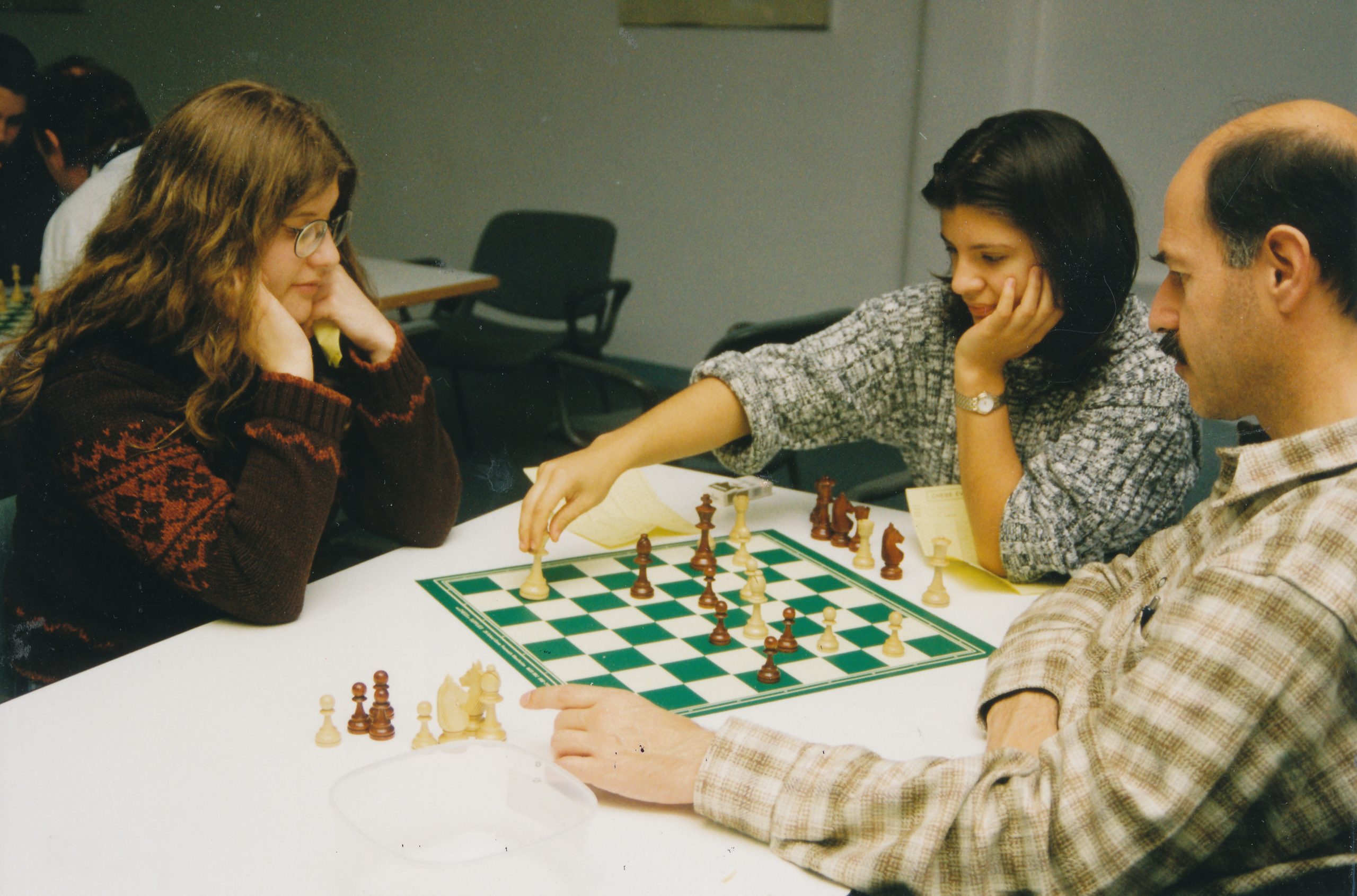
Jovanka Houska and family membersIM Jovanka Houska, courtesy of John Upham Photography
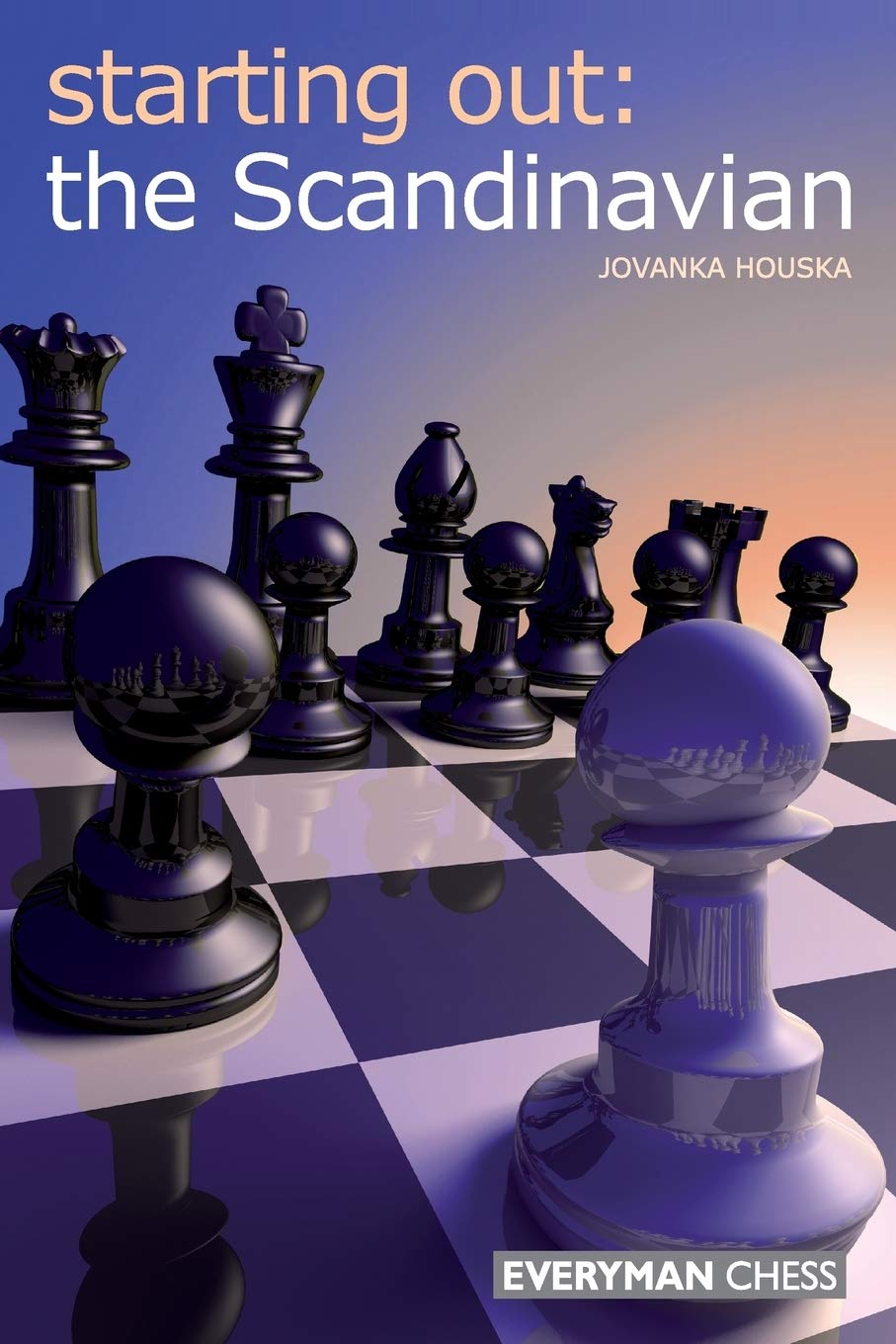
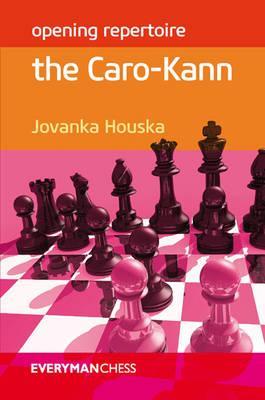
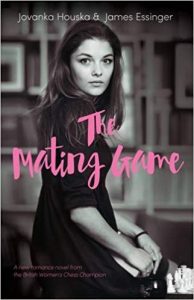
Dangerous Weapons : Caro-KannStarting Out : The ScandinavianPlay the Caro-KannOpening Repertoire : The Caro-KannThe Mating Game
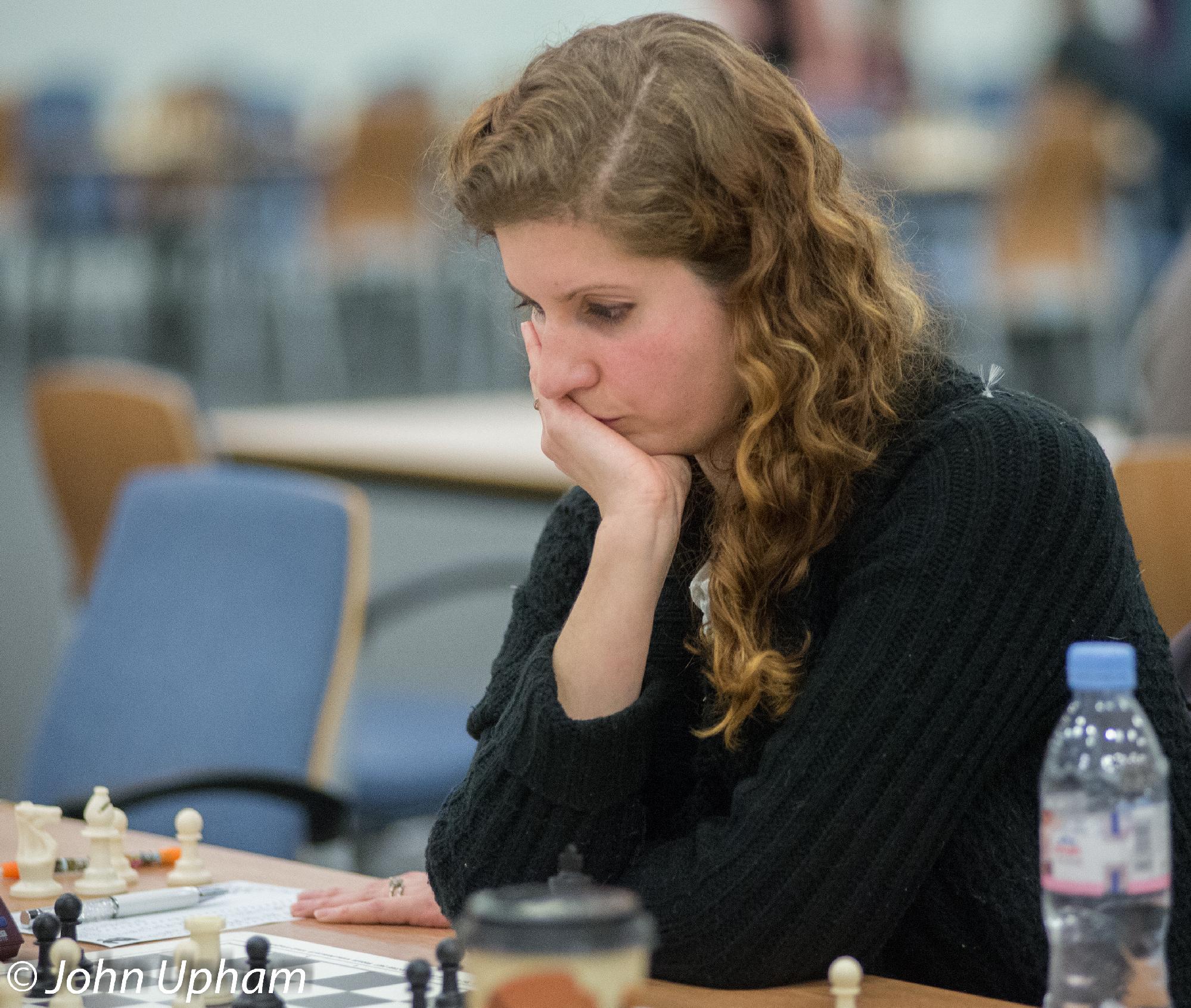
IM Jovanka Houska, courtesy of John Upham Photography
BCN remembers CGM Keith Richardson who passed away on Monday, April 10th, 2017.
Keith Bevan Richardson was born in Nottingham, on Thursday ,April 2nd 1942. On this day : The comedy film My Favourite Blonde starring Bob Hope and Madeleine Carroll was released.
Keith’s parents were Arthur (30) and Hilda May (née Nicholls, 25). He married Sandra Sowter on the 11th of September 1971 in Sutton Coldfield, Warwickshire. They had two children, Neil and Ian. They lived at 19, The Ridings in Camberley, Surrey.
Sadly, Keith was diagnosed in the 1990s with Parkinson’s disease and became unwell whilst playing in a chess tournament in Cannes in April 2017 and passed away on the 10th of May 2017. Keith was 75. He continued to actively play chess into his final year.
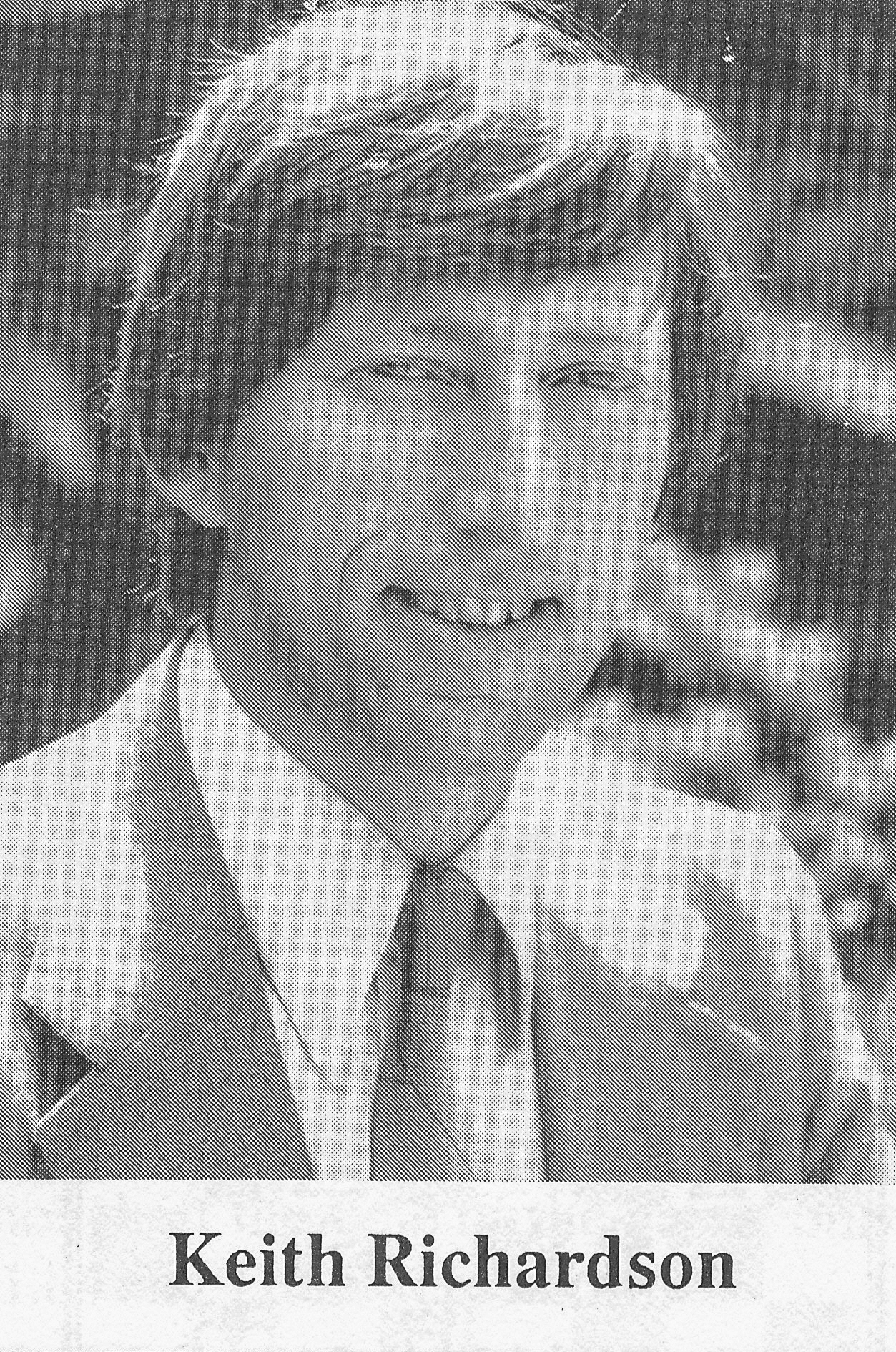
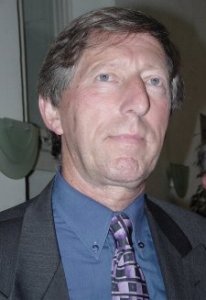
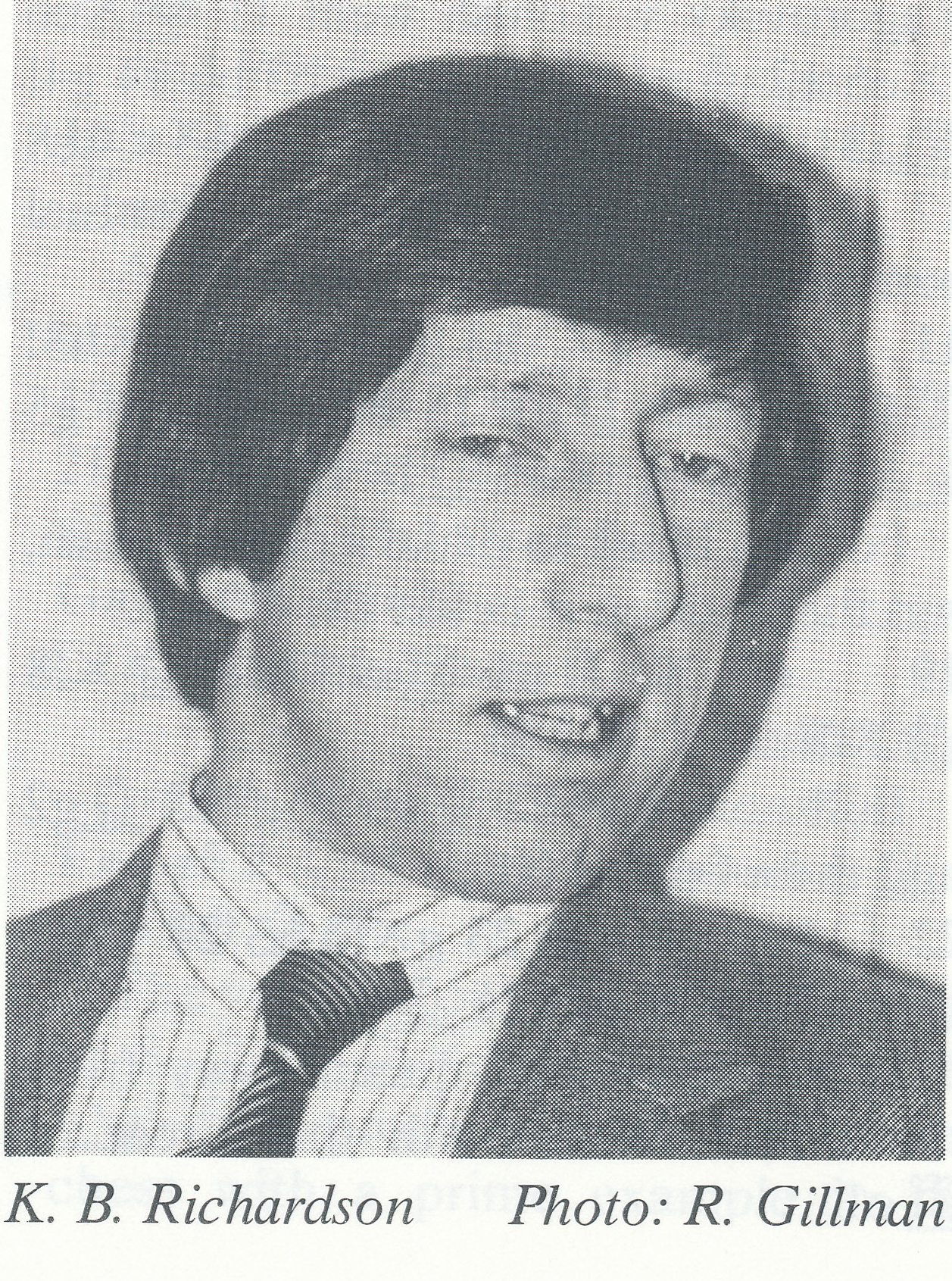
CGM Keith Richardson
Keith was the Treasurer of the Friends of Chess during the period known the English Chess Explosion (late 1970s and 1980s).
Keith received the ECF President’s Award in 2015 for services to the management of the BCF Permanent Invested Fund (PIF) together with Dr. Julian Farrand and Ray Edwards.
From CHESS, Volume 41 (1975), Numbers 729-730 (September), pp. 380 the news of Keith’s success was initially reported:
“BRITAINS’ FIRST CHESS GRAND MASTER
The first grand master title to be won by a British player has been achieved in the field of correspondence chess by Keith B. Richardson, aged 33, of Camberley.
The title of Correspondence Chess grand master is awarded by the lnternational correspondence Chess Federation. Keith Richardson fulfilled the norm by sharing third place in the final of the 7th World Correspondence Chess Championship with a score of 11 points from 16 games. The tournament began in February 1972 and results of the last adjudicated games were recently announced making J. V. Estrin U.S.S.R. first with l2 points; J. Boey Belgium scored 11.5; K. B. Richardson G.B. and Dr. V. Zagorovski U.S.S.R. 11.
There are only 25 Correspondence Chess Grand masters throughout the world.”
This was followed in the next month’s issue by a correction and more depth in CHESS, Volume 41 (1975), Numbers 731-732 (October), pp. 30-31:
“K. B. Richardson, though the first Britain to become a grand master by play was preceded by Comins Mansfield as grandmaster of problem composition, a title he gained in 1972. Our report last month did not make this clear.
Keith B. Richardson was born 2 April 1942 and was educated at Nottingham High School. At 16, he passed Grade 8 in Royal
Schools of Music at pianoforte. At Durham University, he obtained a B.A. in French and German and was awarded the University Palatinate (equal to a ‘blue’) in cricket and fives. He could have become a professional cricketer or a concert pianist but
made his career instead with Barclays Bank which brought him to London and a home in Camberley, Surrey, where he has settled down with his wife, Sandra (from Sutton Coldfield!). They now have two baby sons, Neil aged three years and Ian who is only two months old – both born since the final of the 7th World Correspondence Chess Championship began.
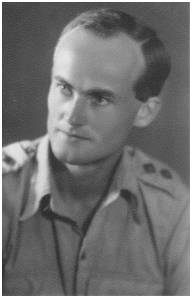
CGM Keith Bevan Richardson (from a Barclays publicity article)
Keith’s other interests include bridge and squash. He plays squash for his bank and is Secretary of the London Squash League. As a young chess player, Keith won the Notts. under l4 Championship, held the Notts. under l8 Championship for four years and the Notts. Championship for two years and was British Junior Champion in 1962. In 1963, he was Durham County Champion and joint winner of the British Universities’ Championship which he won outright the following year. He was twice captain of the British Universities Students’ Olympiad team. He held the Midlands Championship (Forrest Cup) for three years and was joint London Champion and London Banks’ Champion in 1970 but has been content to hold the latter title since then and concentrate on correspondence chess.
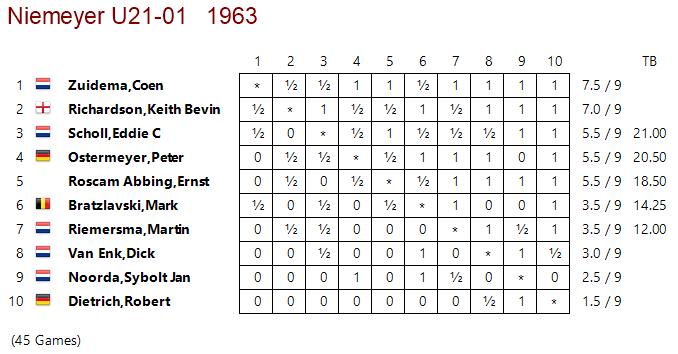
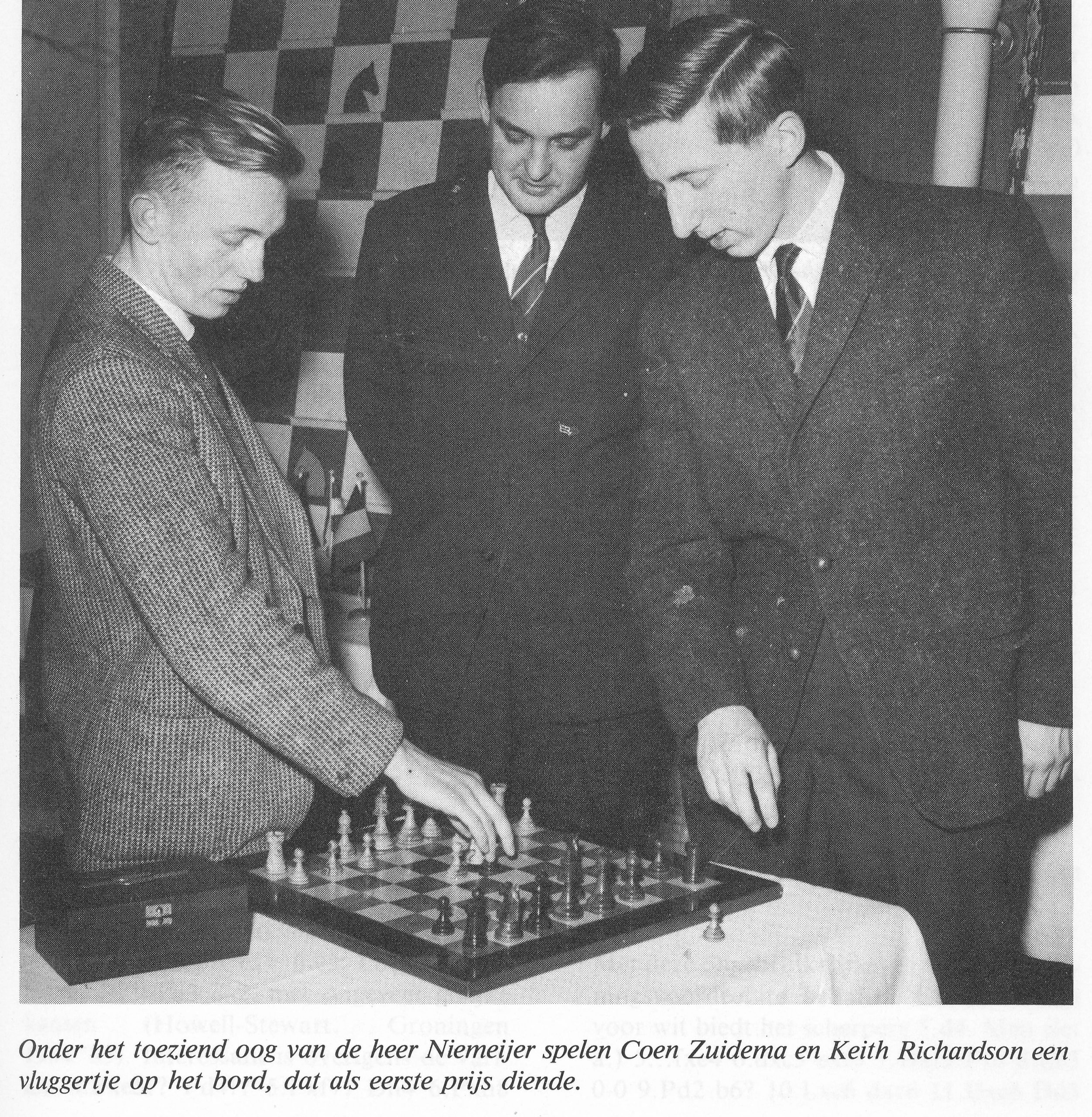
Keith Richardson aged 20 at the 1963 Niemeyer Under-21 Tournament in Groningen. The forerunner of the European Junior ChampionshipNiemeyer Under-21 Tournament, Groningen 1963. The forerunner of the European Junior Championship.Under the watchful eye of Mr. Niemeijer, Coen Zuidema and Keith Richardson play a quickie on the board, which served as an honorary prize. Source : Groningen 25 Jaar Europees Schaak Internationale Toernooien 1963 -1987, ISBN 90 9001 500 0
In 1964, Keith Richardson was runner up for the British Correspondence Chess Championship and at the same time won a Master Class tournament of the lnternational Correspondence Chess Federation (I.C.C.F.) which qualified for a place in the World C.C. Championship semi-final. He came second in the 1965-67 semi-final and tried again in the 1968-71 event which he won. At the same time, he was representing Great Britain on Board 5 in the 1965-67 I.C.C.F. Olympiad Preliminary and on Board 4 in the 1968-71 event. His score of 5 points from 7 games helped the British team to win its section in the 1968-71 Preliminary and qualify for a place in the I.C.C.F. Olympiad Final which started in 1972. When Keith began play in the World C.C. Championship Final involving l6 tames, he was also asked to take Board 3 in the Olympiad Final involving another 9 games.
He accepted – a mistake which might possibly have cost him the World C.C. Championship! His next assault on the World title will be in 1979 and in the meantime he plans to play in the next I.C.C.F. Olympiad Preliminary and write a book on the 7th World C.C. Championship.
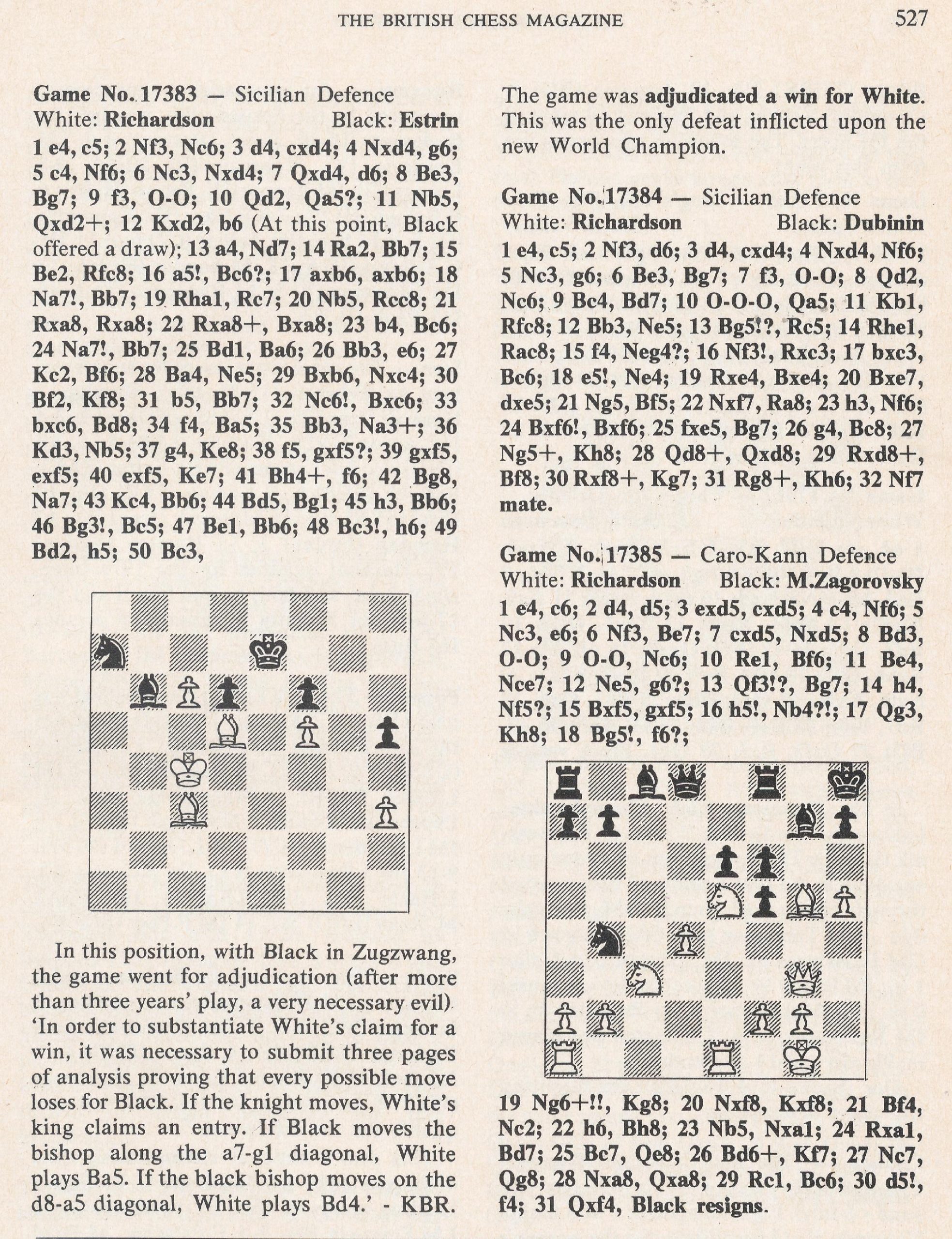
In this position, with Black in Zugzwang, the game went for adjudication (after more than three years’ play, a very necessary evil):
“In order to substantiate White’s claim for a win, it was necessary to submit three pages of analysis proving that every possible move loses for Black. If the knight moves, White’s king claims an entry. If Black moves the bishop along the a7-g1 diagonal, White plays Ba5. If the Black bishop moves on the d8-a5 diagonal, White plays Bd4 : KBR”
The game was adjudicated a win for White. This was only defeat inflicted upon the new World Champion.
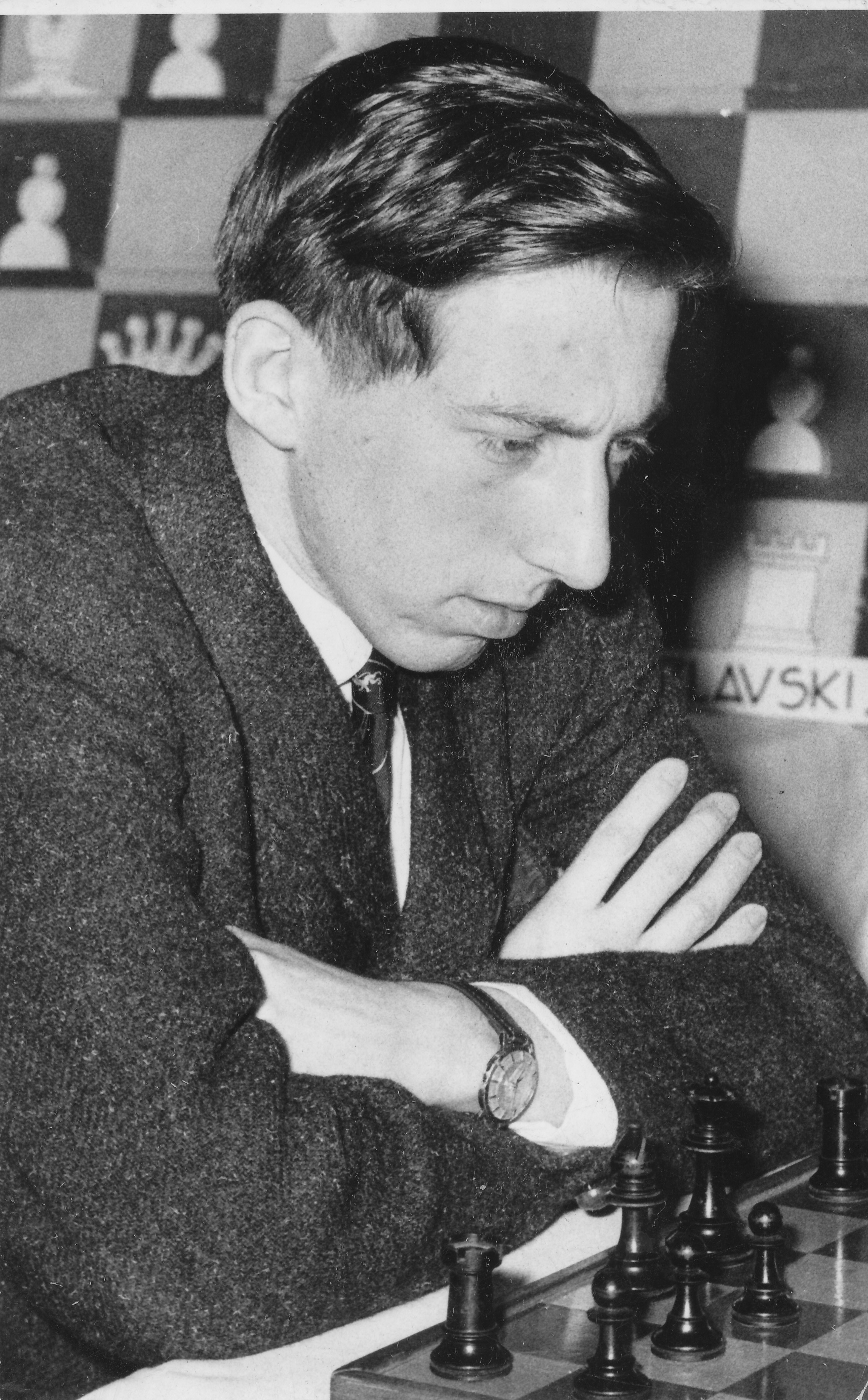
CGM Keith Richardson in 1975
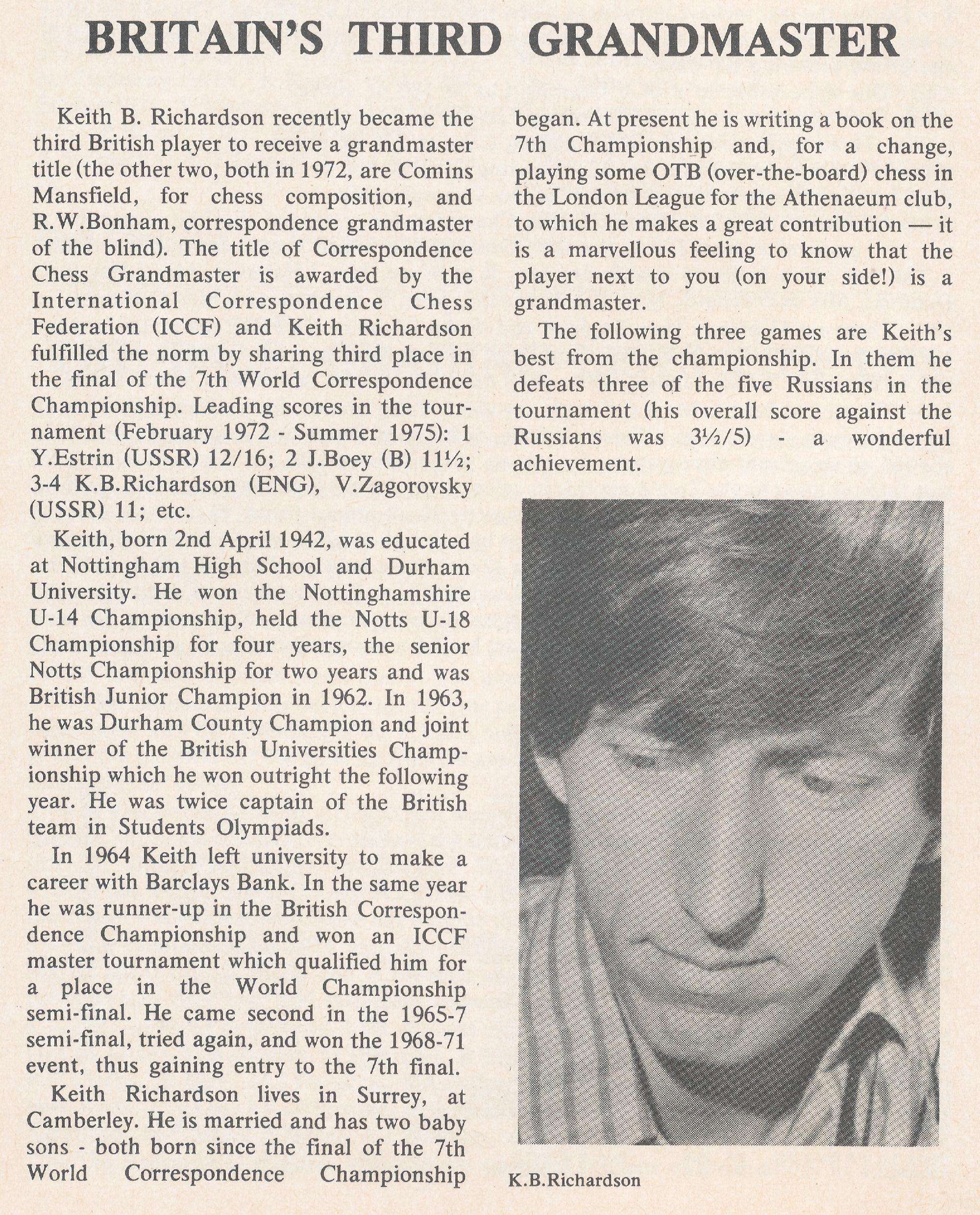
This article was followed (with some glee no doubt) by an article in British Chess Magazine, Volume LIXIV (95, 1975), Number 12 (December), page 526 as follows:
“Keith B. Richardson recently became the third British player to receive a grandmaster title (the other two both in 1972, are Comins Mansfield for chess composition’ and R.W. Bonham’ correspondence grandmaster of the blind). The title of Correspondence Chess Grandmaster is awarded by the International Correspondence Chess Federation (ICCF) and Keith Richardson fulfilled the norm by sharing third place in the final of the 7th World Correspondence Championship. Leading scores in the tournament (February 1972 – Summer 1975): 1. Y. Estrin (USSR) 12/16; J.Boey (B) 11.5; 3-4 K.B. Richardson (ENG), V. Zagorovsky (USSR) 11; etc.
Keith, born 2nd April1942, was educated at Nottingham High School and Durham University-. He won the Nottinghamshire U-14 Championship, held the Notts U-18 championship for four years, the senior Notts Championship for two years and was British Junior Champion in 1962. In 1963, he was Durham County Champion and joint winner of the British Universities Championship which he won outright the following year. He was twice captain of the British team in Students Olympiads.
Keith Richardson from BCM, 1984, page 545
In 1964 Keith left university to make a career with Barclays Bank. In the same year he was runner-up in the British Correspondence Championship and won an ICCF master tournament which qualified him for a place in the World Championship final. He came second in the 1965-7 semi-final, tried again, and won the 1968-71 event thus gaining entry to the 7th final.
Keith Richardson lives in Surrey at Camberley. He is married and has two baby sons – both born since the final of the 7th World Correspondence Championship began. At present he is writing a book on the 7th Championship and, for a change playing some OTB (over-the-board) chess in the London League for the Athenaeum club, to which he makes a great contribution – it is a marvellous feeling to know that the player next to you (on your side!) is a grandmaster.
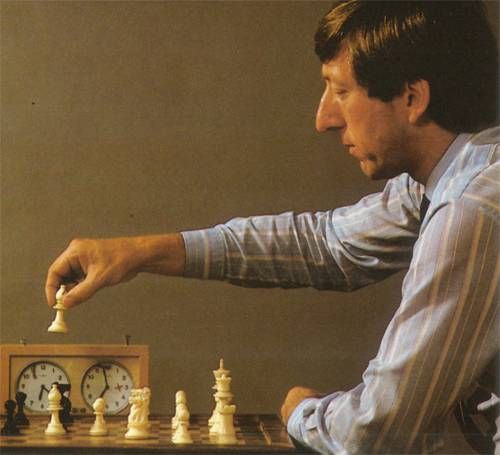
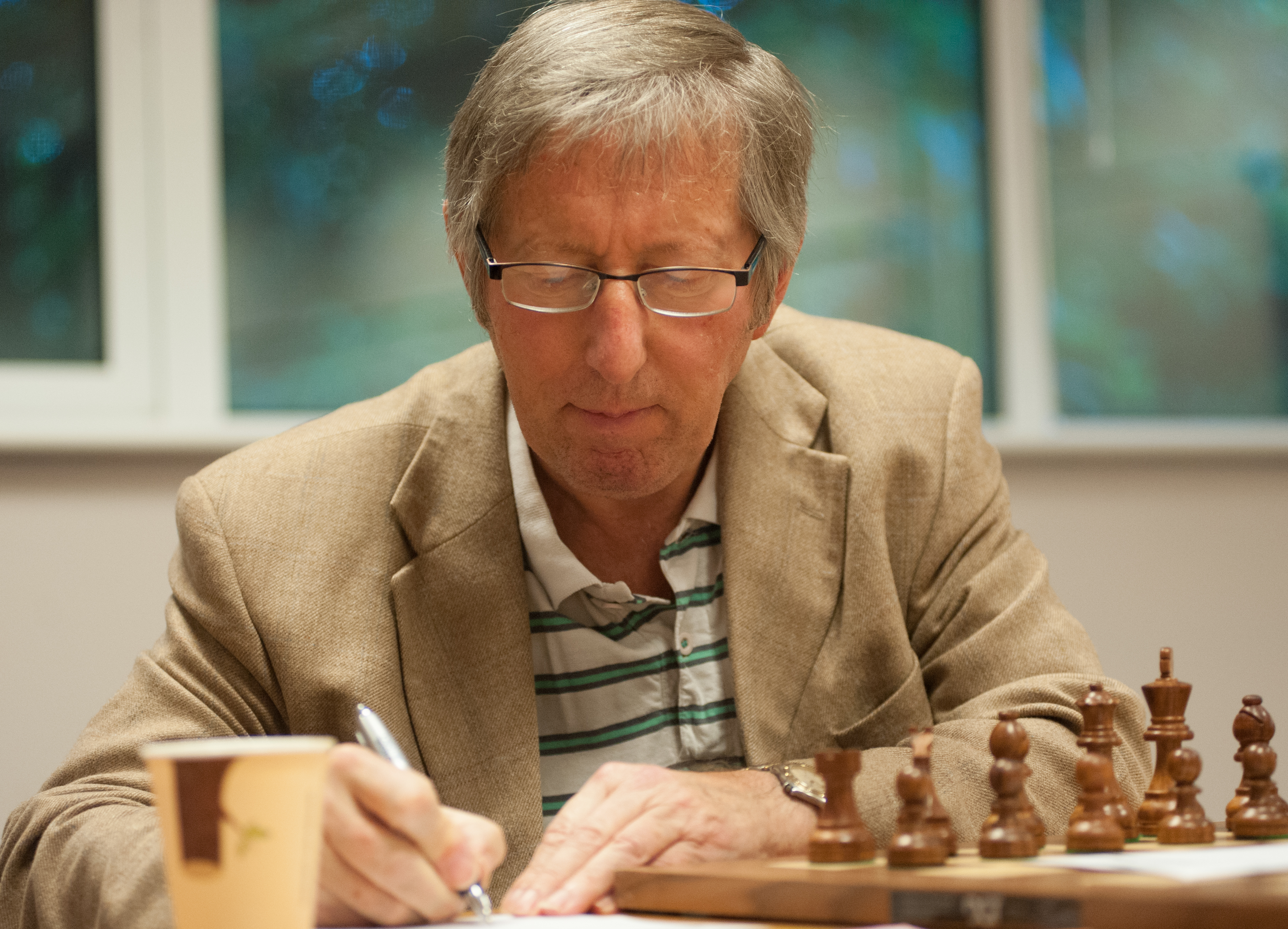
Keith Richardson playing for BCM Dragons in the Four Nations Chess League (4NCL, courtesy of John Upham Photography.
The following three games are – Keith’s best from the -championship. In them he defeats three of the five Russians in the
tournament (his overall score against the Russians was 3.5/5 – a wonderful achievement.”
and here is the printed version of the above report:
British Chess Magazine, Volume LIXIV (95, 1975), Number 12 (December), page 526British Chess Magazine, Volume LIXIV (95, 1975), Number 12 (December), page 527
From The Encyclopaedia of Chess by Hooper & Whyld :
“English player. International Correspondence Chess Grandmaster (1975), bank manager. Around 1961 Richardson decided that over-the- board play, which had brought him some successes as a. junior, would interfere with his professional career and he took to postal chess instead. His best performance in this field was his sharing of third place with Zagorovsky after Estrin and Boey in the 7th World Correspondence Championship, 1968-71. ”
In October 1984 Keith took part in the A. E. Axelson Memorial tournament organised by the Swedish CC Committee and with fifteen grandmasters was one of the strongest CC tournaments in history. Keith finished in 11th place ahead of Boey.
In 1991 Jonathan Berry wrote a potted biography in Diamond Dust, International Chess Enterprises, ISBN 1-879479-00-1 as follows :
“Camberley, Surrey, England. Born 2 April 1942. Married with two sons. Bank Manager.
He was British Under-21 Champion in 1962. At Groningen 1962/63, he was placed 2nd in the European Junior Championship. At Bristol 1967 he was equal 5th in the British Championship.
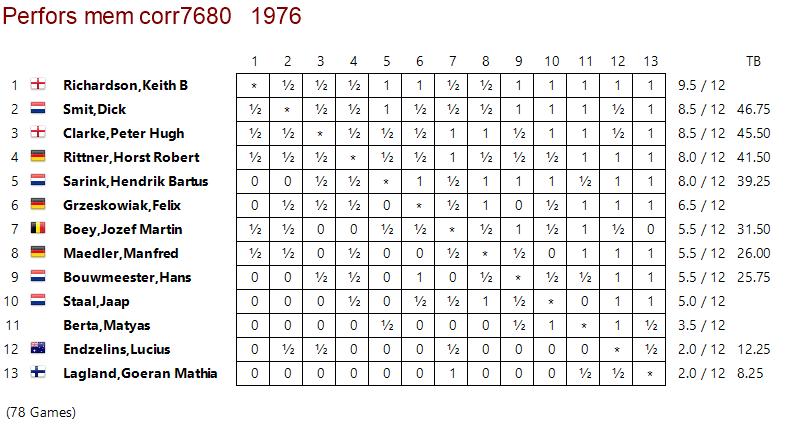
In CC, he gained the IMC in 1968, GMC in 1975. In CC WCh VII, he won the semi-final with 9.5/12, and placed =3rd in the final, 11/16. In CC WCh X, he again tied for third in the final with 10/15. Playing board 3 for Britain in OL-VIII, finals, 1972-76, he scored 7.5/9, the highest score on any board. He won the Prefors Memorial, 1976-1980, 9.5.12”
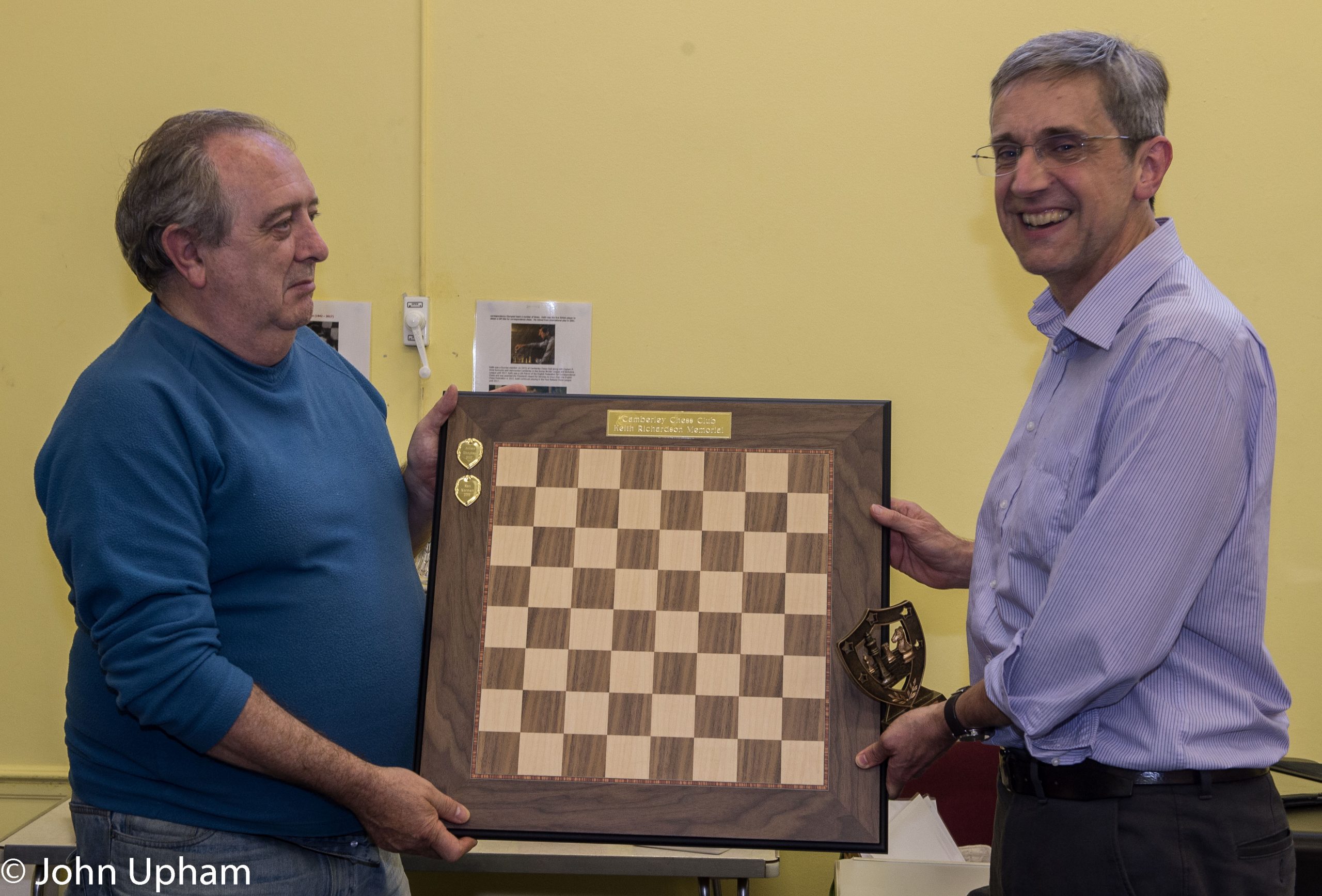
A one-day tournament (The Keith Richardson Memorial) in memory of Keith was started in 2017 and has been held four times in total being played on-line for the first time in 2021.
Ken Coates presents Clive Frostick with the trophy for the 2019 Keith Richardson Memorial Tournament.
From Chessgames.com :
“Keith Bevan Richardson was born in Nottingham, England. Awarded the IMC title in 1968 and the GMC title in 1975, he finished 3rd= in the World Correspondence Championships of 1975 and 1984.”
BCN remembers Mike Bent who passed away on Tuesday, December 28th 2004.
Charles Michael Bent was born on Thursday, 27th of November 1919 and in that year Charles was the fifth most popular boy’s name.
He was born in Portsmouth, Hampshire.
In 1939 he was living at 5, Ashburton Road, Gosport with his mother Eileen B. Bent (née Hill) and was a Sub Lieutenant in the Royal Navy.
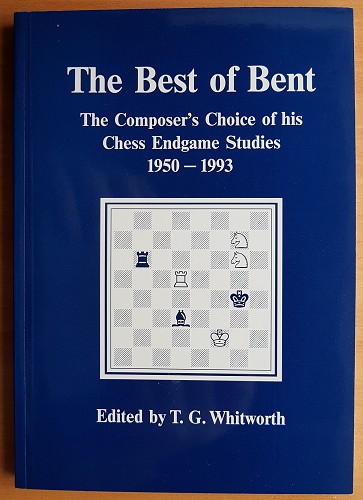
He wrote “Best of Bent: Composer’s Choice of His Chess Endgame Studies, 1950-93” This was edited by TG Whitworth.
The Best of Bent, CM Bent, edited TG Whitworth, July 1993
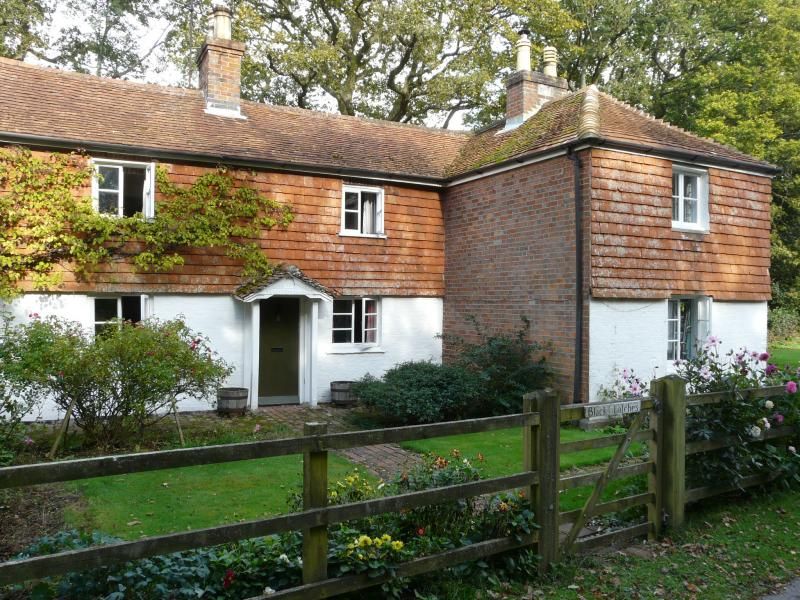
He died in Swindon on the 28th of December, 2004 having last resided in Hungerford, RG17. Whilst writing the Studies column for British Chess Magazine he resided at “Black Latches”, Inkpen, Newbury, Berkshire.
“Black Latches”, Inkpen, Newbury, Berkshire
The C. M. Bent Memorial Composing Tourney was held in 2006-07.
From British Chess Magazine, Volume XCV (95, 1975), Number 1 (January), page 22 we have a charming introduction to CMB from the retiring editor of the Studies column, AJ Roycroft :
“A studies article without a diagram? Yes, and without an apology either. Instead this introduced my successor, Charles Michael Bent, who is as remarkable without the chessboard as he is with it. Now since, as at May 1974, he has composed the total, rarely exceeded by anyone, of 670 studies (of which only 375 have been published), and about 600 problems (one tenth published), his other achievements and activities, insofar as he can be persuaded to talk about them, are worth recounting.
Michael Bent has a passion for all-the-year-round tennis, and loves the country life. Walking and climbing, all-forms of do-it-yourself, word-play nabla/del, puzzles, conjuring and listening to music make the mixture extraordinarily rich. Yet if there was a single word to characterise him it would be simplicity (his choice), with (my addition) a strong and individual sense of humour.
Physically he is a lean, balding 54-year-old as fit as most men half his age. He played at Junior Wimbledon before the War and only three of four years back won the singles tennis championship of his half of Berkshire. He is a modest and delightful companion, and to visit him and his wife Viola, to whom he credits responsibility for the serenity of his condition and surroundings, is a relaxing pleasure I always look forward to in my own hustled and tense London-centered existence.
In his own words he was never really a player of chess at all, but first sight of problems (during the war) and endings (just after it) acted like fireworks on a dark night and lit an imagination which still lacks basic technical knowledge. So, artistic rather than ‘scientific’, have never knowingly composed a didactic study. Am told my ‘style’ is easily recognised. Am aware, but perfectly content, that I compose much that the expert will easily solve, in the hope that the less initiated may be entertained and as attracted as I was in the beginning.
There is a feast, including many surprises, in store for you and me, at the hands of your new chess-chef, ‘CMB of the BCM’.”
From British Chess Magazine, Volume 125 (2005), Number 2 (February), page 98 we have a brief obituary from John Beasley :
“Charles Michael Bent died just over a month after his 85th birthday. Mike Bent had long been Britain’s leading composer of endgame studies, he was a witty and entertaining writer on the subject (and on many others), and the pleasure he gave was rightly acknowledged by the granting in 2001 of one of the BCF President’s Awards for services to chess.
BCM published his first study in 1950 and one of his last 50 years later, and he was our endgame study columnist from January 1975 to March 1985. There will be a steady flow of quotations in Endgame Studies during the coming months. John Beasley”
The Studies column was taken over in April 1985 by Paul Lamford.
From The Encyclopaedia of Chess (Robert Hale 1970 & 1976), Anne Sunnucks :
“Born on the 27th November 1919, Michael Bent has only one possible challenger, Harold Lommer, as the finest composer of endgame studies England has ever produced. Although up to October 1967, he had composed 546 problems and 320 studies, he now concentrates almost exclusively on studies. His 17 honoured studies include three 1st prizes. His partiality towards Knights is shown in the typical study selected here.
Michael Bent was educated at the Royal Naval College, Dartmouth, but had to leave the Navy because of chronic sea-sickness. He served in the Rifle Brigade in the Second World War and afterwards became a rubber plant in Johore, where he survived several terrorist attacks. How now lives with his wife in a Berkshire Village.
Apart from Chess, Michael Bent has other recreations, including wood carving, stamp collecting, composing crossword puzzles and butterfly collecting. His butterfly collection included 500 Malayan specimens. He is also a strong tennis player. Thirty-one years after playing at Wimbledon as a junior, he won the Newbury and District singles title in 1967.”
CM Bent 2nd Honorable Mention New Statesmen 1964 Tourney Award, 5th March 1965
BCN remembers Mike Bent who passed away on Tuesday, December 28th 2004.
Charles Michael Bent was born on Thursday, 27th of November 1919 and in that year Charles was the fifth most popular boy’s name.
He was born in Portsmouth, Hampshire.
In 1939 he was living at 5, Ashburton Road, Gosport with his mother Eileen B. Bent (née Hill) and was a Sub Lieutenant in the Royal Navy.
He wrote “Best of Bent: Composer’s Choice of His Chess Endgame Studies, 1950-93” This was edited by TG Whitworth.
The Best of Bent, CM Bent, edited TG Whitworth, July 1993
He died in Swindon on the 28th of December, 2004 having last resided in Hungerford, RG17. Whilst writing the Studies column for British Chess Magazine he resided at “Black Latches”, Inkpen, Newbury, Berkshire.
“Black Latches”, Inkpen, Newbury, Berkshire
The C. M. Bent Memorial Composing Tourney was held in 2006-07.
From British Chess Magazine, Volume XCV (95, 1975), Number 1 (January), page 22 we have a charming introduction to CMB from the retiring editor of the Studies column, AJ Roycroft :
“A studies article without a diagram? Yes, and without an apology either. Instead this introduced my successor, Charles Michael Bent, who is as remarkable without the chessboard as he is with it. Now since, as at May 1974, he has composed the total, rarely exceeded by anyone, of 670 studies (of which only 375 have been published), and about 600 problems (one tenth published), his other achievements and activities, insofar as he can be persuaded to talk about them, are worth recounting.
Michael Bent has a passion for all-the-year-round tennis, and loves the country life. Walking and climbing, all-forms of do-it-yourself, word-play nabla/del, puzzles, conjuring and listening to music make the mixture extraordinarily rich. Yet if there was a single word to characterise him it would be simplicity (his choice), with (my addition) a strong and individual sense of humour.
Physically he is a lean, balding 54-year-old as fit as most men half his age. He played at Junior Wimbledon before the War and only three of four years back won the singles tennis championship of his half of Berkshire. He is a modest and delightful companion, and to visit him and his wife Viola, to whom he credits responsibility for the serenity of his condition and surroundings, is a relaxing pleasure I always look forward to in my own hustled and tense London-centered existence.
In his own words he was never really a player of chess at all, but first sight of problems (during the war) and endings (just after it) acted like fireworks on a dark night and lit an imagination which still lacks basic technical knowledge. So, artistic rather than ‘scientific’, have never knowingly composed a didactic study. Am told my ‘style’ is easily recognised. Am aware, but perfectly content, that I compose much that the expert will easily solve, in the hope that the less initiated may be entertained and as attracted as I was in the beginning.
There is a feast, including many surprises, in store for you and me, at the hands of your new chess-chef, ‘CMB of the BCM’.”
From British Chess Magazine, Volume 125 (2005), Number 2 (February), page 98 we have a brief obituary from John Beasley :
“Charles Michael Bent died just over a month after his 85th birthday. Mike Bent had long been Britain’s leading composer of endgame studies, he was a witty and entertaining writer on the subject (and on many others), and the pleasure he gave was rightly acknowledged by the granting in 2001 of one of the BCF President’s Awards for services to chess.
BCM published his first study in 1950 and one of his last 50 years later, and he was our endgame study columnist from January 1975 to March 1985. There will be a steady flow of quotations in Endgame Studies during the coming months. John Beasley”
The Studies column was taken over in April 1985 by Paul Lamford.
From The Encyclopaedia of Chess (Robert Hale 1970 & 1976), Anne Sunnucks :
“Born on the 27th November 1919, Michael Bent has only one possible challenger, Harold Lommer, as the finest composer of endgame studies England has ever produced. Although up to October 1967, he had composed 546 problems and 320 studies, he now concentrates almost exclusively on studies. His 17 honoured studies include three 1st prizes. His partiality towards Knights is shown in the typical study selected here.
Michael Bent was educated at the Royal Naval College, Dartmouth, but had to leave the Navy because of chronic sea-sickness. He served in the Rifle Brigade in the Second World War and afterwards became a rubber plant in Johore, where he survived several terrorist attacks. How now lives with his wife in a Berkshire Village.
Apart from Chess, Michael Bent has other recreations, including wood carving, stamp collecting, composing crossword puzzles and butterfly collecting. His butterfly collection included 500 Malayan specimens. He is also a strong tennis player. Thirty-one years after playing at Wimbledon as a junior, he won the Newbury and District singles title in 1967.”
CM Bent 2nd Honorable Mention New Statesmen 1964 Tourney Award, 5th March 1965
BCN remembers Mike Bent who passed away on Tuesday, December 28th 2004.
Charles Michael Bent was born on Thursday, 27th of November 1919 and in that year Charles was the fifth most popular boy’s name.
He was born in Portsmouth, Hampshire.
In 1939 he was living at 5, Ashburton Road, Gosport with his mother Eileen B. Bent (née Hill) and was a Sub Lieutenant in the Royal Navy.
He wrote “Best of Bent: Composer’s Choice of His Chess Endgame Studies, 1950-93” This was edited by TG Whitworth.
The Best of Bent, CM Bent, edited TG Whitworth, July 1993
He died in Swindon on the 28th of December, 2004 having last resided in Hungerford, RG17. Whilst writing the Studies column for British Chess Magazine he resided at “Black Latches”, Inkpen, Newbury, Berkshire.
“Black Latches”, Inkpen, Newbury, Berkshire
The C. M. Bent Memorial Composing Tourney was held in 2006-07.
From British Chess Magazine, Volume XCV (95, 1975), Number 1 (January), page 22 we have a charming introduction to CMB from the retiring editor of the Studies column, AJ Roycroft :
“A studies article without a diagram? Yes, and without an apology either. Instead this introduced my successor, Charles Michael Bent, who is as remarkable without the chessboard as he is with it. Now since, as at May 1974, he has composed the total, rarely exceeded by anyone, of 670 studies (of which only 375 have been published), and about 600 problems (one tenth published), his other achievements and activities, insofar as he can be persuaded to talk about them, are worth recounting.
Michael Bent has a passion for all-the-year-round tennis, and loves the country life. Walking and climbing, all-forms of do-it-yourself, word-play nabla/del, puzzles, conjuring and listening to music make the mixture extraordinarily rich. Yet if there was a single word to characterise him it would be simplicity (his choice), with (my addition) a strong and individual sense of humour.
Physically he is a lean, balding 54-year-old as fit as most men half his age. He played at Junior Wimbledon before the War and only three of four years back won the singles tennis championship of his half of Berkshire. He is a modest and delightful companion, and to visit him and his wife Viola, to whom he credits responsibility for the serenity of his condition and surroundings, is a relaxing pleasure I always look forward to in my own hustled and tense London-centered existence.
In his own words he was never really a player of chess at all, but first sight of problems (during the war) and endings (just after it) acted like fireworks on a dark night and lit an imagination which still lacks basic technical knowledge. So, artistic rather than ‘scientific’, have never knowingly composed a didactic study. Am told my ‘style’ is easily recognised. Am aware, but perfectly content, that I compose much that the expert will easily solve, in the hope that the less initiated may be entertained and as attracted as I was in the beginning.
There is a feast, including many surprises, in store for you and me, at the hands of your new chess-chef, ‘CMB of the BCM’.”
From British Chess Magazine, Volume 125 (2005), Number 2 (February), page 98 we have a brief obituary from John Beasley :
“Charles Michael Bent died just over a month after his 85th birthday. Mike Bent had long been Britain’s leading composer of endgame studies, he was a witty and entertaining writer on the subject (and on many others), and the pleasure he gave was rightly acknowledged by the granting in 2001 of one of the BCF President’s Awards for services to chess.
BCM published his first study in 1950 and one of his last 50 years later, and he was our endgame study columnist from January 1975 to March 1985. There will be a steady flow of quotations in Endgame Studies during the coming months. John Beasley”
The Studies column was taken over in April 1985 by Paul Lamford.
From The Encyclopaedia of Chess (Robert Hale 1970 & 1976), Anne Sunnucks :
“Born on the 27th November 1919, Michael Bent has only one possible challenger, Harold Lommer, as the finest composer of endgame studies England has ever produced. Although up to October 1967, he had composed 546 problems and 320 studies, he now concentrates almost exclusively on studies. His 17 honoured studies include three 1st prizes. His partiality towards Knights is shown in the typical study selected here.
Michael Bent was educated at the Royal Naval College, Dartmouth, but had to leave the Navy because of chronic sea-sickness. He served in the Rifle Brigade in the Second World War and afterwards became a rubber plant in Johore, where he survived several terrorist attacks. How now lives with his wife in a Berkshire Village.
Apart from Chess, Michael Bent has other recreations, including wood carving, stamp collecting, composing crossword puzzles and butterfly collecting. His butterfly collection included 500 Malayan specimens. He is also a strong tennis player. Thirty-one years after playing at Wimbledon as a junior, he won the Newbury and District singles title in 1967.”
CM Bent 2nd Honorable Mention New Statesmen 1964 Tourney Award, 5th March 1965
BCN remembers Mike Bent who passed away on Tuesday, December 28th 2004.
Charles Michael Bent was born on Thursday, 27th of November 1919 and in that year Charles was the fifth most popular boy’s name.
He was born in Portsmouth, Hampshire.
In 1939 he was living at 5, Ashburton Road, Gosport with his mother Eileen B. Bent (née Hill) and was a Sub Lieutenant in the Royal Navy.
He wrote “Best of Bent: Composer’s Choice of His Chess Endgame Studies, 1950-93” This was edited by TG Whitworth.
The Best of Bent, CM Bent, edited TG Whitworth, July 1993
He died in Swindon on the 28th of December, 2004 having last resided in Hungerford, RG17. Whilst writing the Studies column for British Chess Magazine he resided at “Black Latches”, Inkpen, Newbury, Berkshire.
“Black Latches”, Inkpen, Newbury, Berkshire
The C. M. Bent Memorial Composing Tourney was held in 2006-07.
From British Chess Magazine, Volume XCV (95, 1975), Number 1 (January), page 22 we have a charming introduction to CMB from the retiring editor of the Studies column, AJ Roycroft :
“A studies article without a diagram? Yes, and without an apology either. Instead this introduced my successor, Charles Michael Bent, who is as remarkable without the chessboard as he is with it. Now since, as at May 1974, he has composed the total, rarely exceeded by anyone, of 670 studies (of which only 375 have been published), and about 600 problems (one tenth published), his other achievements and activities, insofar as he can be persuaded to talk about them, are worth recounting.
Michael Bent has a passion for all-the-year-round tennis, and loves the country life. Walking and climbing, all-forms of do-it-yourself, word-play nabla/del, puzzles, conjuring and listening to music make the mixture extraordinarily rich. Yet if there was a single word to characterise him it would be simplicity (his choice), with (my addition) a strong and individual sense of humour.
Physically he is a lean, balding 54-year-old as fit as most men half his age. He played at Junior Wimbledon before the War and only three of four years back won the singles tennis championship of his half of Berkshire. He is a modest and delightful companion, and to visit him and his wife Viola, to whom he credits responsibility for the serenity of his condition and surroundings, is a relaxing pleasure I always look forward to in my own hustled and tense London-centered existence.
In his own words he was never really a player of chess at all, but first sight of problems (during the war) and endings (just after it) acted like fireworks on a dark night and lit an imagination which still lacks basic technical knowledge. So, artistic rather than ‘scientific’, have never knowingly composed a didactic study. Am told my ‘style’ is easily recognised. Am aware, but perfectly content, that I compose much that the expert will easily solve, in the hope that the less initiated may be entertained and as attracted as I was in the beginning.
There is a feast, including many surprises, in store for you and me, at the hands of your new chess-chef, ‘CMB of the BCM’.”
From British Chess Magazine, Volume 125 (2005), Number 2 (February), page 98 we have a brief obituary from John Beasley :
“Charles Michael Bent died just over a month after his 85th birthday. Mike Bent had long been Britain’s leading composer of endgame studies, he was a witty and entertaining writer on the subject (and on many others), and the pleasure he gave was rightly acknowledged by the granting in 2001 of one of the BCF President’s Awards for services to chess.
BCM published his first study in 1950 and one of his last 50 years later, and he was our endgame study columnist from January 1975 to March 1985. There will be a steady flow of quotations in Endgame Studies during the coming months. John Beasley”
The Studies column was taken over in April 1985 by Paul Lamford.
From The Encyclopaedia of Chess (Robert Hale 1970 & 1976), Anne Sunnucks :
“Born on the 27th November 1919, Michael Bent has only one possible challenger, Harold Lommer, as the finest composer of endgame studies England has ever produced. Although up to October 1967, he had composed 546 problems and 320 studies, he now concentrates almost exclusively on studies. His 17 honoured studies include three 1st prizes. His partiality towards Knights is shown in the typical study selected here.
Michael Bent was educated at the Royal Naval College, Dartmouth, but had to leave the Navy because of chronic sea-sickness. He served in the Rifle Brigade in the Second World War and afterwards became a rubber plant in Johore, where he survived several terrorist attacks. How now lives with his wife in a Berkshire Village.
Apart from Chess, Michael Bent has other recreations, including wood carving, stamp collecting, composing crossword puzzles and butterfly collecting. His butterfly collection included 500 Malayan specimens. He is also a strong tennis player. Thirty-one years after playing at Wimbledon as a junior, he won the Newbury and District singles title in 1967.”
CM Bent 2nd Honorable Mention New Statesmen 1964 Tourney Award, 5th March 1965
Andrew became a FIDE Master in 2015 and an International Master in 2018.
Save as PDF
We focus on the British Chess Scene Past & Present!
This website uses cookies to improve your experience. We'll assume you're ok with this, but you can opt-out if you wish. Cookie settingsACCEPT
Privacy & Cookies Policy
Privacy Overview
This website uses cookies to improve your experience while you navigate through the website. Out of these cookies, the cookies that are categorized as necessary are stored on your browser as they are as essential for the working of basic functionalities of the website. We also use third-party cookies that help us analyze and understand how you use this website. These cookies will be stored in your browser only with your consent. You also have the option to opt-out of these cookies. But opting out of some of these cookies may have an effect on your browsing experience.
Necessary cookies are absolutely essential for the website to function properly. This category only includes cookies that ensures basic functionalities and security features of the website. These cookies do not store any personal information.

 Save as PDF