Richard became a FIDE Master in 1989 and an International Master in 1995. According to Felice his peak rating was 2400 in January 1996. He has played for White Rose in the Four Nations Chess League. He currently plays for Cambridge City and maintains a 222 ECF grading.
Richard became a FIDE Master in 1989 and an International Master in 1995. According to Felice his peak rating was 2400 in January 1996. He has played for White Rose in the Four Nations Chess League. He currently plays for Cambridge City and maintains a 222 ECF grading.
Richard became a FIDE Master in 1989 and an International Master in 1995. According to Felice his peak rating was 2400 in January 1996. He has played for White Rose in the Four Nations Chess League. He currently plays for Cambridge City and maintains a 222 ECF grading.
“David Simon Charles Goodman was awarded the IM title in 1983. He was World Under 18 Champion in 1975. He played #10 on the English national team in Moscow.
He currently resides in New York City where he is a chess trainer for promising young students.”
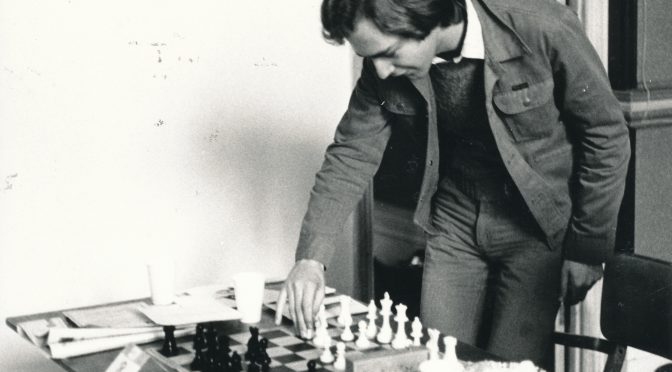
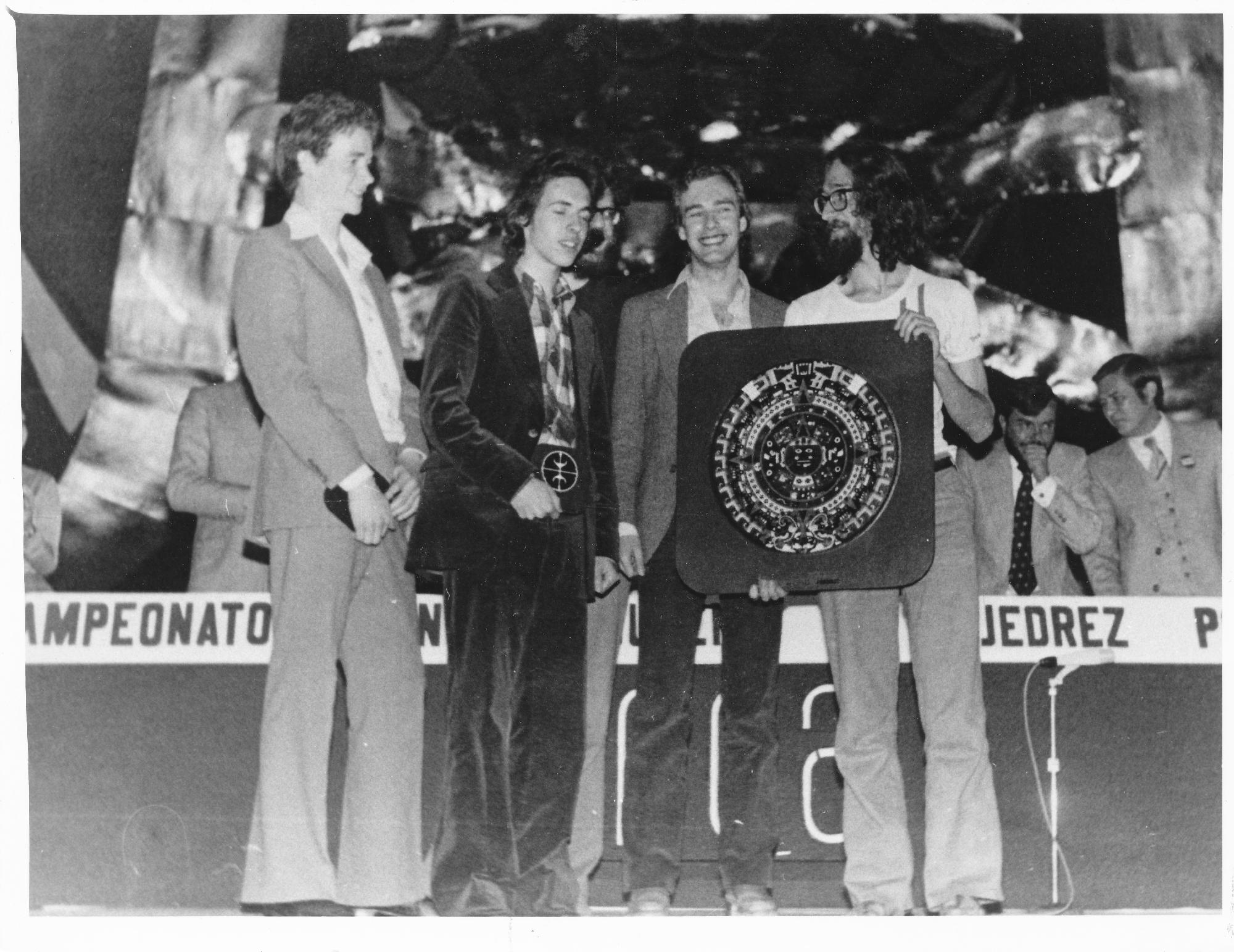
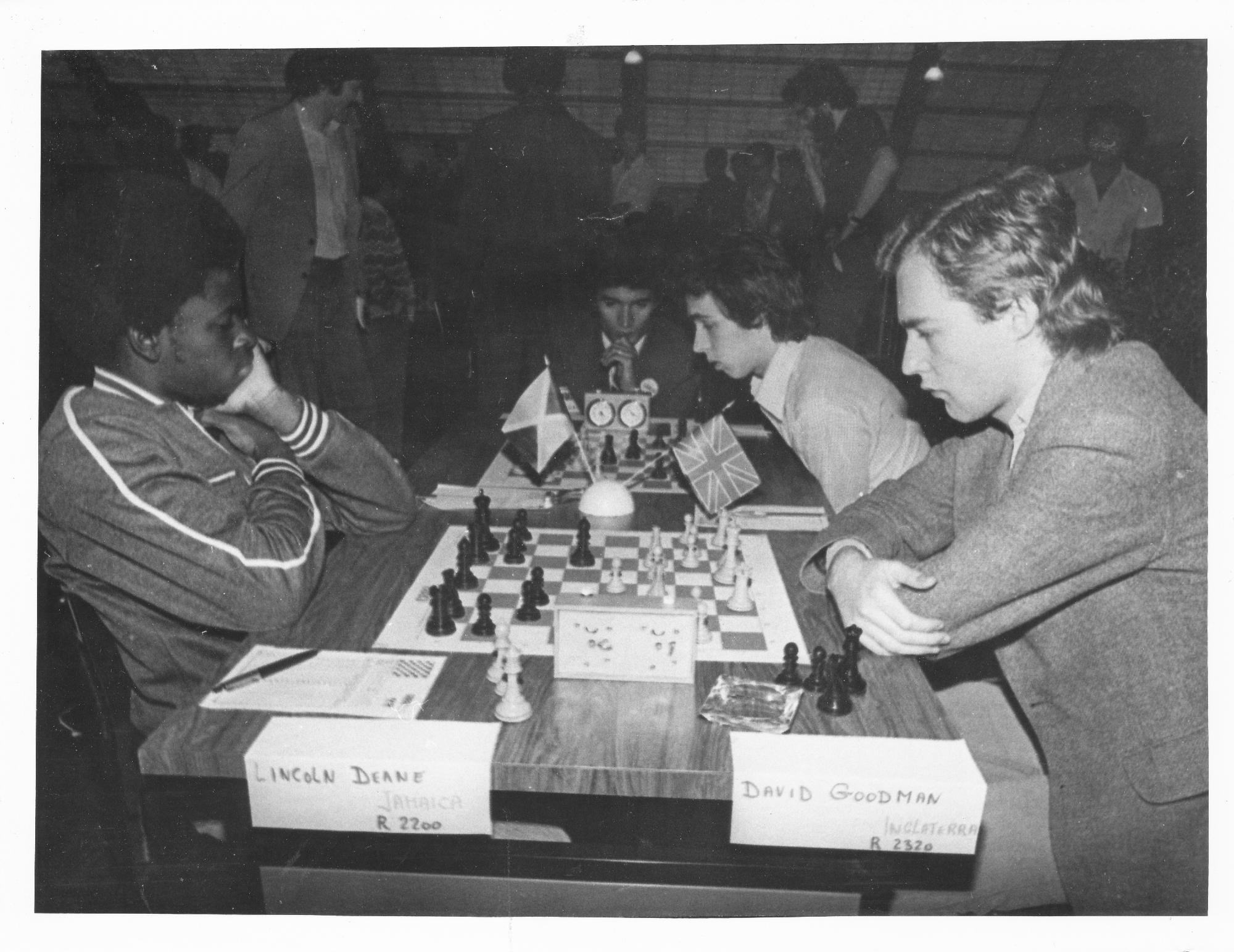
(from l-r) Jonathan Kinlay, Shaun Taulbut, Jonathan Speelman, David Goodman and Jonathan Mestel accepting 1st prize at the 1978 World U26 Student Olympiad in Mexico CityShaun Taulbut (upper right) and David Goodman (lower right) from the 1978 U26 Olympiad
“David Simon Charles Goodman was awarded the IM title in 1983. He was World Under 18 Champion in 1975. He played #10 on the English national team in Moscow.
He currently resides in New York City where he is a chess trainer for promising young students.”
(from l-r) Jonathan Kinlay, Shaun Taulbut, Jonathan Speelman, David Goodman and Jonathan Mestel accepting 1st prize at the 1978 World U26 Student Olympiad in Mexico CityShaun Taulbut (upper right) and David Goodman (lower right) from the 1978 U26 Olympiad
“David Simon Charles Goodman was awarded the IM title in 1983. He was World Under 18 Champion in 1975. He played #10 on the English national team in Moscow.
He currently resides in New York City where he is a chess trainer for promising young students.”
(from l-r) Jonathan Kinlay, Shaun Taulbut, Jonathan Speelman, David Goodman and Jonathan Mestel accepting 1st prize at the 1978 World U26 Student Olympiad in Mexico CityShaun Taulbut (upper right) and David Goodman (lower right) from the 1978 U26 Olympiad
“David Simon Charles Goodman was awarded the IM title in 1983. He was World Under 18 Champion in 1975. He played #10 on the English national team in Moscow.
He currently resides in New York City where he is a chess trainer for promising young students.”
(from l-r) Jonathan Kinlay, Shaun Taulbut, Jonathan Speelman, David Goodman and Jonathan Mestel accepting 1st prize at the 1978 World U26 Student Olympiad in Mexico CityShaun Taulbut (upper right) and David Goodman (lower right) from the 1978 U26 Olympiad
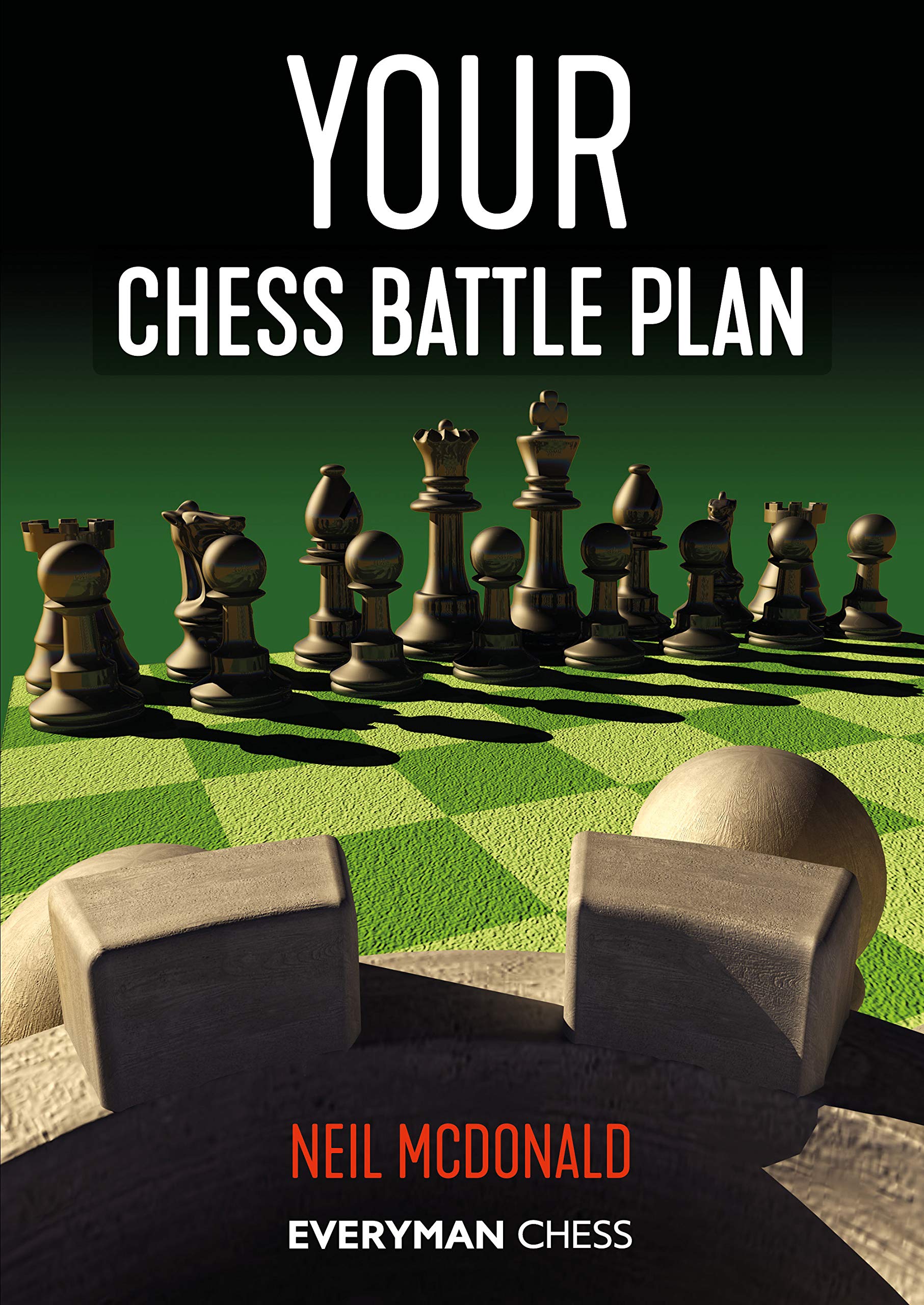
Neil McDonald is an English GM, an active player, a FIDE Trainer and a coach to the England junior teams. Neil has authored thirty-seven books for The Chess Press, Batsford and, most recently, Everyman Chess. One of his most recent works, The King’s Indian Attack : Move by Move, impressed considerably.
“One of the most challenging tasks in a chess game is to find the correct strategy. It is far easy to attack too randomly, to miss a vital opportunity, or even choose the wrong plan altogether. These are all mistakes frequently seen by even quite strong players.
Your Chess Battle Plan focuses on how Magnus Carlsen and other great masters decide on the best strategy in a position and then find the right ways to implement it. Clear advice shows you how to hone in on the most relevant features of a position in order to decide what your general plan needs to be. Factors that are addressed include when to exchange pieces, when to make long-range manoeuvres, when to offer sacrifices and how to identify and focus on key squares. Your Chess Battle Plan will get you thinking along the right strategic lines and using your pieces and pawns in a much more efficient and skilful manner.
A complete self-improvement programme.
Advice to evaluate the current level of planning in your own games.
Utilizes a structured approach, making the most of your study time.”
The content is divided into ten chapters as follows :
Improving the Activity of your Pieces
Stopping the Opponent Playing Good Moves
Full Grovel Mode
Punishing Faulty Freeing Moves
Exploiting a Hole
Manoeuvring Against Pawns
Promoting a Pawn
Using a Pawn as a Battering Ram
Sacrificing to Gain the Initiative
Deciding the Character of the Game in the Opening
For each of these themes the author selects a dozen or so games between high quality opponents. He fast forwards to the key moment, sets the scene and then analyses the play from this moment onwards.
To get a flavour for yourself here is an excerpt from the books’s Kindle version.
Each of the game fragments is analysed with a friendly and candid style emphasizing the key elements not only in the position but, more importantly, in the tactics and strategy implied by the chosen plan. To get most benefit from the authors text it would be best to set-up the start position of the fragment on the board and cover the following text. Spend some time getting “into the zone” of the position and try and decide the best plan for yourself. Having done that then reveal the authors notes and see how much you have predicted. Do this time and time again in a give chapter / theme then the ideas should start occurring to yourself with less prompting.
For a little context here is the full game (up to White 46th) that is discussed below :
From the Promoting a Pawn chapter there is the game (49) Demchenko – Gukesh, 2019 that reached this position after white’s 46th move :
and this is the instructional text from the author :
“Question : Can you see killer blow White had missed?
it looks as if Black is going to have to resign in view of the unstoppable mate, but :
Answer : 46…Qxf5+!
A horrible surprise for White. If he takes the queen it is mate on h1.
47 Kh2 Qc2+ 0-1
It will be mate on g2.
It feels as white was somewhat unlucky in that the logical course of his plan required him to find the ‘only’ move 45.Rf3!, without which he was lost. When the opponent queens first, the stakes on he accuracy of your moves become very high. Meanwhile, Black had to find the tricky 44…Qb7+! and hope that White would overlook the deadly idea behind it. Gukesh was a 12-year old Grandmaster at the time of this game, and not likely to miss such a tactical chance!”
In total 76 games are examined either in full or partly. This book provides a rich pot pourri of well selected examples that demonstrate the ideas of the chapter / theme.
We think this that book will get the student thinking about his or her own potential plans for a position hopefully adding dimensions that would not normally have been considered. The rewards from studying this book are likely to be much greater confidence in middle game positions and perhaps even less fear of murky or unclear positions. Many previous middle game books examine superb examples of play from Capablanca and others where perhaps the positions are less “messy” and not as “lifelike”. These 76 examples from the author are very down to earth and will benefit the student from study.
A couple of small gripes with the production are : the diagrams do not have a “to move” indicator. Secondly, some Everyman books (but not this one) have an extra folding part to the front and rear covers. These we find protect the book from damage and also can be used as an emergency book mark !
In conclusion we like this book a great deal and hope to find the time to study all of it in depth : highly recommended !
“Half the variations which are calculated in a tournament game turn out to be completely superfluous. Unfortunately, no one knows in advance which half..” – Jan Timman
The value for any practising chess player of a coherent opening repertoire when playing with the white pieces is key to success, enjoyment and efficient use of study time. Books with “Opening Repertoire” in the title are many and varied and we were intrigued to what the emphasis in this latest book from New in Chess would be.
From the books rear cover :
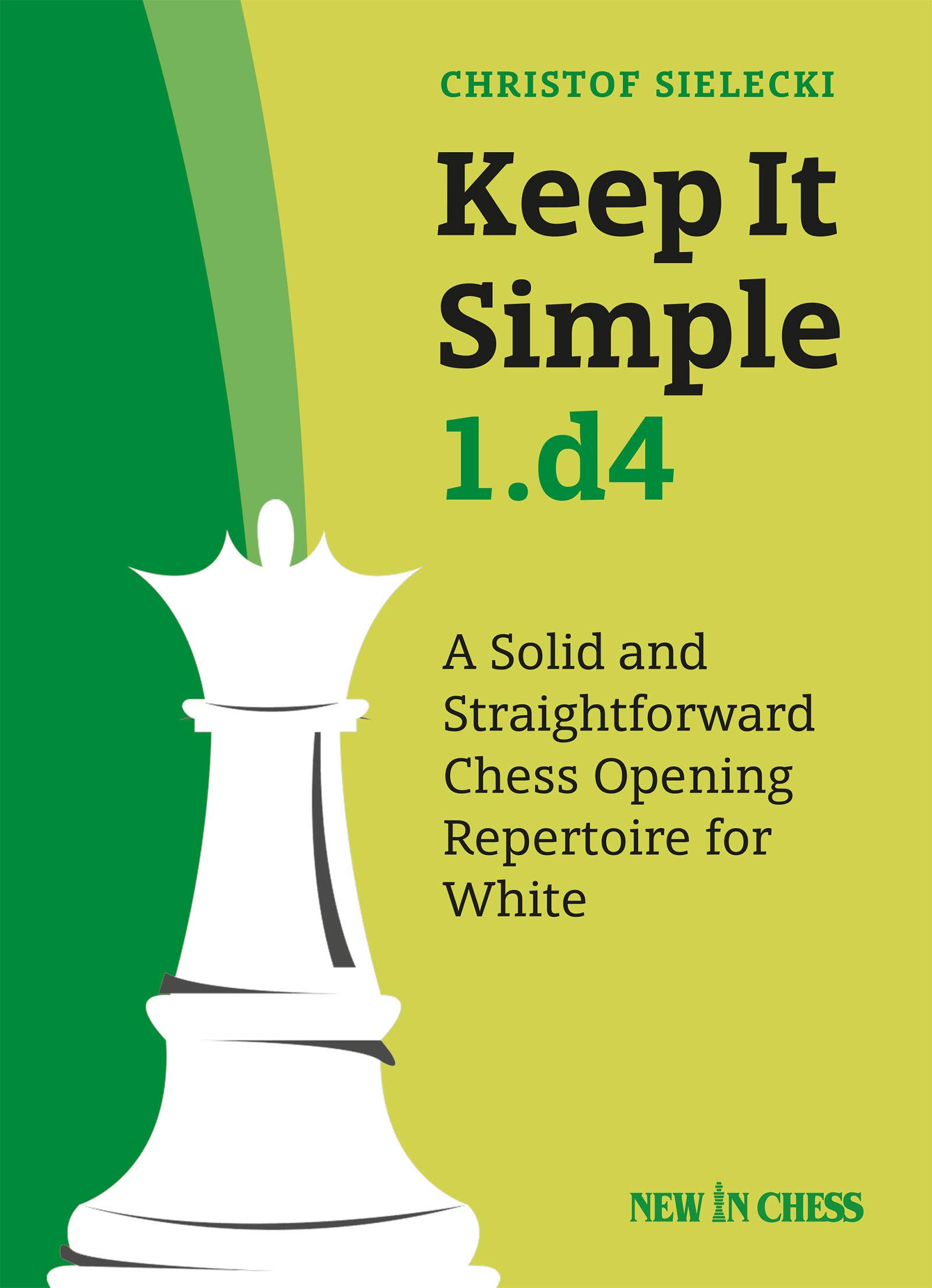
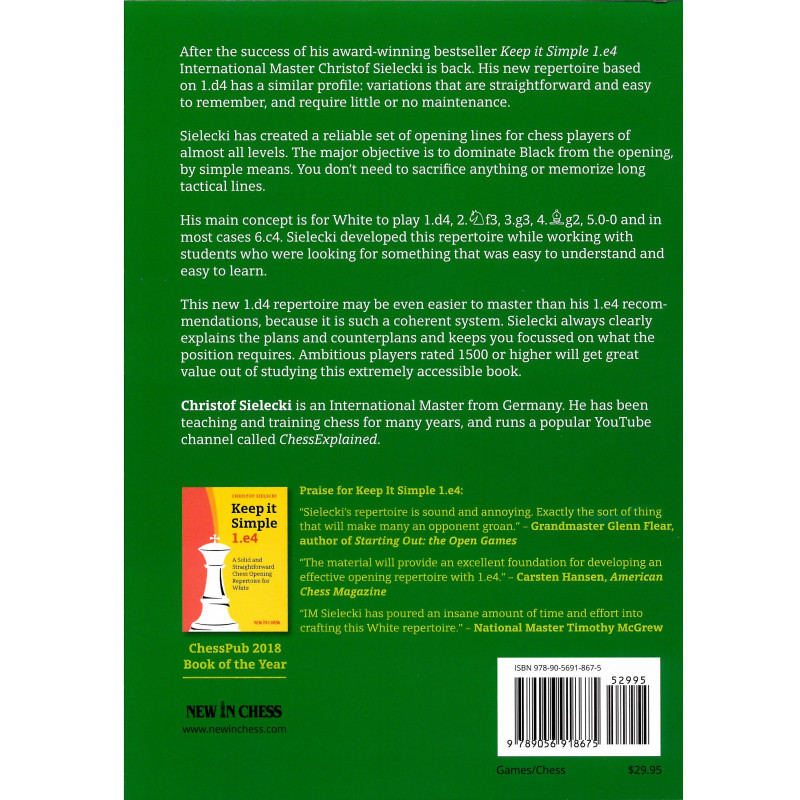
After the success of his award-winning book ‘Keep it Simple 1.e4’ International Master Christof Sielecki is back. His new repertoire based on 1.d4 has a similar profile: variations that are straightforward and easy to remember, and require little or no maintenance.
Sielecki has created a reliable set of opening lines for chess players of almost all levels. The major objective is to dominate Black from the opening, by simple means. You don’t need to sacrifice anything or memorize long tactical lines.
His main concept is for White to play 1.d4, 2.Nf3, 3.g3, 4.Bg2, 5.0-0 and in most cases 6.c4. Sielecki developed this repertoire while working with students who were looking for something that was easy to understand and easy to learn.
This new 1.d4 repertoire may be even easier to master than his 1.e4 recommendations, because it is such a coherent system. Sielecki always clearly explains the plans and counterplans and keeps you focused on what the position requires. Ambitious players rated 1500 or higher will get great value out of studying this extremely accessible book.
International Master Christof Sielecki
So, what is Keep it Simple 1.d4 about ?
This is a weighty (427 pages) tome advocating a repertoire for white based on a “delayed Catalan” development approach against almost any line that black chooses.
Originally the content was provided on the popular training site Chessable. Its popularity caused New in Chess to publish in paper format. See Chessable version
From the successful series by Boris Avrukh (and many others) we know that the conventional Catalan System (1.d4, 2.c4, 3.g3) is a highly respected opening system played at the very highest levels by the worlds top players. So, a normal Catalan would see
appear fairly promptly allowing Black various options that White might like to avoid.
By delaying c4 to say move 6 then White is denying Black some of these sharper continuations and maybe allowing White to focus more on middlegame plans rather than engaging in theoretical skirmishes at move 2, 3, 4, 5 or even.
This is the kind of opening philosophy that has encouraged the London System (and the Colle System before that) “pandemic” to dominate club chess : “We show a system that allows you to get your pieces onto sensible squares without allowing your opponent to distract you”. Of course this is a gross over simplification but many club players want an easy life !
So, something typical might be :
where White’s last move was 6.c4
which is covered in chapter 8 and 9 depending if Black captures on c4.
There is one major difference with the approach Sielecki suggests in that we get to a principled set-up via a slower move order.
The book is divided into four main parts as follows :
Black’s …g7-g6 based set-ups : 1.d4 Nf6 2.Nf5 g6 3.g3
Black’s flexible set-ups : 1.d4 Nf6 2.Nf3 e6 3.g3
Black’s sharp and offbeat defences
The author states he has three “KIS” guidelines :
The chosen lines are simple to learn;
It must be possible to find your way if you forget your lines;
Choose lines that may not be most critical, but uncomfortable for the opponent
All the usual (and many unusual) structures from Black are given a detailed treatment :
Chigorin, Tarrasch, Grunfeld, King’s Indian, various forms of Benoni, Modern, Queen’s Indian, Benko b5 ideas, Dutch, Old Indian, Wade Defence and other odds and ends.
An interesting comment we noted elsewhere was from IM John Donaldson : “A worthy follow-up with the author achieving the near impossible in carving out a cohesive repertoire based on 1.d4 2.Nf3 and 3.g3 against all but a handful of Black replies. The most amazing magic trick is how the author makes the Slav and Queens Gambit Accepted disappear – namely by adopting the sequence 1.d4 d5 2.Nf3 Nf6 3.g3. This reviewer gives two thumbs up for for Keep It Simple 1.d4. It is full of interesting variations and ideas for players rated 2200 on up who are looking for a positionally oriented repertoire that is not overly theoretical.”
and “As promised, the repertoire is simple, but not so simple that it is not of practical value. IM Sielecki has taken great pains to research the material carefully and package it into a repertoire that is relatively consistent throughout.”–Carsten Hansen “American Chess Magazine ”
and “I like this particular repertoire very much as it’s one which could probably hold the reader in good stead for many years to come. His introductions, conclusions and textual explanations are instructive and ones that a human can readily appreciate, learn from and understand. As I think that I should keep my advice ‘simple’, then I would say ‘just get it’!”–Glenn Flear, Grandmaster “Yearbook 134”
So, who what is the most suitable audience for this book ? We would say that a club player of 2000 plus who wishes to upgrade their white opening into a Queen’s Gambit style structure would enjoy the content. Maybe they have been playing the London, Colle, Stonewall or Veresov systems and want to progress their chess : this book is ideal for that upgrade. It is also good for those who play a conventional move order looking for a more positional repertoire.
As a bonus for the observant, this book provides material for those wishing to kick-off with 1.Nf3 although you will need to deal with 1.Nf3 c5 of course !
As with every recent New in Chess publication high quality paper is used and the printing is clear. The book can easily be laid flat next to the board and does not require weights to prevent it from “self-closing” (a particular bugbear of ours !). Each diagram is clear and the instructional text is (mostly !) typeset in two column format, which, we find, enables the reader to maintain their place easily. Figurine algebraic notation is used throughout and the diagrams are placed adjacent to the relevant text.
At the rear is the customary detailed Index of Variations and following that there is an Index of Players where the numbers refer to pages.
In summary this book provides a pragmatic and positional repertoire for White against most of the all the commonly encountered responses to 1.d4 and 2.Nf3, 3.g3 and an eventual c4. There is a host of interesting new and dangerous ideas that help you fight for the whole point with the white pieces : recommended !
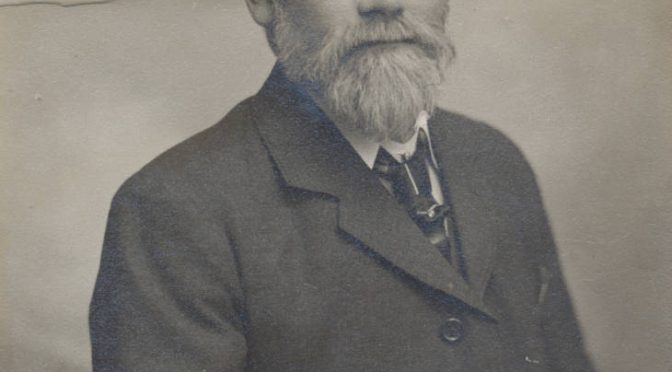
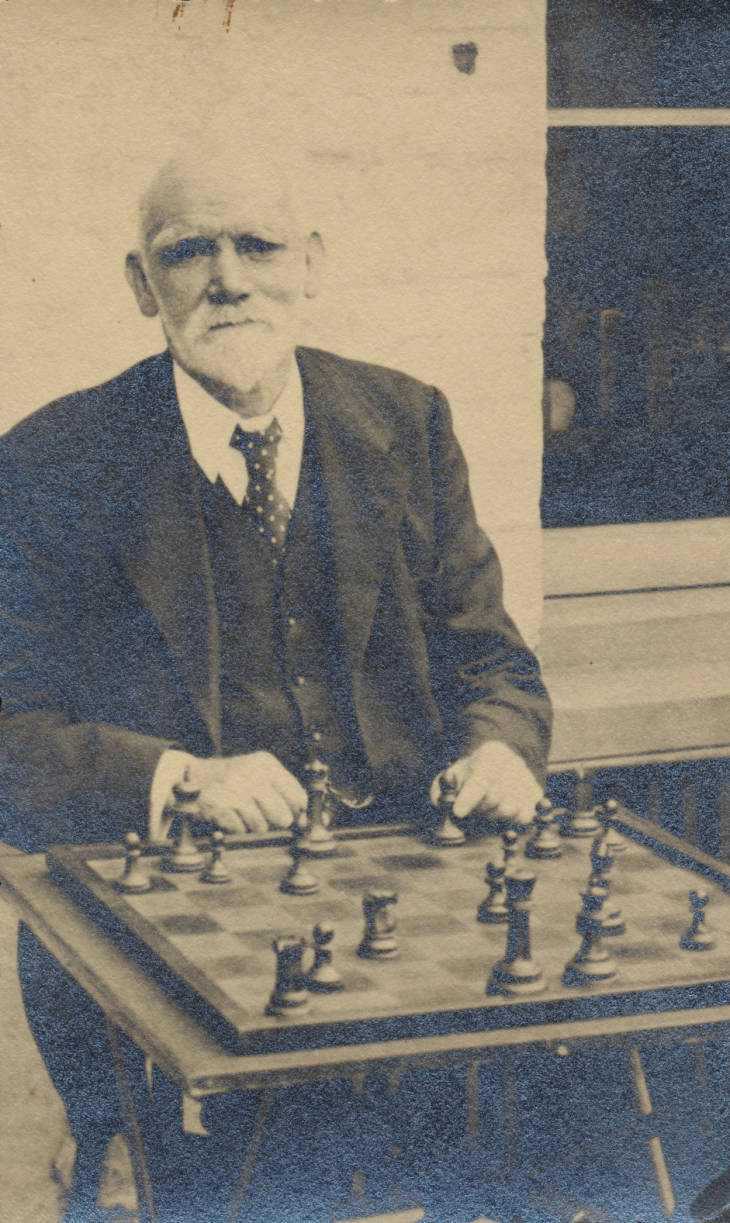
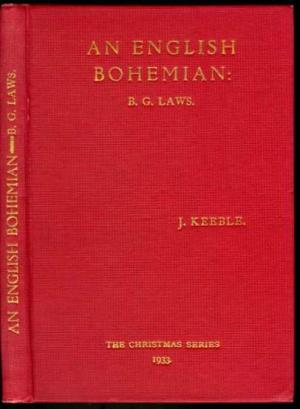
We remember John Frederick Keeble who passed away on February 19th 1939
From The Oxford Companion to Chess by Hooper & Whyld :
Problemist and chronicler who lived in Norwich all his life. He edited the chess column of the Norwich Mercury from 1902 lo 1912, contributed many significant articles elsewhere, investigated a number of chess questions, and established the burial place of several great players and arranged the tending of their graves. He lived at only two addresses for 73 years, worked for the railway company for 53 years, and was a member of the Norfolk and Norwich chess dub for 61 consecutive years. Winner of the club championship in 1884, he did not compete again until 1933 and then won it three years in succession.
We focus on the British Chess Scene Past & Present!
This website uses cookies to improve your experience. We'll assume you're ok with this, but you can opt-out if you wish. Cookie settingsACCEPT
Privacy & Cookies Policy
Privacy Overview
This website uses cookies to improve your experience while you navigate through the website. Out of these cookies, the cookies that are categorized as necessary are stored on your browser as they are as essential for the working of basic functionalities of the website. We also use third-party cookies that help us analyze and understand how you use this website. These cookies will be stored in your browser only with your consent. You also have the option to opt-out of these cookies. But opting out of some of these cookies may have an effect on your browsing experience.
Necessary cookies are absolutely essential for the website to function properly. This category only includes cookies that ensures basic functionalities and security features of the website. These cookies do not store any personal information.

 Save as PDF