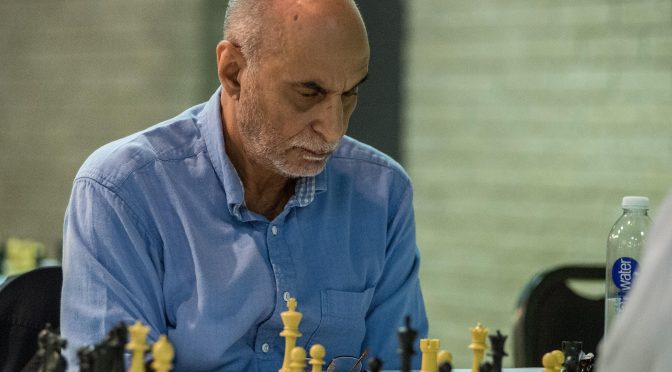
He plays for Cavendish, Hendon and 4NCL MK Phoenix.
He gained his FM title in 1982.
His peak rating of 2335 was achieved in January, 1980.
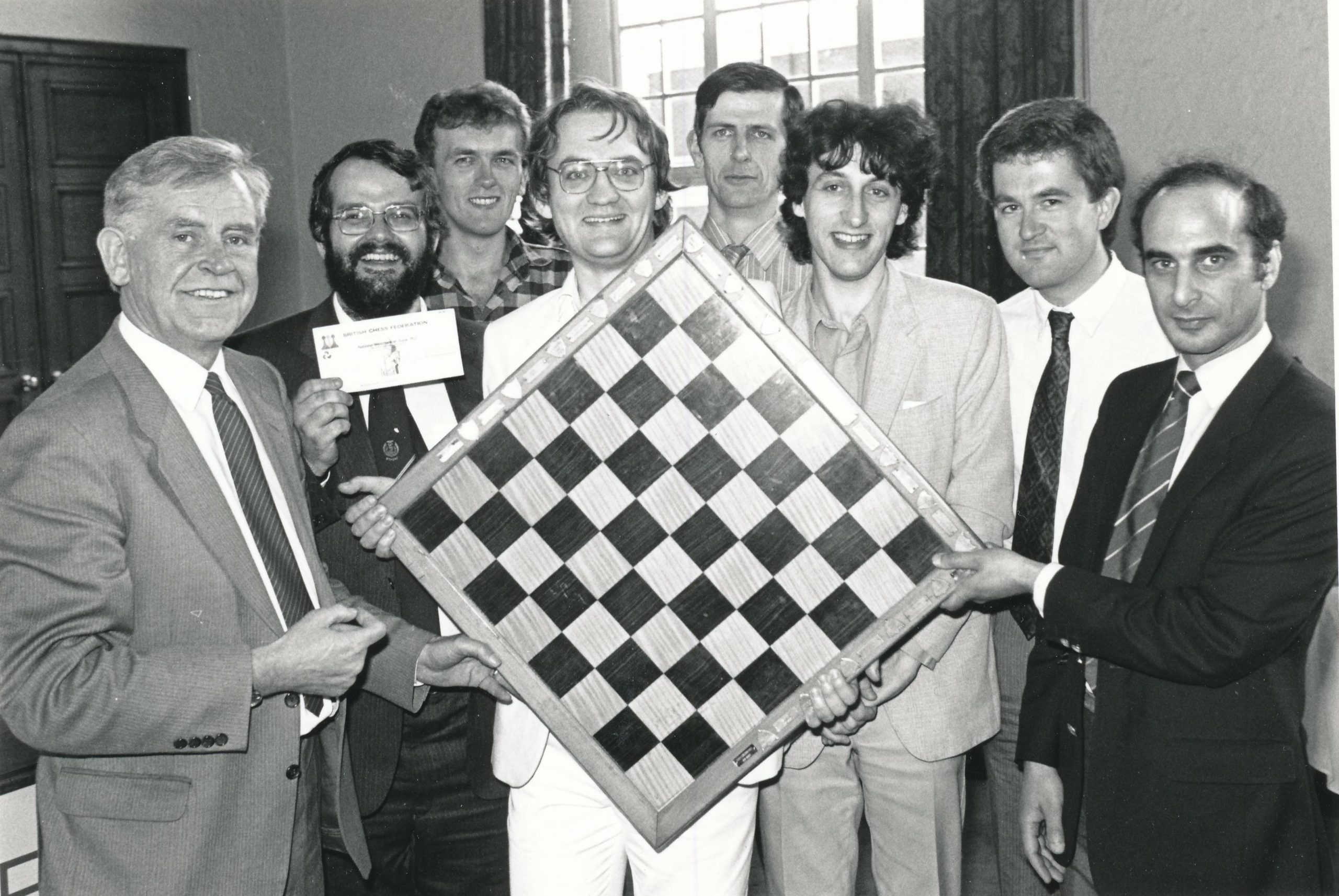
David Friedgood (far right) and a victorious Wood Green team. Trophy presented by Magnus Magnusson
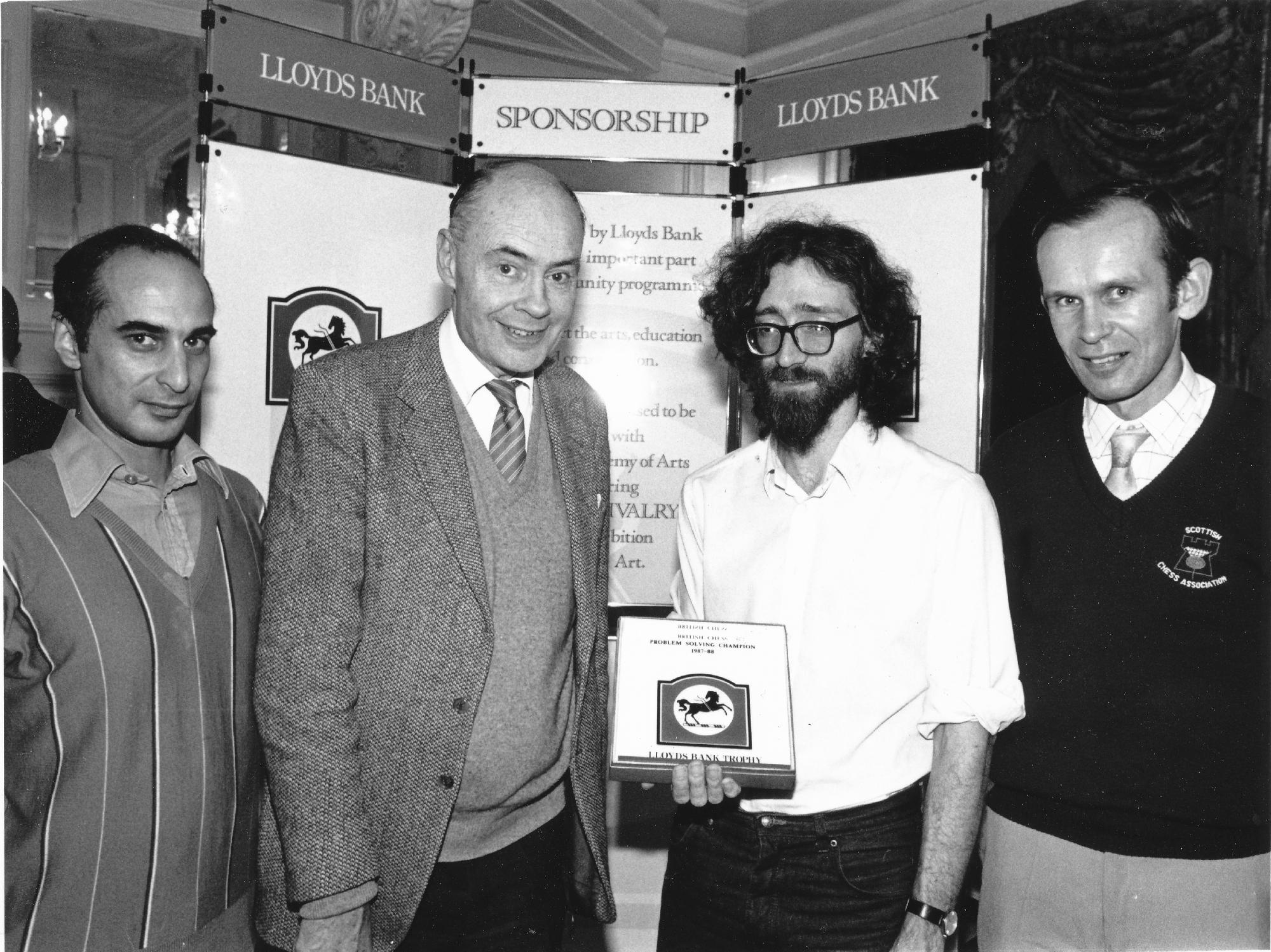
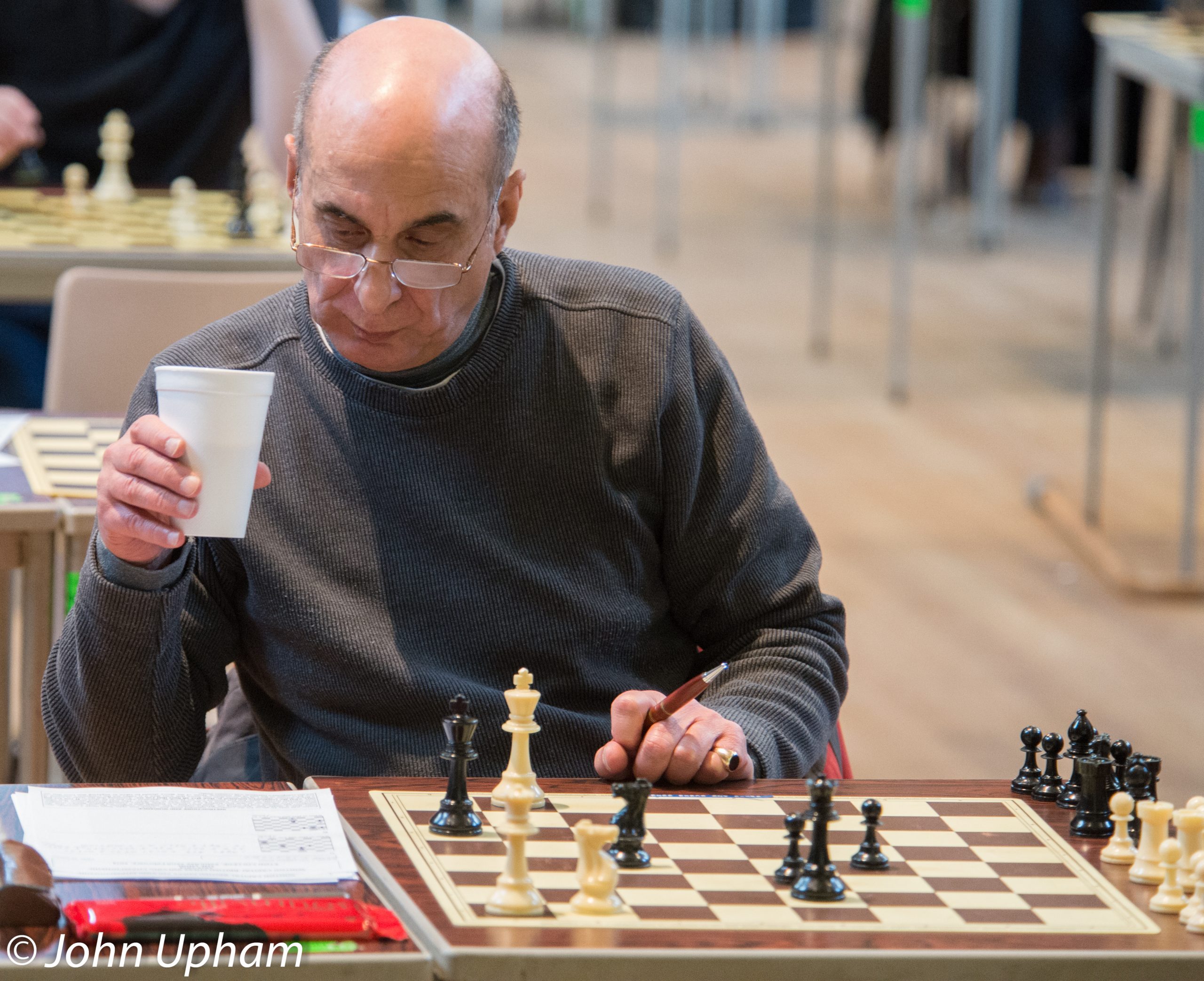
David Friedgood at a Lloyds Bank problem solving event with Sir Jeremy Morse, Jonathan Mestel and ?FM David Friedgood at the 2014 Winton Capital Problem Solving Championship at Eton College
He plays for Cavendish, Hendon and 4NCL MK Phoenix.
He gained his FM title in 1982.
His peak rating of 2335 was achieved in January, 1980.
David Friedgood (far right) and a victorious Wood Green team. Trophy presented by Magnus Magnusson
David Friedgood at a Lloyds Bank problem solving event with Sir Jeremy Morse, Jonathan Mestel and ?FM David Friedgood at the 2014 Winton Capital Problem Solving Championship at Eton College
He plays for Cavendish, Hendon and 4NCL MK Phoenix.
He gained his FM title in 1982.
His peak rating of 2335 was achieved in January, 1980.
David Friedgood (far right) and a victorious Wood Green team. Trophy presented by Magnus Magnusson
David Friedgood at a Lloyds Bank problem solving event with Sir Jeremy Morse, Jonathan Mestel and ?FM David Friedgood at the 2014 Winton Capital Problem Solving Championship at Eton College
He plays for Cavendish, Hendon and 4NCL MK Phoenix.
He gained his FM title in 1982.
His peak rating of 2335 was achieved in January, 1980.
David Friedgood (far right) and a victorious Wood Green team. Trophy presented by Magnus Magnusson
David Friedgood at a Lloyds Bank problem solving event with Sir Jeremy Morse, Jonathan Mestel and ?FM David Friedgood at the 2014 Winton Capital Problem Solving Championship at Eton College
He plays for Cavendish, Hendon and 4NCL MK Phoenix.
He gained his FM title in 1982.
His peak rating of 2335 was achieved in January, 1980.
David Friedgood (far right) and a victorious Wood Green team. Trophy presented by Magnus Magnusson
David Friedgood at a Lloyds Bank problem solving event with Sir Jeremy Morse, Jonathan Mestel and ?FM David Friedgood at the 2014 Winton Capital Problem Solving Championship at Eton College
BCN Remembers Captain William Davies Evans (27-i-1790 03-viii-1872)
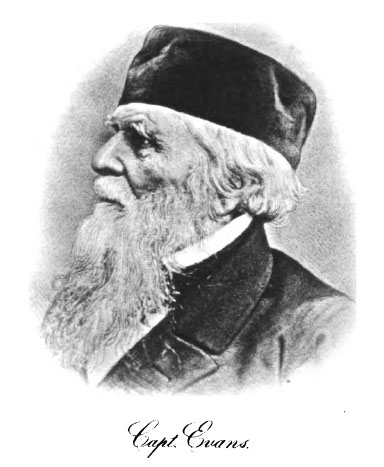
Captain William Davies Evans (27-i-1790 03-viii-1872)
From The Oxford Companion to Chess (OUP, 1984) by Hooper & Whyld :
“Inventor of the Evans gambit, for about half a century one of the most popular attacking weapons. He was born in (Musland Farm in the parish of Saint Dogwells,) Pembroke, Wales, went to sea at the age of 14, was employed by the Postal Department from about 1815, and rose to the rank of captain four years later. In 1824, soon after taking command of the first Royal Mail steam packet to sail from Milford Haven to Waterford, and while aboard, he invented his gambit. Evans was a keen player. He gathered a small chess circle in Waterford, and when on leave in England played chess in London, notably in 1826 when he showed his gambit to Lewis and McDonnell, and in 1838 when he played a long series of games with Staunton at the Westminster Chess Club. In Jan. 1840 he was pensioned off on account of ill-health. He went to Greece, became captain of a steamer that sailed the Mediterranean, and returned to London at the end of 1842. During the next 13 years there are several accounts of his presence in London, and then he settled abroad. He died and was buried in Ostend,
Evans claimed to have solved the three pawns problem (See below) , which, however, had already been solved by others. His claim to the invention of tri-coloured lighting for ships has not been verified independently, although he is known to have investigated the subject. For this invention he states that the Tsar of Russia gave him a gold chronometer, and that he also received money. For a more detailed life of Captain Evans see British Chess Magazine, 1928, pp, 6-18.”
The Evans Gambit is a variation of the Giuoco Piano or Italian Game :
When Evans originally devised his gambit the move order was slightly different :
in which White sacrifices the b-pawn for increased central control and development viz :
From The Encyclopedia of Chess (Robert Hale, 1970 & 1976) by Anne Sunnucks :
“Inventor of the Evans Gambit, an opening described by a player in the last century as ‘A yellow fever attack : if you live through the initial stages and avoid any carelessness that may bring on a relapse, you will come out alright’.
Captain Evans discovered the gambit in about 1824. It was a favourite opening during the last century and was adopted by a number of leading players including La Bourdonnais and Morphy.
For some years Commander in H.M. Royal Mail Packet Service on the Milford and Waterford station, Captain Evans later became Commander in the P.& O. Company’s service and agent for the Royal Mail Steampacket Company, Port Grande. On retirement he lives for many years in Holland and Belgium.
The story is told of how, in 1870, the Grand Duke Nicholas of Russia, brother of the Tsar, was visiting Bruges when he heard that the inventor of the Evans Gambit was living in Ostend. Being a keen chess player he invited Evans to play a game. When Evans had won, the Grand Duke turned to his adversary and said : ‘I believe you invented the Evans Gambit ?’, ‘Yes’ replied Evans ‘and it’s not the only thing I’ve invented for which you have not paid me.’ ‘What’s the other?’ asked the Grand Duke.
Evans then explained that he was the inventor of the ship’s lights which were being used by the Russian Navy, in which the Grand Duke held the rank of Admiral. Several months later Evans was invited to the Russian Consulate in Ostend, where he was handed a letter from the Grand Duke, a gold chronometer, a gold chain and a draft of money, ostensibly in payment for the Russia’s rights to use the captain’s invention in her ships. ”
Evans analyzed the “Little Game of Chess” (an endgame composition involving only two kings with three pawns each)
to independently discover that it actually won for the player who moves first, not drawn as had been believed for over a hundred years.
From The Encyclopedia of Chess (Batsford, 1977) by Harry Golombek we have :
“After his retirement Evans went to live abroad and eventually found a haven is Ostend and there, ill, and almost blind and in very straightened circumstances, he dictated a letter on 22 March 1871, which was published in the Gentlemen’s Journal supplement for June 1872, along with an appeal for him organised by George Walker. The letter gives the authentic facts of his life and is worth quoting in full, if only to refute various unfounded reports about a meeting with the Tsar’s brother, or according to that rich source of misinformation, the Rev GA MacDonnell, that the Evans Gambit was discovered off the coast of Africa by a middle-aged lieutenant in the Royal Navy -perhaps the reverend gentleman was confusing Waterford with the Canary Islands.
The letter runs :
Williams Davies Evans is a native of Pembrokeshire, South Wales, and was born on 27 January 1790. He commenced a naval career at the age of fourteen. He was about twenty-eight years of age when he first learnt the moves of the game of Chess. Having the advantage of frequent practise with Lieut H. Wilson, R.N., who was a player of some reputation in his time, beside corresponding on the subject of the game with the late Mr. W. Lewis, and also with George Walker, the able Chess Editor of Bell’s Life , he made a rapid progress in the game. Captain Evans received at first the odds of a Rook from Lieut. Wilson. After a continuance of play for some years, the odds were greatly reduced, until ultimately Captain Evans succeeded in defeating his formidable antagonist playing even.
About the year 1824, being then in command of a Government Mail Steamer, the passages between Milford Haven and Waterford were favourable to the study of the game of Chess and at this time he invented the Gambit, which bears his name. The idea occurred to him while studying a narration of Giuoco Piano in Sarratts’s Treatise on Chess.
Captain Evans was the first who gave to the world a true solution of that very difficult end game, the King and three Pawns unmoved against King and three Pawns also unmoved. This position was handed down to us through a period of some centuries as a drawn game, but Captain Evans proved that the first player can always win.
Captain Evans acquired some celebrity as “Inventor of the System of Tri-Coloured Lights for Ships to Prevent Collisions at Night”, which has been adopted by all nations possessing a marine. For this invention the English Government awarded him the sum of £1,500 , and the Czar of Russia a gold pocket chronometer, value £160, together with a donation of £200.
The subscription that amounted to over £200 was too late. He died in 1872 and was buried in Ostend where his grave bears the inscription :
To the sacred memory of William Davies Evans, formerly Commander in the Post Office and Peninsular and Oriental Steam Services, Superintendent In the Royal Mail Shipping Company, and inventor of the system of tri-coloured light for shipping. Also well known in the Chess World as the author of the Evans Gambit
BCN Remembers Captain William Davies Evans (27-i-1790 03-viii-1872)
Captain William Davies Evans (27-i-1790 03-viii-1872)
From The Oxford Companion to Chess (OUP, 1984) by Hooper & Whyld :
“Inventor of the Evans gambit, for about half a century one of the most popular attacking weapons. He was born in (Musland Farm in the parish of Saint Dogwells,) Pembroke, Wales, went to sea at the age of 14, was employed by the Postal Department from about 1815, and rose to the rank of captain four years later. In 1824, soon after taking command of the first Royal Mail steam packet to sail from Milford Haven to Waterford, and while aboard, he invented his gambit. Evans was a keen player. He gathered a small chess circle in Waterford, and when on leave in England played chess in London, notably in 1826 when he showed his gambit to Lewis and McDonnell, and in 1838 when he played a long series of games with Staunton at the Westminster Chess Club. In Jan. 1840 he was pensioned off on account of ill-health. He went to Greece, became captain of a steamer that sailed the Mediterranean, and returned to London at the end of 1842. During the next 13 years there are several accounts of his presence in London, and then he settled abroad. He died and was buried in Ostend,
Evans claimed to have solved the three pawns problem (See below) , which, however, had already been solved by others. His claim to the invention of tri-coloured lighting for ships has not been verified independently, although he is known to have investigated the subject. For this invention he states that the Tsar of Russia gave him a gold chronometer, and that he also received money. For a more detailed life of Captain Evans see British Chess Magazine, 1928, pp, 6-18.”
The Evans Gambit is a variation of the Giuoco Piano or Italian Game :
When Evans originally devised his gambit the move order was slightly different :
in which White sacrifices the b-pawn for increased central control and development viz :
From The Encyclopedia of Chess (Robert Hale, 1970 & 1976) by Anne Sunnucks :
“Inventor of the Evans Gambit, an opening described by a player in the last century as ‘A yellow fever attack : if you live through the initial stages and avoid any carelessness that may bring on a relapse, you will come out alright’.
Captain Evans discovered the gambit in about 1824. It was a favourite opening during the last century and was adopted by a number of leading players including La Bourdonnais and Morphy.
For some years Commander in H.M. Royal Mail Packet Service on the Milford and Waterford station, Captain Evans later became Commander in the P.& O. Company’s service and agent for the Royal Mail Steampacket Company, Port Grande. On retirement he lives for many years in Holland and Belgium.
The story is told of how, in 1870, the Grand Duke Nicholas of Russia, brother of the Tsar, was visiting Bruges when he heard that the inventor of the Evans Gambit was living in Ostend. Being a keen chess player he invited Evans to play a game. When Evans had won, the Grand Duke turned to his adversary and said : ‘I believe you invented the Evans Gambit ?’, ‘Yes’ replied Evans ‘and it’s not the only thing I’ve invented for which you have not paid me.’ ‘What’s the other?’ asked the Grand Duke.
Evans then explained that he was the inventor of the ship’s lights which were being used by the Russian Navy, in which the Grand Duke held the rank of Admiral. Several months later Evans was invited to the Russian Consulate in Ostend, where he was handed a letter from the Grand Duke, a gold chronometer, a gold chain and a draft of money, ostensibly in payment for the Russia’s rights to use the captain’s invention in her ships. ”
Evans analyzed the “Little Game of Chess” (an endgame composition involving only two kings with three pawns each)
to independently discover that it actually won for the player who moves first, not drawn as had been believed for over a hundred years.
From The Encyclopedia of Chess (Batsford, 1977) by Harry Golombek we have :
“After his retirement Evans went to live abroad and eventually found a haven is Ostend and there, ill, and almost blind and in very straightened circumstances, he dictated a letter on 22 March 1871, which was published in the Gentlemen’s Journal supplement for June 1872, along with an appeal for him organised by George Walker. The letter gives the authentic facts of his life and is worth quoting in full, if only to refute various unfounded reports about a meeting with the Tsar’s brother, or according to that rich source of misinformation, the Rev GA MacDonnell, that the Evans Gambit was discovered off the coast of Africa by a middle-aged lieutenant in the Royal Navy -perhaps the reverend gentleman was confusing Waterford with the Canary Islands.
The letter runs :
Williams Davies Evans is a native of Pembrokeshire, South Wales, and was born on 27 January 1790. He commenced a naval career at the age of fourteen. He was about twenty-eight years of age when he first learnt the moves of the game of Chess. Having the advantage of frequent practise with Lieut H. Wilson, R.N., who was a player of some reputation in his time, beside corresponding on the subject of the game with the late Mr. W. Lewis, and also with George Walker, the able Chess Editor of Bell’s Life , he made a rapid progress in the game. Captain Evans received at first the odds of a Rook from Lieut. Wilson. After a continuance of play for some years, the odds were greatly reduced, until ultimately Captain Evans succeeded in defeating his formidable antagonist playing even.
About the year 1824, being then in command of a Government Mail Steamer, the passages between Milford Haven and Waterford were favourable to the study of the game of Chess and at this time he invented the Gambit, which bears his name. The idea occurred to him while studying a narration of Giuoco Piano in Sarratts’s Treatise on Chess.
Captain Evans was the first who gave to the world a true solution of that very difficult end game, the King and three Pawns unmoved against King and three Pawns also unmoved. This position was handed down to us through a period of some centuries as a drawn game, but Captain Evans proved that the first player can always win.
Captain Evans acquired some celebrity as “Inventor of the System of Tri-Coloured Lights for Ships to Prevent Collisions at Night”, which has been adopted by all nations possessing a marine. For this invention the English Government awarded him the sum of £1,500 , and the Czar of Russia a gold pocket chronometer, value £160, together with a donation of £200.
The subscription that amounted to over £200 was too late. He died in 1872 and was buried in Ostend where his grave bears the inscription :
To the sacred memory of William Davies Evans, formerly Commander in the Post Office and Peninsular and Oriental Steam Services, Superintendent In the Royal Mail Shipping Company, and inventor of the system of tri-coloured light for shipping. Also well known in the Chess World as the author of the Evans Gambit
BCN Remembers Captain William Davies Evans (27-i-1790 03-viii-1872)
Captain William Davies Evans (27-i-1790 03-viii-1872)
From The Oxford Companion to Chess (OUP, 1984) by Hooper & Whyld :
“Inventor of the Evans gambit, for about half a century one of the most popular attacking weapons. He was born in (Musland Farm in the parish of Saint Dogwells,) Pembroke, Wales, went to sea at the age of 14, was employed by the Postal Department from about 1815, and rose to the rank of captain four years later. In 1824, soon after taking command of the first Royal Mail steam packet to sail from Milford Haven to Waterford, and while aboard, he invented his gambit. Evans was a keen player. He gathered a small chess circle in Waterford, and when on leave in England played chess in London, notably in 1826 when he showed his gambit to Lewis and McDonnell, and in 1838 when he played a long series of games with Staunton at the Westminster Chess Club. In Jan. 1840 he was pensioned off on account of ill-health. He went to Greece, became captain of a steamer that sailed the Mediterranean, and returned to London at the end of 1842. During the next 13 years there are several accounts of his presence in London, and then he settled abroad. He died and was buried in Ostend,
Evans claimed to have solved the three pawns problem (See below) , which, however, had already been solved by others. His claim to the invention of tri-coloured lighting for ships has not been verified independently, although he is known to have investigated the subject. For this invention he states that the Tsar of Russia gave him a gold chronometer, and that he also received money. For a more detailed life of Captain Evans see British Chess Magazine, 1928, pp, 6-18.”
The Evans Gambit is a variation of the Giuoco Piano or Italian Game :
When Evans originally devised his gambit the move order was slightly different :
in which White sacrifices the b-pawn for increased central control and development viz :
From The Encyclopedia of Chess (Robert Hale, 1970 & 1976) by Anne Sunnucks :
“Inventor of the Evans Gambit, an opening described by a player in the last century as ‘A yellow fever attack : if you live through the initial stages and avoid any carelessness that may bring on a relapse, you will come out alright’.
Captain Evans discovered the gambit in about 1824. It was a favourite opening during the last century and was adopted by a number of leading players including La Bourdonnais and Morphy.
For some years Commander in H.M. Royal Mail Packet Service on the Milford and Waterford station, Captain Evans later became Commander in the P.& O. Company’s service and agent for the Royal Mail Steampacket Company, Port Grande. On retirement he lives for many years in Holland and Belgium.
The story is told of how, in 1870, the Grand Duke Nicholas of Russia, brother of the Tsar, was visiting Bruges when he heard that the inventor of the Evans Gambit was living in Ostend. Being a keen chess player he invited Evans to play a game. When Evans had won, the Grand Duke turned to his adversary and said : ‘I believe you invented the Evans Gambit ?’, ‘Yes’ replied Evans ‘and it’s not the only thing I’ve invented for which you have not paid me.’ ‘What’s the other?’ asked the Grand Duke.
Evans then explained that he was the inventor of the ship’s lights which were being used by the Russian Navy, in which the Grand Duke held the rank of Admiral. Several months later Evans was invited to the Russian Consulate in Ostend, where he was handed a letter from the Grand Duke, a gold chronometer, a gold chain and a draft of money, ostensibly in payment for the Russia’s rights to use the captain’s invention in her ships. ”
Evans analyzed the “Little Game of Chess” (an endgame composition involving only two kings with three pawns each)
to independently discover that it actually won for the player who moves first, not drawn as had been believed for over a hundred years.
From The Encyclopedia of Chess (Batsford, 1977) by Harry Golombek we have :
“After his retirement Evans went to live abroad and eventually found a haven is Ostend and there, ill, and almost blind and in very straightened circumstances, he dictated a letter on 22 March 1871, which was published in the Gentlemen’s Journal supplement for June 1872, along with an appeal for him organised by George Walker. The letter gives the authentic facts of his life and is worth quoting in full, if only to refute various unfounded reports about a meeting with the Tsar’s brother, or according to that rich source of misinformation, the Rev GA MacDonnell, that the Evans Gambit was discovered off the coast of Africa by a middle-aged lieutenant in the Royal Navy -perhaps the reverend gentleman was confusing Waterford with the Canary Islands.
The letter runs :
Williams Davies Evans is a native of Pembrokeshire, South Wales, and was born on 27 January 1790. He commenced a naval career at the age of fourteen. He was about twenty-eight years of age when he first learnt the moves of the game of Chess. Having the advantage of frequent practise with Lieut H. Wilson, R.N., who was a player of some reputation in his time, beside corresponding on the subject of the game with the late Mr. W. Lewis, and also with George Walker, the able Chess Editor of Bell’s Life , he made a rapid progress in the game. Captain Evans received at first the odds of a Rook from Lieut. Wilson. After a continuance of play for some years, the odds were greatly reduced, until ultimately Captain Evans succeeded in defeating his formidable antagonist playing even.
About the year 1824, being then in command of a Government Mail Steamer, the passages between Milford Haven and Waterford were favourable to the study of the game of Chess and at this time he invented the Gambit, which bears his name. The idea occurred to him while studying a narration of Giuoco Piano in Sarratts’s Treatise on Chess.
Captain Evans was the first who gave to the world a true solution of that very difficult end game, the King and three Pawns unmoved against King and three Pawns also unmoved. This position was handed down to us through a period of some centuries as a drawn game, but Captain Evans proved that the first player can always win.
Captain Evans acquired some celebrity as “Inventor of the System of Tri-Coloured Lights for Ships to Prevent Collisions at Night”, which has been adopted by all nations possessing a marine. For this invention the English Government awarded him the sum of £1,500 , and the Czar of Russia a gold pocket chronometer, value £160, together with a donation of £200.
The subscription that amounted to over £200 was too late. He died in 1872 and was buried in Ostend where his grave bears the inscription :
To the sacred memory of William Davies Evans, formerly Commander in the Post Office and Peninsular and Oriental Steam Services, Superintendent In the Royal Mail Shipping Company, and inventor of the system of tri-coloured light for shipping. Also well known in the Chess World as the author of the Evans Gambit
BCN Remembers Captain William Davies Evans (27-i-1790 03-viii-1872)
Captain William Davies Evans (27-i-1790 03-viii-1872)
From The Oxford Companion to Chess (OUP, 1984) by Hooper & Whyld :
“Inventor of the Evans gambit, for about half a century one of the most popular attacking weapons. He was born in (Musland Farm in the parish of Saint Dogwells,) Pembroke, Wales, went to sea at the age of 14, was employed by the Postal Department from about 1815, and rose to the rank of captain four years later. In 1824, soon after taking command of the first Royal Mail steam packet to sail from Milford Haven to Waterford, and while aboard, he invented his gambit. Evans was a keen player. He gathered a small chess circle in Waterford, and when on leave in England played chess in London, notably in 1826 when he showed his gambit to Lewis and McDonnell, and in 1838 when he played a long series of games with Staunton at the Westminster Chess Club. In Jan. 1840 he was pensioned off on account of ill-health. He went to Greece, became captain of a steamer that sailed the Mediterranean, and returned to London at the end of 1842. During the next 13 years there are several accounts of his presence in London, and then he settled abroad. He died and was buried in Ostend,
Evans claimed to have solved the three pawns problem (See below) , which, however, had already been solved by others. His claim to the invention of tri-coloured lighting for ships has not been verified independently, although he is known to have investigated the subject. For this invention he states that the Tsar of Russia gave him a gold chronometer, and that he also received money. For a more detailed life of Captain Evans see British Chess Magazine, 1928, pp, 6-18.”
The Evans Gambit is a variation of the Giuoco Piano or Italian Game :
When Evans originally devised his gambit the move order was slightly different :
in which White sacrifices the b-pawn for increased central control and development viz :
From The Encyclopedia of Chess (Robert Hale, 1970 & 1976) by Anne Sunnucks :
“Inventor of the Evans Gambit, an opening described by a player in the last century as ‘A yellow fever attack : if you live through the initial stages and avoid any carelessness that may bring on a relapse, you will come out alright’.
Captain Evans discovered the gambit in about 1824. It was a favourite opening during the last century and was adopted by a number of leading players including La Bourdonnais and Morphy.
For some years Commander in H.M. Royal Mail Packet Service on the Milford and Waterford station, Captain Evans later became Commander in the P.& O. Company’s service and agent for the Royal Mail Steampacket Company, Port Grande. On retirement he lives for many years in Holland and Belgium.
The story is told of how, in 1870, the Grand Duke Nicholas of Russia, brother of the Tsar, was visiting Bruges when he heard that the inventor of the Evans Gambit was living in Ostend. Being a keen chess player he invited Evans to play a game. When Evans had won, the Grand Duke turned to his adversary and said : ‘I believe you invented the Evans Gambit ?’, ‘Yes’ replied Evans ‘and it’s not the only thing I’ve invented for which you have not paid me.’ ‘What’s the other?’ asked the Grand Duke.
Evans then explained that he was the inventor of the ship’s lights which were being used by the Russian Navy, in which the Grand Duke held the rank of Admiral. Several months later Evans was invited to the Russian Consulate in Ostend, where he was handed a letter from the Grand Duke, a gold chronometer, a gold chain and a draft of money, ostensibly in payment for the Russia’s rights to use the captain’s invention in her ships. ”
Evans analyzed the “Little Game of Chess” (an endgame composition involving only two kings with three pawns each)
to independently discover that it actually won for the player who moves first, not drawn as had been believed for over a hundred years.
From The Encyclopedia of Chess (Batsford, 1977) by Harry Golombek we have :
“After his retirement Evans went to live abroad and eventually found a haven is Ostend and there, ill, and almost blind and in very straightened circumstances, he dictated a letter on 22 March 1871, which was published in the Gentlemen’s Journal supplement for June 1872, along with an appeal for him organised by George Walker. The letter gives the authentic facts of his life and is worth quoting in full, if only to refute various unfounded reports about a meeting with the Tsar’s brother, or according to that rich source of misinformation, the Rev GA MacDonnell, that the Evans Gambit was discovered off the coast of Africa by a middle-aged lieutenant in the Royal Navy -perhaps the reverend gentleman was confusing Waterford with the Canary Islands.
The letter runs :
Williams Davies Evans is a native of Pembrokeshire, South Wales, and was born on 27 January 1790. He commenced a naval career at the age of fourteen. He was about twenty-eight years of age when he first learnt the moves of the game of Chess. Having the advantage of frequent practise with Lieut H. Wilson, R.N., who was a player of some reputation in his time, beside corresponding on the subject of the game with the late Mr. W. Lewis, and also with George Walker, the able Chess Editor of Bell’s Life , he made a rapid progress in the game. Captain Evans received at first the odds of a Rook from Lieut. Wilson. After a continuance of play for some years, the odds were greatly reduced, until ultimately Captain Evans succeeded in defeating his formidable antagonist playing even.
About the year 1824, being then in command of a Government Mail Steamer, the passages between Milford Haven and Waterford were favourable to the study of the game of Chess and at this time he invented the Gambit, which bears his name. The idea occurred to him while studying a narration of Giuoco Piano in Sarratts’s Treatise on Chess.
Captain Evans was the first who gave to the world a true solution of that very difficult end game, the King and three Pawns unmoved against King and three Pawns also unmoved. This position was handed down to us through a period of some centuries as a drawn game, but Captain Evans proved that the first player can always win.
Captain Evans acquired some celebrity as “Inventor of the System of Tri-Coloured Lights for Ships to Prevent Collisions at Night”, which has been adopted by all nations possessing a marine. For this invention the English Government awarded him the sum of £1,500 , and the Czar of Russia a gold pocket chronometer, value £160, together with a donation of £200.
The subscription that amounted to over £200 was too late. He died in 1872 and was buried in Ostend where his grave bears the inscription :
To the sacred memory of William Davies Evans, formerly Commander in the Post Office and Peninsular and Oriental Steam Services, Superintendent In the Royal Mail Shipping Company, and inventor of the system of tri-coloured light for shipping. Also well known in the Chess World as the author of the Evans Gambit
BCN Remembers Captain William Davies Evans (27-i-1790 03-viii-1872)
Captain William Davies Evans (27-i-1790 03-viii-1872)
From The Oxford Companion to Chess (OUP, 1984) by Hooper & Whyld :
“Inventor of the Evans gambit, for about half a century one of the most popular attacking weapons. He was born in (Musland Farm in the parish of Saint Dogwells,) Pembroke, Wales, went to sea at the age of 14, was employed by the Postal Department from about 1815, and rose to the rank of captain four years later. In 1824, soon after taking command of the first Royal Mail steam packet to sail from Milford Haven to Waterford, and while aboard, he invented his gambit. Evans was a keen player. He gathered a small chess circle in Waterford, and when on leave in England played chess in London, notably in 1826 when he showed his gambit to Lewis and McDonnell, and in 1838 when he played a long series of games with Staunton at the Westminster Chess Club. In Jan. 1840 he was pensioned off on account of ill-health. He went to Greece, became captain of a steamer that sailed the Mediterranean, and returned to London at the end of 1842. During the next 13 years there are several accounts of his presence in London, and then he settled abroad. He died and was buried in Ostend,
Evans claimed to have solved the three pawns problem (See below) , which, however, had already been solved by others. His claim to the invention of tri-coloured lighting for ships has not been verified independently, although he is known to have investigated the subject. For this invention he states that the Tsar of Russia gave him a gold chronometer, and that he also received money. For a more detailed life of Captain Evans see British Chess Magazine, 1928, pp, 6-18.”
The Evans Gambit is a variation of the Giuoco Piano or Italian Game :
When Evans originally devised his gambit the move order was slightly different :
in which White sacrifices the b-pawn for increased central control and development viz :
From The Encyclopedia of Chess (Robert Hale, 1970 & 1976) by Anne Sunnucks :
“Inventor of the Evans Gambit, an opening described by a player in the last century as ‘A yellow fever attack : if you live through the initial stages and avoid any carelessness that may bring on a relapse, you will come out alright’.
Captain Evans discovered the gambit in about 1824. It was a favourite opening during the last century and was adopted by a number of leading players including La Bourdonnais and Morphy.
For some years Commander in H.M. Royal Mail Packet Service on the Milford and Waterford station, Captain Evans later became Commander in the P.& O. Company’s service and agent for the Royal Mail Steampacket Company, Port Grande. On retirement he lives for many years in Holland and Belgium.
The story is told of how, in 1870, the Grand Duke Nicholas of Russia, brother of the Tsar, was visiting Bruges when he heard that the inventor of the Evans Gambit was living in Ostend. Being a keen chess player he invited Evans to play a game. When Evans had won, the Grand Duke turned to his adversary and said : ‘I believe you invented the Evans Gambit ?’, ‘Yes’ replied Evans ‘and it’s not the only thing I’ve invented for which you have not paid me.’ ‘What’s the other?’ asked the Grand Duke.
Evans then explained that he was the inventor of the ship’s lights which were being used by the Russian Navy, in which the Grand Duke held the rank of Admiral. Several months later Evans was invited to the Russian Consulate in Ostend, where he was handed a letter from the Grand Duke, a gold chronometer, a gold chain and a draft of money, ostensibly in payment for the Russia’s rights to use the captain’s invention in her ships. ”
Evans analyzed the “Little Game of Chess” (an endgame composition involving only two kings with three pawns each)
to independently discover that it actually won for the player who moves first, not drawn as had been believed for over a hundred years.
From The Encyclopedia of Chess (Batsford, 1977) by Harry Golombek we have :
“After his retirement Evans went to live abroad and eventually found a haven is Ostend and there, ill, and almost blind and in very straightened circumstances, he dictated a letter on 22 March 1871, which was published in the Gentlemen’s Journal supplement for June 1872, along with an appeal for him organised by George Walker. The letter gives the authentic facts of his life and is worth quoting in full, if only to refute various unfounded reports about a meeting with the Tsar’s brother, or according to that rich source of misinformation, the Rev GA MacDonnell, that the Evans Gambit was discovered off the coast of Africa by a middle-aged lieutenant in the Royal Navy -perhaps the reverend gentleman was confusing Waterford with the Canary Islands.
The letter runs :
Williams Davies Evans is a native of Pembrokeshire, South Wales, and was born on 27 January 1790. He commenced a naval career at the age of fourteen. He was about twenty-eight years of age when he first learnt the moves of the game of Chess. Having the advantage of frequent practise with Lieut H. Wilson, R.N., who was a player of some reputation in his time, beside corresponding on the subject of the game with the late Mr. W. Lewis, and also with George Walker, the able Chess Editor of Bell’s Life , he made a rapid progress in the game. Captain Evans received at first the odds of a Rook from Lieut. Wilson. After a continuance of play for some years, the odds were greatly reduced, until ultimately Captain Evans succeeded in defeating his formidable antagonist playing even.
About the year 1824, being then in command of a Government Mail Steamer, the passages between Milford Haven and Waterford were favourable to the study of the game of Chess and at this time he invented the Gambit, which bears his name. The idea occurred to him while studying a narration of Giuoco Piano in Sarratts’s Treatise on Chess.
Captain Evans was the first who gave to the world a true solution of that very difficult end game, the King and three Pawns unmoved against King and three Pawns also unmoved. This position was handed down to us through a period of some centuries as a drawn game, but Captain Evans proved that the first player can always win.
Captain Evans acquired some celebrity as “Inventor of the System of Tri-Coloured Lights for Ships to Prevent Collisions at Night”, which has been adopted by all nations possessing a marine. For this invention the English Government awarded him the sum of £1,500 , and the Czar of Russia a gold pocket chronometer, value £160, together with a donation of £200.
The subscription that amounted to over £200 was too late. He died in 1872 and was buried in Ostend where his grave bears the inscription :
To the sacred memory of William Davies Evans, formerly Commander in the Post Office and Peninsular and Oriental Steam Services, Superintendent In the Royal Mail Shipping Company, and inventor of the system of tri-coloured light for shipping. Also well known in the Chess World as the author of the Evans Gambit
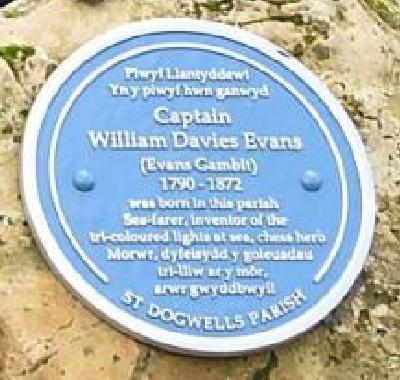
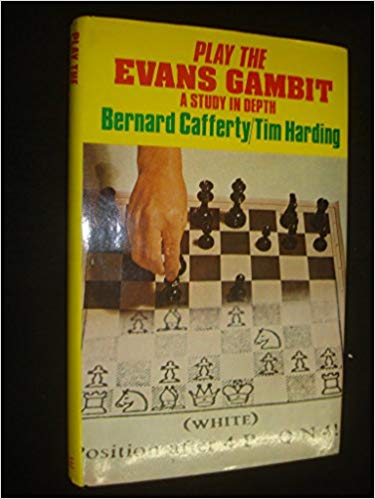
Blue Plaque for Captain William Davies Evans (27-i-1790 03-viii-1872)Play The Evans Gambit (co-author Tim Harding). Cadogan. ISBN 1-85744-119-2.
Save as PDF
We focus on the British Chess Scene Past & Present!
This website uses cookies to improve your experience. We'll assume you're ok with this, but you can opt-out if you wish. Cookie settingsACCEPT
Privacy & Cookies Policy
Privacy Overview
This website uses cookies to improve your experience while you navigate through the website. Out of these cookies, the cookies that are categorized as necessary are stored on your browser as they are as essential for the working of basic functionalities of the website. We also use third-party cookies that help us analyze and understand how you use this website. These cookies will be stored in your browser only with your consent. You also have the option to opt-out of these cookies. But opting out of some of these cookies may have an effect on your browsing experience.
Necessary cookies are absolutely essential for the website to function properly. This category only includes cookies that ensures basic functionalities and security features of the website. These cookies do not store any personal information.
 Save as PDF