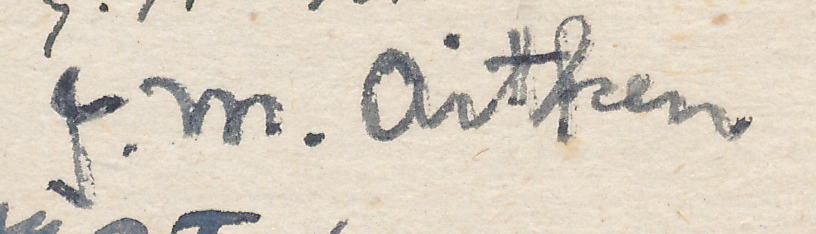
Signature of JM Aitken from a Brian Reilly “after dinner” postcard from Hastings Christmas Congress, 1945-1946
We remember Dr. James Aitken who passed away on Saturday, December 3rd, 1983.
James Macrae Aitken was born on Tuesday, October 28th 1908 in Calderbank, Lanarkshire, Scotland.
His very early history is best record here at the wonderful Chess Scotland web site.
He attended Balliol College, Oxford.
Luckily for all of us Scottish chess enthusiast Geoff Chandler is transcribing JMAs games from the players personal scorebooks. We hope to see these games appearing in Britbase and other locations in the near future.
From The Anglo-Soviet Radio Chess Match by Klein and Winter :
“JM Aitken was born in 1908 in Scotland, and learned chess at the age of eight. He played several times in the Scottish Championship, and won it in 1935. In the Stockholm international team tournament, 1937, he played for Scotland. His best performance in international chess was at Hastings, 1945, when he scored 6 points and did best among the British contingent.
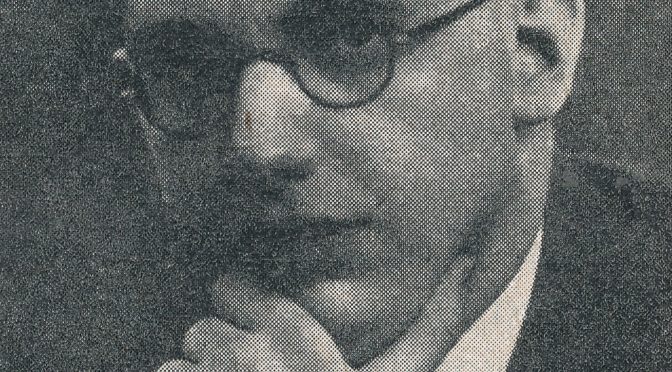
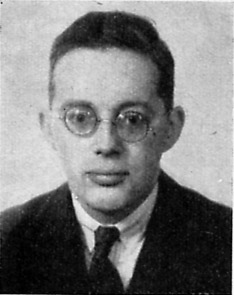
James Macrae Aitken
He is a graduate of both Oxford and Edinburgh, and a Ph.D. At the beginning of the war he joined the Foreign Office. ”
The Aitken Variation is a line recommended in the British Chess Magazine of 1937 of the Giuocco Piano as follows :
From British Chess Magazine, Volume CIV (104, 1984), Number 1 (January), page 65 :
“Dr. James Macrae Aiken (27 October 1908 – 3 December 1983) died at his home in Cheltenham on the Saturday morning when he was due to turn out in a county match that afternoon. Sh he was active to the end, since he played in the veterans’ competition in both at the Southport BCF Congress and at the Guernsey tournament in October.
Ten times Scottish Champion, the worthy doctor represented Scotland at Olympiads both pre- and post-war. At the 1937 Stockholm Olympiad he beat Ståhlberg, while later on he also had the grandmaster scalps of Bogoljubow and Tartakower to his credit.
He retired from his work at the Foreign Office some ten years ago, and continued playing in West Country chess, always taking a high board for Gloucestershire. At the BCM we have a particular cause to remember him with gratitude since he was both a book reviewer and occasional annotator for two decades, and a life-long subscriber.
As a person he was always friendly and objective in his judgements both of chess positions and personalities. Your editor recalls many interesting conversations with him at BCF Congresses. The loss is greatest, of course. for Scottish Chess.
Perhaps we may close on a lighter note, since the following anecdote reminds one that Dr Aitken also turned out for Great Britain in matches just after the war. At an early FIDE Congress after the war the first official FIDE list of masters and grandmasters was being drawn up. The BCF made application for recognising the mastership of HE Atkins. The Soviet delegate, Kotov, objected since he thought he heard the name of Aitken, whom he knew had lost both games to Bondaresvky on board eight of the 1946 GB-USSR Radio Match. It was gently pointed out that the application concerned a player who had come ahead of no less than Chigorin at Hannover 1902. End of objection!
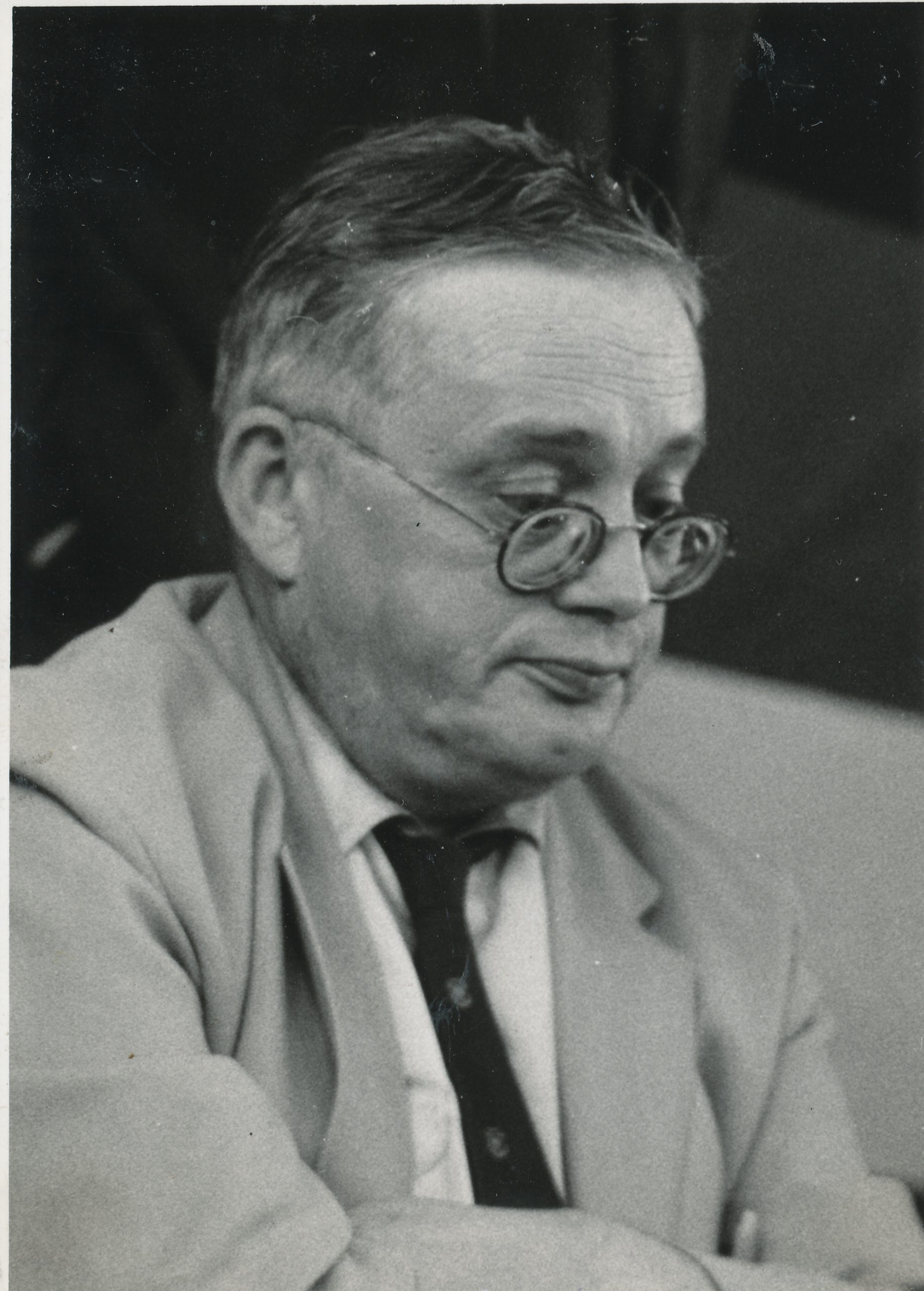
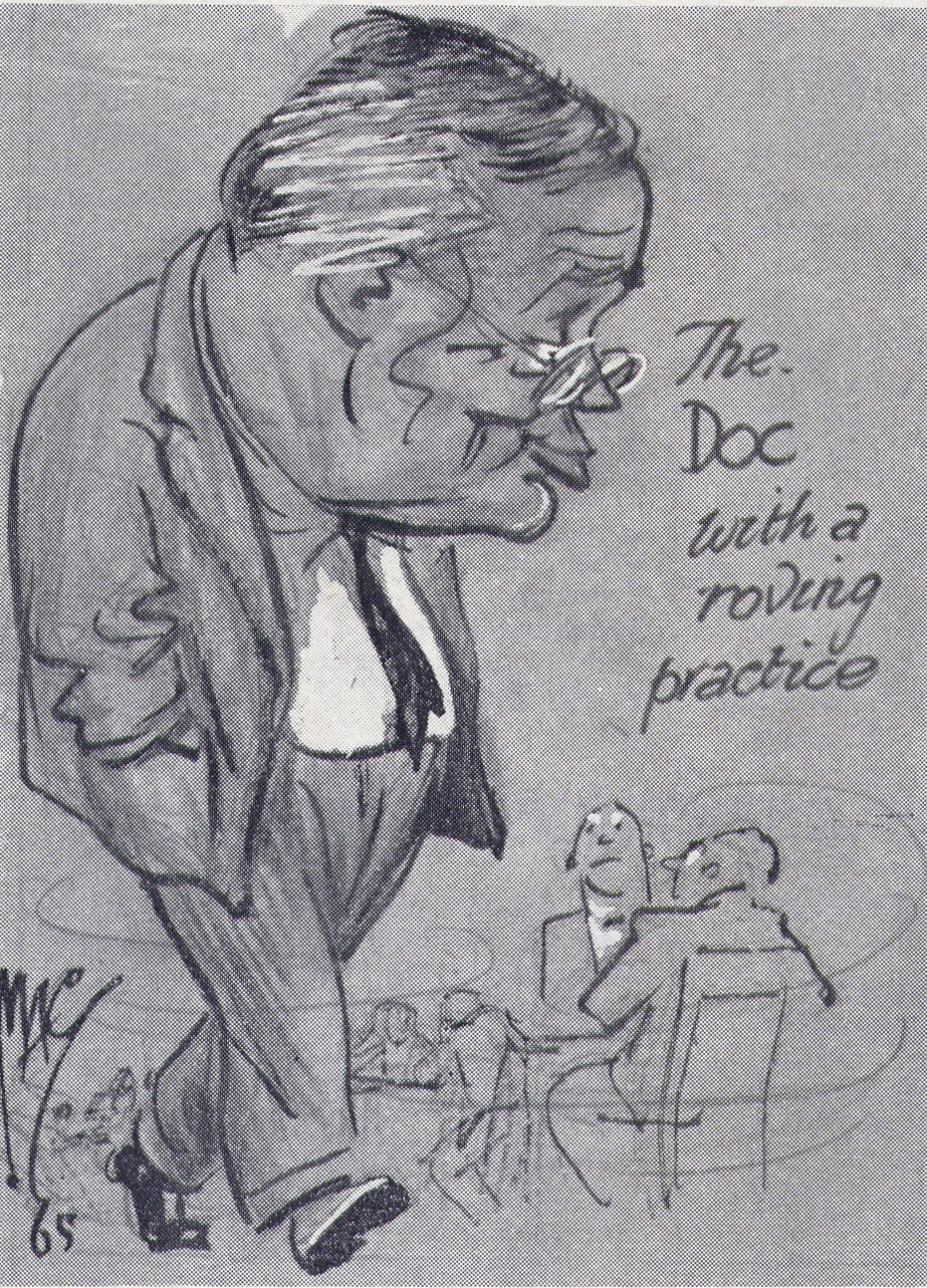
James Macrae Aitken in 1965 by “Mac”
We take this game from the Bournemouth tournament played on the eve of the Second World War.
From The Encyclopedia of Chess (Batsford, 1977), Harry Golombek OBE :
“Talented Scottish amateur who won the Scottish championship ten times, Dr. Aitken’s chief international activity was representing Scotland in the Olympiads.
At Stockholm 1937 he scored 32.4% on top board but he had the distinction of beating the Swedish grandmaster Ståhlberg. At Munich 1958 he scored 67.6% on 2nd board; at Tel Aviv 1964, 28.1% on 2nd board; at Skopje 1972, 38.9% on 6th board.”
Both Sunnucks and Hooper & Whyld are silent on Aitken.
“James Macrae Aitken (27 October 1908 – 3 December 1983) was a Scottish chess player.[1][2] Aitken was born in Calderbank, Lanarkshire, Scotland. In 1938 he received a PhD from Edinburgh University on the topic of ‘The Trial of George Buchanan Before the Lisbon Inquisition’.[3]
Aitken learned chess from his father at age 10.[4] He was Scottish champion in 1935, 1952, 1953, 1955, 1956, 1957, 1958, 1960, 1961 and 1965, the latter jointly with PM Jamieson.[1] He was also London Champion in 1950.[1] In 1959 he had his best result in the British Championship, finishing tied for seventh place.[4] Aitken represented Scotland in four Chess Olympiads. He played top board at Stockholm 1937, scoring only 32.4% but he did defeat Swedish GM Gideon Ståhlberg[4][5] and draw with American GM Samuel Reshevsky.[4] He played second board at Munich 1958 and Tel Aviv 1964, scoring 67.6% and 28.1% respectively. Aitken played sixth board at Skopje 1972, scoring 38.9%.”
“Aitken represented Great Britain in matches against the USSR and Yugoslavia.[4] In the 1946 radio match between the United Kingdom and the USSR he lost his match with Igor Bondarevsky on board 8.[6] Aitken defeated GM Savielly Tartakower at Southsea 1949[4][7] and GM Efim Bogoljubow at Bad Pyrmont 1951.[4][8]
During World War II, Aitken worked in Hut 6 at Bletchley Park on solving German Enigma machines.[9] On 2 December 1944 Bletchley Park played a 12-board team match against the Oxford University Chess Club. Bletchley Park won the match 8–4 with C.H.O’D. Alexander, Harry Golombek, and Aitken on the top three boards.[10] Aitken wrote many book reviews for the British Chess Magazine.[11] Aside from chess his hobbies included golf, philately, bridge, and watching cricket.[4] He died in Cheltenham in 1983, aged 75.[2]”
BCN remembers Gerald Abrahams who passed away in Liverpool on Saturday, March 15th 1980. He was buried in the Allerton Cemetery in the Jewish Springwood plot.
Gerald Abrahams was born in Liverpool on Monday, April 15th 1907. On this day the Triangle Fraternity was formed at the University of Illinois at Urbana–Champaign.
His parents were Harry (b. 10th September 1880) and Leah (b. 12th March 1884) Abrahams (née Rabinowitz) who married in West Derby in the third quarter of 1903.
Gerald learnt chess at the age of ten during the first world war. He obtained an Open Scholarship to Wadham College, Oxford in 1925 reading PPE and earning himself an MA in Law in 1928. He became a practising barrister at Law.
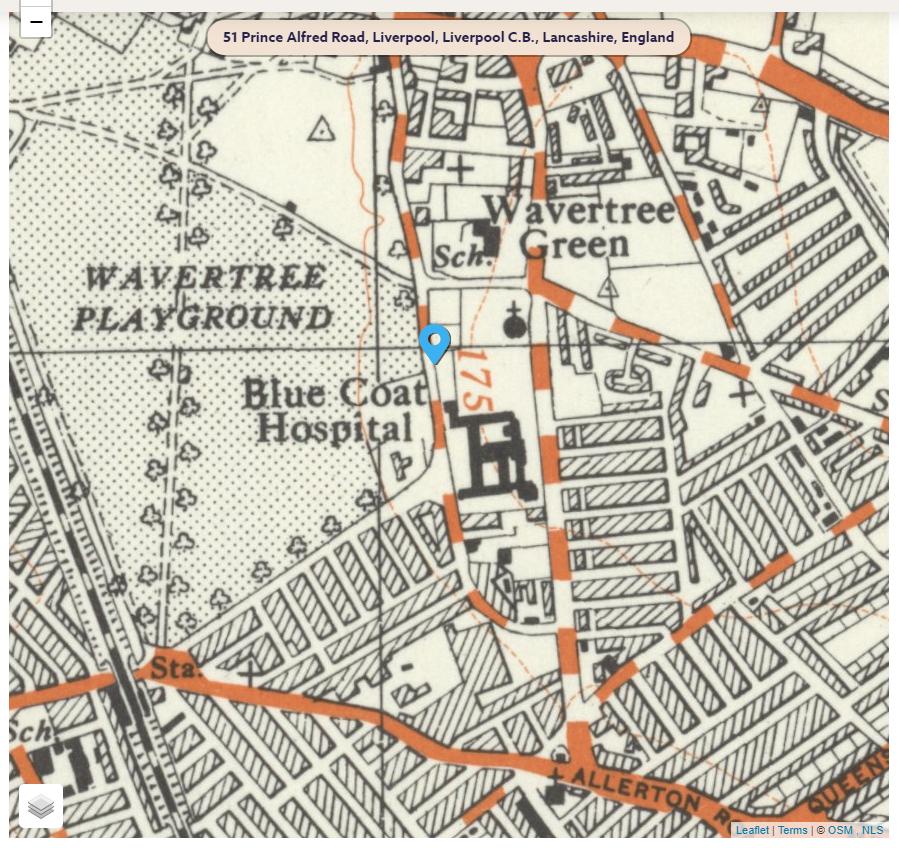
From the 1939 register we learnt that Harry was a Drapery manufacturer and Leah carried out “unpaid domestic duties”. Gerald was not an only child: the first born was Winnie (b. 22nd November 1903) who was a Secretary and Clerk Typist and factory assistant. Elsie Abrahams (b. 14th April 1905) helped her mother with “unpaid domestic duties”. Blanche was Gerald’s older brother and he was “General Assistant In Fathers Business Drapery Manufacturer”. Gerald is listed (aged 32) as a Barrister at Law and author. The family resided at 51 Prince Alfred Road, Liverpool, Lancashire (now L15 6TQ) and their original property has been since replaced.
Historical map showing the 1939 residence of Gerald Abrahams
The full list of people present seems to have been largely or entirely Jewish in religion or ethnicity: it included a famous chess-playing barrister from Liverpool, Gerald Abrahams, representing himself, who had taken a First in P.P.E. at Oxford, and later married Elsie Krengel, who had also been present, and with Leslie Black representing the rest of the defendants, apart from the hosts and Captain Lionel Husdan, who sent a letter to the court.
The full list of those present, charged with “resorting and playing in a common gaming house,” and bound over was as follows:- Mott Alexander, Fannie Finn, Maxwell Glassman, Kate Lippa, Myer Lister, Gertrude Mannheim, Joseph Mannheim, Rita Mannheim, Simon Mannheim, Harry Peters, Sadie Peters, Lily Leah Ross, Harry Sapiro, Benjamin Stone. Those charged with “resorting in a common gaming house” and bound over, were:- Gerald Abrahams, Joseph Appleton Bach, Samuel Myer Barnett, Herbert Solomon Isaacson, Elsie Krengel, Manuel Mannheim, Louis Michaelson, Abraham Ross, Bernard and Elsie Ross.
“Gerald Abrahams, the barrister charged, said he was interested to protect his reputation from being stigmatised by a conviction, and asked Sergeant Laycock about alcohol: the latter replied that none was being consumed. He submitted that the club was not a gaming house, and that draw poker had not been proved other than as a game of skill. Charges were dismissed against Henry, Eva and Marjorie Black, Myer Waldman, and Captain Lionel Husdan, of Ryde, Isle of Wight, all of whom had said that they were merely taking refreshments in the club, and had not played. David Platt said that he had not the slightest idea that they were breaking the law, and Mrs Platt said that it had not been a paying venture.”
The Complete Chess Addict (Faber& Faber, 1987), Fox & James notes: that Gerald Abrahams as authority on bridge cast doubt on assertions that Emanuel Lasker “was good enough to represent Germany”
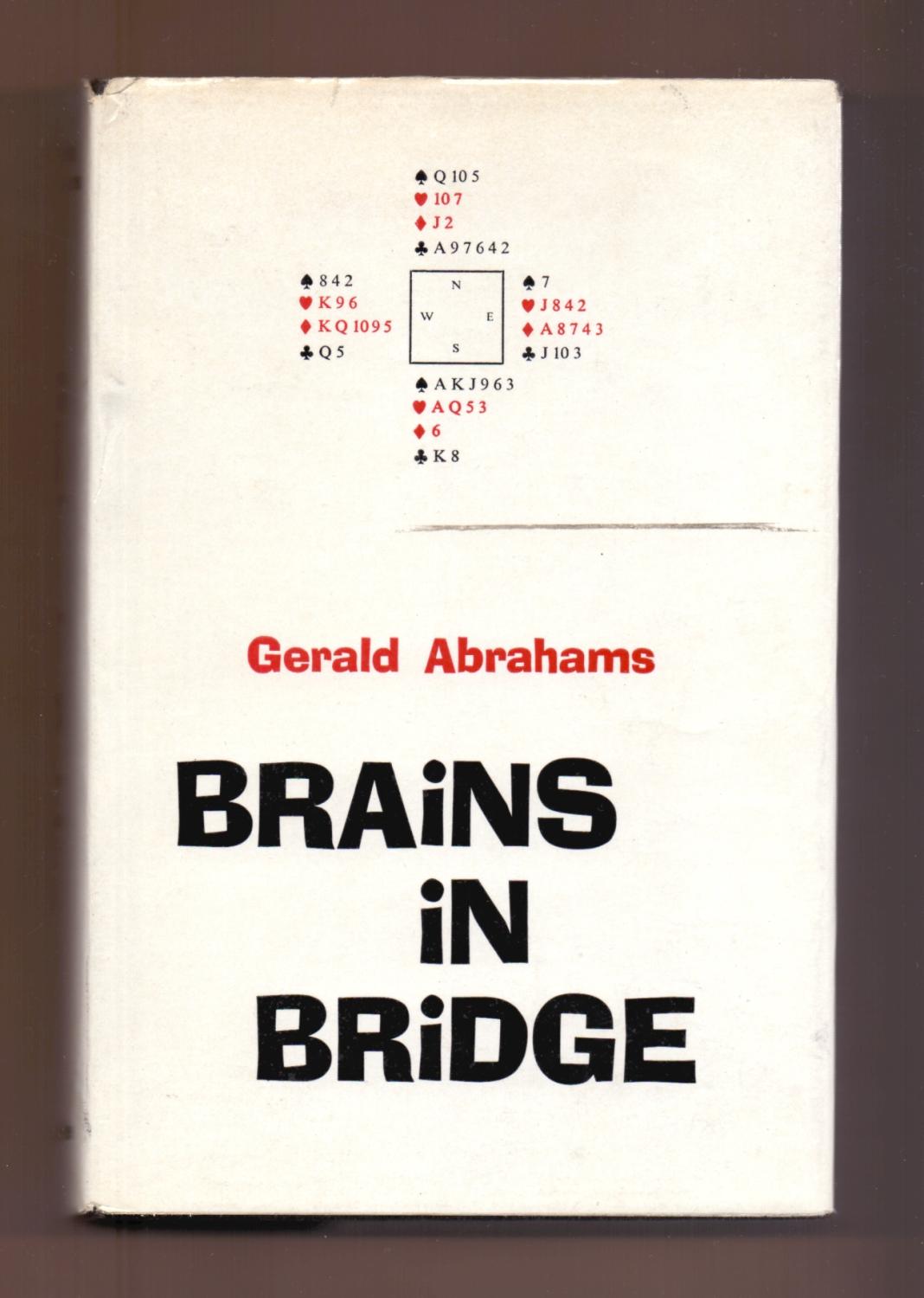
Gerald’s comparisons of chess and bridge are discussed by Edward Winter in Chess Facts and Fables (McFarland, 2005) page 130 in GAs 1962 book Brains in Bridge:
Brains in Bridge, Gerald Abrahams, Constable and Company, 1962, ISBN ?
Gerald eventually married Elsie Krengel (born 15th January 1909) in the fourth quarter of 1971 in Liverpool at the age of 64. Elsie had lived in the Southport area for most of her life and her family was associated with the manufacture of handbags. They had known each other for many years (at least since 1942 as mentioned previously).
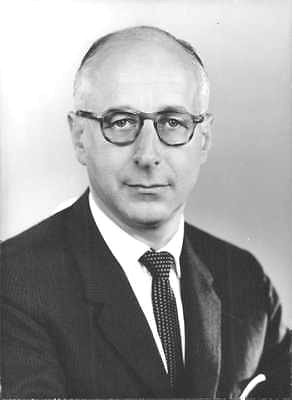
Gerald Abrahams
Leonard Barden modestly recounts :
“At the end of Nottingham 1954 Gerald claimed that Alan Phillips had accepted his draw offer so tieing Gerald for the British championship with some rabbit whose name escapes me. When Phillips strongly denied having accepted the draw, Gerald collapsed on the floor and had to be aided by his old enemy Dr. Fazekas.”
From The Anglo-Soviet Radio Chess Match (1946) by Klein and Winter:
“G. Abrahams was born in Liverpool in 1907. He learned chess at the age of ten, and showed an early aptitude for tactical complications. He has played with varying success, his best performances being third and fourth with Rossolimo, behind Klein and Najdorf, but head of List at Margate, 1938, and fourth, fifth and sixth with Sir George A. Thomas and König in London, 1946. He has made two valiant bids for the British Championship.
A graduate of Oxford, he is a barrister by profession and has written several books, including some fiction. He has solidified his chess without allowing it to become dry. Indeed, most of his games sparkle with interesting complications.”
Harry Golombek OBE wrote (in The Encyclopaedia of Chess (Batsford, 1977)):
“Brilliant British amateur who in the 1930s was playing master-chess. In that period he was the most dangerous attacking player in England.
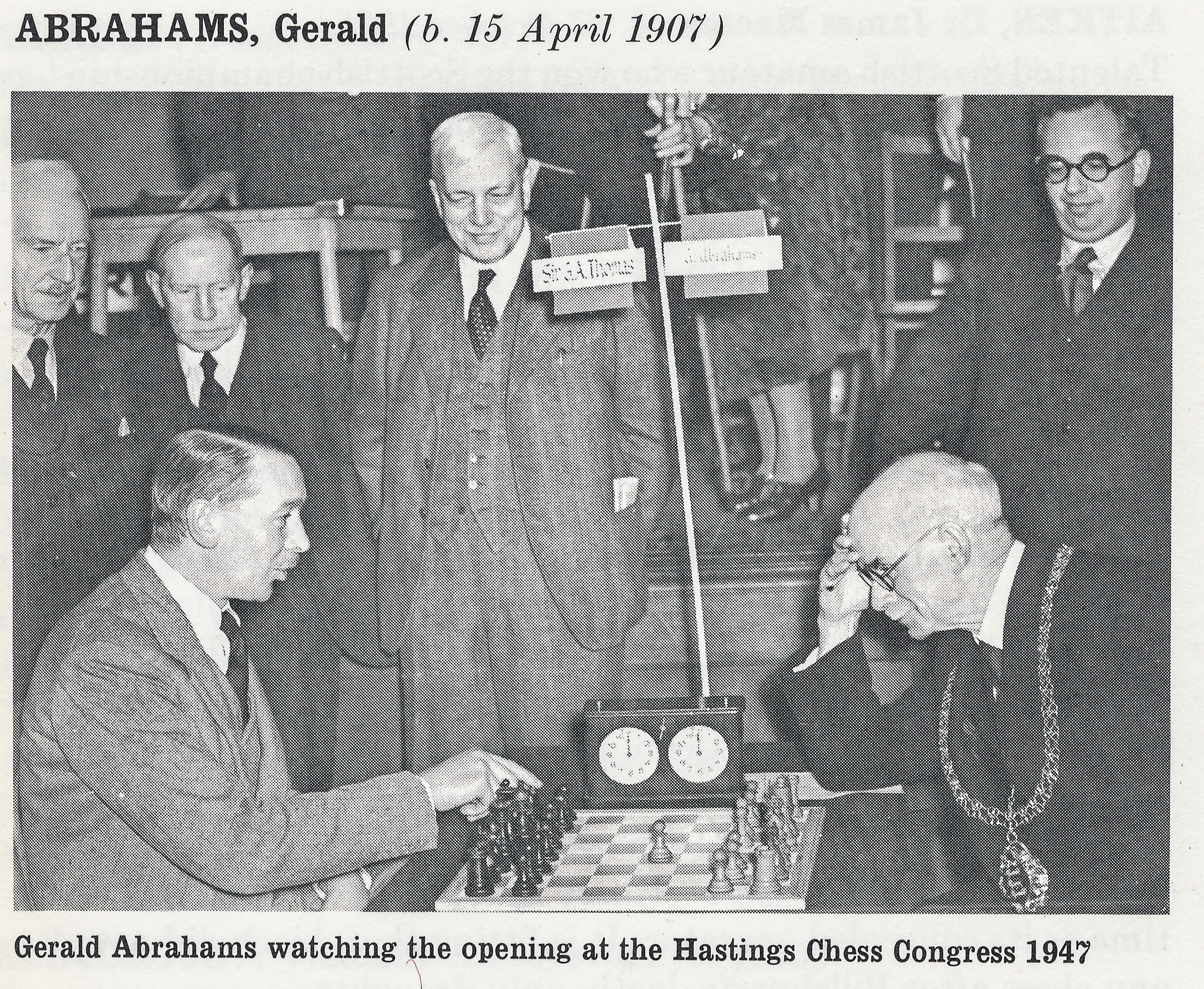
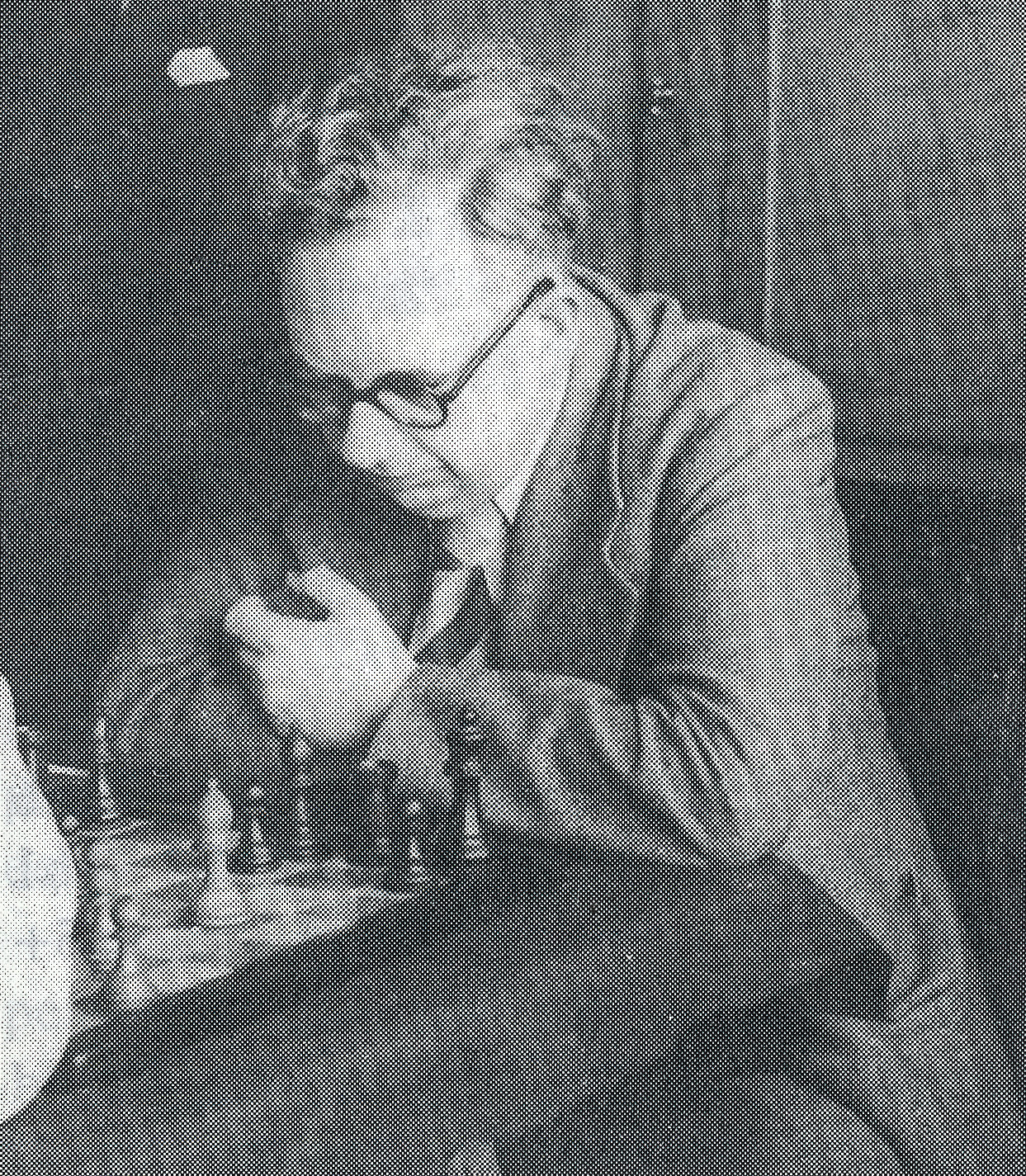
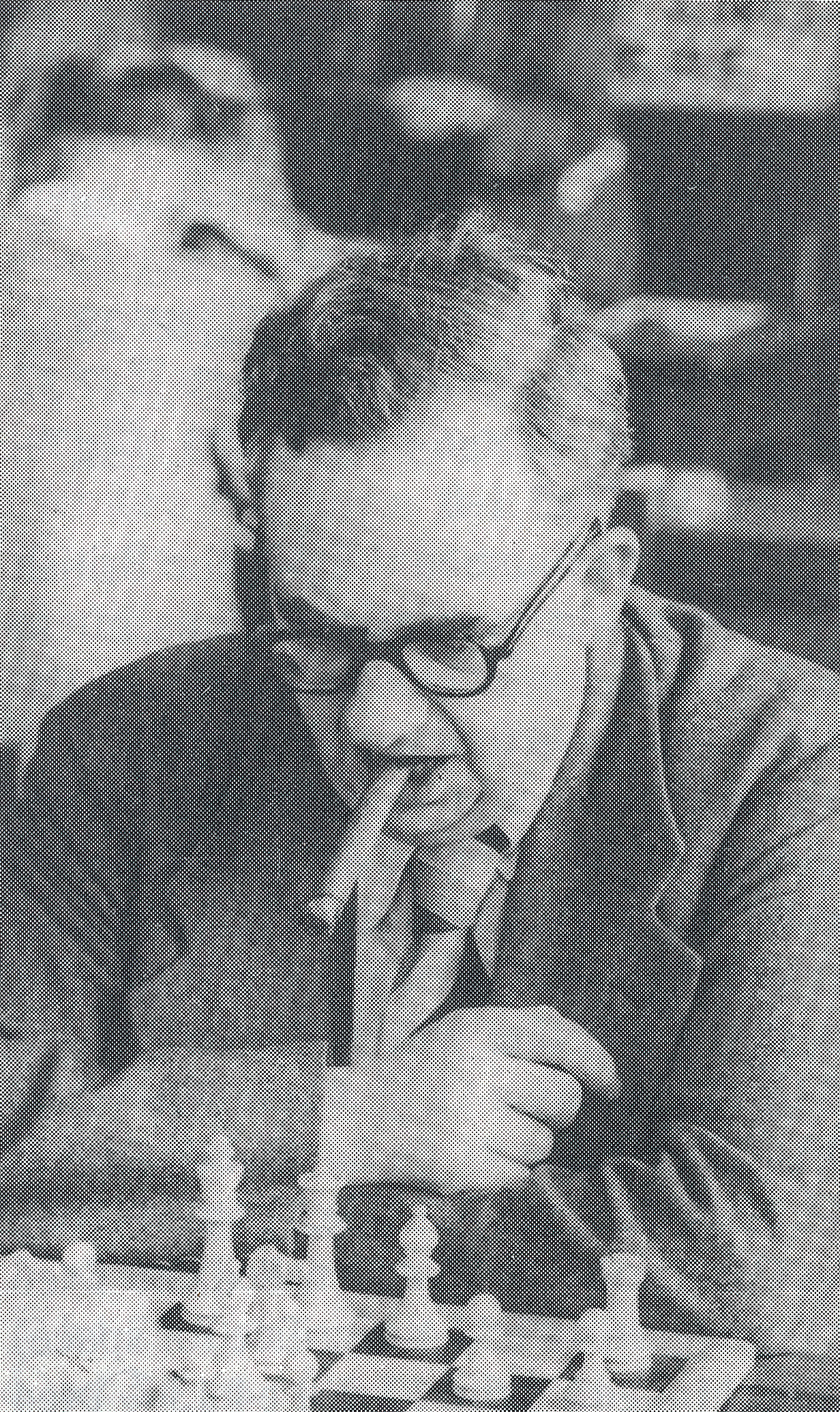
Gerald Abrahams watching the opening at the Hastings Chess Congress 1947. Also watching is Sir George Thomas who was GAs round one opponent. The Mayor was Alderman W. J. Fellows and he is opposite Sir Edmund McNeill Cooper-Key. Second from left is Percy J. Morren who was the Hasting’s Club President
He was in the prize-list (i.e. in the first four) in the British championship on three occasions 1933, 1946 and 1954. His best international performance was in the Major Open at Nottingham in 1936 where he came =3rd with Opocensky. Another fine result was his score of 1.5-0.5 against the Soviet Grandmaster Ragozin, in the 1946 Anglo-Soviet radio match.
He is the inventor of the Abrahams variation in the Semi-Slav Defence to the Queen’s Gambit: 1.P-Q4, P-Q4;2.P-QB4, P-QB3;3.N-QB3, P-K3;4.N-B3, PXP;5.P-QR4, B-N4;6.P-K3,P-QN4;7.B-Q2, P-QR4; 8.PxP, BxN;9.BxB,PxP;10.P-QN3,B-N2;
This is sometimes known as the Noteboom variation after the Dutch master who played it in the 1930s, but Abrahams was playing it in 1925 long before Noteboom.
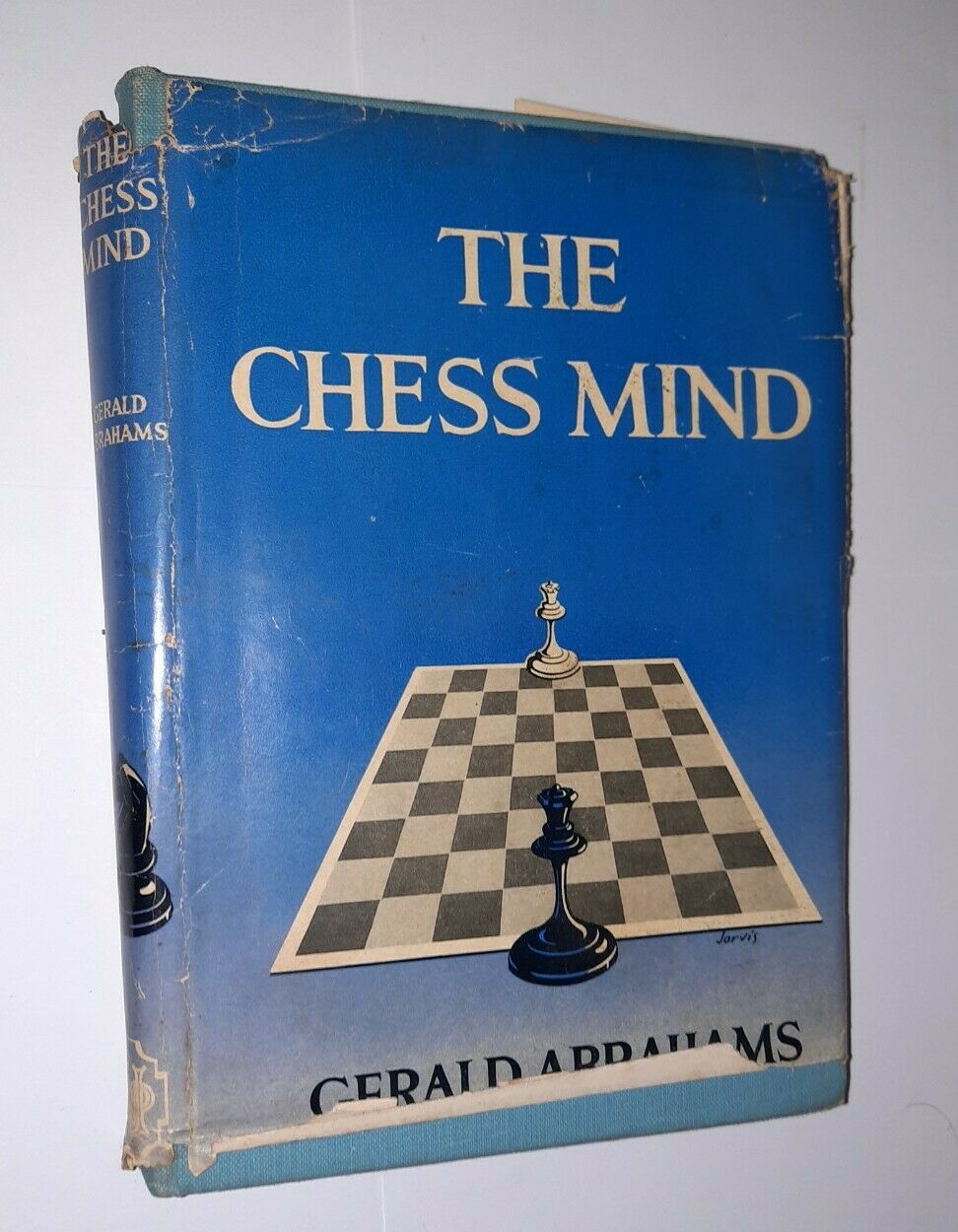
He is a witty and prolific writer on many subjects: on law (he is a barrister by profession), philosophy, and chess; he also writes fiction. His main chess works are: The Chess Mind, London 1951 and 1960
The Chess Mind, Gerald Abrahams, The English Universities Press, 1951, ISBN 0 340 19492 8
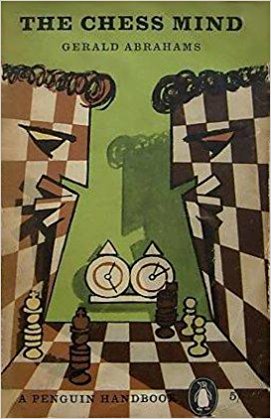
and here is a later cover:
The Chess Mind, Gerald Abrahams, The English Universities Press, 1951, ISBN 0 340 19492 8
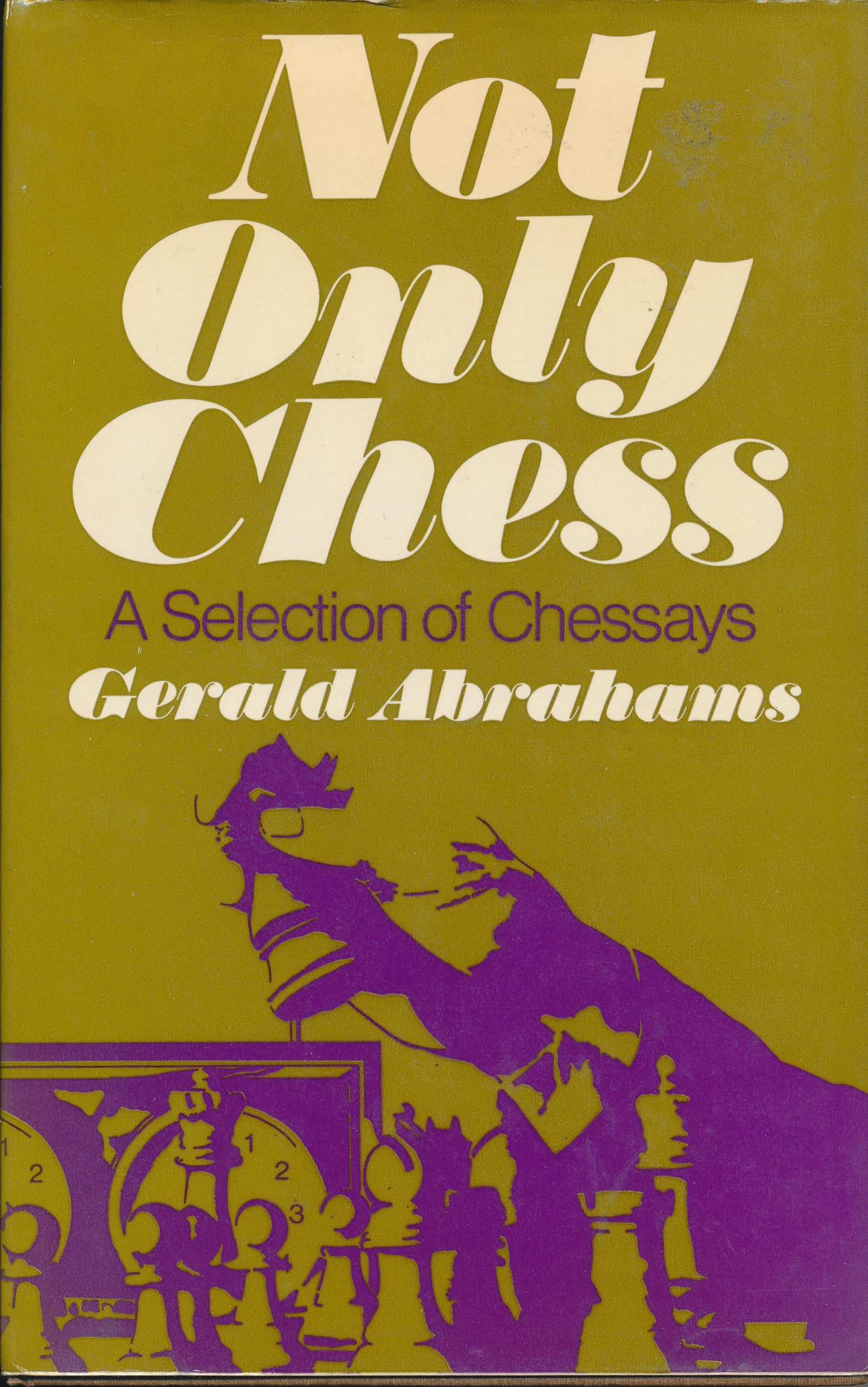
and Not Only Chess, London 1974.
Not Only Chess, Gerald Abrahams, George Allen & Unwin Ltd., 1974, ISBN 0 04 794005 0
Edward Winter in Kings, Commoners and Knaves, cites the subtitle of the above book in his page 235 list of chessy words: “A selection of Chessays”.
From Not Only Chess we learn that GAs favourite game was played in 1930 against Edmund Spencer of Liverpool. “Edmund Spencer was a man who is remembered with affection by all players who ever met him, and who is remarkable in that his strength developed in what should have been hid middle life. When he died, lamentably early, in the 1930s, at about 53 he was at his best, and of recognised master status.
This game was played in 1930.”
and for an alternative view of the same game:
GA is amongst a rare breed of game annotators claiming the title of An Immortal for one of his own games. Edward Winter devotes a couple of column inches discussing exactly which year the game was played between 1929 and 1936. Here is the game:
For more of GAs excellent games see the superb article further on by Steve Cunliffe. Also, Not Only Chess in Chapter 28 (“A Score of my Scores”) contains a veritable feast of entertaining games of GAs).
Gerald famously fell out with Anne Sunnucks when he discovered she had omitted him from her 1970 Encyclopaedia of Chess. Despite this the 1976 edition was also devoid of a mention.
From The Oxford Companion to Chess (OUP, 1984 & 1996), Hooper & Whyld:
“The English player Gerald Abrahams (1907-80) introduced the move when playing against Dr. Holmes in the Lancastrian County Championship in 1925 (ed: January 31st in fact) . Abrahams played the variation against his countryman William Winter (1898-1955) in 1929 and in the same year Winter played it against Noteboom, after whom it is sometimes named. (Dr, Holmes was the favourite pupil of Amos Burn and a leading ophthalmologist).
Gerald Abrahams
The precursor, known from a 16th-century manuscript, was published by Salvio in 1604:
Writing in 1617, Carrera made his only criticism of Salvio’s analysis in this variation. He suggested 8…Bd7 instead of 8…Nd7, or 9.Qa4 instead of 9.Nf3. Salvio nursed his injured pride for seventeen years and then devoted a chapter of his book to a bitter attack on Carrera. The argument was pointless: all these variations give White a won game.”
GA famously wrote :
Chess is a good mistress, but a bad master
and also
The tactician knows what to do when there is something to do; whereas the strategian knows what to do when there is nothing to do.
and
In chess there is a world of intellectual values
and
Good positions don’t win games, good moves do
and
Why some persons are good at chess, and others bad at it, is more mysterious than anything on chess board.
In the recently (February 25th, 2020) published “Attacking with g2 – g4” by GM Dmitry Kryakvin writes about Abrahams as follows :
“It is believed that the extravagant 5.g2-g4 was first applied at a high level, namely in the British Championship by Gerald Abrahams. Abrahams was a truly versatile person – a composer, lawyer, historian, philosopher, politician (for 40 years a member of the Liberal Party) and the author of several books. Of his legal work, the most famous is the investigation into the murder of Julia Wallace in 1931 in Liverpool, where her husband was the main suspect. As an alibi, William Herbert Wallace claimed he was at a chess club. Dozens of books and films have been devote to the murder of Mrs. Wallace – indeed, this is a script worthy of Arthur Conan Doyle or Agatha Christie!
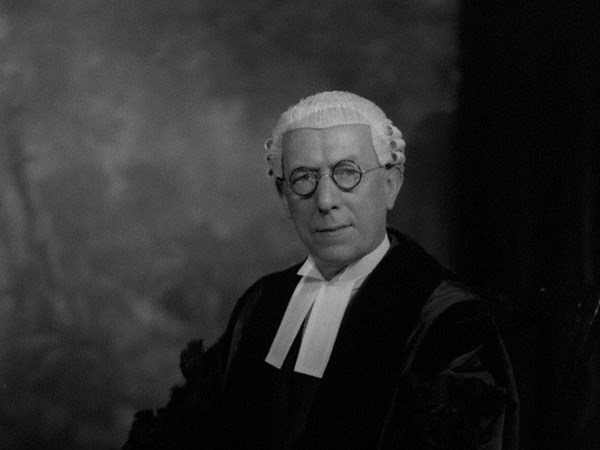
by Lafayette (Lafayette Ltd), whole-plate film negative, 21 August 1933
Abrahams played various card games with great pleasure and success, but the main passion of the Liverpool resident was chess. Abrahams achieved his greatest success in the championships of Great Britain in 1933 and 1946, when he won bronze medals. The peak of his career was undoubtedly his participation in the USSR-Great Britain radio match (1946) where on the 10th board Abrahams beat Botvinnik’s second and assistant grandmaster Viacheslav Ragozin with a score of 1.5-0.5
Gerald Abrahams had a taste of studying opening theory, and made a distinct contribution to the development of the Noteboom Variation, which is often known as the Abrahams-Noteboom.
Ten years after he introduced the move 5.g2-g4 to the English public (1953), the famous grandmaster Lajos Portisch brought it into the international arena.”
Gerald Abrahams
Gerald was also a keen studies composer. Here are some examples of his work:
Gerald Abrahams contributed to opening theory in the Queen’s Gambit Declined / Semi-Slav Defence with his creation of the Abrahams-Noteboom Defence as discussed in the following video :
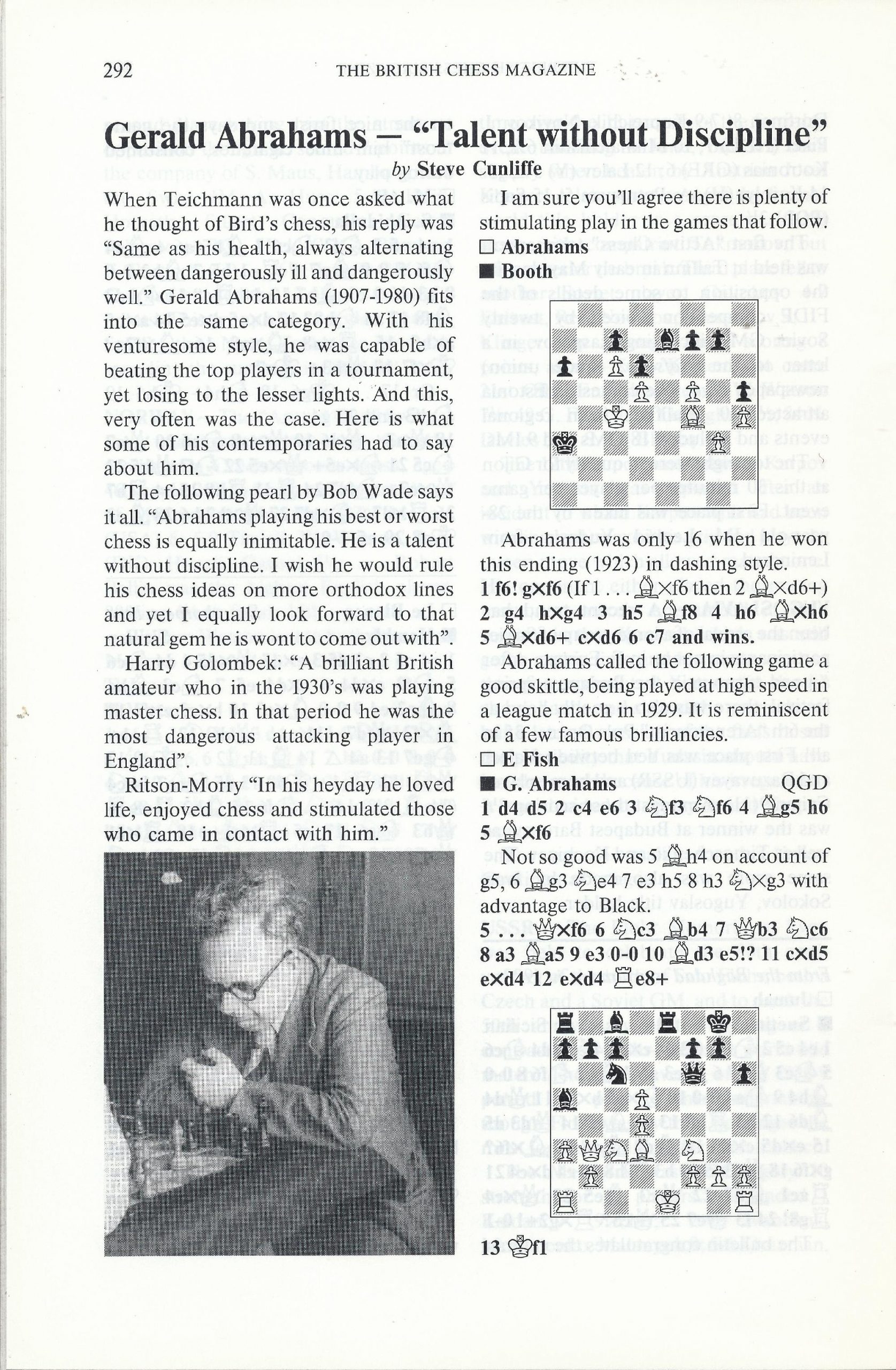
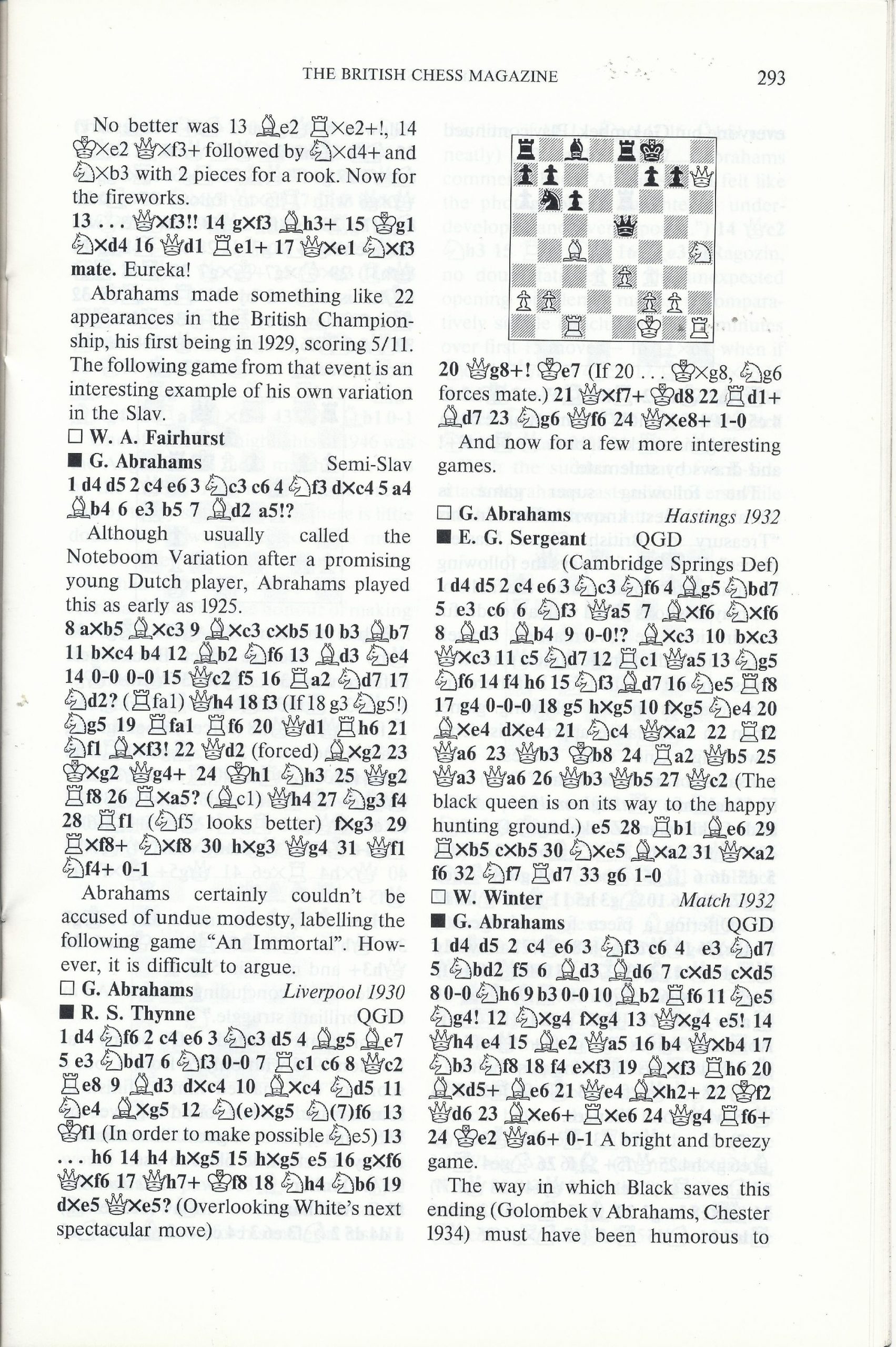
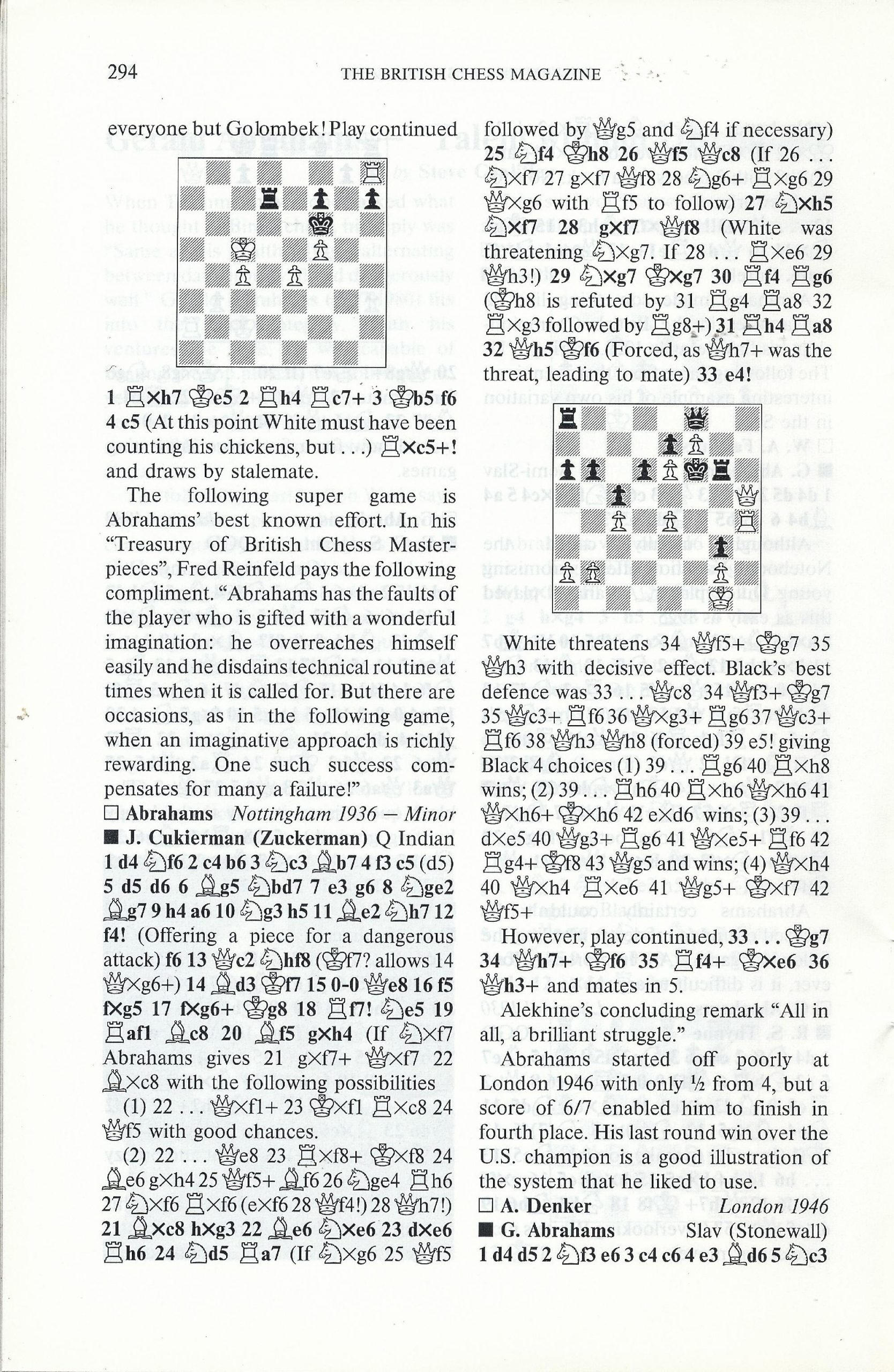
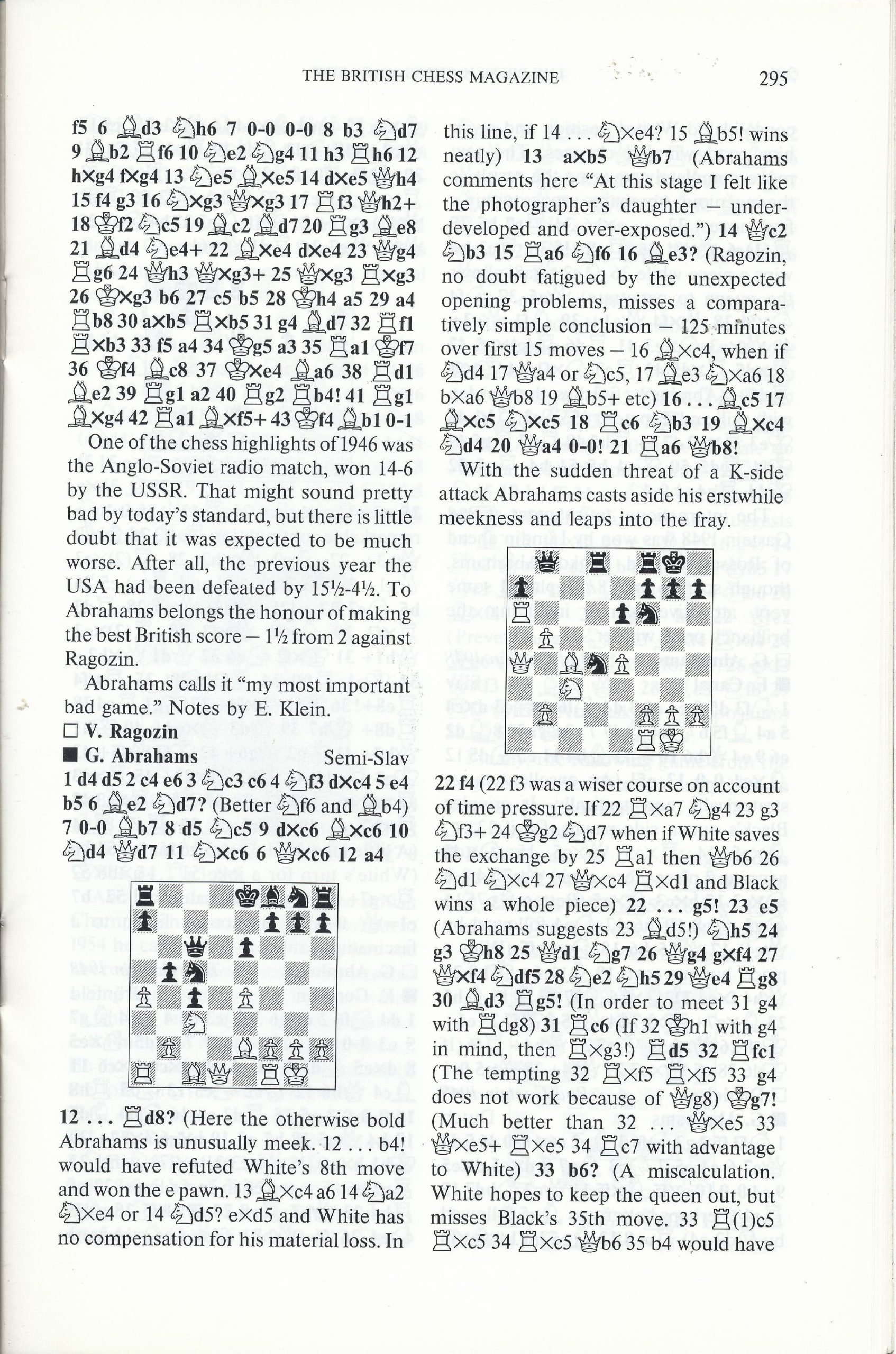
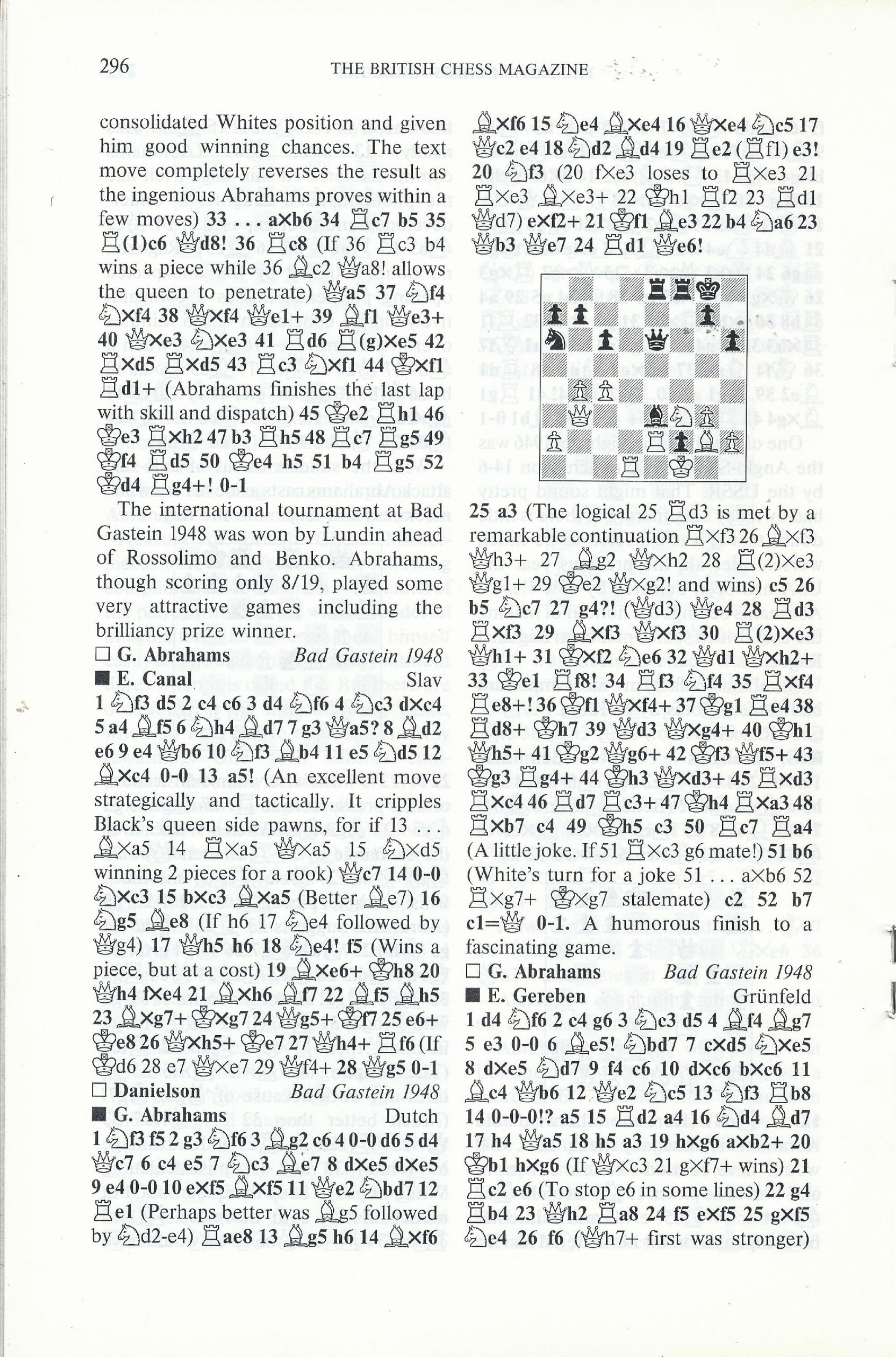
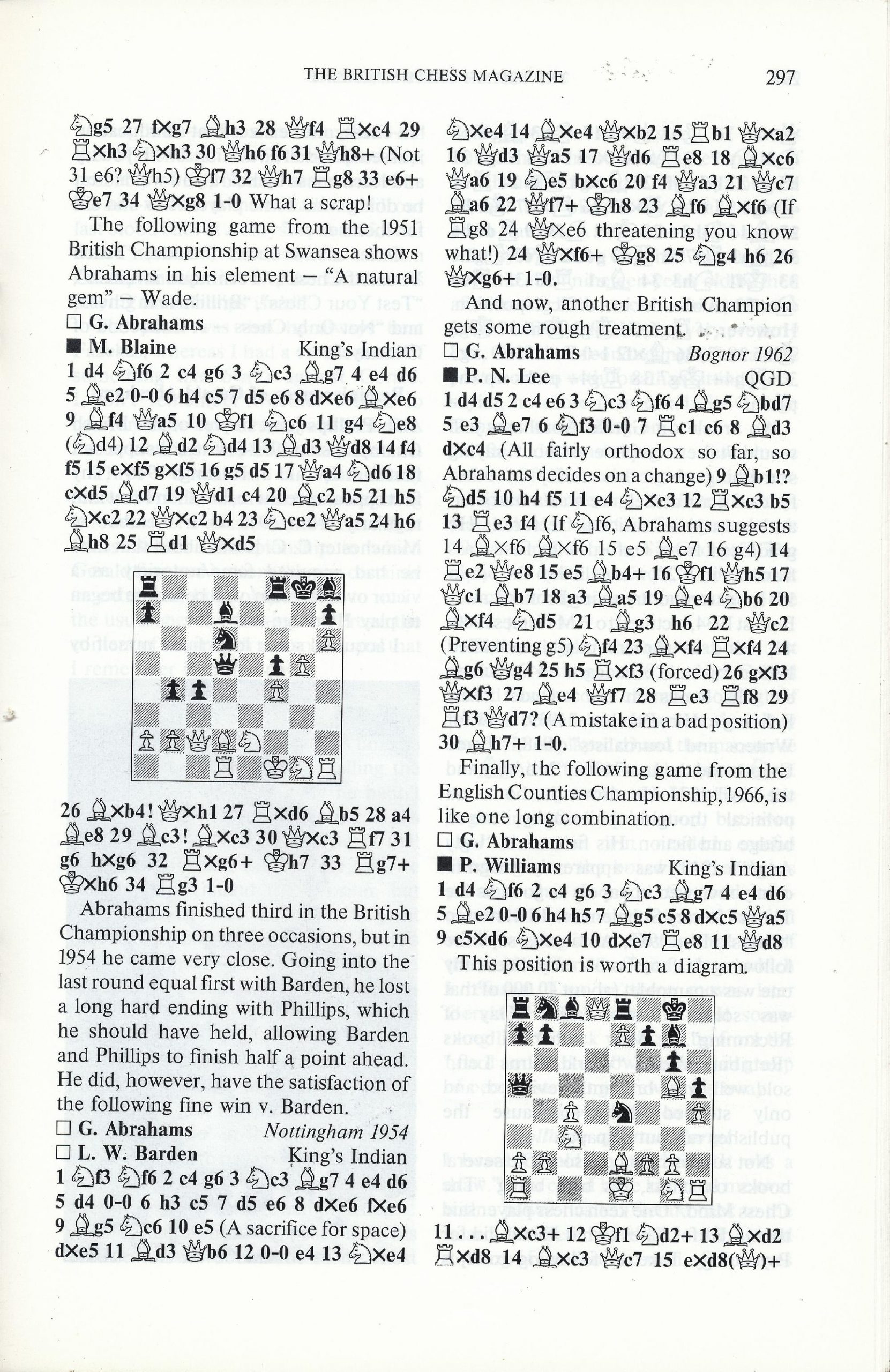
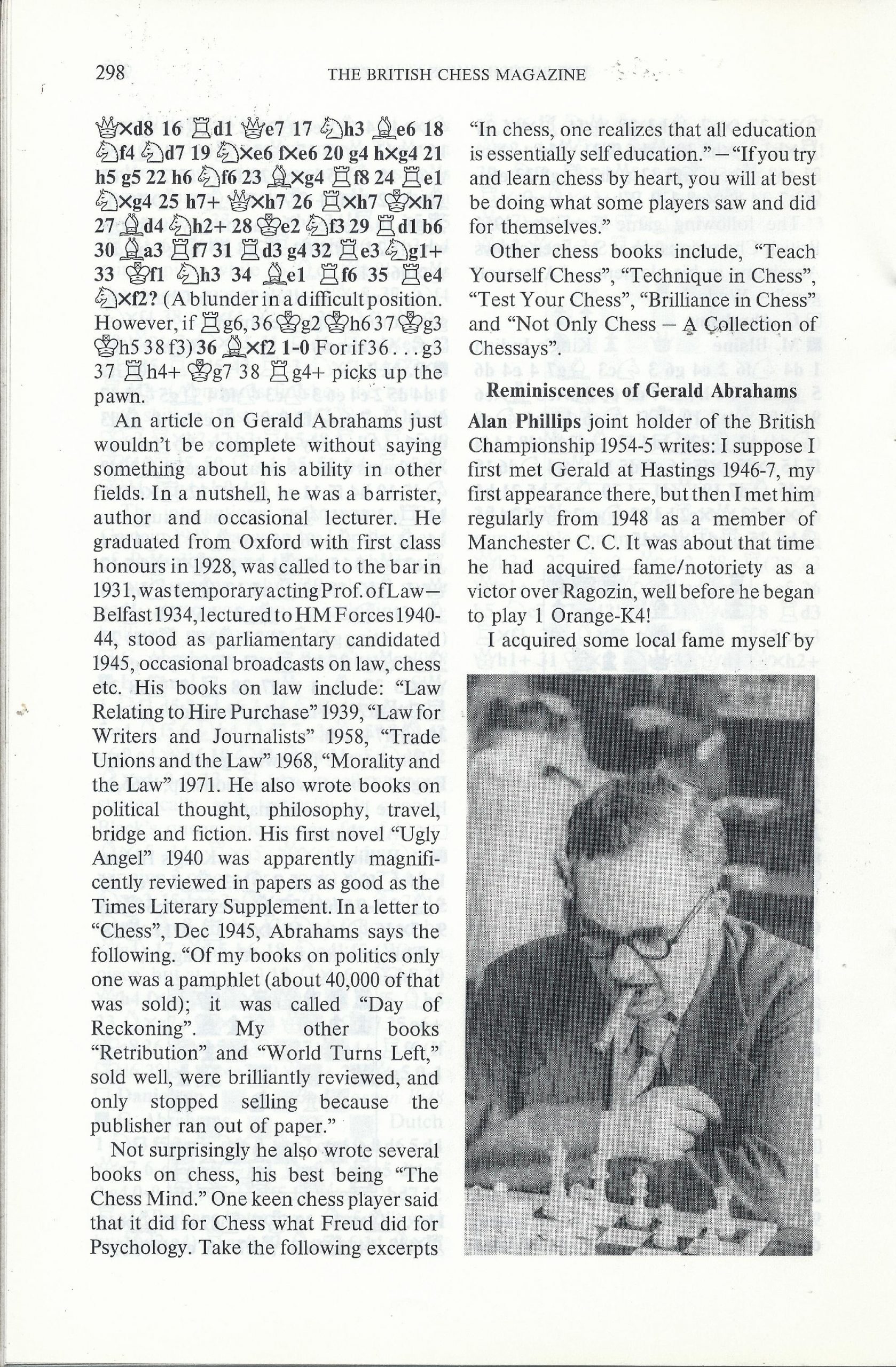
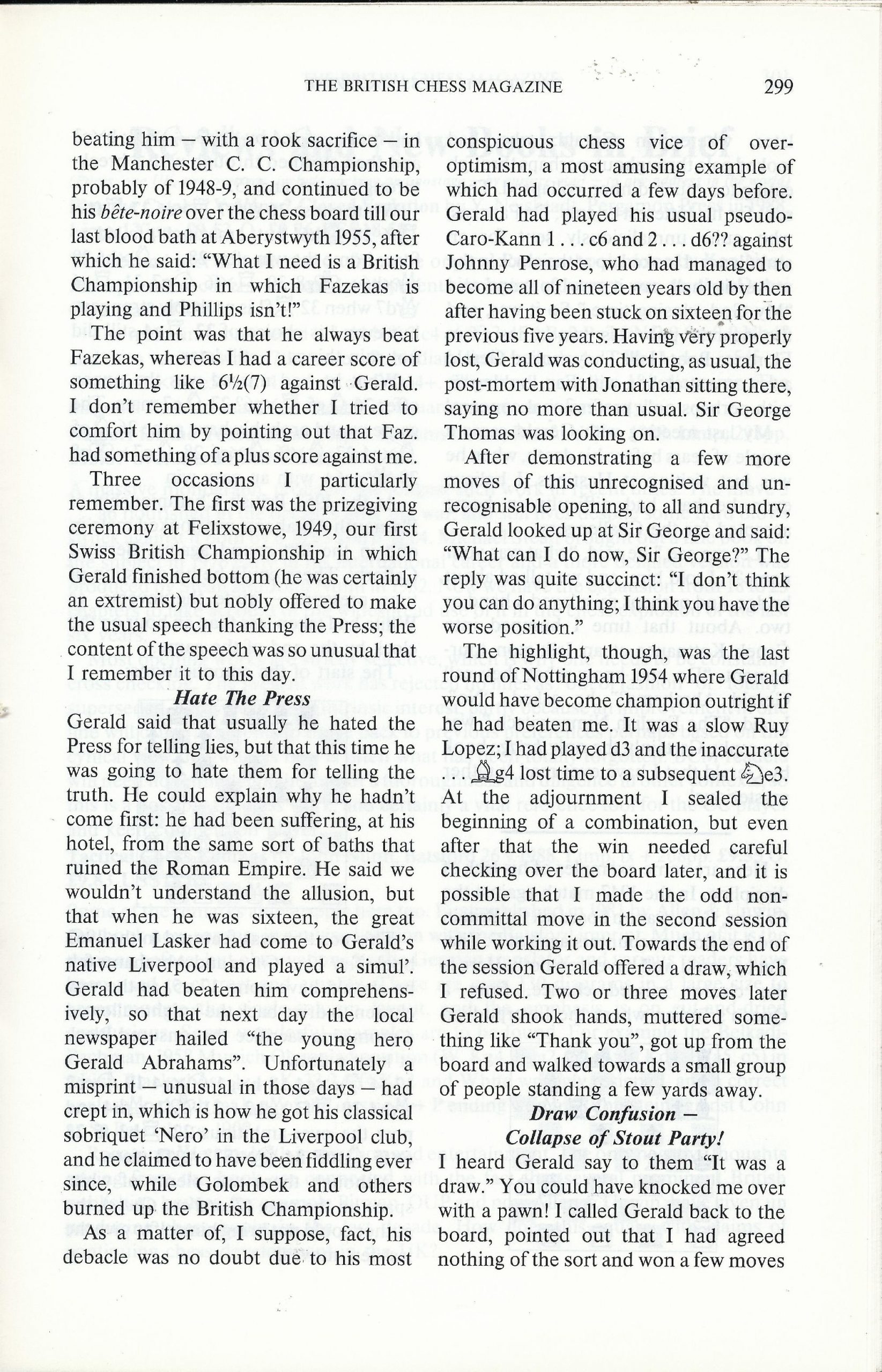
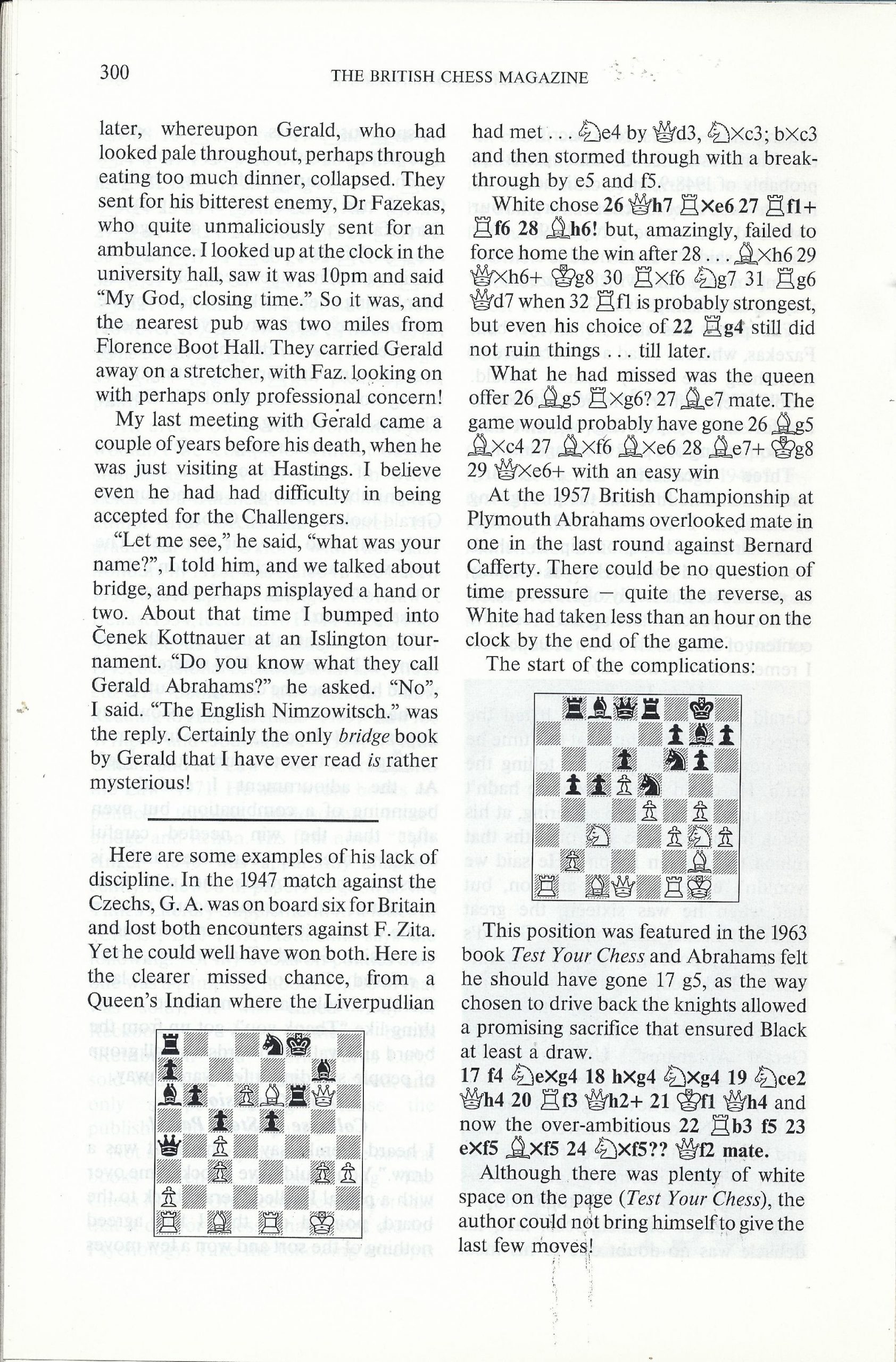
Here is a nine page article (Gerald Abrahams – Talent without Discipline) written by Steve Cunliffe that appeared in British Chess Magazine, Volume CVIII (1988), Number 7 (July), pp. 292-300:
British Chess Magazine, Volume CVIII (1988), Number 7 (July), pp. 292British Chess Magazine, Volume CVIII (1988), Number 7 (July), pp. 293British Chess Magazine, Volume CVIII (1988), Number 7 (July), pp. 294British Chess Magazine, Volume CVIII (1988), Number 7 (July), pp. 295British Chess Magazine, Volume CVIII (1988), Number 7 (July), pp. 296British Chess Magazine, Volume CVIII (1988), Number 7 (July), pp. 297British Chess Magazine, Volume CVIII (1988), Number 7 (July), pp. 298British Chess Magazine, Volume CVIII (1988), Number 7 (July), pp. 299British Chess Magazine, Volume CVIII (1988), Number 7 (July), pp. 300
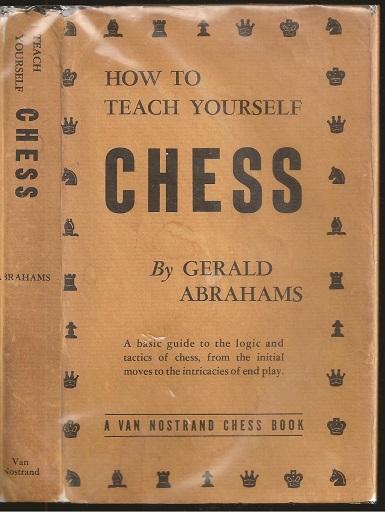
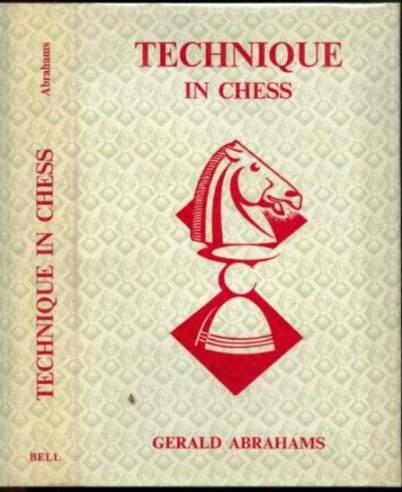
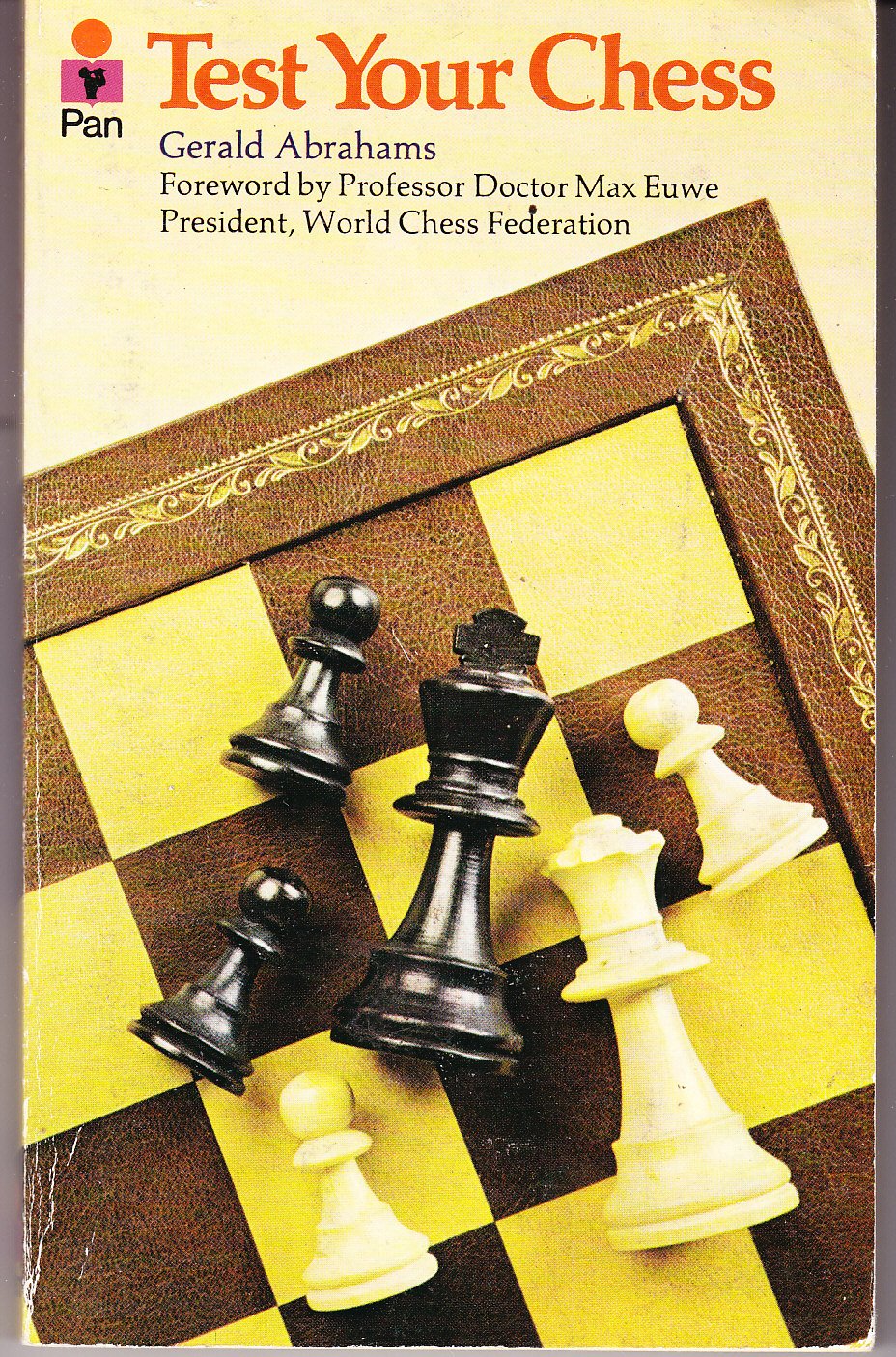
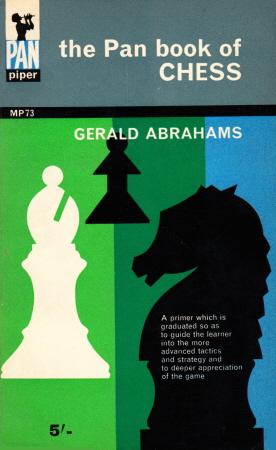
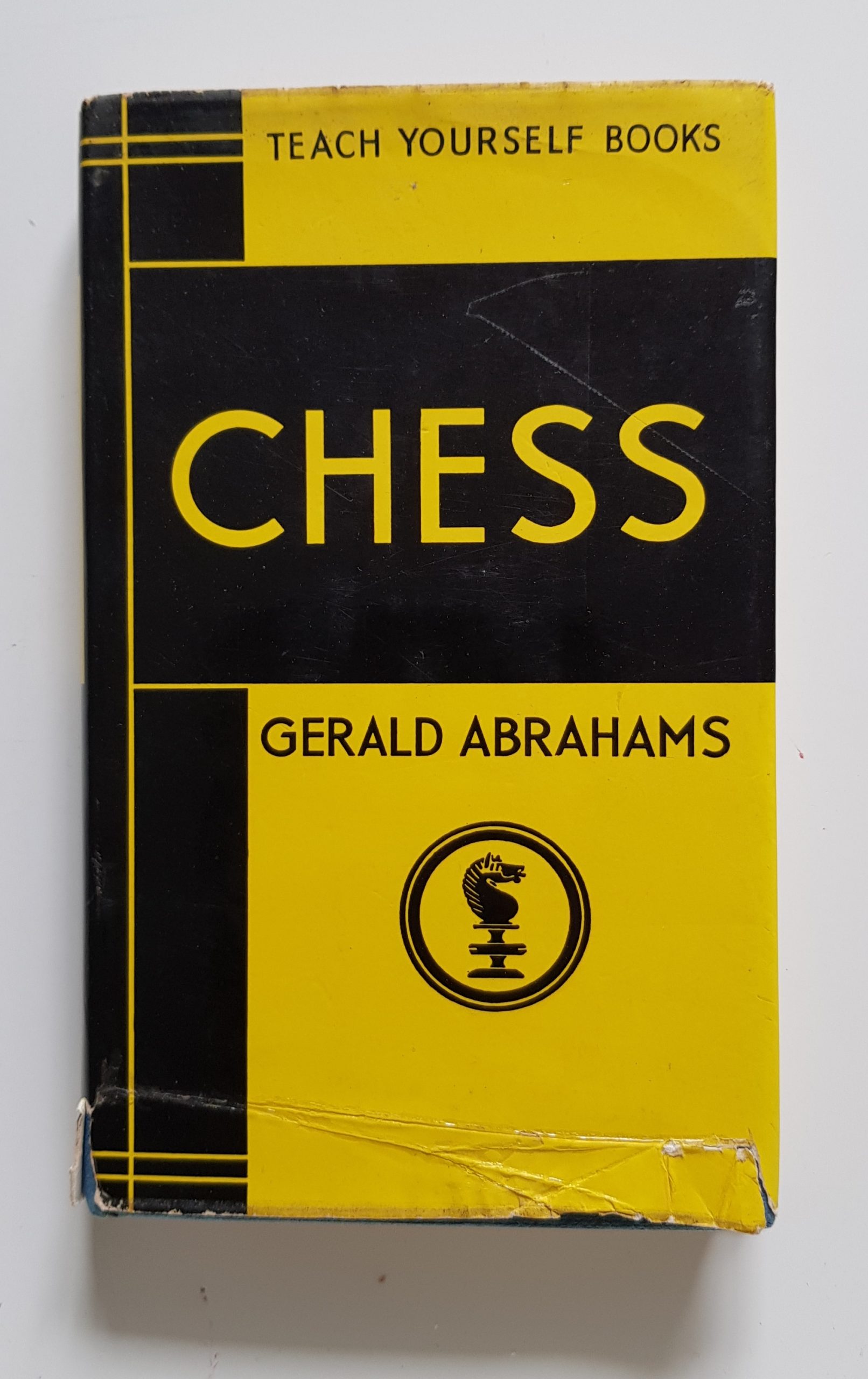
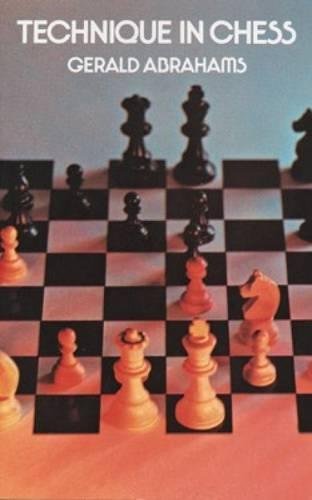
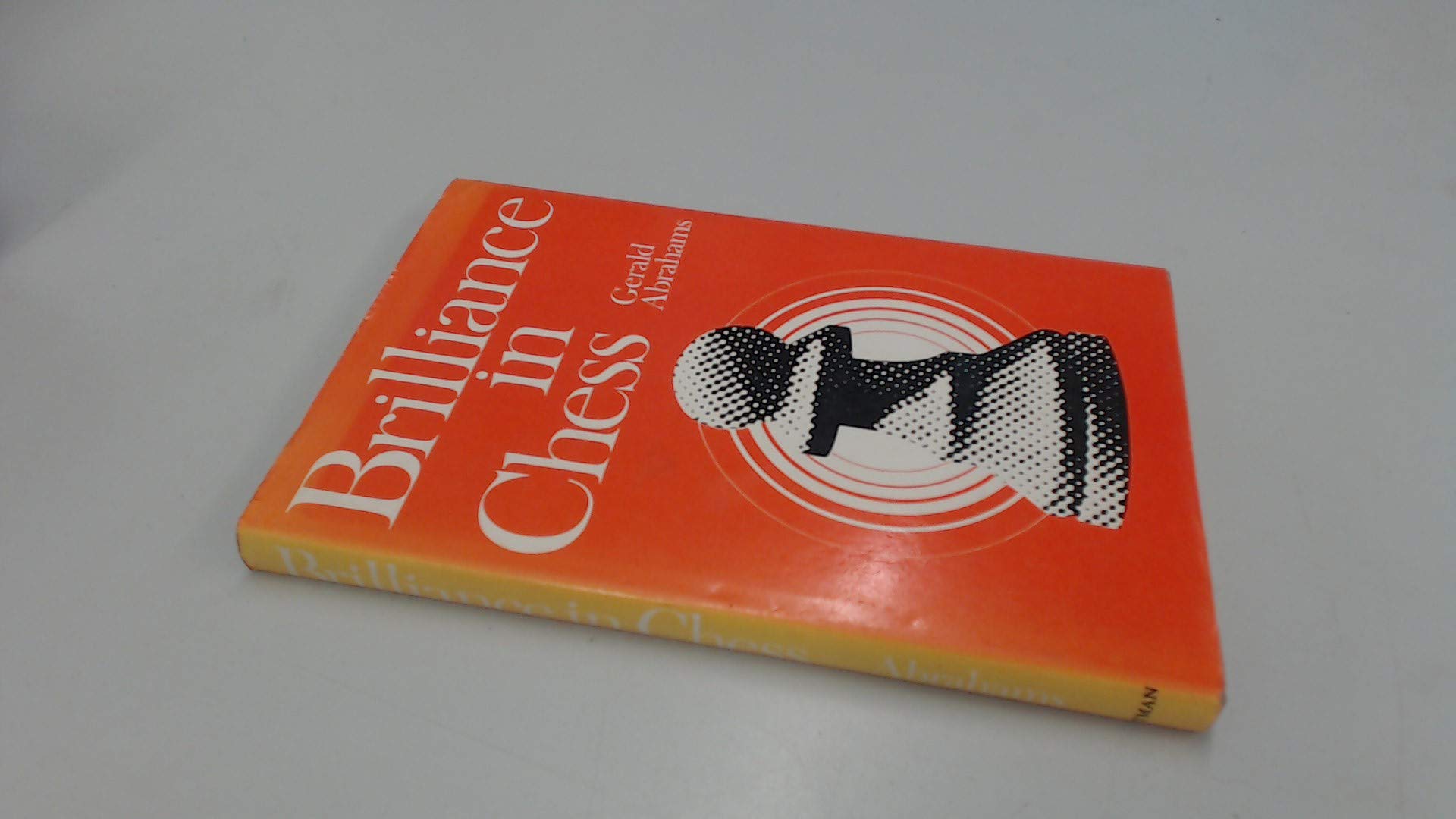
How to Teach Yourself Chess, Gerald Abrahams, D Van Nostrand Company, Inc, New York, 1950Technique in Chess, Gerald Abrahams, George Bell & Sons Ltd., 1961,Test Your Chess, Gerald Abrahams, Constable and co, 1963, ISBN 0 330 24336 5The Pan Book of Chess, Gerald Abrahams, Pan, 1965, 10: ISBN 0330230735Teach Yourself Chess, Gerald Abrahams, The English Universities Press Ltd, 1965,Technique in Chess, Gerald Abrahams, Dover, 1973, ISBN ISBN 13: 9780486229539Brilliance in Chess, Gerald Abrahams, Pitman Publishing, 1977, ISBN 10: 0273000349
BCN remembers Gerald Abrahams who passed away in Liverpool on Saturday, March 15th 1980. He was buried in the Allerton Cemetery in the Jewish Springwood plot.
Gerald Abrahams was born in Liverpool on Monday, April 15th 1907. On this day the Triangle Fraternity was formed at the University of Illinois at Urbana–Champaign.
His parents were Harry (b. 10th September 1880) and Leah (b. 12th March 1884) Abrahams (née Rabinowitz) who married in West Derby in the third quarter of 1903.
Gerald learnt chess at the age of ten during the first world war. He obtained an Open Scholarship to Wadham College, Oxford in 1925 reading PPE and earning himself an MA in Law in 1928. He became a practising barrister at Law.
From the 1939 register we learnt that Harry was a Drapery manufacturer and Leah carried out “unpaid domestic duties”. Gerald was not an only child: the first born was Winnie (b. 22nd November 1903) who was a Secretary and Clerk Typist and factory assistant. Elsie Abrahams (b. 14th April 1905) helped her mother with “unpaid domestic duties”. Blanche was Gerald’s older brother and he was “General Assistant In Fathers Business Drapery Manufacturer”. Gerald is listed (aged 32) as a Barrister at Law and author. The family resided at 51 Prince Alfred Road, Liverpool, Lancashire (now L15 6TQ) and their original property has been since replaced.
Historical map showing the 1939 residence of Gerald Abrahams
The full list of people present seems to have been largely or entirely Jewish in religion or ethnicity: it included a famous chess-playing barrister from Liverpool, Gerald Abrahams, representing himself, who had taken a First in P.P.E. at Oxford, and later married Elsie Krengel, who had also been present, and with Leslie Black representing the rest of the defendants, apart from the hosts and Captain Lionel Husdan, who sent a letter to the court.
The full list of those present, charged with “resorting and playing in a common gaming house,” and bound over was as follows:- Mott Alexander, Fannie Finn, Maxwell Glassman, Kate Lippa, Myer Lister, Gertrude Mannheim, Joseph Mannheim, Rita Mannheim, Simon Mannheim, Harry Peters, Sadie Peters, Lily Leah Ross, Harry Sapiro, Benjamin Stone. Those charged with “resorting in a common gaming house” and bound over, were:- Gerald Abrahams, Joseph Appleton Bach, Samuel Myer Barnett, Herbert Solomon Isaacson, Elsie Krengel, Manuel Mannheim, Louis Michaelson, Abraham Ross, Bernard and Elsie Ross.
“Gerald Abrahams, the barrister charged, said he was interested to protect his reputation from being stigmatised by a conviction, and asked Sergeant Laycock about alcohol: the latter replied that none was being consumed. He submitted that the club was not a gaming house, and that draw poker had not been proved other than as a game of skill. Charges were dismissed against Henry, Eva and Marjorie Black, Myer Waldman, and Captain Lionel Husdan, of Ryde, Isle of Wight, all of whom had said that they were merely taking refreshments in the club, and had not played. David Platt said that he had not the slightest idea that they were breaking the law, and Mrs Platt said that it had not been a paying venture.”
The Complete Chess Addict (Faber& Faber, 1987), Fox & James notes: that Gerald Abrahams as authority on bridge cast doubt on assertions that Emanuel Lasker “was good enough to represent Germany”
Gerald’s comparisons of chess and bridge are discussed by Edward Winter in Chess Facts and Fables (McFarland, 2005) page 130 in GAs 1962 book Brains in Bridge:
Brains in Bridge, Gerald Abrahams, Constable and Company, 1962, ISBN ?
Gerald eventually married Elsie Krengel (born 15th January 1909) in the fourth quarter of 1971 in Liverpool at the age of 64. Elsie had lived in the Southport area for most of her life and her family was associated with the manufacture of handbags. They had known each other for many years (at least since 1942 as mentioned previously).
Gerald Abrahams
Leonard Barden modestly recounts :
“At the end of Nottingham 1954 Gerald claimed that Alan Phillips had accepted his draw offer so tieing Gerald for the British championship with some rabbit whose name escapes me. When Phillips strongly denied having accepted the draw, Gerald collapsed on the floor and had to be aided by his old enemy Dr. Fazekas.”
From The Anglo-Soviet Radio Chess Match (1946) by Klein and Winter:
“G. Abrahams was born in Liverpool in 1907. He learned chess at the age of ten, and showed an early aptitude for tactical complications. He has played with varying success, his best performances being third and fourth with Rossolimo, behind Klein and Najdorf, but head of List at Margate, 1938, and fourth, fifth and sixth with Sir George A. Thomas and König in London, 1946. He has made two valiant bids for the British Championship.
A graduate of Oxford, he is a barrister by profession and has written several books, including some fiction. He has solidified his chess without allowing it to become dry. Indeed, most of his games sparkle with interesting complications.”
Harry Golombek OBE wrote (in The Encyclopaedia of Chess (Batsford, 1977)):
“Brilliant British amateur who in the 1930s was playing master-chess. In that period he was the most dangerous attacking player in England.
Gerald Abrahams watching the opening at the Hastings Chess Congress 1947. Also watching is Sir George Thomas who was GAs round one opponent. The Mayor was Alderman W. J. Fellows and he is opposite Sir Edmund McNeill Cooper-Key. Second from left is Percy J. Morren who was the Hasting’s Club President
He was in the prize-list (i.e. in the first four) in the British championship on three occasions 1933, 1946 and 1954. His best international performance was in the Major Open at Nottingham in 1936 where he came =3rd with Opocensky. Another fine result was his score of 1.5-0.5 against the Soviet Grandmaster Ragozin, in the 1946 Anglo-Soviet radio match.
He is the inventor of the Abrahams variation in the Semi-Slav Defence to the Queen’s Gambit: 1.P-Q4, P-Q4;2.P-QB4, P-QB3;3.N-QB3, P-K3;4.N-B3, PXP;5.P-QR4, B-N4;6.P-K3,P-QN4;7.B-Q2, P-QR4; 8.PxP, BxN;9.BxB,PxP;10.P-QN3,B-N2;
This is sometimes known as the Noteboom variation after the Dutch master who played it in the 1930s, but Abrahams was playing it in 1925 long before Noteboom.
He is a witty and prolific writer on many subjects: on law (he is a barrister by profession), philosophy, and chess; he also writes fiction. His main chess works are: The Chess Mind, London 1951 and 1960
The Chess Mind, Gerald Abrahams, The English Universities Press, 1951, ISBN 0 340 19492 8
and here is a later cover:
The Chess Mind, Gerald Abrahams, The English Universities Press, 1951, ISBN 0 340 19492 8
and Not Only Chess, London 1974.
Not Only Chess, Gerald Abrahams, George Allen & Unwin Ltd., 1974, ISBN 0 04 794005 0
Edward Winter in Kings, Commoners and Knaves, cites the subtitle of the above book in his page 235 list of chessy words: “A selection of Chessays”.
From Not Only Chess we learn that GAs favourite game was played in 1930 against Edmund Spencer of Liverpool. “Edmund Spencer was a man who is remembered with affection by all players who ever met him, and who is remarkable in that his strength developed in what should have been hid middle life. When he died, lamentably early, in the 1930s, at about 53 he was at his best, and of recognised master status.
This game was played in 1930.”
and for an alternative view of the same game:
GA is amongst a rare breed of game annotators claiming the title of An Immortal for one of his own games. Edward Winter devotes a couple of column inches discussing exactly which year the game was played between 1929 and 1936. Here is the game:
For more of GAs excellent games see the superb article further on by Steve Cunliffe. Also, Not Only Chess in Chapter 28 (“A Score of my Scores”) contains a veritable feast of entertaining games of GAs).
Gerald famously fell out with Anne Sunnucks when he discovered she had omitted him from her 1970 Encyclopaedia of Chess. Despite this the 1976 edition was also devoid of a mention.
From The Oxford Companion to Chess (OUP, 1984 & 1996), Hooper & Whyld:
“The English player Gerald Abrahams (1907-80) introduced the move when playing against Dr. Holmes in the Lancastrian County Championship in 1925 (ed: January 31st in fact) . Abrahams played the variation against his countryman William Winter (1898-1955) in 1929 and in the same year Winter played it against Noteboom, after whom it is sometimes named. (Dr, Holmes was the favourite pupil of Amos Burn and a leading ophthalmologist).
Gerald Abrahams
The precursor, known from a 16th-century manuscript, was published by Salvio in 1604:
Writing in 1617, Carrera made his only criticism of Salvio’s analysis in this variation. He suggested 8…Bd7 instead of 8…Nd7, or 9.Qa4 instead of 9.Nf3. Salvio nursed his injured pride for seventeen years and then devoted a chapter of his book to a bitter attack on Carrera. The argument was pointless: all these variations give White a won game.”
GA famously wrote :
Chess is a good mistress, but a bad master
and also
The tactician knows what to do when there is something to do; whereas the strategian knows what to do when there is nothing to do.
and
In chess there is a world of intellectual values
and
Good positions don’t win games, good moves do
and
Why some persons are good at chess, and others bad at it, is more mysterious than anything on chess board.
In the recently (February 25th, 2020) published “Attacking with g2 – g4” by GM Dmitry Kryakvin writes about Abrahams as follows :
“It is believed that the extravagant 5.g2-g4 was first applied at a high level, namely in the British Championship by Gerald Abrahams. Abrahams was a truly versatile person – a composer, lawyer, historian, philosopher, politician (for 40 years a member of the Liberal Party) and the author of several books. Of his legal work, the most famous is the investigation into the murder of Julia Wallace in 1931 in Liverpool, where her husband was the main suspect. As an alibi, William Herbert Wallace claimed he was at a chess club. Dozens of books and films have been devote to the murder of Mrs. Wallace – indeed, this is a script worthy of Arthur Conan Doyle or Agatha Christie!
by Lafayette (Lafayette Ltd), whole-plate film negative, 21 August 1933
Abrahams played various card games with great pleasure and success, but the main passion of the Liverpool resident was chess. Abrahams achieved his greatest success in the championships of Great Britain in 1933 and 1946, when he won bronze medals. The peak of his career was undoubtedly his participation in the USSR-Great Britain radio match (1946) where on the 10th board Abrahams beat Botvinnik’s second and assistant grandmaster Viacheslav Ragozin with a score of 1.5-0.5
Gerald Abrahams had a taste of studying opening theory, and made a distinct contribution to the development of the Noteboom Variation, which is often known as the Abrahams-Noteboom.
Ten years after he introduced the move 5.g2-g4 to the English public (1953), the famous grandmaster Lajos Portisch brought it into the international arena.”
Gerald Abrahams
Gerald was also a keen studies composer. Here are some examples of his work:
Gerald Abrahams contributed to opening theory in the Queen’s Gambit Declined / Semi-Slav Defence with his creation of the Abrahams-Noteboom Defence as discussed in the following video :
Here is a nine page article (Gerald Abrahams – Talent without Discipline) written by Steve Cunliffe that appeared in British Chess Magazine, Volume CVIII (1988), Number 7 (July), pp. 292-300:
British Chess Magazine, Volume CVIII (1988), Number 7 (July), pp. 292British Chess Magazine, Volume CVIII (1988), Number 7 (July), pp. 293British Chess Magazine, Volume CVIII (1988), Number 7 (July), pp. 294British Chess Magazine, Volume CVIII (1988), Number 7 (July), pp. 295British Chess Magazine, Volume CVIII (1988), Number 7 (July), pp. 296British Chess Magazine, Volume CVIII (1988), Number 7 (July), pp. 297British Chess Magazine, Volume CVIII (1988), Number 7 (July), pp. 298British Chess Magazine, Volume CVIII (1988), Number 7 (July), pp. 299British Chess Magazine, Volume CVIII (1988), Number 7 (July), pp. 300
How to Teach Yourself Chess, Gerald Abrahams, D Van Nostrand Company, Inc, New York, 1950Technique in Chess, Gerald Abrahams, George Bell & Sons Ltd., 1961,Test Your Chess, Gerald Abrahams, Constable and co, 1963, ISBN 0 330 24336 5The Pan Book of Chess, Gerald Abrahams, Pan, 1965, 10: ISBN 0330230735Teach Yourself Chess, Gerald Abrahams, The English Universities Press Ltd, 1965,Technique in Chess, Gerald Abrahams, Dover, 1973, ISBN ISBN 13: 9780486229539Brilliance in Chess, Gerald Abrahams, Pitman Publishing, 1977, ISBN 10: 0273000349
BCN remembers Gerald Abrahams who passed away in Liverpool on Saturday, March 15th 1980. He was buried in the Allerton Cemetery in the Jewish Springwood plot.
Gerald Abrahams was born in Liverpool on Monday, April 15th 1907. On this day the Triangle Fraternity was formed at the University of Illinois at Urbana–Champaign.
His parents were Harry (b. 10th September 1880) and Leah (b. 12th March 1884) Abrahams (née Rabinowitz) who married in West Derby in the third quarter of 1903.
Gerald learnt chess at the age of ten during the first world war. He obtained an Open Scholarship to Wadham College, Oxford in 1925 reading PPE and earning himself an MA in Law in 1928. He became a practising barrister at Law.
From the 1939 register we learnt that Harry was a Drapery manufacturer and Leah carried out “unpaid domestic duties”. Gerald was not an only child: the first born was Winnie (b. 22nd November 1903) who was a Secretary and Clerk Typist and factory assistant. Elsie Abrahams (b. 14th April 1905) helped her mother with “unpaid domestic duties”. Blanche was Gerald’s older brother and he was “General Assistant In Fathers Business Drapery Manufacturer”. Gerald is listed (aged 32) as a Barrister at Law and author. The family resided at 51 Prince Alfred Road, Liverpool, Lancashire (now L15 6TQ) and their original property has been since replaced.
Historical map showing the 1939 residence of Gerald Abrahams
The full list of people present seems to have been largely or entirely Jewish in religion or ethnicity: it included a famous chess-playing barrister from Liverpool, Gerald Abrahams, representing himself, who had taken a First in P.P.E. at Oxford, and later married Elsie Krengel, who had also been present, and with Leslie Black representing the rest of the defendants, apart from the hosts and Captain Lionel Husdan, who sent a letter to the court.
The full list of those present, charged with “resorting and playing in a common gaming house,” and bound over was as follows:- Mott Alexander, Fannie Finn, Maxwell Glassman, Kate Lippa, Myer Lister, Gertrude Mannheim, Joseph Mannheim, Rita Mannheim, Simon Mannheim, Harry Peters, Sadie Peters, Lily Leah Ross, Harry Sapiro, Benjamin Stone. Those charged with “resorting in a common gaming house” and bound over, were:- Gerald Abrahams, Joseph Appleton Bach, Samuel Myer Barnett, Herbert Solomon Isaacson, Elsie Krengel, Manuel Mannheim, Louis Michaelson, Abraham Ross, Bernard and Elsie Ross.
“Gerald Abrahams, the barrister charged, said he was interested to protect his reputation from being stigmatised by a conviction, and asked Sergeant Laycock about alcohol: the latter replied that none was being consumed. He submitted that the club was not a gaming house, and that draw poker had not been proved other than as a game of skill. Charges were dismissed against Henry, Eva and Marjorie Black, Myer Waldman, and Captain Lionel Husdan, of Ryde, Isle of Wight, all of whom had said that they were merely taking refreshments in the club, and had not played. David Platt said that he had not the slightest idea that they were breaking the law, and Mrs Platt said that it had not been a paying venture.”
The Complete Chess Addict (Faber& Faber, 1987), Fox & James notes: that Gerald Abrahams as authority on bridge cast doubt on assertions that Emanuel Lasker “was good enough to represent Germany”
Gerald’s comparisons of chess and bridge are discussed by Edward Winter in Chess Facts and Fables (McFarland, 2005) page 130 in GAs 1962 book Brains in Bridge:
Brains in Bridge, Gerald Abrahams, Constable and Company, 1962, ISBN ?
Gerald eventually married Elsie Krengel (born 15th January 1909) in the fourth quarter of 1971 in Liverpool at the age of 64. Elsie had lived in the Southport area for most of her life and her family was associated with the manufacture of handbags. They had known each other for many years (at least since 1942 as mentioned previously).
Gerald Abrahams
Leonard Barden modestly recounts :
“At the end of Nottingham 1954 Gerald claimed that Alan Phillips had accepted his draw offer so tieing Gerald for the British championship with some rabbit whose name escapes me. When Phillips strongly denied having accepted the draw, Gerald collapsed on the floor and had to be aided by his old enemy Dr. Fazekas.”
From The Anglo-Soviet Radio Chess Match (1946) by Klein and Winter:
“G. Abrahams was born in Liverpool in 1907. He learned chess at the age of ten, and showed an early aptitude for tactical complications. He has played with varying success, his best performances being third and fourth with Rossolimo, behind Klein and Najdorf, but head of List at Margate, 1938, and fourth, fifth and sixth with Sir George A. Thomas and König in London, 1946. He has made two valiant bids for the British Championship.
A graduate of Oxford, he is a barrister by profession and has written several books, including some fiction. He has solidified his chess without allowing it to become dry. Indeed, most of his games sparkle with interesting complications.”
Harry Golombek OBE wrote (in The Encyclopaedia of Chess (Batsford, 1977)):
“Brilliant British amateur who in the 1930s was playing master-chess. In that period he was the most dangerous attacking player in England.
Gerald Abrahams watching the opening at the Hastings Chess Congress 1947. Also watching is Sir George Thomas who was GAs round one opponent. The Mayor was Alderman W. J. Fellows and he is opposite Sir Edmund McNeill Cooper-Key. Second from left is Percy J. Morren who was the Hasting’s Club President
He was in the prize-list (i.e. in the first four) in the British championship on three occasions 1933, 1946 and 1954. His best international performance was in the Major Open at Nottingham in 1936 where he came =3rd with Opocensky. Another fine result was his score of 1.5-0.5 against the Soviet Grandmaster Ragozin, in the 1946 Anglo-Soviet radio match.
He is the inventor of the Abrahams variation in the Semi-Slav Defence to the Queen’s Gambit: 1.P-Q4, P-Q4;2.P-QB4, P-QB3;3.N-QB3, P-K3;4.N-B3, PXP;5.P-QR4, B-N4;6.P-K3,P-QN4;7.B-Q2, P-QR4; 8.PxP, BxN;9.BxB,PxP;10.P-QN3,B-N2;
This is sometimes known as the Noteboom variation after the Dutch master who played it in the 1930s, but Abrahams was playing it in 1925 long before Noteboom.
He is a witty and prolific writer on many subjects: on law (he is a barrister by profession), philosophy, and chess; he also writes fiction. His main chess works are: The Chess Mind, London 1951 and 1960
The Chess Mind, Gerald Abrahams, The English Universities Press, 1951, ISBN 0 340 19492 8
and here is a later cover:
The Chess Mind, Gerald Abrahams, The English Universities Press, 1951, ISBN 0 340 19492 8
and Not Only Chess, London 1974.
Not Only Chess, Gerald Abrahams, George Allen & Unwin Ltd., 1974, ISBN 0 04 794005 0
Edward Winter in Kings, Commoners and Knaves, cites the subtitle of the above book in his page 235 list of chessy words: “A selection of Chessays”.
From Not Only Chess we learn that GAs favourite game was played in 1930 against Edmund Spencer of Liverpool. “Edmund Spencer was a man who is remembered with affection by all players who ever met him, and who is remarkable in that his strength developed in what should have been hid middle life. When he died, lamentably early, in the 1930s, at about 53 he was at his best, and of recognised master status.
This game was played in 1930.”
and for an alternative view of the same game:
GA is amongst a rare breed of game annotators claiming the title of An Immortal for one of his own games. Edward Winter devotes a couple of column inches discussing exactly which year the game was played between 1929 and 1936. Here is the game:
For more of GAs excellent games see the superb article further on by Steve Cunliffe. Also, Not Only Chess in Chapter 28 (“A Score of my Scores”) contains a veritable feast of entertaining games of GAs).
Gerald famously fell out with Anne Sunnucks when he discovered she had omitted him from her 1970 Encyclopaedia of Chess. Despite this the 1976 edition was also devoid of a mention.
From The Oxford Companion to Chess (OUP, 1984 & 1996), Hooper & Whyld:
“The English player Gerald Abrahams (1907-80) introduced the move when playing against Dr. Holmes in the Lancastrian County Championship in 1925 (ed: January 31st in fact) . Abrahams played the variation against his countryman William Winter (1898-1955) in 1929 and in the same year Winter played it against Noteboom, after whom it is sometimes named. (Dr, Holmes was the favourite pupil of Amos Burn and a leading ophthalmologist).
Gerald Abrahams
The precursor, known from a 16th-century manuscript, was published by Salvio in 1604:
Writing in 1617, Carrera made his only criticism of Salvio’s analysis in this variation. He suggested 8…Bd7 instead of 8…Nd7, or 9.Qa4 instead of 9.Nf3. Salvio nursed his injured pride for seventeen years and then devoted a chapter of his book to a bitter attack on Carrera. The argument was pointless: all these variations give White a won game.”
GA famously wrote :
Chess is a good mistress, but a bad master
and also
The tactician knows what to do when there is something to do; whereas the strategian knows what to do when there is nothing to do.
and
In chess there is a world of intellectual values
and
Good positions don’t win games, good moves do
and
Why some persons are good at chess, and others bad at it, is more mysterious than anything on chess board.
In the recently (February 25th, 2020) published “Attacking with g2 – g4” by GM Dmitry Kryakvin writes about Abrahams as follows :
“It is believed that the extravagant 5.g2-g4 was first applied at a high level, namely in the British Championship by Gerald Abrahams. Abrahams was a truly versatile person – a composer, lawyer, historian, philosopher, politician (for 40 years a member of the Liberal Party) and the author of several books. Of his legal work, the most famous is the investigation into the murder of Julia Wallace in 1931 in Liverpool, where her husband was the main suspect. As an alibi, William Herbert Wallace claimed he was at a chess club. Dozens of books and films have been devote to the murder of Mrs. Wallace – indeed, this is a script worthy of Arthur Conan Doyle or Agatha Christie!
by Lafayette (Lafayette Ltd), whole-plate film negative, 21 August 1933
Abrahams played various card games with great pleasure and success, but the main passion of the Liverpool resident was chess. Abrahams achieved his greatest success in the championships of Great Britain in 1933 and 1946, when he won bronze medals. The peak of his career was undoubtedly his participation in the USSR-Great Britain radio match (1946) where on the 10th board Abrahams beat Botvinnik’s second and assistant grandmaster Viacheslav Ragozin with a score of 1.5-0.5
Gerald Abrahams had a taste of studying opening theory, and made a distinct contribution to the development of the Noteboom Variation, which is often known as the Abrahams-Noteboom.
Ten years after he introduced the move 5.g2-g4 to the English public (1953), the famous grandmaster Lajos Portisch brought it into the international arena.”
Gerald Abrahams
Gerald was also a keen studies composer. Here are some examples of his work:
Gerald Abrahams contributed to opening theory in the Queen’s Gambit Declined / Semi-Slav Defence with his creation of the Abrahams-Noteboom Defence as discussed in the following video :
Here is a nine page article (Gerald Abrahams – Talent without Discipline) written by Steve Cunliffe that appeared in British Chess Magazine, Volume CVIII (1988), Number 7 (July), pp. 292-300:
British Chess Magazine, Volume CVIII (1988), Number 7 (July), pp. 292British Chess Magazine, Volume CVIII (1988), Number 7 (July), pp. 293British Chess Magazine, Volume CVIII (1988), Number 7 (July), pp. 294British Chess Magazine, Volume CVIII (1988), Number 7 (July), pp. 295British Chess Magazine, Volume CVIII (1988), Number 7 (July), pp. 296British Chess Magazine, Volume CVIII (1988), Number 7 (July), pp. 297British Chess Magazine, Volume CVIII (1988), Number 7 (July), pp. 298British Chess Magazine, Volume CVIII (1988), Number 7 (July), pp. 299British Chess Magazine, Volume CVIII (1988), Number 7 (July), pp. 300
How to Teach Yourself Chess, Gerald Abrahams, D Van Nostrand Company, Inc, New York, 1950Technique in Chess, Gerald Abrahams, George Bell & Sons Ltd., 1961,Test Your Chess, Gerald Abrahams, Constable and co, 1963, ISBN 0 330 24336 5The Pan Book of Chess, Gerald Abrahams, Pan, 1965, 10: ISBN 0330230735Teach Yourself Chess, Gerald Abrahams, The English Universities Press Ltd, 1965,Technique in Chess, Gerald Abrahams, Dover, 1973, ISBN ISBN 13: 9780486229539Brilliance in Chess, Gerald Abrahams, Pitman Publishing, 1977, ISBN 10: 0273000349
BCN remembers Gerald Abrahams who passed away in Liverpool on Saturday, March 15th 1980. He was buried in the Allerton Cemetery in the Jewish Springwood plot.
Gerald Abrahams was born in Liverpool on Monday, April 15th 1907. On this day the Triangle Fraternity was formed at the University of Illinois at Urbana–Champaign.
His parents were Harry (b. 10th September 1880) and Leah (b. 12th March 1884) Abrahams (née Rabinowitz) who married in West Derby in the third quarter of 1903.
Gerald learnt chess at the age of ten during the first world war. He obtained an Open Scholarship to Wadham College, Oxford in 1925 reading PPE and earning himself an MA in Law in 1928. He became a practising barrister at Law.
From the 1939 register we learnt that Harry was a Drapery manufacturer and Leah carried out “unpaid domestic duties”. Gerald was not an only child: the first born was Winnie (b. 22nd November 1903) who was a Secretary and Clerk Typist and factory assistant. Elsie Abrahams (b. 14th April 1905) helped her mother with “unpaid domestic duties”. Blanche was Gerald’s older brother and he was “General Assistant In Fathers Business Drapery Manufacturer”. Gerald is listed (aged 32) as a Barrister at Law and author. The family resided at 51 Prince Alfred Road, Liverpool, Lancashire (now L15 6TQ) and their original property has been since replaced.
Historical map showing the 1939 residence of Gerald Abrahams
The full list of people present seems to have been largely or entirely Jewish in religion or ethnicity: it included a famous chess-playing barrister from Liverpool, Gerald Abrahams, representing himself, who had taken a First in P.P.E. at Oxford, and later married Elsie Krengel, who had also been present, and with Leslie Black representing the rest of the defendants, apart from the hosts and Captain Lionel Husdan, who sent a letter to the court.
The full list of those present, charged with “resorting and playing in a common gaming house,” and bound over was as follows:- Mott Alexander, Fannie Finn, Maxwell Glassman, Kate Lippa, Myer Lister, Gertrude Mannheim, Joseph Mannheim, Rita Mannheim, Simon Mannheim, Harry Peters, Sadie Peters, Lily Leah Ross, Harry Sapiro, Benjamin Stone. Those charged with “resorting in a common gaming house” and bound over, were:- Gerald Abrahams, Joseph Appleton Bach, Samuel Myer Barnett, Herbert Solomon Isaacson, Elsie Krengel, Manuel Mannheim, Louis Michaelson, Abraham Ross, Bernard and Elsie Ross.
“Gerald Abrahams, the barrister charged, said he was interested to protect his reputation from being stigmatised by a conviction, and asked Sergeant Laycock about alcohol: the latter replied that none was being consumed. He submitted that the club was not a gaming house, and that draw poker had not been proved other than as a game of skill. Charges were dismissed against Henry, Eva and Marjorie Black, Myer Waldman, and Captain Lionel Husdan, of Ryde, Isle of Wight, all of whom had said that they were merely taking refreshments in the club, and had not played. David Platt said that he had not the slightest idea that they were breaking the law, and Mrs Platt said that it had not been a paying venture.”
The Complete Chess Addict (Faber& Faber, 1987), Fox & James notes: that Gerald Abrahams as authority on bridge cast doubt on assertions that Emanuel Lasker “was good enough to represent Germany”
Gerald’s comparisons of chess and bridge are discussed by Edward Winter in Chess Facts and Fables (McFarland, 2005) page 130 in GAs 1962 book Brains in Bridge:
Brains in Bridge, Gerald Abrahams, Constable and Company, 1962, ISBN ?
Gerald eventually married Elsie Krengel (born 15th January 1909) in the fourth quarter of 1971 in Liverpool at the age of 64. Elsie had lived in the Southport area for most of her life and her family was associated with the manufacture of handbags. They had known each other for many years (at least since 1942 as mentioned previously).
Gerald Abrahams
Leonard Barden modestly recounts :
“At the end of Nottingham 1954 Gerald claimed that Alan Phillips had accepted his draw offer so tieing Gerald for the British championship with some rabbit whose name escapes me. When Phillips strongly denied having accepted the draw, Gerald collapsed on the floor and had to be aided by his old enemy Dr. Fazekas.”
From The Anglo-Soviet Radio Chess Match (1946) by Klein and Winter:
“G. Abrahams was born in Liverpool in 1907. He learned chess at the age of ten, and showed an early aptitude for tactical complications. He has played with varying success, his best performances being third and fourth with Rossolimo, behind Klein and Najdorf, but head of List at Margate, 1938, and fourth, fifth and sixth with Sir George A. Thomas and König in London, 1946. He has made two valiant bids for the British Championship.
A graduate of Oxford, he is a barrister by profession and has written several books, including some fiction. He has solidified his chess without allowing it to become dry. Indeed, most of his games sparkle with interesting complications.”
Harry Golombek OBE wrote (in The Encyclopaedia of Chess (Batsford, 1977)):
“Brilliant British amateur who in the 1930s was playing master-chess. In that period he was the most dangerous attacking player in England.
Gerald Abrahams watching the opening at the Hastings Chess Congress 1947. Also watching is Sir George Thomas who was GAs round one opponent. The Mayor was Alderman W. J. Fellows and he is opposite Sir Edmund McNeill Cooper-Key. Second from left is Percy J. Morren who was the Hasting’s Club President
He was in the prize-list (i.e. in the first four) in the British championship on three occasions 1933, 1946 and 1954. His best international performance was in the Major Open at Nottingham in 1936 where he came =3rd with Opocensky. Another fine result was his score of 1.5-0.5 against the Soviet Grandmaster Ragozin, in the 1946 Anglo-Soviet radio match.
He is the inventor of the Abrahams variation in the Semi-Slav Defence to the Queen’s Gambit: 1.P-Q4, P-Q4;2.P-QB4, P-QB3;3.N-QB3, P-K3;4.N-B3, PXP;5.P-QR4, B-N4;6.P-K3,P-QN4;7.B-Q2, P-QR4; 8.PxP, BxN;9.BxB,PxP;10.P-QN3,B-N2;
This is sometimes known as the Noteboom variation after the Dutch master who played it in the 1930s, but Abrahams was playing it in 1925 long before Noteboom.
He is a witty and prolific writer on many subjects: on law (he is a barrister by profession), philosophy, and chess; he also writes fiction. His main chess works are: The Chess Mind, London 1951 and 1960
The Chess Mind, Gerald Abrahams, The English Universities Press, 1951, ISBN 0 340 19492 8
and here is a later cover:
The Chess Mind, Gerald Abrahams, The English Universities Press, 1951, ISBN 0 340 19492 8
and Not Only Chess, London 1974.
Not Only Chess, Gerald Abrahams, George Allen & Unwin Ltd., 1974, ISBN 0 04 794005 0
Edward Winter in Kings, Commoners and Knaves, cites the subtitle of the above book in his page 235 list of chessy words: “A selection of Chessays”.
From Not Only Chess we learn that GAs favourite game was played in 1930 against Edmund Spencer of Liverpool. “Edmund Spencer was a man who is remembered with affection by all players who ever met him, and who is remarkable in that his strength developed in what should have been hid middle life. When he died, lamentably early, in the 1930s, at about 53 he was at his best, and of recognised master status.
This game was played in 1930.”
and for an alternative view of the same game:
GA is amongst a rare breed of game annotators claiming the title of An Immortal for one of his own games. Edward Winter devotes a couple of column inches discussing exactly which year the game was played between 1929 and 1936. Here is the game:
For more of GAs excellent games see the superb article further on by Steve Cunliffe. Also, Not Only Chess in Chapter 28 (“A Score of my Scores”) contains a veritable feast of entertaining games of GAs).
Gerald famously fell out with Anne Sunnucks when he discovered she had omitted him from her 1970 Encyclopaedia of Chess. Despite this the 1976 edition was also devoid of a mention.
From The Oxford Companion to Chess (OUP, 1984 & 1996), Hooper & Whyld:
“The English player Gerald Abrahams (1907-80) introduced the move when playing against Dr. Holmes in the Lancastrian County Championship in 1925 (ed: January 31st in fact) . Abrahams played the variation against his countryman William Winter (1898-1955) in 1929 and in the same year Winter played it against Noteboom, after whom it is sometimes named. (Dr, Holmes was the favourite pupil of Amos Burn and a leading ophthalmologist).
Gerald Abrahams
The precursor, known from a 16th-century manuscript, was published by Salvio in 1604:
Writing in 1617, Carrera made his only criticism of Salvio’s analysis in this variation. He suggested 8…Bd7 instead of 8…Nd7, or 9.Qa4 instead of 9.Nf3. Salvio nursed his injured pride for seventeen years and then devoted a chapter of his book to a bitter attack on Carrera. The argument was pointless: all these variations give White a won game.”
GA famously wrote :
Chess is a good mistress, but a bad master
and also
The tactician knows what to do when there is something to do; whereas the strategian knows what to do when there is nothing to do.
and
In chess there is a world of intellectual values
and
Good positions don’t win games, good moves do
and
Why some persons are good at chess, and others bad at it, is more mysterious than anything on chess board.
In the recently (February 25th, 2020) published “Attacking with g2 – g4” by GM Dmitry Kryakvin writes about Abrahams as follows :
“It is believed that the extravagant 5.g2-g4 was first applied at a high level, namely in the British Championship by Gerald Abrahams. Abrahams was a truly versatile person – a composer, lawyer, historian, philosopher, politician (for 40 years a member of the Liberal Party) and the author of several books. Of his legal work, the most famous is the investigation into the murder of Julia Wallace in 1931 in Liverpool, where her husband was the main suspect. As an alibi, William Herbert Wallace claimed he was at a chess club. Dozens of books and films have been devote to the murder of Mrs. Wallace – indeed, this is a script worthy of Arthur Conan Doyle or Agatha Christie!
by Lafayette (Lafayette Ltd), whole-plate film negative, 21 August 1933
Abrahams played various card games with great pleasure and success, but the main passion of the Liverpool resident was chess. Abrahams achieved his greatest success in the championships of Great Britain in 1933 and 1946, when he won bronze medals. The peak of his career was undoubtedly his participation in the USSR-Great Britain radio match (1946) where on the 10th board Abrahams beat Botvinnik’s second and assistant grandmaster Viacheslav Ragozin with a score of 1.5-0.5
Gerald Abrahams had a taste of studying opening theory, and made a distinct contribution to the development of the Noteboom Variation, which is often known as the Abrahams-Noteboom.
Ten years after he introduced the move 5.g2-g4 to the English public (1953), the famous grandmaster Lajos Portisch brought it into the international arena.”
Gerald Abrahams
Gerald was also a keen studies composer. Here are some examples of his work:
Gerald Abrahams contributed to opening theory in the Queen’s Gambit Declined / Semi-Slav Defence with his creation of the Abrahams-Noteboom Defence as discussed in the following video :
Here is a nine page article (Gerald Abrahams – Talent without Discipline) written by Steve Cunliffe that appeared in British Chess Magazine, Volume CVIII (1988), Number 7 (July), pp. 292-300:
British Chess Magazine, Volume CVIII (1988), Number 7 (July), pp. 292British Chess Magazine, Volume CVIII (1988), Number 7 (July), pp. 293British Chess Magazine, Volume CVIII (1988), Number 7 (July), pp. 294British Chess Magazine, Volume CVIII (1988), Number 7 (July), pp. 295British Chess Magazine, Volume CVIII (1988), Number 7 (July), pp. 296British Chess Magazine, Volume CVIII (1988), Number 7 (July), pp. 297British Chess Magazine, Volume CVIII (1988), Number 7 (July), pp. 298British Chess Magazine, Volume CVIII (1988), Number 7 (July), pp. 299British Chess Magazine, Volume CVIII (1988), Number 7 (July), pp. 300
How to Teach Yourself Chess, Gerald Abrahams, D Van Nostrand Company, Inc, New York, 1950Technique in Chess, Gerald Abrahams, George Bell & Sons Ltd., 1961,Test Your Chess, Gerald Abrahams, Constable and co, 1963, ISBN 0 330 24336 5The Pan Book of Chess, Gerald Abrahams, Pan, 1965, 10: ISBN 0330230735Teach Yourself Chess, Gerald Abrahams, The English Universities Press Ltd, 1965,Technique in Chess, Gerald Abrahams, Dover, 1973, ISBN ISBN 13: 9780486229539Brilliance in Chess, Gerald Abrahams, Pitman Publishing, 1977, ISBN 10: 0273000349
Understanding Before Moving 2 : Queen’s Gambit Structures
Herman Grooten is an International master, a professional coach for over thirty-five years and has taught players such as Loek van Wely, Jan Werle and Benjamin Bok.
As with every recent Thinkers Publishing publication high quality paper is used and the printing is clear. The book can easily be laid flat next to the board and does not require weights to prevent it from “self-closing” (a particular bugbear of ours !). Each diagram is clear and the instructional text is typeset in two column format, which, we find, enables the reader to maintain their place easily. Figurine algebraic notation is used throughout and the diagrams are placed adjacent to the relevant text and each diagram has a “to move” indicator.
The main content is divided into eight chapters :
Studying of Openings
Background of Openings
Pawn Structures and Practical Examples
Discussing the Variations
Model Games
Exercises
Solutions
Instructive Games
followed by a collection of 44 unannotated instructive games. There is no index but there is a liberal sprinkling of black & white photographs throughout the instructional text.
The books kicks off by providing the motivation to the reader of the purpose of taking on-board the approach that Grooten adopts. It is clear that he strongly believes studying the typical pawn structures that result from the variations of the Queen’s Gambit the student will gain greater understanding of the correct plans based on those structures. He goes to some trouble to warn students of the modern lazy tendency (younger players take careful note!) to read too much into assessments from modern engines (especially in the opening and transition to the middle game). He, quite correctly, wants the students to use their own eyes and brain to discover ideas and typical themes rather attempting to memorize so-called best moves which change anyway when the engine version is updated.
The advice continues with tips on preparation before and during a tournament which are entirely pragmatic and help the students confidence going into games against both weaker, similar and stronger opponents.
Chapter 3 is where the heavy action starts. We focus on the Carlsbad pawn structure, arising from many variations of the Queen’s Gambit :
and the author details three main plans implied by the above structure followed by twelve high quality instructive examples of these plans from the world’s best players.
For example :
Plan C : Opposite-side castling, 3.10 Pawn Storms on both sides
Position after 12…Rc8
In a position with opposite castling it’s of great importance to get one’s attack off the ground as soon as possible. It helps greatly if there is already some weakness in the enemy’s king position , and if it isn’t there – well, the first priority is to force its creation.
13.Ng5
For 13.g4 see the game Petrosian – Ilivitky, Moscow 1965.
13…b5?
In this case it was best to retreat to d7.
14.Be5!
Thus Timman forces Black to weaken himself.
The Pawn Structures chapter essentially provide the ethos of the book putting the student in the right frame of mind for the specific discussion of the variations of interest. As far as I can tell these variations are :
The Tartakower Variation of the Queen’s Gambit Declined
The Lasker Variation of the QGD
The Tarrasch Variation (including the Hennig-Schara Gambit)
The Noteboom (or Abrahams) Variation
The Ragozin Variation
The Cambridge Springs Variation
The Exchange (Carlsbad) Variation
The Rubinstein Variation
The Vienna Variation
and all of these are treated via a 1.d4 d5 2.c4 e6 3.Nc3 move order.
Some of the above could (arguably if you enjoy this sort of thing!) be said to arise from a Semi-Slav Defence or even Triangle Variation move order (for example the Noteboom / Abrahams and Cambridge Springs variations) so there is more to this book than first meets the eye. The Vienna section is most welcome since it has not hitherto received much attention in the literature and can, of course, become sharp early on.
There is no coverage of the Queen’s Gambit Accepted (the Vienna Variation comes close of course) or of the lines (typically 5. Bf4) where White puts the c1 bishop on f4 rather than g5 : some (including myself) might dub this the Blackburne Variation. There is a brief treatment of the Alartortsev or Cahrousek Variation (3…Be7) included in the Carlsbad section.
For each of the above variations the author highlights the main ideas for white, and to give you some idea here is an example from the Ragozin section :
Position after 10…Kf8
in the Interpolistoernooi in Tilburg in 1981 :
11.dxc5!!
Behind this lies a brilliant concept,
11…Nxc3 12.bxc3 Bxc3+ 13.Ke2 Bxa1 14.Qxa1 f6
It’s time to take stock of the position. White has sacrificed the exchange, but has obtained an abundance of compensation in various forms :
Development and activity
Bishop pair in an open position
Unsafe Black king
Better pawn structure
Control over d6, which can be used as an outpost by several of White’s pieces
A position in which “diagonals are more important than files”
All of this then prepares the reader for Chapter 5 : Model Games. There are 15 model games of which 7 cover the Carlsbad, 4 the Tartakower and then one each for the rest except for the Lasker and Vienna Variations.
The reader is then encouraged to test their understanding with 16 exercises of the “White to play and find the best continuation” type. Each of these exercises is analysed in detail in the Solutions chapter.
In summary, this book will be invaluable to any serious student of the Queen’s Gambit, particularly the Exchange Variation and Carlsbad structures. Any player who plays d4 but does not play a quick c4 follow-up (for example, the currently trendy London System followers) may well be sufficiently enthused to “upgrade” their Queen’s Pawn opening to a Queen’s Gambit. The emphasis on understanding via pawn structure analysis will help any student of chess even if do not play 1.d4. Highly recommended !
Andrew Martin is an English IM, a Senior FIDE Trainer, the Head of the ECF Chess Academy, a teacher in numerous schools and a coach to many promising and upcoming players. Andrew has authored in excess of thirty books and DVDs and produced huge numbers of engaging videos on his sadly defunct YouTube Channel.
IM Andrew Martin
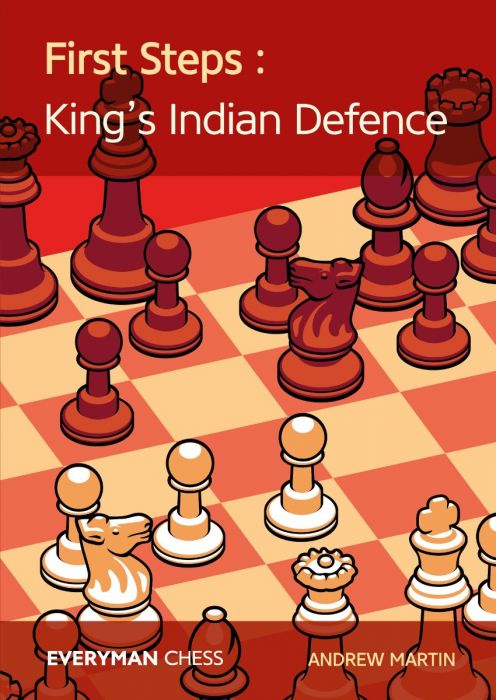
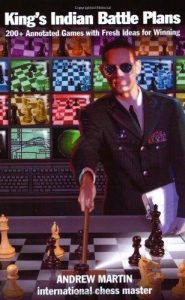
The author first wrote about the King’s Indian Defence (an opening for Black he himself plays) in 1989 (Winning with the King’s Indian) and followed this up with the widely acknowledged King’s Indian Battle Plans in 2004.
King’s Indian Battle Plans
The “First Steps” series from Everyman Chess is (according to Everyman Chess)
an opening series that is ideal for improving players who want simple and straightforward explanations. First Steps emphasizes
the basic principles
the basic strategies
the key tricks and traps
So, bearing the above in mind, does, in true “Ronseal Fashion”, this book do what it says on the tin ?
We have nine chapters :
Inspiration
Pawn Structures
The Classical System
The Fianchetto Variation
Lines with Bg5
The Sämisch Variation
The Four Pawns Attack
Less Common White Systems
King’s Indian Byways
followed by an Index of Variations and Index of Complete Games (featuring a good number of the author’s own games with both colours).
Interestingly the “Byways” chapter introduces readers to the somewhat rare Dizdar-Indian, which may be new to many :
with around 1200 games in Megabase 2019, being played by Caruana, Mamedov and Fressinet to name drop but a few, this is perhaps a developing sideline should White play Nf3 before Nc3.
Anyway, before I digress too far…
The meat and potatoes of this books kicks off with six decisive (dubbed Inspirational) games which leave one with optimism about a decisive result one way or the other, when employing the King’s Indian Defence. In order to avoid accusations of bias, in game six, Black (Richard Britton), is crushed in 19 moves by Andrew himself :
White to play (and we leave the reader to enjoy finding White’s idea.
Moving on to Chapter Two, Pawn Structures, we find an in-depth discussion of typical themes and idea that arise from the variations to be discussed in subsequent chapters. If only all opening books included such an insightful chapter, players new to the opening would pick up the Good, the bad and the Ugly so much quicker !
The author is also to be thanked for including games where Black gets it very wrong and goes down in flames. Gone are the days of biased books such as “Winning with the Damiano” (OK, I picked an extreme example !) in which Black has somehow refuted 1.e4. This book therefore is much more politically chess correct and credible in what it recommends.
Having studied in detail the Pawn Structures chapter the reader should be in good shape to roll-up their sleeves, pour a glass of wine and get stuck in. For each of the remaining chapters we are introduced to the theory of the set-up selected by our opponent. The Classical System chapter (understandably the largest) features 30 games analysed in detail including emphasis on the ideas, criticism of flawed thinking by either player, top tips that milestone themes the student must understand with plenty of diagrams.
The authors style is friendly, engaging and informal, leaving the student with the feeling that they are having a lesson with the author rather than simply reading a book. This I find helps to make learning the KID a pleasure rather than a chore. You get the feeling you are learning about chess and not just another opening for Black.
To give you a feel here is an excerpt from Chapter Three :
I’m very doubtful whether action in the centre or on the kingside is going to get White anywhere, as he is playing right into Black’s hands. Smirin is now able to whip up an attack.
TIP : It is rarely a good idea to play on the side of the board where your opponent is stronger.
You would think that 21 b64 would be high on the list of White’s priorities, but in this case 21…axb4 Na6 makes it awkward for him to defend his b4-pawn, as the natural 23 Qb3? is met by 23…Be5!
Are there any notable omissions ? A First Steps book is not intended to provide everything but I would have liked to see more detailed coverage of the increasingly popular Bagirov / Krasenkow Variation :
Games 53 & 54 in the section on the Classical Variation do provide coverage to some extent.
And, maybe also a small mention perhaps of the dangerous Barry Attack :
and the KID player (who may not play the Pirc) has to decide if he wishes to allow e4 or play a Grünfeld Defence.
As with every recent Everyman Chess publication high quality paper is used and the printing is clear. Each diagram is clear as is the instructional text. Figurine algebraic notation is used throughout and the diagrams are placed adjacent to the relevant text.
A couple of small gripes with the production are : the diagrams do not have a “to move” indicator. secondly, some Everyman books (but curiously not this one) have an extra folding part to the front and rear covers. These I find protect the book from damage and also can be used as an emergency book mark !
Although I do not play the King’s Indian Defence myself I would certainly be keen to use this book to introduce myself to its rich possibilities. I’m not keen on books written by an author who does not play the recommended system his or herself. In this case there can be no doubt that the advice comes from much experience, enthusiasm and passion for the KID. Please give it a go !
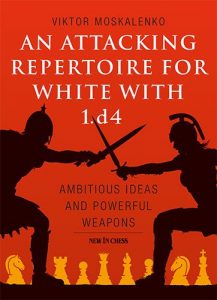
An Attacking Repertoire for White with 1.d4 : Viktor Moskalenko
An Attacking Repertoire for White with 1.d4
“Half the variations which are calculated in a tournament game turn out to be completely superfluous. Unfortunately, no one knows in advance which half..” – Jan Timman
The value for any practising chess player of a coherent opening repertoire when playing with the white pieces is key to success, enjoyment and efficient use of study time. Books with “Opening Repertoire” in the title are many and varied and we were intrigued to what the emphasis in this latest book from New in Chess would be.
From the books rear cover :
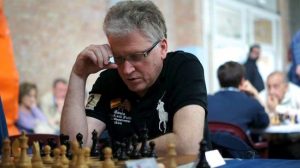
Viktor Moskalenko (1960) is an International Grandmaster and a FIDE Senior Trainer. The former Ukrainian champion’s recent books include The Even More Flexible French, The Wonderful Winawer, Training with Moska and The Fabulous Budapest Gambit.
GM Viktor Moskalenko
So, what is An Attacking Repertoire for White with 1.d4 about ?
Up front one factor worth noting is that Moskalenko is advocating a repertoire based around the classical move order approach to playing the “Queen’s Gambit”, viz, 1 . d4, 2.c4 and 3. Nc3 rather than say 1. d4, 2.Nf3, 3.c4 which is, nonetheless, increasing in popularity. Some lines simply do not transpose of course so please bear that in mind !
The author has identified 14 defences employed by Black and offers lines for White against all of these. The variations given attention (and the order in which they are presented ) are :
King’s Indian Defence : Four Pawns Attack
Modern Benoni Defence : Taimanov Attack
Snake Benoni (a fairly rare beast at club level and good to see it discussed therefore)
Indo-Benoni which includes the Schmid Benoni & Czech Benoni
Benko & Volga Gambit
Grünfeld Defence
Nimzo Indian Defence
Slav Defence : Exchange Variation
Queen’s Gambit Accepted
Queen’s Gambit Declined : Triangle Variation
Queen’s Gambit Declined : Exchange Variation
Baltic Defence
Chigorin Defence
Albin Counter Gambit
For each of these chapters there is a theory / instructional section containing the recommended line, analysis and variations followed by a separate section of illustrative games from modern practise. Many of these 106 games are the authors own with insightful, deep notes explaining his thought processes.
For all fourteen chapters the emphasis of the author’s recommendations is on “active play supported by a powerful pawn centre” and this bears out when exploring the various recommendations.
Ideas featuring an early f3 (hence our comment about the Nf3 move order earlier!) appear frequently with the exceptions of the slightly surprising Exchange Slav and the Queen’s Gambit Accepted. recommendations. However, the latter pair do use active piece play lines (with an early Nf3 in the QGA).
The most interesting bonus is when one investigates the games section that is associated with each of the chapters. There is generous use of six clear symbols designating something special about various lines as follows :
TRICK : hidden tactics and some tricky ideas, e.g. traps you can set and pitfalls you have to avoid.
PUZZLE : possible transpositions, move order subtleties, curiosities and rare lines.
WEAPON : the best lines to choose; strong or surprising options for both attack and defence, which deserve attention.
PLAN : the main ideas for one of the sides in the next phase of the game.
STATISTICS : winning percentages for a line for either side / player.
KEEP IN MIND : here, fundamental ideas for either side are given.
An example from game 66 in the Exchange Slav chapter :
Black has played 11…Na5
12. Kf2
KEEP IN MIND : The king’s move is included in White’s plan, but it is more accurate to play h2-h4 or Ng3 first :
Possibly the only disappointing recommendation is that of the use of the Exchange Slav to take on both the Slav and the Semi-Slav family. Recommending more ambitious lines for White would have increased the size of the book substantially and also the learning workload for the student : sometimes a line in the sand has to be drawn !
Reviewers usually like to point out material that they believe has been omitted and we will not disappoint you ! Chapters (we believe) should have been included are treatments of :
The Queen’s Indian Defence (the most surprising omission of all)
The Old Indian Defence (quite a rare bird of course)
The Dutch Defence (see below*)
Queen’s Gambit : Tarrasch Defence (popular at club level)
*In fairness to Moskalenko he refers readers to his previously (2014) New in Chess published The Diamond Dutch treatment to handle the white side of 1.d4 f5
We can also forgive the absence of any treatment of the Englund Gambit and other such blitz and rapidplay oddities !
As with every recent New in Chess publication high quality paper is used and the printing is clear. The book can easily be laid flat next to the board and does not require weights to prevent it from “self-closing” (a particular bugbear of ours !). Each diagram is clear and the instructional text is (mostly !) typeset in two column format, which, we find, enables the reader to maintain their place easily. Figurine algebraic notation is used throughout and the diagrams are placed adjacent to the relevant text.
At the rear is the customary detailed Index of Variations and following that there is an Index of Players where the numbers refer to pages.
In summary this book provides a pragmatic and fighting repertoire for White against most of the all the commonly encountered responses to 1.d4 and the Queen’s Gambit. There is a host of interesting new and dangerous ideas that help you fight for the whole point with the white pieces : recommended !
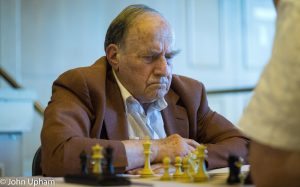
Veteran IM James T Sherwin (FIDE 2231) brought home possibly the most pleasing result of the 2019 British Championships in Torquay.
Infamously featured in game one of Bobby Fischer’s Sixty Memorable Games, James has been resident in the London area for many years specialising in rapidplay events such as the Richmond and Golders Green series of rp tournaments.
FM Andrew Lewis
James and FM Andrew Lewis (somewhat less that 86!) tied first equal in the orange lit Forum area of the Riviera Centre with 7.5/9 with James beating Gerald Moore (FIDE 2132) in the final round whereas Andrew (FIDE 2283) drew with Josiah Haynes (2132).
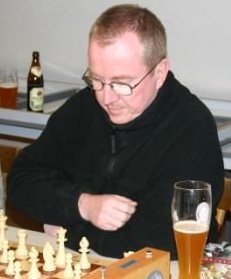
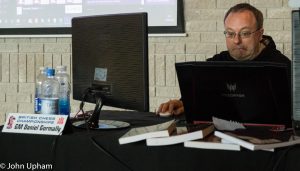
We want to know what GM Danny Gormally is thinking here during the Torquay British Championships 2019.
Please suggest away via a comment below.
Save as PDF
We focus on the British Chess Scene Past & Present!
This website uses cookies to improve your experience. We'll assume you're ok with this, but you can opt-out if you wish. Cookie settingsACCEPT
Privacy & Cookies Policy
Privacy Overview
This website uses cookies to improve your experience while you navigate through the website. Out of these cookies, the cookies that are categorized as necessary are stored on your browser as they are as essential for the working of basic functionalities of the website. We also use third-party cookies that help us analyze and understand how you use this website. These cookies will be stored in your browser only with your consent. You also have the option to opt-out of these cookies. But opting out of some of these cookies may have an effect on your browsing experience.
Necessary cookies are absolutely essential for the website to function properly. This category only includes cookies that ensures basic functionalities and security features of the website. These cookies do not store any personal information.
 Save as PDF