Tag Archives: Birthdays

Happy 97th Birthday Leonard Barden (20-viii-1929)

Ninety-seven today is Leonard William Barden, born Tuesday, August 20th, 1929.

His mother’s maiden was Bartholomew and she became Elise EM Barden when she married Leonard’s father who was William C Barden (a dustman) and in 1939 they lived at 89, Tennison Road, Croydon.
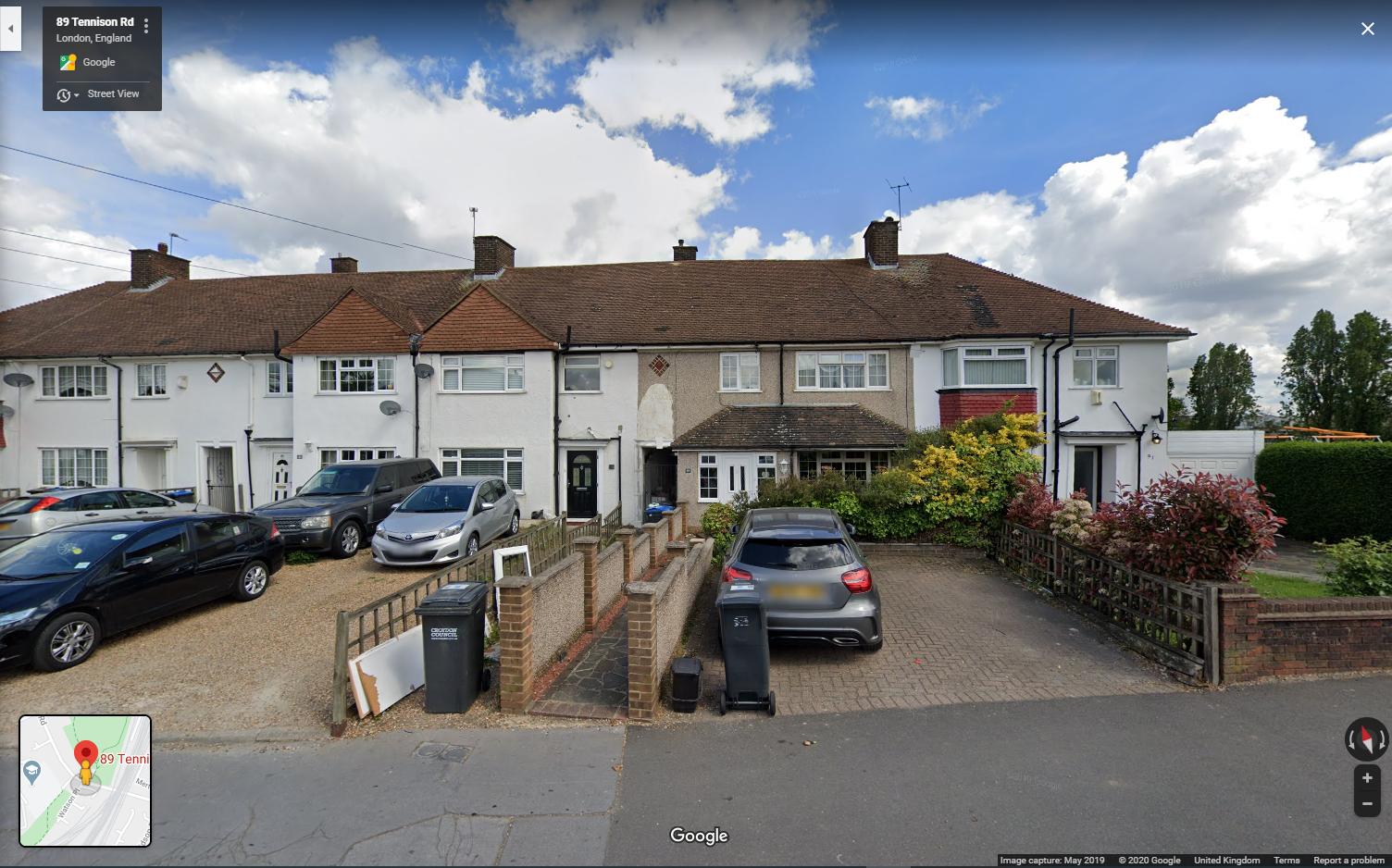
89, Tennison Road, Croydon

From The Encyclopedia of Chess (Batsford, 1977) by Harry Golombek OBE:

“British Master and joint British Champion 1954. Barden was born in Croydon and learned to play at his school, Whitgift, which became a frequent producer of fine players.

In 1946 he tied for first place in the London Boys Championship and in the following year he tied with Jonathan Penrose for first place in the British Boys Championship, but lost the play-off.

In 1952 he came first at Paignton ahead of the Canadian Grandmaster Yanofsky and he reached his peak in 1954 when , after tieing for first place with the Belgian Grandmaster O’Kelly de Galway at Bognor, he tied for for first place in the British Championship at Nottingham with A. Phillips. The play-off was drawn and so the players became joint champions.
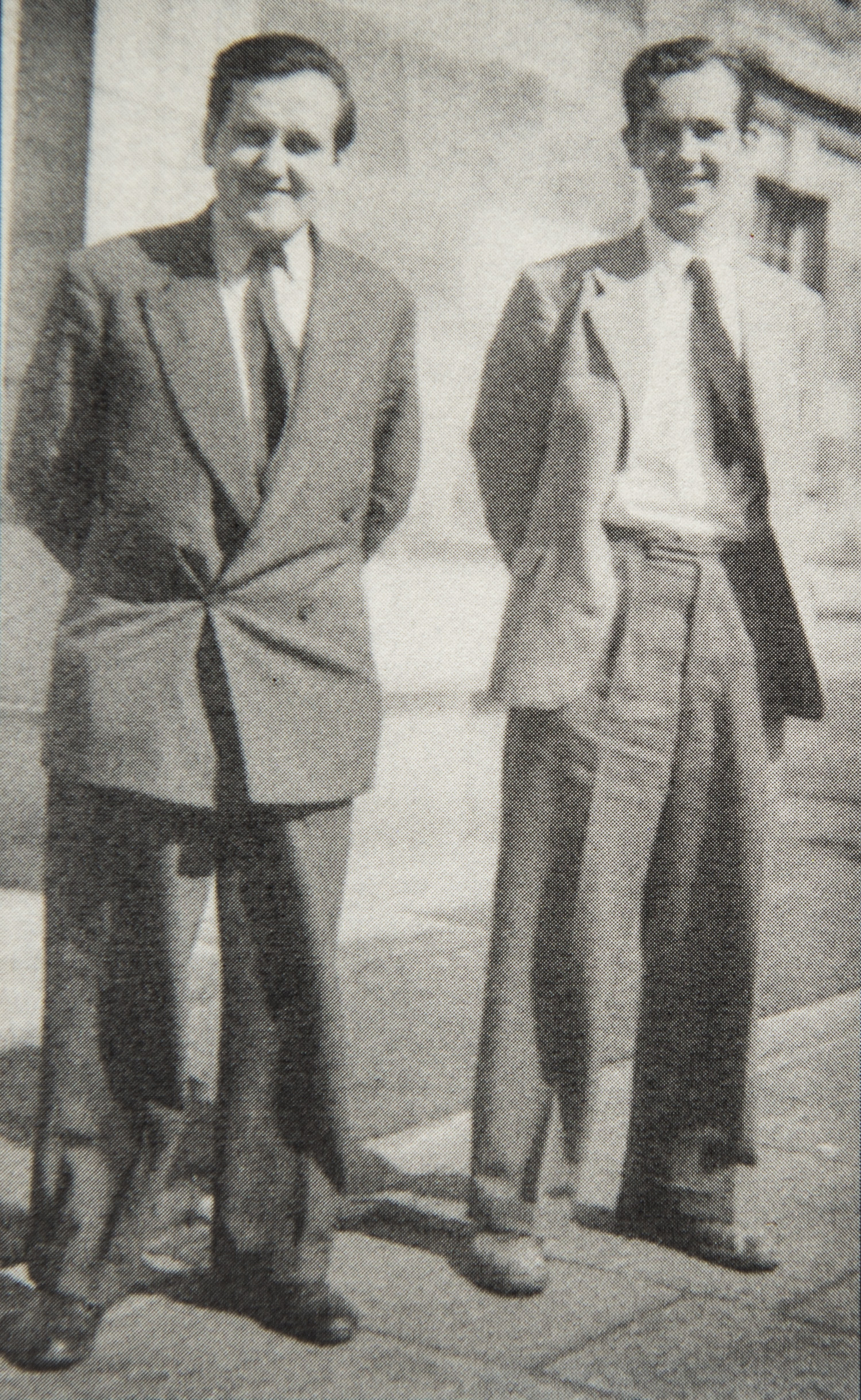
Alan Phillips and Leonard Barden are joint British Champions of 1954 in Nottingham, photographer unknown

He played for the BCF in four Olympiads from 1952 to 1962 and then abandoned competitive chess, applying all his energies to writing (he is chess correspondent of the Guardian, the Financial Times, the Evening Standard and the Field, and has written many books on the game.

He has also developed two special interests, in junior chess and in grading, working with utmost persistence and energy in both of these fields.
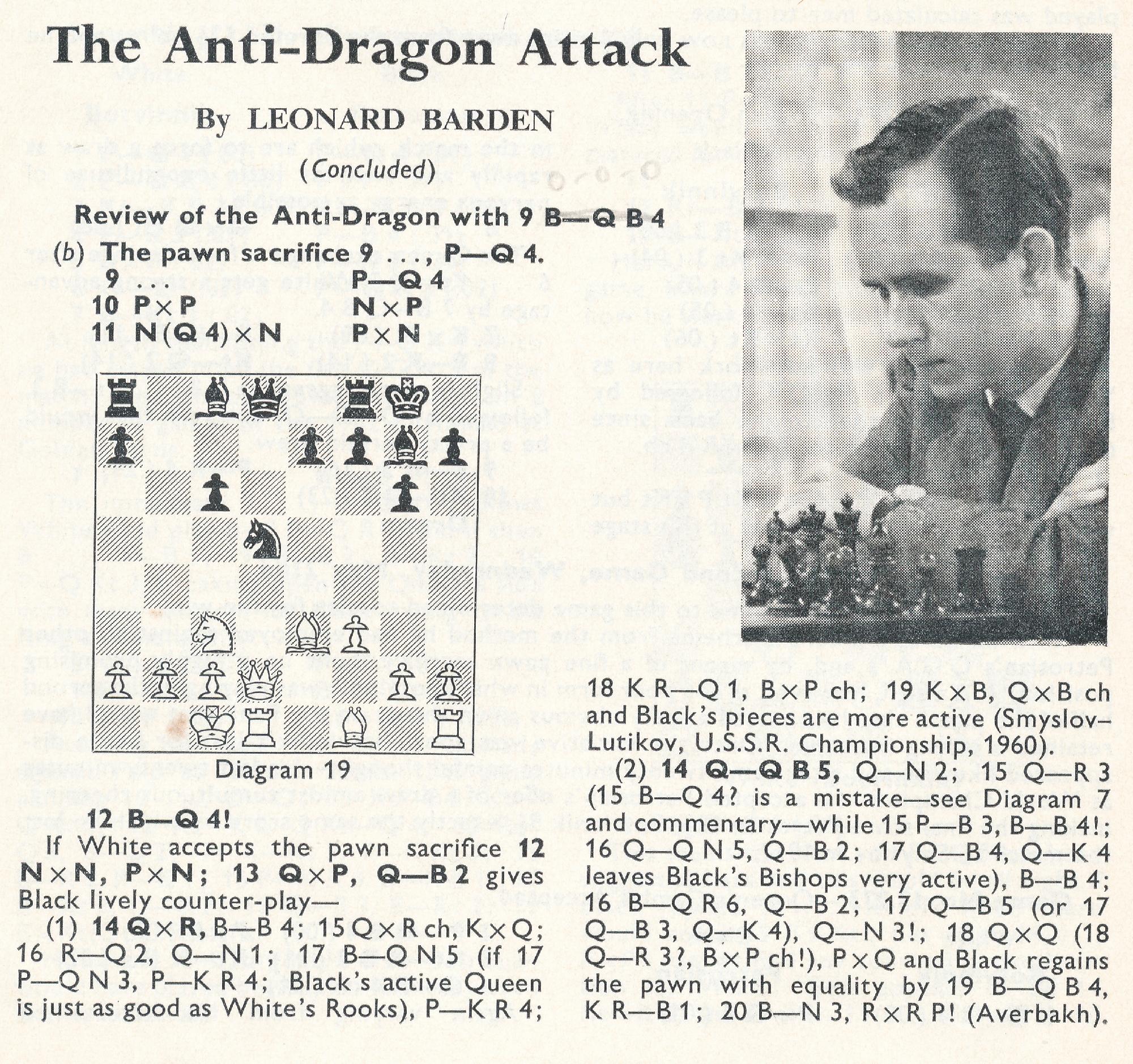
Leonard authored a series of articles on what was to become the Yugoslav Attack versus the Sicilian Dragon. Source : British Chess Magazine, Volume LXXXIII, Number 7 (July), page 208

Amongst his best works are : a A Guide to Chess Openings, London, 1957; The Ruy Lopez, Oxford, 1963; The King’s Indian Defence, London, 1968.”

Disappointingly  Sunnucks Encyclopedia does not mention Barden at all and and surprisingly Hooper and Whyld’s usually excellent Oxford Companion only from a connection with Jim Slater.

Leonard Bardens’ Evening Standard column ends after 63 Years
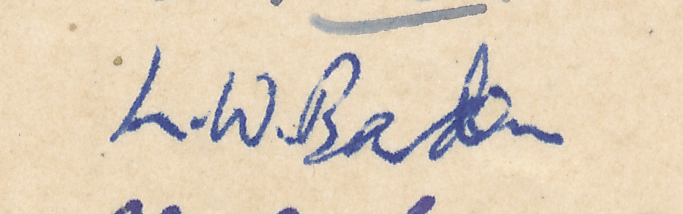
Signature of LW Barden from a Brian Reilly "after dinner" postcard from Southsea 1951.
Signature of LW Barden from a Brian Reilly “after dinner” postcard from Southsea 1951.

Here is an in-depth article from Edward Winter

Leonard Barden’s Blunder Theory from Kingpin Magazine

54-Year-Old Chess Record established in 2009

From Wikipedia :

“Leonard William Barden (born 20 August 1929, in Croydon, London) is an English chess master, writer, broadcaster, organizer and promoter. The son of a dustman, he was educated at Whitgift School, South Croydon, and Balliol College, Oxford, where he read Modern History.
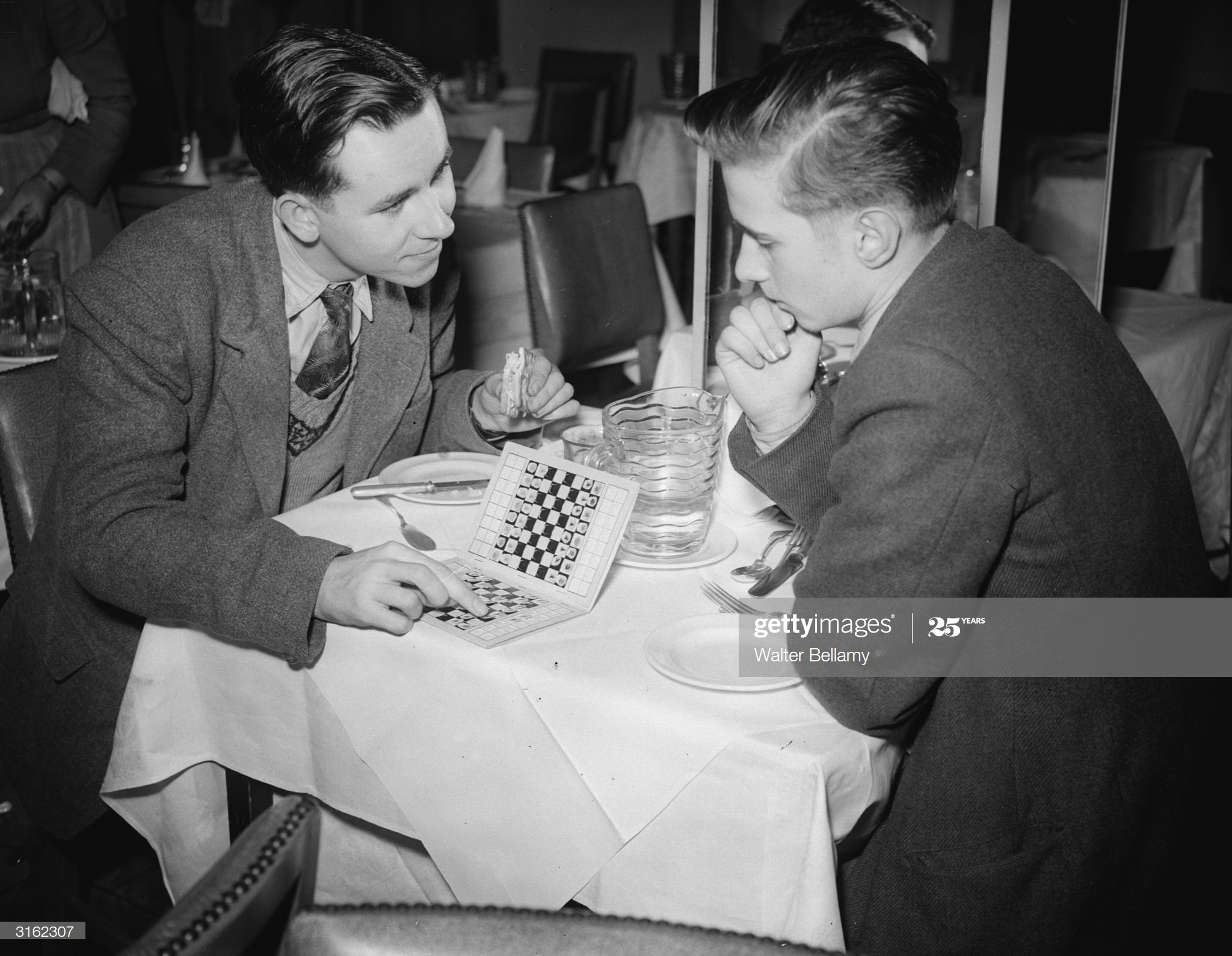
Travel Chess 2nd January 1951: British chess champions Jonathan Penrose and Leonard Barden ponder over a portable travel game in a restaurant. (Photo by Walter Bellamy/Express/Getty Images)
Travel Chess
2nd January 1951: British chess champions Jonathan Penrose and Leonard Barden prepare their openings over breakfast in the Yelton Hotel before the 9.30 am round start at Hastings 1950-51. (Photo by Walter Bellamy/Express/Getty Images)

He learned to play chess at age 13 while in a school shelter during a World War II German air raid. Within a few years he became one of the country’s leading juniors.[1] He represented England in four Chess Olympiads. Barden played a major role in the rise of English chess from the 1970s. As a chess columnist for various newspapers, his column in London’s Evening Standard is the world’s longest-standing chess column.
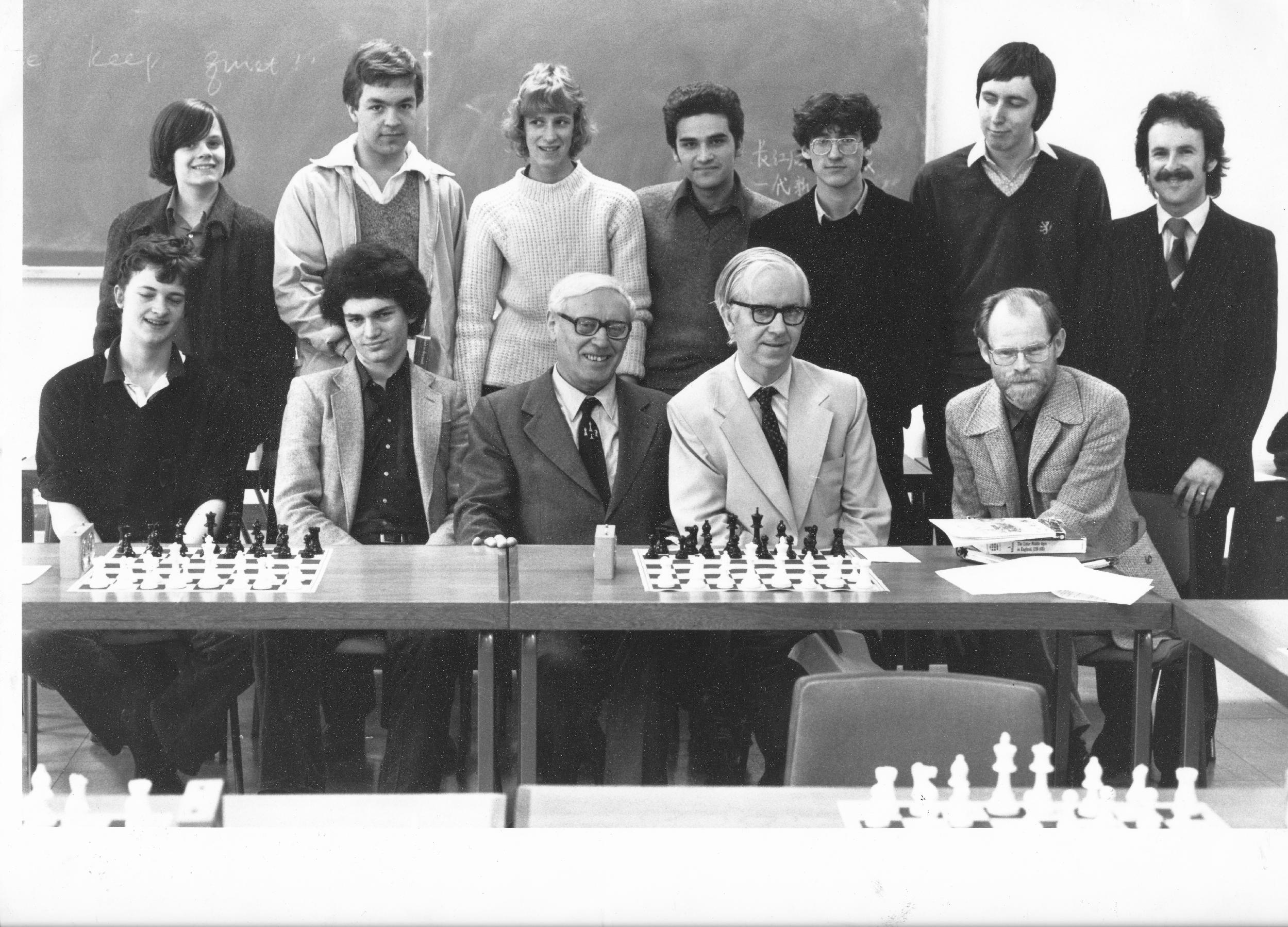
Leonard Barden (seated, second from right)
Leonard Barden (seated, second from right) Before Botvinnik’s 1981 Pergamon Press clock simul against England juniors, the final competitive event of the Patriarch’s career.
Standing: Stuart Conquest, Neil Dickenson. Gary Lane, Alan Byron,
Daniel King, John Hawksworth, Pergamon editor.
Seated: Julian Hodgson, Byron Jacobs, Mikhail Botvinnik, Leonard Barden, Bernard Cafferty.

In 1946, Barden won the British Junior Correspondence Chess Championship, and tied for first place in the London Boys’ Championship. The following year he tied for first with Jonathan Penrose in the British Boys’ Championship, but lost the playoff.

Barden finished fourth at Hastings in 1951–52. In 1952, he won the Paignton tournament ahead of the Canadian future grandmaster Daniel Yanofsky. He captained the Oxfordshire team which won the English Counties championship in 1951 and 1952.
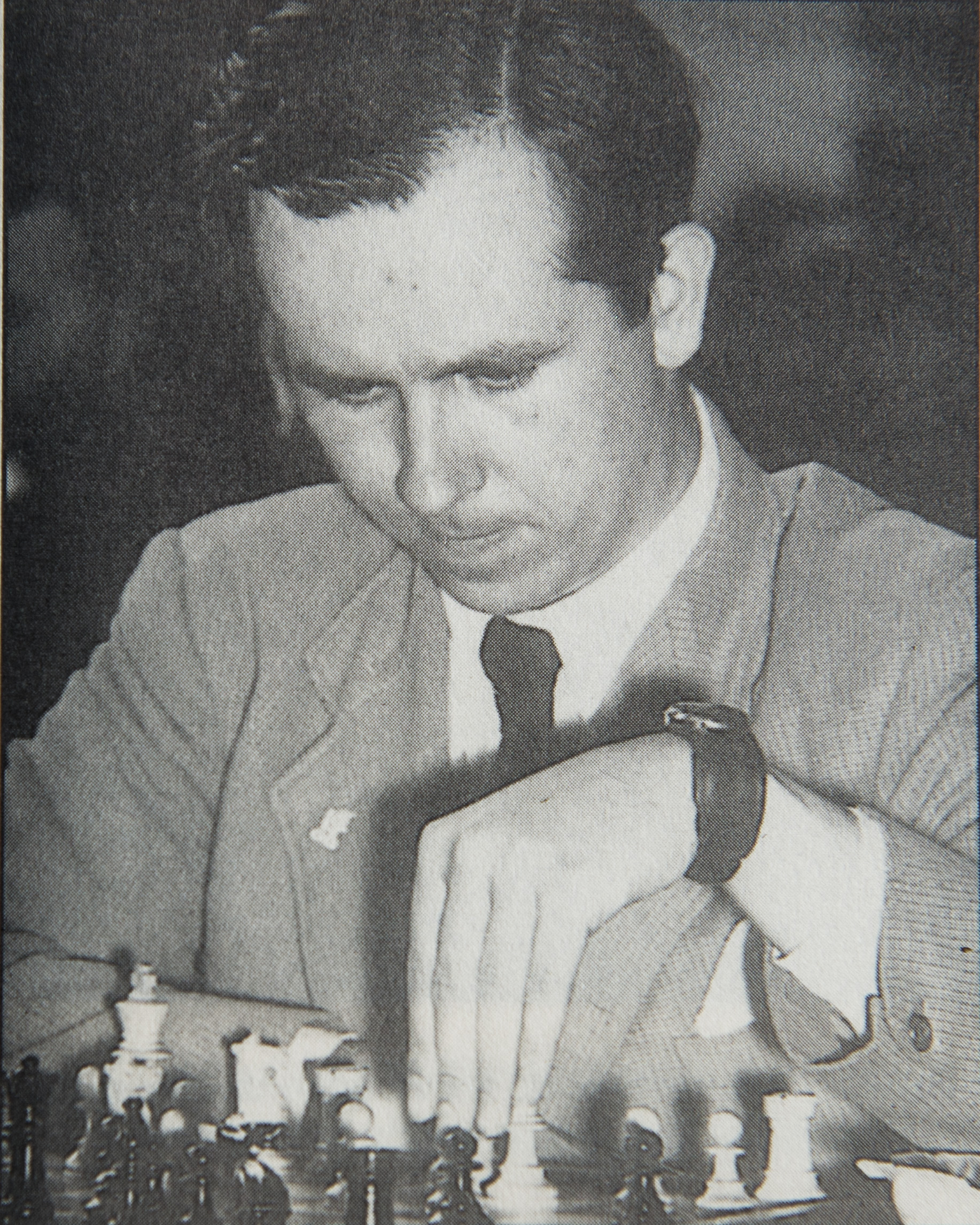
Leonard William Barden (20-xiii-1929)
Barden making a move at Southend 1955.

In the latter year he captained the University of Oxford team which won the National Club Championship, and he represented the university in the annual team match against the University of Cambridge during his years there. In 1953, he won the individual British Lightning Championship (ten seconds a move).
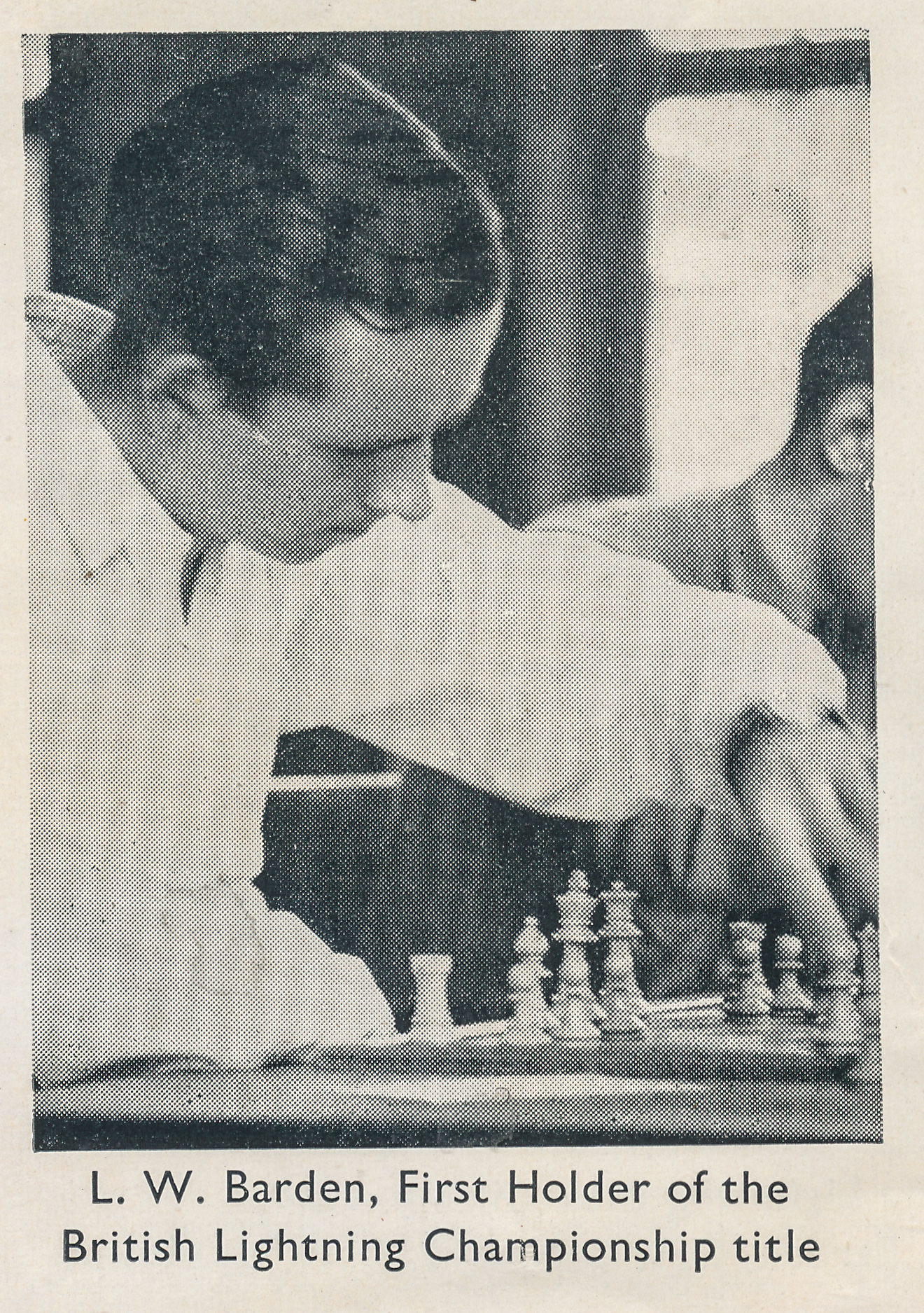
Leonard Barden, First Holder of the British Lightning Championship title played at the Ilford Congress between May 22nd and May 25th, 1953

(ed: the above event was “won” by Dr. PM List with 15.5/18 but he was not allowed the title. Leonard together with AY Green and KR Smith scored 13/18 and won the play-off).

The following year, he tied for first with the Belgian grandmaster Albéric O’Kelly de Galway at Bognor Regis, was joint British champion, with Alan Phillips, and won the Southern Counties Championship.
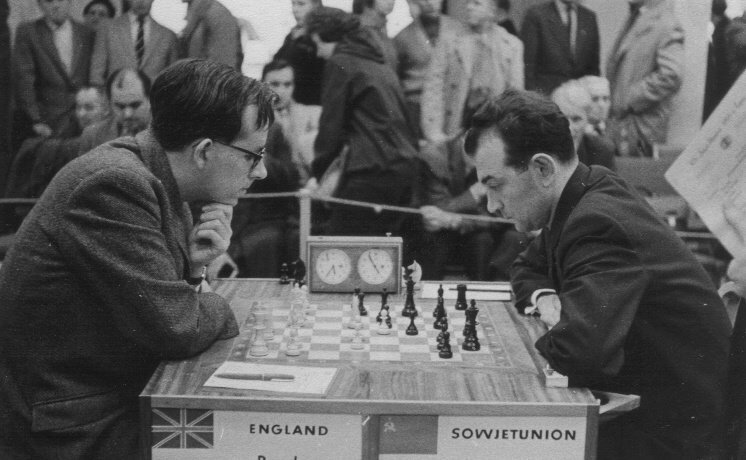
Leonard Barden vs Victor Korchnoi, Leipzig Olympiad, 1960

He finished fourth at Hastings 1957–58, ranked by chessmetrics as his best statistical performance. In the 1958 British Chess Championship, Barden again tied for first, but lost the playoff match to Penrose 1½–3½.
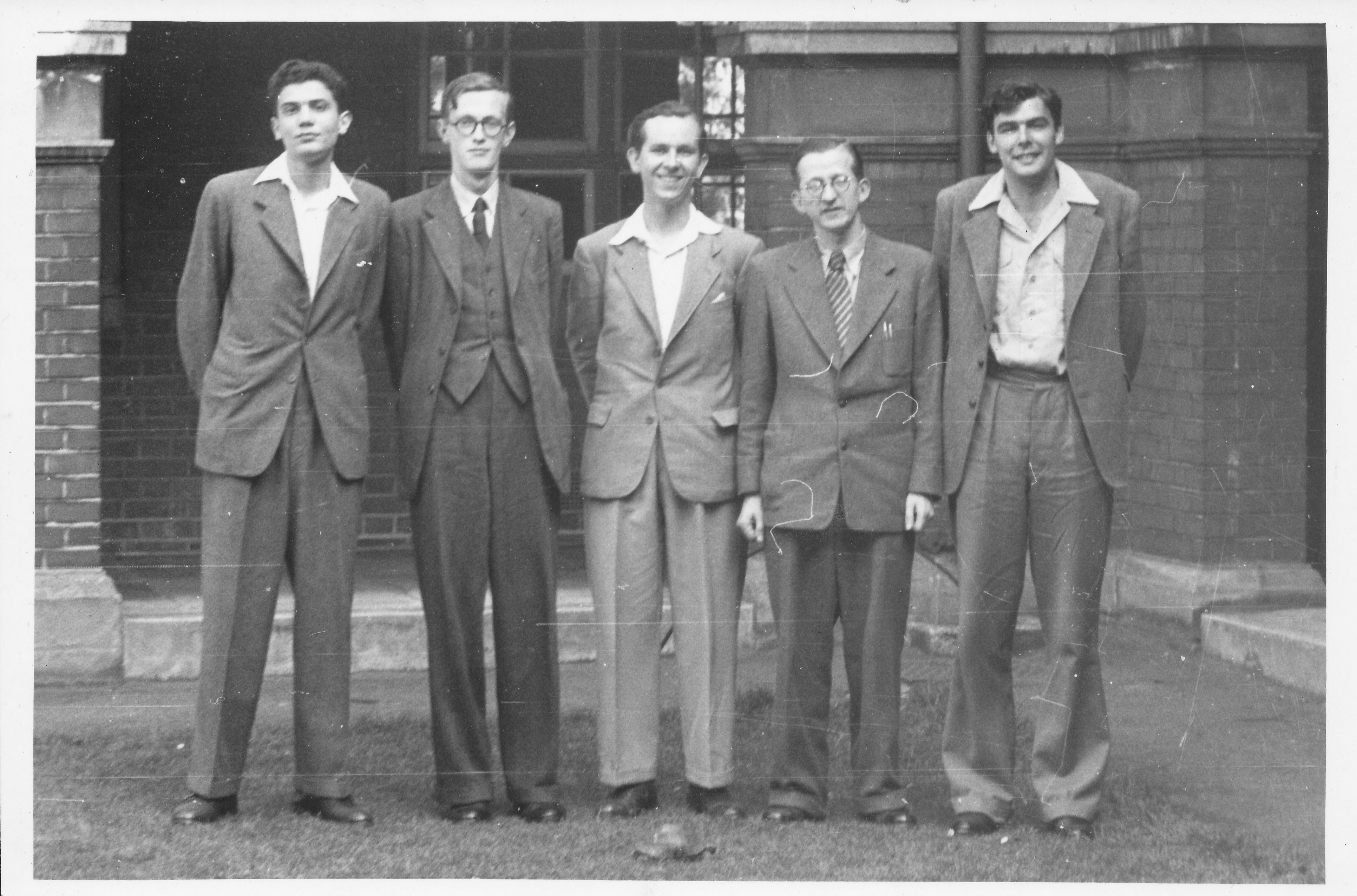
Leonard Barden (centre) with Raaphi Persitz, JB Sykes, OI Galvenius and DM Armstrong, Ilford, May, 1953

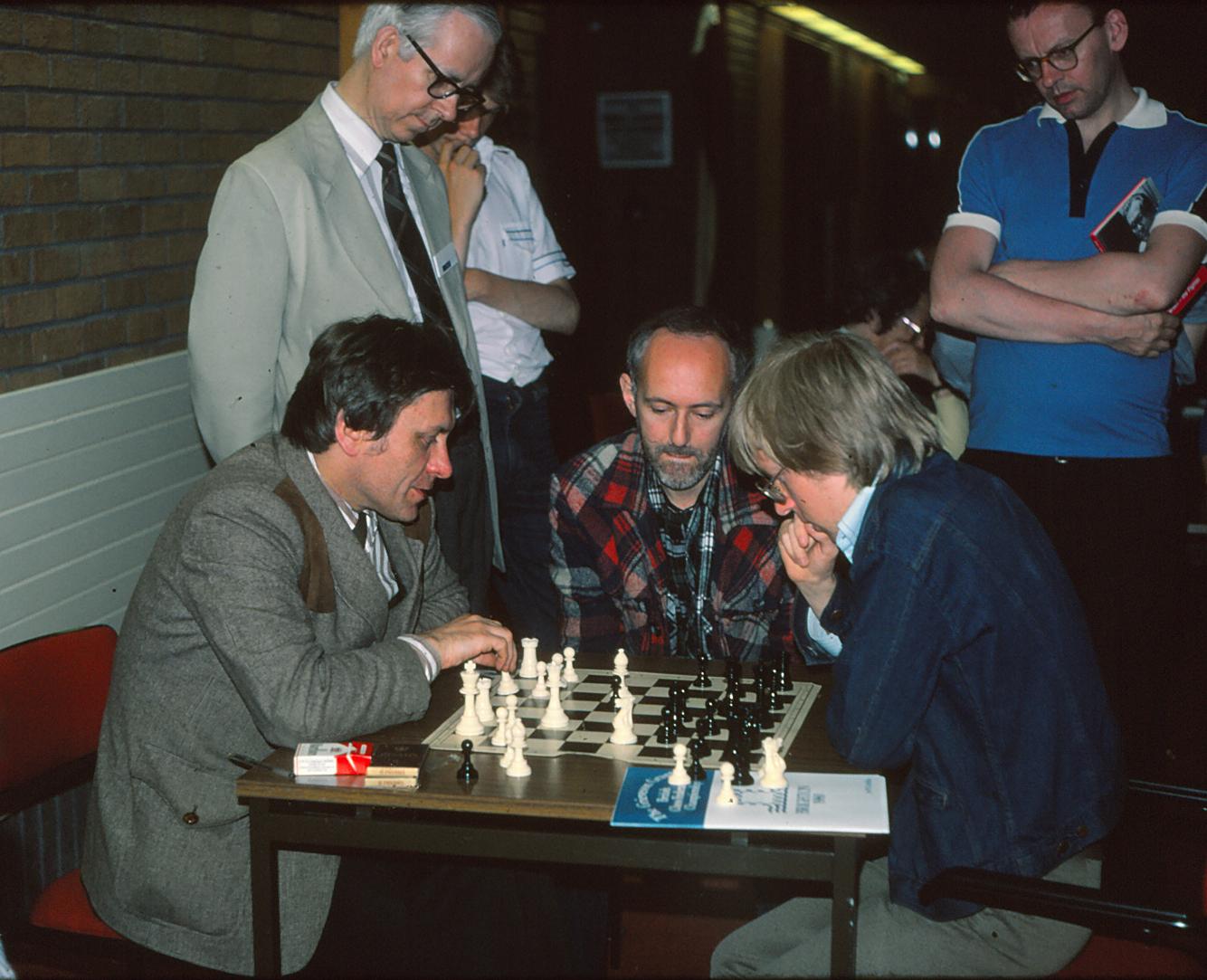
LWB observes analysis between David Rumens and Murray Chandler from Brighton 1980
LWB observes analysis between David Rumens and Murray Chandler from Brighton 1980. Photograph courtesy of John Upham.

He represented England in the Chess Olympiads at Helsinki 1952 (playing fourth board, scoring 2 wins, 5 draws, and 4 losses), Amsterdam 1954 (playing first reserve, scoring 1 win, 2 draws, and 4 losses), Leipzig 1960 (first reserve; 4 wins, 4 draws, 2 losses) and Varna 1962 (first reserve; 7 wins, 2 draws, 3 losses). The latter was his best performance by far.
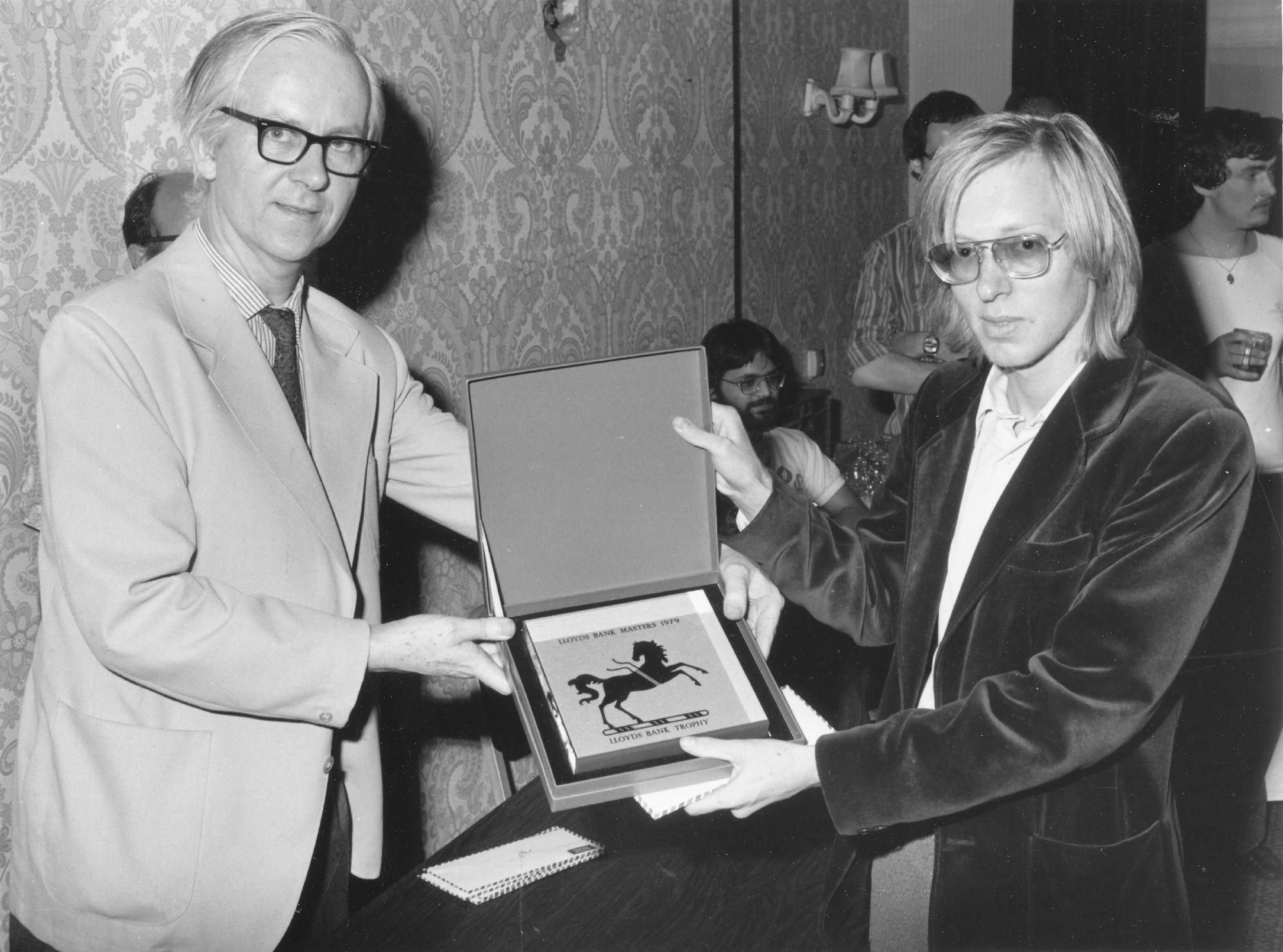
Leonard Barden (left) and Murray Chandler display the Lloyds Bank Trophy which the 19-year old New Zealander won ahead of 3 Grandmasters and 10 International Masters for his finest international success up to 1979. in the Lloyds Bank Masters

Barden has a Morphy number of 3, having drawn with Jacques Mieses in the Premier Reserves at Hastings 1948–49. Mieses drew with Henry Bird in the last round of Hastings 1895, and Bird played a number of games with Paul Morphy in 1858 and 1859.
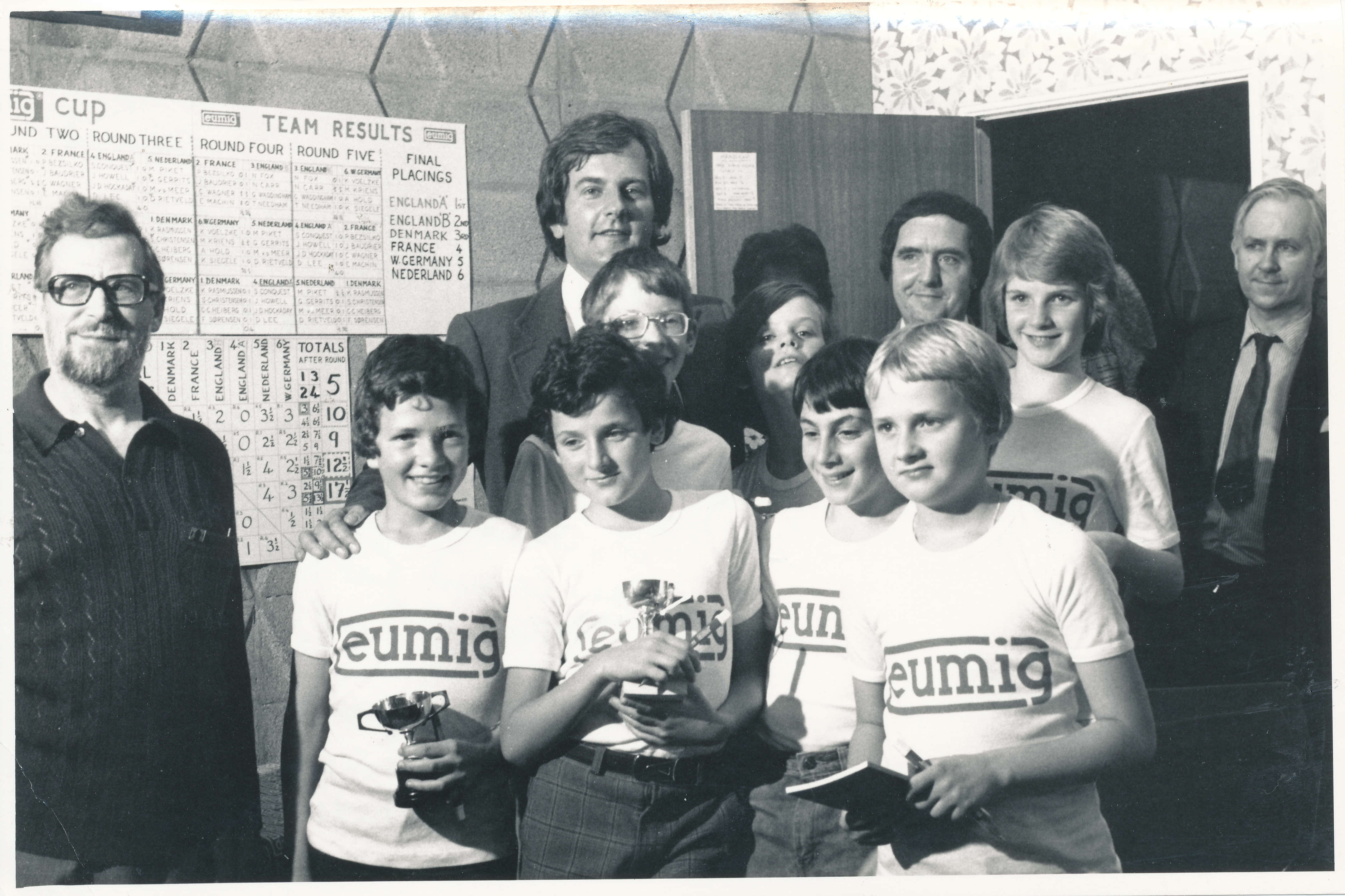
Neil Carr (front right)
England’s under-12 junior teams finished first and second in the international Eumig Cup, 1981.
Front row: Peter Morrish (organiser), Jimmy Hockaday, Darren Lee, Neil Fox, Neil Carr. Second row: James Howell, Stuart Conquest, Teresa Needham. Far right: LB.

In 1964, Barden gave up most competitive chess to devote his time to chess organisation, broadcasting, and writing about the game. He has made invaluable contributions to English chess as a populariser, writer, organiser, fundraiser, and broadcaster.
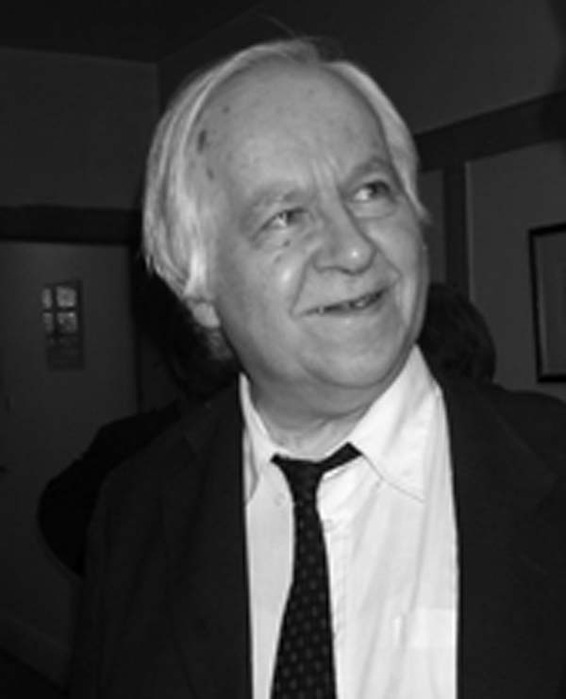
Leonard Barden
Leonard Barden at Bob Wade’s 80th birthday party, 2001.

He was controller of the British Chess Federation Grand Prix for many years, having found its first sponsor, Cutty Sark. He was a regular contributor to the BBC’s Network Three weekly radio chess programme from 1958 to 1963. His best-known contribution was a consultation game, recorded in 1960 and broadcast in 1961, where he partnered Bobby Fischer against the English masters Jonathan Penrose and Peter Clarke. This was the only recorded consultation game of Fischer’s career. The game, unfinished after eight hours of play, was adjudicated a draw by former world champion Max Euwe. Barden gave BBC television commentaries on all the games in the 1972 world championship. From 1973 to 1978 he was co-presenter of BBC2’s annual Master Game televised programme.

Julian and Nigel Short play Korchnoi in the Evening Standard 1976 simul. Leonard Barden observes.

As of 2021, his weekly columns have been published in The Guardian for 65 years and in The Financial Times for 46 years. A typical Barden column not only contains a readable tournament report, but is geared toward promoting the game. His London Evening Standard column, begun in summer 1956, is now the world’s longest running daily chess column by the same author, breaking the previous record set by George Koltanowski in the San Francisco Chronicle. Koltanowski’s column ran for 51 years, 9 months, and 18 days, including posthumous articles.”
Leonard Barden (Linda Nylind of the Guardian)

Leonard wrote this on the English Chess Forum in 2021 :

“I retired after Ilford 1964 when I finished a poor last in the England Olympiad team qualifier, returned at Hammersmith 1969 (equal 2nd behind Keene) and then played around 6-8 weekenders a year until 1972. My overall performance level between early 60s and early 70s dropped from around 225 to 215 BCF, so I wasn’t encouraged to pursue the comeback further.”

Leonard was Southern Counties (SCCU) champion in the 1953-54 season.
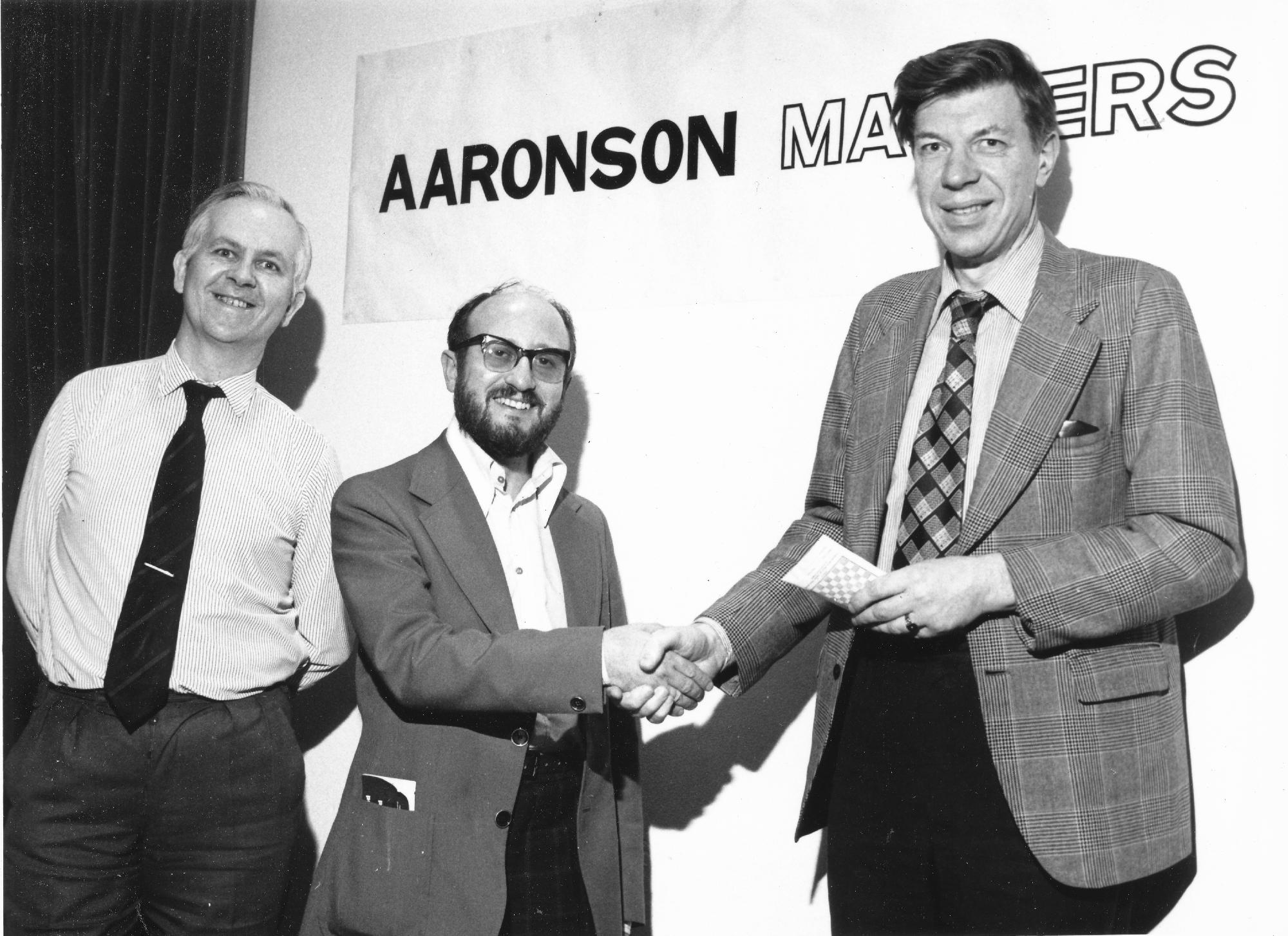
Leonard Barden, Stewart Reuben and Michael Franklin at the 1978 Aaronson Masters

Leonard reveals this as his best game :

Leonard has authored or co-authored a number of highly regarded books, most of which are highly instructional to this day:

A Guide to Chess Openings (1957),
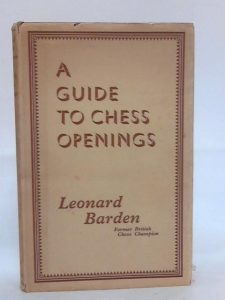
A Guide to Chess Openings

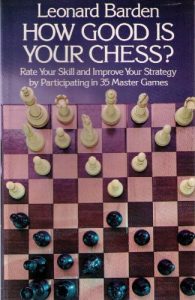
How Good Is Your Chess? (1957),

How Good is Your Chess ?

Chess (1959),
Introduction to Chess Moves and Tactics Simply Explained (1959),
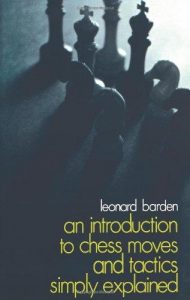
An Introduction to Chess Moves and Tactics Simply Explained

Modern Chess Miniatures (with Wolfgang Heidenfeld, 1960),
Erevan 1962 (1963),
The Ruy Lopez (1963),
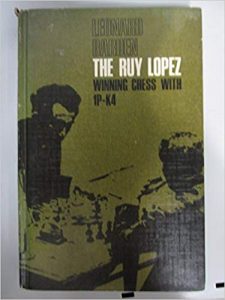
The Ruy Lopez
The Ruy Lopez

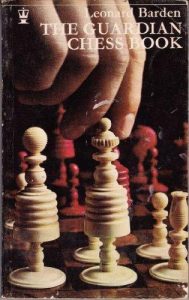
The Guardian Chess Book (1967),

The Guardian Chess Book

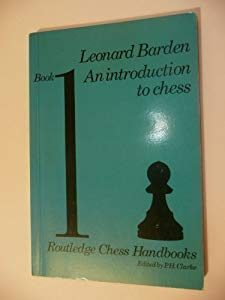
An Introduction to Chess (1967),

An Introduction to Chess

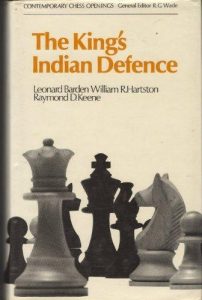
The King’s Indian Defence (1969),

The King's Indian Defence
The King’s Indian Defence

Chess: Master the Moves (1977),
Guide to the Chess Openings (with Tim Harding, 1977),
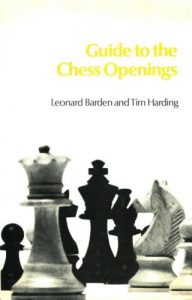
Guide to the Chess Openings

Leonard Barden’s Chess Puzzle Book (1977) (a collection of his Evening Standard columns),
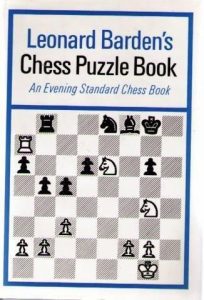
Leonard Barden's Chess Puzzle Book
Leonard Barden’s Chess Puzzle Book

The Master Game (with Jeremy James, 1979),
The Master Game
The Master Game

How to Play the Endgame in Chess (1979),
How to Play The Endgame in Chess

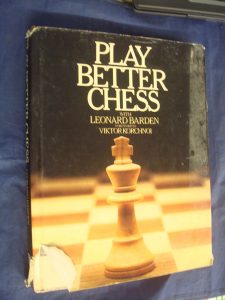
Play Better Chess (1980),

Play Better Chess
Play Better Chess

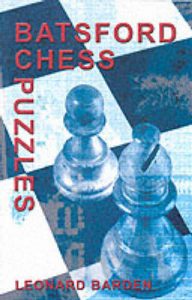
Batsford Chess Puzzles (2002),

Batsford Chess Puzzles

One Move and You’re Dead (with Erwin Brecher, 2007) : Can you supply an image?
Happy Birthday Peter Griffiths (15-viii-1946)

BCN sends Happy birthday wishes to Peter Griffiths

Peter Charles Griffiths was born on Thursday, August 15th, in 1946 in Birmingham, Warwickshire. His mother’s maiden name was Ward.

Peter was a strong player active from the 1960s until 1989. He played in the British Championships more than once and was a professional coach and writer. He wrote the column “Practical Chess Endings” which appeared in the British Chess Magazine. The column commenced in the December 1972 issue and columns became less frequent until around 1991.

Peter Griffiths (far left)

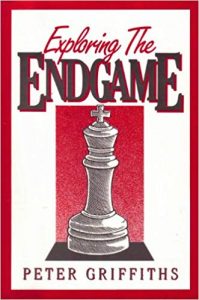
He wrote Exploring the Endgame

Exploring the Endgame

and

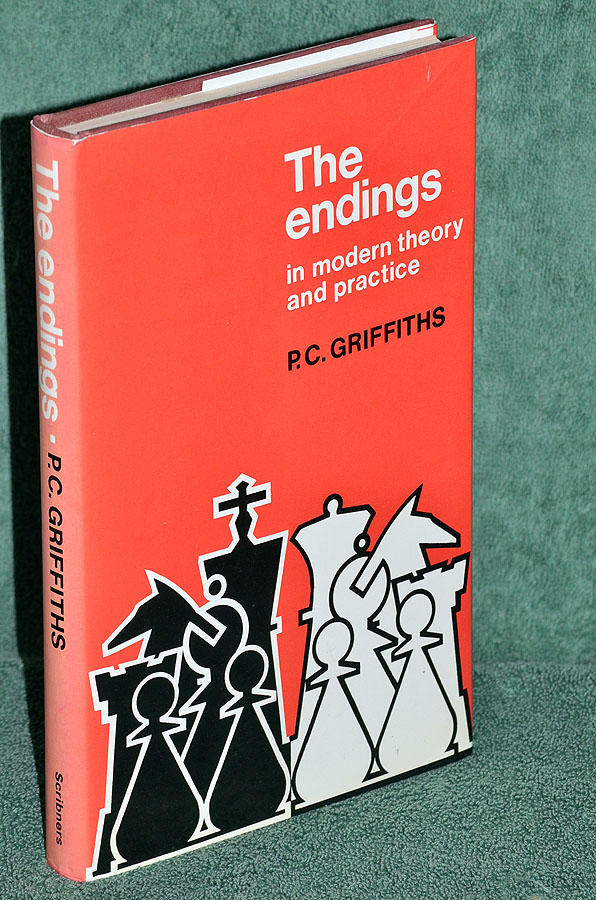
The Endings: In Modern Theory and Practice, PC Griffiths, G. Bell & Sons Ltd, 1976, ISBN 0 7135 1953 3
The Endings: In Modern Theory and Practice, PC Griffiths, G. Bell & Sons Ltd, 1976, ISBN 0 7135 1953  3

and co-authored Secrets of Grandmaster Play with John Nunn.

Secrets of Grandmaster Play

and wrote Improving Your Chess

Improving Your Chess

and Better Chess for Club Players

Better Chess for Club Players
Peter Griffiths (far left)

Happy Birthday to FM Andrew Smith (15-viii-1959)

BCN wishes Happy Birthday to FM Andrew Smith (15-viii-1959)

Andrew Philip Smith became a FIDE Master in 1994 and is registered with the Irish Chess Union.

His highest FIDE rating was 2310 in July 1994 at the age of 35.

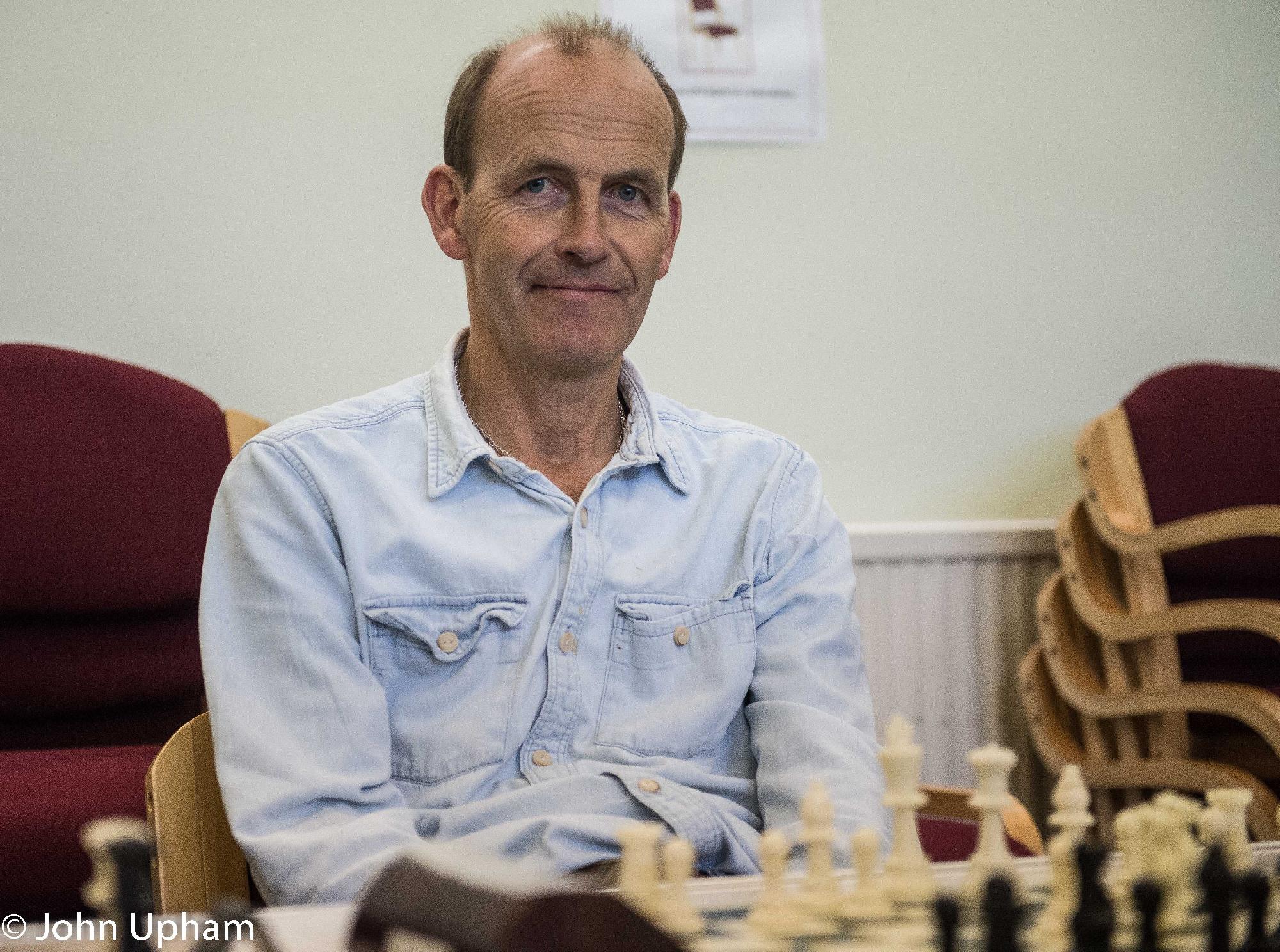
FM Andrew Smith, photographer unknown

He plays for Bourne End Chess Club in the Buckinghamshire League and in the Berkshire League.

Andrew also plays for 4NCL Barnet Knights (he has played for Atticus), Buckinghamshire CCA in the Chiltern League and Hon Members LCCL.

Andrew started his chess aged 6 when his Mother taught him and he joined Lewisham Chess Club aged 13 and then Slough Chess Club (Thames Valley League and 4NCL) in 1988.

He has won the Berks & Bucks Congress in 2018 and 2016 (joint) and he became Berkshire Individual Champion as a direct consequence winning the Cadogan Cup.

With the white pieces Andrew is (almost) exclusively a 1.e4 player favouring the Centre Game

and as the second player Andrew plays the Philidor Defence and the Benoni.

He is known to favour “enterprising” variations such as the Mason Variation of the Philidor, the Haldane Attack versus the French and other such exotica.

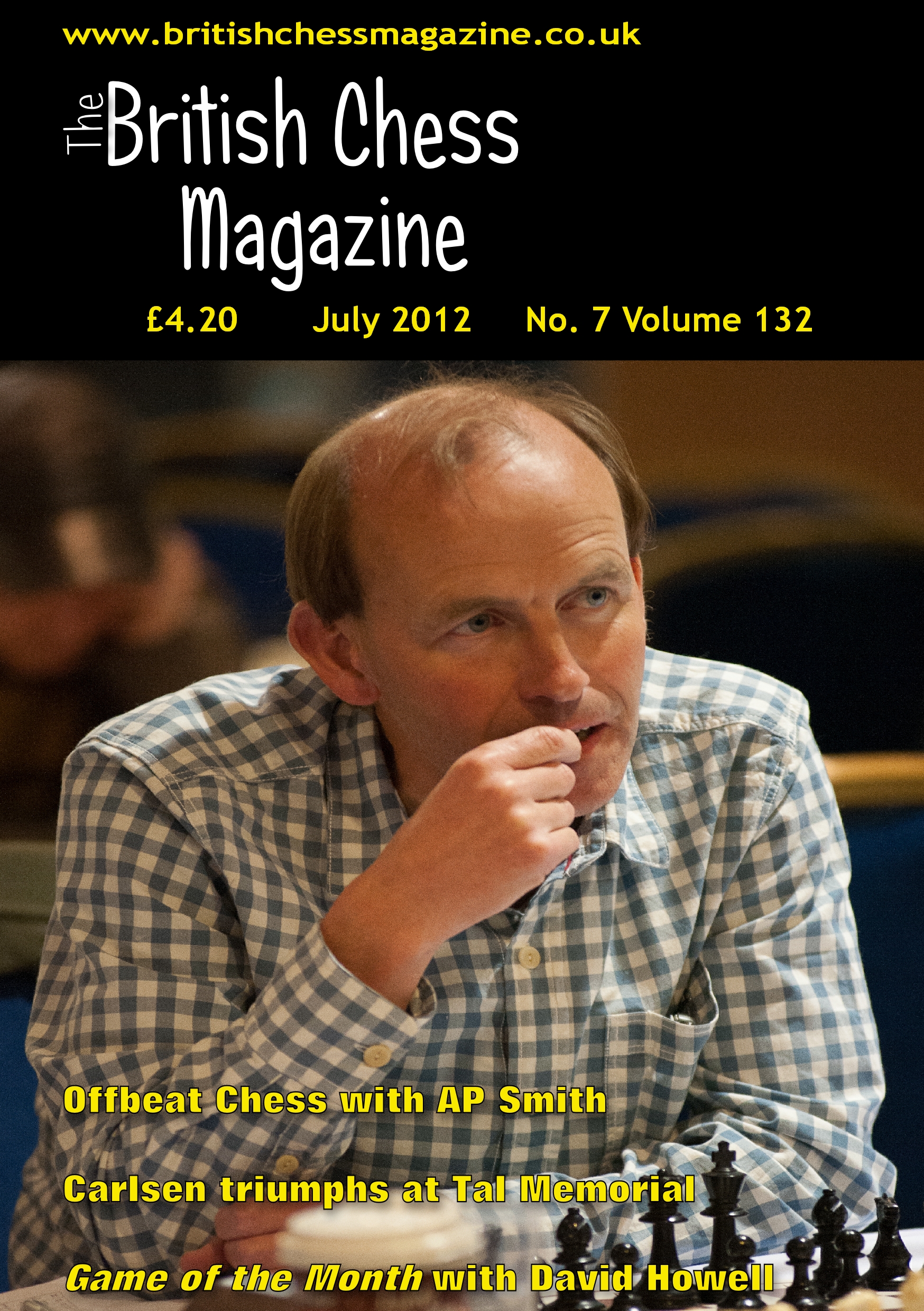
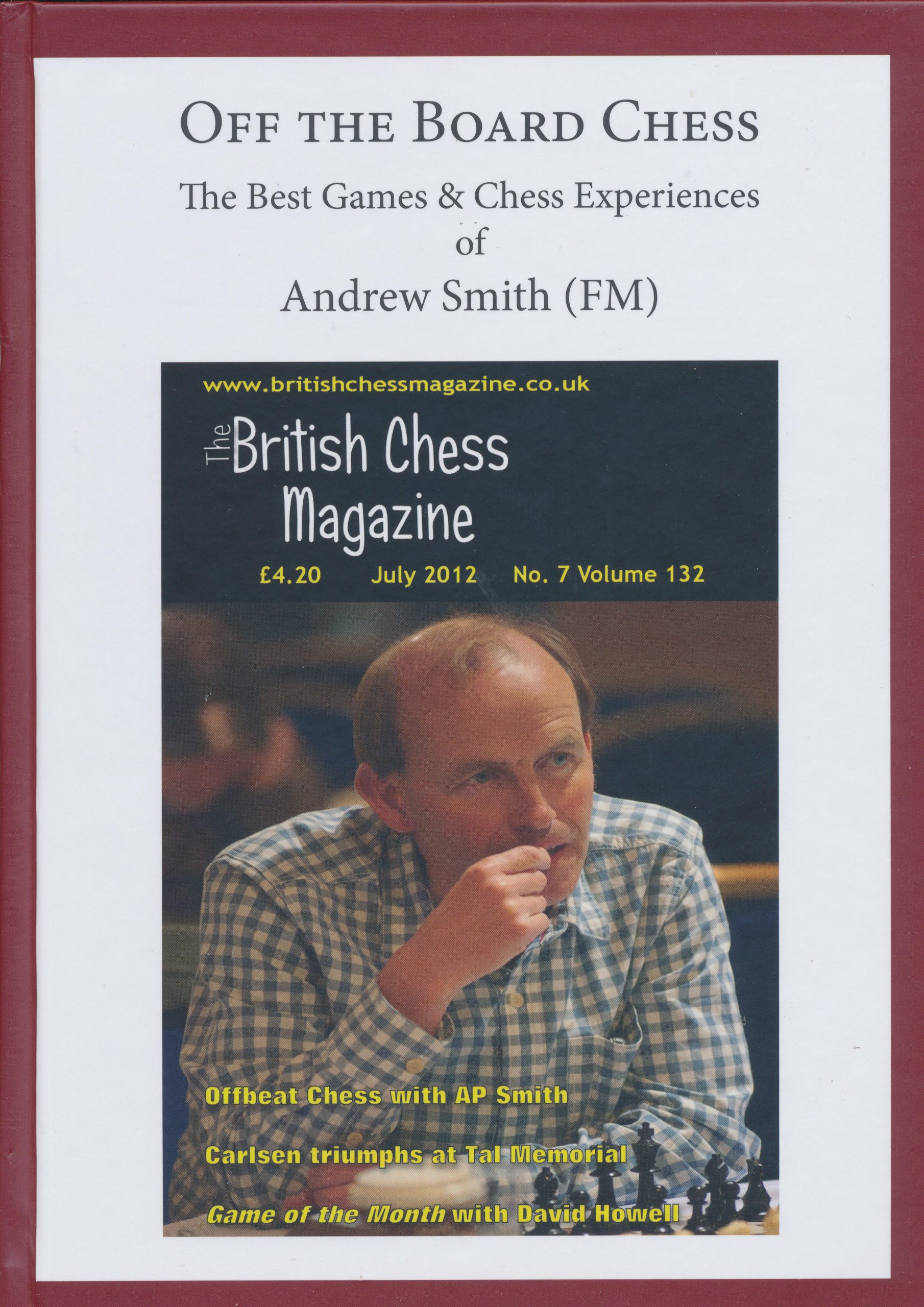
British Chess Magazine, Volume CXXXII (132), Number 7 (July) front cover features FM Andrew Smith from the final 4NCL weekend of the 2011-2012 season, courtesy of John Upham Photography

FM Andrew Smith at the 2019 Keith Richardson Memorial, courtesy of John Upham Photography

In 2021 Andrew self-published “Off the Board Chess, The Best Games and Chess Experiences of Andrew Smith (FM)” which has received popular acclaim.

Off the Board Chess, The Best Games and Chess Experiences of Andrew Smith (FM), FM Andrew Smith, Self published, 2021, ISBN 978-1-5272-8572-9

Happy Birthday IM Malcolm Pein (14-viii-1960)

Malcolm Pein signature

BCN sends IM Malcolm Pein best wishes on his 61st birthday.

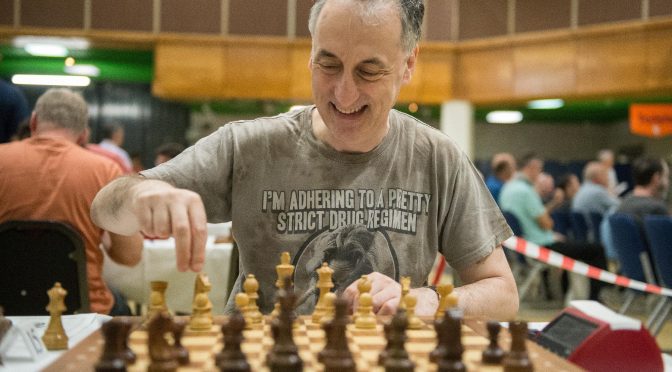
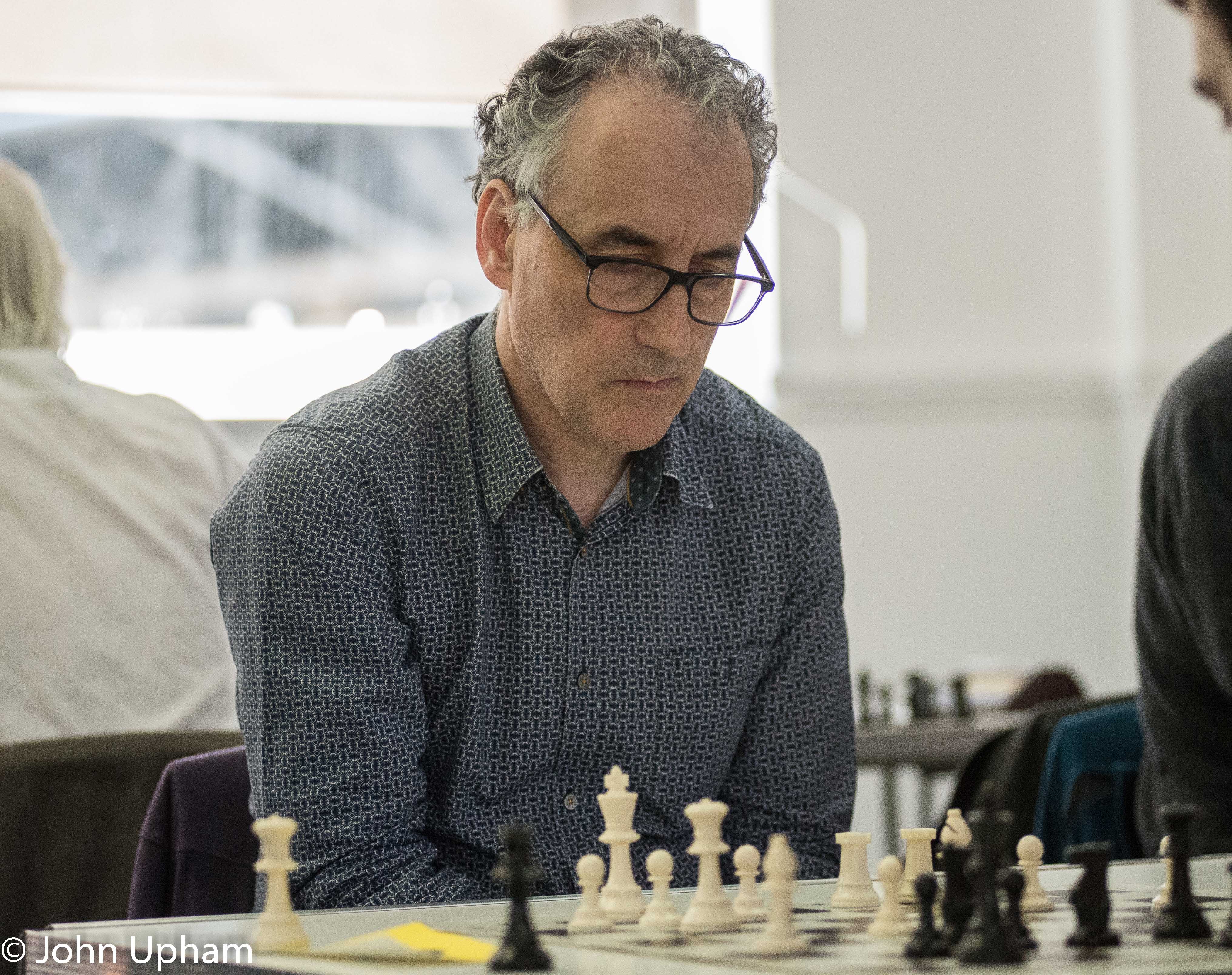
IM Malcolm Pein at the King's Place Rapidplay 2013, photograph courtesy of John Upham
IM Malcolm Pein at the King’s Place Rapidplay 2013, photograph courtesy of John Upham

Malcolm Bernard Pein was born in Liverpool (South). South Lancashire and his mother’s maiden name is Max. (Gaige, Felice and chessgames.com all incorrectly have Malcolm L. Pein).

Malcolm Pein
Malcolm Pein

This was written about Malcolm aged 19 just prior to the 1979 Spassky vs the BCF Junior Squad simultaneous display :

” London University and Liverpool, Rating 199. British under-18 co-champion, 1977. Currently No.1 player for London University.”

Malcolm hard at work

Malcolm studied Chemical Engineering at University College, London entering in September 1978. He won The University of London championship in February 1979. The runner-up was John Upham also from UCL.

He became an International Master in 1986 and is a FIDE Delegate (for England) and an International Director.

Malcolm’s peak rating was 2450 in January 1992 at the age of 32.

Malcolm Pein (third from right) and a victorious Wood Green team. Trophy presented by Magnus Magnusson

With the white pieces Malcolm prefers the Queen’s Gambit almost exclusively with 1.e4 rarely seeing the light of day scoring 62%

As the second player, Malcolm champions the Pirc, Modern and Grunfeld defences scoring 49% which MegaBase 2020 claims is “above average”.

Malcolm plays for 4NCL Wood Green and Liverpool.

IM Malcolm Pein at the Bristol heat of the British Blitz Qualification event in 2019

In addition to his newspaper column and magazine editorial, Malcolm has written a number of chess books and booklets, including :

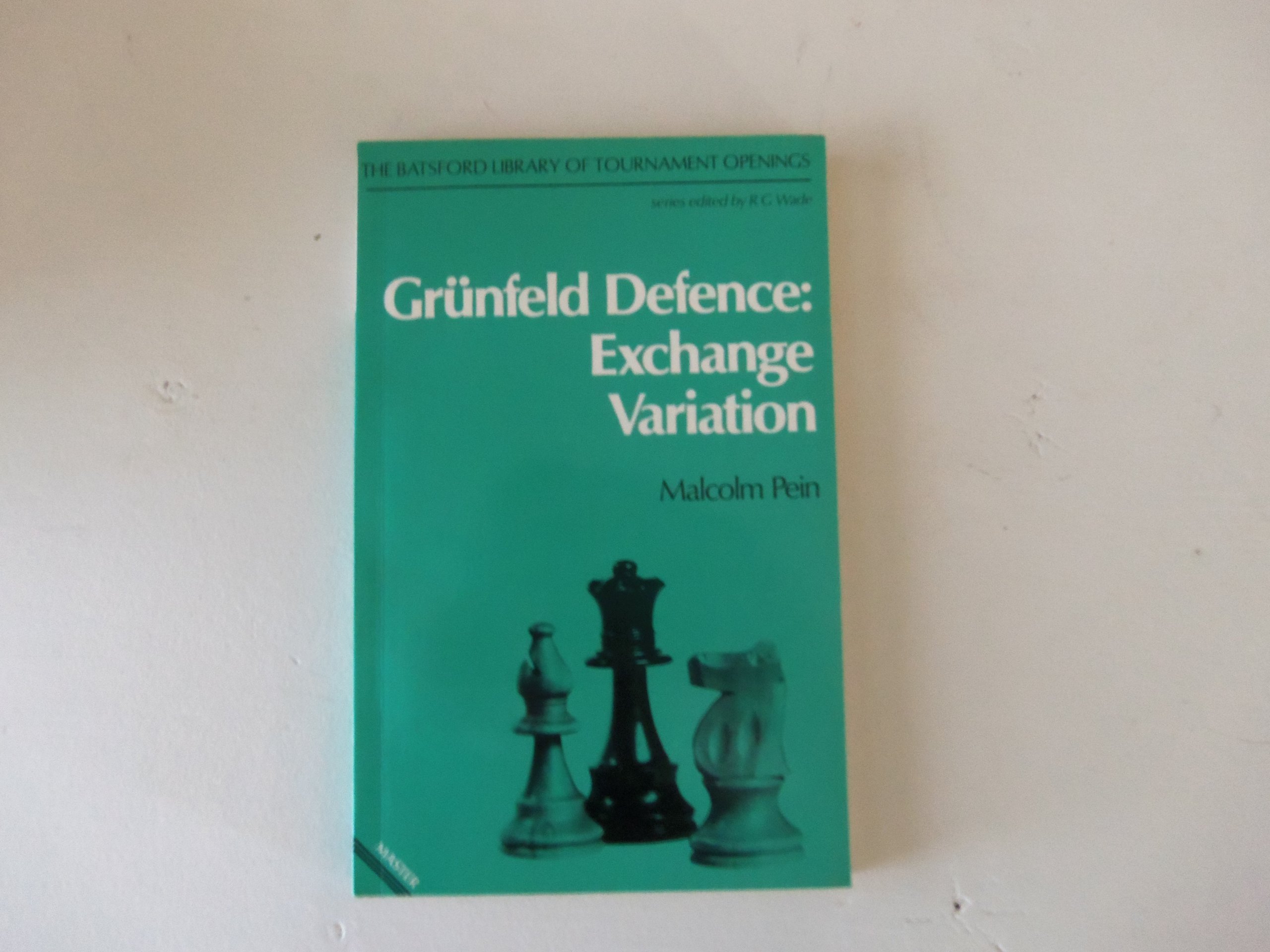
Grunfeld Defence (Batsford, 1981) – ISBN 978-0713435948
Blumenfeld Defence [with Jan Przewoznik] (Everyman, 1991) – ISBN 978-0080371337
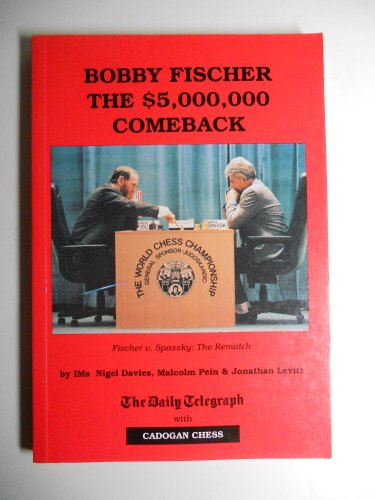
Bobby Fischer: The $5,000,000 Comeback, Nigel Davies, Malcolm Pein & Jonathan Levitt, Cadogan Chess, 1992, ISBN 10: 1857440420
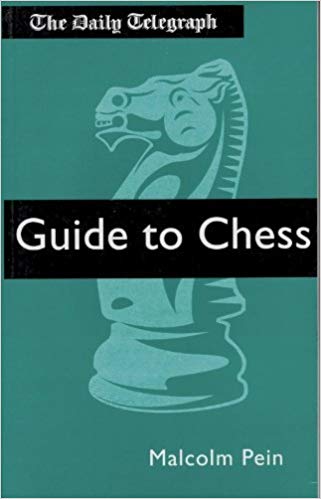
Daily Telegraph Guide to Chess (Batsford, 1995) – ISBN 978-0713478143

The Exchange Grunfeld [with Adrian Mikhalchishin] (Everyman, 1996) – ISBN 978-1857440560]

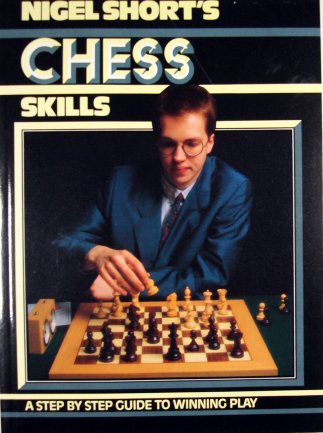
Nigel Short's Chess Skills (1989) (was ghost written by Malcolm)
Nigel Short’s Chess Skills (1989)(was ghost written by Malcolm)

Malcolm won the ECF President’s Award in 2017:

“Malcolm Pein’s contribution to English Chess is well known. He is CEO of Chess in Schools and Communities, has been largely involved in the organisation of the London Chess Classic and is currently the ECF’s Delegate to FIDE and International Director. On top of all that he is also an IM, writes the ‘Daily Telegraph’ Chess Column, and edits CHESS Magazine.”

IM Malcolm Pein at the London Chess Classic 2013, photograph courtesy of John Upham

Malcolm is also owner (and a director) of the London Chess Centre (a company incorporated on May 1st 1997) which has relocated to 44, Baker Street, former home of the British Chess Magazine retail premises. This was purchased from Stephen Lowe and Shaun Taulbut in 2010 when the leasehold on the Euston Road premises expired. Another director is Henry Gerald Mutkin who is the main organiser of the annual Varsity match.

Here is his Wikipedia entry

Malcolm has a son, Jonathan who is a strong player and he resides in London, NW7.

In 2021 Malcolm stood as an alternative to Mike Truran in the contested election for CEO. On October 9th 2021 following “detailed and amicable discussions”  with Mike a away forward was agreed and Malcolm agreed to remain as International Director of the ECF and Mike remained as CEO.

Here is his Developing Chess web site.

Jonathan and Malcolm Pein at the 2016 Michael Uriely Memorial Tournament
Malcolm Pein & Dominic Lawson

Happy Birthday IM Michael Rahal (10-viii-1970)

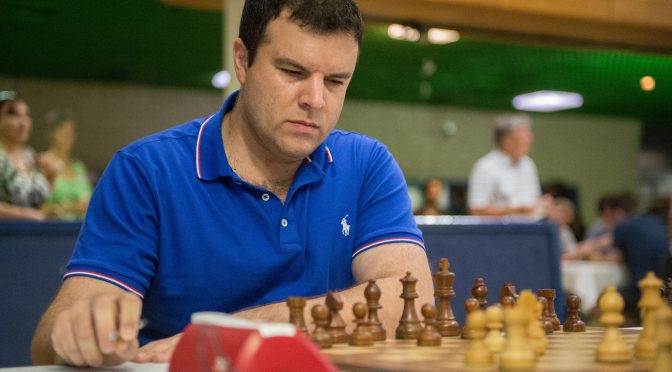
BCN wishes Happy Birthday to IM Michael A Rahal (10-viii-1970)Michael Anthony Rahal was born in Aldershot, Hampshire to Spanish parents. His mother’s maiden name is Vives Escoda. Michael attended Salesian College in Farnborough.

Previously the strongest player from Aldershot may have been Michael Antony Pagden.

He became a FIDE Master in 1994 and an International Master in 1999. His peak FIDE rating was 2431 in January 2005. He is a Spanish resident.

Here is his YouTube Channel His handle on the Internet Chess Club is “mikerahal” .With the white pieces Michael prefers the Spanish(!) Opening With the black pieces Michael plays the French Winawer and the Classical Dutch.

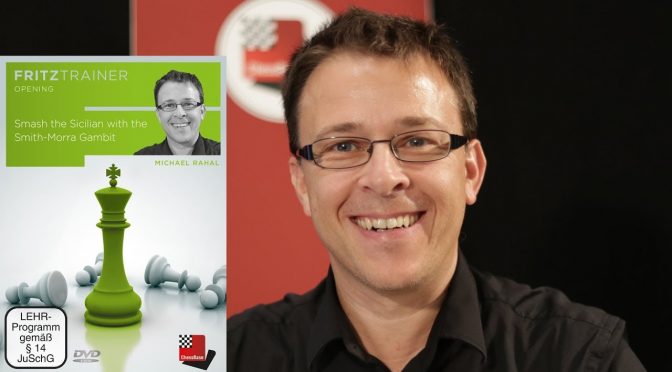
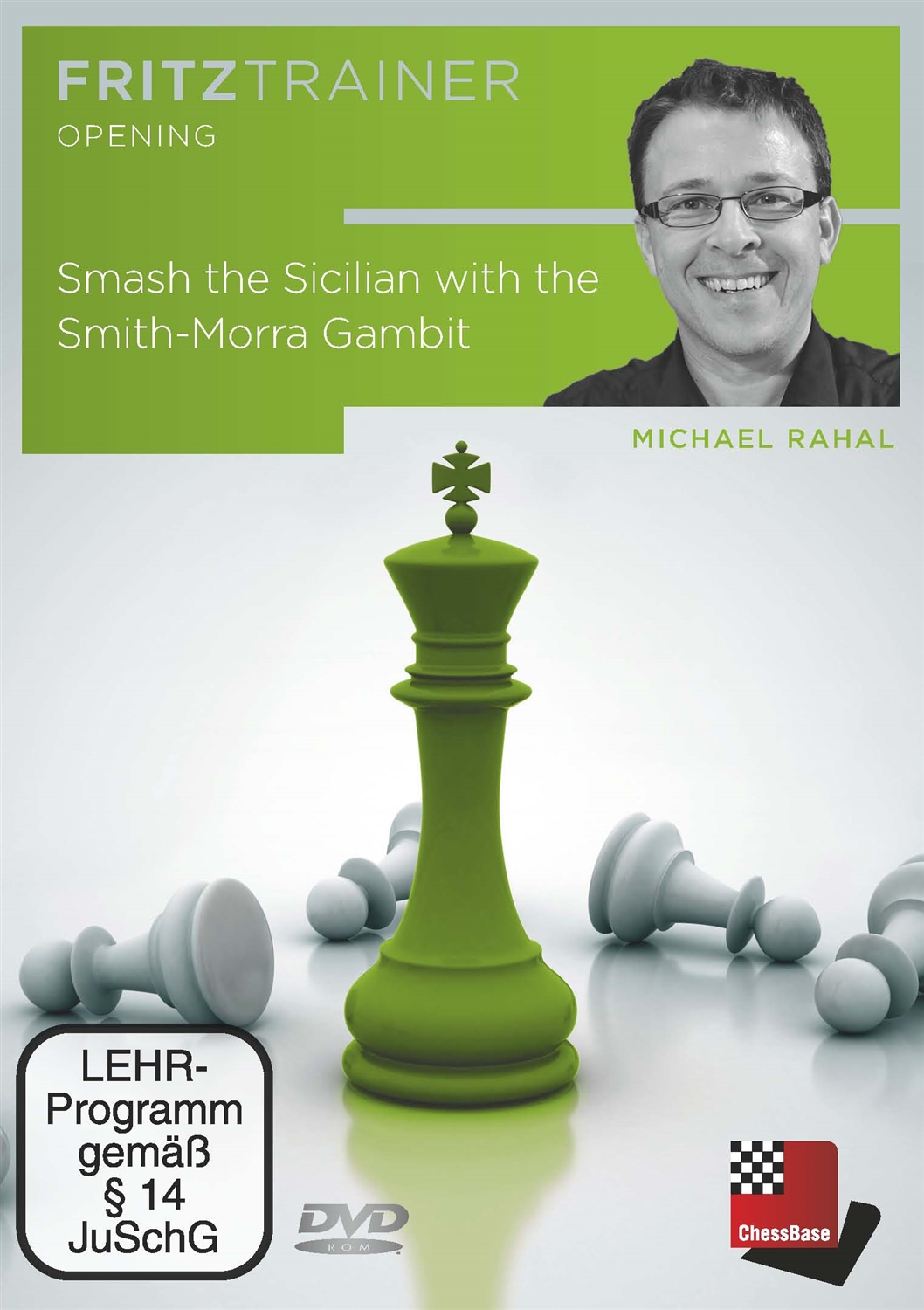
Smash the Sicilian with the Smith-Morra Gambit - Michael Rahal (PC-DVD)
Smash the Sicilian with the Smith-Morra Gambit – Michael Rahal (PC-DVD)

Remembering IMC Frank Boyd (16-ix-1935 ?-ix-2023)

He was British Correspondence Champion in 1972 and awarded the IMC title in 1981.

According to Kings Indian I Attacking Systems:

“British Correspondence Champions 1971/72. Placed second in an ICCF master tourney 1973/76. A member of the British team in the 9th Olympiad 1977/80. Gained the IMC title in the European Team Championship 1978/81.”

According to Chessbase Correspondence Database 2020 Frank achieved his highest (ICCF) rating in January 1991 of 2410.

Incomplete crosstable from the European Championship, 1973.

As White Frank would play the Queen’s Gambit via a 1.Nf3 move order. He did not play 1.e4

As the second player he would defend the closed Ruy Lopez and the Nimzo-Indian Defence.

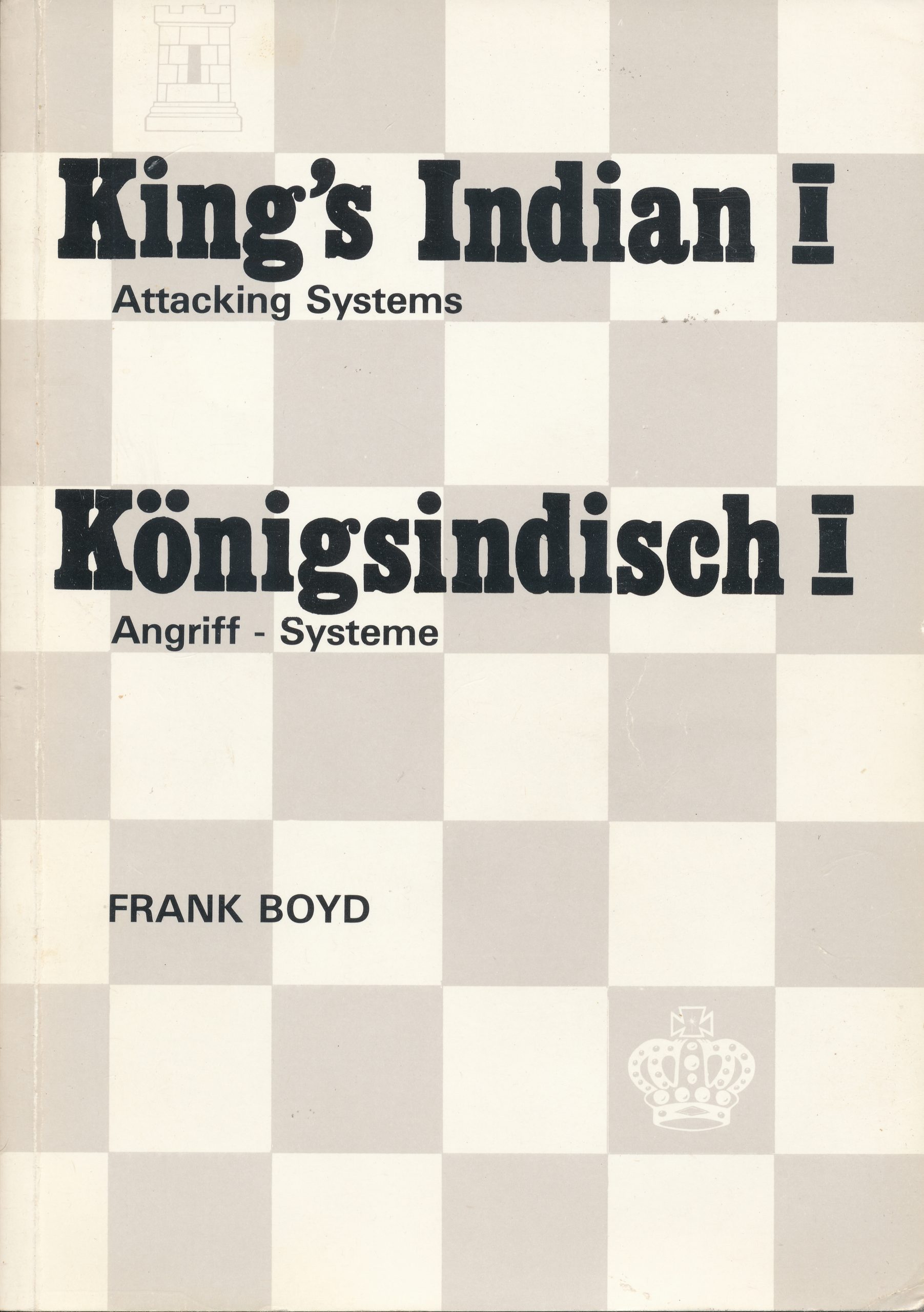
King's Indian I by Frank Boyd, Chess Praxis, 1981
King’s Indian I by Frank Boyd, Chess Praxis, 1981

Birthday of IM Richard Pert (22-i-1981)

Happy Birthday IM Richard Pert (22-i-1981)

IM Richard Pert
IM Richard Pert

Nick and Richard Pert

Birthday of GM Nick Pert (22-i-1981)

We send birthday wishes to GM Nick Pert born this day (January 22nd) in 1981.

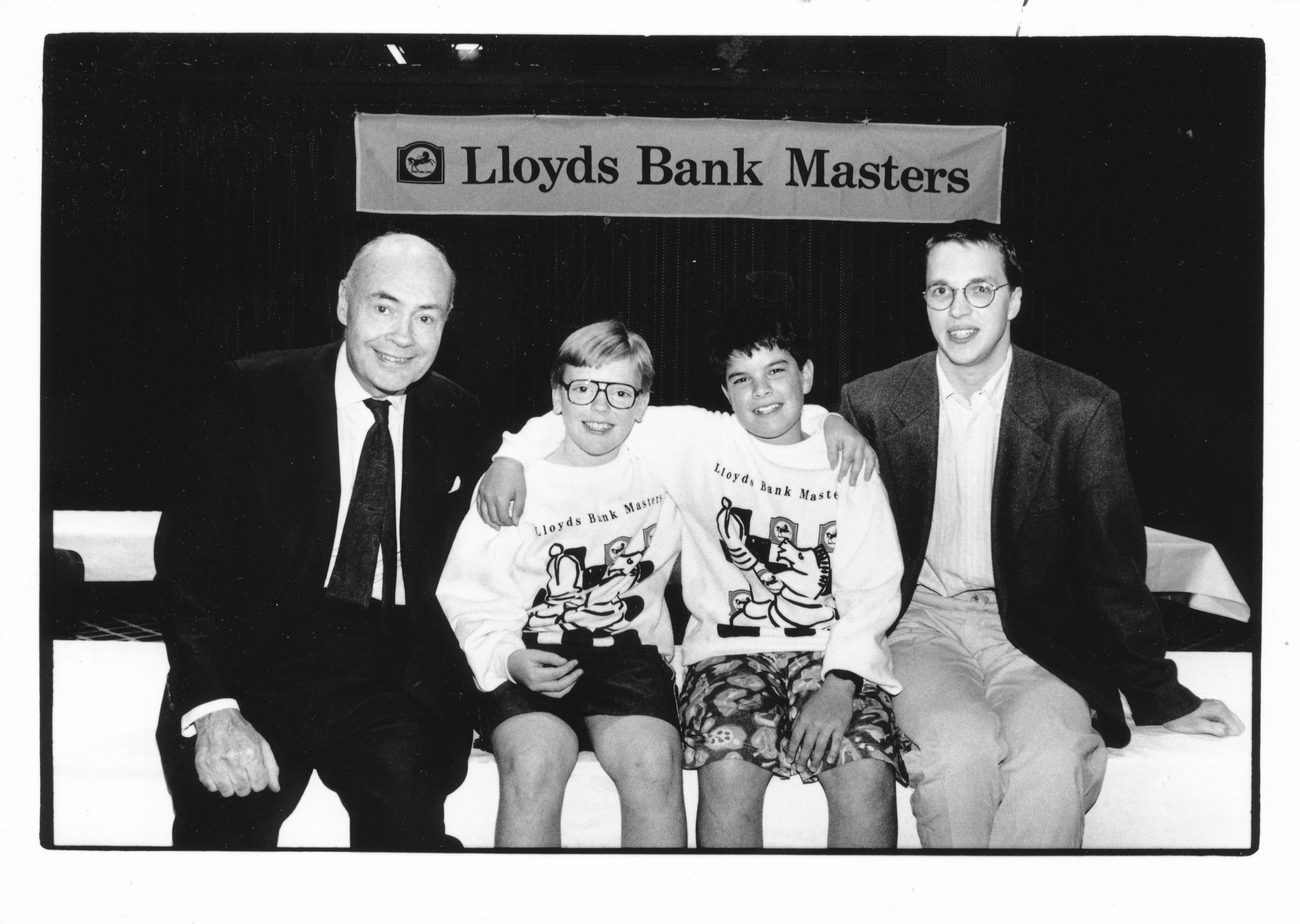
Jeremy Morse, Adam Hunt, Nick Pert and Nigel Short at the Lloyds Bank Masters

Nick won the Southern Counties (SCCU) championship for the 2016-17 season sharing with Richard Bates.

Nick and Richard Pert

Here is Nick’s Wikipedia entry

Nick and Richard Pert

GM Nick Pert
GM Nick Pert
GM Nick Pert
GM Nick Pert

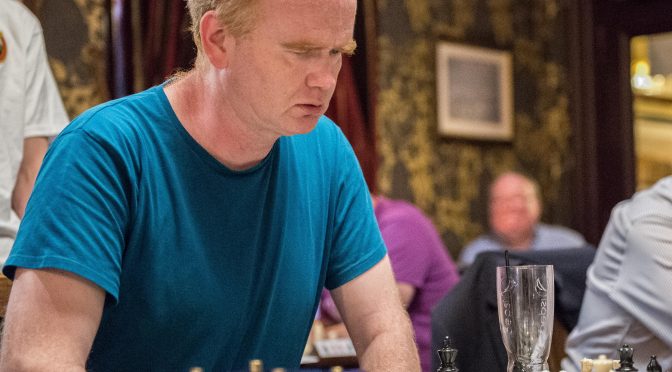
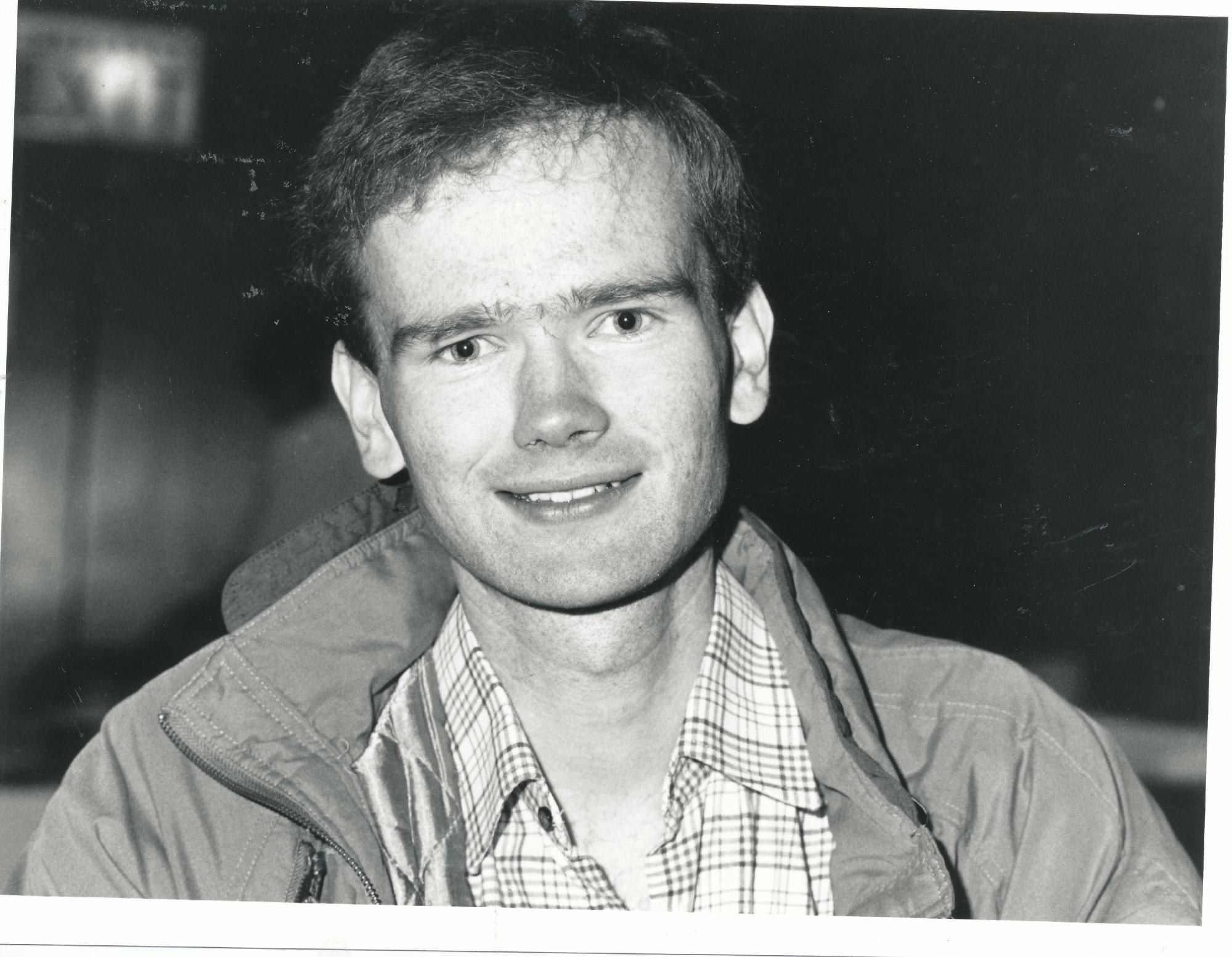
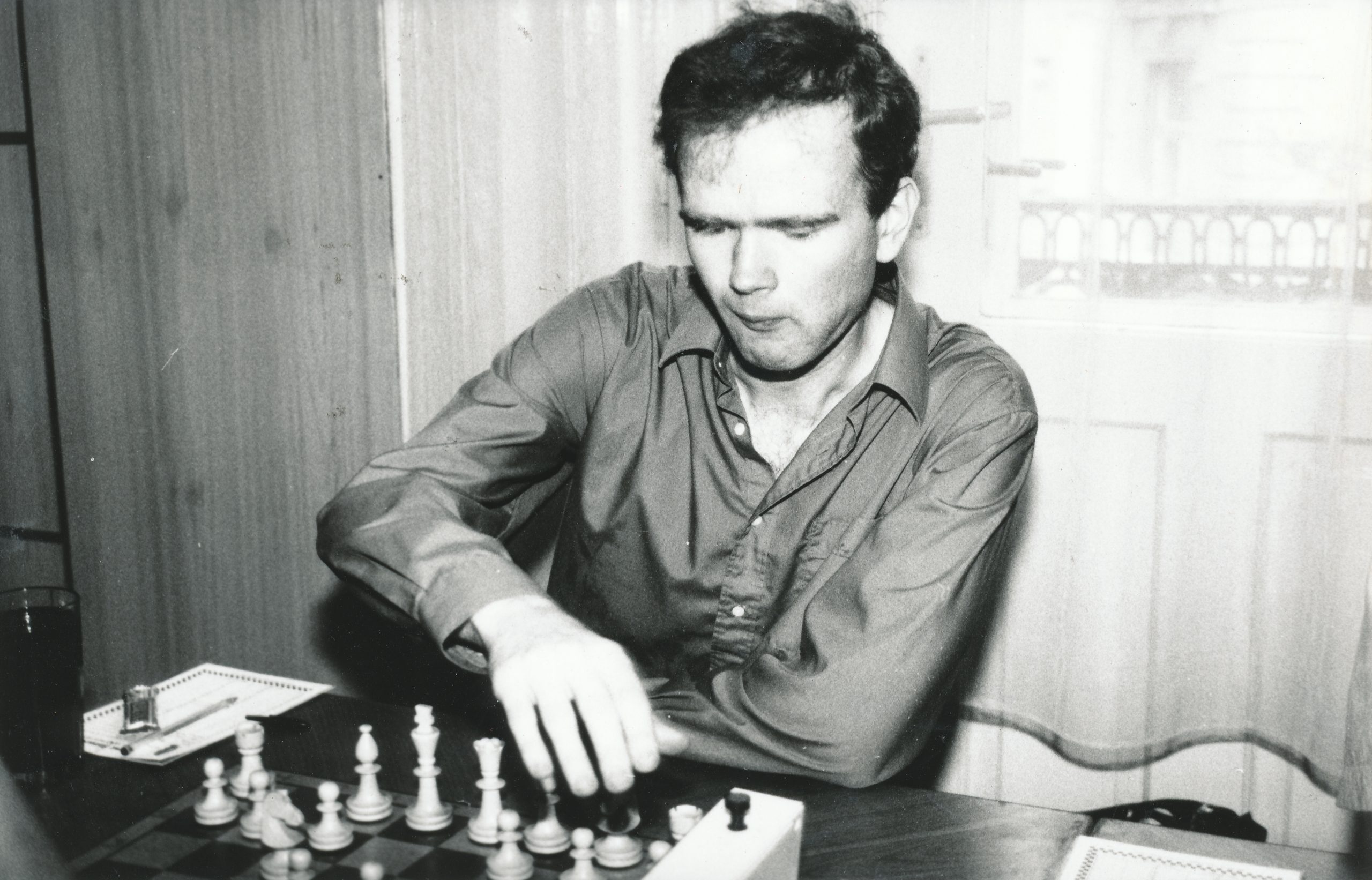
Birthday of GM Neil McDonald (21-i-1967)

We send birthday wishes to GM Neil McDonald born on this day (January 21st) in 1967.

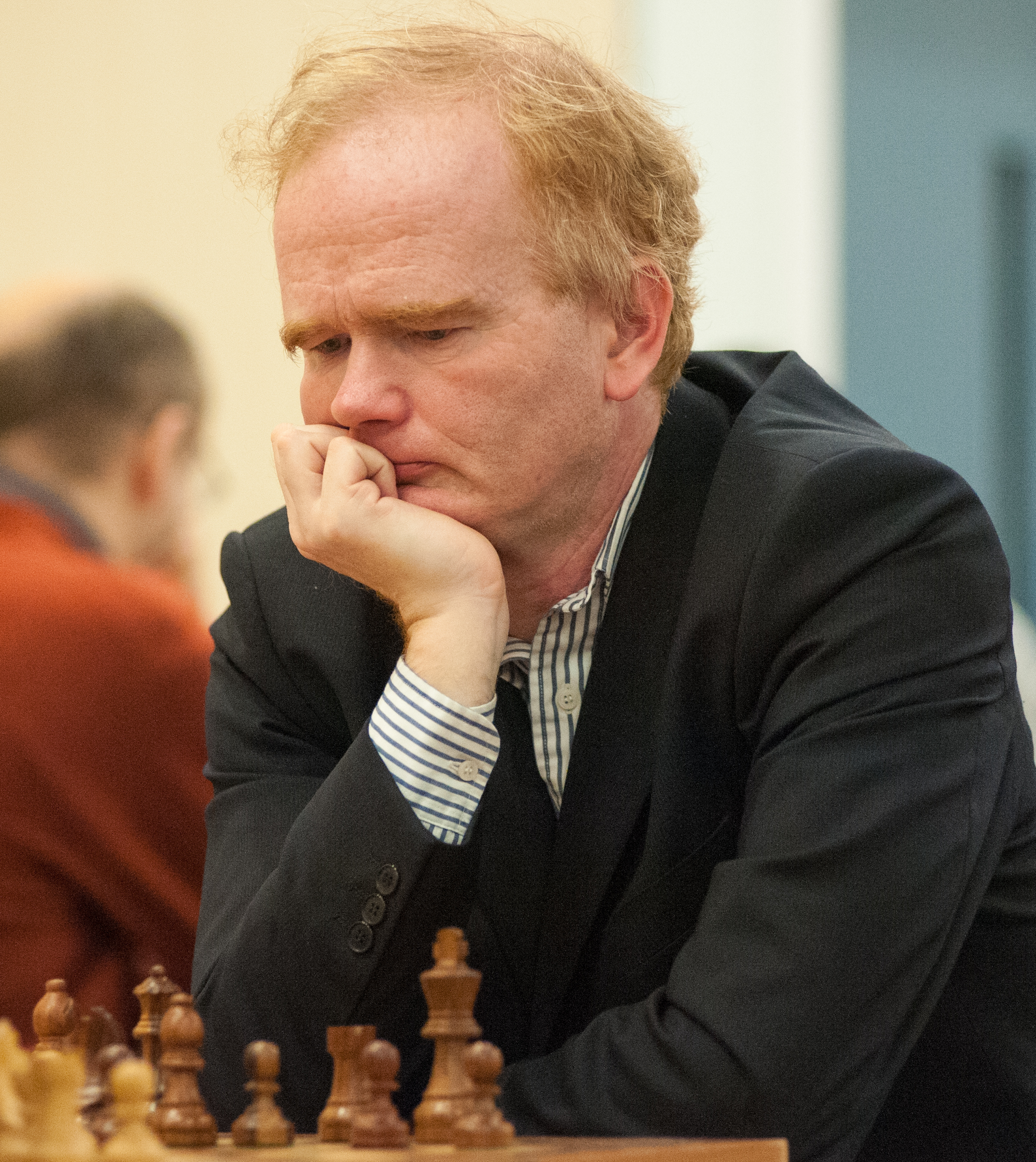
Neil McDonald
Neil McDonald
Neil McDonald
Neil McDonald

From Wikipedia :

Neil McDonald (born 21 January 1967) is an English chess grandmaster and a player on the international chess circuit. He is an English Chess Federation coach,[1] who has trained many of the country’s strongest junior players. McDonald is a regular coach of the English junior team and was Head Coach of the English Chess Federation team at the Greece World Schools Championship in 2013.[2] He regularly escorts blind and partially sighted chess players to international World Championship events and is also a chess writer.

McDonald authored the French Defence monthly updates on chesspublishing.com from October 1999 until March 2009,[3] 1 e4 … updates from November 2009 until January 2010,[4] 1 e4 … from June 2014 until February 2015[5] and returned to 1 e4 … in March 2017 until January 2018.[6]

Neil shared first place in the 1986 GLC Masters with Jonathan Levitt, was outright first at the Elekes Memorial, 1995, first at The Leinster IM Tournament in Dublin, 1997, and other tournaments since. Neil plays for Wood Green in the Four Nations Chess League (4NCL).

He became an International Master in 1986 and was awarded the Grandmaster title in 1996.

McDonald obtained his FIDE Trainer qualification in 2016.[7]

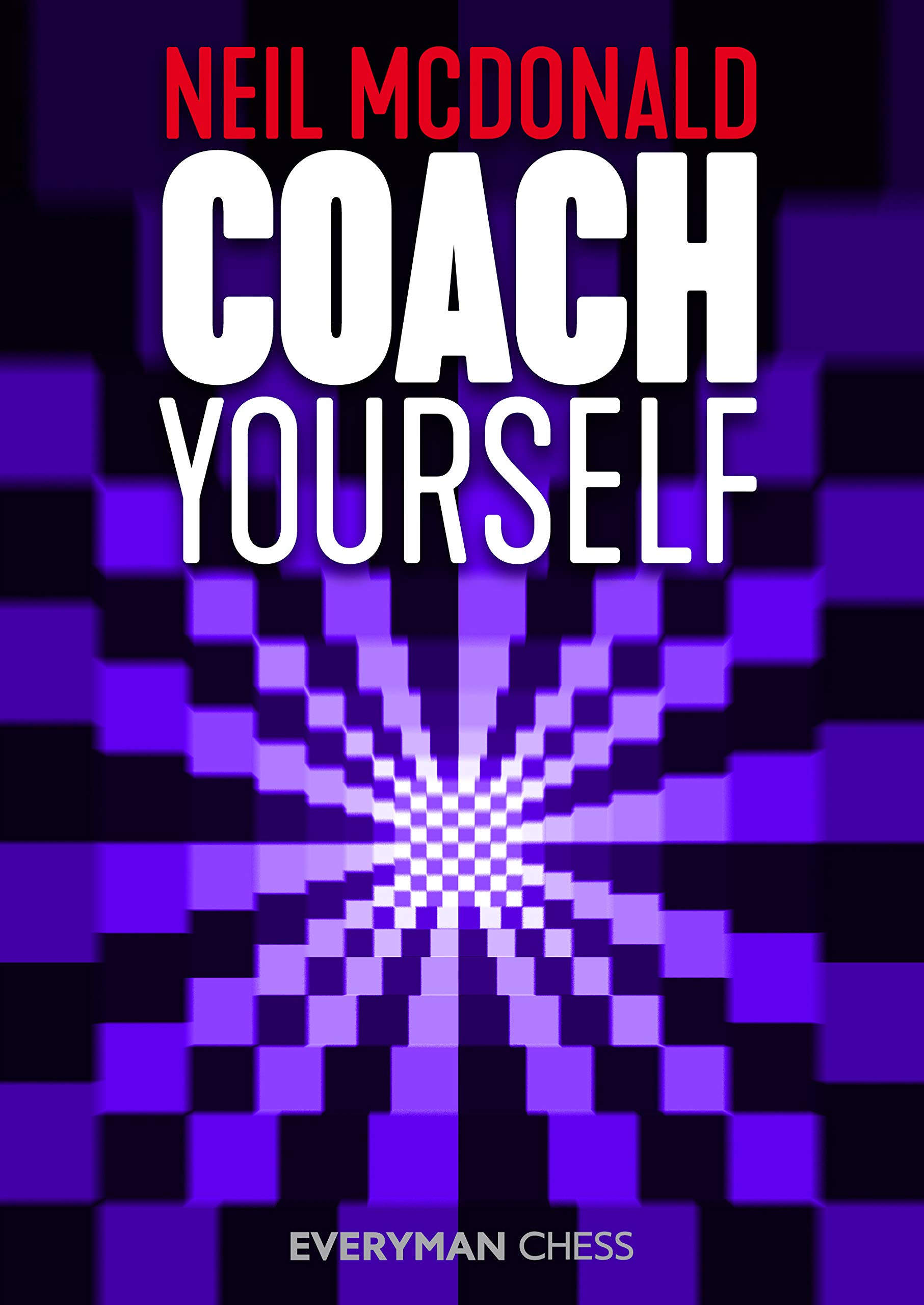
Neil is a prolific and successful author, most recently with “Coach Yourself”

Coach Yourself : A Complete Guide to Self Improvement at Chess

but also thirty eight titles for Chess Press, BT Batsford Ltd. and Everyman Chess Books.

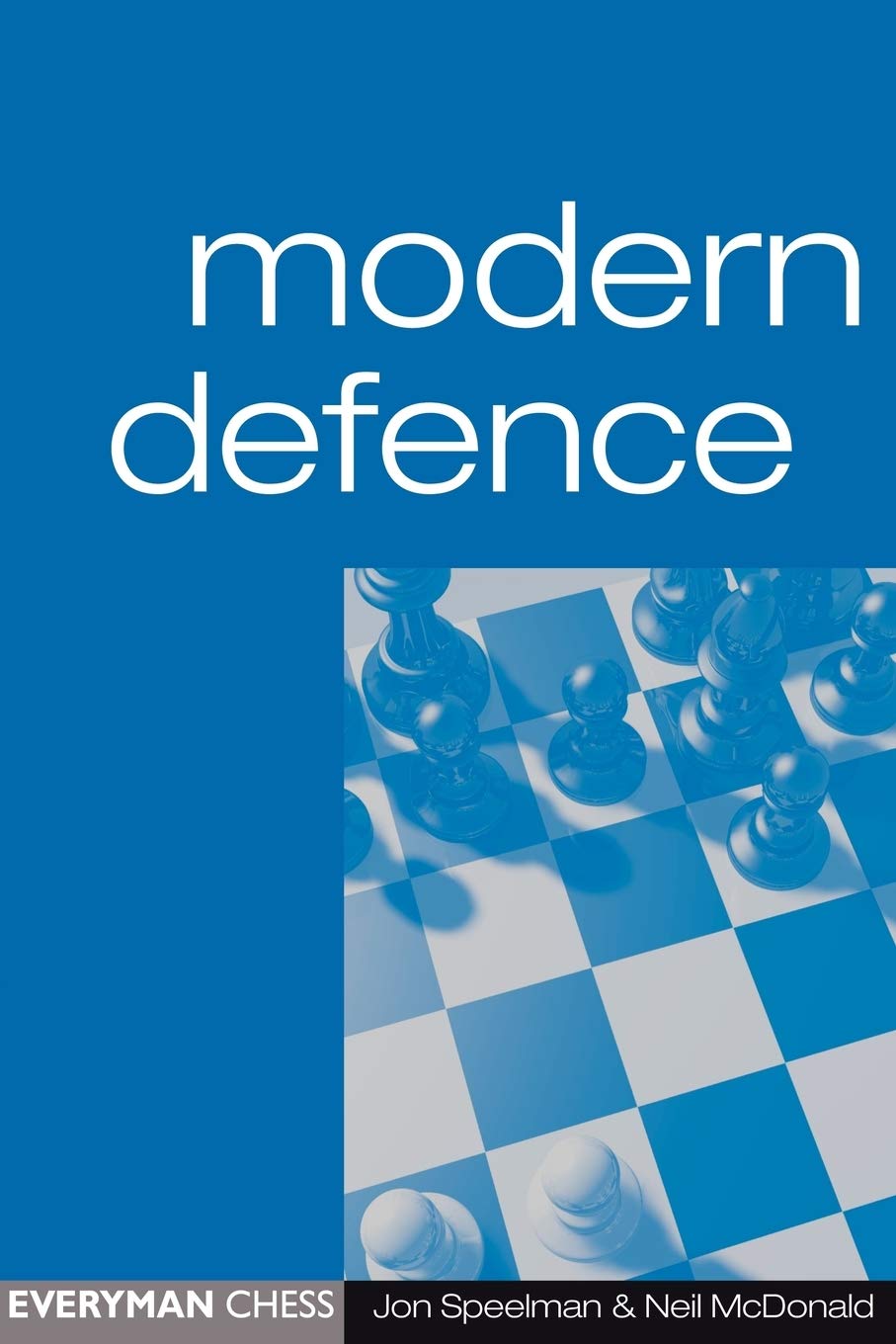
Modern Defence. Everyman, 2000
GM Neil McDonald
GM Neil McDonald

Birthday of IM Paul Littlewood (18-i-1956)

BCN wishes Happy Birthday to Paul Littlewood

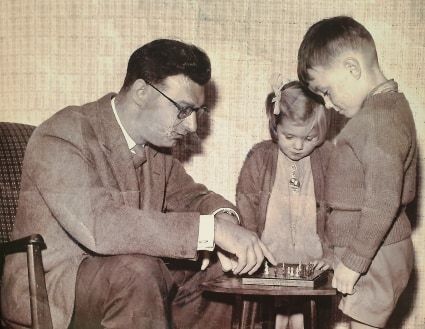
Paul Edwin Littlewood was born on Wednesday, January 18th, 1956 in Skegness, East Lindsey, Lincolnshire. His parents were John and Jean Littlewood (née) Hadwick. Paul’s chess playing uncle was Norman Littlewood.

John and Paul on Skegness beach circa 1958. Kindly supplied by Paul Littlewood. George and Ringo are out of shot !
John, Jenny and Paul Littlewood, circa 1962. Kindly supplied by Paul Littlewood.

Paul attended Glenburn Comprehensive School in Skelmersdale from 1967 and then read Natural Sciences at Christ’s College, Cambridge from 1974.

Paul played badminton for Lancashire and Cambridge and, in 1971, won the English Schools Mixed Championship when he was 15 years old.

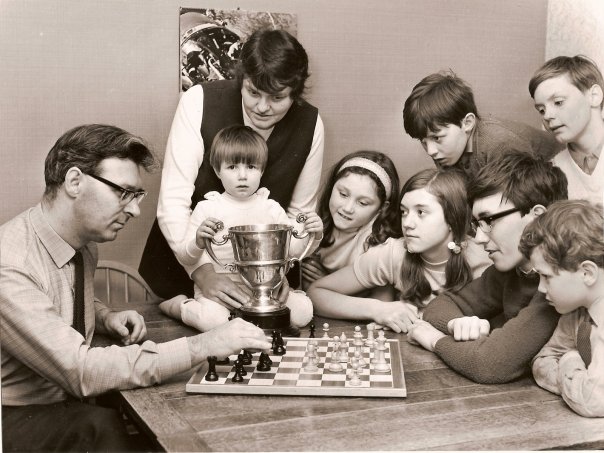
Paul and family receive a chess lesson from John following John's win in the 1972 Southport Open
Paul and family receive a chess lesson from John following John’s win in the 1972 Southport Open

On leaving University Paul taught science at Southbrook Comprehensive, Daventry. Four years later Paul became a dealer at Phillips & Drew and followed this as an Executive Director at Goldman Sachs. Stays at Lehman Brothers and JP Morgan were followed by a change of direction and since then Paul has been director of various food supply companies retiring in 2014.

Paul is married (3rd November 2006) to (his second wife) Fiona and lives in St. Albans, Hertfordshire.

PEL won the ECF President’s Award in 2007 and from the 2008 ECF Yearbook we have the following citation :

“International Master and accomplished bridge player. From British Chess champion (1981) Paul has presided over the 4NCL as chairman during its most successful period. When he became chairman over ten years ago the league consisted of two divisions and 32 teams. The league has now expanded to four divisions and a total of 72 teams. Most of England’s juniors play 4NCL. During this time 4NCL became one of the strongest leagues in Europe, at one time boasting a Division 1 rivalling the Bundesliga in strength in the top matches.

Paul has demonstrated the sound judgement of Solomon when dealing with league disputes and has drawn on his business acumen, honed during a successful career in the City with Goldman Sachs to make 4NCL the financially stable and expanding league it is today.”

Roll of Honour

  • British U18 Champion 1972
  • British U21 Champion 1975
  • British Champion 1981
  • As a junior represented England in Glorney Cup
  • International Master 1980

From British Chess (Pergamon Press, 1983) by Botterill, Levy. Rice and Richardson we have this article from Richard W. O’Brien :

“Paul Littlewood was destined to become a strong player from birth. His father John was for some time one of the strongest players in the country and represented England on many occasions. His uncle Norman was for a few years not far behind. Paul, however, has surpassed them both and has become the first in the family to reach IM status. (Ed: JEL was very much worthy of the IM title but insufficient events of the right type held him back).

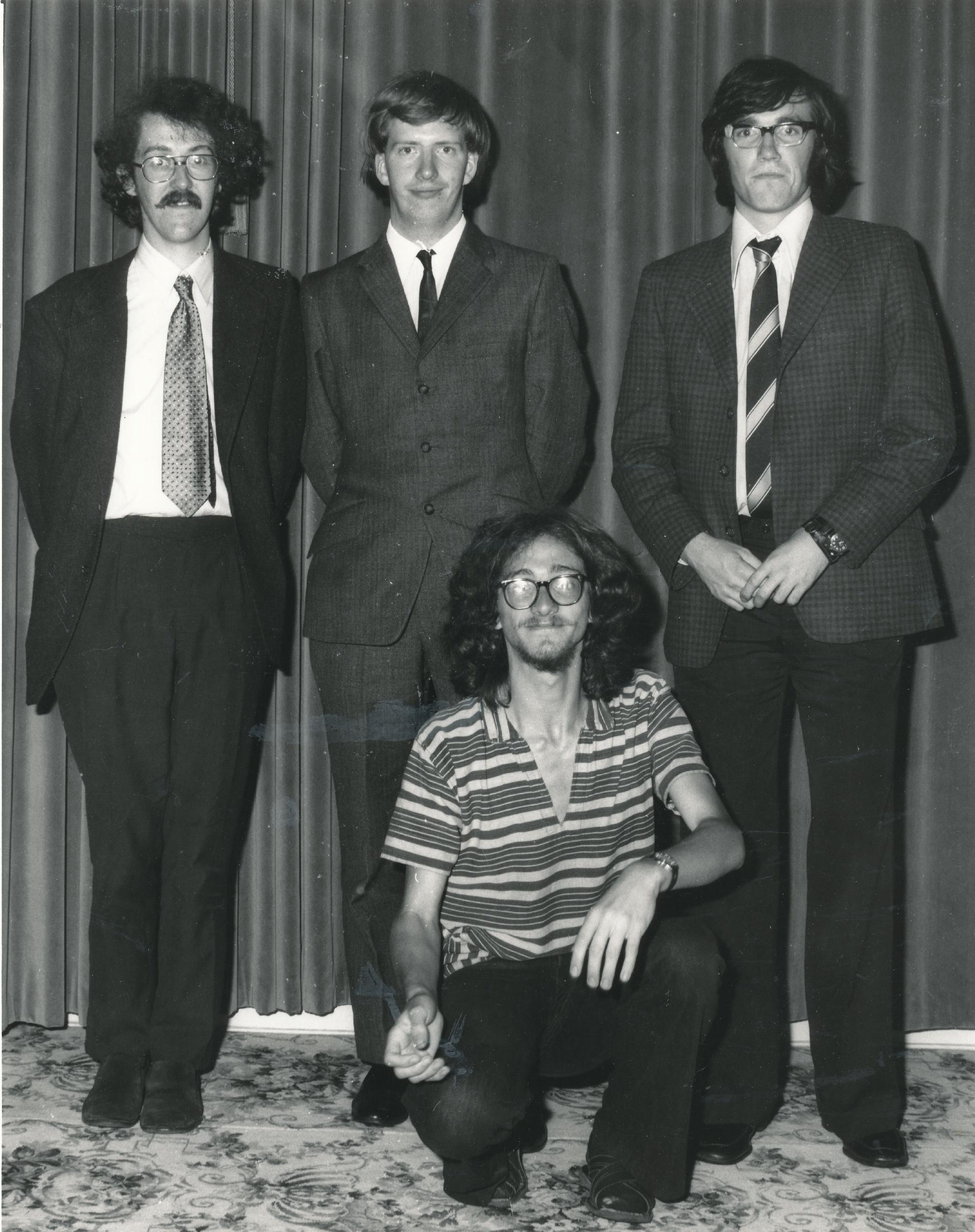
A. Howard Williams, Martyn J. Corden, Paul E. Littlewood and A. Jonathan Mestel

All three are essentially attacking players. There have been times in recent years when play at the Hastings Premier has become dull. However, Paul one of the English representatives at the last three tournaments, was certainly not to blame. (His game against Brito of Brazil which follows is a striking example of this).”

Coached by his father, Paul became British U18 champion in 1972 and three years later became British U21 champion.

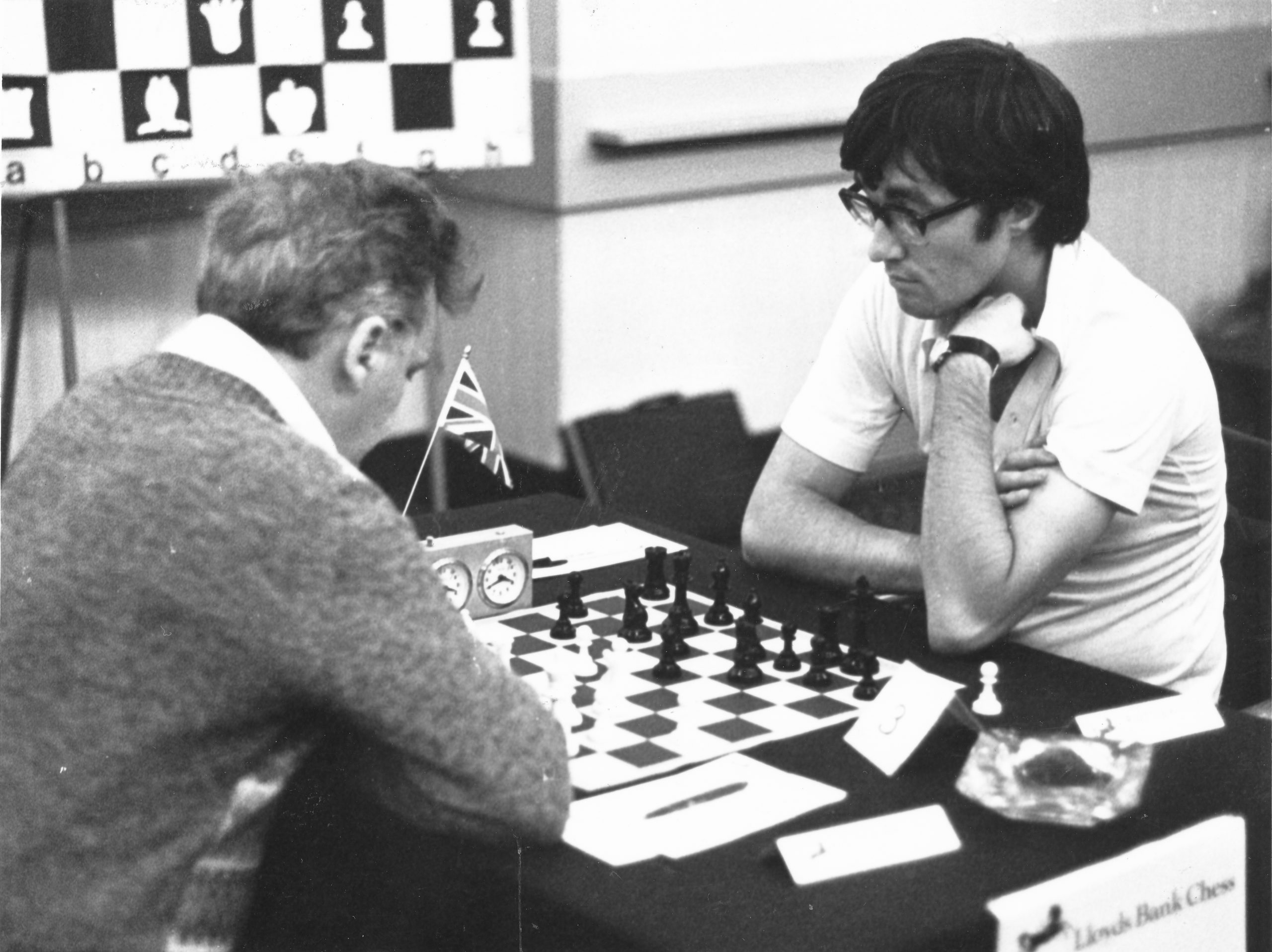
Clearly more interested in an academic career he went up to Cambridge and then followed his father into the teaching profession. Opportunities to play in strong tournaments were thus very limited. These opportunities, however, were grasped in both hands. Three times in thirteen months between August 1978 and August 1979 he obtained an IM norm and thus the title.

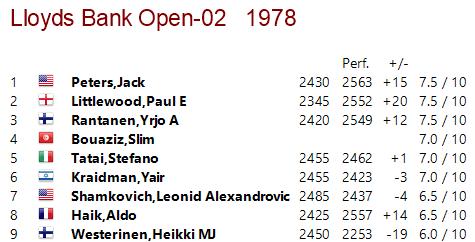
Partial crosstable for the Lloyds Bank Open, 1978

The first caused a sensation as it was totally unexpected. He shared first place at Lloyds Bank ahead of several grandmasters including Shamkovich, who was the first grandmaster he ever defeated.

Leonid Shamkovich plays Paul Littlewood during the 1978 Lloyds Bank Masters. Paul won the game.

Eight months later Aaronson Masters was won and then came the final norm, also at Lloyds Bank.

Tournaments abroad were limited although he represented England students. He did play at Kringsja (2nd equal) in 1978 and Borovo where he scored 6.5.13 finishing ahead of 3 GMs.

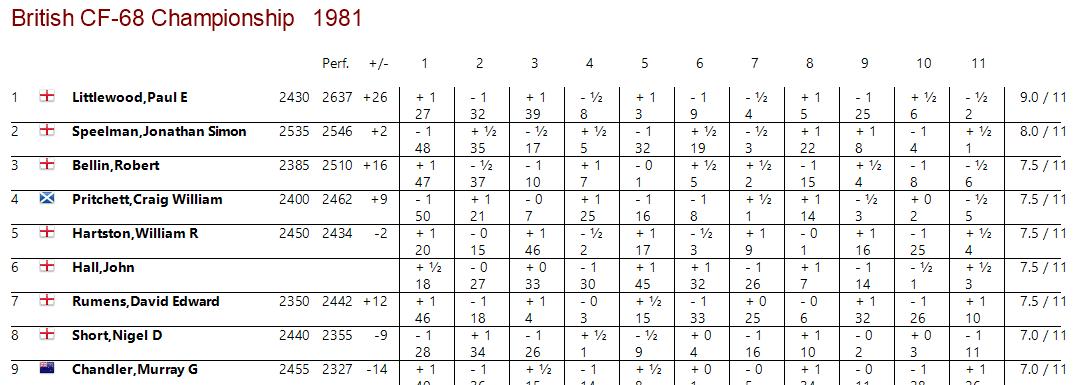
In 1981 came his finest achievement – winning the British Championship with a massive 9/11.

Partial crosstable from the 1981 British Championship in Morecambe

His father who was also competing in the championship was as proud as could be and deservedly so (he also coached Sheila Jackson who retained her British Ladies Championship that year). His excellent all round play took him to the title and only once during the tournament did he stand worse. His endgame play was so good that CHESS even published an article solely on these endings.

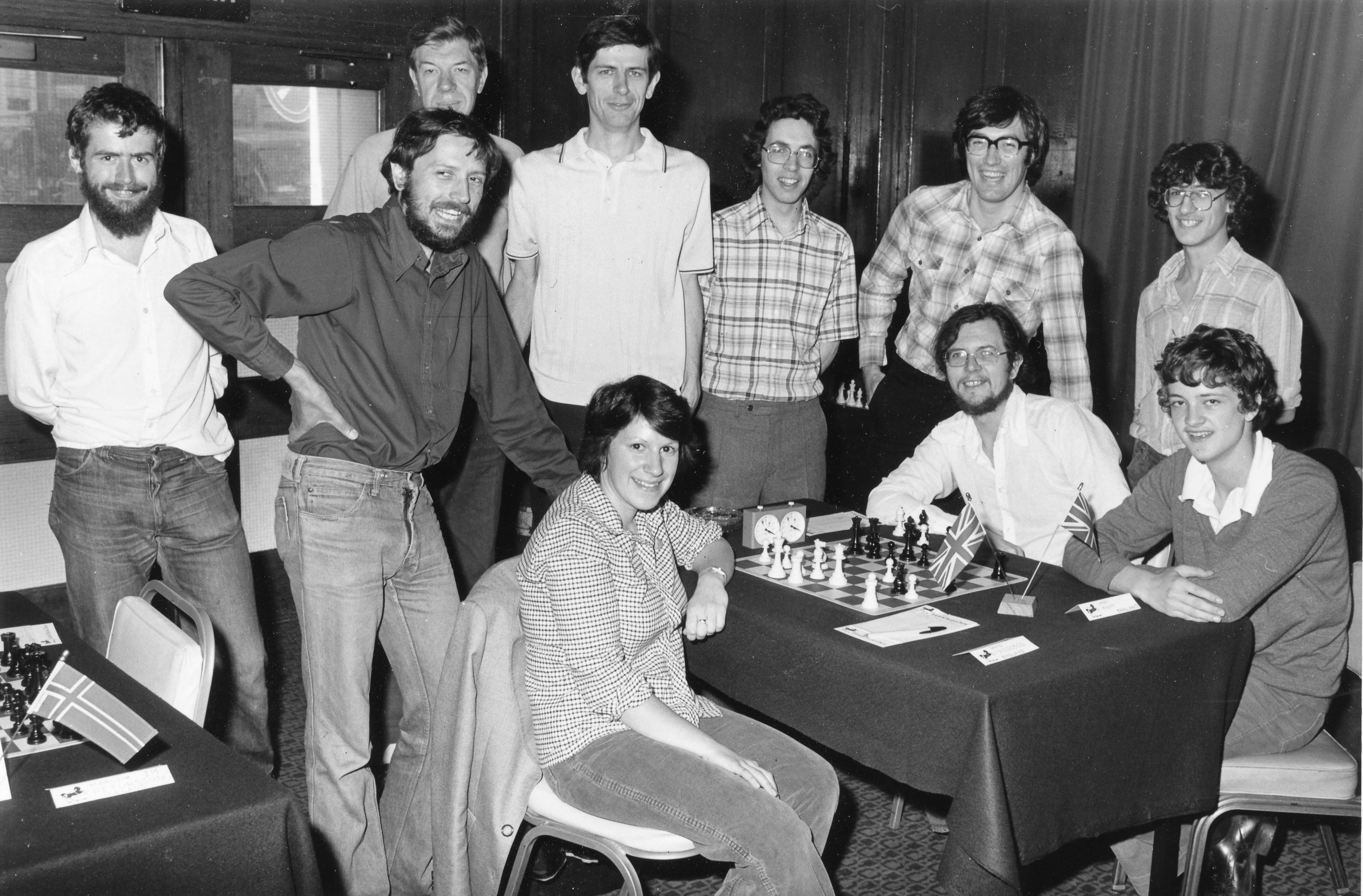
Paul Littlewood and friends during the 1978 Lloyds Bank Masters

Duties at school in Daventry meant he was, in February 1982, unable to take part in the zonal at Marbella. This followed an excellent Hastings when as British Champion he made a plus score – a rare event indeed.

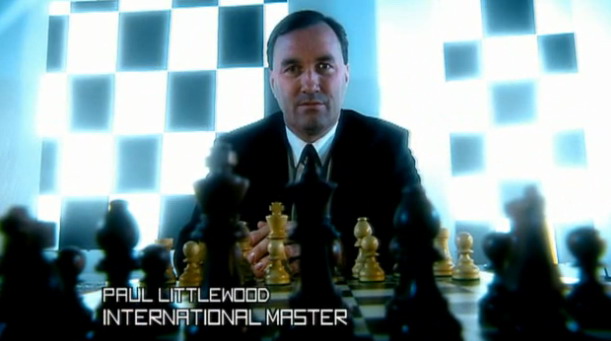
IM Paul Littlewood during filming for the "Trick of the Mind" series from Derren Brown
IM Paul Littlewood during filming for the “Trick of the Mind” series from Derren Brown

In the summer he gave up teaching and joined Phillips & Drew (stockbrokers). He now (ed : this was in 1983) lives with his (first) wife Sue and family in the wilds of Essex (Billericay).

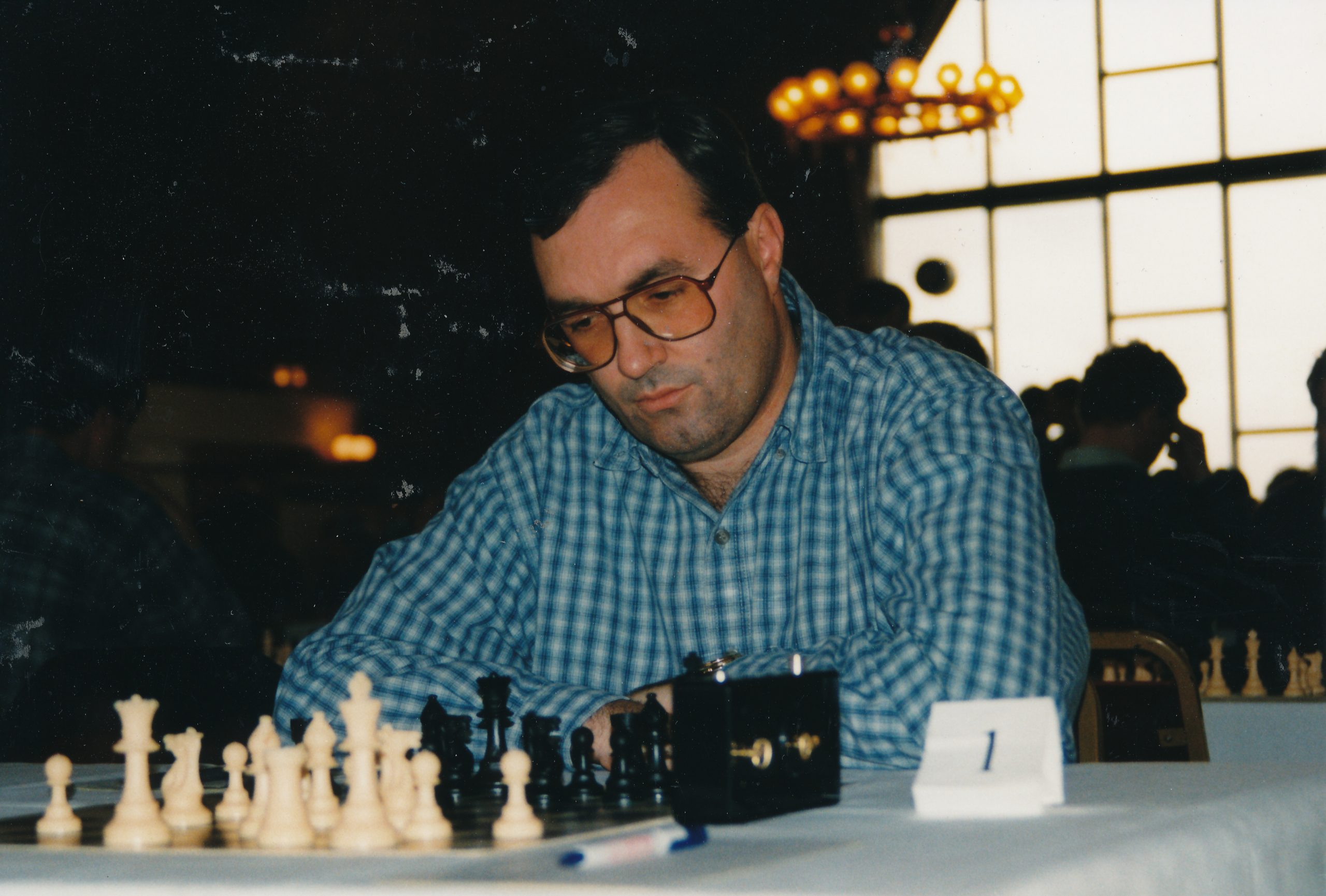
IM Paul Littlewood, event and photographer unknown

Paul gives a simultaneous display in Letchworth.

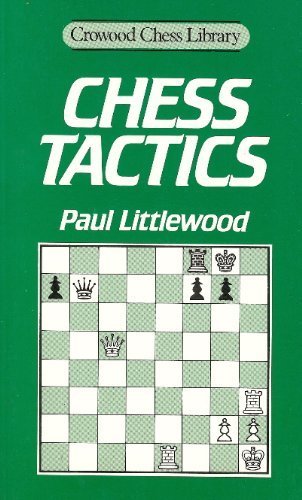
Chess Tactics, Paul Littlewood, Crowood Chess Library, 1991