Tag Archives: British Championships

Death Anniversary of Joseph Blackburne (10-xii-1841 01-ix-1924)

BCN remembers Joseph Blackburne (10-xii-1841 01-ix-1924)

The following (excerpts of) information were obtained via ancestry.co.uk / findmypast.co.uk:

Joseph Henry Blackburne was born on Friday, December 10th, 1841 in Chorlton, Manchester. His father was Joseph Blackburn (aged 23, a temperance reformer) and his mother was Ann Pritchard (aged 24). He had eight sons and five daughters.

His brother Frederick Pritchard Blackburn died on 11 October 1847 in Lancashire, Lancashire, when Joseph Henry was 5 years old.

His sister Clara was born on 4 November 1847 in Street, Lancashire, when Joseph Henry was 5 years old.

His half-sister Clara was born in 1848 in Manchester, Lancashire, when Joseph Henry was 7 years old.

His mother Ann passed away on 26 November 1857 in Manchester, Lancashire, at the age of 40.

His half-brother William Thomas was born on 17 June 1865 when Joseph Henry was 23 years old.

Joseph Henry Blackburne married Eleanor Driscoll on 10 December 1865 when he was 24 years old.

Joseph Henry Blackburne married Beatrice Lapham on 3 October 1876 when he was 34 years old.

His wife Beatrice passed away in January 1880 in St Olave Southwark, London, at the age of 26. They had been married 3 years.

Joseph Henry Blackburne married Mary Jane Fox in St Olave Southwark, London, on 16 December 1880 when he was 39 years old.

Joseph Henry Blackburne lived in Everton, Lancashire, in 1891.

According to Edward Winter in Chess Notes JHB lived at the following addresses :

  • 16 Lucey Road, London SE, England (The Chess Amateur, October 1924, page 32 (address in 1879) and the 1881 British census (C.N. 4756)*).
  • 116 Barkworth Road, Camberwell, London, England (1891 British census (C.N. 4756)*).
  • 7 Whitbread Road, Lewisham, London, England (1901 British census (C.N. 4756)*).
  • 45 Sandrock Road, Lewisham, London SE, England (Ranneforths Schach-Kalender, 1915, page 56, and Hastings Chess Club address list, 1922*).

According to chessgames.com :

“Joseph Henry Blackburne was born in Chorlton, Manchester. He came to be known as “The Black Death”. He enjoyed a great deal of success giving blindfold and simultaneous exhibitions. Tournament highlights include first place with Wilhelm Steinitz at Vienna 1873, first at London 1876, and first at Berlin 1881 ahead of Johannes Zukertort. In matchplay he lost twice to Steinitz and once to Emanuel Lasker. He fared a little better with Zukertort (Blackburne – Zukertort (1881)) and Isidor Gunsberg, by splitting a pair of matches, and defeating Francis Joseph Lee, ( Blackburne – Lee (1890) ). One of the last successes of his career was at the age of 72, when he tied for first place with Fred Dewhirst Yates at the 1914 British Championship.
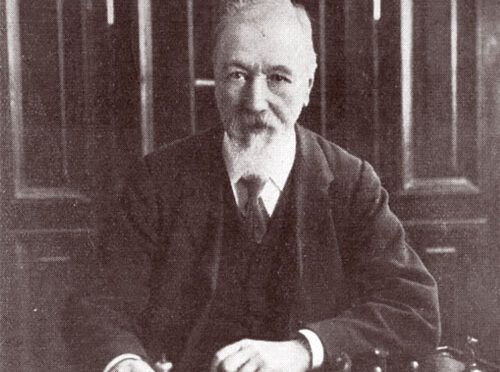
Joseph Blackburne (10-xii-1841 01-ix-1924)

In his later years, a subscription by British chess players provided an annuity of £100 (approximately  £4,000 in 2015 value), and a gift of £250 on his 80th birthday.”

In 1923 he suffered a stroke, and the next year he died of a heart attack.”
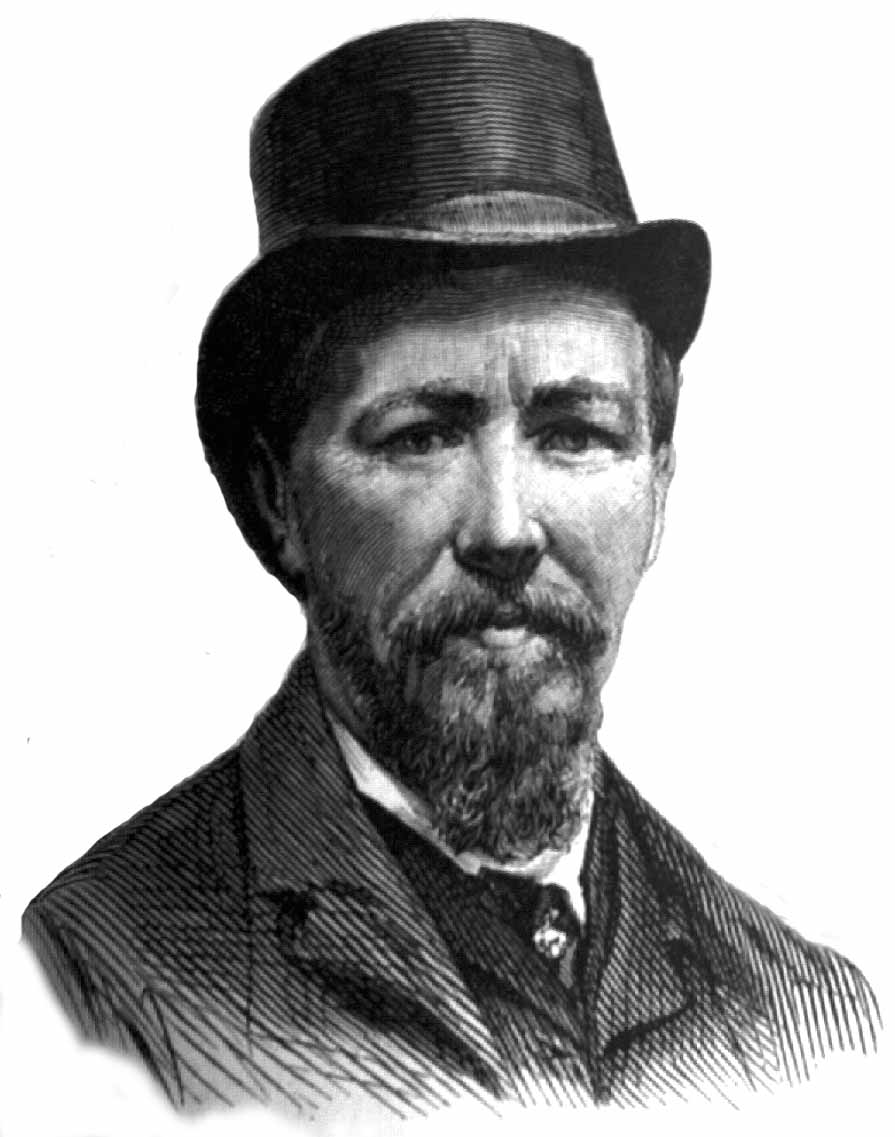
Joseph Henry Blackburne (10-xii-1841 01-ix-1924)

From The Oxford Companion to Chess (OUP, 1984) by Hooper and Whyld :

“For more than 20 years one of the first six players in the world and for even longer the leading English born player. Draughts was the most popular indoor game in his home town, Manchester; he learned this game as a child and became expert in his youth.

He was about 18 when, inspired by Morphy’s exploits, he learned the moves of chess. In July 1861 he lost all live games of a match against the Manchester chess club champion Edward Pindar, but he improved so rapidly that he defeated Pindar three months later (-1-5=2—1), and in 1862 he became champion of the club ahead of Pindar and Horwitz.

Instructed by Horwitz, Blackburne became one of the leading endgame players of his time; and wishing to emulate the feats of L. Paulsen, who visited the club in November 1861, he developed exceptional skill at blindfold chess. He spent most of the 1860s developing his chess and toying with various occupations.

After winning the British championship, 1868-9, ahead of de vere, he became a full-time professional player.

Blackburne achieved excellent results in many tournaments: Baden-Baden 1870, third equal with Neumann after Anderssen and Steinitz; London 1872, second (+5-2) after Steinitz ahead of Zukertort; Vienna 1873, second to Steinitz after a play-off; Paris 1878, third after Winawer and Zukertort: Wiesbaden 1880, first equal with Englisch and Schwarz; Berlin 1881, first (+13=2 — 1), three points ahead of Zukertort, the second prize winner (Blackburne’s greatest achievement); London 1883, third after Zukertort and Steinitz; Hamburg 1885, second equal with Englisch, Mason, Tarrasch, and Weiss half a point after Gunsberg; Frankfurt 1887, second equal with Weiss after Mackenzie; Manchester 1890, second after Tarrasch; Belfast 1892, first equal with Mason; London 1892, second ( + 6-2) after Lasker; London 1893, first ( + 2=3).

He was in the British team in 11 of the Anglo-American cable matches, meeting Pillsbury on first board six times (+2-3 — 1), and he continued to play internationally until he was 72, long enough to meet the pioneer of the hypermodern movement Nimzowitsch, whom he defeated at St Petersburg 1914.

Blackburne had remarkable combinative powers and is remembered for his swingeing king’s side attacks, often well prepared but occasionally consisting of an ingenious swindle that would deceive even the greatest all his contemporaries. The tournament book of Vienna 1873 refers to him as ‘der schrwarze Tod [Black death] der Schachspieler’, a nickname that became popular.

His unflappable temperament also earned him the soubriquet “the man with the iron nerves’. Even so, neither his temperament nor his style was suited to set matches, in which he was rarely successful against world-class players. He had other chess talents: a problem composer, he was also a fast solver, allegedly capable of outpacing the great Sam Loyd. Blackburne earned his livelihood by means of simultaneous displays, for this purpose touring Britain twice-yearly, with a few breaks, for more than 50 years.
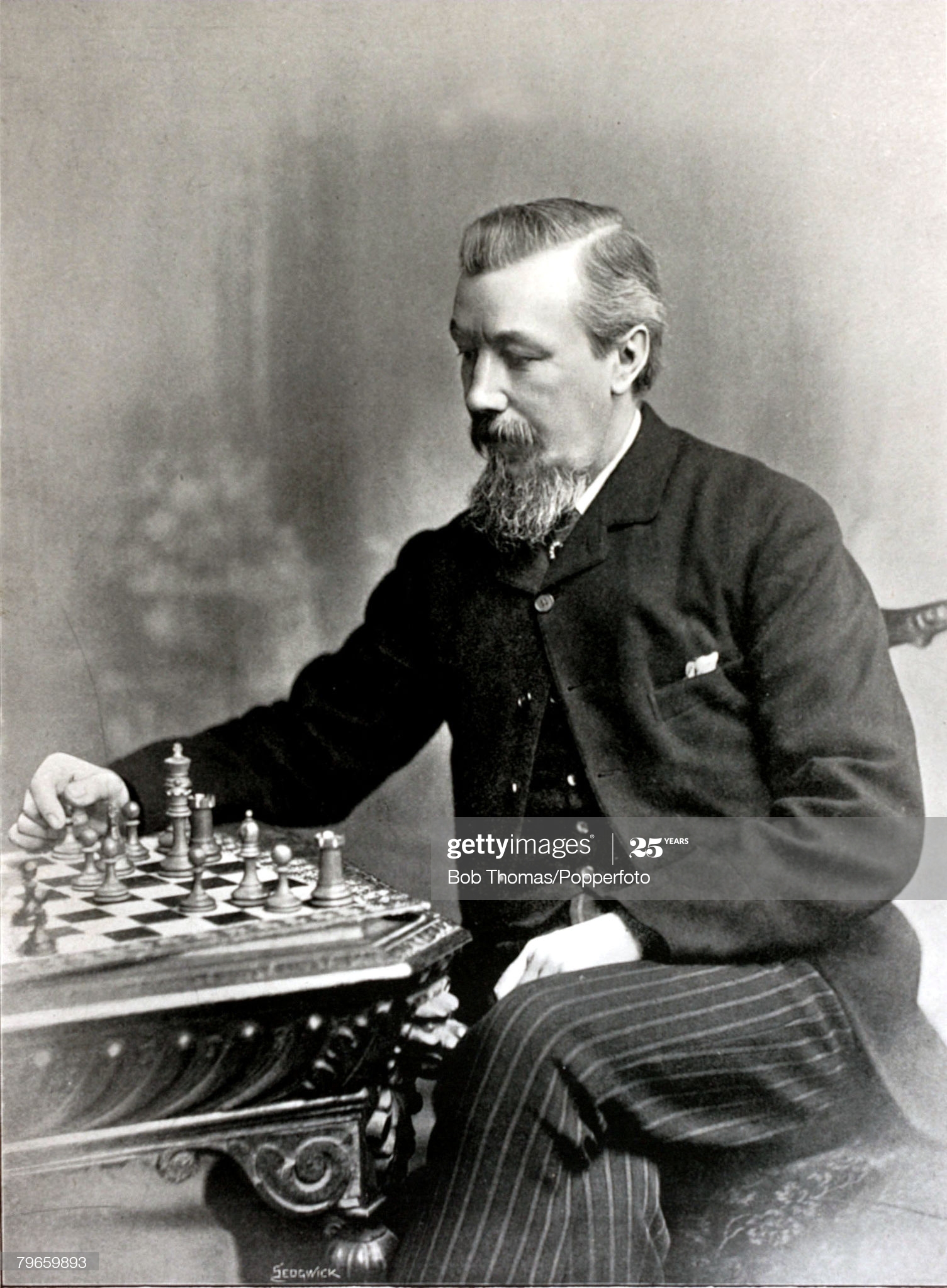
Chess, circa 1896, JH Blackburne, well known chess player, who had toured both on the Continent and America,able to make between 40 to 60 moves when blindfolded by sheer memory (Photo by Bob Thomas/Popperfoto via Getty Images/Getty Images)
Chess, circa 1896, JH Blackburne, well known chess player, who had toured both on the Continent and America, able to make between 40 to 60 moves when blindfolded by sheer memory (Photo by Bob Thomas/Popperfoto via Getty Images/Getty Images)

Before this time such displays were solemn affairs; Lowenthal, who would appear in formal dress and play for several hours in silence, was shocked when Blackburne turned up in ordinary clothes, chatting and making jokes as he played, and refreshing him self with whisky, (Blackburne confessed, however, that when fully absorbed in a game he never noticed whether he was drinking water instead,) Once, walking round the boards, he drained his opponent’s glass, saying when rebuked He left it en prise and I took it en passant

The illustrator Julius Hess depicted Blackburne in a New Yorker Staats Zeitung evening edition as sitting at a chesstable and beckoning: “Waitah! A whiskey and limejuice!”

He played his blindfold displays quickly, and with little sign of the stress that besets most blindfold players. Probably the leading blindfold expert of his time, he challenged Zukertort, a close rival in this field, to a match of ten games, played simultaneously, both players blindfold; but Zukertort declined. Many who knew and liked Blackburne subscribed to a fund which sustained him in his last years.
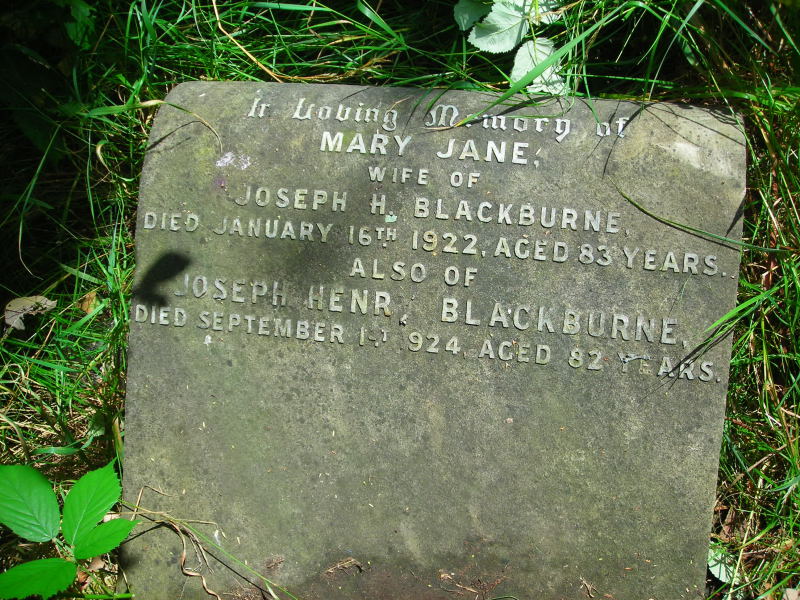
Image Supplied by a reader of the book 'Eminent Victorian Chess Players' to Tim Harding
Image Supplied by a reader of the book ‘Eminent Victorian Chess Players’ to Tim Harding

P. A. Graham, Mr Blackburne’s Games at Chess (1899) contains 407 games annotated by Blackburne and 28 three-movers composed by him.
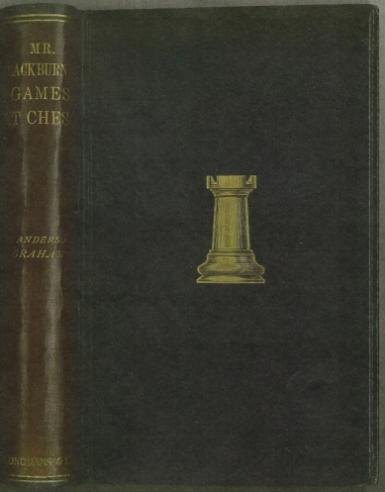
Mr Blackburne's Games at Chess by PA Graham
Mr Blackburne’s Games at Chess by PA Graham

A reprint, styled Blackburne*s Chess Games (1979), has a new introduction and two more games.

One of Blackburne’s contributions was the suggestion of using chess clocks rather than the archaic hourglasses.

Here follows a reproduction of an article from British Chess Magazine, Volume LXXX1 (1961), Number 12 (December), page 340-342 written by RN Coles entitled “Early Days of a Great Master” :

“The only record of how J. H. Blackburne first, entered the chess world is the one provided by P. Anderson Graham in the introduction to his collection of Blackburne’s games. This has all the ingredients of a romanticized version of the truth-the first casual games in a temperance hotel, then entry to the important Manchester Club and a series of victories over ever stronger opponents until at last Pindar, Champion of the Provinces, comes along, plays the unknown youth and is defeated.

Reference to C. H. Stanley’s column in the Weekly Guardian and Express helps to supply a more accurate version. Young Blackburne’s earliest interest was in problems and he submitted one to the Guardian and Express which appeared in January, 1861, only to be found by several solvers to be cooked, Then silence till May 11th, when the column carries a note:

J. H. B. Problems received with much pleasure…Shall be glad to see you at the Club.”

Here are a couple of published problems. For a complete listing see below.

Manchester Express, 1861

#4. 6+4

The Field, 1893

#3, 7+6


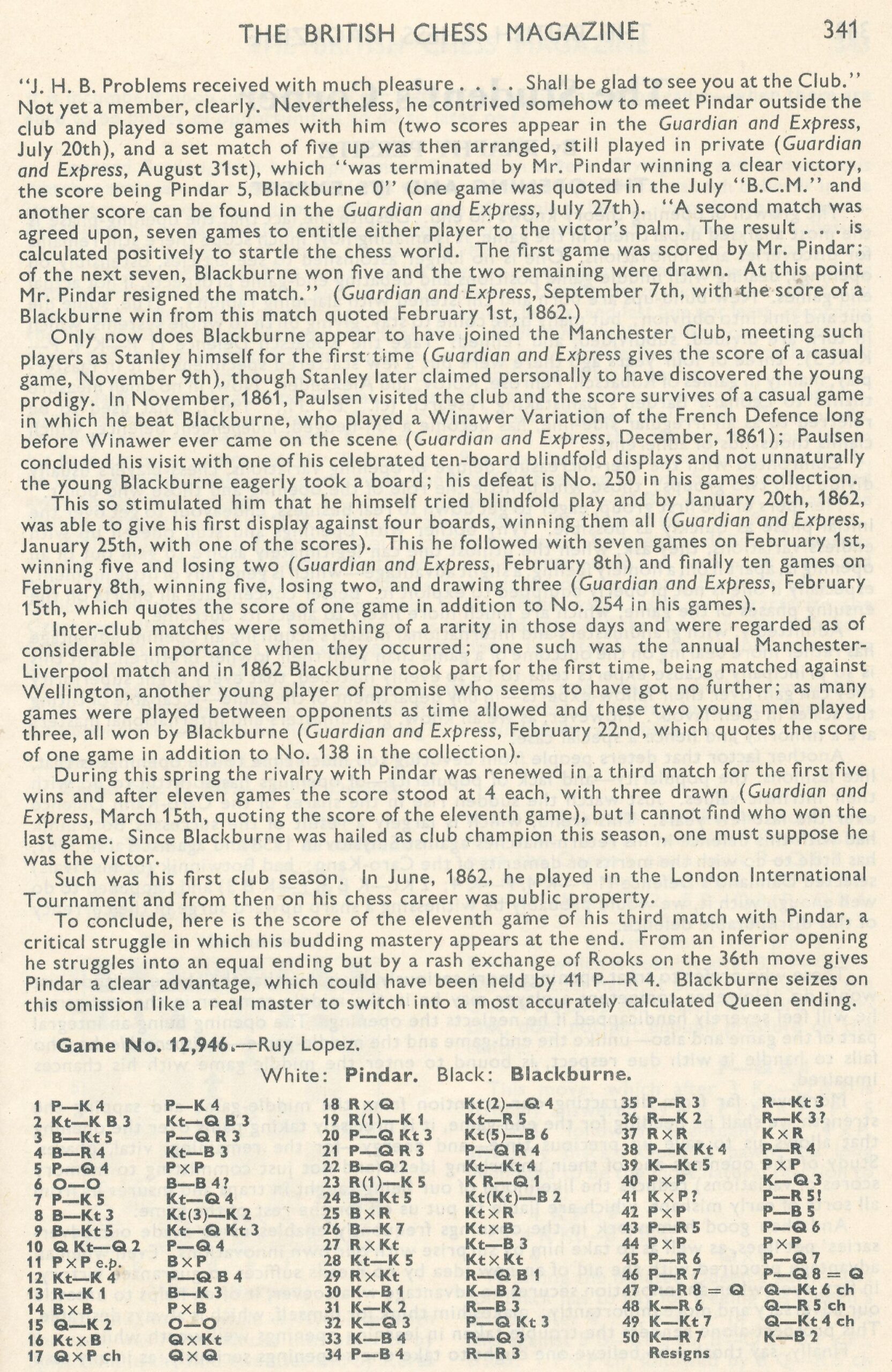
Not yet a member, clearly. Nevertheless, he contrived somehow to meet Pindar outside the club and played some games-with him (two scores appear in the Guardian and Express, July 20th), and a set-match of five up was then arranged, still played in private (Guardian and Express, August 3lst), which “was terminated by Mr. Pindar winning a clear victory, the score being Pindar 5, Blackburne 0” (one game was quoted in the July “B.C.M.” and another score can be found in the Guardian and Express, July 27th.

“A second match was agreed upon, level games to entitle either player to the victor’s palm. The result … is calculated positively, to startle the chess world. The first game was scored by Mr. Pindar; of the next seven, Blackburne won five and the two remaining were drawn. ‘At this point Mr. Pindar resigned the match.” (Guardian and Express, September 7th, with the score of a Blackburne win from this match quoted February 1st, 1962.)

Only now does Blackburne appear to have joined the Manchester Club, meeting such players as Stanley himself for the first time (Guardian and Express gives the score of a casual game, November 9th), though Stanley later claimed personally to have discovered the young prodigy.

In November, 1861, Paulsen visited the club and the score survives of a casual game in which he beat Blackburne, who played a Winawer Variation of the French Defence long before Winawer ever came on the-scene (Guardian and Express, December,1861); Paulsen concluded his visit with one of his celebrated ten-board blindfold displays and not unnaturally the young Blackburne eagerly took a board; his defeat is No.25O in his games collection. This so stimulated him that he himself tried blindfold play and by January 20th, 1862, was able to give his first display against four boards, winning them all (Guardian and Express, January 25th, with one of the scores). This he followed with seven games on February 8th,
winning five and losing two. (Guardian and Express, February 8th) and finally ten games on February 8th, winning five, losing two, and drawing three (Guardian and Express,February 15th, which quotes the score of one game in addition to No. 254 in his games).

Inter-club matches were something of a rarity in those days and were regarded as of considerable importance when they occurred; one such was the annual Manchester-Liverpool match and in 1862 Blackburne took part for the first time, being matched against Wellington, another young player of promise who seems to have got no further; as many games were played between opponents as time allowed and these two young men played three, all won by Blackburne. (Guardian and Express, February 22nd, which quotes the score of one game in addition to No. 138 in the collection).

During this spring the rivalry with Pindar was renewed in a third match for the first five wins and after eleven games the score stood at 4 each, with three drawn (Guardian and Express, March 15th, quoting the score of the eleventh game), but I cannot find who won the last game. Since Blackburne was hailed as club champion this season, one must suppose he was the victor.

Such was his first club season. ln June, 1862, he played in the London lnternational Tournament and from then on his chess career was public property.

To conclude, here is the score of the eleventh game of his third match with Pindar, a critical struggle in which his budding mastery appears at the-end. From an inferior opening he struggles into an equal ending but by a rash exchange of Rooks on the 36th move gives Pindar a clear advantage, which could have been held by 41. P-R4. Blackburne seizes on this omission like a real master to switch into a most accurately calculated queen ending.

and here is the original article:
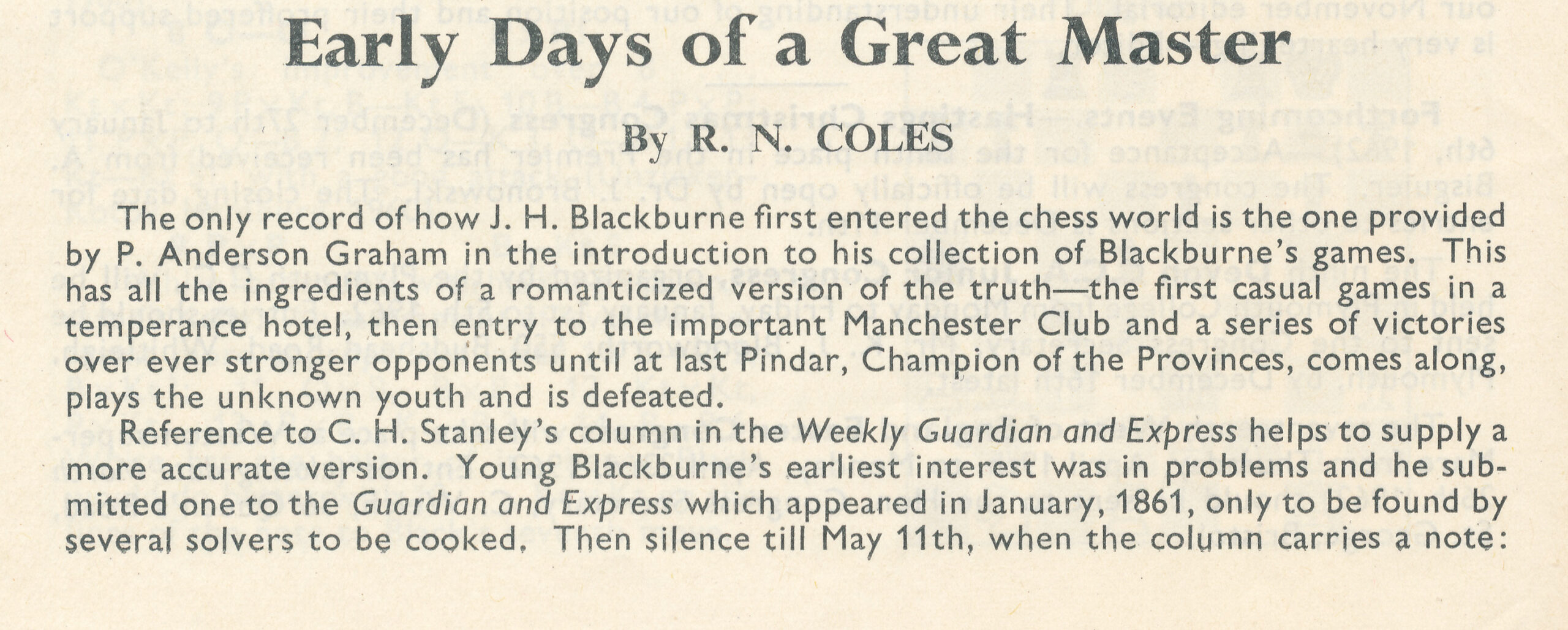
British Chess Magazine, Volume LXXX1 (1961), Number 12 (December), page 340
British Chess Magazine, Volume LXXX1 (1961), Number 12 (December), page 341

Many juniors and beginners will know the Blackburne Shilling Gambit (or Kostić Gambit) in some circles known (named by Julian Hodgson) as the ‘Oh My God’:

There are variations named after Blackburne as follows :

The Blackburne Attack in the Four Knights is

and the Blackburne Variation of the Dutch defence is

and a popular line in the Queen’s Gambit

are attributed to Blackburne in the literature.

According to The Encyclopedia of Chess (Batsford, 1977) by Harry Golombek :

“British grandmaster and highly successful tournament player who was one of the most prominent masters of the nineteenth century. He did not learn to play chess until the age of nineteen, but his natural gifts soon brought him into the front rank of British players, and in 1868 he abandoned his business interests and adopted chess as a profession.

Blackburne’s international tournament career spans an impressive fifty-two years from London 1862 to St. Petersburg 1914 – a total of 53 events in which he played 814 games, scoring over 62%. Although he rarely won international events, he generally finished in the top half of the table and his fierce competitive spirit coupled with his great combinative ability earned the pleasant nickname of ‘the Black Death’.

Joseph Blackburne (10-xii-1841 01-ix-1924). Photograph from The Encyclopedia of Chess by Harry Golombek

His most notable successes were =1st with Steinitz at Vienna 1873 (Blackburne lost the play-off match), 1st at Berlin 1881 ahead of Paulsen, Schallopp, Chigorin, Winawer and Zukertort, and 2nd to Tarrasch at Manchester 1890.

Blackburne won the BCA Championship in 1868 and for many years was ranked as Britain’s foremost player. In 1914 – at the age of 72 – he shared first place at the BCF congress in Chester.

In match play his success was mixed. He defeated Bird in 1888 (+4-1) and Gunsberg in 1881 (+7-4=3) but lost a second match to Gunsberg in 1886 (+2-5=6). He lost to Lasker (+0-6=4) in 1892 and was defeated heavily twice by Steinitz : in 1862/3 (+1-7=2) and in 1876 (+0-7=0), the latter of these matches being for the World Championship.

Blackburne excelled at blindfold play and in simultaneous exhibitions, which provided a major portion of his income. He died in Lewisham, a much respected veteran of eighty-three.”

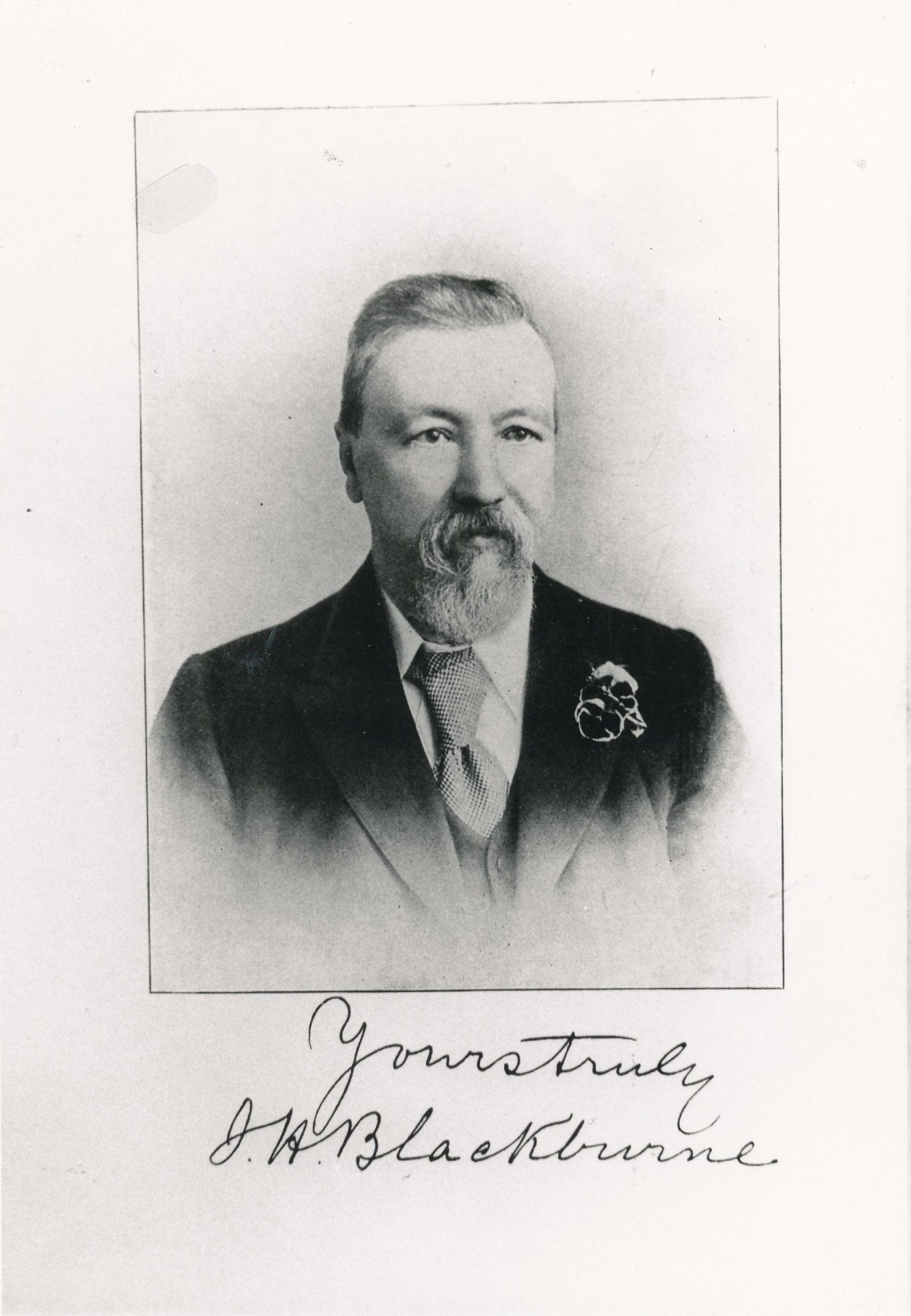
Joseph Henry Blackburne (10-xii-1841 01-ix-1924)

Edward Winter discusses the Zukertort-Blackburne game of 1883.

Here is an article on chess.com by Bill Wall

Problems of the Black Death by Batgirl

Meson Database of JHBs problems

Here is his Wikipedia entry

Eminent Victorian Chess Players, Tim Harding, McFarland & Co; 1st edition (20 April 2012), ISBN-13 ‏ : ‎ 978-0786465682
Joseph Henry Blackburne: A Chess Biography, Tim Harding, McFarland & Co; Annotated edition (30 July 2015), ISBN-13 ‏ : ‎ 978-0786474738
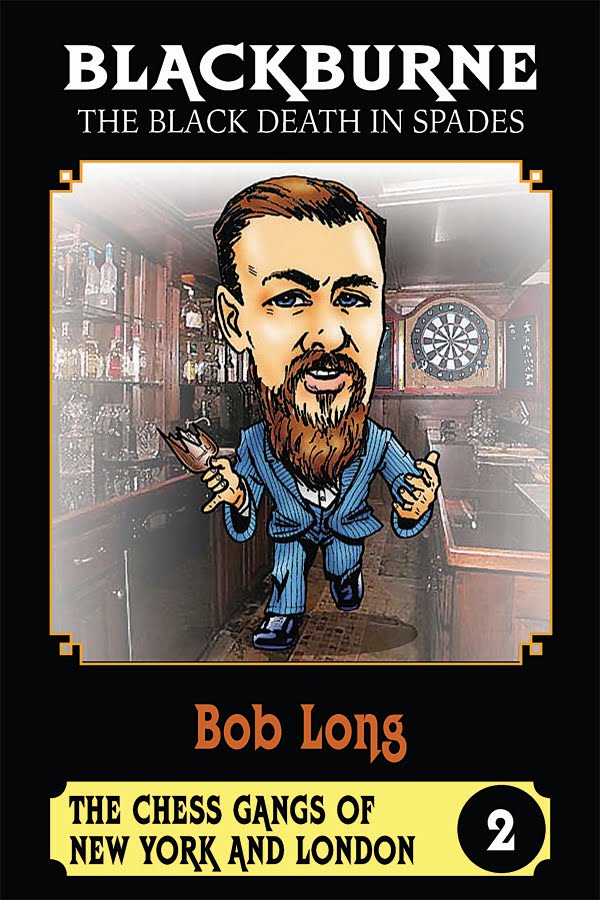
Blackburne : The Black Death in Spades by Bob Long

Death Anniversary of Joseph Blackburne (10-xii-1841 01-ix-1924)

BCN remembers Joseph Blackburne (10-xii-1841 01-ix-1924)

The following (excerpts of) information were obtained via ancestry.co.uk / findmypast.co.uk:

Joseph Henry Blackburne was born on Friday, December 10th, 1841 in Chorlton, Manchester. His father was Joseph Blackburn (aged 23, a temperance reformer) and his mother was Ann Pritchard (aged 24). He had eight sons and five daughters.

His brother Frederick Pritchard Blackburn died on 11 October 1847 in Lancashire, Lancashire, when Joseph Henry was 5 years old.

His sister Clara was born on 4 November 1847 in Street, Lancashire, when Joseph Henry was 5 years old.

His half-sister Clara was born in 1848 in Manchester, Lancashire, when Joseph Henry was 7 years old.

His mother Ann passed away on 26 November 1857 in Manchester, Lancashire, at the age of 40.

His half-brother William Thomas was born on 17 June 1865 when Joseph Henry was 23 years old.

Joseph Henry Blackburne married Eleanor Driscoll on 10 December 1865 when he was 24 years old.

Joseph Henry Blackburne married Beatrice Lapham on 3 October 1876 when he was 34 years old.

His wife Beatrice passed away in January 1880 in St Olave Southwark, London, at the age of 26. They had been married 3 years.

Joseph Henry Blackburne married Mary Jane Fox in St Olave Southwark, London, on 16 December 1880 when he was 39 years old.

Joseph Henry Blackburne lived in Everton, Lancashire, in 1891.

According to Edward Winter in Chess Notes JHB lived at the following addresses :

  • 16 Lucey Road, London SE, England (The Chess Amateur, October 1924, page 32 (address in 1879) and the 1881 British census (C.N. 4756)*).
  • 116 Barkworth Road, Camberwell, London, England (1891 British census (C.N. 4756)*).
  • 7 Whitbread Road, Lewisham, London, England (1901 British census (C.N. 4756)*).
  • 45 Sandrock Road, Lewisham, London SE, England (Ranneforths Schach-Kalender, 1915, page 56, and Hastings Chess Club address list, 1922*).

According to chessgames.com :

“Joseph Henry Blackburne was born in Chorlton, Manchester. He came to be known as “The Black Death”. He enjoyed a great deal of success giving blindfold and simultaneous exhibitions. Tournament highlights include first place with Wilhelm Steinitz at Vienna 1873, first at London 1876, and first at Berlin 1881 ahead of Johannes Zukertort. In matchplay he lost twice to Steinitz and once to Emanuel Lasker. He fared a little better with Zukertort (Blackburne – Zukertort (1881)) and Isidor Gunsberg, by splitting a pair of matches, and defeating Francis Joseph Lee, ( Blackburne – Lee (1890) ). One of the last successes of his career was at the age of 72, when he tied for first place with Fred Dewhirst Yates at the 1914 British Championship.

Joseph Blackburne (10-xii-1841 01-ix-1924)

In his later years, a subscription by British chess players provided an annuity of £100 (approximately  £4,000 in 2015 value), and a gift of £250 on his 80th birthday.”

In 1923 he suffered a stroke, and the next year he died of a heart attack.”

Joseph Henry Blackburne (10-xii-1841 01-ix-1924)

From The Oxford Companion to Chess (OUP, 1984) by Hooper and Whyld :

“For more than 20 years one of the first six players in the world and for even longer the leading English born player. Draughts was the most popular indoor game in his home town, Manchester; he learned this game as a child and became expert in his youth.

He was about 18 when, inspired by Morphy’s exploits, he learned the moves of chess. In July 1861 he lost all live games of a match against the Manchester chess club champion Edward Pindar, but he improved so rapidly that he defeated Pindar three months later (-1-5=2—1), and in 1862 he became champion of the club ahead of Pindar and Horwitz.

Instructed by Horwitz, Blackburne became one of the leading endgame players of his time; and wishing to emulate the feats of L. Paulsen, who visited the club in November 1861, he developed exceptional skill at blindfold chess. He spent most of the 1860s developing his chess and toying with various occupations.

After winning the British championship, 1868-9, ahead of de vere, he became a full-time professional player.

Blackburne achieved excellent results in many tournaments: Baden-Baden 1870, third equal with Neumann after Anderssen and Steinitz; London 1872, second (+5-2) after Steinitz ahead of Zukertort; Vienna 1873, second to Steinitz after a play-off; Paris 1878, third after Winawer and Zukertort: Wiesbaden 1880, first equal with Englisch and Schwarz; Berlin 1881, first (+13=2 — 1), three points ahead of Zukertort, the second prize winner (Blackburne’s greatest achievement); London 1883, third after Zukertort and Steinitz; Hamburg 1885, second equal with Englisch, Mason, Tarrasch, and Weiss half a point after Gunsberg; Frankfurt 1887, second equal with Weiss after Mackenzie; Manchester 1890, second after Tarrasch; Belfast 1892, first equal with Mason; London 1892, second ( + 6-2) after Lasker; London 1893, first ( + 2=3).

He was in the British team in 11 of the Anglo-American cable matches, meeting Pillsbury on first board six times (+2-3 — 1), and he continued to play internationally until he was 72, long enough to meet the pioneer of the hypermodern movement Nimzowitsch, whom he defeated at St Petersburg 1914.

Blackburne had remarkable combinative powers and is remembered for his swingeing king’s side attacks, often well prepared but occasionally consisting of an ingenious swindle that would deceive even the greatest all his contemporaries. The tournament book of Vienna 1873 refers to him as ‘der schrwarze Tod [Black death] der Schachspieler’, a nickname that became popular.

His unflappable temperament also earned him the soubriquet “the man with the iron nerves’. Even so, neither his temperament nor his style was suited to set matches, in which he was rarely successful against world-class players. He had other chess talents: a problem composer, he was also a fast solver, allegedly capable of outpacing the great Sam Loyd. Blackburne earned his livelihood by means of simultaneous displays, for this purpose touring Britain twice-yearly, with a few breaks, for more than 50 years.

Chess, circa 1896, JH Blackburne, well known chess player, who had toured both on the Continent and America,able to make between 40 to 60 moves when blindfolded by sheer memory (Photo by Bob Thomas/Popperfoto via Getty Images/Getty Images)
Chess, circa 1896, JH Blackburne, well known chess player, who had toured both on the Continent and America, able to make between 40 to 60 moves when blindfolded by sheer memory (Photo by Bob Thomas/Popperfoto via Getty Images/Getty Images)

Before this time such displays were solemn affairs; Lowenthal, who would appear in formal dress and play for several hours in silence, was shocked when Blackburne turned up in ordinary clothes, chatting and making jokes as he played, and refreshing him self with whisky, (Blackburne confessed, however, that when fully absorbed in a game he never noticed whether he was drinking water instead,) Once, walking round the boards, he drained his opponent’s glass, saying when rebuked He left it en prise and I took it en passant

The illustrator Julius Hess depicted Blackburne in a New Yorker Staats Zeitung evening edition as sitting at a chesstable and beckoning: “Waitah! A whiskey and limejuice!”

He played his blindfold displays quickly, and with little sign of the stress that besets most blindfold players. Probably the leading blindfold expert of his time, he challenged Zukertort, a close rival in this field, to a match of ten games, played simultaneously, both players blindfold; but Zukertort declined. Many who knew and liked Blackburne subscribed to a fund which sustained him in his last years.

Image Supplied by a reader of the book 'Eminent Victorian Chess Players' to Tim Harding
Image Supplied by a reader of the book ‘Eminent Victorian Chess Players’ to Tim Harding

P. A. Graham, Mr Blackburne’s Games at Chess (1899) contains 407 games annotated by Blackburne and 28 three-movers composed by him.

Mr Blackburne's Games at Chess by PA Graham
Mr Blackburne’s Games at Chess by PA Graham

A reprint, styled Blackburne*s Chess Games (1979), has a new introduction and two more games.

One of Blackburne’s contributions was the suggestion of using chess clocks rather than the archaic hourglasses.

Here follows a reproduction of an article from British Chess Magazine, Volume LXXX1 (1961), Number 12 (December), page 340-342 written by RN Coles entitled “Early Days of a Great Master” :

“The only record of how J. H. Blackburne first, entered the chess world is the one provided by P. Anderson Graham in the introduction to his collection of Blackburne’s games. This has all the ingredients of a romanticized version of the truth-the first casual games in a temperance hotel, then entry to the important Manchester Club and a series of victories over ever stronger opponents until at last Pindar, Champion of the Provinces, comes along, plays the unknown youth and is defeated.

Reference to C. H. Stanley’s column in the Weekly Guardian and Express helps to supply a more accurate version. Young Blackburne’s earliest interest was in problems and he submitted one to the Guardian and Express which appeared in January, 1861, only to be found by several solvers to be cooked, Then silence till May 11th, when the column carries a note:

J. H. B. Problems received with much pleasure…Shall be glad to see you at the Club.”

Here are a couple of published problems. For a complete listing see below.

Manchester Express, 1861

#4. 6+4

The Field, 1893

#3, 7+6


Not yet a member, clearly. Nevertheless, he contrived somehow to meet Pindar outside the club and played some games-with him (two scores appear in the Guardian and Express, July 20th), and a set-match of five up was then arranged, still played in private (Guardian and Express, August 3lst), which “was terminated by Mr. Pindar winning a clear victory, the score being Pindar 5, Blackburne 0” (one game was quoted in the July “B.C.M.” and another score can be found in the Guardian and Express, July 27th.

“A second match was agreed upon, level games to entitle either player to the victor’s palm. The result … is calculated positively, to startle the chess world. The first game was scored by Mr. Pindar; of the next seven, Blackburne won five and the two remaining were drawn. ‘At this point Mr. Pindar resigned the match.” (Guardian and Express, September 7th, with the score of a Blackburne win from this match quoted February 1st, 1962.)

Only now does Blackburne appear to have joined the Manchester Club, meeting such players as Stanley himself for the first time (Guardian and Express gives the score of a casual game, November 9th), though Stanley later claimed personally to have discovered the young prodigy.

In November, 1861, Paulsen visited the club and the score survives of a casual game in which he beat Blackburne, who played a Winawer Variation of the French Defence long before Winawer ever came on the-scene (Guardian and Express, December,1861); Paulsen concluded his visit with one of his celebrated ten-board blindfold displays and not unnaturally the young Blackburne eagerly took a board; his defeat is No.25O in his games collection. This so stimulated him that he himself tried blindfold play and by January 20th, 1862, was able to give his first display against four boards, winning them all (Guardian and Express, January 25th, with one of the scores). This he followed with seven games on February 8th,
winning five and losing two. (Guardian and Express, February 8th) and finally ten games on February 8th, winning five, losing two, and drawing three (Guardian and Express,February 15th, which quotes the score of one game in addition to No. 254 in his games).

Inter-club matches were something of a rarity in those days and were regarded as of considerable importance when they occurred; one such was the annual Manchester-Liverpool match and in 1862 Blackburne took part for the first time, being matched against Wellington, another young player of promise who seems to have got no further; as many games were played between opponents as time allowed and these two young men played three, all won by Blackburne. (Guardian and Express, February 22nd, which quotes the score of one game in addition to No. 138 in the collection).

During this spring the rivalry with Pindar was renewed in a third match for the first five wins and after eleven games the score stood at 4 each, with three drawn (Guardian and Express, March 15th, quoting the score of the eleventh game), but I cannot find who won the last game. Since Blackburne was hailed as club champion this season, one must suppose he was the victor.

Such was his first club season. ln June, 1862, he played in the London lnternational Tournament and from then on his chess career was public property.

To conclude, here is the score of the eleventh game of his third match with Pindar, a critical struggle in which his budding mastery appears at the-end. From an inferior opening he struggles into an equal ending but by a rash exchange of Rooks on the 36th move gives Pindar a clear advantage, which could have been held by 41. P-R4. Blackburne seizes on this omission like a real master to switch into a most accurately calculated queen ending.

and here is the original article:
British Chess Magazine, Volume LXXX1 (1961), Number 12 (December), page 340
British Chess Magazine, Volume LXXX1 (1961), Number 12 (December), page 341

Many juniors and beginners will know the Blackburne Shilling Gambit (or Kostić Gambit) in some circles known (named by Julian Hodgson) as the ‘Oh My God’:

There are variations named after Blackburne as follows :

The Blackburne Attack in the Four Knights is

and the Blackburne Variation of the Dutch defence is

and a popular line in the Queen’s Gambit

are attributed to Blackburne in the literature.

According to The Encyclopedia of Chess (Batsford, 1977) by Harry Golombek :

“British grandmaster and highly successful tournament player who was one of the most prominent masters of the nineteenth century. He did not learn to play chess until the age of nineteen, but his natural gifts soon brought him into the front rank of British players, and in 1868 he abandoned his business interests and adopted chess as a profession.

Blackburne’s international tournament career spans an impressive fifty-two years from London 1862 to St. Petersburg 1914 – a total of 53 events in which he played 814 games, scoring over 62%. Although he rarely won international events, he generally finished in the top half of the table and his fierce competitive spirit coupled with his great combinative ability earned the pleasant nickname of ‘the Black Death’.
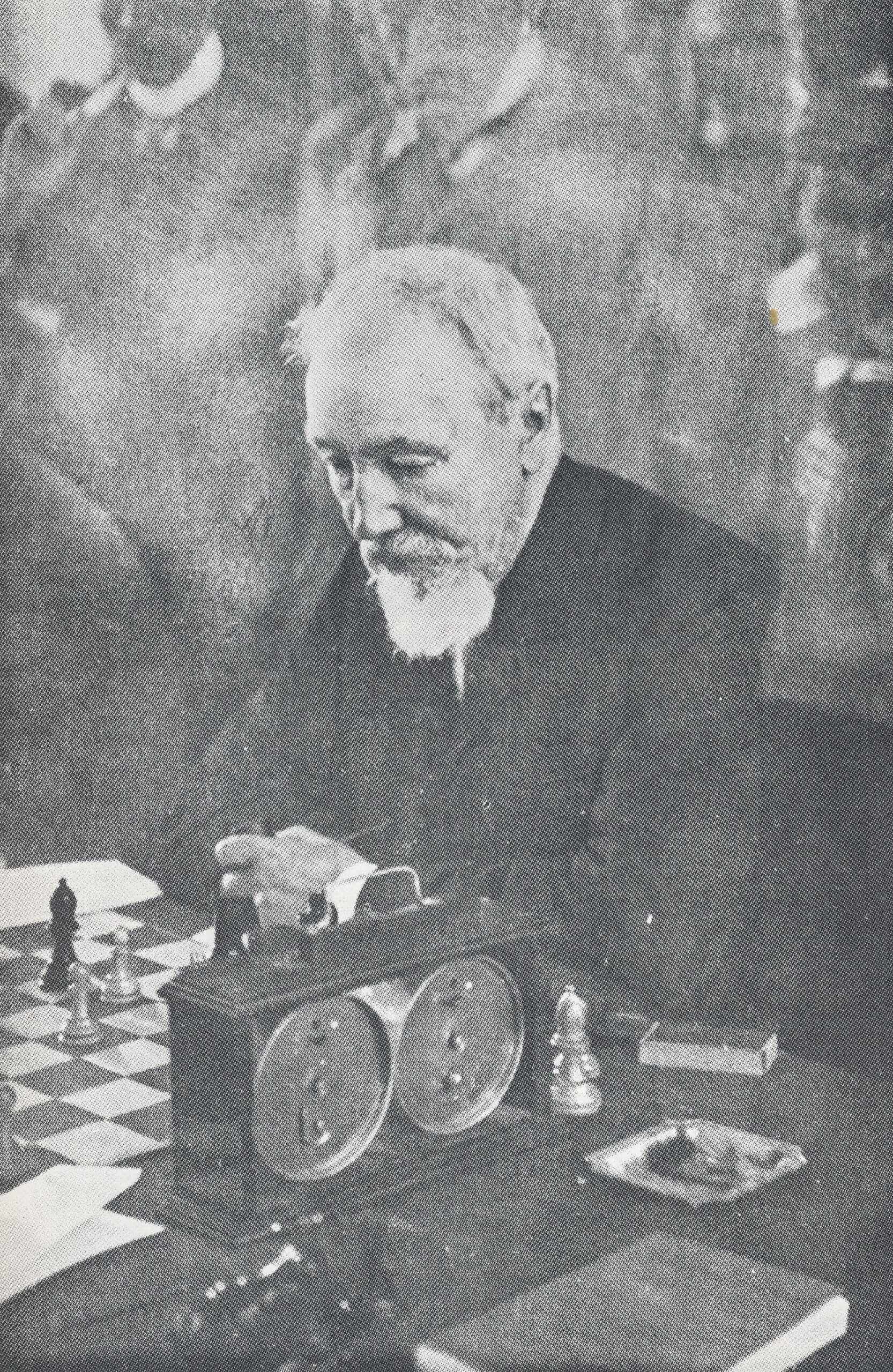
Joseph Blackburne (10-xii-1841 01-ix-1924). Photograph from The Encyclopedia of Chess by Harry Golombek

His most notable successes were =1st with Steinitz at Vienna 1873 (Blackburne lost the play-off match), 1st at Berlin 1881 ahead of Paulsen, Schallopp, Chigorin, Winawer and Zukertort, and 2nd to Tarrasch at Manchester 1890.

Blackburne won the BCA Championship in 1868 and for many years was ranked as Britain’s foremost player. In 1914 – at the age of 72 – he shared first place at the BCF congress in Chester.

In match play his success was mixed. He defeated Bird in 1888 (+4-1) and Gunsberg in 1881 (+7-4=3) but lost a second match to Gunsberg in 1886 (+2-5=6). He lost to Lasker (+0-6=4) in 1892 and was defeated heavily twice by Steinitz : in 1862/3 (+1-7=2) and in 1876 (+0-7=0), the latter of these matches being for the World Championship.

Blackburne excelled at blindfold play and in simultaneous exhibitions, which provided a major portion of his income. He died in Lewisham, a much respected veteran of eighty-three.”
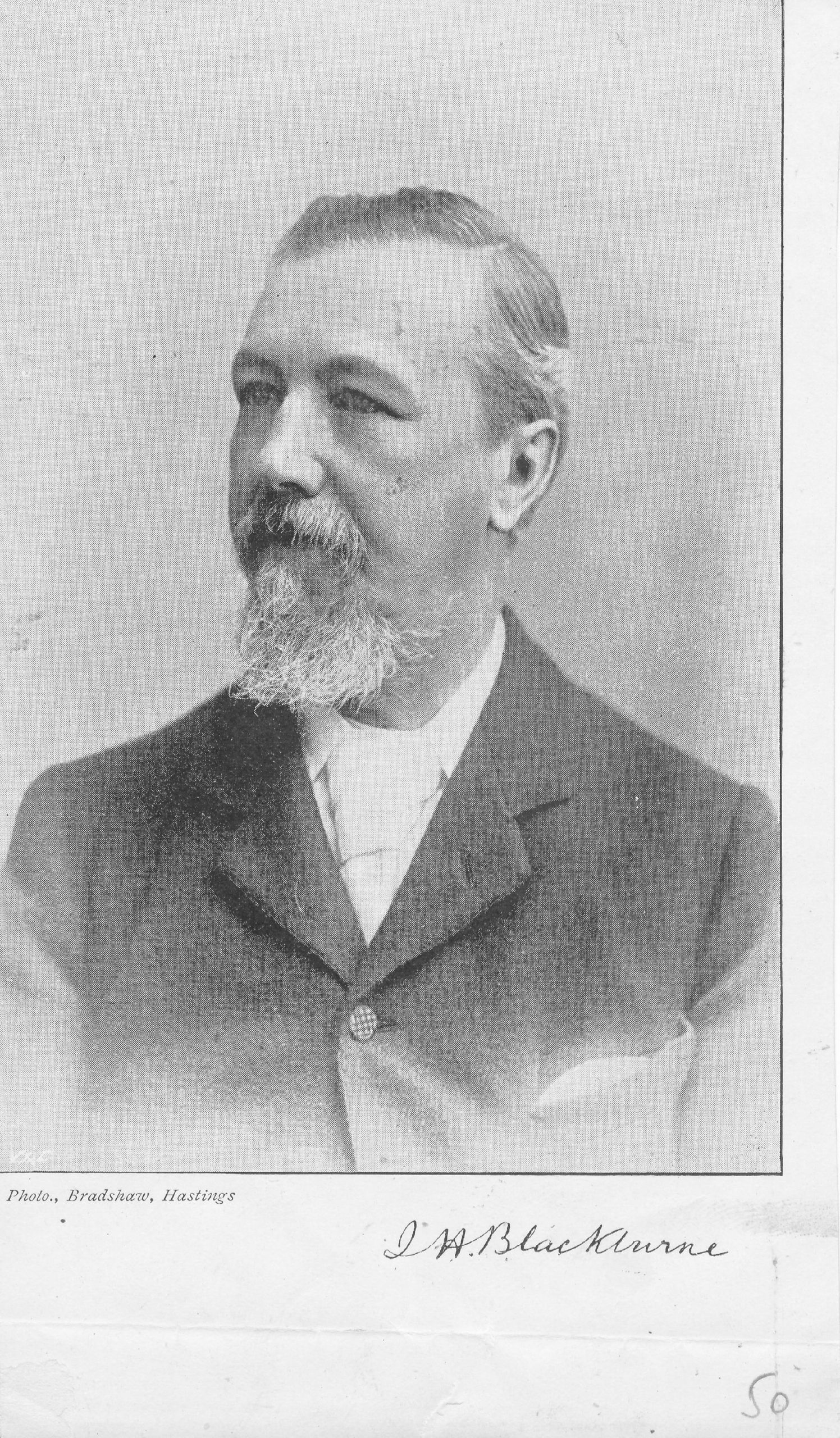
Joseph Henry Blackburne (10-xii-1841 01-ix-1924)

Edward Winter discusses the Zukertort-Blackburne game of 1883.

Here is an article on chess.com by Bill Wall

Problems of the Black Death by Batgirl

Meson Database of JHBs problems

Here is his Wikipedia entry
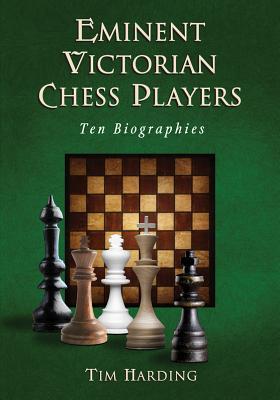
Eminent Victorian Chess Players, Tim Harding, McFarland & Co; 1st edition (20 April 2012), ISBN-13 ‏ : ‎ 978-0786465682
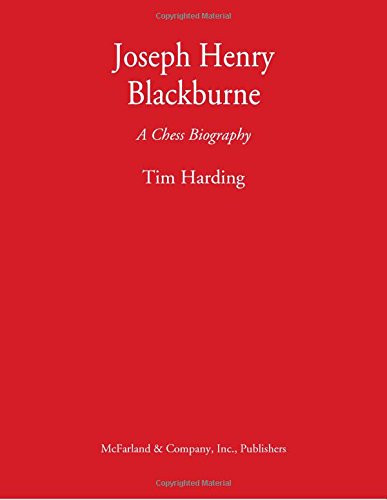
Joseph Henry Blackburne: A Chess Biography, Tim Harding, McFarland & Co; Annotated edition (30 July 2015), ISBN-13 ‏ : ‎ 978-0786474738
Blackburne : The Black Death in Spades by Bob Long

Death Anniversary of Joseph Blackburne (10-xii-1841 01-ix-1924)

BCN remembers Joseph Blackburne (10-xii-1841 01-ix-1924)

The following (excerpts of) information were obtained via ancestry.co.uk / findmypast.co.uk:

Joseph Henry Blackburne was born on Friday, December 10th, 1841 in Chorlton, Manchester. His father was Joseph Blackburn (aged 23, a temperance reformer) and his mother was Ann Pritchard (aged 24). He had eight sons and five daughters.

His brother Frederick Pritchard Blackburn died on 11 October 1847 in Lancashire, Lancashire, when Joseph Henry was 5 years old.

His sister Clara was born on 4 November 1847 in Street, Lancashire, when Joseph Henry was 5 years old.

His half-sister Clara was born in 1848 in Manchester, Lancashire, when Joseph Henry was 7 years old.

His mother Ann passed away on 26 November 1857 in Manchester, Lancashire, at the age of 40.

His half-brother William Thomas was born on 17 June 1865 when Joseph Henry was 23 years old.

Joseph Henry Blackburne married Eleanor Driscoll on 10 December 1865 when he was 24 years old.

Joseph Henry Blackburne married Beatrice Lapham on 3 October 1876 when he was 34 years old.

His wife Beatrice passed away in January 1880 in St Olave Southwark, London, at the age of 26. They had been married 3 years.

Joseph Henry Blackburne married Mary Jane Fox in St Olave Southwark, London, on 16 December 1880 when he was 39 years old.

Joseph Henry Blackburne lived in Everton, Lancashire, in 1891.

According to Edward Winter in Chess Notes JHB lived at the following addresses :

  • 16 Lucey Road, London SE, England (The Chess Amateur, October 1924, page 32 (address in 1879) and the 1881 British census (C.N. 4756)*).
  • 116 Barkworth Road, Camberwell, London, England (1891 British census (C.N. 4756)*).
  • 7 Whitbread Road, Lewisham, London, England (1901 British census (C.N. 4756)*).
  • 45 Sandrock Road, Lewisham, London SE, England (Ranneforths Schach-Kalender, 1915, page 56, and Hastings Chess Club address list, 1922*).

According to chessgames.com :

“Joseph Henry Blackburne was born in Chorlton, Manchester. He came to be known as “The Black Death”. He enjoyed a great deal of success giving blindfold and simultaneous exhibitions. Tournament highlights include first place with Wilhelm Steinitz at Vienna 1873, first at London 1876, and first at Berlin 1881 ahead of Johannes Zukertort. In matchplay he lost twice to Steinitz and once to Emanuel Lasker. He fared a little better with Zukertort (Blackburne – Zukertort (1881)) and Isidor Gunsberg, by splitting a pair of matches, and defeating Francis Joseph Lee, ( Blackburne – Lee (1890) ). One of the last successes of his career was at the age of 72, when he tied for first place with Fred Dewhirst Yates at the 1914 British Championship.

Joseph Blackburne (10-xii-1841 01-ix-1924)

In his later years, a subscription by British chess players provided an annuity of £100 (approximately  £4,000 in 2015 value), and a gift of £250 on his 80th birthday.”

In 1923 he suffered a stroke, and the next year he died of a heart attack.”

Joseph Henry Blackburne (10-xii-1841 01-ix-1924)

From The Oxford Companion to Chess (OUP, 1984) by Hooper and Whyld :

“For more than 20 years one of the first six players in the world and for even longer the leading English born player. Draughts was the most popular indoor game in his home town, Manchester; he learned this game as a child and became expert in his youth.

He was about 18 when, inspired by Morphy’s exploits, he learned the moves of chess. In July 1861 he lost all live games of a match against the Manchester chess club champion Edward Pindar, but he improved so rapidly that he defeated Pindar three months later (-1-5=2—1), and in 1862 he became champion of the club ahead of Pindar and Horwitz.

Instructed by Horwitz, Blackburne became one of the leading endgame players of his time; and wishing to emulate the feats of L. Paulsen, who visited the club in November 1861, he developed exceptional skill at blindfold chess. He spent most of the 1860s developing his chess and toying with various occupations.

After winning the British championship, 1868-9, ahead of de vere, he became a full-time professional player.

Blackburne achieved excellent results in many tournaments: Baden-Baden 1870, third equal with Neumann after Anderssen and Steinitz; London 1872, second (+5-2) after Steinitz ahead of Zukertort; Vienna 1873, second to Steinitz after a play-off; Paris 1878, third after Winawer and Zukertort: Wiesbaden 1880, first equal with Englisch and Schwarz; Berlin 1881, first (+13=2 — 1), three points ahead of Zukertort, the second prize winner (Blackburne’s greatest achievement); London 1883, third after Zukertort and Steinitz; Hamburg 1885, second equal with Englisch, Mason, Tarrasch, and Weiss half a point after Gunsberg; Frankfurt 1887, second equal with Weiss after Mackenzie; Manchester 1890, second after Tarrasch; Belfast 1892, first equal with Mason; London 1892, second ( + 6-2) after Lasker; London 1893, first ( + 2=3).

He was in the British team in 11 of the Anglo-American cable matches, meeting Pillsbury on first board six times (+2-3 — 1), and he continued to play internationally until he was 72, long enough to meet the pioneer of the hypermodern movement Nimzowitsch, whom he defeated at St Petersburg 1914.

Blackburne had remarkable combinative powers and is remembered for his swingeing king’s side attacks, often well prepared but occasionally consisting of an ingenious swindle that would deceive even the greatest all his contemporaries. The tournament book of Vienna 1873 refers to him as ‘der schrwarze Tod [Black death] der Schachspieler’, a nickname that became popular.

His unflappable temperament also earned him the soubriquet “the man with the iron nerves’. Even so, neither his temperament nor his style was suited to set matches, in which he was rarely successful against world-class players. He had other chess talents: a problem composer, he was also a fast solver, allegedly capable of outpacing the great Sam Loyd. Blackburne earned his livelihood by means of simultaneous displays, for this purpose touring Britain twice-yearly, with a few breaks, for more than 50 years.

Chess, circa 1896, JH Blackburne, well known chess player, who had toured both on the Continent and America,able to make between 40 to 60 moves when blindfolded by sheer memory (Photo by Bob Thomas/Popperfoto via Getty Images/Getty Images)
Chess, circa 1896, JH Blackburne, well known chess player, who had toured both on the Continent and America, able to make between 40 to 60 moves when blindfolded by sheer memory (Photo by Bob Thomas/Popperfoto via Getty Images/Getty Images)

Before this time such displays were solemn affairs; Lowenthal, who would appear in formal dress and play for several hours in silence, was shocked when Blackburne turned up in ordinary clothes, chatting and making jokes as he played, and refreshing him self with whisky, (Blackburne confessed, however, that when fully absorbed in a game he never noticed whether he was drinking water instead,) Once, walking round the boards, he drained his opponent’s glass, saying when rebuked He left it en prise and I took it en passant

The illustrator Julius Hess depicted Blackburne in a New Yorker Staats Zeitung evening edition as sitting at a chesstable and beckoning: “Waitah! A whiskey and limejuice!”

He played his blindfold displays quickly, and with little sign of the stress that besets most blindfold players. Probably the leading blindfold expert of his time, he challenged Zukertort, a close rival in this field, to a match of ten games, played simultaneously, both players blindfold; but Zukertort declined. Many who knew and liked Blackburne subscribed to a fund which sustained him in his last years.

Image Supplied by a reader of the book 'Eminent Victorian Chess Players' to Tim Harding
Image Supplied by a reader of the book ‘Eminent Victorian Chess Players’ to Tim Harding

P. A. Graham, Mr Blackburne’s Games at Chess (1899) contains 407 games annotated by Blackburne and 28 three-movers composed by him.

Mr Blackburne's Games at Chess by PA Graham
Mr Blackburne’s Games at Chess by PA Graham

A reprint, styled Blackburne*s Chess Games (1979), has a new introduction and two more games.

One of Blackburne’s contributions was the suggestion of using chess clocks rather than the archaic hourglasses.

Here follows a reproduction of an article from British Chess Magazine, Volume LXXX1 (1961), Number 12 (December), page 340-342 written by RN Coles entitled “Early Days of a Great Master” :

“The only record of how J. H. Blackburne first, entered the chess world is the one provided by P. Anderson Graham in the introduction to his collection of Blackburne’s games. This has all the ingredients of a romanticized version of the truth-the first casual games in a temperance hotel, then entry to the important Manchester Club and a series of victories over ever stronger opponents until at last Pindar, Champion of the Provinces, comes along, plays the unknown youth and is defeated.

Reference to C. H. Stanley’s column in the Weekly Guardian and Express helps to supply a more accurate version. Young Blackburne’s earliest interest was in problems and he submitted one to the Guardian and Express which appeared in January, 1861, only to be found by several solvers to be cooked, Then silence till May 11th, when the column carries a note:

J. H. B. Problems received with much pleasure…Shall be glad to see you at the Club.”

Here are a couple of published problems. For a complete listing see below.

Manchester Express, 1861

#4. 6+4

The Field, 1893

#3, 7+6


Not yet a member, clearly. Nevertheless, he contrived somehow to meet Pindar outside the club and played some games-with him (two scores appear in the Guardian and Express, July 20th), and a set-match of five up was then arranged, still played in private (Guardian and Express, August 3lst), which “was terminated by Mr. Pindar winning a clear victory, the score being Pindar 5, Blackburne 0” (one game was quoted in the July “B.C.M.” and another score can be found in the Guardian and Express, July 27th.

“A second match was agreed upon, level games to entitle either player to the victor’s palm. The result … is calculated positively, to startle the chess world. The first game was scored by Mr. Pindar; of the next seven, Blackburne won five and the two remaining were drawn. ‘At this point Mr. Pindar resigned the match.” (Guardian and Express, September 7th, with the score of a Blackburne win from this match quoted February 1st, 1962.)

Only now does Blackburne appear to have joined the Manchester Club, meeting such players as Stanley himself for the first time (Guardian and Express gives the score of a casual game, November 9th), though Stanley later claimed personally to have discovered the young prodigy.

In November, 1861, Paulsen visited the club and the score survives of a casual game in which he beat Blackburne, who played a Winawer Variation of the French Defence long before Winawer ever came on the-scene (Guardian and Express, December,1861); Paulsen concluded his visit with one of his celebrated ten-board blindfold displays and not unnaturally the young Blackburne eagerly took a board; his defeat is No.25O in his games collection. This so stimulated him that he himself tried blindfold play and by January 20th, 1862, was able to give his first display against four boards, winning them all (Guardian and Express, January 25th, with one of the scores). This he followed with seven games on February 8th,
winning five and losing two. (Guardian and Express, February 8th) and finally ten games on February 8th, winning five, losing two, and drawing three (Guardian and Express,February 15th, which quotes the score of one game in addition to No. 254 in his games).

Inter-club matches were something of a rarity in those days and were regarded as of considerable importance when they occurred; one such was the annual Manchester-Liverpool match and in 1862 Blackburne took part for the first time, being matched against Wellington, another young player of promise who seems to have got no further; as many games were played between opponents as time allowed and these two young men played three, all won by Blackburne. (Guardian and Express, February 22nd, which quotes the score of one game in addition to No. 138 in the collection).

During this spring the rivalry with Pindar was renewed in a third match for the first five wins and after eleven games the score stood at 4 each, with three drawn (Guardian and Express, March 15th, quoting the score of the eleventh game), but I cannot find who won the last game. Since Blackburne was hailed as club champion this season, one must suppose he was the victor.

Such was his first club season. ln June, 1862, he played in the London lnternational Tournament and from then on his chess career was public property.

To conclude, here is the score of the eleventh game of his third match with Pindar, a critical struggle in which his budding mastery appears at the-end. From an inferior opening he struggles into an equal ending but by a rash exchange of Rooks on the 36th move gives Pindar a clear advantage, which could have been held by 41. P-R4. Blackburne seizes on this omission like a real master to switch into a most accurately calculated queen ending.

and here is the original article:

British Chess Magazine, Volume LXXX1 (1961), Number 12 (December), page 340
British Chess Magazine, Volume LXXX1 (1961), Number 12 (December), page 341

Many juniors and beginners will know the Blackburne Shilling Gambit (or Kostić Gambit) in some circles known (named by Julian Hodgson) as the ‘Oh My God’:

There are variations named after Blackburne as follows :

The Blackburne Attack in the Four Knights is

and the Blackburne Variation of the Dutch defence is

and a popular line in the Queen’s Gambit

are attributed to Blackburne in the literature.

According to The Encyclopedia of Chess (Batsford, 1977) by Harry Golombek :

“British grandmaster and highly successful tournament player who was one of the most prominent masters of the nineteenth century. He did not learn to play chess until the age of nineteen, but his natural gifts soon brought him into the front rank of British players, and in 1868 he abandoned his business interests and adopted chess as a profession.

Blackburne’s international tournament career spans an impressive fifty-two years from London 1862 to St. Petersburg 1914 – a total of 53 events in which he played 814 games, scoring over 62%. Although he rarely won international events, he generally finished in the top half of the table and his fierce competitive spirit coupled with his great combinative ability earned the pleasant nickname of ‘the Black Death’.

Joseph Blackburne (10-xii-1841 01-ix-1924). Photograph from The Encyclopedia of Chess by Harry Golombek

His most notable successes were =1st with Steinitz at Vienna 1873 (Blackburne lost the play-off match), 1st at Berlin 1881 ahead of Paulsen, Schallopp, Chigorin, Winawer and Zukertort, and 2nd to Tarrasch at Manchester 1890.

Blackburne won the BCA Championship in 1868 and for many years was ranked as Britain’s foremost player. In 1914 – at the age of 72 – he shared first place at the BCF congress in Chester.

In match play his success was mixed. He defeated Bird in 1888 (+4-1) and Gunsberg in 1881 (+7-4=3) but lost a second match to Gunsberg in 1886 (+2-5=6). He lost to Lasker (+0-6=4) in 1892 and was defeated heavily twice by Steinitz : in 1862/3 (+1-7=2) and in 1876 (+0-7=0), the latter of these matches being for the World Championship.

Blackburne excelled at blindfold play and in simultaneous exhibitions, which provided a major portion of his income. He died in Lewisham, a much respected veteran of eighty-three.”

Joseph Henry Blackburne (10-xii-1841 01-ix-1924)

Edward Winter discusses the Zukertort-Blackburne game of 1883.

Here is an article on chess.com by Bill Wall

Problems of the Black Death by Batgirl

Meson Database of JHBs problems

Here is his Wikipedia entry
Eminent Victorian Chess Players, Tim Harding, McFarland & Co; 1st edition (20 April 2012), ISBN-13 ‏ : ‎ 978-0786465682
Joseph Henry Blackburne: A Chess Biography, Tim Harding, McFarland & Co; Annotated edition (30 July 2015), ISBN-13 ‏ : ‎ 978-0786474738
Blackburne : The Black Death in Spades by Bob Long

Death Anniversary of Gerald Abrahams (15-iv-1907 15-iii-1980)

BCN remembers Gerald Abrahams who passed away in Liverpool on Saturday, March 15th 1980. He was buried in the Allerton Cemetery in the Jewish Springwood plot.

Gerald Abrahams was born in Liverpool on Monday, April 15th 1907.  On this day the Triangle Fraternity was formed at the University of Illinois at Urbana–Champaign.

His parents were Harry (b. 10th September 1880) and Leah (b. 12th March 1884) Abrahams (née Rabinowitz) who married in West Derby in the third quarter of 1903.

Gerald learnt chess at the age of ten during the first world war. He obtained an Open Scholarship to Wadham College, Oxford in 1925 reading PPE and earning himself an MA in Law in 1928. He became a practising barrister at Law.

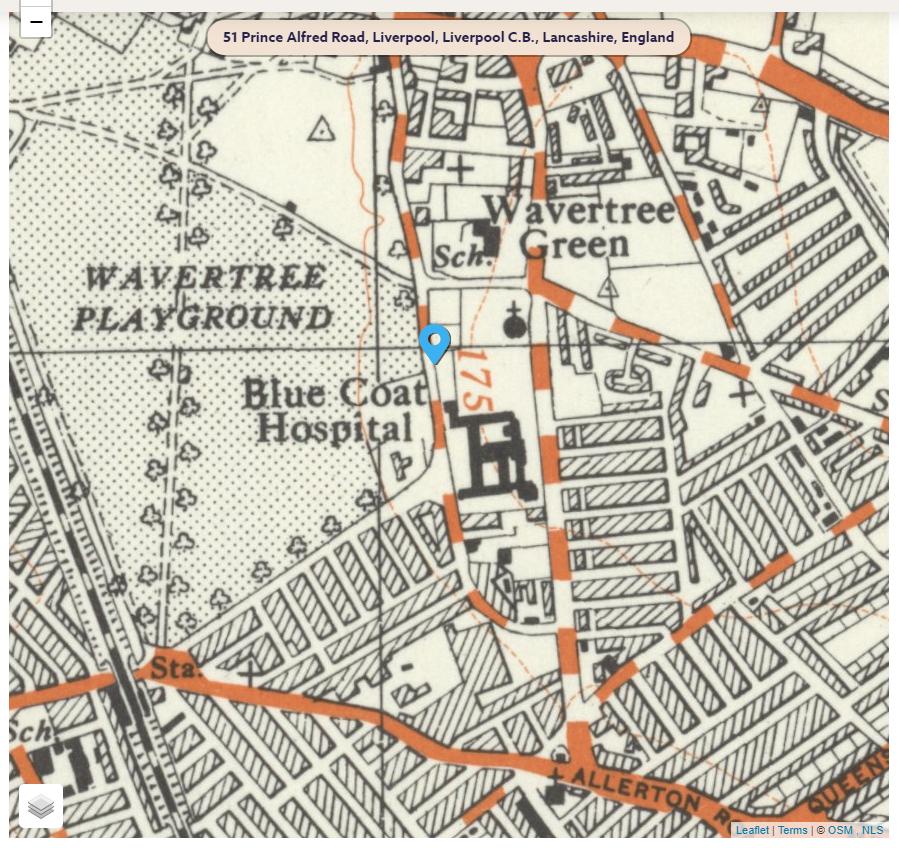
From the 1939 register we learnt that Harry was a Drapery manufacturer and Leah carried out “unpaid domestic duties”. Gerald was not an only child: the first born was Winnie (b. 22nd November 1903) who was a Secretary and Clerk Typist and factory assistant. Elsie Abrahams (b. 14th April 1905) helped her mother with “unpaid domestic duties”. Blanche was Gerald’s older brother and he was “General Assistant In Fathers Business Drapery Manufacturer”. Gerald is listed (aged 32) as a Barrister at Law and author. The family resided at 51 Prince Alfred Road, Liverpool, Lancashire (now L15 6TQ) and their original property has been since replaced.

Historical map showing the 1939 residence of Gerald Abrahams

We learn from “Philanthropy, Consensus, and broiges: managing a Jewish Community A history of the Southport Jewish Community
by John Cowell” of an incident in January 1942 that was to cause ripples in the community. The headline was

POLICE RAID DISTURBS CLUB CARD PLAYERS

The full list of people present seems to have been largely or entirely Jewish in religion or ethnicity: it included a famous chess-playing barrister from Liverpool, Gerald Abrahams, representing himself, who had taken a First in P.P.E. at Oxford, and later married Elsie Krengel, who had also been present, and with Leslie Black representing the rest of the defendants, apart from the hosts and Captain Lionel Husdan, who sent a letter to the court.

The full list of those present, charged with “resorting and playing in a common gaming house,” and bound over was as follows:- Mott Alexander, Fannie Finn, Maxwell Glassman, Kate Lippa, Myer Lister, Gertrude Mannheim, Joseph Mannheim, Rita Mannheim, Simon Mannheim, Harry Peters, Sadie Peters, Lily Leah Ross, Harry Sapiro, Benjamin Stone. Those charged with “resorting in a common gaming house” and bound over, were:- Gerald Abrahams, Joseph Appleton Bach, Samuel Myer Barnett, Herbert Solomon Isaacson, Elsie Krengel, Manuel Mannheim, Louis Michaelson, Abraham Ross, Bernard and Elsie Ross.

“Gerald Abrahams, the barrister charged, said he was interested to protect his reputation from being stigmatised by a conviction, and asked Sergeant Laycock about alcohol: the latter replied that none was being consumed. He submitted that the club was not a gaming house, and that draw poker had not been proved other than as a game of skill. Charges were dismissed against Henry, Eva and Marjorie Black, Myer Waldman, and Captain Lionel Husdan, of Ryde, Isle of Wight, all of whom had said that they were merely taking refreshments in the club, and had not played. David Platt said that he had not the slightest idea that they were breaking the law, and Mrs Platt said that it had not been a paying venture.”

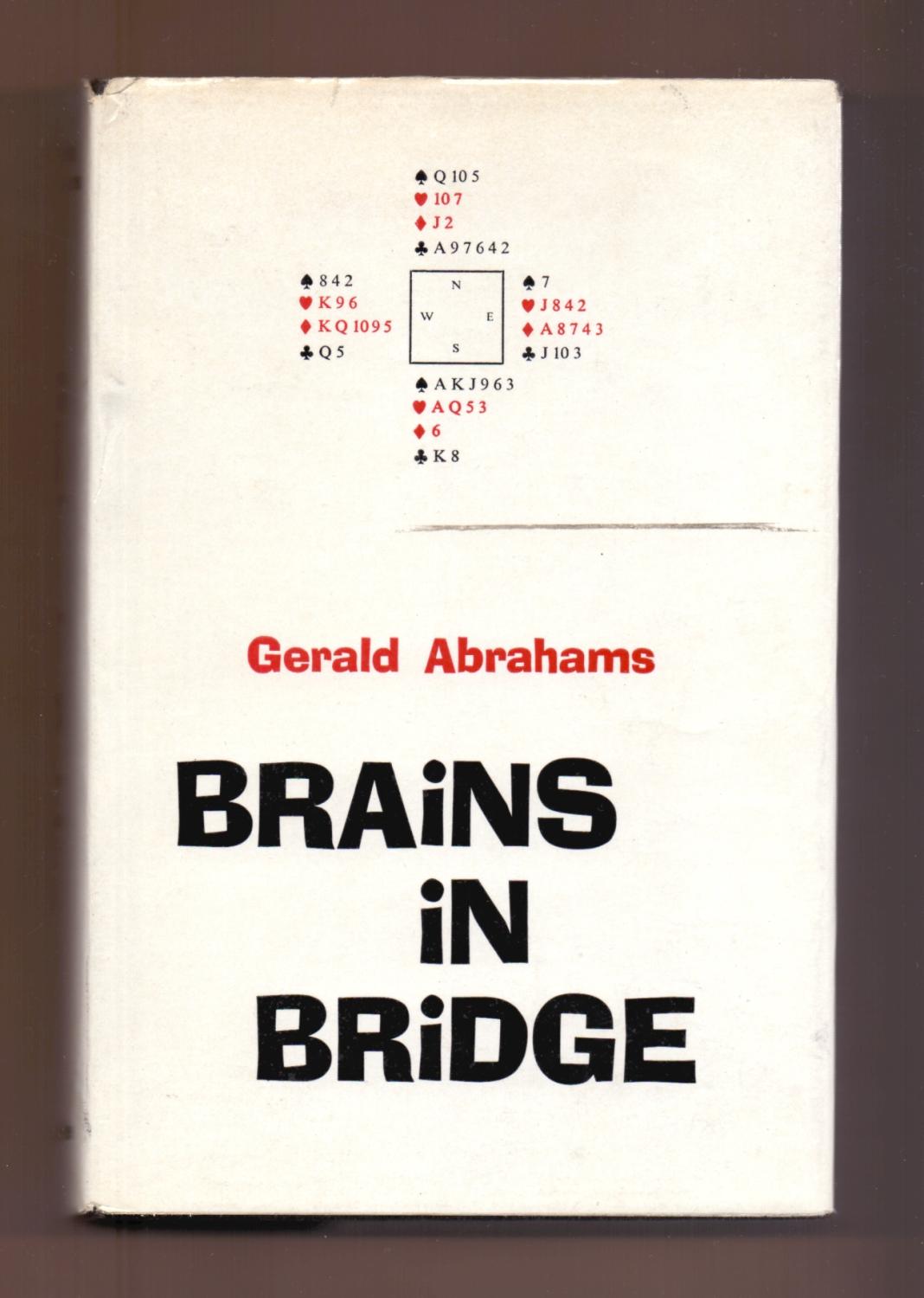
The Complete Chess Addict (Faber& Faber, 1987), Fox & James notes: that Gerald Abrahams as authority on bridge cast doubt on assertions that Emanuel Lasker “was good enough to represent Germany”

Gerald’s comparisons of chess and bridge are discussed by Edward Winter in Chess Facts and Fables (McFarland, 2005) page 130 in GAs 1962 book Brains in Bridge:

Brains in Bridge, Gerald Abrahams, Constable and Company, 1962, ISBN ?

Gerald eventually married Elsie Krengel (born 15th January 1909) in the fourth quarter of 1971 in Liverpool at the age of 64. Elsie had lived in the Southport area for most of her life and her family was associated with the manufacture of handbags.  They had known each other for many years (at least since 1942 as mentioned previously).

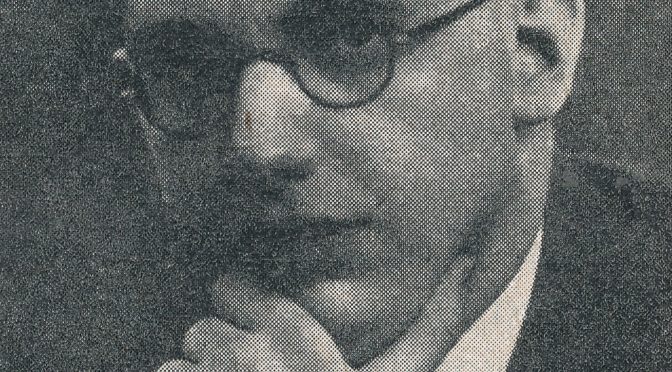
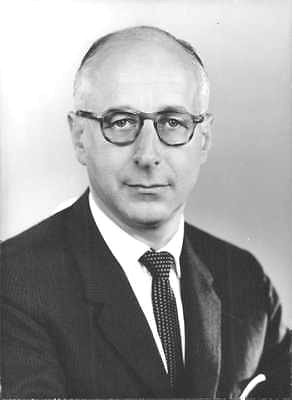
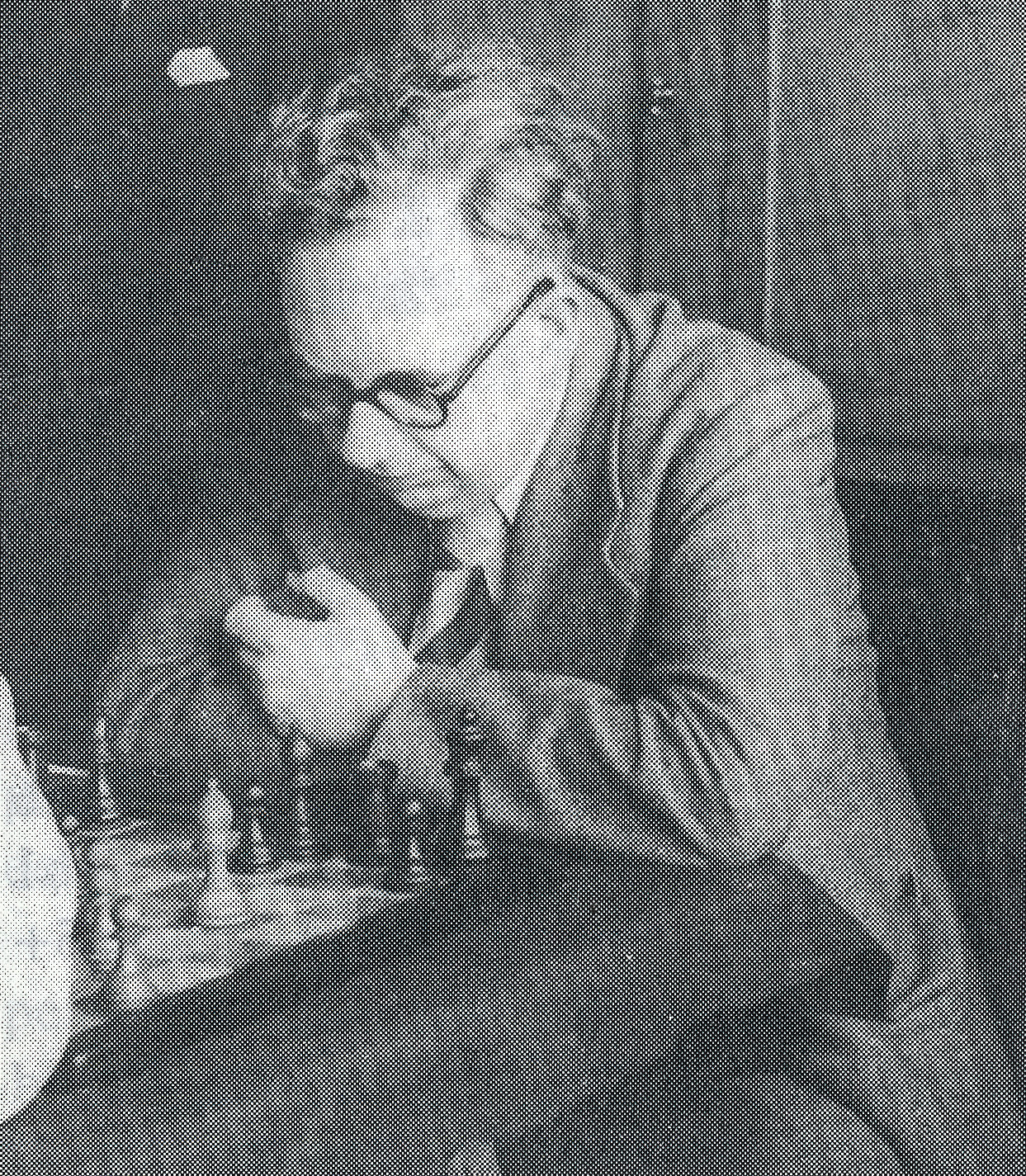
Gerald Abrahams
Gerald Abrahams

Leonard Barden modestly recounts :

“At the end of Nottingham 1954  Gerald claimed that Alan Phillips had accepted his draw offer so tieing Gerald for the British championship with some rabbit whose name escapes me.  When Phillips strongly denied having accepted the draw, Gerald collapsed on the floor and had to be aided by his old enemy Dr. Fazekas.”

From The Anglo-Soviet Radio Chess Match (1946) by Klein and Winter:

“G. Abrahams was born in Liverpool in 1907. He learned chess at the age of ten, and showed an early aptitude for tactical complications. He has played with varying success, his best performances being third and fourth with Rossolimo, behind Klein and Najdorf, but head of List at Margate, 1938, and fourth, fifth and sixth with Sir George A. Thomas and König in London, 1946. He has made two valiant bids for the British Championship.

A graduate of Oxford, he is a barrister by profession and has written several books, including some fiction. He has solidified his chess without allowing it to become dry. Indeed, most of his games sparkle with interesting complications.”

Harry Golombek OBE wrote (in The Encyclopaedia of Chess (Batsford, 1977)):

“Brilliant British amateur who in the 1930s was playing master-chess. In that period he was the most dangerous attacking player in England.

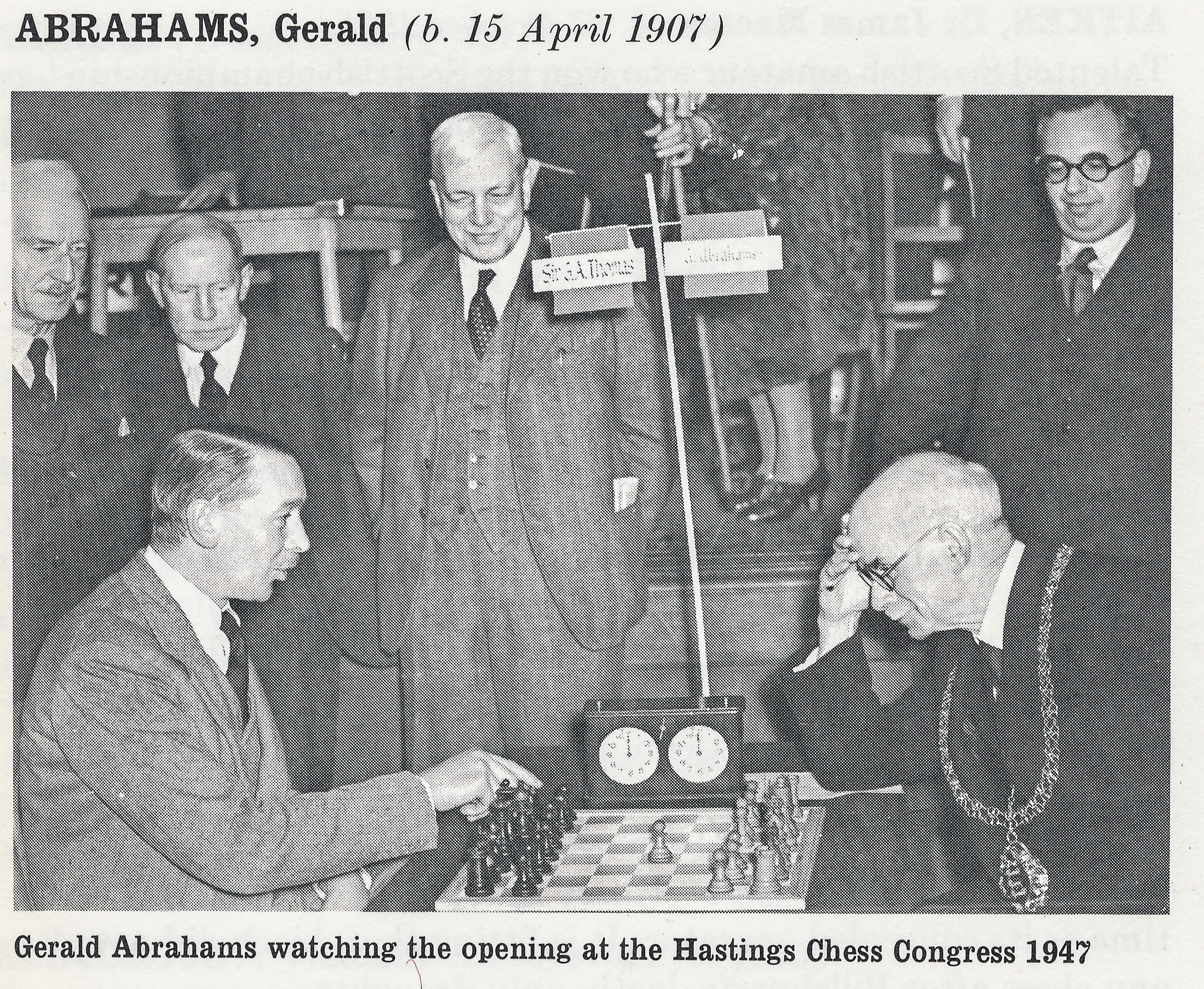
Gerald Abrahams watching the opening at the Hastings Chess Congress 1947. Also watching is Sir George Thomas who was GAs round one opponent. The Mayor was Alderman W. J. Fellows and he is opposite Sir Edmund McNeill Cooper-Key. Second from left is Percy J. Morren who was the Hasting's Club President
Gerald Abrahams watching the opening at the Hastings Chess Congress 1947. Also watching is Sir George Thomas who was GAs round one opponent. The Mayor was Alderman W. J. Fellows and he is opposite Sir Edmund McNeill Cooper-Key. Second from left is Percy J. Morren who was the Hasting’s Club President

He was in the prize-list (i.e. in the first four) in the British championship on three occasions 1933, 1946 and 1954. His best international performance was in the Major Open at Nottingham in 1936 where he came =3rd with Opocensky. Another fine result was his score of 1.5-0.5 against the Soviet Grandmaster Ragozin, in the 1946 Anglo-Soviet radio match.

He is the inventor of the Abrahams variation in the Semi-Slav Defence to the Queen’s Gambit: 1.P-Q4, P-Q4;2.P-QB4, P-QB3;3.N-QB3, P-K3;4.N-B3, PXP;5.P-QR4, B-N4;6.P-K3,P-QN4;7.B-Q2, P-QR4; 8.PxP, BxN;9.BxB,PxP;10.P-QN3,B-N2;

This is sometimes known as the Noteboom variation after the Dutch master who played it in the 1930s, but Abrahams was playing it in 1925 long before Noteboom.

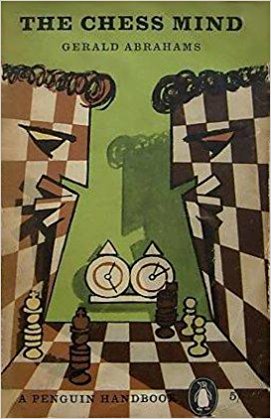
He is a witty and prolific writer on many subjects: on law (he is a barrister by profession), philosophy, and chess; he also writes fiction. His main chess works are: The Chess Mind, London 1951 and 1960

The Chess Mind, Gerald Abrahams, The English Universities Press, 1951, ISBN 0 340 19492 8

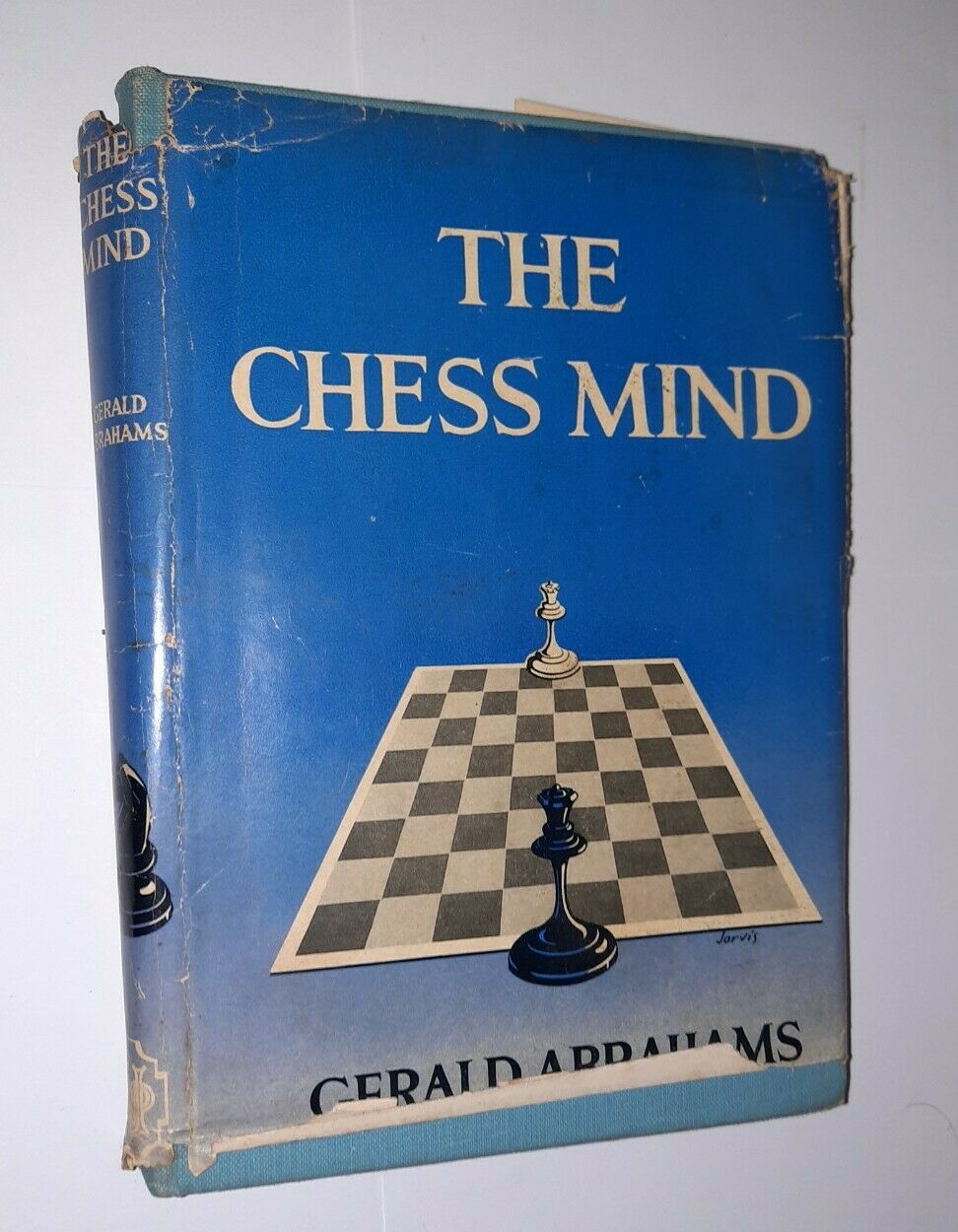
and here is a later cover:

The Chess Mind, Gerald Abrahams, The English Universities Press, 1951, ISBN 0 340 19492 8

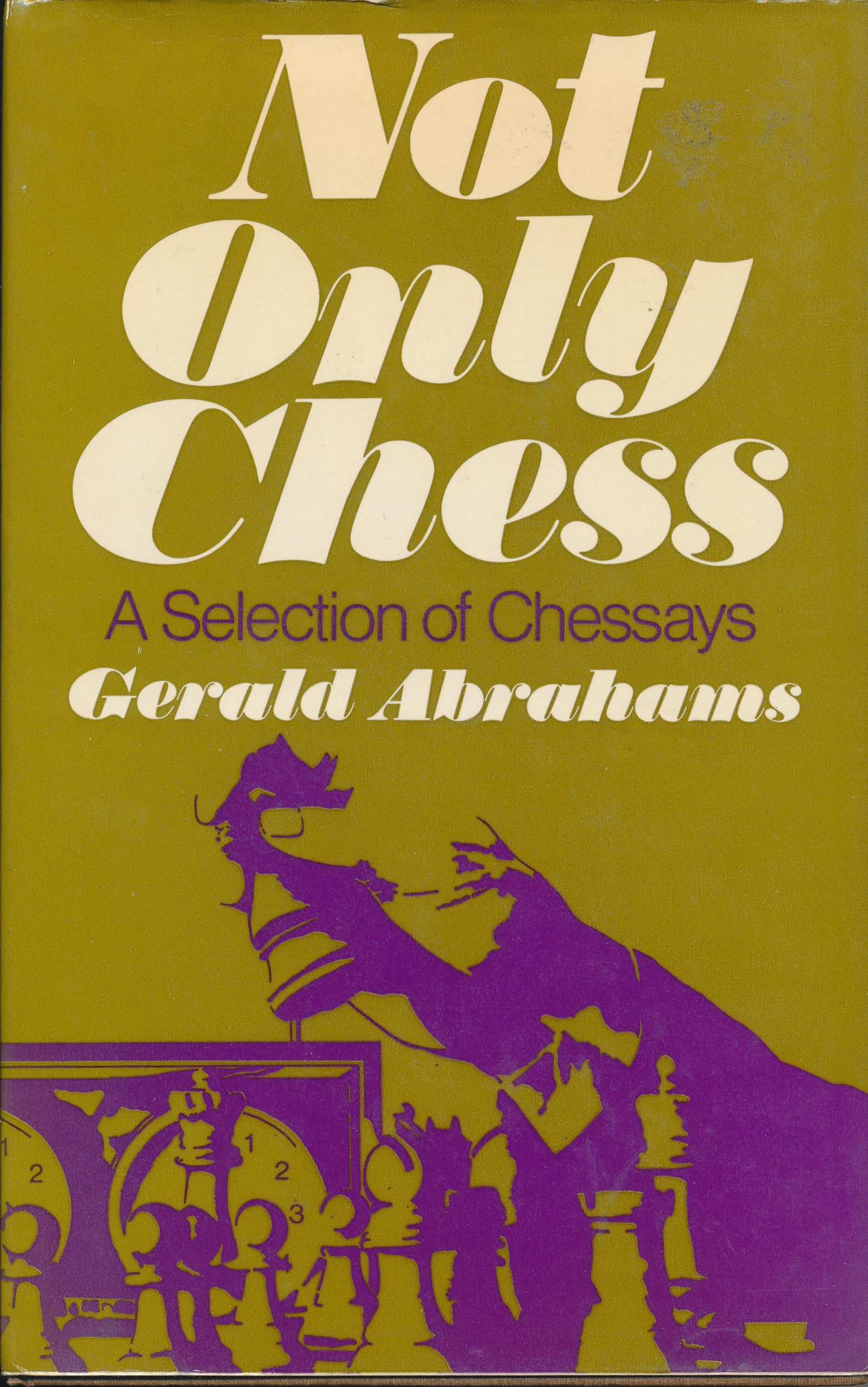
and Not Only Chess, London 1974.

Not Only Chess, Gerald Abrahams, George Allen & Unwin Ltd., 1974, ISBN 0 04 794005 0

Edward Winter in Kings, Commoners and Knaves, cites the subtitle of the above book in his page 235 list of chessy words: “A selection of Chessays”.

From Not Only Chess we learn that GAs favourite game was played in 1930 against Edmund Spencer of Liverpool. “Edmund Spencer was a man who is remembered with affection by all players who ever met him, and who is remarkable in that his strength developed in what should have been hid middle life. When he died, lamentably early, in the 1930s, at about 53 he was at his best, and of recognised master status.

This game was played in 1930.”

and for an alternative view of the same game:

GA is amongst a rare breed of game annotators claiming the title of An Immortal for one of his own games. Edward Winter devotes a couple of column inches discussing exactly which year the game was played between 1929 and 1936. Here is the game:

For more of GAs excellent games see the superb article further on by Steve Cunliffe. Also, Not Only Chess in Chapter 28 (“A Score of my Scores”) contains a veritable feast of entertaining games of GAs).

Gerald famously fell out with Anne Sunnucks when he discovered she had omitted him from her 1970 Encyclopaedia of Chess. Despite this the 1976 edition was also devoid of a mention.

From The Oxford Companion to Chess (OUP, 1984 & 1996), Hooper & Whyld:

“The English player Gerald Abrahams (1907-80) introduced the move when playing against Dr. Holmes in the Lancastrian County Championship in 1925 (ed: January 31st in fact) . Abrahams played the variation against his countryman William Winter (1898-1955) in 1929 and in the same year Winter played it against Noteboom, after whom it is sometimes named. (Dr, Holmes was the favourite pupil of Amos Burn and a leading ophthalmologist).

Gerald Abrahams
Gerald Abrahams

The precursor, known from a 16th-century manuscript, was published by Salvio in 1604:

1.d4 d5;2.c4 dxc4;3.e4 b5;4.a4 c6;5.axb5 cxb5;6.b3 b4;7.bxc4 a5; 8.Bf4 Nd7;9.Nf3

Writing in 1617, Carrera made his only criticism of Salvio’s analysis in this variation. He suggested 8…Bd7 instead of 8…Nd7, or 9.Qa4 instead of 9.Nf3. Salvio nursed his injured pride for seventeen years and then devoted a chapter of his book to a bitter attack on Carrera. The argument was pointless: all these variations give White a won game.”

GA famously wrote :

Chess is a good mistress, but a bad master

and also

The tactician knows what to do when there is something to do; whereas the strategian knows what to do when there is nothing to do.

and

In chess there is a world of intellectual values

and

Good positions don’t win games, good moves do

and

Why some persons are good at chess, and others bad at it, is more mysterious than anything on chess board.

In the recently (February 25th, 2020) published “Attacking with g2 – g4” by GM Dmitry Kryakvin writes about Abrahams as follows :

“It is believed that the extravagant 5.g2-g4 was first applied at a high level, namely in the British Championship by Gerald Abrahams. Abrahams was a truly versatile person – a composer, lawyer, historian, philosopher, politician (for 40 years a member of the Liberal Party) and the author of several books. Of his legal work, the most famous is the investigation into the murder of Julia Wallace in 1931 in Liverpool, where her husband was the main suspect. As an alibi, William Herbert Wallace claimed he was at a chess club. Dozens of books and films have been devote to the murder of Mrs. Wallace – indeed, this is a script worthy of Arthur Conan Doyle or Agatha Christie!

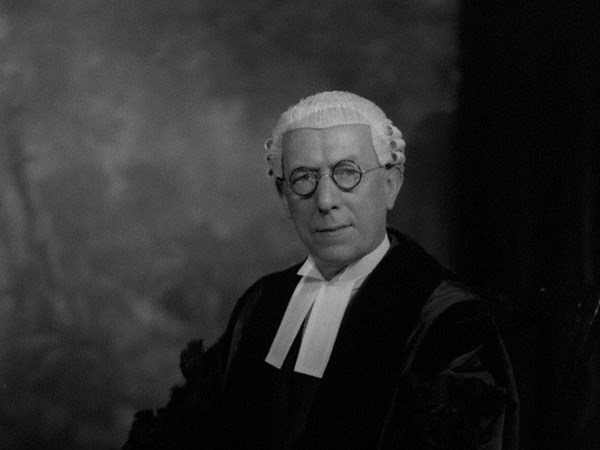
Gerald Abrahams by Lafayette (Lafayette Ltd), whole-plate film negative, 21 August 1933
by Lafayette (Lafayette Ltd), whole-plate film negative, 21 August 1933

Abrahams played various card games with great pleasure and success, but the main passion of the Liverpool resident was chess. Abrahams achieved his greatest success in the championships of Great Britain in 1933 and 1946, when he won bronze medals. The peak of his career was undoubtedly his participation in the USSR-Great Britain radio match (1946) where on the 10th board Abrahams beat Botvinnik’s second and assistant grandmaster Viacheslav Ragozin with a score of 1.5-0.5

Gerald Abrahams had a taste of studying opening theory, and made a distinct contribution to the development of the Noteboom Variation, which is often known as the Abrahams-Noteboom.

Ten years after he introduced the move 5.g2-g4 to the English public (1953), the famous grandmaster Lajos Portisch brought it into the international arena.”

Gerald Abrahams
Gerald Abrahams

Gerald was also a keen studies composer. Here are some examples of his work:

Gerald Abrahams, 1923

1/2-1/2

Solution: 1. Ra3! Ra3 […a1=q;2.Ra1 Ba1;3.d7 Kf7;4.d8=q];2.e8=q a1=q;3.Qd7

and

Gerald Abrahams, 1924

1-0

Here is an interesting article by Tim Harding on the naming of the Abrahams-Noteboom Variation of the Semi-Slav Defence

Here is an article about GA and a blindfold exhibition

Gerald Abrahams contributed to opening theory in the Queen’s Gambit Declined / Semi-Slav Defence with his creation of the Abrahams-Noteboom Defence as discussed in the following video :

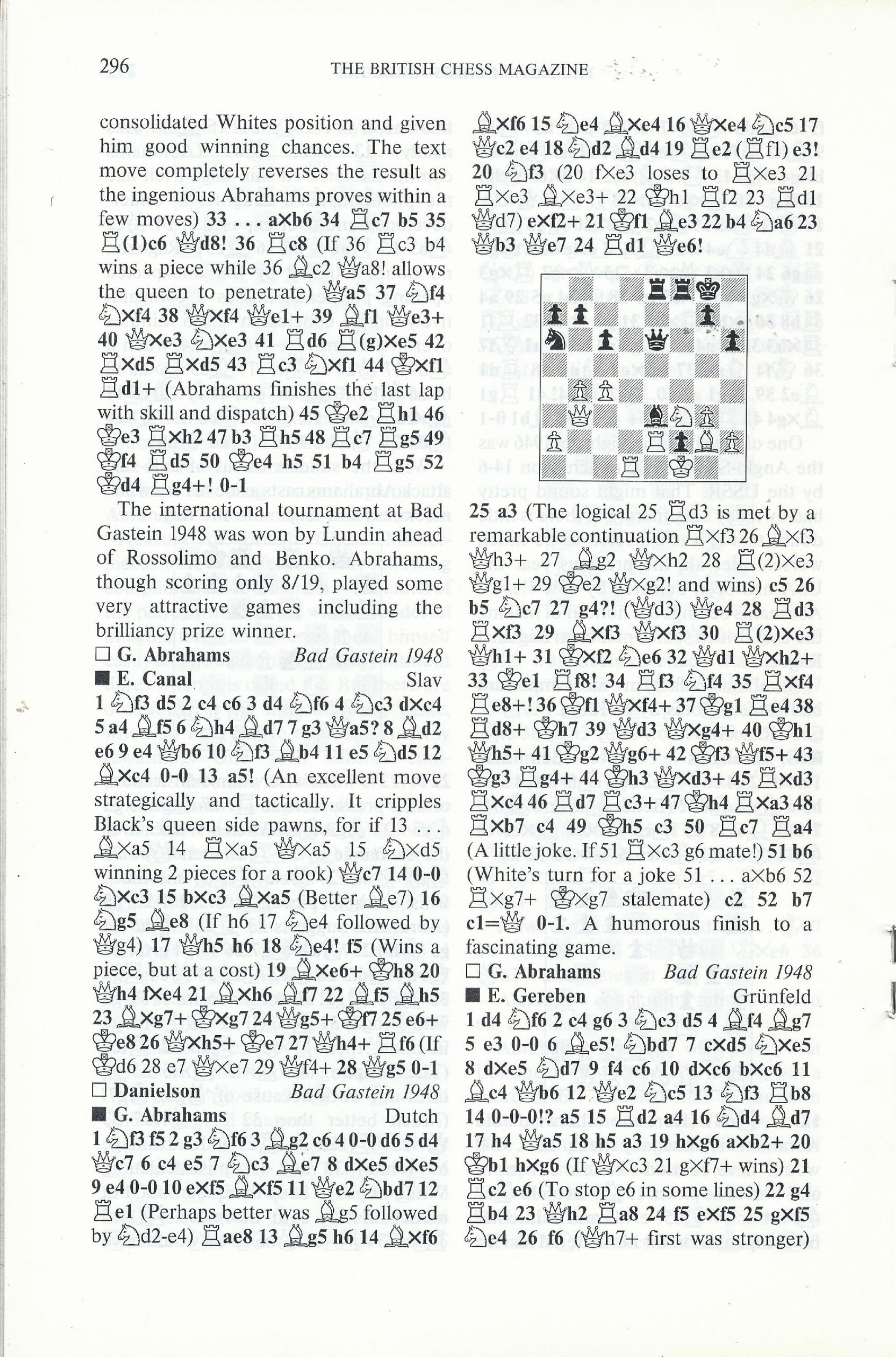
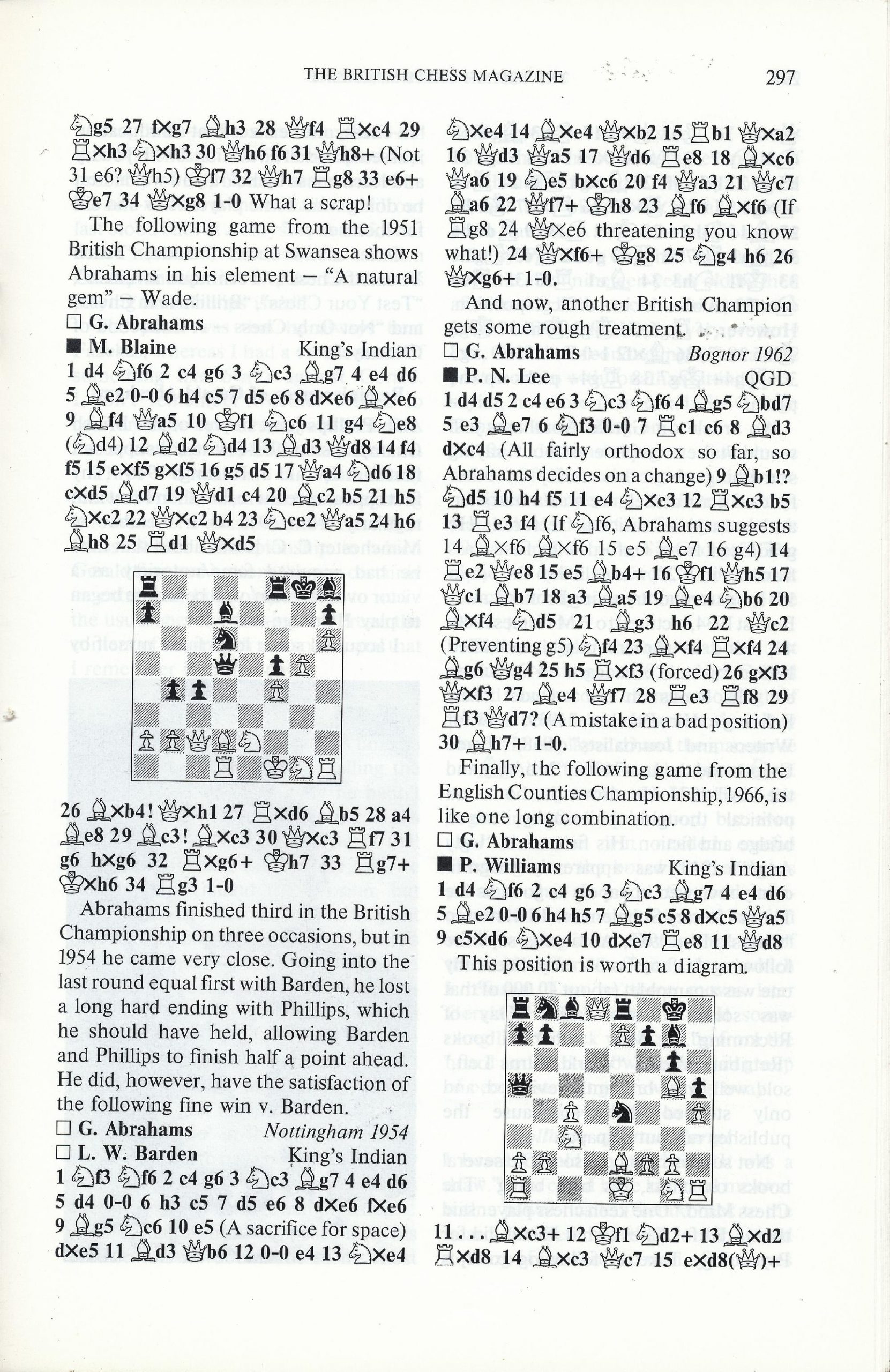
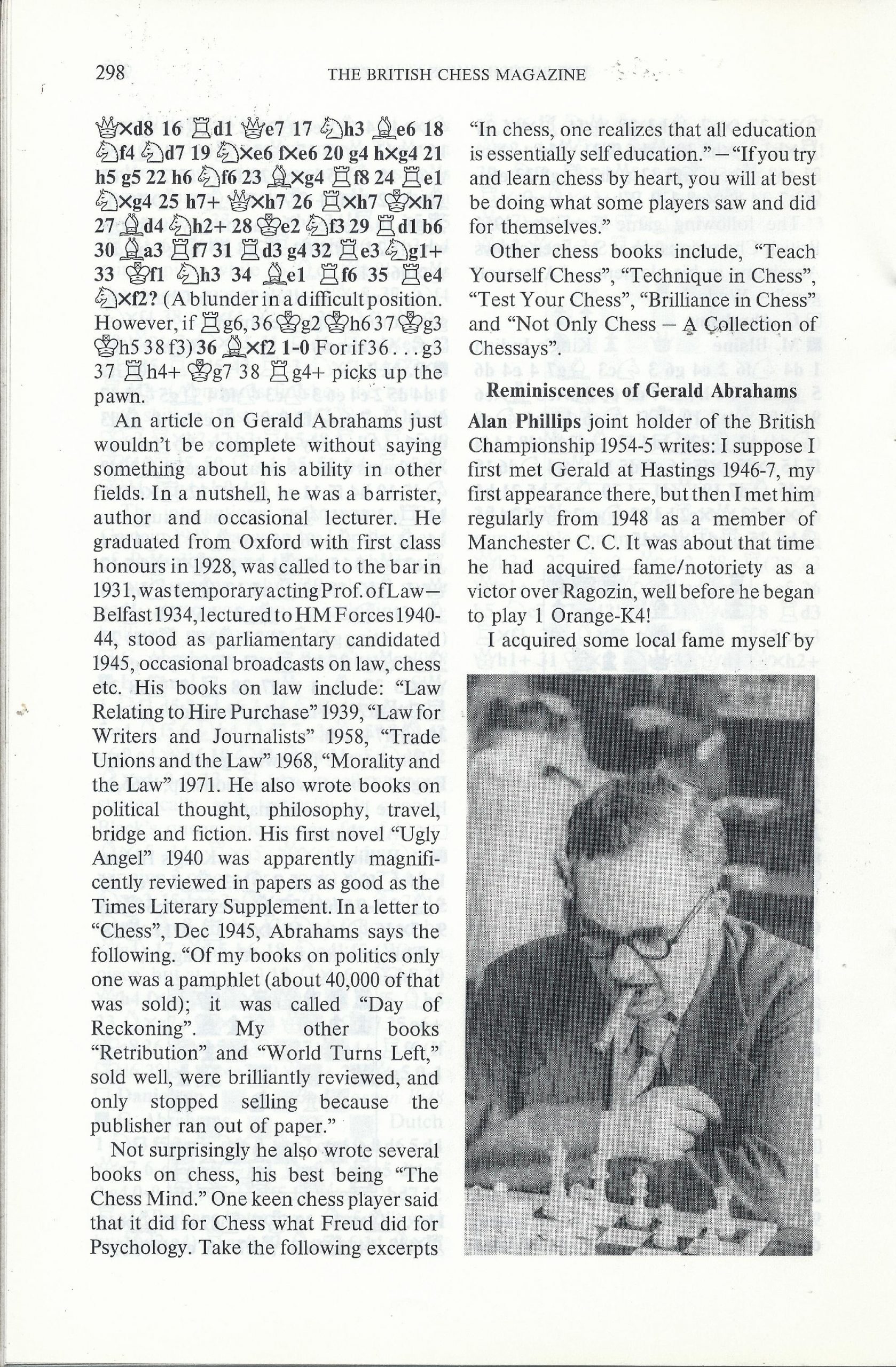
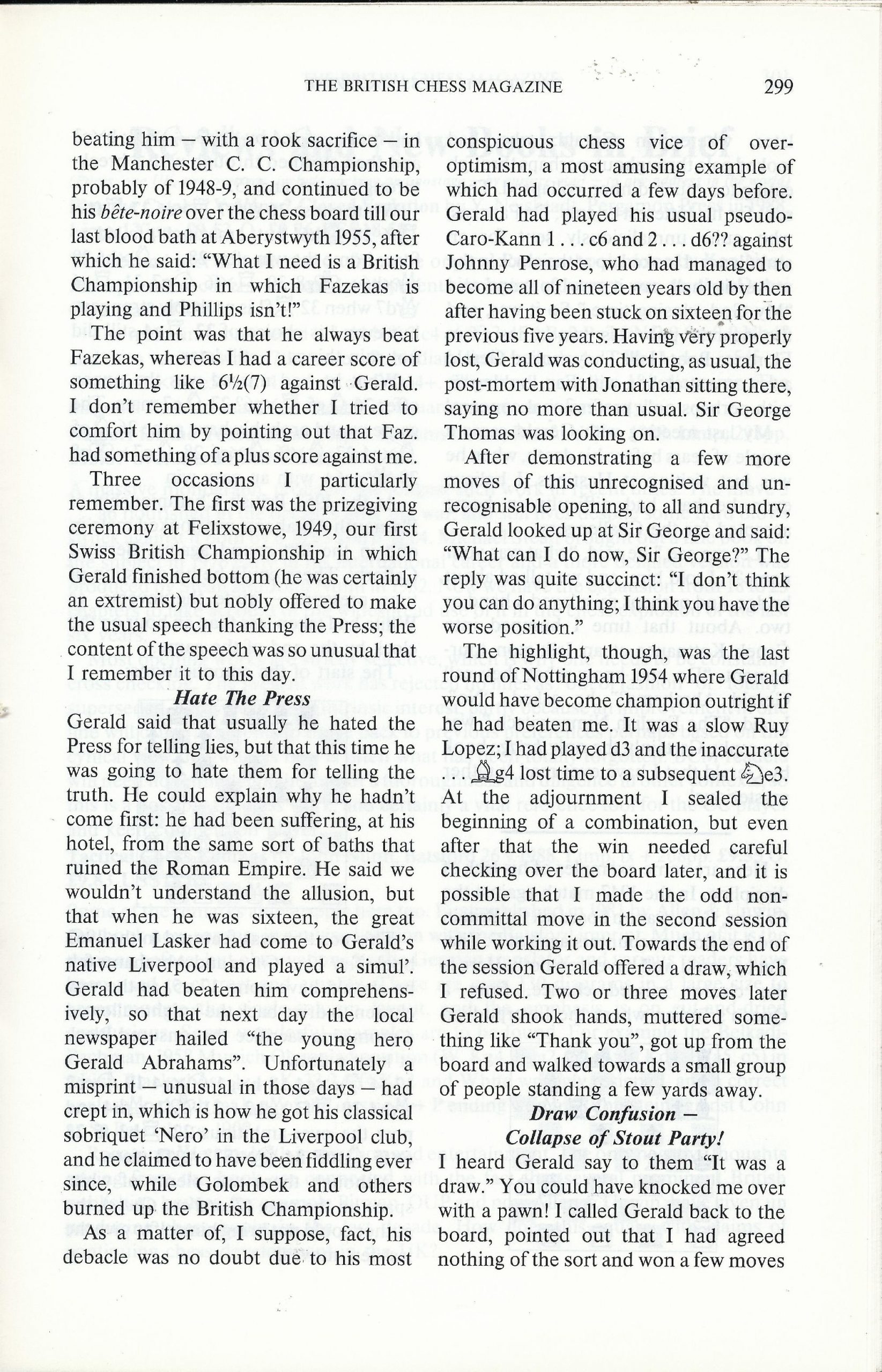
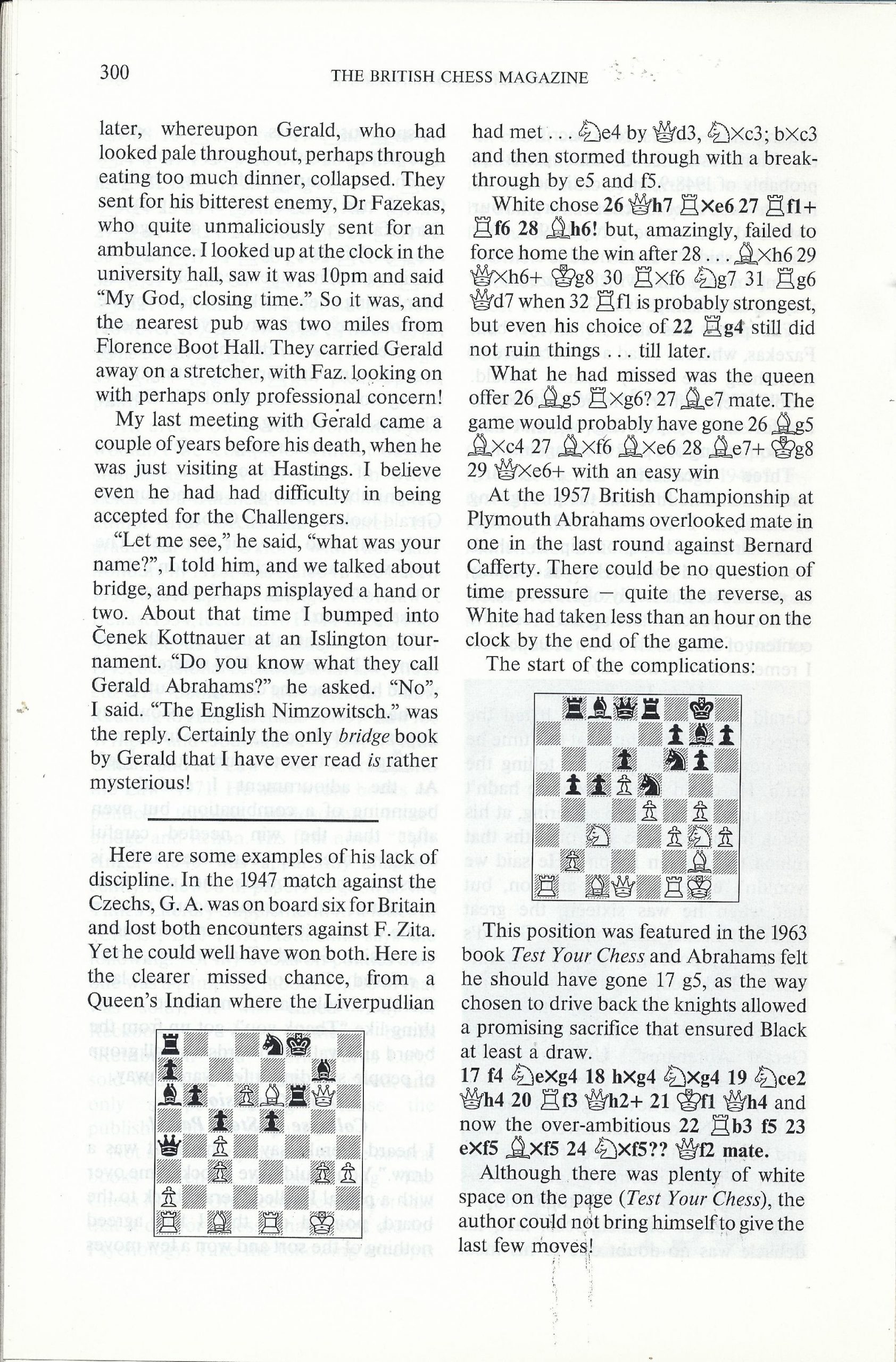
Here is a nine page article (Gerald Abrahams – Talent without Discipline) written by Steve Cunliffe that appeared in British Chess Magazine, Volume CVIII (1988), Number 7 (July), pp. 292-300:

British Chess Magazine, Volume CVIII (1988), Number 7 (July), pp. 292
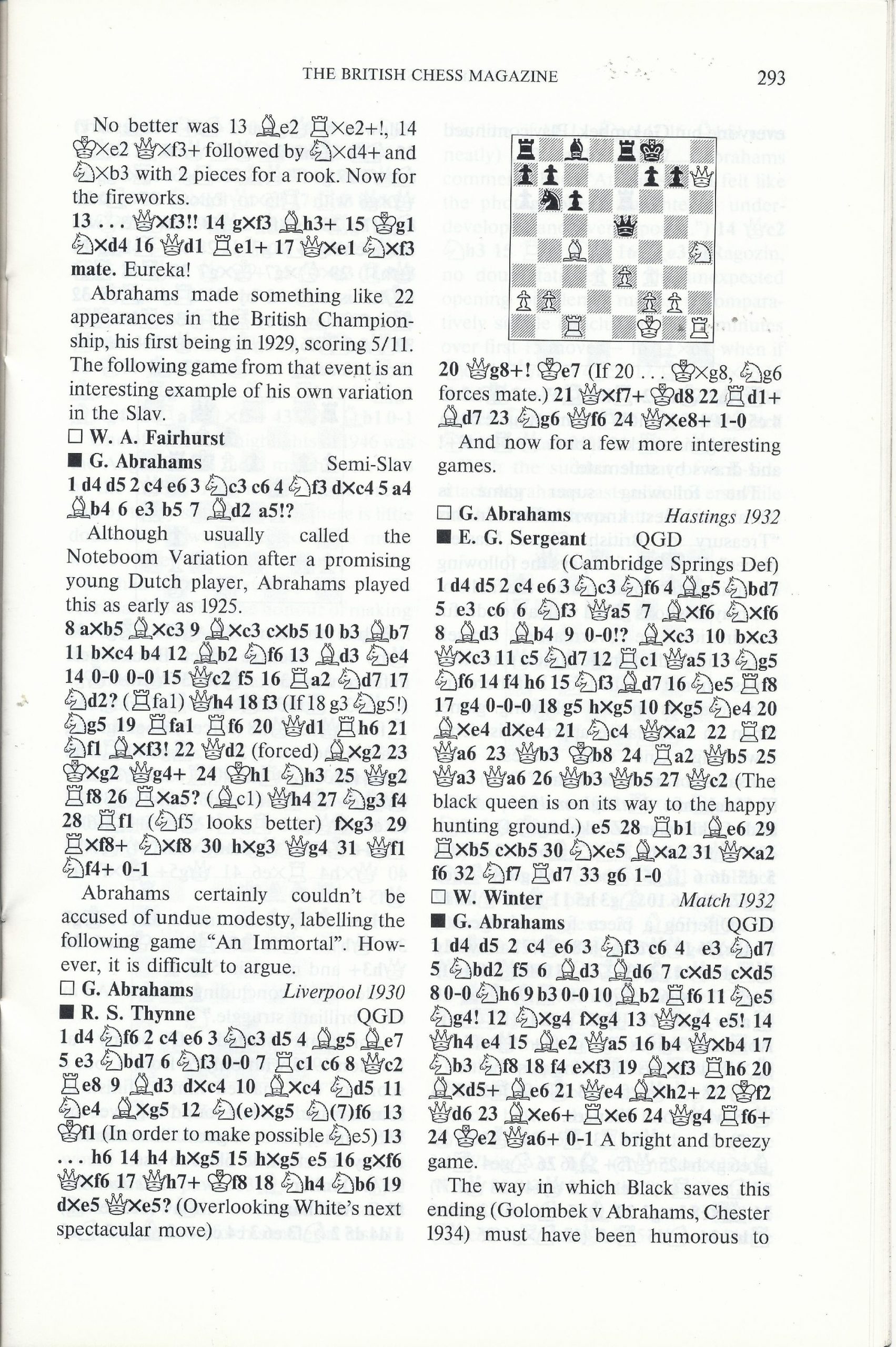
British Chess Magazine, Volume CVIII (1988), Number 7 (July), pp. 293
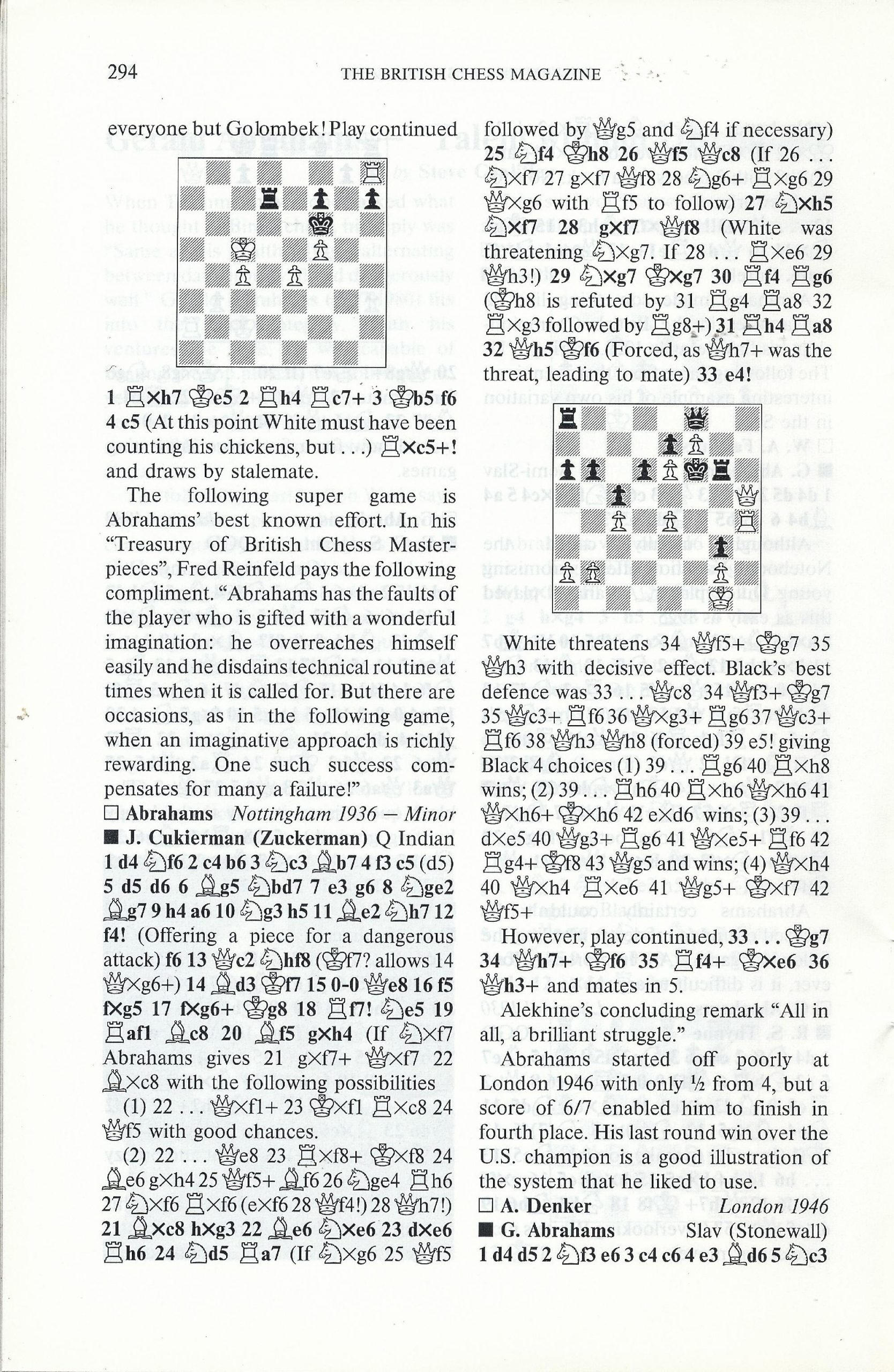
British Chess Magazine, Volume CVIII (1988), Number 7 (July), pp. 294
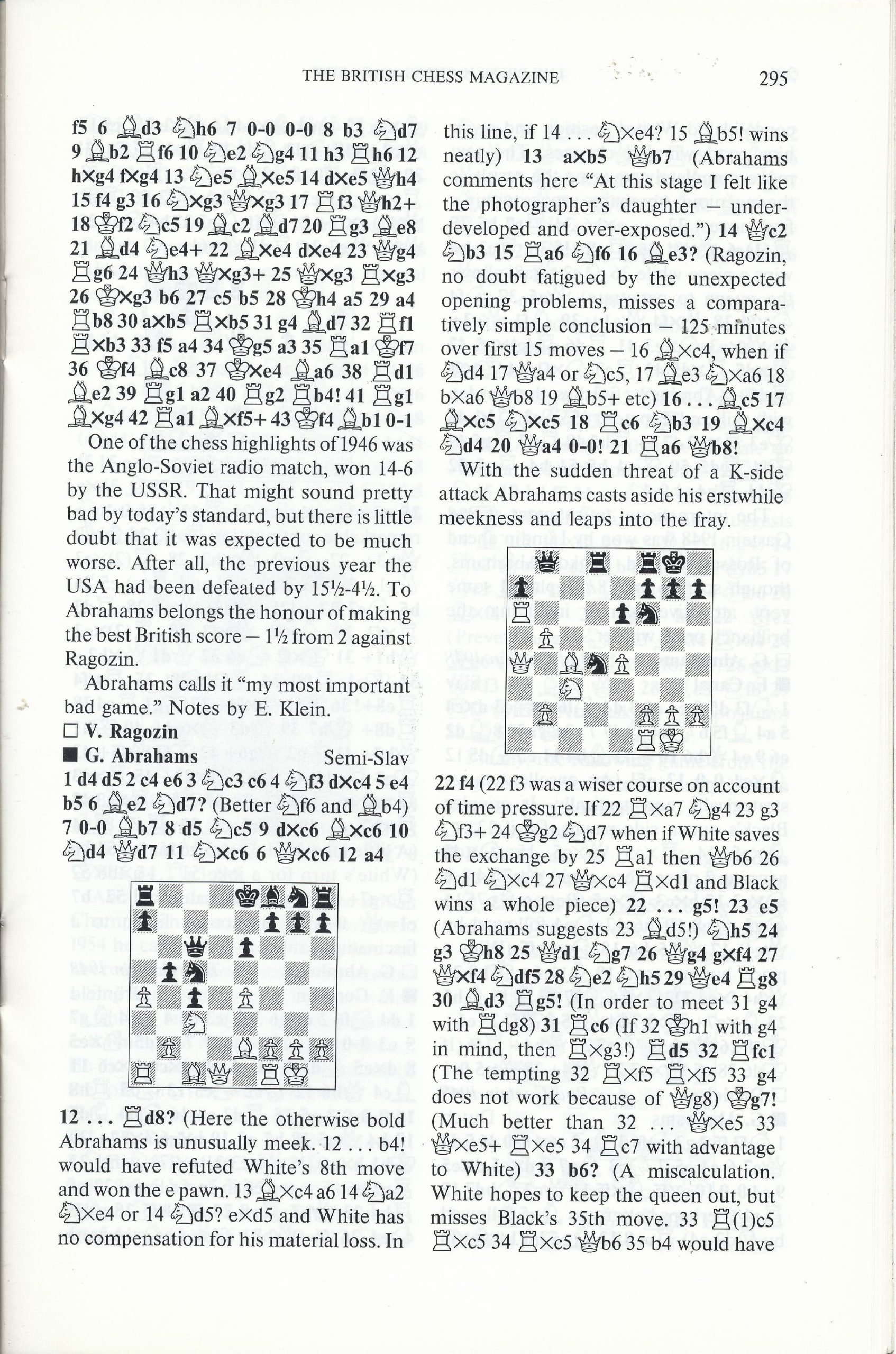
British Chess Magazine, Volume CVIII (1988), Number 7 (July), pp. 295
British Chess Magazine, Volume CVIII (1988), Number 7 (July), pp. 296
British Chess Magazine, Volume CVIII (1988), Number 7 (July), pp. 297
British Chess Magazine, Volume CVIII (1988), Number 7 (July), pp. 298
British Chess Magazine, Volume CVIII (1988), Number 7 (July), pp. 299
British Chess Magazine, Volume CVIII (1988), Number 7 (July), pp. 300

Here is his Wikipedia entry
See his games at Chessgames.com

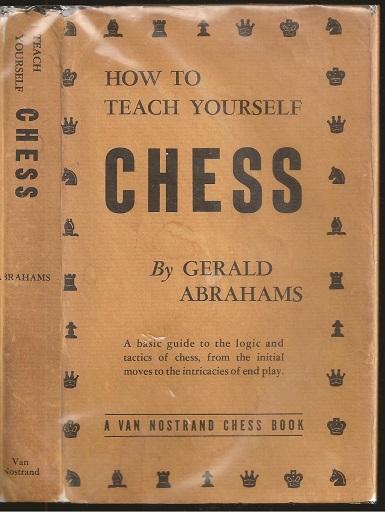
How to Teach Yourself Chess, Gerald Abrahams, D Van Nostrand Company, Inc, New York, 1950
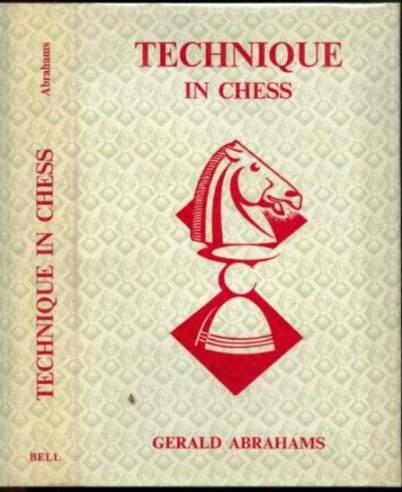
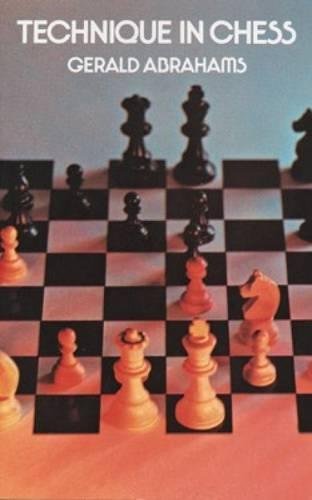
Technique in Chess, Gerald Abrahams, George Bell & Sons Ltd., 1961,
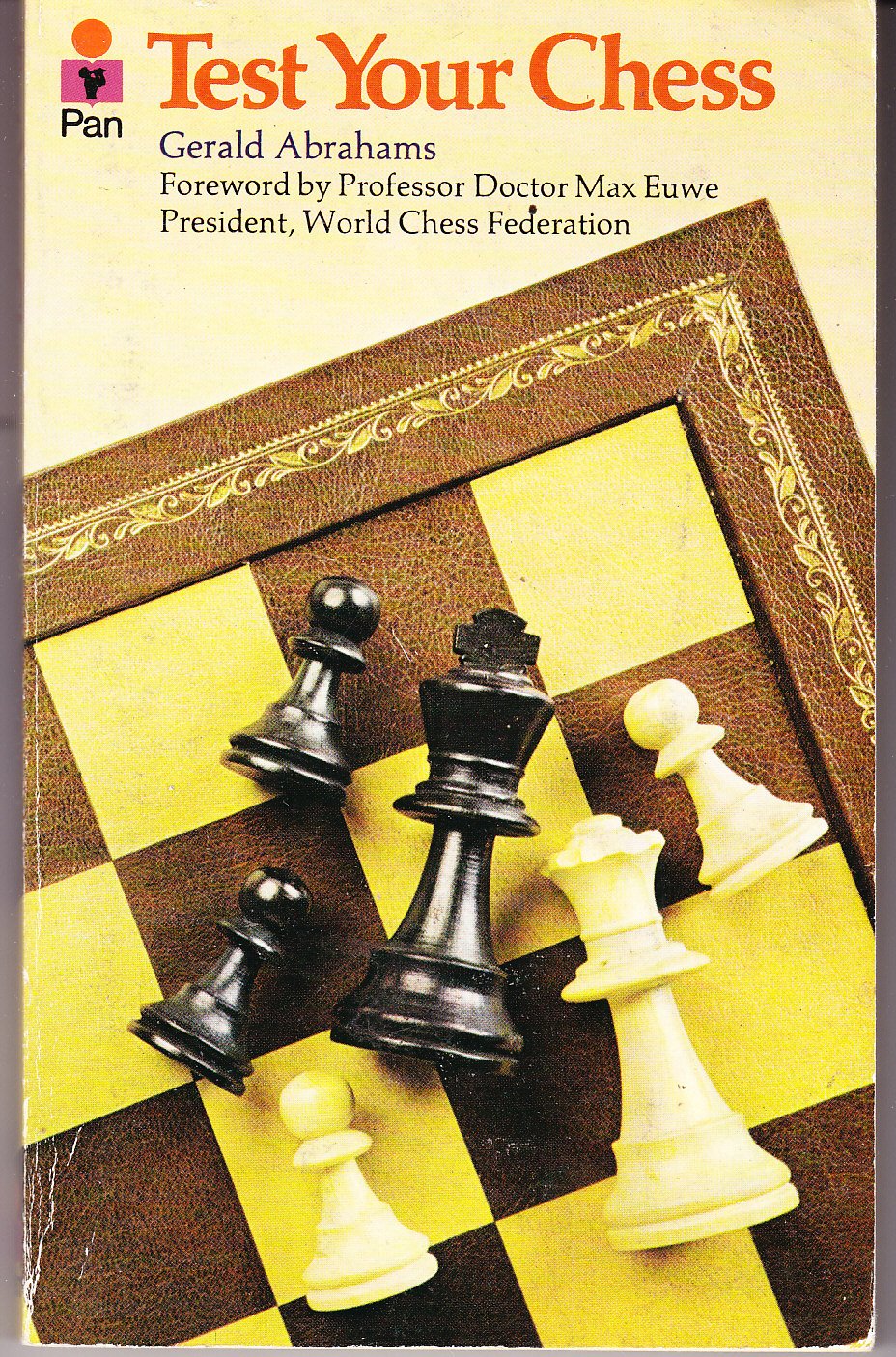
Test Your Chess, Gerald Abrahams, Constable and co, 1963, ISBN 0 330 24336 5
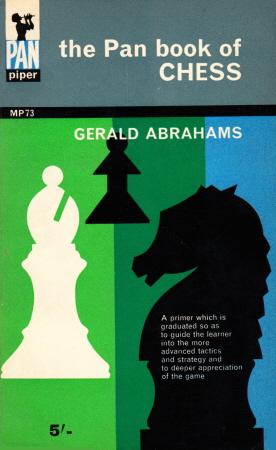
The Pan Book of Chess, Gerald Abrahams, Pan, 1965, 10: ISBN 0330230735
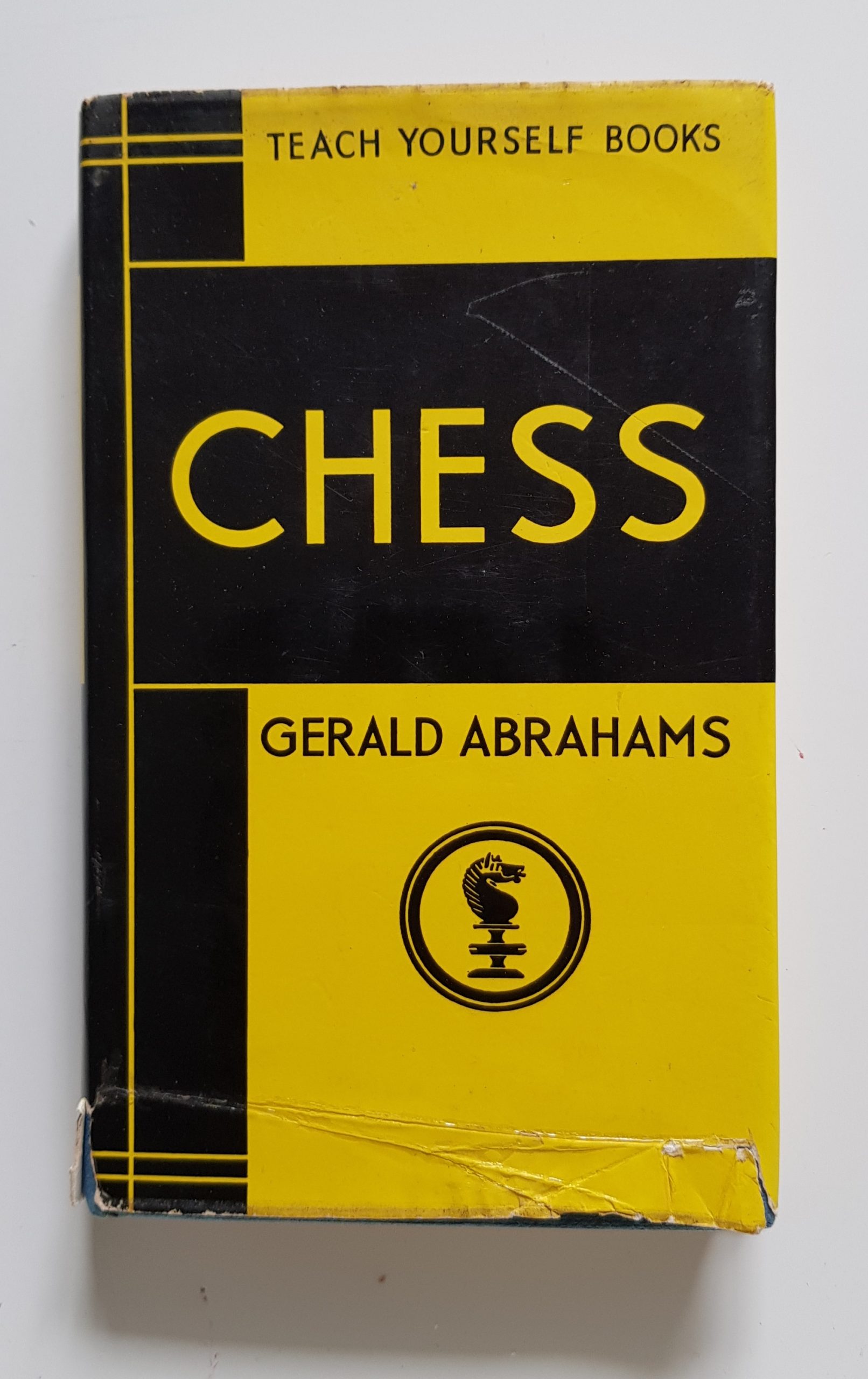
Teach Yourself Chess, Gerald Abrahams, The English Universities Press Ltd, 1965,
Technique in Chess, Gerald Abrahams, Dover, 1973, ISBN ISBN 13: 9780486229539
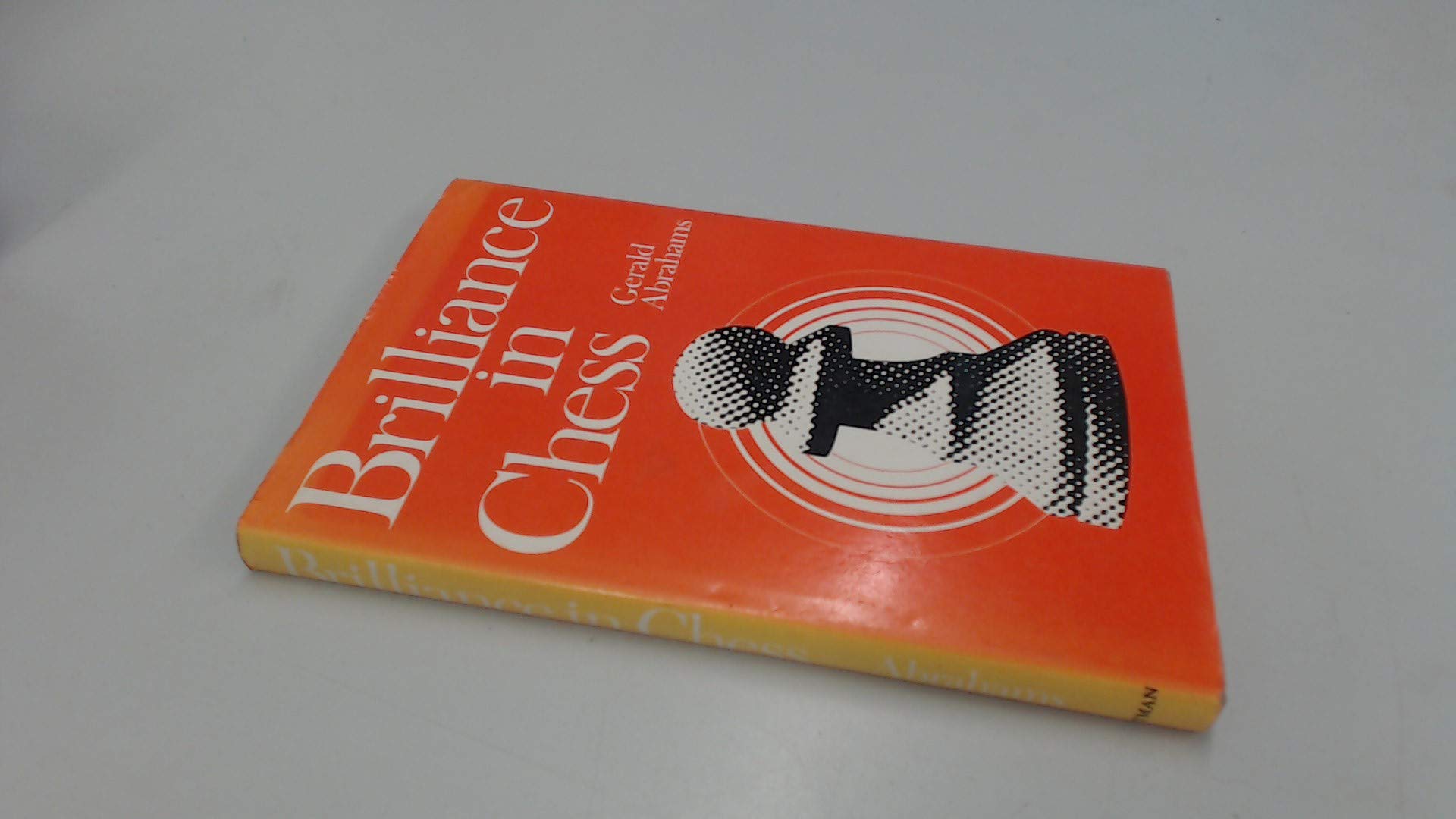
Brilliance in Chess, Gerald Abrahams, Pitman Publishing, 1977, ISBN 10: 0273000349

Death Anniversary of Gerald Abrahams (15-iv-1907 15-iii-1980)

BCN remembers Gerald Abrahams who passed away in Liverpool on Saturday, March 15th 1980. He was buried in the Allerton Cemetery in the Jewish Springwood plot.

Gerald Abrahams was born in Liverpool on Monday, April 15th 1907.  On this day the Triangle Fraternity was formed at the University of Illinois at Urbana–Champaign.

His parents were Harry (b. 10th September 1880) and Leah (b. 12th March 1884) Abrahams (née Rabinowitz) who married in West Derby in the third quarter of 1903.

Gerald learnt chess at the age of ten during the first world war. He obtained an Open Scholarship to Wadham College, Oxford in 1925 reading PPE and earning himself an MA in Law in 1928. He became a practising barrister at Law.

From the 1939 register we learnt that Harry was a Drapery manufacturer and Leah carried out “unpaid domestic duties”. Gerald was not an only child: the first born was Winnie (b. 22nd November 1903) who was a Secretary and Clerk Typist and factory assistant. Elsie Abrahams (b. 14th April 1905) helped her mother with “unpaid domestic duties”. Blanche was Gerald’s older brother and he was “General Assistant In Fathers Business Drapery Manufacturer”. Gerald is listed (aged 32) as a Barrister at Law and author. The family resided at 51 Prince Alfred Road, Liverpool, Lancashire (now L15 6TQ) and their original property has been since replaced.

Historical map showing the 1939 residence of Gerald Abrahams

We learn from “Philanthropy, Consensus, and broiges: managing a Jewish Community A history of the Southport Jewish Community
by John Cowell” of an incident in January 1942 that was to cause ripples in the community. The headline was

POLICE RAID DISTURBS CLUB CARD PLAYERS

The full list of people present seems to have been largely or entirely Jewish in religion or ethnicity: it included a famous chess-playing barrister from Liverpool, Gerald Abrahams, representing himself, who had taken a First in P.P.E. at Oxford, and later married Elsie Krengel, who had also been present, and with Leslie Black representing the rest of the defendants, apart from the hosts and Captain Lionel Husdan, who sent a letter to the court.

The full list of those present, charged with “resorting and playing in a common gaming house,” and bound over was as follows:- Mott Alexander, Fannie Finn, Maxwell Glassman, Kate Lippa, Myer Lister, Gertrude Mannheim, Joseph Mannheim, Rita Mannheim, Simon Mannheim, Harry Peters, Sadie Peters, Lily Leah Ross, Harry Sapiro, Benjamin Stone. Those charged with “resorting in a common gaming house” and bound over, were:- Gerald Abrahams, Joseph Appleton Bach, Samuel Myer Barnett, Herbert Solomon Isaacson, Elsie Krengel, Manuel Mannheim, Louis Michaelson, Abraham Ross, Bernard and Elsie Ross.

“Gerald Abrahams, the barrister charged, said he was interested to protect his reputation from being stigmatised by a conviction, and asked Sergeant Laycock about alcohol: the latter replied that none was being consumed. He submitted that the club was not a gaming house, and that draw poker had not been proved other than as a game of skill. Charges were dismissed against Henry, Eva and Marjorie Black, Myer Waldman, and Captain Lionel Husdan, of Ryde, Isle of Wight, all of whom had said that they were merely taking refreshments in the club, and had not played. David Platt said that he had not the slightest idea that they were breaking the law, and Mrs Platt said that it had not been a paying venture.”

The Complete Chess Addict (Faber& Faber, 1987), Fox & James notes: that Gerald Abrahams as authority on bridge cast doubt on assertions that Emanuel Lasker “was good enough to represent Germany”

Gerald’s comparisons of chess and bridge are discussed by Edward Winter in Chess Facts and Fables (McFarland, 2005) page 130 in GAs 1962 book Brains in Bridge:

Brains in Bridge, Gerald Abrahams, Constable and Company, 1962, ISBN ?

Gerald eventually married Elsie Krengel (born 15th January 1909) in the fourth quarter of 1971 in Liverpool at the age of 64. Elsie had lived in the Southport area for most of her life and her family was associated with the manufacture of handbags.  They had known each other for many years (at least since 1942 as mentioned previously).

Gerald Abrahams
Gerald Abrahams

Leonard Barden modestly recounts :

“At the end of Nottingham 1954  Gerald claimed that Alan Phillips had accepted his draw offer so tieing Gerald for the British championship with some rabbit whose name escapes me.  When Phillips strongly denied having accepted the draw, Gerald collapsed on the floor and had to be aided by his old enemy Dr. Fazekas.”

From The Anglo-Soviet Radio Chess Match (1946) by Klein and Winter:

“G. Abrahams was born in Liverpool in 1907. He learned chess at the age of ten, and showed an early aptitude for tactical complications. He has played with varying success, his best performances being third and fourth with Rossolimo, behind Klein and Najdorf, but head of List at Margate, 1938, and fourth, fifth and sixth with Sir George A. Thomas and König in London, 1946. He has made two valiant bids for the British Championship.

A graduate of Oxford, he is a barrister by profession and has written several books, including some fiction. He has solidified his chess without allowing it to become dry. Indeed, most of his games sparkle with interesting complications.”

Harry Golombek OBE wrote (in The Encyclopaedia of Chess (Batsford, 1977)):

“Brilliant British amateur who in the 1930s was playing master-chess. In that period he was the most dangerous attacking player in England.

Gerald Abrahams watching the opening at the Hastings Chess Congress 1947. Also watching is Sir George Thomas who was GAs round one opponent. The Mayor was Alderman W. J. Fellows and he is opposite Sir Edmund McNeill Cooper-Key. Second from left is Percy J. Morren who was the Hasting's Club President
Gerald Abrahams watching the opening at the Hastings Chess Congress 1947. Also watching is Sir George Thomas who was GAs round one opponent. The Mayor was Alderman W. J. Fellows and he is opposite Sir Edmund McNeill Cooper-Key. Second from left is Percy J. Morren who was the Hasting’s Club President

He was in the prize-list (i.e. in the first four) in the British championship on three occasions 1933, 1946 and 1954. His best international performance was in the Major Open at Nottingham in 1936 where he came =3rd with Opocensky. Another fine result was his score of 1.5-0.5 against the Soviet Grandmaster Ragozin, in the 1946 Anglo-Soviet radio match.

He is the inventor of the Abrahams variation in the Semi-Slav Defence to the Queen’s Gambit: 1.P-Q4, P-Q4;2.P-QB4, P-QB3;3.N-QB3, P-K3;4.N-B3, PXP;5.P-QR4, B-N4;6.P-K3,P-QN4;7.B-Q2, P-QR4; 8.PxP, BxN;9.BxB,PxP;10.P-QN3,B-N2;

This is sometimes known as the Noteboom variation after the Dutch master who played it in the 1930s, but Abrahams was playing it in 1925 long before Noteboom.

He is a witty and prolific writer on many subjects: on law (he is a barrister by profession), philosophy, and chess; he also writes fiction. His main chess works are: The Chess Mind, London 1951 and 1960

The Chess Mind, Gerald Abrahams, The English Universities Press, 1951, ISBN 0 340 19492 8

and here is a later cover:

The Chess Mind, Gerald Abrahams, The English Universities Press, 1951, ISBN 0 340 19492 8

and Not Only Chess, London 1974.

Not Only Chess, Gerald Abrahams, George Allen & Unwin Ltd., 1974, ISBN 0 04 794005 0

Edward Winter in Kings, Commoners and Knaves, cites the subtitle of the above book in his page 235 list of chessy words: “A selection of Chessays”.

From Not Only Chess we learn that GAs favourite game was played in 1930 against Edmund Spencer of Liverpool. “Edmund Spencer was a man who is remembered with affection by all players who ever met him, and who is remarkable in that his strength developed in what should have been hid middle life. When he died, lamentably early, in the 1930s, at about 53 he was at his best, and of recognised master status.

This game was played in 1930.”

and for an alternative view of the same game:

GA is amongst a rare breed of game annotators claiming the title of An Immortal for one of his own games. Edward Winter devotes a couple of column inches discussing exactly which year the game was played between 1929 and 1936. Here is the game:

For more of GAs excellent games see the superb article further on by Steve Cunliffe. Also, Not Only Chess in Chapter 28 (“A Score of my Scores”) contains a veritable feast of entertaining games of GAs).

Gerald famously fell out with Anne Sunnucks when he discovered she had omitted him from her 1970 Encyclopaedia of Chess. Despite this the 1976 edition was also devoid of a mention.

From The Oxford Companion to Chess (OUP, 1984 & 1996), Hooper & Whyld:

“The English player Gerald Abrahams (1907-80) introduced the move when playing against Dr. Holmes in the Lancastrian County Championship in 1925 (ed: January 31st in fact) . Abrahams played the variation against his countryman William Winter (1898-1955) in 1929 and in the same year Winter played it against Noteboom, after whom it is sometimes named. (Dr, Holmes was the favourite pupil of Amos Burn and a leading ophthalmologist).

Gerald Abrahams
Gerald Abrahams

The precursor, known from a 16th-century manuscript, was published by Salvio in 1604:

1.d4 d5;2.c4 dxc4;3.e4 b5;4.a4 c6;5.axb5 cxb5;6.b3 b4;7.bxc4 a5; 8.Bf4 Nd7;9.Nf3

Writing in 1617, Carrera made his only criticism of Salvio’s analysis in this variation. He suggested 8…Bd7 instead of 8…Nd7, or 9.Qa4 instead of 9.Nf3. Salvio nursed his injured pride for seventeen years and then devoted a chapter of his book to a bitter attack on Carrera. The argument was pointless: all these variations give White a won game.”

GA famously wrote :

Chess is a good mistress, but a bad master

and also

The tactician knows what to do when there is something to do; whereas the strategian knows what to do when there is nothing to do.

and

In chess there is a world of intellectual values

and

Good positions don’t win games, good moves do

and

Why some persons are good at chess, and others bad at it, is more mysterious than anything on chess board.

In the recently (February 25th, 2020) published “Attacking with g2 – g4” by GM Dmitry Kryakvin writes about Abrahams as follows :

“It is believed that the extravagant 5.g2-g4 was first applied at a high level, namely in the British Championship by Gerald Abrahams. Abrahams was a truly versatile person – a composer, lawyer, historian, philosopher, politician (for 40 years a member of the Liberal Party) and the author of several books. Of his legal work, the most famous is the investigation into the murder of Julia Wallace in 1931 in Liverpool, where her husband was the main suspect. As an alibi, William Herbert Wallace claimed he was at a chess club. Dozens of books and films have been devote to the murder of Mrs. Wallace – indeed, this is a script worthy of Arthur Conan Doyle or Agatha Christie!

Gerald Abrahams by Lafayette (Lafayette Ltd), whole-plate film negative, 21 August 1933
by Lafayette (Lafayette Ltd), whole-plate film negative, 21 August 1933

Abrahams played various card games with great pleasure and success, but the main passion of the Liverpool resident was chess. Abrahams achieved his greatest success in the championships of Great Britain in 1933 and 1946, when he won bronze medals. The peak of his career was undoubtedly his participation in the USSR-Great Britain radio match (1946) where on the 10th board Abrahams beat Botvinnik’s second and assistant grandmaster Viacheslav Ragozin with a score of 1.5-0.5

Gerald Abrahams had a taste of studying opening theory, and made a distinct contribution to the development of the Noteboom Variation, which is often known as the Abrahams-Noteboom.

Ten years after he introduced the move 5.g2-g4 to the English public (1953), the famous grandmaster Lajos Portisch brought it into the international arena.”

Gerald Abrahams
Gerald Abrahams

Gerald was also a keen studies composer. Here are some examples of his work:

Gerald Abrahams, 1923

1/2-1/2

Solution: 1. Ra3! Ra3 […a1=q;2.Ra1 Ba1;3.d7 Kf7;4.d8=q];2.e8=q a1=q;3.Qd7

and

Gerald Abrahams, 1924

1-0

Here is an interesting article by Tim Harding on the naming of the Abrahams-Noteboom Variation of the Semi-Slav Defence

Here is an article about GA and a blindfold exhibition

Gerald Abrahams contributed to opening theory in the Queen’s Gambit Declined / Semi-Slav Defence with his creation of the Abrahams-Noteboom Defence as discussed in the following video :

Here is a nine page article (Gerald Abrahams – Talent without Discipline) written by Steve Cunliffe that appeared in British Chess Magazine, Volume CVIII (1988), Number 7 (July), pp. 292-300:

British Chess Magazine, Volume CVIII (1988), Number 7 (July), pp. 292
British Chess Magazine, Volume CVIII (1988), Number 7 (July), pp. 293
British Chess Magazine, Volume CVIII (1988), Number 7 (July), pp. 294
British Chess Magazine, Volume CVIII (1988), Number 7 (July), pp. 295
British Chess Magazine, Volume CVIII (1988), Number 7 (July), pp. 296
British Chess Magazine, Volume CVIII (1988), Number 7 (July), pp. 297
British Chess Magazine, Volume CVIII (1988), Number 7 (July), pp. 298
British Chess Magazine, Volume CVIII (1988), Number 7 (July), pp. 299
British Chess Magazine, Volume CVIII (1988), Number 7 (July), pp. 300

Here is his Wikipedia entry
See his games at Chessgames.com

How to Teach Yourself Chess, Gerald Abrahams, D Van Nostrand Company, Inc, New York, 1950
Technique in Chess, Gerald Abrahams, George Bell & Sons Ltd., 1961,
Test Your Chess, Gerald Abrahams, Constable and co, 1963, ISBN 0 330 24336 5
The Pan Book of Chess, Gerald Abrahams, Pan, 1965, 10: ISBN 0330230735
Teach Yourself Chess, Gerald Abrahams, The English Universities Press Ltd, 1965,
Technique in Chess, Gerald Abrahams, Dover, 1973, ISBN ISBN 13: 9780486229539
Brilliance in Chess, Gerald Abrahams, Pitman Publishing, 1977, ISBN 10: 0273000349

Death Anniversary of Gerald Abrahams (15-iv-1907 15-iii-1980)

BCN remembers Gerald Abrahams who passed away in Liverpool on Saturday, March 15th 1980. He was buried in the Allerton Cemetery in the Jewish Springwood plot.

Gerald Abrahams was born in Liverpool on Monday, April 15th 1907.  On this day the Triangle Fraternity was formed at the University of Illinois at Urbana–Champaign.

His parents were Harry (b. 10th September 1880) and Leah (b. 12th March 1884) Abrahams (née Rabinowitz) who married in West Derby in the third quarter of 1903.

Gerald learnt chess at the age of ten during the first world war. He obtained an Open Scholarship to Wadham College, Oxford in 1925 reading PPE and earning himself an MA in Law in 1928. He became a practising barrister at Law.

From the 1939 register we learnt that Harry was a Drapery manufacturer and Leah carried out “unpaid domestic duties”. Gerald was not an only child: the first born was Winnie (b. 22nd November 1903) who was a Secretary and Clerk Typist and factory assistant. Elsie Abrahams (b. 14th April 1905) helped her mother with “unpaid domestic duties”. Blanche was Gerald’s older brother and he was “General Assistant In Fathers Business Drapery Manufacturer”. Gerald is listed (aged 32) as a Barrister at Law and author. The family resided at 51 Prince Alfred Road, Liverpool, Lancashire (now L15 6TQ) and their original property has been since replaced.

Historical map showing the 1939 residence of Gerald Abrahams

We learn from “Philanthropy, Consensus, and broiges: managing a Jewish Community A history of the Southport Jewish Community
by John Cowell” of an incident in January 1942 that was to cause ripples in the community. The headline was

POLICE RAID DISTURBS CLUB CARD PLAYERS

The full list of people present seems to have been largely or entirely Jewish in religion or ethnicity: it included a famous chess-playing barrister from Liverpool, Gerald Abrahams, representing himself, who had taken a First in P.P.E. at Oxford, and later married Elsie Krengel, who had also been present, and with Leslie Black representing the rest of the defendants, apart from the hosts and Captain Lionel Husdan, who sent a letter to the court.

The full list of those present, charged with “resorting and playing in a common gaming house,” and bound over was as follows:- Mott Alexander, Fannie Finn, Maxwell Glassman, Kate Lippa, Myer Lister, Gertrude Mannheim, Joseph Mannheim, Rita Mannheim, Simon Mannheim, Harry Peters, Sadie Peters, Lily Leah Ross, Harry Sapiro, Benjamin Stone. Those charged with “resorting in a common gaming house” and bound over, were:- Gerald Abrahams, Joseph Appleton Bach, Samuel Myer Barnett, Herbert Solomon Isaacson, Elsie Krengel, Manuel Mannheim, Louis Michaelson, Abraham Ross, Bernard and Elsie Ross.

“Gerald Abrahams, the barrister charged, said he was interested to protect his reputation from being stigmatised by a conviction, and asked Sergeant Laycock about alcohol: the latter replied that none was being consumed. He submitted that the club was not a gaming house, and that draw poker had not been proved other than as a game of skill. Charges were dismissed against Henry, Eva and Marjorie Black, Myer Waldman, and Captain Lionel Husdan, of Ryde, Isle of Wight, all of whom had said that they were merely taking refreshments in the club, and had not played. David Platt said that he had not the slightest idea that they were breaking the law, and Mrs Platt said that it had not been a paying venture.”

The Complete Chess Addict (Faber& Faber, 1987), Fox & James notes: that Gerald Abrahams as authority on bridge cast doubt on assertions that Emanuel Lasker “was good enough to represent Germany”

Gerald’s comparisons of chess and bridge are discussed by Edward Winter in Chess Facts and Fables (McFarland, 2005) page 130 in GAs 1962 book Brains in Bridge:

Brains in Bridge, Gerald Abrahams, Constable and Company, 1962, ISBN ?

Gerald eventually married Elsie Krengel (born 15th January 1909) in the fourth quarter of 1971 in Liverpool at the age of 64. Elsie had lived in the Southport area for most of her life and her family was associated with the manufacture of handbags.  They had known each other for many years (at least since 1942 as mentioned previously).

Gerald Abrahams
Gerald Abrahams

Leonard Barden modestly recounts :

“At the end of Nottingham 1954  Gerald claimed that Alan Phillips had accepted his draw offer so tieing Gerald for the British championship with some rabbit whose name escapes me.  When Phillips strongly denied having accepted the draw, Gerald collapsed on the floor and had to be aided by his old enemy Dr. Fazekas.”

From The Anglo-Soviet Radio Chess Match (1946) by Klein and Winter:

“G. Abrahams was born in Liverpool in 1907. He learned chess at the age of ten, and showed an early aptitude for tactical complications. He has played with varying success, his best performances being third and fourth with Rossolimo, behind Klein and Najdorf, but head of List at Margate, 1938, and fourth, fifth and sixth with Sir George A. Thomas and König in London, 1946. He has made two valiant bids for the British Championship.

A graduate of Oxford, he is a barrister by profession and has written several books, including some fiction. He has solidified his chess without allowing it to become dry. Indeed, most of his games sparkle with interesting complications.”

Harry Golombek OBE wrote (in The Encyclopaedia of Chess (Batsford, 1977)):

“Brilliant British amateur who in the 1930s was playing master-chess. In that period he was the most dangerous attacking player in England.

Gerald Abrahams watching the opening at the Hastings Chess Congress 1947. Also watching is Sir George Thomas who was GAs round one opponent. The Mayor was Alderman W. J. Fellows and he is opposite Sir Edmund McNeill Cooper-Key. Second from left is Percy J. Morren who was the Hasting's Club President
Gerald Abrahams watching the opening at the Hastings Chess Congress 1947. Also watching is Sir George Thomas who was GAs round one opponent. The Mayor was Alderman W. J. Fellows and he is opposite Sir Edmund McNeill Cooper-Key. Second from left is Percy J. Morren who was the Hasting’s Club President

He was in the prize-list (i.e. in the first four) in the British championship on three occasions 1933, 1946 and 1954. His best international performance was in the Major Open at Nottingham in 1936 where he came =3rd with Opocensky. Another fine result was his score of 1.5-0.5 against the Soviet Grandmaster Ragozin, in the 1946 Anglo-Soviet radio match.

He is the inventor of the Abrahams variation in the Semi-Slav Defence to the Queen’s Gambit: 1.P-Q4, P-Q4;2.P-QB4, P-QB3;3.N-QB3, P-K3;4.N-B3, PXP;5.P-QR4, B-N4;6.P-K3,P-QN4;7.B-Q2, P-QR4; 8.PxP, BxN;9.BxB,PxP;10.P-QN3,B-N2;

This is sometimes known as the Noteboom variation after the Dutch master who played it in the 1930s, but Abrahams was playing it in 1925 long before Noteboom.

He is a witty and prolific writer on many subjects: on law (he is a barrister by profession), philosophy, and chess; he also writes fiction. His main chess works are: The Chess Mind, London 1951 and 1960

The Chess Mind, Gerald Abrahams, The English Universities Press, 1951, ISBN 0 340 19492 8

and here is a later cover:

The Chess Mind, Gerald Abrahams, The English Universities Press, 1951, ISBN 0 340 19492 8

and Not Only Chess, London 1974.

Not Only Chess, Gerald Abrahams, George Allen & Unwin Ltd., 1974, ISBN 0 04 794005 0

Edward Winter in Kings, Commoners and Knaves, cites the subtitle of the above book in his page 235 list of chessy words: “A selection of Chessays”.

From Not Only Chess we learn that GAs favourite game was played in 1930 against Edmund Spencer of Liverpool. “Edmund Spencer was a man who is remembered with affection by all players who ever met him, and who is remarkable in that his strength developed in what should have been hid middle life. When he died, lamentably early, in the 1930s, at about 53 he was at his best, and of recognised master status.

This game was played in 1930.”

and for an alternative view of the same game:

GA is amongst a rare breed of game annotators claiming the title of An Immortal for one of his own games. Edward Winter devotes a couple of column inches discussing exactly which year the game was played between 1929 and 1936. Here is the game:

For more of GAs excellent games see the superb article further on by Steve Cunliffe. Also, Not Only Chess in Chapter 28 (“A Score of my Scores”) contains a veritable feast of entertaining games of GAs).

Gerald famously fell out with Anne Sunnucks when he discovered she had omitted him from her 1970 Encyclopaedia of Chess. Despite this the 1976 edition was also devoid of a mention.

From The Oxford Companion to Chess (OUP, 1984 & 1996), Hooper & Whyld:

“The English player Gerald Abrahams (1907-80) introduced the move when playing against Dr. Holmes in the Lancastrian County Championship in 1925 (ed: January 31st in fact) . Abrahams played the variation against his countryman William Winter (1898-1955) in 1929 and in the same year Winter played it against Noteboom, after whom it is sometimes named. (Dr, Holmes was the favourite pupil of Amos Burn and a leading ophthalmologist).

Gerald Abrahams
Gerald Abrahams

The precursor, known from a 16th-century manuscript, was published by Salvio in 1604:

1.d4 d5;2.c4 dxc4;3.e4 b5;4.a4 c6;5.axb5 cxb5;6.b3 b4;7.bxc4 a5; 8.Bf4 Nd7;9.Nf3

Writing in 1617, Carrera made his only criticism of Salvio’s analysis in this variation. He suggested 8…Bd7 instead of 8…Nd7, or 9.Qa4 instead of 9.Nf3. Salvio nursed his injured pride for seventeen years and then devoted a chapter of his book to a bitter attack on Carrera. The argument was pointless: all these variations give White a won game.”

GA famously wrote :

Chess is a good mistress, but a bad master

and also

The tactician knows what to do when there is something to do; whereas the strategian knows what to do when there is nothing to do.

and

In chess there is a world of intellectual values

and

Good positions don’t win games, good moves do

and

Why some persons are good at chess, and others bad at it, is more mysterious than anything on chess board.

In the recently (February 25th, 2020) published “Attacking with g2 – g4” by GM Dmitry Kryakvin writes about Abrahams as follows :

“It is believed that the extravagant 5.g2-g4 was first applied at a high level, namely in the British Championship by Gerald Abrahams. Abrahams was a truly versatile person – a composer, lawyer, historian, philosopher, politician (for 40 years a member of the Liberal Party) and the author of several books. Of his legal work, the most famous is the investigation into the murder of Julia Wallace in 1931 in Liverpool, where her husband was the main suspect. As an alibi, William Herbert Wallace claimed he was at a chess club. Dozens of books and films have been devote to the murder of Mrs. Wallace – indeed, this is a script worthy of Arthur Conan Doyle or Agatha Christie!

Gerald Abrahams by Lafayette (Lafayette Ltd), whole-plate film negative, 21 August 1933
by Lafayette (Lafayette Ltd), whole-plate film negative, 21 August 1933

Abrahams played various card games with great pleasure and success, but the main passion of the Liverpool resident was chess. Abrahams achieved his greatest success in the championships of Great Britain in 1933 and 1946, when he won bronze medals. The peak of his career was undoubtedly his participation in the USSR-Great Britain radio match (1946) where on the 10th board Abrahams beat Botvinnik’s second and assistant grandmaster Viacheslav Ragozin with a score of 1.5-0.5

Gerald Abrahams had a taste of studying opening theory, and made a distinct contribution to the development of the Noteboom Variation, which is often known as the Abrahams-Noteboom.

Ten years after he introduced the move 5.g2-g4 to the English public (1953), the famous grandmaster Lajos Portisch brought it into the international arena.”

Gerald Abrahams
Gerald Abrahams

Gerald was also a keen studies composer. Here are some examples of his work:

Gerald Abrahams, 1923

1/2-1/2

Solution: 1. Ra3! Ra3 […a1=q;2.Ra1 Ba1;3.d7 Kf7;4.d8=q];2.e8=q a1=q;3.Qd7

and

Gerald Abrahams, 1924

1-0

Here is an interesting article by Tim Harding on the naming of the Abrahams-Noteboom Variation of the Semi-Slav Defence

Here is an article about GA and a blindfold exhibition

Gerald Abrahams contributed to opening theory in the Queen’s Gambit Declined / Semi-Slav Defence with his creation of the Abrahams-Noteboom Defence as discussed in the following video :

Here is a nine page article (Gerald Abrahams – Talent without Discipline) written by Steve Cunliffe that appeared in British Chess Magazine, Volume CVIII (1988), Number 7 (July), pp. 292-300:

British Chess Magazine, Volume CVIII (1988), Number 7 (July), pp. 292
British Chess Magazine, Volume CVIII (1988), Number 7 (July), pp. 293
British Chess Magazine, Volume CVIII (1988), Number 7 (July), pp. 294
British Chess Magazine, Volume CVIII (1988), Number 7 (July), pp. 295
British Chess Magazine, Volume CVIII (1988), Number 7 (July), pp. 296
British Chess Magazine, Volume CVIII (1988), Number 7 (July), pp. 297
British Chess Magazine, Volume CVIII (1988), Number 7 (July), pp. 298
British Chess Magazine, Volume CVIII (1988), Number 7 (July), pp. 299
British Chess Magazine, Volume CVIII (1988), Number 7 (July), pp. 300

Here is his Wikipedia entry
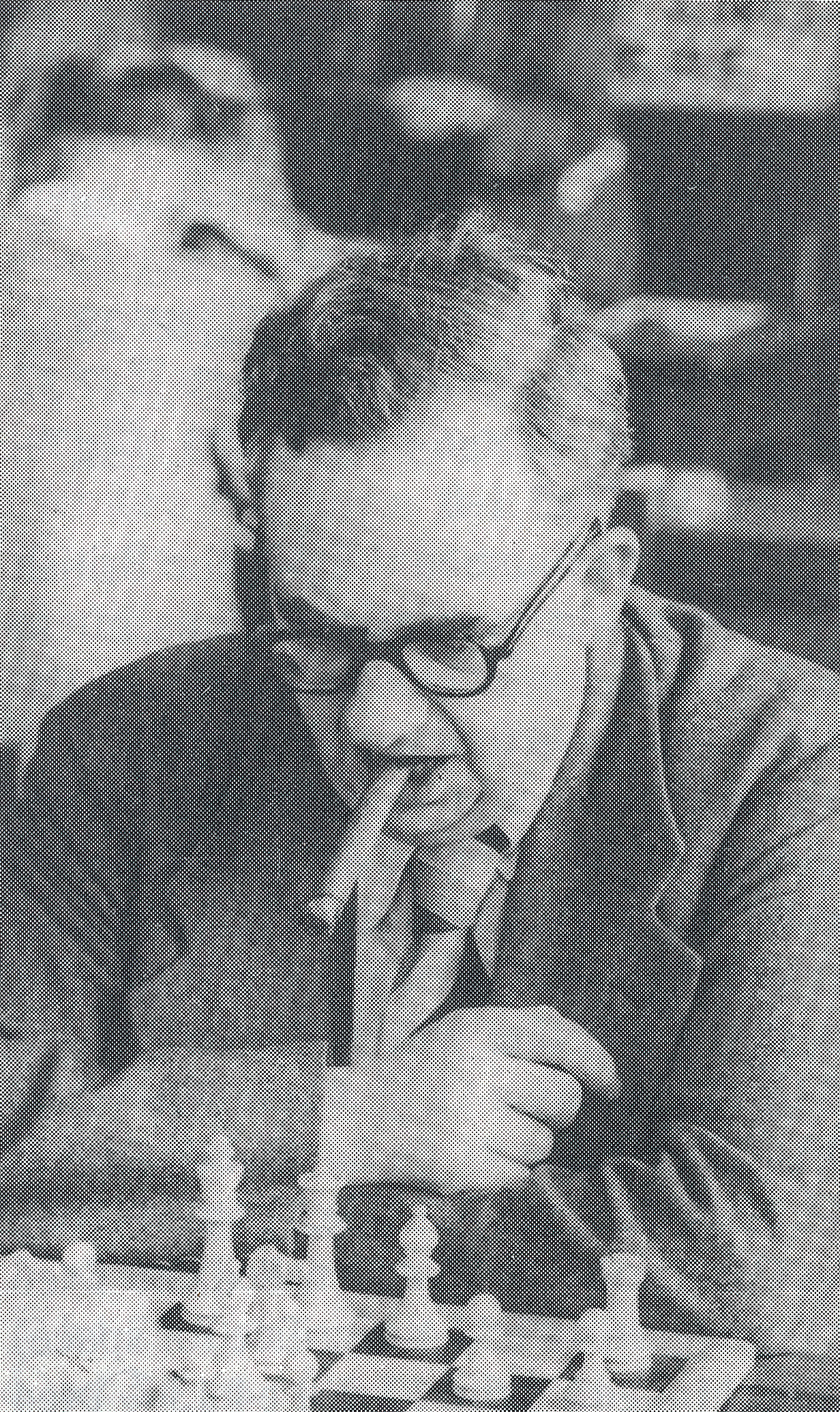
See his games at Chessgames.com

How to Teach Yourself Chess, Gerald Abrahams, D Van Nostrand Company, Inc, New York, 1950
Technique in Chess, Gerald Abrahams, George Bell & Sons Ltd., 1961,
Test Your Chess, Gerald Abrahams, Constable and co, 1963, ISBN 0 330 24336 5
The Pan Book of Chess, Gerald Abrahams, Pan, 1965, 10: ISBN 0330230735
Teach Yourself Chess, Gerald Abrahams, The English Universities Press Ltd, 1965,
Technique in Chess, Gerald Abrahams, Dover, 1973, ISBN ISBN 13: 9780486229539
Brilliance in Chess, Gerald Abrahams, Pitman Publishing, 1977, ISBN 10: 0273000349

Death Anniversary of Gerald Abrahams (15-iv-1907 15-iii-1980)

BCN remembers Gerald Abrahams who passed away in Liverpool on Saturday, March 15th 1980. He was buried in the Allerton Cemetery in the Jewish Springwood plot.

Gerald Abrahams was born in Liverpool on Monday, April 15th 1907.  On this day the Triangle Fraternity was formed at the University of Illinois at Urbana–Champaign.

His parents were Harry (b. 10th September 1880) and Leah (b. 12th March 1884) Abrahams (née Rabinowitz) who married in West Derby in the third quarter of 1903.

Gerald learnt chess at the age of ten during the first world war. He obtained an Open Scholarship to Wadham College, Oxford in 1925 reading PPE and earning himself an MA in Law in 1928. He became a practising barrister at Law.

From the 1939 register we learnt that Harry was a Drapery manufacturer and Leah carried out “unpaid domestic duties”. Gerald was not an only child: the first born was Winnie (b. 22nd November 1903) who was a Secretary and Clerk Typist and factory assistant. Elsie Abrahams (b. 14th April 1905) helped her mother with “unpaid domestic duties”. Blanche was Gerald’s older brother and he was “General Assistant In Fathers Business Drapery Manufacturer”. Gerald is listed (aged 32) as a Barrister at Law and author. The family resided at 51 Prince Alfred Road, Liverpool, Lancashire (now L15 6TQ) and their original property has been since replaced.

Historical map showing the 1939 residence of Gerald Abrahams

We learn from “Philanthropy, Consensus, and broiges: managing a Jewish Community A history of the Southport Jewish Community
by John Cowell” of an incident in January 1942 that was to cause ripples in the community. The headline was

POLICE RAID DISTURBS CLUB CARD PLAYERS

The full list of people present seems to have been largely or entirely Jewish in religion or ethnicity: it included a famous chess-playing barrister from Liverpool, Gerald Abrahams, representing himself, who had taken a First in P.P.E. at Oxford, and later married Elsie Krengel, who had also been present, and with Leslie Black representing the rest of the defendants, apart from the hosts and Captain Lionel Husdan, who sent a letter to the court.

The full list of those present, charged with “resorting and playing in a common gaming house,” and bound over was as follows:- Mott Alexander, Fannie Finn, Maxwell Glassman, Kate Lippa, Myer Lister, Gertrude Mannheim, Joseph Mannheim, Rita Mannheim, Simon Mannheim, Harry Peters, Sadie Peters, Lily Leah Ross, Harry Sapiro, Benjamin Stone. Those charged with “resorting in a common gaming house” and bound over, were:- Gerald Abrahams, Joseph Appleton Bach, Samuel Myer Barnett, Herbert Solomon Isaacson, Elsie Krengel, Manuel Mannheim, Louis Michaelson, Abraham Ross, Bernard and Elsie Ross.

“Gerald Abrahams, the barrister charged, said he was interested to protect his reputation from being stigmatised by a conviction, and asked Sergeant Laycock about alcohol: the latter replied that none was being consumed. He submitted that the club was not a gaming house, and that draw poker had not been proved other than as a game of skill. Charges were dismissed against Henry, Eva and Marjorie Black, Myer Waldman, and Captain Lionel Husdan, of Ryde, Isle of Wight, all of whom had said that they were merely taking refreshments in the club, and had not played. David Platt said that he had not the slightest idea that they were breaking the law, and Mrs Platt said that it had not been a paying venture.”

The Complete Chess Addict (Faber& Faber, 1987), Fox & James notes: that Gerald Abrahams as authority on bridge cast doubt on assertions that Emanuel Lasker “was good enough to represent Germany”

Gerald’s comparisons of chess and bridge are discussed by Edward Winter in Chess Facts and Fables (McFarland, 2005) page 130 in GAs 1962 book Brains in Bridge:

Brains in Bridge, Gerald Abrahams, Constable and Company, 1962, ISBN ?

Gerald eventually married Elsie Krengel (born 15th January 1909) in the fourth quarter of 1971 in Liverpool at the age of 64. Elsie had lived in the Southport area for most of her life and her family was associated with the manufacture of handbags.  They had known each other for many years (at least since 1942 as mentioned previously).

Gerald Abrahams
Gerald Abrahams

Leonard Barden modestly recounts :

“At the end of Nottingham 1954  Gerald claimed that Alan Phillips had accepted his draw offer so tieing Gerald for the British championship with some rabbit whose name escapes me.  When Phillips strongly denied having accepted the draw, Gerald collapsed on the floor and had to be aided by his old enemy Dr. Fazekas.”

From The Anglo-Soviet Radio Chess Match (1946) by Klein and Winter:

“G. Abrahams was born in Liverpool in 1907. He learned chess at the age of ten, and showed an early aptitude for tactical complications. He has played with varying success, his best performances being third and fourth with Rossolimo, behind Klein and Najdorf, but head of List at Margate, 1938, and fourth, fifth and sixth with Sir George A. Thomas and König in London, 1946. He has made two valiant bids for the British Championship.

A graduate of Oxford, he is a barrister by profession and has written several books, including some fiction. He has solidified his chess without allowing it to become dry. Indeed, most of his games sparkle with interesting complications.”

Harry Golombek OBE wrote (in The Encyclopaedia of Chess (Batsford, 1977)):

“Brilliant British amateur who in the 1930s was playing master-chess. In that period he was the most dangerous attacking player in England.

Gerald Abrahams watching the opening at the Hastings Chess Congress 1947. Also watching is Sir George Thomas who was GAs round one opponent. The Mayor was Alderman W. J. Fellows and he is opposite Sir Edmund McNeill Cooper-Key. Second from left is Percy J. Morren who was the Hasting's Club President
Gerald Abrahams watching the opening at the Hastings Chess Congress 1947. Also watching is Sir George Thomas who was GAs round one opponent. The Mayor was Alderman W. J. Fellows and he is opposite Sir Edmund McNeill Cooper-Key. Second from left is Percy J. Morren who was the Hasting’s Club President

He was in the prize-list (i.e. in the first four) in the British championship on three occasions 1933, 1946 and 1954. His best international performance was in the Major Open at Nottingham in 1936 where he came =3rd with Opocensky. Another fine result was his score of 1.5-0.5 against the Soviet Grandmaster Ragozin, in the 1946 Anglo-Soviet radio match.

He is the inventor of the Abrahams variation in the Semi-Slav Defence to the Queen’s Gambit: 1.P-Q4, P-Q4;2.P-QB4, P-QB3;3.N-QB3, P-K3;4.N-B3, PXP;5.P-QR4, B-N4;6.P-K3,P-QN4;7.B-Q2, P-QR4; 8.PxP, BxN;9.BxB,PxP;10.P-QN3,B-N2;

This is sometimes known as the Noteboom variation after the Dutch master who played it in the 1930s, but Abrahams was playing it in 1925 long before Noteboom.

He is a witty and prolific writer on many subjects: on law (he is a barrister by profession), philosophy, and chess; he also writes fiction. His main chess works are: The Chess Mind, London 1951 and 1960

The Chess Mind, Gerald Abrahams, The English Universities Press, 1951, ISBN 0 340 19492 8

and here is a later cover:

The Chess Mind, Gerald Abrahams, The English Universities Press, 1951, ISBN 0 340 19492 8

and Not Only Chess, London 1974.

Not Only Chess, Gerald Abrahams, George Allen & Unwin Ltd., 1974, ISBN 0 04 794005 0

Edward Winter in Kings, Commoners and Knaves, cites the subtitle of the above book in his page 235 list of chessy words: “A selection of Chessays”.

From Not Only Chess we learn that GAs favourite game was played in 1930 against Edmund Spencer of Liverpool. “Edmund Spencer was a man who is remembered with affection by all players who ever met him, and who is remarkable in that his strength developed in what should have been hid middle life. When he died, lamentably early, in the 1930s, at about 53 he was at his best, and of recognised master status.

This game was played in 1930.”

and for an alternative view of the same game:

GA is amongst a rare breed of game annotators claiming the title of An Immortal for one of his own games. Edward Winter devotes a couple of column inches discussing exactly which year the game was played between 1929 and 1936. Here is the game:

For more of GAs excellent games see the superb article further on by Steve Cunliffe. Also, Not Only Chess in Chapter 28 (“A Score of my Scores”) contains a veritable feast of entertaining games of GAs).

Gerald famously fell out with Anne Sunnucks when he discovered she had omitted him from her 1970 Encyclopaedia of Chess. Despite this the 1976 edition was also devoid of a mention.

From The Oxford Companion to Chess (OUP, 1984 & 1996), Hooper & Whyld:

“The English player Gerald Abrahams (1907-80) introduced the move when playing against Dr. Holmes in the Lancastrian County Championship in 1925 (ed: January 31st in fact) . Abrahams played the variation against his countryman William Winter (1898-1955) in 1929 and in the same year Winter played it against Noteboom, after whom it is sometimes named. (Dr, Holmes was the favourite pupil of Amos Burn and a leading ophthalmologist).

Gerald Abrahams
Gerald Abrahams

The precursor, known from a 16th-century manuscript, was published by Salvio in 1604:

1.d4 d5;2.c4 dxc4;3.e4 b5;4.a4 c6;5.axb5 cxb5;6.b3 b4;7.bxc4 a5; 8.Bf4 Nd7;9.Nf3

Writing in 1617, Carrera made his only criticism of Salvio’s analysis in this variation. He suggested 8…Bd7 instead of 8…Nd7, or 9.Qa4 instead of 9.Nf3. Salvio nursed his injured pride for seventeen years and then devoted a chapter of his book to a bitter attack on Carrera. The argument was pointless: all these variations give White a won game.”

GA famously wrote :

Chess is a good mistress, but a bad master

and also

The tactician knows what to do when there is something to do; whereas the strategian knows what to do when there is nothing to do.

and

In chess there is a world of intellectual values

and

Good positions don’t win games, good moves do

and

Why some persons are good at chess, and others bad at it, is more mysterious than anything on chess board.

In the recently (February 25th, 2020) published “Attacking with g2 – g4” by GM Dmitry Kryakvin writes about Abrahams as follows :

“It is believed that the extravagant 5.g2-g4 was first applied at a high level, namely in the British Championship by Gerald Abrahams. Abrahams was a truly versatile person – a composer, lawyer, historian, philosopher, politician (for 40 years a member of the Liberal Party) and the author of several books. Of his legal work, the most famous is the investigation into the murder of Julia Wallace in 1931 in Liverpool, where her husband was the main suspect. As an alibi, William Herbert Wallace claimed he was at a chess club. Dozens of books and films have been devote to the murder of Mrs. Wallace – indeed, this is a script worthy of Arthur Conan Doyle or Agatha Christie!

Gerald Abrahams by Lafayette (Lafayette Ltd), whole-plate film negative, 21 August 1933
by Lafayette (Lafayette Ltd), whole-plate film negative, 21 August 1933

Abrahams played various card games with great pleasure and success, but the main passion of the Liverpool resident was chess. Abrahams achieved his greatest success in the championships of Great Britain in 1933 and 1946, when he won bronze medals. The peak of his career was undoubtedly his participation in the USSR-Great Britain radio match (1946) where on the 10th board Abrahams beat Botvinnik’s second and assistant grandmaster Viacheslav Ragozin with a score of 1.5-0.5

Gerald Abrahams had a taste of studying opening theory, and made a distinct contribution to the development of the Noteboom Variation, which is often known as the Abrahams-Noteboom.

Ten years after he introduced the move 5.g2-g4 to the English public (1953), the famous grandmaster Lajos Portisch brought it into the international arena.”

Gerald Abrahams
Gerald Abrahams

Gerald was also a keen studies composer. Here are some examples of his work:

Gerald Abrahams, 1923

1/2-1/2

Solution: 1. Ra3! Ra3 […a1=q;2.Ra1 Ba1;3.d7 Kf7;4.d8=q];2.e8=q a1=q;3.Qd7

and

Gerald Abrahams, 1924

1-0

Here is an interesting article by Tim Harding on the naming of the Abrahams-Noteboom Variation of the Semi-Slav Defence

Here is an article about GA and a blindfold exhibition

Gerald Abrahams contributed to opening theory in the Queen’s Gambit Declined / Semi-Slav Defence with his creation of the Abrahams-Noteboom Defence as discussed in the following video :

Here is a nine page article (Gerald Abrahams – Talent without Discipline) written by Steve Cunliffe that appeared in British Chess Magazine, Volume CVIII (1988), Number 7 (July), pp. 292-300:

British Chess Magazine, Volume CVIII (1988), Number 7 (July), pp. 292
British Chess Magazine, Volume CVIII (1988), Number 7 (July), pp. 293
British Chess Magazine, Volume CVIII (1988), Number 7 (July), pp. 294
British Chess Magazine, Volume CVIII (1988), Number 7 (July), pp. 295
British Chess Magazine, Volume CVIII (1988), Number 7 (July), pp. 296
British Chess Magazine, Volume CVIII (1988), Number 7 (July), pp. 297
British Chess Magazine, Volume CVIII (1988), Number 7 (July), pp. 298
British Chess Magazine, Volume CVIII (1988), Number 7 (July), pp. 299
British Chess Magazine, Volume CVIII (1988), Number 7 (July), pp. 300

Here is his Wikipedia entry
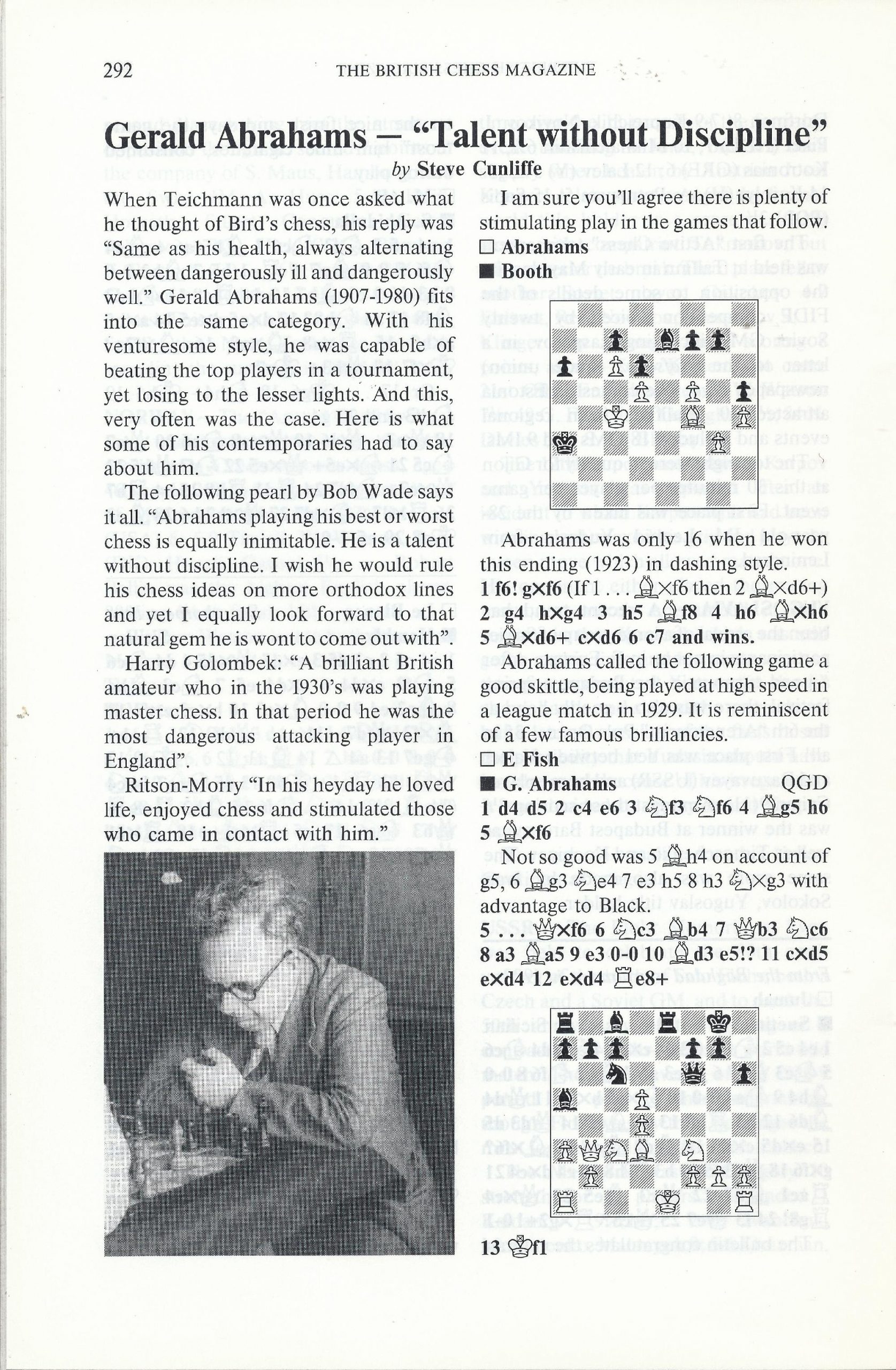
See his games at Chessgames.com

How to Teach Yourself Chess, Gerald Abrahams, D Van Nostrand Company, Inc, New York, 1950
Technique in Chess, Gerald Abrahams, George Bell & Sons Ltd., 1961,
Test Your Chess, Gerald Abrahams, Constable and co, 1963, ISBN 0 330 24336 5
The Pan Book of Chess, Gerald Abrahams, Pan, 1965, 10: ISBN 0330230735
Teach Yourself Chess, Gerald Abrahams, The English Universities Press Ltd, 1965,
Technique in Chess, Gerald Abrahams, Dover, 1973, ISBN ISBN 13: 9780486229539
Brilliance in Chess, Gerald Abrahams, Pitman Publishing, 1977, ISBN 10: 0273000349

Life Begins at Eighty Six (!) for IM James T Sherwin

IM James T Sherwin
IM James T Sherwin

Veteran IM James T Sherwin (FIDE 2231) brought home possibly the most pleasing result of the 2019 British Championships in Torquay.

Infamously featured in game one of Bobby Fischer’s Sixty Memorable Games, James has been resident in the London area for many years specialising in rapidplay events such as the Richmond and Golders Green series of rp tournaments.

FM Andrew Lewis
FM Andrew Lewis

James and FM Andrew Lewis (somewhat less that 86!) tied first equal in the orange lit Forum area of the Riviera Centre with 7.5/9 with James beating Gerald Moore (FIDE 2132) in the final round whereas Andrew (FIDE 2283) drew with Josiah Haynes (2132).

Well done James and Andrew !