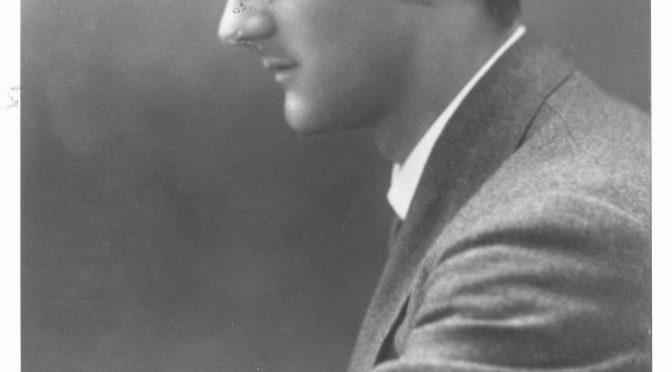
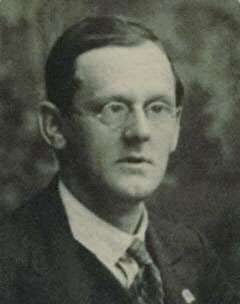
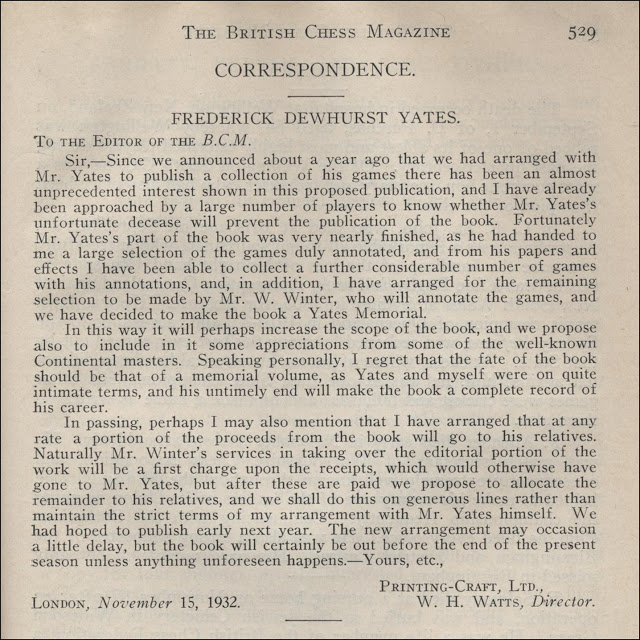
We remember Fred Yates who passed (or, at least was recorded as passing) on Friday, November 11th, 1932.
Fred (not Frederick) Dewhirst (not Dewhurst) was born in Birstall, Leeds on Wednesday, January 16th 1884, the same year as Harry S Truman and Eleanor Roosevelt.
An obituary appeared in Volume LII (52, 1932), Number 12 (December), pp.525-528 of the British Chess Magazine by PW Sergeant :
“The chess world has had many heavy bereavements during the year which is coming to an end; but to the British section of it there has been no bereavement like the last, which robbed it of F.D.Yates, when still in the prime of his chess career. The circumstances of his end were tragic. On the night of Tuesday, November 8th, he gave a very successful exhibition at Wood Green, only dropping one half-point in 16 games. On the following night he was in the company of a chess friend until fairly late, and then went back to his room in Coram Street, Bloomsbury. He was never seen alive again. It was not until Friday morning that anxiety was felt at Coram Street as to what he might be doing; for he was in the habit of secluding himself for many hours at a stretch when busy with work.
On Friday, however, when no answer could be got to knocks on the door of his room, which was locked, and a smell of gas was noticed, the door was at last broken open, and he was found dead in bed.
It came out at the inquest before the St. Pancras coroner on November 15 that , though the gas-taps in the room were securely turned off, there had been an escape from what a gas companies official described as an obsolete type of fitting attached to the meter in the room. The meter, it appears, was on the floor, and the fitting must have been accidentally dislodged. A verdict was recorded of Accidental Death; and the coroner directed that the gas-pipes from the room should remain in the custody of the court. The body was conveyed to Leeds for burial on the morning of November 16.
So prematurely passed away one who may with justice be called one of the finest exponents of British chess, and an international master whose strength was recognised all over the world.
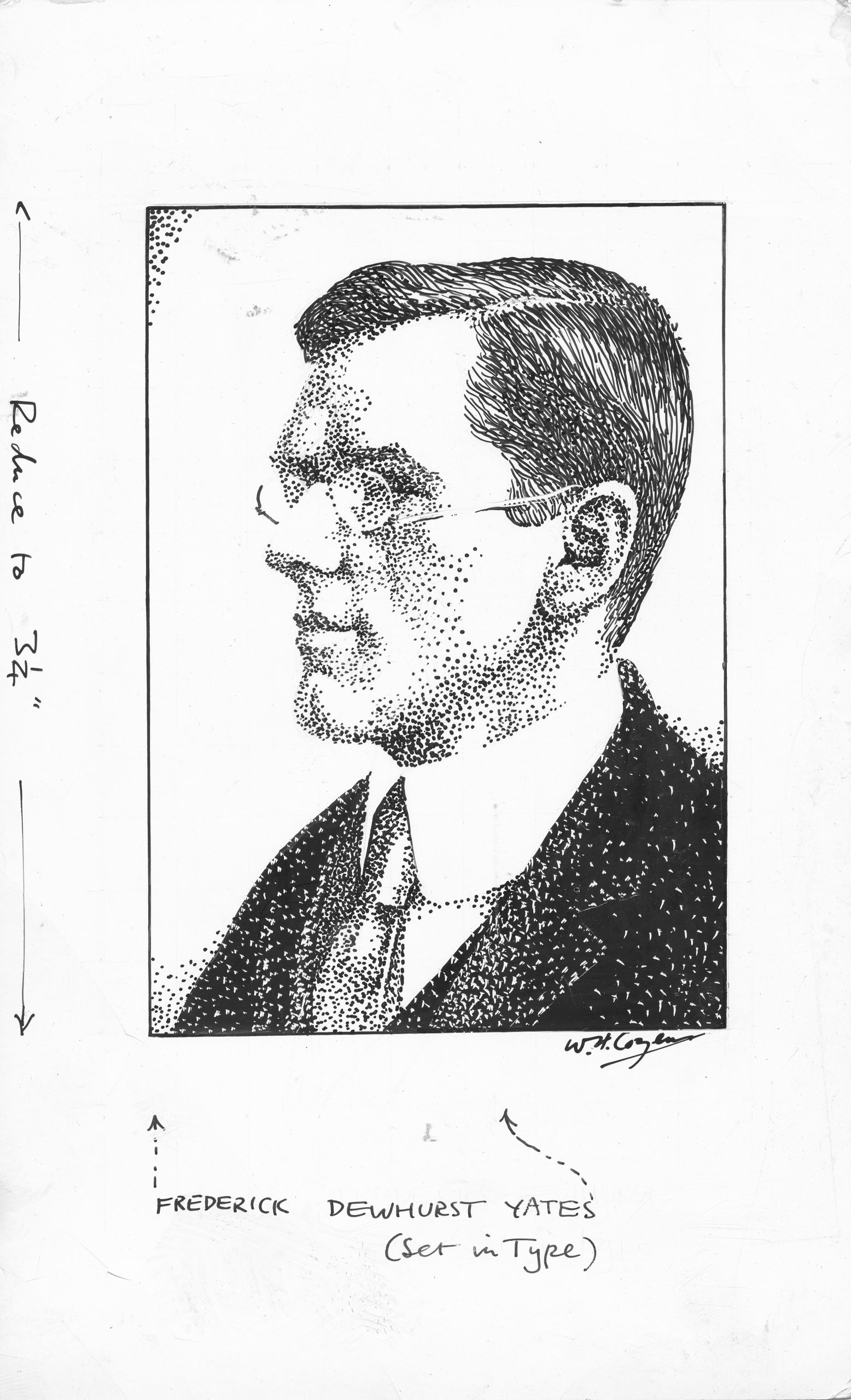
Frederick Dewhurst (sic) was born at Birstall, near Leeds, on January 16, 1884. He did not develop his chess power very young, at the B.C.F. congress at the Crystal Palace in 1907 only playing in the Second Class, though he then won first prize in one of the two sections. At Tunbridge Wells next year he tied for fourth place in a section of the First Class. He was admitted to the British Championship at Scarborough in 1909 (in which year he was Yorkshire Champion), and there tied with Blackburne for fourth and fifth prizes, after HE Atkins, JH Blake, and W. Ward.
In the same event at Oxford in 1910 he again tied with Blackburne, but this time for second and third prizes, Atkins being first, though losing in his individual encounter with Yates. In 1911, at Glasgow, Yates still further improved his position, this time tieing with Atkins for first place; but in the tie-match Atkins won somewhat easily.
Atkins stood down for the first time at Richmond in 1912; but the success of RC Griffith left Yates second, in company with the late HG Cole. At last in 1913, Yates gained his ambition, and at Cheltenham won the British Championship with the fine score of 9 out of a possible 11, 1.5 points above J. Mahood and 2 above Blackburne. In the ruined Congress at Chester in 1914 he tied for first place with Blackburne; and, as Blackburne was unable to play a deciding match, Yates won his second championship.
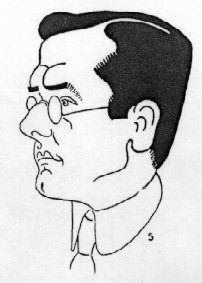
Since the War he gained the title again in 1921, 1926, 1928 and 1931, thus making a record of six championships, second only to Atkin’s record of nine (ed : in 1969 at the Rhyl Congress Jonathan Penrose OBE was to surpass Atkins record by one.)
Yate’s six victories were gained in sixteen attempts In addition must be mentioned his success in the Hastings tournament, in the New Year of 1921, for holders of the British Championship only.
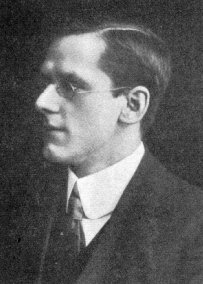
His other successes in this country, including his two wins in the in the Anglo-American cable match, in 1910-11, need not detain us; for limitations of space demand that we shall come to Yates as an international master. His first essay was at Hamburg in 1910, on the invitation of the German Chess Federation. Though he did badly, only getting one win in 16 games, the win was a remarkable effort, at the expense of no less a celebrity than Dr. Tarrasch.
At Pistyan two years later he did a little better. He had to wait until after the War for a third attempt; but it will be best to give what we believe to be a full record of his performances in international event:- (to be added).
These lists, however, furnish no just view of the strength of Yates’s play, which always was most fully exhibited against the leading competitors in tournaments. Among his triumphs must be noted his particularly his wins against Alekhine at Hastings, 1922, and Carlsbad 1923 (a brilliancy prize game); against Euwe, Scarborough, 1928; against Nimzowitsch , Carlsbad, 1929; against Bogoljuboff, London, 1922, and Baden-Baden, 1925; against Tartakover, Hastings and Kecskemet, 1927; against Kmoch and Rubinstein, Budapest, 1926; against Spielmann and Vidmar, San Remo, 1930; and his draws with Alekhine and Capablanca at New York, 1924. The harder the opposition, the better his play. Conversely, against what should have proved easier opponents he was apt. at times, to show less of his skill. In this, of course, he was not peculiar, even among the experts.
Generally speaking, however, he was a remarkably tenacious player, who would not abandon a game while there was the slightest chance of a win or a draw. This was not due to mere obstinacy, as may sometimes have appeared, but to the depth of his vision, which gained for him among the German commentators the title of ein tiefe Denker(ed : a deep thinker) – no small testimony from those from whom it came. With a robuster physique there is no knowing to what a position he might have attained in the chess world. The late Amos Burn always had the highest opinion of is powers, and always pointed out, too, the handicap under which a player labours who has to report the events in which he takes part – equivalent, he would say, to giving the other competitors Pawn and move!
Yates was unfortunate in embracing professionalism in an era when the rewards were becoming less and less, and finally reached a stage when they scarcely provided the means of a bare existence. He was a fine simultaneous player, whose exhibitions always delighted by their combination of speed, precision and flashes of brilliance.
As commentator he was very good indeed, and his contributions, especially to The Manchester Guardian, where noted alike for their accuracy and for a sense of style.
He had a journalistic training, outside chess. He was not, in fact, ‘a mere chessplayer’, in spite of his intense devotion to the game. It was his extreme reticence which gave such an impression to all but those whom he admitted to intimacy. They at least knew his widespread interest in other things; and W. Winter’s recent tribute to him in the Guardian in no way exaggerates his charm as a companion among those who knew him best. To them his loss is one which cannot be replaced.”
An Appeal
No doubt all chessplayers in England will have read with sorrow of the death of F.D.Yates at the early age of 46, and more especially will the circumstances of it be a shock to many.
An inquest was held, as has already been reported, and was attended by his two sisters, who have practically no means, as was the case of Yates himself. Certain chessplayers who attended the funeral agreed to make themselves responsible for the funeral expenses, but as the body was removed to Birstall in Yorkshire for burial in the family grave, the expenses were considerably heavier than was anticipates and, with the money owing to the landlady, comes to a total of £51 2s and 0d.
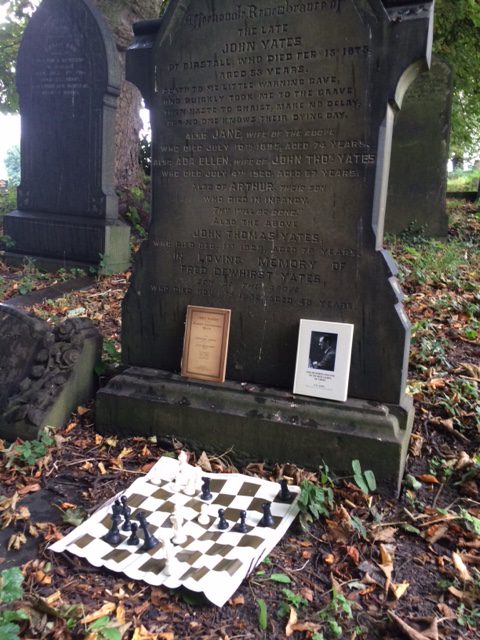
We feel quite sure that when our readers know, they will like to show their last recognition of the value which F.D.Yates was to English chess by giving a donation towards the sum.
The London Chess League, whose finances are not in a very satisfactory state, as in the case of most chess concerns, has agreed to donate £3 towards this. Their president has given £1 1s 0d., and one or two other members have promised donations. We shall be happy to receive any contributions towards this fund, and will give acknowledgment in future issues.”
Here is an in-depth article by Edward Winter in Chess Notes on the circumstances of FDYs death.
Here is a more modern article by Matthew Sadler
From The Oxford Companion to Chess (OUP, 1984) by Hooper and Whyld :
“English player. British Champion 1913,1914,1921,1926,1928, and 1931, Around 1909 he gave up his profession in accountancy to become a chess professional. Of the many international tournaments in which he competed from Hamburg 1910 to Hastings 1931—2 he made his best results in the B Final, Kecskemet 1927, first (+4=2-1) equal with Tartakower, and at San Remo 1930, the strongest tournament of the year, when he came fifth after Alekhine,, Nimzowitsch, Rubinstein, and Bogoljubow ahead of Spielmann,
Vidmar, and Tartakower.
A tenacious player, he could be a dangerous opponent. In tournament play he defeated most of the greatest masters of his time on one occasion or another, and among these victories were two defeats of Alekhine (Hastings 1922, Carlsbad 1923), and three defeats of Bogoljubow (London 1922, Baden-Baden 1925, Scarborough 1927) and Rubinstein (London 1925, Moscow 1925, Budapest 1926), A careful and conscientious writer, he conducted a chess column in the Yorkshire Post, was chess correspondent of the Manchester Guardian , and wrote three books (see foot of article) in collaboration with William Winter (1898-1955).
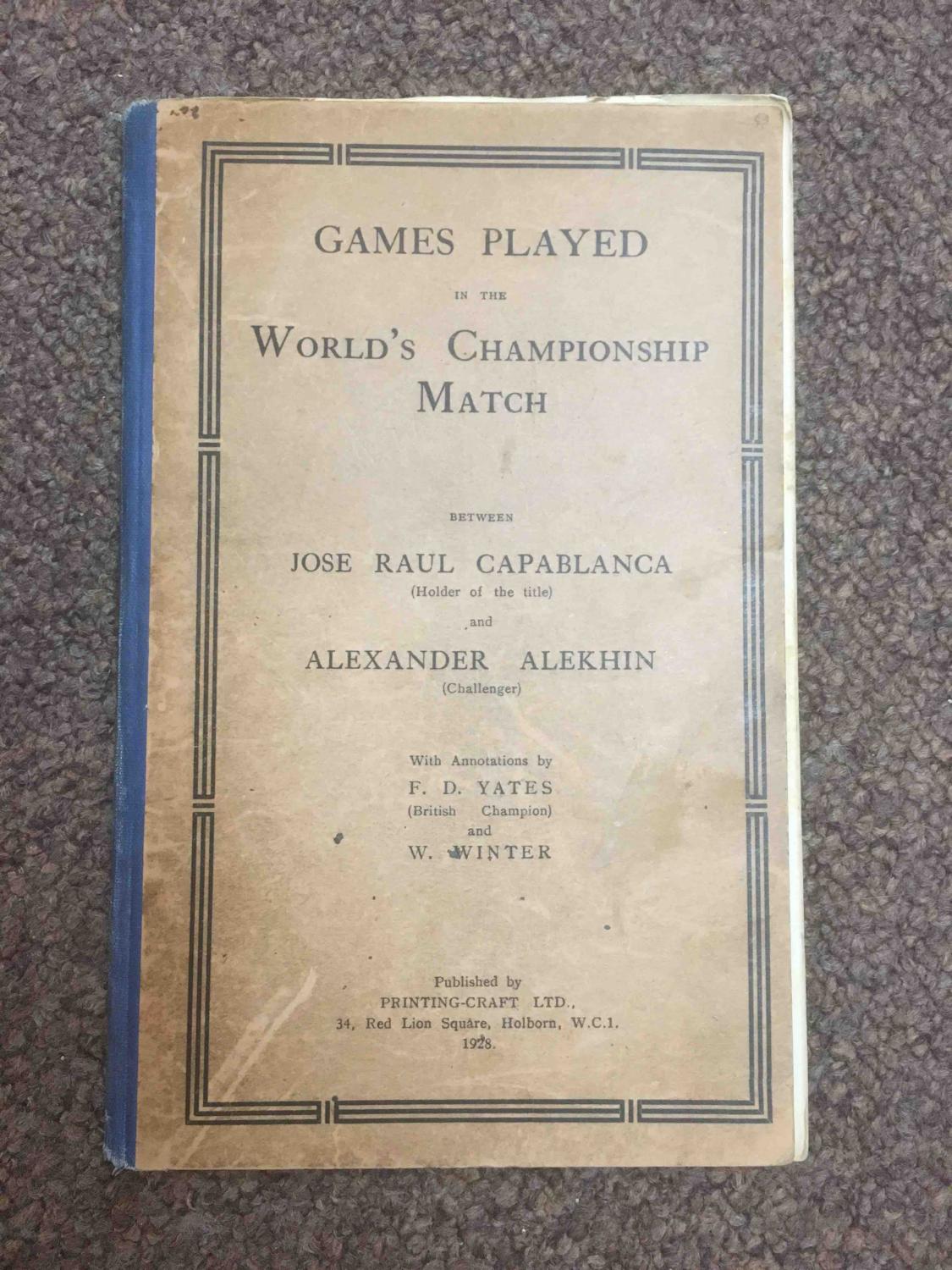
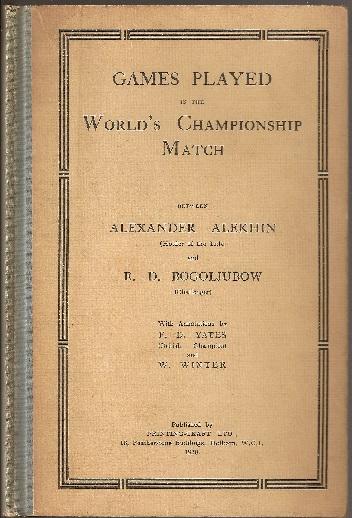
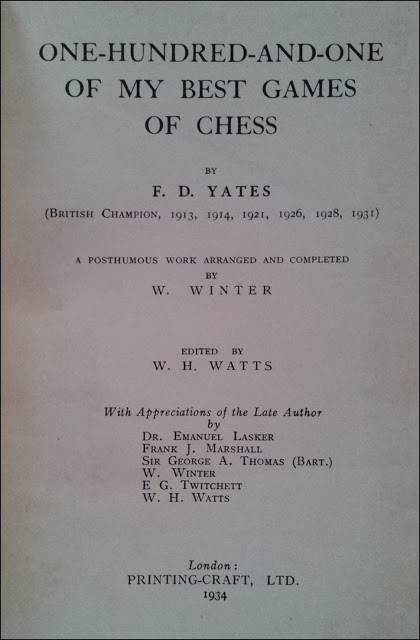
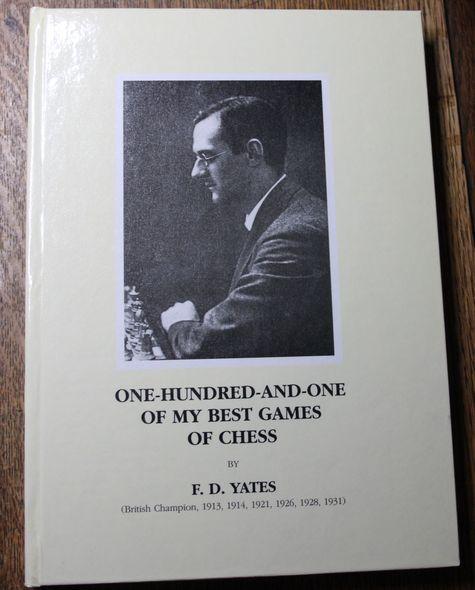
A leak from a faulty gas pipe connection killed Yates while he was asleep. His book One-hundred- and-one of My Best Games of Chess was published in 1934.”
From The Encyclopedia of Chess (Robert Hale, 1970 & 1976)by Anne Sunnucks :
“International Master and British Champion in 1913, 1914, 1921, 1926, 1928 and 1931.
Born in Birstall, near Leeds in Yorkshire, on 16th January 1884, Yates was 25 before he played in the British Championship for the first time. In 1909, having won the Yorkshire Championship, his entry was accepted for the British Championship at Scarborough, and he tied with Blackburne for 4th prize. The following year he again tied with Blackburne, this time for 2nd prize, and in 1911 he tied with Atkins for 1st prize but lost the play-off for the title. In 1913, he succeed in winning the British Championship for the first time.. During his career he competed in the British Championship 16 times and won the title on six occasions.
In International tournaments his record did not do him justice as far as his final placings were concerned. However, in studying his performance in detail, his wins were often against the strongest players and his losses against those at the bottom of the tables. This was particularly apparent in the results of the 1926 Budapest tournament.
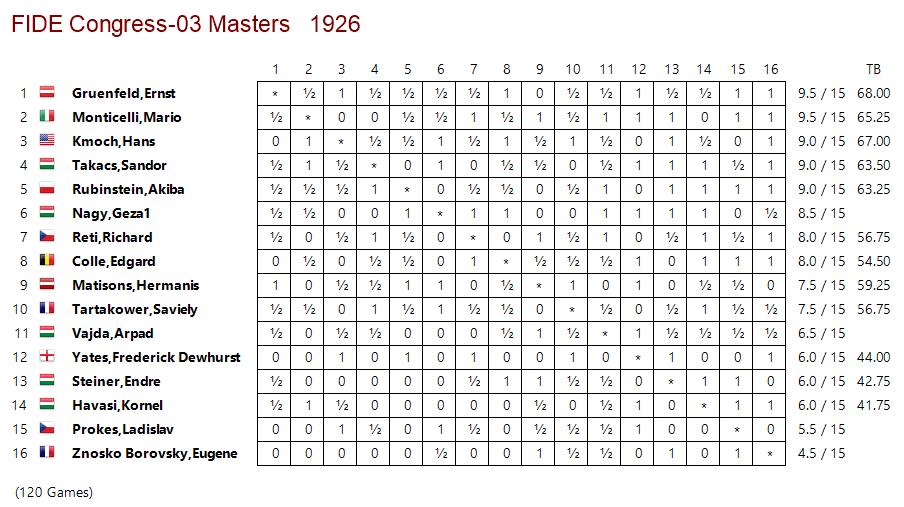
During the course of his career, Yates beat practically every contemporary Grandmaster, with the exception of Lasker and Capablanca. His victory over Alekhine at Carlsbad 1923 came at the end of a combination 18 moves deep and won the brilliancy prize, while his victory over Vidmar at San Remo in 1930 was described by Alekhine as the finest game played since the war.
Other outstanding wins were against Bogoljubow at London 1922, against Rubinstein at Budapest 1926, against Tartakover at Hastings 1927, against Euwe at Scarborough 1928 and against Nimzowitsch at Scarborough 1929. The stronger the opposition the better Yates played.
His losses against weaker players may well have been due to ill-health and lack of necessary stamina to play consistently throughout a long tournament. He was continually troubled by a hacking cough and could not afford to carry out the medical advice that he should go to the Riviera for a cure.
He was a professional chess player at a time when it was difficult to make a livelihood out of chess and he was often handicapped by having to report an event in which he was playing. A number of his contemporaries believed that, had he lived in different circumstances his talent would have placed him among the contenders for the World Championship.
For some years Yates ran the chess column for The Manchester Guardian. He was co-author with Winter of Modern Master Play and of books on the Capablanca vs Alekhine and Alekhine v. Bogoljubov World Championship matches.
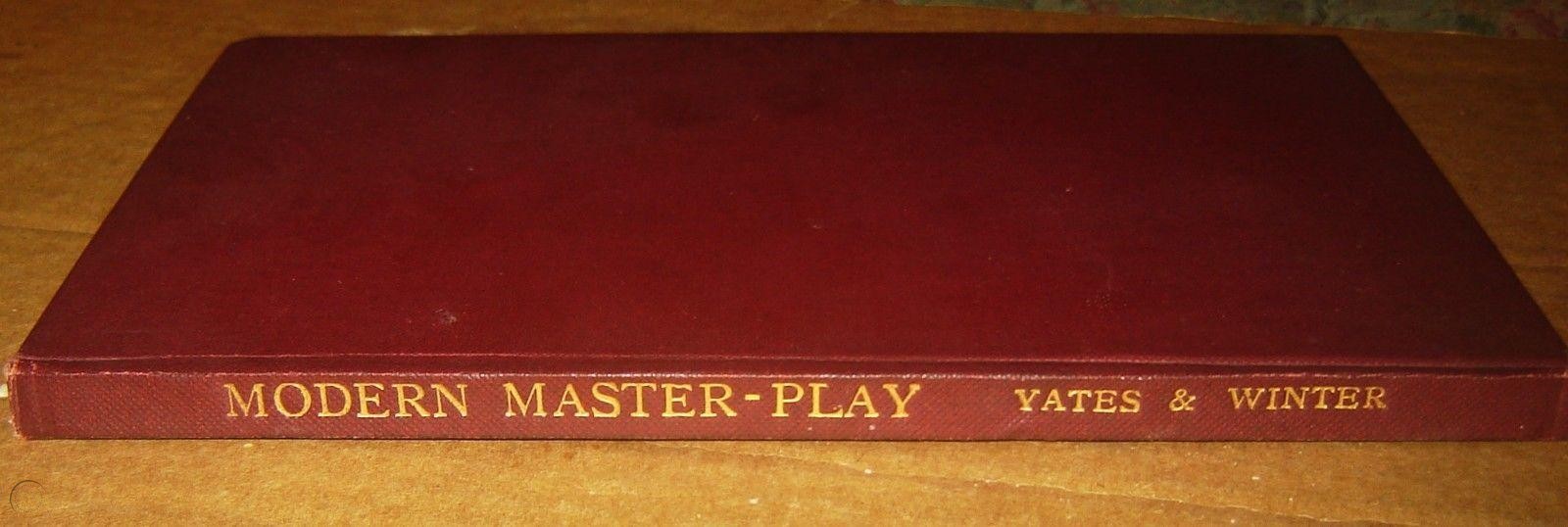
Yates had a great number of interests apart from chess and had a very versatile mind which enabled him to talk on a wide range of subjects. He was extremely modest and rarely kept the scores of his games and never submitted them to the press.
He died in tragic circumstances, On 11th November 1932, he was found dead in his bedroom from gas poisoning. At the inquest it was established that there was a faulty connection in the gas meter in his room and a verdict of accidental death was returned.”
From The Encyclopedia of Chess (Batsford, 1977) by Harry Golombek:
“A British master. Yates trained as an accountant but in 1909 abandoned this career in favour of chess and journalism. In 1911 he tied for first prize with Atkins in the British Championship losing the play-off match. Two years later he won the event – the first of six such victories (1913, 1914, 1921, 1926, 1928 and 1931).
In international tournaments Yate’s results were generally mediocre, but he was capable on occasion of defeating the strongest opposition and his victims included Alekhine, Reti, Bogoljubow, Tartakower, Rubinstein, Euwe, Nimzowitsch and Vidmar. He was a regular competitor at the Hastings Christmas Congresses, winning in 1920/1 and finishing in 3rd place on four occasions: 1923/4, 1924/5, 1926/7 and 1929/30.
Yates was for many years the chess correspondent of The Manchester Guardian and, in addition, wrote Modern Master Play, London, Philadelphia 1929 (with W. Winter as co-author) and books of the 1927 Capablanca-Alekhine, London 1928, and the 1929 Alekhine-Bogoljubow World Championship matches, London, 1930.
He died from being accidentally asphyxiated in his rooms by a faulty gas connection.”
In the March issue of CHESS for 1963, (Volume 28, Number 427, pp.147-155) William Winter wrote this:
The genius of F. D. Yates
I use the words ‘one of the most talented chess players’ advisedly. I have known personally all the world champions of my time, as well as most of the principal challengers, and I have no hesitation in saying that, at his best, he displayed a chess genius second to none. His victory over Vidmar at San Remo was described by Alekhine in 1931 as the finest game played since the war, and his win against Alekhine himself at Carlsbad is in the same category. The final combination here is eighteen moves deep. There are other games nearly as good and I am quite sure that had Yates been born a Soviet player, encouraged to develop his natural genius along proper lines, he would have been a close challenger for the world title ! Even I never knew the number of great games Yates had played until I came to write his Memorial Book. He was one of those modest souls who never kept the scores of his games and never submitted them to the press, so the only way I could get hold of many true masterpieces was to delve them out of continental magazines and tournament books.
One of the noticeable things about his play was that it took the best opposition to get the best out of him. While the tournament scores of most players are built up on points below them in the list, with Yates the reverse was often the case. I remember in particular one tournament at Budapest in 1926 when his score was made up almost entirely of wins against those above him. Rubinstein, Reti, and Tartakover were among his victims on that occasion and, at one time or another, he secured the scalp of every contemporary grand master. excepting Lasker and Capablanca. He. always played particularly well against Alekhine who once told me he was always relieved when his game with Yates was over. I was not surprised. Alekhine actually lost twice and in several others had hairbreadth escapes.
One of the principal reasons for Yates’ inconsistency was the fact that he was continually troubled by a hacking cough aggravated during the winter by the long cold journeys he had to take in the course of the exhibition tours which formed his means of livelihood. He was medically advised that a winter spent on the Riviera would probably effect a cure, but of course Yates was only an English chess genius and he could not afford it. “Couldn’t afford it.” Of how many hopes and human aspirations have these words sounded the death knell. There is scarcely one of us who, at some period of his or her life has. not found a cherished ambition frustrated by them. That is why I always laugh when I see the way of life in capitalist countries described as free. Until economic obstacles to human aspirations are removed, the words, couldn’t afford it’ deleted from the language, and man permitted to develop his natural attainments without let or hindrance, it is farcical to talk about freedom. Compared with this it is surely of little importance that we have the right to choose which press Lord we allow to poison our minds, or to put a cross opposite the name of Tweedledum or Tweedledee on a ballot paper.
Chill penury
Yates certainly is a striking example of one who was precluded from real greatness by economic sanctions. None the less he left a fine reputation behind him. He won the British Championship on six occasions and on the international field won a number of high. prizes. Lasker rightly described him as Blackburne’s legitimate successor. Of Yates the man I have already given my opinion and there is no need to say any more of his high principles or his hatred of cruelty or meanness in any form, but I cannot leave the subject without drawing attention to the extraordinary versatility of his mind. He seemed to have read something of every subject and assimilated what he had read so that he could talk entertainingly on them all.
Had crossword puzzles been fashionable in his days he would have been a first class solver. From 1926 to his death in 1932 he and I lived on the terms of the closest intimacy and I learned much from him, particularly in the line of chess literature and journalism. I have already spoken of our work for the Manchester Guardian. We also wrote three books together, the Alekhine-Capablanca and the Alekhine-Bogolyubov match books, and a more ambitious work, Modern Master Play, in which we presented profiles of the leading players of the day with annotated examples of their best games. What impressed me most about this work was the meticulous care with which he used the English language. As a writer I had always been satisfied as long as I could find words to express my ideas, but Yates wanted far more than that and I was sometimes slightly irritated by the time he took to formulate a single sentence. I never knew him spend a whole morning putting in a comma and an afternoon taking it out again, but I can quite imagine him doing it. Such literary style as I do possess owes a great deal to him.
Shock of his death
During the six years we were associated he was more like an older brother than a friend and it took me a very long time to recover from the shock when, in the Gambit Café, I heard the terrible news that he had been found dead in his bedroom from the effects of gas poisoning. I had seen him two nights before when we made plans for a new book on the lines of Modern Master Play, dealing with the younger masters of the day.
An exhaustive enquiry was held by one of the most experienced coroners in London and it was conclusively proved that death was due to a faulty gas fitting. Wynne-Williams, Yates’s pupil whom he had been teaching on the very night of his death, gave evidence of his cheerful demeanour, and the Coroner went out of his way to state categorically that this was a case of a tragic accidental death. In spite of all this some of the vile calumniators I have mentioned before, who are always seeking for slime to throw at their betters, sank so low as to suggest that Yates committed suicide. I have even heard the report quite recently. No fouler lie could possibly be invented to smirch the memory of a courageous and noble man.
From Wikipedia : (https://en.wikipedia.org/wiki/Frederick_Yates_(chess_player))
“Yates almost won the British Championship in 1911, when he tied for first place with Henry Atkins, but lost the play-off. He went on to secure the title in 1913, 1914, 1921, 1926, 1928 and 1931
Despite considerable domestic success, his record in international tournaments did not do him justice. Often the winner against his strongest opponents, he would then lose to those at the bottom of the table. This was particularly apparent at the Budapest tourney of 1926.
His lack of consistency was attributed to poor health and loss of stamina. A constant hacking cough went unchecked, as his funds did not stretch to a holiday in warmer climes; the advice given by his doctor. He was also subjected to journalistic pressures, frequently reporting on the tournaments in which he was playing. Yet, dedicating himself to the playing side of chess would have earned him insufficient sums to make a living. A number of his contemporaries believed that his talent could have placed him among the world championship contenders, had his circumstances been different. Nevertheless, in his time, he defeated most of his illustrious adversaries, the most notable exceptions being Emanuel Lasker and José Raúl Capablanca. His victory against Alexander Alekhine at Karlsbad in 1923 won the brilliancy prize, while his win against Milan Vidmar at San Remo in 1930 was described by Alekhine as the finest game played since the war.”
As a journalist he was the chess columnist of The Manchester Guardian and with William Winter, the co-author of Modern Master Play (1929). He wrote accounts of two world championship encounters; those between Capablanca and Alekhine, and Alekhine and Bogoljubow.
In team competition, he played at the first, third and fourth Olympiads, representing the ‘British Empire’ team. On each occasion, he made a plus score and at London 1927, earned a team bronze medal/
His life ended prematurely, when a leaking gas pipe caused him to asphyxiate during his sleep.
According to the inscription on Yates’ gravestone,[7] his birth name was actually Fred Dewhirst Yates. However, throughout his chess career he was known by the name at the head of this article or simply as F.D. Yates, both of which featured in his posthumously published, part-biographical, ‘My Best Games’ Collection.
Here is an interesting discussion of Posthumous publications, part 1. by Michael Clapham
 Save as PDF
8 thoughts on “Remembering Fred Dewhirst Yates (16-i-1884 11-xi-1932)”