John Eric Littlewood was born in Sheffield on Monday, May 25th 1931. His mother’s maiden name was Wheeldon. He last resided in the WN8 postal area of Skelmersdale, West Lancashire.
He became a FIDE Master in 1989 at the age of 58. According to Felice (and ChessBase) his peak FIDE rating was 2395 in January 1980. However, it is certain that it would have been higher than that, in the 1960s and 1970s : more likely 2450 or possibly higher.
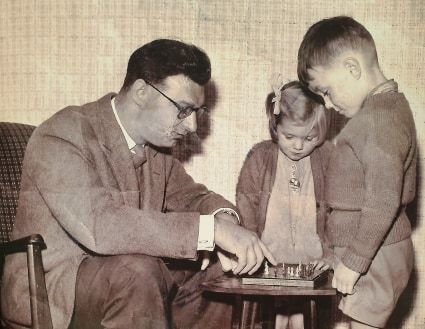
John, Jenny and Paul Littlewood, circa 1962. Kindly supplied by Paul Littlewood.
He coached his son Paul who became British Champion in 1981. His brother Norman was also a very strong player.
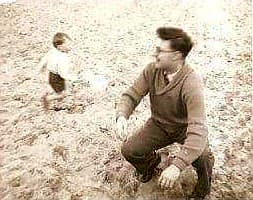
John and Paul on Skegness beach circa 1958. Kindly supplied by Paul Littlewood. George and Ringo are out of shot !
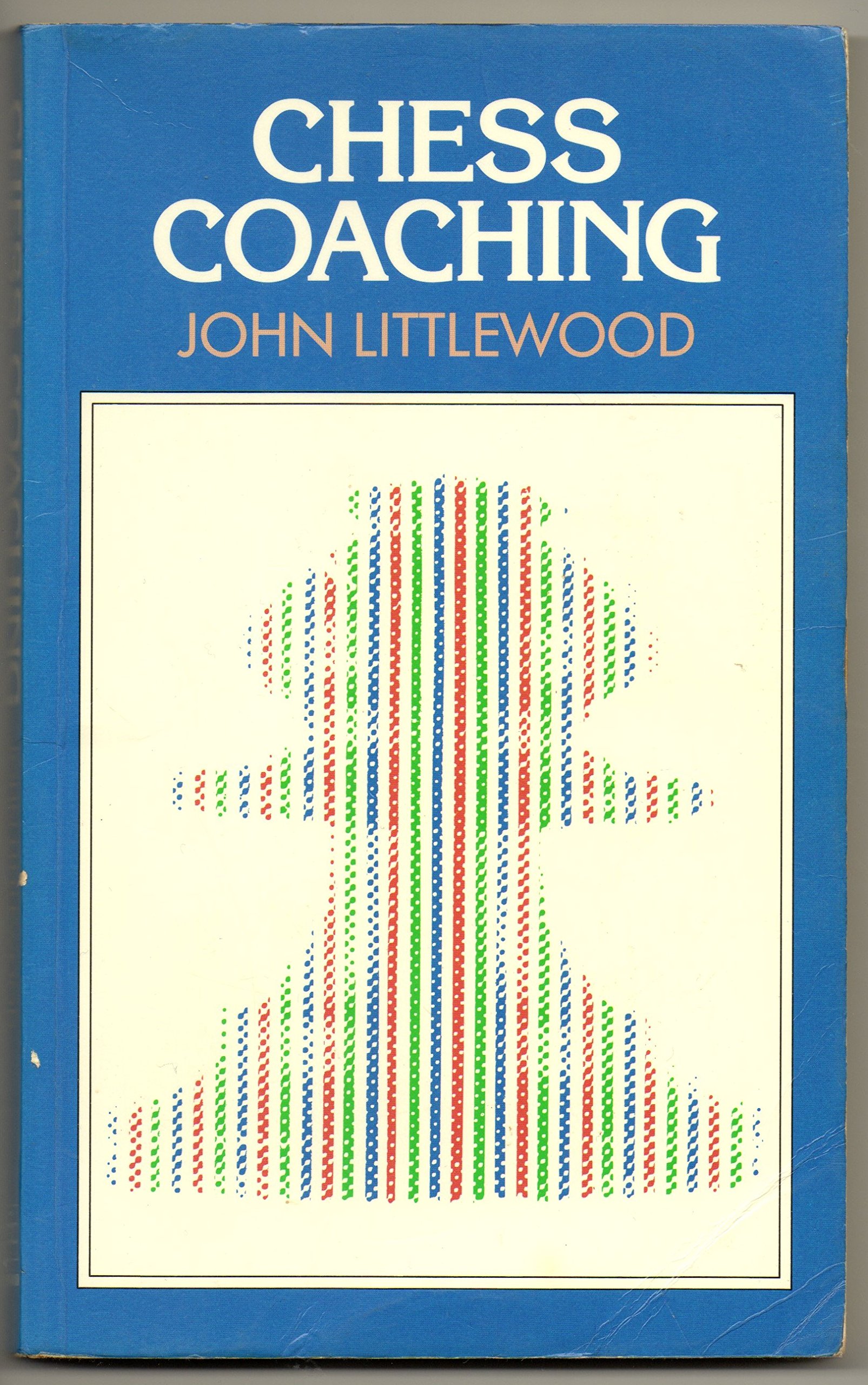
From “Chess Coaching” :
John Littlewood is a National Coach and the Director of Junior Chess to the British Chess Federation. He is a FIDE Master with national and international playing experience, and is an established chess writer, translator and journalist.
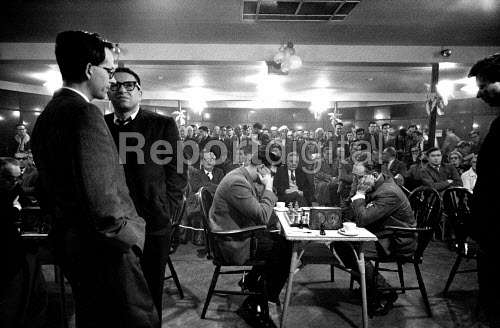
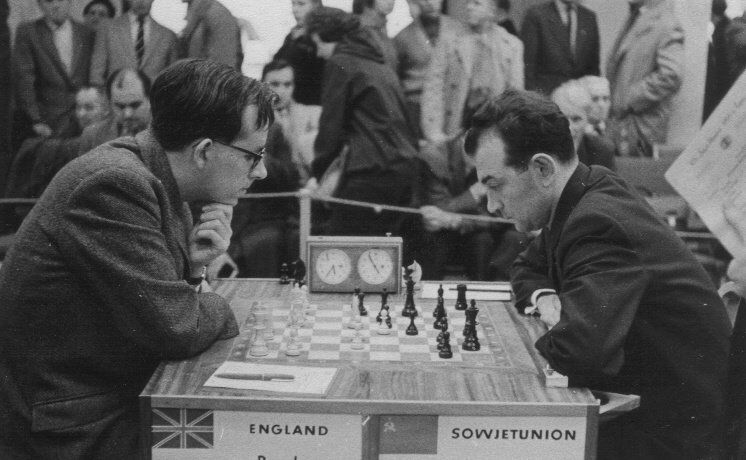
03-01-1962 37th Hastings International Chess Congress, 1962. World Champion Mikhail Botvinnik (R) playing against John Littlewood of England
From “Learn Chess 2”
“A British Master, formerly Northern Counties Champion and currently (1984) a National Coach for the British Chess Federation. John Littlewood has played for England in several international tournaments, including two Olympiads”
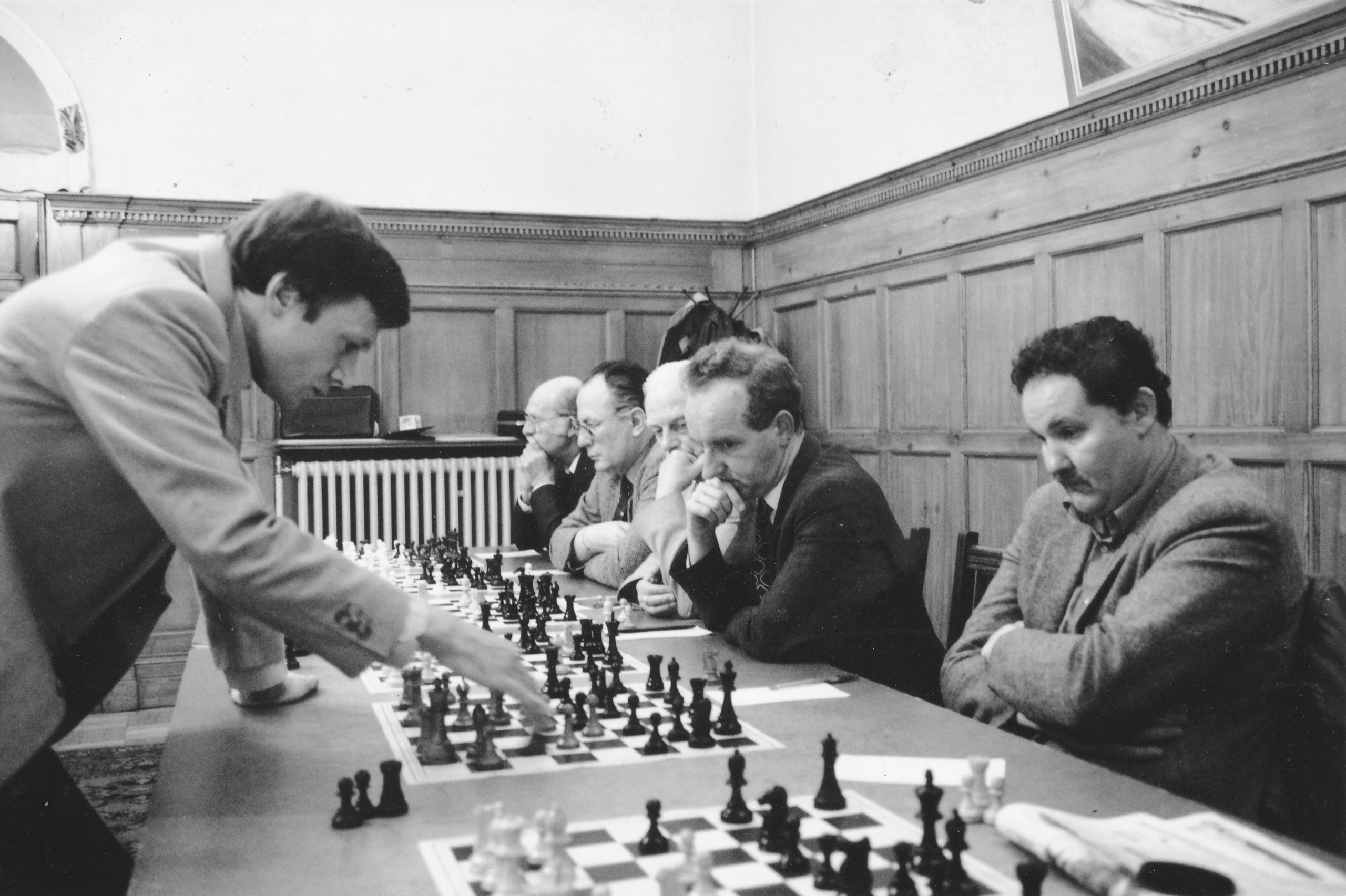
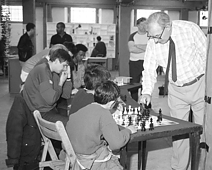
John Littlewood giving a simultaneous display
John wrote the “Test Your Chess” column in British Chess Magazine under the editorship of Murray Chandler
John Was Northern Counties Chess Union (NCCU) Champion in 1971, 1972, 1977, 1978, 1979, 1980 and 1981 : a record seven times !
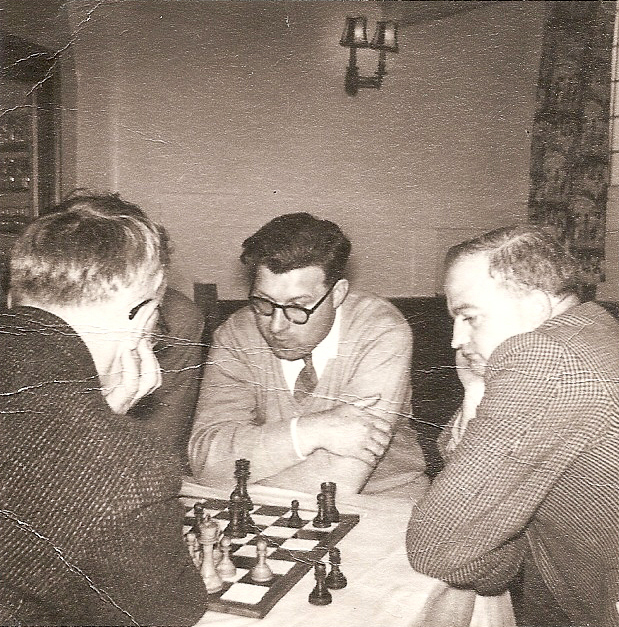
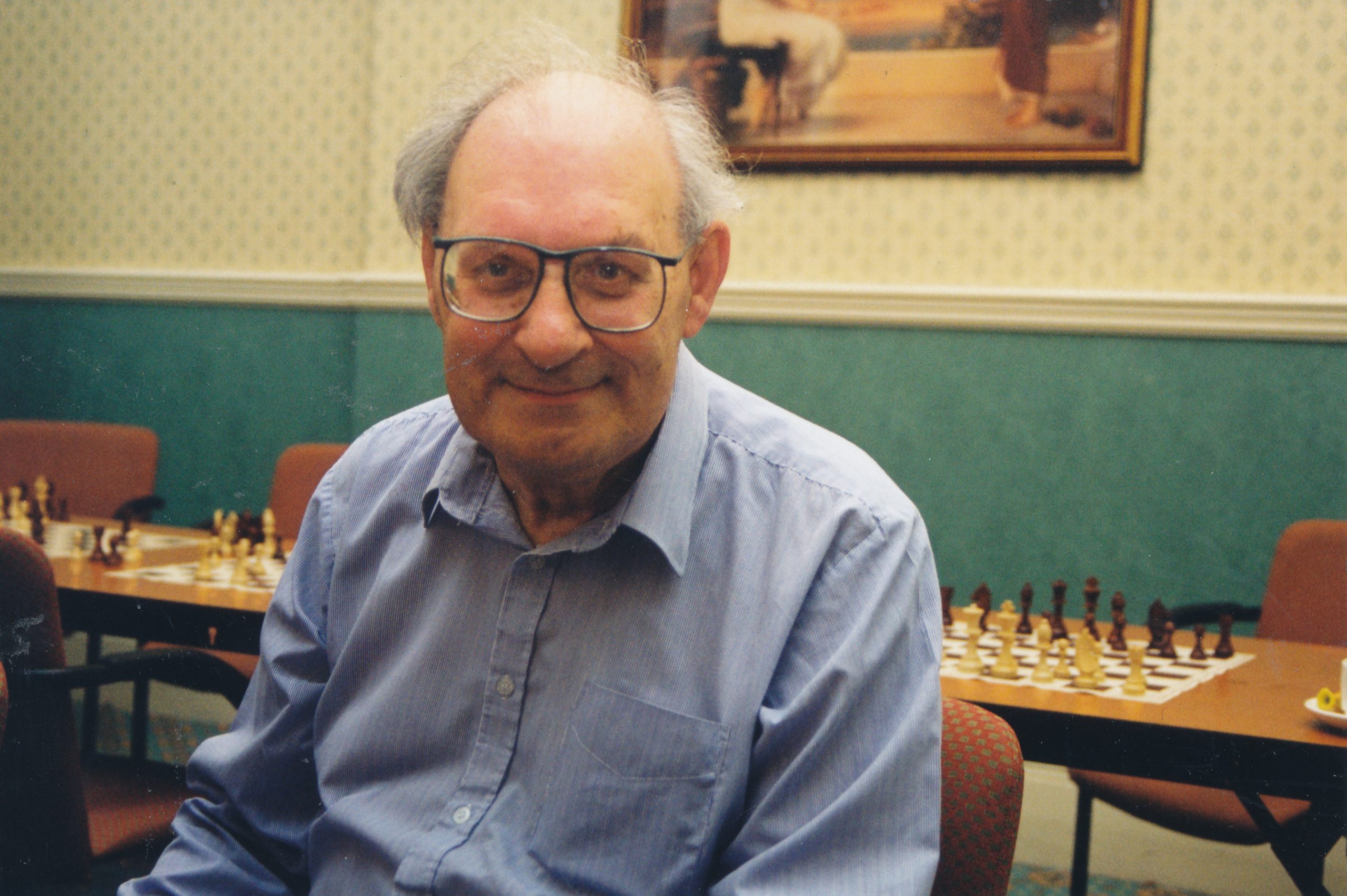
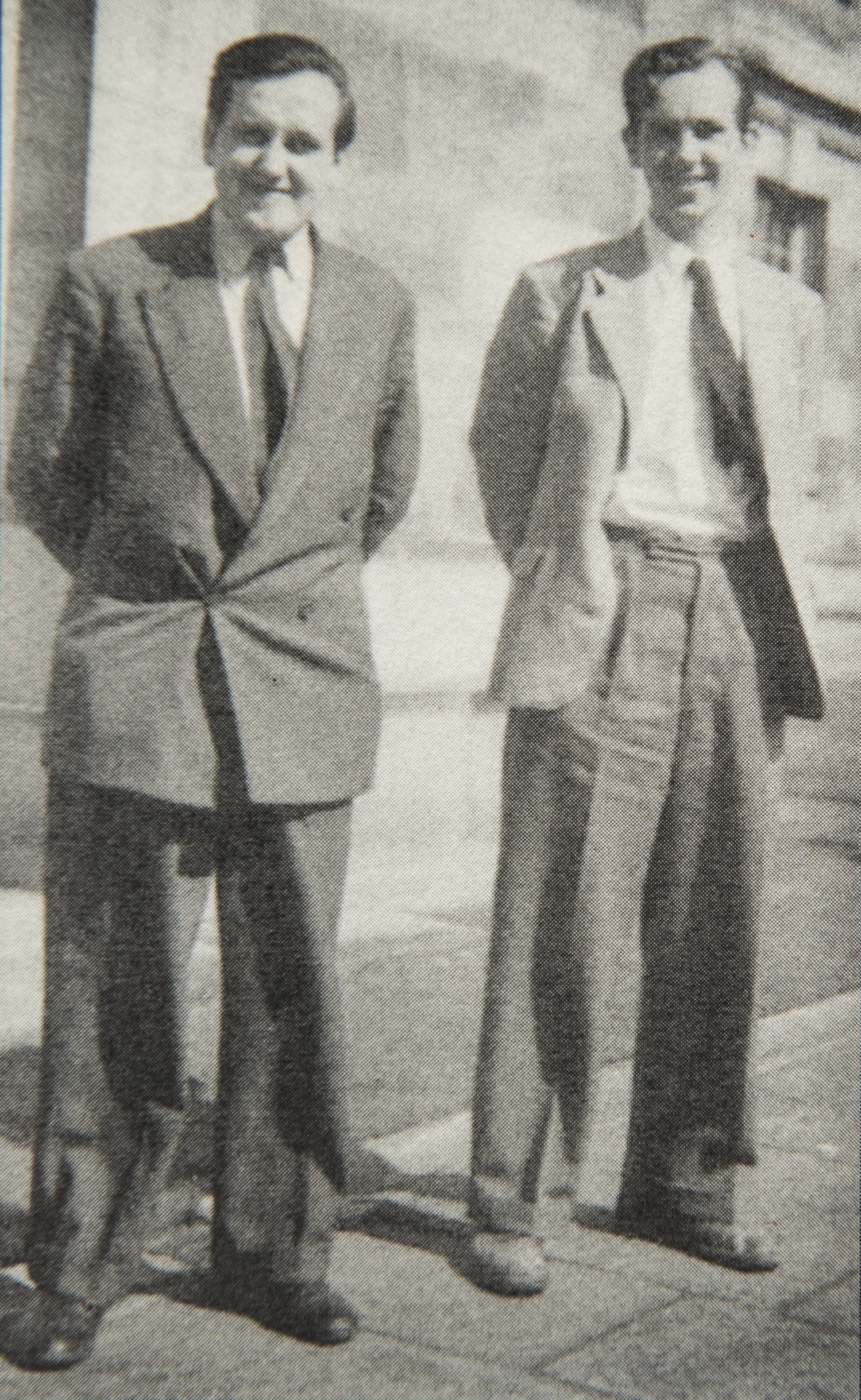
John with chess friends
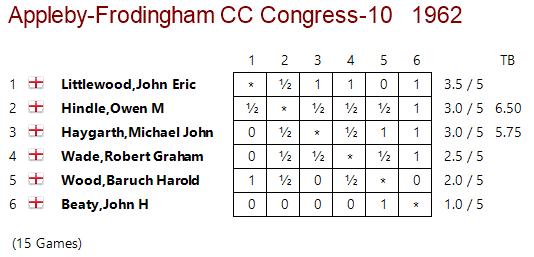
John won the Appleby-Frodingham Chess Club tournament in 1962 with 3.5/5 :
Appleby-Frodingham Tournament of 1962 crosstable
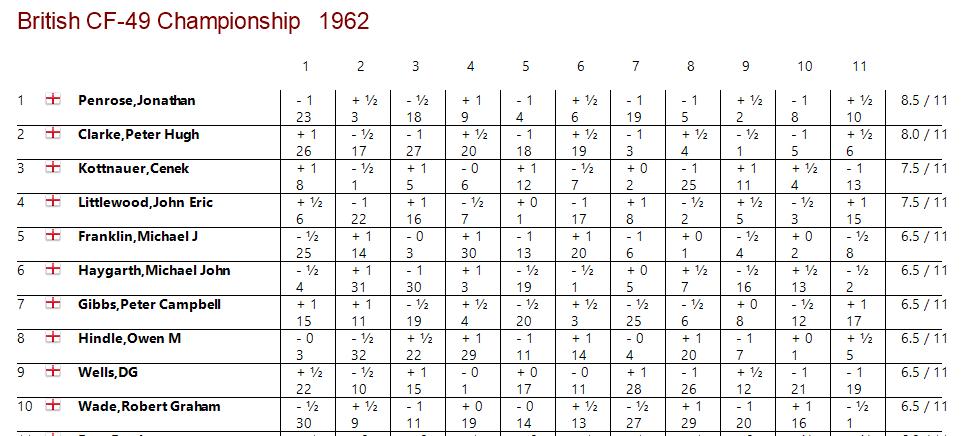
and then, in the same year came 3= in the British Championships with 7.5/11 :
Truncated crosstable from the 1962 British Championship in Whitby
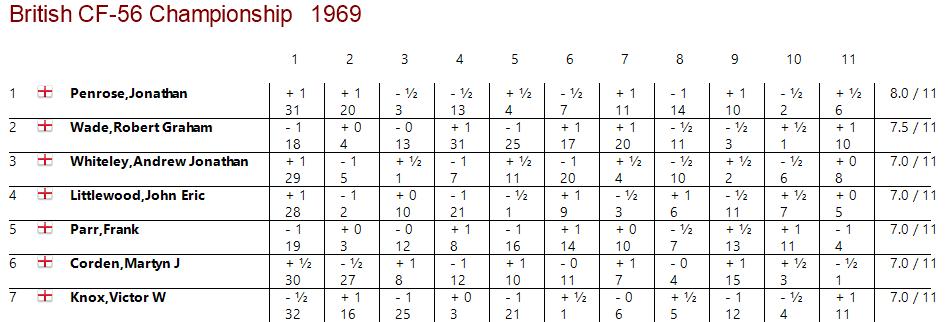
and in 1969 in Rhyl John was unfortunate not to share the title with Dr. Jonathan Penrose after losing to Frank Parr in the final round :
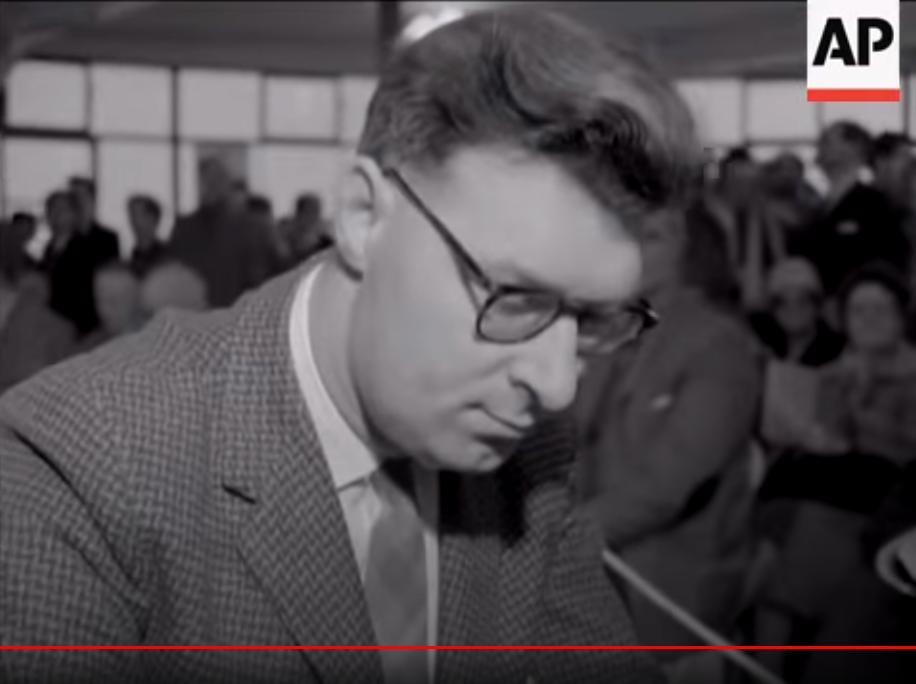
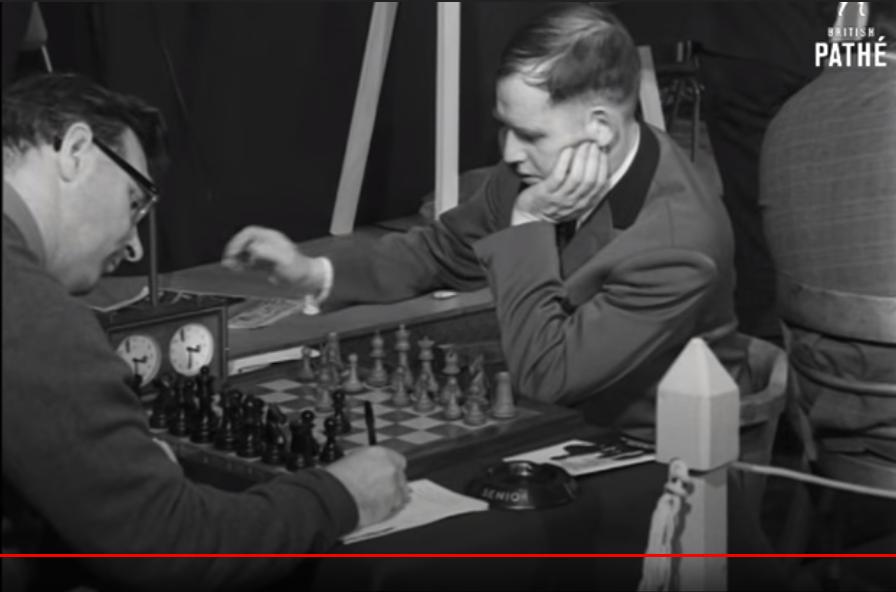
Truncated crosstable of the British Championships of Rhyl 1969John Littlewood at Hastings 1963-4. Still taken from Pathe news reel footageJohn Littlewood playing Wolfgang Unzicker in round one of the 1969-70 Hastings International Congress
John won the Southport Open in 1972 and the picture below was taken shortly afterwards :
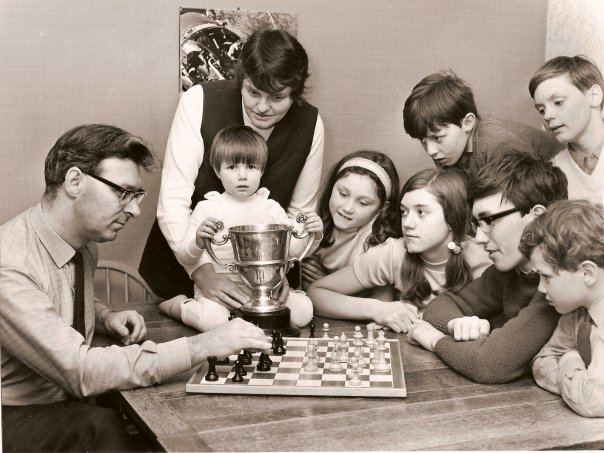
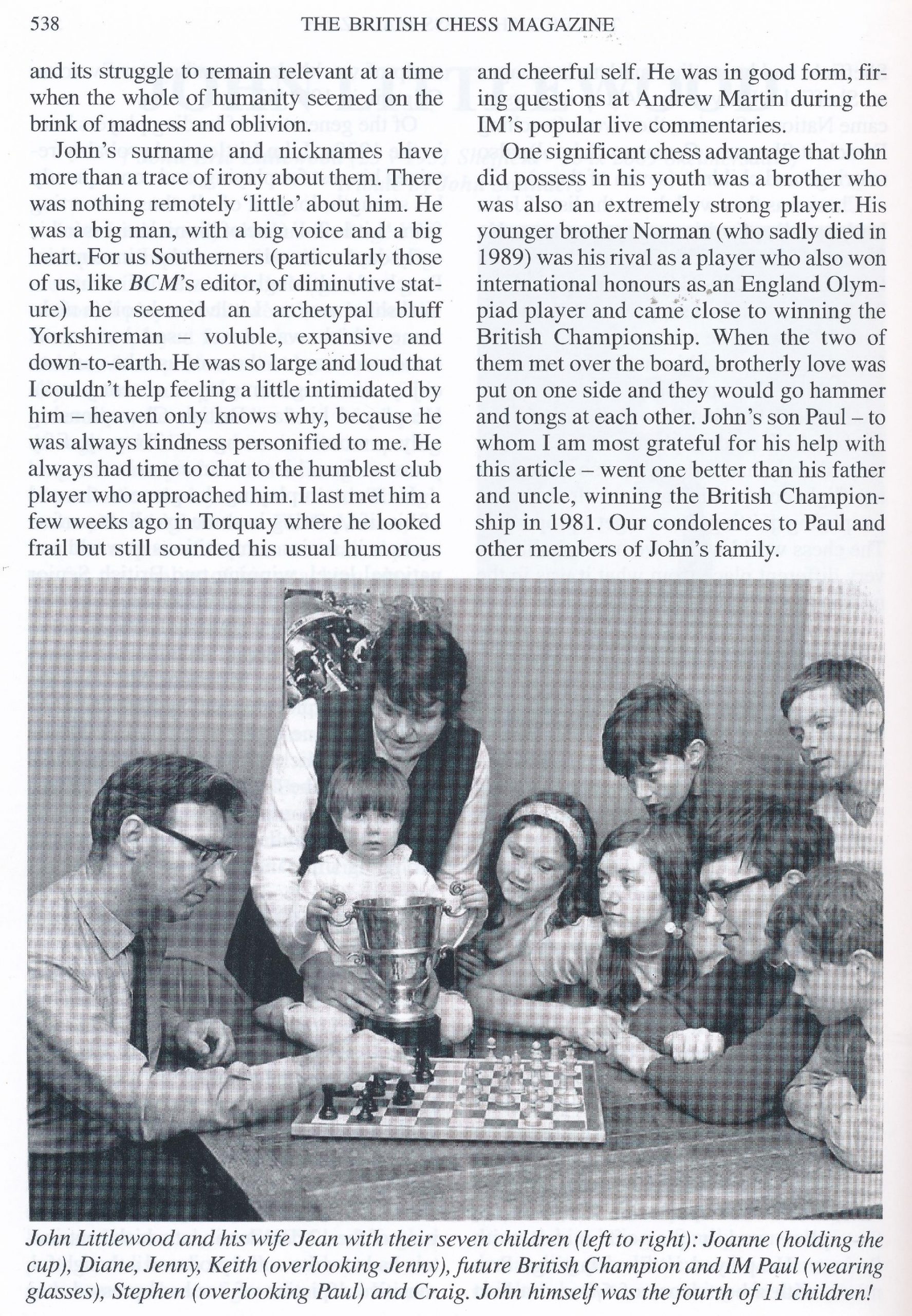
John and family following winning the 1972 Southport Open. See the BCM article below for a full caption
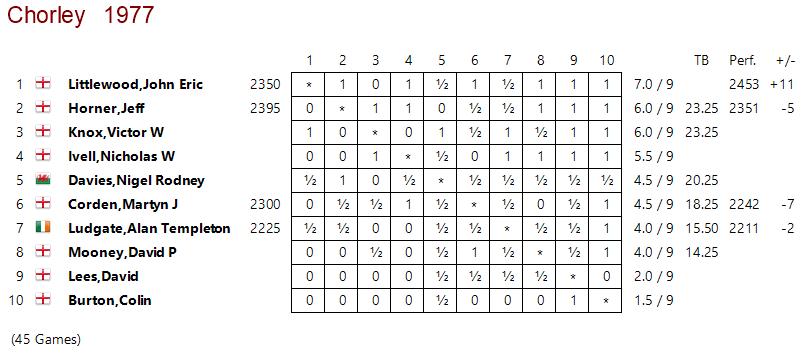
John won the Chorley tournament of 1977 with 7/9
Chorley 1977 tournament crosstable
JEL won the British Chess Federation’s President’s Award in 2000.
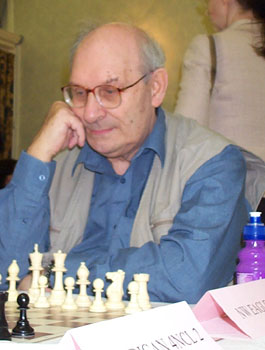
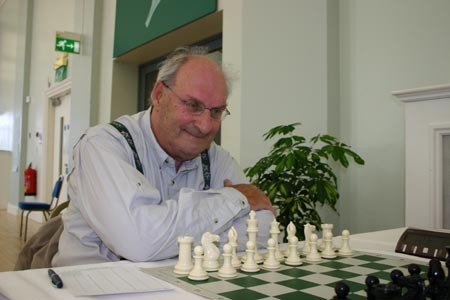
FM John Littlewood at 4NCL courtesy of Helen Milligan
In 2006 John won the BCF Veterans / Seniors title for the first time repeating the feat in 2008 sharing with George Dickson.
With the White pieces John almost exclusively played 1.e4 favouring the Wormald Attack, Open Sicilians and the Rossolimo variation.
As the second player John played the Closed Ruy Lopez, the Sicilian Dragon and the Grünfeld defence.
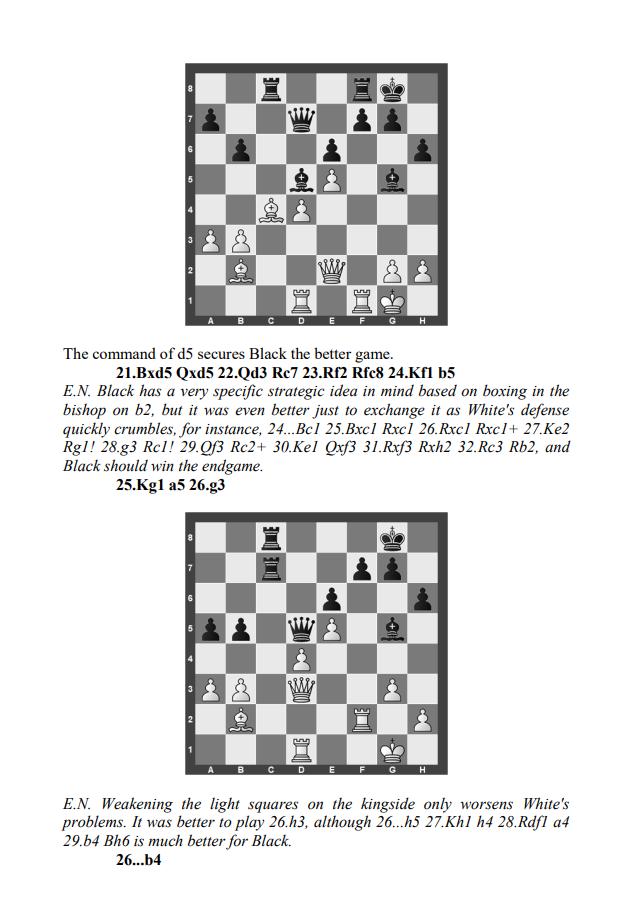
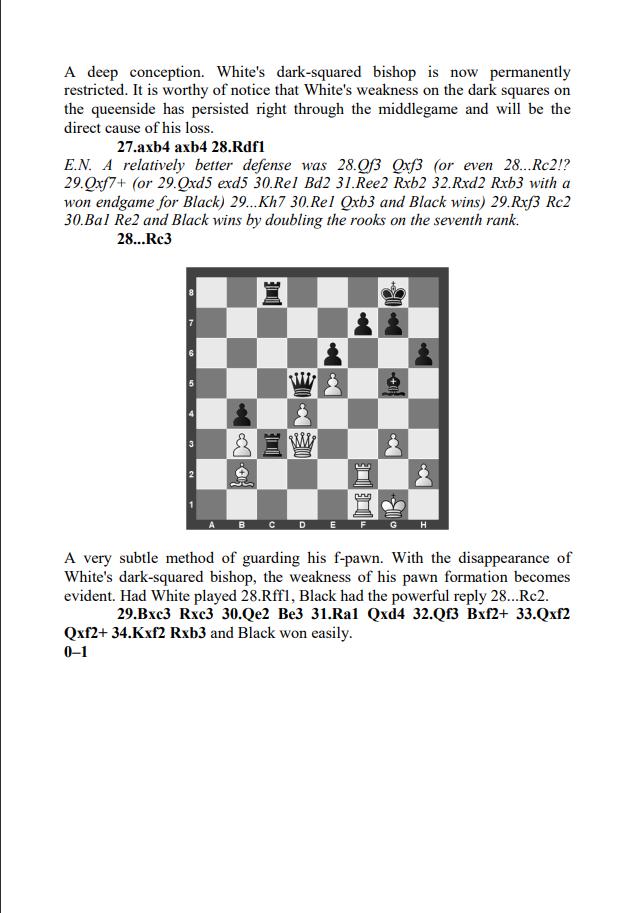
In the following video IM Andrew Martin discusses the game Bisguier – Littlewood, 1962.
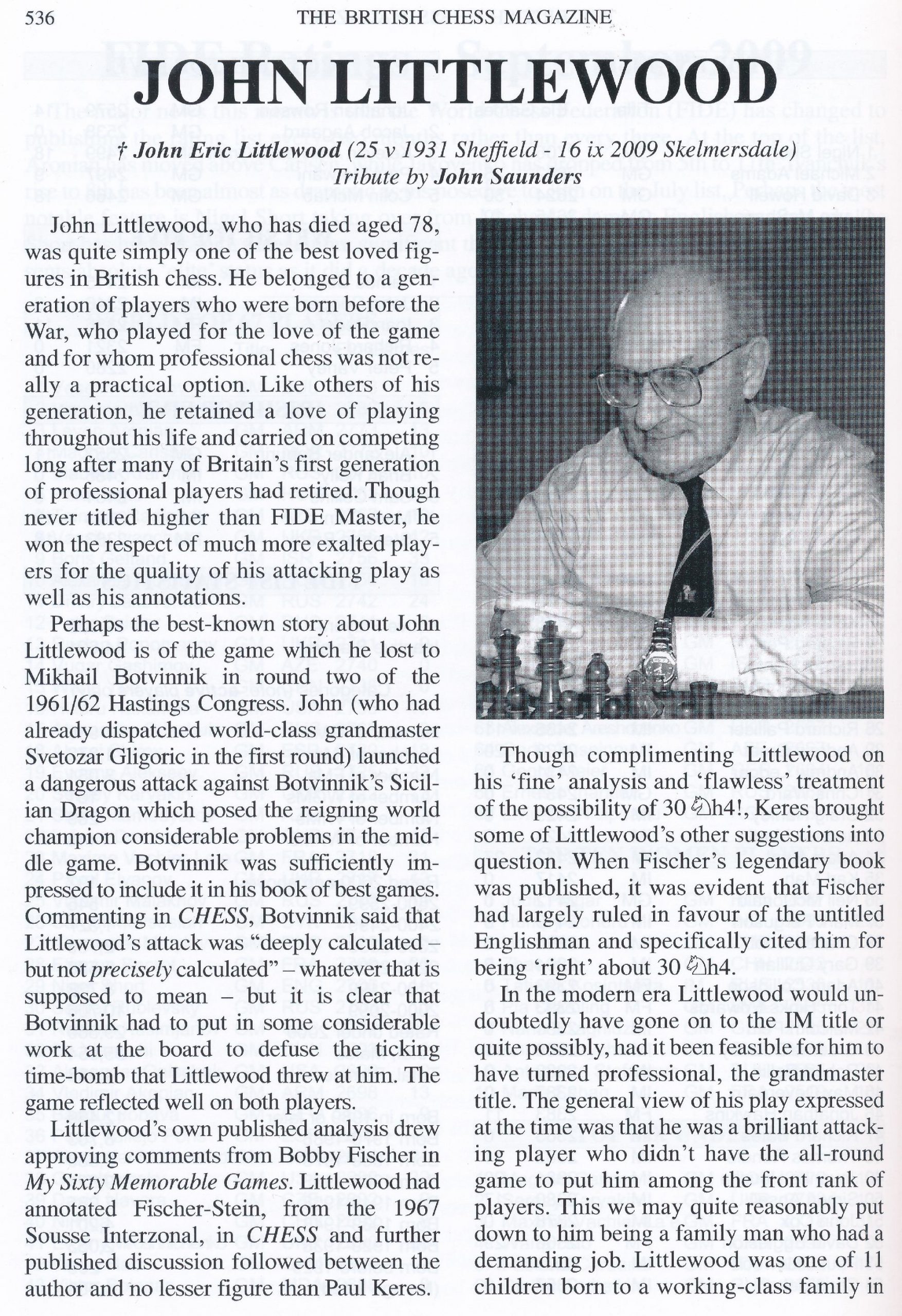
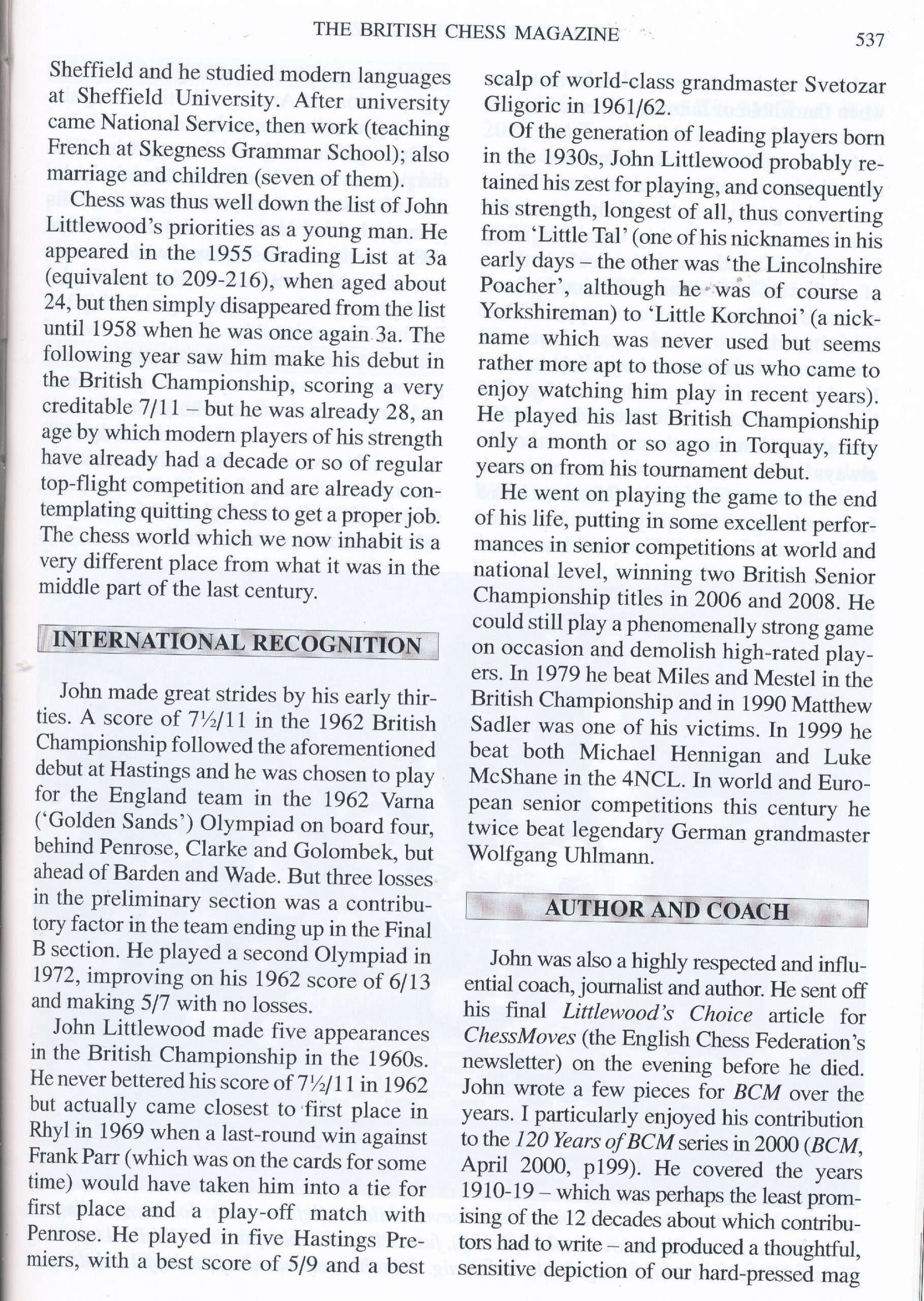
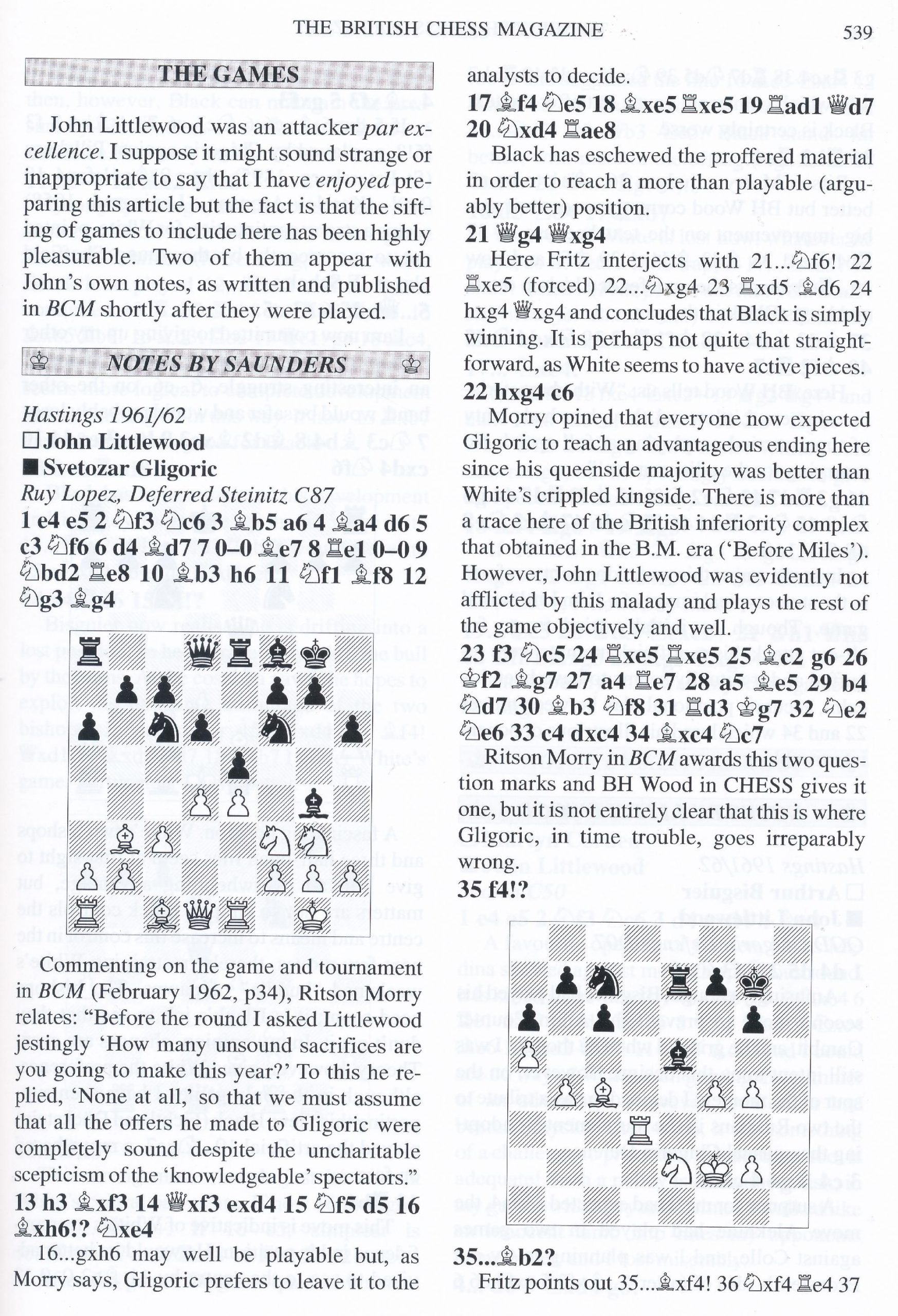
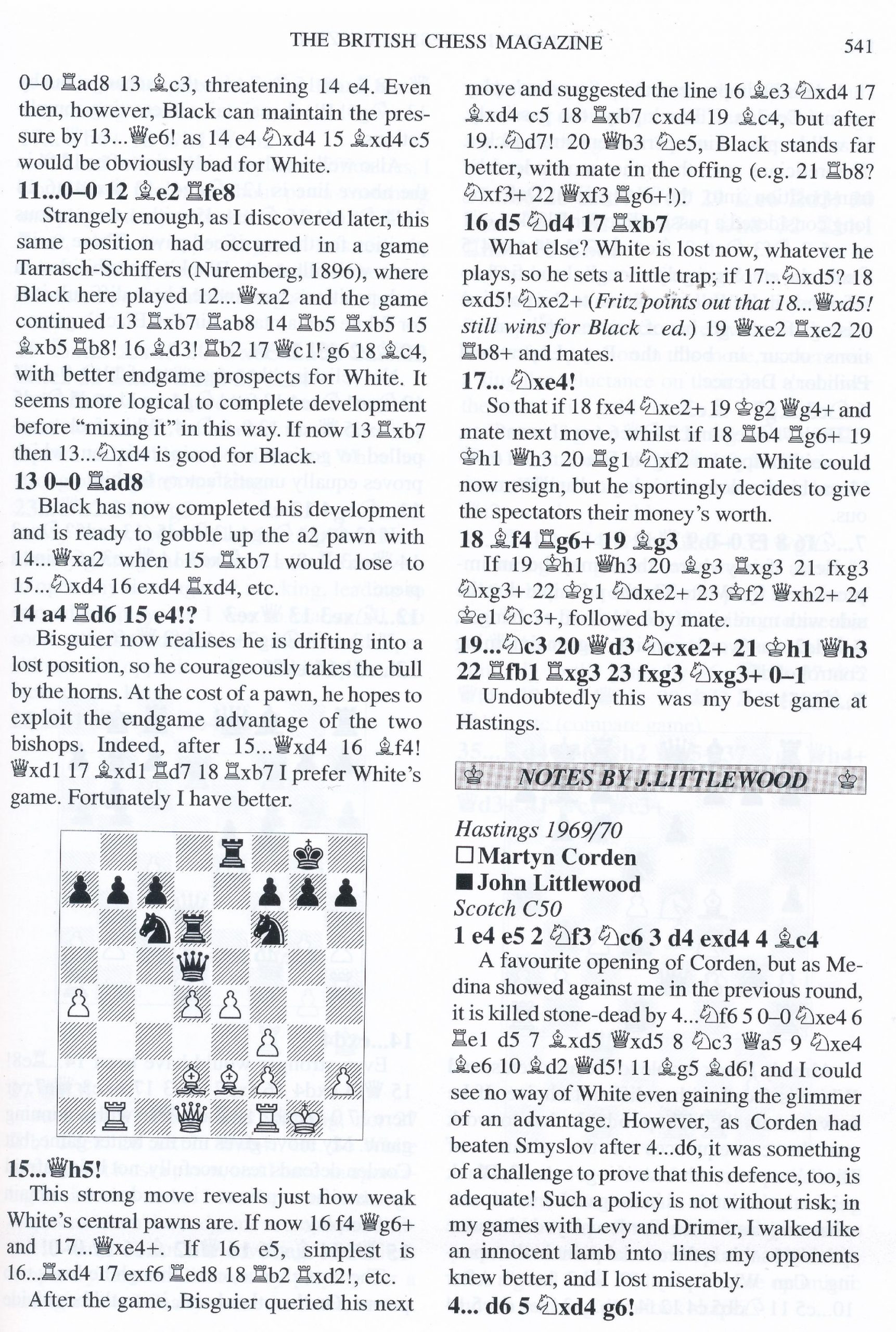
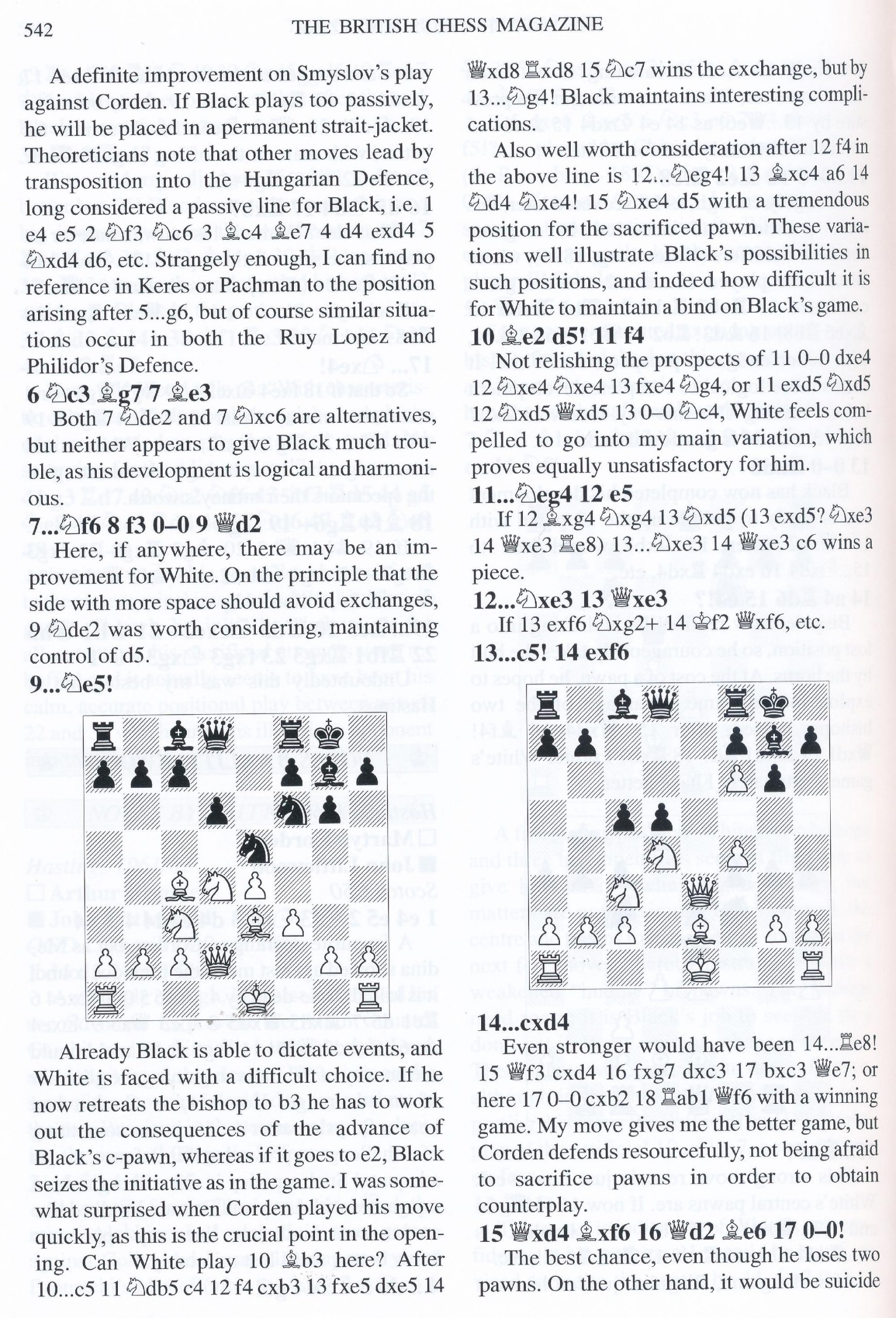
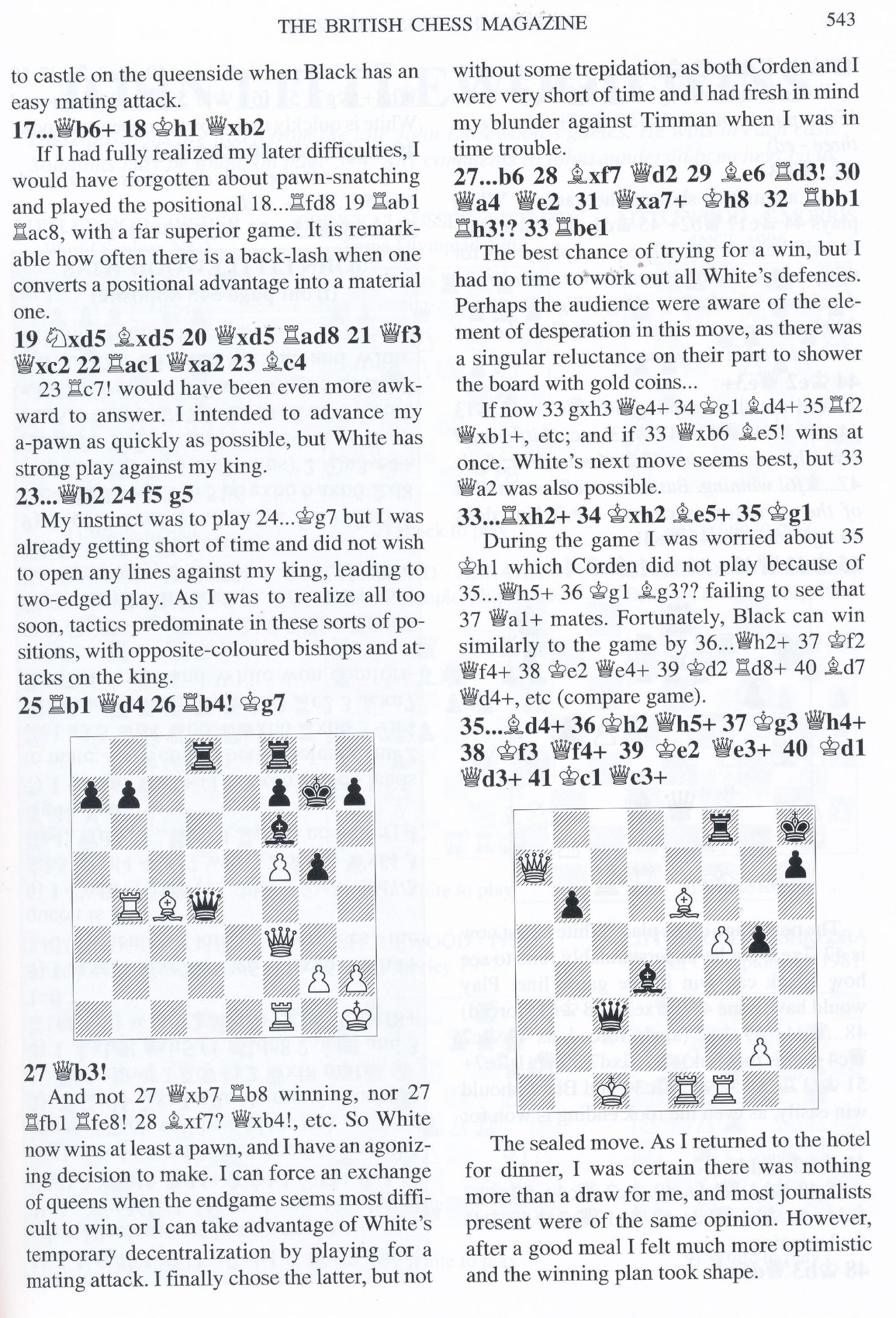
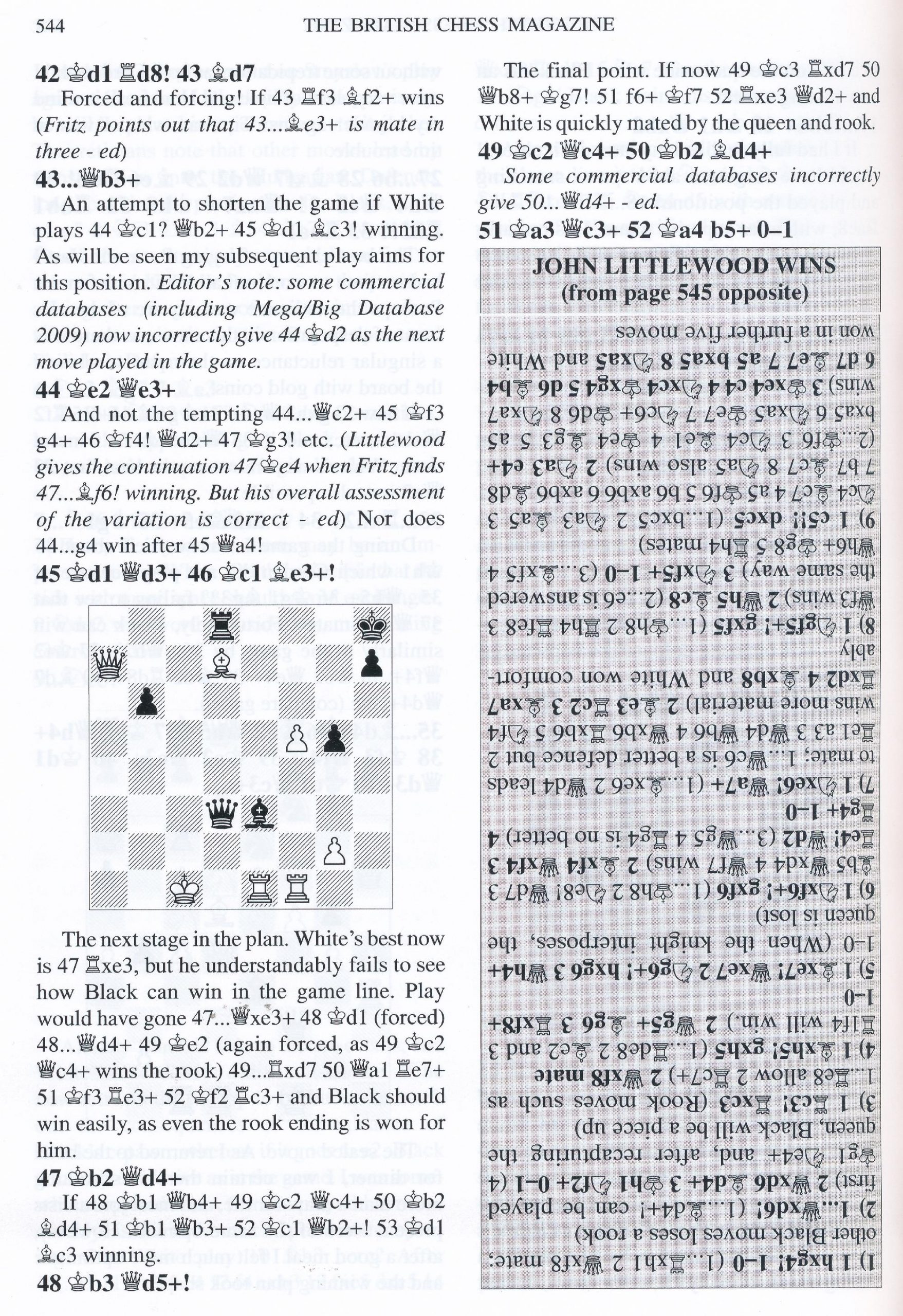
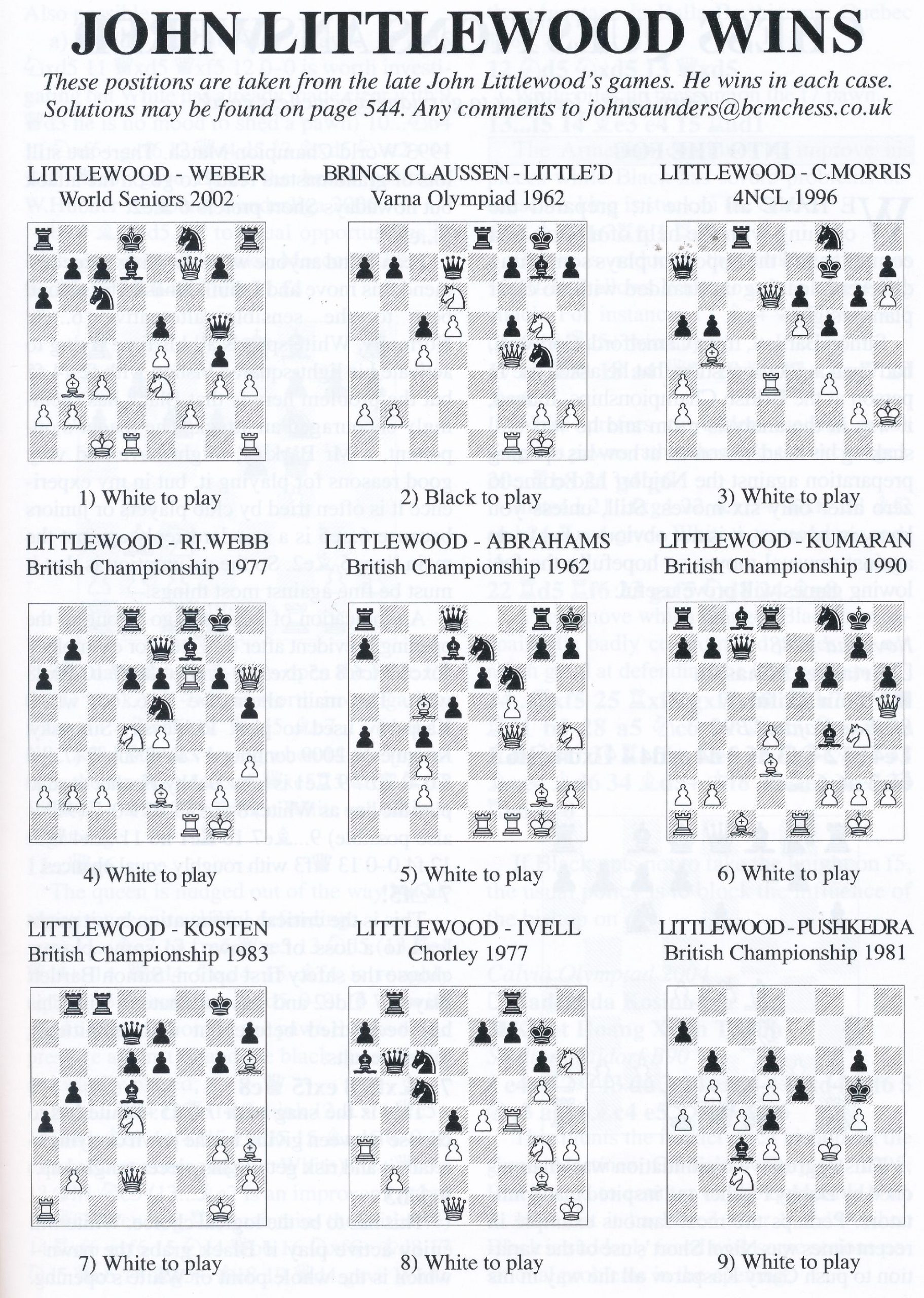
Rather than reinventing an already round wheel we reproduce the following ten page tribute in the October 2009 issue of British Chess Magazine. The tribute is by John Saunders :
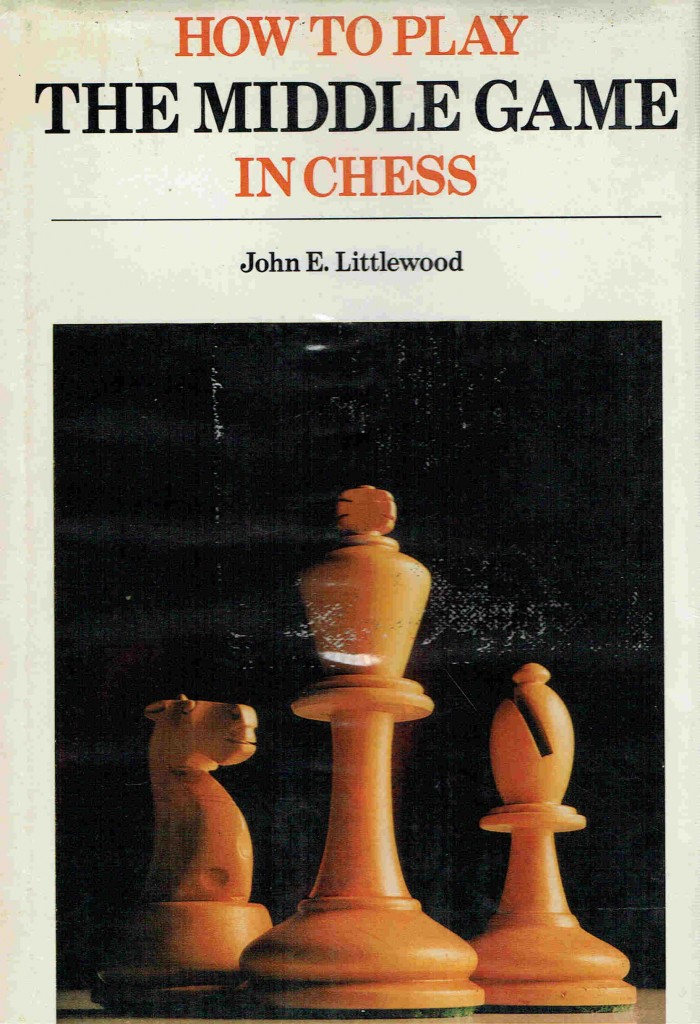
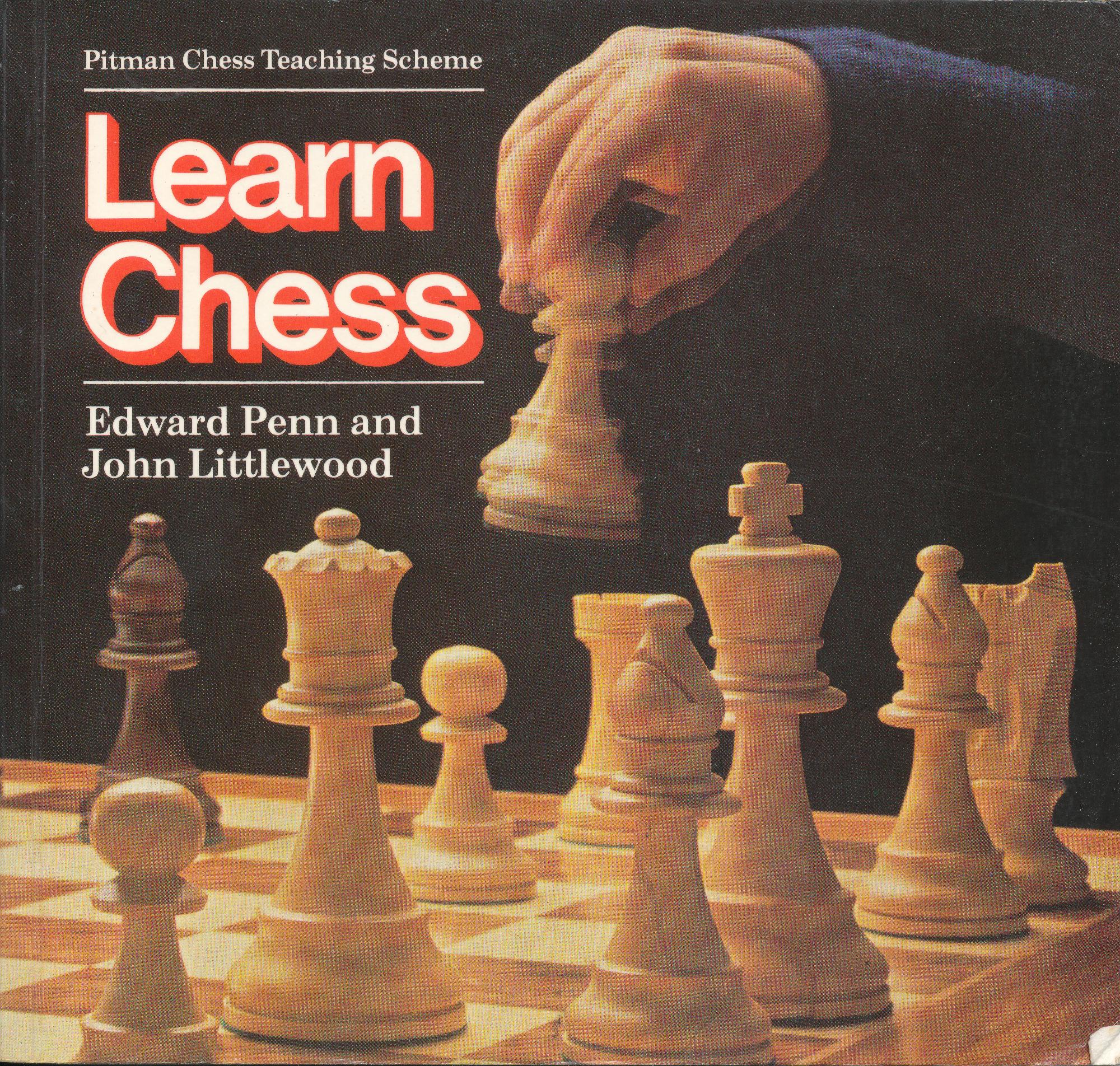
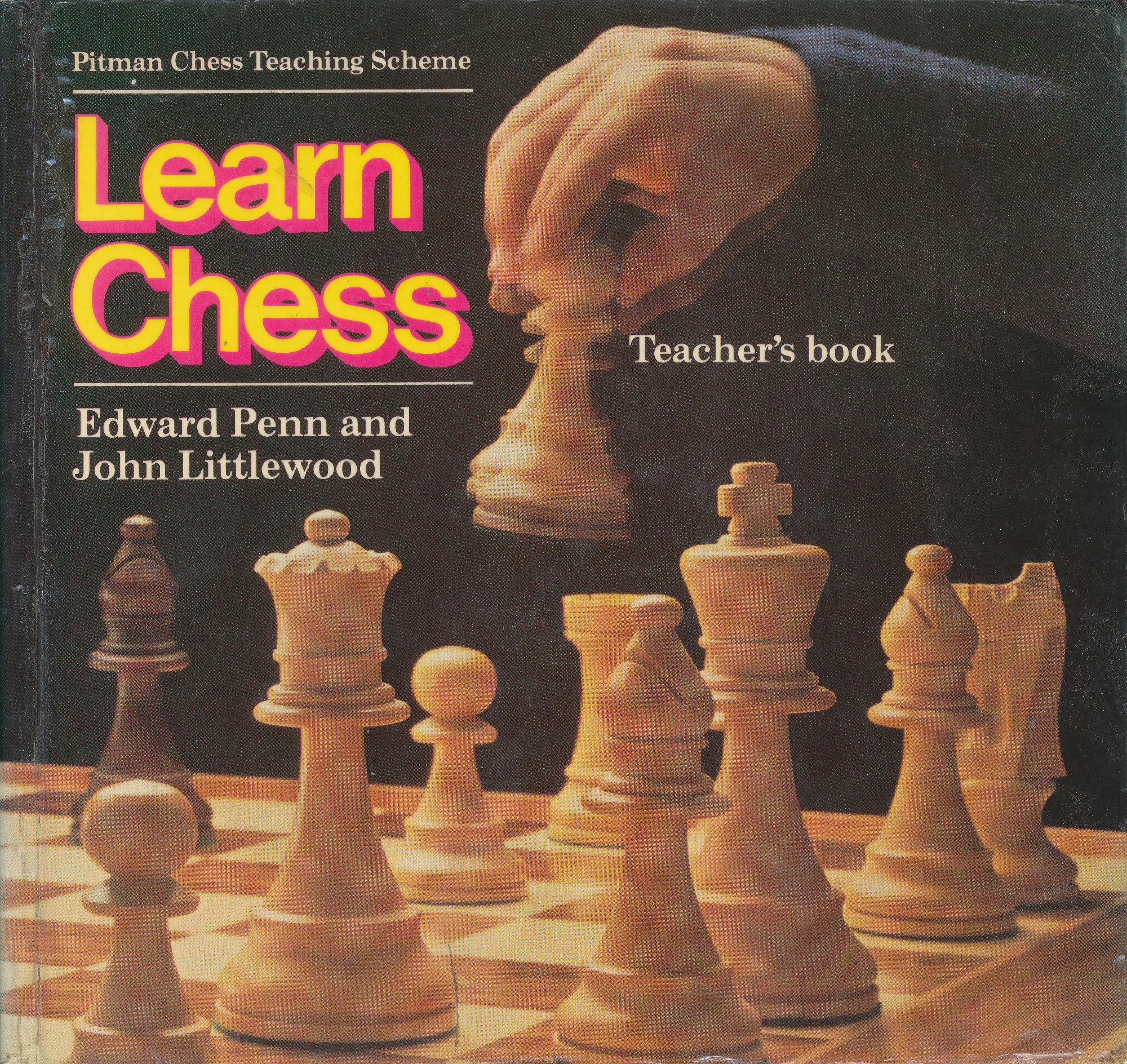
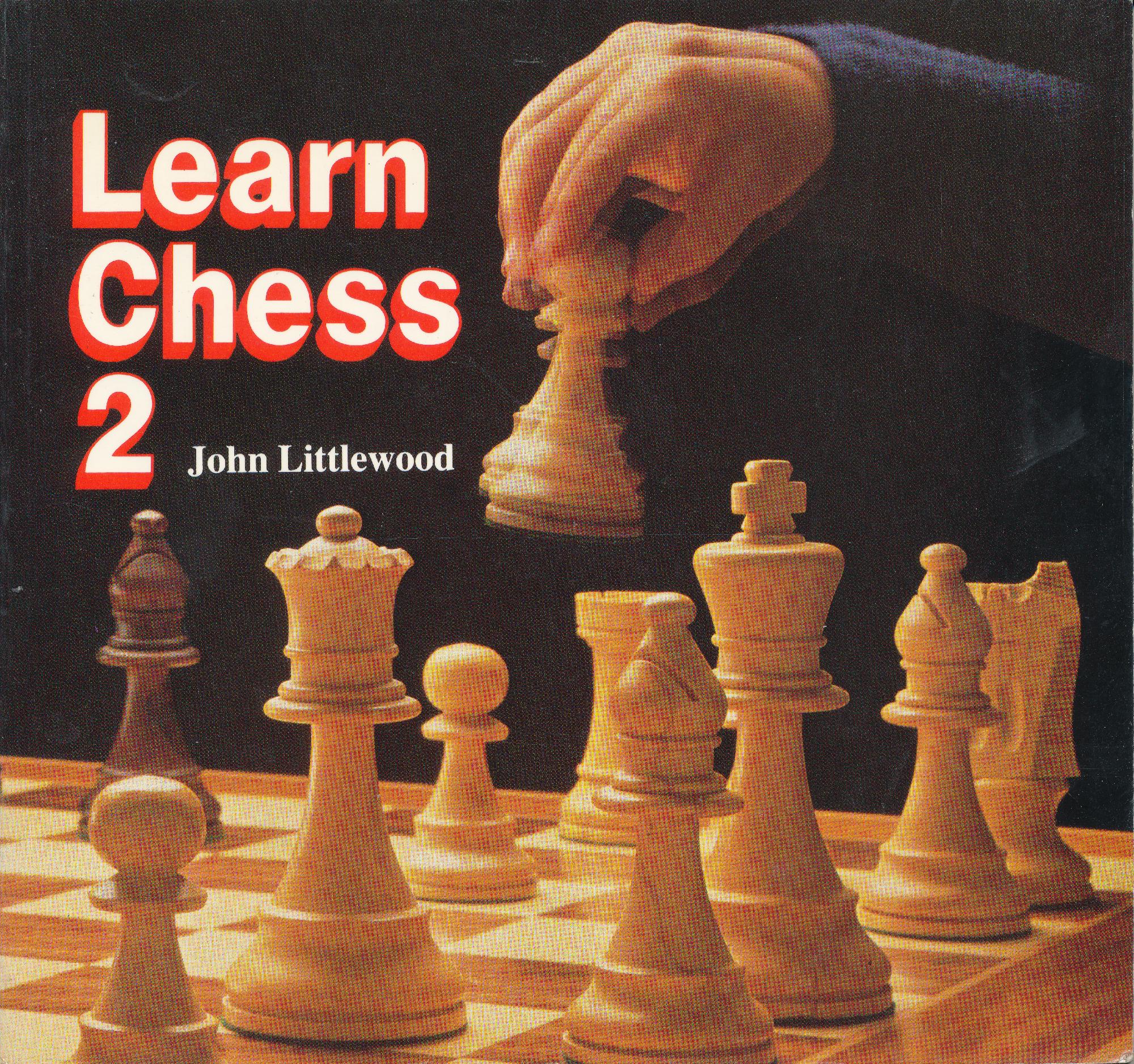
How to Play the Middle Game in Chess by John Littlewood, Collins, 1974Chess Coaching by John Littlewood, The Crowood Press, 1991Learn Chess by Edward Penn and John Littlewood, Pitman House, 1980Learn Chess : Teacher’s Book, by Edward Penn & John Littlewood, Pitman House, 1980Learn Chess 2 by John Littlewood, Adam & Charles Black, 1984FM John Littlewood (25-v-1931 16-ix-2009)
BCN wishes Happy Birthday to Dinah Norman on August 21st
Dinah Margaret Dobson was born on Wednesday, August 21st 1946 in Exeter, Devon. Her parents were Leslie and Barbara Dobson (née Hayward).
She was taught to play Chess by her late father at the age of 9. Started playing seriously when she attended Rickmansworth Grammar School and Watford Chess Club. Her first tournament was the London Girls Championship which she won in 1962. Dinah was coached by Leonard Barden and Bob Wade.
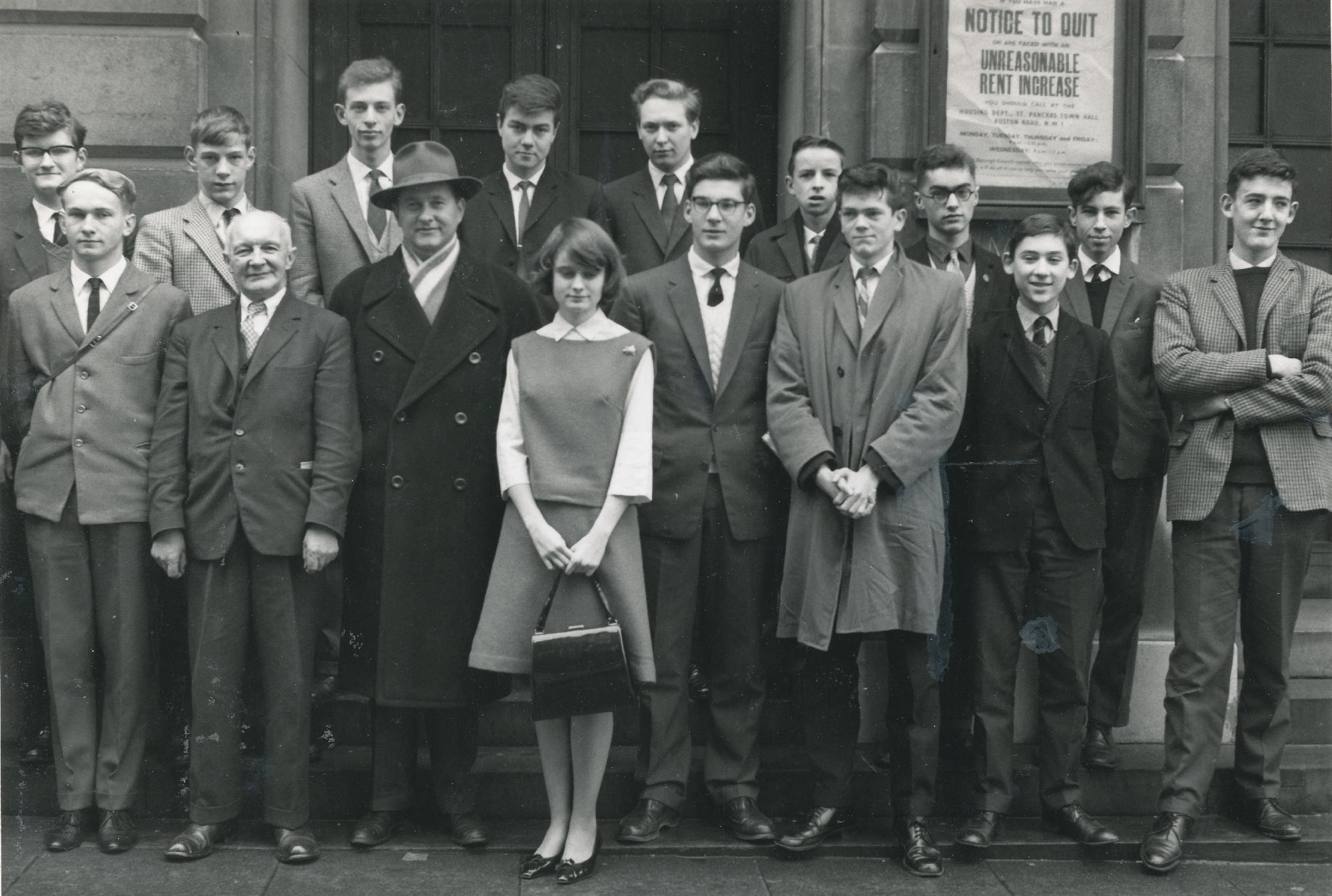
Some of the participants in the Paul Keres display on November 25th, 1962, at St Pancras Town Hall, London WC1. Back row : AJ. Whiteley, D. Floyer, PJ Collins, PJ Adams, RC Vaughan, KB Harman, D. Parr, DNL Levy, Front row : MV Lambshire, AE Hopkins (selector) Paul Keres, Miss D. Dobson, RE Hartley, BC Gillman, WR Hartston and PN Lee. Photograph by AM Reilly. Source : BCM, 1963, page 13
Dinah’s tournament successes were as follows :
1962 London Girls’ Champion
1963 Southern Counties (SCCU) Girls Champion
1963 Southern Counties (SCCU) Ladies’ Champion
1964 Joint British Girls Champion (three way tie with Gillian Moore and Marcia Syme)
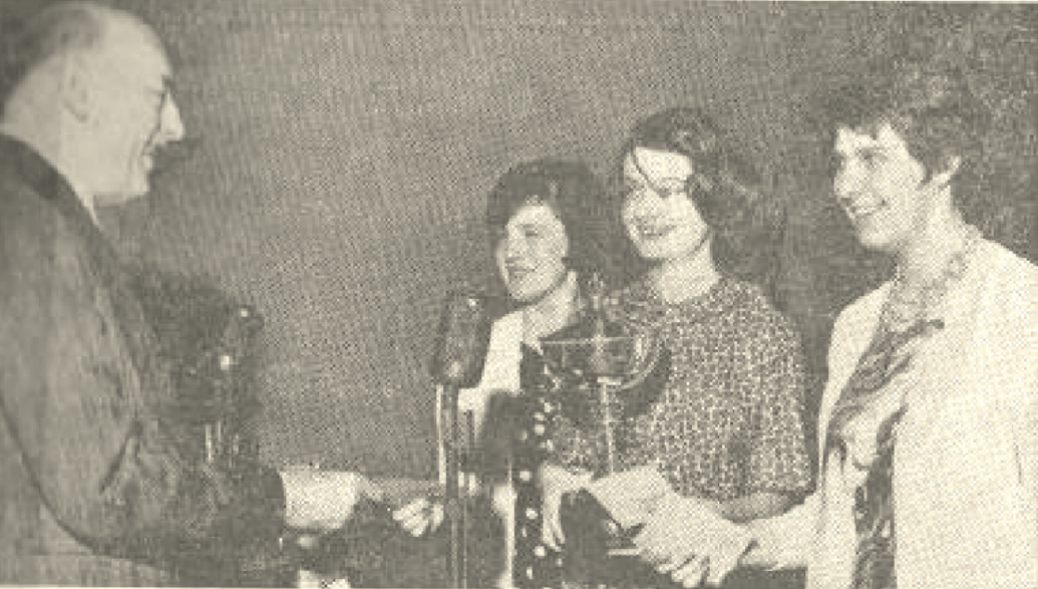
Marcia Syme, Dinah Dobson and Gillian Moore : 1964 joint British Girls’s Champions
Dinah played as 1st reserve for England in the third FIDE Women’s Olympiad in Oberhausen, Germany in 1966 and in 1969 she played board 1 in Lublin, Poland.
1967 and 1969 Joint British Lady Champion shared with Rowena Bruce after a 4 game playoff
1968 British Lady Champion
1970 American Open Ladies Champion
1975 Winner of first ever Female Grand Prix (as Dinah Wright)
1976 Winner of second Female Grand Prix
Dinah became a WCM in 2002.
She was 9th in the World Over 65 Ladies Championship held in Bled in November 2018.
She is current holder of the Gibraltar Cup.
According to chessgames.com : “Dinah Margaret Norman Dobson is a WCM. She was British champion (w) in 1967 (=Rowena Mary Bruce, Oxford), 1968 (Bristol) and 1969 (=Rowena Mary Bruce, Rhyl).”
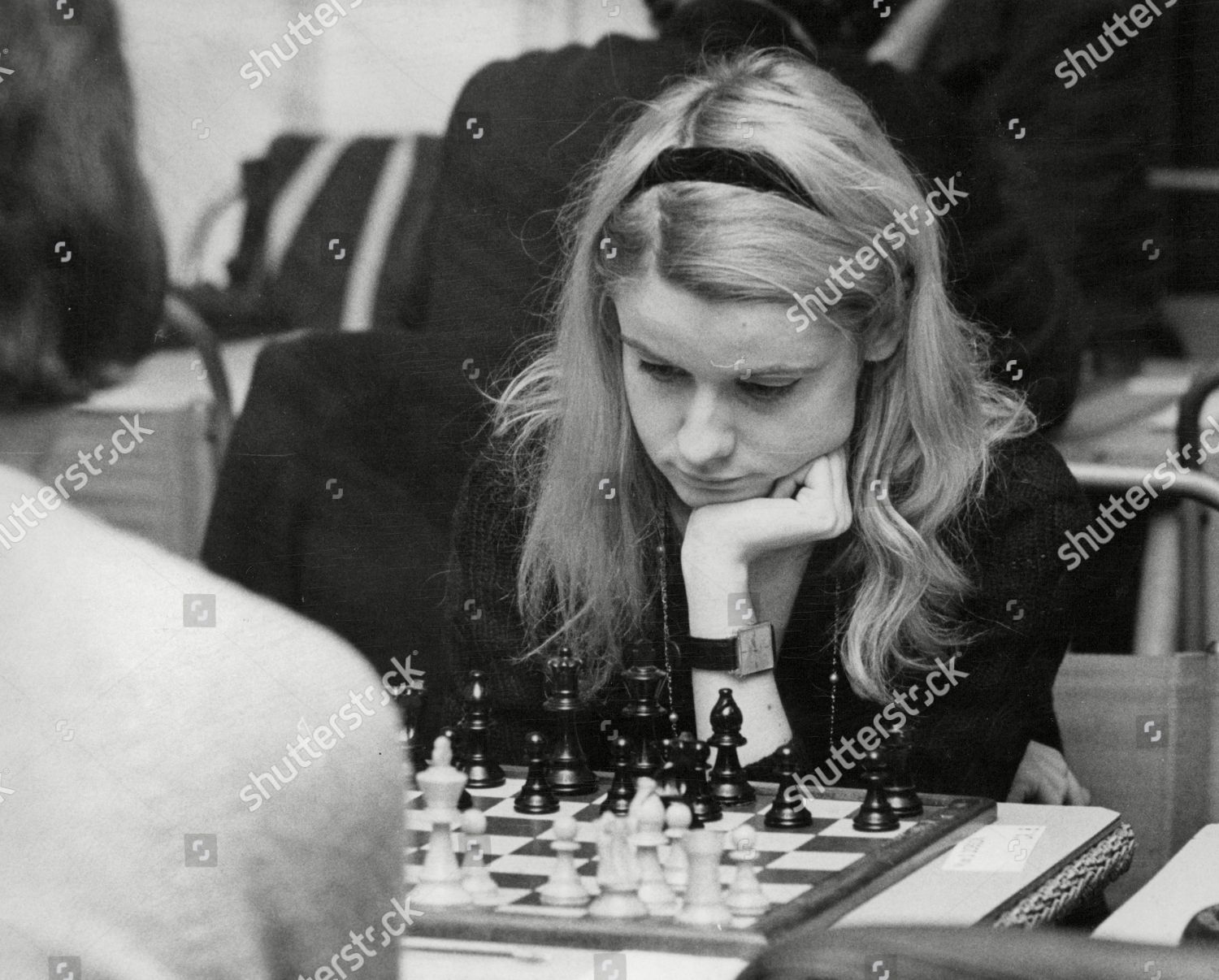
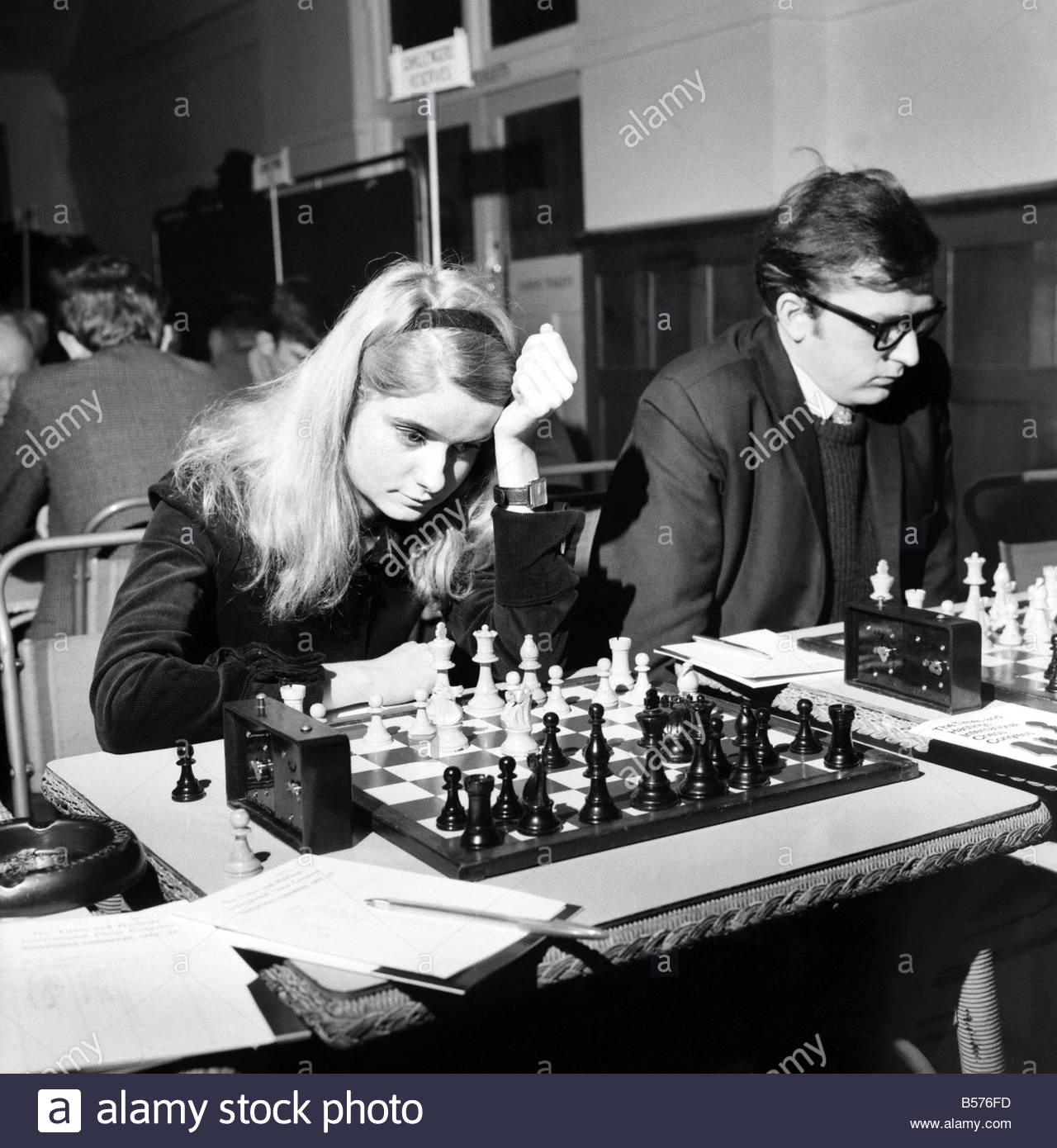
Dinah Dobson 22-year-old Champion British Chess Player Deep In Thought During Chess Competition In Hastings. Mandatory Credit: Photo by ANL/Shutterstock
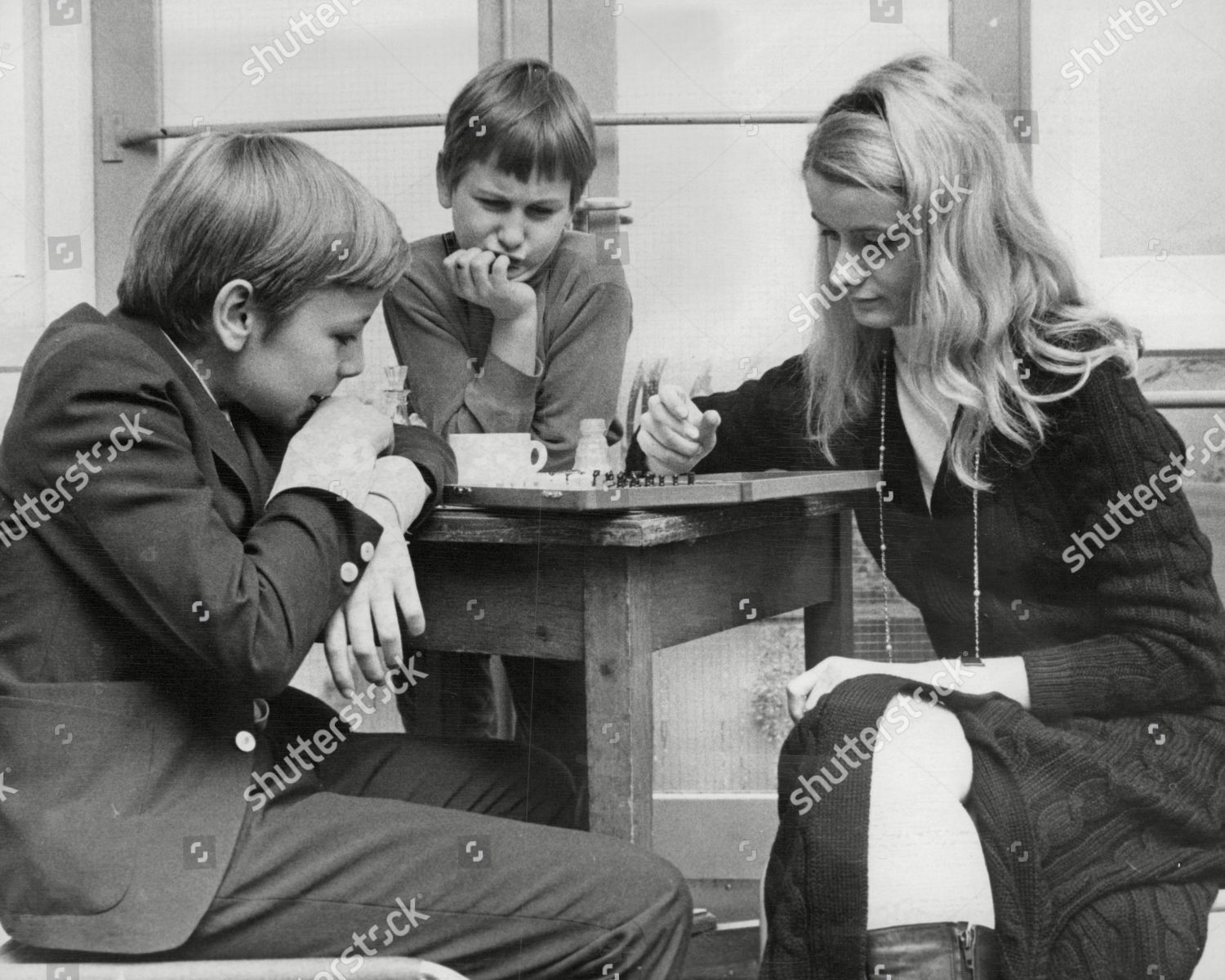
English Chess Champion Dinah Dobson Playing Against Two German Boys During Lunch-break At Chess Competition In Hastings. Box 658 221121512 A.jpg. English Chess Champion Dinah Dobson Playing Against Two German Boys During Lunch-break At Chess Competition In Hastings. Mandatory Credit: Photo by ANL/Shutterstock
She played in the 1968 Anglo-Dutch match on the Ladies board, which, at that time, did not count in the overall match result.
The Annual International Chess Championship opened today at Hasting. Dinah “Dobson,” “23,” of Northwood Middlesex. December 1969
Now (1971) living in Northwood, Middlesex, she married Danny Wright in Westminster and in 1983 she married Ken Norman in Richmond.
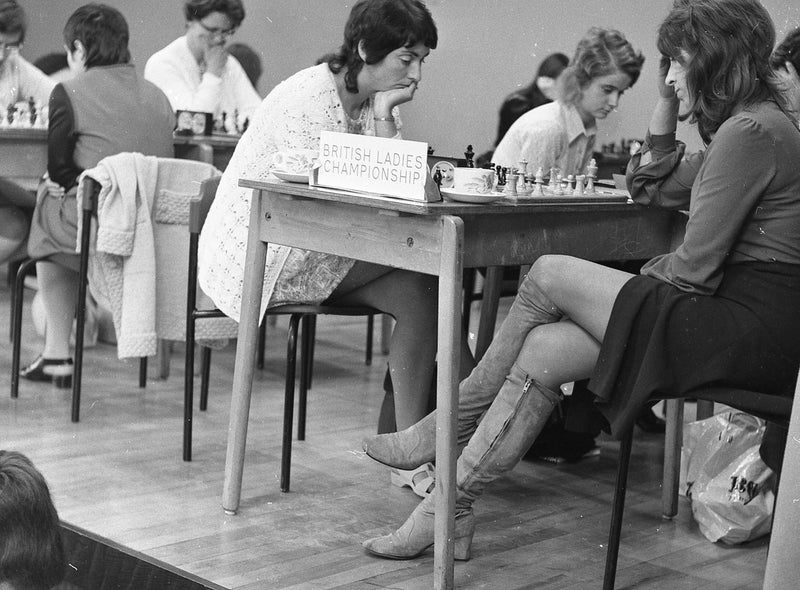
Dinah Wright (third from right) playing in the 1971 British Ladies Championship in Palatine School, Blackpool. Courtesy of Lancashire Evening Post.
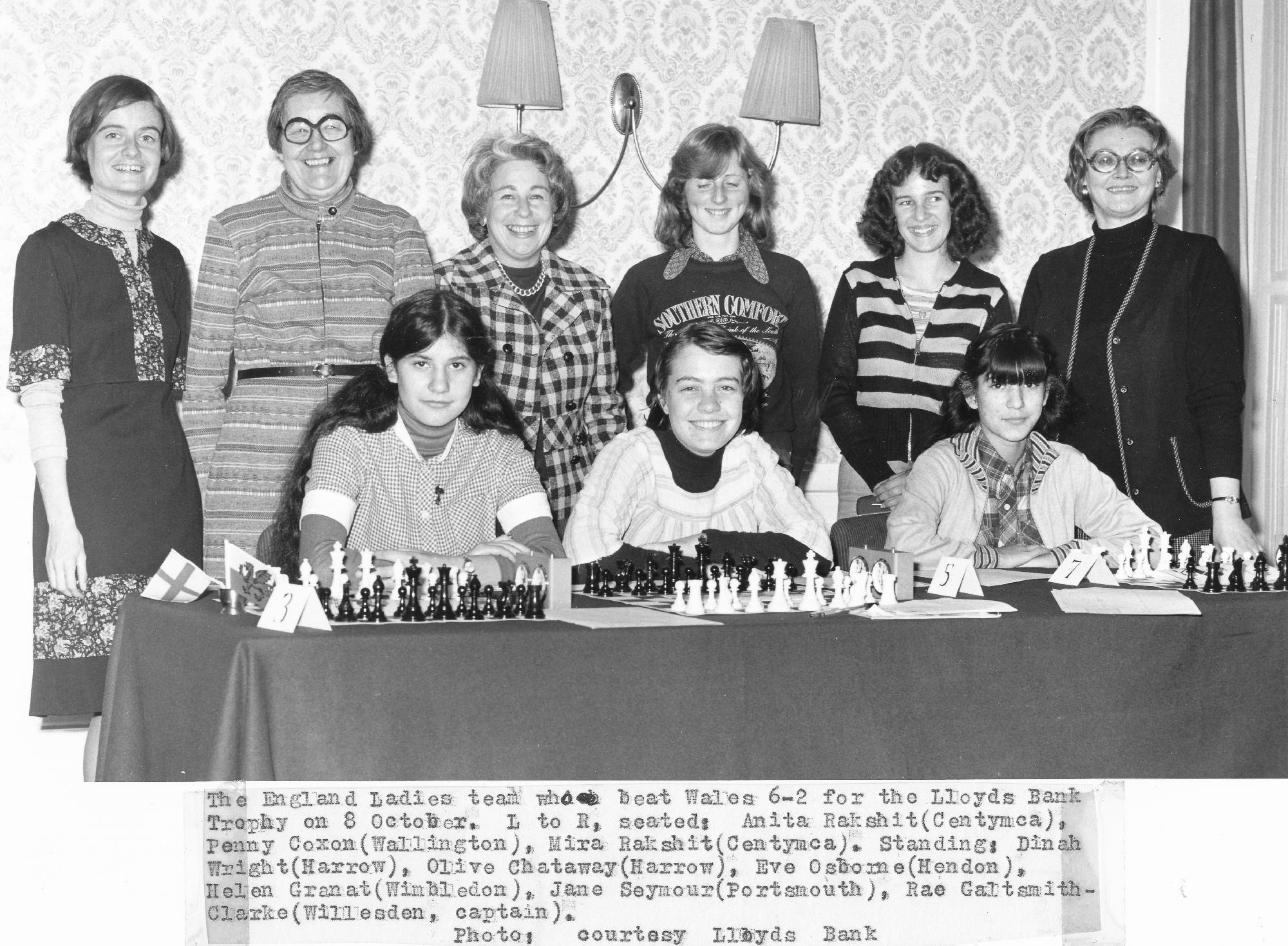
Dinah Wright (far left, standing) with her England team mates (see caption) for a Lloyds Bank sponsored match with Wales
Dinah has been a member of Crowthorne Chess Club and has played in the Berkshire League. She has represented 4NCL Iceni and Guildford in other competitions.
According to Megabase 2020 her highest FIDE rating was 2085 in July 1990 at the age of 44. However, it would have been higher than this in the late 1960s and 1970s had ratings been established then.
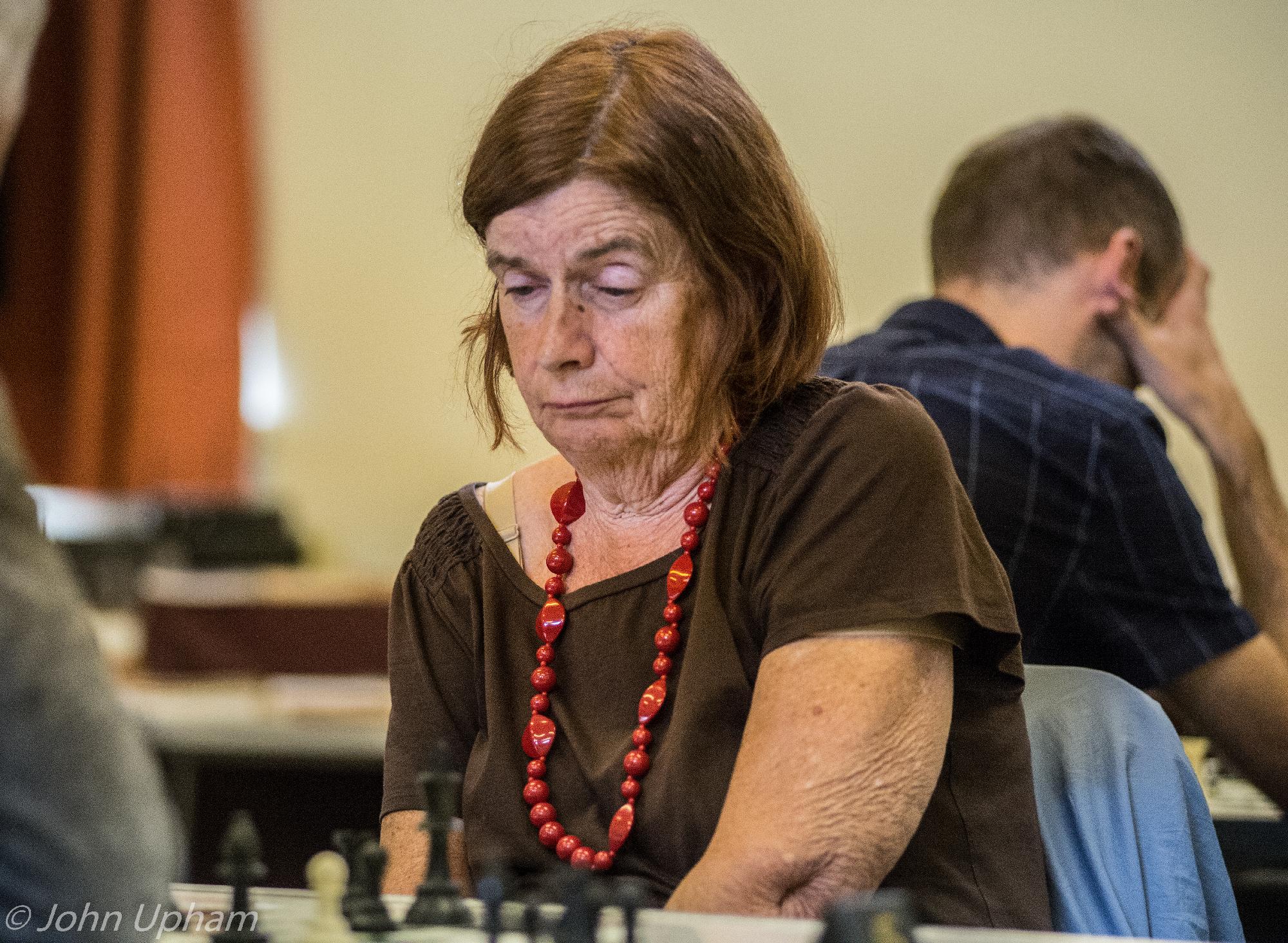
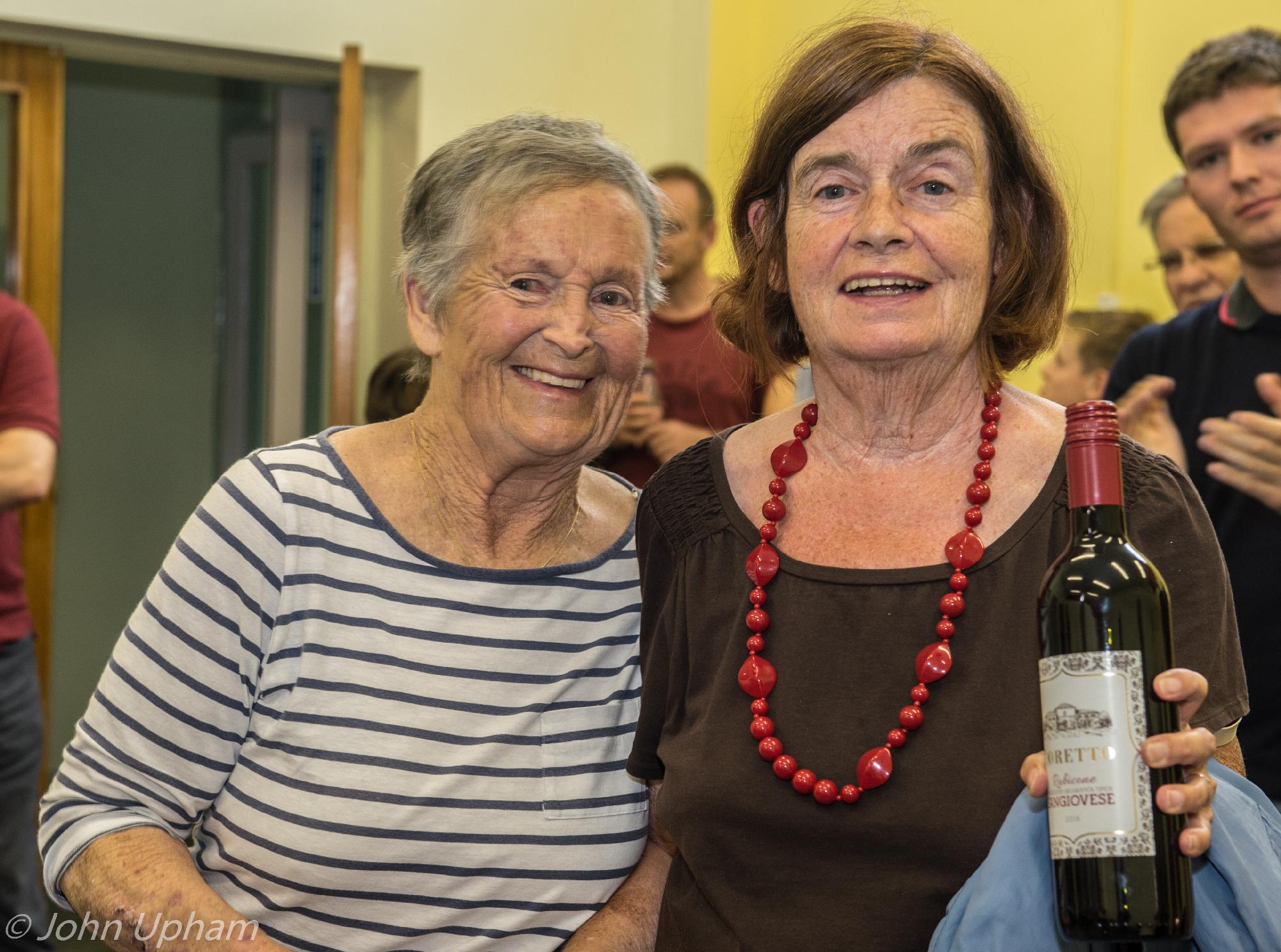
Dinah Norman at the 2017 Keith Richardson Memorial organised by Camberley Chess Club. Courtesy of John Upham Photographic
With the white pieces she has essayed the Colle-Koltanowki Opening for many years and as the second player she has played the Caro-Kann, Smyslov Variation and the Semi-Slav Defence.
Dinah Norman with Sandra Richardson at the 2017 Keith Richardson Memorial organised by Camberley Chess Club
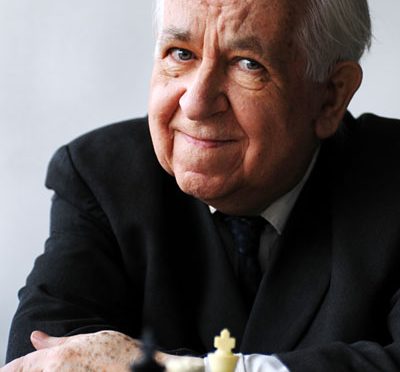
Ninety-seven today is Leonard William Barden, born Tuesday, August 20th, 1929.
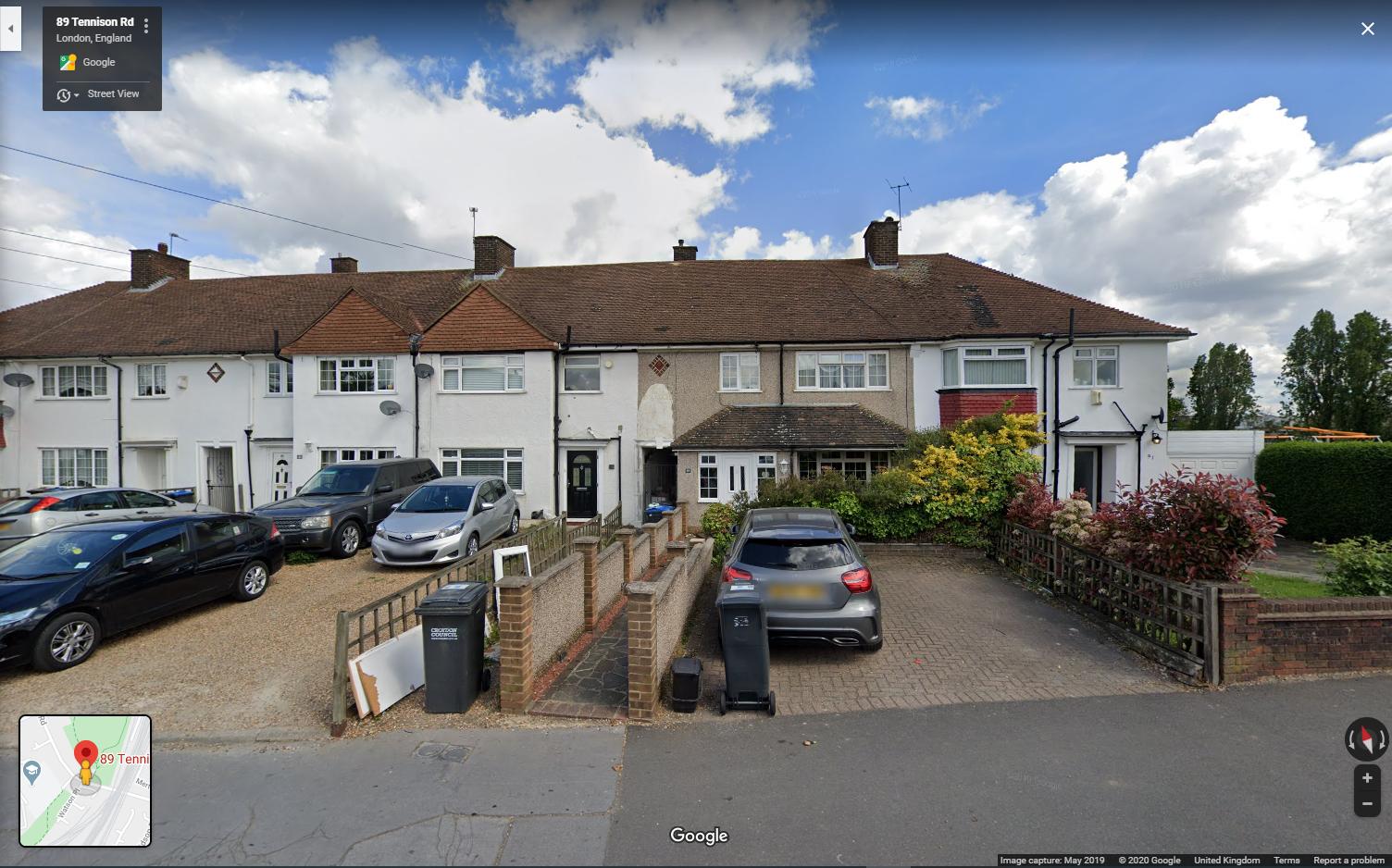
His mother’s maiden was Bartholomew and she became Elise EM Barden when she married Leonard’s father who was William C Barden (a dustman) and in 1939 they lived at 89, Tennison Road, Croydon.
89, Tennison Road, Croydon
From The Encyclopedia of Chess (Batsford, 1977) by Harry Golombek OBE:
“British Master and joint British Champion 1954. Barden was born in Croydon and learned to play at his school, Whitgift, which became a frequent producer of fine players.
In 1946 he tied for first place in the London Boys Championship and in the following year he tied with Jonathan Penrose for first place in the British Boys Championship, but lost the play-off.
In 1952 he came first at Paignton ahead of the Canadian Grandmaster Yanofsky and he reached his peak in 1954 when , after tieing for first place with the Belgian Grandmaster O’Kelly de Galway at Bognor, he tied for for first place in the British Championship at Nottingham with A. Phillips. The play-off was drawn and so the players became joint champions.
Alan Phillips and Leonard Barden are joint British Champions of 1954 in Nottingham, photographer unknown
He played for the BCF in four Olympiads from 1952 to 1962 and then abandoned competitive chess, applying all his energies to writing (he is chess correspondent of the Guardian, the Financial Times, the Evening Standard and the Field, and has written many books on the game.
He has also developed two special interests, in junior chess and in grading, working with utmost persistence and energy in both of these fields.
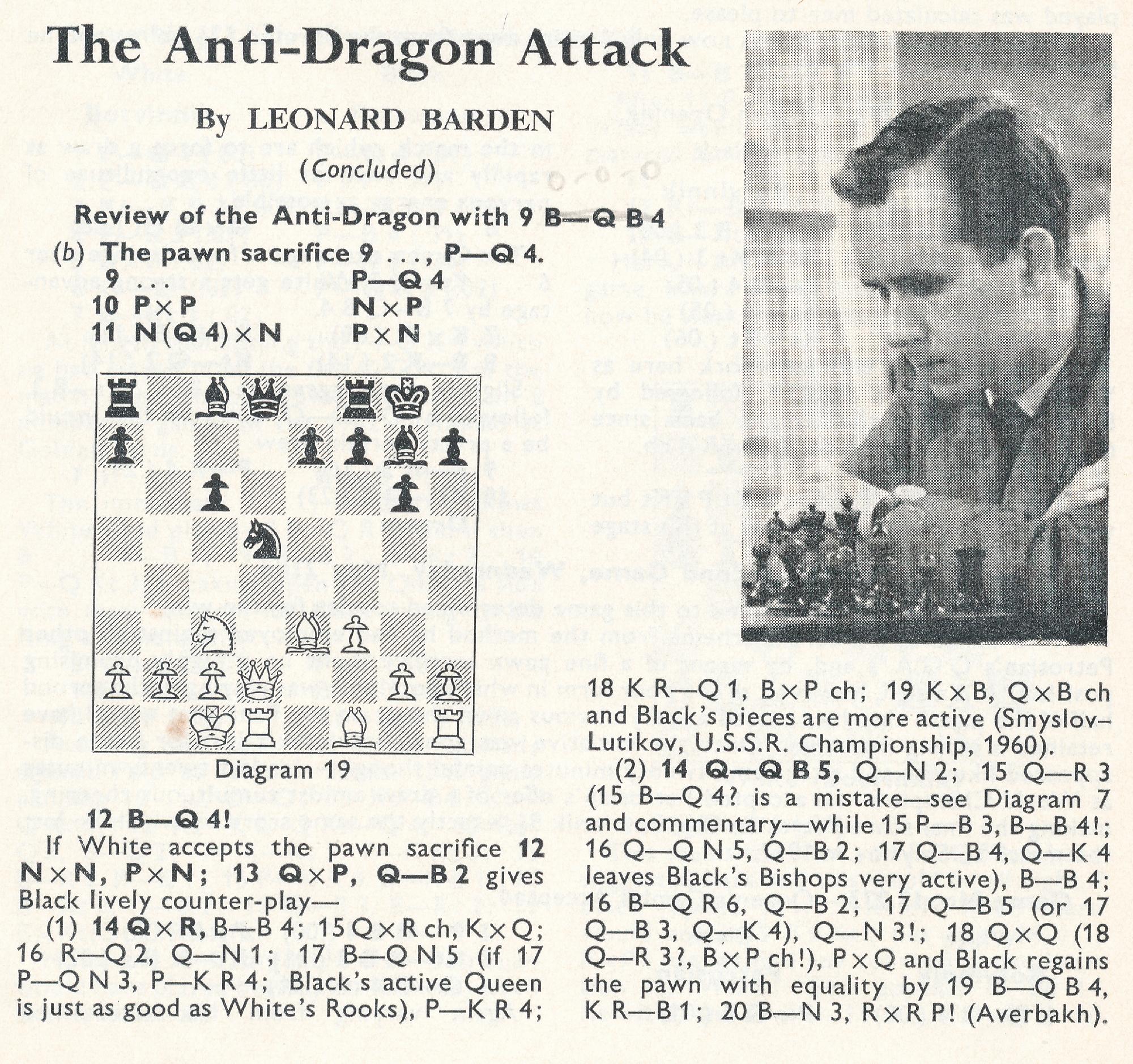
Leonard authored a series of articles on what was to become the Yugoslav Attack versus the Sicilian Dragon. Source : British Chess Magazine, Volume LXXXIII, Number 7 (July), page 208
Amongst his best works are : a A Guide to Chess Openings, London, 1957; The Ruy Lopez, Oxford, 1963; The King’s Indian Defence, London, 1968.”
Disappointingly Sunnucks Encyclopedia does not mention Barden at all and and surprisingly Hooper and Whyld’s usually excellent Oxford Companion only from a connection with Jim Slater.
“Leonard William Barden (born 20 August 1929, in Croydon, London) is an English chess master, writer, broadcaster, organizer and promoter. The son of a dustman, he was educated at Whitgift School, South Croydon, and Balliol College, Oxford, where he read Modern History.
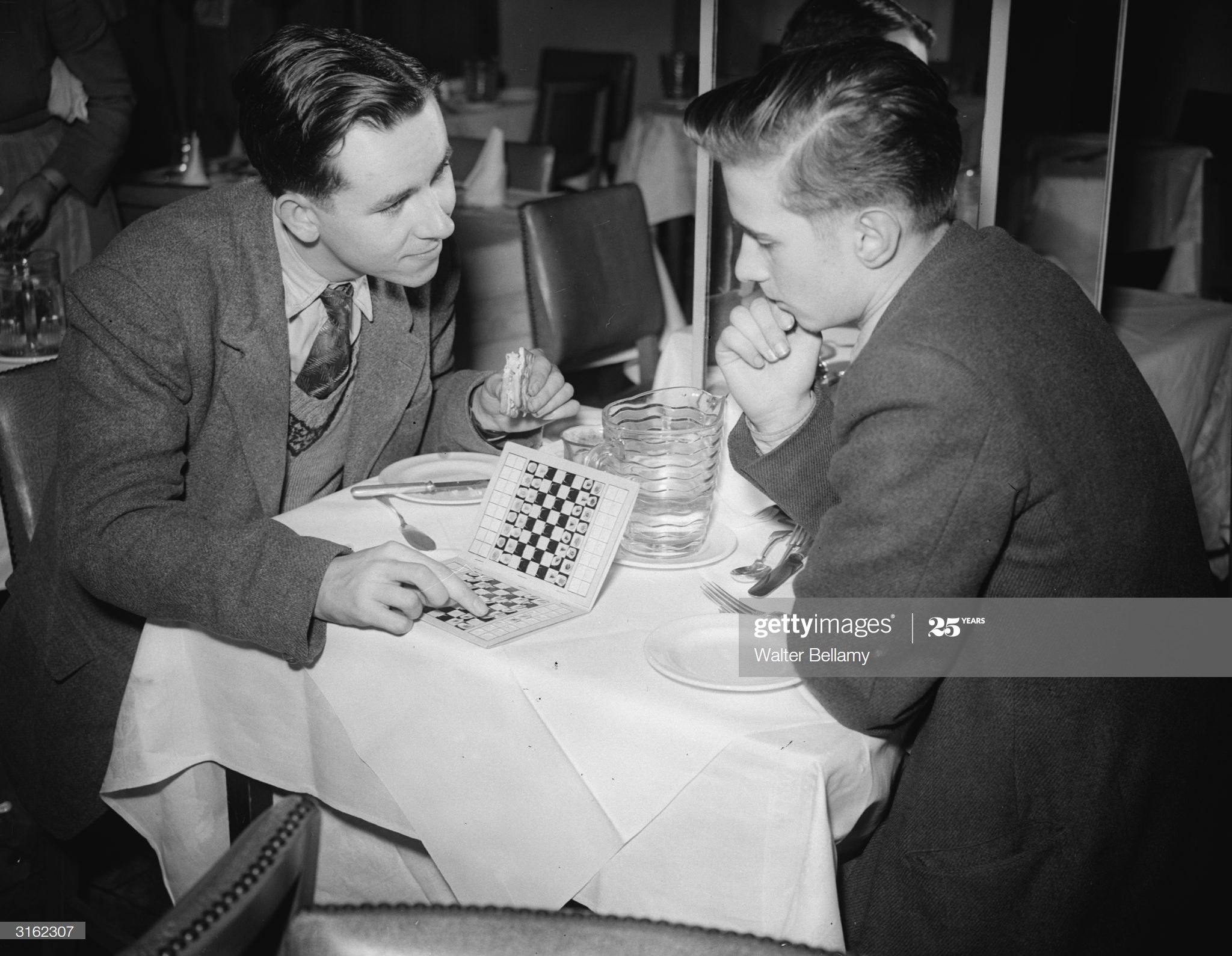
Travel Chess 2nd January 1951: British chess champions Jonathan Penrose and Leonard Barden prepare their openings over breakfast in the Yelton Hotel before the 9.30 am round start at Hastings 1950-51. (Photo by Walter Bellamy/Express/Getty Images)
He learned to play chess at age 13 while in a school shelter during a World War II German air raid. Within a few years he became one of the country’s leading juniors.[1] He represented England in four Chess Olympiads. Barden played a major role in the rise of English chess from the 1970s. As a chess columnist for various newspapers, his column in London’s Evening Standard is the world’s longest-standing chess column.
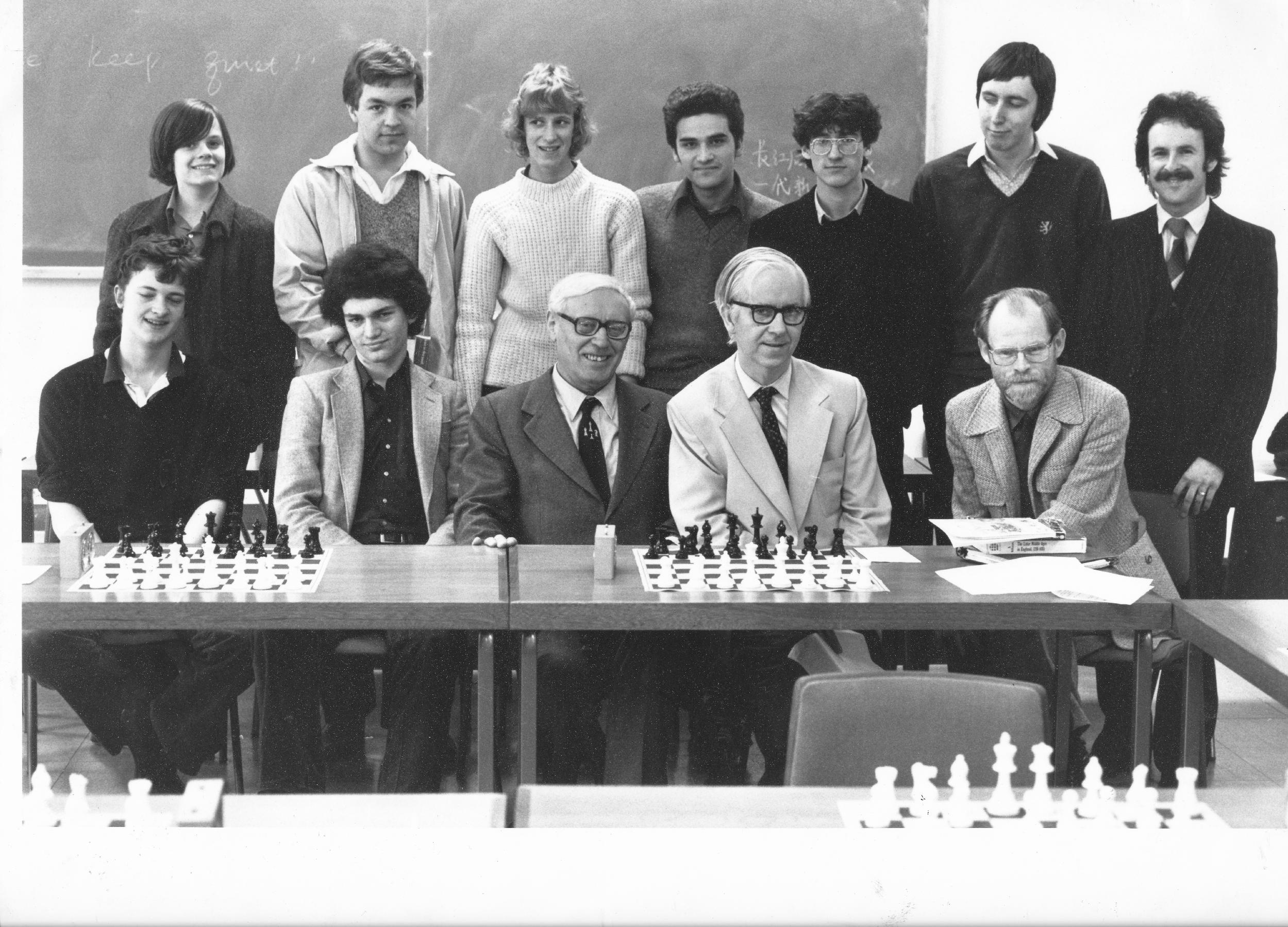
Leonard Barden (seated, second from right) Before Botvinnik’s 1981 Pergamon Press clock simul against England juniors, the final competitive event of the Patriarch’s career. Standing: Stuart Conquest, Neil Dickenson. Gary Lane, Alan Byron, Daniel King, John Hawksworth, Pergamon editor. Seated: Julian Hodgson, Byron Jacobs, Mikhail Botvinnik, Leonard Barden, Bernard Cafferty.
In 1946, Barden won the British Junior Correspondence Chess Championship, and tied for first place in the London Boys’ Championship. The following year he tied for first with Jonathan Penrose in the British Boys’ Championship, but lost the playoff.
Barden finished fourth at Hastings in 1951–52. In 1952, he won the Paignton tournament ahead of the Canadian future grandmaster Daniel Yanofsky. He captained the Oxfordshire team which won the English Counties championship in 1951 and 1952.
Barden making a move at Southend 1955.
In the latter year he captained the University of Oxford team which won the National Club Championship, and he represented the university in the annual team match against the University of Cambridge during his years there. In 1953, he won the individual British Lightning Championship (ten seconds a move).
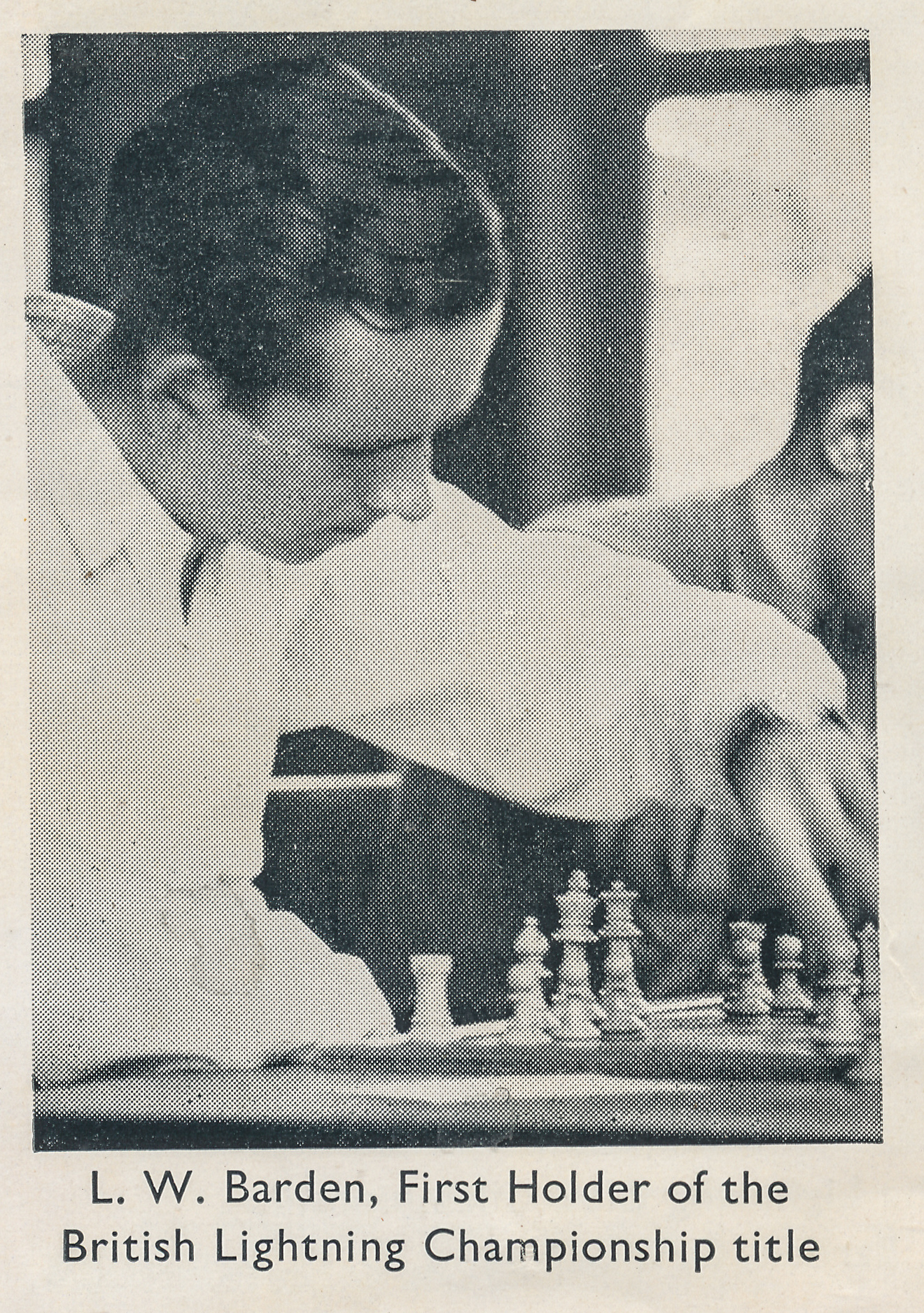
Leonard Barden, First Holder of the British Lightning Championship title played at the Ilford Congress between May 22nd and May 25th, 1953
(ed: the above event was “won” by Dr. PM List with 15.5/18 but he was not allowed the title. Leonard together with AY Green and KR Smith scored 13/18 and won the play-off).
The following year, he tied for first with the Belgian grandmaster Albéric O’Kelly de Galway at Bognor Regis, was joint British champion, with Alan Phillips, and won the Southern Counties Championship.
Leonard Barden vs Victor Korchnoi, Leipzig Olympiad, 1960
He finished fourth at Hastings 1957–58, ranked by chessmetrics as his best statistical performance. In the 1958 British Chess Championship, Barden again tied for first, but lost the playoff match to Penrose 1½–3½.
Leonard Barden (centre) with Raaphi Persitz, JB Sykes, OI Galvenius and DM Armstrong, Ilford, May, 1953
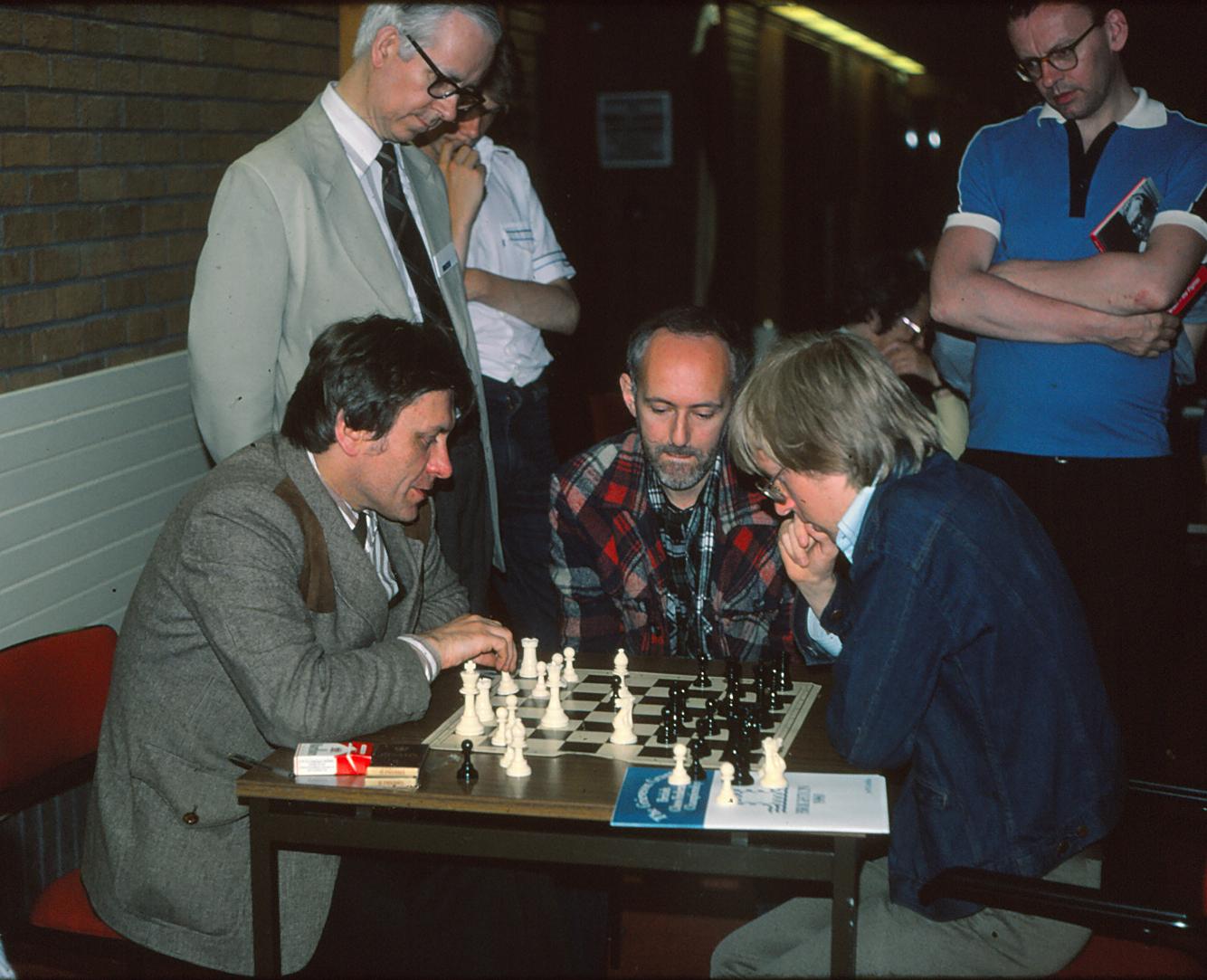
LWB observes analysis between David Rumens and Murray Chandler from Brighton 1980. Photograph courtesy of John Upham.
He represented England in the Chess Olympiads at Helsinki 1952 (playing fourth board, scoring 2 wins, 5 draws, and 4 losses), Amsterdam 1954 (playing first reserve, scoring 1 win, 2 draws, and 4 losses), Leipzig 1960 (first reserve; 4 wins, 4 draws, 2 losses) and Varna 1962 (first reserve; 7 wins, 2 draws, 3 losses). The latter was his best performance by far.
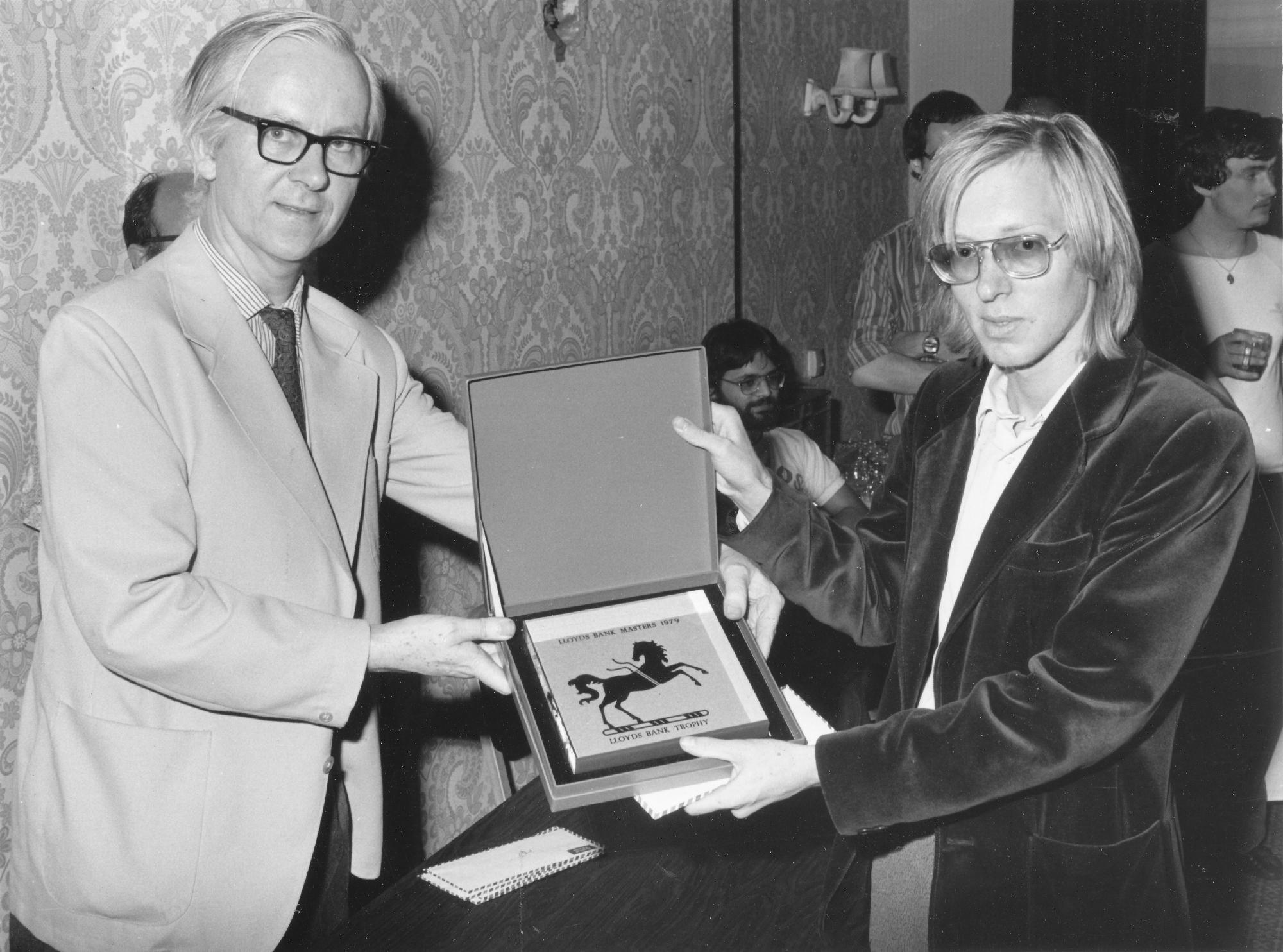
Leonard Barden (left) and Murray Chandler display the Lloyds Bank Trophy which the 19-year old New Zealander won ahead of 3 Grandmasters and 10 International Masters for his finest international success up to 1979. in the Lloyds Bank Masters
Barden has a Morphy number of 3, having drawn with Jacques Mieses in the Premier Reserves at Hastings 1948–49. Mieses drew with Henry Bird in the last round of Hastings 1895, and Bird played a number of games with Paul Morphy in 1858 and 1859.
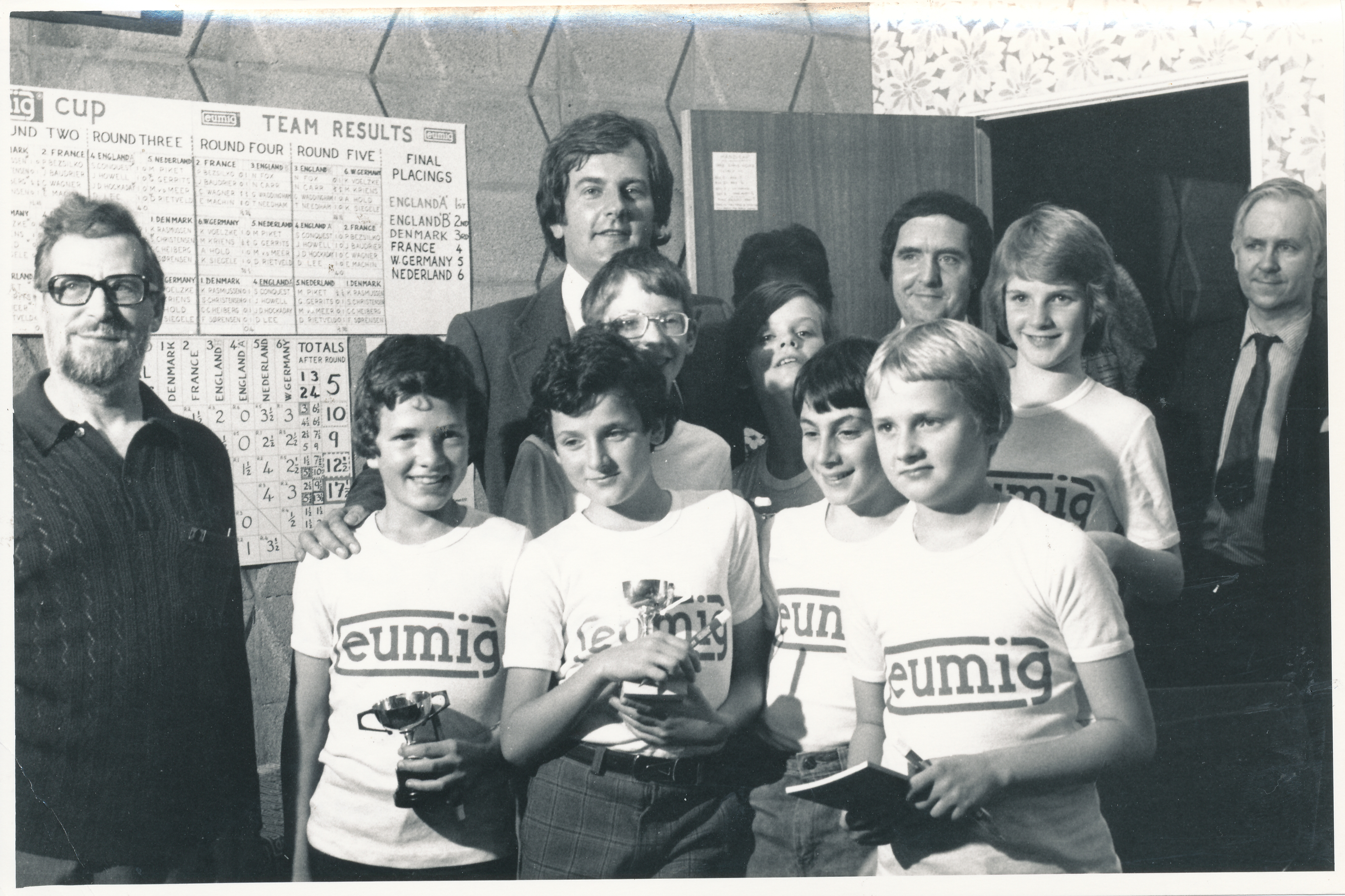
England’s under-12 junior teams finished first and second in the international Eumig Cup, 1981. Front row: Peter Morrish (organiser), Jimmy Hockaday, Darren Lee, Neil Fox, Neil Carr. Second row: James Howell, Stuart Conquest, Teresa Needham. Far right: LB.
In 1964, Barden gave up most competitive chess to devote his time to chess organisation, broadcasting, and writing about the game. He has made invaluable contributions to English chess as a populariser, writer, organiser, fundraiser, and broadcaster.
Leonard Barden at Bob Wade’s 80th birthday party, 2001.
He was controller of the British Chess Federation Grand Prix for many years, having found its first sponsor, Cutty Sark. He was a regular contributor to the BBC’s Network Three weekly radio chess programme from 1958 to 1963. His best-known contribution was a consultation game, recorded in 1960 and broadcast in 1961, where he partnered Bobby Fischer against the English masters Jonathan Penrose and Peter Clarke. This was the only recorded consultation game of Fischer’s career. The game, unfinished after eight hours of play, was adjudicated a draw by former world champion Max Euwe. Barden gave BBC television commentaries on all the games in the 1972 world championship. From 1973 to 1978 he was co-presenter of BBC2’s annual Master Game televised programme.
Julian and Nigel Short play Korchnoi in the Evening Standard 1976 simul. Leonard Barden observes.
As of 2021, his weekly columns have been published in The Guardian for 65 years and in The Financial Times for 46 years. A typical Barden column not only contains a readable tournament report, but is geared toward promoting the game. His London Evening Standard column, begun in summer 1956, is now the world’s longest running daily chess column by the same author, breaking the previous record set by George Koltanowski in the San Francisco Chronicle. Koltanowski’s column ran for 51 years, 9 months, and 18 days, including posthumous articles.”
Leonard Barden (Linda Nylind of the Guardian)
Leonard wrote this on the English Chess Forum in 2021 :
“I retired after Ilford 1964 when I finished a poor last in the England Olympiad team qualifier, returned at Hammersmith 1969 (equal 2nd behind Keene) and then played around 6-8 weekenders a year until 1972. My overall performance level between early 60s and early 70s dropped from around 225 to 215 BCF, so I wasn’t encouraged to pursue the comeback further.”
Leonard was Southern Counties (SCCU) champion in the 1953-54 season.
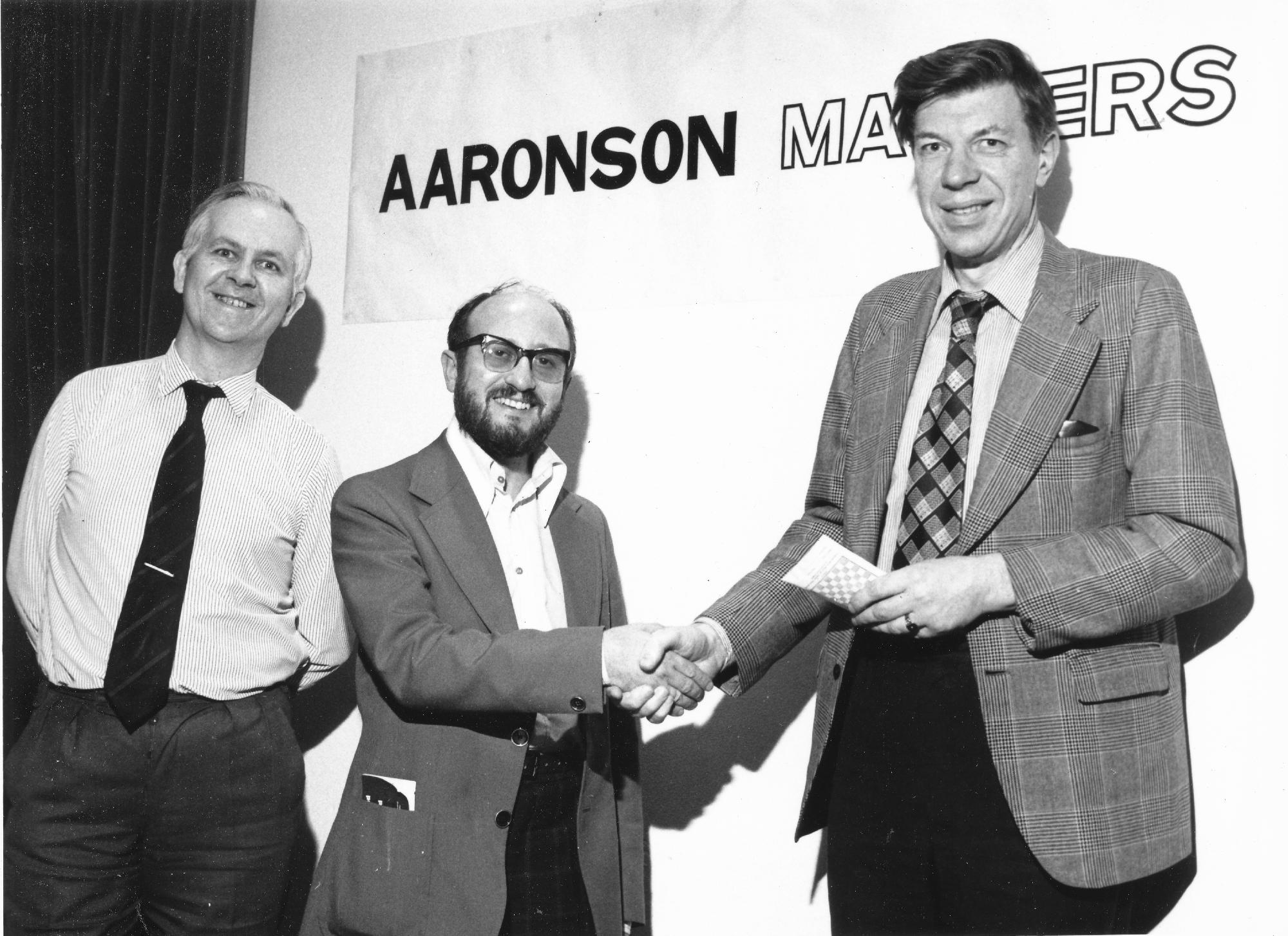
Leonard Barden, Stewart Reuben and Michael Franklin at the 1978 Aaronson Masters
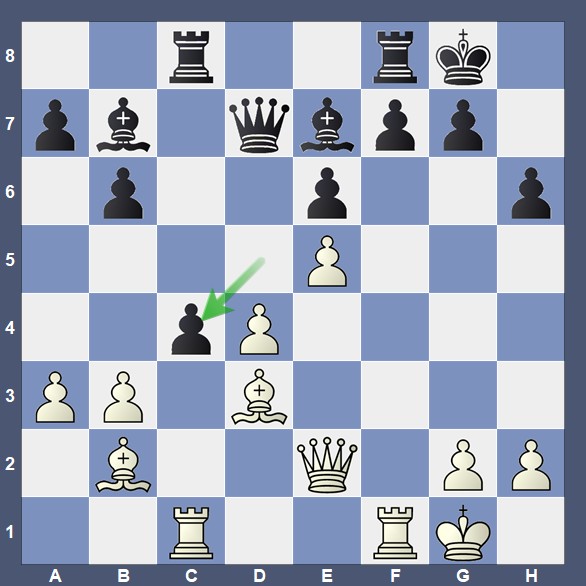
Leonard reveals this as his best game :
Leonard has authored or co-authored a number of highly regarded books, most of which are highly instructional to this day:
A Guide to Chess Openings (1957),
A Guide to Chess Openings
How Good Is Your Chess? (1957),
How Good is Your Chess ?
Chess (1959),
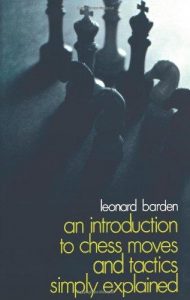
Introduction to Chess Moves and Tactics Simply Explained (1959),
An Introduction to Chess Moves and Tactics Simply Explained
Modern Chess Miniatures (with Wolfgang Heidenfeld, 1960),
Erevan 1962 (1963),
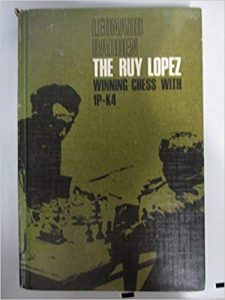
The Ruy Lopez (1963),
The Ruy Lopez
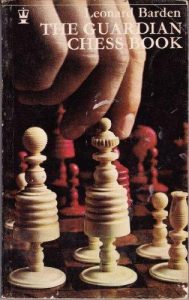
The Guardian Chess Book (1967),
The Guardian Chess Book
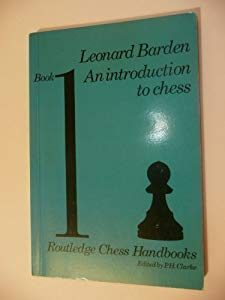
An Introduction to Chess (1967),
An Introduction to Chess
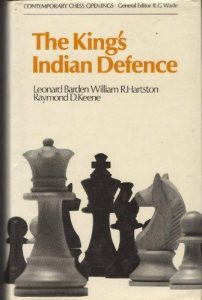
The King’s Indian Defence (1969),
The King’s Indian Defence
Chess: Master the Moves (1977),
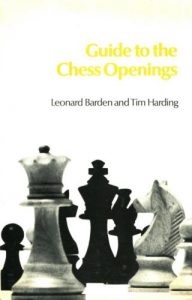
Guide to the Chess Openings (with Tim Harding, 1977),
Guide to the Chess Openings
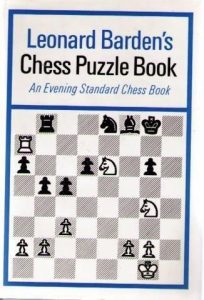
Leonard Barden’s Chess Puzzle Book (1977) (a collection of his Evening Standard columns),
Leonard Barden’s Chess Puzzle Book
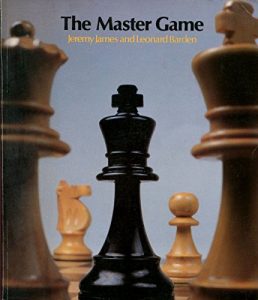
The Master Game (with Jeremy James, 1979),
The Master Game
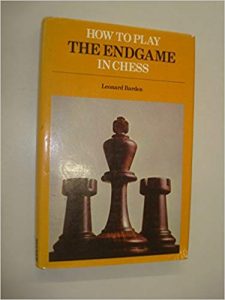
How to Play the Endgame in Chess (1979),
How to Play The Endgame in Chess
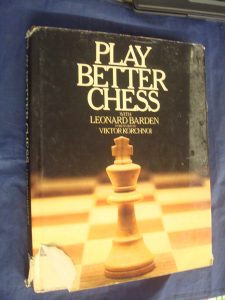
Play Better Chess (1980),
Play Better Chess
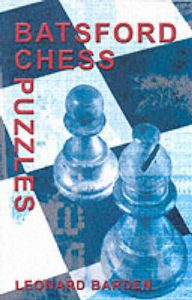
Batsford Chess Puzzles (2002),
Batsford Chess Puzzles
One Move and You’re Dead (with Erwin Brecher, 2007) : Can you supply an image?
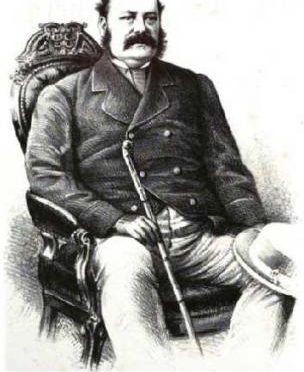
“One of the strongest English players during the 1850s, He made little impression in his one and only tournament, London 1862, but is remembered for having scored more wins than anyone else in friendly play against Morphy in 1858. He reduced his corpulence by 130 pounds in ten months and as a result died. ”
He is perhaps most well know for having a reasonable score against Paul Morphy of -19 +8 which was a lot better than most !
According to chessgames.com :
“Thomas Wilson Barnes was one of the strongest English players in the 1850s. His only tournament appearance was in London 1862 but he did not do himself justice. He’s best remembered for having more wins against Paul Morphy in friendly play than anyone else. Being overweight he decided to reduce his size, but the loss of 130 pounds in 10 months was more than his system could handle and resulted in his death in 1874.”
The Barnes Opening, was played by T. W. Barnes. This opening move has no particular merit but he liked to avoid book lines, to which end he
sometimes answered 1 e4 by 1…f6.
He died at 68, Cambridge Street, Pimlico.
His death was registered in the St George, Hanover Square district.
He was buried on August 25th, 1874 in Brompton Cemetery (plot number 76449). According to the burial records he had a “Private Grave” the plot of which measured 113.3 x 18.3 and “no extra depth” was required.
BCN sends Happy birthday wishes to Peter Griffiths
Peter Charles Griffiths was born on Thursday, August 15th, in 1946 in Birmingham, Warwickshire. His mother’s maiden name was Ward.
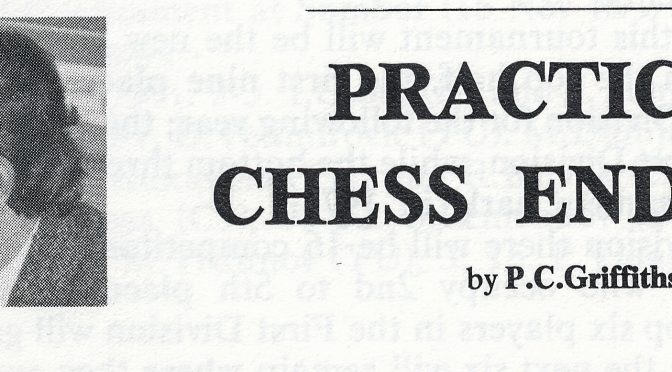
Peter was a strong player active from the 1960s until 1989. He played in the British Championships more than once and was a professional coach and writer. He wrote the column “Practical Chess Endings” which appeared in the British Chess Magazine. The column commenced in the December 1972 issue and columns became less frequent until around 1991.
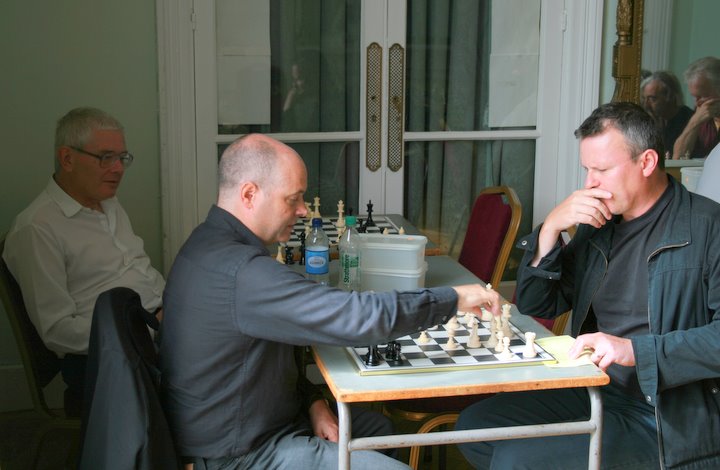
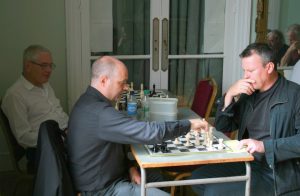
Peter Griffiths (far left)
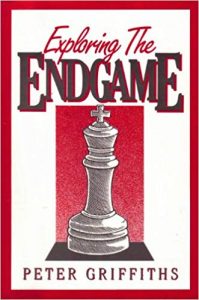
He wrote Exploring the Endgame
Exploring the Endgame
and
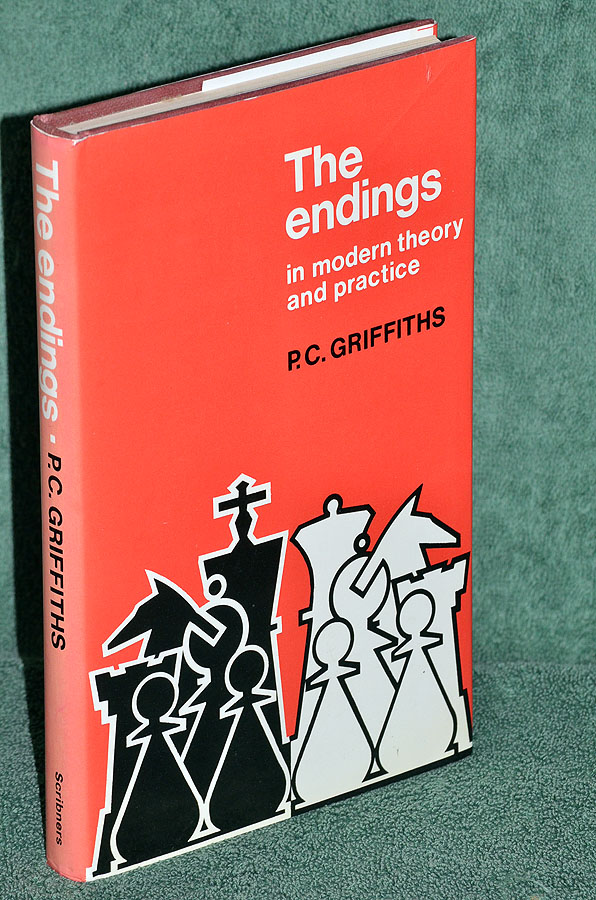
The Endings: In Modern Theory and Practice, PC Griffiths, G. Bell & Sons Ltd, 1976, ISBN 0 7135 1953 3
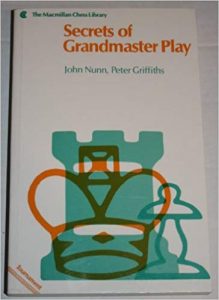
and co-authored Secrets of Grandmaster Play with John Nunn.
Secrets of Grandmaster Play
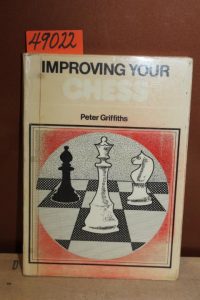
and wrote Improving Your Chess
Improving Your Chess
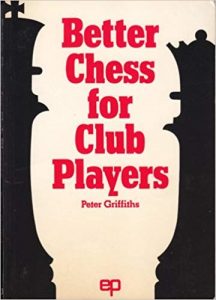
and Better Chess for Club Players
Better Chess for Club PlayersPeter Griffiths (far left)
BCN wishes Happy Birthday to FM Andrew Smith (15-viii-1959)
Andrew Philip Smith became a FIDE Master in 1994 and is registered with the Irish Chess Union.
His highest FIDE rating was 2310 in July 1994 at the age of 35.
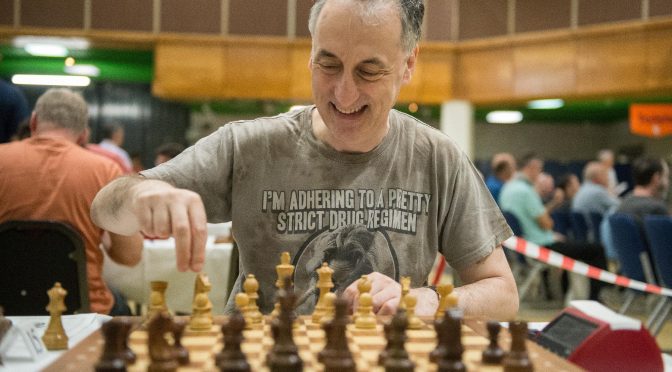
FM Andrew Smith, photographer unknown
He plays for Bourne End Chess Club in the Buckinghamshire League and in the Berkshire League.
Andrew also plays for 4NCL Barnet Knights (he has played for Atticus), Buckinghamshire CCA in the Chiltern League and Hon Members LCCL.
Andrew started his chess aged 6 when his Mother taught him and he joined Lewisham Chess Club aged 13 and then Slough Chess Club (Thames Valley League and 4NCL) in 1988.
He has won the Berks & Bucks Congress in 2018 and 2016 (joint) and he became Berkshire Individual Champion as a direct consequence winning the Cadogan Cup.
With the white pieces Andrew is (almost) exclusively a 1.e4 player favouring the Centre Game
and as the second player Andrew plays the Philidor Defence and the Benoni.
He is known to favour “enterprising” variations such as the Mason Variation of the Philidor, the Haldane Attack versus the French and other such exotica.
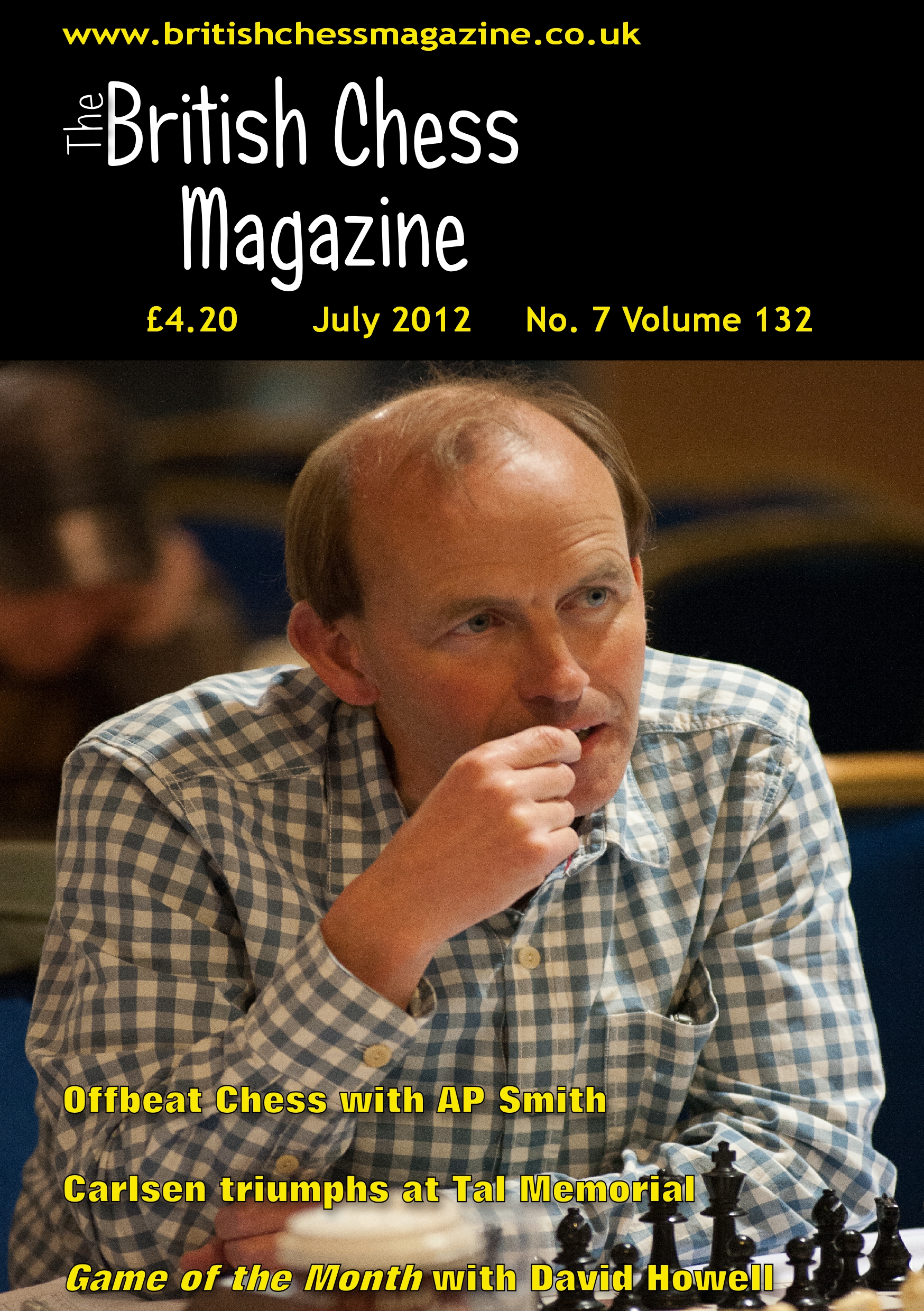
British Chess Magazine, Volume CXXXII (132), Number 7 (July) front cover features FM Andrew Smith from the final 4NCL weekend of the 2011-2012 season, courtesy of John Upham Photography
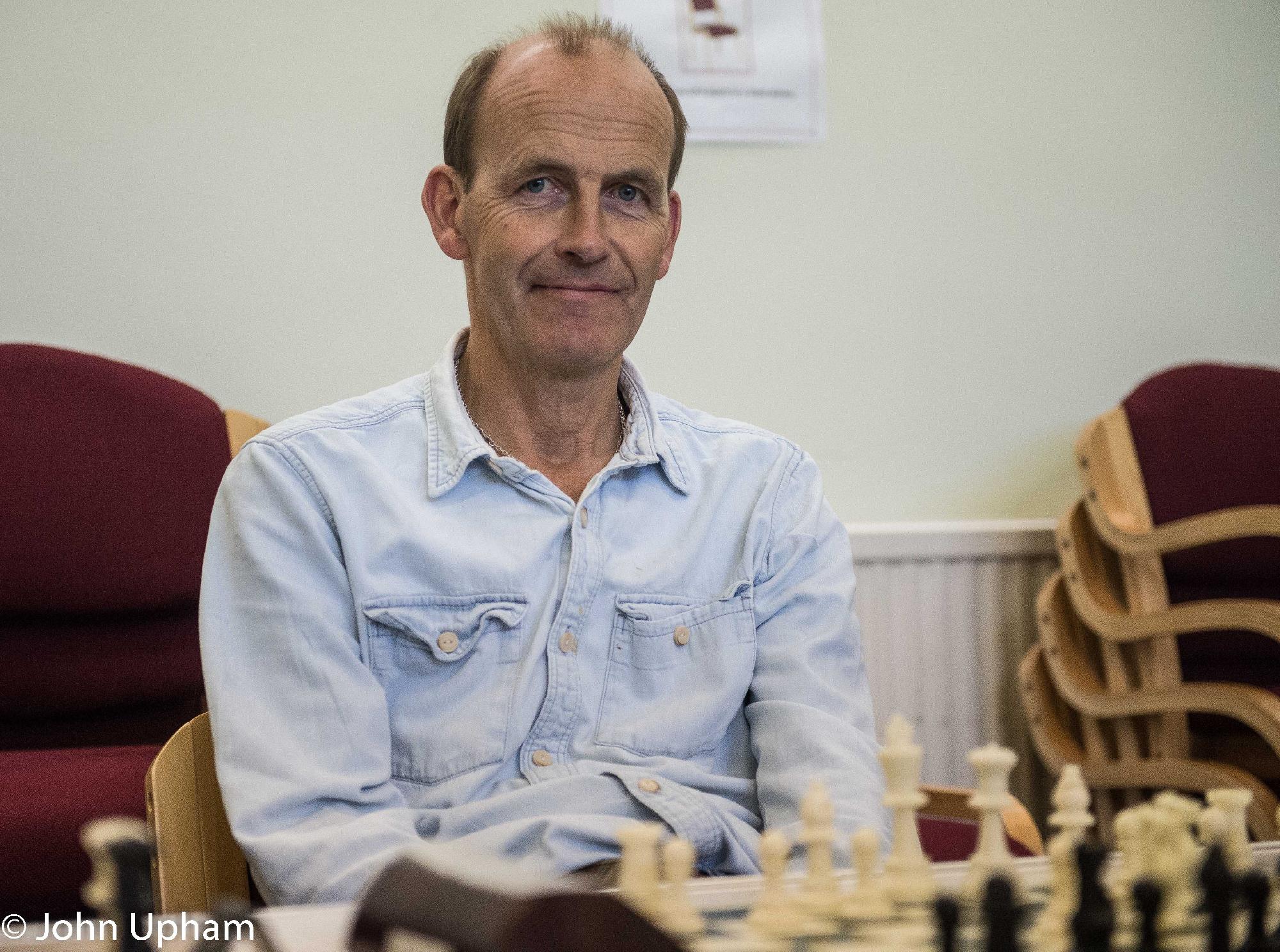
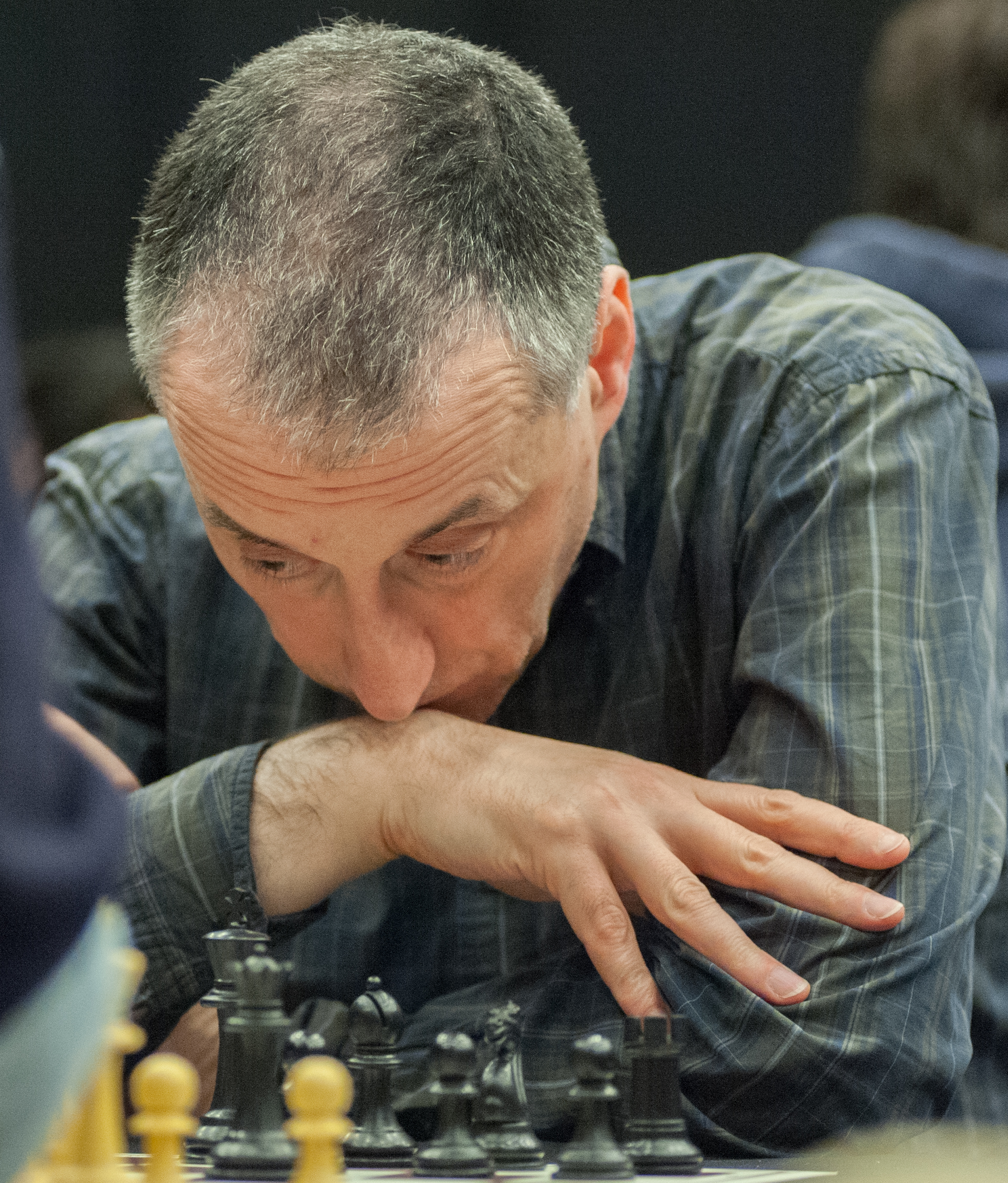
FM Andrew Smith at the 2019 Keith Richardson Memorial, courtesy of John Upham Photography
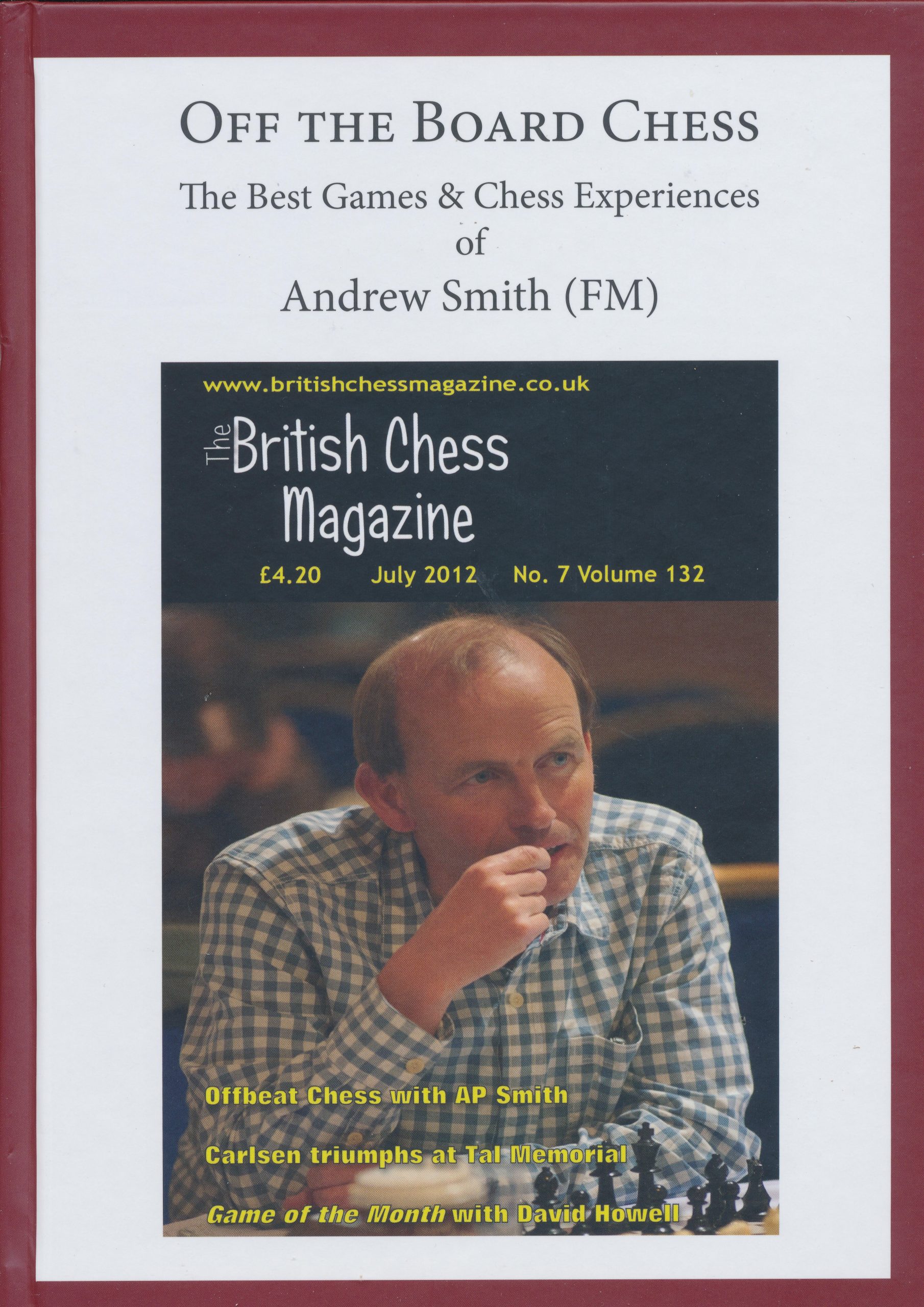
In 2021 Andrew self-published “Off the Board Chess, The Best Games and Chess Experiences of Andrew Smith (FM)” which has received popular acclaim.
Off the Board Chess, The Best Games and Chess Experiences of Andrew Smith (FM), FM Andrew Smith, Self published, 2021, ISBN 978-1-5272-8572-9
BCN sends IM Malcolm Pein best wishes on his 61st birthday.
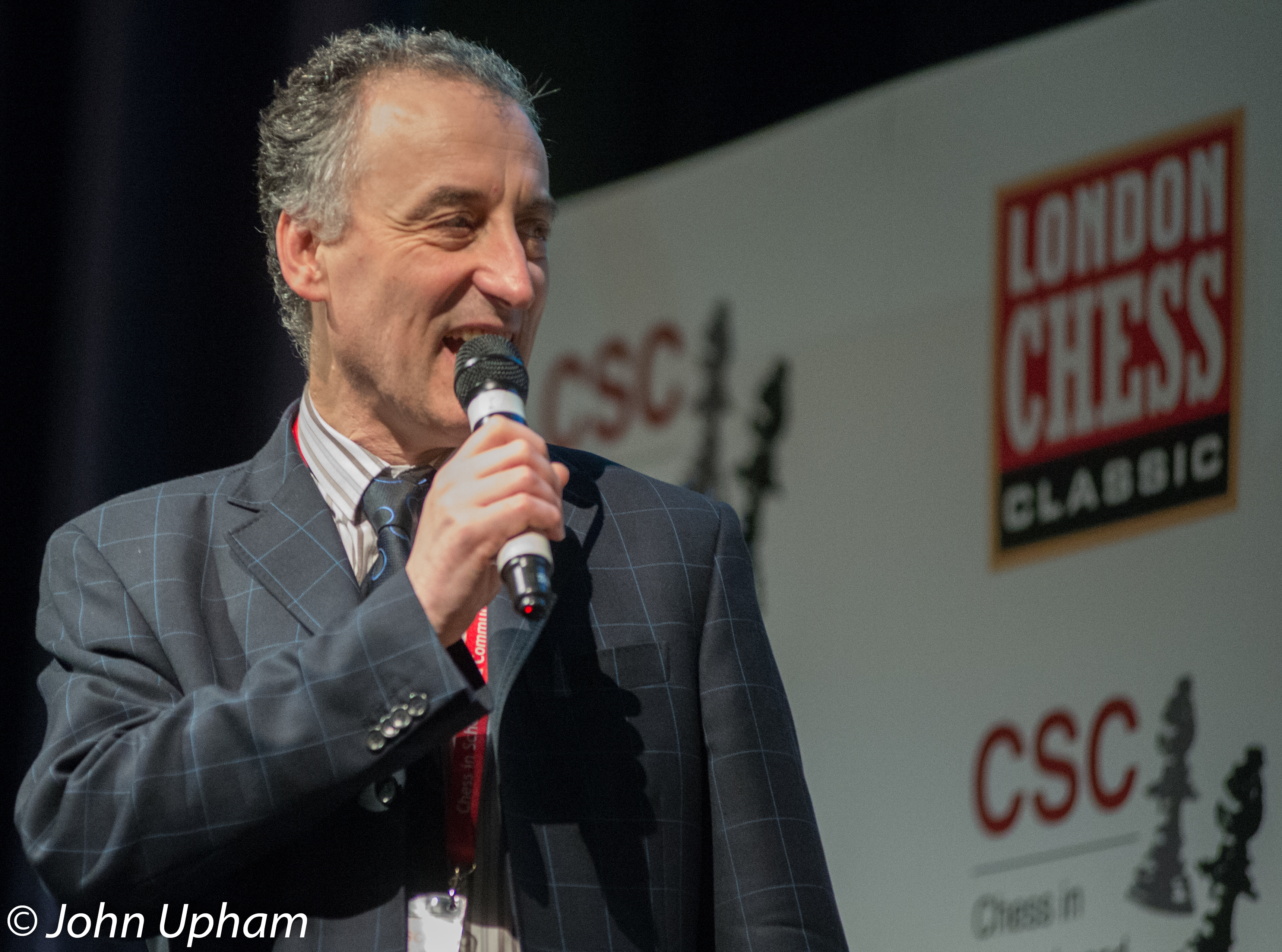
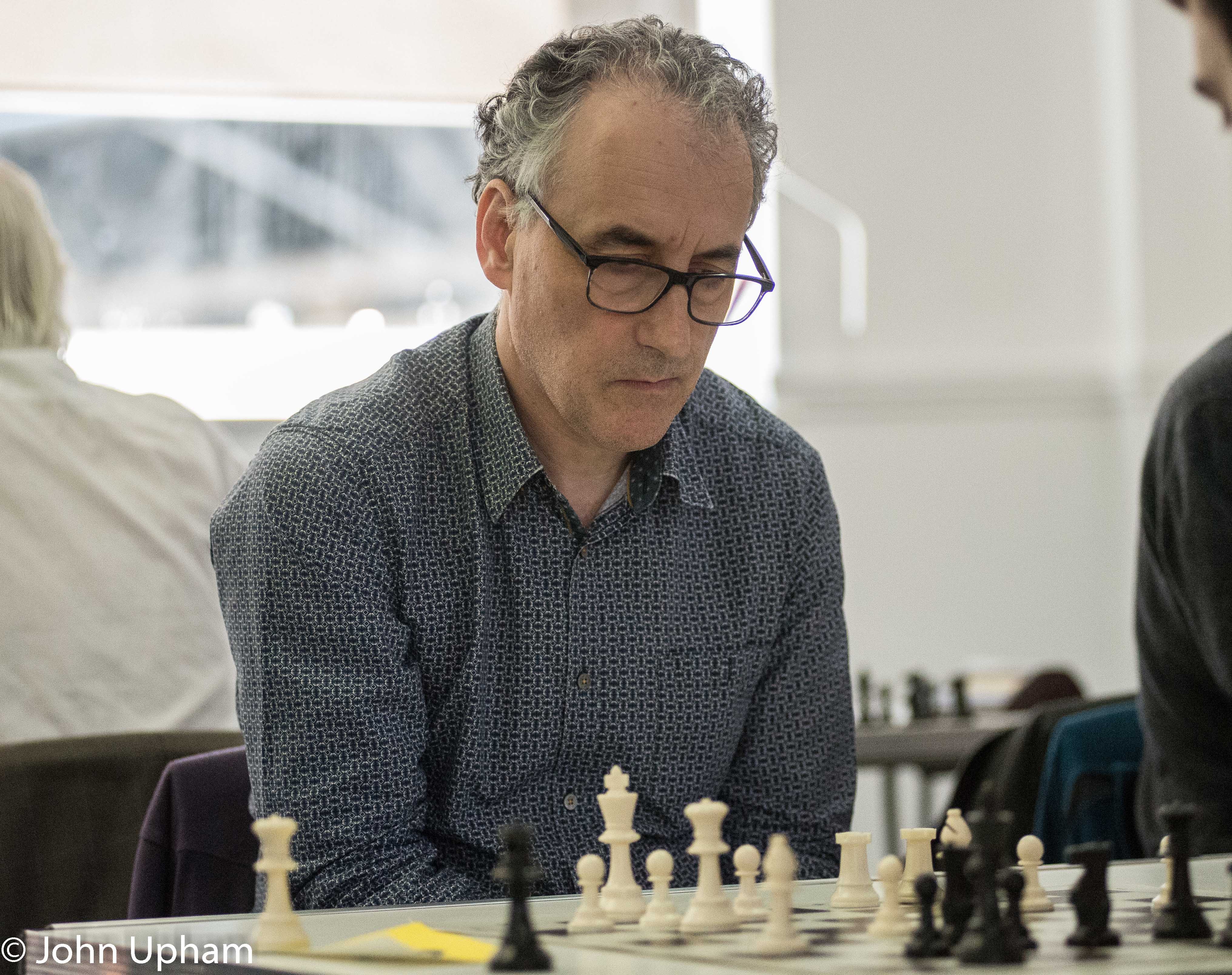
IM Malcolm Pein at the King’s Place Rapidplay 2013, photograph courtesy of John Upham
Malcolm Bernard Pein was born in Liverpool (South). South Lancashire and his mother’s maiden name is Max. (Gaige, Felice and chessgames.com all incorrectly have Malcolm L. Pein).
Malcolm Pein
This was written about Malcolm aged 19 just prior to the 1979 Spassky vs the BCF Junior Squad simultaneous display :
” London University and Liverpool, Rating 199. British under-18 co-champion, 1977. Currently No.1 player for London University.”
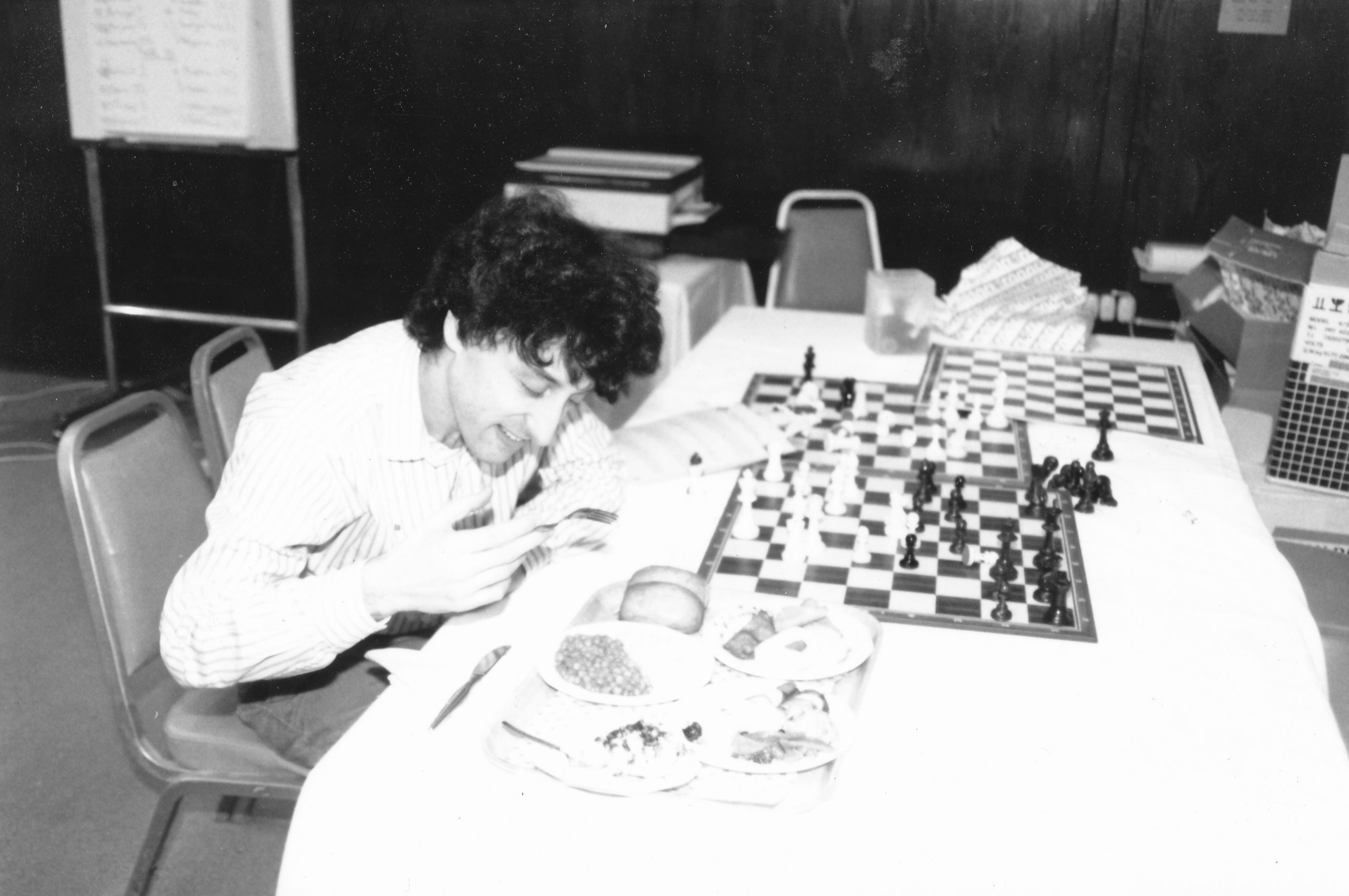
Malcolm hard at work
Malcolm studied Chemical Engineering at University College, London entering in September 1978. He won The University of London championship in February 1979. The runner-up was John Upham also from UCL.
He became an International Master in 1986 and is a FIDE Delegate (for England) and an International Director.
Malcolm’s peak rating was 2450 in January 1992 at the age of 32.
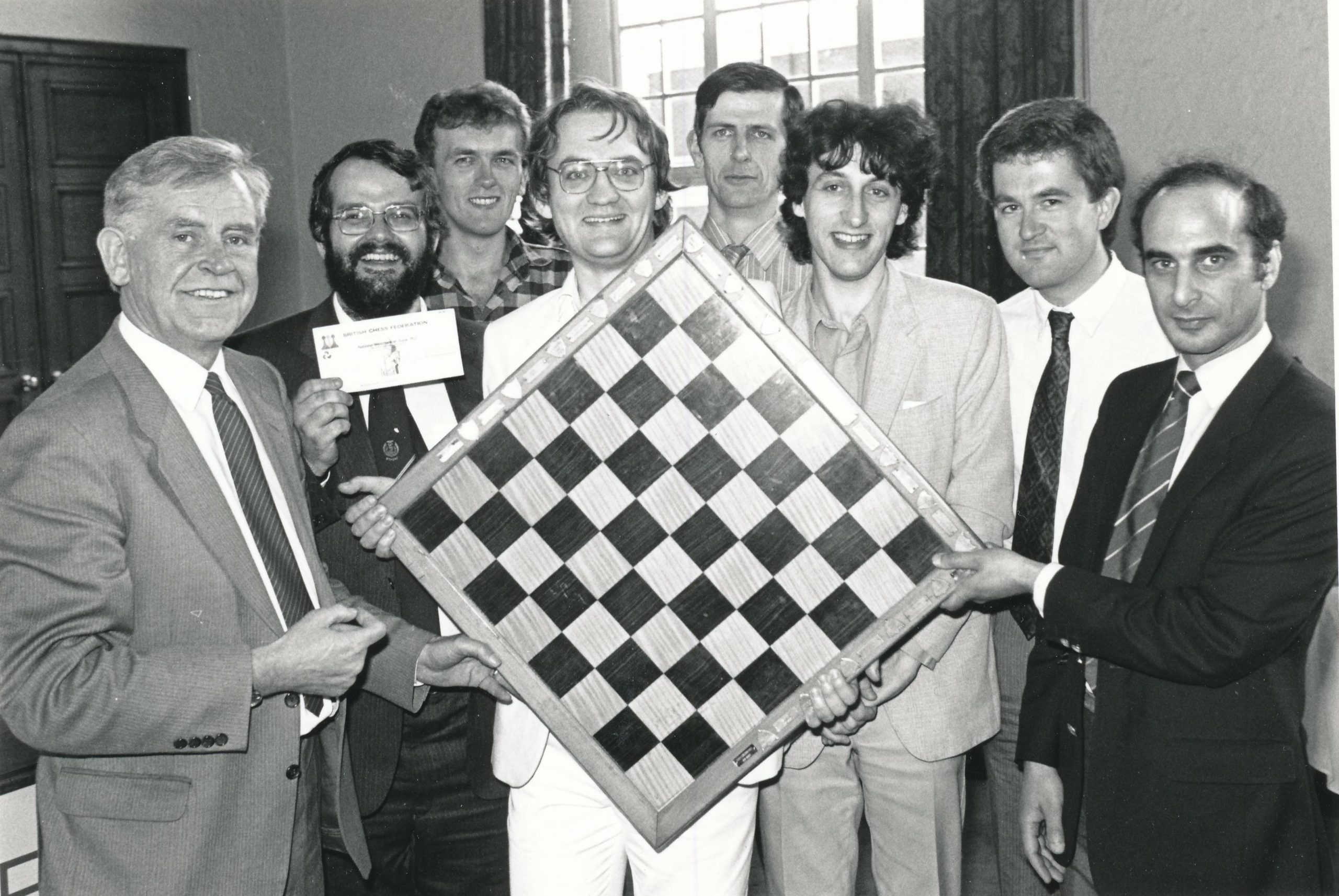
Malcolm Pein (third from right) and a victorious Wood Green team. Trophy presented by Magnus Magnusson
With the white pieces Malcolm prefers the Queen’s Gambit almost exclusively with 1.e4 rarely seeing the light of day scoring 62%
As the second player, Malcolm champions the Pirc, Modern and Grunfeld defences scoring 49% which MegaBase 2020 claims is “above average”.
Malcolm plays for 4NCL Wood Green and Liverpool.
IM Malcolm Pein at the Bristol heat of the British Blitz Qualification event in 2019
In addition to his newspaper column and magazine editorial, Malcolm has written a number of chess books and booklets, including :
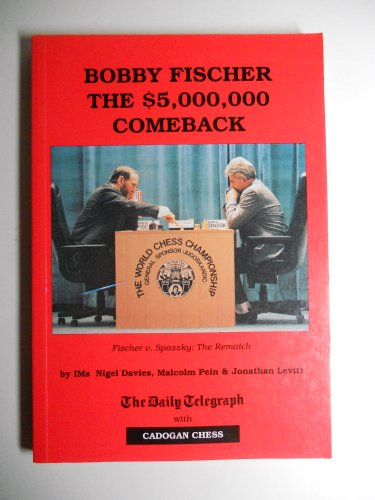
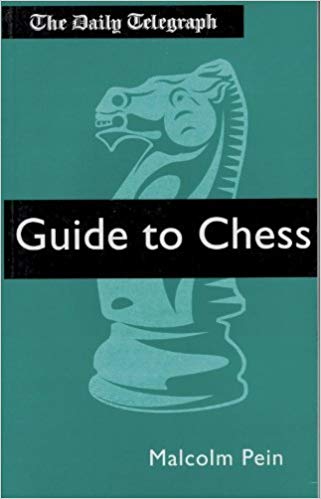
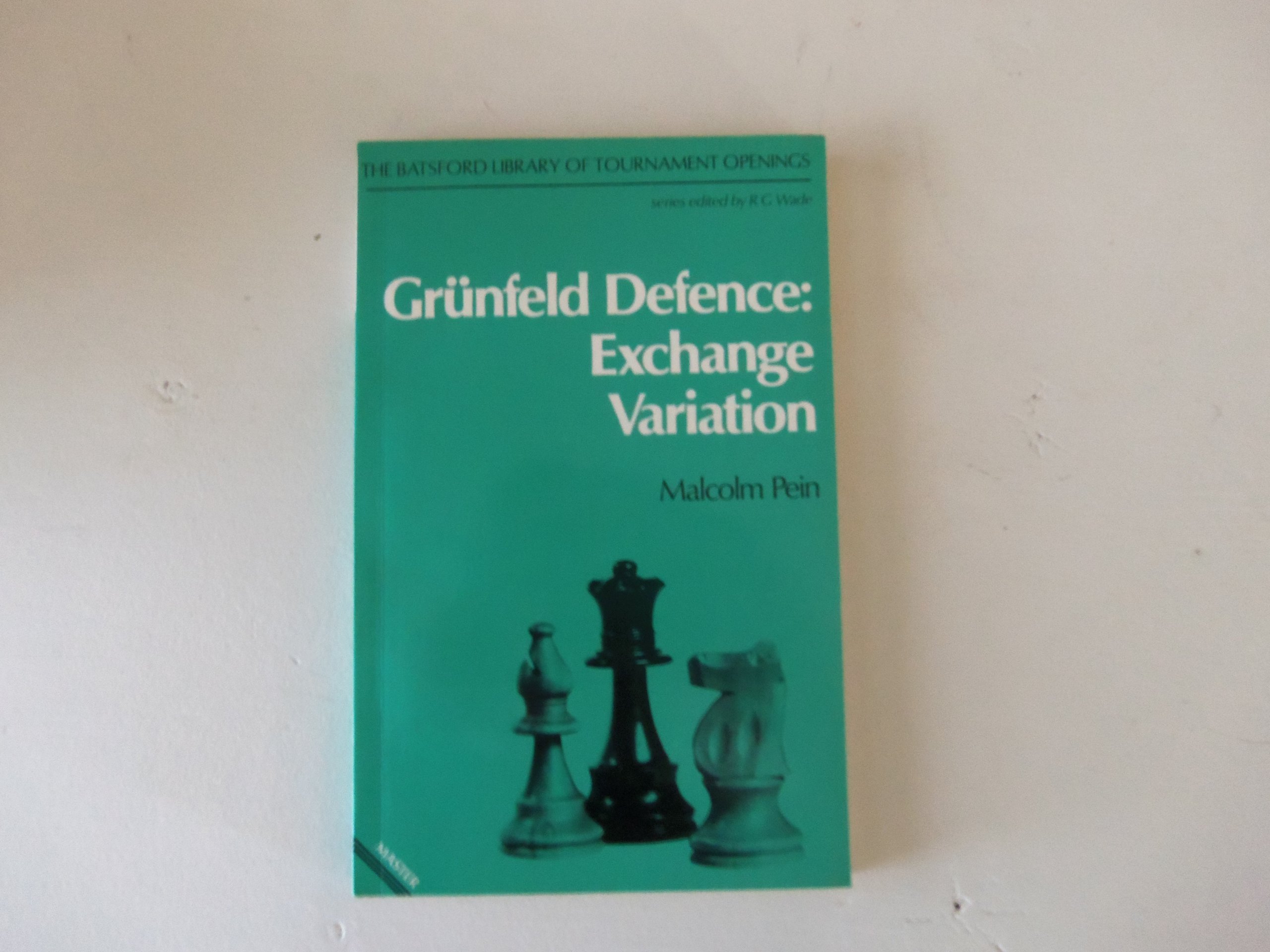
Grunfeld Defence (Batsford, 1981) – ISBN 978-0713435948Blumenfeld Defence [with Jan Przewoznik] (Everyman, 1991) – ISBN 978-0080371337Bobby Fischer: The $5,000,000 Comeback, Nigel Davies, Malcolm Pein & Jonathan Levitt, Cadogan Chess, 1992, ISBN 10: 1857440420Daily Telegraph Guide to Chess (Batsford, 1995) – ISBN 978-0713478143
The Exchange Grunfeld [with Adrian Mikhalchishin] (Everyman, 1996) – ISBN 978-1857440560]
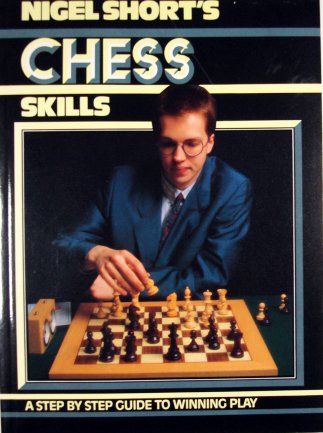
Nigel Short’s Chess Skills (1989)(was ghost written by Malcolm)
“Malcolm Pein’s contribution to English Chess is well known. He is CEO of Chess in Schools and Communities, has been largely involved in the organisation of the London Chess Classic and is currently the ECF’s Delegate to FIDE and International Director. On top of all that he is also an IM, writes the ‘Daily Telegraph’ Chess Column, and edits CHESS Magazine.”
IM Malcolm Pein at the London Chess Classic 2013, photograph courtesy of John Upham
Malcolm is also owner (and a director) of the London Chess Centre (a company incorporated on May 1st 1997) which has relocated to 44, Baker Street, former home of the British Chess Magazine retail premises. This was purchased from Stephen Lowe and Shaun Taulbut in 2010 when the leasehold on the Euston Road premises expired. Another director is Henry Gerald Mutkin who is the main organiser of the annual Varsity match.
Malcolm has a son, Jonathan who is a strong player and he resides in London, NW7.
In 2021 Malcolm stood as an alternative to Mike Truran in the contested election for CEO. On October 9th 2021 following “detailed and amicable discussions” with Mike a away forward was agreed and Malcolm agreed to remain as International Director of the ECF and Mike remained as CEO.
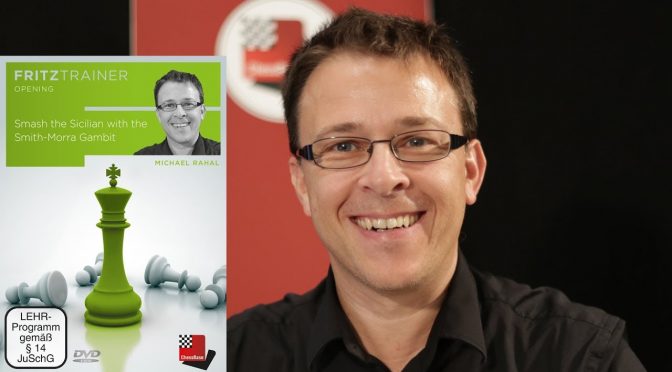
BCN wishes Happy Birthday to IM Michael A Rahal (10-viii-1970)Michael Anthony Rahal was born in Aldershot, Hampshire to Spanish parents. His mother’s maiden name is Vives Escoda. Michael attended Salesian College in Farnborough.
Previously the strongest player from Aldershot may have been Michael Antony Pagden.
He became a FIDE Master in 1994 and an International Master in 1999. His peak FIDE rating was 2431 in January 2005. He is a Spanish resident.
Here is his YouTube Channel His handle on the Internet Chess Club is “mikerahal” .With the white pieces Michael prefers the Spanish(!) Opening With the black pieces Michael plays the French Winawer and the Classical Dutch.
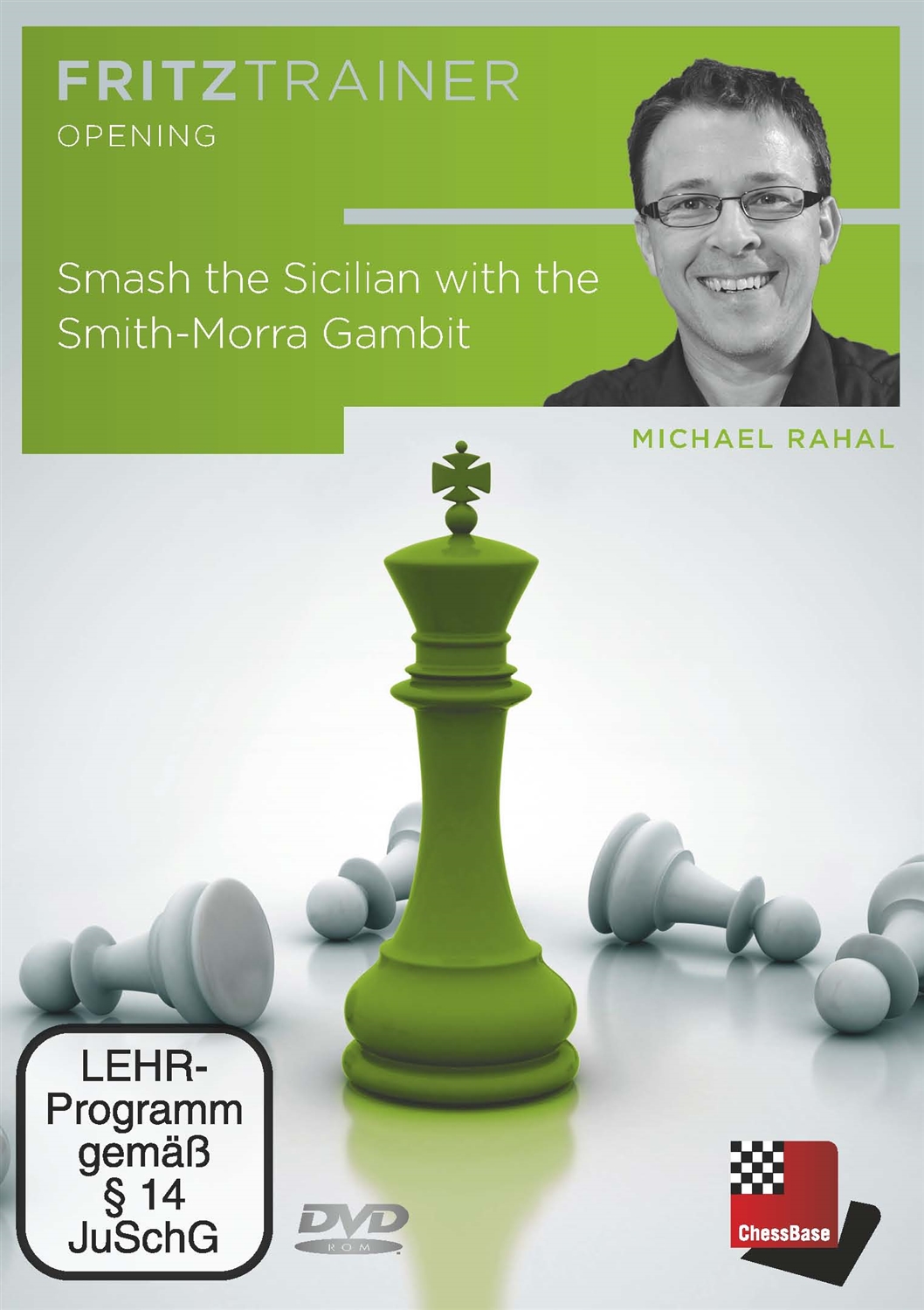
Smash the Sicilian with the Smith-Morra Gambit – Michael Rahal (PC-DVD)
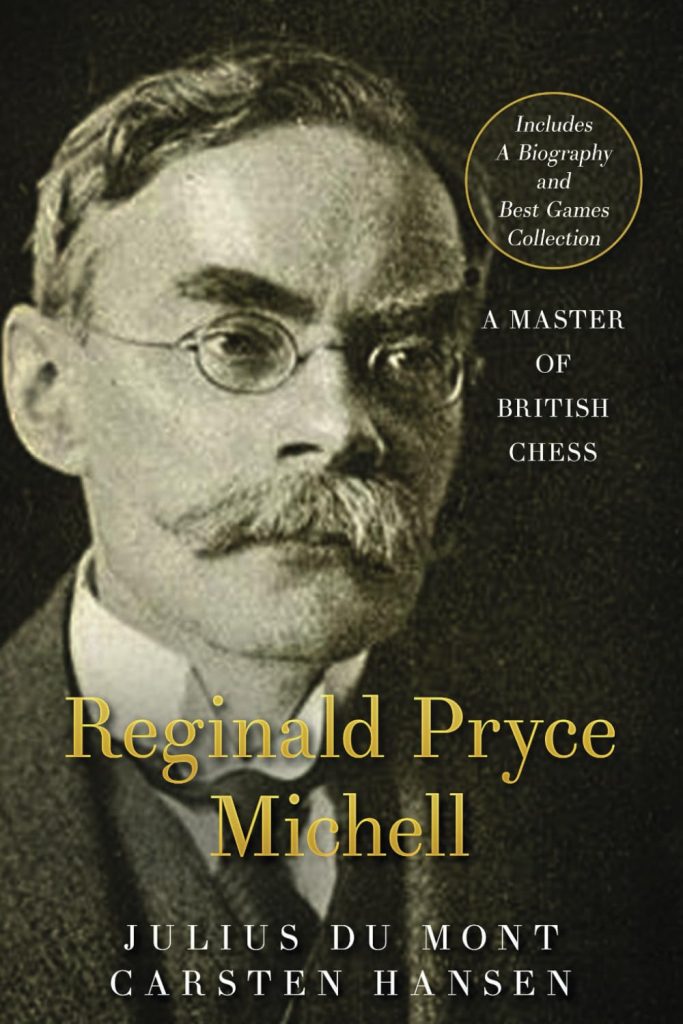
I have a parochial interest in any book on Reginald Pryce Michell because he ended his playing career as a member of Kingston Chess Club of which I have the privilege to be President. His main career was in the first third of the twentieth century. Other notable contemporary club members from the 1930s include the legendary Pakistani player Mir Sultan Khan, the chess author Edward Guthlac Sergeant and Joseph Henry Blake against whom we show some Michell games below.
Updated and Expanded Edition
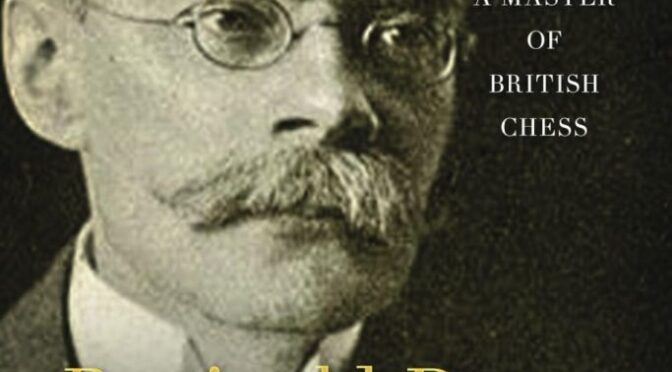
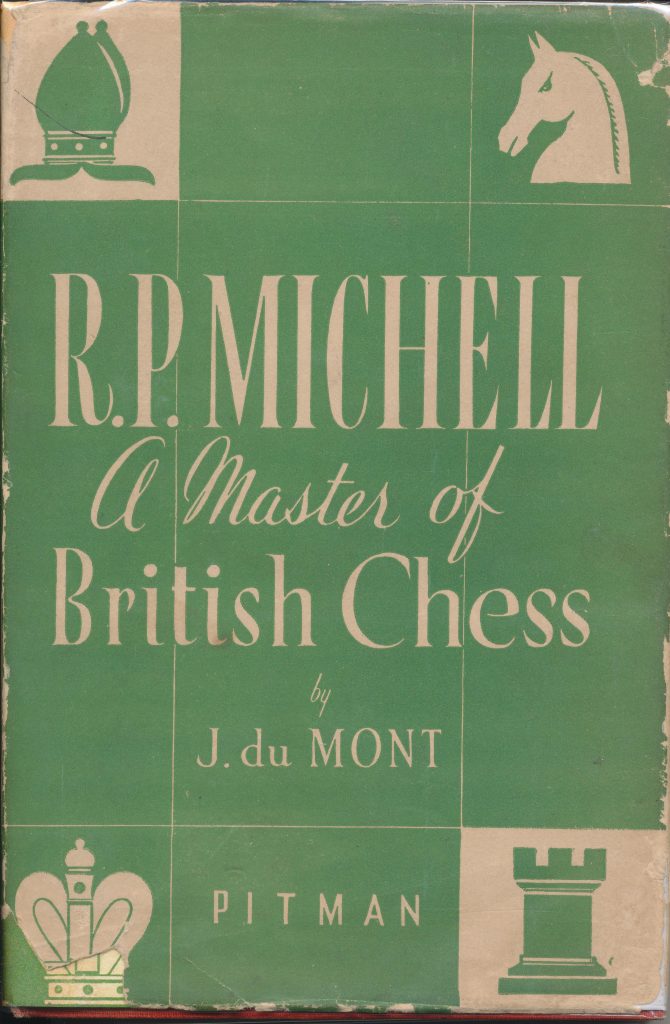
This new book from Carsten Hansen is a welcome addition to the coverage of an important player who represented England. It is an update and expansion of the book originally published in 1947 by Pitman, London and compiled by Julius du Mont, the former editor of British Chess Magazine.
Julius du Mont, Editor of British Chess Magazine from 1940 to 1949
The original book has long been out of print so the new book allows players to familiarise themselves with an almost-forgotten former luminary of English chess.
R.P. Michell: A Master of British Chess by J. du Mont, Pitman, 1947
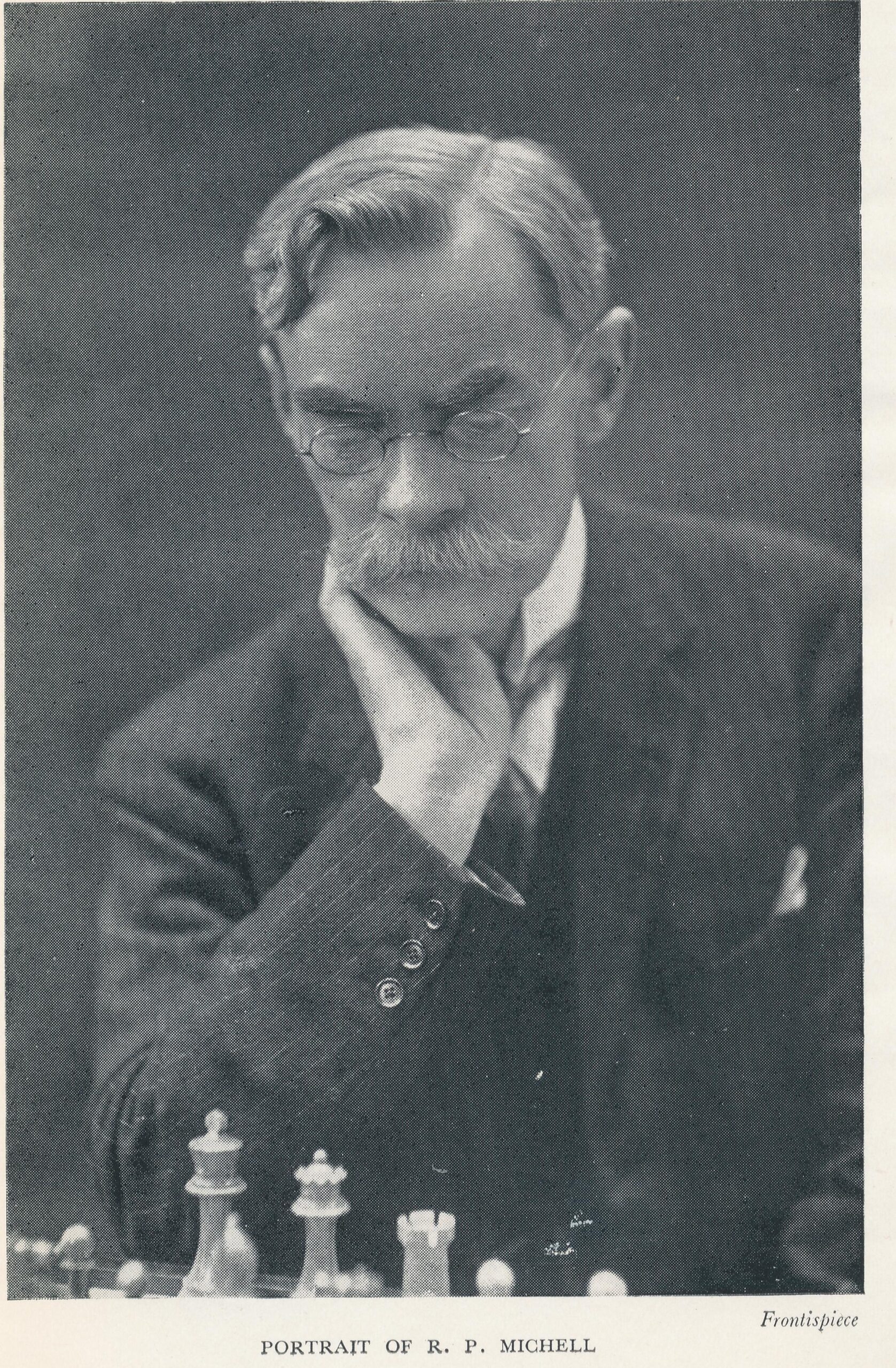
Reginald Pryce Michell
I share some background on R. P. Michell from my article on the history of Kingston Chess Club.
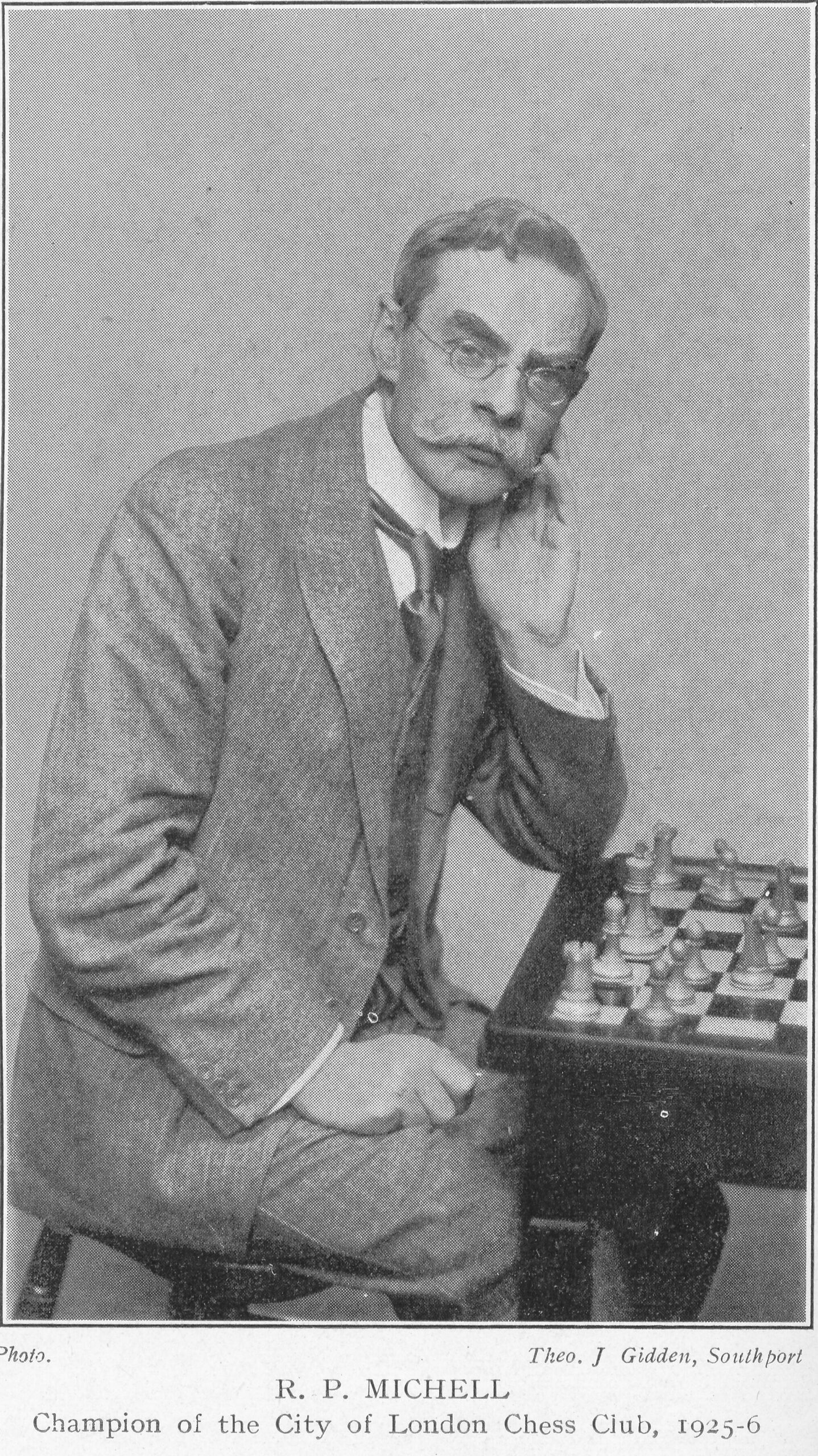
Reginald Pryce Michell, British Chess Magazine, Volume XLV1, April, 1926, photographer: Theo J. Gidden, Southport
Michell (1873-1938) was the British amateur chess champion in 1902 and played for Great Britain in the inaugural 1927 Olympiad in London and the 1933 Olympiad in Folkestone. He played in eight England v USA cable matches between 1901 and 1911. He participated in the Hastings Premier over 20 years, defeating both Sultan Khan and Vera Menchik in 1932/33. He finished second, third and fourth in the British championship (officially constituted in 1904), beating the multiple champion H.E. Atkins on several occasions. Modern estimates have placed him at the level of a strong international master.
Michell’s track record is all the more remarkable because he worked in a senior position at the Admiralty throughout his career which left him little time to study chess theory or enter competitions. He had a “wide knowledge of English and French literature, and a book of essays in either language was his standby for any unoccupied moment.” He died aged 65 which was the official retirement age at that time.
Michell excelled in the middle game and could hold his own in the endgame as attested by his draws against endgame maestros Capablanca and Rubinstein. In the only article he ever wrote about chess, he singled out books on the endgame as the most useful for practical purposes.
Portrait of R.P. Michell
E.G. Sergeant wrote of him: “Michell’s courtesy as a chess opponent was proverbial, and on the rare occasions when he lost he always took as much interest in playing the game over afterwards as when he had won, and never made excuses for losing. Of all my opponents, surely he was the most imperturbable. Onlookers might chatter, whisper, fall off chairs, make a noise of any kind, and it seemed not to disturb him; even when short of time, he just sat with his hands between his knees, thinking, thinking.”
Michell’s wife Edith (maiden name Edith Mary Ann Tapsell) was British women’s champion in 1931 (jointly), 1932 and 1935, and played alongside him for Kingston & Thames Valley chess club.
Edith Mary Ann Michell (née Tapsell)
A Master of British Chess – what’s new?
The original book covered 36 games; the new book has been expanded considerably to 67 games. Moreover, the additional games are against some of the most notable players of the era including several world champions. Chess historians should be grateful for the revival of the original game selection, which du Mont described as “characteristic games”, by the addition of another 31 “notable games”.
Self-published books are a labour of love because the subject lacks the mileage to justify the attention of a conventional publisher. The author lacks the quality assurance tasks typically carried out by a publisher such as proofreading and fact-checking. This is apparent in the first part of the book which reproduces the text from the original, presumably using a scanner which hiccoughed over some obscure passages. The spelling has been converted to American which grates for a book on a quintessentially English player.
A frustrating omission in the new book is a list of games to navigate the collection; the original book contained a list showing game numbers, players, event locations and dates. In mitigation, the new book does have a useful index of openings and ECO codes as well as an index of opponents. Hansen claims that the first book had 37 games whereas it had 36. Perhaps we can take comfort that later Amazon printings will correct these infelicities.
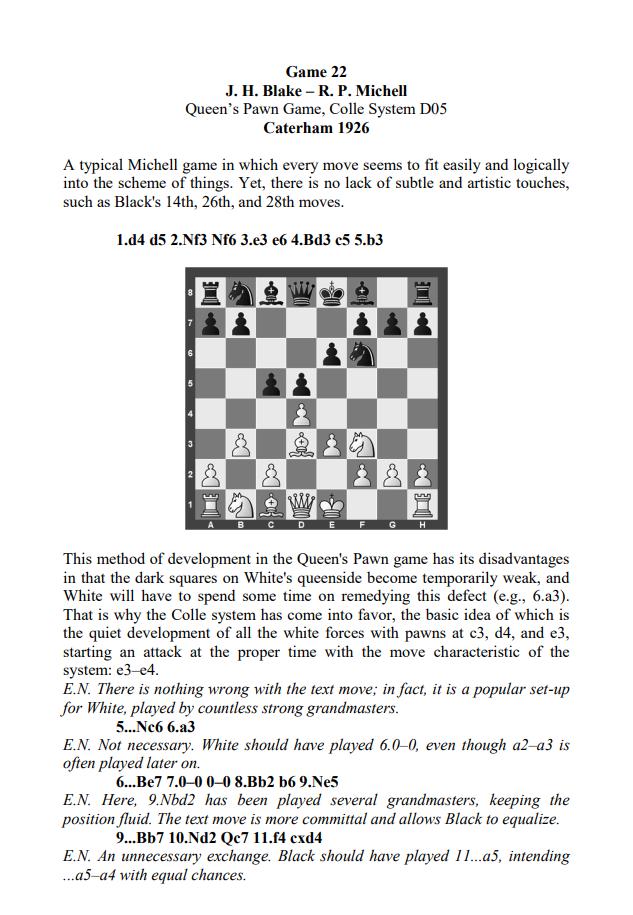
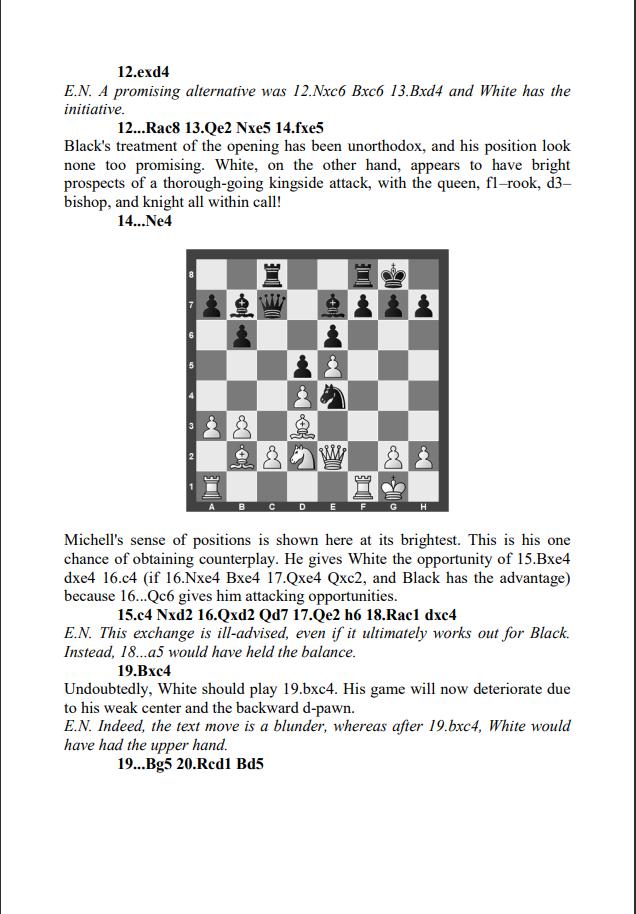
The new book has some significant improvements over the original. As one might expect, the moves are now in algebraic rather than the descriptive format with which most players under 50 are now unfamiliar. In the text, whilst d-pawn is the modern equivalent of the queen’s pawn, I still hanker after naming the pawn according to the name of the file; it would be a comforting continuity with descriptive notation. The openings are given their modern names with ECO classifications. Casual readers will appreciate the increased number of diagrams accompanying each game. For example, for the game Blake v Michell, Caterham 1926, the original book only had one diagram compared to a generous five for the new book. Many of the original games did not appear in any commercial database. No doubt this situation will be remedied in short order.
The most frequent opponents listed in the revised book include his strong English contemporaries: Sir George Thomas, William Winter and Fred Yates with four games apiece. Hansen added notable opponents who should have been included in the first book on account of their elevated status in the chess world including five world champions: Alekhine, Botvinnik, Capablanca (two games), Euwe, Menchik (woman world champion) as well as Maroczy, Marshall, Rubinstein and Sultan Khan who were posthumously recognised as grandmasters.
The Edited First Part
The first part of the book carries the concise game summaries of the original which were proofread by the precocious Leonard Barden whilst still at Whitgift School who lived a short cycle ride from du Mont in Thornton Heath. The book came out a year later in 1947 when Barden started his National Service.
The editor of Chess Magazine, Baruch Wood, was scathing in his book review:
“Britain is far from the top of the chess tree and there must be a hundred British players with better justification for the publication of a book of their games than Michell. Mr du Mont’s graceful pen has made the most of his subject. The price of the book (10/6 for 108pp, 36 games) is so extraordinarily high that one feels some appeal is being made to sentiment.”
No doubt the fact that du Mont was the editor of a rival magazine may have diluted Wood’s objectivity. England did not have a surfeit of players and Michell would have been in the first rank.
Hansen has added his comments as italicised notes in the text in the contemporary rather dry style redolent of engine and database analysis. Inevitably, he has identified some improvements and errors which were not noticed in the original. These include not only outright blunders but also the missed opportunities. The logic of this approach is harsh and sits somewhat uncomfortably with the convention that the chess public is more forgiving of a failure to play the best move than of making a blunder. Treating both these types of inaccuracy symmetrically makes the world feel less tolerant.
Misattribution
The most significant discovery by Hansen is that one of the games (game 27) had been misattributed regarding who played White. du Mont had Michell defeating Max Euwe (World Champion 1935-1937) at Hastings 1931 whereas Michell had lost.
Hansen surmises that the game intended for the collection was the game they played in the following year’s Hastings tournament when Michell had Euwe on the ropes but the game ended in a draw. We don’t know exactly how this error occurred but confusion sometimes arises when quoting games at Hastings. This famous long-running annual tournament traditionally takes place in the period between Christmas and the New Year and is described according to the year it starts and the year it ends. Michell lost the game played in 1930/31 but drew the game they played in 1931/32.
Biography Untouched
Carsten Hansen is a chess analyst rather than a professional biographer so it is perhaps wise that he has not attempted to update the biographical sketch provided by du Mont. When the chess analyst Daniel King wrote a book on Sultan Khan, he got into hot water regarding his contested account of the life of the grandmaster.
Modern Analysis Compared
We may compare annotations between the original and the revised version of the book regarding the above-mentioned game. Here we have (courtesy of CH) an excerpt of the new book on the game Blake v Michell, Caterham, 1926. Blake, although half a generation older than Michell, was described by du Mont as “one of the brilliant band of British amateurs of which R. P. Michell was one.”
Excerpt of Game 22
and
Excerpt of Game 22
and
Excerpt of Game 22
and finally
Excerpt of Game 22
We may briefly examine the new analysis. The original text by du Mont / Barden criticises Blake’s choice of opening: “This method of development in the Queen’s Pawn game has its disadvantages in that the dark squares on White’s queenside become temporarily weak, and White will have to spend some time on remedying this defect (e.g., 6.a3). That is why the Colle system has come into favour, the basic idea of which is the quiet development of all the white forces with pawns at c3, d4, and e3, starting an attack at the proper time with the move characteristic of the system: e3-e4.”
Hansen gives short shrift to this perspective:
“There is nothing wrong with the text move; in fact, it is a popular set-up for White, played by countless strong grandmasters.”
This blunt contradiction is based upon a century of games played thereafter. However, the original comment may have seemed plausible in the era in which Colle popularised the system and it had yet to be fully proven.
Blake – Michell, 1926 after 18…dxc4
After black’s 18th move (diagram above), the original annotation prefers an alternative to the move played 19. Bxc4: “Undoubtedly, White should play 19. bxc4. His game will now deteriorate due to this weak centre and the backward d-pawn.”
Hansen is again blunt:
“Indeed, the text move is a blunder, whereas after 19. bxc4, White would have had the upper hand.”
According to Deep Hiarcs (running for one minute), the difference in evaluation between 19. bxc4 and 19. Bxc4 is the difference between +0.2 and -0.3. So at worst, this “blunder” puts Blake a third of a pawn behind instead of being a fifth of a pawn ahead. Whilst masters thrive on small measures, it seems an exaggeration to describe capture by the bishop as a blunder. The original narrative merely says that the pawn capture would have been preferable without overstating the difference. Perhaps there is a tendency when aided by an engine to lose sight of the natural uncertainties felt by chess players when ruminating on which piece to recapture with.
Drama at Hastings 1934-35
The foreword on the original book noted that the most dramatic moment of Michell’s career occurred at the annual Hastings Premier 1934-35. He was pitted in the last round against Sir George Thomas, who was then half a point ahead of Dr Euwe, having beaten Capablanca and Botvinnik. Some observers felt that the decent and patriotic course of action was to give Sir George an easy game.
As one later commentator remarked, “In almost any other country, at any other time, the result would have been foreordained: a friendly draw and Thomas finishes no worse than a tie for first. Indeed, many players had to be rooting for the universally beloved Thomas to win and come in sole first.” [1]
There had not been a home winner since Henry Ernest Atkins in 1921, the first year the annual tournament was held. Thomas and Michell were England teammates. However, Thomas slipped up and Michell pressed home his advantage. Thomas lost the game but tied for first place with Euwe and Flohr. Curiously, the original book did not include this crucial game. Hansen includes the game and praises Michell for his principled stance: “But there was a happy ending; Max Euwe, in a better position against tail-ender Norman, made a sporting gesture of his own by offering a draw unnecessarily and settling for a first-place tie with Thomas and Flohr.” [1]
The Second Part
Hansen annotates the games in the new second part of the book in a readable style and does not let Stockfish intrude too much. He even offers his thoughts on some moves rather than taking the engine recommendations. The prose is functional: the game introductions lack the charm of the original game summaries. Whilst sometimes providing some background information on the opponent, there is little attempt in the header to identify the key points from each game.
Hansen is consistent with the narrative style in the first part by avoiding long algebraic variations. Even if his move criticisms are sometimes anachronistic, he has been considerate in generally referring to older games when citing continuations. It must have been tempting to have referred to games played in the database era.
The original book held to the hagiographic compiler’s conceit of not showing any losses save for the aforementioned misattribution. The reader would perhaps have gained more of an understanding of the subject’s character if presented with some games in which he struggled or indeed blundered. For example, Michell was crushed in 21 moves by Atkins at Blackpool in 1937 when he was still in his prime, even if he died a year later.
Hansen does not resist presenting Michell’s loss to the great Capablanca at Hastings in the Victory Congress 1919. It was clear even then that Capablanca would be one of the next holders of the World Championship. The game’s introductory text is misleading: “You don’t often get chances to play the best players in the world, let alone take points from them, even if it is ‘just’ a draw.” The implication is that this game (No. 41) is drawn whereas it is a win for Capablanca. In total the book contains two losses, 14 draws and 51 wins for Michell.
In the majority of the games in the second part, Hansen focuses on blunders by Michell or his opponent. There is no doubt that the top players from a century ago were not as strong as the top players of today but it seems churlish to show so many games with blunders. Comparatively few moves have been awarded an exclamation mark. Perhaps the book should have been shorter with higher-quality games. However, on closer inspection, the “blunders” are treated in the modern sense as discussed above. They are not the traditional blunders, bad moves losing the game, that would have been described by a contemporary annotator. Rather, they are blunders in which the game evaluation has switched by a certain margin.
Michell, a follower of Nimzovich, focused on positional advantages; tactical skirmishes and sacrifices were few and far between. A slight exception to this style was found in the game Blake v Michell, Hastings, 29 December 1923:
Conclusion
R. P. Michell should be an inspiration to amateur players with a full-time career. He made a mark in the chess world using solid play, eschewing theoretical or sharp lines. He held his own against the strongest players in the world. Carsten Hansen has brought welcome attention to this forgotten English master. The new book nearly doubles the number of games covered and introduces modern engine analysis. The reader will find many examples of successful middle-game strategies. Above all, we learn that chess is a struggle: one should keep trying to improve the position and make things difficult for the opponent. I recommend this book, especially to club players looking for new chess ideas.
John Foley, Kingston-upon-Thames, 27th May 2024
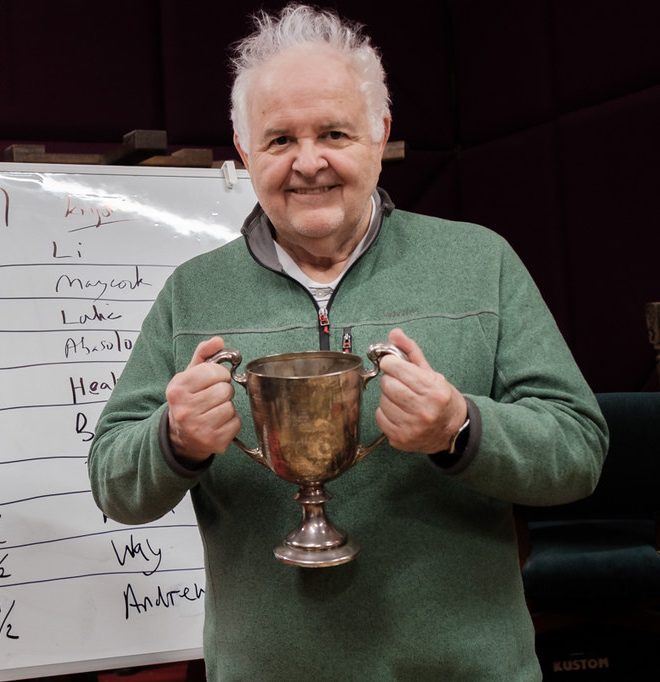
John Foley with the Alexander Cup won by Kingston in 2021/22 and 2022/23
Book Details :
Hardcover : 318 pages
Publisher: CarstenChess (16 Mar. 2024)
Language: English
ISBN-10:8793812884
ISBN-13:978-8793812888
Product Dimensions: 15.24 x 1.83 x 22.86 cm
FM Carsten Hansen
“Carsten Hansen, a Danish FIDE Master at Chess, was born in 1971. At age 14, he became the youngest master player at chess in Denmark at the time. In 1995, Carsten was contacted by Peter Heine Nielsen to co-author a chess book on the “Sicilian Accelerated Dragon”. Peter had been offered a contract but felt that he wouldn’t be able to write the book on his own and since Hansen had played the opening his entire life, it was a natural fit. The book was released in 1998 to high acclaim and near universal positive reviews. From 1999 to 2013, Hansen was a columnist for the very popular website, ChessCafe.com. He has been a contributor to Skakbladet, Chess Life, and New In Chess”. Hansen is based in New Jersey, and still enjoys playing and writing about chess. He has now authored over 40 chess books. He has made a speciality of reviving old books.
R. P. Michell – A Master of British Chess: A forgotten chess master, Carsten Hansen and Julius du Mont, Publisher : CarstenChess (16 Mar. 2024), ISBN-13 : 978-8793812888
[1] According to David Moody’s account in ChessGames.
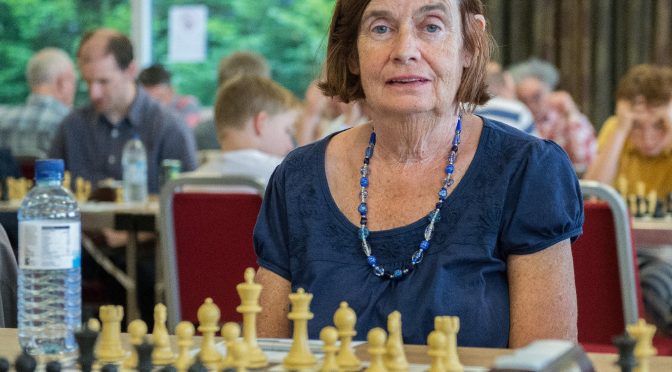
We remember FM Jimmy Adams who passed away on Saturday, June 6th 2026 in London. His funeral was in Hoddesdon, Hertfordshire on 20th July. Here is the online tribute page that you are welcome to contribute to.
Jimmy was married to Sharon and they have a daughter, Charlotte.
In 1958 Jimmy at the age of 11 joined his local Islington Chess Club (at the time Islington & North London Chess Club) and soon afterwards became a London Junior Champion. Following this Jimmy played little chess and was working for John Lewis (echoes of CHO’D Alexander and Leonard Barden). Following John Lewis Jimmy worked as a Health and Safety Officer for Islington Council.
At this time Islington Chess Club was one of the strongest in England and included such members as Kenny Harman, Ron Harman, Danny Wright, Stewart Reuben and others. Its most famous member was probably IM Simon Webb
The Spassky-Fischer match of 1972 re-kindled his lapsed interest and he won with a 100% score the London Amateur Championship.
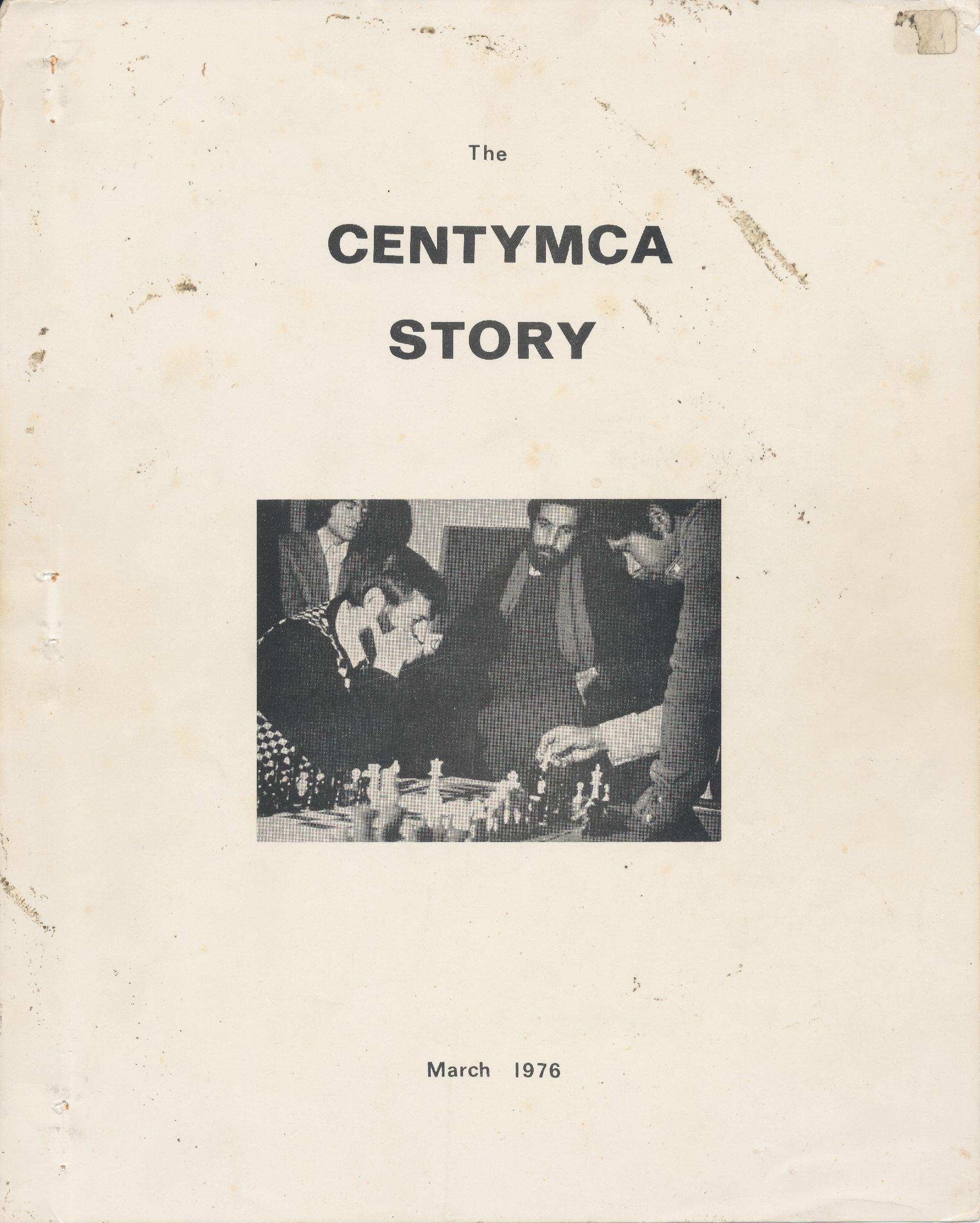
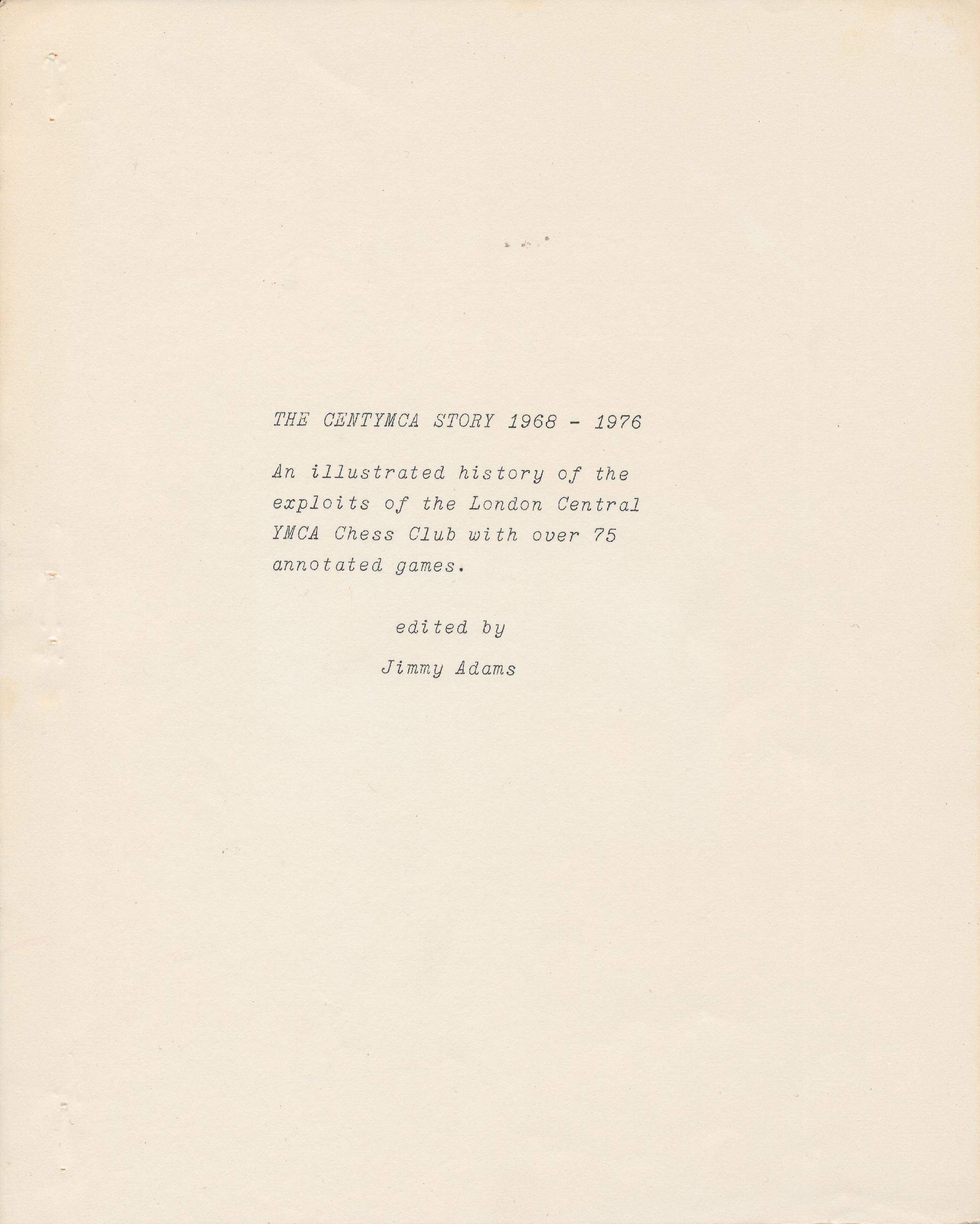
He joined and was a staunch member of London Central YMCA (CENTYMCA) chess club and he wrote a privately published history of the club entitled The CENTYMCA Story. This is now a much sought after publication. His membership continued during the 1970s until around 1979.
The CentYMCA Story by Jimmy Adams, 1976The CentYMCA Story by Jimmy Adams, 1976
During this period Jimmy was extremely active at the Endell Street premises.
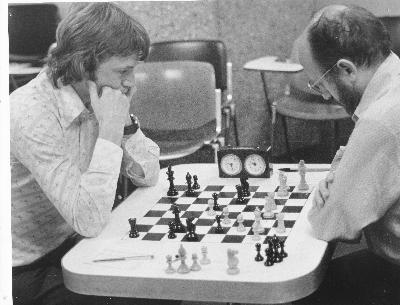
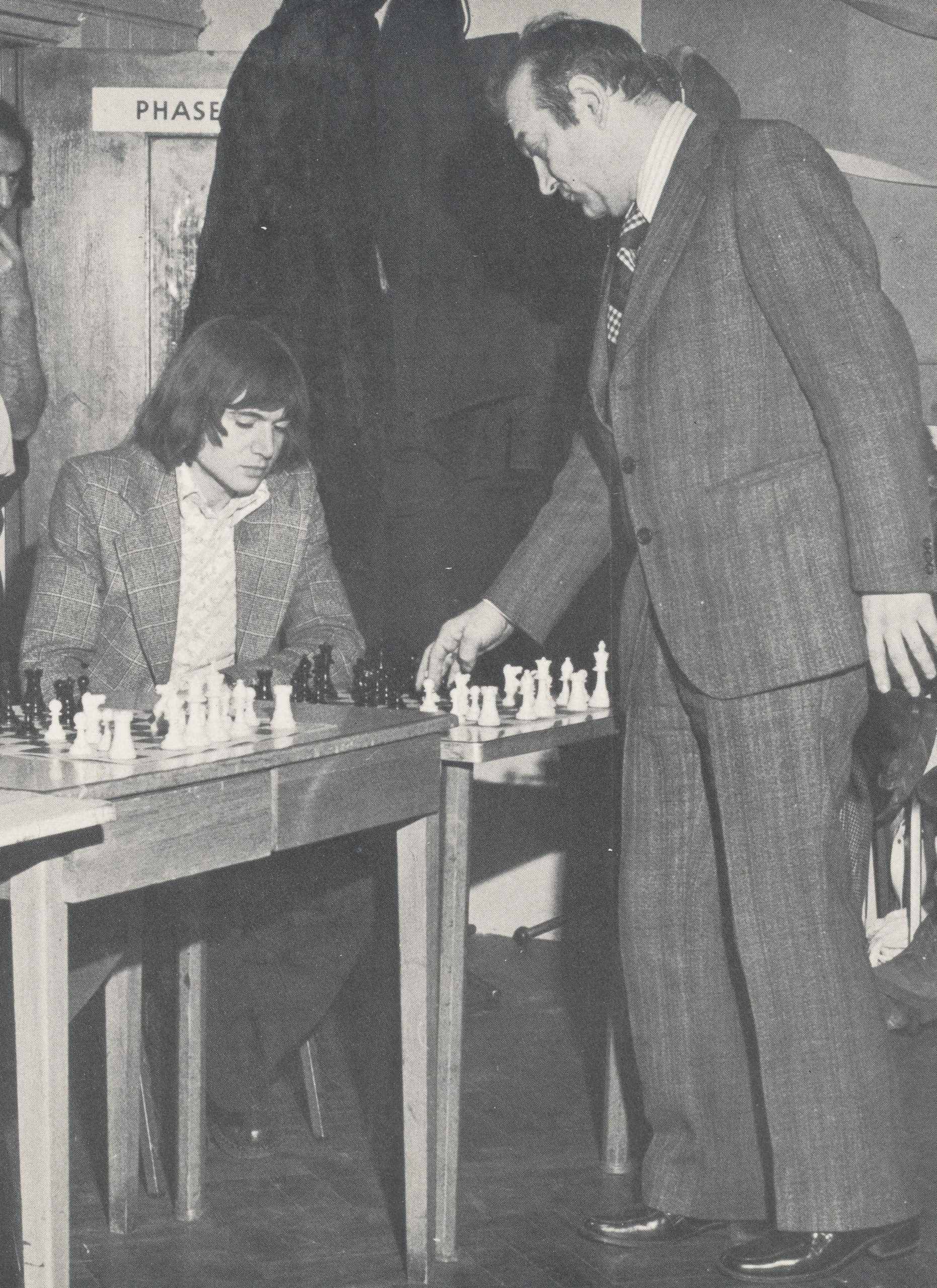
Here is Jimmy playing Viktor Korchnoi at Endell Street (in the Phase Two classrooms) :
Jimmy plays Viktor Korchnoi at the Endell Street premises of London Central YMCA on January 18th, 1976. Photographer potentially John Yeo
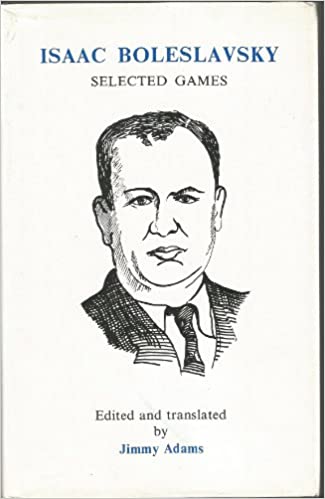
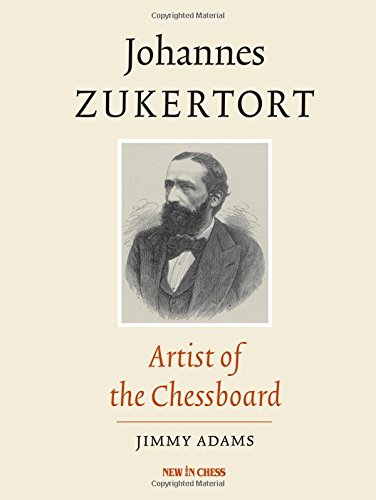
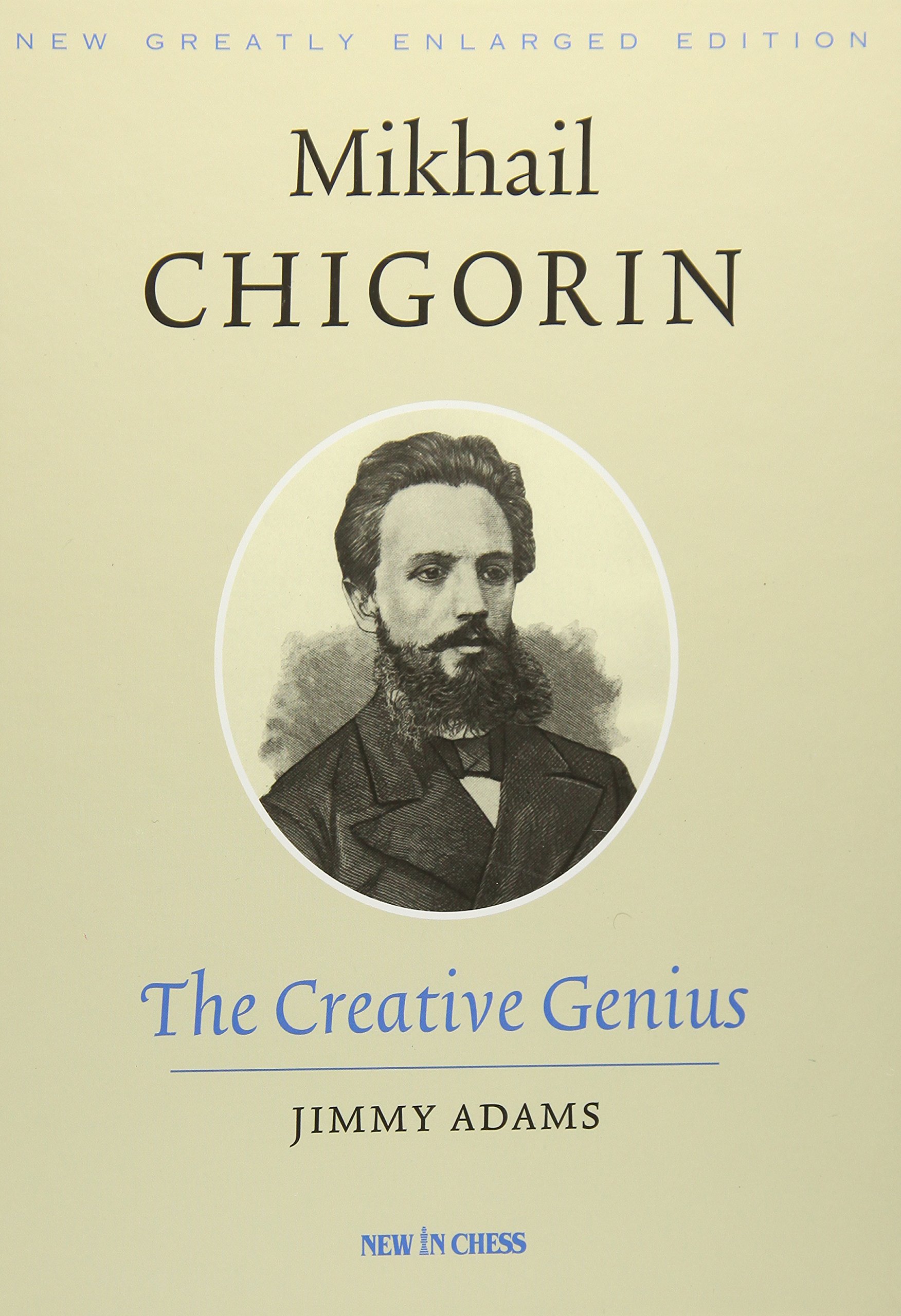
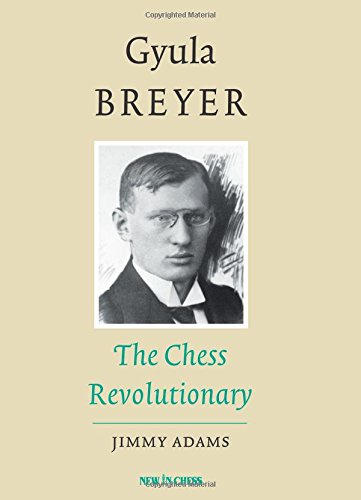
In 1974 Jimmy embarked on a highly successful career as a writer and journalist. He contributed articles to both CHESS and the British Chess Magazine and authored a number of acclaimed books for Batsford, The Chess Player, Caissa Books and latterly, New in Chess. He also self-published the first book on Bobby Fischer’s successor entitled K is for Karpov! His books on Chigorin, Zukertort and Breyer are universally regarded as some of the finest chess biographies published.
In 1979 Jimmy joined Metropolitan Chess Club to play in the London League A Division. He played top board and scored very highly with many significant scalps.
Jimmy gained his FM title in 2014 (at the age of 67!). 67 must be one of the most advanced ages to acquire an FM title. According to Felice his peak rating was 2300 in January 1981 aged 34.
Jimmy giving a simultaneous display
He joined Metropolitan Chess Club. He joined Barbican, as did many other CENTYMCA players, following the hiatus over their Tottenham Court Road venue loss.
Jimmy records a game between David Howell and Andrew Whiteley in 2000.
In December 2009 Jimmy visited the London Chess Classic and was photographed with VIP guest Viktor Korchnoi :
Viktor Korchnoi in conversation with Jimmy Adams at the 2009 London Chess Classic. Photograph by Mark Huba
Jimmy was Editor of Middlesex Chessletter and Bayswater Chess in the early 1970s and produced major bulletins on the hugely successful Islington Congresses of the same period. He then worked for Pergamon Chess Books which led to his editorship of CHESS / CHESS Monthly magazine from until 2010 although his name remained on the masthead until February 2012.
In 2012 Jimmy and Ray Cannon attended a meeting of the Ken Whyld Association in Norwich :
Jimmy Adams and Michael Negele at the 2012 meeting of the Ken Whyld AssociationJimmy and Ray Cannon at a 2012 meeting in Norwich of the Ken Whyld Association
In January 2016 Jimmy (together with Josip Asik) became co-editors of British Chess Magazine taking over from James Pratt and John Upham.
Jimmy also jointly edited Chess Informants 109-132 up to 2017 before taking on the role of Deputy Editor of the newly created American Chess Magazine whilst continuing to work as editor for Batsford Chess which had changed ownership over the years and had now been taken under the umbrella of Pavillion Books.
In 2014 Jimmy and Ray attended an event organised by the father of Emma Bentley
Jimmy Adams and Ray Cannon at an event organised by Emma Bentley’s father.
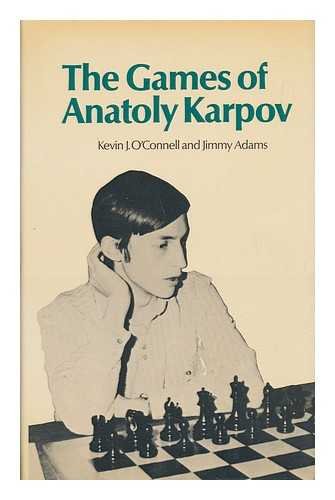
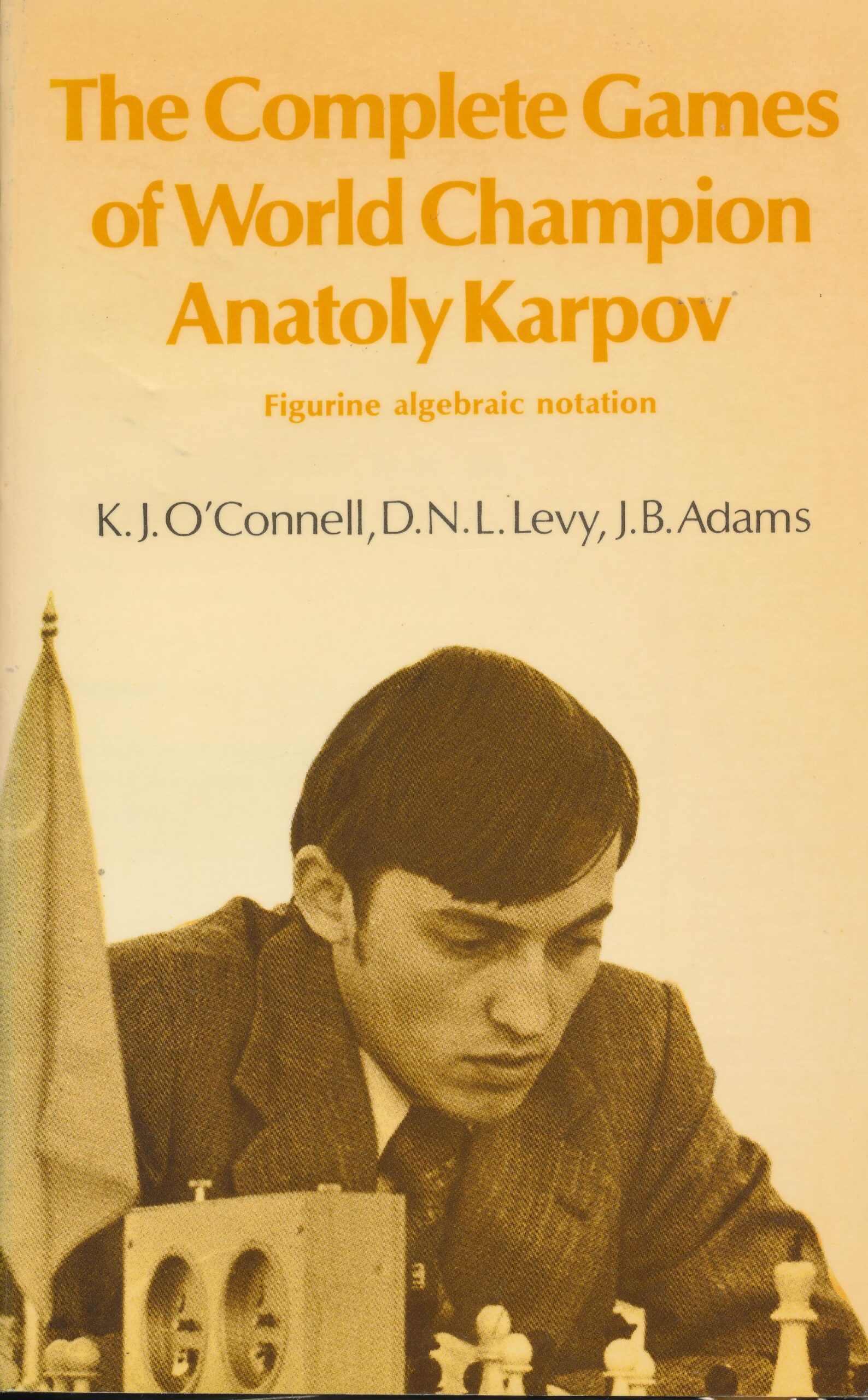
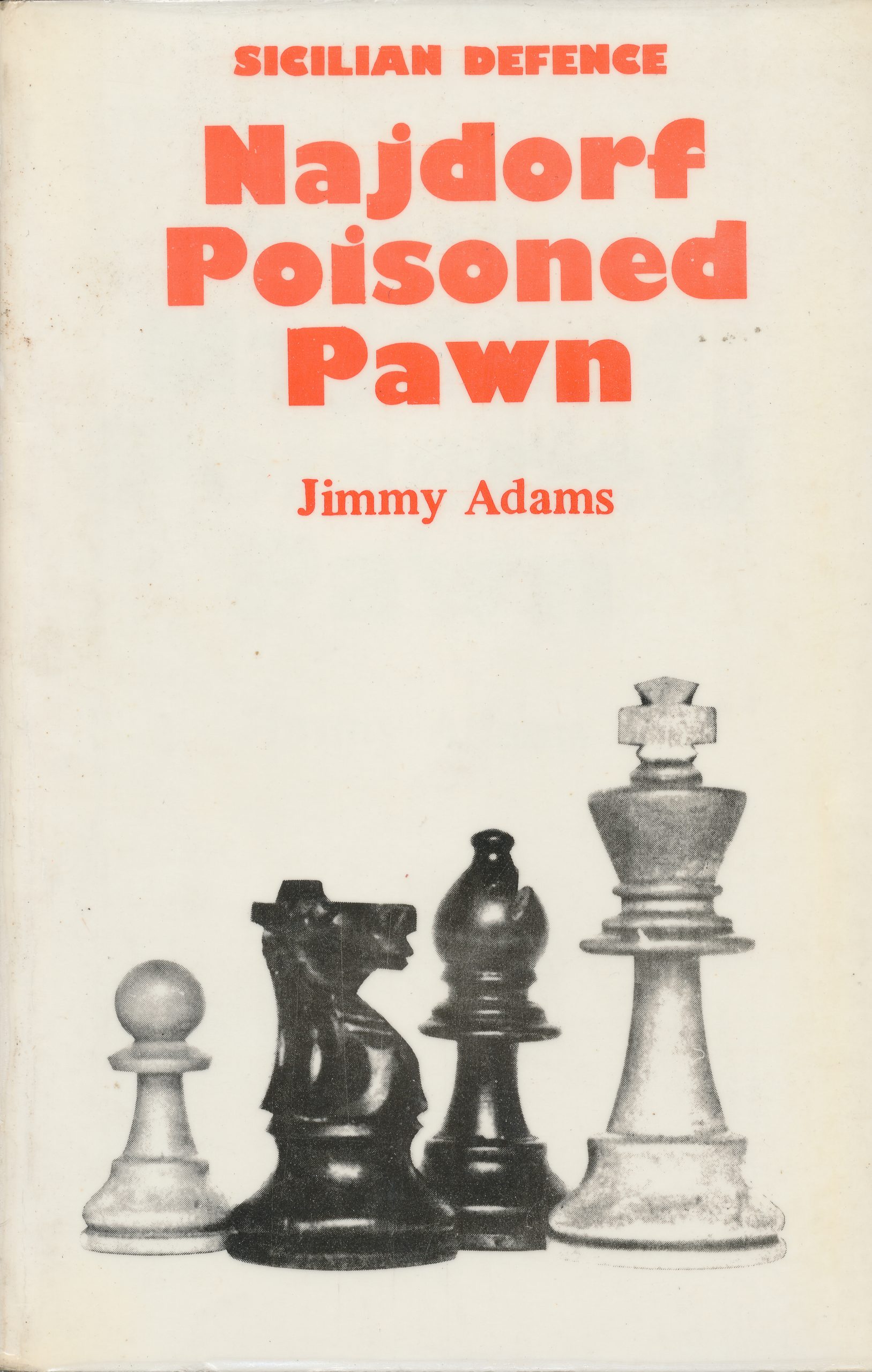
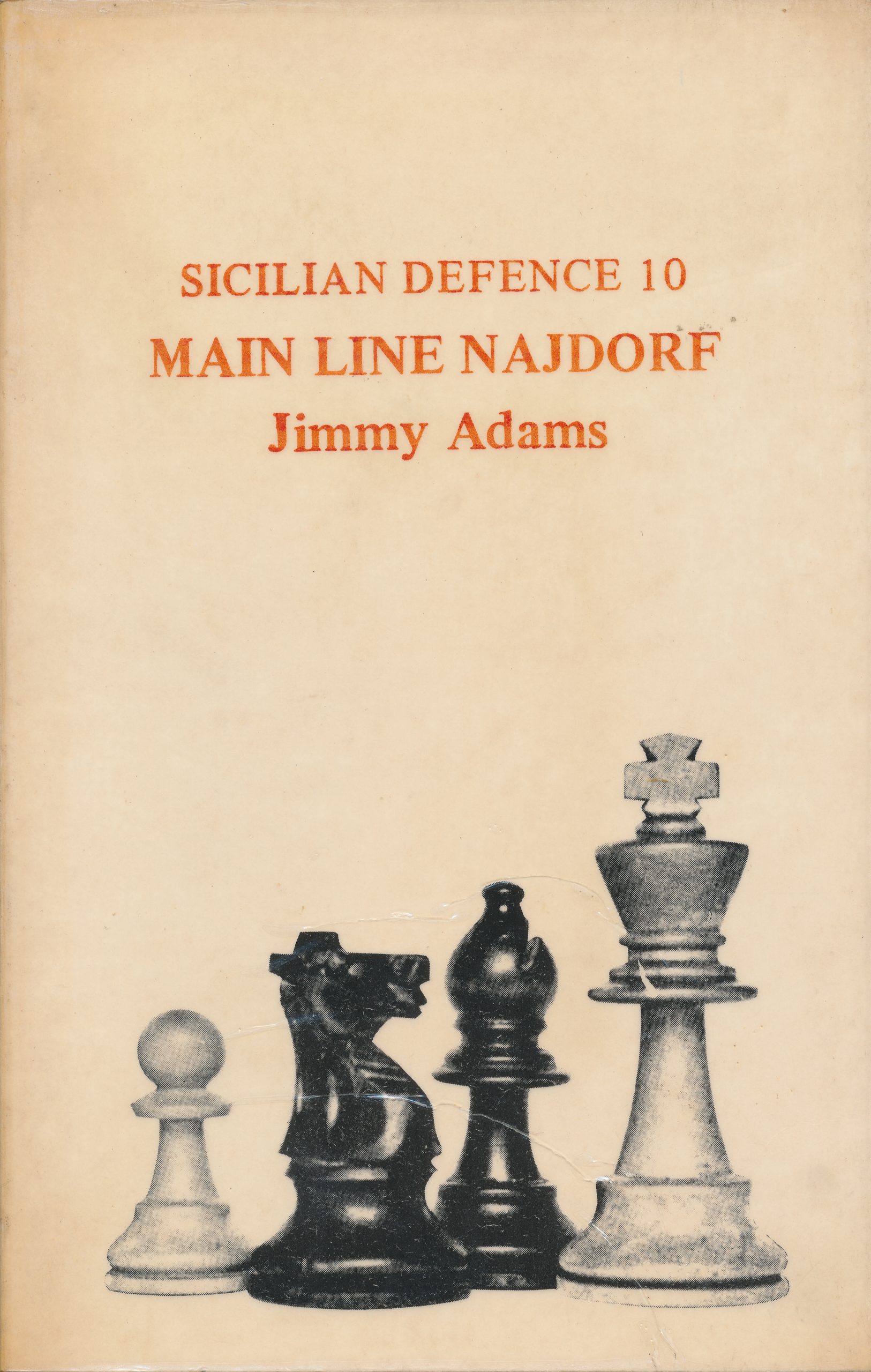
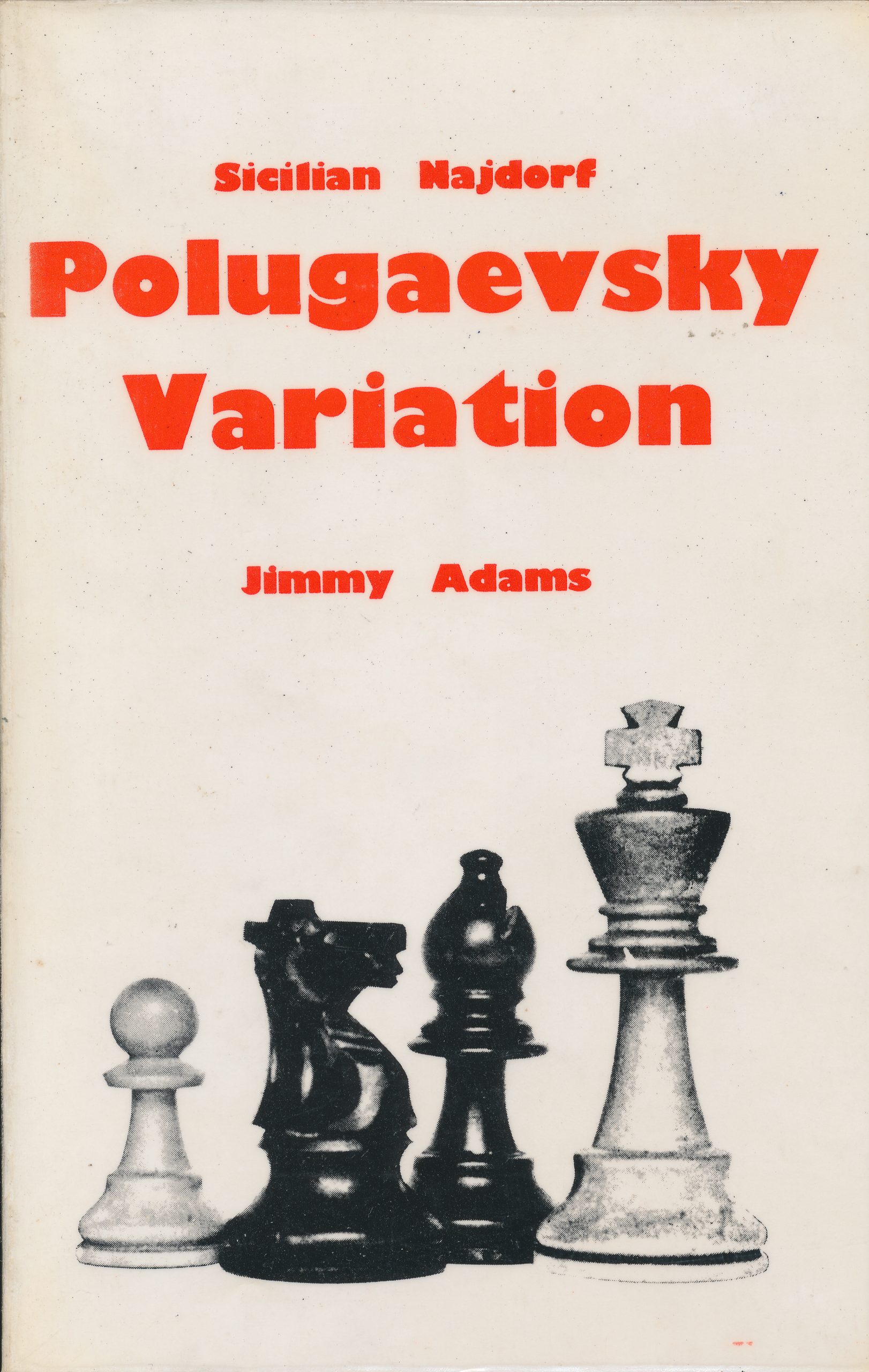
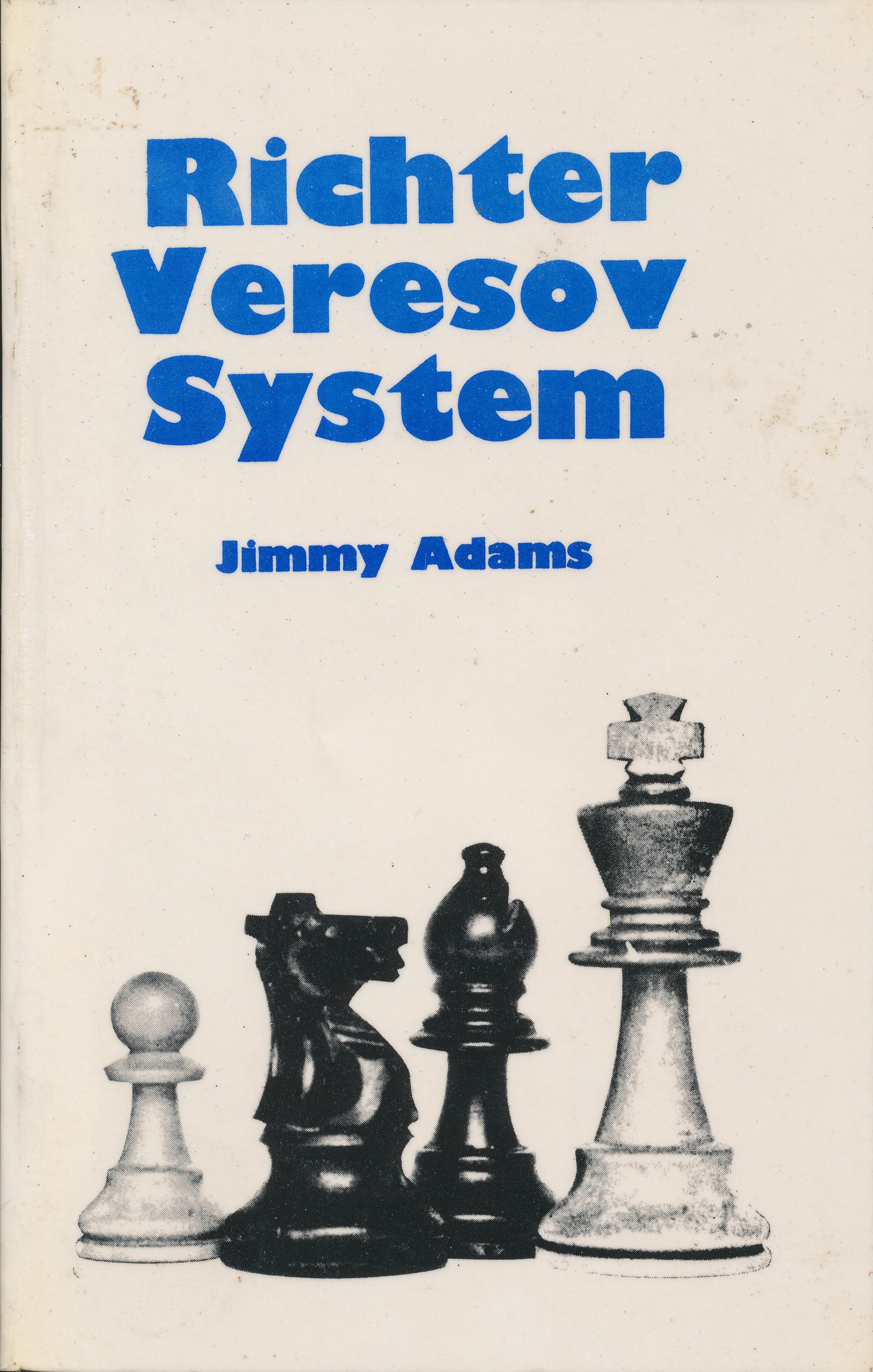
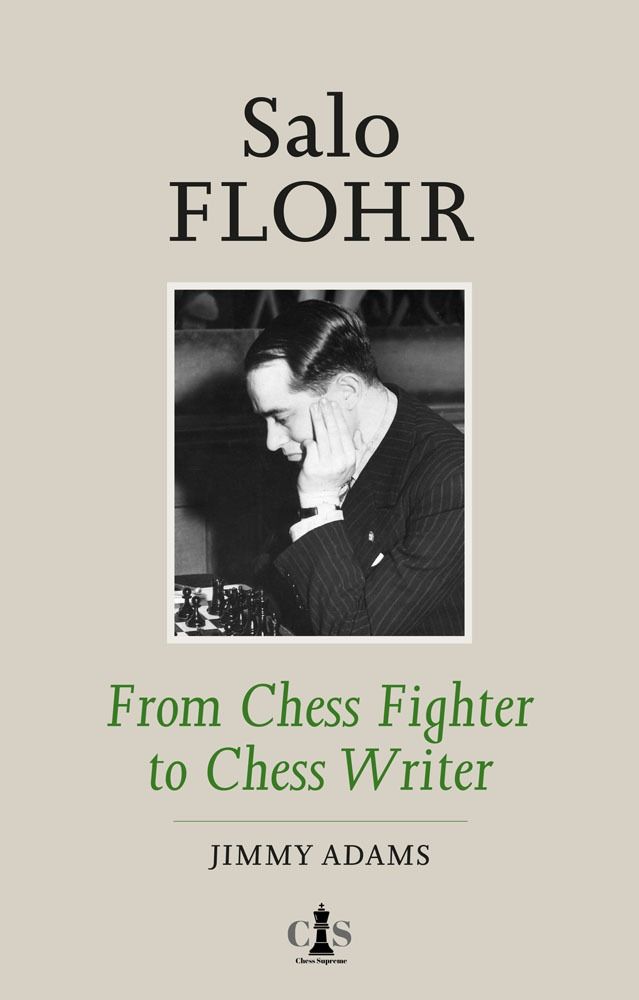
The Games of Anatoly Karpov, Batsford, Jimmy Adams, 1974The Complete Games of World Champion Anatoly Karpov, Jimmy Adams, 1976The Complete Games of World Champion Anatoly Karpov, Jimmy Adams, 1976Sicilian Defence Najdorf Poisoned Pawn, Jimmy Adams, The Chess Player, 1977Sicilian Defence 10 : Main Line Najdorf, Jimmy Adams, The Chess Player, 1977Sicilian Najdorf Polugaevsky Variation, Jimmy Adams, The Chess Player, 1978The Richter Veresov System, The Chess Player, Jimmy Adams, 1978Trompovsky Attack, The Chess Player, Jimmy Adams, 1979Torre Attack, Jimmy Adams, The Chess Player, July 1981Schliemann/Jaenisch Gambit, The Chess Player, Jimmy Adams, 1982Paris 1900, The Chess Player, Jimmy Adams, 1986ISAAC BOLESLAVSKY Selected Games, Caissa Books, Jimmy Adams, 1988Johannes Zukertort: Artist of the Chessboard, New in Chess, Jimmy Adams, 2014Mikhail Chigorin, the Creative Genius: New in Chess, Jimmy Adams, 2016Gyula Breyer : The Chess Revolutionary, Jimmy Adams, New in Chess, 2017Salo Flohr: From Chess Fighter to Chess Writer, Jimmy Adams, New in Chess, 2026
We focus on the British Chess Scene Past & Present!
This website uses cookies to improve your experience. We'll assume you're ok with this, but you can opt-out if you wish. Cookie settingsACCEPT
Privacy & Cookies Policy
Privacy Overview
This website uses cookies to improve your experience while you navigate through the website. Out of these cookies, the cookies that are categorized as necessary are stored on your browser as they are as essential for the working of basic functionalities of the website. We also use third-party cookies that help us analyze and understand how you use this website. These cookies will be stored in your browser only with your consent. You also have the option to opt-out of these cookies. But opting out of some of these cookies may have an effect on your browsing experience.
Necessary cookies are absolutely essential for the website to function properly. This category only includes cookies that ensures basic functionalities and security features of the website. These cookies do not store any personal information.




![Blumenfeld Defence [with Jan Przewoznik] (Everyman, 1991) – ISBN 978-0080371337](http://britishchessnews.com/wp-content/uploads/2019/08/51NJRP63K8L._SX322_BO1204203200_.jpg)