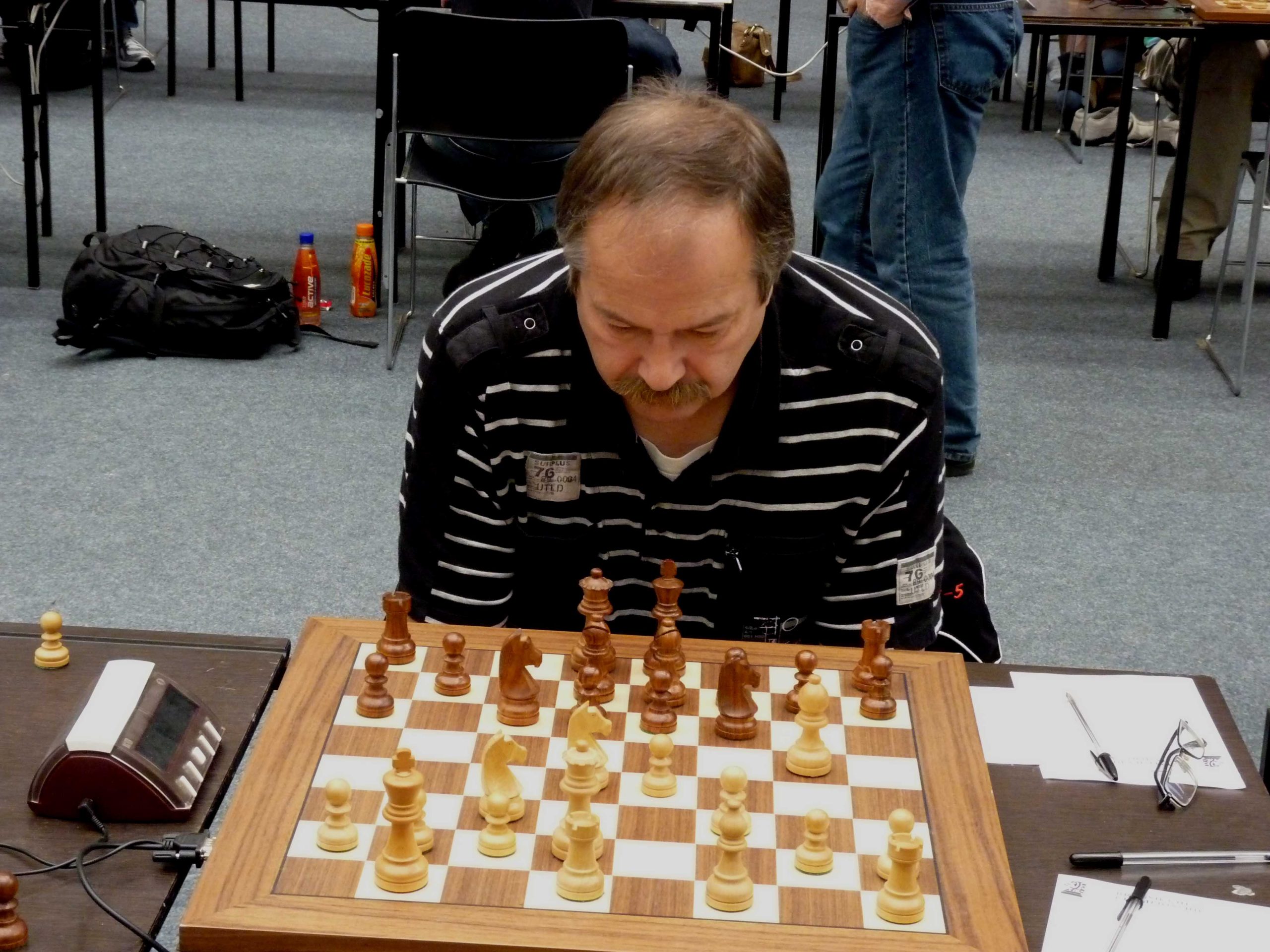
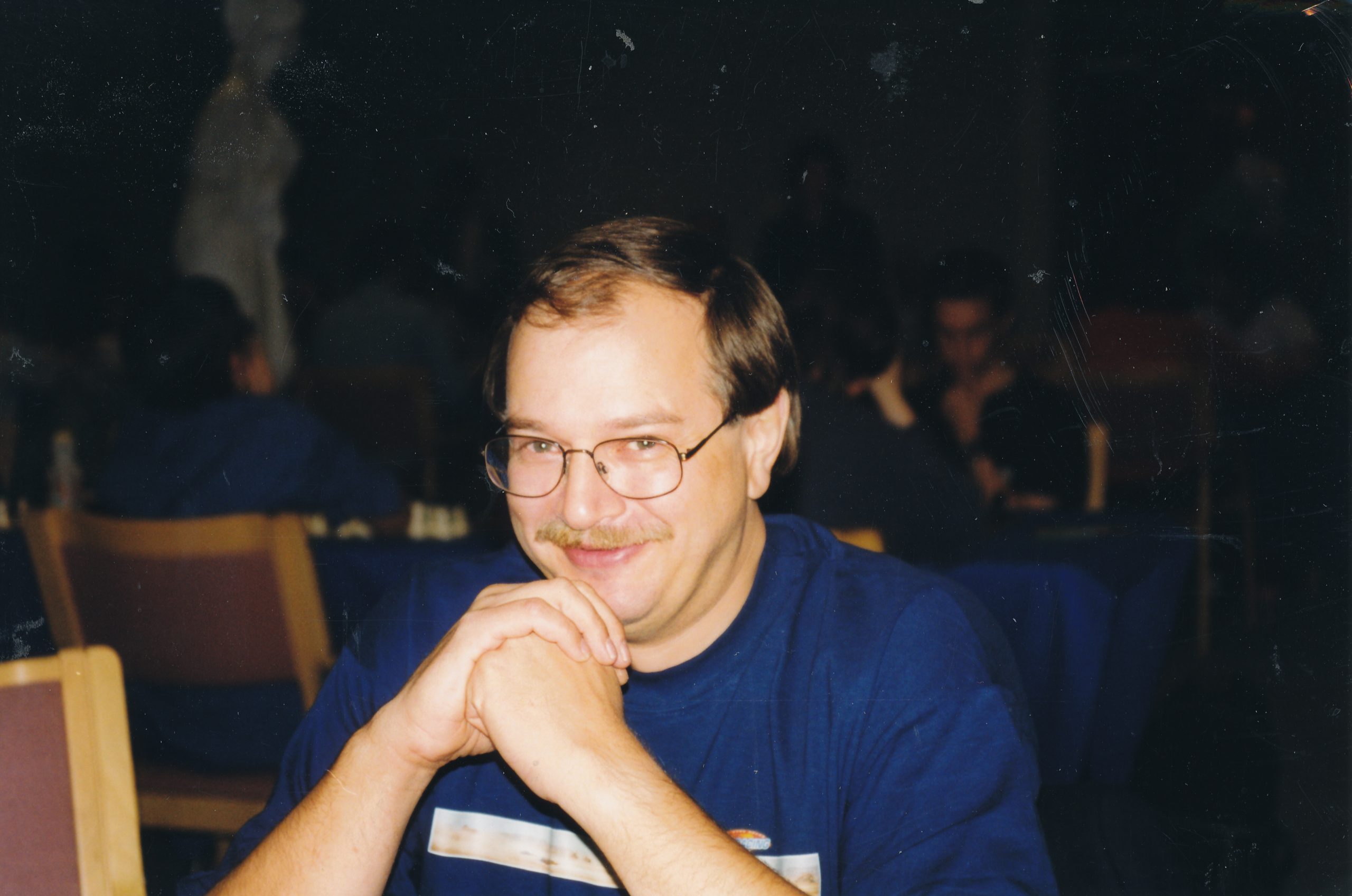
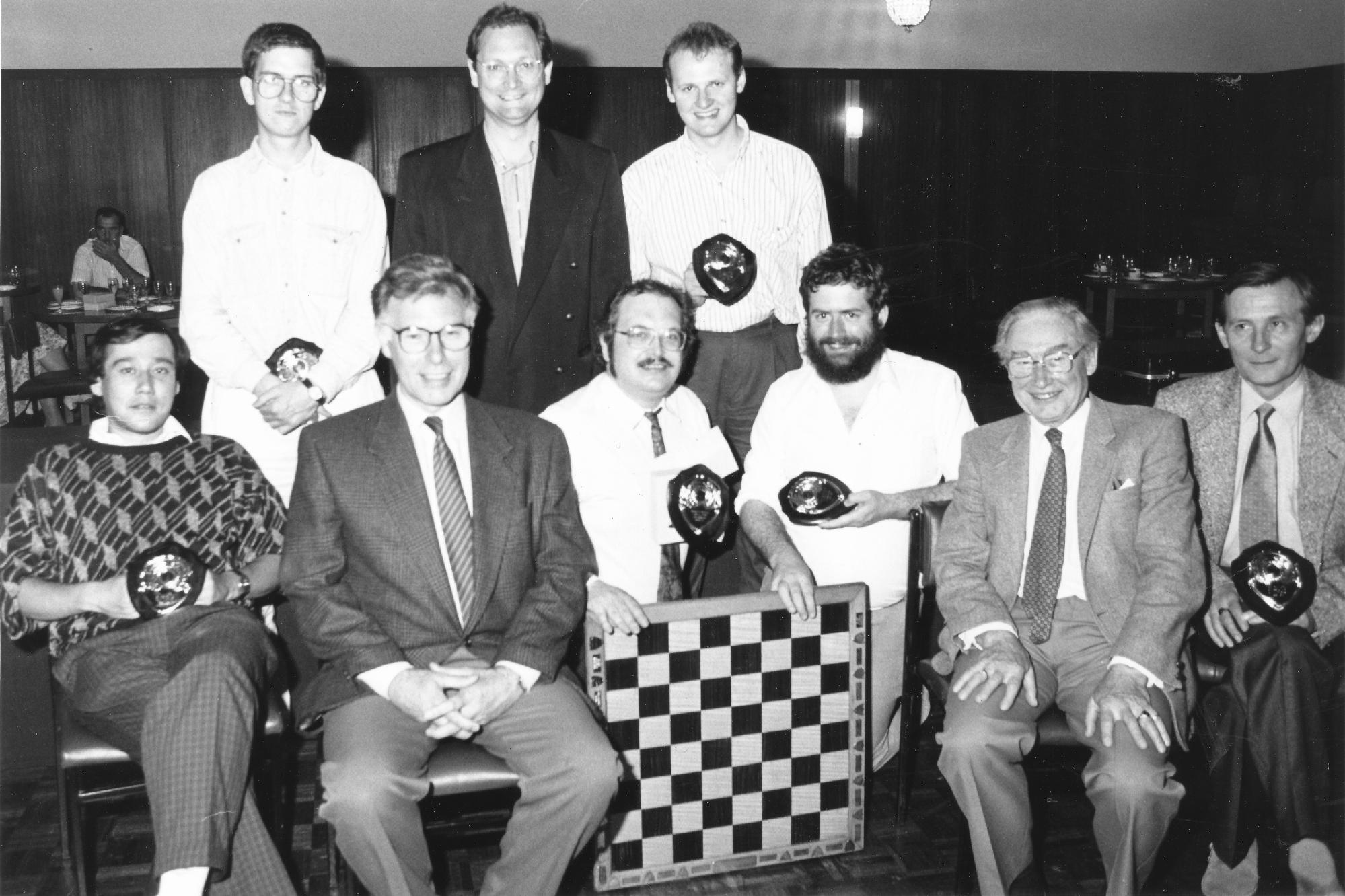
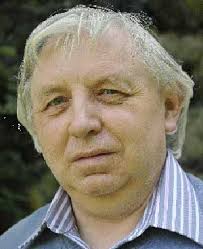
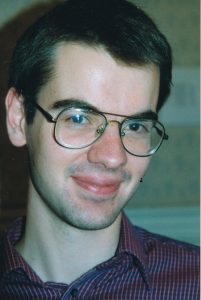
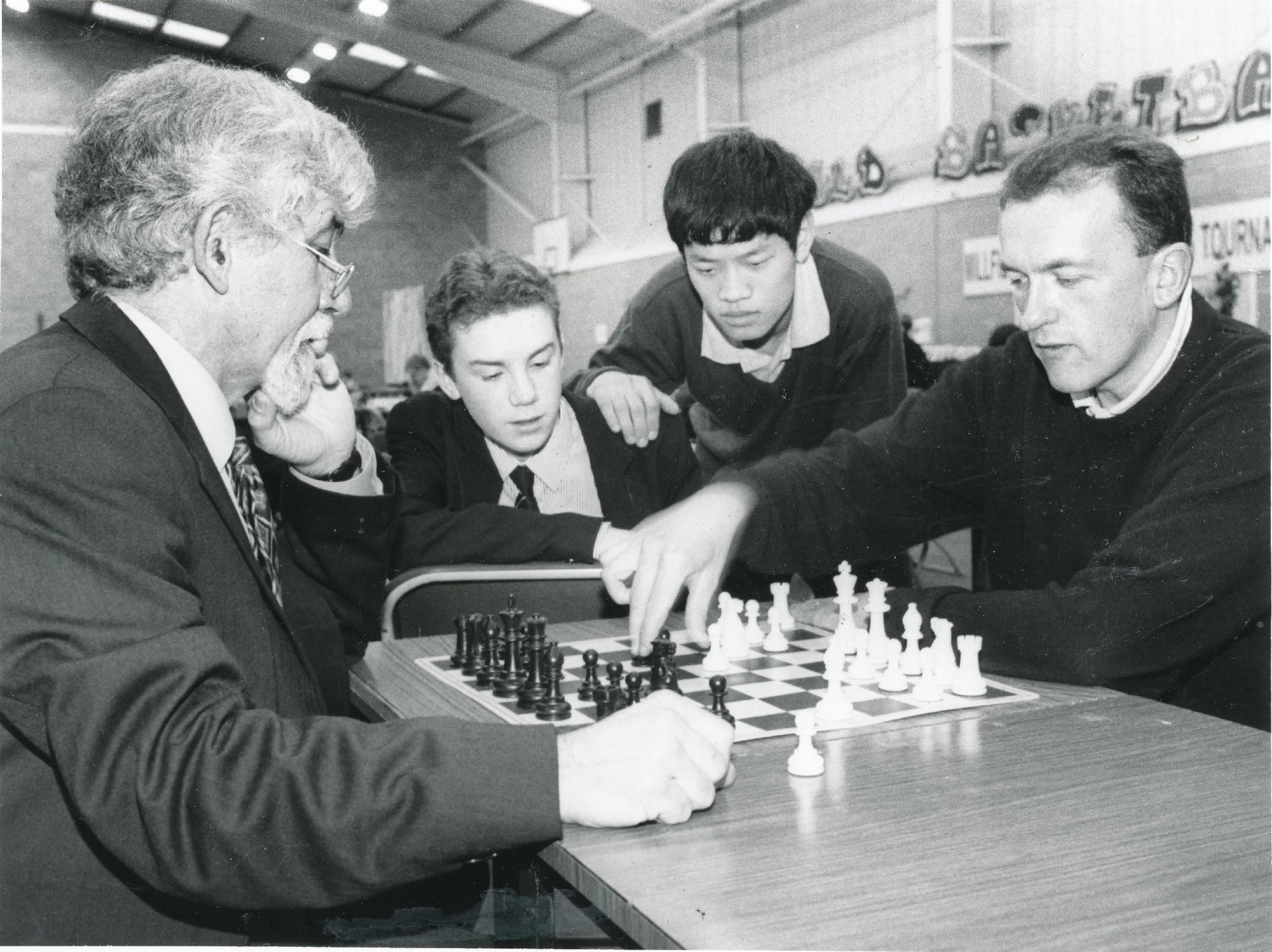
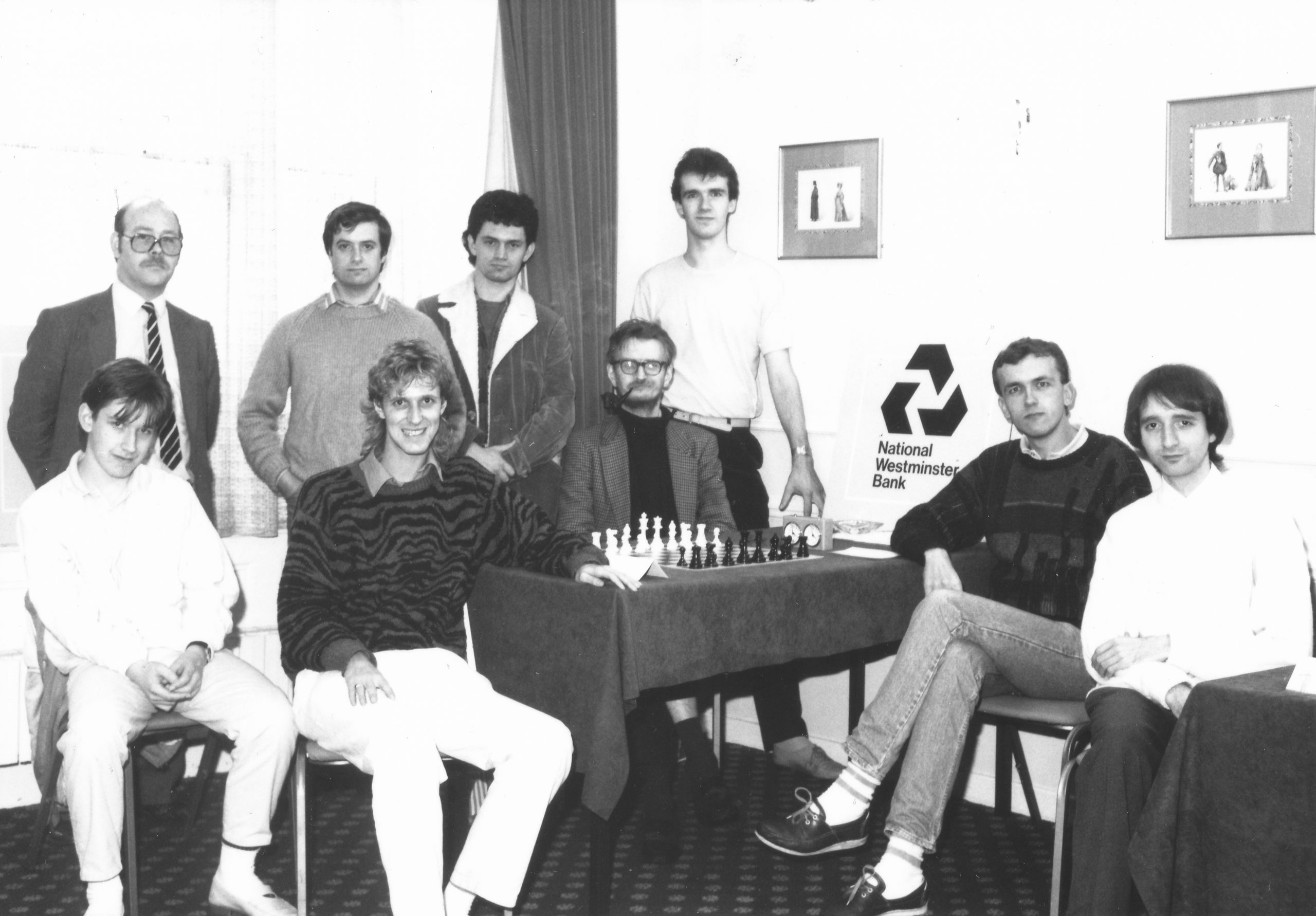
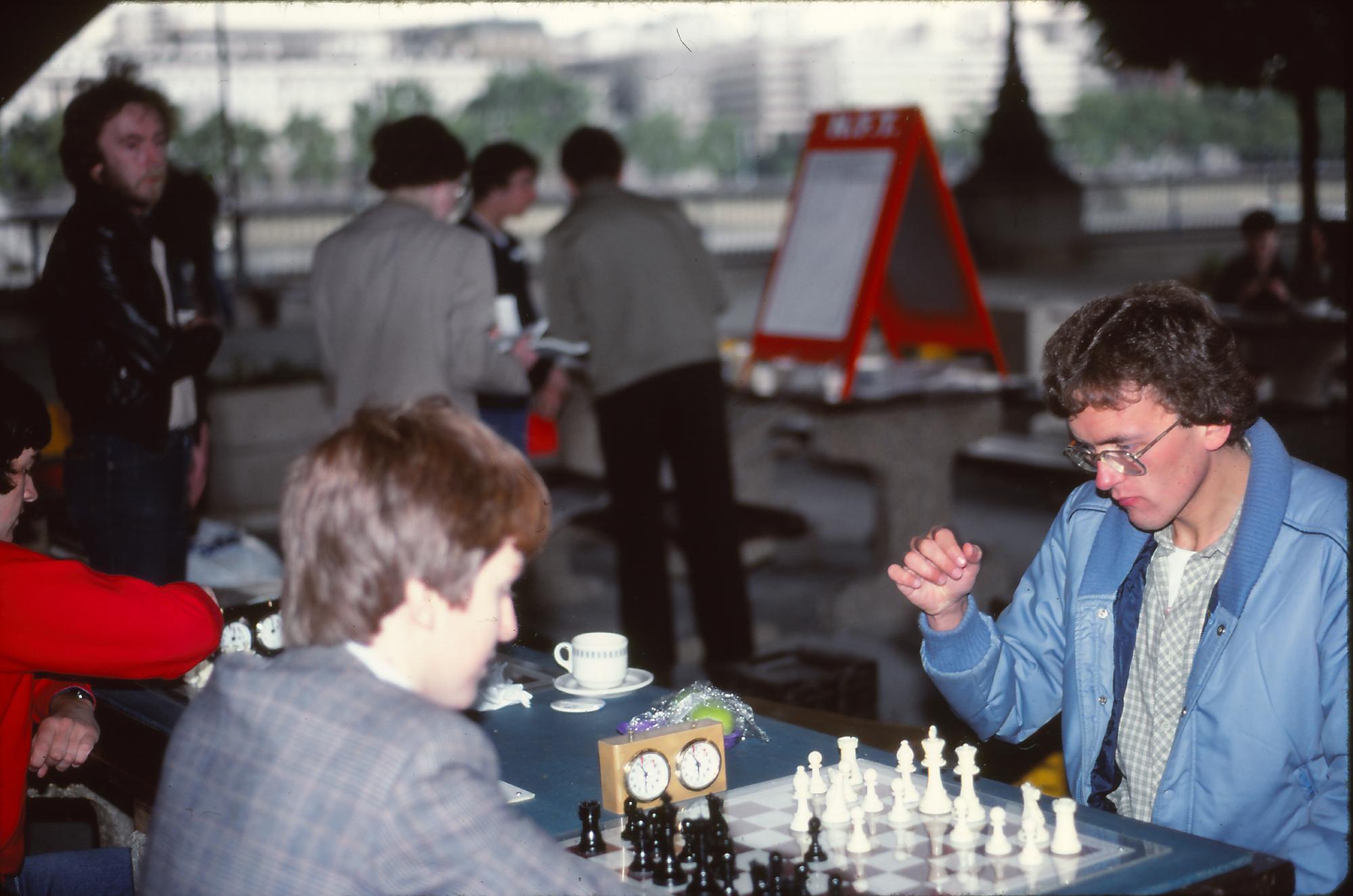
Happy Birthday IM Chris Baker (29-v-1958)

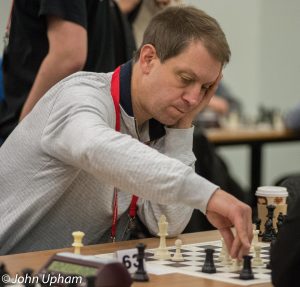
IM Christopher Wallace Baker

BCN wishes Happy Birthday to IM Christopher Wallace Baker (29-v-1958)

Chris was born in Coventry, West Midlands and played in the Staffordshire Open in 1975 (the earliest games held in MegaBase 2020).

Chris has played for Guildford in Four Nations Chess League (4NCL).

Currently Chris plays for 4NCL The ADs, Coventry Chess Academy and Battersea Chess Club.

He has been the trainer of the Welsh junior team and is a fully-qualified arbiter.

He has taught chess in many schools in the Farnham area of Surrey.

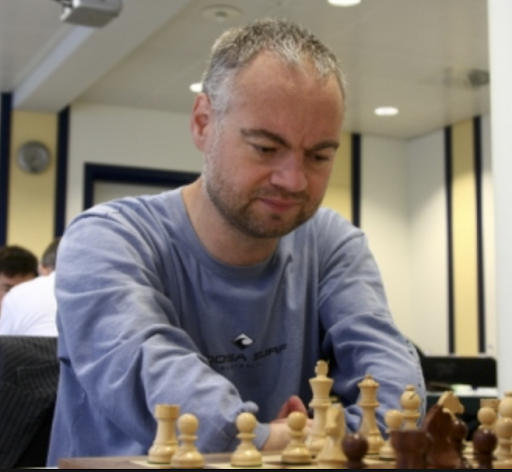
IM Chris Baker
IM Chris Baker

[pgn]
[Event “British CF-64 Championship”]
[Site “Brighton/ East Sussex”]
[Date “1977.08.19”]
[Round “11”]
[White “Baker, Chris W”]
[Black “Plaskett, H James”]
[Result “1-0”]
[ECO “C02”]
[Annotator “British Chess News”]
[PlyCount “77”]
[EventDate “1977.08.08”]
[EventType “swiss”]
[EventRounds “11”]
[EventCountry “GBR”]
[SourceTitle “EXT 1999”]
[Source “ChessBase”]
[SourceDate “1998.11.16”]
[SourceVersion “1”]
[SourceVersionDate “1998.11.16”]
[SourceQuality “1”]

{[%evp 0,77,29,40,46,-1,13,17,-8,5,-16,-17,12,-16,5,5,-10,-87,-83,-36,-40,-80,
-58,-83,-61,-87,40,35,171,63,165,183,162,162,165,123,99,99,126,101,118,129,117,
117,172,184,184,187,390,184,168,55,17,13,24,0,0,0,0,0,49,45,35,52,47,52,47,34,
45,13,54,0,0,0,337,327,342,333,359,397]} 1. e4 c5 2. c3 e6 3. d4 d5 4. e5 Nc6
5. Nf3 Qb6 6. Bd3 cxd4 7. cxd4 Bd7 8. O-O Nxd4 9. Nxd4 Qxd4 10. Nc3 a6 11. Re1
Qb6 (11… Ne7 12. Be3 Qxe5 13. Bc5 Qc7) 12. Qg4 $15 {[#]} d4 $6 (12… Ne7 13.
Be3 Qc7 14. Rac1 Nc6) 13. Ne4 $16 O-O-O 14. Bg5 Nh6 15. Bxd8 Qxd8 16. Qf4 Bc6
17. Nd6+ Bxd6 18. exd6 Qf6 19. Qg3 Nf5 20. Bxf5 exf5 21. Qe5 Qg6 22. f3 Rd8 23.
Qxd4 Bxf3 24. Rac1+ Kb8 $18 {[#]} 25. Qf2 $6 (25. Rc2) 25… Be4 26. Red1 Rxd6
27. Rxd6 Qxd6 28. Qe3 g6 29. g3 Qe6 30. Rd1 Bd5 31. Qc5 Bc6 32. Qb6 Bd7 33.
Qd8+ Bc8 34. Qd4 Ka8 35. Kf2 Qxa2 36. Rc1 Qe6 $2 {[#]} 37. Qd8 $18 Kb8 38. Qc7+
Ka7 39. Qxc8 1-0
[/pgn]

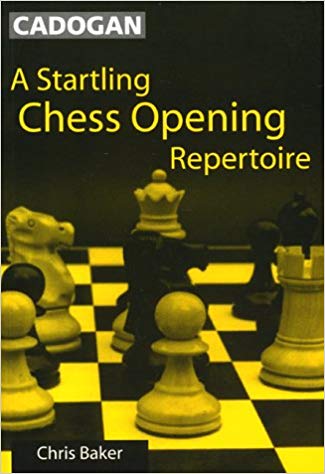
He has authored and co-authored a number of books including the following :

A Startling Chess Opening Repertoire
Simple Winning Chess
Learn From Your Chess Mistakes
Dynamic Black Opening Repertoire
A Startling Chess Opening Repertoire

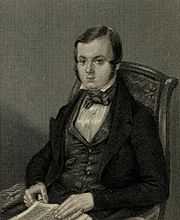
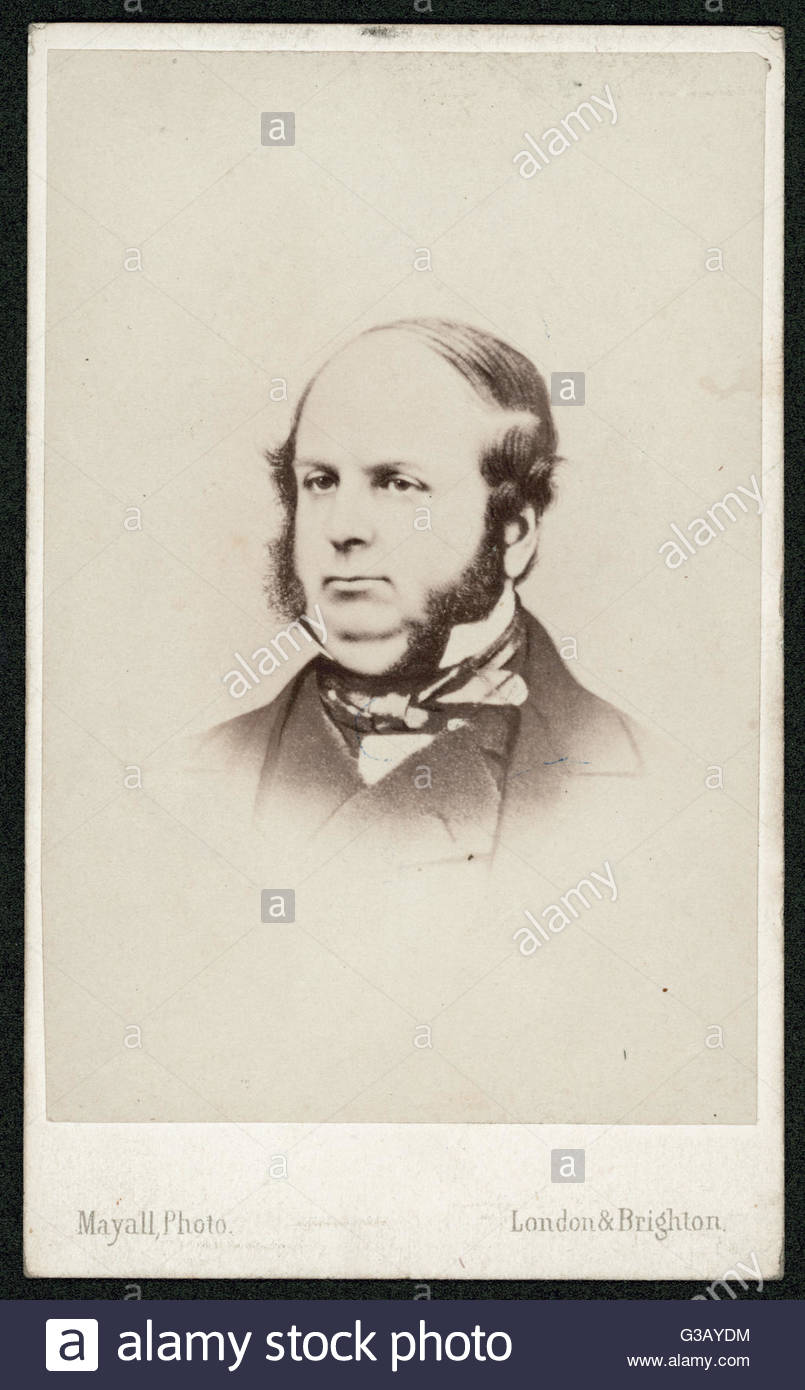
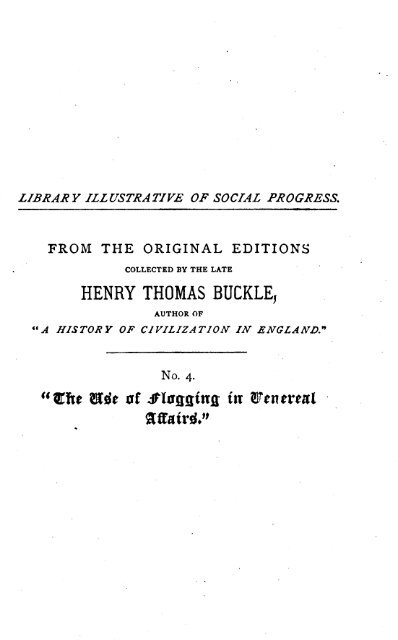
Remembering Henry Buckle (24-xi-1821 29-v-1862)

Henry Thomas Buckle (24-xi-1821 29-v-1862) from Howard Staunton, the English World Champion

We remember Henry Thomas Buckle (24-xi-1821 29-v-1862)

His Wikipedia article is here

An interesting article by Ray Keene

[pgn]
[Event “Match Buckle-Kieseritzky +2-2=2”]
[Site “Paris”]
[Date “1848.07.25”]
[Round “3”]
[White “Buckle, Henry Thomas”]
[Black “Kieseritzky, Lionel Adalbert BF”]
[Result “1-0”]
[ECO “C54”]
[Annotator “British Chess News”]
[PlyCount “87”]
[EventDate “1848.07.23”]
[EventType “match”]
[EventRounds “8”]
[EventCountry “FRA”]
[SourceTitle “EXT 2002”]
[Source “ChessBase”]
[SourceDate “2001.11.25”]
[SourceVersion “1”]
[SourceVersionDate “2001.11.25”]
[SourceQuality “1”]

{[%evp 0,87,23,40,19,13,8,15,3,3,-9,7,7,-15,1,-5,-5,-5,24,4,12,20,6,-27,80,80,
41,15,79,41,85,85,78,61,75,77,84,74,72,69,72,77,74,73,76,57,32,39,21,49,50,50,
30,27,25,25,17,24,17,19,20,17,9,9,27,24,21,90,171,148,155,166,180,179,202,202,
233,173,204,108,157,90,372,403,403,423,422,113,584,615]} 1. e4 e5 2. Nf3 Nc6 3.
Bc4 Bc5 4. c3 Nf6 5. d4 exd4 6. cxd4 Bb4+ 7. Bd2 Nxe4 8. Bxb4 Nxb4 9. Bxf7+
Kxf7 10. Qb3+ d5 11. Ne5+ Ke7 12. Qxb4+ Qd6 13. Qb3 Re8 14. O-O Kf8 15. Nc3 $1
$146 Nxc3 16. bxc3 c6 17. Rfe1 Re7 18. Re3 Be6 19. Rae1 Rae8 20. Rf3+ Kg8 21.
Qc2 (21. Qa4) 21… c5 22. Ree3 cxd4 23. cxd4 Rc7 24. Rc3 Qb4 $1 25. h3 Rxc3
26. Qxc3 Qxc3 27. Rxc3 Rc8 $14 28. Rxc8+ (28. Ra3) 28… Bxc8 29. g4 Kf8 30.
Kf1 $11 Ke7 31. Ke2 b5 32. Kd3 {[#]} g5 $2 33. Kc3 $18 Bd7 34. Kb4 Be8 35. Kc5
Ke6 36. Nc6 a6 37. Nb4 Bg6 $6 (37… a5) 38. Nxd5 Be4 39. Ne3 Bd3 40. d5+ Ke5 (
40… Kd7 $142) 41. d6 $18 Ke6 42. Kc6 b4 43. Kc5 a5 44. Kc6 {Deutsche
Schachzeitung 1849, p. 136; Deutsche Schachzeitung 1862, p. 237; La Regence
1849, p. 80; The Chess Players Chronicle 1848, p. 260} 1-0
[/pgn]

From The Encyclopedia of Chess by Anne Sunnucks :

“One of the leading British players of his day and an eminent historian. Buckle was born in Lee, Kent on 11th November 1821., the son of a shipowner. From birth he was extremely delicate and his health prevented him from having a normal education. He was taken away from school at the age of 14 and three years later went into his father’s business. His father’s death in 1840 made Buckle independent and he gave up his business career and visited the continent for about a year, playing chess in Paris and Berlin. Going abroad again in 1843, Buckle spent most of his time studying languages and within seven years had learned to speak seven languages and to read 12 others.
Henry Thomas Buckle
Henry Thomas Buckle

Buckle rarely played chess matches, because of the intense dislike of the slow rate at which they were played in those days. However, he played a match against Kieseritzky in 1848, which he won+4 -3 =1/ After this victory, he realised that his health would not stand up to serious play and he never again attempted it. In 1851, he played a number of games with Anderssen, who considered that he was one of the strongest players he had ever met. Buckle was a regular visitor to “The Divan”, where he delighted in his favourite form of the game, giving heavy odds.
After his match with Lowenthal, Buckle turned his attention to his History of Civilisation. The first section of this work started to appear in 1857 but the major portion was published posthumously.
Buckle died of typhoid fever in Damascus on 29th May 1862.”

Henry Thomas Buckle
Henry Thomas Buckle

and from The Oxford Companion to Chess by Hooper & Whyld :

“English player, historian. He is usually regarded as second among English players only to Staunton during the 1840s; Steinitz , however, regarded Buckle as the better player. In 1843 Buckle won a match against Staunton, who conceded pawn and move ( + 6=1), and in 1848 he defeated Kieserltzky ( + 3=3—2). He won a knock-out tournament in London 1849, defeating Williams (+2) in the second round. In 1851 Buckle defeated Lowenthal (+4=3 — 1) and held his own in a series of friendly games against Anderssen who declared him to be the strongest player he had ever met.

Henry Thomas Buckle
Henry Thomas Buckle

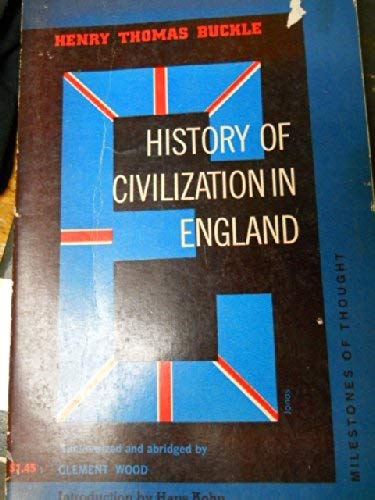
In his youth Buckle suffered ill-health which interfered with his schooling, and on account of which he was often sent abroad to fairer climates. Nevertheless he read widely, successfully educating himself and learning to speak seven languages. His father, a merchant, died in 1840 leaving him an ample fortune. In the 1850s Buckle largely gave up serious chess in favour of literary pursuits and began his great work, for which he is still remembered, A History of Civilization in England, the first two volumes of which were published in 1857 and 1861. At Damascus, on one of his many trips abroad, he contracted a fatal illness, allegedly crying as he died “My book! I haven’t finished my
book.”

History of civilization in England

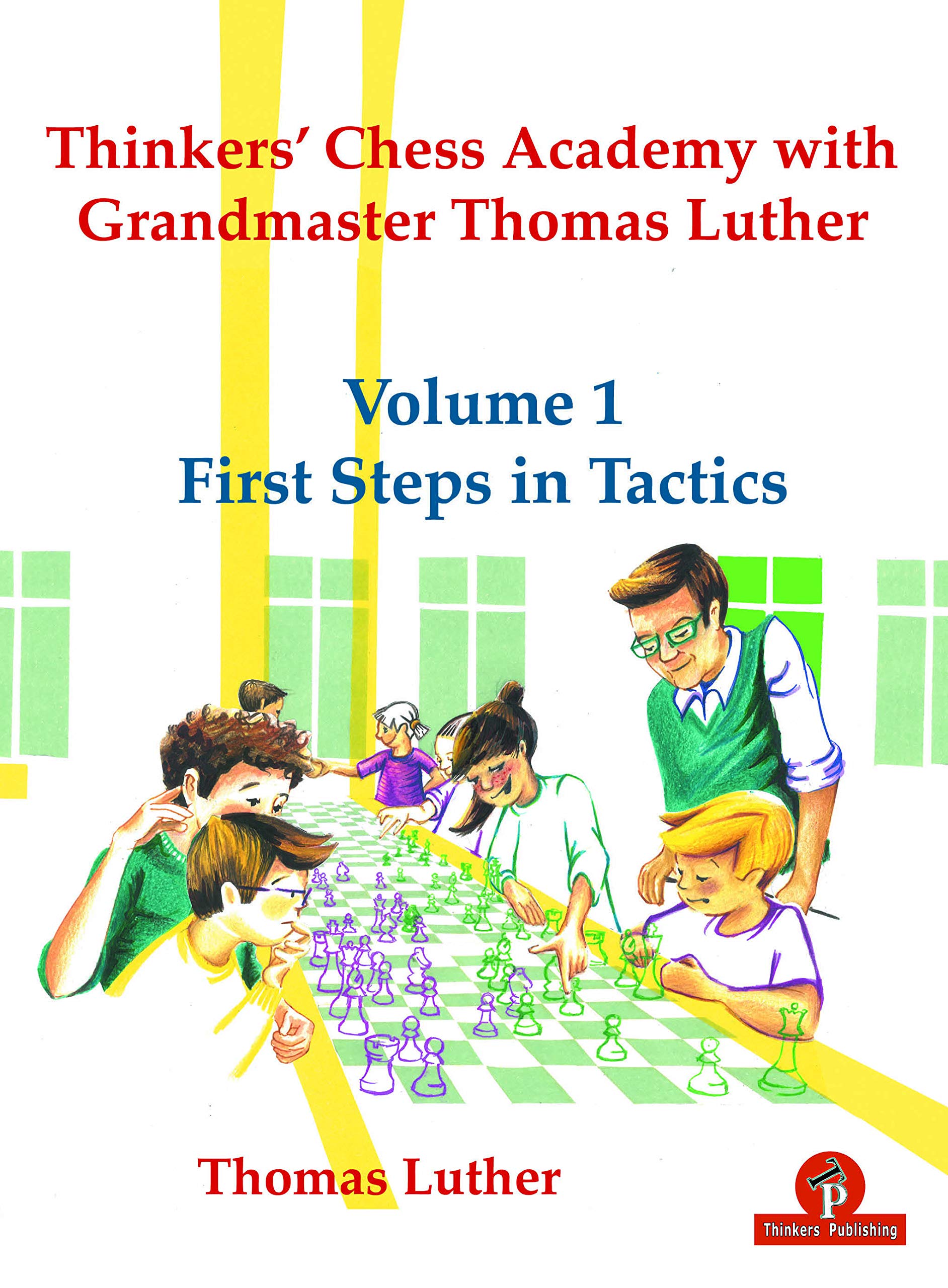
Thinker’s Chess Academy with Grandmaster Thomas Luther : First Steps in Tactics

Thinkers' Chess Academy with Grandmaster Thomas Luther - Volume 1 First Steps in Tactics
Thinkers’ Chess Academy with Grandmaster Thomas Luther – Volume 1 First Steps in Tactics

Grandmaster Thomas Luther, born in 1969, is the first player with a disability to have entered the FIDE Top 100 rating list. In 2001 he was ranked 80th in the world. He has won the German Championship three times and is well known as an experienced and successful coach. In 2014 his achievements were recognised by being granted the title of FIDE Senior Trainer. In his career to-date he has published several books and DVDs. This is his second book for Thinkers’ Publishing, after a co-production with Jugend Schach Verlag entitled “Chess Coaching for Kids – the U10 Project.”

GM Thomas Luther
GM Thomas Luther

As with every recent Thinkers Publishing publication high quality paper is used and the printing is clear. In fact, for this particular title we have been treated with pleasing glossy paper that gives the book a higher quality feel than usual.

The book can easily be laid flat next to the board and does not require weights to prevent it from “self-closing” (a particular bugbear of ours !). Each diagram is clear and the instructional text is typeset in two column format, which, we find, enables the reader to maintain their place easily. Figurine algebraic notation is used throughout and the diagrams are placed adjacent to the relevant text and each diagram has a “to move” indicator.

There is no index which, unfortunately, is a standard omission of Thinkers Publishing books. Also missing is a bibliography. However, for a tactics books these items are less crucial, of course. A biography or autobiography would miss these things.

The main content is divided into sixteen chapters :

  1. Notation
  2. Exercises & Mazes
  3. Little Games
  4. Checkmate & Advantage
  5. The Winning Move!
  6. Rules & Behaviour
  7. Find Checkmate in Two Moves!
  8. Tactical Motifs
  9. Double Attack / Fork
  10. The Knight and his Forks
  11. The Skewer
  12. The Pin
  13. How to Handle a Pin
  14. The Overload Motif
  15. Discovered Attack
  16. History of Chess & Checkmate

We have reviewed several tactics books in the last few months and this one from Thomas Luther is really rather interesting. It would appear to have at least two clear target audiences : improving and ambitious juniors and also club players perhaps less than 1900 Elo.

The chapters on Exercises and Mazes and Little Games appeal to myself as a chess teacher and coach since these ideas are rarely presented by GMs. For example :

[fen]6k1/p1r2p1p/1p6/3pP1p1/R7/1P6/P6p/7K w – – 0 1[/fen]

The rook has to give check to the black King.

He cannot move to a square where he be captured.

He cannot capture pawns, even if they are unprotected.

Make a guess how many moves are needed?

The “Little” Games (most western coaches would refer to these as “Mini” Games) is refreshing and entertaining :

[fen]8/7p/6p1/5p2/4p3/3p4/8/2B5 w – – 0 1[/fen]

In this position the pawns can overwhelm the bishop!

Following these interesting chapters we move on to more conventional themed tactics problems designed to build-up patterns that are recognizable. Each position has solution text that is aimed at junior and improving players reinforcing what (hopefully) has been learnt.

Chapter 6 (Rules & Behaviour) is somewhat unusual. Etiquette and basic playing advice is rarely discussed but again the focus is improving players. This sort of advice is regularly handed out by teachers and coaches but rarely found in print.

One of the more innovative features of the book are positions in which there is a win depending on who it is to move. Chapter 7 (Find Checkmate in Two Moves!) kicks off this notion and here is an example (there should be both a White and Black to move indicator) :

[fen]qr3r1k/2p1Nppp/2p5/1n6/8/3Qp1P1/P1P3P1/RK3R2 w – – 0 1[/fen]

Before you ask, yes, most of these positions are concocted but that is irrelevant to the teaching aims of the examples.

One pleasing aspect of the bulk of the “normal” tactics chapters is that diagrams are large enough not to need a board and that, as a consequence, one can get a rhythm going almost akin to a “Puzzle Rush” ! Using a stopwatch also is not so silly.

Chapter 16 (History of Chess & Checkmate) will be of interest to perhaps more mature players and takes positions and puts them into a real life context about players current and past.

Not all books that are reviewed are going to be read cover to cover, but we did enjoy working through the examples. We’d say that an improving junior maybe 10+ in years will take to this book and get a lot from it. We are pleased that this book is free of silly cartoons which tend to put off serious juniors. When will publishers realise that cartoons do not enhance a chess book? The presentation is excellent and the material is fun to work on ! Highly recommended : chess parents take note.

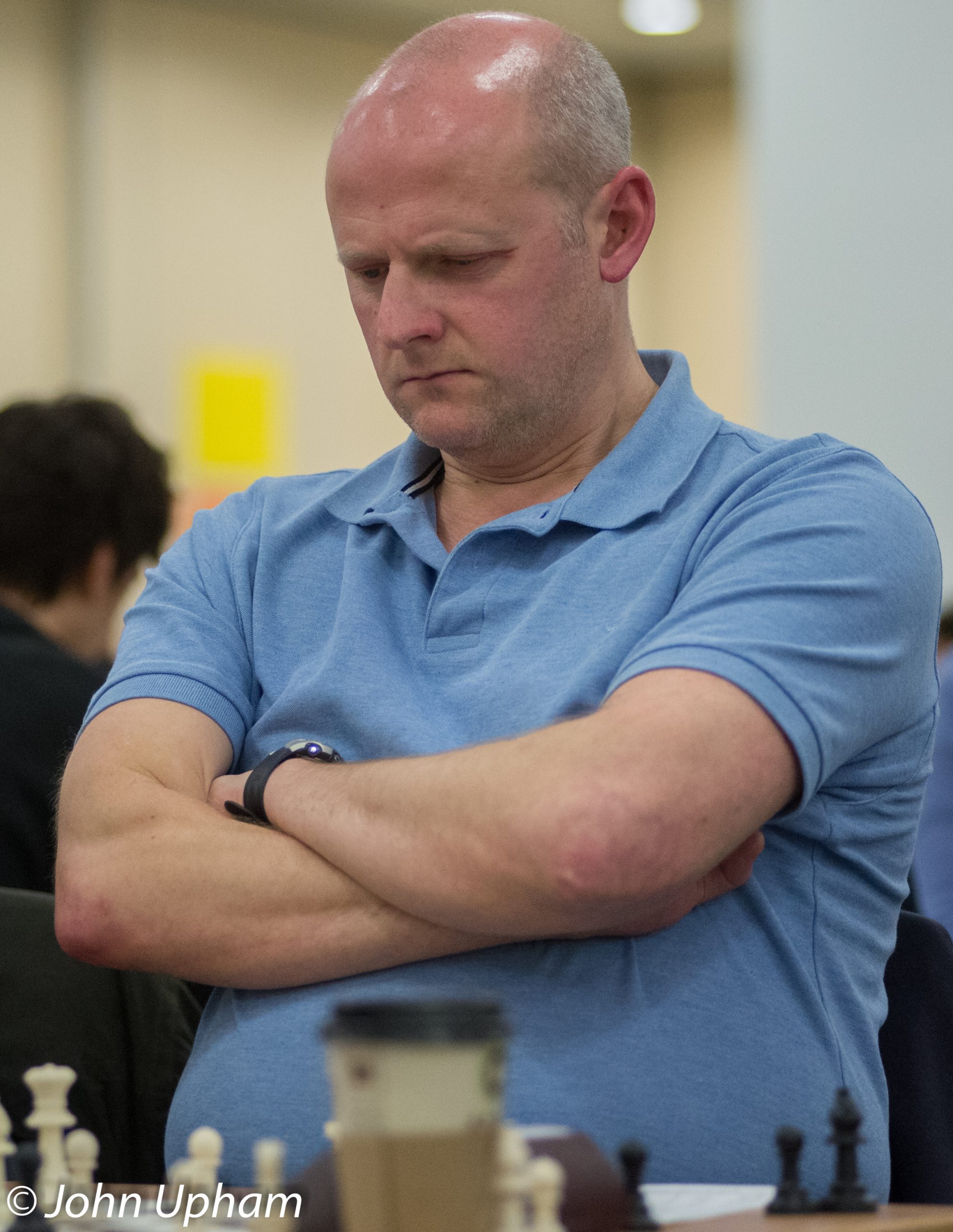
John Upham, Cove, Hampshire, 28th May, 2020

John Upham
John Upham

Book Details :

  • Hardcover : 325 pages
  • Publisher:Thinkers Publishing; 1 edition (19 May 2020)
  • Language: English
  • ISBN-10: 9492510723
  • ISBN-13: 978-9492510723
  • Product Dimensions: 16.8 x 1.5 x 23.1 cm

Official web site of Thinkers Publishing

Thinkers' Chess Academy with Grandmaster Thomas Luther - Volume 1 First Steps in Tactics
Thinkers’ Chess Academy with Grandmaster Thomas Luther – Volume 1 First Steps in Tactics

Remembering FM Neil Carr (10-iii-1968 25-v-2015)

FM Neil Carr, British Championships 2013, Torquay, courtesu pf John Upham Photography

BCN remembers FM Neil Leslie Carr (10-iii-1968 25-v-2015)

This was written about Neil aged 10 prior to the Spassky vs the BCF Junior Squad simultaneous display in 1979 :

“Manor Junior and Barking. Rating 152. World’s best 10 year old. Standard under-10 champion, 1977 and 1978. British under-11 champion, 1978. Defeated Russian grandmaster Kotov in clock match, 1978.”

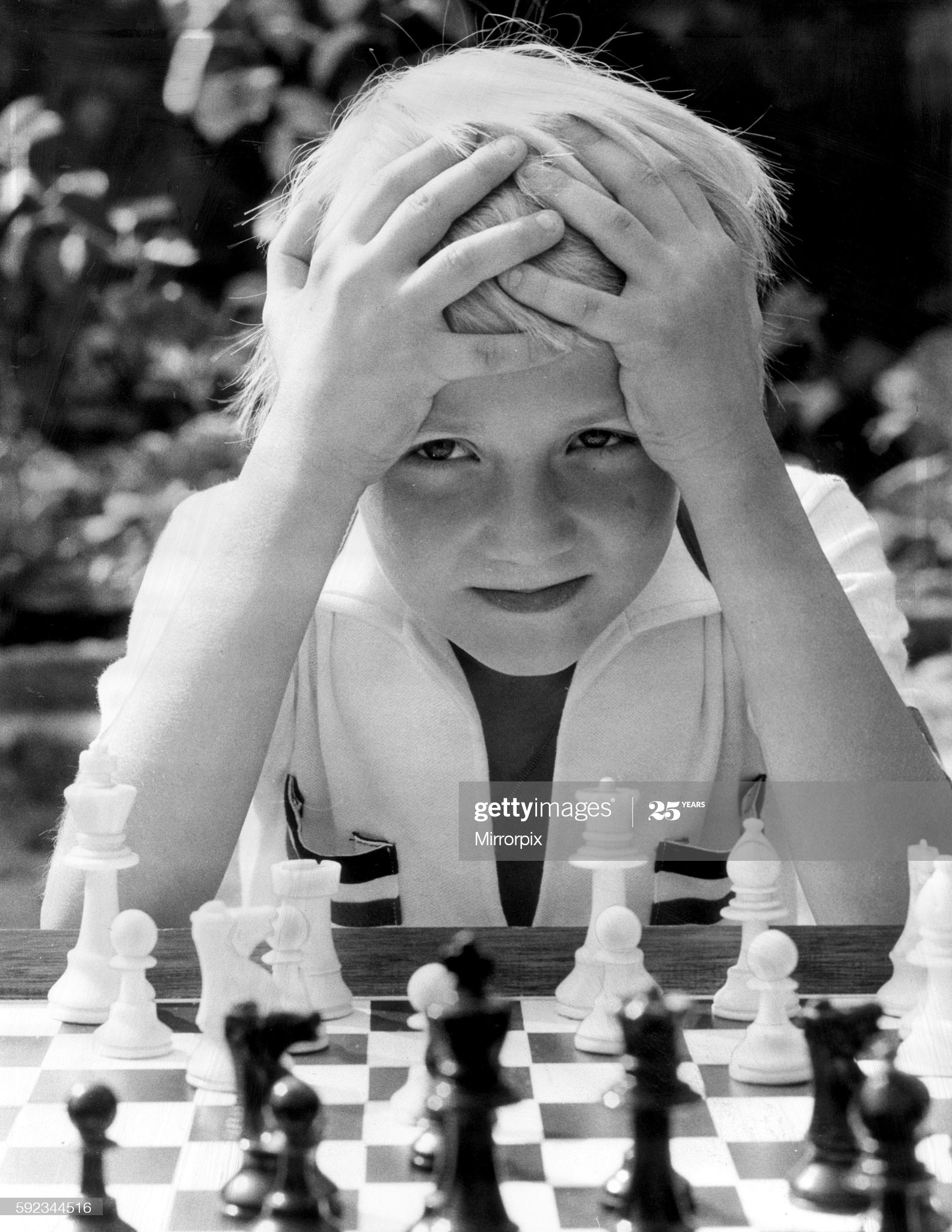
Eight year old Neil Carr of Barking, soon to become England's youngest ever chess international. 26th August 1976. (Photo by Daily Mirror/Mirrorpix/Mirrorpix via Getty Images)
Eight year old Neil Carr of Barking, soon to become England’s youngest ever chess international.
26th August 1976. (Photo by Daily Mirror/Mirrorpix/Mirrorpix via Getty Images)

Neil played for East Ham, Ilford and then London Central YMCA (CentYMCA) chess clubs.

He became a FIDE Master in 1985.

Here is his obituary from Stewart Reuben

Here is an article from Kingpin Magazine by Jon Manley

Here is an article from EssexChess

The Neil Carr Scholarship Prize

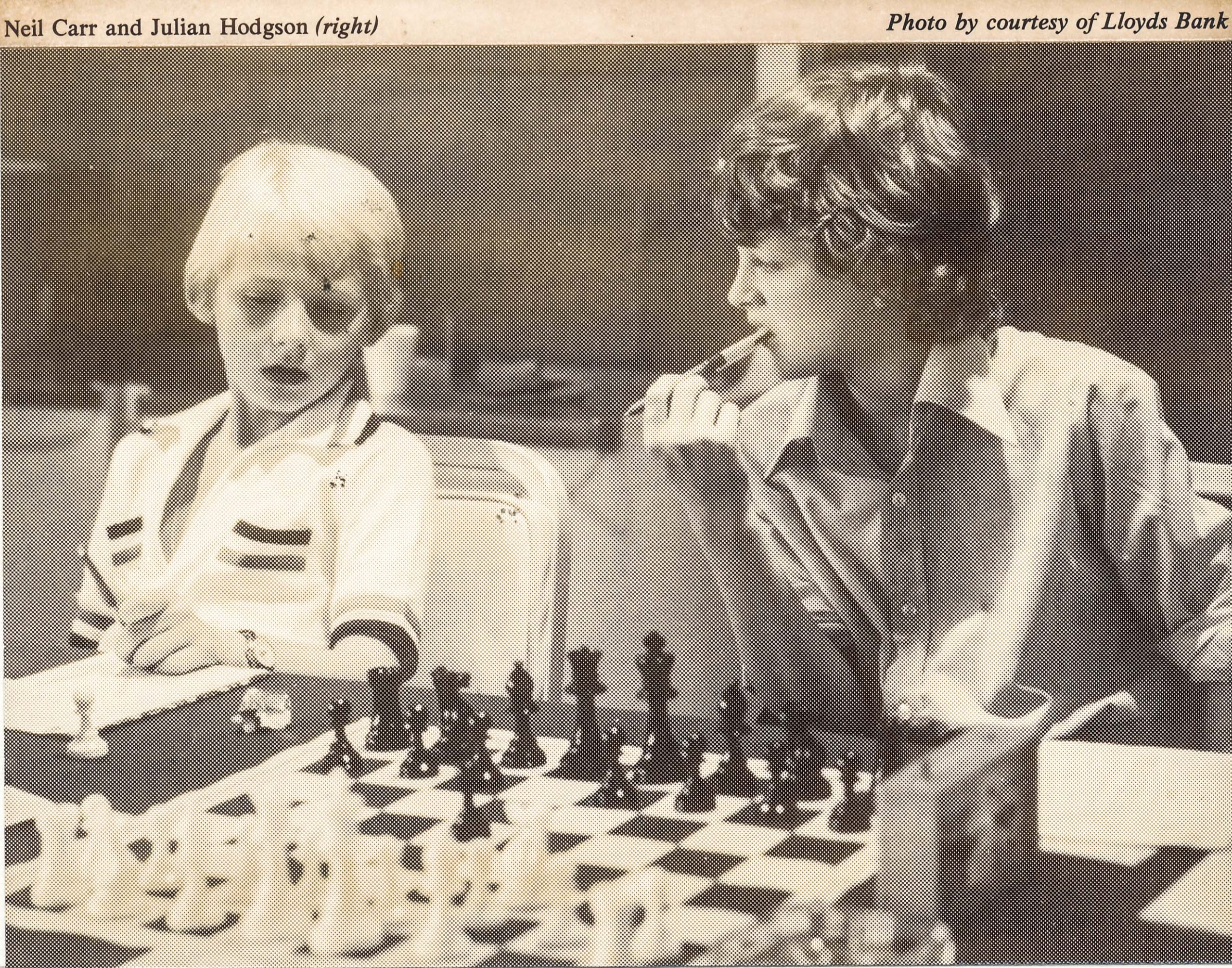
Neil Carr and Julian Hodgson at the 1976 Lloyds Bank Match by Telex, London - New York. From BCM, volume XCVI (96) Number 11 (August), Page 494. The venue was the Bloomsbury Hotel, London. Photo courtesy of Lloyds Bank.
Neil Carr and Julian Hodgson at the 1976 Lloyds Bank Match by Telex, London – New York. From BCM, volume XCVI (96) Number 11 (August), Page 494. The venue was the Bloomsbury Hotel, London. Photo courtesy of Lloyds Bank.

Here is a game courtesy of Kingpin (Jon Manley) & the Ilford Recorder

[pgn]
[Event “Simultaneous Display, 20 boards”]
[Site “Westergate ENG”]
[Date “1984.05.22”]
[Round “?”]
[White “Karpov, Anatoly Yevgenyevich”]
[Black “Carr, Neil Leslie”]
[Result “0-1”]
[ECO “B08”]
[Annotator “Neil Leslie Carr”]
[PlyCount “80”]
[EventDate “1984.05.22”]
[SourceTitle “Ilford Recorder”]

{[%evp 0,76,19,29,72,72,70,69,100,89,74,73,65,64,61,61,52,47,59,52,44,43,133,
74,117,87,152,151,136,101,88,79,96,114,112,117,147,132,143,148,243,185,228,217,
251,140,149,-94,0,0,0,0,0,-82,-59,-98,-116,-109,-116,-118,-60,-149,-148,-169,
-140,-150,-115,-273,-332,-332,-208,-649,-708,-772,-878,-1036,-994,-29995,
-29996]} 1. e4 d6 2. d4 Nf6 3. Nc3 g6 4. Nf3 Bg7 5. Be2 O-O 6. O-O Bg4 7. Be3
Nc6 8. Qd2 e5 9. d5 Ne7 10. Rad1 b5 $5 {[#] As played by Azmaiparashvili
against Karpov, a game Karpov lost.} 11. a3 a5 (11… Bd7 {has been
recommended here.}) 12. Bxb5 Bxf3 13. gxf3 Nh5 14. Rfe1 f5 15. Qe2 f4 16. Bd2
g5 17. Qf1 Rf6 18. Qh3 Rh6 {[#]} 19. Qd7 $2 (19. Bd7 {I think 19 Bd7 is better
as it holds back Black’s dangerous pawn.}) 19… Qf8 20. Qxc7 Rc8 21. Qxa5
Nf6 {[#]} 22. Kf1 $2 {And now White is lost.} (22. Bf1 {followed by h3 is a
better defence although I am sure the well-placed Black pieces mean that Black
has more than enough compensation for the pawns.}) 22… g4 23. Ke2 (23. fxg4
f3 $1 24. Bxh6 Nxg4 {and White is going to get mated.}) 23… gxf3+ 24. Kd3
Rxh2 {[#]} 25. Qb6 (25. Rf1 Rxc3+ 26. Bxc3 Nxe4 27. Kxe4 Rh3 {[#] and again
White is mated.}) 25… Ng4 26. Rf1 Rb8 {[#]} 27. Qxd6 (27. Qa7 Ra8 28. Qb6 Nc8
29. Qb7 Ra7 {and Black wins}) 27… Nxf2+ 28. Rxf2 Rxf2 29. a4 Rg2 30. Kc4 Rg6
31. Qd7 {[#]} Nc8 32. Kb3 Nd6 33. Rh1 f2 34. Rf1 Rb7 {[#]} 35. Qh3 (35. Qc6
Nxe4 {and wins}) 35… Nxb5 36. axb5 Rxb5+ 37. Ka2 (37. Nxb5 Rg3+) 37… Ra6+
38. Kb1 Rxb2+ {it is mate after} 39. Kxb2 Qa3+ 40. Kb1 Qa1# 0-1
[/pgn]

[embedyt] https://www.youtube.com/watch?v=aP4HrAG_N-0[/embedyt]

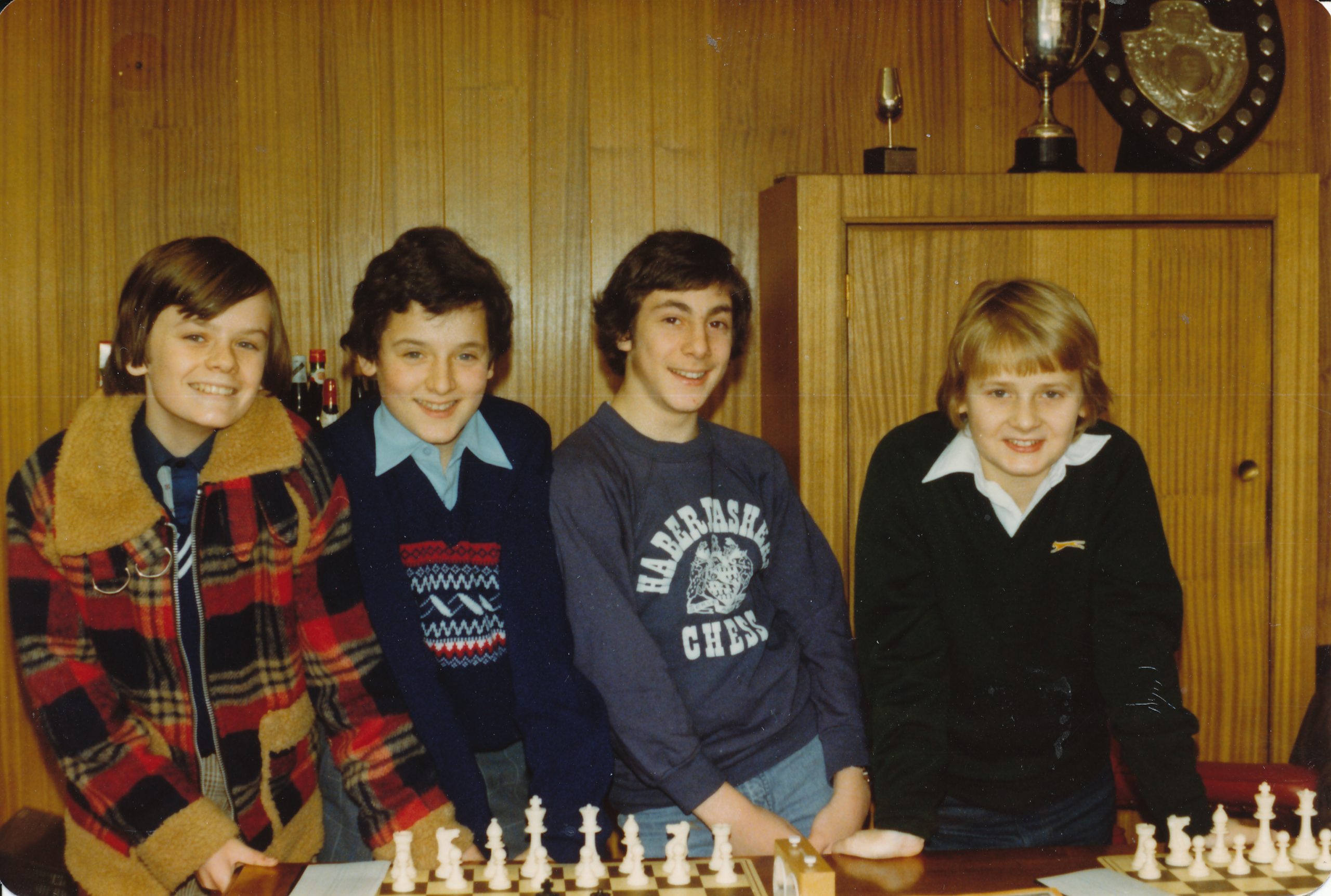
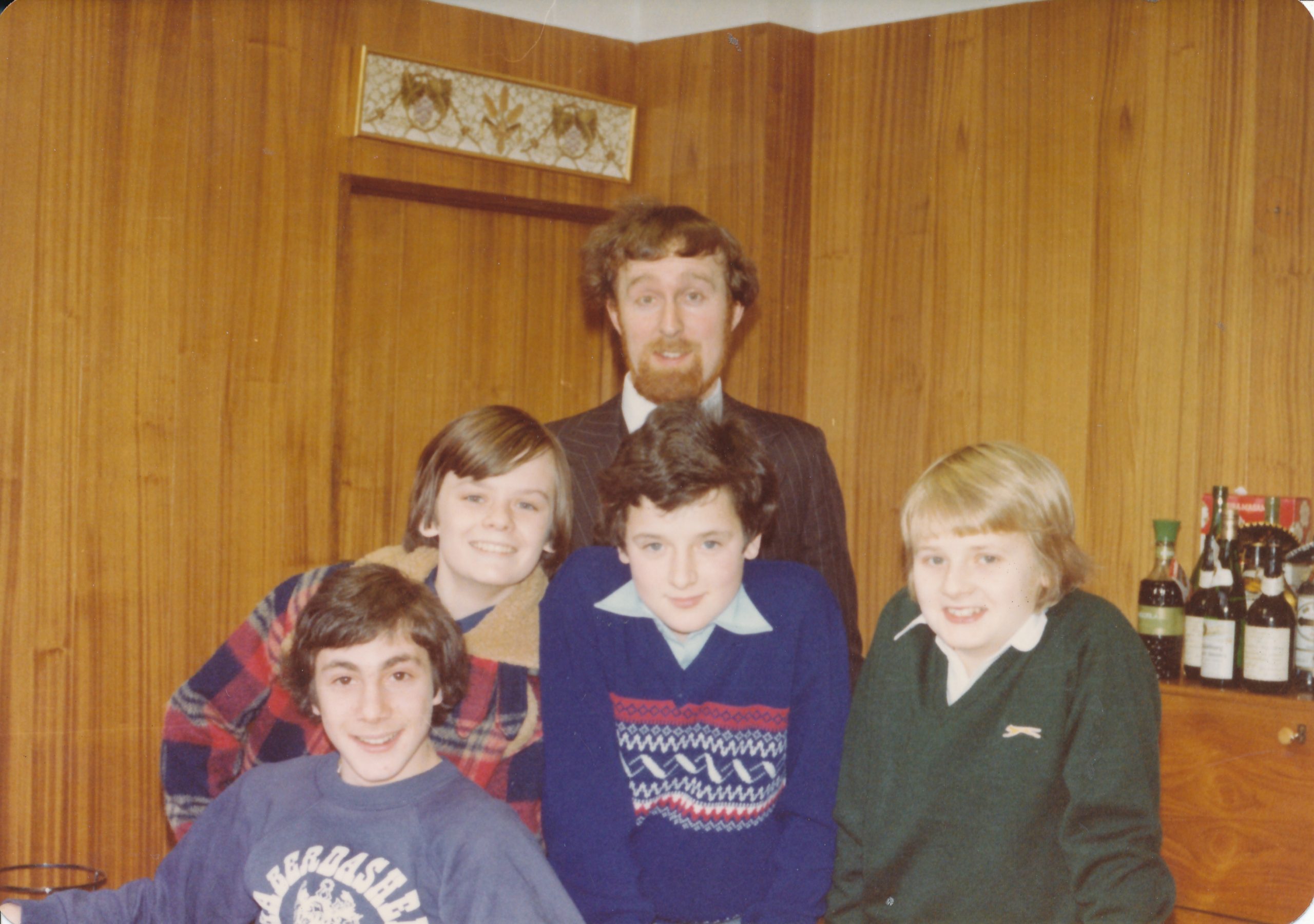
Neil Carr (far right) at Paul Buswell's house
Neil Carr (far right) at Paul Buswell’s house

Here is a tribute from long time friend and London Central YMCA fellow club member, IM Andrew Martin :

[embedyt] https://www.youtube.com/watch?v=SxyljbcDn8s[/embedyt]

Neil Carr (front right)
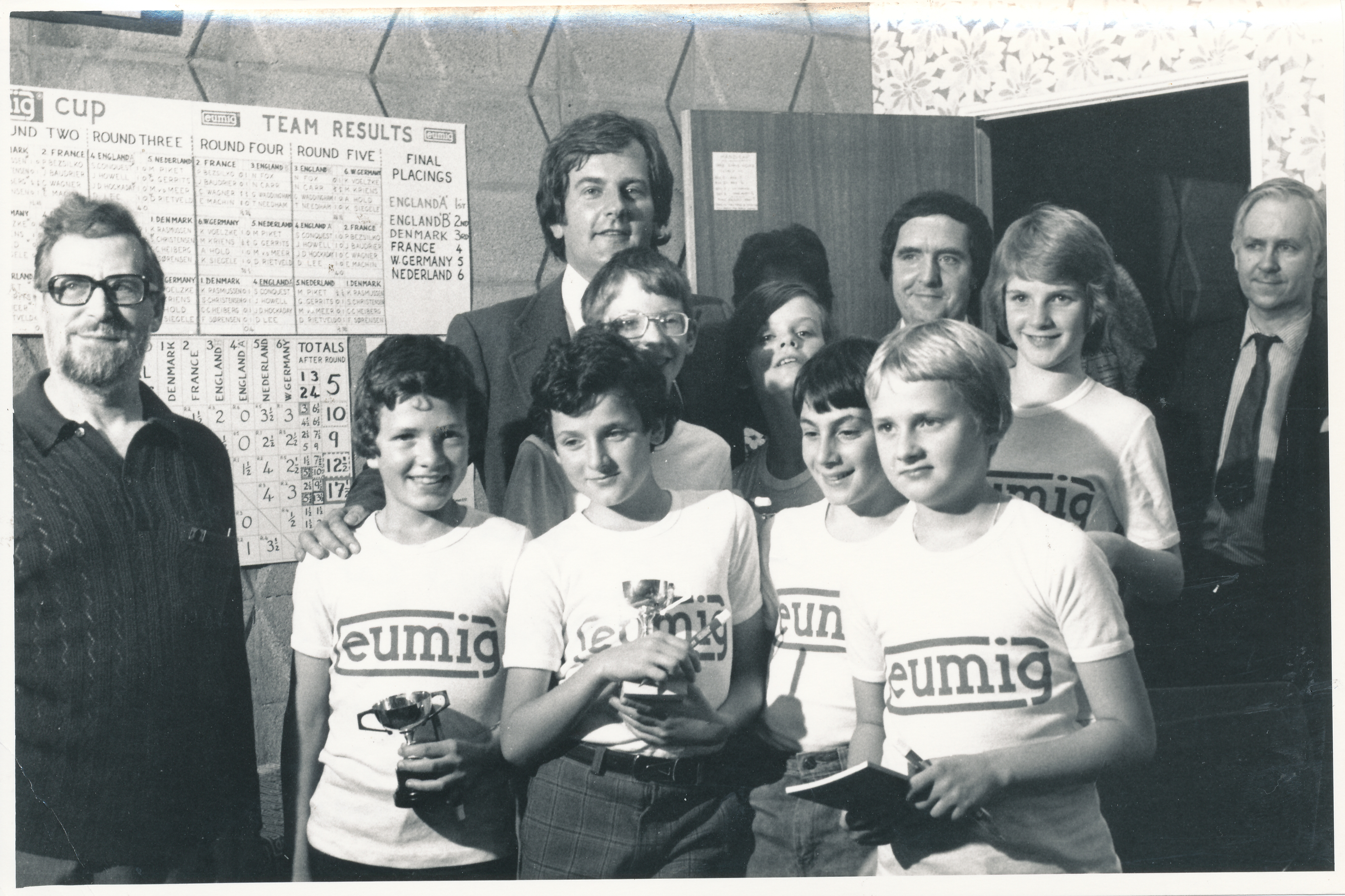
Neil Carr (right) with Neil Fox, Stuart Conquest, Paul Buswell and ?
Neil Carr (rear right) at a BCF National Club Final (1992)
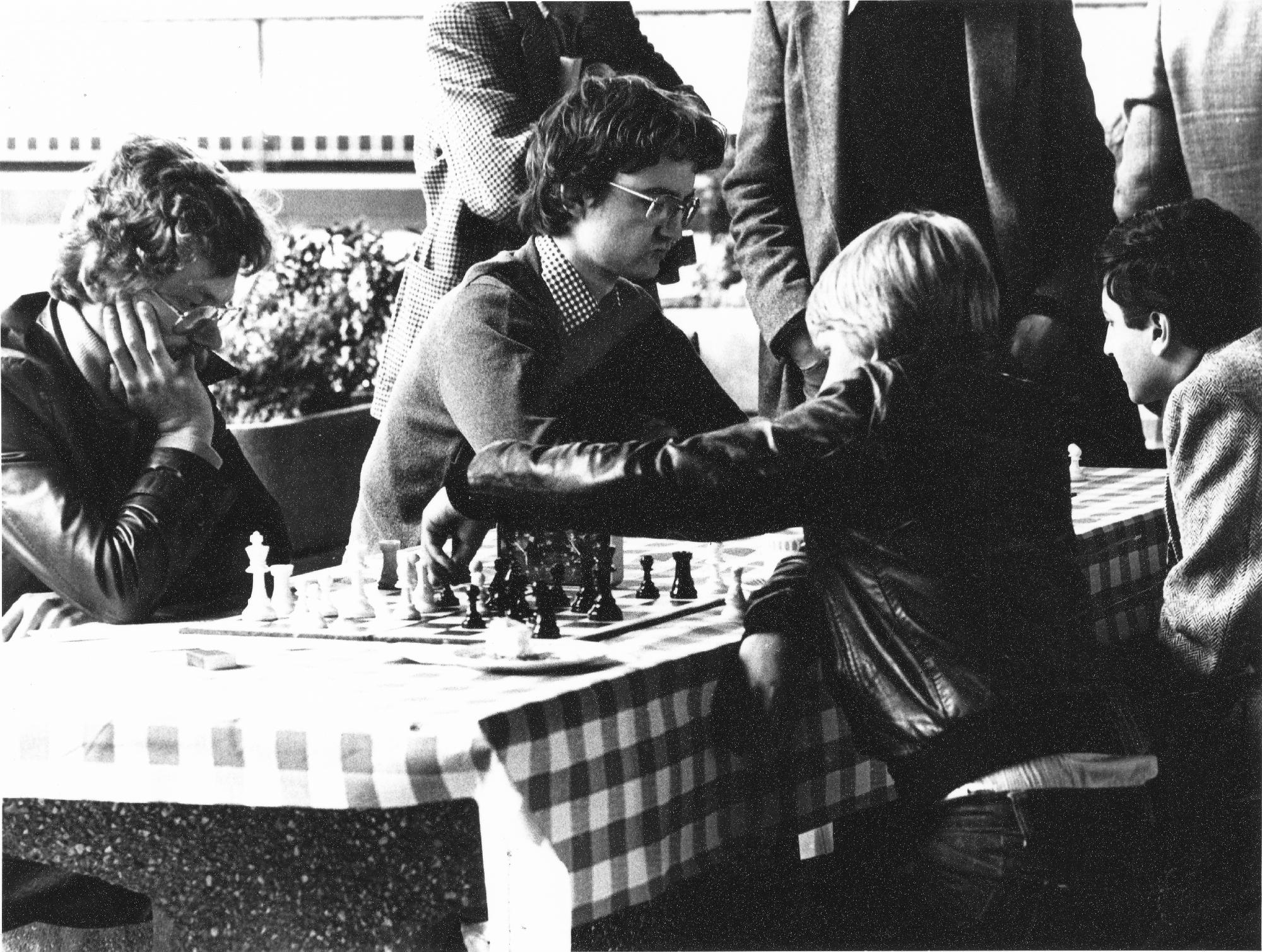
Neil Carr, (foreground, right)  at London's South Bank, Peter Sowray in the background.. Photo by Clive Field, London Chess Association
Neil Carr, (foreground, right) at London’s South Bank, Peter Sowray in the background.. Photo by Clive Field, London Chess Association
FM Neil Carr, London Chess Classic 2013, courtesy pf John Upham Photography

Remembering Guy Chandler (21-viii-1889 25-v-1980)

Death Anniversary of Guy Wills Chandler (21-viii-1889 25-v-1980), scanned from Chess Pie 1922 by Michael McDowell

Remembering Guy Wills Chandler (21-viii-1889 25-v-1980)

From The Encyclopaedia of Chess by Anne Sunnucks :

“International Judge of FIDE for Chess Compositions, Chandler, who was born on 21st August 1889, has composed about 125 two and three-move problems, all in traditional style. Some 30 have gained tourney honours. He was the chess editor of the Hampshire Telegraph and Post from 1911-1921 and he was a founder member of the British Chess Problem Society, Its Hon. Secretary from 1919 – 1925 and Hon. Secretary and Treasurer since 1951.

G.W.Chandler
Commended “The Problemist” 1960

[fen]8/4p3/2Bqr3/8/4p2R/1R1n1k2/3Q3P/1K6 w – – 0 1[/fen]

White to play and mate in two moves

From The Encyclopaedia of Chess (Batsford, 1977), Harry Golombek OBE, John Rice writes:

“British problemist, active as a composer mainly during the 1920 and 1930s, specialising in model-mate three-movers. Best known for his work as Secretary of the British Chess Problem Society 1919-25 and as Secretary and Treasurer from 1952. International Judge (1957). “

Happy Birthday IM Andrew Ledger (23-v-1969)

IM Andrew Ledger, Courtesy of John Upham Photography

BCN wishes Happy Birthday to IM Andrew J Ledger (23-v-1969)

Andrew plays for Blackthorne Russia in Four Nations Chess League (4NCL) plus Woodseats, Sheffield and Yorkshire CA in other leagues and the English Counties Championship.

Andrew has two chess playing brothers, FM David Ledger and Stephen Ledger.

[pgn]
[Event “BCF-ch 82nd”]
[Site “Swansea”]
[Date “1995.??.??”]
[Round “9”]
[White “Ledger, Andrew J”]
[Black “Cobb, Charles”]
[Result “1-0”]
[ECO “A17”]
[WhiteElo “2410”]
[BlackElo “2210”]
[Annotator “British Chess News”]
[PlyCount “81”]
[EventDate “1995.08.??”]
[EventType “swiss”]
[EventRounds “11”]
[EventCountry “WLS”]
[SourceTitle “EXT 1997”]
[Source “ChessBase”]
[SourceDate “1996.11.15”]
[SourceVersion “1”]
[SourceVersionDate “1996.11.15”]
[SourceQuality “1”]

{[%evp 0,81,19,-12,7,0,5,6,33,20,34,10,16,21,28,29,49,19,-1,6,82,20,20,16,29,
24,22,44,31,79,40,23,27,31,32,32,141,11,6,6,7,0,0,-55,-37,-44,11,11,23,38,60,
30,57,50,96,59,122,59,55,43,91,52,59,78,140,91,95,166,234,221,227,234,242,249,
249,253,251,251,265,271,268,259,277,237]} 1. c4 e6 2. Nf3 Nf6 3. Nc3 b6 4. e4
Bb7 5. Bd3 c5 6. e5 Ng4 7. O-O Nc6 8. Be4 Qb8 9. Re1 f5 10. exf6 Nxf6 11. Bxc6
Bxc6 12. d4 Bxf3 13. Qxf3 Bd6 14. d5 O-O 15. dxe6 Bxh2+ 16. Kh1 dxe6 17. Rxe6
Qc8 $2 18. Rxf6 {[#]} Rxf6 19. Qd5+ Kh8 20. Kxh2 Rxf2 21. Ne4 Rf5 22. Qd3 Rh5+
23. Kg1 Qg4 24. Nf2 Qe6 25. Bd2 Re8 26. Bc3 Qe7 27. Rd1 Rg5 28. Nh3 Rg4 29. b3
h6 30. Re1 Qf7 31. Rf1 Qh5 32. Qf3 Qh4 33. Nf4 Rg3 34. Qf2 Qg5 35. Bxg7+ $3 {
[#]} Qxg7 36. Nh5 Rxg2+ 37. Qxg2 Qd4+ 38. Qf2 Rg8+ 39. Kh2 Qe5+ 40. Ng3 Rd8 41.
Kg2 1-0
[/pgn]

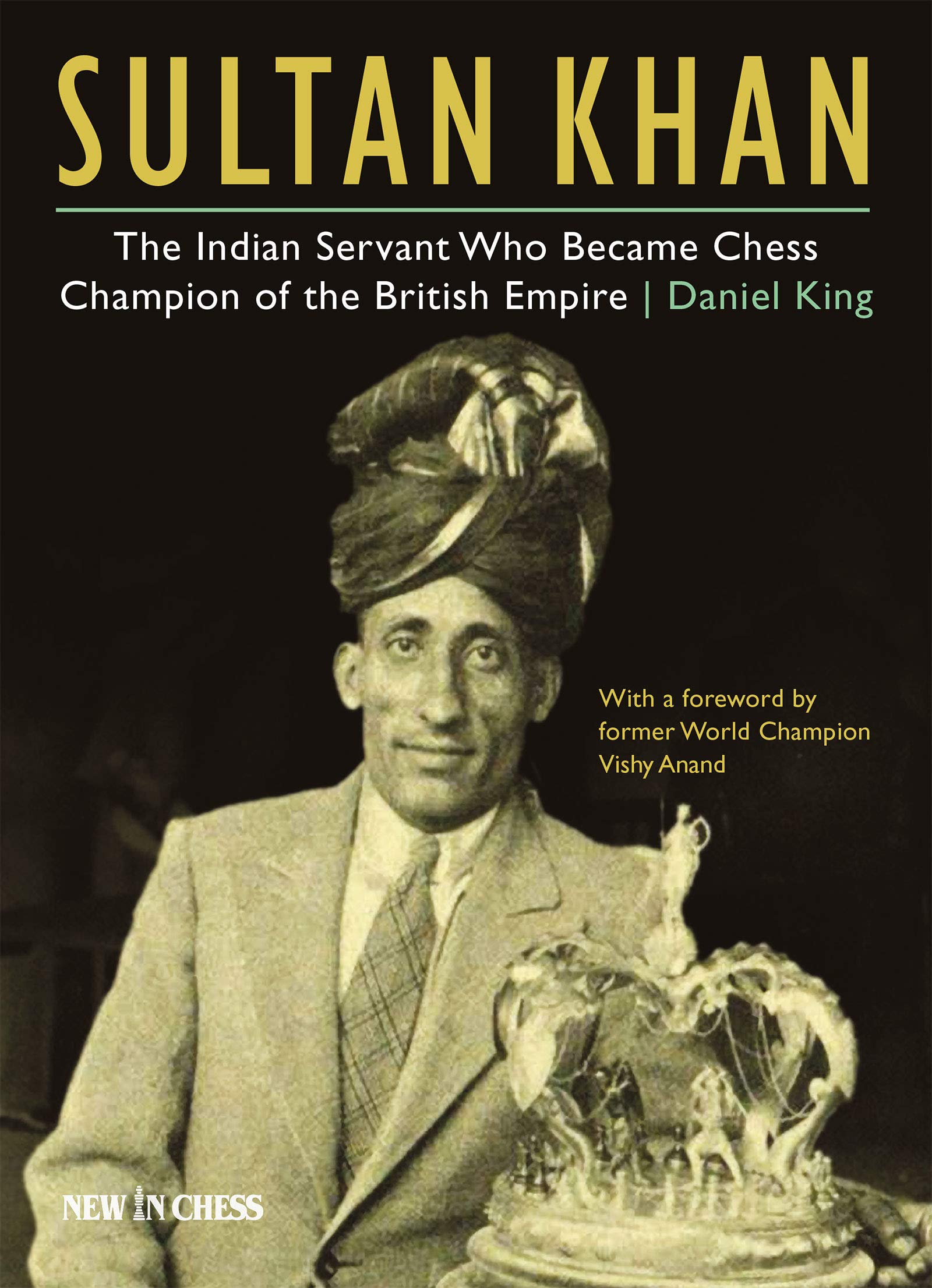
Sultan Khan : The Indian Servant Who Became Chess Champion of the British Empire

Sultan Khan: The Indian Servant Who Became Chess Champion of the British Empire

Sultan Khan : The Indian Servant Who Became Chess Champion of the British Empire : Daniel King

GM Daniel King
GM Daniel King

“Daniel King (1963) is an English grandmaster, coach, journalist and broadcaster. He has written 16 chess books on topics ranging from opening preparation to the self-tutoring How Good is your Chess? and Test Your Chess.”

From the rear cover :

“Sultan Khan arrived in London in 1929. A humble servant from a village in the Punjab, he created a sensation by becoming the British Empire champion. Sultan Khan competed in Europe with the leading chess players of the era. His unorthodox style often stunned his opponents, as Daniel King explains in his examination of the key tournaments in Khan’s career. King has uncovered a wealth of new facts about Khan, as well as dozens of previously unknown games. Now for the first time the full story can be told of how Khan was received in Europe, of his successes in the chess world and his return to obscurity after his departure for India in 1933.”
Daniel King, well known as a writer and broadcaster, here turns his hand to chess history, and one of the most fascinating stories our game has produced.

It would be remiss of me not to mention at the start that Sultan Khan’s family, whom the author chose not to consult,  are very unhappy about the book. You can read a review by Dr Atiyab Sultan, Sultan Khan’s granddaughter, here.

Dr Sultan and her father also write about Sultan Khan here.

I’ll leave that with you: you can decide for yourself whether or not it will deter you from buying the book. I have my views but prefer to concentrate on the chess.

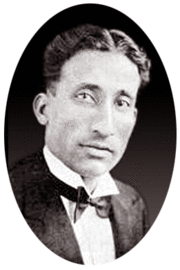
Malik Mir Sultan Khan

What we have is a collection of Sultan Khan’s most interesting games (in some cases only the opening or conclusion) with excellent annotations. It’s not a ‘Best Games’ collection: there are plenty of draws and losses. As you would expect from such an experienced commentator, King knows exactly what, and how much, to tell you. You’ll get clear and concise verbal explanations, with variations only when necessary: an approach entirely suited to Khan’s style of play.

Sultan Khan’s openings were sometimes very poor, even by the standards of the day, on occasion running into trouble by neglecting the essentials of development and king safety, and not always learning from his mistakes. You won’t find a lot of brilliant tactics and sacrifices in his games, either. But he excelled at manoeuvring, and was an outstanding endgame player, winning many points through sheer determination. It was these skills that enabled him to beat Capablanca, draw with Alekhine, and reach, according to Jeff Sonas, the world’s top ten.
Here’s his most famous game, which is treated to six pages of annotations in the book.
[pgn]

[Event “Christmas Congress 1930/31-11 Premier”]
[Site “Hastings Waverley Hotel”]
[Date “1930.12.31”]
[Round “3”]
[White “Sultan Khan, Mir”]
[Black “Capablanca, Jose Raul”]
[Result “1-0”]
[ECO “E12”]
[PlyCount “129”]
[EventDate “1930.12.29”]
[EventType “tourn”]
[EventRounds “9”]
[EventCountry “ENG”]
[SourceTitle “EXT 2017”]
[Source “ChessBase”]
[SourceDate “2016.10.25”]
[SourceVersion “1”]
[SourceVersionDate “2016.10.25”]
[SourceQuality “1”]

1. Nf3 Nf6 2. d4 b6 3. c4 Bb7 4. Nc3 e6 5. a3 d5 6. cxd5 exd5 7. Bg5 Be7 8. e3
O-O 9. Bd3 Ne4 10. Bf4 Nd7 11. Qc2 f5 12. Nb5 Bd6 13. Nxd6 cxd6 14. h4 Rc8 15.
Qb3 Qe7 16. Nd2 Ndf6 17. Nxe4 fxe4 18. Be2 Rc6 19. g4 Rfc8 20. g5 Ne8 21. Bg4
Rc1+ 22. Kd2 R8c2+ 23. Qxc2 Rxc2+ 24. Kxc2 Qc7+ 25. Kd2 Qc4 26. Be2 Qb3 27.
Rab1 Kf7 28. Rhc1 Ke7 29. Rc3 Qa4 30. b4 Qd7 31. Rbc1 a6 32. Rg1 Qh3 33. Rgc1
Qd7 34. h5 Kd8 35. R1c2 Qh3 36. Kc1 Qh4 37. Kb2 Qh3 38. Rc1 Qh4 39. R3c2 Qh3
40. a4 Qh4 41. Ka3 Qh3 42. Bg3 Qf5 43. Bh4 g6 44. h6 Qd7 45. b5 a5 46. Bg3 Qf5
47. Bf4 Qh3 48. Kb2 Qg2 49. Kb1 Qh3 50. Ka1 Qg2 51. Kb2 Qh3 52. Rg1 Bc8 53. Rc6
Qh4 54. Rgc1 Bg4 55. Bf1 Qh5 56. Re1 Qh1 57. Rec1 Qh5 58. Kc3 Qh4 59. Bg3 Qxg5
60. Kd2 Qh5 61. Rxb6 Ke7 62. Rb7+ Ke6 63. b6 Nf6 64. Bb5 Qh3 65. Rb8 1-0

[/pgn]

King offers a lot more than just the games, though. The descriptions of the events in which Sultan Khan participated are enlivened by contemporary reports from newspapers and magazines which portray a vivid picture of the chess world 90 years ago, and of how Khan was perceived within the chess community. Then as now, newspapers would sometimes send non-playing journalists to write a ‘let’s laugh at the weird chess players’ article. Here, for example, is a Daily Herald reporter visiting Hastings for the 1930-31 congress. “DRAWING THE LONG BROW AT HASTINGS”, chortled the headline. “Moving (sometimes) scenes at chess congress.” Yes, very droll.

Although Sultan Khan was a very popular member of the British chess community, much respected for his quiet and modest demeanour, remarks which would today be considered racist sometimes appeared in the press. The London Evening News on Hastings 1932-33: “Sultan Khan, the British Champion, of course, did well; but he is not English by birth, which makes a difference.”

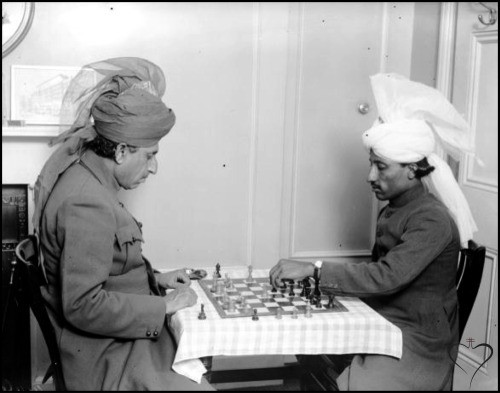
Malik Mir Sultan Khan (right)

King also sketches in the political background behind Sultan Khan’s time in England: the discussions concerning the future of the Indian subcontinent which would eventually lead to independence and the partition in 1947. Writing as someone with embarrassingly little knowledge of the subject, I thought these sections of the book were written with sensitivity and impartiality, but, as the partition is still highly emotive today, I quite understand why others might take a different view.

My main problem with the book is the lack of indexing. There’s an index of names, but I’d also expect indexes of games and openings: something I’d consider essential for a book of this nature. While it was interesting to read something of the history of Western chess in India, a section on John Cochrane would have been useful. I noticed a couple of errors in tournament crosstables (pp 22 and 309), and on p322, EM Jackson mysteriously becomes EM Mackenzie (his middle name).

What you don’t get is a definitive and complete biography and games collection such as McFarland might publish, but Daniel King knows his audience well, and, from the chess perspective, does a thoroughly professional job. If you don’t feel strongly about Sultan Khan’s family’s criticisms, then this book is highly recommended, telling a story full of chess, human and historical interest.

You can see some sample pages on the publisher’s website.

Some more links for anyone interested in finding out more about Sultan Khan:

An article by chess.com blogger simaginfan (Neil Blackburn)

Edward Winter’s feature article about Sultan Khan

A short documentary from 1990 about Sultan Khan and Miss Fatima

Richard James, Twickenham 22nd May 2020

Richard James
. Richard James

Book Details :

  • Paperback : 372 pages
  • Publisher: New In chess (1 Mar. 2020)
  • Language: English
  • ISBN-10: 9056918745
  • ISBN-13: 978-9056918743
  • Product Dimensions: 17 x 23.1 cm

Official web site of New in Chess

Sultan Khan: The Indian Servant Who Became Chess Champion of the British Empire

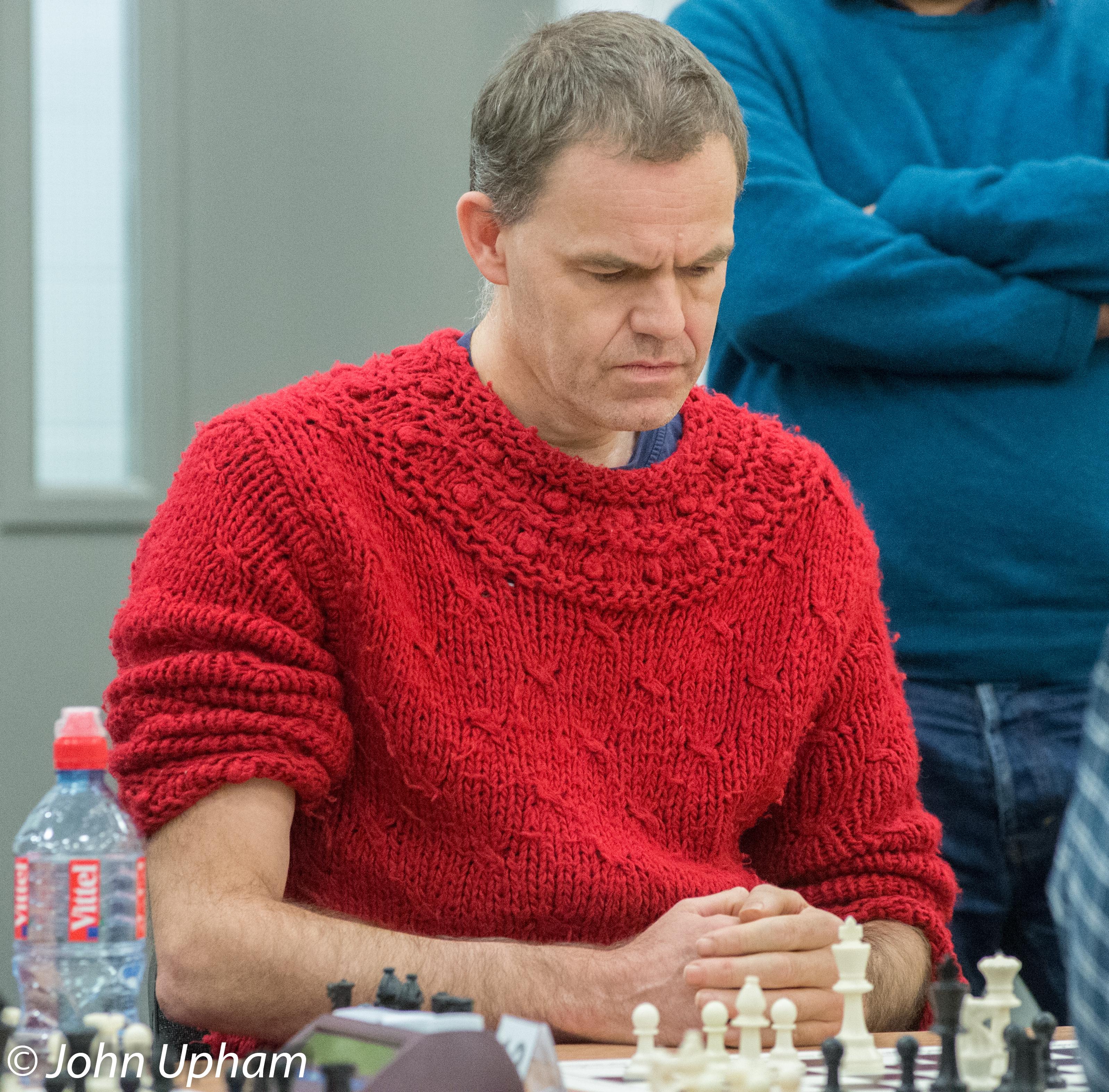
Happy Birthday IM John Cox (22-v-1962)

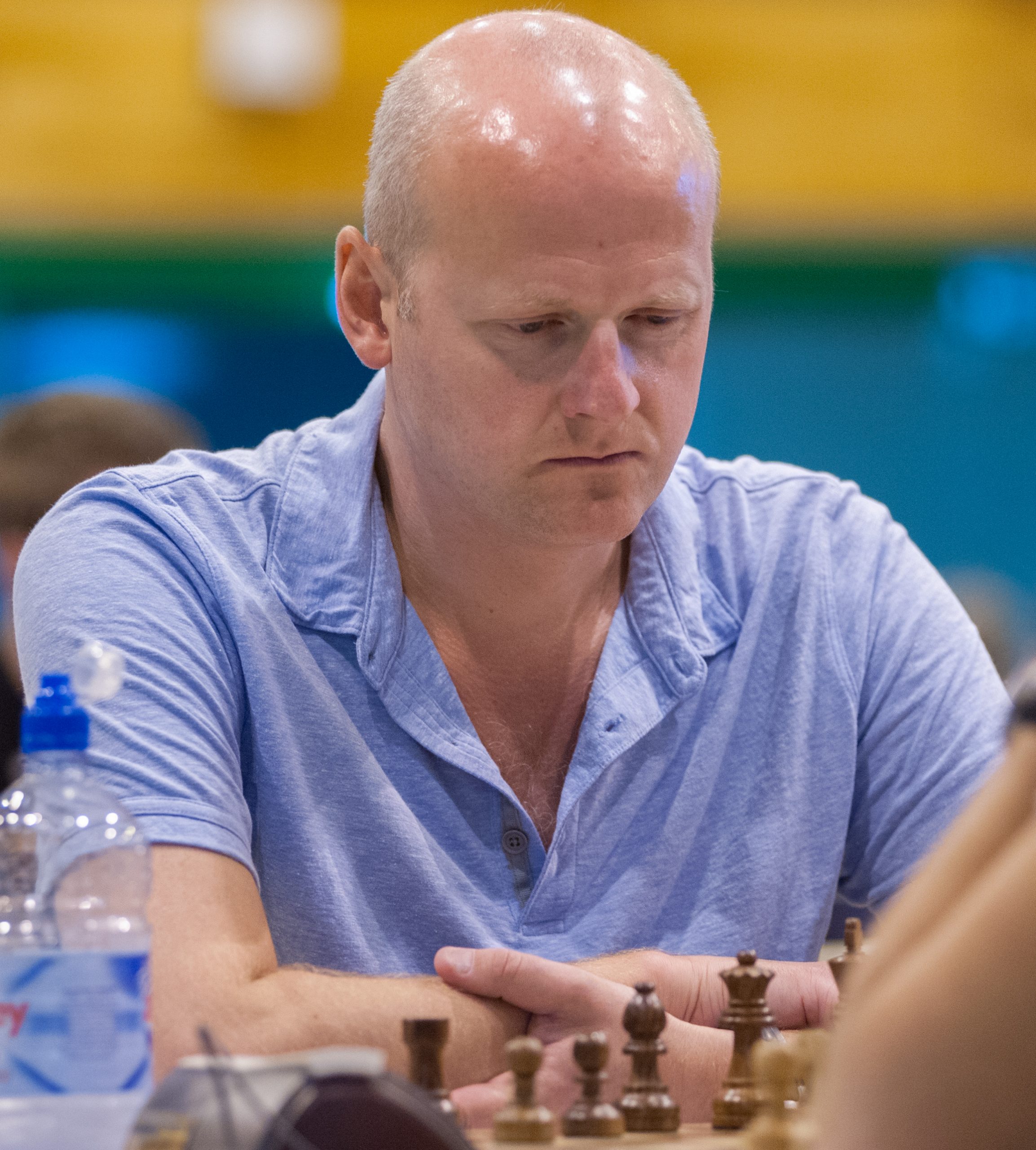
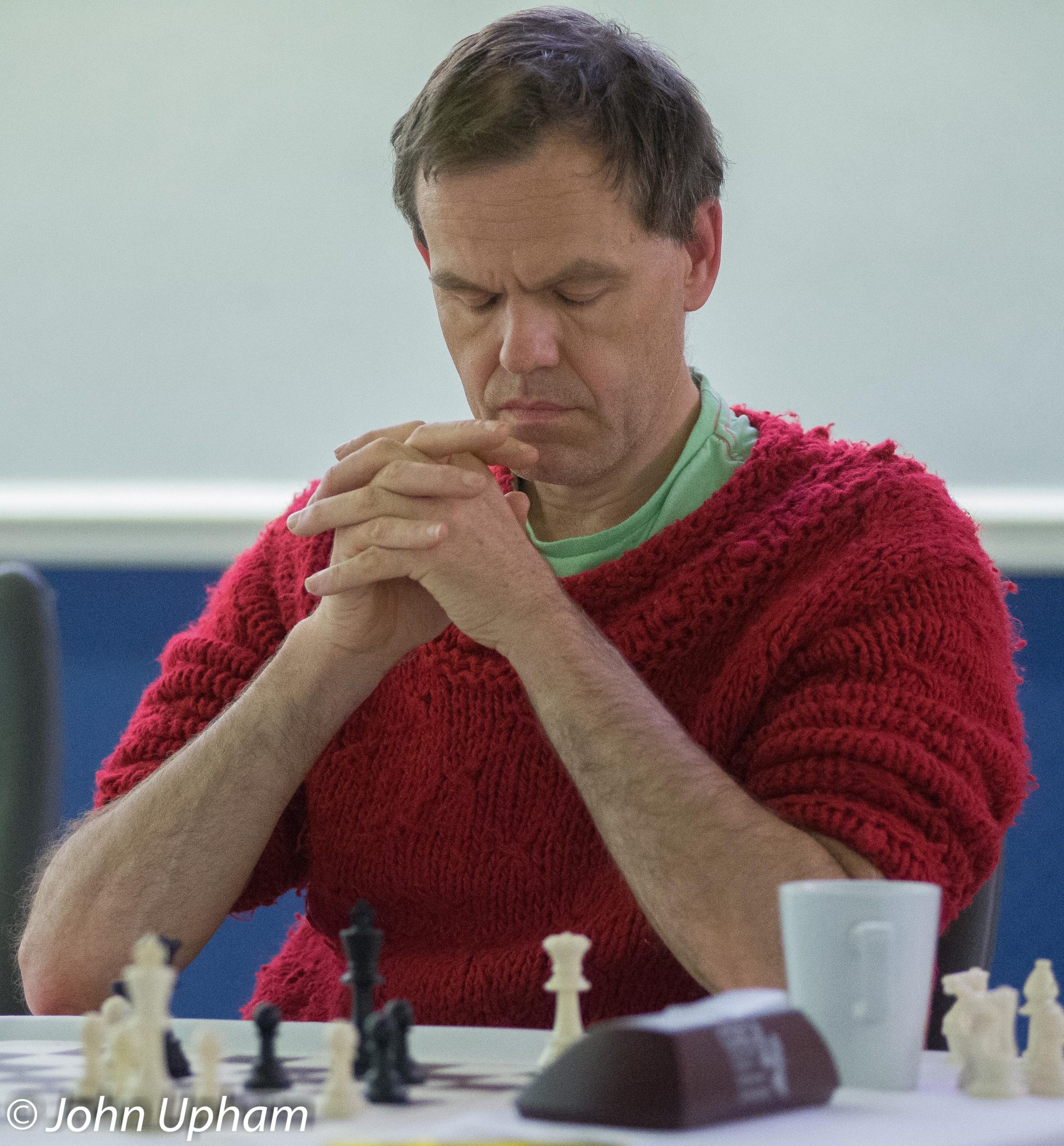
IM John Cox, courtesy John Upham Photography

BCN sends best wishes to IM John James Cox on his birthday, this day, in 1962.

John was born in Altrincham, Trafford, Greater Manchester and moved to Shropshire at the age of three.

John attended Eton College playing top board in the Sunday Times National Schools Competition during the 1977 – 1979 period.

John read classics at Corpus Christi College, Oxford and played in the 1982, 1983 and 1984 varsity matches for Oxford versus Cambridge.

He became a FIDE Master in 1982, an International Master in 2002 and obtained a peak rating of 2423 in January of 2006.

John is a solicitor, owning his own practice of 30 years.

He is an expert bridge player and an amateur rock climber / mountaineer.

John plays for Cavendish in the London League, Hackney in other leagues and Barbican in the Four Nations Chess League (4NCL).

From the excellent Shropshire Chess web site we have :

John Cox, aged 17, photographer unknown

“Probably the best home reared player to come out of the county, John Cox started to play at age 6 with his father Jeff (see above) joining Shrewsbury Chess Club at age 7. At age10 he became joint Shropshire lightning champion. He was 16 when he won the 1979 county championship though much of his early success was outside the county. He gained his first FM norm at the 1980 Lloyds Bank Masters where he became the first Shropshire player to beat a GM (see below), also drawing with IM’s Ligterink and Pytel. In 1981 he gained his third norm and the FM title at Ramsgate together with his first IM norm. Though now based in London, he is still a regular visitor to the local Wrekin Congress.”

[pgn]
[Event “Lloyds Bank op 04th”]
[Site “London”]
[Date “1980.08.23”]
[Round “4”]
[White “Cox, John J”]
[Black “Shamkovich, Leonid Alexandrovic”]
[Result “1-0”]
[ECO “A36”]
[BlackElo “2515”]
[Annotator “John J Cox”]
[PlyCount “83”]
[EventDate “1980.08.20”]
[EventType “swiss”]
[EventRounds “9”]
[EventCountry “ENG”]
[SourceTitle “EXT 2001”]
[Source “ChessBase”]
[SourceDate “2000.11.22”]
[SourceVersion “1”]
[SourceVersionDate “2000.11.22”]
[SourceQuality “1”]

{[%evp 0,83,25,-17,23,12,20,-1,10,16,18,-12,-8,-4,18,8,19,3,21,0,14,-10,12,1,
10,29,50,68,52,44,26,33,36,36,41,41,44,44,47,47,44,44,42,42,65,42,66,83,93,87,
163,150,150,169,246,277,315,326,426,439,447,409,406,375,387,422,422,433,452,
377,389,384,413,317,344,361,372,363,372,438,695,735,737,758,774,794]} 1. c4 c5
2. Nc3 Nc6 3. g3 g6 4. Bg2 Bg7 5. e3 e5 {e6 is very drawish so Shamkovich
plays a somewhat riskier line for a win} 6. Nge2 Nge7 7. d3 d6 8. a3 a6 {
He should have played a5 to prevent white’s next} (8… O-O 9. O-O Be6 10. Nd5
Qd7 11. Nec3 Bh3 12. Rb1 Bxg2 13. Kxg2 Nxd5 14. Nxd5 Ne7) 9. b4 $146 {an
imaginative pawn sacrifice to upset the symetrical nature of the position} (9.
Rb1) 9… h5 {Very deep. Before accepting the pawn, Black ensures that, some
move later, he will have an open h file.} 10. h3 {To answer h4 by g4.} cxb4 $5
{Very risky. Better was b5.} 11. axb4 Nxb4 {[#]} 12. Ba3 $1 Nbc6 (12… Nec6 $6
13. Bxb4 (13. Qa4 {with pressure}) 13… Nxb4 14. Qa4+ Nc6 15. Bxc6+ bxc6 16.
Qxc6+ Bd7 17. Qxd6 $16) ({If} 12… a5 13. Bxb4) 13. Ne4 Nf5 14. g4 hxg4 15.
hxg4 Rxh1+ 16. Bxh1 Qh4 {Now we see why the GM ensured that the h file would
be opened in the line which has arisen} {but white has a simple answer :} 17.
gxf5 Qxh1+ 18. Kd2 Qxd1+ 19. Rxd1 Bxf5 (19… gxf5 20. Nxd6+ Kd7 21. Nxf7 $16)
20. Nxd6+ Kd7 21. Nxb7 Rb8 22. Nc5+ Ke8 23. Nc3 $16 ({If} 23. Nxa6 $2 Rb3 $17)
23… Bf8 $2 24. Nxa6 $1 Rb3 $2 {But now it does not work. Black was
presumably upset at missing 24. Na6: ! and and didn’t even consider 24….Bxa3
when John gives the following study-like analysis :} (24… Bxa3 25. Nxb8 Nxb8
26. Ra1 Bd6 27. c5 Bc7 (27… Bxc5 $2 28. Ra8 Bd6 29. Nb5 $18) 28. Nb5 Bd8 (
28… Kd7 29. Ra7) (28… Kd8 29. Ra7) 29. Ra8 Nc6 30. d4 {with excellent
chances.}) 25. Nc7+ Kd7 26. Bxf8 Kxc7 27. Nb5+ Kd7 28. Kc2 $18 {[#] Winning
material by force. The game is virtually over.} Na5 29. e4 Ke8 30. Ra1 Bxe4 31.
dxe4 Kxf8 32. Rxa5 {and Black resigned a few moves later.} Rb4 33. Kc3 Rb1 34.
Na3 Ra1 35. c5 Ke7 36. c6 Rc1+ 37. Nc2 Kd6 38. Rc5 Kc7 39. Kd2 Rf1 40. Ne3
Rxf2+ 41. Ke1 Ra2 42. Nd5+ 1-0
[/pgn]

Here is his Wikipedia entry

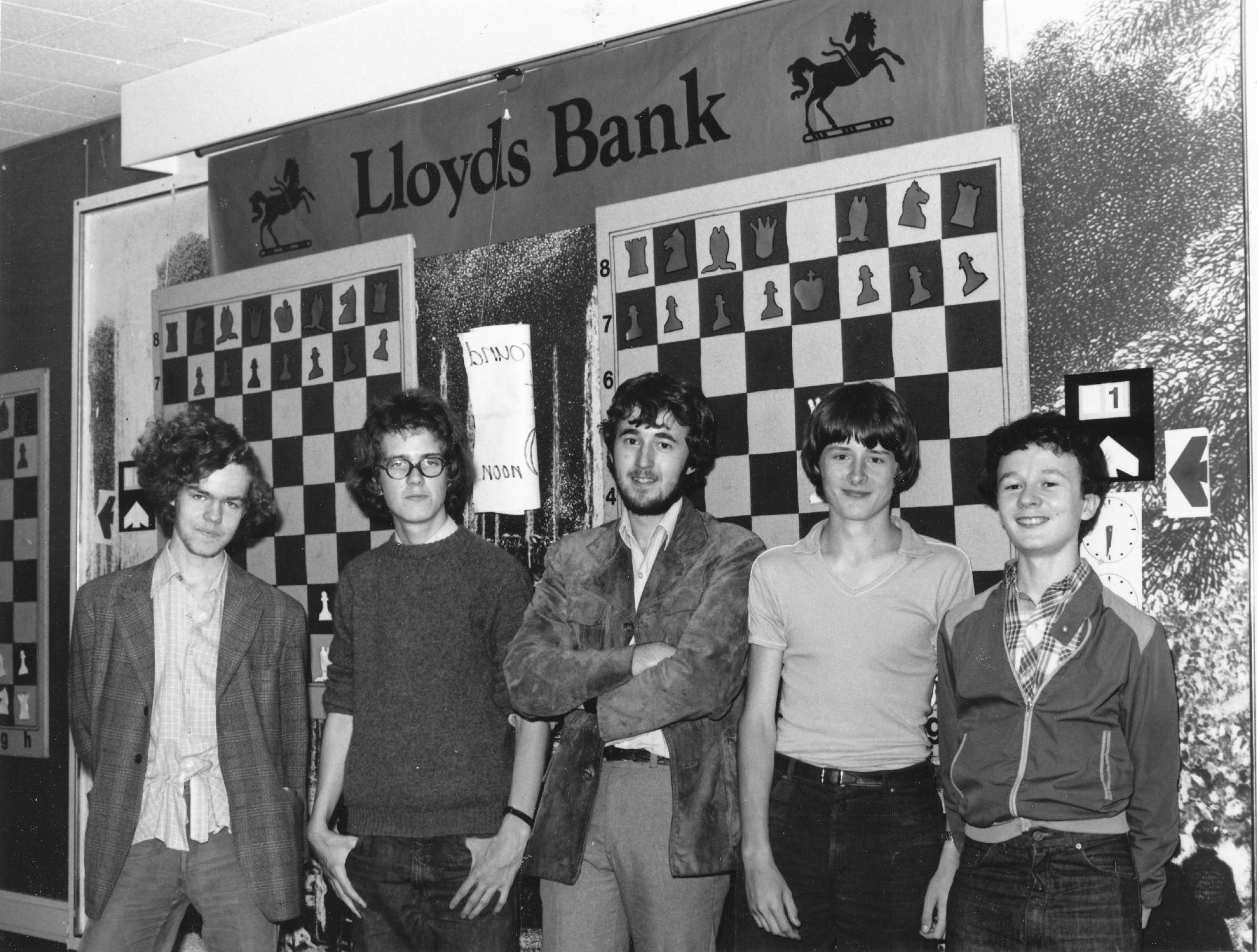
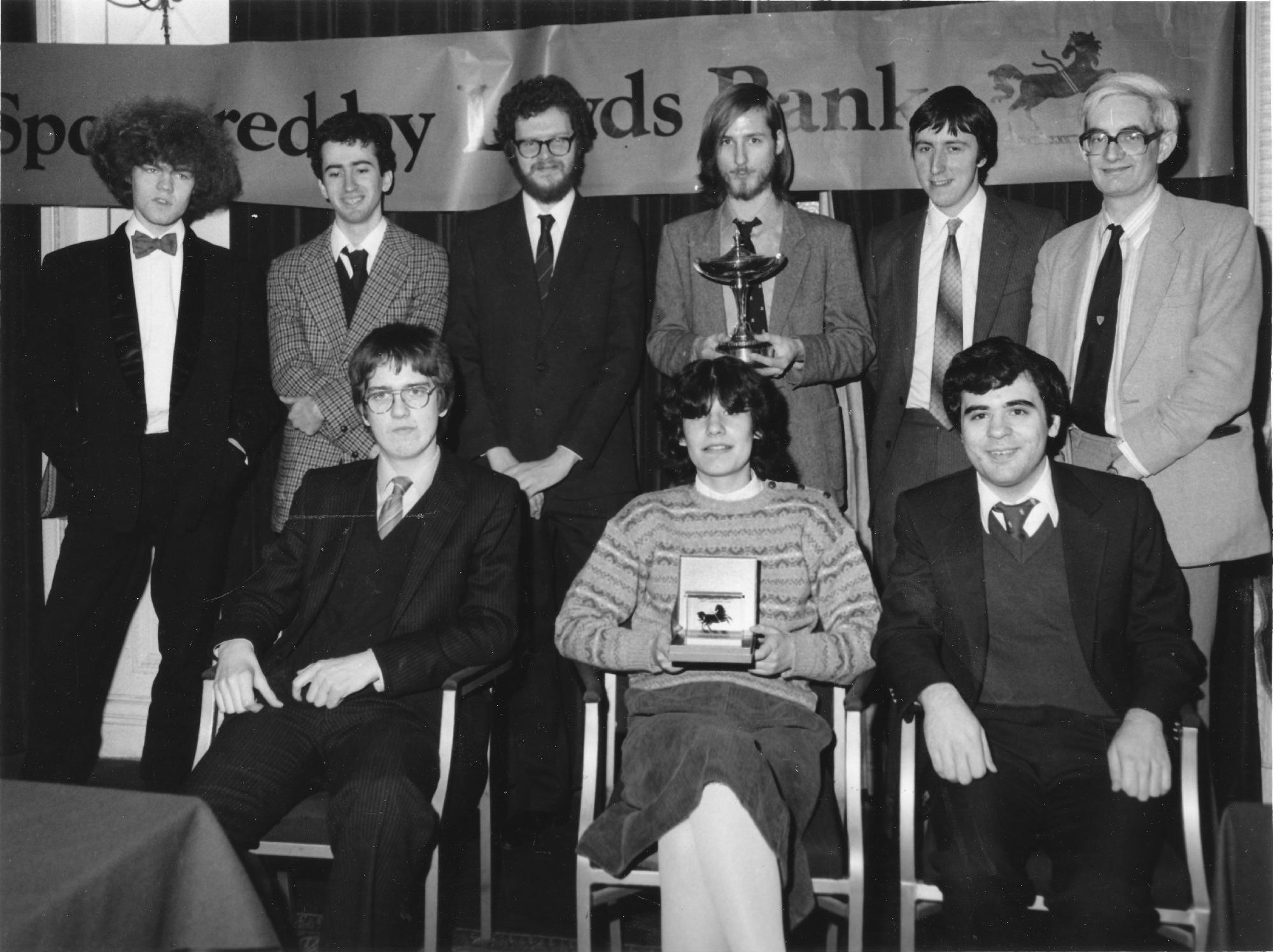
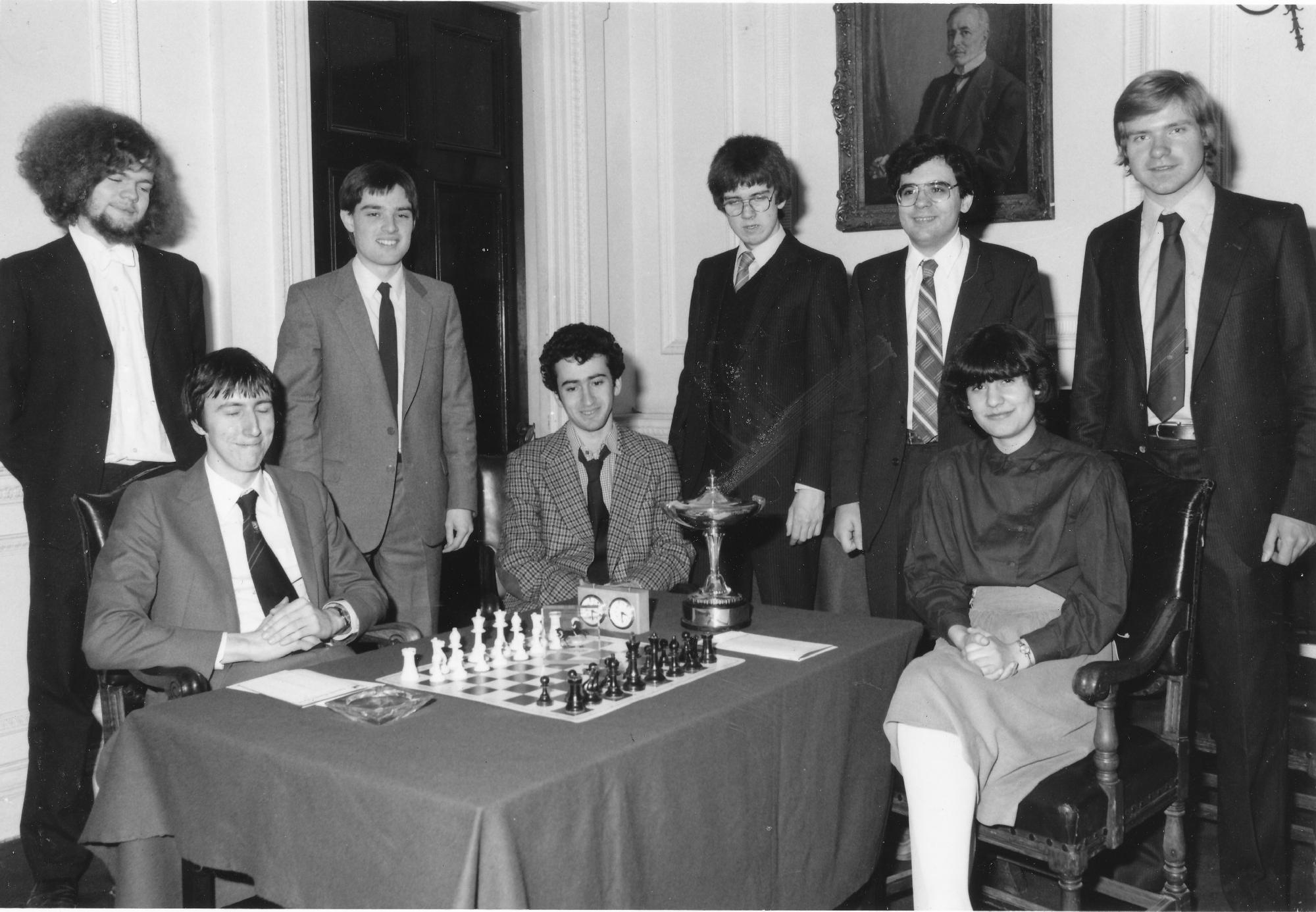
John Cox  (first from left) at a Lloyds Bank event.
John Cox (first from left) at a Lloyds Bank event.
John Cox (left, rear)
John Cox (left, rear) at a Lloyds Bank Varsity match
IM John Cox, courtesy John Upham Photography
Starting out  1.d4 ! by John Cox
Starting out 1.d4 ! by John Cox
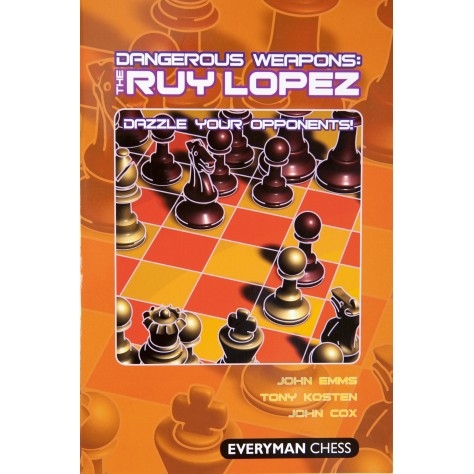
Dangerous Weapons : The Ruy Lopez
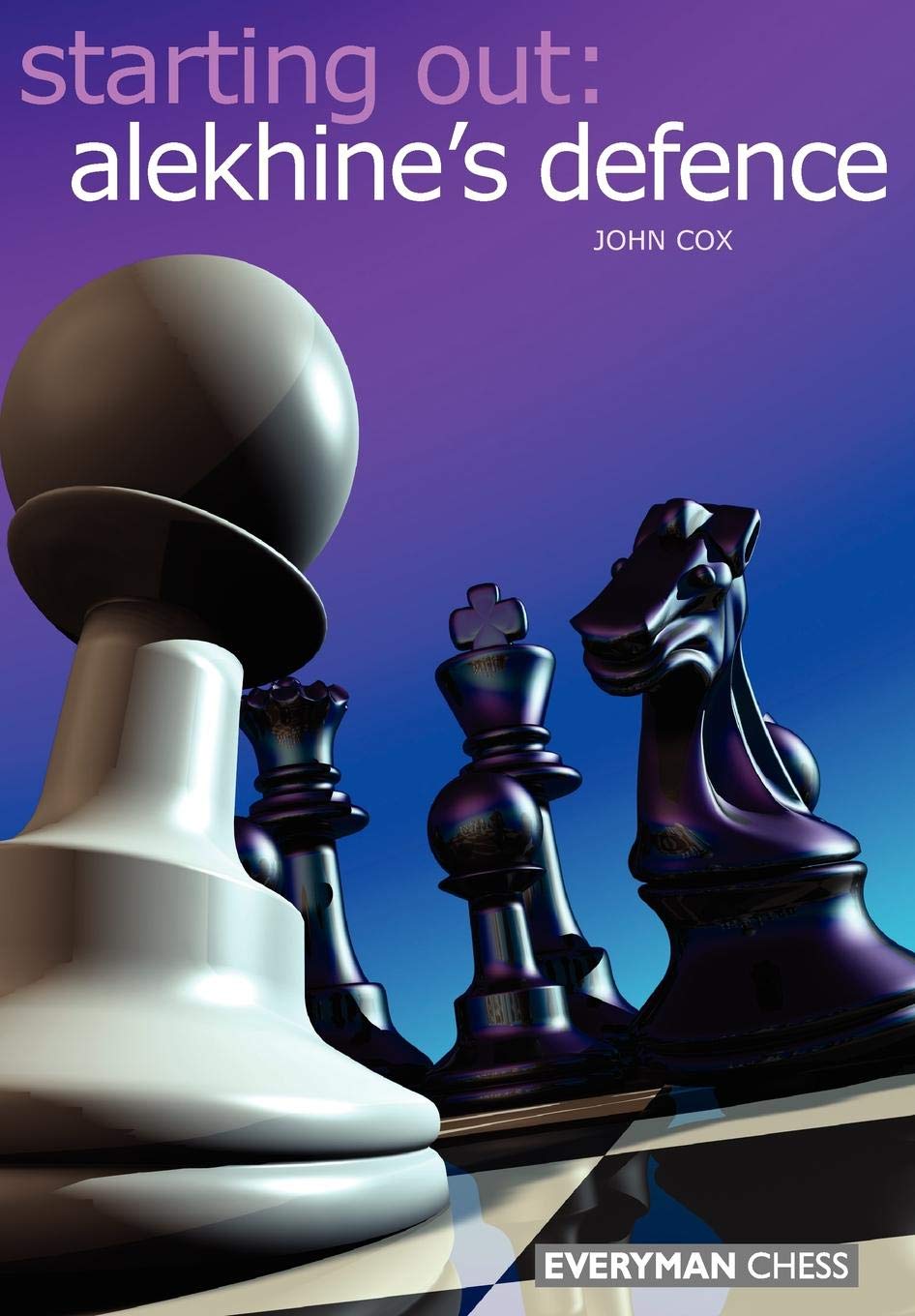
Starting Out : Alekhine's Defence
Starting Out : Alekhine’s Defence
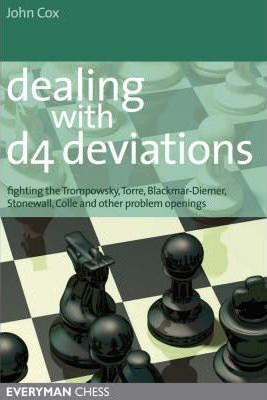
Dealing with d4 Deviations
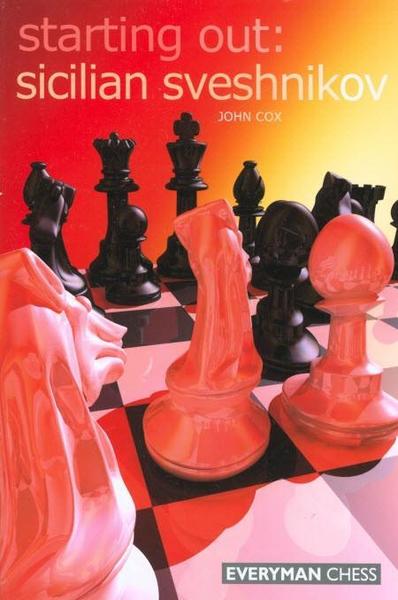
Starting Out : Sicilian Sveshnikov
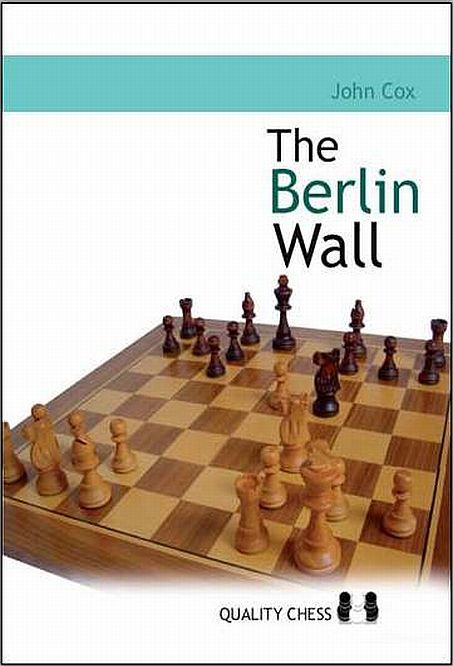
The Berlin Wall
The Berlin Wall

Many Happy Returns : GM Jonathan Parker (19-v-1976)

GM Jonathan Francis Parker, courtesy of John Upham Photography

BCN sends best wishes to GM Jonathan Francis Parker on his birthday, this day, in 1976.

Jonathan became a FIDE Master in 1991, and International Master in 1993 and a Grandmaster in 2001. His peak rating was 2570 in July 2002.

Jonathan plays for Cavendish in the London League and Barbican in the Four Nations Chess League (4NCL).

According to chessgames.com : “Grandmaster from England. Parker won the Berlin Summer Open in August 1998.”

[pgn]
[Event “BCF-chT 0001 (4NCL)”]
[Site “Birmingham”]
[Date “2001.05.06”]
[Round “10.1”]
[White “Parker, Jonathan”]
[Black “Mestel, A Jonathan”]
[Result “1-0”]
[ECO “E70”]
[WhiteElo “2545”]
[BlackElo “2488”]
[Annotator “British Chess News”]
[PlyCount “35”]
[EventDate “2000.09.??”]
[EventType “team”]
[EventRounds “11”]
[EventCountry “ENG”]
[SourceTitle “EXT 2002”]
[Source “ChessBase”]
[SourceDate “2001.11.25”]
[SourceVersion “1”]
[SourceVersionDate “2001.11.25”]
[SourceQuality “1”]
[WhiteTeam “Barbican”]
[BlackTeam “IND II”]
[WhiteTeamCountry “ENG”]
[BlackTeamCountry “ENG”]

{[%evp 0,35,19,31,14,-14,43,38,37,33,47,26,52,20,116,116,119,108,246,219,202,
181,289,264,262,293,319,323,386,282,350,356,412,402,402,410,410,430]} 1. d4 Nf6
2. c4 g6 3. Nc3 Bg7 4. e4 O-O 5. f4 c5 6. dxc5 Na6 $6 (6… d6) 7. e5 $1 $146
Ne8 8. Be3 $16 d6 9. cxd6 exd6 {[#]} 10. c5 Bf5 11. cxd6 $18 Nb4 12. Rc1 Qa5
13. Qd2 Rc8 14. Nf3 Nc2+ 15. Rxc2 Bxc2 16. d7 Rd8 17. Qxc2 Rxd7 18. Bb5 1-0
[/pgn]

Jonathan Parker
Jonathan Parker

Many Happy Returns IM Andrew Martin (18-v-1957)

IM Andrew Martin
IM Andrew Martin

BCN wishes IM Andrew Martin many happy returns on his birthday (18-v-1957)

From ChessBase :

Andrew David Martin (born 18th May 1957 in West Ham, London) is an English chess player with the title of international master. Martin has won various national and international tournaments. He has been playing for years in the Four Nations Chess League, at present (July 2009) for Wood Green Hilsmark Kingfisher, previously for the Camberley Chess Club. Martin received his title as international master in 1984. He earned his first grandmaster norm in the British Championship of 1997 in Brighton. Martin was a commentator on the chess world championship between Kasparov and Kramnik in 2000.
On the 21st February 2004 Martin set a new world record for simultaneous chess.

[embedyt] https://www.youtube.com/watch?v=VCi3zvhNYH8[/embedyt]

He faced 321 chess players at the same time. His result was: 294 wins, 26 draws and only one loss. Martin is known as a professional chess teacher and head trainer of the English youth team. He trains eight schools (Yateley Manor, Aldro, Millfield, Sunningdale, Waverley School, St Michael’s Sandhurst, Wellington College, Salesian College). Martin is a chess columnist, an author of chess books and the author of various instructional videos. He was the publisher of the series Trends Publications. Martin lives in Sandhurst, England, is married and the father of two daughters and two sons. His present Elo rating is 2423 (as of July 2009).

Andrew coaching students

The above is somewhat inaccurate and out of date. Andrew came from East Ham rather than West Ham. He was the editor rather than the publisher of Trends Publications and he lives in Bramley, Surrey with his partner Naomi.

Andrew and friends at the NatWest Bank Young Masters

On July 23rd 1981 a world record attempt of continuous blitz games was undertaken at the National Film Theatre in London with much support of the membership of London Central YMCA.

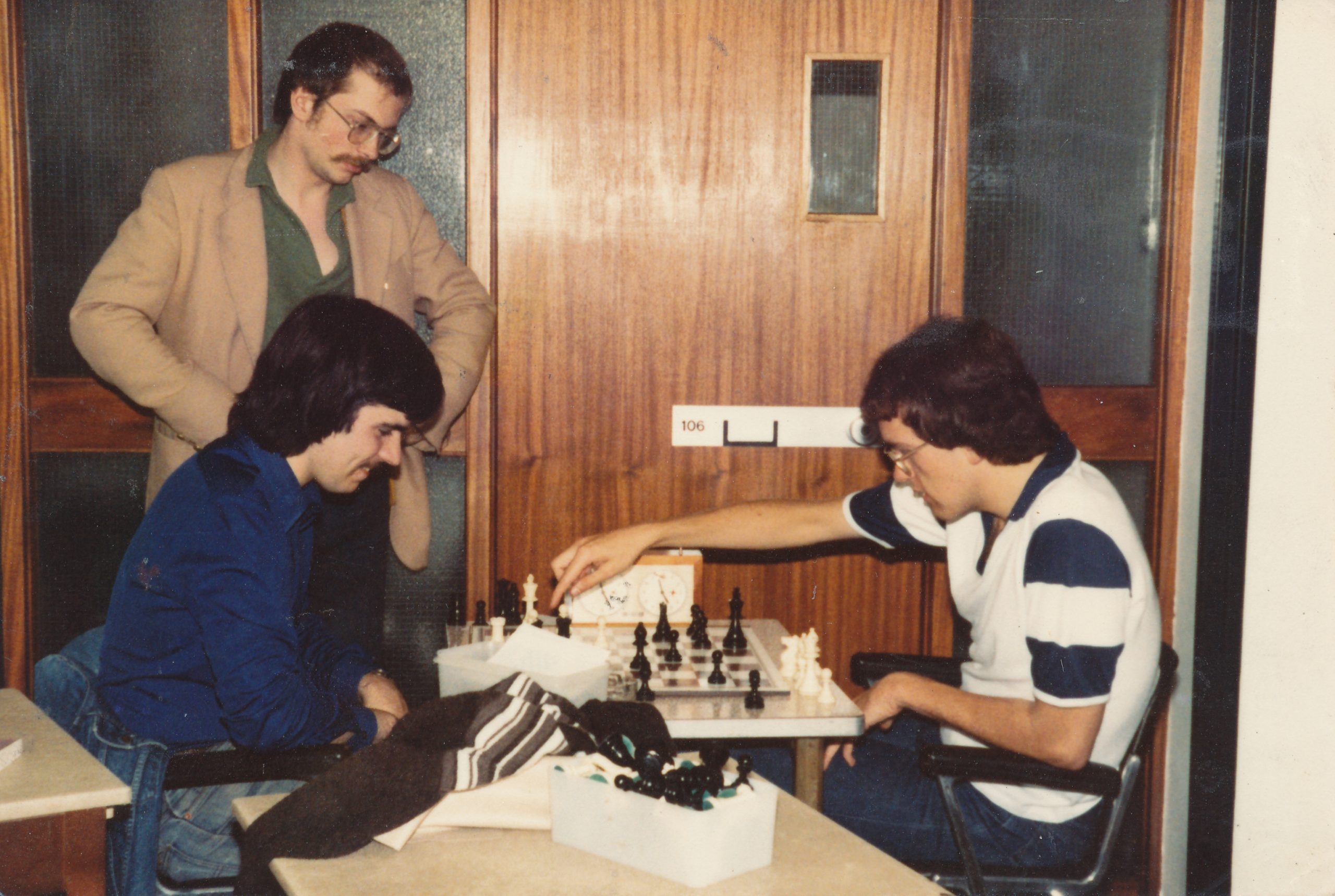
Yours Truly (John Upham) plays Andrew Martin at the NFT

Andrew now plays for Camberley and Guildford clubs in the Berkshire and Surrey Border Leagues and is former member of East Ham, Ilford, London Central YMCA (CentYMCA), Wood Green and Barbican clubs.

Andrew plays JJ Ady whilst Simon LeBlanq observes at the London Central YMCA

Andrew has written many books starting as Editor of the “Trends Series” for Tournament Chess owned by Richard W. O’Brien (Not of The Crystal Maze). He has authored numerous DVDs for Foxy Videos and ChessBase and has a YouTube Channel focused on young and improving players called “Andrew Martin – Chess Explorations“.

Below Andrew annotates his game (with black) versus GM Stephen Gordon from 4NCL in 2005 :

[embedyt] https://www.youtube.com/watch?v=loR7lNhO72o[/embedyt]

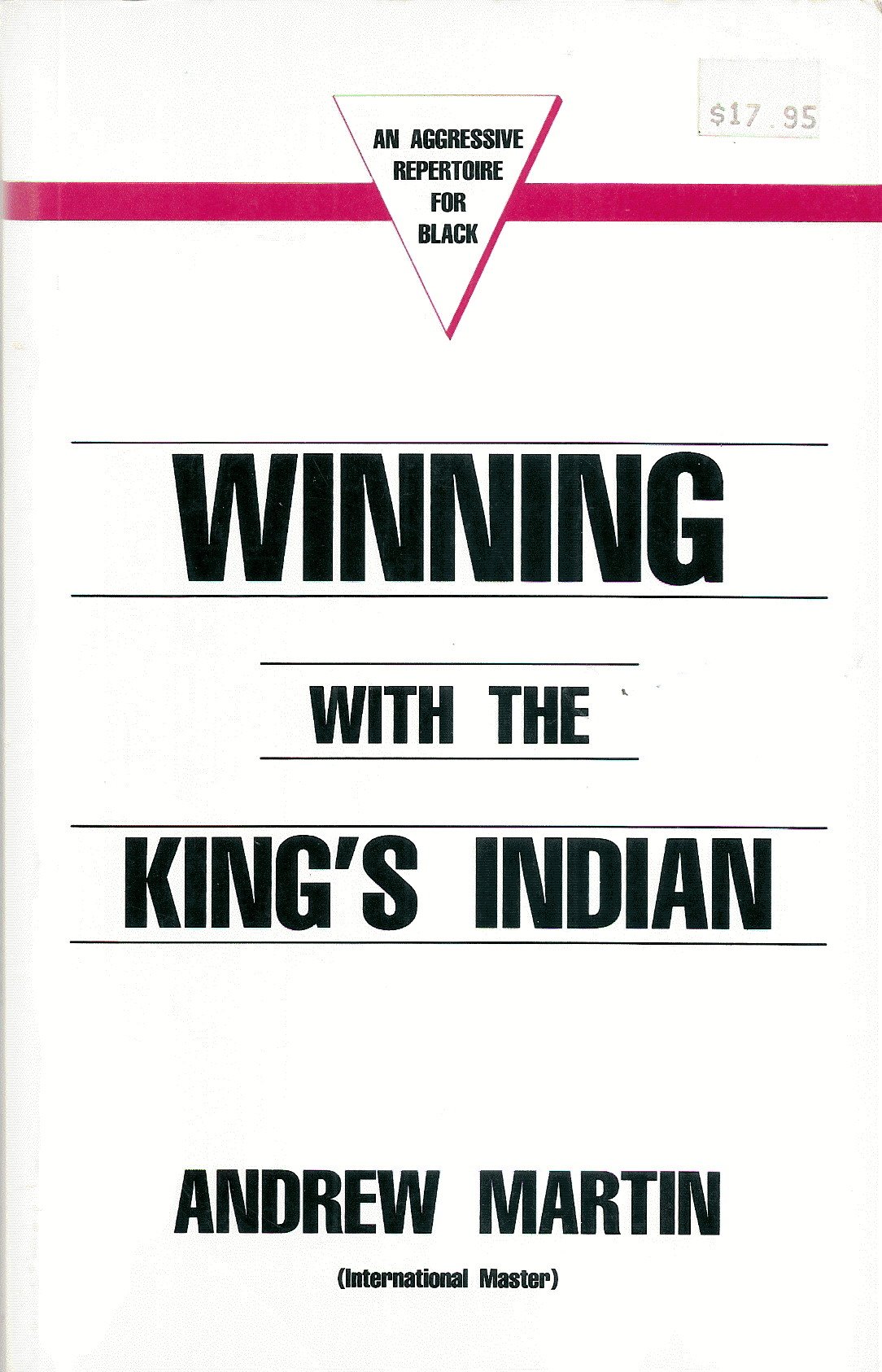
Andrew’s first book as author was this one :

Winning With the King's Indian, Caissa Publishing, Andrew Martin, 1989
Winning With the King’s Indian, Caissa Publishing, Andrew Martin, 1989

Here is one his favourite games :

[pgn]
[Event “Christmas Congress 1984/85-60 Premier”]
[Site “Hastings”]
[Date “1985.01.07”]
[Round “9”]
[White “Martin, Andrew D”]
[Black “Ravikumar, Vaidyanathan”]
[Result “1-0”]
[ECO “B82”]
[BlackElo “2370”]
[Annotator “British Chess News”]
[PlyCount “80”]
[EventDate “1984.12.29”]
[EventType “tourn”]
[EventRounds “13”]
[EventCountry “ENG”]
[EventCategory “9”]
[SourceTitle “MCD”]
[Source “ChessBase”]
[SourceDate “1999.07.01”]
[SourceVersion “1”]
[SourceVersionDate “1999.07.01”]
[SourceQuality “1”]

{[%evp 0,80,32,25,47,60,60,46,42,12,13,32,22,38,82,85,71,71,60,62,78,14,12,21,
21,-16,-8,2,104,106,106,-70,-73,-68,0,0,191,0,0,0,0,0,0,0,0,0,0,0,0,0,0,0,0,0,
90,167,167,243,239,109,99,99,344,369,387,414,413,493,482,482,482,497,497,495,
503,503,512,543,543,548,543,548,540]} 1. e4 c5 2. Nc3 Nc6 3. f4 e6 4. Nf3 a6 5.
d4 cxd4 6. Nxd4 d6 7. Be3 Nf6 8. Qf3 Bd7 9. O-O-O Qc7 10. g4 Nxd4 11. Rxd4 e5 {
[#]} 12. Rd2 $146 Bxg4 $11 13. Qg3 Bd7 $6 14. fxe5 dxe5 15. Rxd7 $5 Qxd7 16.
Bh3 Qe7 17. Rf1 h6 18. Rxf6 $5 (18. Rf5 Nd7 19. Nd5 $18 Qd6 20. Bd2 $18) 18…
gxf6 19. Nd5 Qd6 20. Bb6 {[%csl Gc7]} h5 $1 21. Nc7+ Ke7 22. Nd5+ Ke8 23. b4
Qc6 24. Nc7+ Ke7 25. Nd5+ Ke8 26. Qg1 {[#]} Rc8 $2 (26… Rb8) 27. Bxc8 Qxc8
28. Nxf6+ Ke7 29. Nd5+ Kd7 30. Qf1 $18 Qc6 (30… Ke8 31. Qf6 Rh6 32. Qxe5+ Re6
33. Nc7+ Kd7 34. Nxe6 fxe6 35. Qd4+ Ke8 36. Qh8 $18) 31. Qxf7+ $18 Kc8 32. Bc7
Bh6+ 33. Kb2 Rf8 34. Qh7 Be3 35. Ne7+ Kxc7 36. Nxc6+ Kxc6 37. Qg6+ Kd7 38. Qg7+
Ke8 39. Qxe5+ Kd7 40. Qg7+ Ke8 1-0
[/pgn]

Trends in the Slav Defence, Tournament Chess, Andrew Martin, 1990
The Contemporary Anti-Dutch, 1990

Here is a second memorable game :

[pgn]
[Event “EU-Cup 08th round of 16”]
[Site “London”]
[Date “1991.11.19”]
[Round “2.1”]
[White “Rajkovic, Dusan”]
[Black “Martin, Andrew D”]
[Result “0-1”]
[ECO “E45”]
[WhiteElo “2475”]
[BlackElo “2415”]
[Annotator “Martin,A”]
[PlyCount “50”]
[EventDate “1991.11.??”]
[EventType “team-match”]
[EventRounds “2”]
[EventCountry “ENG”]
[SourceTitle “EXT 2020”]
[Source “ChessBase”]
[SourceDate “2019.10.17”]
[SourceVersion “1”]
[SourceVersionDate “2019.10.17”]
[SourceQuality “1”]
[WhiteTeam “Smederevska Palanka Gosa”]
[BlackTeam “London Wood Green”]
[WhiteTeamCountry “YUG”]
[BlackTeamCountry “ENG”]

{[%evp 0,50,19,39,37,-9,0,-18,1,28,30,15,29,12,37,21,19,2,6,5,8,-3,-3,-25,-16,
-39,-23,-19,-20,-18,16,6,20,10,-30,-30,-14,-14,-57,-137,-8,-6,0,0,0,0,0,0,345,
-29995,-29996,-29997,-29998]} 1. d4 Nf6 2. c4 e6 3. Nc3 Bb4 4. e3 b6 5. Nge2
Ba6 6. a3 Bxc3+ 7. Nxc3 d5 8. cxd5 Bxf1 9. Kxf1 exd5 10. b4 $6 O-O 11. Qb3 {N}
(11. g3) 11… Nc6 $1 12. a4 Qd7 13. Ba3 Rfe8 14.
h3 Re6 $1 15. Rc1 Rae8 16. Kg1 {[#]} Nxd4 $1 17. exd4 Re1+ 18. Kh2 $8 (18. Rxe1
$2 Rxe1+ 19. Kh2 Ng4+ $1 20. Kg3 (20. hxg4 Qd6+) 20… Qd6+ 21. Kxg4 (21. f4
Re3+ 22. Kxg4 Qg6+ $19) 21… h5+ $3 22. Kf3 (22. Kxh5 Qf4 $19) 22… Qf6+ 23.
Kg3 Qg5+ 24. Kf3 Qf5+ 25. Kg3 h4+ 26. Kxh4 Qf4+ 27. g4 Re6 28. Qxd5 Rh6+ 29.
Qh5 g5#) 18… Ng4+ $1 19. hxg4 Qd6+ 20. Kh3 Qh6+ 21. Kg3 R8e3+ $1 22. fxe3
Qxe3+ 23. Kh4 Qf2+ 24. Kh3 $4 {[#]} (24. g3 $8 g5+ 25. Kxg5 (25. Kh5 Qf6 26.
Qc2 Re4 27. Qxe4 dxe4) (25. Kh3 Re6) 25… Qe3+ 26. Kh5 (26. Kf5 Qe6+ 27. Kg5
Qg6+ 28. Kh4 Qh6#) 26… Kg7 27. g5 $8 Qf3+ 28. Kh4 f5 $8 (28… Qxh1+ $2 29.
Kg4) 29. gxf6+ $8 Qxf6+ 30. Kg4 Qe6+ 31. Kf3 Qe3+ 32. Kg2 Qd2+ $10) 24… g5 $1
25. g3 Re6 0-1
[/pgn]

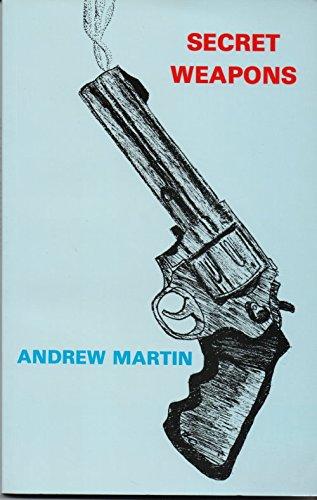
Secret Weapons, Tournament Chess, 1991
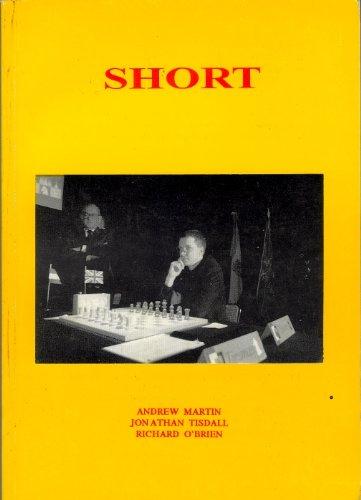
Short, Tournament Chess, 1993
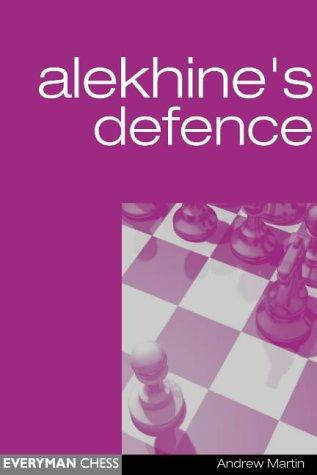
Alekhine's Defence, 2001
Alekhine’s Defence, 2001
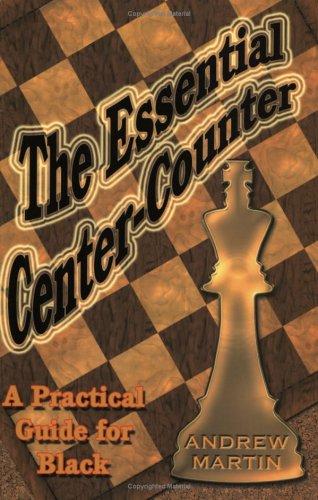
The Essential Center-Counter, 2004
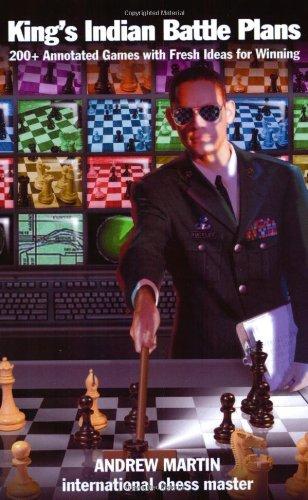
King's Indian Battle Plans, 2004
King’s Indian Battle Plans, 2004
The Hippopotamus Rises, 2005
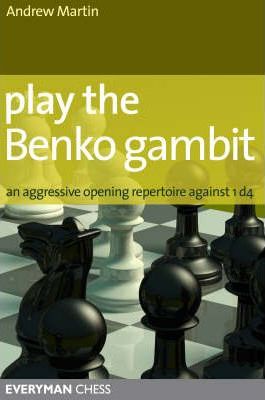
Play the Benko Gambit, 2007
First Steps : Queen's Gambit, 2016
First Steps : Queen’s Gambit, 2016
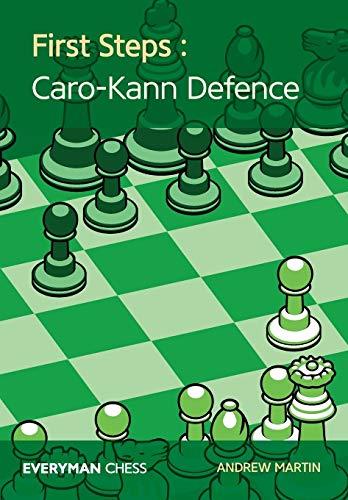
First Steps : Caro-Kann Defence, 2018
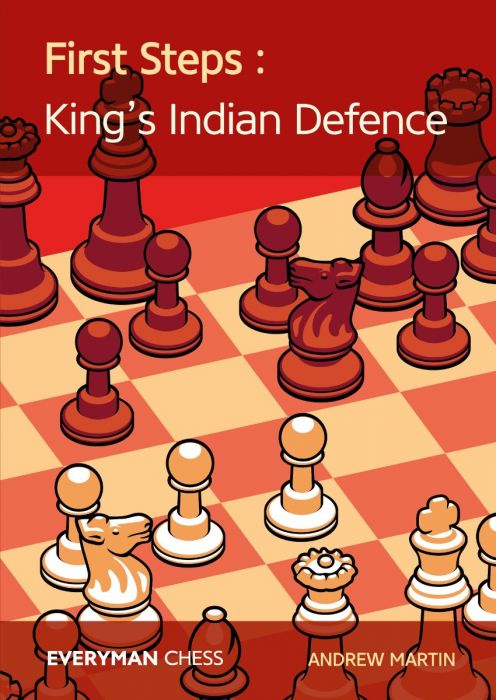
First Steps : King's Indian Defence, 2019
First Steps : King’s Indian Defence, 2019

and finally this game was very pleasing :

[pgn]
[Event “London 56/320”]
[Site “?”]
[Date “1992.??.??”]
[Round “?”]
[White “Martin, Andrew D”]
[Black “Adams, Michael”]
[Result “1-0”]
[ECO “C25”]
[WhiteElo “2420”]
[BlackElo “2610”]
[Annotator “Martin,Andrew”]
[PlyCount “73”]
[EventDate “1992.??.??”]
[SourceTitle “Paramount 2015”]
[Source “Chess Informant”]
[SourceDate “2015.06.22”]
[SourceVersion “1”]
[SourceVersionDate “2015.06.22”]
[SourceQuality “2”]

{[%evp 0,73,19,38,25,11,18,8,-5,-219,-122,-140,-112,-76,-53,-68,-20,-49,5,-23,
32,21,103,-1,47,-11,114,46,166,34,127,112,82,74,111,120,216,168,177,249,179,
120,399,270,296,304,291,193,260,225,225,270,232,97,127,122,134,119,125,149,149,
151,161,177,202,138,193,167,196,192,214,311,29989,29990,29997,29998]} 1. e4 e5
2. Nc3 Nc6 3. f4 exf4 4. d4 (4. Nf3 {- 56/(320)}) 4… Qh4+ 5. Ke2 b6 (5… d5
$142) (5… d6) 6. Nb5 (6. Qd2 $5 {- 56/(320)}) 6… Ba6 7. a4 O-O-O {N} (7…
Qe7 8. Kf3 $1 Bxb5 9. axb5 Nd8 10. Bxf4 Nf6 11. Bd3 Ne6 12. Be3 d5 13. e5 Nd7
14. g3 $1 $14 ) 8. Nf3 Qe7 9. Kf2 Bb7 (9… Qxe4
$2 10. Nxa7+ Nxa7 (10… Kb7 11. Bxa6+ Kxa6 12. Re1 $16) 11. Bxa6+ Kb8 12. Re1
) 10. Bxf4 Qxe4 11. Qd2 (11. Bxc7 Re8 12. Qd2 Nf6 13. Bd3 $16) 11…
Nf6 12. Bd3 Qd5 13. Rhe1 d6 {[#]} 14. a5 $1 (14. Bg5 Ng4+ (14… Na5 15. b4 Nc4
16. Qc3) 15. Kg3 f6 16. c4 Qf7 $8 (16… Qg8 $2 17. Bf5+ Kb8 18. Be6) 17. Kxg4
h5+ $3 $13 (17… fxg5 18. Nxg5 Qf6 19. Re6)) 14… Qh5 (14… Nxa5 15. Rxa5
bxa5 16. Qxa5 Rd7 17. c4 Qh5 18. Re8+ $1 Nxe8 19. Nxa7+ Kb8 20. Qxh5 Kxa7 21.
Qa5+ Kb8 22. d5 $18) 15. axb6 axb6 {[#]} 16. c4 $1 Be7 (16… g5 $142 $5 17.
Bxg5 Bg7) 17. Kg1 Rhe8 (17… g5 $142) 18. d5 Ne5 19. Nfd4
Kb8 (19… Nxd3 20. Qxd3 Kd7 21. Na7 $1 ) 20. Be2 (20. Na7 $1 {
Adams,Mi}) 20… Nxc4 $138 21. Bxh5 Nxd2 22. Bxf7 Nde4 23. Bxe8 $18 Rxe8 24.
Nc6+ Kc8 25. Rac1 Bf8 26. Nb4 Nc5 27. Rxe8+ Nxe8 28. Bg5 Nf6 29. Bxf6 gxf6 30.
Re1 Kd7 31. Nd4 Na4 {[#]} 32. Nbc6 $1 Nxb2 33. Nb8+ $1 Kd8 34. Ne6+ Kc8 35. Nc6
Bh6 36. Nc5 $1 dxc5 37. Re8+ 1-0[/pgn]

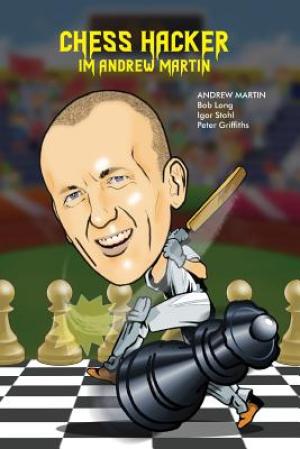
Chess Hacker, Andrew Martin, Thinkers Press, 2019
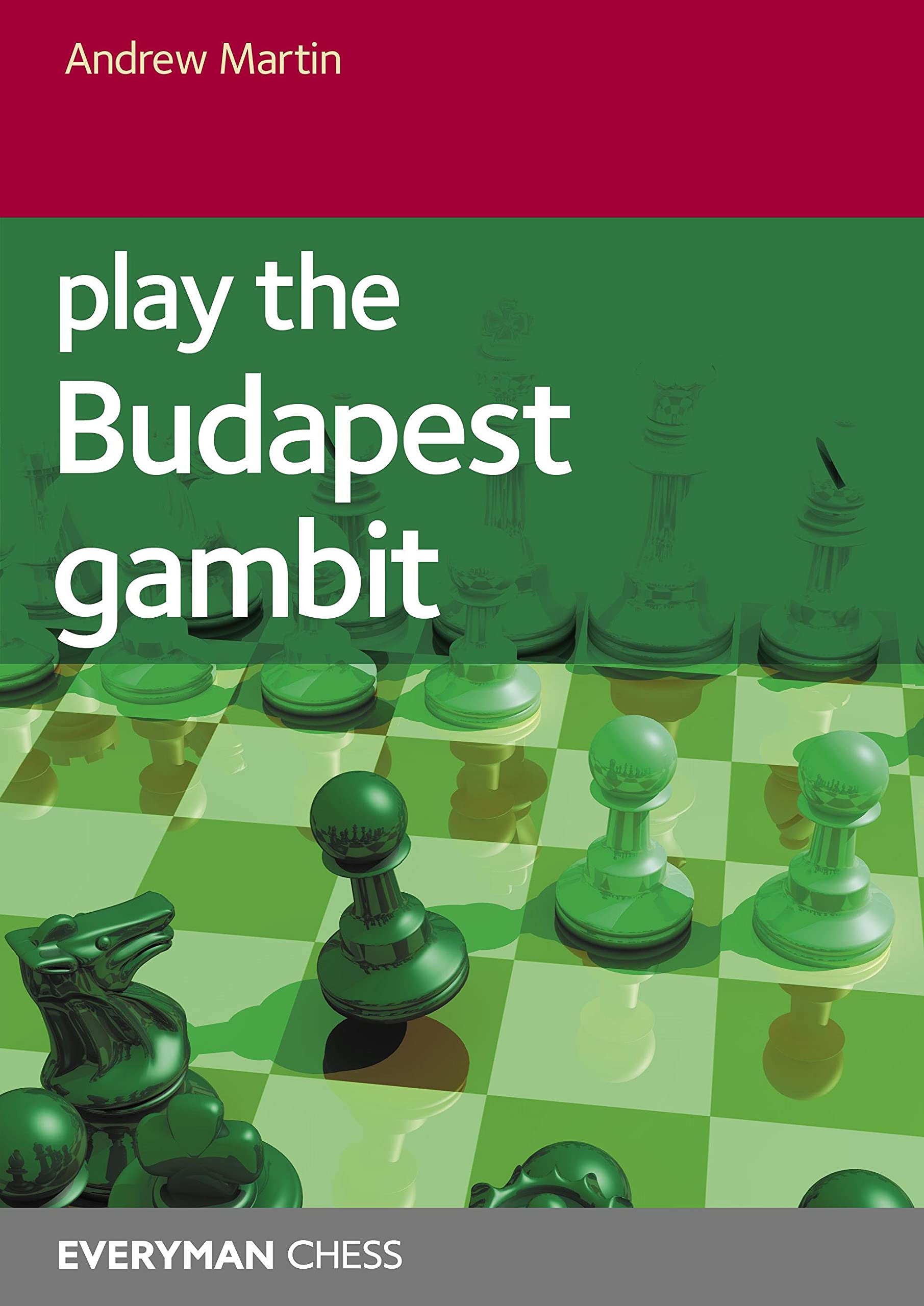
Play the Budapest Gambit, Andrew Martin, Everyman Chess, May 2021, ISBN-13 : 978-1781945889