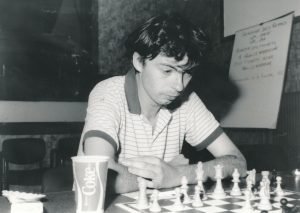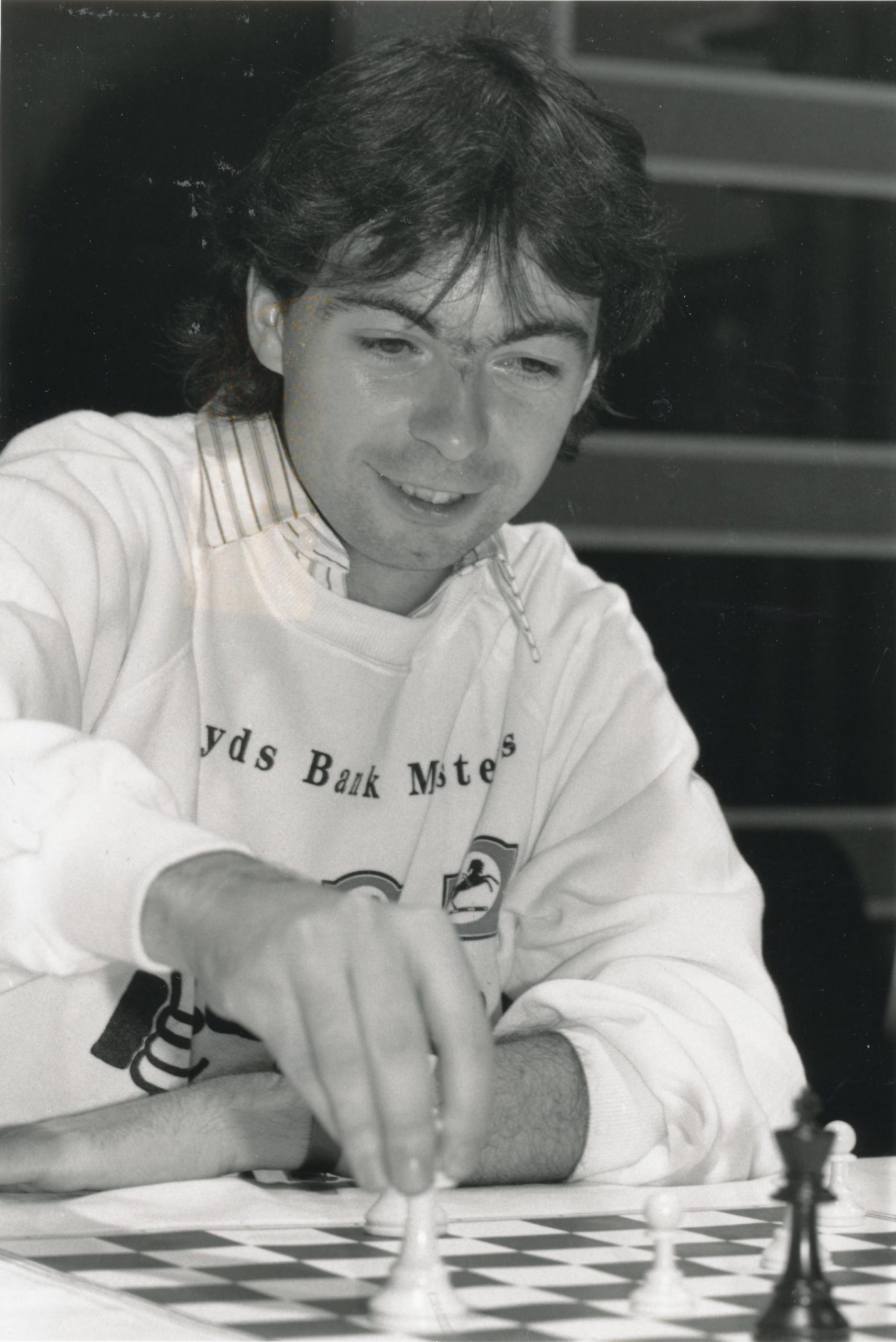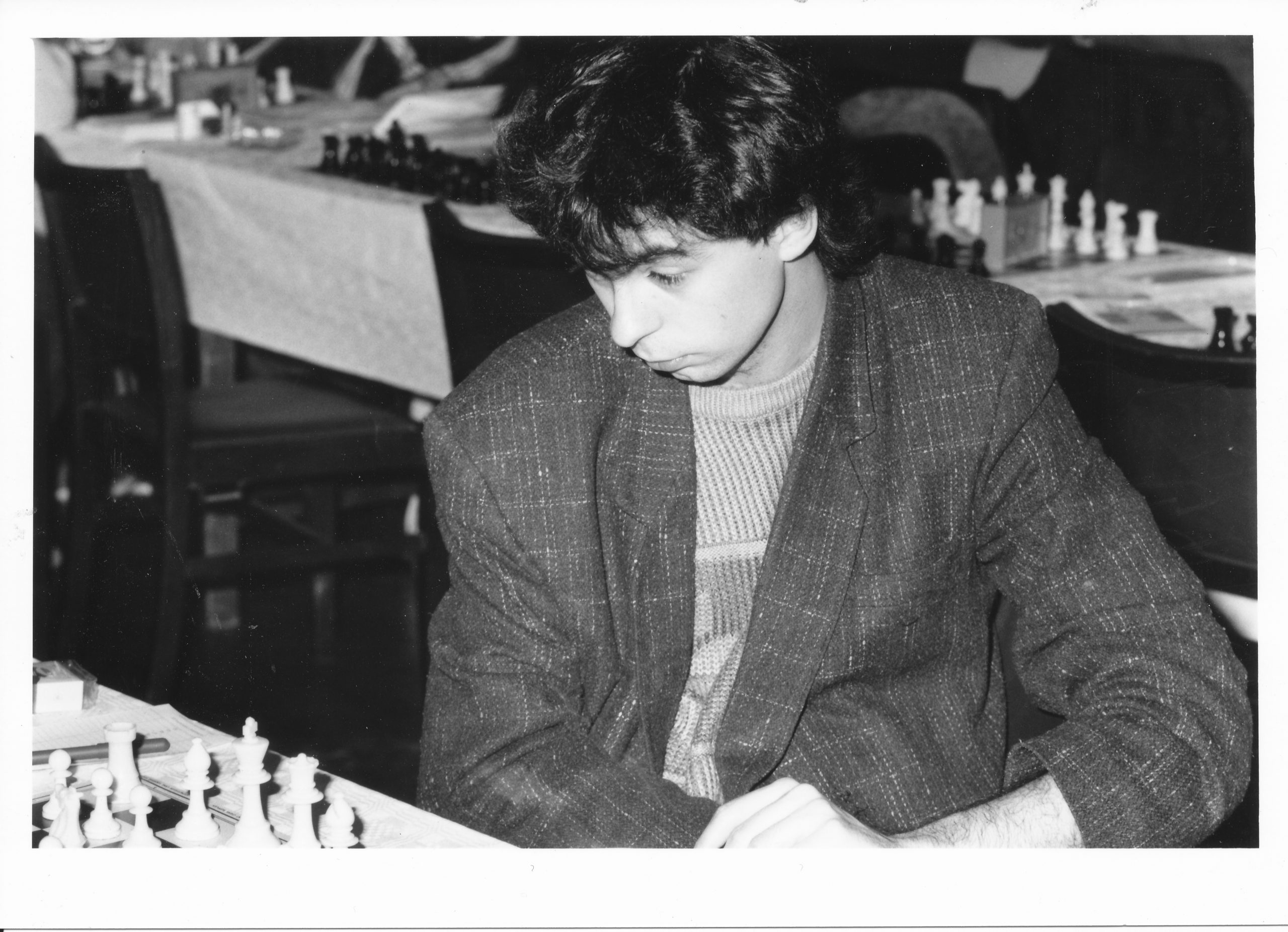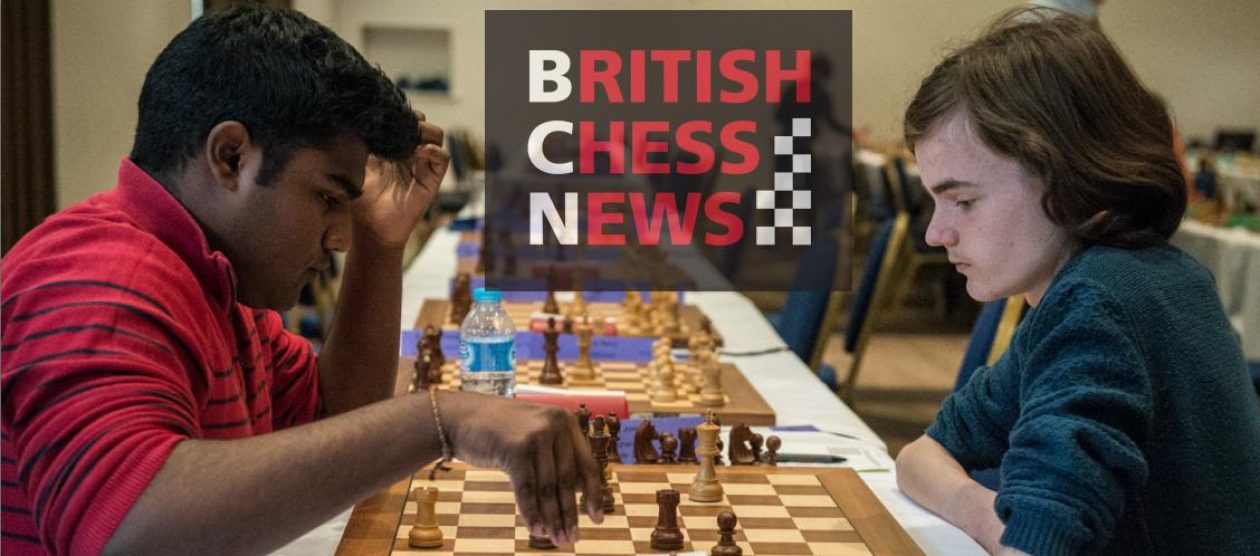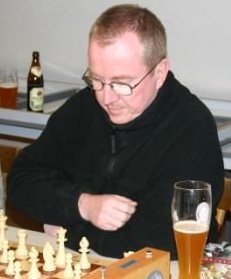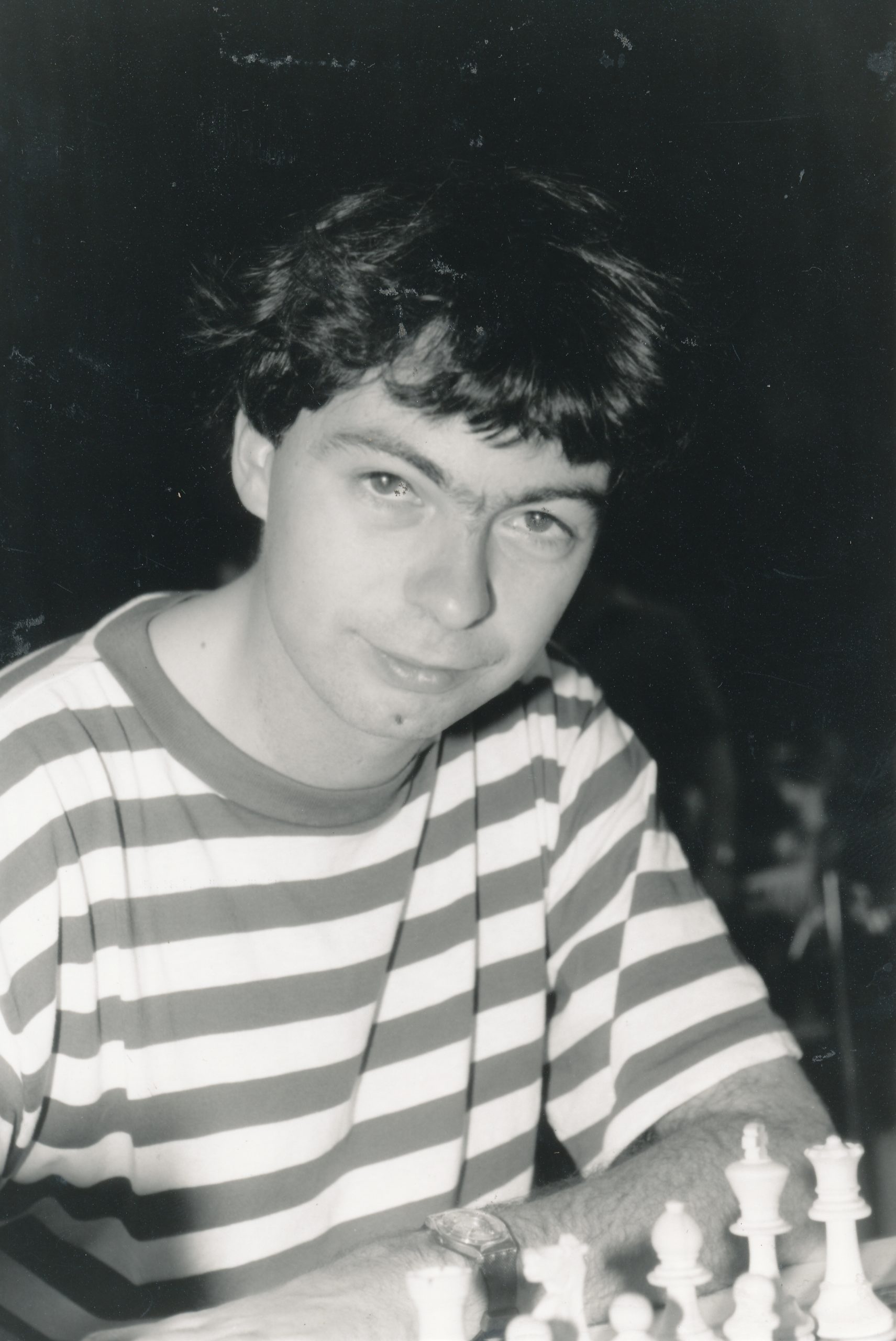
Happy Birthday GM Joseph Gerald Gallagher (04-v-1964)

GM Joe Gallagher
GM Joe Gallagher

BCN wishes Happy Birthday to GM Joseph Gerald Gallagher (04-v-1964)
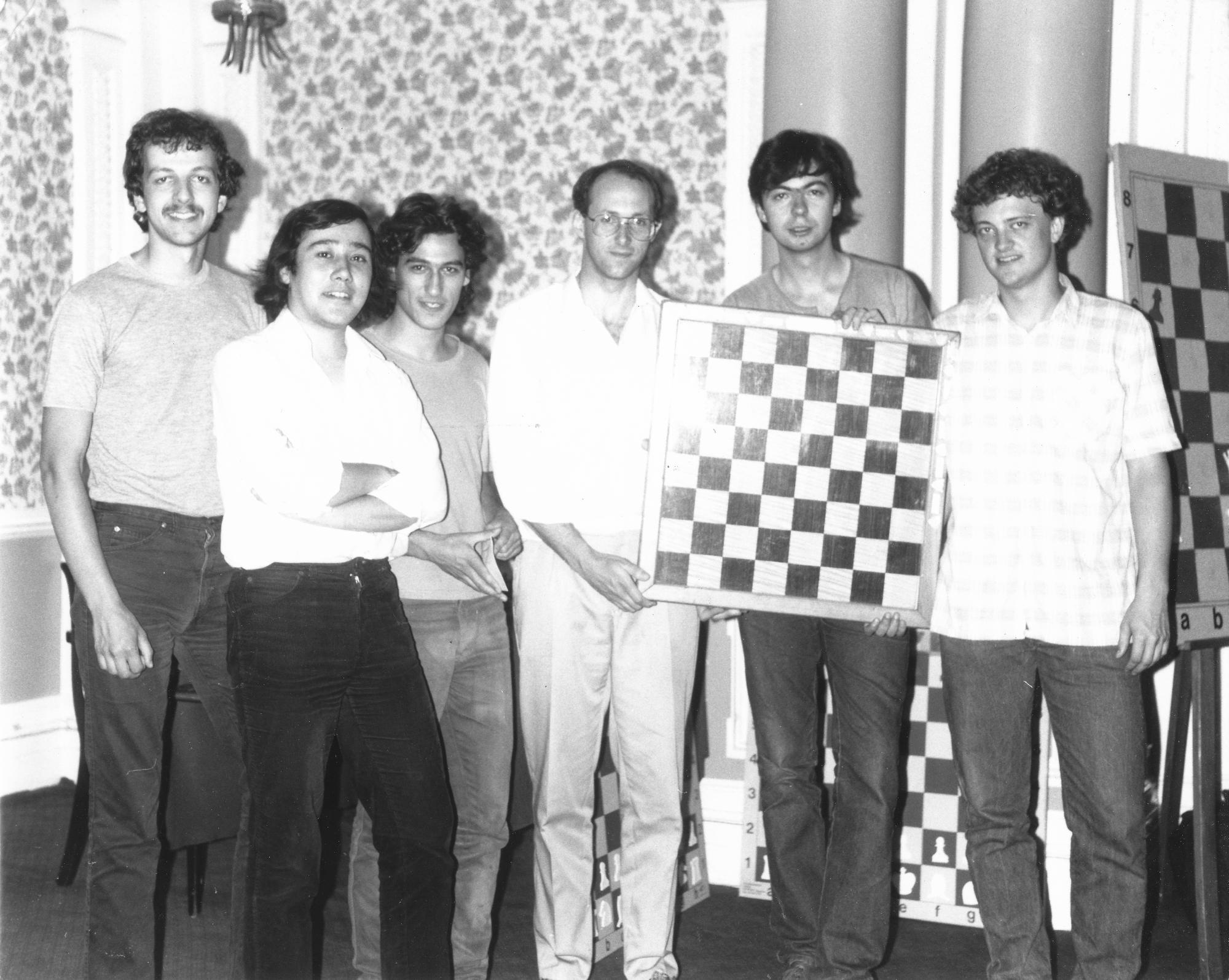
Streatham & Brixton becoming BCF National Club Champions in 1989. The team was Tony Kosten, Mark Hedben, Daniel King, Nigel Povah (Captain), Joe Gallagher and Julian Hodgson : quite a strong team !
Streatham & Brixton becoming BCF National Club Champions in 1989. The team was Tony Kosten, Mark Hedben, Daniel King, Nigel Povah (Captain), Joe Gallagher and Julian Hodgson : quite a strong team

Here is his Wikipedia entry

GM Joseph Gerald Gallagher
GM Joe Gallagher
GM Joe Gallagher

[pgn]
[Event “Bundesliga 0304”]
[Site “Germany”]
[Date “2003.11.01”]
[Round “1.6”]
[White “Houska, Jovanka”]
[Black “Gallagher, Joseph G”]
[Result “0-1”]
[ECO “B26”]
[WhiteElo “2380”]
[BlackElo “2520”]
[Annotator “Meyer,CD/Gallagher”]
[PlyCount “82”]
[EventDate “2003.11.01”]
[EventType “team-tourn”]
[EventRounds “15”]
[EventCountry “GER”]
[SourceTitle “EXT 2004”]
[Source “ChessBase”]
[SourceDate “2003.11.25”]
[SourceVersion “1”]
[SourceVersionDate “2003.11.25”]
[SourceQuality “1”]
[WhiteTeam “Hofheim”]
[BlackTeam “Werder Bremen”]
[WhiteTeamCountry “GER”]
[BlackTeamCountry “GER”]

{[%evp 0,82,38,35,41,41,56,10,30,17,17,13,23,5,8,13,2,-7,0,9,8,-51,-27,-57,-45,
-64,-47,-20,-19,-12,-10,-10,10,-88,-50,-45,-36,-35,-35,-35,-41,-41,-25,-10,-33,
-28,-29,-19,-21,-21,-30,-48,-25,-38,-36,-59,-56,-122,-124,-124,-142,-156,-169,
-169,-177,-161,-266,-308,-199,-204,-213,-373,-394,-434,-397,-397,-393,-524,
-616,-639,-394,-404,-408,-425,-459] “BEATING THE ANTI-SICILIAN!”
(Blockadespringer plus 2. Reihe, vorbildliche Technik)} 1. e4 c5 2. Nc3 Nc6 3.
g3 g6 4. Bg2 Bg7 5. d3 d6 6. Be3 Nf6 7. h3 O-O 8. Nge2 Rb8 9. O-O $6 ({Ungenau,
da Schwarz sofort …b5 ziehen kann. Besser ist} 9. f4 {, z.B.} Bd7 (9… b5 $4
10. e5) {mit komplizierter Stellung und Chancen für beide Seiten:} 10. O-O b5
11. Qd2 (11. a3 Ne8 12. d4 cxd4 13. Nxd4 b4 14. Nxc6 Bxc6 15. axb4 Rxb4 16.
Rxa7 Rxb2 $11 {, Spassky – Fischer, Sveti Stefan/Belgrade 1992}) 11… b4 12.
Nd1 Qc8 $5 13. f5 Ne5 14. g4 h5 15. g5 Nh7 16. Nf4 $1 gxf5 (16… Re8) 17. Nxh5
Bh8 18. exf5 Bxf5 {, und das Spiel ist nach wie vor unklar, Analyse
(auszugsweise) aus D. Rogozenko’s “Anti-Sicilians/A Guide for Black”, Gambit
2003}) 9… b5 10. Qd2 b4 11. Nd1 a5 {[#]} 12. Kh2 (12. Bh6 $6 Bxh6 13. Qxh6
Nd4 $1 14. Nxd4 (14. Qd2 Bxh3 $1 15. Nxd4 Bxg2 16. Nc6 Qc7 17. Nxe7+ Qxe7 18.
Kxg2 d5 $15) 14… cxd4 15. f4 $2 (15. c3) 15… Rb5 $1 16. g4 Qc7 17. Rc1 Rc5
18. Rf2 Bxg4 $1 19. hxg4 Nxg4 20. Qh4 Nxf2 21. Nxf2 Rxc2 $17 {, Emms – S.B.
Hansen, Bundesliga 2001/2, 0:1/34}) 12… Qc7 $5 13. Bh6 $6 ({Auch hier sollte
Weiß auf diese Standardidee verzichten und sich mit} 13. f4 e6 14. a3 {und
etwa gleichen Aussichten bescheiden.}) 13… Bxh6 14. Qxh6 Nd4 15. Qd2 d5 $1 {
Schwarz reißt die Initiative an sich.} 16. Nxd4 $6 {Erstens steht nun der Nd1
kläglich, zweitens erhält Schwarz so noch Druck über die halboffene c-Linie.} (
{Vorzuziehen war} 16. exd5 $15 {. Falls} Bxh3 $5 {so} 17. Kxh3 Qe5 {, z.B.:}
18. Be4 (18. g4 Qxe2 19. Qxe2 Nxe2 20. f4) (18. Nf4 g5 19. Be4) 18… Qh5+ 19.
Kg2 Nxe4 20. dxe4 Qf3+ 21. Kh2 Nxe2 22. Qd3 {, und jeweils scheint es, daß die
Chancen des Schwarzen nur geringfügig besser sind.}) 16… cxd4 17. f4 dxe4 18.
dxe4 Ba6 {[#]} 19. Re1 $2 ({Durch diese Ungenauigkeit gerät Weiß eindeutig ins
Hintertreffen. Die ohnehin schon schwierige Verteidigung war relativ besser mit
} 19. Rf2 $5 {zu organisieren, z.B.:} Rfd8 $5 (19… e5 20. fxe5 (20. a3 Nh5
21. f5) 20… Qxe5 21. Qf4 Qxf4 (21… Nd7 22. Rd2 Rbd8 23. Nf2) 22. gxf4 (22.
Rxf4 Nd7 23. e5 Nxe5 24. Rxd4 Bb7 25. Ne3) 22… Rbc8 23. e5 Nh5 24. a3 $132 {
ist letztlich doch unergiebig für Schwarz.}) 20. a3 $132 (20. e5 Nd5 $1 21. a3
$6 bxa3 22. Rxa3 Nb4 23. Ra1 d3 24. cxd3 Nxd3) 20… Bb7 (20… b3 21. e5 Nd5
22. cxb3 Rxb3 23. Rc1 Qb6 24. f5) 21. axb4 axb4 22. Qd3 $15 {und Weiß leistet
zähen Widerstand}) 19… e5 $1 $17 20. Nf2 (20. a3 {stört Schwarz jetzt kaum
noch:} Rfc8 ({oder auch} 20… exf4 21. gxf4 Nh5 22. e5 Bb7 23. Bxb7 Rxb7 $17)
21. fxe5 (21. axb4 Qxc2 22. Qxc2 Rxc2 23. Rxa5 (23. fxe5 Nd7 $17) 23… Bb5 24.
fxe5 (24. Kg1 Nh5) 24… Nd7 $17) 21… Qxe5 22. axb4 Nh5 23. Ra3 d3 $17) 20…
Rfc8 21. Rac1 Rb6 22. Nd3 Bxd3 23. cxd3 Rc6 24. Rxc6 (24. fxe5 Ng4+ $1 (24…
Rxc1 $4 25. exf6)) 24… Qxc6 25. fxe5 Nd7 26. Qf4 (26. Qf2 Qc5 27. e6 fxe6 28.
Rf1 Ne5 $1 29. Qf6 Qd6 $17) 26… Qe6 27. Qf2 Nxe5 $1 ({Besetzt das von langer
Hand angestrebte, ideale Blockadefeld. Nicht so stark wäre} 27… Qxe5 {, z.B.}
28. Rf1 f6 29. h4 Rc6 30. Bh3 Nc5 31. Qc2) 28. Qxd4 Rc2 {[#] Nach diesem
Einbruch auf der zweiten Reihe bricht die weiße Stellung allmählich zusammen.
Seinen Vorteil verdichtet GM Gallagher nun mit vorbildlicher Technik.} 29. Rf1
({Weiß kann nur zwischen den Übeln wählen:} 29. Kg1 {(29.Kh1?? Nf3!-+)} Rd2 (
29… Qxh3 $2 30. Qd8+ Kg7 31. Bxh3 Nf3+ 32. Kf1 Nh2+ $11) (29… Nf3+ $4 30.
Bxf3 Qxh3 31. Qd8+ Kg7 32. Qh4) 30. Qd8+ (30. Rf1 Rxd3 31. Qa7 Rxg3 32. Qxa5
Qxh3 (32… Qe7 $17) 33. Qd8+ Kg7 34. Qf6+ Kh6 35. Qf4+ g5 36. Qf6+ Ng6 37. Rf2
Qe6 $17) 30… Kg7 31. d4 Qc4 $1 32. Qd5 Qxd4+ 33. Qxd4 Rxd4 34. Re2 Rd3 $17) (
29. Qd8+ Kg7 30. Qd4 Qf6 31. Kh1 Qg5 32. g4 Qf4 33. Rf1 Qg3 34. Rg1 Rd2 $19)
29… Nc6 $1 30. Qd5 Rxb2 31. Rc1 Ne5 32. Kh1 (32. Qd8+ Kg7 33. Qd4 Qf6 {
/Rd2 und jeweils} 34. Kh1 Rxa2 $19) (32. d4 Nf3+ 33. Kh1 Qxh3+ 34. Bxh3 Rh2#)
32… Qxd5 33. exd5 Rxa2 {[#]} 34. d6 ({Auch nach} 34. d4 Nd7 35. Rc7 Nf6 {
(oder auch …Nf8) ist keine Rettung in Sicht:} 36. Rb7 (36. d6 b3 37. d7 Nxd7
38. Rxd7 Ra1+ 39. Kh2 b2 40. Be4 a4 41. Rb7 a3 42. Rb3 (42. Kg2 a2 $19) 42…
Re1 43. Rxa3 Rxe4 44. Rb3 Re2+ 45. Kg1 Re1+ 46. Kf2 b1=Q $19) 36… Rd2 37. Rb5
a4 38. Rxb4 a3 39. Ra4 a2 $19) 34… b3 35. Bd5 Rc2 $1 $19 36. Rf1 b2 37. Ba2
Kf8 38. d4 Rc1 39. Kg2 Rxf1 40. Kxf1 Nc4 41. Ke2 Na3 0-1
[/pgn]

GM Joe Gallagher
GM Joe Gallagher
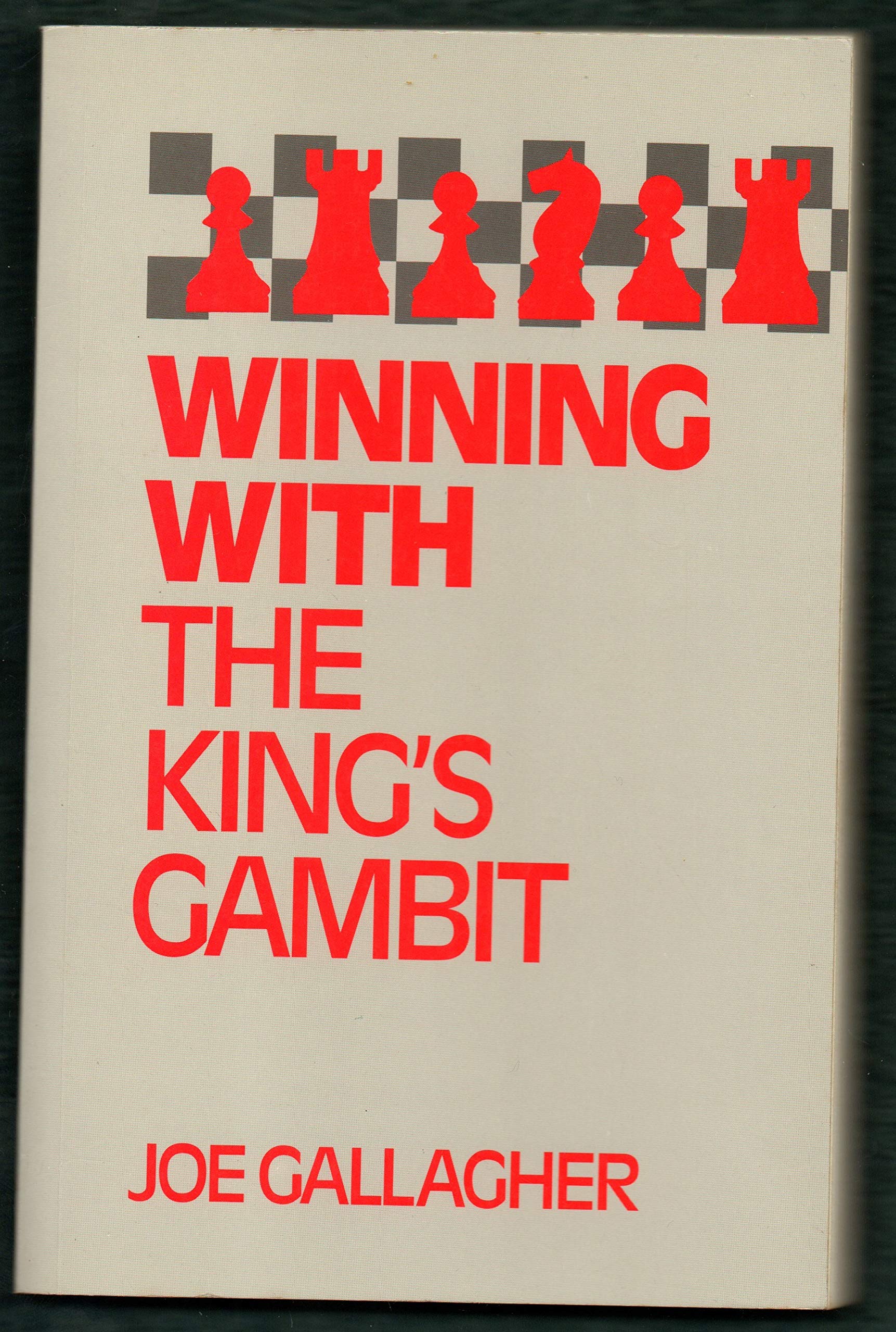
Winning With the King's Gambit, Batsford, ISBN 0-7134-6944-7
Winning With the King’s Gambit, Batsford, ISBN 0-7134-6944-7
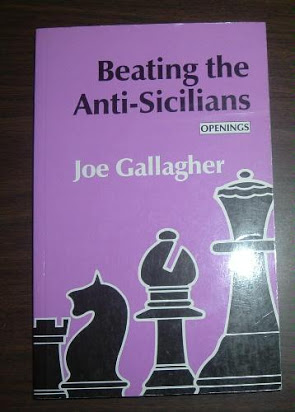
Beating the Anti-Sicilians, Batsford/Henry Holt and Company, ISBN 0-8050-3575-3
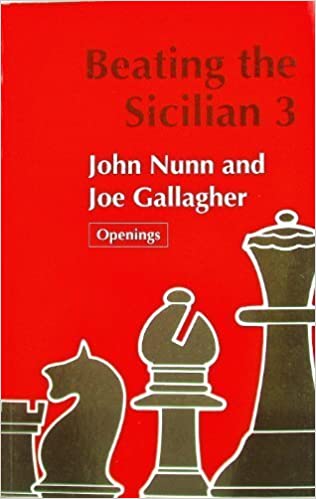
Beating the Sicilian 3
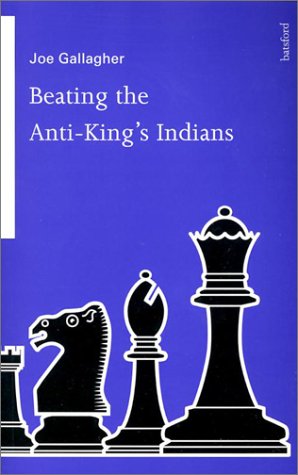
Beating the Anti-King's Indians, Batsford/International Chess Enterprises, ISBN 1-879479-36-2
Beating the Anti-King’s Indians, Batsford/International Chess Enterprises, ISBN 1-879479-36-2
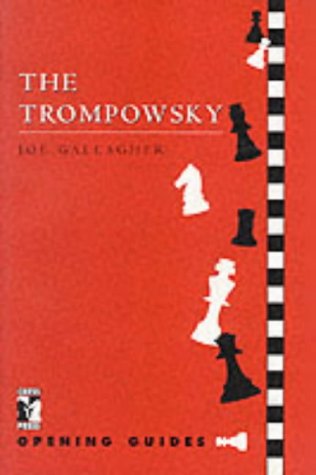
The Trompovsky, Chess Press, ISBN 1-901259-09-9
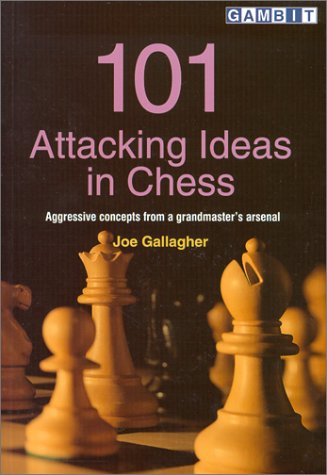
101 Attacking Ideas in Chess, Gambit Publications, ISBN 1-901983-20-X
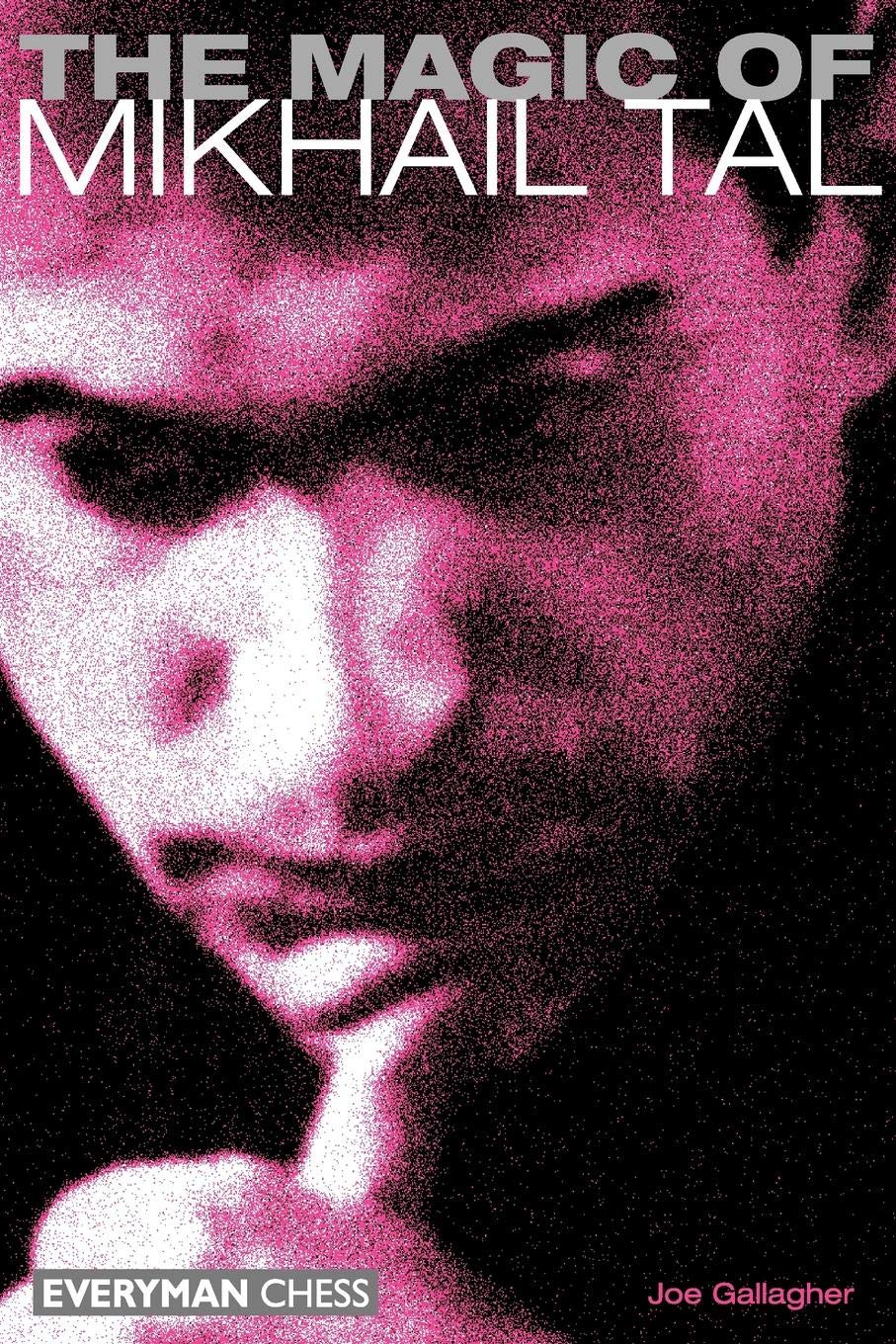
The Magic of Mikhail Tal, Everyman Chess, ISBN 1-85744-266-0
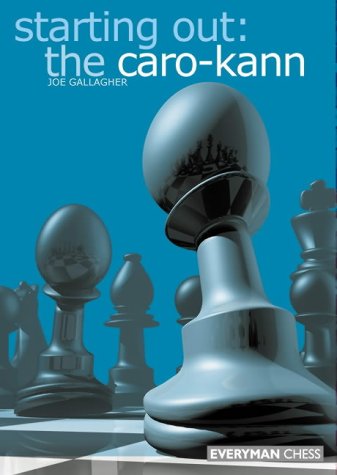
Starting Out: the Caro-Kann, Everyman Chess, ISBN 1-85744-303-9
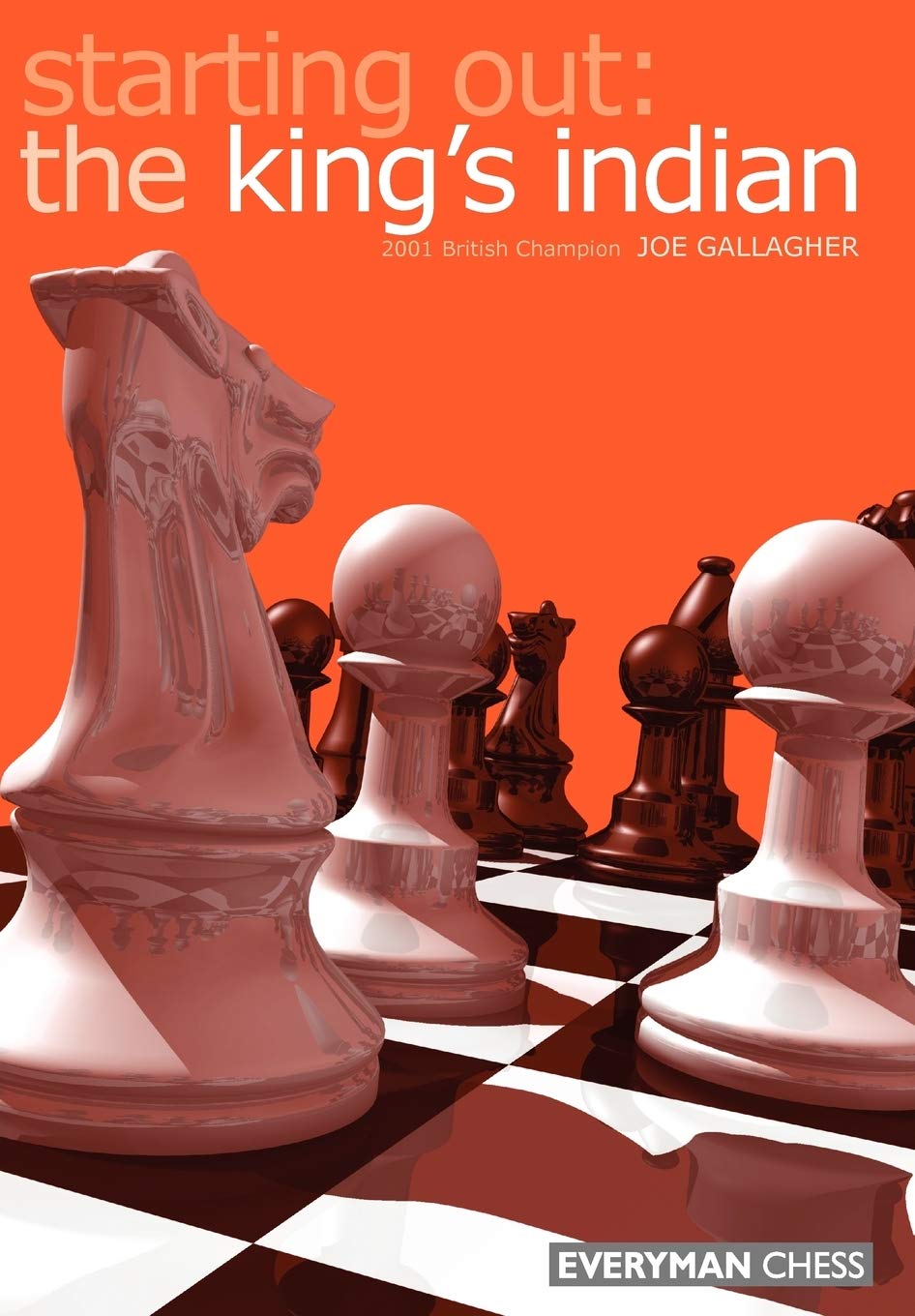
Starting Out: King's Indian, Everyman Chess, ISBN 1-85744-234-2
Starting Out: King’s Indian, Everyman Chess, ISBN 1-85744-234-2
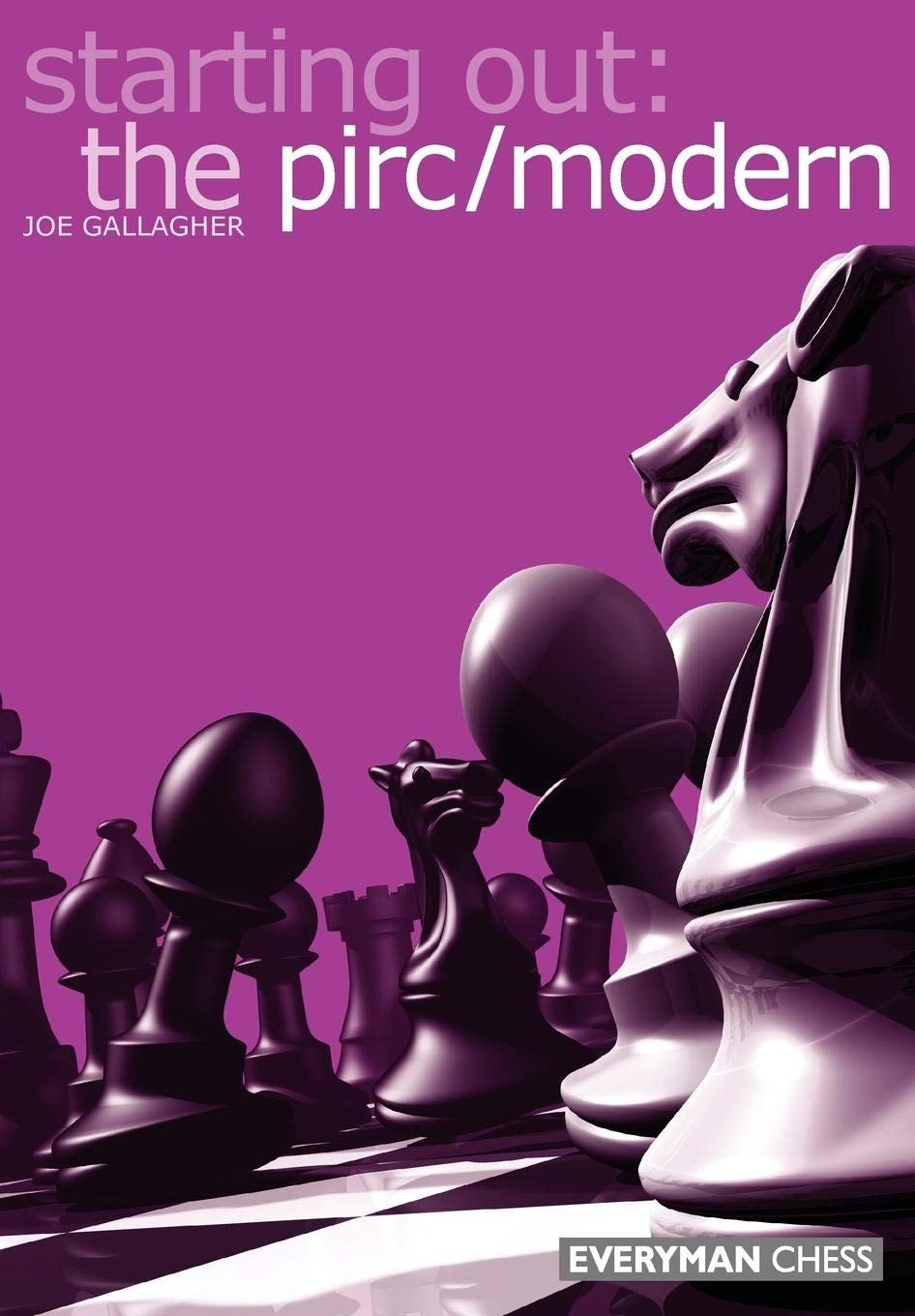
Starting Out: The Pirc/Modern, Everyman Chess, ISBN 1-85744-336-5
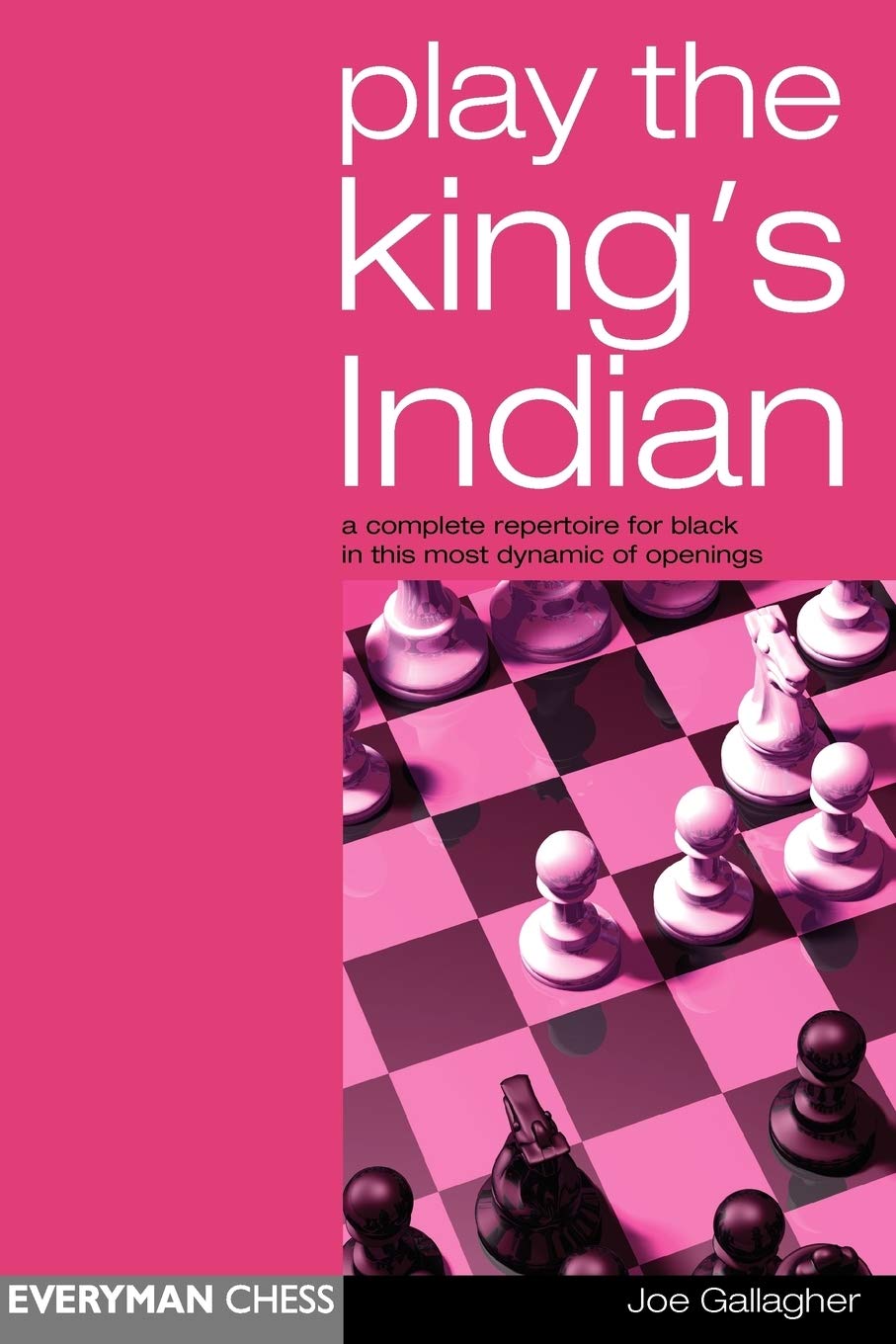
Play the King's Indian, Everyman Chess, ISBN 1-85744-324-1
Play the King’s Indian, Everyman Chess, ISBN 1-85744-324-1

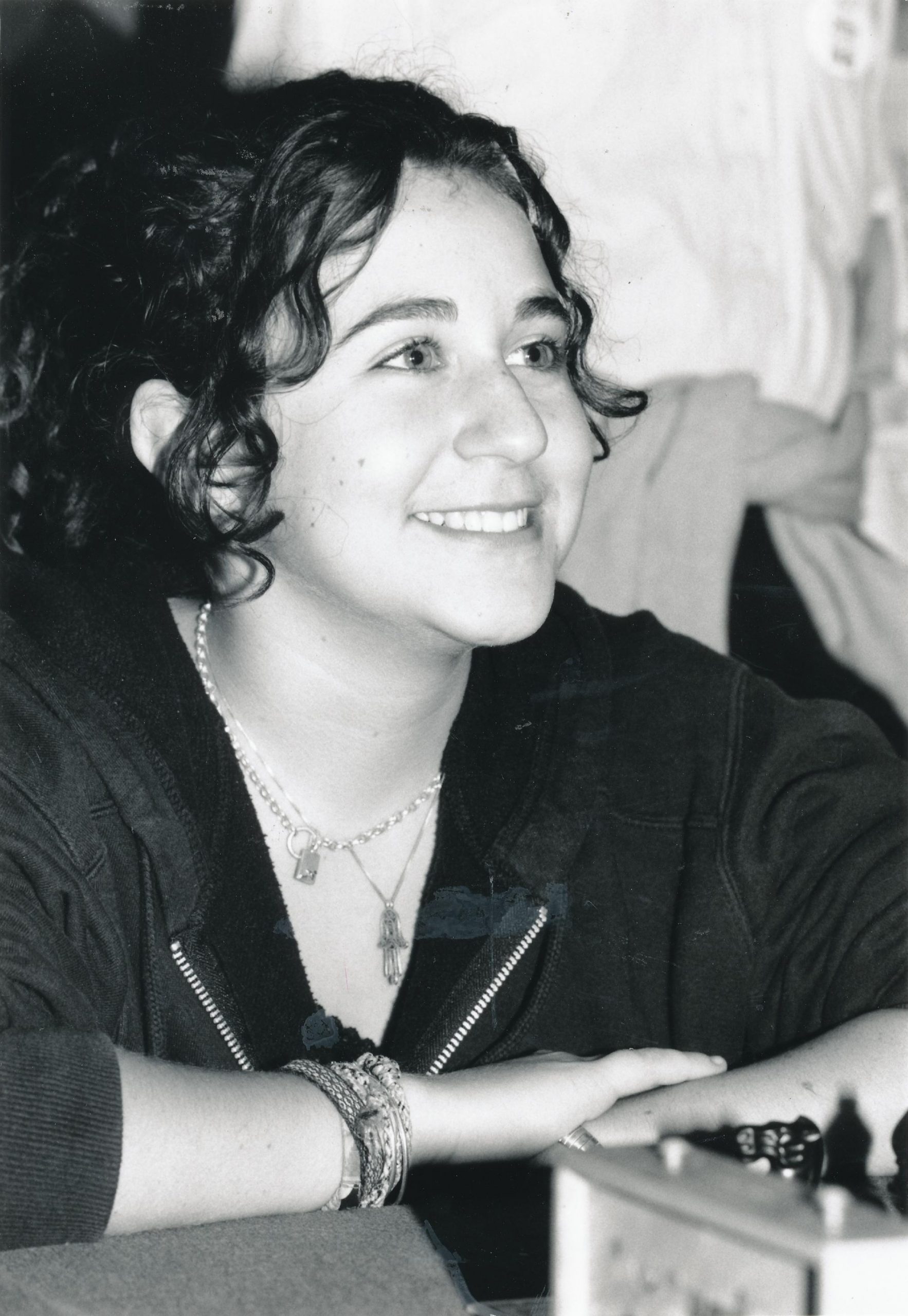
Happy Birthday WIM Dr. Ruth Sheldon (03-v-1980)

WIM Dr. Ruth Sheldon

Happy Birthday WIM Ruth Sheldon (03-v-1980).

Ruth was born in Manchester and became a WFM in 1993 and WIM in 1996. Her peak rating was 2310 in July 1999.

She was World U12 Vice Champion in 1992, World U14 Champion in 1993 and World U18 Champion in 1998.

She is a lecturer in Religion and Social Science at King’s College, London

WIM Dr. Ruth Sheldon

Here is her rather brief Wikipedia entry.

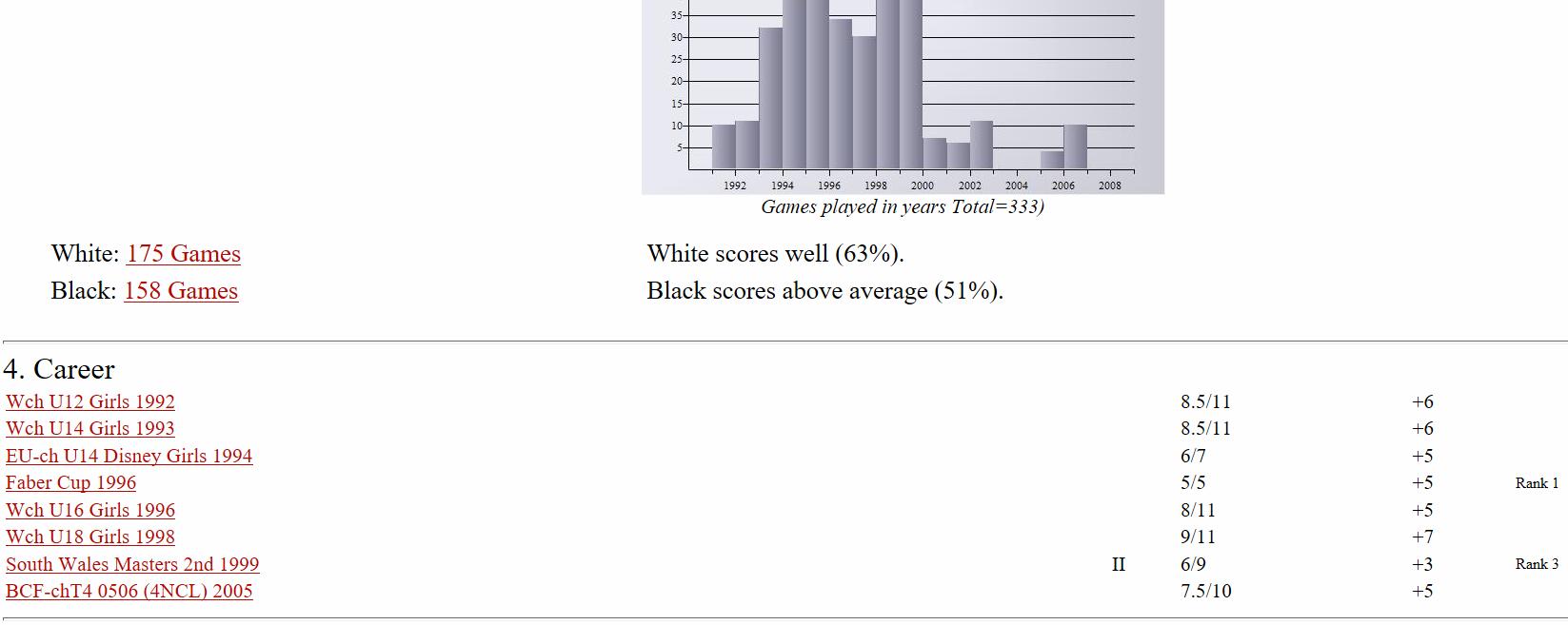
Ruths's partial Chessbase record
Ruths’s partial Chessbase record
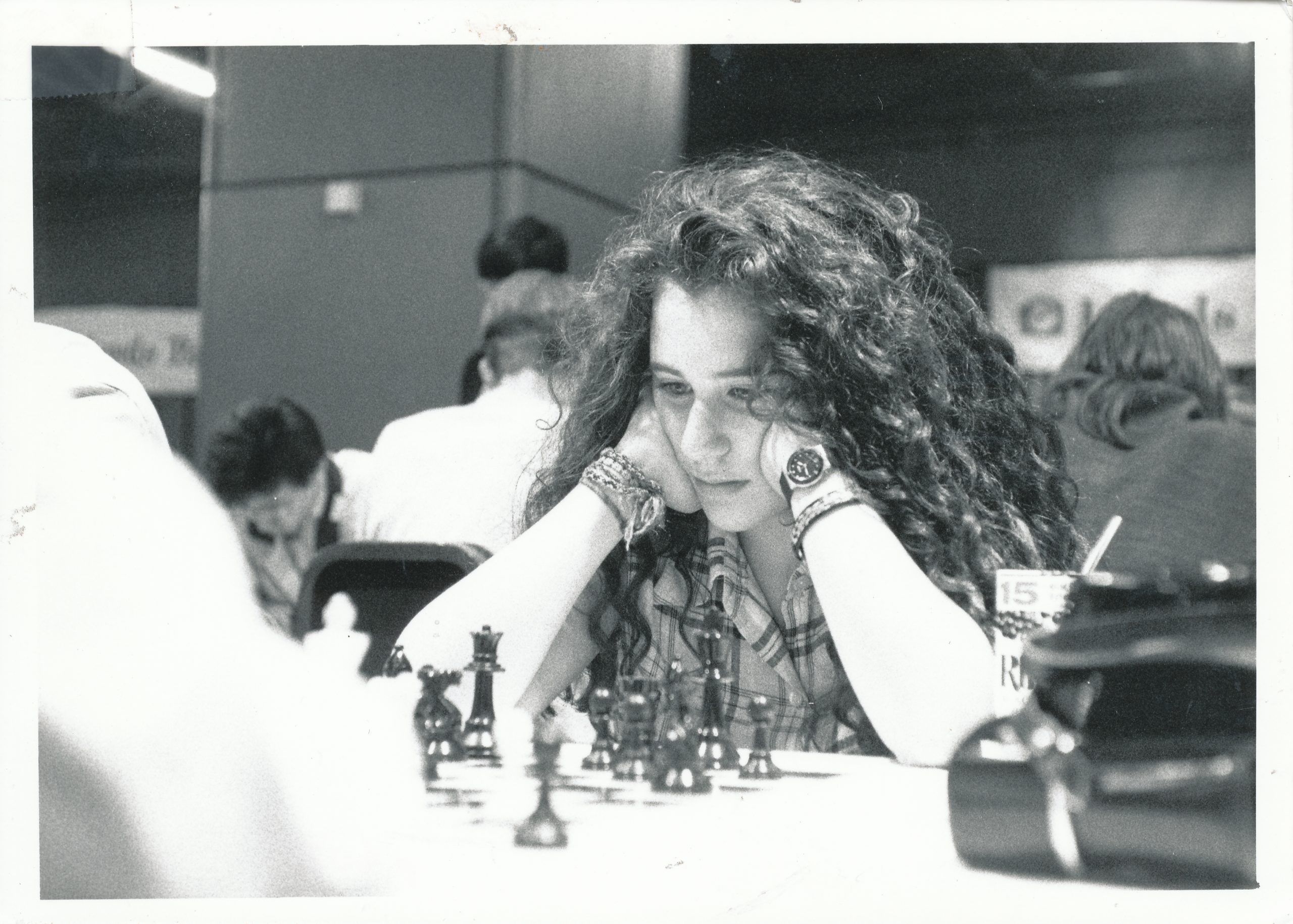
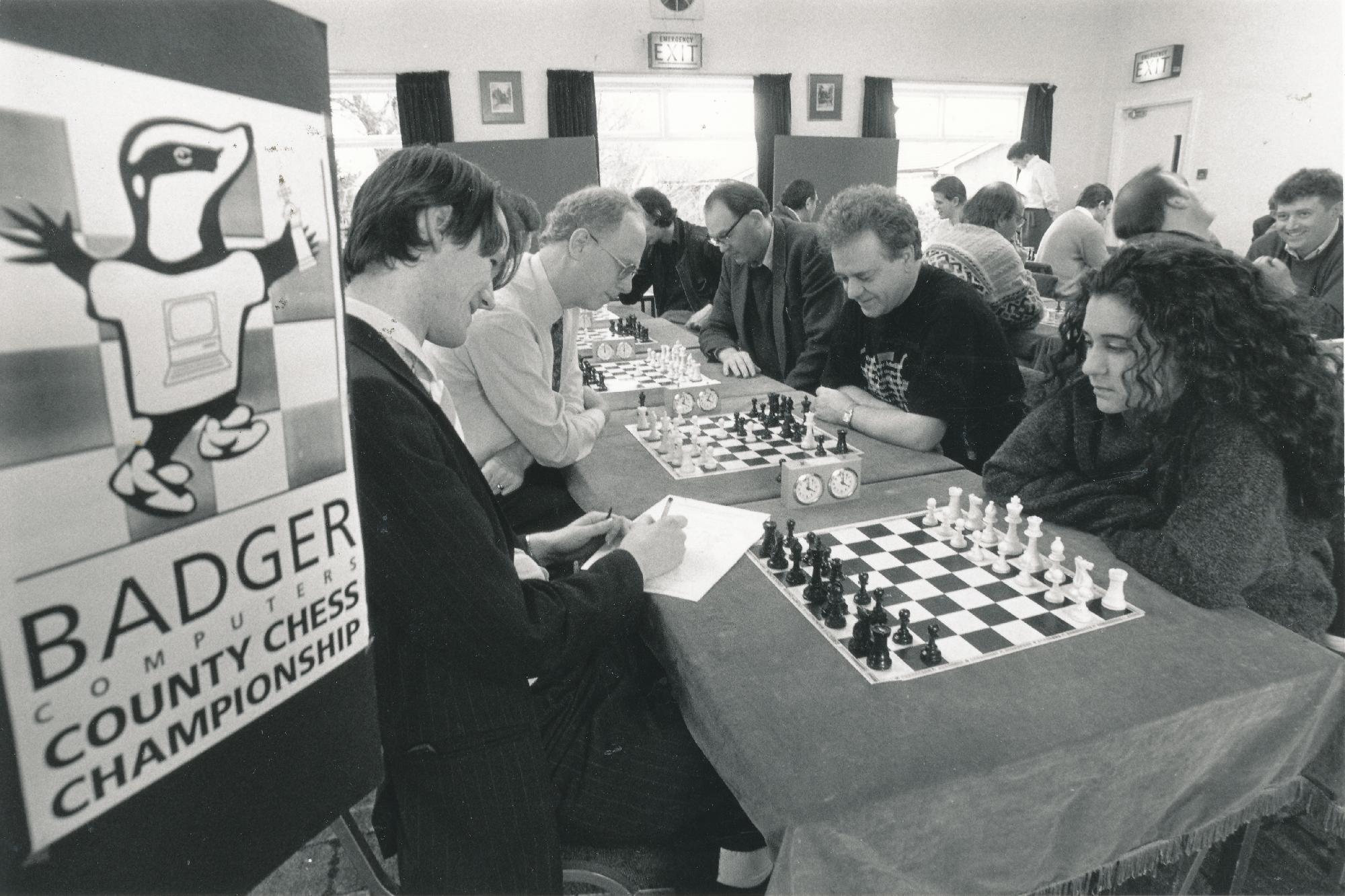
WIM Dr. Ruth Sheldon during a county match (full caption below)
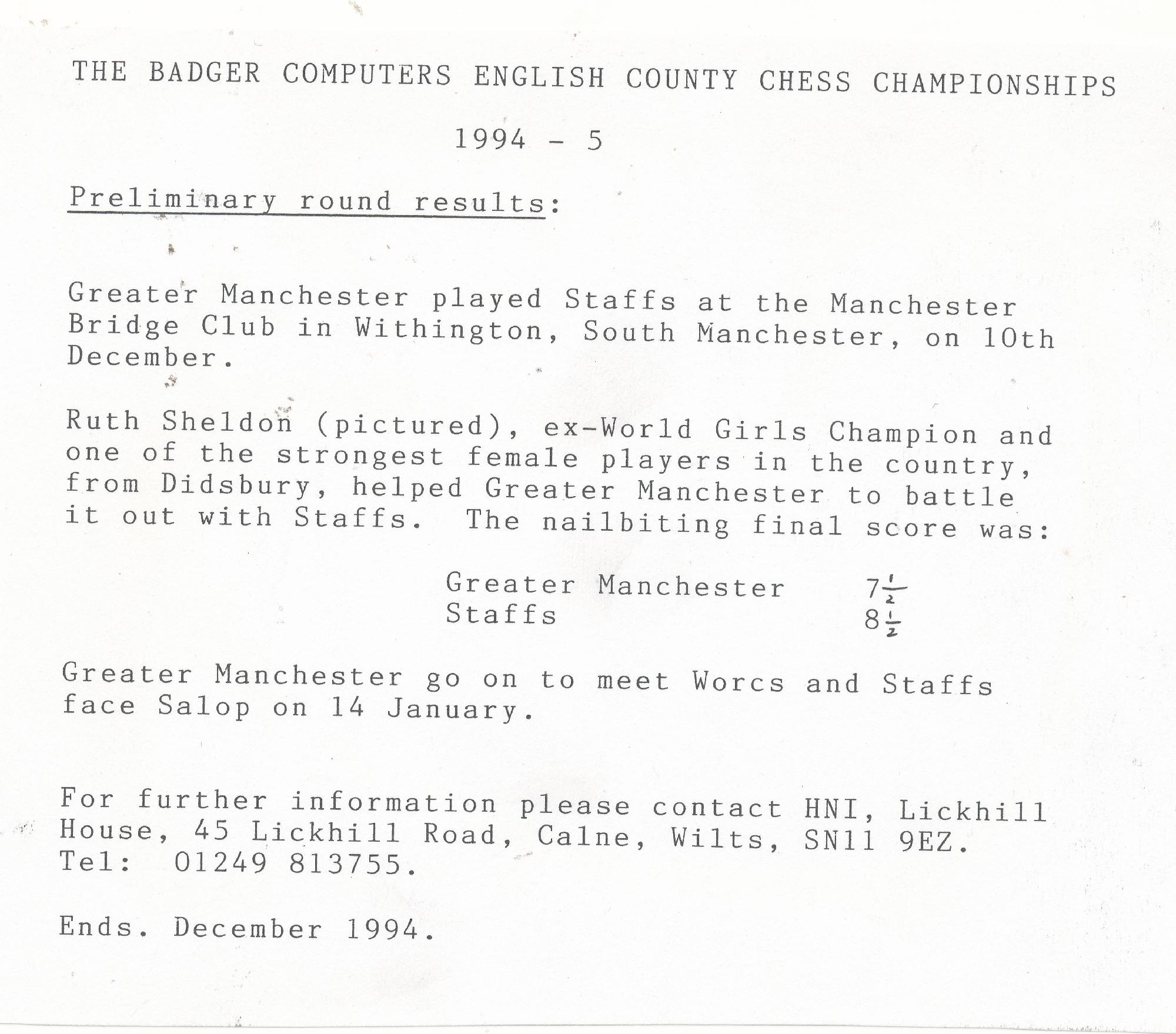
Caption to photograph above

[pgn]
[Event “Redbus KO”]
[Site “Southend”]
[Date “1999.04.02”]
[Round “1.2”]
[White “Rowson, Jonathan”]
[Black “Sheldon, Ruth”]
[Result “0-1”]
[ECO “D03”]
[WhiteElo “2494”]
[BlackElo “2265”]
[Annotator “British Chess News”]
[PlyCount “244”]
[EventDate “1999.04.??”]
[EventType “k.o.”]
[EventRounds “4”]
[EventCountry “ENG”]
[SourceTitle “CBM 071”]
[Source “ChessBase”]
[SourceDate “1999.08.01”]
[SourceVersion “1”]
[SourceVersionDate “1999.08.01”]
[SourceQuality “1”]

{[%evp 0,244,19,31,14,-9,-9,-5,20,-15,37,41,41,38,31,31,60,-1,-4,-17,5,0,1,-91,
-4,-31,35,35,46,35,17,37,0,15,49,38,89,44,113,44,44,44,64,25,45,25,23,36,23,36,
84,33,74,43,31,31,58,43,50,44,25,16,0,0,0,0,0,0,12,10,1,18,24,9,33,40,49,-3,27,
21,59,91,91,-187,-176,-170,-213,-243,-250,-259,-254,-265,-261,-260,-223,-223,
-219,-225,-213,-218,-203,-208,-203,-221,-210,-218,-225,-224,-222,-221,-221,
-223,-223,-226,-223,-225,-226,-226,-226,-230,-236,-239,-226,-230,-239,-246,
-246,-251,-251,-251,-250,-263,-263,-254,-254,-254,-235,-236,-245,-241,-246,
-246,-245,-258,-246,-254,-245,-243,-243,-245,-245,-245,-245,-245,-245,-245,
-245,-245,-244,-238,-244,-241,-233,-238,-206,-229,-215,-229,-215,-212,-180,
-168,-156,-168,-125,-225,-157,-155,-157,-155,-159,-152,-144,-203,-192,-158,
-154,-255,-244,-148,-111,-310,-316,-355,-374,-377,-382,-399,-407,-402,-358,
-390,-395,-390,-412,-407,-407,-407,-365,-382,-396,-407,-369,-387,-366,-373,
-384,-391,-391,-392,-363,-355,-355,-355,-355,-395,-364,-399,-399,-399,-405,
-406,-412,-411,-410,-411,-411,-411,-412,-412,-412,-418,-422,-445,-447,-474,
-449]} 1. d4 Nf6 2. Bg5 d5 3. Nd2 Nbd7 4. e3 g6 5. Ngf3 Bg7 6. Be2 O-O 7. O-O
Re8 8. c3 e5 9. Nb3 c6 10. Rc1 a5 11. c4 a4 12. Nbd2 Qb6 13. cxd5 cxd5 14. dxe5
Nxe5 15. Nxe5 Rxe5 16. Nf3 Re8 17. Qd4 Qe6 18. Qb4 Bf8 19. Qd4 Ne4 20. Bf4 Bd7
21. Rfd1 Bc6 22. Qb6 Qf6 23. Qd4 Qe7 24. Qb6 h5 25. Be5 Nd6 26. Bxd6 Qxd6 27.
a3 Bg7 28. Nd4 Rac8 29. Bf3 Be5 30. h3 Qf6 31. Be2 Bc7 32. Qb4 Bd6 33. Qb6 Qe5
34. Nf3 Qf6 35. Qd4 Qe7 36. h4 Bb8 37. Bf1 Qd6 38. Qc5 Qc7 39. g3 Re4 40. Bh3
Rce8 41. Rd3 Rc4 42. Rxc4 dxc4 43. Qxc4 Bxf3 44. Qxc7 Bxc7 45. Bg2 Bxg2 46.
Kxg2 Be5 47. b3 axb3 48. Rxb3 Re7 49. Kf3 Bd6 50. a4 Kg7 51. a5 Kf8 52. a6 bxa6
53. Rb6 Bc5 54. Rxa6 Rb7 55. Ra5 Bb4 56. Ra2 Bc3 57. Rc2 Bf6 58. Ke4 Kg7 59.
Rc8 Rb2 60. Kf3 Be7 61. Rc7 Bb4 62. Rc1 Bd2 63. Rf1 Kf6 64. Ke2 Bb4+ 65. Kf3
Ke5 66. Rc1 Kd5 67. Rg1 Rc2 68. Rd1+ Kc4 69. Rb1 Bc3 70. Rf1 Bd2 71. Ke2 Bc3+
72. Kf3 Kb3 73. Rb1+ Rb2 74. Rg1 Kc2 75. Ra1 Kd3 76. Rd1+ Bd2 77. Ra1 Rc2 78.
Rb1 Rc6 79. Rb3+ Bc3 80. Ra3 Rf6+ 81. Kg2 Kc2 82. Kf1 Bb4 83. Ra4 Bd2 84. Ke2
Bc3 85. Ra7 Rf5 86. f4 Rf6 87. Rc7 Kb3 88. Kf3 Be5 89. Rd7 Kc4 90. e4 Bd4 91.
Rc7+ Kd3 92. Rd7 Re6 93. Rxf7 Rxe4 94. f5 Re3+ 95. Kg2 Be5 96. Rd7+ Ke4 97.
fxg6 Rxg3+ 98. Kf2 Rxg6 99. Rh7 Rf6+ 100. Kg2 Rf5 101. Rh6 Bf6 102. Kg3 Be5+
103. Kg2 Kf4 104. Rg6 Bf6 105. Kh3 Bd8 106. Rg8 Rd5 107. Rf8+ Ke5 108. Rh8 Kf6
109. Rf8+ Kg6 110. Rf4 Rd1 111. Rc4 Bf6 112. Ra4 Rd2 113. Kg3 Kf5 114. Rf4+ Kg6
115. Ra4 Be5+ 116. Kf3 Kf5 117. Rf4+ Ke6 118. Ra4 Rd3+ 119. Kf2 Kf5 120. Rc4
Rg3 121. Rc8 Rg4 122. Rf8+ Bf6 0-1

[/pgn]

Remembering Dr. IM Stefan (István) Fazekas (23-iii-1898 03-v-1967)

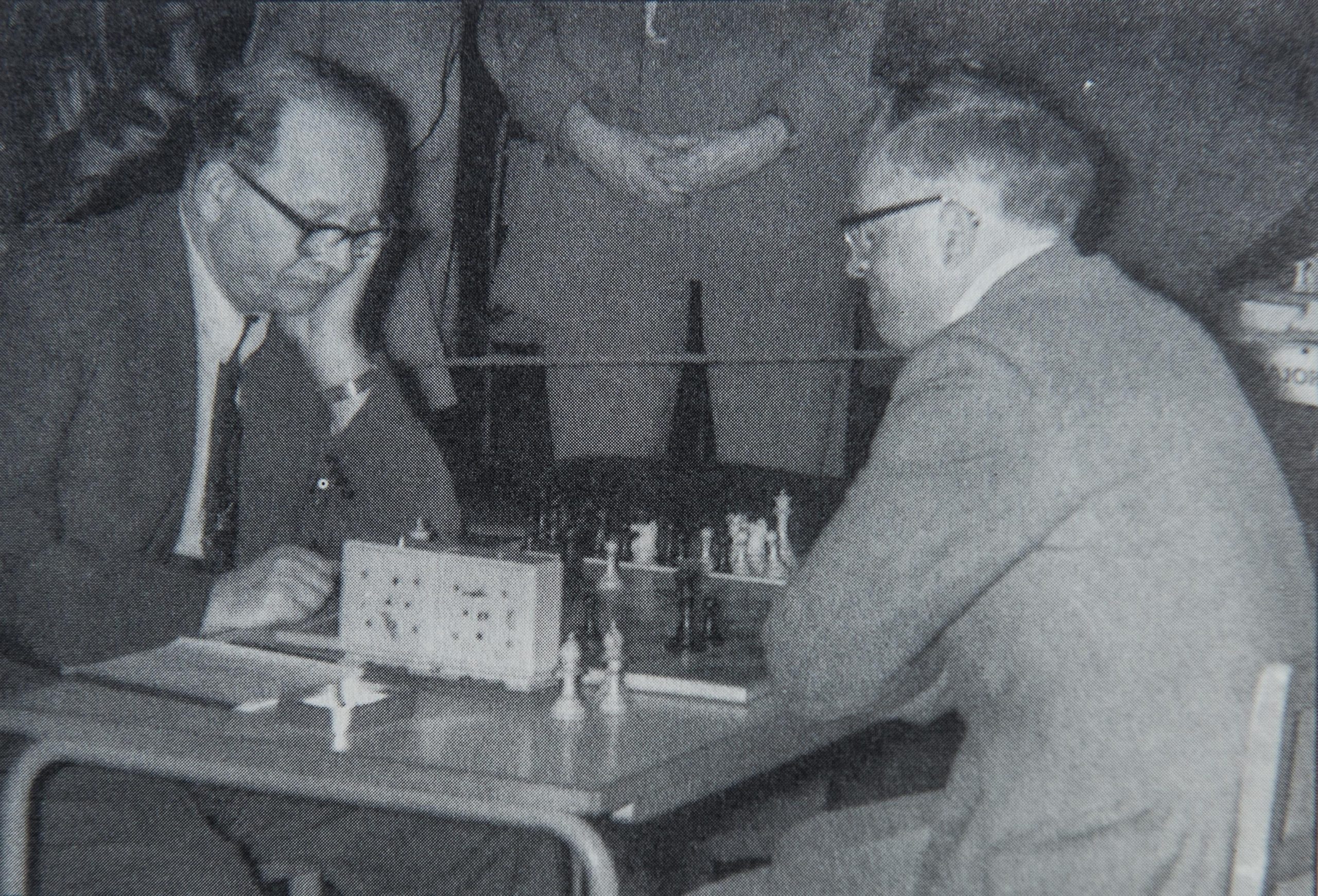
Dr. Fazekas (left) playing Bob Wade at an Ilford Congress, photographer unknown
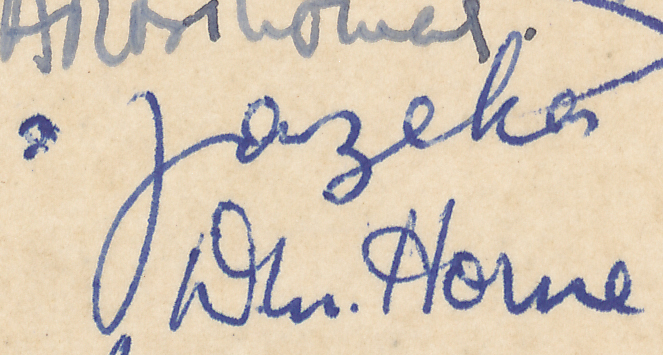
Signature of S Fazekas from a Brian Reilly "after dinner" postcard from Southsea 1951.
Signature of S Fazekas from a Brian Reilly “after dinner” postcard from Southsea 1951.

BCN remembers Dr. IM István (Stefan) Fazekas who passed away in Buckhurst Hill, Essex on Wednesday, May 3rd, 1967 and the death was recorded in the district of Redbridge.

The probate record of June 7th, 1967 is thus:

June 7th 1967 probate record for Dr. Stefan Fazekas

István Fazekas was born in Satoraljaujhely, Hungary on Wednesday, March 23rd 1898. He adopted the name Stefan subsequently. Satoraljaujhely is very much on the Hungary – Czechoslovakian border and records for Fazekas variously show both countries as his country of birth.

The September 1939 register records Stephen Fazekas as being married, a refugee, and a general practitioner living with his wife Helen (born 17th July 1900)  at 21, Old Gloucester Street, Bloomsbury, Camden, London WC1. The “household” had a total of fourteen residents and this building in 2021 appears to be part of the Mary Ward Centre and presumably was providing temporary accommodation.

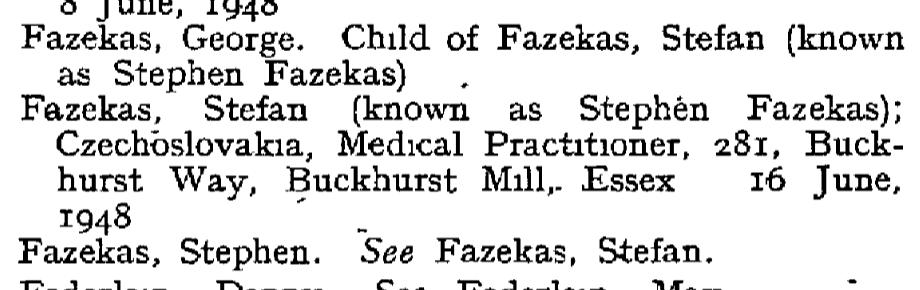
The 1948 London Gazette records that on June 16th he lived at 281 Buckhurst Way, Buckhurst Hill, Essex and that he and Helen had a son, George. On this day Stefan was granted UK naturalisation following the swearing of an oath of allegiance:

The London Gazette, 1948

The above notice is further validated by the official record stored at The National Archive, Kew, reference HO 334/234/4061.

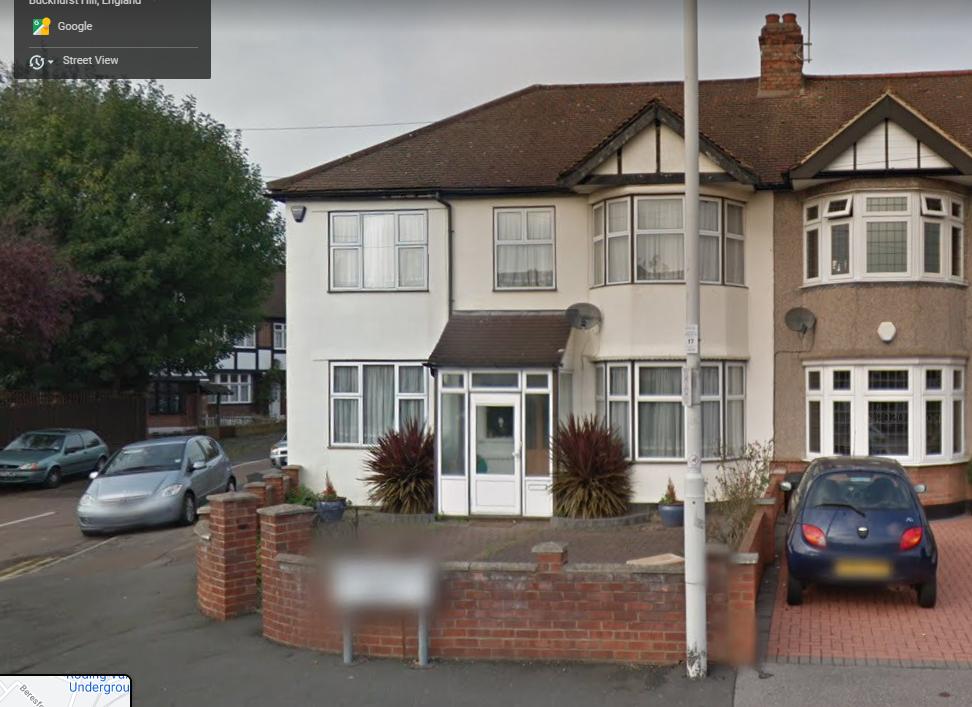
281, Buckhurst Way, Buckhurst Hill, Redbridge, Essex, IG9 6JB

From British Chess Magazine, Volume LXXXVII, Number 7 (July), pages 195-6 we have an obituary written by Peter Clarke :

The death of Dr. Fazekas on May 3rd has deprived British chess of one of its leading and most colourful figures. Ever since he came to this country nearly thirty years ago he took an active part, in the game at all levels, from club to international, rarely missing the chance – even when not in the best of health- to test his strength in competition and express his ideas afresh.

Stefan Fazekas was born on March 23rd, 1898, at Sitoraljaujhely on the Hungarian-Czechoslovak border, but it was not until a few years after the Great War, in which he served and was wounded, that he got the opportunity to play serious tournament chess. By present-day standards, however, events were few and far between, and the game always had to take second place to his medical work.

The Doctor’s best international performances, for which he was later awarded the master title by F.I.D.E., came in the ‘thirties. In 1931, for instance, he was 2nd at Kosice, 3rd at Brno and 3rd at Prague. As it remained throughout his career, his play was excessively variable: fine conceptions were always liable to be ruined by blunders or impetuosity. The following game, played at Munchentratz in 1933, shows all going well; it earned inclusion in Le Lionnais’ anthology Les Prix de beauté aux échecs.

[pgn]
[Event “CSR-ch13 Group B”]
[Site “Mnichov Hradist”]
[Date “1933.08.09”]
[Round “3”]
[White “Fazekas, Stefan”]
[Black “Gillar, J.”]
[Result “1-0”]
[ECO “D17”]
[Annotator “British Chess News”]
[PlyCount “37”]
[EventDate “1933.08.07”]
[EventType “tourn”]
[EventRounds “11”]
[EventCountry “CSR”]
[SourceTitle “EXT 2018”]
[Source “ChessBase”]
[SourceDate “2017.10.13”]
[SourceVersion “1”]
[SourceVersionDate “2017.10.13”]
[SourceQuality “1”]

{[%evp 0,37,61,14,28,-11,32,21,46,5,7,30,0,-4,44,18,5,-8,-8,-89,-98,-91,-103,
-78,-55,-143,-141,-112,-116,-217,-78,-58,-3,-20,117,117,442,442,472,472]} 1. d4
d5 2. c4 c6 3. Nc3 Nf6 4. Nf3 dxc4 5. a4 Bf5 6. Ne5 Na6 7. e4 (7. f3) 7… Nxe4
8. Bxc4 e6 9. Nxc6 $146 (9. g4 Bg6 10. Nxg6 Nxc3 11. bxc3 hxg6 12. Rb1 Qc8 13.
Bxa6 bxa6 14. Bf4 Qd7 15. O-O Bd6 16. Qf3 $13) (9. O-O Nxc3 10. bxc3 Bd6 11.
Qe2 Nc7 12. g4 Bg6 13. f4 f6 14. Nxg6 hxg6 15. Rb1 Qc8 16. Re1) 9… bxc6 10.
Bxa6 Qb6 11. Qe2 Bb4 12. O-O Nxc3 13. bxc3 Bxc3 14. Ba3 Bxd4 15. Rac1 c5 16.
Bb5+ Ke7 $2 {[#]} 17. Rfd1 $18 Rhd8 $2 18. Rxd4 $1 Rxd4 19. Bxc5+ 1-0
[/pgn]

In 1939 Dr. Fazekas brought his family to England and established himself as a successful and much loved G.P. at Buckhurst Hill, Essex. He soon took a dominating part in county chess and went on to win the championship eleven times. In national events his inconsistency seemed too great a handicap, but at Plymouth in 1957, after so many tries, he astounded everyone by winning the British Championship in front of, among others, Alexander and Penrose.

(Ed. He was the oldest person to win the British Championship at 59 years of age.)

[pgn]
[Event “British CF-44 Championship”]
[Site “Plymouth/ Devon”]
[Date “1957.08.29”]
[Round “10”]
[White “Fazekas, Stefan”]
[Black “Abrahams, Gerald”]
[Result “1-0”]
[ECO “A84”]
[Annotator “Harry Golombek & British Chess News”]
[PlyCount “81”]
[EventDate “1957.08.19”]
[EventType “swiss”]
[EventRounds “11”]
[EventCountry “ENG”]
[SourceTitle “BCM, 1957, page 326”]
[Source “ChessBase”]
[SourceDate “2000.11.22”]
[SourceVersion “1”]
[SourceVersionDate “2000.11.22”]
[SourceQuality “1”]

{[%evp 0,81,19,31,19,-16,-9,6,41,42,89,64,42,44,45,32,77,47,44,42,54,51,59,36,
44,17,23,29,16,31,35,59,41,34,34,34,180,159,174,29,129,55,48,73,66,44,63,63,62,
65,46,62,50,55,57,57,57,57,126,111,134,117,206,177,209,80,133,154,147,137,511,
131,251,249,359,259,716,725,725,783,772,674,800,688]} {Notes taken from
British Chess Magazine, 1957, page 326. This is BCM game #12,137.} 1. d4 d5 2.
c4 e6 3. Nf3 c6 4. e3 (4. Nc3 dxc4 5. a4 Bb4 6. e3 b5 7. Bd2 a5 {BCN : was
what GA was hoping for and presumably SF wished to avoid this.}) 4… f5 {
BCN : Abraham’s signature method of entering a Dutch Stonewall via a trangle
variation of the Semi-Slav Defence. GA would have hoped for 4.Nc3 inorder to
enter the Abrahams-Noteboom Variation.} 5. cxd5 {This exchange is premature
and allows Black easy equality.} ({The mainline in 2021 is} 5. Bd3 Nf6 6. O-O
Bd6 7. b3 Qe7 8. Bb2 O-O 9. Qc1 b6 10. Ba3 Bb7 11. Bxd6 Qxd6 12. Nc3) ({
Preferable are both} 5. Nc3) ({and} 5. Ne5) 5… exd5 6. Bd3 Bd6 (6… Nf6 7.
O-O Bd6) 7. O-O $146 Nh6 8. b3 {HG : The only feasible way of developing his
Queen’s bishop is by exchange, a not entirely negative virtue as he does at
least get rid of Black’s most dangerous minor piece.} O-O 9. Ba3 Bxa3 (9… Qe7
10. Bxd6 Qxd6 11. Nc3 Nd7 12. Ne2) 10. Nxa3 Nd7 11. b4 a6 12. Qb3 Nf6 13. Nc2 {
HG: Preparing an attack on the Queen’s side by a4 and b5.} Ne4 14. a4 {[#]} g5
$6 {HG : Before making this advance he should complete his development.} ({HG :
} 14… Be6 15. b5 c5) 15. b5 $1 g4 ({HG : It would still have been better to
play} 15… c5 {It is Black’s King side that is laid bare by this move, not
White’s.}) 16. Bxe4 fxe4 17. Ne5 Nf7 $2 18. bxc6 $18 Nxe5 19. dxe5 ({HG : He
could have also played to win a pawn here by} 19. cxb7 {and if} Bxb7 ({HG :
but is presumably afraid of the fierce attack Black might gain after} 19…
Nf3+ 20. gxf3 gxf3 21. Kh1 Bh3 22. bxa8=Q Bg2+ 23. Kg1 Qxa8) 20. dxe5) 19…
bxc6 20. Qc3 Qe8 21. Rab1 a5 22. Nd4 Ba6 23. Rfd1 Bc4 24. Rb6 Qxe5 ({If} 24…
c5 25. Ne6 Rf7 26. Nxc5 {followed by e6 with a won game.}) 25. Rxc6 Rf6 {
otherwise White plays 26.Re6} (25… Kh8 26. Re6 Qc7 (26… Qg7 27. Nc6) 27.
Nb5+) 26. Rxf6 Qxf6 27. Rb1 Rf8 28. Rb2 h5 ({He should defend his Queen’s
Rook’s pawn by} 28… Qa6 {and if then} 29. Nb5 Qf6 30. Qxf6 Rxf6 {with good
drawing chances for Black.}) 29. Qxa5 Rc8 30. Qe1 h4 {Black thinks he is
attacking on the King’s side; but in reality he is busy stripping his King of
its defences.} 31. Qd1 Qg6 32. a5 g3 33. hxg3 hxg3 34. fxg3 Qxg3 35. Rf2 Rc7 ({
if} 35… Qxe3 36. Qg4+ Kh7 37. Nf5) 36. Nf5 Qg5 37. Rf4 Kf8 {Black must have
regretted now his h4. White threatens to win the Queen with Rg4.} ({If} 37…
Kh8 38. Rh4+ Rh7 39. Qd4+) 38. Qd4 Ke8 39. Qb6 Kd7 40. Nd4 {[#]} Qg7 $2 {
A blunder in a hopeless position; White threatens 41.Qe6+ Kd8 42.Rb8#.} ({
Against} 40… Qe7 {White has two methods of winning: he can play} 41. a6 ({or
} 41. Rf6)) 41. Qxc7+ 1-0
[/pgn]

The next year fate struck him a cruel blow when he was left out of the B.C.F. team for the Munich Olympiad. Yet after returning the trophy in protest he overcame his bitterness and took his place once more in the championship tournament-he could not resist the thrill of the struggle.

(Ed. The Selection Committee was: RJ Broadbent (Chairman), CHO’D Alexander, RWB Clarke, WA Fairhurst, Dr. S. Fazekas, H. Golombek, JH van Meurs, and AF Stammwitz (Secretary).)

Knowing that his best over-the-board days were behind him, the Doctor decided to go in for correspondence chess in 1959, and he at once found himself surprisingly at home in it. Here his old weaknesses could be set aside and his vast experience put to good use. Moreover, his great love for chess enabled him to devote hours of work to the analysis of a single move if necessary.

[pgn]
[Event “olm5 fin B1 corr6568”]
[Site “ICCF corr”]
[Date “1965.??.??”]
[Round “?”]
[White “Fazekas, Stefan”]
[Black “Rittner, Horst Robert”]
[Result “1-0”]
[ECO “A13”]
[Annotator “British Chess News”]
[PlyCount “63”]
[EventDate “1965.??.??”]
[EventType “team (corr)”]
[EventRounds “8”]
[SourceTitle “Corr Nr. 1”]
[Source “ChessBase”]
[SourceDate “1997.09.01”]
[SourceVersion “2”]
[SourceVersionDate “2000.04.19”]
[SourceQuality “1”]

{[%evp 0,63,27,-5,6,-7,6,6,-11,6,6,2,0,1,14,14,14,-4,23,28,33,20,22,13,10,8,8,
-1,-15,-20,-9,-15,-15,-21,0,-24,46,-52,-63,-61,-65,-75,-69,-66,-35,-46,-17,-82,
64,27,23,1,146,146,174,146,146,81,195,213,403,371,379,379,1349,1618]} {67/(199)
} 1. c4 Nf6 2. Nc3 e6 3. Nf3 d5 4. e3 Be7 5. b3 O-O 6. Bb2 b6 7. d4 Bb7 8. cxd5
exd5 $1 9. Bd3 Bd6 10. Qc2 Nbd7 11. O-O a6 12. Ne2 Re8 13. Ng3 g6 14. Rfd1 Qe7
15. Rac1 Rac8 16. Qe2 Ng4 (16… Ba3 $5) 17. Rc2 f5 18. a4 a5 (18… Ra8 $5)
19. Re1 Ndf6 20. Ba6 $1 Bxa6 21. Qxa6 Ne4 22. Nf1 g5 23. h3 Nh6 {[#]} 24. Ne5
$1 Bxe5 25. dxe5 Qb4 26. Rec1 Qxb3 27. Qb7 $1 Nf7 28. Bd4 g4 (28… c5 $6 29.
e6) 29. hxg4 fxg4 30. Rxc7 Rxc7 31. Rxc7 Nd8 32. Qc8 1-0
[/pgn]

His rapid successes in this field won him a place in the Semi-Finals of the 5th World Correspondence Championship (where he finished 4th out of 14) and led to his being chosen as Board 1 for the British team in the 5th Olympiad. On the results of these events he was awarded the title of international C.C. master. That he deserved it may be judged from this fine strategic win against a grandmaster (C.C.) opponent in the individual tournament.

[pgn]
[Event “BCCA corr”]
[Site “England”]
[Date “1965.??.??”]
[Round “?”]
[White “Fazekas, Stefan”]
[Black “Napolitano, Mario”]
[Result “1-0”]
[ECO “A20”]
[Annotator “British Chess News”]
[PlyCount “89”]
[EventDate “1965.??.??”]
[EventType “tourn (corr)”]
[EventRounds “10”]
[EventCountry “ENG”]
[SourceTitle “Corr 2000”]
[Source “ChessBase”]
[SourceDate “2000.04.19”]
[SourceVersion “1”]
[SourceVersionDate “2000.04.19”]
[SourceQuality “1”]

{[%evp 0,89,57,-26,-22,-63,17,10,20,20,28,31,33,25,43,45,30,29,35,6,12,9,0,-1,
-9,2,-16,-12,2,1,-15,-12,-12,0,19,-4,20,-51,-53,8,-2,5,74,84,77,55,55,46,77,80,
74,47,57,28,36,32,30,26,84,9,6,76,50,29,52,-65,-55,-55,6,-36,-36,-58,-58,-45,
-3,7,7,-82,6,-71,75,9,150,104,105,105,105,105,300,270,360,254]} 1. c4 e5 2. Nf3
d6 3. g3 Bg4 4. Bg2 c6 5. Nc3 Be7 6. O-O Nf6 7. h3 Bh5 8. b4 O-O 9. Qb3 Nbd7
10. a3 Ne8 11. g4 Bg6 12. e4 h5 13. d3 Nc7 14. Be3 Ne6 15. Ne2 Kh7 16. Rfd1 Nf6
17. Nh2 Qd7 18. d4 exd4 19. Bxd4 Nxd4 20. Nxd4 Ne8 21. f4 f6 22. Qe3 Nc7 23.
Bf3 Qe8 24. Qe2 hxg4 25. hxg4 Rh8 26. Nf1 Kg8 27. Ne3 Bf8 28. Qg2 Rd8 29. Re1
Bf7 30. Kf2 g6 31. Rad1 Rd7 32. g5 fxg5 33. f5 Qd8 34. Bg4 Qf6 35. Nf3 Re7 36.
fxg6 Bxg6 37. Bf5 Rg7 38. Ng4 Qb2+ 39. Re2 Qb3 40. Rh1 Be7 41. Rxh8+ Kxh8 42.
Bxg6 Rxg6 43. Qh1+ Kg7 44. Ne3 Ne6 45. Nf5+ 1-0
[/pgn]

At the time of his death Dr. Fazekas had made a score of 5 out of 7 in the Olympiad Final and was still engaged with Zagorovsky of the U.S.S.R., a performance which showed his correspondence play to be close to grandmaster standard. And to end one’s days actually playing a World Champion is a distinction which I am sure would have appealed to this Doctor’s rich sense of humour.

While Dr. Fazekas’ social work as a humanist was for the peace of the world, in chess he was noted as a great fighter, in some ways reminiscent of Lasker. There was no retirement for him.

At Ilford in 1965 and 1966 he eagerly took on and held his own with a generation fifty years his junior, and this year he had once again qualified to play in the British Championship. The tournament at Oxford will not seem quite the same without him. I and his many friends will miss his wit and ebullience, his generosity, his love of life and chess.-P. H. C.

From The Encyclopaedia of Chess (Batsford, 1977), Harry Golombek OBE:

“International Master and British Champion 1957. A dangerous attacking player but weak in positional play. Fazekas was born at Satoraljaujhely on the Hungarian-Czechoslovakian border. In the earlier part of his career he was Czechoslovak. This period comprised his international career and he was awarded the title of international master many years later after he had emigrated to England in 1939.

It was his results in 1931 that gained him the title: 2nd at Kosice, 3rd at Prague and 3rd at Brno ahead of Honlinger, Mikenas, Noteboom and Rellstab.

In England he became much-respected general medical practitioner, and was therefore really an amateur at chess since he devoted himself to his profession. But he played much club and county chess and was eleven times champion of his county, Essex.

In 1957, almost out of the blue, he won the British Championship in a strong year that included Penrose and Alexander.

He played a number of times in the championship after that, but never looked like gaining the title since increasing years took their toll. He was in fact the oldest player ever to have won the British Championship.

In 1959 he took up correspondence chess and became an international correspondence chess master.”

From The Encyclopaedia of Chess (Robert Hale, 1970 & 1976), Anne Sunnucks:

“International Master (1953), International Correspondence Chess Master and British Chess Champion in 1957.

Fazekas was born in Satoraljaujhely on the Hungarian-Czechoslovakian border, on 23rd March 1898. He was awarded the title of International Master for his performances in the 1930s, which included 2nd at Kosice 1931; 3rd at Brno 1931 and 3rd at Prague 1931.

In 1939 he emigrated to England, where he practised as a general medical practitioner at Buckhurst Hill in Essex. Chess always took second place to his profession, and his tournament appearences were limited. He played regularly in county and club events and was 11 times champion of Essex.

In 1957, to everyone’s surprise, he won the British Championship, ahead of such players as Penrose, Alexander, Clarke, Wade and Milner-Barry. Shortly after this victory came a bitter blow to Fazekas when he was not selected as a member of the British Chess Federation team for the 1958 chess Olympiad at Munich.

Fazekas returned the championship trophy in protest at his exclusion and the controversy over whether he should or should not have been selected raged for many months.

Dr. Fazekas’s love of chess eventually overcame his resentment and he continued to appear regularly in the British Championship, but never again repeated his success.

In 1959, he took up correspondence chess and reached the semi-finals of the fifth World Correspondence Chess Championship and was selected to play on top board for the British team in the Fifth Correspondence Chess Olympiad. This event was still in progress at the time of this death. He died on 3rd May 1967, at his home in Buckhurst Hill.”

Dr. Fazekas was Southern Counties (SCCU) Champion twice in 1951-2 and 1952-53.

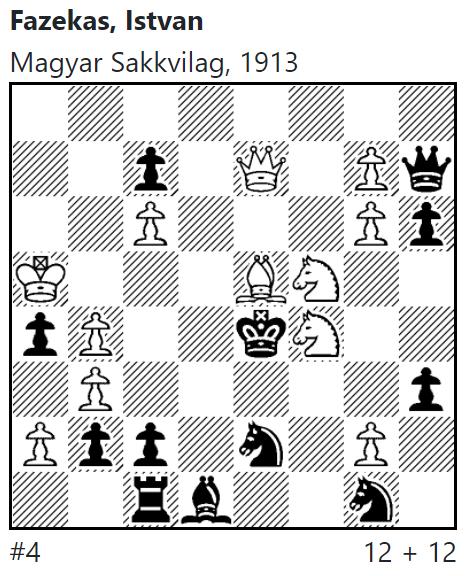
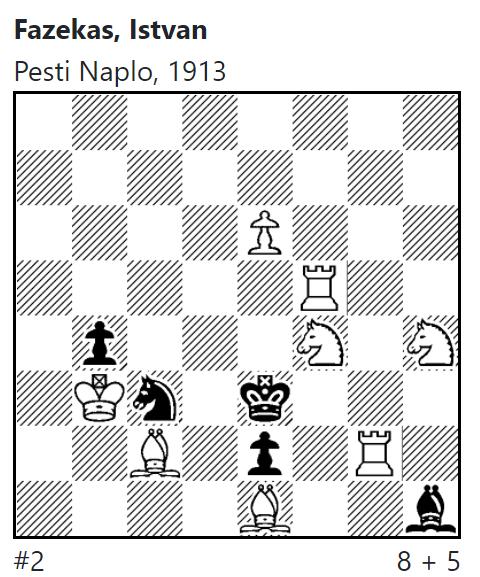
In his early days he was a successful composer of problems:

Fazekas, Istvan Magyar Sakkvilag, 191, Meson database PID: 191037
Fazekas, Istvan Pesti Naplo, 1913, Meson database PID: 190116

From Chessgames.com :

“Dr Stefan (ne Istvan) Fazekas was born in Satoraljaujhely, Hungary. Awarded the IM title in 1953 and the IMC title in 1964, he was British Champion in 1957 and is the oldest player ever to have won the title. He passed away in 1967 in Buckhurst Hill, Essex, England.”

In Edward Winter’s Chess Notes there is a note from Leonard Barden concerning SFs spoken English (under Chess Note #10361)

Here is his brief Wikipedia entry

István (Stefan) Fazekas

Remembering David Hooper (31-viii-1915 03-v-1998)

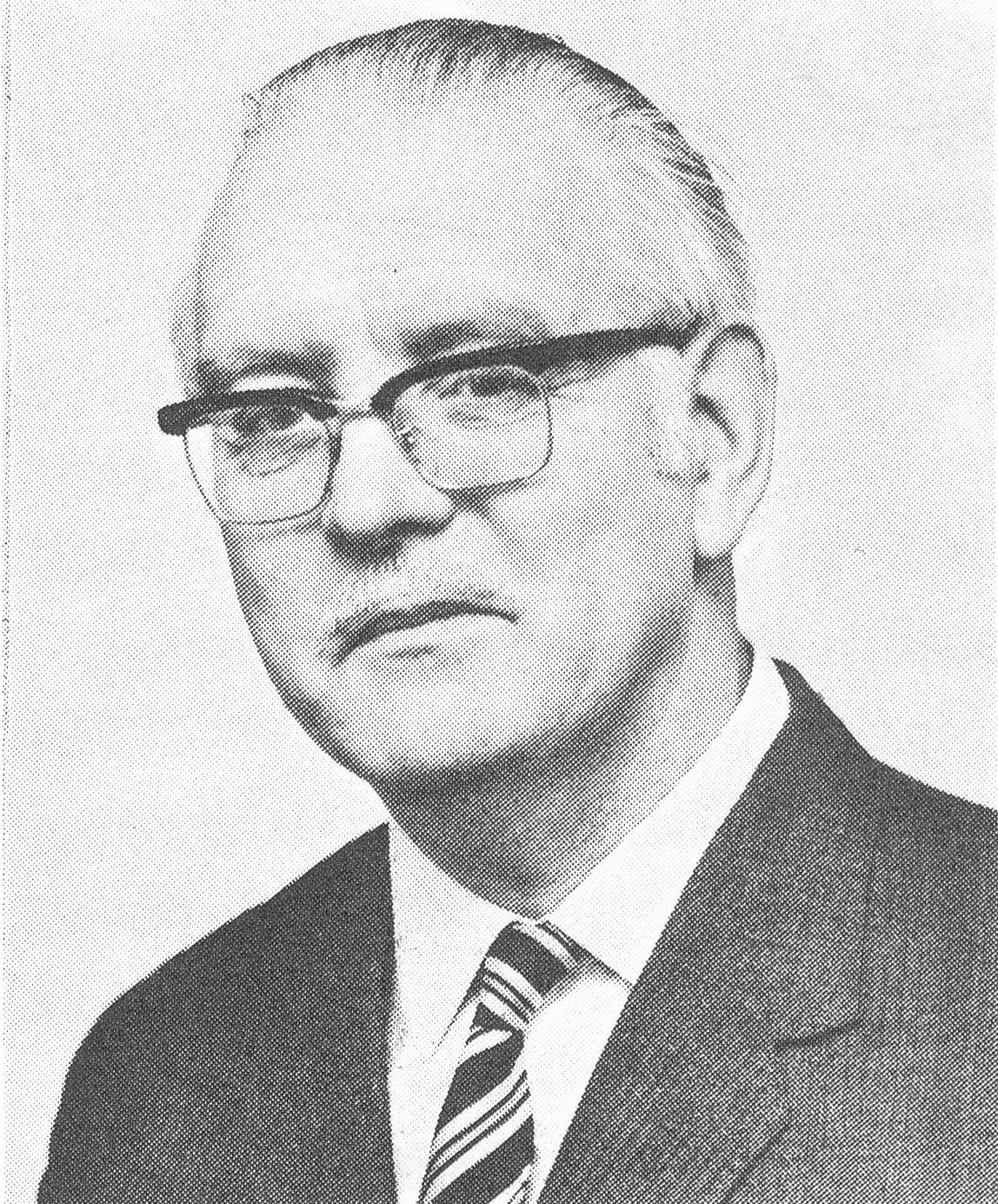
David Hooper, from The Encyclopaedia of Chess, Harry Golombek, Batsford, 1977. The tie is an Old  Whitgiftians
David Hooper, from The Encyclopaedia of Chess, Harry Golombek, Batsford, 1977. The tie is an Old Whitgiftians.

BCN remembers David Hooper who passed away in a Taunton (Somerset) nursing home on Sunday, May 3rd 1998. Probate (#9851310520) was granted in Brighton on June 24th 1998.

Prior to the nursing home David had been living at 33, Mansfield Road, Taunton, TA1 3NJ and before that at 5, Haimes Lane, Shaftesbury, Dorset, SP7 8AJ.

For most of the time between Reigate and Shaftesbury David lived in Whitchurch, Hampshire.

David Vincent Hooper was born on Tuesday, August 31st 1915 in Reigate, Surrey to Vincent Hooper and Edith Marjorie Winter who married in Reigate, Surrey in 1909. On this day the first French ace, Adolphe Pégoud, was killed in combat. He had scored six victories.

David was one of six children: Roger Garth (1910-?), Edwin Morris (1911-1942), Isobel Mary (12/01/1917-2009), Helene Edith (1916-1982) and Elizabeth Anne Oliver (1923-2000) were his siblings.

David attended Whitgift School, Croydon, and (thanks to Leonard Barden) we know that “although there was no chess played there in his time he was proud of later accomplishments and often wore an Old Whitgiftians tie, especially for posed photos including this article’s title image and the one in the Chess Notes article by Edward Winter (see the foot of this article).

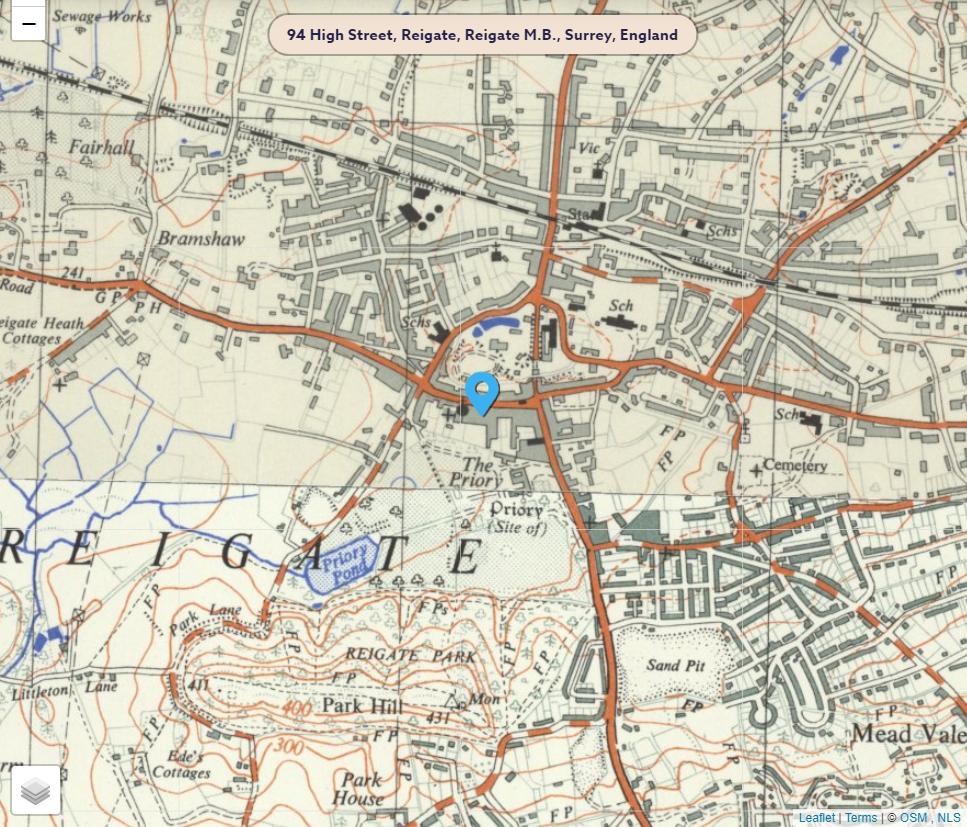
Recorded in the September 1939 register David was aged 24 and living at 94, High Street, Reigate, Surrey:

Historical Map showing 94, High Street, Reigate, Surrey

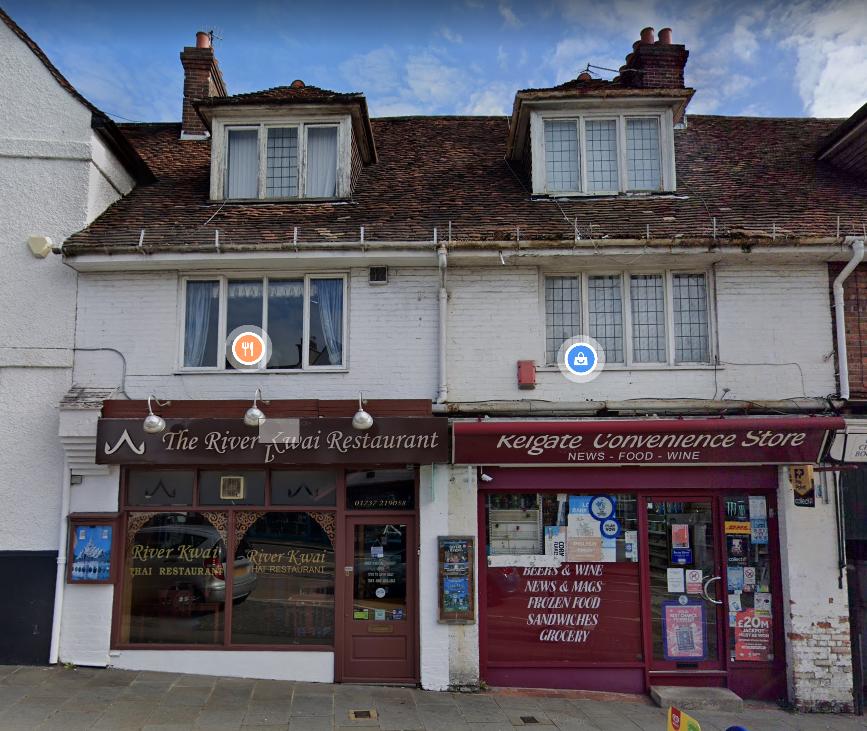
In 2021 this property appears to be a flat (rather than bridge) over the River Kwai Restaurant:

94, High Street, Reigate, Surrey, RH2 9AP

Living with David was his sister Isobel who was listed a “potential nurse”. David’s occupation at this time was listed as Architectural Assistant and he was single. We think that three others lived at this address at the time but they are not listed under the “100 year rule”. We know that David was also a surveyor and went on to attain professional membership of the Royal Institution of British Architects (RIBA).

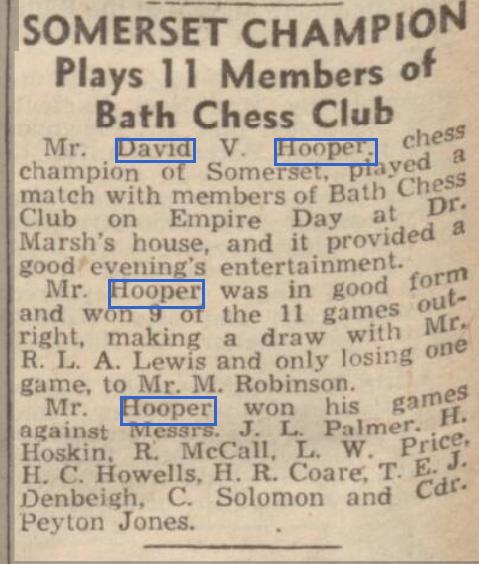
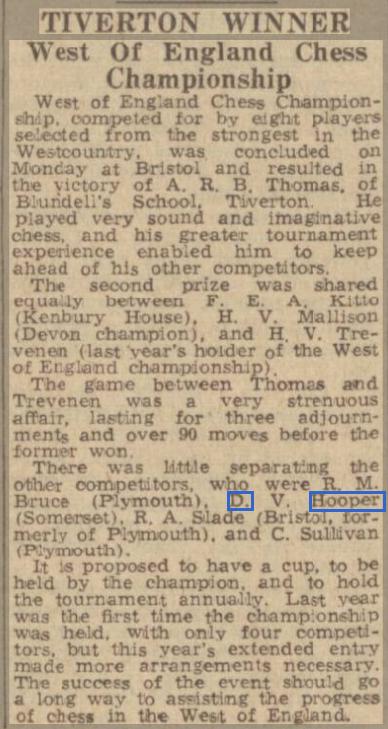
In the Bath Chronicle and Weekly Gazette May 27th 1944 there appeared this report of a simultaneous display on Empire Day (May 24th) at Dr. Marsh’s house:

Bath Chronicle and Weekly Gazette, May 27th 1944

and from The Western Morning News, 9th April 1947 we have:

Western Morning News, 9th April 1947

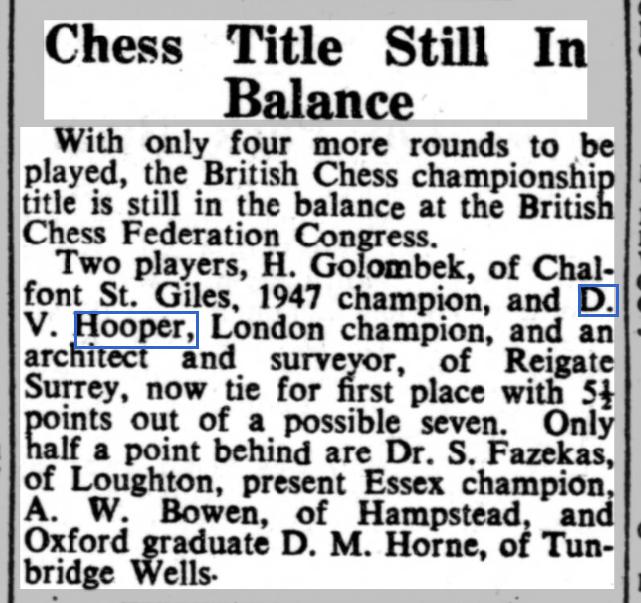
and then from The Nottingham Evening Post, 16th August 1949 we have:

Nottingham Evening Post, 16th August 1949

In 1950 aged 35 David married Joan M Higley (or Rose!) in the district of South Eastern Surrey.

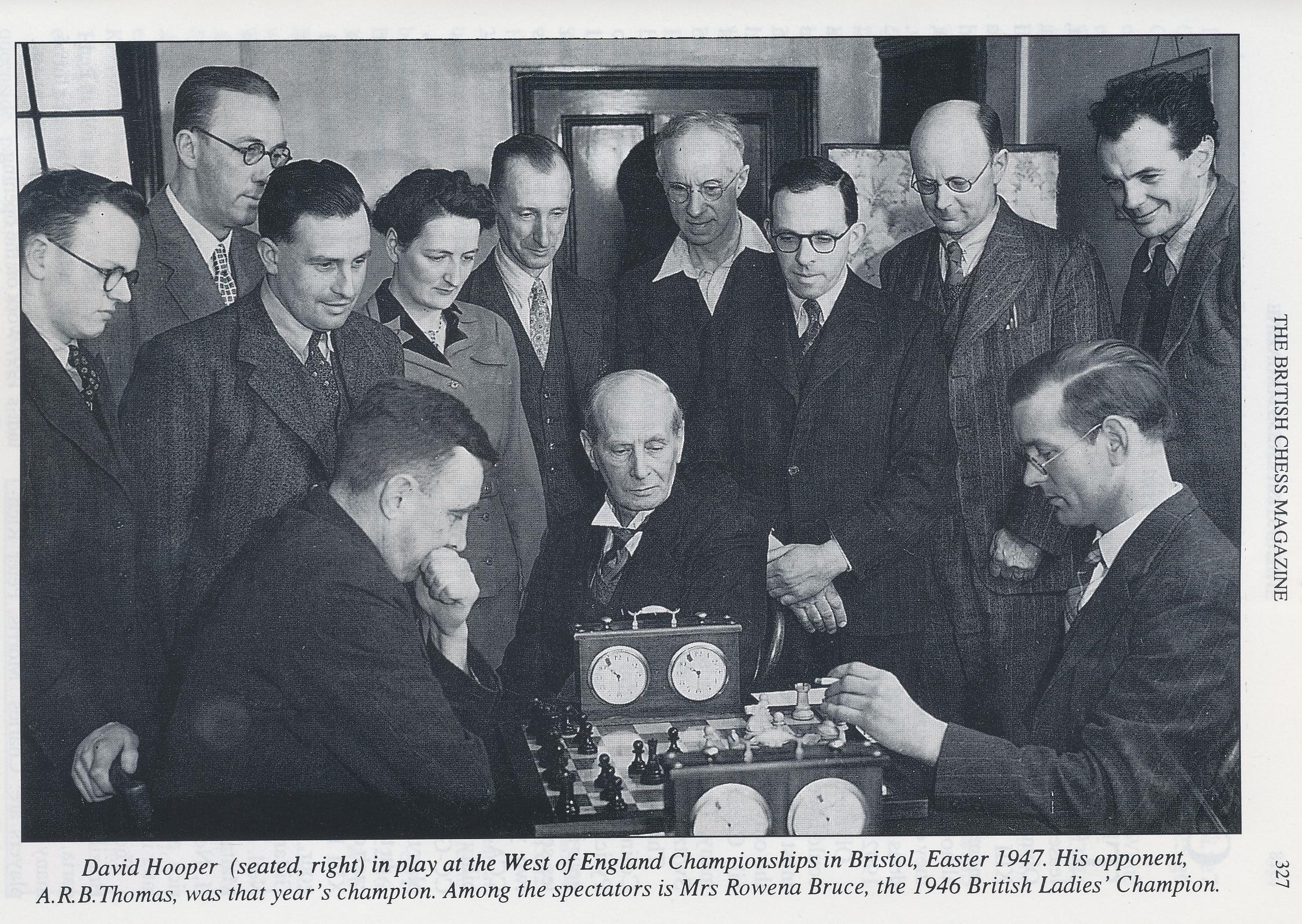
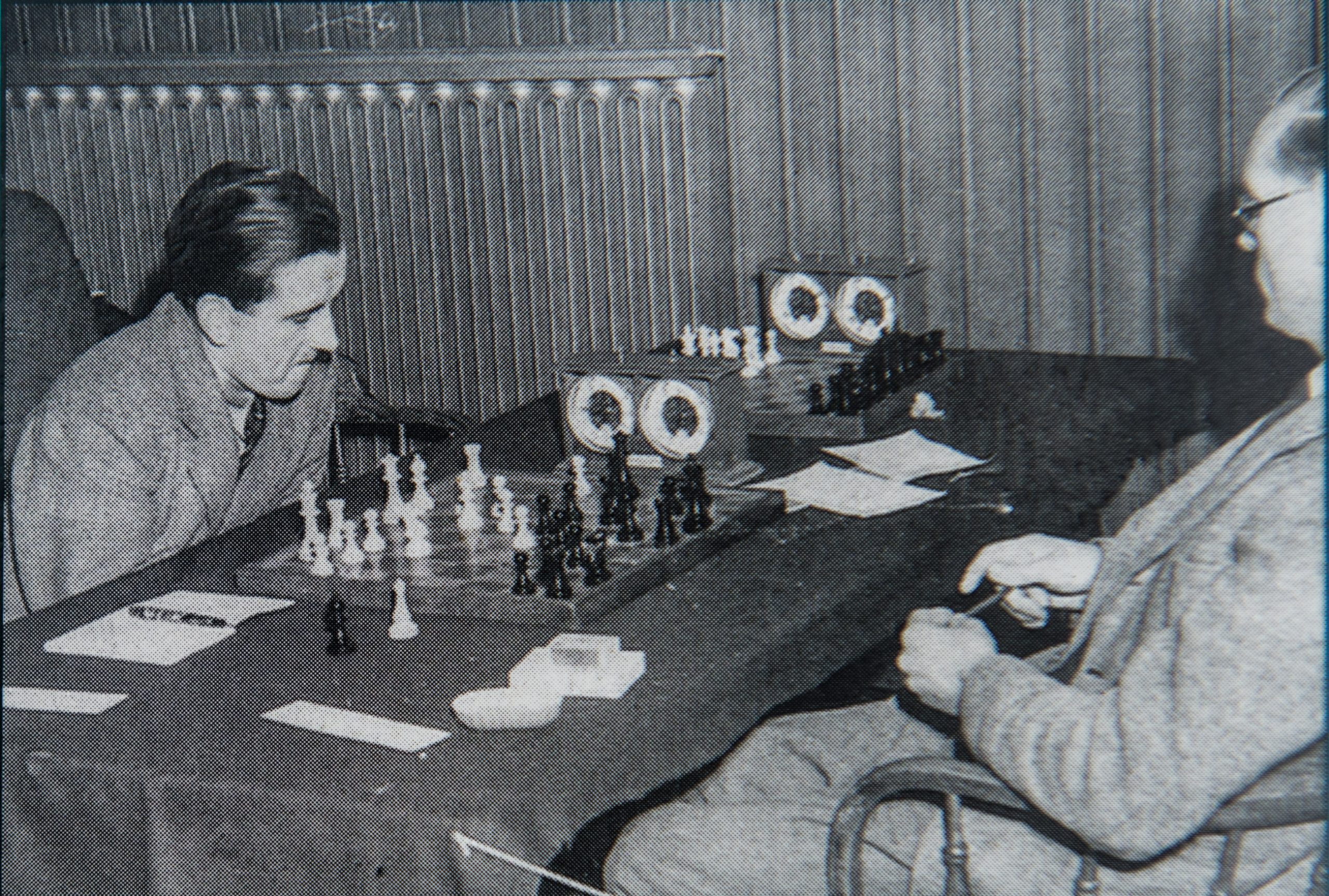
David Hooper (seated right) in play at the West of England Championships in Bristol, Easter, 1947. His opponent , ARB Thomas , was that year's champion. Among the spectators is Mrs. Rowena Bruce, the 1946 British Ladies' Champion. BCM, Volume 118, #6, p.327. The others in the photo are L - R: H. V. Trevenen; H. Wilson-Osborne (WECU President); R. A. (Ron) Slade; Rowena Bruce; Ron Bruce; H. V. (Harry) Mallison; Chris Sullivan; C. Welch (Controller); F. E. A. (Frank) Kitto.
David Hooper (seated right) in play at the West of England Championships in Bristol, Easter, 1947. His opponent , ARB Thomas , was that year’s champion. Among the spectators is Mrs. Rowena Bruce, the 1946 British Ladies’ Champion. BCM, Volume 118, #6, p.327. The others in the photo are L – R: H. V. Trevenen; H. Wilson-Osborne (WECU President); R. A. (Ron) Slade; Rowena Bruce; Ron Bruce; H. V. (Harry) Mallison; Chris Sullivan; C. Welch (Controller); F. E. A. (Frank) Kitto.

Leonard Barden kindly provided us with these memories of David:

“He liked to drive very fast while keeping up a stream of talk with his passenger. I recall his transporting me to the 1950 British Championship in Buxton and feeling in a state of low-key terror the whole journey. When we reached a sign Buxton 30 I felt a great sense of relief that the ordeal was nearly over. Returning two weeks later, some miles down the road we passed Milner-Barry and Alexander in a small car, slowly and carefully driven by M-B whose head nearly reached the roof. As we swept by David gave a celebratory hoot.

I thought this was just me being unduly nervous, but years later Ken Whyld told me he felt the same as a Hooper passenger and that so did most others. David was actually very safe and I don’t think he ever had an accident.

David worked in Middle East for some years and was the chief architect for the construction of a new airport at Aden.

A Guide to Chess Endings was 90% written by David, with chapters then looked over by Euwe and his chess secretary Carel van den Berg. All David’s endgame books are lucidly written and it is a pity where they are not available in algebraic.

When The Unknown Capablanca was published I asked for and received from David an inscribed copy for Nigel Short‘s ninth birthday., which I presented to him personally at an EPSCA team event. Curious to know how it was received, I phoned Nigel’s father (David) a couple of days later and was informed “He’s already on to Capa’s European Tour” (which is I think about 100 pages into the book).” – Thanks Leonard!

Ken Whyld wrote an obituary which appeared in British Chess Magazine, Volume 118 (1998), Number 6, page 326 as follows :

DAVID VINCENT HOOPER died on 3rd May this year in a nursing home in Taunton. He had been in declining health for some months. Born in Reigate, 31st August 1915, his early chess years were with the Battersea CC and Surrey.

David Hooper (left) in conversation with Alan Phillips. Location and photographer unknown.

He won the (ed. Somerset) County Championship three times, and the London Championship in 1948. His generation was at its chess peak in the years when war curtailed opportunities, but he won the British Correspondence Championship in 1944.

[pgn]
[Event “ENG-ch corr”]
[Site “England”]
[Date “1943.??.??”]
[Round “?”]
[White “Bonham, Reginald”]
[Black “Hooper, David Vincent”]
[Result “0-1”]
[ECO “D04”]
[Annotator “British Chess News”]
[PlyCount “80”]
[EventDate “1943.??.??”]
[EventType “tourn (corr)”]
[EventRounds “9”]
[EventCountry “ENG”]
[SourceTitle “Corr 2000”]
[Source “ChessBase”]
[SourceDate “2000.04.19”]
[SourceVersion “1”]
[SourceVersionDate “2000.04.19”]
[SourceQuality “1”]

{[%evp 0,80,19,31,14,30,28,18,12,2,25,23,23,33,22,16,10,13,11,14,10,8,9,12,15,
-5,-2,-3,1,-3,-9,-12,-8,-15,-16,-121,-138,-107,-84,-125,-79,-114,-135,-140,
-120,-122,-108,-72,-116,-109,-115,-105,-113,-94,-92,-121,-143,-133,-141,-191,
-64,-101,-81,-64,0,-83,-91,-141,-141,-57,-57,-90,-53,-47,-50,-48,-45,-533,-534,
-29989,-534,-544,-544]} 1. d4 Nf6 2. Nf3 d5 3. e3 Bf5 4. Bd3 e6 5. Bxf5 exf5 6.
Qd3 Qc8 7. c4 dxc4 8. Qxc4 Bd6 9. b3 Nbd7 10. Bb2 O-O 11. O-O c6 12. Nc3 Nb6
13. Qe2 Nbd5 14. Nxd5 Nxd5 15. Ne5 Re8 16. Qf3 Qe6 17. g4 fxg4 18. Nxg4 f6 19.
h3 a5 20. Rfe1 Nb4 21. Re2 a4 22. e4 axb3 23. axb3 Rxa1+ 24. Bxa1 f5 25. Ne5
fxe4 26. Rxe4 Nd5 27. Rg4 Rf8 28. Qg3 Qh6 29. Bb2 Rf5 30. Qd3 Rh5 31. h4 Nf6
32. Qc4+ Nd5 33. Qa4 Qd2 34. Qa8+ Bf8 35. Qc8 Rh6 36. Nd7 Qd1+ 37. Kh2 Qf3 38.
Ba3 Qxf2+ 39. Kh3 Qf3+ 40. Kh2 Qe2+ 0-1
[/pgn]

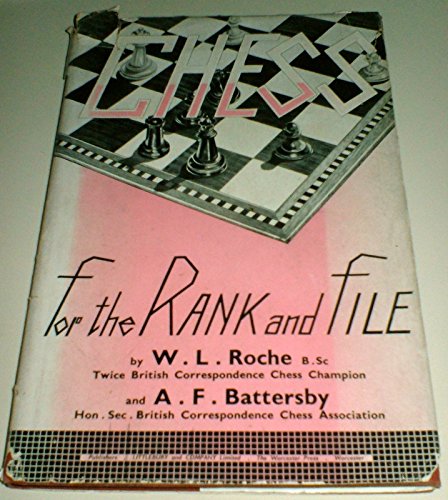
His games from that event are to be found in Chess for Rank and File by Roche and Battersby.

Chess for the Rank and File

Also at that time, he won the 1944 tournament at Blackpool, defeating veteran Grandmaster Jacques Mieses.

[pgn]
[Event “Blackpool Premier”]
[Site “Blackpool”]
[Date “1944.07.20”]
[Round “4”]
[White “Hooper, David Vincent”]
[Black “Mieses, Jacques”]
[Result “1-0”]
[ECO “A52”]
[Annotator “British Chess News”]
[PlyCount “65”]
[EventDate “1944.07.17”]
[EventType “tourn”]
[EventRounds “5”]
[EventCountry “ENG”]
[SourceTitle “EXT 2019”]
[Source “ChessBase”]
[SourceDate “2018.10.10”]
[SourceVersion “1”]
[SourceVersionDate “2018.10.10”]
[SourceQuality “1”]

{[%evp 0,65,19,31,14,-14,23,5,17,11,29,14,21,12,19,23,23,13,5,16,36,-19,-19,
-43,6,4,16,8,1,2,22,17,37,31,66,69,43,46,33,43,101,46,142,175,186,210,221,237,
265,210,261,244,277,271,285,183,172,257,254,268,265,267,281,235,615,644,648,
646]} 1. d4 Nf6 2. c4 e5 {Mieses style was characterised by high levels of
optimism.} 3. dxe5 Ng4 4. Bf4 Nc6 5. Nf3 Bb4+ 6. Nc3 ({In 2021 the mainline is
} 6. Nbd2 Qe7 7. e3 Ngxe5 8. Nxe5 Nxe5 9. Be2 O-O 10. O-O Bxd2 11. Qxd2 d6 12.
b4 b6 13. c5 Bb7 14. cxd6 cxd6 15. Rfd1 Rfd8) 6… Qe7 7. Qd5 {Echoes of the
less reputable Englund Gambit} f6 8. exf6 Nxf6 9. Qd3 Ne4 10. e3 d6 11. Nd2 Bf5
12. Ndxe4 Bxe4 13. Qd2 {[#]} O-O $146 (13… g5 14. Bg3 h5 15. h3 Bg6) 14.
O-O-O Qf6 15. f3 Bg6 16. Bg3 {[#]} Qxc3+ $1 {Utilising the Boden’s mate theme.}
17. bxc3 (17. Qxc3 Bxc3 18. bxc3 $16) 17… Ba3+ 18. Qb2 Bxb2+ 19. Kxb2 Rae8
20. e4 $16 Ne5 $6 21. c5 $1 dxc5 22. Rd5 Nf7 23. Bxc7 $18 (23. Rxc5) 23… b6
24. Bc4 h6 25. Rd7 Kh7 26. Rhd1 a5 27. Bd6 Ne5 28. Bxe5 Rxe5 29. Rb7 Rg5 30.
Rd2 Rf6 $2 (30… h5) 31. Rb8 Re5 (31… Bf7) 32. Bg8+ Kh8 33. Rdd8 {and Black
resigned.} 1-0
[/pgn]

David was most active in the decade that followed, playing five times in the British Championship.

[pgn]
[Event “British CF-36 Championship”]
[Site “Felixstowe/ Suffolk”]
[Date “1949.08.15”]
[Round “7.1”]
[White “Hooper, David Vincent”]
[Black “Golombek, Harry”]
[Result “1-0”]
[ECO “B13”]
[Annotator “British Chess News”]
[PlyCount “83”]
[EventDate “1949.08.08”]
[EventType “swiss”]
[EventRounds “11”]
[EventCountry “GBR”]
[SourceTitle “EXT 2018”]
[Source “ChessBase”]
[SourceDate “2017.10.13”]
[SourceVersion “1”]
[SourceVersionDate “2017.10.13”]
[SourceQuality “1”]

{[%evp 0,83,19,31,68,48,60,46,46,22,31,23,34,34,45,56,35,42,40,35,20,18,18,9,8,
0,-3,0,58,30,44,14,3,-6,9,24,28,27,27,26,27,27,64,52,67,53,62,74,57,49,68,53,
90,67,93,79,76,82,91,76,91,93,102,75,92,84,105,86,112,40,71,72,103,64,86,72,92,
66,133,135,341,350,356,301,293,306]} 1. e4 c6 2. d4 d5 3. exd5 cxd5 4. Bd3 Nc6
5. c3 Nf6 6. Bf4 g6 (6… Bg4 7. Qb3 Qd7 8. Nd2 e6 9. Ngf3 Bxf3 10. Nxf3 Bd6
11. Bxd6 Qxd6 12. O-O O-O 13. Rae1) 7. Nf3 Bg7 8. h3 O-O 9. O-O Nh5 (9… Bf5
10. Bxf5 gxf5 11. Ne5 e6 12. Nd2 Nxe5 13. Bxe5) 10. Bh2 Bh6 11. Re1 Nf4 12. Bf1
Qd6 $146 13. Nbd2 Qf6 14. Nb3 $16 Rd8 15. Ne5 (15. Bb5) 15… Nxe5 16. Rxe5 Ne6
17. Nc1 Bf4 18. Bxf4 Nxf4 19. Nd3 Nxd3 20. Bxd3 Be6 21. Qe2 Rac8 22. Rf1 Qf4
23. Re1 Rc6 24. g3 Qf6 25. h4 Kh8 26. Qe3 Rg8 27. Bf1 $18 Rd6 28. Bg2 b5 29.
Bf1 Rb6 30. a3 a6 31. Bd3 a5 32. Bf1 Rb7 33. Bg2 Rd7 34. Rg5 $6 (34. h5) 34…
Kg7 35. Re5 Kh8 36. f4 Qg7 37. Kf2 h5 38. Bf3 {[#]} Qh6 $2 39. Qe2 (39. Rxe6 $1
fxe6 40. Qxe6 Rgd8 41. Qb6) 39… Bg4 $2 40. Bxg4 hxg4 41. Rxe7 Rxe7 42. Qxe7 {
Sources: Western Morning News, 26 November 1949; Hooper’s notebook.
Contributor: Kevin Thurlow} 1-0
[/pgn]

His highest place there was at Nottingham 1954, when, after leading in the early stages, he finished half a point behind the joint champions, Leonard Barden and Alan Phillips.

David was in the British Olympic team at Helsinki 1952, and in the same year accidentally played top board for England in one of the then traditional weekend matches against the Netherlands. British Champion Klein took offence at a Sunday Times report of his draw with former World Champion Dr. Euwe on the Saturday and refused to play on Sunday. Thus David was drafted in to meet Euwe, and acquitted himself admirably. Even though he lost, the game took pride of place in that month’s
BCM.

Alan Phillips plays David Hooper on August 20th 1954 in round five of the British Championships in Nottingham, photographer unknown

[pgn]
[Event “Match/Nation ENG-NED”]
[Site “London”]
[Date “1952.06.01”]
[Round “2.1”]
[White “Hooper, David Vincent”]
[Black “Euwe, Max”]
[Result “0-1”]
[ECO “E29”]
[Annotator “British Chess News”]
[PlyCount “58”]
[EventDate “1952.05.31”]
[EventType “team-match”]
[EventRounds “2”]
[EventCountry “ENG”]
[SourceTitle “EXT 1999”]
[Source “ChessBase”]
[SourceDate “1998.11.16”]
[SourceVersion “1”]
[SourceVersionDate “1998.11.16”]
[SourceQuality “1”]
[WhiteTeam “England”]
[BlackTeam “Netherlands”]
[WhiteTeamCountry “ENG”]
[BlackTeamCountry “NED”]

{[%evp 0,58,19,31,25,-16,-12,2,30,29,36,-15,-2,-1,-1,-29,-26,-12,-12,-12,-12,6,
3,-12,-21,-21,18,-86,-58,-78,-78,-147,-58,-50,-49,-49,17,19,29,-36,21,-31,37,
21,23,23,23,0,30,83,56,74,-75,-61,0,-154,-173,-197,0,-224,-209]} 1. d4 Nf6 2.
c4 e6 3. Nc3 Bb4 4. e3 O-O 5. a3 Bxc3+ 6. bxc3 b6 7. Ne2 Bb7 8. Ng3 c5 9. Bd3
Nc6 10. O-O d6 11. f4 g6 $146 (11… Ba6) 12. Ra2 Qd7 13. f5 exf5 14. Nxf5 gxf5
15. Bxf5 Qe7 16. e4 $11 Ne8 17. Bh6 f6 18. Bxf8 Kxf8 19. g4 $6 (19. Raf2) 19…
Bc8 20. Bxc8 Rxc8 21. g5 Qxe4 22. gxf6 $16 {[#]} cxd4 23. Re2 (23. Rg2) 23…
Qh4 24. Rg2 Rc7 25. Qf3 (25. Rg4) 25… Ne5 $17 26. Qa8 Rf7 27. cxd4 Qxd4+ 28.
Kh1 Ng4 $11 {[#]} 29. h3 $2 (29. Re2) 29… Ngxf6 0-1
[/pgn]

In the following game, played in the Hastings Premier l95l-2, he found an improvement on Botvinnik’s play against Bronstein in game 17 of their 1951 match, when 7.Ng3 was played because it was thought that after 7.Nf4 d5 it was necessary to play 8 Qb3.

[pgn]
[Event “Christmas Congress 1951/52-27 Premier”]
[Site “Hastings”]
[Date “1951.12.28”]
[Round “2”]
[White “Hooper, David Vincent”]
[Black “Donner, Jan Hein”]
[Result “1-0”]
[ECO “E45”]
[Annotator “British Chess News”]
[PlyCount “53”]
[EventDate “1951.12.27”]
[EventType “tourn”]
[EventRounds “9”]
[EventCountry “ENG”]
[SourceTitle “EXT 1999”]
[Source “ChessBase”]
[SourceDate “1998.11.16”]
[SourceVersion “1”]
[SourceVersionDate “1998.11.16”]
[SourceQuality “1”]

{[%evp 0,53,19,31,14,-14,-11,4,33,33,34,38,29,17,28,26,60,44,35,-17,-17,-17,
-17,37,0,-56,52,63,517,499,865,887,887,665,945,447,574,443,433,261,271,244,275,
308,359,373,376,346,347,327,394,387,623,768,1010,945]} 1. d4 Nf6 2. c4 e6 3.
Nc3 Bb4 4. e3 b6 5. Nge2 Ba6 6. a3 Be7 7. Nf4 d5 8. cxd5 Bxf1 9. dxe6 Ba6 10.
exf7+ Kxf7 11. Qb3+ (11. e4 c5 12. e5 Qxd4 13. e6+) 11… Ke8 12. Ne6 $15 {[#]}
Qd6 $6 $146 (12… Qd7 13. Nxg7+ Kd8 14. Ne6+ Kc8 15. d5) 13. e4 $16 Bc8 $2 14.
Nb5 $18 Qc6 15. Nbxc7+ Kd7 16. d5 Qb7 {[#]} 17. Nxa8 (17. Qb5+ Nc6 18. Bf4)
17… Bd6 18. Nac7 (18. O-O) 18… Bxc7 19. O-O Ke7 20. Nxc7 Qxc7 21. Bg5 Qe5
22. f4 Qd4+ 23. Kh1 Kf7 24. Rad1 Qxe4 25. Rfe1 Bg4 26. Rxe4 Bxd1 27. Qb4 1-0
[/pgn]

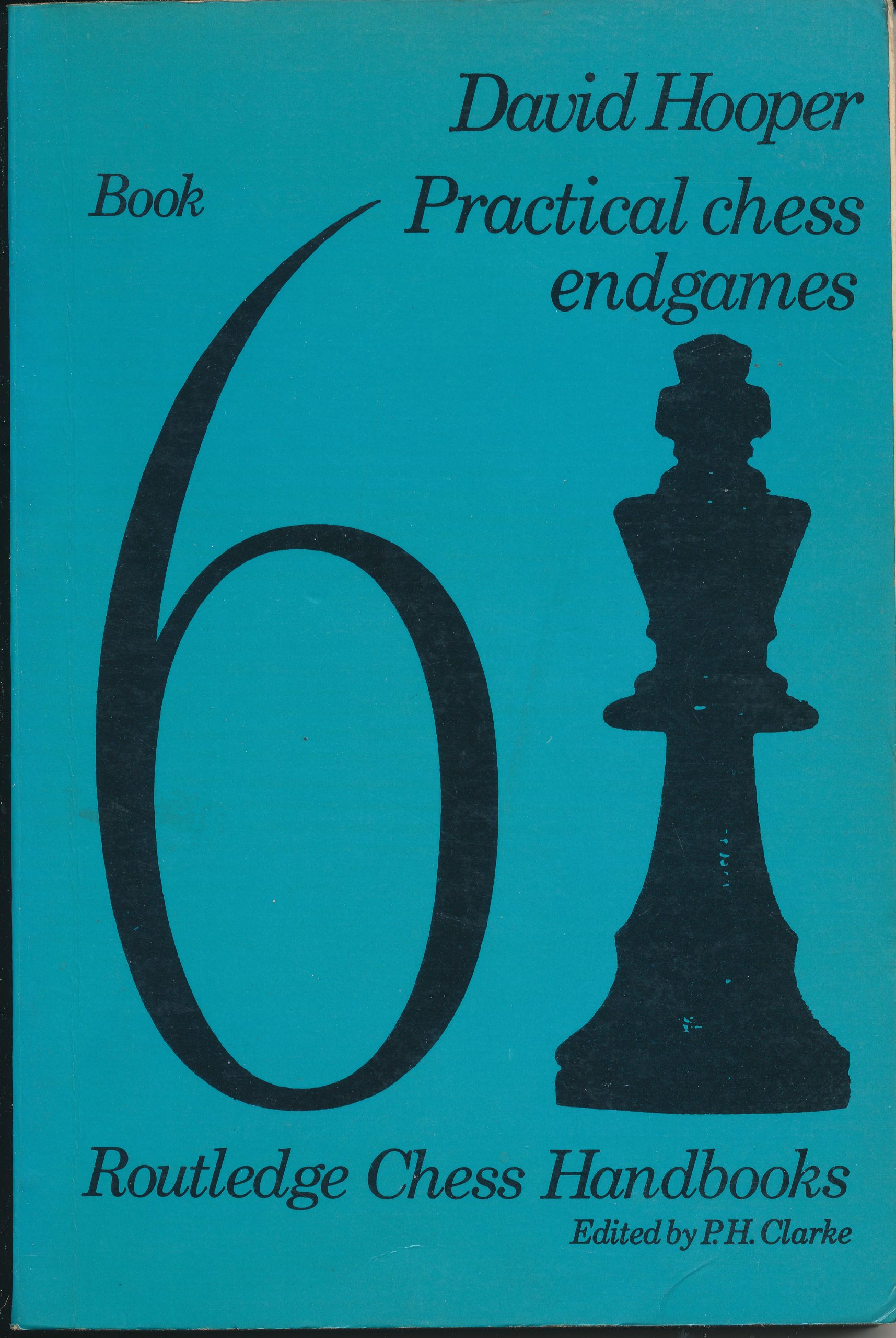
In his profession as architect David worked in the Middle East for some years from the mid-1950s, and when he returned to England he made his mark as a writer. His Practical Chess Endgames

Practical Chess Endgames (Chess Handbooks), David Hooper, Routledge & Kegan Paul, London, 1968, ISBN 0 7100 5226 X

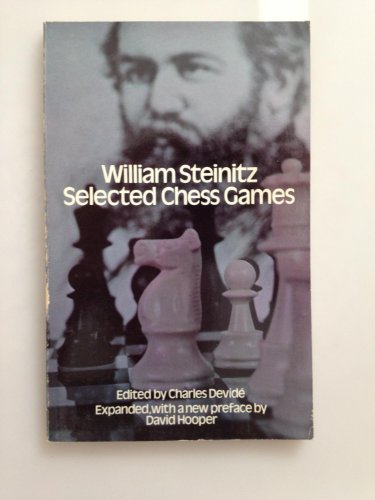
has an enduring appeal. Two of his books appeared in the Wildhagen biographical games series on Steinitz, and Capablanca. The last was written jointly with Gilchrist.

William Steinitz : Selected Chess Games, David Hooper

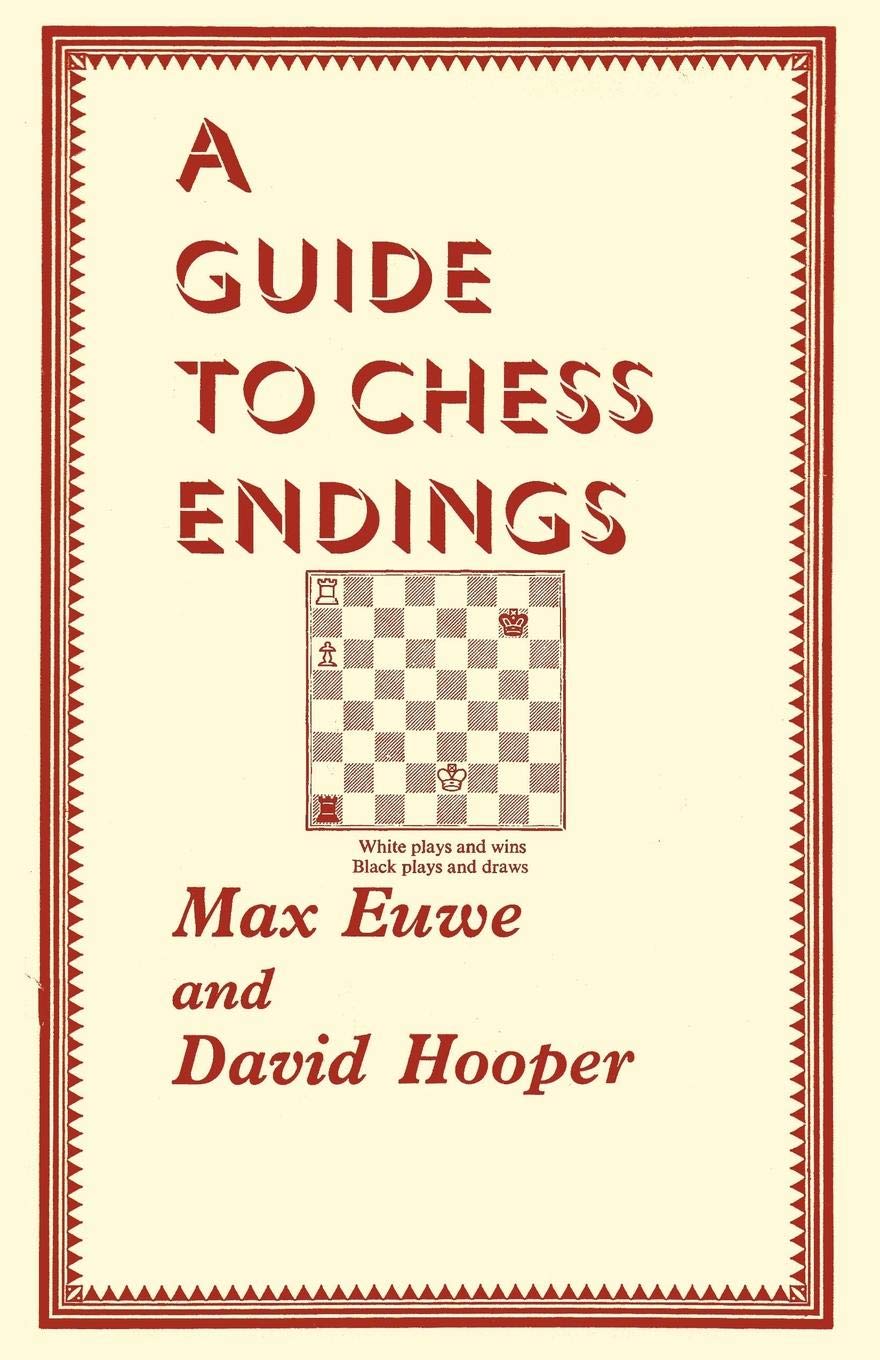
With Euwe he wrote A Guide to Chess Endings;

A Guide to Chess Endings, Dover (1976 reprint), ISBN 0-486-23332-4

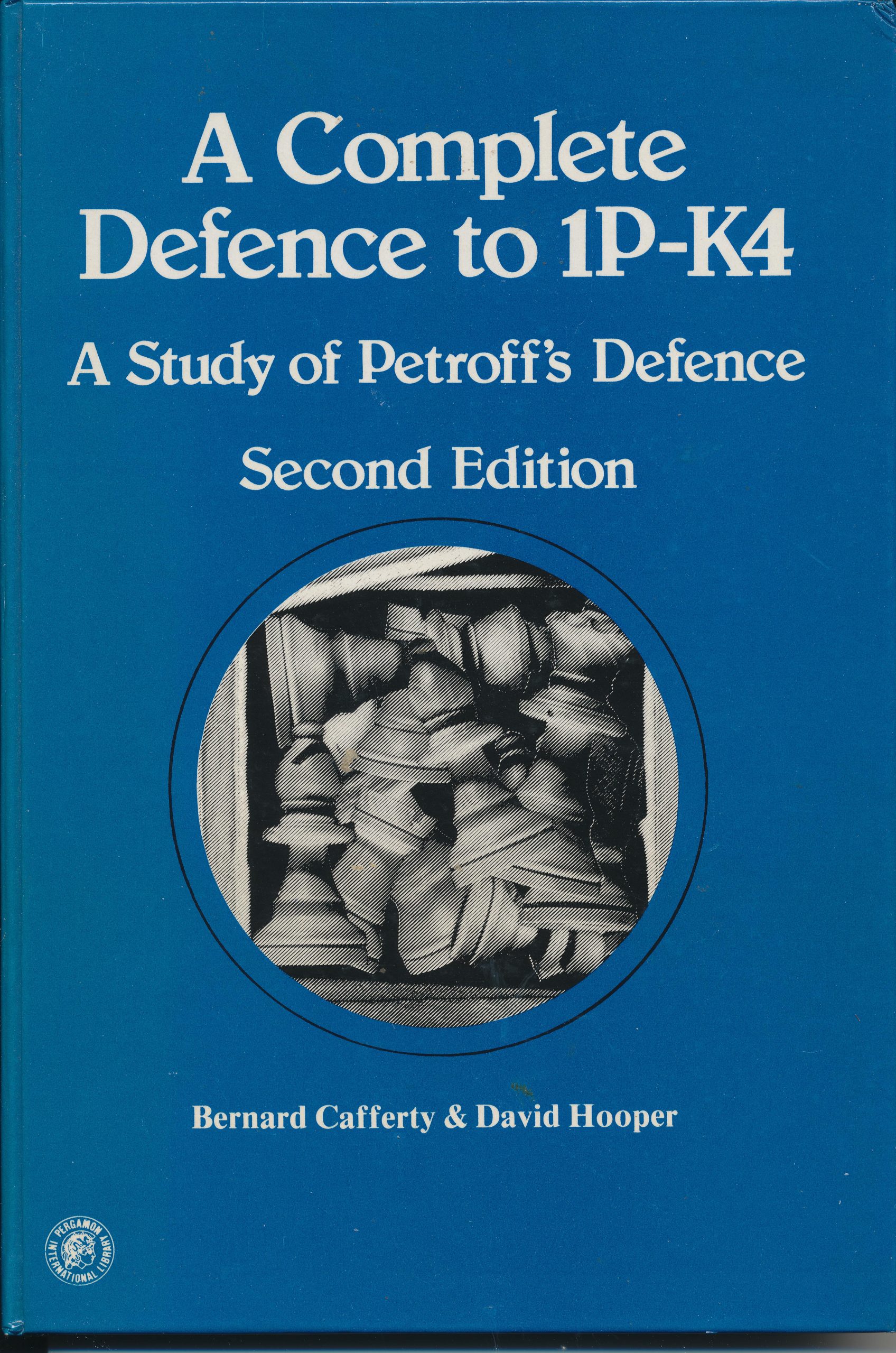
with Cafferty, A Complete Defence to 1.e4;

A Complete Defence to 1.P-K4 A Study of Petroff's Defence, Bernard Cafferty & David Hooper, Pergamon Press, 1967, ISBN 0 08 024089 5
A Complete Defence to 1.P-K4 A Study of Petroff’s Defence, Bernard Cafferty & David Hooper, Pergamon Press, 1967, ISBN 0 08 024089 5

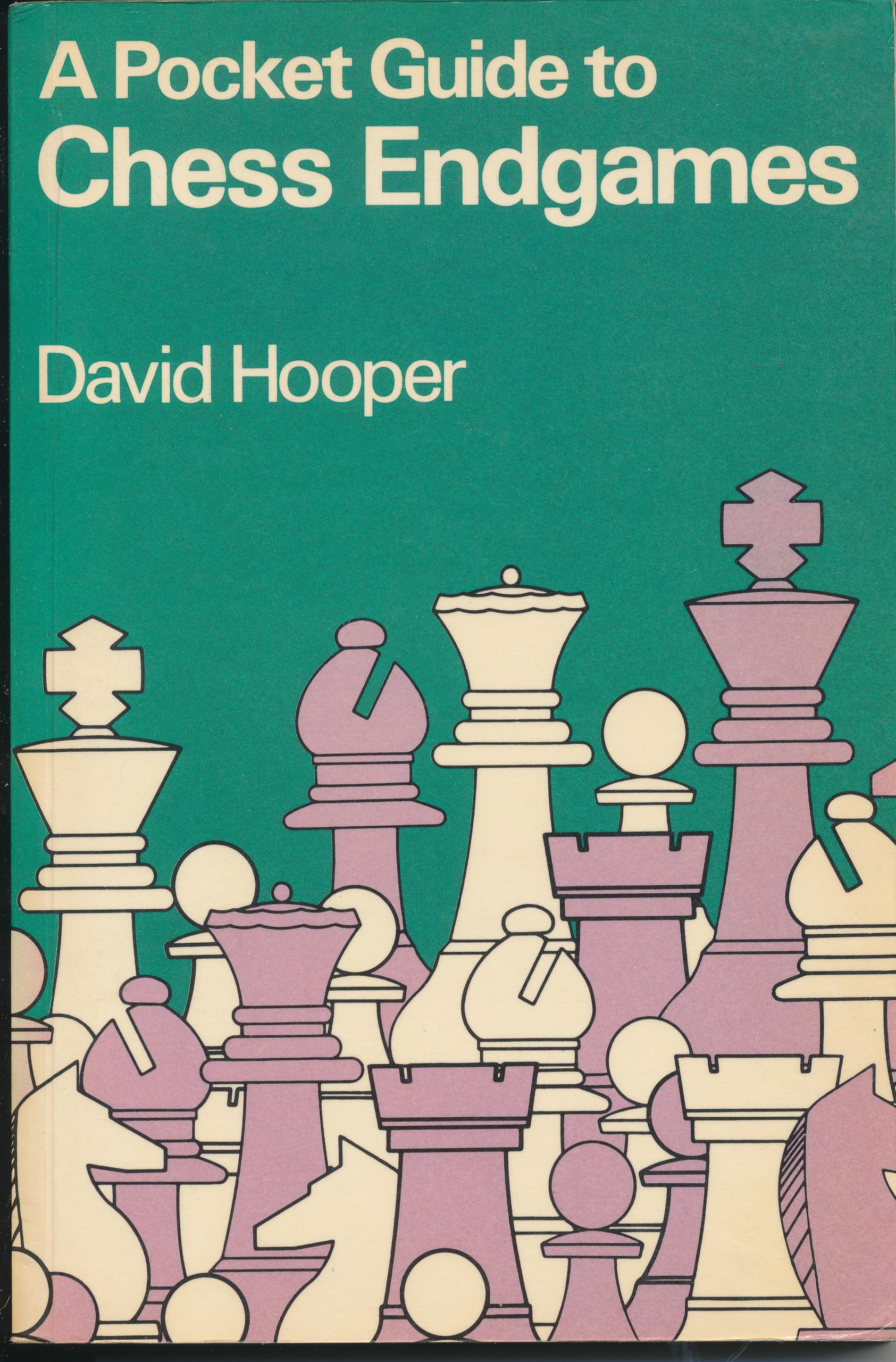
A Pocket Guide to Chess Endgames;

A Pocket Guide to Chess Endgames, David Hooper, Bell & Hyman Limited, London, 1970, ISBN 0 7135 1761 1

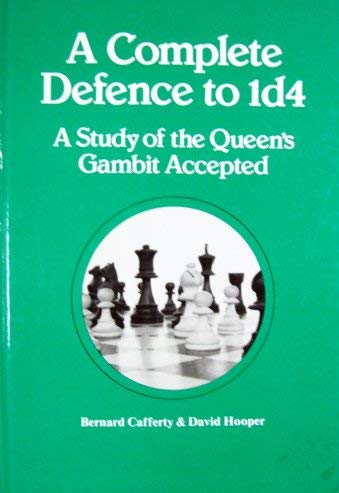
A Complete Defence to 1.d4;

A Complete Defence to 1d4: A Study of the Queen's Gambit Accepted, Bernard Cafferty & David Hooper, Pergammon Press, ISBN 0-08-024102-6
A Complete Defence to 1d4: A Study of the Queen’s Gambit Accepted, Bernard Cafferty & David Hooper, Pergamon Press, ISBN 0-08-024102-6

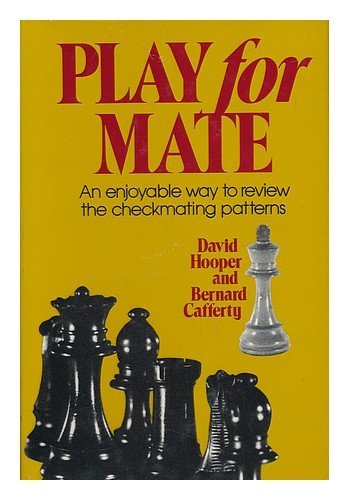
and Play for Mate;

Play for Mate (1990), DV Hooper and Bernard Cafferty, ISBN-13: 978-0713464740

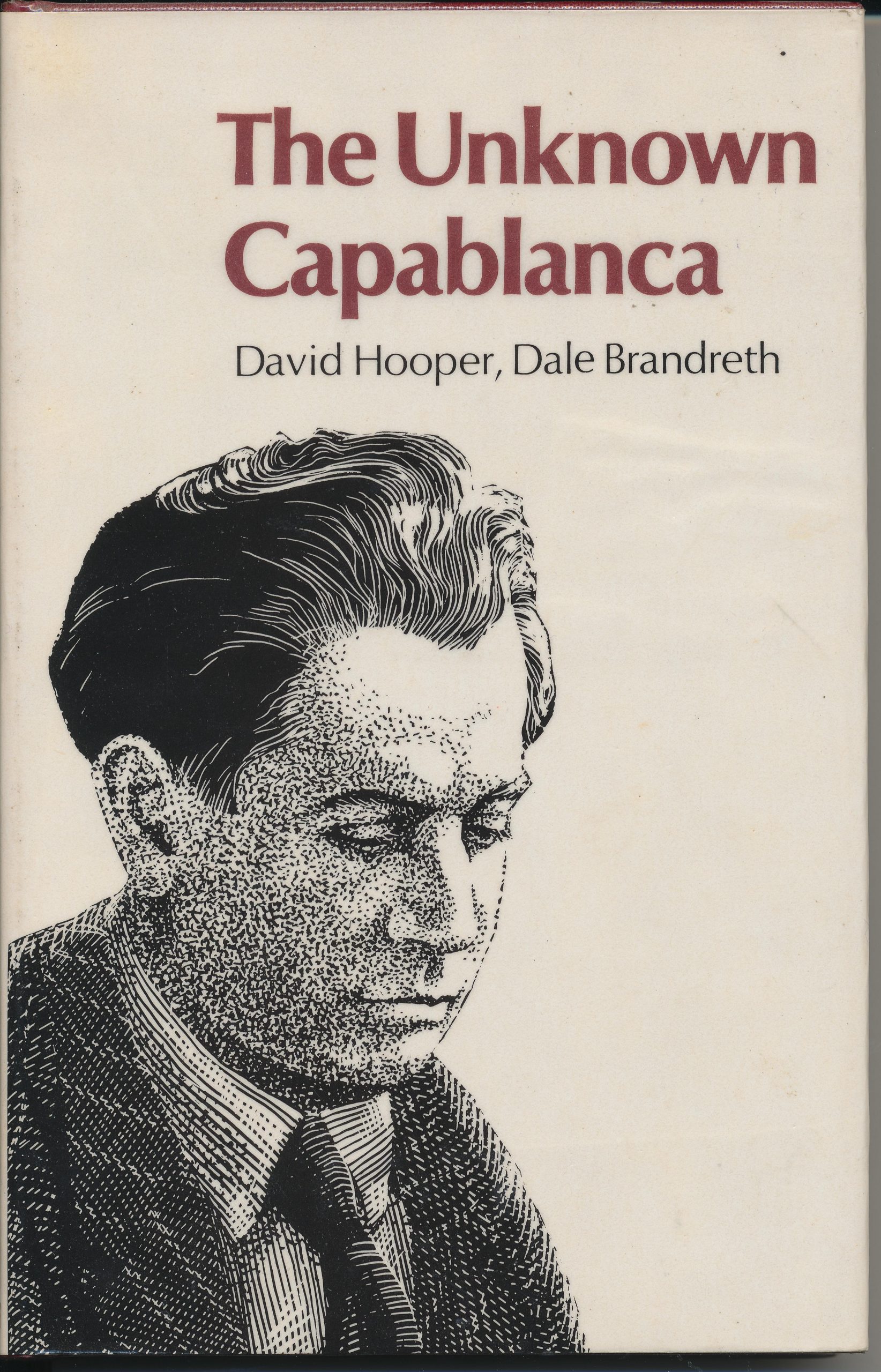
with Brandreth The Unknown Capablanca,

The Unknown Capablanca, David Hooper & Dale Brandreth, Batsford, London, 1975, ISBN, 0 7134 2964

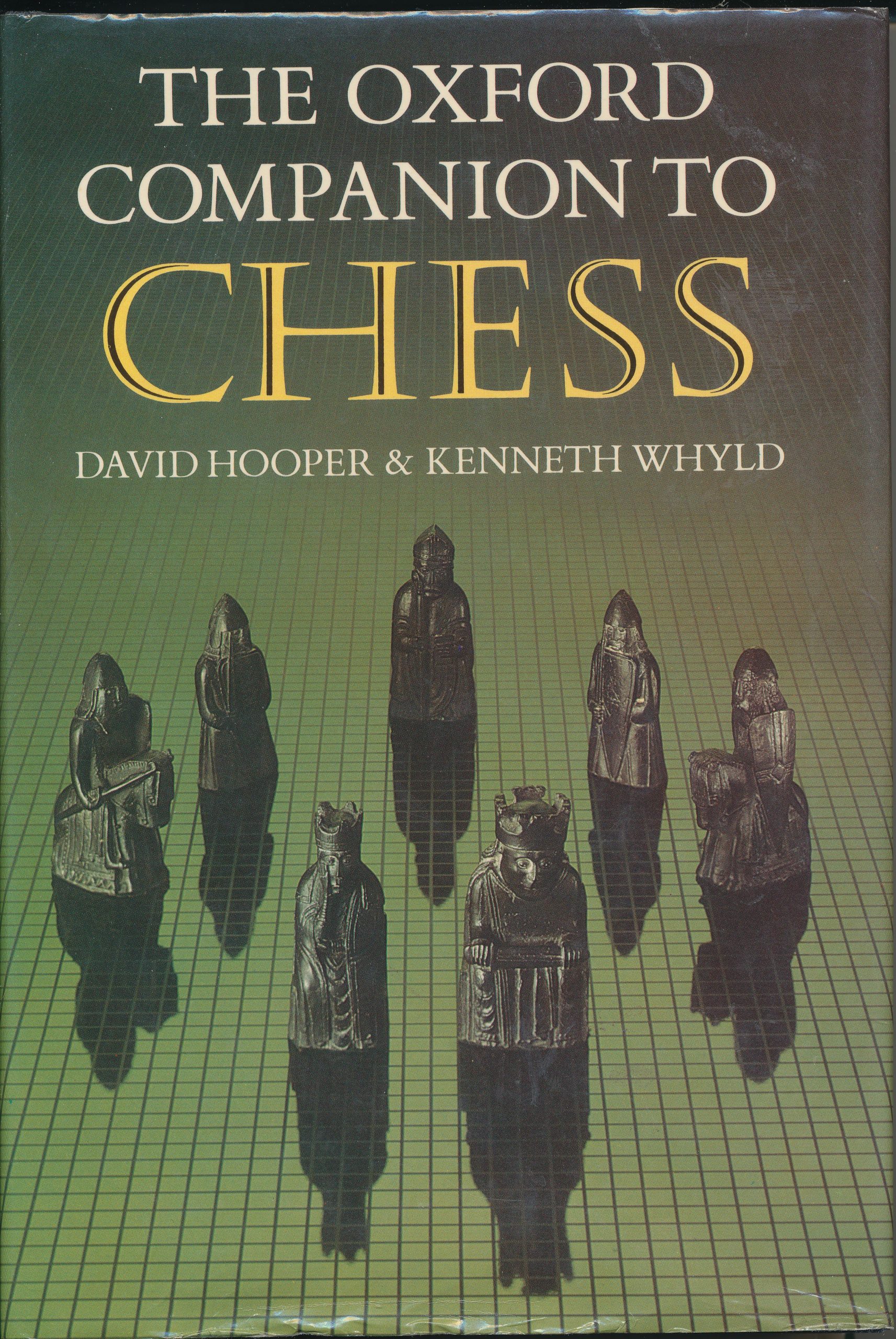
and with Ken Whyld, The Oxford Companion to Chess.

The Oxford Companion to Chess, 1st Edition, David Hooper & Ken Whyld, Oxford University Press, 1984, ISBN 0 19 217540 8

Ken Whyld

From The Encyclopaedia of Chess by Harry Golombek :

British amateur (an architect by profession) whose best result was =5 in the British Championship at Felixstowe 1949 along with, amongst others, Broadbent and Fairhurst.

Hooper abandoned playing for writing about chess and has become a specialist in two distinct areas. He is an expert on the endings and has a close knowledge of the history of chess in the nineteenth century.

His principal works : Steinitz (in German), Hamburg, 1968; A Pocket Guide to Chess Endgames, London 1970.

Here is an interesting article from Edward Winter

Here is his brief Wikipedia entry.

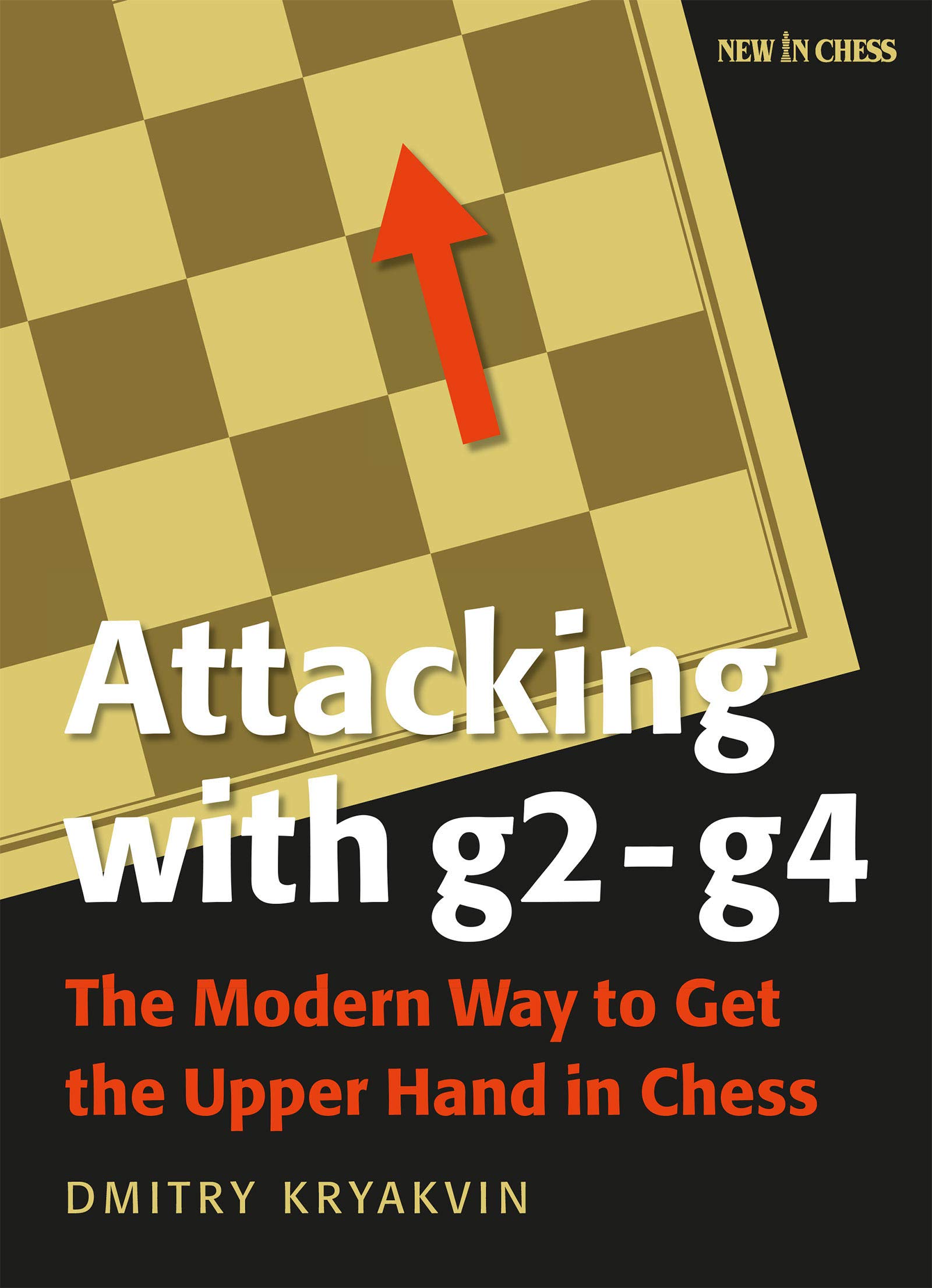
Attacking with g2-g4

Attacking with g2-g4 : Dmitry Kryakvin

Attacking with g2-g4

From the book’s rear cover :

“The secret of its success may be its anti-positional looks. The pawn thrust g2 – g4 is often so counter-intuitive that it’s a perfect way to confuse your opponents and disrupt their position. Ever since World Champion Mikhail Botvinnik started using it to defeat the elite grandmasters of his day, it has developed, on all levels of play, into an ever more popular and attractive way to fight for the initiative.

Grandmaster Dmitry Kryakvin owes a substantial part of his successes as a chess player to the g2 – g4 attack. In this book he shows how it can be used to defeat a number of important Closed Defences: the Dutch, the Queen’s Gambit, the Anti-Nimzo Indian, the King’s Indian and the Slav.

With lots of instructive examples Kryakvin explains the ins and outs of the attack on the g-file: the typical ways to gain tempi and keep the momentum, and the manoeuvres that will maximize your opponent’s problems. After working with this book you will be fully equipped to use this modern battering ram to define the battlefield. You will have fun and win games!”

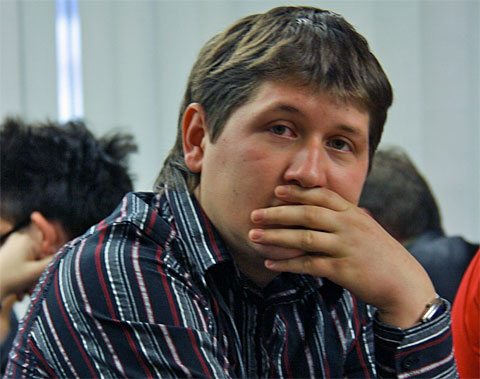
GM Dmitry Kryakvin
GM Dmitry Kryakvin

“Dmitry Kryakvin is an International Grandmaster from Russia and an experienced chess trainer and author.”

A first glance at the title and you might think The Grob / Borg has, as promised, returned (to assimilate everyone). Have no fear, this book suggests deploying g4 somewhat later than move one !

This interesting book has a constant theme : the use of x…g2-g4 as a “battering ram” type move by White in various positions arising from main stream Queen’s pawn openings. They range from as early as move two versus the Dutch Defence

[fen]rnbqkbnr/ppppp1pp/8/5p2/3P2P1/8/PPP1PP1P/RNBQKBNR b KQkq – 0 1[/fen]

to a number of moves later with varying degrees of surprise and effectiveness. The author’s inspiration for this theme comes, perhaps from a surprising but reliable source : the games of Mikhail Moiseyevich Botvinnik.

The author has divided up his content into eight parts (with further sub-chapters) as follows:

  1. Botvinnik’s heritage
  2. The Dutch Defence
  3. The Queen’s Gambit Declined
  4. The Nimzo-Indian Defence
  5. The Anti Nimzo-Indian
  6. The Slav Defence
  7. The King’s Indian Defence
  8. The Grünfeld Indian Defence

Each Part has a significant and interesting introduction establishing the historical context of the opening ideas espoused. For example, Chapter 5 (Attacking with a cast-iron alibi) discusses

[fen]rnbqkbnr/pp4pp/2p1p3/3p1p2/2PP2P1/2N1P3/PP3P1P/R1BQKBNR b KQkq – 0 1[/fen]

an idea of Gerald Abrahams and includes an appreciation of Abrahams himself.This chapter is based around four high quality games analysed in detailing employing the Abrahams idea.

Maybe the most famous early g4 idea is the familiar Shabalov-Shirov Gambit in the Semi-Slav Defence, Meran Variation :

[fen]r1bqk2r/pp1n1ppp/2pbpn2/3p4/2PP2P1/2N1PN2/PPQ2P1P/R1B1KB1R b KQkq – 0 1[/fen]

which the author covers in great detail with ten master games.

One of the more shocking ideas is that of Murey Attack vs the Grünfeld Indian Defence. This is

[fen]rnbqkb1r/ppp1pp1p/5np1/3p4/2PP2P1/2N5/PP2PP1P/R1BQKBNR b KQkq – 0 1[/fen] and features in Part VIII.

As with every recent New in Chess publication high quality paper is used and the printing is clear. The book can easily be laid flat next to the board and does not require weights to prevent it from “self-closing” (a particular bugbear of ours !). Each diagram is clear and the instructional text is (mostly !) typeset in two column format, which, we find, enables the reader to maintain their place easily. Figurine algebraic notation is used throughout and the diagrams are placed adjacent to the relevant text.

So, what we have here is a veritable potpourri of aggressive ideas to spice your White openings. This book is aimed at the player who perhaps plays main lines most of the time and would like a sort of “something for the weekend” addition to their repertoire for those “must win” situations. You will probably win more games with these lines but you might also lose more games. At any rate fewer draws are likely. The ideas are all “sound” at the level normal humans plays and probably all sound in the hands of Magnus Carlsen.

To take a look yourself try the “Look Inside” feature on Amazon. Of course, the book may be purchased from any good chess retailer !

The Kindle format version may be obtained from here

This book is probably not for the London, Torre, Stonewall, Colle system players who like a peaceful start to their games getting the pieces out in routine fashion.

For completeness players of the Black pieces might want to be prepared to face these aggressive lines that might become more fashionable following its publication.

John Upham, Cove, Hampshire, May 2nd 2020

John Upham
John Upham

Book Details :

  • Paperback : 256 pages
  • Publisher: New in Chess (25 Feb. 2020)
  • Language: English
  • ISBN-10: 9056918656
  • ISBN-13: 978-9056918651
  • Product Dimensions: 17.1 x 1.9 x 23.3 cm

Official web site of New in Chess

Attacking with g2-g4

Happy Birthday GM Jonathan Hawkins (01-v-1983)

GM Jonathan Hawkins
GM Jonathan Hawkins

BCN wishes Happy birthday to GM Jonathan Hawkins (01-v-1983)

Here is his Wikipedia entry
Jonathan was Southern Counties (SCCU) champion for the 2014-15 season sharing with Keith Arkell.

Amateur to IM
Amateur to IM
Jonathan Hawkin's FIDE rating over time
Jonathan Hawkin’s FIDE rating over time

[pgn]
[Event “Douglas PokerStars op”]
[Site “Douglas”]
[Date “2014.10.11”]
[Round “8”]
[White “Hawkins, Jonathan J”]
[Black “Marin, Mihail”]
[Result “1-0”]
[ECO “D55”]
[WhiteElo “2533”]
[BlackElo “2583”]
[Annotator “British Chess News”]
[PlyCount “63”]
[EventDate “2014.10.04”]
[EventType “swiss”]
[EventRounds “9”]
[EventCountry “IOM”]
[SourceTitle “CBM 162 Extra”]
[Source “ChessBase”]
[SourceDate “2014.10.17”]
[SourceVersion “1”]
[SourceVersionDate “2014.10.17”]
[SourceQuality “1”]

{[%evp 0,63,16,28,19,-20,5,4,-2,6,42,15,13,-16,17,23,30,35,60,47,38,38,43,53,
45,45,48,39,53,42,42,0,66,6,57,-35,16,45,67,92,95,115,128,109,102,41,126,75,
278,136,252,220,234,234,273,253,282,382,364,369,29993,29994,29995,29996,29997,
29998]} 1. d4 d5 2. c4 e6 3. Nc3 Nf6 4. Nf3 Nbd7 5. Bg5 h6 6. Bh4 Be7 7. e3 O-O
8. Rc1 b6 9. cxd5 exd5 10. Bd3 Bb7 11. O-O c5 12. Qc2 c4 13. Bf5 a6 14. Ne5 b5
15. f3 $146 Re8 16. Kh1 Nf8 {[#]} 17. g4 $5 Bd6 (17… N6h7) 18. f4 Qc7 19. Qg2
$16 b4 20. g5 hxg5 21. Bxg5 N6h7 22. Bh6 $18 Ne6 23. Rg1 Bf8 24. Bxe6 (24. Qh3
Nf6 25. Bg5 Nxg5 26. fxg5 Rxe5 27. dxe5 d4+ 28. e4 $18) 24… fxe6 25. Na4 Ra7
26. Nc5 Ba8 27. Qg6 Qc8 28. Rg3 Ree7 29. Bg5 Re8 $2 {[#]} 30. Rh3 Nxg5 31. fxg5
Bxc5 32. Rf1 1-0

[/pgn]

GM Jonathan Hawkins
GM Jonathan Hawkins

[pgn]
[Event “GBR-ch 98th”]
[Site “Sheffield”]
[Date “2011.08.02”]
[Round “8”]
[White “Hawkins, Jonathan J”]
[Black “Conquest, Stuart”]
[Result “1-0”]
[ECO “E16”]
[WhiteElo “2457”]
[BlackElo “2519”]
[Annotator “British Chess News”]
[PlyCount “91”]
[EventDate “2011.07.24”]
[EventType “swiss”]
[EventRounds “11”]
[EventCountry “ENG”]
[SourceTitle “CBM 143 Extra”]
[Source “ChessBase”]
[SourceDate “2011.08.29”]
[SourceVersion “1”]
[SourceVersionDate “2011.08.29”]
[SourceQuality “1”]

{[%evp 0,91,19,27,40,-16,19,12,18,26,26,9,9,12,6,17,21,34,17,11,47,7,6,2,1,11,
33,25,35,25,33,14,38,8,14,-12,-4,-2,13,2,18,5,25,8,11,16,66,63,69,52,90,31,51,
31,92,123,70,62,33,31,47,62,55,67,56,46,46,46,52,48,98,95,88,95,141,148,127,
143,137,139,147,119,117,138,144,142,140,167,396,452,452,473,466,465]} 1. Nf3 e6
2. c4 b6 3. g3 Bb7 4. Bg2 Nf6 5. d4 Bb4+ 6. Bd2 a5 7. O-O O-O 8. Bf4 Be7 9. Nc3
Ne4 10. Rc1 d6 11. Qd3 Nxc3 12. Rxc3 Ra7 13. h4 Nd7 14. Re1 Qa8 15. Ng5 Nf6 16.
Bxb7 Qxb7 17. Rcc1 h6 18. Nf3 Qe4 19. Red1 a4 20. Ne1 Qa8 21. d5 e5 22. Bd2 b5
23. cxb5 Rb8 24. Rc6 Qb7 25. Ra6 Rxa6 26. bxa6 Qxd5 27. Qxd5 Nxd5 28. Ba5 c6
29. e4 Nf6 30. Bc7 Ra8 31. Bxd6 Bxd6 32. Rxd6 Rxa6 33. Rd8+ Kh7 34. f3 c5 35.
Nd3 Rb6 36. Rc8 Rd6 37. Nxe5 Rd1+ 38. Kf2 Rd2+ 39. Ke3 Rxb2 40. Nxf7 Rxa2 41.
g4 Ra3+ 42. Kf4 Nd7 43. e5 Nb6 44. Rh8+ Kg6 45. Nd6 Nd5+ 46. Kg3 1-0
[/pgn]

GM Jonathan Hawkins
GM Jonathan Hawkins