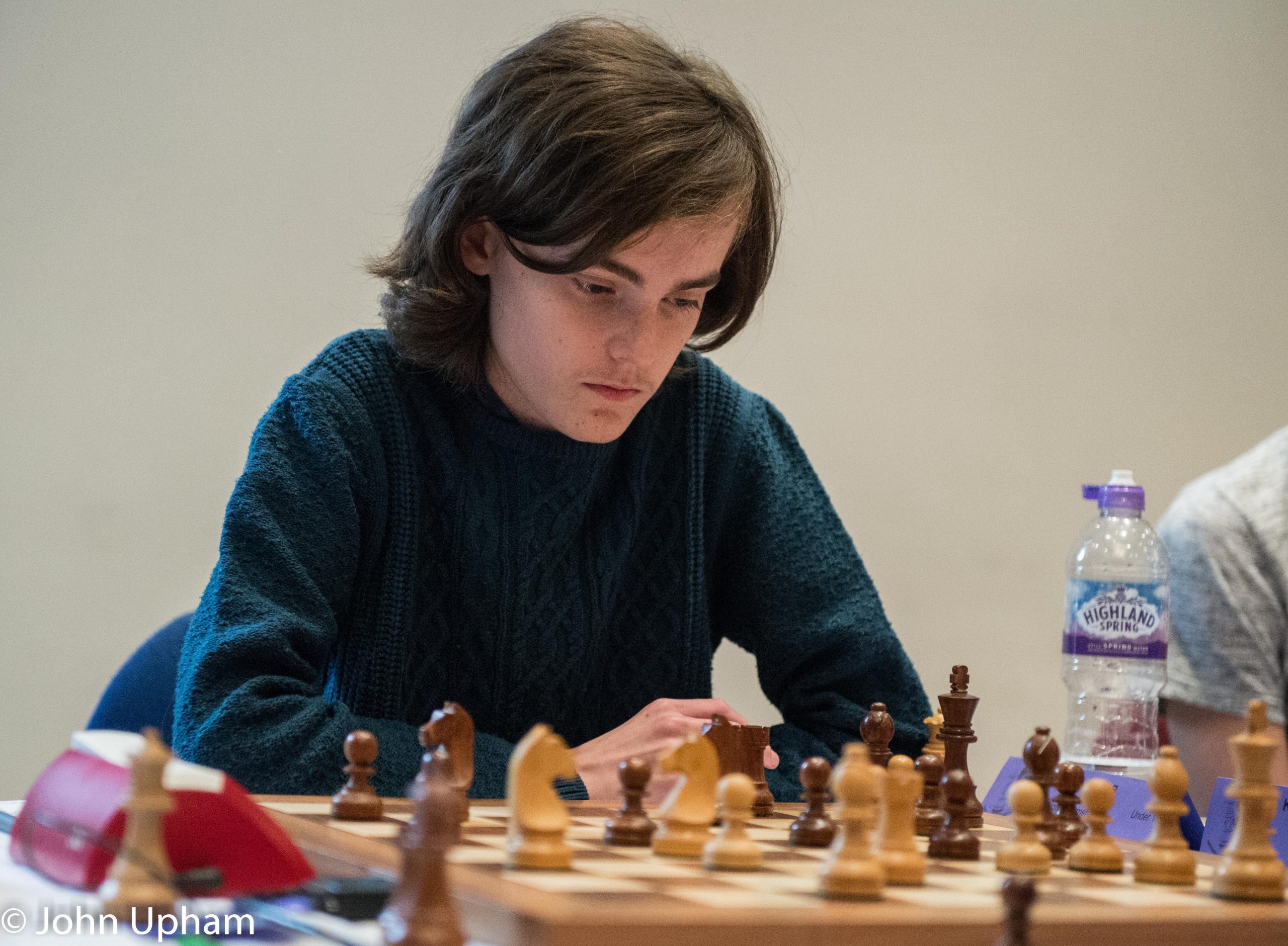
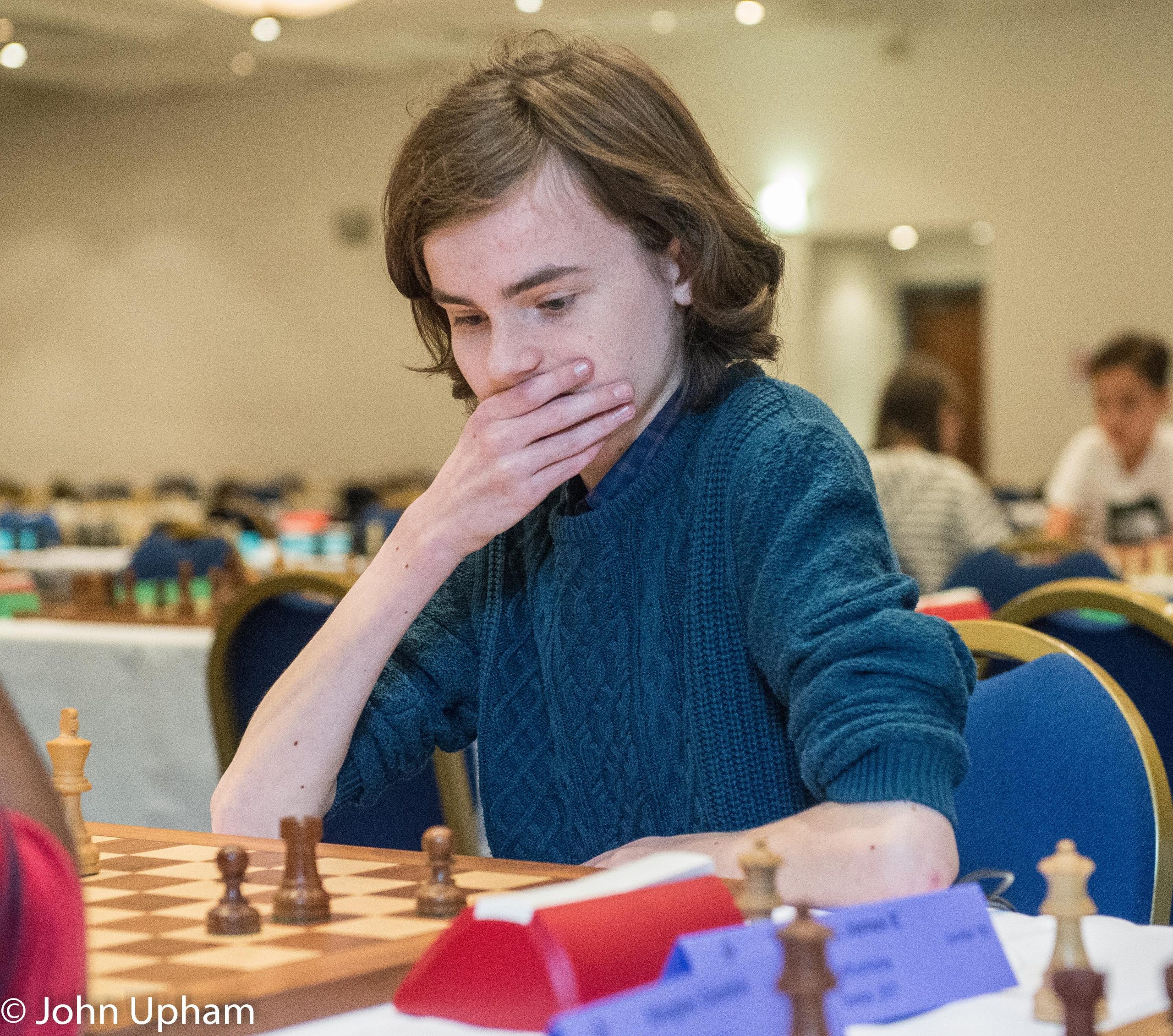
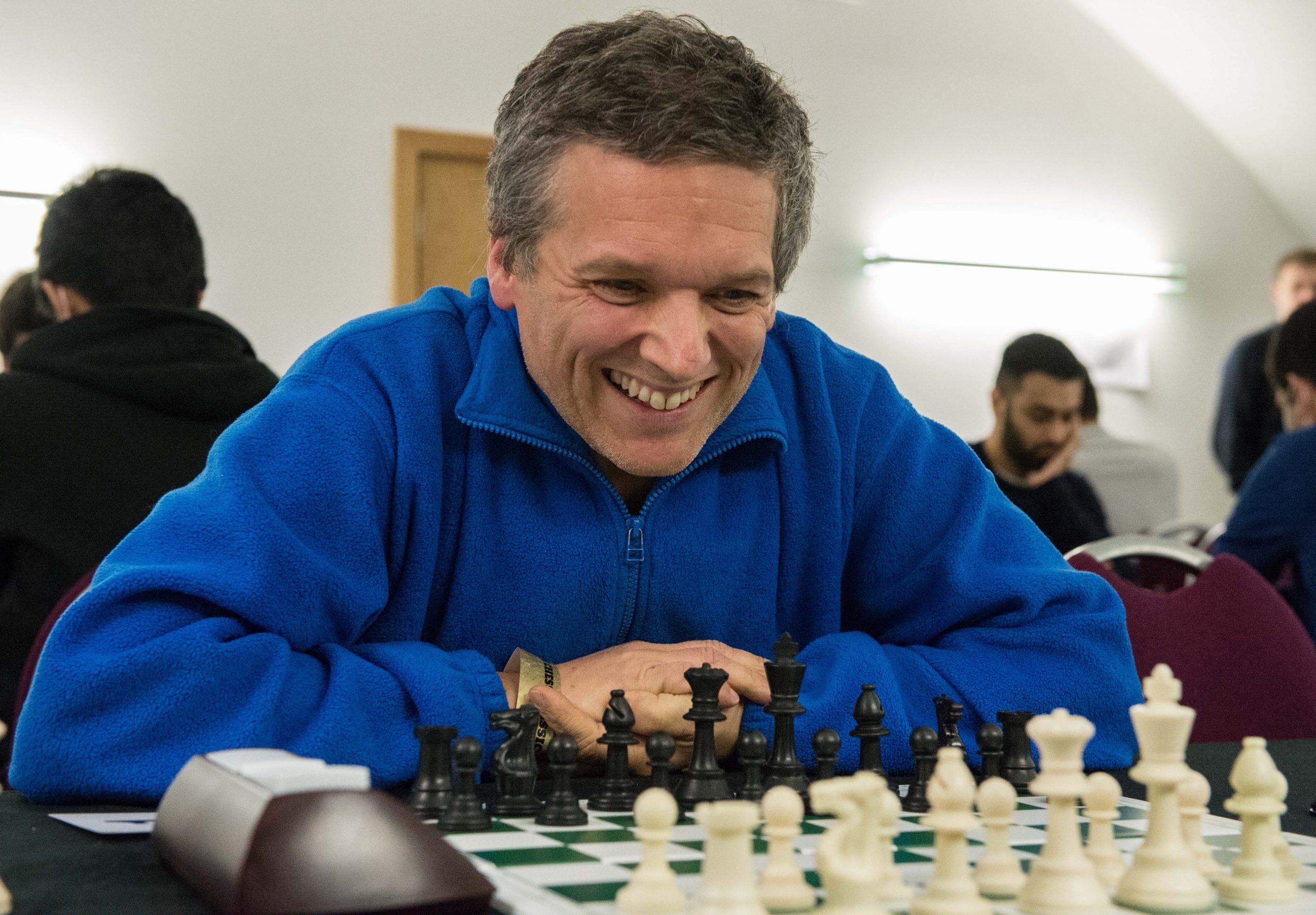
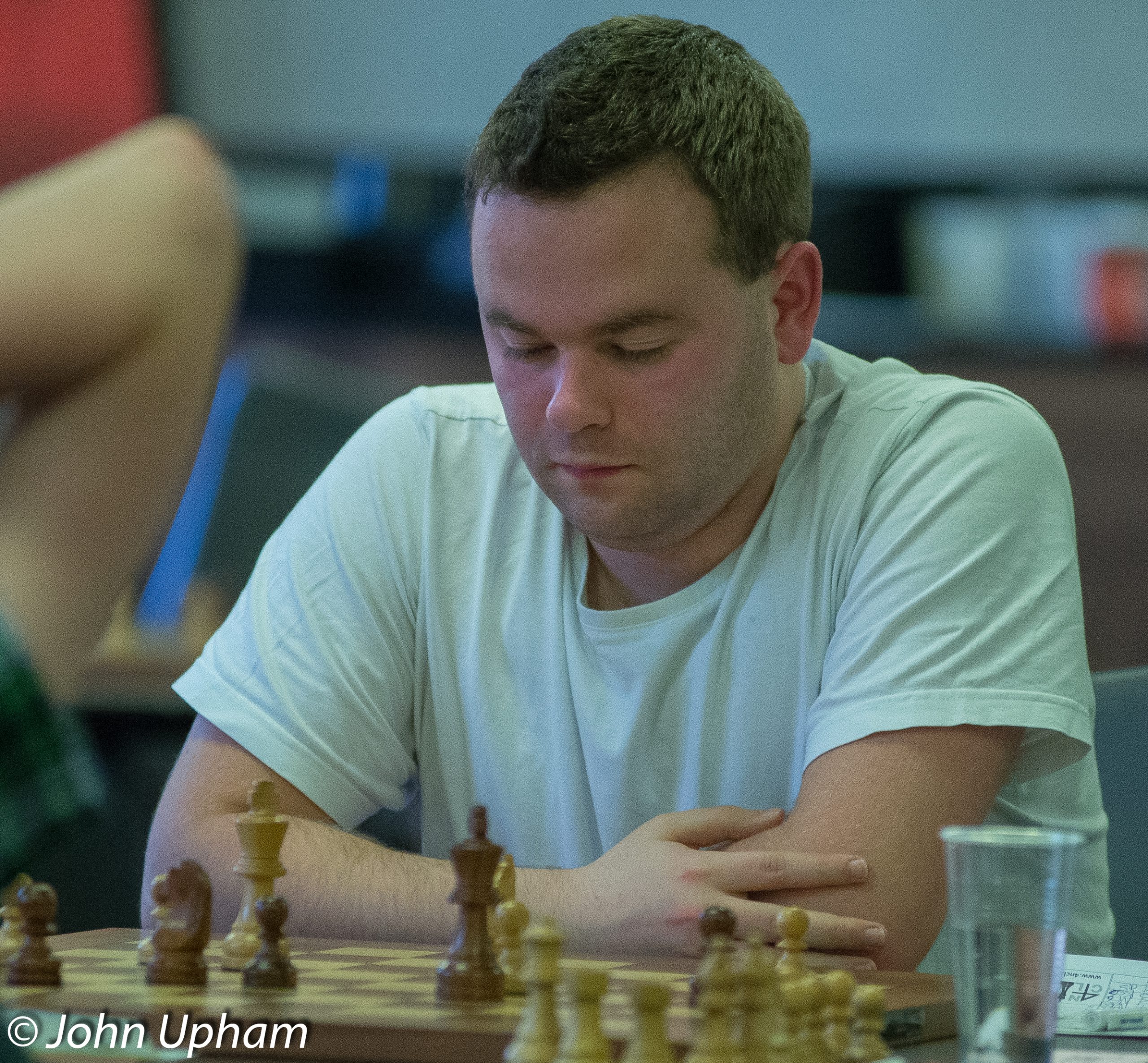
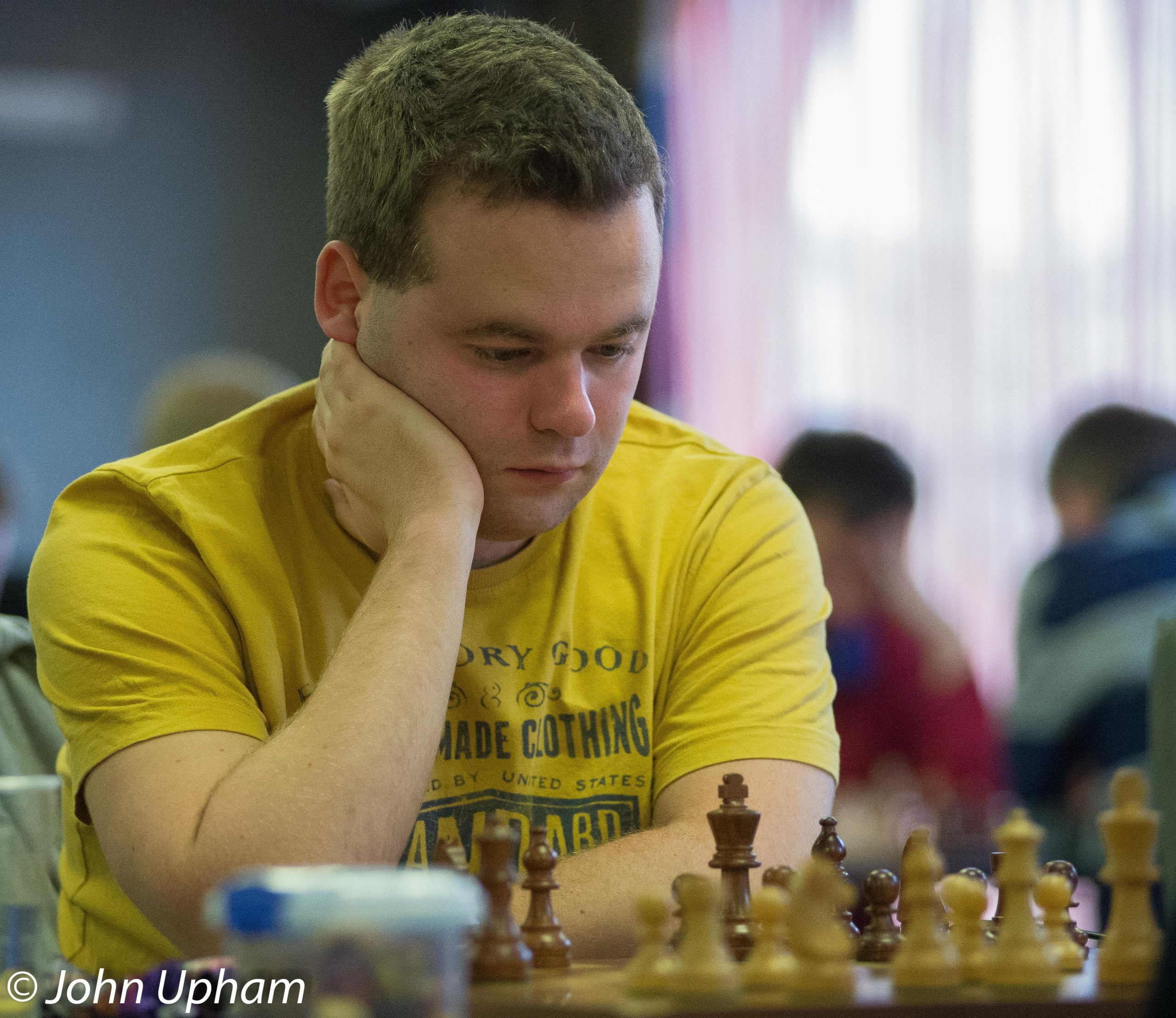
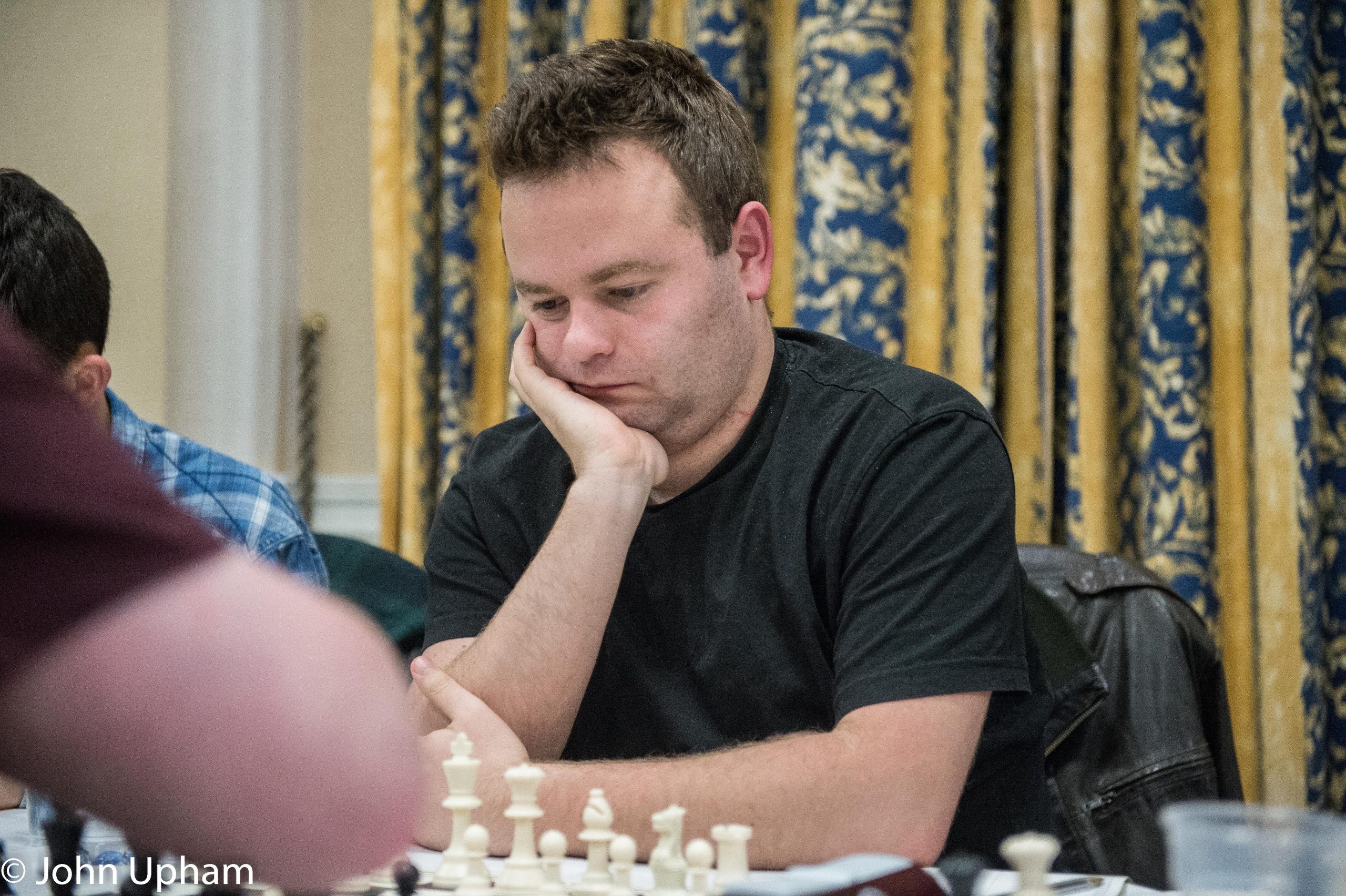
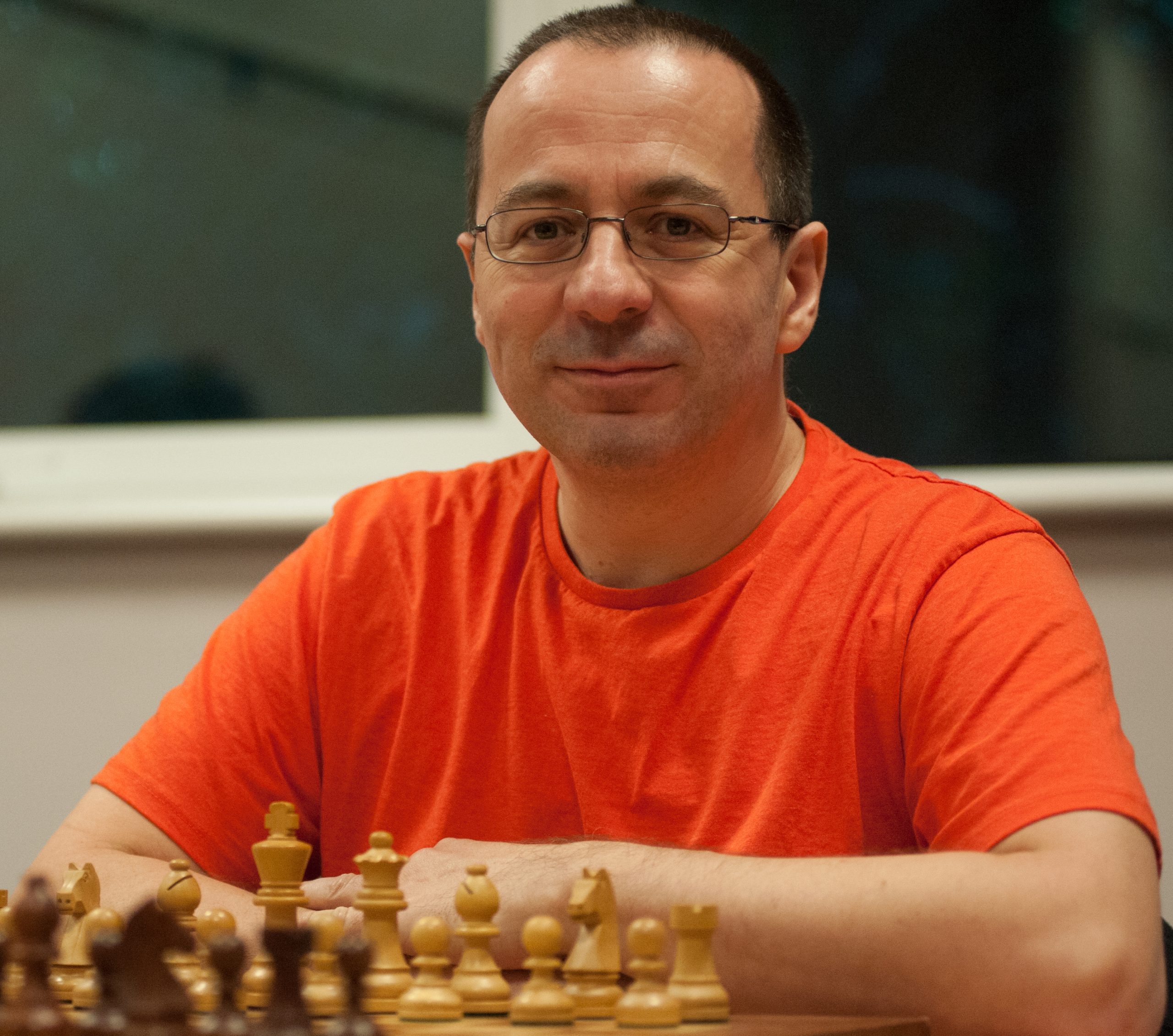
FM Jonah Willow, UKCC Terafinal 2018, Courtesy of John Upham Photography
Happy Birthday IM (elect) Jonah Willow
Jonah B Willow was born in Nottingham on Monday, December 30th 2002. Jacob was the most popular boy’s name in 2002. “Lose Yourself” by Eminem was number one.
Jonah has a chess playing sister, Hambel, who plays for Newcastle-under-Lyme, West Nottingham, Staffordshire CA and Nottinghamshire CA.
Jonah’s first recorded graded standard play tournament was the 2010 Delancey UK Chess Challenge Terafinal and his first recorded rapidplay event was the Nottingham Rapidplay in 2011.
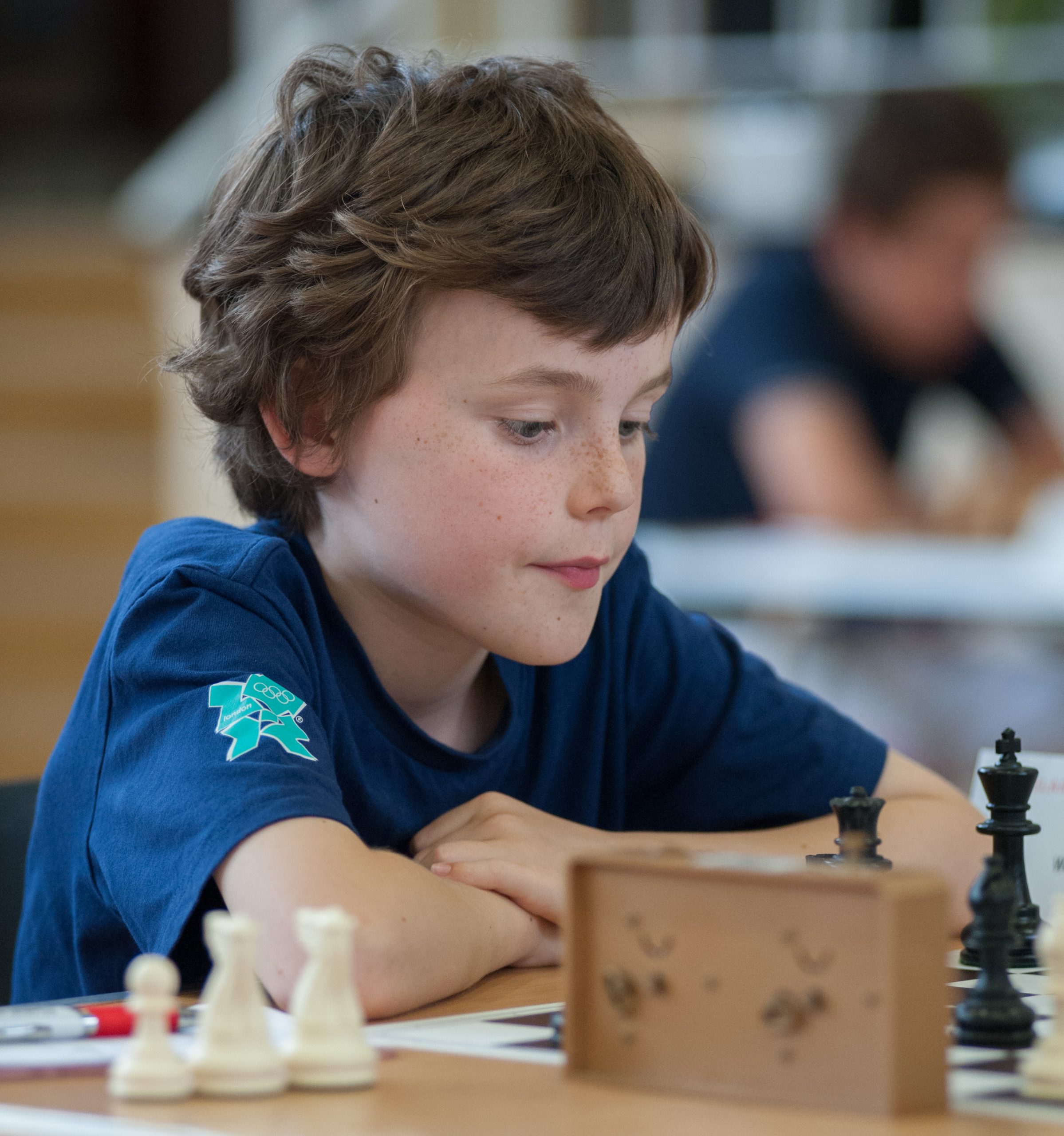
Jonah Willow at the 2012 UKK Terafinal. Courtesy of John Upham Photography
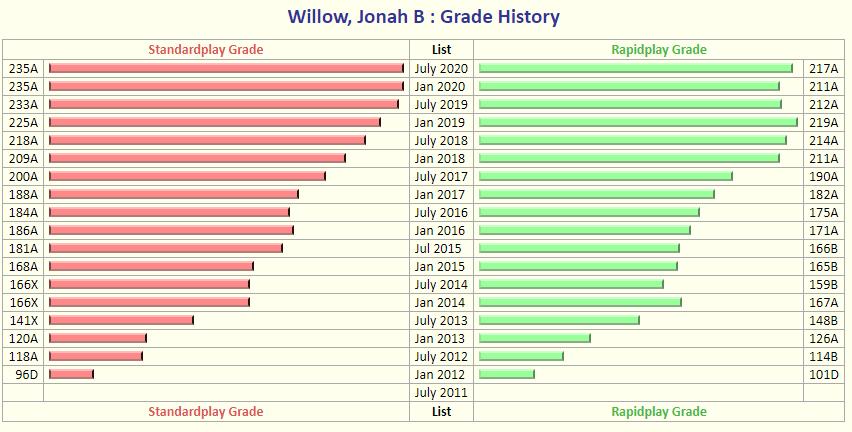
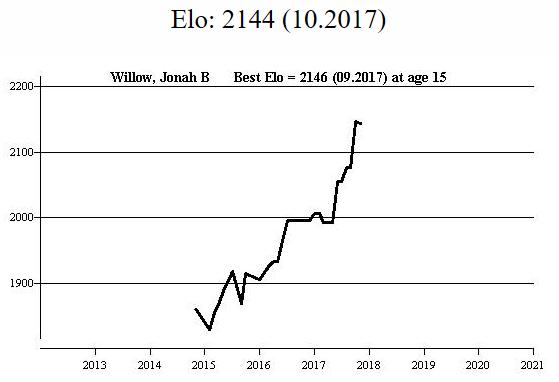
Jonah’s first published standard play grade was 96D in January of 2012 :
Jonah’s ECF grading progress
Jonah has represented West Nottingham, 4NCL Wood Green, Nottinghamshire CA and Syston (Leicester).
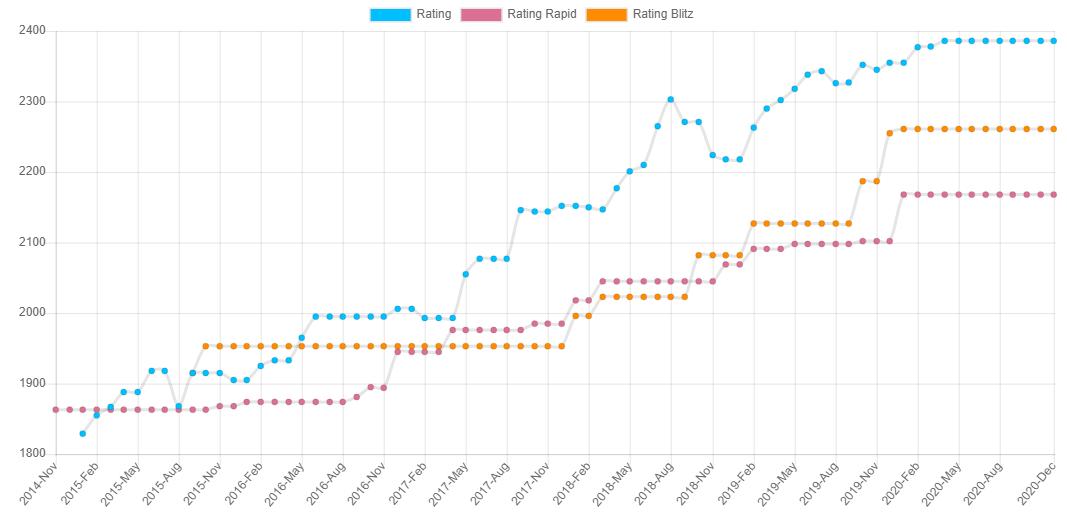
FIDE rating profile for FM Jonah B Willow from Megabase 2020
It is a little curious as to the reason for the rating profile to halt at the end of 2018 since Jonah has played plenty of FIDE rated games since. Compare the above with :
FIDE rating for FM Jonah Willow from fide.com
Jonah’s current (December 2021) FIDE standard play rating is 2381 and Jonah became a FIDE Master in 2018.
Jonah has plus scores against : Mike Surtees, Peter Svidler (!), Richard Pert, Peter Shaw, Ranesh Ratnesan, Shreyas Royal, Keith Arkell and Ameet Ghasi to name but a few.
With the white pieces Jonah is a committed 1.e4 player but he has scored 83% with 1.Nc3! first played by JH Blackburne against Noa in 1883 and named after Timothy A Dunst.
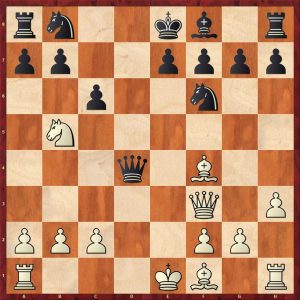
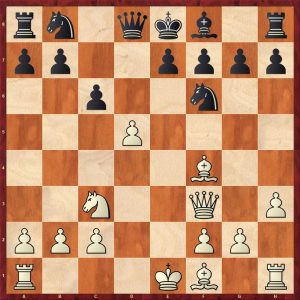
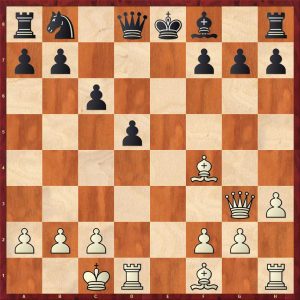
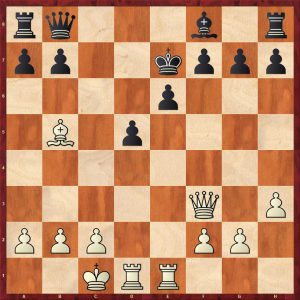
Jonah plays the unusual Chekhover Variation (4.Qxd4) in the 2…d6 Sicilian : this is an interesting alternative and has been discussed by GM Ben Finegold :
and
GM Varuzhan Akobian :
Jonah plays the Four Knights game with white.
As the second player he plays the Accelerated Dragon and the Modern Benoni.
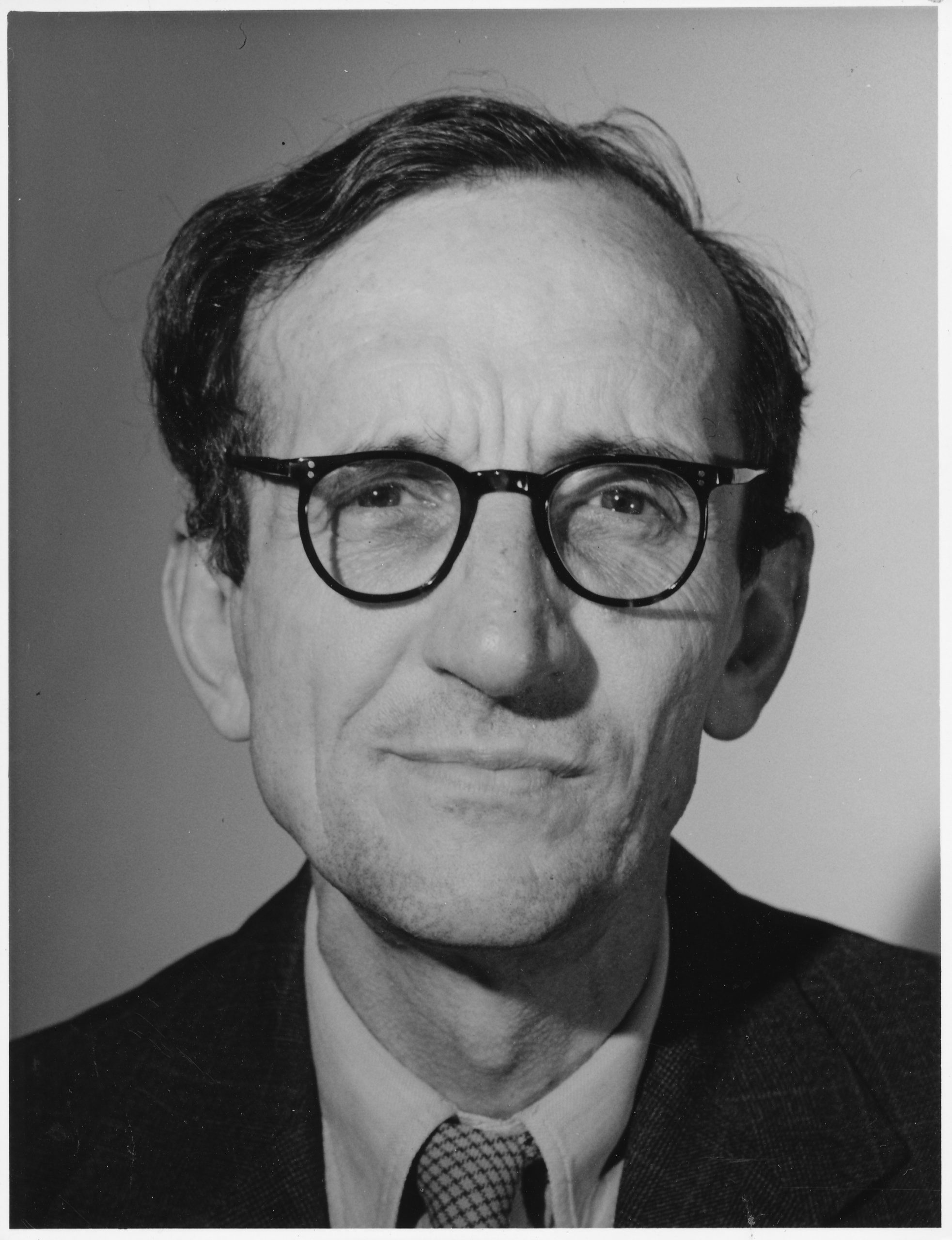
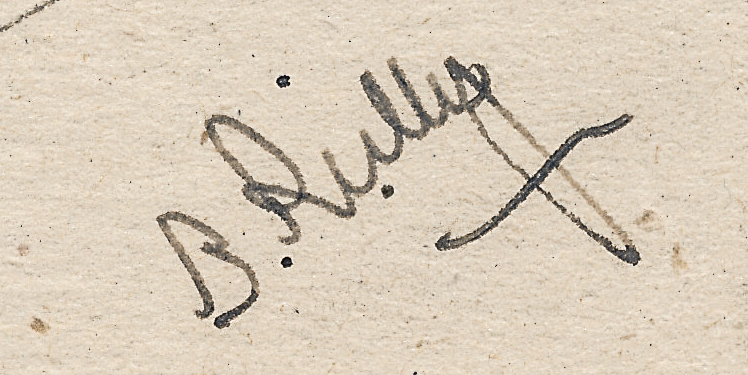
Brian Patrick Reilly (12-xii-1901, 29-xii-1991)Signature of Brian Reilly from an after dinner post card from Hastings 1945-46
We remember Brian Patrick Reilly who passed away on December 29th, 1991, thirty years ago today.
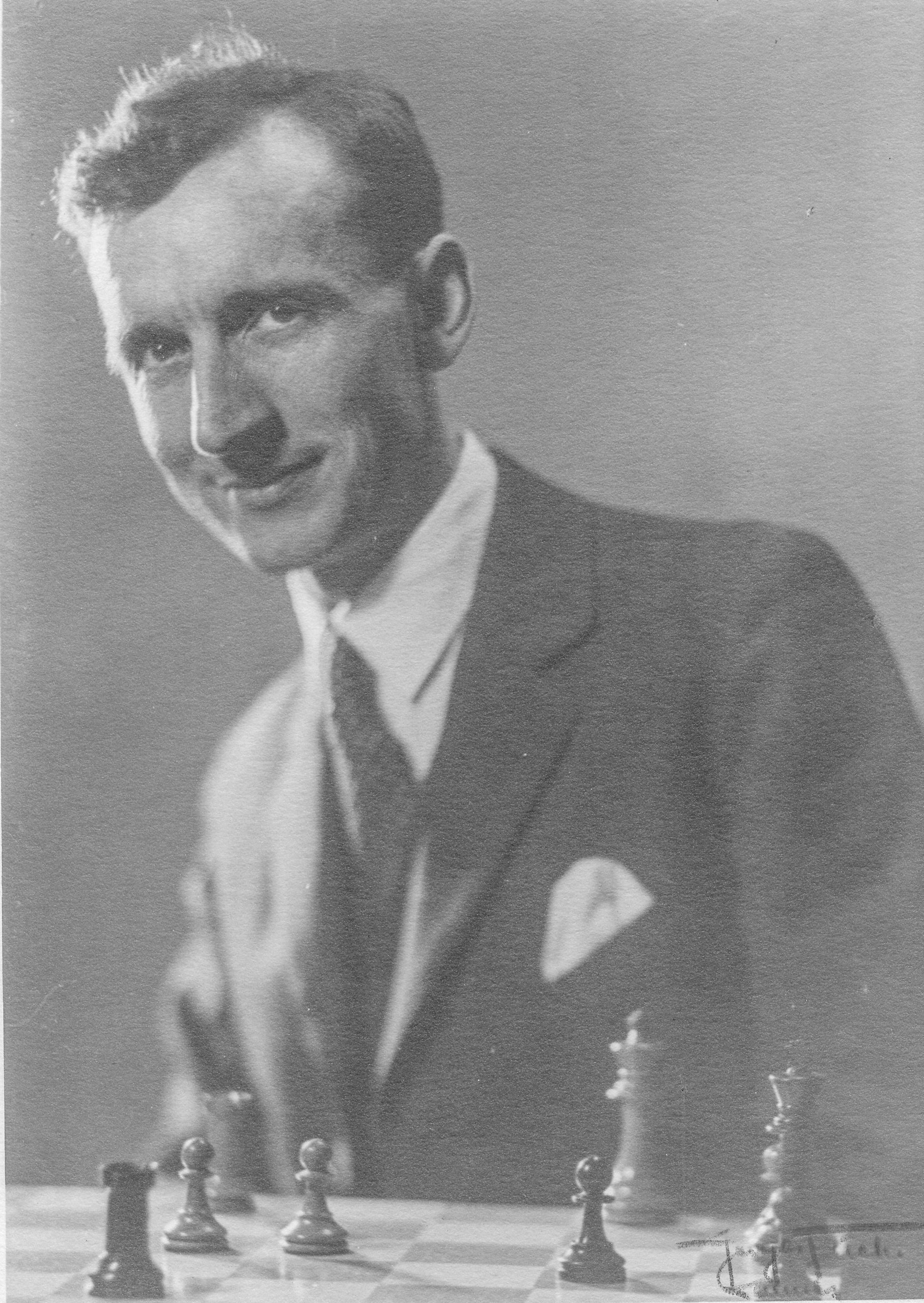
Brian Reilly probably sometime in the 1920s.
From The Encyclopaedia of Chess (Batsford, 1977), Harry Golombek OBE (written by Wolfgang Heidenfeld) :”Irish master born at Menton, of Irish descent, who has represented Ireland in nine Olympic team tournaments between 1935 and 1968; three times on top board.
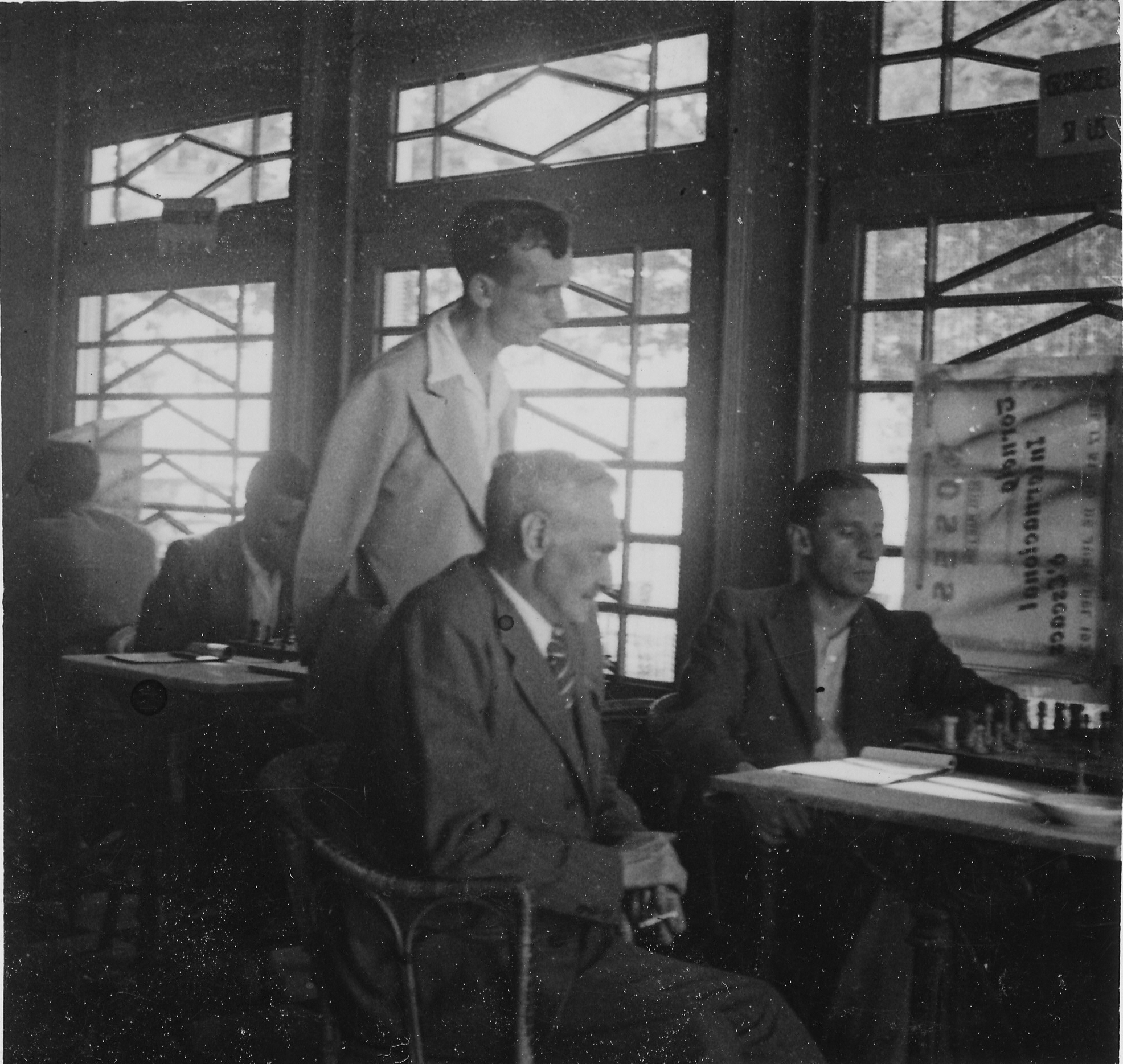
Brian observes a game during one of the early 1930s tournaments in Nice
He was also Irish representative at seven FIDE congresses. Reilly played in a number of small international tournaments, wining first prize at Nice 1931 and sharing fourth prize with Klein and EG Sergeant behind Reshevsky, Capablanca and Sir G. Thomas at Margate 1935.
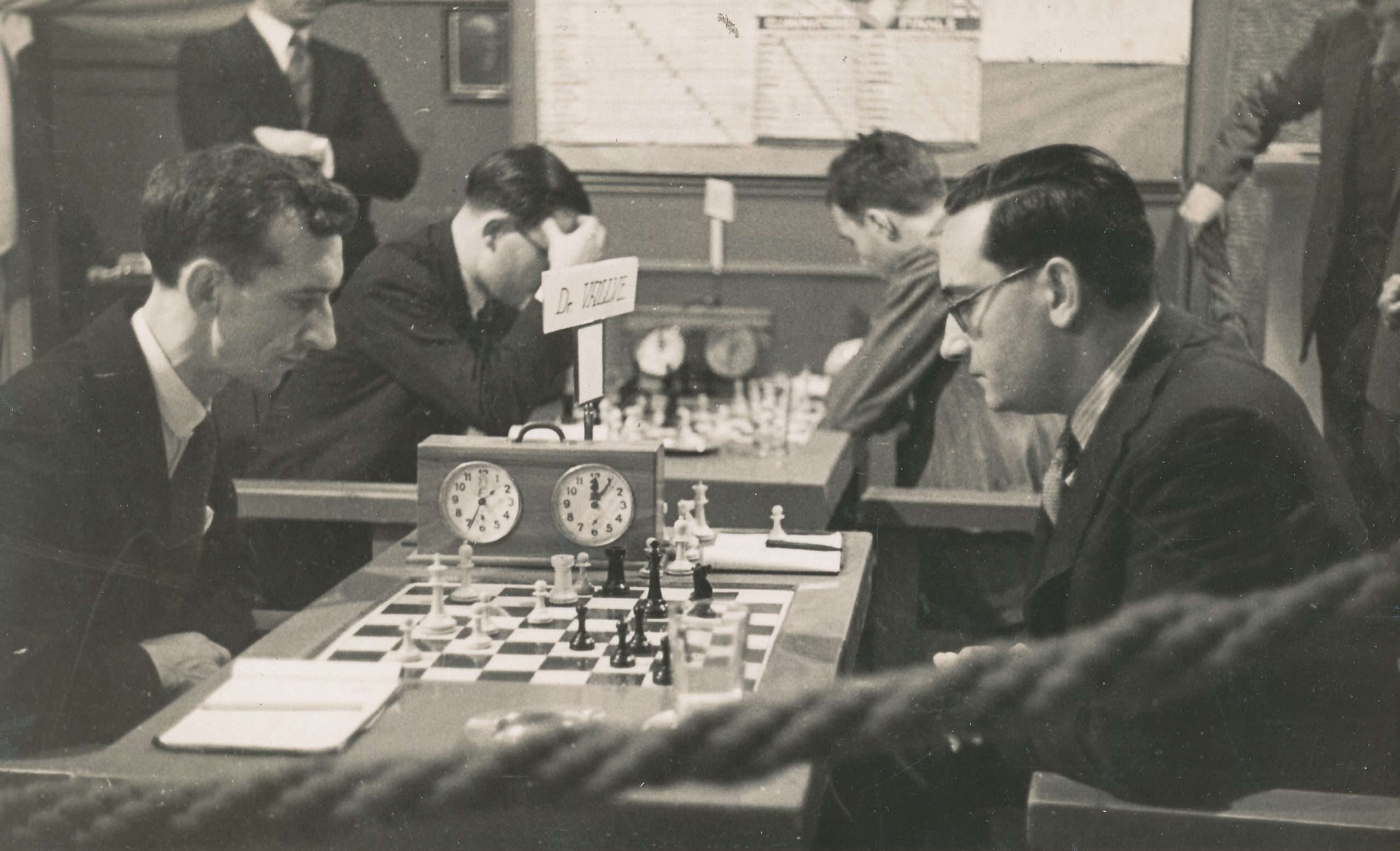
Brian Reilly playing Dr. Josep Vallve probably at Barcelona Chess Club in June 1935. Brian won in 61 moves.
Winner of Irish championship in 1959 and 1960. General Editor of British Chess Magazine since 1949.”
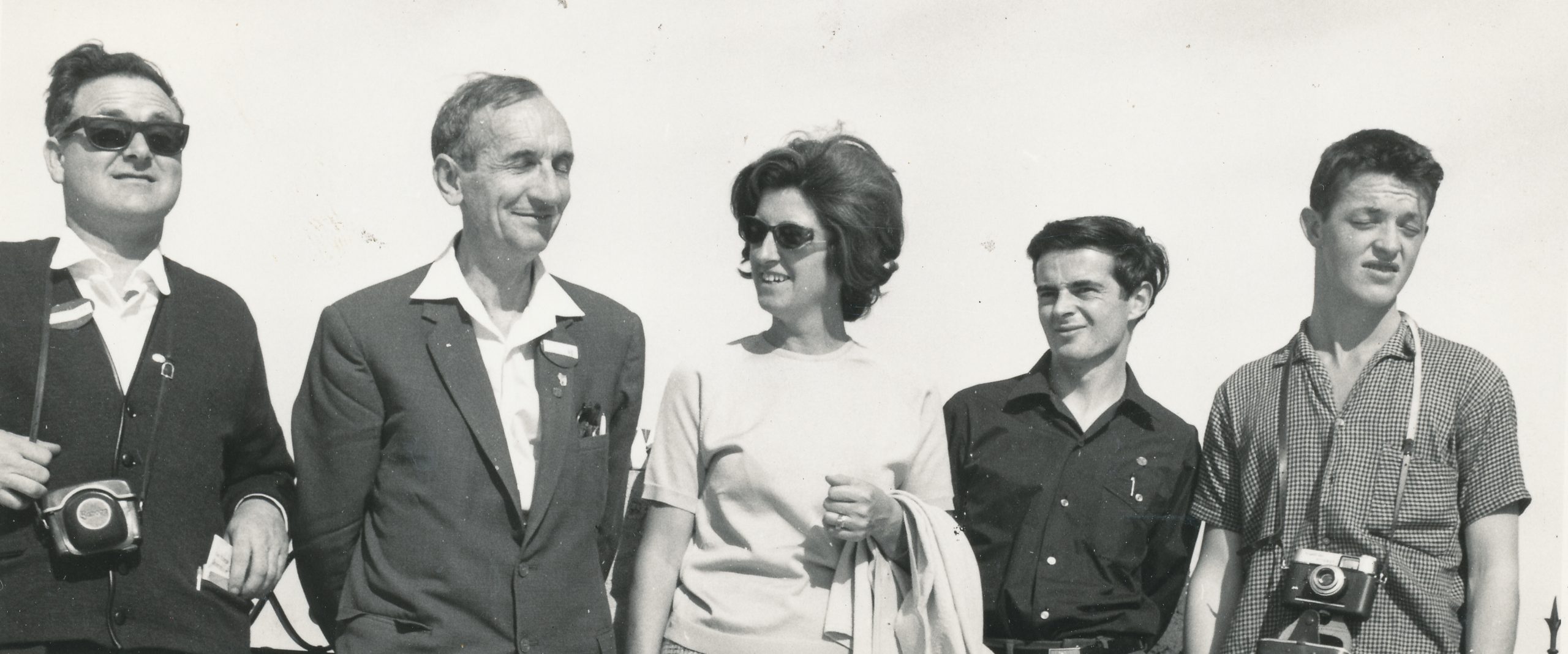
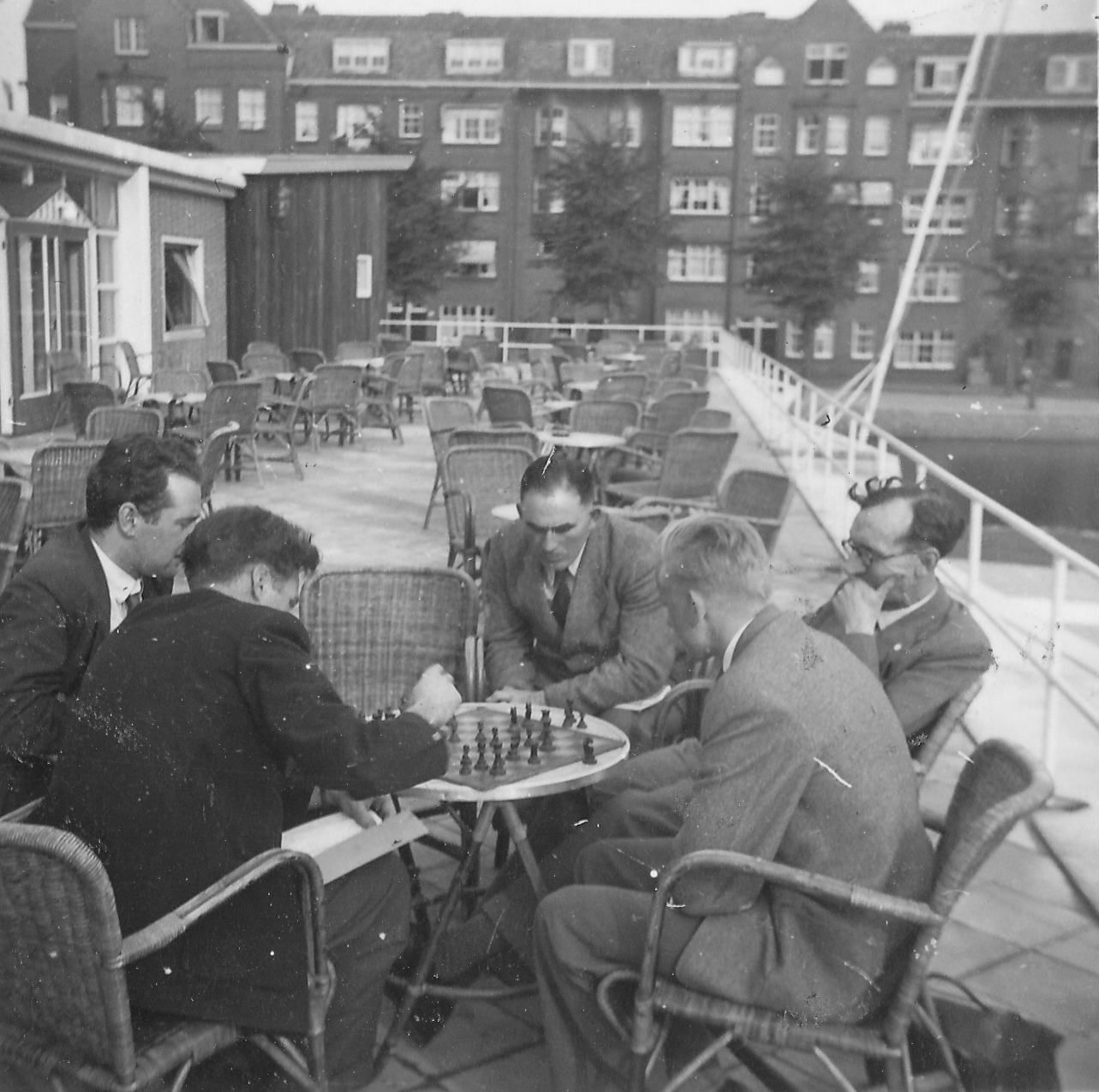
Brian Reilly and friends
His obituary in British Chess Magazine was written by Bernard Cafferty and appeared in Volume CXII (112, 1992), Number 2 (February), page 70:
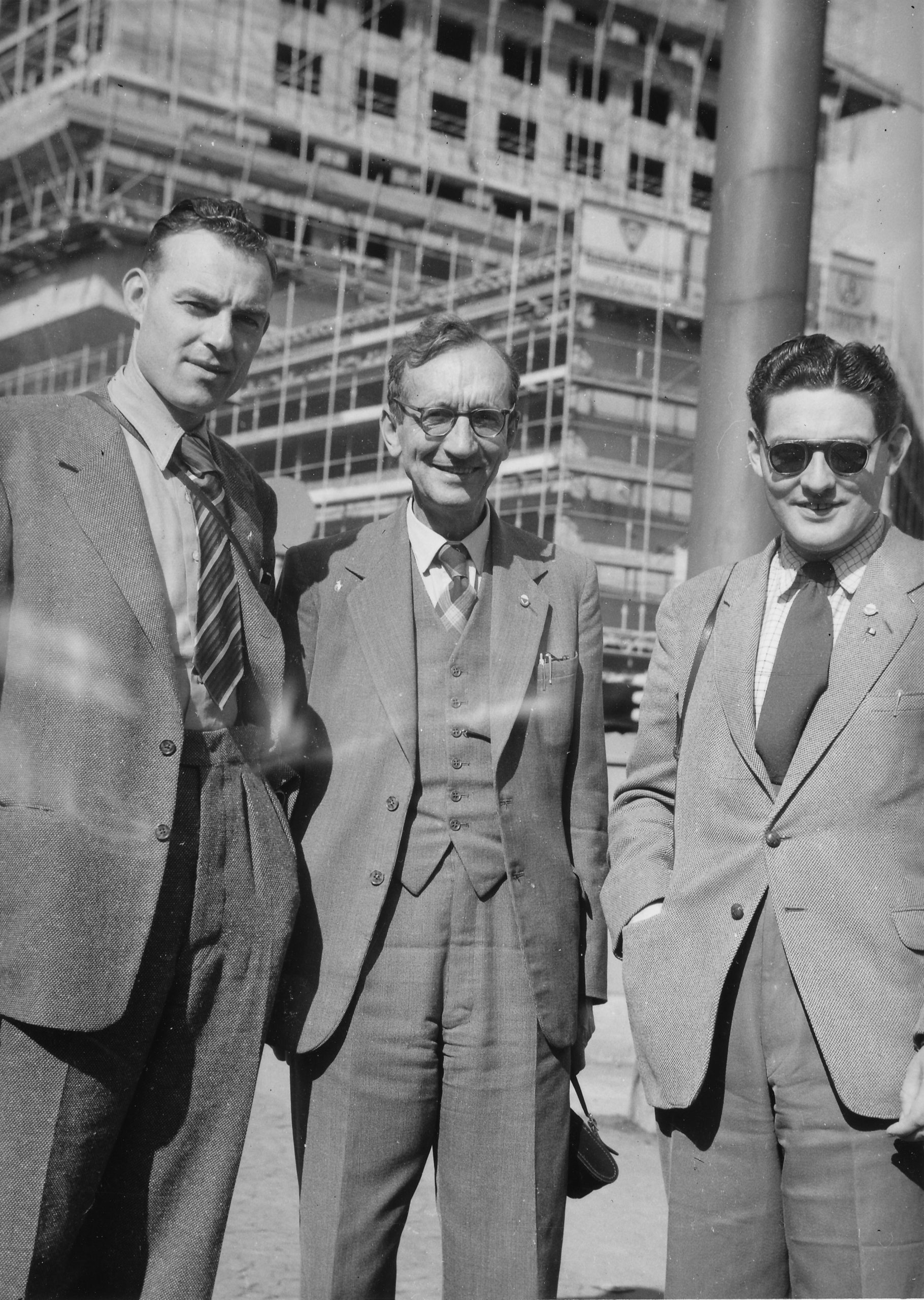
Brian with journalist colleagues.
“With great regret we have to report that Brian Patrick Reilly has, to use the older term, ‘joined the great majority’.
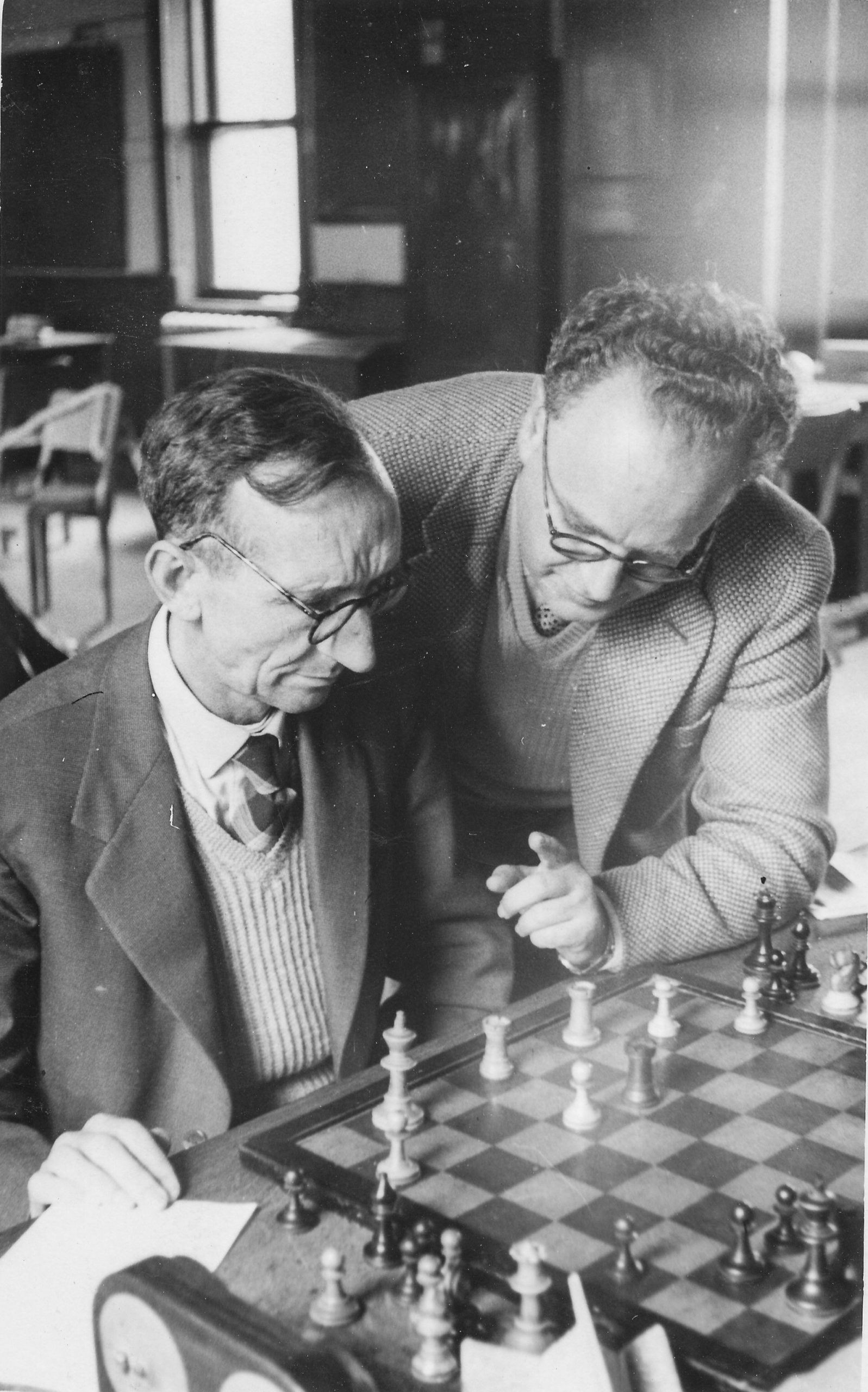
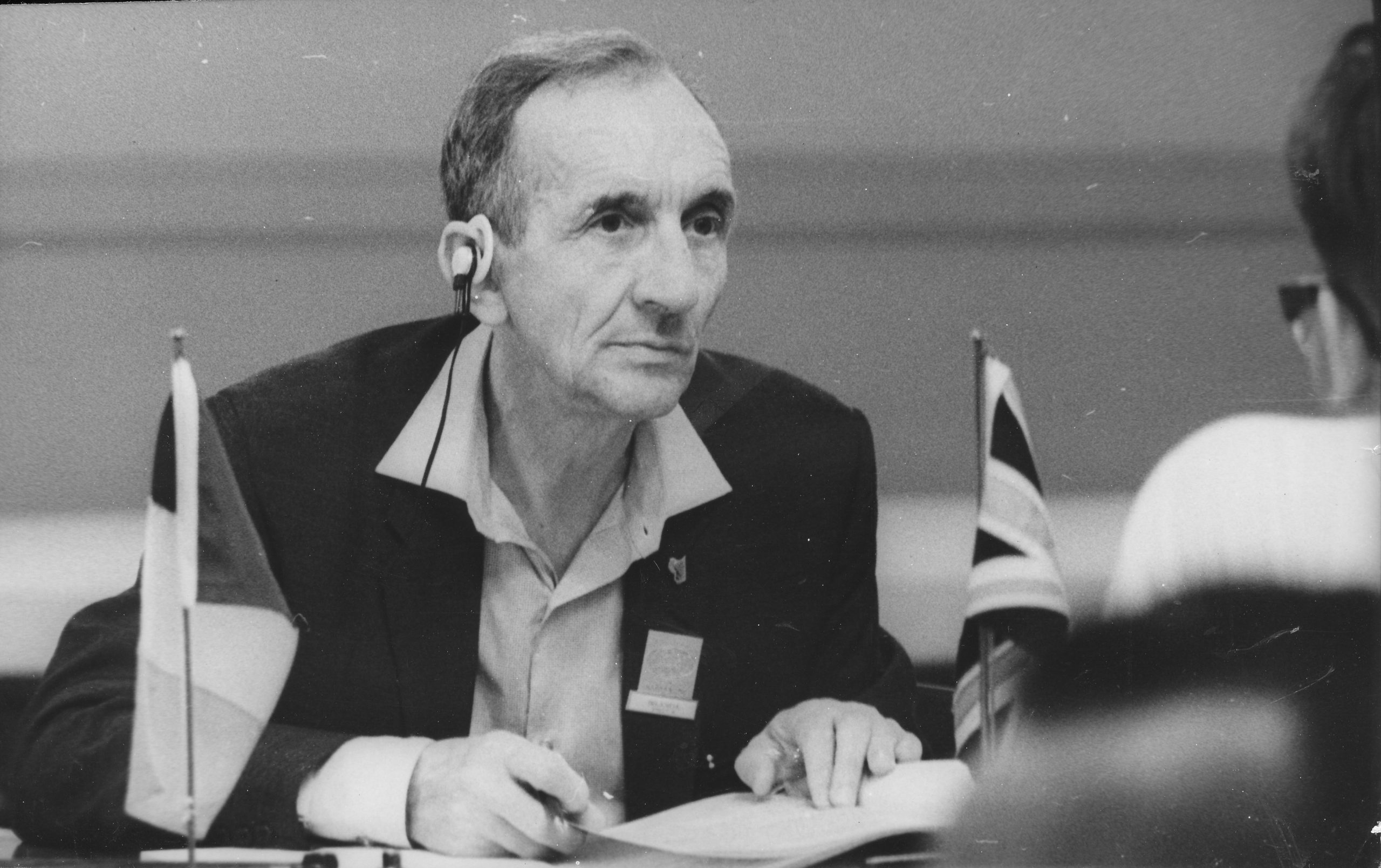
Brian analysing with Irish team mate, Wolfgang Heidenfeld
B. P. Reilly (Menton, 12 xii 1901-Hastings, 29 xii l99l) was born into an expatriate family on the French Riviera, and so was bilingual. He learned his chess in France where he had many friends and acquaintances. He knew Alekhine in the 1920s and 1930s and was a witness at Alekhine’s wedding.
Many years later he was to do extensive research on Alekhine’s life, and was the first to establish (though he did not publish the fact) that the Russian did not complete his doctorate studies at the Sorbonne, so that “Dr” Alekhine must be considered a purely honorary title.
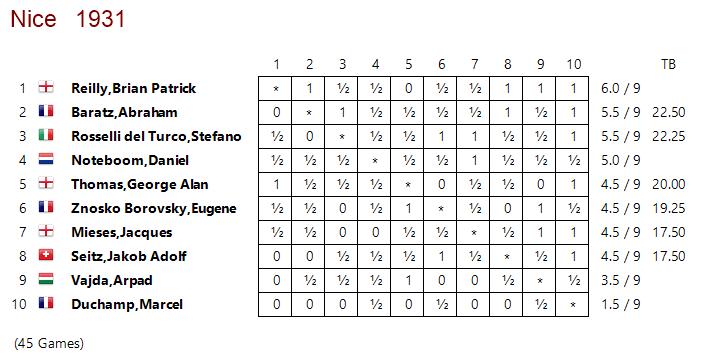
Brian won the Nice tournament of 1931, ahead of Noteboom, Mieses, . . . Sir George Thomas . . . Znosko-Borovsky. . . and played for Ireland at the 1935 Olympiad beating Fine.
Crosstable for Nice 1931 from Megabase 2020
These results, taken with his fourth place at Margate 1935, behind Reshevsky, Capablanca and Sir George Thomas, made it clear that he was of IM strength.
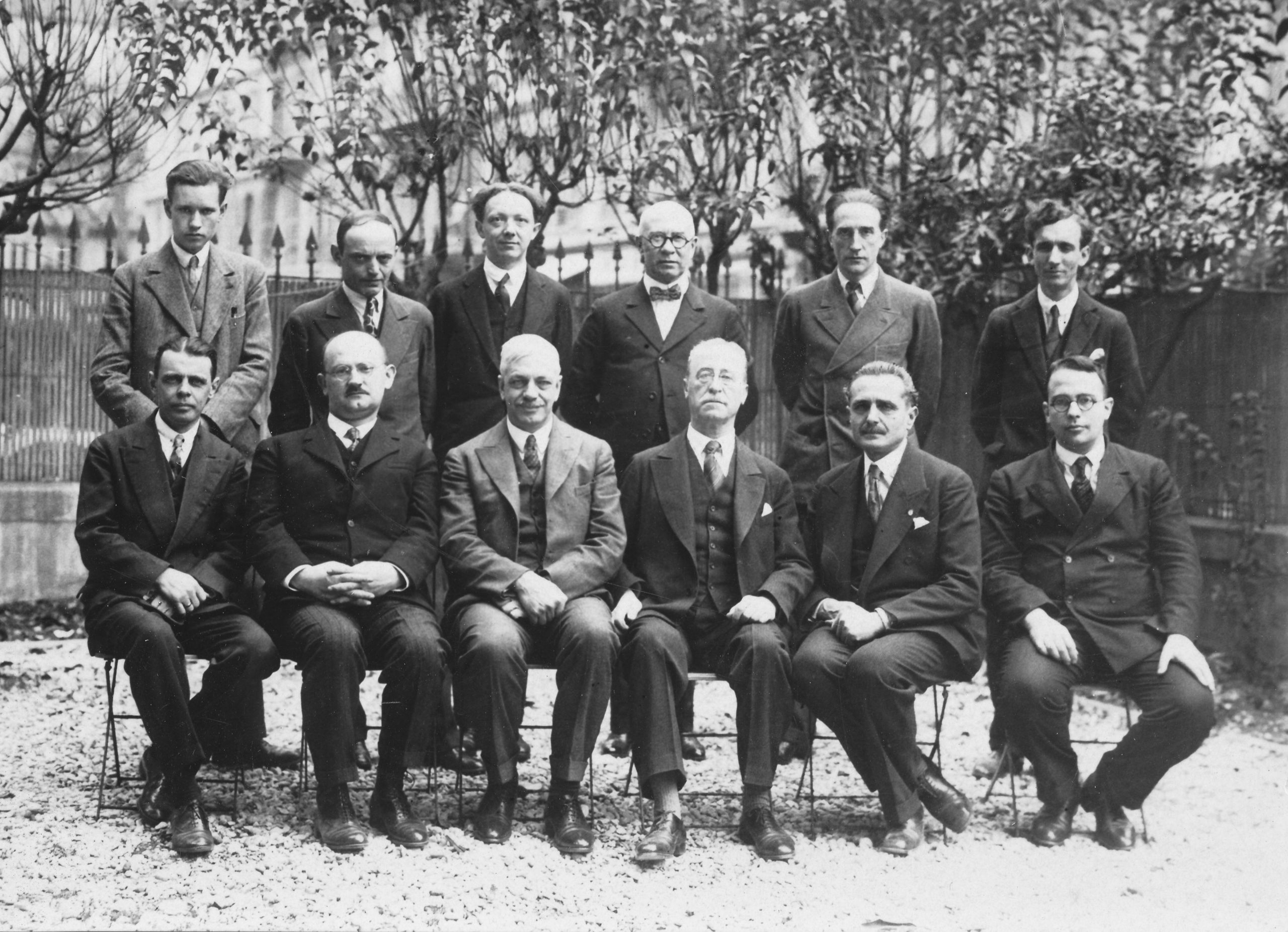
Nice Masters, 1931. Standing : Daniel Noteboom, Abraham Baratz, George Renaud (Organiser), Telling (Tournament Director), Marcel Duchamp, Brian Reilly (winner), Seated : Eugene Znokso-Borovsky,, Arpad Vajda, Sir George Thomas, Jacques Mieses, Stefano Roselli del Turco, Jacob Adolf Seitz. British Chess Magazine, 1931, page 201
We are grateful to Tony Gillam for providing the following score which has only recently come to light. See Warsaw Olympiad 1935, The Chess Player, Nottingham, 2020.
During the war Brian was interned in France as a British citizen, coming close to starvation for a time. He described all this in the very detailed account of his life in the September 1980 BCM, on which we have drawn, along with the many reminiscences Brian passed on to the present writer.
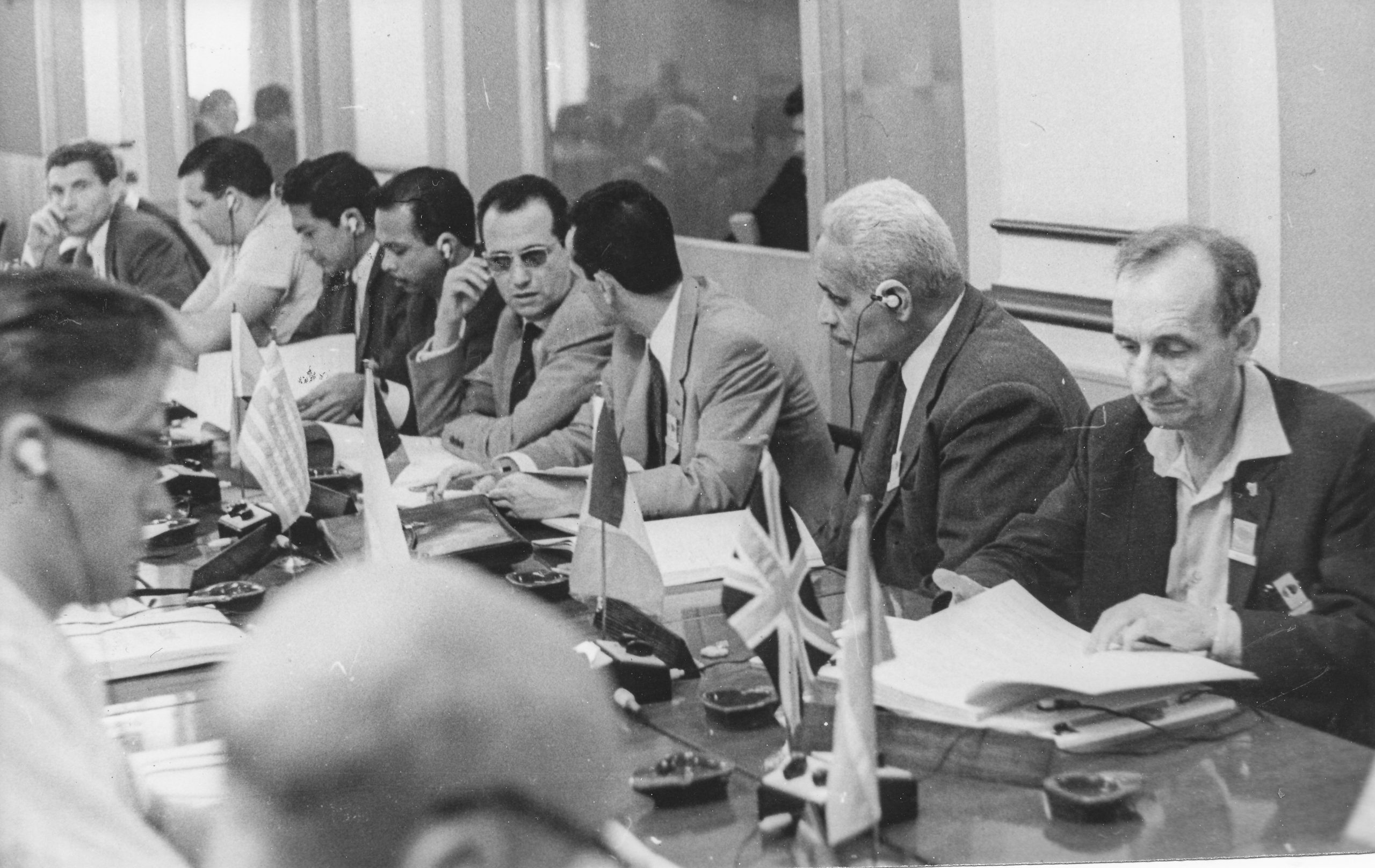
Brian analysing with the Irish team at an Olympiad
After working for the Sutton Coldfield magazine just after the war (he did not get on well with B. H. Wood, thinking him not very business-like – do we put this too diplomatically?) Brian was a freelance translator in the pharmaceutical industry before taking over BCM in 1949. At the time the magazine was technically bankrupt.
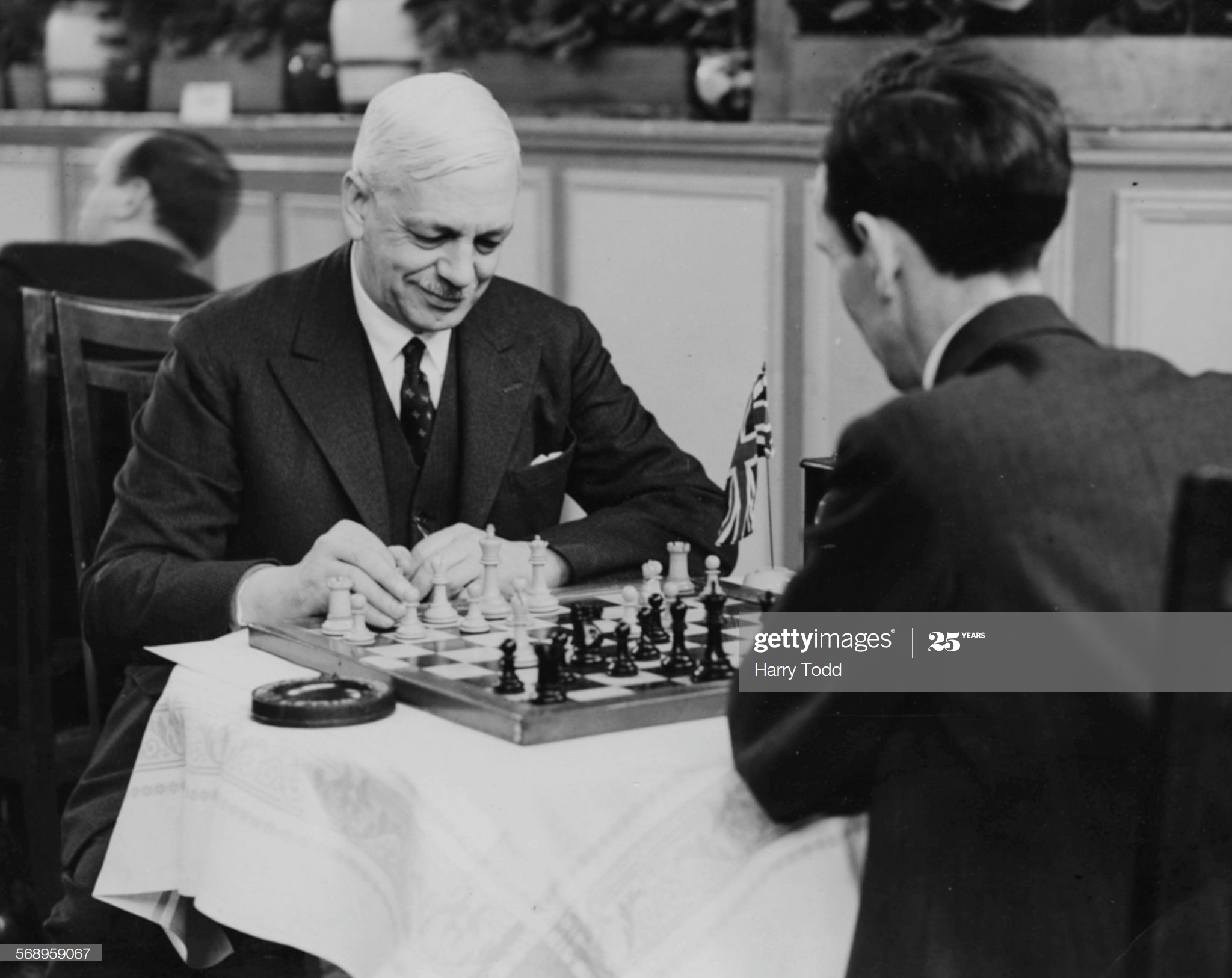
Sir George Thomas And Brian Reilly Sir George Thomas (left), leader of the British chess team, playing Irishman Brian Reilly at the Easter Chess Congress, Margate, April 24th 1935. (Photo by Harry Todd/Fox Photos/Getty Images)
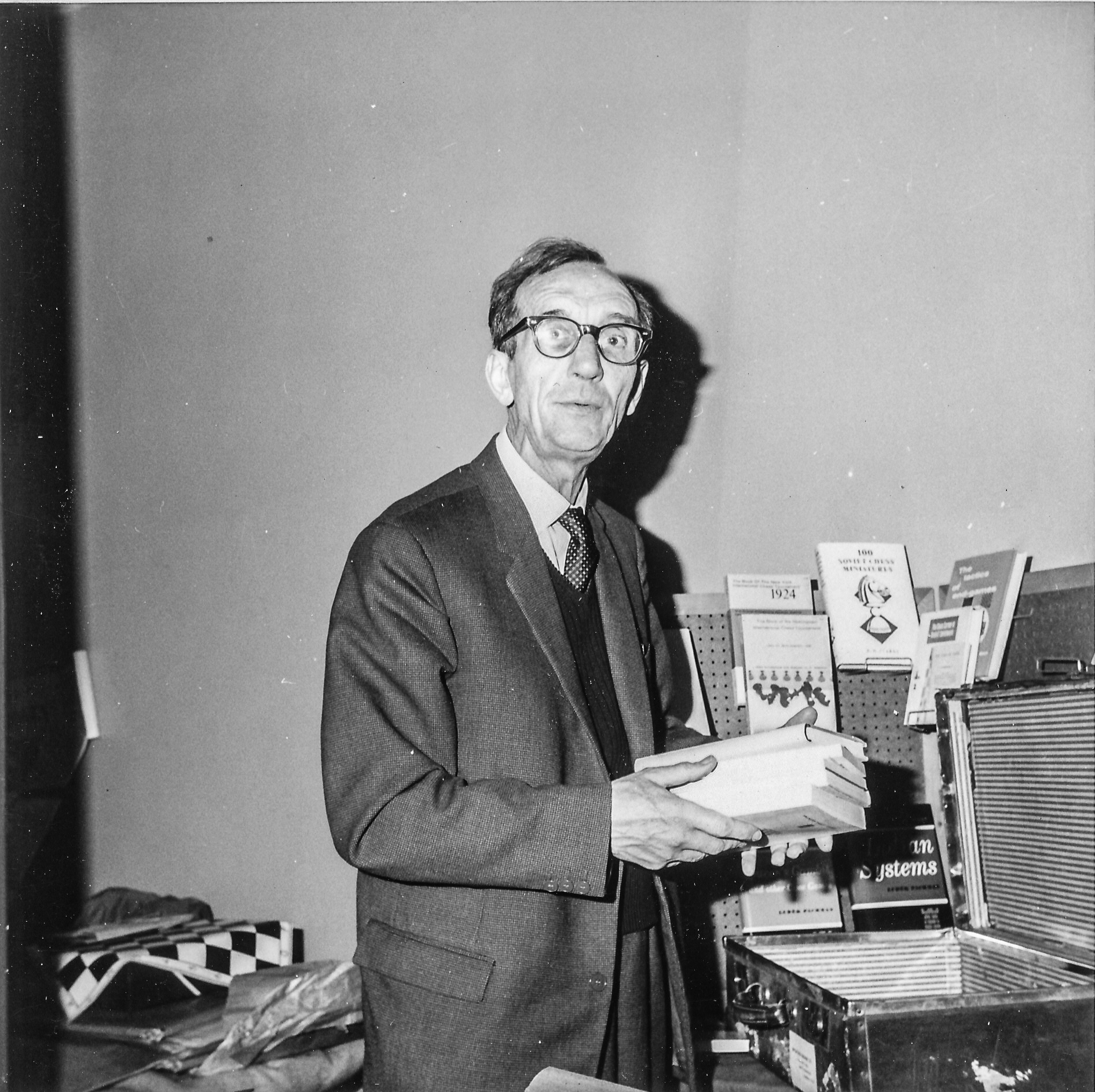
In 1964 he moved the office from London to St Leonards, showing his business acumen yet again. He ran the bookstall for many years at the Hastings Congress at the Sun Lounge and the Falaise Hall.
After the union troubles of 1970-71 and the Fischer boom he arranged for the magazine to be typeset by his son Freddy at the family home in West Norwood. This led to an expansion in the pagination after some teething troubles.
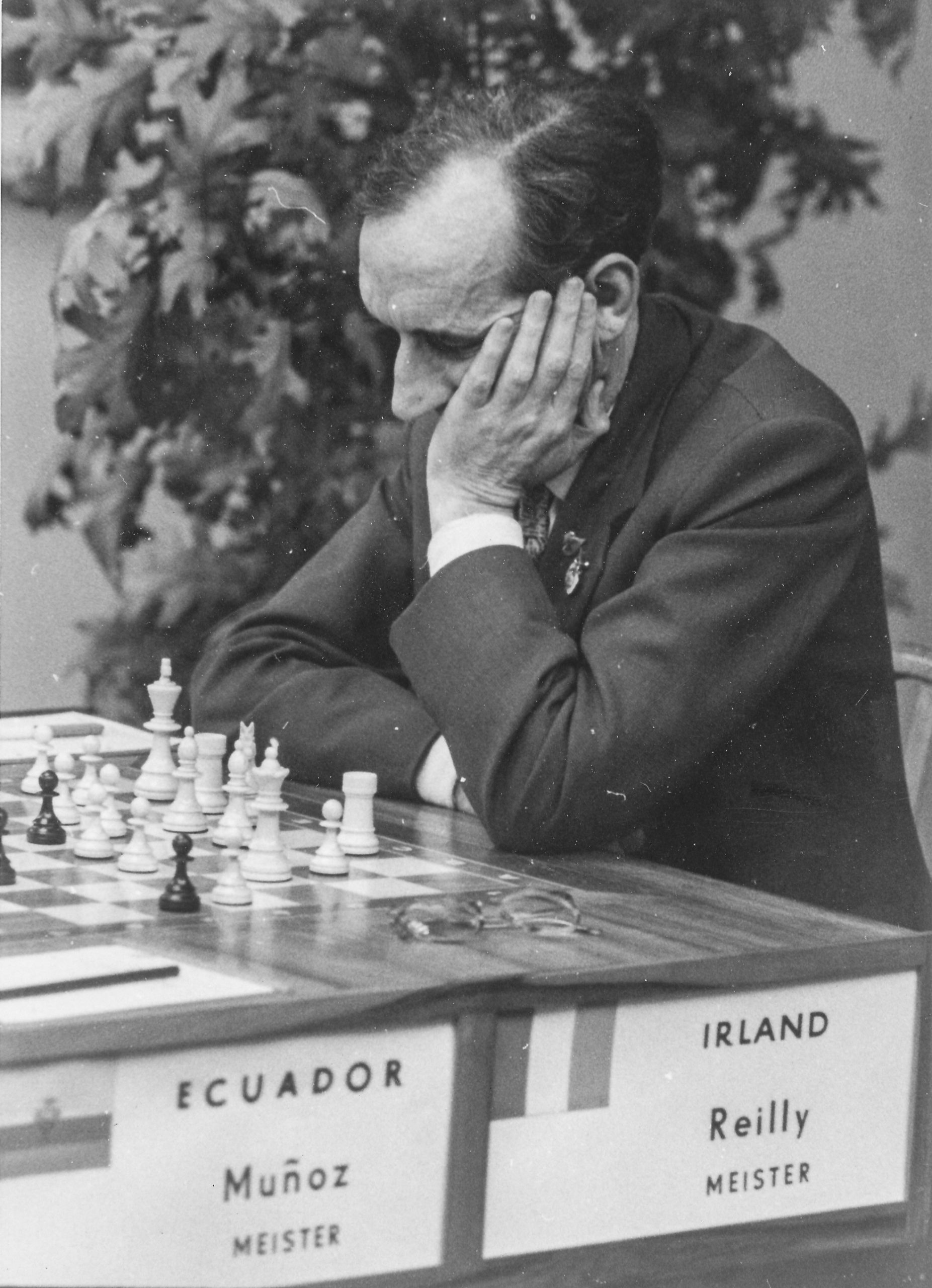
Brian Reilly playing Cesar Munoz (Ecuador) in round 8 of the Leipzig Olympiad played on 23rd October 1960. The game was drawn in 48 moves.
All this while, Brian was playing for Ireland in Olympiads, and attending to FIDE affairs as a FIDE delegate.
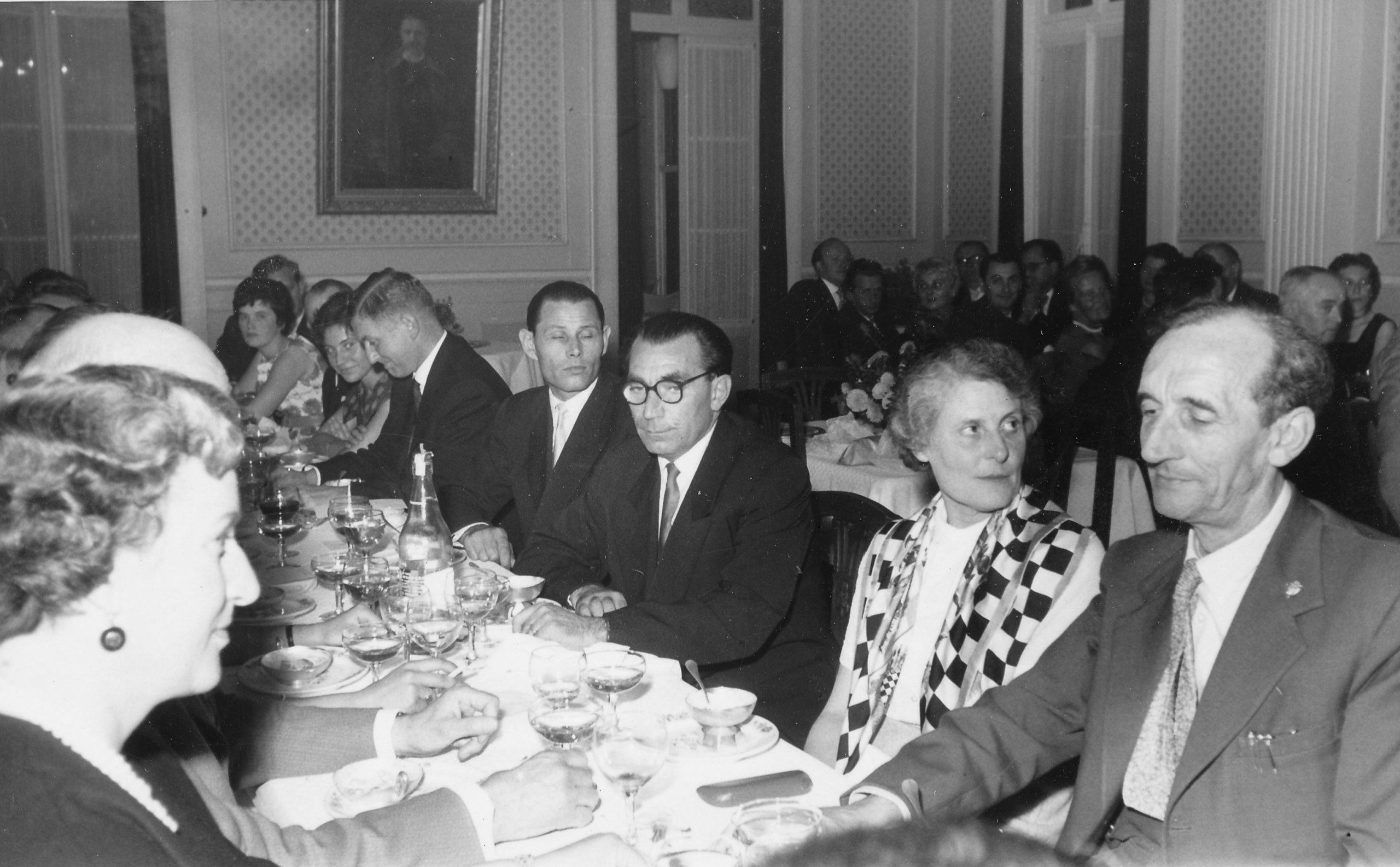
Brian relaxing during a FIDE Congress dinner
After the death of his son Freddy in 1980, the magazine was sold to the BCF and Brian retired as editor in September 1981, remaining as a consultant for nearly a decade.
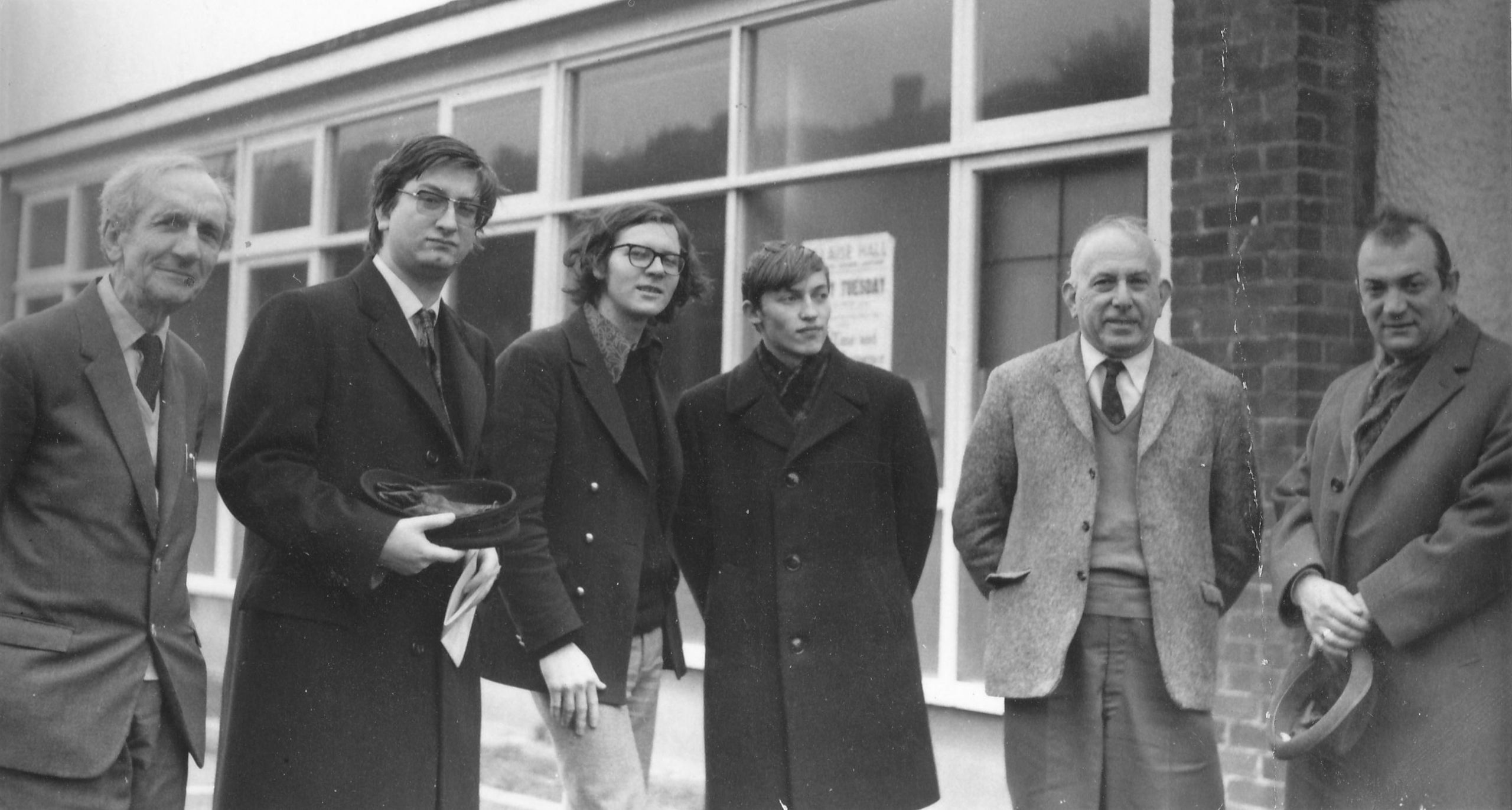
Brian Reilly, Ray Keene, George Botterill, Anatoly Karpov, Harry Golombek and Viktor Korchnoi
His last years were spent in Hastings, where it was his wont to carry on with the long sea-front walks that he had practised since a breakdown in health due to overwork. He had strong views on correct diet and exercise which he could expound to anyone willing to listen. The fact that he could walk up to six miles a day in his late eighties and that his faculties, including his memory, only seemed to be weakening in his last two years, is proof enough of the validity of his theories.
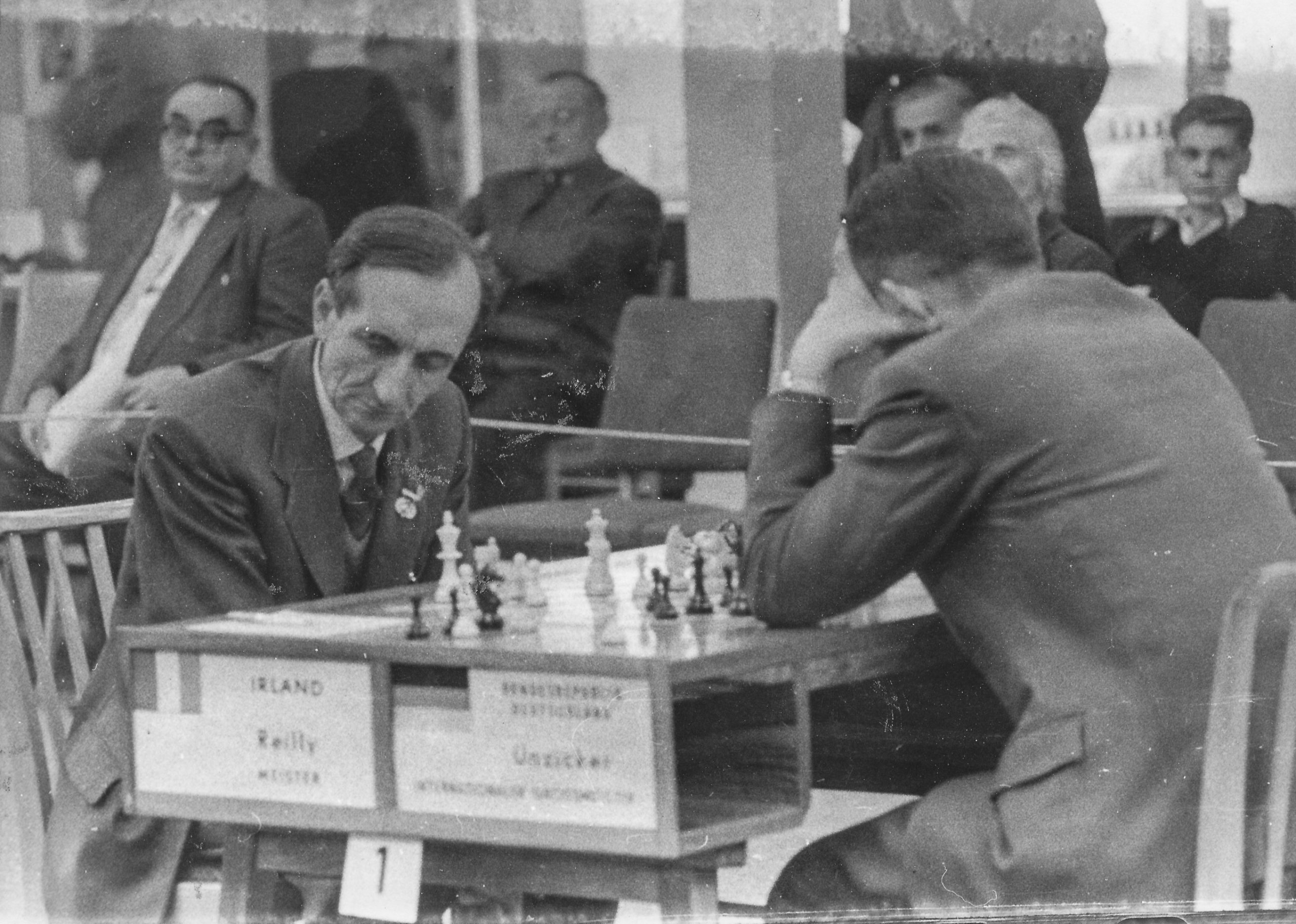
Brian Reilly playing Wolfgang Unzicker on board 1 during the preliminaries of the 1960 Leipzig Olympiad.
On his 90th birthday he attended the office and drank a glass of champagne to celebrate the occasion. We have the testimony of Mrs Arnold, who worked with him so long, that he was still talking of visiting the Hastings Congress. This was on Boxing Day, the day after he had been admitted to St Helen’s Hospital with a chest infection. He assured her he would be up and about again, but old friends such as Harry Golombek and Ritson Morry waited for him in vain as Hastings got under way. . .
Brian Reilly at a FIDE Congress (possibly Nice 1974?)Brian Reilly at a FIDE Congress (possibly Nice 1974?)
BCM readers, too, must be counted amongst his old friends who will miss him. They should be aware that, but for Brian, and his decades of hard work. there would now be no BCM.”
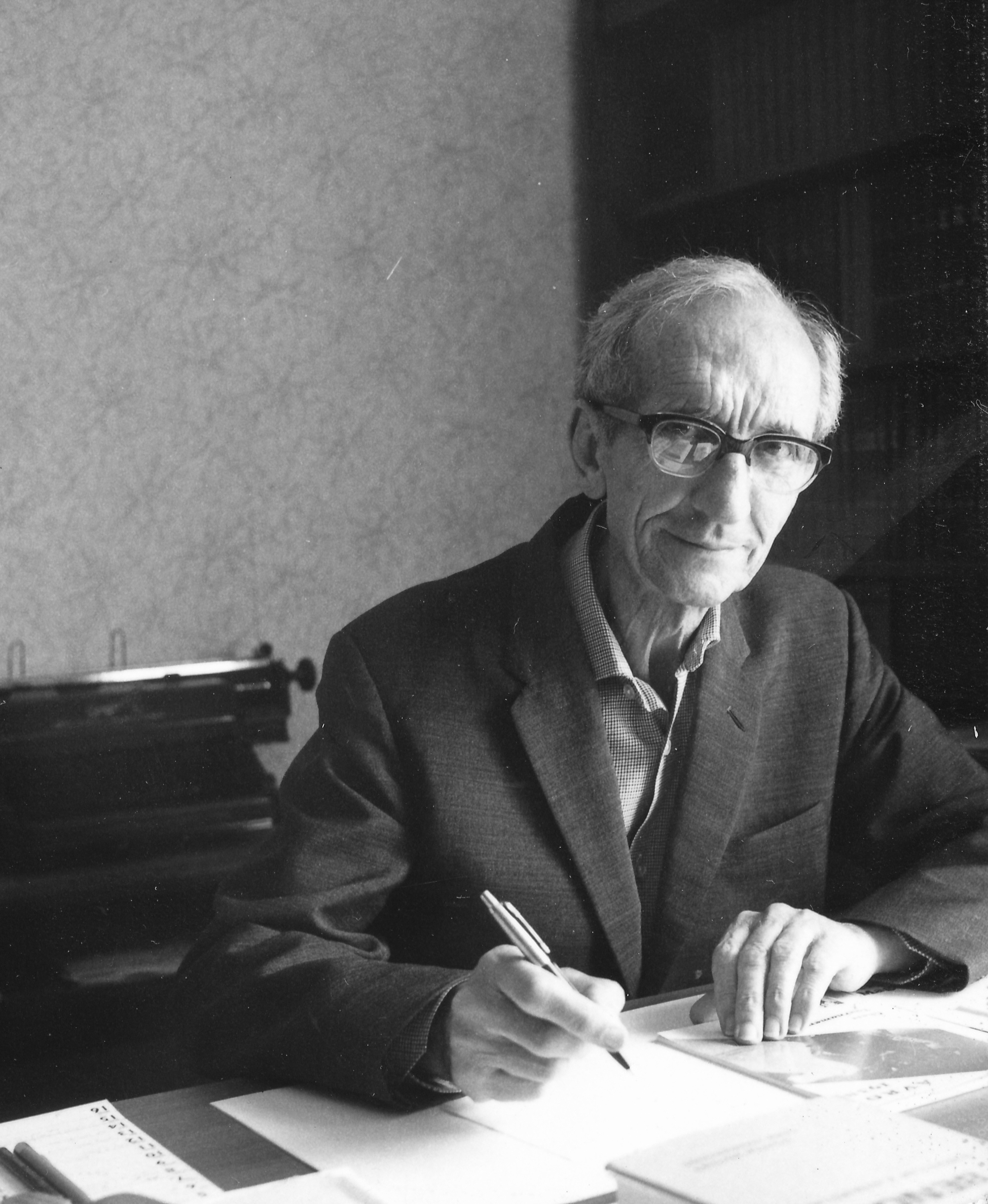
Brian Reilly in the BCM office. Photographed most likely by Freddy Reilly.
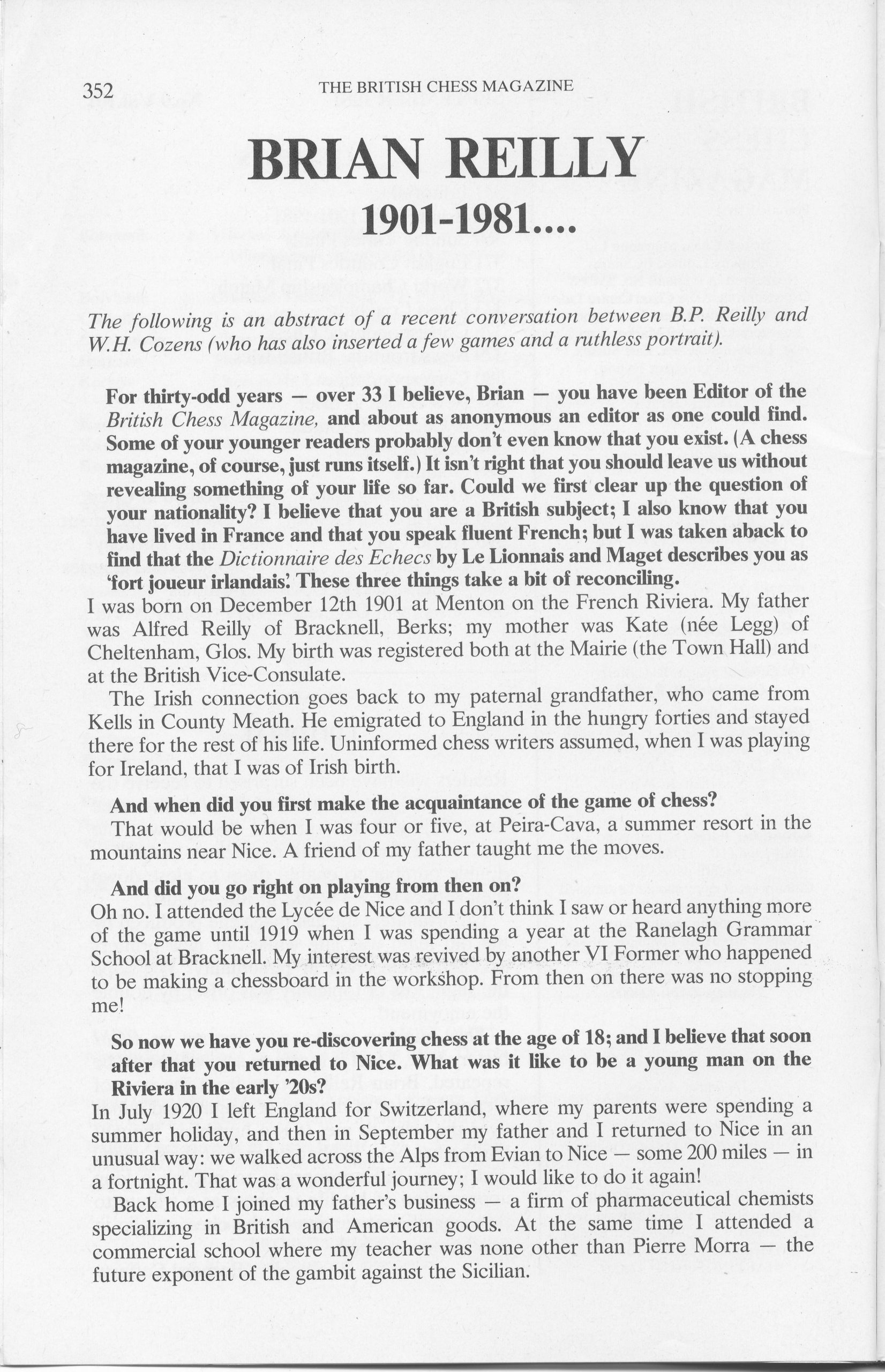
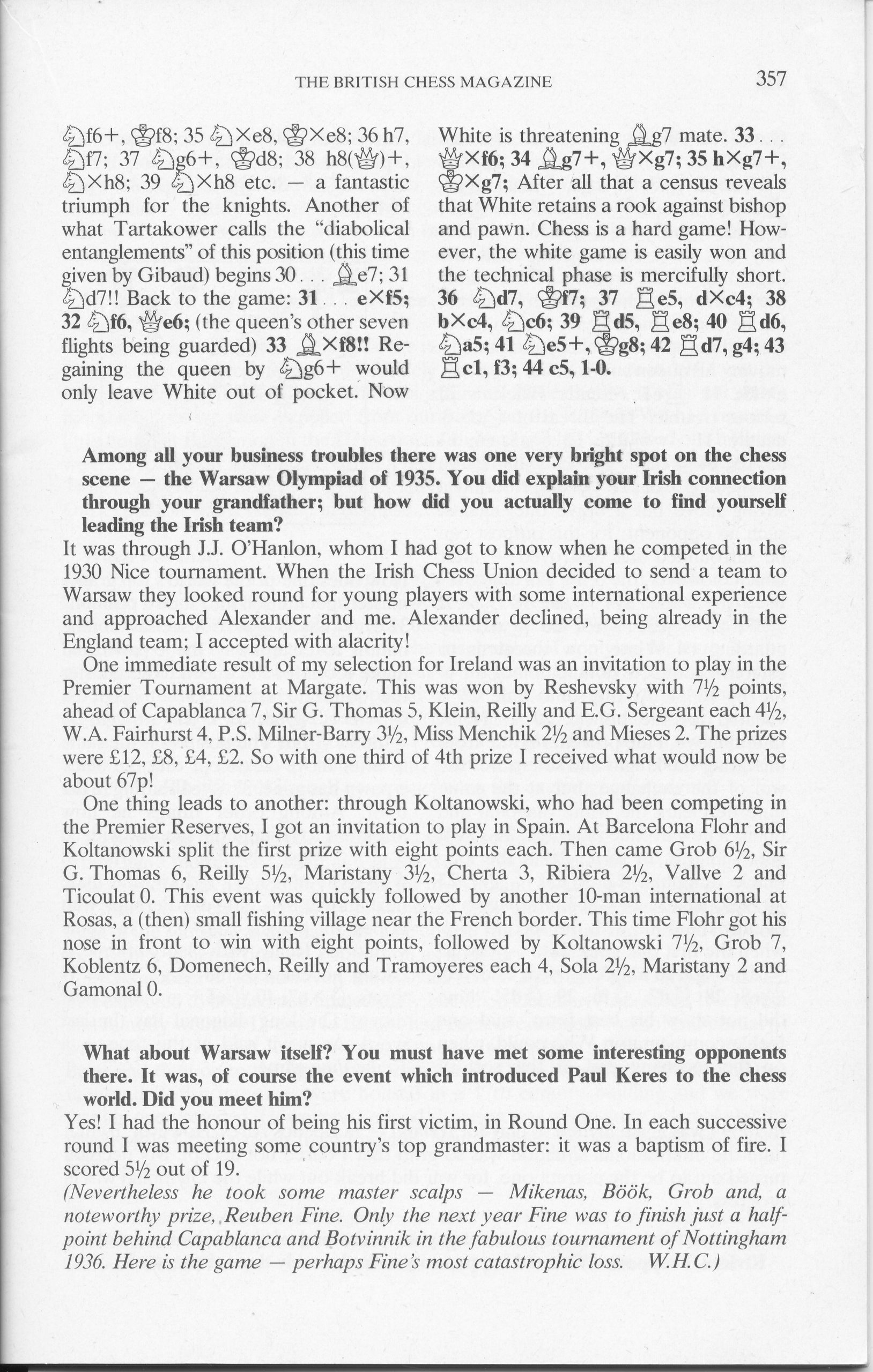
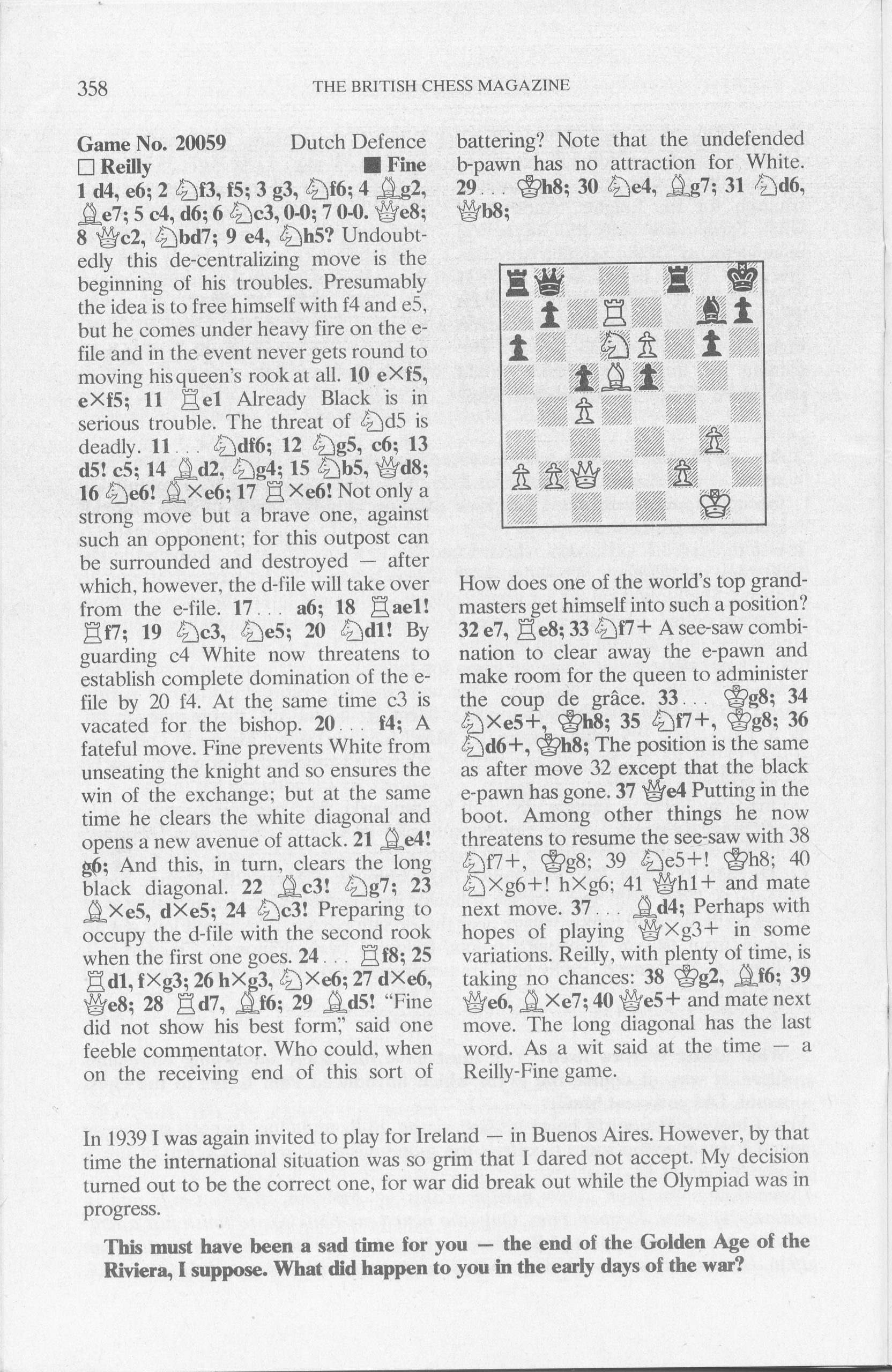
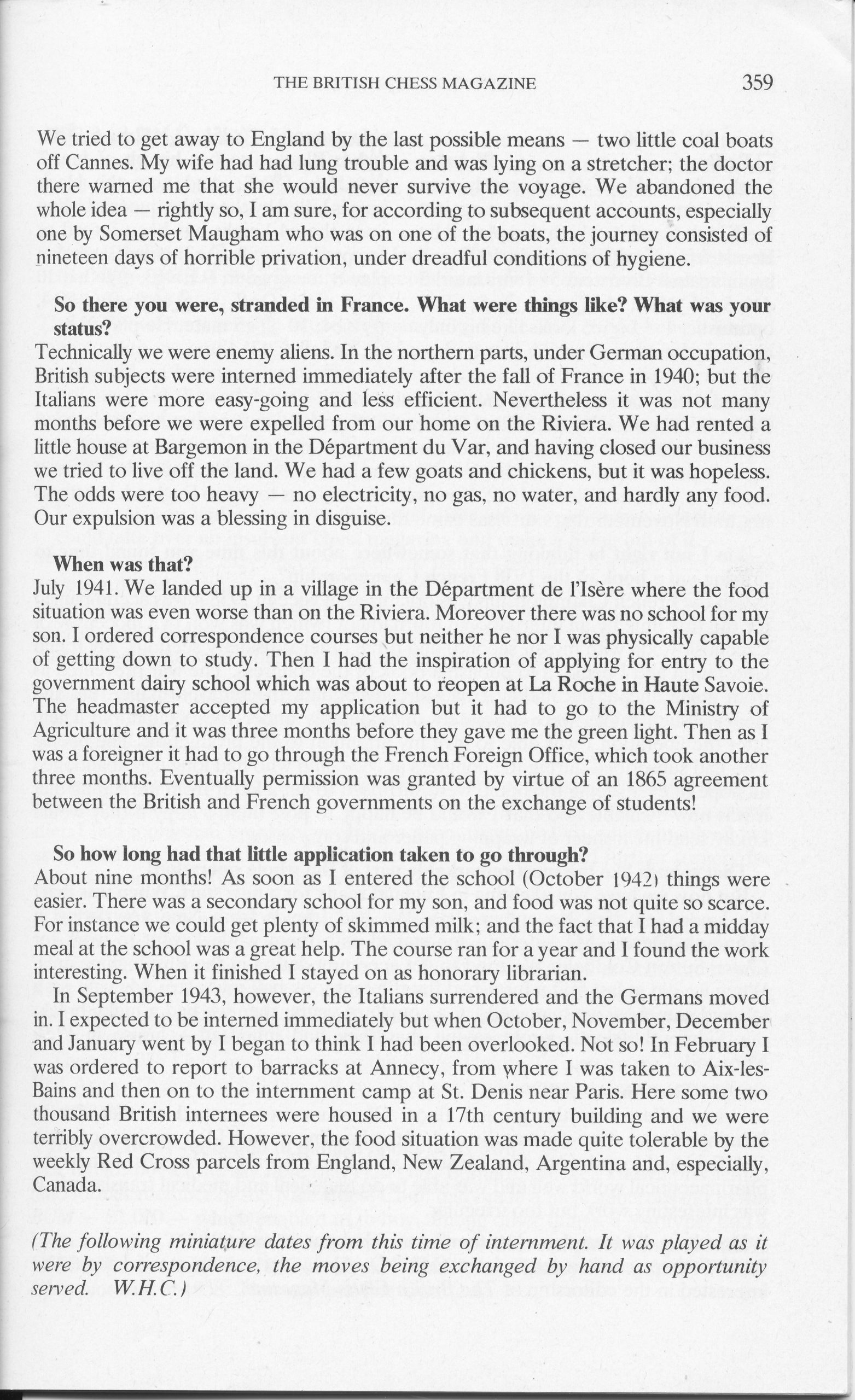
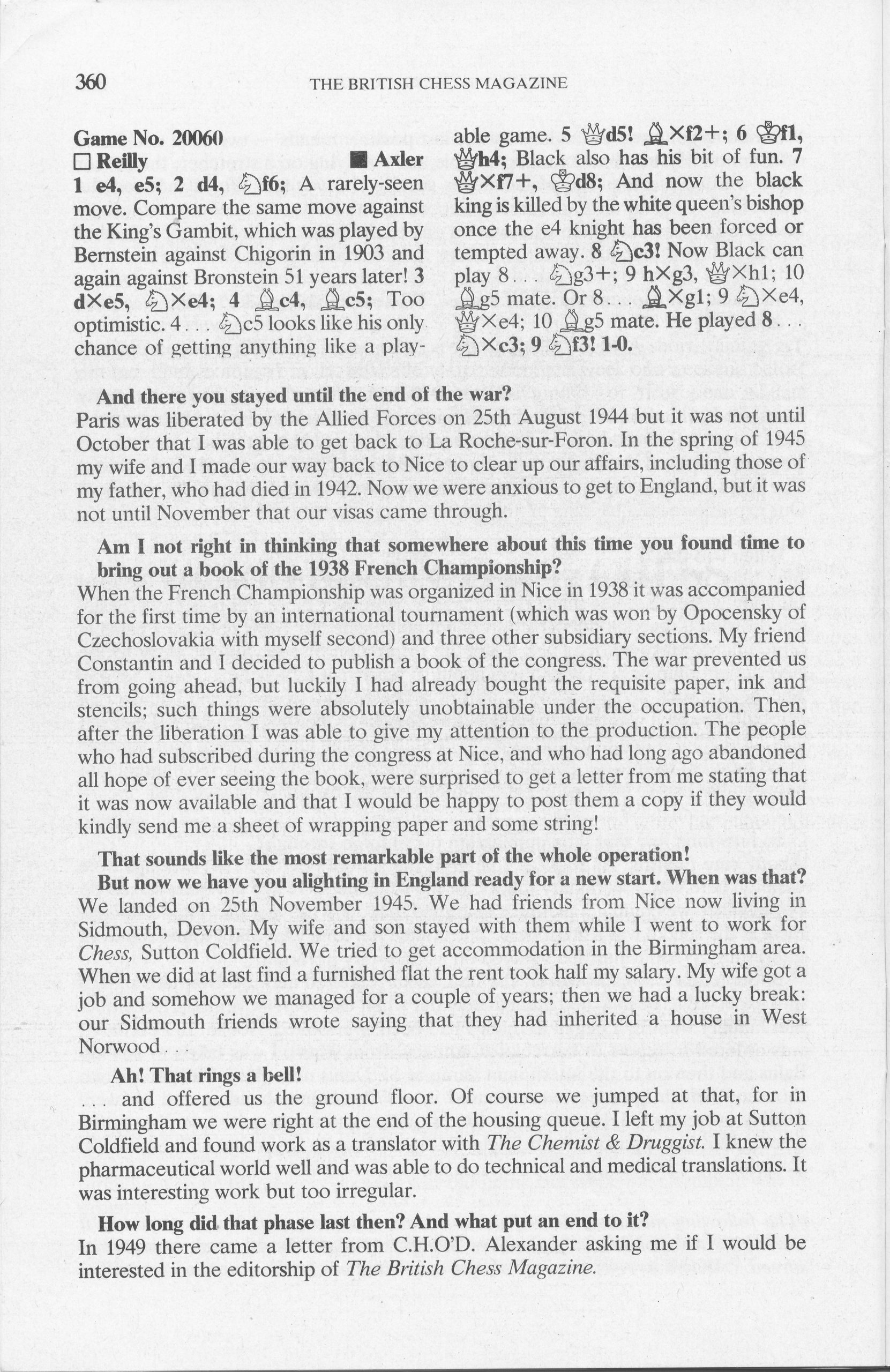
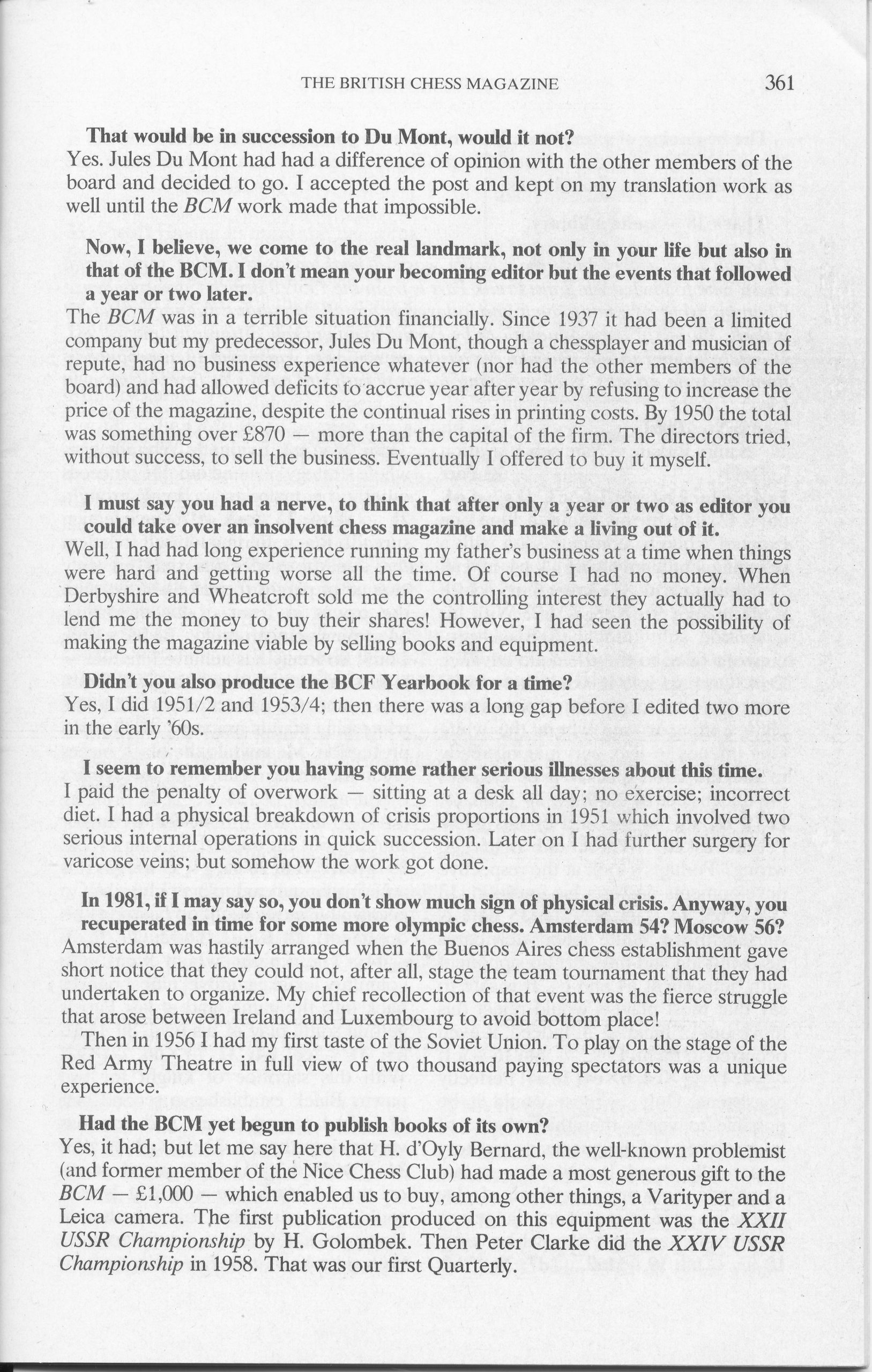
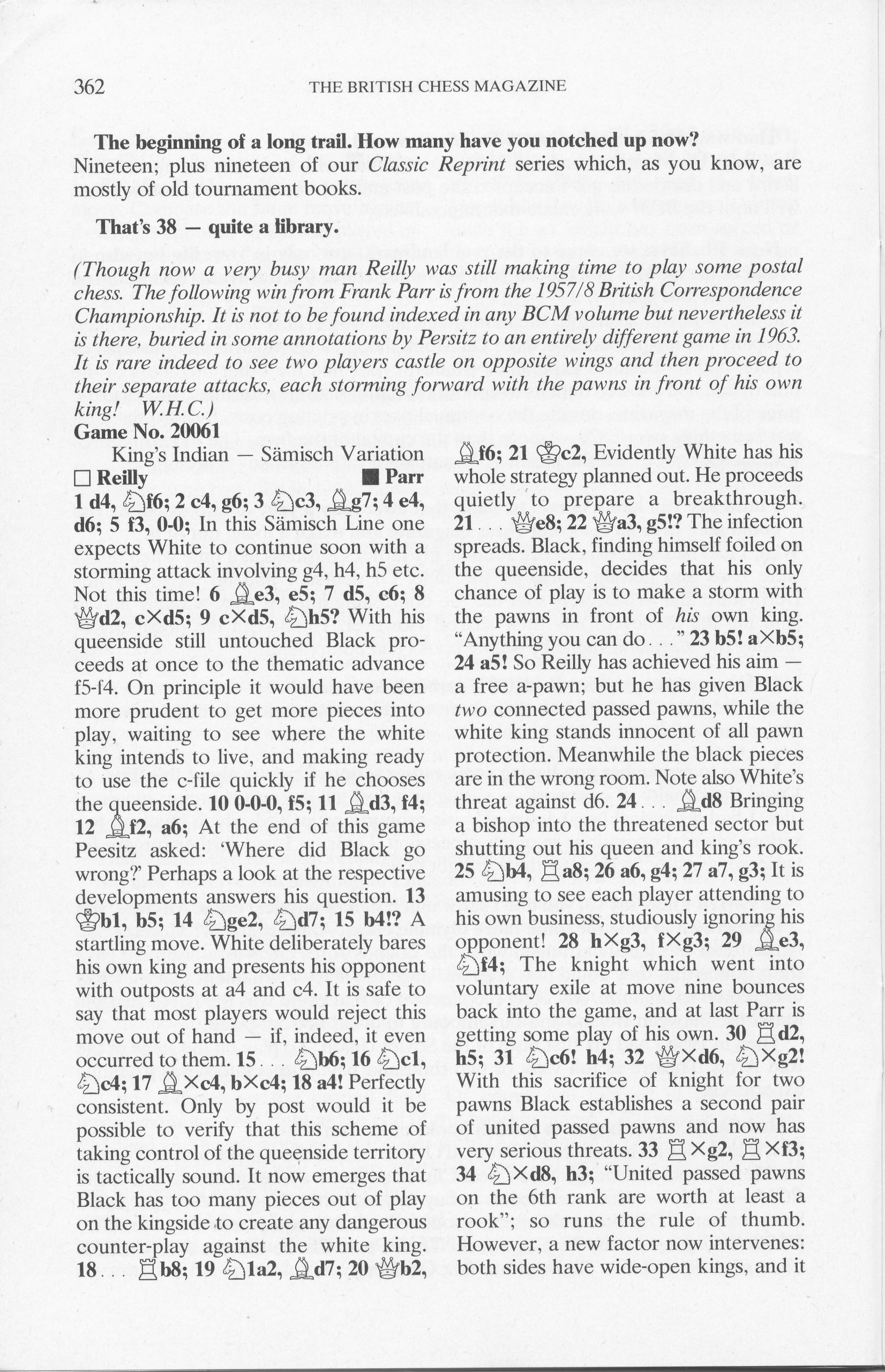
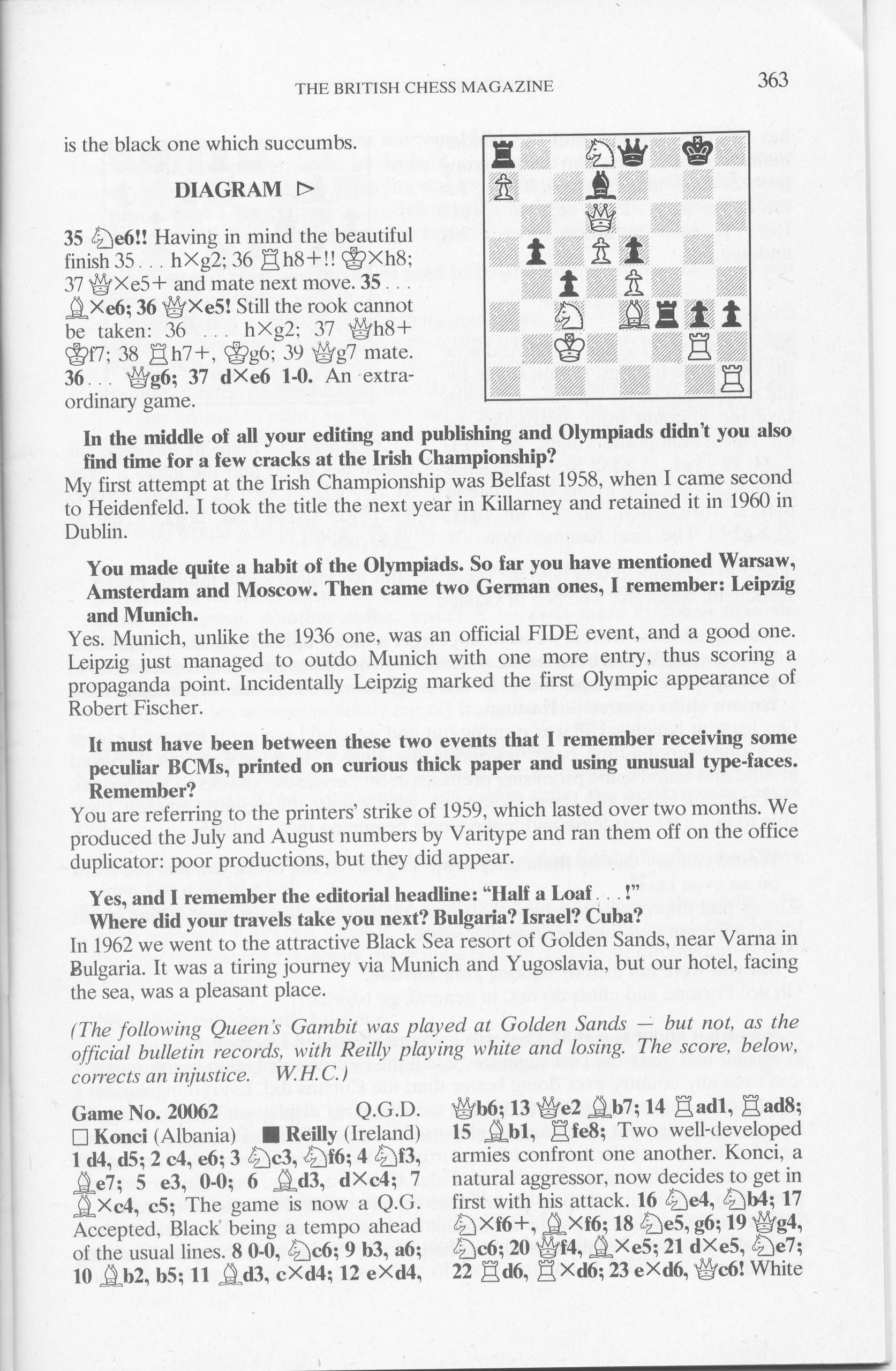
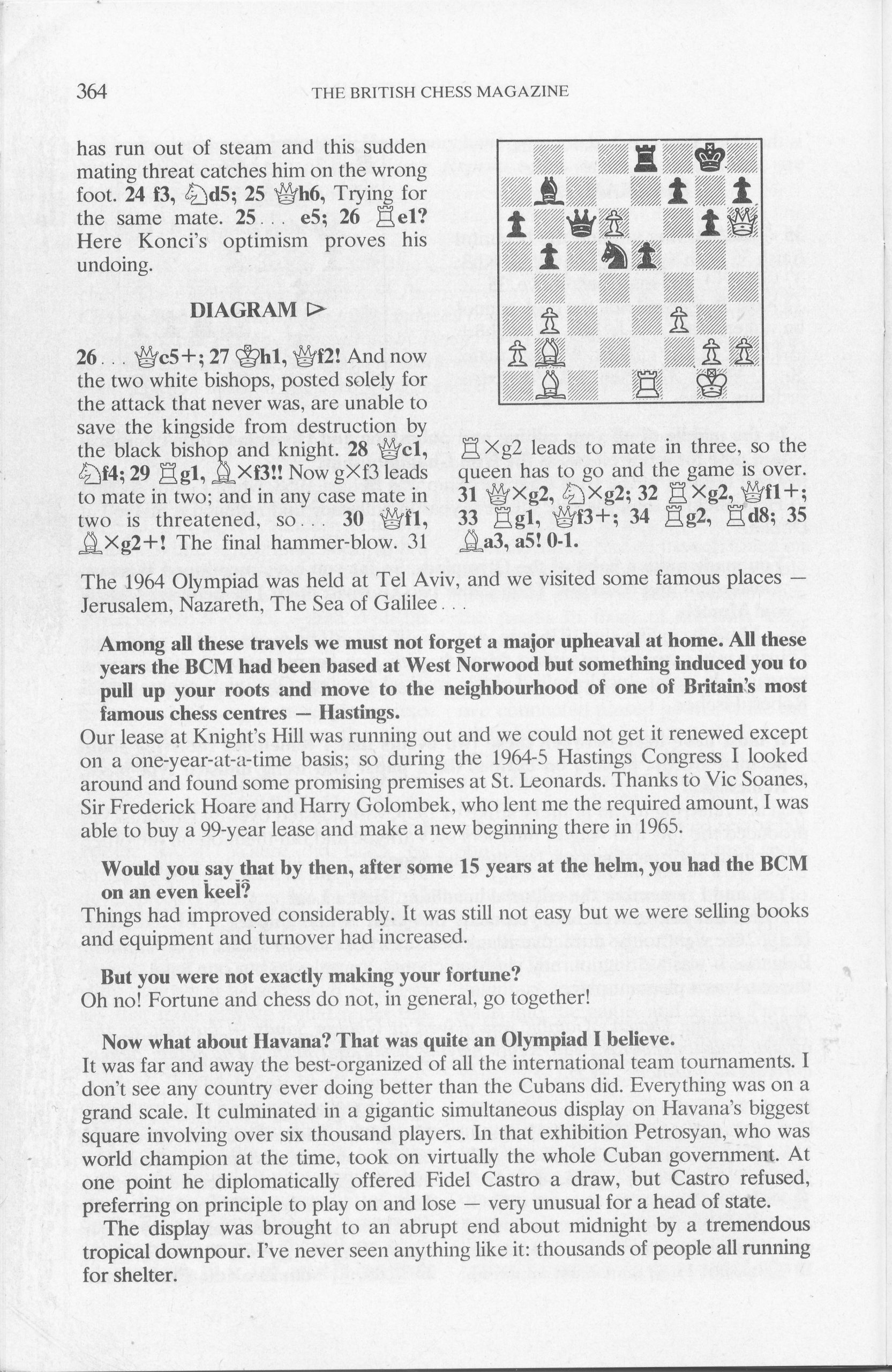
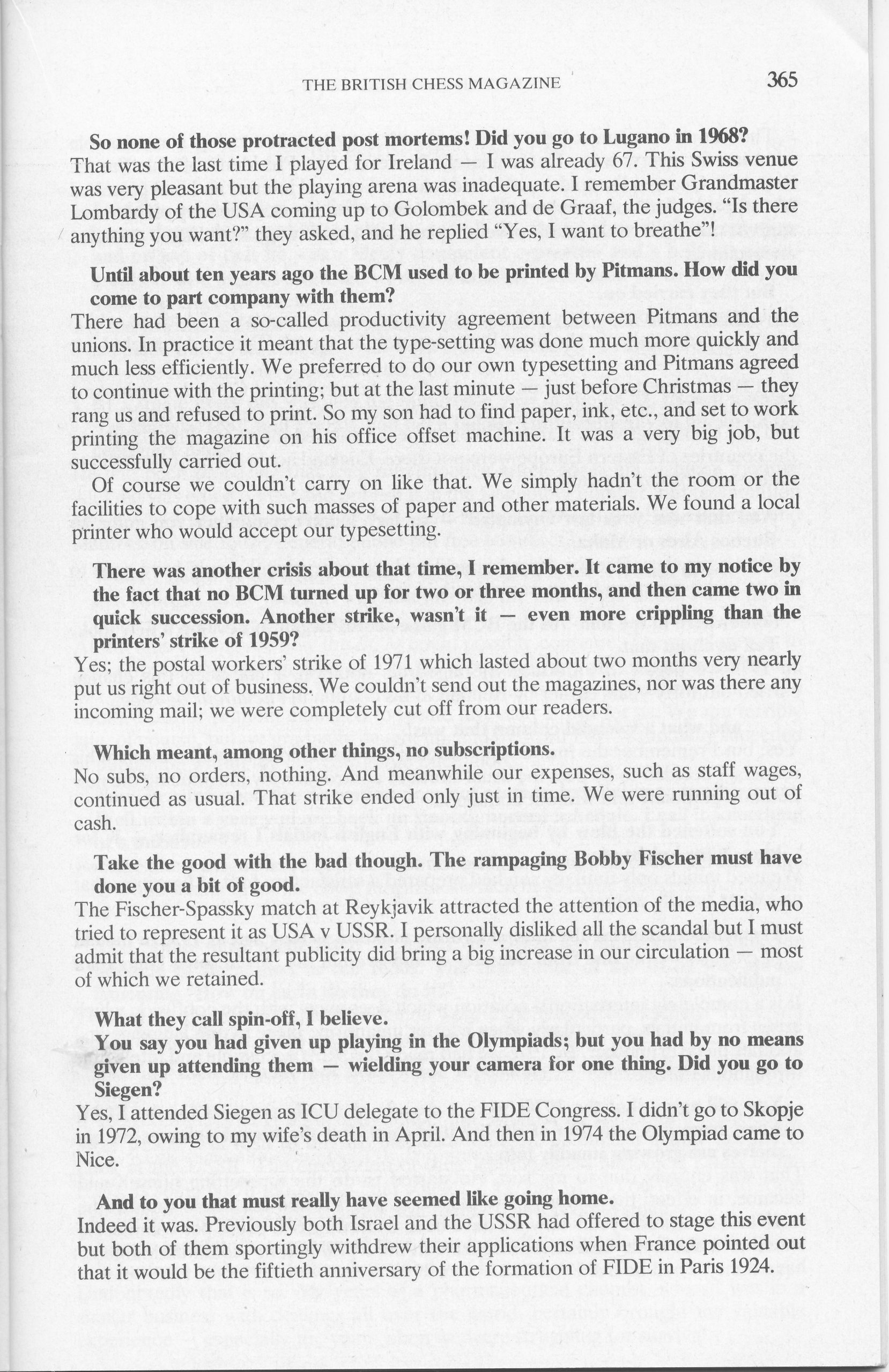
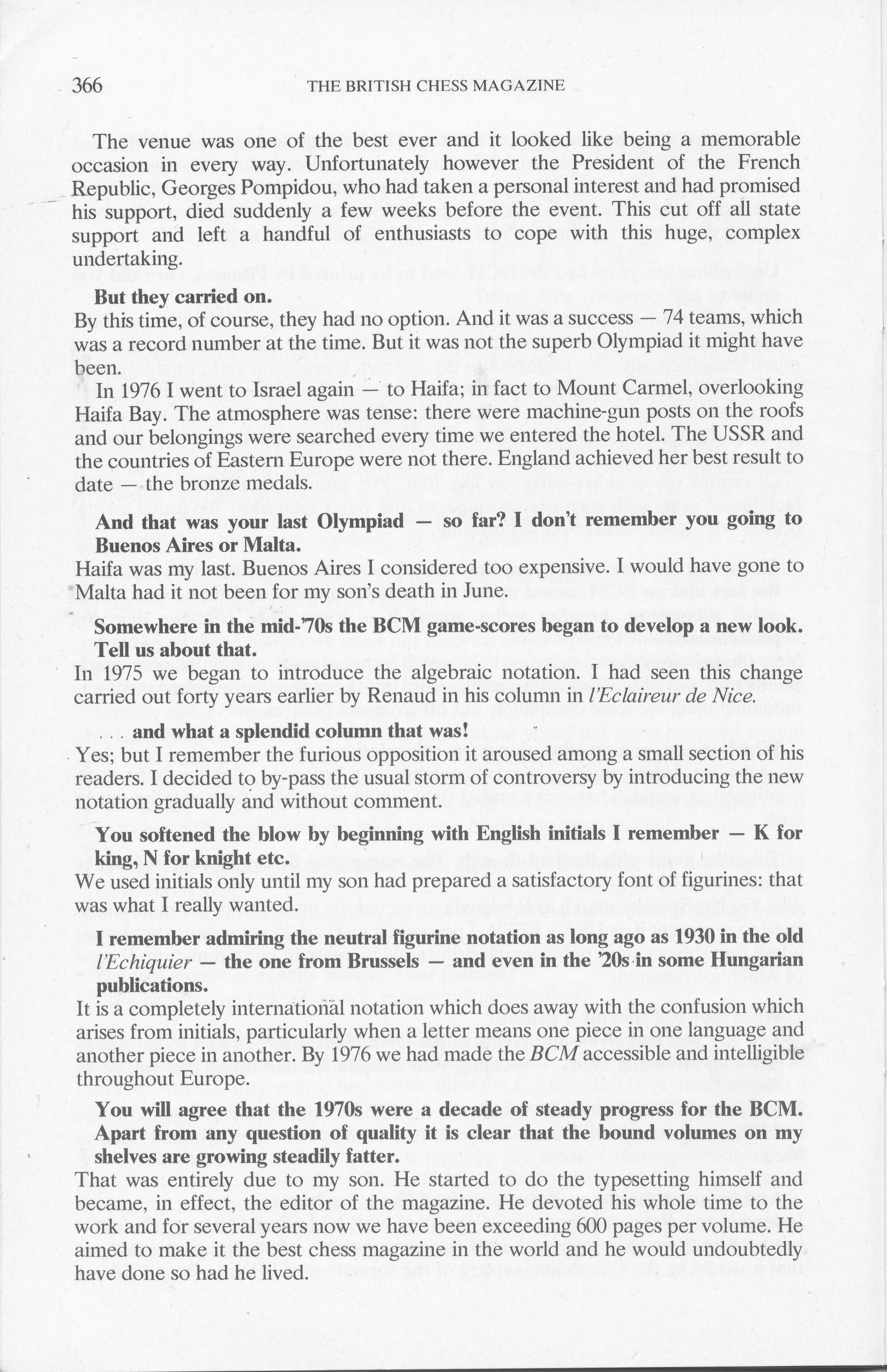
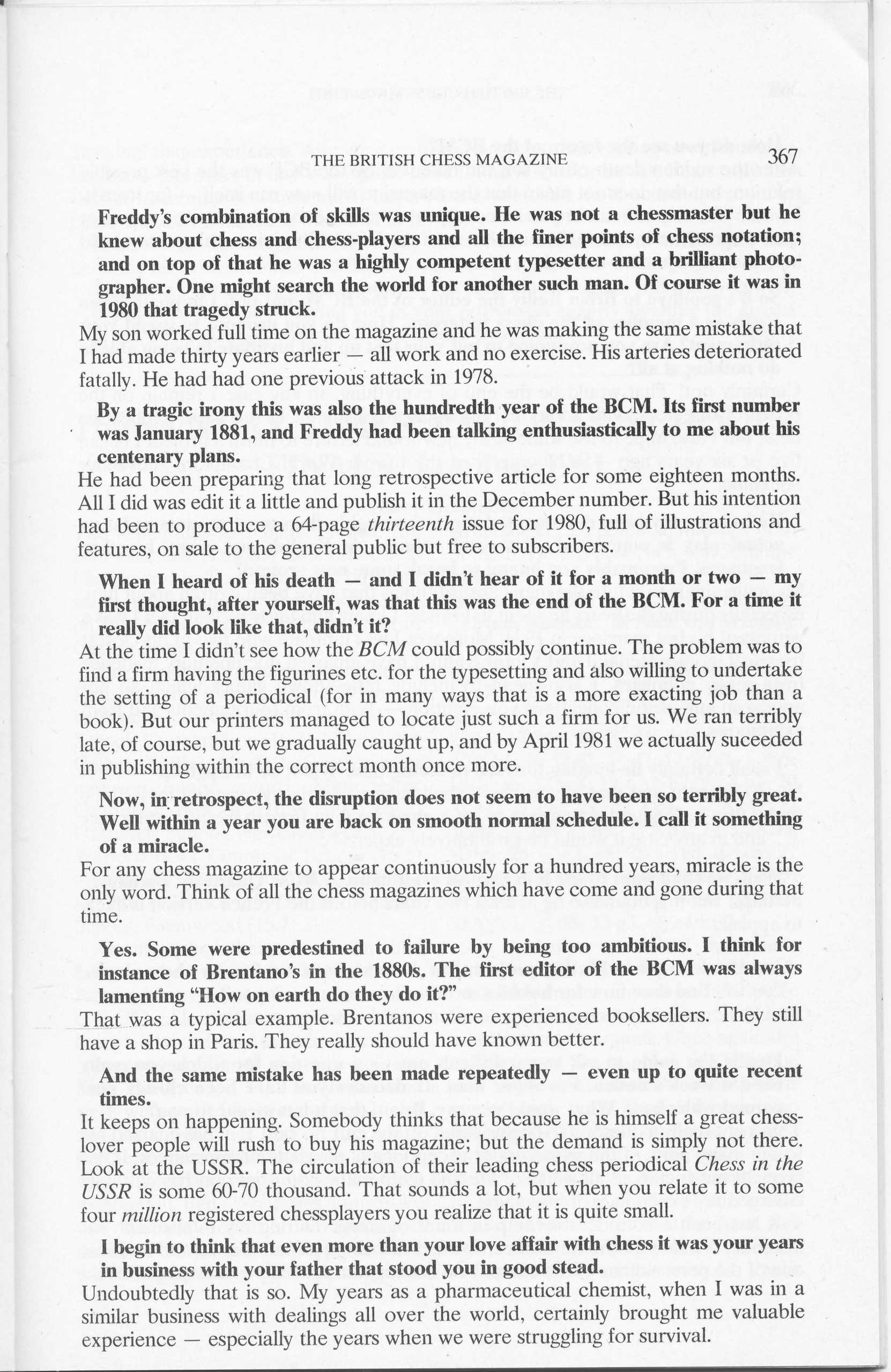
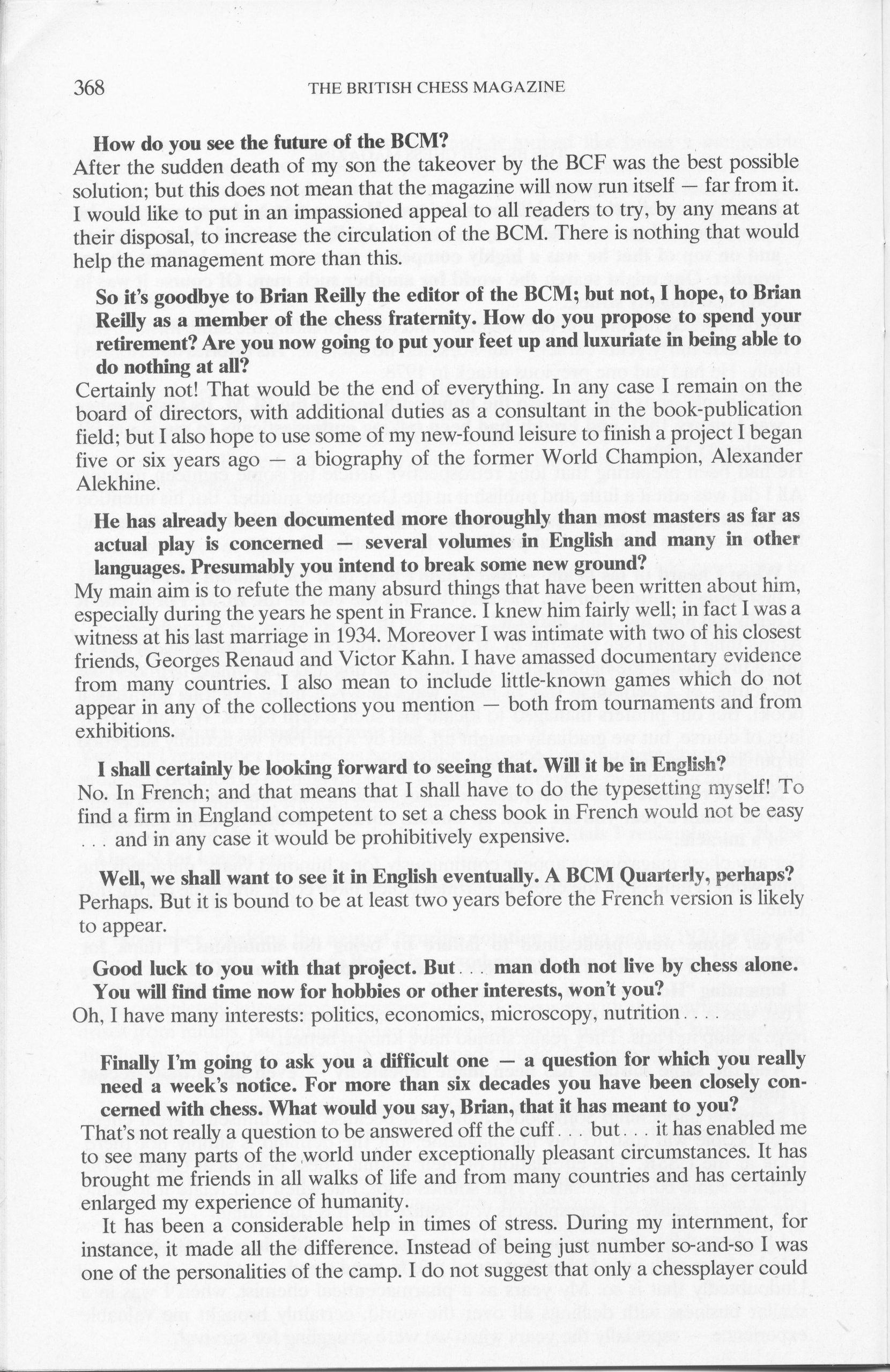
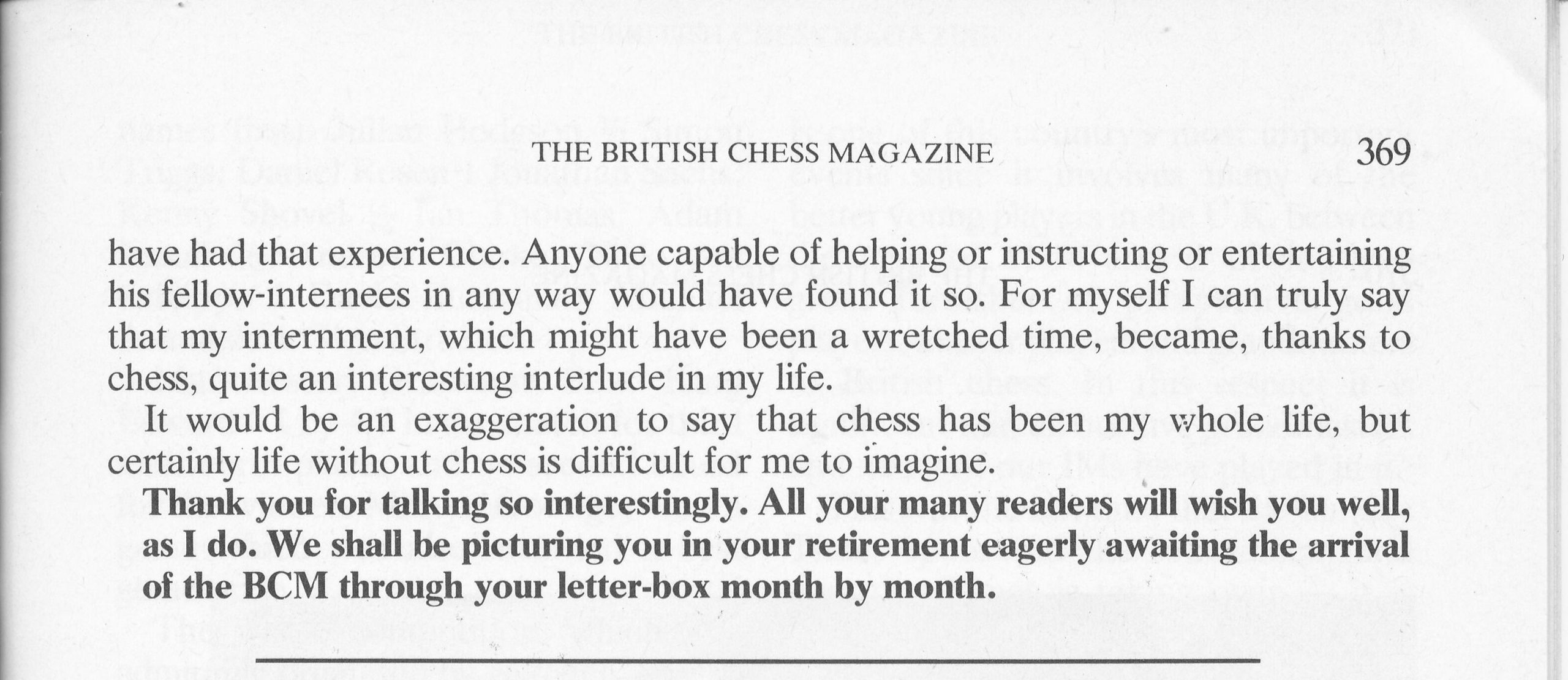
From British Chess Magazine, Volume CI (101), Number 8 (August), pp 352 – 369 a conversation between B.P. Reilly and W.H. Cozens :
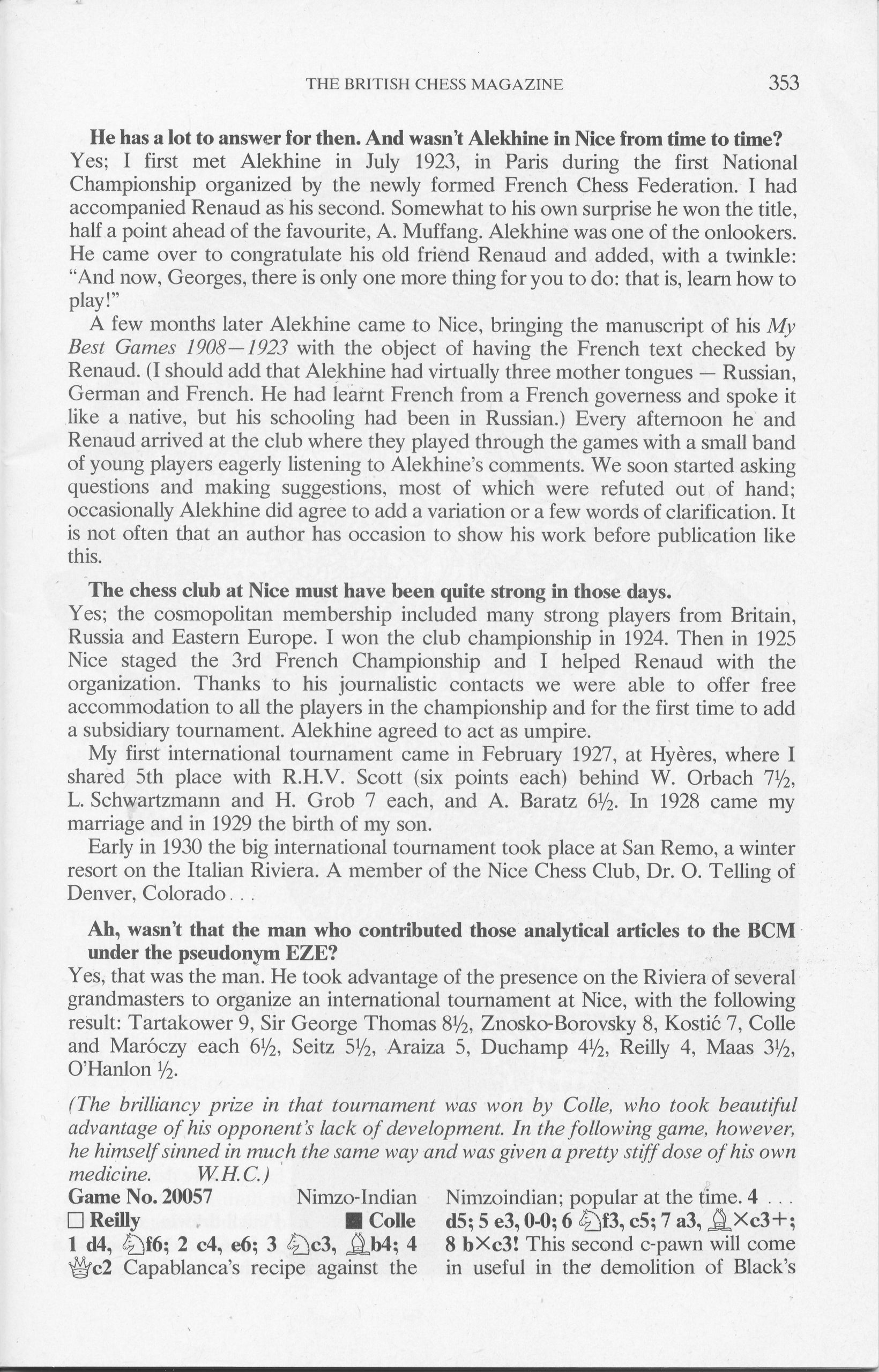
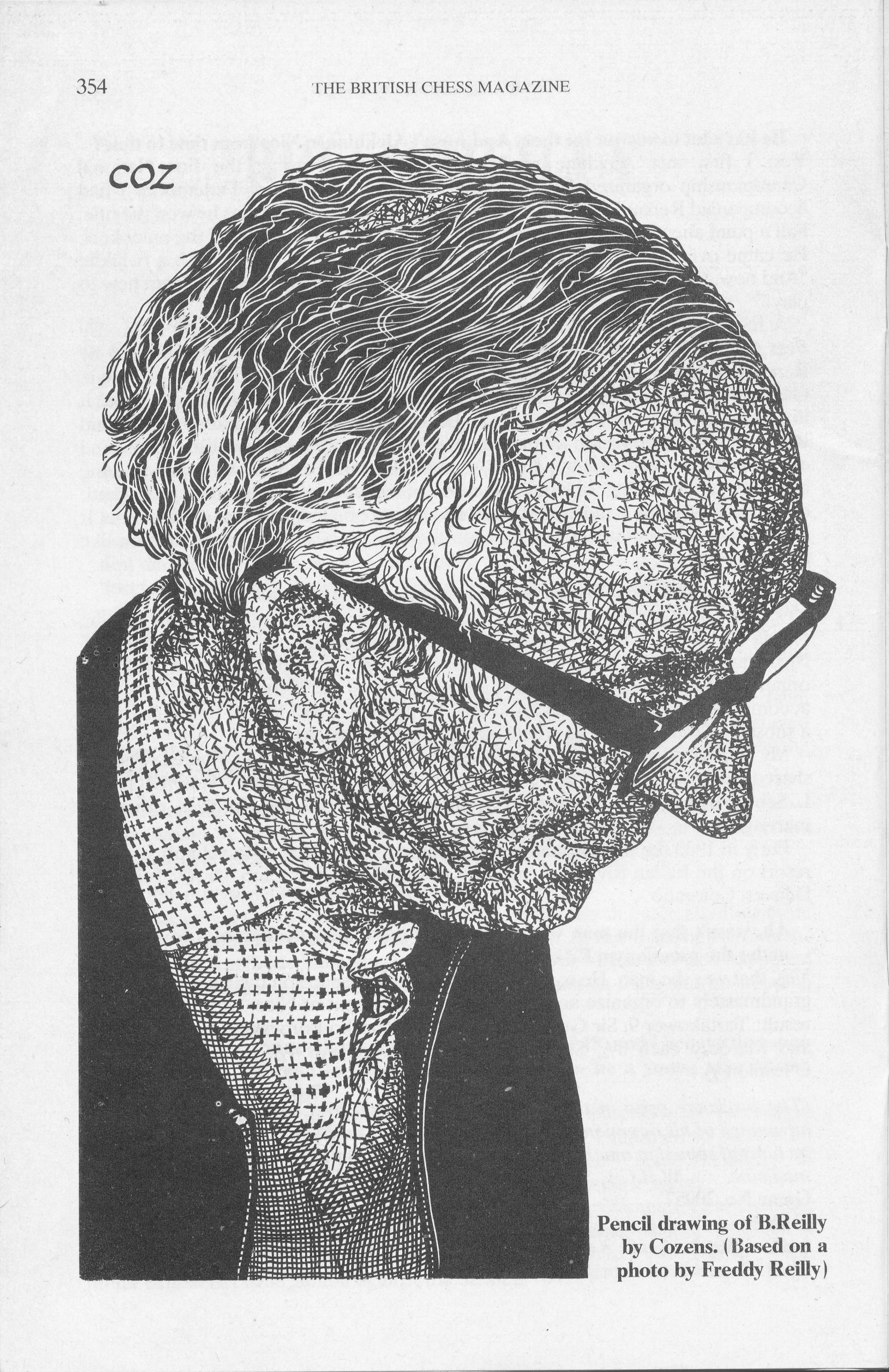
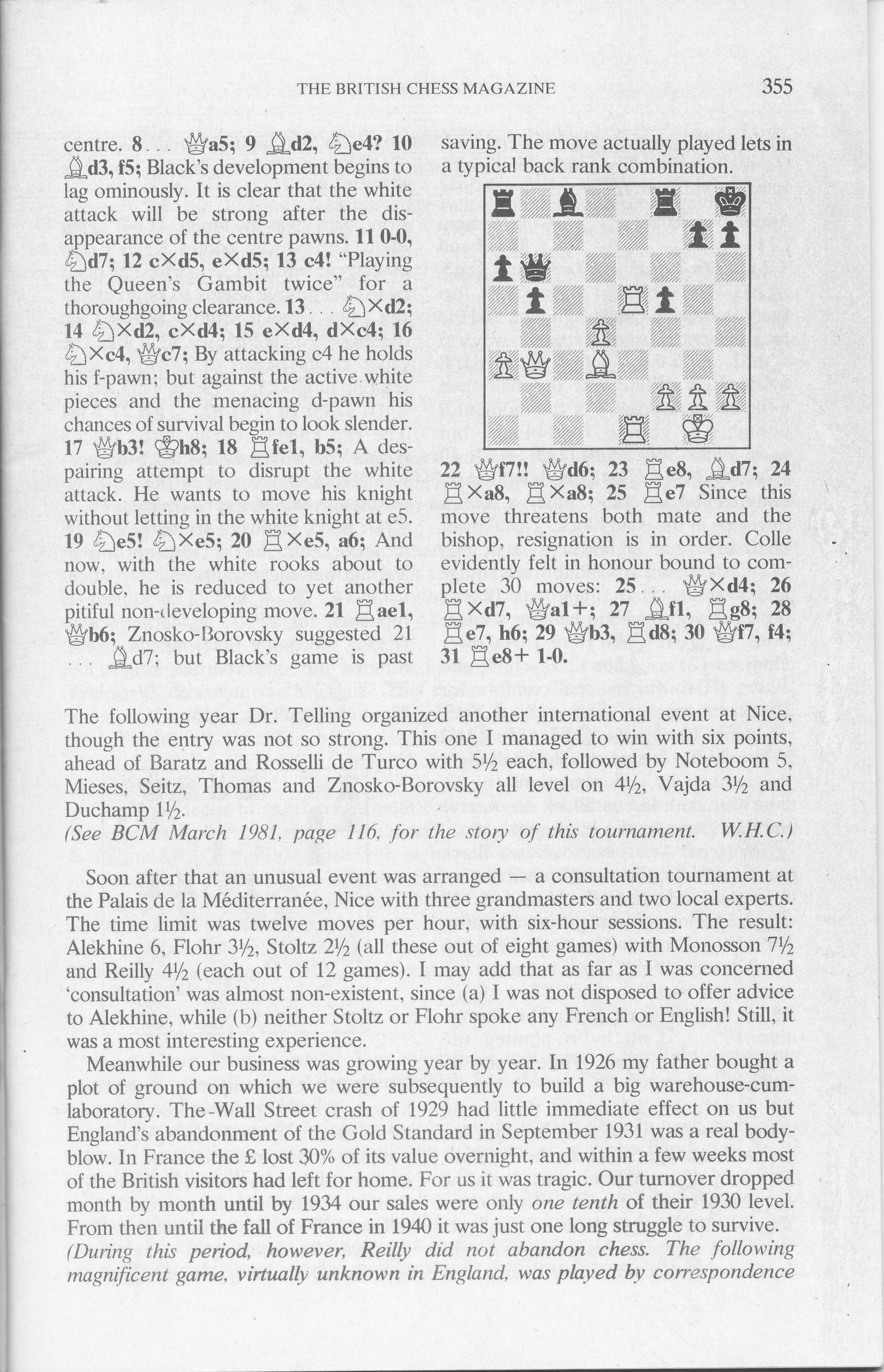
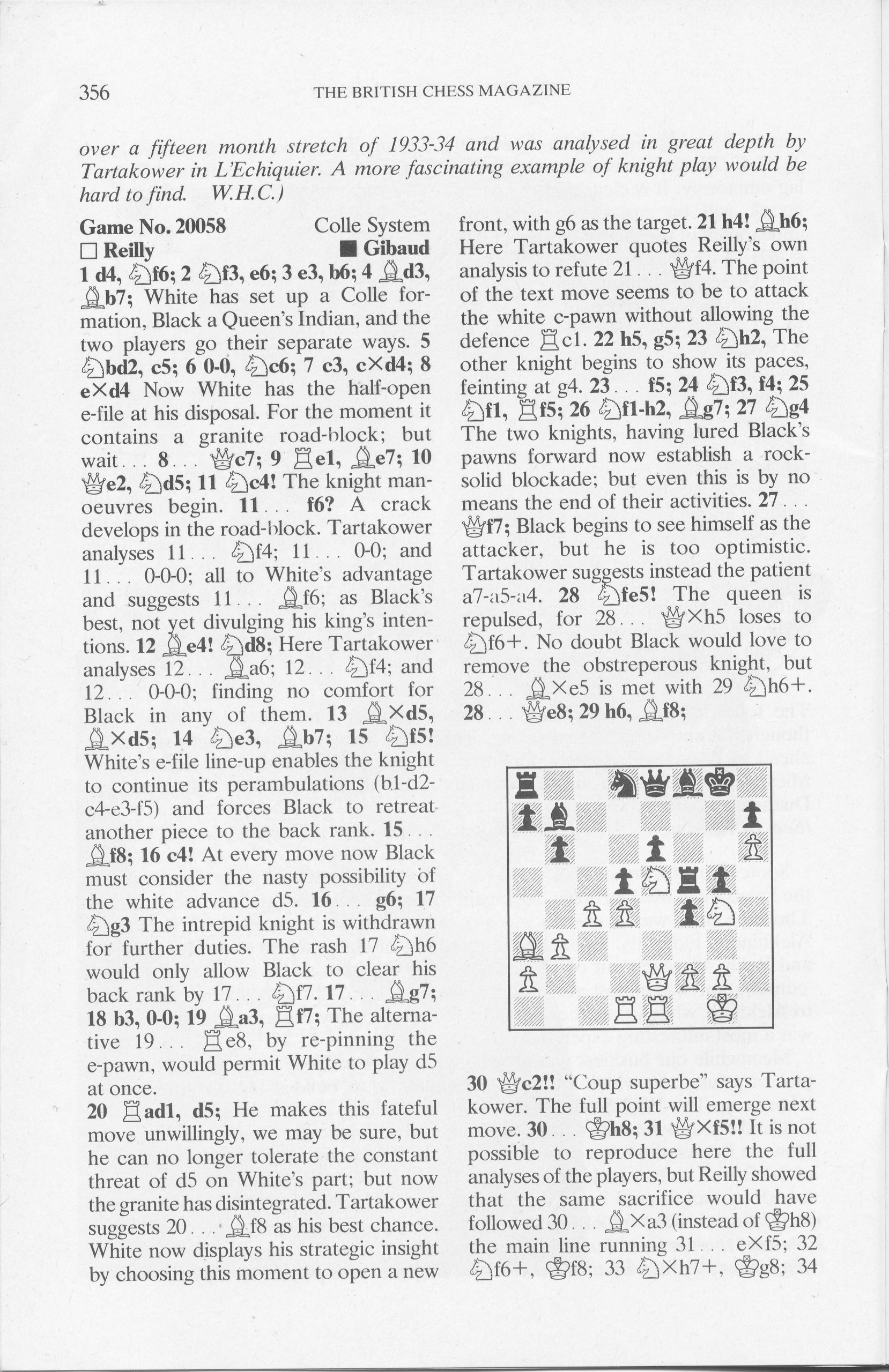
Brian Reilly conversation with William Harold Cozens, part 1Brian Reilly conversation with William Harold Cozens, part 2Brian Reilly conversation with William Harold Cozens, part 3Brian Reilly conversation with William Harold Cozens, part 4Brian Reilly conversation with William Harold Cozens, part 5Brian Reilly conversation with William Harold Cozens, part 6Brian Reilly conversation with William Harold Cozens, part 7
Brian Reilly conversation with William Harold Cozens, part 8Brian Reilly conversation with William Harold Cozens, part 9Brian Reilly conversation with William Harold Cozens, part 10Brian Reilly conversation with William Harold Cozens, part 11Brian Reilly conversation with William Harold Cozens, part 12Brian Reilly conversation with William Harold Cozens, part 13Brian Reilly conversation with William Harold Cozens, part 14Brian Reilly conversation with William Harold Cozens, part 15Brian Reilly conversation with William Harold Cozens, part 16Brian Reilly conversation with William Harold Cozens, part 16Brian Reilly conversation with William Harold Cozens, part 1
BCN remembers Mike Bent who passed away on Tuesday, December 28th 2004.
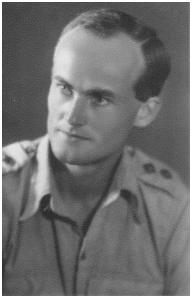
Charles Michael Bent was born on Thursday, 27th of November 1919 and in that year Charles was the fifth most popular boy’s name.
He was born in Portsmouth, Hampshire.
In 1939 he was living at 5, Ashburton Road, Gosport with his mother Eileen B. Bent (née Hill) and was a Sub Lieutenant in the Royal Navy.
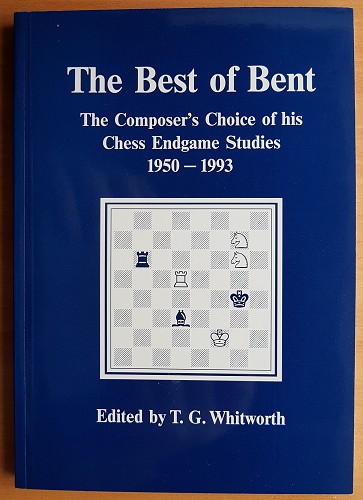
He wrote “Best of Bent: Composer’s Choice of His Chess Endgame Studies, 1950-93” This was edited by TG Whitworth.
The Best of Bent, CM Bent, edited TG Whitworth, July 1993
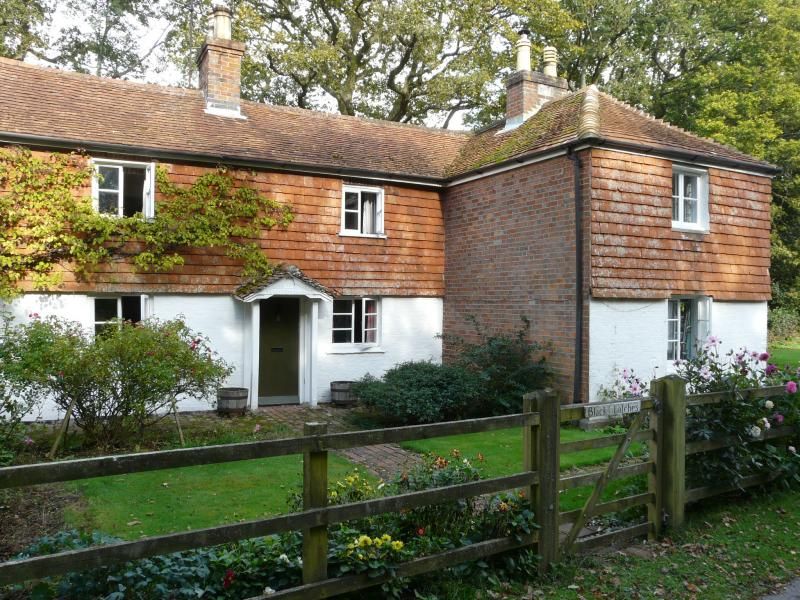
He died in Swindon on the 28th of December, 2004 having last resided in Hungerford, RG17. Whilst writing the Studies column for British Chess Magazine he resided at “Black Latches”, Inkpen, Newbury, Berkshire.
“Black Latches”, Inkpen, Newbury, Berkshire
The C. M. Bent Memorial Composing Tourney was held in 2006-07.
From British Chess Magazine, Volume XCV (95, 1975), Number 1 (January), page 22 we have a charming introduction to CMB from the retiring editor of the Studies column, AJ Roycroft :
“A studies article without a diagram? Yes, and without an apology either. Instead this introduced my successor, Charles Michael Bent, who is as remarkable without the chessboard as he is with it. Now since, as at May 1974, he has composed the total, rarely exceeded by anyone, of 670 studies (of which only 375 have been published), and about 600 problems (one tenth published), his other achievements and activities, insofar as he can be persuaded to talk about them, are worth recounting.
Michael Bent has a passion for all-the-year-round tennis, and loves the country life. Walking and climbing, all-forms of do-it-yourself, word-play nabla/del, puzzles, conjuring and listening to music make the mixture extraordinarily rich. Yet if there was a single word to characterise him it would be simplicity (his choice), with (my addition) a strong and individual sense of humour.
Physically he is a lean, balding 54-year-old as fit as most men half his age. He played at Junior Wimbledon before the War and only three of four years back won the singles tennis championship of his half of Berkshire. He is a modest and delightful companion, and to visit him and his wife Viola, to whom he credits responsibility for the serenity of his condition and surroundings, is a relaxing pleasure I always look forward to in my own hustled and tense London-centered existence.
In his own words he was never really a player of chess at all, but first sight of problems (during the war) and endings (just after it) acted like fireworks on a dark night and lit an imagination which still lacks basic technical knowledge. So, artistic rather than ‘scientific’, have never knowingly composed a didactic study. Am told my ‘style’ is easily recognised. Am aware, but perfectly content, that I compose much that the expert will easily solve, in the hope that the less initiated may be entertained and as attracted as I was in the beginning.
There is a feast, including many surprises, in store for you and me, at the hands of your new chess-chef, ‘CMB of the BCM’.”
From British Chess Magazine, Volume 125 (2005), Number 2 (February), page 98 we have a brief obituary from John Beasley :
“Charles Michael Bent died just over a month after his 85th birthday. Mike Bent had long been Britain’s leading composer of endgame studies, he was a witty and entertaining writer on the subject (and on many others), and the pleasure he gave was rightly acknowledged by the granting in 2001 of one of the BCF President’s Awards for services to chess.
BCM published his first study in 1950 and one of his last 50 years later, and he was our endgame study columnist from January 1975 to March 1985. There will be a steady flow of quotations in Endgame Studies during the coming months. John Beasley”
The Studies column was taken over in April 1985 by Paul Lamford.
From The Encyclopaedia of Chess (Robert Hale 1970 & 1976), Anne Sunnucks :
“Born on the 27th November 1919, Michael Bent has only one possible challenger, Harold Lommer, as the finest composer of endgame studies England has ever produced. Although up to October 1967, he had composed 546 problems and 320 studies, he now concentrates almost exclusively on studies. His 17 honoured studies include three 1st prizes. His partiality towards Knights is shown in the typical study selected here.
Michael Bent was educated at the Royal Naval College, Dartmouth, but had to leave the Navy because of chronic sea-sickness. He served in the Rifle Brigade in the Second World War and afterwards became a rubber plant in Johore, where he survived several terrorist attacks. How now lives with his wife in a Berkshire Village.
Apart from Chess, Michael Bent has other recreations, including wood carving, stamp collecting, composing crossword puzzles and butterfly collecting. His butterfly collection included 500 Malayan specimens. He is also a strong tennis player. Thirty-one years after playing at Wimbledon as a junior, he won the Newbury and District singles title in 1967.”
CM Bent 2nd Honorable Mention New Statesmen 1964 Tourney Award, 5th March 1965
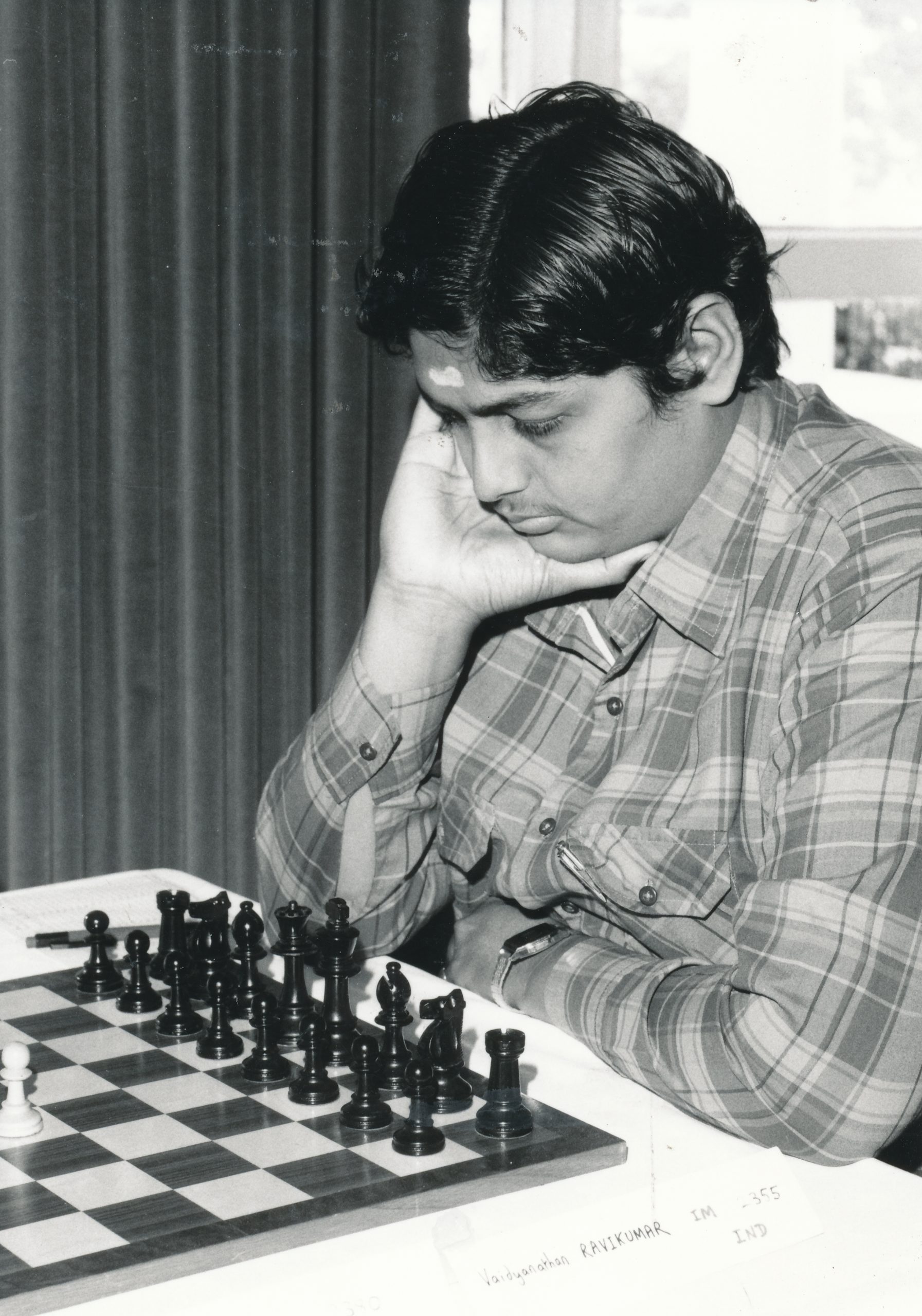
Vaidyanathan Ravikumar (“Ravi” to his friends) was born in Paramakudi, Ramanathapuram, Tamil Nadu, India on Saturday, December 26th, 1959. On this day Nelson Rockefeller announced that he would not seek the Republican Party nomination for 1960.
Ravi credits his father N. Vaidyanathan for help with his early chess development.
An early image of Vaidyanathan Ravikumar from page 81 of Ulf Andersson’s Decisive Games
In 1978 Ravi won the Asian Junior Championships in Tehran and was awarded the International Master title as a consequence. Ravi was India’s second International Master : Manuel Aaron was the first in 1961.
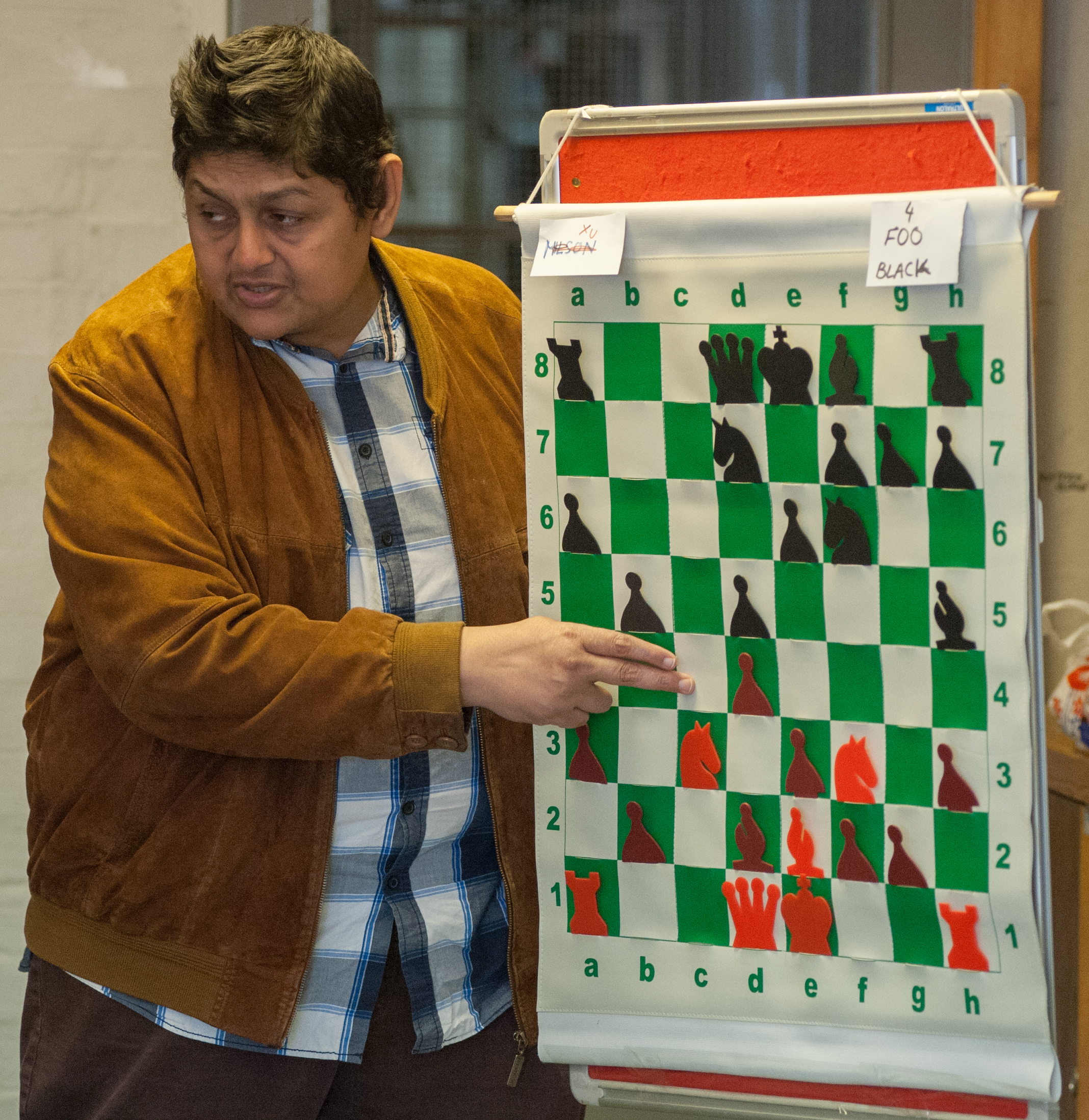
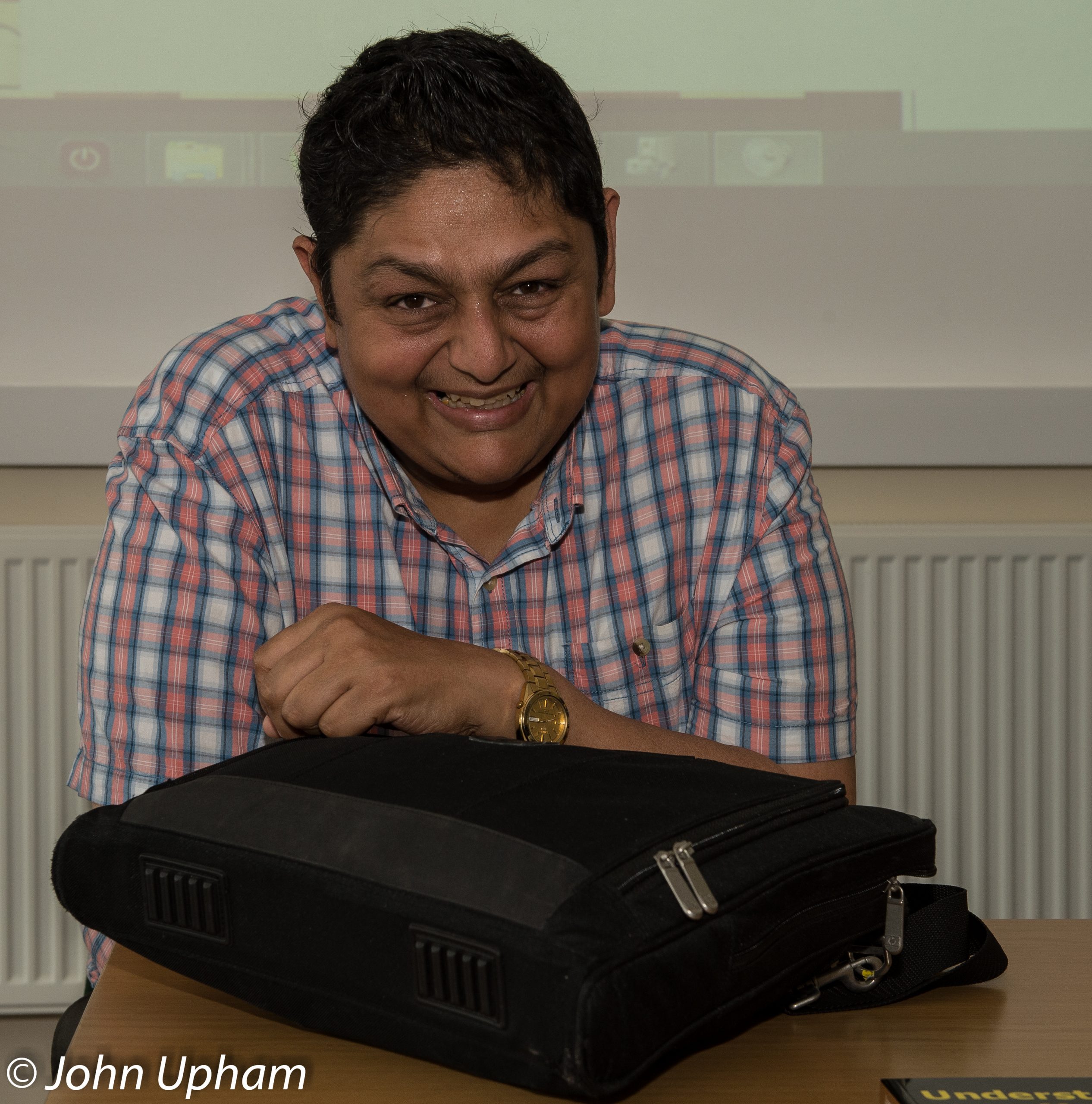
“Ravi” at the 2013 UKCC Terafinal at Loughborough Grammar School, Courtesy of John Upham Photography
His earliest recorded game in Megabase 2020 was from the 3rd of September 1978 and was from the World Under-20 Championships in Graz, Austria. The event was won by Sergei Dolamatov and Ravi finished =25th on 6.5/13. The following year (Norway, 1979) Ravi improved to =12th with 7.5/13 and the title was won by Yasser Seirawan. James Plaskett was =3rd.
Ravi at the UKCC Southern Gigafinal 2014 at the Rivermead Leisure Centre, Reading. Courtesy of John Upham Photography
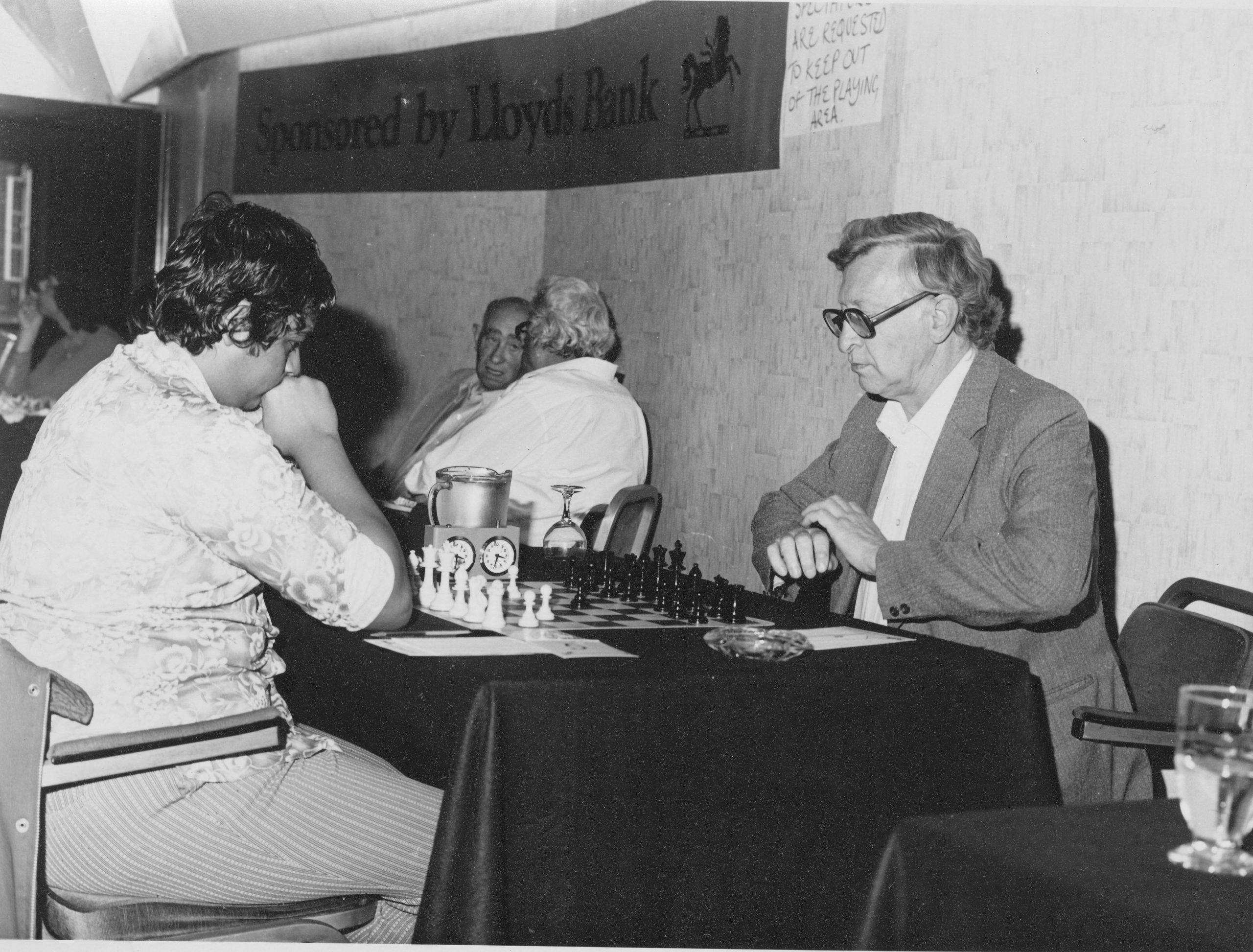
By now ( 1979) Ravi had graduated from The University of Madras with a degree in commerce and relocated to England seeking more playing opportunities. He played in his first Lloyd’s Bank Open in 1979.
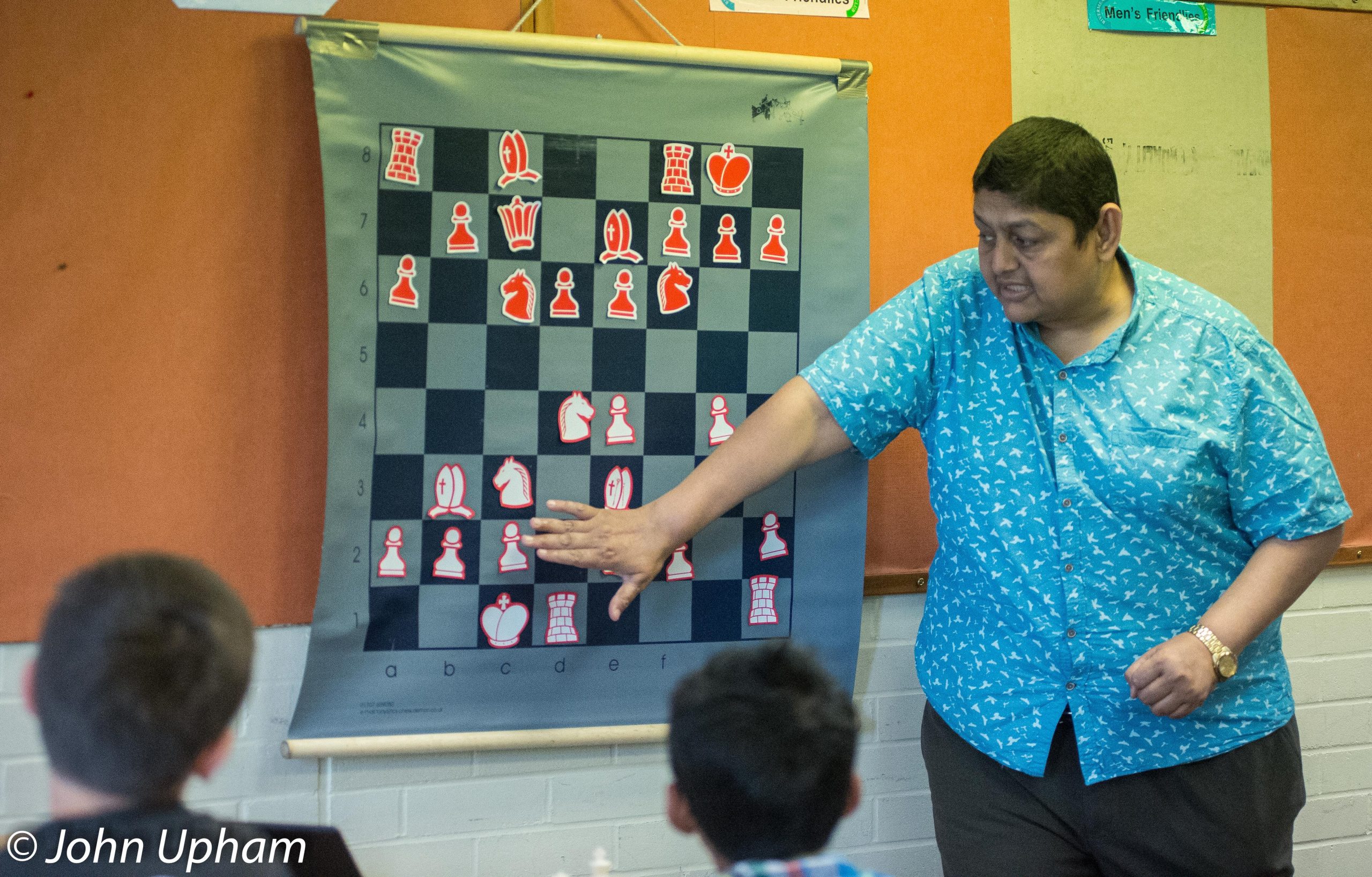
Ravi and IM Andrew Martin providing the commentary for the 2015 British Championships in Warwick. Courtesy of John Upham Photography
Ravi made his first appearance for India in an Olympiad at Valetta, Malta 1980. In 1981 he was runner-up to Bjarke Sahl in the 6th North Sea Cup followed by a creditable equal 10th in the 68th British Championships at Morecambe won by Paul Littlewood. In round eight he played this attractive game against Daniel King. Notes by PC Griffiths :
IM Vaidyanathan Ravikumar v. Vassily Smyslov, Lloyds Bank Open, round 6, 30th August 1981. The game was drawn in 33 moves.
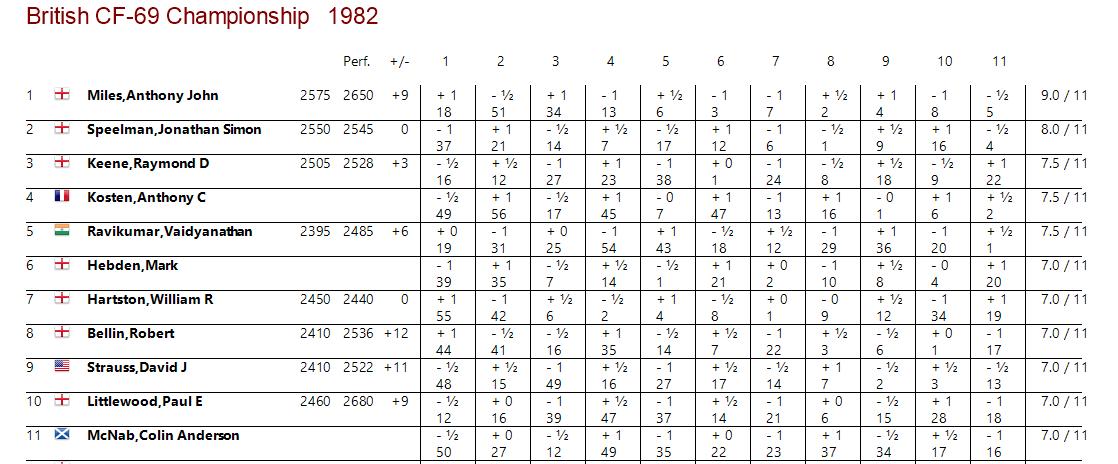
In 1982 Ravi scored a creditable =3rd at the 1982 British Championships (Mile’s year) in Torquay including wins over Basman, Muir and Plaskett :
Cross table for the 1982 British Championship in Torquay
1983 included an excellent win over James Tarjan at the Lloyds Bank Open but Danny King got revenge for his 1981 defeat!
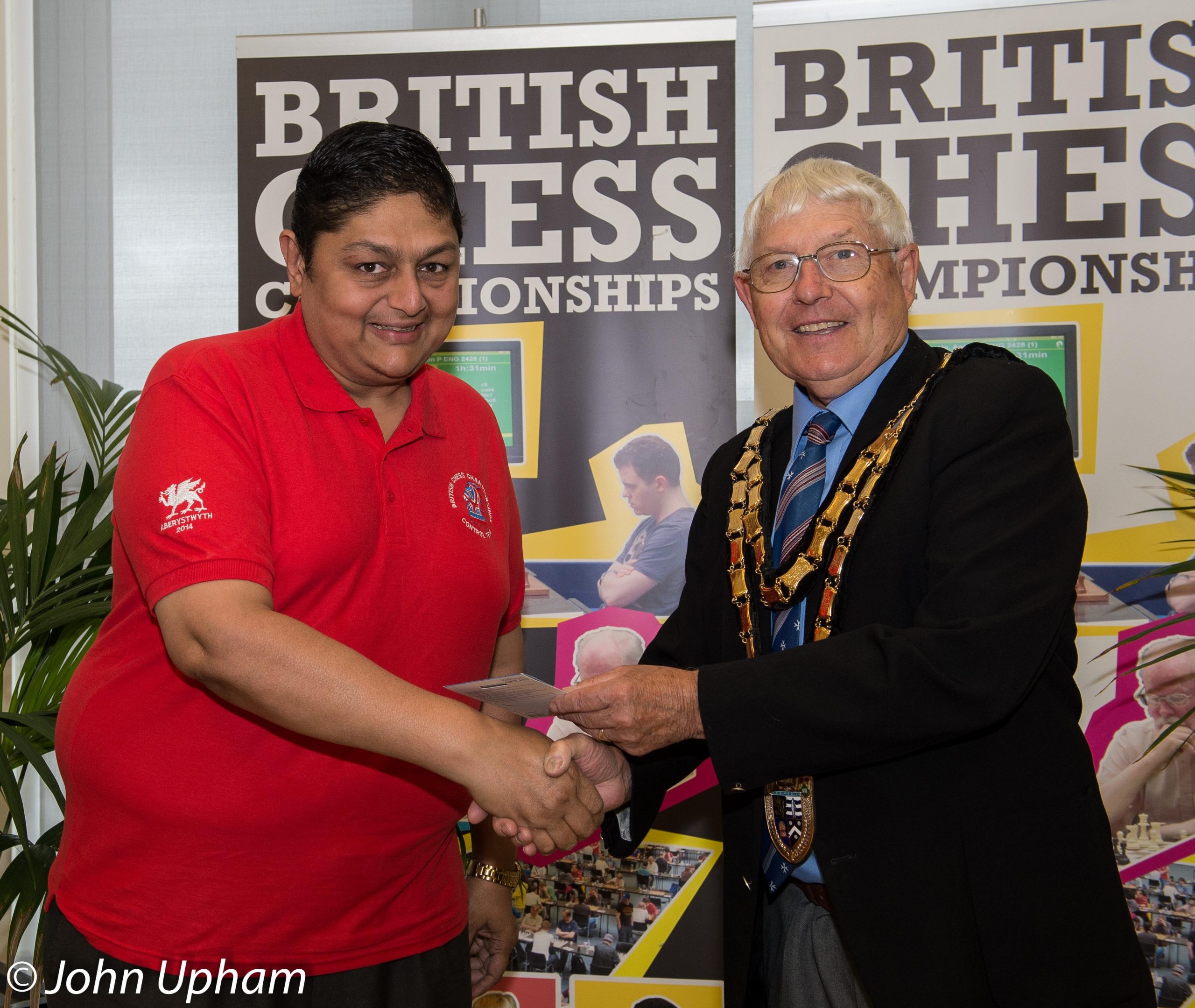
Ravi at the closing ceremony of the 2014 British Championships at Aberystwyth. Courtesy of John Upham Photography
Ravi’s second Olympiad appearance for India came at Thessaloniki, Greece in 1984. This year provided Ravi’s highest FIDE rating of 2415 in January.
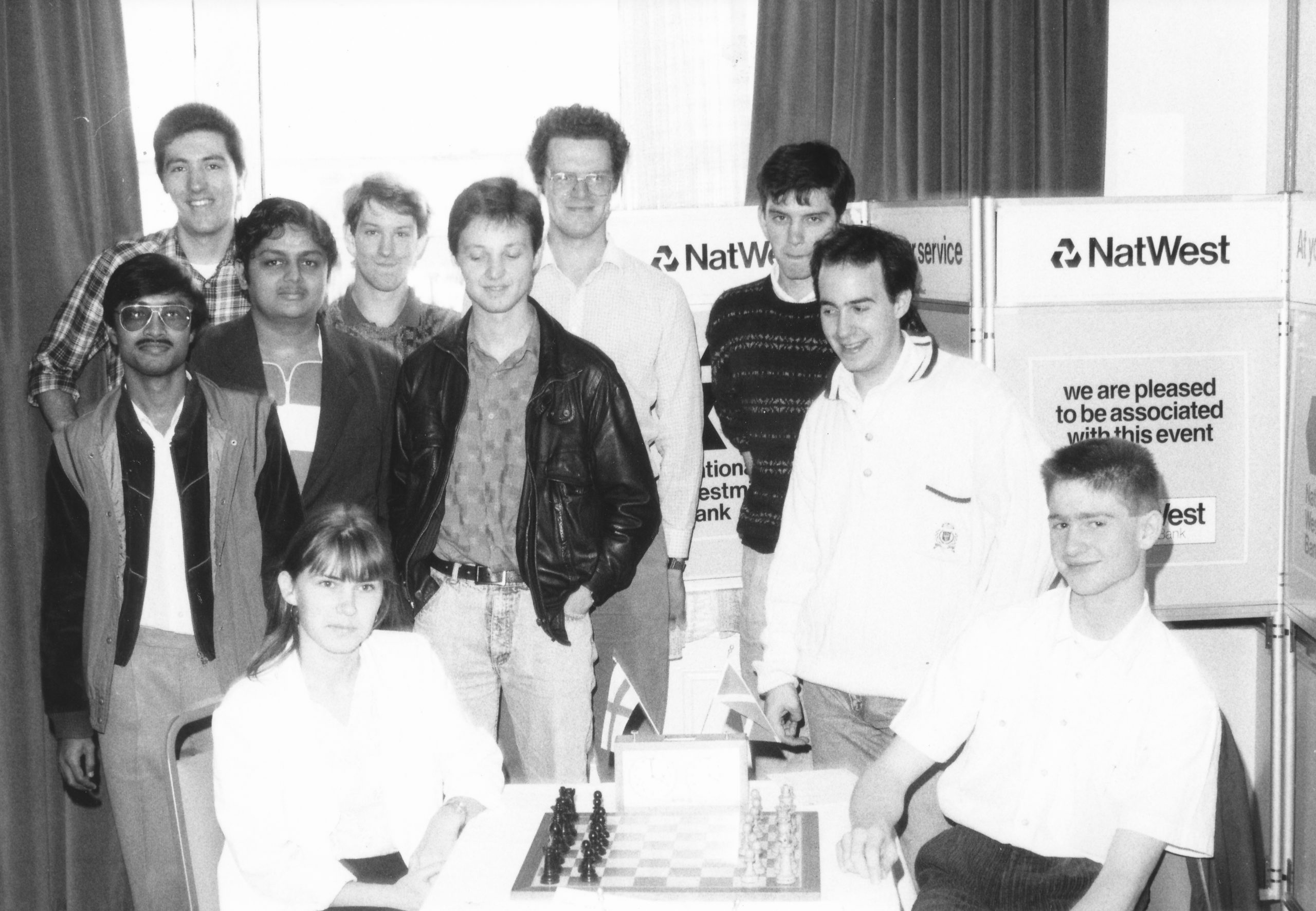
IM Vaidyanathan Ravikumar and friends at the 1990 NatWest Young Masters
Ravi continued to be active as a player until 2000 when he started a career in coaching. He was the National Coach of the Emirates for eight years and has accompanied the ECF junior chess team to World Youth Chess Championships in 2014, held in Al Ain, UAE.
Ravi at the 2014 British Championships at Aberystwyth. Courtesy of John Upham Photography
According to Spectrum Chess Calculation : “He is an experienced chess coach and provides chess coaching in 10 schools in Hertfordshire”
His first book was Karpov’s Best Games, Chess Check, 1984.
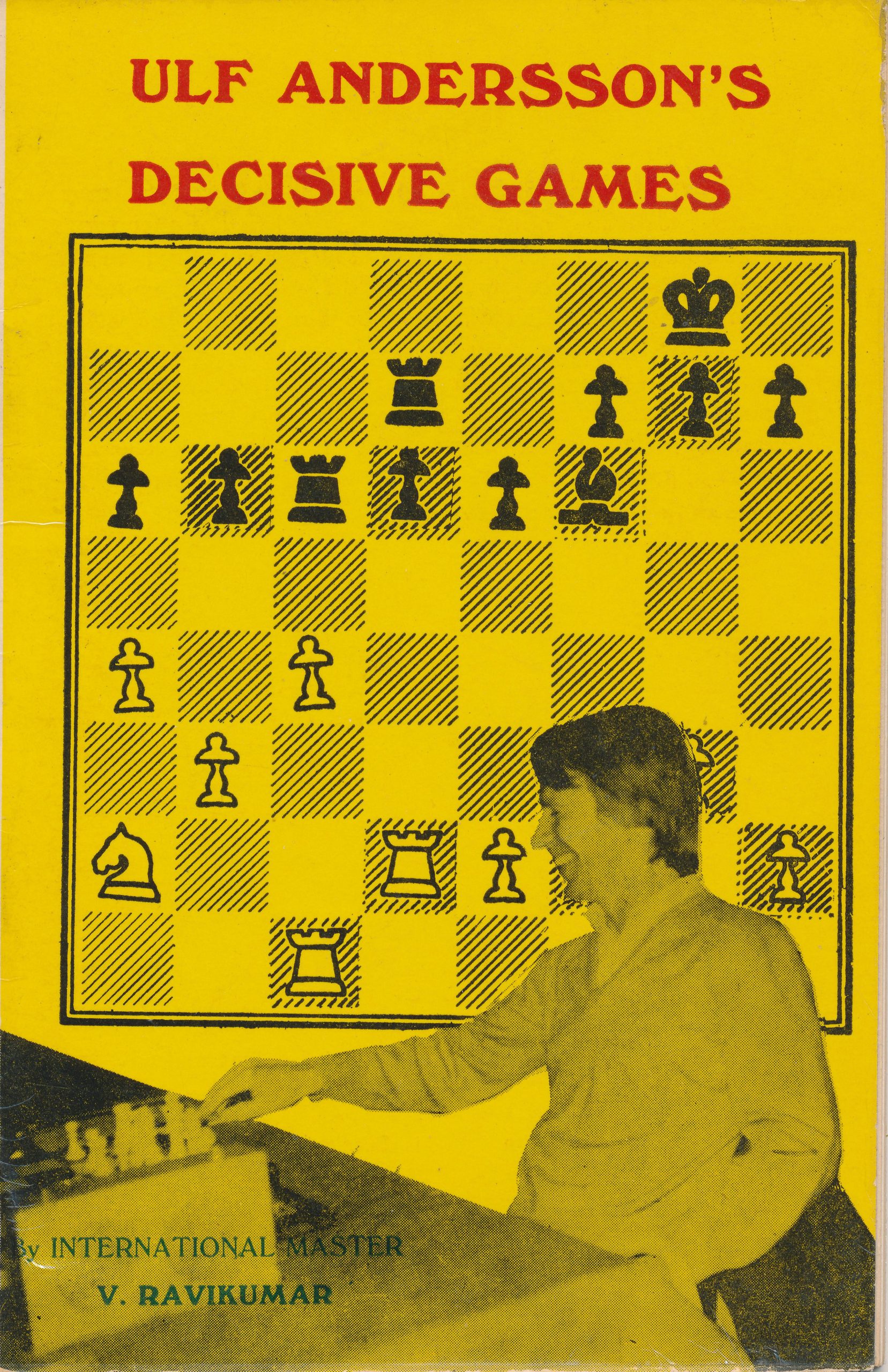
Following that Ravi wrote a biographical work on Ulf Andersson :
Ulf Andersson’s Decisive Games, IM Vaidyanathan Ravikumar, Peja International, 1985.
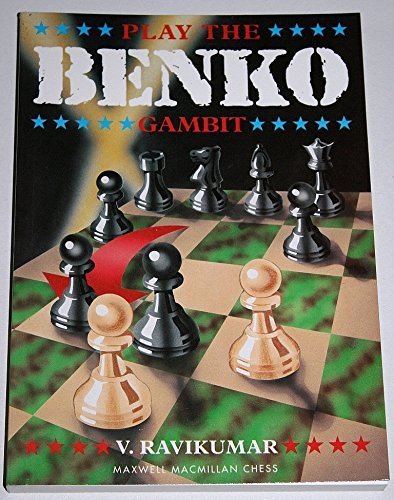
and then
Play the Benko Gambit, Vaidyanathan Ravikumar, Pergamon Press, 1991
Rita Zimmersmann was born on Thursday, December 25th 1969 in Hungary.
She became a Women’s International Master in 1992.
Her peak FIDE rating according to Felice was 2225 in January 1998 aged 29, however according to MegaBase 2020 her peak rating was 2280 in July 1992 aged 23.
Rita has played for the Cambridgeshire CCA and 4NCL Blackthorne Russia.
Rita’s first recorded game in Megabase 2020 was runner-up the 5th Schoeneck Under-18 Girl’s Open with 5.5/7.
In 1990 she was =runner-up with 6/9 in the Aarhus Women’s tournament.
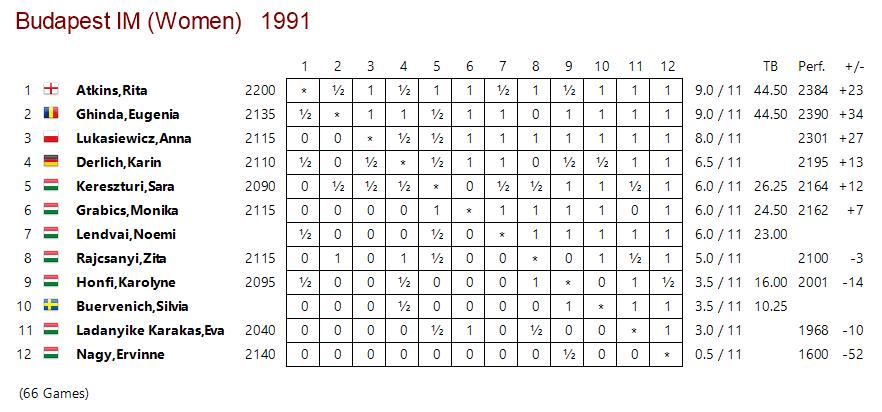
She was =1st in the Budapest Women’s IM tournament securing a norm.
Crosstable for the 1991 Budapest IM Women’s tournament
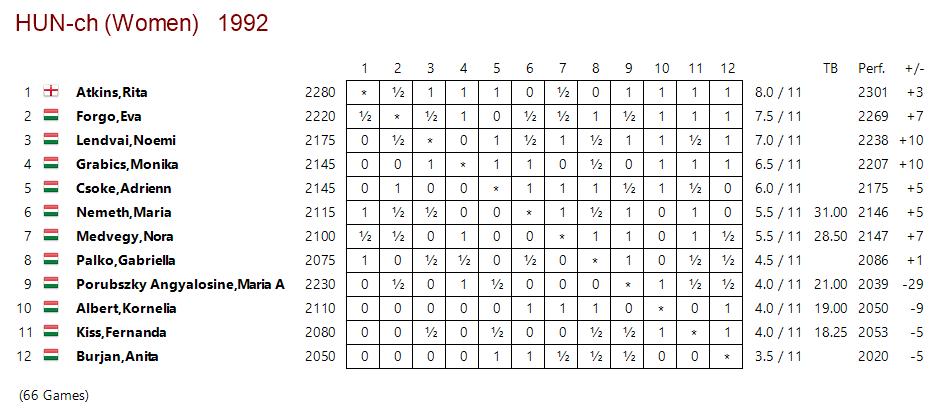
In 1992 she became Hungarian Women’s champion with 8/11 :
Crosstable for 1992 Hungarian Women’s Championship
With the white pieces Rita both 1.e4 and 1.d4 playing open Sicilians, the Trompowsky Attack and the Accelerated London System.
As the second player she plays the Sicilian Four Knights, the Modern Benoni and recently, the Czech System.
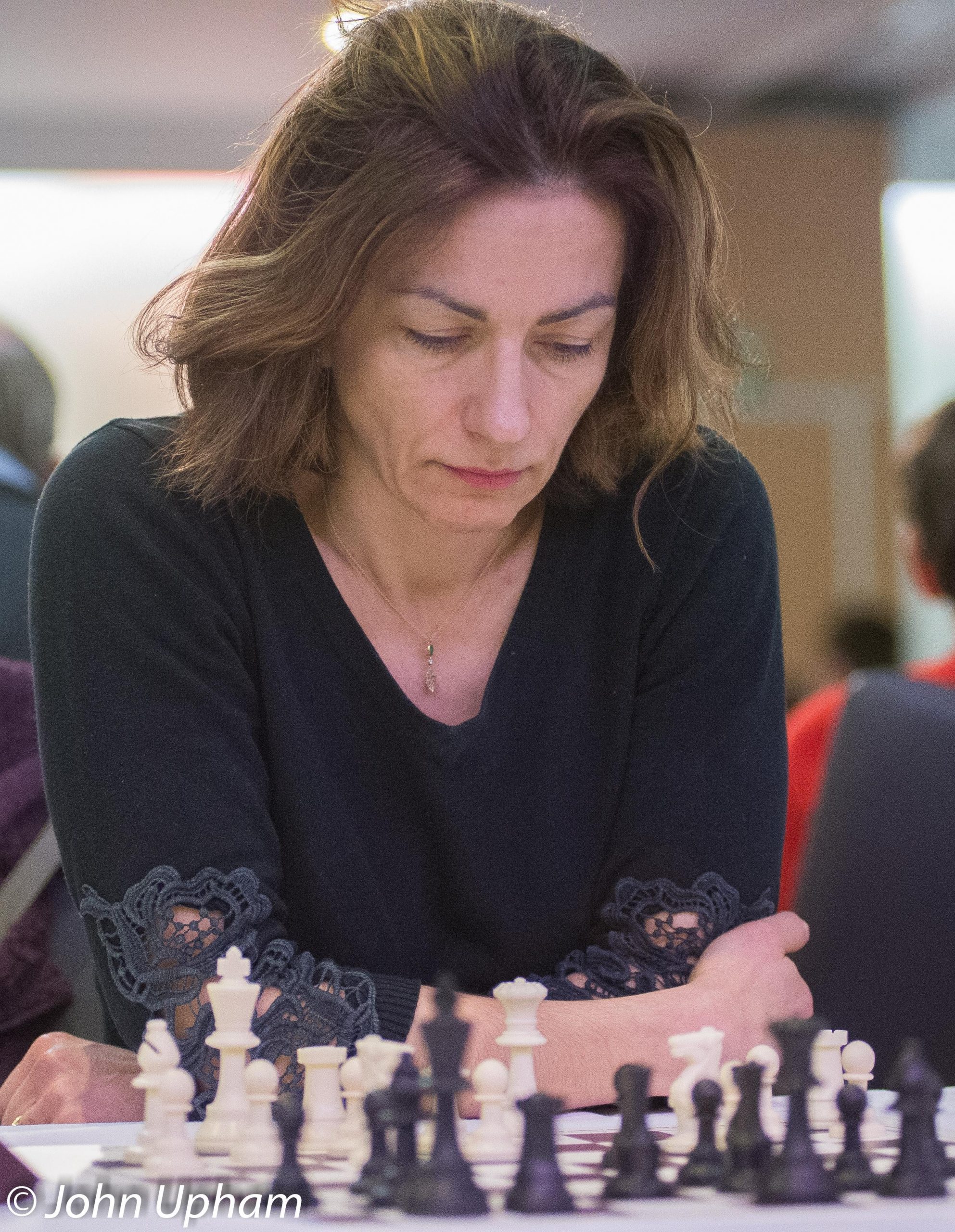
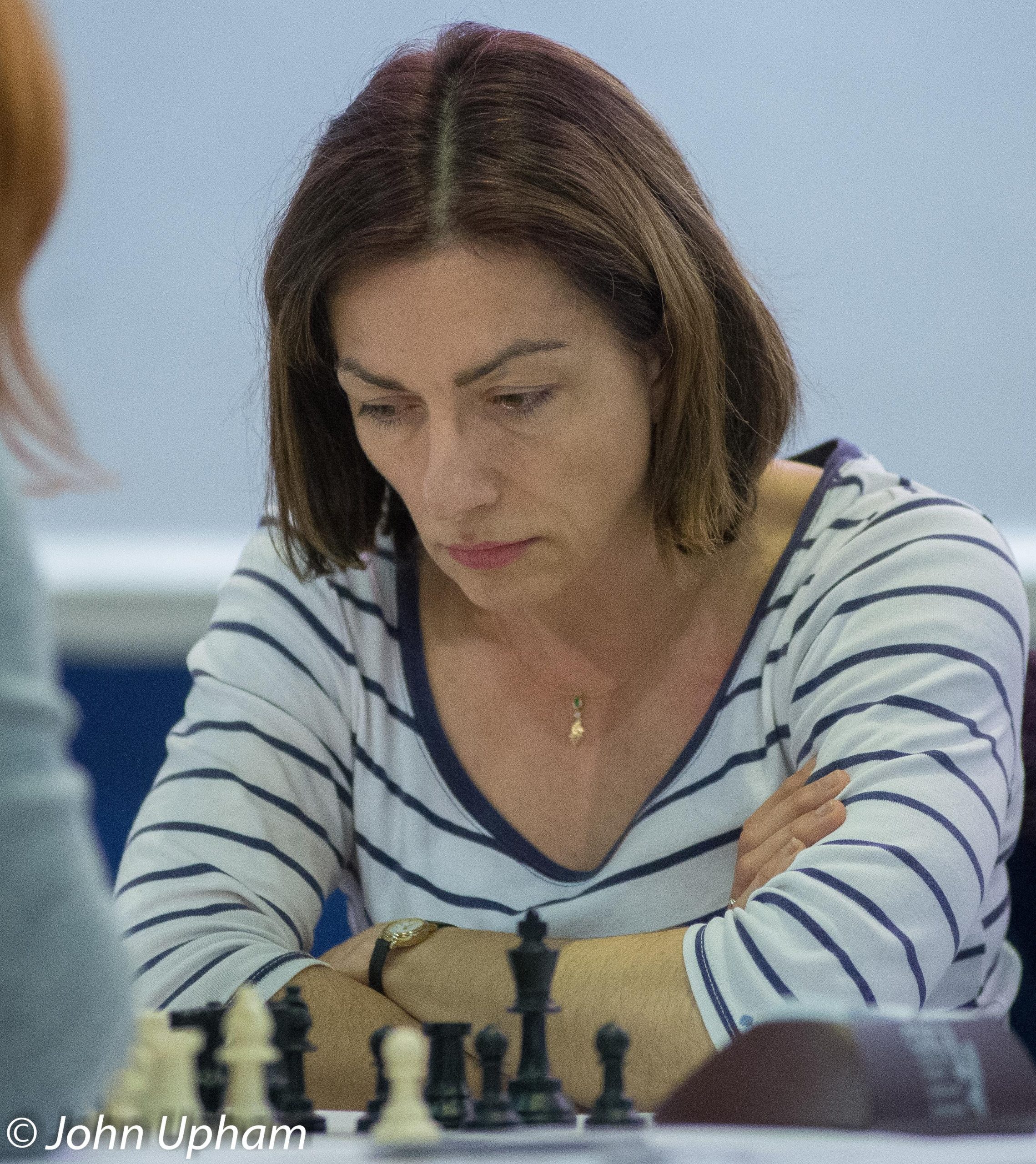
WIM Rita Atkins, Courtesy of John Upham Photography
In 1997 Rita relocated to England and played in her first 4NCL weekend for Slough. She married IM Michael Hennigan and settled in London.
By 2014 Rita had transferred to Blackthorne in the Four Nations Chess League and had become Rita Atkins.
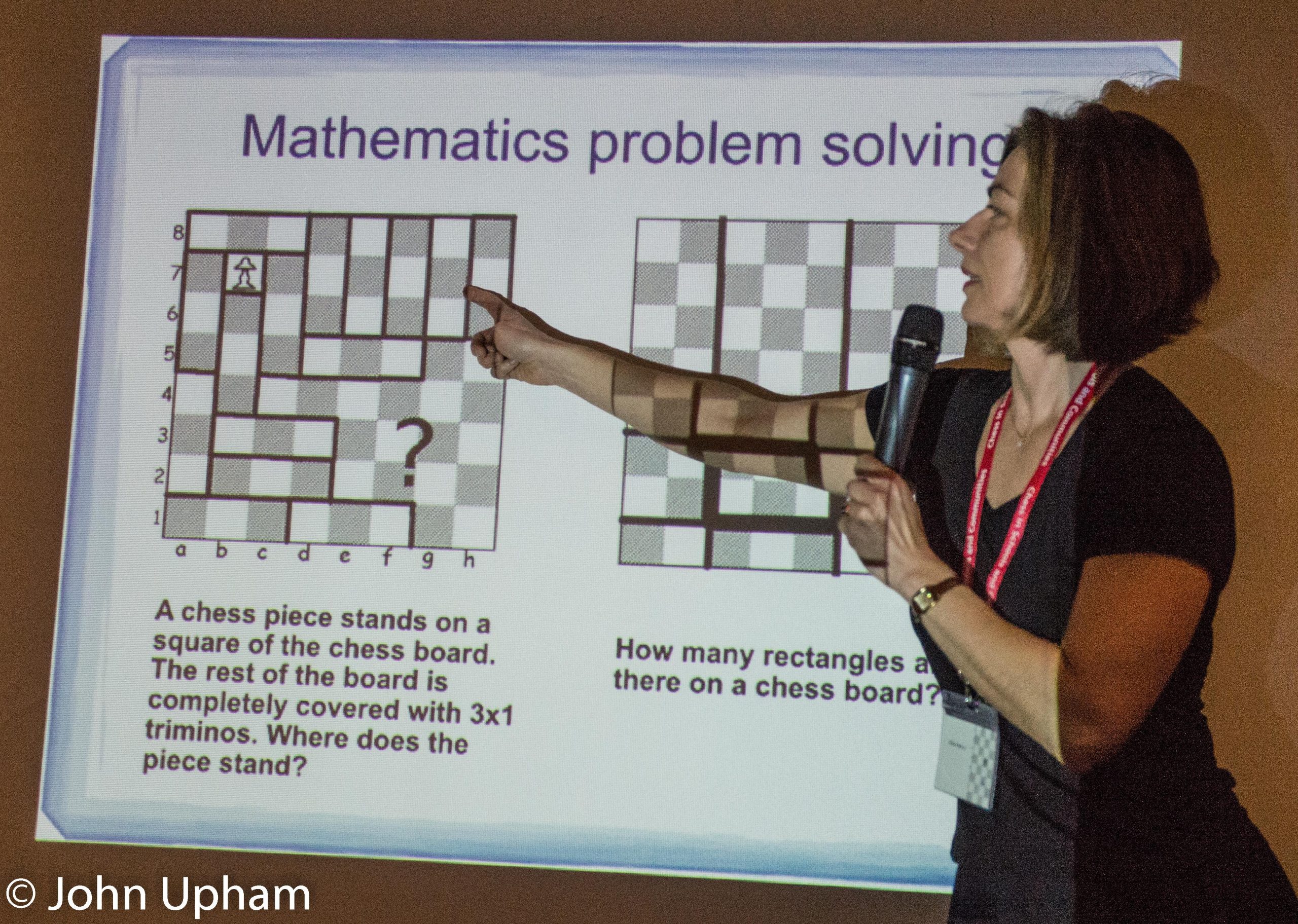
In the last few years Rita has become active in the field of chess education and has combined her interests of mathematics and chess especially in the teaching of children. She has presented at various London Chess Conferences and works with John Foley within ChessPlus.
WIM Rita Atkins at the 2016 London Chess Conference : The Didactics of Chess, Courtesy of John Upham Photography.
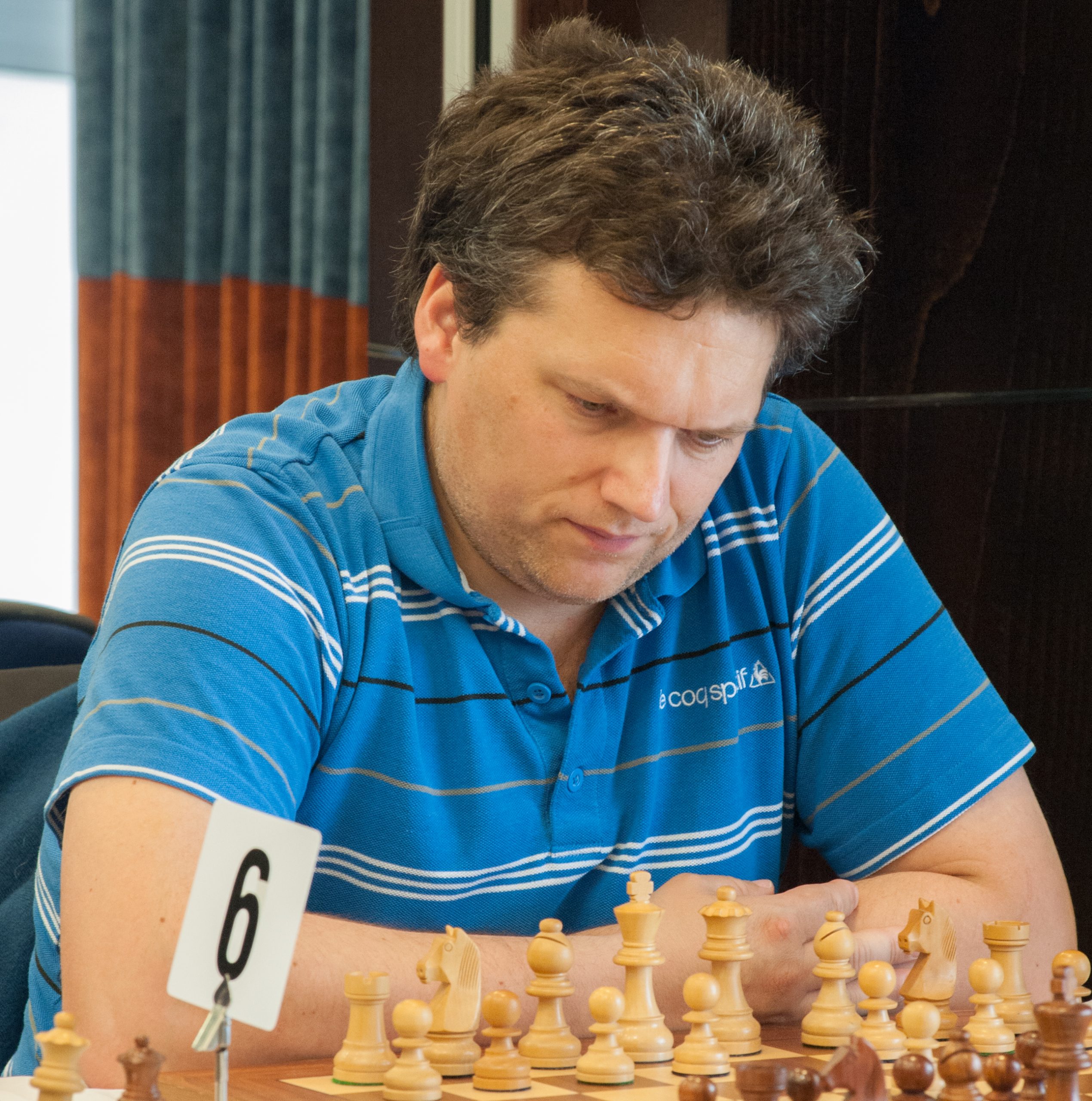
IM Graeme Buckley, London Chess Classic, 2021, courtesy of John Upham Photography
BCN sends best wishes to Graeme Buckley on his birthday.
Graeme Noel Buckley was born on Saturday, December 25th, 1971 in Wolverhampton, West Midlands.
His first chess club was Bushbury which is also known as Bilston Sports & Social Club Ltd. His father David is the long time club President.
Graeme’s first recorded games in Megabase 2020 were at the 1987 British Championship in Swansea were he scored a modest 4/11.
Graeme married IM Susan Lalic in Sutton, Surrey in 2001 and they reside in Sutton. They have two daughters, Lucy and Emma who attend Nonsuch High School for Girls following in the footsteps of their mother.
Graeme became a FIDE Master in 1994 and an International Master in 1995.
IM Graeme Buckley, courtesy of John Upham Photography
He has played for Midland Monarchs and Wood Green in 4NCL, Surrey CCA, Wimbledon 4NCL Guildford and Bushbury (in Wolverhampton)
According to ChessBase Graeme reached his highest FIDE rating in July 2003, aged 32 of 2420.
Graeme teaches chess in many Surrey Schools and in conjunction with Susan.
Graeme has been a director of Surrey County Chess Association for four years resigning in 2011.
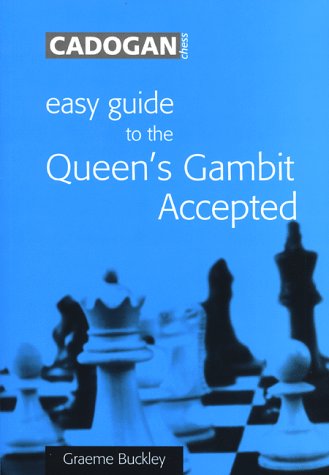
According to Easy Guide to the Queen’s Gambit Accepted, Cadogan, 1998 :
“Graeme Buckley caused a stir in his first year as a professional player securing his International Master title in a matter of months, quickly followed by his first grandmaster norm. More recently he has been involved in some major coaching projects. In 1996 he was manager of the English youth team, who achieved the impressive double of winning both the Glorney and Faber Cups.”
With the white pieces Graeme playa the Queen’s Gambit nowadays with Nf3 appearing before c4 having flirted with the Trompowski in the early days.
As the second player he plays the Sicilian Scheveningen, the King’s Indian and not the Queen’s Gambit Accepted despite authoring a book about it!
Following this article a comment was made by a BCN reader as follows:
Mr Buckley taught me chess as a child. If there is any way he might see this post, I want to thank him for instilling a love of the game that has lasted to this day. A fine player and a great man. Thank you IM Buckley from the bottom of my heart.
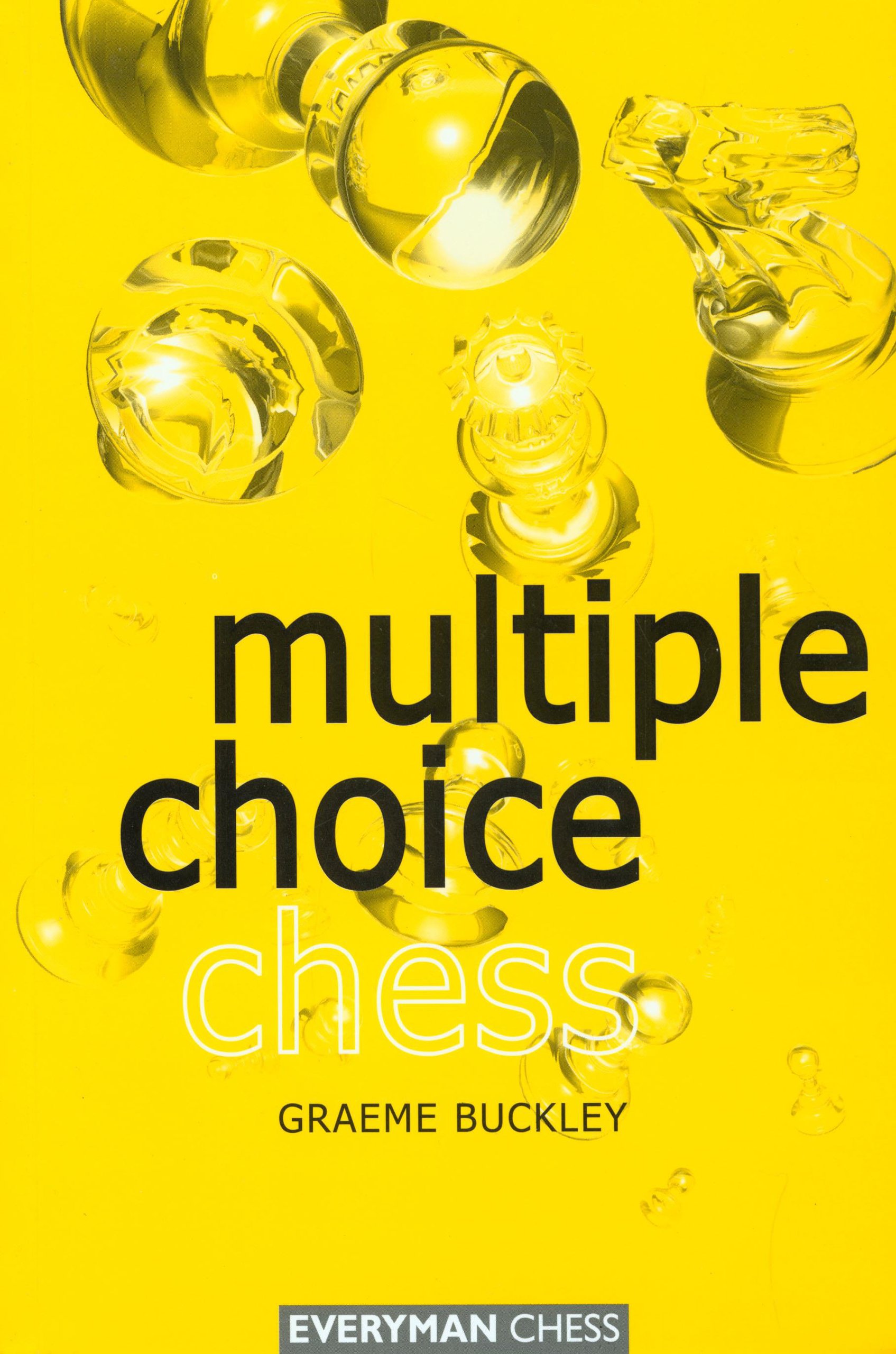
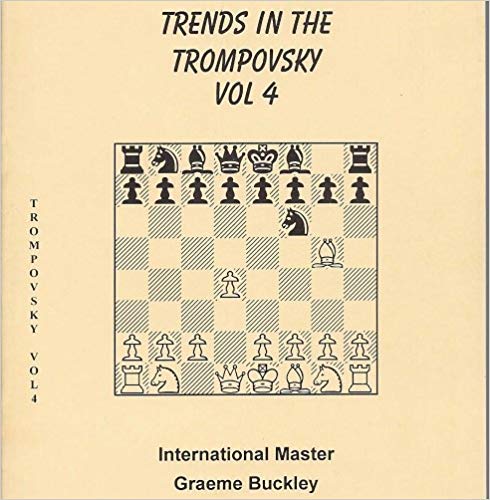
Multiple Choice by Graeme BuckleyEasy Guide to the Queen’s Gambit Accepted by Graeme BuckleyTrends in the Trompovsky, Vol. 4IM Graeme Buckley, Surrey Open, 2013, courtesy of John Upham Photography
Best Wishes to IM David Eggleston on his birthday.
David James Eggleston was born on Tuesday, December 22nd 1987 in Sunderland, County Durham to Ian and Janet Eggleston (née Robson). David has a brother, Thomas A, also born in 1987 who plays chess to a high standard (2178 in 2020). Thomas also plays for Durham City and for 4NCL North East England.
There is one game in Megabase between the brothers from round 5 of the Durham Open in 2003 which resulted in a 13 move draw. They shared the 1st prize with 4/5.
David currently resides in Durham and plays for Durham City in the North East League and for Cheddleton in the Four Nations Chess League (4NCL).
David became a FIDE Master in 2007 and an International Master in 2013.
According to ChessBase David’s peak FIDE rating was 2434 aged 26 in December 2013. However, this could easily be surpassed.
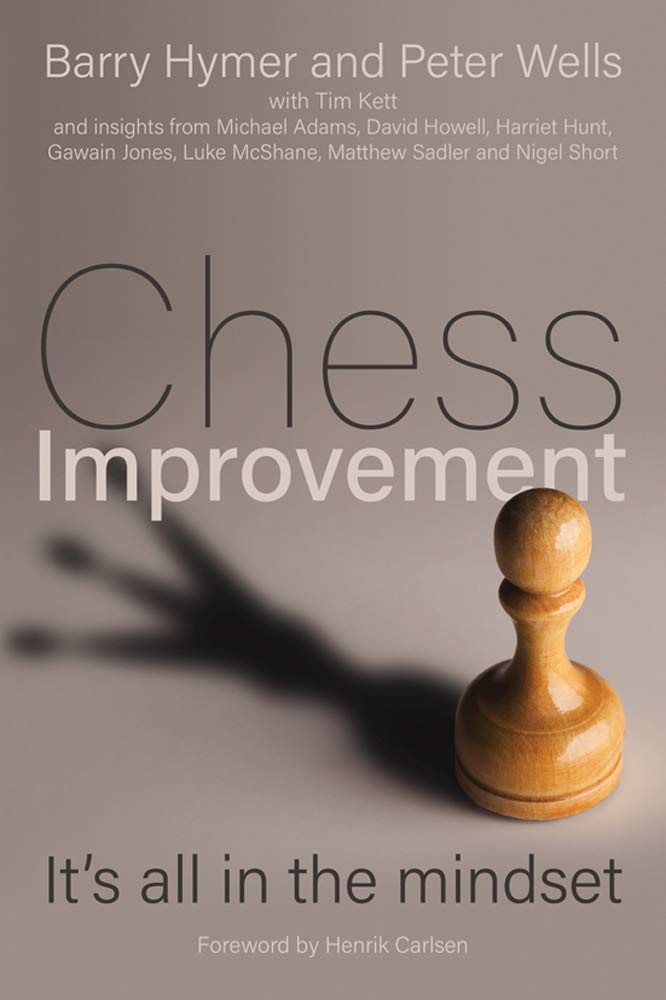
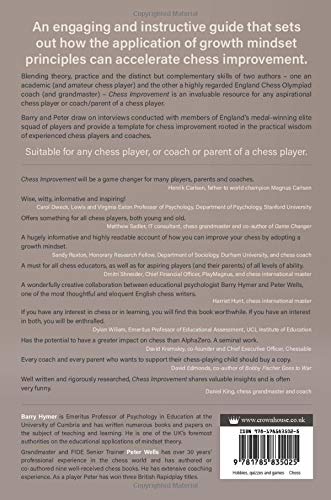
Chess Improvement: It’s all in the mindset : Barry Hymer and Peter Wells
Chess Improvement: It’s all in the mindset, Barry Hymer and Peter Wells, Crown House Publishing, 2020
From the publisher :
“Written by Barry Hymer and Peter Wells, Chess Improvement: It’s all in the mindset is an engaging and instructive guide that sets out how the application of growth mindset principles can accelerate chess improvement.
With Tim Kett and insights from Michael Adams, David Howell, Harriet Hunt, Gawain Jones, Luke McShane, Matthew Sadler and Nigel Short.
Foreword by Henrik Carlsen, father of world champion Magnus Carlsen.
Twenty-first-century knowledge about skills development and expertise requires us to keep such mystical notions as fixed ‘talent’ in perspective, and to emphasise instead the dynamic and malleable nature of these concepts.
Nowhere is this more apparent than in chess, where many gifted players fall prey to plausible but self-defeating beliefs and practices – and thereby fail to achieve the levels their ‘natural’ abilities predicted. Happily, however, the reverse can be true too; through learned dispositions such as grit, risk-taking, strategic thinking and a capacity for sheer hard work, players of apparently modest abilities can achieve impressive results.
Blending theory, practice and the distinct but complementary skills of two authors – one an academic (and amateur chess player) and the other a highly regarded England Chess Olympiad coach (and grandmaster) – Chess Improvement is an invaluable resource for any aspirational chess player or coach/parent of a chess player.
Barry and Peter draw on interviews conducted with members of England’s medal-winning elite squad of players and provide a template for chess improvement rooted in the practical wisdom of experienced chess players and coaches.
They also include practical illustrative descriptions from the games and chess careers of both developing and leading players, and pull together themes and suggestions in a way which encourages readers to create their own trajectories for chess improvement.”
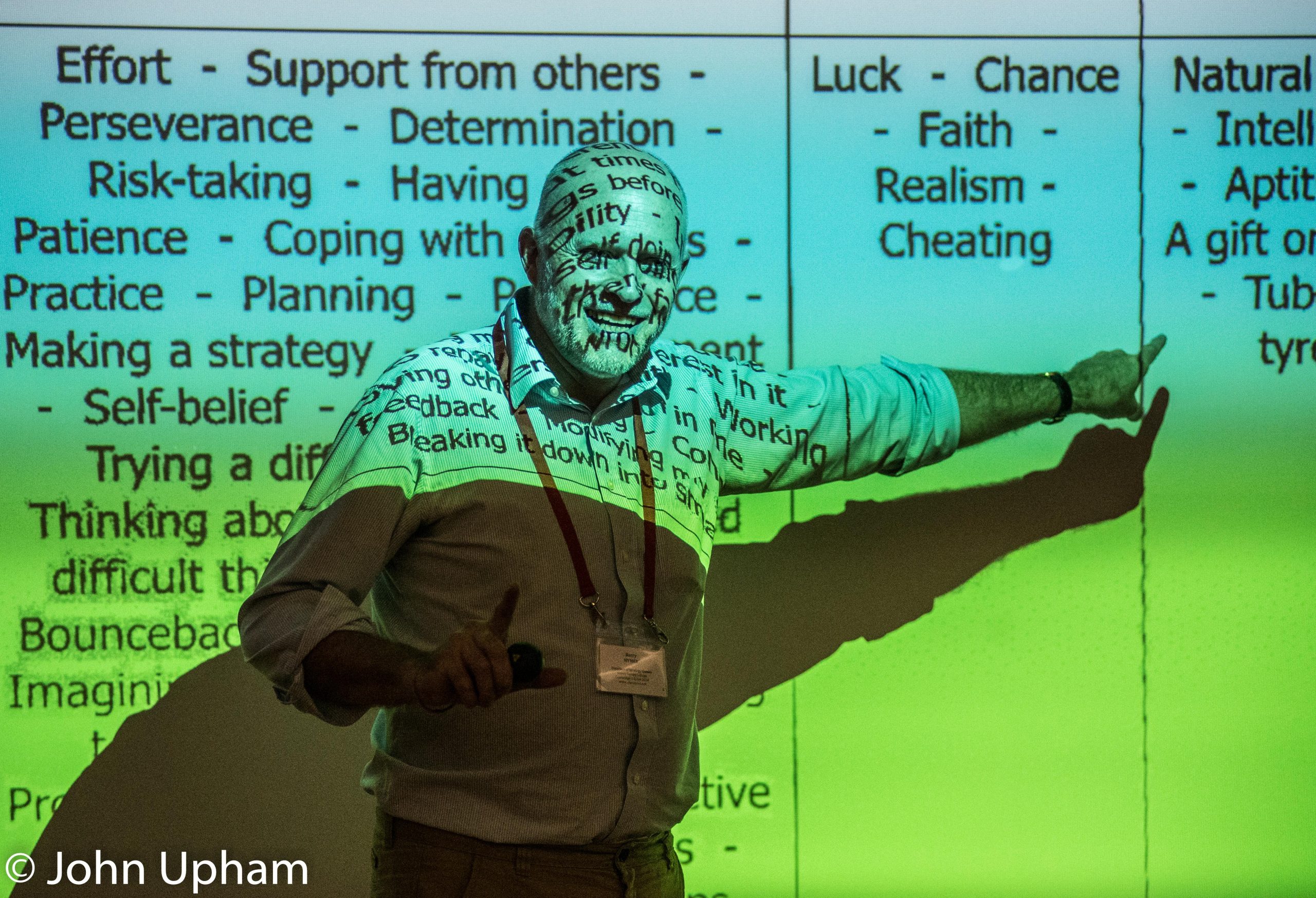
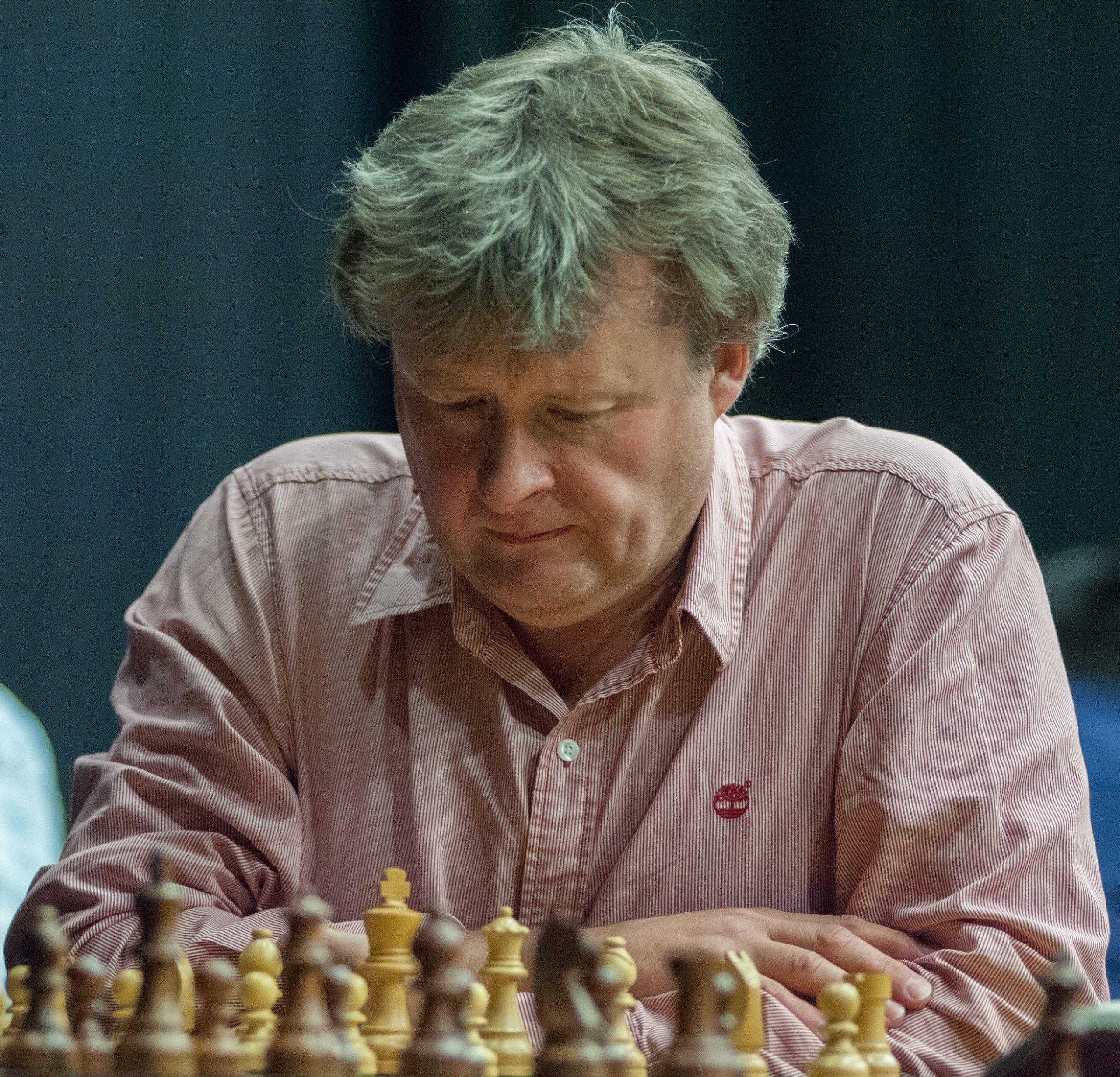
Professor Barry Hymer at Didactics of Strategy Games, October 13th 2016, courtesy of John Upham PhotographyGM Peter Wells, King’s Place Rapidplay 2013, Courtesy of of John Upham Photography
If you visit the Chess Palace at the end of my garden you’ll find quite a few chess books and magazines. But if you visit my office and look at the shelves above my desk you’ll find a lot of books on education, child development, psychology, parenting, conditions such as autism and ADHD. There are not many books which would fit equally well in both my office and the Chess Palace, but this is one. Perhaps I need a second copy.
The authors are a well matched team. Barry Hymer is a distinguished academic specialising in educational psychology, and also a strong amateur chess player. Peter Wells is an experienced grandmaster and élite level coach with an interest in psychology. Tim Kett, another strong player and experienced chess coach, also made a significant contribution to the book.
England’s six strongest players, Mickey Adams, Nigel Short, Gawain Jones, David Howell, Luke McShane and Matthew Sadler, along with one of our top woman players, Harriet Hunt, were interviewed for the book. I wonder if Jovanka Houska was also invited. Henrik Carlsen, Magnus’s father, agreed to provide the preface.
The main message of the book, which draws heavily on the work of Carol Dweck and other researchers, is that having a growth rather than a fixed mindset is a major factor in chess improvement. If you see yourself as someone who can grow as a player you will do so, but defining yourself by your current rating will leave you stuck.
Chapter 1 introduces the concept of mindset theory and how it applies to chess. The authors then provide us with their chess mindset biographies: Hymer tells of his unfulfilled early promise while Wells is brutally honest about what he sees as underachievement and psychological failings.
The remaining chapters start with Hymer giving the theoretical and research background, followed by Wells looking at the same subject from a practical point of view. Finally, there are some very helpful guidelines for parents and coaches, for which Kett was partly responsible.
Chapter 2 concerns Motivation. Hymer explains the difference between extrinsic (prizes, rewards) and intrinsic (from the game itself) motivation, explaining that intrinsic motivation is, by and large, more likely to lead to improvement. I’d add here that many competitions for young children are very big on extrinsic motivation, from fluffy mascots to outsize trophies.
Wells then provides us with the views of his interviewees, all of whom, as you would expect, just enjoy playing chess. Several of them related that they really enjoyed reading chess books when they were younger, and some also enjoyed the beauty of endgame studies. His points are illustrated by examples from play.
I was particularly interested to see a game with which I was very familiar: played by Luke McShane in the 1992 World U10 Championship. I knew his opponent as Aronov: I hadn’t realised until now that this was Aronian, who was at that time using the Russian version of his surname.
Wells was impressed by the sophistication of McShane’s play after a poor opening and suggested that he had already studied Nimzowitsch. After White’s 7th move he speculated that ‘Luke was just making it up’.
I have a story about this game which can now be told for the first time. Before the tournament Luke’s father sent me copies of his recent scoresheets and I provided some feedback. Luke had played this poor variation before and, as I was playing the Schliemann myself at the time and had won several games on the black side of this line, I was able to identify the problem. I suggested to his father that he needed something different against the Schliemann in case it came up in the tournament, but my advice was ignored.
It was all the more amusing, then, to turn to Chapter 7 and read: “Sometimes, as with Richard James, the very thoughtful and experienced influence behind Richmond Junior Chess Club’s involvement in Luke’s early career, the advice was directed to his father, reinforcing Rod McShane’s already impressively sound instincts as to how to help his son.”
Chapter 3 is about Challenge and Feedback. Should you challenge yourself by playing in stronger tournaments where you might not score many points but you’ll learn from playing stronger opponents? Or should you play in weaker tournaments where you hope to win most of your games and perhaps receive a reward, financial or otherwise, for doing so? What is the best way for chess teachers to give feedback to their students?
In general, mindset theory suggests you should play up, but it doesn’t always work out. Nigel Short recalls playing in the Phillips & Drew Tournament in 1982 where he was rather out of his depth, scoring 3½/13. “Even at the time, concerns were widely expressed that Nigel had been launched into a level for which he was just not ready, but he is now adamant that there were simply no adults around to see the danger in advance. Nigel himself is in no doubt that this did tangible damage to his confidence and appetite to the game and thereby impeded his development for some time after – that was ‘not a learning experience, that was trauma’. ” Of course different players will respond differently. Luke, for example, has no such memories. But the general message here is to mix challenging and confidence boosting events.
On the subject of feedback, specific praise and constructive criticism are valued, but general praise can be less than useful. Harriet Hunt is interesting here on girls in chess. “She felt subjected to much gender-grounded feedback, some of it critical for sure, but also large amounts of condescension in the form of ‘praise and patting on the head’. … More generally, she shares my conviction that girls in chess tend to be held back by excessive adulation for relatively modest achievements in a way that can damage their motivation.”
I particularly liked two of the pieces of advice for parents and coaches at the end of this chapter: “Discourage children from counting their trophies.” and “When they finish a tournament game, don’t ask the result!”. You might have to think about both of them.
Chapter 4 looks at “the right kind of effort: making practice purposeful”. Most of us are familiar with Ericsson’s ‘10,000 hour rule’, but what do we mean by ‘deliberate practice’ and how does it apply to chess? In fact the interviewees, by and large, approached chess in a rather less structured way than might be expected. Wells then talks at length about various aspects of studying openings before moving onto tactics and endings.
The important subject of Failure is tackled in Chapter 5. All chess players lose games from time to time. All tournament players will experience bad tournaments. Different players will deal with this in different ways.
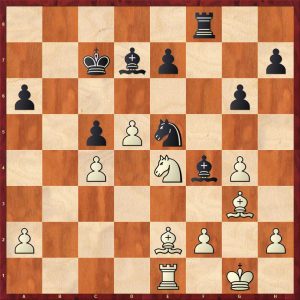
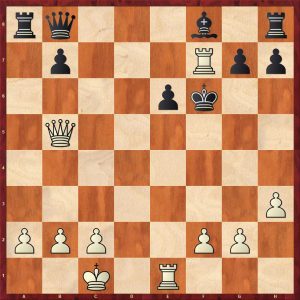
Hymer reached this position with black in Round 4 of the 2018 Blackpool Open. It’s an easy win: all he has to do is play fxg5 (or f5) to fix the king-side pawns, march his king round to the queen side and create a passed pawn. But instead he played the immediate and catastrophic Ke8, and after the reply f5 had to resign. “I withdrew from the tournament”, he admitted, “and headed home, seriously contemplating another three-decade separation from chess”.
Wells then addresses the issues of how to cope when something goes wrong in your game, how to respond to a loss in your next game, and how to reflect on your defeats before the next tournament.
Chapter 6 brings us on to Metacognition – thinking about thinking. Being aware of your thought processes, and, beyond that, being able to regulate them, is not only important in terms of chess improvement but is a vital life skill. After Barry Hymer’s theoretical background, Peter Wells considers the effect of metacognition on chess style, and whether it’s preferable to develop a ‘universal’ style or to focus on your specific strengths and preferences. Of particular interest here is a section devoted to the role of style in Matthew Sadler’s professional chess career.
Finally, Chapter 7 is about Cooperation. Hymer explains the latest research into the advantages of working together within small groups. Then Wells looks at the practical side of cooperation, emphasising the importance of parents, mentors and coaches for younger players, and then writing about the camaraderie and sportsmanship which exists at all levels of chess.
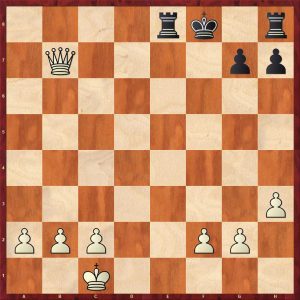
This is from the game Wells – Priehoda (Cappelle-la-Grande Open 1992) where White played the winning combination 25. Nb5+ Kc8 26. Rxc6+ Rxc6 27. Nxa7+ Kc7 28. Rxd7+ Kxd7 29. Nxc6 Ra8 30. a6 Kc7 31. Nb4 1-0
The loser responded not only with generous words but by submitting the combination to Chess Informant: a sporting gesture indeed.
By now we’ve reached the epilogue and, having learnt a lot of interesting and helpful information about mindset theory, it’s rather perturbing to read in a footnote: “(John) Hattie attributes having a growth rather than a fixed mindset to a modest effect size of 0.19 in recent presentations, and the Education Endowment Foundation has failed in their research to find a compelling reason to do mindset interventions in schools and classrooms.”.
So, have we all been wasting our time? Not at all, claims Hymer: schools tend to have ‘superficial or muddled understandings’. Yes, I can understand that. My impression is that some schools tend to jump on the latest education bandwagon without a lot of thought. A decade or so ago it was VAK (look it up!), then it was Mindsets: for some it’s Chess on the Curriculum.
I was already familiar with the concept and had read Carol Dweck’s book on the subject. I was also aware that the whole idea had been criticised in some quarters: here, for instance (with my apologies for a rather rude word), is respected education author and blogger David Didau’s take on mindset theory. There’s a lot more on both sides of the argument online if you care to look. You pay your money and you take your choice.
My view, as an interested and reasonably well informed layman, is that Mindset Theory has its uses in certain situations, but needs to be treated with discretion. Hymer seems to think that almost anyone could become a strong player given sufficient time and the right mindset. I don’t think I agree. Estimates for the heritability of IQ range from something like 50% to 80% so it seems reasonable to assume that chess ability (which is in itself a macro-skill comprising a lot of micro-skills) is also in part heritable. His views – and this may explain his promotion of Mindset Theory – are a lot closer to the nurture end of the nature-nurture spectrum than mine.
This leads into my other problem with the book. We hear a lot of grandmaster voices, all of whom have interesting and sometimes contradictory things to say. I found the contributions of Matthew Sadler and Luke McShane particularly valuable: it may not be a coincidence that they are perhaps the two strongest amateur chess players in the world. But I also wanted to hear the voices of lower rated players who are interested in chess improvement. Ben Johnson’s popular Perpetual Chess Podcast, for example, often features adult improvers. Hearing from ambitious teenagers might also have been valuable, and it would have been good to hear more than one female voice. I’m not sure how helpful this fixation with top grandmasters really is: one issue for me is that many of the games and positions Wells uses to make his points were rather too difficult to be personally useful to this 1900 strength player.
In spite of my reservations I’d still offer a strong recommendation for this book, which takes a fresh, even if sometimes controversial, approach to chess improvement. It’s well written, well structured and often very funny. On almost every page you’ll find nuggets of wisdom which will, at the very least, make you stop and think.
There are, of course, very many books on the market which will show you how to play good moves, but there are very few that consider what’s happening in both your mind and your brain when you play. An understanding of these issues will improve both your rating and your enjoyment of chess. The book will also be especially valuable – perhaps essential reading – for chess teachers and parents.
The publishers, Crown House, may be a new name to you. They specialise in books on education and self help, and, as their logo is a chess queen, it seems only right that they should branch out into our favourite game. This book is already high up in the Amazon best seller list for chess books, so perhaps it’s reaching an audience away from the usual chess community. There’s certainly scope for more books in the field of chess psychology and education: we at British Chess News hope this will be the first of many books from this publisher.
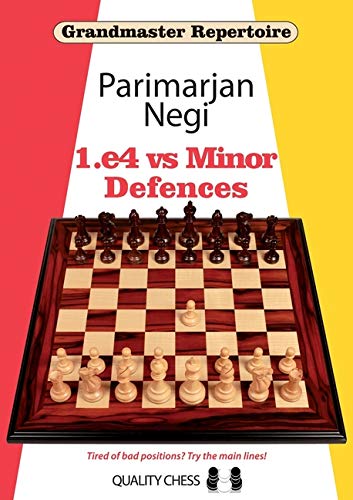
Grandmaster Repertoire : 1.e4 vs Minor Defences, Parimarjan Negi, Quality Chess, 2020
From the Publisher :
“The fifth volume of the Grandmaster Repertoire – 1.e4 series provides a top-class repertoire against the Alekhine, Scandinavian, Pirc and Modern Defenses, plus various offbeat alternatives Black may try. Negi’s latest work continues the winning formula of his previous books: the 1.e4 repertoire is founded on established main lines and turbo-charged with the innovative ideas of a world-class theoretician, making this an essential addition to the library of every ambitious chess player.”
GM Parimarjan Negi
I suspect that some of the keen proponents of these openings would strongly disagree that their pet opening is a minor defence to e4. Indeed, the popularity of some of these defences, in particular, the Scandinavian, would suggest that these openings are not easy for white to meet and the first player has to work hard to gain an advantage out of the opening. The sheer size of this volume shows that these so called lesser defences are pretty resilient.
This is where this book comes in, the quality of the analysis is impressive and there are plenty of original suggestions backed up by concrete lines and analysis which will arm the white player with much material. There is plenty of explanatory text that elucidates the main positional ideas in each chapter. The author pays particular attention to move order considerations which are particularly pertinent in the Pirc/Modern complex of openings.
As the title suggests, this is a book written from a 1.e4 white player’s point of view but there are many instances where Negi gives alternative variations for the first player to try. The suggested repertoire is generally dynamic and attacking but there are plenty of lines where white nurses a space advantage and positional pressure.
The book is divided into four sections:
Alekhine
Scandinavian
Pirc/Modern
Miscellaneous
Each section in then partitioned into logical chapters covering the major variations. The author skillfully manages transpositions with good cross references.
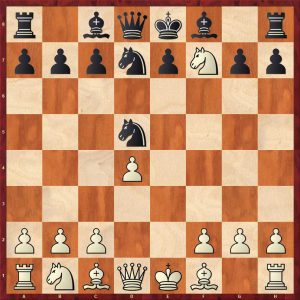
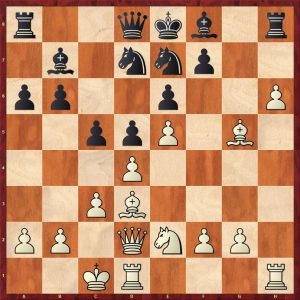
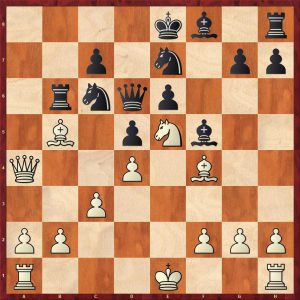
The first section on the Alekhine recommends the solid, Modern Variation with 4.Nf3 which is usually played at GM level. One particular line that has fascinated me for years is the variation 1.e4 Nf6 2.e5 Nd5 3. d4 d6 4.Nf3 dxe5 5.Nf3 Nd7 where black goads white into the tempting 6.Nf7. Bent Larsen tried this against Bobby Fischer in a blitz game in 1966 and was duly crushed. This line has been in the repertoire of some decent players and white, even when handled by an IM, has gone wrong and not pressed home the attack. The following game demonstrates this, but in the notes gives the refutation to this provocative fifth move. The author acknowledges that some of the analysis is taken from a book by John Shaw.
Eric Prie – Igor Alexandre Nataf Andorra op 15th 1997
1. e4 Nf6 2. e5 Nd5 3. d4 d6 4. Nf3 dxe5 5. Nxe5 Nd7? A provocative move, Bent Larsen famously played this in a blitz game v Bobby Fischer in 1966 and was crushed. 6. Nxf7
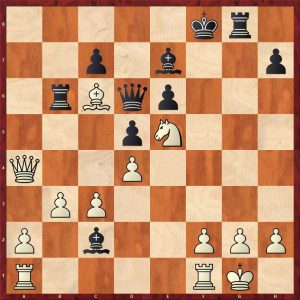
An engine discovery, winning stylishly 16… Bh6 17. Rb7! Bd7 (17… Bxf4 18. Qxf6+ exf6 19. Ne4# Is the pretty point!
Prie-Nataf(Variation Move 19)
or17… Bxb7 18. Qe6+ Kc7 19. Bxe5+ Wins trivially) 18. Bg3 Rb8 19. Rxb8 Qxb8 20. O-O Qf8 21. Re1 Nfg4 22. Qf3!! Qxf3 23. gxf3 Rf8 24. Ne4+ Kc7 25. fxg4 Bf4 26. Be2 White has a winning endgame but some technique is still required to convert the extra pawn.)
Prie-Nataf(Variation Move 26)
14. Rc1 g6 15. Be2 Qc7
Prie-Nataf(Move 15)
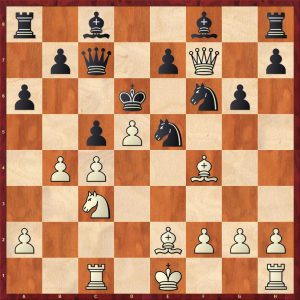
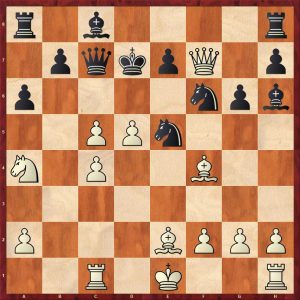
16. Na4? This is poor (16. bxc5+! Winning but care is still required. Qxc5 17. Bxe5+! Kxe5 18. O-O White a winning attack: Intending a combination of Rfe1, Na4, Bf3 and c4-c5, an example variation is given: Bh6 19. Na4 Qa3 20. Rc3 Qxa4 21. Qxe7+ Kd4 22. Rd3+ wins) 16… Bh6 ! 17. bxc5+? The final mistake (17. Bxe5+ Kxe5 18. f4+ Bxf4 19. Rd1 Bf5 20. g3 Raf8 21. gxf4+ Kd6 22. Qg7 b6 Black is probably better, but white can still fight) 17… Kd7
Prie-Nataf(Move 15)
Now white is dead, the queens’s come off and he is left a piece down.} 18. Qe6+ Ke8 19. Qxe5 Bxf4 20. Qxc7 Bxc7 21. Nb6 Rb8 22. Bf3 Nd7 23. Nxd7 Ba5+ 24. Ke2 Bxd7 25. Kd3 Bb4 26. c6 bxc6 27. dxc6 Bf5+ 28. Ke2 Bc5 0-1
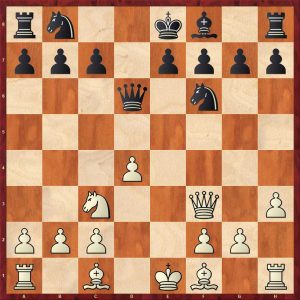
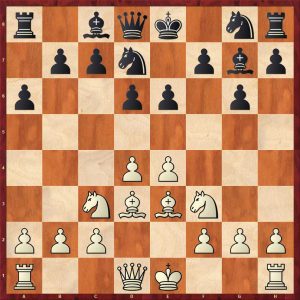
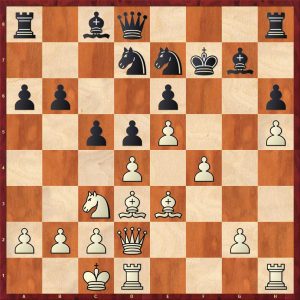
The second section deals with the Scandinavian. The Pytel variation 3…Qd6 is very trendy and this is one of the first chapters that I turned to. Here is an entertaining win by white in the 5…Bg4 line.
c6 ( 7… Nc6 8. Bf4 is good for white) 8. Bf4 Qd8 (8… Qxd4 9. Nb5! Is more or less winning)
Horvath-Fauland(Variation)
9. d5! A crushing blow opening up the position for the better developed side
Horvath-Fauland(Move 9)
Nxd5 (9… cxd5 10. Bxb8 Followed by Bb5+
leads to major problems for black) 10. O-O-O e6 11. Nxd5 cxd5 (11… exd5 12.Qg3! Black finds it impossible to develop)
Horvath-Fauland(Variation2)
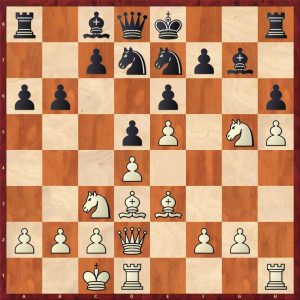
12. Bxb8 Qxb8 13. Bb5+ Ke7 14. Rhe1
Horvath-Fauland(Move 14)
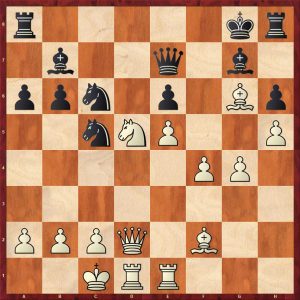
a6 (14… g6 Is too slow 15. Rxd5 Bh6+ 16. Kb1 Rd8 17. Rxd8 Qxd8 18. Rd1 winning) 15. Qxd5! The play is now totally forcing. White has a forced mate or win of queen. axb5 16. Qg5+ Ke8 17. Qxb5+ Ke7 18. Qg5+ Ke8 19. Qb5+ Ke7 20. Rd7+ Kf6 21. Rxf7+!
Horvath-Fauland(Move 21)
Kxf7 22. Qd7+ Be7 23. Qxe6+ Kf8 24. Qxe7+ Kg8 25. Qe6+ Kf8 26. Qf5+ Kg8 27. Qd5+ Kf8 28. Qf5+ Kg8 29. Re7 Qe8 30. Qd5+ Kf8 31. Rxe8+ Rxe8 32. Qxb7 Black should have resigned here
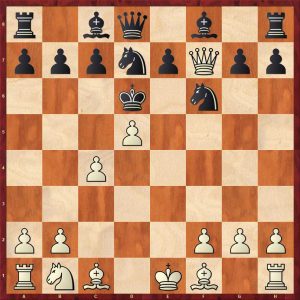
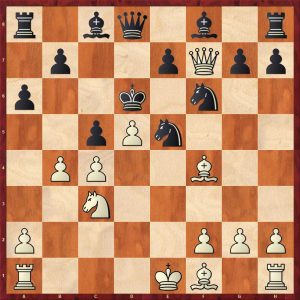
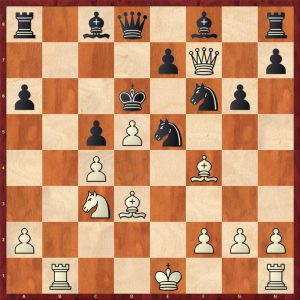
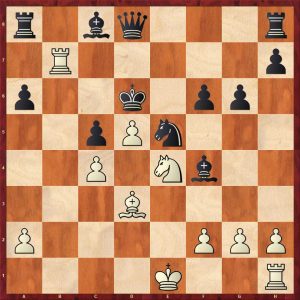
The third sections deals with the Pirc/Modern complex. The repertoire suggested is the 150 Attack but is far more subtle than that, as white varies his setup according to the myriad black setups available. Below, is an instructive, thematic win by the editor, Andrew Greet.
The final section is on miscellaneous opening such as Owen’s Defence and the Nimzowitsch Defence.
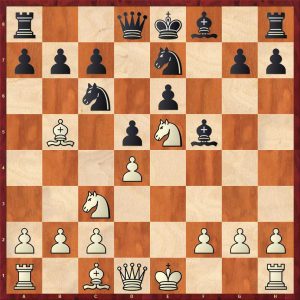
I give an example of an offbeat line that is outrageous but not easy to refute, particularly in a blitz game. In this game, a 2400 player shows how to crush it.
7…a6 (7… Qd6 8. Bf4 Is horrid for black) 8. Ba4 b5? (8…
Rb8 9. Bg5!Qd6 10. f4! b5 11. Bb3 Nc8?! (11… h6 Black can stay
in the game albeit with a lousy position) 12. Bxe7 Nxe7 13. O-O
Simple development leaves white with a big plus, or 13.g4) 9. Nxb5 axb5 10. Bxb5 Qd6 11. c3 Ra6 12. Bf4! Rb613. Qa4
Santo Roman-Palleja(Move 13)
13…Bc2 14. b3 g5 15. Bxg5 Rg8 16. Bxe7 Bxe7 17. Bxc6+ Kf8 18. O-O Black struggled on until move 37 but could have resigned here
We focus on the British Chess Scene Past & Present!
This website uses cookies to improve your experience. We'll assume you're ok with this, but you can opt-out if you wish. Cookie settingsACCEPT
Privacy & Cookies Policy
Privacy Overview
This website uses cookies to improve your experience while you navigate through the website. Out of these cookies, the cookies that are categorized as necessary are stored on your browser as they are as essential for the working of basic functionalities of the website. We also use third-party cookies that help us analyze and understand how you use this website. These cookies will be stored in your browser only with your consent. You also have the option to opt-out of these cookies. But opting out of some of these cookies may have an effect on your browsing experience.
Necessary cookies are absolutely essential for the website to function properly. This category only includes cookies that ensures basic functionalities and security features of the website. These cookies do not store any personal information.