Tag Archives: Deaths

Remembering Harold Murray (24-vi-1868 16-v-1955)

Harold James Ruthven Murray (24-vi-1868 16-v-1955)

BCN remembers Harold Murray who passed away on Monday, May 16th, 1955.

Harold James Ruthven Murray was born on Wednesday, 24th June 1868 in Camberwell, London. He was the eldest son of Sir James Augustus Henry Murray 1837–1915 and  Ada Agnes Ruthven 1845–1936. Sir James was famously the first editor of the Oxford English Dictionary.

From British Chess Magazine, Volume LXXV (125, 1955), Number 8 (August), pp. 233-4 we have this obituary from DJ Morgan:

“The great historian of chess died in May last, at the age of eighty-six. Some of the early results of his researches into the origins of the game were published in this magazine, and a reference to the “B.C.M.” volumes for the first fifteen years of this century will reveal a wealth of articles of permanent value. A tribute to our late and
distinguished contributor has been unavoidably delayed.

Murray was the eldest son of Sir James A. H. Murray, the pioneering editor of the great Oxford English Dictionary, and was born in Camberwell on June 24th, 1868. He went to Mill Hill School, took an Open Mathematical Exhibition to Balliol College, Oxford, and left the University, in 1890, with a First Class in the Final Mathematical School. Subsequently, teaching engagements took him to Taunton, Carlisle, and Ormskirk. From 1891 to 1900 he was Headmaster of Ormskirk Grammar School, which he left to become a Board of Education Inspector of Schools.

Taunton gave him an enthusiasm for chess. At Ormskirk he helped to found a club, which he captained from 1896 to 1900. His interest in the history of the game had been aroused in 1893, and when, in 1897, he received encouragement from such a notable authority as Baron von der Lasa, historical research became his ruling passion. In his own words his aim was to trace the development of the modern European game from the first appearance of its ancestor, the Indian chaturanga, in the beginning of the seventh century of our era.

Many books had been written on the history of chess, but none had covered exactly the whole story as he envisaged it. Hyde, in 1694, and another Englishman, Forbes, in 1860, had in the main confined their attention to Oriental chess. Other investigators, such as Sir William Jones on Indian chess (1790), Cox on Burma chess (1803 and 1807), and Bland on Persian chess (1852), had published their conclusions in journals of Asiatic studies. The great German writer, von der Lasa, in 1897, treated almost exclusively of the European game. Van der Linde alone had dealt with both Oriental and European chess, but it was in three distinct works (1874-81).

Van der Linde was able to incorporate the results of Weber’s examination of the early references to chess in Sanskrit literature, and to show that Forbes’s History was both inaccurate and misleading.

Since the publication of Linde’s Geschichte there had been many additions to our knowledge of various aspects of chess history, mostly scattered in isolated papers. So, continues Murray, he set about collecting and collating all available material and making it easily accessible to English readers.

Murray was able to call on the help of acknowledged scholars in the many languages, obsolete and obsolescent, into which his researches led him. Above all, his work was largely based upon his own studies of original materials. The manuscripts and rare books in the unrivalled collections of J. G. White, of Cleveland, Ohio, and of J. W. Rimington Wilson in this country, were placed unreservedly at his disposal, as were the resources of other collectors and libraries.

As an example of his devotion to his work, he made a thorough study of Arabic, and it was his knowledge of this language which enabled him to make his remarkable discovery of the chess-work of Allajlaj, a Mohammedan chess master of the tenth century. The fascinating story of the recovery of these oldest recorded games is told in the “British Chess Magazine” of November, 1903.

Murray thus brought a fine scholarship to his immense task. He had, in addition, the true historian’s gifts of meticulous research, of grasp of detail, of the critical sifting of evidence; to this scientific technique was added the art of lucid exposition.
In his hands, it can be said, the chess-player’s elements of time, space, and material were used to range through most of the centuries of the Christian era.

A History of Chess
A History of Chess

The History appeared in 1913, from the same University Press, he was proud to think which, more than 200 years before, had published Thomas Hyde’s Mondragorios seu Historia Shohiludii. The huge volume of 900 pages, lavishly illustrated and with scores of chess diagrams, was received with world-wide acclamation. From ancient “Indian Board-games” to “Steinitz and his School,” the vast field had been covered with great authority. The book is in two parts, “Chess in Asia” and “Chess in Europe,” but through it all runs the absorbing story of how the game, in play and in problem, in its practice and in its laws, has developed and spread. From India to Persia, to Islam as a result of the Mohammedan conquest of Persia, from Islam to Spain, and thence to Christian Europe, chess has followed the great political and religious movements. It is very improbable that chess was played in England before the Norman Conquest. That it was familiar to the Norman Kings in the eleventh century is certain from the evidence of the word exchequer, which was applied to the table “upon which the accounts were worked out by means of a cloth divided into strips about a footwide, on which counters, representing the moneys, were placed and moved.”

This must suffice. The work is one to browse in and to dip into through the years. Murray has left an enduring monument, the greatest book ever written on the game. We can but touch briefly on other aspects of his varied and active life. Following his retirement from the Board of Education, in 1928, he took an active interest in Local Government work. He became Chairman of the Fernhurst Parish Council, and was a member of the Midhurst R.D.C., 1931-55, being Chairmain of its Housing
Committee from 1938 to 1948.

In 1952 he published A History of Board Gomes Other Than Chess.

A History of Board Games other than Chess

He also wrote a Shorter History of Chess and a History of Draughts (both unpublished), and spent much time working on mathematical problems connected with Knights’ Tours and Magic Tours. His work on these investigations is also unpublished, but a good deal remains in typescript in fairly complete form.

Apart from his interest in board games and mathematics, he was interested in genealogy, and did research on his own and his wife’s families. Up to his death he was working on local history and was writing a history of Heyshott, the village to which he retired. Walking, in his younger days, and bird-watching in his middle years, were amongst his otter recreations.

A game of chess he. always enjoyed, but not under the rigorous conditions of matches and tournaments.

His son, Major D. M. J. Murray, Royal Engineers, was killed in Hong Kong in 1941. The chess world’s sympathy with his second son Mr. K.C. Murray of the Antiquities Service, Nigeria, and with his daughter, Miss K. M. E. Murray, M.A., Principal of the Bishop
Otter College, Chichester, is but a small expression of its sense of indebtedness to their distinguished father.-D. J. M.”

Following this obituary a letter from Alex Hammond appeared in British Chess Magazine, Volume LXXV (125, 1955), Number 9 (September), page 270 as follows:

“Dear Mr. Reilly,
Murray was, indeed a very great man, though a few of us were privileged to know him intimately, as his nature was shy and retiring.

For myself, I shall always treasure his memory, as when I wrote my The Book of Chessmen he gave me freely of his knowledge, and saved me from many errors.

Any person who attempts to write on chess history will always find real difficulty in discovering anything of interest which does not appear in his monumental “History.”

Probably his like will not be seen again, as such patient industry, deep knowledge, and tremendous perseverance are unlikely to be combined in a single personage again.

Yours sincerely,
Alex Hammond
16 Burlington Arcade, London, W1

The Book of Chessmen, Alexander Hammond, Arthur Barker Ltd., London, 1950

From The Oxford Companion to Chess (Oxford University Press, 1984 & 1996) by Hooper & Whyld:

“Foremost chess historian, school inspector. His A History of Chess (1913), perhaps the most important chess book in English, was the result of about 14 years of research inspired by Lasa, and grounded on van der Linde’s work. During that period Murray contributed 35 articles to the British Chess Magazine , some of which outlined his discoveries. Most of the 900-page History is concerned with the evolution of modern chess from its oriental precursor up to the 17th century. He learned Arabic so that he could read important manuscripts, and in addition to his own circle he was able to solicit help from colleagues of his father Sir James A. H. Murray, editor-in-chief of the Oxford English Dictionary; who was also aided by J. G. White, with both advice and the loan of rare books from the Cleveland collection, and by many others. His book includes an authoritative account of both Mansubat and medieval problems. (See also history of chess.) In 1952 he published a companion volume, A History of Board Games other than Chess.

While the scholarship of his chess book has never been questioned it is too detailed for the average chess-player. Aware of this problem, Murray wrote a briefer work approaching the topic in a more popular way. The manuscript, unfinished at his death, was completed and published in 1963 as A Short History of Chess. (See Civis Bononiae.)

A Short History of Chess

From The Encyclopaedia of Chess (Batsford, 1977), Harry Golombek OBE :

“Chess historian and a Board of Education Inspector of Schools. Appropriately enough, a son of the pioneering editor of the great Oxford English Dictionary, he became interested in the history of chess in the early 1890s. Up to this time the historical writings on chess in English had been unhistorical. In order to fit himself for the task Murray learned several languages including Arabic and he also studied the true historians of chess, the German writers, Van der Linde and Von der Lassa.

In his own words his aim was to trace the development of the modern European game from the first appearance of its ancestor, the Indian chaturanga, in the beginning of the seventh century of our era. This he did in a vast work of some 900 pages published in Oxford in 1913. An immense amount of painstaking research had gone into the work and only a man of Murray’s great learning could have attempted it.

It at once became the standard book on the subject and has remained so ever since. Murray left behind among his papers an unfinished work A Short History of Chess which took the history of the game up to 1866 which gave a clearer and more readable account of the history of the game than his main work. This was brought up to date by Goulding-Brown and Golombek and published in Oxford in 1963.”

From The Encyclopaedia of Chess (Robert Hale, 1970 &1976), Anne Sunnucks :

“The chess historian who wrote the History of Chess, published by Oxford University Press in 1913. Murray was born in Camberwell on 24th June, 1868, the eldest son of Sir James Murray, the first editor of the Oxford English Dictionary. After graduating from Balliol College, Oxford, with a First Class in the Final Mathematical School, in 1890 Murray became a master at Queen’s College, Taunton, where he learned to play chess. He later taught at Carlisle Grammar School and in 1896 became the headmaster of Ormskirk Grammar School. About 1893 his interest in the history of the game was aroused, and four years later, encouraged by the great German writer and authority on the game, Baron Von der Lasa, his historical researches began.
From 1901-1928 he was a Board of Education Inspector of Schools, an appointment which made it difficult for him to play much chess. He began to turn his attention more and more to the history of the game, contributing articles to The British Chess Magazine and Deutsches Wochenschach. He made the acquaintance of J. J. White of Cleveland, Ohio, owner of the largest chess library in the world, and was given access to this collection, as well as one owned by J. W. Rimington Wilson in England. White’s library contained a number of Arabic manuscripts, and, in order to be able to study them, Murray learned Arabic. The History of Chess took him 13 years to complete.

On his retirement from the Board of Education, Murray served as Chairman of Fernhurst Parish Council and was a member of Midhurst R.D.C. from 1931-1955 and was Chairman of its Housing Committee from 1938-1948. His other interests, apart from chess, were genealogy, local history, walking and bird watching. In 1952 he published A History of Board Games Other than Chess.

After his death A Short History of Chess was found uncompleted among his papers. Additional chapters were added by B. Goulding Brown and H. Golombek, and it was published in 1963.”

(Bertram Goulding Brown was a tournament chess player and a contributor to British Chess Magazine. He was born 5 July 1881 and died 22 August 1965 in the United Kingdom.)

You may read the entire book here

From Amazon :

“Harold James Ruthven Murray was born on 24 June 1868. His first book A History of Chess was published by Oxford University Press in 1913. Murray covered the first 1,400 years of the game’s history in definitive detail. He died on 16 May 1955. He left several more manuscripts which are being held by Oxford University.”

According to Edward Winter in Chess Notes HJRM lived 53 Hagley Road, Edgbaston, Birmingham, England (Ranneforths Schach-Kalender, 1915, page 71).

Here is his Wikipedia entry

and here is an excellent article from Edward Winter.

Remembering Andrew Thomas (11-x-1904 16-v-1985)

ARB Thomas and Jonathan Penrose at the Hastings Congress
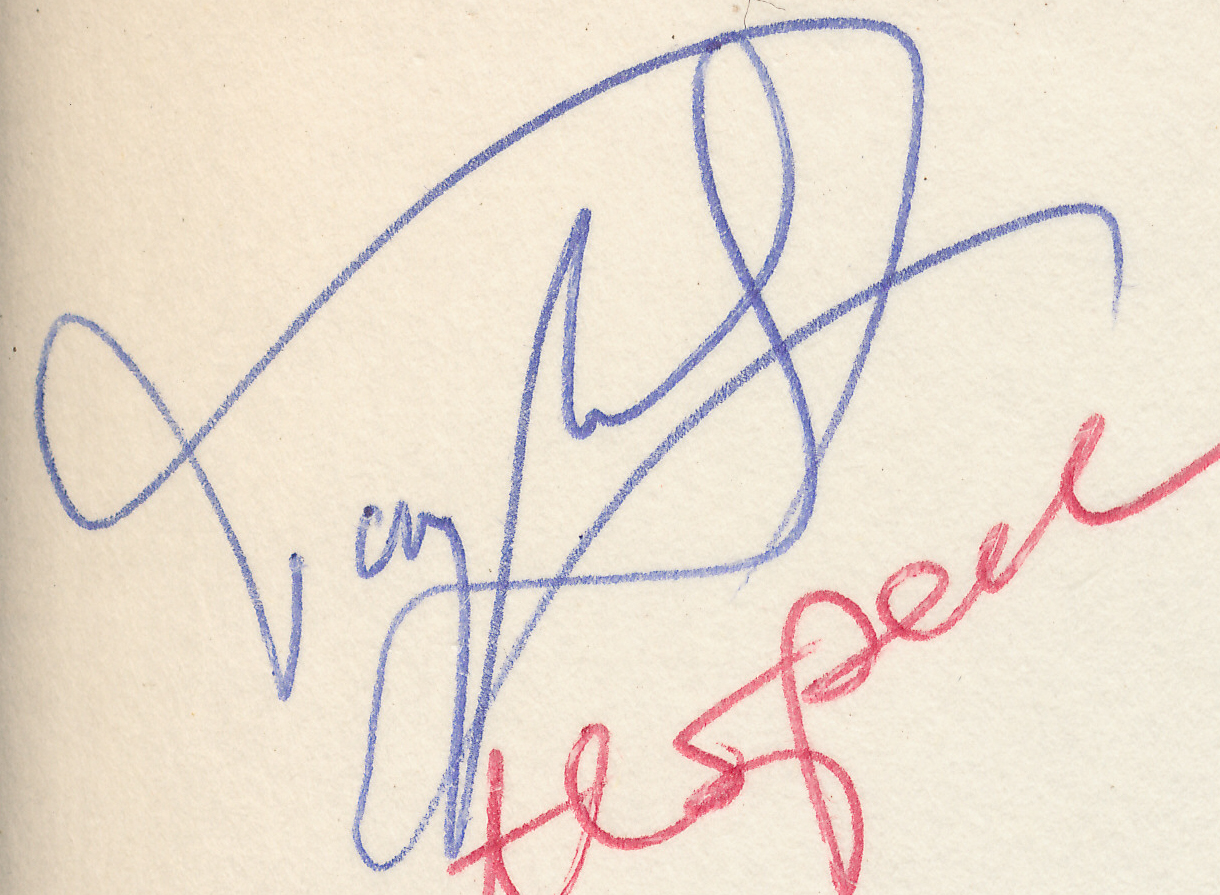
Signature of ARB Thomas from a Brian Reilly "after dinner" postcard from Southsea 1951.
Signature of ARB Thomas from a Brian Reilly “after dinner” postcard from Southsea 1951.

Here is his Wikipedia entry

ARB Thomas in play with FEA Kitto

BCN remembers Andrew Rowland Benedick Thomas (11-x-1904 16-v-1985)

We cannot improve on this excellent article about ARBT on the Chess Devon web site

David Hooper (seated right) in play at the West of England Championships in Bristol, Easter, 1947. His opponent , ARB Thomas , was that year's champion. Among the spectators is Mrs. Rowena Bruce, the 1946 British Ladies' Champion. BCM, Volume 118, #6, p.327. The others in the photo are L - R: H. V. Trevenen; H. Wilson-Osborne (WECU President); R. A. (Ron) Slade; Rowena Bruce; Ron Bruce; H. V. (Harry) Mallison; Chris Sullivan; C. Welch (Controller); F. E. A. (Frank) Kitto.
David Hooper (seated right) in play at the West of England Championships in Bristol, Easter, 1947. His opponent , ARB Thomas , was that year’s champion. Among the spectators is Mrs. Rowena Bruce, the 1946 British Ladies’ Champion. BCM, Volume 118, #6, p.327. The others in the photo are L – R: H. V. Trevenen; H. Wilson-Osborne (WECU President); R. A. (Ron) Slade; Rowena Bruce; Ron Bruce; H. V. (Harry) Mallison; Chris Sullivan; C. Welch (Controller); F. E. A. (Frank) Kitto.

Remembering Alfred Crosskill (21-iv-1829 05-v-1904)

BCN remembers Alfred Crosskill (21-iv-1829 05-v-1904)

Here is excellent article from Yorkshire Chess History

An interesting article within British Endgame Study News (BESN) by John Beasley

“White to play cannot win; Black to play loses,
but it takes White 45 moves to capture the rook”

Here is an entry on the chesscomposers site

Remembering Dr. IM Stefan (István) Fazekas (23-iii-1898 03-v-1967)

Dr. Fazekas (left) playing Bob Wade at an Ilford Congress, photographer unknown
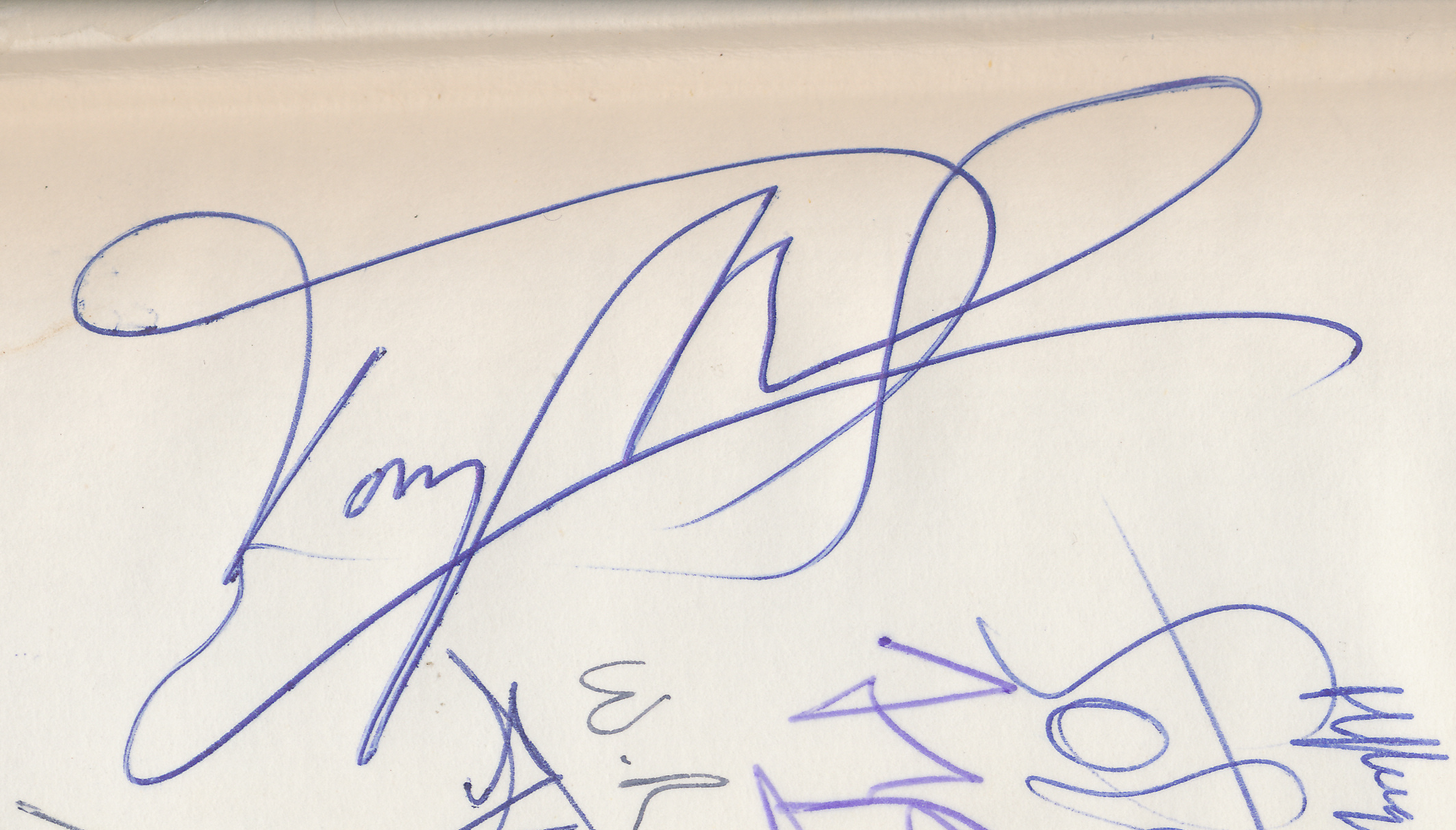
Signature of S Fazekas from a Brian Reilly "after dinner" postcard from Southsea 1951.
Signature of S Fazekas from a Brian Reilly “after dinner” postcard from Southsea 1951.

BCN remembers Dr. IM István (Stefan) Fazekas who passed away in Buckhurst Hill, Essex on Wednesday, May 3rd, 1967 and the death was recorded in the district of Redbridge.

The probate record of June 7th, 1967 is thus:

June 7th 1967 probate record for Dr. Stefan Fazekas

István Fazekas was born in Satoraljaujhely, Hungary on Wednesday, March 23rd 1898. He adopted the name Stefan subsequently. Satoraljaujhely is very much on the Hungary – Czechoslovakian border and records for Fazekas variously show both countries as his country of birth.

The September 1939 register records Stephen Fazekas as being married, a refugee, and a general practitioner living with his wife Helen (born 17th July 1900)  at 21, Old Gloucester Street, Bloomsbury, Camden, London WC1. The “household” had a total of fourteen residents and this building in 2021 appears to be part of the Mary Ward Centre and presumably was providing temporary accommodation.

The 1948 London Gazette records that on June 16th he lived at 281 Buckhurst Way, Buckhurst Hill, Essex and that he and Helen had a son, George. On this day Stefan was granted UK naturalisation following the swearing of an oath of allegiance:

The London Gazette, 1948

The above notice is further validated by the official record stored at The National Archive, Kew, reference HO 334/234/4061.

281, Buckhurst Way, Buckhurst Hill, Redbridge, Essex, IG9 6JB

From British Chess Magazine, Volume LXXXVII, Number 7 (July), pages 195-6 we have an obituary written by Peter Clarke :

The death of Dr. Fazekas on May 3rd has deprived British chess of one of its leading and most colourful figures. Ever since he came to this country nearly thirty years ago he took an active part, in the game at all levels, from club to international, rarely missing the chance – even when not in the best of health- to test his strength in competition and express his ideas afresh.

Stefan Fazekas was born on March 23rd, 1898, at Sitoraljaujhely on the Hungarian-Czechoslovak border, but it was not until a few years after the Great War, in which he served and was wounded, that he got the opportunity to play serious tournament chess. By present-day standards, however, events were few and far between, and the game always had to take second place to his medical work.

The Doctor’s best international performances, for which he was later awarded the master title by F.I.D.E., came in the ‘thirties. In 1931, for instance, he was 2nd at Kosice, 3rd at Brno and 3rd at Prague. As it remained throughout his career, his play was excessively variable: fine conceptions were always liable to be ruined by blunders or impetuosity. The following game, played at Munchentratz in 1933, shows all going well; it earned inclusion in Le Lionnais’ anthology Les Prix de beauté aux échecs.

In 1939 Dr. Fazekas brought his family to England and established himself as a successful and much loved G.P. at Buckhurst Hill, Essex. He soon took a dominating part in county chess and went on to win the championship eleven times. In national events his inconsistency seemed too great a handicap, but at Plymouth in 1957, after so many tries, he astounded everyone by winning the British Championship in front of, among others, Alexander and Penrose.

(Ed. He was the oldest person to win the British Championship at 59 years of age.)

The next year fate struck him a cruel blow when he was left out of the B.C.F. team for the Munich Olympiad. Yet after returning the trophy in protest he overcame his bitterness and took his place once more in the championship tournament-he could not resist the thrill of the struggle.

(Ed. The Selection Committee was: RJ Broadbent (Chairman), CHO’D Alexander, RWB Clarke, WA Fairhurst, Dr. S. Fazekas, H. Golombek, JH van Meurs, and AF Stammwitz (Secretary).)

Knowing that his best over-the-board days were behind him, the Doctor decided to go in for correspondence chess in 1959, and he at once found himself surprisingly at home in it. Here his old weaknesses could be set aside and his vast experience put to good use. Moreover, his great love for chess enabled him to devote hours of work to the analysis of a single move if necessary.

His rapid successes in this field won him a place in the Semi-Finals of the 5th World Correspondence Championship (where he finished 4th out of 14) and led to his being chosen as Board 1 for the British team in the 5th Olympiad. On the results of these events he was awarded the title of international C.C. master. That he deserved it may be judged from this fine strategic win against a grandmaster (C.C.) opponent in the individual tournament.

At the time of his death Dr. Fazekas had made a score of 5 out of 7 in the Olympiad Final and was still engaged with Zagorovsky of the U.S.S.R., a performance which showed his correspondence play to be close to grandmaster standard. And to end one’s days actually playing a World Champion is a distinction which I am sure would have appealed to this Doctor’s rich sense of humour.

While Dr. Fazekas’ social work as a humanist was for the peace of the world, in chess he was noted as a great fighter, in some ways reminiscent of Lasker. There was no retirement for him.

At Ilford in 1965 and 1966 he eagerly took on and held his own with a generation fifty years his junior, and this year he had once again qualified to play in the British Championship. The tournament at Oxford will not seem quite the same without him. I and his many friends will miss his wit and ebullience, his generosity, his love of life and chess.-P. H. C.

From The Encyclopaedia of Chess (Batsford, 1977), Harry Golombek OBE:

“International Master and British Champion 1957. A dangerous attacking player but weak in positional play. Fazekas was born at Satoraljaujhely on the Hungarian-Czechoslovakian border. In the earlier part of his career he was Czechoslovak. This period comprised his international career and he was awarded the title of international master many years later after he had emigrated to England in 1939.

It was his results in 1931 that gained him the title: 2nd at Kosice, 3rd at Prague and 3rd at Brno ahead of Honlinger, Mikenas, Noteboom and Rellstab.

In England he became much-respected general medical practitioner, and was therefore really an amateur at chess since he devoted himself to his profession. But he played much club and county chess and was eleven times champion of his county, Essex.

In 1957, almost out of the blue, he won the British Championship in a strong year that included Penrose and Alexander.

He played a number of times in the championship after that, but never looked like gaining the title since increasing years took their toll. He was in fact the oldest player ever to have won the British Championship.

In 1959 he took up correspondence chess and became an international correspondence chess master.”

From The Encyclopaedia of Chess (Robert Hale, 1970 & 1976), Anne Sunnucks:

“International Master (1953), International Correspondence Chess Master and British Chess Champion in 1957.

Fazekas was born in Satoraljaujhely on the Hungarian-Czechoslovakian border, on 23rd March 1898. He was awarded the title of International Master for his performances in the 1930s, which included 2nd at Kosice 1931; 3rd at Brno 1931 and 3rd at Prague 1931.

In 1939 he emigrated to England, where he practised as a general medical practitioner at Buckhurst Hill in Essex. Chess always took second place to his profession, and his tournament appearences were limited. He played regularly in county and club events and was 11 times champion of Essex.

In 1957, to everyone’s surprise, he won the British Championship, ahead of such players as Penrose, Alexander, Clarke, Wade and Milner-Barry. Shortly after this victory came a bitter blow to Fazekas when he was not selected as a member of the British Chess Federation team for the 1958 chess Olympiad at Munich.

Fazekas returned the championship trophy in protest at his exclusion and the controversy over whether he should or should not have been selected raged for many months.

Dr. Fazekas’s love of chess eventually overcame his resentment and he continued to appear regularly in the British Championship, but never again repeated his success.

In 1959, he took up correspondence chess and reached the semi-finals of the fifth World Correspondence Chess Championship and was selected to play on top board for the British team in the Fifth Correspondence Chess Olympiad. This event was still in progress at the time of this death. He died on 3rd May 1967, at his home in Buckhurst Hill.”

Dr. Fazekas was Southern Counties (SCCU) Champion twice in 1951-2 and 1952-53.

In his early days he was a successful composer of problems:

Fazekas, Istvan Magyar Sakkvilag, 191, Meson database PID: 191037
Fazekas, Istvan Pesti Naplo, 1913, Meson database PID: 190116

From Chessgames.com :

“Dr Stefan (ne Istvan) Fazekas was born in Satoraljaujhely, Hungary. Awarded the IM title in 1953 and the IMC title in 1964, he was British Champion in 1957 and is the oldest player ever to have won the title. He passed away in 1967 in Buckhurst Hill, Essex, England.”

In Edward Winter’s Chess Notes there is a note from Leonard Barden concerning SFs spoken English (under Chess Note #10361)

Here is his brief Wikipedia entry

István (Stefan) Fazekas

Remembering David Hooper (31-viii-1915 03-v-1998)

David Hooper, from The Encyclopaedia of Chess, Harry Golombek, Batsford, 1977. The tie is an Old  Whitgiftians
David Hooper, from The Encyclopaedia of Chess, Harry Golombek, Batsford, 1977. The tie is an Old Whitgiftians.

BCN remembers David Hooper who passed away in a Taunton (Somerset) nursing home on Sunday, May 3rd 1998. Probate (#9851310520) was granted in Brighton on June 24th 1998.

Prior to the nursing home David had been living at 33, Mansfield Road, Taunton, TA1 3NJ and before that at 5, Haimes Lane, Shaftesbury, Dorset, SP7 8AJ.

For most of the time between Reigate and Shaftesbury David lived in Whitchurch, Hampshire.

David Vincent Hooper was born on Tuesday, August 31st 1915 in Reigate, Surrey to Vincent Hooper and Edith Marjorie Winter who married in Reigate, Surrey in 1909. On this day the first French ace, Adolphe Pégoud, was killed in combat. He had scored six victories.

David was one of six children: Roger Garth (1910-?), Edwin Morris (1911-1942), Isobel Mary (12/01/1917-2009), Helene Edith (1916-1982) and Elizabeth Anne Oliver (1923-2000) were his siblings.

David attended Whitgift School, Croydon, and (thanks to Leonard Barden) we know that “although there was no chess played there in his time he was proud of later accomplishments and often wore an Old Whitgiftians tie, especially for posed photos including this article’s title image and the one in the Chess Notes article by Edward Winter (see the foot of this article).

Recorded in the September 1939 register David was aged 24 and living at 94, High Street, Reigate, Surrey:

Historical Map showing 94, High Street, Reigate, Surrey

In 2021 this property appears to be a flat (rather than bridge) over the River Kwai Restaurant:

94, High Street, Reigate, Surrey, RH2 9AP

Living with David was his sister Isobel who was listed a “potential nurse”. David’s occupation at this time was listed as Architectural Assistant and he was single. We think that three others lived at this address at the time but they are not listed under the “100 year rule”. We know that David was also a surveyor and went on to attain professional membership of the Royal Institution of British Architects (RIBA).

In the Bath Chronicle and Weekly Gazette May 27th 1944 there appeared this report of a simultaneous display on Empire Day (May 24th) at Dr. Marsh’s house:

Bath Chronicle and Weekly Gazette, May 27th 1944

and from The Western Morning News, 9th April 1947 we have:

Western Morning News, 9th April 1947

and then from The Nottingham Evening Post, 16th August 1949 we have:

Nottingham Evening Post, 16th August 1949

In 1950 aged 35 David married Joan M Higley (or Rose!) in the district of South Eastern Surrey.

David Hooper (seated right) in play at the West of England Championships in Bristol, Easter, 1947. His opponent , ARB Thomas , was that year's champion. Among the spectators is Mrs. Rowena Bruce, the 1946 British Ladies' Champion. BCM, Volume 118, #6, p.327. The others in the photo are L - R: H. V. Trevenen; H. Wilson-Osborne (WECU President); R. A. (Ron) Slade; Rowena Bruce; Ron Bruce; H. V. (Harry) Mallison; Chris Sullivan; C. Welch (Controller); F. E. A. (Frank) Kitto.
David Hooper (seated right) in play at the West of England Championships in Bristol, Easter, 1947. His opponent , ARB Thomas , was that year’s champion. Among the spectators is Mrs. Rowena Bruce, the 1946 British Ladies’ Champion. BCM, Volume 118, #6, p.327. The others in the photo are L – R: H. V. Trevenen; H. Wilson-Osborne (WECU President); R. A. (Ron) Slade; Rowena Bruce; Ron Bruce; H. V. (Harry) Mallison; Chris Sullivan; C. Welch (Controller); F. E. A. (Frank) Kitto.

Leonard Barden kindly provided us with these memories of David:

“He liked to drive very fast while keeping up a stream of talk with his passenger. I recall his transporting me to the 1950 British Championship in Buxton and feeling in a state of low-key terror the whole journey. When we reached a sign Buxton 30 I felt a great sense of relief that the ordeal was nearly over. Returning two weeks later, some miles down the road we passed Milner-Barry and Alexander in a small car, slowly and carefully driven by M-B whose head nearly reached the roof. As we swept by David gave a celebratory hoot.

I thought this was just me being unduly nervous, but years later Ken Whyld told me he felt the same as a Hooper passenger and that so did most others. David was actually very safe and I don’t think he ever had an accident.

David worked in Middle East for some years and was the chief architect for the construction of a new airport at Aden.

A Guide to Chess Endings was 90% written by David, with chapters then looked over by Euwe and his chess secretary Carel van den Berg. All David’s endgame books are lucidly written and it is a pity where they are not available in algebraic.

When The Unknown Capablanca was published I asked for and received from David an inscribed copy for Nigel Short‘s ninth birthday., which I presented to him personally at an EPSCA team event. Curious to know how it was received, I phoned Nigel’s father (David) a couple of days later and was informed “He’s already on to Capa’s European Tour” (which is I think about 100 pages into the book).” – Thanks Leonard!

Ken Whyld wrote an obituary which appeared in British Chess Magazine, Volume 118 (1998), Number 6, page 326 as follows :

DAVID VINCENT HOOPER died on 3rd May this year in a nursing home in Taunton. He had been in declining health for some months. Born in Reigate, 31st August 1915, his early chess years were with the Battersea CC and Surrey.

David Hooper (left) in conversation with Alan Phillips. Location and photographer unknown.

He won the (ed. Somerset) County Championship three times, and the London Championship in 1948. His generation was at its chess peak in the years when war curtailed opportunities, but he won the British Correspondence Championship in 1944.

His games from that event are to be found in Chess for Rank and File by Roche and Battersby.

Chess for the Rank and File

Also at that time, he won the 1944 tournament at Blackpool, defeating veteran Grandmaster Jacques Mieses.

David was most active in the decade that followed, playing five times in the British Championship.

His highest place there was at Nottingham 1954, when, after leading in the early stages, he finished half a point behind the joint champions, Leonard Barden and Alan Phillips.

David was in the British Olympic team at Helsinki 1952, and in the same year accidentally played top board for England in one of the then traditional weekend matches against the Netherlands. British Champion Klein took offence at a Sunday Times report of his draw with former World Champion Dr. Euwe on the Saturday and refused to play on Sunday. Thus David was drafted in to meet Euwe, and acquitted himself admirably. Even though he lost, the game took pride of place in that month’s
BCM.

Alan Phillips plays David Hooper on August 20th 1954 in round five of the British Championships in Nottingham, photographer unknown

In the following game, played in the Hastings Premier l95l-2, he found an improvement on Botvinnik’s play against Bronstein in game 17 of their 1951 match, when 7.Ng3 was played because it was thought that after 7.Nf4 d5 it was necessary to play 8 Qb3.

In his profession as architect David worked in the Middle East for some years from the mid-1950s, and when he returned to England he made his mark as a writer. His Practical Chess Endgames

Practical Chess Endgames (Chess Handbooks), David Hooper, Routledge & Kegan Paul, London, 1968, ISBN 0 7100 5226 X

has an enduring appeal. Two of his books appeared in the Wildhagen biographical games series on Steinitz, and Capablanca. The last was written jointly with Gilchrist.

William Steinitz : Selected Chess Games, David Hooper

With Euwe he wrote A Guide to Chess Endings;

A Guide to Chess Endings, Dover (1976 reprint), ISBN 0-486-23332-4

with Cafferty, A Complete Defence to 1.e4;

A Complete Defence to 1.P-K4 A Study of Petroff's Defence, Bernard Cafferty & David Hooper, Pergamon Press, 1967, ISBN 0 08 024089 5
A Complete Defence to 1.P-K4 A Study of Petroff’s Defence, Bernard Cafferty & David Hooper, Pergamon Press, 1967, ISBN 0 08 024089 5

A Pocket Guide to Chess Endgames;

A Pocket Guide to Chess Endgames, David Hooper, Bell & Hyman Limited, London, 1970, ISBN 0 7135 1761 1

A Complete Defence to 1.d4;

A Complete Defence to 1d4: A Study of the Queen's Gambit Accepted, Bernard Cafferty & David Hooper, Pergammon Press, ISBN 0-08-024102-6
A Complete Defence to 1d4: A Study of the Queen’s Gambit Accepted, Bernard Cafferty & David Hooper, Pergamon Press, ISBN 0-08-024102-6

and Play for Mate;

Play for Mate (1990), DV Hooper and Bernard Cafferty, ISBN-13: 978-0713464740

with Brandreth The Unknown Capablanca,

The Unknown Capablanca, David Hooper & Dale Brandreth, Batsford, London, 1975, ISBN, 0 7134 2964

and with Ken Whyld, The Oxford Companion to Chess.

The Oxford Companion to Chess, 1st Edition, David Hooper & Ken Whyld, Oxford University Press, 1984, ISBN 0 19 217540 8

Ken Whyld

From The Encyclopaedia of Chess by Harry Golombek :

British amateur (an architect by profession) whose best result was =5 in the British Championship at Felixstowe 1949 along with, amongst others, Broadbent and Fairhurst.

Hooper abandoned playing for writing about chess and has become a specialist in two distinct areas. He is an expert on the endings and has a close knowledge of the history of chess in the nineteenth century.

His principal works : Steinitz (in German), Hamburg, 1968; A Pocket Guide to Chess Endgames, London 1970.

Here is an interesting article from Edward Winter

Here is his brief Wikipedia entry.

Remembering Norman Littlewood (31-i-1933 29-iv-1989)

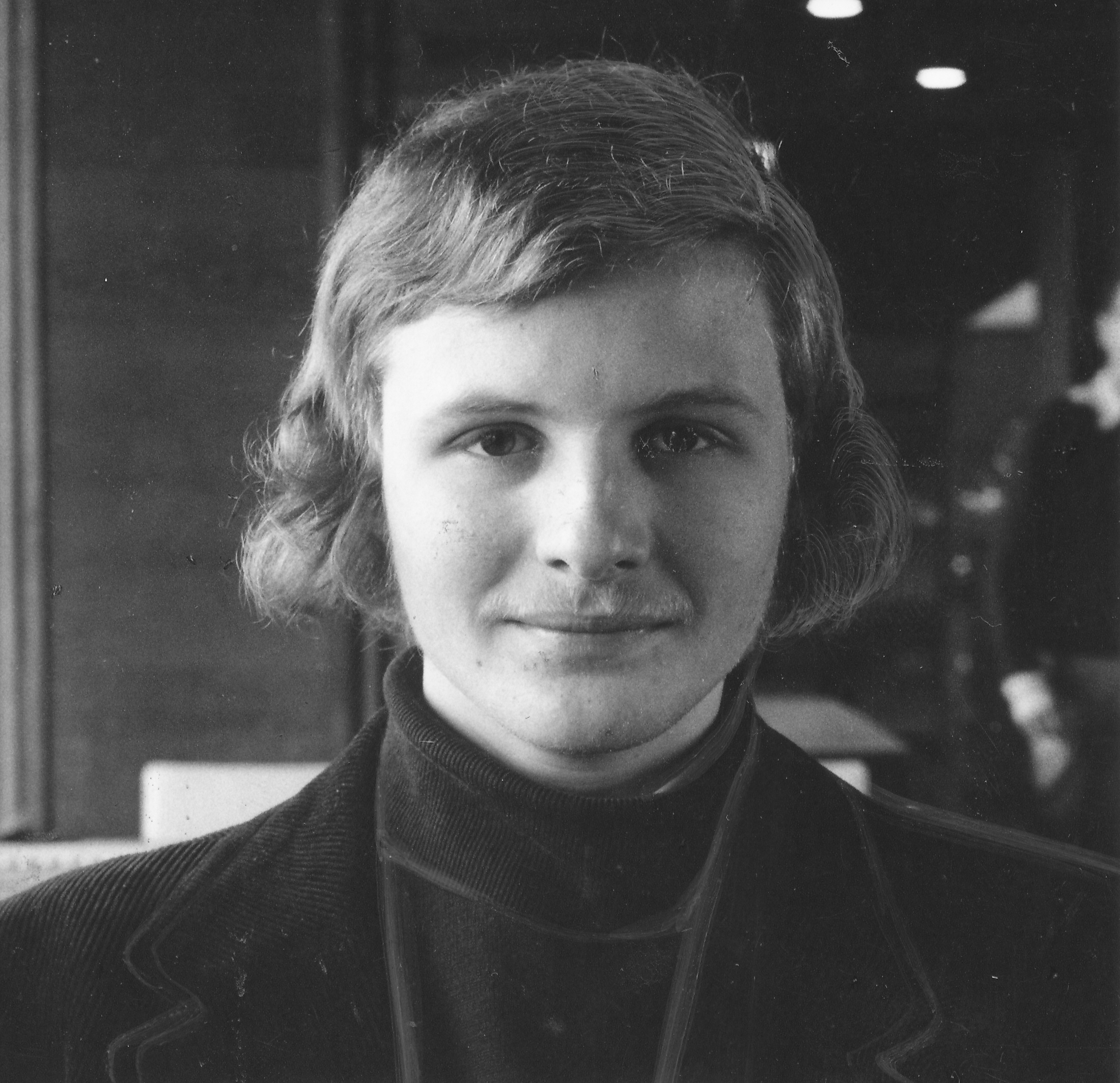
Norman Littlewood
Norman Littlewood

BCN remembers Norman Littlewood (31-i-1933 29-iv-1989)

Norman Littlewood circa 1967

From British Chess Magazine, Volume 109, June (#6), page 265 we have the following obituary which appears to have been lifted and used in the BCF Yearbook from 1989 – 1990, page 14, (editor Brian Concannon) with no acknowledgement :

“We were sorry to (announce the) hear of the death from cancer of Norman Littlewood of Sheffield(31 i 1933 – 29 iv 1989) who played with great force in British Championships of the 1960s.
Born into a working class family of 11 children, Norman played for England in the 1951 Glorney Cup, but did not make his debut in the British Championships until 1963 when he finished second to Penrose. He was then joint runner-up in the next three title contests, impressed at Hastings Premiers, particularly 1963-4 when he was the best of the English players, and represented England in the 1964 and 1966 Olympiads. By 1969, however, he was drifting away from play in the direction of problem and study composition, and his other interests such as bridge. He was also a skilled pianist, a true all-rounder.

Norman Littlewood
Norman Littlewood

A great impression was made on the top players at the 1964 British Championships when Norman won his first four games with his dynamic style. His victims included both Golombek and Clarke. Had he won his next game against Haygarth, as he deserved to do, he would have surely taken the title which fell to his Yorkshire colleague.

Norman was always a modest but assertive character, and with more management might well have challenged Penrose even more closely than he did. Our thanks to elder brother John Littlewood for some of the above information.”

The 1964 England Olympiad (Tel Aviv) Team : Owen Hindle, Čeněk Kottnauer, Peter Clarke, Michael Franklin, Norman Littlewood & Michael Haygarth

Here is a splendid article from Yorkshire Chess History

See BCF Yearbook 1989-90, page 14.

Remembering Michael Haygarth (11-x-1934 27-iv-2016)

Michael John Haygarth, British Champion, 1964 (from British Chess Magazine, 1964)

BCN Remembers Michael John Haygarth (11-x-1934 27-iv-2016)

Here is an article from Yorkshire Chess History

Owen Hindle, Michael Franklin, Harry Golombek and Michael Haygarth

Here is an obituary written by Steve Mann which was published on the ECF web site.

The 1964 England Olympiad (Tel Aviv) Team : Owen Hindle, Čeněk Kottnauer, Peter Clarke, Michael Franklin, Norman Littlewood & Michael Haygarth

Remembering Malik Mir Sultan Khan (1905 25-iv-1966)

Malik Mir Sultan Khan

Death Anniversary of Malik Mir Sultan Khan (1905 25-iv-1966)

From The Oxford Companion to Chess by Hooper & Whyld:

Perhaps the greatest natural player of modern times. Born in the Punjab, he learned Indian chess when he was nine, was taken into the household of Sir Umar Hay at Khan, and learned the international game in 1926, Two years later he won the All-India Championship and in the spring of 1929 his patron and master took him to London. Within a few months he won the British Championship, returning to India shortly afterwards. In Europe in May 1930 he began a brief career that included defeats of many leading players.

A striking figure, of dark complexion, with a lean face and broad forehead, his black hair usually turban tied, he sat at the board impassively, showing no emotion in positions good or bad. He did not believe he possessed any special skill, rather that the player applying the greater concentration should win. In events of about category 10 Sultan Khan came second to Tartakower at Liege 1930, third (+5=2-2) after Euwe and Capablanca at Hastings 1930-1, and third ( + 6=3—2) equal with Kashdan after Alekhine and Flohr at London 1932, In events of about category 9 he came fourth or equal fourth at Scarborough 1930, Hastings 1931-2, and Berne 1932 ( + 10=2-3). Sultan Khan won the British Championship again in 1932 and 1933 and played first board for the British Chess Federation in the Olympiads of 1930, 1931, and 1933. In match play he defeated Tartakower (+4=5—3) in 1931 and lost to Flohr ( + 1=3—2) in 1932. At the end of 1933 he went back to India at the bidding of his master. When Sir Umar died Sultan Khan was left a small farmstead near his birthplace, and there he lived out his days. Apparently he had few regrets, A friend visiting him in 1958 found him sitting quietly under the shade of a tree smoking his hookah, chatting with neighbouring farmers while the womenfolk did the work.

In the Indian game of his time the pieces were moved as in international chess but the laws of promotion and stalemate were different, castling was not permitted, and a pawn could not he advanced two squares on its first move. The game opened slowly with emphasis on positional play rather than tactics, and not surprisingly Sultan Khan became a positional player. He had few peers in the middle-game and was among the world’s best two or three endgame players, but he never mastered the openings which, by nature empirical, cannot be learned by the application of common sense alone*

When Sultan Khan first travelled to Europe his English was so rudimentary that he needed an interpreter. He suffered from bouts of malaria and, in the English climate, from continual colds and throat infections, often turning up to play with his neck swathed in bandages. Unable to read or write, he never studied any hooks on the game, and he was mistakenly put in the hands of trainers who were also his rivals in play. Under these adverse circumstances, and having known the international game for a mere seven years, only half of which was spent in Europe, Sultan Khan nevertheless became one of the world’s best ten players. This achievement brought admiration from Capablanca who called him a genius, an accolade he rarely if ever bestowed on anyone else.

R. N. Coles, Mir Sultan Khan (rev, edn, 1977) contains 64 games.

In the March issue of CHESS for 1963, (Volume 28, Number 427, pp.147-155)  William Winter wrote this:

A colourful figure from India

The most colourful figure of my time was unquestionably Mir Sultan Khan who appeared in the chess firmament in 1929, blazed like a comet for nearly five years, and then disappeared as suddenly as he had come.

His origins like his end were wrapped in mystery. As far as I could gather he came of generations of Indian peasants who played the native form of chess under a tree in some remote village in the Punjab. Taken under the protection of Sir Umar Hyat Khan he learned the European game, and scored an overwhelming victory in the first Indian championship in which he played. When his patron, Sir Umar, was appointed to an official position in England, he brought Sultan in his train with the object of pitting him against the leading players of the world.

Yates and I were engaged to put him through his paces. I remember vividly my first meeting with the dark skinned man who spoke very little English and answered remarks that he did not understand with a sweet and gentle smile. One of the Alekhine v Bogolyubov matches was in a progress and I showed him a short game, without telling
him the contestants. “l think” he said, “that they both very weak players.” This was not conceit on his part. The vigorous style of the world championship contenders leading to rapid contact and a quick decision in the middle-game, was quite foreign to his conception of the Indian game in which the pawn moves only one square at a time.

Yates and I soon discovered that although he knew nothing of the theory of the openings, his middle-game strategy showed great profundity and his endings were of real master class. In a small double-round tournament for him at the Gambit Café, in which the other players were Yates, Conde, and myself, he did badly, but his Indian record was sufficient to gain him entry to the British Championship held that year at Ramsgate. Few thought that he had a chance of reaching the top half of the table, particularly when he lost in the first round to the Rev. F. E. Hamond. Then however he had an astonishing run of successes and confounded his critics by coming in first. It must be confessed that he was extremely lucky. Drewitt, usually one of the steadiest players, put his queen en prise to a pawn; I allowed him to force a stalemate in an ending in which I was two pawns ahead, and other competitors made similar queer blunders.

A wit suggested that he exercised some oriental hypnotic powers over his rivals, only Hamond, as a parson, being superior to the malign influence. I certainly never remember a championship with so many blunders – probably due to the excessive heat. Sultan created a sensation at Ramsgate in other ways than his chess. He always appeared in flowing white robes and was accompanied by two attendants similarly clad, one to write down his score and the other to supply him with the lemonade which he drank continuously. The latter had to be withdrawn after spilling a glass of the noxious beverage over the trousers of one of the competitors.

Fascinated youngsters

The tournament was played in August when Ramsgate was filled with holiday-makers and it may be imagined that Sultan and his retinue were one of the centres of attraction, particularly to the juvenile element. Every day he was accompanied to the congress by a horde of yelling children who, unless the door-keepers were very vigilant, did not stop at the entrance. The noise occasioned by their expulsion from the playing room may have had something to do with the blunders.

On to still greater feats

Sultan soon showed that this was no flash in the pan for at the Hastings congress (1930-1931) he beat Capablanca, the first game the almost invincible Cuban lost in this country. At the Team Tournament at Hamburg (1930) he also did extremely well on the top board against the best continental opposition though his apparent lack of any intelligible language annoyed some rivals. “What language does your champion speak?” shouted the Austrian, Kmoch, after his third offer of a draw had been met only with
Sultan’s gentle smile. “Chess” I replied, and so it proved, for in a few moves the Austrian champion had to resign. (See a letter to CHESS from Han Kmoch at the end of this article).

From this time onward Sultan went from strength to strength. He won two more British championships and was also highly successful in international events, both in Team Tournaments and individual contests. His greatest achievement was probably his successful match against Tartakover. He soon put off his native dress in favour of more normal apparel but apart from that he remained to the end the inscrutable Oriental. What ideas, if any lay behind that dark impassive face? It was impossible to say, for all the time I knew him he never spoke of any subject but chess. He gradually acquired a knowledge of English and finally spoke quite well. In order to study the chess magazines he also learned to read, but writing was beyond him. I often wrote his letters for him including some to a girl friend whose acquaintance he had made in Hyde Park. The lady seemed to like them.

By 1933, when he won the championship for the last time, he must have been one of the first half dozen or so best players in the world. The highest honours seemed open to him and then ! – just as suddenly as he appeared, he vanished. His patron, Sir Umar, relinquished his post and returned to India taking Sultan with him, and nothing has been since heard of him. He may be dead, but in that case I think the news would have leaked out. I fancy myself that he can still be seen sitting under a tree in some remote village in the Punjab playing the game of his forefathers. If this is so I wonder if he ever dreams of his five years in the West.

and here is a letter from Hans Kmoch following Winter’s memoirs:

Not that it matters, nor that I would cast any blame on the later William Winter whom I knew as a perfect gentleman. It is only for the sake of curiosity that I ask permission to comment on Winter’s story concerning my game against Sultan Khan.

I never asked Winter or anybody else what language Sultan Khan spoke. Nor did I shout (I never do). Sultan Khan and I had met before.  What little conversation there was between us was done in English of which we both had a command sufficient for the purpose.

Winter, being not asked, had no opportunity to reply “Chess” or anything else.

I did not offer a draw three times, nor did Sultan Khan, who never smiled, meet my offers with a smile. Nor again did I resign a few moves later. And ! was not the Austrian Champion (contests have not been held at all in my active time).
Sultan Khan had White: we played a Giuoco Piano. After a small number of moves, probably 18 or so, a position was reached which I considered as fully satisfactory for Black.

I offered a draw so as to gain time for my work as a reporter. (I used to be very strict in never offering a draw to anybody unless my position, to the best of my understanding, was fully satisfactory).

Sultan Kahn accepted my offer outright. The game ending in a draw is a provable fact.

New York, 17th April 1963

Hans Kmoch

(we believe Mr. Kmoch! – Editor)


Sultan Khan-Flohr 3rd match game 1932 Caro-Kann
Defence, Exchange Variation

Here is his Wikipedia entry

Malik Mir Sultan Khan (right)

Here is an excellent article from chess.com