Tag Archives: English

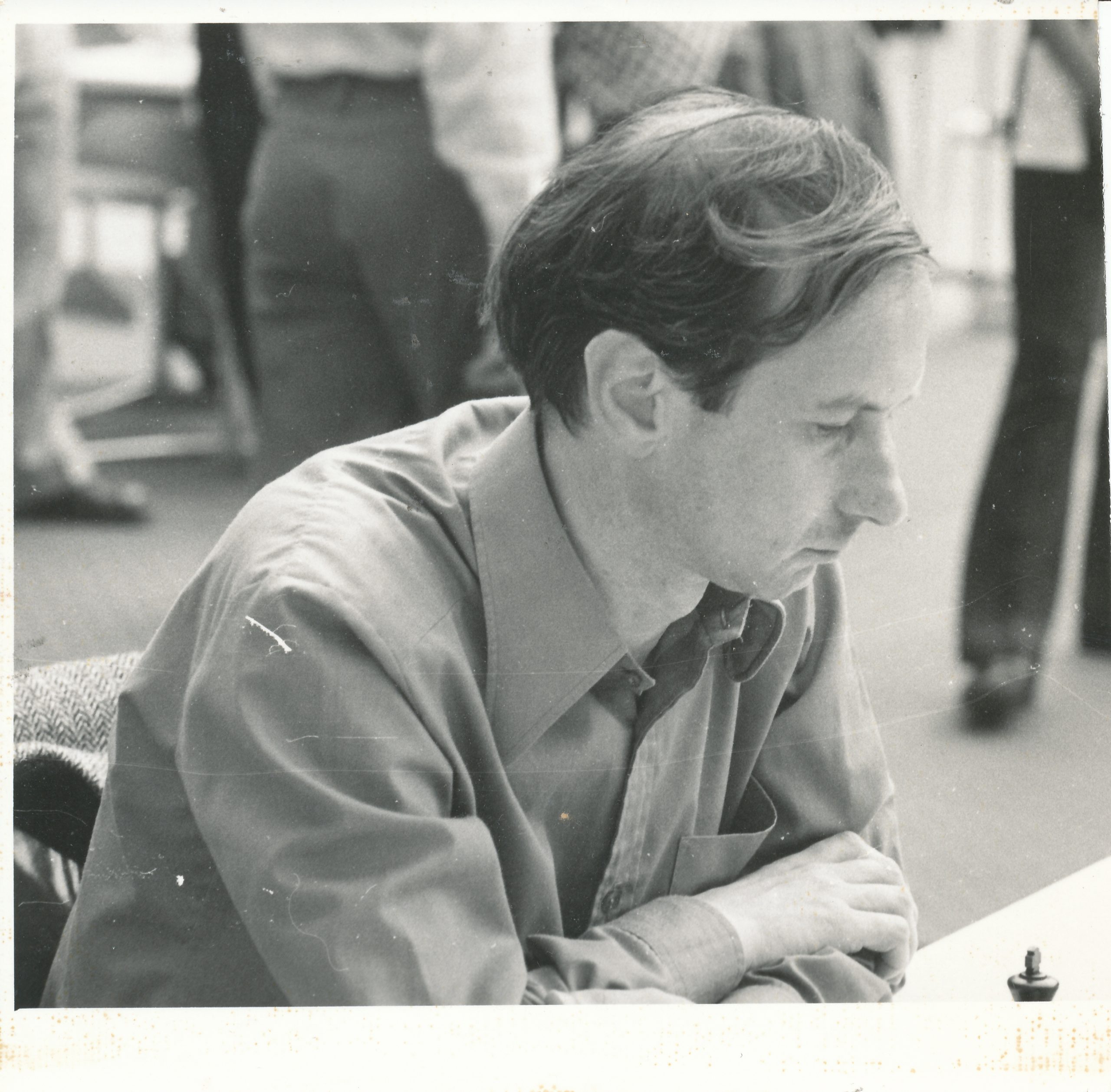
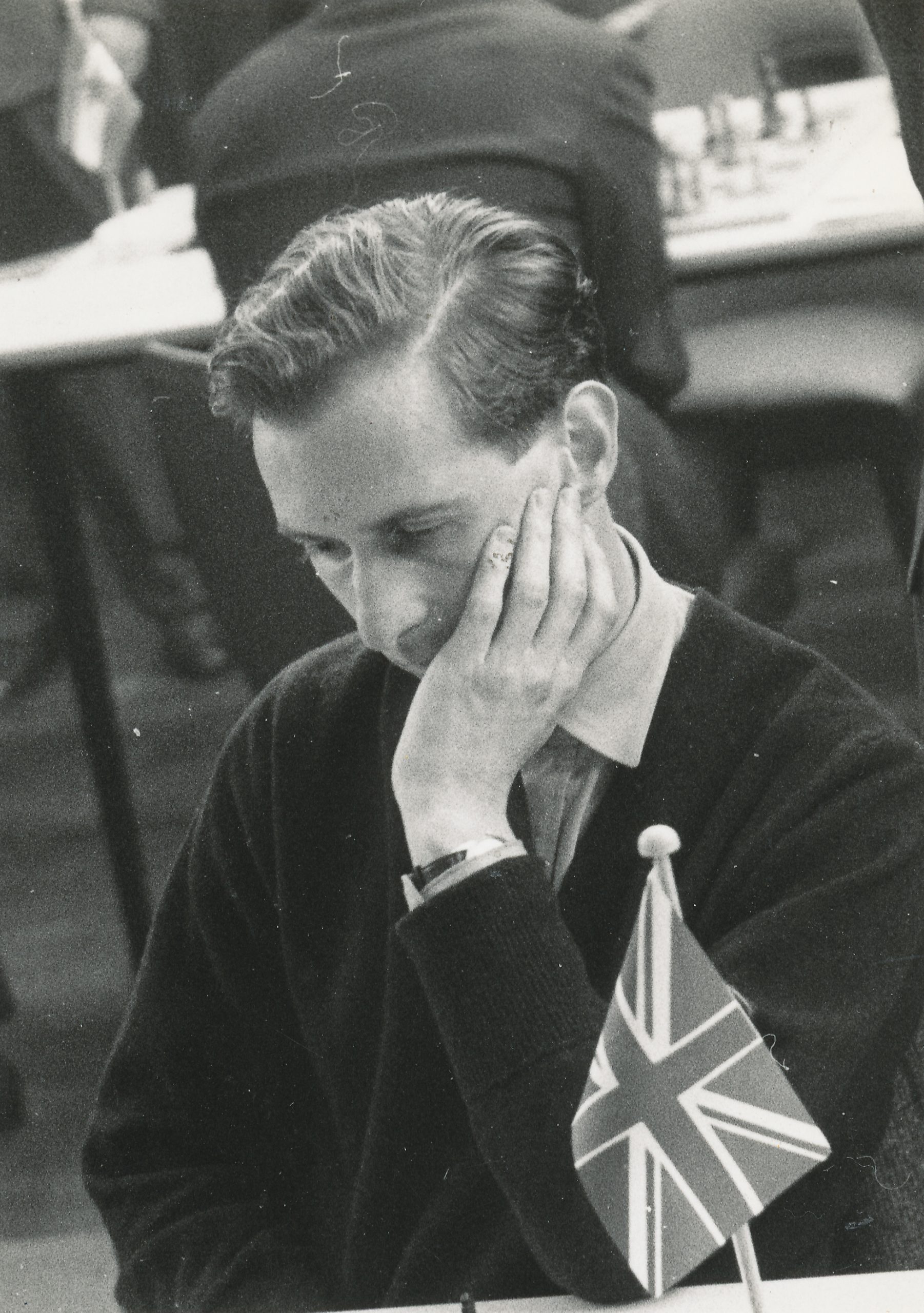
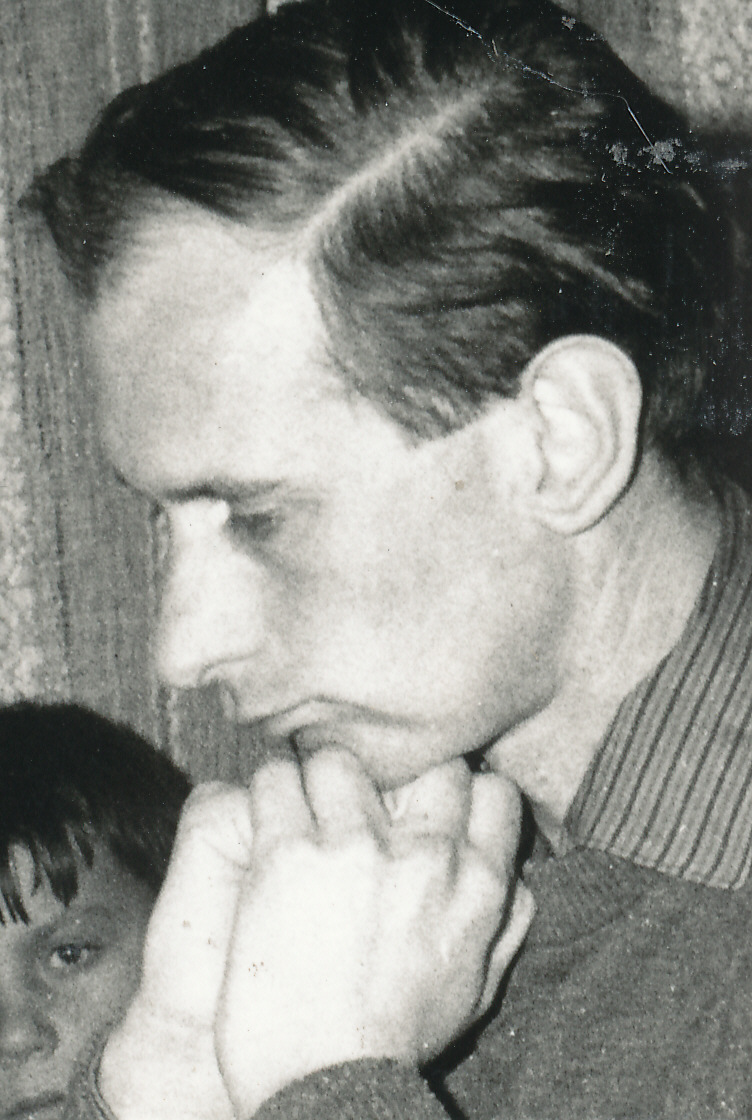
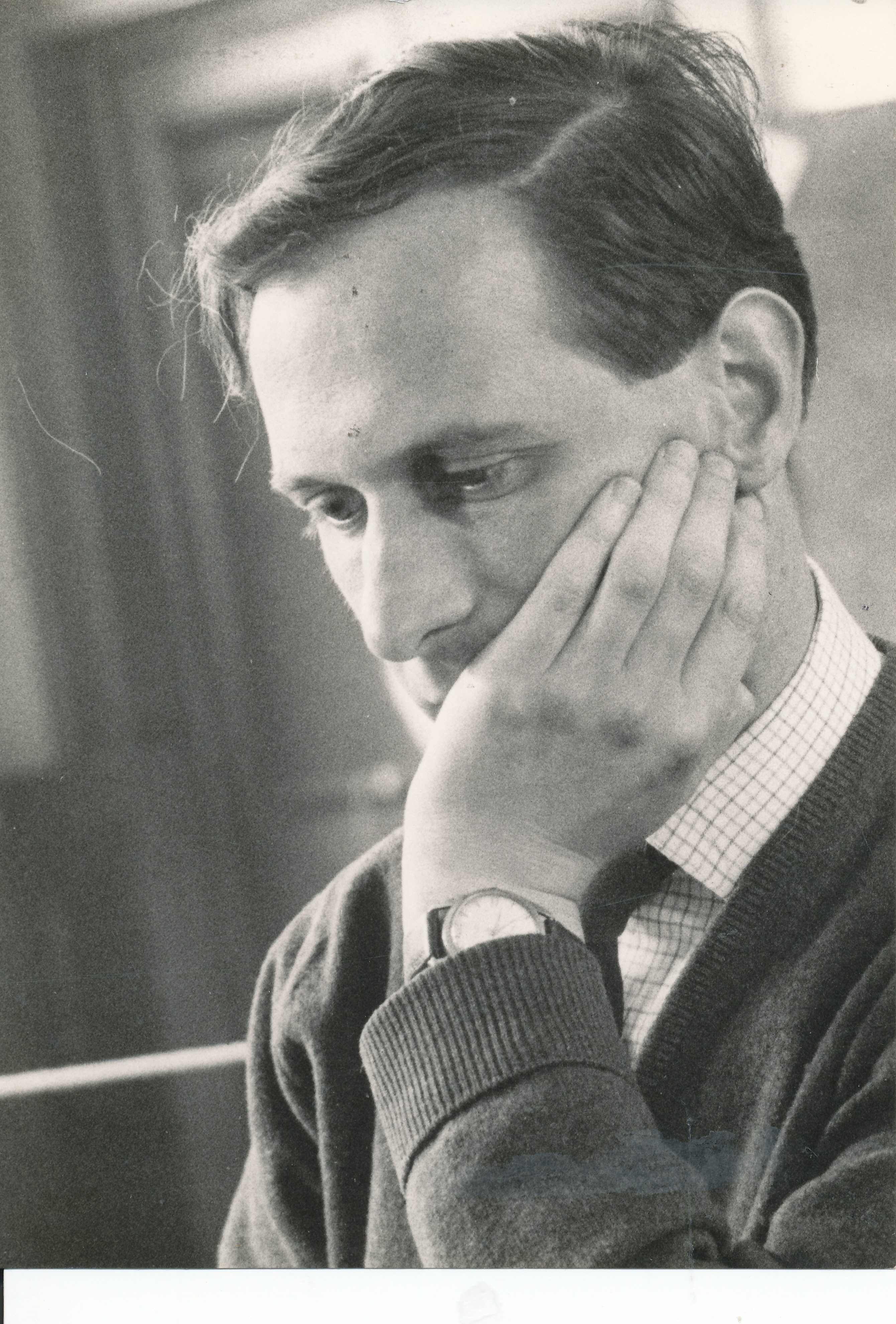
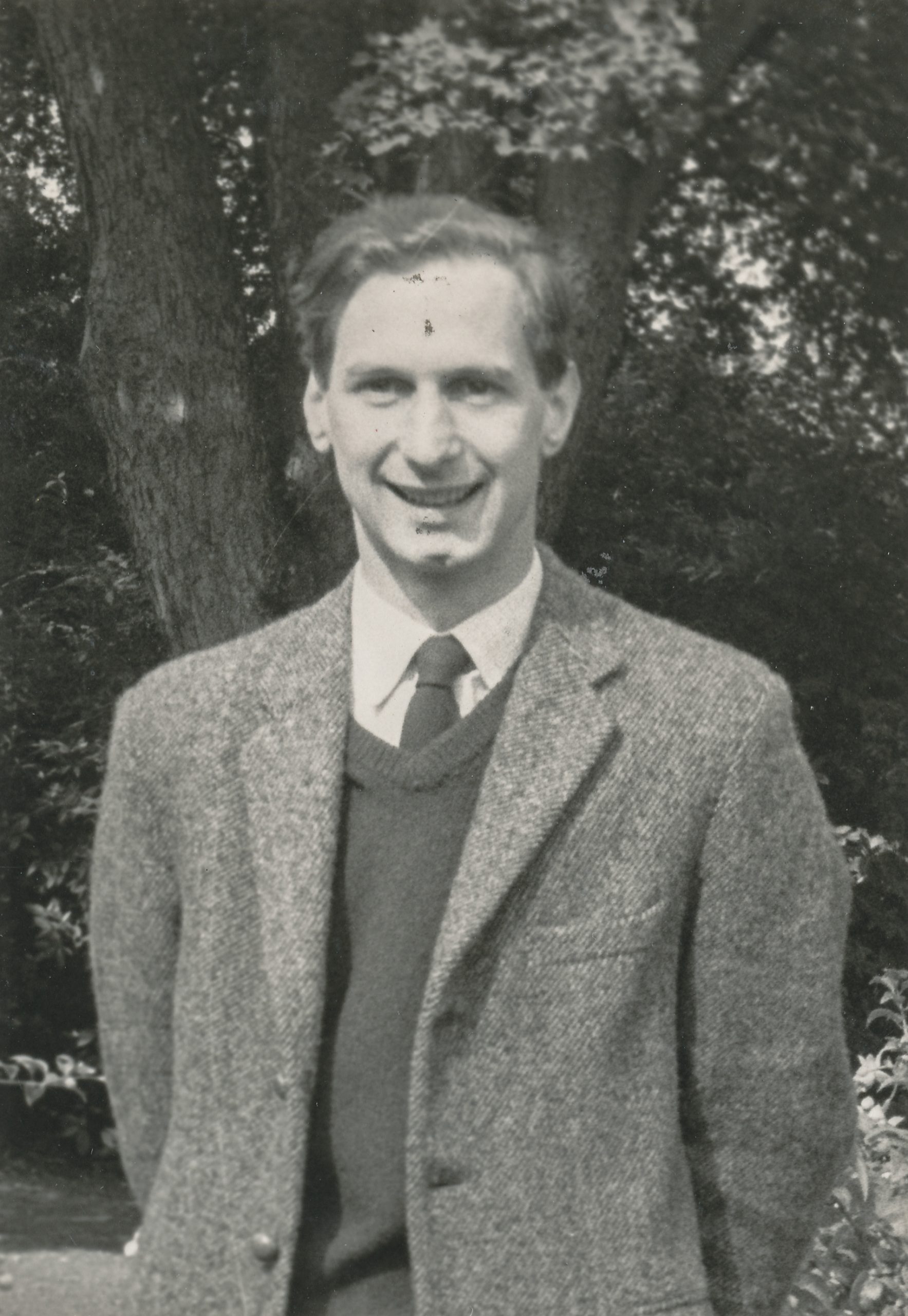
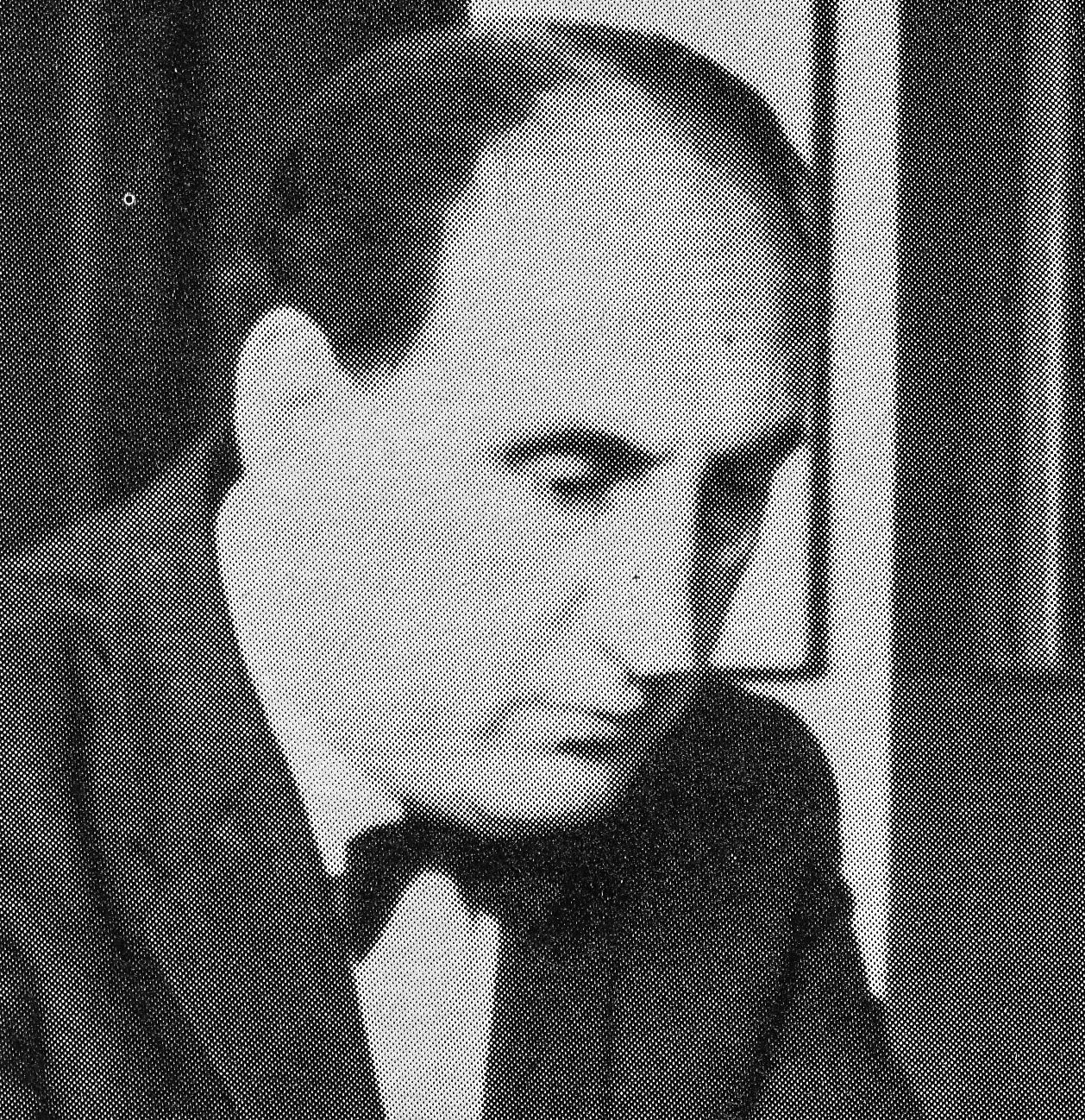
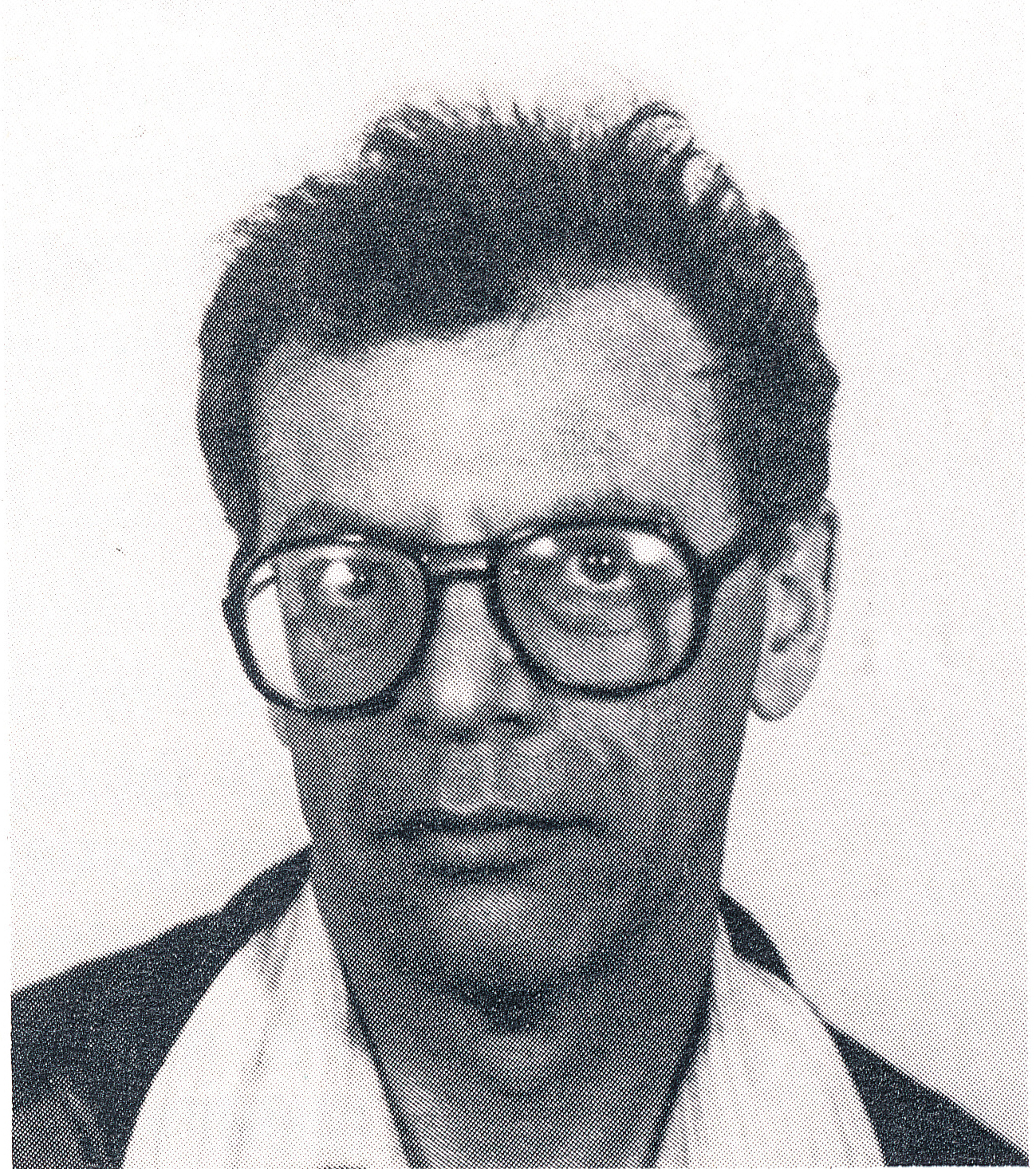
Remembering IMC Ken Messere OBE (16-iv-1928 31-iii-2005)

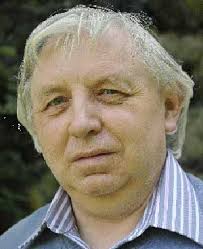
IMC Ken Messere OBE (16-iv-1928 31-iii-2005)

BCN remembers Ken Messere who passed away on Thursday, March 31st 2005 aged 76 in Paris-16E-Arrondissement, Paris, France.

Kenneth Charles Messere was born on Monday, April 16th, 1928 in Richmond-on-Thames, Surrey. His father was Charles (George) Messere (1901-1974) or Eisenberg and aged 26. His mother was Gertrude Marie Newman (1899-1978) and aged 29.

Ken had three siblings: Barbara Marie Messere (1930–2005), Hugh Martin Messere (1932–1985) and Derek R Messere (1934–2012)

Ken attended St. Peter’s College, Oxford from 1946 – 1951 to read philosophy and is reported in the 1951 St. Edmund Hall Magazine, as a member of the Trillick (debating) Society as follows:

‘ That this House would rather be a live Communist than
a dead Democrat.’ The proposer established to his own satisfaction that democracy was founded on ‘selfishness, capitalism and bourgeois hypocrisy.’ He did not satisfy J. F. R. Bonguard of St. Peter’s Hall who opposed, using arguments taken from Hindu philosophy. K. C. Messere of St. Peter’s Hall, spoke third and added some able arguments.

In June 1954 Ken married Mary Elizabeth Humphrey (1929-2003) in Ealing. They had a son Miles Jonathan Messere born in 1964 who passed away in 1965.

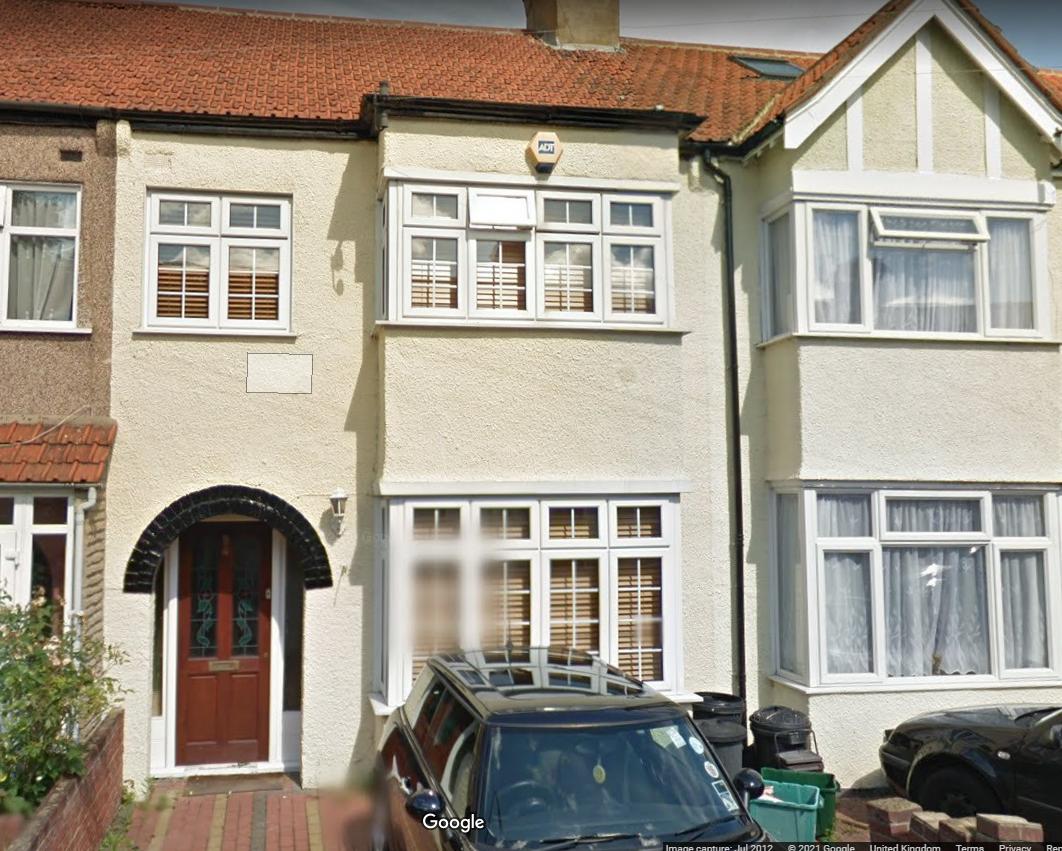
Prior the time of his passing his wife Mary was living at 142B, Herbert Road, Woolwich, London, SE18 3PU.

In 1991 he was awarded the OBE (Civil Division) in the Queen’s Birthday honours list. The citation reads: Kenneth Charles Messere, lately Head of Fiscal Affairs Division, OECD, Paris.

Ken appears each year from 1953 to 1967 in the noted publication Britain, Royal And Imperial Calendars the function of which is to list entries for those engaged in UK public service. He worked for HM Customs and Excise. Prompted by this we consulted the venerable A History of Chess in the English Civil Service by Kevin Thurlow (Conrad Press, 2021) on page 447 and found

“He played for Customs. In 1964, he went to work for the Organisation for Economic Cooperation and Development and was head of fiscal affairs from 1971 – 1991. In 1954 he began playing postal chess and became a leading player. He won a semi-final of the 5th World Correspondence Championship (1961 – 64) and became the first English player to compete in a World Championship Final.”

There are 31 games listed at his personal entry at chessgames.com starting with games from 1965.

Chessbase’s Correspondence Database 2020 records 69 games the earliest being from 1958 listing Ken’s federation as being France.

From British Chess (Pergamon Press, 1983) we have this lengthy contribution from Ken himself:

“Between the ages of 6, when I learnt to play and 23 (ed: 1951), when I ceased to be a student, chess had a relatively low priority among various time-competing interests and activities, so I never got around to studying theory. Things changed when I became a civil servant and needed a replacement for philosophy as an intellectually absorbing subject which could be argued about with friends over beers, and for the next 12 years chess became my main interest.

Since 1964 I have been working for the OECD in Paris, where my friends are not chess enthusiasts and, although chess remains a major pleasure, my commitment to it has lessened. Nowadays, out-side correspondence chess, I play only occasional blitz games.

Coming late to serious chess has probably had at least some influence on my deficiencies and stylistic preferences. The deficiencies include an inability to visualize ahead with sufficient clarity to support accurate analysis, slow sight of the board which leads to silly errors through time trouble or failing stamina and less familiarity with theory than my better opponents. As to chess style, I have had to play romantically and subjectively to get good results.

If a game takes the form of a clear-cut position, where strategical objectives are clear and superior technique prevails, then mine generally does not. Consequently I have tended to play either sharp gambits or counter-gambits or to try to render the position sufficiently obscure for imagination and intuition to assume maximum importance. In keeping, my chess heroes have been Alekhine, Bronstein and Tal who revel in fantasy, however much Alekhine may claim that it is logically based.

When I took up competitive chess seriously in 1952, I made some progress and won a few minor tournaments, but in view of the defects already mentioned, it soon became clear that my potential for improvement was limited and that nearly all my games were aesthetically flawed. Fortunately, these defects represent no great handicap at correspondence chess, where I found myself pleased with a reasonable proportion of the game I played, and in addition, capable on the day (or more accurately over the years) of winning against almost anyone. Thus, against world champions I have two wins and one loss, (see below). I also have 80 per cent from five games against Russian grandmasters, even if a meagre 28 per cent from my eighteen games against all correspondence grandmasters. In 1954 when I began playing postal chess competitively, I did sufficiently well in a few British Postal tournaments to be accepted at a reasonably high level in the official international tournaments.

Not without luck (see Diagram l), I secured the 75 per cent necessary in two seven-player tournaments to qualify for the fourteen player preliminaries, the winner of which was to qualify for the following world championship. In the 1961-64 preliminaries, I played the best chess of my life, including valid opening innovations, imaginative pawn and piece sacrifices and even a technically efficient win in a queen and pawn end-game. I won the tournament with eleven wins, one draw and one loss, 1.5 points ahead of Maly of Czechoslovakia and two points ahead of Masseev, the Russian favourite, thereby obtaining my first norm towards the International Master title. My first annotated game is the win against Maly (ed: to be inserted once we have tracked down the game score!) which was typical stylistically and also crucial, since if he had won it, he would have qualified for the World Championship instead of me: the second against Bartha of the United States is the most compulsive and difficult tactical game I have ever played, the last five moves alone requiring over 100 hours of analysis.
IMC Ken Messere OBE (16-iv-1928 31-iii-2005)

The quality of my chess in the 1965-68 World Championship was much inferior. The tournament began disastrously. I went in for three losing variations as Black and made a suicidal clerical error in the opening so that after 3 months I had four losses from four games. Later, there were compensations. I won against V. Zagarovsky, the reigning world champion (the third annotated game) and obtained just (but only just) the necessary 33.3% per cent to obtain the correspondence chess international master title. For this I needed a win and draw from my last two games which
after 3.5 years, had to be adjudicated.

Fortunately, the win and draw were relatively clear, though this would not have been so a few moves earlier. An an illustration of how the threat of adjudication breeds irrationality, Diagram II gives the closing stages of my win against J.Estrin of the USSR – a more recent correspondence chess world champion. My only other game against a world champion was against the winner of this tournament, Hans Berliner of the United States, with whom I collaborated on a book of the tournament. The collaboration was stimulating but not without friction, since I had to write 75 per cent of the book to see it ever finished. It took a year to complete, 3 years to appear (published by BCM) but in the end was well-reviewed, sold over 2000 copies and royalties are still (gently) drifting in.
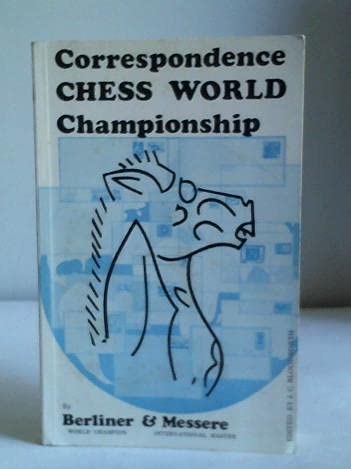
The Fifth Correspondence Chess World Championship, Hans Berliner & Ken Messere, British Chess Magazine, BCM Quarterly Nunber 14, 5th December 1971, ISBN 978-0-900846-05-2.


In the early seventies, in order to reduce numbers of games, I retreated altogether from individual tournaments, just playing twice for England in the Olympiads. Whether team play did not suit my style, or whether my technique had improved but imagination withered, I drew nine of my seventeen games from the two tournaments, winning four and losing four. As England looked likely to aspire to medals for the first time ever, my 50 per cent would not help matters and I gladly retreated to first reserve, which to my dismay required taking over five unfinished games of Hugh Alexander, who died during the tournament, and who, for me, has always been England’s most attractive player and writer. My most uncomfortable decision in correspondence chess was a rejection of Hugh’s intended continuation in one of these games, {Diagram III). Of these five games, I lost one and drew four and England won a bronze medal.

In 1974 was invited to compete in the Potter Memorial Tournament of four postal grandmasters and nine international masters. After so many years of responsible’ team chess for England, I went beserk and sacrificed a pawn in ten of the twelve games, trying later to salvage inferior end-games. Result 33 % per cent. B. H. Wood invited me to write a book of the tournament, to which a number of the players contributed and this was published in 1979.
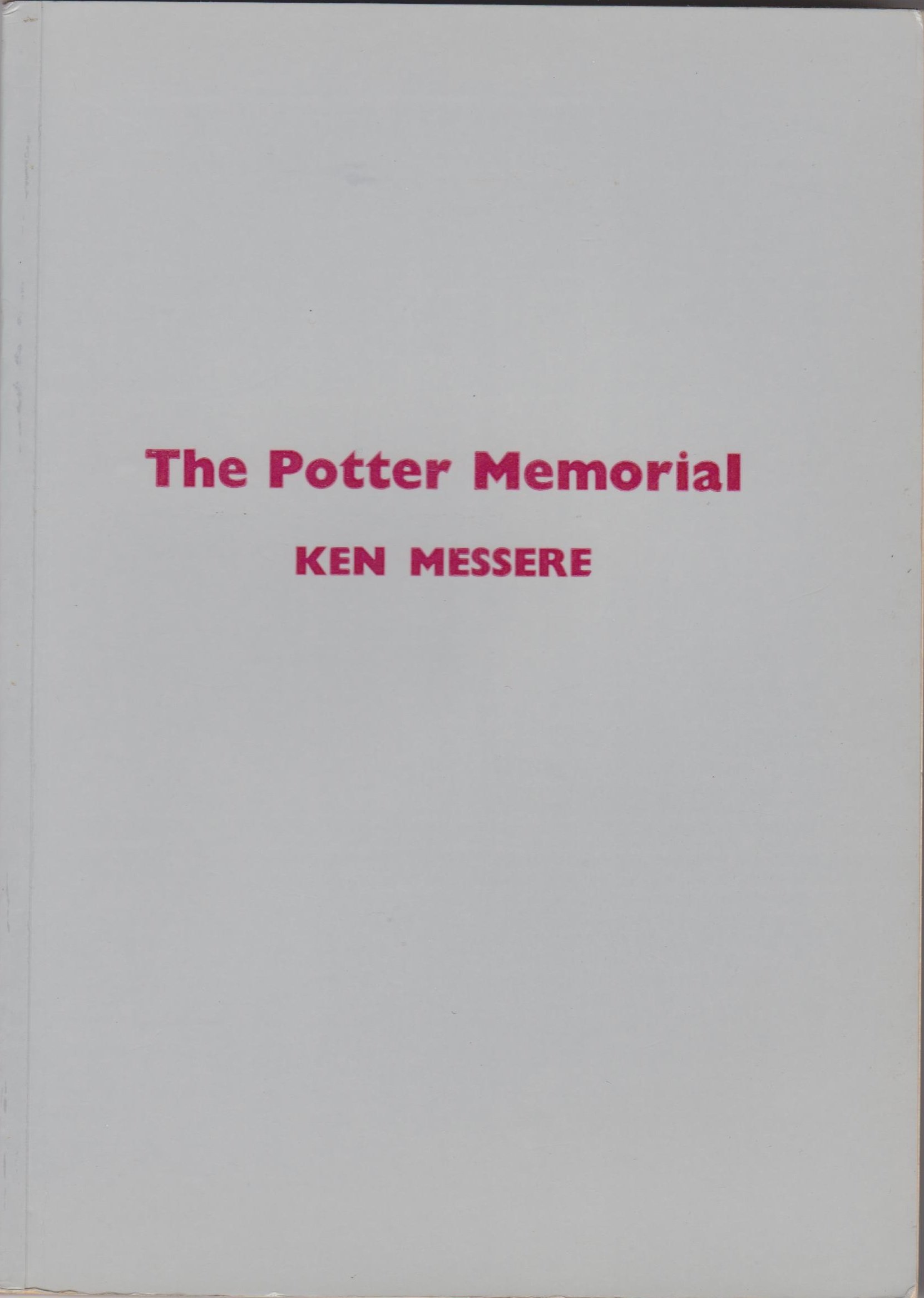
The Potter Memorial, Ken Messere, CHESS (Sutton Coldfield), 1975

Also in 1979 I began to play in another invitation tournament of thirteen players organised by the Australian Correspondence Chess League, which became a memorial to CJS Purdy, its president and the first world postal champion, who died soon after the tournament began. At the time of writing, this tournament, comprising four grandmasters (including one former world champion and two runners-up) and eight international masters, is still in its early stages.”

From British Chess Magazine, Volume CXXV (125, 2005), Number 5 (May), page 226 we have this obituary:

“Kenneth Charles Messere (16 iv 1928, Richmond – 31 iii 2005, Paris) was one of Britain’s strongest correspondence players (he held the correspondence IM title) and well-known author of books on the subject. After graduating from Oxford University, Ken Messere went to HM Customs and Excise, and thence to the Organisation for Economic Development (OECD) where he became head of the fiscal affairs division and a world expert on fiscal law. He reached the final of 1965-8 world correspondence championship, beating world champions Zagorovsky and Estrin, and wrote the book of the tournament with Hans Berliner (published by BCM)”

From The Potter Memorial by Ken Messere, CHESS (Sutton Coldfield), “Chess for Modern Times” Series, 1975 we have this potted biography:

“Compiler of this book, took 3rd place in 1957 and 2nd in 1968 in the championship of the Postal Chess Club. Scores of 4.5 out of 6 in the ICCF Masters 1957-8 and 4/6 in the 1959-61 Championship took him to victory with 11/5 out of 13 in the 1961-3 semi-finals, securing him his first international master norm and qualifying him for the 5th World Championship 1964-7 in which he scored 5.5, just enough for the IM title, with wins over Zagorovsky, then world champion and Estrin, world champion now. Ken Messere collaborated with Berliner, who won it, in a book on the tournament.

He then switched to play exclusively as a member of the British Olympiad team, taking over 2nd board when Alexander died.

The switch back from rather cautious team play to enterprising individual games in 1974-7 provides some of the subject matter of this book.”
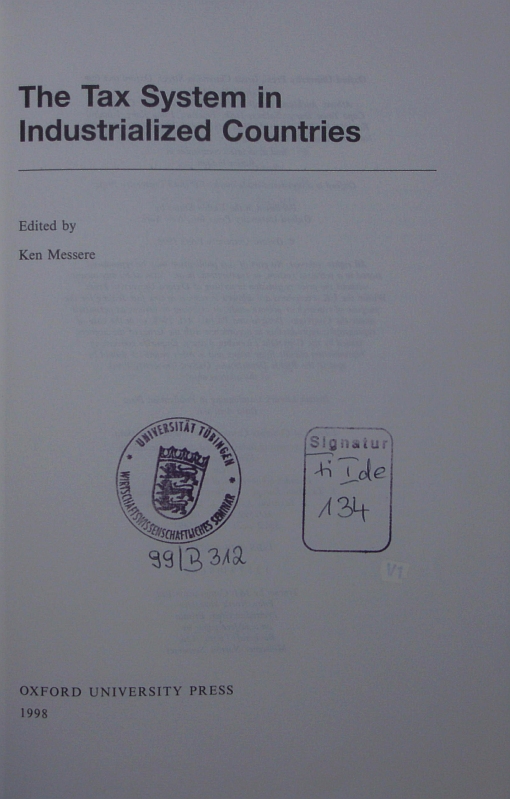
 

The Tax System in Industrialized Countries, Ken Messere, Oxford University Press, 1998, ISBN 10: 1982933135 / ISBN 13: 9781982933135

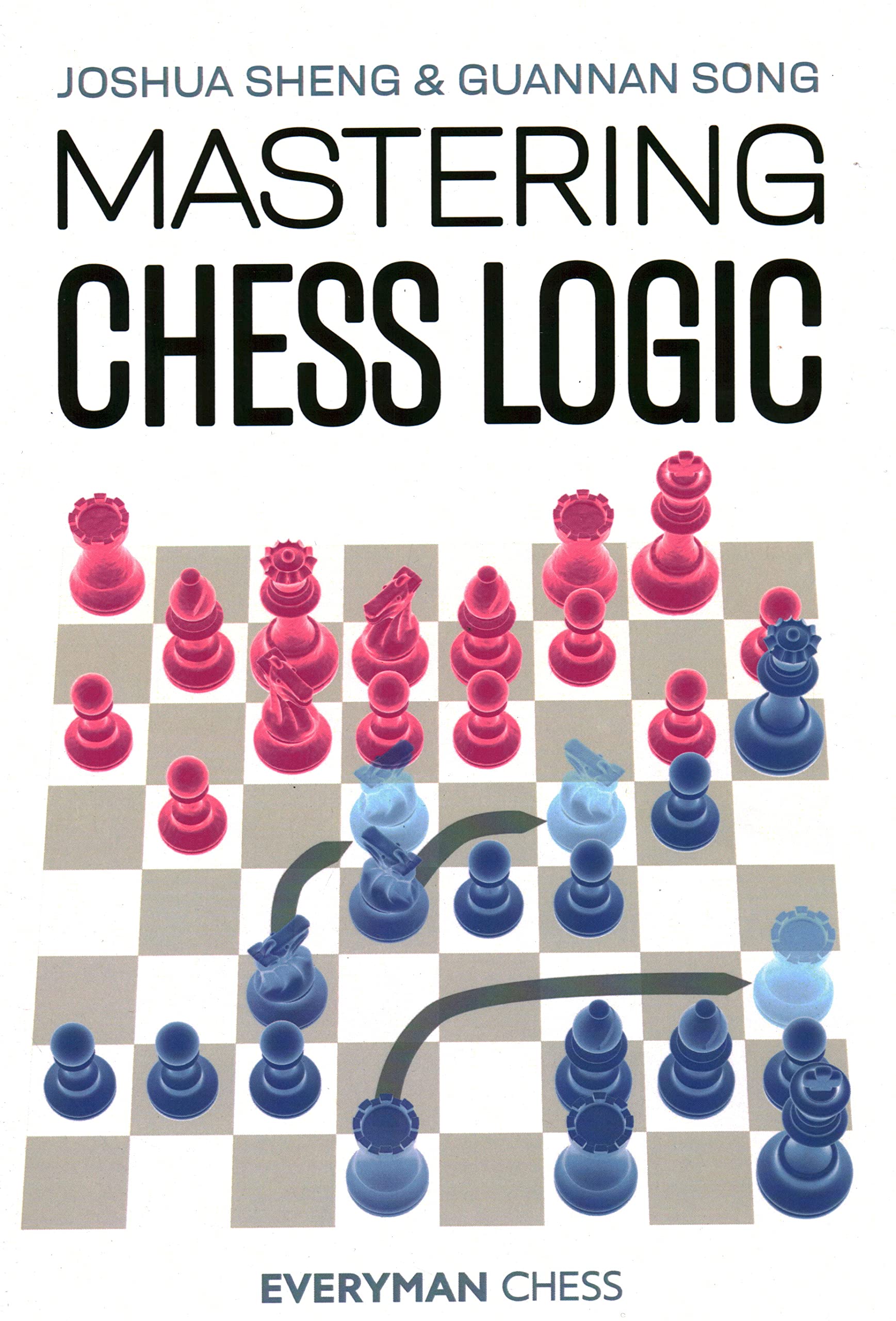
Mastering Chess Logic

Mastering Chess Logic, Joshua Sheng, Guannan Song, Everyman Chess, 10th September 2021, ISBN-13 ‏ : ‎ 978-1781946237

Here is the publishers blurb from the rear cover :

“What exactly makes the greatest players of all time, such as Magnus Carlsen, Bobby Fischer, and Garry Kasparov stand out from the rest? The basic aspects of chess (calculation, study of opening theory, and technical endgame ability) are of course of great importance. However, the more mysterious part of chess ability lies within the thought process.”
In particular: * How does one evaluate certain moves to be better than others? * How does one improve their feel of the game? This book will tackle this woefully underexplored aspect of chess: the logic behind the game. It will explain how chess works at a fundamental level. Topics include:

  • What to think about when evaluating a position.
  • How to formulate and execute plans.
  • How to generate and make use of the initiative.

The reader also has plenty of opportunities to test their decision-making by attempting 270 practical exercises. These are mostly designed to develop understanding, as the justification of the moves is more important than the actual correct answer.”
and about the authors :

Guannan Song is a FIDE Master with one International Master norm from Canada. He won the 2010 Canadian Youth Chess Championship and scored bronze at the 2015 North American Junior Chess Championships. He also played for Team Canada at the 2010 World Youth Chess Championship and the 2014 World Youth U16 Chess Olympiad. He represents Western University on board 1 of its Championship team and led his team to 2nd place at the 2019 Canadian University Chess Championship.

Joshua Sheng Joshua Sheng is an International Master with one Grandmaster norm from Santa Monica, California. He tied for first in the 2016 North American Junior Chess Championships and placed third in the 2019 U.S. Junior Chess Championships. He graduated from the University of California, Berkeley, in 2021. Joshua has been a serious chess coach for many years, and this is his first book.

As with every recent Everyman Chess publication high quality paper is used and the printing is clear. Each diagram is clear as is the instructional text. Figurine algebraic notation is used throughout and the diagrams are placed adjacent to the relevant text.

The book consists of six chapters viz:

  1. Building Blocks
  2. Know What You Have
  3. Mise en Place
  4. The Big Game
  5. Beginning and End
  6. Solutions

A video review has appeared on YouTube.

Before going further you may Look Inside via Amazon.


The authors might not be very well known to you, so perhaps we should find out more.

The publishers tell us that ‘Joshua has been a serious chess coach for many years’ and that ‘Guannan is an experienced chess coach’.  But according to FIDE Joshua was born in 2000 and Guannan in 1998. They haven’t been alive many years, let alone been serious chess coaches for many years. Some of us have been teaching chess (although in my case not very seriously) since 1972. Not only before they were born,  but perhaps even before their parents were born.

Let’s give them the benefit of the doubt and take a look inside.

From the authors’ introduction:

This book will be arranged primarily into sections where games will be analysed and your authors will talk. The talking and exposition will predominantly be done in the first person to ease communication. The beliefs and opinions held will generally be shared by both authors, although the primary voice will be Joshua’s. At the end of each of the first four chapters, there will be 30 practical exercises intending to reinforce your  understanding of the relevant topics. Chapter 5 will consist of another 150 exercises representing a more comprehensive synthesis of the explored material and are designed to test your overall knowledge and understanding. For the most part, we have intentionally avoided mentioning the end result or the game continuation after the point of interest from those exercises, as doing so might distract the reader from the primary point of them – developing your understanding. What matters is the decision-making process at the critical position shown in each puzzle.

What we have here is a book aimed mainly, I would say, at players between about 1500 and 2000 strength, although many of the puzzles demonstrate much stronger players making poor decisions.

It’s relatively easy, I suppose, to write books about openings, tactics or endings, but strategy, being a rather nebulous topic, is much harder to write about.

Other recent books, for example those by Erik Kislik, have discussed logic in chess, but these have, for the most part, been aimed at higher rated players.

There have been other books looking at strategy at this level – an excellent and much quoted example is Michael Stean’s book Simple Chess. The authors have also used Jeremy Silman’s rightly popular How to Reassess your Chess and make frequent references to imbalances in their explanatory material. These days we’re very much into interactive learning, so we expect quizzes to be incorporated so that we can test our understanding of the book’s content.

This book, then, looks like it fills a gap in the market as an interactive instructional book on logic and strategy for club standard players.

The first chapter, Building Blocks, introduces the reader to some basic concepts: material (including compensation), piece activity, piece improvement, pawn structure and space. In each case a few simple examples are provided, which are aimed more at 1500 than 2000 rated players.

Then, we move onto some quiz questions to test your understanding. All the puzzle positions in this book have been taken from games played between 2019 and 2021, so it’s very unlikely that you’ll have seen many – or any – of them before.

Here’s the first question, with Black to play (Arabidze – Jojua, Tblisi 2019). What would you recommend?

The answer (in part):

20… Bh6!

Black finds a great opportunity to force a trade of dark-squared bishops, getting rid of his weak blunted piece on g7 and its strong counterpart on e3. A lax move like 20… Ke7? would lose the opportunity to trade bishops after 21. Bf2. 

Of course you also have to see that Bxc4 fails tactically. There’s an assumption throughout the book that you have a reasonable level of tactical ability.

Chapter 2, Know What You Have, looks at positional evaluations. The authors use the acronym MAPS (Material, Activity, Pawn structure and king Safety) to lead you to your desired destination. This is taught by means of four games. We have Botvinnik – Capablanca (Netherlands 1938), which, if you’ve read a lot of chess books, you’ll have seen many times before, followed by Geller – Euwe (Zurich 1953), which again you may well have seen on many previous occasions. The chapter concludes with two recent games played by Joshua Sheng.

In Q35 (Grinberg – Ipatov, chess.com 2021) it’s again Black’s move.

In this instance Black got it wrong.

17… Be5?

Black protects his d6-pawn but gives away his two-bishop advantage. 17… Re6! was a greatly superior way to continue. A subsequent …Qe8 would place insurmountable pressure on e4. After 18. Rbd1 Qe8 19. Qb3 b5 20. Bxd6 c4 Black retains the bishop pair, recovers the pawn on the next move, and maintains pressure on White’s position.

Chapter 3, Mise En Scene, talks about identifying candidate moves, using a combination of calculation and evaluation. So they’re been reading Kotov as well as Silman, then? This time we have five example games: three from Sheng, plus Fischer – Spassky 1972 Game 6 (like Botvinnik – Capablanca, one of the most anthologised games of all time) and Tal – Rantanen from 1979.

In Chapter 4, The Big Game, we look at the initiative. The games are Kasparov – Andersson from 1981, Hydra – Ponomariov from 2005, and another three from Sheng.

Here’s one of them. (Click on any move for a pop-up window.)

Chapter 5 offers the reader 150 puzzles based on the lessons from earlier in the book.

Here’s another question: Q243 (Wall – Greet, Dublin 2019). It’s Black’s move again.

This is yet another question to do with trading bishops. Here, Richmond top board IM Gavin Wall chose to trade off his bad bishop, but this time he was mistaken.

19. Bc1?

At a glance, White holds a space advantage and control over the c-file. However, with this move, White starts to remove important defenders from his d4-pawn, giving Black a way back into the game. Though it looks like White is trading away a bad bishop for Black’s good bishop, the white bishop on b2 is actually a strong defensive piece. Better was 19. Bd3!, preparing h3-g4 or Nc3-Bxf5-Nxd5.

There’s a lot to admire about this book. There are very few books of this nature on the market providing interactive strategic instruction for club level players. As a 1900-2000 player myself I thought it was pitched at the right level for me, and would be accessible, if challenging, for ambitious and hard-working players from, say, 1500 upwards. The positions have been expertly chosen and the solutions are well explained giving just the right level of detail.

Having said that, introducing Chapters 2-4 through a seemingly fairly random selection of games (a combination of old chestnuts which many readers will have seen before and games by one of the authors) is not the only way to approach this topic. A different approach would have been to provide more specific advice and demonstrate some worked examples with more detailed explanations of thought processes before moving onto the quiz questions.

Again, another approach to questioning which would make the book more suitable for 1500 strength players (but perhaps less suitable for 2000 strength players) would have been to ask leading questions or provide multiple choices rather than just asking you for the next move.

The authors write engagingly and annotate well: I look forward to reading more from them in the future. If the concept appeals, and you think from the examples that it’s written at the right level for you, this book can be warmly recommended. As usual from Everyman, the publishing standards are exemplary.


Richard James, Twickenham 18th January 2022

Richard James
Richard James

Book Details :

  • Paperback : 256 pages
  • Publisher: Everyman Chess (10 Sept. 2021)
  • Language: English
  • ISBN-10: 178194623X
  • ISBN-13: 978-1781946237
  • Product Dimensions: 17.15 x 1.5 x 24.18 cm

Official web site of Everyman Chess

Mastering Chess Logic, Joshua Sheng, Guannan Song, Everyman Chess, 10th September 2021, ISBN-13 ‏ : ‎ 978-1781946237

Death Anniversary of GM Dr. Jonathan Penrose OBE (07-x-1933 30-xi-2021)

BCN remembers GM Dr. Jonathan Penrose OBE who passed away on Tuesday, November 30th 2021.

In the 1971 New Years Honours List Jonathan was made an Officer of the Order of the British Empire (OBE) The citation read “For services to Chess.”

From British Chess (Pergamon Press, 1983) by Botterill, Levy, Rice and Richardson : (article by George Botterill)

“Penrose is one of the outstanding figures of British chess. Yet many who meet him may not realize this just because he is one of the quietest and most modest of men. Throughout the late 1950s and the whole of the 1960s he stood head and shoulders above any of his contemporaries.

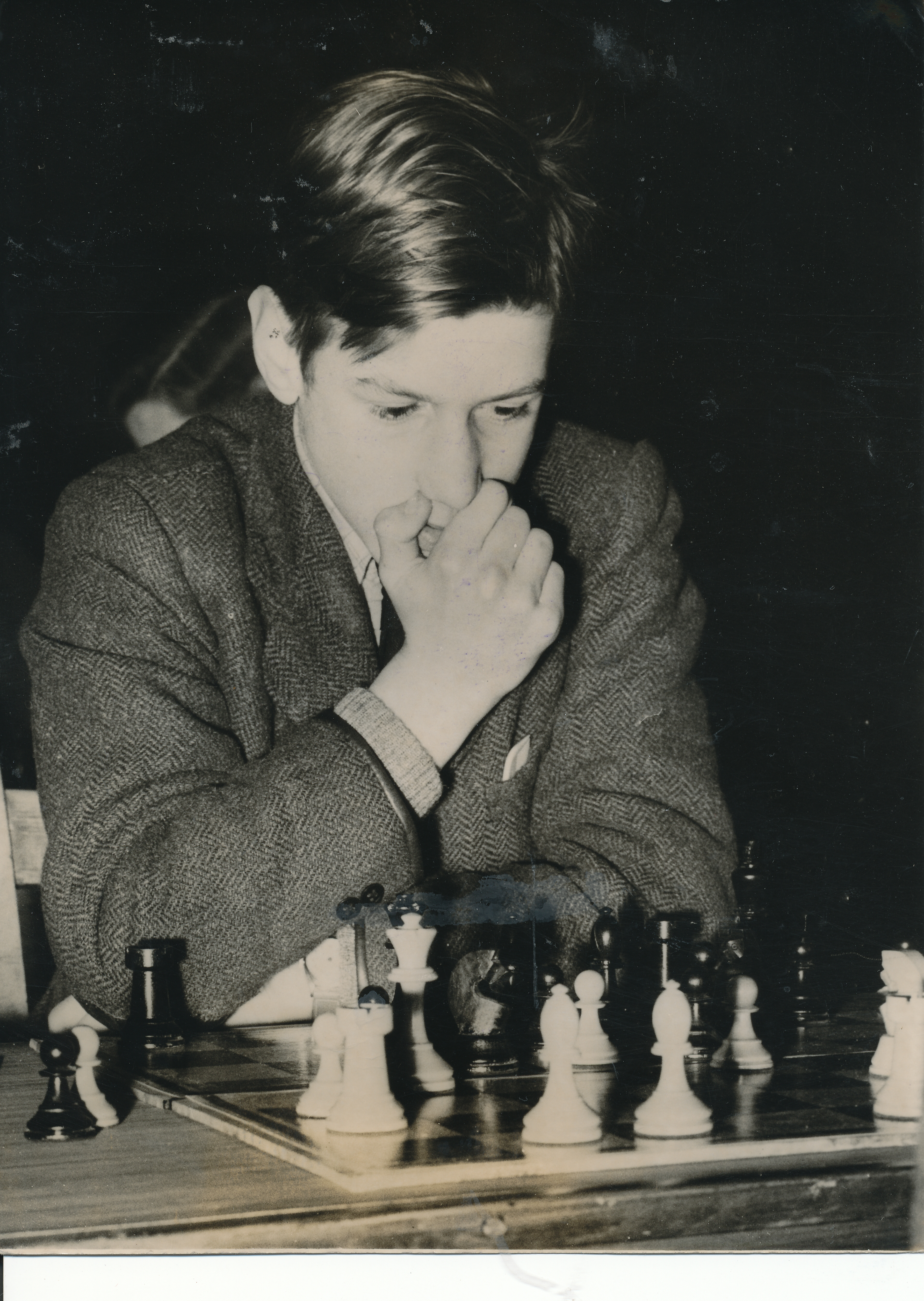
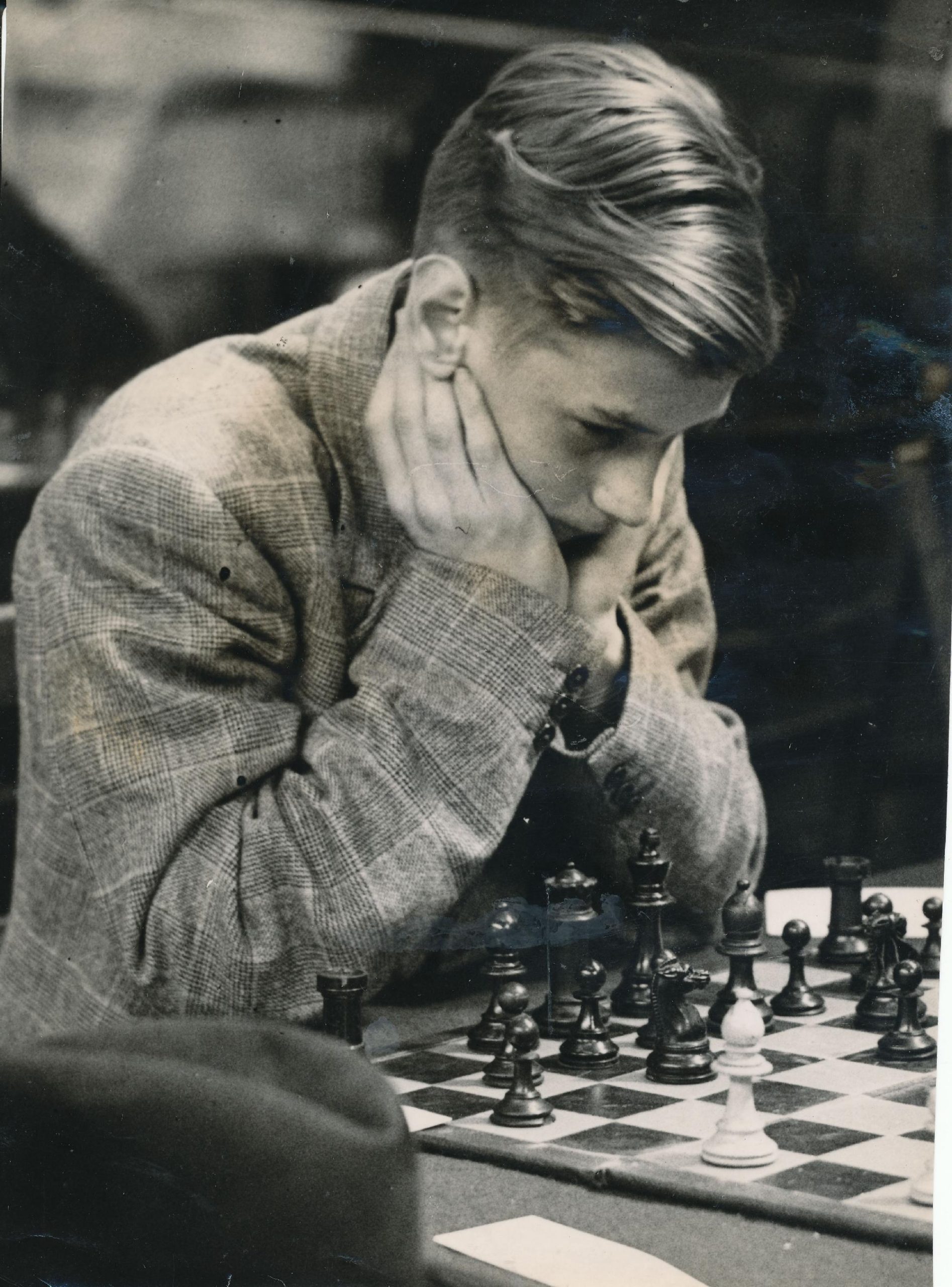
See caption below
See caption below
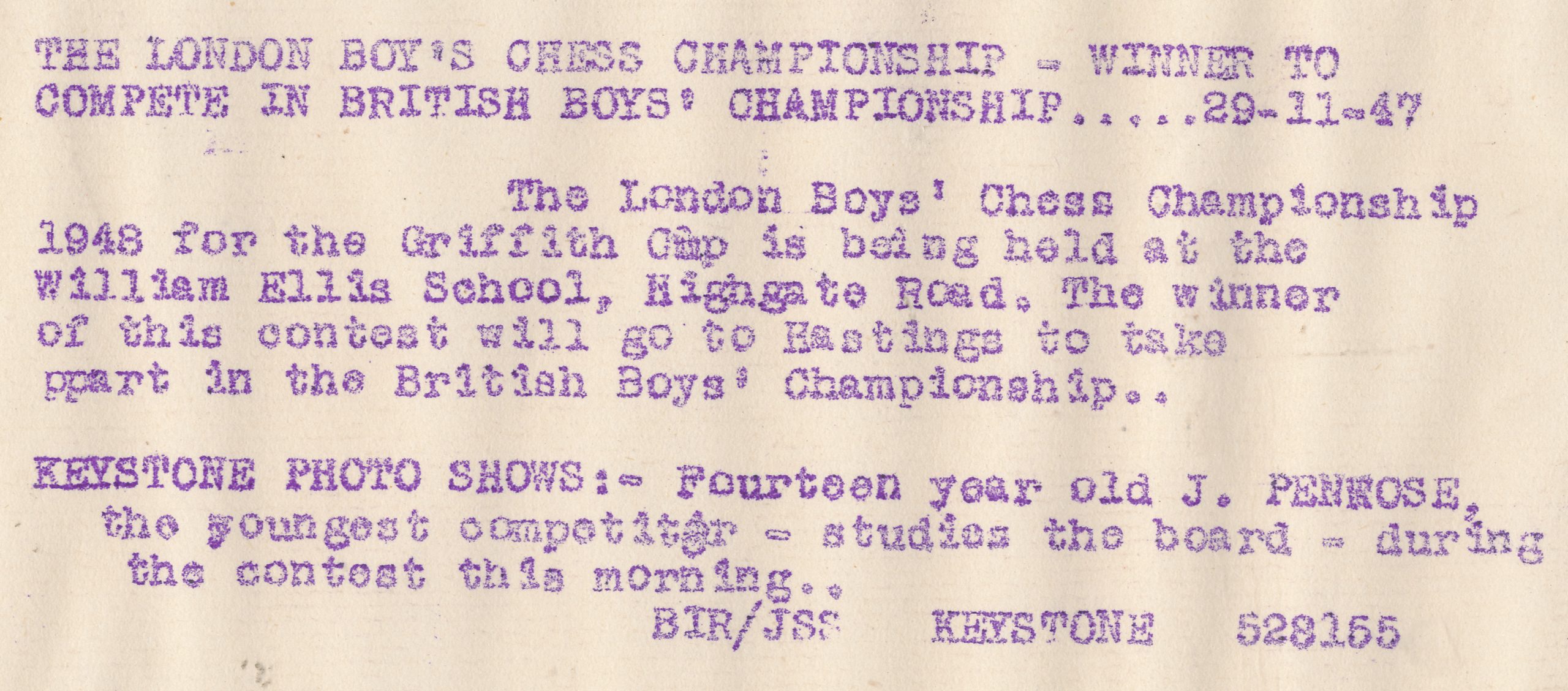
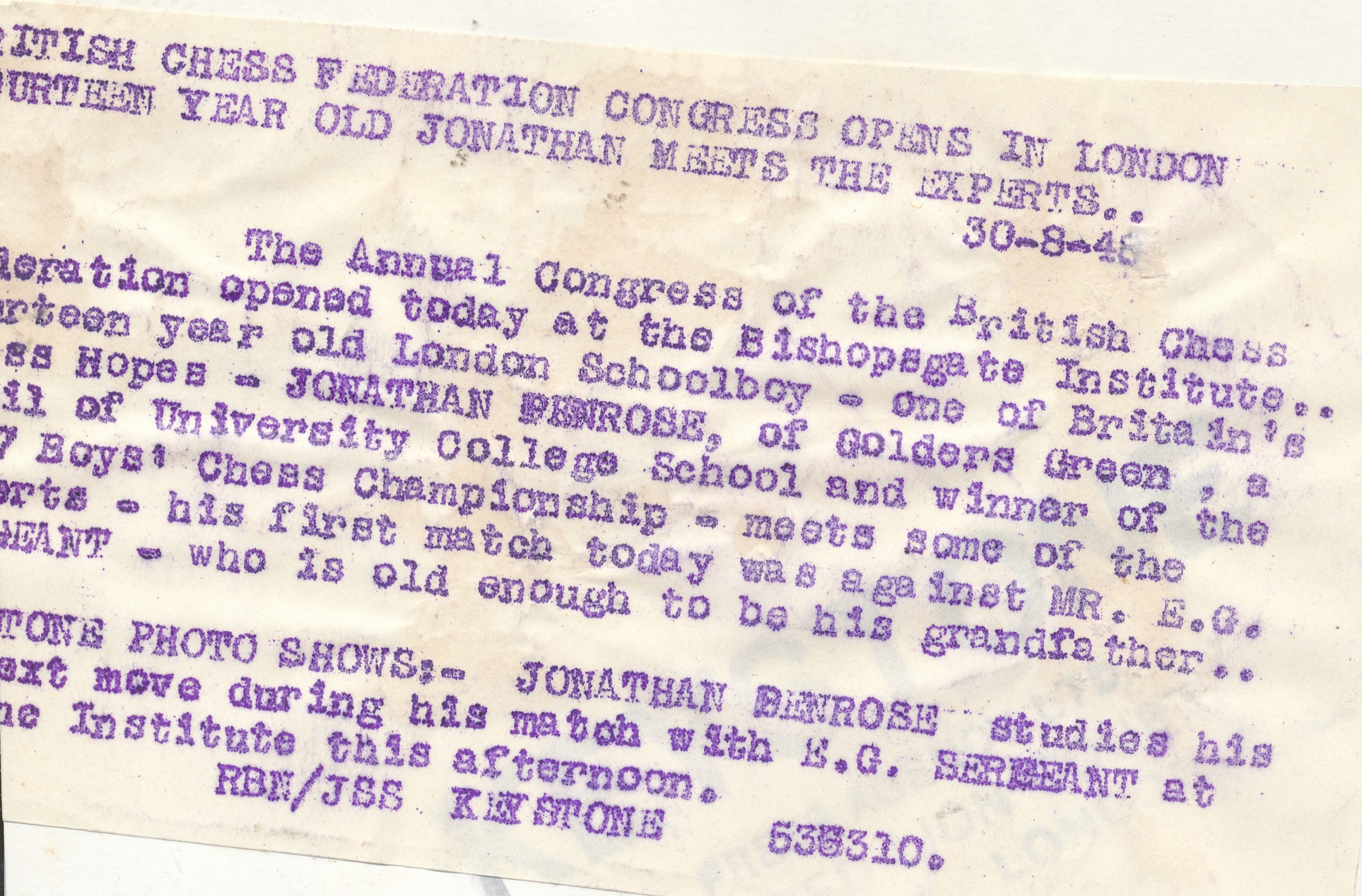
Press agency caption for photograph above

His extraordinary dominance is revealed by the fact that he won the British championship no less than ten times (1958-63 and 1966-69, inclusive), a record that nobody is likely to equal in the future.

At his best his play was lucid, positionally correct, energetic and tactically acute. None the less, there is a ‘Penrose problem’: was he a ‘Good Thing’for British chess? The trouble was that whilst this highly talented player eff0ectively crushed any opposition at
home, he showed little initiative in flying the flag abroad. There is a wide-spread and justifiable conviction that only lack of ambition in the sphere of international chess can explain why he did not secure the GM title during his active over-the-board playing career.

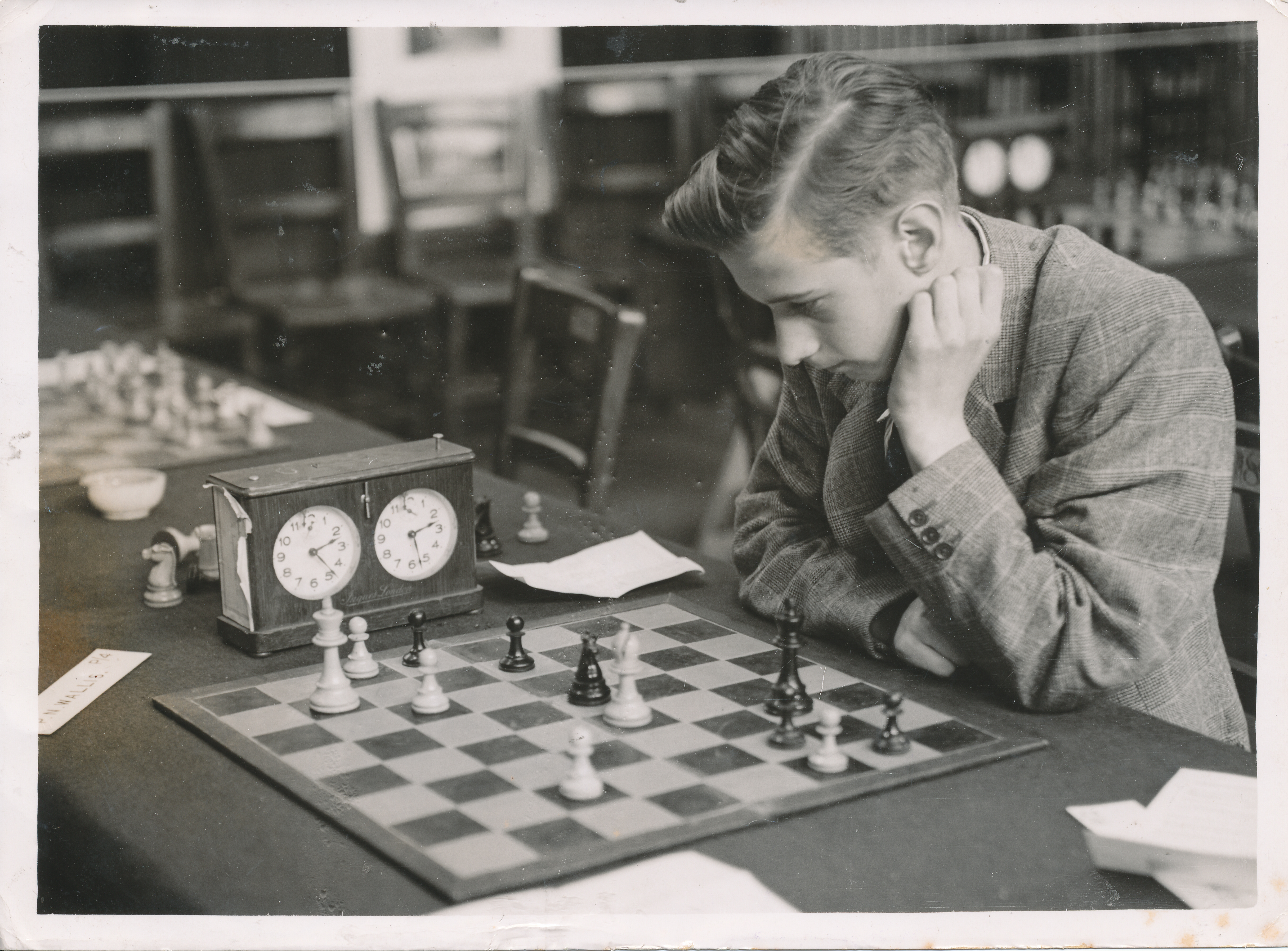
See caption below
See caption below
Press agency caption for above photograph

It would be unjust, however, to blame Penrose for any of this. The truth is simply that he was not a professional chessplayer, and indeed he flourished in
a period in which chess playing was not a viable profession in Britain. But even if the material awards available had been greater Penrose would almost certainly have chosen to remain an amateur. For he was cast in that special intellectual and ethical tradition of great British amateurs like H. E. Atkins, Sir George Thomas and Hugh Alexander before him.

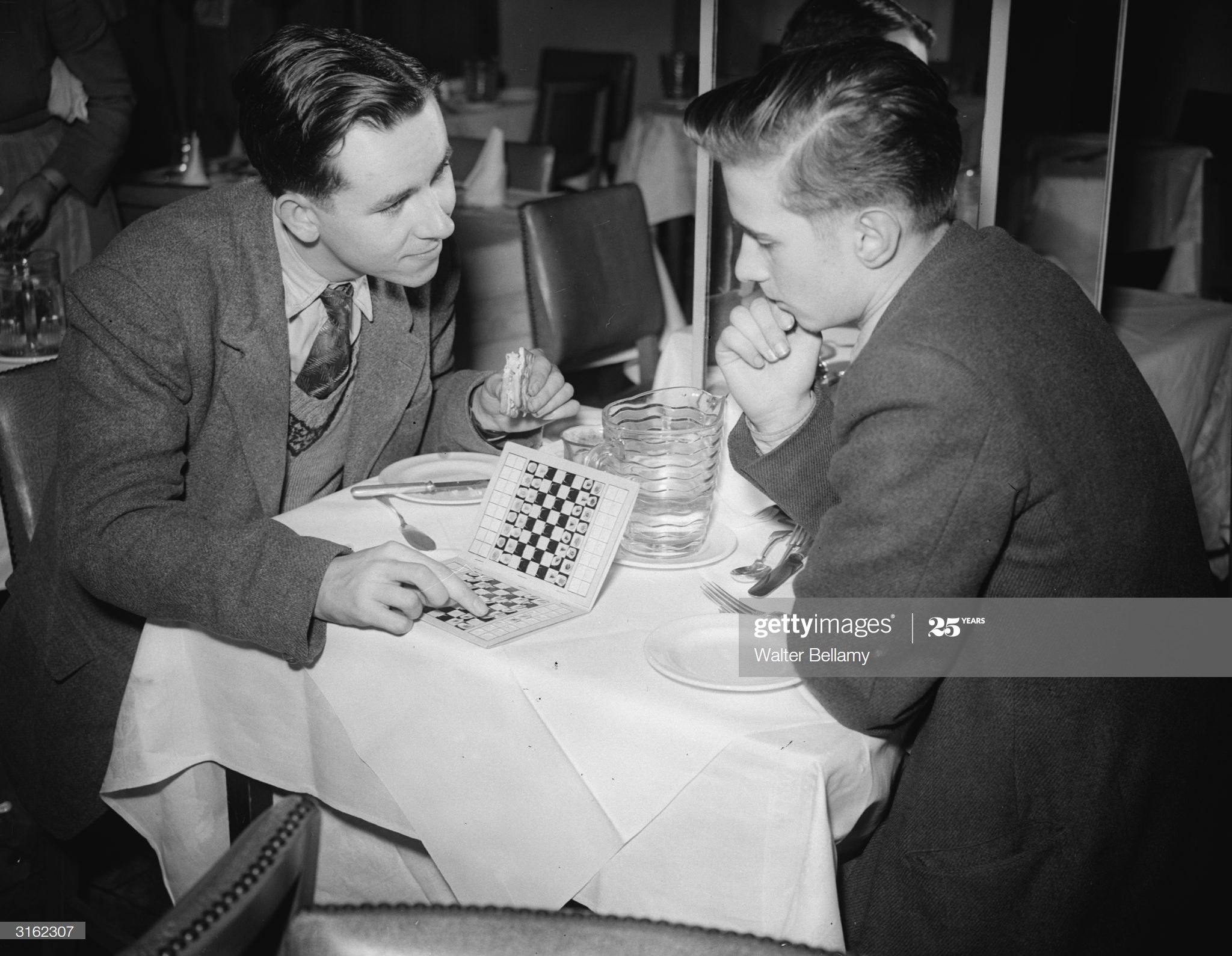
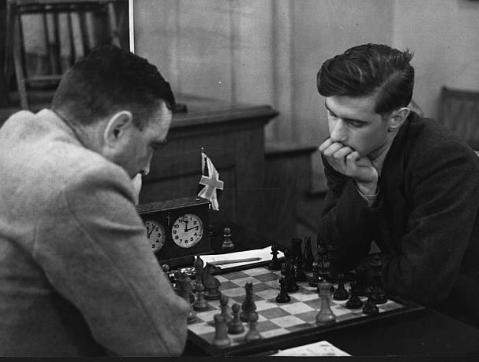
Travel Chess 2nd January 1951: British chess champions Jonathan Penrose and Leonard Barden ponder over a portable travel game in a restaurant. (Photo by Walter Bellamy/Express/Getty Images)
Travel Chess
2nd January 1951: British chess champions Jonathan Penrose and Leonard Barden ponder over a portable travel game in a restaurant. (Photo by Walter Bellamy/Express/Getty Images)

His family background indicates early academic inclinations in a cultural atmosphere in which chess was merely a game something at which one excelled through sheer ability, but not to be ranked alongside truly serious work. It is noteworthy that Penrose, unique in this respect amongst British chess
masters, has never written at any length about the game. He has had other matters to concentrate on when away from the board, being a lecturer in psychology. (His father, Professor L. S. Penrose, was a distinguished geneticist.)

IM Dr. Jonathan Penrose OBE

Being of slight physique and the mildest and most amiable of characters, it is probably also true that Penrose lacked the toughness and ‘killer instinct’
required to reach the very top. Nervous tension finally struck him down in a dramatic way when he collapsed during play in the Siegen Olympiad of 1970. We
can take that date as the end of the Penrose era.

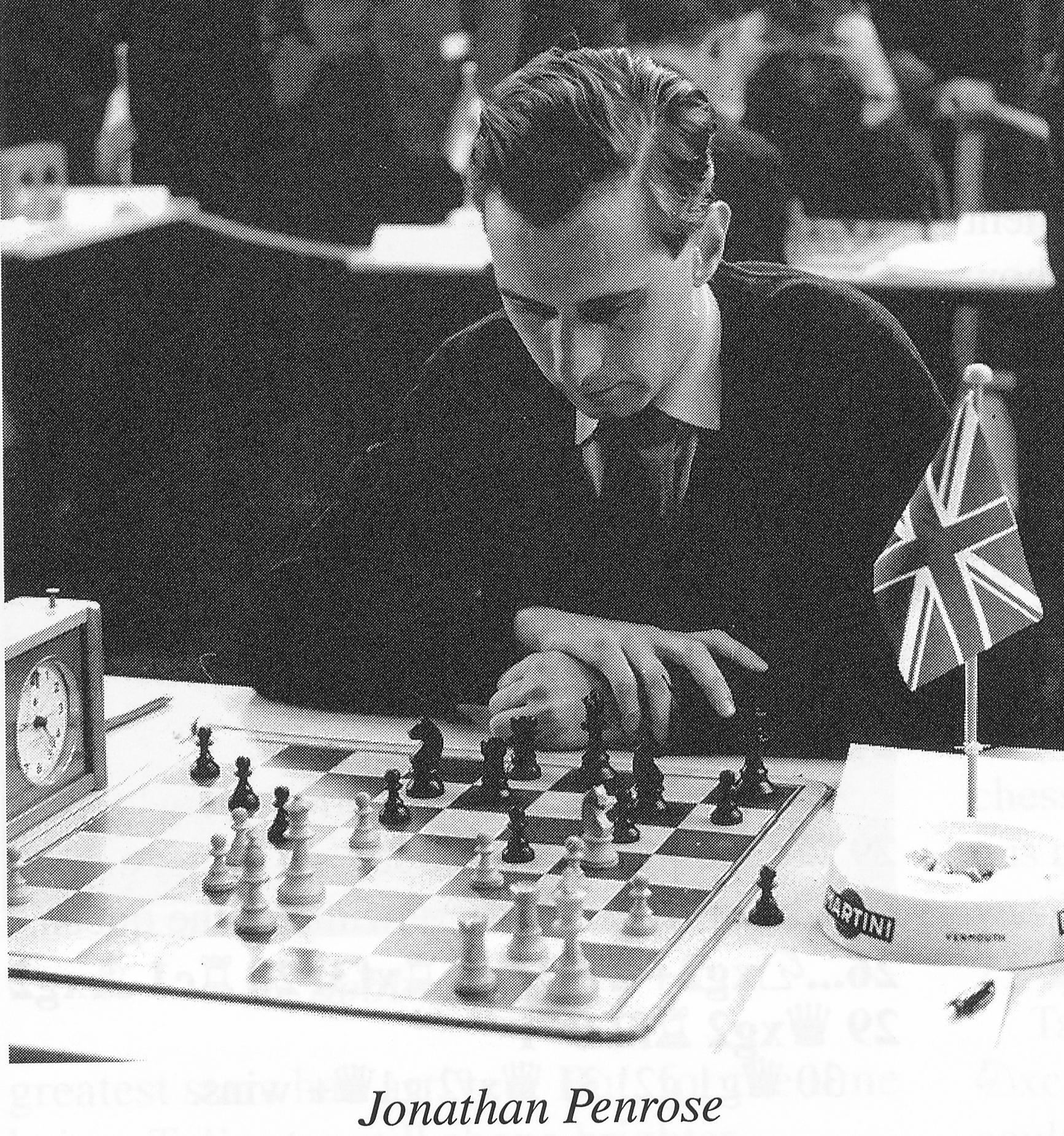
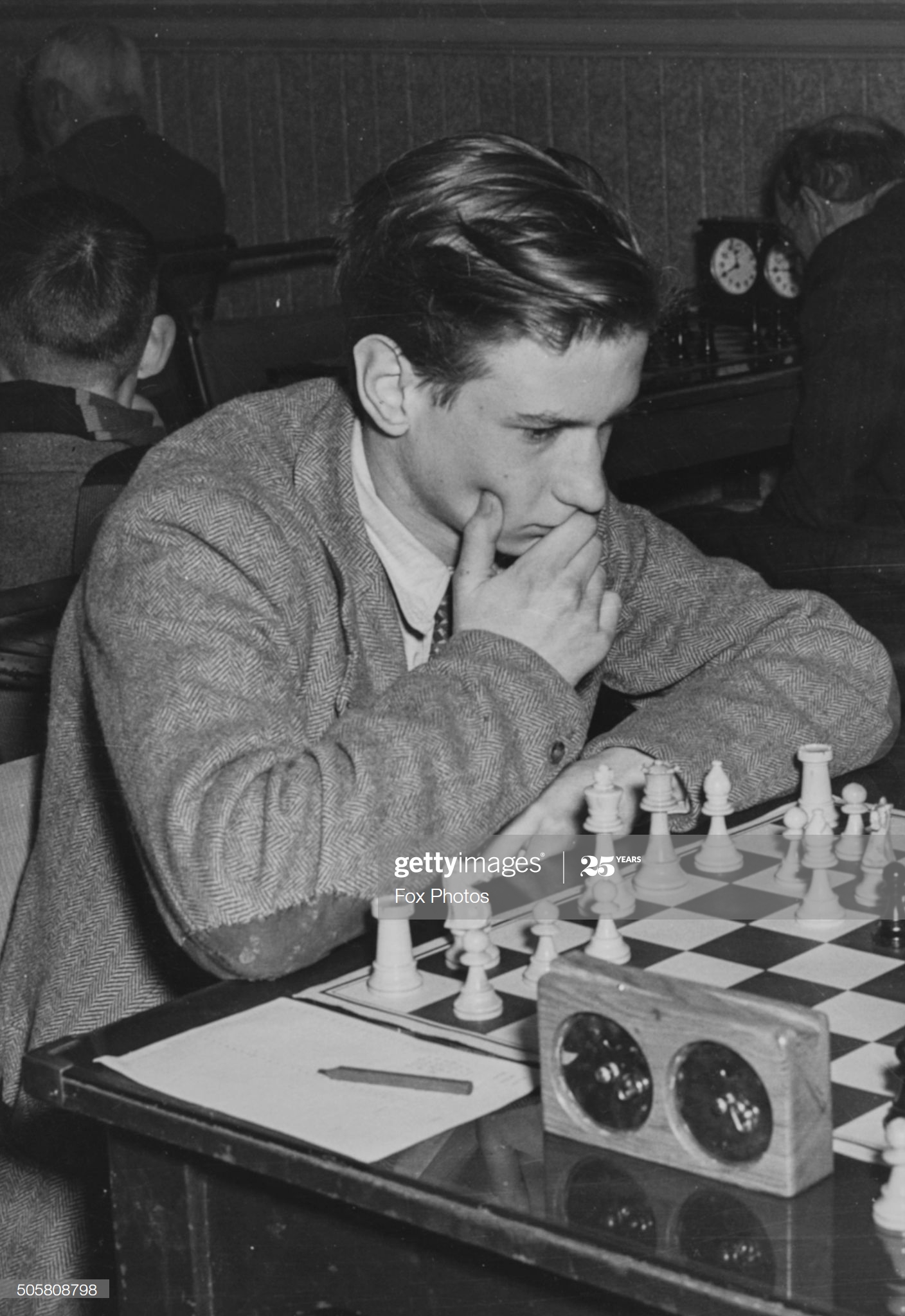
Jonathan Penrose Chess Grandmaster Jonathan Penrose pictured during a chess match, circa 1960. (Photo by Fox Photos/Hulton Archive/Getty Images)
Jonathan Penrose
Chess Grandmaster Jonathan Penrose pictured during a chess match, circa 1960. (Photo by Fox Photos/Hulton Archive/Getty Images))

Since, then though he has not by any means entirely given up, his involvement in the nerve-wracking competitions of over-the-board play has been greatly reduced. instead he has turned to correspondence chess, which is perhaps the ideal medium for his clear strategy and deep and subtle analysis. So Penrose’s career it not over. He has moved to another, less stressful province of the kingdom of chess.

IM Dr. Jonathan Penrose OBE

For the first game, however, we shall turn the clock right back to 1950 and the see the Penrose in the role of youthful giant killer.

From The Encyclopedia of Chess (BT Batsford, 1977) by Harry Golombek :

“British international master and ten times British Champion, Penrose was born in Colchester and came from a chess-playing family.

Lionel Sharples Penrose, FRS (11 June 1898 – 12 May 1972)

His father and mother both played chess and his father, Professor Lionel Sharples Penrose, in addition or being a geneticist of world-wide fame, was a strong chess-player and a good endgame composer. Jonathan’s older brother Oliver, was also a fine player.

Oliver Penrose FRS FRSE (born 6 June 1929) is a British theoretical physicist

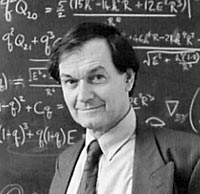
Roger Penrose won the Nobel prize for physics in 2020.

Roger Penrose. Nobel Laureate

Jonathan learnt chess at the age of four, won the British Boys championship at thirteen and by the time he was fifteen was playing in the British Championship in Felixstowe in 1949.

Press agency caption for photograph above

A little reluctant to participate in international tournaments abroad, he did best in the British Championship which he won a record number of times, once more than HE Atkins. He won the title consecutively from 1958 to 1963 and again from 1966 to 1969.

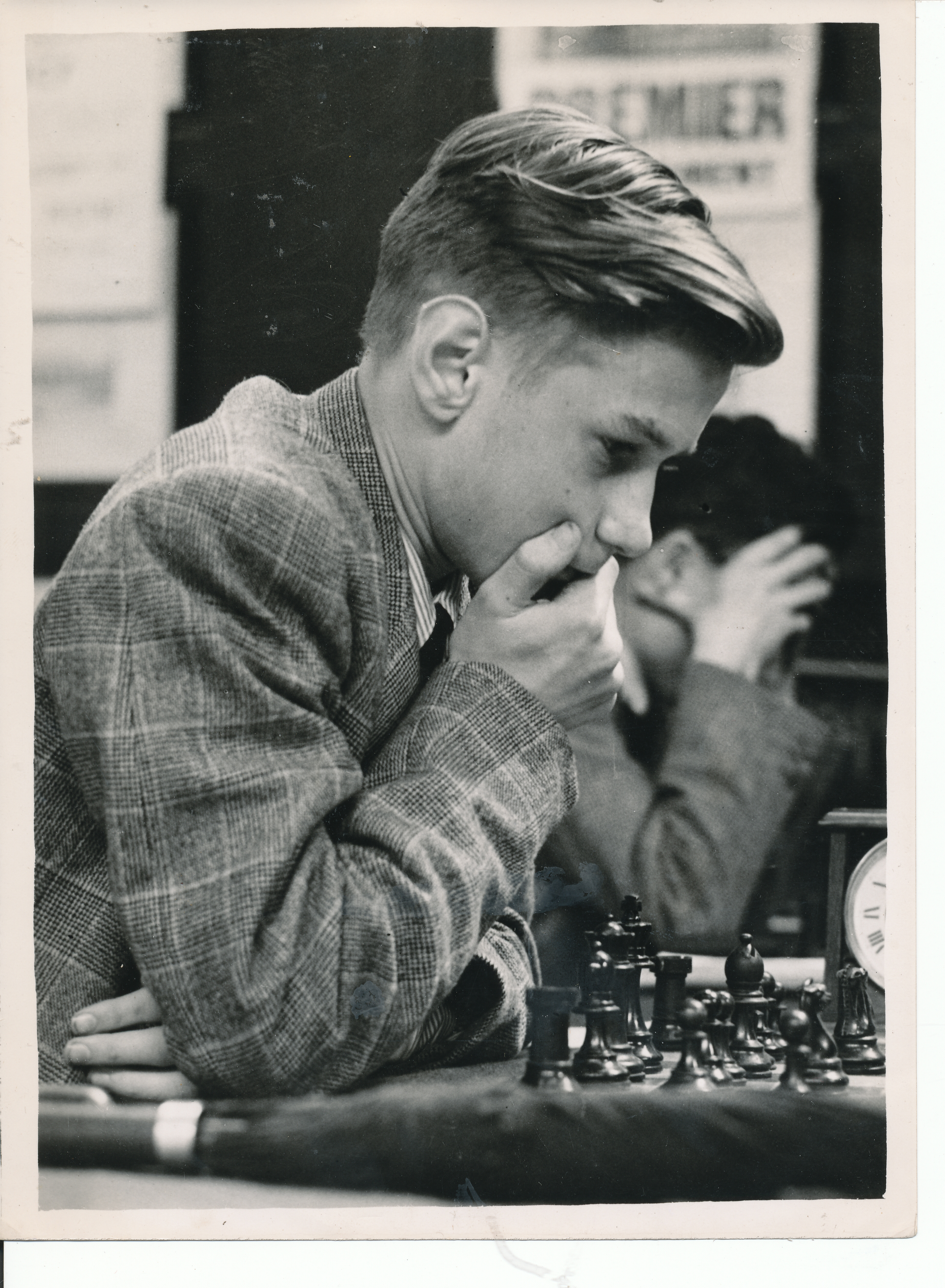
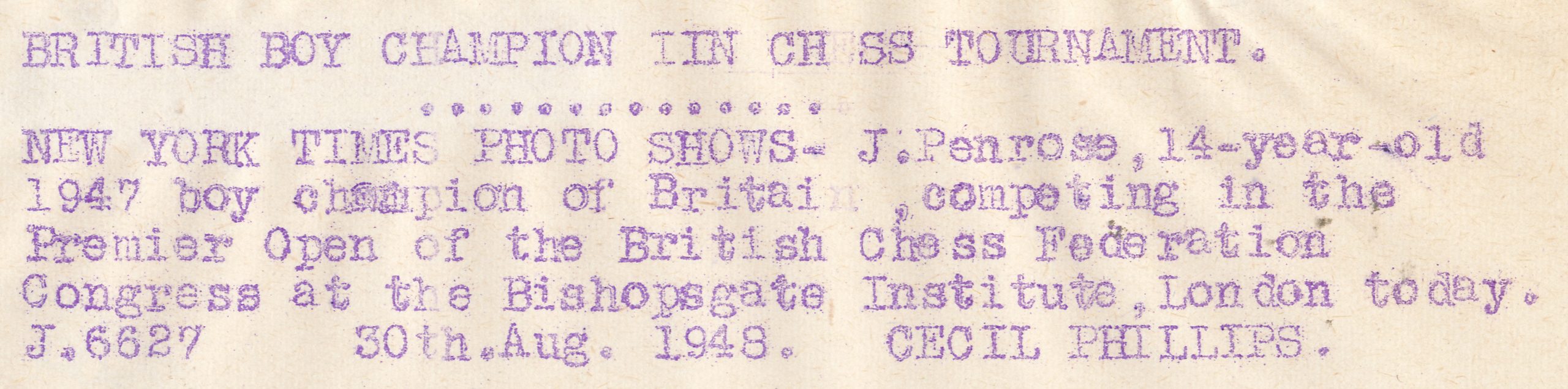
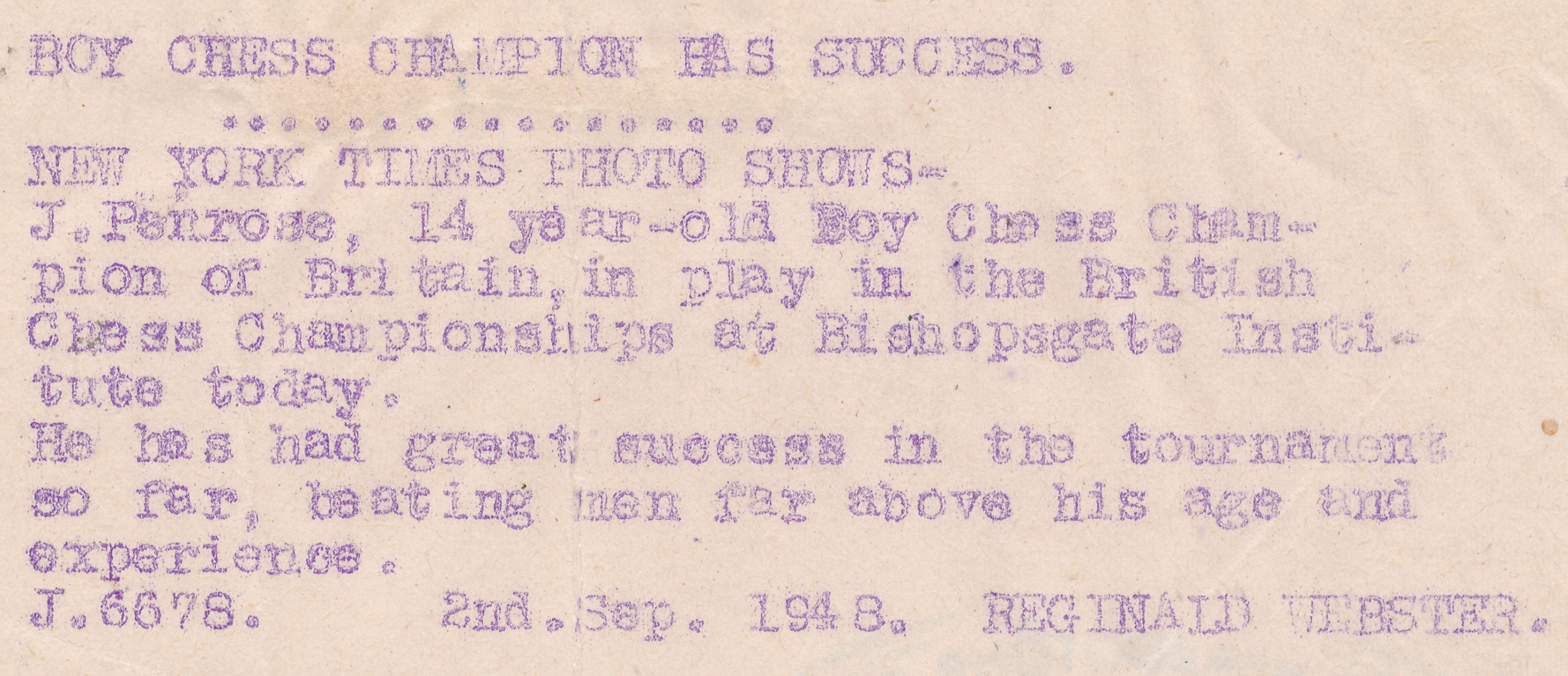
Boy Chess Champion. New York Times photo shows 14 year old J. Penrose 14 year old by chess champion of Britain, in play at the British Chess Championships at Bishopsgate Institute today. He has had great success in the tournament so far, beating men far above his age and experience. 2nd September 1948. Photograph by Reginald Webster
Press agency caption for photograph above

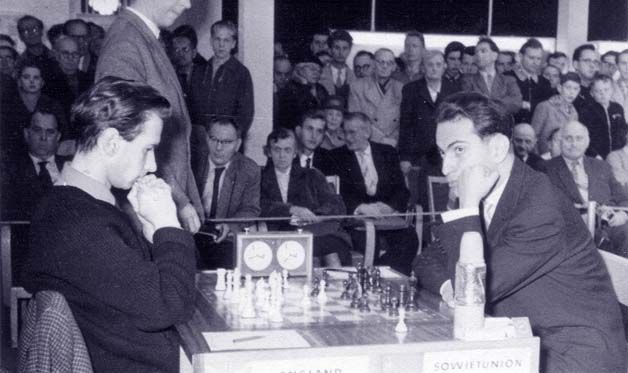
He also played with great effect in nine Olympiads. Playing on a high board for practically all the time, he showed himself the equal of the best grandmasters and indeed, at the Leipzig Olympiad he distinguished himself by beating Mikhail Tal, thereby becoming the first British player to defeat a reigning World Champion since Blackburne beat Lasker in 1899.

ARB Thomas and Jonathan Penrose at the Hastings Congress of 1950/1951

Jonathan Penrose vs Mikhail Tal, Leipzig Olympiad, 1960, 1-0, Modern Benoni

A deep strategist who could also hold his own tactically, he suffered from the defect of insufficient physical stamina and it was this that was to bring about a decline in his play and in his results. He collapsed during a game at the Ilford Chess Congress, and a year later, at the Siegen Olympiad of 1970, he had a more serious collapse that necessitated his withdrawal from the vent after the preliminary groups had been played. The doctors found nothing vitally wrong with him that his physique could not sustain.

He continued to play but his results suffered from a lack of self-confidence and at the Nice Olympiad of 1974 he had a wretched result on board 3, winning only 1 game and losing 6 out of 15.

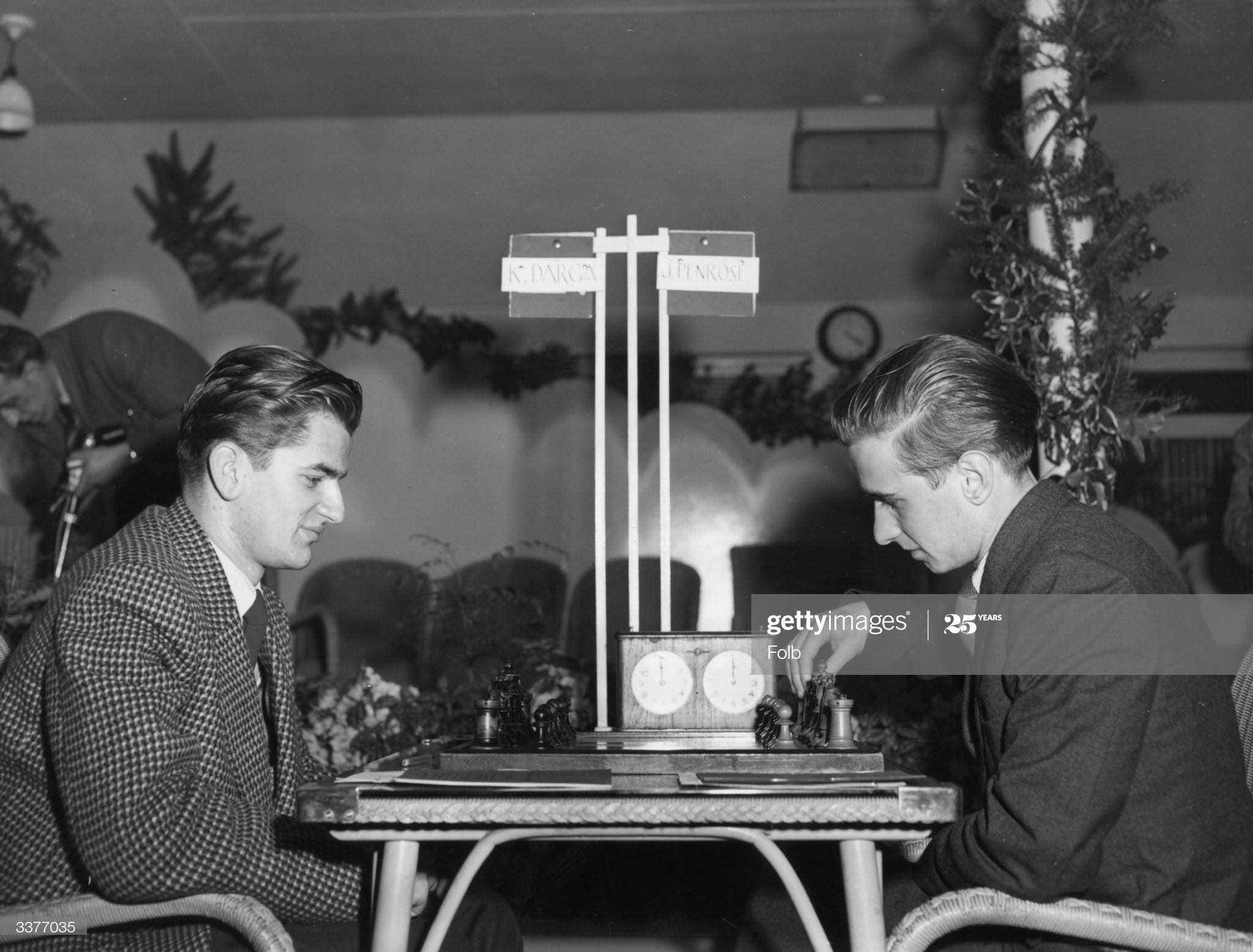
Darga V Penrose 29th December 1955: Klaus Darga of Germany in play against Britain's Jonathan Penrose during the International Chess Congress at Hastings. (Photo by Folb/Topical Press Agency/Getty Images)
Darga V Penrose
29th December 1955: Klaus Darga of Germany in play against Britain’s Jonathan Penrose during the International Chess Congress at Hastings. (Photo by Folb/Topical Press Agency/Getty Images)

Possibly too his profession (a lecturer in psychology) was also absorbing him more and more and too part less and less in international and national chess.

Jonathan Penrose
Jonathan Penrose

Yet, he had already done enough to show that he was the equal of the greatest British players in his command and understanding of the game and he ranks alongside Staunton, Blackburne, Atkins and CHO’D Alexander as a chess figure of world class.”

Here is his Wikipedia entry

From The Oxford Companion to Chess by Hooper & Whyld :

“The leading English player during the 1960s, International Master (1961), International Correspondence Chess Master (1980), lecturer in psychology. Early in his chess career Penrose decided to remain an amateur and as a consequence played in few international tournaments. He won the British Championship from 1958 to 1963 and from 1966 to 1969, ten times in all (a record); and he played in nine Olympiads from 1952 to 1974, notably scoring + 10=5 on first board at Lugano 1968, a result bettered only by the world champion Petrosyan.

IM Dr. Jonathan Penrose OBE

In the early 1970s Penrose further restricted his chess because the stress of competitive play adversely affected his health.”

The second edition (1996) adds this :

“He turned to correspondence play, was the highest rated postal player in the world 1987-9, and led the British team to victory in the 9th Correspondence Olympiad.”

Here is a discussion about Jonathan on the English Chess Forum

From The Encyclopedia of Chess (Robert Hale, 1970 & 1976) by Anne Sunnucks :

“International Master (1961) and British Champion in 1958 1959, 1960, 1961, 1962, 1963, 1966, 1967, 1968 and 1969.

Jonathan Penrose was born in Colchester on 7th October 1933, the son of Professor LS Penrose, the well-known geneticist, who was also a strong player and composer of endgame studies.

The whole Penrose family plays chess and Jonathan learned the game when he was 4. At the age of 12 he joined Hampstead Chess Club and the following year played for Essex for the first time, won his first big tournament, the British Boys’ Championship, and represented England against Ireland in a boy’s match, which was the forerunner of the Glorney Cup competition, which came into being the following year.

By the time he was 17 Penrose was recognised as one of the big hopes of British Chess. Playing in the Hastings Premier Tournament for the first time in `1950 – 1951, he beat the French Champion Nicholas Rossolimo and at Southsea in 1950 he beat two International Grandmasters, Effim Bogoljubov and Savielly Tartakower.

Penrose played for the British Chess Federation in a number of Chess Olympiads since 1952. In 1960, at Leipzig, came one of the best performances of his career, when he beat the reigning World Champion, Mikhail Tal. He became the first British player to beat a reigning World Champion since JH Blackburne beat Emmanuel Lasker in 1899, and the first player to defeat Tal since he won the World Championship earlier that year. Penrose’s score in this Olympiad was only half-a-point short of the score required to qualify for the International Grandmaster title.

IM Dr. Jonathan Penrose OBE

His ninth victory in the British Championships in 1968 equalled the record held by HE Atkins, who has held the title more times than any other player.

Penrose is a lecturer in psychology at Enfield College of Technology and has never been in a position to devote a great deal of time to the game. He is married to a former contender in the British Girls Championship and British Ladies’s Championship, Margaret Wood, daughter of Frank Wood, Hon. Secretary of the Oxfordshire Chess Association.

Penrose was awarded the O.B.E. for his services to chess in 1971.”

Penrose was Southern Counties Champion for 1949-50.

In 1983 Jonathan became England’s fifth Correspondence Grandmaster (CGM) following Keith Richardson, Adrian Hollis, Peter Clarke and Simon Webb.

Sadly, there is no existent book on the life and games of Jonathan Penrose : a serious omission in chess literature.

Dr. Jonathan Penrose OBE

Remembering GM Dr. Jonathan Penrose OBE (07-x-1933 30-xi-2021)

IM Dr. Jonathan Penrose OBE in the garden of Brian Reilly

BCN remembers GM Dr. Jonathan Penrose OBE who passed away on Tuesday, November 30th, 2021.

In the 1971 New Years Honours List Jonathan was made an Officer of the Order of the British Empire (OBE) The citation read “For services to Chess.”

In 1993 following representations by Bob Wade and Leonard Barden FIDE granted the title of Grandmaster to Jonathan. Here is a detailed discussion of that process. Note that this was not an Honorary title (as received by Jacques Mieses and Harry Golombek).

From British Chess (Pergamon Press, 1983) by Botterill, Levy, Rice and Richardson : (article by George Botterill)

“Penrose is one of the outstanding figures of British chess. Yet many who meet him may not realize this just because he is one of the quietest and most modest of men. Throughout the late 1950s and the whole of the 1960s he stood head and shoulders above any of his contemporaries.

See caption below
See caption below
Press agency caption for photograph above

His extraordinary dominance is revealed by the fact that he won the British championship no less than ten times (1958-63 and 1966-69, inclusive), a record that nobody is likely to equal in the future.

At his best his play was lucid, positionally correct, energetic and tactically acute. None the less, there is a ‘Penrose problem’: was he a ‘Good Thing’ for British chess? The trouble was that whilst this highly talented player effectively crushed any opposition at home, he showed little initiative in flying the flag abroad. There is a wide-spread and justifiable conviction that only lack of ambition in the sphere of international chess can explain why he did not secure the GM title during his active over-the-board playing career.

See caption below
See caption below
Press agency caption for above photograph

It would be unjust, however, to blame Penrose for any of this. The truth is simply that he was not a professional chessplayer, and indeed he flourished in
a period in which chess playing was not a viable profession in Britain. But even if the material awards available had been greater Penrose would almost certainly have chosen to remain an amateur. For he was cast in that special intellectual and ethical tradition of great British amateurs like H. E. Atkins, Sir George Thomas and Hugh Alexander before him.

Travel Chess 2nd January 1951: British chess champions Jonathan Penrose and Leonard Barden ponder over a portable travel game in a restaurant. (Photo by Walter Bellamy/Express/Getty Images)
Travel Chess
2nd January 1951: British chess champions Jonathan Penrose and Leonard Barden ponder over a portable travel game in a restaurant. (Photo by Walter Bellamy/Express/Getty Images)

His family background indicates early academic inclinations in a cultural atmosphere in which chess was merely a game something at which one excelled through sheer ability, but not to be ranked alongside truly serious work. It is noteworthy that Penrose, unique in this respect amongst British chess masters, has never written at any length about the game. He has had other matters to concentrate on when away from the board, being a lecturer in psychology. (His father, Professor L. S. Penrose, was a distinguished geneticist.)

IM Dr. Jonathan Penrose OBE

Being of slight physique and the mildest and most amiable of characters, it is probably also true that Penrose lacked the toughness and ‘killer instinct’ required to reach the very top. Nervous tension finally struck him down in a dramatic way when he collapsed during play in the Siegen Olympiad of 1970. We can take that date as the end of the Penrose era.

Jonathan Penrose Chess Grandmaster Jonathan Penrose pictured during a chess match, circa 1960. (Photo by Fox Photos/Hulton Archive/Getty Images)
Jonathan Penrose
Chess Grandmaster Jonathan Penrose pictured during a chess match, circa 1960. (Photo by Fox Photos/Hulton Archive/Getty Images))

Since, then though he has not by any means entirely given up, his involvement in the nerve-wracking competitions of over-the-board play has been greatly reduced. instead he has turned to correspondence chess, which is perhaps the ideal medium for his clear strategy and deep and subtle analysis. So Penrose’s career it not over. He has moved to another, less stressful province of the kingdom of chess.

IM Dr. Jonathan Penrose OBE

For the first game, however, we shall turn the clock right back to 1950 and the see the Penrose in the role of youthful giant killer.

From The Encyclopedia of Chess (BT Batsford, 1977) by Harry Golombek :

“British international master and ten times British Champion, Penrose was born in Colchester and came from a chess-playing family.

Lionel Sharples Penrose, FRS (11 June 1898 – 12 May 1972)

His father and mother (Margaret)  both played chess and his father, Professor Lionel Sharples Penrose, in addition to being a geneticist of world-wide fame, was a strong chess-player and a good endgame composer. Jonathan’s older brother Oliver, was also a fine player.

Oliver Penrose FRS FRSE (born 6 June 1929) is a British theoretical physicist

Roger Penrose won the Nobel prize for physics in 2020.

Roger Penrose. Nobel Laureate

Shirley Hodgson (née Penrose) is a high flying geneticist.

Prof. Shirley Hodgson

Jonathan learnt chess at the age of four, won the British Boys championship at thirteen and by the time he was fifteen was playing in the British Championship in Felixstowe in 1949.

Press agency caption for photograph above

A little reluctant to participate in international tournaments abroad, he did best in the British Championship which he won a record number of times, once more than HE Atkins. He won the title consecutively from 1958 to 1963 and again from 1966 to 1969.

Boy Chess Champion. New York Times photo shows 14 year old J. Penrose 14 year old by chess champion of Britain, in play at the British Chess Championships at Bishopsgate Institute today. He has had great success in the tournament so far, beating men far above his age and experience. 2nd September 1948. Photograph by Reginald Webster
Press agency caption for photograph above

He also played with great effect in nine Olympiads. Playing on a high board for practically all the time, he showed himself the equal of the best grandmasters and indeed, at the Leipzig Olympiad he distinguished himself by beating Mikhail Tal, thereby becoming the first British player to defeat a reigning World Champion since Blackburne beat Lasker in 1899.

ARB Thomas and Jonathan Penrose at the Hastings Congress of 1950/1951

Jonathan Penrose vs Mikhail Tal, Leipzig Olympiad, 1960, 1-0, Modern Benoni

A deep strategist who could also hold his own tactically, he suffered from the defect of insufficient physical stamina and it was this that was to bring about a decline in his play and in his results. He collapsed during a game at the Ilford Chess Congress, and a year later, at the Siegen Olympiad of 1970, he had a more serious collapse that necessitated his withdrawal from the event after the preliminary groups had been played. The doctors found nothing vitally wrong with him that his physique could not sustain.

He continued to play but his results suffered from a lack of self-confidence and at the Nice Olympiad of 1974 he had a wretched result on board 3, winning only 1 game and losing 6 out of 15.

Darga V Penrose 29th December 1955: Klaus Darga of Germany in play against Britain's Jonathan Penrose during the International Chess Congress at Hastings. (Photo by Folb/Topical Press Agency/Getty Images)
Darga V Penrose
29th December 1955: Klaus Darga of Germany in play against Britain’s Jonathan Penrose during the International Chess Congress at Hastings. (Photo by Folb/Topical Press Agency/Getty Images)

Possibly too his profession (a lecturer in psychology) was also absorbing him more and more and too part less and less in international and national chess.

Jonathan Penrose
Jonathan Penrose

Yet, he had already done enough to show that he was the equal of the greatest British players in his command and understanding of the game and he ranks alongside Staunton, Blackburne, Atkins and CHO’D Alexander as a chess figure of world class.”

Here is his Wikipedia entry

From The Oxford Companion to Chess by Hooper & Whyld :

“The leading English player during the 1960s, International Master (1961), International Correspondence Chess Master (1980), lecturer in psychology. Early in his chess career Penrose decided to remain an amateur and as a consequence played in few international tournaments. He won the British Championship from 1958 to 1963 and from 1966 to 1969, ten times in all (a record); and he played in nine Olympiads from 1952 to 1974, notably scoring + 10=5 on first board at Lugano 1968, a result bettered only by the world champion Petrosyan.

IM Dr. Jonathan Penrose OBE

In the early 1970s Penrose further restricted his chess because the stress of competitive play adversely affected his health.”

The second edition (1996) adds this :

“He turned to correspondence play, was the highest rated postal player in the world 1987-9, and led the British team to victory in the 9th Correspondence Olympiad.”

Here is a discussion about Jonathan on the English Chess Forum

From The Encyclopedia of Chess (Robert Hale, 1970 & 1976) by Anne Sunnucks :

“International Master (1961) and British Champion in 1958 1959, 1960, 1961, 1962, 1963, 1966, 1967, 1968 and 1969.

Jonathan Penrose was born in Colchester on 7th October 1933, the son of Professor LS Penrose, the well-known geneticist, who was also a strong player and composer of endgame studies.

The whole Penrose family plays chess and Jonathan learned the game when he was 4. At the age of 12 he joined Hampstead Chess Club and the following year played for Essex for the first time, won his first big tournament, the British Boys’ Championship, and represented England against Ireland in a boy’s match, which was the forerunner of the Glorney Cup competition, which came into being the following year.

By the time he was 17 Penrose was recognised as one of the big hopes of British Chess. Playing in the Hastings Premier Tournament for the first time in `1950 – 1951, he beat the French Champion Nicholas Rossolimo and at Southsea in 1950 he beat two International Grandmasters, Effim Bogoljubov and Savielly Tartakower.

Penrose played for the British Chess Federation in a number of Chess Olympiads since 1952. In 1960, at Leipzig, came one of the best performances of his career, when he beat the reigning World Champion, Mikhail Tal. He became the first British player to beat a reigning World Champion since JH Blackburne beat Emmanuel Lasker in 1899, and the first player to defeat Tal since he won the World Championship earlier that year. Penrose’s score in this Olympiad was only half-a-point short of the score required to qualify for the International Grandmaster title.

IM Dr. Jonathan Penrose OBE

His ninth victory in the British Championships in 1968 equalled the record held by HE Atkins, who has held the title more times than any other player.

Penrose is a lecturer in psychology at Enfield College of Technology and has never been in a position to devote a great deal of time to the game. He is married to a former contender in the British Girls Championship and British Ladies’s Championship, Margaret Wood, daughter of Frank Wood, Hon. Secretary of the Oxfordshire Chess Association.

Again from British Chess : “In updating this report we find striking evidence of Penrose’s prowess as a correspondence player. Playing on board 4 for Britain in the 8th Correspondence Chess Olympiad he was astonishingly severe on the opposition, letting slip just one draw in twelve games! Here is one of the eleven wins that must change the assessment of a sharp Sicilian Variation.”


Penrose was awarded the O.B.E. for his services to chess in 1971.”

Penrose was Southern Counties Champion for 1949-50.

In 1983 Jonathan became England’s fifth Correspondence Grandmaster (CGM) following Keith Richardson, Adrian Hollis, Peter Clarke and Simon Webb.

Sadly, there is no existent book on the life and games of Jonathan Penrose : a serious omission in chess literature.

Dr. Jonathan Penrose OBE

Remembering Colin Russ (19-iii-1930 22-ix-2021)

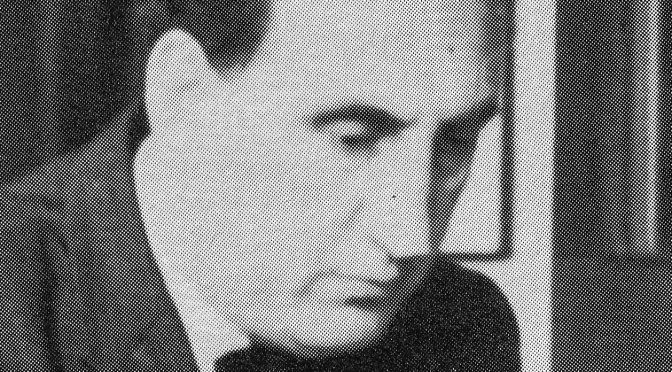
BCN remembers Colin Russ who passed away on Wednesday, September 22nd 2021.

This news was revealed to the English Chess Forum by David Sedgwick as follows:

I have been notified by the British Chess Problem Society that Colin A H Russ died on Wednesday 22nd September 2021 at the age of 91. He had been in hospital for some weeks, with no hope of recovery.

Colin Albert Henry Russ was born on Wednesday, March 19th, 1930 in Croydon, Surrey. His father was Albert HW Russ (born November 1st, 1898) who was an instructor of woodworking crafts. His mother was Delcie A Russ (née Dye, born November 7th, 1901) who carried out unpaid domestic duties.

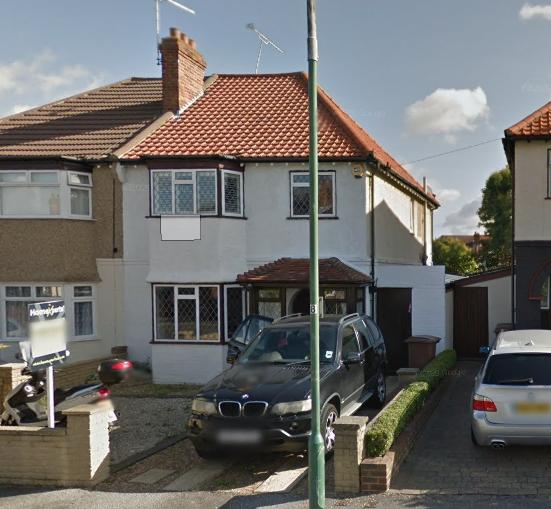
According to the 1939 register Colin was listed as a scholar and the family resided at 42, Poplar Road, Sutton, Surrey which is now SM3 9JX.

42, Poplar Road, Sutton, Surrey which is now SM3 9JX

In 1972 Colin, aged 42, married Zsuzsanna Kelemen in Sittingbourne, Kent.

We have the following entry for Colin from chesscomposers.blogspot.com:

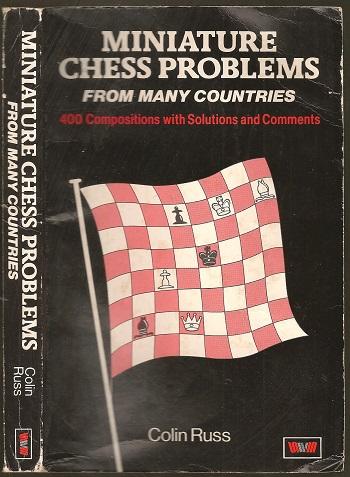
Colin Russ was a chess expert and edited a chess problem column in the CHESS magazine. He wrote the anthology “Miniature chess problems from Many Lands” in 1981 and it was republished several times, for instance in 1987 under the title “Miniature chess problems from Many Countries”.

Miniature Chess Problems From Many Countries, Colin Russ, A&C Black, London, 1987, ISBN 13: 9780047940248

John Ballard wrote the following of this book:

An unusual book in several respects. Firstly the positions are miniatures, that is 7 pieces or less. Secondly the solutions are in algebraic notation for the most part, with the main line being also given in descriptive. Lastly many of the ‘ usual suspects’ in the compostion field are not there, which meant for me learning new names and of course problems.

Familiar names here are Cheron, Dijk, Fleck, Havel, Kipping, Kubbel, Lipton, Loyd, Mansfield, Marble, Skinkman, Speckman, and Wurzburg. So that leaves dozens of composers (including one allegedly by Wojtyla, later to become Pope John Paul II), as a moderate solver I have never come across before, a special delight.

My favourite 3 mover is the one by Sam Loyd that starts with a check, and has a spectacular queen sacrifice. Sam reckoned this was a mere trifle, composed in a ride downtown, but it is a thing of beauty, and I bet many problemists wish they were as quick and adept at composing as The Puzzle King?! There is an interesting introduction to solving, not too heavy, but comprehensive enough. Many of the solutions are given with helpful comments.

The layout of the work is that 3 or 4 problems are given on the left page, and solutions are to be found opposite on the right. If the book is reprinted I would suggest the solutions be removed to an appendix, to remove the temptation for intermittent solvers like myself to take a sneak peak if a problem was proving intractable!

He served the British Chess Problem Society in various roles, as President from 1987 to 1989, Secretary from 1980 to 2001, and delegate to the PCCC from 1987 to 1994. He was also responsible for introducing the late Michael Ormandy to the Society, which led to the establishment of The Problemist Supplement.

The problem below was selected in the FIDE Album 1956-1958:

Die Schwalbe, 1957

7th HM

1.Bd7? (2.Re6-e~#)
1…Sg5[a] 2.Rgf6#[A]
1…Se5[b] 2.Ref6#[B]
but 1…Sd8!
1.f4! ZZ
1…Sg5[a] 2.Rxg5#[F]
1…Se5[b] 2.Rxe5#[G]
1…Be4[c] 2.Ref6#[B]
1…Rg4[d] 2.Rgf6#[A]
1…Rh4~ 2.g4#[D]
1…Sf7~ 2.Rg5#[F]/Re5#[G]
1…Rh3 2.Qxh3#
1…Bc1~ 2.Qxb1#[E]
1…Bc2, Bd3, Ba2 2.Bxc2, Qxd3, Bc2#/Qd3#

Colin was an accomplished over-the-board player and has 117 games recorded in MegaBase 2020 spanning from 1993 to June 2009. Most of these games arise from the Seefeld (Austria) Open and the Jersey Open in St. Helier.

In England Colin represented the Athenaeum club and remained active until 2015.

David Sedgwick went on to write:

Colin, always genial, amusing and engaging, was for decades a pillar of the BCPS and for many years its Secretary. He was a considerable composer of problems and he published a number of books on the subject.

As a player he was of good Club standard, BCF 160 -170 or thereabouts. He remained active until 2015, although his strength dropped off somewhat in the later years.

I got to know him at the Hastings International Chess Congress 1991 – 1992. One of the players in the Hastings Premier that year was the Russian GM Alexei Suetin, who spoke German but not English. I discovered that Colin spoke German well and he proved invaluable as a translator. (I learned only today that by profession he was a university lecturer in German.)

During that Hastings Premier we arranged to have a ceremonial first move made each day by a “name”. Colin was delighted to be chosen for this honour.

(With acknowledgments to Christopher Jones, who succeeded Colin as BCPS Secretary and remains in office.)

Subsequently a brief obituary appeared at https://www.englishchess.org.uk/rip-colin-russ/.

Elsewhere on the BCN Facebook group Henrik Mortensen wrote:

He was a great man. In the tournament in Oostende 1992 he beat me with Black in the first round (19th. September 1992). He was much lower rated than me, so … Later in the tournament my travelmate and I both had problems with our cards and he kindly offered to lend us money. Our problems were solved, but it was very kind of him to offer his help. HVIL I FRED.

His best win is probably this one:

but he will be best remembered for his contribution to the world of problems.

From the super MESON database we have these compositions from Colin

Remembering IMC James Adams (04-ix-1921 27-vii-2013)

BCN remembers IMC James Adams who passed away aged 91 on July 27th, 2013 in Worcester Park, Kingston Upon Thames, Surrey.

James Frederick Adams was born on September 4th, 1921 in Lambeth. His parents were James J Adams (DoB: 10th October 1884) who was a plumber’s mate and Lucy M Adams (née Ayres, DoB: 22nd December 1886). He had an older brother who was William A Adams who was also a plumber’s mate and and Uncle George T (DoB: 8th March 1882) who was the plumber who presumably had many mates.

At the time of the 1939 register James was a telephone operator.

The Adams family lived at 52, Broadway Gardens, Mitcham, Surrey, CR4 4EE (rather than 001 Cemetery Lane)

52, Broadway Gardens, Mitcham, Surrey, CR4 4EE

From CHESS, 1991, March, page 91 we have:

“Whatever Happened to Human Effort?

I am giving up postal chess after 57 years for the reason that, like Jonathan Penrose and recently Nigel Short, I am increasingly disturbed over the increase in the use of computers in correspondence play. It is impossible to prove but one has the feeling that many opponents see nothing wrong in using a machine and I see no pleasure in having to bash one’s brains out against a computer. I am happy in the knowledge that I won my FIDE IM title long before dedicated chess computers were ever heard of. I shudder to think of the proliferation in the use of computers in a competition like the World CC Championship. I don’t wonder that Penrose objects.

Unfortunately, this is the sort of thing against which it is impossible to legislate. The BCCA has banned their use but it doesn’t mean a thing.

The latest monstrosity is where Kasparov plays a match against another GM and both are allowed to use computers whilst the game is in progress. To me, this is absolutely shocking. Dr. Nunn admits to the use of computers in the compilation of one of his books and I see that even ordinary annotators use a programme like Fritz to assist with their notes to a game. What happened to human effort?

Anyway, I have about five postal games left in progress and when they are finished I will call it a day.

Jim Adams
Worcester Park, Surrey

So who was Jim Adams?

From British Chess (Pergamon Press, 1983) Botterill, Levy, Rice and Richardson we have this:

The smoke-laden atmosphere of the chess rooms of St. Bride’s Institute, in the heart of the City of London, could hardly be considered a positive encouragement to any ambitions to become an International Master, but certainly this was so in my case. Let me explain the sequence of events.

Face-to-face, or over-the-board chess, had been my main interest since my war-time days as a member of the Civil Defence. Passing time between air-raids led to the adoption of many pastimes and an absorbing game such as chess was ideal. Fortunately for me, one of my ambulance station colleagues was a very fine player named A. F. (Algy) Battersby, later to become General Secretary of the British Correspondence Chess Association.

He had spent the greater part of the First World War playing chess in the Sinai Desert and, with his tremendous experience, he brought to the game strategical ideas and tactical skills that, in those early days, were well beyond my comprehension.

Arthur Frank Battersby, BIRTH 2 JUN 1887 • Brixton, Surrey, England  DEATH 11 APR 1955 • Surrey, England
Arthur Frank Battersby, BIRTH 2 JUN 1887 • Brixton, Surrey, England DEATH 11 APR 1955 • Surrey, England

‘Algy’ was kind enough to say some years afterwards that I was ‘the best pupil he ever had’, but whether this was true or not, he certainly passed on to me the theoretical groundwork that was to be so useful to me in later years. Among other books, he encouraged me to purchase the Nimzowitch classic My System, with the kindly warning that I would not understand it at first reading but would perhaps get some grasp of the ideas at a second or third attempt.

My System was a revelation to me and proved to be the greatest help to an understanding of the game that I had ever received. Up to my fortuitous meeting with ‘Algy’, my games had been of a simple tactical nature. Pieces were left en prise, oversights and blunders were the order of the day and an actual checkmate came as a surprise not only to the loser but often to the winner as well!

To win a game through sheer strength of position was completely unknown to me, but ‘Algy’ and Nimzowitch changed all that! Under their combined influence my general playing strength improved enormously and I was soon second only to ‘Algy’ in such tournaments as were held in my home town of Mitcham, where the local chess club was revived after the war.

Our club soon attracted a few strong players and we played regularly in county competitions and, later, the London Chess League. During those years chess was an absolute joy to me and all my spare time was spent at the local club or at chess matches, whilst Saturday afternoons were spent at the now defunct Gambit Chess Room, in Budge Row, where I passed countless hours playing chess, pausing only to order light refreshment from the indefatigable ‘Eileen’, a waitress of somewhat uncertain age who almost certainly regarded all chess players as raving lunatics!

The ‘Gambit’ could never have been a viable commercial proposition on what we bought and it was eventually thought necessary to introduce a minimum charge depending on the time of day. Gone for ever were the days when one could spend the entire evening playing chess, analysing, or having a crack at the local Kriegspiel experts, all for the price of two cups of tea and the occasional sandwich. Sadly, it all disappeared in the aftermath of the
war.

By 1950 I had become Match Captain of the Mitcham Chess Club and, of course, responsible for arranging various matches. Getting a team together was not difficult as the club membership was quite large for such a lowly club. The playing standard too was surprisingly high and whilst I, myself, was fortunate enough to win the club championship several times it was never easy.

On one occasion a ‘friendly’ match had been arranged with the BBC and all was well until a ‘flu epidemic a few days before the date of the match laid most of the Mitcham players low. On the morning of the match I was left with five players for a 1O-board match! As it was only a ‘friendly’ and in order to avoid disappointing all concerned I took myself off to the Gambit and recruited a few of the ‘regulars’ to help us out. It must be remembered that most of the strongest players in London frequented the ‘Gambit’ and since those pressganged into service were extremely strong players it seemed only courteous to give them the honour of playing on the top five boards, leaving the Mitcham ‘stars’ who, coincidentally, were our usual top board players, to bring up the rear.

Now this composite team, in my judgement, was probably good enough to win the London League A Division and it was no surprise when we won 10-0. Only a friendly indeed! Any Match Captain would have given his queen’s rook for such a team but, whilst the BBC players were warned beforehand of the composition of our team, they were not amused and further matches were not arranged!

Mr A Corish (right), receives the Chess Champion cup from Mr J Adams. 18th September 1958 from the Merton Advertiser, Photographer unknown.

Round about this time I was playing regularly in London League matches, nearly all of which were held at St. Bride’s Institute, where my story began. A non-smoker myself, I found the conditions intolerable. The place seemed to be completely airless and Government warnings about the dangers of smoking did not exist! not exist! Consequently, the entire playing area was reminiscent of the Black Hole of Calcutta! Always susceptible to headaches, I began to return home physically ill after every match. If this was playing chess for pleasure then something was wrong!

Mr A Corish (right), receives the Chess Champion cup from Mr J Adams. 18th September 1958 from the Merton Advertiser, Photographer unknown.

However, salvation was at hand. Ever since the war I had been playing a few games by post under the auspices of the BCCA (British Correspondence Chess Association ), and my somewhat traumatic experiences at St. Bride’s were beginning to make postal chess a far more attractive way of playing the
game. And so my chess career started all over again!

My correspondence chess activities up to the 1960s were not particularly successful, although I had managed to win three Premier Sections and finish
equal third in the British Correspondence Championship of 1962-63. However, during that time a group of BCCA players, of whom I was one, were
becoming somewhat dissatisfied with the Association’s attitude towards international chess and eventually a splinter group formed a rival organization which became known as the British Correspondence Chess Society.

The BCCS was, almost from the start, internationally orientated and it was possible to play foreign players, many of master strength. With strong opposition it seemed easier to improve and my first real success came in the Eberhardt Wilhelm Cup in 1966-67 when I was able to obtain the lM norm giving me a half=master title. However, gone were the days when a superficial analysis was enough before posting a move, which even if it was not the best, was generally good enough to hold one’s own with even the best of British CC players at that time. Fortunately for British chess, the situation is now vastly different and the strongest British CC players are recognized as being among the best in the world.

The Eberhardt Wilhelm Cup consisted of players all of master or near-master strength and it was in one of the games I played in this tournament that I played probably the most surprising move of my life.

To win the full IM title involved getting one more IM norm and happily for my prospects, I was selected for the British team in both the Olympiad Preliminary of 1972 and the European Team Championships of 1973.

Although I was trifle unlucky to miss the IM norm by half a point in the European Championship I finally clinched the coveted IM title in the Olympiad Preliminary which, although starting a few months before the European tournament, went on so long that I was in suspense long after the European games finished.

One of my most interesting games in the European Team Championship of 1973 was against F. Grzeskowiak, himself an IM and a feared attacking player.

Here is a discussion of James Adams on the English Chess Forum initiated by Matt Mackenzie (Millom, Cumbria)

Here is his entry on the ICCF web site.

Here is his entry from chessgames.com

39 Games of James Adams (27) of thirty nine of his games.

Remembering IMC James Adams (04-ix-1921 27-vii-2013)

IMC James Adams (04-ix-1921 27-vii-2013)

BCN remembers IMC James Adams who passed away aged 91 on July 27th, 2013 in Worcester Park, Kingston Upon Thames, Surrey.

James Frederick Adams was born on September 4th, 1921 in Lambeth. His parents were James J Adams (DoB: 10th October 1884) who was a plumber’s mate and Lucy M Adams (née Ayres, DoB: 22nd December 1886). He had an older brother who was William A Adams who was also a plumber’s mate and and Uncle George T (DoB: 8th March 1882) who was the plumber who presumably had many mates.

At the time of the 1939 register James was a telephone operator.

The Adams family lived at 52, Broadway Gardens, Mitcham, Surrey, CR4 4EE (rather than 001 Cemetery Lane)

52, Broadway Gardens, Mitcham, Surrey, CR4 4EE

From CHESS, 1991, March, page 91 we have:

“Whatever Happened to Human Effort?

I am giving up postal chess after 57 years for the reason that, like Jonathan Penrose and recently Nigel Short, I am increasingly disturbed over the increase in the use of computers in correspondence play. It is impossible to prove but one has the feeling that many opponents see nothing wrong in using a machine and I see no pleasure in having to bash one’s brains out against a computer. I am happy in the knowledge that I won my FIDE IM title long before dedicated chess computers were ever heard of. I shudder to think of the proliferation in the use of computers in a competition like the World CC Championship. I don’t wonder that Penrose objects.

Unfortunately, this is the sort of thing against which it is impossible to legislate. The BCCA has banned their use but it doesn’t mean a thing.

The latest monstrosity is where Kasparov plays a match against another GM and both are allowed to use computers whilst the game is in progress. To me, this is absolutely shocking. Dr. Nunn admits to the use of computers in the compilation of one of his books and I see that even ordinary annotators use a programme like Fritz to assist with their notes to a game. What happened to human effort?

Anyway, I have about five postal games left in progress and when they are finished I will call it a day.

Jim Adams
Worcester Park, Surrey

So who was Jim Adams?

From British Chess (Pergamon Press, 1983) Botterill, Levy, Rice and Richardson we have this:

The smoke-laden atmosphere of the chess rooms of St. Bride’s Institute, in the heart of the City of London, could hardly be considered a positive encouragement to any ambitions to become an International Master, but certainly this was so in my case. Let me explain the sequence of events.

Face-to-face, or over-the-board chess, had been my main interest since my war-time days as a member of the Civil Defence. Passing time between air-raids led to the adoption of many pastimes and an absorbing game such as chess was ideal. Fortunately for me, one of my ambulance station colleagues was a very fine player named A. F. (Algy) Battersby, later to become General Secretary of the British Correspondence Chess Association.

He had spent the greater part of the First World War playing chess in the Sinai Desert and, with his tremendous experience, he brought to the game strategical ideas and tactical skills that, in those early days, were well beyond my comprehension.

Arthur Frank Battersby, BIRTH 2 JUN 1887 • Brixton, Surrey, England  DEATH 11 APR 1955 • Surrey, England
Arthur Frank Battersby, BIRTH 2 JUN 1887 • Brixton, Surrey, England DEATH 11 APR 1955 • Surrey, England

‘Algy’ was kind enough to say some years afterwards that I was ‘the best pupil he ever had’, but whether this was true or not, he certainly passed on to me the theoretical groundwork that was to be so useful to me in later years. Among other books, he encouraged me to purchase the Nimzowitch classic My System, with the kindly warning that I would not understand it at first reading but would perhaps get some grasp of the ideas at a second or third attempt.

My System was a revelation to me and proved to be the greatest help to an understanding of the game that I had ever received. Up to my fortuitous meeting with ‘Algy’, my games had been of a simple tactical nature. Pieces were left en prise, oversights and blunders were the order of the day and an actual checkmate came as a surprise not only to the loser but often to the winner as well!

To win a game through sheer strength of position was completely unknown to me, but ‘Algy’ and Nimzowitch changed all that! Under their combined influence my general playing strength improved enormously and I was soon second only to ‘Algy’ in such tournaments as were held in my home town of Mitcham, where the local chess club was revived after the war.

Our club soon attracted a few strong players and we played regularly in county competitions and, later, the London Chess League. During those years chess was an absolute joy to me and all my spare time was spent at the local club or at chess matches, whilst Saturday afternoons were spent at the now defunct Gambit Chess Room, in Budge Row, where I passed countless hours playing chess, pausing only to order light refreshment from the indefatigable ‘Eileen’, a waitress of somewhat uncertain age who almost certainly regarded all chess players as raving lunatics!

The ‘Gambit’ could never have been a viable commercial proposition on what we bought and it was eventually thought necessary to introduce a minimum charge depending on the time of day. Gone for ever were the days when one could spend the entire evening playing chess, analysing, or having a crack at the local Kriegspiel experts, all for the price of two cups of tea and the occasional sandwich. Sadly, it all disappeared in the aftermath of the
war.

By 1950 I had become Match Captain of the Mitcham Chess Club and, of course, responsible for arranging various matches. Getting a team together was not difficult as the club membership was quite large for such a lowly club. The playing standard too was surprisingly high and whilst I, myself, was fortunate enough to win the club championship several times it was never easy.

On one occasion a ‘friendly’ match had been arranged with the BBC and all was well until a ‘flu epidemic a few days before the date of the match laid most of the Mitcham players low. On the morning of the match I was left with five players for a 1O-board match! As it was only a ‘friendly’ and in order to avoid disappointing all concerned I took myself off to the Gambit and recruited a few of the ‘regulars’ to help us out. It must be remembered that most of the strongest players in London frequented the ‘Gambit’ and since those pressganged into service were extremely strong players it seemed only courteous to give them the honour of playing on the top five boards, leaving the Mitcham ‘stars’ who, coincidentally, were our usual top board players, to bring up the rear.

Now this composite team, in my judgement, was probably good enough to win the London League A Division and it was no surprise when we won 10-0. Only a friendly indeed! Any Match Captain would have given his queen’s rook for such a team but, whilst the BBC players were warned beforehand of the composition of our team, they were not amused and further matches were not arranged!

Mr A Corish (right), receives the Chess Champion cup from Mr J Adams. 18th September 1958 from the Merton Advertiser, Photographer unknown.

Round about this time I was playing regularly in London League matches, nearly all of which were held at St. Bride’s Institute, where my story began. A non-smoker myself, I found the conditions intolerable. The place seemed to be completely airless and Government warnings about the dangers of smoking did not exist! not exist! Consequently, the entire playing area was reminiscent of the Black Hole of Calcutta! Always susceptible to headaches, I began to return home physically ill after every match. If this was playing chess for pleasure then something was wrong!

Mr A Corish (right), receives the Chess Champion cup from Mr J Adams. 18th September 1958 from the Merton Advertiser, Photographer unknown.

However, salvation was at hand. Ever since the war I had been playing a few games by post under the auspices of the BCCA (British Correspondence Chess Association ), and my somewhat traumatic experiences at St. Bride’s were beginning to make postal chess a far more attractive way of playing the
game. And so my chess career started all over again!

My correspondence chess activities up to the 1960s were not particularly successful, although I had managed to win three Premier Sections and finish
equal third in the British Correspondence Championship of 1962-63. However, during that time a group of BCCA players, of whom I was one, were
becoming somewhat dissatisfied with the Association’s attitude towards international chess and eventually a splinter group formed a rival organization which became known as the British Correspondence Chess Society.

The BCCS was, almost from the start, internationally orientated and it was possible to play foreign players, many of master strength. With strong opposition it seemed easier to improve and my first real success came in the Eberhardt Wilhelm Cup in 1966-67 when I was able to obtain the lM norm giving me a half=master title. However, gone were the days when a superficial analysis was enough before posting a move, which even if it was not the best, was generally good enough to hold one’s own with even the best of British CC players at that time. Fortunately for British chess, the situation is now vastly different and the strongest British CC players are recognized as being among the best in the world.

The Eberhardt Wilhelm Cup consisted of players all of master or near-master strength and it was in one of the games I played in this tournament that I played probably the most surprising move of my life.

To win the full IM title involved getting one more IM norm and happily for my prospects, I was selected for the British team in both the Olympiad Preliminary of 1972 and the European Team Championships of 1973.

Although I was trifle unlucky to miss the IM norm by half a point in the European Championship I finally clinched the coveted IM title in the Olympiad Preliminary which, although starting a few months before the European tournament, went on so long that I was in suspense long after the European games finished.

One of my most interesting games in the European Team Championship of 1973 was against F. Grzeskowiak, himself an IM and a feared attacking player.

Here is a discussion of James Adams on the English Chess Forum initiated by Matt Mackenzie (Millom, Cumbria)

Here is his entry on the ICCF web site.

Here is his entry from chessgames.com

39 Games of James Adams (27) of thirty nine of his games.

Happy Birthday Richard James (28-vii-1950)

Here is the citation from the 1997 BCF Official Chess Yearbook for the 1996 President’s Award :

He has almost single handedly fostered, developed and maintained Richmond Junior Chess for two decades. This year Richmond Juniors have won the major National competitions, and the Richmond Chess Initiative has blossomed under his skills. However, his work has fostered chess as a whole.

He formed the Richmond Junior Club with Mike Fox in 1975. He has built it up and kept it going from a nucleus of a handful of juniors on a Saturday to over 40 juniors on a Saturday morning, and over 30 on a Saturday afternoon, 48 weeks a year, running four Thames Valley League teams during the week. The club has over 175 members.

The Richmond record under his dedication has included winning numerous EPSCA, NYCA and National individual titles at all ages with a wide range of individuals, both boys and girls. He has generated ‘team spirit’ as well as individual motivation whilst enabling individual Richmond schools to claim their own successes from their own efforts that completed his with the Junior Club.

He has been responsible for recognising early the talent of many England juniors. He has then encouraged and facilitated their development. Many of these have subsequently becomes Masters whom he has persuaded to come back and coach at the club. However, he has also been unfailing in encouraging the less gifted players and facilities for them.

He has never sought any monetary reward and has given considerable extra time to recording, annotation and distributing games, as well as calculating grades for hundreds of players, on top of running the club activities and organising and running numerous tournaments for Richmond and non-Richmond juniors. This year he was instrumental in initiating the new Richmond rapidplays.

He has, with Mike Fox, been instrumental in opening chess up to a much wider audience, whilst destroying the mythical image of introverted individuals, that some of the general public held. They have achieved this by producing their ‘Chess Addict’ books and articles in order to provide spice and humour alongside the ‘normal’ literature, and not to forget ‘Move One’ published in 1990.

Although aided by help from other sponsors, he has been the cornerstone of the relatively recently formed Richmond Chess Initiative. He provided guidance and skills to assist local councillors, business men and schools to build up a local structure to publicise and develop further still Richmond as a recognised centre of chess. This included helping to establish the Richmond International, the first of which in 1994 was held at the Star and Garter Home and was held again in 1995. He was awarded the Initiative’s reward for services in 1996.

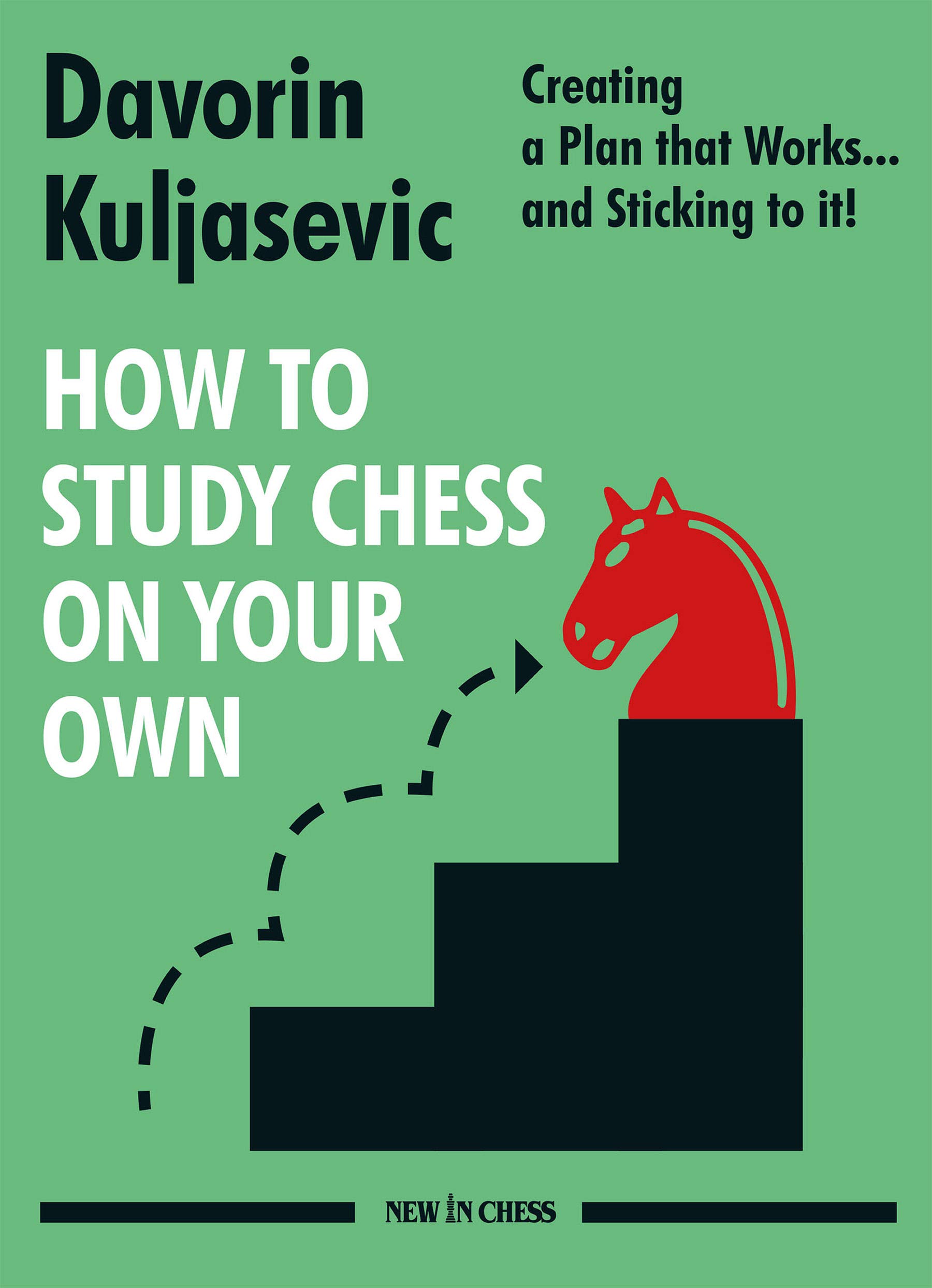
How to Study Chess on Your Own

How to Study Chess on Your Own, Davorin Kuljasevic, New in Chess, June 2021, ISBN-13 ‏ : ‎ 978-9056919313

From the publisher:

“Every chess player wants to improve, but many, if not most, lack the tools or the discipline to study in a structured and effective way. With so much material on offer, the eternal question is: “”How can I study chess without wasting my time and energy?””

Davorin Kuljasevic provides the full and ultimate answer, as he presents a structured study approach that has long-term improvement value. He explains how to study and what to study, offers specific advice for the various stages of the game and points out how to integrate all elements in an actionable study plan. How do you optimize your learning process? How do you develop good study habits and get rid of useless ones? What study resources are appropriate for players of different levels? Many self-improvement guides are essentially little more than a collection of exercises.

Davorin Kuljasevic reflects on learning techniques and priorities in a fundamental way. And although this is not an exercise book, it is full of instructive examples looked at from unusual angles. To provide a solid self-study framework, Kuljasevic categorizes lots of important aspects of chess study in a guide that is rich in illustrative tables, figures and bullet points. Anyone, from casual player to chess professional, will take away a multitude of original learning methods and valuable practical improvement ideas.”

“Davorin Kuljasevic is an International Grandmaster born in Croatia. He graduated from Texas Tech University and played in USCL 2007 and 2008 for Dallas Destiny, the team that became US champion in both these years. He is an experienced coach and a winner of many tournaments.”

GM Davorin Kuljasevic

‘Study’ is the operative word here.

When I was learning chess in the 1960s and playing fairly seriously in the 1970s, chess wasn’t something you studied unless you were a top grandmaster. I’d play in club matches and tournaments. I’d read books and magazines because I enjoyed reading them, and, if I learnt something as well then so much the better. It wasn’t anything resembling serious study as you might study a subject at university. In those days, of course, you didn’t have a lot of opportunity to do much else.

In those days we couldn’t have imagined having a multi-million game database and a computer program capable of playing far better than any human on our desk, or being able to play a game at any time against opponents from anywhere in the world.

It’s not surprising, then, that ambitious players at any level are, if they have the time, keen to raise their rating by studying chess seriously.

We also know a lot more than we did, even 20 or 30 years ago, about the teaching and learning processes: lessons that can be applied to chess just as they can to other domains.

In the past, chess books told you what you should learn. Now, we’re seeing books, like this one, that teach you HOW you should learn. There’s a big difference.

Let’s start, controversially, at the end.

Chapter 9: Get organized – create a study plan

The author advises us to create a weekly timetable. Table 9.1 is based on the assumption that you’re at school in the morning, when you can spend 3 hours every afternoon and 2 hours every evening studying chess.

In my part of the world, if you’re an older teen you’re probably going to be at school in the afternoon as well as the morning, and have three hours of homework to do when you get home. Not to mention family commitments, other interests, hanging out with friends, eating, sleeping… I wonder how many chess players actually have time to study 4-5 hours a day, or even 1-2 hours a day, on a regular basis. On the other hand, 12-year-old Abhi Mishra, who has just become the youngest ever Grandmaster, spends at least 12 hours a day studying chess.

Returning to the Preface, the author anticipates your question: who will benefit the most from this book? “In my view, it would be self-motivated players of any level and age who are serious and disciplined about their chess study and have enough time to put the methods from the book into practice.”

If you fall into this category, read on. Even if you don’t: if you only have an hour or two a week to study, rather than 4-5 hours a day, you might still learn a lot.

What we have is 9 chapters looking at different aspects of studying chess, each concluding with a helpful list of bullet points. It’s not just a book of technical advise on how to study, though.  There’s a lot of chess in there as well, mostly taken from games you probably won’t have seen before. The first eight chapters have, as is the case with many books from this publisher, some exercises for you to solve, based on the most interesting positions from the chapter. The tactics and middle-game chapters also have questions for you to answer: do they tally with the author’s solutions given in Chapter 10?

In Chapter 1, the author asks “Do you study with the right mindset?”. Now, he doesn’t mean mindset in this sense, although that will come in useful. Instead, he suggests that mastering chess requires both time and intelligent study. There’s no substitute for study time. He quotes the example of English GM Jonathan Hawkins, only an average club player at 18, but through hard work, much of which involved with studying endings, became a GM by the age of 31.

A proper chess study mindset means, in Alekhine’s words, ‘a higher goal than a one-moment satisfaction’. Four typical mistakes are: lack of objectivity, shallow study approach, short-run outlook and playing too much. Kuljasevic talks about the correct balance between playing and studying. He quotes Botvinnik as saying that chess cannot be taught, only learned, which he interprets as meaning that everyone learns in a different way, and that it’s you, rather than your coach, who will make yourself a stronger player.

Kuljasevic was shocked to read a well known GM’s coaching advert: “I have produced numerous top-level players”. “Excuse me, but chess players are not ‘produced’! Every chess player’s learning process is their unique experience that cannot be replicated on someone else.”

These days there are many study methods available, and Chapter 2 provides a guide to fifteen you might consider, and giving them all scores out of 5 for practical relevance, study intensity and long-term learning potential. The three methods which score a maximum of three fives are Deep Analysis, Simulation (pretending to play a real game by guessing the next move) and Sparring (playing a pre-arranged game or match with a training partner for a specific reason).

As an example of what is meant by Deep Analysis, this is Aronian – Anand (Zurich 2014) with Black to play. Anand played 58… Ke7 here, but Re1+ would have been a more stubborn defence. Kuljasevic wanted to prove that White can always win positions of this type, and here spends seven pages doing just that.

Of course such an approach won’t suit everyone, but this chapter will help all readers determine the most useful methods for them. The point is not so much the relevance or otherwise of this particular ending, but the process itself used to analyse it.

Chapter 3 is about identifying your study priorities. At this point the author divides his readership into five categories:

  1. Intermediate player (1500-1800 Elo)
  2. Advanced player (1800-2100 Elo)
  3. Improving youngster (1900-2200 Elo)
  4. Master-level player (2100-2400 Elo)
  5. Strong titled player (2400+ Elo)

He suggests that, in general, you should spend 10% of your time on openings, 25% on tactics 25% on endgames, 20% on middlegames and 20% on general improvement. What proportion of your study time do you spend on openings? I thought so!

He then makes suggestions about how readers in each category might prioritise their studies.

If you’re an intermediate player you should concentrate on improving your tactical and endgame skills, while choosing a simple opening repertoire. Once you reach 1800 strength you can start working on more strategically complex openings. Club standard players should spend a large proportion of their time studying endings (Jonathan Hawkins would agree, as would Keith Arkell) and players of all levels would benefit from solving endgame studies on a regular basis.

Chapter 4 is about choosing the right resources for your study plan. Here we have a list of online resources: chess websites, the categories for which they are suitable, and, in each cases, the specific study opportunities they offer. Then we look at the best websites for each of the study methods from Chapter 2. An extensive list of recommended books for each of the five categories of player from Chapter 3 follows, arranged by subject matter. The books include classics by authors such as Alekhine, Spielmann and Chernev as well as more recent books. GM Grivas is quoted: “Reading the autobiographical games collections of great past players is like taking lessons with some of the greatest players in history”.  Unlike Kuljasevic, I’m not convinced that Chernev’s Logical Chess, excellent though it is for novices, is suitable for anyone much over 1800, though. There’s also some very useful advice on the best way to use ChessBase and other database software.

Chapters 5 to 8 each focus on one specific aspect of chess: openings, tactics, endings and middlegames.

Chapter 5 tells you how to study your openings deeply. The author starts with a warning: “I have met many people, and I’m sure you have, too, who have fallen into the trap of spending too much time studying openings. If they were to study other aspects of the game as zealously as openings, I am sure that they would be more complete, creative, and, most likely, stronger chess players. Young players and their coaches should especially keep this in mind.” He quotes, with approval, Portisch’s opinion: “Your only task in the opening is to reach a playable middle game”, and advises simplicity and economy when deciding on your openings. The study material in this chapter, then, is more suited for master level players and above.

This, for example, is an example of a ‘static tabiya’: you may well recognise it as coming from the Breyer Variation of the Ruy Lopez.

“This is one of the most well-known opening tabiyas, not only in the Ruy Lopez, but in chess in general. Over 1000 tournament games have been played from this position, from the club to the super-GM level. There is something appealing about this static type of structure for both sides as it contains a lot of potential for creative strategic play. I would like to present my brief analysis of a fairly rare idea: 17. Be3!?”

17. Bg5 is usually played here, meeting 17… h6 with Be3, happy to spend a move weakening the black king’s defences. Be3 has a different attacking plan in mind: Nf3-h2-g4-h6+ and possibly also Qf3. This is discussed over 3½ pages: I think you have to be a very stong player with a lot of study time available to go into this sort of detail, though.

Chapter 6 advises you to ‘Dynamize’ your tactical training. We’re all used to solving puzzles where we play combinations to win material or checkmate the enemy king. We could do more than that, though, by studying dynamic positions, complicated, double-edged tactical positions and positional sacrifices. We can also improve our tactical imagination by solving endgame studies and problems.

At the end of this chapter we get the chance to take a tactics test: “20 exercises consisting of tactical puzzles, positions for analysis, endgame studies, and problems for the development of dynamics and imagination”.

It’s Black’s move in this tactical puzzle. Your challenge is to solve it blindfold.

This is taken from Xie Jun – Galliamova (Women’s World Championship 1999). Black played 30… Qc7 here and eventually lost. She should have preferred 30… Qc8! (Nd2+ also wins) 31. Rc1 Qg4!, an attractive geometric motif winning either rook or queen.

Here, by contrast, is an endgame study, composed by FK Amelung in 1907. It’s White to play and win. Again, you’re challenged to solve it without moving the pieces.

The solution is 1. Rd8+ Ke1 2. Re8+ Kd2 3. Nc3! c1Q+ 4. Nb1+ Kd1 5. Rd8+ Ke1 6. Rf8! and wins.

There’s a lot more to tactics training than sac, sac, mate!

Studying endings can seem rather dull, so it’s good to know that Chapter 7 tells you how to make your endgame study more enjoyable.  Kuljasevic advises that, instead of reading books from beginning to end you look at practical examples, including your own games, and, (yes, again) endgame studies. He agrees with Capablanca that “Study of chess should commence with the third and final phase of a chess game, the endgame”.

Chapter 8 is all about strategy: how to systemize your middlegame knowledge. This is the hardest aspect of chess to study. The author looks at studying the pawn structures that might arise from your opening repertoire in a systematic way, and then goes on to discuss piece exchanges: understanding when exchanges might be favourable or unfavourable rather than just seeing them as a way to simplify towards an ending.

The chapter concludes with a short quiz on this subject. Here’s the first question: would you advise White to trade rooks, to give Black the option of trading, or to move his rook away?

This was Mamedyarov – Carlsen Baku 2008

White correctly moved his rook away, playing 25. Rf1, and later won after a Carlsen blunder. The coming kingside attack will be much stronger with the rook on the board, and Black can do nothing on the c-file.

Chapter 9, as we’ve seen, looks at how you might devise your own study plan – on the assumption that you have several hours a day to study, and Chapter 10 provides solutions to the quiz questions.

So, what to make of all this? I found it an extremely impressive book on an increasingly important aspect of chess: ‘how to learn’ as opposed to ‘what to learn’. Davorin Kuljasevic has clearly put an enormous amount of thought and hard work into writing it. If you’re within the target market – you want to improve your chess and have a lot of time available for that purpose – I’d give this book a very strong recommendation.

Even if you only have a few hours (or even less) a week, rather than a few hours a day to set aside for chess study, you’re sure to find much invaluable advice about how to make the most of your time.

There’s a lot of great – and highly instructive – chess in the book as well, so you might enjoy it for that alone. Much of it, though, I felt, was aimed more at the higher end of the rating scale. It would also be good to read a book on how to study chess written more for average players with limited study time.

Kuljasevic’s previous book (there’s an excellent review here) was shortlisted for FIDE’s 2020 Book of the Year, and I wouldn’t be surprised if this book was similarly honoured. He’s clearly an exceptional writer as well as an exceptional coach.

Richard James, Twickenham 22nd July 2021

Richard James
. Richard James

Book Details :

  • Softcover: 384 pages
  • Publisher: New in Chess (1 May 2021)
  • Language: English
  • ISBN-10:9056919318
  • ISBN-13:978-9056919313
  • Product Dimensions: ‎ 17.27 x 2.54 x 23.62 cm

Official web site of New in Chess

How to Study Chess on Your Own, Davorin Kuljasevic, New in Chess, June 2021, ISBN-13 ‏ : ‎ 978-9056919313