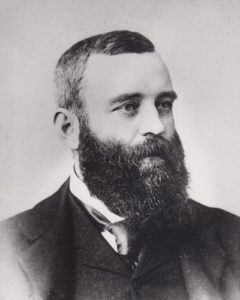
From The Encyclopedia of Chess(Robert Hale, 1970 and 1976) by Anne Sunnucks :
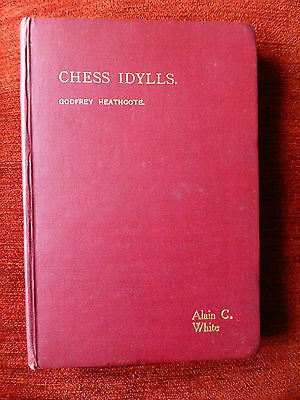
“Problem composer, and deemed to be on of the great masters of the art. Heathcote was born on 20th July 1870 in Manchester, and died on 24th April 1952. whilst in office as the President of the British Chess Problem Society. An advocate of the model mate, Heathcote was one of few composers with the power to combine model mates with strategy. In 1918 a collection of his problems appeared in the A. C. White Christmas series under the title Chess Idylls”
From The Encyclopaedia of Chess (Batsford, 1977), Harry Golombek OBE, John Rice writes:
“British problemist, generally regarded as the outstanding English composer of model-mate problems. President of British Chess Problem Society 1951-2.”
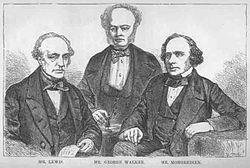
William Lewis, George Walker and Augustus Mongredien
BCN Remembers George Walker (13-iii-1803 23-iv-1879)
From The Encyclopedia of Chess by Anne Sunnucks :
“Leading organiser and chess columnist in the last century. Born on 13th March 1803. Founded the Westminster Chess Club in 1831. Published New Treatise on Chess in 1832 and Chess and Chess Players in 1850. Edited the chess column in Bell’s Life of London from 1835 to 1870. Died on 23rd April 1879.
From The Oxford Companion to Chess by Hooper & Whyld :
“English chess writer and propagandist. Born over his father’s bookshop in London he later became a music publisher in partnership with his father. At a time when he was receiving odds of a rook from Lewis he had the temerity to edit a chess column in the Lancet (1823-4); the first such column to appear in a periodical, it was, perhaps fortunately, short-lived. He tried his hand at composing problems, with unmemorable results; but his play improved. In the early 1830s he was receiving odds of pawn and move from McDonnell, after whose death (1835) Walker was, for a few years, London’s strongest active player.
Walker’s importance, however, lies in the many other contributions he made to the game. He founded chess clubs, notably the Westminster at Huttman’s in 1831 and the St George’s at Hanover
Square in 1843. From 1835 to 1873 he edited a column in Bell’s Life , a popular Sunday paper featuring sport and scandal. Many of his contributions were perfunctory, but on occasion he wrote at length of news, gossip, and personalities in a rollicking style suitable for such a paper. As with many of his writings he was more enthusiastic than accurate. He edited England’s first chess magazine The Philidorian (1837-8). Above all, Walker published many books at a low price: they sold widely and did much to popularize the game. The third edition of his New Treatise (1841) was as useful a manual as could he bought at the time and its section on the Evans gambit was praised by Jaenisch, Walker established the custom of recording games, and his Chess Studies (1844), containing 1,020 games played from 1780 to 1844, has become a classic. For the first time players could study the game as it was played and not as authors, each with his own bias, supposed it should be played. Throughout his life Walker helped chess-players in need. He raised funds for La Bqurdonnais, Capt. W. D. Evans, and other players, and often for their destitute widows.
After his father died (1847) Walker sold their business and became a stockbroker, reducing his chess activities but continuing ‘his many kindnesses. With an outgoing personality he enjoyed the company of those, such as La Bourdonnais, whom he called “jolly good fellows’, an epithet which might well be applied to himself. He was occasionally at odds with Lewis, who was jealous of his own reputation, and Staunton, imperious and touchy; but it seems unlikely that the easy-going Walker, who believed that chess should be enjoyed, intentionally initiated these disputes. He left a small but excellent library of more than 300 books and his own manuscript translations of the works of Cozio, Lolli, and other masters. He should not be confused with William Greenwood Walker who recorded the games of the Bourdon-nais-McDonnell matches 1834, and died soon afterwards “full of years’.
Walker is buried at Kensal Green Cemetery, also known as All Souls Cemetery, Harrow Road, Kensal Green, London Borough of Brent, Greater London, W10 4RA England.
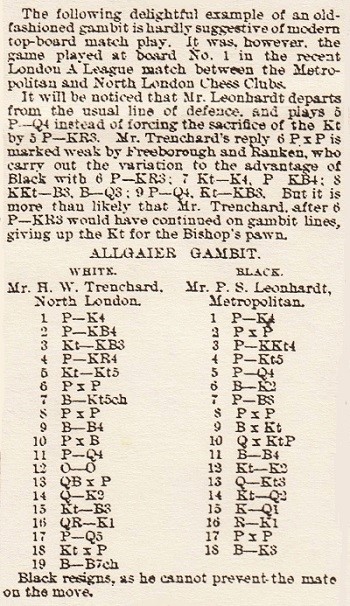
The Walker Attack is a variation of the Allagier Gambit :
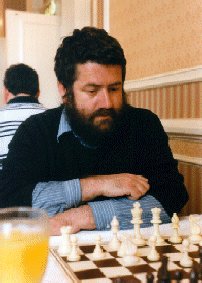
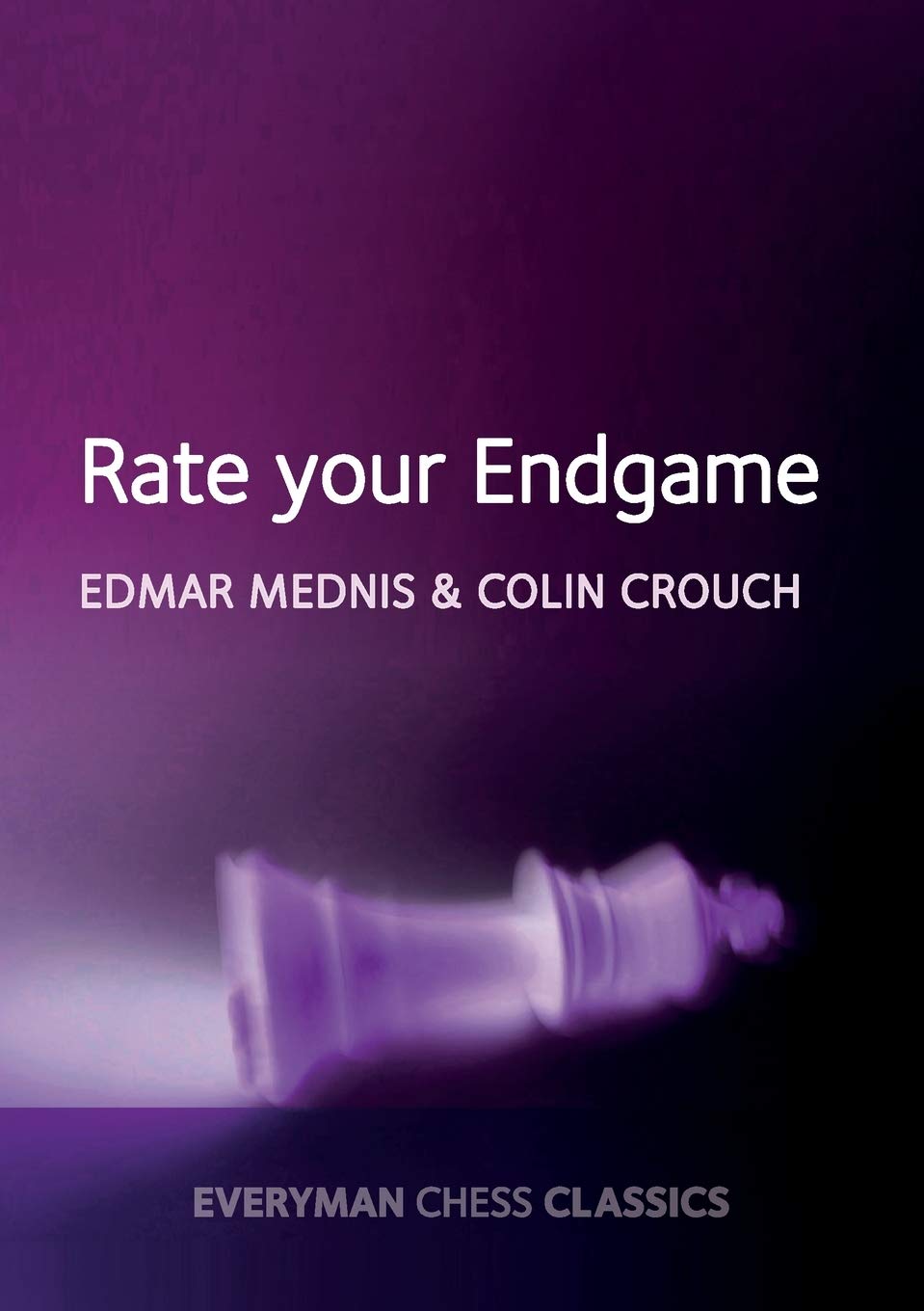
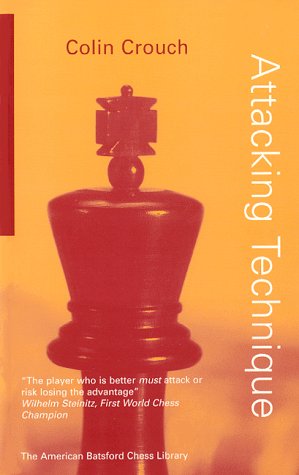
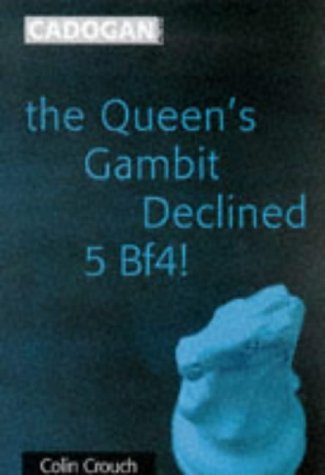
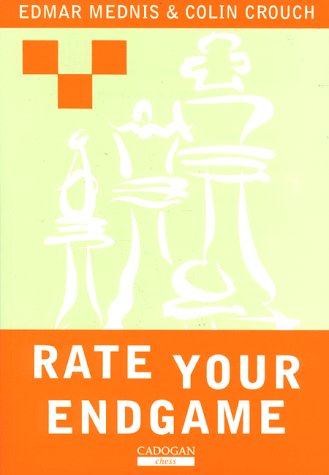
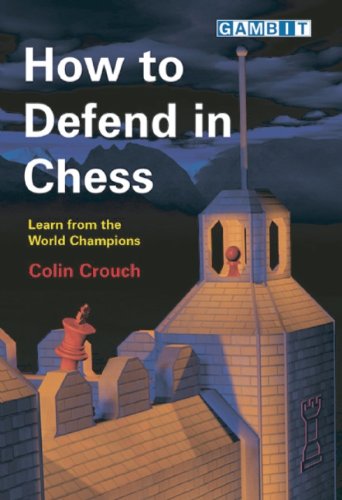
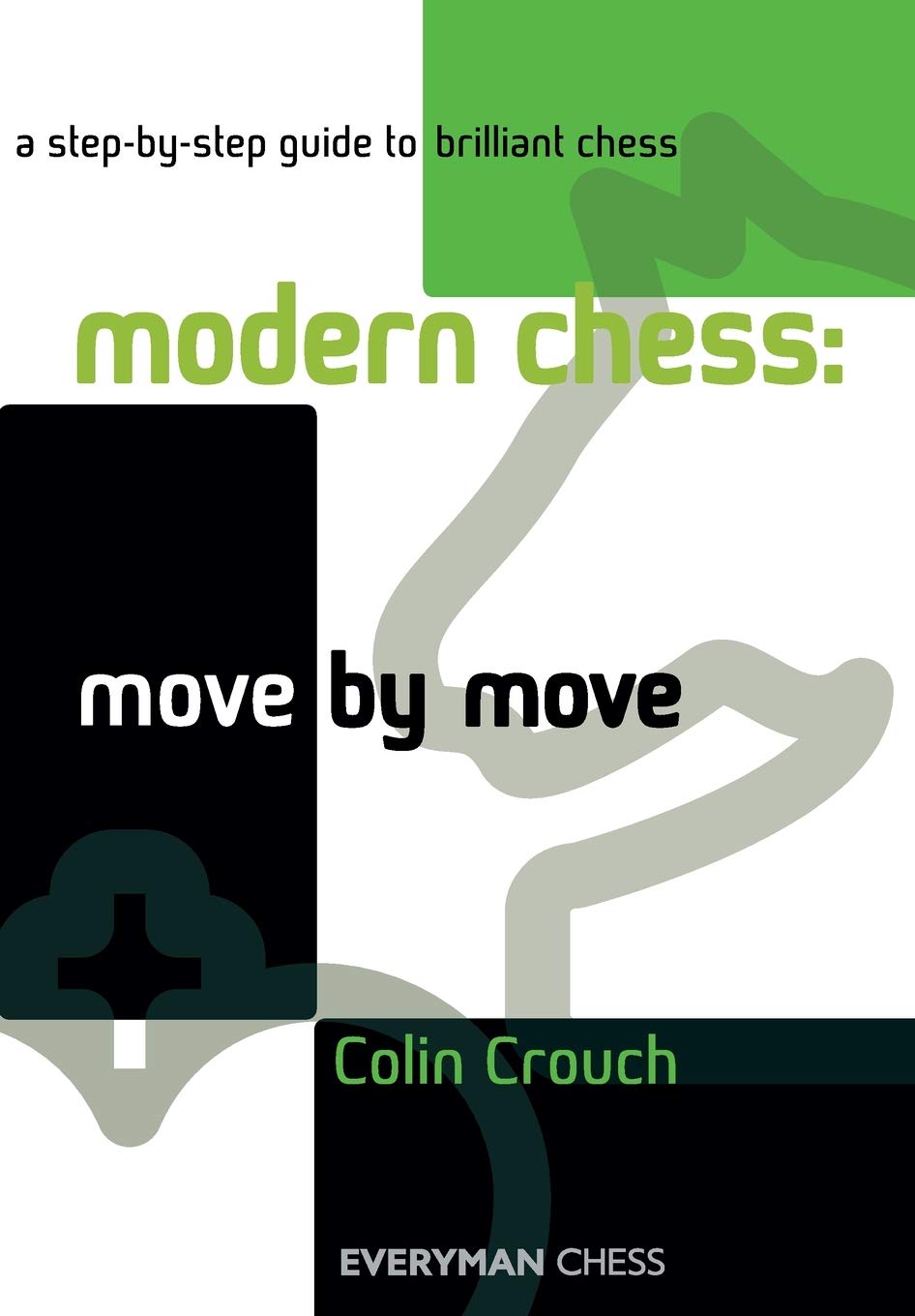
Colin Crouch by Cathy RogersRate Your EndgameHastings 1895 – The Centenary BookAttacking TechniqueThe Queen’s Gambit Declined 5.Bf4!Rate Your EndgameHow to Defend in ChessModern Chess Move by MoveMagnus ForceFighting Chess Move by Move
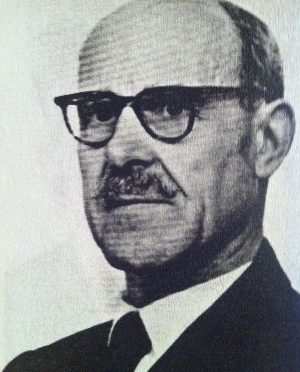
“Herbert William Trenchard (8 September 1857, Thorncombe – 15 April 1934, London) was an English chess master.
He took 11th and tied for 4-5th in London in 1886, shared twice 3rd at Cambridge 1890 and Oxford 1891, tied for 4-5th at Brighton 1892, took 2nd at London 1892 (B tourn), tied for 3rd-4th at Woolhall Spa 1893, and took 3rd at London 1896,[1]
He also participated at Vienna 1898 (Kaiser-Jubiläumsturnier, Siegbert Tarrasch and Harry Pillsbury won) and took 19th place there.[2][3]”
We focus on the British Chess Scene Past & Present!
This website uses cookies to improve your experience. We'll assume you're ok with this, but you can opt-out if you wish. Cookie settingsACCEPT
Privacy & Cookies Policy
Privacy Overview
This website uses cookies to improve your experience while you navigate through the website. Out of these cookies, the cookies that are categorized as necessary are stored on your browser as they are as essential for the working of basic functionalities of the website. We also use third-party cookies that help us analyze and understand how you use this website. These cookies will be stored in your browser only with your consent. You also have the option to opt-out of these cookies. But opting out of some of these cookies may have an effect on your browsing experience.
Necessary cookies are absolutely essential for the website to function properly. This category only includes cookies that ensures basic functionalities and security features of the website. These cookies do not store any personal information.
![Godfrey Heathcote (20-vii-1870 24-iv-1952) [Source: Chess Pie, 1922; scanned by M.McDowell]](http://britishchessnews.com/wp-content/uploads/2020/06/20.07-G.Heathcote-Chess-Pie-1922.jpg)