We remember English player Joseph Blake who passed away on Tuesday, December 11th, 1951.
Joseph Henry Blake was born on Thursday, February 3rd, 1859 in Farnborough, Hampshire. His parents were Joseph Denner and Eliza Blake (née Early). In 1871 Joseph (aged 12) had a brother Frank (aged 10), sisters Annie (8), Elizabeth S (7), Eliza E (1) and a servant, Kate Longman aged 18. The family lived in Lydia Cottage, Hewitts Road, Millbrook, South Stoneham, Hampshire.
According to the 1861 census Joseph was two years old and living with his parents and Frank in Rotten Row, Yeovil, Somerset.
In 1881 the family has upped sticks again and moved to 2 St. Lawrence Road, Saint Mary, Eastleigh, Hampshire. This address is also given as the South West Telegraph Office. Eliza was now the head of the household and a widower. Apart from Eliza E aged 11 everyone worked for the railway.
In 1891 Joseph had become Head of the Household (aged 32) and they had acquired a servant (Anna M Cornell) and a blacksmith (Francis Cornell) from Braintree in Essex.
In 1900 Joseph married Alice New in Cheltenham, Gloucestershire. They lived at 24, Barton Road, Eastleigh, Hampshire. Tragically, Alice passed away in 1903.
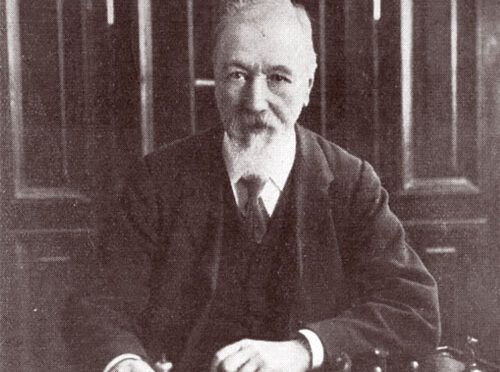
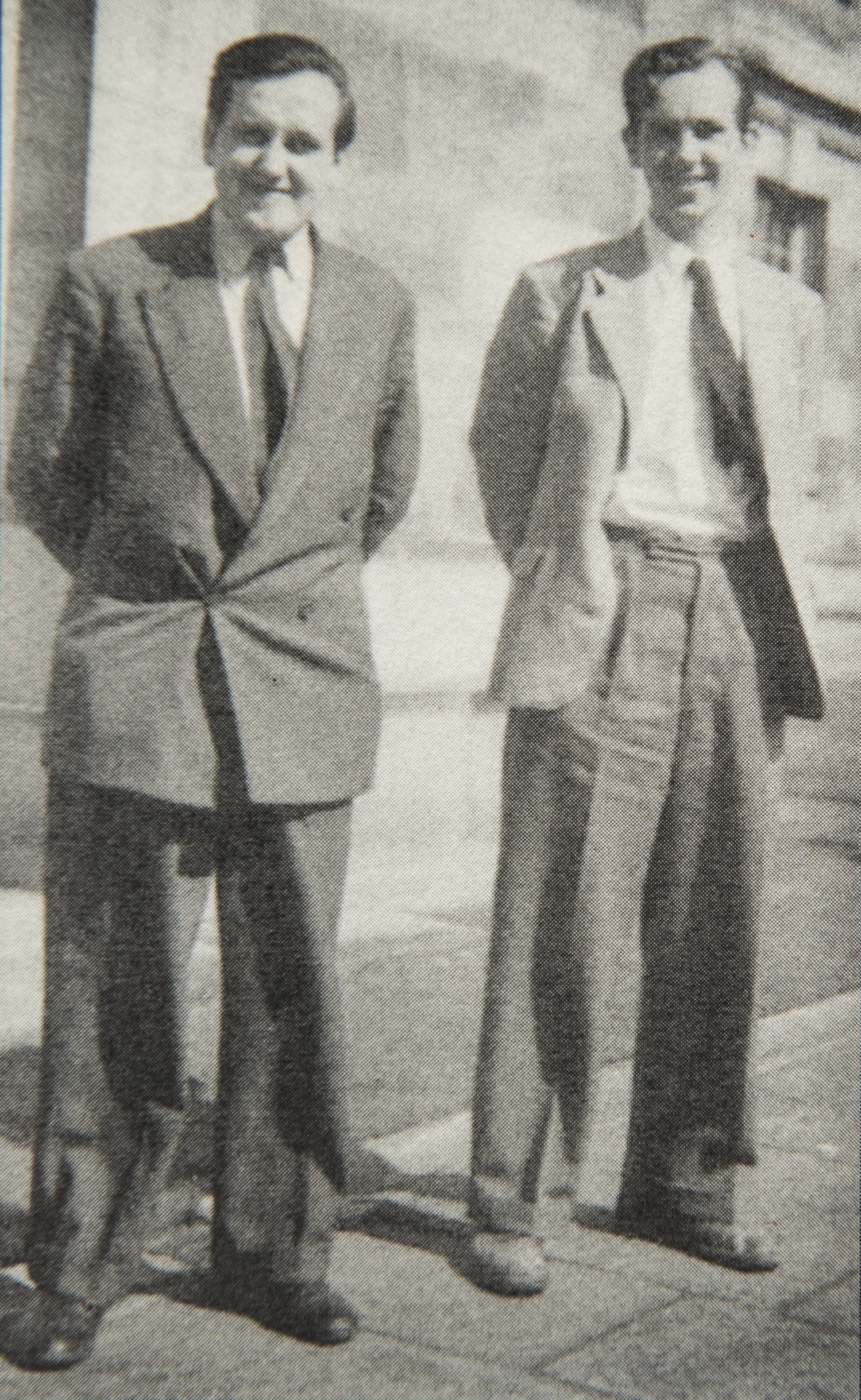
Joseph Henry Blake
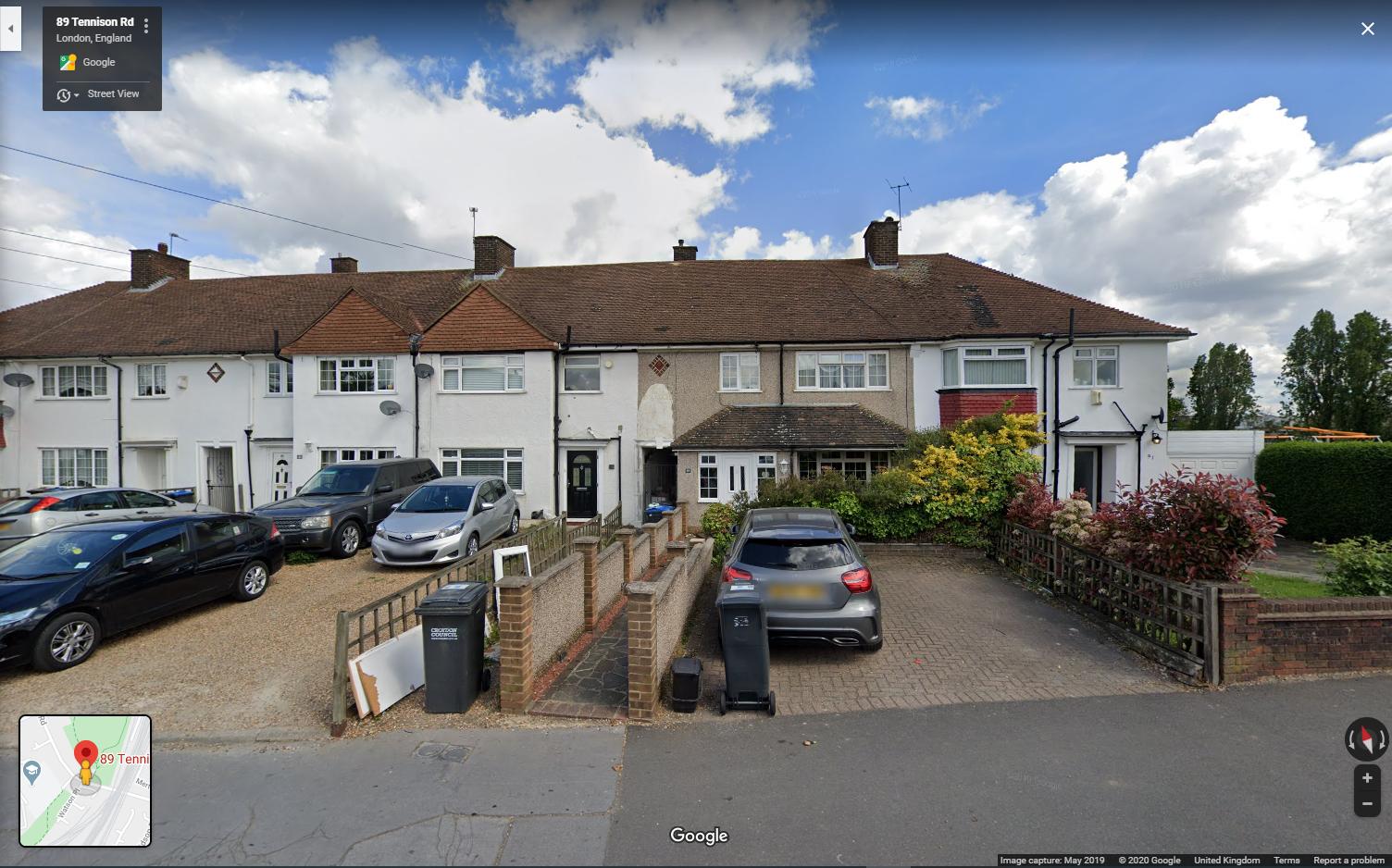
By 1911 Joseph was 52 and had retained his career as a Railway Clerk. He lived at 33, Broomfield Road, Tolworth, Surrey :
33, Broomfield Road, Tolworth, Surrey
He is recorded as the head of a household of one and a widower.
In 1939 Joseph was living at 10 Springfield Court, Springfield Road, Kingston Upon Thames, Surrey. He was now retired.
No doubt there would have been other addresses not captured by the census records.
According to The Encyclopedia of Chess, (Batsford, 1977), Harry Golombek OBE :
“A leading British player in the 1890s and for many years editor of the Games Section of the British Chess Magazine between the two world wars. Blake’s best tournament performance came at the age sixty-three when, at Weston-super-Mare in 1922, he came 1st ahead of Maróczy, Kostić, Sir George Thomas and Yates.
The remarkable feature about Blake’s chess career is that he retained his skill and his comprehension of the game for a much longer period that most chess players. This extended from 1887 when he was 1st at the Counties Chess Association tournament at Stamford ahead of Bird and Pollock, a performance he was to repeat in 1891 at Oxford, to 1909 when he tied with H. E. Atkins for first place in the British Championship, to 1923 when he won the Weston-super-Mare tournament, right into the 1930s when he was principal annotator for the British Chess Magazine.”
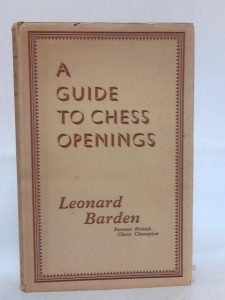
Chess Endings for Beginners, JH Blake, George Routledge First Edition (1900)
and according to The Encyclopedia of Chess (Robert Hale, 1970 & 1976), Anne Sunnucks :
“One of the leading British players at the end of the last century and the beginning of the present century. Born on 3rd February 1859. Represented England in the Anglo-American cable matches in 1902 and 1909. His best results were 1st in the Counties’ Chess Association Tournament 1887, ahead of Bird and MacDonnell; =1st with HE Atkins in the 1909 British Championship, but lost the play-off for the title; 1st at Weston-super-Mare 1922 ahead of Maroczy, Kostich, Sir George Thomas and Yates, and winner of the brilliancy prize for his game against Sir George Thomas; 2nd in the international correspondence chess tournament organised by Le Monde Illustre in 1895.
Blake was President of the Southern Counties Chess Association in 1911 and President of the Hampshire Chess Association from 1910-1912 and from 1927-1929. He was also Hon. Secretary of the City of London Chess Club for some years.”
According to Tim Harding in the excellent Correspondence Chess in Britain and Ireland, 1824-1987 :
Railway clerk Joseph Henry Blake, the leading English correspondence player of the 1890s; also a strong OTB amateur player. He was a regular contributor to British Chess Magazine from the 1880s to the late 1930s.
In British Chess Magazine, Volume XXXIX (39, 1919), Number 3 (March) we have the following from Julius du Mont : “I presume it relates more particularly to chess professionals in this country, at any rate, it does not seem to me that the jews hold rank amongst first-class amateurs in proportion to their numbers.
In London there are very few if any of the class of RC Griffith, GA Thomas, JH Blake, HG Cole, EG Sergeant, and many others to say nothing of the younger recruits , W.Winter and RHV Scott.”
From the 1949 British Chess Magazine (written by RN Coles) we have this :
JH Blake is Ninety
After an absence of ten years I looked in recently on the Kingston and Thames Valley Chess Club. There were many new faces and a number of familiar ones, among the latter one of rosy countenance, trim beard and twinkling eyes, none other than JH Blake, more vigorous than ever and attaining his 90th birthday on the 3rd February.
Twenty years ago in this same club I (RN Coles) was learning the game, now middle age approaches. Blake was an elderly man in those days, who had retired from all competitive play because of the strain it imposed; now, so far from showing the weight of years, he is back in competitive chess again. He won the club championship last year and is in a fair way to repeating his victory this year. Of all the ‘Grand Old Men’ of chess, few have still been champions in their 90th year.
Older readers of the BCM will remember him as their Games Editor for many years, but few memories will cover the whole series of his successes beginning with a 1st at Stamford in 1887. Even 1922 must seem a distant year to the generation of today. That was the year that Maroczy and Kostic were invited to Weston-super-Mare to meet such rising young English masters as FD Yates and Sir George Thomas. And the first prize amongst those talented players was won by JH Blake, who had been born just when Morphy returned to England after his Paris Victory over Anderssen !
All readers of the BCM and all players everywhere will wish Britain’s oldest master continued health and increasing vigour, and those who knew him today will be surprised if he does not continue his attack for another decade at least.
Besides winning the first prize at Weston Blake also won the brilliancy prize with the following game : (#10,229)
British Chess Magazine, Volume LXXII (72, 1952), Number 2 (February), pp.44-46 contained an obituary with articles from MDB* :
*(Careful investigation by Richard James suggest that MDB is Mabel Dorothy Barker, JHB’s niece in 6th Cross Road.)
British Chess Magazine, Volume LXXII (72, 1952), Number 2 (February) pp. 44 – 46British Chess Magazine, Volume LXXII (72, 1952), Number 2 (February) pp. 44 – 46
“Joseph Henry Blake (3 February 1859, Farnborough, Hampshire – 11 December 1951, Kingston-upon-Thames) was an English chess master.
Blake won many tournaments played in England toward the end of the 19th century and the beginning of the 20th century. He won at Stamford 1887, Oxford 1891 (joint), Brighton 1892, Cambridge 1893, and Salisbury 1898 (joint). He also took 5th at Manchester 1882, tied for 3-4th at Birmingham 1883 (Section B), took 4th at Bath 1884, tied for 6-8th at London 1889 (Henry Bird won), took 2nd at Cambridge 1890, tied for 3rd-4th at Woodhall Spa 1893, shared 2nd at Craigside 1895, took 3rd at Hastings (Amateur) 1895, took 2nd, behind Henry Ernest Atkins, at Bristol 1896, and won at Folkestone 1901.
He took 2nd in an international correspondence tournament organised by Le Monde Illustré in 1895, shared 1st in the 1909 British Championship in Scarborough but lost to Atkins the play-off, and shared 1st at London 1911. He was British correspondence champion in 1922.
Blake represented England in cable matches against the United States in 1902, 1909 and 1910.
His best achievement was victory, ahead of Géza Maróczy, George Alan Thomas, Fred Yates and Boris Kostić, at Weston-super-Mare 1922. He shared 2nd at London 1922 (Major Open), tied for 7-8th at Hastings International Chess Congress 1922/23 (Akiba Rubinstein won), took 2nd, behind Thomas, at London 1923, took 5th at Liverpool 1923 (Jacques Mieses won), tied for 7-8th at Hastings 1923/24 (Max Euwe won), tied for 6-7th at Weston-super-Mare 1924 (Euwe won), took 2nd, behind R.P. Michell, at London 1925, took 4th at London 1926 (Victor Buerger won), and tied for 7-9th at Weston-super-Mare 1926 (Euwe won).”
He is the author of Chess endings for beginners (London 1900).
We remember English player Joseph Blake who passed away on Tuesday, December 11th, 1951.
Joseph Henry Blake was born on Thursday, February 3rd, 1859 in Farnborough, Hampshire. His parents were Joseph Denner and Eliza Blake (née Early). In 1871 Joseph (aged 12) had a brother Frank (aged 10), sisters Annie (8), Elizabeth S (7), Eliza E (1) and a servant, Kate Longman aged 18. The family lived in Lydia Cottage, Hewitts Road, Millbrook, South Stoneham, Hampshire.
According to the 1861 census Joseph was two years old and living with his parents and Frank in Rotten Row, Yeovil, Somerset.
In 1881 the family has upped sticks again and moved to 2 St. Lawrence Road, Saint Mary, Eastleigh, Hampshire. This address is also given as the South West Telegraph Office. Eliza was now the head of the household and a widower. Apart from Eliza E aged 11 everyone worked for the railway.
In 1891 Joseph had become Head of the Household (aged 32) and they had acquired a servant (Anna M Cornell) and a blacksmith (Francis Cornell) from Braintree in Essex.
In 1900 Joseph married Alice New in Cheltenham, Gloucestershire. They lived at 24, Barton Road, Eastleigh, Hampshire. Tragically, Alice passed away in 1903.
Joseph Henry Blake
By 1911 Joseph was 52 and had retained his career as a Railway Clerk. He lived at 33, Broomfield Road, Tolworth, Surrey :
33, Broomfield Road, Tolworth, Surrey
He is recorded as the head of a household of one and a widower.
In 1939 Joseph was living at 10 Springfield Court, Springfield Road, Kingston Upon Thames, Surrey. He was now retired.
No doubt there would have been other addresses not captured by the census records.
According to The Encyclopedia of Chess, (Batsford, 1977), Harry Golombek OBE :
“A leading British player in the 1890s and for many years editor of the Games Section of the British Chess Magazine between the two world wars. Blake’s best tournament performance came at the age sixty-three when, at Weston-super-Mare in 1922, he came 1st ahead of Maróczy, Kostić, Sir George Thomas and Yates.
The remarkable feature about Blake’s chess career is that he retained his skill and his comprehension of the game for a much longer period that most chess players. This extended from 1887 when he was 1st at the Counties Chess Association tournament at Stamford ahead of Bird and Pollock, a performance he was to repeat in 1891 at Oxford, to 1909 when he tied with H. E. Atkins for first place in the British Championship, to 1923 when he won the Weston-super-Mare tournament, right into the 1930s when he was principal annotator for the British Chess Magazine.”
Chess Endings for Beginners, JH Blake, George Routledge First Edition (1900)
and according to The Encyclopedia of Chess (Robert Hale, 1970 & 1976), Anne Sunnucks :
“One of the leading British players at the end of the last century and the beginning of the present century. Born on 3rd February 1859. Represented England in the Anglo-American cable matches in 1902 and 1909. His best results were 1st in the Counties’ Chess Association Tournament 1887, ahead of Bird and MacDonnell; =1st with HE Atkins in the 1909 British Championship, but lost the play-off for the title; 1st at Weston-super-Mare 1922 ahead of Maroczy, Kostich, Sir George Thomas and Yates, and winner of the brilliancy prize for his game against Sir George Thomas; 2nd in the international correspondence chess tournament organised by Le Monde Illustre in 1895.
Blake was President of the Southern Counties Chess Association in 1911 and President of the Hampshire Chess Association from 1910-1912 and from 1927-1929. He was also Hon. Secretary of the City of London Chess Club for some years.”
According to Tim Harding in the excellent Correspondence Chess in Britain and Ireland, 1824-1987 :
Railway clerk Joseph Henry Blake, the leading English correspondence player of the 1890s; also a strong OTB amateur player. He was a regular contributor to British Chess Magazine from the 1880s to the late 1930s.
In British Chess Magazine, Volume XXXIX (39, 1919), Number 3 (March) we have the following from Julius du Mont : “I presume it relates more particularly to chess professionals in this country, at any rate, it does not seem to me that the jews hold rank amongst first-class amateurs in proportion to their numbers.
In London there are very few if any of the class of RC Griffith, GA Thomas, JH Blake, HG Cole, EG Sergeant, and many others to say nothing of the younger recruits , W.Winter and RHV Scott.”
From the 1949 British Chess Magazine (written by RN Coles) we have this :
JH Blake is Ninety
After an absence of ten years I looked in recently on the Kingston and Thames Valley Chess Club. There were many new faces and a number of familiar ones, among the latter one of rosy countenance, trim beard and twinkling eyes, none other than JH Blake, more vigorous than ever and attaining his 90th birthday on the 3rd February.
Twenty years ago in this same club I (RN Coles) was learning the game, now middle age approaches. Blake was an elderly man in those days, who had retired from all competitive play because of the strain it imposed; now, so far from showing the weight of years, he is back in competitive chess again. He won the club championship last year and is in a fair way to repeating his victory this year. Of all the ‘Grand Old Men’ of chess, few have still been champions in their 90th year.
Older readers of the BCM will remember him as their Games Editor for many years, but few memories will cover the whole series of his successes beginning with a 1st at Stamford in 1887. Even 1922 must seem a distant year to the generation of today. That was the year that Maroczy and Kostic were invited to Weston-super-Mare to meet such rising young English masters as FD Yates and Sir George Thomas. And the first prize amongst those talented players was won by JH Blake, who had been born just when Morphy returned to England after his Paris Victory over Anderssen !
All readers of the BCM and all players everywhere will wish Britain’s oldest master continued health and increasing vigour, and those who knew him today will be surprised if he does not continue his attack for another decade at least.
Besides winning the first prize at Weston Blake also won the brilliancy prize with the following game : (#10,229)
British Chess Magazine, Volume LXXII (72, 1952), Number 2 (February), pp.44-46 contained an obituary with articles from MDB* :
*(Careful investigation by Richard James suggest that MDB is Mabel Dorothy Barker, JHB’s niece in 6th Cross Road.)
British Chess Magazine, Volume LXXII (72, 1952), Number 2 (February) pp. 44 – 46British Chess Magazine, Volume LXXII (72, 1952), Number 2 (February) pp. 44 – 46
“Joseph Henry Blake (3 February 1859, Farnborough, Hampshire – 11 December 1951, Kingston-upon-Thames) was an English chess master.
Blake won many tournaments played in England toward the end of the 19th century and the beginning of the 20th century. He won at Stamford 1887, Oxford 1891 (joint), Brighton 1892, Cambridge 1893, and Salisbury 1898 (joint). He also took 5th at Manchester 1882, tied for 3-4th at Birmingham 1883 (Section B), took 4th at Bath 1884, tied for 6-8th at London 1889 (Henry Bird won), took 2nd at Cambridge 1890, tied for 3rd-4th at Woodhall Spa 1893, shared 2nd at Craigside 1895, took 3rd at Hastings (Amateur) 1895, took 2nd, behind Henry Ernest Atkins, at Bristol 1896, and won at Folkestone 1901.
He took 2nd in an international correspondence tournament organised by Le Monde Illustré in 1895, shared 1st in the 1909 British Championship in Scarborough but lost to Atkins the play-off, and shared 1st at London 1911. He was British correspondence champion in 1922.
Blake represented England in cable matches against the United States in 1902, 1909 and 1910.
His best achievement was victory, ahead of Géza Maróczy, George Alan Thomas, Fred Yates and Boris Kostić, at Weston-super-Mare 1922. He shared 2nd at London 1922 (Major Open), tied for 7-8th at Hastings International Chess Congress 1922/23 (Akiba Rubinstein won), took 2nd, behind Thomas, at London 1923, took 5th at Liverpool 1923 (Jacques Mieses won), tied for 7-8th at Hastings 1923/24 (Max Euwe won), tied for 6-7th at Weston-super-Mare 1924 (Euwe won), took 2nd, behind R.P. Michell, at London 1925, took 4th at London 1926 (Victor Buerger won), and tied for 7-9th at Weston-super-Mare 1926 (Euwe won).”
He is the author of Chess endings for beginners (London 1900).
We remember English player Joseph Blake who passed away on Tuesday, December 11th, 1951.
Joseph Henry Blake was born on Thursday, February 3rd, 1859 in Farnborough, Hampshire. His parents were Joseph Denner and Eliza Blake (née Early). In 1871 Joseph (aged 12) had a brother Frank (aged 10), sisters Annie (8), Elizabeth S (7), Eliza E (1) and a servant, Kate Longman aged 18. The family lived in Lydia Cottage, Hewitts Road, Millbrook, South Stoneham, Hampshire.
According to the 1861 census Joseph was two years old and living with his parents and Frank in Rotten Row, Yeovil, Somerset.
In 1881 the family has upped sticks again and moved to 2 St. Lawrence Road, Saint Mary, Eastleigh, Hampshire. This address is also given as the South West Telegraph Office. Eliza was now the head of the household and a widower. Apart from Eliza E aged 11 everyone worked for the railway.
In 1891 Joseph had become Head of the Household (aged 32) and they had acquired a servant (Anna M Cornell) and a blacksmith (Francis Cornell) from Braintree in Essex.
In 1900 Joseph married Alice New in Cheltenham, Gloucestershire. They lived at 24, Barton Road, Eastleigh, Hampshire. Tragically, Alice passed away in 1903.
Joseph Henry Blake
By 1911 Joseph was 52 and had retained his career as a Railway Clerk. He lived at 33, Broomfield Road, Tolworth, Surrey :
33, Broomfield Road, Tolworth, Surrey
He is recorded as the head of a household of one and a widower.
In 1939 Joseph was living at 10 Springfield Court, Springfield Road, Kingston Upon Thames, Surrey. He was now retired.
No doubt there would have been other addresses not captured by the census records.
According to The Encyclopedia of Chess, (Batsford, 1977), Harry Golombek OBE :
“A leading British player in the 1890s and for many years editor of the Games Section of the British Chess Magazine between the two world wars. Blake’s best tournament performance came at the age sixty-three when, at Weston-super-Mare in 1922, he came 1st ahead of Maróczy, Kostić, Sir George Thomas and Yates.
The remarkable feature about Blake’s chess career is that he retained his skill and his comprehension of the game for a much longer period that most chess players. This extended from 1887 when he was 1st at the Counties Chess Association tournament at Stamford ahead of Bird and Pollock, a performance he was to repeat in 1891 at Oxford, to 1909 when he tied with H. E. Atkins for first place in the British Championship, to 1923 when he won the Weston-super-Mare tournament, right into the 1930s when he was principal annotator for the British Chess Magazine.”
Chess Endings for Beginners, JH Blake, George Routledge First Edition (1900)
and according to The Encyclopedia of Chess (Robert Hale, 1970 & 1976), Anne Sunnucks :
“One of the leading British players at the end of the last century and the beginning of the present century. Born on 3rd February 1859. Represented England in the Anglo-American cable matches in 1902 and 1909. His best results were 1st in the Counties’ Chess Association Tournament 1887, ahead of Bird and MacDonnell; =1st with HE Atkins in the 1909 British Championship, but lost the play-off for the title; 1st at Weston-super-Mare 1922 ahead of Maroczy, Kostich, Sir George Thomas and Yates, and winner of the brilliancy prize for his game against Sir George Thomas; 2nd in the international correspondence chess tournament organised by Le Monde Illustre in 1895.
Blake was President of the Southern Counties Chess Association in 1911 and President of the Hampshire Chess Association from 1910-1912 and from 1927-1929. He was also Hon. Secretary of the City of London Chess Club for some years.”
According to Tim Harding in the excellent Correspondence Chess in Britain and Ireland, 1824-1987 :
Railway clerk Joseph Henry Blake, the leading English correspondence player of the 1890s; also a strong OTB amateur player. He was a regular contributor to British Chess Magazine from the 1880s to the late 1930s.
In British Chess Magazine, Volume XXXIX (39, 1919), Number 3 (March) we have the following from Julius du Mont : “I presume it relates more particularly to chess professionals in this country, at any rate, it does not seem to me that the jews hold rank amongst first-class amateurs in proportion to their numbers.
In London there are very few if any of the class of RC Griffith, GA Thomas, JH Blake, HG Cole, EG Sergeant, and many others to say nothing of the younger recruits , W.Winter and RHV Scott.”
From the 1949 British Chess Magazine (written by RN Coles) we have this :
JH Blake is Ninety
After an absence of ten years I looked in recently on the Kingston and Thames Valley Chess Club. There were many new faces and a number of familiar ones, among the latter one of rosy countenance, trim beard and twinkling eyes, none other than JH Blake, more vigorous than ever and attaining his 90th birthday on the 3rd February.
Twenty years ago in this same club I (RN Coles) was learning the game, now middle age approaches. Blake was an elderly man in those days, who had retired from all competitive play because of the strain it imposed; now, so far from showing the weight of years, he is back in competitive chess again. He won the club championship last year and is in a fair way to repeating his victory this year. Of all the ‘Grand Old Men’ of chess, few have still been champions in their 90th year.
Older readers of the BCM will remember him as their Games Editor for many years, but few memories will cover the whole series of his successes beginning with a 1st at Stamford in 1887. Even 1922 must seem a distant year to the generation of today. That was the year that Maroczy and Kostic were invited to Weston-super-Mare to meet such rising young English masters as FD Yates and Sir George Thomas. And the first prize amongst those talented players was won by JH Blake, who had been born just when Morphy returned to England after his Paris Victory over Anderssen !
All readers of the BCM and all players everywhere will wish Britain’s oldest master continued health and increasing vigour, and those who knew him today will be surprised if he does not continue his attack for another decade at least.
Besides winning the first prize at Weston Blake also won the brilliancy prize with the following game : (#10,229)
British Chess Magazine, Volume LXXII (72, 1952), Number 2 (February), pp.44-46 contained an obituary with articles from MDB* :
*(Careful investigation by Richard James suggest that MDB is Mabel Dorothy Barker, JHB’s niece in 6th Cross Road.)
British Chess Magazine, Volume LXXII (72, 1952), Number 2 (February) pp. 44 – 46British Chess Magazine, Volume LXXII (72, 1952), Number 2 (February) pp. 44 – 46
“Joseph Henry Blake (3 February 1859, Farnborough, Hampshire – 11 December 1951, Kingston-upon-Thames) was an English chess master.
Blake won many tournaments played in England toward the end of the 19th century and the beginning of the 20th century. He won at Stamford 1887, Oxford 1891 (joint), Brighton 1892, Cambridge 1893, and Salisbury 1898 (joint). He also took 5th at Manchester 1882, tied for 3-4th at Birmingham 1883 (Section B), took 4th at Bath 1884, tied for 6-8th at London 1889 (Henry Bird won), took 2nd at Cambridge 1890, tied for 3rd-4th at Woodhall Spa 1893, shared 2nd at Craigside 1895, took 3rd at Hastings (Amateur) 1895, took 2nd, behind Henry Ernest Atkins, at Bristol 1896, and won at Folkestone 1901.
He took 2nd in an international correspondence tournament organised by Le Monde Illustré in 1895, shared 1st in the 1909 British Championship in Scarborough but lost to Atkins the play-off, and shared 1st at London 1911. He was British correspondence champion in 1922.
Blake represented England in cable matches against the United States in 1902, 1909 and 1910.
His best achievement was victory, ahead of Géza Maróczy, George Alan Thomas, Fred Yates and Boris Kostić, at Weston-super-Mare 1922. He shared 2nd at London 1922 (Major Open), tied for 7-8th at Hastings International Chess Congress 1922/23 (Akiba Rubinstein won), took 2nd, behind Thomas, at London 1923, took 5th at Liverpool 1923 (Jacques Mieses won), tied for 7-8th at Hastings 1923/24 (Max Euwe won), tied for 6-7th at Weston-super-Mare 1924 (Euwe won), took 2nd, behind R.P. Michell, at London 1925, took 4th at London 1926 (Victor Buerger won), and tied for 7-9th at Weston-super-Mare 1926 (Euwe won).”
He is the author of Chess endings for beginners (London 1900).
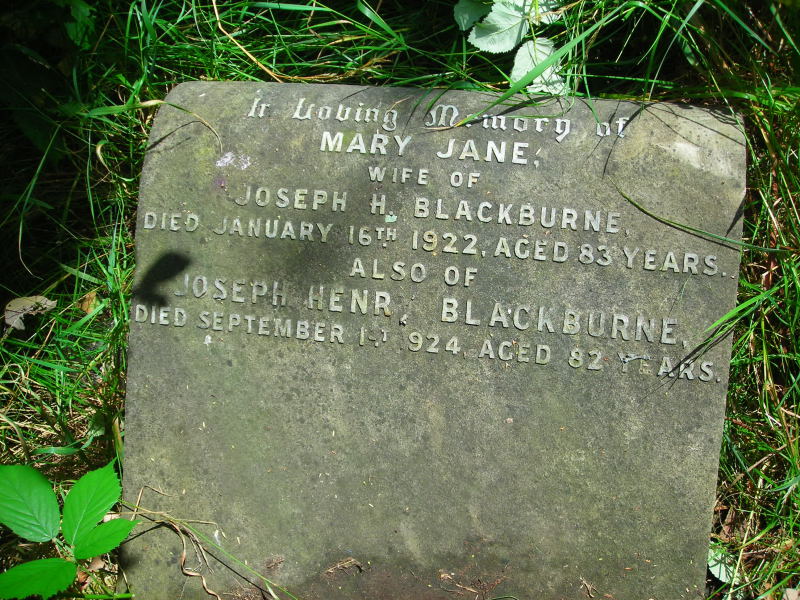
BCN remembers Joseph Blackburne (10-xii-1841 01-ix-1924)
The following (excerpts of) information were obtained via ancestry.co.uk / findmypast.co.uk:
Joseph Henry Blackburne was born on Friday, December 10th, 1841 in Chorlton, Manchester. His father was Joseph Blackburn (aged 23, a temperance reformer) and his mother was Ann Pritchard (aged 24). He had eight sons and five daughters.
His brother Frederick Pritchard Blackburn died on 11 October 1847 in Lancashire, Lancashire, when Joseph Henry was 5 years old.
His sister Clara was born on 4 November 1847 in Street, Lancashire, when Joseph Henry was 5 years old.
His half-sister Clara was born in 1848 in Manchester, Lancashire, when Joseph Henry was 7 years old.
His mother Ann passed away on 26 November 1857 in Manchester, Lancashire, at the age of 40.
His half-brother William Thomas was born on 17 June 1865 when Joseph Henry was 23 years old.
Joseph Henry Blackburne married Eleanor Driscoll on 10 December 1865 when he was 24 years old.
Joseph Henry Blackburne married Beatrice Lapham on 3 October 1876 when he was 34 years old.
His wife Beatrice passed away in January 1880 in St Olave Southwark, London, at the age of 26. They had been married 3 years.
Joseph Henry Blackburne married Mary Jane Fox in St Olave Southwark, London, on 16 December 1880 when he was 39 years old.
Joseph Henry Blackburne lived in Everton, Lancashire, in 1891.
According to Edward Winter in Chess Notes JHB lived at the following addresses :
16 Lucey Road, London SE, England (The Chess Amateur, October 1924, page 32 (address in 1879) and the 1881 British census (C.N. 4756)*).
116 Barkworth Road, Camberwell, London, England (1891 British census (C.N. 4756)*).
7 Whitbread Road, Lewisham, London, England (1901 British census (C.N. 4756)*).
45 Sandrock Road, Lewisham, London SE, England (Ranneforths Schach-Kalender, 1915, page 56, and Hastings Chess Club address list, 1922*).
According to chessgames.com :
“Joseph Henry Blackburne was born in Chorlton, Manchester. He came to be known as “The Black Death”. He enjoyed a great deal of success giving blindfold and simultaneous exhibitions. Tournament highlights include first place with Wilhelm Steinitz at Vienna 1873, first at London 1876, and first at Berlin 1881 ahead of Johannes Zukertort. In matchplay he lost twice to Steinitz and once to Emanuel Lasker. He fared a little better with Zukertort (Blackburne – Zukertort (1881)) and Isidor Gunsberg, by splitting a pair of matches, and defeating Francis Joseph Lee, ( Blackburne – Lee (1890) ). One of the last successes of his career was at the age of 72, when he tied for first place with Fred Dewhirst Yates at the 1914 British Championship.
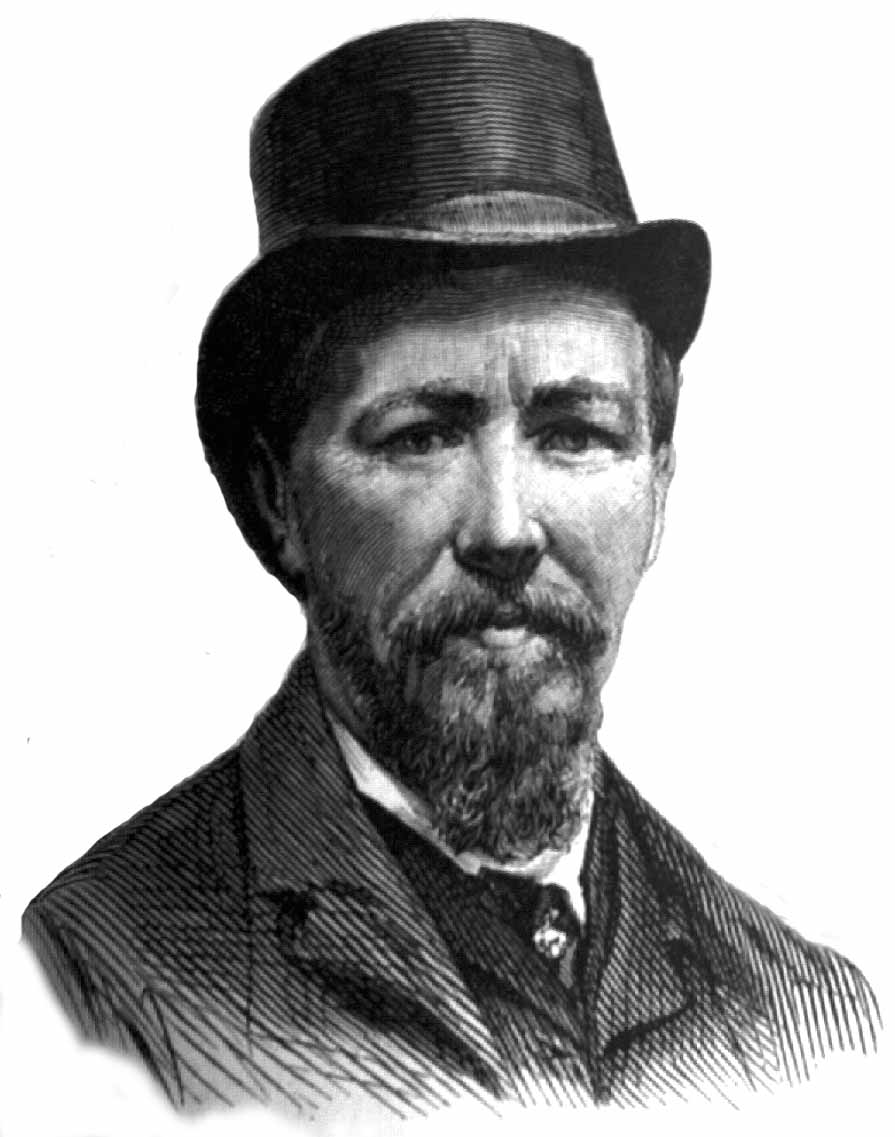
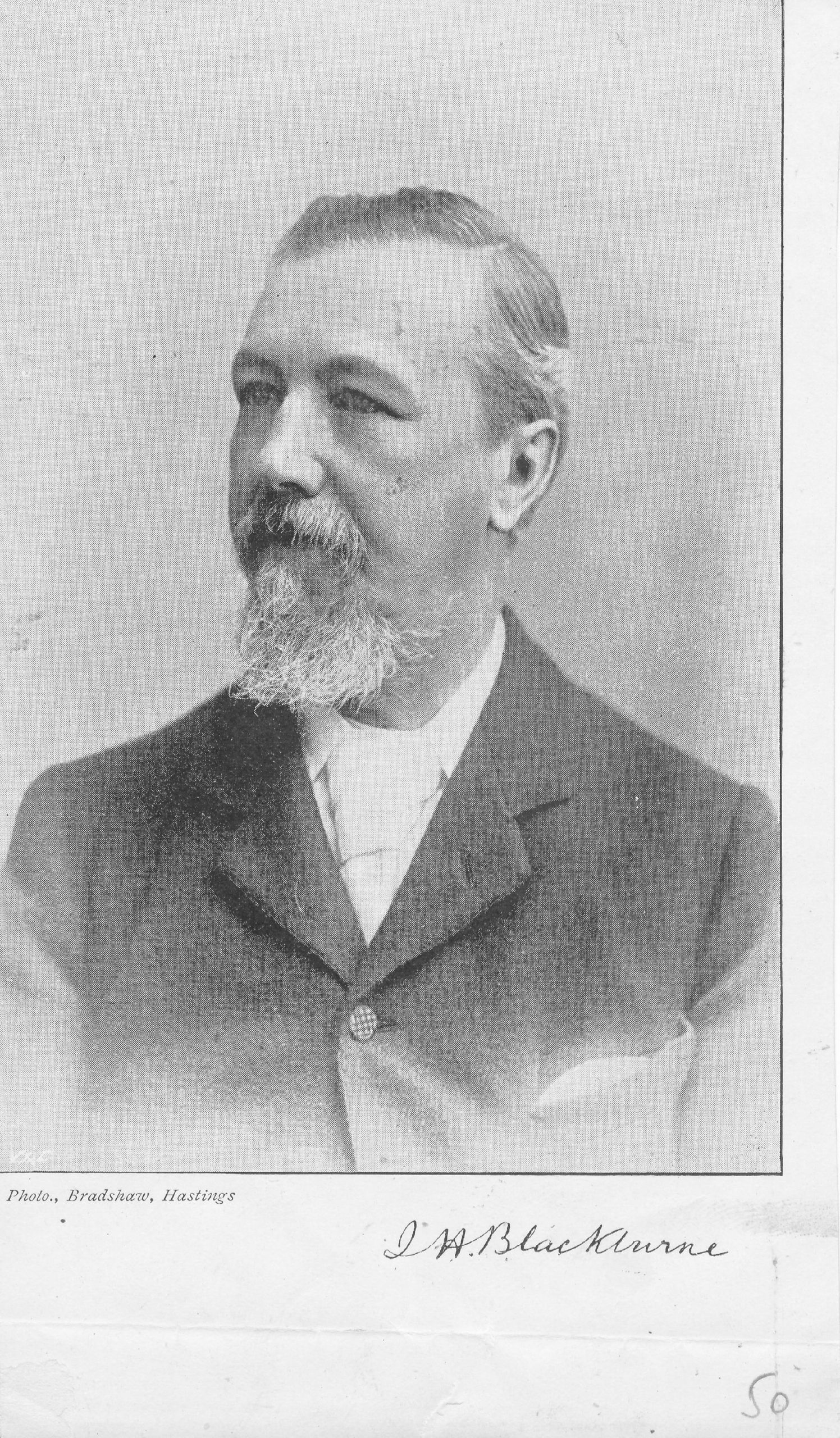
Joseph Blackburne (10-xii-1841 01-ix-1924)
In his later years, a subscription by British chess players provided an annuity of £100 (approximately £4,000 in 2015 value), and a gift of £250 on his 80th birthday.”
In 1923 he suffered a stroke, and the next year he died of a heart attack.”
Joseph Henry Blackburne (10-xii-1841 01-ix-1924)
From The Oxford Companion to Chess (OUP, 1984) by Hooper and Whyld :
“For more than 20 years one of the first six players in the world and for even longer the leading English born player. Draughts was the most popular indoor game in his home town, Manchester; he learned this game as a child and became expert in his youth.
He was about 18 when, inspired by Morphy’s exploits, he learned the moves of chess. In July 1861 he lost all live games of a match against the Manchester chess club champion Edward Pindar, but he improved so rapidly that he defeated Pindar three months later (-1-5=2—1), and in 1862 he became champion of the club ahead of Pindar and Horwitz.
Instructed by Horwitz, Blackburne became one of the leading endgame players of his time; and wishing to emulate the feats of L. Paulsen, who visited the club in November 1861, he developed exceptional skill at blindfold chess. He spent most of the 1860s developing his chess and toying with various occupations.
After winning the British championship, 1868-9, ahead of de vere, he became a full-time professional player.
Blackburne achieved excellent results in many tournaments: Baden-Baden 1870, third equal with Neumann after Anderssen and Steinitz; London 1872, second (+5-2) after Steinitz ahead of Zukertort; Vienna 1873, second to Steinitz after a play-off; Paris 1878, third after Winawer and Zukertort: Wiesbaden 1880, first equal with Englisch and Schwarz; Berlin 1881, first (+13=2 — 1), three points ahead of Zukertort, the second prize winner (Blackburne’s greatest achievement); London 1883, third after Zukertort and Steinitz; Hamburg 1885, second equal with Englisch, Mason, Tarrasch, and Weiss half a point after Gunsberg; Frankfurt 1887, second equal with Weiss after Mackenzie; Manchester 1890, second after Tarrasch; Belfast 1892, first equal with Mason; London 1892, second ( + 6-2) after Lasker; London 1893, first ( + 2=3).
He was in the British team in 11 of the Anglo-American cable matches, meeting Pillsbury on first board six times (+2-3 — 1), and he continued to play internationally until he was 72, long enough to meet the pioneer of the hypermodern movement Nimzowitsch, whom he defeated at St Petersburg 1914.
Blackburne had remarkable combinative powers and is remembered for his swingeing king’s side attacks, often well prepared but occasionally consisting of an ingenious swindle that would deceive even the greatest all his contemporaries. The tournament book of Vienna 1873 refers to him as ‘der schrwarze Tod [Black death] der Schachspieler’, a nickname that became popular.
His unflappable temperament also earned him the soubriquet “the man with the iron nerves’. Even so, neither his temperament nor his style was suited to set matches, in which he was rarely successful against world-class players. He had other chess talents: a problem composer, he was also a fast solver, allegedly capable of outpacing the great Sam Loyd. Blackburne earned his livelihood by means of simultaneous displays, for this purpose touring Britain twice-yearly, with a few breaks, for more than 50 years.
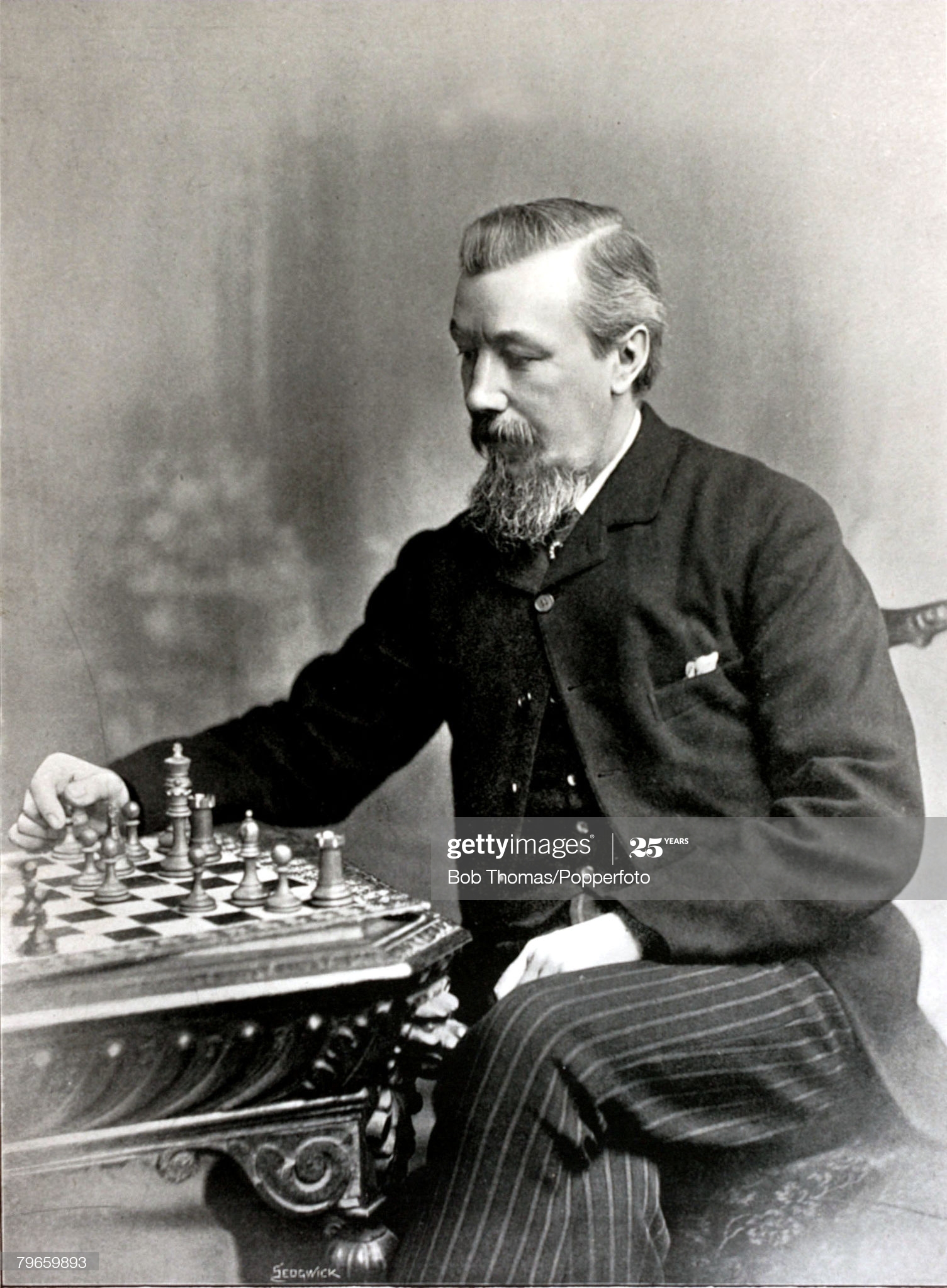
Chess, circa 1896, JH Blackburne, well known chess player, who had toured both on the Continent and America, able to make between 40 to 60 moves when blindfolded by sheer memory (Photo by Bob Thomas/Popperfoto via Getty Images/Getty Images)
Before this time such displays were solemn affairs; Lowenthal, who would appear in formal dress and play for several hours in silence, was shocked when Blackburne turned up in ordinary clothes, chatting and making jokes as he played, and refreshing him self with whisky, (Blackburne confessed, however, that when fully absorbed in a game he never noticed whether he was drinking water instead,) Once, walking round the boards, he drained his opponent’s glass, saying when rebuked He left it en prise and I took it en passant‘
The illustrator Julius Hess depicted Blackburne in a New Yorker Staats Zeitung evening edition as sitting at a chesstable and beckoning: “Waitah! A whiskey and limejuice!”
He played his blindfold displays quickly, and with little sign of the stress that besets most blindfold players. Probably the leading blindfold expert of his time, he challenged Zukertort, a close rival in this field, to a match of ten games, played simultaneously, both players blindfold; but Zukertort declined. Many who knew and liked Blackburne subscribed to a fund which sustained him in his last years.
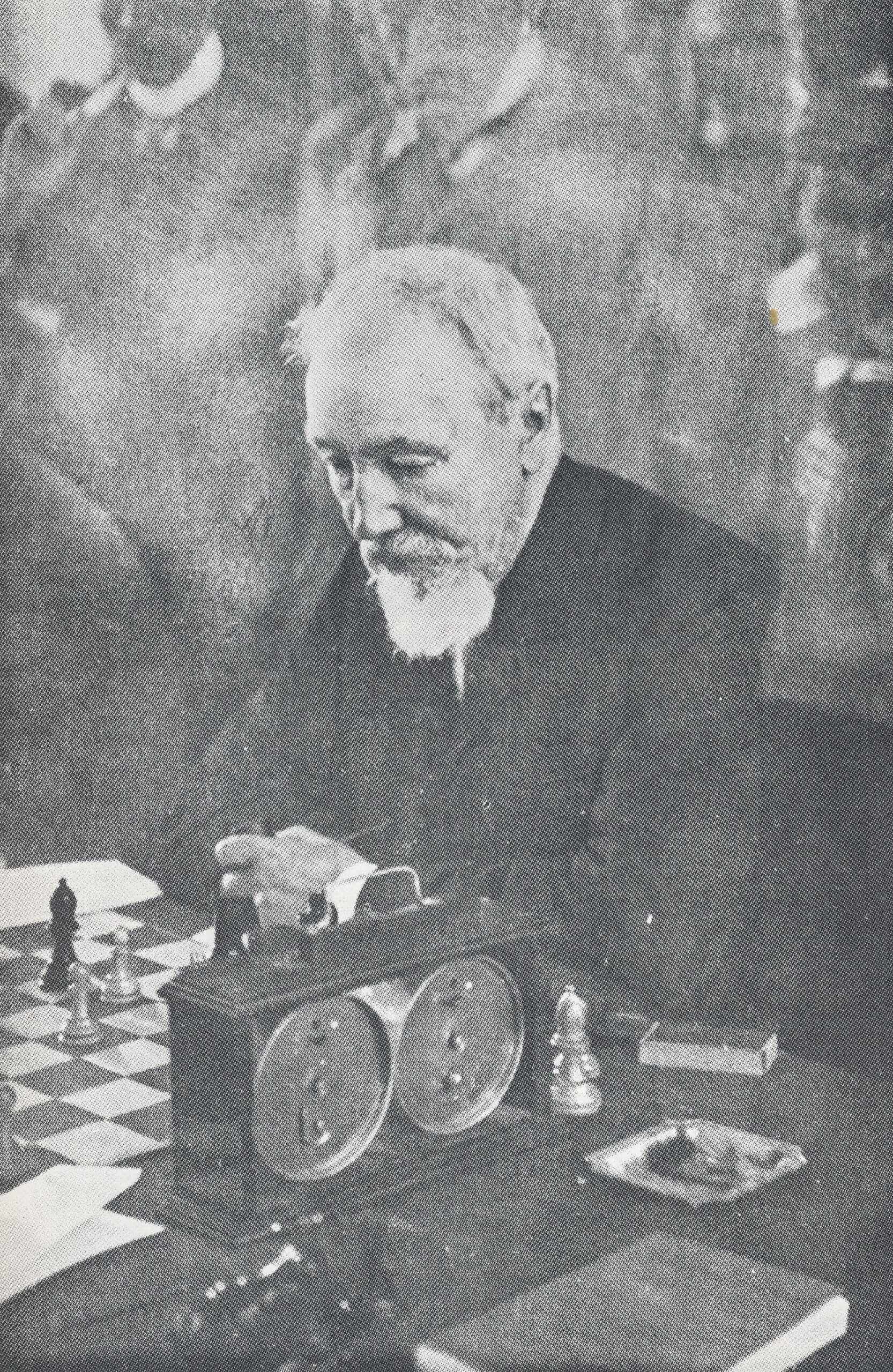
Image Supplied by a reader of the book ‘Eminent Victorian Chess Players’ to Tim Harding
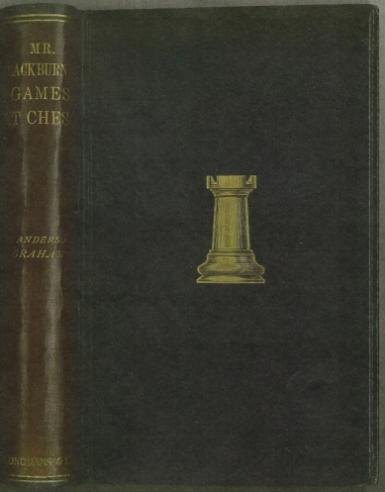
P. A. Graham, Mr Blackburne’s Games at Chess (1899) contains 407 games annotated by Blackburne and 28 three-movers composed by him.
Mr Blackburne’s Games at Chess by PA Graham
A reprint, styled Blackburne*s Chess Games (1979), has a new introduction and two more games.
One of Blackburne’s contributions was the suggestion of using chess clocks rather than the archaic hourglasses.
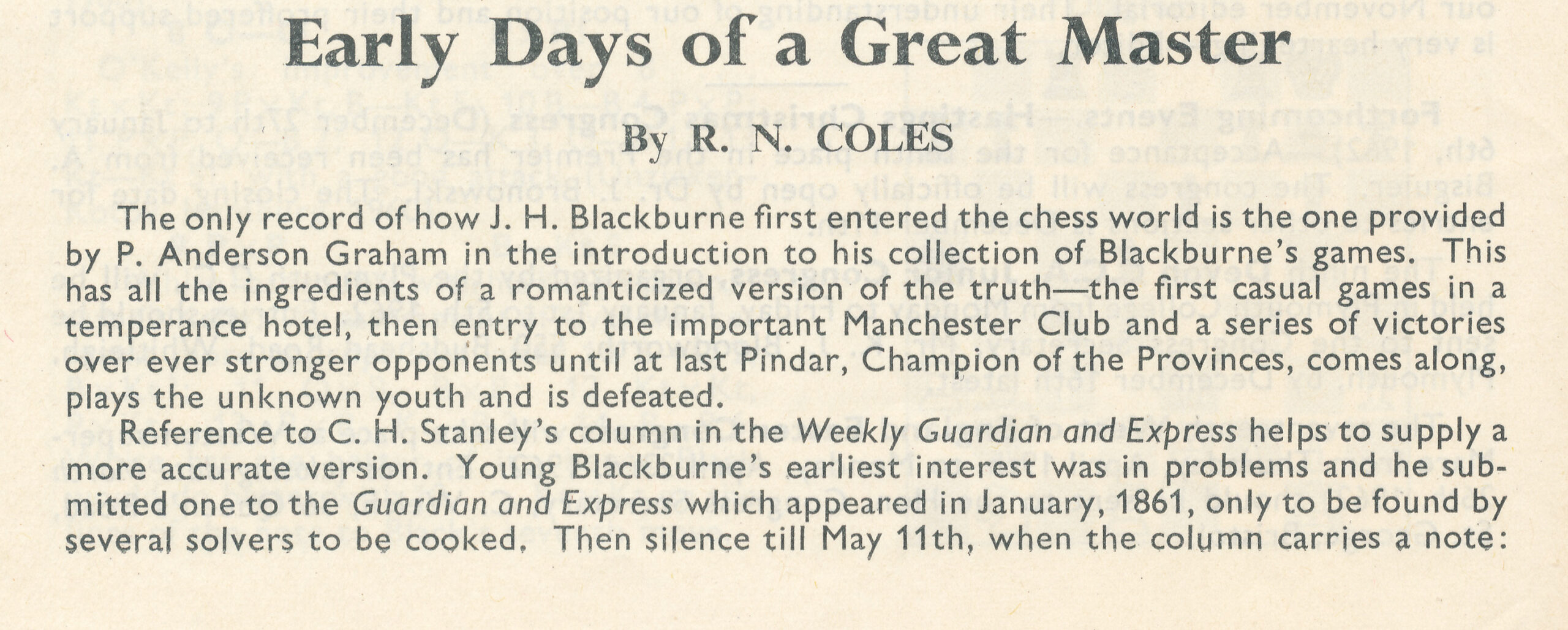
Here follows a reproduction of an article from British Chess Magazine, Volume LXXX1 (1961), Number 12 (December), page 340-342 written by RN Coles entitled “Early Days of a Great Master” :
“The only record of how J. H. Blackburne first, entered the chess world is the one provided by P. Anderson Graham in the introduction to his collection of Blackburne’s games. This has all the ingredients of a romanticized version of the truth-the first casual games in a temperance hotel, then entry to the important Manchester Club and a series of victories over ever stronger opponents until at last Pindar, Champion of the Provinces, comes along, plays the unknown youth and is defeated.
Reference to C. H. Stanley’s column in the Weekly Guardian and Express helps to supply a more accurate version. Young Blackburne’s earliest interest was in problems and he submitted one to the Guardian and Express which appeared in January, 1861, only to be found by several solvers to be cooked, Then silence till May 11th, when the column carries a note:
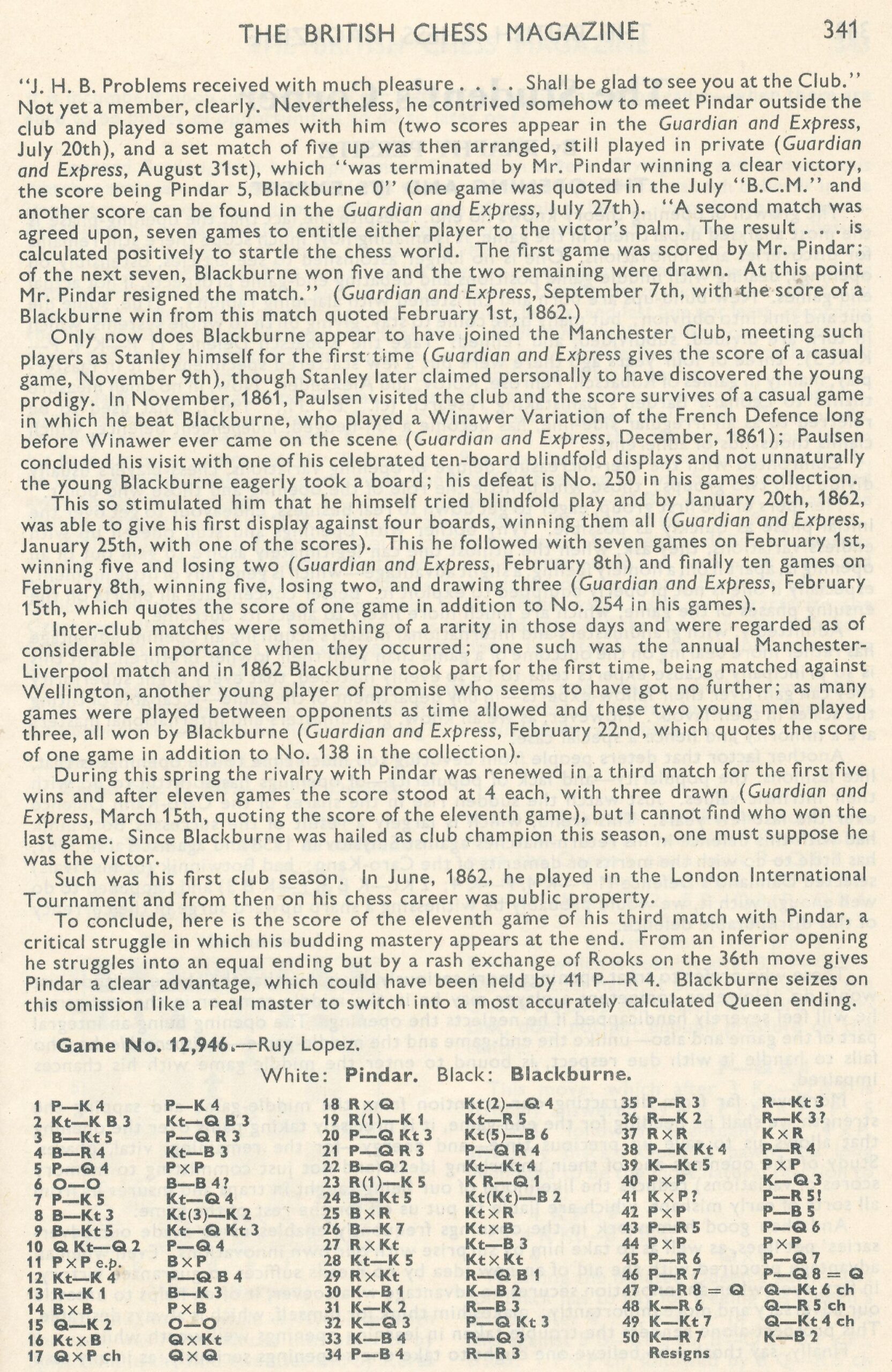
J. H. B. Problems received with much pleasure…Shall be glad to see you at the Club.”
Here are a couple of published problems. For a complete listing see below.
Manchester Express, 1861
#4. 6+4
The Field, 1893
#3, 7+6
Not yet a member, clearly. Nevertheless, he contrived somehow to meet Pindar outside the club and played some games-with him (two scores appear in the Guardian and Express, July 20th), and a set-match of five up was then arranged, still played in private (Guardian and Express, August 3lst), which “was terminated by Mr. Pindar winning a clear victory, the score being Pindar 5, Blackburne 0” (one game was quoted in the July “B.C.M.” and another score can be found in the Guardian and Express, July 27th.
“A second match was agreed upon, level games to entitle either player to the victor’s palm. The result … is calculated positively, to startle the chess world. The first game was scored by Mr. Pindar; of the next seven, Blackburne won five and the two remaining were drawn. ‘At this point Mr. Pindar resigned the match.” (Guardian and Express, September 7th, with the score of a Blackburne win from this match quoted February 1st, 1962.)
Only now does Blackburne appear to have joined the Manchester Club, meeting such players as Stanley himself for the first time (Guardian and Express gives the score of a casual game, November 9th), though Stanley later claimed personally to have discovered the young prodigy.
In November, 1861, Paulsen visited the club and the score survives of a casual game in which he beat Blackburne, who played a Winawer Variation of the French Defence long before Winawer ever came on the-scene (Guardian and Express, December,1861); Paulsen concluded his visit with one of his celebrated ten-board blindfold displays and not unnaturally the young Blackburne eagerly took a board; his defeat is No.25O in his games collection. This so stimulated him that he himself tried blindfold play and by January 20th, 1862, was able to give his first display against four boards, winning them all (Guardian and Express, January 25th, with one of the scores). This he followed with seven games on February 8th,
winning five and losing two. (Guardian and Express, February 8th) and finally ten games on February 8th, winning five, losing two, and drawing three (Guardian and Express,February 15th, which quotes the score of one game in addition to No. 254 in his games).
Inter-club matches were something of a rarity in those days and were regarded as of considerable importance when they occurred; one such was the annual Manchester-Liverpool match and in 1862 Blackburne took part for the first time, being matched against Wellington, another young player of promise who seems to have got no further; as many games were played between opponents as time allowed and these two young men played three, all won by Blackburne. (Guardian and Express, February 22nd, which quotes the score of one game in addition to No. 138 in the collection).
During this spring the rivalry with Pindar was renewed in a third match for the first five wins and after eleven games the score stood at 4 each, with three drawn (Guardian and Express, March 15th, quoting the score of the eleventh game), but I cannot find who won the last game. Since Blackburne was hailed as club champion this season, one must suppose he was the victor.
Such was his first club season. ln June, 1862, he played in the London lnternational Tournament and from then on his chess career was public property.
To conclude, here is the score of the eleventh game of his third match with Pindar, a critical struggle in which his budding mastery appears at the-end. From an inferior opening he struggles into an equal ending but by a rash exchange of Rooks on the 36th move gives Pindar a clear advantage, which could have been held by 41. P-R4. Blackburne seizes on this omission like a real master to switch into a most accurately calculated queen ending.
and here is the original article:
British Chess Magazine, Volume LXXX1 (1961), Number 12 (December), page 340British Chess Magazine, Volume LXXX1 (1961), Number 12 (December), page 341
Many juniors and beginners will know the Blackburne Shilling Gambit (or Kostić Gambit) in some circles known (named by Julian Hodgson) as the ‘Oh My God’:
There are variations named after Blackburne as follows :
The Blackburne Attack in the Four Knights is
and the Blackburne Variation of the Dutch defence is
and a popular line in the Queen’s Gambit
are attributed to Blackburne in the literature.
According to The Encyclopedia of Chess (Batsford, 1977) by Harry Golombek :
“British grandmaster and highly successful tournament player who was one of the most prominent masters of the nineteenth century. He did not learn to play chess until the age of nineteen, but his natural gifts soon brought him into the front rank of British players, and in 1868 he abandoned his business interests and adopted chess as a profession.
Blackburne’s international tournament career spans an impressive fifty-two years from London 1862 to St. Petersburg 1914 – a total of 53 events in which he played 814 games, scoring over 62%. Although he rarely won international events, he generally finished in the top half of the table and his fierce competitive spirit coupled with his great combinative ability earned the pleasant nickname of ‘the Black Death’.
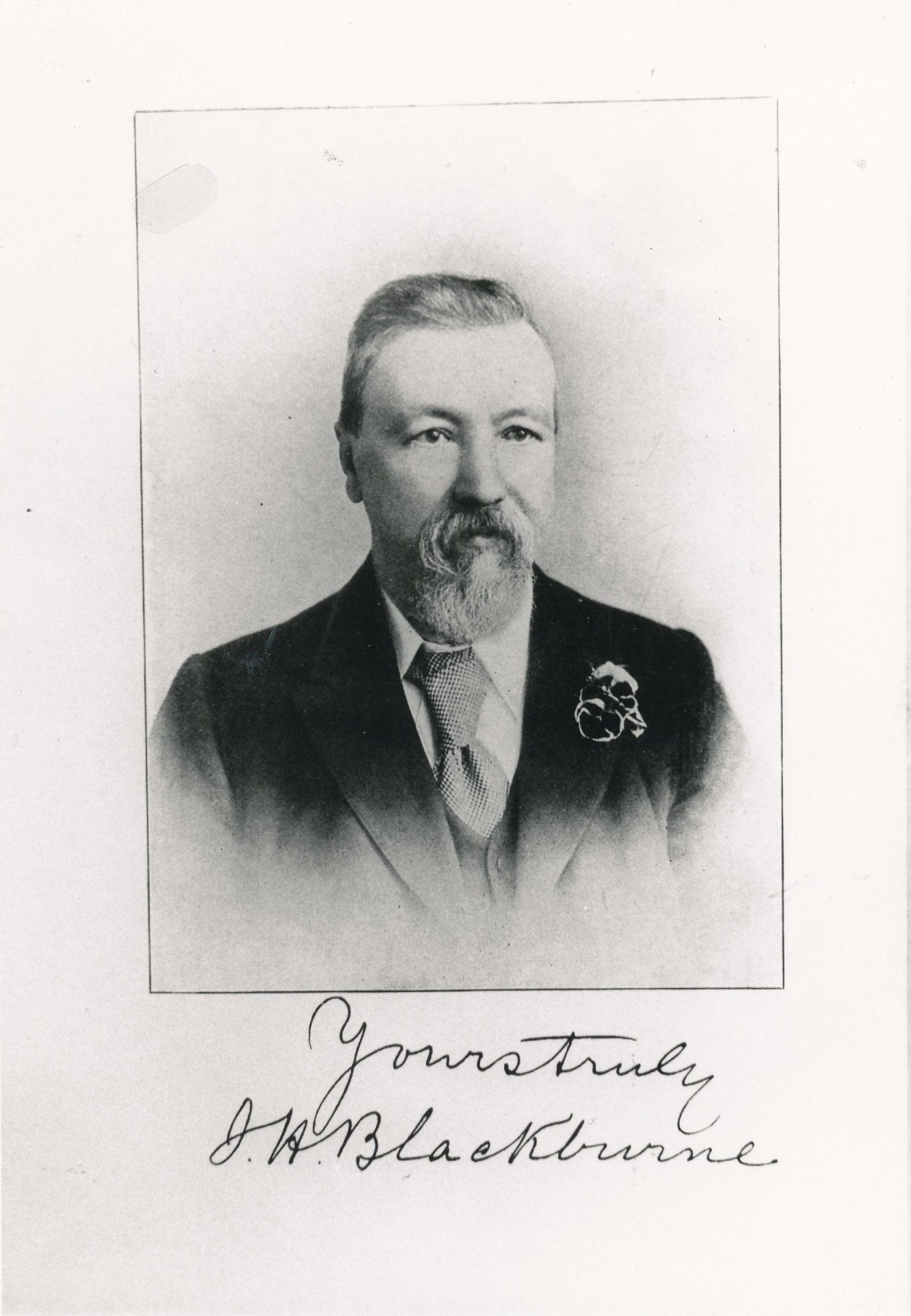
Joseph Blackburne (10-xii-1841 01-ix-1924). Photograph from The Encyclopedia of Chess by Harry Golombek
His most notable successes were =1st with Steinitz at Vienna 1873 (Blackburne lost the play-off match), 1st at Berlin 1881 ahead of Paulsen, Schallopp, Chigorin, Winawer and Zukertort, and 2nd to Tarrasch at Manchester 1890.
Blackburne won the BCA Championship in 1868 and for many years was ranked as Britain’s foremost player. In 1914 – at the age of 72 – he shared first place at the BCF congress in Chester.
In match play his success was mixed. He defeated Bird in 1888 (+4-1) and Gunsberg in 1881 (+7-4=3) but lost a second match to Gunsberg in 1886 (+2-5=6). He lost to Lasker (+0-6=4) in 1892 and was defeated heavily twice by Steinitz : in 1862/3 (+1-7=2) and in 1876 (+0-7=0), the latter of these matches being for the World Championship.
Blackburne excelled at blindfold play and in simultaneous exhibitions, which provided a major portion of his income. He died in Lewisham, a much respected veteran of eighty-three.”
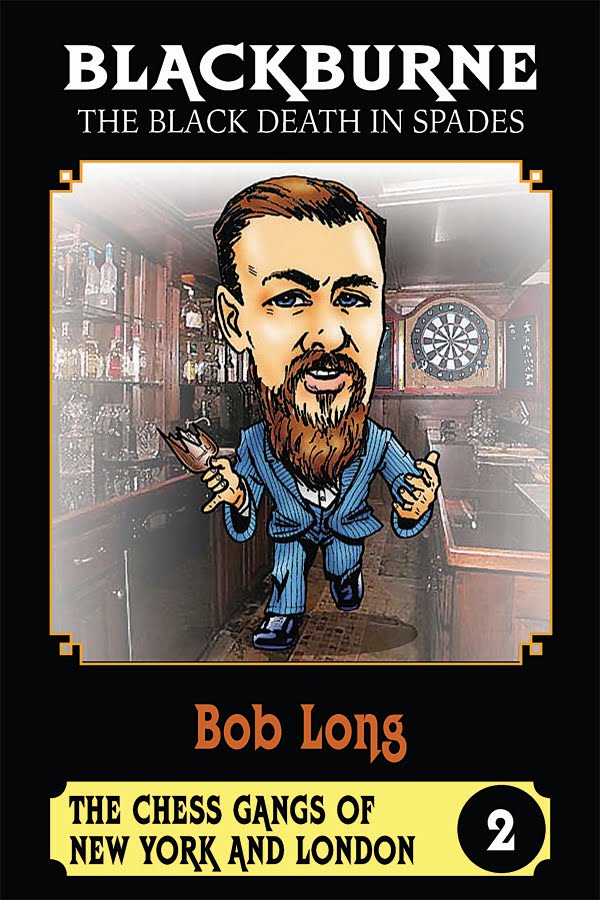
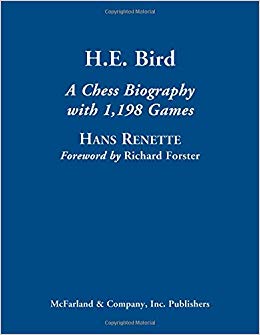
Eminent Victorian Chess Players, Tim Harding, McFarland & Co; 1st edition (20 April 2012), ISBN-13 : 978-0786465682Joseph Henry Blackburne: A Chess Biography, Tim Harding, McFarland & Co; Annotated edition (30 July 2015), ISBN-13 : 978-0786474738Blackburne : The Black Death in Spades by Bob Long
BCN remembers Joseph Blackburne (10-xii-1841 01-ix-1924)
The following (excerpts of) information were obtained via ancestry.co.uk / findmypast.co.uk:
Joseph Henry Blackburne was born on Friday, December 10th, 1841 in Chorlton, Manchester. His father was Joseph Blackburn (aged 23, a temperance reformer) and his mother was Ann Pritchard (aged 24). He had eight sons and five daughters.
His brother Frederick Pritchard Blackburn died on 11 October 1847 in Lancashire, Lancashire, when Joseph Henry was 5 years old.
His sister Clara was born on 4 November 1847 in Street, Lancashire, when Joseph Henry was 5 years old.
His half-sister Clara was born in 1848 in Manchester, Lancashire, when Joseph Henry was 7 years old.
His mother Ann passed away on 26 November 1857 in Manchester, Lancashire, at the age of 40.
His half-brother William Thomas was born on 17 June 1865 when Joseph Henry was 23 years old.
Joseph Henry Blackburne married Eleanor Driscoll on 10 December 1865 when he was 24 years old.
Joseph Henry Blackburne married Beatrice Lapham on 3 October 1876 when he was 34 years old.
His wife Beatrice passed away in January 1880 in St Olave Southwark, London, at the age of 26. They had been married 3 years.
Joseph Henry Blackburne married Mary Jane Fox in St Olave Southwark, London, on 16 December 1880 when he was 39 years old.
Joseph Henry Blackburne lived in Everton, Lancashire, in 1891.
According to Edward Winter in Chess Notes JHB lived at the following addresses :
16 Lucey Road, London SE, England (The Chess Amateur, October 1924, page 32 (address in 1879) and the 1881 British census (C.N. 4756)*).
116 Barkworth Road, Camberwell, London, England (1891 British census (C.N. 4756)*).
7 Whitbread Road, Lewisham, London, England (1901 British census (C.N. 4756)*).
45 Sandrock Road, Lewisham, London SE, England (Ranneforths Schach-Kalender, 1915, page 56, and Hastings Chess Club address list, 1922*).
According to chessgames.com :
“Joseph Henry Blackburne was born in Chorlton, Manchester. He came to be known as “The Black Death”. He enjoyed a great deal of success giving blindfold and simultaneous exhibitions. Tournament highlights include first place with Wilhelm Steinitz at Vienna 1873, first at London 1876, and first at Berlin 1881 ahead of Johannes Zukertort. In matchplay he lost twice to Steinitz and once to Emanuel Lasker. He fared a little better with Zukertort (Blackburne – Zukertort (1881)) and Isidor Gunsberg, by splitting a pair of matches, and defeating Francis Joseph Lee, ( Blackburne – Lee (1890) ). One of the last successes of his career was at the age of 72, when he tied for first place with Fred Dewhirst Yates at the 1914 British Championship.
Joseph Blackburne (10-xii-1841 01-ix-1924)
In his later years, a subscription by British chess players provided an annuity of £100 (approximately £4,000 in 2015 value), and a gift of £250 on his 80th birthday.”
In 1923 he suffered a stroke, and the next year he died of a heart attack.”
Joseph Henry Blackburne (10-xii-1841 01-ix-1924)
From The Oxford Companion to Chess (OUP, 1984) by Hooper and Whyld :
“For more than 20 years one of the first six players in the world and for even longer the leading English born player. Draughts was the most popular indoor game in his home town, Manchester; he learned this game as a child and became expert in his youth.
He was about 18 when, inspired by Morphy’s exploits, he learned the moves of chess. In July 1861 he lost all live games of a match against the Manchester chess club champion Edward Pindar, but he improved so rapidly that he defeated Pindar three months later (-1-5=2—1), and in 1862 he became champion of the club ahead of Pindar and Horwitz.
Instructed by Horwitz, Blackburne became one of the leading endgame players of his time; and wishing to emulate the feats of L. Paulsen, who visited the club in November 1861, he developed exceptional skill at blindfold chess. He spent most of the 1860s developing his chess and toying with various occupations.
After winning the British championship, 1868-9, ahead of de vere, he became a full-time professional player.
Blackburne achieved excellent results in many tournaments: Baden-Baden 1870, third equal with Neumann after Anderssen and Steinitz; London 1872, second (+5-2) after Steinitz ahead of Zukertort; Vienna 1873, second to Steinitz after a play-off; Paris 1878, third after Winawer and Zukertort: Wiesbaden 1880, first equal with Englisch and Schwarz; Berlin 1881, first (+13=2 — 1), three points ahead of Zukertort, the second prize winner (Blackburne’s greatest achievement); London 1883, third after Zukertort and Steinitz; Hamburg 1885, second equal with Englisch, Mason, Tarrasch, and Weiss half a point after Gunsberg; Frankfurt 1887, second equal with Weiss after Mackenzie; Manchester 1890, second after Tarrasch; Belfast 1892, first equal with Mason; London 1892, second ( + 6-2) after Lasker; London 1893, first ( + 2=3).
He was in the British team in 11 of the Anglo-American cable matches, meeting Pillsbury on first board six times (+2-3 — 1), and he continued to play internationally until he was 72, long enough to meet the pioneer of the hypermodern movement Nimzowitsch, whom he defeated at St Petersburg 1914.
Blackburne had remarkable combinative powers and is remembered for his swingeing king’s side attacks, often well prepared but occasionally consisting of an ingenious swindle that would deceive even the greatest all his contemporaries. The tournament book of Vienna 1873 refers to him as ‘der schrwarze Tod [Black death] der Schachspieler’, a nickname that became popular.
His unflappable temperament also earned him the soubriquet “the man with the iron nerves’. Even so, neither his temperament nor his style was suited to set matches, in which he was rarely successful against world-class players. He had other chess talents: a problem composer, he was also a fast solver, allegedly capable of outpacing the great Sam Loyd. Blackburne earned his livelihood by means of simultaneous displays, for this purpose touring Britain twice-yearly, with a few breaks, for more than 50 years.
Chess, circa 1896, JH Blackburne, well known chess player, who had toured both on the Continent and America, able to make between 40 to 60 moves when blindfolded by sheer memory (Photo by Bob Thomas/Popperfoto via Getty Images/Getty Images)
Before this time such displays were solemn affairs; Lowenthal, who would appear in formal dress and play for several hours in silence, was shocked when Blackburne turned up in ordinary clothes, chatting and making jokes as he played, and refreshing him self with whisky, (Blackburne confessed, however, that when fully absorbed in a game he never noticed whether he was drinking water instead,) Once, walking round the boards, he drained his opponent’s glass, saying when rebuked He left it en prise and I took it en passant‘
The illustrator Julius Hess depicted Blackburne in a New Yorker Staats Zeitung evening edition as sitting at a chesstable and beckoning: “Waitah! A whiskey and limejuice!”
He played his blindfold displays quickly, and with little sign of the stress that besets most blindfold players. Probably the leading blindfold expert of his time, he challenged Zukertort, a close rival in this field, to a match of ten games, played simultaneously, both players blindfold; but Zukertort declined. Many who knew and liked Blackburne subscribed to a fund which sustained him in his last years.
Image Supplied by a reader of the book ‘Eminent Victorian Chess Players’ to Tim Harding
P. A. Graham, Mr Blackburne’s Games at Chess (1899) contains 407 games annotated by Blackburne and 28 three-movers composed by him.
Mr Blackburne’s Games at Chess by PA Graham
A reprint, styled Blackburne*s Chess Games (1979), has a new introduction and two more games.
One of Blackburne’s contributions was the suggestion of using chess clocks rather than the archaic hourglasses.
Here follows a reproduction of an article from British Chess Magazine, Volume LXXX1 (1961), Number 12 (December), page 340-342 written by RN Coles entitled “Early Days of a Great Master” :
“The only record of how J. H. Blackburne first, entered the chess world is the one provided by P. Anderson Graham in the introduction to his collection of Blackburne’s games. This has all the ingredients of a romanticized version of the truth-the first casual games in a temperance hotel, then entry to the important Manchester Club and a series of victories over ever stronger opponents until at last Pindar, Champion of the Provinces, comes along, plays the unknown youth and is defeated.
Reference to C. H. Stanley’s column in the Weekly Guardian and Express helps to supply a more accurate version. Young Blackburne’s earliest interest was in problems and he submitted one to the Guardian and Express which appeared in January, 1861, only to be found by several solvers to be cooked, Then silence till May 11th, when the column carries a note:
J. H. B. Problems received with much pleasure…Shall be glad to see you at the Club.”
Here are a couple of published problems. For a complete listing see below.
Manchester Express, 1861
#4. 6+4
The Field, 1893
#3, 7+6
Not yet a member, clearly. Nevertheless, he contrived somehow to meet Pindar outside the club and played some games-with him (two scores appear in the Guardian and Express, July 20th), and a set-match of five up was then arranged, still played in private (Guardian and Express, August 3lst), which “was terminated by Mr. Pindar winning a clear victory, the score being Pindar 5, Blackburne 0” (one game was quoted in the July “B.C.M.” and another score can be found in the Guardian and Express, July 27th.
“A second match was agreed upon, level games to entitle either player to the victor’s palm. The result … is calculated positively, to startle the chess world. The first game was scored by Mr. Pindar; of the next seven, Blackburne won five and the two remaining were drawn. ‘At this point Mr. Pindar resigned the match.” (Guardian and Express, September 7th, with the score of a Blackburne win from this match quoted February 1st, 1962.)
Only now does Blackburne appear to have joined the Manchester Club, meeting such players as Stanley himself for the first time (Guardian and Express gives the score of a casual game, November 9th), though Stanley later claimed personally to have discovered the young prodigy.
In November, 1861, Paulsen visited the club and the score survives of a casual game in which he beat Blackburne, who played a Winawer Variation of the French Defence long before Winawer ever came on the-scene (Guardian and Express, December,1861); Paulsen concluded his visit with one of his celebrated ten-board blindfold displays and not unnaturally the young Blackburne eagerly took a board; his defeat is No.25O in his games collection. This so stimulated him that he himself tried blindfold play and by January 20th, 1862, was able to give his first display against four boards, winning them all (Guardian and Express, January 25th, with one of the scores). This he followed with seven games on February 8th,
winning five and losing two. (Guardian and Express, February 8th) and finally ten games on February 8th, winning five, losing two, and drawing three (Guardian and Express,February 15th, which quotes the score of one game in addition to No. 254 in his games).
Inter-club matches were something of a rarity in those days and were regarded as of considerable importance when they occurred; one such was the annual Manchester-Liverpool match and in 1862 Blackburne took part for the first time, being matched against Wellington, another young player of promise who seems to have got no further; as many games were played between opponents as time allowed and these two young men played three, all won by Blackburne. (Guardian and Express, February 22nd, which quotes the score of one game in addition to No. 138 in the collection).
During this spring the rivalry with Pindar was renewed in a third match for the first five wins and after eleven games the score stood at 4 each, with three drawn (Guardian and Express, March 15th, quoting the score of the eleventh game), but I cannot find who won the last game. Since Blackburne was hailed as club champion this season, one must suppose he was the victor.
Such was his first club season. ln June, 1862, he played in the London lnternational Tournament and from then on his chess career was public property.
To conclude, here is the score of the eleventh game of his third match with Pindar, a critical struggle in which his budding mastery appears at the-end. From an inferior opening he struggles into an equal ending but by a rash exchange of Rooks on the 36th move gives Pindar a clear advantage, which could have been held by 41. P-R4. Blackburne seizes on this omission like a real master to switch into a most accurately calculated queen ending.
and here is the original article:
British Chess Magazine, Volume LXXX1 (1961), Number 12 (December), page 340British Chess Magazine, Volume LXXX1 (1961), Number 12 (December), page 341
Many juniors and beginners will know the Blackburne Shilling Gambit (or Kostić Gambit) in some circles known (named by Julian Hodgson) as the ‘Oh My God’:
There are variations named after Blackburne as follows :
The Blackburne Attack in the Four Knights is
and the Blackburne Variation of the Dutch defence is
and a popular line in the Queen’s Gambit
are attributed to Blackburne in the literature.
According to The Encyclopedia of Chess (Batsford, 1977) by Harry Golombek :
“British grandmaster and highly successful tournament player who was one of the most prominent masters of the nineteenth century. He did not learn to play chess until the age of nineteen, but his natural gifts soon brought him into the front rank of British players, and in 1868 he abandoned his business interests and adopted chess as a profession.
Blackburne’s international tournament career spans an impressive fifty-two years from London 1862 to St. Petersburg 1914 – a total of 53 events in which he played 814 games, scoring over 62%. Although he rarely won international events, he generally finished in the top half of the table and his fierce competitive spirit coupled with his great combinative ability earned the pleasant nickname of ‘the Black Death’.
Joseph Blackburne (10-xii-1841 01-ix-1924). Photograph from The Encyclopedia of Chess by Harry Golombek
His most notable successes were =1st with Steinitz at Vienna 1873 (Blackburne lost the play-off match), 1st at Berlin 1881 ahead of Paulsen, Schallopp, Chigorin, Winawer and Zukertort, and 2nd to Tarrasch at Manchester 1890.
Blackburne won the BCA Championship in 1868 and for many years was ranked as Britain’s foremost player. In 1914 – at the age of 72 – he shared first place at the BCF congress in Chester.
In match play his success was mixed. He defeated Bird in 1888 (+4-1) and Gunsberg in 1881 (+7-4=3) but lost a second match to Gunsberg in 1886 (+2-5=6). He lost to Lasker (+0-6=4) in 1892 and was defeated heavily twice by Steinitz : in 1862/3 (+1-7=2) and in 1876 (+0-7=0), the latter of these matches being for the World Championship.
Blackburne excelled at blindfold play and in simultaneous exhibitions, which provided a major portion of his income. He died in Lewisham, a much respected veteran of eighty-three.”
Eminent Victorian Chess Players, Tim Harding, McFarland & Co; 1st edition (20 April 2012), ISBN-13 : 978-0786465682Joseph Henry Blackburne: A Chess Biography, Tim Harding, McFarland & Co; Annotated edition (30 July 2015), ISBN-13 : 978-0786474738Blackburne : The Black Death in Spades by Bob Long
BCN remembers Joseph Blackburne (10-xii-1841 01-ix-1924)
The following (excerpts of) information were obtained via ancestry.co.uk / findmypast.co.uk:
Joseph Henry Blackburne was born on Friday, December 10th, 1841 in Chorlton, Manchester. His father was Joseph Blackburn (aged 23, a temperance reformer) and his mother was Ann Pritchard (aged 24). He had eight sons and five daughters.
His brother Frederick Pritchard Blackburn died on 11 October 1847 in Lancashire, Lancashire, when Joseph Henry was 5 years old.
His sister Clara was born on 4 November 1847 in Street, Lancashire, when Joseph Henry was 5 years old.
His half-sister Clara was born in 1848 in Manchester, Lancashire, when Joseph Henry was 7 years old.
His mother Ann passed away on 26 November 1857 in Manchester, Lancashire, at the age of 40.
His half-brother William Thomas was born on 17 June 1865 when Joseph Henry was 23 years old.
Joseph Henry Blackburne married Eleanor Driscoll on 10 December 1865 when he was 24 years old.
Joseph Henry Blackburne married Beatrice Lapham on 3 October 1876 when he was 34 years old.
His wife Beatrice passed away in January 1880 in St Olave Southwark, London, at the age of 26. They had been married 3 years.
Joseph Henry Blackburne married Mary Jane Fox in St Olave Southwark, London, on 16 December 1880 when he was 39 years old.
Joseph Henry Blackburne lived in Everton, Lancashire, in 1891.
According to Edward Winter in Chess Notes JHB lived at the following addresses :
16 Lucey Road, London SE, England (The Chess Amateur, October 1924, page 32 (address in 1879) and the 1881 British census (C.N. 4756)*).
116 Barkworth Road, Camberwell, London, England (1891 British census (C.N. 4756)*).
7 Whitbread Road, Lewisham, London, England (1901 British census (C.N. 4756)*).
45 Sandrock Road, Lewisham, London SE, England (Ranneforths Schach-Kalender, 1915, page 56, and Hastings Chess Club address list, 1922*).
According to chessgames.com :
“Joseph Henry Blackburne was born in Chorlton, Manchester. He came to be known as “The Black Death”. He enjoyed a great deal of success giving blindfold and simultaneous exhibitions. Tournament highlights include first place with Wilhelm Steinitz at Vienna 1873, first at London 1876, and first at Berlin 1881 ahead of Johannes Zukertort. In matchplay he lost twice to Steinitz and once to Emanuel Lasker. He fared a little better with Zukertort (Blackburne – Zukertort (1881)) and Isidor Gunsberg, by splitting a pair of matches, and defeating Francis Joseph Lee, ( Blackburne – Lee (1890) ). One of the last successes of his career was at the age of 72, when he tied for first place with Fred Dewhirst Yates at the 1914 British Championship.
Joseph Blackburne (10-xii-1841 01-ix-1924)
In his later years, a subscription by British chess players provided an annuity of £100 (approximately £4,000 in 2015 value), and a gift of £250 on his 80th birthday.”
In 1923 he suffered a stroke, and the next year he died of a heart attack.”
Joseph Henry Blackburne (10-xii-1841 01-ix-1924)
From The Oxford Companion to Chess (OUP, 1984) by Hooper and Whyld :
“For more than 20 years one of the first six players in the world and for even longer the leading English born player. Draughts was the most popular indoor game in his home town, Manchester; he learned this game as a child and became expert in his youth.
He was about 18 when, inspired by Morphy’s exploits, he learned the moves of chess. In July 1861 he lost all live games of a match against the Manchester chess club champion Edward Pindar, but he improved so rapidly that he defeated Pindar three months later (-1-5=2—1), and in 1862 he became champion of the club ahead of Pindar and Horwitz.
Instructed by Horwitz, Blackburne became one of the leading endgame players of his time; and wishing to emulate the feats of L. Paulsen, who visited the club in November 1861, he developed exceptional skill at blindfold chess. He spent most of the 1860s developing his chess and toying with various occupations.
After winning the British championship, 1868-9, ahead of de vere, he became a full-time professional player.
Blackburne achieved excellent results in many tournaments: Baden-Baden 1870, third equal with Neumann after Anderssen and Steinitz; London 1872, second (+5-2) after Steinitz ahead of Zukertort; Vienna 1873, second to Steinitz after a play-off; Paris 1878, third after Winawer and Zukertort: Wiesbaden 1880, first equal with Englisch and Schwarz; Berlin 1881, first (+13=2 — 1), three points ahead of Zukertort, the second prize winner (Blackburne’s greatest achievement); London 1883, third after Zukertort and Steinitz; Hamburg 1885, second equal with Englisch, Mason, Tarrasch, and Weiss half a point after Gunsberg; Frankfurt 1887, second equal with Weiss after Mackenzie; Manchester 1890, second after Tarrasch; Belfast 1892, first equal with Mason; London 1892, second ( + 6-2) after Lasker; London 1893, first ( + 2=3).
He was in the British team in 11 of the Anglo-American cable matches, meeting Pillsbury on first board six times (+2-3 — 1), and he continued to play internationally until he was 72, long enough to meet the pioneer of the hypermodern movement Nimzowitsch, whom he defeated at St Petersburg 1914.
Blackburne had remarkable combinative powers and is remembered for his swingeing king’s side attacks, often well prepared but occasionally consisting of an ingenious swindle that would deceive even the greatest all his contemporaries. The tournament book of Vienna 1873 refers to him as ‘der schrwarze Tod [Black death] der Schachspieler’, a nickname that became popular.
His unflappable temperament also earned him the soubriquet “the man with the iron nerves’. Even so, neither his temperament nor his style was suited to set matches, in which he was rarely successful against world-class players. He had other chess talents: a problem composer, he was also a fast solver, allegedly capable of outpacing the great Sam Loyd. Blackburne earned his livelihood by means of simultaneous displays, for this purpose touring Britain twice-yearly, with a few breaks, for more than 50 years.
Chess, circa 1896, JH Blackburne, well known chess player, who had toured both on the Continent and America, able to make between 40 to 60 moves when blindfolded by sheer memory (Photo by Bob Thomas/Popperfoto via Getty Images/Getty Images)
Before this time such displays were solemn affairs; Lowenthal, who would appear in formal dress and play for several hours in silence, was shocked when Blackburne turned up in ordinary clothes, chatting and making jokes as he played, and refreshing him self with whisky, (Blackburne confessed, however, that when fully absorbed in a game he never noticed whether he was drinking water instead,) Once, walking round the boards, he drained his opponent’s glass, saying when rebuked He left it en prise and I took it en passant‘
The illustrator Julius Hess depicted Blackburne in a New Yorker Staats Zeitung evening edition as sitting at a chesstable and beckoning: “Waitah! A whiskey and limejuice!”
He played his blindfold displays quickly, and with little sign of the stress that besets most blindfold players. Probably the leading blindfold expert of his time, he challenged Zukertort, a close rival in this field, to a match of ten games, played simultaneously, both players blindfold; but Zukertort declined. Many who knew and liked Blackburne subscribed to a fund which sustained him in his last years.
Image Supplied by a reader of the book ‘Eminent Victorian Chess Players’ to Tim Harding
P. A. Graham, Mr Blackburne’s Games at Chess (1899) contains 407 games annotated by Blackburne and 28 three-movers composed by him.
Mr Blackburne’s Games at Chess by PA Graham
A reprint, styled Blackburne*s Chess Games (1979), has a new introduction and two more games.
One of Blackburne’s contributions was the suggestion of using chess clocks rather than the archaic hourglasses.
Here follows a reproduction of an article from British Chess Magazine, Volume LXXX1 (1961), Number 12 (December), page 340-342 written by RN Coles entitled “Early Days of a Great Master” :
“The only record of how J. H. Blackburne first, entered the chess world is the one provided by P. Anderson Graham in the introduction to his collection of Blackburne’s games. This has all the ingredients of a romanticized version of the truth-the first casual games in a temperance hotel, then entry to the important Manchester Club and a series of victories over ever stronger opponents until at last Pindar, Champion of the Provinces, comes along, plays the unknown youth and is defeated.
Reference to C. H. Stanley’s column in the Weekly Guardian and Express helps to supply a more accurate version. Young Blackburne’s earliest interest was in problems and he submitted one to the Guardian and Express which appeared in January, 1861, only to be found by several solvers to be cooked, Then silence till May 11th, when the column carries a note:
J. H. B. Problems received with much pleasure…Shall be glad to see you at the Club.”
Here are a couple of published problems. For a complete listing see below.
Manchester Express, 1861
#4. 6+4
The Field, 1893
#3, 7+6
Not yet a member, clearly. Nevertheless, he contrived somehow to meet Pindar outside the club and played some games-with him (two scores appear in the Guardian and Express, July 20th), and a set-match of five up was then arranged, still played in private (Guardian and Express, August 3lst), which “was terminated by Mr. Pindar winning a clear victory, the score being Pindar 5, Blackburne 0” (one game was quoted in the July “B.C.M.” and another score can be found in the Guardian and Express, July 27th.
“A second match was agreed upon, level games to entitle either player to the victor’s palm. The result … is calculated positively, to startle the chess world. The first game was scored by Mr. Pindar; of the next seven, Blackburne won five and the two remaining were drawn. ‘At this point Mr. Pindar resigned the match.” (Guardian and Express, September 7th, with the score of a Blackburne win from this match quoted February 1st, 1962.)
Only now does Blackburne appear to have joined the Manchester Club, meeting such players as Stanley himself for the first time (Guardian and Express gives the score of a casual game, November 9th), though Stanley later claimed personally to have discovered the young prodigy.
In November, 1861, Paulsen visited the club and the score survives of a casual game in which he beat Blackburne, who played a Winawer Variation of the French Defence long before Winawer ever came on the-scene (Guardian and Express, December,1861); Paulsen concluded his visit with one of his celebrated ten-board blindfold displays and not unnaturally the young Blackburne eagerly took a board; his defeat is No.25O in his games collection. This so stimulated him that he himself tried blindfold play and by January 20th, 1862, was able to give his first display against four boards, winning them all (Guardian and Express, January 25th, with one of the scores). This he followed with seven games on February 8th,
winning five and losing two. (Guardian and Express, February 8th) and finally ten games on February 8th, winning five, losing two, and drawing three (Guardian and Express,February 15th, which quotes the score of one game in addition to No. 254 in his games).
Inter-club matches were something of a rarity in those days and were regarded as of considerable importance when they occurred; one such was the annual Manchester-Liverpool match and in 1862 Blackburne took part for the first time, being matched against Wellington, another young player of promise who seems to have got no further; as many games were played between opponents as time allowed and these two young men played three, all won by Blackburne. (Guardian and Express, February 22nd, which quotes the score of one game in addition to No. 138 in the collection).
During this spring the rivalry with Pindar was renewed in a third match for the first five wins and after eleven games the score stood at 4 each, with three drawn (Guardian and Express, March 15th, quoting the score of the eleventh game), but I cannot find who won the last game. Since Blackburne was hailed as club champion this season, one must suppose he was the victor.
Such was his first club season. ln June, 1862, he played in the London lnternational Tournament and from then on his chess career was public property.
To conclude, here is the score of the eleventh game of his third match with Pindar, a critical struggle in which his budding mastery appears at the-end. From an inferior opening he struggles into an equal ending but by a rash exchange of Rooks on the 36th move gives Pindar a clear advantage, which could have been held by 41. P-R4. Blackburne seizes on this omission like a real master to switch into a most accurately calculated queen ending.
and here is the original article:
British Chess Magazine, Volume LXXX1 (1961), Number 12 (December), page 340British Chess Magazine, Volume LXXX1 (1961), Number 12 (December), page 341
Many juniors and beginners will know the Blackburne Shilling Gambit (or Kostić Gambit) in some circles known (named by Julian Hodgson) as the ‘Oh My God’:
There are variations named after Blackburne as follows :
The Blackburne Attack in the Four Knights is
and the Blackburne Variation of the Dutch defence is
and a popular line in the Queen’s Gambit
are attributed to Blackburne in the literature.
According to The Encyclopedia of Chess (Batsford, 1977) by Harry Golombek :
“British grandmaster and highly successful tournament player who was one of the most prominent masters of the nineteenth century. He did not learn to play chess until the age of nineteen, but his natural gifts soon brought him into the front rank of British players, and in 1868 he abandoned his business interests and adopted chess as a profession.
Blackburne’s international tournament career spans an impressive fifty-two years from London 1862 to St. Petersburg 1914 – a total of 53 events in which he played 814 games, scoring over 62%. Although he rarely won international events, he generally finished in the top half of the table and his fierce competitive spirit coupled with his great combinative ability earned the pleasant nickname of ‘the Black Death’.
Joseph Blackburne (10-xii-1841 01-ix-1924). Photograph from The Encyclopedia of Chess by Harry Golombek
His most notable successes were =1st with Steinitz at Vienna 1873 (Blackburne lost the play-off match), 1st at Berlin 1881 ahead of Paulsen, Schallopp, Chigorin, Winawer and Zukertort, and 2nd to Tarrasch at Manchester 1890.
Blackburne won the BCA Championship in 1868 and for many years was ranked as Britain’s foremost player. In 1914 – at the age of 72 – he shared first place at the BCF congress in Chester.
In match play his success was mixed. He defeated Bird in 1888 (+4-1) and Gunsberg in 1881 (+7-4=3) but lost a second match to Gunsberg in 1886 (+2-5=6). He lost to Lasker (+0-6=4) in 1892 and was defeated heavily twice by Steinitz : in 1862/3 (+1-7=2) and in 1876 (+0-7=0), the latter of these matches being for the World Championship.
Blackburne excelled at blindfold play and in simultaneous exhibitions, which provided a major portion of his income. He died in Lewisham, a much respected veteran of eighty-three.”
Eminent Victorian Chess Players, Tim Harding, McFarland & Co; 1st edition (20 April 2012), ISBN-13 : 978-0786465682Joseph Henry Blackburne: A Chess Biography, Tim Harding, McFarland & Co; Annotated edition (30 July 2015), ISBN-13 : 978-0786474738Blackburne : The Black Death in Spades by Bob Long
BCN remembers Joseph Blackburne (10-xii-1841 01-ix-1924)
The following (excerpts of) information were obtained via ancestry.co.uk / findmypast.co.uk:
Joseph Henry Blackburne was born on Friday, December 10th, 1841 in Chorlton, Manchester. His father was Joseph Blackburn (aged 23, a temperance reformer) and his mother was Ann Pritchard (aged 24). He had eight sons and five daughters.
His brother Frederick Pritchard Blackburn died on 11 October 1847 in Lancashire, Lancashire, when Joseph Henry was 5 years old.
His sister Clara was born on 4 November 1847 in Street, Lancashire, when Joseph Henry was 5 years old.
His half-sister Clara was born in 1848 in Manchester, Lancashire, when Joseph Henry was 7 years old.
His mother Ann passed away on 26 November 1857 in Manchester, Lancashire, at the age of 40.
His half-brother William Thomas was born on 17 June 1865 when Joseph Henry was 23 years old.
Joseph Henry Blackburne married Eleanor Driscoll on 10 December 1865 when he was 24 years old.
Joseph Henry Blackburne married Beatrice Lapham on 3 October 1876 when he was 34 years old.
His wife Beatrice passed away in January 1880 in St Olave Southwark, London, at the age of 26. They had been married 3 years.
Joseph Henry Blackburne married Mary Jane Fox in St Olave Southwark, London, on 16 December 1880 when he was 39 years old.
Joseph Henry Blackburne lived in Everton, Lancashire, in 1891.
According to Edward Winter in Chess Notes JHB lived at the following addresses :
16 Lucey Road, London SE, England (The Chess Amateur, October 1924, page 32 (address in 1879) and the 1881 British census (C.N. 4756)*).
116 Barkworth Road, Camberwell, London, England (1891 British census (C.N. 4756)*).
7 Whitbread Road, Lewisham, London, England (1901 British census (C.N. 4756)*).
45 Sandrock Road, Lewisham, London SE, England (Ranneforths Schach-Kalender, 1915, page 56, and Hastings Chess Club address list, 1922*).
According to chessgames.com :
“Joseph Henry Blackburne was born in Chorlton, Manchester. He came to be known as “The Black Death”. He enjoyed a great deal of success giving blindfold and simultaneous exhibitions. Tournament highlights include first place with Wilhelm Steinitz at Vienna 1873, first at London 1876, and first at Berlin 1881 ahead of Johannes Zukertort. In matchplay he lost twice to Steinitz and once to Emanuel Lasker. He fared a little better with Zukertort (Blackburne – Zukertort (1881)) and Isidor Gunsberg, by splitting a pair of matches, and defeating Francis Joseph Lee, ( Blackburne – Lee (1890) ). One of the last successes of his career was at the age of 72, when he tied for first place with Fred Dewhirst Yates at the 1914 British Championship.
Joseph Blackburne (10-xii-1841 01-ix-1924)
In his later years, a subscription by British chess players provided an annuity of £100 (approximately £4,000 in 2015 value), and a gift of £250 on his 80th birthday.”
In 1923 he suffered a stroke, and the next year he died of a heart attack.”
Joseph Henry Blackburne (10-xii-1841 01-ix-1924)
From The Oxford Companion to Chess (OUP, 1984) by Hooper and Whyld :
“For more than 20 years one of the first six players in the world and for even longer the leading English born player. Draughts was the most popular indoor game in his home town, Manchester; he learned this game as a child and became expert in his youth.
He was about 18 when, inspired by Morphy’s exploits, he learned the moves of chess. In July 1861 he lost all live games of a match against the Manchester chess club champion Edward Pindar, but he improved so rapidly that he defeated Pindar three months later (-1-5=2—1), and in 1862 he became champion of the club ahead of Pindar and Horwitz.
Instructed by Horwitz, Blackburne became one of the leading endgame players of his time; and wishing to emulate the feats of L. Paulsen, who visited the club in November 1861, he developed exceptional skill at blindfold chess. He spent most of the 1860s developing his chess and toying with various occupations.
After winning the British championship, 1868-9, ahead of de vere, he became a full-time professional player.
Blackburne achieved excellent results in many tournaments: Baden-Baden 1870, third equal with Neumann after Anderssen and Steinitz; London 1872, second (+5-2) after Steinitz ahead of Zukertort; Vienna 1873, second to Steinitz after a play-off; Paris 1878, third after Winawer and Zukertort: Wiesbaden 1880, first equal with Englisch and Schwarz; Berlin 1881, first (+13=2 — 1), three points ahead of Zukertort, the second prize winner (Blackburne’s greatest achievement); London 1883, third after Zukertort and Steinitz; Hamburg 1885, second equal with Englisch, Mason, Tarrasch, and Weiss half a point after Gunsberg; Frankfurt 1887, second equal with Weiss after Mackenzie; Manchester 1890, second after Tarrasch; Belfast 1892, first equal with Mason; London 1892, second ( + 6-2) after Lasker; London 1893, first ( + 2=3).
He was in the British team in 11 of the Anglo-American cable matches, meeting Pillsbury on first board six times (+2-3 — 1), and he continued to play internationally until he was 72, long enough to meet the pioneer of the hypermodern movement Nimzowitsch, whom he defeated at St Petersburg 1914.
Blackburne had remarkable combinative powers and is remembered for his swingeing king’s side attacks, often well prepared but occasionally consisting of an ingenious swindle that would deceive even the greatest all his contemporaries. The tournament book of Vienna 1873 refers to him as ‘der schrwarze Tod [Black death] der Schachspieler’, a nickname that became popular.
His unflappable temperament also earned him the soubriquet “the man with the iron nerves’. Even so, neither his temperament nor his style was suited to set matches, in which he was rarely successful against world-class players. He had other chess talents: a problem composer, he was also a fast solver, allegedly capable of outpacing the great Sam Loyd. Blackburne earned his livelihood by means of simultaneous displays, for this purpose touring Britain twice-yearly, with a few breaks, for more than 50 years.
Chess, circa 1896, JH Blackburne, well known chess player, who had toured both on the Continent and America, able to make between 40 to 60 moves when blindfolded by sheer memory (Photo by Bob Thomas/Popperfoto via Getty Images/Getty Images)
Before this time such displays were solemn affairs; Lowenthal, who would appear in formal dress and play for several hours in silence, was shocked when Blackburne turned up in ordinary clothes, chatting and making jokes as he played, and refreshing him self with whisky, (Blackburne confessed, however, that when fully absorbed in a game he never noticed whether he was drinking water instead,) Once, walking round the boards, he drained his opponent’s glass, saying when rebuked He left it en prise and I took it en passant‘
The illustrator Julius Hess depicted Blackburne in a New Yorker Staats Zeitung evening edition as sitting at a chesstable and beckoning: “Waitah! A whiskey and limejuice!”
He played his blindfold displays quickly, and with little sign of the stress that besets most blindfold players. Probably the leading blindfold expert of his time, he challenged Zukertort, a close rival in this field, to a match of ten games, played simultaneously, both players blindfold; but Zukertort declined. Many who knew and liked Blackburne subscribed to a fund which sustained him in his last years.
Image Supplied by a reader of the book ‘Eminent Victorian Chess Players’ to Tim Harding
P. A. Graham, Mr Blackburne’s Games at Chess (1899) contains 407 games annotated by Blackburne and 28 three-movers composed by him.
Mr Blackburne’s Games at Chess by PA Graham
A reprint, styled Blackburne*s Chess Games (1979), has a new introduction and two more games.
One of Blackburne’s contributions was the suggestion of using chess clocks rather than the archaic hourglasses.
Here follows a reproduction of an article from British Chess Magazine, Volume LXXX1 (1961), Number 12 (December), page 340-342 written by RN Coles entitled “Early Days of a Great Master” :
“The only record of how J. H. Blackburne first, entered the chess world is the one provided by P. Anderson Graham in the introduction to his collection of Blackburne’s games. This has all the ingredients of a romanticized version of the truth-the first casual games in a temperance hotel, then entry to the important Manchester Club and a series of victories over ever stronger opponents until at last Pindar, Champion of the Provinces, comes along, plays the unknown youth and is defeated.
Reference to C. H. Stanley’s column in the Weekly Guardian and Express helps to supply a more accurate version. Young Blackburne’s earliest interest was in problems and he submitted one to the Guardian and Express which appeared in January, 1861, only to be found by several solvers to be cooked, Then silence till May 11th, when the column carries a note:
J. H. B. Problems received with much pleasure…Shall be glad to see you at the Club.”
Here are a couple of published problems. For a complete listing see below.
Manchester Express, 1861
#4. 6+4
The Field, 1893
#3, 7+6
Not yet a member, clearly. Nevertheless, he contrived somehow to meet Pindar outside the club and played some games-with him (two scores appear in the Guardian and Express, July 20th), and a set-match of five up was then arranged, still played in private (Guardian and Express, August 3lst), which “was terminated by Mr. Pindar winning a clear victory, the score being Pindar 5, Blackburne 0” (one game was quoted in the July “B.C.M.” and another score can be found in the Guardian and Express, July 27th.
“A second match was agreed upon, level games to entitle either player to the victor’s palm. The result … is calculated positively, to startle the chess world. The first game was scored by Mr. Pindar; of the next seven, Blackburne won five and the two remaining were drawn. ‘At this point Mr. Pindar resigned the match.” (Guardian and Express, September 7th, with the score of a Blackburne win from this match quoted February 1st, 1962.)
Only now does Blackburne appear to have joined the Manchester Club, meeting such players as Stanley himself for the first time (Guardian and Express gives the score of a casual game, November 9th), though Stanley later claimed personally to have discovered the young prodigy.
In November, 1861, Paulsen visited the club and the score survives of a casual game in which he beat Blackburne, who played a Winawer Variation of the French Defence long before Winawer ever came on the-scene (Guardian and Express, December,1861); Paulsen concluded his visit with one of his celebrated ten-board blindfold displays and not unnaturally the young Blackburne eagerly took a board; his defeat is No.25O in his games collection. This so stimulated him that he himself tried blindfold play and by January 20th, 1862, was able to give his first display against four boards, winning them all (Guardian and Express, January 25th, with one of the scores). This he followed with seven games on February 8th,
winning five and losing two. (Guardian and Express, February 8th) and finally ten games on February 8th, winning five, losing two, and drawing three (Guardian and Express,February 15th, which quotes the score of one game in addition to No. 254 in his games).
Inter-club matches were something of a rarity in those days and were regarded as of considerable importance when they occurred; one such was the annual Manchester-Liverpool match and in 1862 Blackburne took part for the first time, being matched against Wellington, another young player of promise who seems to have got no further; as many games were played between opponents as time allowed and these two young men played three, all won by Blackburne. (Guardian and Express, February 22nd, which quotes the score of one game in addition to No. 138 in the collection).
During this spring the rivalry with Pindar was renewed in a third match for the first five wins and after eleven games the score stood at 4 each, with three drawn (Guardian and Express, March 15th, quoting the score of the eleventh game), but I cannot find who won the last game. Since Blackburne was hailed as club champion this season, one must suppose he was the victor.
Such was his first club season. ln June, 1862, he played in the London lnternational Tournament and from then on his chess career was public property.
To conclude, here is the score of the eleventh game of his third match with Pindar, a critical struggle in which his budding mastery appears at the-end. From an inferior opening he struggles into an equal ending but by a rash exchange of Rooks on the 36th move gives Pindar a clear advantage, which could have been held by 41. P-R4. Blackburne seizes on this omission like a real master to switch into a most accurately calculated queen ending.
and here is the original article:
British Chess Magazine, Volume LXXX1 (1961), Number 12 (December), page 340British Chess Magazine, Volume LXXX1 (1961), Number 12 (December), page 341
Many juniors and beginners will know the Blackburne Shilling Gambit (or Kostić Gambit) in some circles known (named by Julian Hodgson) as the ‘Oh My God’:
There are variations named after Blackburne as follows :
The Blackburne Attack in the Four Knights is
and the Blackburne Variation of the Dutch defence is
and a popular line in the Queen’s Gambit
are attributed to Blackburne in the literature.
According to The Encyclopedia of Chess (Batsford, 1977) by Harry Golombek :
“British grandmaster and highly successful tournament player who was one of the most prominent masters of the nineteenth century. He did not learn to play chess until the age of nineteen, but his natural gifts soon brought him into the front rank of British players, and in 1868 he abandoned his business interests and adopted chess as a profession.
Blackburne’s international tournament career spans an impressive fifty-two years from London 1862 to St. Petersburg 1914 – a total of 53 events in which he played 814 games, scoring over 62%. Although he rarely won international events, he generally finished in the top half of the table and his fierce competitive spirit coupled with his great combinative ability earned the pleasant nickname of ‘the Black Death’.
Joseph Blackburne (10-xii-1841 01-ix-1924). Photograph from The Encyclopedia of Chess by Harry Golombek
His most notable successes were =1st with Steinitz at Vienna 1873 (Blackburne lost the play-off match), 1st at Berlin 1881 ahead of Paulsen, Schallopp, Chigorin, Winawer and Zukertort, and 2nd to Tarrasch at Manchester 1890.
Blackburne won the BCA Championship in 1868 and for many years was ranked as Britain’s foremost player. In 1914 – at the age of 72 – he shared first place at the BCF congress in Chester.
In match play his success was mixed. He defeated Bird in 1888 (+4-1) and Gunsberg in 1881 (+7-4=3) but lost a second match to Gunsberg in 1886 (+2-5=6). He lost to Lasker (+0-6=4) in 1892 and was defeated heavily twice by Steinitz : in 1862/3 (+1-7=2) and in 1876 (+0-7=0), the latter of these matches being for the World Championship.
Blackburne excelled at blindfold play and in simultaneous exhibitions, which provided a major portion of his income. He died in Lewisham, a much respected veteran of eighty-three.”
Eminent Victorian Chess Players, Tim Harding, McFarland & Co; 1st edition (20 April 2012), ISBN-13 : 978-0786465682Joseph Henry Blackburne: A Chess Biography, Tim Harding, McFarland & Co; Annotated edition (30 July 2015), ISBN-13 : 978-0786474738Blackburne : The Black Death in Spades by Bob Long
BCN remembers Joseph Blackburne (10-xii-1841 01-ix-1924)
The following (excerpts of) information were obtained via ancestry.co.uk / findmypast.co.uk:
Joseph Henry Blackburne was born on Friday, December 10th, 1841 in Chorlton, Manchester. His father was Joseph Blackburn (aged 23, a temperance reformer) and his mother was Ann Pritchard (aged 24). He had eight sons and five daughters.
His brother Frederick Pritchard Blackburn died on 11 October 1847 in Lancashire, Lancashire, when Joseph Henry was 5 years old.
His sister Clara was born on 4 November 1847 in Street, Lancashire, when Joseph Henry was 5 years old.
His half-sister Clara was born in 1848 in Manchester, Lancashire, when Joseph Henry was 7 years old.
His mother Ann passed away on 26 November 1857 in Manchester, Lancashire, at the age of 40.
His half-brother William Thomas was born on 17 June 1865 when Joseph Henry was 23 years old.
Joseph Henry Blackburne married Eleanor Driscoll on 10 December 1865 when he was 24 years old.
Joseph Henry Blackburne married Beatrice Lapham on 3 October 1876 when he was 34 years old.
His wife Beatrice passed away in January 1880 in St Olave Southwark, London, at the age of 26. They had been married 3 years.
Joseph Henry Blackburne married Mary Jane Fox in St Olave Southwark, London, on 16 December 1880 when he was 39 years old.
Joseph Henry Blackburne lived in Everton, Lancashire, in 1891.
According to Edward Winter in Chess Notes JHB lived at the following addresses :
16 Lucey Road, London SE, England (The Chess Amateur, October 1924, page 32 (address in 1879) and the 1881 British census (C.N. 4756)*).
116 Barkworth Road, Camberwell, London, England (1891 British census (C.N. 4756)*).
7 Whitbread Road, Lewisham, London, England (1901 British census (C.N. 4756)*).
45 Sandrock Road, Lewisham, London SE, England (Ranneforths Schach-Kalender, 1915, page 56, and Hastings Chess Club address list, 1922*).
According to chessgames.com :
“Joseph Henry Blackburne was born in Chorlton, Manchester. He came to be known as “The Black Death”. He enjoyed a great deal of success giving blindfold and simultaneous exhibitions. Tournament highlights include first place with Wilhelm Steinitz at Vienna 1873, first at London 1876, and first at Berlin 1881 ahead of Johannes Zukertort. In matchplay he lost twice to Steinitz and once to Emanuel Lasker. He fared a little better with Zukertort (Blackburne – Zukertort (1881)) and Isidor Gunsberg, by splitting a pair of matches, and defeating Francis Joseph Lee, ( Blackburne – Lee (1890) ). One of the last successes of his career was at the age of 72, when he tied for first place with Fred Dewhirst Yates at the 1914 British Championship.
Joseph Blackburne (10-xii-1841 01-ix-1924)
In his later years, a subscription by British chess players provided an annuity of £100 (approximately £4,000 in 2015 value), and a gift of £250 on his 80th birthday.”
In 1923 he suffered a stroke, and the next year he died of a heart attack.”
Joseph Henry Blackburne (10-xii-1841 01-ix-1924)
From The Oxford Companion to Chess (OUP, 1984) by Hooper and Whyld :
“For more than 20 years one of the first six players in the world and for even longer the leading English born player. Draughts was the most popular indoor game in his home town, Manchester; he learned this game as a child and became expert in his youth.
He was about 18 when, inspired by Morphy’s exploits, he learned the moves of chess. In July 1861 he lost all live games of a match against the Manchester chess club champion Edward Pindar, but he improved so rapidly that he defeated Pindar three months later (-1-5=2—1), and in 1862 he became champion of the club ahead of Pindar and Horwitz.
Instructed by Horwitz, Blackburne became one of the leading endgame players of his time; and wishing to emulate the feats of L. Paulsen, who visited the club in November 1861, he developed exceptional skill at blindfold chess. He spent most of the 1860s developing his chess and toying with various occupations.
After winning the British championship, 1868-9, ahead of de vere, he became a full-time professional player.
Blackburne achieved excellent results in many tournaments: Baden-Baden 1870, third equal with Neumann after Anderssen and Steinitz; London 1872, second (+5-2) after Steinitz ahead of Zukertort; Vienna 1873, second to Steinitz after a play-off; Paris 1878, third after Winawer and Zukertort: Wiesbaden 1880, first equal with Englisch and Schwarz; Berlin 1881, first (+13=2 — 1), three points ahead of Zukertort, the second prize winner (Blackburne’s greatest achievement); London 1883, third after Zukertort and Steinitz; Hamburg 1885, second equal with Englisch, Mason, Tarrasch, and Weiss half a point after Gunsberg; Frankfurt 1887, second equal with Weiss after Mackenzie; Manchester 1890, second after Tarrasch; Belfast 1892, first equal with Mason; London 1892, second ( + 6-2) after Lasker; London 1893, first ( + 2=3).
He was in the British team in 11 of the Anglo-American cable matches, meeting Pillsbury on first board six times (+2-3 — 1), and he continued to play internationally until he was 72, long enough to meet the pioneer of the hypermodern movement Nimzowitsch, whom he defeated at St Petersburg 1914.
Blackburne had remarkable combinative powers and is remembered for his swingeing king’s side attacks, often well prepared but occasionally consisting of an ingenious swindle that would deceive even the greatest all his contemporaries. The tournament book of Vienna 1873 refers to him as ‘der schrwarze Tod [Black death] der Schachspieler’, a nickname that became popular.
His unflappable temperament also earned him the soubriquet “the man with the iron nerves’. Even so, neither his temperament nor his style was suited to set matches, in which he was rarely successful against world-class players. He had other chess talents: a problem composer, he was also a fast solver, allegedly capable of outpacing the great Sam Loyd. Blackburne earned his livelihood by means of simultaneous displays, for this purpose touring Britain twice-yearly, with a few breaks, for more than 50 years.
Chess, circa 1896, JH Blackburne, well known chess player, who had toured both on the Continent and America, able to make between 40 to 60 moves when blindfolded by sheer memory (Photo by Bob Thomas/Popperfoto via Getty Images/Getty Images)
Before this time such displays were solemn affairs; Lowenthal, who would appear in formal dress and play for several hours in silence, was shocked when Blackburne turned up in ordinary clothes, chatting and making jokes as he played, and refreshing him self with whisky, (Blackburne confessed, however, that when fully absorbed in a game he never noticed whether he was drinking water instead,) Once, walking round the boards, he drained his opponent’s glass, saying when rebuked He left it en prise and I took it en passant‘
The illustrator Julius Hess depicted Blackburne in a New Yorker Staats Zeitung evening edition as sitting at a chesstable and beckoning: “Waitah! A whiskey and limejuice!”
He played his blindfold displays quickly, and with little sign of the stress that besets most blindfold players. Probably the leading blindfold expert of his time, he challenged Zukertort, a close rival in this field, to a match of ten games, played simultaneously, both players blindfold; but Zukertort declined. Many who knew and liked Blackburne subscribed to a fund which sustained him in his last years.
Image Supplied by a reader of the book ‘Eminent Victorian Chess Players’ to Tim Harding
P. A. Graham, Mr Blackburne’s Games at Chess (1899) contains 407 games annotated by Blackburne and 28 three-movers composed by him.
Mr Blackburne’s Games at Chess by PA Graham
A reprint, styled Blackburne*s Chess Games (1979), has a new introduction and two more games.
One of Blackburne’s contributions was the suggestion of using chess clocks rather than the archaic hourglasses.
Here follows a reproduction of an article from British Chess Magazine, Volume LXXX1 (1961), Number 12 (December), page 340-342 written by RN Coles entitled “Early Days of a Great Master” :
“The only record of how J. H. Blackburne first, entered the chess world is the one provided by P. Anderson Graham in the introduction to his collection of Blackburne’s games. This has all the ingredients of a romanticized version of the truth-the first casual games in a temperance hotel, then entry to the important Manchester Club and a series of victories over ever stronger opponents until at last Pindar, Champion of the Provinces, comes along, plays the unknown youth and is defeated.
Reference to C. H. Stanley’s column in the Weekly Guardian and Express helps to supply a more accurate version. Young Blackburne’s earliest interest was in problems and he submitted one to the Guardian and Express which appeared in January, 1861, only to be found by several solvers to be cooked, Then silence till May 11th, when the column carries a note:
J. H. B. Problems received with much pleasure…Shall be glad to see you at the Club.”
Here are a couple of published problems. For a complete listing see below.
Manchester Express, 1861
#4. 6+4
The Field, 1893
#3, 7+6
Not yet a member, clearly. Nevertheless, he contrived somehow to meet Pindar outside the club and played some games-with him (two scores appear in the Guardian and Express, July 20th), and a set-match of five up was then arranged, still played in private (Guardian and Express, August 3lst), which “was terminated by Mr. Pindar winning a clear victory, the score being Pindar 5, Blackburne 0” (one game was quoted in the July “B.C.M.” and another score can be found in the Guardian and Express, July 27th.
“A second match was agreed upon, level games to entitle either player to the victor’s palm. The result … is calculated positively, to startle the chess world. The first game was scored by Mr. Pindar; of the next seven, Blackburne won five and the two remaining were drawn. ‘At this point Mr. Pindar resigned the match.” (Guardian and Express, September 7th, with the score of a Blackburne win from this match quoted February 1st, 1962.)
Only now does Blackburne appear to have joined the Manchester Club, meeting such players as Stanley himself for the first time (Guardian and Express gives the score of a casual game, November 9th), though Stanley later claimed personally to have discovered the young prodigy.
In November, 1861, Paulsen visited the club and the score survives of a casual game in which he beat Blackburne, who played a Winawer Variation of the French Defence long before Winawer ever came on the-scene (Guardian and Express, December,1861); Paulsen concluded his visit with one of his celebrated ten-board blindfold displays and not unnaturally the young Blackburne eagerly took a board; his defeat is No.25O in his games collection. This so stimulated him that he himself tried blindfold play and by January 20th, 1862, was able to give his first display against four boards, winning them all (Guardian and Express, January 25th, with one of the scores). This he followed with seven games on February 8th,
winning five and losing two. (Guardian and Express, February 8th) and finally ten games on February 8th, winning five, losing two, and drawing three (Guardian and Express,February 15th, which quotes the score of one game in addition to No. 254 in his games).
Inter-club matches were something of a rarity in those days and were regarded as of considerable importance when they occurred; one such was the annual Manchester-Liverpool match and in 1862 Blackburne took part for the first time, being matched against Wellington, another young player of promise who seems to have got no further; as many games were played between opponents as time allowed and these two young men played three, all won by Blackburne. (Guardian and Express, February 22nd, which quotes the score of one game in addition to No. 138 in the collection).
During this spring the rivalry with Pindar was renewed in a third match for the first five wins and after eleven games the score stood at 4 each, with three drawn (Guardian and Express, March 15th, quoting the score of the eleventh game), but I cannot find who won the last game. Since Blackburne was hailed as club champion this season, one must suppose he was the victor.
Such was his first club season. ln June, 1862, he played in the London lnternational Tournament and from then on his chess career was public property.
To conclude, here is the score of the eleventh game of his third match with Pindar, a critical struggle in which his budding mastery appears at the-end. From an inferior opening he struggles into an equal ending but by a rash exchange of Rooks on the 36th move gives Pindar a clear advantage, which could have been held by 41. P-R4. Blackburne seizes on this omission like a real master to switch into a most accurately calculated queen ending.
and here is the original article:
British Chess Magazine, Volume LXXX1 (1961), Number 12 (December), page 340British Chess Magazine, Volume LXXX1 (1961), Number 12 (December), page 341
Many juniors and beginners will know the Blackburne Shilling Gambit (or Kostić Gambit) in some circles known (named by Julian Hodgson) as the ‘Oh My God’:
There are variations named after Blackburne as follows :
The Blackburne Attack in the Four Knights is
and the Blackburne Variation of the Dutch defence is
and a popular line in the Queen’s Gambit
are attributed to Blackburne in the literature.
According to The Encyclopedia of Chess (Batsford, 1977) by Harry Golombek :
“British grandmaster and highly successful tournament player who was one of the most prominent masters of the nineteenth century. He did not learn to play chess until the age of nineteen, but his natural gifts soon brought him into the front rank of British players, and in 1868 he abandoned his business interests and adopted chess as a profession.
Blackburne’s international tournament career spans an impressive fifty-two years from London 1862 to St. Petersburg 1914 – a total of 53 events in which he played 814 games, scoring over 62%. Although he rarely won international events, he generally finished in the top half of the table and his fierce competitive spirit coupled with his great combinative ability earned the pleasant nickname of ‘the Black Death’.
Joseph Blackburne (10-xii-1841 01-ix-1924). Photograph from The Encyclopedia of Chess by Harry Golombek
His most notable successes were =1st with Steinitz at Vienna 1873 (Blackburne lost the play-off match), 1st at Berlin 1881 ahead of Paulsen, Schallopp, Chigorin, Winawer and Zukertort, and 2nd to Tarrasch at Manchester 1890.
Blackburne won the BCA Championship in 1868 and for many years was ranked as Britain’s foremost player. In 1914 – at the age of 72 – he shared first place at the BCF congress in Chester.
In match play his success was mixed. He defeated Bird in 1888 (+4-1) and Gunsberg in 1881 (+7-4=3) but lost a second match to Gunsberg in 1886 (+2-5=6). He lost to Lasker (+0-6=4) in 1892 and was defeated heavily twice by Steinitz : in 1862/3 (+1-7=2) and in 1876 (+0-7=0), the latter of these matches being for the World Championship.
Blackburne excelled at blindfold play and in simultaneous exhibitions, which provided a major portion of his income. He died in Lewisham, a much respected veteran of eighty-three.”
Eminent Victorian Chess Players, Tim Harding, McFarland & Co; 1st edition (20 April 2012), ISBN-13 : 978-0786465682Joseph Henry Blackburne: A Chess Biography, Tim Harding, McFarland & Co; Annotated edition (30 July 2015), ISBN-13 : 978-0786474738Blackburne : The Black Death in Spades by Bob Long
Death Anniversary of Henry Edward Bird (14-vii-1829 11-iv-1908)
From The Oxford Companion to Chess by David Hooper & Ken Whyld :
“English player, accountant. He played in 13 strong tournaments, with erratic results; his best achievements were: Vienna 1873, a tie with L. Paulsen for fifth place; Paris 1878, fourth place shared with Mackenzie; Manchester 1890. third prize shared with Mackenzie after Tarrasch and Blackburne. He also played in numerous minor tournaments, notably tying with Gunsberg for first prize at London 1889. His most important match was against Steinitz in 1866 for the first to win eleven games. He was adjudged the loser when he was
called to the USA on business, the score standing +5 = 5—7 in favour of his opponent. This was a creditable result in the circumstances, for he played each game after a day’s work (Steinitz, however, was not so strong a player as he later became.) In 1886 Bird drew a match with Burn(+ 9—9). One of the most ingenious tacticians of his time, Bird played in the attacking style prevalent in his youth. He usually chose openings that were regarded as bizarre, although many of them, e.g. the Dragon Variation, have since gained acceptance.
Bird was probably the best known and longest serving habitue of the London coffee-house known as Simpson’s Divan. ‘A rosy-cheeked, blue-eyed, fair-headed boy’, he first attended around 1846 and was a constant visitor for more than 50 years, after which he was described as ‘majestic in stature, in girth, in the baldness of his great head, less majestic in the litter of tobacco ash upon his waistcoat … with a pleasant smiling countenance’. He suffered from gout which eventually so incapacitated him that he was largely confined to his home for the last years of his life.
Besides writing booklets on railway finance he wrote several books on chess. They are not without interest although the content is sometimes inaccurate and often disorganized. Bird’s Modern Chess and Chess Masterpieces (1887) contains more than 200 games, about half of them his own. Chess History and Reminiscences (1893) contains an account of contemporary players and chess affairs.
Chess History and ReminiscencesHenry Edward Bird, from Megabase 2020
Bird-Mason New York 1876 French Defence, Exchange Variation :
For this game Bird was awarded the BRILLIANCY PRIZE.
Bird (RHS, sitting) and contemporaries
The Bird Attack is variation in the Italian opening strongly advocated by Stamma and no less strongly by Biro. In May 1843 saint-Amant played it against Staunton in their first match and five years later Bird adopted the variation, playing it in many tournaments, notably with fair success at Vienna 1882, London 1883, and Nuremberg 1883.
The Bird Defence, a reply to the Spanish opening given in the first edition of Bilguer’s Handbuch, 1843. Pioneered by Bird, e.g. against Anderssen in 1854, and used on occasion by grandmasters such as Tarrasch, Spielmann, and Spassky, this defence has not gained wide acceptance.
The Bird Opening, sometimes called the Dutch Attack by analogy with the Dutch Defence. In 1873, after an absence of six years from chess, Bird played a match with Wisker. ‘Having forgotten familiar openings, I commenced adopting KBP for first move, and finding it led to highly interesting games out of the usual groove, I became partial to it. ’ Bird had also forgotten unfamiliar openings, for
1 f4 (given by Lucena) had been played by Bourdonnais, Williams, and others of that period. However Bird’s consistent adoption of the move led to its becoming a standard opening, although
never popular.
From Wikipedia :
Henry Edward Bird (Portsea in Hampshire, 14 July 1830 – 11 April 1908) was an English chess player, and also an author and accountant. He wrote a book titled Chess History and Reminiscences, and another titled An Analysis of Railways in the United Kingdom.
Although Bird was a practicing accountant, not a professional chess player, it has been said that he “lived for chess, and would play anybody anywhere, any time, under any conditions.”
At age 21, Bird was invited to the first international tournament, London 1851. He also participated in tournaments held in Vienna and New York City. In 1858 he lost a match to Paul Morphy at the age of 28, yet he played high-level chess for another 50 years. In the New York tournament of 1876, Bird received the first brilliancy prize ever awarded, for his game against James Mason.
In 1874 Bird proposed a new chess variant, which played on an 8×10 board and contained two new pieces: guard (combining the moves of the rook and knight) and equerry (combining the bishop and knight). Bird’s chess inspired José Raúl Capablanca to create another chess variant, Capablanca Chess, which differs from Bird’s chess only by the starting position.
It was Bird who popularized the chess opening now called Bird’s Opening (1.f4), as well as Bird’s Defense to the Ruy Lopez (1.e4 e5 2.Nf3 Nc6 3.Bb5 Nd4). Bird’s Opening is considered sound, though not the best try for an opening advantage. Bird’s Defense is regarded as slightly inferior, but “trappy”.
Chess NoveltiesH.E. Bird : A Chess Biography with 1,198 Games
Ninety-two today is Leonard Barden, born Tuesday, August 20th, 1929.
His mother’s maiden was Bartholomew and she became Elise EM Barden when she married Leonard’s father who was William C Barden and in 1939 they lived at 89, Tennison Road, Croydon.
89, Tennison Road, Croydon
From The Encyclopedia of Chess (Batsford, 1977) by Harry Golombek OBE:
“British Master and joint British Champion 1954. Barden was born in Croydon and learned to play at his school, Whitgift, which became a frequent producer of fine players.
In 1946 he tied for first place in the London Boys Championship and in the following year he tied with Jonathan Penrose for first place in the British Boys Championship, but lost the play-off.
In 1952 he came first at Paignton ahead of the Canadian Grandmaster Yanofsky and he reached his peak in 1954 when , after tieing for first place with the Belgian Grandmaster O’Kelly de Galway at Bognor, he tied for for first place in the British Championship at Nottingham with A. Phillips. The play-off was drawn and so the players became joint champions.
Alan Phillips and Leonard Barden are joint British Champions of 1954 in Nottingham, photographer unknown
He played for the BCF in four Olympiads from 1952 to 1962 and then abandoned competitive chess, applying all his energies to writing (he is chess correspondent of the Guardian, the Financial Times, the Evening Standard and the Field, and has written many books on the game.
He has also developed two special interests, in junior chess and in grading, working with utmost persistence and energy in both of these fields.
Leonard authored a series of articles on what was to become the Yugoslav Attack versus the Sicilian Dragon. Source : British Chess Magazine, Volume LXXXIII, Number 7 (July), page 208
Amongst his best works are : a A Guide to Chess Openings, London, 1957; The Ruy Lopez, Oxford, 1963; The King’s Indian Defence, London, 1968.”
Disappointingly Sunnucks Encyclopedia does not mention Barden at all and and surprisingly Hooper and Whyld’s usually excellent Oxford Companion only from a connection with Jim Slater.
“Leonard William Barden (born 20 August 1929, in Croydon, London) is an English chess master, writer, broadcaster, organizer and promoter. The son of a dustman, he was educated at Whitgift School, South Croydon, and Balliol College, Oxford, where he read Modern History.
Travel Chess 2nd January 1951: British chess champions Jonathan Penrose and Leonard Barden prepare their openings over breakfast in the Yelton Hotel before the 9.30 am round start at Hastings 1950-51. (Photo by Walter Bellamy/Express/Getty Images)
He learned to play chess at age 13 while in a school shelter during a World War II German air raid. Within a few years he became one of the country’s leading juniors.[1] He represented England in four Chess Olympiads. Barden played a major role in the rise of English chess from the 1970s. As a chess columnist for various newspapers, his column in London’s Evening Standard is the world’s longest-standing chess column.
Leonard Barden (seated, second from right) Before Botvinnik’s 1981 Pergamon Press clock simul against England juniors, the final competitive event of the Patriarch’s career. Standing: Stuart Conquest, Neil Dickenson. Gary Lane, Alan Byron, Daniel King, John Hawksworth, Pergamon editor. Seated: Julian Hodgson, Byron Jacobs, Mikhail Botvinnik, Leonard Barden, Bernard Cafferty.
In 1946, Barden won the British Junior Correspondence Chess Championship, and tied for first place in the London Boys’ Championship. The following year he tied for first with Jonathan Penrose in the British Boys’ Championship, but lost the playoff.
Barden finished fourth at Hastings in 1951–52. In 1952, he won the Paignton tournament ahead of the Canadian future grandmaster Daniel Yanofsky. He captained the Oxfordshire team which won the English Counties championship in 1951 and 1952.
Barden making a move at Southend 1955.
In the latter year he captained the University of Oxford team which won the National Club Championship, and he represented the university in the annual team match against the University of Cambridge during his years there. In 1953, he won the individual British Lightning Championship (ten seconds a move).
The following year, he tied for first with the Belgian grandmaster Albéric O’Kelly de Galway at Bognor Regis, was joint British champion, with Alan Phillips, and won the Southern Counties Championship.
Leonard Barden vs Victor Korchnoi, Leipzig Olympiad, 1960
He finished fourth at Hastings 1957–58, ranked by chessmetrics as his best statistical performance. In the 1958 British Chess Championship, Barden again tied for first, but lost the playoff match to Penrose 1½–3½.
Leonard Barden (centre) with Raaphi Persitz, JB Sykes, OI Galvenius and DM Armstrong, Ilford, May, 1953
LWB observes analysis between David Rumens and Murray Chandler from Brighton 1980. Photograph courtesy of John Upham.
He represented England in the Chess Olympiads at Helsinki 1952 (playing fourth board, scoring 2 wins, 5 draws, and 4 losses), Amsterdam 1954 (playing first reserve, scoring 1 win, 2 draws, and 4 losses), Leipzig 1960 (first reserve; 4 wins, 4 draws, 2 losses) and Varna 1962 (first reserve; 7 wins, 2 draws, 3 losses). The latter was his best performance by far.
Leonard Barden (left) and Murray Chandler display the Lloyds Bank Trophy which the 19-year old New Zealander won ahead of 3 Grandmasters and 10 International Masters for his finest international success up to 1979. in the Lloyds Bank Masters
Barden has a Morphy number of 3, having drawn with Jacques Mieses in the Premier Reserves at Hastings 1948–49. Mieses drew with Henry Bird in the last round of Hastings 1895, and Bird played a number of games with Paul Morphy in 1858 and 1859.
England’s under-12 junior teams finished first and second in the international Eumig Cup, 1981. Front row: Peter Morrish (organiser), Jimmy Hockaday, Darren Lee, Neil Fox, Neil Carr. Second row: James Howell, Stuart Conquest, Teresa Needham. Far right: LB.
In 1964, Barden gave up most competitive chess to devote his time to chess organisation, broadcasting, and writing about the game. He has made invaluable contributions to English chess as a populariser, writer, organiser, fundraiser, and broadcaster.
Leonard Barden at Bob Wade’s 80th birthday party, 2001.
He was controller of the British Chess Federation Grand Prix for many years, having found its first sponsor, Cutty Sark. He was a regular contributor to the BBC’s Network Three weekly radio chess programme from 1958 to 1963. His best-known contribution was a consultation game, recorded in 1960 and broadcast in 1961, where he partnered Bobby Fischer against the English masters Jonathan Penrose and Peter Clarke. This was the only recorded consultation game of Fischer’s career. The game, unfinished after eight hours of play, was adjudicated a draw by former world champion Max Euwe. Barden gave BBC television commentaries on all the games in the 1972 world championship. From 1973 to 1978 he was co-presenter of BBC2’s annual Master Game televised programme.
Julian and Nigel Short play Korchnoi in the Evening Standard 1976 simul. Leonard Barden observes.
As of 2021, his weekly columns have been published in The Guardian for 65 years and in The Financial Times for 46 years. A typical Barden column not only contains a readable tournament report, but is geared toward promoting the game. His London Evening Standard column, begun in summer 1956, is now the world’s longest running daily chess column by the same author, breaking the previous record set by George Koltanowski in the San Francisco Chronicle. Koltanowski’s column ran for 51 years, 9 months, and 18 days, including posthumous articles.”
Leonard Barden (Linda Nylind of the Guardian)
Leonard wrote this on the English Chess Forum in 2021 :
“I retired after Ilford 1964 when I finished a poor last in the England Olympiad team qualifier, returned at Hammersmith 1969 (equal 2nd behind Keene) and then played around 6-8 weekenders a year until 1972. My overall performance level between early 60s and early 70s dropped from around 225 to 215 BCF, so I wasn’t encouraged to pursue the comeback further.”
Leonard was Southern Counties (SCCU) champion in the 1953-54 season.
Leonard Barden, Stewart Reuben and Michael Franklin at the 1978 Aaronson Masters
Leonard reveals this as his best game :
Leonard has authored or co-authored a number of highly regarded books, most of which are highly instructional to this day:
A Guide to Chess Openings (1957),
A Guide to Chess Openings
How Good Is Your Chess? (1957),
How Good is Your Chess ?
Chess (1959),
Introduction to Chess Moves and Tactics Simply Explained (1959),
An Introduction to Chess Moves and Tactics Simply Explained
Modern Chess Miniatures (with Wolfgang Heidenfeld, 1960),
Erevan 1962 (1963),
The Ruy Lopez (1963),
The Ruy Lopez
The Guardian Chess Book (1967),
The Guardian Chess Book
An Introduction to Chess (1967),
An Introduction to Chess
The King’s Indian Defence (1969),
The King’s Indian Defence
Chess: Master the Moves (1977),
Guide to the Chess Openings (with Tim Harding, 1977),
Guide to the Chess Openings
Leonard Barden’s Chess Puzzle Book (1977) (a collection of his Evening Standard columns),
Leonard Barden’s Chess Puzzle Book
The Master Game (with Jeremy James, 1979),
The Master Game
How to Play the Endgame in Chess (1979),
How to Play The Endgame in Chess
Play Better Chess (1980),
Play Better Chess
Batsford Chess Puzzles (2002),
Batsford Chess Puzzles
One Move and You’re Dead (with Erwin Brecher, 2007) : Can you supply an image?
Save as PDF
We focus on the British Chess Scene Past & Present!
This website uses cookies to improve your experience. We'll assume you're ok with this, but you can opt-out if you wish. Cookie settingsACCEPT
Privacy & Cookies Policy
Privacy Overview
This website uses cookies to improve your experience while you navigate through the website. Out of these cookies, the cookies that are categorized as necessary are stored on your browser as they are as essential for the working of basic functionalities of the website. We also use third-party cookies that help us analyze and understand how you use this website. These cookies will be stored in your browser only with your consent. You also have the option to opt-out of these cookies. But opting out of some of these cookies may have an effect on your browsing experience.
Necessary cookies are absolutely essential for the website to function properly. This category only includes cookies that ensures basic functionalities and security features of the website. These cookies do not store any personal information.
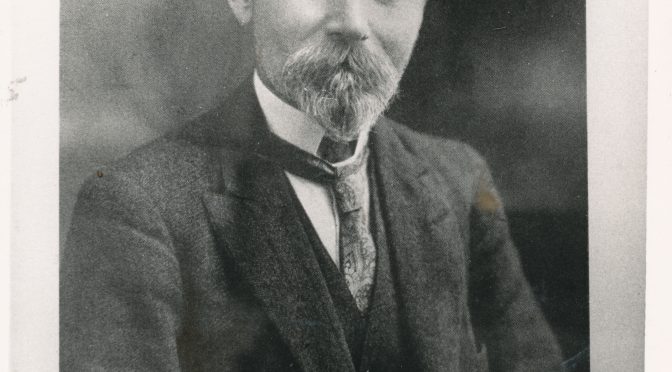
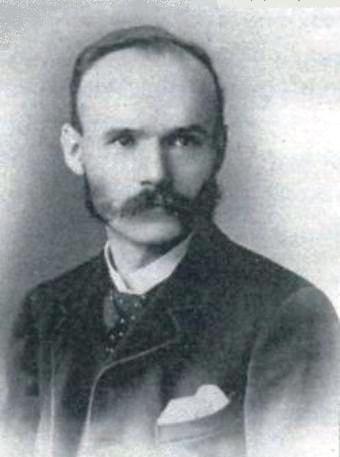
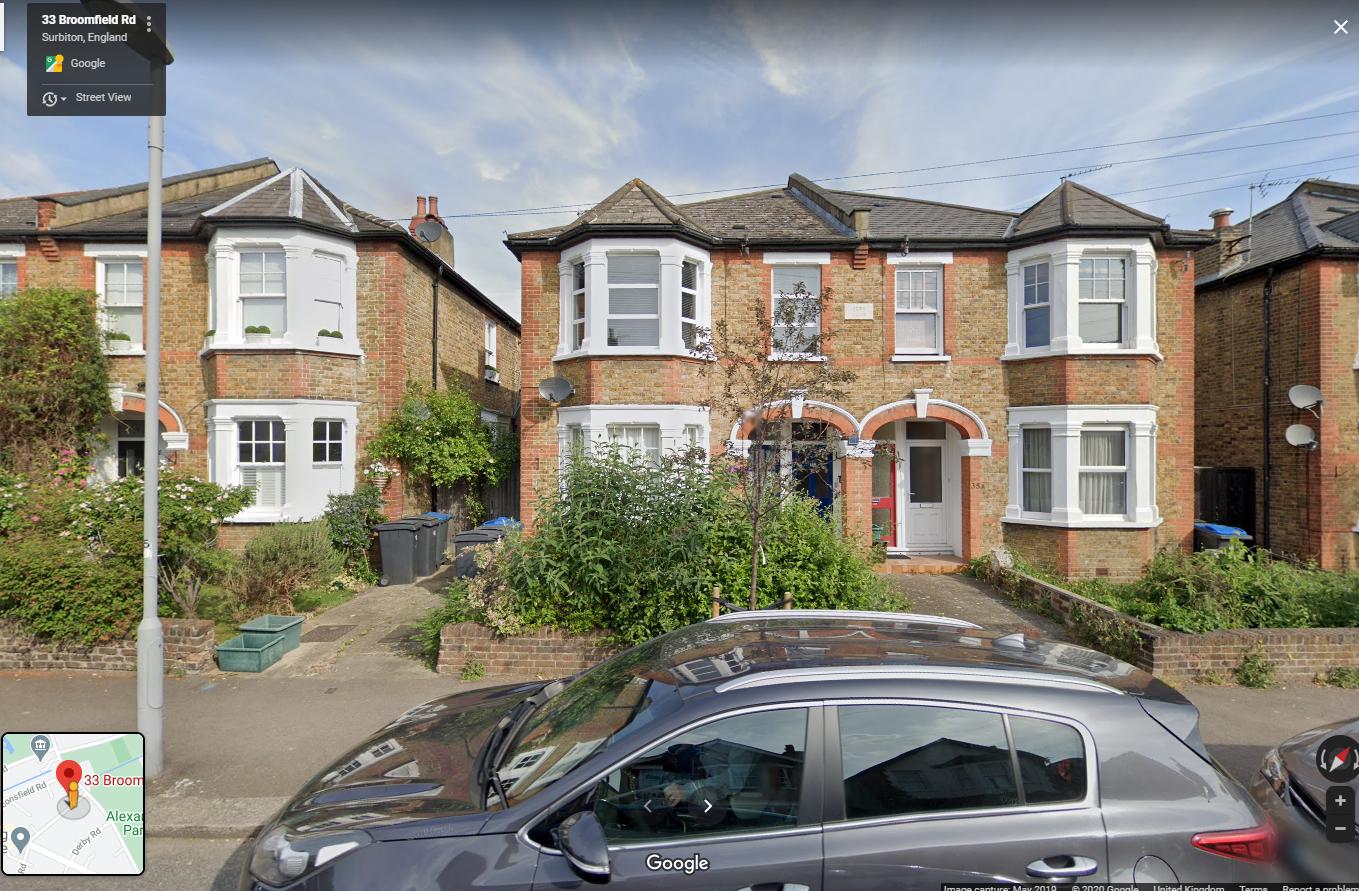
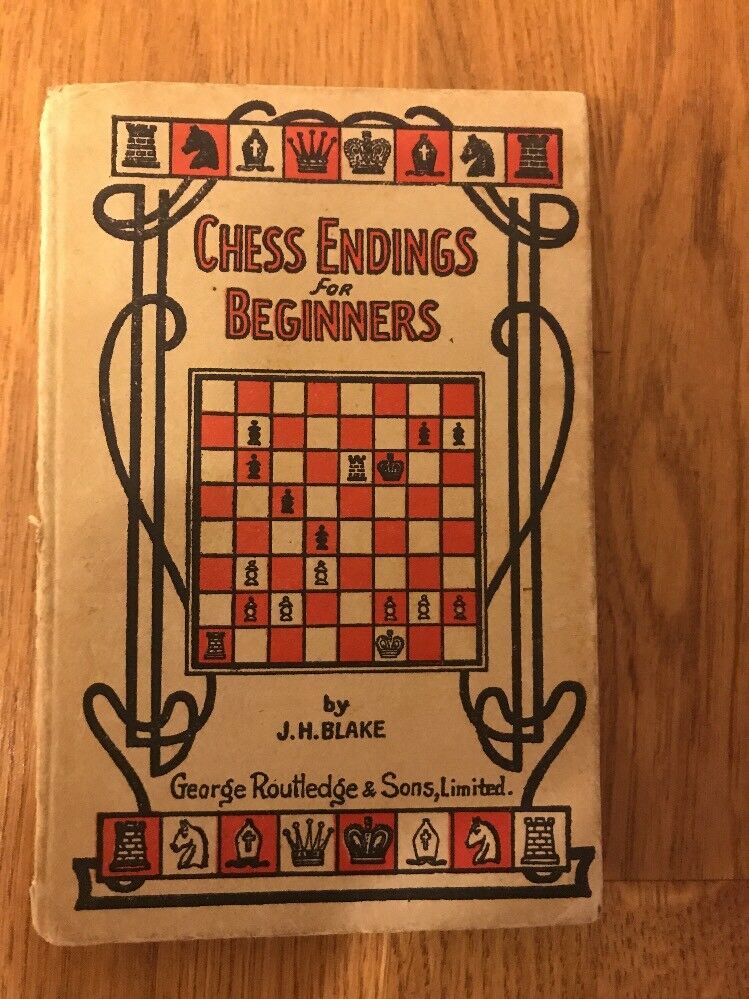
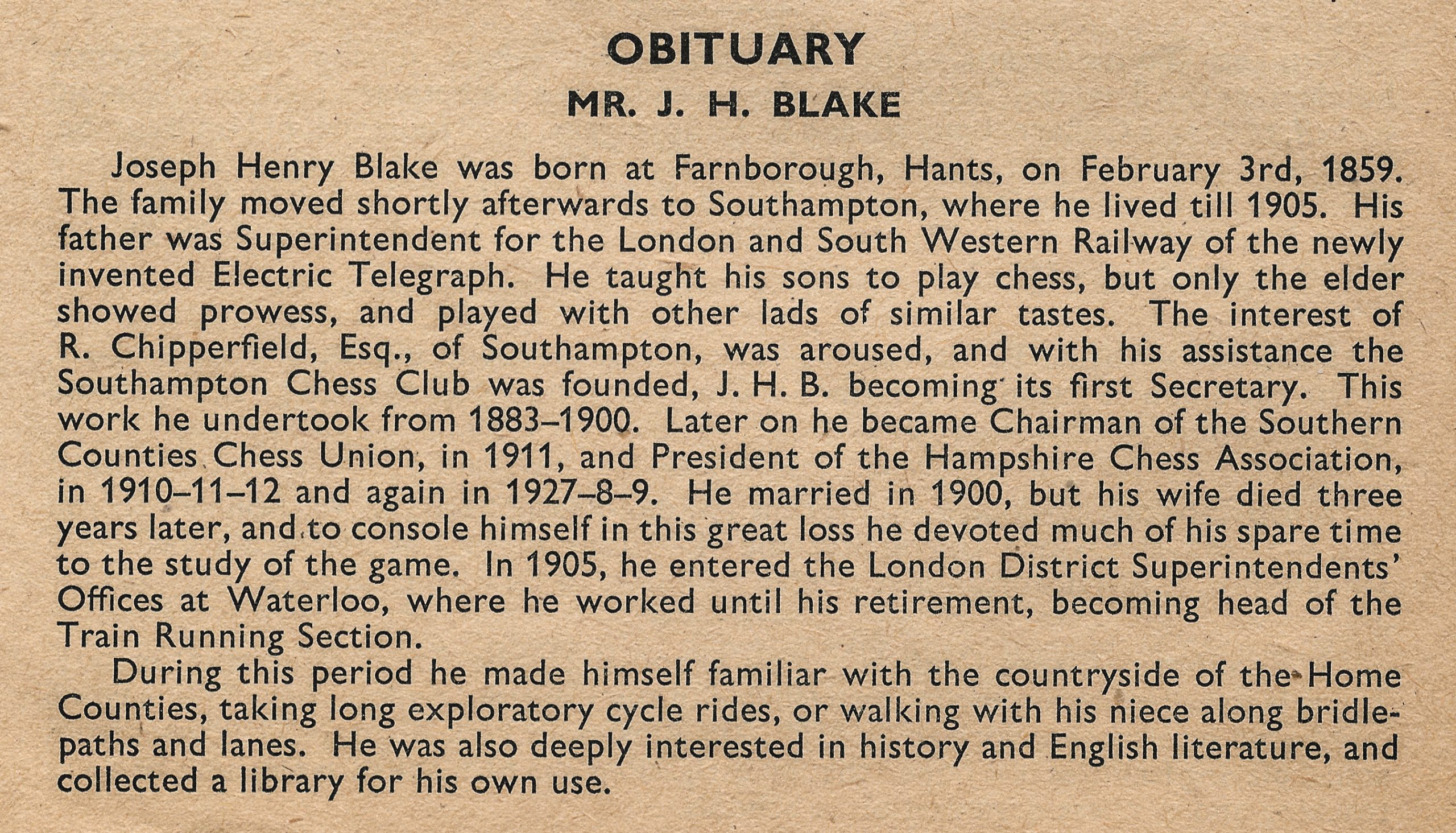
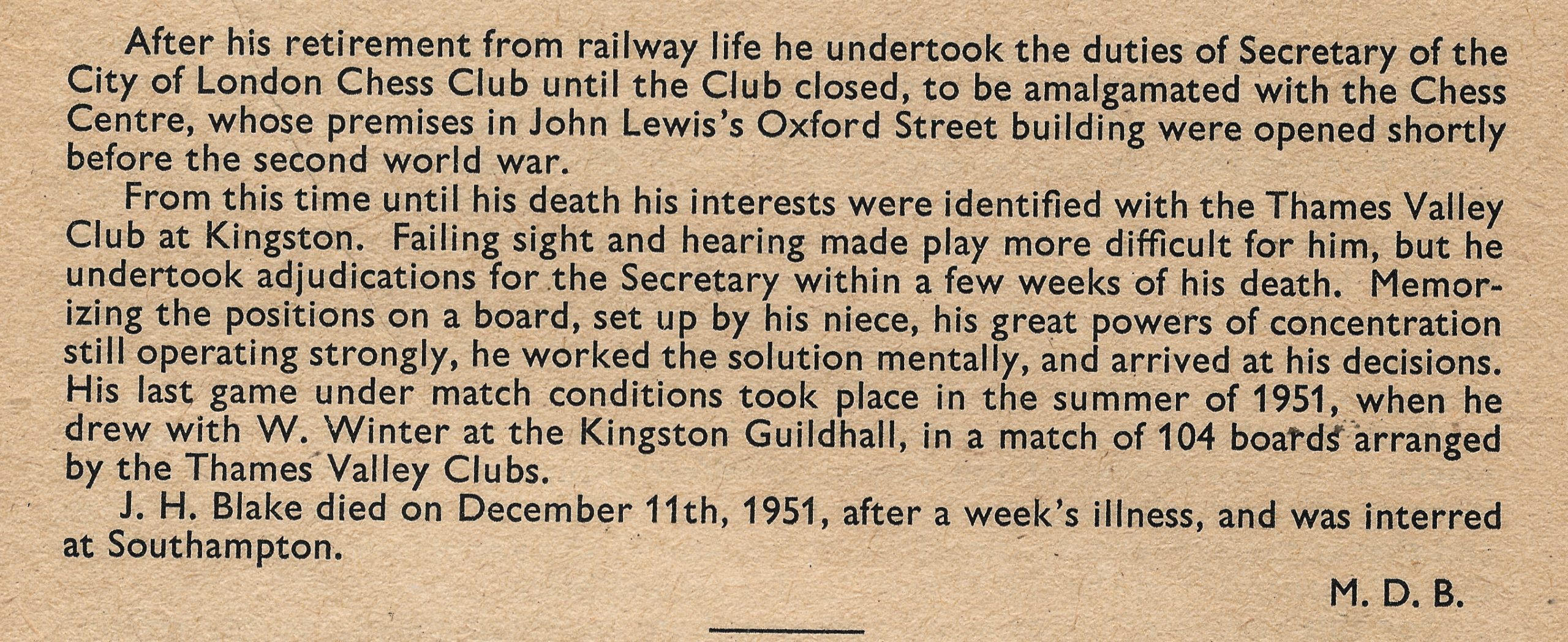
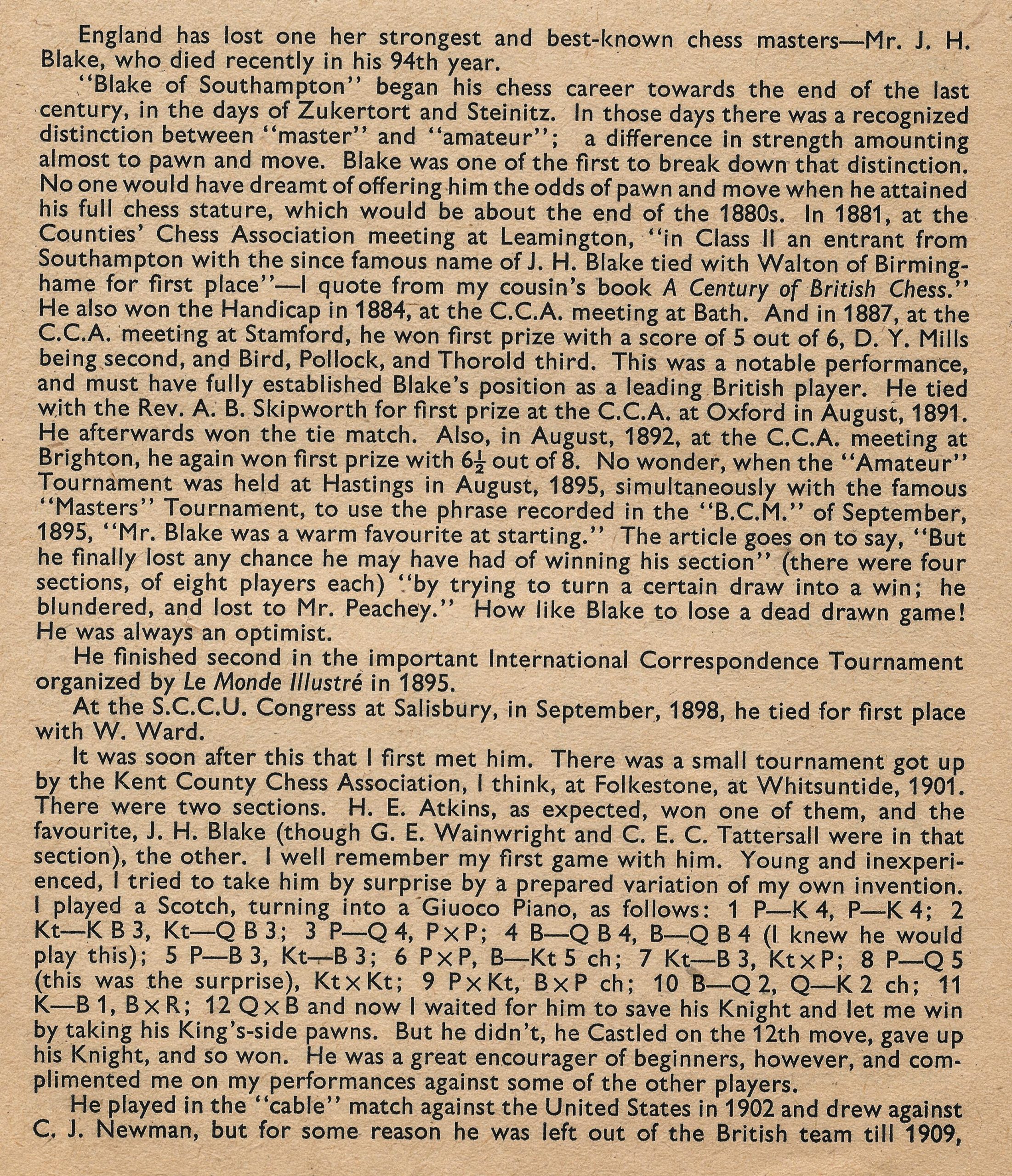
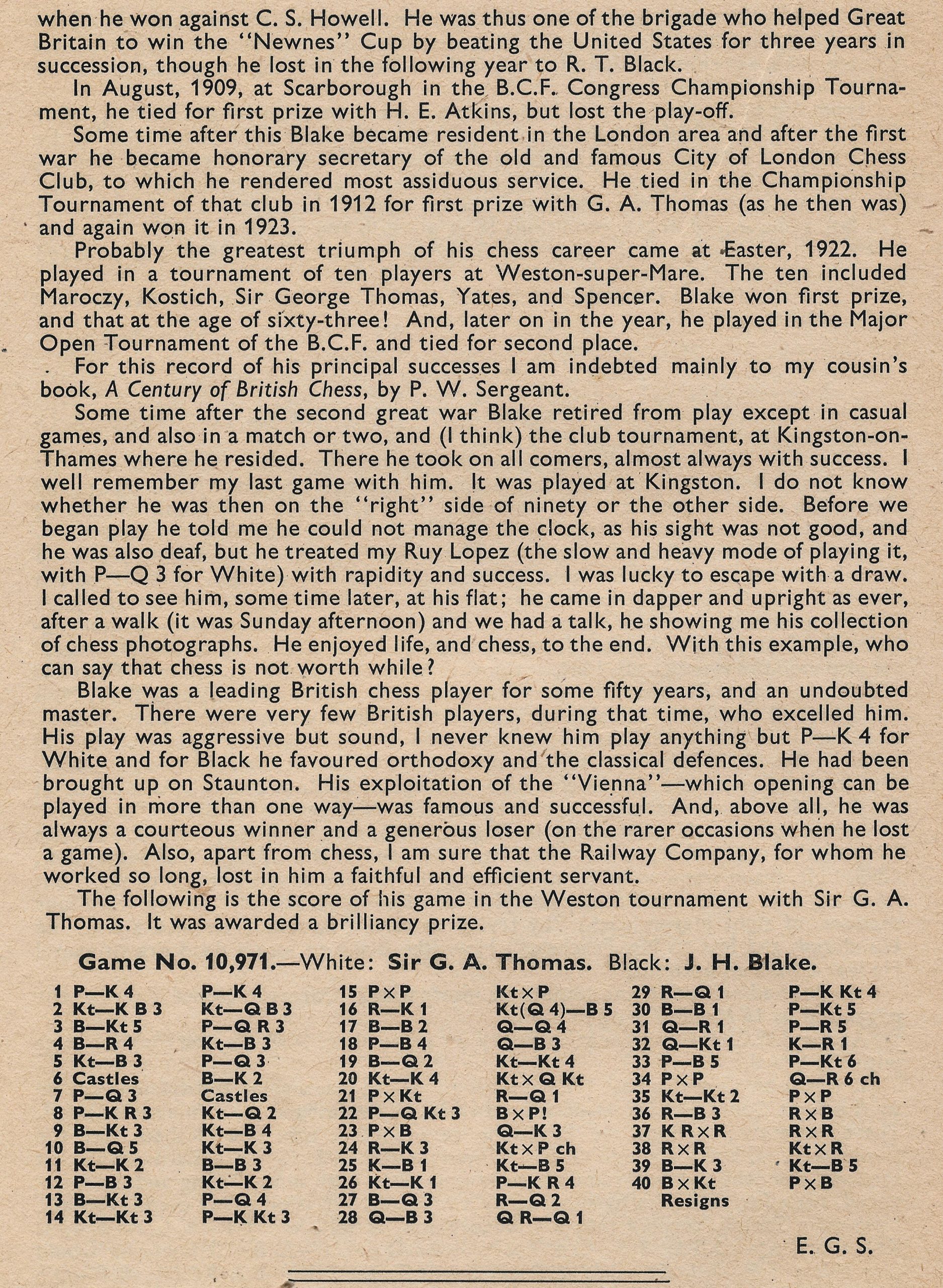
 Save as PDF