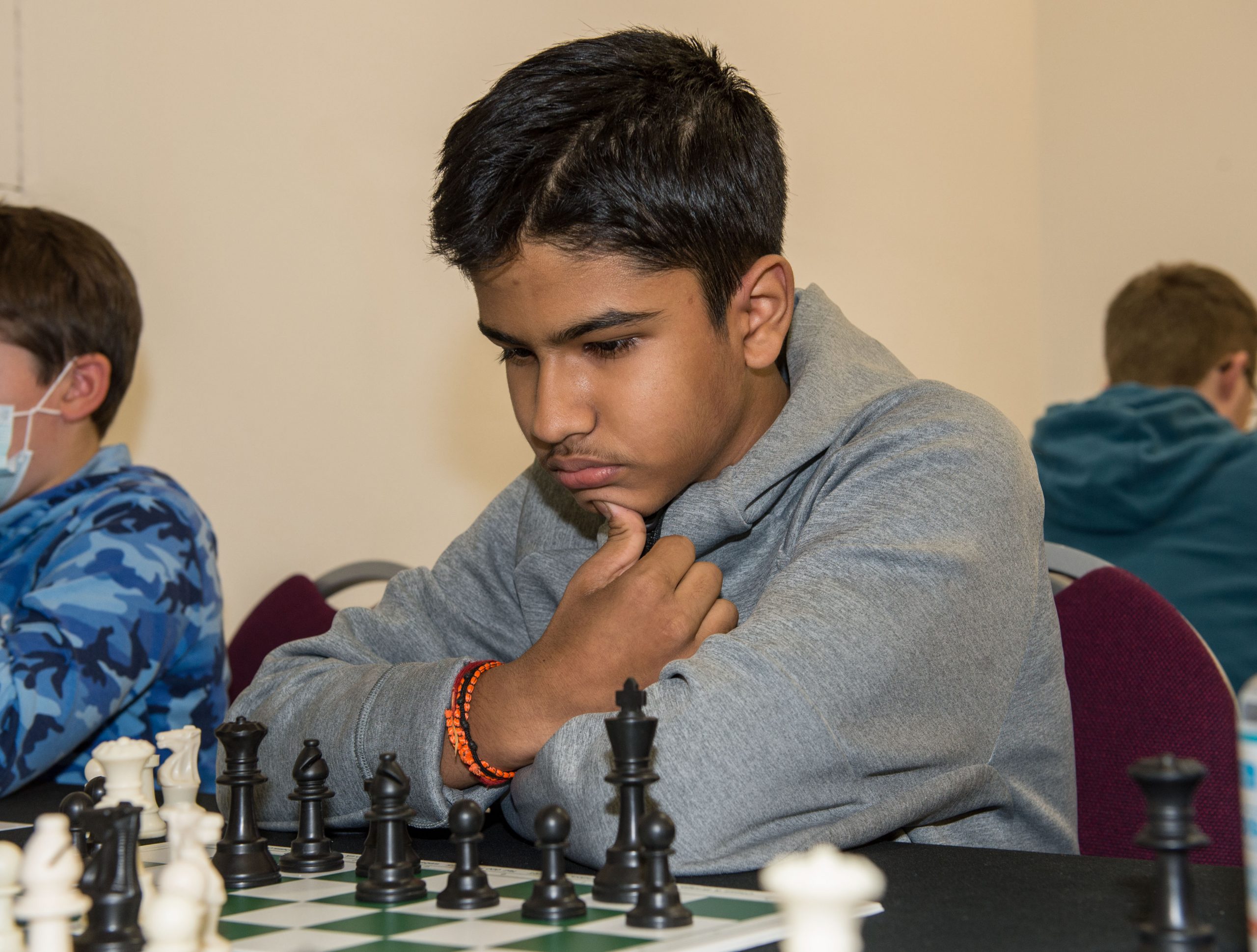
BCN sends birthday wishes to FM Shreyas (known as “Shrey” by his friends) Royal born on Friday, January 9th, 2009. “Hallelujah” by Alexandra Burke was number one in the UK hit parade.
Shreyas attended The Pointer School in Blackheath, London, SE3 whose motto is “The Lord is my Shepherd”.
In October 2021 BCN secured an interview with Shreyas via his father Jitendra and below is mostly from that interview:
BCN: What caused his initial interest in chess and at what age?
His initial interest in chess was capturing or as he used to call it ‘eating’ pieces but as he grew more mature, he loved that there were so many possibilities in chess, so much still left to explore! At the Age of 6 he learnt and got an interest in chess.
BCN: Has Shreyas had any chess teachers or coaches?
Jyothi Lal N. with a peak of 2250 FIDE but is very knowledgeable and helped from just above beginner to 1800. He was Shreyas’s first coach.
Meszaros Gyula (Julian) who was an IM with a peak of 2465 FIDE and was an endgame master which helped him from 1800-2100.
His Current Coach is GM John Emms with a peak of around 2600 FIDE, he is an expert in many fields such as Positional Play, Openings, Strategic chess etc and has also made a big impact on how to prepare against opponents. He had helped him from 2100-2300 so far in just under a year!
BCN: Which chess clubs and/ or Teams does Shreyas represent?
He represents SV Erkenschwick from Germany and Wasa SK from Sweden for online events as he has joined them during the pandemic. He started his 4NCL career with KJCA Kings in January 2019 but now mainly represents Wood Green which he has played for in online events in and will also represent them in the upcoming 4NCL weekends.
His first appearance in Megabase 2022 comes from the 2015 British Under-8 Championship in Coventry, the eventual winner being Dhruv Radhakrishnan.
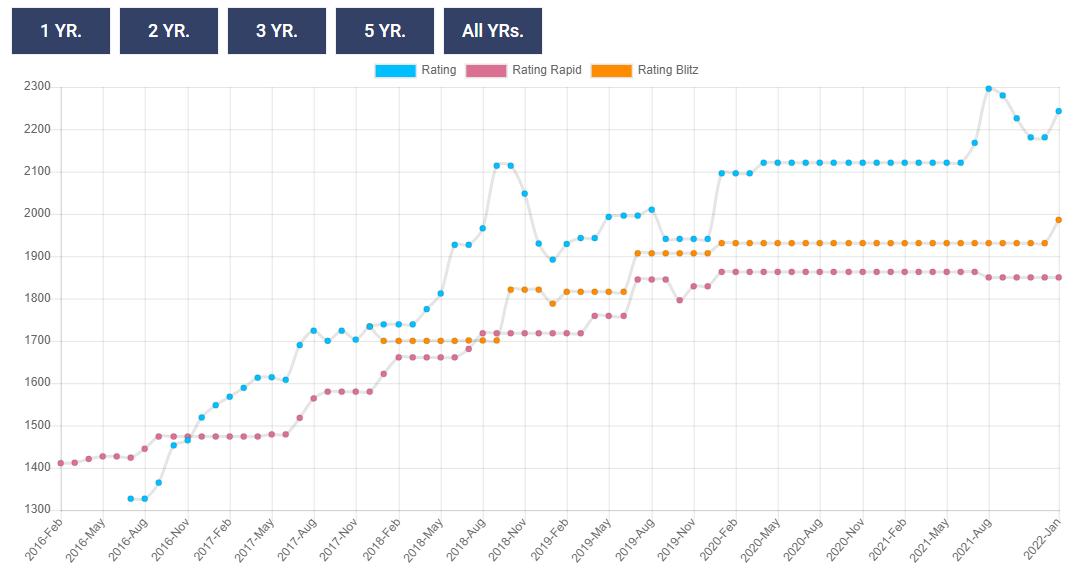
Progress from those early days has only been interrupted by school examination breaks and the Covid pandemic:
FIDE Rating progress chart for FM Shreyas Royal
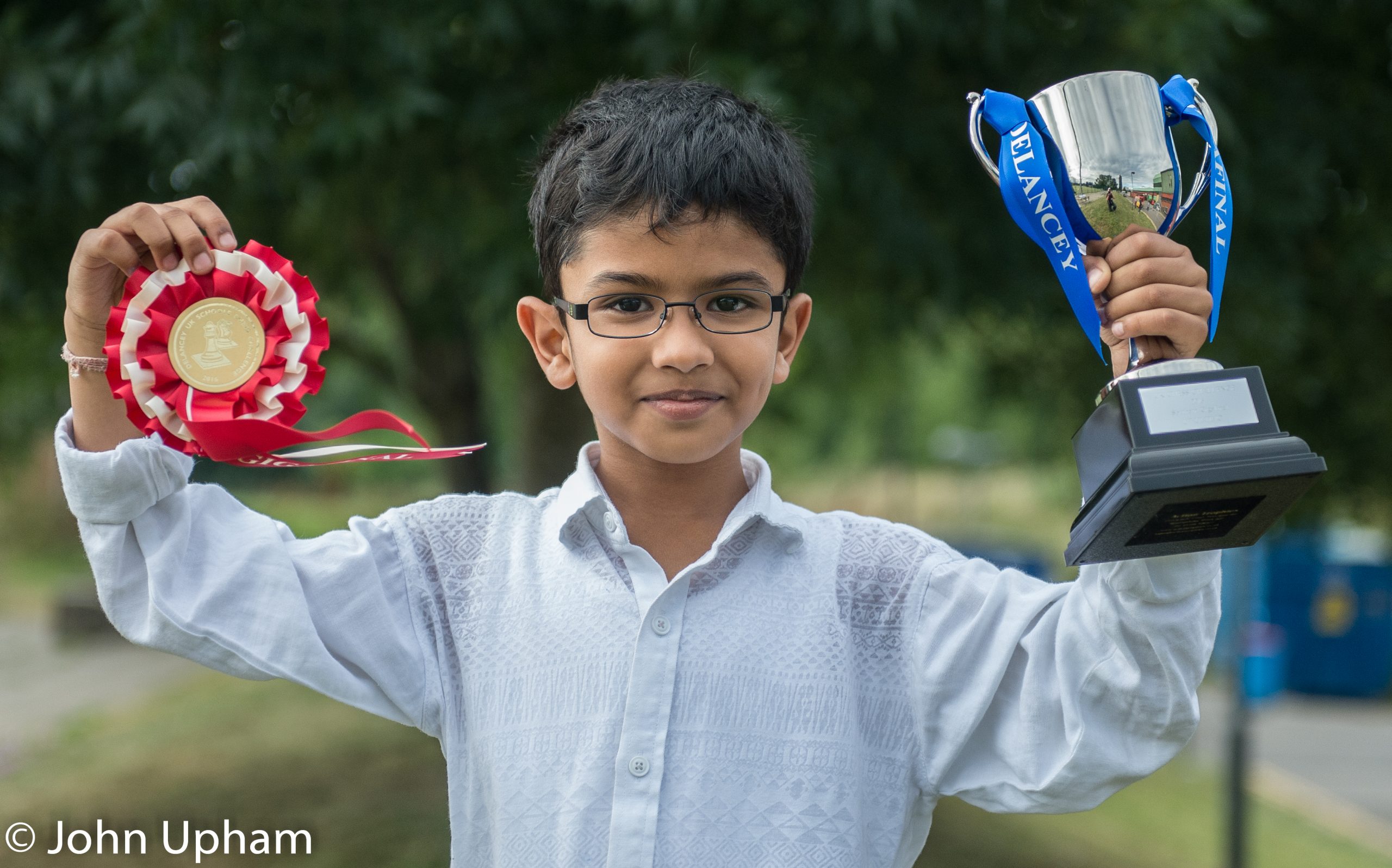
In August 2016 in Bournemouth Shreyas scored an impressive 6/6 to win the British Under-8 Championship.
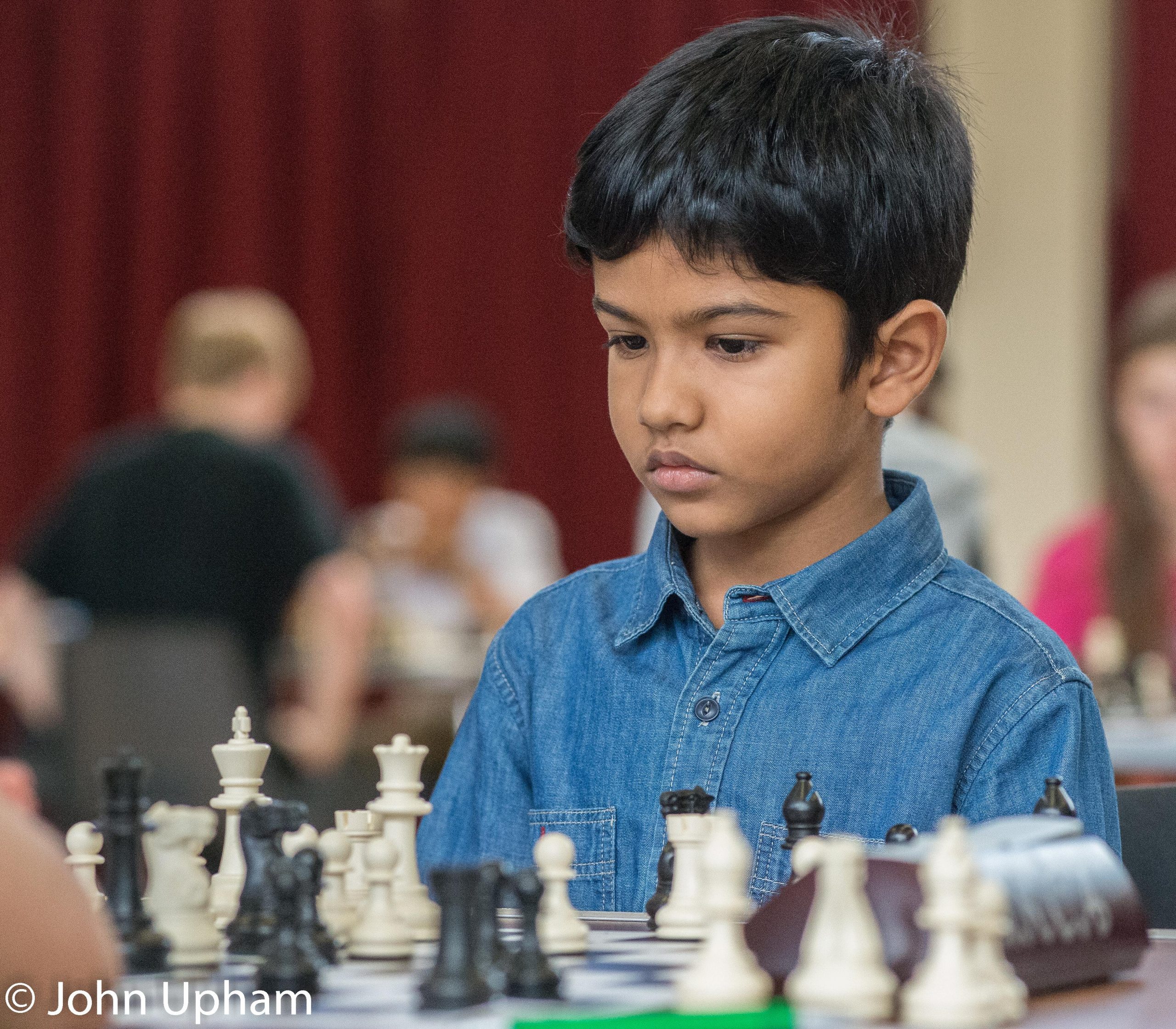
Shreyas Royal at the 2016 UKCC Delancey Terafinal in Loughborough courtesy of John Upham Photography
BCN: What was his first memorable tournament success?
This was the 2016 European Schools Under-7 championship where he was runner-up without any preparation or work on chess!
Shreyas Royal at the 2016 UKCC Delancey Southern Gigafinal in Reading courtesy of John Upham Photography
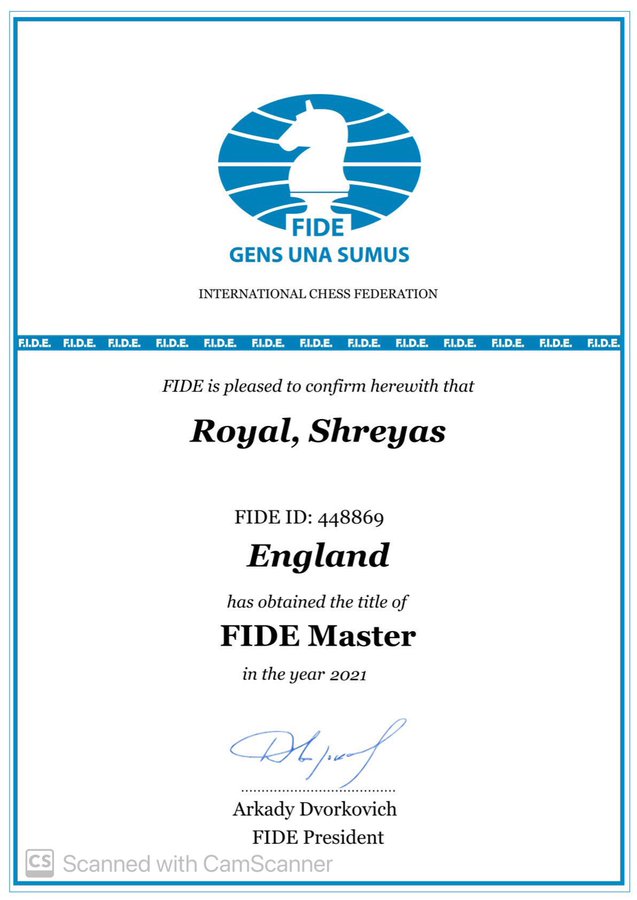
In 2021 Shreyas was awarded the FM title by FIDE:
FIDE FM Certificate for Shreyas Royal
BCN: Which chess players past & present are inspirational for him?
Magnus Carlsen, world champion and broke many FIDE records also is an inspiration for most of this generation. He likes his slow grinding and almost winning from any opening or ending. This is his favourite player of all time.
Garry Kasparov played brilliant attacking chess and calculated like a machine.
Bobby Fischer played a similar style to Kasparov but was more talented than both Magnus and Kasparov in his opinion as he worked all by himself at a time in the USA when chess was not so popular while for the Russians, they had brilliant coaches and had one good player after the other. He rates him a bit lower because Fischer quit competitive chess a bit too early and could not reach the heights he was worthy of.
Alireza Firouzja
Fabiano Caruana
BCN: What are his favourite openings with the White pieces?
He plays 1.d4 pretty much all the time.
MegaBase 2020 has 294 games with 1.d4 and one solitary 1.g3 from March 2021. The 1.d4 games feature main line Queen’s Gambit / Catalan type positions championing 5.Nge2 against the King’s Indian Defence and the exchange variation against the Grunfeld.
BCN: and what are his preferred defences as the second player?
Really depends on what they play, against every opening he has got one or two lines which he enjoys equally.
Megabase 2022 informs us that Shreyas defends the main line Closed Variation of the Ruy Lopez and main line Giuoco Piano. Previously he essayed the Sicilian Najdorf.
BCN: Does he have any favourite chess books?
Not really as he is not such a big fan of chess books, but he likes My 60 Memorable Games by Bobby Fischer. Fundamental Chess Endings and Encyclopedia of Chess Combinations.
BCN: Which tournaments are planned for 2022?
We have pencilled in a couple of norm and Open (France, Spain, Germany etc.) tournaments in European countries.
BCN: What are his favourite subjects outside of chess?
His favourite subjects outside chess are Science, History, Maths with Science as his favourite, History as his second favourite and Maths as his third favourite.
BCN: Does Shreyas play any physical sports?
He does Football, Cricket and a bit of Lawn Tennis.
BCN: What are his plans and aspirations for the future?
To become a world chess champion one day, but it’s very expensive to even get to the level of IM! Currently we are looking for sponsors who can help support Shreyas to get there.
BCN sends birthday wishes to FM Shreyas (known as “Shrey” by his friends) Royal born on Friday, January 9th, 2009. “Hallelujah” by Alexandra Burke was number one in the UK hit parade.
Shreyas attended The Pointer School in Blackheath, London, SE3 whose motto is “The Lord is my Shepherd”.
In October 2021 BCN secured an interview with Shreyas via his father Jitendra and below is mostly from that interview:
BCN: What caused his initial interest in chess and at what age?
His initial interest in chess was capturing or as he used to call it ‘eating’ pieces but as he grew more mature, he loved that there were so many possibilities in chess, so much still left to explore! At the Age of 6 he learnt and got an interest in chess.
BCN: Has Shreyas had any chess teachers or coaches?
Jyothi Lal N. with a peak of 2250 FIDE but is very knowledgeable and helped from just above beginner to 1800. He was Shreyas’s first coach.
Meszaros Gyula (Julian) who was an IM with a peak of 2465 FIDE and was an endgame master which helped him from 1800-2100.
His Current Coach is GM John Emms with a peak of around 2600 FIDE, he is an expert in many fields such as Positional Play, Openings, Strategic chess etc and has also made a big impact on how to prepare against opponents. He had helped him from 2100-2300 so far in just under a year!
BCN: Which chess clubs and/ or Teams does Shreyas represent?
He represents SV Erkenschwick from Germany and Wasa SK from Sweden for online events as he has joined them during the pandemic. He started his 4NCL career with KJCA Kings in January 2019 but now mainly represents Wood Green which he has played for in online events in and will also represent them in the upcoming 4NCL weekends.
His first appearance in Megabase 2022 comes from the 2015 British Under-8 Championship in Coventry, the eventual winner being Dhruv Radhakrishnan.
Progress from those early days has only been interrupted by school examination breaks and the Covid pandemic:
FIDE Rating progress chart for FM Shreyas Royal
In August 2016 in Bournemouth Shreyas scored an impressive 6/6 to win the British Under-8 Championship.
Shreyas Royal at the 2016 UKCC Delancey Terafinal in Loughborough courtesy of John Upham Photography
BCN: What was his first memorable tournament success?
This was the 2016 European Schools Under-7 championship where he was runner-up without any preparation or work on chess!
Shreyas Royal at the 2016 UKCC Delancey Southern Gigafinal in Reading courtesy of John Upham Photography
In 2021 Shreyas was awarded the FM title by FIDE:
FIDE FM Certificate for Shreyas Royal
BCN: Which chess players past & present are inspirational for him?
Magnus Carlsen, world champion and broke many FIDE records also is an inspiration for most of this generation. He likes his slow grinding and almost winning from any opening or ending. This is his favourite player of all time.
Garry Kasparov played brilliant attacking chess and calculated like a machine.
Bobby Fischer played a similar style to Kasparov but was more talented than both Magnus and Kasparov in his opinion as he worked all by himself at a time in the USA when chess was not so popular while for the Russians, they had brilliant coaches and had one good player after the other. He rates him a bit lower because Fischer quit competitive chess a bit too early and could not reach the heights he was worthy of.
Alireza Firouzja
Fabiano Caruana
BCN: What are his favourite openings with the White pieces?
He plays 1.d4 pretty much all the time.
MegaBase 2020 has 294 games with 1.d4 and one solitary 1.g3 from March 2021. The 1.d4 games feature main line Queen’s Gambit / Catalan type positions championing 5.Nge2 against the King’s Indian Defence and the exchange variation against the Grunfeld.
BCN: and what are his preferred defences as the second player?
Really depends on what they play, against every opening he has got one or two lines which he enjoys equally.
Megabase 2022 informs us that Shreyas defends the main line Closed Variation of the Ruy Lopez and main line Giuoco Piano. Previously he essayed the Sicilian Najdorf.
BCN: Does he have any favourite chess books?
Not really as he is not such a big fan of chess books, but he likes My 60 Memorable Games by Bobby Fischer. Fundamental Chess Endings and Encyclopedia of Chess Combinations.
BCN: Which tournaments are planned for 2022?
We have pencilled in a couple of norm and Open (France, Spain, Germany etc.) tournaments in European countries.
BCN: What are his favourite subjects outside of chess?
His favourite subjects outside chess are Science, History, Maths with Science as his favourite, History as his second favourite and Maths as his third favourite.
BCN: Does Shreyas play any physical sports?
He does Football, Cricket and a bit of Lawn Tennis.
BCN: What are his plans and aspirations for the future?
To become a world chess champion one day, but it’s very expensive to even get to the level of IM! Currently we are looking for sponsors who can help support Shreyas to get there.
BCN sends birthday wishes to FM Shreyas (known as “Shrey” by his friends) Royal born on Friday, January 9th, 2009. “Hallelujah” by Alexandra Burke was number one in the UK hit parade.
Shreyas attended The Pointer School in Blackheath, London, SE3 whose motto is “The Lord is my Shepherd”.
In October 2021 BCN secured an interview with Shreyas via his father Jitendra and below is mostly from that interview:
BCN: What caused his initial interest in chess and at what age?
His initial interest in chess was capturing or as he used to call it ‘eating’ pieces but as he grew more mature, he loved that there were so many possibilities in chess, so much still left to explore! At the Age of 6 he learnt and got an interest in chess.
BCN: Has Shreyas had any chess teachers or coaches?
Jyothi Lal N. with a peak of 2250 FIDE but is very knowledgeable and helped from just above beginner to 1800. He was Shreyas’s first coach.
Meszaros Gyula (Julian) who was an IM with a peak of 2465 FIDE and was an endgame master which helped him from 1800-2100.
His Current Coach is GM John Emms with a peak of around 2600 FIDE, he is an expert in many fields such as Positional Play, Openings, Strategic chess etc and has also made a big impact on how to prepare against opponents. He had helped him from 2100-2300 so far in just under a year!
BCN: Which chess clubs and/ or Teams does Shreyas represent?
He represents SV Erkenschwick from Germany and Wasa SK from Sweden for online events as he has joined them during the pandemic. He started his 4NCL career with KJCA Kings in January 2019 but now mainly represents Wood Green which he has played for in online events in and will also represent them in the upcoming 4NCL weekends.
His first appearance in Megabase 2022 comes from the 2015 British Under-8 Championship in Coventry, the eventual winner being Dhruv Radhakrishnan.
Progress from those early days has only been interrupted by school examination breaks and the Covid pandemic:
FIDE Rating progress chart for FM Shreyas Royal
In August 2016 in Bournemouth Shreyas scored an impressive 6/6 to win the British Under-8 Championship.
Shreyas Royal at the 2016 UKCC Delancey Terafinal in Loughborough courtesy of John Upham Photography
BCN: What was his first memorable tournament success?
This was the 2016 European Schools Under-7 championship where he was runner-up without any preparation or work on chess!
Shreyas Royal at the 2016 UKCC Delancey Southern Gigafinal in Reading courtesy of John Upham Photography
In 2021 Shreyas was awarded the FM title by FIDE:
FIDE FM Certificate for Shreyas Royal
BCN: Which chess players past & present are inspirational for him?
Magnus Carlsen, world champion and broke many FIDE records also is an inspiration for most of this generation. He likes his slow grinding and almost winning from any opening or ending. This is his favourite player of all time.
Garry Kasparov played brilliant attacking chess and calculated like a machine.
Bobby Fischer played a similar style to Kasparov but was more talented than both Magnus and Kasparov in his opinion as he worked all by himself at a time in the USA when chess was not so popular while for the Russians, they had brilliant coaches and had one good player after the other. He rates him a bit lower because Fischer quit competitive chess a bit too early and could not reach the heights he was worthy of.
Alireza Firouzja
Fabiano Caruana
BCN: What are his favourite openings with the White pieces?
He plays 1.d4 pretty much all the time.
MegaBase 2020 has 294 games with 1.d4 and one solitary 1.g3 from March 2021. The 1.d4 games feature main line Queen’s Gambit / Catalan type positions championing 5.Nge2 against the King’s Indian Defence and the exchange variation against the Grunfeld.
BCN: and what are his preferred defences as the second player?
Really depends on what they play, against every opening he has got one or two lines which he enjoys equally.
Megabase 2022 informs us that Shreyas defends the main line Closed Variation of the Ruy Lopez and main line Giuoco Piano. Previously he essayed the Sicilian Najdorf.
BCN: Does he have any favourite chess books?
Not really as he is not such a big fan of chess books, but he likes My 60 Memorable Games by Bobby Fischer. Fundamental Chess Endings and Encyclopedia of Chess Combinations.
BCN: Which tournaments are planned for 2022?
We have pencilled in a couple of norm and Open (France, Spain, Germany etc.) tournaments in European countries.
BCN: What are his favourite subjects outside of chess?
His favourite subjects outside chess are Science, History, Maths with Science as his favourite, History as his second favourite and Maths as his third favourite.
BCN: Does Shreyas play any physical sports?
He does Football, Cricket and a bit of Lawn Tennis.
BCN: What are his plans and aspirations for the future?
To become a world chess champion one day, but it’s very expensive to even get to the level of IM! Currently we are looking for sponsors who can help support Shreyas to get there.
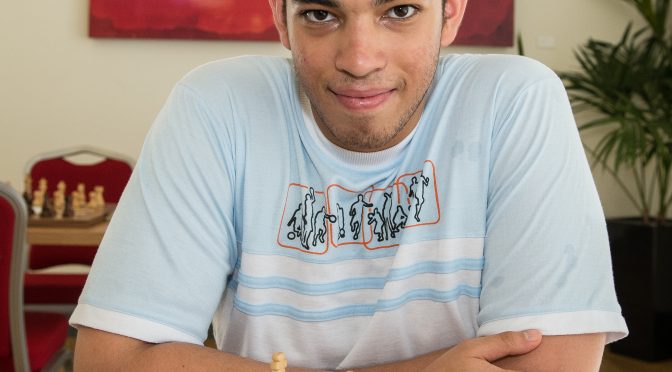
BCN wishes Happy Birthday to GM Daniel Fernandez who at 26 is currently England’s youngest Grandmaster. The previous GM title holder was Jonathan Hawkins in 2014 making two in seven years.
Daniel Howard Fernandez was born in Stockport, Manchester on Sunday, March 5th 1995. “Think Twice” by Celine Dion was top of the UK hit parade.
Daniel started playing chess at the age of seven (after his father taught him the rules) and at this time attended King’s School, Harpenden. His first chess club was Little Heath which became the ECF Small Club of the Year in 2015. They play in the Potter’s Bar area and include IM John Pigott in their membership.
At Little Heath Chess Club Daniel was coached by Mark Uniacke (who worked extensively on the early chess engine HIARCS).
Daniel went up to Queen’s College, Cambridge to read mathematics and left to become a Data Analyst at Mu Sigma Inc. He can speak several languages (including Serbian!) and works as a translator when opportunities arise.
He currently lives in Australia offering coaching and writing chess books (for Thinkers Publishing) and columns for Chessbase. In his spare time (!) Daniel is studying for The Master of Complex Systems degree at The University of Sydney.
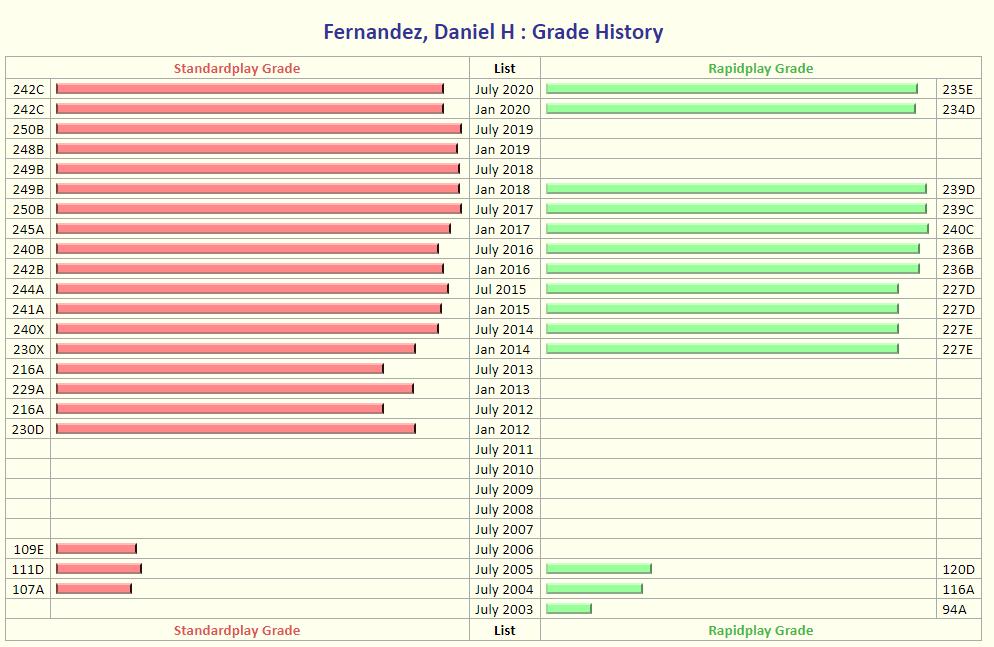
Daniel’s first ECF graded game was rapidplay on July 5th 2003 in the SCCU Junior Under-14 Final.
His first standard play game was in August 2003 at the Edinburgh based British Under-8 Championship.
On August 13th 2004 in Scarborough Daniel became British Under-9 Champion sharing the title with Daniel Hunt & Saravanan Sathyanandha.
The Fernandez family relocated to Singapore in August, Daniel attending the Anglo-Chinese School in Singapore. He was swiftly recruited into the Singapore Chess Federation’s (SCF) National Junior Squad. Also in that squad were Danielle Ho and Howard Chiu (remember this for later!).
Barely three weeks after his Scarborough triumph on September 4th 2004 Daniel played his first FIDE rated game in the 5th Asian Under-10 Championship organised by the ASEAN Chess Confederation. His performance in this event was rewarded with a FIDE Master title in 2005. Because he was no longer active in English events the ECF had the unusual scenario of having a ten year old FIDE Master with a published grade of ~120!
In typically modest fashion Daniel confesses that he did not “deserve” the FM title at this time and that it was the consequence of the strong position of the ASEAN and SCF organisations within world chess. At the same event Wesley So gained his FM title in the Under-12 section.
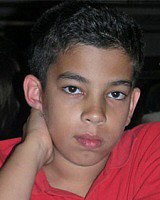
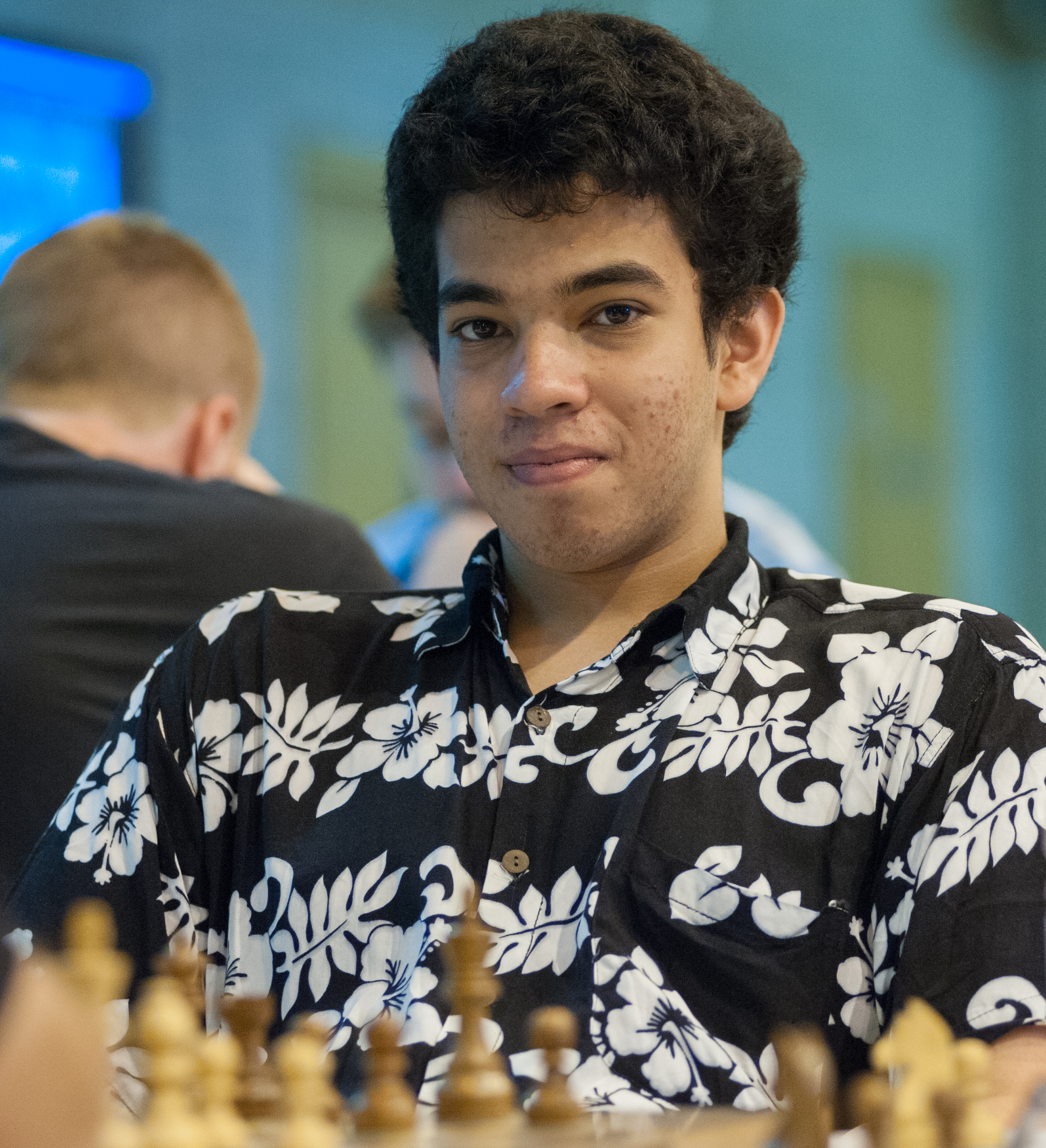
FM Daniel Fernandez
Another interesting consequence of the relocation was that when Daniel returned to England in 2012 his last published grading went from ~ 120 to ~230!
One of the motivations of returning to England was to obtain the necessary entrance requirement to study mathematics at Cambridge. This he did by studying for A-levels at Manchester Grammar School.
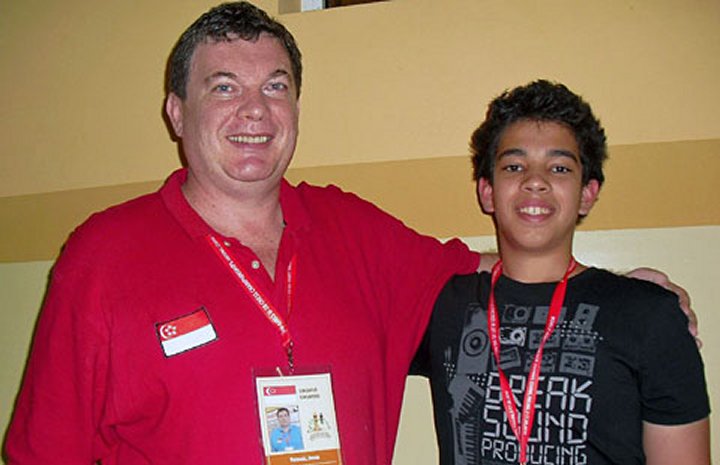
Daniel with IM Jovan Petronic during the 2010 world juniors in Chotowa, Poland | Photo: Diana Mihajlova
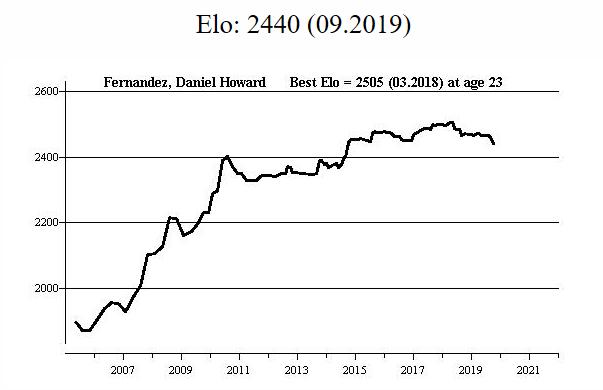
Consequently Daniel’s FIDE rating profile also showed a fast pace of development:
FIDE rating profile for Daniel Fernandez
Sydney 2009 and Sydney 2010 both provided IM norms with the third one coming from Kuala Lumpar 2010 and with these Daniel became an International Master in 2010 the title being confirmed at the 3rd quarter Presidential Board Meeting 2010, 24-25 July 2010, Tromso in Norway.
IM Daniel Fernandez, 100th British Championships, Round 5, Torquay. Courtesy of John Upham Photography
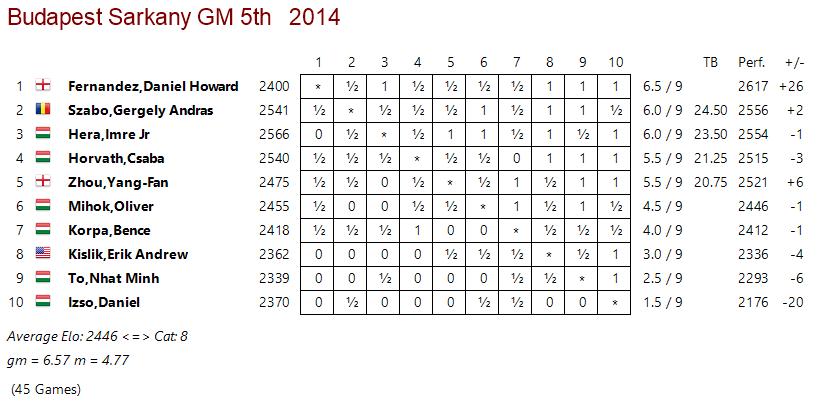
He won the Budapest Sarkany Tournament in 2014 as follows:
Full Crosstable from Budapest Sarkany Tournament, 2014.
earning his first GM norm in the process.
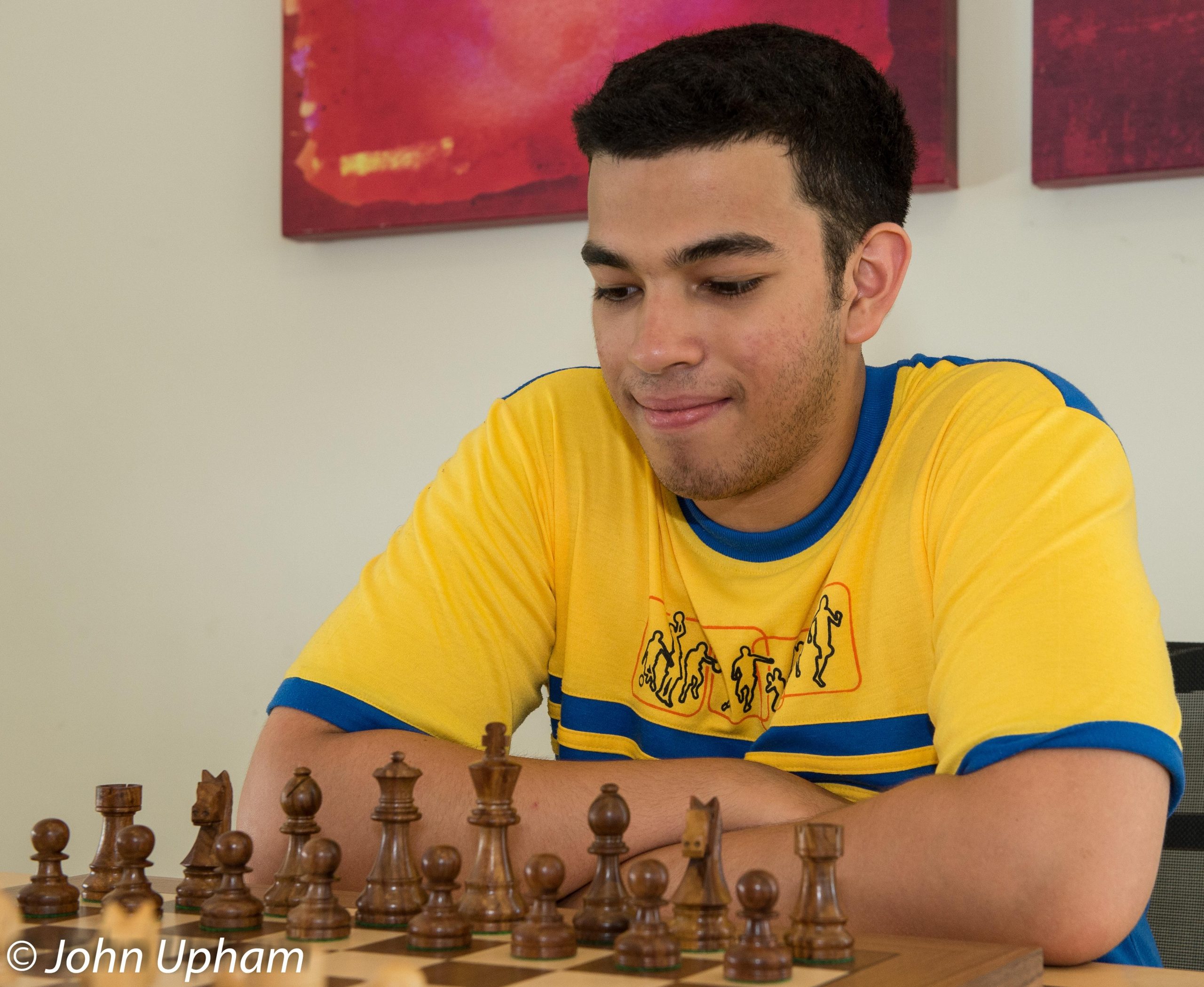
IM Daniel Fernandez, 101st British Championships, Aberystwyth. Courtesy of John Upham Photography
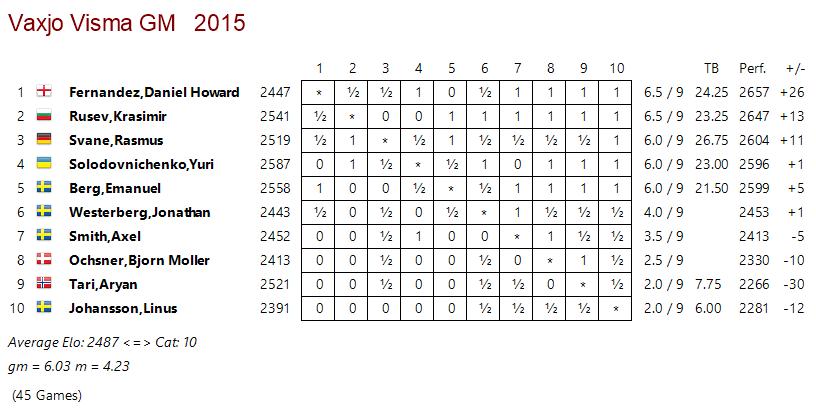
BCN asked Daniel for three of his favourite games. The first one is this Polish Defence game from 2015 played at the Visma Arena in Vaxjo, Sweden. First we have the crosstable showing that Daniel earnt his second GM norm from this event.
Full Crosstable for Vaxjo, Visma tournament in Sweden, 2015.
and here is the game:
and during the 2015/15 4NCL season Daniel obtained his final GM norm playing for Wood Green.
In March 2015 he made his first of three Varsity match appearences for Cambridge re-uniting with Danielle Ho and Howard Chiu (remember those names from earlier?).
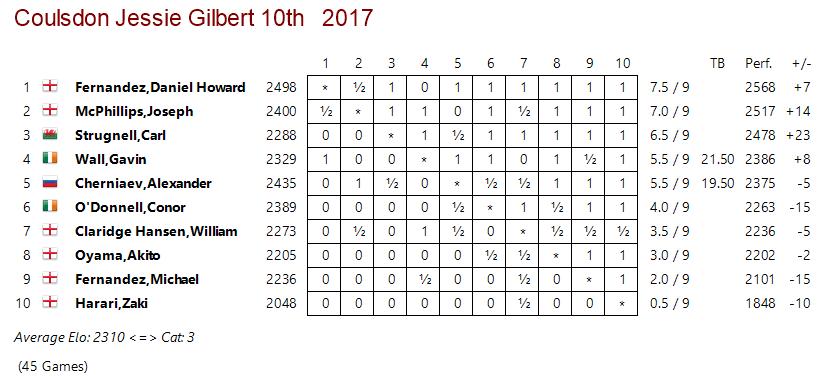
Daniel won the 10th Jessie Gilbert Memorial in 2017:
Full Crosstable from the 2017 10th Jessie Gilbert Memorial
and also in 2017 Daniel was awarded the Grandmaster title at the 88th FIDE Congress 2017, 7-15 October, Goynuk, Antalya, Turkey.
On March 11th Daniel represented Cambridge in the 135th Varsity Match at the RAC Club in Pall Mall. According to chess24.com ‘IM Daniel Fernandez, playing board 2 for Cambridge, was awarded the Brilliancy Prize by GM Ray Keene in consultation with McShane and Speelman, for his “high-class swindle” after recovering from a bad blunder.’ See here for details.
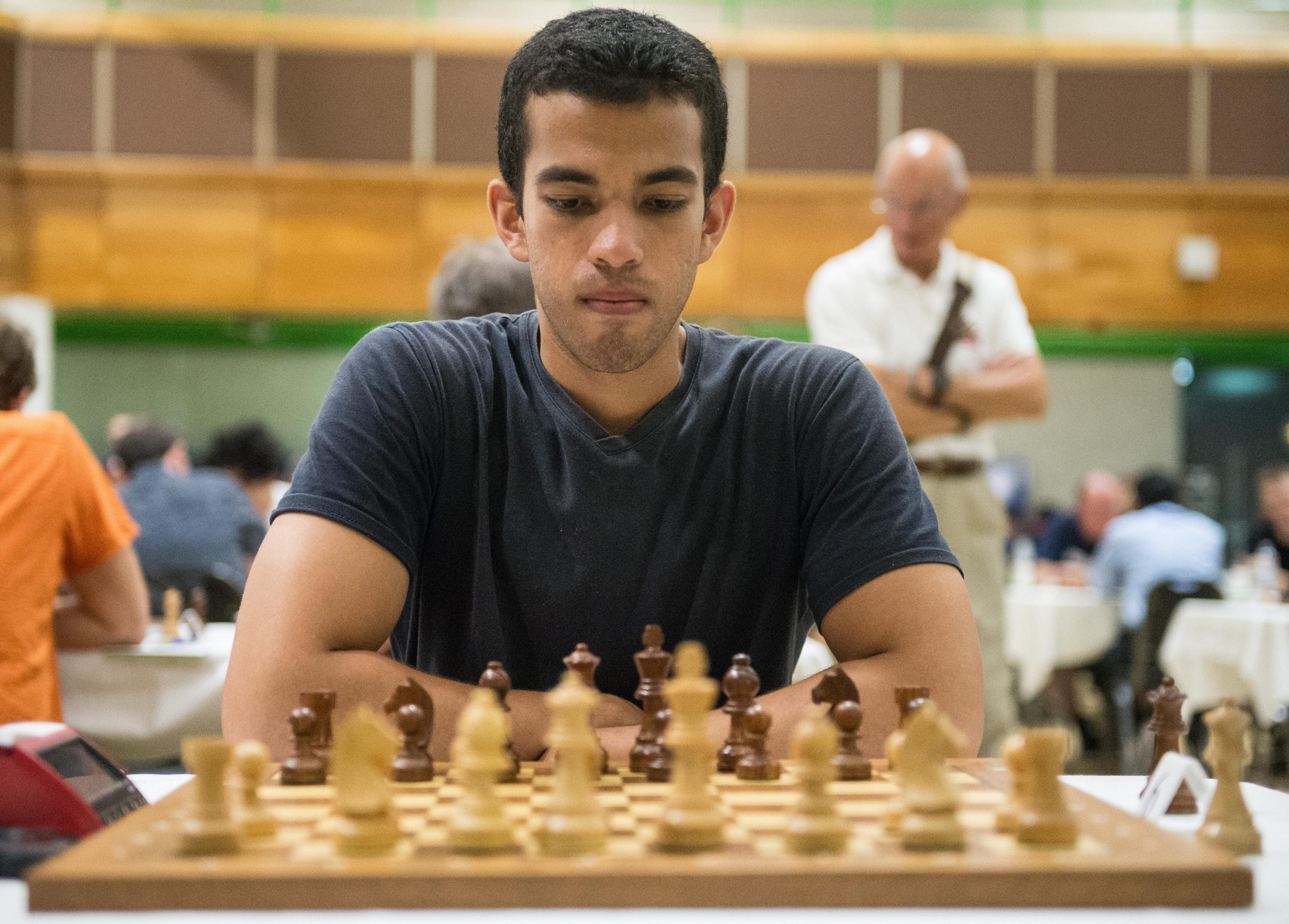
GM Daniel Fernandez, 2019 British Championships, Torquay. Courtesy of John Upham Photography
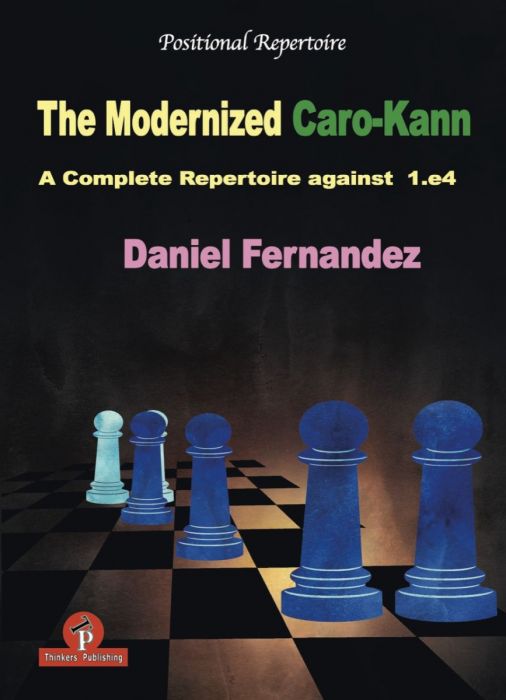
In 2018 Daniel ventured into the world of book writing when Thinker’s Publishing released The Modernized Caro-Kann on September 8th 2018. This was a repertoire book for Black based around the Smyslov Variation :
The Modernized Caro-Kann, Daniel Fernandez, Thinkers Publishing, 2018
From the rear cover we have:
“GM Daniel Fernandez (born 1995) has been an active and accomplished player for several years. He represented his native Singapore twice at Olympiads (2010 and 2012) before transferring to the English chess federation. There, he won the national classical titles at U-18 and U-21 levels and worked to become a Grandmaster while simultaneously studying at Cambridge. The Caro-Kann was instrumental in his quest for that title. Currently, Daniel is known in the chess scene not only as a solid player, but also as a mentor figure to younger English players, as a producer of well-received commentary and analysis, and as a multilingual chess coach. This is his first book.”
From January 2019 we have this interesting encounter between Gawain Jones and Daniel from the annual 4NCL meeting of Guildford and Wood Green:
With the White pieces Daniel has played a wide range of first moves but the majority move by far is 1.e4. His choice versus the Najdorf is some eclectic : sometime ago 6. Rg1 was the favourite and now 6.a4 is preferred.
Against 1…e5 Daniel offers a main line Ruy Lopez.
What does a Caro-Kann expert play against the Caro-Kann? Nowadays the Two Knights Variation is employed!
As the second player he plays the Sicilian Najdorf as well as the Caro-Kann plus an equal mixture of the Grünfeld and King’s Indian Defences.
In 2019 Daniel was interviewed by Edwin Lam on behalf of ChessBase : fascinating reading!
In the same year Daniel joined IM Adam Taylor’s venture Making Grandmasters.
Our final games is from July 2019 :
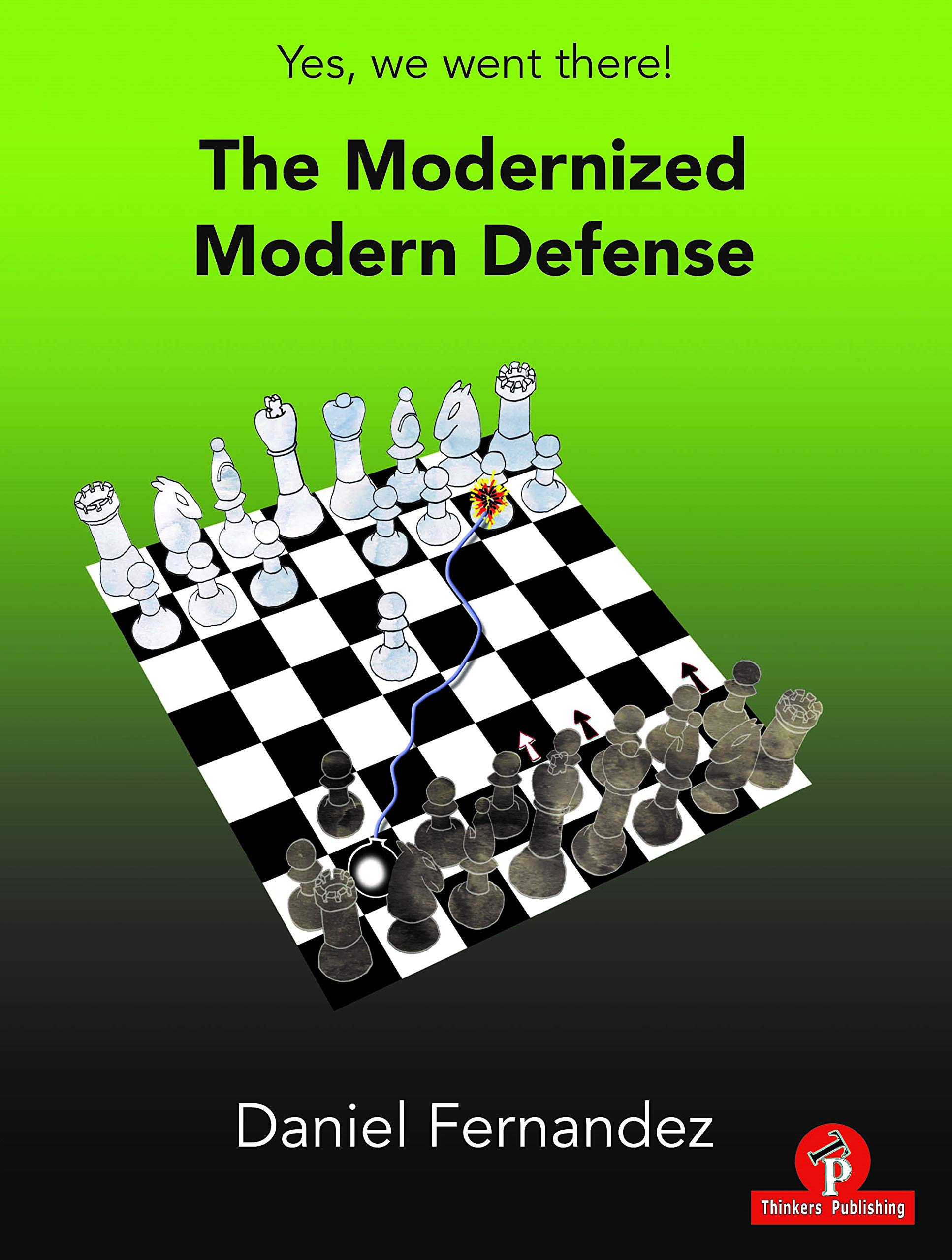
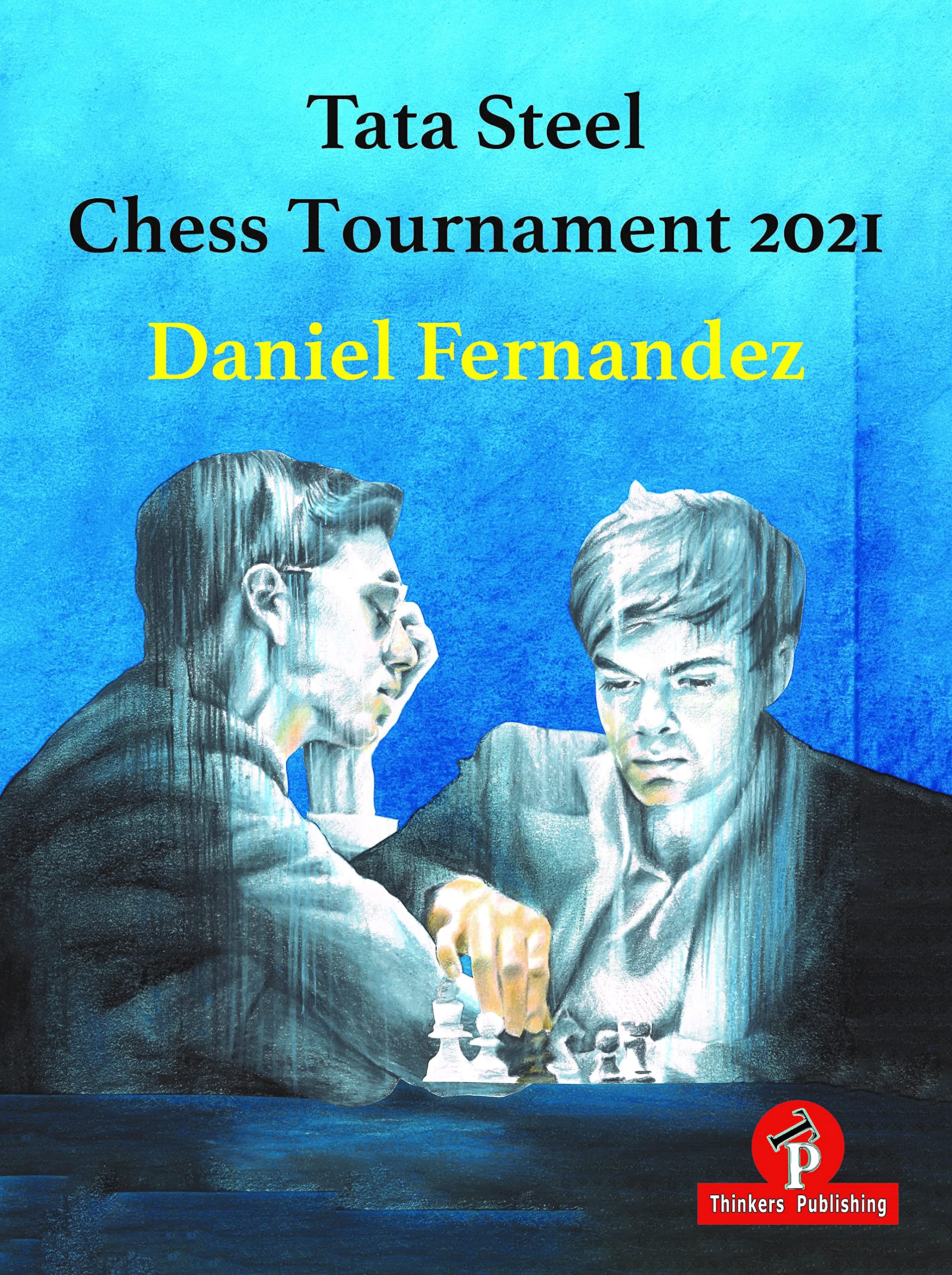
Daniel’s most recent publication is The Modernized Modern Defence from Thinker’s Publishing:
The Modernized Modern Defence, Daniel Fernandez, Thinker’s Publishing, 2021
and BCN has been told that Daniel has a book in the pipeline about the Tata Steel 2021 tournament at Wijk aan Zee.
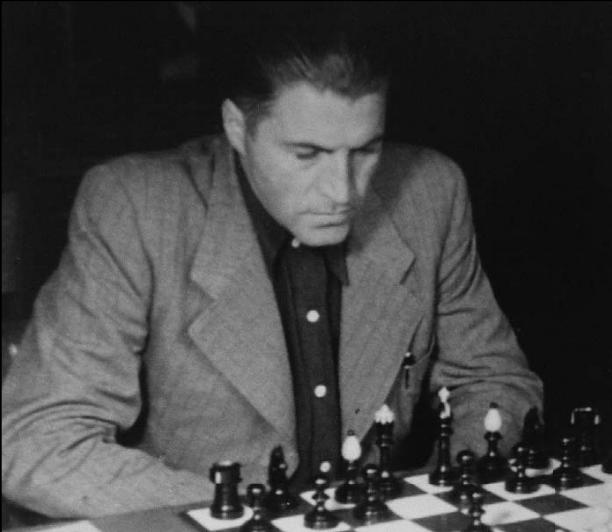
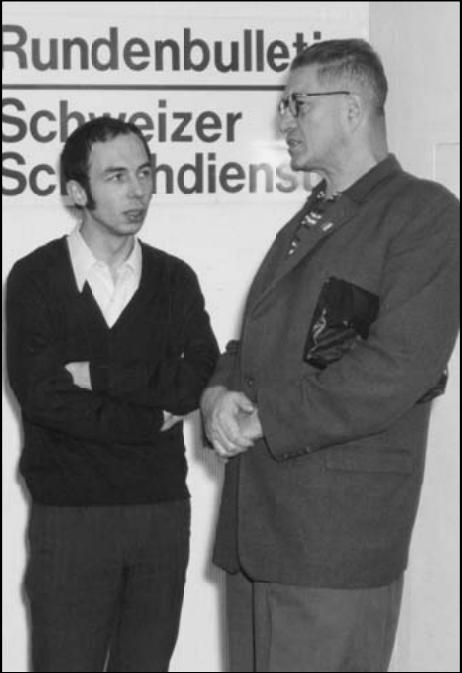
BCN remembers IM Čeněk Kottnauer (24-ii-1910 14-ii-1996)
Čeněk (pronounced CHEnek) Kottnauer was born in Prague on Thursday, February 24th, 1910. Čeněk was employed in the Ministry of Education in Prague.
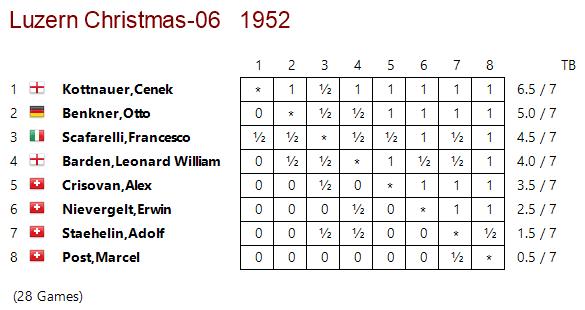
Whilst playing in the Lucerne International tournament (28-xii-1952 03-i-1953) he sought political asylum :
From the Milwaukee Journal, January 3, 1953 we have
“Czech Chess Star Asks for Asylum
Lucerne, Switzerland – Cenek Kottnauer, 42, Czecho-Slovakian chess champion and an employee of the ministry of education in Prague, announced Saturday that he would not return to Czech-Slovakia and would request political asylum in Switzerland. Kottnauer had been participating in a chess tournament.
He said that the political situation in his country had grown “more and more critical” and he wanted “to leave before it is too late”. He said that he had been divorced recently and had no children in Czech-Slovakia”.
In a January 2009 post to the English Chess Forum Leonard Barden wrote :
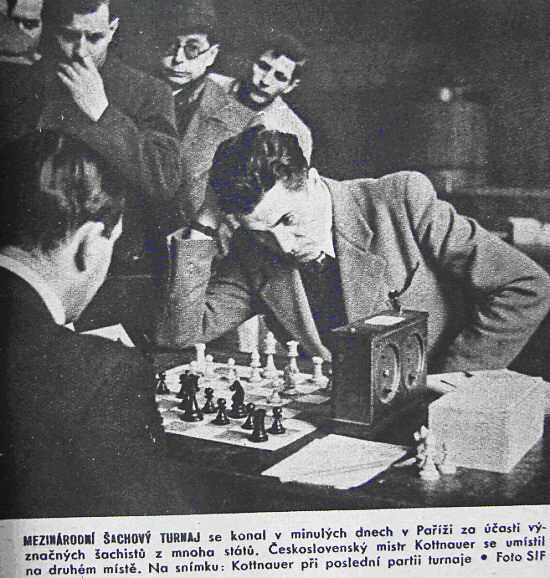
“Cenek Kottnauer defected from Czechoslovakia during the Lucerne New Year tournament of 1952-3 (I am precise on this because I was present). His wife Daniela joined him there, having been smuggled from Prague in the boot of a diplomat’s car. Kottnauer had been a water polo player of international standard before 1939 so came into serious chess only his mid-30s. He made his name with his good showing in the Prague v Moscow match of 1946 and his Bxh7+ win then against Kotov. He competed in great tournaments like Groningen 1946 and Moscow 1947; his first visit to England was in 1947 when the Czech team came here.
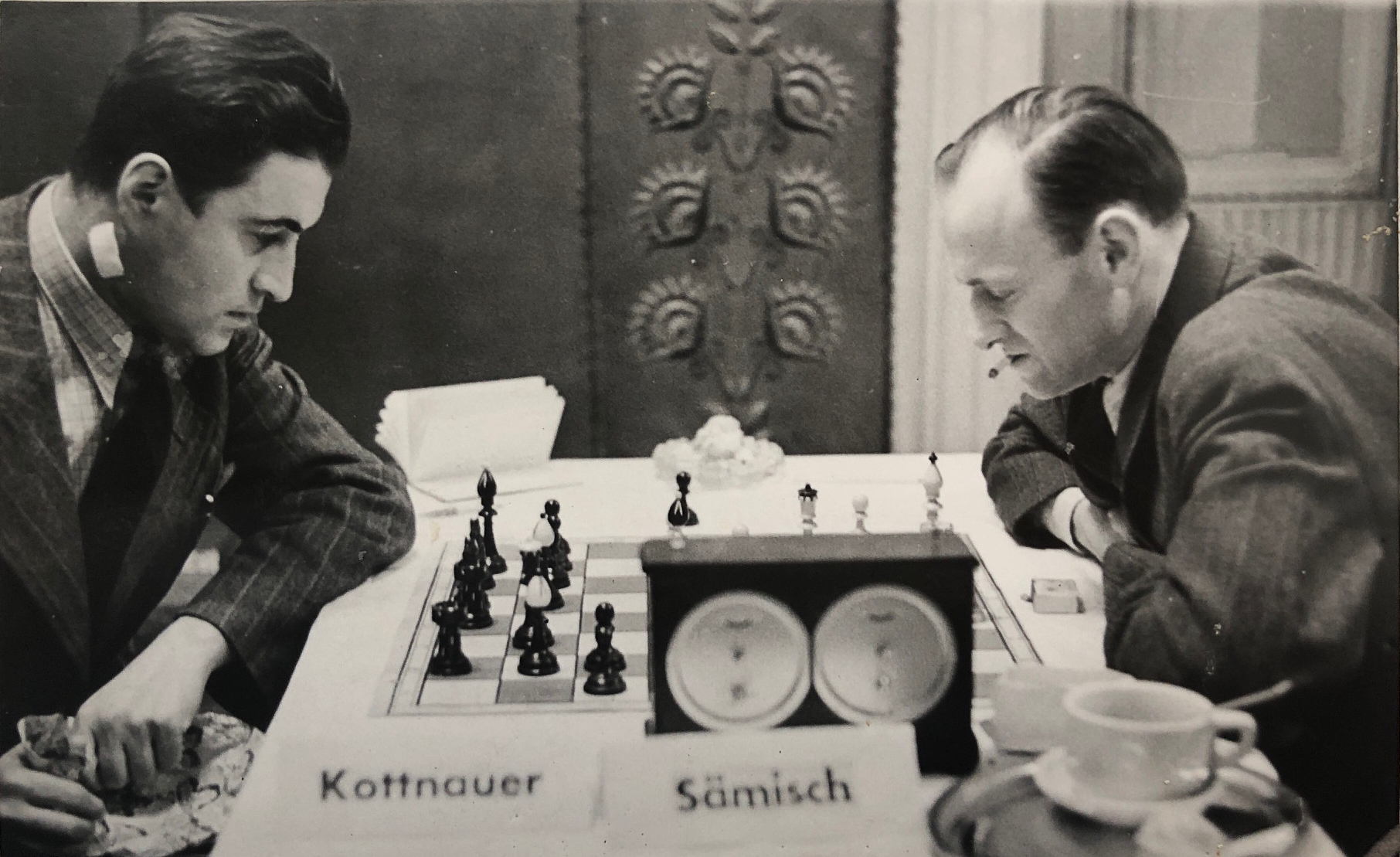
Čeněk Kottnauer plays Friedrich Sämisch during the Duras Memorial in Prague. December 7th 1942, The game was a Slav drawn after 42 moves
In the 1940s he had a job in the Czech sports ministry but got implicated in the purges following the Slansky trial. He also believed that Pachman and Opocensky were involved in the campaign against him.”
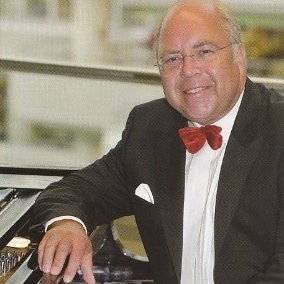
Čeněk married Daniela (née Horska, also Czech, having met in Austria) and they had a son Daniel VR Kottnauer. Daniela was born in 1934 and was 24 years younger than Čeněk. She died on February 20th 2008 in a hospice in Essen, Germany close to where Daniel currently resides. Daniel has been a pianist and singer for 30 years, an event manager for 19 years and a coach and VIP limousine driver for 5 years and may be found on LinkedIn.
Daniel Kottnauer
We thank Daniel for providing photographs.
Čeněk became a British citizen on 16th December 1960 when he obtained naturalisation certificate BNA64338.
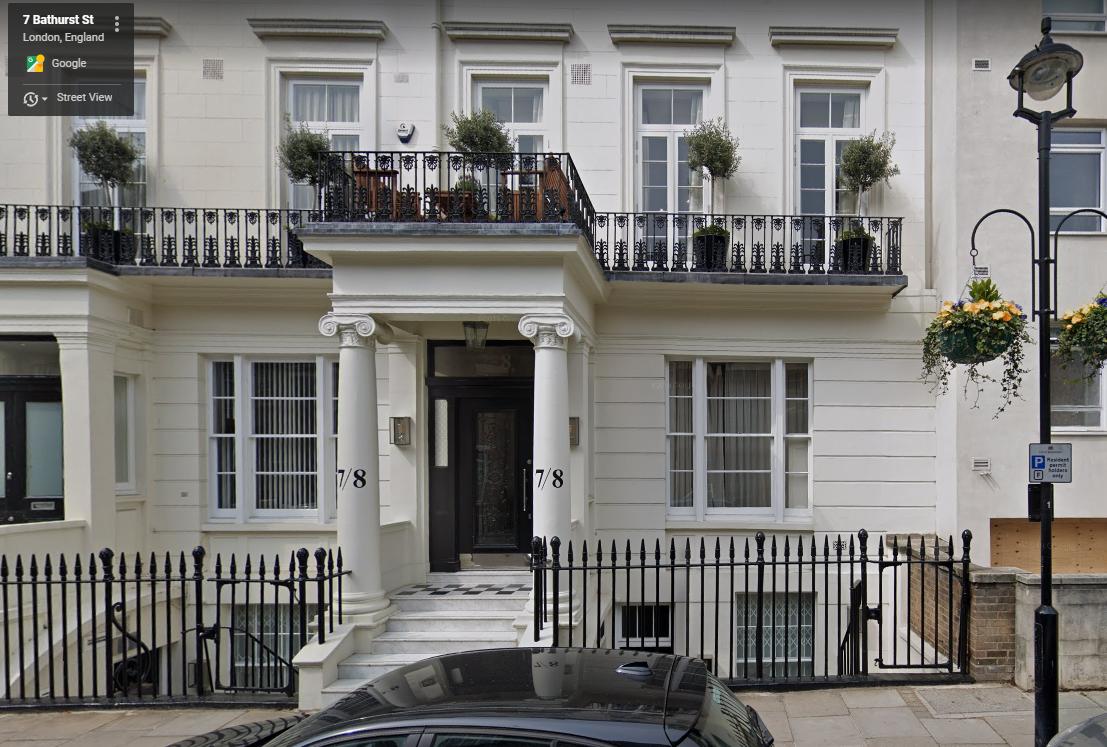
In 1965 Čeněk and Daniela were living at Flat 2, 7-8 Bathurst Street, London, W2.
7-8, Bathurst Street, London, W2
In Kings, Commoners and Knaves (Russell Enterprises, 1999), page 108, Edward Winter wrote :
“The obituaries of Čeněk Kottnauer (1910-1996) have, in common with all of the encyclopaedia entries on him, been strangely wanting in pre-1940s references to his chess career. Czech magazines of the 1930s contain occasional games by ‘Kottnauer’ (no forename or initial given), including the following :
Source : Československý šach, January, 1932, page 9. The score was also given, with notes, by Vera Menchik, on page 153 of the April 1932 issue of The Social Chess Quarterly. ”
From Šachový Týdeník, 25th February, 2010 we learnt that Čeněk was twice Prague lightning champion.
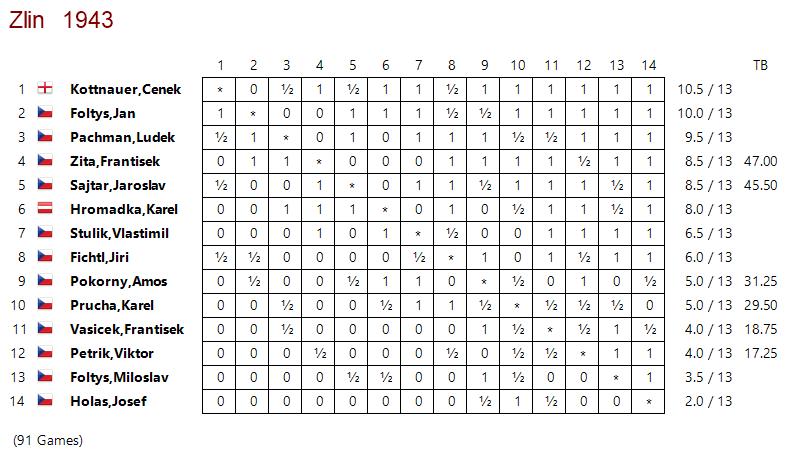
In 1943 Čeněk was a clear first overall with 10.5/13 in the Zlin tournament.
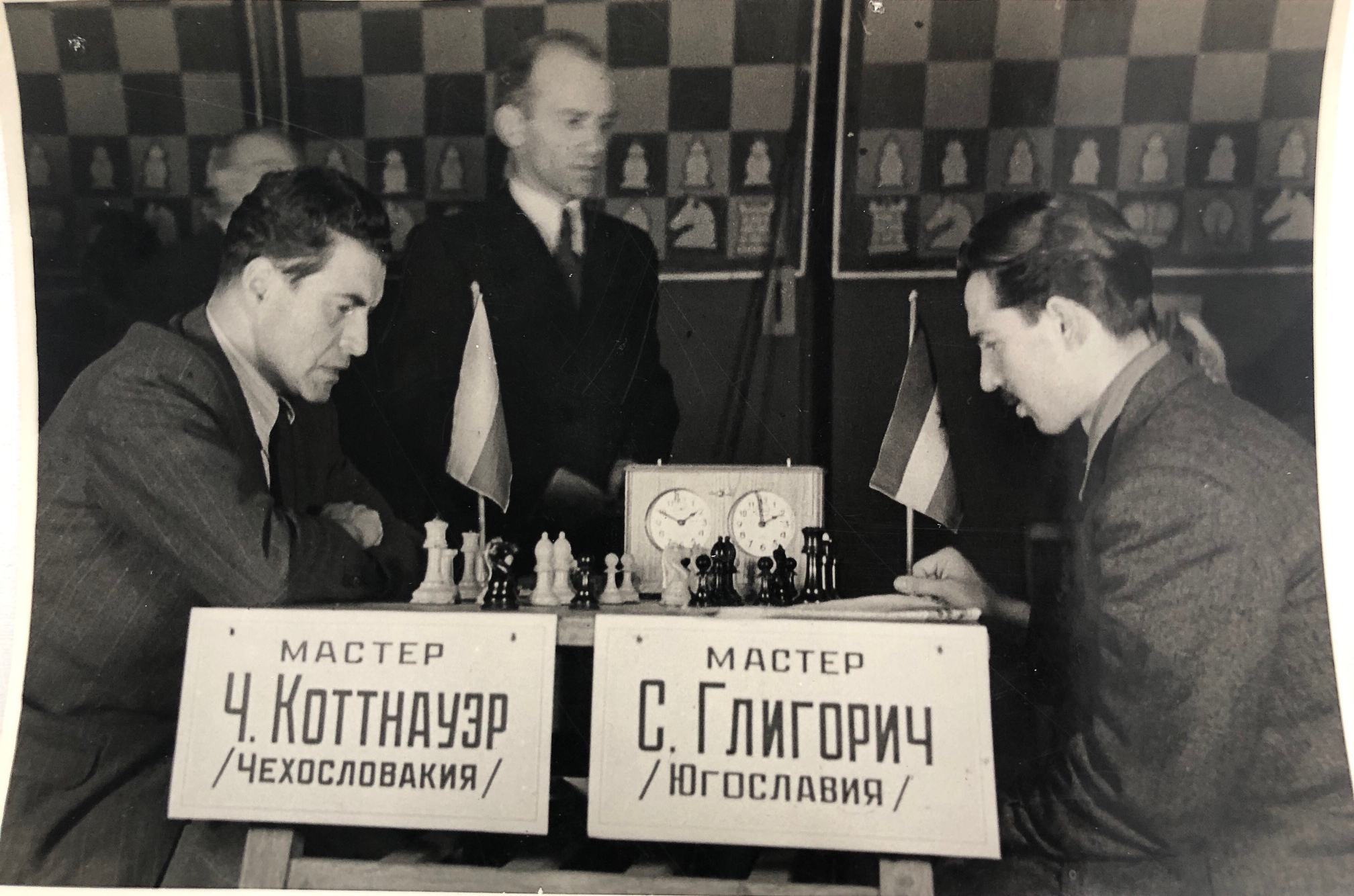
Crosstable for the Zlin (Czechoslovakia) 1943 tournamentČeněk Kottnauer plays Svetozar Gligorić during the Chigorin Memorial, Moscow, November 26th 1947.
From Bronstein on the King’s Indian, Everyman Chess, 1999, game 25 we have :
“This game is from our hisotoric match with the Czechoslovak team, which took place half in Prague and half in Moscow.
My opponent, an intelligent, clever, athletic man, also played water polo. Then at some point he travelled to a tournament in England, fell in love with a beautiful Englishwoman, and decided to settle down there.”
From The Oxford Companion to Chess (OUP, 1984), David Hooper & Ken Whyld :
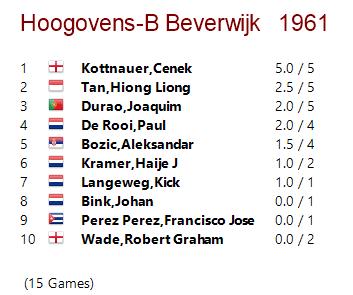
International Master (1950), International Arbiter (1951), a Czech player who emigrated to England in 1953 and was naturalised in 1960. He played in Olympiads for Czechoslovakia (1950*, 1952), on the second occasion making the best score (+10=5) on the fourth board, and in two Olympiads for England (1964, 1968). In 1961 he won the Beverwijk Masters tournament (not the concurrent grandmasters event) with a clean score, a fine achievement.
*Ed : In fact, this is not true since Czechoslovakia did not send a team to Dubrovnik 1950. This was the last year the event was limited to sixteen countries.
Incomplete crosstable for Beverwijk 1961
James Pratt, Basingstoke provides the full results from Gino de Felice, Chess Results, 1961 – 1963, Macfarland, 2013 :
Consulting the 2nd edition (1992) of Hooper & Whyld may cause disappointment since there is no entry for CK.
Čeněk Kottnauer from Šachový Týdeník, 25th February, 2010
From The Encyclopaedia of Chess (Robert Hale 1970 & 1976), Anne Sunnucks :
“International Master (1950) and International Judge (1951).
Born on 24th February 1910. Kottnauer represented Czechoslovakia in the 1952 Olympiad in Helsinki. In the years after the war his successes in international tournaments included 3rd at Beverwijk 1947, =2nd at Vienna 1947, 4th at Bad Gadstein 1948 and 1st at Lucerne 1953.
Crosstable for Lucerne 1952/1953
After the Lucerne tournament he sought political asylum in Switzerland. He later settled in England and became a naturalised British citizen. He played for the British Chess Federation in the Olympiads of 1964 and 1968.
Kottnauer has played in the British Championship twice. In 1961 he came =4th, and in 1962 he came =3rd.”
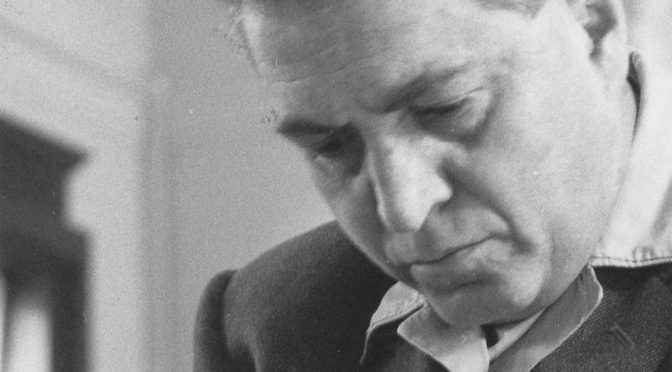
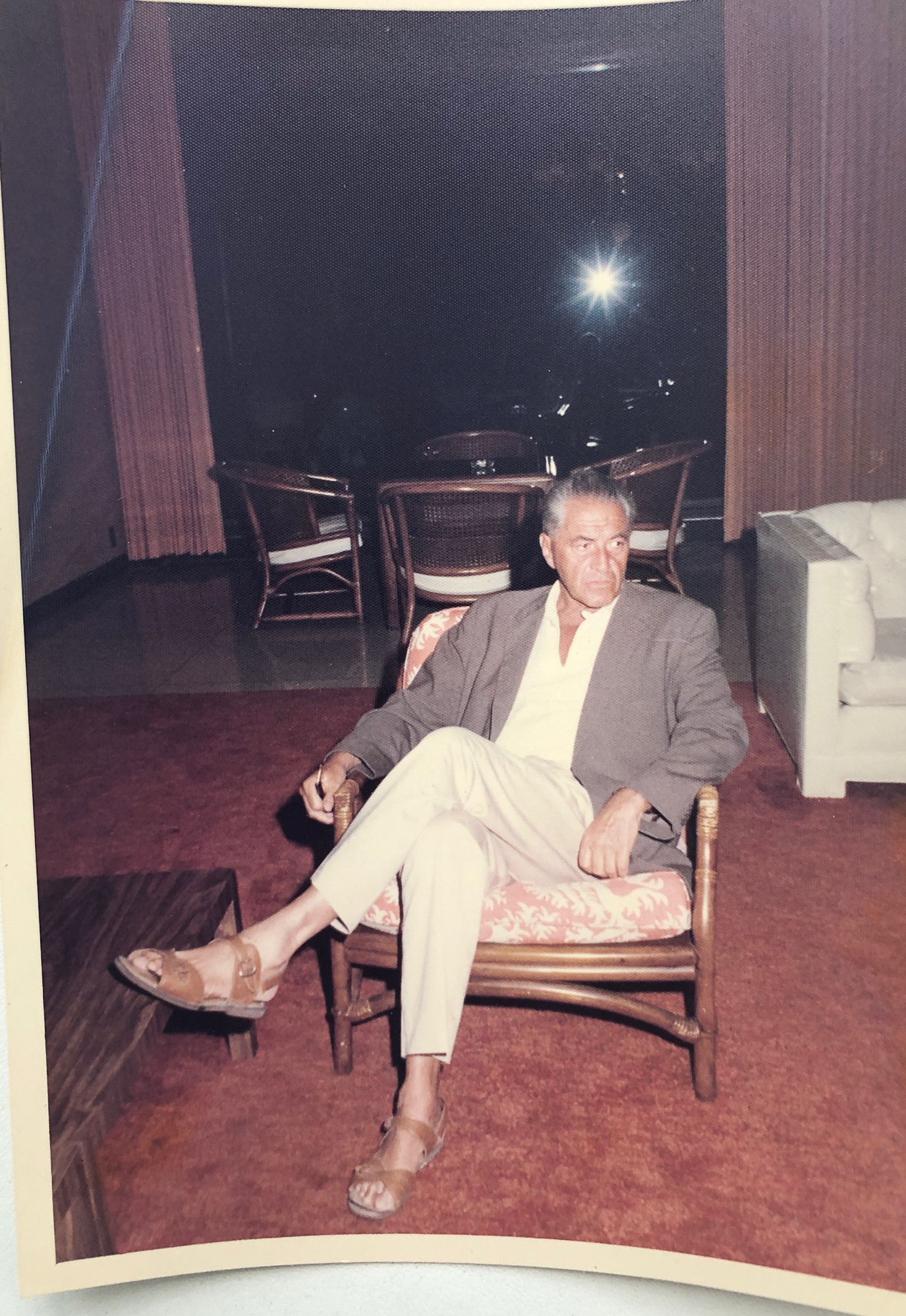
IM Čeněk Kottnauer
From The Encyclopaedia of Chess (Batsford, 1977), Harry Golombek OBE (entry written by Bill Hartston):
“Born in Czechoslovakia, Kottnauer played for that country in many events including the 1952 Olympiad. He emigrated in 1953 and subsequently took British nationality, representing England in the Olympiads of 1964 and 1968. Awarded FIDE titles of international master in 1950 and International Judge in 1951. Winner of Lucerne 1953 International tournament.
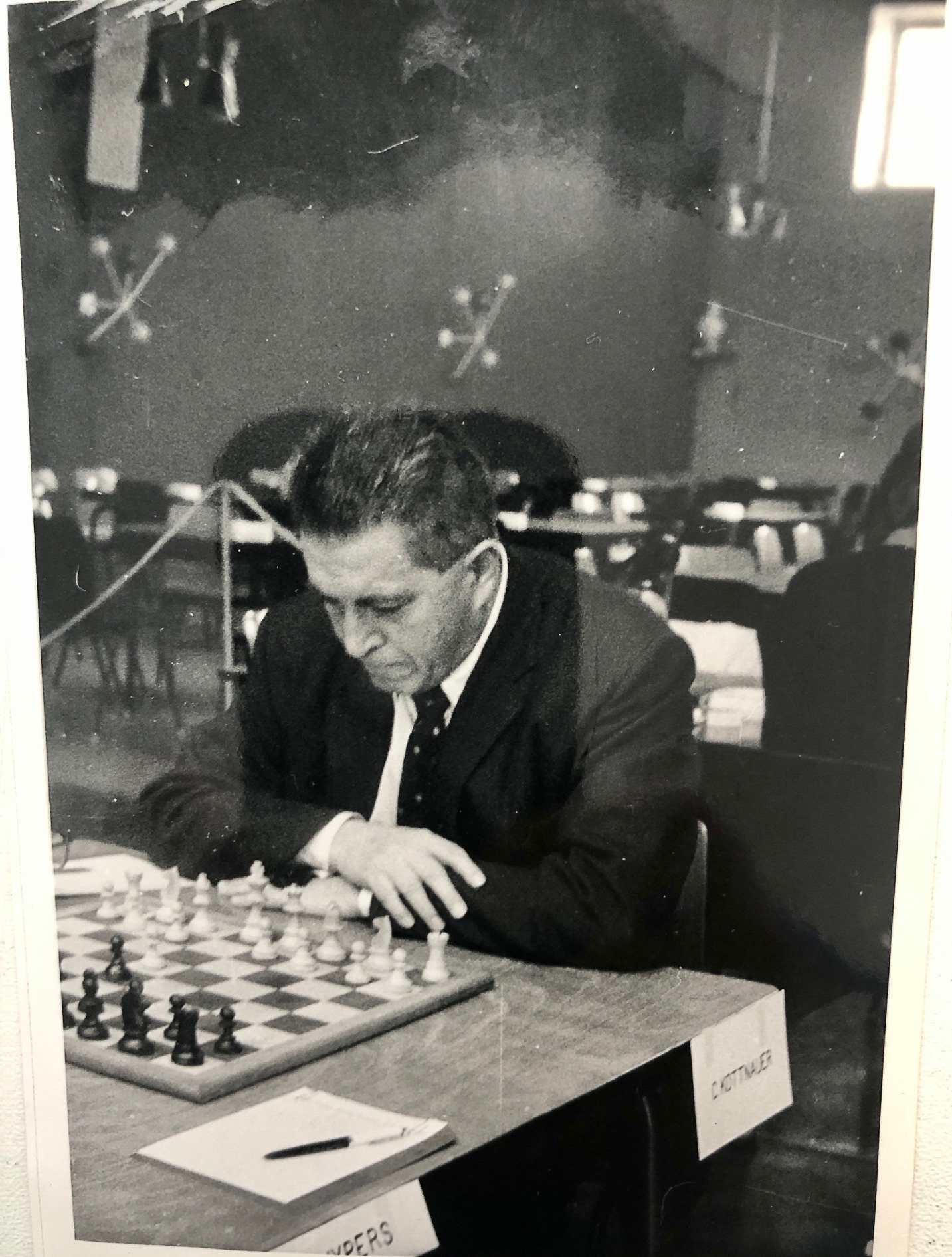
Čeněk Kottnauer plays Frans Kuijpers during the 1964 Anglo-Dutch match at Vlissingen on September 19th
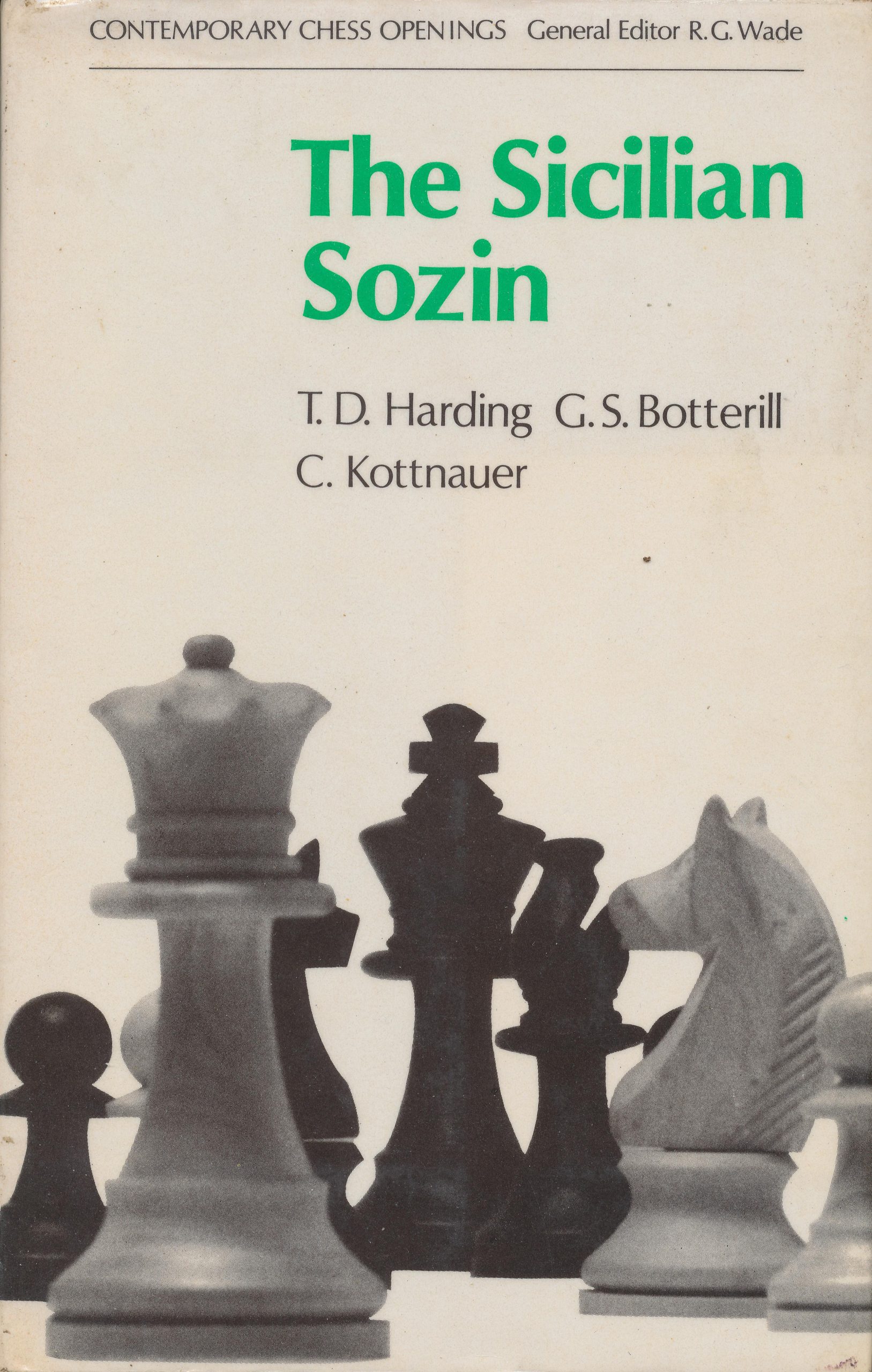
Co-author with TD Harding and GS Botterill of The Sicilian Sozin, Batsford, London, 1974.”
The Sicilian Sozin, TD Harding, GS Botterill, C. Kottnauer, Batsford, 1974
James Pratt, Basingstoke revealed : He would look through opening analysis often proclaiming: ‘What will the master play now?’
From British Chess (Pergamon Press, 1983) we have this insight from Tim Harding :
“At a time when home-grown International Masters were thin on the ground in Britain (the 1950s and 1960s) this Czech-born IM brought a lot of valuable experience to BCF teams.
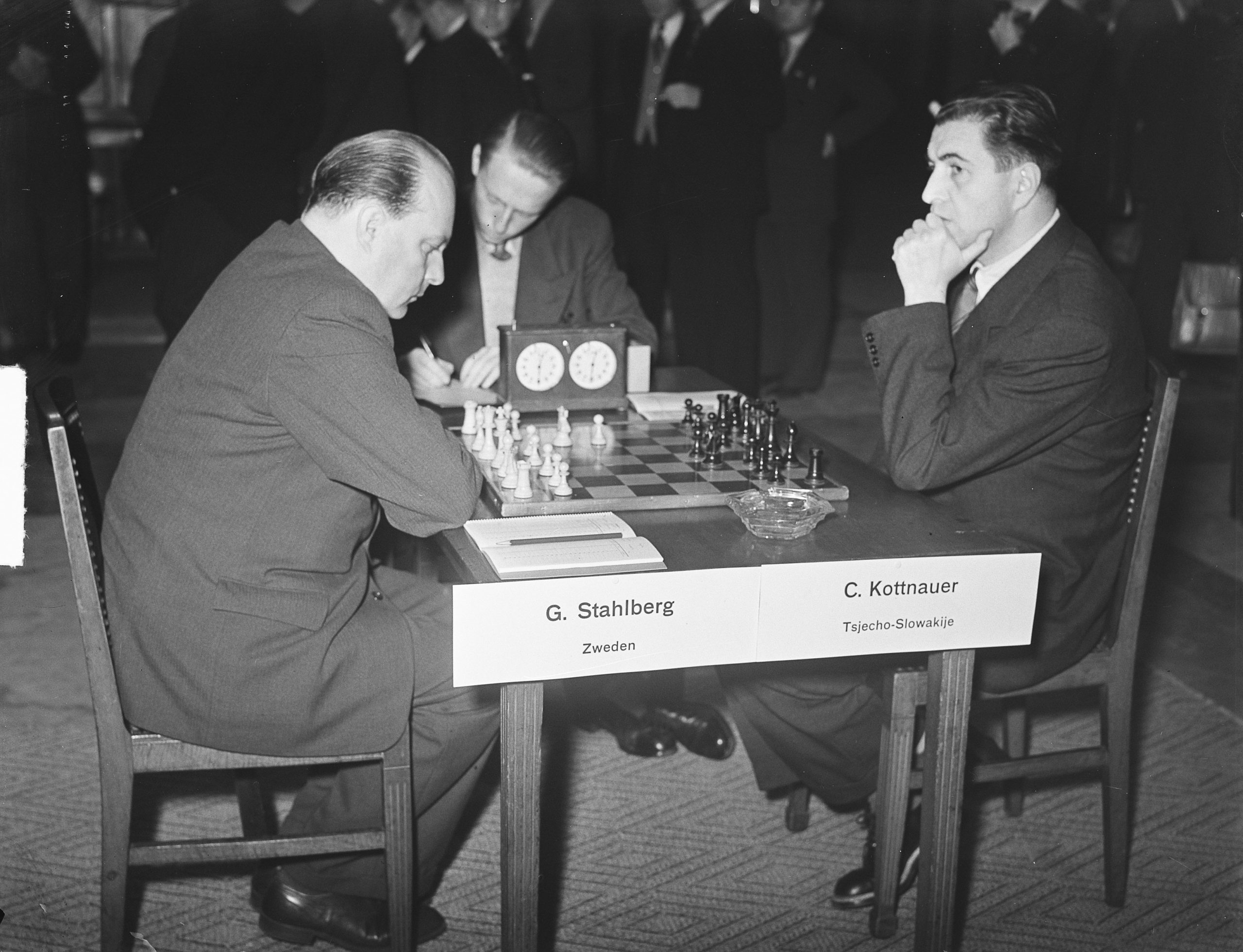
Amsterdam 1950, first day; Gideon Stahlberg versus Cenek Kottnauer Date: November 11, 1950
After emigrating to England in 1953, he became naturalized and subsequently represented the BCF in the Tel Aviv, 1964 and Lugano, 1968, Olympiads. On board one in 1964 he scored +8 =7 -3 (63.9%) on board two below Penrose in 1968 (with some board one games) he scored 41.7: +3 =5 -4.
Čeněk Kottnauer
When FIDE rating lists appeared in the early 1970s, Kottnauer was listed at 2370 but by this time had more or less retired from active play at the top level, although he took (and still takes) a keen interest in coaching promising young players, He was one of the most regular and most valuable coaches at the one-day junior training events organised by the London Chess Association at the Mary Ward Centre in Bloomsbury, London in the mid-1970s.
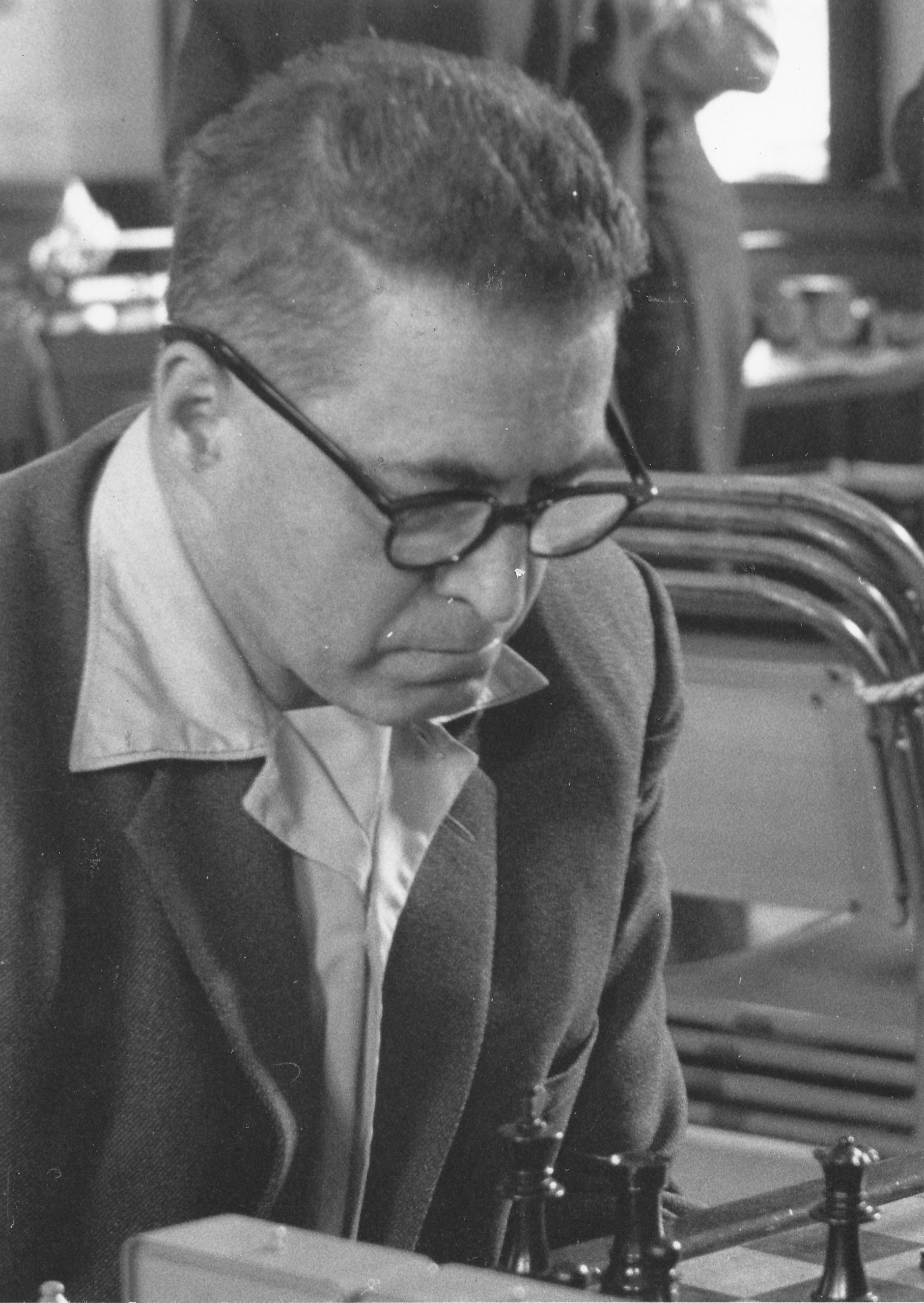
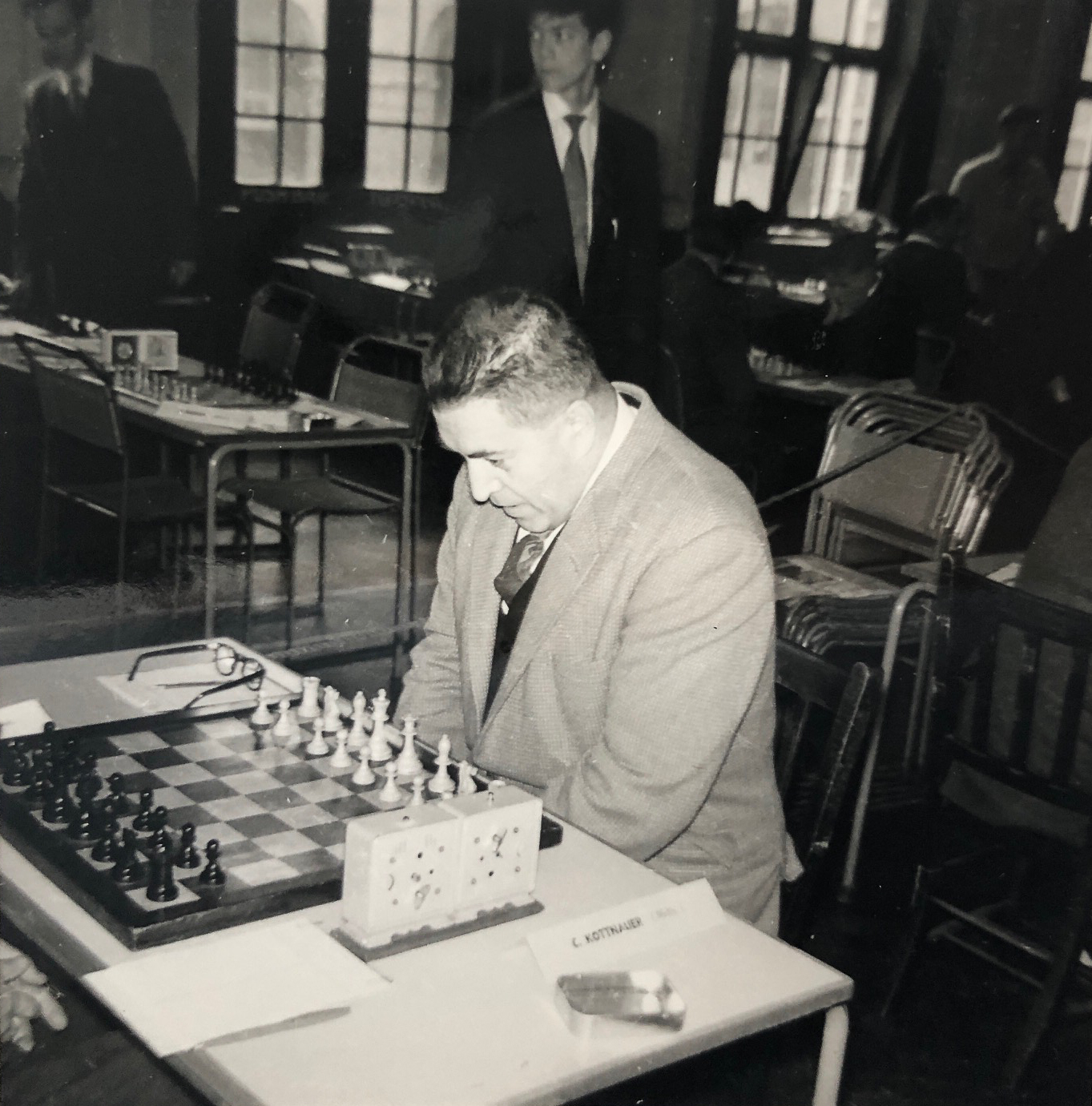
IM Čeněk Kottnauer, event unknown
At this time he also wrote many articles for his friend Grandmaster Pachman, who had been freed to live in West Germany where he became editor of Schach-Archiv, and also made a major contribution to the Batsford opening theory work. The Sicilian Sozin, written in collaboration with George Botterill and Tim Harding, and published in 1974.
Kottnauer’s most active years as a player were however 1946-53; in the year that he came to England he took first prize in the Lucerne, 1953 International tournament. Had he been a professional player throughout the the 1950s, there is little doubt that he would have become a grandmaster.
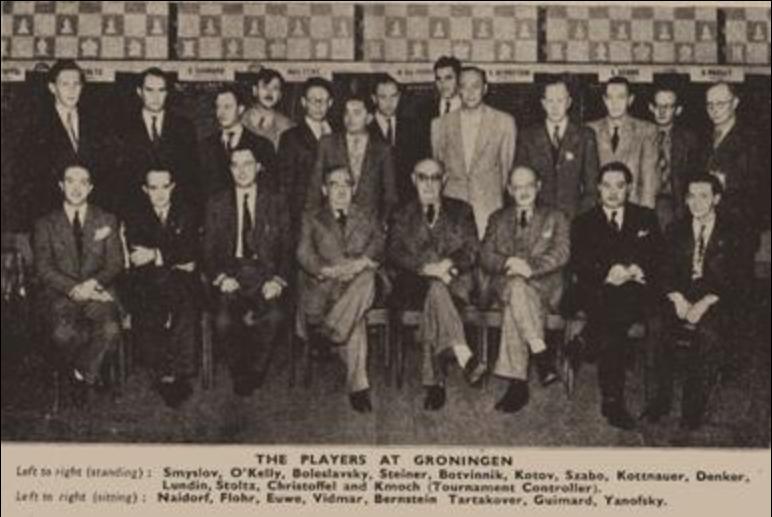
As early as the end of the war, when regular play resumed, he was almost of that strength (as wins against Kotov and Smyslov in the February, 1946 Prague v Moscow match showed) but lacking in experience at the top level, which told against him at Groningen, 1946, when he was placed 13th with 9 points out of a possible 19 in a very strong field. This was the first great post-war tournament, with nine Master and eleven Grandmasters (including Botvinnik and former world champion Euwe).
Players at the 1946 Groningen Tournament
Also in 1946 Kottnauer scored wins against Simagin (in Prague) and Levenfish (in Leningrad) and was clearly one of the up-and-coming stars in a strong Czech team that included Filip and Pachman. In 1950 he was one of the first players to be awarded the FIDE title of International Master.
The following year he was also made a FIDE International Judge (now known as FIDE Arbiter).
Unfortunately there was no Czech representation at the Dubrovnik, 1950 Olympiad, but in 1952, one of his last appearances for Czechoslovakia, Kottnauer achieved a remarkable record playing board four (below Filip, Pachman and Sajtar) at the Helsinki Olympiad. He went through unbeaten with ten wins and five draws (83.3%) and easily won the board prize.
Kottnauer shortly thereafter came to England where he eventually made a successful career as an executive with Trust House Forte’s hotel group; he has also helped with the BBC overseas service Czech-language broadcasts. He lives in West Central London with his wife and their son.
The following is undoubtedly Kottnauer’s most famous win.
and here we have the same game analysed by Tryfon Gavriel :
From British Chess Magazine, Volume CXVI (116, 1996), Number 4 (April), pp 202-203 we have this obituary by Bernard Cafferty :
Čeněk Kottnauer, the Czech/British IM, and the first chess defector died in St. Margaret’s Hospital, London, on 14th February after heart trouble and abdominal cancer.
A giant of a man, a fine athlete and swimmer, he was born on 24th February 1910 and came to prominence in the 1942 tournament in Prague in which Alekhine took part. He extended the great man to 70 moves before resigning. His wins against Kotov and Smyslov in the Moscow-Prague match of 1946 and his 13th place in the great Groningen tournament of the same year confirmed his status, as did his excellent showing for Czechoslovakia in the 1952 Olympiad at Helsinki (+10=5-0 on fourth board). He also took part in the 1947 Chigorin Memorial in Moscow, and won a tournament at Lucerne in early 1953, the same year in which he emigrated to Britain.
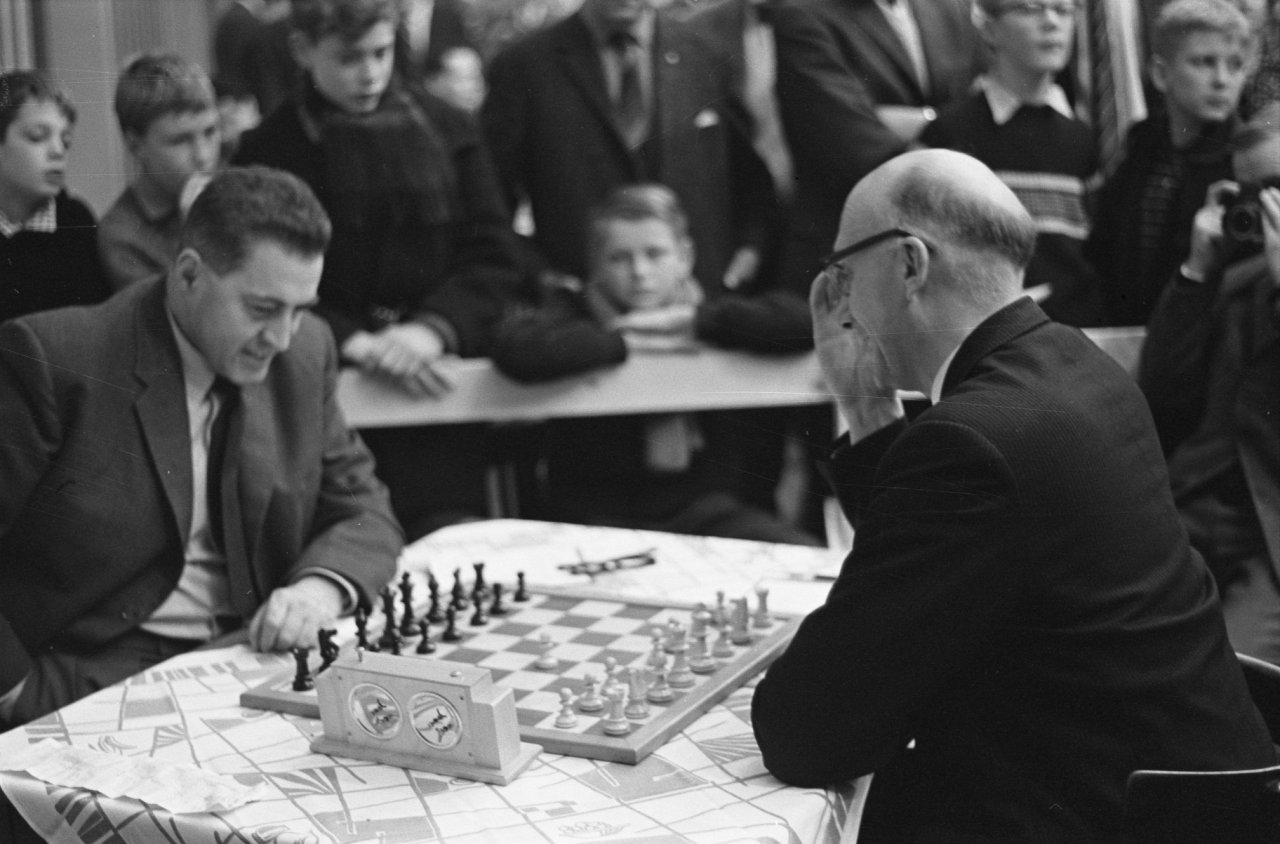
Hoogovens, Beverwijk, 1962. In the opening round (played 11th January), Theo van Scheltinga (Netherlands) faces Čeněk Kottnauer (England, formerly ČSSR). (Photo credit: W. van Rossem, ANEFO, via http://gahetna.nl. Courtesy of Douglas Griffin
On this form he would have gained the GM title had he continued playing, but he had to take a full-time job (with Trusthouse Forte) to support his family.
Čeněk had met his much younger wife in Austria, though she too was Czech. They had a son. The master’s appearences were therefore limited to London League matches and other sporadic events. That he had lost none of his skill was shown when he played top board for England at the 1964 Tel-Aviv Olympiad (Penrose was not available) and made +8=7-3. His only other big event was the Lugano Olympiad of 1968 when he was on second board and made +3=5-4.
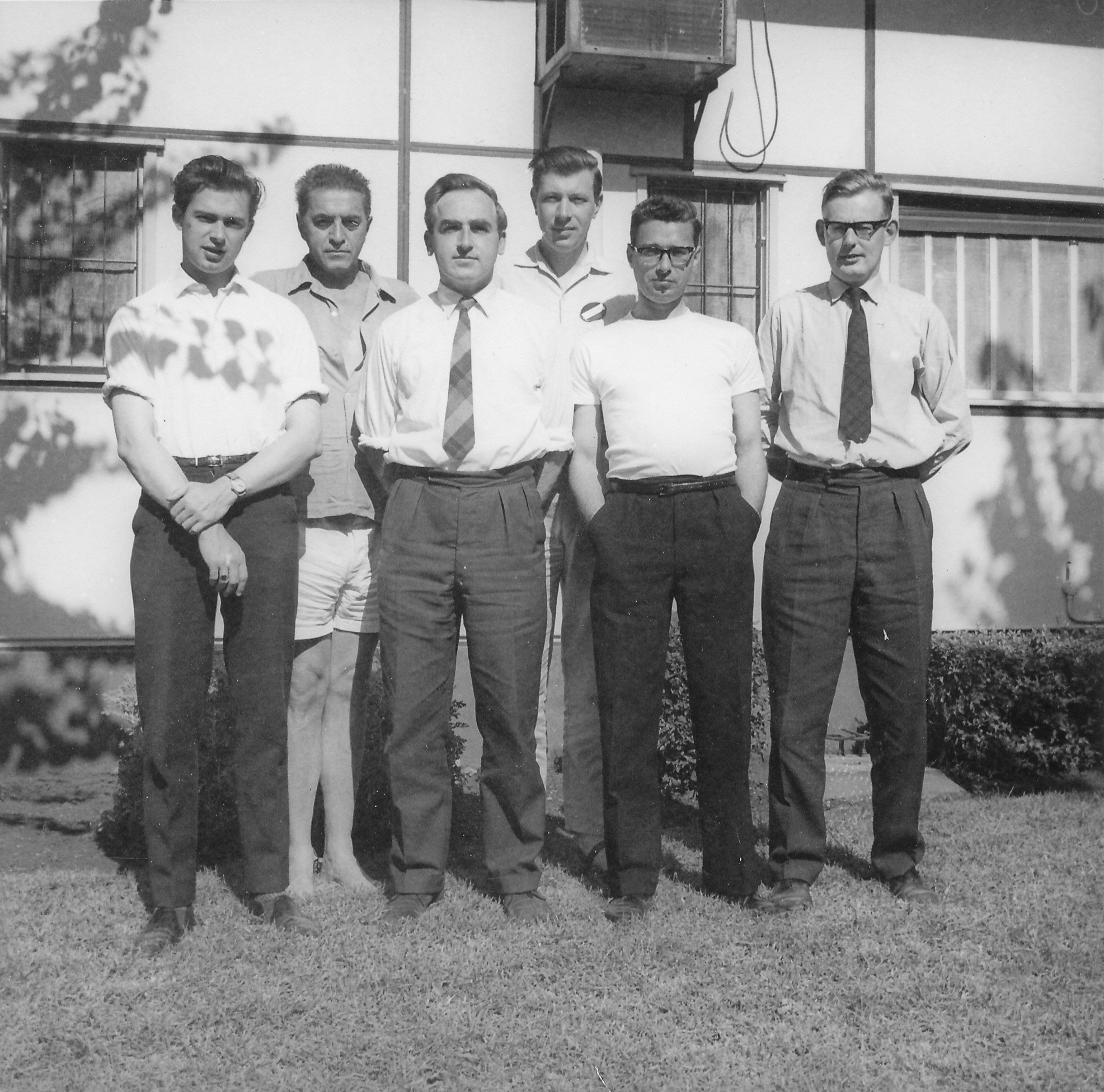
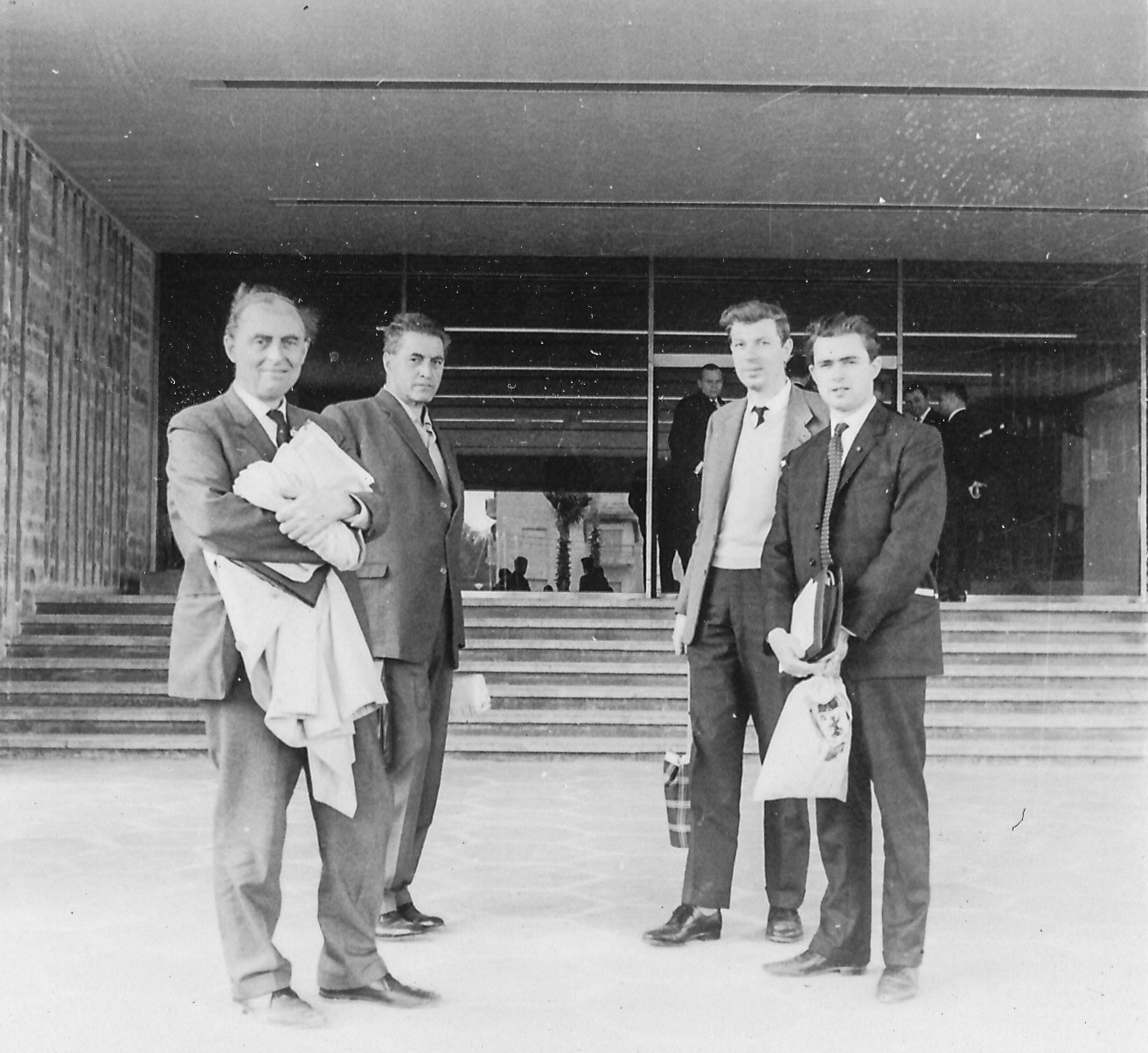
The 1964 England Olympiad (Tel Aviv) Team : Owen Hindle, Čeněk Kottnauer, Peter Clarke, Michael Franklin, Norman Littlewood & Michael Haygarth
Čeněk (pronounced CHEnek) Kottnauer was one of the early professionals in the German Bundesliga; on a visit to his Bayswater flat in 1995 by Murray Chandler and myself, Čeněk told us about the great transport difficulties he had in those days. He mentioned that he had recently had a heart bypass operation and showed us the medication he had to take on a regular basis, opining that after Golombek and Milner-Barry he would be the next to go.
Hugh Alexander, Čeněk Kottnauer, Michael Franklin and Owen Hindle
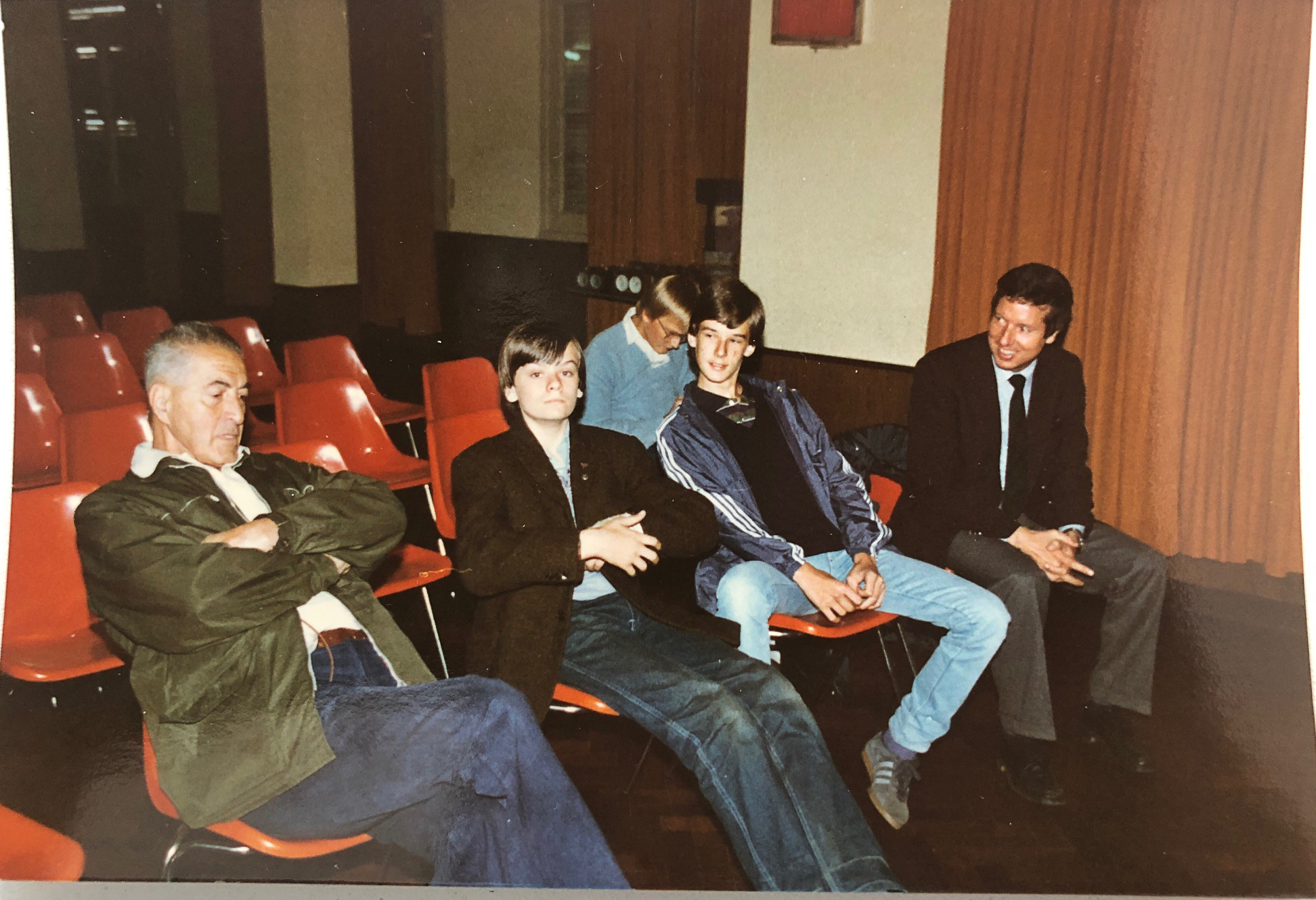
Čeněk was involved in junior coaching in London for many years, wrote extensively for the Dutch and German press and in recent years was a regular visitor to the Lloyds Bank Masters to see old friends and acquaintances. Amongst those he coached were Julian Hodgson, William Watson and Dharshan Kumaran, as well as Stuart Conquest.
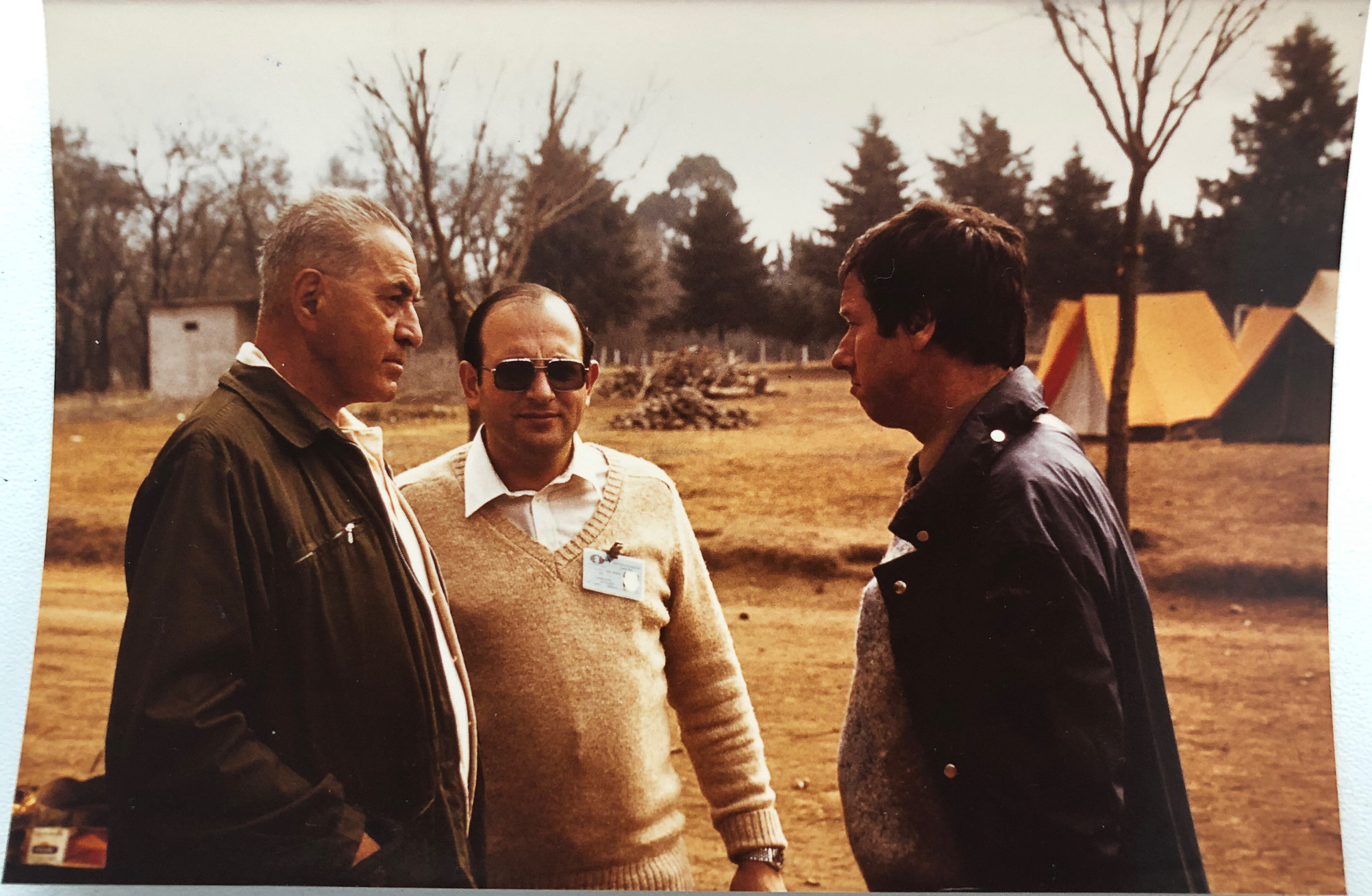
IM Čeněk Kottnauer in Argentina during the 1981 World Under-16 Championship
In Stuart’s case he came regularly to Hastings to do the coaching which was financed by the Slater Foundation and by Lloyds Bank.
The fruit of his effort was Stuart’s 1981 World U-16 title in Argentina, where Čeněk’s great physical strength came in handy when the huge trophy had to be carried back to Britain.
IM Čeněk Kottnauer with Stuart Conquest during the World Under-16 Championship in Argentina.
All his pupils and friends will attest to his wonderful manner. A great personality has left us.”
According to Leonard Barden “Čeněk’s students included Demis Hassabis, then aged six. He once told me that Dharshan Kumaran, then seven, was the more talented of the pair but that Demis was also ‘very clever and tricky’ ”
Daniel tells us that Nigel Short visited his family home for coaching and we believe that both Anita and Mira Rakshit were CKs students. Doubtless there were many more…
Leonard added :
“After he retired he did chess coaching and, although never named in the BCF’s list of coaches, was the most successful of all in terms of achievements by those he taught. He normally did weekly sessions of a couple of hours and got results through his challenging and sceptical approach to ideas from his pupils.
Kottnauer pupils included Hodgson, Watson, and Kumaran, who all became grandmasters. When he came to our junior invitation tournaments in the mid-seventies I used to give a prize of a game and session with him to exceptional talents. So he played Nigel Short in spring 1975 (probably Short’s first one-to-one with an IM) and was enthusiastic about his promise.
In 1981 when Stuart Conquest was going to the the world U16 championship in Argentina Cenek coached him for several months beforehand and went with him to the event. No news reports were available during the tournament so the first I knew was when Cenek phoned me on his return to London and complained that he was tired having to carry this enormous trophy home (Stuart had broken his arm before the event and played in a sling) and how the food had been terrible but that Eliskases, who was involved in the organisation, had sworn him to secrecy.
IM Čeněk Kottnauer in Argentina during the 1981 World Under-16 Championship
I used to visit him a couple of times a month for talk and blitz sessions and have warm memories. A great guy, and a significant figure in the long departed English chess boom.”
“Cenek Kottnauer was born in Prague. He was awarded the IM title in 1950 and became an International Arbiter in 1951. Kottnauer played the Helsinki Olympiad 1952 on board 4 for Czechoslovakia, scoring +10 =5 -0. In 1953 he won the Lucerne international tournament. That same year, he emigrated to England, and eventually became a naturalized citizen and played for England in the Olympiads of 1964 and 1968. In the 1970s he became one of England’s top coaches of young players.”
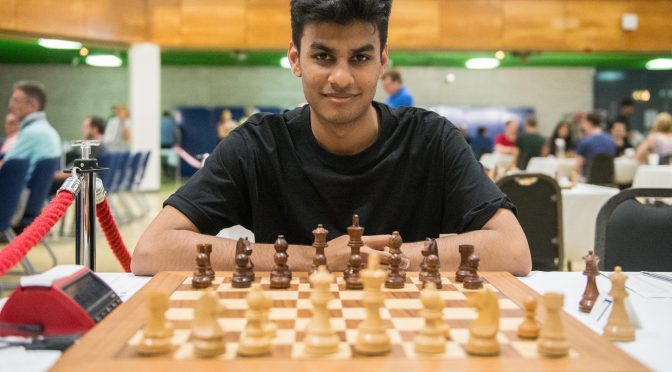
Ravi Haria was born Sunday, February 7th, 1999 in Elstree, Hertfordshire. “Maria” by Blondie was top of the hit parade. Ravi currently resides in London.
Ravi learnt at the age of 6 and joined Barnet Knights Chess Club in 2005. His first chess teacher was Angela Eyton who taught him the moves and Angela was followed by Tony Niccoli and then Julian Meszoras on his ascent of the chess ladder.
Ravi’s first recorded tournament was the 35th Barnet Knights Under-8 rapidplay on September 25th 2005. Also playing of note were Jonathan Pein and Isaac Sanders.
His first recorded standard play game was in the London Junior Under-10 Championships on December 9th 2006.
By the time he was eight he had attracted the attention of the England selectors and played in the 2008 Commonwealth Championships in New Delhi coming home with a bronze medal.
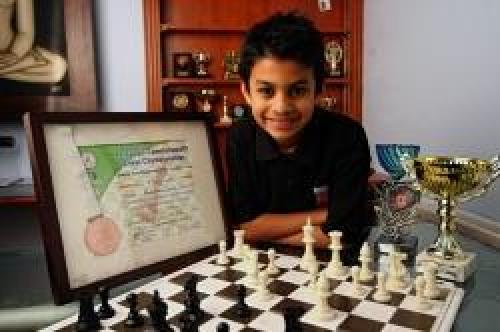
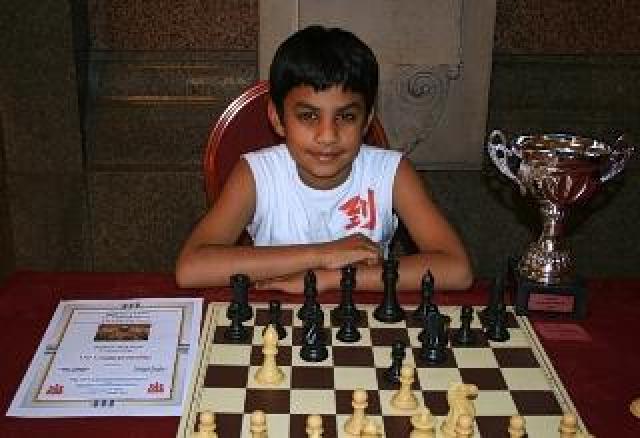
Ravi aged 8 photographed by The Borehamwood and Elstree Times in January 2008Ravi aged 9 photographed by The Borehamwood and Elstree Times in August 2008
In 2008 Ravi won the British Under-9 title in Liverpool. He said afterwards:
It was quite nice to be leading everyone and I felt proud of myself. I’m not sure how I control my nerves but it feels really good to win.
His mother Sona said:
It’s a bit overwhelming but we just support him. It means you have to give up a lot of time for him but it’s really nice to see that he’s getting somewhere.
This was followed in 2014 by winning the British Under-18 championship in Aberystwyth aged 15 and then the same title in 2017 in Llandudno.
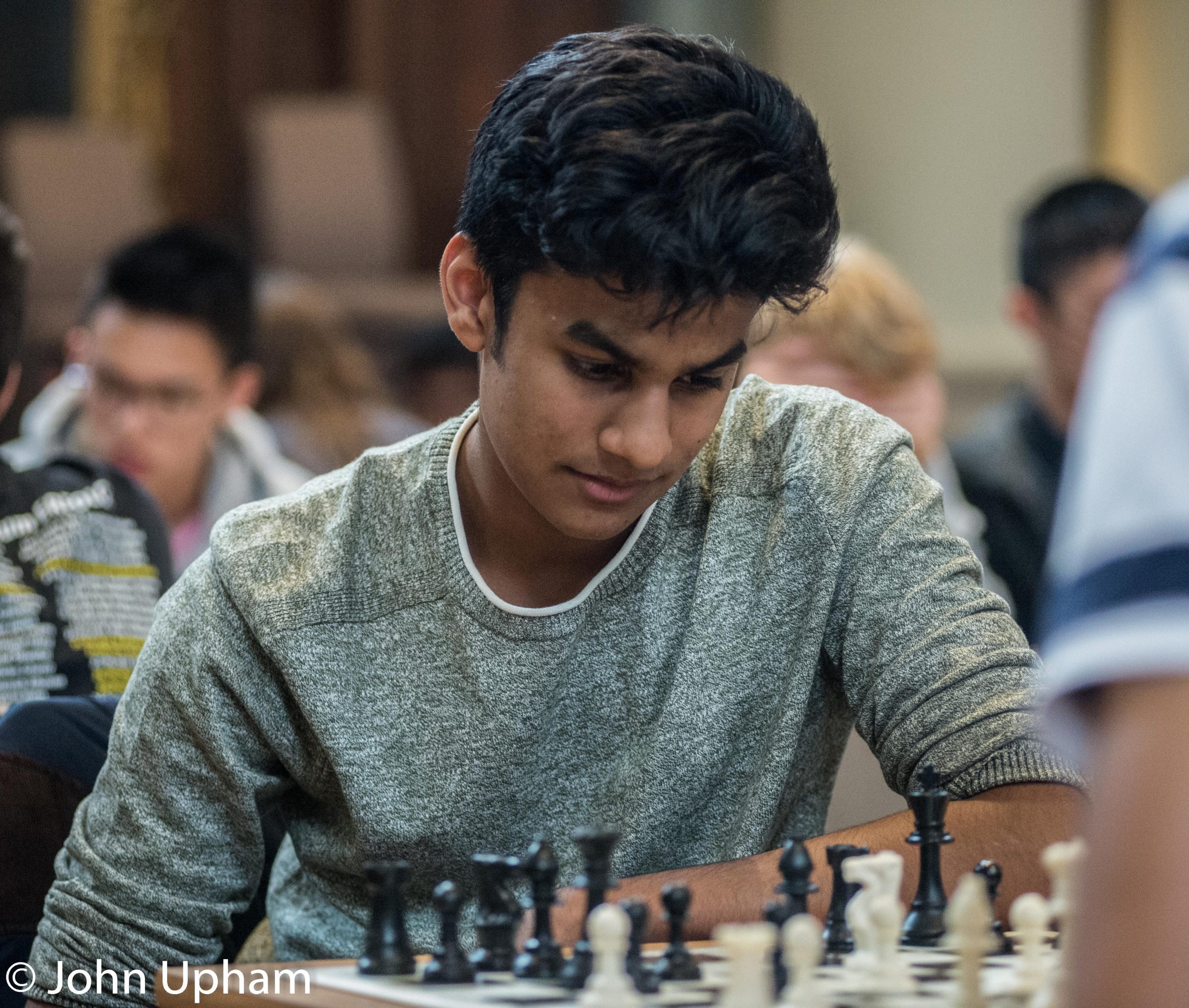
Ravi Haria, UKCC Southern Gigafinal, 2013
In 2016 Ravi was equal 2nd to Deep Sengupta at the Hastings Masters Open with an impressive 6/9 and a TPR of 2563. This performance secured his second IM norm.
The IM title was conferred at the 88th FIDE Congress 2017, 7-15 October, Goynuk, Antalya, Turkey.
He scored six points after 11 rounds at the 2017 World Junior championship in Italy and 5.5 points at the 2017 WYCC U-18 group in Uruguay.
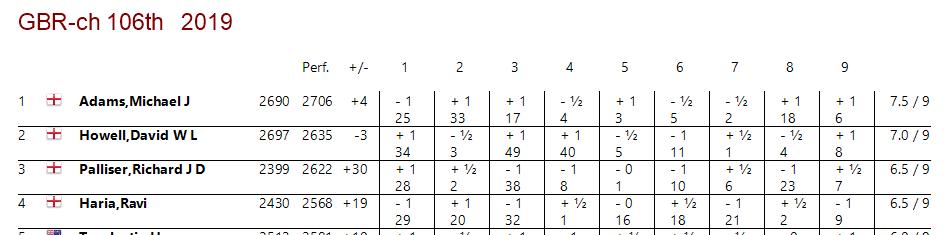
Ravi completed his British junior titles run by becoming the current (no OTB event in 2020) British Under-21 champion in 2019 in Torquay scoring an emphatic 6.5/9 securing a share of third place.
Partial crosstable for the 2019 British Championships in Torquay
Ravi became a FIDE Master in 2015 at the age of 16 and and International Master two years later making him England’s second youngest IM after Matthew Wadsworth.
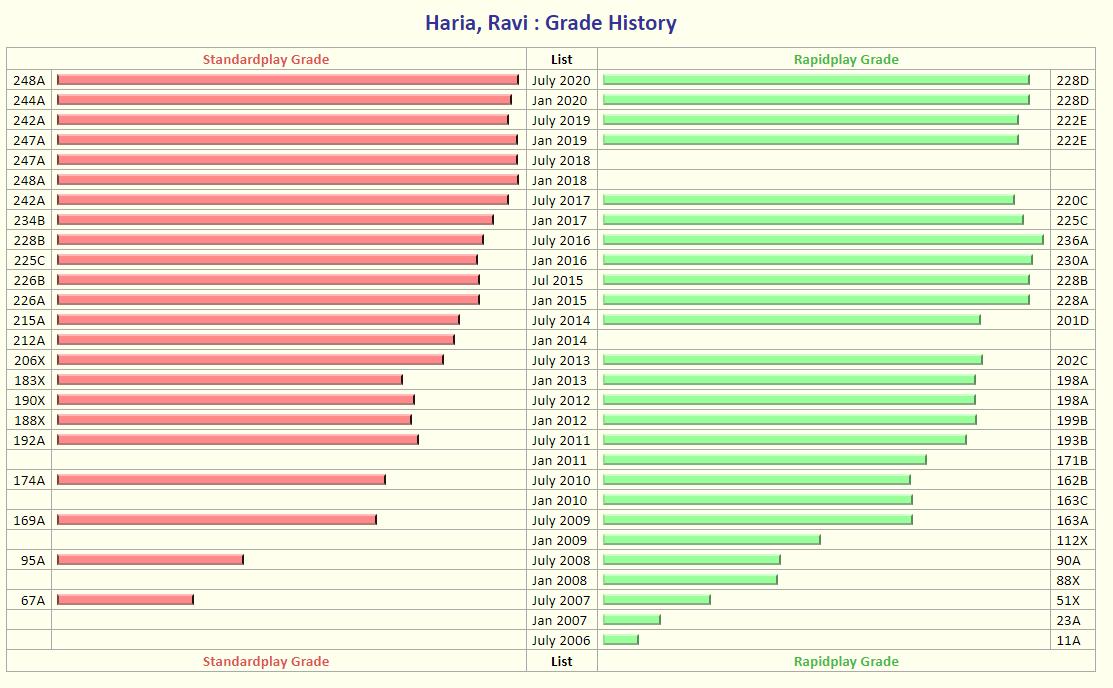
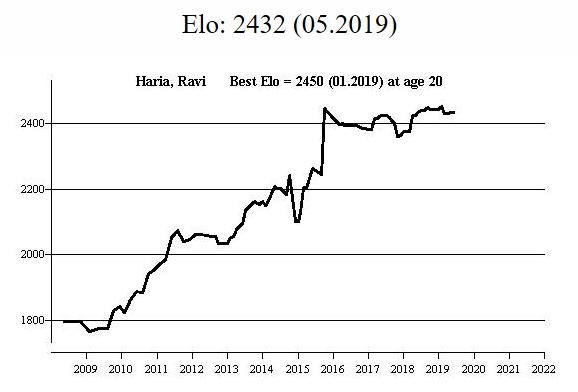
OTB Elo rating profile for IM Ravi Haria according to MegaBase 2020
His peak FIDE rating was 2497 in October 2021 and currently (February 2022) is 2490.
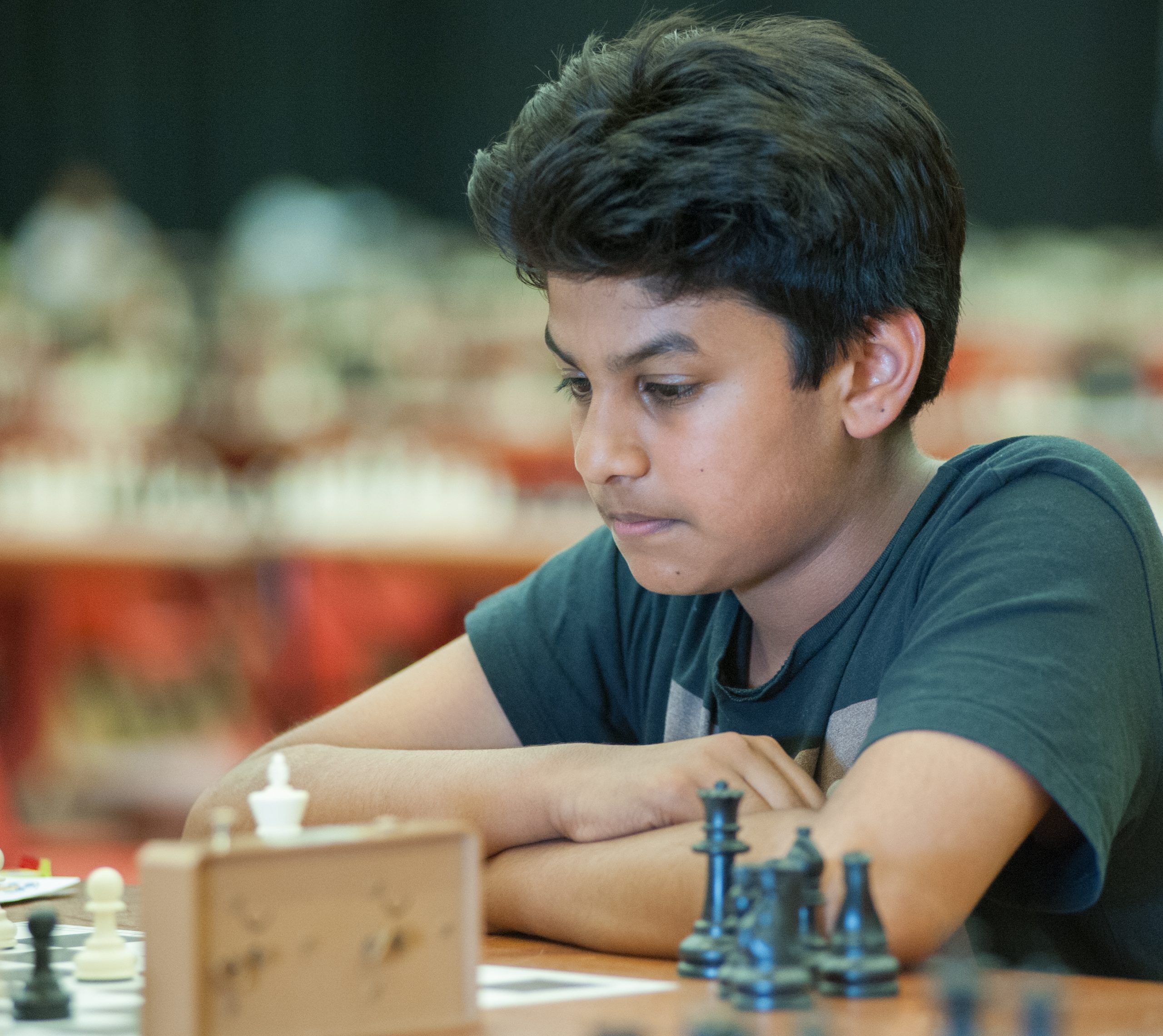
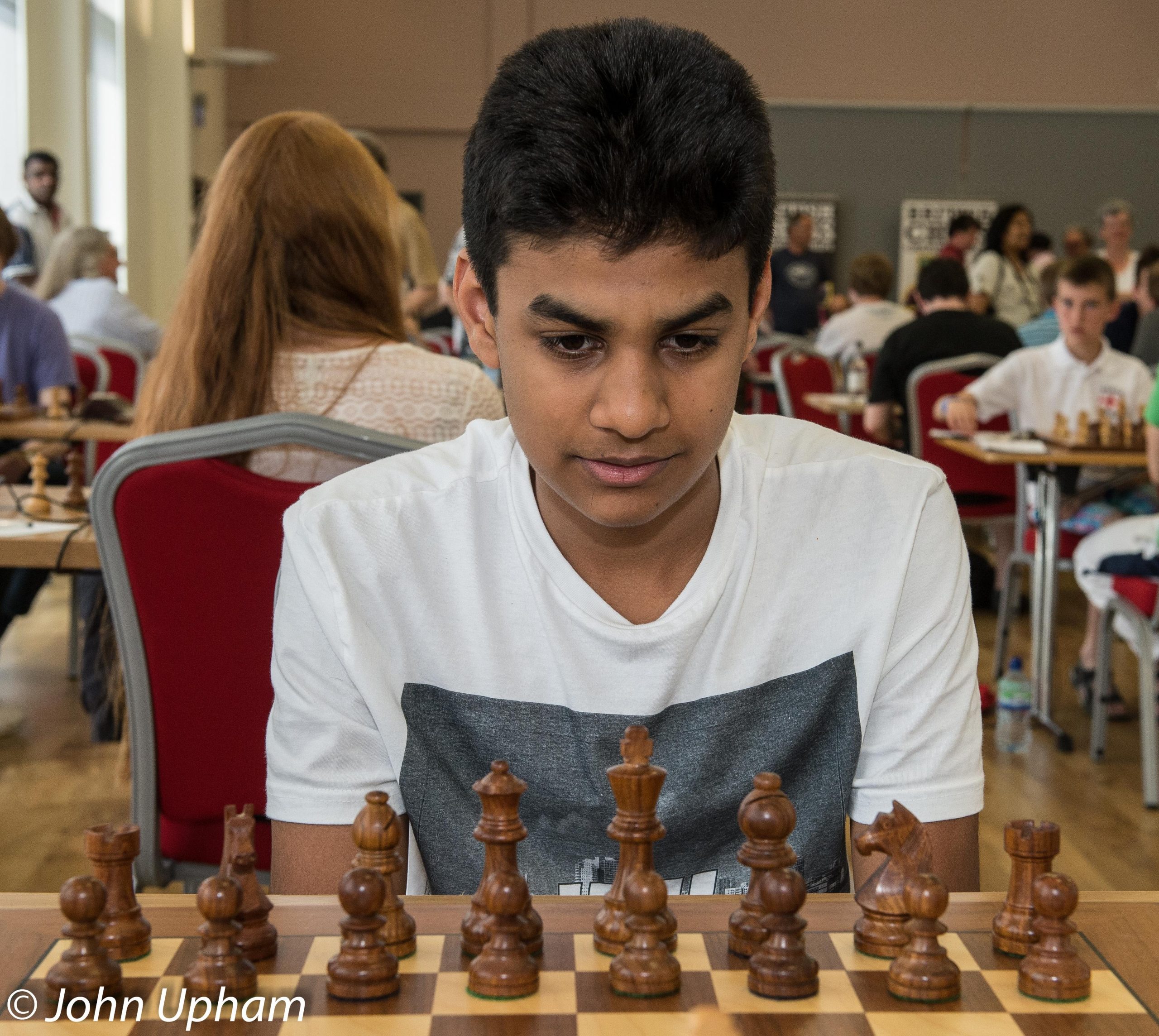
FM Ravi Haria, ECF Secondary Schools Rapidplay, 2016
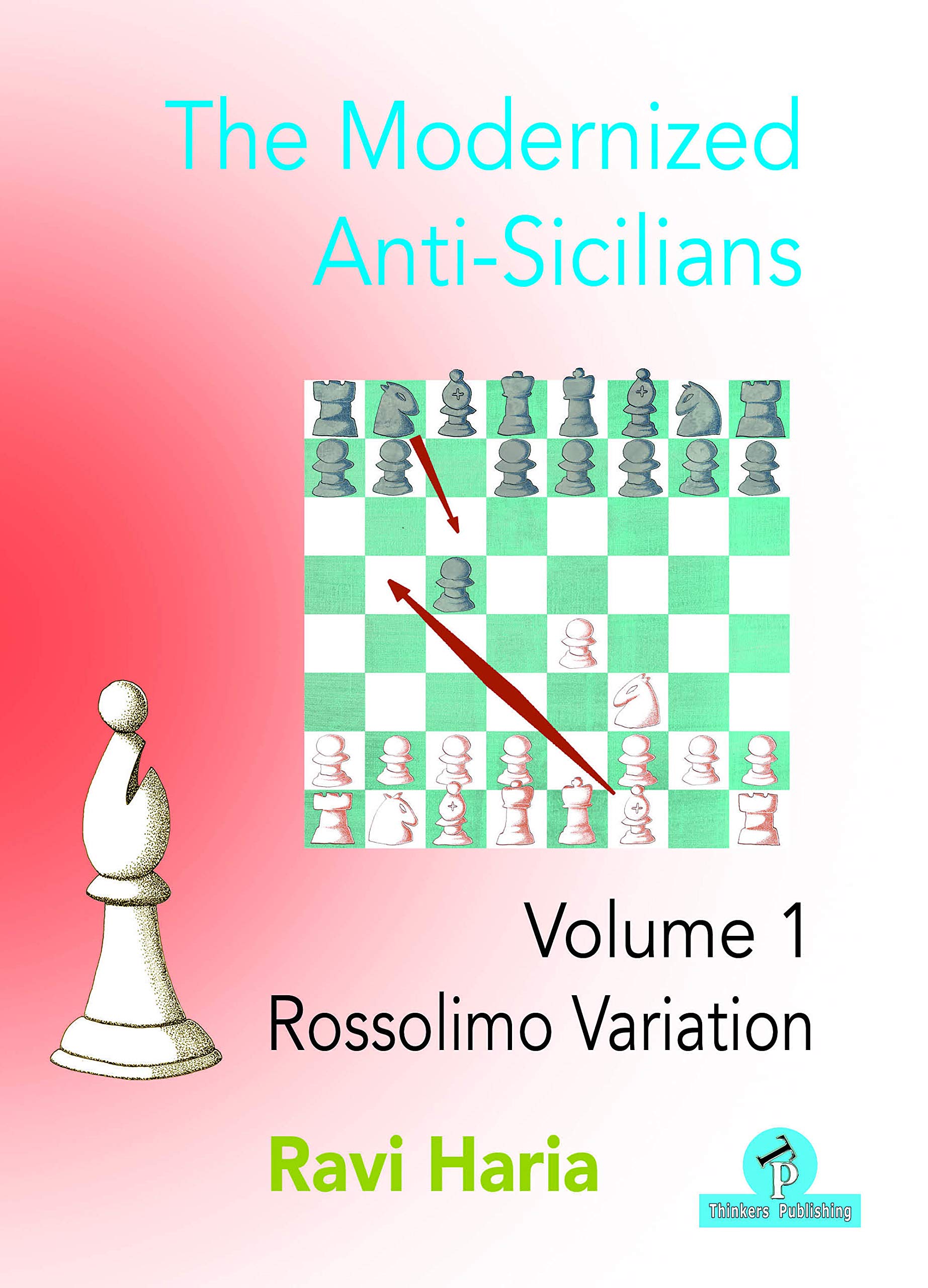
On January 28th 2021 Thinker’s Publishing released The Modernised Anti-Sicilians, Volume 1, Rossolimo Variation which is a massive 520 page tome on the following position :
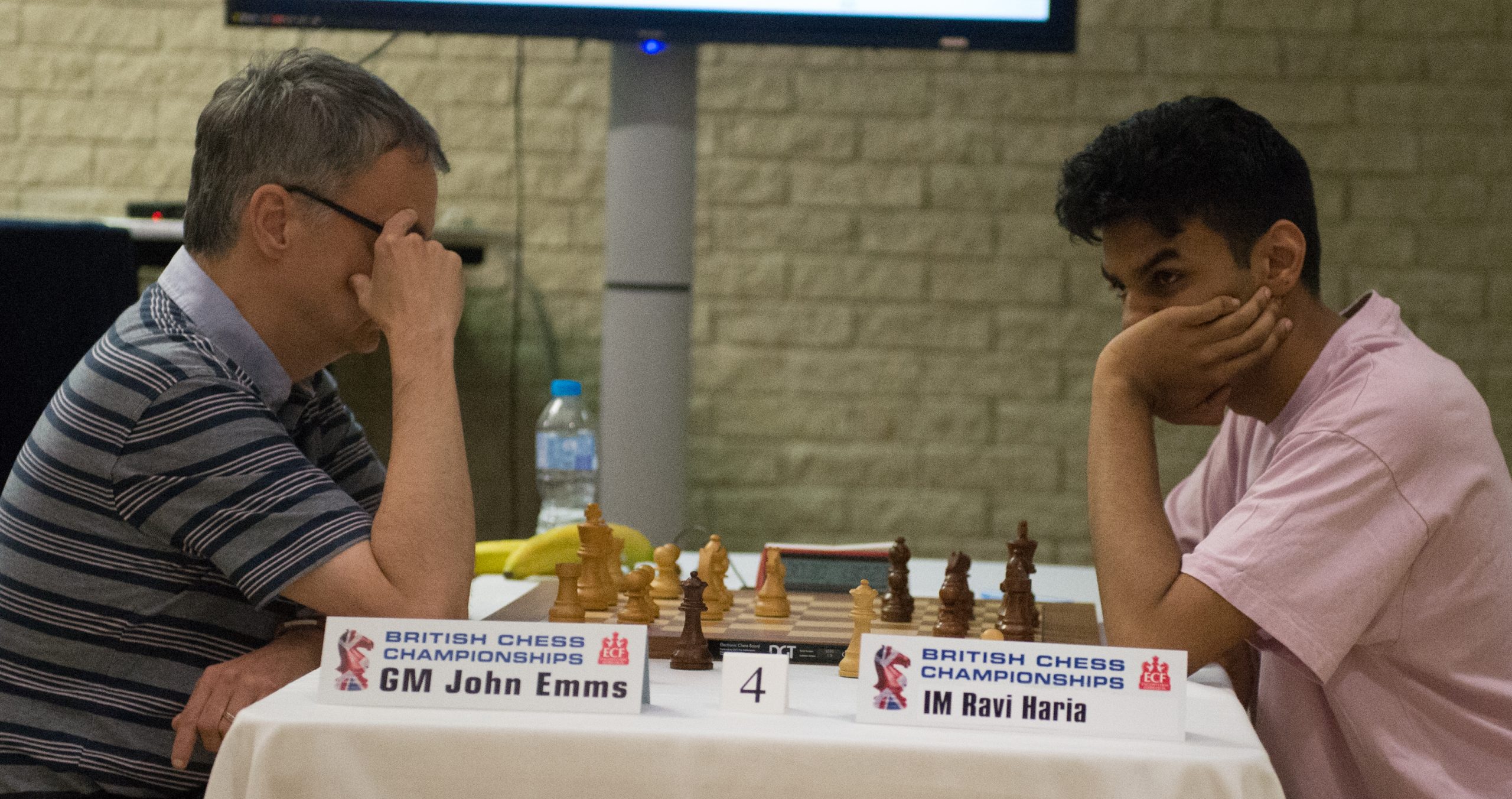
GM John Emms plays IM Ravi Haria in the final round of the 2019 British Championships in Torquay
With the white pieces Ravi unsurprisingly plays the Moscow and Rossolimo variations against the Sicilian, the Ruy Lopez and, in recent years, he has adopted the Reti/English complex.
As the second player he plays the French Winawer and (refreshingly) the Abrahams-Noteboom Variation of the Semi-Slav.
For your entertainment we have these two brevities :
and
Ravi has played for University College London. Hendon and Cavendish in the London and other leagues and in 4NCL he started with Kings Head, transferring to Cambridge in 2014 and finally moving in 2016 to Wood Green.
In this game Ravi punishes IM Malcolm Pein who has a bad day at the office :
Ravi Haria, British Championships, 2014, Aberystwyth
Over the 19th – 23rd August 2021 Ravi played in the Wood Green Invitational round-robin event at Oddfellows Hall, Stafford.
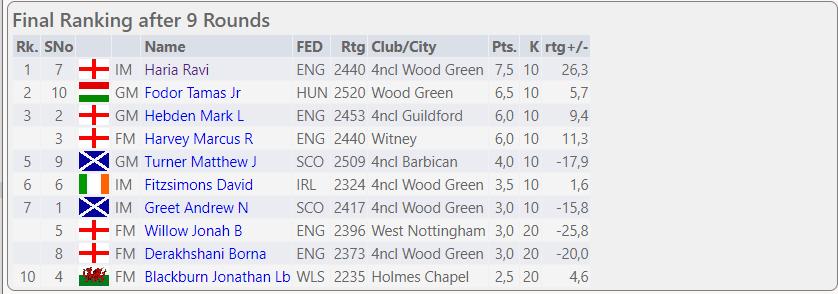
Ravi scored 7.5/10 and secured his second Grandmaster Norm and a TPR of 2680.
Wood Green Invitational Round-Robin event at Oddfellows Hall, Stafford. August Bank Holiday Weekend, 2021
Over the August Bank Holiday weekend of 2021 Ravi played in the Northumbrian Masters GM Tournament at the splendid Marriott MetroCentre, Gateshead winning jointly with Conor Murphy scoring 6.5/9 with a TPR of 2600. This gave Ravi his third and final GM norm.
The norm was ratified at a recent FIDE Congress. As of February 2022 Ravi stood at 2490 for standard-play.
Death Anniversary of Frank Parr (17-xii-1918 28-xii-2003)
We focus on the British Chess Scene Past & Present!
This website uses cookies to improve your experience. We'll assume you're ok with this, but you can opt-out if you wish. Cookie settingsACCEPT
Privacy & Cookies Policy
Privacy Overview
This website uses cookies to improve your experience while you navigate through the website. Out of these cookies, the cookies that are categorized as necessary are stored on your browser as they are as essential for the working of basic functionalities of the website. We also use third-party cookies that help us analyze and understand how you use this website. These cookies will be stored in your browser only with your consent. You also have the option to opt-out of these cookies. But opting out of some of these cookies may have an effect on your browsing experience.
Necessary cookies are absolutely essential for the website to function properly. This category only includes cookies that ensures basic functionalities and security features of the website. These cookies do not store any personal information.