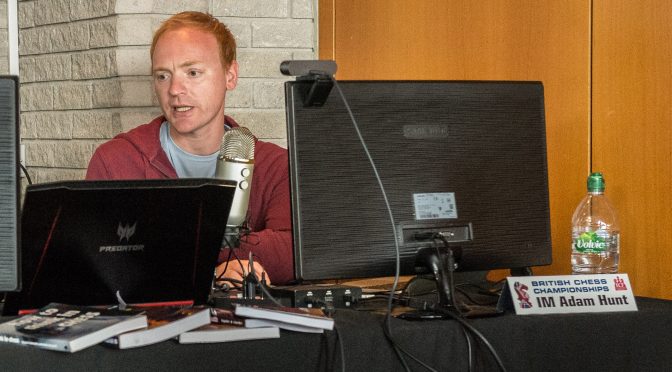
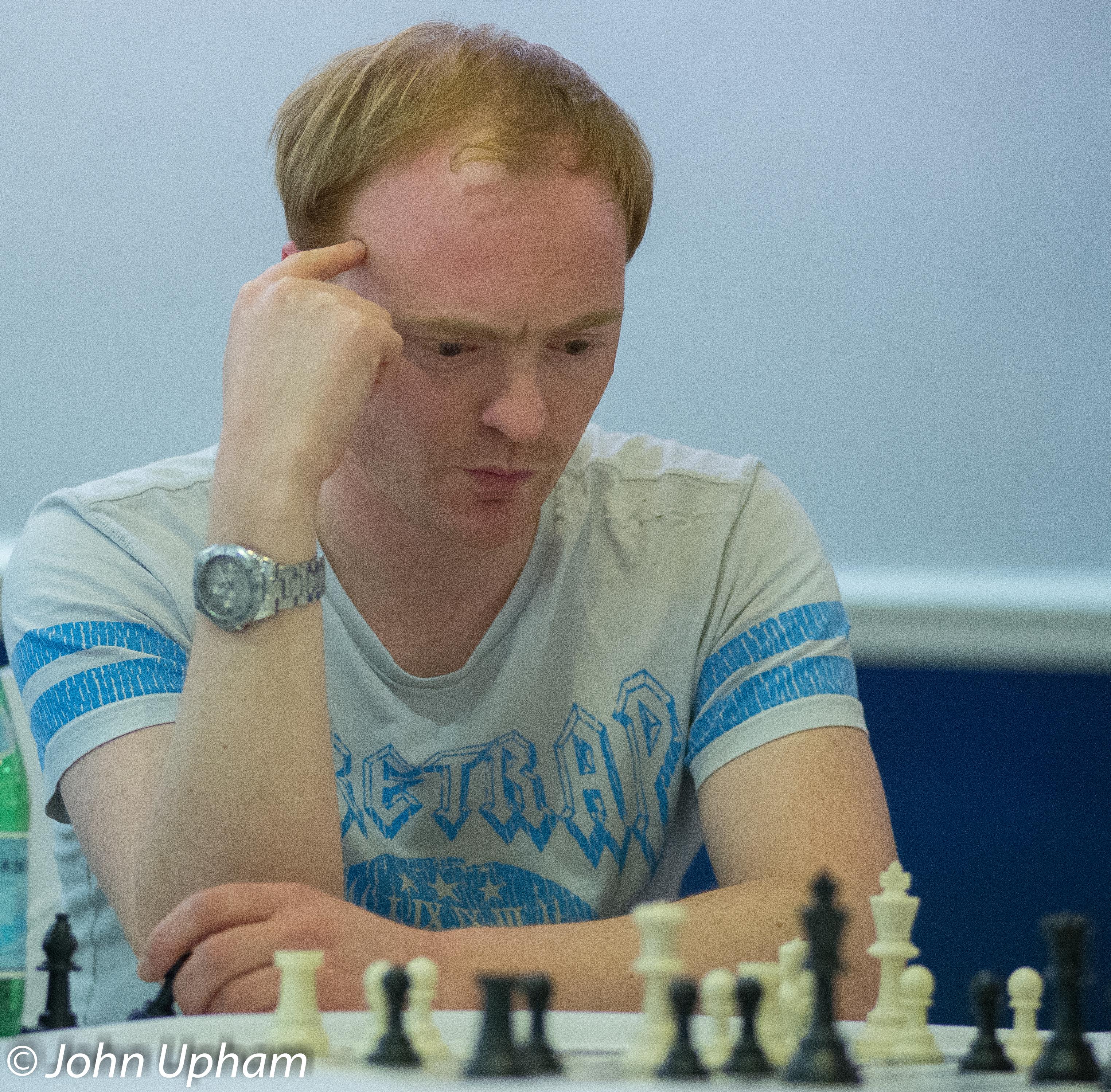
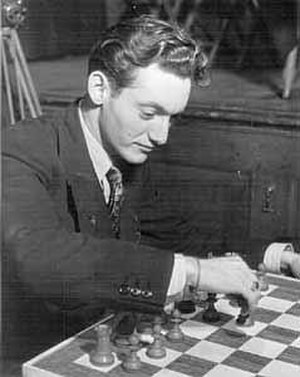
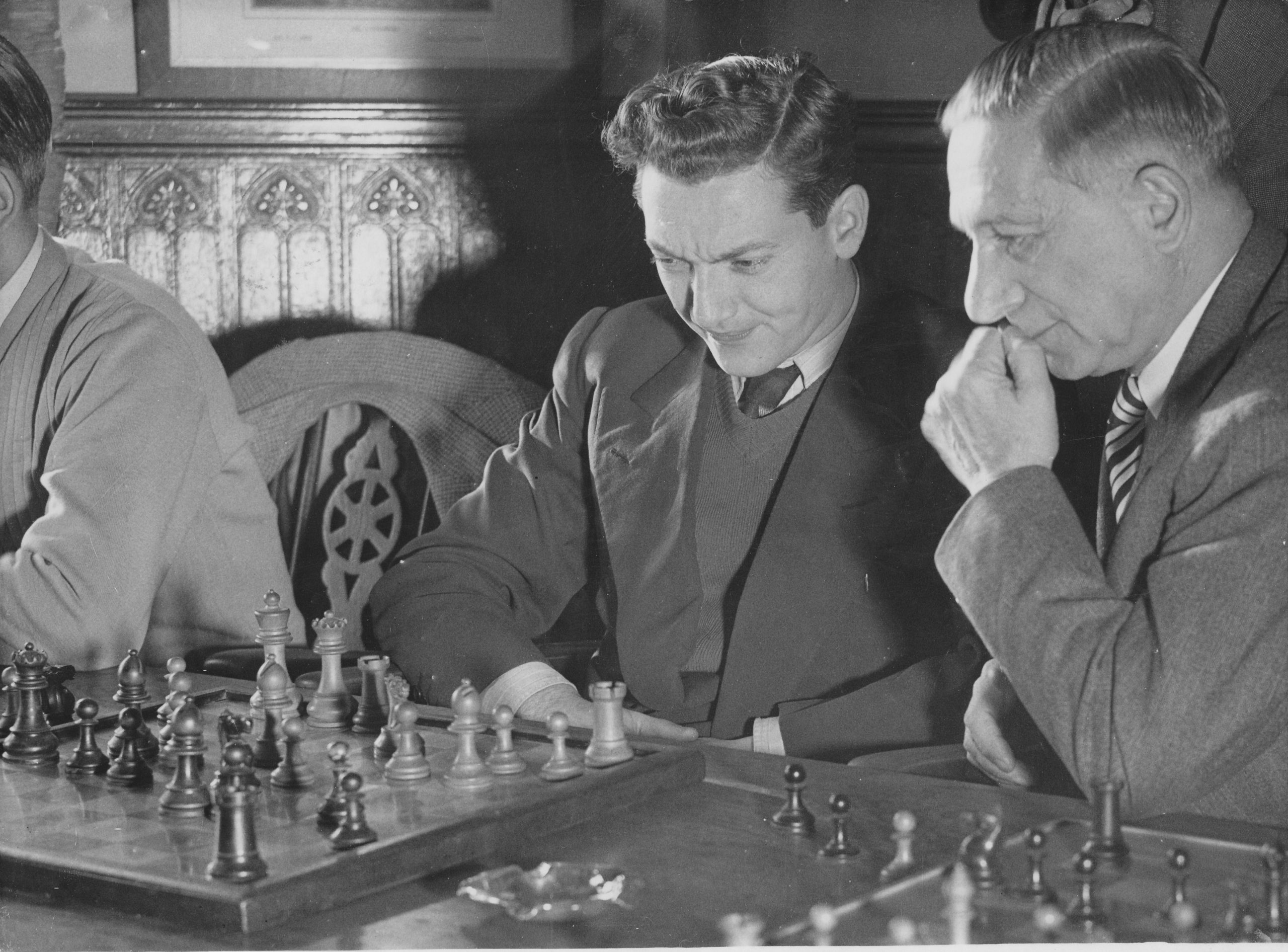
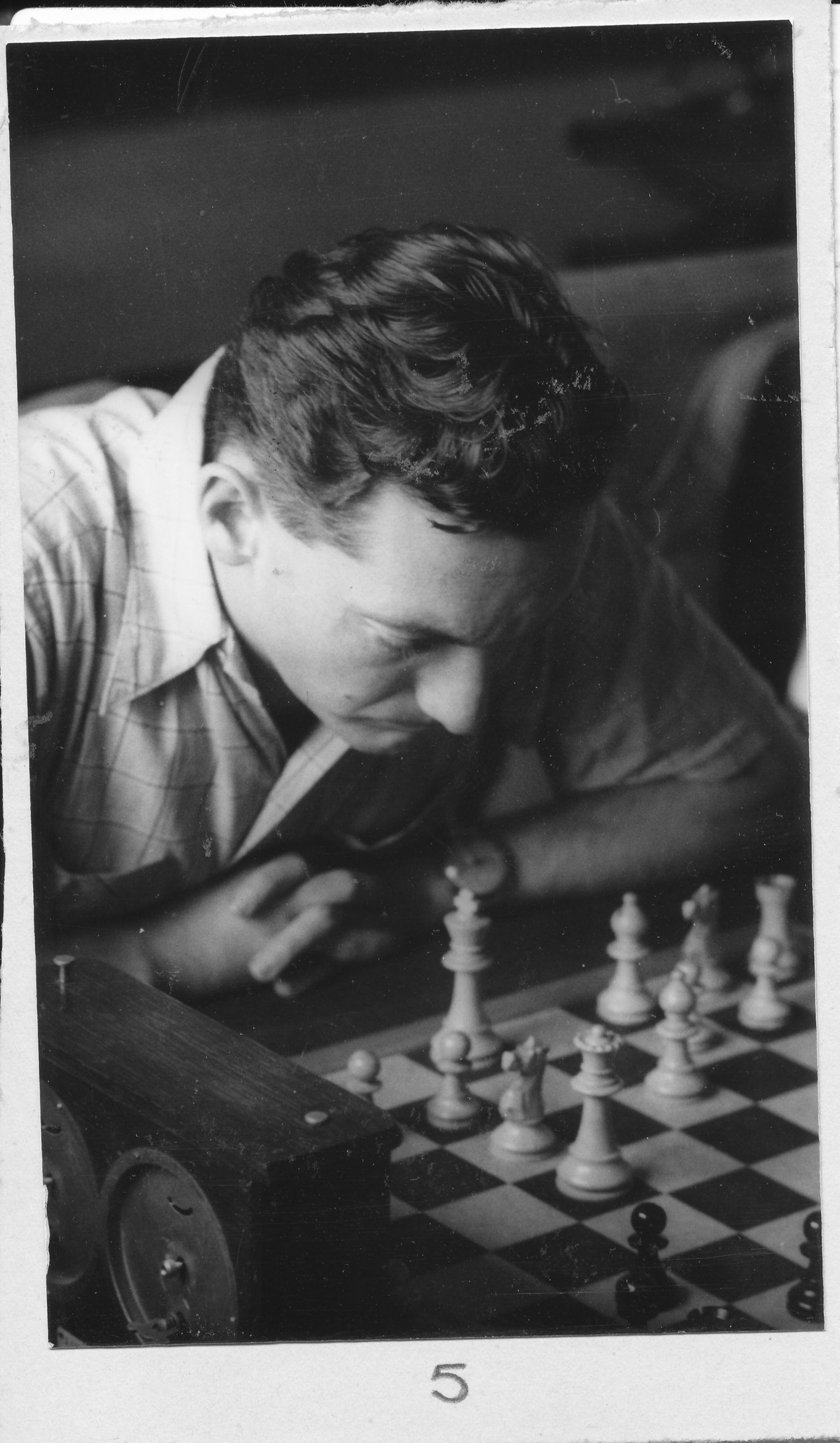
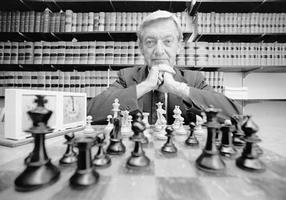
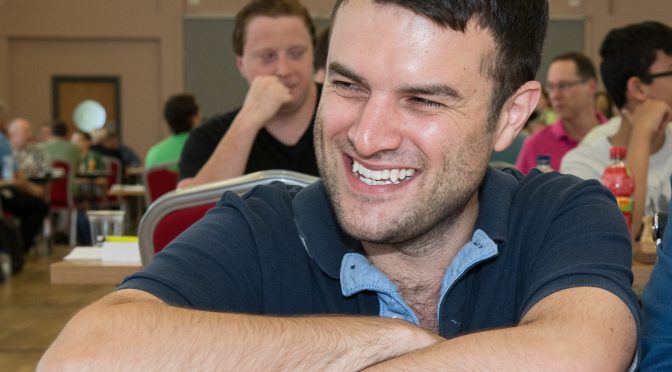
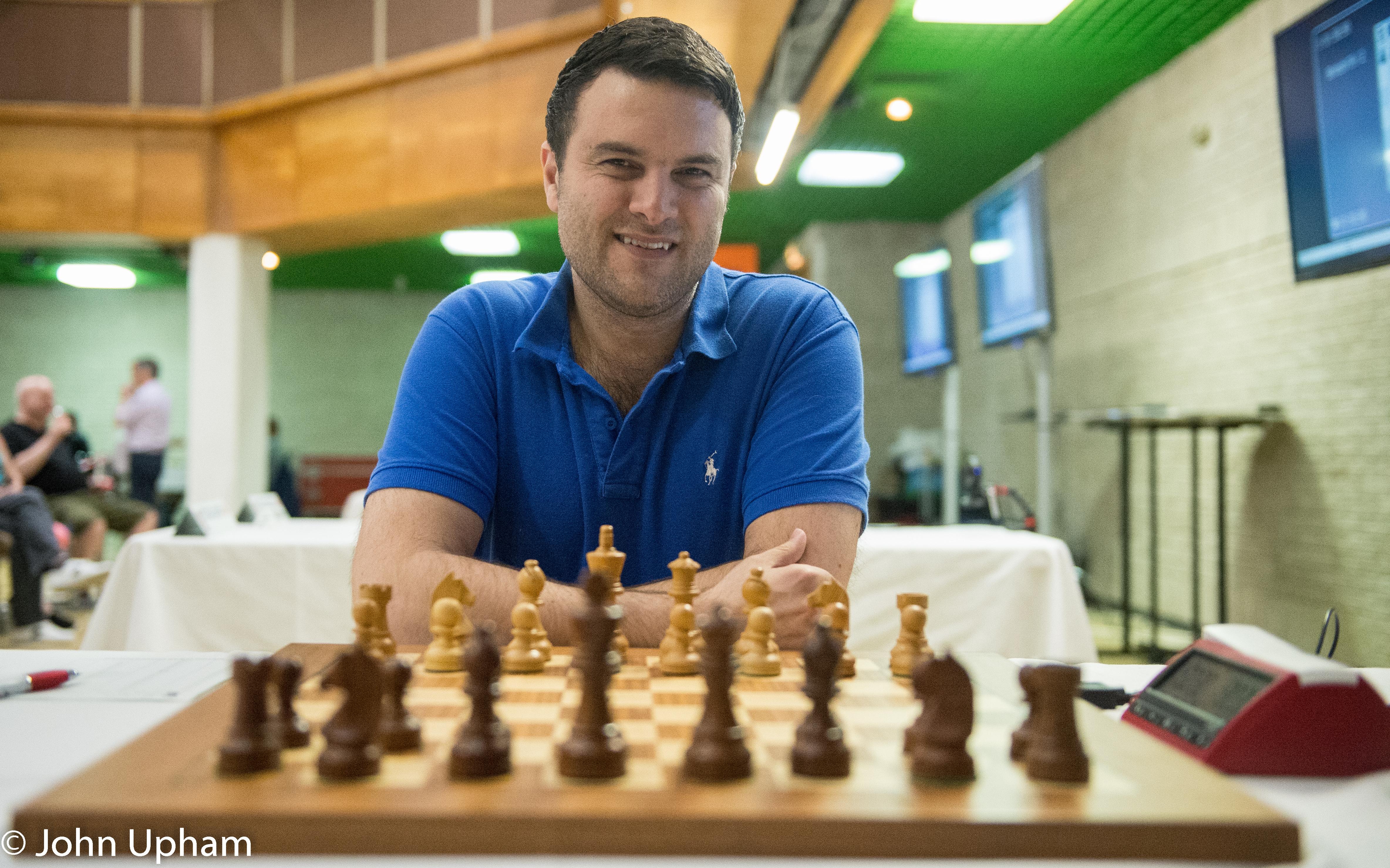
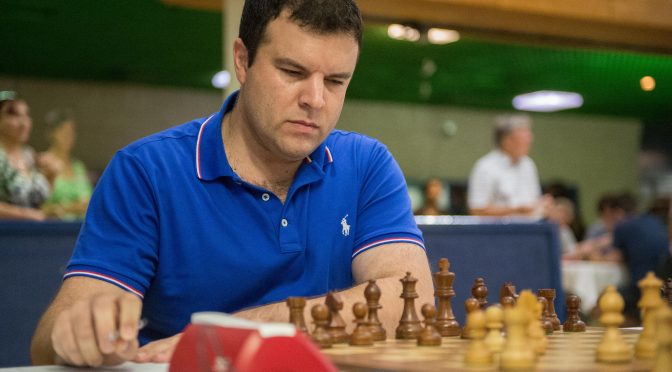
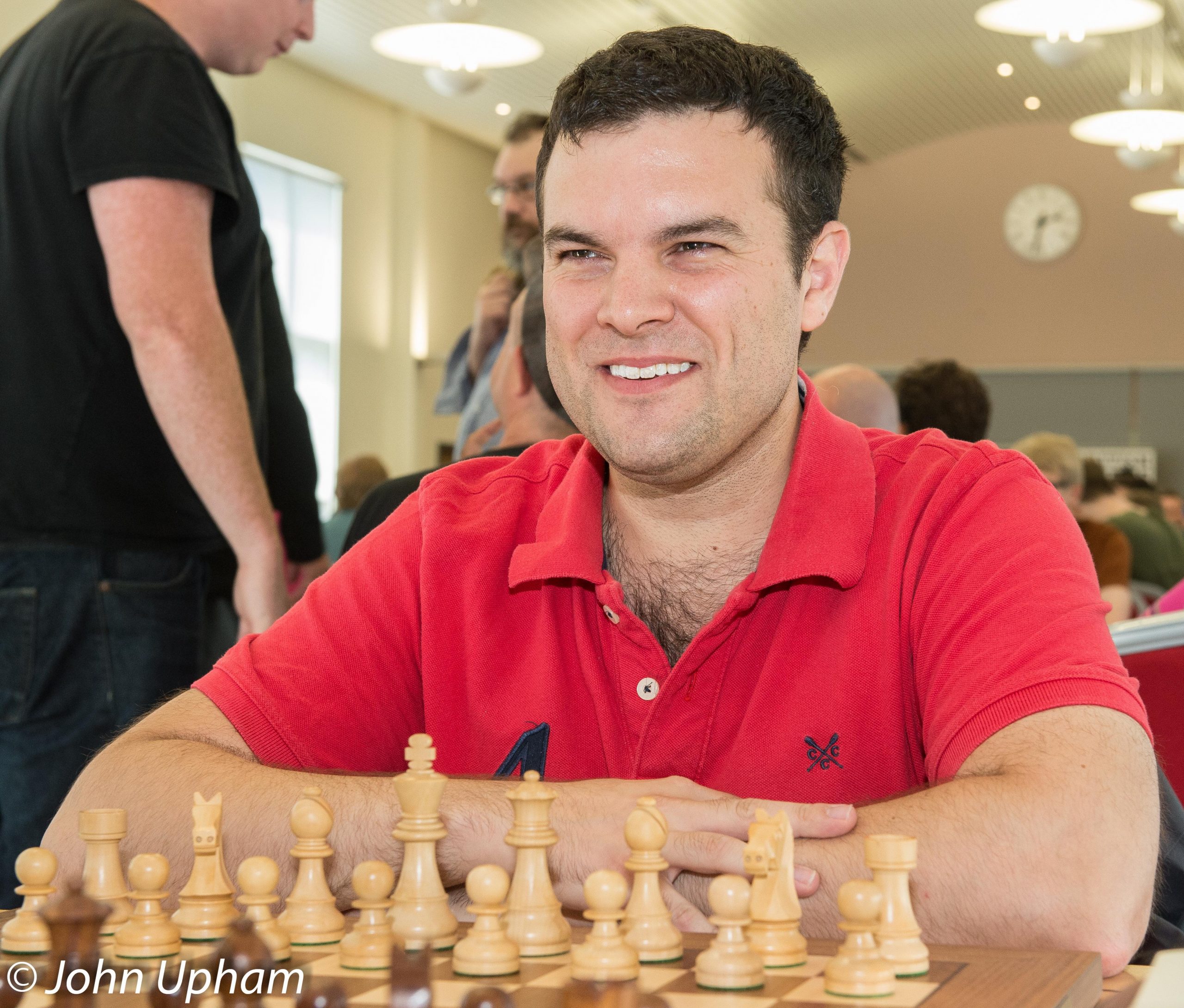
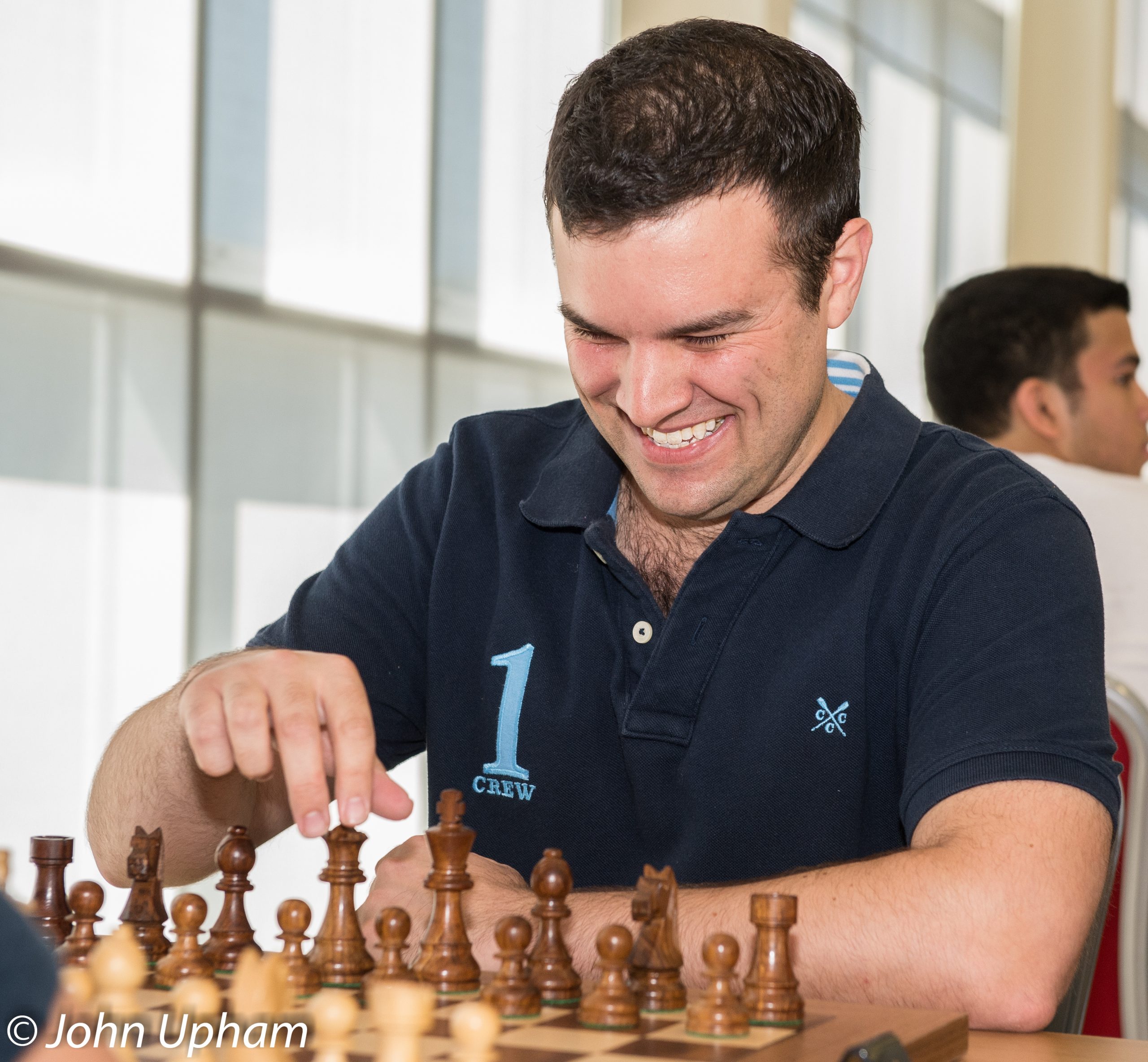
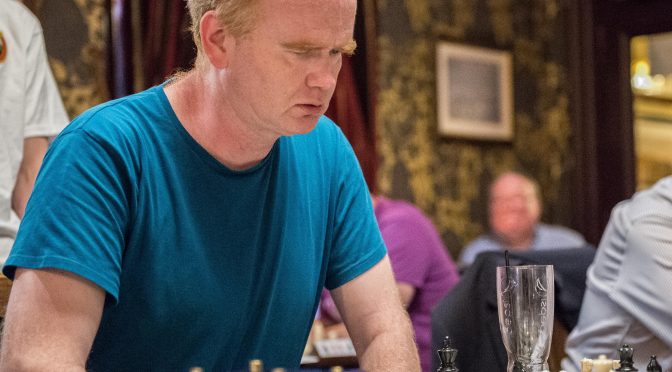
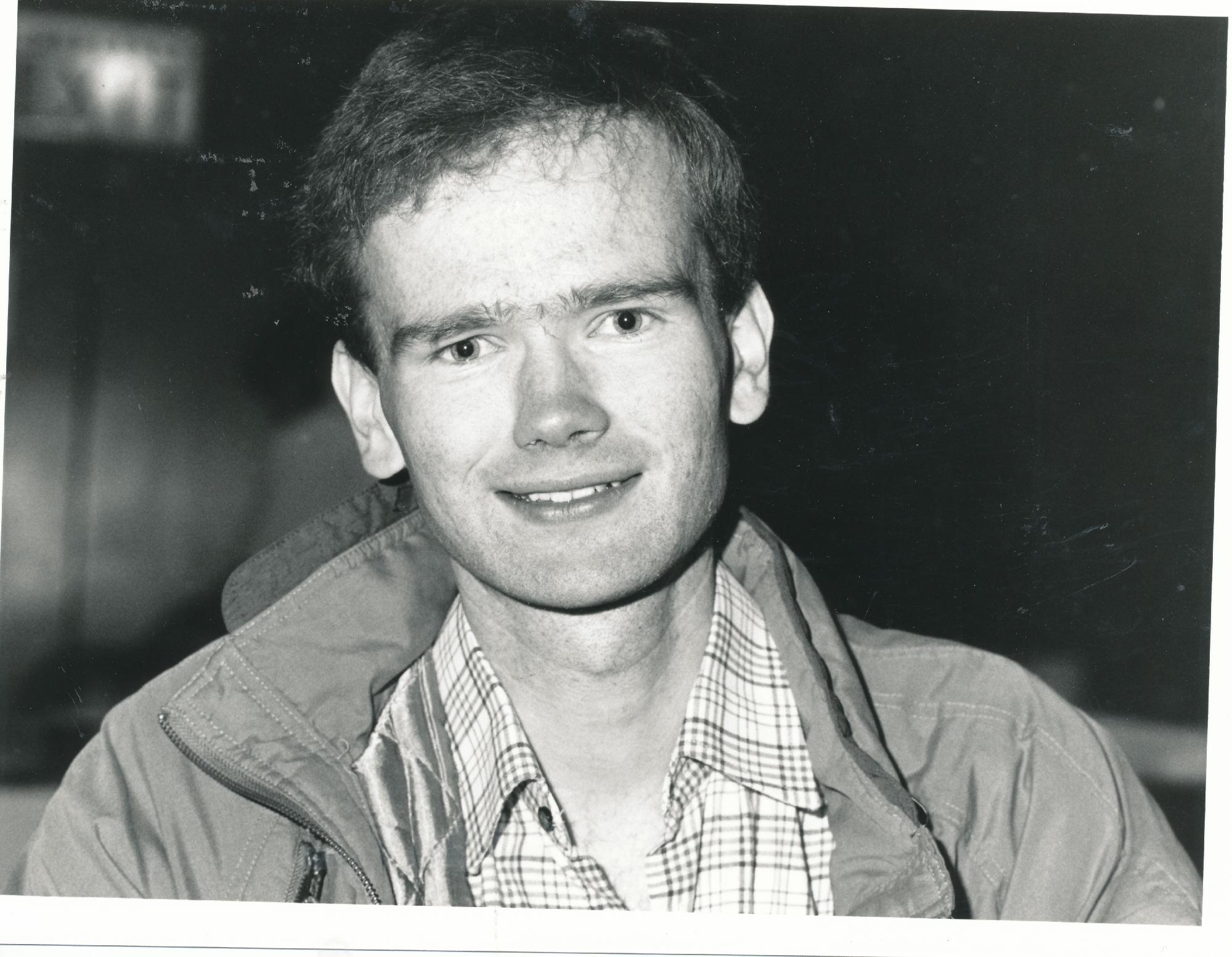
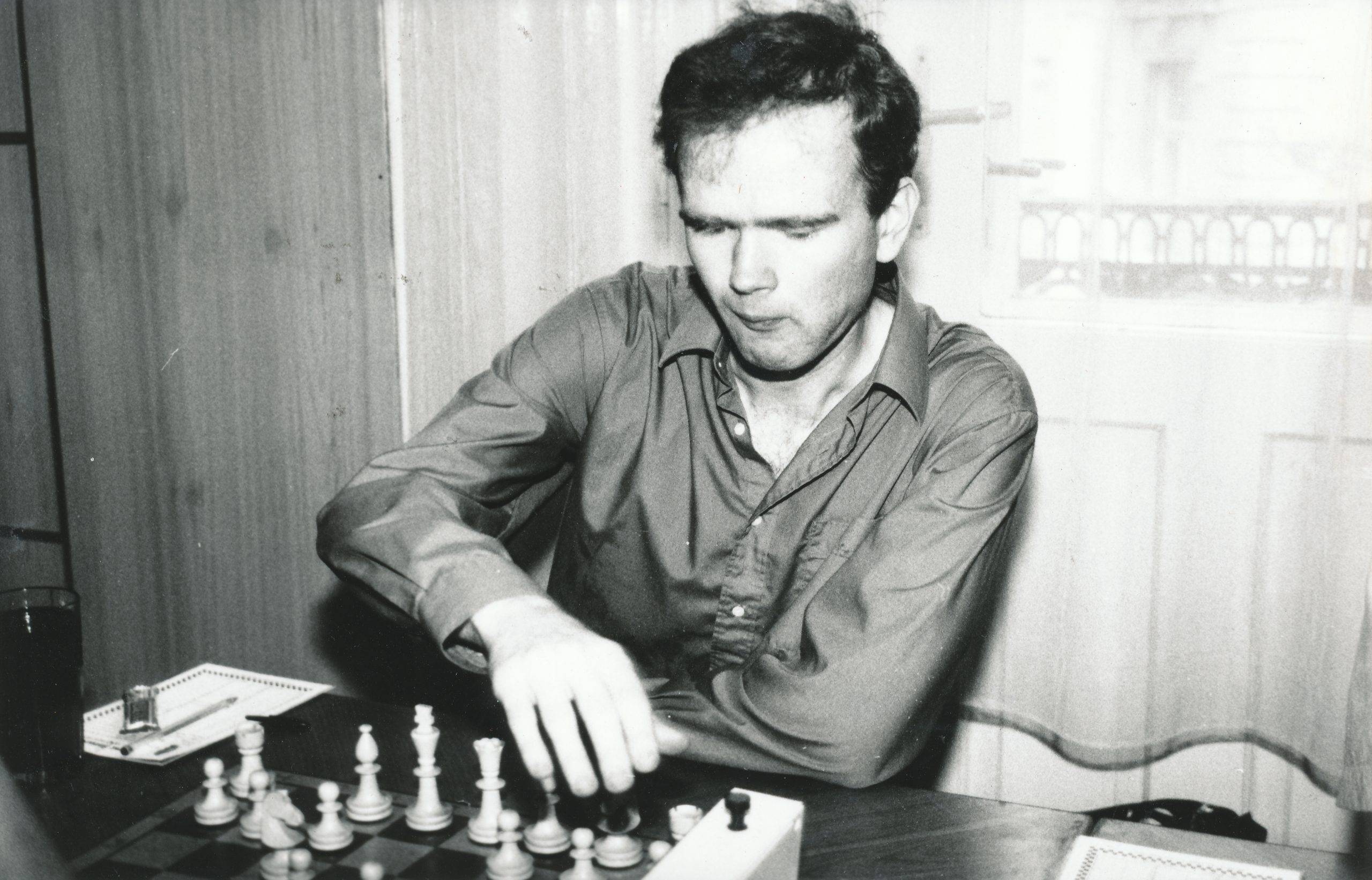
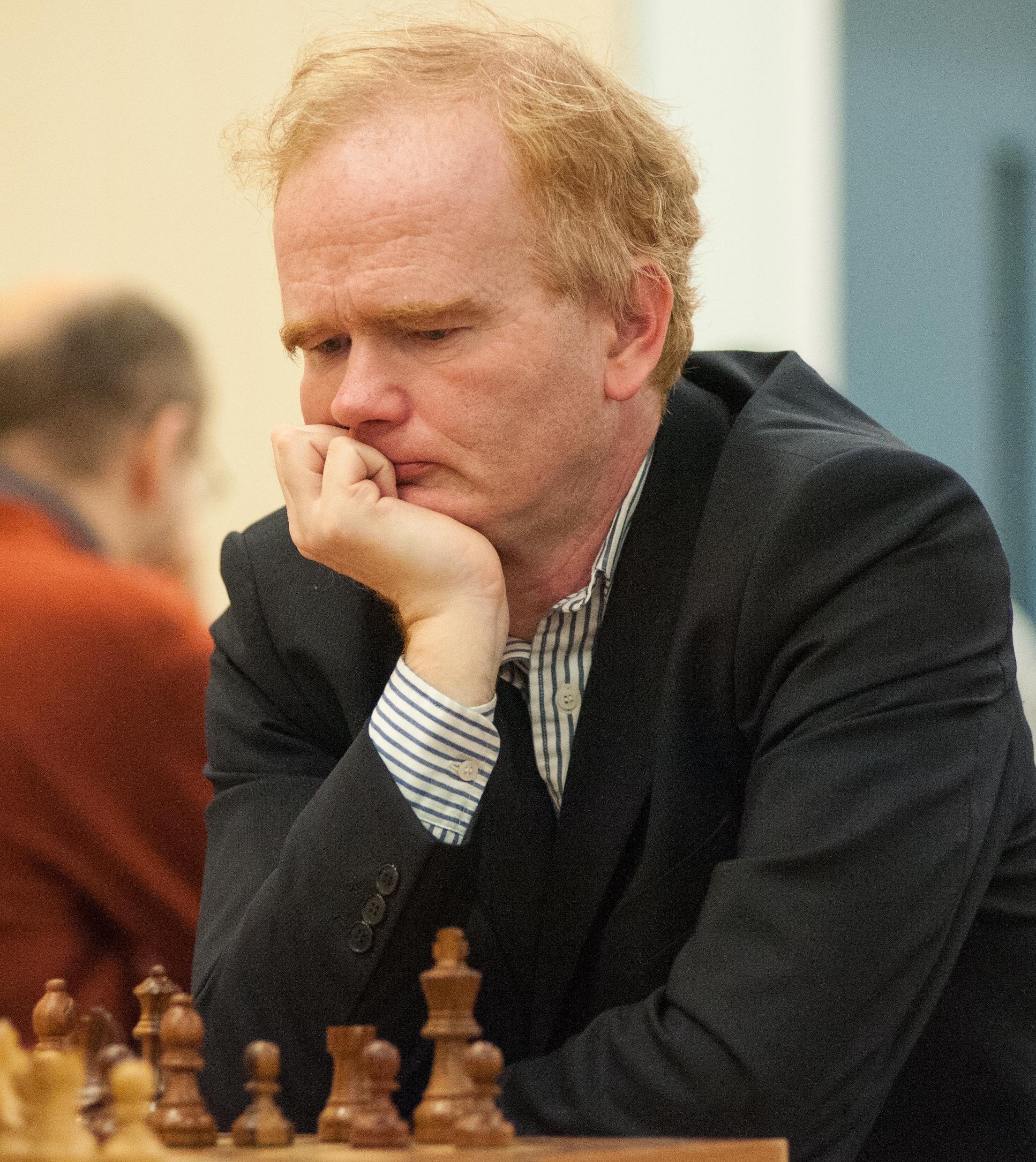
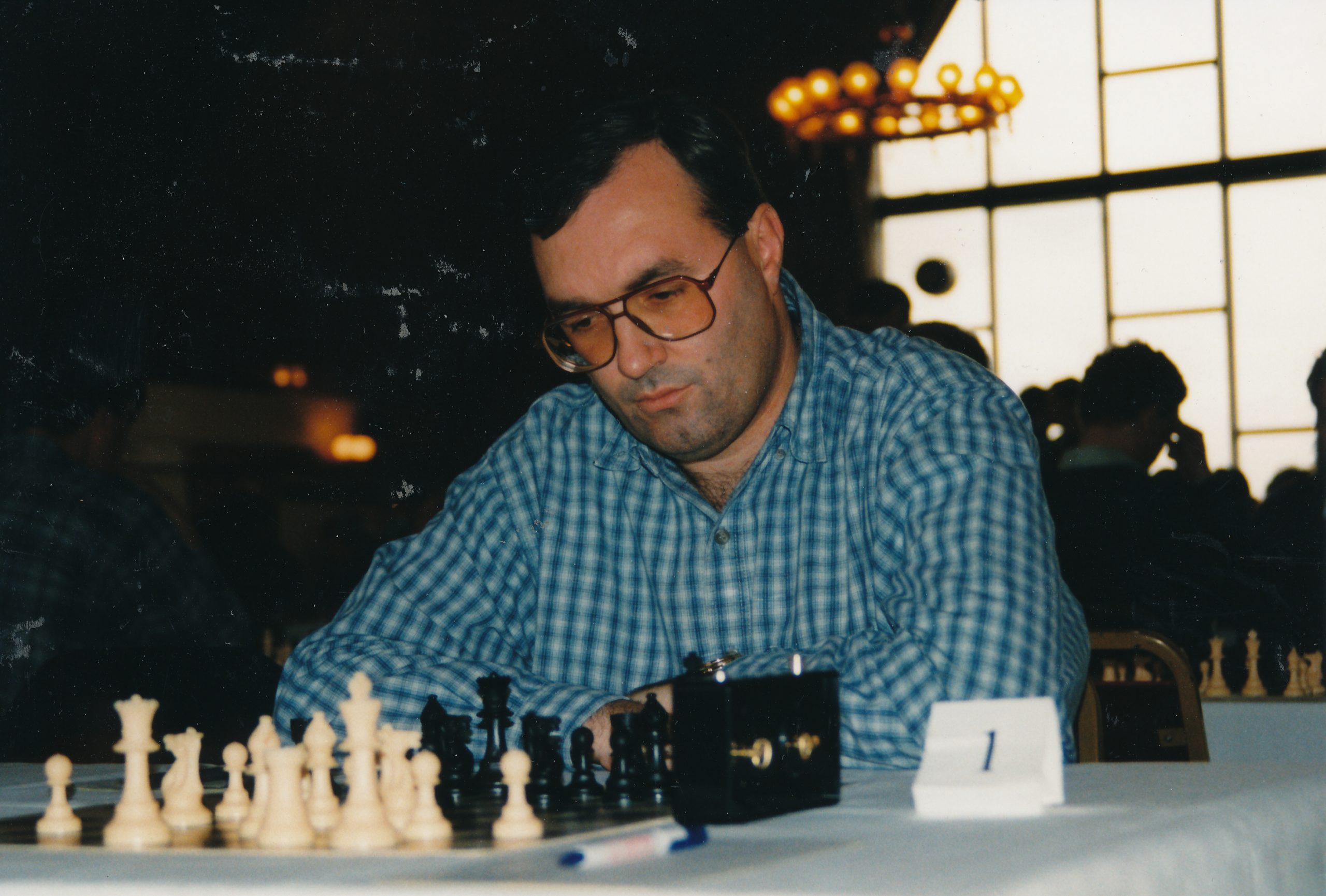
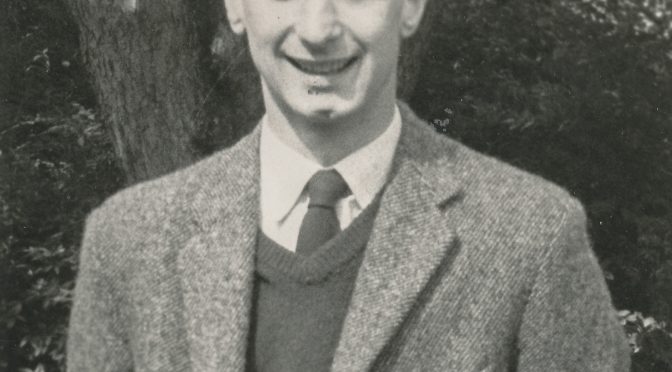
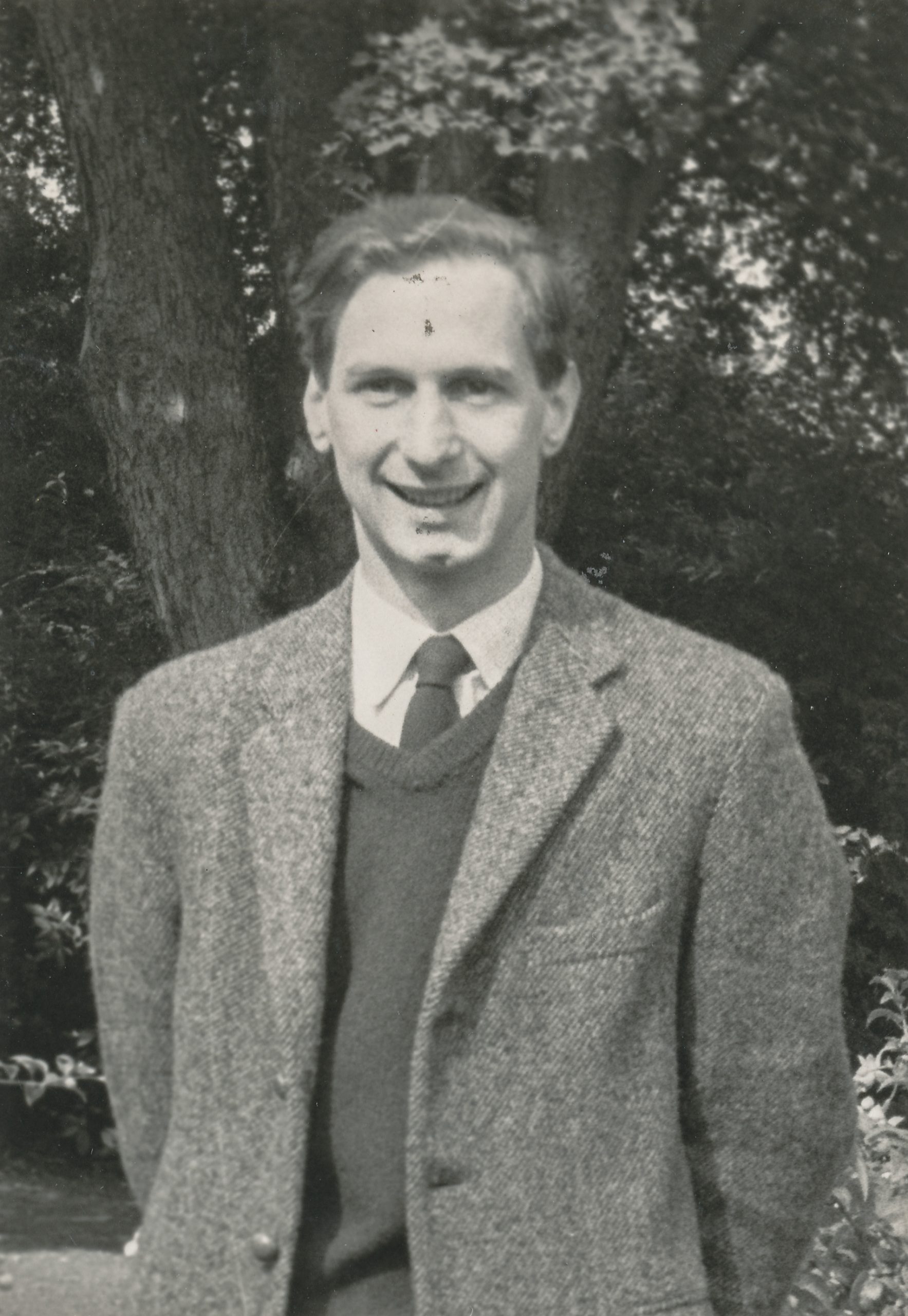
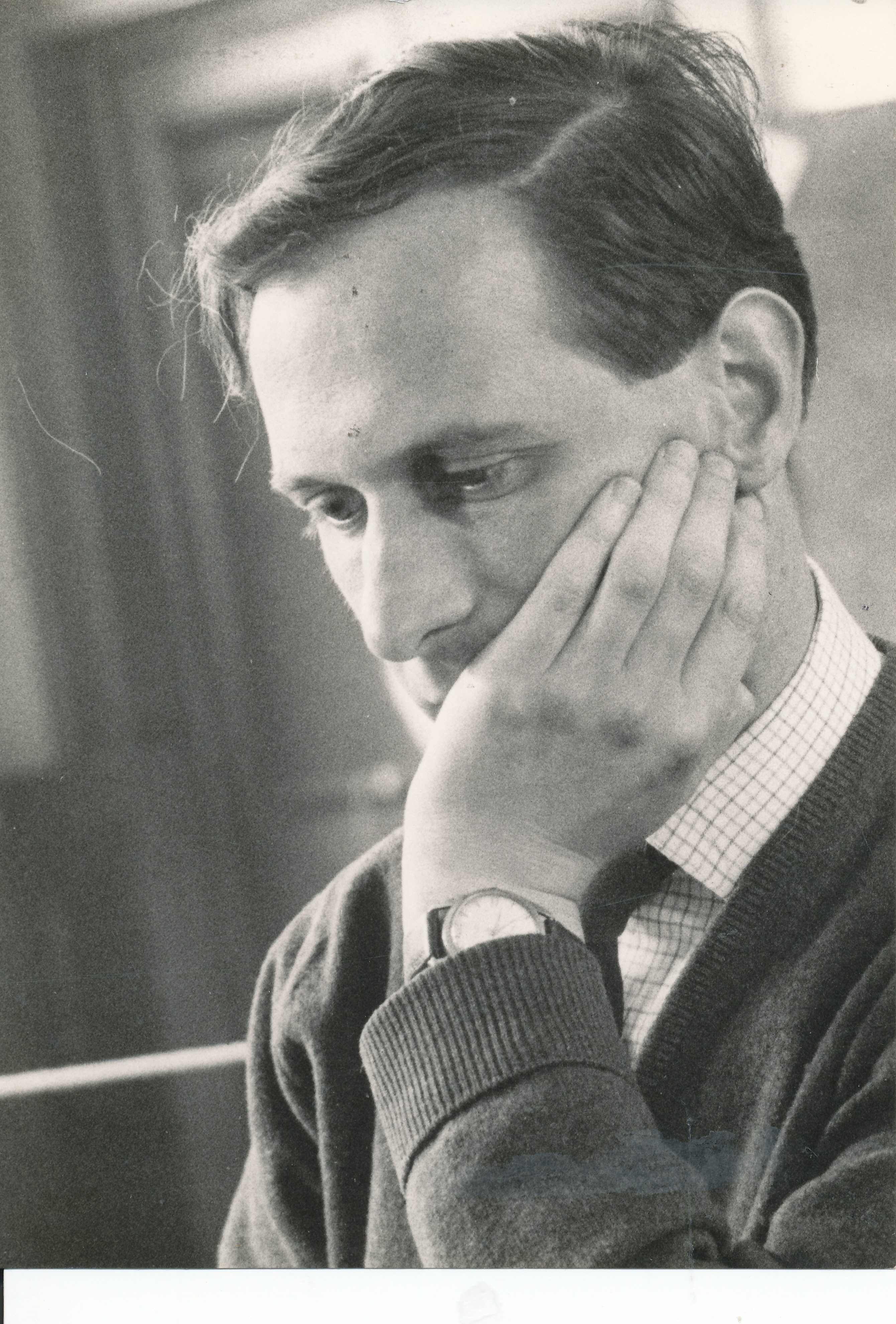
We remember IM Adam Hunt who passed away on Tuesday, December 3rd 2024 following a nine year battle with cancer.
Adam Ceiriog Hunt was born on Tuesday, October 21st, 1980 in Oxford and his mother’s maiden name was Williams. The UK Number one single was “Woman in Love” by Barbara Streisand. Adam shares his birthday with Kim Kardashian.
Adam attended The Cherwell School and The University of Sussex to study general biology.
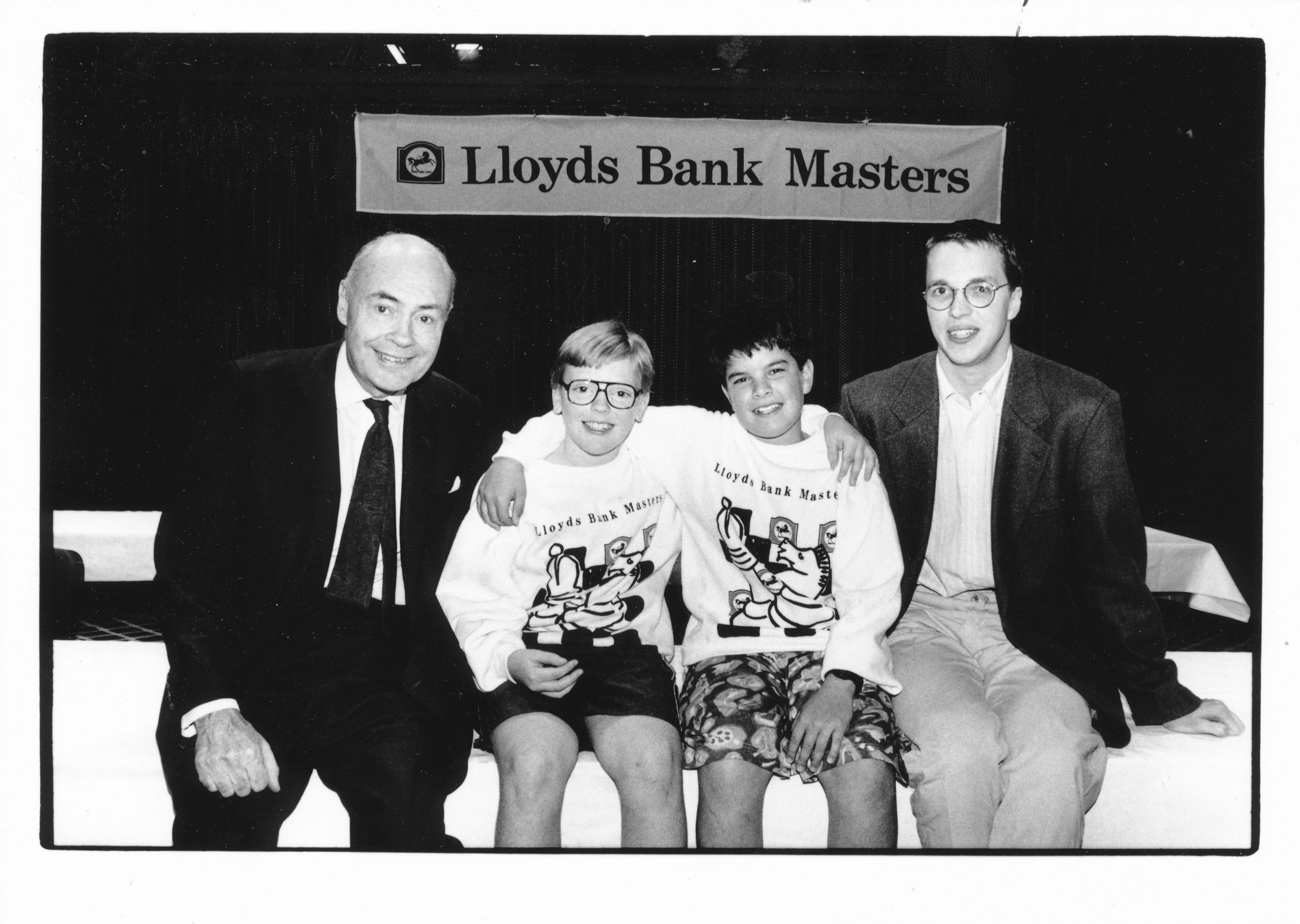
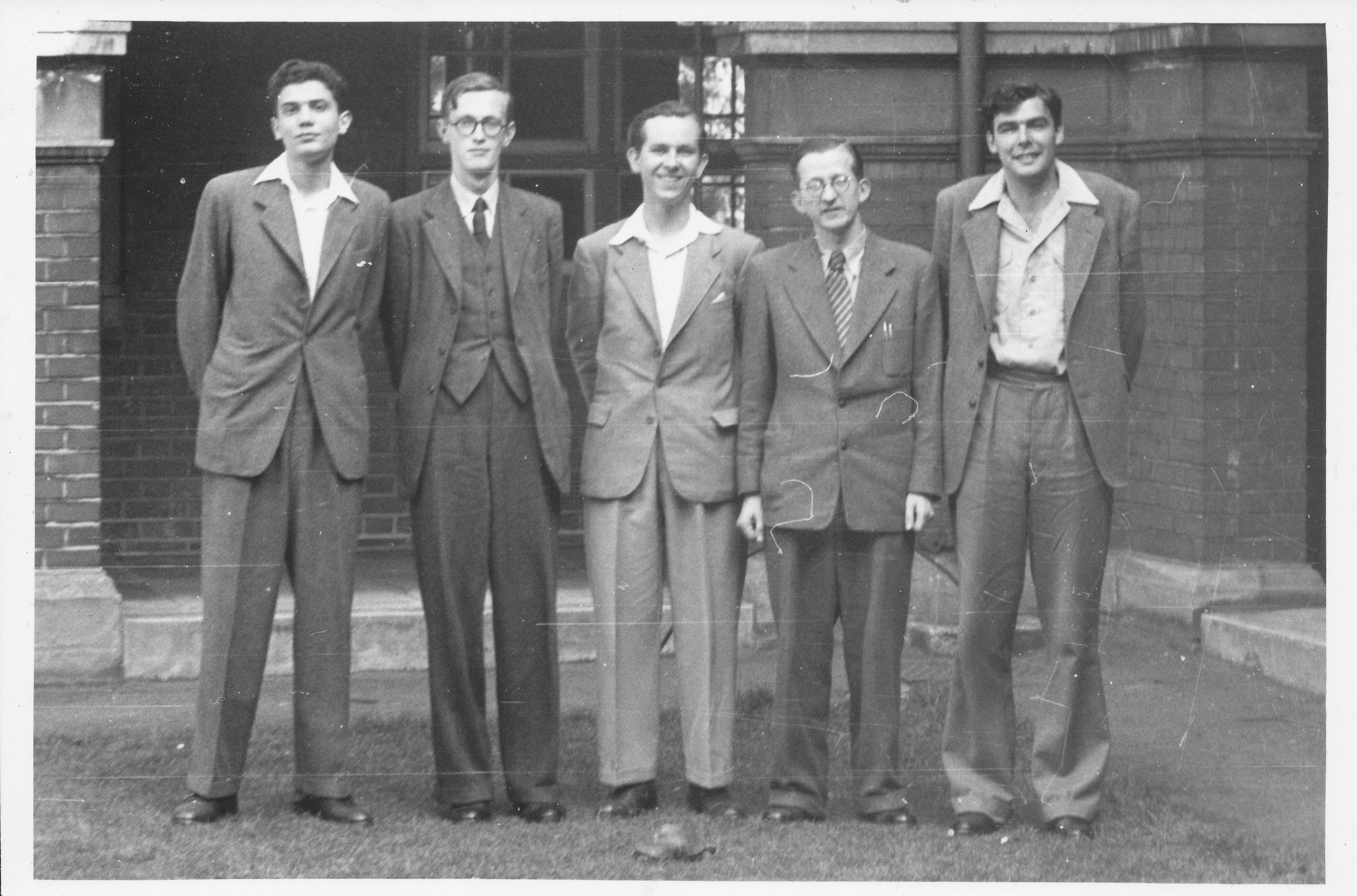
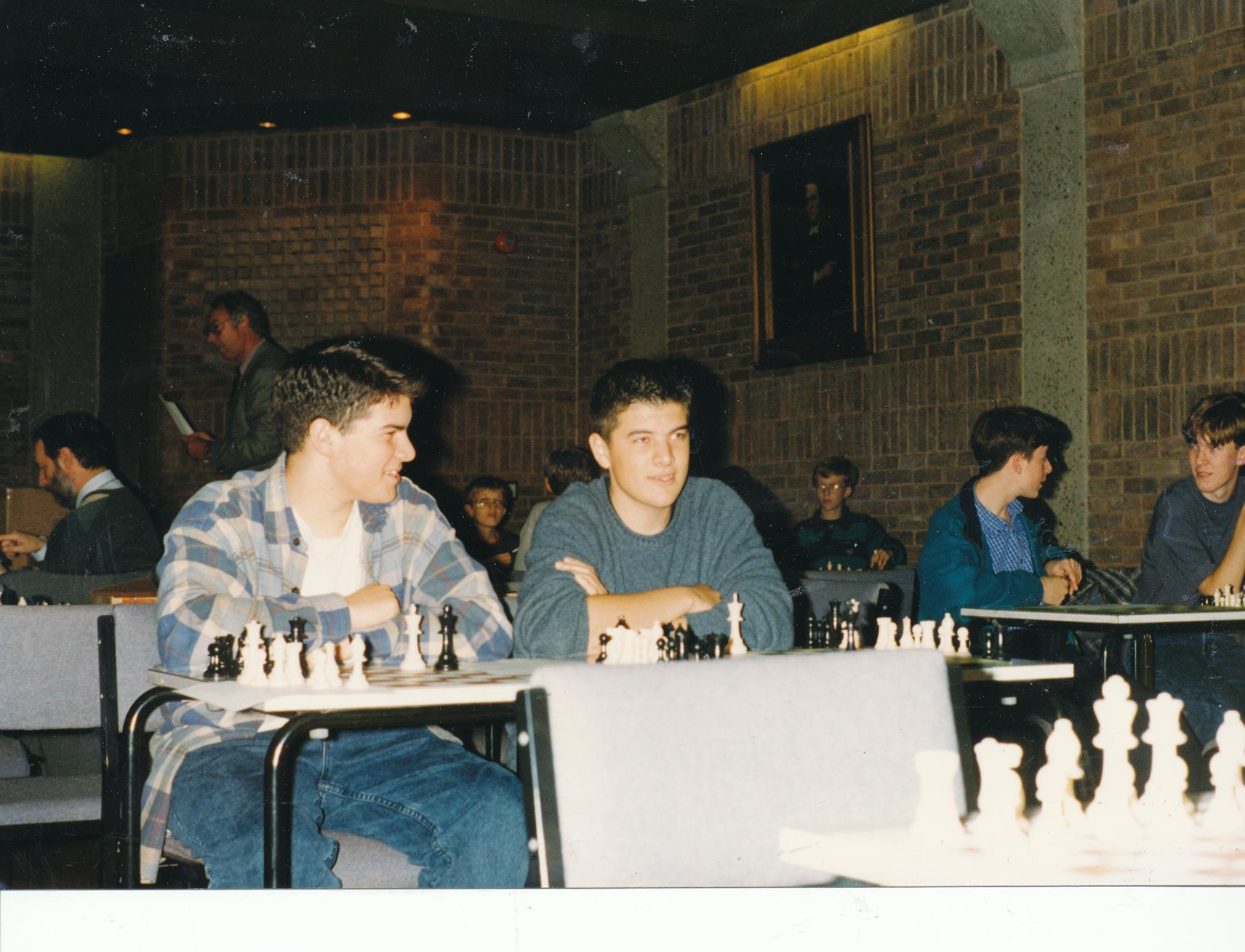
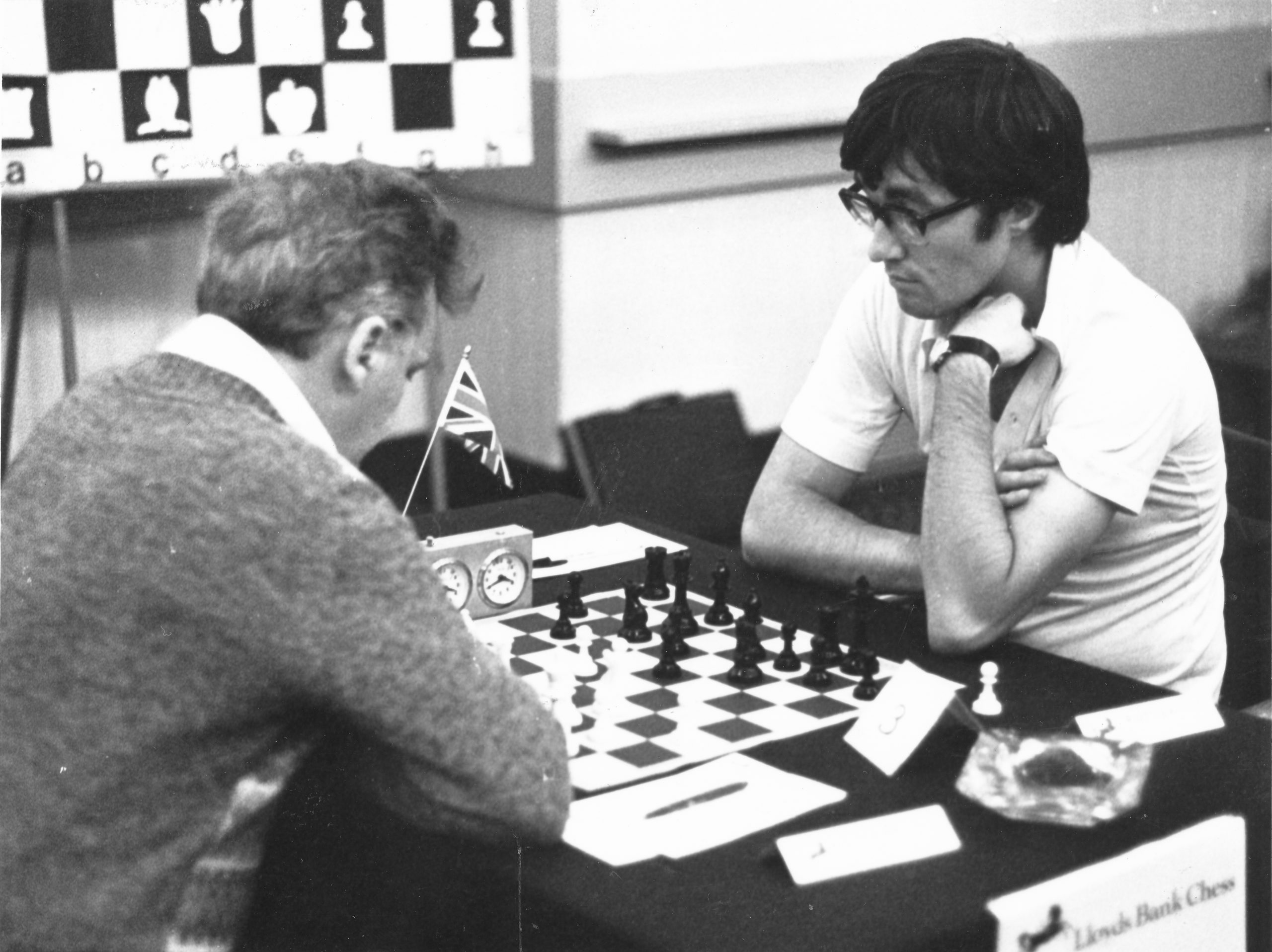
Jeremy Morse, Adam Hunt (12), Nick Pert (11) and Nigel Short at the Lloyds Bank Masters
Adam became an International Master in 2001 and then a FIDE Trainer in 2016. According to Felice and Megabase 2020 his attained his peak FIDE rating of 2466 in January 2008 at the age of 28.
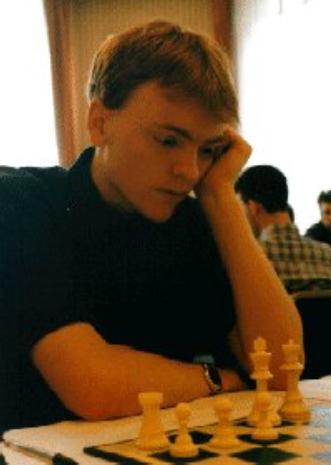
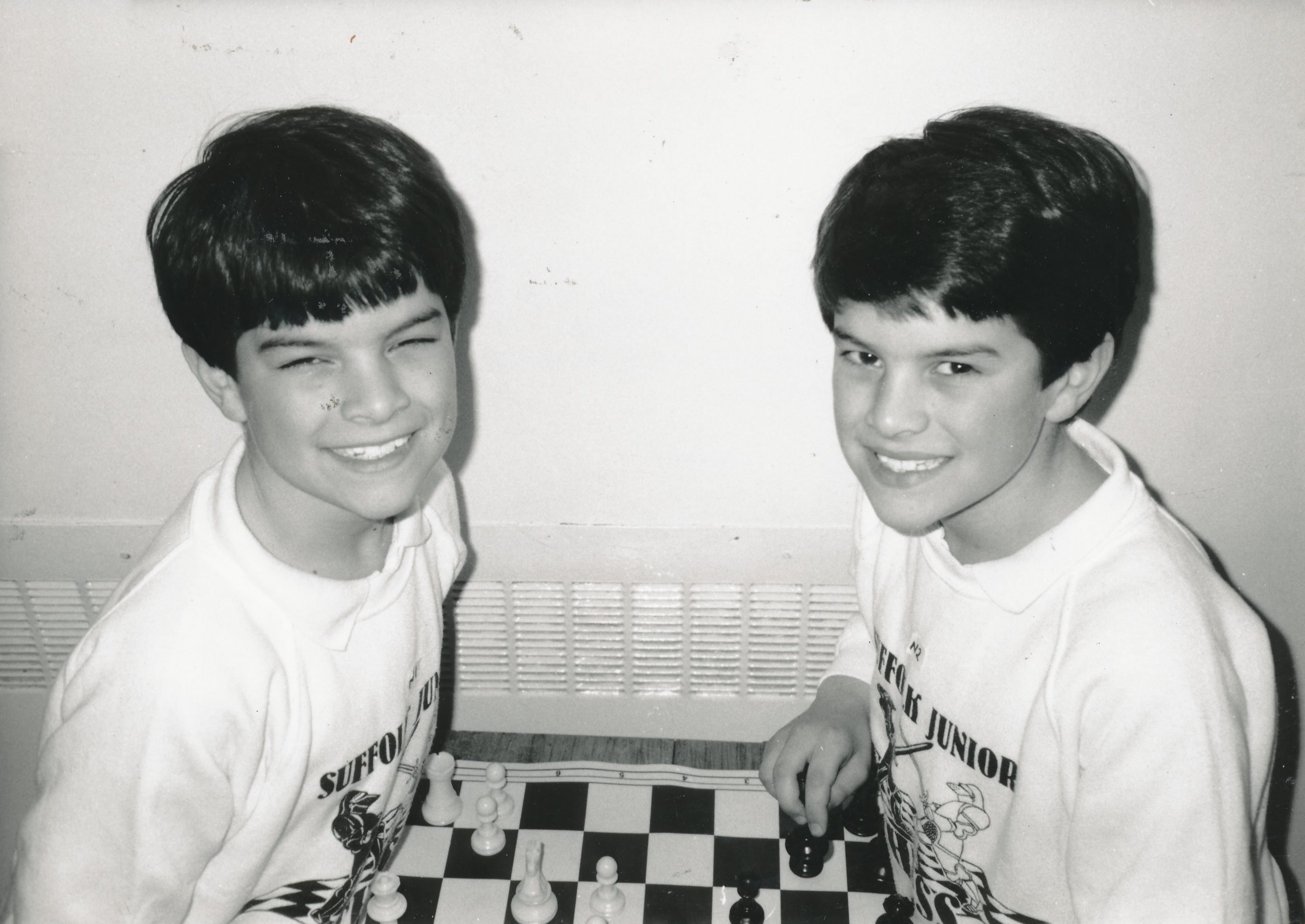
Adam Hunt in 1998 Cathy Rogers
In 2004 Adam was living in Headington, Oxfordshire and in 2007 he moved to Ipswich in Suffolk and was married in 2019. Recently, Adam and his partner became parents to Henry.
As a junior (and together with Harriet) Adam first played for Cowley Chess Club.
Most recently Adam has played for 4NCL Blackthorne Russia, prior to that Bettson.com, Midlands Monarchs and Perceptron Youth with Witney being his original team.
He is Director of Chess at Woodbridge School in Suffolk and is the brother of IM Harriet Hunt
With the white pieces is (almost exclusively) an e4 player playing the main line of Ruy Lopez (8.c3) and favouring the Fischer-Sozin against the Najdorf.
As the second player Adam plays the Sicilian Najdorf and a 50:50 mixture of the King’s Indian and Grünfeld Defences.
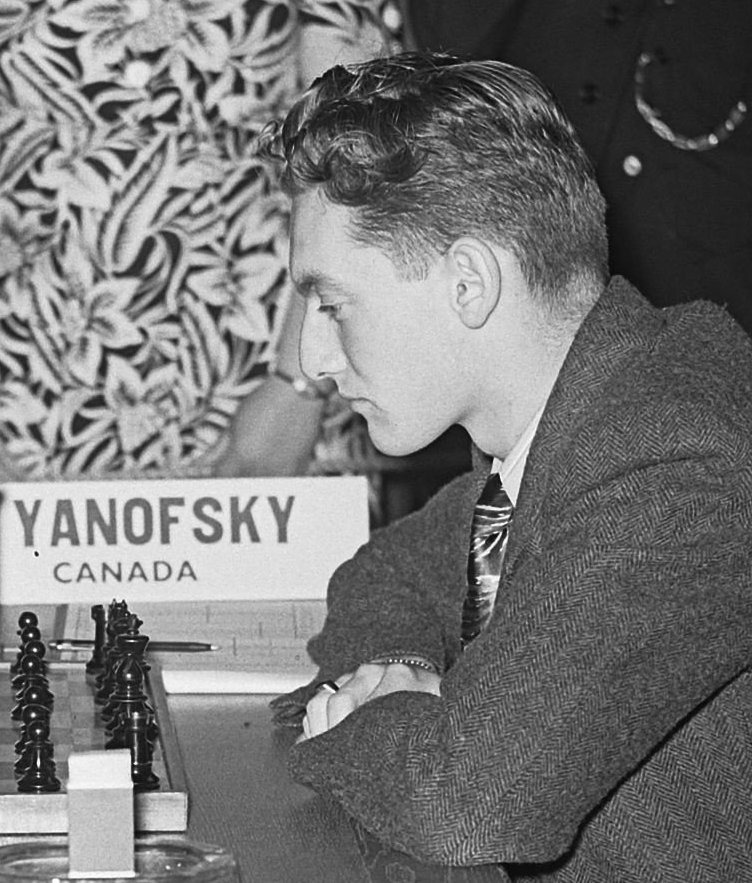
BCN remembers GM Daniel Yanofsky OC QC (25-iii-1925 05-iii-2000)
From The Encyclopedia of Chess (Robert Hale, 1970 & 1976)by Anne Sunnucks:
YANOFSKY, Daniel Abraham (1925- )
International Grandmaster (1964), Canadian Champion in 1941, 1943, 1945, 1947,1953, 1959, 1963 and 1965, British Champion in 1953. Abe Yanofsky, was born in Brody, Poland, on 26th March 1925. His parents were Russian and had left their native country a few months earlier on their way to Canada, to which they were emigrating. They eventually arrived at their destination when Yanofsky was 8 months old.
When he was 8 Yanofsky saw a chess set in a shop window and persuaded his father to teach him the game. He joined Winnipeg Jewish Chess Club and when he was 11 his obvious talent was noticed by Bernard Freedman, Treasurer of the Canadian Chess Federation, who was visiting Winnipeg. Freedman was responsible for Yanofsky playing in his first tournament a few months later in Toronto. Yanofsky arrived in Toronto determined to get as much chess as possible and put his name down for three tournaments: the Junior Boys’ Championship, which was to be played in the morning; the Senior Boys’ Championship, which was to be played in the afternoon; and the Major Championship, which was to be played in the evening. He withdrew from the Junior Boys’ Championship after 1 round at the request of the organisers, who realised that he was far too strong for that event, and went on to win both the other events.
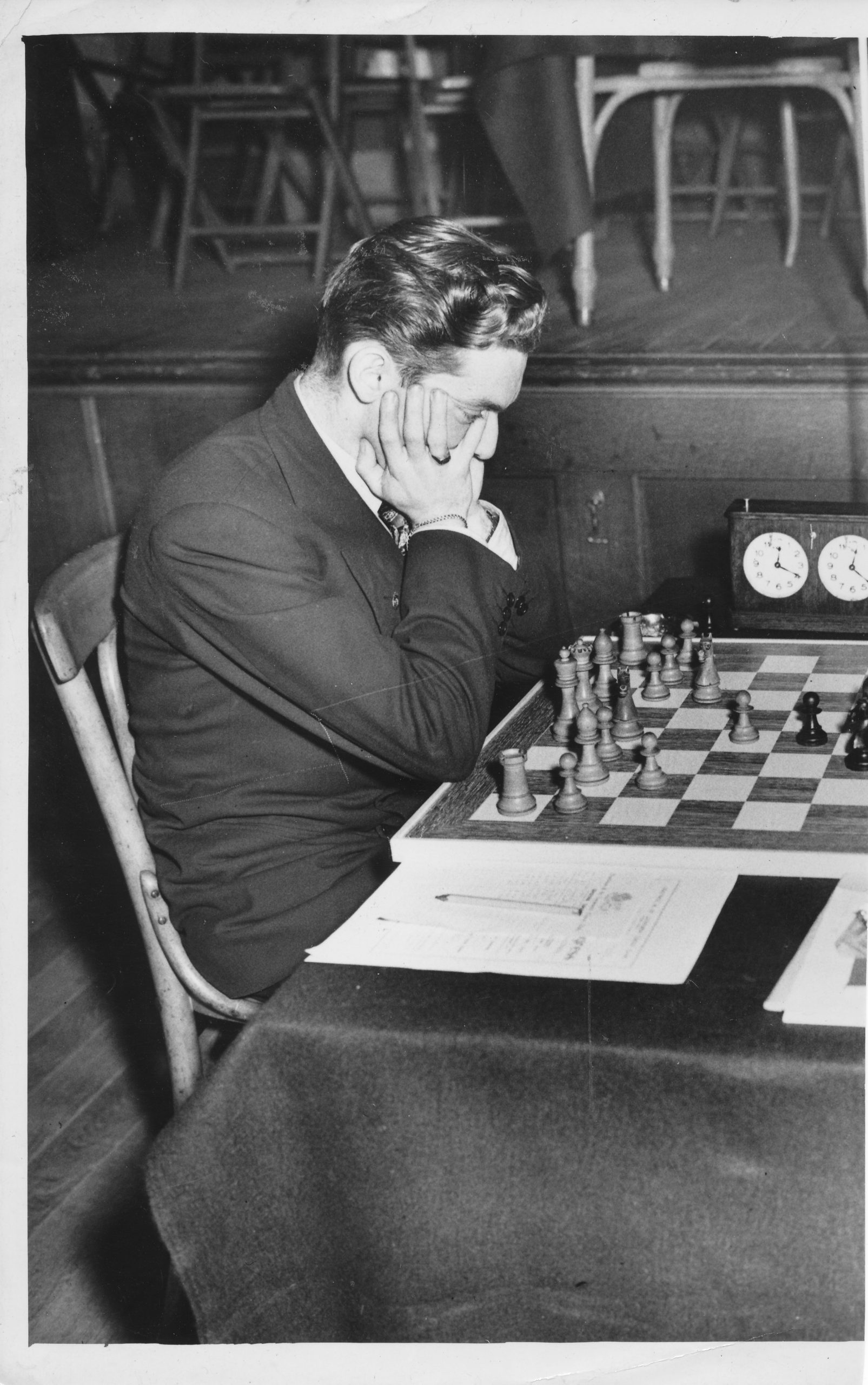
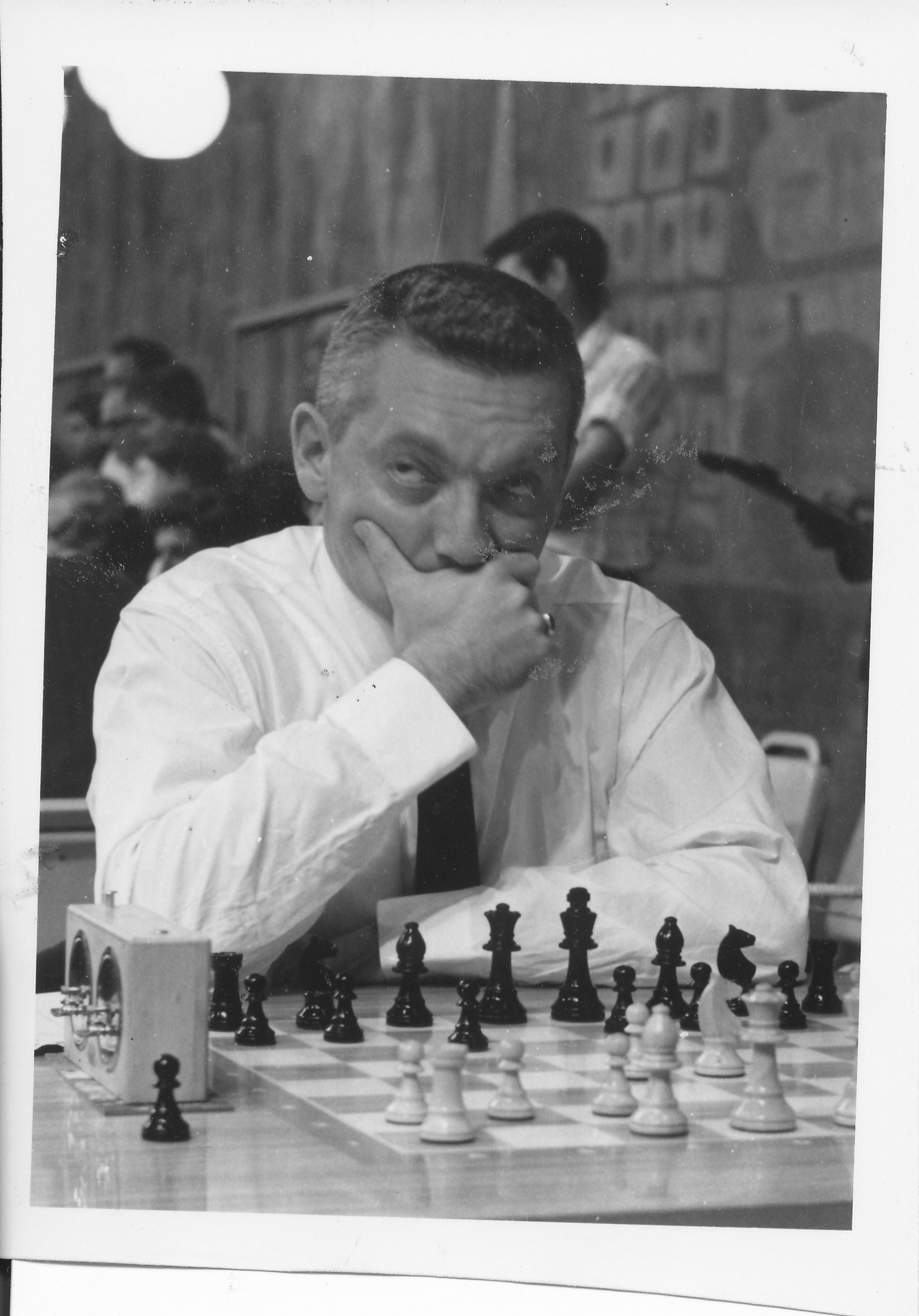
Daniel Yanofsky playing Max Euwe in 1946 at the Staunton Memorial, Groningen
This was the first of a number of successes which to his selection as a member of the Canadian team to play in the Chess Olympiad at Buenos Aires in 1939, where on 2nd board he scored 84.4 per cent and attracted the notice of the World Champion, Alekhine, who spent many hours going over Yanofsky’s games with him.
Daniel Yanofsky, 1946
On his return to Canada Yanofsky had to divide his time between earning a living, completing his education and playing chess. Before joining the Royal Canadian Naval Volunteer Reserve in 1945, Yanofsky graduated from the University of Manitoba with a Bachelor of Science degree, and, apart from his victories in the Canadian Championship, won lst prize at Ventnor City 1942 and the United States Open Championship the same year.
After his discharge from the Navy Yanofsky played at Groningen 1946 and came 14th out of 20. However his score included a win against Botvinnik and a 50 per cent score against the five top Russian players. After Groningen he ‘played in Switzerland, Spain, England, Denmark and Iceland before returning to Canada. His main successes were 2nd
at Barcelona 1946; lst at Reykjavik 1947 and 2nd at Copenhagen 1947.
Back in Canada, Yanofsky enrolled at Manitoba Law School and played little chess until he had graduated in 1951, having won the University Gold Medal in Law and five scholarships. He decided to do a post-graduate course in Law at Oxford University and left for England later that year. In 1952 he was awarded the Viscount Bennett Scholarship as the most outstanding law student in Canada by the Canadian Bar Association.
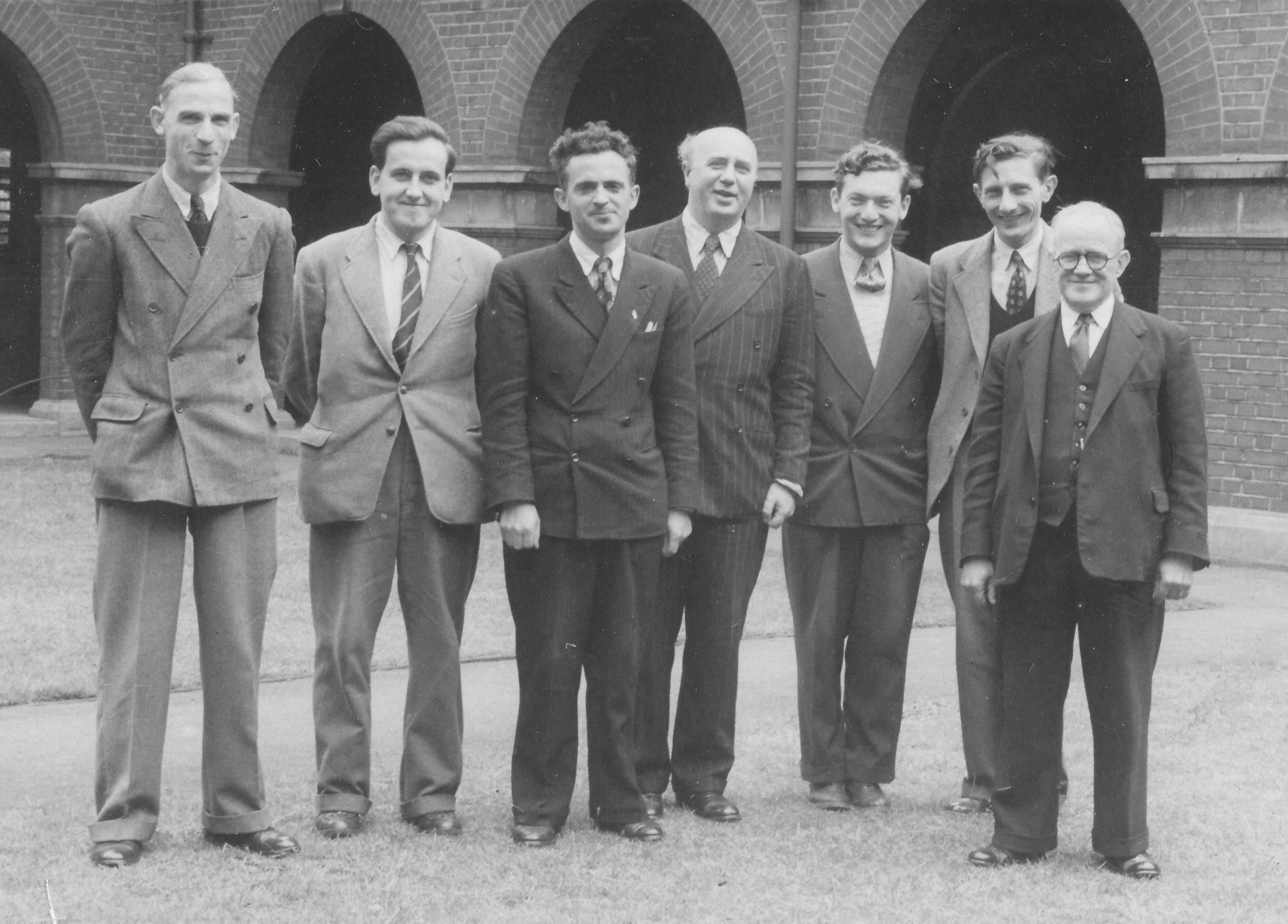
From the 1952 Ilford Congress (30 May – 2 June) and originally published in BCM, July 1952, page 187. (l-r) : Harold Israel, Alan Phillips, Bob Wade, Otto Friedman, Abe Yanofsky, Alfred William Bowen and Harold Meek. Thanks to John Saunders and Leonard Barden
While in England Yanofsky added to his chess reputation by winning the British Championship in 1953 and tying for 1st prize at Hastings in the same year.
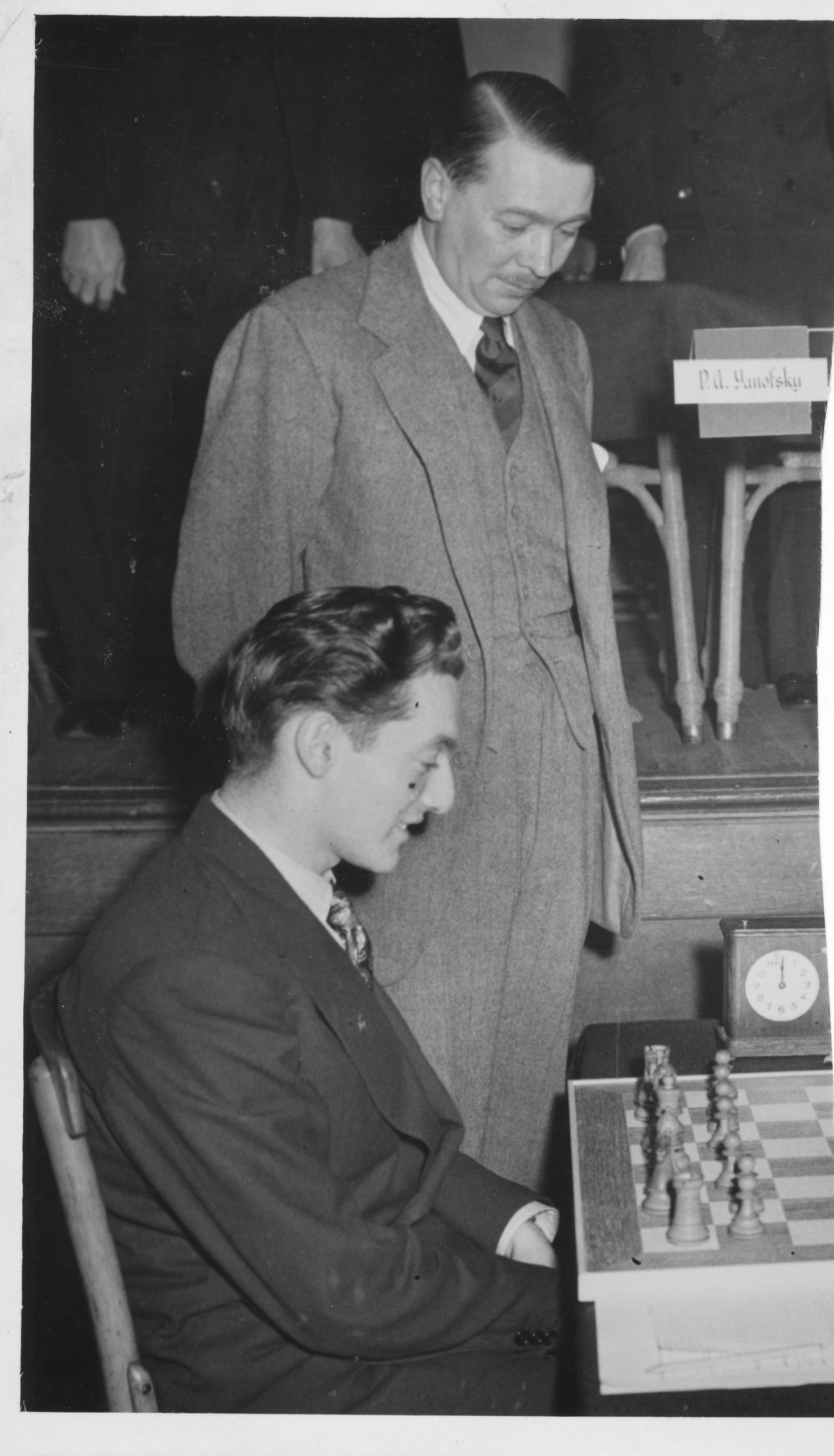
Yanofsky with Edward Lasker at the 1952/3 Hastings Congress, They are studying a (then) new line of the Marshall Ruy Lopez pioneered by Oxford don Sir Theodore Tylor.
Since then he has played regularly for Canada in Chess Olympiads since 1954.
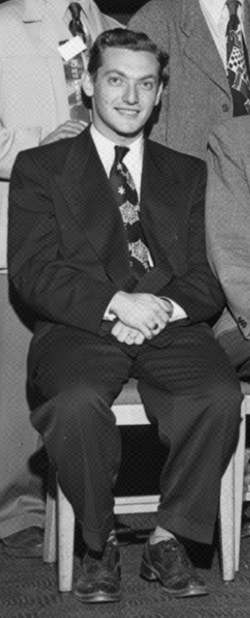
Daniel Yanofsky
From The Oxford Companion to Chess (OUP, 1984) by Hooper and Whyld:
YANOFSKY, DANIEL ABRAHAM (1925- ), Canadian player. International Grandmaster (1964), international Arbiter (1977). He was born in Poland of Russian parents who took him to Canada when he was eight months old; his childhood was spent in Winnipeg where he learned the moves of the game when he was 8 and improved so rapidly that at the age of 14 he was selected to
represent Canada in the Buenos Aires Olympiad 1939; In this event he made the highest percentage score at second board (+12=3 — 1), In 1941 he came equal first with H. Steiner in the US Open Championship, won the title on tie break, and also won the Canadian Championship (for the first of eight times). After the Second World War Yanofsky played in several tournaments including the Saltsjöbaden interzonal 1948, in which he shared eleventh place.
Daniel Yanofsky
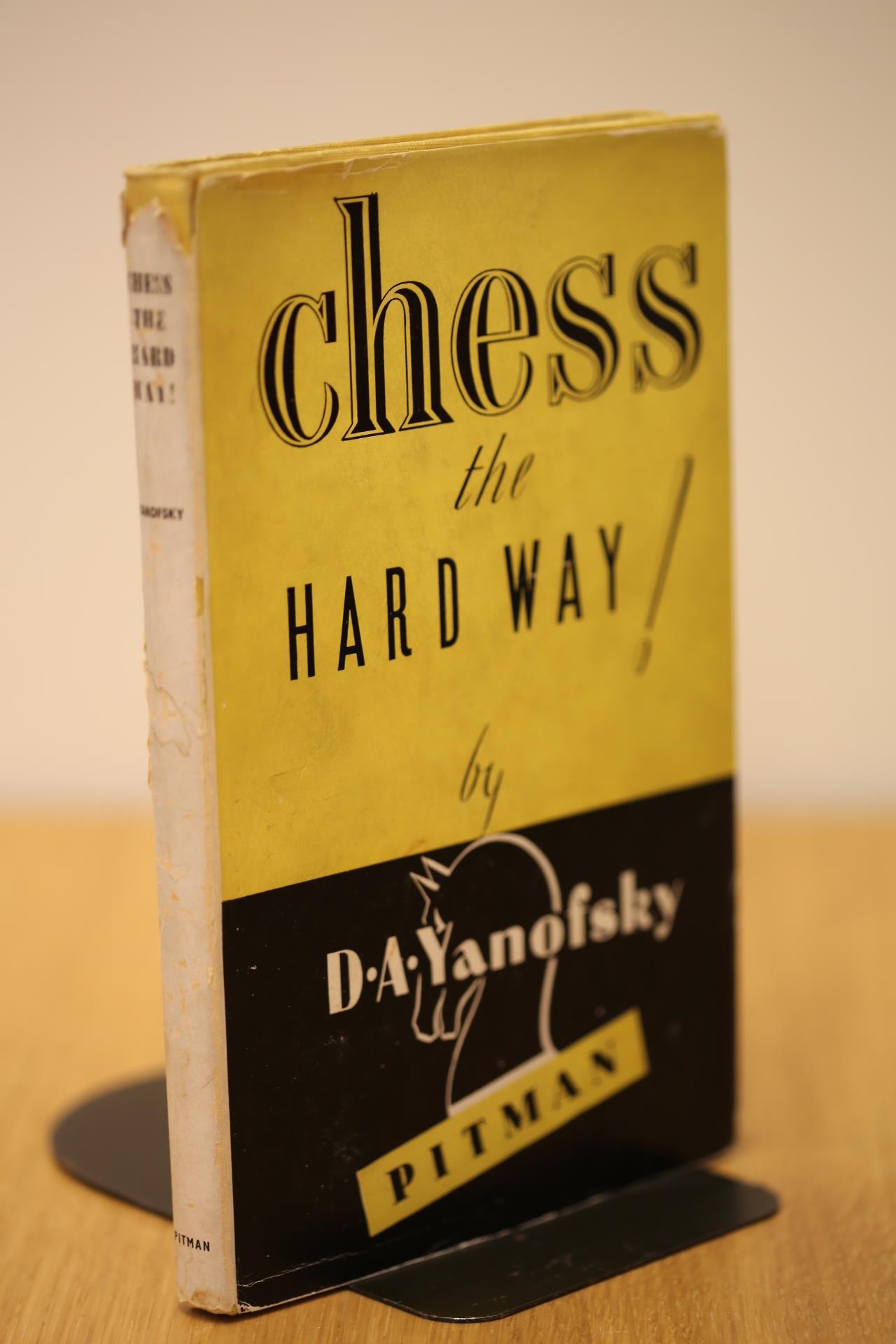
He then began law studies, completing them so brilliantly that he was offered five scholarships for postgraduate work. He chose Oxford, While in England he won, with case, the British Championship 1953, Returning to Winnipeg he became a successful lawyer active in civic politics. His chess career took second place although he found time to play in several tournaments and in many Olympiads from 1954. Yanofsky wrote of his early life in Chess the Hard Way! (1953); he excelled in the endgame and there are many examples in this book of his prowess in this phase.
Chess the Hard Way!, Daniel Yanofsky, Sir Isaac Pitman & Sons, 1953.
The second edition (1996) of Hooper & Whyld reduces DAFs entry to a mere five lines!
From The Encyclopedia of Chess (Batsford, 1977) by Harry Golombek (but written by Nathan Divinski):
A Canadian grandmaster, Yanofsky was born in Poland, came to Canada in 1926 and was raised in Winnipeg. He played 2nd board for Canada in the 1939 Olympiad and won his first (of eight) national titles in 1941, dethroning the eight-time champion Maurice Fox, Yanofsky had wins at Ventnor City 1942, The US Open 1942 and was =1st at Hastings 1953.
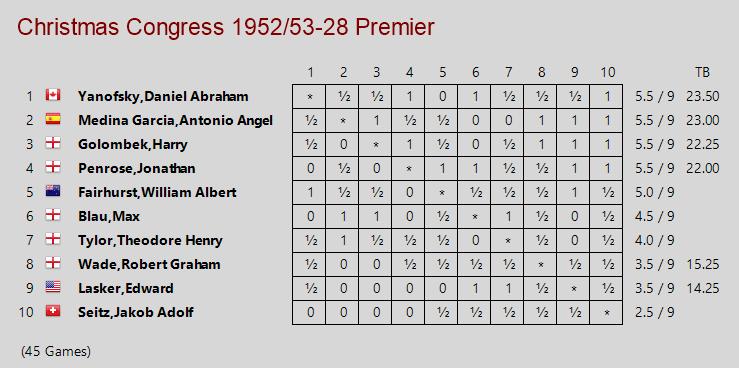
Tournament Crosstable for Hastings Christmas Congress, 1952/53 Premier
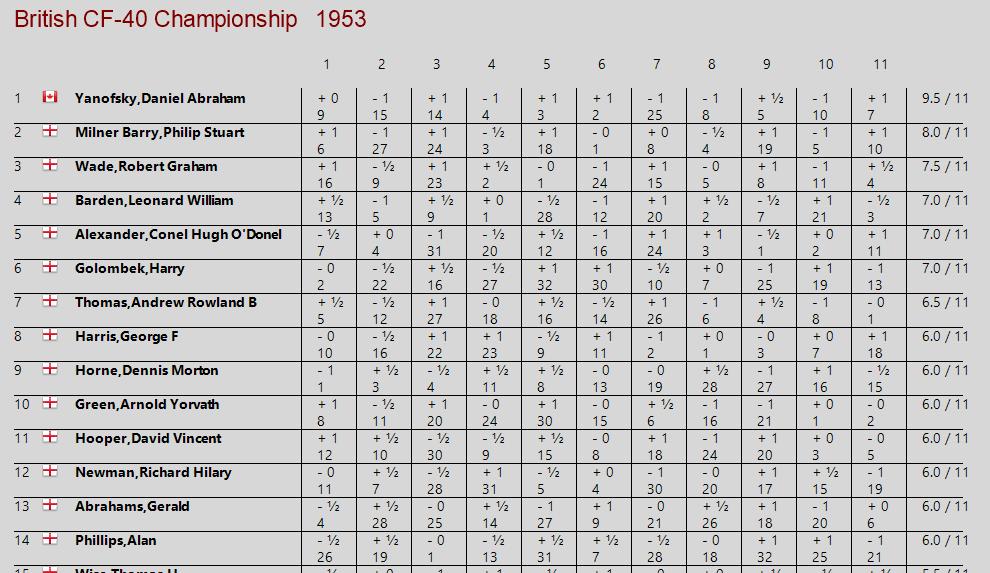
He won the British Championship in 1953, 1.5 points ahead of the field:
Tournament crosstable for British Championship, 1953 at Hastings
Yanofsky tied for 4th in the 1957 Dallas tournament and became a grandmaster in 1964.
At Groningen 1946 Yanofsky beat Botvinnik in their individual game. He has led many of the Canadian Olympiad teams.
Yanofsky is a lawyer with post-graduate studies at Oxford. He edited Canadian Chess Chat for several years and is active in civil politics.
Daniel Yanofsky
He is an expert on the Ruy Lopez and the French Defence, though his strongest point is his endgame play.
From Chess Facts and Fables, Edward Winter, McFarland Publishing, 2006, page 91:
Yanofsky’s Prize
From page 39 of Chess the Hard Way! by D.A.Yanofsky (London, 1953), comes this passage regarding the 1939 Olympiad in Buenos Aires:
“By winning the next two games I scored 9.5 points out of a possible 10 and was awarded a silver cigarette holder inscribed : “Mejor Jugador del Torneo” (best player of the tournament)”
Times have certainly changed, as it is hard to imagine that organisers today would offer a 14-year old boy anything smacking of smoking. (3003).
Daniel Yanofsky
From British Chess Magazine, Volume CXXIX (120, 2000), Number 4 (March), pp. 223 (presumably by) John Saunders we have this obituary:
DANIEL ABRAHAM YANOFSKY
Obituary of “Abe” Yanofsky (26 iii 1925 – 5 iii 2000)
ABE YANOFSKY has died in Winnipeg after a long illness. Born in Poland, he emigrated to Canada with his family when eight months old. Learning the moves at eight, Yanofsky lost his first three games to his father but next day scored his first chess victory. He was already an acknowledged chess prodigy at 11, giving simultaneous displays and winning the championship of Manitoba at the age of 12. His big break came at the age of 14 when he was selected to play for Canada at the 1939 Buenos Aires Olympiad, achieving an 85% score, including a famous win over Dulanto which moved world champion Alekhine to watch all his remaining games in the tournament.
In 1941 Yanofsky won the first of eight Canadian Championships.
Daniel Yanofsky
After war service in the navy, he played in a number of tournaments in Europe, defeating Botvinnik in a game at Groningen 1946.
Later that year he finished second to Najdorf in Barcelona, and then fourth at Hastings L94617. Other continental tournaments followed, including the Saltsjöbaden Interzonal of 1948. He returned to Canada where he was an outstanding law student, returning to Europe in 1951 to embark on a post-graduate law course at University College, Oxford, the funding being subsequently supplemented by his winning a $1,000 scholarship for being the most outstanding Canadian law student of 1952.
Yanofsky finished second at the I951/2 Hastings Premier, and took part many other UK competitions, crowning his UK-based period by winning the 1953 British Championship at Hastings: he scored a (then) record 9.5/11 despite a first round loss to DM Horne. In 1953 he also published an account of his chess adventures entitled Chess The Hard Way!
He returned to Canada to establish a successful career as a lawyer and politician in Winnipeg, though finding time to play in national championships and 11 Olympiads between 1939 and 1980. He edited Canadian Chess Chat for a number of years.
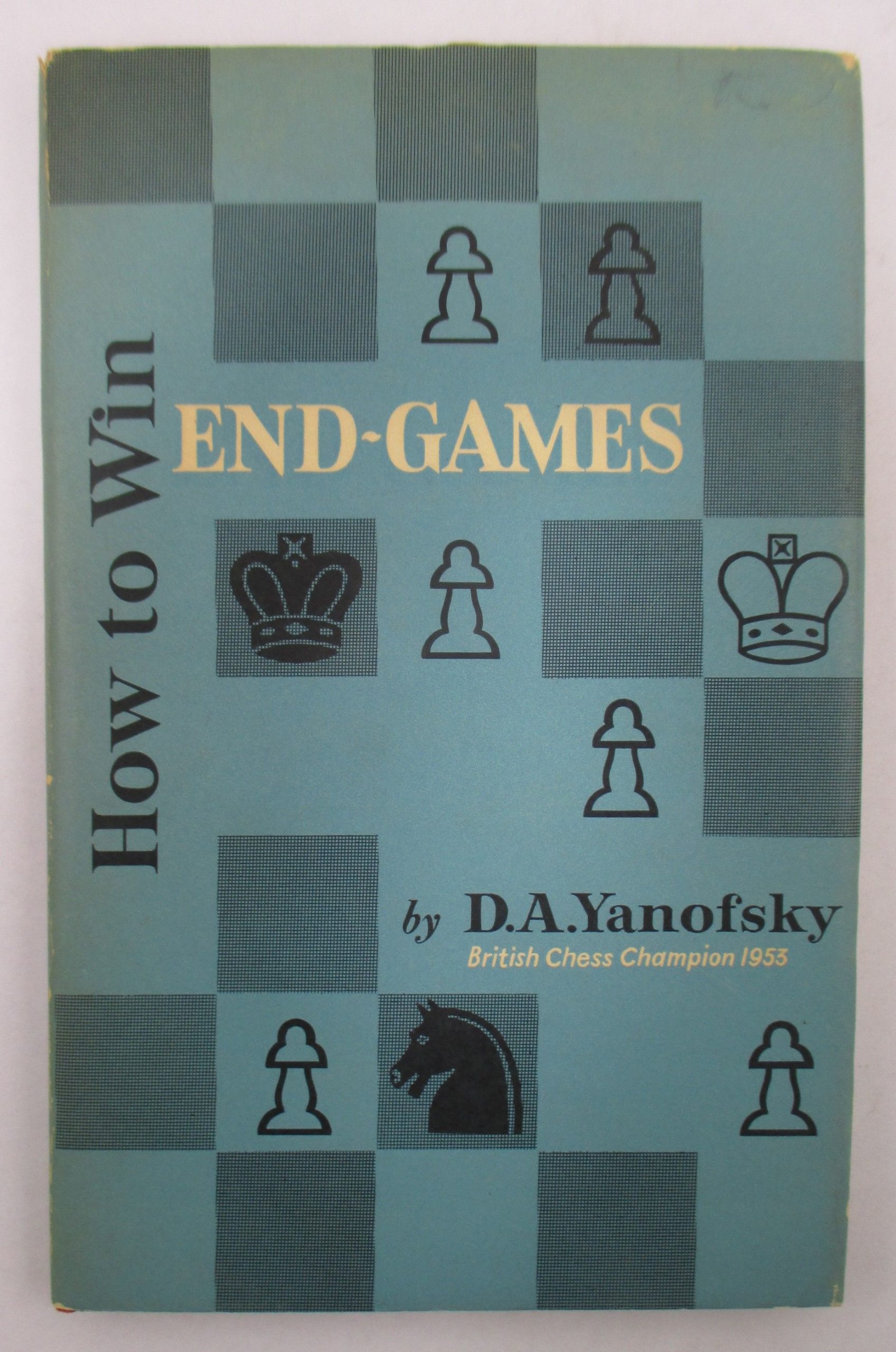
How to Win End Games, D.A. Yanofsky, Sir Isaac Pitman and Sons Ltd., 1957
He became the British Commonwealth’s first FIDE grandmaster in 1964 (ed: although some might claim that Jacques Mieses was the first)
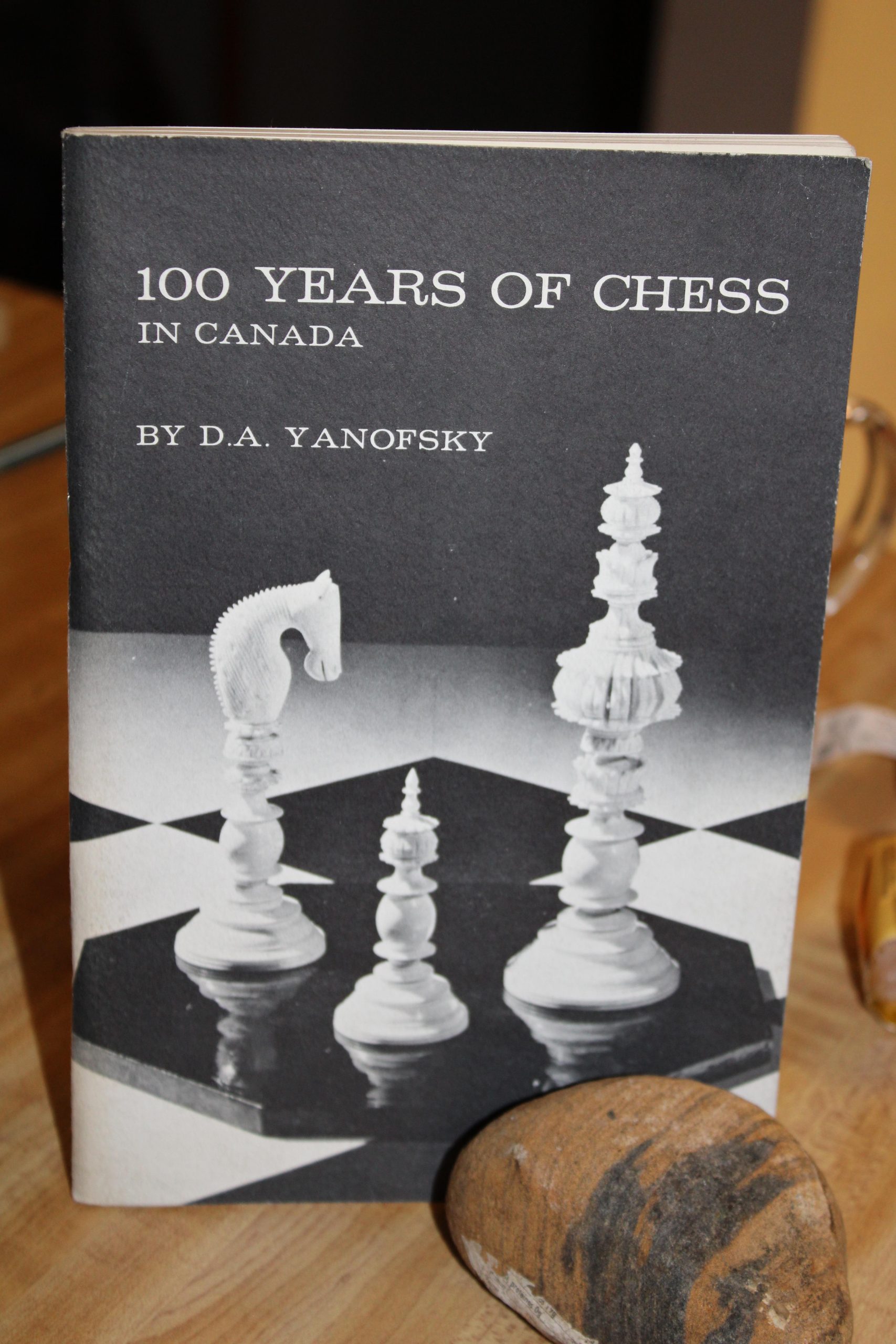
100 Years of Chess in Canada, D. A. Yanofsky, Chess Federation of Canada, Winnipeg., 1967
We lived in the same house in Oxford for a year, but never played or analysed together during all that time, as Dan’s focus was entirely on his academic work and his then pregnant wife, Hilda.
We remember Raaphy(i) Persitz who passed away on Wednesday, February 4th, 2009.
From British Chess Magazine, Volume CXXIX (129, 2009), Number 3 (March), pp. 130-134 by John Saunders we have this detailed obituary:
Raaphy Persitz
A tribute to a great friend of British chess, by John Saunders
Raphael Joseph Arie (Raaphy) Persitz (26 vii 1934, Tel Aviv – 4 ii 2009, Tel Aviv)
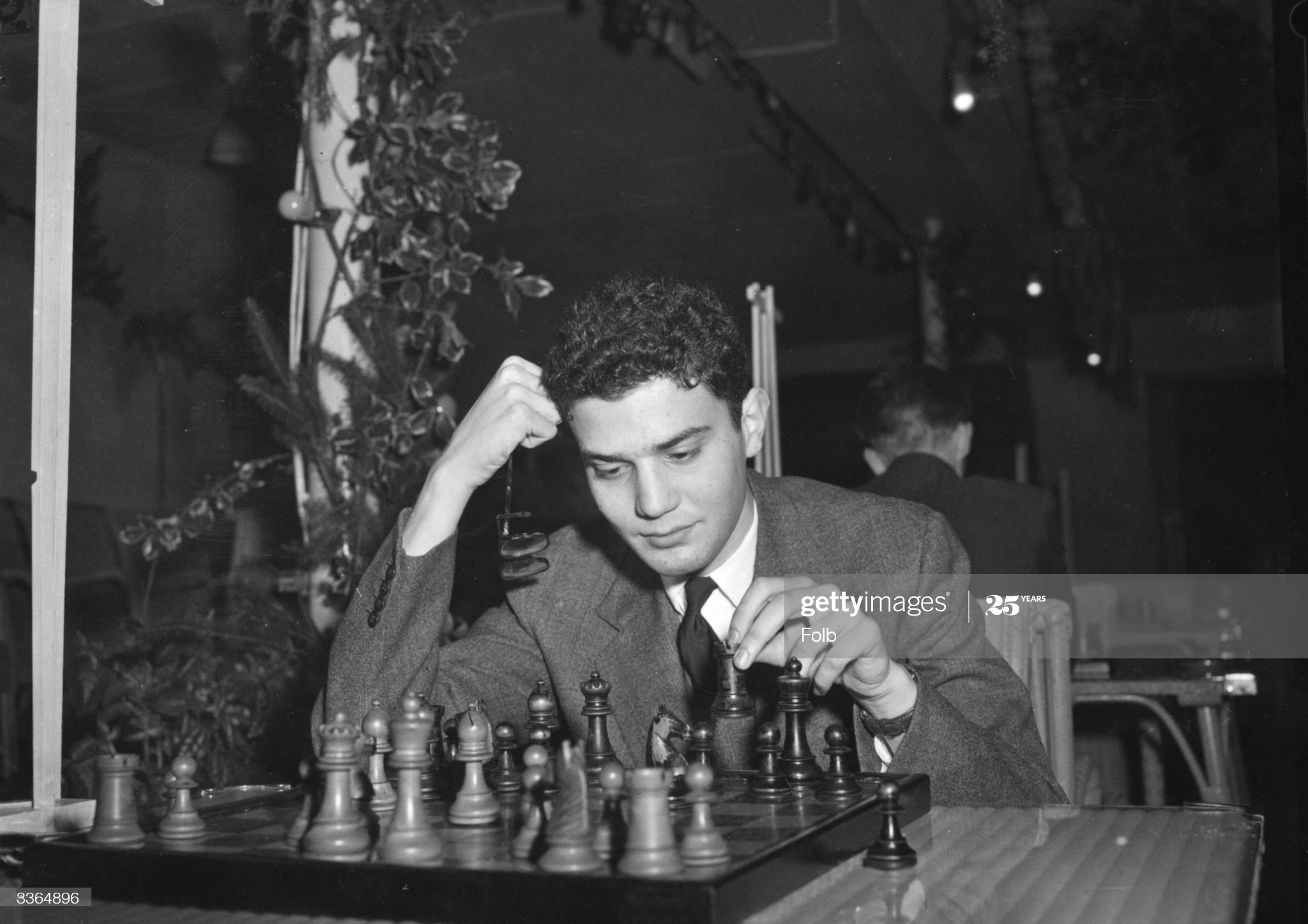
28th December 1955: Israeli chess player Raaphy Persitz in play at the International Chess Congress at Hastings. (Photo by Folb/Topical Press Agency/Getty Images)
Raaphy Persitz, one of the strongest players resident in Britain in the 1950s and 1960s and also one of BCM‘s most popular contributors, has died aged 74. Raaphy was born in Tel Aviv, the grandson of Shoshana Persitz (1893-1969), a publisher who became an early member of the Knesset, the Israeli parliament. Raaphy became Israel’s first junior champion in 1951 and shortly afterwards came to study PPE (Philosophy, Politics and Economics) at Oxford University where he was a member of their very strong chess team and a close friend of Leonard Barden and others.
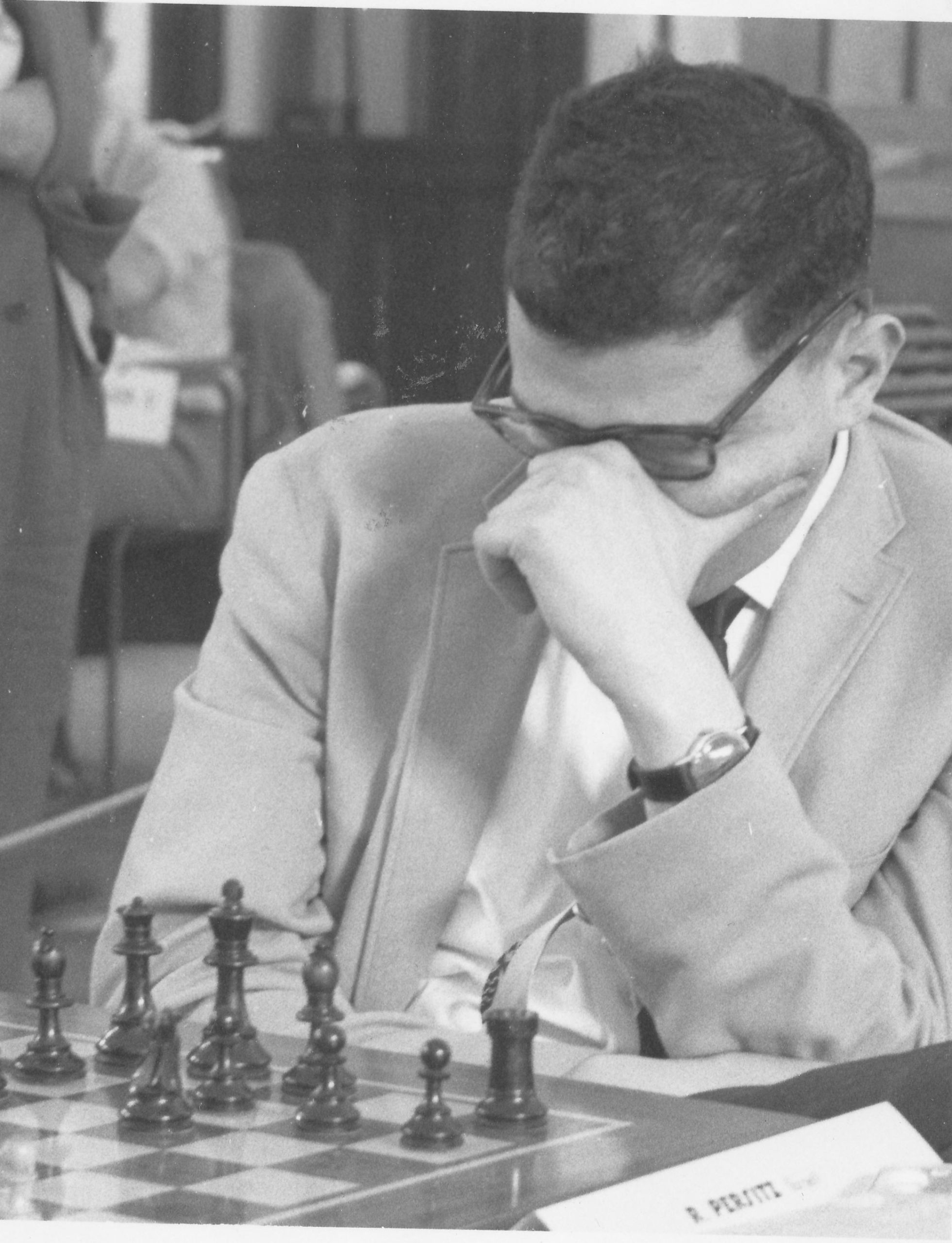
Raaphy Persitz (26-vii-1934 04-ii-2009). 26 year-old Raaphy Persitz at the 1960 Leipzig Olympiad playing on board four for Israel. He scored +6, =2, -4.
One of his most publicised feats was to win his Varsity match game and also a county match against Hugh Alexander on the same day (see the May 1954 or March 2004 issues of the magazine for further details). Raaphy played three times in the Varsity match and also represented England in three Students Olympiads in the mid-1950s. He represented Israel in the 1960 Leipzig Olympiad on board four, and also played twice in the Hastings Premier, in 1955-56 and 1968-69, the latter being his swansong in competitive chess as he turned his attention to a career in banking which took him first to Switzerland and eventually to his home town of Tel Aviv. As a player his best result was probably finishing third behind Reshevsky and Szabo at the first major international tournament held in Israel, Haifa/Tel Aviv 1958.
Despite giving up competitive play, Raaphy never lost his love of the game and remained an avid reader of magazines and follower of the game until the end of his life. And, of course, he remained a perceptive and humorous writer on the game though his output was much lower than in the 1950s. The news of his death came as a particular shock to me as, only a couple of weeks previously, he had sent me a fax saying how moved he had been by the tribute I had writ- ten to Bob Wade in the January 2009 issue of BCM. That was typical of his kindness to wards me which dated back to when I took my first tottering steps as BCM editor in 1999. We never actually met in person but spoke occasionally on the telephone and exchanged faxes (Raaphy didn’t seem to communicate by email).
Raaphy Persitz (26-vii-1934 04-ii-2009)
As a long-time reader of the magazine I had enjoyed his Student’s Corner column contributions. The column had been initiated by Abe Yanofsky in the early 1950s and Raaphy had inherited it in 1958. I was particularly delighted when, in 2004, after I had written about his 1954 feat in winning his Varsity match game and a county match against English number one CHO’D(Hugh) Alexander on the same day, Raaphy consented to write another column (which appeared in the May 2004 issue of BCM). I never succeeded in getting him to write another one but it was such a pleasure to have him write for the magazine during my spell as editor.
Raaphi Persitz agreed to play for Oxford v Cambridge in London and also on the same day for Oxon v Gloucester in a county match in Swindon.
This is the second game, he won both games.
Be aware that Bruce Hayden in ‘Cabbage Heads and Kings’, which is where I got this game from, mentions this but also added that these games took place on the same day as the 1954 Grand National (won by Royal Tan). This is wrong as the Grand National that year was run on the 10 April.
I think that maybe Bruce saw the score of the games with the two games a day story in a Sunday newspaper covering Saturdays Grand National and perhaps got the dates mixed up.
)
The fax he sent me on 7 January 2009 seems particularly poignant now but it is a good example of Raaphy’s kindness and self-deprecating humour. Here is the full text:
“Dear John, I was moved by your wide-ranging obituary of Bob Wade in the BCM[January 2009, p34l. I dare say you did justice to his contributions and devotion to chess, spanning well over half a century. I have several pleasant recollections of conversations and over-the-board encounters with Bob. One such tussle, a hard-fought draw, was reproduced by Bob, with comments (in the Student’s Corner) in a book containing his eventful games.
Another, somewhat less felicitous, recollection harks back to a game we contested at Ilford, where, in extreme time trouble, I blithely played Rxh7+, expecting …Qxh7, but overlooking the simple …Kxh7, leaving me a whole rook down with no compensation, whereupon I duly resigned. What impressed me at the time was the lightning speed with which Bob reacted to my ill-fated blunder – as if it were nothing but inevitable…
With warmest wishes for a healthy,
happy, fruitful 2009. Raaphy.”
I had hoped to publish the above as a Letter to the Editor but, sadly, it must now appear as part of Raaphy’s obituary. The draw with Bob Wade referred to in the fax was played in Dublin in 1962 and featured in Student’s Corner in BCM in the December 1966 issue on page 356. It seems appropriate to reproduce the game here in tribute to these two recently departed and much-loved chessplayers.
Notes by Persitz
Unlike the majority of games that have, over the years, appeared in the Student’s Corner, the following dour struggle between Bob Wade (White) and myself (Black), from Dublin, 1962, is in no way outstanding: it does not contain any brilliant combinations; it is not a positional masterpiece; it is certainly not devoid of mistakes. Nor is it amusing, or original, or of theoretical interest or particularly instructive. Yet (with the aid of the interspersed comments) it ought to give the student a pretty shrewd and realistic idea of the stuff competitive chess is made of: the endless number of laborious variations that have to be examined; the annoying little threats that must be attended to; the treacherous pitfalls to be sidestepped; the technical hurdles to be surmounted; the frustrating little details, indifference to which may be fatal; in brief, the drudgery that has become part and parcel of contemporary tournament practice, without which success is unimaginable.
Raaphy Persitz Tributes
Leonard Barden: Raaphy was probably my best friend at Oxford – certainly so among chessplayers. We played hundreds of blitz games in the junior common room at Balliol and later for some months in 1957 we shared a London flat, analysing Russian championship games over breakfast. He was a wonderful man to know, bright, witty, gentle, sympathetic and knowledgeable.
Leonard Barden (centre) with Raaphi Persitz, JB Sykes, OI Galvenius and DM Armstrong, Ilford, May, 1953
A tribute by Amatzia Avni: Ordinary people have a mixture of good qualities and bad ones. After 20 years of friendship with the late Raaphy Persitz I can attest that he was a distinct type: one sided, positive-only; pure gold.
I first met him in 1989. I had just written my first chess book (in Hebrew) and was searching for someone to write me an introduction. The word was that Persitz was back in town, after long years abroad. Having seen glimpses of his amazing linguistic skills, I contacted him and he agreed immediately. He didn’t know me, hadn’t read a single sentence of the book, yet he didn’t hesitate: “yes, sure, I’ll be glad to”.
That was typical Persitz: always ready to help, unconditionally. The introduction, needless to say, was a sheer delight, a class or two above the rest of the book. In later years he gave me a hand several times polishing my texts and making them more reader-friendly to English-speaking readers. Somehow he seemed to know what I wished to express better than I did. His suggestions enabled me to convey my meaning in a clear and precise manner.
Raaphy was modest and reserved. Once I called him and realized he was upset. “My mother had passed away some weeks ago,” he said. I was puzzled why he didn’t tell me the sad news at the time. “I didn’t want to bother you” was his reply.
A couple of years ago I stumbled upon Bruce Hayden’s old book Cabbage Heads and Chess Kings. One of the book’s chapters was headed “Raaphy Persitz star or comet?”. I learned that, in the 1950s, Persitz gained bright victories in England, against Penrose, Alexander, Milner-Barry and others. Searching a Chessbase database I found out that he also done battle with some out- standing international players. Yet, in all our meetings and hundreds of hours of conversation, he never said a thing about that!
Persitz was a master of understatement. I learned that if I wrote “very fine” or “extremely strong”, the ‘very’ and ‘extremely’ would fly out of the window. If I made a firm stand on a certain issue, he would add “probably”, “apparently’ or “it may be argued that”, because it was indeed only an opinion, not a fact. Over time, following his line of thought made me improve the way I expressed myself and thought about chess.
Persitz’s distinctions in chess, in linguistics and in journalism are evident to anyone who ever read his chess books and articles. He also excelled at economics, but I am unqualified to comment on this.
God bless you, Raaphy. I feel privileged to have known you. Amatzia Avni.
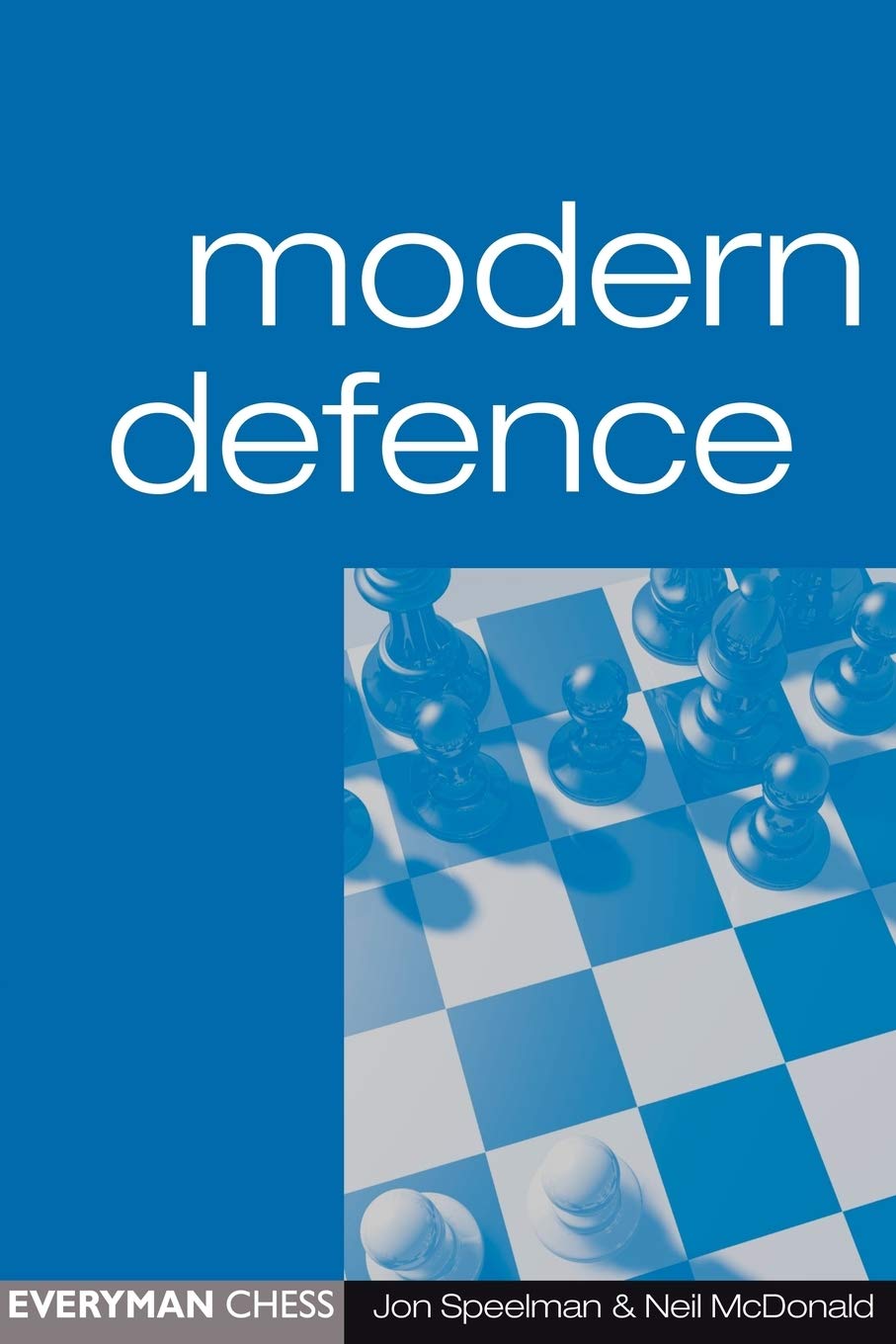
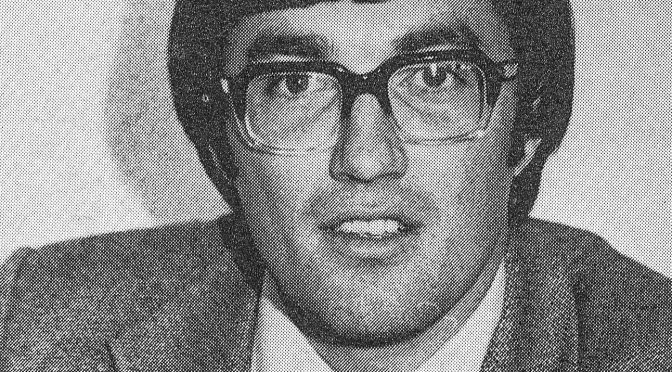
Neil McDonald (born 21 January 1967) is an English chess grandmaster and a player on the international chess circuit. He is an English Chess Federation coach,[1] who has trained many of the country’s strongest junior players. McDonald is a regular coach of the English junior team and was Head Coach of the English Chess Federation team at the Greece World Schools Championship in 2013.[2] He regularly escorts blind and partially sighted chess players to international World Championship events and is also a chess writer.
McDonald authored the French Defence monthly updates on chesspublishing.com from October 1999 until March 2009,[3] 1 e4 … updates from November 2009 until January 2010,[4] 1 e4 … from June 2014 until February 2015[5] and returned to 1 e4 … in March 2017 until January 2018.[6]
Neil shared first place in the 1986 GLC Masters with Jonathan Levitt, was outright first at the Elekes Memorial, 1995, first at The Leinster IM Tournament in Dublin, 1997, and other tournaments since. Neil plays for Wood Green in the Four Nations Chess League (4NCL).
He became an International Master in 1986 and was awarded the Grandmaster title in 1996.
McDonald obtained his FIDE Trainer qualification in 2016.[7]
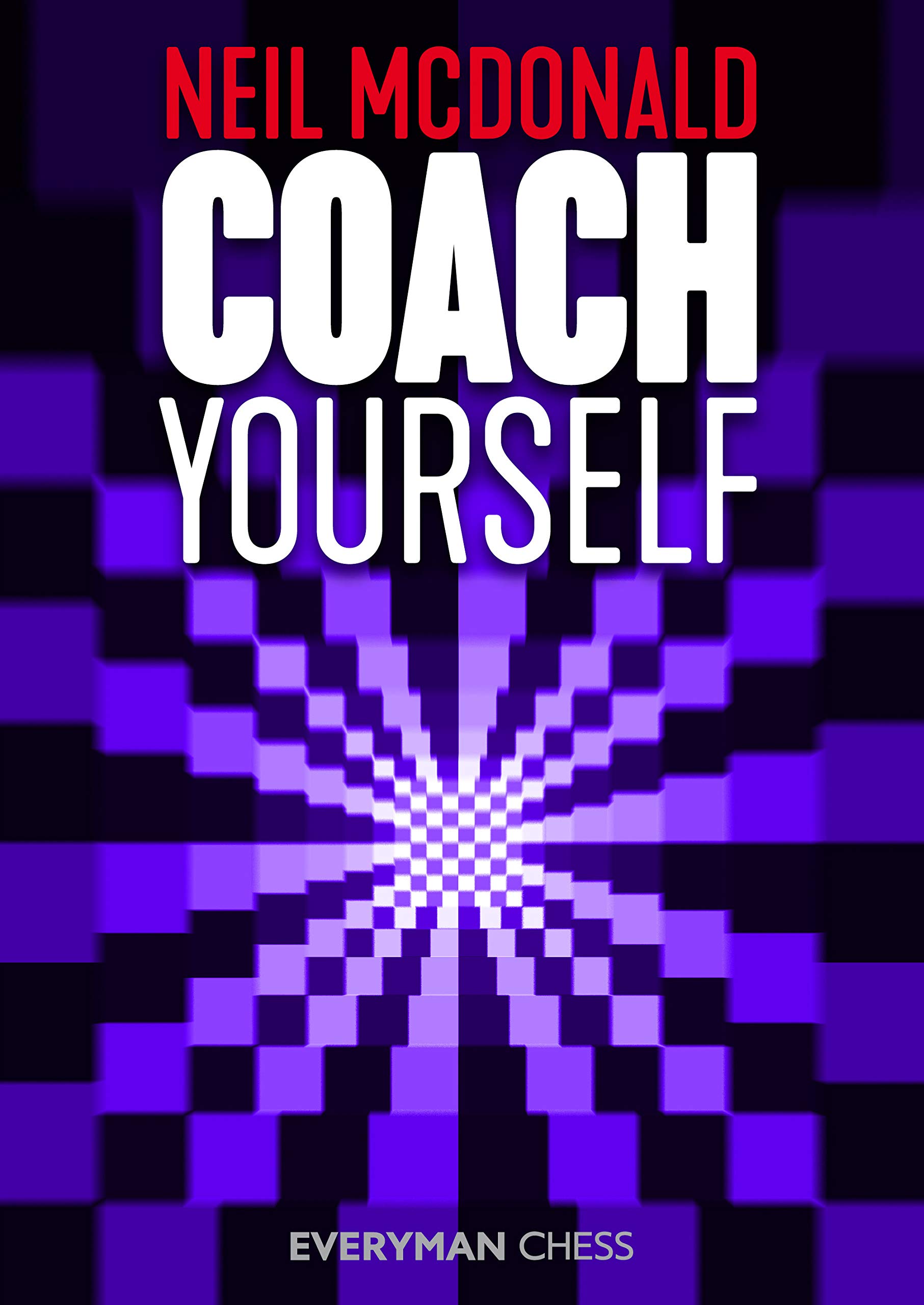
Neil is a prolific and successful author, most recently with “Coach Yourself”
Coach Yourself : A Complete Guide to Self Improvement at Chess
but also thirty eight titles for Chess Press, BT Batsford Ltd. and Everyman Chess Books.
Paul Edwin Littlewood was born on Wednesday, January 18th, 1956 in Skegness, East Lindsey, Lincolnshire. His parents were John and Jean Littlewood (née) Hadwick. Paul’s chess playing uncle was Norman Littlewood.
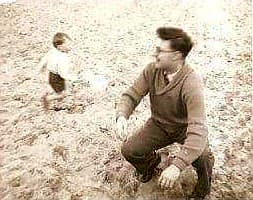
John and Paul on Skegness beach circa 1958. Kindly supplied by Paul Littlewood. George and Ringo are out of shot !John, Jenny and Paul Littlewood, circa 1962. Kindly supplied by Paul Littlewood.
Paul attended Glenburn Comprehensive School in Skelmersdale from 1967 and then read Natural Sciences at Christ’s College, Cambridge from 1974.
Paul played badminton for Lancashire and Cambridge and, in 1971, won the English Schools Mixed Championship when he was 15 years old.
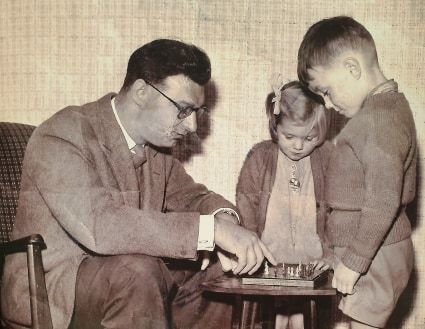
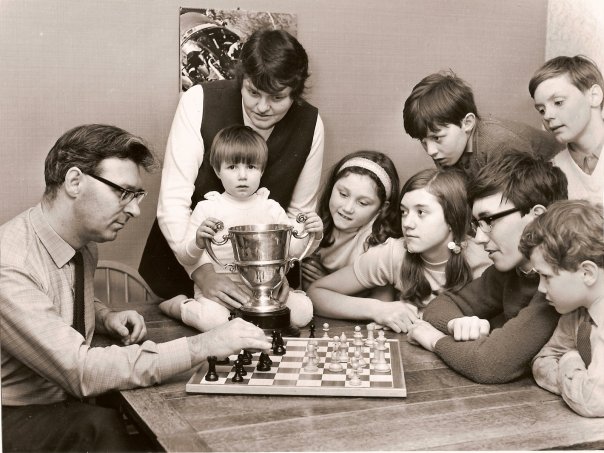
Paul and family receive a chess lesson from John following John’s win in the 1972 Southport Open
On leaving University Paul taught science at Southbrook Comprehensive, Daventry. Four years later Paul became a dealer at Phillips & Drew and followed this as an Executive Director at Goldman Sachs. Stays at Lehman Brothers and JP Morgan were followed by a change of direction and since then Paul has been director of various food supply companies retiring in 2014.
Paul is married (3rd November 2006) to (his second wife) Fiona and lives in St. Albans, Hertfordshire.
PEL won the ECF President’s Award in 2007 and from the 2008 ECF Yearbook we have the following citation :
“International Master and accomplished bridge player. From British Chess champion (1981) Paul has presided over the 4NCL as chairman during its most successful period. When he became chairman over ten years ago the league consisted of two divisions and 32 teams. The league has now expanded to four divisions and a total of 72 teams. Most of England’s juniors play 4NCL. During this time 4NCL became one of the strongest leagues in Europe, at one time boasting a Division 1 rivalling the Bundesliga in strength in the top matches.
Paul has demonstrated the sound judgement of Solomon when dealing with league disputes and has drawn on his business acumen, honed during a successful career in the City with Goldman Sachs to make 4NCL the financially stable and expanding league it is today.”
Roll of Honour
British U18 Champion 1972
British U21 Champion 1975
British Champion 1981
As a junior represented England in Glorney Cup
International Master 1980
From British Chess (Pergamon Press, 1983) by Botterill, Levy. Rice and Richardson we have this article from Richard W. O’Brien :
“Paul Littlewood was destined to become a strong player from birth. His father John was for some time one of the strongest players in the country and represented England on many occasions. His uncle Norman was for a few years not far behind. Paul, however, has surpassed them both and has become the first in the family to reach IM status. (Ed: JEL was very much worthy of the IM title but insufficient events of the right type held him back).
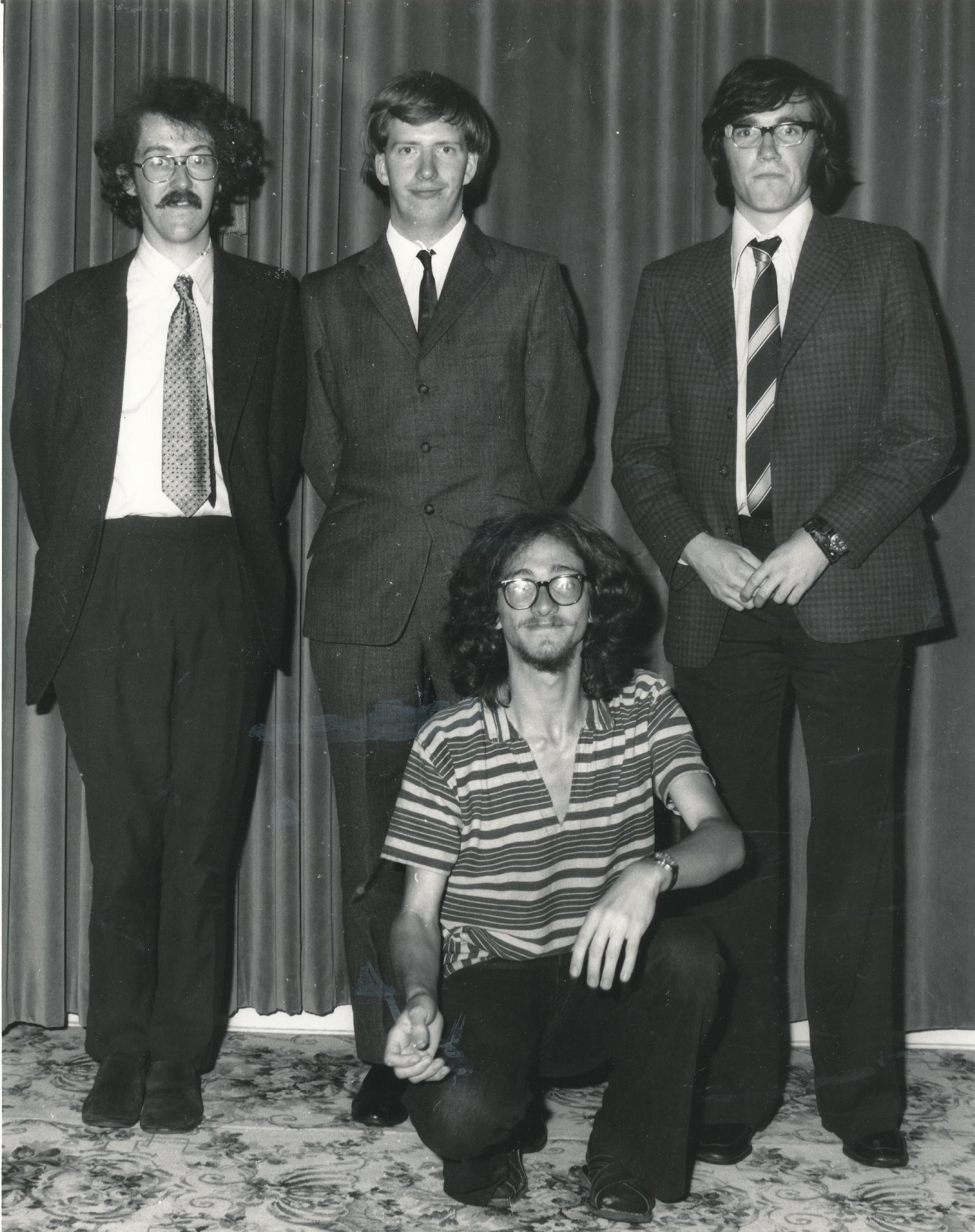
A. Howard Williams, Martyn J. Corden, Paul E. Littlewood and A. Jonathan Mestel
All three are essentially attacking players. There have been times in recent years when play at the Hastings Premier has become dull. However, Paul one of the English representatives at the last three tournaments, was certainly not to blame. (His game against Brito of Brazil which follows is a striking example of this).”
Coached by his father, Paul became British U18 champion in 1972 and three years later became British U21 champion.
Clearly more interested in an academic career he went up to Cambridge and then followed his father into the teaching profession. Opportunities to play in strong tournaments were thus very limited. These opportunities, however, were grasped in both hands. Three times in thirteen months between August 1978 and August 1979 he obtained an IM norm and thus the title.
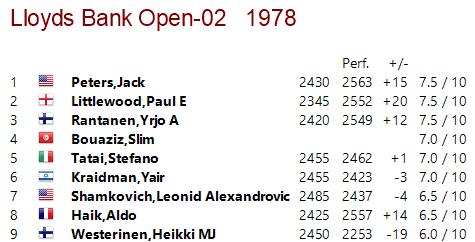
Partial crosstable for the Lloyds Bank Open, 1978
The first caused a sensation as it was totally unexpected. He shared first place at Lloyds Bank ahead of several grandmasters including Shamkovich, who was the first grandmaster he ever defeated.
Leonid Shamkovich plays Paul Littlewood during the 1978 Lloyds Bank Masters. Paul won the game.
Eight months later Aaronson Masters was won and then came the final norm, also at Lloyds Bank.
Tournaments abroad were limited although he represented England students. He did play at Kringsja (2nd equal) in 1978 and Borovo where he scored 6.5.13 finishing ahead of 3 GMs.
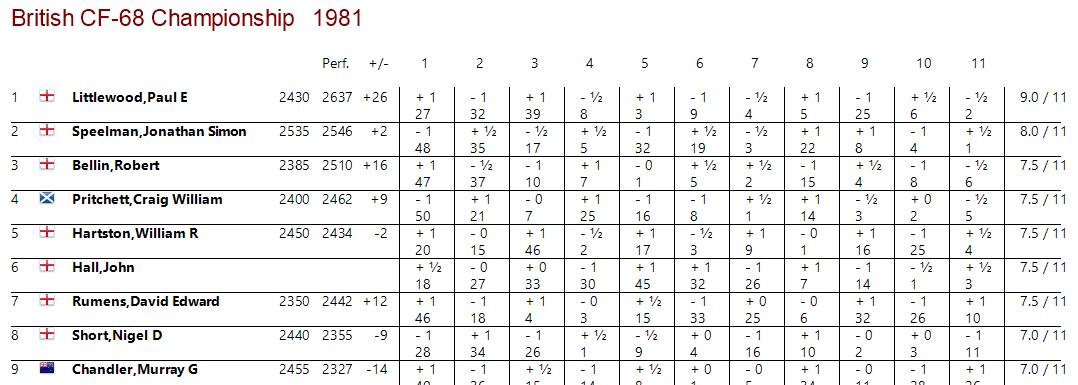
In 1981 came his finest achievement – winning the British Championship with a massive 9/11.
Partial crosstable from the 1981 British Championship in Morecambe
His father who was also competing in the championship was as proud as could be and deservedly so (he also coached Sheila Jackson who retained her British Ladies Championship that year). His excellent all round play took him to the title and only once during the tournament did he stand worse. His endgame play was so good that CHESS even published an article solely on these endings.
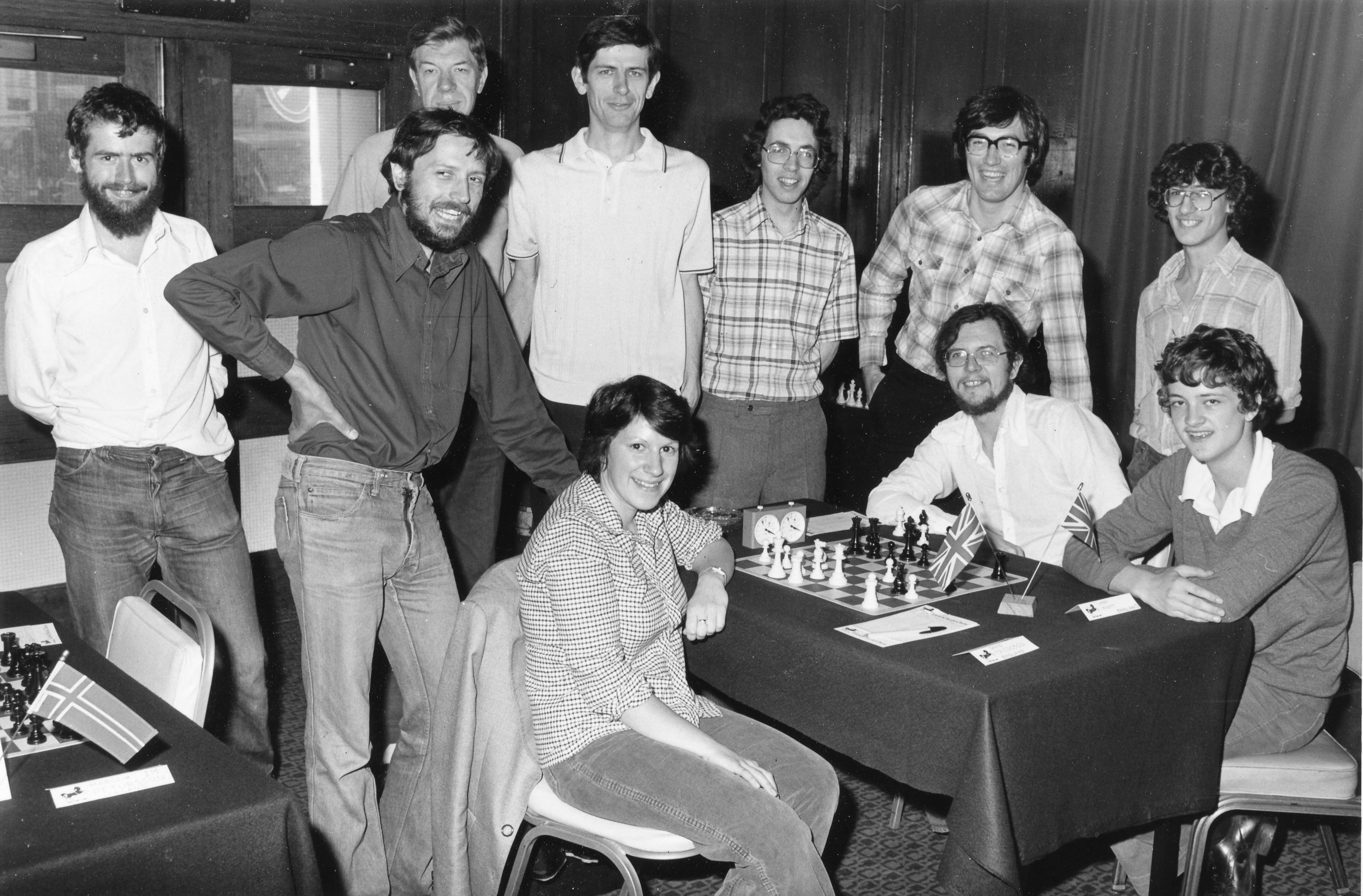
Paul Littlewood and friends during the 1978 Lloyds Bank Masters
Duties at school in Daventry meant he was, in February 1982, unable to take part in the zonal at Marbella. This followed an excellent Hastings when as British Champion he made a plus score – a rare event indeed.
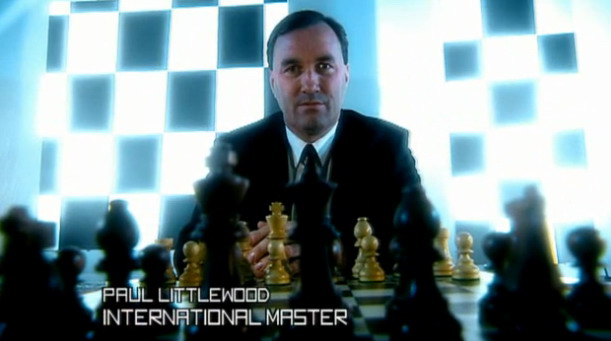
IM Paul Littlewood during filming for the “Trick of the Mind” series from Derren Brown
In the summer he gave up teaching and joined Phillips & Drew (stockbrokers). He now (ed : this was in 1983) lives with his (first) wife Sue and family in the wilds of Essex (Billericay).
IM Paul Littlewood, event and photographer unknown
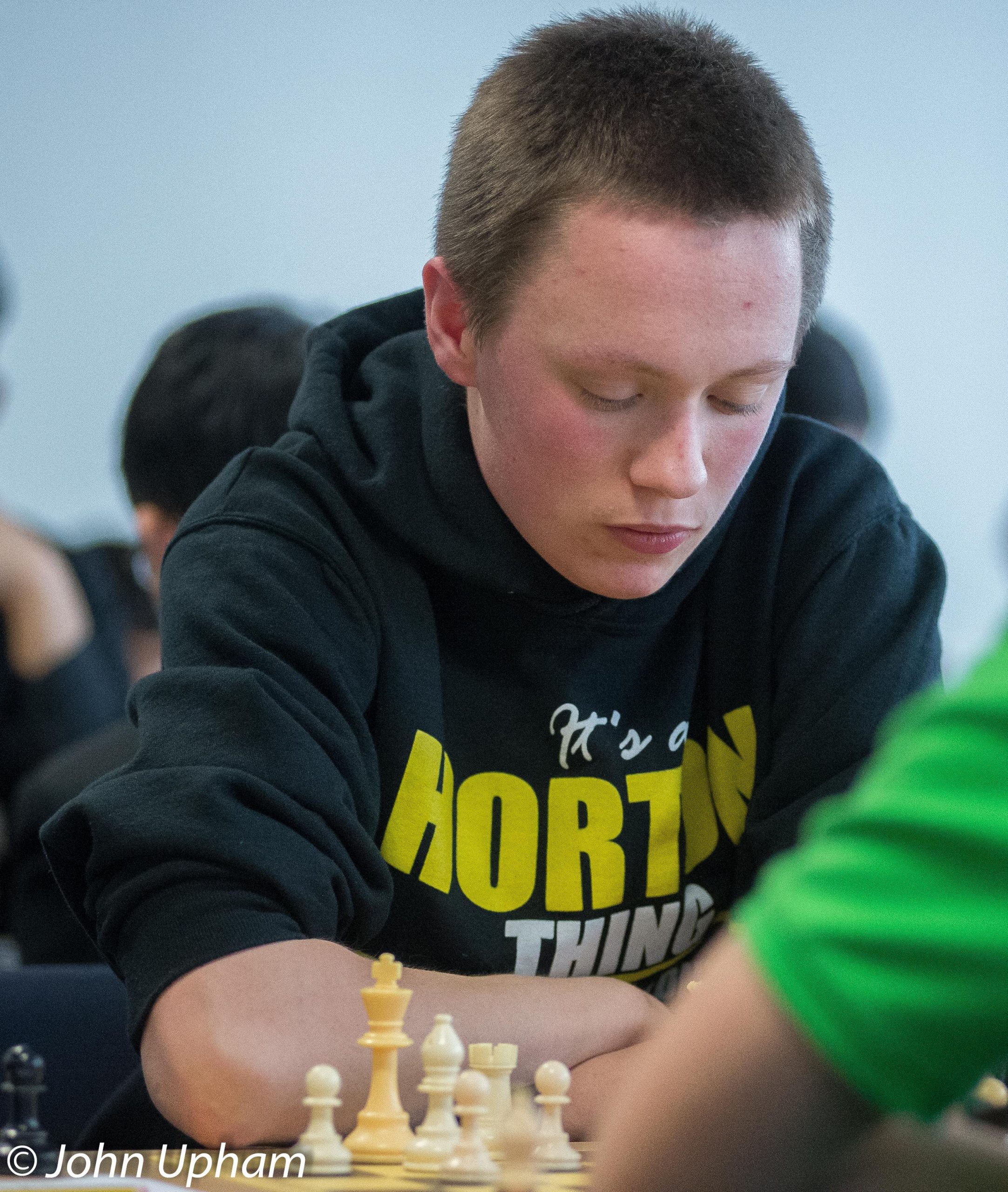
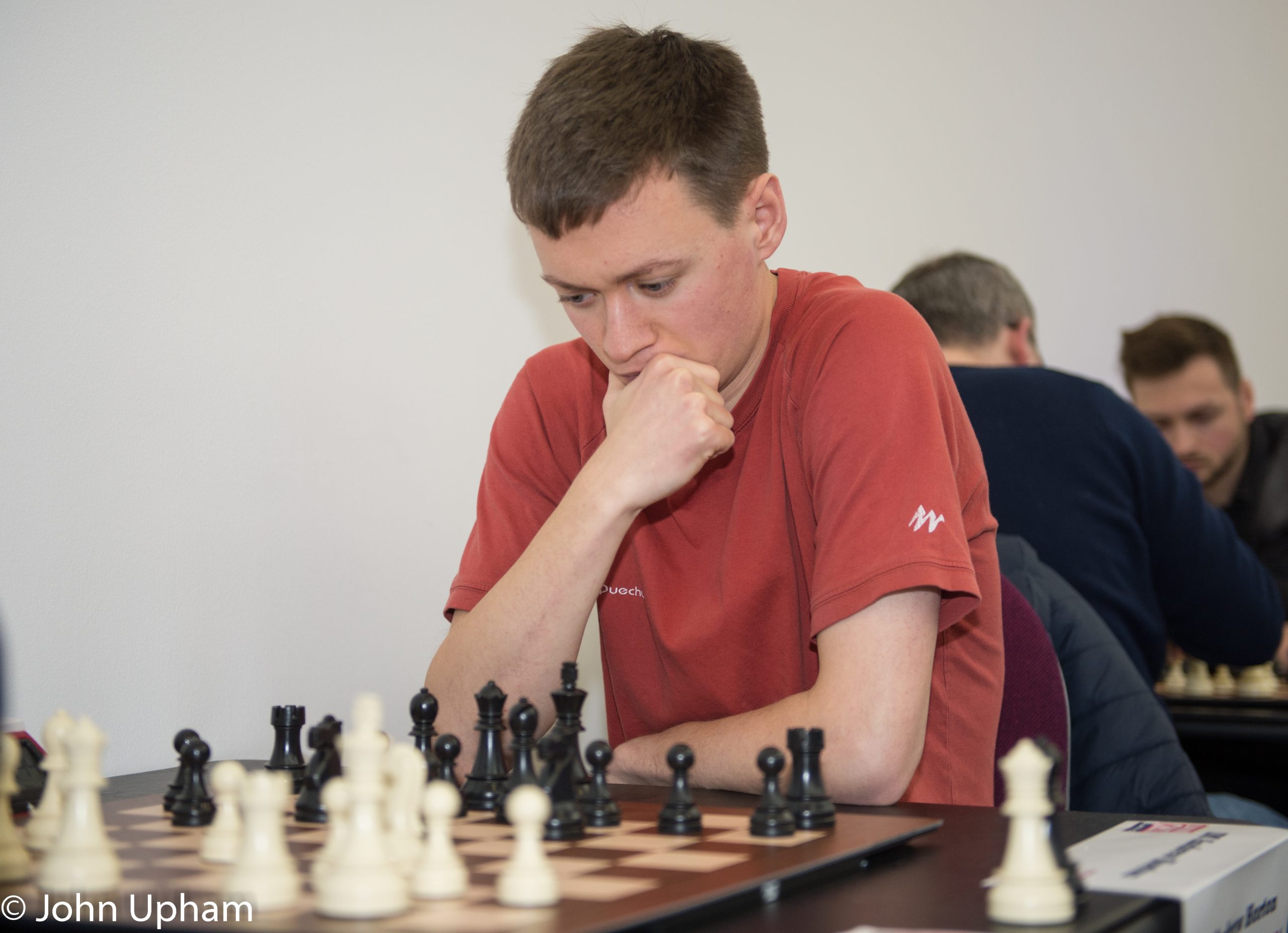
Andrew Horton at the 2014 Team Chess Challenge at Imperial College. Courtesy of John Upham Photography
BCN wishes Happy Birthday to IM Andrew P Horton (15-i-1998)
Andrew became a FIDE Master in 2015 and an International Master in 2018 following the 89th FIDE Congress 2018, 26 Sep – 6 Oct, Batumi, Georgia.
Andrew represents the 3Cs club in the Manchester League and in the Four Nations Chess League (4NCL) (as well as Wood Green) and, in addition, Wotton Hall, Durham City (during his University years) and Northumberland CA for county matches.
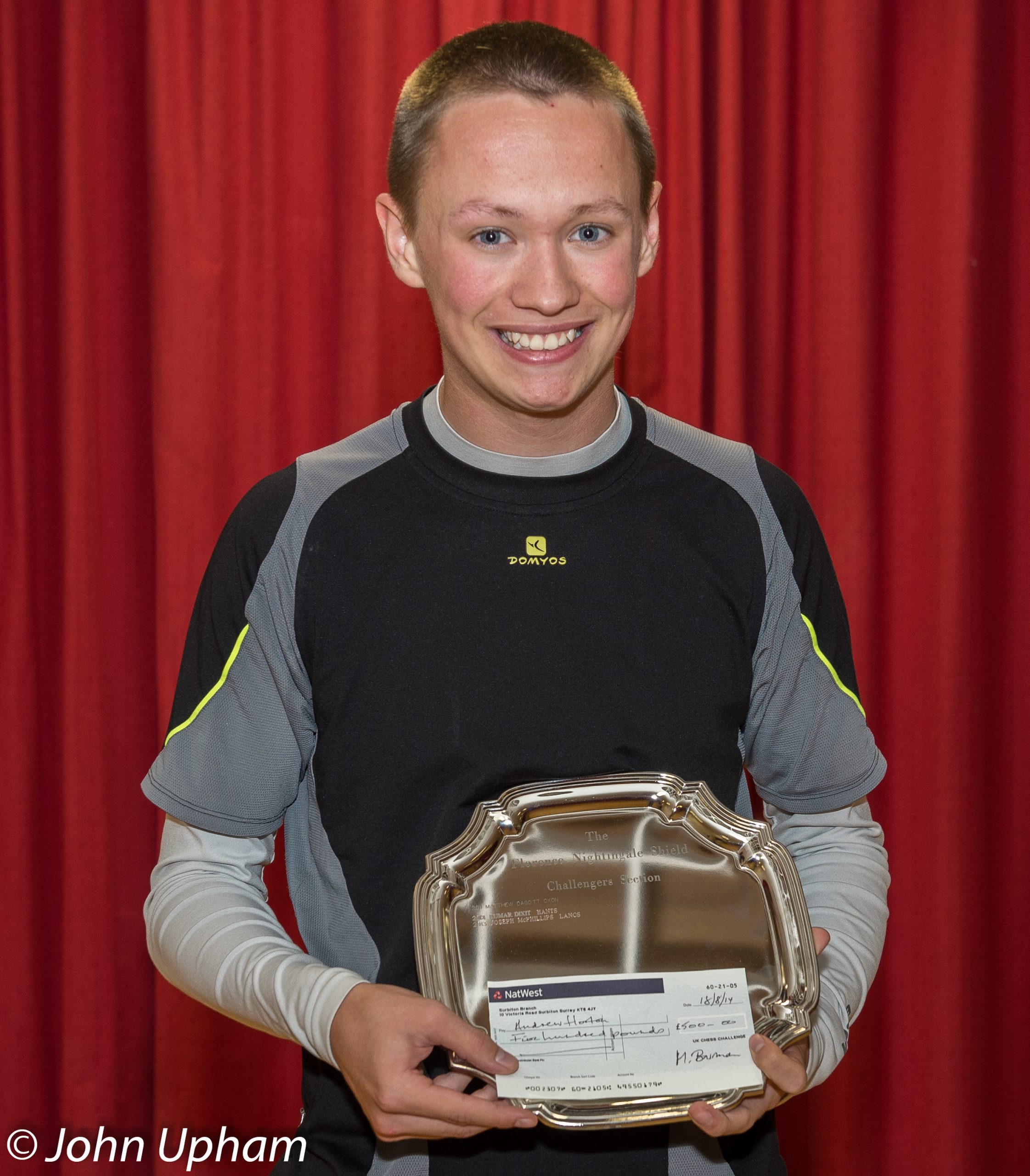
Andrew made regular appearences at the Delancey UK Chess Challenge and was placed 1st in the 2014 Terafinal, Challengers section.
Andrew Horton, Challengers C, 1st, 2014, UKCC Terafinal
In 2021 Andrew was invited and played in the London Chess Classic at the Cavendish Conference Centre.
IM Andrew Horton at the London Chess Classic, 2021
Andrew’s ECF standard play rating at January 2023 is 2452K.
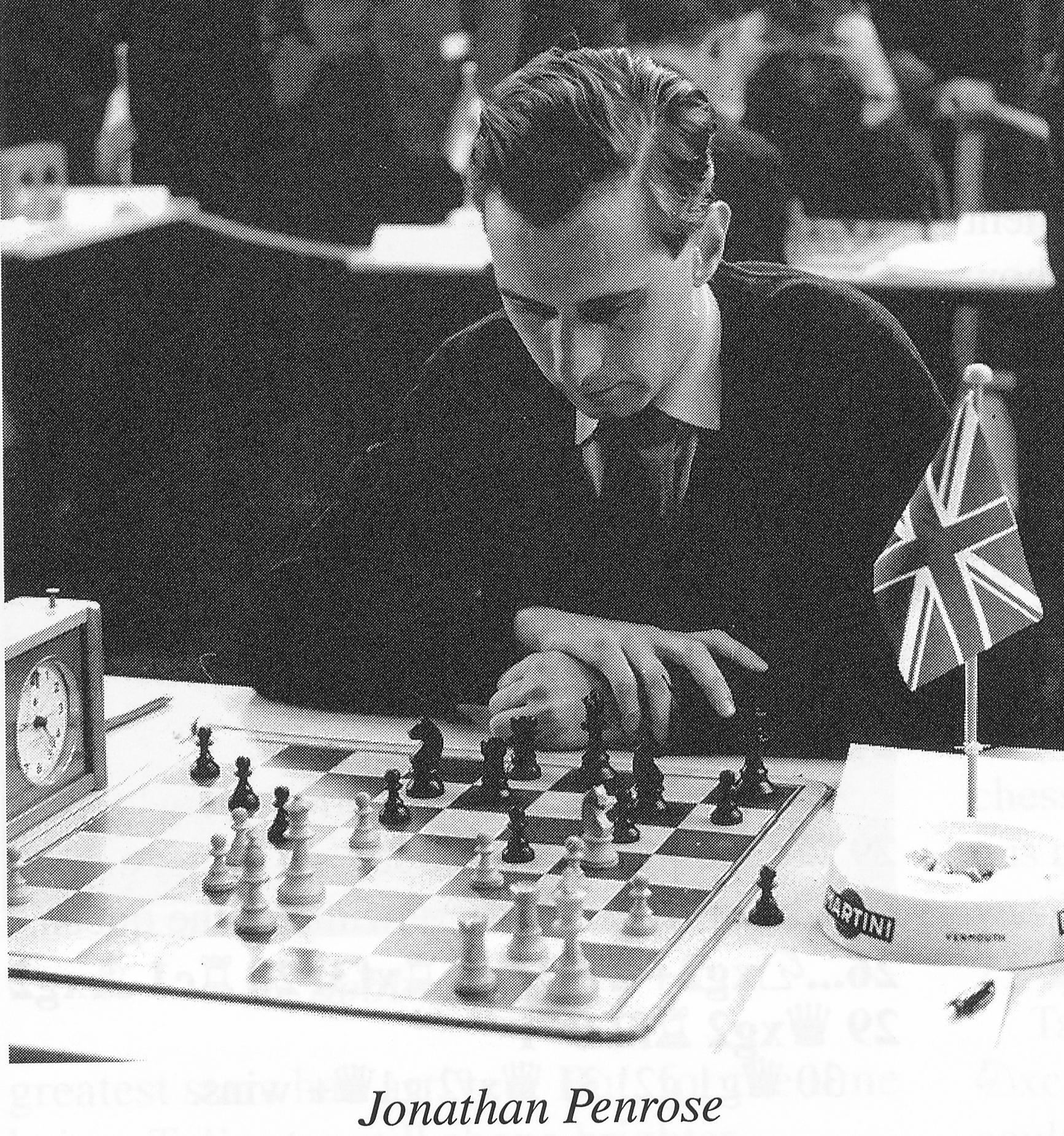
BCN remembers GM Dr. Jonathan Penrose OBE who passed away on Tuesday, November 30th 2021.
In the 1971 New Years Honours List Jonathan was made an Officer of the Order of the British Empire (OBE) The citation read “For services to Chess.”
From British Chess (Pergamon Press, 1983) by Botterill, Levy, Rice and Richardson : (article by George Botterill)
“Penrose is one of the outstanding figures of British chess. Yet many who meet him may not realize this just because he is one of the quietest and most modest of men. Throughout the late 1950s and the whole of the 1960s he stood head and shoulders above any of his contemporaries.
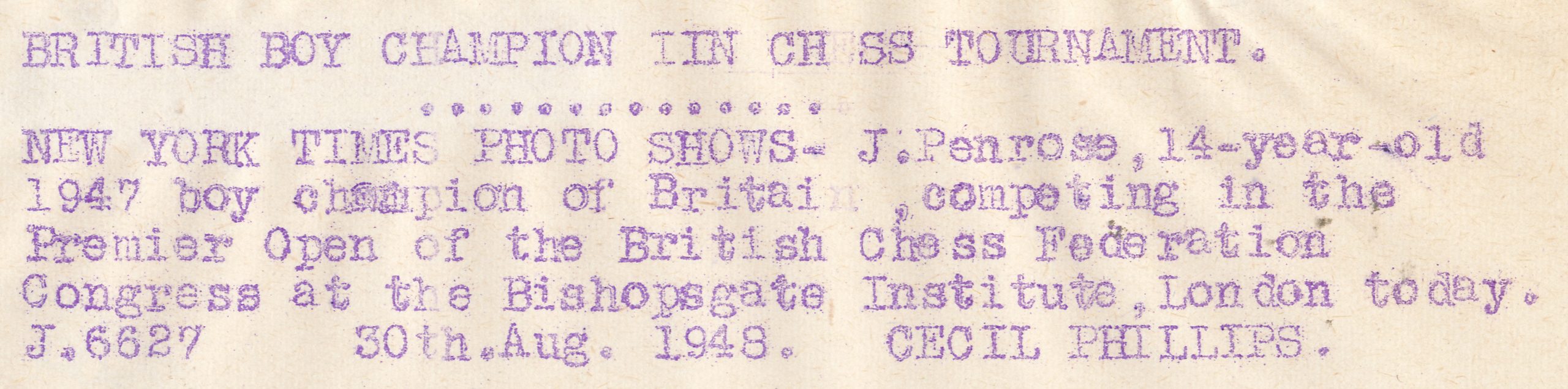
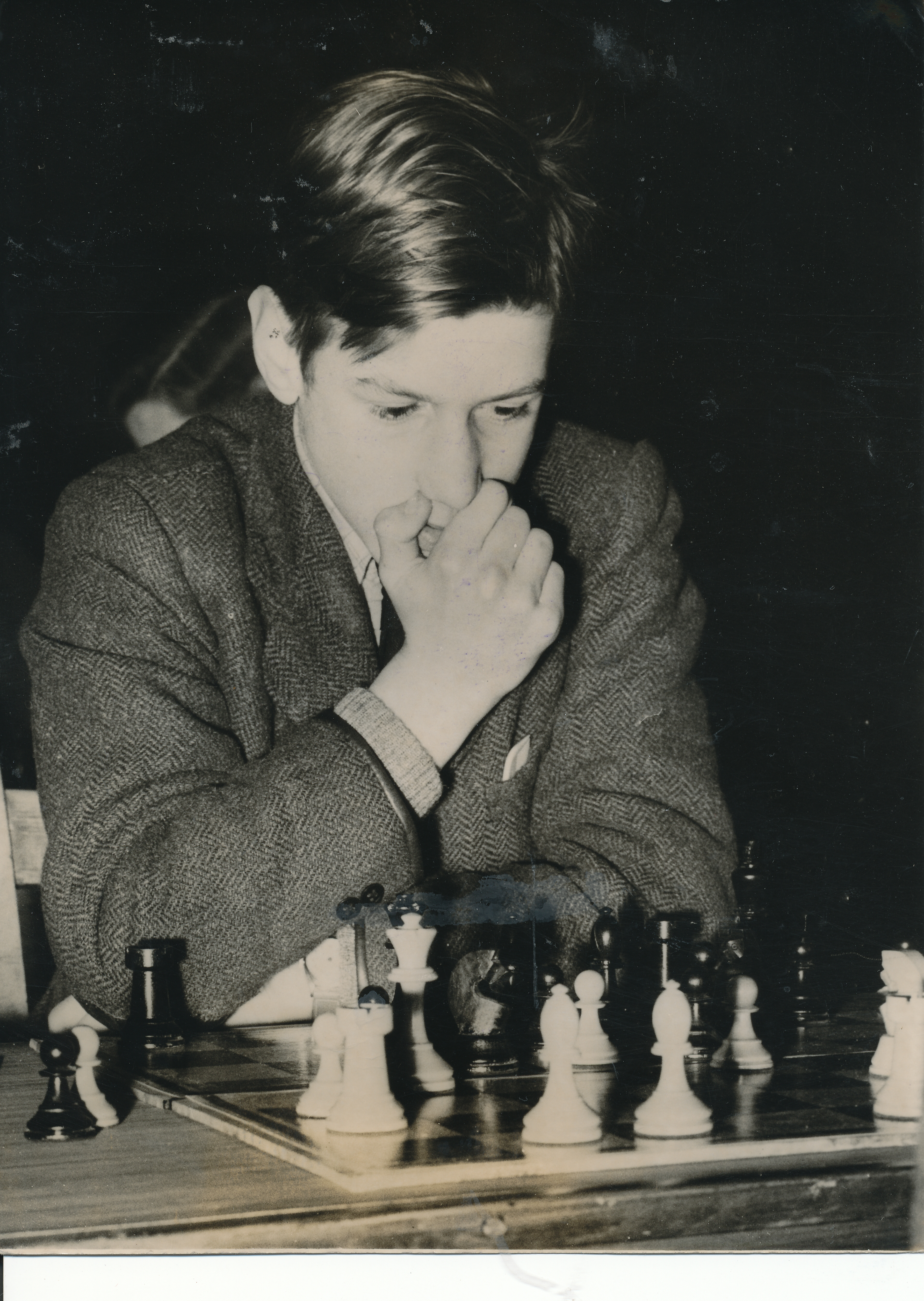
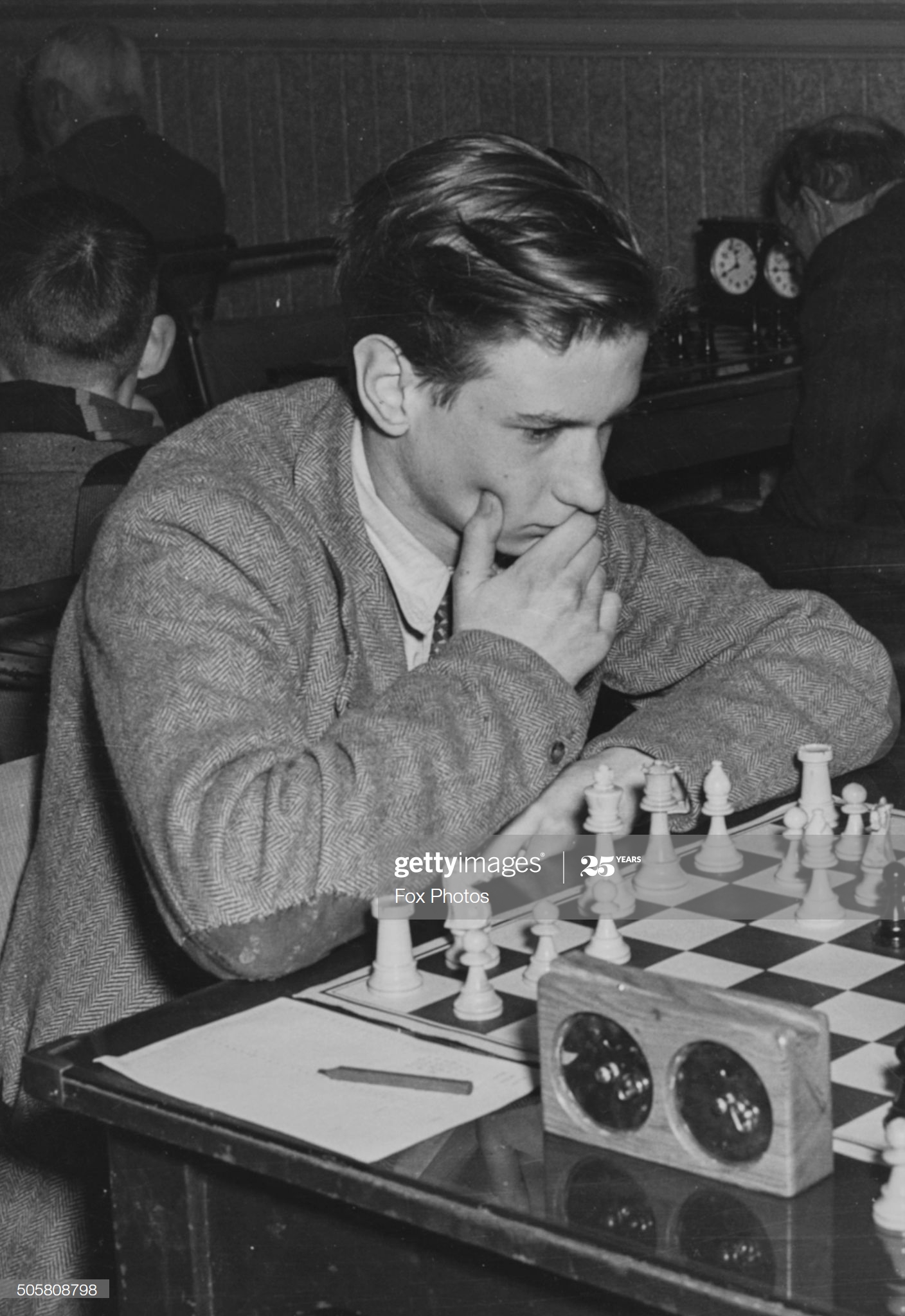
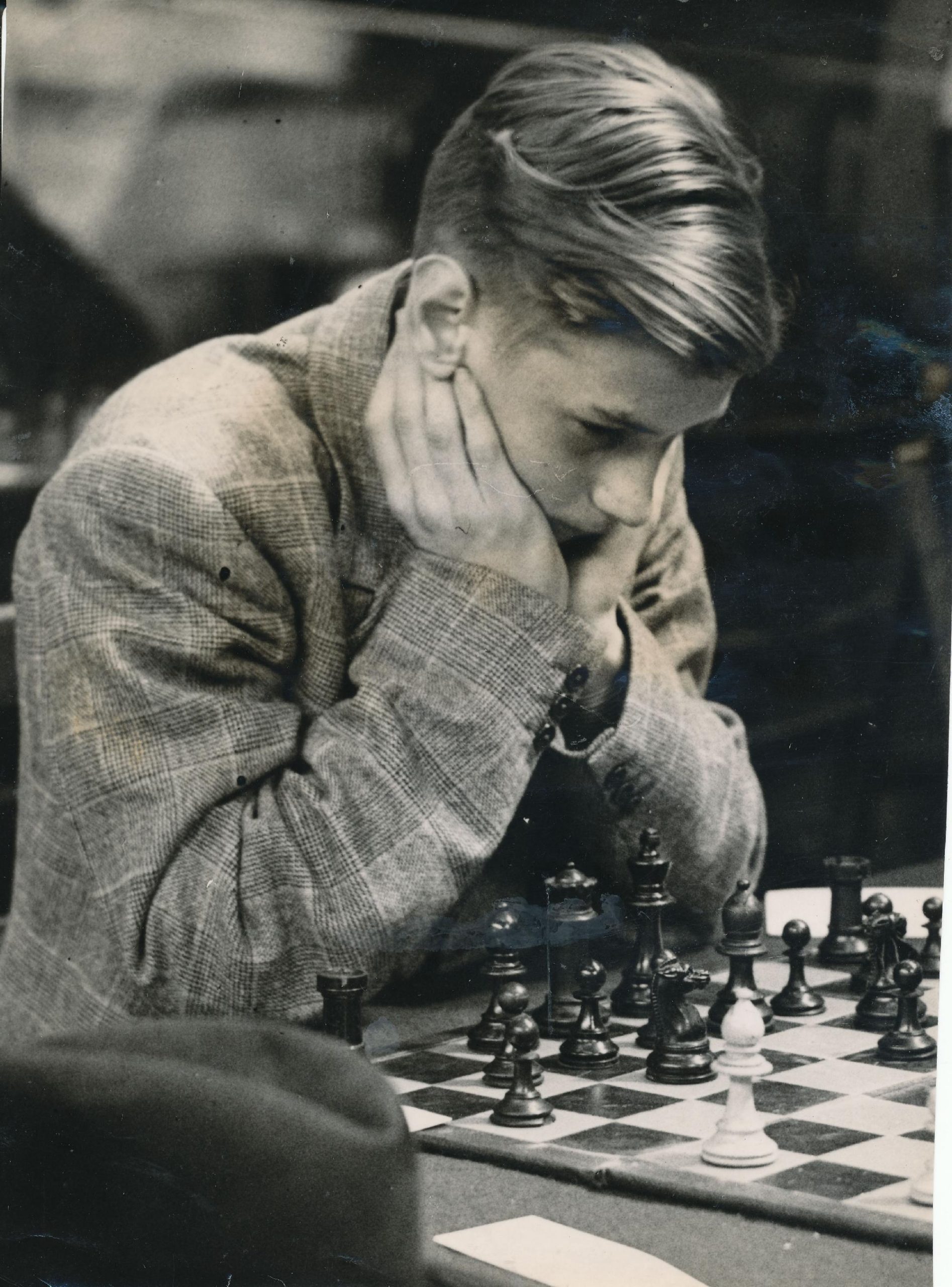
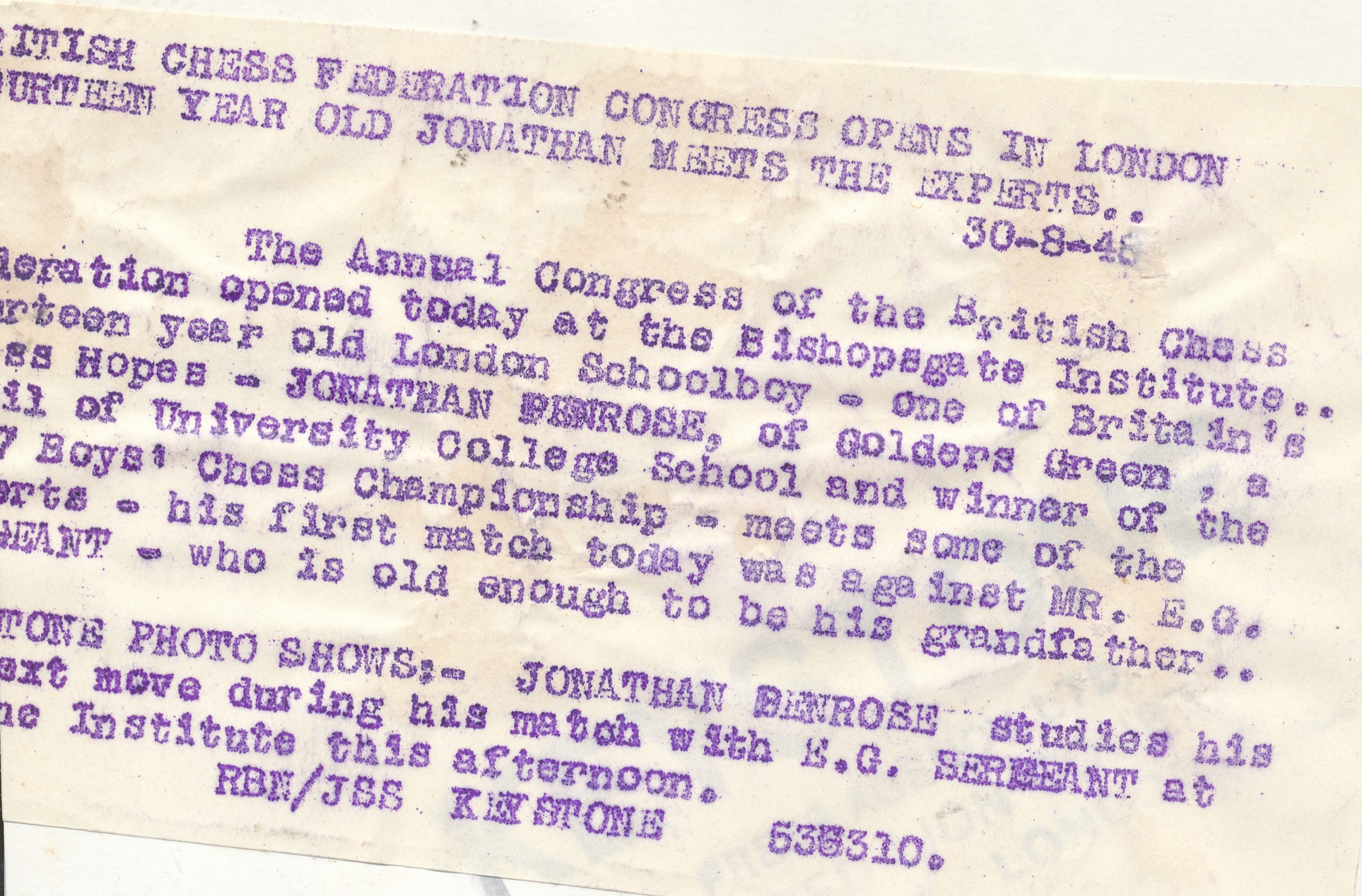
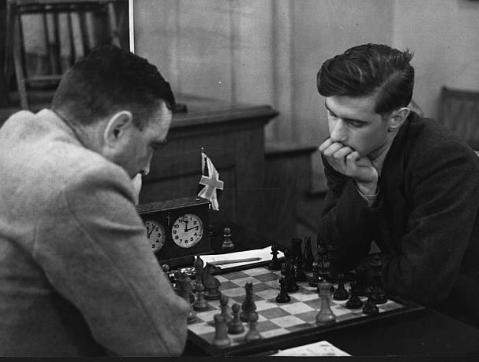
See caption belowPress agency caption for photograph above
His extraordinary dominance is revealed by the fact that he won the British championship no less than ten times (1958-63 and 1966-69, inclusive), a record that nobody is likely to equal in the future.
At his best his play was lucid, positionally correct, energetic and tactically acute. None the less, there is a ‘Penrose problem’: was he a ‘Good Thing’for British chess? The trouble was that whilst this highly talented player eff0ectively crushed any opposition at
home, he showed little initiative in flying the flag abroad. There is a wide-spread and justifiable conviction that only lack of ambition in the sphere of international chess can explain why he did not secure the GM title during his active over-the-board playing career.
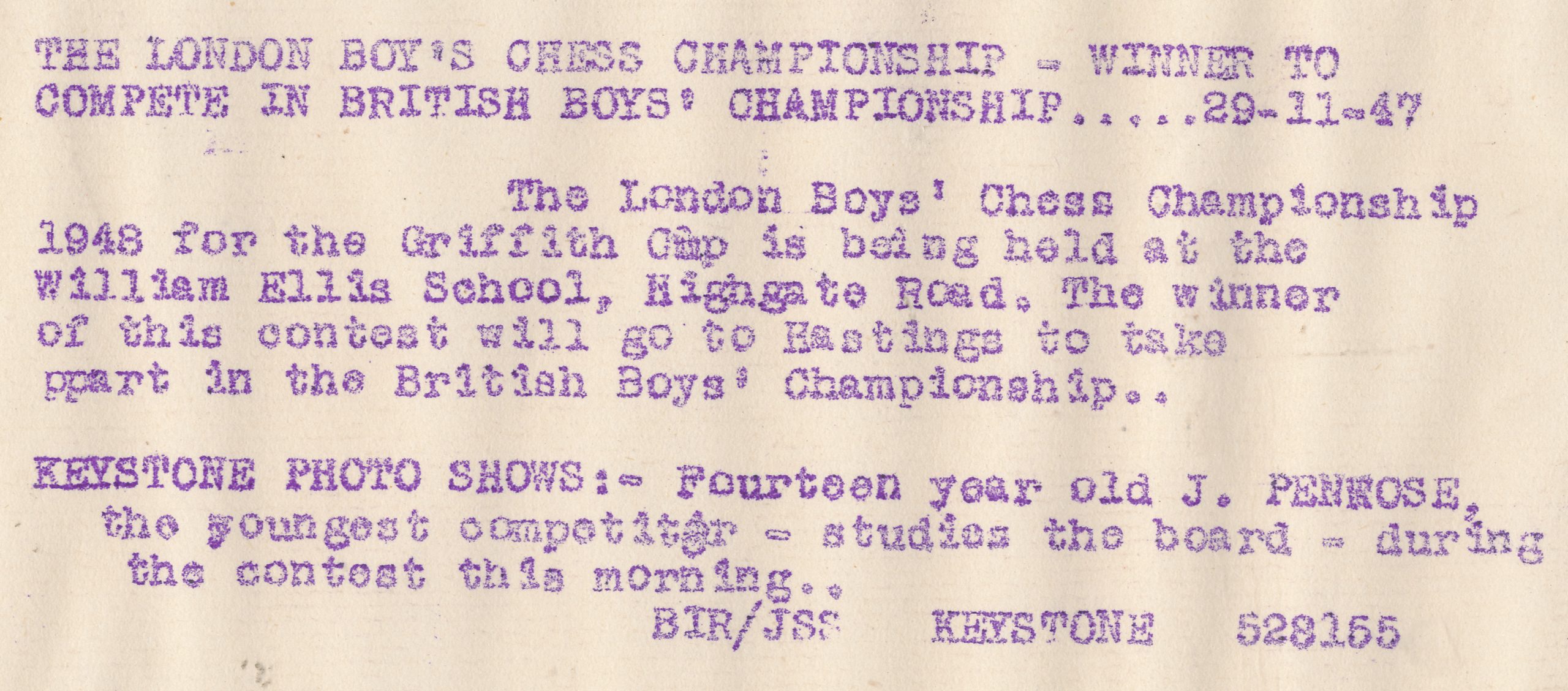
See caption belowPress agency caption for above photograph
It would be unjust, however, to blame Penrose for any of this. The truth is simply that he was not a professional chessplayer, and indeed he flourished in
a period in which chess playing was not a viable profession in Britain. But even if the material awards available had been greater Penrose would almost certainly have chosen to remain an amateur. For he was cast in that special intellectual and ethical tradition of great British amateurs like H. E. Atkins, Sir George Thomas and Hugh Alexander before him.
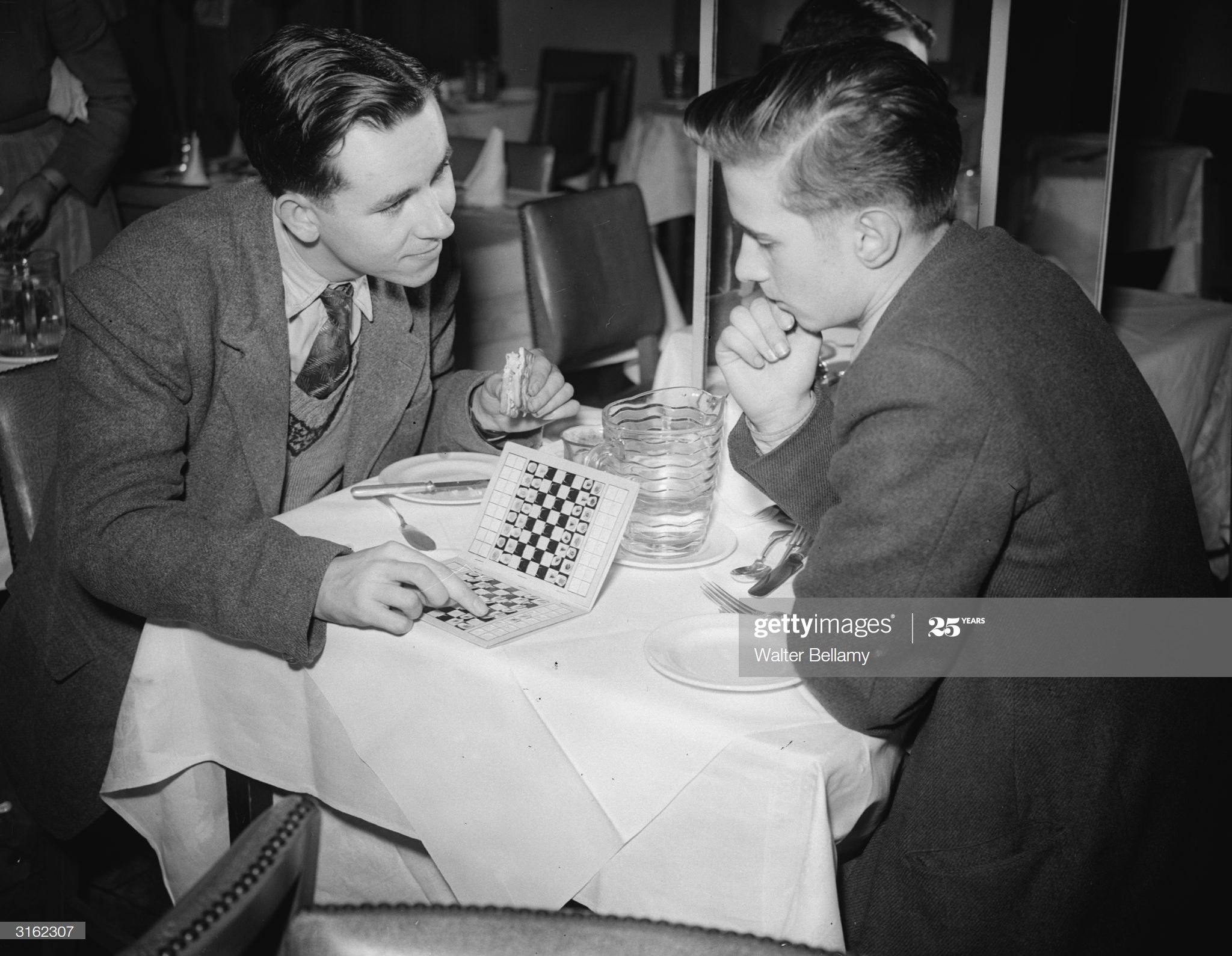
Travel Chess 2nd January 1951: British chess champions Jonathan Penrose and Leonard Barden ponder over a portable travel game in a restaurant. (Photo by Walter Bellamy/Express/Getty Images)
His family background indicates early academic inclinations in a cultural atmosphere in which chess was merely a game something at which one excelled through sheer ability, but not to be ranked alongside truly serious work. It is noteworthy that Penrose, unique in this respect amongst British chess
masters, has never written at any length about the game. He has had other matters to concentrate on when away from the board, being a lecturer in psychology. (His father, Professor L. S. Penrose, was a distinguished geneticist.)
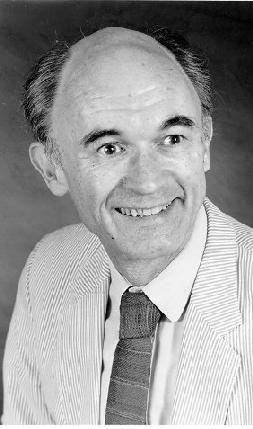
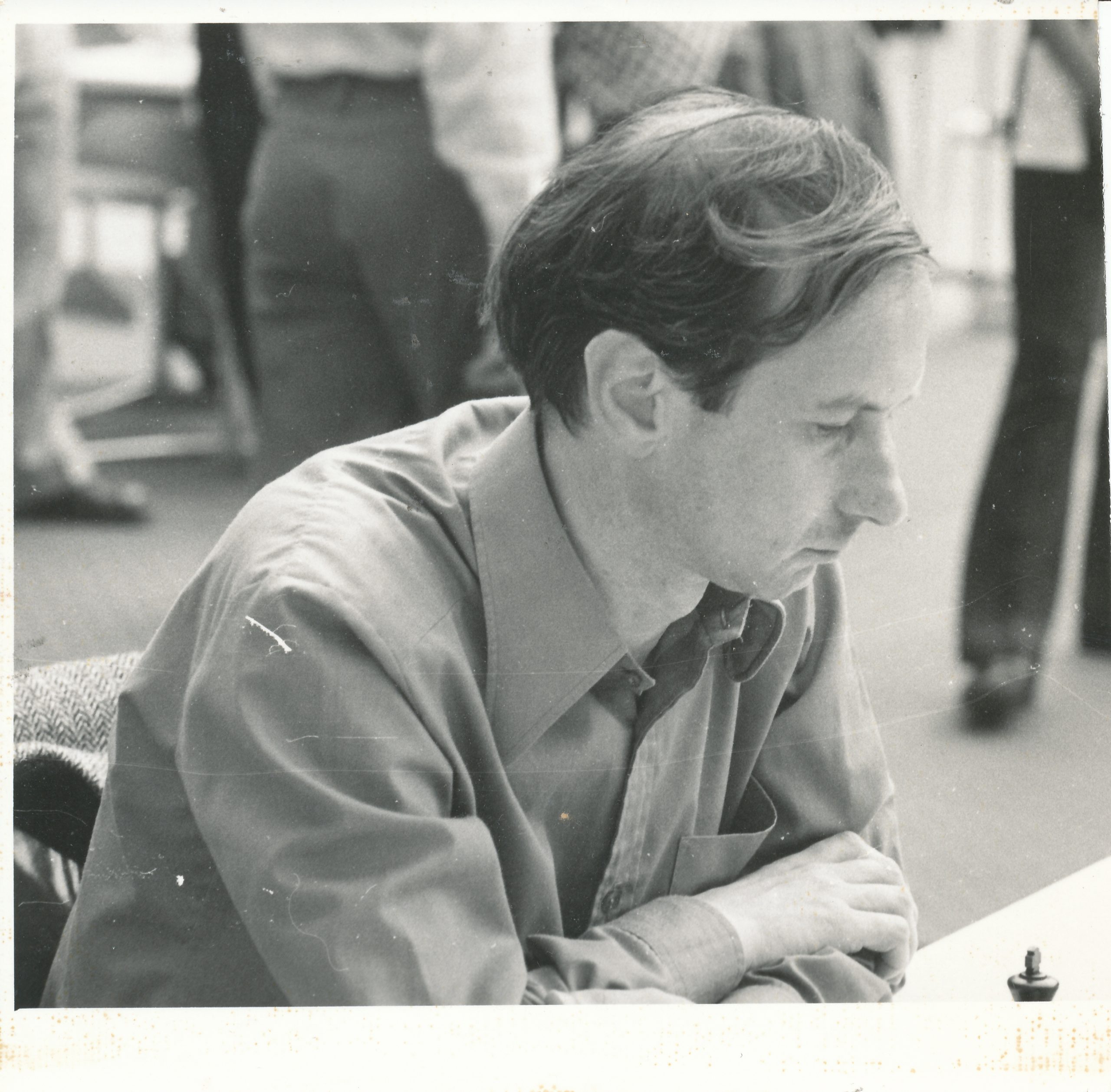
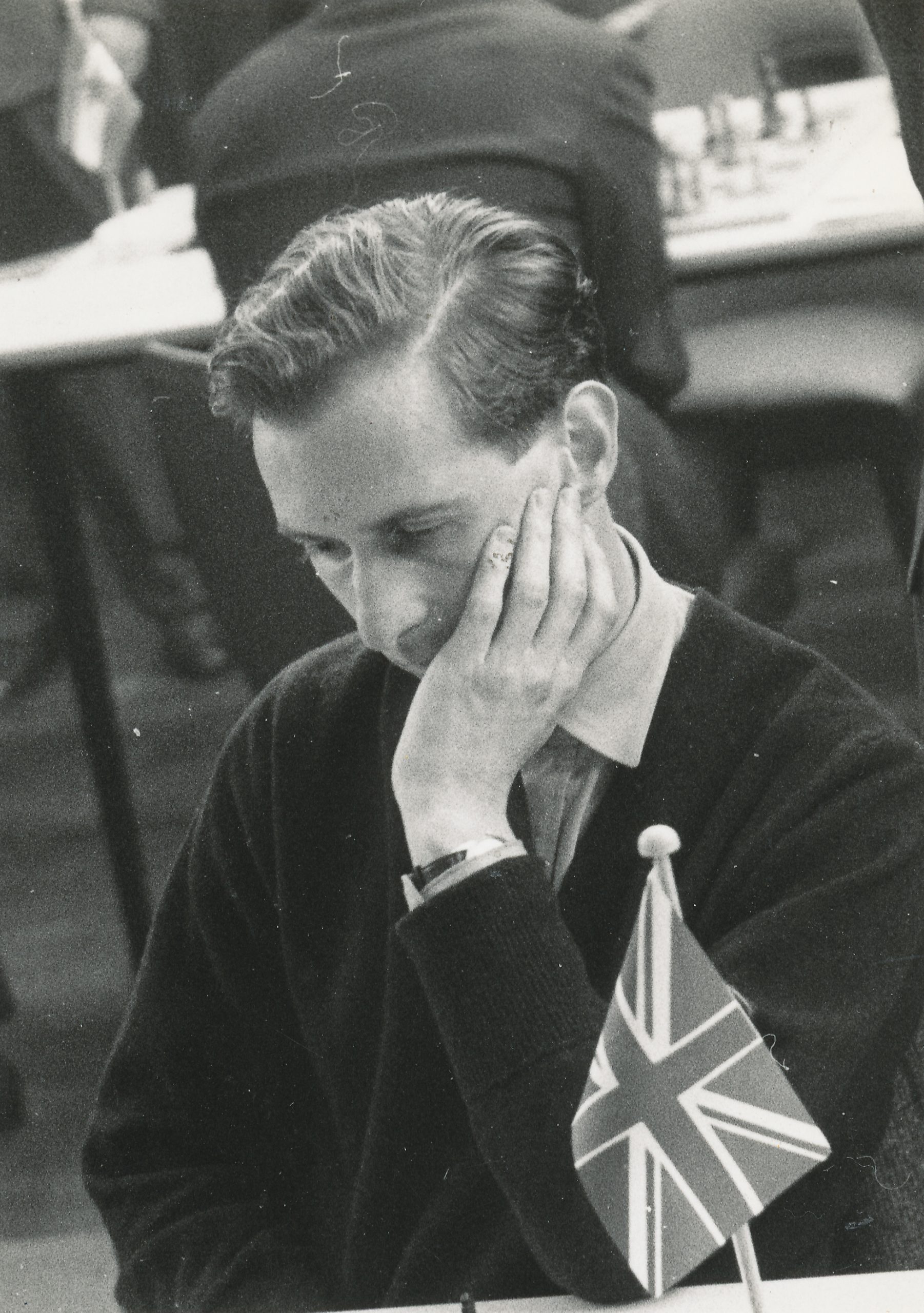
IM Dr. Jonathan Penrose OBE
Being of slight physique and the mildest and most amiable of characters, it is probably also true that Penrose lacked the toughness and ‘killer instinct’
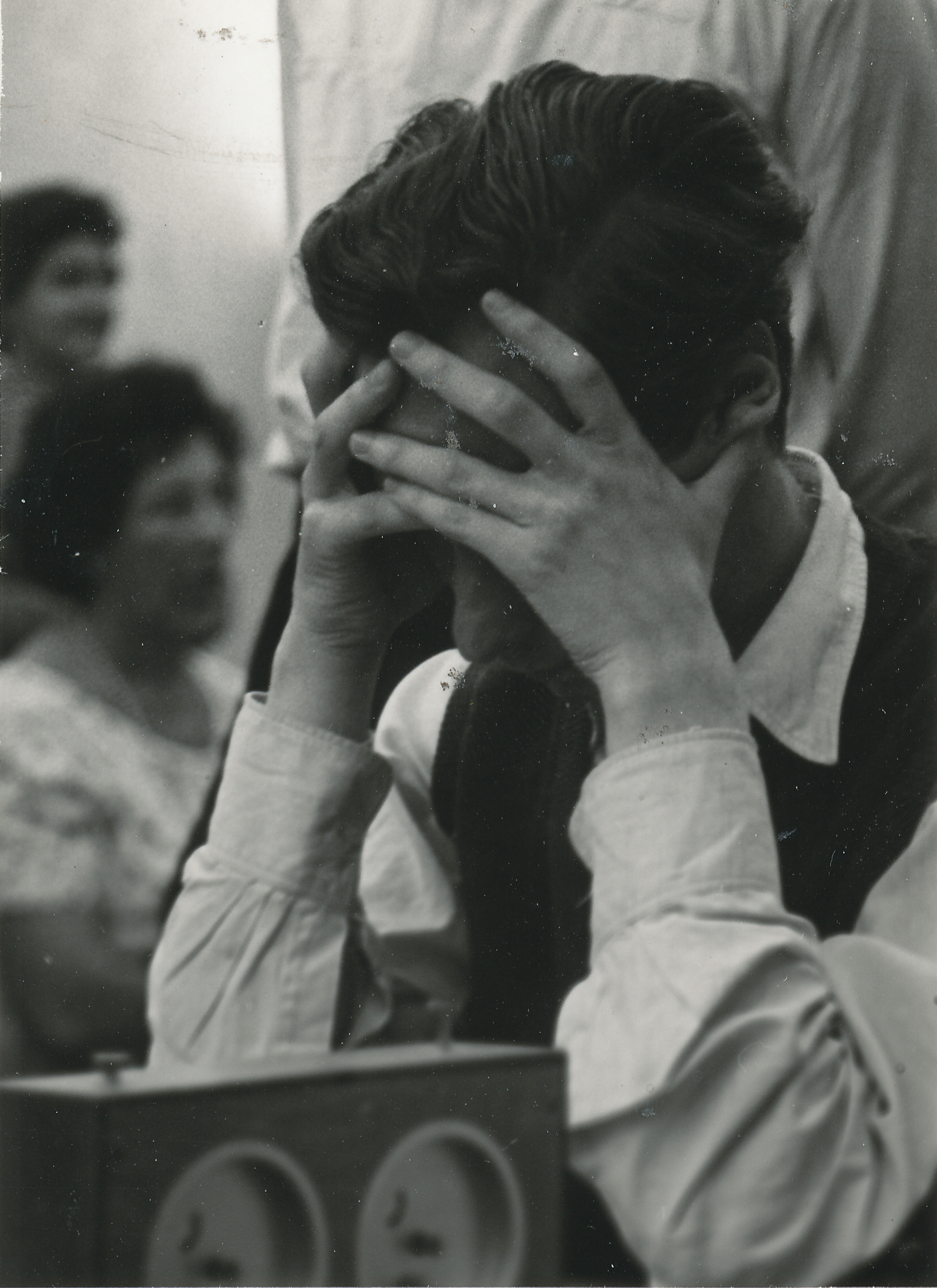
required to reach the very top. Nervous tension finally struck him down in a dramatic way when he collapsed during play in the Siegen Olympiad of 1970. We
can take that date as the end of the Penrose era.
Jonathan Penrose Chess Grandmaster Jonathan Penrose pictured during a chess match, circa 1960. (Photo by Fox Photos/Hulton Archive/Getty Images))
Since, then though he has not by any means entirely given up, his involvement in the nerve-wracking competitions of over-the-board play has been greatly reduced. instead he has turned to correspondence chess, which is perhaps the ideal medium for his clear strategy and deep and subtle analysis. So Penrose’s career it not over. He has moved to another, less stressful province of the kingdom of chess.
IM Dr. Jonathan Penrose OBE
For the first game, however, we shall turn the clock right back to 1950 and the see the Penrose in the role of youthful giant killer.
From The Encyclopedia of Chess (BT Batsford, 1977) by Harry Golombek :
“British international master and ten times British Champion, Penrose was born in Colchester and came from a chess-playing family.
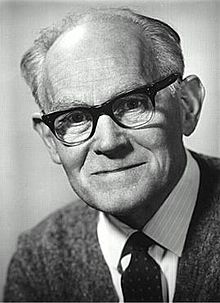
Lionel Sharples Penrose, FRS (11 June 1898 – 12 May 1972)
His father and mother both played chess and his father, Professor Lionel Sharples Penrose, in addition or being a geneticist of world-wide fame, was a strong chess-player and a good endgame composer. Jonathan’s older brother Oliver, was also a fine player.
Oliver Penrose FRS FRSE (born 6 June 1929) is a British theoretical physicist
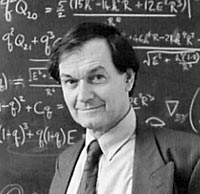
Roger Penrose won the Nobel prize for physics in 2020.
Roger Penrose. Nobel Laureate
Jonathan learnt chess at the age of four, won the British Boys championship at thirteen and by the time he was fifteen was playing in the British Championship in Felixstowe in 1949.
Press agency caption for photograph abovePress agency caption for photograph above
A little reluctant to participate in international tournaments abroad, he did best in the British Championship which he won a record number of times, once more than HE Atkins. He won the title consecutively from 1958 to 1963 and again from 1966 to 1969.
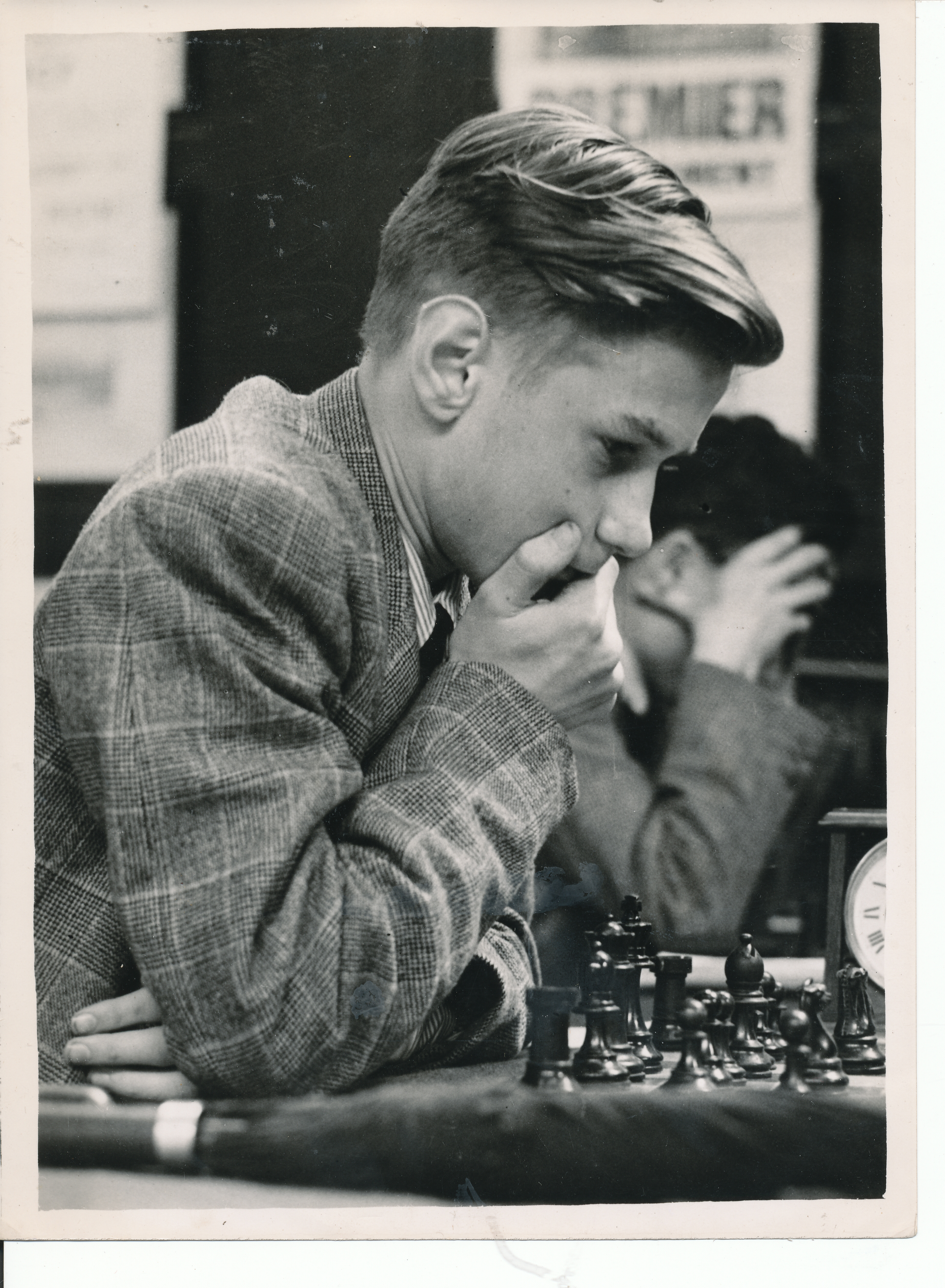
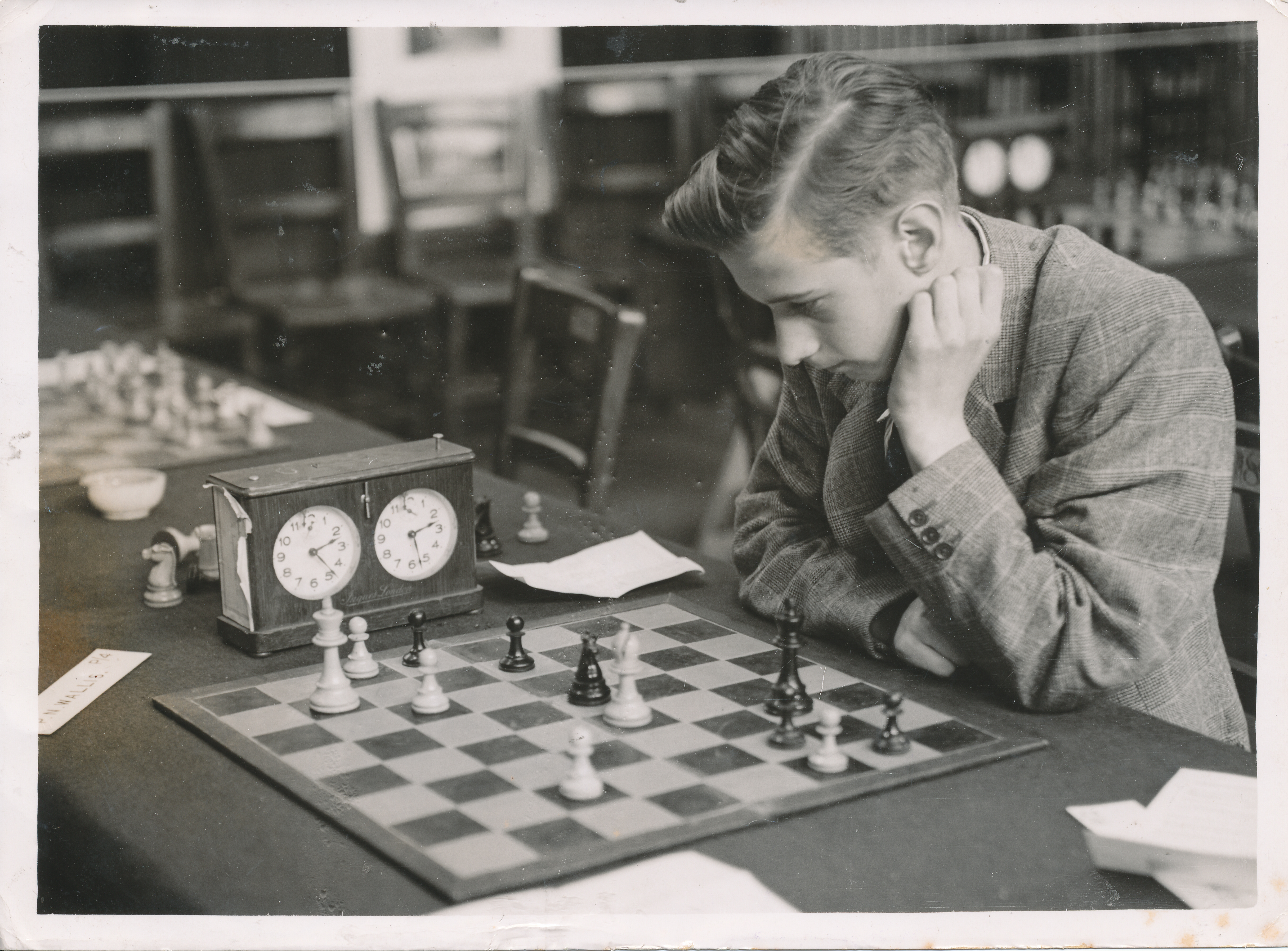
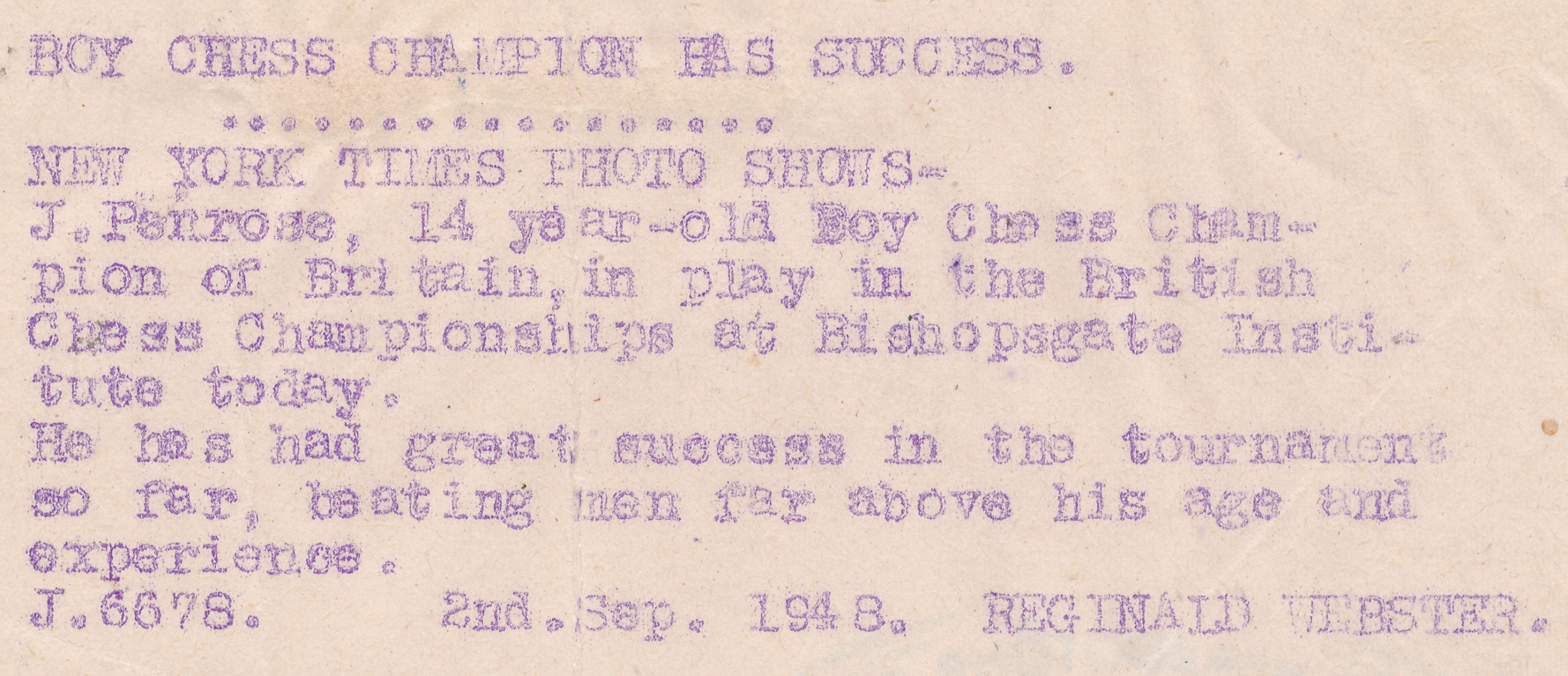
Boy Chess Champion. New York Times photo shows 14 year old J. Penrose 14 year old by chess champion of Britain, in play at the British Chess Championships at Bishopsgate Institute today. He has had great success in the tournament so far, beating men far above his age and experience. 2nd September 1948. Photograph by Reginald WebsterPress agency caption for photograph above
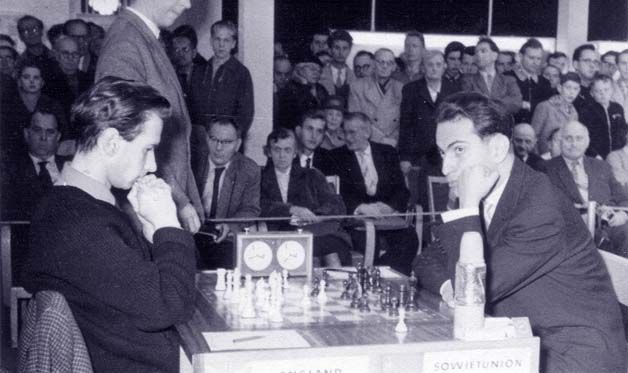
He also played with great effect in nine Olympiads. Playing on a high board for practically all the time, he showed himself the equal of the best grandmasters and indeed, at the Leipzig Olympiad he distinguished himself by beating Mikhail Tal, thereby becoming the first British player to defeat a reigning World Champion since Blackburne beat Lasker in 1899.
ARB Thomas and Jonathan Penrose at the Hastings Congress of 1950/1951
Jonathan Penrose vs Mikhail Tal, Leipzig Olympiad, 1960, 1-0, Modern Benoni
A deep strategist who could also hold his own tactically, he suffered from the defect of insufficient physical stamina and it was this that was to bring about a decline in his play and in his results. He collapsed during a game at the Ilford Chess Congress, and a year later, at the Siegen Olympiad of 1970, he had a more serious collapse that necessitated his withdrawal from the vent after the preliminary groups had been played. The doctors found nothing vitally wrong with him that his physique could not sustain.
He continued to play but his results suffered from a lack of self-confidence and at the Nice Olympiad of 1974 he had a wretched result on board 3, winning only 1 game and losing 6 out of 15.
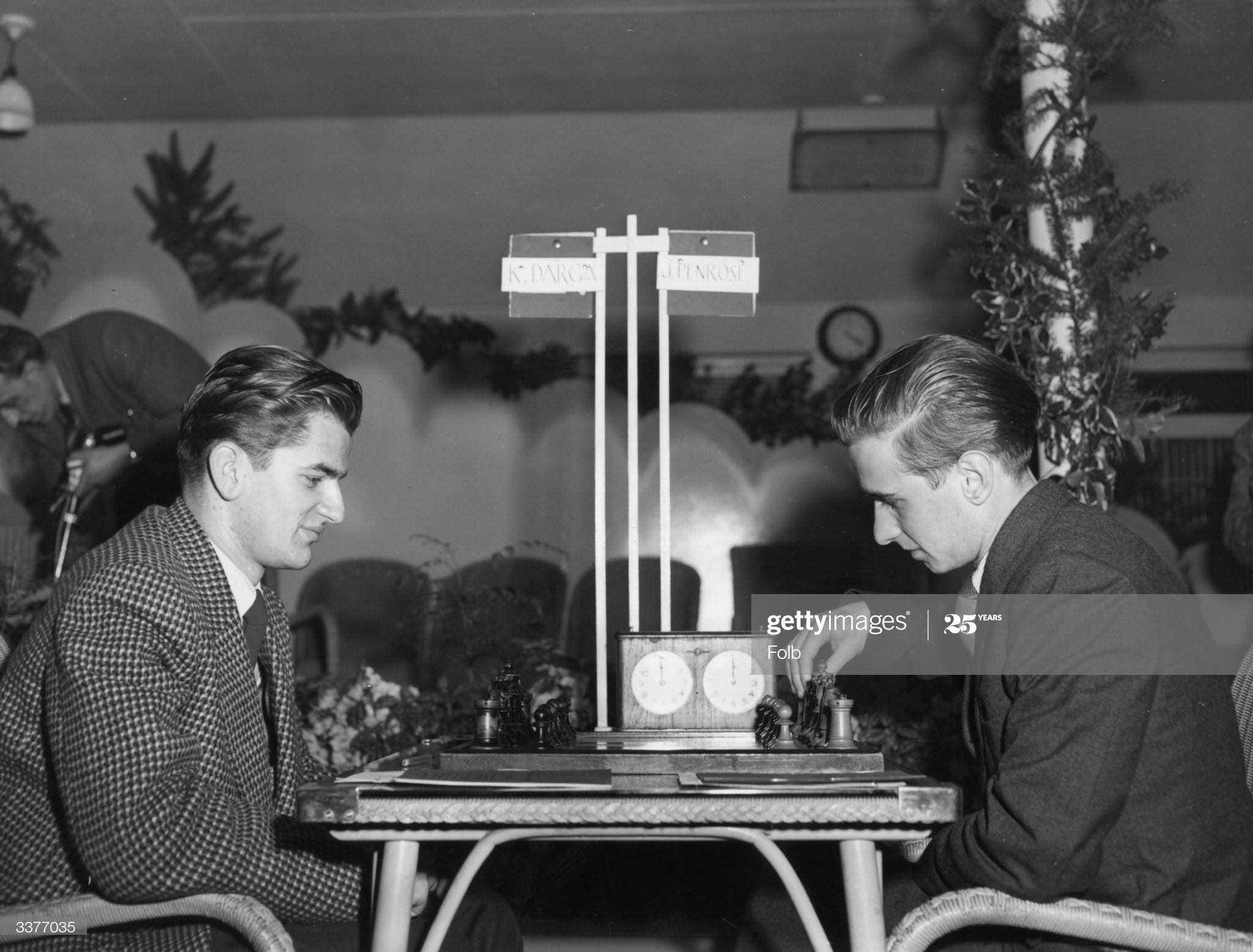
Darga V Penrose 29th December 1955: Klaus Darga of Germany in play against Britain’s Jonathan Penrose during the International Chess Congress at Hastings. (Photo by Folb/Topical Press Agency/Getty Images)
Possibly too his profession (a lecturer in psychology) was also absorbing him more and more and too part less and less in international and national chess.
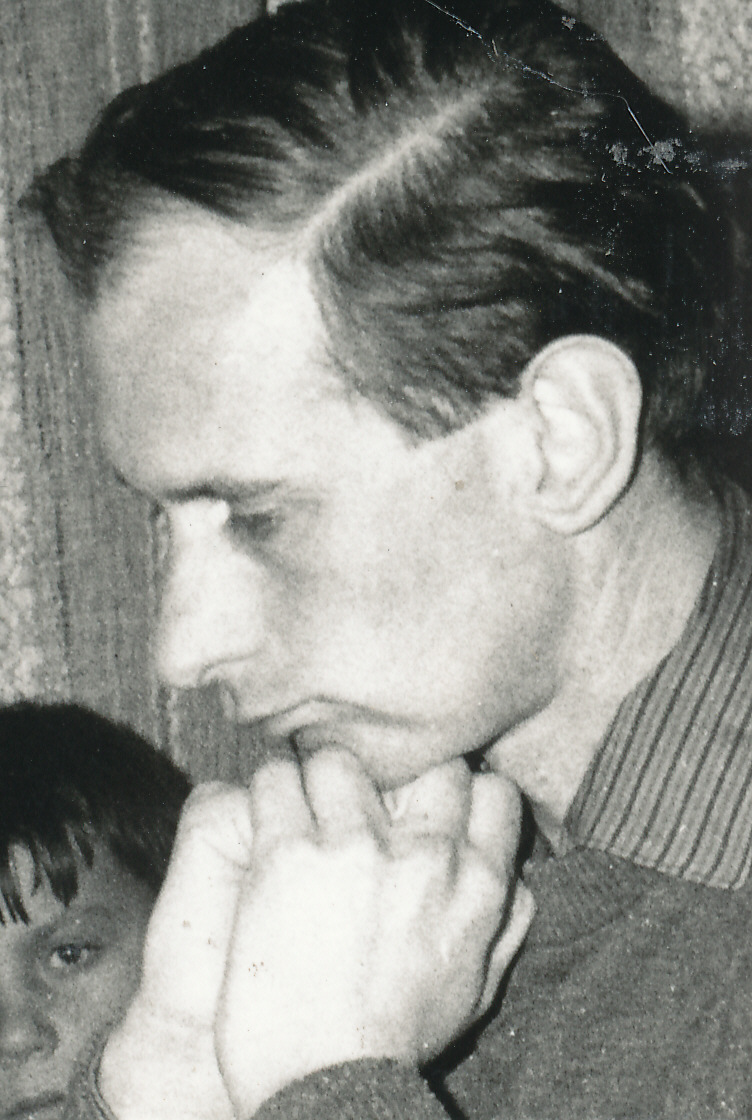
Jonathan Penrose
Yet, he had already done enough to show that he was the equal of the greatest British players in his command and understanding of the game and he ranks alongside Staunton, Blackburne, Atkins and CHO’D Alexander as a chess figure of world class.”
Here is his Wikipedia entry
From The Oxford Companion to Chess by Hooper & Whyld :
“The leading English player during the 1960s, International Master (1961), International Correspondence Chess Master (1980), lecturer in psychology. Early in his chess career Penrose decided to remain an amateur and as a consequence played in few international tournaments. He won the British Championship from 1958 to 1963 and from 1966 to 1969, ten times in all (a record); and he played in nine Olympiads from 1952 to 1974, notably scoring + 10=5 on first board at Lugano 1968, a result bettered only by the world champion Petrosyan.
IM Dr. Jonathan Penrose OBE
In the early 1970s Penrose further restricted his chess because the stress of competitive play adversely affected his health.”
The second edition (1996) adds this :
“He turned to correspondence play, was the highest rated postal player in the world 1987-9, and led the British team to victory in the 9th Correspondence Olympiad.”
Here is a discussion about Jonathan on the English Chess Forum
From The Encyclopedia of Chess (Robert Hale, 1970 & 1976) by Anne Sunnucks :
“International Master (1961) and British Champion in 1958 1959, 1960, 1961, 1962, 1963, 1966, 1967, 1968 and 1969.
Jonathan Penrose was born in Colchester on 7th October 1933, the son of Professor LS Penrose, the well-known geneticist, who was also a strong player and composer of endgame studies.
The whole Penrose family plays chess and Jonathan learned the game when he was 4. At the age of 12 he joined Hampstead Chess Club and the following year played for Essex for the first time, won his first big tournament, the British Boys’ Championship, and represented England against Ireland in a boy’s match, which was the forerunner of the Glorney Cup competition, which came into being the following year.
By the time he was 17 Penrose was recognised as one of the big hopes of British Chess. Playing in the Hastings Premier Tournament for the first time in `1950 – 1951, he beat the French Champion Nicholas Rossolimo and at Southsea in 1950 he beat two International Grandmasters, Effim Bogoljubov and Savielly Tartakower.
Penrose played for the British Chess Federation in a number of Chess Olympiads since 1952. In 1960, at Leipzig, came one of the best performances of his career, when he beat the reigning World Champion, Mikhail Tal. He became the first British player to beat a reigning World Champion since JH Blackburne beat Emmanuel Lasker in 1899, and the first player to defeat Tal since he won the World Championship earlier that year. Penrose’s score in this Olympiad was only half-a-point short of the score required to qualify for the International Grandmaster title.
IM Dr. Jonathan Penrose OBE
His ninth victory in the British Championships in 1968 equalled the record held by HE Atkins, who has held the title more times than any other player.
Penrose is a lecturer in psychology at Enfield College of Technology and has never been in a position to devote a great deal of time to the game. He is married to a former contender in the British Girls Championship and British Ladies’s Championship, Margaret Wood, daughter of Frank Wood, Hon. Secretary of the Oxfordshire Chess Association.
Penrose was awarded the O.B.E. for his services to chess in 1971.”
Penrose was Southern Counties Champion for 1949-50.
In 1983 Jonathan became England’s fifth Correspondence Grandmaster (CGM) following Keith Richardson, Adrian Hollis, Peter Clarke and Simon Webb.
Sadly, there is no existent book on the life and games of Jonathan Penrose : a serious omission in chess literature.
Dr. Jonathan Penrose OBE
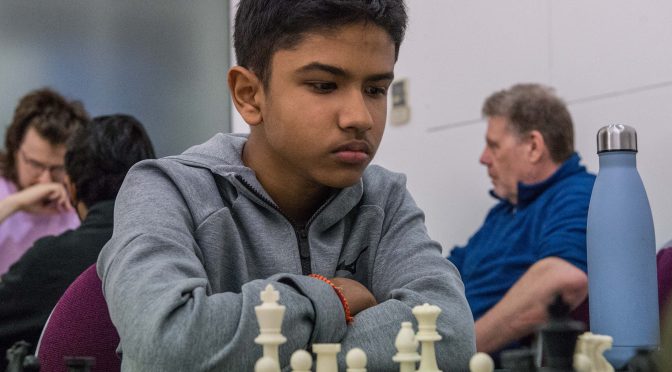
BCN sends birthday wishes to FM Shreyas (known as “Shrey” by his friends) Royal born on Friday, January 9th, 2009. “Hallelujah” by Alexandra Burke was number one in the UK hit parade.
Shreyas attended The Pointer School in Blackheath, London, SE3 whose motto is “The Lord is my Shepherd”.
In October 2021 BCN secured an interview with Shreyas via his father Jitendra and below is mostly from that interview:
BCN: What caused his initial interest in chess and at what age?
His initial interest in chess was capturing or as he used to call it ‘eating’ pieces but as he grew more mature, he loved that there were so many possibilities in chess, so much still left to explore! At the Age of 6 he learnt and got an interest in chess.
BCN: Has Shreyas had any chess teachers or coaches?
Jyothi Lal N. with a peak of 2250 FIDE but is very knowledgeable and helped from just above beginner to 1800. He was Shreyas’s first coach.
Meszaros Gyula (Julian) who was an IM with a peak of 2465 FIDE and was an endgame master which helped him from 1800-2100.
His Current Coach is GM John Emms with a peak of around 2600 FIDE, he is an expert in many fields such as Positional Play, Openings, Strategic chess etc and has also made a big impact on how to prepare against opponents. He had helped him from 2100-2300 so far in just under a year!
BCN: Which chess clubs and/ or Teams does Shreyas represent?
He represents SV Erkenschwick from Germany and Wasa SK from Sweden for online events as he has joined them during the pandemic. He started his 4NCL career with KJCA Kings in January 2019 but now mainly represents Wood Green which he has played for in online events in and will also represent them in the upcoming 4NCL weekends.
His first appearance in Megabase 2022 comes from the 2015 British Under-8 Championship in Coventry, the eventual winner being Dhruv Radhakrishnan.
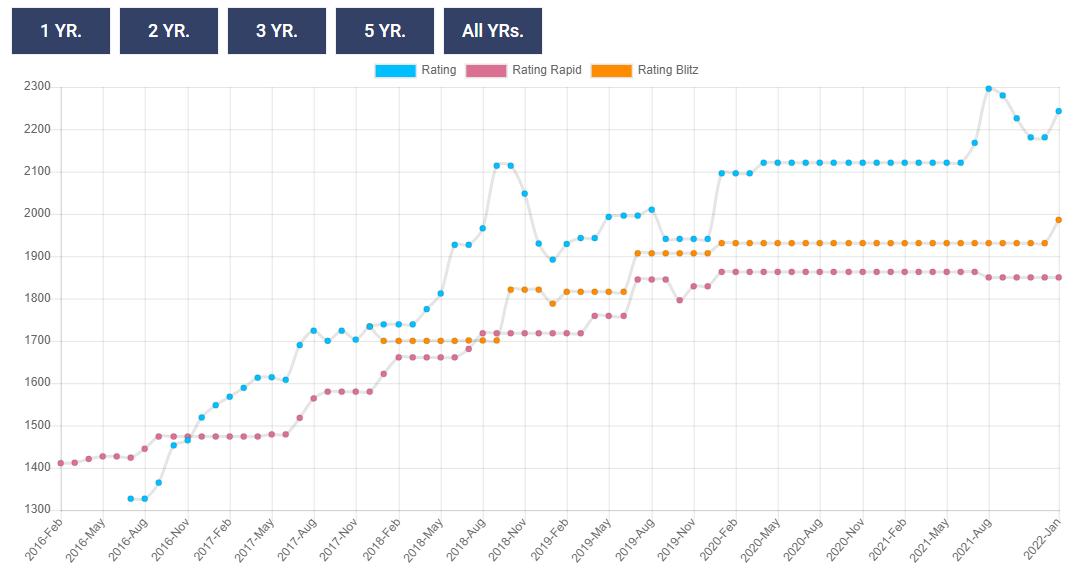
Progress from those early days has only been interrupted by school examination breaks and the Covid pandemic:
FIDE Rating progress chart for FM Shreyas Royal
In August 2016 in Bournemouth Shreyas scored an impressive 6/6 to win the British Under-8 Championship.
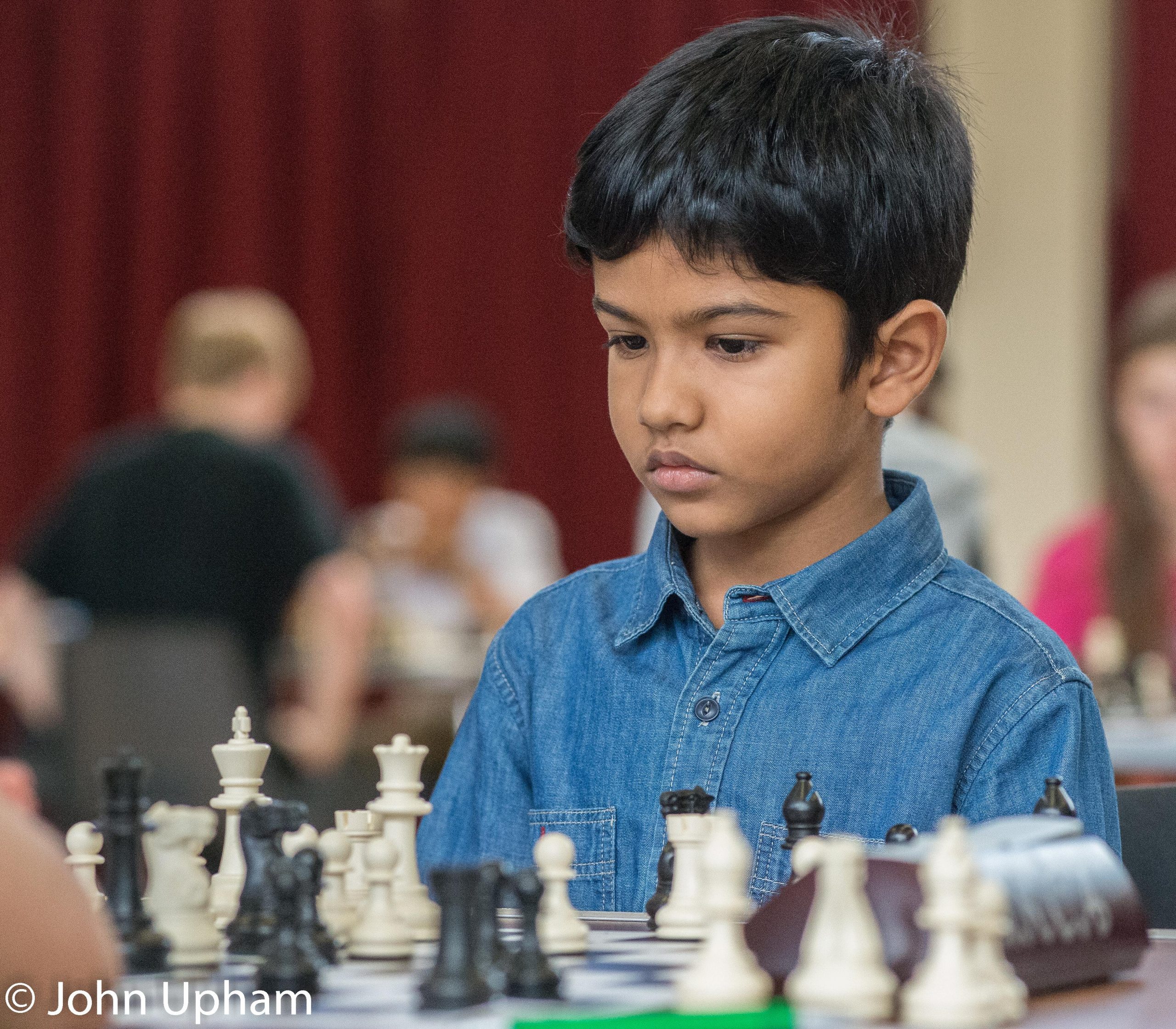
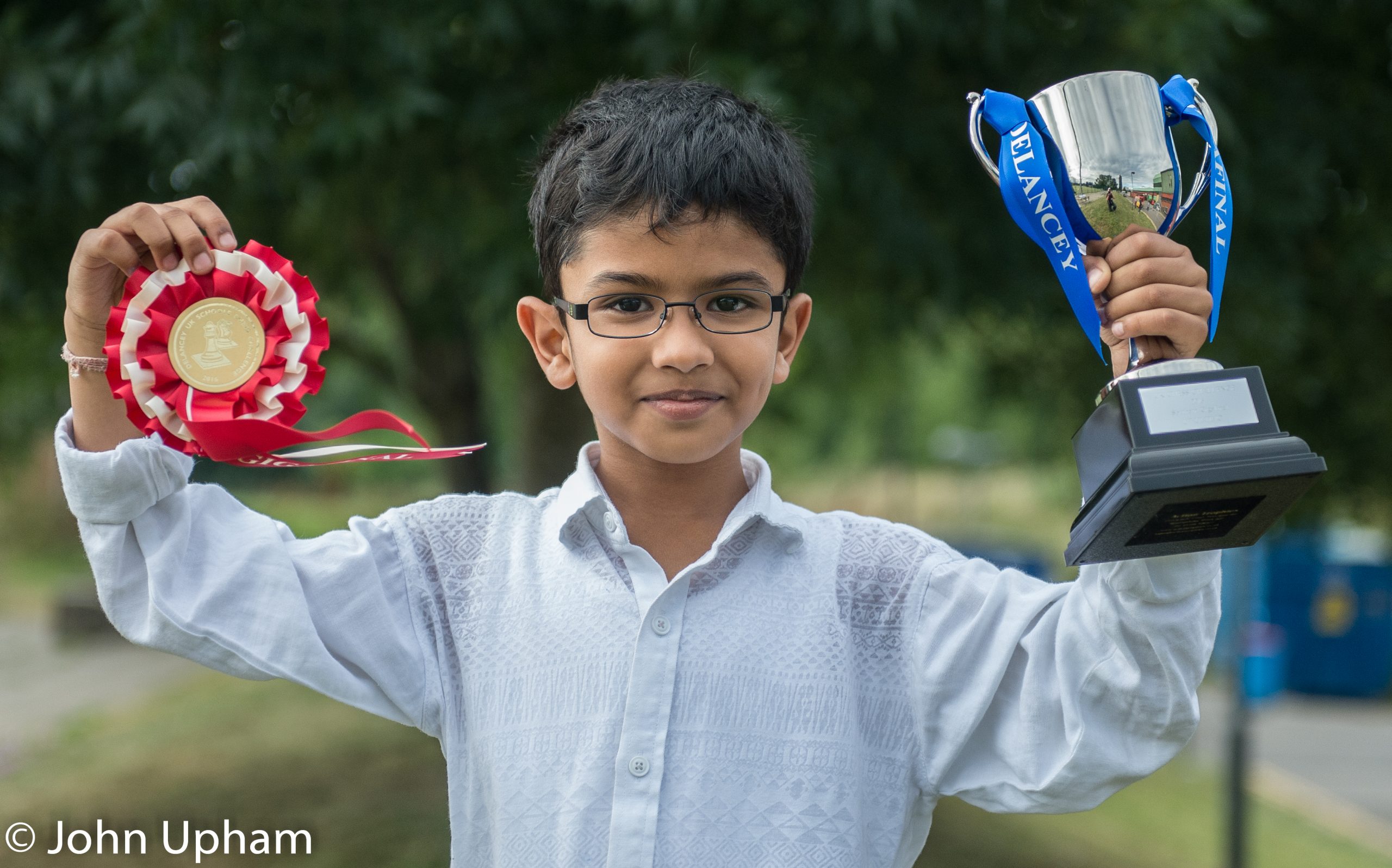
Shreyas Royal at the 2016 UKCC Delancey Terafinal in Loughborough courtesy of John Upham Photography
BCN: What was his first memorable tournament success?
This was the 2016 European Schools Under-7 championship where he was runner-up without any preparation or work on chess!
Shreyas Royal at the 2016 UKCC Delancey Southern Gigafinal in Reading courtesy of John Upham Photography
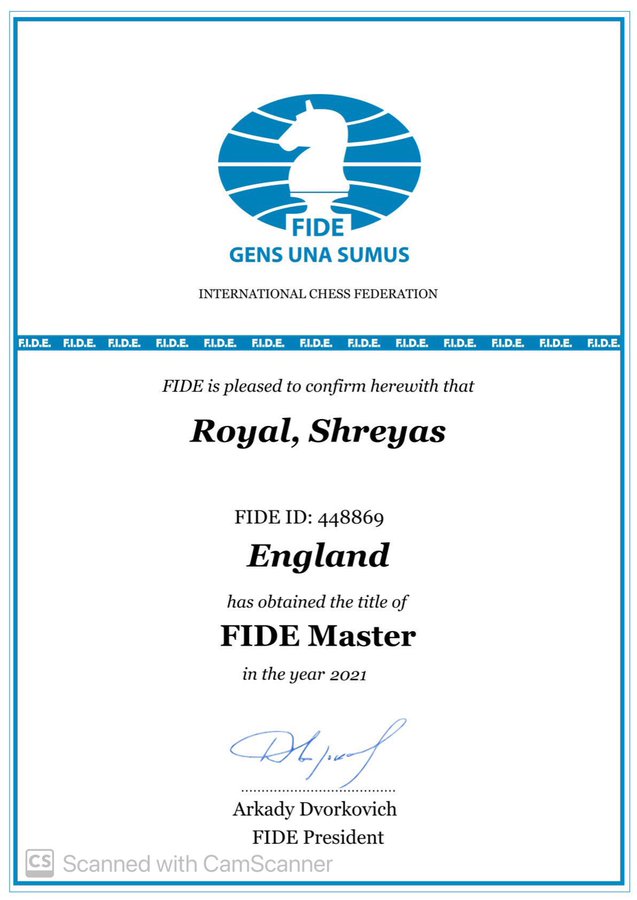
In 2021 Shreyas was awarded the FM title by FIDE:
FIDE FM Certificate for Shreyas Royal
BCN: Which chess players past & present are inspirational for him?
Magnus Carlsen, world champion and broke many FIDE records also is an inspiration for most of this generation. He likes his slow grinding and almost winning from any opening or ending. This is his favourite player of all time.
Garry Kasparov played brilliant attacking chess and calculated like a machine.
Bobby Fischer played a similar style to Kasparov but was more talented than both Magnus and Kasparov in his opinion as he worked all by himself at a time in the USA when chess was not so popular while for the Russians, they had brilliant coaches and had one good player after the other. He rates him a bit lower because Fischer quit competitive chess a bit too early and could not reach the heights he was worthy of.
Alireza Firouzja
Fabiano Caruana
BCN: What are his favourite openings with the White pieces?
He plays 1.d4 pretty much all the time.
MegaBase 2020 has 294 games with 1.d4 and one solitary 1.g3 from March 2021. The 1.d4 games feature main line Queen’s Gambit / Catalan type positions championing 5.Nge2 against the King’s Indian Defence and the exchange variation against the Grunfeld.
BCN: and what are his preferred defences as the second player?
Really depends on what they play, against every opening he has got one or two lines which he enjoys equally.
Megabase 2022 informs us that Shreyas defends the main line Closed Variation of the Ruy Lopez and main line Giuoco Piano. Previously he essayed the Sicilian Najdorf.
BCN: Does he have any favourite chess books?
Not really as he is not such a big fan of chess books, but he likes My 60 Memorable Games by Bobby Fischer. Fundamental Chess Endings and Encyclopedia of Chess Combinations.
BCN: Which tournaments are planned for 2022?
We have pencilled in a couple of norm and Open (France, Spain, Germany etc.) tournaments in European countries.
BCN: What are his favourite subjects outside of chess?
His favourite subjects outside chess are Science, History, Maths with Science as his favourite, History as his second favourite and Maths as his third favourite.
BCN: Does Shreyas play any physical sports?
He does Football, Cricket and a bit of Lawn Tennis.
BCN: What are his plans and aspirations for the future?
To become a world chess champion one day, but it’s very expensive to even get to the level of IM! Currently we are looking for sponsors who can help support Shreyas to get there.
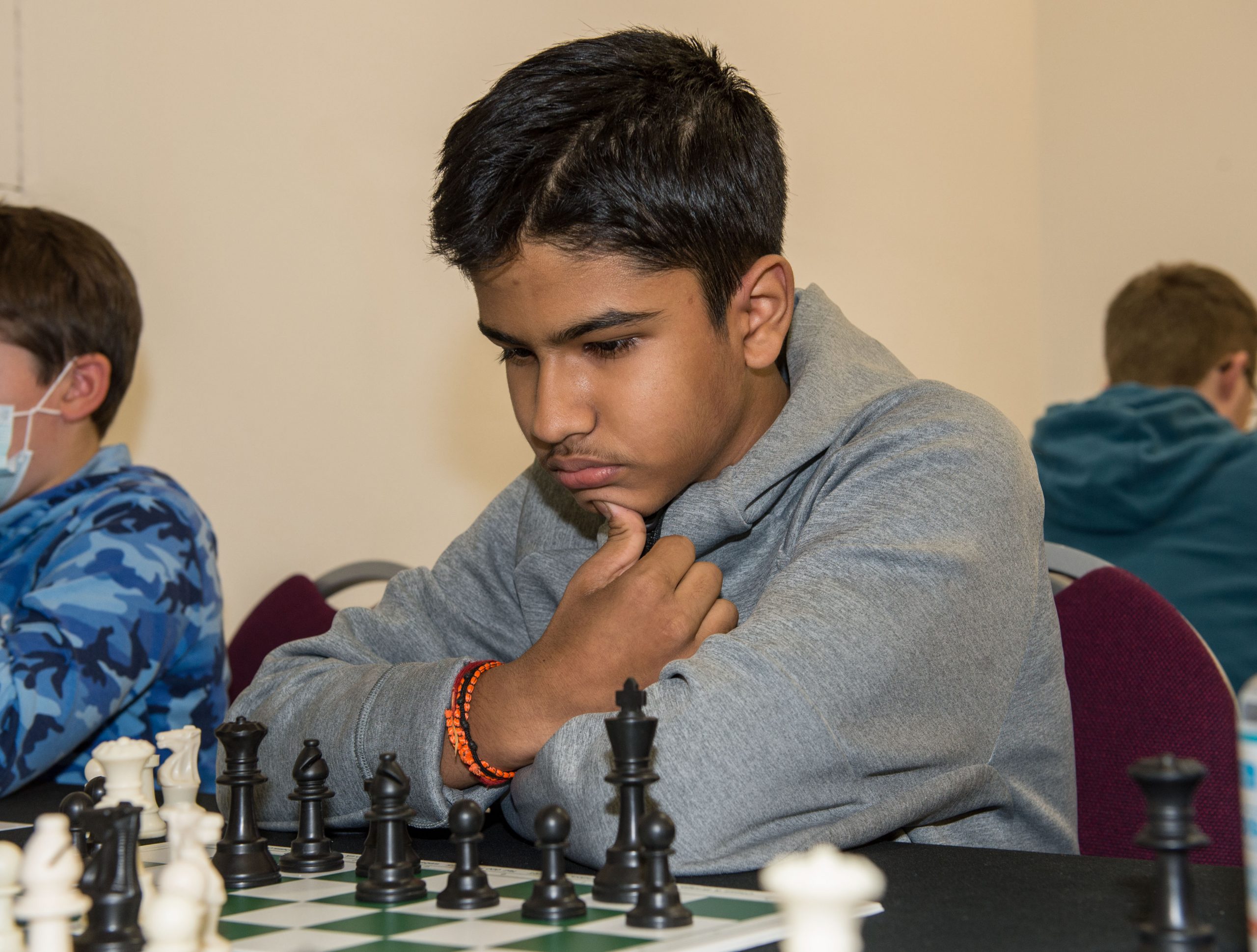
FM Shreyas Royal at the London Chess Classic, 2021 courtesy of John Upham Photography
We focus on the British Chess Scene Past & Present!
This website uses cookies to improve your experience. We'll assume you're ok with this, but you can opt-out if you wish. Cookie settingsACCEPT
Privacy & Cookies Policy
Privacy Overview
This website uses cookies to improve your experience while you navigate through the website. Out of these cookies, the cookies that are categorized as necessary are stored on your browser as they are as essential for the working of basic functionalities of the website. We also use third-party cookies that help us analyze and understand how you use this website. These cookies will be stored in your browser only with your consent. You also have the option to opt-out of these cookies. But opting out of some of these cookies may have an effect on your browsing experience.
Necessary cookies are absolutely essential for the website to function properly. This category only includes cookies that ensures basic functionalities and security features of the website. These cookies do not store any personal information.