Tag Archives: British

Remembering Sir Stuart Milner-Barry KCVO CB OBE (20-ix-1906 25-iii-1995)

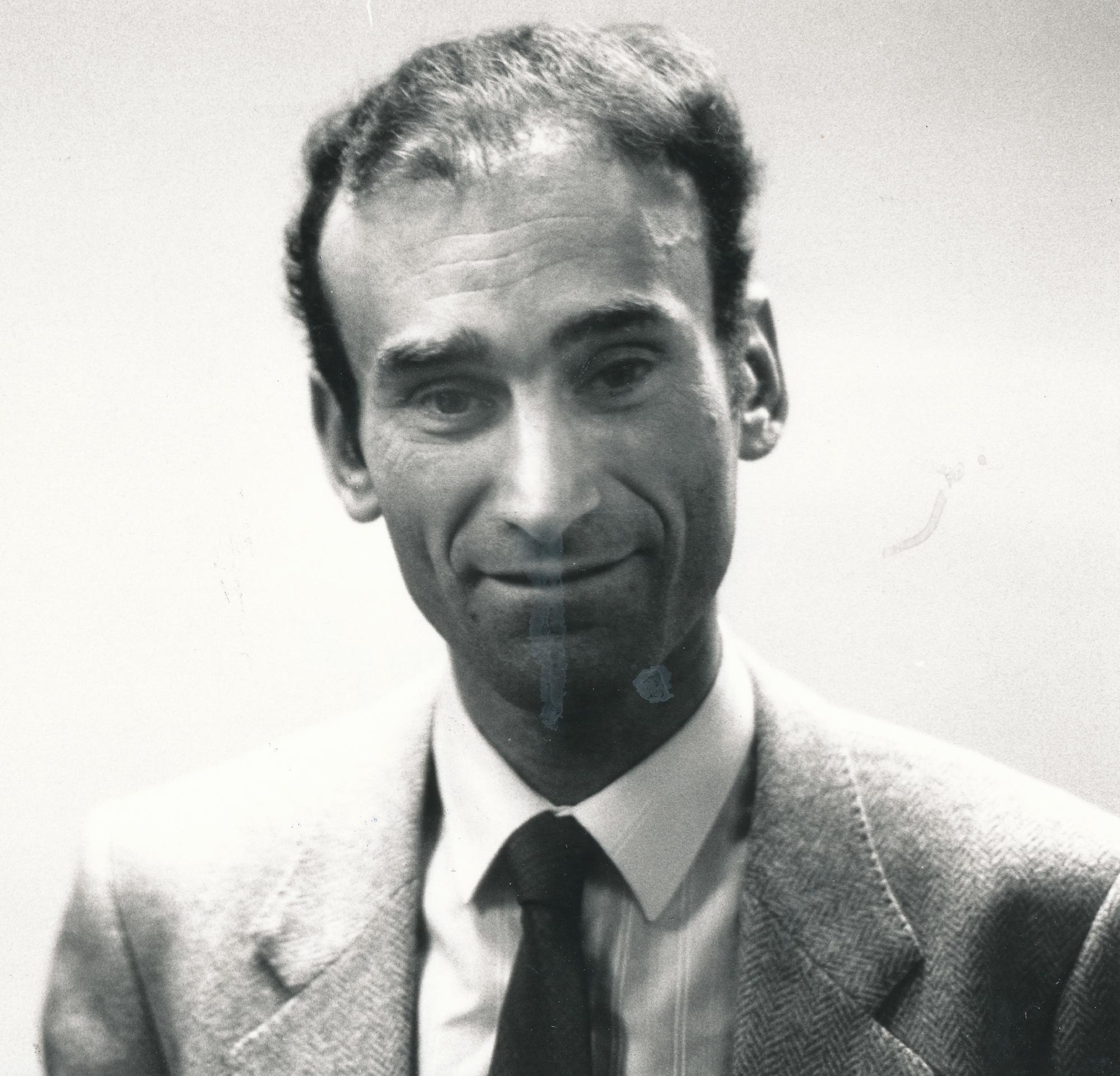
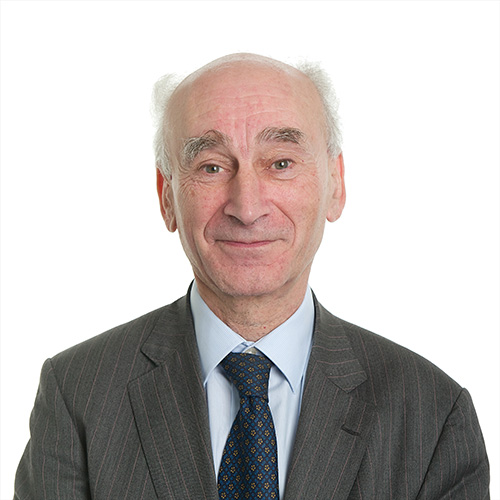
Sir (Stuart Milner-Barry by Bassano Ltd., half-plate film negative, 14 June 1973, National Portrait Gallery
Sir Stuart Milner-Barry by Bassano Ltd., half-plate film negative, 14 June 1973, National Portrait Gallery

BCN remembers Sir Stuart Milner-Barry KCVO CB OBE who passed away on Saturday, March 25th, 1995 in Lewisham Hospital, London aged 88. He was laid to rest in the Great Shelford Cemetery, Cambridge Road, Great Shelford, Cambridge CB22 5JJ.

A memorial service was held for him at Westminster Abbey on 15 June 1995.

Great Shelford Cemetery Gravestone of Sir Philip Stuart Milner-Barry KCVO CB OBE by Geoffrey Gillon
Signature of PS Milner-Barry from a Brian Reilly "after dinner" postcard from Margate 1936.
Signature of PS Milner-Barry from a Brian Reilly “after dinner” postcard from Margate 1936.

Philip Stuart Milner-Barry was born on Thursday, September 20th 1906 in Mill Hill in the London Borough of Barnet. Mill Hill falls under the Hendon Parliamentary constituency.

Parents

His parents were Lieutenant-Commander Edward Leopold (1867-1917) and Edith Mary Milner-Barry (born 17th May 1866, died 1949, née Besant). Edward was in the  Royal Naval Volunteer Reserve, H.M.S. “Wallington.” Prior to his war service his father was a professor of modern languages at the University of Bangor and Edith was the daughter of Dr. William Henry Besant, a renowned mathematical fellow of St John’s College, Cambridge University.

Stuart was the second born of six children, There was  an older sister Alda Mary (18th August 1893-1938) and four brothers Edward William Besant (?-1911) , Walter Leopold (1904-1982), John O’Brien (4 December 1898 – 28 February 1954) and Patrick James . Many of the Milner-Barry family were laid to rest in the Great Shelford churchyard.

Stuart learned chess at the age of eight and his autobiographical article below goes into more depth.

He was educated at Cheltenham College, and won a scholarship to Trinity College, Cambridge, where he obtained firsts in classics and moral sciences.

On leaving Cambridge in 1927 he went to work at the London Stock Exchange (LSE).

According to the 1928 and 1929 electoral rolls he was living with his mother Edith  and his brothers Walter and John O’Brien at 50 De Freville Avenue, Cambridge CB4 1HT:

50 De Freville Avenue, Cambridge CB4 1HT

In 1931 the family had relocated to 11, Park Terrace, Cambridge which is nearby to Emmanuel College. Now living  with the family was brother Patrick James.

11, Park Terrace, Cambridge, CB1 1JJ
Period map of the area of 11, Park Terrace, Cambridge, CB1 1JJ

He discovered that he did not enjoy his LSE work and switched careers to became chess correspondent of The Times in 1938.

At the time (September 29th) of the 1939 register he (aged 33) was living as a journalist in a household of three with his mother Edith who carried out “unpaid domestic duties” and sister Alda who was of “private means”.

Honours

In 1946 Stuart was awarded the OBE from the Civil Division in the  New Years Honours . The citation reads that was “employed in a Department of the Foreign Office”. A modern translation of this was he was engaged in Top Secret work at Bletchley Park alongside Alan Turing, Gordon Welchman and Hugh Alexander and was thus honoured for his war work. More on this later…

After the war he worked in the Treasury, and later in 1966 administered the British honours system where he helped to facilitate the award of honours to other chess players ultimately retiring in 1977.

As well as the OBE he was made Companion of the Order of the Bath (CB) in 1962 and Knight Commander of the Royal Victorian Order (KCV0) in 1975.

A conference room was named after him at the Civil Service Club, 13 – 15 Great Scotland Yard, London SW1A 2HJ.

Peter Hennessy* and The Rewarding Career of Sir Stuart Milner-Barry

*Peter Hennessy is a renowned historian and journalist. The following was originally published in The Times in 1977 following  PSMBs retirement.

“Few careers can have been as varied and rewarding as that of Sir Stuart Milner-Barry, who retires today as Ceremonial Officer to the Civil Service Department and custodian of the British honours system.

Into the 48 years since he left Cambridge with a degrees in classics and moral sciences, he has crammed spells as a stockbroker, chess correspondent of  The Times and member of the British chess team, a wartime codebreaker for MI6 and a senior Treasury official before taking over administration of the nations “gongs and bongs ” nearly 11 years ago.

The richness of Sir Stuart’s progression is all the more striking given the difficulty he experienced in finding a job at all after university because of the Wall Street crash in 1929. His first 10 years spanned the slump of the 1930s, when there was little for a stockbroker to do, but fill his days reading The Times.

In 1938 he joined the paper full time as chess correspondent and, along with many of the world’s leading players, he was nearly trapped in Buenos Aires when war broke out the next year (ed. should be month rather than year). Catching the first ship home, he finished up with that brilliant collection of dons, antique dealers, mathematicians and chess players billeted in Nissen huts in the park of Buckinghamshire country house, who broke the code transmitted by the German Enigma machine.

The original Hut 6 building (photographed in 2004). Milner-Barry joined Hut 6 in early 1940, and worked in the section throughout World War II. He became head of Hut 6 in Autumn 1943.

Sir Stuart eventually rose to lead hut six, which broke the most secret messages of the Luftwaffe. Quartered in a comfortable Bletchley public house with another formidable chess player, C. H. O’D. Alexander, and Gordon Welchman, the Cambridge mathematician, he acquired a taste  for rum, the only alcohol in plentiful supply for some reason, and a sense of guilt about enjoying, his stimulating, important job, safe while other men faced the bullets.

He was not tempted to stay on in the arcane world of code-breaking after the war, unlike his friend, the late Hugh Alexander, as he regards such activities in peacetime as akin to reading somebody’s private correspondence, though he recognizes the necessity of such efforts for intelligence work. Instead, he took the reconstruction competition for the administrative class of the Civil Service and entered the Treasury.

While battling with the post-war dollar shortage in Treasury Chambers he “found a wife, carried her off and lived happily ever after”, as he cheerfully puts it. Apart from a spell as establishment officer to the Ministry of Health, he stayed at the Treasury until he reached the normal retiring age of 60 in 1966.

Lord Helsby, then Head of the Home Civil Service, asked him to stay on and take over the smooth machine that underpins the honours system, which had been built up over many years by Sir Robert Knox. Sir Stuart has loved every minute of it.

He looks every inch the part, a tall stately man of immense natural dignity, he is the incarnation of propriety. The stresses to which the honours system has been subjected to in recent years must have caused him great distress but he is far too proper a civil servant to talk about it. His retirement at 70 has nothing to do with the alarums and excursions stimulated by the honours lists associated with Harold Wilson.

“One of my principal jobs has been the protection of the system”, he says. “The pleasures are very great. It’s fascinating in itself. You see so much of the history of people in every walk of like”.

Sir Stuart waxes eloquent about the beauty and uniqueness of the British honours system. He is a confirmed monarchist, so the spontaneity of the jubilee celebrations  provides the perfect backcloth for his departure. He is succeeded by Mr. Richard Sharp, an under-secretary at the Treasury.”

Below is the original article:

Sir Philip Stuart Milner-Barry OBE

Marriage to Thelma

In the third quarter of 1947 Stuart married Thelma Tennant Wells in Westminster. A consequence of the “rules of the day” of the marriage was that Thelma had to resign her post in the Treasury immediately.  (Ed: this somewhat antiquated view of life was finally corrected in 1972 when the Civil Service dispensed with this rule).

Lady Thelma was to support Stuart in his chess activities for their married life. She also served as the first UK Director of Women’s Chess and made many lasting friendships in the chess world. She was buried together with Stuart in 2007. Stuart himself was President of the British Chess Federation between 1970 and 1973 as well as being Director of International Chess following his presidency.

Stuart and Thelma had three children, one son and two daughters: Philip O. (born 1953), Jane E (born 1950) and Alda M (born 1958).

Dave Rumens is pleased to accept a cheque for £200 from Lady Thelma Milner-Barry for winning the 1978 Nottingham Congress with 5.5/6. Photograph provided by Nottinghamshire County Council.

Stuart was knighted on January 1st 1975 for his role as the “Ceremonial Officer of  Civil Service Department” between 1966-77. Technically the knighthood is known as a KCVO.

Milner-Barry was Southern Counties (SCCU) champion for the 1960-61 season.

He first competed in the British Championship in 1931 and made regular appearences as late as 1978: a span of 47 years!

In their retirement  years Stuart and Thelma lived at the salubrious location of 43 Blackheath Park, Blackheath, London SE3 9RW.

Autobiography

In June of 1933 at the age of 27 Stuart wrote an autobiographical piece for British Chess Magazine to be found in Volume LIII (53, 1933), Number 6 (June), pp. 241-2 as follows:

Stuart Milner-Barry in 1933 taken from BCM, 1933, June

P.S. Milner-Barry

Champion of the City of London Chess Club

I learned chess at the age of eight and played regularly after that with members of my family. My first-class practise (with due respect to my family) began at fourteen, when Mr. Bertram Goulding Brown and  started a series of serious friendly games which has continued ever since, almost without interruption. The vast majority of these games were begun with 1 P-K4, P-K4, and as we both eschewed the Lopez and the Four Knights, we have acquired  a fairly extensive knowledge of the older forms of the King’s side openings – King’s Gambit (all sorts), Vienna, Guioco Piano, Evans’s Gambit, Danish Gambit, Bishop’s Opening, etc. These games have undoubtedly born the most important influence in my development, apart from which the serious friendly game is to me much the most enjoyable form of chess. We each have runs of success, and there has never been much to choose between us.

(An aside : Stuart wrote a extensive obituary of Bertram Goulding Brown which appeared in British Chess Magazine, Volume LXXXV (85, 1965), Number 12(December) pp.344-45 in which he noted:

B. Goulding Brown was my oldest and closest Cambridge friend, I started playing with him in 1920, and we have played ever since, though, alas, not nearly so often since the War as in the 1920s and 1930. Our last games, when he was eighty three, were played about a year ago in the same book-congested upstairs study at Brookside as all the others had been. Both were cut-and-thrust draws: a Kieseritzky Gambit from myself and Two Knights’ (with 4.P-Q4 for White) were typical of the openings we adopted. We were planning another this Autumn, but he died suddenly and peacefully at the end of August, )

I have also been very fortunate in playing a good deal with C.H.O’D. Alexander. Our games have taken the form of a series of short matches (first player to win three games) played with clocks. Alexander was already stronger than me when he came up to Cambridge, and he won the University Championship from me in his first year and my fourth.

CHO'D Alexander plays his old friend PS Milner-Barry
CHO’D Alexander plays his old friend PS Milner-Barry

All three matches have been won by him, the first easily and the last two by the narrowest possible margin; a fourth now in progress looks like coming to an early  and ignominious conclusion (Score 0-2-2). These results have neither surprised nor disappointed me : I would not back any player in England to do better.

(ed. For more detail on PSMBs matches with Hugh we refer to you our article on Hugh).

In 1923 I won the first Boy’s Championship at Hastings, but lost badly the following year (ed. Alexander won).

Boy Chess Champion PS Milner-Barry (Cheltenham College), first boy chess champion of England, receiving the cup from Mrs. AG Ginner, the donor , at the Hastings Chess Club

Since then I have competed twice at Hastings, once tieing with Miss Menchik in the Major Reserve for the first place and once for the last, in the Major. In between I played in the Major Open at Tenby, and came out fifth, with my first important win against Znosko-Borovsky.

Meanwhile I played four years against Oxford, with somewhat chequered results. The first year I won against G. Abrahams, the second and third years, I played K.H. Bancroft and scored a (very fortunate) draw and a win, while finally I permitted Abrahams to fork my King and Queen with a Knight, a performance unhappily repeated by R.L. Mitchell in the following year (his Queen was pinned by a Bishop). Since then the spell has been broken. In 1931 I played in the British Championships at Worcester, and was quite satisfied with my form, though my score of 5 out of 11 was nothing to write home about. In February 1932, I have the great good fortune to fill a vacant place in the Sunday Referee* London International Tournament, an extremely exhausting but very valuable experience which I greatly appreciated.

*The Sunday Referee was a newspaper of the time which was adsorbed into The Sunday Chronicle in 1939.

Full Crosstable for the 1932 Sunday Referee or London International Masters Tournament

My score of 3.5 out of 11, equal with Sir George Thomas and above W. Winter and V. Buerger, was quite as good as I expected. After this came the Cambridge Tournament, which, though a very delightful little congress, was a fiasco from my point of view. Three of my opponents were unkind enough to show their best form against me, and two other games I spoilt by clock trouble.

I do not expect to play much serious competitive chess in future. I admire sincerely the business man who is ready, after a hard day at the office, to undergo a further four hours of strenuous mental exertion; and who is also prepared to spend his all too brief holidays in the same exhausting pursuit. Moreover, while many players find the atmosphere of match and tournament play a stimulus or an inspiration, it only renders me nervous, and though this does not affect my play it certainly interferes with my enjoyment. As long as I can play my week-end games with B.G.B., and inveigle Alexander from Winchester to add another to his monotonous series of victories, I shall not much mind if I can only occasionally take part in congresses. ”

PS Milner-Barry Cup

In issue #53 (April 1946)  of West London Chess Club’s Gazette we have a news item concerning a newly inaugurated trophy called the PS Milner-Barry Cup:

issue #53 (April 1946)  of West London Chess Club's Gazette
issue #53 (April 1946)  of West London Chess Club’s Gazette

Sergeant on Milner-Barry

Writing in A Century of British Chess (Hutchinson, 1934), PW Sergeant records in Chapter XXI, 1925 to 1934:

The City of London C.C.’s Championship Tournament which ended this (1933) spring deserves special mention; for it introduced an entirely new name on the list of champions, that of P.S. Milner-Barry, formerly of Cheltenham College and of Cambridge University.  Ten years previously he had won the first boys’ championship at Hastings.

Now, he won the City of London Championship with a score of 11 out of 14, followed by the bearers of such noted names as R.P. Michell (10 points), Sir George Thomas (9), and E.G. Sergeant (8.5). It caused some surprise, therefore, when it was found that he was not selected as a British representative at Folkestone.

Golombek on Milner-Barry

Surprisingly and disappointingly there is no direct entry in either Hooper & Whyld or Sunnucks for Sir Stuart but (as you might expect) Harry Golombek OBE does not let us down  in The Encyclopaedia of Chess (Batsford, 1977):

“British master whose chess career was limited by his amateur status but whose abilities as a player and original theorist rendered him worthy of the title of international master.

Born at Mill Hill in London, he showed early promise and in 1923 won the British Boys Championship, then held at Hastings.

He studied classics at Cambridge and developed into the strongest player there. At the university he was to meet (ed. three years later) C. H. O’D. Alexander with whom he played much chess.

Though nearly three years younger, Alexander exerted a strong influence over him and both players cherished and revelled in the brilliance of play in open positions.

24th April 1935: J Mieses of Germany in play against PS Milner-Barry during the Premier Tournament of the Kent County Chess Association in the Grand Hotel, Margate. (Photo by F. Sayers/Topical Press Agency/Getty Images)

By then along with Alexander and Golombek, he had become recognized as one of the three strongest young players in the country. Whilst not as successful as they were in tournaments as the British championship in which stamina was essential, he was a most formidable club and team match player, as he had already shown in 1933 when he won the championship of the City of London Club ahead of R. P. Mitchell and Sir George Thomas.

Harry Golombek OBE plays Sir Philip Stuart Milner-Barry OBE

He played in his first International Team tournament at Stockholm 1937 and was to play in three more such events : in 1939 at Buenos Aires where, on third board, he made the fine score of 4/5 ; in Helsinki 1952; and in Moscow 1956 where, again on third board, he was largely responsible for the team’s fine showing.

Left to right Baruch H Wood, Stuart Milner-Barry, Vera Menchik (playing in the women's world championship (held concurrently with the 1939 Buenos Aires Olympiad) which she won with 17 wins and 2 draws), Sir George Thomas, Conel Hugh O'Donel Alexander and Harry Golombek. England withdrew after their preliminary group due to the outbreak of war despite qualifying for the top final. Thanks to Leonard Barden
Left to right Baruch H Wood, Stuart Milner-Barry, Vera Menchik (playing in the women’s world championship (held concurrently with the 1939 Buenos Aires Olympiad) which she won with 17 wins and 2 draws), Sir George Thomas, Conel Hugh O’Donel Alexander and Harry Golombek. England withdrew after their preliminary group due to the outbreak of war despite qualifying for the top final. Thanks to Leonard Barden

In 1940 he shared first prize with Dr. List in the strong tournament of semi-international character in London and then, like Alexander and (later) Golombek, helped in the Foreign Office code-breaking activities at Bletchley Park for the duration of the Second World War. Staying in the Civil Service afterwards, he rose to the rank of Under-Secretary in the Treasury and was knighted for his services in 1975.

Sir Stuart Milner-Barry talks about Malik Mir Sultan Khan

Below is footage (start at 1′ 55″) of Sir Stuart discussing the talent of Malik Mir Sultan Khan:

After the war, too, he had some fine results in the British championship, his best being second place at Hastings in 1953.

Hartston on Milner-Barry

The following article is sourced from November 1995 edition* of Dragon, the Cambridge University Chess Club magazine:

(*Edited by Jonathan Parker)

A sample cover of Dragon, the Cambridge University Chess Club Magazine

“I first met Sir Stuart Milner-Barry when I was fifteen years old (1962) playing in a tournament in Bognor Regis who played some rustic king’s pawn opening against me, sacrificing a pawn for nothing in particular and then astonished by writing “castles” in full on his scoresheet.  I think he used “kt” for a knight too. I thought I had discovered  a true relic from a bygone age and the more I got to know him I realised the more correct that judgement was.

Milner-Barry was the last of the true gentlemen amateurs and was one of the few people I have ever met who played chess for the sheer love of the game.

A few typical incidents may give a flavour of his unique personality. First and most typical was the way he would resign: with a firm handshake, a smile and a booming whisper of ‘You are far too good for me I’m afraid!’ When I first heard those words I was totally taken aback : What was this, a chessplayer acknowledging that his opponent was better than him? Impossible!

Once, at close of play in a county match against Milner-Barry I had the extra pawn in a difficult queen and pawn ending.  We analysed a little with most variations suggesting I was winning. It was the kind of position you would send for adjudication even if you are convinced it is lost. It avoids having to resign anyway and the adjudicator may always discount the pawns. But, Sir Stuart never thought like that. After ten minutes analysing he extended his hand and congratulated me.

Sir Stuart Milner-Barry in play against Daniel Yanofsky from round 6 of the British Championship in Hastings, 15th August 1953

Finally there was the splendid incident in Moscow during the (Ed. 6th) European Team Championships in the late 1970s (Ed. 1977) Stuart was then the President of the BCF and took up an invitation of his old friend the British Ambassador to the USSR (Ed. Sir Howard Smith) to visit the event.  Since he was staying at the Embassy he had a KGB tail assigned to him to follow him everywhere. On one of his morning walks Sir Stuart got lost and was not certain which bridge he should be on to get back to the Embassy. So, he turned around and walked back to the not very secret policeman, followed him and asked for directions! For the rest of his stay they walked practically hand-in-hand.

Whilst most of us knew Stuart as an amiable old gent who played for Kent and in the Lloyds Bank Masters who could still play brilliant attacking games in his eighties  most knew little of his distinguished career in real life.

Sir Stuart Milner-Barry

We suspected with some justification  that in his civil service career he was responsible for doling out all those OBEs to chess players  in the 70s and 80s when he was in charge of the honours list.

It was the wartime work at Bletchley Park that was Milner-Barry’s greatest achievement. As everybody knows the allies won the Second World War mainly because of the brilliant code-breaking work of the Cambridge quartet of Alan Turing, Gordon Welchman, Hugh Alexander and Stuart Milner-Barry. Turing and Welchman were mathematical geniuses, Milner-Barry was the supreme administrator and Alexander straddled the gap with great talents in both areas. The group of four were known as “The Wicked Uncles”

The astonishing achievement at Bletchley was not so  much in breaking enemy codes as maintaining complete secrecy of the entire operation for the duration of the war. Only with such people as Milner-Barry and Alexander in charge could such a large operation be run so successfully without anybody knowing about it.

Milner-Barry’s importance in the running at Bletchley may be judged from the fact that he personally delivered the note to Winston Churchill stressing overriding importance of their work asking for more funds.

Compared with that the invention of the Milner-Barry Gambit and the Milner-Barry variation of the Nimzo-Indian are minor achievements.

Sir Stuart was proof that nice guys can be chess players although one cannot help suspecting he would achieved even better results if he had even a slight streak of nastiness about him. He would surely have not let Capablanca off the hook in Margate in 1938 when the attacking player secured a winning position against the ex-champions dragon variation and he would have surely also not let the British Championship slip from his grasp in 1953 when he finished as runner-up  after losing his last two games.

He always performed well when playing in Olympiads (or Team Tournaments as they were known then) for England during the 1930s and 50s. He was, after all, one of the most naturally gifted players this county has produced.  What other Englishman has two opening (or even just one) named after him?

While at Cambridge while he won the University Championship in 1928, losing to Alexander in the following year, Milner-Barry composed some fine problems, a frivolity he never returned to later in his life.

An excellent though infrequent writer on the game, he wrote a fine memoir of C.H.O’D. Alexander in Golombek’s and Hartston’s The Best Games of C.H.O’D. Alexander, Oxford, 1976.”

The Best Games of C.H.O'D. Alexander, Harry Golombek and William Hartston. With A Memoir by Sir Stuart Milner-Barry, Oxford University Press, 1976, ISBN 10: 0192175351 ISBN 13: 9780192175359
The Best Games of C.H.O’D. Alexander, Harry Golombek and William Hartston. With A Memoir by Sir Stuart Milner-Barry, Oxford University Press, 1976, ISBN 10: 0192175351 ISBN 13: 9780192175359

An Obituary from Bernard Cafferty

From British Chess Magazine, Volume CXV (115, 1995), Number 5 (May), pp. 258-59 we have this obituary by Bernard Cafferty:

“Sir Philip Stuart Milner-Barry KCVO CB  OBE (20 ix 1906 – 25 iii 1995) was the oldest of the British chess masters who came to prominence in the 1930s, He was always thought of in conjunction with his great friends Hugh Alexander and Harry Golombek who both predeceased him. The length of Stuart’s career is amazing  – he was inaugural British Boy Champion in 1923 and was still playing for Kent first team in the Counties Championship  of recent years, thus spanning a period of seven decades! Botvinnik spoke of him to me on my 1994 visit to Moscow.

David Anderton OBE (rhs) congratulates Sir Stuart Milner-Barry OBE for winning the "Board of Honour " game versus Edward Lasker at the 1976 Lloyds Bank Match by Telex, London - New York. From BCM, volume XCVI (96) Number 11 (August), Page 494. The venue was the Bloomsbury Hotel, London. Photo courtesy of Lloyds Bank
David Anderton OBE (rhs) congratulates Sir Stuart Milner-Barry OBE for winning the “Board of Honour ” game versus Edward Lasker at the 1976 Lloyds Bank Match by Telex, London – New York. From BCM, volume XCVI (96) Number 11 (August), Page 494. The venue was the Bloomsbury Hotel, London. Photo courtesy of Lloyds Bank

Yet Stuart, who never gained the IM title, was always the true amateur and genuine English gentleman, whose sense of duty and tradition was very great. It speaks volumes of him that he agonised over whether he should attend the Times Kasparov-Short match of 1993, in a private capacity. He would have liked to watch the play, but as a former British Chess Federation President, 1970-73, he felt it was his duty not to lend any extra recognition to the contest other than that assigned it by the BCF.

Before the war, after graduating from Cambridge in Classics, he took some fine scalps including those of Tartakower and Mieses and should have beaten Capablanca at Margate 1939.

Capablanca and Stuart Milner-Barry at Margate, England, April 15, 1936. AP Photos

He worked, rather unhappily, in a stockbroking firm up to 1938 and it is in that capacity that his name appears on the official document that set-up the British Chess Magazine as a limited company in 1937.

During the war he played his part in the Bletchley Park code-breaking undertaking along with Alexander and Golombek, and after the war went into the Civil Service where he had a distinguished career at the Treasury. Then his career was extended as he spent his final working years in the patronage department that sifted recommendations for the honours list.

I recall asking him in 1981 if there was any chance that Brian Reilly could qualify for an award. Stuart’s diplomatic answer was to the effect that he was now retired but would drop a word in the right quarter.

Stuart represented England at the Olympiads or 1936, 1939, 1952 and 1956. At the last of these he played particularly well on fourth board. He was conscious that his old friend Hugh Alexander could not take part in Moscow because of the sensitive nature of his work in the Intelligence Service.

In playing style Milner-Barry, a tall gaunt figure, delighted in an open tactical fight.

He was The Times correspondent 1938-45, resigning the post to let Harry Golombek take over. His best result after the war, apart from the 1956 Moscow Olympiad, was probably his second place in the British Championships of 1953 at Hastings. The abiding impression of his opponents over the years must have been  that here was a player who greatly enjoyed the game, win, lose or draw.

Certainly, that was my idea of him in the tussles we had from the British Championship of 1957 up to county matches in the 1980s.

We shall not see his like again. The England that formed his character is no longer with us.”

Kenworthy on Milner-Barry

Sir Stuart as a student was taught by his lecturer friend Gordon Welchman, later 1940 his Head of Hut.  They were firm friends, a band of brothers, as per the rest of the chess players and mathematicians from the Interwar years at Cambridge University.

His studies were obviously well aligned to be a stockbroker in the City, plus the tedious details of Blotters and Order Management registration.

Obvious exceptions to this University circle was Dr Jacob Bronowski who was given the suspected 5th columnist treatment by authorities in Hull. Obviously, he would have been excellent.

Exception also according to John Hevriel was if you were also from Sidney Sussex, like Staff Sgt. then an RSM  Asa Briggs, who was more Contract Bridge with this all friends crossword addicts team. Asa Briggs felt that Sir Stuart was initially badly rewarded leaving Hut 6 in 1945 for HM Treasury.

Sir Stuart was a noted top cribster, his crosswords, German and thinking from how the Nazi operator would think from his side of the board, obviously helped with Bombe cribs. He always played down his role and abilities in a diplomatic way. He was the facilitator and mentor to many, especially back to Gordon Welchman in his troubled times from 1974 onwards. Sir Stuart was not happy about the proposed book of the Hut 6 Story.

He was the bureaucrat who cared for the welfare of his staff, especially on tedious protract tasks which was the norm. He was into ethics, Quadrivium, logic and rhetoric, philosophy and his knowledge of German poets and Great German thinkers would have been invaluable in solving the Enigma puzzle and how might his opposite number blunder and be sloppy in procedures.

Milner-Barry Variations

Though never at home in close(d) positions, he was an outstanding strategist in the open game and it is significant that his most important contribution to opening theory was the Milner-Barry variation of the Nimzo-Indian Defence which is essentially as attempt to convert a close position into an open one (1.P-Q4, N-KB3; 2.P-QB4, P-K3; 3. N-QB3, B-N5; 4.Q-B2, N-B3).

Hooper & Whyld (1996) note:

“Sometimes called the Zurich or Swiss variation, this is a line in the Nimzo-Indian Defence introduced by Milner-Barry in the Premier Reserves tournament, Hastings 1928-9. This line became more widely known when it was played at Zurich 1934.”

Two famous opening lines are named after him – 4…Nc6 in the Nimzo-Indian (as above), and the gambit in the French Defence: 1.e4 e6;2.d4 d5;3.e5 c5;4.c3 Nc6;5.Nf3 Qb6;6.Bd3 cxd4;7.cxd4 Bd7;8.0-0 Nxd4;

Stuart played this line both in correspondence and over-the-board play. If Black takes the pawn with 10…Qxe5, White gets a fierce attack by 11,Re1 Qd6 (else 12.Nxd5) 12.Nb5.

There is also a sub-variation of the Caro-Kann which is named after Sir Stuart viz:

which is a Blackmar-Diemer style pawn sacrifice.

There is also a Milner-Barry variation in the Falkbeer Counter Gambit to the King’s Gambit thus:

which is an ancient line that he revived at Margate 1937.

and finally, there is a Milner-Barry Variation in the Petroff Defence:

giving a total of five named variations. How many English players have that many?

Problems and Compositions

Stuart developed an interest in problem composition in the 1920s

Sir Stuart Milner-Barry, Problem, Morning Post, 1923
Sir Stuart Milner-Barry, Problem, The Observer, 1925
Sir Stuart Milner-Barry, Problem, British Chess Magazine, 1926

Further examples may be found on the excellent Meson Database maintained by Brian Stephenson

Milner-Barry on The English Chess Explosion

Stuart was a great supporter of the development of British chess. Nothing would have given him more pleasure than to witness  the meteoric advances of English players in the 1970s. Indeed, he wrote the foreword to the English Chess Explosion (Batsford, 1980) by Murray Chandler and Ray Keene:

The English Chess Explosion (from Miles to Short), Murray Chandler & Ray Keene, Batsford, 1981, ISBN 0 7134 4009 0

“It gives me great pleasure to have been asked to write a foreword for this book. Nothing has given me more satisfaction than the flowering of British chess talent that has taken place in the past few years.

Between the wars, though we had some splendid players like H. E. Atkins, Sir George Thomas and F. D. Yates, we were a second rate power at chess: in the great Nottingham tournament of 1936, for example, our quartet brought up the rear, and that was where, with occasional shining exceptions, our representatives in international tournaments tended to find themselves. Similarly, after the war in the 1950’s and 1960’s, in spite of Alexander and Penrose, we seldom achieved a really creditable place in the Olympiads.

Alexander who retired early from the arena because of the exacting demands of his profession, must have had rather a depressing time as non-playing captain.

Sir Philip Stuart Milner-Barry OBE
Sir Stuart Milner-Barry OBE

I myself date the renaissance from the Spring of 1974 when we won a closely contested match against West Germany at Elvetham Hall.
Thereafter we went from strength to strength, with the appearance year by year of highly talented, original and adventurous young men from the Universities – Keene and Hartston, closely followed by Miles, Stean, Nunn, Mestel, Speelman, and a still younger generation of schoolboy prodigies like Nigel Short.

The peak of our performance so far has been the third place (after the USSR and Hungary) last winter in the finals of the European Team Tournament at Skara (compared with our eighth and last place at Moscow in 1977).

Sir Philip Stuart Milner-Barry OBE presents Dr. Jana Hartston with the ? prize
Sir Stuart Milner-Barry OBE presents Dr. Jana Hartston with the ? prize

How did all this come about in the short space of six years? The Spassky-Fischer match of 1972 was a watershed. Since then, and the first time, it has been possible for able young men from universities to consider chess seriously as a full-time profession, or at least as a career to which they devote the major part of their time and interest, Secondly, the fruits were being reaped of the unobtrusive but devoted spadework in junior training pioneered by Barden, Wade and many others. Lastly, no doubt, sheer good fortune smiled upon us in the simultaneous emergence of a group of brilliant enthusiastic and likeable young men, five of them already grandmasters and others likely to become so before long.

It is sad that Alexander, who did so much to uphold the prestige of British chess in the doldrums, did not survive to witness the transformation. I would like to wish the BCF President, David Anderton, and Alexander’s successor as captain, all possible success for the future.”

Footer from the foreword of The English Chess Explosion (from Miles to Short), Murray Chandler & Ray Keene, Batsford, 1981, ISBN 0 7134 4009 0

In the March issue of CHESS for 1963, (Volume 28, Number 427, pp.147-155)  William Winter wrote this:

P. S. Milner-Barry is a close friend of Alexander’s and plays like him, though not quite so well. So far the Championship has always eluded him, though he seemed to have it within his grasp at Buxton where he played superb chess for nine rounds and cracked in the last two. I fancy that the physical strain of these long Swiss tournaments
is rather too much for him. Like Alexander he has a most attractive style and one or two of his combinative games will certainly live after him.

More from Bletchley Park

(The original may be found here)

A brief biography, formerly displayed in the ‘Hall of Fame’ in Bletchley Park mansion. Stuart Milner-Barry had achieved fame as a champion chess player when he came to Bletchley Park early in 1940. He led the ‘cribsters’ team in Hut 6 from its opening in January 1940, becoming head of the Hut in March 1944. The work of Milner-Barry and his team lay at the heart of the triumph over the German Luftwaffe & Army Enigma codes. After the war he had an outstanding career in the civil service. Philip Stuart Milner-Barry was born on 20 September 1906 in London; He went to Cheltenham College and on to Trinity College, Cambridge, where he achieved a first in both the classical and moral sciences triposes. He became a not-notably enthusiastic stock broker, though it was chess that filled his life. He had been boy chess champion of England in 1923, playing for England before and after the war. He was chess
correspondent of the Times from 1938 and throughout the war. It was Gordon Welchman, a friend from their days at Trinity together, who persuading Milner-Barry to join Bletchley Park.

He arrived in January 1940 joining the newly created Hut 6, and was encouraged by Welchman to study the decrypts that were beginning to emerge from the Zygalski sheets being operated by John Jeffreys. Welchman wanted Milner-Barry to develop an intimate knowledge of the German cipher clerks and radio operators. When the Germans dropped the use of the repeated indicator, as they did on 1 May 1940, Hut 6 would have to rely on its knowledge of the traffic to find suitable cribs to enable the Bombes to operate, and in the meanwhile to make use of the careless procedural habits of some of the German operators.

Milner-Barry had noted that the cipher clerks tended to use addresses and signatures that were both long and stereotyped, providing a fruitful source for cribs. A crib had to be a phrase of about 13 characters long that was very likely to be found in certain easily identified messages, but also had to have linguistic features that provided good ‘closed loops’ for the bombe menus. The use of ‘kisses’, cribs derived from suitable decrypted messages from other keys, often provided the first break into a new key. Milner-Barry organised a team of wizards, as Welchman called his cribsters, who eventually were able to provide good keys for Hut 6 to be able to break into most of the Luftwaffe keys and then some of the Army keys. Milner-Barry became recognised as Gordon Welchman’s deputy, and when Welchman left in March 1943, to become responsible for mechanisation projects, it was Milner-Barry who became Head of Hut 6. Milner-Barry signed the Turing letter in October 1941 and it was he who took the letter directly to Downing Street. It drew Churchill’s attention the extreme shortage of support personnel in the Enigma huts. His powers of smooth administration now became clear as Hut 6 grew, reaching over 550 in total, one of the largest teams in Bletchley Park.

Milner-Barry was a quiet, undemonstrative, highly effective leader who believed in delegation and was always to be seen sporting a very large pipe. His reports show that he was totally unflappable, in the midst of the problems for Hut 6 created by the tightening of German cipher security in 1944, which they largely overcame. Stuart Milner-Barry was recruited to Whitehall in June 1945. He rose rapidly, becoming the ceremonial officer in the Civil Service Department. He received an OBE in 1946, a CB in 1962, and a knighthood in 1975. He married Thelma Wells in 1947 and they had three children. He died in Lewisham on 25 March 1995. He had repeated his visit to Downing Street in October 1991, with a letter signed by 10,000, asking for Bletchley Park to be preserved as a monument to the great war-time work.

Further Material

An obituary from The Independent by Bill Hartston

An article from Spartacus Educational

Here are his games from chess.com

More on his time at Bletchley Park

The papers of Sir Stuart Milner-Barry

Location of his grave

Here is his Wikipedia entry
Signature of Sir Stuart Milner-Barry

According to Edward Winter in Chess Notes PSMB lived at these addresses :

  • 11 Park Terrace, Cambridge, England (Ranneforths Schachkalender, 1938, page 78).
  • 43 Blackheath Park, Blackheath, London SE3 9RW, England (letter reproduced in C.N. 3809).

Happy Birthday IM Peter Roberson (22-iii-1989)

Birthday of IM Peter Thomas Roberson (22-iii-1989)

IM Peter Roberson
IM Peter Roberson

Peter is IM Squirlolz on chess.com

IM Peter Roberson
IM Peter Roberson

Peter’s games from chessgames.com

Remembering Dr. Richard Guy (30-ix-1916 09-iii-2020)

BCN remembers Richard Guy who passed away in Calgary, Alberta, Canada on Monday, March 9th, 2020 at the splendid age of 103.

Early Life

Richard Kenneth Guy was born on Saturday, 30th September 1916. On this day construction on the Hell Gate Bridge in New York City was completed.

He was born in Nuneaton, Warwickshire to William Alexander Charles Guy and  Augusta Adeline Guy (née Tanner). RKGs parents had married in the final quarter of 1915 in Solihull. William was headmaster of Atherstone Elementary School.

Richard Guy
Richard Guy

Growing Up

Richard attended Warwick School excelling in mathematics where he was a boarder and prefect.  In December 1934 He obtained  a County Major Scholarship for Mathematics provided by the Lord Kitchener Memorial Fund gaining his Northern Universities Higher School Certificate in July 1935.

Warwick and Warwickshire Advertiser 25 May 1935

He went up to Gonville and Caius College, Cambridge University in October 1935 graduating in 1938. Stephen  Hawking was also an alumni of Caius College.

Richard Guy
Richard Guy

The 1939 register records Richard aged 23 living as a lodger in the  Blower household of six  at 436 Buxton Road, Stockport, Cheshire, England. This address has since been converted to residential flats. He was  a teacher of mathematics in a local secondary school.

RAF and the Weather Years

During the second world war Richard saw non-combative service in the Royal Air Force working on forecasting the weather and improving the methodologies.  This work was a critical component of the British war effort.

In the final quarter of 1940 Richard married Nancy Louise Thirian in Bingham, Nottingham. Nancy (in fact, she was known as Louise) was born in Islington in the third quarter of 1918 and passed away in 2010.  They had three children and Michael JT Guy was also a significant mathematician.

According to Wikipedia : “In November 1942, Guy received an emergency commission in the Meteorological Branch of the Royal Air Force, with the rank of flight lieutenant.  He was posted to Reykjavik, and later to Bermuda, as a meteorologist. He tried to get permission for Louise to join him but was refused. While in Iceland, he did some glacier travel, skiing, and mountain climbing, marking the beginning of another long love affair, this one with snow and ice.”

Richard Guy
Richard Guy

Teaching and Research

In August 1951 Richard relocated to Singapore and taught for ten years at The University of Malaya and following that he worked at the Indian Institute of Technology in Delhi. Finally, in 1965, he moved to Calgary and taught  in the Mathematics Department at The University of Calgary.  For fuller details of his extensive mathematical career see the many links at the foot of this article.

RKGs final address in England was 145 Sunderland Road, Forest Hill, London SE23 2PX:

145 Sunderland Road, Forest Hill, London SE23 2PX

Chess Playing

Richard’s chess career was active whilst at Warwick School.  He played for the school “eight” in matches against teams such as Birmingham University and King Edward’s School, Birmingham.

Richard Guy
Richard Guy

Richard’s interest turned away from over-the-board play but he did find time to compete in the Major Open of the August 1946 British Championships in Nottingham. Only two game scores are known where he lost to Dr. Fazekas and Gordon Crown: both very strong opponents.

Richard Guy
Richard Guy

Chess Writing and Composing

The December 1947 edition of British Chess Magazine contains RKGs very first Endings column taking over from TR Dawson. The column was introduced thus:

“Mr RK Guy has kindly consented to take over the Endings Section. All communications should now be sent to him at 33 Westwood Park Forest Hill London SE23.” TRD went on to write:

“With this page I reluctantly terminate on health grounds some forty years of work in the Endings field, and my contributions to this corner of the British Chess Magazine. To the many readers of these pages, a Merry Christmas and steadily improving years.”

33 Westwood Park, Forest Hill, London SE23 3QG

RKG was to edit this column until his final piece in June 1951. RKG wrote in the July 1951 column (now edited by HF Blandford): “My address after August will be University of Malaya, Singapore. I have enjoyed these few years, and am sorry to leave you, although you will be in capable hands. HFB is player and problemist, but his greatest love is for endings, and he has won many international prizes.”

RKG is known for almost 200 endgame studies.

This is  study #53, page 57 from Test Tube Chess by AJ Roycroft:

RK Guy
The Field, 28 xii 1940

win, 3+2

The win is by a white king march from the h-file onto the same file as the pawn, instead of the reverse!

1.Bb4!/i Rh2+;
2.Kg7 Rg2+;
3.Kf7 Rf2+;
4.Ke6 Re2+/ii;
5.Kd5 Re3;
6.Kd4 wins
(i) Why not 1.d8=Q. Because of 1…Rb8; 2.Qxb8 stalemate!
(ii) 4…Rf8 not on because of 5.Bxf8

and this one is study #148, page 106 of the same publication:

RK Guy
British Chess Magazine, x 1943

win, 6+4

1.Sc1+ Kc4;
2.b3+ Kd4;
3.Se2+ Ke4/i;
4.Sg3+ Kd4/ii;
5.Rf4+ Ke5/iii;
6.Re4+ Kd5;
7.Rd4+ Kxd4;
8.Sf5+ Ke5;
9.Sxd6 Kxd6;
10.h4 wins.

(i) 3…Kd3;4.Rd5+ Qd5;5.Sf4+ Ke4;6.Sxd5 Kxd5;7.h4 wins.
(ii) 4…Kd3;5.Rf3+ Kxd2;6.Se4+, or 5…Kd4;6.Sf5+.
(iii) 5…Kd5;6.Rd4+ Kxd4;7.Sf5+.
A lot of checks, but also a lot of play.

For more examples of RKGs work we recommend his AVRES database entry.

In 2020 John Beasley wrote: “Richard did not achieve the same renown in our field as he has in the field of recreational mathematics, but his studies are neat and many are also instructive, a point which he considered important. We have been the richer for his presence.”

Along with Hugh Blandford and John Roycroft, RKG was one of the inventors of the GBR code (Guy–Blandford–Roycroft code), a system of representing the position of chess pieces on a chessboard. Publications such as EG magazine use it to classify endgame types and to index endgame studies.

Richard Kenneth Guy
Richard Kenneth Guy
Winning Ways
Winning Ways
The Unity of Combinatorics, Ezra Brown and RK Guy, American Mathematical Society (30 May 2020)
Unsolved Problems in Geometry, RK Guy, Springer Verlag, 1994

Here is an appreciation from John Beasley

RKGs entry on the AVRES database

RKGs entry on chesscomposers.blogspot.com

An Interview with a mathematician

An obituary from The Calgary Herald

A tribute from The University of Calgary

A tribute from A Periodical

A tribute from the American Mathematical Society

100th birthday tribute from the Mathematical Association of America

RKGs Wikipedia article

Remembering Gerald Abrahams (15-iv-1907 15-iii-1980)

BCN remembers Gerald Abrahams who passed away in Liverpool on Saturday, March 15th 1980. He was buried in the Allerton Cemetery in the Jewish Springwood plot.

Gerald Abrahams was born in Liverpool on Monday, April 15th 1907.  On this day the Triangle Fraternity was formed at the University of Illinois at Urbana–Champaign.

His parents were Harry (b. 10th September 1880) and Leah (b. 12th March 1884) Abrahams (née Rabinowitz) who married in West Derby in the third quarter of 1903.

Gerald learnt chess at the age of ten during the first world war. He obtained an Open Scholarship to Wadham College, Oxford in 1925 reading PPE and earning himself an MA in Law in 1928. He became a practising barrister at Law.

From the 1939 register we learnt that Harry was a Drapery manufacturer and Leah carried out “unpaid domestic duties”. Gerald was not an only child: the first born was Winnie (b. 22nd November 1903) who was a Secretary and Clerk Typist and factory assistant. Elsie Abrahams (b. 14th April 1905) helped her mother with “unpaid domestic duties”. Blanche was Gerald’s older sister and she was “General Assistant In Fathers Business Drapery Manufacturer”. Gerald is listed (aged 32) as a Barrister at Law and author. The family resided at 51 Prince Alfred Road, Liverpool, Lancashire (now L15 6TQ) and their original property has been since replaced.

Historical map showing the 1939 residence of Gerald Abrahams

We learn from “Philanthropy, Consensus, and broiges: managing a Jewish Community A history of the Southport Jewish Community
by John Cowell” of an incident in January 1942 that was to cause ripples in the community. The headline was

POLICE RAID DISTURBS CLUB CARD PLAYERS

The full list of people present seems to have been largely or entirely Jewish in religion or ethnicity: it included a famous chess-playing barrister from Liverpool, Gerald Abrahams, representing himself, who had taken a First in P.P.E. at Oxford, and later married Elsie Krengel, who had also been present, and with Leslie Black representing the rest of the defendants, apart from the hosts and Captain Lionel Husdan, who sent a letter to the court.

The full list of those present, charged with “resorting and playing in a common gaming house,” and bound over was as follows:- Mott Alexander, Fannie Finn, Maxwell Glassman, Kate Lippa, Myer Lister, Gertrude Mannheim, Joseph Mannheim, Rita Mannheim, Simon Mannheim, Harry Peters, Sadie Peters, Lily Leah Ross, Harry Sapiro, Benjamin Stone. Those charged with “resorting in a common gaming house” and bound over, were:- Gerald Abrahams, Joseph Appleton Bach, Samuel Myer Barnett, Herbert Solomon Isaacson, Elsie Krengel, Manuel Mannheim, Louis Michaelson, Abraham Ross, Bernard and Elsie Ross.

“Gerald Abrahams, the barrister charged, said he was interested to protect his reputation from being stigmatised by a conviction, and asked Sergeant Laycock about alcohol: the latter replied that none was being consumed. He submitted that the club was not a gaming house, and that draw poker had not been proved other than as a game of skill. Charges were dismissed against Henry, Eva and Marjorie Black, Myer Waldman, and Captain Lionel Husdan, of Ryde, Isle of Wight, all of whom had said that they were merely taking refreshments in the club, and had not played. David Platt said that he had not the slightest idea that they were breaking the law, and Mrs Platt said that it had not been a paying venture.”

The Complete Chess Addict (Faber& Faber, 1987), Fox & James notes: that Gerald Abrahams as authority on bridge cast doubt on assertions that Emanuel Lasker “was good enough to represent Germany”

Gerald’s comparisons of chess and bridge are discussed by Edward Winter in Chess Facts and Fables (McFarland, 2005) page 130 in GAs 1962 book Brains in Bridge:

Brains in Bridge, Gerald Abrahams, Constable and Company, 1962, ISBN ?

Gerald eventually married Elsie Krengel (born 15th January 1909) in the fourth quarter of 1971 in Liverpool at the age of 64. Elsie had lived in the Southport area for most of her life and her family was associated with the manufacture of handbags.  They had known each other for many years (at least since 1942 as mentioned previously).

Gerald Abrahams
Gerald Abrahams

Leonard Barden modestly recounts :

“At the end of Nottingham 1954  Gerald claimed that Alan Phillips had accepted his draw offer so tieing Gerald for the British championship with some rabbit whose name escapes me.  When Phillips strongly denied having accepted the draw, Gerald collapsed on the floor and had to be aided by his old enemy Dr. Fazekas.”

From The Anglo-Soviet Radio Chess Match (1946) by Klein and Winter:

“G. Abrahams was born in Liverpool in 1907. He learned chess at the age of ten, and showed an early aptitude for tactical complications. He has played with varying success, his best performances being third and fourth with Rossolimo, behind Klein and Najdorf, but head of List at Margate, 1938, and fourth, fifth and sixth with Sir George A. Thomas and König in London, 1946. He has made two valiant bids for the British Championship.

A graduate of Oxford, he is a barrister by profession and has written several books, including some fiction. He has solidified his chess without allowing it to become dry. Indeed, most of his games sparkle with interesting complications.”

Harry Golombek OBE wrote (in The Encyclopaedia of Chess (Batsford, 1977)):

“Brilliant British amateur who in the 1930s was playing master-chess. In that period he was the most dangerous attacking player in England.

Gerald Abrahams watching the opening at the Hastings Chess Congress 1947. Also watching is Sir George Thomas who was GAs round one opponent. The Mayor was Alderman W. J. Fellows and he is opposite Sir Edmund McNeill Cooper-Key. Second from left is Percy J. Morren who was the Hasting's Club President
Gerald Abrahams watching the opening at the Hastings Chess Congress 1947. Also watching is Sir George Thomas who was GAs round one opponent. The Mayor was Alderman W. J. Fellows and he is opposite Sir Edmund McNeill Cooper-Key. Second from left is Percy J. Morren who was the Hastings Club President

He was in the prize-list (i.e. in the first four) in the British championship on three occasions 1933, 1946 and 1954. His best international performance was in the Major Open at Nottingham in 1936 where he came =3rd with Opocensky. Another fine result was his score of 1.5-0.5 against the Soviet Grandmaster Ragozin, in the 1946 Anglo-Soviet radio match.

He is the inventor of the Abrahams variation in the Semi-Slav Defence to the Queen’s Gambit: 1.P-Q4, P-Q4;2.P-QB4, P-QB3;3.N-QB3, P-K3;4.N-B3, PXP;5.P-QR4, B-N4;6.P-K3,P-QN4;7.B-Q2, P-QR4; 8.PxP, BxN;9.BxB,PxP;10.P-QN3,B-N2;

This is sometimes known as the Noteboom variation after the Dutch master who played it in the 1930s, but Abrahams was playing it in 1925 long before Noteboom.

He is a witty and prolific writer on many subjects: on law (he is a barrister by profession), philosophy, and chess; he also writes fiction. His main chess works are: The Chess Mind, London 1951 and 1960

The Chess Mind, Gerald Abrahams, The English Universities Press, 1951, ISBN 0 340 19492 8

and here is a later cover:

The Chess Mind, Gerald Abrahams, The English Universities Press, 1951, ISBN 0 340 19492 8

and Not Only Chess, London 1974.

Not Only Chess, Gerald Abrahams, George Allen & Unwin Ltd., 1974, ISBN 0 04 794005 0

Edward Winter in Kings, Commoners and Knaves, cites the subtitle of the above book in his page 235 list of chessy words: “A selection of Chessays”.

From Not Only Chess we learn that GAs favourite game was played in 1930 against Edmund Spencer of Liverpool. “Edmund Spencer was a man who is remembered with affection by all players who ever met him, and who is remarkable in that his strength developed in what should have been hid middle life. When he died, lamentably early, in the 1930s, at about 53 he was at his best, and of recognised master status.

This game was played in 1930.”

and for an alternative view of the same game:

GA is amongst a rare breed of game annotators claiming the title of An Immortal for one of his own games. Edward Winter devotes a couple of column inches discussing exactly which year the game was played between 1929 and 1936. Here is the game:

For more of GAs excellent games see the superb article further on by Steve Cunliffe. Also, Not Only Chess in Chapter 28 (“A Score of my Scores”) contains a veritable feast of entertaining games of GAs).

Gerald famously fell out with Anne Sunnucks when he discovered she had omitted him from her 1970 Encyclopaedia of Chess. Despite this the 1976 edition was also devoid of a mention.

From The Oxford Companion to Chess (OUP, 1984 & 1996), Hooper & Whyld:

“The English player Gerald Abrahams (1907-80) introduced the move when playing against Dr. Holmes in the Lancastrian County Championship in 1925 (ed: January 31st in fact) . Abrahams played the variation against his countryman William Winter (1898-1955) in 1929 and in the same year Winter played it against Noteboom, after whom it is sometimes named. (Dr, Holmes was the favourite pupil of Amos Burn and a leading ophthalmologist).

Gerald Abrahams
Gerald Abrahams

The precursor, known from a 16th-century manuscript, was published by Salvio in 1604:

1.d4 d5;2.c4 dxc4;3.e4 b5;4.a4 c6;5.axb5 cxb5;6.b3 b4;7.bxc4 a5; 8.Bf4 Nd7;9.Nf3

Writing in 1617, Carrera made his only criticism of Salvio’s analysis in this variation. He suggested 8…Bd7 instead of 8…Nd7, or 9.Qa4 instead of 9.Nf3. Salvio nursed his injured pride for seventeen years and then devoted a chapter of his book to a bitter attack on Carrera. The argument was pointless: all these variations give White a won game.”

GA famously wrote :

Chess is a good mistress, but a bad master

and also

The tactician knows what to do when there is something to do; whereas the strategian knows what to do when there is nothing to do.

and

In chess there is a world of intellectual values

and

Good positions don’t win games, good moves do

and

Why some persons are good at chess, and others bad at it, is more mysterious than anything on chess board.

In the recently (February 25th, 2020) published “Attacking with g2 – g4” by GM Dmitry Kryakvin writes about Abrahams as follows :

“It is believed that the extravagant 5.g2-g4 was first applied at a high level, namely in the British Championship by Gerald Abrahams. Abrahams was a truly versatile person – a composer, lawyer, historian, philosopher, politician (for 40 years a member of the Liberal Party) and the author of several books. Of his legal work, the most famous is the investigation into the murder of Julia Wallace in 1931 in Liverpool, where her husband was the main suspect. As an alibi, William Herbert Wallace claimed he was at a chess club. Dozens of books and films have been devote to the murder of Mrs. Wallace – indeed, this is a script worthy of Arthur Conan Doyle or Agatha Christie!

Gerald Abrahams by Lafayette (Lafayette Ltd), whole-plate film negative, 21 August 1933
by Lafayette (Lafayette Ltd), whole-plate film negative, 21 August 1933

Abrahams played various card games with great pleasure and success, but the main passion of the Liverpool resident was chess. Abrahams achieved his greatest success in the championships of Great Britain in 1933 and 1946, when he won bronze medals. The peak of his career was undoubtedly his participation in the USSR-Great Britain radio match (1946) where on the 10th board Abrahams beat Botvinnik’s second and assistant grandmaster Viacheslav Ragozin with a score of 1.5-0.5

Gerald Abrahams had a taste of studying opening theory, and made a distinct contribution to the development of the Noteboom Variation, which is often known as the Abrahams-Noteboom.

Ten years after he introduced the move 5.g2-g4 to the English public (1953), the famous grandmaster Lajos Portisch brought it into the international arena.”

Gerald Abrahams
Gerald Abrahams

Gerald was also a keen studies composer. Here are some examples of his work:

Gerald Abrahams, 1923

1/2-1/2

Solution: 1. Ra3! Ra3 […a1=q;2.Ra1 Ba1;3.d7 Kf7;4.d8=q];2.e8=q a1=q;3.Qd7

and

Gerald Abrahams, 1924

1-0

Here is an interesting article by Tim Harding on the naming of the Abrahams-Noteboom Variation of the Semi-Slav Defence

Here is an article about GA and a blindfold exhibition

Gerald Abrahams contributed to opening theory in the Queen’s Gambit Declined / Semi-Slav Defence with his creation of the Abrahams-Noteboom Defence as discussed in the following video :

Here is a nine page article (Gerald Abrahams – Talent without Discipline) written by Steve Cunliffe that appeared in British Chess Magazine, Volume CVIII (1988), Number 7 (July), pp. 292-300:

British Chess Magazine, Volume CVIII (1988), Number 7 (July), pp. 292
British Chess Magazine, Volume CVIII (1988), Number 7 (July), pp. 293
British Chess Magazine, Volume CVIII (1988), Number 7 (July), pp. 294
British Chess Magazine, Volume CVIII (1988), Number 7 (July), pp. 295
British Chess Magazine, Volume CVIII (1988), Number 7 (July), pp. 296
British Chess Magazine, Volume CVIII (1988), Number 7 (July), pp. 297
British Chess Magazine, Volume CVIII (1988), Number 7 (July), pp. 298
British Chess Magazine, Volume CVIII (1988), Number 7 (July), pp. 299
British Chess Magazine, Volume CVIII (1988), Number 7 (July), pp. 300

In the March issue of CHESS for 1963, (Volume 28, Number 427, pp.147-155)  William Winter wrote this:

Colourful Gerald Abrahams

I cannot leave this group of players without reference to G. Abrahams, who, though less successful than the others, is much the most colourful of all both in play and personality. He is a player whom I would
always like to have on my side against the very best opposition, e.g. the Russians’ His unbounded optimism preclude any possibility of that consciousness of inferiority which infects nearly all our players when they come up against the very great and at his best he is capable of beating anyone.

It is true that his worst games are very bad indeed, but that does not matter. A loss is equally a loss after seventeen moves or seventy. I had a good deal to do with his selection for the Anglo-Soviet Radio match of 1946, and he thoroughly justified my confidence with a win and a draw against Ragosin, being the only English player to score
a majority. In the match over the board he failed, and was promptly dropped, a great mistake in my opinion. Abrahams is always capable of beating a grand master, the majority of English players are not.

A man of versatile talent, he is a successful barrister shining particularly on advocacy, an author of novels and essays as well as chess books, and he gave a striking example of his optimism standing as Liberal candidate for Parliament. I wish he had been elected. He would certainly have enlivened the house.

Of his chess books I must say a good word for Teach Yourself Chess. The title of course suggests an impossibility one cannot teach oneself chess, but none the less it is an excellent work of instruction which players of all grades including its author, might study with advantage.

Here is his Wikipedia entry
See his games at Chessgames.com

How to Teach Yourself Chess, Gerald Abrahams, D Van Nostrand Company, Inc, New York, 1950
Technique in Chess, Gerald Abrahams, George Bell & Sons Ltd., 1961,
Test Your Chess, Gerald Abrahams, Constable and co, 1963, ISBN 0 330 24336 5
The Pan Book of Chess, Gerald Abrahams, Pan, 1965, 10: ISBN 0330230735
Teach Yourself Chess, Gerald Abrahams, The English Universities Press Ltd, 1965,
Technique in Chess, Gerald Abrahams, Dover, 1973, ISBN ISBN 13: 9780486229539
Brilliance in Chess, Gerald Abrahams, Pitman Publishing, 1977, ISBN 10: 0273000349

Happy Birthday Stewart Reuben (14-iii-1939)

Happy Birthday to Stewart Reuben born this day, March 14th in 1939.

Stewart was born in Stepney, London. His father (SR referred to him as “daddy” in Poker 24/7) was Israel Reuben and his mother was Ann Epstein. Both of his parents was born in England from parents from Minsk, the capital of Belarus.

Stewart resided in Twickenham, Middlesex in recent times and more recently has moved to sheltered housing.

Stewart Reuben interviews Stewart Reuben at the home of Stewart Reuben

Stewart first joined Islington Chess Club in 1951 at the age of 12.

Stewart’s first holiday by himself aged 17 was in 1956 to play in the British Boy’s Championship in Blackpool when he took up Poker.

Stewart studied chemistry at King’s College, London which he did not enjoy likening it to cooking. (It is usual to refer to refer to organic chemistry as “wet” chemistry).

After graduating Stewart worked for British Oxygen as an industrial chemist and rejoined Islington Chess Club in 1961. At that time Islington was the liveliest club in London. There he knew brothers Ron & Ken Harman and Danny wright. He was also to become great friends with Ron Banwell who left a considerable legacy to English chess.

According to the 1982 tournament book of the Phillips & Drew Kings:

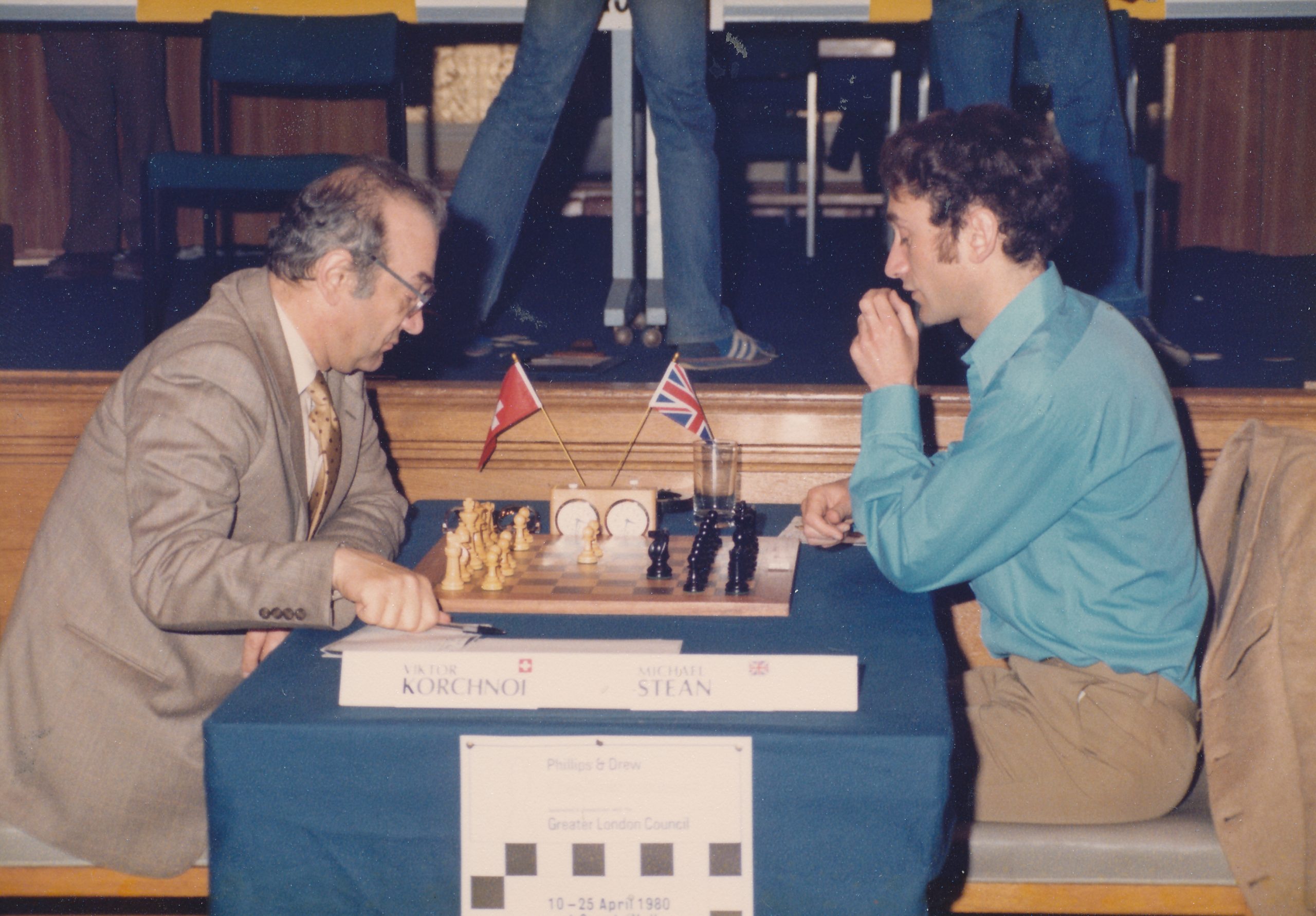
“Stewart was a prime mover in the setting up of the organisation in 1972 which was to grow into the London Chess Association. This was formed in order to reintroduce international chess to London, where there has been no tournament of note since 1948. Since then we have had the Guardian Royal Exchange Masters in the Evening Standard Congress on 1973. Evening Standard Chess Fortnight in 1975, Lloyds Bank Masters since 1977, Lord John Cup 1977, Aaronson Masters 1978 and 1979, the bi-annual Robert Silk, Phillips & Drew 1980, Lewisham since 1981 and the King’s Head International in 1982. ”

His personal catchphrase is “If only I had been consulted earlier”

David at Stewart Reuben's 21st, on Stewart's right (Stewart has the jug) - March 1960. Photograph sourced from ECF Obituary
David at Stewart Reuben’s 21st, on Stewart’s right (Stewart has the jug) – March 1960. Photograph sourced from ECF Obituary

Here is his Wikipedia entry
Jimmy Adams and Stewart Reuben
Richard W. O'Brien and Stewart Reuben working on a bulletin
Richard W. O’Brien and Stewart Reuben working on a bulletin
SR attempting to dance
Stewart looks for material for the arbiters handbook

Here are words written about himself from the rear cover of The Chess Organiser’s Handbook :

“Stewart Reuben is internationally recognised as one of the world’s foremost chess organisers and arbiters. He is currently (1997) Chairman of the FIDE Organisers Committee, Secretary of the Rules and Tournament Regulations Committee, member of the Title and Ratings Committee and the Qualification Commission. He is also past Chairman (1996-1999) of the British Chess Federation. He has officiated at and/or organised numerous top-level events, including the World Championship. He holds three FIDE titles : Arbiter, Organiser and Candidate Master”

The Chess Scene
The Chess Scene
Leonard Barden, Stewart Reuben and Michael Franklin at the 1978 Aaronson Masters
The Chess Organiser's Handbook
The Chess Organiser’s Handbook
London 1980: Phillips and Drew Kings Chess Tournament
Poker 24/7
Poker 24/7

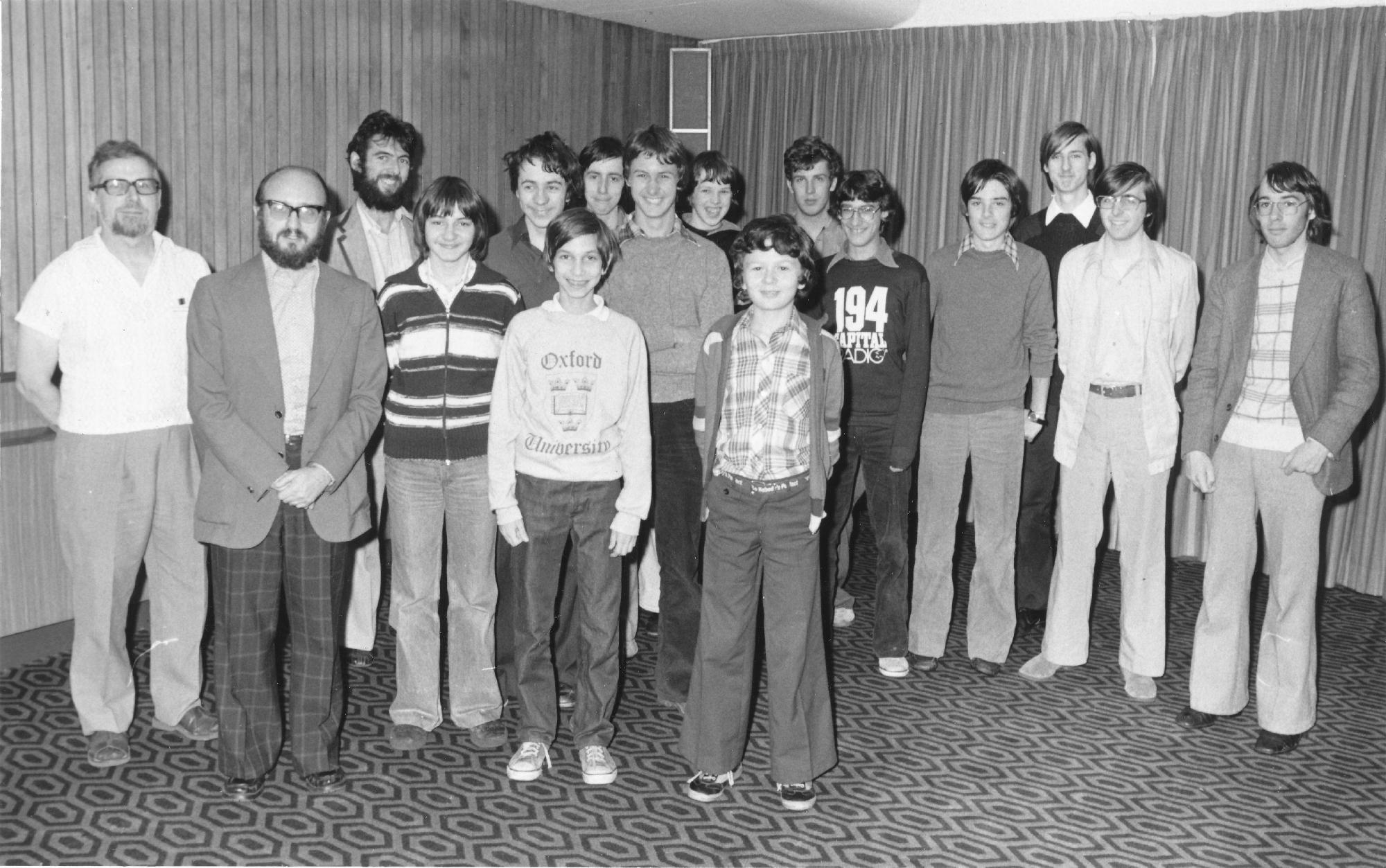
At the Lloyds Bank Masters : Front (l-r) : Joel Benjamin, Ian Wells, Rear : Peter Morrish, Stewart Reuben, Richard Beville, Gary Senior, Richard Webb, John Hawksworth, Andrew King, Nigel Short, Mark Ginsburg, Daniel King, David Cummings, Erik Teichmann, John Brandford and Micheal Pagden

Best Wishes GM Dr. Jonathan Mestel (13-iii-1957)

Best wishes to GM Dr. Jonathan Mestel on his birthday

Early Years

A(ndrew) Jonathan Mestel was born in Cambridge on Wednesday, March 13th 1957. On this day the Presidential Palace in Havana was attacked with the object of killing Fulgencio Batista, the incumbent President.

Jonathan’s parents were Leon and Sylvia Louise Mestel (née Cole) who were married in 1951. Leon was a world-class astronomer and astrophysicist whose PhD supervisor was Fred Hoyle. Jonathan has a brother Ben and sisters Rosie and Leo.

Growing Up

Living in Cambridge he attended Newnham Croft Primary School and at the age six was taught chess by his father Leon. By the age of seven Jonathan was matching his father and not long afterwards he was beating him consistently. East Cheshire Chess Club was his first club and therefore the opportunity to play adults other than his father.

MGS and Beards

The Mestel family moved to Manchester in around 1967 and Jonathan attended Manchester Grammar School along with chess players Emmanuel Rayner and Ian Watson. Famously he grew a substantial beard and moustache and apparently “they (MGS) disapproved of it” resulting in a ban until the beard was removed. Jonathan duly obliged and returned to school but was sent home once more since he had retained the moustache: “They did not mention the moustache!” we are told. A further ban was resolved when the offending item was also removed.

Mathematics

Jonathan obtained a PhD in mathematics from Trinity College, Cambridge and the associated thesis was entitled “Magnetic Levitation of Liquid Metals”.

Jonathan is Professor of Applied Mathematics at Imperial College London. As well as teaching, his research interests include magnetohydrodynamics and biological fluid dynamics.

Marriage

In the third quarter of 1982 Jonathan married Anna O’Donovan in Cambridge and they soon settled in the central Cambridge area where they remain to this day. They have a son, David. Sadly, it was reported in The Problemist that Anna passed had away on December 26th, 2022.

Bridge

Jonathan has represented England at bridge joining a group of English players such as Peter Lee and John Cox who also represented their country at bridge. Paul Littlewood, Paul Lamford and Natasha Regan are amongst many others who have combined bridge and chess to a high level . Here is Jonathan’s English Bridge Union page. He remains highly ranked in the bridge world to this day.

Jonathan noted:

I should mention that all my hair fell out for no obvious nor serious reason – neither my bidding nor partner’s dummies are responsible. Few would argue with that last statement.

Serious Chess & Prize Money

His earliest recorded appearance in chess databases is from the Rhyl based British Under-14 championship in 1969 where he beat DA Winter. The eventual winner of that event was  Jonathan Speelman. Jonathan M. recounts that he shared 3rd place with two others and that the prize allotted to the three of them was a whopping £2 10s to be divided equally. This amounted to 16s 8p each. Since the entry fee was 15s it meant he had cleared a notable profit of 1s and 8 pence!

The following year all British Championships competitors were sent to Coventry and Jonathan and Jonathan shared the Under-16 title whilst Bob Wade won the main event with 8/11.

1971 was no less successful and Jonathan travelled to the location of England’s Eiffel Tower (Blackpool) returning home with the British Under-18 title. Jonathan mentioned that he should have entered the Under-21 event instead.

Jonathan Mestel during the 1972-73 Hastings Premier. Source : BCM, page 56.
Jonathan Mestel during the 1972-73 Hastings Premier. Source : BCM, 1973, page 56.

First British Championship

Brighton 1972 was Jonathan’s first appearance in the “main event” having  broken the record for the youngest qualifier. This record was later broken by Richard Webb and then by Nigel Short. His final score was a creditable 6.5/11 giving him =5th overall aged 15 years and seven months. In 1972 this was an incredible achievement. Regrettably, these days achievements such as this appear to pass unreported.

At Eastbourne 1973 he was =7th with possibly the best hair cut of anyone:

English chess player and mathematician Jonathan Mestel during the British Chess Championships at Eastbourne, East Sussex, UK, 14th August 1973. (Photo by Evening Standard/Hulton Archive/Getty Images)

International Events

1974 was a breakthrough year internationally as Jonathan won the (unofficial) World Cadet Championship in Pont Sainte Maxence in southern France. The following year IM David Goodman followed up by winning the same title.

Partial Crosstable for the 1974 (unofficial) World Cadet Championship.

Interestingly travel arrangements for the above event were not so smooth as was the crossing of the English Channel. The hovercraft broke down; Jonathan arrived much later than anticipated and unable to find civilised accommodation leading to an Orwellian style “Down and Out in Paris” sleeping arrangement in a Paris gutter.

At Clacton 1974 Jonathan was one of seven who finished on 7/11, the title going to George Botterill after an all-play-all play-off in Wales.

1975 started well with a bronze medal in Tjentiste (former Yugoslavia now Bosnia Herzegovina) for the World Junior Championship (happening at the same as the British in Morecambe preventing a 1975 British Championship appearance).

Partial Crosstable for the 1975 World Junior Championship in Tjentiste

First IM Norm

1976 brought further success at Portland School, Edgbaston with a first place scoring 8/10 and an IM norm in the Birmingham International tournament:

Full Crosstable for the 1976 Birmingham International

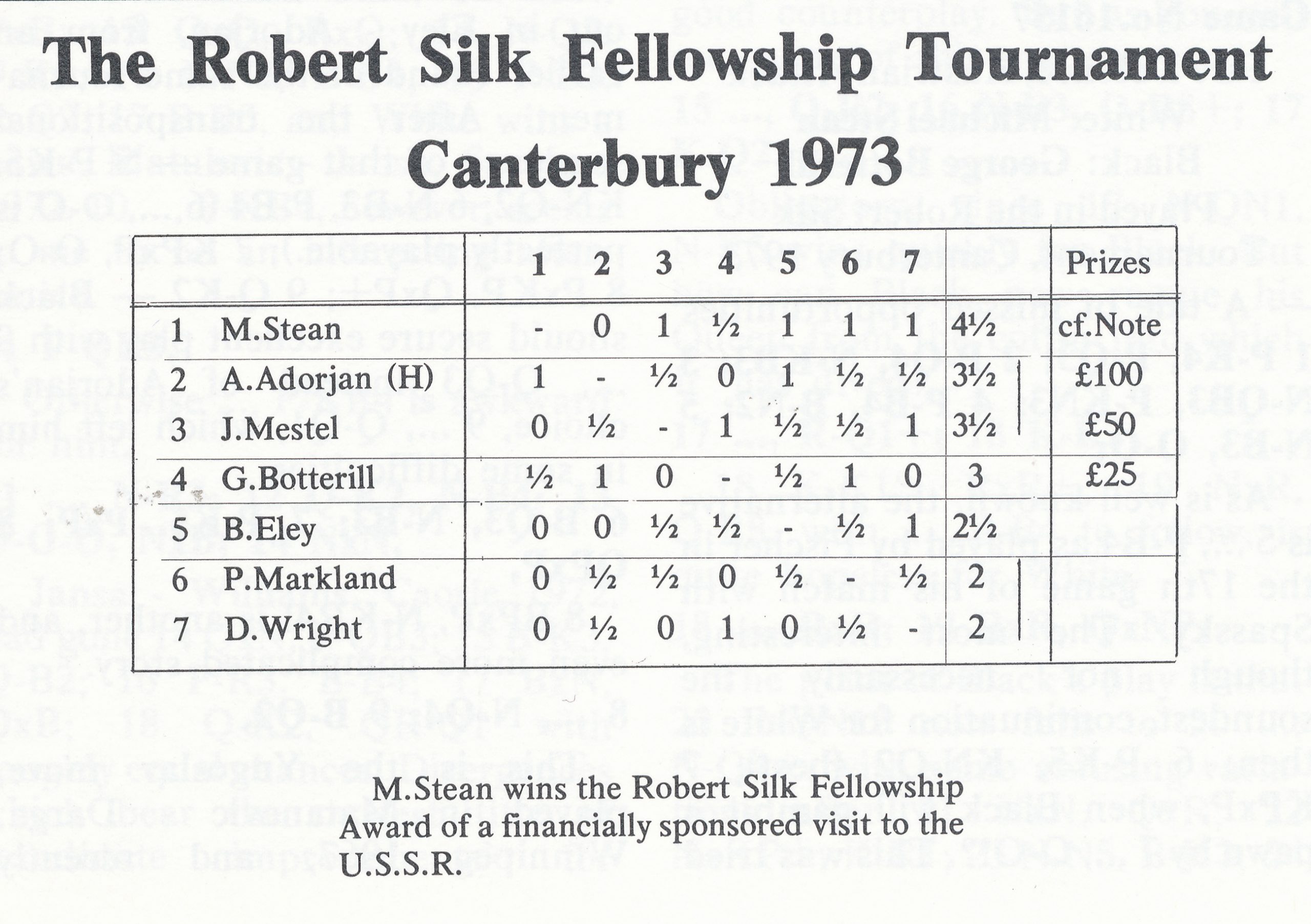
and here is a sparkling game from the 1976 Robert Silk Fellowship Tournament:

British Champion

Jonathan followed this at the Portsmouth 1976 British Championships with a splendid outright first place with 9.5/11 , the highest score since Malik Mir Sultan Khan in 1933. Also, nine consecutive wins from the starting gun  was most definitely a record!

British chess player and mathematician Jonathan Mestel, August 1976. (Photo by Fresco/Evening Standard/Hulton Archive/Getty Images)

Leonard Barden assessed Mestel’s performance this in the Guardian:

“Jonathan Mestel’s reaction at Portsmouth to become British Champion at age 19, the youngest ever, and with a record series of nine wins, was characteristically low-key. He declined an interview with BBC’s World at One in favour of a continued sojourn on the beach, declined an invitation to the Chorley Congress (where the inducements for him to play were rumoured to include a chauffeured Rolls-Royce from station to town hall, and where the points might well have enabled him to overhaul the leader in the £1,000 Cutty Sark Grand Prix) in favour of a holiday in France, and even ‘declined’ the chance of a record total in the final round when he gifted a pawn in the opening to Whiteley in simple fashion”

Barden went on to praise Mestel as, along with Miles, one of the two young players ‘with genuine promise of ultimately reaching the world super-class.’

1977 led to the International Master title and in 1982 the Grandmaster title. In reality, the GM title should  have been awarded two years earlier from Esberg 1979 but more on this FIDE blunder later.

In the 1979 Dataday Chess Diary Harry Golombek OBE wrote this:

“I wrote in last years diary that I doubted whether Jonathan would ever change his variability, adding ‘Probably there will always recur this rise to the heights and fall to lower levels.’

To some extent this is still true. But his play in 1977 and 1978 has shown a greater firmness of purpose and revealed more powers of endurance and stamina than I had realised he possessed earlier on. Thus, for instance, in the last round of the European Team Championship finals at Moscow in 1977, playing the black pieces against the West German master Kestler, he was the last to finish and he defeated his opponent after nearly 12 hours play and some 105 moves.

At the Praxis British Zonal in February 1987 here at the roman baths. Murray Chandler, Jonathan Speelman, and Jonathan Mestel

He is one of our players who is nearing the grandmaster title, both in play and, as it were, in figures. At the Lord John Cup Tournament in London, September 1977, he obtained the g.m. norm by coming equal 2nd with Quinteros and Stean below Hort. He did this with a score of 6 when 5.5 would have been sufficient for the norm.

Full crosstable from the Lord John Cup 1977

To my mind he is the ideal tournament competitor since he can always be relied upon to delight the onlooker with some fresh and original piece of chess. It is this talent which makes me think there is practically no limit to the heights he may attain as a player.

England plays Italy at Haifa 1976. Miles played Tatai, Keene played Toth, Hartston played Grinza and Mestel played Micheli

In the following game, played at the European Team Championships at Moscow 1977, Mestel gives signs of a new and mature sureness of purpose, whilst retaining all his incisive and ambitious qualities.

Beating the Russians

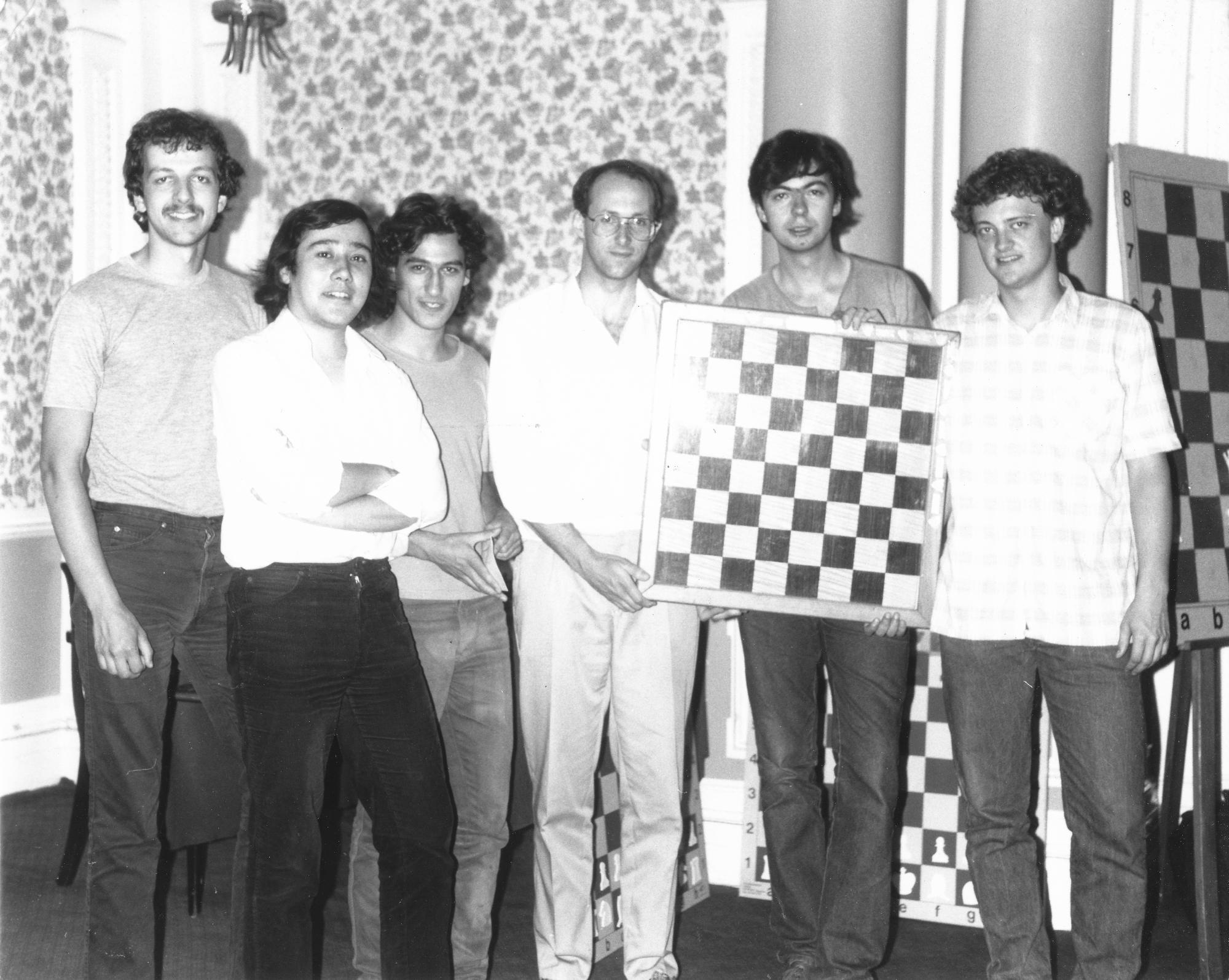
In 1978 Jonathan was part of the English team of Mestel, Speelman Taulbut, Goodman and Jonathan Kinlay that travelled to Mexico and won  the World Under-26 Student Team Championships. This was a huge achievement as beating the USSR in a chess team event simply did not happen. It is not clear even that the Russian team were all bona fide students: some looking decidedly unstudent like!

(from l-r) Jonathan Kinlay, Shaun Taulbut, Jonathan Speelman, David Goodman and Jonathan Mestel accepting 1st prize at the 1978 World U26 Student Olympiad in Mexico City

The splendid Aztec calendar trophy you can see Jonathan clutching above was taken back to England and generously donated to Bob Wade who, in turn, wrote in his will that it should be returned to Jonathan. To this day this wonderful trophy proudly lives with Jonathan and Anna in their house in Cambridge.

When is a Norm not a Norm?

From British Chess (Pergamon Press, 1983), Botterill, Levy, Rice and Richardson we have this appreciation by George Botterill:

“The tournament at Esbjerg in 1979 was a bitter-sweet experience for Mestel. He won many fine games on the way to sharing first place with the hefty score of 9.5 out of 13.

Full Crosstable for 4th (1979) Esbjerg North Sea Cup

But the real prize for which he was competing was the final norm that would have completed his qualification for the title of grandmaster. In the last round a draw would have been sufficient, but it was not day for peaceful negotiation since his adversary was also his nearest rival, Vadasz, who needed to win in order to tie for first place.

The nervous strain of having two aims in sight, first place and the coveted norm, told on Mestel who played rather beneath himself to lose. It was some consolation that the following victory over Finland’s leading player was hailed as the best game of the tournament.”

If the previous game gives you the idea that Mestel is especially skilled in the handling of an attacking phalanx of pawns, just take a look at this contribution to England’s bronze-medal result in the 1980 European Team Championship.

It is nice to be able to conclude that since the above was written Mestel’s chess status has changed and the story of his near miss at Esbjerg in 1979 turns out to have a happy ending. His GM title was ratified by the FIDE Congress at Lucerne 1982*.”

*It transpired that the initial norm calculation in 1979 was incorrect and it should have been awarded after all. Better late than never!

Quite a good day!

Jonathan recounts that on St. George’s Day (April 23rd) 1982 he had an important interview in the morning in Cambridge which went very well followed by round eight of the Phillips and Drew Masters at the GLC in London against Lajos Portisch. Here is that game:

So quite a good day all in all!

From The Oxford Companion to Chess (OUP,  second edition, 1996) by Hooper & Whyld:

“English player, British Champion 1976, 1983 and 1988, World Under-18 Champion 1974, International] Grandmaster (1982). In the 1976 British Championship he made a record by winning 9 successive games. Mestel’s opportunities for master play are infrequent – he is a lecturer at a University; he scored perhaps his best at London 1977 when he was second ( +4=4—1) equal with Quinteros and Stean after Hort, and he has played several times in the English Olympiad team since 1976. Mestel also an outstanding solver of chess problems, has represented his country in world team solving championships, and was awarded the title of International Solving Master in 1986”

Jonathan Mestel flanked by John Nunn and Ray Keene

From The Encyclopaedia of Chess (Batsford, 1977), Harry Golombek wrote :

“British Master and British Champion 1976, who was born in Cambridge and packed into the three years 1974-6, in the period of time when he grew from seventeen to nineteen, more chess and more success than most people achieve in a long lifetime.

He first made his presence felt in the international field when he won the cadet championship at Pont Sainte–Maxene in France in 1974. This was an unofficial world under-18 championship and he confirmed this good impression by very nearly winning the British Championship in Clacton in the same year. He figured in a seven-way tie for first place but failed to win the play-off for the title.

Jonathan Mestel
Jonathan Mestel

The next he gained his first international master norm at the Birmingham international tournament where he finished equal second with Matera (USA) and Miles (England), a point below Matulovic of Yugoslavia whom he beat in their individual game.

He was little disappointing in the World Junior Championship at Tjentiste in Yugoslavia in 1975 in which he came third below the Russian Chekov and the US player Larry Christiansen. It was thought that, talented though he was, Mestel lacked stability and was too variable in his form to achieve the highest honours.

But the next year, 1976, was to show that was quite a false appreciation of his talents and character. First in April he won and international tournament which, if not as strong a the previous Birmingham, was still touch event to win ahead of the Yugoslav Grandmaster Damjanovic.

Jonathan Mestel
Jonathan Mestel

Then came a most remarkable achievement in the British Championship at Portsmouth where he won his first nine games in succession thereby winning the title and establishing a record for the British Championship with his run of victories.”

A. Howard Williams, Martyn J. Corden, Paul E. Littlewood and A. Jonathan Mestel

Mestel has his own named variation in the Giuoco Piano first played in Mestel-Doyle, Dublin 1975:

Olympiads and Team Events

According to Wikipedia : “Between 1976 and 1988, he was a frequent member of the English Chess Olympiad squad, winning three team medals (two silver and one bronze). In 1984, he earned an individual gold medal for an outstanding (7/9, 78%) performance on his board. Other notable results for English teams occurred in 1978 at the World Student Olympiad in Mexico and at the 1983 European Team Chess Championship in Plovdiv. Both of these events yielded gold-medal winning performances, the latter being exceptional for the highest percentage score (6/7, 85%) on any board. As a player of league chess, he has been a patron of the 4NCL since its earliest days and represented The Gambit ADs in the 2008/9 season.” Jonathan revealed that his most pleasing OTB performance ever was that of Plovdiv.

Solving and Composition

Jonathan has maintained a long time interest in problems and studies, both solving them and composing them.  In 1986 he was awarded the International Master title for solving and in 1997 the International Grandmaster title for solving and in the same year he won the World Chess Solving Championship.

Jonathan Mestel at the 2014 Winton Capital British Solving Championships at Eton College, Courtesy of John Upham Photography

He has represented England in the World Team Solving Championships on many occasions winning in 1986, 1990 (shared with USSR), and then a run of 2005, 2006 and 2007.

The successful 2010 England team in the World Solving Championships of David Friedgood, John Nunn, Jonathan Mestel and Colin McNab

He has played many times in the Lloyds Bank and (now) Winton Capital sponsored British Solving Championships (quite often located at Eton College, Berkshire). He has won the individual title firstly in 1982-83 and then a further 17 times not to mention many times as runner-up.

Winners of the Lloyds Bank 1987-8 British Solving Championships: (l-r) David Friedgood (runner-up), Sir Jeremy Morse, Jonathan Mestel (winner) and Jonathan Lennox (third-place)

Here are a few examples:

Firstly a prize winning study…

J. Mestel
1.p Niekarker Kruujebitter Ty (tt), 2006

[FEN “8/4pP1k/5q1p/4p3/ppQpP3/3K1pp1/2P5/6R1 w – – 0 1”]

White to Play
and Draw

SOLUTION

1.Qe6! [1.Qc8? Qxf7] 1…Qxe6 2.f8Q [2.f8N+? Kh8! (2…Kg8? 3.Nxe6 g2 4.Nxd4 exd4 5.Kxd4) 3.Nxe6 g2] 2…f2 [2…Qa6+ 3.Kd2 Qe2+ 4.Kc1 Qe3+ 5.Kb2] 3.Rxg3 f1Q+ [3…Qa6+ 4.Kd2 f1N+ 5.Kc1 Nxg3 6.Qf7+] 4.Qxf1 Qa6+ 5.c4! bxc3+ [5…dxc3+ 6.Ke3! (6.Kc2? b3+!) 6…Qxf1 7.Rg7+ Kh8 8.Rg8+ Kh7 9.Rg7+ Kxg7] 6.Kc2 Qxf1 7.Rg7+ Kh8 8.Rg8+ Kh7 9.Rg7+ Kxg7 ½-½

and another study:

and another:

and

and

and now a problem:

Jonathan Mestel
British Chess Magazine, 2007

#3, 7+6

GM Jonathan Mestel at the 2016 Winton Capital British Solving Championships at Eton College, Courtesy of John Upham Photography

Here is his staff page from Imperial College, London

and his personal page may be found here

A.J.Mestel. Not Your Ordinary Grandmaster. by Neil Blackburn (aka Simaginfan).

Here is his Wikipedia entry
Remembering IM William Fairhurst CBE (21-viii-1903 13-iii-1982)

Remembering IM William Fairhurst CBE (21-viii-1903 13-iii-1982)

From The Anglo-Soviet Radio Chess Match by Klein and Winter :

“WA Fairhurst is a North Country man, born in Cheshire in 1903, but he has lived the best part of his life in Scotland. He has been Scottish Champion of many years running, and once captured the British Championship. In his last tournament, London, 1946 he failed to get into the prize list. He is, however, a fine tactician, original in opening play and a dangerous opponent to contend with.

By profession he is a civil engineer and has left his mark as a designer of a special framework for pre-fabricated houses.”

IM William Albert Fairhurst CBE (21-viii-1903 -13-iii-1982) Source : The Anglo-Soviet Radio Chess Match

From The Encyclopedia of Chess by Anne Sunnucks :

“International chess master, British Champion in 1937 and Scottish Champion in 1932, 1933, 1934, 1936, 1937, 1938, 1946, 1947, 1948, 1949 and 1962.

Born in Alderney Edge in Cheshire on 21st August 1903, Fairhurst taught himself to play chess from books on the game, when he was 13, when he was 18 he won the Cheshire Championship.

His first major international success was at Scarborough in 1927, where he tied for Yates for 2nd prize, ahead of Bogoljubov, Sir George Thomas, Buerger, among others.

In 1931 he went to live to Scotland, quickly established himself as a leader of Scottish chess and played a major role in agreements between the British Chess Federation and the Scottish Chess Association. In 1932 he gave a blindfold simultaneous display, winning nine games and drawing three, in the Polytechnic Club in Glasgow, and in 1933 he drew match of six games against Eliskases.

Fairhurst has represented Great Britain in matches against Czechoslovakia and the USSR in 1946 and 1947; against the Netherlands in 1937, 1938, 1949 and 1952 and against the USSR in 1954. He also played in the Great Britain v. Australia radio match in 1947. He has represented Scotland in six chess Olympiads, those of 1933, 1956, 1958, 1964, 1966 and 1968.

Scene at London. From left to right - Seated : Fairhurst, List and Winter in play. Standing König and Sir George Thomas
Scene at London. From left to right – Seated : Fairhurst, List and Winter in play. Standing König and Sir George Thomas

At Hastings in 1947 he came 5th and went through the tournament without losing a game.

IM William Fairhurst CBE (21-viii-1903 13-iii-1982)

Senior partner of a leading firm of engineers and designer of the new bridge over the River Tay at Dundee (the longest river crossing in Europe), Fairhurst was Chairman of the Scottish Branch of the Institute of Structural Engineers and author of Arch Design Simplified. He was also a member of the Royal Fine Art Commission for Scotland.”

In the March issue of CHESS for 1963, (Volume 28, Number 427, pp.147-155)  William Winter wrote this:

An Englishman turned Scot

Fairhurst, British champion in 1937, and umpteen times champion of Scotland is happily still in practice. He is a fine player well equipped in all departments of the game and would undoubtedly have done much more than he did but for the claims of business. Born in Lancashire he is now domiciled in Scotland and has become more Scottish than the Scots themselves. He caused me great trepidation during the Buxton congress in 1950, when he picked me up in his motor-car and drove at high speed down a spiral road with a precipice on one side while he declaimed about the tenets of the extreme wing of Scottish Nationalism. I have myself a good deal of sympathy, with the aspirations of the movement but I am sure this was not the way to make a convert. He still plays for Lancashire in the British Counties’ championship and it was in this competition that I met him at Manchester in 1953. I little thought as I sat down at the board that this was to be the last match-game I would ever play. I am glad to say that it was a good one.;

Arch Design Simplified

Here are his games

Here is his Wikipedia entry
According to Edward Winter in Chess Notes WAF lived at the following addresses :

  • 53 Northern Grove, West Didsbury, Manchester, England (correspondence championship pairing-notice, 1924*).
  • 6 Capel Avenue, Newton Mearns, Scotland (Hastings and St Leonards Chess Club visitors’ book, 1 January 1938*).

Remembering William Potter (27-viii-1840 13-iii-1895)

Death Anniversary of William Norwood Potter, (27-viii-1840 13-iii-1895)

William Norwood Potter

Here is his Wikipedia entry
From The Oxford Encyclopedia of Chess by Hooper & Whyld :

“Leading English player of the 1870s, barristers clerk. He met strong opposition in only one tournament, London 1876, when he took third place after Blackburne and Zukertort. In match
play he lost to Zukertort in 1875 ( + 2=8—4) and drew with Mason in 1879 ( + 5=11—5). Potter was editor of the London Chess Magazine (1874-6)

The London Chess Magazine

and wrote for the Westminster Papers and Land and Water, contributing annotations of a high standard to all three journals. He played a part in the development of new ideas attributed to Steinitz, with whom he established a firm friendship and to whom he may have shown the ideas of the English School (see schools of chess), in 1872 the London Chess Club, represented by Blackburne, Horwitz, Lowenthal, Potter, Steinitz, and Wisker, began a correspondence match of two games against a Viennese team led by Kolisch for stakes of £100 a side, (The moves were sent by telegraph and confirmed by letter.) Unable to accept the ideas of Potter and Steinitz, the rest of the London team soon withdrew, leaving these two to play on. They won the match. Subsequently Steinitz declared
that ‘modern chess’ began with these two games.

The City of London Chess Magazine

The Potter Variation in the Scotch is :

n.b. The Potter Memorial correspondence tournament was named after Reginald Potter, a past president of the BPCF.

William Norwood Potter, (27-viii-1840 13-iii-1895) from Howard Staunton, The English World Chess Champion

Happy Birthday IM Peter Large (02-iii-1956)

Peter Graham Large (Front row , far left)

BCN wishes Happy Birthday to IM Peter Graham Large (02-iii-1956)

Peter is a solicitor by day and originates from Bromley in Kent and plays for Epsom Chess Club in the Surrey League.

Peter was Southern Counties (SCCU) champion for the 1979-80, 1987-88 and 1990-91 seasons.

He became an International Master in 1987 and his peak rating (according to ChessBase) was 2370 in July 1986.

Peter is known as Plimsol on Chess.com !

IM Peter Graham Large aka Plimsol

A highlight of Peter’s career was coming 1st= with Paul van der Sterren at the 1980 Philips & Drew IM Tournament with a performance of 2723. Peter shared 1st place with Darryl Johansen with 10/14 at the 1984 London Philips & Drew Knights.

At Hastings 1986/1987 he scored this win over Eduard Gufeld :

and this nice attack against Andrew Muir :

and this exciting game from the 1990 Suffolk Open provided by Tony Rubin :

Happy Birthday GM Stuart Conquest (01-iii-1967)

GM Stuart Conquest
GM Stuart Conquest

BCN sends Birthday wishes to GM Stuart Conquest on his birthday this day in 1967.

Stuart was born in Ilford and this is where he spent his early years playing starting at the age of 8.

Since 2011 has taken the role as Director of the Gibraltar International Chess Festival, and has  returned to the UK this summer.

GM Stuart Conquest at the 2021 Pro-Biz Cup, RAC Club, Pal Mall, London. Courtesy of John Upham Photography

Here is his Wikipedia entry
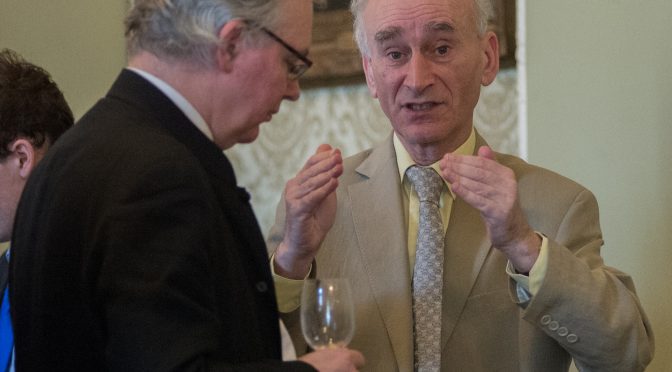
This was written about Stuart aged 11 prior to the Spassky vs the BCF Junior Squad simultaneous display :

“Hastings. Rating 178. World’s best 11 year old. 100% on board 1 for England, Eumig European children’s cup, 1978.”

Neil Carr (front right)
England’s under-12 junior teams finished first and second in the international Eumig Cup, 1981.
Front row: Peter Morrish (organiser), Jimmy Hockaday, Darren Lee, Neil Fox, Neil Carr. Second row: James Howell, Stuart Conquest, Teresa Needham. Far right: LB.
Stuart Conquest (far left) at Paul Buswell's house
Stuart Conquest (far left) then Darren Lee, Neil Fox and Neil Carr.

Stuart won the inaugural World Under 16 championship in Embalse, Córdoba, Argentina under the tutelage of IM Čeněk Kottnauer

Stuart Conquest
Stuart Conquest