Tag Archives: British

Happy Birthday IM Richard Tozer (01-iii-1970)

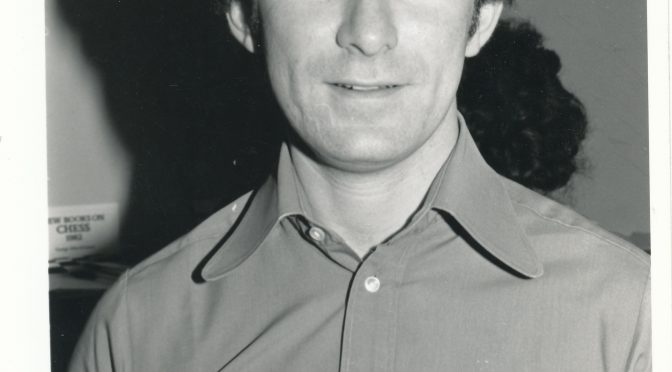
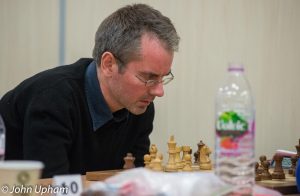
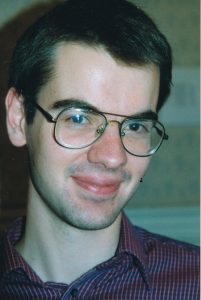
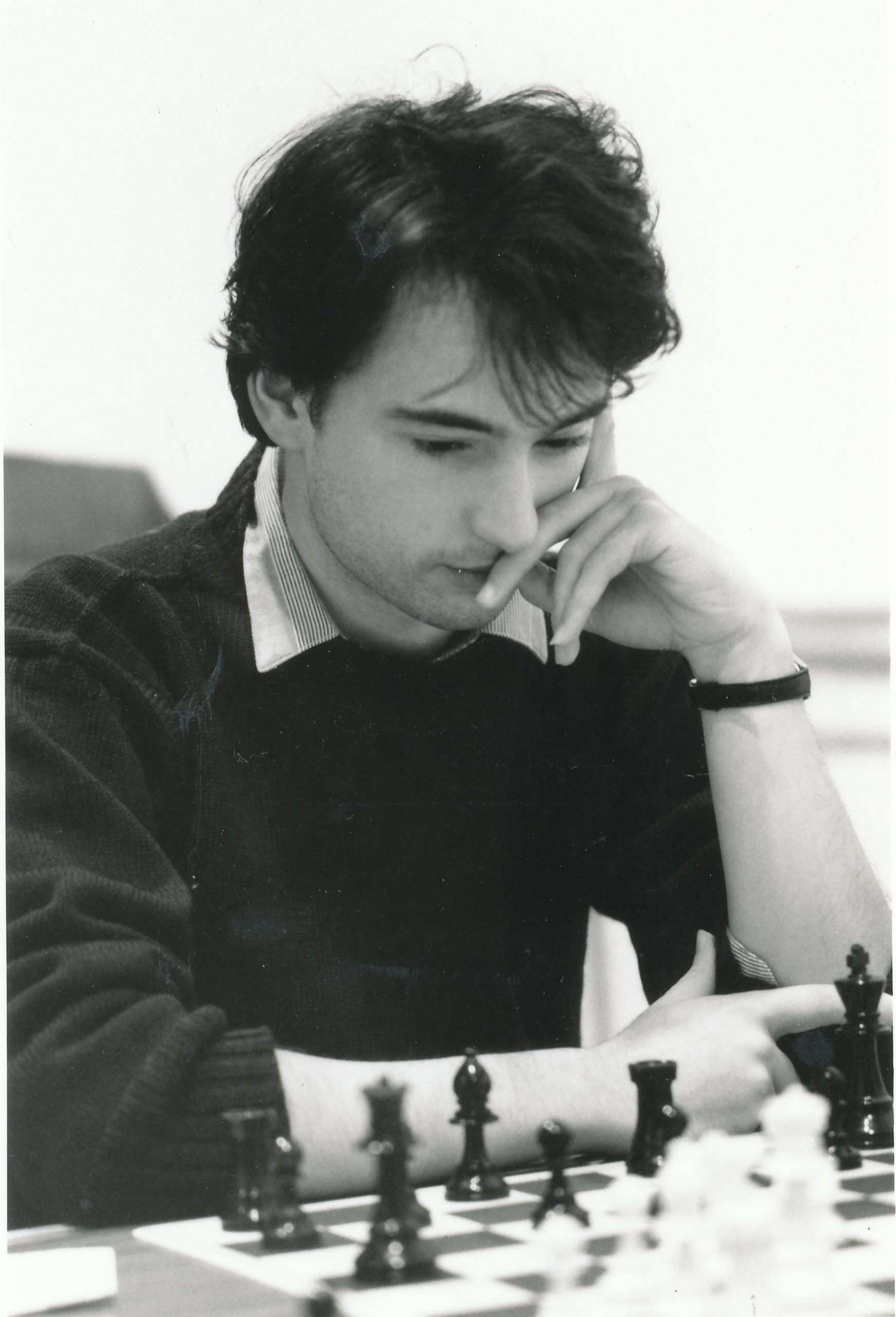
IM Richard JD Tozer
IM Richard JD Tozer

Birthday of IM Richard John D Tozer (01-iii-1970)

Richard became a FIDE Master in 1989 and an International Master in 1995. According to Felice his peak rating was 2400 in January 1996. He has played for White Rose in the Four Nations Chess League. He currently plays for Cambridge City and maintains a 222 ECF grading.

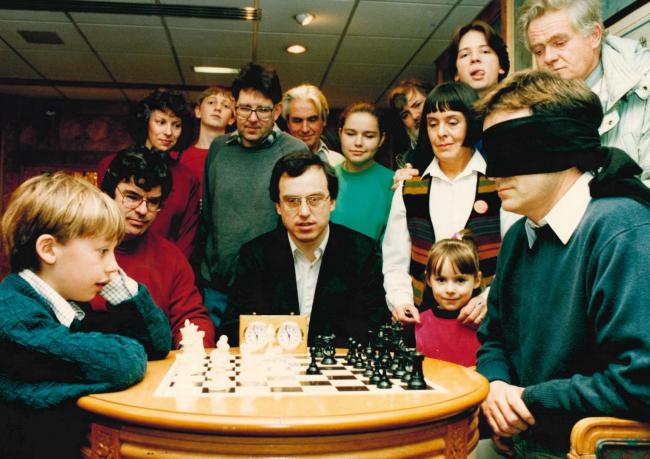
The Cambridge Examiners Team

Happy Birthday IM David Goodman (25-ii-1958)

IM David Goodman
IM David Goodman

Happy Birthday to IM David Simon Charles Goodman (25-ii-1958)

David became an FM in 1980. His peak rating was 2410 in January 1986.

From Chessgames.com :

“David Simon Charles Goodman was awarded the IM title in 1983. He was World Under 18 Champion in 1975. He played #10 on the English national team in Moscow.
He currently resides in New York City where he is a chess trainer for promising young students.”

Here is his Wikipedia entry

IM David Goodman
IM David Goodman

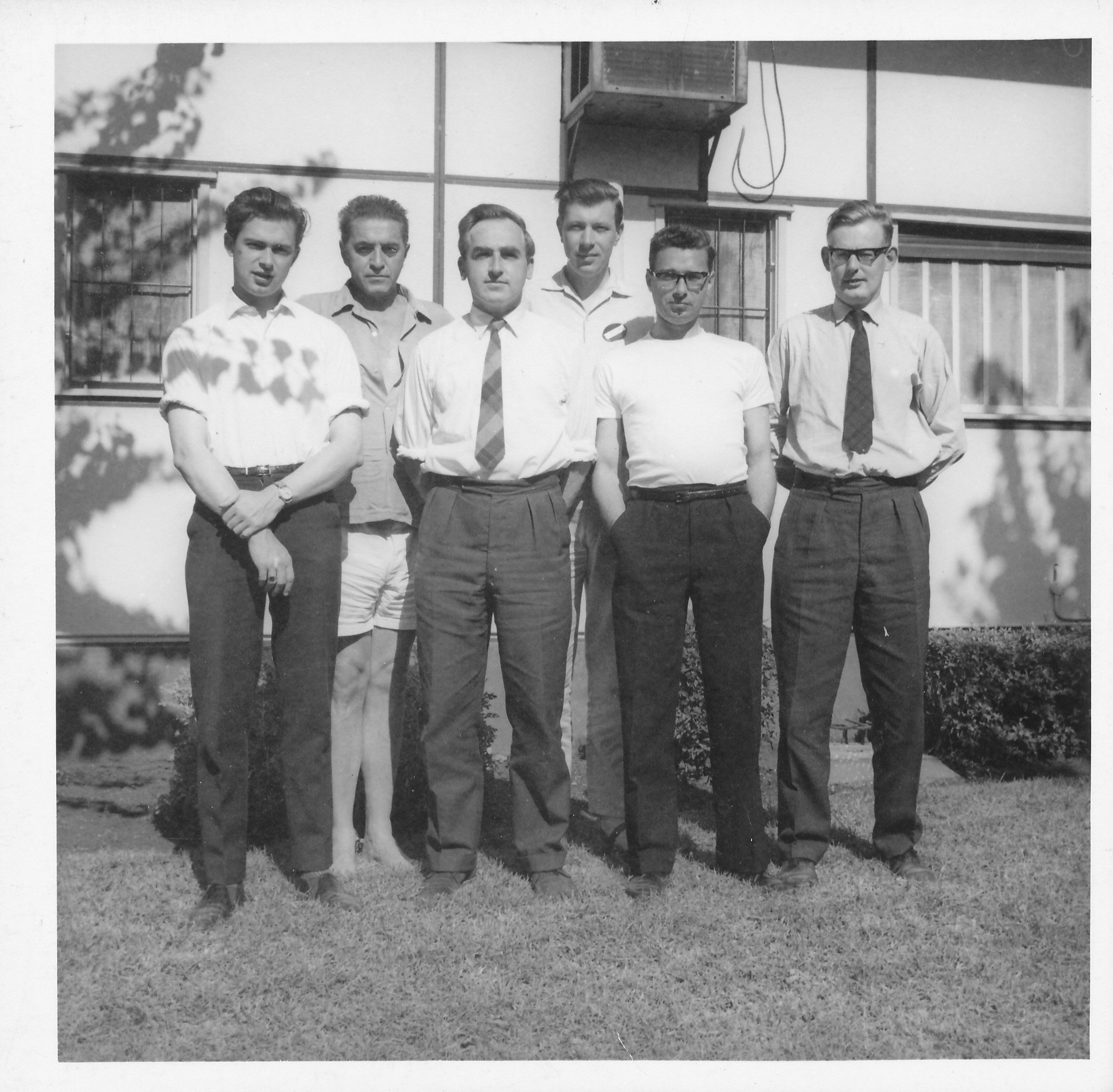
(from l-r) Jonathan Kinlay, Shaun Taulbut, Jonathan Speelman, David Goodman and Jonathan Mestel accepting 1st prize at the 1978 World U26 Student Olympiad in Mexico City
Shaun Taulbut (upper right) and David Goodman (lower right) from the 1978 U26 Olympiad

Remembering GM Jacques Mieses (27-ii-1865 23-ii-1954)

BCN remembers GM Jacques Mieses who passed away on February 23rd, 1954 aged 88. He was buried on the 25th of February at the East Ham Jewish Cemetery in Section J, Row 18, Grave 1100. We hope to update his burial record with these details when we are allowed to do so.

Jakob Jacques Mieses was born on Monday, February 27th 1865 in Leipzig in the German state of Saxony. He came to England in 1939 and was recorded in the UK Internees Index for 1939 – 1942 on 25th April 1939 :

Home Office internment record for Jakob Jacques Mieses, 25th April 1939
65 Oakleigh (now Oakley) Square, London, NW1

At the time of the 1939 register Mieses was recorded as living at 66, Oakley Square, St. Pancras, Camden, London, NW1 and he is listed as a Professional Chess Player.

By the time of Hastings 1945 (27th December) Jacques had relocated to :

8 Fitzjohns Avenue, London NW3 5NA

On June 7th 1947 he was granted Naturalisation Certificate AZ27326.

In 1950 he was one of the twenty-seven first players to be awarded the Grandmaster title by FIDE. He was therefore the first British National to be awarded the Grandmaster title for OTB play. The next (Tony Miles) would be twenty-six years later.

He has The Mieses Opening named after him :

which never really caught on to any significant degree.

In the Scotch Game (a favourite of his with both colours) we have The Mieses Variation :

and in the Vienna Game The Mieses Variation is :

and in the Centre Counter or Scandinavian Defence we have the Mieses Variation:

and finally, also in the Centre Counter or Scandinavian Defence we have the Mieses Gambit:

From The Encyclopaedia of Chess (Robert Hale, 1970 & 1976), Anne Sunnucks :

“International Grandmaster. Born in Leipzig on 27th February 1865, Jacques Mieses was educated at Leipzig University and in Berlin. He came to England as a refugee from Nazi Germany shortly before the 1939-1945 war and eventually became a naturalised British citizen.

The early part of his chess career was devoted mainly to the study of chess theory and to chess problems. It was not until he was 23 that his tournament career really started with a tie for 2nd place at Nuremberg 1888, followed by 3rd at Leipzig 1888.

Jacques Mieses. Source : Chess Notes by Edward Winter

Over the next 50 years, he played in numerous tournaments with varying degrees of success. His addiction to speculative rather than sound openings and his attempts to combine playing in tournaments with reporting them were possibly responsible for his inconsistent results. Within a few months of one of the greatest performances of his career, when he came lst at Vienna 1907, ahead of Duras, Maróczy, Tartakover, Vidmar, Schlechter and Spielmann,

Full crosstable for Trebitsch Memorial, Vienna 1907

he came no higher than =16th at Carlsbad. In 1923 he achieved another great success when he came lst at Liverpool, ahead of Maróczy, Thomas and Yates.

Full crosstable for Northern Counties Congress Premier, Liverpool, 1923

While his style of play prevented him from reaching the greatest heights as a tournament player, it was also responsible for the numerous brilliancy prizes which came his way, one of the last being at the 1945 Hastings Congress, when he was 80.

Among the many books which Mieses wrote were The Chess Pilot,

The Chess Pilot, Jacques Mieses, Williams & Norgate. London. 1947. First Edition

Manual of the End Game

Manual of the End Game, Jacques Mieses, G. Bell and Son Ltd., London, 1947

and Instructive Positions from Master Chess.

Instructive Positions from Master Chess, Jacques Mieses, George Bell and Sons Ltd., London, 1951

A very popular player, Mieses had a ready sense of humour. On one occasion, when he was in New York, he was asked by an American who mispronounced his name “Sind sie Mister Meises?”, ” No sir,” he promptly replied “Ich bin Meister Mieses.” On another occasion, when submitting an article in German to a British magazine, he could not resist asking ” Don’t you think my German is very good for an Englishman?”

On his eightieth birthday, a dinner was held in his honour in London and he was presented with a cheque by his numerous chess friends and admirers. The speech he made on this occasion was later quoted in most of his obituaries:

I have been told that a good many people never reach the biblical span of three score years and 10; and those who do-so some most reliable statistics assure us-are most likely to die between 70 and 80. Hence, I dare say, ladies and gentlemen, that I for one have now passed the danger zone and may well go on living for ever.

He lived for nearly nine more years, taking his daily swim in the Serpentine in Hyde Park or some open-air swimming pool, until only a few days before his death. He died in a London nursing home on 23rd February 1954 and was buried in the East London Jewish Cemetery.”

Jacques Mieses
Jacques Mieses

From The Encyclopaedia of Chess (Batsford, 1977) Harry Golombek OBE we have this from Wolfgang Heidenfeld :

“Grandmaster, theorist, problemist, tournament organiser and chess journalist.

Mieses was a spectacular player who won many brilliancy prizes but suffered as many very short defeats. As a a result the German master achieved only one full success in important international tournaments (Vienna 1907), but occupied good places in such events as Breslau 1889 (3rd), Hanover 1902 (4th), Ostend 1907 (=3rd), as well as some smaller events.

In matches he showed a heavy preponderance of losses against the top-notchers, losing to Lasker, Tarrasch, Rubinstein, Marshall, Teichmann (twice) and Spielmann, but he drew with Walbrodt (1894), Janowski (1895) and Caro (1897) and beat Leonhardt, Taubenhaus, and (at the age of 81) Abrahams.

Here is the first game from October 29th 1945 annotated by Mieses from his match with Gerald Abrahams played in Glossop:

In keeping with his sharp style, Mieses preferred such openings as the Vienna Gambit, the Danish Gambit and the Centre Counter-Gambit. Among his lasting achievements are his brilliancy prize games against Janowksi (Paris 1900),

Reggio (Monte Carlo 1903),

Perlis (Ostend 1907)

and Schlechter (Vienna 1908).

Personally a very witty man (and something of a bon vivant) Mieses did not invest his writing with the same sparkle; both as a journalist and author he was rather dry and sober. He edited the eighth edition of the famous Handbuch, several editions of the ‘little Dufresne’, and published several primers as well as a treatise on blindfold play and an anthology Instructive Positions from Master Chess, London, 1938.

One of Mieses’s most important contributions to chess history was the payment of travelling and living expenses during a tournament, which he insisted on when running the famous tournament at San Sebastian 1911 – it was only thenceforth that this procedure became the norm.”

Jacques Mieses
Jacques Mieses

Here is an obituary written by DJ Morgan from British Chess Magazine, Volume LXXIV (74, 1954), Number 4 (April), pp. 107-108 :

Last month we made brief mention of the death, on February 23rd at a London Nursing Home, of the old grandmaster, on the verge of his eighty-ninth birthday. He was the last surviving link with a distant and largely-forgotten era. Mieses entered the international arena in the days of the great Romantics, of Zukertort, Charousek, and Tchigorin. He reached his heyday in the times of Tarrasch, Schlechter, and Maróczy. But he could never assimilate the canons of this Classical School, derived from Steinitz and codified and promulgated by Tarrasch. He preferred the dynamic to the static. He played the Scotch Game in tournaments long after it hat been
discarded by Steinitz and Blackburne; the Danish Gambit and the Vienna became in his hands instruments of great attacking potential. As Black he long favoured the Centre Counter Defence, and with it he brought off a number of thrilling victories in such great tournaments as those of Ostend, 1907, Carlsbad, 1907, Vienna, 1908, and St. Petersburg, 1909.

Nice Masters, 1931. Standing : Daniel Noteboom, Abraham Baratz, George Renaud (Organiser), Telling (Tournament Director), Marcel Duchamp, Brian Reilly (winner), Seated : Eugene Znokso-Borovsky,, Arpad Vajda, Sir George Thomas, Jacques Mieses, Stefano Roselli del Turco, Jacob Adolf Seitz. British Chess Magazine, 1931, page 201

Jacques Mieses was born on February 27th, 1865, at Leipsic, and was educated at the university there, and in Berlin. In the capital he joined, at seventeen, one of the city’s chess clubs, and soon won the first prize in its annual tournament. Nevertheless, his earlier days were devoted mainly to the theoretical side of the game and to problems of which he was a good composer and a phenomenal solver. His public career really began with a tie for second place at Nuremberg, 1888, with the third prize at Leipsic in the same year, followed by a third, behind Tarrasch and Burn, at Breslau, 1889. His subsequent achievements span the years and are recorded in the literature of the game. He played at the famous Hastings 1895 (and was its sole survivor); fifty years later he played at a Hastings Christmas Congress. His preference for the speculative and the spectacular to the then ultra-modern-prevented him from winning the major prizes of the games. As we look up the record’s we can readily see how unpredictable his performances were. Thus, in 1907, a first at Vienna early in the year was followed later by an equal sixteenth-eighteenth at Carlsbad. But his Brilliancy Prizes were numerous: such endings as those v. Janowski, Paris, 1900; v. Reggio, Monte Carlo, 1903 (quoted, incidentally, as Diagram 52 in Fine’s The Middle Game in Chess, but without giving its source); v. Znosko-Borovsky, Ostend, 1907; and v. Schlechter, Vienna, 1908, will always be the delight of anthologists.

Jacques Mieses
Jacques Mieses

As well as playing incessantly in match and tournament, Mieses wrote copiously on all aspects of the game, analytically as well as in a literary manner, in books as well as in magazines. Three of his little books, The Chess Pilot, Manual of the End-game, and Instructive Positions from Master Chess, have enjoyed a long and wide popularity in English.

24th April 1935: J Mieses of Germany in play against PS Milner-Barry during the Premier Tournament of the Kent County Chess Association in the Grand Hotel, Margate. (Photo by F. Sayers/Topical Press Agency/Getty Images)

Two personal memories come to the writer’s mind. We first met him during the Liverpool congress-of 1923 ((1) Mieses, (2) Maróczy). one morning we took a stroll together up Dale Street, a stroll which developed into a tie-hunting expedition, ending up with a fine selection on his part to take back to a Germany emerging from recent disaster. He left the impression of a courteous and cultured man, precise in speech and with something of the military in his bearing. ln 1939, on hearing of his whereabouts, we called at his lodgings in Camden Town one Sunday morning. We were diffidently greeted by a seriously-crippled Mieses, who had recently, under great difficulties, made his exit from a Germany once more faced with disaster.

24th April 1935: J Mieses of Germany in play against PS Milner-Barry during the Premier Tournament of the Kent County Chess Association in the Grand Hotel, Margate. (Photo by F. Sayers/Topical Press Agency/Getty Images)

But the prim and chivalrous personality soon exerted itself. His many English friends rallied round him in his exile, all culminating in the great tribute paid to him on his eightieth birthday. Mon March 15th, 1945, at the Lud-Eagle Chess Club, a large number of friends and admirers gathered to pay their respects. A cheque, subscribed to by members of the club, was presented to the veteran master. He had, he said in his acknowledgement, sought asylum in England, and he had been shown great kindness and sympathy. The final gift was a last resting-place in the East London (Ed : we now know this to be East Ham) Jewish Cemetery. – DJM.

Obituary of Jacques Mieses by DJ Morgan. British Chess Magazine, Volume LXXIV (74, 1954), Number 4 (April), pp. 107-108.

Jacques Mieses
Jacques Mieses

From Chessgames.com :

“Jacques Mieses was born in Leipzig. He won the chess championship of Berlin at the age of 17, and in 1888 he placed joint second at Leipzig and third at Nuremberg.

In 1889 he came third at Breslau (1889). He was, however, rather eclipsed by two great emerging talents – Emanuel Lasker and Siegbert Tarrasch. Mieses was crushed by Lasker in a match – Lasker – Mieses (1889/90) in Leipzig (December 1889 to January 1890). He also performed poorly at 8th DSB Kongress (1893) coming only 7th out of 9 against a field which was relatively weak compared to previous DSB congresses.

1894-95 was a busy period for Mieses. He drew a match with Karl August Walbrodt. (+5, =3,-5) in Berlin (May-June 1894). Mieses then played in the extremely strong 9th DSB Kongress, Leipzig (1894) (3rd-14th September, 1894) coming 10th out of 18. He had then toured Russia giving simultaneous displays, before travelling to Paris to play a match with David Janowski (8th January to 4th February 1895).

Vera Menchik plays Jacques Mieses in their match in 1942


Mieses then crossed the English Channel to play a short match against Richard Teichmann in London (16th – 21st February 1895) which he lost by +1 =1 -4. A month later he played this match, Mieses next professional engagement would be (which was his first tournament outside his own country) came at the famous Hastings event of 1895. Although he finished only twentieth (in a field of 22 players), he soon adapted to this level of play and in 1907 he took first prize at the Vienna tournament scoring ten points from thirteen games.

In 1909, Mieses played a short blindfold match with Carl Schlechter, winning it with two wins and one draw. The very next year Schlechter played Emanuel Lasker for the World Championship and drew the match 5-5.

Mieses tried his hand as a tournament organiser in 1911, putting together the San Sebastian event that marked the international debut of future World Champion Jose Raul Capablanca. Mieses was defeated by one of Lasker’s title challengers, Siegbert Tarrasch, in a match in 1916 (+2 -7 =4). In 1938 Mieses resettled in England and took British citizenship. He was awarded the grandmaster title in 1950.”

Jacques Mieses. Jewish chess master from Germany; 1938 Escape from the Naziregime to England. 27.2.1865 Leipzig – 23.2.1954 London. Simultaneous play in the Bar Kochba club against 25 chess players, in the foreground: Mieses (left) against Felix A. Theilhaber. Photo, undated, around 1935 (Abraham Pisarek).
Jacques Mieses.
Jewish chess master from Germany; 1938 Escape from the Naziregime to England.
27.2.1865 Leipzig – 23.2.1954 London.
Simultaneous play in the Bar Kochba club against 25 chess players, in the foreground: Mieses (left) against Felix A. Theilhaber.
Photo, undated, around 1935 (Abraham Pisarek).

From The Oxford Companion to Chess by Hooper & Whyld :

German-born Jewish player and author from Leipzig, International Grandmaster (1950), International Arbiter
(1951). He never assimilated the positional ideas of Steinitz and Tarrasch; instead he preferred to set up a game with the direct object of attacking the enemy king, a style that brought him many brilliancy prizes but few successes in high-level play. His best result was at Vienna 1907, the first Trebitsch Memorial tournament, when he won first prize ( +9 =2 —2) ahead of Duras, Maróczy and Schlechter. Later in the year he shared third prize with Nimzowitsch after Bernstein and Rubinstein in a 28-round tournament at Ostend. He played 25 matches, mostly short, and won six of them including a defeat of Schlechter in 1909 (+2-1).

Mieses reported chess events, edited chess columns, and wrote several books. In 1921 he published a supplement to the eighth edition of Bilguer’s Handbuch, and he revised several editions of Dufresne’s popular Lehrbuck des Schachspiels, He also organized chess events, including the tournament at San Sebastian in 1911 for which he insisted that competitors were paid for travel and board, a practice that later became normal.

After living in Germany for 73 years he escaped the clutches of the Nazis and sought refuge in England. A prim, courteous, and dignified old gentleman, still upright in bearing, he became widely liked in his adopted country. Asked about his lameness in one leg, caused by a street accident in 1937, he merely answered ‘it was my turn to move,’ Soon after naturalization he became the first British player to be awarded the International Grandmaster title. A generation before him his uncle Samuel Mieses (1841-84) had been a German player of master strength.

In the various publications of Edward Winter there are many and varied references to Mieses. We recommend you consult : Kings, Commoners and Knaves, Chess Facts and Fables and Chess Explorations to read them.

According to Edward Winter in Chess Notes JM lived at the following addresses :

  • Tauchaerstrasse, Leipzig, Germany (Wiener Schachzeitung, July 1904, page 211).
  • Christianstrasse 23, Leipzig, Germany (Düsseldorf, 1908 tournament book, page 176).
  • Wettiner Str. 32, Leipzig, Germany (Ranneforths Schach-Kalender, 1915, page 70).
  • Christianstrasse 19II, Leipzig, Germany (Ranneforths Schachkalender, 1925, page 158).
  • 8 Fitzjohns Avenue, London NW3, England (Hastings and St Leonards Chess Club visitors’ book, 27 December 1945*).

Here is an article by André Schulz of ChessBase

An excellent article from Edward Winter.

Here is his Wikipedia entry.

Remembering Cecil Valentine De Vere (14-ii-1846 09-ii-1875)

We remember Cecil Valentine De Vere (14-ii-1846 09-ii-1875)

From British Chess Magazine, Volume CXXVI (125, 2005), Number 11 (November), page 610:

In Quote and Query #5741 Chris Ravilious wrote:

“When writing their “The English Morphy? The Life and Games of Cecil De Vere (2001)” Owen Hindle and Bob Jones faced some intractable difficulties. Where and in what year was De Vere born? What was his baptismal name? What could be established regarding his parentage and early life? On several of these topics they achieved significant progress but lacunae remained. The absence of a birth certificate was a particular cause for regret.

Owen’s researchers into De Vere’s background have continued and he has now made two further discoveries, the first being the 1861 census entry for 10 Lower Calthorpe Street, St Pancras. This lists Katherine De Vere (Cecil’s mother, aged 36 and born in Wales: her forename was previously uncertain), a 15-year old ‘C.V. De Vere’, a house servant and a lodger. Cecil, employed as a clerk to a West India merchant, is stated to have been born in ‘St Georges’, Middlesex, presumably the parish of St George’s adjacent to Hyde Park.

Owen’s second breakthrough came with the discovery of the elusive birth certificate. From this we learnt Valentine John Cecil De Vere was born on St. Valentine’s Day 1846 (not 1845 as some sources have suggested), at 46 Warwick Street, just to the east of Regent Street. (While not in St George’s Parish, Warwick Street is near enough for the divergence between this and the census return to be readily explicable) Valentine’s mother’s name is entered as Catherine Matthews and by a clerical slip-up the same appellation appears under ‘name of father’, where it has been crossed through and replaced by a mysterious ‘No. 12’ plus the registrars initials. ‘Occupation of father’ is entered as ‘surgeon’.

From British Chess Magazine, Volume LXXXIII (83, 1963), Number 5 (May), page 156:

In Quote and Query #1241 DJ Morgan wrote:

“Cecil de Vere, whose game was given by colleague Mr. Coles on p.83 of the March issue was one of the tragic figures of British Chess. Details of his short life are found in various writings of the Rev. G. A. MacDonnell and in the pages of The City of London Chess Magazine. We quote from P.W. Sergeant. He was born on February 14th, 1845, and his early natural ability for chess was developed by Francis Burden. In 1860 he began to visit the Divan on Saturday afternoons. By 1862 he was too strong for Anderssen at the odds of knight. In January, 1865, The Chess Player’s Magazine reports his having recently won the majority of a series of games with MacDonnell on level terms. Soon after, receiving pawn and move he defeated Steinitz by 7-3, with either 3 or 4 draws. He was indeed, the brightest prospect in British chess. But tragedy set in. By the Dundee Congress of 1867 he was in the grip of consumption. On top of this he came into a legacy, gave up a post he had with Lloyd’s, and set out on a life of dissipation. In 1872 he took over the chess editorship of The Field from Boden, and held it for tow years. But his constitution was undermined. A kindly amateur named J. Clark headed a subscription to send him to Torquay, It was too late. He died on February 9th, 1875, five days short of his thirtieth birthday.”
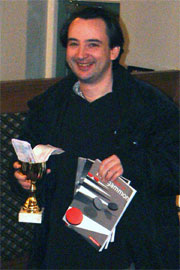
From The Oxford Companion to Chess by Hooper & Whyld:

Cecil Valentine De Vere, pseudonym of Valentine Brown, winner of the first official British Championship tournament organized by the British Chess Association in 1866. He learned the game in London before 1858 and practised with Boden and the Irish player Francis Burden (1830-82). De Vere played with unusual ease and rapidity, never bothering to study the books. His features were handsome (an Adonis says MacDonnell), his manner pleasant, his conduct polite. He “handled the pieces gracefully, never “hovered” over them, nor fiercely stamped them down upon the board … nor exulted when he gained a victory…in short, he was a highly chivalrous player.’ So wrote Steinitz who conceded odds in a match against De Vere and was soundly beaten, (See pawn and move.) De Vere’s charm brought him many friends.

At about the time that he won the national championship his mother died, a loss he felt deeply, “The only person who ever cared for me”.

Receiving a small legacy he gave up his job. which Burden had obtained for him at Lloyds the underwriters, and never took another. He entered some strong tournaments but always trailed just behind the greatest half-dozen players of his time. His exceptional talent was accompanied by idleness and lack of enthusiasm for a hard task. On the occasion of the Dundee tournament of 1867 he took long walks in the Scottish countryside with G. A. MacDonnell, who writes that a ‘black cloud’ descended on De Vere. It may have been the discovery that he had tuberculosis; more probably he revealed to the older man a deep-rooted despair, the cause perhaps of his later addiction to alcohol.

In 1872 Boden handed over the chess column of The Field to provide him with a small income; but in 1873 the column was given to Steinitz on account of De Vere’s indolence and drunkenness. At the end of Nov, 1874 his illness took a turn for the worse, he could hardly walk and ate little. His friends paid to send him to Torquay for the sea air, and there he died ten weeks later. He had failed to nourish a natural genius in respect of which, according to Steinitz, De Vere was “second to no man, living or dead*.

Cecil Valentine De Vere (14-ii-1846 09-ii-1875)

From The Encyclopedia of Chess by Anne Sunnucks:

First official British Chess Champion, Cecil de Vere was born on 14th February 1845 (in Montrose, Angus, Scotland : Ed.) and was taught to play chess when he was 12 by a strong London player, Francis Burden. By the time he was 15, he was a regular visitor to “The Divan” on a Saturday afternoon.

At the age of 19 De Vere played a number of games against MacDonnell winning the majority of them. So great was his promise that the City of London Chess Club raised a purse for a match between him an Steinitz, Steinitz giving the odds of a Pawn and a move. De Vere won.

In 1866 the first British Championship, organised by the British Chess Association was held. De Vere won, ahead of MacDonnell and Bird, and so became the first British Champion at the age of 21.

The following year in the Paris 1867 tournament, he was 5th out of a field of 13, and he tied for 3rd prize in the Dundee Congress, ahead of Blackburne, having beaten Steinitz in their individual game.

While he was in Dundee, De Vere learned that he was suffering from Tuberculosis. The news changed his whole life. Having recently inherited a few hundred pounds, he gave up his job at Lloyd’s and started living on his capital, determined to enjoy the few years he had left. He continued to play chess, but his performances were marred by his newly acquired addiction to the bottle.

De Vere was once described as “A Morphy without book knowledge”. His talent was great enough for him to be able to take on the leading masters of the day without any study or preparation, but more than that is needed to reach the top. De Vere lacked the strength of character and health to fulfil his early promise. He died a few days before his thirtieth birthday.

From The Encyclopedia of Chess by Harry Golombek:

The first official British Champion and a player of great promise who might well have attained world fame had he not be carried off by that nineteenth-century British scourge, tuberculosis, before he attained the age of thirty.

Most of the details of his life are to be found in the writings of G.A. MacDonnell, who met him when De Vere was fourteen and was so struck by his good looks as to refer to him as “Adonis”.

His first tournament success came in 1866 at the London Congress organised at the St. George’s Club in the first few days and then in other venues by the British Chess Association. De Vere played in two events, a Handicap tournament and a Challenge Cup event which was in fact the first British Championship tournament.

The Handicap tournament was run on the same lines as London 1851, i.e. it was a knock-out event with matches of three games, draws not counting. De Vere met Steinitz in round 1 and lost by 2-1.

The first British championship tournament was an all-play-all event in which the ties were decided by the first player to win three games and in which the championship went to the winner of the biggest number of games. De Vere was an easy winner with 12 wins, followed by MacDonnell and J.I. Minchin 6, H.E Bird 3 and Sir John Trelawney 0.

Thus De Vere was the first British Champion and at that age of twenty-one. A photograph of him about this time shows that he bore a remarkable likeness to the international master John Nunn, who won the European Junior championship a hundred years after De Vere’s death.

De Vere confirmed his position as a leading British player by coming first in another tournament in 1866 at Redcar in North Yorkshire. This was an event open to all British amateurs and among his opponents were Owen, Thorold and Wisker.

It was in the following year that he commenced his career in international chess. In the important double-round tournament at Paris he occupied an honourable fifth place out of 13 players. At Dundee (the third congress of the British Chess Association) he finished equal 3rd with MacDonnell, below Steinitz but beating him in their individual game and coming ahead of Blackburne.

It was during his visit to Scotland (he went to stay with relatives after the tournament) that he learnt he was afflicted with consumption. This knowledge, together with the death of his mother, drove him to drink which was to accelerate his end.

inheriting a few hundred pounds, presumably from his mother, he gave up his post at Lloyd’s and decided to live on his capital together with such additional sums as he could earn from chess.

In this respect his addiction to drink proved a handicap. For example, he held the post of chess editor of The Field in 1872 but lost it after some eighteen months through inattention to work.

Meanwhile he continued to show his great talent for the game. Defending the title of British Champion in a very strong field at the next British Chess Association congress (1868/9) he cam equal first with Blackburne but lost the play-off at the London Club in March 1869.

In 1870 at the very strong Baden-Baden double-round tournament, he came equal sixth with Winawer but was much outdistanced by Blackburne who came third with 3.5 more points than De Vere. But already his illness was taking a strong hold on him. At his next and last appearance in a tournament of note. London 1872, he tied with Zukertort and MacDonnell =3rd out of 8 players. In the play-off for third and fourth prizes he lost to MacDonnell and scratched to Zukertort, Later in the year he did tie for first place with Wisker in a weaker British championship tournament and, with De Vere now clearly ill, Wisker had an easy victory in the play-off.

At his last appearance at a chess event, a match at the City of London Club between that Club and Bermondsey, he looked a dying man. A subscription was made to send him to Torquay but it was too late and he died within five days of his thirtieth birthday.

Here are some of his games at chessgames.com

The English Chess Forum contains a brief discussion initiated by John Townsend (Wokingham) of manuscripts attributed to CdV.

Here is his Wikipedia entry

The English Morphy?: The Life and Games of Cecil De Vere, First British Chess Champion by Owen Hindle & Robert H. Jones

Happy Birthday IM Simon Ansell (11-ii-1975)

IM Simon Ansell
IM Simon Ansell

Happy Birthday IM Simon Ansell (11-ii-1975)

Simon Ansell
Simon Ansell

IM Simon Ansell
IM Simon Ansell

Happy Birthday IM Dr. Harriet Hunt (04-ii-1978)

IM Harriet Hunt at the 2021 London Chess Classic, Courtesy of John Upham Photography

We send birthday wishes to IM Dr. Harriet Vaughan Hunt born this day (February 4th) in 1978.

IM Harriet Vaughan Hunt

Here is her wikipedia entry

Harriet Vaughan Hunt

Harriet Vaughan Hunt

In 2021 Harriet made a welcome return to competitive chess and won the 2021 British Women’s Championship  in Kingston-upon-Hull twenty-two years after her fourth win.  In the same Dr.  Hunt was  runner-up in the English Women’s Rapidplay Championship to Lan Yao.


Happy Birthday IM Ameet Ghasi (04-ii-1987)

IM Ameet Ghasi at the London Chess Classic 2021, courtesy of John Upham Photography

Birthday of IM Ameet Kumar Ghasi (04-ii-1987)

Here is his Wikipedia entry

IM Ameet Kumar Ghasi

Here is a Guardian article

IM Ameet Kumar Ghasi

IM Ameet Kumar Ghasi

Happy Birthday IM Richard Pert (22-i-1981)

Happy Birthday IM Richard Pert (22-i-1981)

IM Richard Pert
IM Richard Pert

Nick and Richard Pert

Happy Birthday GM Nick Pert (22-i-1981)

GM Nick Pert
GM Nick Pert

We send birthday wishes to GM Nick Pert born this day (January 22nd) in 1981.

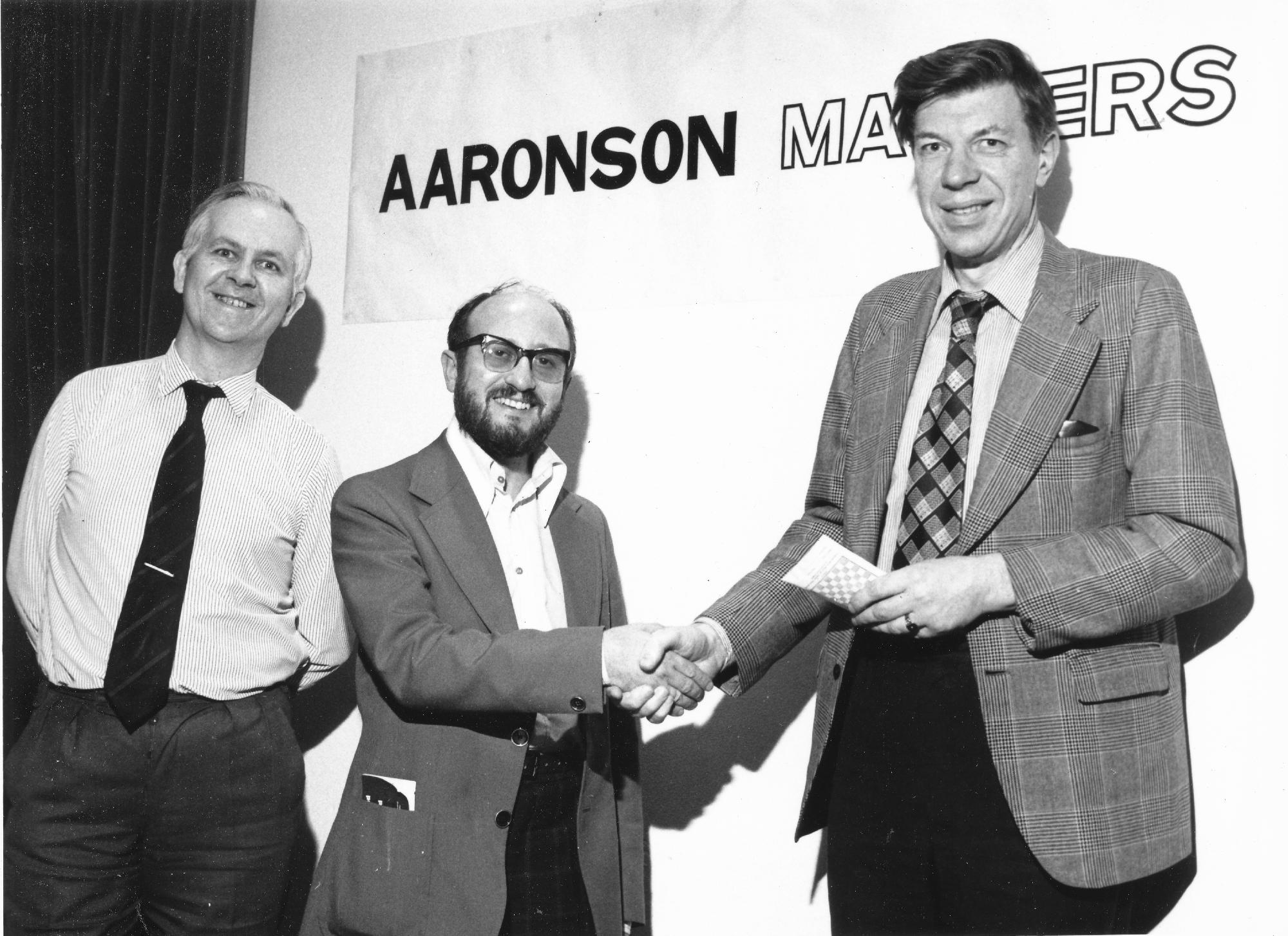
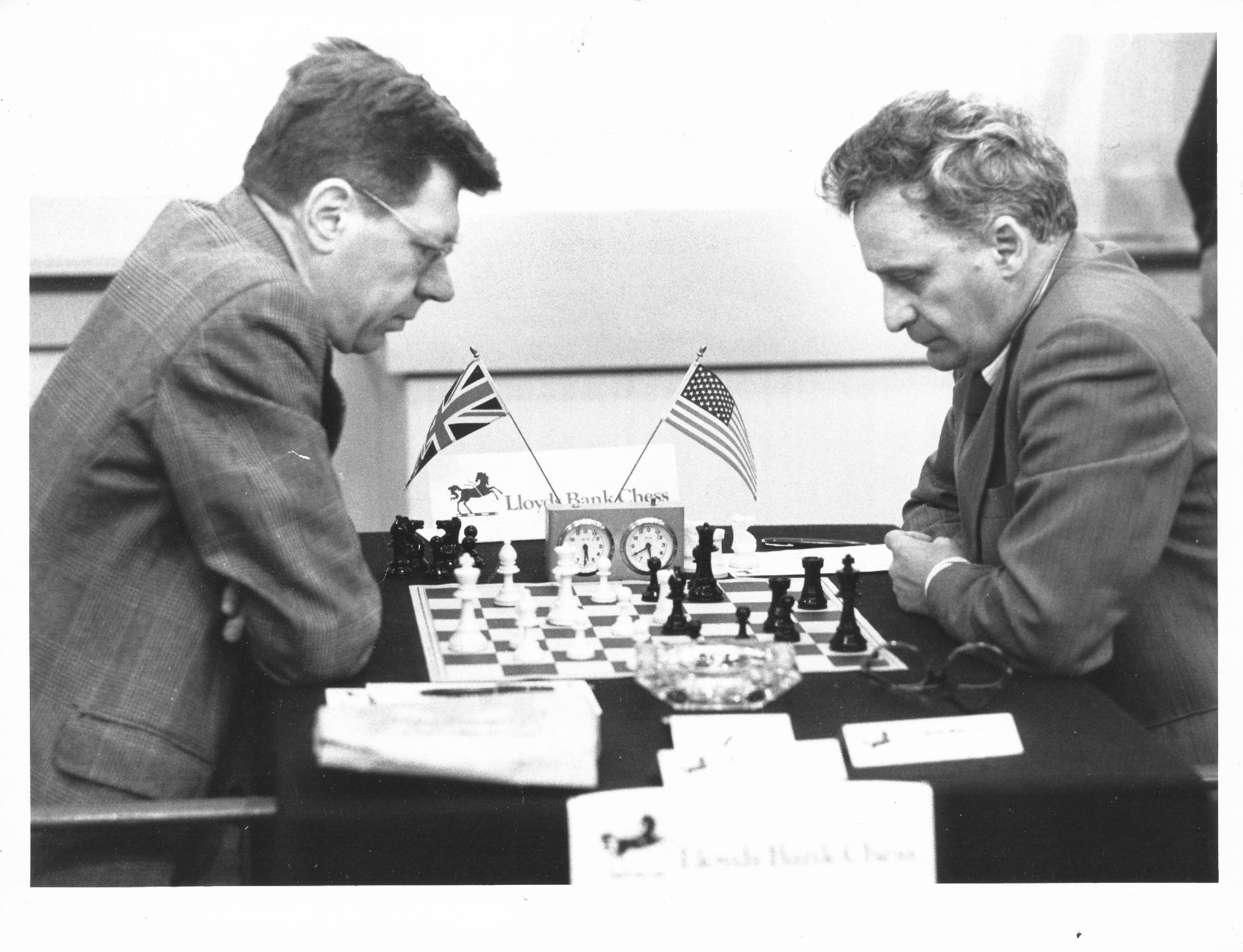
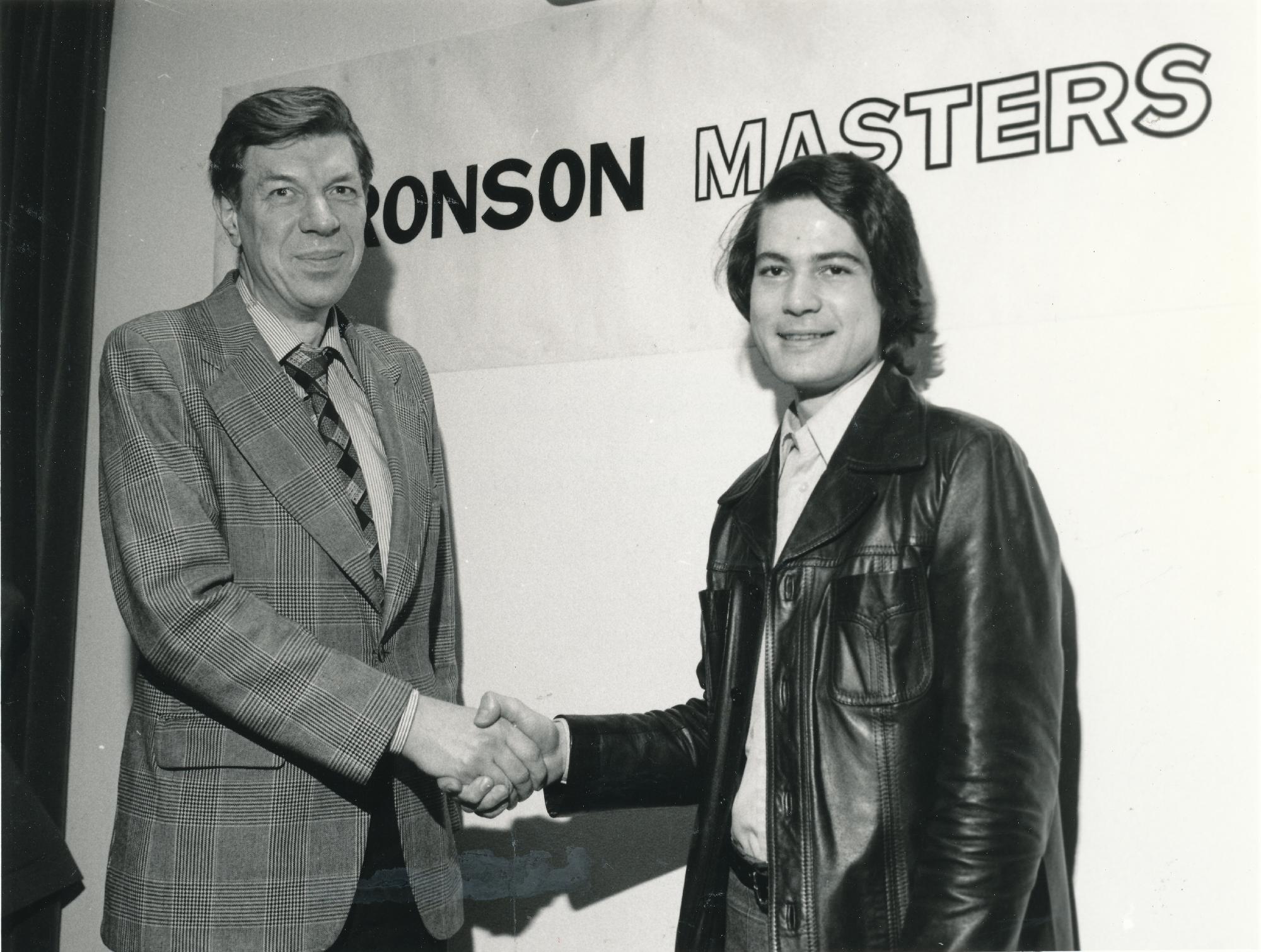
Jeremy Morse, Adam Hunt, Nick Pert and Nigel Short at the Lloyds Bank Masters

Nick won the Southern Counties (SCCU) championship for the 2016-17 season sharing with Richard Bates.

Nick and Richard Pert

Here is Nick’s Wikipedia entry

Nick and Richard Pert

GM Nick Pert
GM Nick Pert

In 2021 Nick took first place for the first time at the Covid affected British Championships in Hull with 6.5/9 with a TPR of 2414 reducing his rating by 4.2 Elo points. His highest rated opponent was 2480 (Danny Gormally).


GM Nick Pert
GM Nick Pert

Happy Birthday GM Neil McDonald (21-i-1967)

GM Neil McDonald
GM Neil McDonald

We send birthday wishes to GM Neil McDonald born on this day (January 21st) in 1967.

Neil McDonald
Neil McDonald
Neil McDonald
Neil McDonald

From Wikipedia :

Neil McDonald (born 21 January 1967) is an English chess grandmaster and a player on the international chess circuit. He is an English Chess Federation coach,[1] who has trained many of the country’s strongest junior players. McDonald is a regular coach of the English junior team and was Head Coach of the English Chess Federation team at the Greece World Schools Championship in 2013.[2] He regularly escorts blind and partially sighted chess players to international World Championship events and is also a chess writer.

McDonald authored the French Defence monthly updates on chesspublishing.com from October 1999 until March 2009,[3] 1 e4 … updates from November 2009 until January 2010,[4] 1 e4 … from June 2014 until February 2015[5] and returned to 1 e4 … in March 2017 until January 2018.[6]

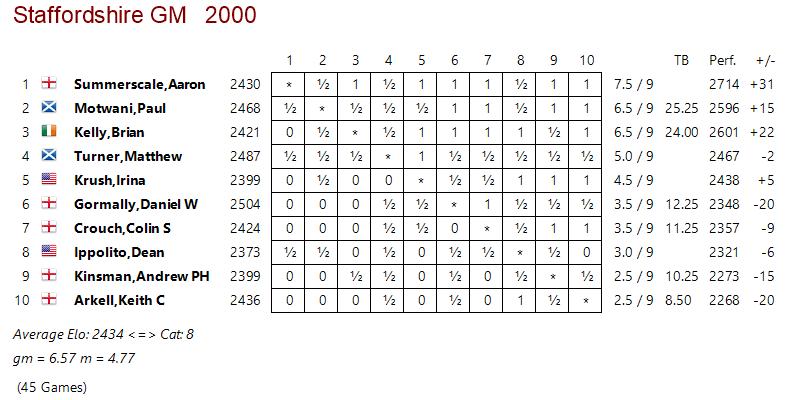
Neil shared first place in the 1986 GLC Masters with Jonathan Levitt, was outright first at the Elekes Memorial, 1995, first at The Leinster IM Tournament in Dublin, 1997, and other tournaments since. Neil plays for Wood Green in the Four Nations Chess League (4NCL).

He became an International Master in 1986 and was awarded the Grandmaster title in 1996.

McDonald obtained his FIDE Trainer qualification in 2016.[7]

Neil is a prolific and successful author, most recently with

Dynamic Defence, Neil McDonald, Everyman Chess, 1st December 2021, ISBN-13 ‏ : ‎ 978-1781945902

and prior to that “Coach Yourself

Coach Yourself : A Complete Guide to Self Improvement at Chess

but also thirty eight titles for Chess Press, BT Batsford Ltd. and Everyman Chess Books.

Modern Defence. Everyman, 2000
GM Neil McDonald
GM Neil McDonald