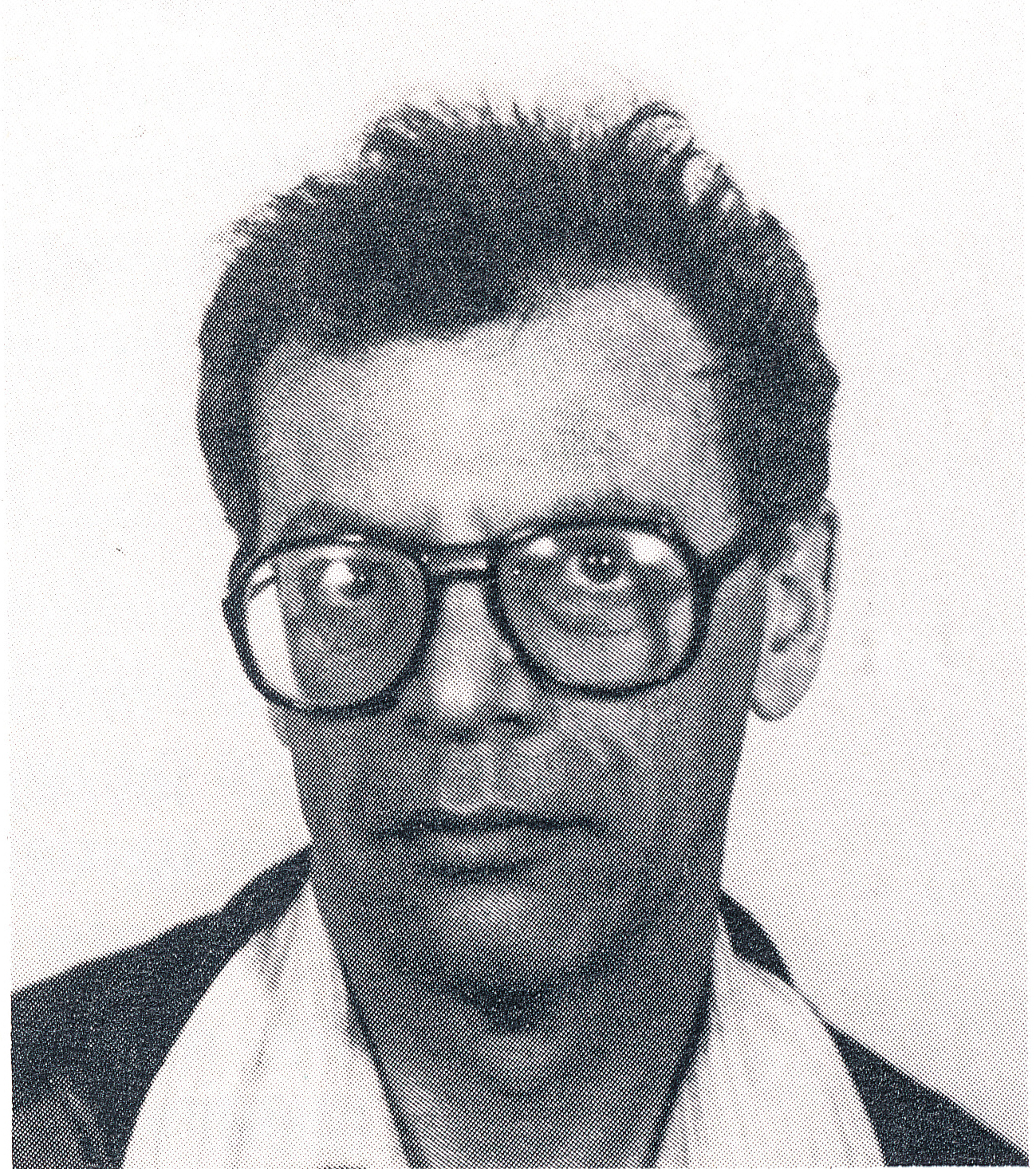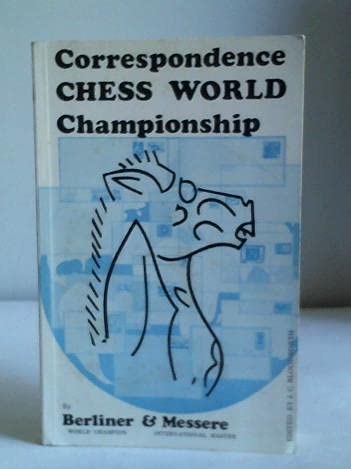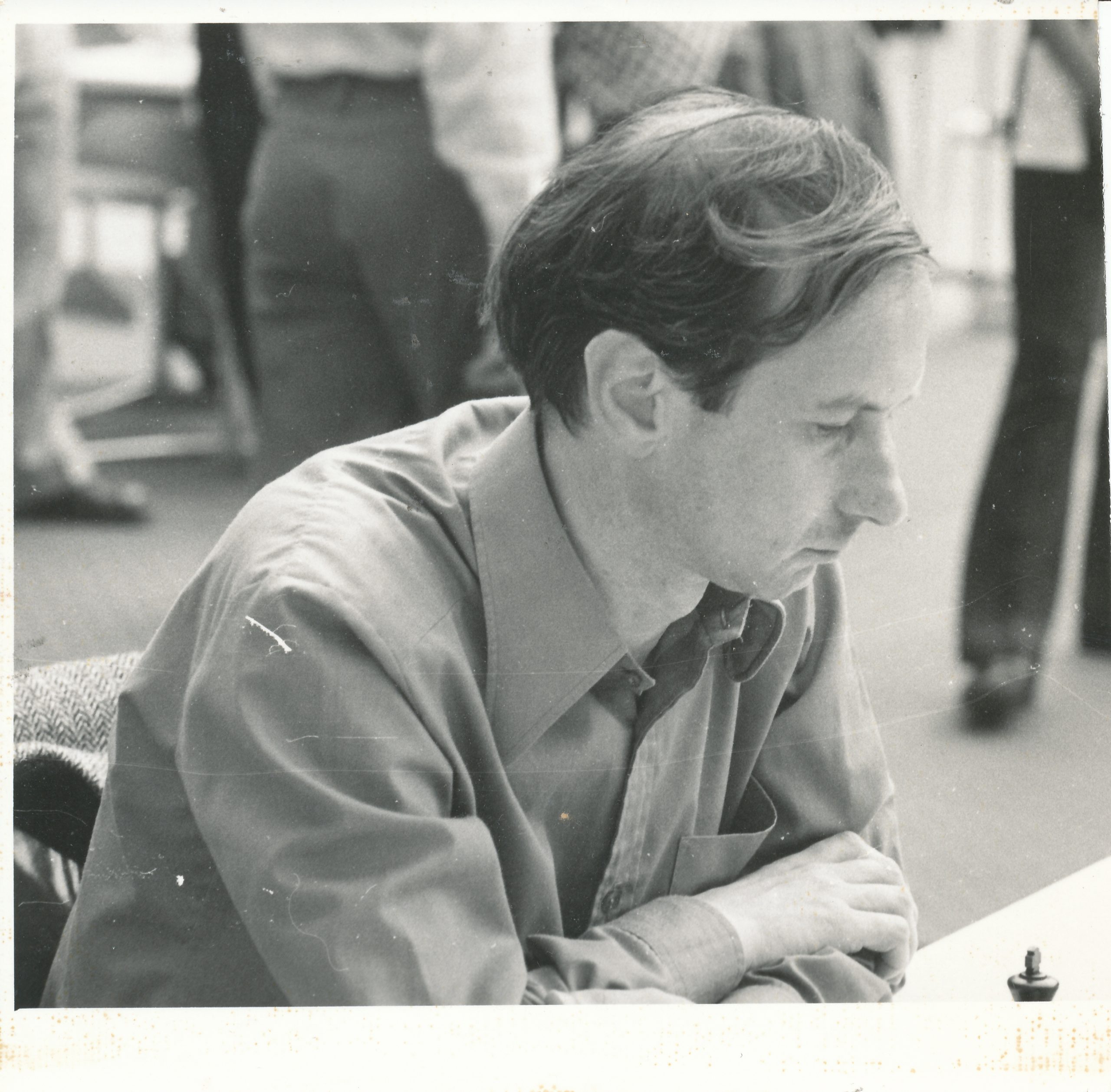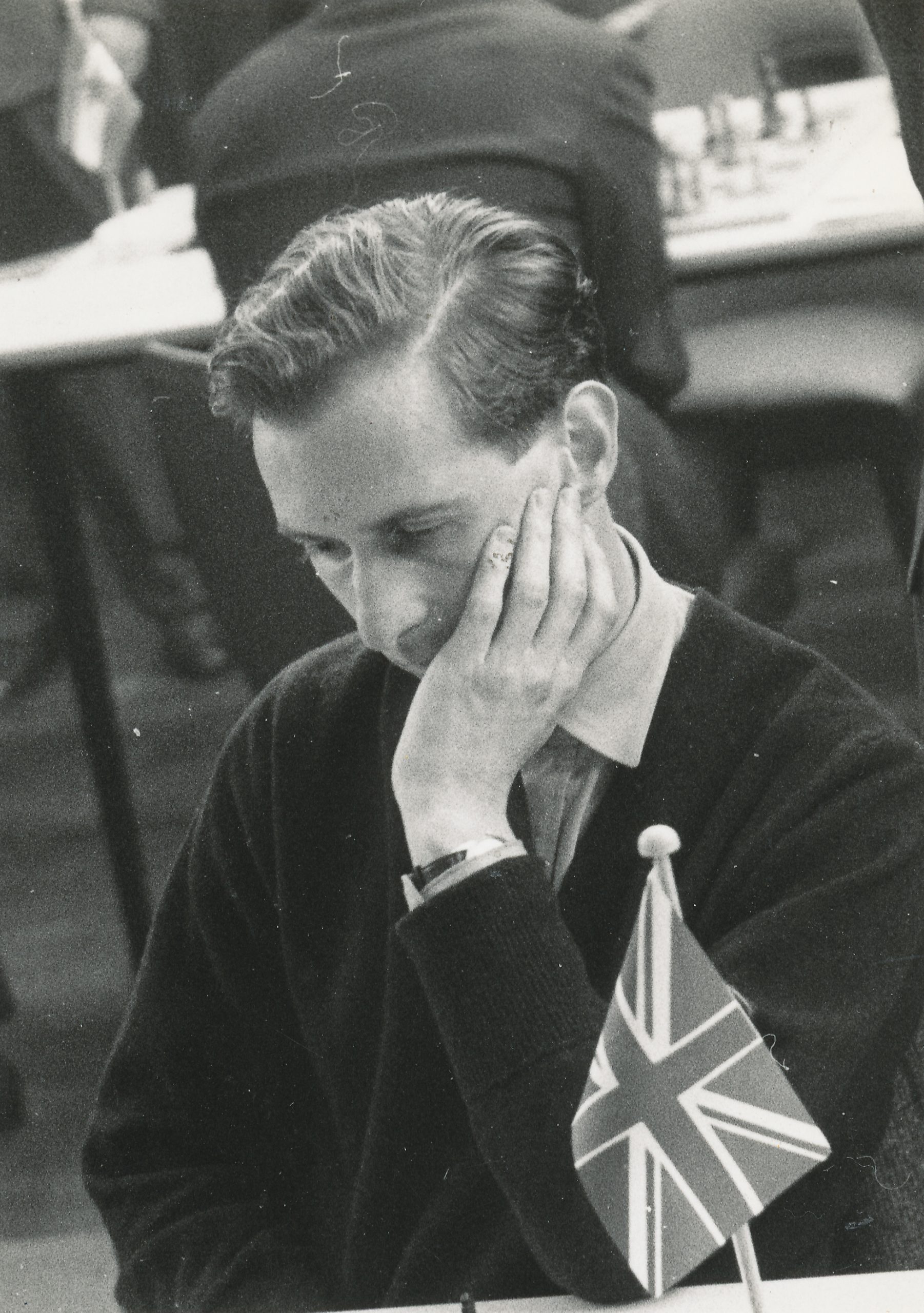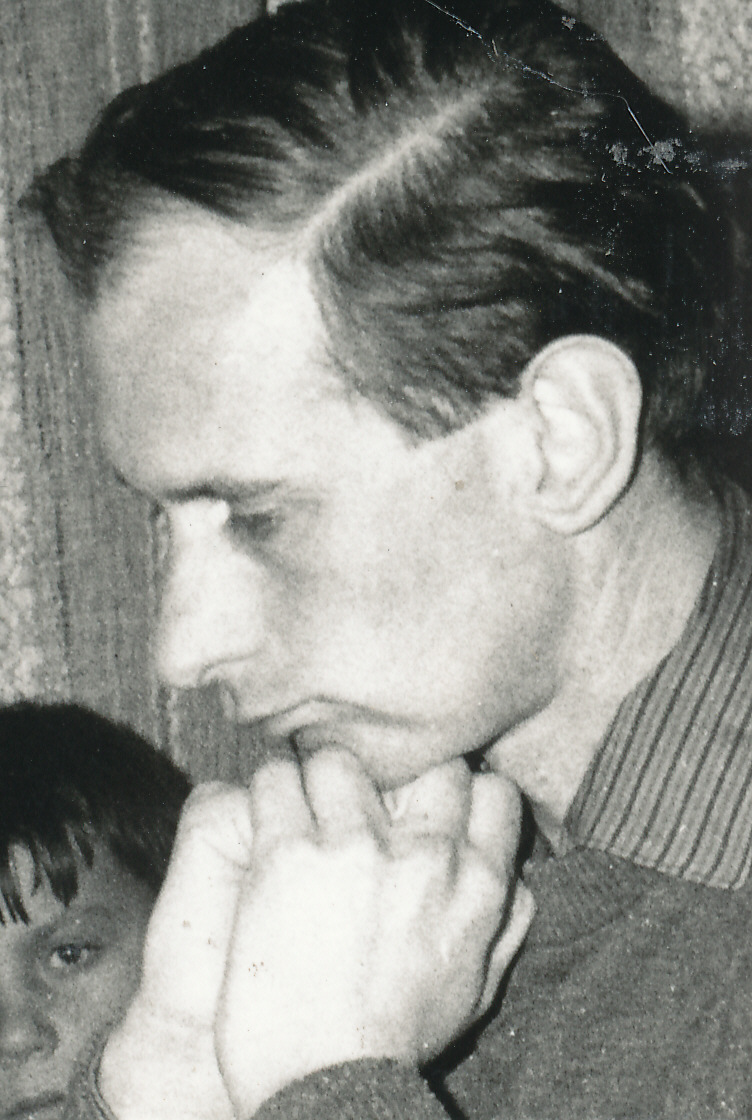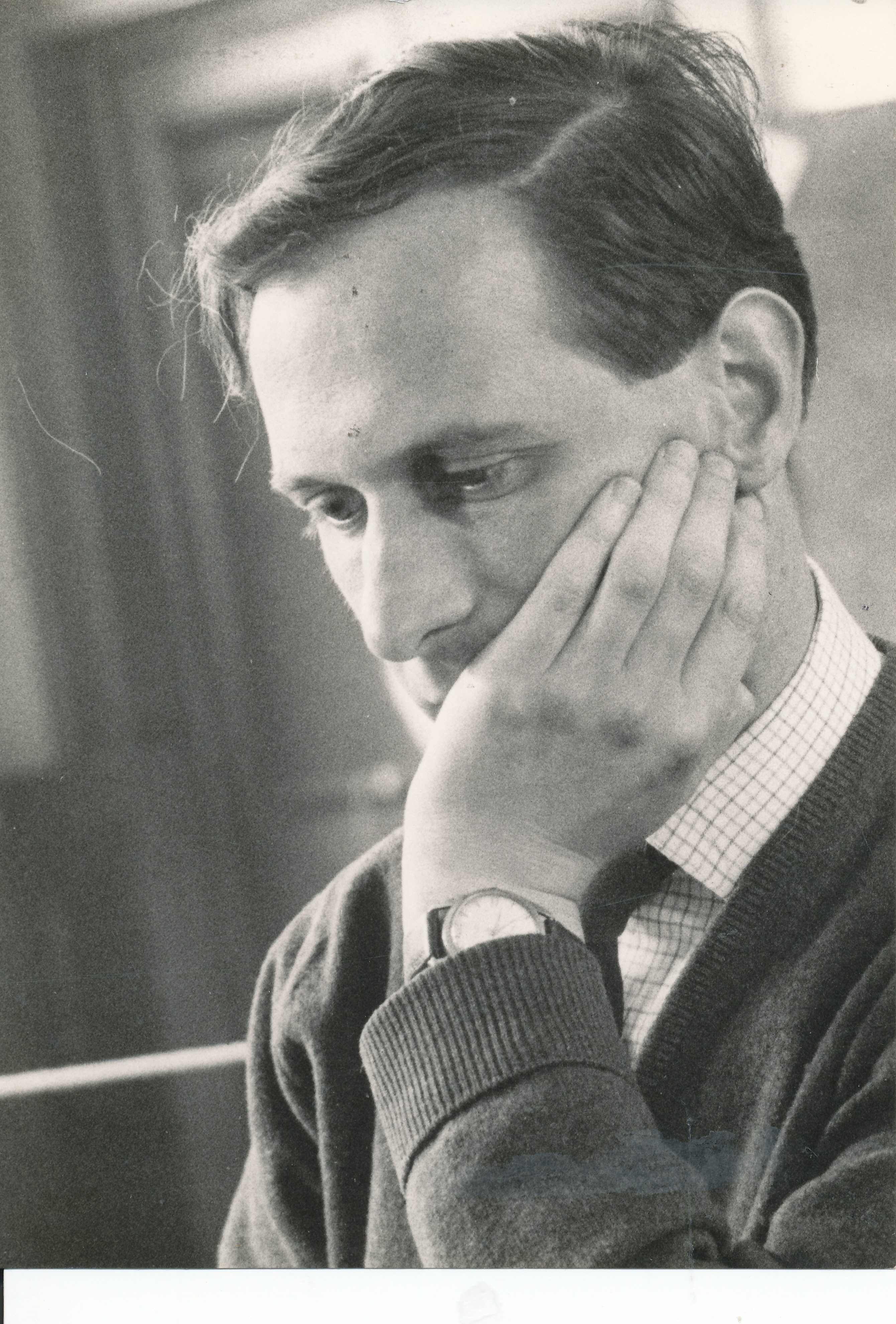
Tag Archives: Remembering

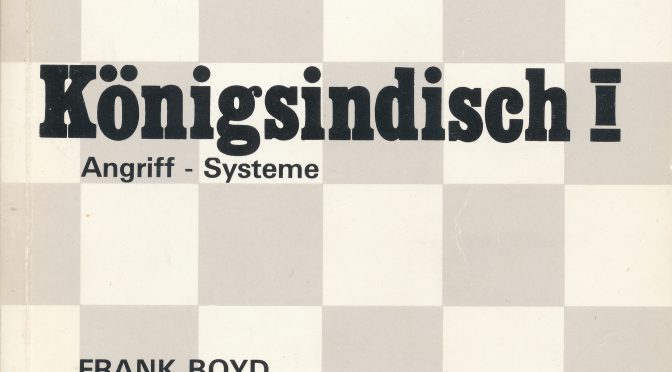
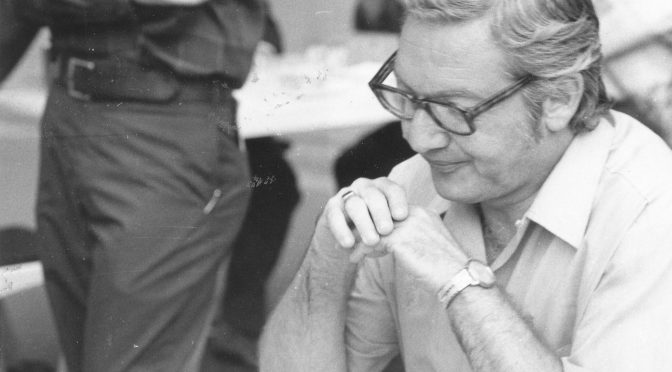
Remembering (Cyril) Stanley Kipping (10-x-1891 17-ii-1964)

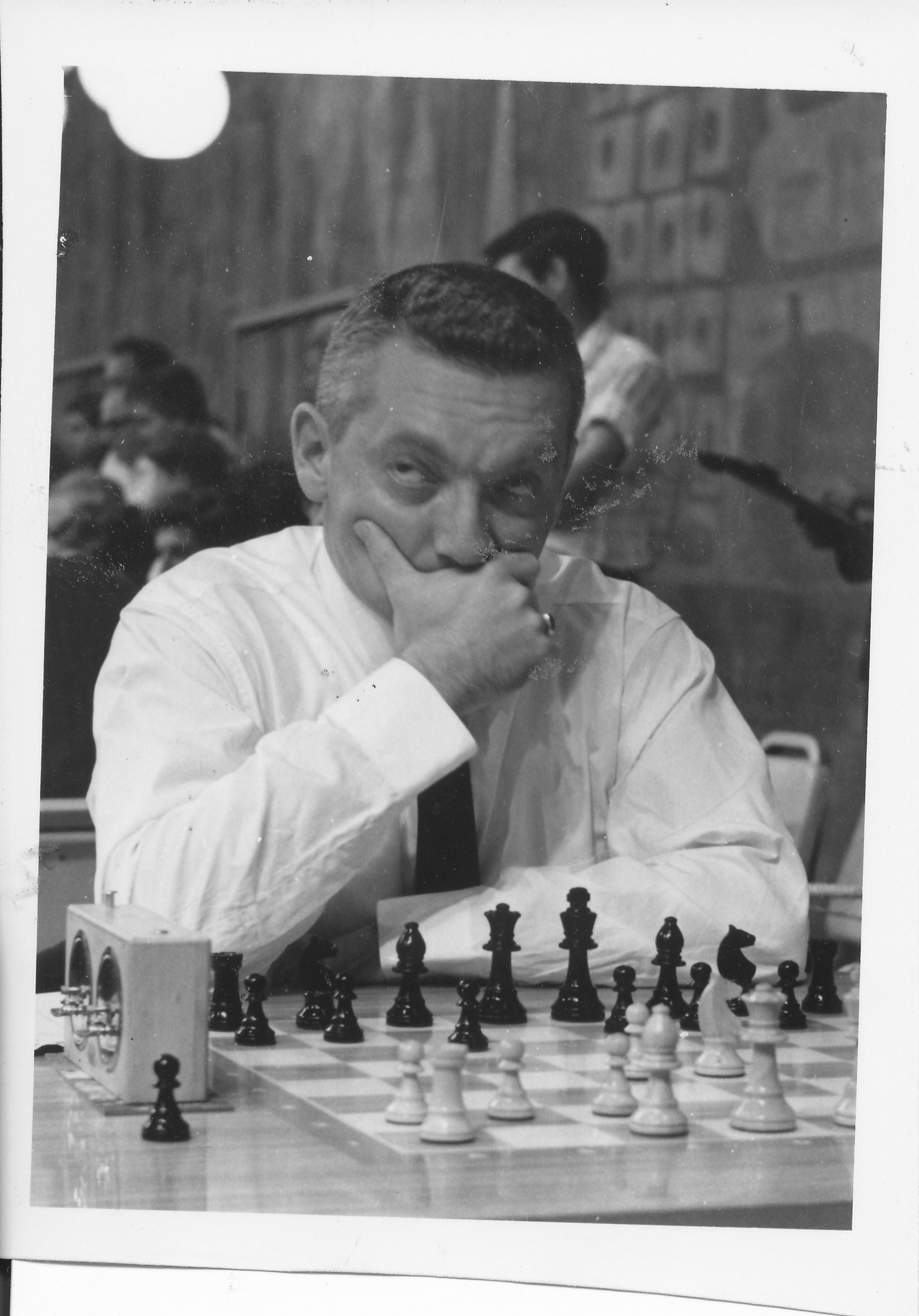
BCN remembers Stanley Kipping who passed away in Walsall on February 17th 1964 at the age of 72 who was always known by friends and family as Stanley.

BCN was fortunate to receive the following part email from John Kipping, a resident of Christchurch, New Zealand.

None of the Kipping family from around that time were referred to by their first name. His brother was Barry (my grandfather), and two sisters, Esme who made jigsaw puzzles and Frieda, named after Frieda Weekly (nee von Richtofen).

(Cyril Henry) Stanley Kipping was born on Saturday, October 10th, 1891 in 7 Milborne Grove, South Kensington, London, SW10 9SN.

7 Milborne Grove, South Kensington, London, SW10 9SN.

His parents were Frederic Stanley Kipping (28) and Lillian Kipping (24, née Holland) : they married in 1888. Stanley was baptised on May 8th, 1892 in West Brompton, London. Frederic died on 30 April 1949 in Pwllheli, Caernarvonshire, at the age of 85 and Lilian passed away on 4 September 1949 in Pwllheli, Caernarvonshire, at the age of 82.

Frederic was Professor of Chemistry at The University of Nottingham. He undertook much of the pioneering work on silicon polymers and coined the term silicone. He was elected a Fellow of the Royal Society in 1897.

Frederic Stanley Kipping, FRS

In the 1901 census the family lived at Clumber Road West, Nottingham and brother Frederic Barry Kipping was born on April 14th 1901 and his sister Kathleen Esme was born on 3rd May 1904 also  in Nottingham. Kathleen died on 30 August 1951 in Pwllheli, Caernarvonshire.

In 1902 Stanley started at Nottingham High School excelling in mathematics and science and in 1906 he obtained the Oxford and Cambridge Board’s Lower Certificate.

On March 2nd 1908 the Sheffield Daily Telegraph published a matriculation list for London University and CHSK was listed as being in the second division. Following that in 1909 Stanley obtained a Oxford and Cambridge Higher Certificate.

CHS Kipping
CHS Kipping

As of the 1911 census the household now included Stanley’s maternal Grandmother, Florence Holland (59) plus a parlourmaid, a housemaid, a cook and a nurse. Stanley was recorded as being a 19 year old science student and they lived at 40, Magadala Road, Nottingham which appears to have been replaced by residential flats. Curiously the address on the Census record was obscured by green insulation tape but insufficiently for it to readable.

According to Stephen C. Askey

“He left school in July 1910 and went to Trinity Hall in Cambridge where he read for the National Sciences Tripos. He played tennis for his college and launched into the composition of chess problems.

He obtained a First in Part I of the Tripos in 1912, a First in Part II in 1913, and was awarded the degree of Bachelor of Arts on 7 June 1913. He began researching in organic chemistry at Cambridge, but in September 1914 decided instead to take a teaching appointment at Weymouth College.

In 1914 The London Gazette announced that Stanley was promoted within the Chaplain Department of the British Army to Second Lieutenant with a service number of 10940.

On December 23rd 1914 The London Gazette announced the following :

The London Gazette, December 22nd 1914, part one

and

The London Gazette, December 22nd 1914, part two

On the 9th October 1918 The London Gazette announced :

The London Gazette, 8th October 1918

Again, according to Stephen C. Askey :

“In January 1919 he took his Master of Arts degree at Cambridge, and joined the teaching staff of Bradfield College in Berkshire. But by the summer of that year he became an assistant master at Pocklington School in Yorkshire, where he spent five happy years.

There he used his talent for juggling in 1920 to train a troupe of jugglers who gave a display at a school concert. This popular performance was repeated annually at Pocklington. Meanwhile be continued to compose chess problems and in 1923 published a book for beginners called The Chess Problem Hobby.”

In the 1939 register Stanley was recorded as residing at 67 Wood Green Road, Wednesbury, Staffordshire, England with Martha Partridge (born 29th June 1886) who was his Housekeeper.

Wood Green Road, Wednesbury, Staffordshire

His probate record appears in the England & Wales Government Probate Death Index 1858-2019 as :

1964 Probate record for Cyril Henry Stanley Kipping

From The Encyclopaedia of Chess (Robert Hale 1970 & 1976), Anne Sunnucks :

“International Master of the FIDE for Chess Compositions (1959) and International Judge of the FIDE for Chess Compositions (1957). Born on 10th October 1891. Died on 17th February 1964. Kipping was famous as a composer and an editor which he combined with is duties as Headmaster of Wednesbury High School from 1925 to 1956.

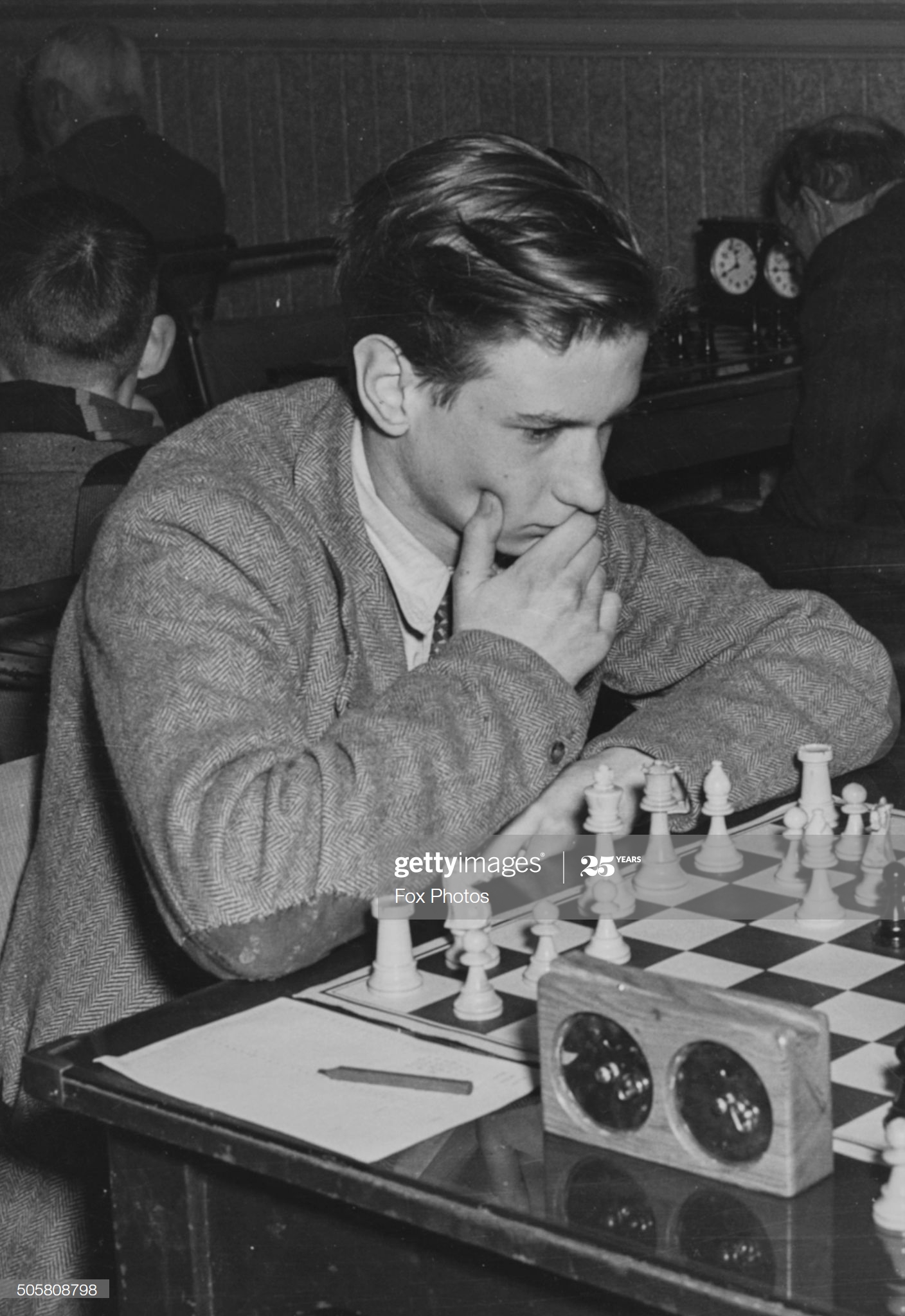
Chess Tournament 19th November 1934: An inter-form chess match for the pupils is in progress at Wednesbury High School for Boys, supervised by Mr C S Kipping, their headmaster. (Photo by William Vanderson/Fox Photos/Getty Images)
19th November 1934: An inter-form chess match for the pupils is in progress at Wednesbury High School for Boys, supervised by Mr C S Kipping, their headmaster. (Photo by William Vanderson/Fox Photos/Getty Images)

His editorial duties extended over more than forty years, and included the problem sections of Chess, Chess Amateur, and, for 32 years, the specialist magazine The Problemist from 1931. He was noted for his encouragement of beginners. His pamphlet ‘The Chess Problem Hobby‘ is an excellent beginner’s introduction. His other books included Chess Problem Science, The Chessmen Speak and 300 Chess Problems.

Chess Problem Science, CS Kipping, Whitehead & Miller, 1938

Kipping was one of the most prolific composers of all time, with over 7,000 problems to his credit. Many of his strategic three-movers have become classic. He was leading authority on halfpin two-movers. In his latter years, Kipping affectionately known as CSK – was Chairman of the International Problem Board which is now the FIDE Problem Commission.”

The Chessmen Speak, CS Kipping, The Chess Amateur, Stroud, 1932

From British Chess Magazine, Volume LXXXIV (84, 1964), Number 4 (April), pp. 122-123 by John Rice:

“CS Kipping, one of the most famous of all British problemists, died during February at the age of seventy-two. As a composer, editor, writer and critic Kipping was without equal. It is impossible to do justice in only a few lines to his vast and unique contribution to chess problems: a few factual notes. most of them kindly supplied by RCO Matthews, must suffice.

Kipping was born in London on October 10th, 1891, After completing his studies, he took up teaching as a career, and in 1924 he was appointed the first headmaster of the newly-opened Wednesbury High School, which post he held until his retirement in 1956. He was a bachelor, and, especially during the later years of his life, his interests were centered mainly on the school and on chess problems.

Headmaster C.S. Kipping instructs a classroom of boys on the rules of chess using his demonstration board at Wednesbury High School. (Photo by © Hulton-Deutsch Collection/CORBIS/Corbis via Getty Images)

Most readers will know of Kipping as the editor of The Problemist, the bi-monthly journal of the British Chess Problem Society. Before he took over The Problemist in 1931, he had been in charge of the problem section of the Chess Amateur, which he edited with great energy and enthusiasm. As well as The Problemist, he edited the problem pages of Chess from its first appearance. in 1936 until the section was suddenly discontinued without warning or explanation a few years ago. He also edited other columns at various times. He always took great care to help and encourage beginners, and it is probably true that every composer in this country below the age of about fifty came under his influence at one time or another.

CHS Kipping
CHS Kipping

As a young man, Kipping was a fierce avant-garde controversialist, championing the the cause of strategy in the three-mover in opposition to the then dominant model-mate school in this country. His attitude to the two-mover, as readers of The Problemist will know, was always a good deal more conservative; he would not tolerate at any price what he called ‘camouflage force,’ even in the modern problem. Yes, he appreciated the aims of the modern two-move composer much more than his writings on the subject suggest, being always ready to applaud excellence in any type of problem.

CHS Kipping
CHS Kipping

Kipping’s output numbered over 7,000 problems, probably a record. Many of his two-moves especially his ‘aspect’ tasks, were published under pseudonyms, of which the best was known was C.Stanley. He concerned himself little with artistic finish : once he had found a workable setting of a them he was engaged on, he would take little trouble over economy and presentation. Themes in which he interested himself include half-pin (in the two-mover), white King themes, interferences, and the grab theme (in the three-mover), and maximum tasks of all kinds, the subject of one of his books, Chess Problem Science. His other books include 300 Chess Problems (1916), and The Chessmen Speak (1932), in the AC White Christmas series.

300 Chess Problems, CS Kipping, The Chess Amateur, Stroud, 1916

In addition to all his other problem activities, Kipping was chairman of the International Problem Board, and curator of the half-pin section of the White-Hume Collection, which he took over on Hume’s death in 1936.

The majority of Kipping’s best problems were three-movers, three of the most famous of which are quoted here.”

Manchester City News, 1911
[fen]k7/8/N1N5/3B4/K7/8/4p1r1/8 w – – 0 1[/fen]
Mate in three
1 Ka5

First Prize
Dutch East Indies Chess Association Tourney, 1928
[fen]8/BR1pKp1P/k1B1n1P1/3P2Nr/N7/4R1P1/1r2qb2/5Q2 w – – 0 1[/fen]
Mate in three
1 Ra3

First Prize
BCM, 1939 (II)
[fen]1br5/1r5Q/3N2PB/5Pp1/q4pk1/p2p1p1R/B4P1K/1R1N4 w – – 0 1[/fen]
Mate in three
1 Be6

The first problem above was given in The Complete Chess Addict by Mike Fox and Richard James in the Desert Island Chess chapter. It is also given in a discussion of the Steinitz Gambit by ASM Dickins and H Ebert in 100 Classics of the Chessboard. Colin Russ on page 138 of Miniature Chess Problems from Many Countries gives the first problem as does John Rice on page 44 of Chess Wizardry : The New ABC of Chess Problems.

Stanley was the first President of Walsall Kipping Chess Club which includes amongst its members and former members David Anderton OBE and Jana Bellin. We have been provided with the following information by Mike Groombridge:

CS Kipping, strictly speaking, was not the founder of the club, but was involved immediately at the formation of the club, which was originally called The Kipping Chess Club*. [*By March 1945, the club had 3 branches and only then did it formally split into 3 -Walsall, Wolverhampton, and a school (Municipal Secondary School Wolverhampton?) for the purpose of playing in the newly formed Wolverhampton League. Walsall Kipping Chess Club only formally took its name in May 1948, and was separated by then from The Wolverhampton Kipping Chess Club!] The Walsall Club’s minute book contains clippings from a local newspaper of 1942 reporting on the formation of the club. Here are copies:-

‘Walsall’s New Chess Club.-The new chess club, members of which will meet in the evenings for play and social intercourse, already promises to be very successful. The organiser, Mr.A.E.Parsons, of England & Sons, The Bridge (where meetings will be held for the time being) is acting as secretary pro tem, and he has secured as the first president Mr.C.S.Kipping, Headmaster of the Wednesbury High School for Boys, well known as an expert and for the innovation of chess in the curriculum of his school. Mr.Kipping has given valued assistance by the initial provision of boards and pieces. Members will meet on Monday evenings at 6.30 and the club will rely, in the first place, on voluntary subscriptions’. [5.9.42]

and

‘Walsall Chess Club.-Members of the recently formed Chess Club in Walsall had their first meeting on Monday [7th Sept 1942]. They decided to call the club “The Kipping [Chess] Club,” after their president, Mr.C.S.Kipping. Mr. F.D.Fox was appointed chairman, Mr.Gordon Farrell treasurer, and Mr.A.E.Parsons honorary secretary. Mrs.Wright and Miss Powell provided refreshments and were warmly thanked for their contribution to the success of the launching of the club. Mr.H.Lee was subsequently appointed vice-president after occupying the chair for the evening.’ [12.9.42]

Also, here is a copy of a brief sketch of CSK’s chess involvement, penned by David Anderton, for the Club’s Jubilee Chess Tournament:-

C S KIPPING, PRESIDENT 1942-1964

C S Kipping was the editor of the Problemist between 1931 and his death on 17th February 1964 at the age of 72 years. He also edited a problem column in Chess between 1935 and 1960. He [was] one of the most prolific of composers with some 7,000 problems to his name. He pioneered the introduction of strategic three movers in Great Britain and was the leading authority on half pin two movers. He was the Headmaster of Wednesbury Boys High School and introduced chess into the curriculum there in 1927. He gave evidence in the Chancery Division in the case of Re: Dupree’s Trusts in 1944 to the effect that chess teaches concentration, self reliance and reasoning and is a most useful training for the mind. Relying on this evidence, the Court upheld a bequest to establish a junior tournament as charitable and the case still forms the basis of English law on this point.

On a web site now only accessible via the WayBack Machine there is a treasure trove of reminisces and memories of CHSK from himself, friends and pupils.

From The Encyclopaedia of Chess (Batsford, 1977), Harry Golombek OBE, John Rice writes:
“British problemist, enormous output of over 6,000, mainly three-movers but also many two-movers, some published under pseudonyms (e.g. C. Stanley, of Nottingham). Editor of The Problemist, 1931-64. Elected international master honoris causa (1959).”

Anecdotes from former pupils.

A history from the Wolverhampton and District Chess League

Here is his Italian (only) Wikipedia entry.

Here is his entry on chesscomposers.blogspot.com

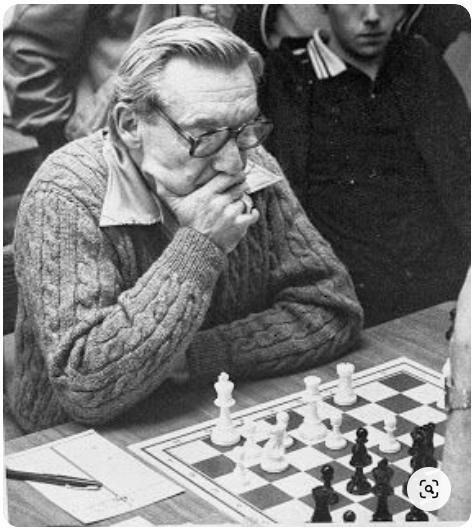
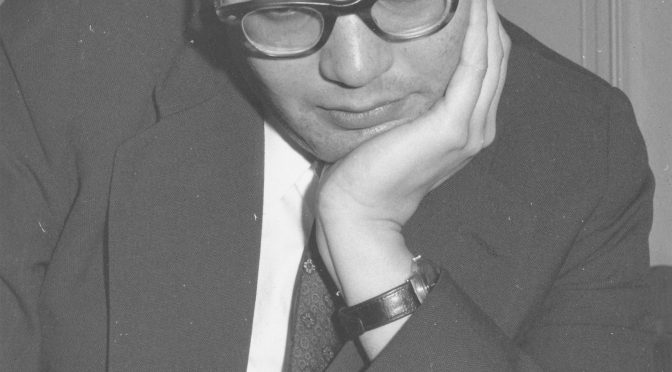
Remembering IM Čeněk Kottnauer (24-ii-1910 14-ii-1996)

BCN remembers IM Čeněk Kottnauer (24-ii-1910 14-ii-1996)

Čeněk (pronounced CHEnek) Kottnauer was born in Prague on Thursday, February 24th, 1910. Čeněk was employed in the Ministry of Education in Prague.

Whilst playing in the Lucerne International tournament (28-xii-1952 03-i-1953) he sought political asylum :

From the Milwaukee Journal, January 3, 1953 we have

Czech Chess Star Asks for Asylum

Lucerne, Switzerland – Cenek Kottnauer, 42, Czecho-Slovakian chess champion and an employee of the ministry of education in Prague, announced Saturday that he would not return to Czech-Slovakia and would request political asylum in Switzerland. Kottnauer had been participating in a chess tournament.

He said that the political situation in his country had grown “more and more critical” and he wanted “to leave before it is too late”. He said that he had been divorced recently and had no children in Czech-Slovakia”.

In a January 2009 post to the English Chess Forum Leonard Barden wrote :

“Cenek Kottnauer defected from Czechoslovakia during the Lucerne New Year tournament of 1952-3 (I am precise on this because I was present). His wife Daniela joined him there, having been smuggled from Prague in the boot of a diplomat’s car. Kottnauer had been a water polo player of international standard before 1939 so came into serious chess only his mid-30s. He made his name with his good showing in the Prague v Moscow match of 1946 and his Bxh7+ win then against Kotov. He competed in great tournaments like Groningen 1946 and Moscow 1947; his first visit to England was in 1947 when the Czech team came here.

Čeněk Kottnauer plays Friedrich Sämisch during the Duras Memorial in Prague. December 7th 1942, The game was a Slav drawn after 42 moves

In the 1940s he had a job in the Czech sports ministry but got implicated in the purges following the Slansky trial. He also believed that Pachman and Opocensky were involved in the campaign against him.”

Čeněk married Daniela (née Horska, also Czech, having met in Austria) and they had a son Daniel VR Kottnauer. Daniela was born in 1934 and was 24 years younger than Čeněk. She died on February 20th 2008 in a hospice in Essen, Germany close to where Daniel currently resides.  Daniel has been a pianist and singer for 30 years, an event manager for 19 years and a coach and VIP limousine driver for 5 years and may be found on LinkedIn.

Daniel Kottnauer
Daniel Kottnauer

We thank Daniel for providing photographs.

Čeněk  became a British citizen on 16th December 1960 when he obtained naturalisation certificate BNA64338.

In 1965 Čeněk and Daniela were living at Flat 2, 7-8 Bathurst Street, London, W2.

7-8, Bathurst Street, London, W2

In Kings, Commoners and Knaves (Russell Enterprises, 1999), page 108, Edward Winter wrote :

“The obituaries of Čeněk Kottnauer (1910-1996) have, in common with all of the encyclopaedia entries on him, been strangely wanting in pre-1940s references to his chess career. Czech magazines of the 1930s contain occasional games by ‘Kottnauer’ (no forename or initial given), including the following :

[pgn]
[Event “Prague clock simul”]
[Site “Prague”]
[Date “1932.02.09”]
[Round “?”]
[White “Kottnauer, Cenek”]
[Black “Bogoljubov, Efim”]
[Result “1-0”]
[ECO “D47”]
[Annotator “British Chess News”]
[PlyCount “63”]
[EventDate “1932.??.??”]
[SourceTitle “chessgames.com”]

{[%evp 0,63,19,31,19,-16,24,16,27,44,43,47,54,39,55,63,33,16,2,-2,4,-18,-15,
-35,-43,-46,-45,-45,-18,-23,-23,-33,-43,-49,-29,-29,-34,-88,-86,-86,-65,-107,
-71,-77,-56,-131,-77,-183,-156,-174,-199,-189,-96,-144,-117,-117,29,36,71,88,
138,132,409,422,436,443]} 1. d4 d5 2. c4 c6 3. Nf3 Nf6 4. e3 e6 5. Nc3 Nbd7 6.
Bd3 dxc4 {The Meran Defence} 7. Bxc4 b5 8. Bb3 b4 $1 {Wells} 9. Ne2 Be7 {
has come back into fashion in 2020.} (9… Bb7 {is more common} 10. O-O Bd6 11.
Nf4 O-O 12. Ng5 Bxf4 13. exf4 c5 14. Be3) 10. O-O O-O (10… Bb7 {transposing})
11. Ng3 (11. Nf4) 11… c5 {Black has equalised.} 12. e4 Bb7 13. Re1 $146 (13.
e5) 13… cxd4 14. Nxd4 Nc5 $17 15. Bc2 Rc8 16. Bf4 Qb6 17. e5 Nd5 18. Qh5 $6 (
18. Qg4) 18… g6 19. Qh6 Nxf4 20. Qxf4 Rfd8 21. Rad1 {[#]} Rd5 (21… Nd3 $1
$19) 22. Nh5 Nd7 23. Ng3 Rc4 24. Nge2 Rxe5 25. Bb3 Re4 26. Bxc4 Rxf4 27. Nxf4
Bc5 $2 {[#]} (27… Nc5) 28. Nfxe6 $1 Ba6 (28… fxe6 29. Rxe6 {is crushing})
29. Bb3 Bxd4 $6 30. Rxd4 $1 Nf8 $4 31. Rd8 $1 fxe6 32. Rxe6 {and Bogoljubow
resigned.} 1-0
[/pgn]

Source : Československý šach, January, 1932, page 9. The score was also given, with notes, by Vera Menchik, on page 153 of the April 1932 issue of The Social Chess Quarterly. ”

From Šachový Týdeník, 25th February, 2010 we learnt that Čeněk was twice Prague lightning champion.

In 1943 Čeněk was a clear first overall with 10.5/13 in the Zlin tournament.

Crosstable for the Zlin (Czechoslovakia) 1943 tournament
Čeněk Kottnauer plays Svetozar Gligorić during the Chigorin Memorial, Moscow, November 26th 1947.

From Bronstein on the King’s Indian,  Everyman Chess, 1999, game 25 we have :

“This game is from our hisotoric match with the Czechoslovak team, which took place half in Prague and half in Moscow.

My opponent, an intelligent, clever, athletic man, also played water polo. Then at some point he travelled to a tournament in England, fell in love with a beautiful Englishwoman, and decided to settle down there.”

From The Oxford Companion to Chess (OUP, 1984), David Hooper & Ken Whyld :

International Master (1950), International Arbiter (1951), a Czech player who emigrated to England in 1953 and was naturalised in 1960. He played in Olympiads for Czechoslovakia (1950*, 1952), on the second occasion making the best score (+10=5) on the fourth board, and in two Olympiads for England (1964, 1968). In 1961 he won the Beverwijk Masters tournament (not the concurrent grandmasters event) with a clean score, a fine achievement.

*Ed : In fact, this is not true since Czechoslovakia did not send a team to Dubrovnik 1950.  This was the last year the event was limited to sixteen countries.

Incomplete crosstable for Beverwijk 1961

James Pratt, Basingstoke provides the full results from Gino de Felice, Chess Results, 1961 – 1963, Macfarland, 2013 :

Kottnauer 9/9, Wade 5/9, Langeweg 4.5/9, De Rooi 4.5/9, Tan 4.5/9, Kramer 4/9, Bink 3.5/9, Durao 3.5/9, Perez Perez 3.5/9, Bozic 3/9.

Consulting the 2nd edition (1992) of Hooper & Whyld may cause disappointment since there is no entry for CK.

Čeněk Kottnauer from Šachový Týdeník, 25th February, 2010

From The Encyclopaedia of Chess (Robert Hale 1970 & 1976), Anne Sunnucks :

“International Master (1950) and International Judge (1951).

Born on 24th February 1910. Kottnauer represented Czechoslovakia in the 1952 Olympiad in Helsinki. In the years after the war his successes in international tournaments included 3rd at Beverwijk 1947, =2nd at Vienna 1947, 4th at Bad Gadstein 1948 and 1st at Lucerne 1953.

Crosstable for Lucerne 1952/1953

After the Lucerne tournament he sought political asylum in Switzerland. He later settled in England and became a naturalised British citizen. He played for the British Chess Federation in the Olympiads of 1964 and 1968.

Kottnauer has played in the British Championship twice. In 1961 he came =4th, and in 1962 he came =3rd.”

IM Čeněk Kottnauer
IM Čeněk Kottnauer

From The Encyclopaedia of Chess (Batsford, 1977), Harry Golombek OBE (entry written by Bill Hartston):

“Born in Czechoslovakia, Kottnauer played for that country in many events including the 1952 Olympiad. He emigrated in 1953 and subsequently took British nationality, representing England in the Olympiads of 1964 and 1968. Awarded FIDE titles of international master in 1950 and International Judge in 1951. Winner of Lucerne 1953 International tournament.

Čeněk Kottnauer plays Frans Kuijpers during the 1964 Anglo-Dutch match at Vlissingen on September 19th

Co-author with TD Harding and GS Botterill of The Sicilian Sozin, Batsford, London, 1974.”

The Sicilian Sozin, TD Harding, GS Botterill, C. Kottnauer, Batsford, 1974

James Pratt, Basingstoke revealed : He would look through opening analysis often  proclaiming: ‘What will the master play now?’

From British Chess (Pergamon Press, 1983) we have this insight from Tim Harding :

“At a time when home-grown International Masters were thin on the ground in Britain (the 1950s and 1960s) this Czech-born IM brought a lot of valuable experience to BCF teams.

Amsterdam 1950, first day; Gideon Stahlberg versus Cenek Kottnauer Date: November 11, 1950

After emigrating to England in 1953, he became naturalized and subsequently represented the BCF in the Tel Aviv, 1964 and Lugano, 1968, Olympiads. On board one in 1964 he scored +8 =7 -3 (63.9%) on board two below Penrose in 1968 (with some board one games) he scored 41.7: +3 =5 -4.

Čeněk Kottnauer
Čeněk Kottnauer

When FIDE rating lists appeared in the early 1970s, Kottnauer was listed at 2370 but by this time had more or less retired from active play at the top level, although he took (and still takes) a keen interest in coaching promising young players, He was one of the most regular and most valuable coaches at the one-day junior training events organised by the London Chess Association at the Mary Ward Centre in Bloomsbury, London in the mid-1970s.

IM Čeněk Kottnauer, event unknown

At this time he also wrote many articles for his friend Grandmaster Pachman, who had been freed to live in West Germany where he became editor of Schach-Archiv, and also made a major contribution to the Batsford opening theory work. The Sicilian Sozin, written in collaboration with George Botterill and Tim Harding, and published in 1974.

Lubomir Kavalek & Čeněk Kottnauer from Šachový Týdeník, 25th February, 2010

Kottnauer’s most active years as a player were however 1946-53; in the year that he came to England he took first prize in the Lucerne, 1953 International tournament. Had he been a professional player throughout the the 1950s, there is little doubt that he would have become a grandmaster.

[pgn]
[Event “Match/City Prague-Moscow 13,0-23,0”]
[Site “Moscow”]
[Date “1946.03.??”]
[Round “2”]
[White “Kottnauer, Cenek”]
[Black “Smyslov, Vassily V”]
[Result “1-0”]
[ECO “D18”]
[Annotator “British Chess News”]
[PlyCount “111”]
[EventDate “1946.03.02”]
[EventType “team-match”]
[EventRounds “6”]
[EventCountry “URS”]
[SourceTitle “MCL”]
[Source “ChessBase”]
[SourceDate “1999.07.01”]
[SourceVersion “1”]
[SourceVersionDate “1999.07.01”]
[SourceQuality “1”]

{[%evp 0,111,80,5,26,-10,34,32,31,31,44,-4,0,7,21,21,2,11,20,0,7,2,-15,-22,-22,
-34,-4,-8,-11,-18,-19,-8,-3,-2,17,5,0,17,57,11,69,10,17,5,16,0,14,7,30,35,106,
110,60,47,166,151,148,159,172,184,192,171,180,166,182,145,160,161,160,162,170,
161,183,139,195,172,185,158,149,113,201,132,214,170,273,187,199,154,223,245,
260,250,267,267,260,265,265,240,247,250,245,260,264,220,265,265,271,202,209,
217,338,378,385,401]} 1. d4 d5 2. c4 c6 3. Nf3 Nf6 4. Nc3 dxc4 5. a4 Bf5 6. e3
e6 7. Bxc4 Nbd7 (7… Bb4 8. O-O Nbd7 9. Qe2) 8. O-O Bb4 9. Qe2 {transposes}
Bg6 10. e4 Bxc3 (10… O-O) 11. bxc3 Nxe4 12. Ba3 {The point of sacrificing
the e-pawn.} Qc7 13. Rfc1 O-O-O 14. a5 Nd6 (14… Rhe8 15. a6 b6 16. Nh4 Nd6
17. Bb3 e5 18. Nxg6 hxg6 19. Qg4) 15. a6 b6 16. Bb3 Bh5 $146 (16… Nf5) 17. h3
Kb8 18. c4 Nc8 (18… Bxf3 19. Qxf3 Nf5) 19. Qe3 Rhe8 20. Bb2 $11 (20. c5 $16)
20… h6 21. Ba4 Ne7 22. Ra3 g5 23. Rb3 Ka8 24. Ba3 Nb8 25. g4 Bg6 26. Ne5 $16
{[#]} f6 $2 (26… Ng8 27. Bb2) 27. Bxe7 fxe5 28. Bxd8 Rxd8 29. Qxe5 Qxe5 30.
dxe5 $18 Be8 31. Rf3 Nxa6 32. Rf8 Kb7 33. Rh8 Nc5 34. Bc2 Kc7 35. Rxh6 Rd4 36.
Rh7+ Bd7 37. Bg6 a5 38. Be8 a4 39. Bxd7 Nxd7 40. Re7 Kb7 41. Rxe6 Nc5 42. Re7+
Ka6 43. Re8 Kb7 44. e6 Re4 45. e7 Na6 46. Rg8 Rxe7 47. Rxg5 Nc5 48. Rxc5 bxc5
49. Ra1 Kc7 50. Rxa4 Kd6 $2 (50… Re4) 51. Ra3 Re1+ 52. Kg2 Rc1 53. Re3 Rxc4
54. g5 Rb4 55. g6 c4 56. h4 {and Black resigned.} 1-0
[/pgn]

As early as the end of the war, when regular play resumed, he was almost of that strength (as wins against Kotov and Smyslov in the February, 1946 Prague v Moscow match showed) but lacking in experience at the top level, which told against him at Groningen, 1946, when he was placed 13th with 9 points out of a possible 19 in a very strong field.  This was the first great post-war tournament, with nine Master and eleven Grandmasters (including Botvinnik and former world champion Euwe).

Players at the 1946 Groningen Tournament

Also in 1946 Kottnauer scored wins against Simagin (in Prague) and Levenfish (in Leningrad) and was clearly one of the up-and-coming stars in a strong Czech team that included Filip and Pachman.  In 1950 he was one of the first players to be awarded the FIDE title of International Master.

The following year he was also made a FIDE International Judge (now known as FIDE Arbiter).

Unfortunately there was no Czech representation at the Dubrovnik, 1950 Olympiad, but in 1952, one of his last appearances for Czechoslovakia, Kottnauer achieved a remarkable record playing board four (below Filip, Pachman and Sajtar) at the Helsinki Olympiad. He went through unbeaten with ten wins and five draws (83.3%) and easily won the board prize.

Kottnauer shortly thereafter came to England where he eventually made a successful career as an executive with Trust House Forte’s hotel group; he has also helped with the BBC overseas service Czech-language broadcasts. He lives in West Central London with his wife and their son.

The following is undoubtedly Kottnauer’s most famous win.

[pgn]
[Event “Match/City Prague-Moscow 13,0-23,0”]
[Site “Moscow”]
[Date “1946.03.??”]
[Round “4”]
[White “Kottnauer, Cenek”]
[Black “Kotov, Alexander”]
[Result “1-0”]
[ECO “D49”]
[Annotator “British Chess News and Tim Harding”]
[PlyCount “55”]
[EventDate “1946.03.02”]
[EventType “team-match”]
[EventRounds “6”]
[EventCountry “URS”]
[SourceTitle “BCM, 1949. 193, game #96”]
[Source “ChessBase”]
[SourceDate “1999.07.01”]
[SourceVersion “1”]
[SourceVersionDate “1999.07.01”]
[SourceQuality “1”]
[WhiteTeam “Prague”]
[BlackTeam “Moscow”]

{[%evp 0,55,19,-12,7,-14,-4,-6,41,25,43,54,55,54,37,42,20,26,24,-1,1,-36,-25,
-38,-20,-4,0,6,12,-6,17,-5,-35,-39,0,-47,-47,-149,-60,-60,-60,-43,-27,-28,230,
-144,216,300,740,360,1161,1448,1448,1517,1517,1583,1664,1664]} {Source : BCM,
1946, page 193, game #9649.} 1. c4 ({Megabase 2020 has this as the move order
(which is incorrect).} 1. d4 d5 2. c4 c6 3. Nf3 Nf6 4. Nc3 e6 5. e3 Nbd7 6. Bd3
dxc4) 1… e6 2. d4 d5 3. Nc3 c6 {The so-called Triangle Variation and a
potential prelude to the Abrahams-Noteboom Variation.} 4. Nf3 Nf6 5. e3 Nbd7 6.
Bd3 dxc4 {The Meran Defence} 7. Bxc4 b5 8. Bd3 a6 9. e4 c5 10. e5 ({TDH :
Nowadays (1983)} 10. d5 {is usually preferred but that move was little
analysed at the time. The text leads to a very sharp middle-game in which both
players followed up-to-date theory, which was changed by this game!}) 10…
cxd4 {[#]} 11. Nxb5 $1 axb5 ({TDH : Sozin’s} 11… Nxe5 {is now that approved
recipe for Black. BCM : The latest move is from Euwe v. Walthuis, Amsterdam.}
12. Nxe5 axb5 13. Bxb5+ Bd7 14. Nxd7 Qa5+ 15. Bd2 Qxb5 16. Nxf8 Kxf8 17. a4
Qxb2 18. O-O Ne4) 12. exf6 Qb6 13. fxg7 Bxg7 14. O-O O-O 15. Qe2 (15. Re1 Bb7
16. Bf4 Bd5 17. Ne5 Nxe5 18. Bxe5 Bxe5 19. Bxh7+ Kxh7 20. Qh5+ Kg7 21. Qg5+ {
is a well-known GM agreed draw variation}) 15… Nc5 $6 {[#] TDH : Probably
losing with best play.. White’s next may have surprised Kotov, or perhaps he
thought it was unsound.; Kottnauer says he played the sacrifice ‘without much
thinking’. Stockfish 12 gives this as the top move allowing the Greek gift.} (
15… Ba6 {is SF12’s next top move.}) ({TDH : A few months later, Kotov
reached the same position against Kottnauer at Groningen, varied with the
better move} 15… Bb7 {but went wrong later.} 16. Bxh7+ $2 Kxh7 17. Ng5+ Kg8
18. Qh5 Nf6 $19) 16. Bxh7+ $1 {At this stage SF12 sees no more than a draw for
White but cannot find anything better.} Kxh7 17. Ng5+ Kg6 ({TDH : A game by
Satjar in 1944 had gone instead} 17… Kg8 $2 18. Qh5 Rd8 19. Qxf7+ Kh8 20.
Qh5+ {with a draw} ({In fact} 20. Qg6 Kg8 21. Bf4 $1 $18 {is crushing}) ({
but Kottnauer intended to improve on this by} 20. Bf4 $1 {‘with an
irresistible attack’.})) 18. Qg4 f5 19. Qg3 {Now it is time to “pause the
video” as [#] we reach a critical position.} Kf6 {SF12 rates this as second
best.} ({SF12 gives} 19… Rg8 $1 {as the best defence for Black.} 20. Nxe6+
Kf7 21. Ng5+ Kf8 22. Nh7+ Ke8 23. Re1+ Be6 24. Bh6 Qb7 $11) ({After the game}
19… Rf7 {was recommended for Black, and tried the following year by Pachman
against Kottnauer in the Chigorin Memorial in Moscow.} 20. Bf4 {was played ,
leading to equality,} ({but Vukovic’s} 20. b4 {seems stronger.})) {Kottnauer
opted for ‘power play’ using the maximum activity of his pieces!} 20. Bf4 $1 ({
In the present game, both players had moved very quickly but now Kottnauer
thought for three quarters of an hour, rejecting the theoretical recommendation
} 20. Qh4 {(which at best draws,} {and would have been met by Keres’s idea} e5
$1 {which Kotov knew about).}) 20… Ke7 21. Rac1 Ra7 22. Rfe1 Bd7 (22… Bf6 {
loses to} 23. Nh7 Rf7 ({or} 23… Ne4 24. Rxe4) 24. Nxf6 Rxf6 25. b4 {but
after Kotov’s move ‘I saw in a flash the final breakthrough’, wrote Kottnauer.}
) 23. b4 $1 Na6 $2 ({Against} 23… Na4 {Kottnauer would have had to win in
the endgame, although this would not have been difficult.} 24. Nxe6 Bxe6 25.
Qxg7+ Rf7 26. Bg5+ Kd7 27. Qh8 {Black could then play here} Nc3 {when
Kottnauer gives as best} 28. Rxe6 Qxe6 29. Qxd4+ Kc8 30. Rxc3+ Rac7 31. Rxc7+
Rxc7 32. h4 {winning the ending.}) 24. Nxe6 Bxe6 25. Qxg7+ Rf7 26. Bg5+ Kd7 27.
Qh8 $1 {Now you can see why 23…Na4 was superior -} Qb8 ({Black cannot block
the c-file with} 27… Rc7 {because of} 28. Qd8#) (27… Nc7 28. Qd8#) 28.
Qxd4+ {Black resigned.} 1-0
[/pgn]

and here we have the same game analysed by Tryfon Gavriel :

[embedyt] https://www.youtube.com/watch?v=qtPpdjZQWpg[/embedyt]

From British Chess Magazine, Volume CXVI (116, 1996), Number 4 (April), pp 202-203 we have this obituary by Bernard Cafferty :

Čeněk Kottnauer, the Czech/British IM, and the first chess defector died in St. Margaret’s Hospital, London, on 14th February after heart trouble and abdominal cancer.

A giant of a man, a fine athlete and swimmer, he was born on 24th February 1910 and came to prominence in the 1942 tournament in Prague in which Alekhine took part. He extended the great man to 70 moves before resigning. His wins against Kotov and Smyslov in the Moscow-Prague match of 1946 and his 13th place in the great Groningen tournament of the same year confirmed his status, as did his excellent showing for Czechoslovakia in the 1952 Olympiad at Helsinki (+10=5-0 on fourth board). He also took part in the 1947 Chigorin Memorial in Moscow, and won a tournament at Lucerne in early 1953, the same year in which he emigrated to Britain.

Hoogovens, Beverwijk, 1962. In the opening round (played 11th January), Theo van Scheltinga (Netherlands) faces Čeněk Kottnauer (England, formerly ČSSR). (Photo credit: W. van Rossem, ANEFO, via http://gahetna.nl. Courtesy of Douglas Griffin

On this form he would have gained the GM title had he continued playing, but he had to take a full-time job (with Trusthouse Forte) to support his family.

Čeněk had met his much younger wife in Austria, though she too was Czech. They had a son. The master’s appearences were therefore limited to London League matches and other sporadic events. That he had lost none of his skill was shown when he played top board for England at the 1964 Tel-Aviv Olympiad (Penrose was not available) and made +8=7-3. His only other big event was the Lugano Olympiad of 1968 when he was on second board and made +3=5-4.

The 1964 England Olympiad (Tel Aviv) Team : Owen Hindle, Čeněk Kottnauer, Peter Clarke, Michael Franklin, Norman Littlewood & Michael Haygarth

Čeněk (pronounced CHEnek) Kottnauer was one of the early professionals in the German Bundesliga; on a visit to his Bayswater flat in 1995 by Murray Chandler and myself, Čeněk told us about the great transport difficulties he had in those days. He mentioned that he had recently had a heart bypass operation and showed us the medication he had to take on a regular basis, opining that after Golombek and Milner-Barry he would be the next to go.

Hugh Alexander, Čeněk Kottnauer, Michael Franklin and Owen Hindle

Čeněk was involved in junior coaching in London for many years, wrote extensively for the Dutch and German press and in recent years was a regular visitor to the Lloyds Bank Masters to see old friends and acquaintances. Amongst those he coached were Julian Hodgson, William Watson and Dharshan Kumaran, as well as Stuart Conquest.

IM Čeněk Kottnauer in Argentina during the 1984 World Under-16 Championship
IM Čeněk Kottnauer in Argentina during the 1981 World Under-16 Championship

In Stuart’s case he came regularly to Hastings to do the coaching which was financed by the Slater Foundation and by Lloyds Bank.

The fruit of his effort was Stuart’s 1981 World U-16 title in Argentina, where Čeněk’s great physical strength came in handy when the huge trophy had to be carried back to Britain.

IM Čeněk Kottnauer with Stuart Conquest during the World Under-16 Championship in Argentina.

All his pupils and friends will attest to his wonderful manner. A great personality has left us.”

According to Leonard Barden “Čeněk’s students included Demis Hassabis, then aged six.   He once told me that Dharshan Kumaran, then seven, was the more talented of the pair  but that Demis was also ‘very clever and tricky’ ”

Daniel tells us that Nigel Short visited his family home for coaching and we believe that both Anita and Mira Rakshit were CKs students. Doubtless there were many more…

[pgn]
[Event “Olympiad-10 Final A”]
[Site “Helsinki”]
[Date “1952.08.30”]
[Round “9”]
[White “Rellstab, Ludwig Sr”]
[Black “Kottnauer, Cenek”]
[Result “0-1”]
[ECO “B50”]
[Annotator “Tim Harding and British Chess News”]
[PlyCount “78”]
[EventDate “1952.08.21”]
[EventType “team-tourn”]
[EventRounds “9”]
[EventCountry “FIN”]
[SourceTitle “MCD”]
[Source “ChessBase”]
[SourceDate “1999.07.01”]
[SourceVersion “1”]
[SourceVersionDate “1999.07.01”]
[SourceQuality “1”]
[WhiteTeam “Germany”]
[BlackTeam “Czechoslovakia”]
[WhiteTeamCountry “GER”]
[BlackTeamCountry “CSR”]

{[%evp 0,78,19,28,40,40,81,18,33,-24,16,-13,2,-20,-43,-39,-34,-42,-42,-84,-66,
-47,-42,-64,-51,-46,-33,-50,-45,-46,-30,-34,-69,-70,-68,-68,-44,-89,-70,-91,
-68,-105,-144,-146,-155,-182,-182,-175,-175,-185,-177,-262,-282,-298,-314,-308,
-227,-236,-254,-267,-267,-337,-350,-361,-277,-280,-364,-338,-326,-373,-328,
-415,-425,-403,-416,-486,-479,-515,-495,-796,-819]} 1. e4 c5 2. Nf3 d6 3. c3
Nf6 4. Bd3 Bg4 5. Bc2 {TDH : Incorrect. BCN : In 2021 Bc2 is the most popular
move in Megabase 2020 but h3 scores slightly better among the top players.} ({
TDH : Pfeiffer-Kottnauer, earlier in the same event, went} 5. h3 Bh5 6. Bc2 {
when} d5 {would be met by} 7. e5 Nfd7 8. g4 Bg6 9. Bxg6 hxg6 10. e6 $1 fxe6 11.
Ng5 {with a promising attack, according to Kottnauer.}) 5… d5 $146 {was a
novelty in 1952 but has not really caught on since.} ({BCN : More usual is}
5… Nc6 6. d3 e6 7. Nbd2 {This position resembles a reversed Hanham Variation
with the bishop on c2 instead of e2.} Be7 8. h3 Bh5 9. Nf1 d5 10. Ng3 Bg6 11.
Qe2 Qc7 12. O-O Bd6) 6. e5 (6. d3) 6… Nfd7 7. d4 e6 8. Be3 Qb6 $15 {[#] TDH :
The position is similar to the 3.e5 variation of the French, except that
Black’s main worry in that line (his queen’s bishop) is here developed
satisfactorily.} 9. b3 cxd4 10. cxd4 Bb4+ 11. Kf1 ({TDH : Not} 11. Nbd2 Bc3 12.
Rc1 Bxf3 {when Black wins a pawn.}) 11… Nc6 $17 12. a3 Be7 13. Nc3 $6 (13.
Nbd2) 13… Rc8 14. Na4 $6 (14. Ne2) 14… Qc7 15. Bd3 f6 16. exf6 Bxf6 17. Rc1
Qd6 18. b4 O-O 19. Be2 a5 20. b5 $2 (20. Nc5) 20… Ne7 21. Nc5 {[#]} Nf5 22.
Nxd7 ({TDH : If} 22. Nxb7 Qxa3 {threatening Nxe3+}) 22… Qxd7 23. Rxc8 Rxc8
24. a4 Qd6 25. Ng1 Qa3 26. Bd2 {TDH : Black was threatening 26…Nxe3+ 27 fxe3
Rc1} Bxe2+ 27. Nxe2 Nxd4 28. Bxa5 Nb3 29. Be1 Qxa4 {TDH: The rest is just
mopping-up :} 30. g4 Qxb5 31. Kg2 Rc4 32. h3 d4 33. Ng3 Qd5+ 34. Qf3 d3 35. Nf1
Bg5 36. Qxd5 exd5 37. f4 Bxf4 38. Bg3 d2 39. Nh2 Bxg3 0-1
[/pgn]

Leonard added :

“After he retired he did chess coaching and, although never named in the BCF’s list of coaches, was the most successful of all in terms of achievements by those he taught. He normally did weekly sessions of a couple of hours and got results through his challenging and sceptical approach to ideas from his pupils.

Kottnauer pupils included Hodgson, Watson, and Kumaran, who all became grandmasters. When he came to our junior invitation tournaments in the mid-seventies I used to give a prize of a game and session with him to exceptional talents. So he played Nigel Short in spring 1975 (probably Short’s first one-to-one with an IM) and was enthusiastic about his promise.

In 1981 when Stuart Conquest was going to the the world U16 championship in Argentina Cenek coached him for several months beforehand and went with him to the event. No news reports were available during the tournament so the first I knew was when Cenek phoned me on his return to London and complained that he was tired having to carry this enormous trophy home (Stuart had broken his arm before the event and played in a sling) and how the food had been terrible but that Eliskases, who was involved in the organisation, had sworn him to secrecy.

IM Čeněk Kottnauer in Argentina during the 1984 World Under-16 Championship
IM Čeněk Kottnauer in Argentina during the 1981 World Under-16 Championship

I used to visit him a couple of times a month for talk and blitz sessions and have warm memories. A great guy, and a significant figure in the long departed English chess boom.”

Here is an excellent article from Tim Harding originally  on chesscafe.com but now via the Wayback Machine.

Here is an obituary from Bill Hartston

Here is his Wikipedia entry

And finally, according to chessgames.com :

“Cenek Kottnauer was born in Prague. He was awarded the IM title in 1950 and became an International Arbiter in 1951. Kottnauer played the Helsinki Olympiad 1952 on board 4 for Czechoslovakia, scoring +10 =5 -0. In 1953 he won the Lucerne international tournament. That same year, he emigrated to England, and eventually became a naturalized citizen and played for England in the Olympiads of 1964 and 1968. In the 1970s he became one of England’s top coaches of young players.”

Remembering Edith Baird (née Winter-Wood) (??-??-1859 01-ii-1924)

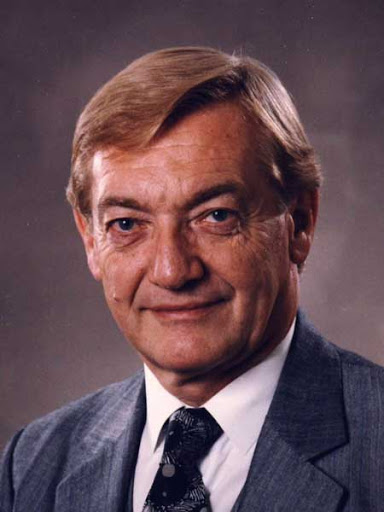
We remember Edith Baird (née Winter-Wood)

Edith Elina Helen Winter-Wood was born, probably in 1859*, to Thomas Winter-Wood, a writer and poet, and Eliza Ann (née Sole) Winter-Wood in Boulogne, France.

(*Despite 22nd February 1859 appearing in Wikipedia we are unable to locate a primary source for this date. Contemporary secondary sources always just gave 1859 as her year of birth. Census records imply that she was born between April 1859 and March 1860. Her marriage record from 1st December 1880 describes her as being ‘of full age’: at least 21 years old, so born before December 1859. However, her death record from 1st February 1924 gives her age as 63, implying that she was born between February 1860 and January 1861. Either her death record is incorrect or she added a couple of months to her age when she married. )

Many secondary and tertiary sources incorrectly give the Winter-Wood family home of Hareston Manor (now a venue for weddings) near Brixton, Plymouth, Devon as her birthplace.

Hareston Manor near Plymouth

The family was resident in Boulogne in at least 1858 (as discussed below) and a UK birth certificate for Edith does not appear to exist. Having said that, a French birth certificate has yet to be located. Both Brian Denman and Chris Ravilious are satisfied that Edith was born in Boulogne and various census records attest to this. Ed: both Richard James and myself (JEU) have examined the evidence carefully and Boulogne would appear to be correct.

Thomas Winter-Wood was born in Har(e)ston, Devon in 1819 and was himself a strong player having been educated at Plympton Grammar School (now known as Hele’s School). Thomas was the son of John Wood-Winter who, in 1824, reversed the order of the family surname. Thomas sold the family estate leaving the Winter-Woods with substantial means, with each family member able to pursue their leisure interests whilst retaining a number of domestic staff.

Thomas Winter-Wood (1819-1905) in 1903.

Thomas taught all of his family to play chess and Edith learnt at an early age. Both Edward J and Carslake W also learnt early on, Edward (aged 11 in 1858) played members of Boulogne Chess Club giving them rook odds and ten years later Edward joined London Chess Club.

According to Tartajubow :

“(Edward) played in several tournaments and in blindfold simuls he drew two games against Lowenthal and one against Blackburne. In 1878 he joined the Croydon Chess Club and once in one of their tournaments scored 23-7. He also enjoyed success in many other club tournaments, correspondence chess and problem solving tournaments. Many of his problems appeared in leading publications of the day.”

and, also according to Tartajubow :

“Her other brother, Carslake W. Wood (1849 – 1924), lived with his mother’s brother, Major Sole of the 5th Militia of West York, in Torquay. While travelling Europe with the Soles, he also developed a taste for painting and on many occasions donated his paintings as prizes in chess tournaments.”

The Doge’s Palace, Venice 1880s by Carslake W Winter-Wood

According to F. R. Gittins (in The Chess Bouquet 1897):

“The moves came to her, as she says, by a kind of instinct before she was out of her first decade. She did not, however, commence composing problems until some years after her marriage, which took place in 1880, to Deputy Inspector-General W. J. Baird, M.D., R.N., whose distinguished services have been mentioned in despatches and rewarded with four medals and two clasps. Eight years later she composed her first problem, and commenced a wonderful series of successes, having gained eleven first, nine second, and six third prizes, and been honourably mentioned nine times.”

Edith Baird (née Winter-Wood)

According to the old ChessDevon web site (sadly only available via the WayBack Machine)

“In 1893, for instance, she entered The Hackney Mercury 3-mover tournament, with a limit of 6 pieces. Most of the great composers of the time had entered, – B. G. Laws, P. H. Williams and James Raynor among them, but she won 1st prize. As one American critic observed, ‘The fact that the tourney assumed an almost international character rendered the triumph of the distinguished lady victor as noteworthy as it was creditable’.”

Here is this first prize (1):

Baird, Edith Elina Helen
Hackney Mercury, 1893
1st Prize

[fen]8/8/8/2k5/2P5/2N5/2N3Q1/3K4 w – – 0 1[/fen]

The problem solutions may be found at the foot of this article.

She very quickly progressed and was soon producing problems that were described as being “exceedingly pretty” and which ‘displayed unmistakable aptitude for the intricacies of chess.’ Her work 700 Chess Problems was published by Henry Sotheran Ltd in 1902 and took her 14 years to complete.”

Seven Hundred Chess Problems. Selected from the compositions of Mrs. W. J. Baird, WJ Baird, 1902
Seven Hundred Chess Problems

700 Chess Problems may be downloaded from here.

Edith also had a brief career in chess competitions in the 1890s, winning the 1897 Sussex Ladies Championship without losing a game.

Few samples of her play survive, but they show her to be a proficient player with, as you might expect from a problemist, a keen tactical eye. In this game she finishes neatly with a queen sacrifice.

[pgn]

[Event “The Public Chess Room, Brighton”]
[Site “?”]
[Date “1896.??.??”]
[Round “?”]
[White “Unknown”]
[Black “Baird, Edith Elina Helen”]
[Result “0-1”]
[ECO “C65”]
[PlyCount “40”]
[EventDate “1896.??.??”]

1. e4 e5 2. Nf3 Nc6 3. Bb5 Nf6 4. d3 Bc5 5. c3 Qe7 6. O-O O-O 7. d4 Bb6 8. Bxc6
bxc6 9. Nxe5 d6 10. Nxc6 Qxe4 11. Nb4 Bb7 12. f3 Qg6 13. Nd3 Rfe8 14. Nf4 Qf5
15. Nh3 Nd5 16. Re1 Rxe1+ 17. Qxe1 Nb4 18. cxb4 Bxd4+ 19. Kh1 Qxf3 20. gxf3
Bxf3# {Sources: Lady’s Pictorial of 4.7.1896, Western Morning News, Leeds
Mercury, and Town and Country Journal (Australia).} 0-1

[/pgn]

In this game, from a blindfold simul against the London-based Dutch organist and chess master Rudolf Loman (1861-1932), she uses a tactic to reach an equal ending.

[pgn]

[Event “6 board blindfold simul at Brighton”]
[Site “Brighton”]
[Date “1896.01.29”]
[Round “?”]
[White “Loman, Rudolf Johannes”]
[Black “Baird, Edith Elina Helen”]
[Result “1/2-1/2”]
[ECO “C66”]
[PlyCount “46”]
[EventDate “1896.??.??”]

1. e4 e5 2. Nf3 Nc6 3. Bb5 Nf6 4. O-O d6 5. d4 Bd7 6. Nc3 a6 7. Bxc6 Bxc6 8.
dxe5 Nxe4 9. Re1 d5 10. Nd4 Be7 11. Nxc6 bxc6 12. Nxe4 dxe4 13. Qxd8+ Rxd8 14.
Bf4 O-O 15. Rxe4 f5 16. exf6 Bxf6 17. c3 Rb8 18. Re2 Rxb2 19. Rxb2 Bxc3 20. Bc1
Re8 21. g3 a5 22. Rab1 Re1+ 23. Kg2 Bxb2 {Sources: The Western Morning News of
13.2.1896, Dublin Evening Mail of 27.2.1896, Brighton Society of 29.2.1896 and
the Bristol Mercury.} 1/2-1/2

[/pgn]

According to the 1871 census the Winter-Wood household lived at “Hareston”, Tavistock Road, Croydon, Surrey and consisted of Thomas (52 and Landowner), Eliza (44) plus Edith’s brothers Edward J (23 and Banker) and Carslake W (22 and retired banker), Marie A (17), Edith (11) plus three (!) domestic servants.

In 1880 (‘of full age’) Edith married the Deputy Inspector-General of Fleets and Hospitals, William James Baird, MD, of the Royal Navy, in the parish church of St George Hanover Square.  (You’ll see that she married under the surname Wood rather than Winter-Wood.) William was almost thirty years her senior, having been born in Londonderry in 1831. The 1881 census found them in lodgings in Durham House, Hotspur Street, Tynemouth, North Tyneside: presumably William was there in connection with his work.  Later the same year, their only child, Lilian Edith Baird, was born in the same place.

William and Edith’s marriage recorded in the Parish Register of St George Hanover Square
William Baird and Edith (Winter-)Wood’s marriage bonds

Lilian would become a child prodigy whose first problem was published before she was 10 years old. She was also an accomplished poet and painter like her mother. Although she had over 70 problems published by the age of thirteen, Lilian gave up chess composing while still in her teens.

Lilian Edith Strong (née Baird)

(Lilian merits a full article in this place in her own right : added to ToDo list!)

By 1891 William had retired and the family had settled in Brighton living at 14 College Terrace, where they employed a servant, Louisa Howard (23). In 1901 the census enumerator found them at the same address, their servant now being Lilian Millard (25).

14 College Terrace, Brighton, East Sussex. BN2 0EE

William died in 1907, and Lilian had married in 1910: the 1911 census found Edith living in a boarding house named Mountcoombe in Surbiton. The house no longer exists, but its name, minus a letter, survives in Mountcombe Close, now a location for residential flats. Shortly afterwards, she joined her brothers in Paignton, Devon, close to her family’s ancestral roots.

Returning to Edith’s family, by the time of the 1881 census the Winter-Wood household (bar Edith) had relocated to “Mariestead”, Netley Abbey, Southampton and had shrunk to Thomas, Eliza and a mere two servants. Edith gave this address when she married William Baird.

Edith Baird (née Winter-Wood)

In the 1891 census the Winter-Wood household consisted of Thomas (72), Eliza (64) plus Edith’s brothers Edward (43) and Carslake (42) all of whom were described as “living on means”. They had returned to three domestic servants : Mary Scoble (65), Carrie Stephens (22) and Kate Truman (just 12). They lived at 14, The Crescent, Plymouth, PL8 2AP. Nothing remains of this property, it would appear. By 1901, the family had moved again, to “Kenwick”, Paignton, Devon. They were back down to two servants: Florence Gagg (18) was the housemaid and Sarah Chambers (59) the cook. Thomas died in 1905, and the 1911 census gives their address as “Hareston”, Totnes Road, Paignton. Eliza, Edward and Carslake’s servants were now Laura Ellen Gagg (25 – presumably related to Florence) and Sarah Tulley.

In an interview with the Westminster Gazette (1st September 1894) Edith was asked why chess has always been a man’s game.

“Frivolous and fashionable women would begrudge the time and thought it requires; busy mothers of families could not, of course, spare time for it, and the great majority of unmarried girls have not, I’m afraid, the necessary patience. Then, too, it is, I must confess, an unsociable game. It is most suitable for quiet and reflective people, and for invalids. It seems always to have attracted clever strategists like military and naval commanders, and also great politicians. I wish girls would take to it more, because it is such excellent mental discipline, and brings out one’s patience. It would also be a useful corrective to the tendency to jump at conclusions which many women have. The great charm is that it is a home accomplishment. A woman is not expected to leave her fireside for the sake of chess. It is a stable kind of amusement for which she never need sully her womanliness or her good reputation. Many of the outdoor sports, innocent and healthy enough, lead to a great deal of flirtation and general frivolity.”

F.R. Gittins (op. cit.) described her as follows:

“Mrs. Baird, however, is something more even than the Queen of Chess-problem composers. She is, for example, an enthusiastic and skilful archer, and, living as she does in Brighton, has for some time been a prominent member of the Furze Hill Archery Club, of which she is a member of the committee, and in which, she has, for two years in succession, taken the medal for the highest aggregate score of the season. She also paints and illuminates charmingly, and has a pretty inherited talent for writing verse. Her book of illuminations, in fact, is described as “so chaste and delicate in design as to recall the ancient illuminated books which are treasured in museums and art galleries.” In politics she is a staunch Liberal, while the modern movement against all cruelty to animals – whether inflicted under the name of sport or in the interests of science – finds in her one of its most ardent champions.  Besides the déclassement derived from chess, she is also a great believer in girls making themselves independent of marriage, from a monetary point of view, by having a definite occupation. When it is added that she never allows chess, painting, or any other favourite pursuit to occupy her time until all the domestic matters of home have been seen to, we have said sufficient to show how finely-rounded and complete a life this brilliantly clever woman leads. It is only left to add that her manner is kind and  charming, and that she is thoughtfulness and considerateness itself to all her friends. She is, moreover, the most loving of mothers, and has been heard to declare that if anything were to happen to “Lily”, she would never compose another chess problem.”

Edith was also an avid bicyclist who was known to have ridden 25 miles (on one of those old style bicycles) to discuss an adjourned chess game.

Edith Elina Helen Baird

On Friday, February 1st, 1924 Edith passed away. The probate record is dated April 29th and was granted to Herbert Percy Strong, a Lieutenant-Colonel in the Indian Army, who was Lilian’s husband. The initial value of the effects was £18110 5s 7d which was subsequently resworn to £16627 13s 11d.

Probate record for Edith Baird (1924)

Both Sunnucks and Golombek are silent on Edith. This is somewhat surprising since Anne liked to mention female players and problemists.

From The Oxford Companion to Chess by Hooper & Whyld :

EDITH ELINA HELEN (née Winter Wood) (1859-1924), British problem composer. Her parents, two brothers, and daughter were all good players or clever problemists.

She composed over 2,000 problems which were not profound but were noted for their soundness; only a dozen or so were faulted. Her Seven Hundred Chess Problems was published in 1902. She became deeply absorbed in retractors, and her other book The Twentieth Century Retractor appeared in 1907. They are two of the most beautiful chess books ever to appear, printed and bound by the King’s printer Henry Sotheran, and sold at less than cost.

The Twentieth Century Retractor
The Twentieth Century Retractor, Chess Fantasies, and Letter Problems: Being a Selection of Three Hundred Problems, Mrs WJ Baird, London: Henry Sotheran and Co. 1902.

The Twentieth Century Retractor may be read online here.

The dedication for The Twentieth Century Retractor was somewhat unusual :

“Dedicated to
The Sun
The Glorious Orb which
Animates and Beautifies
The Earth
By Giving It
Warmth, Light and Life”

and Edward Winter discusses the beauty of the book in Chess Note 3164.

From British Chess Magazine, Volume XLIV, (44, 1924), page 103 we have this brief obituary notice written by RC Griffth :

“We much regret to hear of the death, at Paignton, on February 1st, of Mrs. W.J. Baird, much of the distinguished of women problem composers throughout the world. As our problem editors will no doubt deal fully with her work and her triumphs, we shall say no more here that she took a keen interest in chess over-the-board also, and in 1897 secured the county championship  of Sussex among players of her own sex. By birth she was a Winter-Wood and thus a member of a distinguished West of England chess family”

From British Chess Magazine, Volume XLIV, (44, 1924), page 125 we have this obituary written by RC Griffth :

“A deep shadow has been cast over the chess world by the death of Mrs. W.J. Baird, which occurred on 1st February last at Paignton. The end was most unexpected, but it is a comfort to her relatives that the passing away was peaceful. She was the daughter of Mr. T. Winter-Wood, who and whose family have been identified with chess for generations. She was born in 1859 and composed her first problem in 1888, and it was not long after this date that she was given the title of the “Queen of Chess,” since not only did she distinguish herself in a happy way as a prolific composer, but proved a valiant opponent over the board, testified by her securing the ladies’ championship of Sussex in 1897.

[fen]8/4pb1N/3BkN2/1p3p2/1Qp5/K6B/8/8 w – – 0 1[/fen]

Mate in Two (2)

Among her other accomplishments were painting, particularly illuminating, poetry (which may have been inherited from her gifted father) and archery, in which sport she was skilful. Her chess problems were generally of the light texture order never profound, but always pleasing to the ordinary solver. She must have composed over 2,000 problems of one sort or another, and this large output in about thirty-five years could not be conducive to highest results. Her problem tourney honours were numerous, though she did not as a rule see these, generally entering her problems to oblige admiring conductors of competitions.

[fen]8/4PpN1/2pkBP2/P7/3N4/3R1P2/2Q4K/8 w – – 0 1[/fen]

Mate in Two (3)

In 1902 she published Seven Hundred Chess Problems and in 1907 The Twentieth Century Retractor, Chess Fantasies and Letter Problems, 320 illustrations (Sotheran & Co.). Both were editions de luxe. Mrs. Baird was credited with the being the originator of the complicated retractor of which she was a proficient exponent, but since she ceased composing these fancies, interest in them has waned.

[fen]1Q6/8/4p3/KP1PB3/N3k3/4p3/4P3/8 w – – 0 1[/fen]

Mate in Three (4)

During the last few years her activity, after a period of quiescence has been marked, her attention being directed principally to ‘Mutates’ and Picture or Letter Problems. In addition to the enthusiasm which, shown by her actual work, she has generously promoted several competitions, one still current in the Morning Post, particulars of which we announced last month. A remarkable feature of the deceased’s problems was their soundness less than one per cent. being cooked after leaving her hands, evidence of painstaking application!

[fen]1K3Q2/8/8/4k3/8/N7/N7/7B w – – 0 1[/fen]

Mate in Three (5)

There is now, since the decease of Mrs. Baird’s father, Mr. T. Winter-Wood and her brother, Mr. E.J. Winter-Wood, only Mr. Carslake Winter-Wood left to represent the family in the chess circle, Mrs. Strong, her daughter, who at one time promised to emulate her mother, having apparently abandoned the game and its problems. There can be no question that Mrs. Baird stood in front of all lady composers, her nearest rival probably being the late Mrs. T. B. Rowland, and indeed a number of her compositions rank high in the world’s collection. We have not space this month to quote specimens, but hope to do so next issue.

[fen]R7/3B4/P7/1p3K2/1P6/1k6/1P4Q1/8 w – – 0 1[/fen]

Mate in Three (6)

Since the above was in type we have been informed of the sudden death of Mr. Carslake Winter-Wood on the 24th February.”

The Late Mrs. W. J. Baird,

The Masters said:-

“Lay by the board, the problem is not sound;
There’s none can solve unless a Morphy’s found.”
* * *
A knight I saw, his royal head bowed;
Methought a bishop moved and prayed aloud.
The Queen, alas, and their attendants gone,
Only did the Kings linger sadly on.
And roaming far afield a Rook forlorn,
And here and there a long-forgotten pawn.
“Oh! is there none who can this problem solve?”
“Seek her round who our highest hopes revolve”
And so we brought it to our ‘Problem Queen’
Who faced the field with heart and eye serene.
* * *
“Go leave me now and I will rest awhile,”
Then hand outstretched and swift triumphant smile :
“The Bishops move! with him the key,” she cried –
“Life’s problem solved at last! I’m satisfied.”

M.S.M.

[fen]8/8/1N3p2/1Nk5/4K3/8/4B3/8 w – – 0 1[/fen]

White retracts his last move; then plays. Black moves so that White can mate at once. (7)

(Please note that there are factual errors in most of the sources quoted below.)

Here is her Wikipedia entry

Here is more from chessproblem.net

Article from Tartajubow (but the author mistakenly conflates Edith and Lilian) on Edith Baird and other Bairds

Queens of Problem Chess by Satanick Mukhuty from chessbase.com

More from Sarah Beth Durst (aka BatGirl), quoting from Gittins.

Via the Wayback Machine Chess Devon have this excellent article

British Chess News would like to thank Brian Denman for providing a file of Edith Baird’s games, and Tim Harding, for sending us the pdf of The Chess Bouquet.

Solution to problems:

(1)

1.Qg7! (2.Qc7#)
1…Kc6 2.c5 Kxc5 3.Qc7#
1…Kxc4 2.Qd4+ Kb3 3.Qb4#
1…Kb6 2.Sb5 Ka6/Ka5, Kc6/Kc5 3.Qa7, Qc7#
1…Kd6 2.Sb5+ Ke6, Kc7/Kc5 3.Sd4, Qc7#

(2) 1.Bg2

(3) 1.Qb2

(4) 1.Qh8

(5) 1.Nc1

(6) 1.Rd8

(7) White retracts Nd5xRb6, then 1. Nd6 Rc6 2. Nb7#


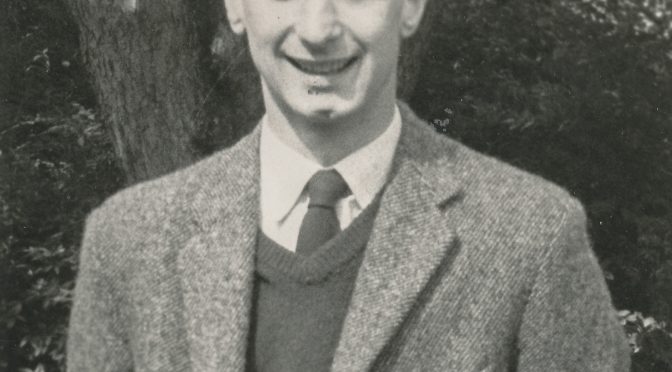
Remembering Ian Wells (22-vi-1964 25-i-1982)

Ian Duncan Wells
Ian Duncan Wells

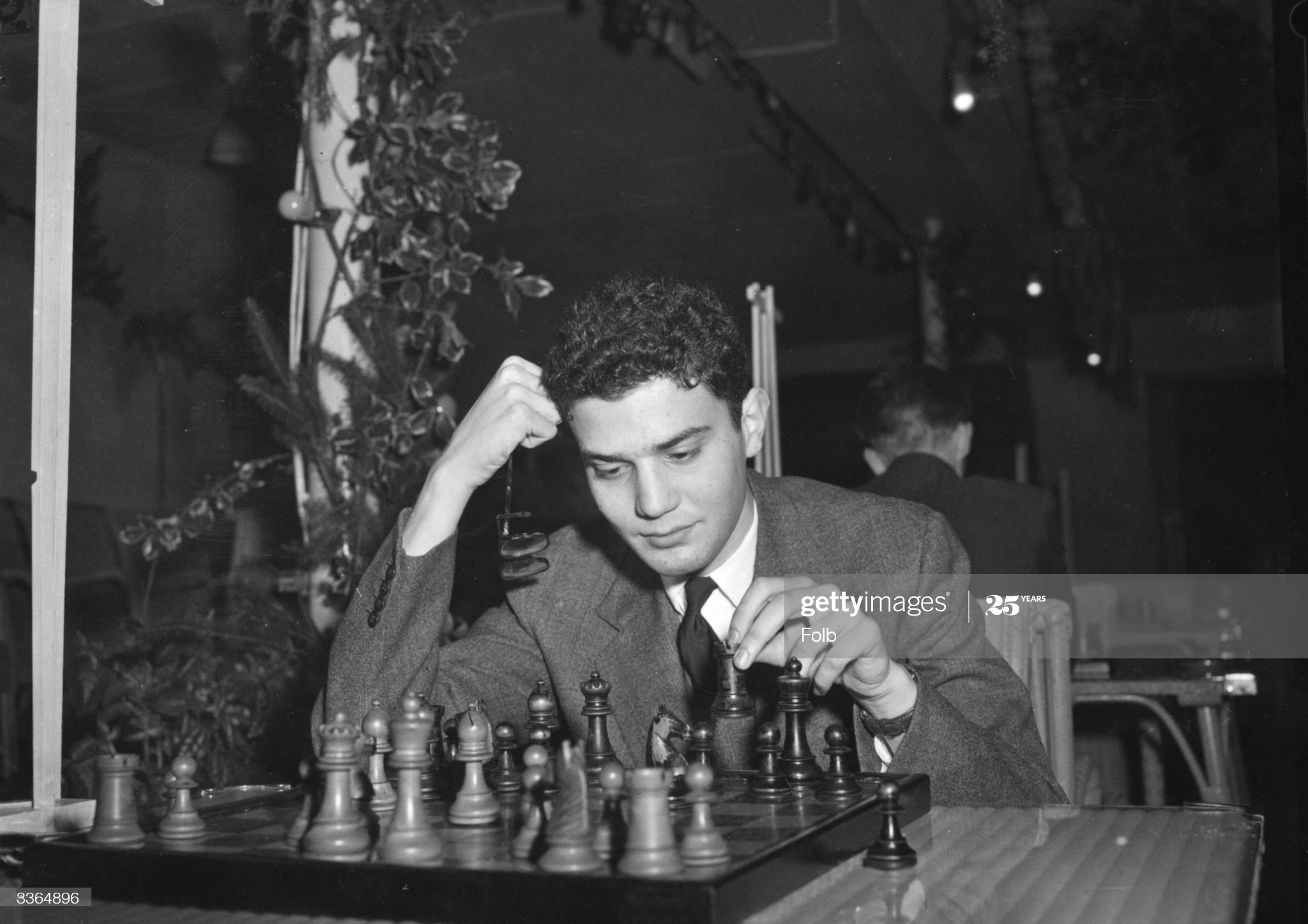
We remember Ian Duncan Wells who very sadly passed away on this day (January 25th) in 1982 aged seventeen years.

From Chessgames.com :

Ian Duncan Wells was born in Scarborough, England. He was awarded the FM title in 1982. At the Islington Open in December 1981 he finished 1st= with John Nunn and Tony Miles. Following a 5th= placing in the Golden Pawn of Brazil Junior tournament held in Rio de Janeiro he and other players went swimming outside their hotel. He got into difficulties and although he was brought ashore by lifesavers he died after six days in a coma.

Here is an excellent article from chess.com written by Neil Blackburn.

ID Wells (left) plays GM RD Keene
Ian Wells plays GM Alexander Kotov at the home of Mike Fox

[pgn]
[Event “Lancashire Open”]
[Site “Morecambe ENG”]
[Date “1979.05.07”]
[Round “7”]
[White “Wells, Ian Duncan”]
[Black “Short, Nigel David”]
[Result “1-0”]
[ECO “C04”]
[Annotator “British Chess News”]
[PlyCount “65”]
[EventDate “1979.??.??”]

{[%evp 0,65,19,31,41,46,51,43,42,39,53,46,57,54,21,37,76,59,63,66,53,51,60,57,
88,59,97,77,222,104,104,80,117,123,175,138,164,137,142,134,127,77,99,67,62,49,
59,49,70,116,106,102,97,104,104,106,107,73,132,123,184,164,145,145,156,130,289,
324]} 1. e4 e6 2. d4 d5 3. Nd2 Nc6 4. Ngf3 Nf6 5. e5 Nd7 6. c3 f6 7. Bb5 Be7 $6
(7… fxe5 8. dxe5 Be7 9. O-O O-O 10. Re1 Qe8 11. Nf1 Nc5 12. Ng3 a6 13. Bf1 a5
$14) 8. exf6 $1 Bxf6 9. O-O O-O 10. Re1 Re8 11. Qa4 $16 (11. Nf1 e5 12. dxe5
Ndxe5 13. Nxe5 Rxe5 14. Bf4 $14) 11… Ncb8 (11… a6 12. Bxc6 bxc6 13. Qxc6
Nb6 14. Ne5 $16) 12. Ne5 c5 13. Ndf3 c4 14. Qd1 a6 15. Ba4 b5 16. Bc2 Nf8 17.
Bf4 Bd7 18. Bg3 a5 19. Qd2 Nc6 20. h4 Nxe5 21. dxe5 (21. Nxe5) 21… Be7 22.
Qf4 h6 23. Qg4 Qc7 $2 (23… Kh8) 24. Bf4 Kh8 25. Re3 (25. Bxh6 $1 gxh6 26. Qf4
(26. Qh5 Bc5 27. Qxh6+ Kg8 28. Qg5+ Kf7 29. Qf6+ Kg8 30. Qg5+ Kf7 31. Re3 $18)
26… Bc6 27. Qxh6+ Kg8 28. Re3 $18) 25… Bc5 26. Nd4 Bxd4 27. cxd4 Bc6 28.
Qh5 (28. Rae1) 28… Re7 29. Rg3 Nh7 30. Qg6 Nf8 31. Qg4 Nh7 32. h5 Rf8 33. Qg6
1-0
[/pgn]

Ian Duncan Wells (standing, third from left)
At the Lloyds Bank Masters : Front (l-r) : Joel Benjamin, Ian Wells, Rear : Peter Morrish, Stewart Reuben, Richard Beville, Gary Senior, Richard Webb, John Hawksworth, Andrew King, Nigel Short, Mark Ginsburg, Daniel King, David Cummings, Erik Teichmann, John Brandford and Micheal Pagden

Remembering Roland Scott (25-iii-1888 10-i-1953)

Roland Henry Vaughan Scott, 1920 British Champion, British Chess Magazine, Volume XLI (1920), Number 10 (October), page 304

BCN remembers Roland Scott who passed away in Monte Carlo on Saturday, January 10th, 1953.

Roland Henry Vaughan Scott was born in either Barnes (or Holloway depending which Census record is correct). His parents were Walter Frederick Scott, a GP who was born in April 1960 and died in 1891 when Roland was three years of age.

His mother was Lucy (Lucie and Lucia have also been recorded) Vaughan was born in 1855 and died in October 1933.

Roland had three sisters, Nina Vaughan Scott Lucie Audrey Scott (who died before her first birthday) and Sybil Anne Vaughan Scott and a brother Guy Francis D Scott who lived until 1977.

In 1891 Roland lived in Tottenham, in 1901 in Hampstead and in 1911 in St. Pancras where he was listed as a law clerk.

In 1917 The London Gazette lists him as a lieutenant in the Norfolk Regiment.

The 1920 electoral rolls for the Gospel Oak polling district lists Scott as voter #2006 living at 2, Estelle Road, North St. Pancras which is now in Belsize Park, NW3 2JX. At the same address was his sister Lucie and in 1921 they were joined by brother Guy.

In July 1922 in the district of Brighton Roland married Irma Clareboudt. No children from the marriage are recorded.

The 1939 register lists Scott as “War Disabled ? Officer Retired In War 1914” (invalided from army) and Irma as a saleswoman (born 25th July 1895) living at 42, Sherwell Lane, Paignton, Torquay, TQ2 6BD.

42, Sherwell Lane, Paignton, Devon, TQ2 6BD.

The April 1953 British Chess Magazine (Volume LXXIII, Number 4, page 101 onwards) contained this obituary from DJ Morgan:

It is with much regret that we record the death, on January 10th, at Monte Carlo, of R. H. V. Scott. He had long been out of active chess, but older readers will need no reminding of the 1920 British Champion, with his quiet manner but attacking chess; one who was composure itself at the table but aggressiveness personified on the board.

The son of a doctor, Scott was born in 1889. He was nineteen before taking to the game, but a ready aptitude combined with great enthusiasm led to rapid progress. He joined the Hampstead Club in 1908, and in his first tournament, the Third Class, came out first. ln the years that follow he pursued the game with much energy.

At the B.C.F. Congress, Glasgow, l9ll, he won the only section of the First Class. In 1913 and in 1914 he was Hampstead Club Champion. In 1913 he was tenth in the British Championship, at Cheltenham, and equal fifth to sixth at Chester in the following year, defeating Yates and drawing with Blackburne.

In 1915 he came second in the City of London Club Championship, but won that of the Metropolitan Club. During the same year he lost a short match with Sir G. A. Thomas 1-3. The war years, with a commission in the Norfolk Regiment, intervened, but chess filled his available moments.

In 1916 he defeated L. I. Estrin, a young Russian who was Hampstead Champion, 5-2 in a match. ln 1919 he lost a match with Winter at Hastings (2-4), and shared seventh to eighth positions with Dr. Olland (Holland) at the B.C.F. Hastings Victory Congress, with victories over Olland,

[pgn]
[Event “Victory Congress Chief Tournament”]
[Site “Hastings”]
[Date “1919.08.12”]
[Round “2”]
[White “Olland, Dr. Adolf Georg”]
[Black “Scott, Roland Henry Vaughan”]
[Result “0-1”]
[ECO “B15”]
[Annotator “Fred Reinfeld & BCN”]
[PlyCount “70”]
[EventDate “1919.08.11”]
[EventType “tourn”]
[EventRounds “11”]
[EventCountry “ENG”]
[SourceTitle “British Chess Masters, Page 39”]
[Source “ChessBase”]
[SourceDate “1998.11.16”]
[SourceVersion “1”]
[SourceVersionDate “1998.11.16”]
[SourceQuality “1”]

{[%evp 0,70,19,38,60,60,55,40,50,35,41,13,43,54,65,5,45,45,73,47,32,7,-1,8,14,
14,17,-15,-15,-75,-31,-38,-32,-29,-43,-21,-52,-64,-64,-88,-90,-155,-167,-146,
-155,-199,-218,-227,-247,-259,-241,-260,-292,-271,-268,-258,-273,-273,-252,
-253,-255,-268,-304,-326,-295,-339,-352,-380,-347,-580,-581,-584,-600]} 1. e4 {
1) The Book of the Second Annual Chess Congress Hyères 1926. p.13. [Scott].} c6
{Scott’s trade-mark} 2. d4 d5 3. Nc3 dxe4 4. Nxe4 Nf6 {More promising and also
more risky} ({than the usual} 4… Bf5) 5. Ng3 Bg4 ({Relevant:} 5… e6 6. Nf3
Nbd7 7. Bd3 Be7 8. Qe2 b6 9. Bf4 Nd5 10. Bd2 Qc7 11. Ne5 Bb7 12. O-O Rd8 13.
Rae1 N5f6 14. Nxf7 O-O 15. Nxd8 Bxd8 16. Qxe6+ Kh8 17. Nf5 Nb8 18. Qd6 Qf7 19.
Qe6 Qh5 20. Ng3 Qh4 21. Re5 Bc7 22. Nf5 Qh5 23. Nxg7 Qf7 24. Qxf7 Rxf7 25. Ne6
Bxe5 26. dxe5 Nd5 27. c4 Ne7 28. Nd8 {1-0 (28) Alekhine,A-Vasiutinsky Odessa
1918}) 6. f3 {[#]} ({Development with} 6. Be2 {would be more to the point} Bxe2
7. N1xe2 e6 8. O-O Bd6 9. Bf4 O-O 10. c3 Qc7 11. Bxd6 Qxd6) 6… Bd7 $5 $146 {
He does not care to lose time and part with the Bishop-pair by retreating with
6…Bh5} ({Predecessor:} 6… Bh5 7. Be3 e6 8. Bd3 Bd6 9. N1e2 Qc7 10. Qd2 Nbd7
11. O-O-O O-O-O 12. Kb1 Bg6 13. Bxg6 hxg6 14. Qc3 Nd5 15. Qb3 N7b6 16. Bf2 a5
17. c4 a4 18. Qc2 Nb4 19. Qc3 c5 20. Ne4 cxd4 21. Nxd6+ Qxd6 22. Rxd4 Qe7 23.
Rxd8+ Rxd8 24. Bxb6 Rd3 25. Qe5 Rd2 26. Bc5 Qd7 27. Nc1 Nd3 28. Qd4 Nxb2 29.
Qxd7+ Kxd7 30. Re1 Rxg2 31. Re2 Rxe2 32. Nxe2 Nxc4 33. Kc2 g5 34. Kd3 Ne5+ 35.
Ke4 Nc6 36. Nc3 {Kvicala,J-Cohn,W Berlin 1913 1-0}) 7. Bd3 Qb6 $1 {Good! Black
must free his game with ….c5} 8. N1e2 Na6 9. c3 c5 10. Qb3 {Realising that
in the middle game the weakness of the diagonal g1 – a7 is likely to be
troublesome, Olland heads for the end game. But the consequences are anything
but pleasant.} ({BCN: better was} 10. a4) (10. Be3 Qxb2 11. O-O) 10… cxd4 11.
Qxb6 axb6 12. Nxd4 Nc5 {Scott seizes the initiative here and retains it
throughout.} 13. Bc2 (13. Bc4) 13… e5 14. Nde2 $17 ({Or} 14. Ndf5 g6 {etc.})
14… Be6 15. a3 $6 {He must part with one of his Bishops, since} (15. b3 $2 {
loses a Pawn.} Nxb3 $19) (15. Be3) 15… Nb3 $1 16. Rb1 Nxc1 17. Nxc1 Nd5 $1
$17 {Directing his attention to the weakened black squares.} 18. Be4 O-O-O 19.
Nd3 {[#]} Ne3 $17 20. Kf2 (20. Ke2) 20… Nc4 $1 $19 21. Rhd1 g6 {Threatening
to win a piece. White is given no time to consolidate his position, and some
loss of material is inevitable.} 22. Ne1 Rxd1 23. Rxd1 Bc5+ (23… Nxb2 {
is also strong} 24. Rb1 Bxa3 25. Nc2 Bc5+ 26. Ke1 Nc4) 24. Ke2 Nxb2 25. Rb1 Na4
26. Kd2 Rd8+ 27. Bd3 f5 {Every move tells. White’s position is crumbling.} 28.
Kc2 Be3 29. Nf1 Bf2 30. Nd2 Nc5 31. Be2 e4 {Decisive. White is helpless.} 32.
Nc4 Kc7 33. Nd2 e3 34. Nc4 ({The alternative was} 34. Nf1 f4 35. Nd3 Nxd3 36.
Bxd3 Rxd3 {etc.}) 34… Bxc4 35. Bxc4 Rd2+ {White resigns. Black’s conduct of
this game was impeccable.} 0-1
[/pgn]

R. P. Michell, Marchand, and Conde. Then came the B.C.F. Edinburgh Congress of 1920, Scott became British Champion, losing only
to Sir G. A. Thomas.

In this year he also drew a match, 3-3, with Marchand, of Holland, also at Hastings. There followed three more appearances in the championship, Malvern, 1921 (equal fifth to sixth); Southsea,1923 (equal third to fourth); and Southport, 1924 (fourth). And with this Scott passed out of British chess. Ill health and failing eyesight, direct results of sufferings and injuries endured on active service during the war, began to take their toll. On medical advice he sought a warmer climate, and the Riviera henceforth became his home.

We find him sharing seventh to eighth positions at the Hyères Congress, in 1926, and coming equal fifth to sixth, with B. Reilly (our Editor’s first international tourney we believe), at Hyères, 1927.

The days of active play were over, but his great interest in the game remained. Scott was a natural attacking player, more likely, perhaps, to win the Brilliancy Prize than the First Prize.

Edo rating profile for RHV Scott

We have given the bare outline of a career that was all too short, one cut down, in a sense before reaching full maturity. Contemporary records sometimes expressed the need for more stability in Scott’s chess, but they chronicle games of his that speak forcibly of the imaginative, refreshing, and invigorating qualities of his play. We offer an early game, the Brilliancy Prize winner, City of London C.C. Championship, 1913-14. White’s 20th move sets the game alight.

[pgn]
[Event “City of London Championship”]
[Site “?”]
[Date “1913.??.??”]
[Round “?”]
[White “Scott, Roland Henry Vaughan”]
[Black “Jacobs, H.”]
[Result “1-0”]
[ECO “D06”]
[Annotator “British Chess News”]
[PlyCount “73”]
[SourceTitle “BCM, 1953, page 102”]

{[%evp 0,65,19,31,19,-16,41,-14,30,11,28,-22,30,-18,30,41,40,42,55,54,54,34,59,
68,57,57,48,44,85,80,55,67,75,70,70,69,57,57,57,13,5,0,0,0,0,-73,-27,-79,-43,
-38,-35,-35,-35,-61,-61,-12,-12,0,-25,-25,9,-15,101,32,31,-152,29991,29992]} 1.
d4 d5 2. c4 Bf5 {The so-called Baltic Defence hoping that b7 will not prove to
be an Achilles Heel for Black.} 3. Nf3 e6 4. e3 Nf6 5. Nc3 Be7 6. Be2 ({
Relevant:} 6. Qb3 b6 7. Be2 O-O 8. O-O c6 9. Rd1 Nbd7 10. Bd2 Ne4 11. Be1 Bd6
12. Rac1 Qf6 13. Qa4 Rfc8 14. Qa6 Rc7 15. b4 dxc4 16. Qxc4 a5 17. bxa5 b5 18.
Qb3 g5 19. Bd3 Nxc3 20. Bxc3 Bg4 21. Be2 Qh6 22. h3 Bf5 23. Bb4 Qf8 24. a3 g4
25. hxg4 Bxg4 26. Bxb5 Bxf3 27. gxf3 cxb5 28. Rxc7 Qg7+ 29. Kf1 Bxc7 30. Qc3
Bh2 31. Qc6 Rd8 32. a6 Qg5 33. Ba5 Ne5 34. Qb7 Rd7 35. a7 Rxb7 {Swiderski,
R-Janowski,D Nuremberg 1906 1-0}) 6… O-O 7. Nh4 Be4 {[#]} 8. f3 $146 ({
Predecessor:} 8. Nxe4 Nxe4 9. Nf3 Bb4+ (9… Nd7 10. O-O Ndf6 11. Ne5 c5 12. f3
) 10. Kf1 c6 11. Qb3 Qe7 12. c5 Ba5 13. h4 Bd8 14. Qc2 Nd7 15. b4 Bc7 16. Bb2
f5 17. Bd3 Ndf6 18. Ne5 Bxe5 19. dxe5 Ng4 20. g3 Nexf2 21. Ke2 Nxh1 22. Rxh1
Qc7 23. h5 Nxe5 24. h6 Nxd3 25. Kxd3 e5 26. hxg7 Qxg7 27. Qh2 Rae8 28. Kc2 Rf7
29. a4 Qg4 30. Qh6 Qg6 {0-1 (30) Von Scheve,T-Riemann,F Leipzig 1888}) 8… Bg6
9. Nxg6 hxg6 $16 10. O-O (10. cxd5 exd5 11. g4 {is a modern way to proceed.})
10… c6 11. e4 dxc4 12. Bxc4 Nbd7 13. Be3 Nb6 14. Bb3 Rc8 15. Qe2 c5 16. Rad1
Qc7 17. Nb5 Qb8 18. Rc1 Nfd7 19. f4 a6 {[#]} 20. f5 $5 (20. Nc3 {leaves White
with a small edge}) 20… c4 {Jacobs responds correctly} 21. Bc2 axb5 22. fxe6
fxe6 23. Qg4 {The “point” of f5} Rc6 $17 24. e5 Nxe5 $1 25. dxe5 Qxe5 26. Bxb6
Rxb6 27. Qxg6 Qe3+ 28. Kh1 Qh6 $17 {[#]} 29. Qe4 Bf6 $2 {Looks like a very
natural move but} (29… Rf6 {Leaves Black on top.}) 30. Rcd1 $11 Rf7 $2 (30…
Rc6 {is very sensible. Black needs to look after his back rank.}) 31. Rf3 (31.
Qe5 $1 {was available.}) 31… Qh5 $2 {The losing move from Jacobs} 32. Rxf6 {
and White obliges with a losing blunder} (32. Rh3 Qf5 33. Qe2) 32… g5 $4 {
Ooops!} (32… Rxf6 $19 {and Black is winning}) 33. Rd8+ {and Black resigned.}
{in view of} Kg7 34. Rg6+ Kh7 35. Rxe6+ Rf5 36. Qxf5+ Qg6 37. Qxg6# 1-0
[/pgn]

RHV Scott plays GE Wainwright in 1921, The Sphere, 1921

From British Chess Magazine, Volume XLI (1920), Number 10 (October), page 305 we have the following report of his exploits winning the 1920 British Championship in Edinburgh:

“We are glad to be able to present to our readers a photograph of the new champion, Mr. R.H.V Scott. He informs us that it is his most recent one, taken in 1917 when subaltern in the Norfolk Regiment. He saw service with the latter in France, and, as is probably know to most of our subscribers, was badly gassed, from the effects of which is now happily quite recovered.

His victory in the recent Congress in Edinburgh is welcome from at least two points of view; one, that he is one of our youngest first class players (ed: he was 32 at the time, a veteran by the standards of 2022!), having been born in 1889 (ed: this should have been 1888), and therefore may justifiably be expected to improve still further with experience and some curbing of his impatience in defence; and, two, that he claim to represent the more brilliant school of chess, that of Pillsbury, Marshall, Charousek, and Morphy, rather than the more solid school, of say, Steinitz and Rubinstein, who theory was the pilling up of small advantages.

Scott has an excellent “nose” for attack, and has some exceedingly “chessy” ideas. During the congress he put a much greater restraint on himself than is his wont, and we believe this to be the reason he so improved on his previous records.

He had what might be described as the worst of the draw, since he had Black against Sir George  Thomas, EG Sergeant and RP Michell. Some writers have described him as lucky to win, but a study of his games and a comparison with those of others in the tourney go to prove that he played more far-sightedly than any of the others.

We are quite aware that the form of any player is variable, and we have seen Sir George Thomas play much better chess and much less strainedly than he did at Edinburgh. EG Sergeant was generally playing quite at his best, but once or twice his play deteriorated, perhaps as the result of a sleepless night, he then seemed bereft of ideas, and allowed the clock to beat him. This also was the case with Michell, who had many a rush to save his flag falling before the necessary moves were made. Now Scott almost invariably had time to spare.

Perhaps the worst reversal of form was that of JH Blake; but he had been working very hard and late for some time right up to the day the Congress commenced, and was not really in a fit state of health to take part.

Scott has twice before competed for the Championship; in 1913 where he finished eighth, and in 1914 when he was fifth, beating FD Yates, the then Champion and drawing with JH Blackburne.

He has won several brilliancy prizes in congress and club tourneys, and was the champion of the Hampstead Chess Club (where he may have been said to have learnt the game) in 1913 and 1914. He was first acquainted with the moves in 1908.

He is keen on all sports, and puts his whole energy into each line he may be taking. With yet more self-restraint we think his chess will still further improve, and we venture to prophesy this will not be the last British Chess Championship he will win.”

In his memoirs William Winter wrote this:

“I also had the opportunity of playing a number of semi-serious games with RHV Scott and D. Miller, two of the leading London amateurs. Scott was probably the most brilliant combinative played England has ever seen and had already won almost every honour except the British Championship, which fell to him in 1920.

Since those days I have played over hundreds of games, including the beautiful brilliancies of the modern Russian school, and Scott’s best combinations stand up quite well beside them. There were however weaknesses in his play which I shall discuss later. Miller was just the opposite type, a dour solid player exceptionally hard to beat. He is, I am glad to say, still with us, but Scott died a few years ago – he had been out of chess for a long time.”

and this:

“It is entirely legitimate, and can prove very useful until one comes up against an opponent like Capablanca who had no weaknesses of any kind. ln Scott’s case, one of his foibles was an aversion to exchanging queens, and I took full advantage of this in the first two games of the match both of which I won with comparative ease; but Scott was not finished yet.’ In the third game he tied me up in a variation of the Sicilian which I had not previously seen, and in the fourth I made the fatal mistake in going for an early win of material and allowing him a king’s side attack. Things now looked bad for me. I had the black pieces in the fifth game and I dared not play my favourite Sicilian defence because I could not discover a satisfactory answer to his new line.”

Strangely, none of the Encyclopaedia’s by Golombek, Sunnucks or Hooper & Whyld felt that RHVS merited an entry. However Gaige does not forget.

Here is an interesting article from “introuble2” entitled 100 years ago… chess in London during World War I in which Scott is mentioned.

Here is an excellent article from John Saunders

[pgn]
[Event “Christmas Congress 1921-02 Premier”]
[Site “Hastings Town Hall”]
[Date “1922.12.31”]
[Round “7”]
[White “Yates, Fred Dewhirst”]
[Black “Scott, Roland Henry Vaughan”]
[Result “0-1”]
[ECO “C49”]
[Annotator “British Chess News”]
[PlyCount “116”]
[EventDate “1921.12.26”]
[EventType “tourn”]
[EventRounds “7”]
[EventCountry “ENG”]
[SourceTitle “EXT 2001”]
[Source “ChessBase”]
[SourceDate “2000.11.22”]
[SourceVersion “1”]
[SourceVersionDate “2000.11.22”]
[SourceQuality “1”]

{[%evp 0,116,26,25,25,22,37,11,11,13,20,9,26,7,9,5,0,0,0,-8,12,0,8,10,29,29,26,
26,27,33,54,40,66,13,8,24,17,-7,36,1,1,28,46,33,38,63,41,41,56,46,44,27,58,-32,
-34,-29,0,0,0,0,0,0,-8,0,0,-95,-96,-104,-111,-98,-87,-138,-136,-150,-150,-128,
-144,-170,-150,-144,-189,-233,-250,-248,-243,-252,-250,-307,-307,-324,-333,
-332,-329,-343,-321,-327,-327,-335,-330,-443,-448,-684,-684,-684,-727,-718,
-756,-778,-756,-1560,-1593,-1593,-2018,-2304,-2392,-2172,-29986,-29993,-29994]
} 1. e4 e5 2. Nf3 Nf6 3. Nc3 Nc6 4. Bb5 Bb4 5. O-O O-O 6. d3 d6 7. Bg5 Bxc3 8.
bxc3 h6 (8… Qe7) 9. Bh4 Qe7 10. Re1 ({Relevant:} 10. Qd2 Nd8 11. d4 Ne6 12.
dxe5 dxe5 13. Nxe5 Nc5 14. Qf4 g5 15. Bxg5 hxg5 16. Qxg5+ Kh7 17. Qh4+ Kg7 18.
Qg5+ Kh7 19. Qh4+ Kg7 20. Qg5+ Kh7 21. Qh4+ Kg7 22. Qg3+ Kh7 23. Qh4+ Kg7 24.
Qg3+ Kh7 25. Qh4+ Kg7 26. Qg5+ Kh7 27. Bc4 Be6 28. Ng4 Bxg4 29. e5 Ng8 30. Qxg4
Nh6 31. Qh5 Rg8 32. f4 Qd7 33. Rf2 Raf8 34. h3 Qf5 35. Qxf5+ Nxf5 36. g4 Ne3
37. Bd3+ Kg7 38. Rf3 Nd5 39. Bf5 Ne7 {Tarrasch,S-Spielmann,R Berlin 1920 1-0})
10… Bg4 11. h3 {[#]} Bxf3 $146 ({Predecessor:} 11… Bh5 12. g4 Bg6 13. Rb1
Nd8 14. d4 c6 15. Bf1 Re8 16. c4 Bh7 17. c5 g5 18. cxd6 Qxd6 19. Bg3 Nxe4 20.
Bxe5 Qd7 21. Bd3 f5 22. Bxe4 fxe4 23. Nd2 Nf7 24. Nxe4 Bxe4 25. Rxe4 Rad8 26.
Qf3 Re6 27. Rbe1 Nxe5 28. Rxe5 Rf8 29. Qb3 Rf7 30. Qxe6 {1-0 (30) Schlechter,
C-Marshall,F Ostend 1907}) 12. Qxf3 g5 13. Bg3 Kg7 $146 14. d4 $14 Nd7 15. Rad1
Rad8 16. Re3 a6 17. Bc4 Qf6 18. Qe2 Nb6 19. Bb3 exd4 20. Rf3 d3 21. Rdxd3 Qe7
22. Rf5 Nd7 23. f4 f6 24. Rf3 Rde8 25. Bd5 Nd8 26. Qf2 c6 27. fxg5 cxd5 28.
gxf6+ Rxf6 29. Bh4 Rxf5 30. Bxe7 Rxf3 31. Qxf3 Rxe7 $11 {[#]} 32. Qg4+ $2 (32.
Qg3+ Kf7 33. Qxd6 dxe4 34. Qxh6 Re6 35. Qh7+ Ke8 36. Qh8+ Nf8 37. Qh5+ Nf7 38.
Qd5 $11) 32… Kf8 $19 33. Qf5+ Nf7 34. exd5 Nb6 35. c4 Rc7 36. Qf2 Nxc4 37.
Qa7 Ke7 38. Qd4 Nce5 39. c3 Rc5 40. h4 Kd7 41. Qd2 Rc4 42. Qe1 Kc7 43. Kh2 Ra4
44. Kh3 Rxa2 45. Qd1 Ra3 46. Qc2 b5 47. g3 Ra4 48. Kg2 Rc4 49. Kf1 b4 50. g4
bxc3 51. g5 hxg5 52. h5 g4 53. Kg2 Nf3 54. Qe2 N7e5 55. Qe3 c2 56. Qa7+ Kd8 57.
h6 c1=Q 58. h7 Nh4+ 0-1
[/pgn]

Remembering William Ritson Morry (05-ix-1910 08-i-1994)

William Ritson Morry (05-ix-1910 08-i-1994)

We remember William Ritson Morry who passed away on Saturday, January 8th, 1994.

(A point of detail : It is incorrect, but many do, to write WRM hyphenated. His first name was William, his middle name was Ritson and his surname was Morry. He chose to use his middle name and was known by his friends as Ritson. Maybe this was because he father was also William Morry?)

WRM was born in the Wirral on Monday, September 5th 1910 and his father  was William Doughty Morry (born 16th July 1877). William was a sub-postmaster and seller of fancy goods. His mother was Norah Morry (née Holloway) who undertook “unpaid domestic duties”.

Ritson attended Friars School, Bangor (established in 1557) along with BH Wood. BHW was one year and three months older than WRM so it is entirely possible that they had met.

In the 1939 register he is recorded as being a solicitor with his own practice and was living at 294 Walmley Road, Royal Sutton Coldfield, Warwickshire with his parents : he was 29 years old.

294 Walmley Road, Royal Sutton Coldfield, Warwickshire, B76, 2PL

In 1940 WRM married Nellie Cooper in Sutton Coldfield.

In 1943 WRM was mentioned in the London Gazette several times:

WRM appears in the London Gazette in 1943.

It would appear that this was the start of his first bankruptcy proceedings..

WRM was, by now, living at “Lyndon”, Coleshill Road, Sutton Coldfield, Warwickshire :

Lyndon, Coleshill Road, Sutton Coldfield, Warwickshire

and in the same year on September 30th he was officially made bankrupt as recorded in the London Gazette, order number 195. This notice was repeated in the Edinburgh Gazette of the same year.

On the 8th of June 1944 he was recorded as being struck-off the list of solicitors under the Solicitors Acts of 1932 to 1941. It was determined that WRM had engaged in “fraudulent conversion of clients money”

Birmingham Daily Post 30 October 1945

For more on this see the excellent Chess in the Courts by Edward Winter.

Here is an image of the organisers of the 1953 Whitsun Congress at Ilford including WRM:

The organisers, Front row, left to right: F. Pugh, Mrs. Ranslet, Mrs. Soesan, Mrs. Bannington, W Riston Morry (Controller). Back row, left to right: L. A. J. Glyde, Dr. B. Sturgeon, J. M. Soesan, R. W. Gosling

In 1954 WRM sued BH Wood for libel over a letter BHW sent to Henry Golding of the Monmouthshire County Chess Association warning him of WRMs financial history. Here is a summary of the action :

The Birmingham Post, July 15th, 1954

In 1983 WRM was living at Flat 2, 53, Mayfield Road, Moseley, Birmingham, West Midlands and recorded as a Retired Chess Journalist. Elsewhere he was recorded as a freelance chess and cricket journalist.

57, Mayfield Road, Moseley, Birmingham, B13 9HT

and, unfortunately, in this year he made another appearance in the London Gazette (2nd September 1983) having been made bankrupt.

London Gazette, 2nd September 1983

However, despite these unfortunate life events WRMs contribution to chess goes above and beyond them as he won the BCF President’s Award in 1984.

From British Chess Magazine, Volume CXIV (114, 1994), Number 2 (February), pp. 98 – 99 we have this obituary from Bernard Cafferty:

W Ritson Morry – a Tribute

That great chess character, known to everybody simply as Ritson, has left us in the fullness of years, coincidentally during the first Hastings Congress he missed for decades.

William Ritson Morry (5 ix 1910-8 i 1994) was a player, organiser, writer, arbiter and occasional sponsor of tournaments whose life touched so many aspects of chess that it is hard to know where to begin.

William Ritson Morry (05-ix-1910 08-i-1994)

Ritson was educated in North Wales at the same school as BH Wood. Both were at Birmingham University at the same time, after which Ritson trained as a solicitor. As early as 1930 he founded the Birmingham Junior League, and a little later wrote a chess column for a time for a local newspaper, though Ritson is hardly the first person you think of as someone who would hit deadlines consistently. He was equal second in a rather unrepresentative British Championship of 1936 and equal third in 1951. An unfortunate incident in the mid-1940s led to him being struck off, whereupon he became a chess professional, who eked out a precarious living for the last 48 years of his life. Yet, I never heard him complain, for he was able to immerse himself in chess full time, and what could be better than that?

William Ritson Morry playing Baruch Harold Wood at the British Championships in Blackpool from 1956

He ran a series of newsletters, which hardly covered their expenses and produced and British Championship and Hastings bulletins for many years. 1951 was a significant year in his life, for he gained the FIDE Arbiter title (he was always an expert on the rules and many of the conventions we all play to were codified by him, or under his guidance). Later on Ritson, a great raconteur, was the life and soul of the show in Hastings which, along with the Warwickshire chess team and Erdington CC, was the great love of his life.

Aberystwyth Chess Congress 1955, W Ritson Morry and KL Gardiner, En Passant Chess Publications, 1955

At times he seemed to run Hastings almost single-handed in the Frank Rhoden era. In fact GM Vasyukov went back to Moscow in 1966 and wrote that Ritson Morry was the only controller to be seen in the morning, afternoon and evening sessions of play. I recall that Ritson was amused when I told him of this, but did not demur. To show that there was life in the old dog, he organised a series of Birmingham international tournaments in the 1970s at which Tony Miles got much of his early experience.

Tackle Chess by William Ritson-Morry & W Melville Mitchell

One such tournament was financed by him alone, on the basis of the sale of a piece of land in Sutton Coldfield where a change of planning status had led to a windfall profit.


Hastings Chess Congress 1955-56, RG Wade & W. Ritson Morry, En Passant Chess Publications

He also saved Hastings in late 1974,by giving a partial guarantee when another sponsor reduced his contribution. A few years later the Inland Revenue made him bankrupt when they could not get their piece of the action out of the deal. Doubtless Ritson thought that the money had gone to a worthier cause. I must not fail to mention his love of gambling or his erudition. Many is the time when you could have an exposition from him of the law of England, the practice of the courts and the police, or the political news of the day.

William Ritson Morry (05-ix-1910 08-i-1994)

He was deeply immersed in local Labour Party politics in Birmingham and was a friend of football referee, ‘rainmaker’ Dennis Howell, one-time Minister for Sport. Ritson also played a great deal of postal chess, winning the British title in 1943. His book on the game written in conjunction with a Birmingham schoolmaster Mel Mitchell is a very instructive one, and he also wrote many reports and amusing articles for BCM, particularly one on of the failings of the Elo rating system regulations.

Here is a game Ritson won against the veteran German GM at the London Easter congress of 1940:

[pgn]
[Event “London Easter Congress”]
[Site “London ENG”]
[Date “1940.??.??”]
[Round “?”]
[White “Ritson Morry, William”]
[Black “Mieses, Jacques”]
[Result “1-0”]
[ECO “C30”]
[Annotator “British Chess News”]
[PlyCount “49”]
[EventDate “1940.??.??”]
[EventCountry “ENG”]
[SourceTitle “BCM, 1994, February, page”]

{[%evp 0,49,19,31,54,61,92,2,68,27,30,1,23,15,15,-14,25,-14,29,4,57,69,82,94,
87,77,77,85,102,81,76,100,181,152,202,204,208,194,185,210,224,99,80,75,75,73,
74,255,97,710,1413,1495]} 1. d4 d6 2. e4 Nc6 {A bit of a Mieses speciality…}
3. f4 {Not an everyday position! In fact, this game in 1940 was the first time
this position has been recorded.} (3. Nf3) 3… e5 4. Nf3 Bg4 5. Bb5 {14 games
have reached this position in MegaBase 2020.} Bxf3 6. Qxf3 exd4 7. O-O Nge7 8.
f5 {[#]} f6 $6 $146 (8… Qd7 9. c3 dxc3 10. Nxc3) (8… a6) 9. c3 $1 dxc3 10.
Nxc3 $18 Qd7 11. Qh5+ Kd8 12. Be3 Qe8 {Black is in serious trouble.} 13. Qe2 a6
14. Ba4 Kc8 15. Rac1 g5 16. Nd5 Nxd5 17. exd5 Nd4 18. Qd3 Qxa4 19. Bxd4 Be7 20.
Rc4 Qa5 21. Rfc1 Bd8 22. Qc2 Kb8 23. Bf2 $1 Ra7 24. b4 Qxd5 $2 (24… Qa3 25.
Rxc7 Qxc1+ 26. Qxc1 Bxc7 27. Bxa7+ Kxa7 28. Qxc7) 25. Rxc7 {and Black resigned}
1-0
[/pgn]

Bernard wrote about WRM a year later for the centenary edition of the programme for the Hastings International Congress :

“‘Ritson’ as we all knew him was an institution in British Chess, active as a player, writer,  organiser, drafter of rules and well-known for his skill as a raconteur, Educated in North Wales, he spent the rest of his life, from university days onwards, in Birmingham, but the Hastings Congress was very close to his heart.  He played in a number of pre-war events, and also a few post-war, but by the time of the Frank Rhoden revival of the mid-1950s he was firmly in the saddle organising the post-Christmas traditional event. In fact I recall how perturbed Frank Rhoden was when the news came that Ritson might emigrate to the West Indies.  It was not clear then how he could be replaced, for he supervised the morning, afternoon and evening sessions at the Sun Lounge (his favourite venue) and later at the Falaise Hall when the congress was still of such a size that we could all, including the Premier, be fitted into one room.

William Ritson-Morry
William Ritson Morry

Ritson also did game commentaries for some years and produced a bulletin for at least three decades. He was greatly encouraging of younger talent and the objective historian has to recall the indignation he felt when players like Tony Miles and Nigel Short were not happy with the restraints imposed by financial stringency.

Hastings bench memorial bench for William Ritson Morry

In his declining years Ritson was still a regular until his illness of late 1993, and a fixture at the “gate” where the public paid their entrance money at the Cinque Ports Hotel. The choice of word is deliberate as a visit to the dogs and the bookmaker was one of his rare pleasures outside chess.  Best of all, however, one recalls him telling his fund of stories and reminisces to anyone who cared to listen. His voice, alas, has been stilled, and we are left to recall his selfless devotion to chess and, in particular, to the Hastings Congress.

Here is an obituary from the Midland Counties Chess Union

Here is an in-depth article from William Hartston in The Independent

William Ritson Morry (05-ix-1910 08-i-1994)

Here is a biography from the Midland Counties  Chess Union newsletter from 1994.

From The Encyclopaedia of Chess by Harry Golombek :

Midlands organiser and player who was a chess professional and journalist. As a player his best performances were an =2nd in the British Championship 1936 and an = 3rd in 1951.

In the international field his best results have been an =3rd with List in the Major Open A section of the Nottingham congress of 1936 and =1st with Milner-Barry in the Premier Reserves A at the Hastings congress 1946/7. He has played for England in international matches against the Netherlands (thrice) and against Czechoslovakia and Yugoslavia.

William Ritson Morry talking about Malik Mir Sultan Kahn

A keen and accomplished correspondence player, he had the title of British Postal Master on account of his winning the British Correspondence Championship in 1943.

But it is as tournament and congress organiser that he is best known. He founded the Birmingham Junior League in 1930 and has organised thirty-four Birmingham congresses. He conceived the idea of a junior world championship and in 1951 he held the first World Junior Championship tournament at Birmingham (won by Borislav Ivkov). In the same year he was awarded the title of FIDE judge. He has also had much to do with the organisation of the Hastings Christmas chess congresses in the 1970s.

William Ritson Morry (05-ix-1910 08-i-1994)

He has written much for British chess magazines and was the co-author along with the late W. R. Mitchell  of Tackle Chess, London, 1967.

Remembering GM Harry Golombek OBE (01-iii-1911 07-i-1995)

Harry Golombek, OBE (from the rear cover of A History of Chess)
Signature of H Golombek from a Brian Reilly "after dinner" postcard from Southsea 1951.
Signature of H Golombek from a Brian Reilly “after dinner” postcard from Southsea 1951.

We remember Harry Golombek OBE who passed away on Saturday, January 7th, 1995.

The Amersham Advertiser of Wednesday, 18th January 1995, on page 6, reported, “His funeral was due to be held as 12.30pm (today), at Chilterns Crematorium, Whielden Lane, Amersham.” (Thanks Steve Mann!).

Harry Golombek was born on Wednesday, March 1st, 1911 in Lambeth, London and his parents were Barnet (Berl) Golombek (Golabek) (1878-1943) and Emma Golombek (née Sendak) (1883-1967).

The Polish word Golabek translates to “small dove” in English.

Barnet was a “Dealer of gas fittings” and was 33 when Harry was born and Emma was 26. Both of his parents were born in Zambov which is in the Lomza Gubernia region of the Kingdom of Poland which existed from 1867 – 1917. Their nationalities are both recorded as Russian in the 1911 UK census.  we don’t know (as yet) when Barnet and Emma settled in the UK.

Harry had a brother Abraham (born in 1906) and a sister Rosy born in 1908. The family lived in 200b, Railton Road, Herne Hill. Lambeth.

200b, Railton Road, Herne Hill, Lambeth, SE24 0JT

He is a recorded with a service number of 992915 as being a member of The Royal Regiment of Artillery in 1939 and was discharged as having reached the age limit in 1956 aged 45 and one day.

Harry Golombek's record of discharge in 1956 from the Army.
Harry Golombek’s record of discharge in 1956 from the Army.

Harry married his long time nurse, Noel Frances Judkins (1941 – 2011) in January 1988 and they had (born in 1992) one son : Oliver Golombek-Judkins  BVSc MRCVS who is a successful Somerset based veterinary surgeon. The marriage was recorded in the district of Kensington & Chelsea.

37, Albion Crescent, Chalfont St Giles, Buckinghamshire, HP8 4ET : the home of Harry Golombek OBE

The date of probate was 22 Mar 1995 and the executor of HGs will was David Anderton OBE.

In 1966 Harry became an Officer of the Order of the British Empire (OBE), Civil division awarded in the 1966 Queen’s Birthday (rather than New Years) Honours list.

The citation read simply :

Harry Golombek. For services to Chess : He was the first UK person to be so honoured.

Hastings memorial bench for Harry Golombek OBE
Hastings memorial bench for Harry Golombek OBE, Courtesy of John Upham Photography

The Harry Golombek memorial bench at St Giles Churchyard, Chalfont St Giles in Buckinghamshire. Photogra[h courtesy of Geoff Chandler.
The Harry Golombek memorial bench at St Giles Churchyard, Chalfont St Giles in Buckinghamshire. Photograph courtesy of Geoff Chandler.
The Harry Golombek memorial bench at St Giles Churchyard, Chalfont St Giles in Buckinghamshire. Photogra[h courtesy of Geoff Chandler.
The Harry Golombek memorial bench at St Giles Churchyard, Chalfont St Giles in Buckinghamshire. Photograph courtesy of Geoff Chandler.
In 1985 Harry was awarded the long overdue (but Honorary) title of Grandmaster by FIDE.

Harry was Southern Counties (SCCU) Champion in the 1955-56 and 1963-64 seasons.

Harry was in 1974-82 a FIDE Zonal President and from 1978-96 he was the FIDE Permanent Fund Administrator.

Sadly, he never received the Presidents Award for Services to Chess from either the BCF or ECF : maybe a posthumous award is long overdue?

Harry Golombek, aged 20, becomes the youngest winner of the Surrey Challenge Cup in 1931. British Chess Magazine 1931, September, page 419.
Harry Golombek RIP by Bernard Cafferty

Here (from British Chess Magazine, Volume CXV (115), 1995, Number 2 (February), pp.83-85 is this obituary from Bernard Cafferty :

Harry Golombek OBE (1 iii 1911-7 i 1995), British Champion in 1947, 1949 and 1955, was a grandmaster amongst journalists and book writers, and “Mr Chess” for many of the British public in the decades after the war when his Times column was the main source of up-to-date information on the doings of Botvinnik, Bronstein, Smyslov, Keres, Tal and the other top players.

Harry ran a weekly Saturday column along with daily reports during World Championships, British Championships, Hastings, Paignton …when only The Guardian provided a similar service to the chess community up to 1972. I often recall him grumbling at editorial incisions of his column, which, even so, was more extensive and ‘heavy’ than anything we enjoy now. He loved references to music, the theatre and the arts as a parallel to chess. In fact, he was columnist and correspondent with the paper from 1945 till 1985, and columnist of the Observer 1955-1979. His work at The Times came to an end after he suffered a mild stroke, though he struggled on for a time when, in pre-Wapping days, his work was handicapped by ever earlier deadlines.

Harry was the BCF delegate to FIDE for decades after 1948 and played a part in framing the rules. His view was that the Soviet Union, which he visited as arbiter for Botvinnik’s matches in the 1950s and 1960s as well as for the second part of the 1948 World Championship Match-Tournament, did not throw its weight about so much until after 1970 when a sort of cultural offensive in FIDE and elsewhere was undertaken.

Harry played for England at three Olympiads before the war and six after. Educated at a London grammar school, he was the son of immigrant Polish parents who had been repressed by the last Tsar, to whom his father once sent a message of defiance from the safety of England. A favourite reference of his was the London Boys’ Championship of the late 1920s where he first came to prominence.

His first experience of chess journalism came in the period 1938-40 when he was editor of BCM, till being called to army service. Harry worked in the code-breaking department at Bletchley Park during the war; the Official Secrets Act prohibited him from revealing much of what he knew of this fantastic scientific operation where he was associated with such famous names as Alan Turing, Jack Good, Hugh Alexander and Stuart Milner-Barry. A graduate of London University in Modern Languages, Harry had been called up into the Royal Artillery, but his knowledge of languages, particularly German, meant that he was soon transferred to the Intelligence Corps.

Harry was a life-long supporter of Surrey Cricket Club. His family ran a grocery shop near Kennington Oval which he sold after 1945 when he made the decision to become a chess professional’ He was reputed to have one of the finest chess libraries in Britain, which he has left to the BCF to form the nucleus of a national chess library with bequests from Sir Richard Clarke, RJ Broadbent and GH Diggle.

Amongst the many books he wrote, pride of place must be taken by his work on Capablanca’s best games and the one on the 1948 Match-Tournament at the Hague and Moscow as well as a later book on Reti. Who can forget his account of the delay at the Polish border for the train which was taking players and journalists to Moscow from the Hague in 1948? A Polish general, forgetful of recent history, declared that the train could riot proceed since no-one crossed the Polish frontier without the appropriate documentation and security checks (Euwe’s extensive analytical notebooks in Dutch were the stumbling block). It only needed Botvinnik to hear this for him to phone up Moscow and have the Polish authorities overruled by those who enjoyed real power in the post-war world.

Another famous article which comes to mind is Harry’s long account of the 1967 Sousse Interzonal, complete with the J’adoubovich incident, Fischer’s fickleness, and the camel on the beach. This appeared in the BCM, of course, where H. G. was the editor for Overseas News and the Games Department from the late 1940’s until the late ‘sixties. His work here was a cut above most contemporary chess journalism’ since he was so often on the spot at top events and he had access to all of the world’s chess press. As a consequence, he was often the contact man for arranging participation of the world’s leading players at Hastings. From this flowed his work for The Friends of Chess, the body that raised funds and helped gain invitations to foreign events for our up and comings. It was in 1966 that he gained the OBE for services to chess.

Harry had a dry acerbic wit and a fund of stories that made him a welcome after-dinner speaker and lecturer. He seemed to be a life long bachelor, but he married late in life (this corrects an error in the Times obituary of 9 January. In his declining years he spent his last days in a rest home for the elderly in Gerrards Cross where his main contact with the outside world was Gerry Walsh who had often driven him to and from the Hastings Congress in the last couple of decades of his life.

A Grandmaster Amongst Journalists

Harry Golombek, was, without a doubt, one of the finest chess writers ever, and his lengthy stint as Overseas News editor of the BCM results in some classic reports.

As a tribute to Harry’s work we (BCM) have decided to reprint word for word, his extraordinary account of the 1967 Sousse Interzonal. The article that follows is an exact reproduction of his eyewitness report, as it appears in the 1968 BCM Bound Volume, January magazine. This was the tournament that had everything: Bolbochan vanishing, Fischer withdrawing, Larsen winning, and much more.

We are sure that our current readers, young and old, will be as enchanted with the tale as BCM readers were nearly three decades ago.

Further Recollection from Bernard Cafferty

Here (from British Chess Magazine, Volume CXXXII (132), 2011, Number 3 (March), pp.150-154 is an affectionate collection of memories from Bernard Cafferty :

“In recalling four decades of knowing the GOM of 20th century English chess, one has to stress the ‘English’ aspect. The ‘Harry’ part of his name was much more significant than the Polish surname, and, though he was the most cosmopolitan of men, who fitted into any milieu, my abiding memory of him always throws up the quirks that are the sign of an Englishman. I wonder how many of my readers recall the classic English actors Naunton Wayne and Basil Radford, whose main preoccupation in their films was…. getting to know the latest cricket score from Lords or The Oval.

Harry Golombek. Source : The Anglo-Soviet Radio Chess Match

Indeed, Harry was a long-time member of Surrey Cricket Club, and once, when he came back from being an arbiter at an international tournament in Tenerife, his main comment to me was not about the event or the players, but rather that the volcanic rock of the Atlantic island made for brackish water, so that one could not get…. a decent cup of tea!

Left to right Baruch H Wood, Philip Stuart Milner-Barry, Vera Menchik (playing in the women's world championship (held concurrently with the 1939 Buenos Aires Olympiad) which she won with 17 wins and 2 draws), Sir George Thomas, Conel Hugh O'Donel Alexander and Harry Golombek. England withdrew after their preliminary group due to the outbreak of war despite qualifying for the top final. Thanks to Leonard Barden
Left to right Baruch H Wood, Philip Stuart Milner-Barry, Vera Menchik (playing in the women’s world championship (held concurrently with the 1939 Buenos Aires Olympiad) which she won with 17 wins and 2 draws), Sir George Thomas, Conel Hugh O’Donel Alexander and Harry Golombek. England withdrew after their preliminary group due to the outbreak of war despite qualifying for the top final. Thanks to Leonard Barden

I first met Harry in the early 1950s when I was a teenage student keen on chess and accordingly spent my meagre pocket money on a day out in Manchester to watch the Counties Final match between Lancashire and the all-conquering Middlesex side of those years. Harry and I were about the only spectators. He was there reporting for The Times. I recall that the top board game was between the veterans William Winter and WA Fairhurst. The game duly appeared in the BCM with Harry’s notes, for he was the long-serving Games Editor of that august publication.

Players at the 1946 British Championships in Nottingham : Back (from left to right): Gabriel Wood, Reginald Broadbent, Philip Milner-Barry, Andrew RB Thomas, Baruch H Wood. Front (from left to right): Bob Wade, Frank Parr, William Winter, Robert Combe, Hugh Alexander, Harry Golombek, Gerald Abrahams.. Photograph : BritBase

Perhaps I may enter a belated correction to “Who’s Who” here. Some editions stated that he was editor of BCM after the Second World War. Not so. His stint in the editorial chair was 1938-40, after which he was called up, initially being assigned to the Royal Artillery. Perhaps that is a sign of the speciality of the Services – fitting a square peg in a round hole – but he was swiftly transferred to the Intelligence Corps, perhaps at the behest of Hugh Alexander who knew that Harry had studied German at his London grammar school in Camberwell and then at London University.

[pgn]
[Event “Budapest Maroczy Memorial”]
[Site “Budapest”]
[Date “1952.03.19”]
[Round “10”]
[White “Geller, Efim P”]
[Black “Golombek, Harry”]
[Result “1/2-1/2”]
[ECO “E41”]
[Annotator “Wolfgang Heidenfeld & British Chess News”]
[PlyCount “48”]
[EventDate “1952.03.03”]
[EventType “tourn”]
[EventRounds “17”]
[EventCountry “HUN”]
[SourceTitle “MCD”]
[Source “ChessBase”]
[SourceDate “1999.07.01”]
[SourceVersion “1”]
[SourceVersionDate “1999.07.01”]
[SourceQuality “1”]

{[%evp 0,44,19,31,14,-14,-11,-3,33,33,30,19,55,72,62,62,81,82,85,27,98,89,78,
78,78,109,101,116,116,116,57,-6,4,0,218,221,205,194,168,0,0,0,0,0,0,0,0]} {
This game is a rare example of a drawn game receiving a brilliancy prize :
something that HG was very proud of. Notes by Wolfgang Heidenfeld from Draw!,
George Allen & Unwin, 1982, pp. 103 – 4} 1. d4 Nf6 2. c4 e6 3. Nc3 Bb4 4. e3 {
This quiet solidating move of Rubinstein’s has steadily grown in esteem since
the “Nimzo” became a going concern in the late ‘twenties. Its popularity has
outstripped all its rivals. 4. Qb3, 4.Qc2, 4.Bg5 and 4.a3} c5 {With the square
d4 overprotected (unlike the position after Qc2 or Qb3), this move does not
force White into possibly premature decisions on how to conduct the struggle
for the centre.} 5. a3 cxd4 6. axb4 dxc3 7. Nf3 {A gambit move typical of
Geller. Golombek accepts – mainly in order to see what is going to happen.}
cxb2 (7… O-O {followed by …d5 would be perfectly satisfactory.}) 8. Bxb2 d5
9. c5 b6 $2 {Foolhardy play by the usually so careful Golombek, who seems to
have been infected by the spirit of his opponent.} (9… O-O {was necessary,
though White would have full value for his pawn – the a-file, a strong pair of
bishops, and pressure by the Q-side pawns. Now Black has to struggle for
survival.}) 10. Bb5+ Bd7 11. Bxd7+ {[#]} Nfxd7 $1 {An unpleasant necessity, for
} (11… Nbxd7 $2 12. c6 {with complete paralysis of the Q-side.}) ({If} 11…
Qxd7 12. cxb6 Qb5 $2 13. Rxa7 $1 $18) 12. Qc2 {Before hacking into the K-side
by Bg7 : White first wishes to obtain control of the square c6. This is so
important, the resultant strangulation so fatal, that Black has to surrender
the whole K-side (not merely the g-pawn) as the lesser evil.} (12. Bxg7 Rg8 13.
Bb2 Rxg2 14. Qa4 bxc5 15. bxc5 Qc7 16. Nd4 $18) ({Some critics have suggested}
12. Qa4 {as even stronger, because c6 is under direct control of the white Q,
but this deployment of the Q also has its drawbacks. First of all she can no
longer assist the B by capturing on h7, secondly she is subject to swapping
offers.} {e.g.} bxc5 13. bxc5 Qc8 $1 14. Bxg7 Rg8 15. Bd4 Qc6 16. Qc2 Rg6 {
with an unclear position.}) 12… Nc6 $1 13. Bxg7 Nxb4 14. Qb1 $1 {but after
the text the N hangs, the KR hangs and , if it moves, the KRP will go. Is
there a saving clause for Black?} ({Of course, not} 14. Qb3 $2 Nxc5) 14… Rg8
15. c6 {So as to eliminate the counter loss of the exchange after 16. Qh7: Rg7:
! 17. Qg7: Nc2+} (15. Qxh7 Rxg7 16. Qxg7 Nc2+ 17. Ke2 Nxa1 18. c6 Nb3 19. cxd7+
Ke7 20. Ne5 Qg8 21. Qh6 f6 22. Qh4 Rf8 $16) {After the deflection of the black
N white hopes to enjoy his extra material at leisure and without futher
complications. However…} 15… Nxc6 ({If Black tries} 15… Nc5 $2 16. Qxh7
Rxg7 17. Qxg7 Nc2+ 18. Kd2 Nxa1 19. Ne5 $1 Qe7 20. Rxa1 O-O-O 21. Nxf7 Rf8 22.
Rxa7 {and wins.}) 16. Qxh7 {[#]} Nf6 $1 {An amazing combination! Black gives
up both rooks so as to land in an unavoidable perpetual check.} 17. Bxf6 Qxf6
18. Qxg8+ Kd7 $1 ({Not} 18… Ke7 $2 19. Qg5 $18) 19. Ne5+ Nxe5 20. Qxa8 Nf3+
$1 {The diagonal for the Q is re-opened with gain of time.} {White choses a
less elegant sequel :} 21. gxf3 ({The thematic continuation would now be} 21.
Ke2 Qb2+ 22. Kxf3 Qf6+ {so that Black administers his perpetual without
regaining any material.}) 21… Qxa1+ 22. Ke2 Qa2+ {and agreed drawn. – there
is no escape from the perpetual check. :} 23. Kf1 Qb1+ 24. Kg2 Qg6+ {etc.}
1/2-1/2
[/pgn]

The Judges / Arbiters from the 1953 Zurich Candidates tournament : Harry Golombek, Alois Nagler and Alex Crisovan

Clearly, under the conditions of 1940, a linguist was just what was needed to make up the team of mathematicians, cryptographers and such like who were tasked with breaking the secrecy of German coded messages.

The BCF Team at the Amsterdam Olympiad 1954. Left to right : Barden, Clarke, Penrose, Wade, Golombek (board three) and Alexander

I once mentioned the misunderstanding over the “Who’s Who” entry to Brian Reilly. He laughed it off, saying that it was almost certainly the abiding fault of HG – not taking Brian’s repeated advice to fit a new typewriter ribbon!

Harry Golombek and Gordon Crown in around 1946-47.

I could relate to that since Harry’s handwritten game scores, written in pencil and descriptive notation, were very hard to decipher, a real scribble that only the man himself could make sense of. When I asked him why he did not use algebraic notation, he commented that he wrote for so many English-language outlets: The Times, The Times Weekend Supplement, Observer and chess book publishers like Bells and Penguin who knew their audiences of those years were supporters of the Pawn to King’s Knight Three school. In fact, Harry commented, he had made more money out of his Penguin book The Game of Chess than from all his other extensive book authorship and journalism.

The Game of Chess, Harry Golombek, 1954, Penguin Books

and the paperback version :

The Game of Chess, Harry Golombek, 1954, Penguin Books

Moreover, it took him about three whole days to assemble the documents and papers to enable him to fill in his income tax form.

Harry Golombek simultaneous display at Hull Chess Club. Year and photographer unknown

That reminds me that, when he was in his final years, and in an old person’s rest home, he arranged for his extensive library to be transferred in many large tea chests from his house in Chalfont St Giles, Bucks, to the St Leonards address where I had worked for the BCM for the last 12 years and which had recently been vacated as a result of Murray Chandler deciding to transfer BCM operations to London. I had the task, arranged with The Friends of Chess and the BCF, to do a sort-out and preliminary catalogue of his books and magazines which Harry was bequeathing to the BCF to form the nucleus of a National Chess Library. That would be a pleasant enough task, but it was prolonged into many weeks by having to decant the valuable chess material from the tea chests, much of it covered in dust and even spiders’ webs, from the many financial and other papers to do with his financial affairs. It was then that I first learned what a ‘tip sheet’ was, and it was not until stockbroker David Jarrett, BCF Hon Treasurer, came down for a visit that the dross amongst the many papers was separated from the gold and passed to Harry’s executor David Anderton.

Harry Golombek contemplates his options after White (JH Donner) played 9.a3 in the 1952 Anglo-Dutch Match. Donner won in 33 moves and the game was BCM #11,074

Reverting to the cup of tea story, the first time I got to know Harry well was at the British Championship at Leicester in 1960. Many of the participants were lodged in University accommodation near the venue. Every evening, after play had finished, a number of us got together for a chat over a cup of tea in the accommodation unit’s kitchen. There Harry would regale us with stories from his many visits abroad, particularly to Moscow for the world title matches involving Botvinnik. Harry had formed many interesting views on Soviet society. Amongst the stories he told was of the all-pervasive dead hand of the bureaucracy. He was used to filing his reports on the match in English at the Central Post Office. One day, a clerk behind the grille, told him he could not accept it, since the regulations stated that all outgoing material had to be in Russian.

Harry Golombek, Stanley Sedgwick, Brian Reilly and DJ Morgan in the garden of Brian Reilly. Photo probably taken by Freddy Reilly.

With his logical mind, and not appreciating the discipline and associated bureaucracy which the rulers tried to impose on Soviet society, Harry commented that “Yesterday, I submitted in English and it was accepted”, at which the clerk drew herself up to her full height and stated firmly: “Yesterday was yesterday, today is today”. Harry’s considered views included these: Communism would never be made to work properly in Russia, since the Russians lack the requisite discipline. “They should have tried it on the Germans. They might have made it work”. He once commented that when he went to Germany in the decade or so after the war, he was aware that some of those whom he met had been strong supporters of Nazism: “If they had had their way, they would have turned me into a bar of soap!”. I got a benefit from Harry being in Moscow. I wanted to get a copy of Chigorin’s collected games by Grekov, a very rare item. Harry duly promised to seek one out on his next visit to Moscow and a second-hand copy of this fine book came to me through the post some weeks later. No charge to me, of course.

Harry Golombek in play against Borislav Ivkov, Hastings 1955/6.

Harry played a big role in drawing up the Rules of Chess as they applied to post-1945 competitive play. He served on the appropriate FIDE commission for decades and always argued that too precise a codification limited the discretion of the arbiter to apply a common sense solution to a concrete set of circumstances. Alas, that sensible approach has been moved away from in recent times, especially with the introduction of quick-play finishes and associated fine points about time limits.

Kick Langeweg plays Hugh Alexander in the Anglo-Dutch Match of October 7th , 1961. Peter Clarke (right) is playing Johan Teunis Barendregt and Harry Golombek observes

A final shrewd comment from Harry, based on his Moscow experience: “In 1917, the new Bolshevik regime claimed that they were abolishing all titles, privilege and so on. The result? Forty years later they have the most class-conscious society I have encountered.” One proof of this might be given – the Soviet internal passport system, one point of which required the holder (and for a long time no peasant was allowed such an identity document – who, then, could claim that the Tsar had abolished serfdom in the middle of the 19th century?) to state his/her ethnic origin: Russian, Ukrainian, Kalmyk, Armenian, Jew and so on. The Western mind boggles… ”

Harry Golombek during a team event, Jonathan Penrose on the adjacent board.

We leave the final word in reminiscences of Golombek to his near-neighbour in Chalfont St Giles, Barry Sandercock :

” Harry was a very interesting man to talk to and liked to talk about the early days when he played against some of the great players. He was also very knowledgeable on many subjects, the arts, music etc. I played him when he gave a simul at Gerrards Cross in 1955 (Jan.21st} and managed a draw after 3 hours play. I remember, the local paper once wrote an article about him, calling him an ex-world champion. I got a letter published where I pointed out that he was an ex-British Champion not ex-world champion. I hope he didn’t see that!”

Harry Golombek awaits the start of the game during an Anglo team match.

“To finish, a characteristic Golombek game, with his own notes. I (Ed) have selected one of the games from his victorious British Championship playoff match against Broadbent in 1947. It is characteristic of him in many ways. The game features a typically smooth positional build-up, from his beloved English Opening, played with the Nh3 development plan, which was a particular favourite of his. The notes are also very typically Golombek – concentrating in the main on verbal explanations, with relatively few variations, but also characterised by occasionally extreme dogmatism in his assessments, such as the notes to moves 1, 2 and 6, for example. The game and notes were published in the December 1947 issue of The British Chess Magazine.”

[pgn]
[Event “British CF-34 Championship playoff”]
[Site “London”]
[Date “1947.10.19”]
[Round “2”]
[White “Golombek, Harry”]
[Black “Broadbent, Reginald Joseph”]
[Result “1-0”]
[ECO “A26”]
[Annotator “Harry Golombek, BCM. December 1947”]
[PlyCount “75”]
[EventDate “1947.10.18”]
[EventType “match”]
[EventRounds “6”]
[EventCountry “ENG”]
[SourceTitle “MCL”]
[Source “ChessBase”]
[SourceDate “1999.07.01”]
[SourceVersion “1”]
[SourceVersionDate “1999.07.01”]
[SourceQuality “1”]

{[%evp 0,75,27,-16,-21,-12,-15,-42,18,20,9,-1,0,-17,-13,-15,-15,-5,2,-1,19,9,
18,5,19,14,16,35,45,45,69,27,33,21,54,47,61,61,95,128,208,170,223,244,281,285,
252,188,248,172,195,213,189,161,161,121,159,119,140,106,195,243,604,735,762,
784,868,879,879,884,906,690,743,830,896,785,1011,1065]} 1. c4 {I do not regard
this system of defence as at all satisfactory. Black, by abandoning control of
the white squares in the centre to the first player, simply plays into his
hands..} e5 ({Both} 1… Nf6) ({and} 1… e6 {are to be preferred.}) 2. Nc3 Nc6
({and here better is} 2… Nf6 {[%csl Gd5] , which does at least make some
attempt to contest the square d5}) 3. g3 g6 4. Bg2 Bg7 5. d3 d6 6. Nh3 {
For the pros and cons of this method of attack, the reader is referred to the
remarks made in my game v BH Wood in a previous number of The British Chess
Magazine. I would only add that it is even more effective against a king’s
fianchetto by Black, and this gives White further objects of attack on the
kingside.} Nge7 ({Here, A R B Thomas played against me, at Nottingham 1946}
6… Be6 7. f4 Qd7 8. Ng5 Nge7 9. O-O O-O 10. Nd5 h6 11. Nxe6 fxe6 12. Nxe7+
Qxe7 13. e3 Kh7 14. Qg4 {leaving White with a won game because of his strong
kingside attack.}) 7. f4 O-O 8. O-O h6 {[#] Partly with the idea of limiting
the scope of White’s knight and partly so as to set up a formation with the
king on h7 and pawn on f5, with possibilities of a counterattack on the
kingside. But he never gets time for this, and meanwhile, he has created pawn
weaknesses in his own position.} ({A colourless move like} 8… Bd7 {, though
not entirely satisfactory, was better than any positively harmful line such as
the text.}) 9. Nf2 {The knight is centralised and will prove of great use on
this square during the subsequent course of this game.} f5 10. Bd2 Kh7 11. Rb1
{Preparing further pressure on the white squares by b4-5. The luxurious
advantages furnished by White’s plan are such that he has the best of both
worlds – attacks on both the kingside and the queenside.} Nd4 {In order to
stem White’s attack on the white squares by c7-c6.} 12. e3 Ne6 13. b4 c6 14. b5
{Just in time; Black was threatening d6-d5.} c5 (14… d5 15. bxc6 bxc6 16.
cxd5 cxd5 17. Qb3 Nc5 18. Qb5 {and White wins material}) ({whilst if} 14… Nc5
15. bxc6 bxc6 16. Na4 {is very strong}) 15. a4 Rb8 16. Nd5 Qe8 {Pursuing the
faulty plan of bringing his queen over to the kingside to f7. 16…Nxd5 was
imperative.} 17. Bc3 Bd7 18. Qd2 Qf7 19. fxe5 dxe5 20. Qb2 Rbe8 {Black cannot
defend his e-pawn but strives to create tactical complications.} 21. Ne4 {
Over-ambitious. This move wins, it is true, but only after some hair-raising
adventures. The simple 21 Ng4 would have won the e-pawn and the game without
much bother.} ({If now} 21. Bxe5 Nxd5 22. Bxd5 Bxe5 23. Qxe5 Ng5 24. Bxf7 Rxe5
{with good counterchances for Black.}) 21… fxe4 {Courageously and
ingeniously played;} ({If} 21… Nc8 22. Bxe5 {is deadly}) 22. Rxf7 Rxf7 23. h4
{White must play this weakening move to prevent Black’s Ng5} ({If} 23. Bxe5
Nxd5 24. cxd5 Bxe5 25. Qxe5 (25. dxe6 Bxb2 26. exf7 Rf8 27. Rxb2 exd3 $14)
25… Ng5 26. Qc3 Ref8 27. dxe4 Nh3+ 28. Bxh3 Bxh3 29. Qa1 Rf2 $19 {and Black
wins}) 23… Nf5 24. Bxe5 exd3 {Black must now give up the exchange, after
which he has only two minor pieces for the queen. But he has a dangerous
passed pawn on d3 and White’s king is exposed to attack. White, therefore,
still has to play accurately to win, in spite of the disparity in material.}
25. Bxg7 Nexg7 26. Nf6+ Rxf6 27. Qxf6 Rxe3 {[#]} 28. Rb2 $1 {A simple move,
which took me a great deal of time to find. It is imperative to stop the
advance of the d-pawn,} (28. Rd1 {Will not do} {because of} Rxg3 {threatening
Rxg2+ followed by Ne3+. With the rook on b2 this threat does not exist.} 29.
Qd8 Be6 30. Rxd3 {is 2020 analysis}) 28… Rxg3 29. Kf2 Rg4 ({If} 29… Ne3 30.
Kxg3 Nh5+ 31. Kf3 Nxf6 32. Kxe3 {with an easily won ending}) 30. Bd5 {
threatening Qf7 and a mating attack.} Be8 {Possibly overlooking White’s 32nd
move, which wins a piece.} (30… Rf4+ 31. Ke1 Be6 32. Bxe6 Re4+ 33. Kd2 Nxe6 {
and White’s superioroty in material will tell}) 31. Qf8 g5 32. h5 {A neat
little finishing touch.} Rf4+ ({If now} 32… Bxh5 33. Bg8+ Kh8 (33… Kg6 34.
Qf7#) 34. Bf7+ Kh7 35. Qg8# {And since otherwise, mate on the move is
threatened, Black must give up a piece, after which it is all over.}) 33. Ke1
Ne7 34. Qxe7 Bxh5 35. Be4+ Kg8 36. Bxd3 Rd4 37. Be2 Nf5 38. Qxc5 1-0
[/pgn]

From The Anglo-Soviet Radio Chess Match by Klein and Winter :

“Harry Golombek is a Londoner, He was born in 1911, and learned chess when twelve years of age. He is another of those who went through the mill of the British Boys’ Championship, winning it in 1926. He has played in most English international tournaments, and has represented Great Britain in team tournaments. In the London International Tournament, 1946, he came fifth.

A graduate of London University, he served in the Foreign Office during the war, but has since retired to the country (Chalfont St. Giles). His literary activities include 50 Great Games of Modern Chess

Fifty Great Games of Modern Chess, Harry Golombek,

Legend, according to James Pratt, has it that HG wrote the book without the aid of a chess set!

and Capablanca’s Hundred Best Games.

Capablanca's 100 Best Games of Chess, H. Golombek, Bell and Sons, London, 1947
Capablanca’s 100 Best Games of Chess, H. Golombek, Bell and Sons, London, 1947

He reports chess tournaments for The Times, and edits The Times Weekly chess column.

The World Chess Championship 1954

His chess is perhaps not inspired and lacks the spark of enterprise, but he is a solid player on the whole and is apt to hold the best to a draw.”

[pgn]
[Event “British CF-42 Championship”]
[Site “Aberystwyth”]
[Date “1955.09.02”]
[Round “11”]
[White “Franklin, Michael J”]
[Black “Golombek, Harry”]
[Result “0-1”]
[ECO “E14”]
[Annotator “Harry Golombek & British Chess News”]
[PlyCount “84”]
[EventDate “1955.08.22”]
[EventType “swiss”]
[EventRounds “11”]
[EventCountry “GBR”]
[SourceTitle “EXT 2018”]
[Source “ChessBase”]
[SourceDate “2017.10.13”]
[SourceVersion “1”]
[SourceVersionDate “2017.10.13”]
[SourceQuality “1”]

{[%evp 0,80,19,31,14,30,51,19,13,27,27,26,34,34,24,36,7,-17,10,10,10,0,15,28,
26,31,28,8,28,2,11,22,12,-2,-7,-53,-67,-91,-66,-89,-69,-139,-124,-180,-82,-171,
-72,-118,-134,-134,-100,-189,-148,-185,-157,-299,-183,-203,-208,-220,-246,-246,
-239,-293,-232,-271,-252,-259,-272,-384,-430,-480,-485,-642,-662,-812,-823,
-905,-1012,-1147,-1220,-2391,-1139]} {See British Chess Magazine, 1955,
October, page 313 and British Chess, page 79.} 1. d4 {1) BCM 1955, p313.} Nf6
2. Nf3 b6 3. c4 Bb7 4. e3 {Intending a solid development with Bd3 and Nc3 with
an eventual occupation of the centre with e4.} e6 5. Bd3 Be7 6. Nc3 c5 7. O-O
cxd4 8. Nxd4 ({or} 8. exd4 d5 {when Black will concentrate his attack on the
isolated d-pawn.}) 8… O-O 9. e4 d6 10. Qe2 Nbd7 $1 {Much stronger} ({than}
10… Nc6 {as on d7 the knightwill have excellent prospects of advancing to
the attack either on c5 or e5.}) 11. b3 Rc8 12. Bb2 Qc7 13. Rac1 Rfe8 {An
important part of Black’s system not only making room for the knight to defend
on f8 but also facilitating the important d5 advance.} 14. Kh1 a6 {[#]
completing the transposition to a kind of Sicilian Defence position.} 15. f4 $6
$146 {Though it is usual to make a thrust with the kingside pawns in such
positions, this move it not good. Black’s kingside position and all his pieces
are so menacingly placed for counterattack that White should really be
concerned with strengthening his own pawn structure before embarking on attack.
Hence the indicated move is 15.f3.} ({Many of White’s problem after f4 stem
from the loose bishop on d3. Hence tucking it away with} 15. Bb1 {is sensible.}
Bf8 {has four games in Megabase 2020.}) (15. f3) 15… Qc5 $1 {Black does not
immediately threaten Qxd4 because of Na4 winning the queen; but he does
threaten b5 after which the knight would be en prise.} 16. Nc2 (16. Na4 Qh5 17.
Qxh5 Nxh5 18. g4 Nxf4 19. Rxf4 e5 20. Rf3 exd4 21. Bxd4 b5 $1 $17) 16… Qh5
17. Rf3 ({Again the exchange of queens would be bad for white because of} 17.
Qxh5 Nxh5 18. g4 Nc5 $1 $19) 17… Nc5 18. Ne1 Nxd3 19. Nxd3 {[#]} d5 $1 20.
Nf2 (20. cxd5 exd5 21. e5 Ne4 {threatens Ng3+ whilst after a double pawn
exchange the rook on e8 dangerously comes to life.}) 20… dxc4 21. g4 $2 {
This is White’s losing move.} Qa5 (21… Nxg4 $2 {Golombek gives} 22. Nxg4 Qxg4
23. Rg1 {but, in fact, after} Qh4 24. Qg2 g6 {Black is winning anyway.}) 22. g5
Nd7 23. Rh3 cxb3 24. axb3 (24. Qh5 Nf8) 24… Nf8 25. Rg1 {intending Ng4 – f6+.
Black’s reply nips this in the bud and prepares a queenside counterattack
especially against the sensetive point at c3.} Bc5 26. Rg2 Bd4 27. Qe1 Rc7 28.
Rd3 Rd7 29. Qd2 Red8 30. h4 Qb4 31. Qe2 Bxf2 $1 {Forcing White to yield
control of the d-file and winning another pawn in complete safety.} 32. Rxd7
Rxd7 33. Rxf2 Qxb3 34. h5 b5 {Decisive! Owing to the weakness of the e-pawn, a
direct consequence of this move, White cannot withstand the attack of Black’s
b-pawn.} 35. h6 b4 36. Nd5 {desperation} exd5 37. hxg7 dxe4 $1 {Quickest.} 38.
gxf8=Q+ Kxf8 39. Kh2 e3 40. Qg4 Qd1 {and White resigned.} 41. Qxd1 Rxd1 42. Re2
Rd2 0-1
[/pgn]

Here is HGs entry from Hooper & Whyld (The Oxford Companion to CHESS) :

“English player and author. International Master (1950), International Arbiter (1954), honorary Grandmaster (1985). In 1945 Golombek became chess correspondent of The Times, a position he held until 1989. Also in 1945 he decided to become a professional chess-player.

The World Chess Championship 1957, Macgibbon & Kee, H. Golombek

He won the British Championship three times (1947, 1949, 1955) and was equal first in 1959 but lost the play-off (to Jonathan Penrose) and played in nine Olympiads from 1935 to 1962. An experienced arbiter and a good linguist, supervisor of many important tournaments and matches, he served for 30 years on the FIDE Commission that makes, amends, and arbitrates upon The laws and rules of chess.

His many books include Capablanca’s Hundred Best Games (1947),

The World Chess Championship 1948 (1949),

The World Chess Championship by Harry Golombek

Réti’s Best Games of Chess (1954),

Réti's Best Games of Chess, Harry Golombek, Bell, 1954
Réti’s Best Games of Chess, Harry Golombek, Bell, 1954

and A History of Chess (1976).”

Golombek accurate but unforceful

H. Golombek, the Present Chess Correspondent of The Times is in every way a contrast to Alexander. His forte is accurate positional play which brings him many good victories against the ordinary rank and file but rarely yields better than a draw against the very best. The grand master needs more than accuracy to shake his equanimity.
Golombek has a wide theoretical knowledge and seems equally at home in every type of opening, though his preference is for the close variety. He is a fine analyst and has
written a number of very interesting books of which I must make special mention of The World Chess Championship 1948. During a sojourn in hospital I worked my hardest to flnd flaws in the annotations to this work, but quite without success.

He is Games Editor of the British Chess Magazine and has considerably enhanced the reputation of that journal. Very popular abroad, he was asked to officiate as judge at the world championship match in Moscow between Botvinnik and Smyslov. Although as far as settling disputes is concerned the job was, I understand, a sinecure, the appointment was a high honour both to Golombek himself and to the country he represents.


Chess : A History, H. Golombek, Putnam, London, New York, 1976

From The Encyclopaedia of Chess (Robert Hale 1970 & 1976), Anne Sunnucks :

“International Master and International Chess Judge. British Champion in 1947, 1949 and 1955. Captained the British Chess Federation team for many years in Chess Olympiads. In the 1972 Olympiad, captained the BCF women’s team. Chess author and chess correspondent of The Times since 1945 and the Observer since 1955. British Chess Federation to FIDE.

Post-banquet photograph - left to right : Harry Golombek, Andras Adorjan, Danny Wright, Brian Eley, Michael Stean, D. Silk, Robert Silk, AK Henderson. The Robert Silk Fellowship Tournament, Canterbury, 1973. Source : British Chess Magazine, Volume 93, Number 5, page 192
Post-banquet photograph – left to right : Harry Golombek, Andras Adorjan, Danny Wright, Brian Eley, Michael Stean, D. Silk, Robert Silk, AK Henderson. The Robert Silk Fellowship Tournament, Canterbury, 1973. Source : British Chess Magazine, Volume 93, Number 5, page 192

Born in London on 1st March 1911, Golombek learned to play chess at the age of 12 and in 1929 won the London Boy’s Championship. Two years later he became the youngest player to win the Surrey Championships. After graduating in languages at London University, Golombek devoted his full time to chess, apart from the way years, when served in the army and at the Foreign Office, and was awarded the OBE for his services to the game in 1966. He was the editor of the British Chess Magazine from 1938 to 1939 and for many years served as its games editor. He is now its overseas news editor. In his capacity as International Chess Judge, he has acted as judge in World Championship matches since 1954.

Two thirds of the BCF team for the 1964 Tel Aviv Olympiad. : Owen Hindle, Michael Franklin, Harry Golombek and Michael Haygarth

He has competed in a number of international tournaments, his best results being 1st at Antwerp 1938, 1st at Leeuwarden 1947, 1st at Baarn 1948 and -4th with Barcza, Foltys and Gliogoric at Venice 1949. in 1951, he represented the British Chess Federation in the Zonal tournament at Bad Pyrmont and came 5th, qualifying for the Interzonal. ”

Harry Golombek, Peter Wells, Ray Keene, Leonard Barden and henry Mutkin take part in the obligatory "Staring at the board" posed picture during the 1985 Varsity Match
Harry Golombek, Peter Wells, Ray Keene, Leonard Barden and Henry Mutkin take part in the obligatory “Staring at the board” posed picture during the 1985 Varsity Match

His publications include : Capablanca’s 100 Best Games of Chess (1947); World Chess Championship 1948 (1949); Pocket Guide to the Chess Openings (1949);

A Pocket Guide to the Chess Openings, RC Griffith and H Golombek Bell & Sons, 1949

Hastings Tournament 1948-1949 (1949);

Hastings Tournament 1948-1949, H Golombek and W Ritson Morry, En Passant, 1949

Southsea Tournament 1949 (1949); Prague 1946 (1950);

Prague 1946, H Golombek, CHESS, Sutton Coldfield, 1950

Budapest 1952 (1952);

Budapest 1952, H. Golombek, British Chess Magazine, 1952

50 Great Games of Modern Chess (1952); Reti’s Best Games of Chess (1954); 22nd USSR Championship (1956);

22nd USSR Championship, H. Golombek, British Chess Magazine, (1956)

World Chess Championship 1957 (1957); Modern Opening Chess Strategy (1959);

Modern Opening Chess Strategy, H, Golombek, Macgibbon & Kee, London (1960)

and a translation of The Art of the Middle Game by P. Keres and A. Kotov.

He enjoys classical music and has been known to be successful on the Stock Exchange.”

A reasonable enquiry might be : “What did Harry write about himself?” Well, according to

The Encyclopaedia of Chess (Batsford, 1977)

The Encyclopaedia of Chess

we have :

“British international master, three times British champion and the first person to figure in that country’s Honours List on account of his services to chess. Golombek was born in London and lived there till the Second World War. Educated as Wilson’s Grammar School and the University of London, he became London Boy Champion in 1929 and London University Champion 1930-3. By this time he was part of a trio of the leading players in England, the other two being Alexander and Milner-Barry. (Ed : It is curious that HG does not mention William Winter : maybe they were not like minded souls?)

Harry Golombek OBE
Harry Golombek OBE

His best result in the British championship before the Second World War was -2nd with EG Sergeant, 1/2 a point below Alexander at Brighton 1938. In that year he won first prize in a small international tournament at Antwerp ahead of Koltanowski. In 1938 too he became editor of the British Chess Magazine and occupied this post till he entered the army in 1940.

Harry Golombek OBE
Harry Golombek OBE

Before the war he had already played in three International Team Tournaments (or Olympiads as they subsequently became called) at Warsaw 1935, Stockholm 1937 and Buenos Aires 1939.

Morris (Moses) Sobkowski, Anatoly Karpov and Harry Golombek

After the Buenos Aires event he went onto play in an international tournament at Montevideo where he came second to the World Champion, Alexander Alekhine.

Brian Reilly, Ray Keene, George Botterill, Anatoly Karpov, Harry Golombek and Viktor Korchnoi

In the war he served first in the Royal Artillery, from 1940-1 and then, for the rest of the war, in the Foreign Office at Bletchley Park, employed (like Alexander, Milner-Barry and quite a number of other chess-players) in code breaking.

John Nunn, Adrian Hollis and Harry Golombek posing for the obligatory "staring at the board" picture for the 19?? Varsity Match sponsored by Lloyds Bank
John Nunn, Adrian Hollis and Harry Golombek posing for the obligatory “staring at the board” picture for the 19?? Varsity Match sponsored by Lloyds Bank

After the war he made chess and writing about the game his livelihood, becoming Times Chess Correspondent in 1945 and Observer Chess Correspondent in 1955. As a player he had a consistently good record in the British Championship, coming in the prize list on fourteen out of eighteen occasions he competed in the event. He was British Champion at Harrogate 1947, Felixstowe 1949 and Aberystwyth 1955.

Harry Golombek OBE
Harry Golombek OBE

Here is HGs win against his old friend PS Milner-Barry from Aberystwyth 1955 :

[pgn]
[Event “British CF-42 Championship”]
[Site “Aberystwyth”]
[Date “1955.08.25”]
[Round “4”]
[White “Golombek, Harry”]
[Black “Milner Barry, Philip Stuart”]
[Result “1-0”]
[ECO “E02”]
[Annotator “Harry Golombek and British Chess News”]
[PlyCount “83”]
[EventDate “1955.08.22”]
[EventType “swiss”]
[EventRounds “11”]
[EventCountry “GBR”]
[SourceTitle “British Chess Magazine a”]
[Source “ChessBase”]
[SourceDate “2017.10.13”]
[SourceVersion “1”]
[SourceVersionDate “2017.10.13”]
[SourceQuality “1”]

{[%evp 0,5,19,31,14,-14,-11,-21]} {This is BCM game # 11,769. annotated in
October 1955, page 310 onwards. This was reproduced in British Chess, page 78.
} 1. d4 Nf6 2. c4 e6 3. g3 d5 4. Bg2 dxc4 5. Qa4+ Bd7 {An inferior defence} ({
to} 5… Nbd7 {since it eventually results in White getting control of the
centre.}) 6. Qxc4 Bc6 7. Nf3 Nbd7 8. Nc3 Nb6 ({In a later round Dr. Aitken
played against me here} 8… Be7 {but after} 9. O-O O-O 10. Qd3 Nd5 11. Nxd5
exd5 (11… Bxd5 $6 12. e4 $1) 12. Bf4 {White obtained enduring pressure on
Black’s queen’s side.}) 9. Qd3 Nbd5 {preventing White from playing e4.} ({
Another way of doing this was} 9… Bb4 {then, as in another game I had
against Dr. Aitken (European Zonal, Munich, 1954)} 10. O-O O-O 11. a3 Bxc3 12.
Qxc3 a5 13. b3 {gives White much the better game thanks to his two bishops and
pressure along the c-file.}) 10. O-O {Threatening Ne5} {inducing the following
exchange.} Nxc3 11. bxc3 {[#] is much stronger All four games that reached
this position were won by White.} ({than} 11. Qxc3 {since White’s central pawn
majority will now prove most embarrasing for Black.}) 11… Be4 {Not a good
manoeuvre.} ({He should play} 11… Be7 {and hasten to get castled.}) 12. Qb5+
Bc6 $146 (12… c6 $2 {is the move given by Megabase 2020.}) (12… Qd7 13. Qb3
$1 {threatening Ne5 is very strong.}) 13. Qb3 Be7 14. c4 O-O 15. Bb2 Qd6 {
Hoping to relieve his position by exchanging queens after Qb4. White at once
extinguishes this hope.} 16. a3 Rab8 (16… Rad8 {is better.}) 17. Rfd1 b5 $2 {
Almost certainly the losing blunder.} ({Better was} 17… Rfe8 18. a4 $16) 18.
c5 Qd8 ({Worse still is} 18… Qd5 19. Qxd5 Bxd5 20. Ne5 Bxg2 21. Kxg2 {
when Nc6 cannot be prevented.}) 19. Ne5 Bxg2 20. Kxg2 Qe8 21. Qf3 Nd5 22. e4
Nf6 ({Not} 22… f6 23. Nd3 {and the black knight is lost.}) 23. Bc3 c6 24.
Rdb1 {Threatening to break through on the a-file with fatal effect, therefore
Black decides to give up the a-pawn to obtain some freedom. and prevent
White’s rooks from occupying that file.} a5 25. Bxa5 Ra8 26. Bc3 Qc8 27. Qe2 {
Preparing for an eventual break through in the centre by f3, Qb2, Nd3-b4 and
the pawn advance d5.} Nd7 28. Nd3 e5 {[#] Apparently Black has at length
secured some counterplay but now comes a crippling blow} 29. d5 $1 cxd5 30.
exd5 Nxc5 31. Nxe5 $18 Qf5 32. Qf3 Qxf3+ 33. Kxf3 Bf6 {Otherwise Nc6} 34. Rxb5
Nd7 35. Nxd7 Bxc3 36. Ra2 Rfd8 37. Nb6 Ra5 ({After} 37… Rab8 38. a4 {the
further advance of the a-pawn is not to be prevented.}) 38. a4 f5 39. Rc2 Rxb5
40. axb5 Bd4 {Seemingly winning one of the passed pawns but} 41. Nc8 {and
Black resigned} Rxd5 (41… Kf8 42. d6 Ke8 43. b6 {etc}) 42. Ne7+ 1-0
[/pgn]

Harry Golombek OBE plays Sir Philip Stuart Milner-Barry OBE

He represented England in six more Olympiads, Helsinki 1952, Amsterdam 1954, Moscow 1956, Munich 1958, Leipzig 1960 and Varna 1962.

Harry Golombek OBE
Harry Golombek OBE

His best individual international results were first prizes at small tournaments in Leeuwarden 1947, Baarn 1948 and Paignton 1950 (above Euwe and Donner); =4th with O’Kelly at Beverwijk 1949, =4th with Barcza, Foltys and Gligoric at Venice 1949, and 5th at the European Zonal tournament at Bad Pyrmont 1951, thereby becoming the first British player to have qualified for the Interzonal. He was awarded the OBE in the Queen’s Birthday List in 1966.

Harry Golombek, Norman Fishlock-Lomax and Denis Victor Mardle at the Stevenson Memorial Tournament at Bognor Regis, 1969 (?)
Harry Golombek, J. Norman Fishlock-Lomax and Denis Victor Mardle at the 11th RHS Stevenson Memorial Tournament at Bognor Regis, 1964. Source : BCM, 1964, May, pag2 126.

A founding member of the FIDE Commission for the Rules of Chess, he became a FIDE International Judge and as such officiated at six World Championship matches. He was also chief arbiter at a FIDE Candidates tournament, at an Interzonal and two European Team Championship finals, etc. When the FIDE President, Dr Euwe, had to return home from Reykjavik before the 1972 Spassky-Fischer match got started. Golombek represented FIDE in Iceland and did much to ensure that the match took place and that it continued to be played.

Harry gave more than the average number of simultaneous displays in this career. For the photograph below Leonard Barden provided the following caption :

“Harry was invited because it was the 50th anniversary of his victory in the London Boys 1929 a success which he often referred to in his Times column. There were seven 30-board simuls that day, the top three being England Juniors v USSR (Spassky, Vasyukov, Kochiev) where Spassky had the worst simultaneous result of his career. No 4 was by Murray Chandler, Harry was No5 and the others by Whiteley and Rumens. The juniors who played the Russians were personally invited.”

Harry was invited because it was the 50th anniversary of his victory in the London Boys 1929 a success which he often referred to in his <em>Times</em> column. There were seven 30-board simuls that day, the top three being England Juniors v USSR (Spassky, Vasyukov, Kochiev) where Spassky had the worst simultaneous result of his career. No 4 was by <a href="http://britishchessnews.com/2020/04/04/happy-birthday-gm-murray-graham-chandler-mnzm-04-iv-1960/">Murray Chandler</a>, Harry was No5 and the others by <a href="http://britishchessnews.com/2020/07/07/bcn-remembers-im-andrew-whiteley-09-vi-1947-07-vii-2014/">Whiteley</a> and <a href="http://britishchessnews.com/2020/07/08/remembering-fm-david-edward-rumens-23-ix-1939-08-vii-2017/">Rumens</a>. The juniors who played the Russians were personally invited.
Harry was invited because it was the 50th anniversary of his victory in the London Boys 1929 a success which he often referred to in his Times column. There were seven 30-board simuls that day, the top three being England Juniors v USSR (Spassky, Vasyukov, Kochiev) where Spassky had the worst simultaneous result of his career. No 4 was by Murray Chandler, Harry was No5 and the others by Whiteley and Rumens. The juniors who played the Russians were personally invited.

A prolific writer and translator of books on the game, he has had some thirty-five books published on various aspects of chess. Among them are : Capablanca’s Best Games of Chess, London, New York 1947; Reti’s Best Games of Chess, London 1954; New York 1975;  The Game of Chess, London 1954; Modern Opening Chess Strategy, London 1959; A History of Chess, London, New York 1976.

Harry Golombek OBE
Harry Golombek OBE

From British Chess (Pergamon Press, 1983),  Botterill, Levy, Rice and Richardson,  we have this rather brief biography :

“Thee times British Champion (Harrogate 1947, Felixstowe 1949, Aberystwyth 1955) and the first person to figure on the Honours List for services to Chess. He has represented England in 9 Olympiads. A FIDE International Judge and Arbiter has has officiated at 6 World Championship matches. He is chess correspondent of The Times and a prolific writer and translator”

Here is his brief Wikipedia entry

and here is a fascinating insight into HGs Bletchley Park days.

Bill Hartston wrote this excellent obituary published in The Independent.

A recent article from Andre Schultz of Chessbase.

Edward Winter has written this interesting article last updated in December 2020 despite announcing self-dormancy in March 2020.

[pgn]
[Event “County Match”]
[Site “England”]
[Date “1963.??.??”]
[Round “?”]
[White “Golombek, Harry”]
[Black “Footner, John Kenneth”]
[Result “1-0”]
[ECO “D94”]
[Annotator “Golombek,Harry”]
[PlyCount “47”]
[EventDate “1963.??.??”]
[EventType “game”]
[EventCountry “GBR”]
[SourceTitle “EXT 2020”]
[Source “ChessBase”]
[SourceDate “2019.10.17”]
[SourceVersion “1”]
[SourceVersionDate “2019.10.17”]
[SourceQuality “1”]

{[%evp 0,47,19,31,14,-14,43,38,70,63,59,10,25,13,21,34,34,34,51,50,33,19,18,26,
11,46,30,24,6,46,46,34,21,1,6,-9,32,-23,-15,-11,7,-15,-20,7,6,-23,3,-57,122,
128] [source: Paul Keres & Alexander Kotov: Art of the Middle Game, London
1964, p. 27-29]} 1. d4 Nf6 2. c4 g6 3. Nc3 d5 4. cxd5 Nxd5 5. e3 Bg7 6. Bc4 {
White’s first assault on the d5-square; Black has already made his intentions
clear by placing his King’s Bishop on g7 and by opening u the d-file, all so
as to put pressure on d4.} Nb6 7. Bb3 O-O 8. Nf3 Na6 {Why here rather than on
c6? Because Black wishes to pursue his strategic line of attack on d4 by
playing c7-c5.} 9. O-O c5 10. a4 {A strong move that is indirectly concerned
with the control of d5,} ({and is a clear improvement on} 10. h3 cxd4 11. exd4
Nc7 12. Re1 Be6 {; when Black has full control of the d5-square
(Simonson-Evans, New York 1951). Now, however, White always has in reserve the
a4-a5 thrust which undermines Black’s central control.}) 10… Bg4 11. h3 cxd4
12. exd4 ({And not} 12. hxg4 dxc3 {; when Black has the advantage owing to the
increased range of his King’s Bishop.}) 12… Bxf3 {He decides to accept the
pawn sacrifice; but White’s attack grows too strong after this as does his
pressure on the d5-square,} ({and Black would have been better advised to play
the discreet} 12… Bf5) 13. Qxf3 Qxd4 ({Black would have a very bad game after
} 13… Bxd4 14. Rd1 {when White would be threatening both Be3 and Nb5 and
Black could not well play} e5 {on account of} 15. Bh6) 14. a5 Qb4 15. Ba2 {
The reader will note how important it is to stick to the plan of controlling
d5.} ({And not} 15. axb6 Qxb3 16. Qxb7 Nc5 17. Qxe7 axb6 {when Black has the
advantage.}) 15… Nc4 16. Nd5 {Now d5 is firmly in White’s hands; the
strategic purpose has been fulfilled and it only remains to work out the
tactical exploitation.} Ne5 17. Qg3 Qxa5 ({Or} 17… Qd6 18. Bf4 {and the
permanent pin, with the threat of Re1, is decisive.}) {White can now win a
pawn back by 18.Nxe7+, but he has a much stronger move that utilizes to the
full his positional advantage of two Bishops.} 18. Bg5 e6 19. Nf6+ Bxf6 ({After
} 19… Kh8 {White has a winning attack by} 20. Qh4 h5 21. Bxe6 Qb6 22. Bg4 {
(threatening 23.Bxh5). If then} Nxg4 23. hxg4 Qb4 24. f4 Qc5+ 25. Kh1 Bxf6 26.
Bxf6+ Kg8 27. f5 {(or even 27.Be7) and White wins.}) 20. Bxf6 Nd7 21. Bc3 Qh5
22. Rad1 Nac5 23. Rd4 a5 {Fending off White’s threat of winning a piece by 24.
b4; but there is an even more deadly threat that he cannot parry.} 24. Rh4 {
Resigns.} ({For if} 24. Rh4 Qf5 25. Bb1 Qd5 26. Rxh7 Kxh7 27. Qh4+ {and mates,
as} Qh5 {is not a defence owing to the pin of the g-pawn.}) 1-0
[/pgn]

Here we have  a selection of publications not already mentioned above :

Southsea Chess Tournament, Harry Golombek, En Passant, 1949
B.C.M. Quarterly, number 3: 4th Candidates Tournament 1959, Golombek, Harold, 19??.
B.C.M. Quarterly, number 3: 4th Candidates Tournament 1959, H. Golombek, 19??.
B.C.M. Quarterly, number 6: 1930 Scarborough International Tournament, Golombek, Harold, 1962.
B.C.M. Quarterly, number 6: 1930 Scarborough International Tournament, H. Golombek,, 1962.
Chess, Harry Golombek and Hubert Phillips, HG & G Witherby, 1959
Instructions to Young Chess Players, Harry Golombek, The Brompton Library, 1966
Fischer v Spassky, the World Chess Championship, 1972, Harry Golombek, Times Newspapers, 1973
The Laws of Chess and Their Interpretations, H. Golombek, Pitman Publishing, 1976
Improve Your Chess, Harry Golombek, Pitman, 1976
The Best Games of C.H.O'D. Alexander, 1976
The Best Games of C.H.O’D. Alexander, 1976
A Dataday Chess Diary for 1979 with a foreword from Harry Golombek
B.C.M. Classic Reprints, number 20: World Chess Championship 1948, Golombek, Harold, 01-03-1982 (1949). ISBN 978-0-900846-35-9.

Remembering WIM Elaine Pritchard (née Saunders) (07-i-1926 07-i-2012)

Dorée Elaine Zelia Saunders
Signature of Elaine Saunders from a Brian Reilly "after dinner" postcard from Hastings Christmas Congress, 1945-1946
Signature of Elaine Saunders from a Brian Reilly “after dinner” postcard from Hastings Christmas Congress, 1945-1946

We remember Elaine Pritchard who passed away ten years this day on Saturday, January 7th, 2012.

Dorée Elaine Zelia Saunders was born on Thursday, January 7th, 1926. Her father was Henry de Beaufort Saunders (b. 7 Aug 1900, Folkestone, Kent d. Between Jul 1989 and Sep 1989) and her mother was Dorée Nellie Irene Dudley (b. 3 May 1900, d. 9 Jun 1970)

In the 1939 register Henry is listed as a Garage proprietor who had “retired through incapacitation”. He is recorded as a Air Raid Precautions Warden who was also a first aider. His wife is listed as undertaking “unpaid domestic duties”. The record for Elaine is blanked out with “This Record Officially Closed” meaning that they believe that she might still be alive. They are listed as residing at The George & Dragon Hotel in High Wycombe, Buckinghamshire.

The George and Dragon Hotel, High Street, West Wycombe, Buckinghamshire , HP14 3AB

She was taught chess by her father and then her early trainer was Charles Dealtry Locock who lived with the family in the hotel above.

Elaine aged 10 playing her father Henry de Beaufort Saunders

[embedyt] https://www.youtube.com/watch?v=zsfLYRuau_8[/embedyt]

[pgn]
[Event “Blindfold casual”]
[Site “ENG”]
[Date “1936.??.??”]
[Round “?”]
[White “Pritchard, Elaine”]
[Black “Saunders, Henry de Beaufort”]
[Result “1-0”]
[ECO “C51”]
[Annotator “British Chess News”]
[PlyCount “41”]
[EventDate “1936.??.??”]
[SourceTitle “chessgames.com”]

{[%evp 0,41,19,28,34,33,13,13,9,-41,-37,-31,44,43,69,20,50,19,4,3,31,-53,-54,
-46,-19,-15,-6,-3,1,-11,174,30,363,311,860,884,975,857,902,955,970,987,978,
1029]} 1. e4 e5 2. Nf3 Nc6 3. Bc4 Bc5 4. b4 Bxb4 5. c3 Bc5 6. d4 exd4 7. cxd4
Bb6 8. O-O d6 9. Bb2 (9. Nc3) 9… Na5 {[#]} (9… Nf6 10. Nbd2) 10. Nc3 $6 (
10. Bd3 Ne7) 10… Nxc4 (10… Ne7) 11. Qa4+ Qd7 (11… c6) 12. Qxc4 Nf6 13. e5
dxe5 $2 14. dxe5 (14. Ba3 $1) 14… Nh5 $2 (14… Qg4) 15. h3 (15. e6 $3 fxe6
16. Rad1 $18) 15… f5 $4 16. exf6 Nxf6 17. Rfe1+ Kf8 18. Ba3+ (18. Rad1) 18…
c5 19. Bxc5+ Bxc5 20. Qxc5+ Kg8 21. Rad1 {and Black resigned.} 1-0
[/pgn]

She married David Pritchard on Friday March 7th 1952 in the Chelsea Registry Office. Elaine was living at Wylderne, Bridge Street, Great Kimble, Aylesbury HP17 9TW. At the time of their marriage David was a Flight Lieutenant.

Elaine and David had a daughter, Wanda H Zelia Pritchard on March 21st 1958. She became Wanda Dakin who was also a chess player. Wanda attended Guildford High School for Girls and then Royal Holloway College, Egham.

In their later years Elaine and David lived at Badgers Wood, Hascombe Road, Godalming, Surrey, GU8 4AA :

Badgers Wood, Hascombe Road, Godalming, Surrey, GU8 4AA

From British Chess (Pergamon Press, 1983), Botterill, Levy, Rice and Richardson :

“Chesswise I seem already to have lived an alarmingly long time, the era of Capablanca and Alekhine back across the war years was another world. The three games I have chosen belong to three distinctly different periods in these fifty years – the juvenile long-ago, the most elderly present and the middle when I was playing tolerably well and was awarded the WIM title.

My father, assisted by a 2d. (= almost 1p) book of rules from Smiths, taught me the moves at somewhere round the age of five. We were rescued by the problemist CD Locock who noticed me playing in a girls’ tournament two years later. It was he who brought me up on a diet of the Scotch, the Evans and any gambit that was going. We analysed them in some depth – for those days – and my severe task-master made me copy out long columns of dubious lines. He also made me his guinea-pig for his Imagination in Chess and it is small wonder that I still find it hard to resist a sacrifice, and much of my undoing comes from premature sorties such as f4 and Qh5.

Miss Elaine Saunders, the girl chess champion playing in the annual WW White Memorial Tournament in Sevenoaks. on June 25th 1939. Source : https://www.chessmarginalia.com/miss-elaine-saunders/

In retrospect he must have been a brilliant teacher. Starting in 1936 a succession of girls’ titles came my way including the FIDE under-21, and in 1939 the British Ladies at the age of 13. It is hard to assess how strong or weak one was at the time because there has been such a marked improvement in the standard of play among women over recent years. At all events, those pre-war years were happy ones, especially away from chess which took second place to horses and more physical pastimes.

Thirteen Years Old Chess Champion Elaine Saunders, of Twickenham has entered for next months British Ladies' Championship. Source : The People, July 23rd, 1939.
Thirteen Years Old Chess Champion Elaine Saunders, of Twickenham has entered for next months British Ladies’ Championship. Source : The People, July 23rd, 1939.

The incident which received the most publicity was the ‘affair Alekhine’. Most of the pre-war giants were kindly if a little condescending towards me but the new World Champion – he had just regained the title from Euwe – showed me no mercy. He took on 30 Kent players at the Charing Cross Hotel and after 5 hours demolished all except myself. The ending was equal. He stood over our board and glowered. ‘Give the child a draw’, said someone in Russian in the audience, which despite them mid-night hour were everywhere on chairs and even under tables. ‘I know what I am doing’ came the reply, and of course he did. I lost.

At 13 the world changed. I almost gave up chess. There were no celebrations after that Ladies Championship. The foreign masters packed their bags for home; we packed them for exile in Buckinghamshire and filling sandbags.

My saddest personal loss of the war was Vera Menchik, perhaps the strongest lady player of all time.

Leaving university with a poor, but lightning degree in French, I was employed by the Foreign Office and spent the next few years in London. While at college I had won the Notts County Championship and like to remember my last game on top board for county against the great HE Atkins, so many times British Champion, making his final appearance for Leicestershire.

I forsook women’s events and achieved probably my best results, finishing equal 3rd in the London Championship final, having beaten David Hooper with an Allgaier Gambit, and qualifying for the British Championship at Buxton in a section which included L. Barden, V. Berger and DB Pritchard.

Marrying David in 1952, we went to the Far East for three years and on our return I made a come-back to women’s chess and won the title at Blackpool in 1956. I was consequently despatched to the Western Zonal in Venice and finished equal 2nd with Lazaravic. This qualified me for the Interzonal, but my daughter Wanda arrived (March 21st 1958) before I could get to the starting post. Meanwhile with Eileen Tranmer we represented the BCF in the first women’s Olympiad in Emmen in 1957 where we finished 7th. The Finals went well for me and included a draw against Rubtsova, the then world champion. The results of the two tournaments were sufficient for me to be awarded the IWM title. My BCF grading at that time was 200 and has gone down ever since!

Friedl Rinder (Germany) plays Elaine Pritchard at the Havering Women's Tournament in Romford on August 25th 1967. Tournament was won by Nona Gaprindashvilli Mandatory Credit: Photo by ANL/Shutterstock (1876414a)
Friedl Rinder (Germany) plays Elaine Pritchard at the Havering Women’s Tournament in Romford on August 25th 1967. Tournament was won by Nona Gaprindashvilli
Mandatory Credit: Photo by ANL/Shutterstock (1876414a)

And so some 20 years on and still a teacher, we reach the final period, that of comparative dotage. Notwithstanding, I have been fortunate enough to have played in the last four Olympiads at Skopje, Medellin, Haifa and Buenos Aires, twice as captain of the team. It was, of course, pleasurable to win a silver medal at Haifa, despite the fact that the East European bloc was missing. The last of the three games comes from Haifa at a crucial stage. Playing for a team has always seemed more fun.

Also in my dotage belong two books, Chess for Pleasure

Chess for Pleasure by Elaine Pritchard

and The Young Chess Player (Faber) and organisation of girl’s chess, particularly the Faber Cup”

The Young Chess Player by Elaine Pritchard

[pgn]
[Event “Plymouth Congress”]
[Site “?”]
[Date “1938.01.05”]
[Round “?”]
[White “Gordon, ?.”]
[Black “Saunders, Elaine”]
[Result “0-1”]
[ECO “A85”]
[Annotator “British Chess News”]
[PlyCount “36”]
[SourceTitle “British Chess, page 225.”]

{[%evp 0,28,19,31,19,-16,-9,-1,55,48,101,81,76,61,70,56,86,48,33,35,57,19,19,
-35,0,0,0,0,0,0,0]} {This was played at the same age (12) as when Elaine
played Alekhine. Her opponent in this game won the section.} 1. d4 d5 2. c4 e6
3. Nc3 f5 4. Nf3 c6 5. e3 Bd6 6. Bd3 Nf6 7. O-O Nbd7 8. a3 $6 (8. cxd5 cxd5 9.
b3) 8… Ne4 $1 9. Qc2 g5 $146 {g5 for Black in the Stonewall is a very common
idea and theme and should be played.} 10. Nd2 {planning to control e4 with f3}
g4 $1 {[#] inviting the losing move} 11. f3 $4 {Fatally weaking the dark
squares around the White king.} (11. b4 $11 {is fine for White.}) 11… Bxh2+
$1 12. Kxh2 Qh4+ 13. Kg1 g3 {The point!} 14. Re1 Qh2+ {and White resigned.} {If
} 15. Kf1 Qh1+ 16. Ke2 Qxg2+ 17. Kd1 Nf2+ 18. Ke2 e5 {and Black is clearly
winning.} 0-1
[/pgn]

[pgn]
[Event “Stevenson Memorial”]
[Site “Bognor Regis”]
[Date “1959.04.??”]
[Round “6”]
[White “Pritchard, Elaine”]
[Black “Hollis, Adrian Swayne”]
[Result “1-0”]
[ECO “C01”]
[Annotator “British Chess News”]
[PlyCount “49”]
[EventDate “1959.04.??”]
[EventType “swiss”]
[EventRounds “10”]
[EventCountry “ENG”]
[SourceTitle “British Chess, page 226”]
[Source “ChessBase”]
[SourceDate “1998.11.16”]
[SourceVersion “1”]
[SourceVersionDate “1998.11.16”]
[SourceQuality “1”]

{[%evp 0,43,19,38,30,51,38,23,26,11,12,-26,-14,-9,24,34,39,41,28,28,38,0,29,-2,
21,0,1,3,4,38,17,-29,-11,-39,-11,19,29,-151,12,12,110,-21,-16,-1,346,340]} 1.
e4 e6 2. d4 d5 3. exd5 exd5 4. Bd3 Nc6 5. c3 Bd6 6. Nf3 Bg4 7. O-O Nge7 8. Re1
Qd7 9. Nbd2 O-O-O 10. b4 Ng6 11. b5 (11. Qa4) 11… Nce7 12. Qa4 Kb8 13. Ba3 {
[#]} (13. Ne5 Bxe5 (13… Nxe5 14. dxe5 Bc5 15. Nb3 Bb6 16. Be3)) 13… Rhe8 $6
$146 (13… Nf4 14. Bf1 f6 15. Bc5 Nc8 16. Qb3 $15) 14. Bxd6 Qxd6 $6 (14…
cxd6 {Keeping a knight out of c5}) 15. c4 (15. Ne5) 15… dxc4 16. Nxc4 Qf6 17.
Nfe5 Be6 $6 {[#]} (17… Nxe5 18. Nxe5 Bc8) 18. Nc6+ $5 {Attractive but not
sound in 2021.} (18. Be4 $16) 18… Nxc6 19. bxc6 b6 (19… Bd5 20. cxb7 Bc6
$17) 20. Bxg6 hxg6 21. Ne5 Qe7 $4 {Ooops!} 22. Nd7+ $1 {and Black resigned.} {
If} Ka8 {then} 23. Qa6 Rb8 24. Nxb8 Rxb8 25. d5 {Elaine wrote : I was pleased
with this win as it gave me a score of 6/10 in a very strong tournament. My
opponent, one of the leading young players of the day, is now better known as
a correspondence grandmaster.} 1-0
[/pgn]

[pgn]
[Event “Olympiad Women-07 Final A”]
[Site “Haifa”]
[Date “1976.11.06”]
[Round “6”]
[White “Canela, Teresa”]
[Black “Pritchard, Elaine”]
[Result “0-1”]
[ECO “C42”]
[BlackElo “2055”]
[Annotator “British Chess News”]
[PlyCount “40”]
[EventDate “1976.10.31”]
[EventType “team-tourn”]
[EventRounds “7”]
[EventCountry “ISR”]
[SourceTitle “EXT 2019”]
[Source “ChessBase”]
[SourceDate “2018.10.10”]
[SourceVersion “1”]
[SourceVersionDate “2018.10.10”]
[SourceQuality “1”]
[WhiteTeam “Spain (W)”]
[BlackTeam “England (W)”]
[WhiteTeamCountry “ESP”]
[BlackTeamCountry “ENG”]

{[%evp 0,38,28,23,24,18,38,26,53,35,32,-11,-11,7,20,28,42,10,48,3,-16,-64,-34,
-152,-66,-150,-157,-183,-183,-156,-160,-160,-45,-298,-290,-522,-522,-833,-955,
-29997,-29998]} 1. e4 e5 2. Nf3 Nf6 3. Nxe5 d6 4. Nf3 Nxe4 5. d4 d5 6. Be3 {
A rare alternative to} ({the main stream} 6. Bd3 Nc6 7. O-O Be7 8. c4 Nb4 9.
Be2 O-O 10. Nc3 Bf5 11. a3 Nxc3 12. bxc3 Nc6 13. Re1 Re8 14. cxd5 Qxd5 15. Bf4
Rac8 16. h3 {is the MML in 2021 it would appear.}) 6… c6 $146 {This is only
game in the history of recorded chess in which c6 was played in this position!}
(6… Bd6 {is more active.}) 7. Nbd2 Bd6 8. Bd3 f5 9. Ne5 {Spot the threat!}
O-O {[#]} 10. f3 $2 {This is really rather amusing. White plays Ne5 to
threaten Qh5+ and then blunders with f3 allowing Black to do the same!} f4 {
Second best and objectively good of course.} ({Winning is the brutal and
unsubtle} 10… Qh4+ 11. g3 Nxg3 $1 12. Bf2 f4 13. Rg1 Qxh2 14. Nf1 Nxf1 15.
Bxf1 Bf5 $19) 11. Nxe4 (11. Bf2 Nxf2 12. Kxf2 Nd7 $19) 11… Bxe5 (11… dxe4
12. fxe4 fxe3 13. Nf3 Bg4 $19) 12. dxe5 fxe3 13. Nd6 Qh4+ 14. g3 Qb4+ 15. Ke2 {
[#]} Bh3 (15… Bg4 $3 16. fxg4 Rf2+ 17. Kxe3 Qc5# {is quite pretty and an
unusual mating pattern}) 16. Rg1 $2 (16. c3 Qxb2+ 17. Qc2 Qxc2+ 18. Bxc2 Nd7
$17) 16… Rxf3 17. Bxh7+ Kh8 (17… Kxh7 18. Kxf3 Bg4+ 19. Kxe3 Bxd1 20. Raxd1
) 18. Bg6 Bg4 19. Qe1 Rf4+ {and White resigned} 20. Kxe3 (20. Kd3 Qd4#) 20…
Qd4# 0-1
[/pgn]

From The Encyclopaedia of Chess (Robert Hale 1970 & 1976), edited by Anne Sunnucks :

“International Woman Master (1957) and British Woman Champion in 1939, 1946, 1956 and 1965.

Rowena Bruce and Elaine Saunders at Nottingham 1946 where they tied for 1st place. Elaine won the play-off with 2.5/3. Courtesy of Keverel Chess.

Elaine Pritchard was, as a child, one of the few girl prodigies in the history of the game. She was taught the moves by her father when she was 5.5 and started to play in tournaments at the age of 7. When she was 10 years old, she won an under-21 girls’ tournament sponsored by FIDE and at the age of 13 won the British Ladies Championship for the first time.

She is married to David Pritchard, ex-Southern Counties Champion and Malayan Champion in 1955, when she was stationed with the RAF in Singapore, who tells of how when he first met her, when she was about 7, she was unable to reach the far side of the board.

Her successes in more recent years include 2nd in the Western European Women’s Zonal Tournament of 1957 and 6th in the same event at Arenys de Mar in 1966; 3rd at Havering 1967 and 3rd at Paignton 1967. She played for the British Chess Federation team in the First Women’s Chess Olympiad at Emmen in 1957.”

From The Encyclopaedia of Chess, Edited by Harry Golombek :

“International Woman master and British Woman champion 1939, 1946, 1956 and 1965, she was a girl prodigy with perhaps the most natural talent for the game of any British-born woman. She was playing competitive chess at the age of seven and was only ten when she won the FIDE Girls Open chess championship (under-21) in London in 1936, winning eleven out of twelve games played.

British Girl Champion (under-18) 1936-8 she won the British Women’s Championship in 1939 at the age of thirteen. Winning the title on three more occasions she hardly ever had a bad result in the event but, by profession a teacher, she did not always have the time to devote to the game.

Her best international results were 2nd in the Western European Zonal Women’s tournament in 1957 (the year she gained the Woman master title), and two 3rd places in Paignton and Havering 1967. She represented the B.C.F. in Women’s Olympiads at Emmen 1957, Skopje 1972, Medellin in 1974 and Haifa 1976. (H.G.)”

Elaine did not merit mention by Hooper & Whyld it would appear.

The following obituary by James Pratt appeared in the February 2012 issue of British Chess Magazine :

“Via Godalming Chess Club we learn of the death of International Woman Master, Elaine Pritchard (née Dorée Elaine Zelia Saunders ) (7 i 1926 Brentford – 7 i 2012 Gloucester). British Lady Champion in 1939, 1946, 1956 and 1965, she became an IWM in 1957. A child prodigy, she won the World Girls Under 21s at the age of ten and first captured the British Ladies title at the outbreak of WWII. Mrs Pritchard wrote two books, Chess for Pleasure and The Young Chess Player. She was an occasional BCM contributor. Her last published grade was in 2003. She was an Honorary Life Member of the ECF.”

and here courtesy of Edward Winter is an excellent article on chess prodigies including many scanned photographs of Elaine.

and here is an obituary for the ECF written by Stewart Reuben

and here is her Wikipedia entry

and some more photographs.

and finally a discussion of Elaine on the English Chess Forum.

Remembering Brian Reilly (12-xii-1901 29-xii-1991)

Brian Patrick Reilly (12-xii-1901, 29-xii-1991)
Signature of Brian Reilly from an after dinner post card from Hastings 1945-46

We remember Brian Patrick Reilly who passed away on December 29th, 1991, thirty years ago today.

Brian Reilly probably sometime in the 1920s.

From The Encyclopaedia of Chess (Batsford, 1977), Harry Golombek OBE (written by Wolfgang Heidenfeld) :”Irish master born at Menton, of Irish descent, who has represented Ireland in nine Olympic team tournaments between 1935 and 1968; three times on top board.

Brian observes a game during one of the early 1930s tournaments in Nice

He was also Irish representative at seven FIDE congresses. Reilly played in a number of small international tournaments, wining first prize at Nice 1931 and sharing fourth prize with Klein and EG Sergeant behind Reshevsky, Capablanca and Sir G. Thomas at Margate 1935.

Brian Reilly playing Dr. Josep Vallve probably at Barcelona Chess Club in June 1935. Brian won in 61 moves.

Winner of Irish championship in 1959 and 1960. General Editor of British Chess Magazine since 1949.”

Brian Reilly and friends

His obituary in British Chess Magazine was written by Bernard Cafferty and appeared in Volume CXII (112, 1992), Number 2 (February), page 70:

Brian with journalist colleagues.

“With great regret we have to report that Brian Patrick Reilly has, to use the older term, ‘joined the great majority’.

Brian analysing with Irish team mate, Wolfgang Heidenfeld

B. P. Reilly (Menton, 12 xii 1901-Hastings, 29 xii l99l) was born into an expatriate family on the French Riviera, and so was bilingual. He learned his chess in France where he had many friends and acquaintances. He knew Alekhine in the 1920s and 1930s and was a witness at Alekhine’s wedding.

[pgn]
[Event “Kent County CA-29 Premier”]
[Site “Margate”]
[Date “1936.04.23”]
[Round “8”]
[White “Reilly, Brian Patrick”]
[Black “Thomas, George Alan”]
[Result “1-0”]
[ECO “E95”]
[Annotator “British Chess News”]
[PlyCount “73”]
[EventDate “1936.04.15”]
[EventType “tourn”]
[EventRounds “9”]
[EventCountry “ENG”]
[SourceTitle “EXT 1999”]
[Source “ChessBase”]
[SourceDate “1998.11.16”]
[SourceVersion “1”]
[SourceVersionDate “1998.11.16”]
[SourceQuality “1”]

{[%evp 0,69,19,31,14,30,50,30,43,31,33,56,30,38,55,55,57,21,31,0,0,-4,28,20,30,
30,28,24,35,28,50,36,32,31,40,24,46,56,60,67,97,80,80,71,89,75,109,105,89,113,
86,84,169,180,172,183,183,98,99,87,90,95,111,87,87,95,91,66,134,127,438,422]}
1. d4 Nf6 2. Nf3 g6 3. c4 Bg7 4. Nc3 O-O 5. e4 d6 6. Be2 Nbd7 7. O-O e5 8. Re1
Re8 9. Bf1 exd4 10. Nxd4 Nc5 11. f3 Nh5 (11… a5) 12. Be3 Be5 13. g3 (13. Qd2)
13… a5 $146 {[#]} 14. Qd2 $16 {Black has yet to equalise and White maintains
an edge.} Ne6 15. Nce2 (15. Rad1) 15… Nxd4 16. Nxd4 Bd7 17. Bg2 a4 18. Rac1
c5 19. Ne2 (19. Nb5) 19… a3 20. b3 Bc6 21. Rcd1 Qc7 22. Nc3 Qa5 $6 23. Nd5 $1
Qxd2 24. Rxd2 Rab8 25. Red1 {[#]} b5 $2 {A natural enough looking move but Sir
George has missed something} 26. cxb5 Bxd5 {Black is forced to make this
unpalatable exchange.} ({If} 26… Bxb5 27. f4 Bb2 28. Nc7 $18 {is the problem
for Black} Rec8 29. Nxb5 Rxb5 30. Rxd6 {and the d-pawn falls.}) 27. Rxd5 $18 {
f4 is on the horizon.} Nf6 28. R5d2 Rxb5 29. Bf1 Rb6 30. Bc4 Rc8 31. Rc2 Kg7
32. Kg2 h6 33. f4 $16 Ng4 $4 {Sir George blunders} (33… Bb2 34. Kf3) 34. Bg1
Bd4 35. Rxd4 $1 {and Black resigned} {since} cxd4 36. Bxd4+ Kf8 37. Bxb6 1-0
[/pgn]

Many years later he was to do extensive research on Alekhine’s life, and was the first to establish (though he did not publish the fact) that the Russian did not complete his doctorate studies at the Sorbonne, so that “Dr” Alekhine must be considered a purely honorary title.

Brian won the Nice tournament of 1931, ahead of Noteboom, Mieses, . . . Sir George Thomas . . . Znosko-Borovsky. . . and played for Ireland at the 1935 Olympiad beating Fine.

Crosstable for Nice 1931 from Megabase 2020

These results, taken with his fourth place at Margate 1935, behind Reshevsky, Capablanca and Sir George Thomas, made it clear that he was of IM strength.

Nice Masters, 1931. Standing : Daniel Noteboom, Abraham Baratz, George Renaud (Organiser),  Telling (Tournament Director), Marcel Duchamp, Brian Reilly (winner), Seated : Eugene Znokso-Borovsky,, Arpad Vajda, Sir George Thomas, Jacques Mieses, Stefano Roselli del Turco, Jacob Adolf Seitz. British Chess Magazine, 1931, page 201
Nice Masters, 1931. Standing : Daniel Noteboom, Abraham Baratz, George Renaud (Organiser), Telling (Tournament Director), Marcel Duchamp, Brian Reilly (winner), Seated : Eugene Znokso-Borovsky,, Arpad Vajda, Sir George Thomas, Jacques Mieses, Stefano Roselli del Turco, Jacob Adolf Seitz. British Chess Magazine, 1931, page 201

We are grateful to Tony Gillam for providing the following score which has only recently come to light. See Warsaw Olympiad 1935, The Chess Player, Nottingham, 2020.

[pgn]
[Event “Warsaw ol (Men)”]
[Site “Warsaw”]
[Date “1935.08.31”]
[Round “19”]
[White “Reilly, Brian Patrick”]
[Black “Mikenas, Vladas Ivanovich”]
[Result “1-0”]
[ECO “D95”]
[Annotator “British Chess News”]
[PlyCount “107”]
[EventDate “1935.08.16”]
[EventType “team”]
[EventRounds “19”]
[EventCountry “POL”]
[SourceTitle “Tony Gillam”]
[Source “ChessBase”]
[SourceDate “2003.11.25”]
[SourceVersion “1”]
[SourceVersionDate “2003.11.25”]
[SourceQuality “1”]
[WhiteTeam “Ireland”]
[BlackTeam “Lithuania”]
[WhiteTeamCountry “IRL”]
[BlackTeamCountry “LTU”]

{[%evp 0,107,19,31,14,30,45,39,20,40,69,45,23,12,39,-4,15,21,52,32,79,77,100,
84,93,19,18,39,35,13,87,85,89,99,102,76,58,29,35,27,23,20,29,32,35,35,40,34,40,
37,48,51,50,41,63,65,80,69,85,91,97,95,106,96,104,98,98,104,108,107,107,115,
125,125,125,134,148,120,146,121,191,134,136,129,136,136,136,136,171,170,268,
148,150,120,224,168,149,159,189,195,317,195,265,170,535,535,535,535,1060,1083]
} 1. d4 Nf6 2. Nf3 g6 3. c4 Bg7 4. Nc3 d5 5. e3 O-O 6. Qb3 c6 7. Be2 e6 (7…
dxc4 8. Bxc4) 8. O-O Nbd7 9. Qc2 {[#]} (9. Rd1) 9… Nb6 $6 $146 (9… b6) 10.
b3 a5 11. Bb2 a4 12. c5 a3 13. Bc1 Nbd7 14. Na4 Qc7 15. Bxa3 Ne4 16. Bb2 f5 17.
Nc3 e5 18. Nxe5 Nxe5 19. dxe5 Bxe5 20. f4 Bxc3 21. Bxc3 Nxc3 22. Qxc3 Re8 23.
a4 Qe7 24. Rf3 Be6 25. b4 Bd7 26. Ra3 $18 {From now on Reilly outplays Mikenas
from a better position.} Ra7 27. Rf1 Rea8 28. Rfa1 Be8 29. Qd4 h6 30. a5 Bf7 {
Blacks bishop is pretty awful !} 31. a6 bxa6 32. Rxa6 Rxa6 33. Rxa6 Rxa6 34.
Bxa6 Be8 35. Be2 h5 36. Bf3 Bf7 37. g3 Kh7 38. h4 Bg8 39. Kf2 Qb7 40. Be2 Bf7
41. Qb2 Be8 42. Qe5 Bf7 43. Qf6 Be8 44. Qd8 Bd7 45. Qa5 Kg7 46. Ba6 Qb8 47. Qb6
Qe8 48. Qc7 Kh6 49. Qe5 Qa8 50. Be2 Qc8 51. Qe7 Be8 {Black can do nothing
useful apart from resign.} 52. Qf8+ Kh7 53. b5 $1 Qd7 54. b6 {and Black
resigned. Source : Reilly’s notebook and Tony Gillam.} 1-0
[/pgn]

During the war Brian was interned in France as a British citizen, coming close to starvation for a time. He described all this in the very detailed account of his life in the September 1980 BCM, on which we have drawn, along with the many reminiscences Brian passed on to the present writer.

Brian analysing with the Irish team at an Olympiad

After working for the Sutton Coldfield magazine just after the war (he did not get on well with B. H. Wood, thinking him not very business-like – do we put this too diplomatically?) Brian was a freelance translator in the pharmaceutical industry before taking over BCM in 1949. At the time the magazine was technically bankrupt.

Sir George Thomas And Brian Reilly Sir George Thomas (left), leader of the British chess team, playing Irishman Brian Reilly at the Easter Chess Congress, Margate, April 24th 1935. (Photo by Harry Todd/Fox Photos/Getty Images)
Sir George Thomas And Brian Reilly
Sir George Thomas (left), leader of the British chess team, playing Irishman Brian Reilly at the Easter Chess Congress, Margate, April 24th 1935. (Photo by Harry Todd/Fox Photos/Getty Images)

In 1964 he moved the office from London to St Leonards, showing his business acumen yet again. He ran the bookstall for many years at the Hastings Congress at the Sun Lounge and the Falaise Hall.

Brian Reilly setting up the BCM bookstall at Hastings

After the union troubles of 1970-71 and the Fischer boom he arranged for the magazine to be typeset by his son Freddy at the family home in West Norwood. This led to an expansion in the pagination after some teething troubles.

Brian Reilly playing Cesar Munoz (Ecuador) in round 8 of the Leipzig Olympiad played on 23rd October 1960. The game was drawn in 48 moves.

All this while, Brian was playing for Ireland in Olympiads, and attending to FIDE affairs as a FIDE delegate.

Brian relaxing during a FIDE Congress dinner.
Brian relaxing during a FIDE Congress dinner

After the death of his son Freddy in 1980, the magazine was sold to the BCF and Brian retired as editor in September 1981, remaining as a consultant for nearly a decade.

Brian Reilly, Ray Keene, George Botterill, Anatoly Karpov, Harry Golombek and Viktor Korchnoi

His last years were spent in Hastings, where it was his wont to carry on with the long sea-front walks that he had practised since a breakdown in health due to overwork. He had strong views on correct diet and exercise which he could expound to anyone willing to listen. The fact that he could walk up to six miles a day in his late eighties and that his faculties, including his memory, only seemed to be weakening in his last two years, is proof enough of the validity of his theories.

Brian Reilly playing Wolfgang Unzicker on board 1 during the preliminaries of the 1960 Leipzig Olympiad.

On his 90th birthday he attended the office and drank a glass of champagne to celebrate the occasion. We have the testimony of Mrs Arnold, who worked with him so long, that he was still talking of visiting the Hastings Congress. This was on Boxing Day, the day after he had been admitted to St Helen’s Hospital with a chest infection. He assured her he would be up and about again, but old friends such as Harry Golombek and Ritson Morry waited for him in vain as Hastings got under way. . .

Brian Reilly at a FIDE Congress (possibly Nice 1974?)

BCM readers, too, must be counted amongst his old friends who will miss him. They should be aware that, but for Brian, and his decades of hard work. there would now be no BCM.”

Brian Reilly in the BCM office. Photographed most likely by Freddy Reilly.

From British Chess Magazine, Volume CI (101), Number 8 (August), pp 352 – 369 a conversation between B.P. Reilly and W.H. Cozens :

Brian Reilly conversation with William Harold Cozens, part 1
Brian Reilly conversation with William Harold Cozens, part 2
Brian Reilly conversation with William Harold Cozens, part 3
Brian Reilly conversation with William Harold Cozens, part 4
Brian Reilly conversation with William Harold Cozens, part 5
Brian Reilly conversation with William Harold Cozens, part 6
Brian Reilly conversation with William Harold Cozens, part 7

He won the BCF President’s Award in 1983 along with BH Wood

Here is his Wikipedia entry

[pgn]
[Event “Olympiad-06”]
[Site “Warsaw”]
[Date “1935.08.20”]
[Round “6”]
[White “Reilly, Brian Patrick”]
[Black “Fine, Reuben”]
[Result “1-0”]
[ECO “A98”]
[Annotator “ChessBase”]
[PlyCount “79”]
[EventDate “1935.08.16”]
[EventType “team-tourn”]
[EventRounds “19”]
[EventCountry “POL”]
[SourceTitle “EXT 2004”]
[Source “ChessBase”]
[SourceDate “2003.11.25”]
[SourceVersion “1”]
[SourceVersionDate “2003.11.25”]
[SourceQuality “1”]
[WhiteTeam “Ireland”]
[BlackTeam “US of America”]
[WhiteTeamCountry “IRL”]
[BlackTeamCountry “USA”]

{[%evp 0,79,19,31,33,12,74,67,60,60,65,56,49,50,50,58,73,53,60,48,180,218,218,
177,181,188,174,198,218,201,192,206,178,185,185,123,122,98,172,88,129,101,149,
57,38,67,34,63,7,27,88,0,0,94,154,154,161,173,173,183,312,363,328,534,790,833,
1052,1084,1150,1064,1084,1145,1147,1180,1176,517,556,458,1076,1137,29997,29998]
} 1. d4 e6 2. Nf3 f5 3. g3 Nf6 4. Bg2 Be7 5. c4 d6 6. Nc3 O-O 7. O-O Qe8 8. Qc2
Nbd7 9. e4 Nh5 $2 10. exf5 exf5 11. Re1 Ndf6 (11… Qf7 $2 12. Ng5) 12. Ng5 $1
c6 13. d5 c5 14. Bd2 Ng4 15. Nb5 Qd8 16. Ne6 Bxe6 17. Rxe6 a6 18. Rae1 Rf7 19.
Nc3 Ne5 20. Nd1 f4 21. Be4 $1 g6 22. Bc3 Ng7 23. Bxe5 $1 dxe5 24. Nc3 Rf8 25.
Rd1 fxg3 26. hxg3 Nxe6 27. dxe6 Qe8 28. Rd7 Bf6 29. Bd5 $1 Kh8 30. Ne4 Bg7 (
30… Be7 31. Qc3 Bf6 32. Nxf6 Rxf6 33. Qxe5 Qf8 34. Rf7 $18) 31. Nd6 Qb8 32.
e7 $1 Re8 33. Nf7+ Kg8 34. Nxe5+ Kh8 35. Nf7+ Kg8 36. Nd6+ Kh8 37. Qe4 $1 Bd4
38. Kg2 Bf6 39. Qe6 Bxe7 (39… Bg7 40. Qg8+ Rxg8 41. Nf7#) 40. Qe5+ 1-0

[/pgn]

Brian Reilly conversation with William Harold Cozens, part 8
Brian Reilly conversation with William Harold Cozens, part 9
Brian Reilly conversation with William Harold Cozens, part 10
Brian Reilly conversation with William Harold Cozens, part 11
Brian Reilly conversation with William Harold Cozens, part 12
Brian Reilly conversation with William Harold Cozens, part 13
Brian Reilly conversation with William Harold Cozens, part 14
Brian Reilly conversation with William Harold Cozens, part 15
Brian Reilly conversation with William Harold Cozens, part 16
Brian Reilly conversation with William Harold Cozens, part 17
Brian Reilly conversation with William Harold Cozens, part 16
Brian Reilly conversation with William Harold Cozens, part 18
Brian Reilly conversation with William Harold Cozens, part 1

Remembering (Charles) Mike Bent (27-xi-1919 28-xii-2004)

(Charles) Mike Bent (27-xi-1919 28-xii-2004)

BCN remembers Mike Bent who passed away on Tuesday, December 28th 2004.

Charles Michael Bent was born on Thursday, 27th of November 1919 and in that year Charles was the fifth most popular boy’s name.

He was born in Portsmouth, Hampshire.

In 1939 he was living at 5, Ashburton Road, Gosport with his mother Eileen B. Bent (née Hill) and was a Sub Lieutenant in the Royal Navy.

He wrote “Best of Bent: Composer’s Choice of His Chess Endgame Studies, 1950-93” This was edited by TG Whitworth.

The Best of Bent, CM Bent, edited TG Whitworth, July 1993

He died in Swindon on the 28th of December, 2004 having last resided in Hungerford, RG17. Whilst writing the Studies column for British Chess Magazine he resided at “Black Latches”, Inkpen, Newbury, Berkshire.

"Black Latches", Inkpen, Newbury, Berkshire
“Black Latches”, Inkpen, Newbury, Berkshire

The C. M. Bent Memorial Composing Tourney was held in 2006-07.

From British Chess Magazine, Volume XCV (95, 1975), Number 1 (January), page 22 we have a charming introduction to CMB from the retiring editor of the Studies column, AJ Roycroft :

“A studies article without a diagram? Yes, and without an apology either. Instead this introduced my successor, Charles Michael Bent, who is as remarkable without the chessboard as he is with it. Now since, as at May 1974, he has composed the total, rarely exceeded by anyone, of 670 studies (of which only 375 have been published), and about 600 problems (one tenth published), his other achievements and activities, insofar as he can be persuaded to talk about them, are worth recounting.

Michael Bent has a passion for all-the-year-round tennis, and loves the country life. Walking and climbing, all-forms of do-it-yourself, word-play nabla/del, puzzles, conjuring and listening to music make the mixture extraordinarily rich. Yet if there was a single word to characterise him it would be simplicity (his choice), with (my addition) a strong and individual sense of humour.

Physically he is a lean, balding 54-year-old as fit as most men half his age. He played at Junior Wimbledon before the War and only three of four years back won the singles tennis championship of his half of Berkshire. He is a modest and delightful companion, and to visit him and his wife Viola, to whom he credits responsibility for the serenity of his condition and surroundings, is a relaxing pleasure I always look forward to in my own hustled and tense London-centered existence.

In his own words he was never really a player of chess at all, but first sight of problems (during the war) and endings (just after it) acted like fireworks on a dark night and lit an imagination which still lacks basic technical knowledge. So, artistic rather than ‘scientific’, have never knowingly composed a didactic study. Am told my ‘style’ is easily recognised. Am aware, but perfectly content, that I compose much that the expert will easily solve, in the hope that the less initiated may be entertained and as attracted as I was in the beginning.

There is a feast, including many surprises, in store for you and me, at the hands of your new chess-chef, ‘CMB of the BCM’.”

From British Chess Magazine, Volume 125 (2005), Number 2 (February), page 98 we have a brief obituary from John Beasley :

“Charles Michael Bent died just over a month after his 85th birthday. Mike Bent had long been Britain’s leading composer of endgame studies, he was a witty and entertaining writer on the subject (and on many others), and the pleasure he gave was rightly acknowledged by the granting in 2001 of one of the BCF President’s Awards for services to chess.

BCM published his first study in 1950 and one of his last 50 years later, and he was our endgame study columnist from January 1975 to March 1985. There will be a steady flow of quotations in Endgame Studies during the coming months. John Beasley

The Studies column was taken over in April 1985 by Paul Lamford.

Here is his Wikipedia entry (complete with errors).

CMB won the BCF President’s Award in 2001.

From The Encyclopaedia of Chess (Robert Hale 1970 & 1976), Anne Sunnucks :

“Born on the 27th November 1919, Michael Bent has only one possible challenger, Harold Lommer, as the finest composer of endgame studies England has ever produced. Although up to October 1967, he had composed 546 problems and 320 studies, he now concentrates almost exclusively on studies. His 17 honoured studies include three 1st prizes. His partiality towards Knights is shown in the typical study selected here.

Michael Bent was educated at the Royal Naval College, Dartmouth, but had to leave the Navy because of chronic sea-sickness. He served in the Rifle Brigade in the Second World War and afterwards became a rubber plant in Johore, where he survived several terrorist attacks. How now lives with his wife in a Berkshire Village.

Apart from Chess, Michael Bent has other recreations, including wood carving, stamp collecting, composing crossword puzzles and butterfly collecting. His butterfly collection included 500 Malayan specimens. He is also a strong tennis player. Thirty-one years after playing at Wimbledon as a junior, he won the Newbury and District singles title in 1967.”

CM Bent
2nd Honorable Mention
New Statesmen 1964 Tourney Award,
5th March 1965


[fen]5nK1/N1k5/1p2n1P1/8/5p2/4N3/4B3/8 w – – 0 1[/fen]