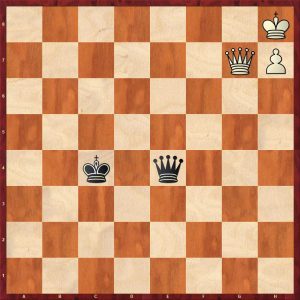
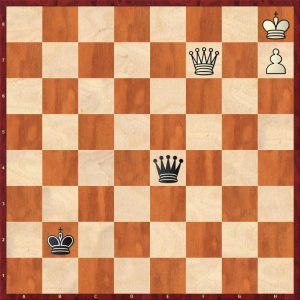
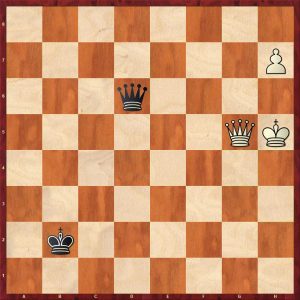
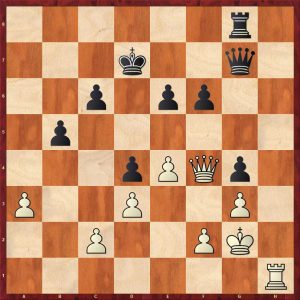
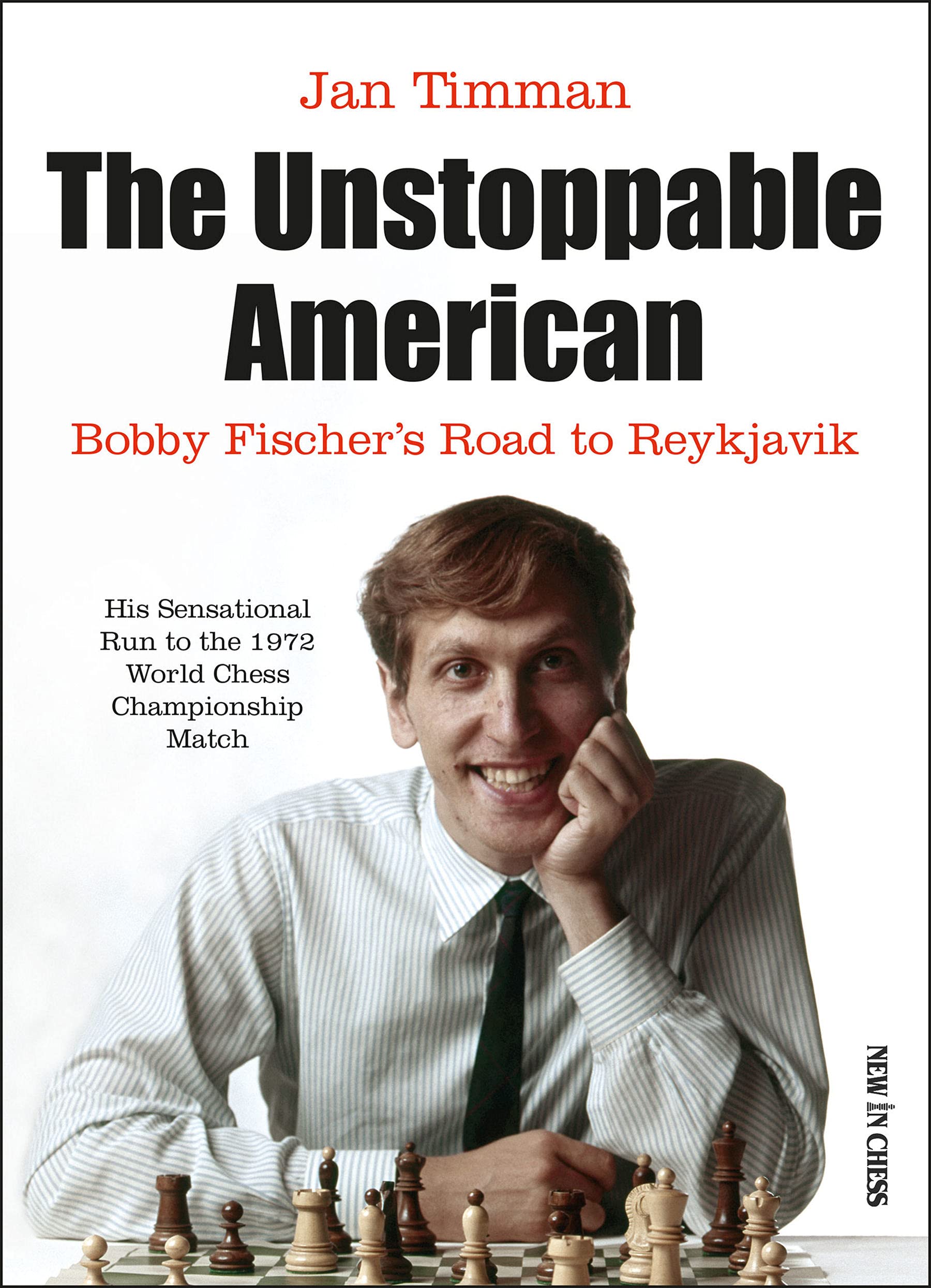
Battle of Endgames, Ray Cannon, Amazon, 9th June, 2021, ISBN-13 : 979-8518031715
From the back cover:
The author has written what he believes to be an original book on the endgame, using a play on words for the title based on the historic battle of Hastings in 1066 which involved William the Conqueror. *****
Ray Cannon, a familiar frequenter of chess tournaments in London and elsewhere, has condensed his copious knowledge into an enjoyably instructive compendium of endgame positions. In tune with the Victorian notion of learning via fun, the reader cannot help but absorb the endgame stratagems that recur in the examples given and emerge as a better player without any conscious effort.
The endgame is a prime arena for the emergence of error through lack of practice, and even elite grandmasters can miss the unsuspected anti-intuitive resource that would have secured the rescue draw or shock win. I would go so far as to say this book would benefit master-standard players. Studying it has all the value of learning one’s times tables but without the repetitive drudgery! The end result is the same: increased knowledge.
Julian Simpole
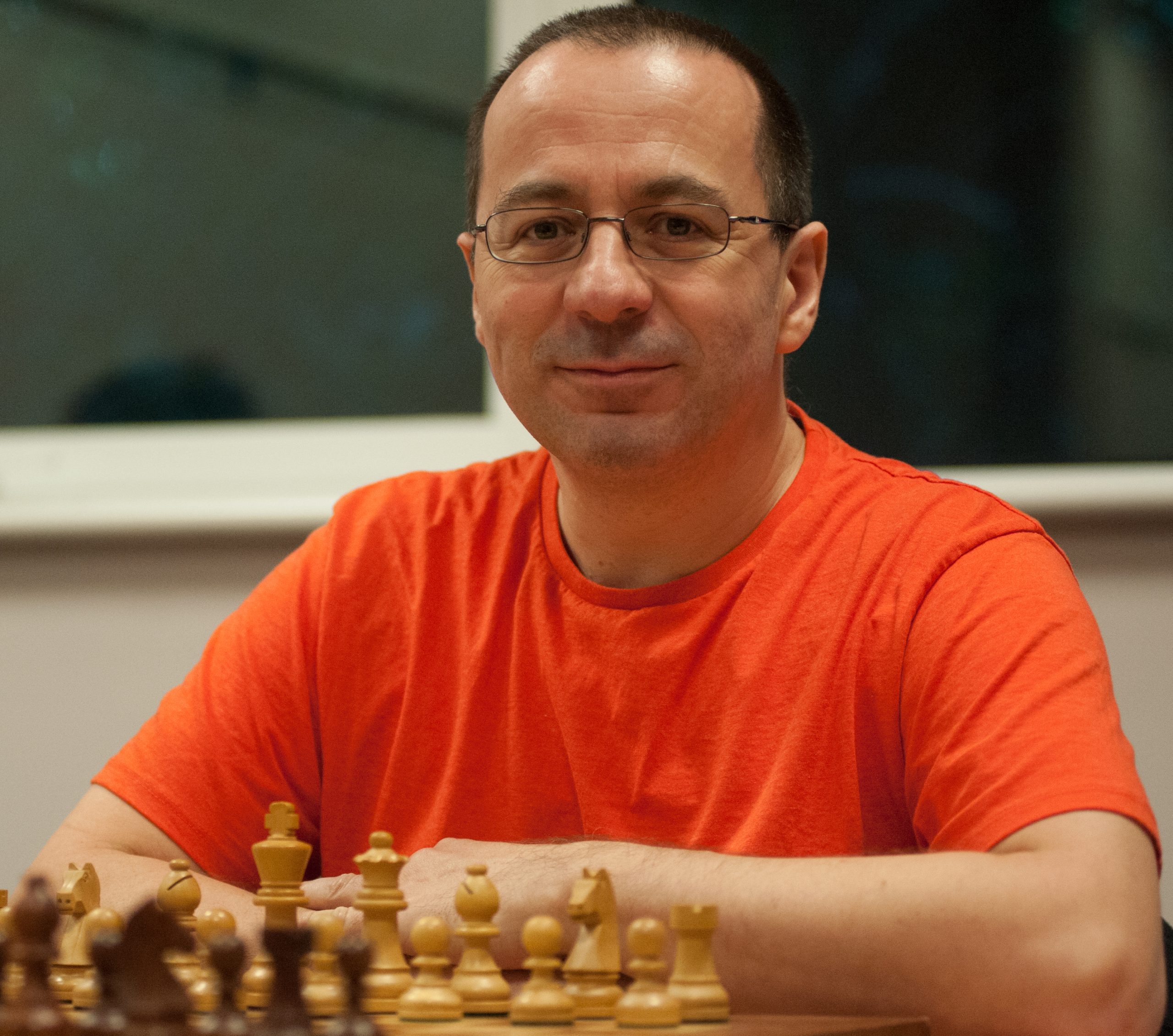
Jimmy Adams and Ray Cannon at a 2012 meeting in Norwich of the Ken Whyld Association
My good friend Ray Cannon, who was, for many years, an invaluable part of the coaching team at Richmond Junior Club, has written a book which will be useful for all club standard players.
With faster time limits and online play now the norm, endings play a vital part in 21st century chess. A good knowledge of endgame theory and tactics is a fundamental requirement for all serious players.
From the author’s introduction:
Positions in this book have been taken from various sources including my collection of newspaper cuttings that go back to the 1970’s, books, magazines, websites and even from games I had witnessed personally at tournaments. Many have been modified for reasons of clarity and a few I have composed myself. Most of the positions have annotated solutions unless the moves are self-explanatory.
The 1066 diagram positions can be played out against a computer or an opponent but they are best solved using a chess set. You are invited to write down your choice of move for each position on the pages provided before looking up the answers. On the other hand, you may simply prefer to enjoy the instructive content of this book by dipping in and out of its pages.
Endgames may give the appearance of being easy but even the world’s best players misplay them from time to time and some of these missed opportunities from practical play are included among the 1066 stratagems.
The majority of the puzzles are elementary but there are a few that are quite difficult. When solving them, you will detect familiar methods of play. Knowledge of these is often referred to as pattern recognition and this is an important component of learning and improving at chess.
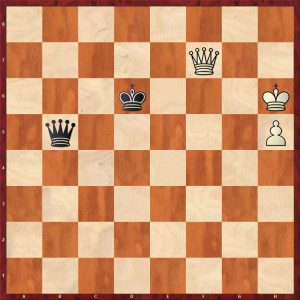
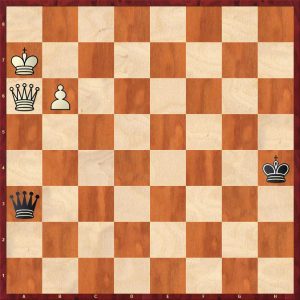
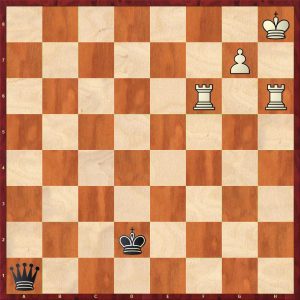
So what you get is 1066 endgame puzzles, or stratagems as Ray prefers to call them. It’s White’s move in positions 1 to 728, and Black’s move in positions 729 to 1066. In each position you’re told whether you’re trying to win or draw, and you know that there’s only one move to achieve your aim.
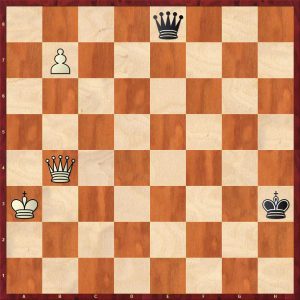
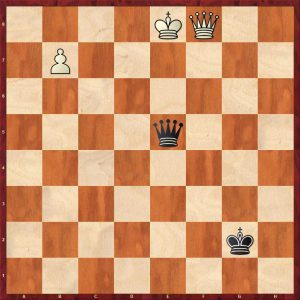
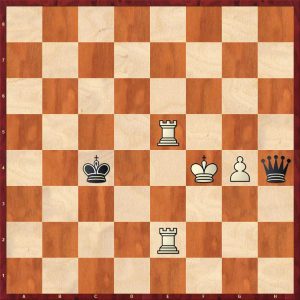
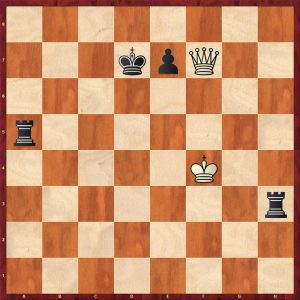
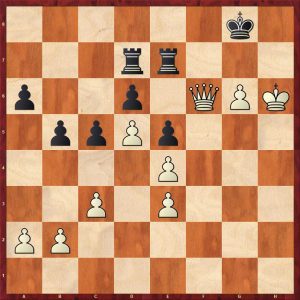
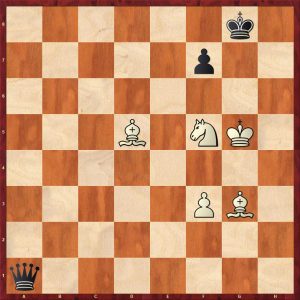
A few fairly random examples chosen simply by turning to a random page will show you what to expect. I’ll give the answers at the end of the review.
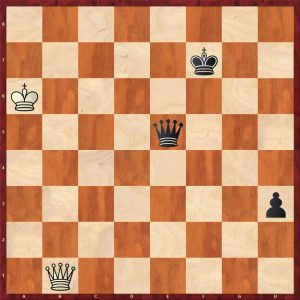
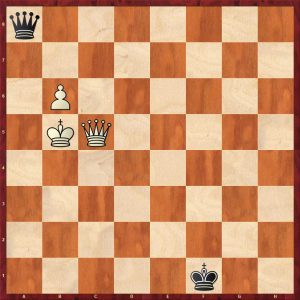
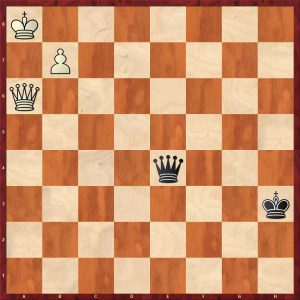
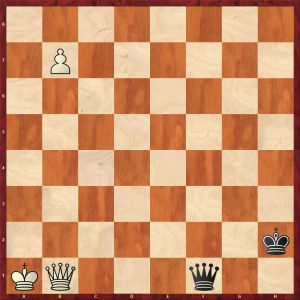
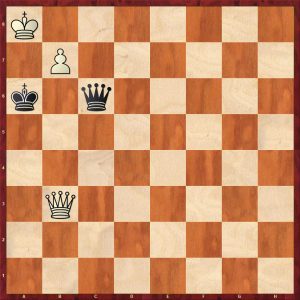
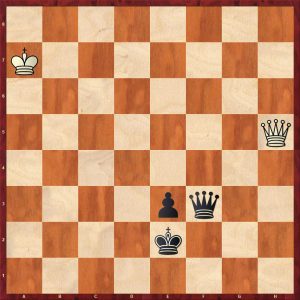
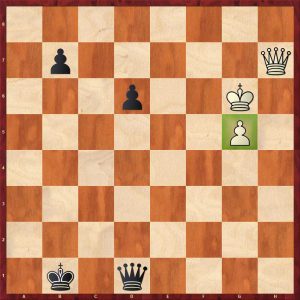
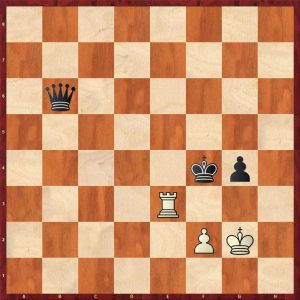
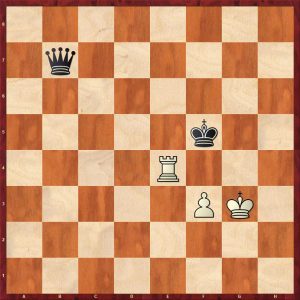
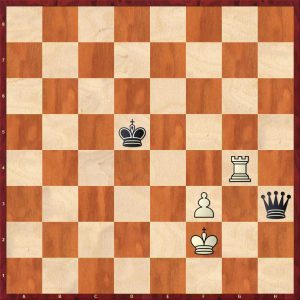
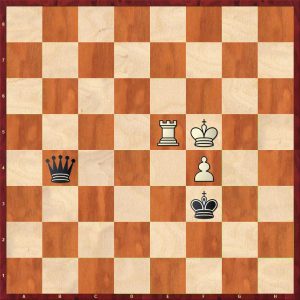
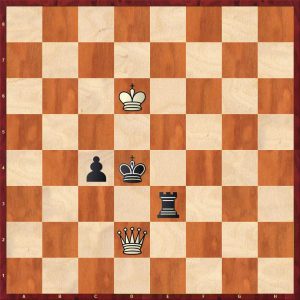
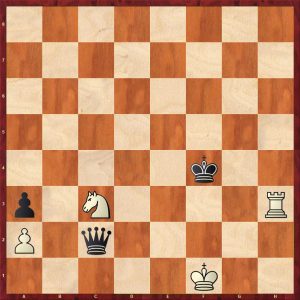
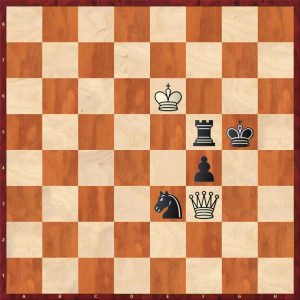
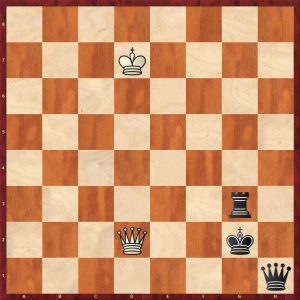
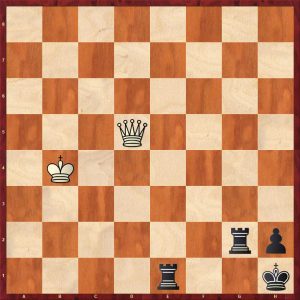
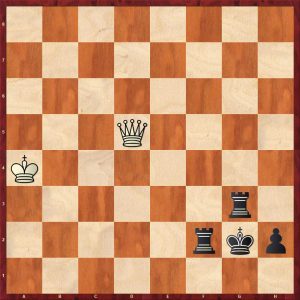
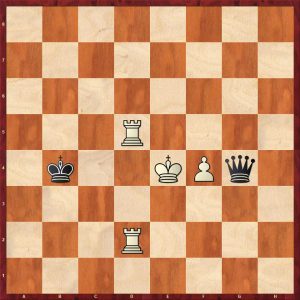
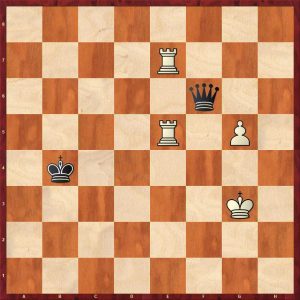
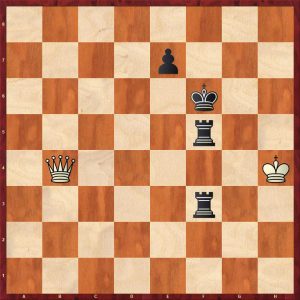
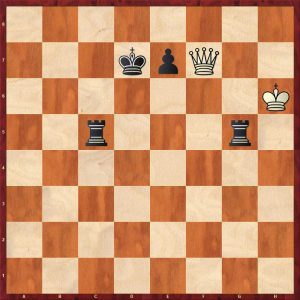
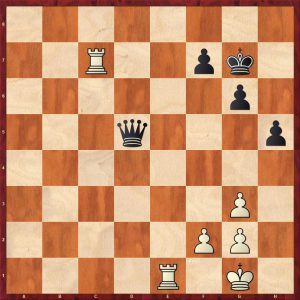
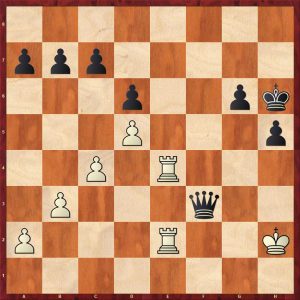
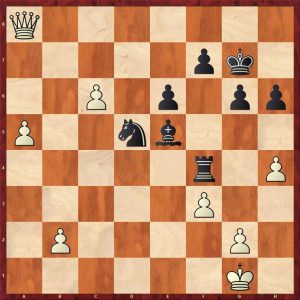
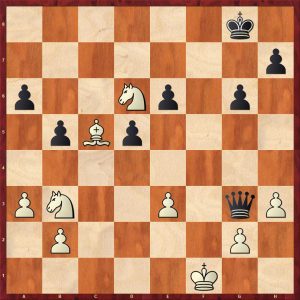
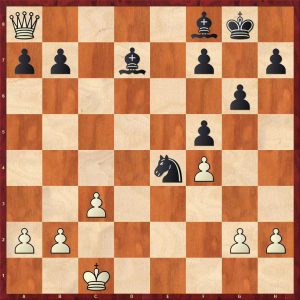
Q482 is a neat draw: White to play.
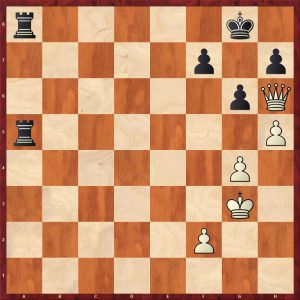
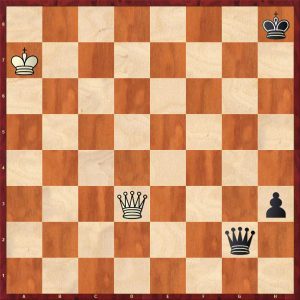
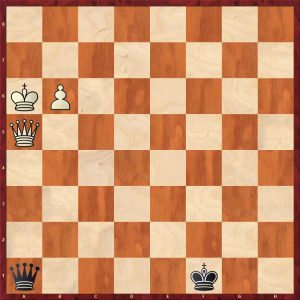
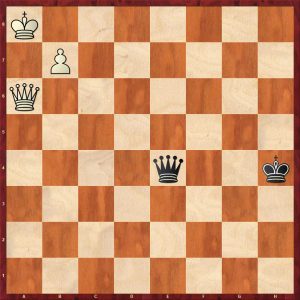
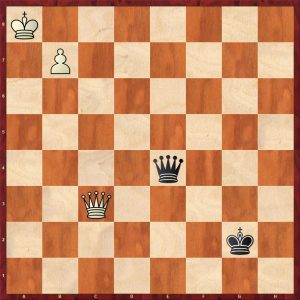
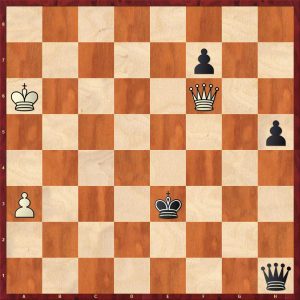
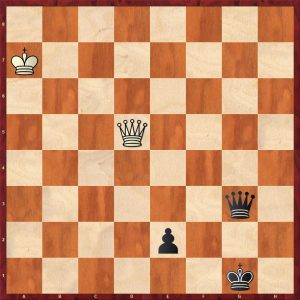
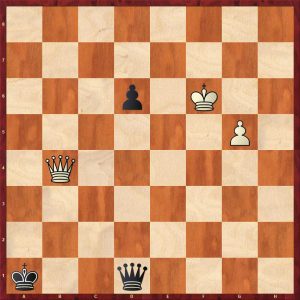
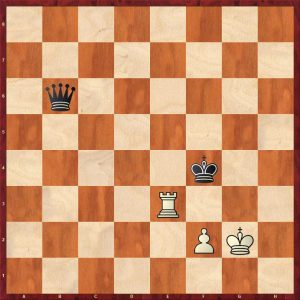
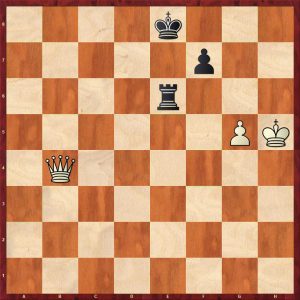
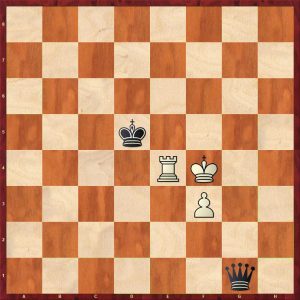
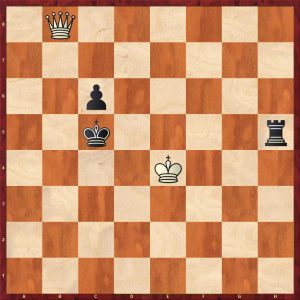
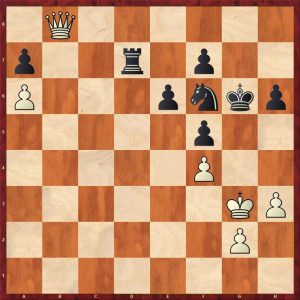
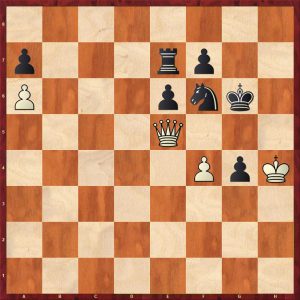
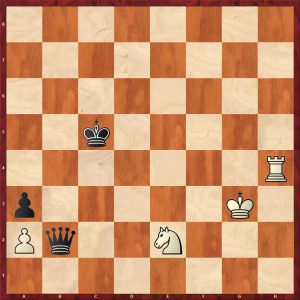
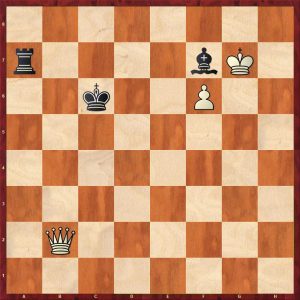
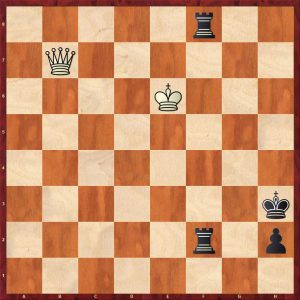
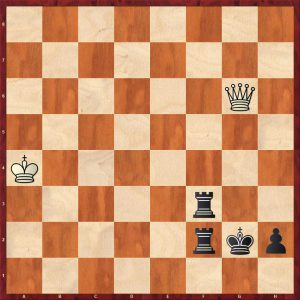
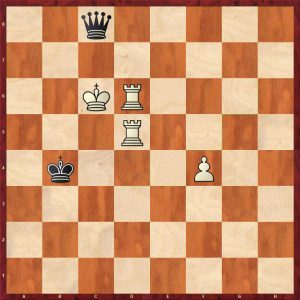
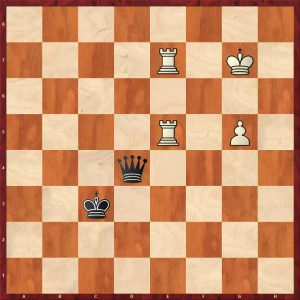
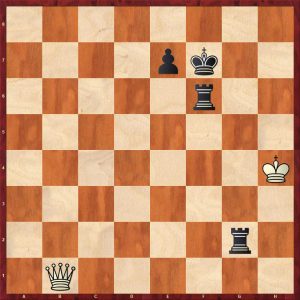
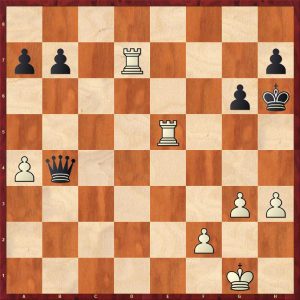
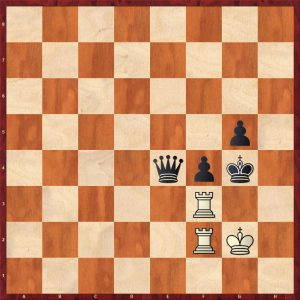
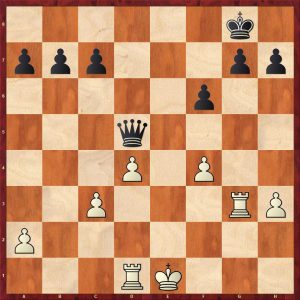
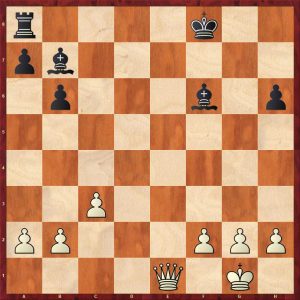
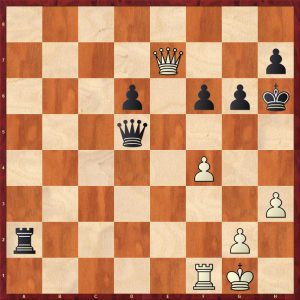
Q497 is of practical value. Endings with R + f&h pawns against R are very often drawn. How can White win here?
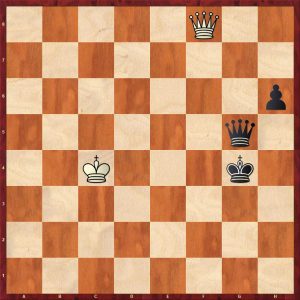
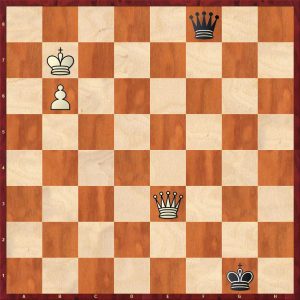
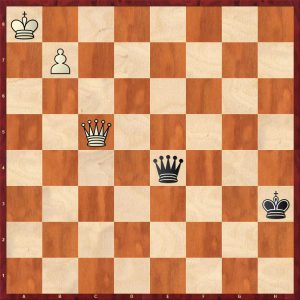
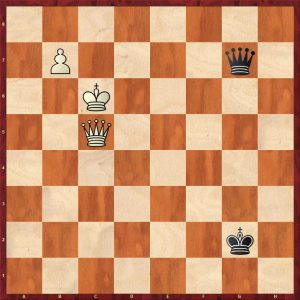
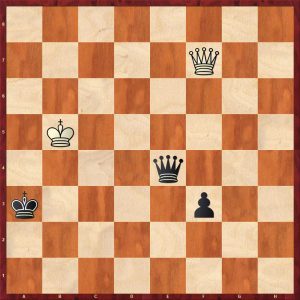
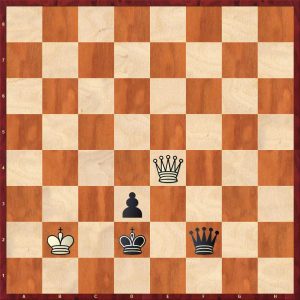
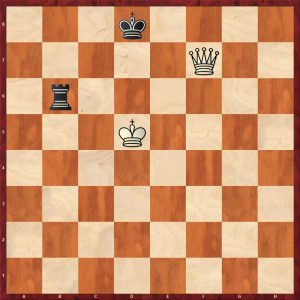
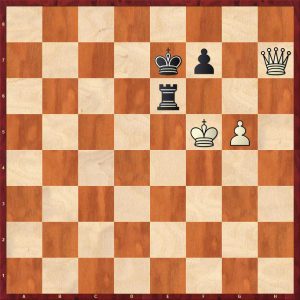
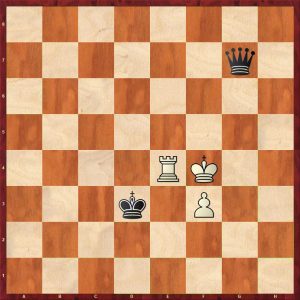
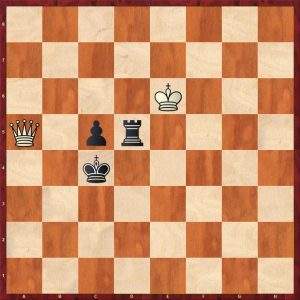
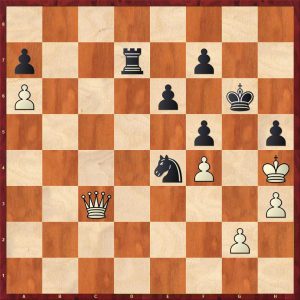
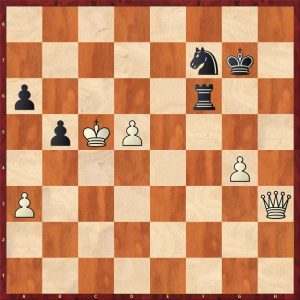
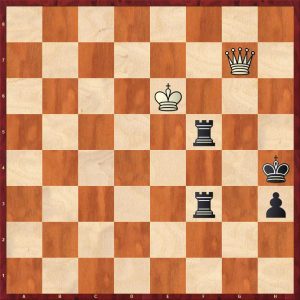
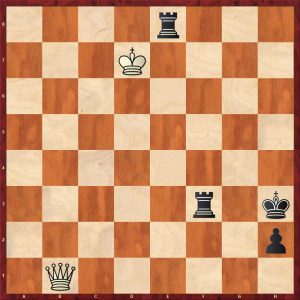
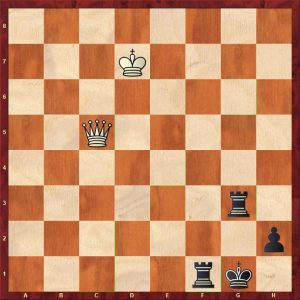
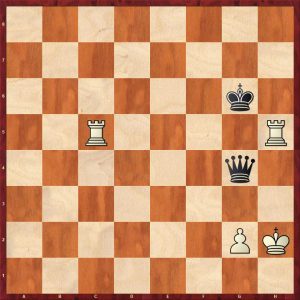
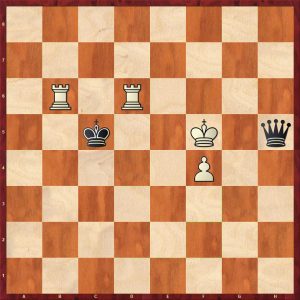
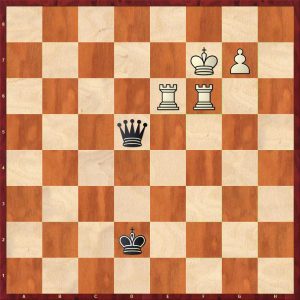
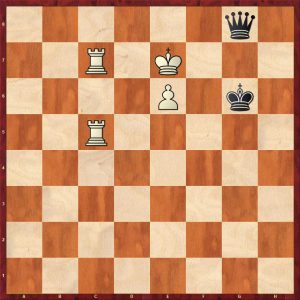
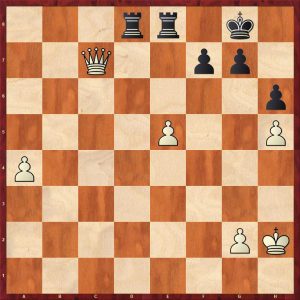
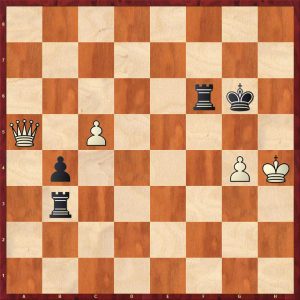
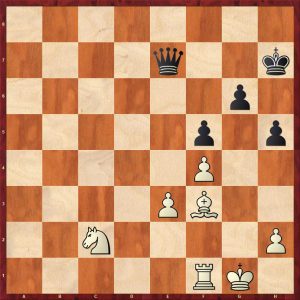
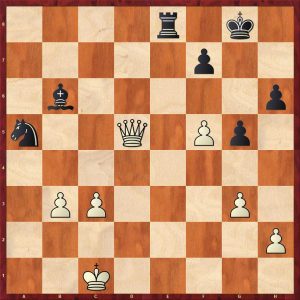
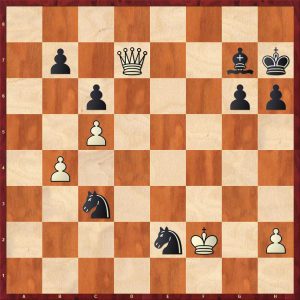
Q533, halfway through the book, has more pieces on the board (too many for an endgame?) and demonstrates the need to know your mating patterns. White to play and win again.
If you enjoyed these puzzles, you’ll certainly enjoy the rest of the book. If you think your students will enjoy these puzzles, you’ll also want to buy this book.
It’s self-published via Amazon so the production qualities are not quite up to the standard you’d expect from leading chess book publishers. However, the diagrams and text are both clear.
Ray has chosen to print the ‘Black to play’ puzzles with the 8th rank at the bottom of the board: not what I or most authors would have chosen but I can see why he did it. There’s a slight problem, though, in that the diagrams are without coordinates, which can make things slightly confusing in positions with few pawns on the board. (The diagrams in the answers to the ‘Black to play’ do have coordinates, though.) I understand the next edition will use diagrams with coordinates throughout.
You might also prefer to write your answers under the diagrams rather than in the pages provided for this purpose at the beginning of the book. I’d also have welcomed an index by material so that I could quickly locate, for example, pawn endings or rook endings.
These are just personal preferences, though. The quality of material is excellent (all positions have been thoroughly engine checked) and Ray Cannon should be congratulated for his efforts in producing a highly instructive puzzle book.
A basic knowledge of endgame theory is assumed, so I would consider the book ideal for anyone rated between about 1500 and 2000, although some of the puzzles will be challenging for stronger players.
Richard James, Twickenham, 17th September 2021
Richard James
Answers:
Q482: 1. f7+ Qxf7 2. Bb3 Qxb3 is stalemate. Or 1… Kxf7 2. Bh5+. In just two moves we have a fork, a skewer, a pin and a stalemate.
Q497: 1. Rg5+ Kxg5 (or 1… Kxh6 2. Rg8) 2. h7 Re1+ 3. Kd6 Rd1+ 4. Ke7 Rh1 5. f8Q wins (as long as you know how to win with queen against rook!)
Q533: 1. Re8+ Rxe8 2. Nf6 Ra7 3. Rxa7 Re7 4. Rxe7 a1Q 5. Rh7# – an Arabian Mate!
BCN remembers IMC James Adams who passed away aged 91 on July 27th, 2013 in Worcester Park, Kingston Upon Thames, Surrey.
James Frederick Adams was born on September 4th, 1921 in Lambeth. His parents were James J Adams (DoB: 10th October 1884) who was a plumber’s mate and Lucy M Adams (née Ayres, DoB: 22nd December 1886). He had an older brother who was William A Adams who was also a plumber’s mate and and Uncle George T (DoB: 8th March 1882) who was the plumber who presumably had many mates.
At the time of the 1939 register James was a telephone operator.
The Adams family lived at 52, Broadway Gardens, Mitcham, Surrey, CR4 4EE (rather than 001 Cemetery Lane)
52, Broadway Gardens, Mitcham, Surrey, CR4 4EE
From CHESS, 1991, March, page 91 we have:
“Whatever Happened to Human Effort?
I am giving up postal chess after 57 years for the reason that, like Jonathan Penrose and recently Nigel Short, I am increasingly disturbed over the increase in the use of computers in correspondence play. It is impossible to prove but one has the feeling that many opponents see nothing wrong in using a machine and I see no pleasure in having to bash one’s brains out against a computer. I am happy in the knowledge that I won my FIDE IM title long before dedicated chess computers were ever heard of. I shudder to think of the proliferation in the use of computers in a competition like the World CC Championship. I don’t wonder that Penrose objects.
Unfortunately, this is the sort of thing against which it is impossible to legislate. The BCCA has banned their use but it doesn’t mean a thing.
The latest monstrosity is where Kasparov plays a match against another GM and both are allowed to use computers whilst the game is in progress. To me, this is absolutely shocking. Dr. Nunn admits to the use of computers in the compilation of one of his books and I see that even ordinary annotators use a programme like Fritz to assist with their notes to a game. What happened to human effort?
Anyway, I have about five postal games left in progress and when they are finished I will call it a day.
Jim Adams
Worcester Park, Surrey
So who was Jim Adams?
From British Chess (Pergamon Press, 1983) Botterill, Levy, Rice and Richardson we have this:
The smoke-laden atmosphere of the chess rooms of St. Bride’s Institute, in the heart of the City of London, could hardly be considered a positive encouragement to any ambitions to become an International Master, but certainly this was so in my case. Let me explain the sequence of events.
Face-to-face, or over-the-board chess, had been my main interest since my war-time days as a member of the Civil Defence. Passing time between air-raids led to the adoption of many pastimes and an absorbing game such as chess was ideal. Fortunately for me, one of my ambulance station colleagues was a very fine player named A. F. (Algy) Battersby, later to become General Secretary of the British Correspondence Chess Association.
He had spent the greater part of the First World War playing chess in the Sinai Desert and, with his tremendous experience, he brought to the game strategical ideas and tactical skills that, in those early days, were well beyond my comprehension.
Arthur Frank Battersby, BIRTH 2 JUN 1887 • Brixton, Surrey, England DEATH 11 APR 1955 • Surrey, England
‘Algy’ was kind enough to say some years afterwards that I was ‘the best pupil he ever had’, but whether this was true or not, he certainly passed on to me the theoretical groundwork that was to be so useful to me in later years. Among other books, he encouraged me to purchase the Nimzowitch classic My System, with the kindly warning that I would not understand it at first reading but would perhaps get some grasp of the ideas at a second or third attempt.
My System was a revelation to me and proved to be the greatest help to an understanding of the game that I had ever received. Up to my fortuitous meeting with ‘Algy’, my games had been of a simple tactical nature. Pieces were left en prise, oversights and blunders were the order of the day and an actual checkmate came as a surprise not only to the loser but often to the winner as well!
To win a game through sheer strength of position was completely unknown to me, but ‘Algy’ and Nimzowitch changed all that! Under their combined influence my general playing strength improved enormously and I was soon second only to ‘Algy’ in such tournaments as were held in my home town of Mitcham, where the local chess club was revived after the war.
Our club soon attracted a few strong players and we played regularly in county competitions and, later, the London Chess League. During those years chess was an absolute joy to me and all my spare time was spent at the local club or at chess matches, whilst Saturday afternoons were spent at the now defunct Gambit Chess Room, in Budge Row, where I passed countless hours playing chess, pausing only to order light refreshment from the indefatigable ‘Eileen’, a waitress of somewhat uncertain age who almost certainly regarded all chess players as raving lunatics!
The ‘Gambit’ could never have been a viable commercial proposition on what we bought and it was eventually thought necessary to introduce a minimum charge depending on the time of day. Gone for ever were the days when one could spend the entire evening playing chess, analysing, or having a crack at the local Kriegspiel experts, all for the price of two cups of tea and the occasional sandwich. Sadly, it all disappeared in the aftermath of the
war.
By 1950 I had become Match Captain of the Mitcham Chess Club and, of course, responsible for arranging various matches. Getting a team together was not difficult as the club membership was quite large for such a lowly club. The playing standard too was surprisingly high and whilst I, myself, was fortunate enough to win the club championship several times it was never easy.
On one occasion a ‘friendly’ match had been arranged with the BBC and all was well until a ‘flu epidemic a few days before the date of the match laid most of the Mitcham players low. On the morning of the match I was left with five players for a 1O-board match! As it was only a ‘friendly’ and in order to avoid disappointing all concerned I took myself off to the Gambit and recruited a few of the ‘regulars’ to help us out. It must be remembered that most of the strongest players in London frequented the ‘Gambit’ and since those pressganged into service were extremely strong players it seemed only courteous to give them the honour of playing on the top five boards, leaving the Mitcham ‘stars’ who, coincidentally, were our usual top board players, to bring up the rear.
Now this composite team, in my judgement, was probably good enough to win the London League A Division and it was no surprise when we won 10-0. Only a friendly indeed! Any Match Captain would have given his queen’s rook for such a team but, whilst the BBC players were warned beforehand of the composition of our team, they were not amused and further matches were not arranged!
Mr A Corish (right), receives the Chess Champion cup from Mr J Adams. 18th September 1958 from the Merton Advertiser, Photographer unknown.
Round about this time I was playing regularly in London League matches, nearly all of which were held at St. Bride’s Institute, where my story began. A non-smoker myself, I found the conditions intolerable. The place seemed to be completely airless and Government warnings about the dangers of smoking did not exist! not exist! Consequently, the entire playing area was reminiscent of the Black Hole of Calcutta! Always susceptible to headaches, I began to return home physically ill after every match. If this was playing chess for pleasure then something was wrong!
Mr A Corish (right), receives the Chess Champion cup from Mr J Adams. 18th September 1958 from the Merton Advertiser, Photographer unknown.
However, salvation was at hand. Ever since the war I had been playing a few games by post under the auspices of the BCCA (British Correspondence Chess Association ), and my somewhat traumatic experiences at St. Bride’s were beginning to make postal chess a far more attractive way of playing the
game. And so my chess career started all over again!
My correspondence chess activities up to the 1960s were not particularly successful, although I had managed to win three Premier Sections and finish
equal third in the British Correspondence Championship of 1962-63. However, during that time a group of BCCA players, of whom I was one, were
becoming somewhat dissatisfied with the Association’s attitude towards international chess and eventually a splinter group formed a rival organization which became known as the British Correspondence Chess Society.
The BCCS was, almost from the start, internationally orientated and it was possible to play foreign players, many of master strength. With strong opposition it seemed easier to improve and my first real success came in the Eberhardt Wilhelm Cup in 1966-67 when I was able to obtain the lM norm giving me a half=master title. However, gone were the days when a superficial analysis was enough before posting a move, which even if it was not the best, was generally good enough to hold one’s own with even the best of British CC players at that time. Fortunately for British chess, the situation is now vastly different and the strongest British CC players are recognized as being among the best in the world.
The Eberhardt Wilhelm Cup consisted of players all of master or near-master strength and it was in one of the games I played in this tournament that I played probably the most surprising move of my life.
To win the full IM title involved getting one more IM norm and happily for my prospects, I was selected for the British team in both the Olympiad Preliminary of 1972 and the European Team Championships of 1973.
Although I was trifle unlucky to miss the IM norm by half a point in the European Championship I finally clinched the coveted IM title in the Olympiad Preliminary which, although starting a few months before the European tournament, went on so long that I was in suspense long after the European games finished.
One of my most interesting games in the European Team Championship of 1973 was against F. Grzeskowiak, himself an IM and a feared attacking player.
This is the first of what will be many posts considering the history of chess clubs in Richmond, Twickenham and surrounding areas.
If you’re good, I’ll tell you another story as well.
The first chess club in Richmond dates back to the year 1853.
Here’s the Illustrated London News from 26 March.
In fact the meeting eventually took place at Richmond Town Hall, which would, about 120 years later, host a different Richmond Chess Club. Howard Staunton and Johann Jacob Löwenthal were present, and Staunton delivered, at some length, an address pointing out ‘the advantages arising from the cultivation of an elegant and thoughtful recreation like chess’.
The Illustrated London News reported on 23 April:
The club seemed to be going well: in November Staunton advised T.R.D. of Twickenham that the game he played at Richmond Chess Club would have attention. If you have any idea of the identity of T.R.D., please get in touch.
In January 1854, Staunton replied to ‘Gustavus’, of Eton: ‘You should join the Richmond Chess-club, which is rapidly increasing in members, and is likely, in a year or two, to be one of the most influential chess societies out of London. The secretary is Mr. Harris, chemist and druggist, of Richmond, and from him you must procure the information required.’ In March, always eager to oblige, he advised ‘Query’ to ‘join the Chess-club at Richmond, which is immediately in your neighbourhood, and rapidly rising into note’. In May, he instructed ‘Albert’ of Surbiton to ‘join the Richmond Chess club and you can then have the practice you require’. In September he informed ‘Wolsey’ of Hampton Court that ‘the Richmond Chess-club meets at Etherington’s-rooms every Monday and Friday evening’. F.R.S., of Twickenham, was given the same information in November.
The Etheringtons were a prominent musical family in Richmond and Twickenham for much of the 19th century, and in the latter half occupied various premises in Hill Street.
Things then went quiet for a year, until, in November 1855, when Staunton told J.T.W., of Kingston that there was a very good chess club in Richmond, and that he should apply to Mr Harris.
In 1856, Löwenthal, in The Era, joined in. In March he told F.C., of Kew: ‘You should join the Richmond Chess Club, the Hon. Sec., W. Harris Esq., will provide you with the requisite information.’
On 18 May, he published a letter from Mr Harris.
After that, we hear no more. It looks like the club folded very soon afterwards.
To speculate on what happened, we need to find out more about W Harris.
We can pick him up in the 1851 census where we find William Harris and his family at 2 Hill Street, Richmond. This seems to have been on the corner of Red Lion Street, where Waterstone’s will now sell you some chess books.
William was born in about 1813 in Shelton, Bedfordshire, and, in 1841, married Ann Walker in Wollaston, Northamptonshire, a few miles south of Wellingborough. Ann had been born in Little Harrowden, the other side of Wellingborough, in 1816. (Paradoxically, Little Harrowden is much larger than its neighbour Great Harrowden.) Ann’s parents had died when she was young and she was adopted by family members in Wollaston.
In 1851 their children were Eliza Sophia, Anne Agnes, Louisa Amelia, William Alfred Philidor and baby Helen Hectorina. Only a real chess addict would name his son Philidor! Another son, Arthur Edward was born in 1853, but by 1857, when their youngest daughter, Emmeline Julia, was born, they’d moved. They were no longer in Richmond, but back in Wollaston, the village where they had married. And Will had changed his job: he was no longer a chemist and druggist, but a farmer.
What was the reason for the move? Perhaps his business had failed. Perhaps the farm was an inheritance. Perhaps they needed to return to Ann’s family. Who knows.
Anyway, it seems that, when they moved, in late 1856 or early 1857, the first Richmond Chess Club folded. Staunton’s prediction that it would become one of the most influential chess societies out of London, didn’t come to pass. It’s the same old story, isn’t it? A club is only as good as its organisers, and, when the club secretary departs there’s no one there to keep it going. It would be a long time before there was another chess club in Richmond.
In April 1858 an old friend paid him a visit. Here’s Löwenthal in The Era (18 April 1858):
There’s much of interest here. It’s good to know that Löwenthal played with several ladies, finding that two of them had ‘great aptitude for the game’.
It’s also good to know that Mr Harris ‘has often engaged with players like Brian (sic: presumably Brien was intended), Fonblanque, Medley and Löwenthal, and produced some fine games’ and that ‘were opportunity afforded him for practice with antagonists of superior force he would certainly rise to eminence among the amateurs of country clubs.
It sounds, then, that William Harris was a pretty good player, but that opportunity was never offered him. He continued farming for the rest of his life, dying in Wollaston in 1881. But back in the 1850s he was clearly a significant figure in the chess world. I haven’t been able to find any games or results, though. If you have any information, do let me know.
What happened to his children? His two sons followed in his footsteps, both becoming farmers. Of his daughters, Sophia seems to have died young, but no death record has been found, Helen died in infancy, and Emmeline at the age of 12. Anne and Louisa both married and emigrated to North America.
I decided to look into some of his Northamptonshire friends. The Reverend Alexander William Griesbach, Curate of Wollaston, is particularly interesting. (Note that ‘curate’ was a much more significant title within the church then than it is today: Alex was a parish priest rather than an assistant.) He was born in Windsor, but his family, of German ancestry, were from Bath where they were good friends of the very important Herschel family. William, when he wasn’t busy discovering Uranus, was a composer whose music is still sometimes played today, and his sister Caroline, a pioneer female scientist, was also a significant astronomer. If you’re not familiar with their story, do check it out.
I also decided to look up B Dulley Esq. It turns out he was Benjamin Dulley, a doctor and general practitioner. We can pick him up in the 1851 census, aged 44, living with his wife Fanny and two daughters, Mary Elizabeth and Helen. He employs two house servants, Sarah Saddington and Elizabeth Earle, and a groom, George Stock. The rather unusual toponymic surname Saddington was very familiar to me, as was Sarah’s birthplace, Great Bowden, Leicestershire.
I promised you another story if you were good, and here it is.
Georgie Porgie pudding and pie
Kissed the girls and made them cry.
Sarah lived a long life, dying a spinster in her late 80s. She spent most of her life, apart from a short time in service to Ben Dulley (was he perhaps known as Dull Benny?) in her home village of Great Bowden, very close to Market Harborough, and not far from the village of Saddington from where she gained her surname. She had a niece named Elizabeth Saddington.
The Leicester Chronicle 25 October 1862 reported: “George Smith, of Great Bowden, charged with neglecting to pay 19s. 6d., that amount being due towards the support of the illegitimate child of Elizabeth Saddington for thirteen weeks, was ordered to pay the same and 3s. 6d. costs.”
That child was Fanny Smith Saddington, who had been born in 1855. Elizabeth would sadly die of chlorosis, a form of anaemia, the following year. At the time he kissed Liz and made her cry George was a widower, his wife, Alice Lois Flint, having died in 1853. They had had two daughters, Eliza, who died at the age of 6, and Sophia, who later emigrated to America. But Fanny wasn’t Georgie’s only illegitimate child. He had previously had a relationship with a slightly older girl named Eliza Carter. They had had two children, Elizabeth Smith Carter (1841) and Henry Smith Carter (1842). Quite a lad was our Georgie, by the sound of it. Henry died in infancy, but Elizabeth had a very long life and a very large family. How do I know all this? Elizabeth Smith Carter was my great grandmother. Perhaps I’ll tell you more another time.
There you have it. If Georgie Smith hadn’t kissed Eliza Carter I wouldn’t be here to tell the story of how his future squeeze Elizabeth’s Aunt Sarah had worked for a friend of the secretary of the first Richmond Chess Club.
Smyslov, Bronstein, Geller, Taimanov and Averbakh: A Chess Multibiography with 220 Games, Andrew Soltis, McFarland Books, February 2021, ISBN-13 : 978-1476677934
From the publisher’s blurb :
“A crucial decision spared chess Grandmaster David Bronstein almost certain death at the hands of the Nazis—one fateful move cost him the world championship.
Russian champion Mark Taimanov was a touted as a hero of the Soviet state until his loss to Bobby Fischer all but ruined his life.
Yefim Geller’s dream of becoming world champion was crushed by a bad move against Fischer, his hated rival.
Yuri Averbakh had no explanation how he became the world’s oldest grandmaster, other than the quixotic nature of fate.
Vasily Smyslov, the only one of the five to become world champion, would reign for just one year—fortune, he said, gave him pneumonia at the worst possible time. This book explores how fate played a capricious role in the lives of five of the greatest players in chess history.”
GM Andrew Soltis
“Grandmaster Andy Soltis, eight times champion of the Marshall Chess Club, New York Post editor and Chess Life columnist, is the author of dozens of chess books. He lives in New York City. He is the author of many books, including Pawn Structure Chess, 365 Chess Master Lessons and What it Takes to Become a Chess Master”
From the author’s preface:
In this book I explored the interlocking careers of five men with a focus on the prime years when they might have become champion. Only one succeeded. But they represented an extraordinary class. All five men were ranked among the world’s top 11 players when Vasily Smyslov became champion. All five players were ranked in the world’s top 20 players for the next decade.
This book is a companion to my Tal, Petrosian, Spassky and Korchnoi and, like it, it pays tribute to the remarkable personal lives of great players during a remarkable era. They were not only competing with one another for the highest reward chess can offer. They were trying to survive in a brutal Soviet system. They lived through the Great Terror – which directly touched the lives of David Bronstein, Yuri Averbakh, Vasily Smyslov and Mark Taimanov – and World War II, which deeply affected them all.
Here, then, we have a group biography of five leading Soviet grandmasters, all born between 1921 and 1926. As Soltis explains, this was both a good time and place, and a bad time and place to be born. They grew up within a strong chess culture, where their talents were, albeit with deprivations during World War II and many restrictions in the brutal Soviet regime, allowed to flourish.
Smyslov became world champion, and Bronstein came very close. The other three were all world championship candidates, and, had things worked out slightly differently, Taimanov and Geller might have come closer to the title than they did.
Perhaps Smyslov, whose father was a strong player, would always have discovered chess, although, had his life turned out differently, he could have had a career as an opera singer. Taimanov, as is well known, did in fact have a parallel career as a pianist, performing with his first wife, Lyubov Bruk.
In another life, Bronstein would have been a mathematician and Averbakh a scientist. Geller was, in several ways, the outlier of the group. Unlike the others, he was a late developer, so only joins the story after several years and chapters have passed. Unlike the others, also, he seems to have had, apart from sports, no interests outside chess, even though he worked as an aircraft engineer and studied political economy at university.
As you’d expect, there’s a lot of high quality and instructive chess within these pages. Here are a few, fairly random, examples.
Taimanov and Bronstein adjourned this position, with White to move, in a 1946 Soviet Championship Semi-Final. Bronstein and Averbakh were staying at the same hotel, and set up the position on a board.
Soltis takes up the story.
Taimanov was so sure of victory that he told Bronstein he had sealed 1. Ra7+ and showed him how he would win after 1… Kh6 2. Rb7!. That looked convincing: 2… Ng3 3. Rb3 Nh5 (3… Nf5 4. Kf6) 4. Rh3! and then 4… Kg7 5. f5 Kf7 6. f6! wins. “But what if I retreat the king to f8?” Bronstein asked Averbakh.
The next day was free from play so they analyzed 1… Kf8 during it. They realized that if White traded pawns too quickly the result would be a position know to be drawable since an ancient game Neumann – Steinitz, Baden-Baden 1870. White did not seem to have a forcing win after 1… Kf8. But 2. Rd7! was a good waiting move. Then 2… Ke8 3. Rh7 Kf8 4. f5 would lose. So would 2… Ng7 3. Kf6 Nh5+ 4. Kg5! or 2… Ng3 3. Kf6.
This was discouraging. Bronstein and Averbakh looked at 2… Kg8 and unfortunately found 3. Ke6! Nf4+ 4. Kf6!. The clever king triangulation wins after 4… Nh5+ 5. Kxg6 Nf4+ 6. Kg5 Ne6+ 7. Kf6! Nf4 8. Rd4 Nh5+ 9. Kg6. Or 8… Ne2 9. Rg4+ Kf8 10 .Ra4 Kg8 11. Kg6 Kf8 12. Rc4 Ng3 13. Rc3 and so on. They kept analyzing and found that 3… Kf8 was no better than 3… Nxf4+ because of 4. Rf7+! Ke8 5. Rf6! or 4… Kg8 5. Ke7.
It was all so elegant and, simultaneously, depressing. “David didn’t know what to do, to be happy or sad,” Averbakh remembered. “Of course, it’s painful to know you have a forced loss. But what an interesting path to victory!” And, besides, they were both proud to have solved such a mysterious endgame.”
When the game was resumed, Taimanov played 1. Ra7+ Kf8! 2. f5? gxf5 and drew along the lines of the Neumann – Steinitz game.
As a result of this experience, Averbakh decided that he could combine his interests in science and chess by conducting research into technical endings such as this – and he would later become known as perhaps the world’s leading authority on endgames.
The games are expertly chosen, for their excellence, excitement, historical or sporting significance, and annotated in Soltis’s signature narrative style.
Some of them will be familiar to readers with a prior knowledge of games of the period, but others will be unfamiliar to most.
Look, for instance, at a couple of games from a secret training tournament held in the Georgian town of Gagra in 1953.
This is the game between Geller and Smyslov. Geller had outplayed the future world champion in the opening and early middle game, but his last move was an oversight. The last moves had been 25. Bb2-e5? Qc7-b6 26. Nf3xg5?.
Here’s Soltis:
This would have won after 25… Qa5? because of Qh5; e.g., 25… Qa5? 26. Nxg5! Nxd5 27. Qh5! and mates. In the diagram Geller must have expected to win after, for example, 26… Bxg5 27. Qh5! Bh6 28. Rg3!. Or 27… Re7 28. Be4! g6 29. Bxg6 Rxg2 30. Bf7+ Kf8 31. Bg7+!. 26… Nxd5! 27. cxd5 But he had overlooked 27. Qh5 Qb1+ 28. Kg2 Qg6!. No recovery is possible.
I have a couple of small issues with this. I find the back-referencing – something Soltis often does – slightly confusing. I’d have preferred the variation given in the first sentence here as a note to Black’s 25th move. He also fails to mention that Geller would still have been better in the game after 26. Rb2!, when a nice variation is 26… h6 27. Nh4! gxh4 28. Qh5!, with a winning attack.
Smyslov went on to win a few moves later.
Here, from the same tournament, is a position from the exciting game between Taimanov and Averbakh, with Black to make his 38th move.
Now 38… b1Q would make a draw likely, after 39. Rxb1 Rxa4 (40. Rh1?? Ra2+ and 39. Qxb1 c2!). 38… f5?? 39. d7! c2 40. d8Q+! (The final shift would have been 40. dxc8Q+? Rxc8 41. Qxf5 c1Q and Black wins. 40… Qxd8 41. Qxd8+ Kg7 42. Qg5+ Black resigns
(Taimanov, in his notes to this game, claimed White was winning the diagrammed position, failing to mention the draw after b1Q or to query 38… f5.)
Soltis, as so often, has an anecdote at hand to add colour and context.
The secrecy surrounding these training tournaments was deeply felt. Alexey Suetin recalled how one of the Gagra players showed him a remarkable game but “outright refused to give the names of the players” or the tournament results. “Such was the Stalist regime,” he said. Even when he wrote this, in 1993, Suetin refused to say who showed him the game. It was too dangerous.
In 1957 Bronstein was invited to a major tournament in Dallas, with the highest prize fund of any US tournament since New York 1927, but, according to Soltis, the State Department refused him a visa, apparently in retaliation for Soviet treatment of U.S. citizens seeking to travel in the USSR.
Instead, he had to make to with a weaker tournament in East Germany, where he reached this position with white against Bilek.
Soltis, again:
Bronstein has a deliciously subtle threat: 34. a4 would force the b6-rook to make a choice. Then 34… Rc6 would allow 35. Bf4 and Rb1-b8+. And 34… Rb3 would weaken f6 so that 35. Bh6! threatens 36. Qh7+ (35… Kf8 36. Qxf6+). 33… Kf8 34. g3 Re2 35. Bc1 Qe7 36. Kg2! There is no defence to 37. Rh1, 38. Rh7 and Bh6. The game could also end with 36… Re1 37. Rxe1 Qxe1 38. Ba3+. 36… Rc6 37. Rh1 Rxc3 38. Bf4 Ra3 39. Rc1! Black resigns.
(Bronstein has other threats in the diagrammed position: g3, Kg2 and Rh1 as happened later in the game, and also Bc1-a3. It takes older engines some time to realise White has anything more than a slight advantage, but Stockfish 14 immediately tells you almost any reasonable move is crushing.)
The narrative stops rather suddenly at the end of 1973, at which point our protagonists were in middle age and starting an inexorable decline. Unexpectedly, though, Smyslov would make another challenge for the world championship in his sixties. The remainder of their lives is chronicled relatively briefly.
What we have here is, as anyone familiar with this publisher will expect, a handsome hardback which will look good on any bookshelf. It covers an important and endlessly fascinating period of chess history, and is full of interesting (for all sorts of reasons) games, well researched and sourced history, entertaining and enlightening anecdotes and evocative photographs.
At the end of the book we have some useful appendices and other material. First, a chronology taking us through almost a century from Smyslov’s birth in 1921 through to Averbakh (still alive as I write this at the age of 99) playing a 4-year-old in 2017. Then, the rankings (from Chessmetrics) of the players between January 1939 and January 1979. We have chapter notes and a bibliography: everything is fully sourced, using Russian and English language periodicals and a wide range of books. There are frequent contradictions between sources, and the players also contradicted themselves from time to time: all this is explained in the text. Finally indexes of opponents and openings, and a general index.
It would have been ideal if the games had been presented more spaciously and with a lot more diagrams to enable readers to follow them from the page. It would also have been preferable to print the photographs on glossy rather than matt paper. Of course, given the nature of the book, such luxuries are inevitably out of the question. It would, however, have benefitted from another run through to pick up typos, of which there are more than should be expected in a scholarly work of this nature. I suspect, for example, that Keres told Taimanov he was playing like Liszt rather than List.
Nevertheless, this is an outstanding book which can be highly recommended to anyone interested in this period of chess history. If you’ve read Soltis’s earlier book on Tal, Petrosian, Spassky and Korchnoi you’ll need no hesitation to add this title as well. Likewise, once you’ve read this book, you’ll want to read the earlier work if you haven’t already done so.
In my opinion, Andrew Soltis is a very much underrated author. It’s understandable that we all tend to be suspicious of the quality of books produced by prolific authors, and in many cases these suspicions are justified. In the case of Soltis, though, even his more popular works are well written and, for their target audience, worth reading. His more serious and scholarly works such as this one are uniformly excellent. Soltis, with many years journalistic experience, knows how to write, and, most importantly, knows how to tell a story. Whether annotating a game or writing about chess history, he keeps his readers on the edge of their seats, eager to turn the page and find out what happens next. This book, like everything he writes, is extremely readable as well as rigorously sourced.
It’s not the last word on the subject. There is without doubt a wealth of interesting information lurking within currently sealed Soviet archives. Although this book might not be flawless, it will more than suffice for the moment. There’s nobody better qualified than Andrew Soltis to write on this subject.
This book doesn’t come cheap, but, if you can afford it, it will be money well spent. I see it has just made the shortlist for the English Chess Federation book of the year, and rightly so as well.
Smyslov, Bronstein, Geller, Taimanov and Averbakh: A Chess Multibiography with 220 Games, Andrew Soltis, McFarland Books, February 2021, ISBN-13 : 978-1476677934
The Modernized Modern Benoni, Alexey Kovalchuk, Thinker’s Publishing, 2021, ISBN-13 : 978-9464201048
From the publisher:
“The Modern Benoni is one of the most controversial but also dynamic answers to 1.d4. This opening remained the favourite of famous attacking players as Tal, Kasparov, Gashimov and Topalov. From the outset, Black creates a new pawn structure and deploying his active piece play against White’s central majority.
In his book Alexey Kovalchuk focuses on a set of new ideas and deep analyses supported by his silicon friends. His book supplies all Black needs to know to fight for the initiative from move two!”
FM Alexey Kovalchuk
“Alexey Kovalchuk was born in 1994 in Russia and learned to play chess at the “late” age of 12. In November of 2017 he reached his highest Elo yet of 2445 and is considered an IM without the norms. Alexey has never had a coach having studied with the aid of books and other materials.
His tournament successes include winning the Rostov Championship in both classical and rapid. He is a three-time winner of the Taganrog Championship and has won prizes in many events including Taganrog, Togliatti, Astrakhan, Lipetsk, Kharkov and Donetsk. His reputation as a theoretician is well known and he has previously published a book on the Grünfeld Defense. Currently Alexey serves as a second for several grandmasters as well as coach for several aspiring students.”
End of blurb.
As with every recent Thinkers Publishing publication high quality paper is used and the printing is clear. We were hoping that the excellent glossy paper of previous titles would be used for this one but never mind.
Each diagram is clear and the instructional text is typeset in two column format, which, we find, enables the reader to maintain their place easily. Figurine algebraic notation is used throughout and the diagrams are placed adjacent to the relevant text and each diagram has a “to move” indicator and a “position after: x move” type caption.
There is no Index or Index of Variations but, despite that, content navigation is relatively straightforward as the Table of Contents is clear enough.
This is the author’s second book, we reviewed Playing the Grünfeld : A Combative Repertoire previously.
Here is the detailed Table of Contents:
Classical Main Line
Knight’s Tour Variation
Modern Main Line
Kapengut Variation
Nge2 Systems
Bg5 & Bb5 Systems
f4 System
Fianchetto Variation
Bf4 Variation
Sidelines
Anti-Benoni Systems
Before we continue we will declare an interest. We only play a couple of these positions from the White side and none from the Black side.
The Preface provides a couple of tremendous Tal games in which White is crushed in short order. The Introduction nicely provides an overview of the coverage of each of the main chapters.
Chapter 1 kicks-off with the so-called “Classical Main Line” which is initially reached via:
ending up at
as the tabiya position for this chapter. The author looks at various move 11 alternatives for White concluding that 11. Bf4 is the most troublesome for Black which scores 56.4% for White and features in 260 MegaBase 2020 games.
The approach is typically that of working through the moves of a variation in detail making reference to played games which is a Thinker’s Publishing “house style”.
Chapter 2 examines a favourite idea of Vladimir Kramnik for White namely the, at one time, incredibly popular 7.Nd2 i.e.
ending up at
which is discussed in detail.
The third chapter is dubbed the Modern Main Line (as labelled by Richard Palliser in his excellent Modern Benoni tome) and has White playing h3 instead of Be2 and placing the f1 bishop on d3 instead leading to
which may be arrived at in several different ways at which point Kovalchuk strong advocates the immediate 9…b5!? instead of the more familiar and less violent 9…a6.
Clearly this is a critical line for the Benoni and is given much detailed analysis. 9…b5!? has featured in 2123 MegaBase 2020 games and of these 727 are designated as “Top Games”.
Chapter Four brings the joys of the Kapengut Variation which was analysed in detail by Albert Kapengut in 1996:
and appears 1037 times in MegaBase 2020 with a white success rate of 57%.
After 7…Bg7 various ideas for White are examined.
As the Chapter Five’s title suggests various move orders are covered in which develops the King’s knight to e2 rather than f3 without playing f3 quickly.
For example:
Chapter 6 covers ideas for white involving an early pin with Bg5 or an early check with Bb5+ (but without f4) . The author considers neither of these to be dangerous for Black and provides analysis of his antidotes.
However, much more exacting is the daunting Taimanov Attack (dubbed by David Norwood as the Flick-Knife Attack such was its ferocity) which is examined in Chapter 7.
This famous line made popular in the 1980s begins
and there are 38 pages on this line alone. 9.a4 is given detailed treatment with the main line reaching:
which is then analysed thoroughly.
In the same chapter is the more modern treatment of 9.Nf3 (omitting a4) continuing to
where both 14.f5 and 14.Qe1 are looked at in considerable detail with the latter having the highest database hit rate.
Chapter 8 explores the somewhat innocuous Fianchetto Variation of 7.g3:
and this is given 19 pages of discussion.
The somewhat rare 7.Bf4 system is covered in Chapter 9 with 15 pages of text.
Chapter 10 “tidies up” with coverage of some rarer third and fourth move sidelines which as 3.dxc5 and 4.dxe6 whilst the final Chapter (11) looks at some White Anti-Benoni systems including where c4 is omitted or delayed.
All in all the author provides comprehensive coverage of all of White’s reasonable tries focusing on the critical main lines such as the fearsome Flick-Knife and Modern Main Lines.
This book surely is a must for any player of the Modern Benoni with the black pieces and will be invaluable for the White player who wishes to take Black on in the main lines.
It might have been helpful to sequence the chapters in some kind of order of precedence with perhaps the least significant ones first and then build-up to the most important ones. It is not clear to us that the sequence chosen has any significance since Chapters 1, 3 and 7 perhaps are the most critical variations and 8, 10 and 11 the least.
Any tournament player that either plays the Benoni or who faces it will benefit from this modernised approach.
Martin Luther (10 November 1483 – 18 February 1546) was a German professor of theology, priest, author, composer, Augustinian monk, and a seminal figure in the Reformation. Luther was ordained to the priesthood in 1507. He came to reject several teachings and practices of the Roman Catholic Church; in particular, he disputed the view on indulgences. Luther proposed an academic discussion of the practice and efficacy of indulgences in his Ninety-five Theses of 1517. His refusal to renounce all of his writings at the demand of Pope Leo X in 1520 and the Holy Roman Emperor Charles V at the Diet of Worms in 1521 resulted in his excommunication by the pope and condemnation as an outlaw by the Holy Roman Emperor.
Luther taught that salvation and, consequently, eternal life are not earned by good deeds but are received only as the free gift of God’s grace through the believer’s faith in Jesus Christ as redeemer from sin. His theology challenged the authority and office of the pope by teaching that the Bible is the only source of divinely revealed knowledge, and opposed sacerdotalism by considering all baptized Christians to be a holy priesthood. Those who identify with these, and all of Luther’s wider teachings, are called Lutherans, though Luther insisted on Christian or Evangelical as the only acceptable names for individuals who professed Christ.
His translation of the Bible into the German vernacular (instead of Latin) made it more accessible to the laity, an event that had a tremendous impact on both the church and German culture. It fostered the development of a standard version of the German language, added several principles to the art of translation,[6] and influenced the writing of an English translation, the Tyndale Bible.[7] His hymns influenced the development of singing in Protestant churches. His marriage to Katharina von Bora, a former nun, set a model for the practice of clerical marriage, allowing Protestant clergy to marry.
His translation of the Bible into the German vernacular (instead of Latin) made it more accessible to the laity, an event that had a tremendous impact on both the church and German culture. It fostered the development of a standard version of the German language, added several principles to the art of translation, and influenced the writing of an English translation, the Tyndale Bible. His hymns influenced the development of singing in Protestant churches. His marriage to Katharina von Bora, a former nun, set a model for the practice of clerical marriage, allowing Protestant clergy to marry.
Yes, Martin Luther was one of the most important figures in European history: he had an enormous impact on the development of Christianity, leading, for example to the foundation of the Church of England, which enabled Henry VIII to divorce Catherine of Aragon, marry Anne Boleyn and dissolve the monasteries.
He also had an enormous impact on the development of Western music. Out went complex polyphony sung in Latin, to be replaced by simple hymn tunes sung in the vernacular, which in turn would underpin the sacred music of one of my heroes, Johann Sebastian Bach.
Over the years, admirers of Martin Luther have sometimes chosen those names for their sons.
Take, for example, American Baptist preacher Michael King. While on a trip to Germany for the annual meeting of the World Baptist Alliance in 1934, where they issued a resolution condemning antisemitism, he was inspired by what he learned about Martin Luther to change both his Christian name, and that of his eldest son from Michael to Martin Luther. It was ironic that the original Martin Luther himself expressed violently antisemitic views in his later works.
An earlier Baptist minister on the other side of the Atlantic also named his son Martin Luther. Here’s his entry in the Dictionary of National Biography.
LEWIS, WILLIAM GARRETT (1821–1885), baptist minister, eldestson of William Garrett Lewis, was born at Margate 5 Aug. 1821. His father, who was in business at Margate, moved to Chatham, where he was ordained and became minister of the Zion Chapel in 1824; he was the author of ‘Original Hymns and Poems on Spiritual Subjects,’ London, 1827. The son was educated at Gillingham, Margate, and Uxbridge, and from 1837 to 1840 was articled to Dr. Gray, a Brixton schoolmaster. In 1840 he obtained a clerkship in the post office, went to live at Hackney, and became an active baptist. Being chosen a minister, he worked from September 1847 at the chapel in Silver Street, Kensington Gravel Pits. On 6 April 1853 the new chapel built by his congregation in Leding Road, Westbourne Grove, was opened, and there he continued to preach with great success till the end of 1880. On 3 Jan. 1881 his congregation presented him with four hundred guineas, and he removed to the chapel in Dagnal Street, St. Albans. Lewis was one of the founders of the London Baptist Association, of which he was secretary from 1865 to 1869 and president in 1870. For nearly twenty years he was editor of the ‘Baptist Magazine.’ He died 16 Jan. 1885 at his house in Victoria Street, St. Albans, and was buried in Kensal Green cemetery. He married, in December 1847, the youngest daughter of Daniel Katterns of the East India Company. His wife predeceased him, leaving a son and a daughter. Lewis was an excellent preacher and lecturer, and a man of great piety. His chief works were: 1. ‘The Religion of Rome examined,’ London, 1851, 16mo. 2. ‘Westbourne Grove Sermons,’ London, 1872. 3. ‘The Trades and Occupations of the Bible,’ London, 1875; a translation (with alterations) of this work appeared in Welsh, London, 1876.
The church he founded in Notting Hill is still active today. If you’re really interested, you can buy a book of his sermons here.
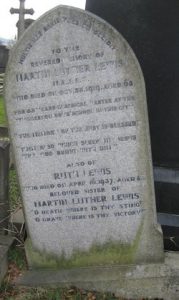
But it’s his son, Martin Luther Lewis, who interests us in this, the third and final article about Arthur Towle Marriott’s Leicester chess opponents.
Our Martin Luther was born in Kensington in 1851 and read Classics at Downing College, Cambridge. He then chose to go into teaching rather than following his father into the ministry, and obtained a post teaching Classics at Bradford Grammar School.
We first encounter him as a chess player in 1877 and 1878, taking part in a blindfold simul given, inevitably, by Joseph Henry Blackburne. The game was unfinished and Blackburne consented to a draw ‘owing to the pieces being very evenly balanced, and it being necessary to exchange off the pieces and play it out as a pawn game, which would have been very protracted’, according to the Bradford Daily Telegraph (30 Nov 1877). During the same period he played in matches against other clubs, gradually moving up the board order until he found himself on top board.
In 1880, Martin Luther Lewis was on the move. The Leicester Journal (12 Nov 1880) reported: ‘The Rev. Edward Atkins, B.Sc., has been appointed to the second mastership of Wyggeston Boys’ School, vacant by the promotion of Mr. G. H. Nelson, M.A., to the headmastership of the Canterbury Middle School. Mr. M.L. Lewis, M.A., LL.M., late scholar of Downing College Cambridge, Classical Master in the Bradford Grammar School, and Mr. Alfred Barker, B.A., of the University of London, one of the Masters in the City of London School, Cowper-Street, have been appointed to Assistant Masterships in the School.’. At about the same time the school launched a new chess club: Lewis was no doubt involved in this venture.
Wyggeston Grammar School for Boys was the most prestigious boys’ school in Leicester at the time. Its many distinguished alumni include the Attenborough brothers (the Attenborough Building at Orleans Park School in Twickenham host tournaments run by Richmond Junior Chess Club), former RJCC parent Simon Hoggart, and author, publisher and chess player James Essinger.
The 1881 census found Lewis boarding with a widow, Ann Woodruffe (Hyde) Burrows, whose teenage son Edward was, I would imagine, a Wyggeston pupil.
He soon joined Leicester Chess Club and it wasn’t very long before he graduated to top board, playing regularly for them against other clubs in the Midlands between 1882 and 1888. His first over the board encounter with Arthur Towle Marriott came on Friday 31st March 1882. The match was not a success, according to the Leicester Chronicle of 8 April. Unfortunately, the Leicester players had to return too early to allow of any satisfactory conclusion being arrived at, the only games concluded at the time the contest was finished being those between Messrs. T. Marriott and A.F. Atkins, and Mr. H.R. Hatherley and Rev. J.C. Elgood. Of those, each team had one win to their credit. The other games were not far enough advanced to allow of adjudication. a fact which, after nearly three hours’ play, shows they were very stubbornly contested. No chess clocks in those days, of course. (Note that AF Atkins was no relation to the aforementioned Edward.)
The two clubs met again on Thursday 26 October in Leicester, with Lewis and Marriott now in opposition on top board. According to the Nottingham Evening Post on 28 October: Play commenced at seven o’clock at the New Town Hall, and was continued until 10.30, when unfinished games were adjudicated by Messrs. A. Marriott and M.L. Lewis (their own game being among that number). The result was an easy victory for the Nottingham team, who won nine games, lost two and six were drawn. One of the draws was indeed their own encounter.
They met again in Nottingham on 23 February 1883, the result of their top board game, and also the match, being a draw. At round about the same time, in the first quarter of 1883, Martin Luther Lewis married his landlady.
His results over his years of activity between 1877 and 1888 suggest that Lewis was one of the strongest players in the country outside London. Usually playing on top board, it seems he lost very few games. The comparatively high proportion of draws, along with the lack of published games, suggest that he was a solid and cautious player. EdoChess gives him a highest rating of 2250. However, he preferred to concentrate on his teaching and pastoral work rather than seek chess fame further afield. He was, apart from teaching Classics at Wyggeston, involved in preaching, teaching in Sunday Schools, and with the Leicester YMCA, where he started a chess club, drawing with William John Withers in a match against Granby.
Martin and Ann, who was thirteen years his senior, continued to live together for the rest of their lives. His stepson Edward himself went on to study theology, was appointed to a curacy in Bath, but sadly died at the age of only 33.
Although Martin Luther Lewis’s chess career was relatively short and uneventful, he played a highly influential role in the story of English chess. You’ll remember Edward Atkins, who joined Wyggeston at the same time as him. A very interesting man was Edward. His father, Timothy, was a humble framework knitter from Hinckley, but, like Thomas Marriott senior, was ambitious to improve himself. Even up to his mid 50s he was still knitting stockings, but later opened a shop, and, later still, became a hosiery manufacturer. He was clearly ambitious for his children, as well. Edward, in spite of his modest origins, had a highly successful career in the Church of England as well as teaching, becoming a Canon and continuing to officiate at the Church of St Nicholas, Leicester, into his nineties. His science lessons led to the formation of Leicester College of Technology, which would very much later (while I was there) become the City of Leicester Polytechnic, and is now, as De Montfort University, the home of the ECF Library.
The two men must have been good friends, and when Edward’s young son Henry Ernest Atkins showed an interest in chess, Martin was on hand to provide both tuition and encouragement. Perhaps he also influenced his pupil’s style of play. Atkins junior, of course, became one of England’s strongest ever players. Certainly a Major Piece, not a Minor Piece. You can read much more about him in excellent articles here and here.
Martin Luther Lewis died on 23 October 1919, just 15 months after his wife.
Here’s an appreciation from ‘one who knew him’ from the Leicester Daily Post of 27 October.
Three weeks earlier, on 6 October, about a mile a half away, Tom Harry James had welcomed his 18th and last child into the world. But that’s another story.
This, then, was the life of Martin Luther Lewis, classics teacher, preacher and strong chess player.
It’s a well-known trope, isn’t it? You’ll probably be familiar with the 1939 movie Goodbye Mr Chips, based on James Hilton’s 1934 novella. You may also know the Terence Rattigan play The Browning Version. Hilton’s Mr Chips and Rattigan’s Crocker-Harris were both, like Lewis, classics teachers. Perhaps we might consider him to have been cut from the same cloth as these two fictional counterparts.
His sister Ruth never married, becoming a hospital matron in Chipping Barnet, and then working for the YWCA in Exeter. She later moved to Leicester, perhaps to care for her older brother in his final illness, and is buried with him in Welford Road Cemetery.
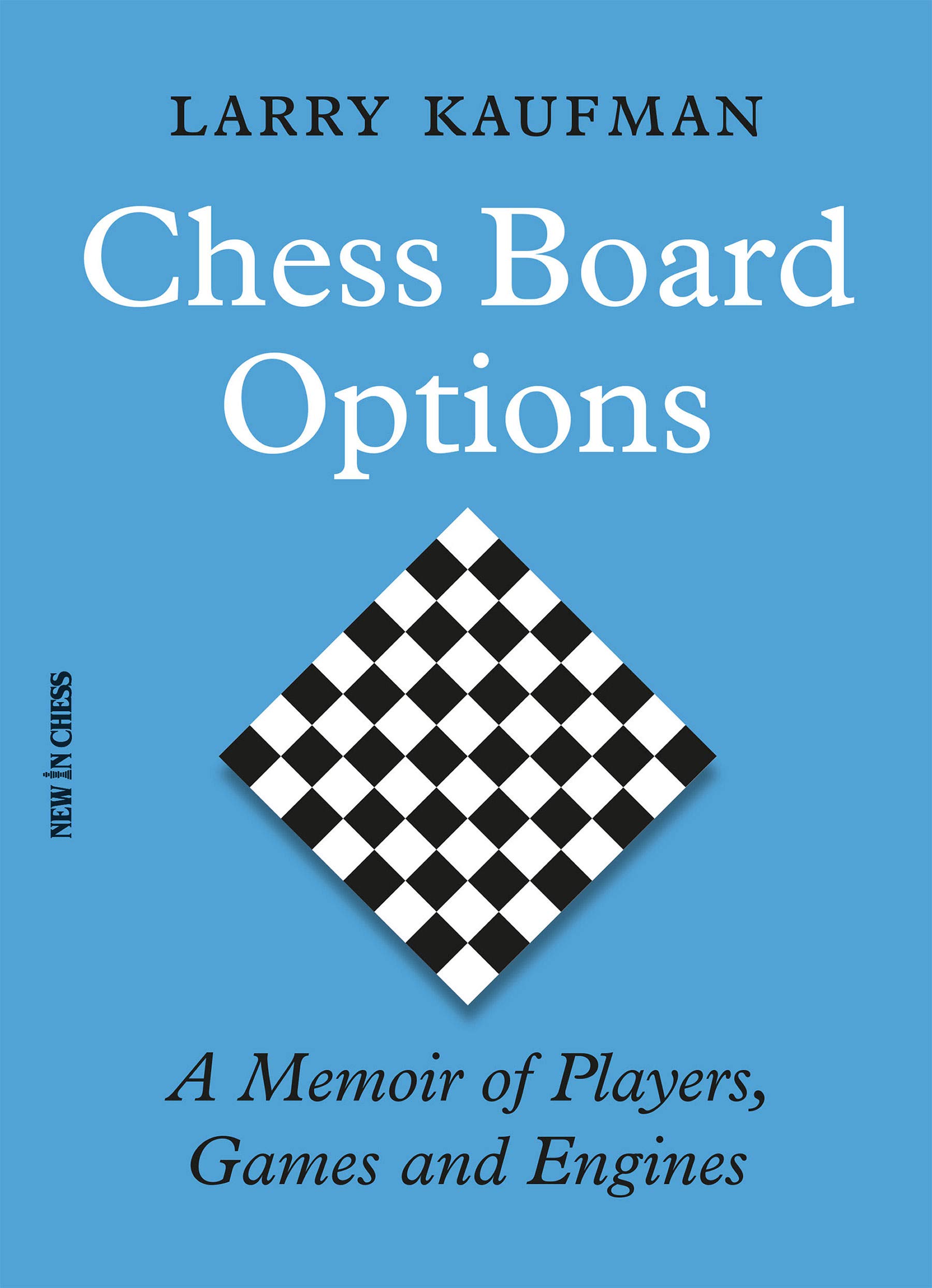
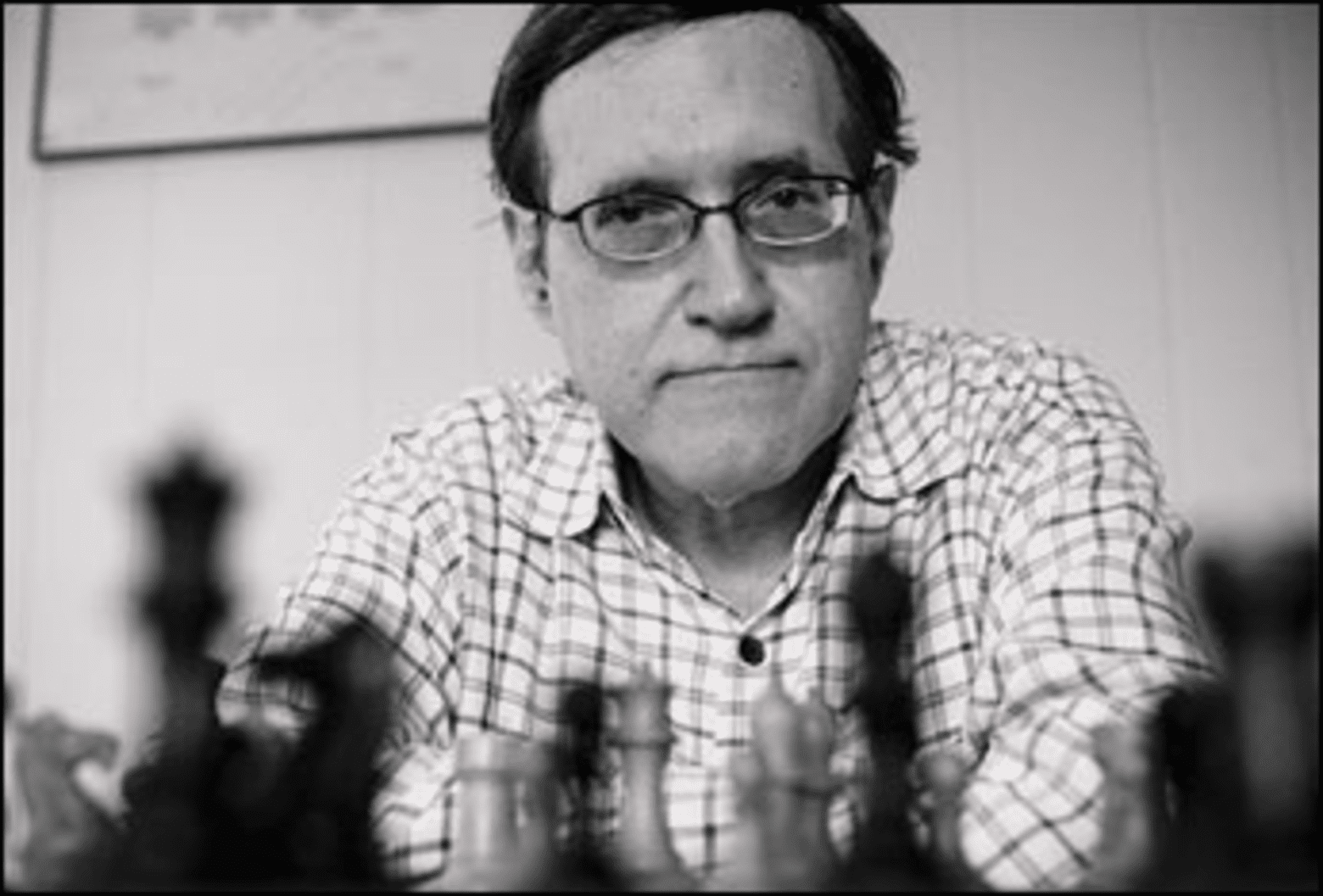
Chess Board Options, Larry Kaufman, New in Chess, 15th July 2021, ISBN-13 : 978-9056919337
From the publisher:
“Larry Kaufman can safely be called an exceptional chess grandmaster
Larry Kaufman started out as a prodigy, however not in chess but as a whizz kid in science and math. He excels at shogi (Japanese chess) and Go, and is also a world-famous computer programmer and a highly successful option trader. Remarkably, as a chess player he only peaked at the weirdly late age of fifty.
Yet his victories in the chess arena are considerable. Over a career span of nearly sixty years Kaufman won the state championships of Massachusetts, Maryland, Florida, Virginia, D.C. and Pennsylvania. He was an American Open Champion and won the U.S. Senior Championship as well as the World Senior Championship.
‘Never a great chess player’ himself (his words), he met or played chess greats such as Bobby Fischer, Bent Larsen, Walter Browne, Boris Spassky, Viktor Kortchnoi and many others. He worked as a second to legendary grandmaster Roman Dzindzichashvili, and coached three talented youngsters to become International Master, one of them his son Raymond.
This engrossing memoir is rife with stories and anecdotes about dozens of famous and not-so-famous chess players. In one of the most remarkable chapters Larry Kaufman reveals that the American woman chess player that inspired Walter Tevis to create the Beth Harmon character of Netflix’s The Queen’s Gambit fame, is his former girlfriend. You will learn about neural networks, material values and how being a chess master helps when trading options. And find lots of memorable but little-known annotated games.
Larry Kaufman is an American Grandmaster. He has been involved in computer chess since 1967, when he worked on ‘MacHack’, the first computer that competed in tournaments with human players. More recently he has been working on the programs Rybka and Komodo.
Praise for the best-selling opening manual Kaufman’s New Repertoire for Black and White:
“Kaufman’s book is a pleasure to read.” — Miguel Ararat, Florida Chess Magazine
“Kaufman does an outstanding job.” — IM Gary Lane, Chess Moves Magazine”
GM Larry Kaufman
The memoirs of a relatively obscure grandmaster might not be at the top of your wish list, I guess.
The title might be considered slightly odd as well, referring in part to his career as an options trader, with perhaps also some reflections on options for the further development of chess.
Nevertheless, Larry Kaufman has some interesting stories to tell, and much to say about the future of our favourite game. You’ll also find, appropriately enough, 64 games, some played by the author, some by players he knew, and some by computers against grandmasters, all with brief but pertinent annotations. I’d urge you to stop and take a look inside rather than just pass it by.
The introduction provides some background biographical information concerning his 60 year chess career.
Here’s an early game: the book provides annotations as far as move 20.
In Part 1, Kaufman introduces us to some of the 20th century champions he has known, with plenty of anecdotes and a few games along the way. We meet Fischer, Spassky and Kasparov, Korchnoi, Larsen, Gligoric and others. For me, though, the most interesting chapters here are about the lesser known players. We go all the way back to Harold Phillips (1874-1967), a family friend, who had played Steinitz in simuls back in 1894. I guess this must make Kaufman one of the youngest players to have a shared opponent with Steinitz. In 1961 or 1962 there was a kindly old man who ‘gave generous and valuable free chess lessons to the kids’. This was the notorious Norman Whitaker: of course they knew nothing of his background at the time.
Then there was Steve Brandwein (1942-2015), a new name to me. ‘Although he retired from tournament play at only 22 years of age, … he … was a very strong player … and probably taught me more about the finer points of chess than any other individual.’ Kaufman compares him to Bernie Sanders, and describes him as ‘perhaps the best-liked chess master I’ve ever known’, who could, if he’d wanted have become a grandmaster, or perhaps, had he been prepared to compromise, a US President.
Even more interesting (although readers of New in Chess might have read about this before), is Diana Lanni, who, according to Kaufman, may have been the major inspiration behind the character of Beth Harmon in The Queens Gambit. He also sees himself as the closest match to Harry Beltik, and Walter Browne as Benny Watts.
Part 2 looks at Larry Kaufman’s life outside chess: his time as an options trader and his interest in Shogi, Go and other games.
In Part 3, he shows us some of his most memorable games and talks about his chess students, including his son Ray.
This was his first win against a grandmaster, and helped him towards his first IM norm.
This game helped propel him to a shared first place and the grandmaster title in the 2008 World Seniors.
Part 4 is about computer chess. Kaufman has been involved in this since 1967, when, as a student at MIT, he had a part-time job working on MacHack. Today, he’s part of the Komodo team. After a brief résumé of his career in computer chess, we see some recent games between engines and grandmasters. These days, the engines give the GMs considerable odds.
Particularly interesting here is a 2020 16-game match (15’+10″) between Komodo and GM Alex Lenderman. In every game, Komodo played White without a knight. In half the games, Lenderman played without a pawn, in four games he had all his pieces but without castling rights, and four games were played using Fischerrandom rules, but with kings and rooks on their usual squares. On the first day, using its standard version, Komodo lost three games, with just one draw. It then switched to the Monte Carlo Tree Search version, which seeks the best practical chances rather than the objectively best moves. In the remaining twelve games, all of which are published here, Komodo scored three wins, seven draws and only two losses.
Here’s a Komodo win. Kaufman’s brief annotations don’t mention a significant improvement for Komodo pointed out by Stockfish 14.
Part 5 comprises short essays on various topics such as: ratings, openings and piece values, along with suggestions for the reform of competitive chess and thoughts about the future.
Kaufman is perhaps best known, at least in the USA, for a 1999 Chess Life article about the values of the pieces. As someone involved in teaching beginners, this is of considerable interest to me. I’d really like to stop my pupils trading BN for RP on f7 and thinking they have an advantage because points are equal and they’ve exposed the enemy king. He suggests that, while the traditional values (1, 3, 3+, 5) are reasonable for positions without queens, in the presence of queens we should teach 1, 4, 4+, 6, 11. That will resolve my problem: the trade on f7 will now win 7 points but lose 8+ points.
I found this book a riveting read, especially parts 4 and 5, but then it covers a number of topics which are of particular interest to me. If the topics appeal to you too, or if you have a general love of chess culture, I’d give it a very strong recommendation. Fascinating, well written, and, as usual with New in Chess, well produced.
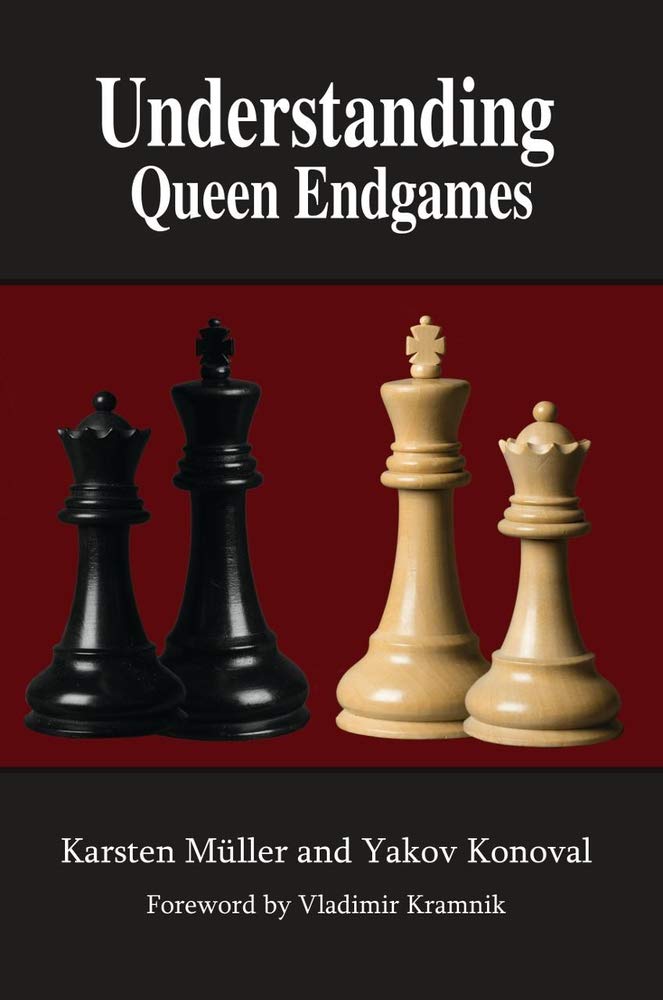
Understanding Queen Endgames, Karsten Müller & Yakov Kanoval, Russell Enterprises (24 Mar. 2021), ISBN-13 : 978-1949859317
From the publisher:
The Daunting Domain of Queen Endgames Explained! Knowing the abilities and limitations of the powerful queen is very valuable for mastering the secrets of the royal game, and this can be studied best in the endgame.
Queen endgames are very difficult, if only for purely mathematical reasons the queen is the most mobile piece in chess, and the amount of possible options is incomparably higher than in any other type of endgames.
This book follows a dual philosophy as in the three previous works by the same authors: Understanding Rook Endgames, Understanding Minor Piece Endgames and Understanding Rook vs. Minor Piece Endgames. The 7-piece endings are dealt with in great detail. They are often so complex that pre-tablebase analysis almost always contains errors. Many new discoveries are revealed here. But to really understand the fight of a queen against a queen or minor pieces with rooks, these theoretical positions are of course not enough. So subchapters on the principles of each material configuration have been added.
All in all, this fantastic book is already on my (very short) “must study” list for chessplayers of different levels, including the top ten! I want to thank the authors for the courage which is required just to start working on such a complex topic, as well as for the very high quality of their work, which will endure for decades to come and will be very useful for many future generations of chessplayers. The foreword is by Vladimir Kramnik,14th World Chess Champion”
This titanic technical endgame tome is a Magnum Opus with a forward by former World Champion Vladimir Kramnik. The complexity of queen endings is obvious as the queen is the most mobile piece and the number of variations becomes vast after only a few ply. This is probably the reason that this is the first work to cover queen endings in great depth. The complexity of these endgames is shown by a famous game from Vladimir Kramnik’s World Championship match versus Peter Leko in 2004. The first game of that match reached this position:
Leko-Kramnik World Championship 2014(1) Move 44 White to move
White played 44.Qf4?? which loses as demonstrated by Kramnik in the game and is covered in this book 44…g5! 45.Qf6 h6! winning, the point being that 46.Qxh6 loses the queen to 46…R8a6! After 45…h6 White cannot prevent Black from manoeuvring his rooks to win the kingside pawns. The natural move is 44.hxg6 exchanging pawns to reduce material which was thought, at the time, to draw. In fact Black stills retains winning chances. As the position has eight men the result is still not known definitively – this shows the richness of such endgames.
This publication also covers endgames that have had little coverage in the past such as Two Rooks + Pawn v Queen.
Most first quick skim of the book did concern me slightly as I noticed some diagrams followed by 100+ moves with no annotations. On a deeper perusal, I realised that these examples are included as “longest wins” for certain material combinations. This emulates John Nunn’s longest wins in “Secrets of Pawnless Endings”. There is plenty of well annotated material within practical games to bring out key ideas, for example the techniques to break down fortresses are examined in detail.
The book has ten main chapters traditionally based on piece configuration:
Chapter 1 Queen vs. Pawn
Chapter 2 Queen vs. Queen
Chapter 3 Queen vs. Rook
Chapter 4 Queen vs. Rook and Knight
Chapter 5 Queen vs. Rook and Bishop
Chapter 6 Queen vs. Two Rooks
Chapter 7 Queen vs. Rook and Two Minor Pieces
Chapter 8 Queen and Minor Piece vs. Queen (and Minor Piece)
Chapter 9 Queen and Rook vs. Queen and Rook
Chapter 10 Queen vs. Minor Pieces
Each chapter ends with some fruitful exercises to check if you were paying attention. The solutions are given near the end of the book.
Chapter 1 Queen vs. Pawn
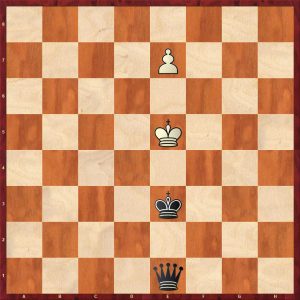
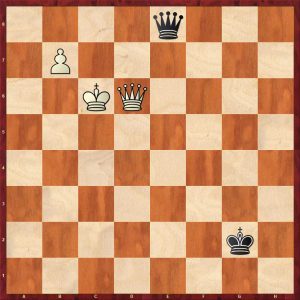
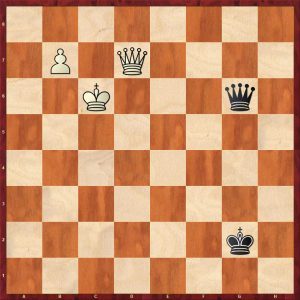
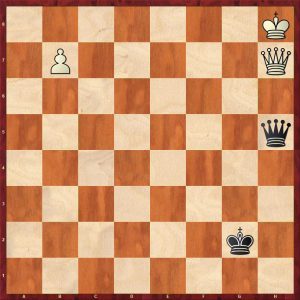
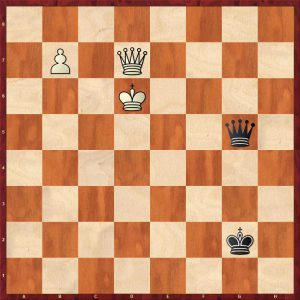
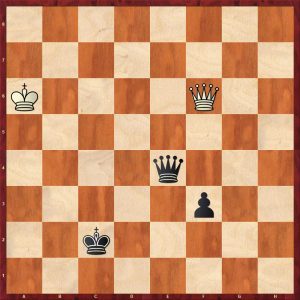
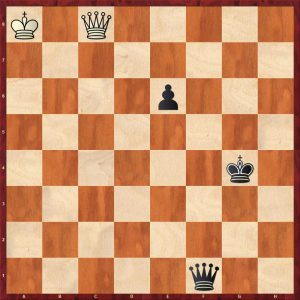
This chapter obviously concentrates on the cases where the pawn is on the seventh rank. Here is the end of a Troitzky study:
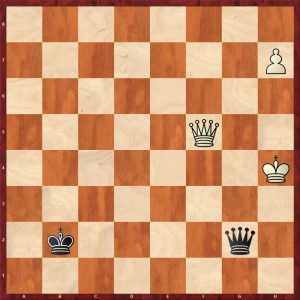
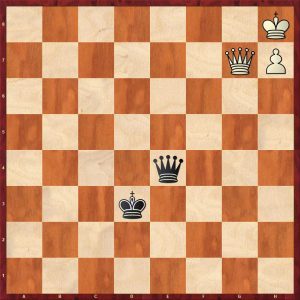
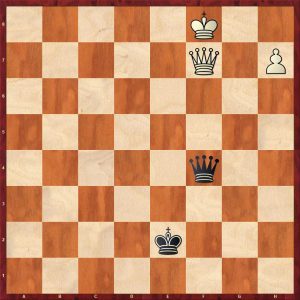
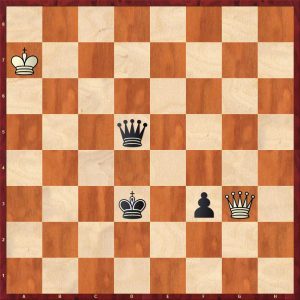
Troitzky 1935 (end of study) White to draw
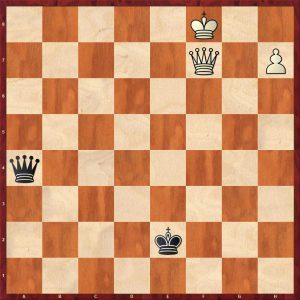
1.Ke6!! and whichever way Black’s king goes, White moves into his shadow drawing: 1…Kf4+ 2.Kf7! draws or 1…Kd4+ 2.Kd7 draws
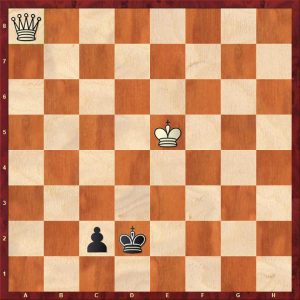
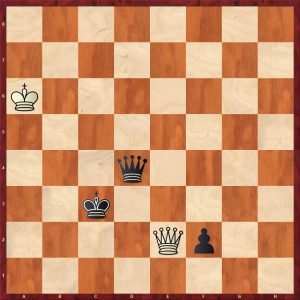
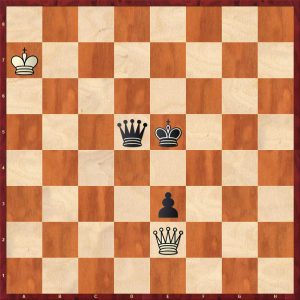
This next position looks arcane but the reviewer has has this position twice in blitz, once as the attacking side and once as the defending side: in both cases the defence was accurate to hold the draw.
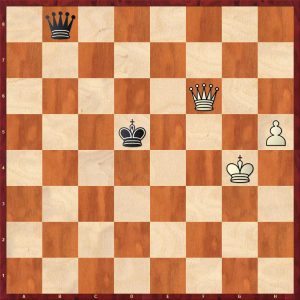
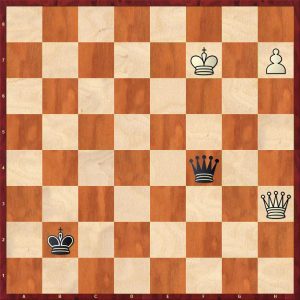
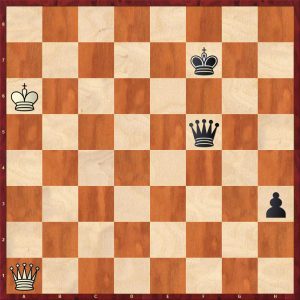
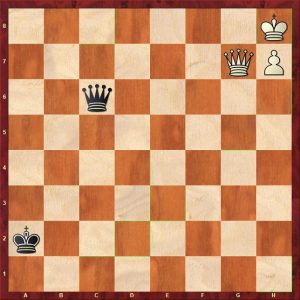
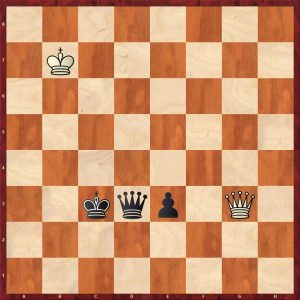
Q v P (king outside winning zone) White to move
White cannot win despite the proximity of his king. White can try 1.Qd5+ 1…Ke1!! is the only move to draw, 1…Ke2 loses to 2.Qa2! Kd1 3.Kd4! c1Q 4.Kd3 mating. White can also try 1.Qa2 Kc3!! is the only move to draw, 1…Kd1 2.Kd4! c1=Q 3.Kd3 mating.
This chapter goes on to cover many types of position with far advanced pawns against a queen.
Chapter 2 Queen versus Queen
Naturally the authors start with the notoriously difficult ending Queen and Pawn vs. Queen: their comment is “This can be very deep and tricky if the defending king can’t get in front of the pawn.” Certainly an understatement as many strong GMs have gone down in drawn endings. A whole volume could be dedicated to this fascinating endgame.
The authors systematically cover the rook’s pawn, knight’s pawn, bishop’s pawn and centre pawns. Some useful general rules are given for each pawn:
“Rook Pawn – In this case, the drawing zone for the defending king is usually quite large when the pawn is not far advanced, as the rook pawn does not provide good shelter. But the zone gets smaller as the pawn advances, and the main drawing zone is in the corner farthest from the queening square.”
A didactic example from Carlsen-Gashimov Monaco 2011 is given:
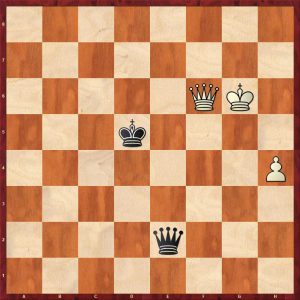
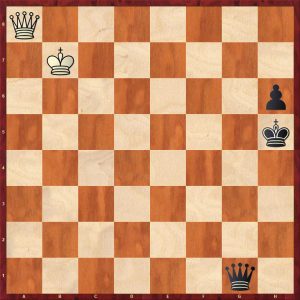
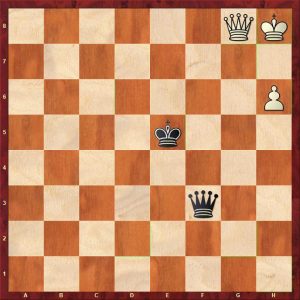
Carlsen-Gashimov Monaco 2011 Move 59 Black to play
Black’s king is badly placed restricting his own queen, so he should run to the a1-corner as fast as he can. 59…Kc5!? 60.h5 Qe8+ 61.Kh6 Kd5?! 61…Kb4 going closer to the drawing zone is more logical 62.Kg5 Qg8+ 63.Kf4 Qb8+ 64.Kg4
Carlsen-Gashimov Monaco 2011 Move 64 Black to play
64…Qb4+! An excellent move preserving the draw., 64…Qa7? loses to 65.Qf4!! cutting the Black king off from the a1-drawing zone and winning in the long run. It looks as though Black’s king might get near the pawn, but that is an illusion: he just restricts his own queen’s movements. 65.Kg5 Qd2+ 66.Kg6 Kc4 67.h6 Qg2+ 68.Kf7 Qb7+ 69.Kg8 Qb8+ 70.Qf8 Qg3+ 71.Kh8 Qe5+ 72.Qg7 Qe4 73.h7
Carlsen-Gashimov Monaco 2011 Move 73 Black to play
This a typical position from this ending, white has pushed the pawn to the seventh rank with his king hiding in the corner in front of the pawn. This is a tablebase draw but this has been known for many decades before the advent of tablebases.
73…Kd3?? loses, a bad mistake from a 2700 GM. 73…Kb3! draws but accuracy is still required. 74.Qf7+ (74.Kg8 Qe8+ 75. Qf8 Qg6+ 76.Kh8 Kc2=) 74…Kb2
Carlsen-Gashimov Monaco 2011 Variation 1 Move 75 White to play
This is the type of position that Black is aiming for. The authors explain why it is drawn with a pithy comment: “and White can’t win as the king must move too far from the pawn to move into a countercheck position.” For example: 75.Kg7 Qg4+ 76.Qg6 Qd7+ 77.Kh6 Qd2+ 78.Qg5 Qd6+ 79.Kh5
Carlsen-Gashimov Monaco 2011 Variation 1 Move 79 Black to play
Another excellent explanation from the authors: “White’s king wants to go to h1 or h2 to make counterchecks possible, but the pieces are then too far apart” (and un-coordinated) e.g. 79…Qd1+ 80.Qg4 Qh1+ 81.Kg6 Qc6+ 82.Kg5 Qd5+ 83.Qf5 Qg2+ 84.Kh4
Carlsen-Gashimov Monaco 2011 Variation 1 Move 84 Black to play
Carlsen-Gashimov Monaco 2011 Variation 1 Move 89 White to play
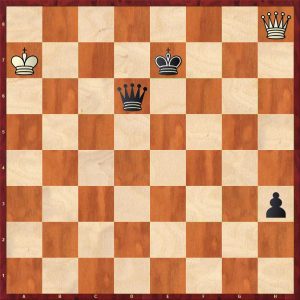
Black to the game after 73…Kd3??
Carlsen-Gashimov Monaco 2011 Move 74 White to play
74.Qd7+ Ke2?! (74…Kc2 lasts longer but does not save the game anymore: buy the book to find out how White wins) 75.Kg8 White is going to shuffle his king along to the adjacent file to Black’s king to setup a crosscheck: 75…Qg6+ 76.Kf8 Qh6+ 77.Qg7 Qf4+ 78.Qf7
Carlsen-Gashimov Move 78 Black to play
78…Qh6+ Notice how Black’s choice of checks are severely restricted because of his king’s placement 79.Ke7 Qh4+ 80.Ke8 Qa4+ 81.Kf8! Now we can see again why Black’s king is badly placed: Black has no good checks.
Carlsen-Gashimov Monaco 2011 Move 81 Black to play
A very important ending to study and learn from a World Champion.
Muller & Konoval give an example of good defence with the king in the drawing zone where the defending side does not let the draw slip at any point:
Markowski – Piket Istanbul 2000 Move 57 White to play
Piket played 57.Qe8+ and drew: buy the book to see the excellent defensive effort.
Here is an old game where modern tablebases really show how difficult these endgames are:
Ed. Lasker-Marshall USA 1923 Move 80 White to play
White played 80.Qc1? The amazing 80.Qh1!! is the only move to draw, for example 80…Qd7 81.Qf3+ Ke8 82.Qa8+ Ke7 83.Qh8! Qd6+ 84.Ka7!
Ed. Lasker-Marshall USA 1923 Variation 1 Move 84 Black to play
Drawing, a beautiful geometric display of the queen’s power with the white queen moving around all the corners in a few moves. 80…Qe5! 81. Qb1
Ed. Lasker-Marshall USA 1923 Move 81 Black to play
81…Qf6+? (A mistake improving White’s king for free particularly as White’s checks are restricted because of potential cross checks, the natural 81…h2! wins, e.g.: 82.Qb7+ Kf6 83.Qf3+ Ke7 84.Qb7+ Kd8 85.Qa8+ Kd7 86.Qb7+? Qc7 and white has no good check, so he loses) 82.Ka7! and white drew with excellent defence 82…Kg7 83.Qg1+ Kh7 84.Qe3 Qa1+ 85.Kb8 Qb2+ 86.Ka7 Qg2 87.Qd3+ 87…Kh8 Although White’s king is in the drawing zone, Black’s king is on a neighbouring rank making counterchecks possible, so white played 88.Ka6! (88.Qe3 also draws)
Ed. Lasker-Marshall USA 1923 Move 88 White to play
88…h2 89.Qd8+ Kh7 90.Qc7+! Staying on the h2-pawn so Black cannot interpose the queen, and White drew 14 moves later by repetition.
If the defending king can get in front or very near the pawn, it should do so:
Bakutin – Novitzkij Tula 2000 Move 63 White to play
63.Kd3! h5 64.Ke2! now the draw is easy as white does not fear a queen exchange.
Sometimes the defending king has to keep both options open: here is a brilliant example:
Dominguez Perez – Nakamura Thessaloniki 2013 Move 60 Black to move
Black looks to be in trouble as his king is a long way from the drawing zone and will interfere with his queen. However Nakamura found 60…Ke5!! 61.Kg7 Qc6! Keeping Black’s options open 62.h6
After 62.Qg6 Qb7+ 63.Kh8 Qa8+ 64.Qg8 Qc6 65.Qg5+ Black changes plans and runs to the drawing zone as White’s king is badly placed in front of the pawn, he just has time to do this 65…Kd4!! 66.Qg7+ Kc4 67.h6 Kb3 68.h7 Ka2=
Dominguez Perez – Nakamura Thessaloniki 2013 Variation Move 69 White to move
Dominguez Perez – Nakamura Thessaloniki 2013 Move 67 White to move
67.Qg6 (67.h7 Qh5 68.Qg7+ Ke6! draws as Black’s king cramps White’s pieces.) 67…Qf8+ 68.Kh7 Qf3 69.Qg7+ Ke6 70.Kg8 Qh5 71.h7 Qe8+ 72.Qf8 Qg6+ 73.Kh8 Qf7 drawn
Knight Pawn – “With a knight pawn, play is similar to a rook pawn, but the winning chances are better as the pawn provides better shelter. There is still a drawing zone in the far corner.”
The play is complex and there are many subtleties with slight differences being crucial as we shall see below.
Here is a superb example of drawing technique from Negi-Postny Helsingor 2009:
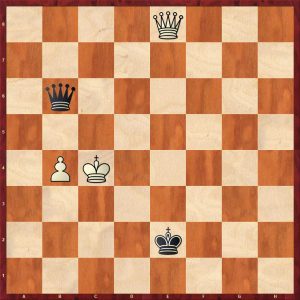
Negi-Postny Helsingor 2009 Move 63 Black to move
Where does Black put his king? 63…Kf1! (63…Kd2? loses in 91 moves as the king is cut off from the drawing zone!) 64.b5 Qc7+ 65.Kd5 Qb7+ 66.Qc6 Qf7+ 67.Kd6 Qf4+ 68.Kd7 Qf7+ 69.Kc8 Qf8+ 70.Kb7 Qe7+ 71.Qc7 Qe4+ 72.Ka6 Qa4+ 73.Qa5 Qc4 74.Qa1+ Kg2
Negi-Postny Helsingor 2009 Move 75 White to move
Black’s king has reached the drawing zone. It is still very easy to go wrong.
75.Qb2+ Kh1 76.Qh8+ Kg1 77.Qg7+ Kh1 78.Qb7+ Kh2 79.Qc6 Qa2+ 80.Kb7 Kg1 81.Qc1+ Kf2 82.Qc5+ Kf1 83.b6 Postny comments :The pawn has reached the 6th rank already, although it is still a draw theoretically. For the defensive side it’s very easy to go astray, but, somehow I managed to give the right checks. 83…Qg2+ 84.Ka6 Qa8+ 85.Kb5 A crucial position, Black’s king is temporarily out of the drawing zone and cannot go back immediately.
Negi-Postny Helsingor 2009 Move 85 Black to move
85…Qe8+! The only move to draw 86.Ka5 Qe1+ 87.Ka6 Qa1+ 88.Qa5
Postny comments again: For a moment I thought that I was losing. The queen covered the a3 square, and Kb7-a7 followed by the pawn advance just one move before the fifty move rule seems inevitable. But… 129…Kh1! 130.Ka7 Qf2!! This stalemate trick saves the game. 131.Qe4+ Kg1 132.Kb7 Qf7+ 133.Kc6 Draw due to the fifty move rule. ½-½
The next example shows how difficult this ending really is:
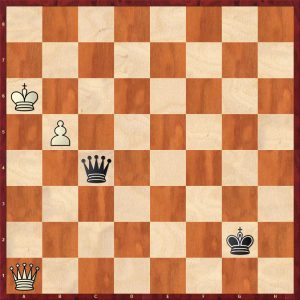
Oddone – Espinoza Asuncion 2009 Move 77 Black to play
Black’s king is not yet in the drawing zone. Black played the obvious check 77…Qe7+? which loses 77…Qe3! (77..Qc5? loses to 78.Qd3!) does draw, e.g. 78.Ka8 Kh3 79.b7 Qe4 80.Ka7 Qd4+ 81.Qb6 Qa1+ 82.Qa6 Qd4+ 83.Ka8 Qe4
Oddone – Espinoza Asuncion 2009 Variation Move 84 White to play
This is drawn despite Black’s king not being in the drawing zone but it is close enough! 84.Qa2!? cutting the Black king off from the drawing zone (by analogy with the line below) does not win here.
Back to the game 78.b7 Qe3+ 79.Ka8 Qe4
Oddone – Espinoza Asuncion 2009 Move 80 White to play
80.Qb5? 80.Qa3!! cutting the king off from the drawing zone wins, followed by moving White’s king down to the same rank as Black’s king which is similar to the line below 80…Qf3? (80…Kg3! draws) 81.Qb4+ Kh3 82.Qc5?! Qe4
Oddone – Espinoza Asuncion 2009 Move 83 White to play
83.Qc3+? Sloppy, improving Black’s king for free and the queen is much better placed on c5; it was time to move the White king down to the rank that Black’s king is on: 83.Ka7! wins, e.g. 83…Qa4+ 84.Kb6 Qb3+ 85.Ka6 Qa4+ 86.Qa5 Qc4+ 87.Qb5 Qe6+ 88.Ka5 Qa2+ 89.Kb6 Qf2+ 90.Qc5 Qb2+ 91.Ka6 Qe2+ 92.Ka5 Qa2+ 93.Kb5 Qe2+ 94.Qc4 Qb2+ 95.Qb4 Qe5+ 96.Ka4 Qe8+ 97.Ka3
Oddone – Espinoza Asuncion 2009 Variation 1 Move 97 Black to play
Oddone – Espinoza Asuncion 2009 Move 89 Black to play
A key position and a common problem for the defending side, which check should I make? Black choose the wrong check and lost. 89…Qg6+? The authors offer some general advice here: “As Black’s king is on a light square, it was better to operate on dark squares”: 89…Qf6+! Drawing 90.Qd6 Qc3+ 91.Kd7 Qg7+ 92.Qe7 Qd4+ 93.Ke8 White is trying to bring his king across to the same file as Black’s king. Qh8+ 94.Qf8 Qe5+
Oddone – Espinoza Asuncion 2009 Variation 2 Move 95 White to play
95.Kf7 loses the pawn to a fork 95…Qd5+ drawing instantly
Back to the game, after 89…Qg6+? 90.Qd6 Qe8+?!
Oddone – Espinoza Asuncion 2009 Move 91 White to play
91.Qd7?! (91. Kb6! Qe3+ 92. Kc7 Qa7 Kc8 wins quickly, now we see why Black’s queen should operate on the dark squares) 91…Qg6+
Oddone – Espinoza Asuncion 2009 Move 92 White to play
92. Kd5? White could have centralised the queen and effected a memorable manoeuvre to win 92.Qd6! Qc2+ 93.Kd7 Qh7+ 94.Qe7 Qd3+ 95.Ke8 Qg6+ 96. Kf8 Qf5+ 97.Kg8 Qd5+ 98.Kh8 Qh5+ 99.Qh7 winning
Oddone – Espinoza Asuncion 2009 Variation 3 Move 99 Black to play
Notice that this winning motif is effectively the same idea as the king manoeuvre down the a-file and b-files rotated ninety degrees!
In the game: 92…Qd3+ 93.Ke6 Qg6+ 94.Ke5 Qg5+ 95.Ke4 Qg6+! 96.Ke5 Qg5+ 97.Kd6
Oddone – Espinoza Asuncion 2009 Move 97 Black to play
97…Qf6+? The final mistake allowing White to improve his queen. 97…Qf4+ 98.Kc6 Qa4+ 99.Kc7 Qa5+ 100.Kc8 Qc5+ draws 98.Qe6! 98…Qd8+?! 99.Kc6 Qh8 100.Qa2+ Kf1 101.Qb1+ and queens the pawn, White won 4 moves later.
Here is a pretty study showing a neat idea:
Van Vliet 1888
How does White break the pin to get his pawn home?
Amazingly this idea occurred in a game and White missed the neat win, but won anyway.
Bishop Pawn
This is completely different. If the defending king can’t get in front of the pawn or at least very near the pawn, the attacker usually wins as there is no drawing zone in the far corner. This is best pawn for the superior side.
Matamoros Franco – Bologan 2005 Move 65 White to play
White played 65.Qe5+? (A bad mistake from a 2500 player, 65.Qc3+ draws as Black’s queen is poorly placed.) 65…Qe4! Black gives up his h-pawn to centralise his queen and get his f-pawn going 66.Qxh5 f5 White has restored material equality but is now lost as the centralised Black queen is dominant and the f-pawn is much more dangerous than White’s a-pawn. 67.Qh3+ Kd2 68.Qh2+ Kc3 69.Kb5 f4 70.Qh8+ Kb3 71.Qf8 f3 72.Qf7+ Kxa3 Black has eliminated the a-pawn which wasn’t strictly necessary. The win is simple from here as Black’s queen is so well placed.
Matamoros Franco – Bologan 2005 Move 73 White to play
73.Qf8+ Kb2 74.Qf6+ Kc2 75.Ka6?! Accelerating the loss. When the kings are close to each other on files or ranks, the stronger side should always be on the look out for a sequence to exchange queens.
Matamoros Franco – Bologan 2005 Move 75 Black to play
75…Qd5?! (Black could have exchanged queens with 75…Qd3+! 76.Kb7 Qb3+ 77.Ka8 Qa3+ 78.Kb7 Qb2+) 76,Qf4 Kd3 77.Qg3 Qc4+ 78.Ka7 Qc5+ 79.Ka8 Qd5+ 80.Ka7 Ke2 81.Qg4 Kd3 82.Qg3
Matamoros Franco – Bologan 2005 Move 82 Black to play
Matamoros Franco – Bologan 2005 Move 89 White to play
89.Kb7 Qg7+ 0-1 in view of 90.Kb8 Qf8+ 91.Kb7 Qf7+ 92.Kb6 f1Q
A central pawn
This is similar to the bishop’s pawn, but the winning chances are slightly less. There is no drawing zone for the defending king in the far corner:
Miladinovic – Graf Ohrid 2001 Move 68 Black to move
There is no chance for a draw here with the central pawn as Black cannot be prevented from advancing the pawn to the queening square: it just requires patience, care and a lot of moves.
Black played 68…Qa1+ (the natural 68…Qf5 unpinning the pawn is better.)
Black played well, not letting the win slip at any point until this position at move 110:
Miladinovic – Graf Ohrid 2001 Move 110 Black to move
Black played 110…Kf4?? which throws the win away as white has a brilliant draw utilising the fact that the pawn is unprotected by the queen and the star cross perpetual check. Better was 110…Qb3 protecting the pawn and preparing cover for the king on the queenside viz.: 111.Qh2+ Ke4 112.Qg2+ Kd3 113.Qg6+ Kd2 114.Qg5 Qc4 115.Ka8 Qd4 116.Kb7 Kc3 117.Qg3 Qd3 winning
Miladinovic – Graf Ohrid 2001 Variation 1 Move 118 White to move
The reviewer makes this observation:
Notice how Black’s king has migrated over to the file adjacent to White’s king ready to setup cross checks in a few moves. This cannot be prevented wherever White’s king is on the board with two exceptions:
The weaker side can draw if the defending king gets in front of the pawn
or reaches a small drawing zone on the short side of the pawn.
The only other drawing mechanism is to setup the star cross perpetual check or a variant of it which is shown below.
111.Qh2+! Reaching a very important position as White can draw
Miladinovic – Graf Ohrid 2001 Move 111 Black to move
111…Kg4 112.Qg1+Kf4 113.Qh2+ Ke4
Miladinovic – Graf Ohrid 2001 Move 114 White to move
114.Qg2+?? [114.Qh1+!! Kd4 115.Qa1+ Kd3 116.Qd1+ Ke4 117.Qh1+ Ke5 118.Qh5+ Kf5 (118…Kd6 or Ke6 loses the pawn to 119.Qh6+) 119.Qh5+ drawing] 114…Kd4 115.Qb2+ Kd3 Black breaks the perpetual sequence and wins as White’s queen has lost her checking distance
Miladinovic – Graf Ohrid 2001 Move 116 White to move
Miladinovic – Graf Ohrid 2001 Move 125 White to move
125.Qh2+? (Centralising with 125.Qe5 was a tougher defence) 125…Kf1 126.Qc2 e2 127.Qc4 Kg2 128.Qg8+ Qg3 129.Qd5+Kg1
Miladinovic – Graf Ohrid 2001 End
Exploiting White king position 0-1
The central pawn does have a small drawing zone for the defending side which is on the short side of the pawn:
Karjakin – Mamedyarov Beijing 2013 Move 91 White to move
This is a theoretical draw as White’s king restricts Black’s king manoeuvres, but White must defend perfectly:
91.Kb3? losing as White’s king can be kicked out of the drawing zone. 91,Qc4 holds for example 91…Qb6+ 92.Ka2 Qa5+ 93.Kb2 Qe5+ 94.Kb1 Qa1+ 95.Kb2 Qe3 96.Qc1+ Ke2 97.Qc4=
Karjakin – Mamedyarov Beijing 2013 Variation Move 97 Black to move
White’s king covers the queenside and the White queen can hassle Black on the kingside. If Black’s king strays too far on the kingside, Black cannot block a queen check as White will simply exchange queens drawing owing to the proximity of his king to the pawn.
The game continued 91…Qb6+ 92.Kc4 Qa6+ (92…Qc7+ is better 93.Kb3 Qc3+ 94.Ka2 Qa5+ 95.Kb2 Qb5+ 96.Ka3 Kc3 wins) 93.Kb3?! Qb5+ 94.Ka2 Kc3 95.Qe1+ Kc2 0-1 (96.Qf2 d2)
The book covers numerous positions with more pawns.
Here is a celebrated game Kasparov v The World Internet 1999.
Kasparov – The World Internet 1999 Move 51 Black to play
Although Black is a pawn up, White is playing for the win as his g-pawn is the most advanced pawn. The seven piece tablebase confirms this position is a draw but Black is on the edge of losing and most defend perfectly. The game continued 51…b5?! (51,,,Ka1! holds) 52.Kf6+ Kb2? (The final mistake 52…Ka1 was necessary) 53.Qh2+ Ka1 54.Qf4! b4 55.Qxb4 Black is lost as the d-pawn is a hindrance as it obstructs Black’s queen and offers cover to White’s king. Without the d-pawn the position is drawn as show earlier in this review.
Kasparov – The World Internet 1999 Move 54 Black to play
The ROW did not last much longer and resigned on move 62.
Chapter 3 Queen v Rook
The basic Queen v Rook endgame is covered sufficiently. The authors show how to break the third rank defence:
Queen v Rook Third Rank Defence
The authors observe: “The third rank defence is very difficult to break down if you do not know how, because it requires at least one counter-intuitive move to achieve that. John Nunn suggests the following method:”
1.Qf4! (1.Qg7 does not make progress because of 1…Ke8 2.Qc7 Rh6 3.Ke5 Rg6 and the starting position has been mirrored) 1…Kd7 2.Qa4+! Kc7 3.Qa7+ Forcing Black into the third rank defence 3…Rb7 4.Qc5+ Kb8 5.Kd6 Rg7 6.Qb4+ Rb7 7.Qe4 Rb6+ 8.Kc5 Ka7 9.Qd4 Rb7 10.Kc6+ Ka8 11.Qd5 Kb8 12.Qa5 and Philidor’s position is reached.
The book covers a multitude of Queen vs Rook + Pawn(s) positions where there are many fortresses worth knowing and even in the situations where the queen wins, many wins are quite long and complicated. Here is an example of a simple draw.
Queen v Rook+P Fortress
Here White can simply move his rook back and forth between two safe squares e3 & g3.
An additional pawn for Black on g4 makes no difference viz:
Queen v Rook+P Fortress 2
This is clearly drawn as well. However, make a subtle change to the position and place White’s king on e2, then the queen wins:
Agopov – Norri Finland 2012 Move 89 White to move
White played the incomprehensible 89.g6? allowing the simple 89…Rxg6 drawing 89.Qh1! wins as follows: 89…Rg6 90.Qa8 Re6 91.Qa3+ Ke8 92.Kg4 Rg6 93.Kh5 Re6 94.Qb4 zugzwang
Agopov – Norri Finland 2012 Move 94 Black to move
Black has no good move. One key point is 94…Rg6 95.Qe4+ Kf8 (95…Re6 96.Qxe6 fxe6 97.Kh6 winning) 96.Qxg6 winning
With a further advanced bishop’s pawn, it is no longer a fortress as the attacking king can encircle the weaker side’s position:
Queen v Rook + Pawn Breaking the Fortress
The winning process falls into three phases and zugzwang is the main weapon to achieve these steps:
First the king has to cross the e-file
1.Kf2 Qc7 2.Kg2 Qc2+ 3.Kg1 (3.Kg3 Qd2 4.Rg4 Ke5 5.Re4+ Kd5 and the first phase is complete) 3…Qd2 4.Kf1 Qh2 5.Re2Qg3 6.Rg2 Qh3 7.Kf2 Ke5 8.Rg4 Kd5
Queen v Rook + Pawn Breaking the Fortress Move 9 White to move
because 80…Rd3 (80…Ke4 81.Qd5+ wins) 81.Qf4+ Kc3+ 82.Kc5 wins
Chapter 4 Queen versus Rook and Knight
Fortresses are an important topic here.
Gelfand-Anand Moscow 2012 Move 37 Black to move
Here Black has a fortress. White’s obvious pawn lever is g4, so Black stops it with 37…h5! Can White exploit the g5 square? 38.Kh4 Kh6 39.Qb2 Kg6 40.Qc3 Ne4
Kasparov – Ivanchuk Frankfurt 1998 Move 69 White to move
Here the rook and knight have a temporary blockade of two passed pawns. A pawn sacrifice disrupts the coordination of Black’s pieces: 69.g5!? Nxg5?! (69…Rg6 is tougher) 70.Qg4? (A rare mistake from the former World Champion 70.Qg3! breaks the blockade 70…Rg6 71.Qe5+ Kf7 72.d6 wins; 70…Kh6 71.Qh4+ Kg6 72.d6 wins) 70…Rg6 71.Kb4 Nf7 72,Qd4+ drawn
Here a blockade could have been broken by clever manoeuvring:
Brameyer – Pitzl Dresden 2010 Move 52 Black to play
This looks desperate for white who looks to be close to zugzwang. Black continued 52…Kg4? allowing White to escape
Brameyer – Pitzl Dresden 2010 Variation Move 62 White to play
53.Re3! Qd2 54.Rg3+! Kh4 55.Rf3 mutual zugzwang and white held on for a draw
Brameyer – Pitzl Dresden 2010 Move 55 Black to play
Queen vs Rook + Knight + Pawn
Beukema – Hausrath Dieren 2017 Move 110 White to move
It is hard to believe that White can lose to here. White played 110.Qe2? which does lose and he lost quickly missing a draw when Black erred. (110.Qb7 holds along with 4 other moves) 110…Rf6+ does win for Black. Buy the book to find out how.
Chapter 5 Queen versus Rook and Bishop
Babula – Blatny Stare Mesto 1992 Move 69 Black to move
It is hard to believe that White can win this position as the f7 square is covered by both rook and bishop and all Black’s pieces are safe and coordinated. White failed to win this game in practice; he tried for 16 moves and gave up. However, White can force the pawn through or win a piece in 43 moves. This is a good example where computer generation of tablebases has really enhanced the understanding of the endgame and found sophisticated winning manoeuvres in positions like these. The key piece in this type of position is the attacker’s king.
Chapter 6 Queen vs Two Rooks
The authors summarise this material imbalance thus “The rooks are slightly superior materially speaking, but this does not make them favourites automatically. It is very important, if they can get static control and their king can hide. The queen on the other hand often wants to start dynamics to overload the rooks and destroy their coordination and harmony.”
The ending of two Rooks + P v Q is covered in some depth, the theory of which is completely new to the reviewer and probably new to the reader.
The most important factor is whether the attacking king can find hiding places. This often depends on where the defending king is. It has some similarities with queen and pawn vs queen endings:
Vovk – Savchenko Move 90 White to play
With a rook’s pawn, generally if White’s king is away from the action (near the pawn), the game is drawn, but it is not so easy to give a main drawing zone which was possible in the queen and rook’s pawn or knight’s pawn versus queen case, but d7 seems to be a a good square but it does not always draw.
Matters are very complex and the wins are often very long as this game shows:
Vovk – Savchenko Variation 1 Move 94 Black to play
The tablebases give this position as a draw after 94…h2 95.Qh5! Kg2 96.Qg5+ Rg3 97.Qxf4 h1Q 98.Qd2+ Kh3 99.Qh6+ with a perpetual
Vovk – Savchenko Variation 1 Move 98 Black to play
Back to the game: 90…h2 91. Qg2?! (91.Qh7+ is tougher losing in 92 moves) 91…Rf2 92.Qh1?! Kh3 93.Qa8?! Rf8 94.Qb7?!
Vovk – Savchenko Move 94 Black to play
94…R2f7?! (Black missed a quick win 94…Re2+ 95.Kd6 Rd8+ 96.Kc5 Rc2+ 97.Kb4 Rb2+ winning the queen) 95.Qb3+?! Rf3?! 96.Qb1 Re8+ 97.Kd7 Here White loses despite the king being on d7.
Vovk – Savchenko Move 97 Black to play
97…Ree3? A natural move, throwing away the win, 97…Rh8! wins in 46 moves 98.Kd6? This was White’s last chance to draw: Black won on move 114 0-1
Vovk – Savchenko Variation 2 Move 104 Black to play
As the reader can see, this endgame is very complex, even harder than queen + pawn v queen.
Here is example with the king hiding in front of the rook’s pawn in the corner:
Tiviakov – Van der Wiel Leiden 2011 Move 108 Black to move
Black played 108…Rb1+? throwing away the win which was to be had with 108…Kg1 in 125 moves! 109.Ka4 now White is holding and Tiviakov defends perfectly:
If the reader has played through this ending, it was remarkably simple to win.
With a central pawn, there is no fortress on the short side for the defending king:
2R+Central P v Q Instructive example
This is winning after 1.Kd7 Qg7+ 2.e7
In general, the queen can draw when the defending king is well placed and the attacker cannot coordinate and safeguard the king. This can be very complicated and not easy to calculate:
Zwakala – De Abreu Boksburg 2018 Move 71 White to play
White’s king is trapped on the edge but White can just hold: 71.Qb6+ Kf7 72.Kg4 R5f4+ 73.Kg5 Rf6 74.Qb1 Rg3+ 75.Kh4 Rg2 75.Kh4 Rg2
Zwakala – De Abreu Boksburg 2018 Move 76 White to play
76.Qb3+ and lost quickly 76.Qh7+! draws 76…Kf8 77.Qh8+ Rg8 78.Qh5 e5 79.Kh3 Rg7 80.Qh4 Kf7 81.Qc4+ Re6 82.Qc7+ Re7 83.Qc4+ Kf6 84.Qc6+ Re6 85.Qf3+ =
Here is a game from the early Fischer. His opponent played 90..Kd6? and Fischer defended perfectly to draw.
Fischer – Matthai Montreal 1956 Move 90 Black to move
Black could have hunted down the White king as follows: 90…Rc3 91.Kg4 Ra4+ 92.Kh5 Rc5+ 93.Kh6 Rh4+ 94.Kg6 Rg4+ 95.Kh6 Rgg5
Fischer – Matthai Montreal 1956 Variation Move 96 White to move
96.Qa2 Ke8 97.Qa8+ Kf7 98.Qa2+ Rcd5
Fischer – Matthai Montreal 1956 Variation Final
After 99.Qf2+ Rgf5 winning as 100…Rh5+ follows
General case with more pawns
In general the rooks want static control and the queen dynamic. It is extremely important for the rooks to coordinate. Examples of positions where the two rooks are better are shown below.
The reviewer gives some typical positions with a quick assessment: buy the book to go through the analysis.
In this position below the rooks have full board control. White wins easily.
Hole – Thomassen Oslo 2011 Move 35 Black to move
In the position below the rooks are coordinated and white’s weak isolated pawns are easy pickings for the rooks. Black won quickly.
Shirov – Anand Linares 1998 Move 41 Black to move
In the next position, white has just played 43.Re1 threatening Ree7, Black has to weaken his pawns to prevent the immediate loss of the f7-pawn. This is enough for white to win.
Kramnik – Andreikin Tromso 2013 Move 43 Black to move
The queen needs targets to start dynamic play. Good for the queen are weak pawns, an exposed king, uncoordinated rooks and of course dangerous friendly passed pawns.
Queen + two connected passed pawns usually beat two rooks. The defensive setup with the rooks doubled up against the more advanced pawn can be difficult to break down. The position below is winning but takes nearly 50 moves against best defence!
Murdiza – Rozentalis Cappelle-la-Grande 2004 Move 59 Black to move
The position below is winning for the queen as the rooks are uncoordinated and the queen has a dangerous passed c-pawn.
McShane – Mamedov Astana 2019 Move 45 White to move
In this position the passed pawn dominates the rooks but Black is still holding out. The key to winning this game is to open a second front on the queenside to widen the bridgehead for the queen. Hence 48.c4!
Shirov – Short Yerevan 1996 Move 48 White to move
In the next position Black has a small material advantage with two connected passed pawns. The easiest way to win is to open a second front on the queenside and create fresh White pawn weaknesses, hence 35…a5!
Giri – Aronian Leuven 2018 Move 35 Black to move
In the next example, there is rough material equality but the queen is winning here as White’s rooks are uncoordinated, his king is exposed and he has lots of weak pawns.
Amanov – Adams Wheeling 2012 Move 30 White to move
Chapter 7 – Queen versus Rook and Two Minor Pieces
Surprisingly the author does not cover the endgame with no pawns as R+B+N v Q is drawn but is difficult to hold.
The pieces seek static control. In the position below, Black is winning but needs squares for his pieces, hence 34…g5!? After 35.fxg5 Bxg5 Black is winning as White’s pawns are going to drop off in the long run.
Vitiugov – Lysyj Kazan 2014 Move 34 Black to move
In the next example, the position is static with the pieces controlling everything. The queen has no targets and White’s king is safe. White will slowly and surely improve his pieces and pick off Black’s pawns.
Grischuk – Topalov Linares 2010 Move 47 Black to move
In the next example, the queen has passed pawns, but they are all separated and effectively isolated, so Black’s well coordinated pieces can just collect the apple harvest after 34…Rb4!
Caruana – Le St Louis 2017 Move 34 Black to move
The queen loves dynamic play with an exposed enemy king.
A good example is below where queen and 3 pawns fight a rook and two bishops with an exposed king. After 24.Qe6 Black is struggling to coordinate and finish development. Black put up stiff resistance but the defensive task proved too much and White won.
Karpov – Speelman Reykjavik 1991 Move 24 White to move
In the next game, a queen and two connected passed pawns supported by the king face an uncoordinated rook, bishop and knight. The queen wins effortlessly.
Kramnik – Aronian Zurich 2012 Move 30 Black to move
Chapter 8 Queen an Minor Piece vs Queen (and Minor Piece)
This topic is covered well with sections on:
Queen + Knight v Queen
Queen + Knight + Pawns v Queen + Pawns
Queen + Bishop v queen
Queen + Bishop + Pawns v Queen + pawns
Queen + Knight endings
Queen + Bishop (same colour) endings
Queen + Bishop (opposite colour) endings
Queen + Knight v Queen + bishop endings
This is particularly good chapter.
Chapter 9 Queen + Rook v Queen + Rook
This piece combination is a really a mixture of middlegame and endgame themes. King safety is paramount. In this game White’s king is safe whereas Black’s king is looking potentially vulnerable.
Fischer – Benko 1959 Move 33 White to move
Fischer played the incisive 33.a4!! to open up files for his rook. If 33…b4 34.Rh5!
There is another Fischer game below. White had to play 35.Rf3. However after 35.Qf8+? Kh5 Black’s king entered the fray with decisive effect. After 36.g4+ Kh4 37.Qxf6+ Kxh3 it was all over.
Blau – Fischer Varna 1962 Move 35 White to move
Chapter 10 Queen vs. Minor pieces
The interesting endgames of queen v 2 minor pieces with no pawns are covered.
The endgame of queen v two knights with pawns is covered showing typical winning methods:
Overloading the knights which can only defend a limited front
King invasion
Zugzwang
Some successful fortresses are also demonstrated.
The endgame of queen v two bishops with pawns is also covered. Positions with mutual passed pawns are shown demonstrating the power of the queen. Some fortresses are shown of course.
The endgame of queen v knight and bishop with pawns is also covered. Positions with fortresses are covered with methods of breaching them covered.
Queen versus three minor pieces is by far the most interesting endgame covered with this rough material equality.
In this sort of position where the pieces are uncoordinated, the queen wins:
Berkes – Indjic Valjevo 2018 Move 36 Black to move
If the pieces are coordinated and their king is safe, they have good winning chances.
Lautier – Gurevich Munich 1993 Move 53 White to move
White misfired with 53.b5? (53.Qxb7 holds a draw) 53…Nd4! wins as the pieces gain static control. Eventually all the queenside pawns were exchanged and Black won on the kingside.
If the minor pieces have control even with a pawn apiece, the pieces have winning chances:
Gustafsson – Svane Bonn 2011 Move 50 Black to move
Black played 50…Qc1+? and lost the pawn and the game. 50…Qg1 just holds!
The next position is one of dynamic equality:
Nisipeanu – Radjabov Bazna Move 30 Black to move
30…Bc6! 31.Qxa7 Nc5=
Chapter 11 is a pot pourri of fascinating positions that do not belong elsewhere in the book.
Chapter 12 covers some endgame studies. Every endgame book should include some studies to enhance the readers’ imaginations.
The book ends with comprehensive solutions to the exercises set in each chapter.
In summary, this is an excellent book which requires a lot of time to absorb. Some sections are much easier to absorb than others, for example the sections on two rooks v queen in the general case with many pawns is excellent and would be useful for club players and above. The chapter on queen and minor piece v queen and minor piece with many pawns is also superb. The more difficult sections such as queen and pawn v queen are definitely worth studying and are fascinating in themselves.
FM Richard Webb
FM Richard Webb, Basingstoke, Hampshire, 11th August 2021
Continuing my series about Arthur Towle Marriott’s Leicester opponents, we reach W Withers, almost certainly William. Apologies to those of you who’ve been eagerly awaiting this article, but I’ve been busy on other projects. You’ll find out more later.
Great song, and I hope you all have a lovely day, but this wasn’t William Harrison Withers Jr.
W Withers, sometimes WJ Withers (or were they two different people?), first appeared in Leicester chess records in 1874, when he was elected Club Secretary, and continued his involvement, representing Leicester, and the smaller club, Granby, in matches against other Midlands towns and cities, until 1900. But who was he?
Withers is a surprisingly common name in the East Midlands. One of James Towle’s fellow Luddites bore the name William Withers, but his family were from Nottingham rather than Leicester and seem not to have been related to the chess player.
There were several gentlemen named William Withers in Leicester at the time. We can assume, because, as a young man he was the club secretary, that he came from an educated background. The only W Withers who fits the bill is William John Withers, who lived most of his life in Leicester, although his birth was registered in the St Pancras district of London in the second quarter of 1853, and who died in the Harrow/Hendon area on 23 December 1934.
William’s father, George Henry Withers, was the son of John Withers, born in the chess town of Hastings. John had a varied career. Originally a lace maker, he joined the police, rising to the rank of inspector. He then went to work on the railways, first as a station master, and then as a railroad contractor, before becoming a commission agent, and, finally, a clerk at a coal wharf. Was there any job he couldn’t turn his hand to? In between times, he found time to father eight children: seven sons and a daughter. Not for the first time in Minor Pieces, his seventh son was named Septimus.
George Henry Withers was John’s eldest son. Born in about 1830, he followed his father into the railways, a very common occupation at the time. When he married Mary Ann Caunt in 1849, he was a railway clerk, living in the Leicestershire town of Melton Mowbray, famous for its pork pies. He was described as being ‘of full age’: it’s not certain that this was true. By the 1851 census he was a station master living in Orston, Nottinghamshire.
This was presumably Elton Station, now called Elton and Orston, half way between those two villages, which had only opened to passenger traffic the previous year. In 2019/20, it was the second least used station in the country.
He didn’t stay there long. By 1853, when our man William was born, he was in the St Pancras area of London, perhaps working at one of the London railway termini: St Pancras itself, Kings Cross next door, or nearby Euston.
Just a few months later he’d moved again. Sadly, the death of his oldest child, Albert, was recorded in Grantham, and he was buried in the nearby village of Great Gonerby, whose inhabitants are known as ‘Clockpelters’, from their habit of trying to strike the face of the church clock with stones or snowballs.
We pick him up again in 1857, when, now working as a bailiff, he was appointed a Freeman of the City of Leicester. Later census records see him working as a commission agent, an accountant, a bookkeeper and a gardener. Like his father, a many of many skills and occupations.
It’s more than time to find out more about William John Withers. His first job was as a clerk in a coal office, and when he married in 1873, he was still in the same job. His wife, Annie Clarke, was the daughter of a house painter, the same occupation that was followed by my grandfather Tom Harry James. Their first child, Horace, was born the following year, when William was also elected to the post of Secretary of Leicester Chess Club. It seems that he didn’t stay in that post long, though.
On 29 October 1880, he represented Leicester in a match against a visiting team from Nottingham Chess Club, where he faced Minor Pieces hero Arthur Towle Marriott.
The Leicester Chronicle (6 November 1880) reported what sounds like a convivial affair. Half way through, they all stopped playing to witness a presentation to Mr Sharland, the Leicester Club Secretary, who, in less than five years, had increased the club membership from 18 to 61. Various speeches were made before the gentlemen of Leicester and Nottingham resumed their games.
It seems that only one game was played on top board, while the other boards played two games each. Arthur Towle Marriott, the only Nottingham player to win both his games, seems to have been playing on too low a board.
Here’s his game with White.
The game followed well known (at the time) Evans Gambit theory for some way. Black’s 7th move is brave: 7… Nge7 and 7… d6 are most often played, but the engines like 7… Nf6 8. e5 d5. 10… b5 was also a bold choice: again 10… Nge7 would have been more circumspect. Marriott had stronger, but difficult, options on move 13, but his choice proved successful when the Leicester man blundered horribly in reply.
Three weeks later the Leicester chessers visited Nottingham for the return match, this time with a much weaker team. Mr Bingham’s restaurant provided an excellent supper, with speeches and toasts, before play started. Arthur Marriott, after his success in the earlier match, had been promoted to board 3, and again found himself facing William Withers.
The Nottingham Journal (27 November 1880) reported on an overwhelming victory for the home team. 11½-2½ was very different from the earlier 5-8 defeat.
These matches appear to have been social events rather than the competitive inter-club matches with which we’re all familiar. Although there was considerable interest in the result, the eating and drinking seemed just as important. Perhaps that’s how club matches should be.
Again, we have the game where Marriott played White against Withers.
This time, Withers chose to avoid the Evans Gambit, but playing 3… Nf6 without knowing the theory isn’t a good idea. Even then, it was known that 5… Nxd5 wasn’t best, giving White a choice of two strong options, 6. d4 and that primary school favourite, 6. Nxf7, the Fried Liver Attack.
Engines now confirm that 8… Ne7 in the Fried Liver is losing, but 8… Nb4 might just keep Black in the game. Marriott missed a couple of better moves, but Withers panicked on move 13, losing even more quickly and horribly than three weeks earlier.
By today’s standards, the chess of William John Withers makes a poor impression: a player with a patchy knowledge of opening theory along with tactical vulnerability.
Note that A F Atkins, who played for Leicester in these matches, was Arthur Frederick Atkins, originally from Coventry, and no relation to the great Henry Ernest Atkins, about whom more next time.
By now William had a new job: the 1881 census told us he was a bookseller in Loseby Lane, Leicester, only a few yards away from where a later and stronger Leicester chess player would, several decades later, also run a bookshop. You may well meet him in a future article. He was also just a short walk from what is now De Montfort University, the new home of the English Chess Federation library and also, as it happens, my alma mater.
An announcement in the Leicester Journal (5 January 1884) suggests that his bookselling business hit a problem.
It was time for him to turn over a new leaf. By 1891 he was an antiques dealer, having moved just round the corner to Silver Street, and doing well enough to employ a servant. The 1901 and 1911 censuses told the same story: in the latter year he styled himself a ‘dealer in genuine antiques’.
At some point after that, perhaps after the death of his father in 1913, he moved to London. The 1921 census, due for release next January, will reveal more.
We can pick William up again in 1932, when he made his last will and testament, granting generous bequests to his children and grandchildren. Still working as an antique dealer, his address was given as 48 George Street, Manchester Square, WC1, only a few minutes’ stroll from 44 Baker Street, where, had he been able to travel through time, he’d have been able to stock up on the latest chess books.
His antique dealing had clearly been very successful. He died in 1934, and probate records reveal that he left effects to the value of £15,240 17s 9d, which, depending on how you calculate it, amounts to anywhere between one and seven million pounds in today’s money.
So there you have it. While his chess playing didn’t impress, he played an important role in chess life in Leicester. Away from the board, in both business and family life, he seems to have done very well for himself. Well played, William John Withers!
The Unstoppable American : Bobby Fischer’s Road to Reykjavik, Jan Timman, New in Chess, 17th May 2021, ISBN-13 : 978-9056919788
From the publisher:
“Initially things looked gloomy for Bobby Fischer. Because he had refused to participate in the 1969 US Championship, he had missed his chance to qualify for the 1970 Interzonal Tournament in Palma de Mallorca. Only when another American, Pal Benko, withdrew in his favour, and after the officials were willing to bend the rules, could Bobby enter the contest and begin his phenomenal run that would end with the Match of the Century in Reykjavik against World Champion Boris Spassky.
Fischer started out by sweeping the field at the 23-round Palma Interzonal to qualify for the next stage of the cycle. In the Candidates Matches he first faced Mark Taimanov, in Vancouver. Fischer trounced the Soviet ace, effectively ending Taimanov’s career. Then, a few months later in Denver, he was up against Bent Larsen, the Great Dane. Fischer annihilated him, too. The surreal score in those two matches, twice 6-0, flabbergasted chess fans all over the world. In the ensuing Candidates Final in Buenos Aires, Fischer also made short shrift of former World Champion Tigran Petrosian, beating the hyper-solid “Armenian Tiger” 6½-2½.
Altogether, Fischer had scored an incredible 36 points from 43 games against many of the world’s best players, including a streak of 19 consecutive wins. Bobby Fischer had become not just a national hero in the US, but a household name with pop-star status all over the world. Jan Timman chronicles the full story of Fischer’s sensational run and takes a fresh look at the games. The annotations are in the author’s trademark lucid style, that happy mix of colourful background information and sharp, crystal-clear explanations.”
GM Jan Timman
Where does history start? I’ve always thought history is what happened before you were born. For those of us, like Jan Timman and myself, who learnt our chess in the 1960s, perhaps chess history is what happened before World War 2. The events of the late forties were full of names familiar to us from tournaments of our time.
This book covers Bobby Fischer’s career in the years 1970 and 1971. More like current affairs than history for our generation. We all remember it well: we were around at the time and some of us will be familiar with many of the games. But, for younger readers, Fischer’s games from half a century ago will be ancient history. If we turn the clock back another five decades we reach 1921 and the Lasker – Capablanca World Championship match. Now that really does feel like ancient history, even to me.
Fifty years on, it seems like a good time to revisit the games with the aid of today’s powerful engines and greater knowledge. Jan Timman is ideally qualified to do just that.
Readers of Timman’s other recent books will know what to expect: clear annotations based on explanations rather than variations, along with entertaining anecdotes and background colour to put the games into context.
We have all 43 games (44 if you include a win by default) from the 1970 Interzonal and 1971 candidates matches, along with a selection of 19 games from earlier in 1970.
After withdrawing from the 1967 Interzonal, Fischer played in two relatively minor tournaments the following year, and, in 1969, played only one serious game, in a New York league match. The chess world was uncertain whether or not he’d ever play again, let alone fulfil what appeared to be his destiny and become world champion. Exciting, but also worrying times.
After an 18 month absence, Bobby agreed to take part in the 1970 match between the USSR and the Rest of the World, even ceding top board to Larsen. Chapter 1 takes us from this event, via Rovinj/Zagreb, the Herceg Novi blitz and Buenos Aires, to the Siegen Olympiad.
In round 7 of Rovinj-Zagreb, Fischer was black against one of the tournament’s lesser lights, the Romanian master Ghitescu.
Timman informs us: It has never been brought up before, but Fischer was demonstrably lost in this game, after having taken too much risk.
Here’s the critical position with Ghitescu to play his 23rd move. Where would you move your rook?
The exchange sacrifice 23. Rf4! would have been very strong. Black cannot accept the sacrifice, because he would have been strategically losing. Also after 23… Rg8 24. Re4 Rae8 25. Rf1, White is winning.
I may be wrong but I would have thought Rf4 would be automatic for master strength players today. Wouldn’t it also have been automatic for, say, Petrosian, back in 1970?
Instead, the game continued 23. Rd3 Rad8 24. Ng3 (24. b3 would have maintained the advantage) 24… Ba6, when Fischer took control of the game, eventually bringing home the full point. If he’d lost that game, perhaps chess history would have been very different.
Here’s the complete game.
The strategic insights Timman brings to positions like this are, for me, what makes this book so instructive. Here’s another example: Gligoric – Fischer from Siegen, with Gligoric to make his 39th move.
It’s not dissimilar to the previous example, and indeed both positions arose from King’s Indian Defences. Here, a white knight is fighting against a dark-squared bishop outside the pawn chain.
White could have obtained a winning position with 39. Nb1!. The strategic plan is simple: White is going to bring his knight to c4 and install his king on g4. Black has nothing to offer in exchange; his doubled c-pawn will be blocked, and his pieces are barely able to display any activity.
Again, the complete game:
Chapter 2 covers the 1970 Interzonal at Palma, Mallorca. You won’t find very many brilliant miniatures in this book, but Fischer’s win against Rubinetti is an exception.
Chapters 3-5 offer Fischer’s 6-0 shutouts against Taimanov and Larsen, and the final match against former champion Tigran Petrosian.
This position interested me. Any well-read player from my generation will recognise this as coming from the 7th Fischer – Petrosian game, where Bobby played 22. Nxd7+, a move garlanded with various numbers of exclamation marks by many commentators both at the time and later.
Here’s what Timman has to say.
The praise with which this move has been showered is unbelievable. Byrne commented: ‘This exchange, which wins the game, was completely overlooked by the press room group of grandmasteranalysis. Najdorf, in fact, criticized it(!), suggesting the incomparably weaker 22. a4.’
Kasparov, too, was full of praise. ‘A brilliant decision, masterfully transforming one advantage into another (…) Petrosian was obviously hoping for the “obvious” 22. a4 Bc6 23. Rc1 Nd7 24. Nxd7+ Bxd7 with possibilities of a defence.
In Chess Informant 12, Petrosian himself and Suetin give two ‘!’s to the text move.
True, not all commentators were so pronounced in their praise. Spassky and Polugaevsky limited themselves to the conclusion that White exchanged one advantage for another and didn’t give an ‘!’ to the move.
However, the general drift was that Fischer had done something highly instructive, adding a new facet to strategic thinking in chess. I was very impressed at the time, but I also had doubts. There were no computers yet, and young players looked to the great players on the world stage as their examples. So, Fischer must have understood it better than I did.
Yet, I am almost certain that in this position, or a similar one, I would have opted for Najdorf’s move. And almost half a century after the event, it turned out that the Argentinian had simply been right!
Timman goes on to demonstrate that, indeed, 22. a4 is clearly winning, whereas Fischer’s 22. Nxd7+ Rxd7 23. Rc1 would have given Petrosian defensive chances if he’d chosen 23… d4 rather than the passive Rd6.
See for yourself:
What comes across from this book is the remorseless power and logic of Fischer’s play in this period, as well as his determination to play for a win in every game. Short draws were never on his agenda.
In the past, there was a tendency to annotate by result or reputation, and this seems to have been what happened here. These days, we can all switch on Stockfish and annotate by computer, while neglecting the human, the practical element.
Timman’s annotations, both here and in his previous books, strike me as getting the balance just about right. Call me old-fashioned, but I’d rather have verbal explanations than long engine-generated variations.
Older readers will enjoy reliving memories of the golden days of the Fischer era, while younger readers will learn a lot of chess history. Players of all levels will benefit from the annotations, which, because of their lucidity, are accessible to anyone from, say, 1500 upwards.
The many anecdotes add much to the book, although serious historians might feel frustrated that they’re not always sourced. There are also several pages of photographs: while their quality, as they’re printed on matt paper, isn’t perfect, they’re still more than welcome.
There are a few typos and mistakes regarding match scores and tournament crosstables which more careful proofing might have picked up, and the English, in one or two places (you may have noticed this from the extracts I quoted), might have been more idiomatic. Slightly annoying, perhaps, but this won’t really impede your enjoyment of the book.
In spite of these slight reservations, this is an excellent book which is warmly recommended for players of all strengths. Next year will see the 50th anniversary of Fischer – Spassky. Might we hope that Timman will cover this match in a future volume?
One last thought: I wrote at the beginning of this review about how people of different ages have different perspectives of history. If Capablanca and Alekhine had been granted long lives, they would have lived to see these games. What would they have made of them? What would they have made of Bobby Fischer?
The Unstoppable American : Bobby Fischer’s Road to Reykjavik, Jan Timman, New in Chess, 17th May 2021, ISBN-13 : 978-9056919788
Save as PDF
We focus on the British Chess Scene Past & Present!
This website uses cookies to improve your experience. We'll assume you're ok with this, but you can opt-out if you wish. Cookie settingsACCEPT
Privacy & Cookies Policy
Privacy Overview
This website uses cookies to improve your experience while you navigate through the website. Out of these cookies, the cookies that are categorized as necessary are stored on your browser as they are as essential for the working of basic functionalities of the website. We also use third-party cookies that help us analyze and understand how you use this website. These cookies will be stored in your browser only with your consent. You also have the option to opt-out of these cookies. But opting out of some of these cookies may have an effect on your browsing experience.
Necessary cookies are absolutely essential for the website to function properly. This category only includes cookies that ensures basic functionalities and security features of the website. These cookies do not store any personal information.
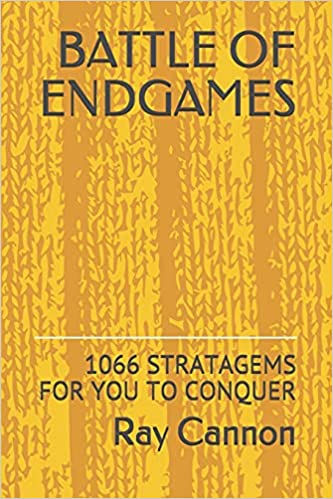
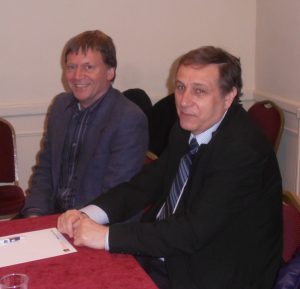
 Save as PDF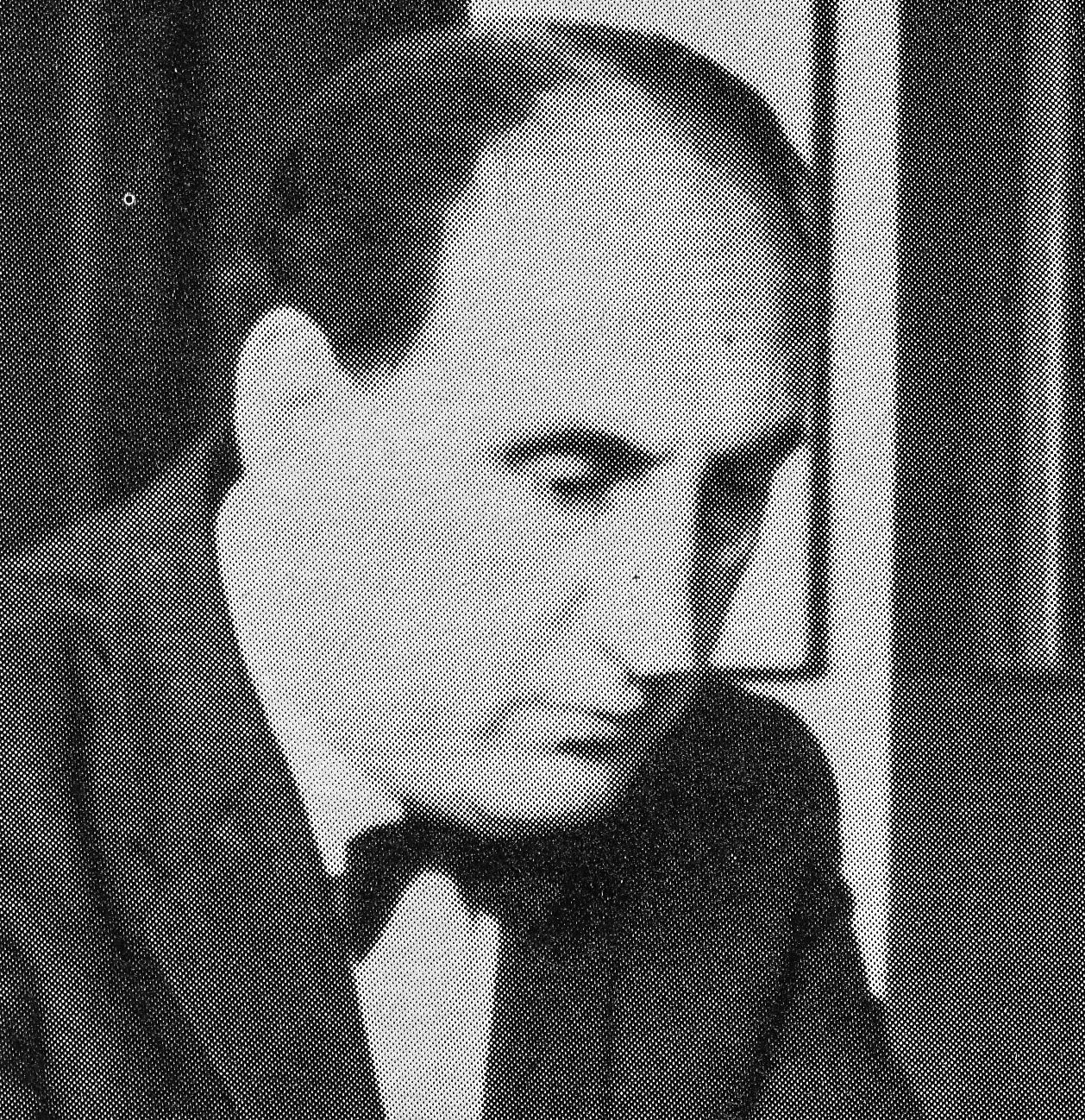
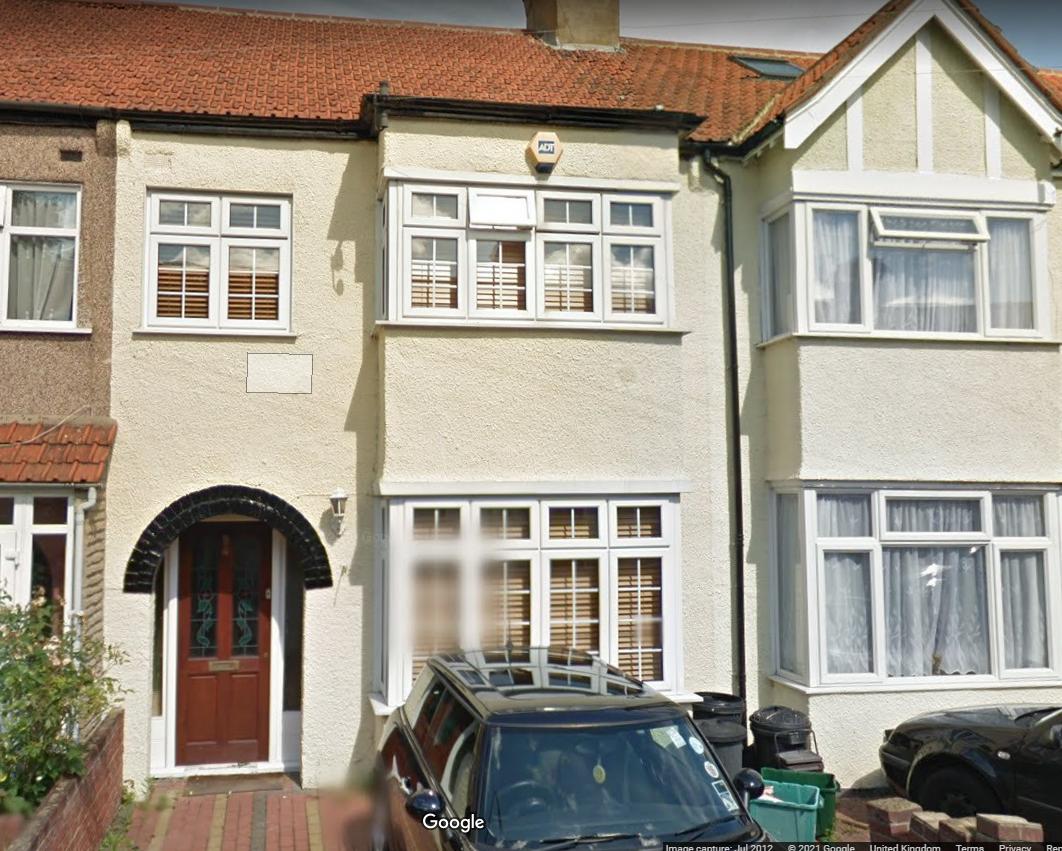
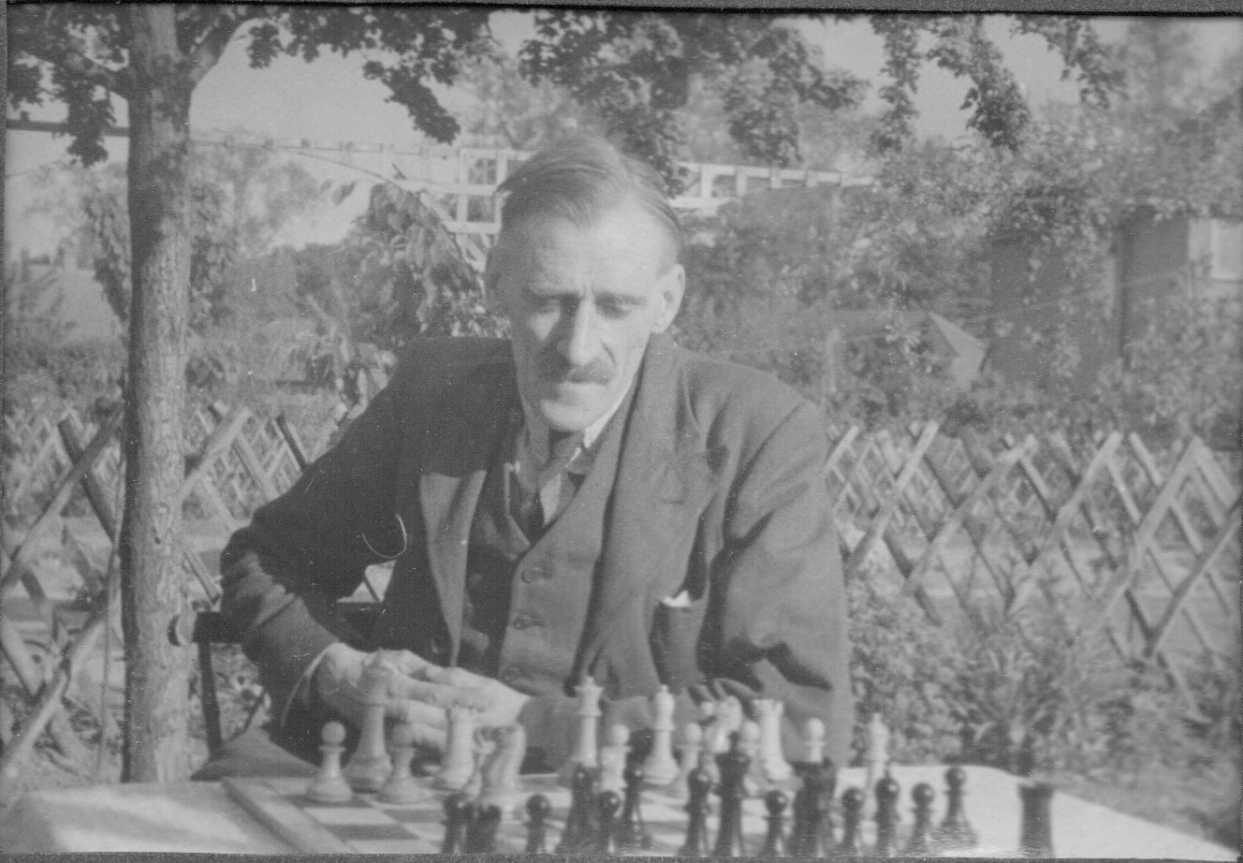
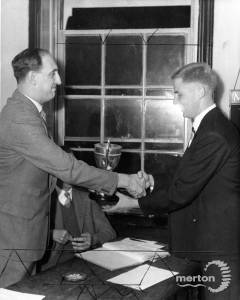
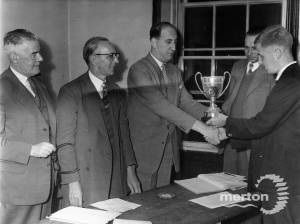
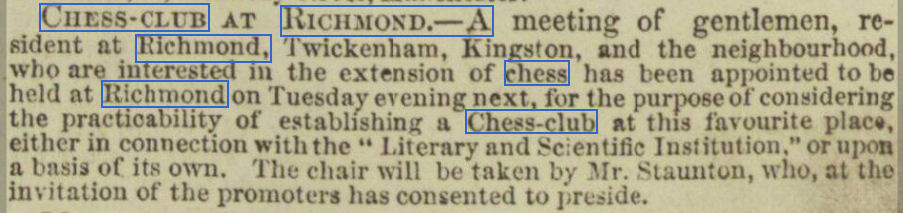
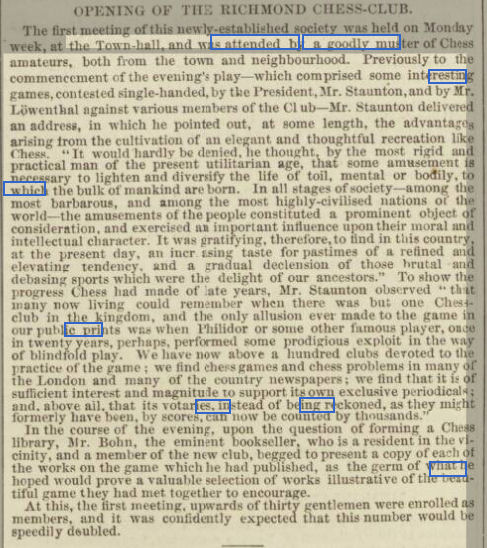
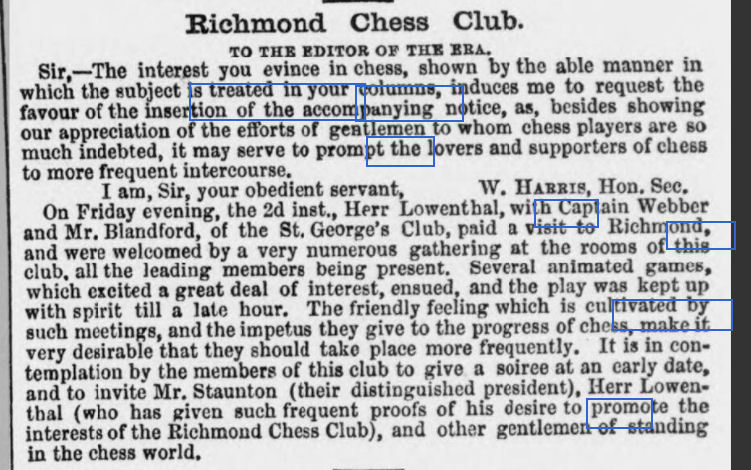
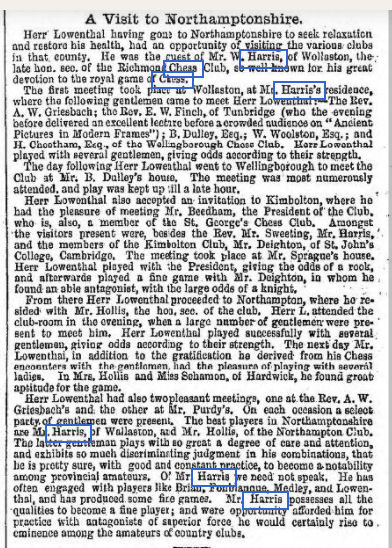
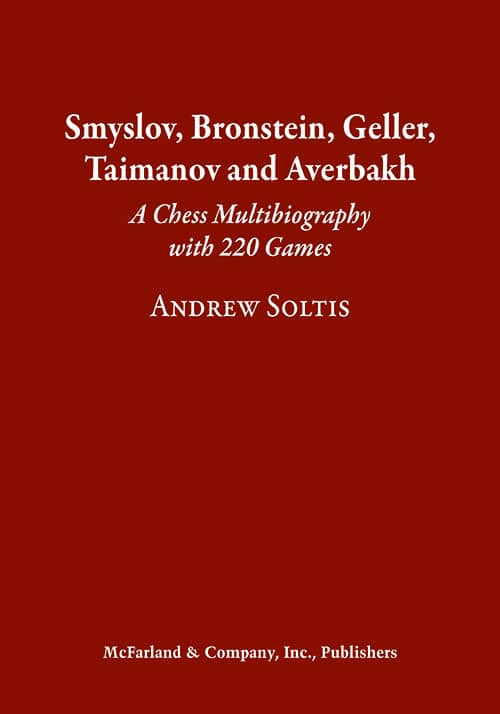
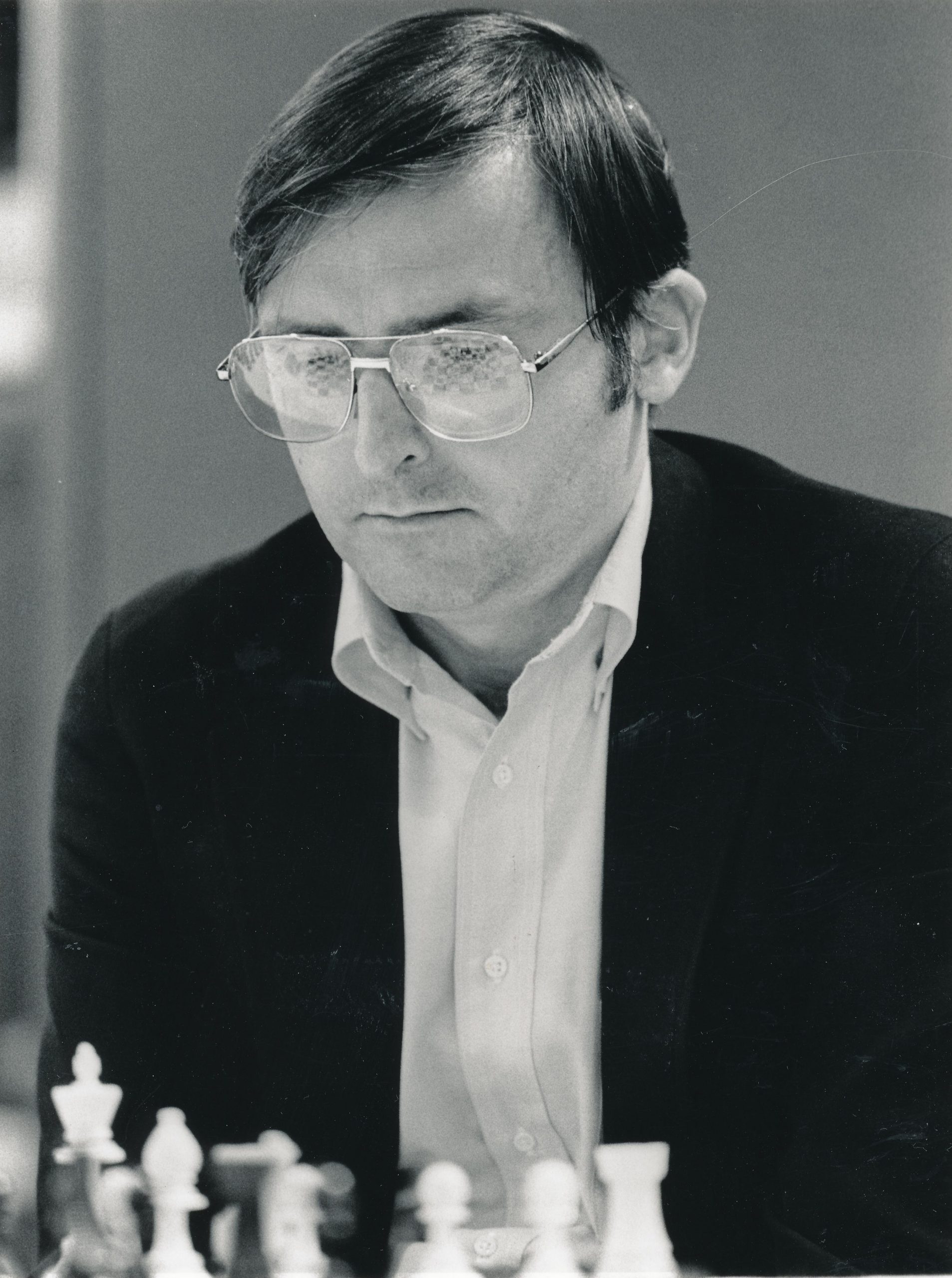
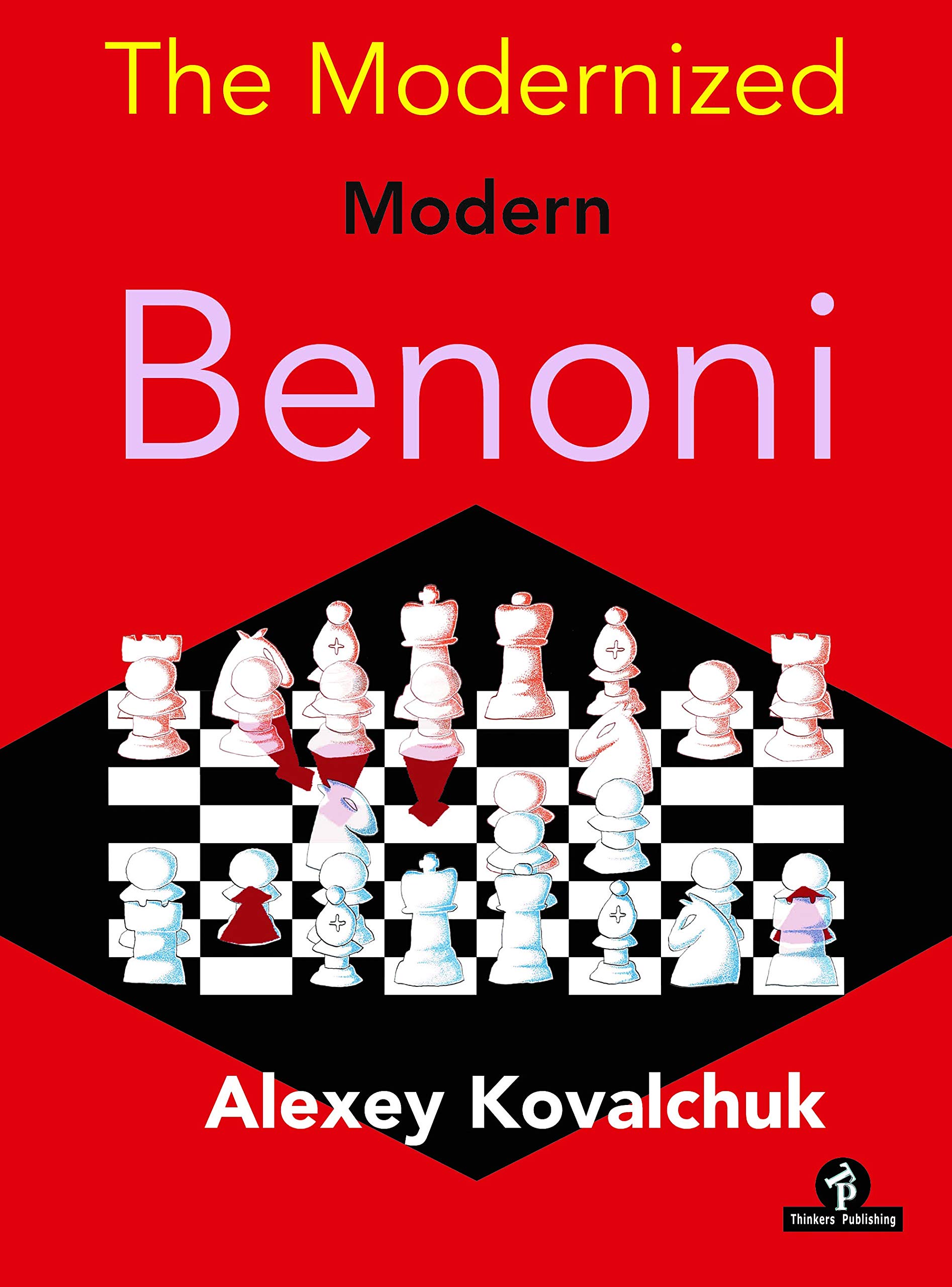
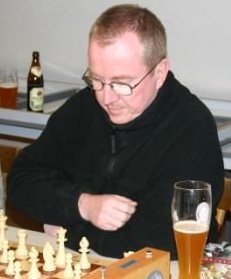
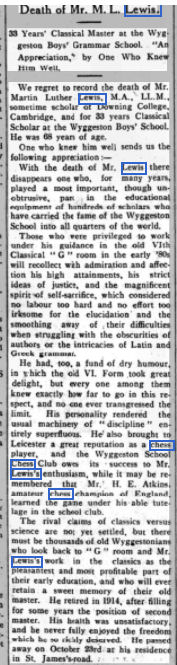 Here’s an appreciation from ‘one who knew him’ from the Leicester Daily Post of 27 October.