Category Archives: 2022

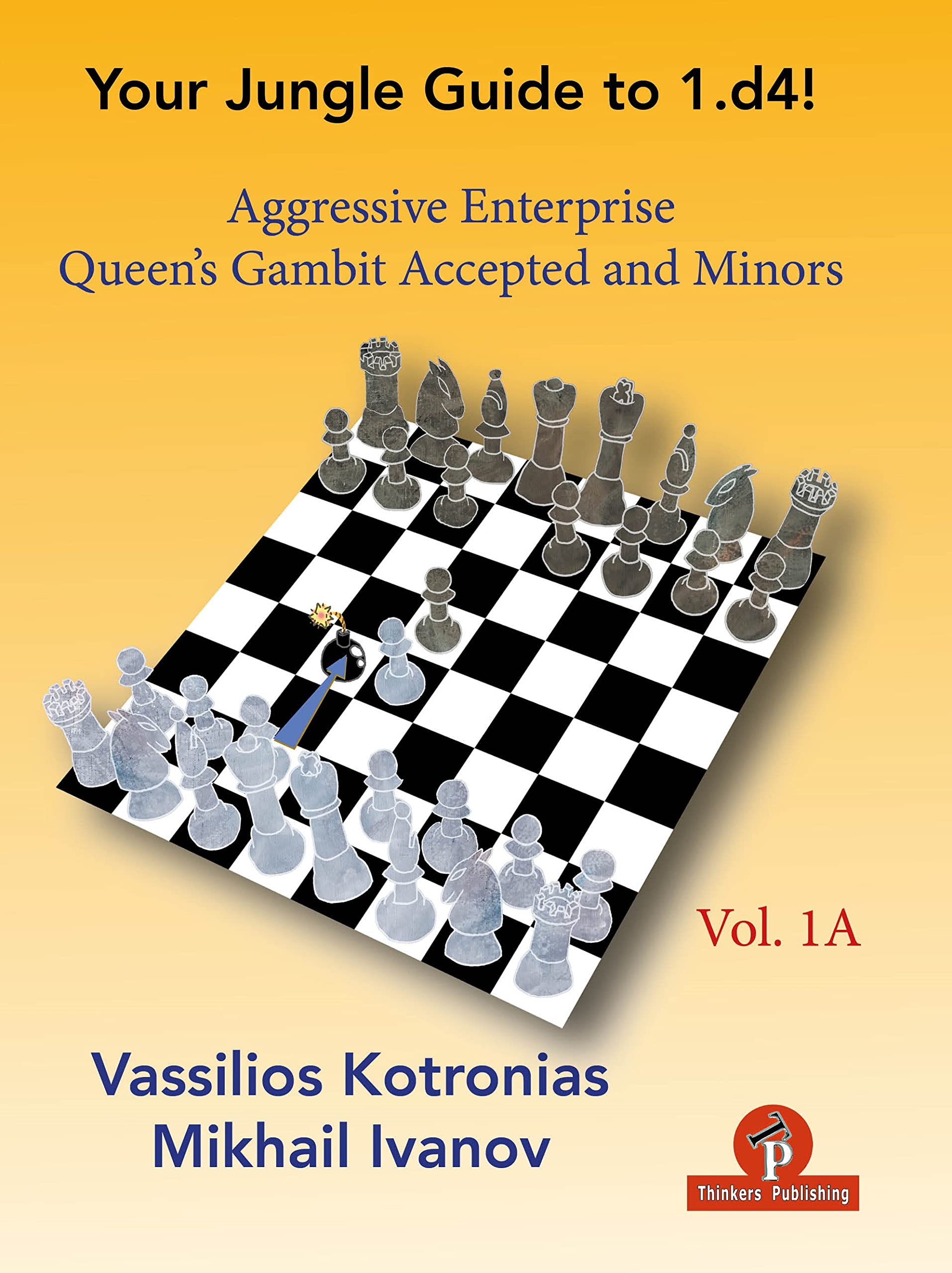
Your Jungle Guide to 1.d4!: Aggressive Enterprise – QGA and Minors

Your Jungle Guide to 1.d4! - Volume 1A: Aggressive Enterprise - QGA and Minors, Vassilios Kotronias and Mikhail Ivanov, Thinkers Publishing, 21 Dec. 2021, ISBN-13 ‏ : ‎ 978-9464201239
Your Jungle Guide to 1.d4! – Volume 1A: Aggressive Enterprise – QGA and Minors, Vassilios Kotronias and Mikhail Ivanov, Thinkers Publishing, 21 Dec. 2021, ISBN-13 ‏ : ‎ 978-9464201239

From the publisher:

“Grandmasters Kotronias and Ivanov are renowned as leading theoreticians and chess trainers. They offer a unique and world-class repertoire based on 1.d4! They advocate an ambitious approach for White, with the aim to fight for an advantage in any position. This is their first joint effort; they tackle the ever-popular Queen’s Gambit Accepted and their sidelines in Volume 1A and 1B.

We at Thinkers believe their job could not have been done any better.”
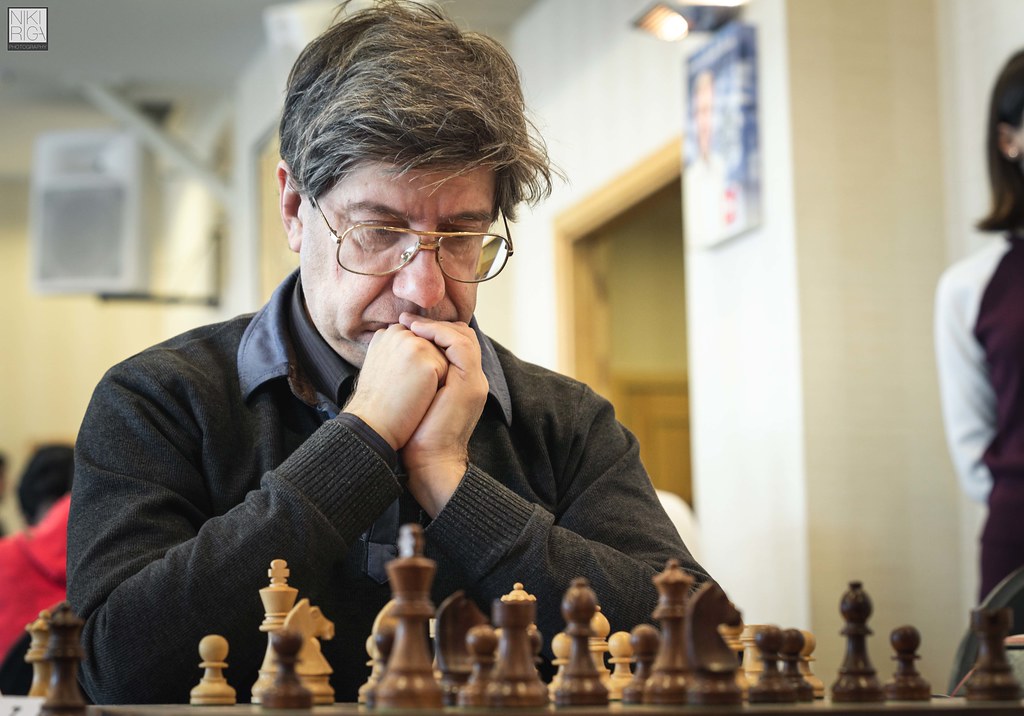
 Flickr Vasilios Kotronias | Photo by Niki Riga | Gibraltar International Chess Festival | Flickr

Flickr
Vasilios Kotronias | Photo by Niki Riga | Gibraltar International Chess Festival | Flickr

“Vassilios Kotronias was born in 1964 and is the first Greek Grandmaster. He is a former top-50 player and has represented both Greece and Cyprus in many chess Olympiads, mostly on the 1st board. He has also authored several chess books, his most notable work being a 5-Volume work on the King’s Indian Defense.

He has been extraordinarily successful in individual competitions overall, winning prestigious events such as Gibraltar, Hastings, Capelle la Grande (in a tie) and numerous other closed and open tournaments. He did qualify several times for FIDE’s knock-out World Cup tournament and participated often in European Individual Championships, as well as club events. He won trophies with prestigious chess clubs in the leagues of Greece, Serbia, Italy, Sweden, Hungary etc.

As a trainer he has coached the Greek National team and strong world class players like Alexei Shirov, Veselin Topalov and Nigel Short. ”

Mikhail Ivanov, was born in 1969, Bryansk, Russia.

He earned his Grandmaster title in 1993 and won countless chess events in the European chess circuits. We remember him being among the winners of one the largest opens in Europe (the Neckar Open, now better known as the Grenke Chess Open), 2002 with L.Aronian and winning this event in 1998. He played for several different European clubs in the Bundesliga, Austria, Iceland, Finland, France, Belgium, Luxemburg, Czech Republic, etc. During the European Club Championship in Ohrid (2009), he took 3rd place on the 2nd board. He mainly focused now on coaching and writing.”

End of blurb.

As with every recent Thinkers Publishing publication high quality paper is used and the printing is clear. With this title we return to the excellent glossy paper of previous titles.

Each diagram is clear and the instructional text is typeset in two column format, which, we find, enables the reader to maintain their place easily. Figurine algebraic notation is used throughout and the diagrams are placed adjacent to the relevant text.

There is no Index or Index of Variations (standard practise for Thinker’s Publishing) but, despite that, content navigation is relatively straightforward as the Table of Contents is clear enough.

Here are the main chapters:

  1. Chigorin
  2. Albin Gambit
  3. Baltic Ultimate
  4. Mamedyarov System
  5. Queen’s Gambit Accepted 3.e4 c5
  6. Queen’s Gambit Accepted 3.e4 b5

and here is an excerpt in pdf format.

The first thing to notice is that this is a repertoire book from the perspective of the first player and that it is designated Volume 1A. Volume 1B will treat the remainder of the QGA repertoire for White and later to be published volumes 2-5 will cover the other lines for White. Eventually there will be six volumes (1A, 1B, 2, 3, 4 and 5) in total.

So, clearly this is part of an ambitious project going into immense detail suited to the active tournament player and the project is to provide an active repertoire for White based around 1. d4 and 2. c4 where possible. Reviewing the repertoire based around one out of six volumes is, of course, not possible.

Interestingly Kotronias is usually a 1.e4 player and declares that he was motivated to

dive into new waters

for this project whereas Ivanov is almost the opposite with 616 games starting 1.d4, 447 with 1.Nf3 and 78 with 1.c4 which makes for an unusual collaboration.

Chapter 1 kicks-off with the Chigorin Defence with 3.Nf3! being recommended:

which fits in nicely also with someone who plays a 2.Nf3 or even 1.Nf3 move order. 3.Nf3 is the most popular move in Megabase 2022 with 4704 games just edging out 3. Nc3 and 3. cxd5.

Of course 3…Bg4 IS the main line but for the sake of completeness we would have included 3…e5 (as played by Morozevich) with at least a mention as it is very much in the spirit of the Chigorin.

The most interesting point in this line is what should White play here:

boiling down to the eternal motif of

Which rook?

and the authors spend considerable effort looking at these two (plus the curious 10.Bg2!?) options. In the main the early analysis is verbose and rich with explanation. To find out if 10.Rg1 or 10.Rb1 receives the ultimate seal of approval you will need to purchase the book. The analysis at say move 10 onwards is highly detailed but also with helpful explanation.

So, if you are new to the Chigorin (or not) with White the depth is excellent.

Chapter 2 visits that club player favourite, the Albin Counter-Gambit:

and we get to the tabiya of

where all of Black’s sensible options are discussed in depth.

The Baltic (or Grau) Defence is the next subject of discussion and this time the authors put the proverbial cat amongst the pigeons with the off-the-wall suggestion of 3.Qb3!?

which certainly wastes no time in hitting the Baltic’s Achilles heel, the b7 pawn. 3.Qb3!? scores 61.4% over 243 games and is preferred by Sokolov and Novikov. The authors follow 3.Qb3!? with the more main stream 3.cxd5! as the main repertoire recommendation.

It is not often we encounter a new opening name and the Mamedyarov System meant nothing to us before we looked it up. This would appear to be their new name for what chess.com classifies as the Austrian Defence:

which Shakhriyar Mamedyarov has essayed 51 times scoring a noteworthy 63.7% with the Black pieces, The authors utilise 18 pages on this unusual choice so that White players will not be caught unawares.

The remaining chapters cover 1. d4 d5; 2.c4 dxc4; 3.e4 with either 3…c5 or 3..b5 from pages 126 – 319 which is a stunning amount of analysis and detail.

Noteworthy is that Duda used one of the authors TNs in his 2022 game with Sergei Karjakin at Wijk aan Zee to good effect:


and the full game was:


Seeing as this is merely part 1 of a projected 6 parts we have a feeling this could easily be described as an epic series of tomes. It remains to be seen what is included and what, if any, lines are omitted. The level of coverage is unusually flexible in that it caters for players new to lines and then provides a huge level of detail.

We very much look forward to receiving the rest of the series.

A small  plea to the publishers: Please consider adding an Index of Variations! We say this because of highly detailed level of analysis. A minor observation is the enthusiastic sprinkling of !s after moves: clearly this is a matter of taste.

John Upham, Cove, Hampshire, 22nd January, 2022
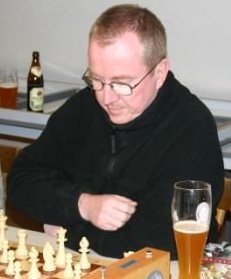
John Upham
John Upham

Book Details :

  • Hardcover : 430 pages
  • Publisher: Thinkers Publishing; 1st edition (21 Dec. 2021)
  • Language: English
  • ISBN-10: 9464201231
  • ISBN-13: 978-9464201239
  • Product Dimensions: 17.15 x 2 x 23.5 cm

Official web site of Thinkers Publishing

Your Jungle Guide to 1.d4! - Volume 1A: Aggressive Enterprise - QGA and Minors, Vassilios Kotronias and Mikhail Ivanov, Thinkers Publishing, 21 Dec. 2021, ISBN-13 ‏ : ‎ 978-9464201239
Your Jungle Guide to 1.d4! – Volume 1A: Aggressive Enterprise – QGA and Minors, Vassilios Kotronias and Mikhail Ivanov, Thinkers Publishing, 21 Dec. 2021, ISBN-13 ‏ : ‎ 978-9464201239
 Save as PDF
Minor Pieces 25: Edmund Elias Humphreys

It’s a good day for any chess club when a player strong enough to play on top board turns up at your door. When he brings his three strong chess playing sons with him as well it must be something rather special.

That’s what happened at Twickenham Chess Club in 1891 when the Humphreys family moved into the area.

Edmund Elias Humphreys had been born in Chelsea in 1831. He married Louisa Telfer in 1854 and the young couple settled in Hackney, North East London. At some point in the mid 1860s they moved south to Clapham. Edmund was a senior clerk working for the Civil Service Commissioners, so the family were quite well off.

Edmund was a keen and pretty strong chess player back then. In 1862 he was a member of St James’ Club, where his opponents included Alexander Sich, and by the early 1870s he was playing at the City of London Club, giving odds to most of his opponents in handicap tournaments. Rod Edwards suggest he was round about 2000 strength: a decent county standard player. As you’d expect, he taught his sons (and perhaps also his daughters) to play his favourite game.

Unlike, for example, Arthur Makinson Fox, the family never stayed at the same address very long, and by the time of the 1891 census they’d moved to Teddington Park, just off Waldegrave Road, where their daughter Louisa junior was living with her husband and large family, and where, a few years later, Noël Coward would be born. (Confusingly, Teddington Park and Teddington Park Road are both turnings off Waldegrave Road.) Edmund and Louisa’s household was completed by their three youngest children, a niece and two servants.

Edmund’s oldest surviving son, Edmund Walter Humphreys, had been born in 1860. By 1891 he was working as an accountant, was married with two daughters and living in New Malden, not very far from the station, from where a short train journey would take him to Teddington and Twickenham. IM Gavin Wall now lives on the same estate.

Herbert Arthur Humphreys was born in 1864, and was still at home with his parents in 1891. Rather unexpectedly, he was working as a seedsman, and would later become a market gardener.

The youngest son was born Frederick Thomas Hudson Humphreys in 1869, but seems to have been known as F H Humphreys. He was also living at home in 1891, with his occupation listed as ‘None’. In those days when work for a young man from that background was easy to come by, this suggests he may have had some sort of health problem.

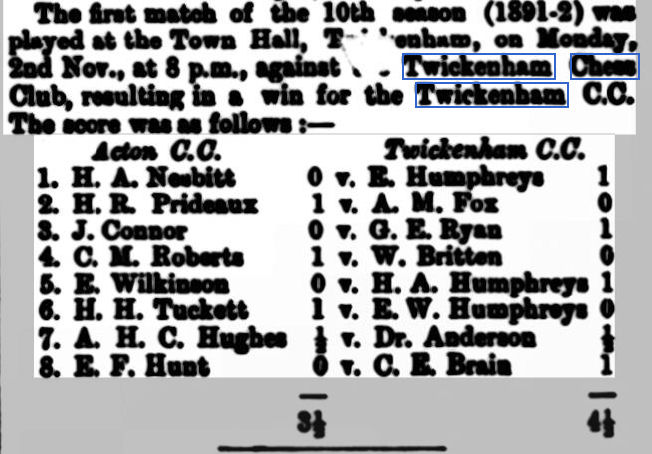
The first Twickenham chess record currently available for them is a match against Acton later in 1891. Perhaps they’d all joined the club for the start of the season.

Acton Gazette 7 November 1891

Here, we see Edmund Elias winning his game on top board, playing ahead of club stars Arthur Makinson Fox, George Edward Norwood Ryan and Wallace Britten, with Herbert and Edmund junior also in the team.

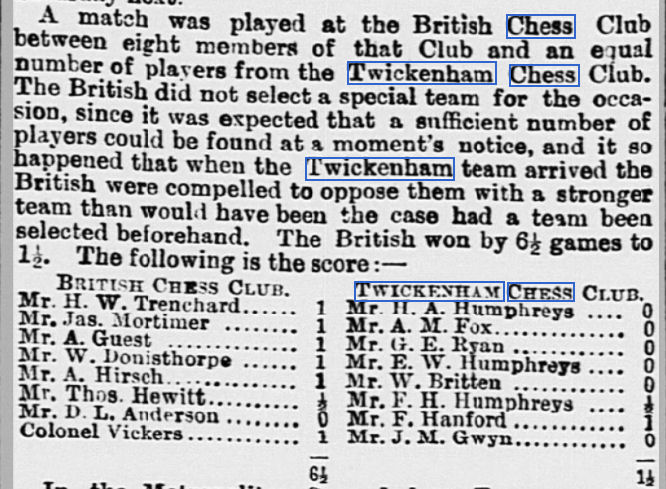
In 1893 Twickenham visited the British Chess Club, where they were facing stronger opposition than expected.

London Evening Standard 24 January 1893

It sounds from the report that the British Chess Club were planning to recruit whoever was there at the time to play in the match, and, by chance, a lot of strong players turned up. Their top five boards were all of genuine master standard (and all worthy of future posts, as indeed is Mr Hewitt) so it’s not surprising this proved a bridge too far for the Twickenham chess players. It looks very much like the 1890s equivalent of a London League match against Wood Green.

The life of the BCC top board is celebrated here.

Streatham and Brixton chess chronicler Martin Smith wrote about the BCC’s fourth board here.

You will note that Edmund senior wasn’t playing, but that Herbert had been promoted to top board, with Edmund junior and Frederick lower down.

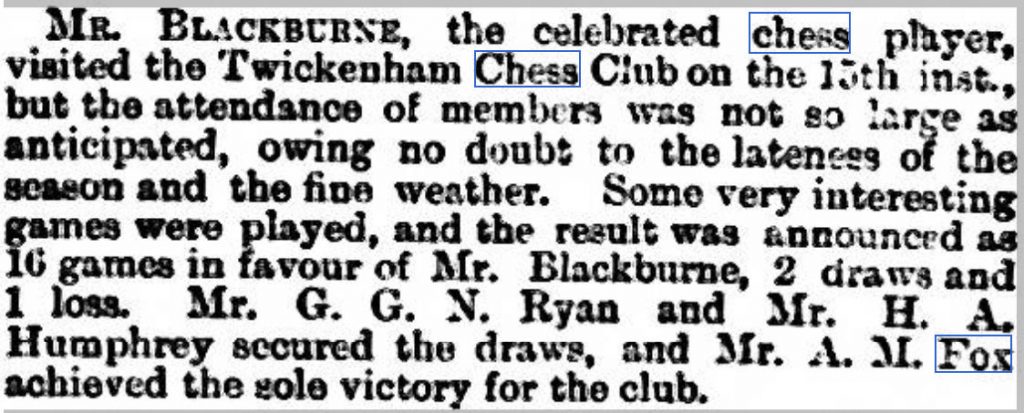
If you’ve been paying attention you’ll already have seen our next exhibit.

Surrey Comet 27 May 1893

Here, we see Herbert, who seems to have been the strongest of the three brothers, taking a half point off Joseph Blackburne in a simul.

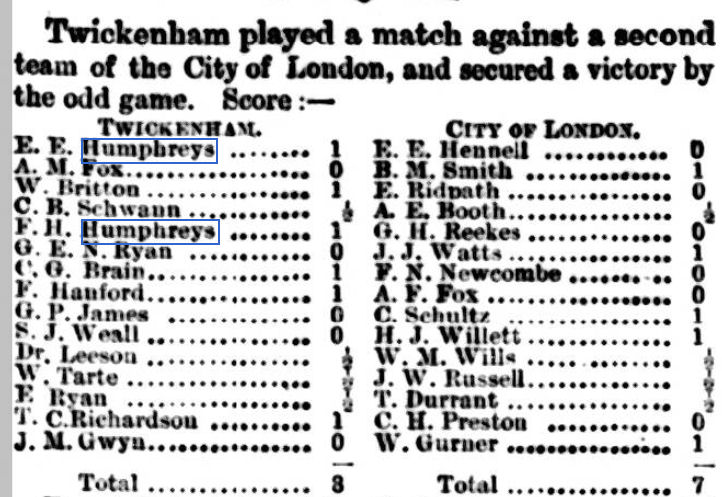
Moving on to 1894, here’s a match between Twickenham and the City of London Club’s second team.

London Evening Standard 12 February 1894

A narrow win for the good guys, then, and a few interesting new names in the Twickenham team to whom we’ll return in future articles. (No, before you ask, GP James isn’t related to me.)

You’ll spot Edmund senior back on top board, with Frederick also playing, but Edmund junior and Herbert not in the team.

It seems the Humphreys family didn’t stay very long in Teddington as that’s the last we see of them locally.

By 1901 they’d moved across South London to Sydenham where Edmund Elias Humphreys, at the age of 69, was now the Manager of a Public Company (Corporation?) and Stock Exchange Jobber. Louisa and their unmarried daughter Florence were there, along with three granddaughters, perhaps just paying them a visit, and two servants.

Herbert had by now married, and was a market gardener out in Farnham, Surrey, and Frederick was nowhere to be found.

They were still in Sydenham in 1911: Edmund had now retired, and would die later that year.  Florence was still there, along with a granddaughter and, again, two servants. There’s a possible death record for Louisa in 1915.

One more question: what happened to Frederick? We can make a rather sad speculation. There’s a death record for a Frederick H Humphreys of the right age recorded in Epsom in the first quarter of 1917. Epsom, as you may know, is the home of a number of psychiatric hospitals, or lunatic asylums as they were called in those days. Perhaps this was our man, also providing a possible explanation for his lack of employment in 1891. Nobody seems to know.

The story of the Humphreys family and their brief membership of Twickenham Chess Club takes us up to the mid 1890s, when chess in our Borough would undergo a significant transformation. But there’s one more, very significant, name to investigate first.

You’ll find out more in future Minor Pieces. Don’t you dare miss them.

 Save as PDF
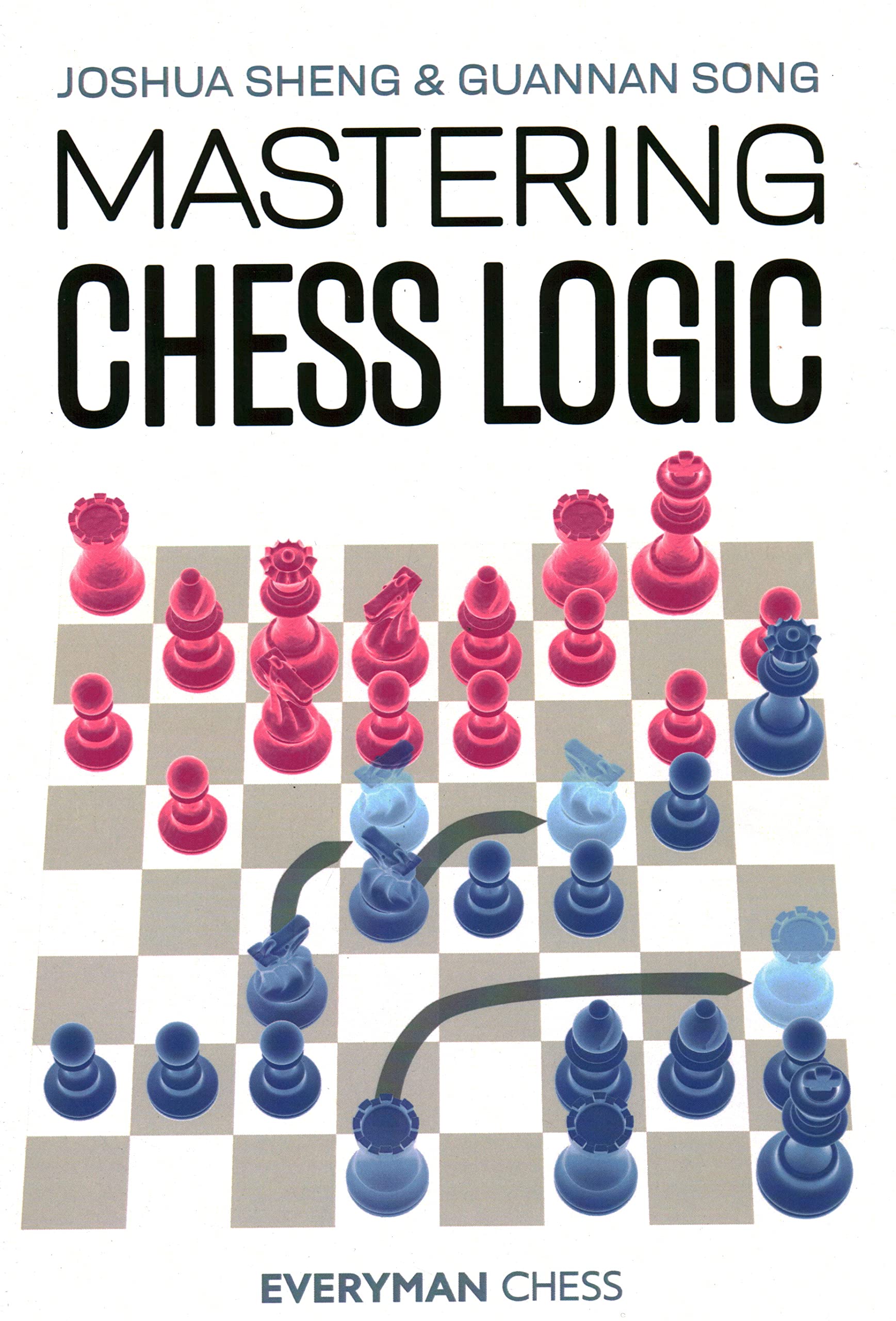
Mastering Chess Logic

Mastering Chess Logic, Joshua Sheng, Guannan Song, Everyman Chess, 10th September 2021, ISBN-13 ‏ : ‎ 978-1781946237

Here is the publishers blurb from the rear cover :

“What exactly makes the greatest players of all time, such as Magnus Carlsen, Bobby Fischer, and Garry Kasparov stand out from the rest? The basic aspects of chess (calculation, study of opening theory, and technical endgame ability) are of course of great importance. However, the more mysterious part of chess ability lies within the thought process.”

In particular: * How does one evaluate certain moves to be better than others? * How does one improve their feel of the game? This book will tackle this woefully underexplored aspect of chess: the logic behind the game. It will explain how chess works at a fundamental level. Topics include:

  • What to think about when evaluating a position.
  • How to formulate and execute plans.
  • How to generate and make use of the initiative.

The reader also has plenty of opportunities to test their decision-making by attempting 270 practical exercises. These are mostly designed to develop understanding, as the justification of the moves is more important than the actual correct answer.”

and about the authors :

Guannan Song is a FIDE Master with one International Master norm from Canada. He won the 2010 Canadian Youth Chess Championship and scored bronze at the 2015 North American Junior Chess Championships. He also played for Team Canada at the 2010 World Youth Chess Championship and the 2014 World Youth U16 Chess Olympiad. He represents Western University on board 1 of its Championship team and led his team to 2nd place at the 2019 Canadian University Chess Championship.

Joshua Sheng Joshua Sheng is an International Master with one Grandmaster norm from Santa Monica, California. He tied for first in the 2016 North American Junior Chess Championships and placed third in the 2019 U.S. Junior Chess Championships. He graduated from the University of California, Berkeley, in 2021. Joshua has been a serious chess coach for many years, and this is his first book.

As with every recent Everyman Chess publication high quality paper is used and the printing is clear. Each diagram is clear as is the instructional text. Figurine algebraic notation is used throughout and the diagrams are placed adjacent to the relevant text.

The book consists of six chapters viz:

  1. Building Blocks
  2. Know What You Have
  3. Mise en Place
  4. The Big Game
  5. Beginning and End
  6. Solutions

A video review has appeared on YouTube.

Before going further you may Look Inside via Amazon.


The authors might not be very well known to you, so perhaps we should find out more.

The publishers tell us that ‘Joshua has been a serious chess coach for many years’ and that ‘Guannan is an experienced chess coach’.  But according to FIDE Joshua was born in 2000 and Guannan in 1998. They haven’t been alive many years, let alone been serious chess coaches for many years. Some of us have been teaching chess (although in my case not very seriously) since 1972. Not only before they were born,  but perhaps even before their parents were born.

Let’s give them the benefit of the doubt and take a look inside.

From the authors’ introduction:

This book will be arranged primarily into sections where games will be analysed and your authors will talk. The talking and exposition will predominantly be done in the first person to ease communication. The beliefs and opinions held will generally be shared by both authors, although the primary voice will be Joshua’s. At the end of each of the first four chapters, there will be 30 practical exercises intending to reinforce your  understanding of the relevant topics. Chapter 5 will consist of another 150 exercises representing a more comprehensive synthesis of the explored material and are designed to test your overall knowledge and understanding. For the most part, we have intentionally avoided mentioning the end result or the game continuation after the point of interest from those exercises, as doing so might distract the reader from the primary point of them – developing your understanding. What matters is the decision-making process at the critical position shown in each puzzle.

What we have here is a book aimed mainly, I would say, at players between about 1500 and 2000 strength, although many of the puzzles demonstrate much stronger players making poor decisions.

It’s relatively easy, I suppose, to write books about openings, tactics or endings, but strategy, being a rather nebulous topic, is much harder to write about.

Other recent books, for example those by Erik Kislik, have discussed logic in chess, but these have, for the most part, been aimed at higher rated players.

There have been other books looking at strategy at this level – an excellent and much quoted example is Michael Stean’s book Simple Chess. The authors have also used Jeremy Silman’s rightly popular How to Reassess your Chess and make frequent references to imbalances in their explanatory material. These days we’re very much into interactive learning, so we expect quizzes to be incorporated so that we can test our understanding of the book’s content.

This book, then, looks like it fills a gap in the market as an interactive instructional book on logic and strategy for club standard players.

The first chapter, Building Blocks, introduces the reader to some basic concepts: material (including compensation), piece activity, piece improvement, pawn structure and space. In each case a few simple examples are provided, which are aimed more at 1500 than 2000 rated players.

Then, we move onto some quiz questions to test your understanding. All the puzzle positions in this book have been taken from games played between 2019 and 2021, so it’s very unlikely that you’ll have seen many – or any – of them before.

Here’s the first question, with Black to play (Arabidze – Jojua, Tblisi 2019). What would you recommend?

The answer (in part):

20… Bh6!

Black finds a great opportunity to force a trade of dark-squared bishops, getting rid of his weak blunted piece on g7 and its strong counterpart on e3. A lax move like 20… Ke7? would lose the opportunity to trade bishops after 21. Bf2. 

Of course you also have to see that Bxc4 fails tactically. There’s an assumption throughout the book that you have a reasonable level of tactical ability.

Chapter 2, Know What You Have, looks at positional evaluations. The authors use the acronym MAPS (Material, Activity, Pawn structure and king Safety) to lead you to your desired destination. This is taught by means of four games. We have Botvinnik – Capablanca (Netherlands 1938), which, if you’ve read a lot of chess books, you’ll have seen many times before, followed by Geller – Euwe (Zurich 1953), which again you may well have seen on many previous occasions. The chapter concludes with two recent games played by Joshua Sheng.

In Q35 (Grinberg – Ipatov, chess.com 2021) it’s again Black’s move.

In this instance Black got it wrong.

17… Be5?

Black protects his d6-pawn but gives away his two-bishop advantage. 17… Re6! was a greatly superior way to continue. A subsequent …Qe8 would place insurmountable pressure on e4. After 18. Rbd1 Qe8 19. Qb3 b5 20. Bxd6 c4 Black retains the bishop pair, recovers the pawn on the next move, and maintains pressure on White’s position.

Chapter 3, Mise En Scene, talks about identifying candidate moves, using a combination of calculation and evaluation. So they’re been reading Kotov as well as Silman, then? This time we have five example games: three from Sheng, plus Fischer – Spassky 1972 Game 6 (like Botvinnik – Capablanca, one of the most anthologised games of all time) and Tal – Rantanen from 1979.

In Chapter 4, The Big Game, we look at the initiative. The games are Kasparov – Andersson from 1981, Hydra – Ponomariov from 2005, and another three from Sheng.

Here’s one of them. (Click on any move for a pop-up window.)

Chapter 5 offers the reader 150 puzzles based on the lessons from earlier in the book.

Here’s another question: Q243 (Wall – Greet, Dublin 2019). It’s Black’s move again.

This is yet another question to do with trading bishops. Here, Richmond top board IM Gavin Wall chose to trade off his bad bishop, but this time he was mistaken.

19. Bc1?

At a glance, White holds a space advantage and control over the c-file. However, with this move, White starts to remove important defenders from his d4-pawn, giving Black a way back into the game. Though it looks like White is trading away a bad bishop for Black’s good bishop, the white bishop on b2 is actually a strong defensive piece. Better was 19. Bd3!, preparing h3-g4 or Nc3-Bxf5-Nxd5.

There’s a lot to admire about this book. There are very few books of this nature on the market providing interactive strategic instruction for club level players. As a 1900-2000 player myself I thought it was pitched at the right level for me, and would be accessible, if challenging, for ambitious and hard-working players from, say, 1500 upwards. The positions have been expertly chosen and the solutions are well explained giving just the right level of detail.

Having said that, introducing Chapters 2-4 through a seemingly fairly random selection of games (a combination of old chestnuts which many readers will have seen before and games by one of the authors) is not the only way to approach this topic. A different approach would have been to provide more specific advice and demonstrate some worked examples with more detailed explanations of thought processes before moving onto the quiz questions.

Again, another approach to questioning which would make the book more suitable for 1500 strength players (but perhaps less suitable for 2000 strength players) would have been to ask leading questions or provide multiple choices rather than just asking you for the next move.

The authors write engagingly and annotate well: I look forward to reading more from them in the future. If the concept appeals, and you think from the examples that it’s written at the right level for you, this book can be warmly recommended. As usual from Everyman, the publishing standards are exemplary.


Richard James, Twickenham 18th January 2022

Richard James
Richard James

Book Details :

  • Paperback : 256 pages
  • Publisher: Everyman Chess (10 Sept. 2021)
  • Language: English
  • ISBN-10: 178194623X
  • ISBN-13: 978-1781946237
  • Product Dimensions: 17.15 x 1.5 x 24.18 cm

Official web site of Everyman Chess

Mastering Chess Logic, Joshua Sheng, Guannan Song, Everyman Chess, 10th September 2021, ISBN-13 ‏ : ‎ 978-1781946237
 Save as PDF
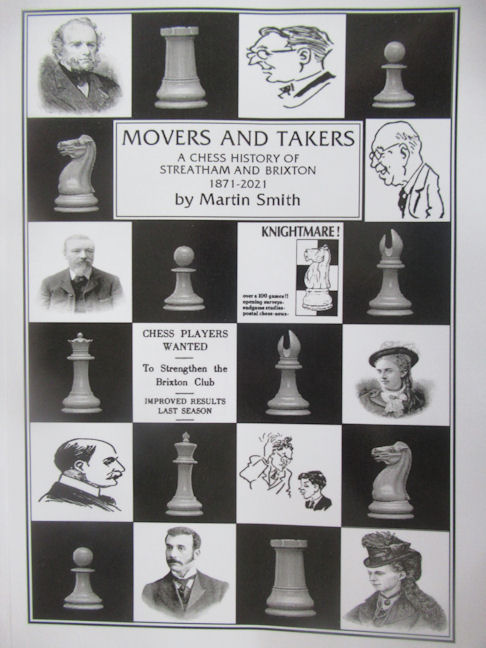
Movers and Takers: A Chess History of Streatham and Brixton 1871-2021

From the Introduction:

Movers and Takers is the 150-year story of Streatham and Brixton Chess Club, and of chess in our neighbourhood.

It begins with two separate clubs in Victorian times – one in north Brixton, the other in Streatham – amid the outburst of enthusiasm for chess in the expanding suburbs. The two clubs amalgamated half way through the story. Movers and Takers charts the cycles of ups and downs, the periods of feast and famine, the championship victories, and the dismal defeats of these clubs over a century and a half up to the present day.

You will meet the characters who made up the club during its long journey. There have been strong players who changed the club’s fortunes before they moved on. And there have been many average ones, who have yet been the lifeblood of the club, devoted to their passion, who sustained it through thick and thin. You will also meet players who, though not members, have passed through our neighbourhood while leaving their footprint on the wider chess landscape. They may grab our attention for that they did off the board as much as on it.


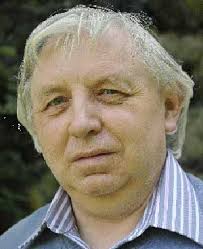
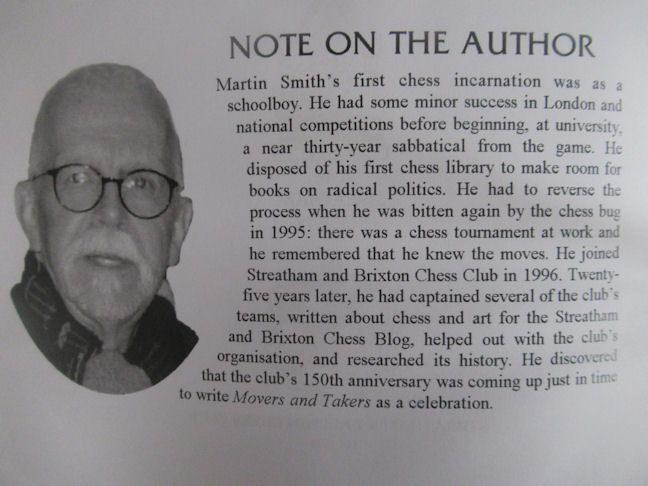
Streatham and Brixton Chess Club celebrated its 150th birthday last year, and one of their members, Martin Smith, has written a history of chess in that part of South London, taking the club through the Victorian era, two world wars, the English Chess Explosion and into a global pandemic.

The book was written for The Streatham Society, a local amenity group whose publications include volumes on local history, so its target market is residents and historians as much as chess players. There is, however, a selection of games at the end, roughly one for each decade of the club’s history, featuring a wide range of players, from world champions down to small children.

The current club traces its history to a club in North Brixton, originally named Endeavour, which appears to have been founded in 1871. By 1875 it was already considered one of the strongest suburban clubs, although at the time, in the very early days of chess clubs outside city centres, it was very much weaker than those in central London. It then went into hibernation for a few years before starting up again in 1879 and, within a few years, dropping Endeavour and becoming just Brixton Chess Club.

The club thrived, and was, albeit with some ups and downs recorded here, a powerful force in Surrey chess up to the First World War and on into the 1920s and beyond.

Brixton’s more genteel suburban neighbour, Streatham, acquired its chess club in 1886, but for much of its history it was not as strong as its more northerly counterpart. But by the 1930s, while Brixton’s fortunes were fading, Streatham was flourishing. Both clubs suspended activities during the Second World War, and, once competitive chess resumed, they agreed to merge, becoming the Streatham and Brixton club well known today in Surrey, London and national chess circles.

Martin Smith’s book offers an engrossing whistle-stop tour of 150 years of South London chess history. We meet a lot of famous people who have pushed pawns in this part of our capital, whether as residents, club members or visiting simul givers, from the likes of Staunton and Lasker, through to Harry Golombek in the inter-war years and Ray Keene in the 1960s, and then the likes of Julian Hodgson and Daniel King from the club’s more recent glory days. We also meet a variety of colourful characters such as occultist Aleister Crowley and Broadmoor problemist Walter Stephens, as well as a whole host of devoted administrators and organisers, the often unsung heroes who are the backbone of any successful club.

The Felce dynasty were prominent as organisers in Surrey chess for three generations. Here’s Harold, their strongest player, defending coolly against an unsound sacrifice to score a notable victory against the great Sultan Khan. Click on any more to display the game in a pop-up window.

The author does an excellent job of placing the club within its local community. We learn about the changing role of chess in society through the Victorian era and how this was reflected in the growth of clubs such as Brixton and the development of leagues in London and Surrey. There’s also a lot about the girls and women who played chess in the area: there were a surprising number, from Vera Menchik through to 1960s girl star Linda Bott (seen, below, at the age of 8) and beyond. Junior chess in general, of course, plays a big part in the latter half of the story: we learn about the popularity of chess in local schools, the pioneering books for young children written by Ray Bott and Stanley Morrison, and the sterling work done by Nigel Povah (whose grandfather was a prominent Streatham administrator) in coaching top juniors and introducing them to the club.

I wonder whether Linda’s 20th move in this game was an oversight (it’s very easy to miss backward diagonal moves) or a move displaying precocious tactical awareness. Only she would know.

Works like this are important in explaining the background behind club chess, and, if the subject appeals, this book won’t fail to please. You might see it as complementing my Minor Pieces articles, particularly those involved with Richmond and Twickenham players, and, given that Martin and I have discussed our respective ideas over several pints during the course of his research, you’ll understand where we’re both coming from. It’s very well written and copiously illustrated throughout: the expertly chosen photographs and press cuttings add enormously to the story.

I’m sure it would have been easy (perhaps even easier) for Martin to have written a book two or three times its length, and as a chess player you’d perhaps like to have seen more chess as well, but, given the limitations of writing primarily for a non-chess playing readership, he has done an outstanding job in compressing the story into a relatively short volume. Perhaps he might consider an expanded version for private publication.

I did spot a few minor mistakes: misspelt or incorrect names and incorrect dates, for example, but this won’t spoil your enjoyment of the book. Strongly recommended for anyone with any interest at all in the history of British – and London – chess over the past 150 years.

If you’d like to buy a copy, the book can be ordered by providing a postal address to SFChess@btinternet.com, who will provide a/c details for payment of £12.50 plus £2.50 P&P.

Richard James, Twickenham 14 January 2022

Richard James

  • Published: November 2021
  • Publisher: Local History Publications for The Streatham Society in association with Streatham and Brixton Chess Club.
  • Softcover 116 pages (A4)
  • ISBN 978 1 910722 17 6
 Save as PDF
Minor Pieces 24: Arthur Makinson Fox

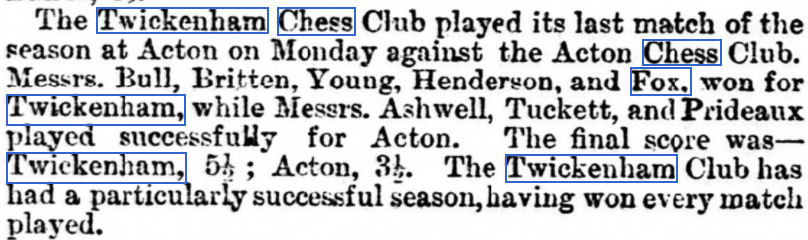
There was good news for Twickenham Chess Club in January 1889. A victory against Acton gave them an impressive 100% record for the season.

We note a new name among the winners: as well as a Bull (here and here) we now have a Fox to add to the menagerie.

Morning Post 28 January 1889

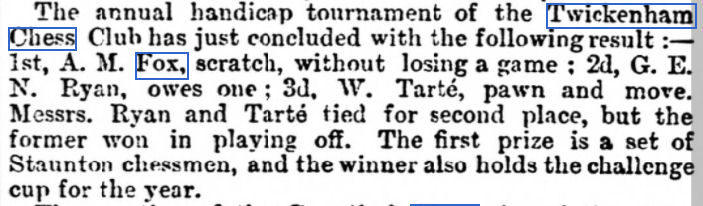
Eighteen months later, and Mr A M Fox was by now winning every game in the handicap tournament off scratch. Twickenham was one of the strongest suburban chess clubs, and Mr Fox was perhaps their strongest player, which suggests that he was pretty useful.

Morning Post 23 June 1890

His full name was Arthur Makinson Fox, born in Dorchester, Dorset in 1863, the son and grandson of Congregational Ministers, although his father, Joseph Makinson Fox, converted to the Church of England in 1886. An uncle, Daniel Makinson Fox, was a railway engineer who led the construction of the São Paulo railway, and one of Arthur’s brothers, John Ernest Ravenscroft Fox, was a landscape artist.

Arthur shared an occupation with Robert Davy Ganthony: the 1881 census found him in Dudley, Worcestershire, articled to a dentist. It appears that, in those days, training to be a dentist required an apprenticeship rather than a university education.

By 1882 he found himself in Teddington, perhaps still training to be a dentist, but also the organist at Christ Church, Teddington, in whose church hall Richmond & Twickenham Chess Club met until a few years ago.

In 1887 he married Helen Maud McComas, the daughter of an Irish merchant living in Hampton Road, Teddington, not too far from the Roebuck. They settled in the same road, but closer to the town centre: a house named Brendon, 32 Hampton Road, on the corner of Coleshill Avenue (perhaps this house), just round the corner from the Cowards. Three daughters, Dorothy, Helen and Violet, soon arrived to complete the family, and they would remain there for the rest of their lives. None of their daughters married: they weren’t the only spinster sisters in Teddington.

In 1889 he wasn’t new to chess. Since at least the beginning of 1888 he’d been solving problems in the Morning Post, and occasionally tried his hand at composing as well.

This example seems to me to be pretty crude and forgettable: he doesn’t seem to have shared Cecil Alfred Lucas Bull’s talent for composition. Have a go at solving it yourself and see what you think. The solution is at the end of the article.

#3 Arthur Makinson Fox Morning Post 3 December 1888

In 1893 Joseph Henry Blackburne returned to Twickenham for another simul. Arthur Fox was the only player to win his game.

Surrey Comet 27 May 1893

In between dentistry and chess he also found time to study music at London University, being awarded a Bachelor’s degree in 1893.

Arthur seems to have been a real chess addict. He wasn’t just a member of Twickenham Chess Club, but also a number of clubs in central London. I presume he took the train up from nearby Teddington Station.

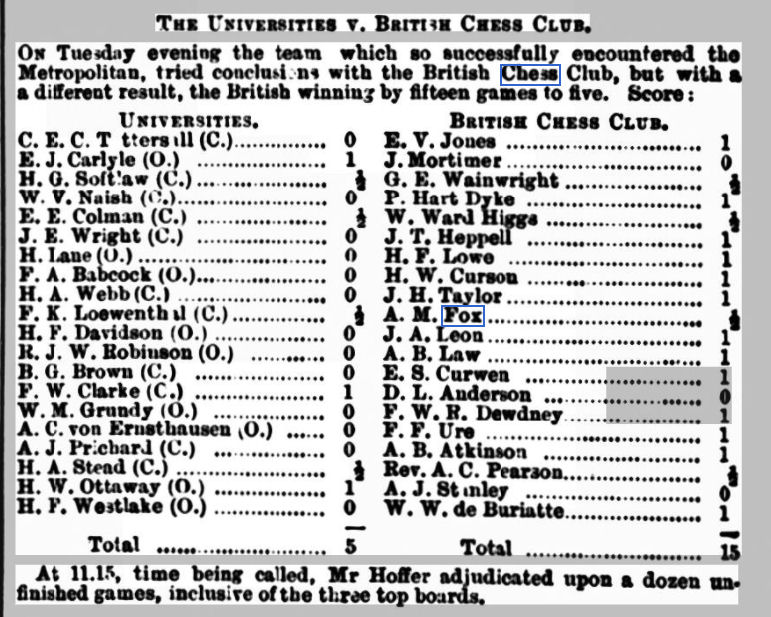
Here he is, for example, in 1901, playing for the British Chess Club against a combined team from Oxford and Cambridge Universities, and drawing his game against South African law student Frederick Kimberley Loewenthal, named, like Sydney Meymott, after his place of birth. (Kimberley, not Frederick just in case you were wondering, and apparently not related to Johan Jacob.) There are several interesting names in both teams, some of whom you might meet in future Minor Pieces, but if he’d been one board lower, he’d have met Harold Francis Davidson, a theology student at Exeter College, Oxford.

The Field 30 March 1901

Wikipedia:

At Oxford, Davidson’s behaviour was notably eccentric; he displayed considerable energy but disregarded rules, was persistently unpunctual and regularly failed his examinations. … By 1901 his academic inadequacies were such that he was required to leave Exeter College, although he was allowed to continue studying for his degree at Grindle’s Hall, a cramming establishment. He finally passed his examinations in 1903, at the age of 28, and that year was ordained by the Bishop of Oxford—after some reluctance on the part of the bishop to accept so unpromising a candidate. 

Yes, this was the future Rector of Stiffkey, the Rector Who Was Eaten (or, more accurately, mauled) By A Lion, and one of the stars of The (Even More) Complete Chess Addict, co-written by an unrelated Teddington chess player named Fox.

On April Fools Day 1901 the census enumerator called. As you’d expect, Arthur and Helen were at home along with their three young daughters, Helen’s relation Herbert McComas, a Cambridge University student born in Dublin, and three servants, all in their mid 20s: Grace Gisbourne was a cook, Helena Larkham a housemaid and Ellen Gowing a nurse. It must have been rather confusing with two Helens, Helena and Ellen in the household.

Moving forward another decade, not much had changed. Their middle daughter, Helen, had left home to work as a teacher, but Dorothy and Violet were still there, along with the same three servants as ten years earlier.

But there was another resident as well, Douglas Gerard Arthur Fox, the son of Arthur’s brother Gerard, a 17 year old music student.

Douglas was a promising organist and pianist: he was educated at Clifton College, a school with a strong music tradition, and was now studying under Sir Charles Villiers Stanford at the Royal College of Music. The following year he would be appointed Organ Scholar at Keble College, Oxford.

When war broke out he enlisted in the army, and, in 1917, suffered a serious injury requiring the amputation of his right arm. In 1918 he was appointed musical director at Bradfield College, and in 1931 returned to Clifton College, where he was Head of Music until his retirement in 1957. Among his pupils was the great and wonderful David Valentine Willcocks, one of whose brothers, Theophilus Harding Willcocks, was a mathematician and chess problemist.

For further information about Douglas Fox see here, pp 11-14. You might even want to buy a book here.

At some point, perhaps round about his 50th birthday, Arthur Makinson Fox decided to retire from his work as a dentist, giving himself more time to spend on music.

In 1912 Arthur and his wife contributed two guineas to a fund to rebuild the organ at St James’s Church, Hampton Hill. They lived in the parish of St Peter & St Paul, Teddington, but it’s possible they preferred to worship at St James’s. just a mile down the road. (Walk along Hampton Road past the Roebuck and keep going.) It’s also quite possible that Arthur was the organist there. (A more recent organist at St James’s, Mark Blackwell (2015-2018) is the brother of one of my first private pupils, Richard, who played for Cambridge in the 1986 Varsity Match.)

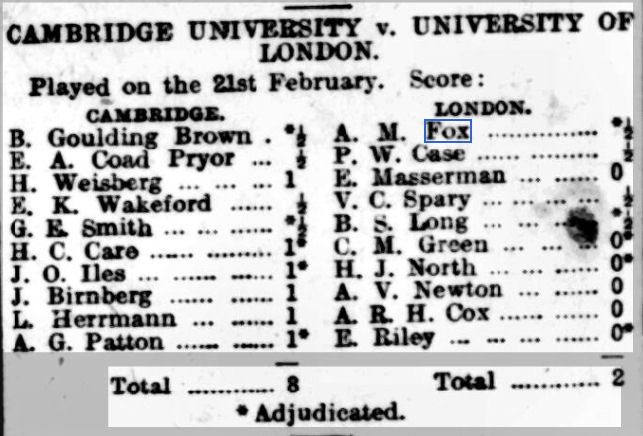
In 1914 St James’s appointed a new vicar, the Rev Richard Coad-Prior, who had a lot in common with Arthur Makinson Fox, sharing his passion for both music and chess. In February that year, he played for London University in a match against Cambridge. There, sitting almost opposite him, was Richard’s only son Eric, who would himself have a long career as a strong club and county player.

Oxford Chronicle and Reading Gazette 6 March 1914

Arthur’s opponent in this match, Bertram Goulding Brown, was well known as, amongst other things, a chess historian. He had played in Varsity Matches a decade or so earlier, and was now, I think, a lecturer in history. This may have been a ‘past and present’ match, or perhaps Arthur was now associated with London University again in some way.

This is the last match result I’ve been able to find for Arthur Makinson Fox. Not a lot of competitive chess took place during the war, and perhaps, now in his fifties, he decided to hang up his pawns, at least as far as competitive chess was concerned.

The 1921 census has recently become available online, and we still find him in the same place, along with Helen, Dorothy and Violet, who is now working just a couple of minutes walk away at the National Physical Laboratory. Their servants Grace and Ellen are both still there after more than 20 years.

During this period of his life he continued his interest in music. The two fields which particularly interested him were organ music (he seems to have composed some works for his instrument) and madrigals. He wrote articles for various music magazines and was the President and Librarian of the Madrigal Society. In 1914 he had subscribed to a collection of madrigals composed by Orlando Gibbons. (Beware, though: some online sources attribute two cantatas published in the mid 1870s to Arthur Makinson Fox: they must have been written by another Arthur Fox.)

We can now move forward another 18 years to 1939. Helen Maud Fox died that year, but, apart from his sad loss, there’s no change in the household circumstances from 1921. Arthur, Dorothy and Violet are still there, with Dorothy still carrying out household duties and Violet still at the NPL. And, yes, Grace and Ellen are still there as well, having worked for the family for about 40 years. Quite some loyalty, and I guess Arthur must have been a good employer as well.

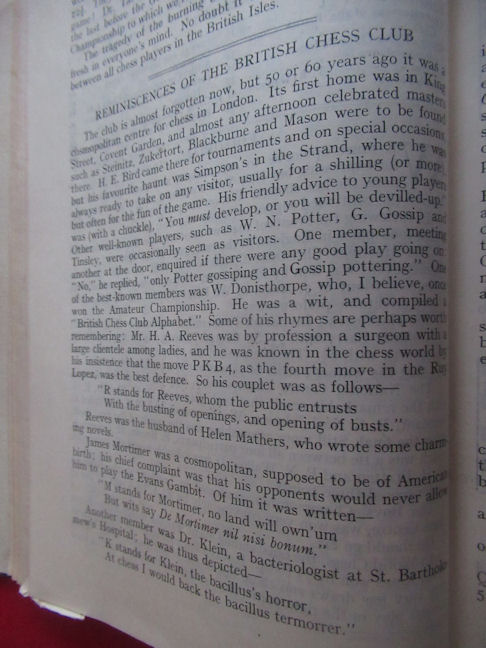
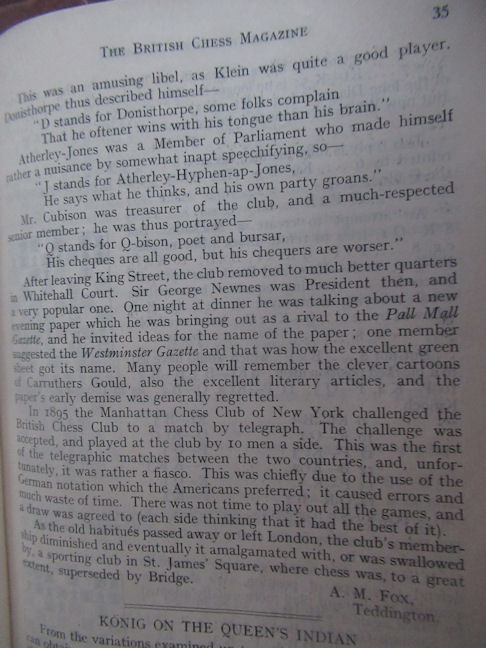
Although he may not have played competitively for a quarter of a century, he still kept up his interest in chess. In 1941 he wrote an article for the British Chess Magazine reminiscing about the British Chess Club.

British Chess Magazine February 1941

In February 1945 he had a letter published in the BCM joining in a debate about reversing the starting positions of bishops and knights.

He lived a long but relatively uneventful life devoted to his work as a dentist and his twin passions of chess and music. Arthur Makinson Fox’s death at the age of 86 was registered in Middlesex South in the second quarter of 1949.


Acknowledgements and Sources:

ancestry.co.uk

findmypast.co.uk

britbase.org.uk

Wikipedia

Various other online sources

Problem solution:

1. Nd8! followed by 2. Be3 and either 3. Qe6# or 3. Qd4#. The only other variation is 1. Nd8! Kc5 2. Be3+ Kb5 3. Qa4#

 Save as PDF
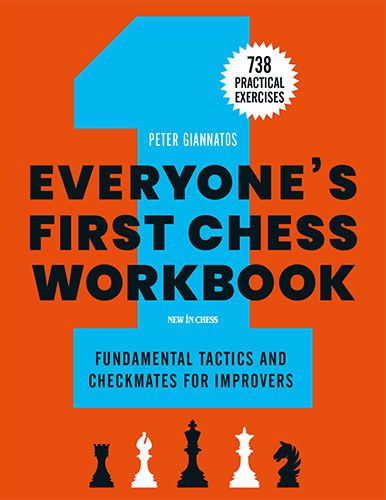
Everyone’s First Chess Workbook: Fundamental Tactics and Checkmates for Improvers

Everyone’s First Chess Workbook: Peter Giannatos

Everyone's First Chess Workbook: Fundamental Tactics and Checkmates for Improvers, Peter Giannatos, New in Chess, New In chess (6 Sept. 2021), ISBN-13 ‏ : ‎ 978-9056919887
Everyone’s First Chess Workbook: Fundamental Tactics and Checkmates for Improvers, Peter Giannatos, New in Chess, New In chess (6 Sept. 2021), ISBN-13 ‏ : ‎ 978-9056919887

From the publisher’s blurb:

“Working on chess tactics and checkmates will help you win more games. It develops your pattern recognition and your board vision’ your ability to capitalize on opportunities.

This Workbook features a complete set of fundamental tactics, checkmate patterns, exercises, hints, and solutions. Peter Giannatos selected 738 exercises based on ten years of experience with thousands of pupils at the prize-winning Charlotte Chess Center. All problems are clean, without unnecessary fluff that detracts from their instructive value.

The Workbook has ample room for writing down the solutions to the exercises. This is helpful for both students and coaches, who can assign homework from the book without having to worry about being unable to review the solutions. And writing down the correct chess moves will greatly accelerate your learning process.

Everyone’s First Chess Workbook offers you a treasure trove of chess knowledge and more than enough lessons to keep you busy for a year!”

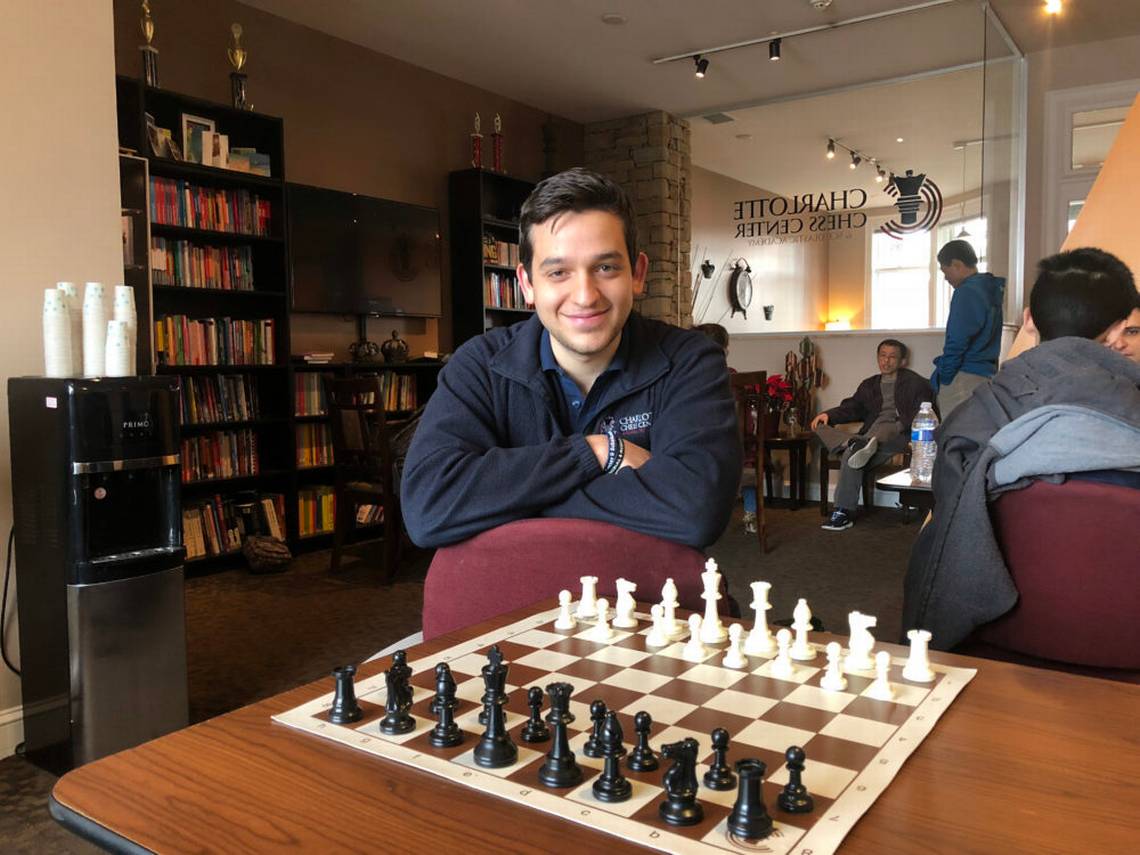
“Peter Giannatos is the founder and executive director of the Charlotte Chess Center & Scholastic Academy, in Charlotte, North Carolina, USA. Peter has been teaching and organizing chess for more than 10 years. As a teenager, he boosted his chess rating from 589 to over 2000 USCF in less than four years. Since then, Peter has achieved both the FIDE Master title and the US Chess National Master title. He now spends most of his time teaching his students the same techniques he used to rapidly improve.”

Peter Giannatos
Peter Giannatos

As with every recent New in Chess publication high quality paper is used and the printing is clear. The book can easily be laid flat next to the board and does not require weights to prevent it from “self-closing”.

Figurine algebraic notation is used throughout and the diagrams are placed adjacent to the relevant text. Being a workbook the layout is quite different to most from New in Chess. It is superbly laid out and attractively produced.

We are constantly reminded that size does not matter when it comes to chess books, however, this new book from New in Chess immediately creates an impression. Weighing in at just under a kilogram and sporting dimensions of 22 x 2 x 28 cm this must be NICs largest publication for a very long time.

This is a workbook containing generous space for the recording of answers to the puzzles  and the making of notes. Usually there are three positions per page with the positions occupying the left hand column and the answer space the right hand column. The carefully worded solutions are all contained in Part IV meaning bumping into the solutions accidentally is easily avoided.

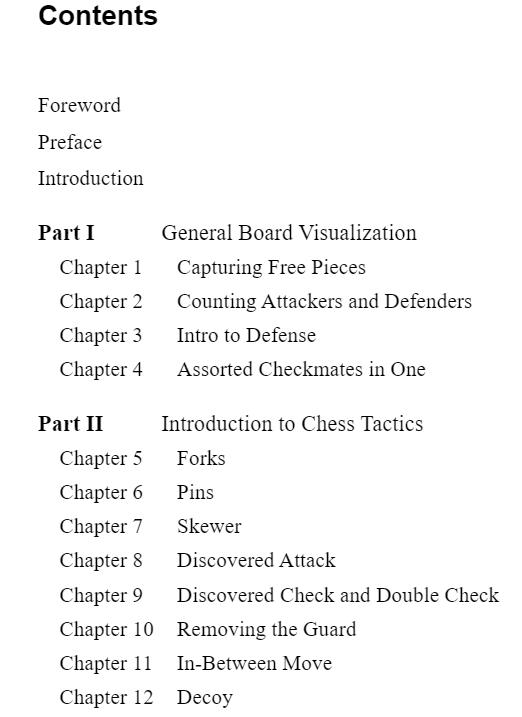
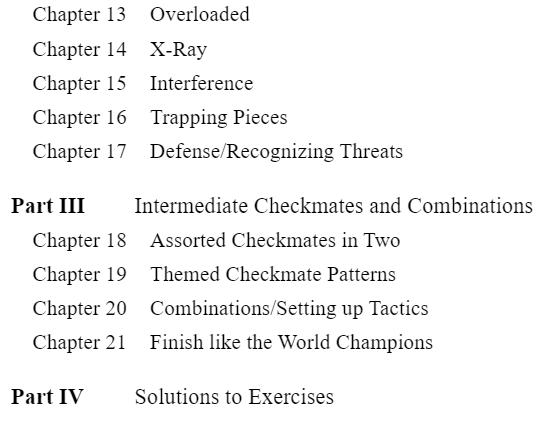
Before we go further we may Look Inside which included the following Table of Contents:

Table of Contents. Part 1
Table of Contents. Part 2

The author has assembled a collection of 738 exercises of which 692 are examined by way of a test and the balance are examples.

The approach is to

  1. Provide a definition of what the exercise theme is about,
  2. Give around a dozen “Guided Examples” in which there is a strong hint
  3. Set around 20 or more test exercises with no hint

If you solve tactics puzzles on a regular basis then the bulk of the exercises will not challenge you with the exceptions of Chapters 20, Combinations/Setting Up Tactics and the interesting Chapter 21, Finish Like The World Champions.

Chapter 19 is very much in the style of the legendary book, Art of Attack in Chess by Vladimir Vuković in that the author provides examples of named checkmating patterns introducing the “Kill Box” and Vuković’s checkmates not mentioned by name in the original book. To find out what these are you will need to buy the book!

In our opinion, this is the perfect trainer for

  • Adult beginners
  • Adults returning to the game after a long lay-off
  • Juniors of secondary school age
  • coaches / teachers needing examples for their students

The explanations are crystal clear with no undefined jargon or strange expressions.

Firstly, we liked the correct use of terminology in that all pieces are shown giving forks including pawns and kings. Some texts believe that the label “fork” should be reserved purely for knights and that the other pieces deliver double attacks: Hurrah for this correct approach.

Secondly, the author differentiates between skewer and X-Ray and clearly shows the difference. For example this (#205) is a skewer:

once Black has found the correct move. On the other hand, this (#354), with Black to move,

is designated as an X-Ray tactic.

The bonus section of the book has to be Chapter 21, Finish Like the World Champions, which features 47 exercises from games of the sixteen world champions from Steinitz to Carlsen. Part of the exercise is to describe the themes used in the example. Here is a nice finish from the tenth World Champion, Boris Vasilievich Spasski in the 1960 game from Kislovodsk, Kuznetsov vs Spasski:

In summary, Peter Giannatos has created a unique and instructive trainer for a market that has been little satisfied and that is the post-Queen’s Gambit / lockdown created adult beginner. It has been superbly produced by New in Chess in a format quite new to them.

So, if you know of adults new or returning to chess then you could easily recommend this. Juniors of secondary school age new to chess will also benefit.

An excellent piece of work!

John Upham, Cove, Hampshire, January 5th 2022

John Upham
John Upham

Book Details :

  • Hardcover : 344 pages
  • Publisher:New In chess (6 Sept. 2021)
  • Language: English
  • ISBN-10:9056919881
  • ISBN-13:978-9056919887
  • Product Dimensions:  22 x 2 x 28 cm and 0.995 Kg

Official web site of New in Chess

Everyone's First Chess Workbook: Fundamental Tactics and Checkmates for Improvers, Peter Giannatos, New in Chess, New In chess (6 Sept. 2021), ISBN-13 ‏ : ‎ 978-9056919887
Everyone’s First Chess Workbook: Fundamental Tactics and Checkmates for Improvers, Peter Giannatos, New in Chess, New In chess (6 Sept. 2021), ISBN-13 ‏ : ‎ 978-9056919887
 Save as PDF

Remembering Dr. Julian Farrand QC (Hon) (13-viii-1935 17-vii-2020)

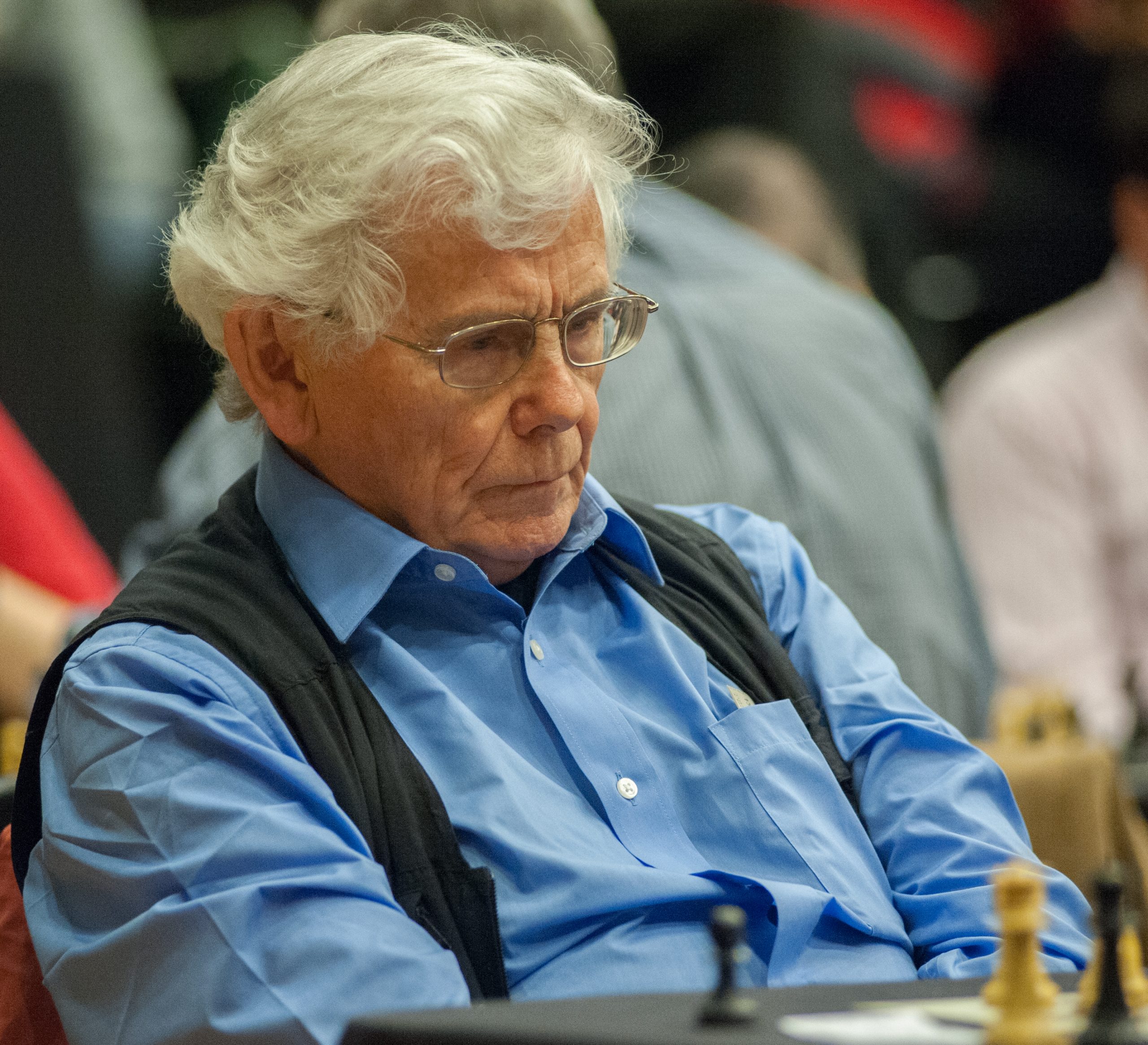
Prof. Julian Farrand at the King's Place Rapidplay, 2013, courtesy of John Upham Photography
Prof. Julian Farrand at the King’s Place Rapidplay, 2013, courtesy of John Upham Photography

BCN remembers Dr. Julian Farrand who passed on Friday, July 17th, 2020. He was 84 years of age.

Julian Thomas Farrand was born August 13th, 1935 in Doncaster in the West Riding of Yorkshire.

Dr. Farrand QC(Hon), formerly the Insurance Ombudsman, became the Pensions Ombudsman, and he had been a Law Commissioner and a University Professor of Law at the University of Manchester where he was Dean of the faculty.

Most recently he lived in Morpeth, London, SW1.

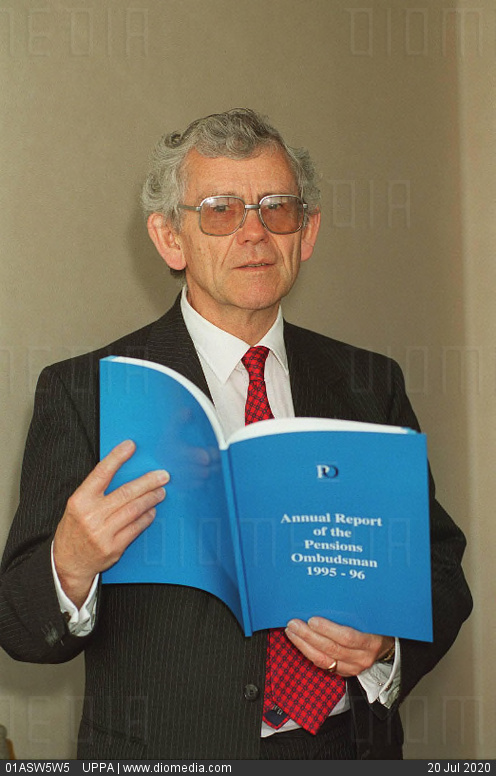
Dr JULIAN FARRAND Pensions Ombudsman COMPULSORY CREDIT: UPPA/Photoshot Photo UKWT 011879/A-32a 31.07.1996

His first recorded game in Megabase 2020 was white at the 1968 British Championships in Bristol against life-long friend CGM Keith Bevan Richardson. Together with Raymond Brunton Edwards, Julian and Keith were long-time trustees of the BCFs Permanent Invested Fund (PIF).

Julian played for Pimlico, Cavendish and Insurance in the London League and he maintained a standard play grading of 172A in 2020 as well as a FIDE rating of 1943 for standard play. He also played in the London Public Services League, the Central London League and the City Chess Association League. He made regular appearances in the Bronowski Trophy competition and the World Senior’s Team Tournament.

His (according to Megabase 2020) peak Elo rating was 2238 in April, 2004 aged 69. It is likely to have been higher than that if it was measured.

Julian joined Barbican following its merger with Perception Youth to become Barbican Youth in the Four Nations Chess League (4NCL).

His favourite openings with white were : The Richter-Veresov Opening in later years and the English/Barcza Opening in earlier times.

With Black he enjoyed the Czech System and the Lenningrad Dutch.

His son, Tom, is a strong player and a successful barrister with expertise in Intellectual Property Rights, Trademarks and Copyright law.

His wife (married in 1992), Baroness Hale of Richmond, served as President of the Supreme Court of the United Kingdom from 2017 to 2020, and serves as a member of the House of Lords as a Lord Temporal.

Julian Farrand with Lady Hale at a Buckingham Palace reception. Photo : Press Association

Memorial messages have been posted on the English Chess Forum and many will, no doubt, follow. Included are older games from John Saunders not found in the online databases.

In 2015 Julian (together with fellow trustees Keith Richardson and Ray Edwards) received the ECF President’s Award for services to the Permanent Invested Fund.

Here is the citation from the 2015 award :

“Julian is best known as the first*-ever English ombudsman (in insurance). He is the husband of law lord Baroness Hale. I (SR) first met him at about the age of 12 year old when playing for my school. He is about four years older. Both Ray and Julian are members of the Book of the Year Committee and have been reviewing books for this purpose for many years. Both are quite strong chess players, indeed playing for England in the same team in the European 60+ Team Championship in Vienna 11-20 July 2015. Keith was to have been a member of the same team, but his wife’s ill-health forced him to withdraw.”

*On January 15th 2022 we received the following electronic email message from Heather Ridge, a legal assistant as follows:

Dear Sir
Julian Farrand was most certainly NOT the first Insurance Ombudsman. The late James Haswell OBE was appointed the first Insurance Ombudsman in 1981.

I know this as I had the privilege of being his first Senior Legal Assistant. Please correct this immediately.

Kind regards
Heather Ridge

Here is an obituary from The Times of London

Here is an obituary from Stewart Reuben

Prof. Julian T Farrand at the King's Place Rapidplay, 2013, courtesy of John Upham Photography
Prof. Julian T Farrand at the King’s Place Rapidplay, 2013, courtesy of John Upham Photography
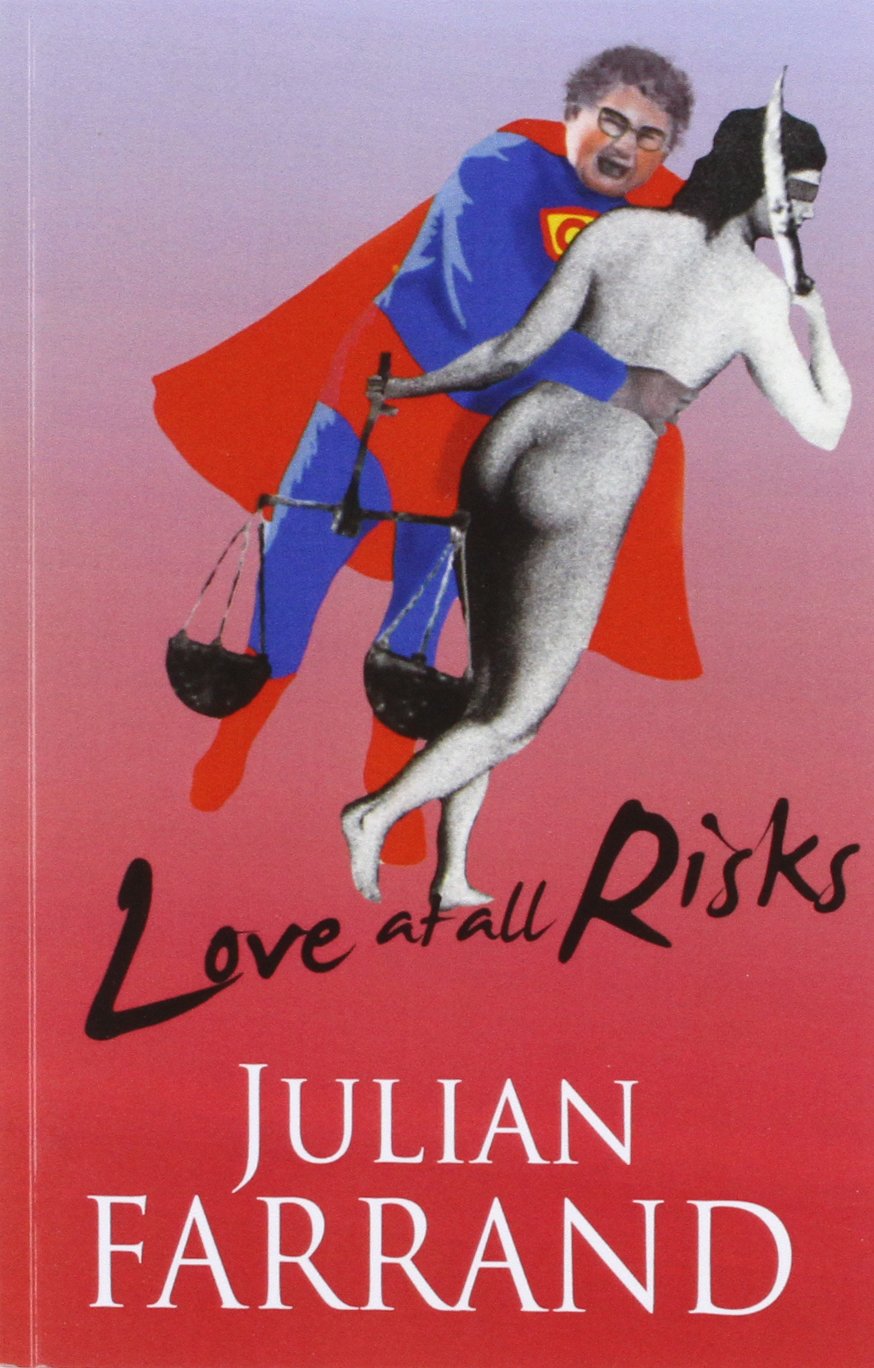
Love All Risks by Julian Farrand
 Save as PDF
Remembering Henry Atkins (20-viii-1872 31-i-1955)

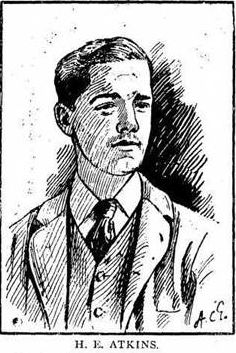
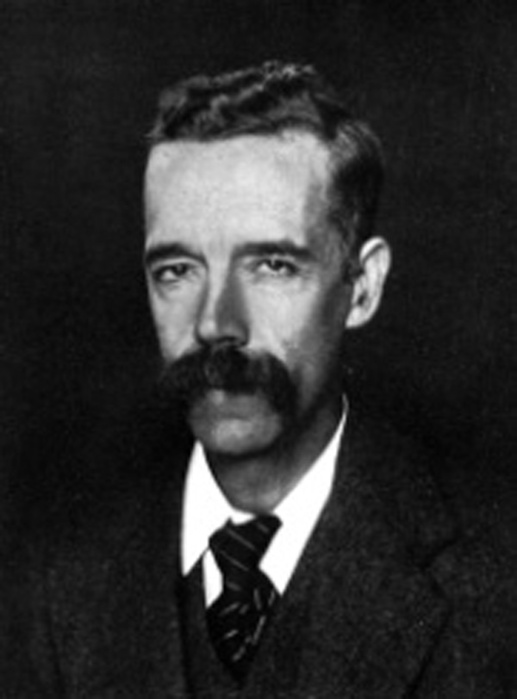
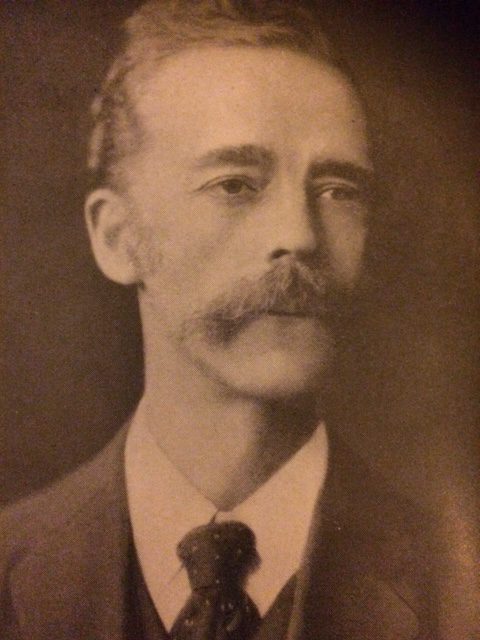
HE Atkins from Westminster Budget (18/09/1896) from the Yorkshire Chess History web site

We remember Henry Atkins who passed away, Monday, January 31st, 1955.

Henry Ernest Atkins was born in Leicester on Tuesday, August 20th, 1872 to Edward (a schoolteacher) and Jane Atkins (née Threapland).

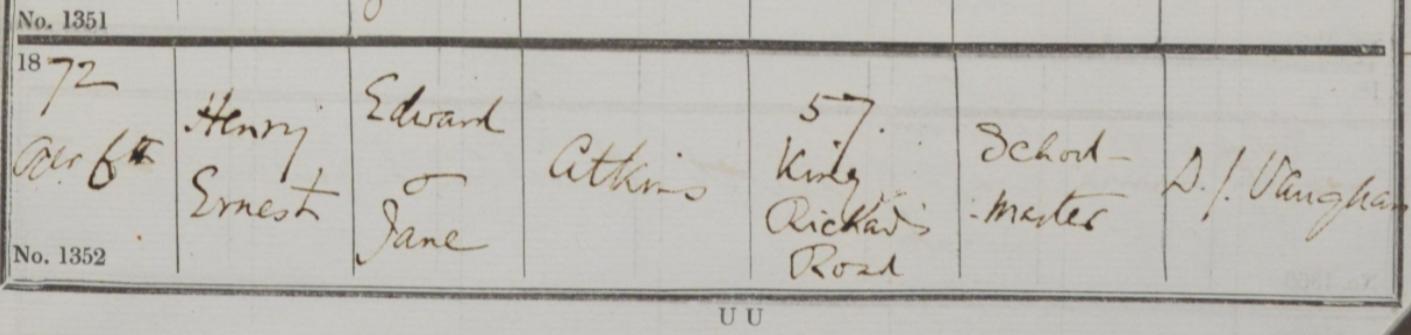
He was baptised on August 6th, 1872 in the Anglican Cathedral Church of St. Martin, Leicester. At the time of the baptism the Atkins family was living at 57, King Richard’s Road, Leicester. The address in 2021 appears to be occupied by an industrial premise for Sunco Knitwear Specialists. The signatory on the baptism record is that of DJ Vaughan.

Baptismal record for Henry Ernest Atkins

Henry was admitted to Wyggeston Boys Grammar School, Leicester on March 30th 1880 when eight years old. He was expected to leave at the end of the Winter Term in 1890.

School admission record for Henry Ernest Atkins

Curiously his school admission record includes the following addition (although we don’t know exactly when) :

Amendment to school admission record for HEA.

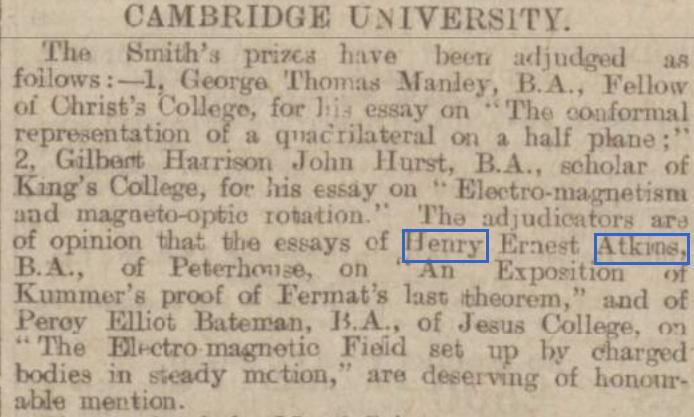
Henry, aged 18, went up to Peterhouse College, Cambridge in 1890 to study mathematics. From his year of entry he was ranked as 9th “Wrangler” studying for the Mathematical Tripos. As part of his Part II examinations he did well enough to be “mentioned” for the Smith’s Prize for examination performance.

Nottingham Evening Post, 3rd June 1895

(Here is more on Kummer’s Proof of Fermat’s Last Theorem.)

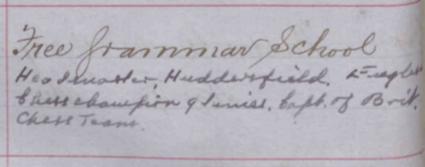
Following University Henry became a teacher of mathematics at Northampton County Modern School and then returned to Wyggeston Boys Grammar School from 1902 – 1908. He then became the principal of Huddersfield College in 1909 and continued until 1915. Huddersfield College (founded in 1839) was merged with Hillhouse Technical School to form a new boys’ grammar school at a new campus at Salendine Nook with 950 boys.

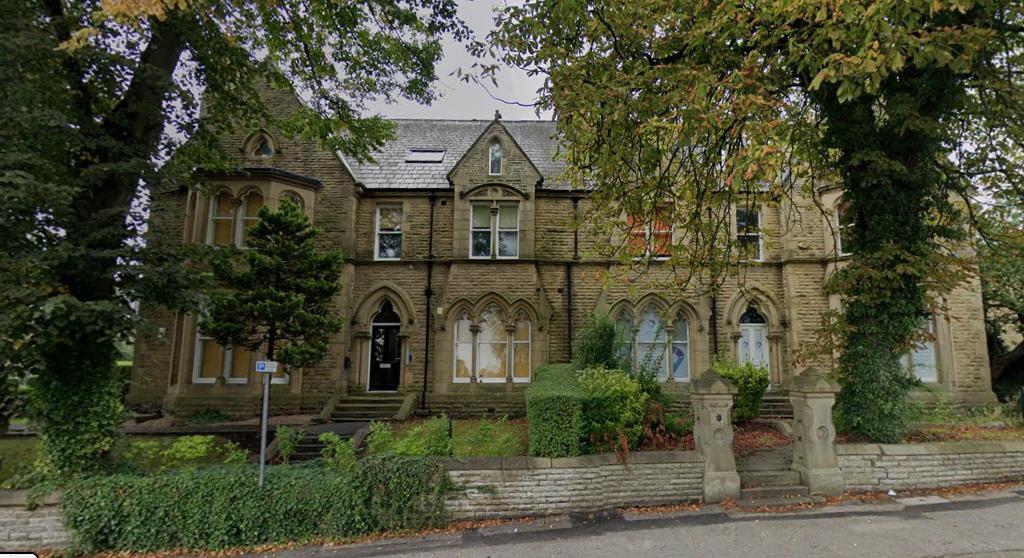
According to Ranneforths Schach-Kalender (cited by C.N.), 1915, page 55, during the period at Huddersfield College Henry lived firstly at 49 New North Road, Huddersfield, Yorkshire :

49 New North Road, Huddersfield, Yorkshire, HD1 5NR

and then

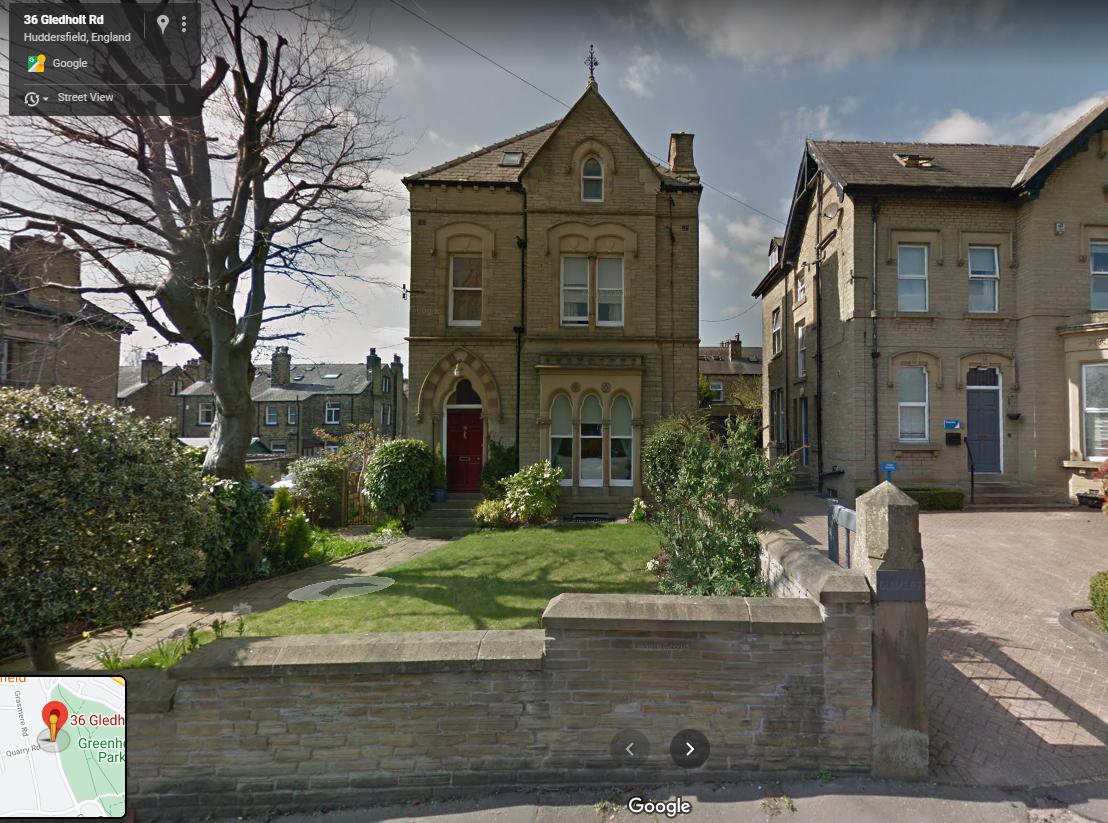
36 Gledholt Road, Huddersfield, Yorkshire, HD1 4HP :

36 Gledholt Road, Huddersfield, Yorkshire, HD1 4HP

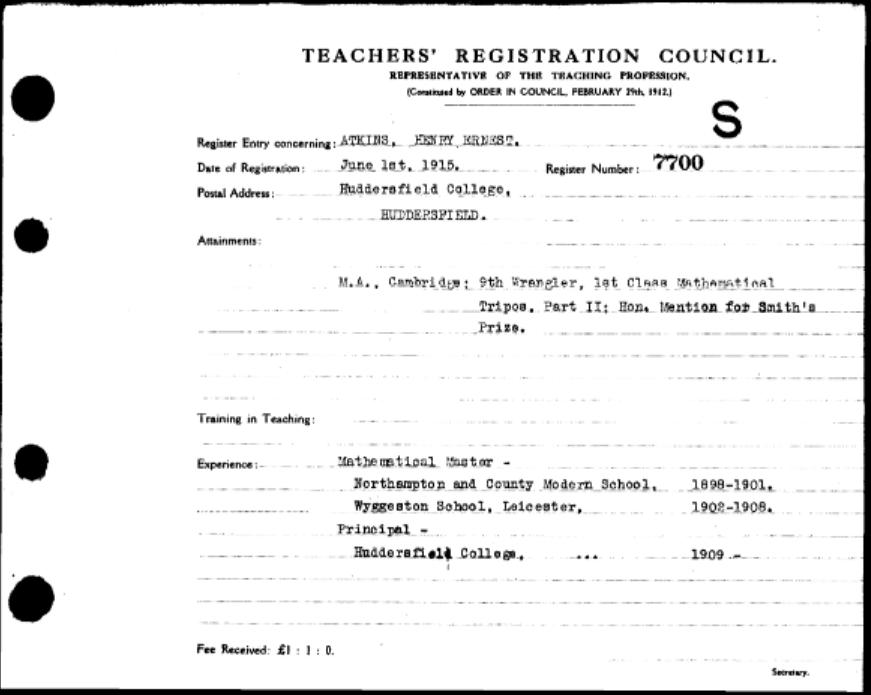
On June 1st, 1915 (aged 43) Henry was registered as a teacher whilst at Huddersfield College for the fee of one guinea :

Teacher registration form for Henry Ernest Atkins

Henry retired from teaching in 1936.

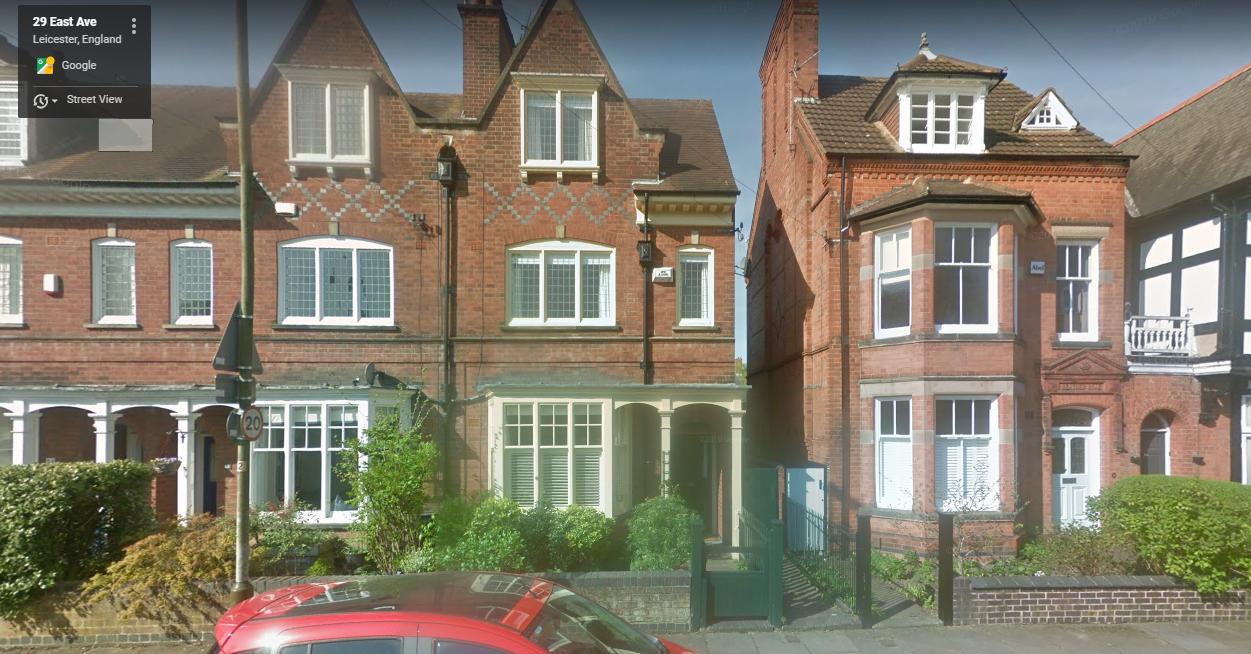
In the 1939 register Henry (now a retired schoolmaster) was recorded as living with his wife, Elspeth Skene Atkins (née Wilson) at 29 East Avenue, Leicester, Leicestershire :

29 East Avenue, Leicester, Leicestershire, LE2 1TE

Elspeth was born on August 5th 1880 and was therefore roughly eight years his junior. She carried out “unpaid domestic duties” but as a member of the Women’s Voluntary Service (WVS) she was a surgical dresser. The WVS transformed into the RVS. It would seem that Henry and Elspeth did not have children. She outlived Henry passing away in 1973 in Southampton.

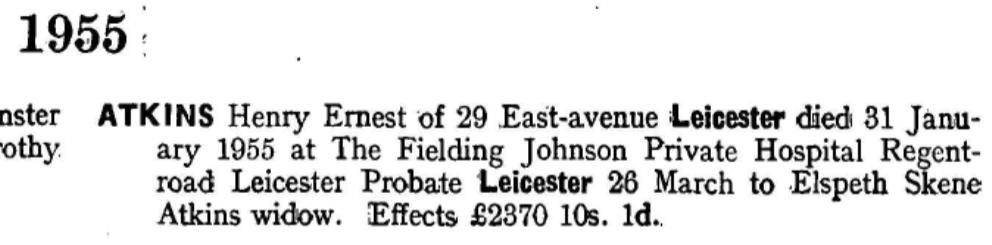
On Monday, January 31st 1955 passed away in The Fielding Johnson Private Hospital :

Probate notice from March 26th 1955
The Fielding Johnson Private Hospital

Henry was buried at Gilroes Cemetery and Crematorium, Groby Road, Leicester, Leicestershire, LE3 9QG.

In the October 1976 issue of Newsflash Badmaster (aka GH Diggle) wrote :

“… we well remember his giving a “simultaneous” at the Lincoln Chess Club in 1924, winning 17 and drawing two. One of his more elderly opponents (a notorious non-resigner) who for 30 moves had been wobbling along with a piece down until “time” had to be called, then proceeded to “demonstrate a draw” by concocting a continuation so optimistic that even clubmates with lifelong experience of his powers stood aghast. Atkins, with his greatcoat on ready to go home, made no attempt to refute this analytical masterpiece but merely remarked with great deference: “I don’t think we can play it quite like that!” and then beat a craven retreat “escorted by Club Officials”

From British Chess Magazine, Volume LXXV (75, 1955), Number 3 (March), pp.102-3 we have this obituary written by RN Coles :

“With the passing, on January 31st, at the age of eighty-two of Henry Ernest Atkins the chess world has lost a recognized international master, and British chess one of its strongest players of all time. Yet Atkins was the despair of chess enthusiasts because he played so little international chess and confined himself largely – and at that intermittently – to local affairs, where the strength of most of his opponents could hardly extend him. One leading player recently regretted that Atkins spent so much time “in the wilds,” but Atkins would have taken an opposite view and have considered that he was “in the wilds” if he had spent more of his time playing chess; teaching was his whole life, and the game of chess he insisted on treating as a game.

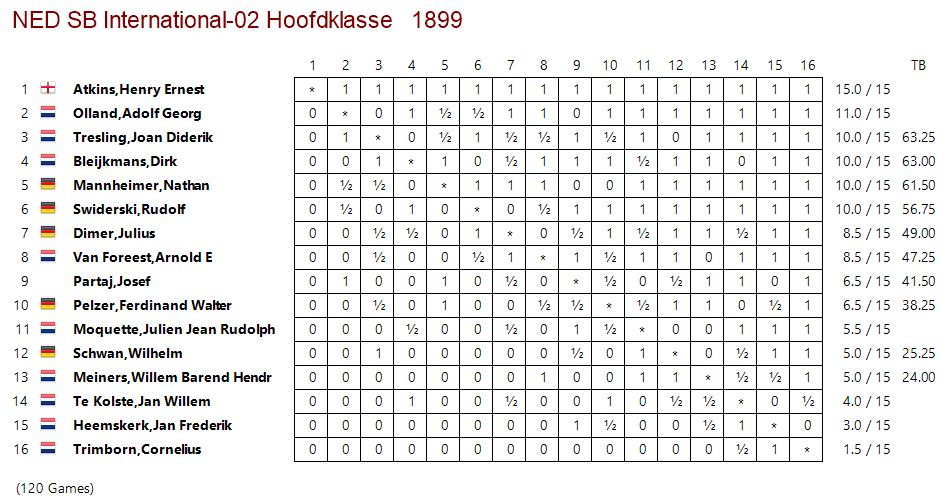
Consequently as a chess-player Atkins was almost always out of practice and playing below his true strength, yet in his five international events-Amsterdam, 1899; Hanover, 1902; London, 1922; London Team Tourney, 1927; and Warsaw Team Tourney, 1935-he scored 63.2 per cent, or if Amsterdam which was virtually a Hauptturnier is excluded, 53.5 per cent.

Full crosstable from Amsterdam 1899

Sir George Thomas considered that only lack of opportunity prevented him from establishing himself in the world championship class. As it is, he will be remembered chiefly by chess-players as the man who played eleven times in the British Championship and won it nine times, failing only at the first attempt in 1904 after a tie for first place, and at the last in 1937, at the age of sixty-five, when he shared third place, a record which has never been remotely approached by any other player and is not likely to be. Atkins played in a clear-cut strategical style which makes his games ideal studies for the beginner, and he finished them with the elegance to enchant the artist; like the Etudes of Chopin, they provide technical exercises and works of art in one.

But I believe that if Atkins had his wish – and this wish I am sure he will have – he would wish to be remembered by his many pupils, whether they be pupils of the chess master or of the schoolmaster, not for any practical achievements but for being a true guide, philosopher, and friend to all who came under his tutelage.-R. N. C.”

From The Oxford Companion to Chess by Hooper & Whyld

English player, born in Leicester, International Master (1950), schoolmaster. Between 1895 and 1901 he played in seven minor tournaments, winning four, taking second place in three, and losing only three out of 70 games. In one of these events, Amsterdam 1899, he made a clean score against 15 opponents. In his first international tournament, Hanover 1902, he came third (+8=7-2) after Janowski and Pillsbury ahead of Mieses, Chigorin, and Marshall. Emanuel Lasker believed that Atkins would have joined the leading grandmasters had he continued his international career, but Atkins played in only one more big tournament (London 1922). He had a genuine concern for his profession, and preferred not to give more of his life to chess. He played in 12 of the Anglo-American cable matches, won the British Championship nine times (1905-11, 1924, 1925), and represented the British Chess Federation in the Olympiads of 1927 and 1935.

Henry Ernest Atkins
Henry Ernest Atkins

From The Encyclopedia of Chess by Anne Sunnucks :

International Master (1950) and nine times British Champion. Born in Leicester on 20th August 1872, Atkins learned the game at school in Leicester at the age of 12. When he was 15, he joined Leicester Chess Club and within two years was playing on top board. In 1890 he went up to Peterhouse, Cambridge, and played top board for the University. On leaving Cambridge he became a schoolmaster.

His first appearance in the British Championship was in 1904, when he came 2nd. The following year he won the championship and repeated his success every year up to and including 1911. He did not compete between 1912 and 1923, and on reappearing in the event in 1924, he regained his title and held it the following year. His final appearance in the British Championship was in 1937, when at the age of 65 he came =3rd.
In the five international events in which he played – Amsterdam 1899, Hanover 1902, London 1922 and the Chess Olympiads of 1927 and 1935 – he scored over 60 per cent.

His devotion to teaching and his insistence on treating chess as merely a game was all that prevented him from becoming one of the leading players in the world.

He died on 31st January, 1955.

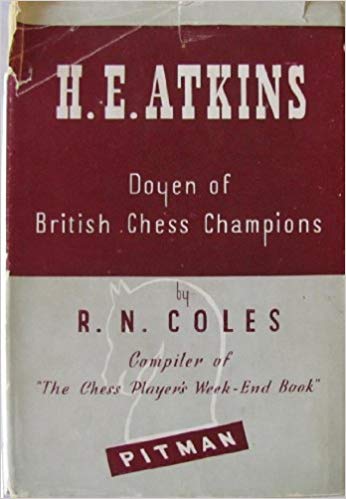
H. E. Atkins Doyen of British Chess Champions by R. N. Coles

In the above book RN Coles points out that Atkins regularly played f4 or …f5 early in the game and claims this was HEAs pet or signature move.

Henry Ernest Atkins
Henry Ernest Atkins

From The Encyclopaedia of Chess by Harry Golombek :

British international master and regarded by many as Britain’s more talented player in the history of the game. Born in Leicester and never very fond of leaving England. Atkins was a schoolmaster and devoted relatively little time to chess, and yet he became one of the strongest amateurs every known to chess. He was known on the Continent as “the little Steinitz“.

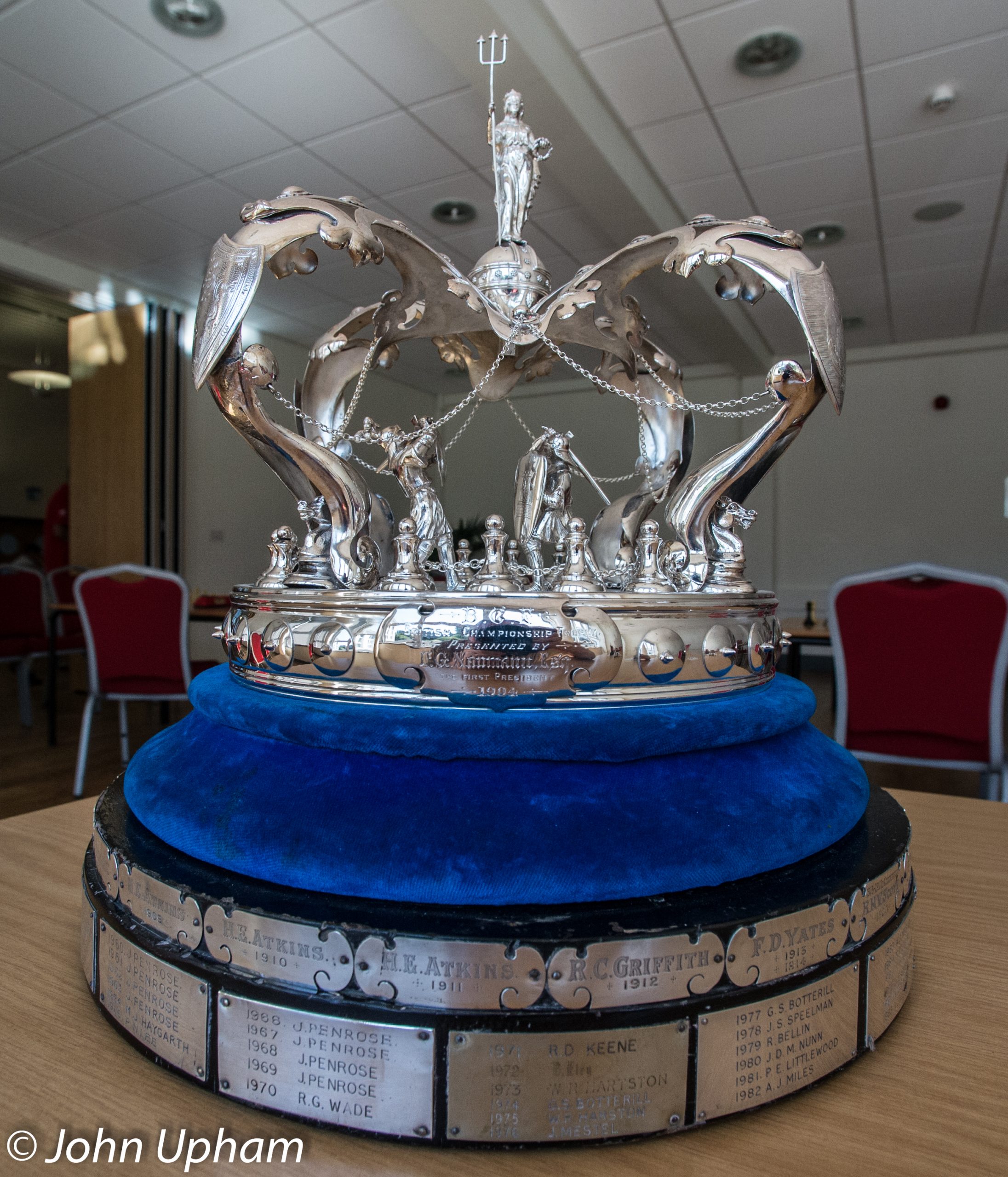
His record in British Championship is unique; out of eleven appearances he won the event nine times : 1905, 1906, 1907, 1908, 1909, 1910, 1911, 1924 and 1925. I t should be added that in 1904 (his first attempt) he finished 1st= and only lost to Napier after a play-off and in 1937 (his last championship) he finished =3rd at the age of 65!

The British Chess Championship Trophy

His international career comprises only six events. In 1895 Atkins was placed =2nd behind Maróczy in the Hastings Minor Tournament and in 1899 he won the Amsterdam tournament, leading the field by 4 points. At Hanover 1902 he scored his most notable result : 3rd prize behind Janowski and Pillsbury but ahead of Chigorin and Marshall among others. At London 1922 he finished only 10th of 16 but still claimed Rubinstein and Tartakower among his victims. He represented the B.C.F. in the Olympiads of 1927 and 1935.

Atkins was retrospectively awarded the title of international master in 1950 on his pre-war record. (Ray Keene).

According to chessgames.com : “He graduated from Cambridge and taught mathematics at Northampton and Wyggeston. In 1909, he was appointed Principal of Huddersfield College.”

Here is an article from the Yorkshire Chess History site

and here is an obituary from the MCCU site

Here is an excellent article from Neil Blackburn

Here is his Wikipedia article

and here is an excellent article on chess.com

Recently renowned journalist and write John Saunders has turned his attention to HEA.

 Save as PDF
Remembering Roland Scott (25-iii-1888 10-i-1953)

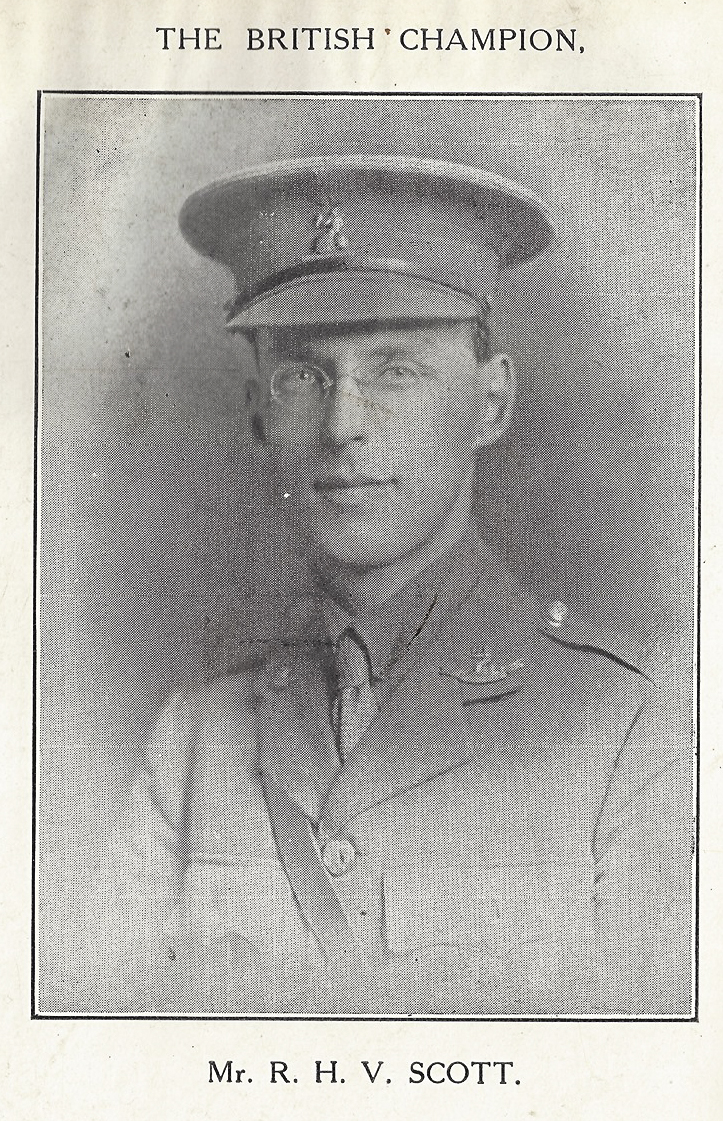
Roland Henry Vaughan Scott, 1920 British Champion, British Chess Magazine, Volume XLI (1920), Number 10 (October), page 304

BCN remembers Roland Scott who passed away in Monte Carlo on Saturday, January 10th, 1953.

Roland Henry Vaughan Scott was born in either Barnes (or Holloway depending which Census record is correct). His parents were Walter Frederick Scott, a GP who was born in April 1960 and died in 1891 when Roland was three years of age.

His mother was Lucy (Lucie and Lucia have also been recorded) Vaughan was born in 1855 and died in October 1933.

Roland had three sisters, Nina Vaughan Scott Lucie Audrey Scott (who died before her first birthday) and Sybil Anne Vaughan Scott and a brother Guy Francis D Scott who lived until 1977.

In 1891 Roland lived in Tottenham, in 1901 in Hampstead and in 1911 in St. Pancras where he was listed as a law clerk.

In 1917 The London Gazette lists him as a lieutenant in the Norfolk Regiment.

The 1920 electoral rolls for the Gospel Oak polling district lists Scott as voter #2006 living at 2, Estelle Road, North St. Pancras which is now in Belsize Park, NW3 2JX. At the same address was his sister Lucie and in 1921 they were joined by brother Guy.

In July 1922 in the district of Brighton Roland married Irma Clareboudt. No children from the marriage are recorded.

The 1939 register lists Scott as “War Disabled ? Officer Retired In War 1914” (invalided from army) and Irma as a saleswoman (born 25th July 1895) living at 42, Sherwell Lane, Paignton, Torquay, TQ2 6BD.

42, Sherwell Lane, Paignton, Devon, TQ2 6BD.

The April 1953 British Chess Magazine (Volume LXXIII, Number 4, page 101 onwards) contained this obituary from DJ Morgan:

It is with much regret that we record the death, on January 10th, at Monte Carlo, of R. H. V. Scott. He had long been out of active chess, but older readers will need no reminding of the 1920 British Champion, with his quiet manner but attacking chess; one who was composure itself at the table but aggressiveness personified on the board.

The son of a doctor, Scott was born in 1889. He was nineteen before taking to the game, but a ready aptitude combined with great enthusiasm led to rapid progress. He joined the Hampstead Club in 1908, and in his first tournament, the Third Class, came out first. ln the years that follow he pursued the game with much energy.

At the B.C.F. Congress, Glasgow, l9ll, he won the only section of the First Class. In 1913 and in 1914 he was Hampstead Club Champion. In 1913 he was tenth in the British Championship, at Cheltenham, and equal fifth to sixth at Chester in the following year, defeating Yates and drawing with Blackburne.

In 1915 he came second in the City of London Club Championship, but won that of the Metropolitan Club. During the same year he lost a short match with Sir G. A. Thomas 1-3. The war years, with a commission in the Norfolk Regiment, intervened, but chess filled his available moments.

In 1916 he defeated L. I. Estrin, a young Russian who was Hampstead Champion, 5-2 in a match. ln 1919 he lost a match with Winter at Hastings (2-4), and shared seventh to eighth positions with Dr. Olland (Holland) at the B.C.F. Hastings Victory Congress, with victories over Olland,

R. P. Michell, Marchand, and Conde. Then came the B.C.F. Edinburgh Congress of 1920, Scott became British Champion, losing only
to Sir G. A. Thomas.

In this year he also drew a match, 3-3, with Marchand, of Holland, also at Hastings. There followed three more appearances in the championship, Malvern, 1921 (equal fifth to sixth); Southsea,1923 (equal third to fourth); and Southport, 1924 (fourth). And with this Scott passed out of British chess. Ill health and failing eyesight, direct results of sufferings and injuries endured on active service during the war, began to take their toll. On medical advice he sought a warmer climate, and the Riviera henceforth became his home.

We find him sharing seventh to eighth positions at the Hyères Congress, in 1926, and coming equal fifth to sixth, with B. Reilly (our Editor’s first international tourney we believe), at Hyères, 1927.

The days of active play were over, but his great interest in the game remained. Scott was a natural attacking player, more likely, perhaps, to win the Brilliancy Prize than the First Prize.

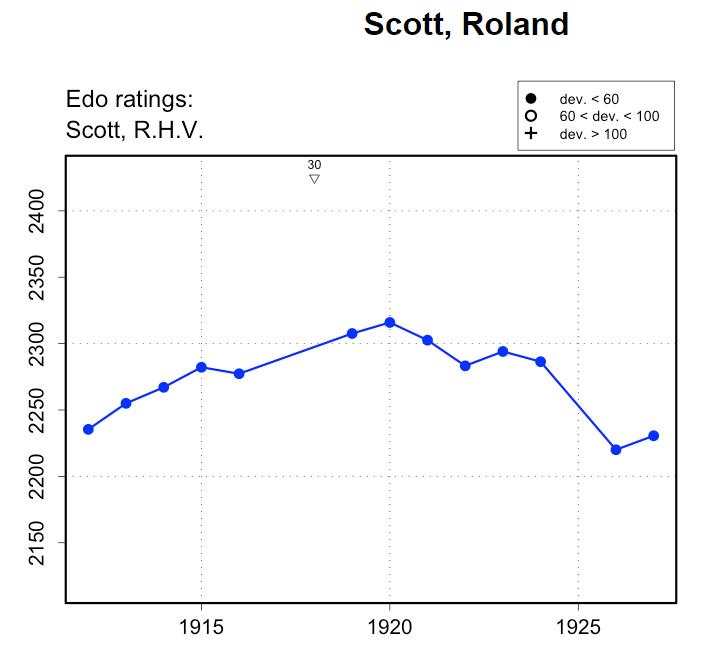
Edo rating profile for RHV Scott

We have given the bare outline of a career that was all too short, one cut down, in a sense before reaching full maturity. Contemporary records sometimes expressed the need for more stability in Scott’s chess, but they chronicle games of his that speak forcibly of the imaginative, refreshing, and invigorating qualities of his play. We offer an early game, the Brilliancy Prize winner, City of London C.C. Championship, 1913-14. White’s 20th move sets the game alight.

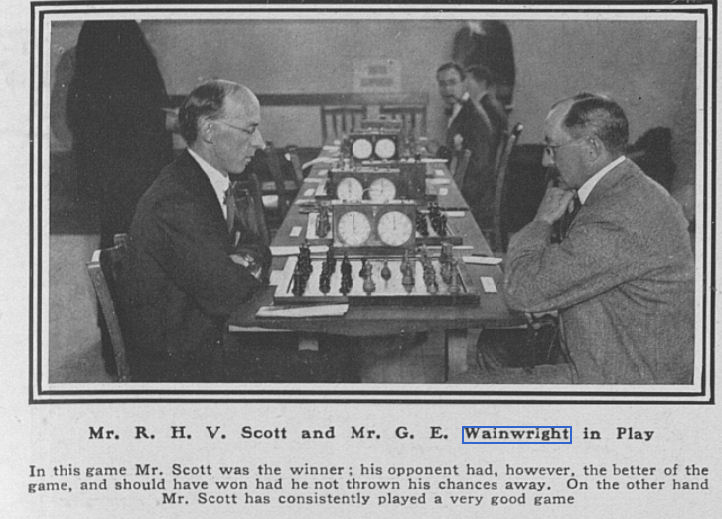
RHV Scott plays GE Wainwright in 1921, The Sphere, 1921

From British Chess Magazine, Volume XLI (1920), Number 10 (October), page 305 we have the following report of his exploits winning the 1920 British Championship in Edinburgh:

“We are glad to be able to present to our readers a photograph of the new champion, Mr. R.H.V Scott. He informs us that it is his most recent one, taken in 1917 when subaltern in the Norfolk Regiment. He saw service with the latter in France, and, as is probably know to most of our subscribers, was badly gassed, from the effects of which is now happily quite recovered.

His victory in the recent Congress in Edinburgh is welcome from at least two points of view; one, that he is one of our youngest first class players (ed: he was 32 at the time, a veteran by the standards of 2022!), having been born in 1889 (ed: this should have been 1888), and therefore may justifiably be expected to improve still further with experience and some curbing of his impatience in defence; and, two, that he claim to represent the more brilliant school of chess, that of Pillsbury, Marshall, Charousek, and Morphy, rather than the more solid school, of say, Steinitz and Rubinstein, who theory was the pilling up of small advantages.

Scott has an excellent “nose” for attack, and has some exceedingly “chessy” ideas. During the congress he put a much greater restraint on himself than is his wont, and we believe this to be the reason he so improved on his previous records.

He had what might be described as the worst of the draw, since he had Black against Sir George  Thomas, EG Sergeant and RP Michell. Some writers have described him as lucky to win, but a study of his games and a comparison with those of others in the tourney go to prove that he played more far-sightedly than any of the others.

We are quite aware that the form of any player is variable, and we have seen Sir George Thomas play much better chess and much less strainedly than he did at Edinburgh. EG Sergeant was generally playing quite at his best, but once or twice his play deteriorated, perhaps as the result of a sleepless night, he then seemed bereft of ideas, and allowed the clock to beat him. This also was the case with Michell, who had many a rush to save his flag falling before the necessary moves were made. Now Scott almost invariably had time to spare.

Perhaps the worst reversal of form was that of JH Blake; but he had been working very hard and late for some time right up to the day the Congress commenced, and was not really in a fit state of health to take part.

Scott has twice before competed for the Championship; in 1913 where he finished eighth, and in 1914 when he was fifth, beating FD Yates, the then Champion and drawing with JH Blackburne.

He has won several brilliancy prizes in congress and club tourneys, and was the champion of the Hampstead Chess Club (where he may have been said to have learnt the game) in 1913 and 1914. He was first acquainted with the moves in 1908.

He is keen on all sports, and puts his whole energy into each line he may be taking. With yet more self-restraint we think his chess will still further improve, and we venture to prophesy this will not be the last British Chess Championship he will win.”

In his memoirs William Winter wrote this:

“I also had the opportunity of playing a number of semi-serious games with RHV Scott and D. Miller, two of the leading London amateurs. Scott was probably the most brilliant combinative played England has ever seen and had already won almost every honour except the British Championship, which fell to him in 1920.

Since those days I have played over hundreds of games, including the beautiful brilliancies of the modern Russian school, and Scott’s best combinations stand up quite well beside them. There were however weaknesses in his play which I shall discuss later. Miller was just the opposite type, a dour solid player exceptionally hard to beat. He is, I am glad to say, still with us, but Scott died a few years ago – he had been out of chess for a long time.”

and this:

“It is entirely legitimate, and can prove very useful until one comes up against an opponent like Capablanca who had no weaknesses of any kind. ln Scott’s case, one of his foibles was an aversion to exchanging queens, and I took full advantage of this in the first two games of the match both of which I won with comparative ease; but Scott was not finished yet.’ In the third game he tied me up in a variation of the Sicilian which I had not previously seen, and in the fourth I made the fatal mistake in going for an early win of material and allowing him a king’s side attack. Things now looked bad for me. I had the black pieces in the fifth game and I dared not play my favourite Sicilian defence because I could not discover a satisfactory answer to his new line.”

Strangely, none of the Encyclopaedia’s by Golombek, Sunnucks or Hooper & Whyld felt that RHVS merited an entry. However Gaige does not forget.

Here is an interesting article from “introuble2” entitled 100 years ago… chess in London during World War I in which Scott is mentioned.

Here is an excellent article from John Saunders

 Save as PDF
Happy Birthday IM (elect) Jonah Willow (30-xii-2002)

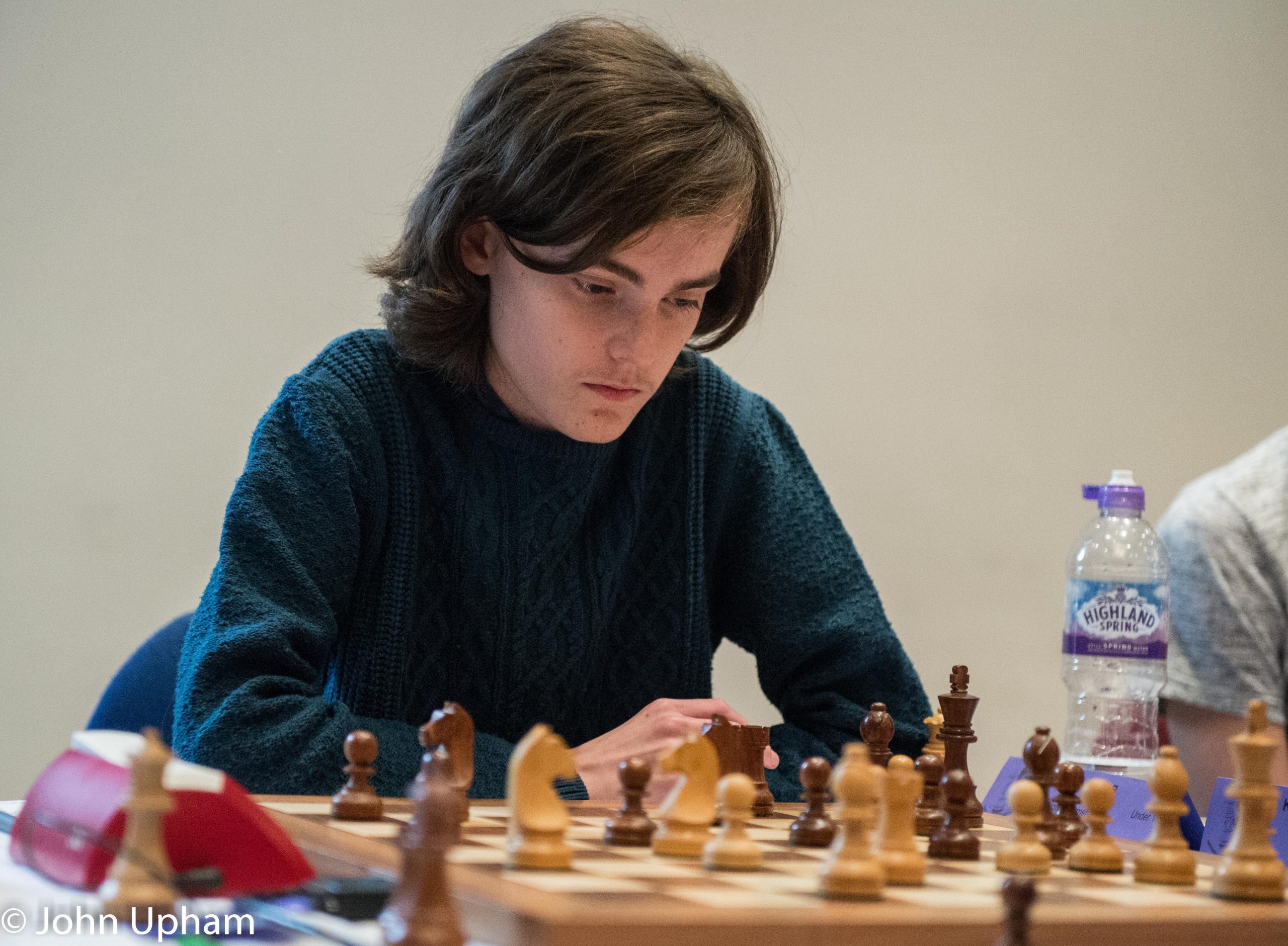
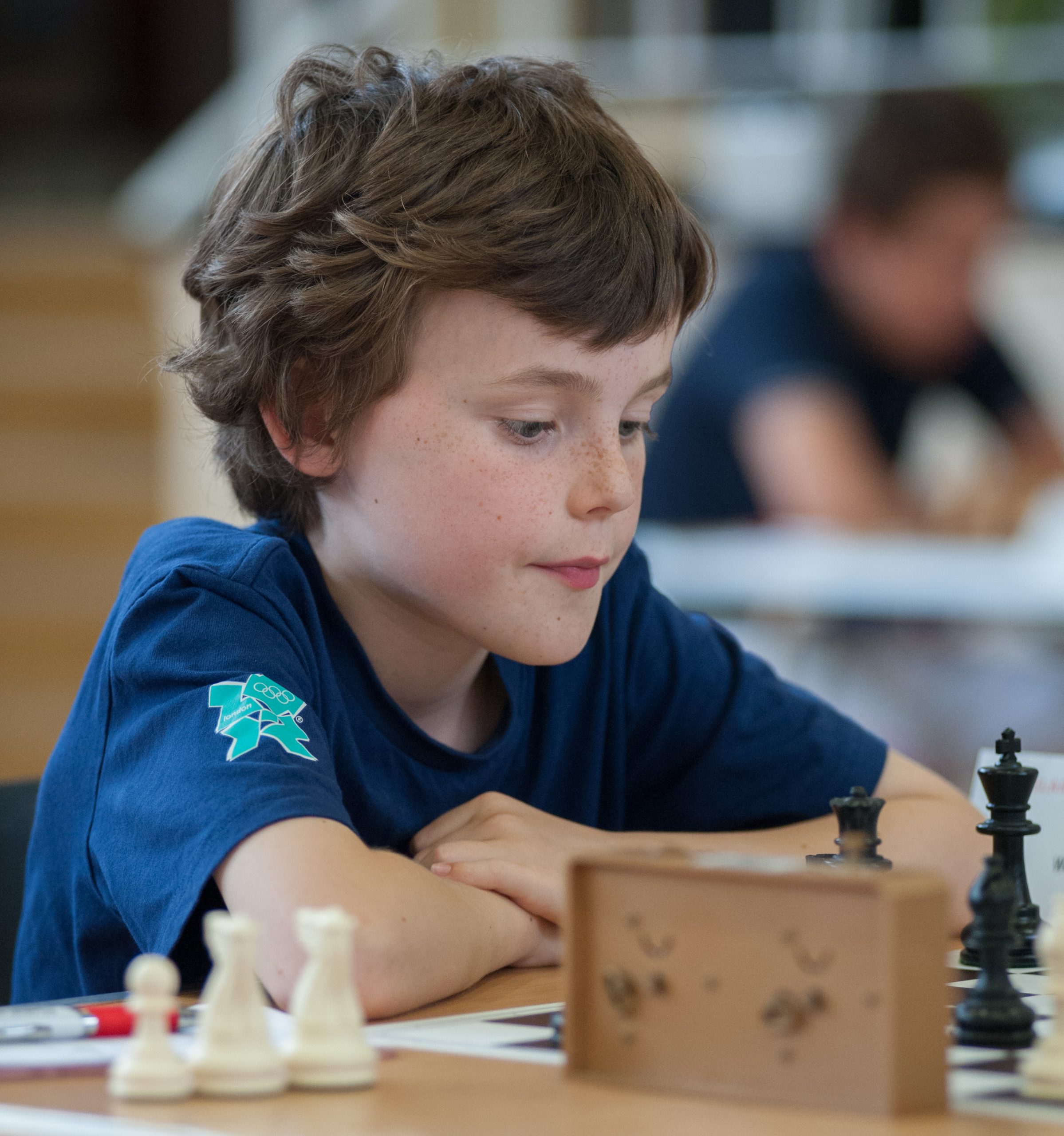
FM Jonah Willow, UKCC Terafinal 2018, Courtesy of John Upham Photography

Happy Birthday IM (elect) Jonah Willow

Jonah B Willow was born in Nottingham on Monday, December 30th 2002. Jacob was the most popular boy’s name in 2002. “Lose Yourself” by Eminem was number one.

Jonah has a chess playing sister, Hambel, who plays for Newcastle-under-Lyme, West Nottingham, Staffordshire CA and Nottinghamshire CA.

Jonah’s first recorded graded standard play tournament was the 2010 Delancey UK Chess Challenge Terafinal and his first recorded rapidplay event was the Nottingham Rapidplay in 2011.

Jonah Willow at the 2012 UKK Terafinal. Courtesy of John Upham Photography

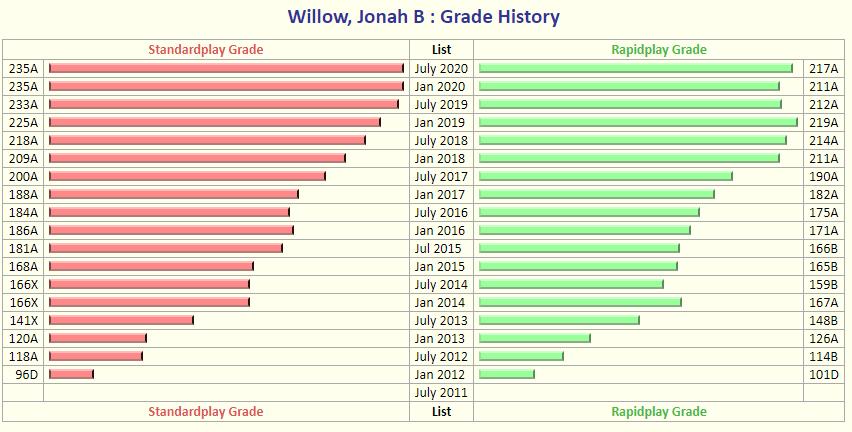
Jonah’s first published standard play grade was 96D in January of 2012 :

Jonah's ECF grading progress
Jonah’s ECF grading progress

Jonah has represented West Nottingham, 4NCL Wood Green, Nottinghamshire CA and Syston (Leicester).

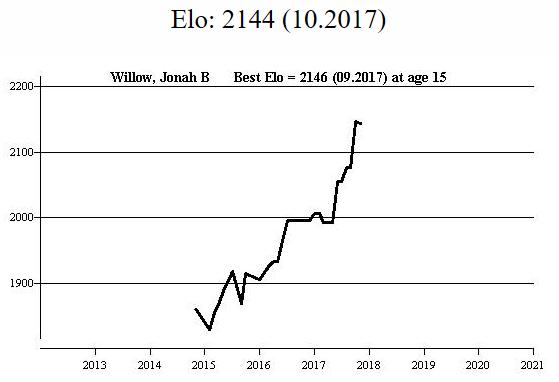
FIDE rating profile for FM Jonah B Willow from Megabase 2020

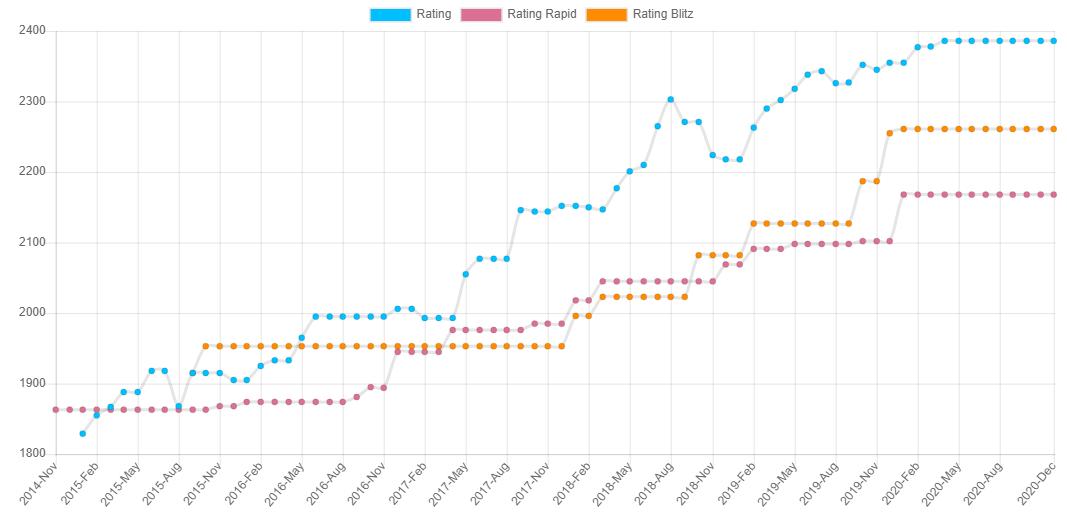
It is a little curious as to the reason for the rating profile to halt at the end of 2018 since Jonah has played plenty of FIDE rated games since. Compare the above with :

FIDE rating for FM Jonah Willow from fide.com

Jonah’s current (December 2021) FIDE standard play rating is 2381 and Jonah became a FIDE Master in 2018.

Jonah has plus scores against : Mike Surtees, Peter Svidler (!), Richard Pert, Peter Shaw, Ranesh Ratnesan, Shreyas Royal, Keith Arkell and Ameet Ghasi to name but a few.

With the white pieces Jonah is a committed 1.e4 player but he has scored 83% with 1.Nc3! first played by JH Blackburne against Noa in 1883 and named after Timothy A Dunst.

Jonah plays the unusual Chekhover Variation (4.Qxd4) in the 2…d6 Sicilian : this is an interesting alternative and has been discussed by GM Ben Finegold :

and

GM Varuzhan Akobian :

Jonah plays the Four Knights game with white.

As the second player he plays the Accelerated Dragon and the Modern Benoni.

He has his own Twitch TV channel.

On chess.com he is JonahWillow and his highest chess.com rating has been 2863 on April 5th 2020.

Jonah has achieved three IM norms at

1° Grandiscacchi Cattolica International 2022, 1st EJOCA Forest Hall Invitational 2021 and Dublin 2021.

FM Jonah Willow, UKCC Terafinal 2018, Courtesy of John Upham Photography
 Save as PDF