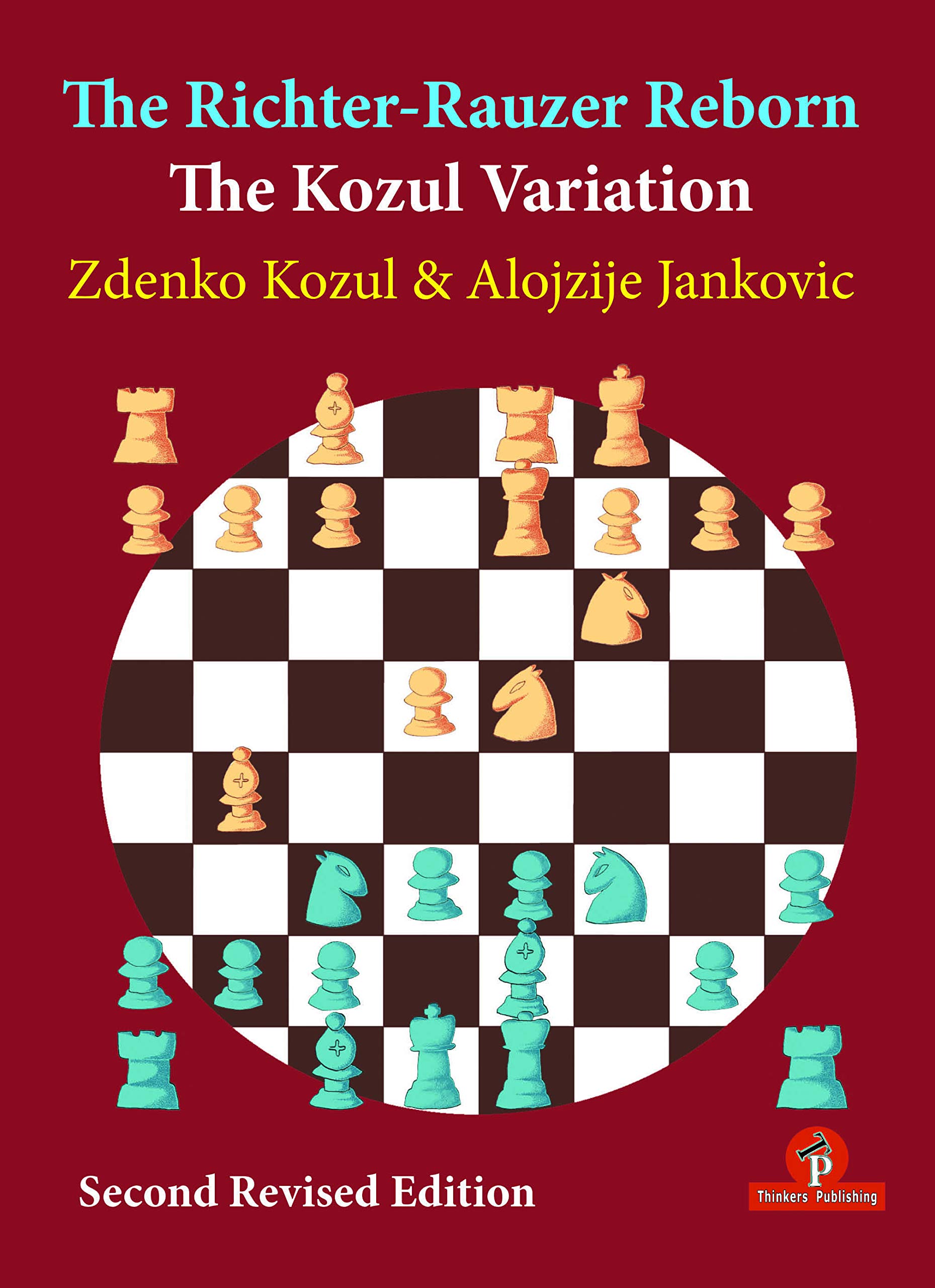
“The Richter-Rauzer is one of the most complex and rich battlegrounds in the Open Sicilian. This book is the distillation of the authors’ decades-long experience in this variation, offering a practical approach based on understanding and knowledge of typical ideas. Do you wish to explore something double-edged and sharp, this book will leave you confident and fully armed to play for a win. For this second revised edition, Grandmasters Kozul and Jankovic teamed up to present you a way to even throw your most experienced opponent off balance!”
“Zdenko Kozul is a Croatian Grandmaster and the winner of the 2006 European Individual Championship. He has represented his country at Olympiads, European and World Championships for almost twenty five years. His peak FIDE-rating he achieved in 2004, being 2640. Zdenko combines now successfully playing individual an team competitions with working as a trainer for the Croatian Chess Federation.”
“Alojzije Jankovic is a Grandmaster and FIDE trainer from Croatia. In 2010 he shared first place in the Croatian National Championships and played for the Croatian team et the Olympiad. He won several international tournaments and completed his degree at the faculty of Economics and Business at the University of Zagreb Croatia.”
At 400 pages The Richter-Rauzer Reborn (second edition) is, indeed, a weighty, almost massive tome ! The first edition was published in September 2014 at a mere 315 pages.
If you are curious (as we were) about the naming of this variation then there is an interesting article (albeit from 2015) on chess.com.
For those unfamiliar with Sicilian Defence naming schemes, the Richter-Rauzer is one of the sharper open sicilians which starts here :
in which …d6 and …Nc6 are interchangeable to get here.
The Kozul Variation continues from the above position to reach :
MegaBase 2020 lists around 9,000 games with 8…Bd7 with 8…h6 as the runner-up alternative. If we turn on the “Top Games” option we find almost 4,000 games so clearly a popular line at the top level.
Fairly obviously this is a highly theoretical variation (which is not unusual for the open sicilians) with many transpositional possibilities mixed in with sharp and hairy lines : buyer beware !
As with every recent Thinkers Publishing publication high quality paper is used and the printing is clear. The book can easily be laid flat next to the board and does not require weights to prevent it from “self-closing” (a particular bugbear of ours !). Each diagram is clear and the instructional text is typeset in two column format, which, we find, enables the reader to maintain their place easily. Figurine algebraic notation is used throughout and the diagrams are placed adjacent to the relevant text and each diagram has a “to move” indicator.
There is no index which, unfortunately, is a standard omission of Thinkers Publishing books. Also missing is a bibliography.
The main content is divided into ten chapters :
9.f3
10th move sidelines
10.Nxc6
11th move sidelines
12.Nce2
12.Nf5
12.Nf3
13.f5
13.Qe1 & 15.–
13.Qe1 & 15.Bd3
In each of these chapters there is an immense amount of detailed analysis to work through and therefore we have 400 pages of material on a position starting at move nine ! An incredible tour de force of an opening book that will take some beating for depth and detail. Probably invaluable to the devotees of the open sicilian and certainly not for feint hearted. Almost certainly this audience for this book will consist of 2000+ Elo rated players who have the motivation to investigate the fine detail and ideas of this hyper sharp line.
Clearly we have not checked the analysis (and why we would we do that anyway?) but if you play open sicilian with either colour and you want to everything there is to know about the Richter-Rauzer then this book is for you.
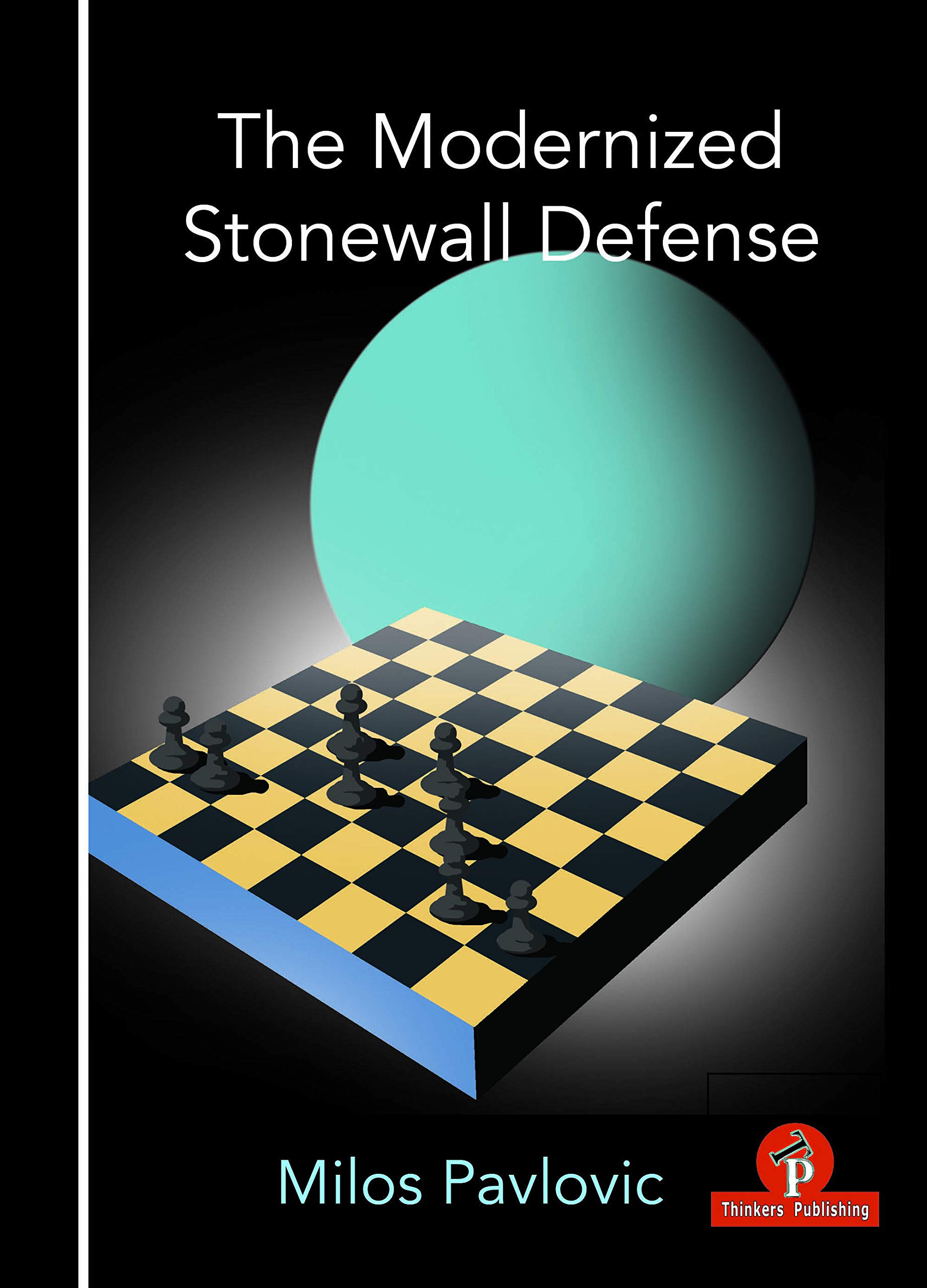
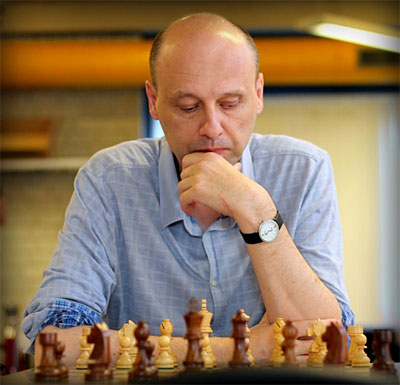
Grandmaster Milos Pavlovic was born in Belgrade in 1964 and was Yugoslav Champion in 2002. He is a well known theoretician specialising in opening theory and has written many chess books and magazine articles.
GM Milos Pavlovic
This is his fifth title in the “Modernized” series from Thinkers Publishing with a fourth on the Scotch Game having being published on November 17th. We first reviewed a title in this series with The Modernized Caro-Kann from GM Daniel Fernandez and then we reviewed The Modernised Colle-Zuckertort from Pavlovic.
As with every recent Thinkers Publishing publication high quality paper is used and the printing is clear. The book can easily be laid flat next to the board and does not require weights to prevent it from “self-closing” (a particular bugbear of ours !). Each diagram is clear and the instructional text is typeset in two column format, which, we find, enables the reader to maintain their place easily. Figurine algebraic notation is used throughout and the diagrams are placed adjacent to the relevant text and each diagram has a “to move” indicator.
There is no index which, unfortunately, is a standard omission of Thinkers Publishing books. Also missing is a bibliography.
The main content is divided into eleven chapters organised into four parts :
Part I -Systems with g3 and Nh3
Chapter 1 – 5.Nh3
Part II – Systems with g3 and Nf3 (Classicial approach with …Be7
Chapter 2 – 7.Nc3
Chapter 3 – 7.b3
Chapter 4 – The Surprising 6…Ne4!?
Part III – Systems with g3 and Nf3 (Modern approach with Bd6
Chapter 5 7.Qc2
Chapter 6 7.b3
Chapter 7 7.Nbd2
Part IV – Other White setups
Chapter 8 – White plays d4, c4 and Nc3
Chapter 9 – White plays d4, Nf3 and e3
Chapter 10 – London System
Chapyter 11 – Irregular 3rd moves
The Stonewall Dutch has not hitherto had many books published about it. Popularised by Botvinnik it has found most support by club players rather than by elite Grandmasters. The well known structure for Black is typically :
arrived at by numerous move orders. In his Introduction the author emphasises the strategical nature of games played in this structure and its legendary reliability : perhaps viewed as a system to avoid losing rather than playing for a win. He goes on to layout the material covered.
The “Modernized” refers to an emphasis in which there is a more active set-up for Black :
rather than the older development on e7 :
As you can infer from the chapter titles the bulk of the book covers lines for White in which the f1 bishop is fianchettoed.
The approach of each chapter is to examine a variation move by move citing example games in sidenotes and the analysis is reinforced by an engine.
This is not a complete repertoire book on how to play the Dutch in general. The student will need to study and learn all of White’s popular second move alternatives such as
and
and, of course
to name but a few. However, there is a stand-alone chapter on
no doubt because of the London System’s huge popularity at club level in the last few years.
This book is ideal perhaps for someone who plays the Classical Dutch (or even the Lenningrad Dutch) who wishes to add the Stonewall to their repertoire. The treatment of the main lines in the Bd6 and Be7 Stonewalls is detailed and up-to-date as of 2020.
If you have never played the Dutch before (as Black) then this book forms the basis of your study with perhaps another Dutch book which covers the pesky second move alternatives. A common trick by Stonewall and Classical Dutch players (to circumvent some of these ideas) is to play 1…e6 rather than 1…f5 but, you will need to be happy playing the Black side of a French Defence after 2.e4.
Playing the Stonewall Dutch will add to your understanding of positional chess and strategy and, of course, Black has won many games with this weapon using a King side attack especially with the g pawn !
We like this book and so will you.
John Upham, Cove, Hampshire, 7th May, 2020
John Upham
Book Details :
Hardcover : 198 pages
Publisher: Thinkers Publishing; 01 edition (19 May 2020)
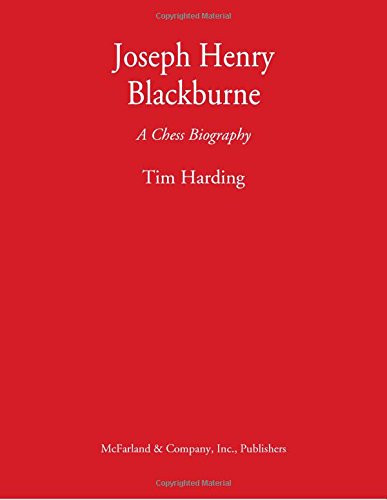
“Timothy David Harding was born in London. He has been playing both over-the-board and correspondence chess since the 1960s. Harding played on the Irish team at the 1984 FIDE Olympiad in Thessaloniki, scoring 50%. In 2002 he achieved the title of Senior International Master of Correspondence Chess. He is also a Candidate Master (2015).
As a chess historian, Harding has authored dozens of books on chess since 1973. He is also the author of the “The Kibitzer”, a popular chess column published at ChessCafe.com.
“Timothy David Harding (born 6 May 1948 in London)[1] is a chess player and author with particular expertise in correspondence chess. He published a correspondence chess magazine Chess Mail from 1996 to 2006[2] and authored “The Kibitzer”, a ChessCafe.com column from 1996 until 2015.[3] In 2002, he was awarded the title Senior International Master of Correspondence Chess by the International Correspondence Chess Federation. Harding has lived in Dublin since 1976,[2] writing a weekly column for The Sunday Press from then until 1995.
In 2009, Harding received a PhD degree in history from University of Dublin, with his thesis on correspondence chess in Britain and Ireland, 1824–1914.[4]
He is credited with coining the name Frankenstein–Dracula Variation in his 1975 Vienna Game book.”
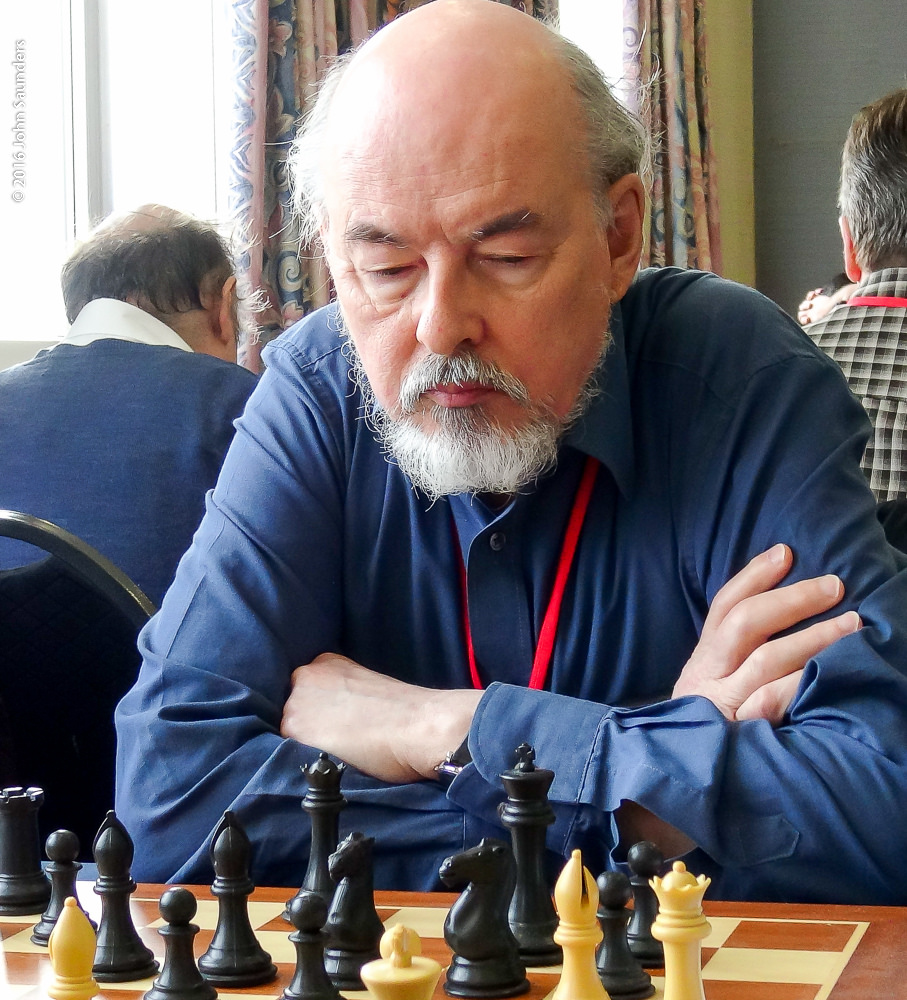
Timothy David Harding (06-v-1948)
Tim has written / co-authored at least forty chess books and here is a selection :
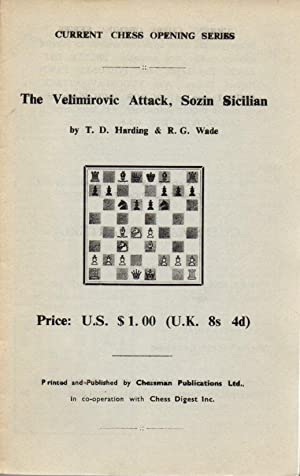
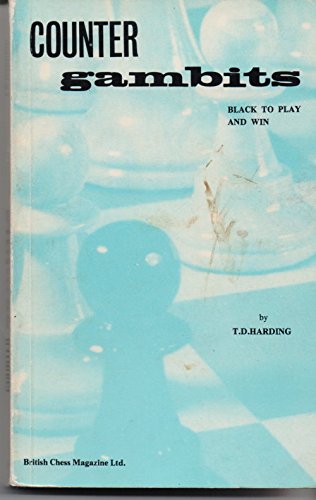
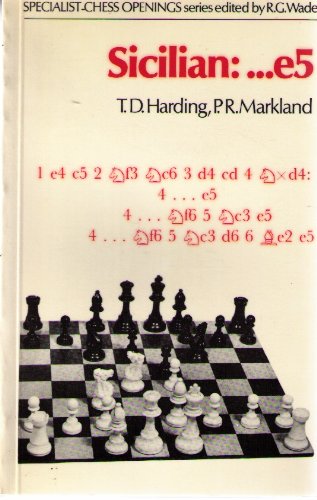
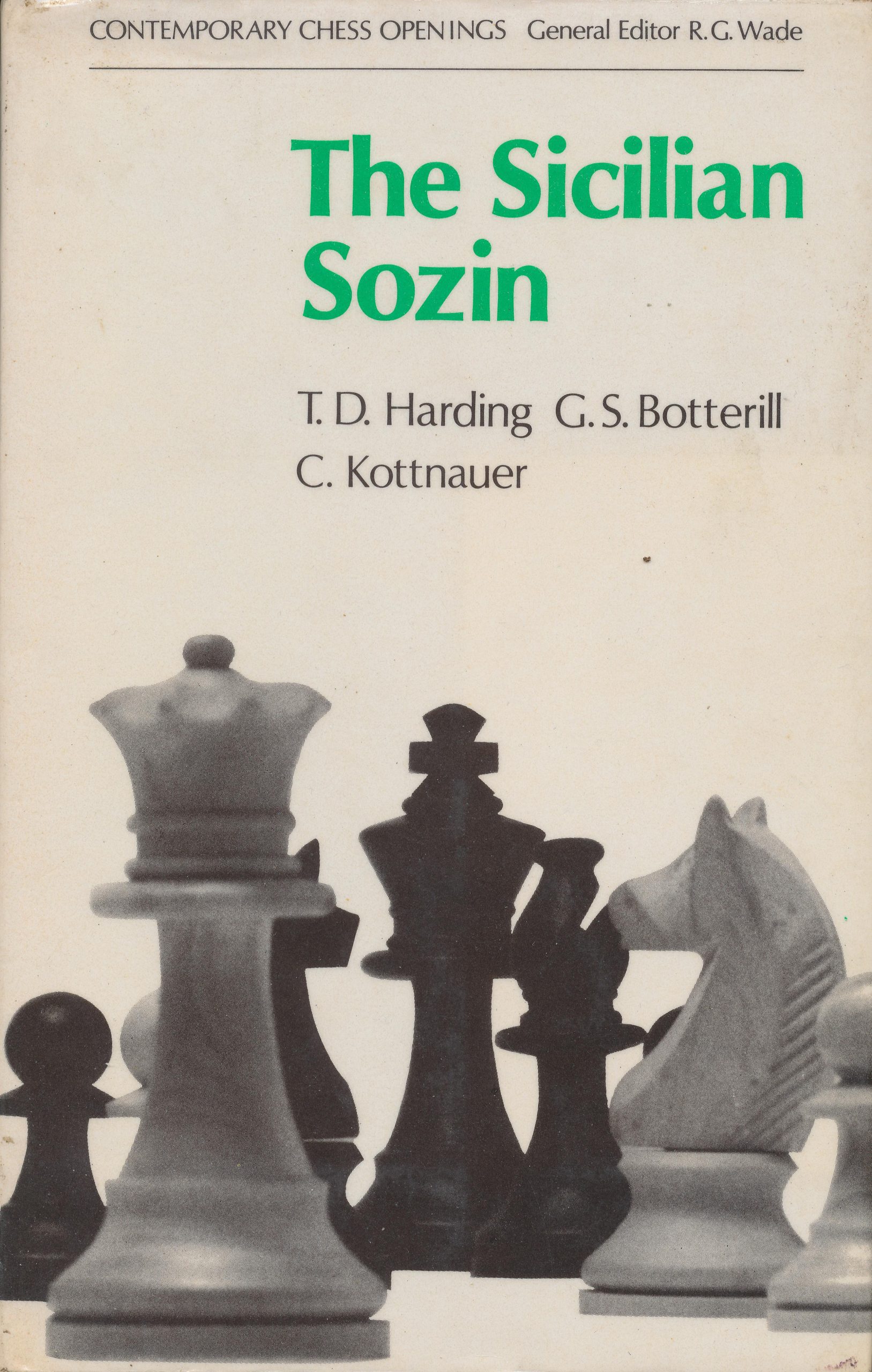
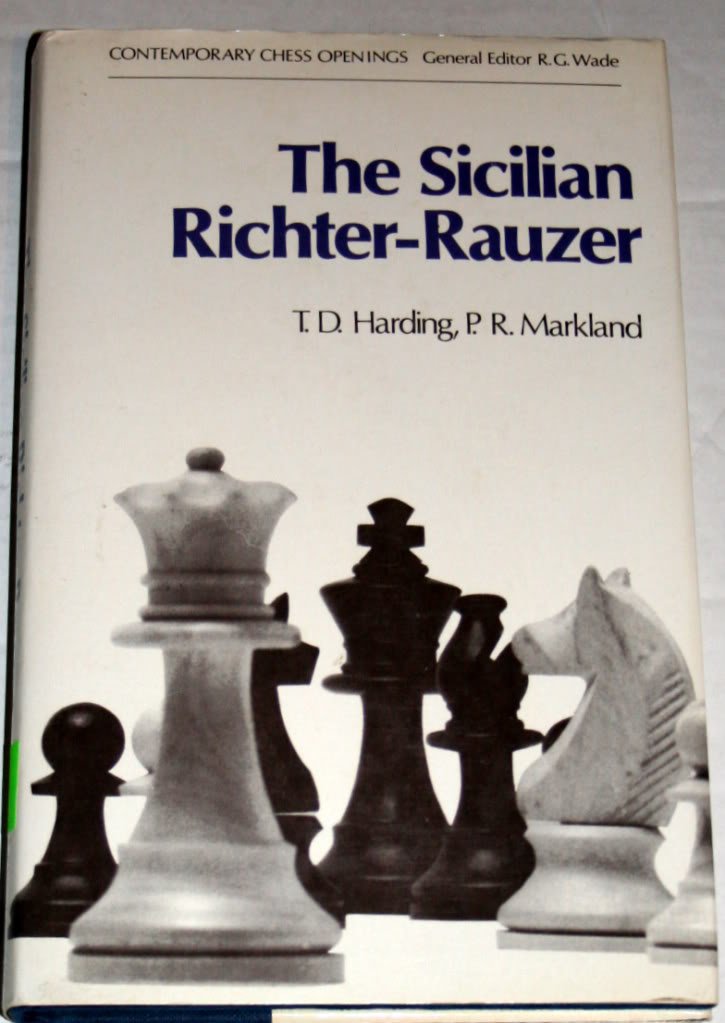
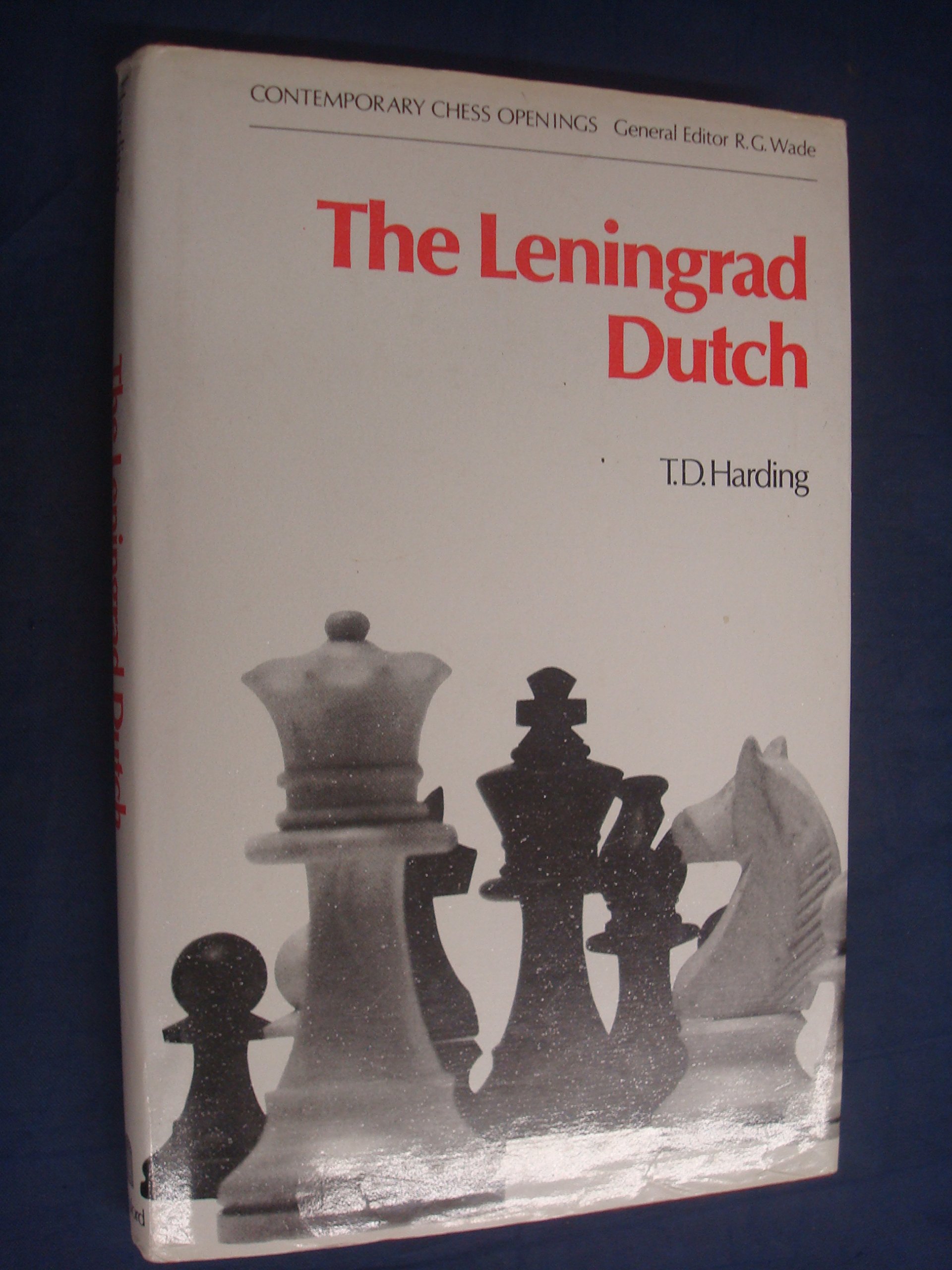
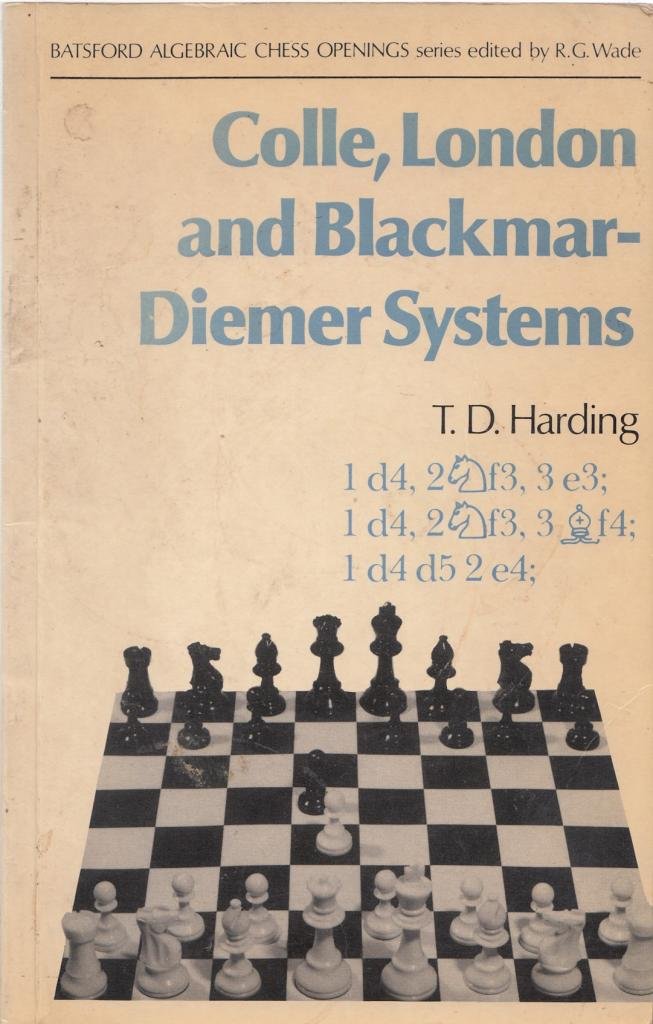
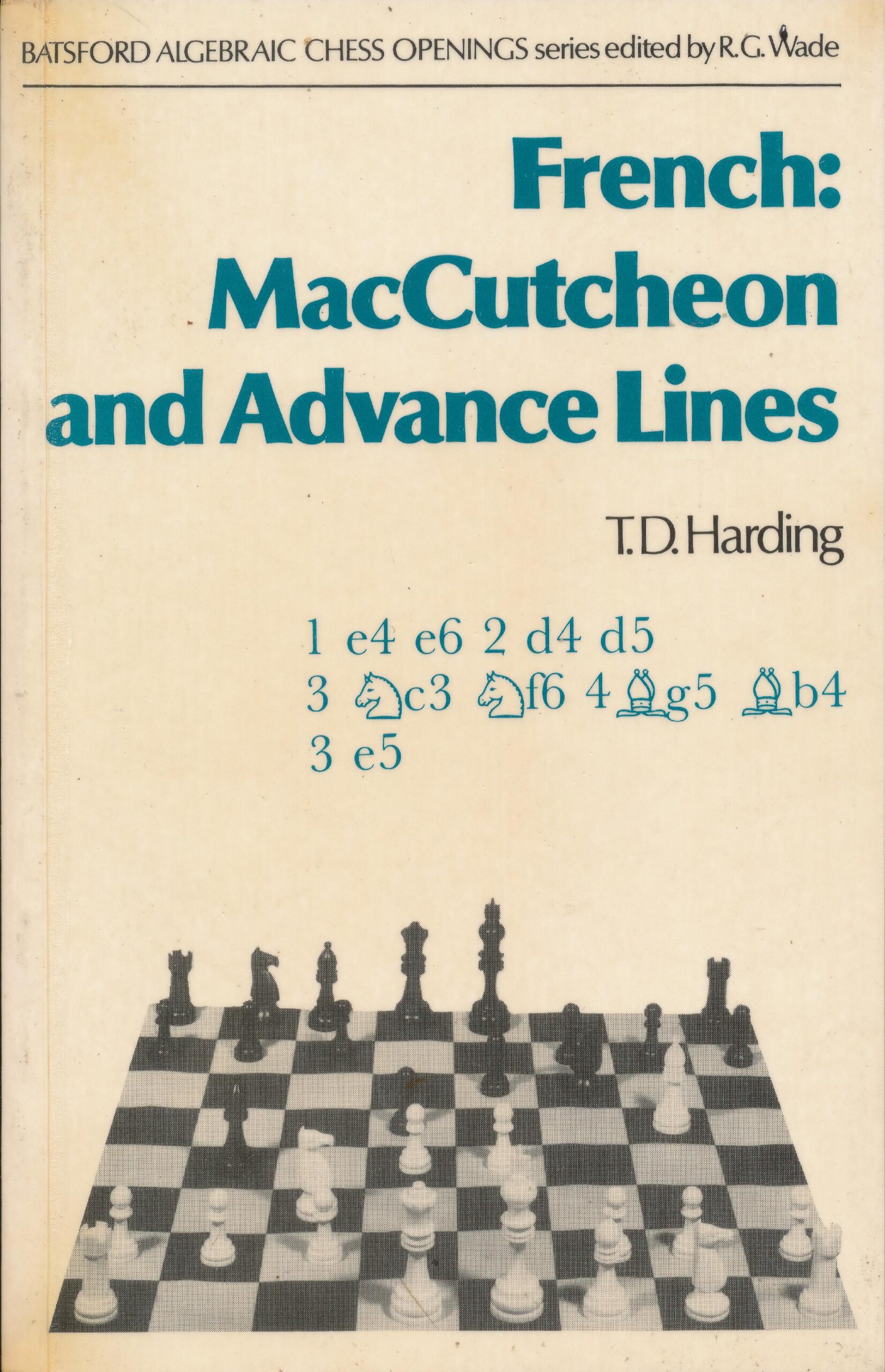
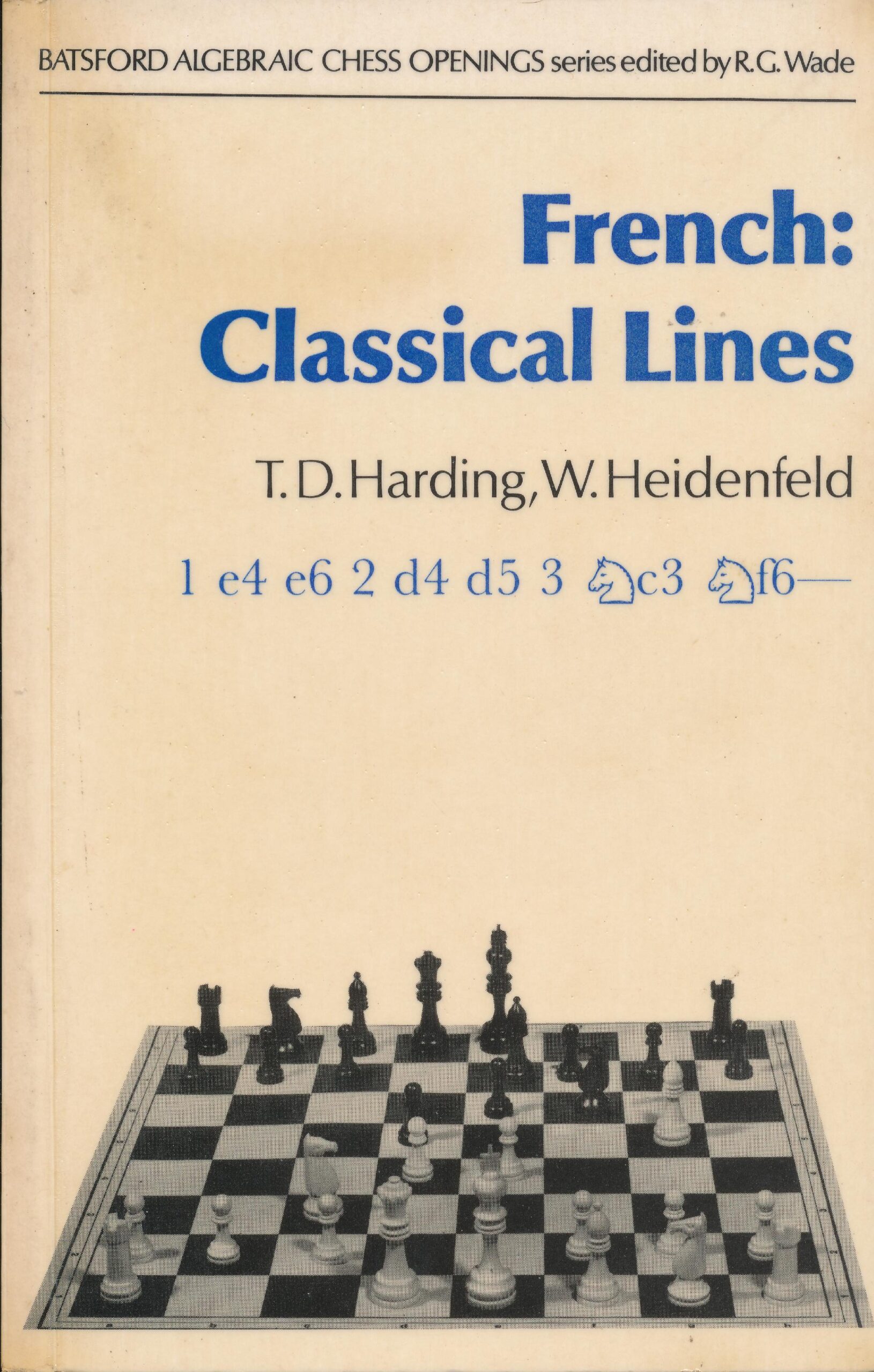
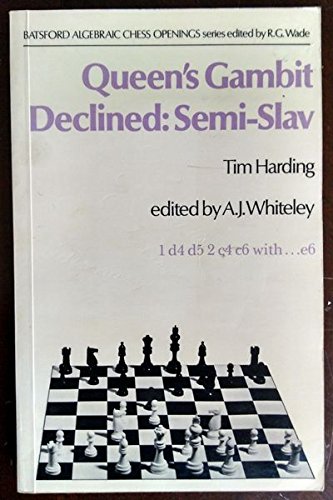
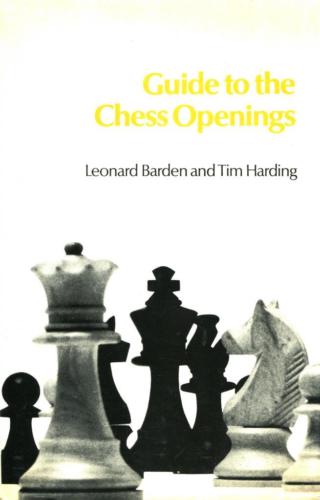
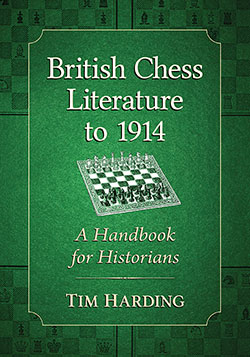
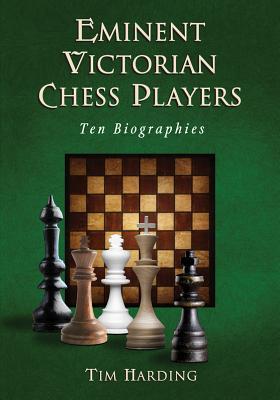
The Velimirovic Attack, Sozin Sicilian, TD Harding and RG Wade, Chessman Publications Ltd., 1969.Counter gambits by Timothy D. Harding (1974)Sicilian:…e5 by TD Harding & PR MarklandThe Sicilian Sozin, TD Harding, GS Botterill, C. Kottnauer, Batsford, 1974Sicilian Richter-RauzerThe Leningrad Dutch, BT Batsford, Tim Harding, 1976Colle, London and Blackmar-Diemer Systems, BT Batsford Ltd, Tim Harding, 1979French: MacCutcheon and Advance Lines, Batsford, 1979French: Classical Lines, Batsford, 1979Queen’s Gambit Declined : Semi-Slav, Tim Harding, BT Batsford Ltd., 1981Guide to the Chess OpeningsBritish Chess Literature to 1914 : A Handbook for HistoriansEminent Victorian Chess PlayersJoseph Henry Blackburne: A Chess Biography
BCN remembers Roland Scott who passed away in Monte Carlo on Saturday, January 10th, 1953.
Roland Henry Vaughan Scott was born in either Barnes or Holloway depending which Census record is correct. His parents were Walter Frederick Scott, a GP who was born in April 1960 and died in 1891 when Roland was three years of age.
His mother was Lucie Vaughan was born in 1855 and died in October 1933.
Roland had two sisters, Nina Vaughan Scott and Lucie / Lucia Audrey Scott (who died before her first birthday) and a brother Guy Francis D Scott who lived until 1977.
In 1891 Roland lived in Tottenham, in 1901 in Hampstead and in 1911 in St. Pancras where he was listed as a law clerk.
In 1917 The London Gazette lists him as a lieutenant in the Norfolk Regiment.
The 1920 electoral rolls for the Gospel Oak polling district lists Scott as voter #2006 living at 2, Estelle Road, North St. Pancras which is now in Belsize Park, NW3 2JX. At the same address was his sister Lucie and in 1921 they were joined by brother Guy.
In July 1922 in the district of Brighton Roland married Irma Clareboudt. No children from the marriage are recorded.
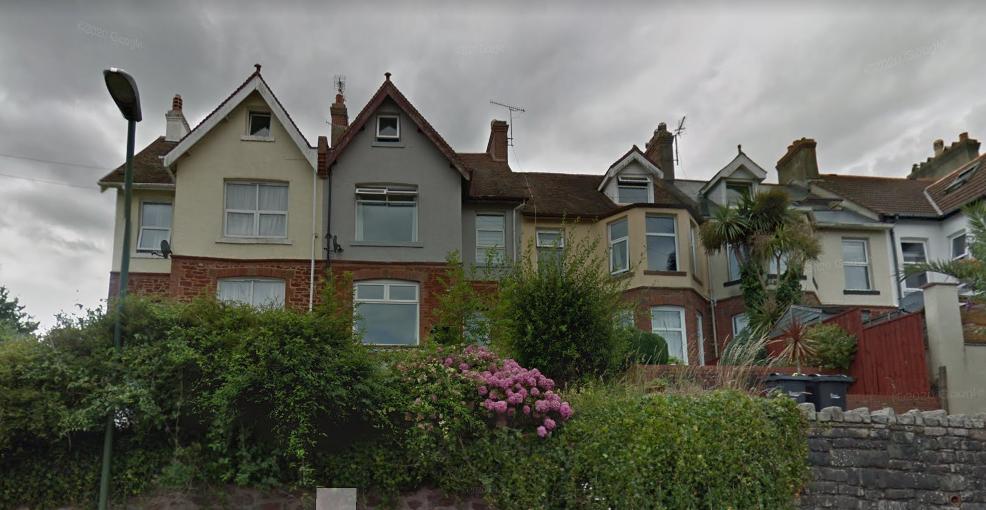
The 1939 register lists Scott as “War Disabled ? Officer Retired In War 1914” (invalided from army) and Irma as a saleswoman (born 25th July 1895) living at 42, Sherwell Lane, Paignton, Torquay, TQ2 6BD.
42, Sherwell Lane, Paignton, Devon, TQ2 6BD.
The April 1953 British Chess Magazine (Volume LXXIII, Number 4, page 101 onwards) contained this obituary from DJ Morgan:
It is with much regret that we record the death, on January 10th, at Monte Carlo, of R. H. V. Scott. He had long been out of active chess, but older readers will need no reminding of the 1920 British Champion, with his quiet manner but attacking chess; one who was composure itself at the table but aggressiveness personified on the board.
The son of a doctor, Scott was born in 1889. He was nineteen before taking to the game, but a ready aptitude combined with great enthusiasm led to rapid progress. He joined the Hampstead Club in 1908, and in his first tournament, the Third Class, came out first. ln the years that follow he pursued the game with much energy.
At the B.C.F. Congress, Glasgow, l9ll, he won the only section of the First Class. In 1913 and in 1914 he was Hampstead Club Champion. In 1913 he was tenth in the British Championship, at Cheltenham, and equal fifth to sixth at Chester in the following year, defeating Yates and drawing with Blackburne.
In 1915 he came second in the City of London Club Championship, but won that of the Metropolitan Club. During the same year he lost a short match with Sir G. A. Thomas 1-3. The war years, with a commission in the Norfolk Regiment, intervened, but chess filled his available moments.
In 1916 he defeated L. I. Estrin, a young Russian who was Hampstead Champion, 5-2 in a match. ln 1919 he lost a match with Winter at Hastings (2-4), and shared seventh to eighth positions with Dr. Olland (Holland) at the B.C.F. Hastings Victory Congress, with victories over Olland,
R. P. Michell, Marchand, and Conde. Then came the B.C.F. Edinburgh Congress of 1920, Scott became British Champion, losing only
to Sir G. A. Thomas.
In this year he also drew a match, 3-3, with Marchand, of Holland, also at Hastings. There followed three more appearances in the championship, Malvern, 1921 (equal fifth to sixth); Southsea,1923 (equal third to fourth); and Southport, 1924 (fourth). And with this Scott passed out of British chess. Ill health and failing eyesight, direct results of sufferings and injuries endured on active service during the war, began to take their toll. On medical advice he sought a warmer climate, and the Riviera henceforth became his home.
We find him sharing seventh to eighth positions at the Hyères Congress, in 1926, and coming equal fifth to sixth, with B. Reilly (our Editor’s first international tourney we believe), at Hyères, 1927.
The days of active play were over, but his great interest in the game remained. Scott was a natural attacking player, more likely, perhaps, to win the Brilliancy Prize than the First Prize.
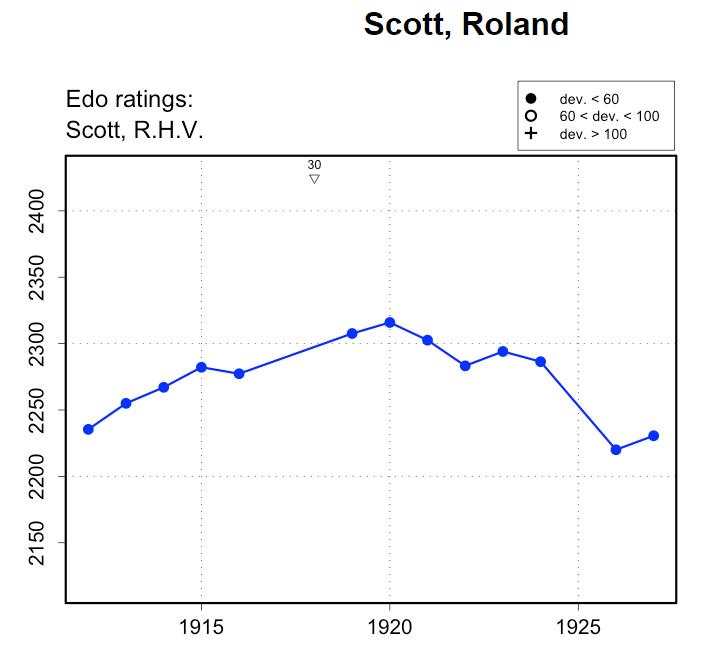
Edo rating profile for RHV Scott
We have given the bare outline of a career that was all too short, one cut down, in a sense before reaching full maturity. Contemporary records sometimes expressed the need for more stability in Scott’s chess, but they chronicle games of his that speak forcibly of the imaginative, refreshing, and invigorating qualities of his play. We offer an early game, the Brilliancy Prize winner, City of London C.C. Championship, 1913-14. White’s 20th move sets the game alight.
From British Chess Magazine, Volume XLI (1920), Number 10 (October), page 305 we have the following report of his exploits winning the 1920 British Championship in Edinburgh:
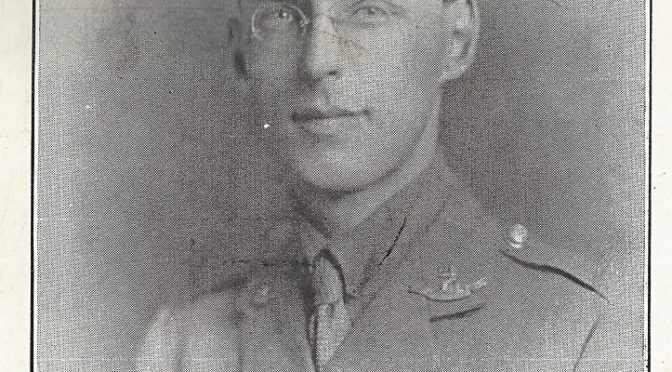
“We are glad to be able to present to our readers a photograph of the new champion, Mr. R.H.V Scott. He informs us that it is his most recent one, taken in 1917 when subaltern in the Norfolk Regiment. He saw service with the latter in France, and, as is probably know to most of our subscribers, was badly gassed, from the effects of which is now happily quite recovered.
His victory in the recent Congress in Edinburgh is welcome from at least two points of view; one, that he is one of our youngest first class players (ed: he was 32 at the time, a veteran by the standards of 2022!), having been born in 1889 (ed: this should have been 1888), and therefore may justifiably be expected to improve still further with experience and some curbing of his impatience in defence; and, two, that he claim to represent the more brilliant school of chess, that of Pillsbury, Marshall, Charousek, and Morphy, rather than the more solid school, of say, Steinitz and Rubinstein, who theory was the pilling up of small advantages.
Scott has an excellent “nose” for attack, and has some exceedingly “chessy” ideas. During the congress he put a much greater restraint on himself than is his wont, and we believe this to be the reason he so improved on his previous records.
He had what might be described as the worst of the draw, since he had Black against Sir George Thomas, EG Sergeant and RP Michell. Some writers have described him as lucky to win, but a study of his games and a comparison with those of others in the tourney go to prove that he played more far-sightedly than any of the others.
We are quite aware that the form of any player is variable, and we have seen Sir George Thomas play much better chess and much less strainedly than he did at Edinburgh. EG Sergeant was generally playing quite at his best, but once or twice his play deteriorated, perhaps as the result of a sleepless night, he then seemed bereft of ideas, and allowed the clock to beat him. This also was the case with Michell, who had many a rush to save his flag falling before the necessary moves were made. Now Scott almost invariably had time to spare.
Perhaps the worst reversal of form was that of JH Blake; but he had been working very hard and late for some time right up to the day the Congress commenced, and was not really in a fit state of health to take part.
Scott has twice before competed for the Championship; in 1913 where he finished eighth, and in 1914 when he was fifth, beating FD Yates, the then Champion and drawing with JH Blackburne.
He has won several brilliancy prizes in congress and club tourneys, and was the champion of the Hampstead Chess Club (where he may have been said to have learnt the game) in 1913 and 1914. He was first acquainted with the moves in 1908.
He is keen on all sports, and puts his whole energy into each line he may be taking. With yet more self-restraint we think his chess will still further improve, and we venture to prophesy this will not be the last British Chess Championship he will win.”
In his memoirs William Winter wrote this:
“I also had the opportunity of playing a number of semi-serious games with RHV Scott and D. Miller, two of the leading London amateurs. Scott was probably the most brilliant combinative played England has ever seen and had already won almost every honour except the British Championship, which fell to him in 1920.
Since those days I have played over hundreds of games, including the beautiful brilliancies of the modern Russian school, and Scott’s best combinations stand up quite well beside them. There were however weaknesses in his play which I shall discuss later. Miller was just the opposite type, a dour solid player exceptionally hard to beat. He is, I am glad to say, still with us, but Scott died a few years ago – he had been out of chess for a long time.”
and this:
“It is entirely legitimate, and can prove very useful until one comes up against an opponent like Capablanca who had no weaknesses of any kind. ln Scott’s case, one of his foibles was an aversion to exchanging queens, and I took full advantage of this in the first two games of the match both of which I won with comparative ease; but Scott was not finished yet.’ In the third game he tied me up in a variation of the Sicilian which I had not previously seen, and in the fourth I made the fatal mistake in going for an early win of material and allowing him a king’s side attack. Things now looked bad for me. I had the black pieces in the fifth game and I dared not play my favourite Sicilian defence because I could not discover a satisfactory answer to his new line.”
Strangely, none of the Encyclopaedia’s by Golombek, Sunnucks or Hooper & Whyld felt that RHVS merited an entry. However Gaige does not forget.
BCN remembers Roland Scott who passed away in Monte Carlo on Saturday, January 10th, 1953.
Roland Henry Vaughan Scott was born in either Barnes or Holloway depending which Census record is correct. His parents were Walter Frederick Scott, a GP who was born in April 1960 and died in 1891 when Roland was three years of age.
His mother was Lucie Vaughan was born in 1855 and died in October 1933.
Roland had two sisters, Nina Vaughan Scott and Lucie / Lucia Audrey Scott (who died before her first birthday) and a brother Guy Francis D Scott who lived until 1977.
In 1891 Roland lived in Tottenham, in 1901 in Hampstead and in 1911 in St. Pancras where he was listed as a law clerk.
In 1917 The London Gazette lists him as a lieutenant in the Norfolk Regiment.
The 1920 electoral rolls for the Gospel Oak polling district lists Scott as voter #2006 living at 2, Estelle Road, North St. Pancras which is now in Belsize Park, NW3 2JX. At the same address was his sister Lucie and in 1921 they were joined by brother Guy.
In July 1922 in the district of Brighton Roland married Irma Clareboudt. No children from the marriage are recorded.
The 1939 register lists Scott as “War Disabled ? Officer Retired In War 1914” (invalided from army) and Irma as a saleswoman (born 25th July 1895) living at 42, Sherwell Lane, Paignton, Torquay, TQ2 6BD.
42, Sherwell Lane, Paignton, Devon, TQ2 6BD.
The April 1953 British Chess Magazine (Volume LXXIII, Number 4, page 101 onwards) contained this obituary from DJ Morgan:
It is with much regret that we record the death, on January 10th, at Monte Carlo, of R. H. V. Scott. He had long been out of active chess, but older readers will need no reminding of the 1920 British Champion, with his quiet manner but attacking chess; one who was composure itself at the table but aggressiveness personified on the board.
The son of a doctor, Scott was born in 1889. He was nineteen before taking to the game, but a ready aptitude combined with great enthusiasm led to rapid progress. He joined the Hampstead Club in 1908, and in his first tournament, the Third Class, came out first. ln the years that follow he pursued the game with much energy.
At the B.C.F. Congress, Glasgow, l9ll, he won the only section of the First Class. In 1913 and in 1914 he was Hampstead Club Champion. In 1913 he was tenth in the British Championship, at Cheltenham, and equal fifth to sixth at Chester in the following year, defeating Yates and drawing with Blackburne.
In 1915 he came second in the City of London Club Championship, but won that of the Metropolitan Club. During the same year he lost a short match with Sir G. A. Thomas 1-3. The war years, with a commission in the Norfolk Regiment, intervened, but chess filled his available moments.
In 1916 he defeated L. I. Estrin, a young Russian who was Hampstead Champion, 5-2 in a match. ln 1919 he lost a match with Winter at Hastings (2-4), and shared seventh to eighth positions with Dr. Olland (Holland) at the B.C.F. Hastings Victory Congress, with victories over Olland,
R. P. Michell, Marchand, and Conde. Then came the B.C.F. Edinburgh Congress of 1920, Scott became British Champion, losing only
to Sir G. A. Thomas.
In this year he also drew a match, 3-3, with Marchand, of Holland, also at Hastings. There followed three more appearances in the championship, Malvern, 1921 (equal fifth to sixth); Southsea,1923 (equal third to fourth); and Southport, 1924 (fourth). And with this Scott passed out of British chess. Ill health and failing eyesight, direct results of sufferings and injuries endured on active service during the war, began to take their toll. On medical advice he sought a warmer climate, and the Riviera henceforth became his home.
We find him sharing seventh to eighth positions at the Hyères Congress, in 1926, and coming equal fifth to sixth, with B. Reilly (our Editor’s first international tourney we believe), at Hyères, 1927.
The days of active play were over, but his great interest in the game remained. Scott was a natural attacking player, more likely, perhaps, to win the Brilliancy Prize than the First Prize.
Edo rating profile for RHV Scott
We have given the bare outline of a career that was all too short, one cut down, in a sense before reaching full maturity. Contemporary records sometimes expressed the need for more stability in Scott’s chess, but they chronicle games of his that speak forcibly of the imaginative, refreshing, and invigorating qualities of his play. We offer an early game, the Brilliancy Prize winner, City of London C.C. Championship, 1913-14. White’s 20th move sets the game alight.
From British Chess Magazine, Volume XLI (1920), Number 10 (October), page 305 we have the following report of his exploits winning the 1920 British Championship in Edinburgh:
“We are glad to be able to present to our readers a photograph of the new champion, Mr. R.H.V Scott. He informs us that it is his most recent one, taken in 1917 when subaltern in the Norfolk Regiment. He saw service with the latter in France, and, as is probably know to most of our subscribers, was badly gassed, from the effects of which is now happily quite recovered.
His victory in the recent Congress in Edinburgh is welcome from at least two points of view; one, that he is one of our youngest first class players (ed: he was 32 at the time, a veteran by the standards of 2022!), having been born in 1889 (ed: this should have been 1888), and therefore may justifiably be expected to improve still further with experience and some curbing of his impatience in defence; and, two, that he claim to represent the more brilliant school of chess, that of Pillsbury, Marshall, Charousek, and Morphy, rather than the more solid school, of say, Steinitz and Rubinstein, who theory was the pilling up of small advantages.
Scott has an excellent “nose” for attack, and has some exceedingly “chessy” ideas. During the congress he put a much greater restraint on himself than is his wont, and we believe this to be the reason he so improved on his previous records.
He had what might be described as the worst of the draw, since he had Black against Sir George Thomas, EG Sergeant and RP Michell. Some writers have described him as lucky to win, but a study of his games and a comparison with those of others in the tourney go to prove that he played more far-sightedly than any of the others.
We are quite aware that the form of any player is variable, and we have seen Sir George Thomas play much better chess and much less strainedly than he did at Edinburgh. EG Sergeant was generally playing quite at his best, but once or twice his play deteriorated, perhaps as the result of a sleepless night, he then seemed bereft of ideas, and allowed the clock to beat him. This also was the case with Michell, who had many a rush to save his flag falling before the necessary moves were made. Now Scott almost invariably had time to spare.
Perhaps the worst reversal of form was that of JH Blake; but he had been working very hard and late for some time right up to the day the Congress commenced, and was not really in a fit state of health to take part.
Scott has twice before competed for the Championship; in 1913 where he finished eighth, and in 1914 when he was fifth, beating FD Yates, the then Champion and drawing with JH Blackburne.
He has won several brilliancy prizes in congress and club tourneys, and was the champion of the Hampstead Chess Club (where he may have been said to have learnt the game) in 1913 and 1914. He was first acquainted with the moves in 1908.
He is keen on all sports, and puts his whole energy into each line he may be taking. With yet more self-restraint we think his chess will still further improve, and we venture to prophesy this will not be the last British Chess Championship he will win.”
In his memoirs William Winter wrote this:
“I also had the opportunity of playing a number of semi-serious games with RHV Scott and D. Miller, two of the leading London amateurs. Scott was probably the most brilliant combinative played England has ever seen and had already won almost every honour except the British Championship, which fell to him in 1920.
Since those days I have played over hundreds of games, including the beautiful brilliancies of the modern Russian school, and Scott’s best combinations stand up quite well beside them. There were however weaknesses in his play which I shall discuss later. Miller was just the opposite type, a dour solid player exceptionally hard to beat. He is, I am glad to say, still with us, but Scott died a few years ago – he had been out of chess for a long time.”
and this:
“It is entirely legitimate, and can prove very useful until one comes up against an opponent like Capablanca who had no weaknesses of any kind. ln Scott’s case, one of his foibles was an aversion to exchanging queens, and I took full advantage of this in the first two games of the match both of which I won with comparative ease; but Scott was not finished yet.’ In the third game he tied me up in a variation of the Sicilian which I had not previously seen, and in the fourth I made the fatal mistake in going for an early win of material and allowing him a king’s side attack. Things now looked bad for me. I had the black pieces in the fifth game and I dared not play my favourite Sicilian defence because I could not discover a satisfactory answer to his new line.”
Strangely, none of the Encyclopaedia’s by Golombek, Sunnucks or Hooper & Whyld felt that RHVS merited an entry. However Gaige does not forget.
BCN remembers Roland Scott who passed away in Monte Carlo on Saturday, January 10th, 1953.
Roland Henry Vaughan Scott was born in either Barnes or Holloway depending which Census record is correct. His parents were Walter Frederick Scott, a GP who was born in April 1960 and died in 1891 when Roland was three years of age.
His mother was Lucie Vaughan was born in 1855 and died in October 1933.
Roland had two sisters, Nina Vaughan Scott and Lucie / Lucia Audrey Scott (who died before her first birthday) and a brother Guy Francis D Scott who lived until 1977.
In 1891 Roland lived in Tottenham, in 1901 in Hampstead and in 1911 in St. Pancras where he was listed as a law clerk.
In 1917 The London Gazette lists him as a lieutenant in the Norfolk Regiment.
The 1920 electoral rolls for the Gospel Oak polling district lists Scott as voter #2006 living at 2, Estelle Road, North St. Pancras which is now in Belsize Park, NW3 2JX. At the same address was his sister Lucie and in 1921 they were joined by brother Guy.
In July 1922 in the district of Brighton Roland married Irma Clareboudt. No children from the marriage are recorded.
The 1939 register lists Scott as “War Disabled ? Officer Retired In War 1914” (invalided from army) and Irma as a saleswoman (born 25th July 1895) living at 42, Sherwell Lane, Paignton, Torquay, TQ2 6BD.
42, Sherwell Lane, Paignton, Devon, TQ2 6BD.
The April 1953 British Chess Magazine (Volume LXXIII, Number 4, page 101 onwards) contained this obituary from DJ Morgan:
It is with much regret that we record the death, on January 10th, at Monte Carlo, of R. H. V. Scott. He had long been out of active chess, but older readers will need no reminding of the 1920 British Champion, with his quiet manner but attacking chess; one who was composure itself at the table but aggressiveness personified on the board.
The son of a doctor, Scott was born in 1889. He was nineteen before taking to the game, but a ready aptitude combined with great enthusiasm led to rapid progress. He joined the Hampstead Club in 1908, and in his first tournament, the Third Class, came out first. ln the years that follow he pursued the game with much energy.
At the B.C.F. Congress, Glasgow, l9ll, he won the only section of the First Class. In 1913 and in 1914 he was Hampstead Club Champion. In 1913 he was tenth in the British Championship, at Cheltenham, and equal fifth to sixth at Chester in the following year, defeating Yates and drawing with Blackburne.
In 1915 he came second in the City of London Club Championship, but won that of the Metropolitan Club. During the same year he lost a short match with Sir G. A. Thomas 1-3. The war years, with a commission in the Norfolk Regiment, intervened, but chess filled his available moments.
In 1916 he defeated L. I. Estrin, a young Russian who was Hampstead Champion, 5-2 in a match. ln 1919 he lost a match with Winter at Hastings (2-4), and shared seventh to eighth positions with Dr. Olland (Holland) at the B.C.F. Hastings Victory Congress, with victories over Olland,
R. P. Michell, Marchand, and Conde. Then came the B.C.F. Edinburgh Congress of 1920, Scott became British Champion, losing only
to Sir G. A. Thomas.
In this year he also drew a match, 3-3, with Marchand, of Holland, also at Hastings. There followed three more appearances in the championship, Malvern, 1921 (equal fifth to sixth); Southsea,1923 (equal third to fourth); and Southport, 1924 (fourth). And with this Scott passed out of British chess. Ill health and failing eyesight, direct results of sufferings and injuries endured on active service during the war, began to take their toll. On medical advice he sought a warmer climate, and the Riviera henceforth became his home.
We find him sharing seventh to eighth positions at the Hyères Congress, in 1926, and coming equal fifth to sixth, with B. Reilly (our Editor’s first international tourney we believe), at Hyères, 1927.
The days of active play were over, but his great interest in the game remained. Scott was a natural attacking player, more likely, perhaps, to win the Brilliancy Prize than the First Prize.
Edo rating profile for RHV Scott
We have given the bare outline of a career that was all too short, one cut down, in a sense before reaching full maturity. Contemporary records sometimes expressed the need for more stability in Scott’s chess, but they chronicle games of his that speak forcibly of the imaginative, refreshing, and invigorating qualities of his play. We offer an early game, the Brilliancy Prize winner, City of London C.C. Championship, 1913-14. White’s 20th move sets the game alight.
From British Chess Magazine, Volume XLI (1920), Number 10 (October), page 305 we have the following report of his exploits winning the 1920 British Championship in Edinburgh:
“We are glad to be able to present to our readers a photograph of the new champion, Mr. R.H.V Scott. He informs us that it is his most recent one, taken in 1917 when subaltern in the Norfolk Regiment. He saw service with the latter in France, and, as is probably know to most of our subscribers, was badly gassed, from the effects of which is now happily quite recovered.
His victory in the recent Congress in Edinburgh is welcome from at least two points of view; one, that he is one of our youngest first class players (ed: he was 32 at the time, a veteran by the standards of 2022!), having been born in 1889 (ed: this should have been 1888), and therefore may justifiably be expected to improve still further with experience and some curbing of his impatience in defence; and, two, that he claim to represent the more brilliant school of chess, that of Pillsbury, Marshall, Charousek, and Morphy, rather than the more solid school, of say, Steinitz and Rubinstein, who theory was the pilling up of small advantages.
Scott has an excellent “nose” for attack, and has some exceedingly “chessy” ideas. During the congress he put a much greater restraint on himself than is his wont, and we believe this to be the reason he so improved on his previous records.
He had what might be described as the worst of the draw, since he had Black against Sir George Thomas, EG Sergeant and RP Michell. Some writers have described him as lucky to win, but a study of his games and a comparison with those of others in the tourney go to prove that he played more far-sightedly than any of the others.
We are quite aware that the form of any player is variable, and we have seen Sir George Thomas play much better chess and much less strainedly than he did at Edinburgh. EG Sergeant was generally playing quite at his best, but once or twice his play deteriorated, perhaps as the result of a sleepless night, he then seemed bereft of ideas, and allowed the clock to beat him. This also was the case with Michell, who had many a rush to save his flag falling before the necessary moves were made. Now Scott almost invariably had time to spare.
Perhaps the worst reversal of form was that of JH Blake; but he had been working very hard and late for some time right up to the day the Congress commenced, and was not really in a fit state of health to take part.
Scott has twice before competed for the Championship; in 1913 where he finished eighth, and in 1914 when he was fifth, beating FD Yates, the then Champion and drawing with JH Blackburne.
He has won several brilliancy prizes in congress and club tourneys, and was the champion of the Hampstead Chess Club (where he may have been said to have learnt the game) in 1913 and 1914. He was first acquainted with the moves in 1908.
He is keen on all sports, and puts his whole energy into each line he may be taking. With yet more self-restraint we think his chess will still further improve, and we venture to prophesy this will not be the last British Chess Championship he will win.”
In his memoirs William Winter wrote this:
“I also had the opportunity of playing a number of semi-serious games with RHV Scott and D. Miller, two of the leading London amateurs. Scott was probably the most brilliant combinative played England has ever seen and had already won almost every honour except the British Championship, which fell to him in 1920.
Since those days I have played over hundreds of games, including the beautiful brilliancies of the modern Russian school, and Scott’s best combinations stand up quite well beside them. There were however weaknesses in his play which I shall discuss later. Miller was just the opposite type, a dour solid player exceptionally hard to beat. He is, I am glad to say, still with us, but Scott died a few years ago – he had been out of chess for a long time.”
and this:
“It is entirely legitimate, and can prove very useful until one comes up against an opponent like Capablanca who had no weaknesses of any kind. ln Scott’s case, one of his foibles was an aversion to exchanging queens, and I took full advantage of this in the first two games of the match both of which I won with comparative ease; but Scott was not finished yet.’ In the third game he tied me up in a variation of the Sicilian which I had not previously seen, and in the fourth I made the fatal mistake in going for an early win of material and allowing him a king’s side attack. Things now looked bad for me. I had the black pieces in the fifth game and I dared not play my favourite Sicilian defence because I could not discover a satisfactory answer to his new line.”
Strangely, none of the Encyclopaedia’s by Golombek, Sunnucks or Hooper & Whyld felt that RHVS merited an entry. However Gaige does not forget.
BCN remembers Roland Scott who passed away in Monte Carlo on Saturday, January 10th, 1953.
Roland Henry Vaughan Scott was born in either Barnes or Holloway depending which Census record is correct. His parents were Walter Frederick Scott, a GP who was born in April 1960 and died in 1891 when Roland was three years of age.
His mother was Lucie Vaughan was born in 1855 and died in October 1933.
Roland had two sisters, Nina Vaughan Scott and Lucie / Lucia Audrey Scott (who died before her first birthday) and a brother Guy Francis D Scott who lived until 1977.
In 1891 Roland lived in Tottenham, in 1901 in Hampstead and in 1911 in St. Pancras where he was listed as a law clerk.
In 1917 The London Gazette lists him as a lieutenant in the Norfolk Regiment.
The 1920 electoral rolls for the Gospel Oak polling district lists Scott as voter #2006 living at 2, Estelle Road, North St. Pancras which is now in Belsize Park, NW3 2JX. At the same address was his sister Lucie and in 1921 they were joined by brother Guy.
In July 1922 in the district of Brighton Roland married Irma Clareboudt. No children from the marriage are recorded.
The 1939 register lists Scott as “War Disabled ? Officer Retired In War 1914” (invalided from army) and Irma as a saleswoman (born 25th July 1895) living at 42, Sherwell Lane, Paignton, Torquay, TQ2 6BD.
42, Sherwell Lane, Paignton, Devon, TQ2 6BD.
The April 1953 British Chess Magazine (Volume LXXIII, Number 4, page 101 onwards) contained this obituary from DJ Morgan:
It is with much regret that we record the death, on January 10th, at Monte Carlo, of R. H. V. Scott. He had long been out of active chess, but older readers will need no reminding of the 1920 British Champion, with his quiet manner but attacking chess; one who was composure itself at the table but aggressiveness personified on the board.
The son of a doctor, Scott was born in 1889. He was nineteen before taking to the game, but a ready aptitude combined with great enthusiasm led to rapid progress. He joined the Hampstead Club in 1908, and in his first tournament, the Third Class, came out first. ln the years that follow he pursued the game with much energy.
At the B.C.F. Congress, Glasgow, l9ll, he won the only section of the First Class. In 1913 and in 1914 he was Hampstead Club Champion. In 1913 he was tenth in the British Championship, at Cheltenham, and equal fifth to sixth at Chester in the following year, defeating Yates and drawing with Blackburne.
In 1915 he came second in the City of London Club Championship, but won that of the Metropolitan Club. During the same year he lost a short match with Sir G. A. Thomas 1-3. The war years, with a commission in the Norfolk Regiment, intervened, but chess filled his available moments.
In 1916 he defeated L. I. Estrin, a young Russian who was Hampstead Champion, 5-2 in a match. ln 1919 he lost a match with Winter at Hastings (2-4), and shared seventh to eighth positions with Dr. Olland (Holland) at the B.C.F. Hastings Victory Congress, with victories over Olland,
R. P. Michell, Marchand, and Conde. Then came the B.C.F. Edinburgh Congress of 1920, Scott became British Champion, losing only
to Sir G. A. Thomas.
In this year he also drew a match, 3-3, with Marchand, of Holland, also at Hastings. There followed three more appearances in the championship, Malvern, 1921 (equal fifth to sixth); Southsea,1923 (equal third to fourth); and Southport, 1924 (fourth). And with this Scott passed out of British chess. Ill health and failing eyesight, direct results of sufferings and injuries endured on active service during the war, began to take their toll. On medical advice he sought a warmer climate, and the Riviera henceforth became his home.
We find him sharing seventh to eighth positions at the Hyères Congress, in 1926, and coming equal fifth to sixth, with B. Reilly (our Editor’s first international tourney we believe), at Hyères, 1927.
The days of active play were over, but his great interest in the game remained. Scott was a natural attacking player, more likely, perhaps, to win the Brilliancy Prize than the First Prize.
Edo rating profile for RHV Scott
We have given the bare outline of a career that was all too short, one cut down, in a sense before reaching full maturity. Contemporary records sometimes expressed the need for more stability in Scott’s chess, but they chronicle games of his that speak forcibly of the imaginative, refreshing, and invigorating qualities of his play. We offer an early game, the Brilliancy Prize winner, City of London C.C. Championship, 1913-14. White’s 20th move sets the game alight.
From British Chess Magazine, Volume XLI (1920), Number 10 (October), page 305 we have the following report of his exploits winning the 1920 British Championship in Edinburgh:
“We are glad to be able to present to our readers a photograph of the new champion, Mr. R.H.V Scott. He informs us that it is his most recent one, taken in 1917 when subaltern in the Norfolk Regiment. He saw service with the latter in France, and, as is probably know to most of our subscribers, was badly gassed, from the effects of which is now happily quite recovered.
His victory in the recent Congress in Edinburgh is welcome from at least two points of view; one, that he is one of our youngest first class players (ed: he was 32 at the time, a veteran by the standards of 2022!), having been born in 1889 (ed: this should have been 1888), and therefore may justifiably be expected to improve still further with experience and some curbing of his impatience in defence; and, two, that he claim to represent the more brilliant school of chess, that of Pillsbury, Marshall, Charousek, and Morphy, rather than the more solid school, of say, Steinitz and Rubinstein, who theory was the pilling up of small advantages.
Scott has an excellent “nose” for attack, and has some exceedingly “chessy” ideas. During the congress he put a much greater restraint on himself than is his wont, and we believe this to be the reason he so improved on his previous records.
He had what might be described as the worst of the draw, since he had Black against Sir George Thomas, EG Sergeant and RP Michell. Some writers have described him as lucky to win, but a study of his games and a comparison with those of others in the tourney go to prove that he played more far-sightedly than any of the others.
We are quite aware that the form of any player is variable, and we have seen Sir George Thomas play much better chess and much less strainedly than he did at Edinburgh. EG Sergeant was generally playing quite at his best, but once or twice his play deteriorated, perhaps as the result of a sleepless night, he then seemed bereft of ideas, and allowed the clock to beat him. This also was the case with Michell, who had many a rush to save his flag falling before the necessary moves were made. Now Scott almost invariably had time to spare.
Perhaps the worst reversal of form was that of JH Blake; but he had been working very hard and late for some time right up to the day the Congress commenced, and was not really in a fit state of health to take part.
Scott has twice before competed for the Championship; in 1913 where he finished eighth, and in 1914 when he was fifth, beating FD Yates, the then Champion and drawing with JH Blackburne.
He has won several brilliancy prizes in congress and club tourneys, and was the champion of the Hampstead Chess Club (where he may have been said to have learnt the game) in 1913 and 1914. He was first acquainted with the moves in 1908.
He is keen on all sports, and puts his whole energy into each line he may be taking. With yet more self-restraint we think his chess will still further improve, and we venture to prophesy this will not be the last British Chess Championship he will win.”
In his memoirs William Winter wrote this:
“I also had the opportunity of playing a number of semi-serious games with RHV Scott and D. Miller, two of the leading London amateurs. Scott was probably the most brilliant combinative played England has ever seen and had already won almost every honour except the British Championship, which fell to him in 1920.
Since those days I have played over hundreds of games, including the beautiful brilliancies of the modern Russian school, and Scott’s best combinations stand up quite well beside them. There were however weaknesses in his play which I shall discuss later. Miller was just the opposite type, a dour solid player exceptionally hard to beat. He is, I am glad to say, still with us, but Scott died a few years ago – he had been out of chess for a long time.”
and this:
“It is entirely legitimate, and can prove very useful until one comes up against an opponent like Capablanca who had no weaknesses of any kind. ln Scott’s case, one of his foibles was an aversion to exchanging queens, and I took full advantage of this in the first two games of the match both of which I won with comparative ease; but Scott was not finished yet.’ In the third game he tied me up in a variation of the Sicilian which I had not previously seen, and in the fourth I made the fatal mistake in going for an early win of material and allowing him a king’s side attack. Things now looked bad for me. I had the black pieces in the fifth game and I dared not play my favourite Sicilian defence because I could not discover a satisfactory answer to his new line.”
Strangely, none of the Encyclopaedia’s by Golombek, Sunnucks or Hooper & Whyld felt that RHVS merited an entry. However Gaige does not forget.
We focus on the British Chess Scene Past & Present!
This website uses cookies to improve your experience. We'll assume you're ok with this, but you can opt-out if you wish. Cookie settingsACCEPT
Privacy & Cookies Policy
Privacy Overview
This website uses cookies to improve your experience while you navigate through the website. Out of these cookies, the cookies that are categorized as necessary are stored on your browser as they are as essential for the working of basic functionalities of the website. We also use third-party cookies that help us analyze and understand how you use this website. These cookies will be stored in your browser only with your consent. You also have the option to opt-out of these cookies. But opting out of some of these cookies may have an effect on your browsing experience.
Necessary cookies are absolutely essential for the website to function properly. This category only includes cookies that ensures basic functionalities and security features of the website. These cookies do not store any personal information.
 Save as PDF