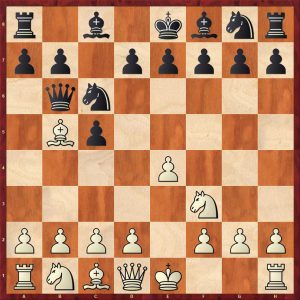
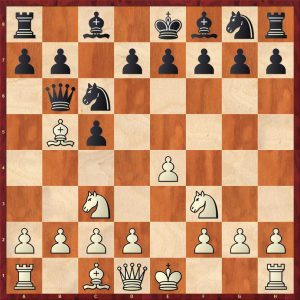
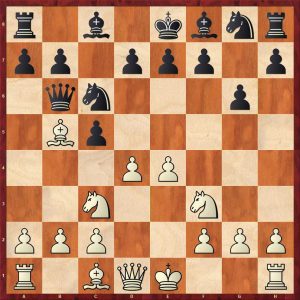
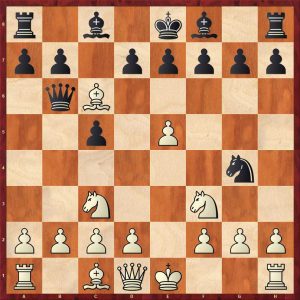
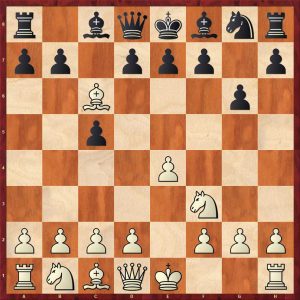
How to Study Chess on Your Own, Davorin Kuljasevic, New in Chess, June 2021, ISBN-13 : 978-9056919313
From the publisher:
“Every chess player wants to improve, but many, if not most, lack the tools or the discipline to study in a structured and effective way. With so much material on offer, the eternal question is: “”How can I study chess without wasting my time and energy?””
Davorin Kuljasevic provides the full and ultimate answer, as he presents a structured study approach that has long-term improvement value. He explains how to study and what to study, offers specific advice for the various stages of the game and points out how to integrate all elements in an actionable study plan. How do you optimize your learning process? How do you develop good study habits and get rid of useless ones? What study resources are appropriate for players of different levels? Many self-improvement guides are essentially little more than a collection of exercises.
Davorin Kuljasevic reflects on learning techniques and priorities in a fundamental way. And although this is not an exercise book, it is full of instructive examples looked at from unusual angles. To provide a solid self-study framework, Kuljasevic categorizes lots of important aspects of chess study in a guide that is rich in illustrative tables, figures and bullet points. Anyone, from casual player to chess professional, will take away a multitude of original learning methods and valuable practical improvement ideas.”
“Davorin Kuljasevic is an International Grandmaster born in Croatia. He graduated from Texas Tech University and played in USCL 2007 and 2008 for Dallas Destiny, the team that became US champion in both these years. He is an experienced coach and a winner of many tournaments.”
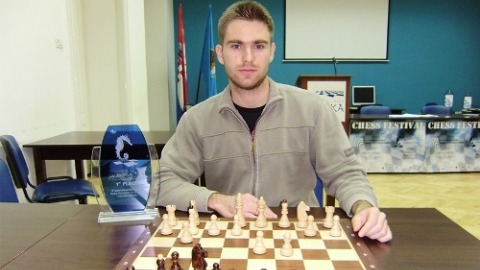
GM Davorin Kuljasevic
‘Study’ is the operative word here.
When I was learning chess in the 1960s and playing fairly seriously in the 1970s, chess wasn’t something you studied unless you were a top grandmaster. I’d play in club matches and tournaments. I’d read books and magazines because I enjoyed reading them, and, if I learnt something as well then so much the better. It wasn’t anything resembling serious study as you might study a subject at university. In those days, of course, you didn’t have a lot of opportunity to do much else.
In those days we couldn’t have imagined having a multi-million game database and a computer program capable of playing far better than any human on our desk, or being able to play a game at any time against opponents from anywhere in the world.
It’s not surprising, then, that ambitious players at any level are, if they have the time, keen to raise their rating by studying chess seriously.
We also know a lot more than we did, even 20 or 30 years ago, about the teaching and learning processes: lessons that can be applied to chess just as they can to other domains.
In the past, chess books told you what you should learn. Now, we’re seeing books, like this one, that teach you HOW you should learn. There’s a big difference.
Let’s start, controversially, at the end.
Chapter 9: Get organized – create a study plan
The author advises us to create a weekly timetable. Table 9.1 is based on the assumption that you’re at school in the morning, when you can spend 3 hours every afternoon and 2 hours every evening studying chess.
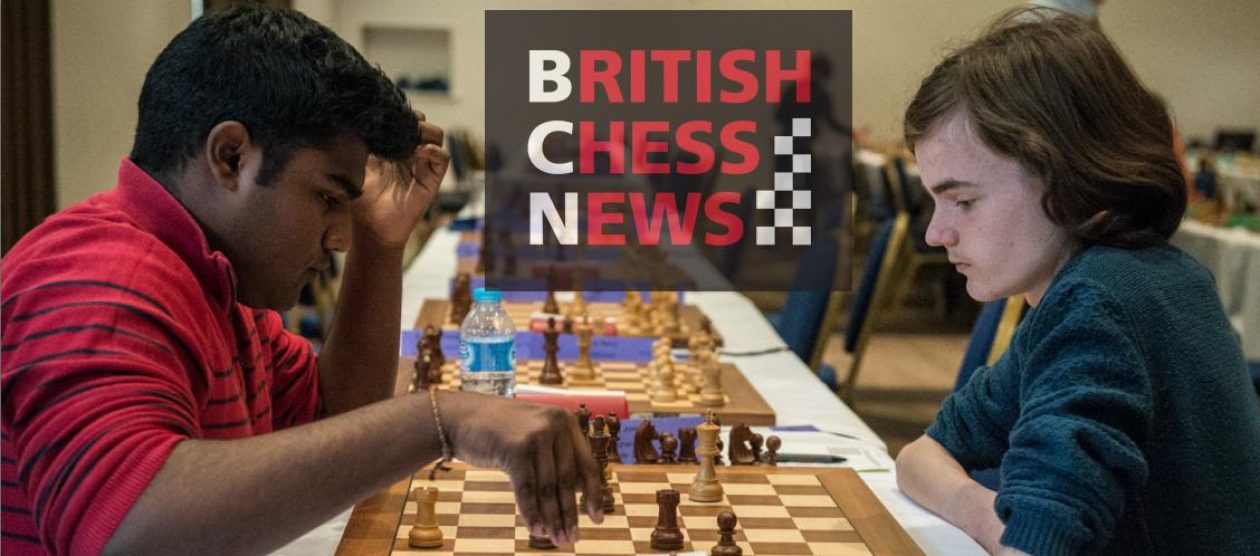
In my part of the world, if you’re an older teen you’re probably going to be at school in the afternoon as well as the morning, and have three hours of homework to do when you get home. Not to mention family commitments, other interests, hanging out with friends, eating, sleeping… I wonder how many chess players actually have time to study 4-5 hours a day, or even 1-2 hours a day, on a regular basis. On the other hand, 12-year-old Abhi Mishra, who has just become the youngest ever Grandmaster, spends at least 12 hours a day studying chess.
Returning to the Preface, the author anticipates your question: who will benefit the most from this book? “In my view, it would be self-motivated players of any level and age who are serious and disciplined about their chess study and have enough time to put the methods from the book into practice.”
If you fall into this category, read on. Even if you don’t: if you only have an hour or two a week to study, rather than 4-5 hours a day, you might still learn a lot.
What we have is 9 chapters looking at different aspects of studying chess, each concluding with a helpful list of bullet points. It’s not just a book of technical advise on how to study, though. There’s a lot of chess in there as well, mostly taken from games you probably won’t have seen before. The first eight chapters have, as is the case with many books from this publisher, some exercises for you to solve, based on the most interesting positions from the chapter. The tactics and middle-game chapters also have questions for you to answer: do they tally with the author’s solutions given in Chapter 10?
In Chapter 1, the author asks “Do you study with the right mindset?”. Now, he doesn’t mean mindset in this sense, although that will come in useful. Instead, he suggests that mastering chess requires both time and intelligent study. There’s no substitute for study time. He quotes the example of English GM Jonathan Hawkins, only an average club player at 18, but through hard work, much of which involved with studying endings, became a GM by the age of 31.
A proper chess study mindset means, in Alekhine’s words, ‘a higher goal than a one-moment satisfaction’. Four typical mistakes are: lack of objectivity, shallow study approach, short-run outlook and playing too much. Kuljasevic talks about the correct balance between playing and studying. He quotes Botvinnik as saying that chess cannot be taught, only learned, which he interprets as meaning that everyone learns in a different way, and that it’s you, rather than your coach, who will make yourself a stronger player.
Kuljasevic was shocked to read a well known GM’s coaching advert: “I have produced numerous top-level players”. “Excuse me, but chess players are not ‘produced’! Every chess player’s learning process is their unique experience that cannot be replicated on someone else.”
These days there are many study methods available, and Chapter 2 provides a guide to fifteen you might consider, and giving them all scores out of 5 for practical relevance, study intensity and long-term learning potential. The three methods which score a maximum of three fives are Deep Analysis, Simulation (pretending to play a real game by guessing the next move) and Sparring (playing a pre-arranged game or match with a training partner for a specific reason).
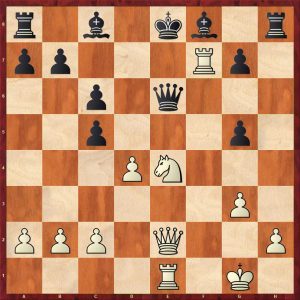
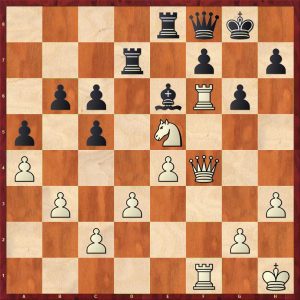
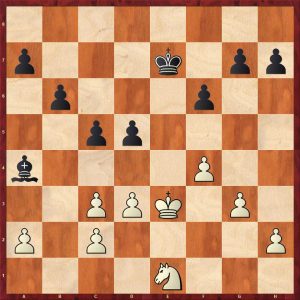
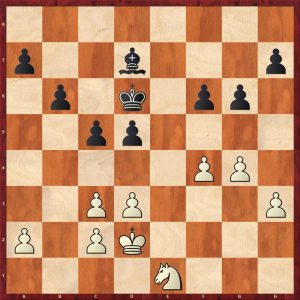
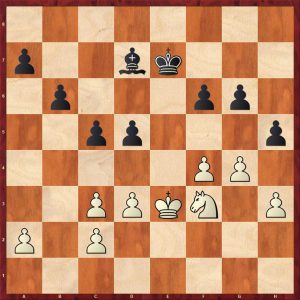
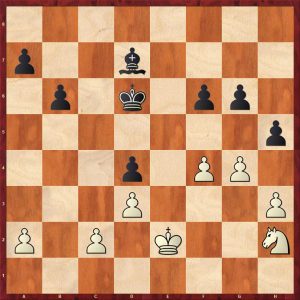
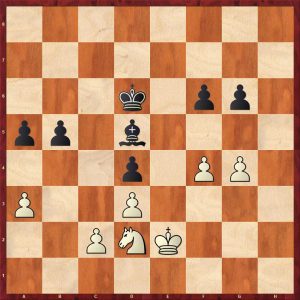
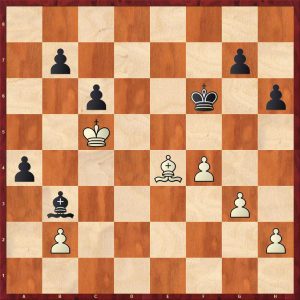
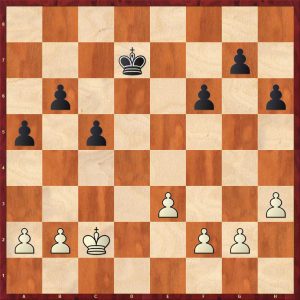
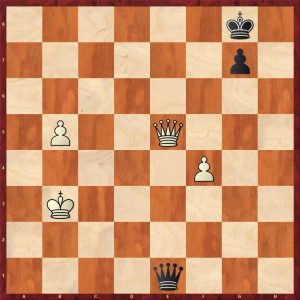
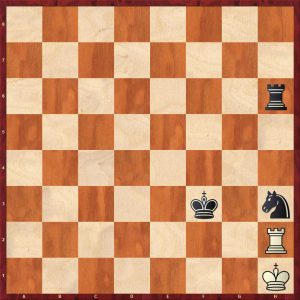
As an example of what is meant by Deep Analysis, this is Aronian – Anand (Zurich 2014) with Black to play. Anand played 58… Ke7 here, but Re1+ would have been a more stubborn defence. Kuljasevic wanted to prove that White can always win positions of this type, and here spends seven pages doing just that.
Of course such an approach won’t suit everyone, but this chapter will help all readers determine the most useful methods for them. The point is not so much the relevance or otherwise of this particular ending, but the process itself used to analyse it.
Chapter 3 is about identifying your study priorities. At this point the author divides his readership into five categories:
Intermediate player (1500-1800 Elo)
Advanced player (1800-2100 Elo)
Improving youngster (1900-2200 Elo)
Master-level player (2100-2400 Elo)
Strong titled player (2400+ Elo)
He suggests that, in general, you should spend 10% of your time on openings, 25% on tactics 25% on endgames, 20% on middlegames and 20% on general improvement. What proportion of your study time do you spend on openings? I thought so!
He then makes suggestions about how readers in each category might prioritise their studies.
If you’re an intermediate player you should concentrate on improving your tactical and endgame skills, while choosing a simple opening repertoire. Once you reach 1800 strength you can start working on more strategically complex openings. Club standard players should spend a large proportion of their time studying endings (Jonathan Hawkins would agree, as would Keith Arkell) and players of all levels would benefit from solving endgame studies on a regular basis.
Chapter 4 is about choosing the right resources for your study plan. Here we have a list of online resources: chess websites, the categories for which they are suitable, and, in each cases, the specific study opportunities they offer. Then we look at the best websites for each of the study methods from Chapter 2. An extensive list of recommended books for each of the five categories of player from Chapter 3 follows, arranged by subject matter. The books include classics by authors such as Alekhine, Spielmann and Chernev as well as more recent books. GM Grivas is quoted: “Reading the autobiographical games collections of great past players is like taking lessons with some of the greatest players in history”. Unlike Kuljasevic, I’m not convinced that Chernev’s Logical Chess, excellent though it is for novices, is suitable for anyone much over 1800, though. There’s also some very useful advice on the best way to use ChessBase and other database software.
Chapters 5 to 8 each focus on one specific aspect of chess: openings, tactics, endings and middlegames.
Chapter 5 tells you how to study your openings deeply. The author starts with a warning: “I have met many people, and I’m sure you have, too, who have fallen into the trap of spending too much time studying openings. If they were to study other aspects of the game as zealously as openings, I am sure that they would be more complete, creative, and, most likely, stronger chess players. Young players and their coaches should especially keep this in mind.” He quotes, with approval, Portisch’s opinion: “Your only task in the opening is to reach a playable middle game”, and advises simplicity and economy when deciding on your openings. The study material in this chapter, then, is more suited for master level players and above.
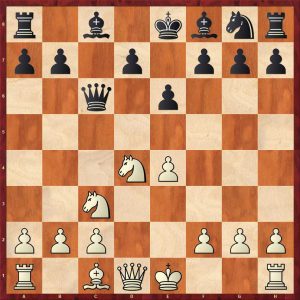
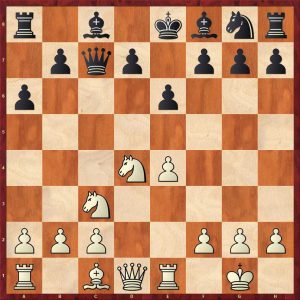
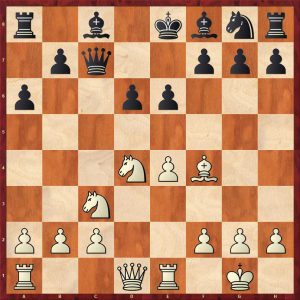
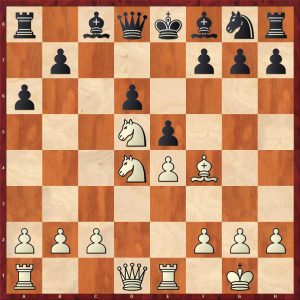
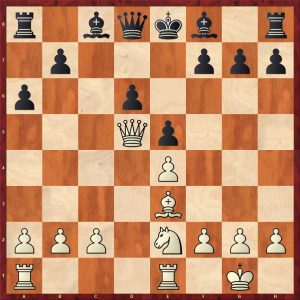
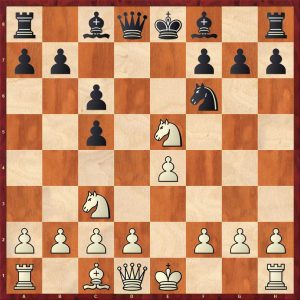
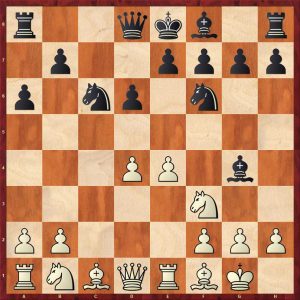
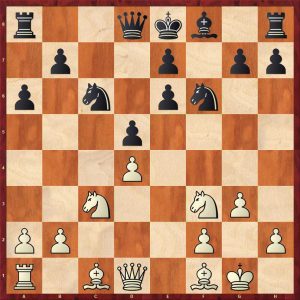
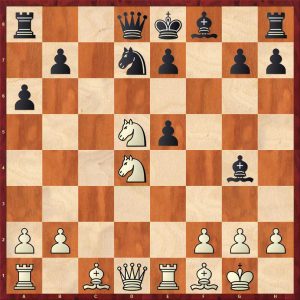
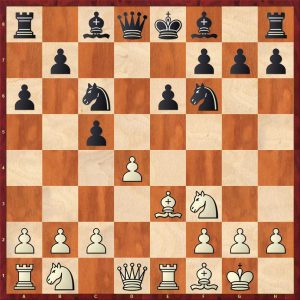
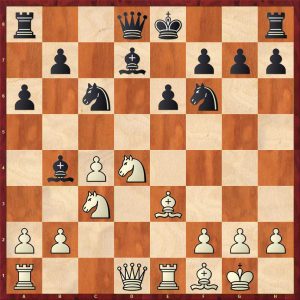
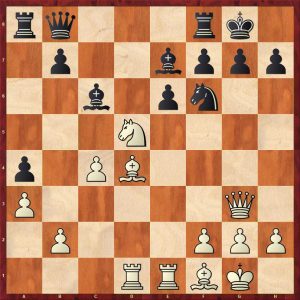
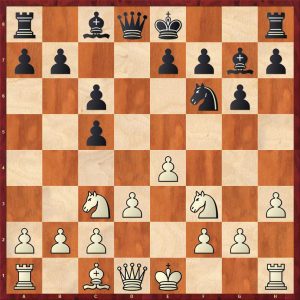
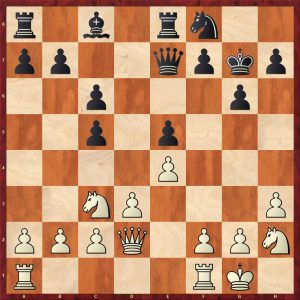
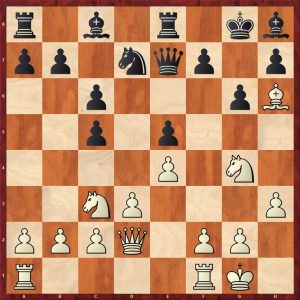
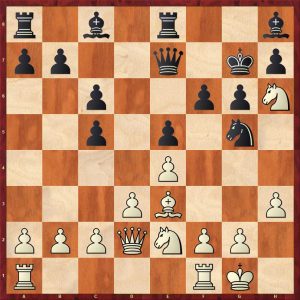
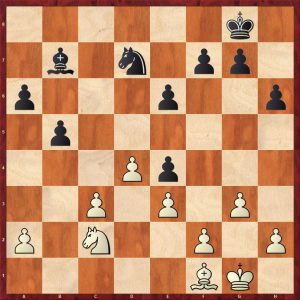
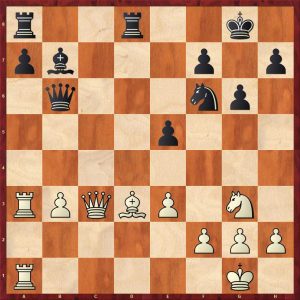
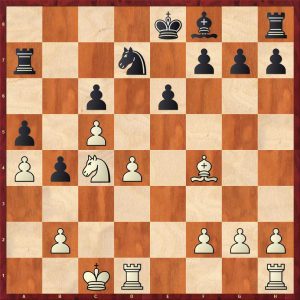
This, for example, is an example of a ‘static tabiya’: you may well recognise it as coming from the Breyer Variation of the Ruy Lopez.
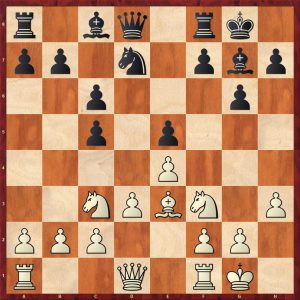
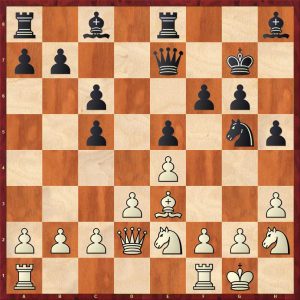
“This is one of the most well-known opening tabiyas, not only in the Ruy Lopez, but in chess in general. Over 1000 tournament games have been played from this position, from the club to the super-GM level. There is something appealing about this static type of structure for both sides as it contains a lot of potential for creative strategic play. I would like to present my brief analysis of a fairly rare idea: 17. Be3!?”
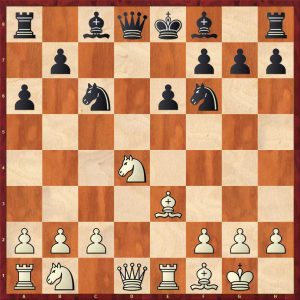
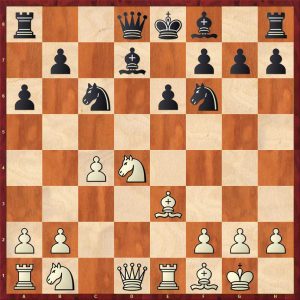
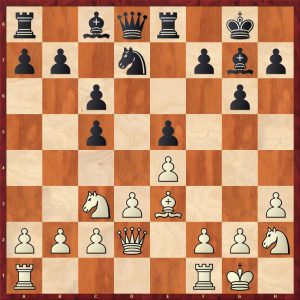
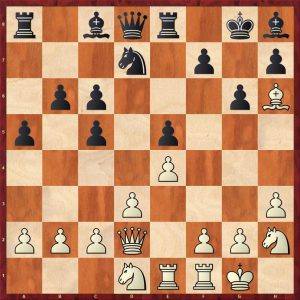
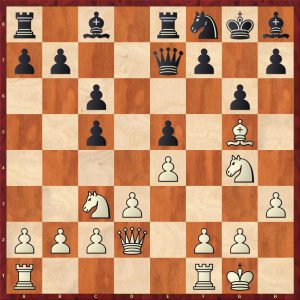
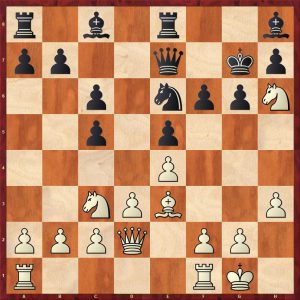
17. Bg5 is usually played here, meeting 17… h6 with Be3, happy to spend a move weakening the black king’s defences. Be3 has a different attacking plan in mind: Nf3-h2-g4-h6+ and possibly also Qf3. This is discussed over 3½ pages: I think you have to be a very stong player with a lot of study time available to go into this sort of detail, though.
Chapter 6 advises you to ‘Dynamize’ your tactical training. We’re all used to solving puzzles where we play combinations to win material or checkmate the enemy king. We could do more than that, though, by studying dynamic positions, complicated, double-edged tactical positions and positional sacrifices. We can also improve our tactical imagination by solving endgame studies and problems.
At the end of this chapter we get the chance to take a tactics test: “20 exercises consisting of tactical puzzles, positions for analysis, endgame studies, and problems for the development of dynamics and imagination”.
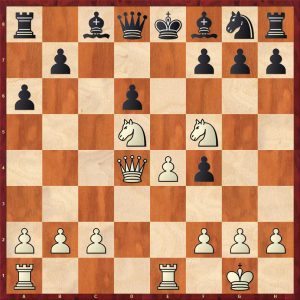
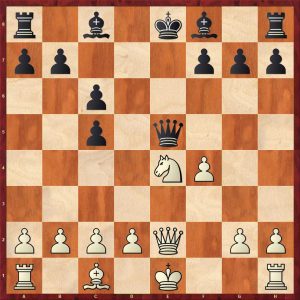
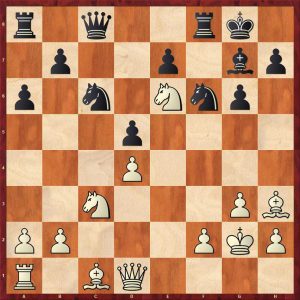
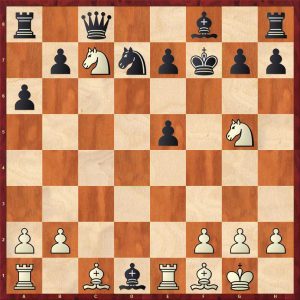
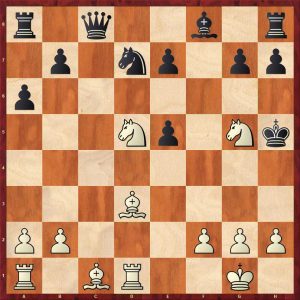
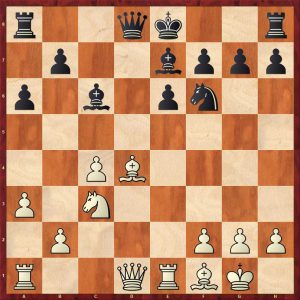
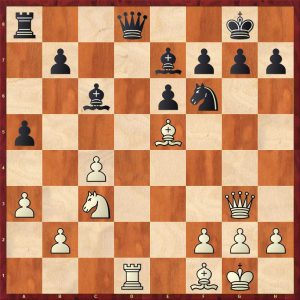
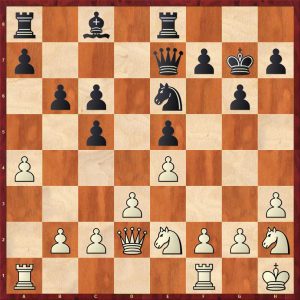
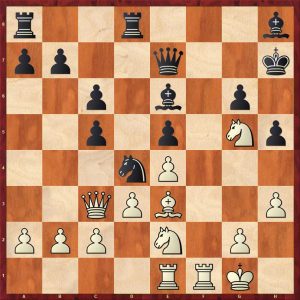
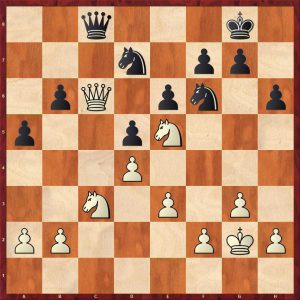
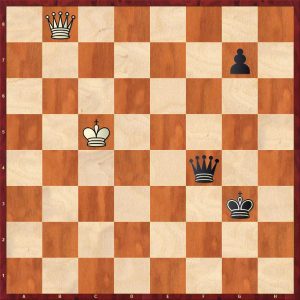
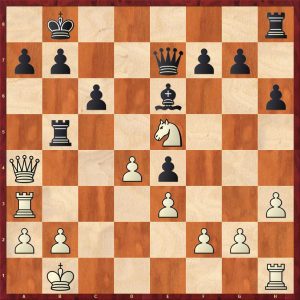
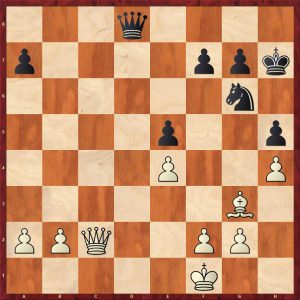
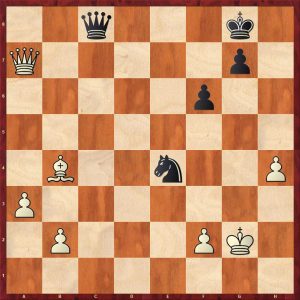
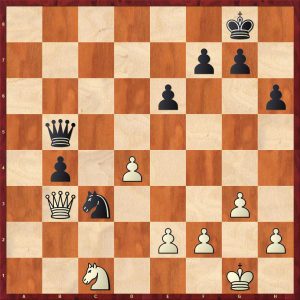
It’s Black’s move in this tactical puzzle. Your challenge is to solve it blindfold.
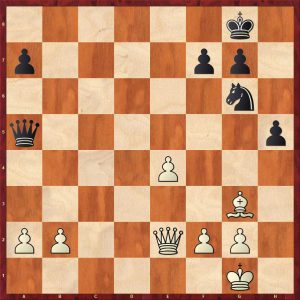
This is taken from Xie Jun – Galliamova (Women’s World Championship 1999). Black played 30… Qc7 here and eventually lost. She should have preferred 30… Qc8! (Nd2+ also wins) 31. Rc1 Qg4!, an attractive geometric motif winning either rook or queen.
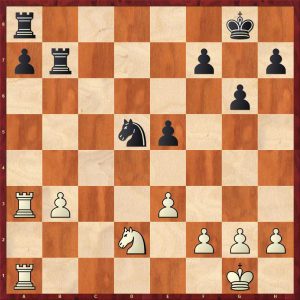
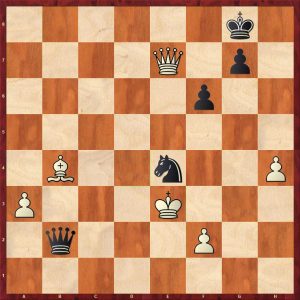
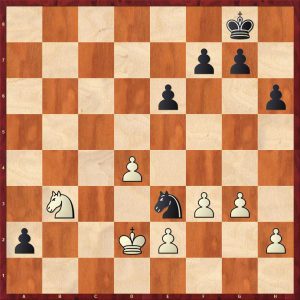
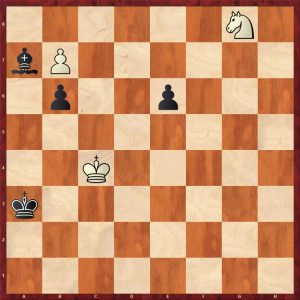
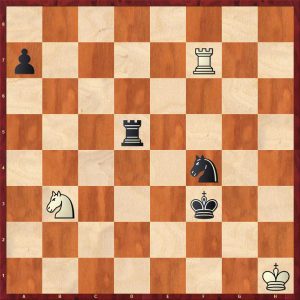
Here, by contrast, is an endgame study, composed by FK Amelung in 1907. It’s White to play and win. Again, you’re challenged to solve it without moving the pieces.
The solution is 1. Rd8+ Ke1 2. Re8+ Kd2 3. Nc3! c1Q+ 4. Nb1+ Kd1 5. Rd8+ Ke1 6. Rf8! and wins.
There’s a lot more to tactics training than sac, sac, mate!
Studying endings can seem rather dull, so it’s good to know that Chapter 7 tells you how to make your endgame study more enjoyable. Kuljasevic advises that, instead of reading books from beginning to end you look at practical examples, including your own games, and, (yes, again) endgame studies. He agrees with Capablanca that “Study of chess should commence with the third and final phase of a chess game, the endgame”.
Chapter 8 is all about strategy: how to systemize your middlegame knowledge. This is the hardest aspect of chess to study. The author looks at studying the pawn structures that might arise from your opening repertoire in a systematic way, and then goes on to discuss piece exchanges: understanding when exchanges might be favourable or unfavourable rather than just seeing them as a way to simplify towards an ending.
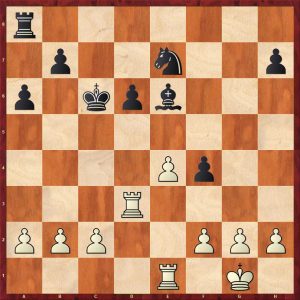
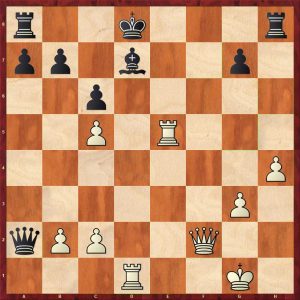
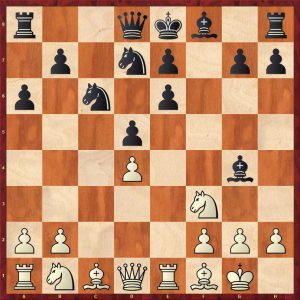
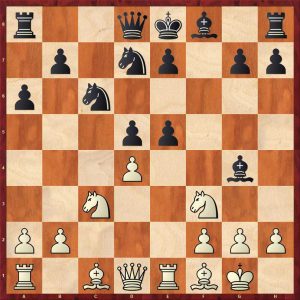
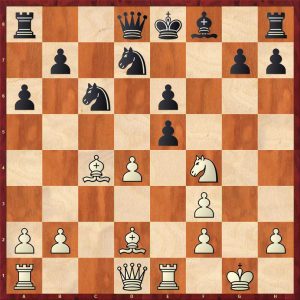
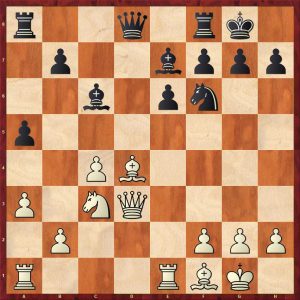
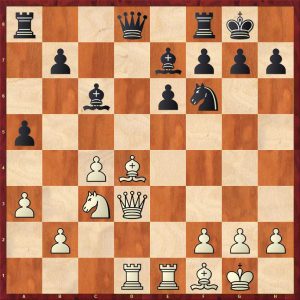
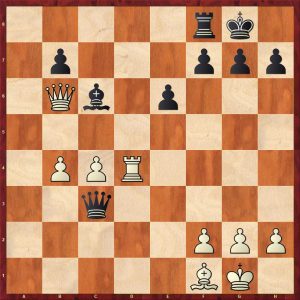
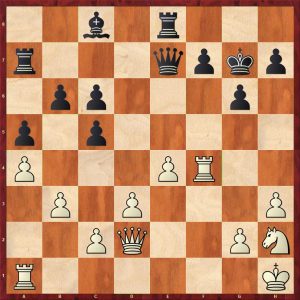
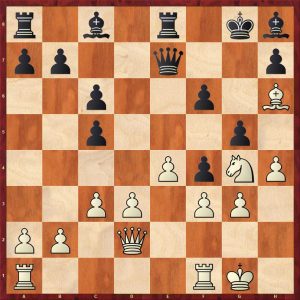
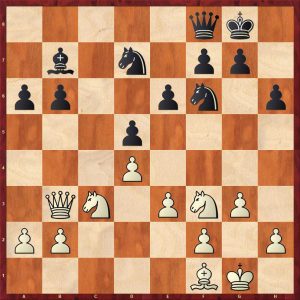
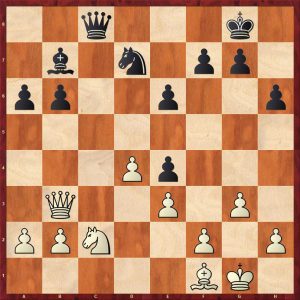
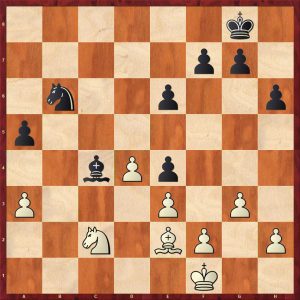
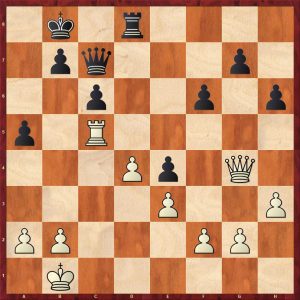
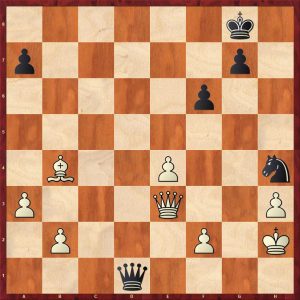
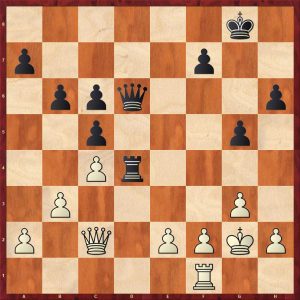
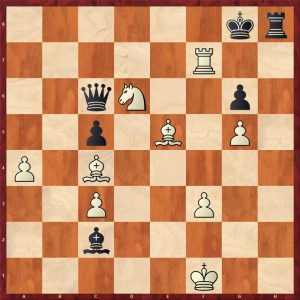
The chapter concludes with a short quiz on this subject. Here’s the first question: would you advise White to trade rooks, to give Black the option of trading, or to move his rook away?
This was Mamedyarov – Carlsen Baku 2008
White correctly moved his rook away, playing 25. Rf1, and later won after a Carlsen blunder. The coming kingside attack will be much stronger with the rook on the board, and Black can do nothing on the c-file.
Chapter 9, as we’ve seen, looks at how you might devise your own study plan – on the assumption that you have several hours a day to study, and Chapter 10 provides solutions to the quiz questions.
So, what to make of all this? I found it an extremely impressive book on an increasingly important aspect of chess: ‘how to learn’ as opposed to ‘what to learn’. Davorin Kuljasevic has clearly put an enormous amount of thought and hard work into writing it. If you’re within the target market – you want to improve your chess and have a lot of time available for that purpose – I’d give this book a very strong recommendation.
Even if you only have a few hours (or even less) a week, rather than a few hours a day to set aside for chess study, you’re sure to find much invaluable advice about how to make the most of your time.
There’s a lot of great – and highly instructive – chess in the book as well, so you might enjoy it for that alone. Much of it, though, I felt, was aimed more at the higher end of the rating scale. It would also be good to read a book on how to study chess written more for average players with limited study time.
Kuljasevic’s previous book (there’s an excellent review here) was shortlisted for FIDE’s 2020 Book of the Year, and I wouldn’t be surprised if this book was similarly honoured. He’s clearly an exceptional writer as well as an exceptional coach.
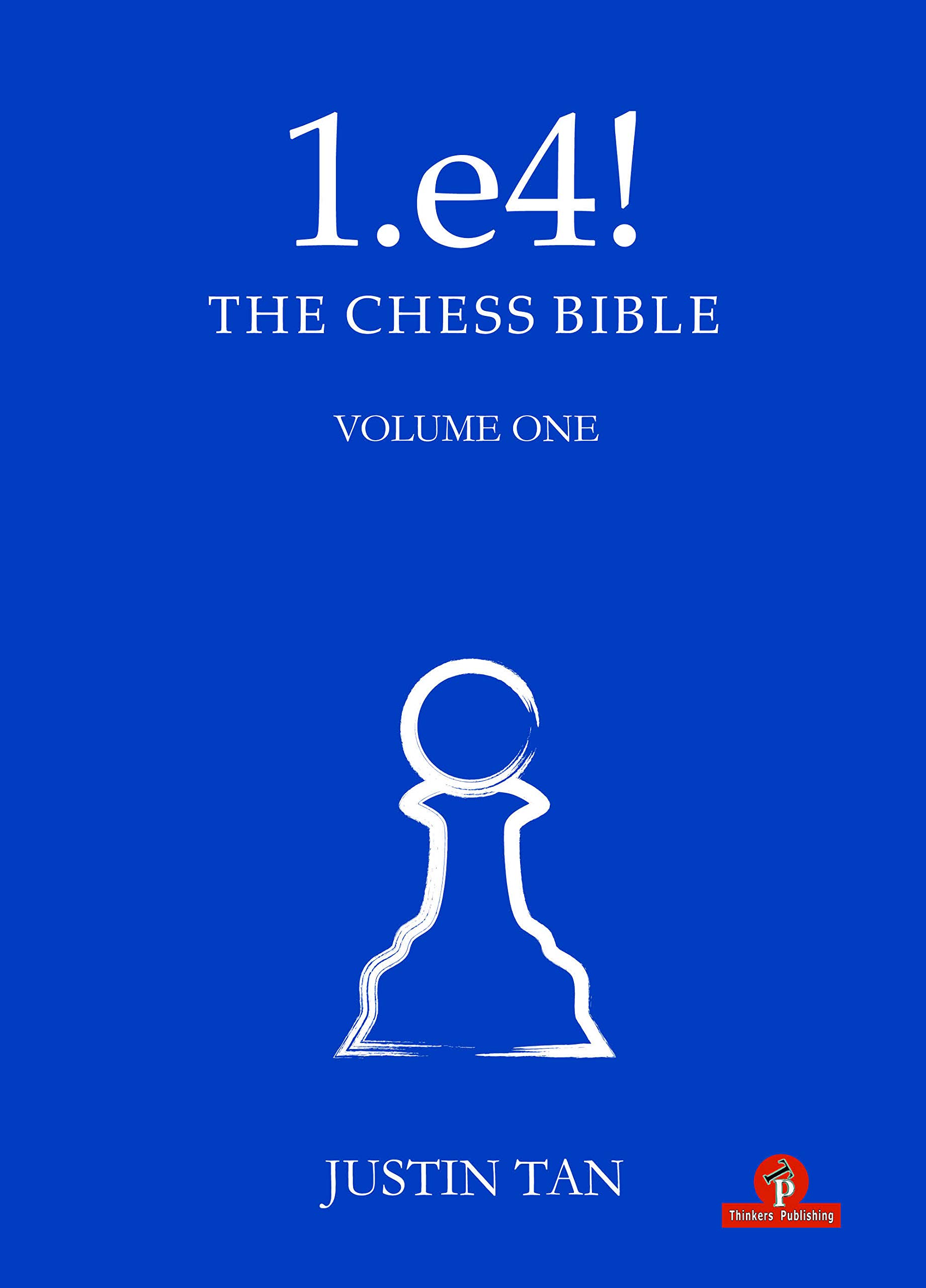
1.e4! The Chess Bible: The Chess Bible – Volume 1, Justin Tam, Thinker’s Publishing, 13th April 2021, ISBN-13 : 978-9464201123
“Justin Tan is an International Grandmaster who has represented Australia in numerous international events. He is currently based in the UK and was previously British under-21 champion, British blitz champion and joint second runner-up at the British Championship. Justin has been a 1.e4 specialist throughout his playing career and is recognised for his deep opening preparation, especially in the open games. He is a monthly columnist for ChessPublishing’s section on 1.e4, where he publishes his analyses of key 1.e4 games and the latest trends.”
GM Christian Bauer
From the publisher via Amazon we have this blurb:
“‘1.e4! The Chess Bible’ (in three volumes) is a complete and authoritative repertoire for White based on sound main lines and the latest cutting-edge analysis. Existing theory is revisited and expanded with several fresh ideas, novelties and refutations which will appeal to dedicated 1.e4 players and theoreticians alike. However, each section is also carefully designed to be easily digested by players of all standards, with an opening overview, illustrated diagrams of key concepts, and instructive and annotated games.This book is an essential practical resource for any 1.e4 player and will greatly reward those who are looking to master their understanding of the open games.The openings covered in this volume are: The Scandinavian Defence, The Alekhine’s Defence, The Nimzowitsch Defence, The Pirc & Modern Defences and The Philidor Defence. ”
End of blurb…
and IM John Donaldson provided this review:
“Judging from the first volume of GM Justin Tan’s intended trilogy, there will be no such omissions in his 1.e4! The Chess Bible series. This massive 460-page volume covers the Alekhine, Nimzowitsch, Scandinavian, Pirc, Modern and Philidor in detail from White’s perspective.
While this is a big and detailed book there is plenty of prose to accompany the analysis, making this it accessible to players 2000 on up. Do note the suggested lines run the gamut from positional to aggressive, from the Classical variation versus the Pirc (1.e4 d6 2.d4 Nf6 3.Nc3 g6 4.Nf3 Bg7 5.Be2) to the Four Pawns Attack against the Alekhine (1.e4 Nf6 2.e5 Nd5 3.d4 d6 4.c4 Nb6 5.f4).
Tan has used all the existing tools to him, including strong engines, but his voice is always front and centre. This leads to advocacy for a number of previously unknown ideas. One example is his recommendation that 1.e4 Nc6 be met by 2.Nf3. One might think this purely a practical suggestion to sidestep learning extra theory, but they would be wrong. Tan believes 2.Nf3 to be the most principled to meet the Nimzowitsch as he is of the opinion that 1.e4 Nc6 2.d4 d5 3.e5 Bf5 4.c3 e6 5.f4 f6 6.Nd2 g5! leads to astounding complications not unfavourable for the second player.
The main line of the Classical Pirc (1.e4 d6 2.d4 Nf6 3.Nc3 g6 4.Nf3 Bg7 5.Be2 0-0 6.0-0 Bg4 7.Be3 Nc6 8.Qd2 e5) has always enjoyed a reputation as a solid equalizer after 9.d5 and 9.dxe5. Tan proposes to sidestep this variation with 7.h3 Bxf3 8.Bxf3 e5 9.d5 Nbd7 10.g3!? with his main line continuing 10…Ne8 11.Kg2 f5 12.h4 f4 13.h5 g5 14.Rh1 Bh6 15.g4 with a slight but very pleasant edge as White has long-term prospects on the queenside and Black limited counterplay.
1.e4! The Chess Bible is a first-rate effort that even titled players will find of interest and can be recommended without reservation for players of expert strength and above.”
end of JD review
Justin in an Australian Grandmaster who is an 1.e4 specialist and known for his deep opening preparation. In this large book he looks at six popular defences to 1.e4 viz:
The Alekhine
The Nimzowitsch
The Scandinavian
The Pirc
The Modern
The Philidor
with 1…e5, 1…c5, 1..c6 and 1…e6 all being deferred for (a) separate volume(s).
Each chapter starts with an overview which serves to give the reader some basic foundations and highlights the general concepts of each of the above.
We will examine his choices one at a time.
Against the Alekhine Defence the author prefers the dangerous Four pawns attack 1 e4 Nf6 2 e5 Nd5 3 d4 d6 4 c4 Nb6 5 f4
Several model games are given such as Kotronias v Short, Gibraltar, 2003. It is not often that Nigel has played the Alekhine as he usually plays 1…e5 or 1…e6 and here he is the runner-up.
Since this book is written from the White side the choice of these games is naturally designed to show how to play the White side.
The lines looked at in the Alekhine include the Fianchetto Variation 5…g6 The Alekhine Benoni 5…de5 6.fe5 c5 and the Main Line 6…Nc6.
Against the rarely played but interesting Nimzowitsch Defence 1…Nc6 Justin suggests 2.Nf3 when Black can go into the open game with 2…e5 (but, of course, this is not really in the spirit of this defence) which is not shown in this volume but will I expect to be covered in a subsequent volume.
Justin takes a look at the unusual move 2…f5 which has been played against myself on a few online occasions.
In Tony Miles favourite(!) openings book, author FM Eric Schiller dubs 2…f5 the Lean Variation or Colorado Counter: as Maurice Micklewhite famously never said: “And not many people know that!
The two main moves are, of course, 2…d5 which leads to a tricky line in the Scandinavian and the Main Line of 2…d6.
Moving to colder climes we examine The Scandinavian Defence and Justin kicks-off by looking at 1.e4 d5 2.ed5 Nf6 3.d4 Bg4 which is the interesting Portuguese Variation but 4.f3 is the suggested test of Black’s play.
Justin is not impressed with this line showing that White remains in command. He then looks at the main line 3…Nd5 but 4.c4 Nb6 5.Nf3 is good for White.
The more popular 2…Qd5 3.Nc3 has analysis on 3…Qd8 considered inferior by Justin and then the popular Pytel-Wade (3…Qd6) Variation often played by Magnus Carlsen in banter blitz. It seems that Black is worse after 5…Bg4 6.h3
or 5…g6 6.Nb5 Qb6 7.a4.
More common is 5…c6 or 5…a6 but 6.g3 is a tricky line where both players need to know their theory in detail.
Justin next considers the Mieses Variation (3…Qa5) and best after 4.d4 Nf6 is 5.Bd2 which is a move that will make Black players think as it is unusual.
If the game continues 5…c6 6.Bc4 Bf5 7.Nf3 e6 8.Nd5 which has been played by Shirov.
If 5…Bg4 White can play 6.f3 where we see why Nf3 has been delayed.
The Modern 1..g6 2.d4 Bg7 3.Nf3 here the Gurgenidze System is Black’s most interesting reply of 3…c6 4.Nc3 d5 5.h3.
David Navara shows how to play if 5 de4 is played.
The Pribyl or Czech System 1..d6 2.d4 Nf6 3.Nc3 c6 4.f4 Qa5 where 5.Bd3 the move I play leads to interesting play.
I once beat John Hickman in a game at Paignton in this line in 1998 and was surprised to win the best game prize.
In the Pirc 1…d6 2.d4 Nf6 3.Nc3 g6 4.Nf3 bg7 a move that was popular with Anatoly Karpov is given.
After 5.Be2 00 6.00
and now 6…c6 6…a6 6…bg4 and 6…Nc6 are all analysed but White has a space advantage making life more easy for him to play.
Finally, the modern Philidor is examined. I was surprised to note that Justin does not look at the “old” Philidor 1…e5 2.Nf3 d6 but I expect this will appear in a later volume when he considers 1…e5 lines. The Modern Philidor is 1…d6 2.d4 Nf6 3.Nc3 e5 when Black does not mind an exchange of pawns on e5 and a Queen exchange. It is now seen as better to try 4.Nf3 Nbd7 5.Bc4 when 5…Be7 is analysed. Now 6.a4 is regarded as best.
White is likely to follow-up with 00, h3 and Re1.
In summary, an interesting book for 1.e4 players with many original ideas. I’m looking to future volumes to learn what Justin recommends against Blacks two most popular moves 1…e5 and 1…c5 plus the Caro-Kann and the French.
Colin Lyne, Farnborough, Hampshire, 19th July, 2021
Colin Lyne
Book Details :
Paperback : 464 pages
Publisher: Thinkers Publishing; 1st edition (13 April 2021)
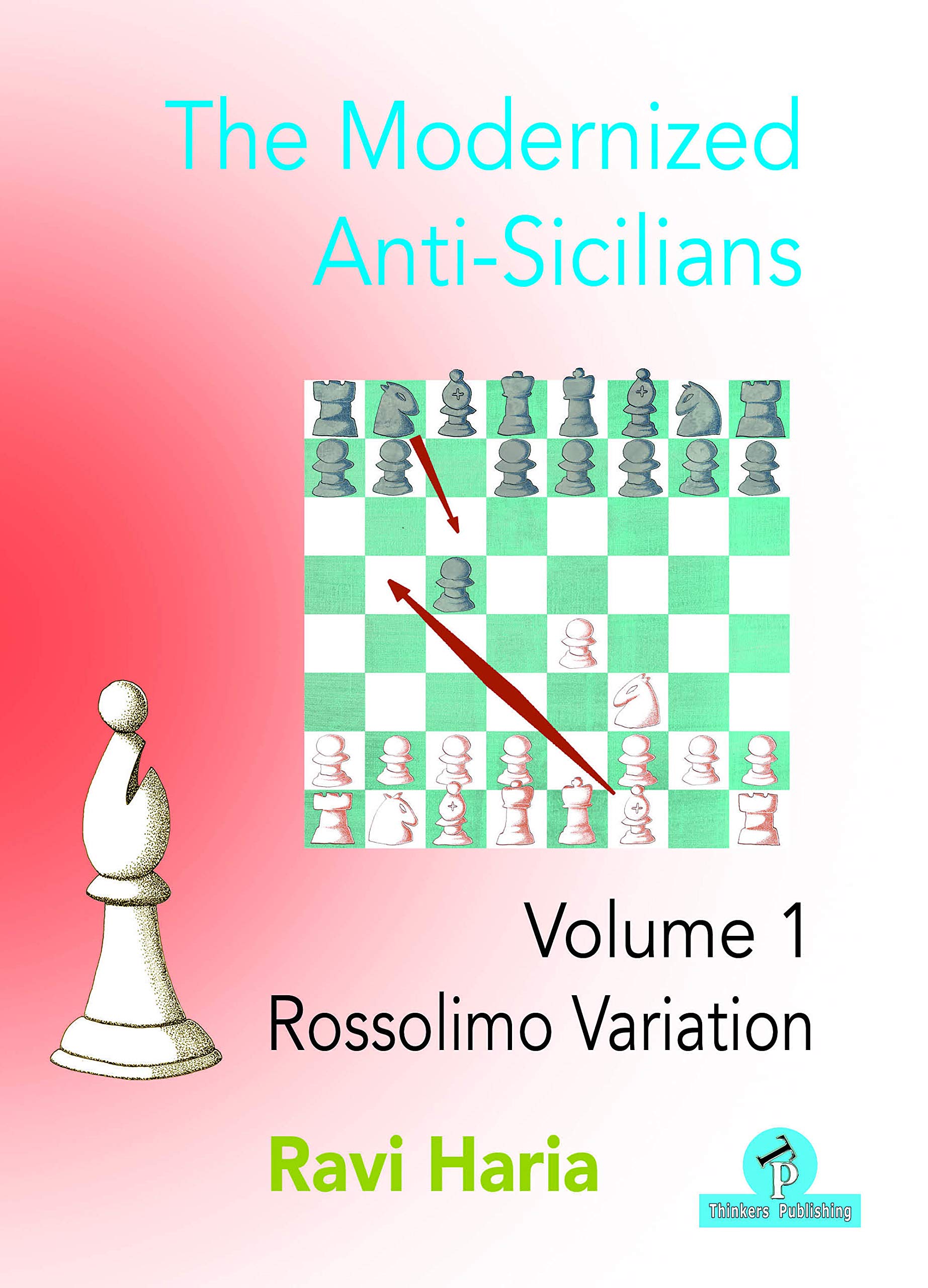
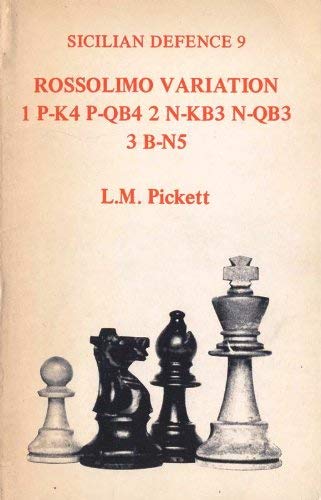
The Modernized Anti-Sicilians – Volume 1: Rossolimo Variation, Ravi Haria, Thinker’s Publishing, 2021, SBN-13 : 978-9464201055
From the publisher:
“For too long, Anti-Sicilian rhetoric has centred on the logic of simplicity, geared towards reaching playable positions with easy plans while simultaneously avoiding depths of theory. The danger of this logic is the ease with which we can fall into the trap of inactivity; of mindlessly playing an opening without striving to trouble Black; of solely playing an Anti-Sicilian to avoid theory. In contrast, throughout the volumes I will advocate an active approach – with continuous underlying themes of achieving rapid development, dynamic piece play and dominant central control, with an important focus on denying Black the counterplay that he seeks when choosing the Sicilian Defence.”
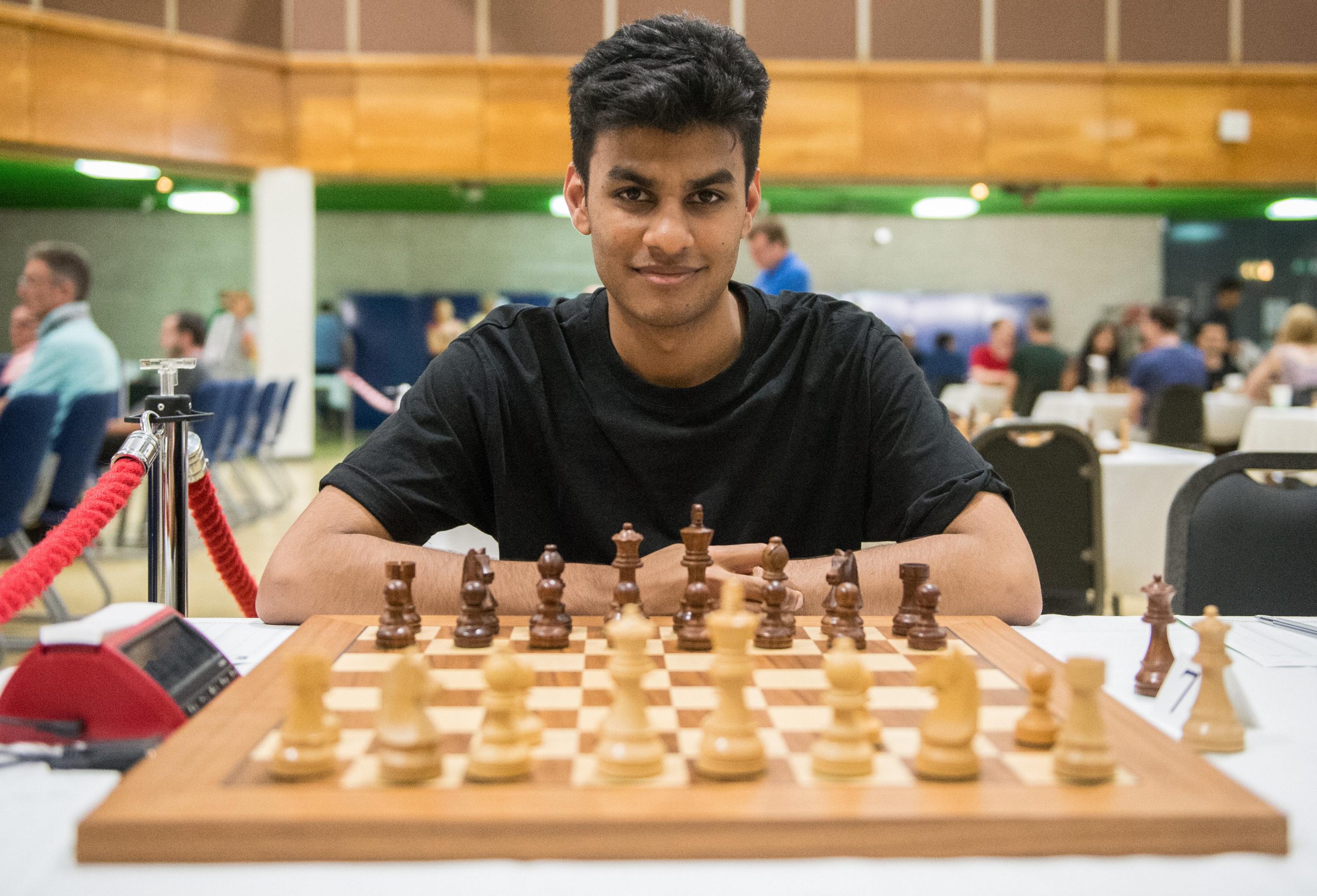
IM Ravi Haria, 2019 British Championships, Torquay, courtesy of John Upham Photography
“Ravi Haria (born 1999) is one of England’s youngest International Masters, and the current holder of the British U21 title. Alongside his career as a chess player and trainer, Ravi reads History at University College London. This is his first book for Thinkers Publishing and his first book ever.”
As with every recent Thinkers Publishing publication high quality paper is used and the printing is clear. We were hoping that the excellent glossy paper of previous titles would be used for this one but never mind.
Each diagram is clear and the instructional text is typeset in two column format, which, we find, enables the reader to maintain their place easily. Figurine algebraic notation is used throughout and the diagrams are placed adjacent to the relevant text and each diagram has a “to move” indicator and a “position after: x move” type caption.
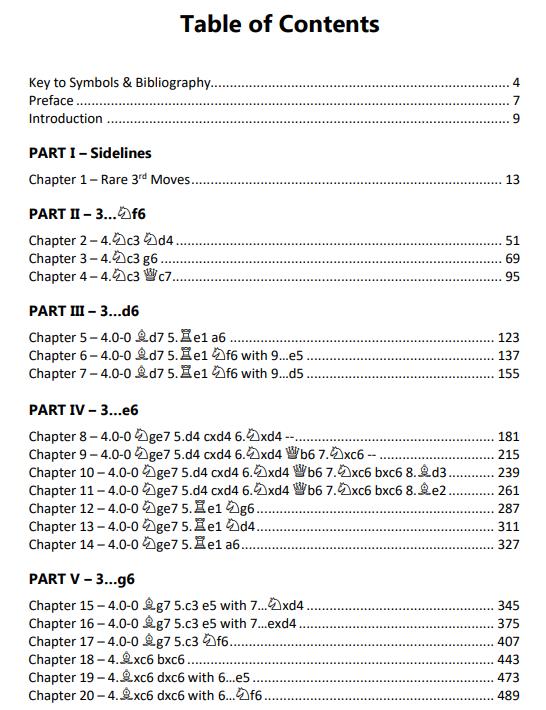
There is no Index or Index of Variations but, despite that, content navigation is relatively straightforward as the Table of Contents is detailed.
from 1977 and to spend 77 pages covering a third move minor alternative to the Open Sicilian (3.d4) was unusual for this time.
In 2021 we have the first book from IM Ravi Hari impressively weighing in at just under 1 kg and covering 520 densely packed pages.
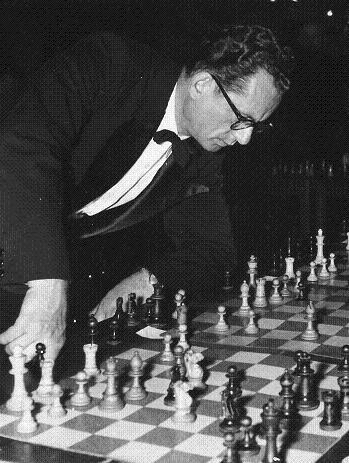
Rossolimo ponders his move at a simultaneous exhibition, 1951.
In 2021 3.Bb5 is easily the second most popular alternative to Morphy’s 3.d4 Open Sicilian. Megabase 2020 (with updates) records 67354 games as against 246585 games for the “main line” so the market for a comprehensive treatise is overwhelmingly compelling.
Here is the detailed Table of Contents:
Table of Contents for The Modernized Anti-Sicilians – Volume 1: Rossolimo Variation, Ravi Haria, Thinker’s Publishing, 2021, SBN-13 : 978-9464201055
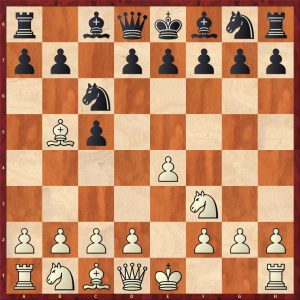
Before we delve into the meat and potatoes here is a game from the author himself in this very line:
This superb book is suitable for anyone wishing to play a sound, dynamic system against 2…Nc6 in the Sicilian. The author stresses that the aim of the publication is to provide active lines to make black’s life difficult and stifle the counterplay that Sicilian players crave. Many of the world’s top players play this system including the current world champion, Magnus Carlsen.
I wouldn’t describe the book as a pure narrow repertoire book of the type “white to play and win against a particular opening” as it’s coverage of the opening is extensive and suggests alternative white systems against all of the main lines. As the author points out, this variation of opening preparation is vital to avoid being too predictable. Nevertheless, the title is targeted more towards the white side.
It is perfectly suitable for any club player who wishes to learn this system from scratch or any old hand of the the Rossolimo who wishes to refresh their opening knowledge. Despite my comment above, the volume is also extremely useful for a black player preparing against the Rossolimo.
One of the great strengths of the tome is the textual clarification of the ideas and plans; there is some dense analysis where necessary but it is accompanied with erudite explanation.
Part 1 covers the sidelines.
In the Queen’s Gambit series, Beth Harmon plays 3…Qb6?! against Vassily Borgov at their first over the board encounter.
Sideline 3…Qb6
Borgov replies 4.a4 and wins a good game.
However, the author recommends the more natural 4.Nc3
Position after 4.Nc3
4…e6 4…g6 5.d4!
Position after 5.d4!
4…Nf6 5.e5 Ng4 6. Bxc6
Position after 6.Bxc6
6…bxc6 (6…dxc6 7.0-0 g6 8.Re1 Bg7 9.h3 Nh6 10.Ne4 0-0 11.d3 with a huge edge) 7.h3 Nh6 8.0-0 Nf5 9.Na4 Qa5 10.b3 followed by 11.Ba3 with a massive advantage.
5.Bxc6! Qxc6 6.d4 cxd4 7.Nxd4
Position after 7.Nxd4
White has a significant lead in development which is definitely more important than the bishop pair.
7…Qc7 8.0-0 a6 9.Re1
Position after 9.Re1
White has a healthy lead in development. Now there are ideas of Nd5 and Nf5
9…d6 10.Bf4!
Position after 10.Bf4!
10…e5 11.Nd5 Qd8
Position after 11…Qd8
12.Nf5!?
12.Be3 is the positional continuation which is also good, a possible continuation is 12…Nf6 (12…exd4? 13.Bxd4 followed by Bb6 and Nc7+ exploiting the weak dark squares) 13.Ne2 Nxd5 14.Qxd5
Position after 14.Qxd5
14…Qc7 15.Qd2 Be7 16.Nc3 Be6 17.Nd5! Bxd5 18.Qxd5 and white has a pleasant positional edge.
12…exf4 13.Qd4!
Position after 13.Qxd4!
13…Ne7 (13…Nf6 14.Nb6 Be6 15.Nxa8 Qxa8 16.e5 dxe5 17.Qxe5 Rg8 18.Rad1 winning) 14.Nxg7+ (Stockfish prefers 14.Nf6+ gxf6 15.Nxd6+ Qxd6 16.Qxd6 Ng6 17.Qxf6 Be6 18.Rad1 Be7 19.Qg7 Rc8 White has a queen and 2 pawns for two bishops and knight but black is solid.)
14…Bxg7 15.Qxg7 Kd7 16.Qxf7 Qf8 17.Qxf8 Rxf8 18.Nb6+ Kc6 19.Nxa8 Be6 20.Rad1 Rxa8 21.Rd3 With a superior endgame but black can fight.
Position after 21.Rd3
Part 2 covers 3…Nf6
After 4.Nc3 this position is reached:
Position after 4.Nc3
Here we are going to cover 4…e5? which has been played by both Carlsen and Kramnik. The bust is shown by Ravi.
Here is one of the important positions in this line. Black has a key choice here about which pawn to push to challenge white’s pawn duo in the centre 9…e5 or 9…e5. The two moves lead to significantly different type of positions.
Pospisil-Rodriguez ICCF email 2017 Move 9 Black to move
I shall show a variation from 9…d5 10.e5
Pospisil-Rodriguez ICCF email 2017 Move 10
Black has three knight moves here 10…Ne4, 10…Nd7 and 10…Ng8
After 10…Nd7 white has an interesting pawn sacrifice to disrupt black’s position. 11.e6!
Pospisil-Rodriguez ICCF email 2017 Move 11
Black can recapture with the bishop or the pawn, after 11…Bxe6 this short line shows the typical dangers for black 12.Nc3 Nf6? A natural move that leads to big problems for black. 13.Rxe6! fxe6 14.g3! How does black defend the e6 pawn and develop?
A typical line could be 14…g6 15.Bh3 Bg7 16.Ng5 0-0 17.Nxe6 Qc8 18.Kg2 with a big plus for white who can improve his position further before taking back the exchange.
The king will be mated after h3 and g4 whilst black’s sleeping army looks on.
Back to the game: 14.Bc4 Bxf4 15.gxf3 e6 16.Bd2 Qd8 17.Nf4! with a huge attack.
Pospisil-Rodriguez ICCF email 2017 Move 17
Section 4 covers 3…e6 which is one of the main continuations. The author gives two distinct variations here: 4.0-0 followed by d4 or the slower 4.0-0 followed by 5.Re1.
Here is a smooth game by Magnus Carlsen against Boris Gelfand in the second system suggested.
Magnus Carlsen (2872) – Boris Gelfand (2740)
FIDE Candidates London (10) 27.03.2013
9…cxd4 (9…Nd5 has been tried 10.Bg5! The critical move 10…f6 11.Bc1! (11.c4!? is also slightly better for white) 10.Nxd4
Carlsen-Gelfand London 2013 Move 10
10…Bd7 (10…Nxd4 11.Bxd4 Be7 12.a4!?)
Carlsen-Gelfand London 2013 Variation 2 Move 12
With the idea of Na3 and Nc4 leading to a slight edge for white.
11.c4
Carlsen-Gelfand London 2013 Move 11
This is the idea. White has a bit more space and a queenside majority. Black of course has a healthy and solid position though. 11…Nxd4 (11…Be7 12.Nc3 0-0 13.Nf3!? White has been quite successful with this move, and this is an argument for Gelfand’s choice, securing relieving exchanges before it is too late.;
11…Bb4!? is simply wrong: 12.Nc3
Carlsen-Gelfand London 2013 Variation 1 Move 12
Bxc3 13.bxc3 0-0 14.Nb3 White’s activity and powerful dark squared bishop more than compensates for the structural weaknesses. 12.Bxd4 Bc6 13.Nc3 Be7 14.a3!?
Carlsen-Gelfand London 2013 Move 14
a5!? (14…0-0 15.b4 is what White wants, but as usual only a slight edge.) 15.Qd3 0-0 (15…a4?! is an ambitious attempt, but after 16.Rad1 0-0 17.Qg3 White’s initiative is powerful)
Carlsen-Gelfand London 2013 Move 16
16.Rad1 The author likes 16.Nb5! exploiting the hole, after 16…Bxb5 17.cxb5 white has the bishop pair but black has d5 for the knight.
Carlsen-Gelfand London 2013 Move 16 Black To Move
16…Qc7 16…a4 17. Qg3! Qb8 18.Nd5!
Carlsen-Gelfand London 2013 Variation 3 Move 18
17.Be5 Qb6 18.Qg3 Rfd819.Rxd8+ Qxd8 20.Rd1
Carlsen-Gelfand London 2013 Variation Move 20
Qb6 [20…Qf8!? this defensive move is better, after 21.Bd3!? White remains comfortably placed.] 21.Bd4 Qb3 22.Rd3 22…Qc2 23.b4! axb4 24.axb4 Nh5 25.Qe5Bf6 26.Qxh5 Bxd4 27.Rxd4 Qxc3 28.Qa5! The point behind 23.b4, without this, White wouldn’t even be better. But now with this intermezzo, White just manages to coordinate in time, and thus his queenside majority secures a huge edge. 28…Rf8 29.Qb6 White went on to win a nice game.
Carlsen-Gelfand London 2013 Move 29
Section 5 covers 3…g6 which is arguably the critical continuation. The author offers two different systems against this line: either capturing on c6 immediately or playing 4.0-0 and 5.c3.
Here is an instructive game using the first suggested system which is a superb win by Michael Adams over Vladimir Kramnik in 2000, which was played just before Kramnik defeated Garry Kasparov for the Classical World Chess Championship.
Michael Adams (2755) – Vladimir Kramnik (2770)
Dortmund Super GM (4), 10.07.2000
1.e4 c5 2.Nf3 Nc6 3.Bb5 g6 4.Bxc6
Adams-Kramnik Dortmund 2000 Move 4
Black’s has a major decision here on which way to recapture the bishop. The recapture with the b-pawn is more aggressive.
4…dxc6 5.d3 Bg7 6.h3 Nf6 7.Nc3
Adams-Kramnik Dortmund 2000 Move 7
A key early position in this line. Black normally arranges to play e5 here to increase his share of the centre. There are essentially three different ways to do this. Kramnik chooses the direct route with a standard knight manoeuvre to d7 to support the e5 advance. This knight is then often routed round to d4 via f8 & e6.
7…Nd7 8.0-0 e5 Preventing d4 for the time being 9.Be3 0-0
Adams-Kramnik Dortmund 2000 Move 10
A tabiya in this line.
Ravi accompanies this diagram with some typical erudite advice about white’s plans here:
“It’s worth taking a step back and understanding what we’re playing for. As Black has castled quickly, he’s signalled that he doesn’t mind us playing Be3, Qd2 and Bh6 – in an attempt to exchange off the dark-squared bishops. The resulting positions will always be slightly better for White, but Black will maintain that he’s very solid. As there are often a great deal of possibilities, I’ve elected to show some model games rather than analyse endless variations- but the model games are excellent in demonstrating key ideas in these lines. Our plan usually remains the same – exchange off dark-squared bishops, attempt to create a queenside weakness with a2-a4, and at the right moment push f2-f4, possibly entering into an endgame if circumstances are favourable.”
10.Qd2 Re8 11.Nh2
Adams-Kramnik Dortmund 2000 Move 11
White’s position is harmonious and certainly easier to play. He has a lead in development as black has yet to activate his queenside. The bishop pair is not really an advantage in this type of position, but black is hoping that the bishop pair will be a long term factor. White has three minor pieces to exploit the weakened black squares on black’s kingside whereas black has only two to defend them.
11…Qe7 (11…b6 has been played in many correspondence games 12. Bh6 Bh8 13. Rae1 a5!? 14.Nd1!
Adams-Kramnik Dortmund 2000 Variation 1 Move 14
An excellent repositioning suggested by the author to improve the horse, followed by Ne3 and f2-f4) 12.Bh6 Bh8
Black keeps this bishop, 12…Nf8 is an alternative but the author demonstrates with two example games how quickly black can succumb with his weakened kingside. The reviewer will showcase one of these games. 13. Bxg7 Kxg7
Adams-Kramnik Dortmund 2000 Variation 2 Move 14
The obvious move 14.f4 is good here, as well as Robin Van Kampen’s 14.Ne2. Stockfish prefers 14.f4 and gives 14…gxf4 15.Rxf4 Ne6 16.Rff1! avoiding the queen exchange after 16…Qg5 17.Qf2! as pointed out by Ravi. After 14.Ne2 Ne6 15.Kh1 b6 16.a4! Classy play creating queenside weaknesses.
Van Kampen-Ribera Bazan Tromso 2014 Move 16
16…a5 17.b3 Ra7 18.f4! exf4 19.Nxf4 Nxf4 (19…Nd4 looks better retaining the good knight) 20.Rxf4
Van Kampen-Ribera Bazan Tromso 2014 Move 20
This position is much better for white as black’s dark squares are weak and his bishop is snuffed out by white’s superb pawn structure. White’s rooks will also be very active on the half open f-file. It’s not surprising that black collapsed quickly. 20…Qe5 (20…f6 21. Raf1 Rf8 22. Qc3 white is clearly better: 23. Nf3 followed by e5 looks good) 21.Raf1 Kg8 22.Rf6!Be6 23.Qh6 Qd6 24.Nf3 Qf8 25.Qf4 Rd7 26.Ne5 winning
Black’s position is crumbling on the dark squares.
14.Bg5! A typical probing move
Adams-Kramnik Dortmund 2000 Move 14
14…f6 15.Nh6+ Kg7 16.Be3 Ne6
Adams-Kramnik Dortmund 2000 Move 17
The author suggests 17.Rae1 as an improvement athough Stockfish likes 17.Kh1 as well.
17.Ne2 Ng5
Adams-Kramnik Dortmund 2000 Move 18
18.Ng4 (18.f4! also leads to a white advantage 18…exf4 19.Bxf4 Kxh6 20,h4) 18…h5 (18…Bxg4? is a positional mistake, see Leko-Van Wely Monte Carlo 2003) 19.Nh2
Adams-Kramnik Dortmund 2000 Move 19
Although white’s knight has been pushed back, black has had to weaken his kingside to do this. This is exploited neatly by Adams. As Arnie says, “I’ll be back”.
19…Rd8 20.Qc3 Ne6 (Finally completing the manoeuvre started on move 7) 21.f4 Nd4 22.Rae1 Kh7 23.Nf3 Be6 24.fxe5 fxe5 25.Ng5+ I’m back! White is more comfortable here but black can hold. His super knight on d4 is the pride of his position.
Adams-Kramnik Dortmund 2000 Move 25
25…Kg8 26.Nxe6 removing the better bishop 26…Nxe6 White has a definite edge here, but black is solid. Adams went on to outplay Kramnik in this position.
In summary, this is an excellent book which will give any white player a very good grounding in the Rossolimo Variation. All the major variations are covered with a significant number of original suggestions and analysis. Buy this book !
The reviewer is looking forward with great interest to the next volumes in Ravi Haria’s Anti-Sicilian series. I am guessing that he will cover the Moscow Variation 3.Bb5+ against 2…d6. I am intrigued as to what the author will suggest against 2…e6.
FM Richard Webb
FM Richard Webb, Basingstoke, Hampshire, 18th July 2021
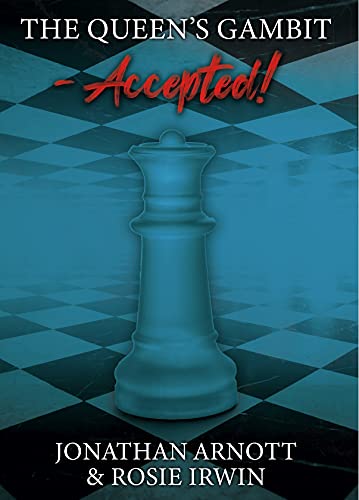
The Queen’s Gambit – Accepted!: Jonathan Arnott & Rosie Irwin
The Queen’s Gambit – Accepted!, Jonathan Arnott & Rosie Irwin, Steel City Press (17 May 2021), ISBN-13 : 978-1913047245
From the publisher:
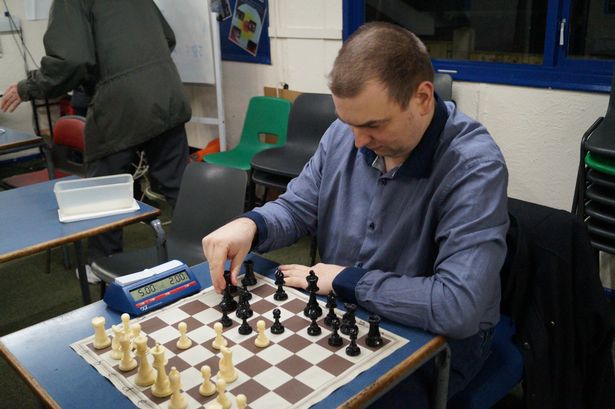
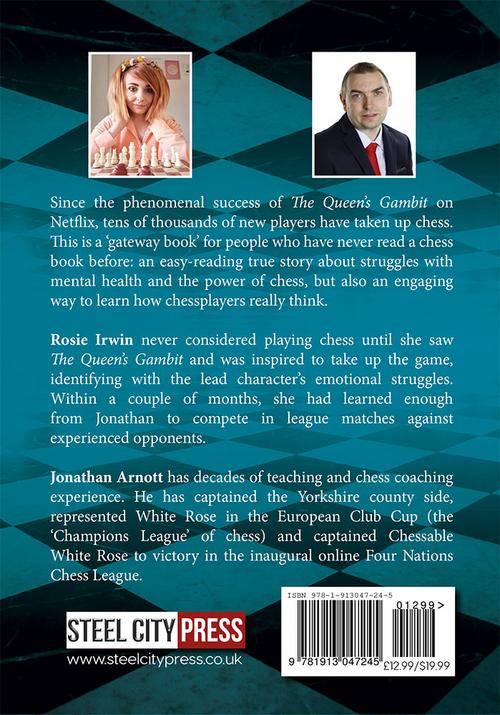
The game of chess has hundreds of child-friendly books, but what about the adult beginner inspired by The Queen’s Gambit Netflix series? Rosie Irwin is the perfect example: just like the title character, she’s had her own struggles with mental health and trauma. She accepted the challenge, and chess has developed the confidence. Coached by Jonathan Arnott – a former teacher, politician and chess Candidate Master – it’s been a steep learning curve. In January 2021, Rosie knew nothing about chess but the rules of the game. She’s now playing matches against opponents with 40+ years of experience.
This book is a must for any aspiring player. To go from reading Dostoyevsky to Dvoretsky would be a total culture shock. Whilst claiming to be neither, the authors’ conversational style offers a rare insight into the thought processes needed to move from beginner to tournament player. It is a ‘gateway’ book with stories and anecdotes mixed with chess learning, helping the reader to get to know Rosie whilst joining her on her chess journey. The title of this book (The Queen’s Gambit – Accepted!) illustrates Rosie’s acceptance of the challenge and the chess terminology that any gambit can be ‘accepted’. Don’t expect a dry chess book full of diagrams and notation without any story.
Rosie Irwin never considered playing chess until she saw The Queen’s Gambit and was inspired to take up the game, identifying with the lead character’s emotional struggles. Within a couple of months, she had learned enough from Jonathan to compete in league matches against experienced opponents.
Rosie Irwin
Jonathan Arnott has decades of teaching and chess coaching experience. He has captained the Yorkshire county side, represented White Rose in the European Club Cup (the ‘Champions League’ of chess) and captained Chessable White Rose to victory in the inaugural online Four Nations Chess League.
Jonathan Arnott
A story I remember, a very long time ago now, concerned a young boy who was passionate about butterflies and moths. He saw a title in a bookshop which sounded like just what he wanted, but when he took it home he was disappointed with the contents. The book was called Instructions for Young Mothers.
Likewise, if you buy this book because you’re eager to find out what to play after 1. d4 d5 2. c4 dxc4, you’ll also be disappointed. You have to spot the dash, and perhaps also the exclamation mark.
This is a book for adult beginners, targeting in particular those who perhaps learnt the moves in childhood and developed an interest after watching The Queen’s Gambit on Netflix. It works on two levels. At one level it provides a lot of helpful advice for beginners, but at another level it tells Rosie’s story about how chess can help those who are struggling with some aspect of their lives.
At the start of the book, Rosie introduces herself.
Beth Harmon is messed up. So was I. I still am, in fact…
I’ve suffered some serious trauma and depression. I’ve battled with self-harm and all kinds of issues, just like Beth…
I have Aspergers. I can sometimes panic in social situations. Too many people, too much crowding, can be a problem. On 64 squares, nothing else matters.
While spending time with her parents she happened to watch The Queen’s Gambit, got hooked on the game and contacted Jonathan, a chess playing friend, asking for help.
After an introduction offering 10 things you need to know before reading the book, we start at the end.
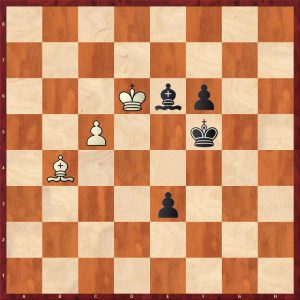
This is a very good place to start as well. There’s so much Rosie can learn from this position. In general, when you can and can’t win with king and pawn against king. The opposition. And, when you promote successfully, how to mate with king and queen against king.
Jonathan is clearly an excellent teacher. He understands that learning to do simple things well is more important than trying to do complicated things badly. His teaching style involves using Socratic questioning to lead Rosie to the correct answers, and to improve her play.
The next chapter takes a different approach: Impostor Syndrome. The feeling that you’re not good enough, that you don’t deserve what you’ve got. Although the chapter itself is, more generally, about lack of self-confidence, and Impostor Syndrome is only one of many reasons for lacking self-confidence.
Rosie, like many players at this level, loses a quick game against the Fried Liver Attack, which dents her self-confidence and exacerbates her already present anxiety. Jonathan invites her to play online against some junior beginners he’s also coaching, but she feels unable to do so.
Here’s Jonathan:
When you’re coaching chess, you never teach opening theory to beginners. The last thing you want is for a beginner to learn a few moves parrot-fashion without having the slightest clue what they mean.
I agree with him, but, as he explains, there are exceptions, and this is one.
There’s no reason for a beginner who doesn’t know the position to play anything other than 5… Nxd5 here, but experienced players will be aware it’s a poor move. So Jonathan shows Rosie 5… b5, an excellent move at this level. Beginners are very unlikely to find 6. Bf1, the only move to pose Black any problems.
The book continues with a mixture of instructive tips from Jonathan, extracts from Rosie’s games, and psychological insights.
In this position Rosie has built up an impressive attack and now found the splendid 17… Ng4!, when capturing either piece leads to immediate mate so White had to give up material with Rf2. Jonathan adds that 1… Bxg3!! 18. hxg3 Qxg3+ 19. Kh1 and now the same idea, 19… Ng4, was even stronger. Some instructive attacking ideas there, I think.
Here’s Rosie, explaining how the chess pieces might help with her depression:
Take all the pieces off the board. Look at each one in turn and gain a deeper understanding of each of them. My family? The King. My friendships? The Rook. My faith? The Bishop. My love life? The Knight. And many many pawns: my crafts, my hobbies…each of them contribute to the ‘position’ of my life.
And me, you ask? Well, obviously, I must be the Queen…
I suppose readers of a certain age might be reminded of this, but, coincidentally, I had occasion to write something similar about how I saw the pieces only the other day. It’s all about the power of chess to enable you to tell stories which can help explain and improve your life.
Here’s another snapshot from one of Rosie’s games.
She’d learnt about sacrifices on f7 and thought this position looked like an ideal opportunity.
The game continued 6. Bxf7+? Kxf7 7. Ng5+ Kf6?? 8. Qf3+ Nf5, when 9. Nd5 would have been a pretty checkmate. She missed that, but still won a couple of moves later. Jonathan correctly pointed out that if Black had preferred 7… Ke8 she’d have had very little for the sacrificed piece.
This sort of thing happens over and over again at this level. I remember, about 45 years ago, teaching Légal’s Mate at Richmond Junior Club. I knew that one of my pupils had a school match coming up that week and, next Saturday I asked him how he got on. “Mr James!”, he exclaimed. “You made me lose!” It transpired he’d tried the same thing in a slightly different position where there was no mate, so he just lost his queen. An important lesson for him, and for me as well. Rosie was fortunate to get away with her unsound sacrifice here.
It’s great that books are now being published which consider the psychological aspects of chess. Instruction in any skill-based discipline should include generic skills, of which these are a part, as well as domain-specific knowledge and skills.
The important subject of confidence – which, if you like, is one aspect of mindset – is covered in several places. We learn, as you’ve already seen, about the dangers of lacking self-confidence, and, later on, about over-confidence.
Rosie makes good progress, but then things become too easy, she starts playing too quickly on autopilot, and, by now playing stronger opponents, she made mistakes and lost game after game.
She describes this as the Dunning-Kruger Effect, but my understanding of D-K is something slightly different: overestimating your ability at the start rather than becoming over-confident as you improve.
While I’m no expert myself, just an interested layman, I’m not sure this book always uses the right terminology.
(On a slightly different point, because of recent allegations concerning Hans Asperger’s supposed Nazi sympathies – see here, for example – many people prefer not to use his name as it might cause offence. Perhaps Jonathan and Rosie are both unaware of this.)
Although it’s not a complete course for adult beginners (you’ll have to look elsewhere for that), it still contains a lot of chess wisdom. This book is to be welcomed for several reasons. It will be a great purchase – or a great present – for anyone who has been inspired to take up chess by watching The Queen’s Gambit, especially those who can empathise with Rosie in some way. If you’re a female who wants to play like Beth Harmon, if you’re struggling, or have struggled in the past, with depression, anxiety or other mental health issues, or if you’re on the autism spectrum, I’m sure you’ll find much of value here, for its psychological as well as its chess insights. Players above the beginner level may also find it helpful in many ways, as will anyone involved in coaching adult beginners.
For several decades now, the chess world has been unhealthily obsessed with young children, prodigies and champions. My view is that chess, in general, is much more suited to older children and adults, and, equally, that older children and adults are more suited to competitive chess than younger children.
Perhaps the world will come to its senses and we’ll see more books written for older beginners, novices and improvers. Perhaps we’ll also see a greater understanding that everyone, from beginners to grandmasters, can benefit from chess in all sorts of ways. Perhaps we’ll also realise that chess can be attractive to girls and women, not just to boys and men.
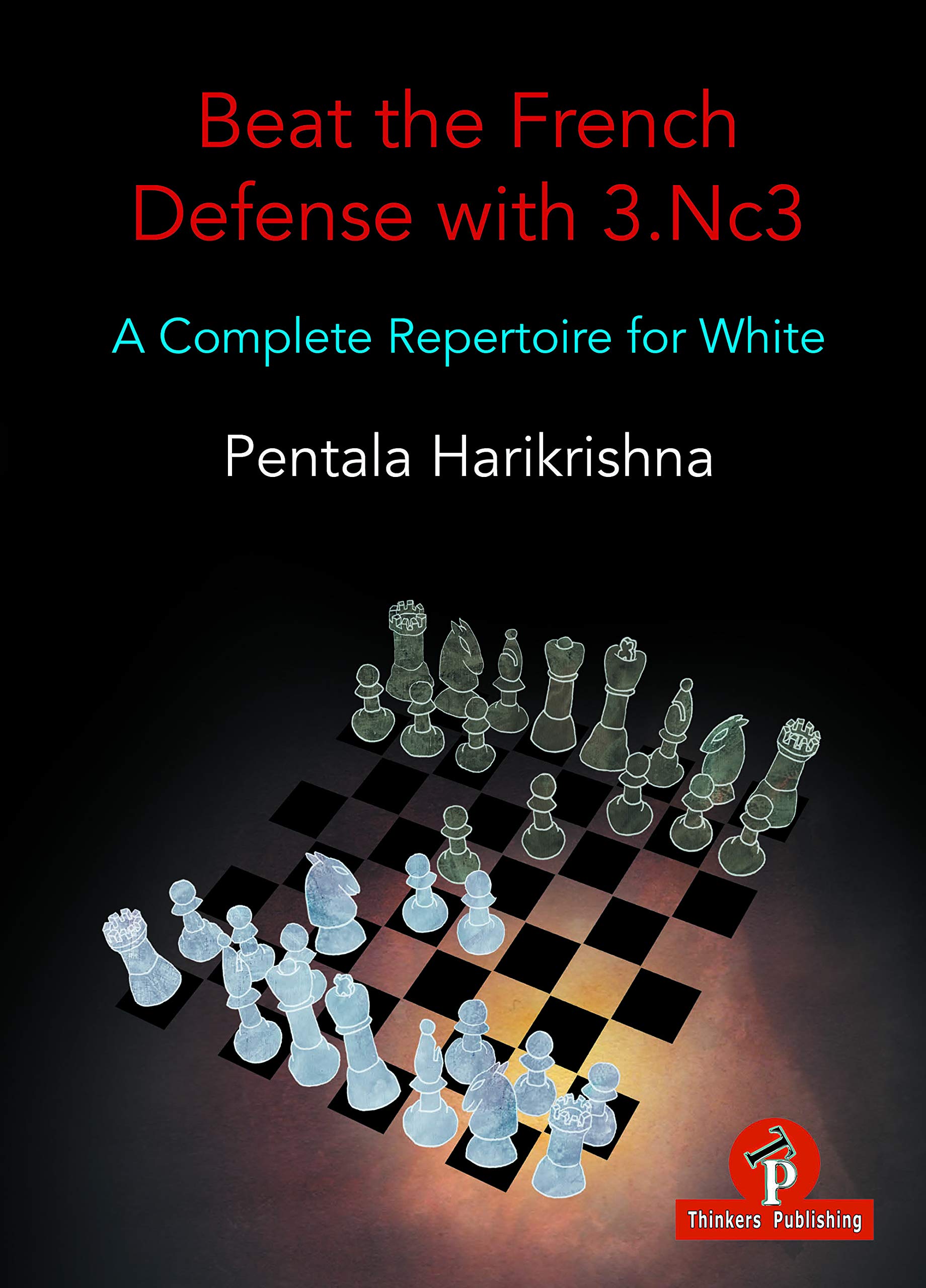
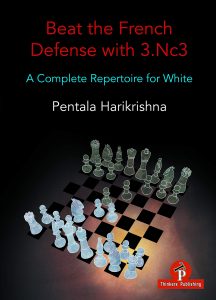
Beat the French Defense with 3.Nc3, Pentala Harikrishna, Thinker’s Publishing, 2021, ISBN-13 : 978-9492510976
“GM Pentala Harikrishna is an established elite player who has been in India’s Olympiad team for over two decades. Since November 2016 Harikrishna has often entered the top 10 of the world rankings, and has consistently stayed in the top 20.
His peak rating is 2770 and he is well known for his exceptional endgame skills as well as for the ability to convert positions with a slight or even no advantage. Harikrishna learned chess from his grandfather at the age of 4, and swiftly progressed up through age-group tournaments until he became a grandmaster at age 14.
He has been World Junior Champion (2004) and Asian Individual Champion (2011). As part of the Indian national team, he has won bronze medals at the World Team Chess Championship, gold and bronze at the Asian Games, and silver (twice) at the Asian Team Championship. He has also won many major open and invitational tournaments, including the Marx Gyorgy Memorial (2006), Tata Steel Group B (2012), Biel MTO (2013), Edmonton International (2015) and Poker Stars Isle of Man (2015).”
GM Pentala Harikrishna
From the publisher we have this extensive blurb:
“The French Defence was my main opening with Black while I was striving towards the GM title at the turn of the century. Quite often, I was able to use it to drag my opponent into a complicated maze of deep analysis, so I have intimate knowledge of the tricks used on the other side of the ‘barricades’. This helped me craft a solid base for our present repertoire, and many of the ideas presented in the book have brought me fine victories against some of the strongest French exponents as well.”
“At times, this means suggesting the 2nd or 3rd choice of the engine. He builds on the material from his earlier French course (Chessable, May 2019) and has expanded it with new analysis in all the lines, especially the 3…Nf6 4.e5 Nfd7 5.f4 variation. Harikrishna analyses both 5.Nce2 and 5.f4, so that the reader may make an informed choice about their personal preference. The driving force throughout is to keep the book clear-cut and practical. A good example of a practical weapon is the deceptively simple 3…Bb4 4.exd5 line. There are also fresh and interesting suggestions against the side lines you are likely to encounter, especially at shorter time controls. The entire Thinkers Publishing team joins with the author in wishing you enjoyment and success from this exceptional book”
End of blurb…
It is rare that one of the World’s top ten players would write a book on opening theory but here Hari, as he is commonly called, obliges. He has had a peak rating of 2770 and has been a member of India’s very strong Olympiad team for around two decades .
So, the starting position of this rather large (456 pages) tome is
and this book is written from the perspective of the first player striving to take on the French Defence with 3.Nc3. Of course it will also be of considerable interest to the second player.
Chapter 1 is entitled “Odds and Ends” in which Hari examines unusual Black 3rd moves .
He kicks off with 3…c5 which is a good move in a Tarrasch (3.Nd2) context but a clear mistake against 3.Nc3 as White trivially wins a pawn after White takes on d5 and c5 ending up with a 4 to 2 queen side majority and the d4 square in his control with the following position after 8.Ne4:
Next comes 3…a6 where both 4.Nf3 and 4.Bd3 are discussed . The most critical line here would appear to be 4.Nf3 Nf6; 5.e5 where in the main line Whites Q eventually comes to g4 putting black under pressure on the K side.
3…h6 is a curious third move alternative, but, as Hari points out it stops Black from getting in the Nimzowitschian style …f6 break as now g6 is horribly weakened.
Finally, 3…Be7 is covered but after 4.e5 c5; 5 Qg4 then puts black under pressure.
Both Chapters 2 and 3 look at the black reply 3…Nc6 (a idea of Aron Nimzowitsch) which has always seemed an illogical move to me in the French by blocking …c5.
After 3…Nc6 Hari first looks at 4.Nf3 then in the Chapter 3 4.e5 when 4…f6 is given as the black’s main line usually followed by 5.Nf3 Bd7; 6.Bd3 fxe5; 7.dxe5 Nb4; 8.Ng5 turns out to be good for white according to the author:
In this line black can play 5…fxe5 immediately but after 6.dxe5 Nh6 7.Bg5! again leaves White with advantage.
Chapter 4 brings the reader to the Rubinstein Variation (also ECO code C10) where black plays 3…dxe4 when after 4.Nxe4 options such as 4…Nf6 4…Qd5 and 4…Bd7 attract attention.
According to the author none of these achieve equality but 4…Bd7 is given the most analysis since it is not easy to show an advantage for white. Furthermore, 5.Nf3 Bc6; 6.Bd3 alternatives such as 6…Be4; 6…Nf6 and 6…Nd7 are all interesting tries. White usually plays ideas including c3 and Ne5 to maintain an edge.
Chapter 5 continues to look at the Rubinstein when 4…Nd7 is considered to be the main line. Hari recommends an usual approach for white which we will not reveal here: buy the book!
Chapter 6 progresses to more classical territory with the hugely popular 3…Nf6 (ECO C11 – C14) when 4.e5 Nfd7 and now 5.Nce2 is analysed in considerable depth through to the end of chapter 9.
Club French players will be expecting (and hoping for no doubt) 5.f4 or 5.Nf3 and therefore 5.Nce2 could well throw them off their stride. 5.Nce2 scores well at the highest levels (56%) and is in the armoury of Carlsen, Grischuk, Anand and Nepomniachtchi and consequently deserves much respect.
In this line White intends the usual c3 following …c5 and often will relocate his N from e2 to f4.
Having said all of that 5.f4, which Hari starts to look at in Chapter 10, seems (to me at least) to be the “best” move. Clearly it is the most popular continuation.
The “main line” continues 5…c5; 6.Nf3 where 6…Be7; 7.Be3 b6; 8.Qd2 00; 9.Nd1 is given.
Although this line leads to a white advantage the more aggressive “Williamsesque” 9.h4 which features in some of the other lines should be considered by white players, especially those who love to attack.
Chapter 11 consider 6…Nc6; 7.Be3 Be7; 8.Qd2 is looked at and Black can play …a6 and …b5 here but Whites plan here is Be2 and 00 as Q side castling is somewhat playing into blacks hand.
Instead Black can try 8…00 instead when White is best capturing on c5.
The older line 5.f4 c5; 6.Nf3 Nc6; 7.Be3 Qb6 has always been regarded as slightly suspect and Hari takes a look at this in Chapter 14.
Usually White plays b4 and black sacrifices a piece and although it leads to exciting chess the verdict remains the same. A well prepared white player should be delighted to see this line. The key word in all of this is, of course, “well”
Better perhaps is 7…cxd4 and Chapter 15 examines this: probably much tougher for white to crack. After 8.Nxd4 Qb6 the author provides a large quantity of analysis in this poisoned pawn style line where White sacrifices a pawn with 9.Qd2 and black rightly accepts the challenge with 9…Qxb2.
Finally(!) Hari leads us to the Winawer Variation but here he shocks the white player with his suggestion. To find out what this is you will need to buy the book!
I generally play the Tarrasch but my next bunch of email and postal games will definitely feature 3.Nc3 ! I’m keen to try out the authors suggestions and so should you be!
Colin Lyne, Farnborough, Hampshire, 19th June, 2021
The Gloomy Fate and Romantic Chess of Arthur Towle Marriott : Fabrizio Zavatarelli
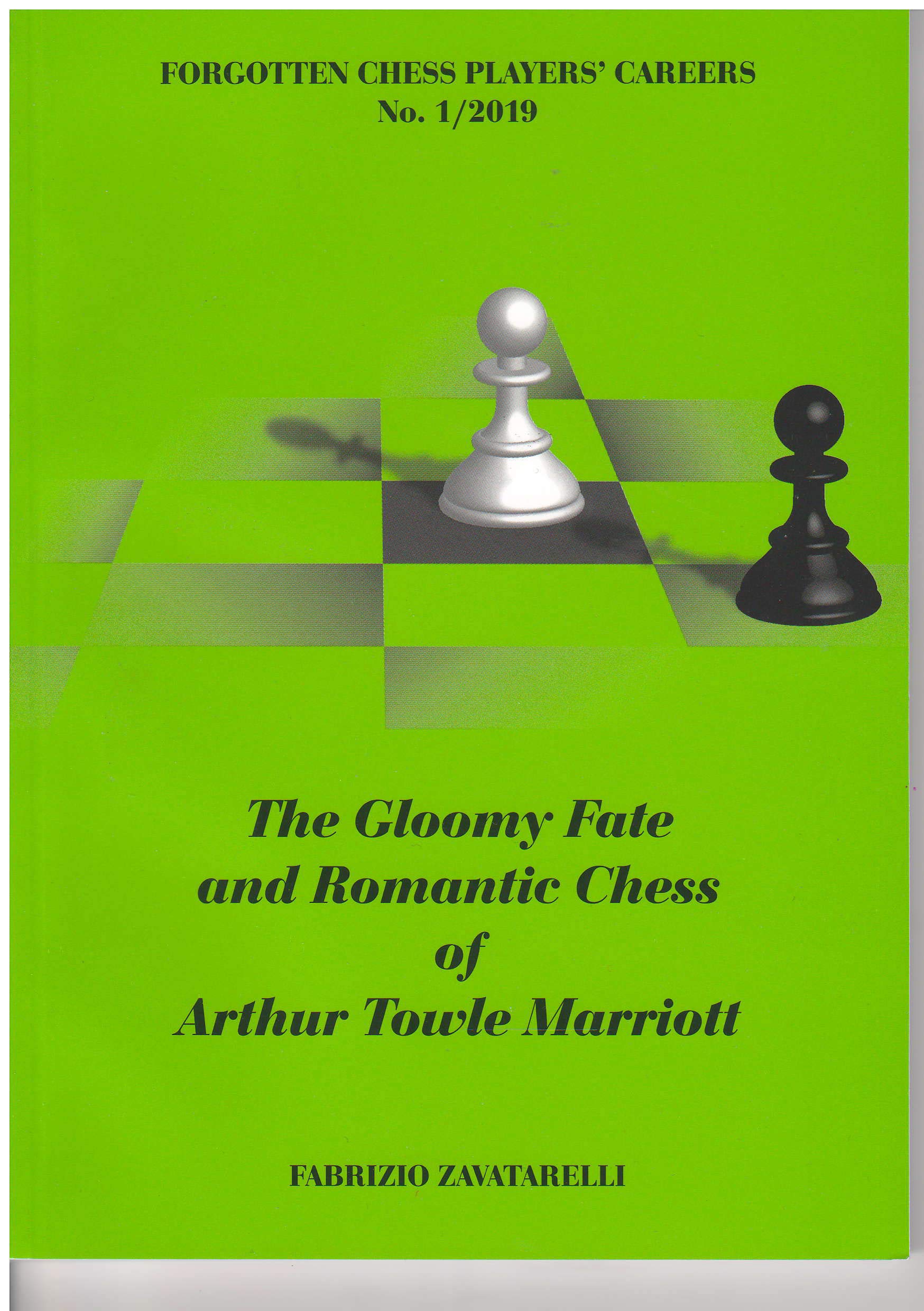
The Gloomy Fate and Romantic Chess of Arthur Towle Marriott, Fabrizio Zavatarelli, Moravian Chess, 2019, ISBN 978-8071890164
From the publisher:
Biography of prominent Nottingham chess-player (1859-1884). Biography contents 156 annotated games with comments mostly from contemporary sources. A. T. Marriott played chess with many contemporary chess players of this time, e.g. Blackburne, Freeborough, MacDonnell, Thorold, etc.
I won’t quote the publisher’s introduction, as it’s the same as you’ll find in this book.
This is the first volume in a different series, though, featuring the careers of forgotten chess players. In this case the author is Fabrizio Zavatarelli, an Italian chess historian, who has written a book on Kolisch and co-authored one on Neumann, Hirschfeld and Suhle, both published by McFarland. An author, then, with a proven track record as an excellent writer and researcher in this field. A helpful feature of the book is a rating system for games: one star: of some interest, two stars: worthy of an anthology, and three stars (there are none in this book): a masterpiece.
Arthur who? You may well ask. I hadn’t heard of him until I saw the advance publicity for this book. Arthur Towle Marriott, it turns out, was the youngest and strongest member of a chess playing family. We have 156 games, with contemporary annotations, along with a few problems, and we follow him as he travels the country, playing chess wherever and whenever he can.
Marriott was born in Nottingham on 25 November 1859, the youngest son of Thomas and Sarah. There is information about his family now available online which Zavatarelli was either unable to find or which wasn’t available when he was researching the book. A footnote suggests that Sarah’s maiden name was probably Lacey: it wasn’t: she was Sarah Green. He also states that no mention of the family can be found in the 1861 and 1871 census records: in fact the 1871 record has now been found, but not, as yet, the 1861 record. You can find out more information about the chess playing Marriotts here.
His earliest games, mostly played by correspondence, date from 1876, about the time of his 17th birthday. But a few months later he was playing, and winning, in a match between Nottingham against Leicester. As an example of Marriott’s play at this time, here’s a casual game played at his chess club.
From this game you can tell that he was a highly talented tactician with a love, which would last the rest of his life, of rather dubious gambits.
Marriott played in the 2nd Class Tournament at Grantham over the following New Year, outclassing the opposition to win with a 100% score. In August 1878 he travelled to Hull for a series of games against Edward Freeborough, later to find fame as the co-author of Chess Openings Ancient and Modern. Two months later, Blackburne was in town for a simul, and, underestimating his young opponent, was mated in only 17 moves.
We follow Marriott’s career and travels over the next few years, visiting London, for example, to take on the chess automaton ‘Mephisto’, possibly operated by Gunsberg at the time. But at some point, possibly early 1881, he contracted tuberculosis. Undeterred, he continued playing chess between bouts of his illness.
Everyone loves a good king hunt, so take a look at this.
Curiously, the moves up to 15. Be3 were duplicated in a 21st century game (Haller – Torretta Wasselonne Open 2009), but White ended up repeating moves in a winning position.
The Danish Gambit was one of Marriott’s favourite openings, as was the Boden-Kieseritzky Gambit, which he also played with colours reversed: yes – the currently fashionable (in some circles) Stafford Gambit.
It’s very clear from the games in this book that Arthur Towle Marriott was a player with an outstanding tactical imagination: deadly against opponents who failed to develop their pieces in the opening. Not everything stands up to computer analysis, but he was more interested in playing a beautiful game than winning prosaically.
Playing in a tournament against master standard opposition, though, is another matter entirely. Would he be able to raise his game and become a world class player like Blackburne, or would he remain just a tricky tactician like Bird?
A tournament in Birmingham in August 1883 gave him the chance to find out by taking on some of the country’s leading amateurs under serious match play conditions.
In the first round he faced Nelson Fedden, and this time forsook his beloved gambits for a more cautious start.
This game suggested that he could make the grade, but, had he been in full health he would no doubt have concluded more quickly and efficiently rather than missing some simple mates. He lost to Thorold, the eventual winner, in the second round, and then, playing poorly, to Ranken. At that point he was forced to withdraw from the tournament on health grounds. In November he travelled down to Bournemouth, hoping the sea air would improve his health, and, of course, played a lot of chess while he was there. He returned home in early 1884, but his condition was worsening and he spent some time in the TB Sanatorium at Ventnor on the Isle of Wight. It was all to no avail, though, and that dreadful disease claimed his life on the night of 21-22 November, just a few days before his 25th birthday.
Here’s a problem: White to play and mate in 3 moves (Nottingham Guardian 1884). You’ll find the solution at the end of this review.
Arthur Towle Marriott is one of the great might-have-beens of English chess history. He was a highly creative and imaginative attacking player who was very much at home in the 19th century world of romantic gambit play. A real chess enthusiast, he played wherever he went: casual games, club matches or tournaments, simultaneous displays, odds games, blindfold games, they all came alike to him. You’ll even find a game of four-handed chess here. He was very popular as well: everyone who knew him soon became fond of him, and you’ll also find a few lovely anecdotes within these pages. But he was strong enough to beat the likes of Blackburne and Gunsberg in one-to-one games. EdoChess gives him a peak rating of 2376 in 1881, placing him 66th in the world. It’s quite possible that, had he lived, he’d have reached grandmaster level.
What you get is everything currently known about Marriott’s life and chess. What you don’t get is external contextualisation: there’s a lot more to be told about his family background, some of which I’ll endeavour to do at a future date in my Minor Pieces series. There’s much that could be written about some of his opponents, who also have their stories. You also don’t get computer-assisted analysis: he played some highly complex games, and, inevitably, many of the annotations fail to meet with Stockfish’s approval. Finally, you don’t get professional production values. The publisher uses a different – and less suitable – diagram font than in the Mackenzie book: it’s not always easy to distinguish between some of the white and black pieces.
One of my particular interests is in the history of chess in Leicester (a city with which I have various personal connections), and Marriott played in several matches between his and my father’s home towns. If you’re interested in chess at this time and place you’ll be sure to want this book. If you have a general interest in 19th century chess history, if you love the romantic 19th century style of play, where gambits are offered and accepted, and where pieces are sacrificed for speculative attacks, you won’t be disappointed by the specimens here. If you just want to find out about an unjustly forgotten figure in chess history, one who, in some ways, typified the spirit of his age, again, go right ahead and buy it.
Problem solution: 1. Ng3 d4 2. Nh3 Ke3 3. Rc3#. The two knights withdraw to set up a pin mate. Not profound, but rather charming, I think.
Richard James, Twickenham 27th May 2021
. Richard James
Book Details :
Softback : 160 pages
Publisher: Publishing House Moravian Chess (1 Jan. 2019)
The Modernized Ruy Lopez – Volume 2 – A Complete Repertoire for White, Dariusz Swiercz, Thinkers Publishing, ISBN 978-9464201086
“Dariusz Swiercz was born in 1994 in Tarnowskie Gory, Poland. His grandfather taught him to play chess at the age of three. During his junior career he won numerous National Championships as well as several European and World Championship medals. His highest successes include the bronze medal in 2010 at the World U20 Championship (Chotowa, Poland), gold medal in 2011 at the World U20 Championship (Chennai, India) and another gold medal in 2012 at the World U18 Championship (Maribor, Slovenia). He is one of the youngest to receive the Grandmaster title at the age of 14 years and 7 months. In 2016 he won the third edition of the “Millionaire Chess” held in Las Vegas, USA. Since 2018 he has represented the United States. Dariusz currently resides in Saint Louis, Missouri.”
GM Dariusz Świercz
From the book’s rear cover we have this extensive blurb:
“I would like to thank you for purchasing this book, I really appreciate it. It also means that you found an interest in my work of trying to crack the Ruy Lopez. As I said in the introduction to the first volume, I had no idea what I was signing up for when deciding to write a book on Ruy Lopez. This opening has such a rich history and good reputation that proving advantages in many lines is nearly impossible.
Writing the first volume on this opening was a Herculean effort and I thought “it cannot be more difficult”. After all, I was covering such solid variations as the Berlin and the Open Spanish. Well, I got surprised again! I am not exaggerating when I say that writing the second volume was at least as hard as writing the first one. This second volume on the Ruy Lopez consists of two parts. In the first part I focus on modern systems with …Bc5, attempting to dissect both the Archangelsk and Moller Variations. These two variations have quite a rich history but in 2020 there have been several developments. If I had to name one person that contributed the most to the developments in those lines it is, without a doubt, Fabiano Caruana. His encounters in the Candidates Tournament in Ekaterinburg, then his theoretical discussion in those lines with Leinier Dominguez, revised my opinion on many of those lines and led to interesting discoveries that I analyse in this book.
In the subsequent part I discuss the Closed Ruy Lopez. It is easily one of the most popular openings throughout the history of chess with many games occurring as early as the 1800s. I suggest going for 9.h3 which usually leads to a positional battle. I present new trends and find new paths and ideas in such evergreen variations as the Zaitsev, Breyer, Chigorin and others. Additionally, I attempt to crack the Marshall Attack by suggesting the Anti-Marshall lines with 8.a4. I must admit that I thought that it would be a pretty easy task to analyse those openings having some prior analysis and experience with both colours. However, time after time I was encountering new challenges and new ideas from both sides that I had to resolve. My conclusions, based on careful analysis with the most powerful engines currently available is presented in this book.
This book completes my series on the Ruy Lopez. I would like to take a moment and recall what I said in the introduction to the first volume. When both sides play very good and sound chess, it is normal that games end in a draw. It is especially true for such sound openings as Ruy Lopez. I do not attempt to dismiss one line or another because somewhere with best play Black can make a draw by force on move number 30, playing sometimes ridiculous moves that are only found during the analytical work. Over the board the reality is way different – practical aspect plays an important role in chess. Some positions are easier to play, some harder. Similarly to what I did in the first volume, I try to offer the most playable positions.
I do not mind if the positions are equal, provided it is easier to play with White or the chance of an error by Black is quite large. Sometimes I go into forced variations (e.g. in Moller Defense or Archangelsk Defense), sometimes into more positional battles (like in the Zaitsev) but I truly believe that the positions I aim to reach have potential and are tricky for Black. With proper knowledge I think White can put pressure on Black in the Ruy Lopez. I hope that you will find my approach to tackling the Ruy Lopez interesting. I am aware that there is only so much I can analyse and someone may say that I did not analyse some positions deeply enough but that is the nature of chess – possibilities are pretty much unlimited and there will always be theoretical debate!
Finally, I wish you, dear Reader, good luck and I hope you can successfully use the ideas that I present in this book in your games. Dariusz Swiercz February 2021.”
In Volume 2 the author looks at the major lines against the Lopez and he breaks the content down into three parts.
Before continuing it would be worth looking at this 19 page excerpt from the book.
Part 1 starts with systems with …Bc5 including the Møller defence.
After 1.e4 e5 2.Nf3 Nc6 3.Bb5 a6 4.Ba4 Nf6 5.00 Bc5 a move played by World Champion Magnus Carlsen in a few games but more regularly championed by Alexander Onischuk. White continues with 6.c3 which is the most popular move according to my database.
In the game Nepomniachtchi v Caruana the game went 6…0-0 7.d4 Ba7 8.Re1
and White plans to bring his bishop to e3. He can also try 8.Bg5 as Lev Aronian did in a game vs Magnus. White is trying to pressurise e5 and get black to exchange on d4. After 8…d6 9 h3 b5 10 Bc2 when Be3 is coming and White usually tries to play his Knight to f5 with king side pressure.
On 6…b5 7.Bc2 d5 8.a4 will surprise black players. After 8…Rb8 9.ab5 ab5 10.d4 de4 11.dc5 Qd1 12.Bd1 ef3 13.Bf3 e4 14.Be2 when Stockfish gives White as much better since he retains the bishop pair.
Black can try 8…de4 9.ab5 00 but 10 Ng5 ! seems to leave White better. As in many lines analysis is given up to move 25 !
This whole line is very tricky and both players need to know it well. The Archangelsk with 5…b5 6 Bb3 completes Part 1 with the older move 6…Bb7 being looked at first and then 7 Re1 is given first. Having played this in many online games I as black I believe this is Whites best move now and ….Be7 is rather condemned. White can just play as he does against the Closed but he can save a tempo on h3 as there is no Bg4 move.
The modern 6…Bc5 played by Fabio Caruana and Gata Kamsky is given when 7 a4 should set black thinking. First 7…b4 is dismissed as an error as 8 Ne5! Ne5 9 d4 is good for White. Better are both 7…Bb7 and …Rb8 though White will continue his plan of building a big pawn centre with c3 and d4. In many of these lines white follows up with Bg5 when h6 Bh4 g5 can often be met with Nxg5 ideas.
Part 2 comprises the so-called main line of 5…Be7 6 Re1 b5 7 Bb3 d6 8 c3 00 9 h3
when 9…a5 is the Keres variation, 9…Be6 the Kholmov variation, 9…Nd7 the Karpov and both 9…Qd7 and 9…h6 credited to Smyslov.
For the first three variations 10.d4 followed by d5 attempting to cramp black are investigated but 9…Qd7 10 d4 Re8 11 Bg5 and 9…h6 10 d4 Re8 11 Nbd2 Bf8 12 Nf1 are both given as gaining an advantage for White .
Against the Zaitzev variation (9…Bb7) white has a plan of d4 combined with a3 and Bc2 followed by b3. He must be well prepared for black to play d5 here .
The Chigorin variation (9…Na5) was a favourite of Paul Keres and following 10 Bc2 c5 11 d4
both …Qc7 and …Nd7 are looked at in detail with 12 d5 recommended against both, again trying to cramp black.
12.d5 seems better than 12 Nbd2 when black can exchange on d4 and play for pressure on e4.
The Breyer variation (9…Nb8 ) as essayed by Anatoly Karpov sees 10 d4 Nbd7 11 c4 !? a move that will probably surprise Black.
For recommendations to deal with the Marshall Attack you will need to buy the book!
The book winds up in Part 3 by looking at 5…Be7 6.d3 for players who don’t want to get involved in too much opening theory.
Generally this is a book for those who take chess very seriously and are not frightened of learning large quantities of opening theory. The book is written from White’s perspective and therefore does not include a treatment of the exchange variation.
It is also good for postal /correspondence chess as White usually ends up with an edge so can torture his opponent for some time.
Colin Lyne, Farnborough, Hampshire, 26th May, 2021
Colin Lyne
Book Details :
Paperback : 336 pages
Publisher:Thinkers Publishing; 1st edition (13 April 2021)
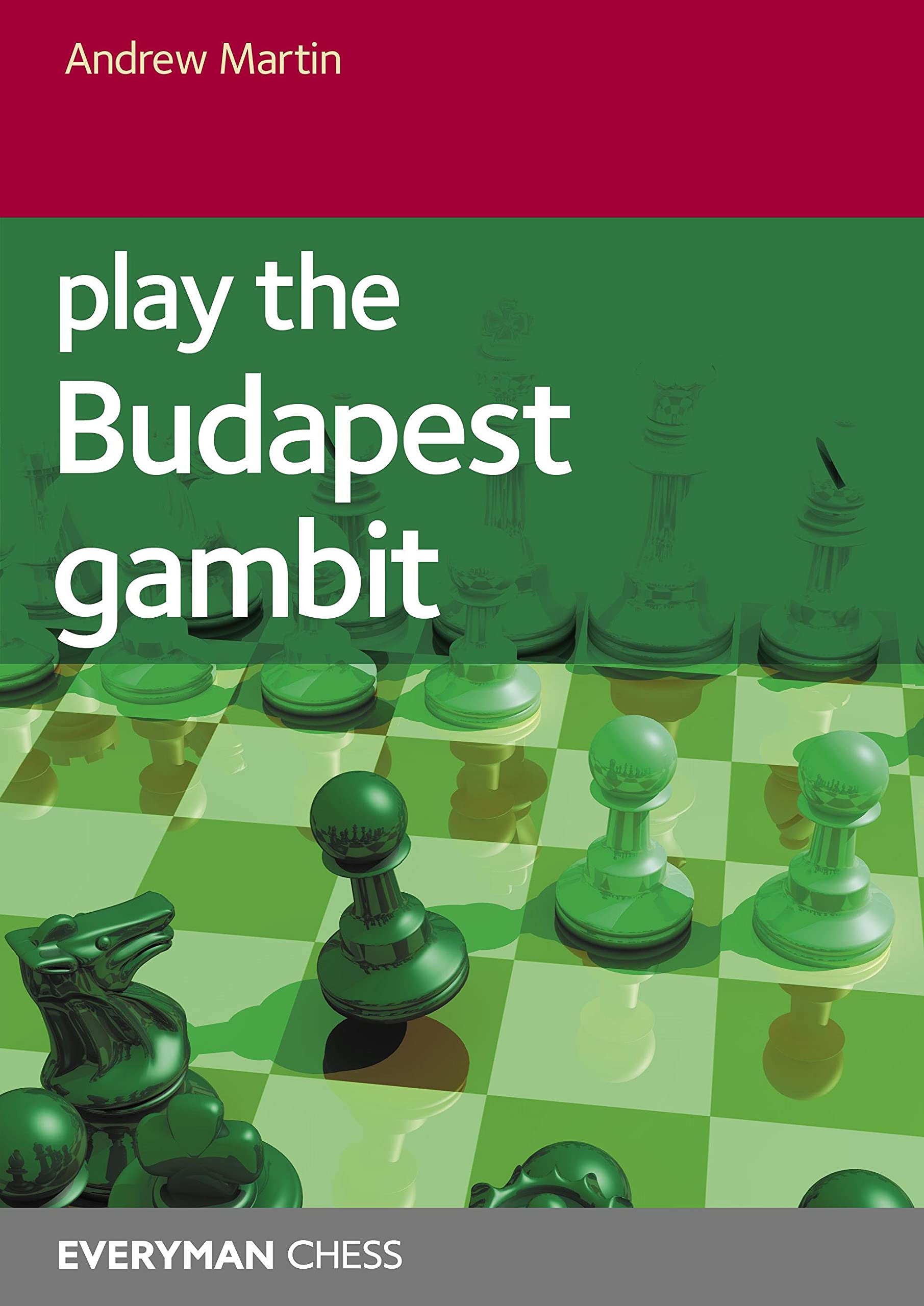
Play the Budapest Gambit, Andrew Martin, Everyman Chess, May 2021, ISBN-13 : 978-1781945889
Here is the publishers blurb from the rear cover :
“The Budapest Gambit (1 d4 Nf6 2 c4 e5) is an aggressive, dynamic approach for meeting 1 d4 and is a great line for throwing opponents onto their own resources. It is certainly double-edged as Black moves the same piece twice early on and also sacrifices a pawn. This pawn is often quickly regained but one of the great advantages of the Budapest is that if White tries to hang on to the pawn (and many players do) Black can quickly whip up a ferocious attack.
A great number of materialistic but unprepared White players have found themselves swiftly demolished by Black’s tremendously active pieces. When White is more circumspect and allows Black to regain the pawn, play proceeds along more sedate strategic lines where Black enjoys free and easy development.
Experienced chess author and coach Andrew Martin examines all key variations of the Budapest. There is an emphasis on typical middlegame structures and the important plans and manoeuvres are demonstrated in numerous instructive games. * Includes complete repertoires for Black with both 3…Ng4 and 3…Ne4 * Comprehensive coverage featuring several new ideas * Take your opponents out of their comfort zone!”
About the author :
IM Andrew Martin
Andrew Martin is an English IM, a Senior FIDE Trainer, the Head of the ECF Chess Academy, a teacher in numerous schools and a coach to many promising and upcoming players. Andrew has authored in excess of thirty books and DVDs and produced huge numbers of engaging videos on his sadly defunct YouTube Channel.
As with every recent Everyman Chess publication high quality paper is used and the printing is clear. Each diagram is clear as is the instructional text. Figurine algebraic notation is used throughout. The usual and reliable formatting from Brighton-based typesetter IM Byron Jacobs is employed.
The diagrams do not have a “to move” indicator or any kind of caption so you will need to work out for yourself how they relate to the text that they are embedded in. However, this is fairly obvious.
There is a helpful Index of Variations and an Index of the whopping 164 completed games the author provides ranging from 1896 until 2021.
For those who do not know the Budapest Gambit starts here:
and it has some overlaps with ideas from the Albin Counter Gambit:
and even the choice of many juniors and beginners, the Englund Gambit:
The book consists of fourteen chapters organised into two main parts:
The Budapest Gambit
A Budapest Timeline
Key Strategic Ideas after 3…Ng4
The Rubinstein Variation after 4.Bf4
Safe and Sound 4.Nf3
The Aggressive 4.e4
The Dark Horse 4.e3
Budapest Oddities
The Budapest Gambit Declined
The Fajarowicz Gambit
Key Strategic Ideas after 3…Ne4
The Natural 4.Nf3
The Acid Test: 4.a3
An Independent Line: 4.Nd2 Nc5
Early White Queen Moves
Other Fourth Moves
Before we continue it is worth taking a look at the pdf extract which includes the Contents, Preface and pages 166 – 184.
We were immediately struck by the author’s candour in the Preface:
This has been a tough book to write and I have agonised over the format for quite some time.
In the end I have settled for an approach by which I hope the reader will get to like the Budapest as an ingenious concept and then be willing to take the risks involved in playing the opening.
This statement is really rather refreshing. Most of us can recall the dubious days of highly ambitious (and some might say misleading) book titles such as “Winning with the Englund Gambit” or “Crushing Your Opponent with the Damiano“* or maybe something equally nonsensical but amusing. Chess publishing has mostly matured for the better in that respect and we can look forward to increasingly honest and objective tomes.
*These are fictionalised titles but hopefully the point is made clear.
The first chapter will be of interest both to both the chess historian and students of the Budapest as the author provides a welcome 64 page chronology of the gambit’s development from 1896 through 2020: interesting stuff! Indeed, this type of chapter would be a welcome addition to opening books in general and we should thank the author for being innovative in this respect.
Here is a sample game from Chapter One:
The meat and potatoes theory chapters adopt a methodology of selecting a large number (135) of practical games which are each annotated with succinct explanations rather than tedious reams of variations and engine dumps. The author’s coaching pedigree is evident throughout which will enhance the ambitious students understanding of this interesting gambit.
Not ever having played the Budapest and not allowing it with white (in the BCN office we are all extremely dull players and chose 1.d4 Nf6 2.Nf3) it would not be appropriate for us to comment on the merits of various lines and variations. However the author can hardly be accused of selecting only games where Black does well. In fact, the chapter (Two) outlining the Key Strategic Ideas after 3…Ng4 contains ten wins for White out of 18 games! So, again, applause for an objective approach.
So, how does Black fare in the recommended line?
Well, this is covered in Chapter Four: Safe and Sound: 4.Nf3 and game 72 is instructive:
It would certainly appear that the recommendation of 7…Ncxe5!? is a good one since out of 62 games in this line in MegaBase 2020 White scores a rather poor 44.3% whereas the more popular (411 games) 7…Re8 scores a little better for White at 47.1% and, as Andrew writes it is pleasing to see the Ra6 rook lift working well: a nice game!
Possibly the most angst is evident in the treatment of the Fajarowicz Gambit:
Andrew writes:
I think the Fajarowicz is an excellent surprise weapon, but perhaps not 100% sound.
So, again, how does Black fare in the recommended line? We turn to Chapter Ten to find out…
4.Nf3 is, by far, the most popular (but not necessarily most testing) choice and leads to the following game with the interesting idea of 7…Bf8!:
So, why the lack of enthusiasm for the Fajarowicz? The title of Chapter Eleven is the spoiler: The Acid Test: 4.a3
To find out more about this line and all the others you will need to buy the book which is published on May 24th 2021.
In summary, play the Budapest Gambit is a comprehensive look at the main line and the Fajarowicz Gambit in a refreshingly objective way. The wealth of annotated games is a joy in itself and these are combined with the author’s ideas in keeping this enterprising gambit afloat within the unfriendly world of examination by engines. One of the author’s best works.
Technical Decision Making in Chess : Boris Gelfand
Technical Decision Making in Chess, Boris Gelfand, Quality Chess, 2021, ISBN-13 : 978-1784830649
From the Publisher’s Foreword:
“In Technical Decision Making in Chess former World Championship Challenger Boris Gelfand discusses his path to decision making in endgames and positions where one side possesses a structural or material advantage.
This investigation into a top Grandmaster’s technical understanding will illuminate difficult parts of the game that many players find elusive. Concepts like the “Zone of one mistake” are certain to be a revelation to many.”
From the back cover:
“In Decision Making in Major Piece Endings former World Championship Challenger Boris Gelfand discusses his path to decision making in endgames involving rooks or queens, as well as the neglected “4th phase”. Countless games are decided by good or bad technique in such endgames, so readers are certain to benefit from the insights of a word-class Grandmaster on this vital topic.
Grandmaster Boris Gelfand has been an elite player for over 30 years, winning the World Cup, Olympiad Gold, the Candidates and many other top tournaments.”
Boris Gelfand, FIDE Grand Prix, London, 2013, Courtesy of John Upham Photography
Grandmaster Jacob Aagaard is the only chess writer to have won all the major awards for chess writing.
GM Jacob Aagaard takes on all-comers!
Reaction to previous volumes in the series:
In 2015 Positional Decision Making In Chess won the ECF Book of the Year award.
“The most interesting chess book I have read in the last quarter-century.” Mikhail Shereshevsky on Positional Decision Making in Chess.
This new Quality Chess publication Technical Decision Making In Chess uses high quality paper and the printing is clear. The book can easily be laid flat next to the board and does not require weights to prevent it from “self-closing” (a particular bugbear of ours !). Each diagram is clear and the instructional text is typeset in two column format, which, we find, enables the reader to maintain their place easily. Figurine algebraic notation is used throughout and the diagrams are placed adjacent to the relevant text and each major diagram at the beginning of a chapter has a “to move” indicator. Where a “to move” indicator is not present, it is obvious which colour is to move from the accompanying moves in a variation.
Each chapter is introduced with a contemporary photograph of a player or players or a tournament scene which launches each chapter in a engaging manner. This is followed by a Diagram Preview page which shows the critical analytical diagrams in the following chapter and invites the reader to practise their analysis and decision making! If you can work out most of the variations you are stronger than a world champion.
The introduction of this book makes it clear that this book is about “positions where the main goal is the conversion of a static advantage. (A static or long term advantage can be anything from a weakness to better pieces to an actual material advantage.) The flip side is included in this, meaning when it is the opponent who is trying to convert an advantage and we are trying to resist.”
It is not an endgame primer or manual on basic endgames as there are plenty of these theoretical works already in existence: the author’s particular favourites are named.
The author suggests how to best use the book by first analysing the endgames without a chess engine and/or tablebases to prevent lazy thinking by relying too heavily on engine assessments without understanding: “I just want to say that any active work with the the engine, where you are probing, analysing, asking questions, examining and so on, is useful. Any passive submission to the engine evaluations is likely to make you a worse player.”
“The key question for us has not been which line wins. but why the line is winning.”
The chapter themes are not the usual themes that are found in other endgame books, for example arranged by material, except for the last chapter on opposite bishop endgames. Boris Gelfand shows the vast majority of the endgames in relation to the whole game including the opening and middlegame transitions. This is the modern way to study endgames and gives a much deeper understanding of chess in general and is the approach of a Grandmaster.
Chapter 1 Akiba Showing The Way
In this chapter, Boris showcases the great endgame skill of Akiba Rubinstein in his famous game versus Richard Reti at Gothenburg 1920. It is black to move in the position below which is included in Reuben Fine’s Basic Chess Endings and many other endgame manuals. Black is clearly better with multiple advantages:
Better pawn structure on the queen side, the c2 pawn needs constant vigilance. The white a2 is also a significant weakness.
Better minor piece
More space
Better pawn structure on the kingside: the white kingside is full of holes, hence black’s best move given below
Richard Reti-Akiba Rubinstein Gothenburg 1920 Move 30
30…Bd7! was the strongest move, fixing the white pawns on the dark squares. They are not in danger from the bishop, but they are unable to prevent the black king from penetrating the position, which is the greatest problem for white.
Rubinstein made one bad move in this game: 30…Ke6? 31.g4! Now white can draw with accurate play, but in practice, he missed the drawing ideas.
31…Kd6 32.h3 g6 33.Kd2 Bd7
Richard Reti-Akiba Rubinstein Gothenburg 1920 Move 33
34.Nf3 Better is 34.Ng2! The idea is simple. White wants to play d3-d4 and Ne3, when he has managed to plug the holes on the light squares on the kingside to a significant degree. 34…d4 is critical, cutting across this idea. 35.cxd4 cxd4 36.c4 dxc3+ 37.Kxc3 This looks to be good for black as he has a potential outside passed pawn on the queenside, but white can apparently hold! 37…g5 38.f5 Bc6 39.Ne3 Bf3 40.d4 Kc6 41.a3 and white draws. This is extremely instructive and should be studied carefully.
The game continued 34…Ke7 Another idea is 34…h6 35.Ke3 g5 and Gelfand shows that white has a lot of fantastic resources to just hold the game. Buy the book to find out how! 35.Ke3 h5
Richard Reti-Akiba Rubinstein Gothenburg 1920 Move 35
Reti now placed a horridly passive move 36.Nh2? which definitely loses. His last chance was a far sighted pawn sacrifice to draw as follows: 36.Nh4! Kf7 37.gxh5! gxh5 38.f5! Ke7 39.Ng6+ Kd6 40.h4! Bxf5 41.Nf4 Bg4 42.d4! and white has created an effective fortress. Black cannot make progress as he loses a pawn.
36…Kd6 37.Ke2? (37.gxh5 gxh5 38.h4 is tougher, but does not hold. 38…Bh3! The domination theme, a sample line is 39.Nf3 Ke6! 40. Nh2 b5 41.Kf2 Kd6 42.Ke3 a5 43.Nf3 Ke6 44.Nh2 a5 45.Kf2 (45.a3? Kf5 with the idea of b4 creating an outside a-pawn wins quickly) a3! 46.Ke3 Kf5 47.Kf3 Kg6 48.Ke3 d4+ 49.cxd4 Be6 50.Kd2 Bxa2 and black wins as the blockade does not hold.
The game continued 37…d4! Fixing a2 and c2 and widening the bridgehead for the king and bishop. 38.cxd4 cxd4
Richard Reti-Akiba Rubinstein Gothenburg 1920 Move 38
White lost quickly as follows 39.Kd2 hxg4 40.hxg4 Bc6 41.Ke2 Bd5 42.a3 b5 43.Nf1 a5 44.Nd2
Richard Reti-Akiba Rubinstein-Gothenburg 1920 Move 44
Now black won with the thematic 44…a4! forcing the creation of a passed a-pawn. We all know that knights are very poor at dealing with passed rook pawns. 45.Ne4+(45.Nb1 Kc5 46.c3 Ba2 wins) Bxe4 46.dxe4 b4 47.Kd2 bxa3 48.Kc1 g5 0-1
This ending is worthy of close study, not just to enjoy Rubinstein’s great technique, but also to discover hidden resources in difficult positions: a variation on the theory of infinite resistance.
Chapter 2 Turning Points
This section covers two interesting Gelfand games, one of which he wins and one he loses. As the chapter heading indicates, the key theme is recognising critical points in a game. The section culminates in the analysis of a fascinating same colour bishop endgame from the second game that was holdable by the inferior side.
Ivanchuk-Gelfand Wijk aan Zee 2012 Move 20
This is a middlegame position from a Catalan opening. Gelfand comments along the lines of white (Ivanchuk) is a little better with a better bishop and a bit more space. The important factor is that the position is easier to play for white and white risks little by playing on. Black’s main problem is the decision about when to stay passive (waiting) or go active. This general issue is covered more in chapter 3.
It is hard to believe that a player of Ivanchuk’s standard ends up in a losing position after only six more moves!
White played 21.Nel?! (Hoping to get the knight to b4 an apply some pressure. The simple and natural 21.Bd3 was better. After 21…Qd6 white can try 22.Ne5, 21…Qc8 with the idea of a5 and Ba6 exchanging the semi-bad bishop is logical. 22.Qa3 Qf8 23.Qa4 Qc8 24.Kg2 a5 25.Bb5 Ba6 26.Bxa6 Qaa6 27.Ne5 Qc8 28.Qc6 and white is better in the inevitable double knight ending.
Ivanchuk-Gelfand Wijk aan Zee 2012 Variation Move 28
The game continued 21…Qc8 22.Nc2 Ne4! 23.Nxe4 dxe4
Ivanchuk-Gelfand Wijk aan Zee 2012 Move 23
White probably mistakenly thought this pawn structure transformation was in his favour. This is incorrect. The e4-pawn is fixed on the colour of the bishop, however, the e4 pawn gives a space advantage, the d5 square and a pivot for a pawn storm on the king side.
White should probably play 24.a4 then Bd5 25.Qc3 Qxc3 26.bxc3 White is optically better but 26…Bb7! 27.Nb4 Nb8! Black is going to bring his king over and hold. White played 24.Qc3? Qxc3 25.Bxc3 b5! This looks dangerous putting another pawn on the colour of the bishop, but white’s bishop is also hemmed in by black’s pawns and black has a significant space advantage.
Ivanchuk-Gelfand Wijk aan Zee 2012 Move 25
This is the crucial turning point of the game. White should have objectively realised that he had gone wrong and looked for way to draw. 26.c4 looks reasonable, but after bxc4 27.Bxc4 Nb6 28.Be2 a5 29.Kf1 Bd5 30.a3 Bc4!? white is a fraction worse. Black has rid himself of the semi-bad bishop and has a space advantage in a knight endgame.
Ivanchuk-Gelfand Wijk aan Zee 2012 Variation Move 30
White played 26.a4? (See two diagrams back above, gifting black an outside passed a-pawn) and duly lost. An horrendous positional error from a world class player. Black combined the passed a-pawn distraction with a general advance on the king side to create entry points for his king and win.
In the second game, the aforementioned bishop ending reached this critical position.
Gelfand-Wang Sochi 2008 Move 43
White played 44.h4? which loses. 44.Kb6! would have drawn. The analysis is complicated but black’s best try is 44…Ke6 (44…Bd1 also leads to draw by a single tempo) 45.Bg6 Kd6 46.Be4 c5 47.Kb5 Bd5 48.Bxd5 Kxd5 49.Kxa4 h5 50. Kb5 c4 51.Kb6 Ke4 52.Kxb7 Kf3 53.Kc6 Kg2 54.Kc5 Kxh2 55.Kxc4 Kxg3 56.b4 h4 57.b5 h3 58.b6 h2 59.b7 h1=Q 60.b8=Q Qe4+ 61.Kc5 Qxf4 (see below) with a theoretical draw but still a practical challenge. The companion volume Decision Making in Major Piece Endings covers this type of ending.
Gelfand-Wang Sochi 2008 Variation Move 61
This whole bishop ending is worthy of close study as white has some amazing ideas to hold an ending that just looks lost.
Chapter 3 covers the important topic of active or passive defence.
Gelfand demonstrates this theme with a complex double rook and knight endgame. Here is a position a few moves before that endgame, where black missed a chance to equalise comfortably.
Gelfand-Pelletier Biel 2001 Move 23
Gelfand points out that active defence with 23…Nd5! forces easy equality. 24.Qxe5 Nxe3! 25.Be4= (25.Qxe3? Qxe3 26.fxe3 Rxd3 27.Rxa7 Rxa7 28.Rxa7 Rxb3 and black is playing for a win)
Black played the passive 23…Qc6?! forcing a queen exchange. This is a common mistake when a (weaker) player wants a draw and exchanges pieces with small concessions 24.Qxc6 Bxc6 25.Bf1! Rdb8?! (26…Rab8! is more active when white can win a pawn but has great technical difficulties) 26.Bc4?! ( 26.Ra6! Rb6 27.Bc4 Bd5 28.Bxd5 Nxd5 29.Rxb6 Nxb6 30.Ra5! White is definitely in plus equals mode playing for two results.) 26…Bd5?! (26…Bb5 equalises) 27.Nxd5 Nxd5 28.Ne4 Rb4 29. Nd2! Rb7 Reaching the position below.
Gelfand-Pelletier Biel 2002 Move 29
White played 30.Ra5 which sets a small trap. 30.g4! was probably better gaining space and attempting to isolate the e5 pawn from its friends. Black played the obvious 30…Rd8?! activating the rook (30…Nc3 is better). After the game move, white has an edge and it’s very instructive to see how Gelfand increases his advantage in a practical game with mistakes from both sides.
Chapter 4 covers the common idea of A Bad Plan is Better than No Plan.
Here is a complex middlegame position.
Gelfand-Harikrishna 2014 Move 21
The penalties of planless play are amply demonstrated in the middlegame between moves 21-30 where planless play by black spoils an equal position resulting in a difficult heavy piece middlegame and subsequent losing king and pawn ending.
Gelfand-Harikrishna 2014 Move 30Gelfand-Harikrishna Wijk aan Zee 2014
White to move on move 40. What would you play? 40.a4! springs to mind spoiling black’s majority and winning.
Chapter 5 is all about long games with an increment.
Gelfand demonstrates two games, the first is a complex rook and knight endgame; the second of which is a very long queen and minor piece ending with an extra pawn.
This queen and minor piece ending has just arisen after white forced the exchange of rooks a few moves ago.
Gelfand-Grachev Moscow 2016 Move 34
White played 34.Qe2? which is a blunder. 34.Kg1 is obviously better, 34…Nxh4 35.Bxe5 activates the bishop increasing white’s advantage. 34…Kg8? Missing 34…Nf4! 35. Qf3 (35.Bxf4 Qxh4! threatening mate) 35.Kg1 Qd2 with loads of counterplay 35.Kg1 Nxh4 36. Bxe5 Qa5 37.Bg3 Ng6
Gelfand-Grachev Moscow 2016 Move 37
White has increased his advantage by activating his bishop.
I shall show a couple of other positions from this instructive game with Gelfand’s pithy comments. Black sacrifices the h-pawn to open up the white king.
Gelfand-Grachev Moscow 2016 Move 44
White played 45.Qg3?! instead of the consolidating 45.Bc3! “White consolidates and is on the way to winning the game. In these long games where it is very hard to spot the critical moments, because every moment is a mini-version of it, inaccuracies are bound to happen. This is why it is important to analyse the games and improve our feeling for how to spend our time, how to organise our pieces, how to organise our thinking and how to control the opponent’s counterplay. A lot of happens subconsciously. We analyse the games, find out what actually happened, compared to our experience during the game, and our feeling for the details will be slightly better the next time around.”
At move 49 this position was reached:
Gelfand-Grachev-Moscow 2016 Move 49
Gelfand played 50.Qe3!? a perfectly decent move. Gelfand comments that the computer suggests 50.Kf3 Qf5+ 51.Ke2 Qe5 52.Qe7 Qxb2+ 53.Ke3 reaching this position:
Gelfand-Grachev Moscow 2016 Variation Move 53
The knight is lost after 53…Nxf2 54.Qe6+ Kh8 55.Qc8+ Kh7 56.Qf5+ A brilliant line.
Gelfand makes a wise and honest observation: “Obviously this is the type of thing the engine does much better than a human. Finding a tactic in a position where there are a large number of possibilities. No human can go 2-3 moves deep in all lines and see these types of options. So, all in all, I pay attention to this kind of information, but I do not regret not seeing it.”
At move 101 (see position below), Boris comments: “At this point I was confident that I would win. I knew what I should do. The queen controls everything and the white king can go forward. White is also winning in this position if there are no f- or g- pawns on the board….White can also play f5-f6, creating a situation where the black king is exposed, liniting the number of checks Black is able to give. The general idea is basic: White will aim to put the queen in-between on one of these checks, spiking the black king, forcing the exchange of queens.”
Gelfand-Grachev Moscow 2016 Move 101
Having read the relevant section in the companion volume “Decision Making In Major Piece Endings” even the reviewer would be confident of victory in this technical position.
Chapter 6 When is the Right Time to Run?
This chapter is about “situations in both the middlegame and the endgame, where both players had to make decisions about when to improve their position and target the opponent’s resources and when to roll the dice and attack the king or let passed pawns roll. This is perhaps the most essential theme in top level chess, as a good feeling for what kind of action is needed in various positions, when to calculate and when simply to improve the position, is worth many points.”
Gelfand demonstrates this with a complex rook and knight ending.
Gelfand also brings out a pertinent comment about computer evaluations in this section. This is a position from a short variation in that game:
Navara-Gelfand Prague 2006 Variation Move 26
Boris says “Stockfish helpfully tells us that the position is still equal. But is it really? Black is full control of the d-file and can penetrate to the second rank…..Black is much more comfortable….”
Objectively, a strong engine would hold as white, but who would choose white?
Chapter 7 Choosing the Right Transformations
This chapter shows a complex queen and knight ending which is really interesting considering all the transformations to knight endings.
Caruana-Gelfand Amsterdam 2010 Move 30
Black played a technical, far reaching move 30…Qg5! forcing 31.e3 and the weakening of the f3 square. Gelfand stresses the point that black cannot win on the queenside alone and must create weaknesses on the kingside. Gelfand analyses the alternative 30…Qa6 to a probable win giving some superb analysis including a brilliant positional knight sacrifice creating passed a- and h-pawns which is definitely worth studying:
Caruana-Gelfand Amsterdam 2010 Variation Move 37
37…Nf1+ 38.Ke1 Nxh2 39. Kf2 Kf8! 40. Kg2 Nxf3 41.Kxf3 (41.exf3 h5 ensures a passed h-pawn) f5! Black wins by a tempo.
Chapter 8 – Karjakin
This game is a technical queenless middlegame in the Chebanenko.
This position gives a flavour of the struggle:
Gelfand-Karjakin Nalchik 2009 Move 20
White is clearly better, but how does white proceed here? Buy the book to find out.
Chapters 9 and 10 are titled Stalemate and Stalemated respectively.
Here is an amusing finish:
Ponkratov-Bacrot Berlin 2015 Move 34
Black is under the cosh with a killing rook discovery on the cards.
Bacrot played 34…Bd3+!! 35.Bxd3 Qd5 36.Bc4 Renewing the threats. 36…Rh1+ 37.Kg2 Qd2+! 38.Kxh1 Qg2+ stalemate
Chapter 11 The Relevance Of Endgame Studies
This chapter is good and the title is self explanatory. Solving endgame studies is useful for getting a feel for the potential of the pieces – not only in the endgame. Endgame studies are the artistic side of chess. Here is an instructive and entertaining study composed by Sergey Tkachenko & Boris Gelfand:
Sergey Tkachenko & Boris Gelfand 2017.
I will not give the solution, but there is a beautiful zugzwang, so buy the book to find out!
Chapter 12 Geometry
This chapter has an intriguing title but covers mainly R+N v R and positions with R v N or B with just a few pawns. Here is a good example:
Mamedyarov-Gelfand Pamplona 2004 Move 64
White is in great danger here with his monarch in the corner. 65. Rxa7 loses as it unpins the knight allowing the prosaic mate 65..Rh5+ 66. Kg1 Ne2+ 67.Kf1 Rh1# The move that springs to mind is 65.Kg1. In fact this does draw as does 65.Kh2.
White actually played 65.Nd4+? to distract the black rook, so he could capture the a7-pawn. After 65…Rxd4 66.Rxa7 black has a pretty win with 66…Rd6! 67.Ra2 (67.Rf7 Kg3 68.Rg7+ Ng6! shuts out the rook and mates) 67…Rh6+ 68. Rh2 Nh3! with a beautiful zugzwang that I have not seen before.
Mamedyarov-Gelfand Pamplona-2004 Move 68
69.Rh2 Nf2+ 70.Kg1 Rh1#
Chapter 13 – Endings with Opposite Coloured Bishops
This is one of the reviewer’s favourite chapters as it shows the immense complexity of such endgames.
Leko-Gelfand Dortmund 1996 Move 71
White has just played 71.Bxb4 and reached the haven of an opposite coloured bishop endgame. This is quite a common type of position reached in practice. This position is a draw but it is difficult and a world class player of Peter Leko’s standard did not succeed in practice. Buy the book to find out how black won and how white could have drawn.
To summarise this is a very good technical book with many instructive games with deep analysis and didactic commentary. The book is clearly aimed at aspiring FIDE2000+ (ECF175+) players and above.
FM Richard Webb, Chineham, Hampshire, May 12th 2021
Few people know the story of Vera Menchik yet it deserves to be told. She was the first women’s world chess champion in 1927 and retained the title undefeated until her untimely death at the age of 38 in 1944 during a rocket attack on London. She is more properly compared with the great male players of her era against whom she scored creditably. The absence of a full biography of Vera in English reflects the peculiar circumstances of her life and death.
Vera was, in modern terminology, a refugee and essentially a stateless person for much of her life. She was born in Moscow in 1906 during the period of the Russian Empire to an expatriate family who was forced to flee when she was 15 following the Russian Revolution having lost their livelihood. As they passed through Europe, her father and mother split up in his homeland Czechoslovakia which had been created out of the ruins of the Austro-Hungarian empire. She arrived in England and took up residence in the seaside town of Hastings. (The fact that Hastings had hosted the world’s longest series of annual chess tournaments since 1895 was a happy coincidence.) Vera never attained British nationality until near the end of her life even though she had been domiciled in England from 1921. She won the first-ever Women’s World Championships held in London in 1927 under a Russian flag; thereafter she nominally represented Czechoslovakia until finally she represented England in 1939 following her marriage to a senior official within the British Chess Federation.
Vera Menchik., EI Bykova, Moscow, 1957, 176 pages, 4s 7d.
Vera’s grandfather was Arthur Illingworth, a wealthy trader from Lancashire who had set up business in Moscow where his Anglo-Russian daughter Olga married František Menčik. He was a successful estate manager. Vera learned chess from her father and performed well at school. Her younger sister Olga was also a good chess player and the sisters remained close throughout their lives.
Vera was a woman in a man’s world – she had to struggle harder to achieve the kind of recognition which was accorded to men. She appeared like a comet in the sky and it would be many years until other women were able to reach her level. At her first major international tournament at Karlsbad in 1929, she was the only female participant in a tournament of 22 great players. Even as women’s world champion, some of the male players objected to her participation. The Viennese master Albert Becker joked that anybody who lost to her should belong to the Vera Menchik Club. By an irony of history, he became its first member losing to her in the third round. She beat many other grandmasters during her career including the Dutchman Max Euwe in 1930 and 1931 (both at Hastings) who was to become world champion in 1935.
Although she is often portrayed as being Russian or Czech or latterly British, she was a true cosmopolitan. She knew that life could be unstable in any country. She had lived through the Russian Revolution; one parent was left behind in Czechoslovakia; she had moved westwards across Europe and embraced different cultures and languages at formative stages of her life. It is no wonder that she learned also to speak Esperanto which was designated to be the world’s lingua franca before English achieved its dominance. As a leading chess player, she travelled back to Moscow and to Czechoslovakia several times as well as to South America for her final match to retain the women’s world champion title in 1939. She needed to be self-sufficient and was obtained roles as the games editor of a chess magazine as well as being appointed the manager of the National Chess Centre in Oxford Street which was destroyed during the Blitz in 1940.
She survived most of the war and now a widow moved in with her mother and sister to a house in south London. They took the precaution of going down to the cellar during bombing raids. Tragically the house received a direct hit from a flying bomb and the entire family was wiped out. Hardly any of her possessions remained save for one dented trophy. The records at the national chess centre were destroyed as were her personal effects including her chess memorabilia. At least there remains a record of the moves played in her games which serve as testimony to her remarkable career as not only the first women’s world chess champion but also a woman who broke boundaries wherever she went and demonstrated that a woman is capable of standing on her own feet professionally and leading a full and eventful life.
The Bomb Attack
BCN remembers that in the early morning of Tuesday, June 27th, 1944 (i.e. 77 years ago) Vera Menchik, her sister Olga, and their mother were killed in a V-1* flying bomb attack which destroyed their home at 47 Gauden Road in the Clapham area of South London.
We now know that the V1 in question landed at 00:20 hrs on the 27th and led to the death of a total of 11 people including the Menchik household. Here is a summary of recorded V1 and V2 landings in the Clapham, SW4 area.
(*The V-1 was an early cruise missile with a fairly crude guidance system.)
47, Gauden Road, Clapham, SW4 6LW in more modern times.
All three were cremated at the Streatham Park Crematorium on 4 July 1944. Vera was 38 years old.
Signature of Vera Menchik from a Brian Reilly “after dinner” postcard from Margate 1936.
Vera’s Parents and Sister
Vera Frantsevna Menchik (or Věra Menčíková) was born in Moscow on Friday, 16th February, 1906. Her father was František Menčik, was born in Bystrá nad Jizerou, Bohemia. František and Olga were married on June 23rd 1905 in Moscow and notice of this marriage appeared in British newspapers on July 22nd 1905. Vera’s sister was Olga Rubery (née Menchik) and she was born in Moscow in 1908. Olga Menchik married Clifford Glanville Rubery in 1938. Vera married Rufus Henry Streatfeild Stevenson on October 19th 1937.
Her Maternal Roots
Our interest in unearthing her maternal English heritage / roots has led to the following:
Her mother was Olga (née Illingworth (1885 – 27 vi 1944). Olga’s parents were Arthur Wellington Illingworth and Marie Illingworth (née ?). Arthur was born in October 1852 in the district of Salford, Lancashire, his parents were George Illingworth (1827-1887) and Alice Whewell (1828-1910).
In the 1861 census Arthur is recorded as being of eight years of age and living in the Illingworth household.
In the 1871 census Arthur is recorded as being of eighteen years of age and living in the Illingworth household of nine persons at 5, Lancaster Road, Pendleton, Lancashire. Arthur’s occupation is listed as being a merchants apprentice. In fact, he was a stock and share broker.
Arthur died in Moscow on February 21st 1898. Probate was recorded in London on July 6th, 1900 as follows:
Illingworth Arthur Wellington of Moscow Russia merchant died 21st February 1898 Probate London 6th July to Walter Illingworth stock and share-broker Effects £4713 7s
£4713 7s in 1898 equates roughly to £626,600.00 in 2020 so it would appear that Arthur was considerably successful and almost certainly left money to Olga Illingworth.
What do we conclude from all of this? Quite simply that Vera’s maternal roots were from Salford in Lancashire.
BCM Announcement
The August 1944 British Chess Magazine (Volume LXIV, Number 8, page 173 onwards) contained this editorial from Julius du Mont:
Julius du Mont, Editor of British Chess Magazine from 1940 to 1949
“British Chess has suffered a grievous and irreparable loss in the death by enemy action of Mrs. R.H.S. Stevenson known through all the world where chess is played as Vera Menchik.
We give elsewhere (below : Ed.) an appreciation of this remarkable woman. Quite apart from her unique gifts as a chess-player-the world may never see her equal again among women players-she had many qualities which endeared her to all who knew her, the greatest among them being here great-hearted generosity.
We sympathise with our contemporary “CHESS” : Vera Menchik was for some years their games editor. Few columns have been conducted with equal skill and efficiency and none, we feel sure, with a greater sense of responsibility.
The news of this remarkable tragedy will be received by the chess world with sorrow and with abhorrence of the wanton and useless robot methods of a robot people.
One shudders at the heritage of hatred which will be theirs, but their greatest punishment will come with their own enlightenment.”
BCM Contemporary Obituary from EGR Cordingley
From page 178 of the same issue we have an obituary written by EGR Cordingley :
“The death by enemy action of Miss Vera Menchik removes not only the greatest woman chess player of all times but a charming personality.
The world will remember her for her chess prowess, for her exceptional skill as a woman player who had beaten in tournament play such gifted players as Euwe, Sultan Khan, Sir George Thomas, Alexander and Yates. In such company, and she played in several of the Hastings International tournaments and other of similar grade, she usually obtained about 33%, though in the Maribor tournament of 1934 she finished third, behind Pirc and Steiner but ahead of Rejfir, Spielmann, Asztalos and Vidmar.
Her game was characterised by solid position-play, with the definite aim of bringing about a favourable end-game and of avoiding wild complications. The ordinary stratagems of the game, small combinations and the like, were of course part of her equipment, but she lacked that imaginative, inventive spirit without which few become really great players.
In recent times, Reshesvky and Flohr (as a professional with a reputation to maintain and a living to earn) have shown that great success can be achieved by reducing the game to pure positional play, the technique being firstly to build up a position devoid of weaknesses, an ‘I can’t lose position,’ and secondly to create and take advantage of the minutest weaknesses in the opponent’s camp, a major weakness may show that imagination is not quite dead within.
This defect in her play was the inevitable reflection of her character: sound common-sense, conscientious to an unusual degree, and persevering, while she had the combative, tenacious nature so desirable and so often found in good chess players; for chess is battle of wits, the fight is what most of use love in chess. Vera was, seldom assertive, a fault not uncommon in chess players. She sat placidly at the chess board, never causing even mild irritation by any of those nervous mannerisms that may always be seen in any chess room, the peripatetic fever being the most prominent. A slight flush would rise when the position grew difficult, or when she was short of time on her clock – and that was recurrent according to the time-limit.
Away from the chessboard show would readily talk of other subjects, and her great interest was in persons, in their actions and behaviour under the strain and stress of the unruly passions; in the moulding of their lives under the inscrutable dictates of chance; in the twists and turns of a mind warped perhaps by a casual incident long ago. Of course, she was a pagan, a thinking one, who had asked and asked and found only the answer that reasoning gave. She judged kindly and never inflicted upon others her own opinions or beliefs: she asked only that these should be heard as one side of any argument, for she enjoyed a dialectic bout.
A delightful side to her character was her simple sense of humour, and I remember so clearly her pleasure – glee would describe it more eloquently – when I gave her the punctuation necessary to make sense of that ludicrous collection of words, ‘Jones where Brown had had had had had had had had had had had the master’s approval’ Anyone who knew her only at the chessboard would have been astonished at the amount of bubbling merriment she discovered of of life’s events.
I shall remember her more for the woman as I knew her over many cups of coffee spread over many, many weeks – complacent, smiling, and kindly; conscientious, loyal, and sincere; as I understand the word, a Christian who would help any deserving person as best she could. E. G. R. C.
”
and here is the original article as printed:
British Chess Magazine, Volume LXIV (1944), Number 8, August, Page 178
BCM 1958 Appreciation by Peter Clarke
From British Chess Magazine, Volume LXXVIII (78, 1958), Number 7 (July), page 181 onwards) we have this retrospective from Peter Clarke:
“The night of June 27th,1944, Vera Menchik, World Woman Champion, was killed when an enemy bomb demolished her home in London; with her perished her mother and sister Olga. In these tragic circumstances the chess world lost its greatest woman player, still undefeated and at the height of her powers.
Vera Francevna Menchik was born in Moscow on February 16th, 1906, of an English mother and Czech father. There she spent her childhood, showing a love for literature, music, and, of course, chess, which at the age of nine she was taught by her father. She had a natural bent for the game and when only fourteen shared second and third places a schoolboys (!) tournament. The following year, 1921, the family came to England, where Miss Menchik lived the rest of her life.
As if by some fortunate coincidence, the Menchiks settled in Hastings, though it was not until the spring of 1923 that Vera joined the famous chess club. Her natural shyness and lack of knowledge of English caused this delay. However, they did not handicap her too much
as she herself afterwards wrote: ‘Chess is a quiet game and therefore the best hobby for a person who cannot speak the language.”
She studied the game eagerly, and very soon her talent caught the attention of the Hungarian grandmaster, Géza Maróczy, who was resident at Hastings at that time. Thus there began the most important period in her development as a player; a sound and mature understanding of positional play-and a thorough knowledge of a few special openings and defences: in particular the French Defence. The influence of
the grandmasters ideas was clearly apparent in her style throughout the whole of her career.
Miss Menchik’s rise to fame was meteoric: by 1925 she was undoubtedly the strongest player of her sex in the country, having twice defeated the Champion, E. Price, in short matches; and only two years later she won the first Women’s World Championship in London with the terrific score 10.5-0.5. She was just twenty-one, but already in a different class from any other woman in the world. For seventeen years until her death Vera Menchik reigned supreme in women’s chess, defending her world title successfully no less than seven times (including a match with Sonja Graf at Semmering in 1937, which Miss Menchik won 11.5-4.5. In the seven tournaments for the World Championship she played 83 games; winning 78, drawing 4, and losing 1 only! However, what was more remarkable was that she was accepted into the sphere of men’s chess as a master in her own right, a feat which no woman had done before or has done since. Up to then, women’s chess had been a very poor relation of the masculine game, but here was a woman who was a worthy opponent for the strongest masters.
Flohr wrote of her: ‘Vera Menchik was the first woman in the world who played chess strongly…who played like a man.’ It was as the ambassador extraordinary, so to speak, of the women’s game that Miss Menchik really made her greatest contribution to chess. Wherever she went, at home and abroad, she aroused great interest among her sex; others were eager to follow her, to identify themselves with her. Nowadays women’s chess is well organized, and much of the credit for this must go to Vera Menchik for first bringing it into the light. Among her many personal successes in international tournaments perhaps the greatest was at Ramsgate in 1929: as one of the foreign masters (she was still of Czech nationality) she shared second and third places with Rubinstein, * point behind Capablanca and above, among others, her tutor Maróczy.
Even the greatest masters recognized Miss Menchik’s ability; Alekhine himself, writing on the Carlsbad Tournament of 1929, said: ‘Vera Menchik is without doubt an exceptional phenomenon among women. She possesses great aptitude for the game…The chess
world must help her develop her talent!’
The Vera Menchik Club
An amusing incident occurred at this tournament. There were naturally sceptics among the masters over the lady’s participation. Flohr recalls how one of these, the Viennese master Becker, suggested:
‘Whoever loses to the Woman Champion will be accepted as a member of the Vera Menchik Club which I intend to organize.’
Becker was the first to lose to her, and that evening the masters chided him: “Professor Becker, you did not find it very difficult to join the club. You can be the Chairman.’ And forthwith he was chosen as Chairman for three years. Everyone wished that the new club would soon obtain more members! Indeed, the Vera Menchik Club has many famous names on its lists-Euwe, Reshevsky, Colle, Yates, Sultan Khan, Sir G. A. Thomas, Alexander, to mention a few.
In 1935 Miss Menchik returned to the country of her birth to take part in the great international tournament in Moscow. To be truthful, she had very little success, but she was everywhere treated with respect and sympathy by masters and spectators alike. The Soviet master l. Maiselis, writing in CHESS in 1944.(Shakhmaty za 1944 god), related the following entertaining anecdote from the tournament: One day a group of players and organizers were discussing the chances of Alekhine and Euwe in the forthcoming match. Flohr said: ‘It is quite clear that I will be World Champion.’ We looked at him inquiringly.
‘It’s very simple,” continued Flohr, ‘Euwe wins a match against Alekhine, Vera Menchik beats Euwe (at that time her score against Euwe was +2, =1, -1) and I will somehow beat Miss Menchik.’
We laughed at this good-natured joke, and we laughed all the more the next day when Flohr was unable, despite every effort, to defeat her in a vital game.
ln 1937 Miss Menchik married R. Stevenson, but in chess she continued to use her maiden name, made famous by so many victories. Her husband, a well-known organizer, became, Secretary of the B.C.F: in the following year and remained so until his death in 1943.
Since the days of Vera Menchik women’s chess has taken great strides forward; now there is a special committee of F.I.D.E. to look after its needs.- Only last year the first lnternational Women’s Team Tournament took place ln Emmen, Holland; the new World Champions, the U.S.S.R., became the first holders of the Vera Menchik Cup. So chess goes onwards, but the name of its first Queen will ever be remembered.”
From The Encyclopaedia of Chess (Robert Hale, 1970 & 1976) by Anne Sunnucks :
“Woman World Champion from 1927 to 1944. Vera Menchik was born in Moscow on 16th February 1906 of an English mother and a Czech father. Her father taught her to play chess when she was 9.
Vera Menchik 1906-1944 chess playerin, CZ / GB portrait with chess board late twenties (Photo by ullstein bild / ullstein bild via Getty Images)
In 192l her family came to England and settled in Hastings (at 13, St. John’s Road, St. Leonards-on-Sea, TN37 6HP) :
13, St. John’s Road, St. Leonards-on-Sea, TN37 6HP
Two years later, when she was 17, Vera joined Hastings Chess Club,
Hastings Chess Club : 2 Cornwallis Terrace, Hastings TN34 1EB
where she became a pupil of Geza Maroczy. The first Women’s World Championship was held in 1927. Vera Menchik won with a score of 10.5 out of 11. She defended her title successfully in Hamburg in 1930, in Prague in 1931, in Folkestone in 1933, in Warsaw in 1935, in Stockholm in 1937 and in Buenos Aires in 1939. She played 2 matches against Sonja Graf, her nearest rival, in 1934 when she won +3 -1 and in 1937, in a match for her title when she won +9 -1 =5.
Isaac Kashdan plays Vera Menchik during the Hastings Congress on December 28th, 1931. Kashdan won in 45 moves in a classical French.
The first woman ever to play in the British Championship and the first to play in a master tournament, Vera Menchik made her debut in master chess at Scarborough 1928 when she scored 50 per cent. The following year she played in Paris and Carlsbad, and it was at Carlsbad that the famous Menchik Club was formed. The invitation to Vera Menchik to compete among such players as Capablanca, Euwe, Tartakower and Nimzowitch was received with amusement by many of the masters. The Viennese master, Becker was particularly scornful, and in the presence of a number of the competitors he suggested that anyone who lost to Vera Menchik should be granted membership of the Menchik Club. He himself became the first member. Other famous players who later joined the club were Euwe, Reshevsky, Sultan Khan, Sir George Thomas, C. H. O’D. Alexander, Colle and Yates.
Her greatest success in international tournaments was at Ramsgate in 1929, when she was =2nd with Rubinstein, half a point behind Capablanca and ahead of Maroczy. In 1934 she was 3rd at Maribor, ahead of Spielmann and Vidmar. In 1942 she won a match against Mieses +4 -l -5. In 1937 Vera Menchik married R. H. S. Stevenson, who later became Hon. Secretary of the British Chess Federation. He died in 1943. She continued to use her maiden name when playing chess. On her marriage she became a British subject.
Left to right Baruch H Wood, Philip Stuart Milner-Barry, Vera Menchik (playing in the women’s world championship held concurrently with the Olympiad which she won with 17 wins and 2 draws), Sir George Thomas, Conel Hugh O’Donel Alexander and Harry Golombek. England withdrew after their preliminary group due to the outbreak of war despite qualifying for the top final. Thanks to Leonard Barden
From 1941 until her death she was Games Editor of CHESS. She also gave chess lessons and managed the National Chess Centre, which opened in 1939 at John Lewis’s in Oxford Street, London and was destroyed by a bomb in 1940.
In 1944 Vera Menchik was a solid positional player, who avoided complications and aimed at achieving a favourable endgame. Her placid temperament was ideal for tournament play. Her main weakness was possibly lack of imagination. Her results have made her the most successful woman player ever.”
Vera Menchik
From The Encyclopaedia of Chess, (BT Batsford, 1977) by Harry Golombek :
Probably the strongest woman player in the history of the game, Vera Menchik was born in Moscow and, though her father was a Czechoslovak and her mother English, she played for most of her
life under English colours.
In l92l her family came to Hastings in England and there Vera became a pupil of the great Hungarian master, Geza Maroczy. This was to have a dominating influence on her style of play which was solidly classical, logical and technically most well equipped. Such a style enabled her to deal severely not only with her fellow women players but also with contemporary masters and budding masters. Vera did extremely well, for example, against C. H. O’D. Alexander
and P. S. Milner-Barry, but lost repeatedly to H. Golombek who was able to take advantage of her lack of imagination by the use of more modern methods.
Vera was soon predominent in women’s chess. In the first Women’s World Championship tournament, at London in 1927, she won the title with a score of 10.5 out of 11 and retained the championship with great ease at all the subsequent Olympiads (or International Team tournaments as they were then known more correctly) at Hamburg 1930, Prague 1931, Folkestone 1933, Warsaw 1935, Stockholm 1937 and Buenos Aires 1939.
Vera Menchik at Margate 1935, photographer unknown
With Sonja Graf, the player who came nearest to her in strength among her female contemporaries, she played two matches and demonstrated her undoubted superiority by beating her in 1934 (+3-l) and again in a match for the title in l937 (+9-l=5).
In 1937 Vera officially became a British citizen by marrying the then Kent and later B.C.F. Secretary, R. H. S. Stevenson (Rufus Henry Streatfeild Stevenson: ed).
(Rufus Henry Streatfeild Stevenson was home news editor of the British Chess Magazine, secretary of the Southern Counties Chess Union and match captain of the Kent County Chess Association).
Oddly enough, Sonja Graf, many years later, also became a Mrs Stevenson by marrying an American of that name some years after the Second World War.
Vera Menchik also played and held her own in men’s tournaments. She did well in the British championship and her best performance in international chess was =2nd with Rubinstein in the Ramsgate Team Practice tournament ahead of her old teacher, Maroczy. She also had an excellent result at Maribor in 1934 where she came 3rd, ahead of Spielmann and Vidmar.
Her husband died in 1943 and Vera herself, together with her younger sister Olga and her mother, was killed by a V1 bomb that descended on the Stevenson home in London in 1944.
Vera Menchik, circa 1935, Historic Collection / Alamy Stock Photo
This was a sad and premature loss, not only for British but for world chess, since there is no doubt she would have continued to dominate the female scene for many years.
As a person Vera was a delightful companion, jolly and full of fun and understanding. As a player she was not only strong but also absolutely correct and without any prima donna behaviour. Generous in defeat and modest in victory, she set a great example to all her contemporaries.
An example of Vera’s attacking play at its best against her nearest rival, Sonja Graf, is shown by the following game which was played in her 1937 match at Semmering in Austria :
27th November 1936: Britain’s world chess champion Vera Menchik (right) and challenger Sonja Graf after signing a contract at the Bloomsbury Hotel, London, to play for the championship of the world over 16 games. (Photo by J. A. Hampton/Topical Press Agency/Getty Images)
From The Oxford Companion to Chess, (Oxford University Press, 1984) by Hooper and Whyld :
“Woman World Champion from 1927 until her death. Daughter of a Czech father and an English mother, Menchik was born in Moscow, learned chess when she was nine, settled in England around
1921, and took lessons from Maroczy a year or so later. In 1927 FIDE organized both the first Olympiad and the first world championship tournament for women. These events were run concurrently, except in 1928, until the Second World War began, and Menchik won the women’s tournament every time; London 1927 (+10=1); Hamburg 1930 (+6=1 — 1); Prague 1931 (+8);
Folkestone 1933 ( + 14); Warsaw 1935 (+9); Stockholm 1937 (+14); and Buenos Aires 1939 ( + 17=2). She played in her first championship tournament as a Russian, the next five as a Czech,
and the last as a Briton. She also won on two matches against her chief rival, the German-born Sonja Graf (c. 1912-65): Rotterdam, 1934 (+3-1), and Semmering, 1937 (+9=5—2),
Vera Menchik in a pre-event posed picture in which she faces unstoppable checkmate in one from Hastings 193? She was about to play Sir GA Thomas.
In international tournaments which did not exclude men Menchik made little impression; one of her best results was at Maribor 1934 (about category 4) when she took third place alter Pirc and L. Steiner ahead of Spielmann. In 1937 she married the English chess organizer Rufus Henry Streatfeild Stevenson (1878-1943), A chess professional, she gave lessons, lectures, and displays, and was appointed manager of the short-lived National Chess Centre in 1939. In 1942 she defeated Mieses in match play (+4=5-1), She, her younger sister Olga (also a player), and their mother were killed in a bombing raid.
From left to right: Vera Menchik, Alexander Alekhine, Géza Maróczy and Sultan Khan. From London International Masters, 1st February, 1932, French Defence, drawn in 32 moves.
Her style was positional and she had a sound understanding of the endgame. On occasion she defeated in tournament play some of the greatest masters, notably Euwe, Reshevsky, and Sultan Khan. Men she defeated were said to belong to the Menchik club. When world team championships for women (women’s chess Olympiads) were commenced in 1957 the trophy for the winning team was called the Vera Menchik Cup.”
BCM 1994 Appreciation by Bernard Cafferty
From British Chess Magazine, Volume CXIV (114, 1994), Number 8 (August), page 424 onwards) we have this retrospective from Bernard Cafferty:
Fifty yezus ago the chess world was tragically robbed of its most talented female representative of the first half of this century. A Vl rocket (ed: The V1 was not a rocket but a flying bomb) fell on a house in Gauden Road, Clapham, London, that was the residence of Russian-born Vera Menchik, her younger sister and their mother. The trio were sheltering in the cellar, as they usually did during the Nazi air raids on London. The house was completely destroyed. The air-raid shelter in the garden was all that was left.
Vera Menchik was born in Moscow on 16 February 1906, and died on 26 June 1944. The date of death is usually given as 27 June, but Ken Whyld has seen the death certificate and tells us the tragedy occurred before midnight, not after.
The young Vera grew up in a cosmopolitan family in Moscow, where her Czech father and English mother lived in a six-room flat, which they had to share, after 1917, with families from ‘the lower depths’ (the name of a famous play by Gorky which could also be translated as ‘on Skid Row’). In autumn 1921 the family left Soviet Russia and came
to England where they lived in Hastings.
Botvinnik recalls that he visited the Menchik household in Hastings in 1935, where he met Vera’s grandmother. Then, in 1936, he visited the other house in London, after the Nottingham 1936 tournament. At that time the Soviet Embassy arranged a reception in an attempt to counter the awful image of a country deep in the throes of the show trials and widespread repression. However, only Botvinnik, Menchik, Capablanca and Lasker turned up.
Vera Menchik was taught the moves of chess by her father, Franz, when she was nine years old. However, she only took the game seriously from the age of 17, when she joined the Hastings and St Leonards Chess Club, which at that time had its famous extensive sea-front premises near the pier.
According to the 1957 book in Russian by Bykova, on which this account is largely based, Vera only knew Russian when she cam to England, and one of the reasons for her to join the chess club was that a fluent knowledge of English was not necessary for her to be able to benefit from such a silent activity as chess.
The young Vera was fortunate in that the Hungarian grandmaster, Géza Maróczy, had a professional engagement with the Hastings club at this time, and the young lady became his most famous pupil. Her sound style with no fear of long endgames was a mirror of her mentor. She was also helped by Professor JAJ Drewitt, another Hastings club member, in the study of openings, particularly the closed openings.
Vera was initially counted as a Russian and did not enter the British Women’s Championship at the traditional August BCF Congress. However, she made her debut in international chess at a lower section of the 1923-24 Hastings Congress. In 1925 she beat the leading English player Edith Price by a score of +5 =2 -3 in two private matches. She duly took part in the Hastings Congresses, year after year. In the 1926-27 event she scored her first big success by sharing first place with the young Milner-Barry on 6.5(9) in the Premier Reserves.
By 1927, VM was ready to enter the first Women’s World Championship, which was played at the 4th FIDE Congress, alongside the Olympiad in London. She conceded only one draw in her eleven games and so took the title which she was to retain with ease from that day, when she was just 21, till her death 17 years later. In her first title attempt, she
was counted as a Russian, but at the next five (at the Hamburg 1930, Prague 1931,
Folkestone 1933, Warsaw 1935 and Stockholm 1937 Olympiads) she played as a representative of Czechoslovakia. It was only after her marriage to the prominent English organiser R. H. S. Stevenson in 1937 that she was counted as British and played under the Union Flag in her last title defence at Buenos Aires 1939.
Her dominance can be gauged from the fact that she won all eight games at Prague, all 14 at Folkestone, all 9 at Warsaw, all 14 at Stockholm and conceded just two draws in 19 games in 1939. The most serious challenge came in a title match at Semmering-Baden with Sonja Graf, then of Germany. Here too it was largely one-sided: +9 =5 -2.
She made her debut against male masters in an international tournament at Scarborough in 1928, finishing equal 7-8 in a field of 10, but in only the following year, at the Kent Easter Congress, she had one of her best results.
It was decided to run a Scheveningen tournament at Ramsgate with seven foreign masters pitted against seven home representatives. As was only to be expected, Capablanca came top of the ‘external examiners’, yet the next placing was a sensation: Capablanca 5.5(7) followed by Miss Menchik and Rubinstein 5, Koltanowski and Maroczy 4.5, Soultanbeieff 4 and Znosko-Borovsky 3. Sir George Thomas, whom Menchik beat, scored 3 to head the English team of Yates, Winter, Michel, Tylor and E. G. Sergeant.
Naturally enough, after this it was inevitable that foreign invitations should follow. Later in 1929 the young ‘Russian’ took part in a Paris tournament and then in the great Carlsbad tournament, the last of a wonderful series. Her presence here created some scepticism, and on the eve of the first round the Austrian theoretician Becker suggested that a Vera Menchik club be formed, membership of which would be granted only to those who lost to the lady. According to Flohr, there was an expectation that it would be a small select club, but Becker was quickly proved wrong for he became its first member in the third round! His only consolation was that the club proved far more extensive and democratic as the years rolled by. In fact the club came to include grandmasters such as Euwe (who earned a two-fold qualification) Sultan Khan and Reshevsky as well as masters such as Saemisch, Colle, Golombek, Sir George Thomas, Alexander…
However, Miss Menchik could not make much of the universally strong opposition and made only three points out of 20, finishing last, three points behind Sir George Thomas. With further experience she was to have more impressive results, such as her 8th place at London 1932, won by Alekhine, where she came ahead of Milner-Barry, Sir George, Burger and Winter.
A high spot of the 1930s for Vera was her participation in the 1935 Moscow tournament, but her return to her native city was so taken up with social engagements that she was unable to give of her best, and she scored only one and a half points from 19 games though she did take a draw off the winner of second prize, Flohr.
Vera had to eke out a living from teaching chess, adjudications and simultaneous exhibitions. After her return from Buenos Aires she lived in London. She was appointed administrator of the new National Chess Centre at John Lewis’s store in Oxford Street, which, alas, was destroyed by enemy action in 1940.
Her last great success was a match with the veteran GM, Jacques Mieses who was a refugee from anti-Semitic German. Played in 1942, the result was +4 =5 -1.
In 1943 Vera’s husband died. In 1944 she was playing in the championship of the West London Club, a strong event which included Sir George Thomas, PM List, EG Sergeant and Mieses amongst the players. Doubtless she was looking forward to the resumption of International chess activity after the war. It was not to be. We live in an age when the achievements of women players such as Gaprindashvili, Chirburdanidze, Xie Jun and the Polgar sisters have built on the pioneer work of Vera Menchik. Yet the path of the pioneer is always the hardest.
Finally, by all accounts of contemporaries, Vera was a cultured and sympathetic person who never gave cause for offence amongst the many players she met. Had she lived, she would have continued to be a jewel in the crown of British chess, which had to drag itself up from the boot straps after the devastation of war. What a tragic loss.
Vera Menchik commemorated on a postage stamp from the Czech Republic
She was inducted to the World Chess Hall of Fame in 2011.
We focus on the British Chess Scene Past & Present!
This website uses cookies to improve your experience. We'll assume you're ok with this, but you can opt-out if you wish. Cookie settingsACCEPT
Privacy & Cookies Policy
Privacy Overview
This website uses cookies to improve your experience while you navigate through the website. Out of these cookies, the cookies that are categorized as necessary are stored on your browser as they are as essential for the working of basic functionalities of the website. We also use third-party cookies that help us analyze and understand how you use this website. These cookies will be stored in your browser only with your consent. You also have the option to opt-out of these cookies. But opting out of some of these cookies may have an effect on your browsing experience.
Necessary cookies are absolutely essential for the website to function properly. This category only includes cookies that ensures basic functionalities and security features of the website. These cookies do not store any personal information.