
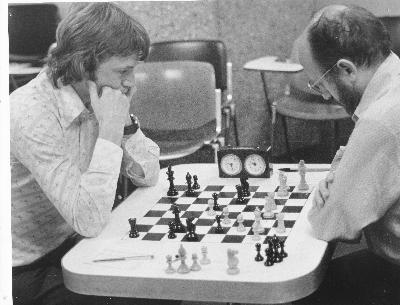
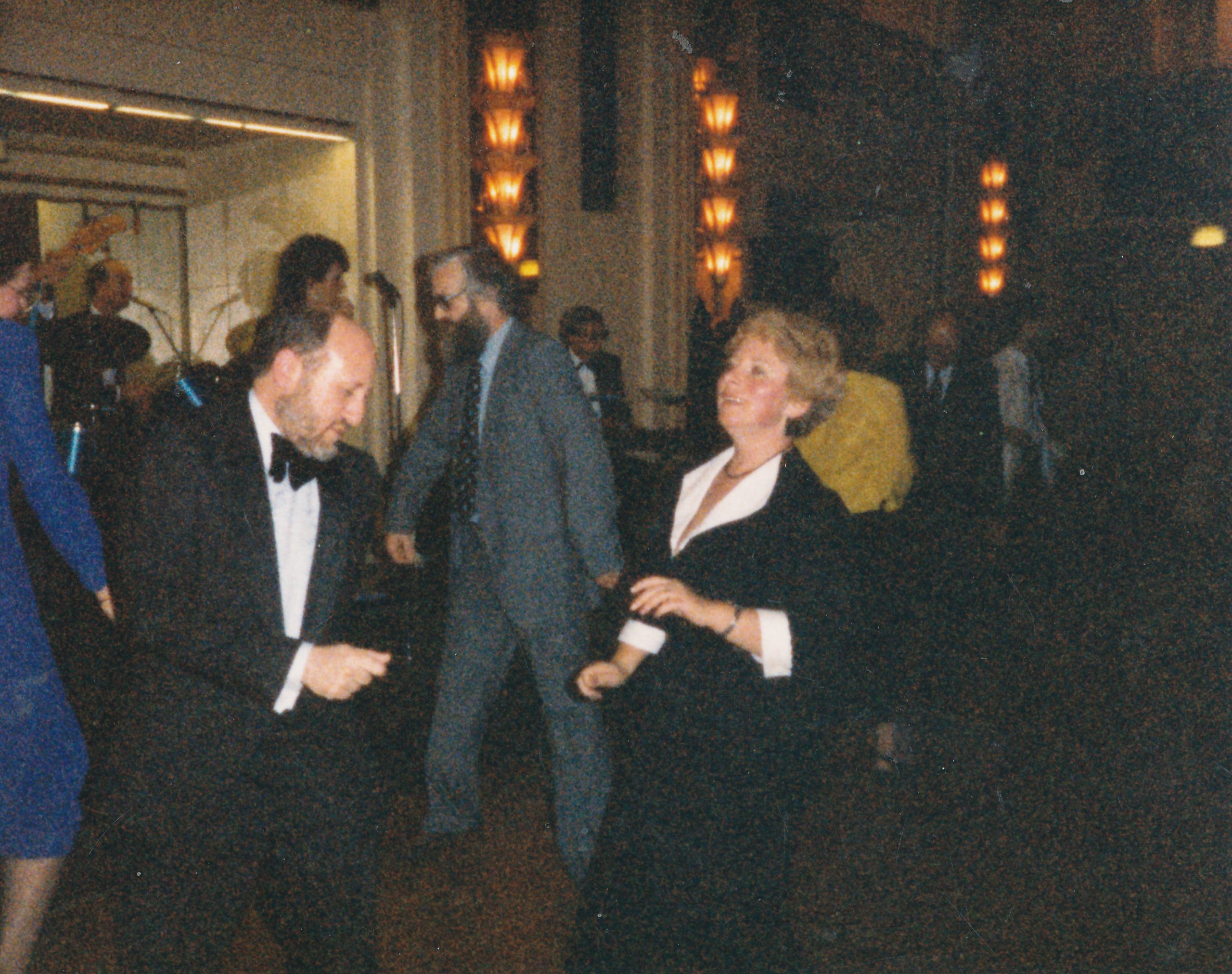
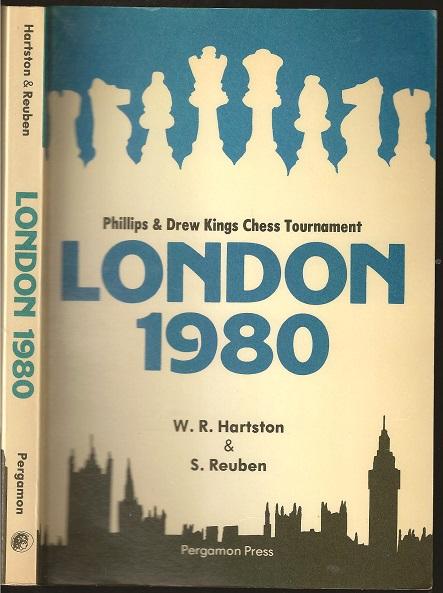
Birthday of Stewart Reuben (14-iii-1939)
Here is his Wikipedia entry
His personal catchphrase is “If only I had been consulted eariler”



 Save as PDF
Birthday of Stewart Reuben (14-iii-1939)
Here is his Wikipedia entry
His personal catchphrase is “If only I had been consulted eariler”
Save as PDFBirthday of Stewart Reuben (14-iii-1939)
Here is his Wikipedia entry
His personal catchphrase is “If only I had been consulted eariler”
Save as PDFBirthday of Stewart Reuben (14-iii-1939)
Here is his Wikipedia entry
His personal catchphrase is “If only I had been consulted eariler”
Save as PDF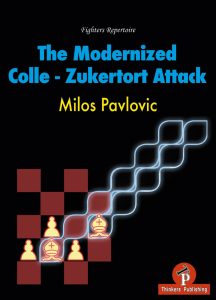
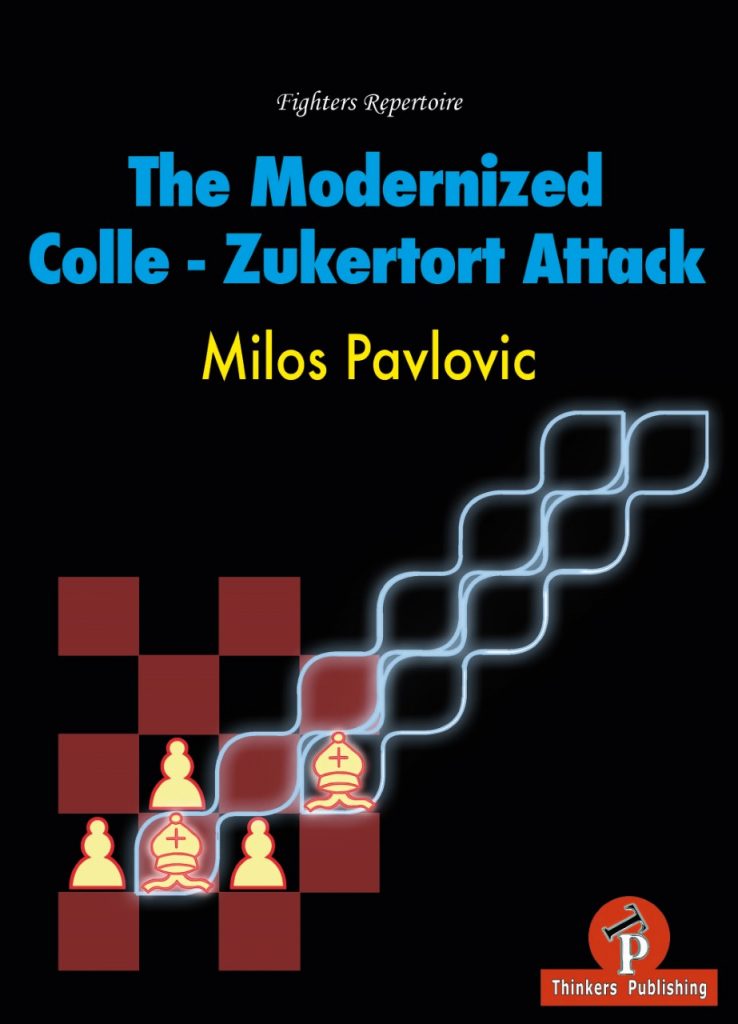
Grandmaster Milos Pavlovic was born in Belgrade in 1964 and was Yugoslav Champion in 2002. He is a well known theoretician specialising in opening theory and has written many chess books and magazine articles.

This is his third title in the “Modernized” series from Thinkers Publishing with a fourth on the Scotch Game being published on November 17th. We first reviewed a title in this series with The Modernized Caro-Kann from GM Daniel Fernandez.
As with every recent Thinkers Publishing publication high quality paper is used and the printing is clear. The book can easily be laid flat next to the board and does not require weights to prevent it from “self-closing” (a particular bugbear of ours !). Each diagram is clear and the instructional text is typeset in two column format, which, we find, enables the reader to maintain their place easily. Figurine algebraic notation is used throughout and the diagrams are placed adjacent to the relevant text and each diagram has a “to move” indicator.
The main content is divided into ten chapters of which the first six concern lines in which Black plays an early d5 (usually 1.d4 d5) and the remainder where Black does not (usually playing 1.d4 Nf6).
There is no index which, unfortunately, is a standard feature of Thinkers Publishing books. Also missing is a bibliography.
This is a repertoire book for the White player utilizing the undeservedly less popular Zukertort flavour of the Colle System. In the “CZ” System the c1 (Queen’s for the more mature reader !) bishop is developed to b2 rather than the c1 – h6 diagonal as in the Koltanowski flavour of the Colle System. Typically therefore White attempts to establish a structure of the sort :
and play for ideas such as Ne5, f4 Rf3, Rg3 and checkmating attacks involving the bishop pair. These are often similar to the famous Lasker – Bauer game of 1889.
On the other hand we have the possibly more familiar Colle-Koltanowski structure of :
and the main idea of the latter is to advance e4, e5 and the launch a fairly clockwork attack against Black’s kingside.
Both of these approaches have been served by books, videos and instructional DVDs of the “Winning with the X” sort with the most well known players of the Colle-Zukertort being Aaron Summerscale, Artur Yusupow, Susan Polgar and Vladimir Kramnik.
We have no intention of “spilling the beans” on all of the many and varied ideas presented by Pavlovic : you should buy the book and find out for yourself. However, as past players of the CZ ourselves we noticed interesting advice on the move order advised. The traditional move order in possibly the most challenging main line has (more or less) been :
1.d4 d5 2.Nf3 Nf6 3.e3 e6 4.Bd3 c5 5.b3 Nc6 6.0-0 Bd6 7.Bb2 0-0 8.Nbd2 leading to the following well-known, traditional position :
and David Rudel in his various evangelistic style CZ books advocated 8.Ne5 instead. In The Modernized Colle-Zuckertort we have this new move order :
1.d4 d5 2.Nf3 Nf6 3.e3 e6 4.Bd3 c5 followed by the provocative 5.0-0 ! giving us this position
which appears (well, it does!) to allow 5…c4!? This early castles move order is, in itself, modernizing and advocated by none other than the fourteenth World Champion, Vladimir Kramnik ! Other adherents of this move order include Artemiev, Vaganian and Romain Edouard, Editor of Thinkers Publishing.
To give you a feel for the book here is a sample
One idea that caught our eye was a recommendation of how to meet the Classical Dutch when played via
1.d4 e6 2.Nf3 f5
and you might expect a line to of the CZ to be recommended but you’d be quite wrong. We won’t spoil the surprise by telling you here ! Suffice to say this is not a formulaic “Play the CZ against everything and win” style of approach. You’d be disappointed if it was !
This book contain a veritable potpourri of new ideas and material plus strategical concepts for the White player in the CZ System. It offers much more than one of the cheesy “Play this Opening and you will win” style books that we are all familiar with. Having owned all (English Language) books and DVDs we would suggest that this is the most academic and the most appealing to players wanting to make the CZ a serious weapon of theirs. In the “club player opening book wars” this book redresses the balance with the recent splurge of London System books and videos.
Get this book and you will learn about middlegame, plans of attack and a wealth of other themes : highly recommended !
John Upham, Cove, Hampshire, 17th November, 2019

Book Details :
Official web site of Thinkers Publishing
 Save as PDF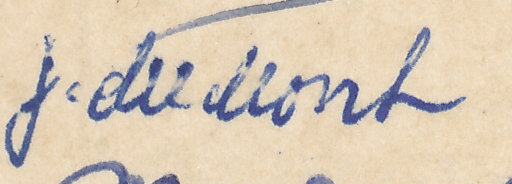
BCN Remembers Julius du Mont (15-xii-1881 07-iv-1956)
Here is his Wikipedia entry
From British Chess Magazine, Volume LXXXVI, Number 5, 1956 we have this obituary written by DJ Morgan :
In our February issue we wrote an appreciation of one of the distinguished past editors of this magazine, R. C. Griffith. He had been followed in the chair in 1938 by our present Games’ Editor, and when he, in turn, was called in 1940 to sterner duties, he was succeeded by Julius du Mont. During the war years, and through the difficult post-war period, till 1949, he held the reins. As we wrote on another occasion, “His had been difficult years: the “B.C.M.” had survived when so much else had succumbed during the stress and strain of total war.” lt is with regret that we now record his death on April 7th, in a Hastings nursing home, at the age of seventy-four, after a protracted illness.
du Mont was born in Paris-a little-known fact which he himself once disclosed to us-on December 15th, 1881. lt was there also that he received his education. His early bent and ambitions were musical. The tradition that chess and music have a close relationship may be traced as far back, at least, as Philidor’s great eminence in both. du Mont was truly in the line of such dual personalities. He pursued his musical studies at the Frankfort-on-Main Conservatoire and at Heidelberg, and soon became established as a concert pianist.’ Later he achieved great success as a music teacher, and among his pupils was the well-known concert pianist, Edna lles. The French and German background also explains his facility as a linguist.
He came to England as a young man and brought with him a considerable talent for chess. Settling in London, he rapidly improved as a player, and successes followed. At the Kentish Congress, Tunbridge Wells, 1912, he came equal second and third. He was Champion of the strong Hampstead Club for two years, and Middlesex Champion in 1913 and 1915. He quickly mastered our language and showed this during the First World War by writing a manual on the Lewis gun. After the war, music kept its place in his life, but more and more chess became his main activity. He forsook playing and turned to journalism and authorship, and his output of books is evidence of his gifts and industry. Titles come readily to mind: Chess Openings lllustrated, Centre Counter Defence (1919) and Centre and Danish Gambit (1920); The Elements of Chess (1925) ; Ihe Basis of Combination in Chess (1938) ; 200 Miniature Games (1941); More Miniature Games (1953); (with Dr. Tartakower) 500 Master aomes of Chess, two volumes (1952), to which was added a third volume in 1954, 100 Master Games of Chess. He also translated Edward Lasker’s Chess Strategy, and Alekhine’s two volumes of My Best Games of Chess (the first with M. E.Goldstein).
The wealth of material ready to hand combined with a foreigner’s gift of lucid expression in “the other tongue” made his books very popular. To the great value and importance of these books, a whole generation of chess-players will readily testify.
For some years, du Mont was chess editor of The Field and of The Manchester Guardian. During the last war he organized chess championships for the Armed Services. We pay tribute to his services to the game, to his many kindnesses and friendships to its players, and, in particular, to his devotion to this magazine.-D. J. M.
D. C., who enjoyed a long friendship with our late Editor, writes to us as follows-
By the death of J. du Mont, the chess world has lost an eminent and popular personality. That this popularity was well deserved will be apparent even to those who knew him only slightly.
Essentially kind, he performed many generous acts, and having, by his own efforts, become the best-known British writer on chess, he not only filled this position with modesty and dignity, but was liberal in the help he gave to those starting on the road he had so successfully followed.
In the tournament room-where his presence was always welcome-he was invariably quiet and courteous, and although gifted with a fine wit, he never used it
unkindly. He *as an excellent companion, and players at many congresses will recall the happy times they spent in their visits to him at all hours of the evening. It is sad to think that these gatherings have now irrevocably reached their end: to quote A. E. Housman’s beautiful lines-
They come and were and ore not
And come no more anew.
But as long as a literature of chess remains, the name of Julius du Mont will not be forgotten. His many friends, however, have no need of his writings in order to keep alive their memory of him.
In Chess Secrets I learned from the Masters, Edward Lasker, Hollis and Carter, 1952 :
J. DuMont became the author of a number of interesting monographs on chess openings, and for many years he was the Editor of the British Chess Magazine. It was he who translated my own translation of Schachstrategie which I attempted in the summer of 1913. Naturally, my English was not fit to be printed. DuMont had to rewrite everything I had written, and except for his untiring labors Chess Strategy might never have been published. He gave the book a certain literary flavor, which no doubt added greatly to its popularity. It went into fourteen printings before it was replaced by Modern Chess Strategy in 1945.
DuMont was a pianist of note and I took lessons from him; however, the time I took from my chess activities to practise the piano was shamefully meagre. No wonder I have been told more than once that as a pianist I am a good chess player.”
Save as PDFBCN Remembers Julius du Mont (15-xii-1881 07-iv-1956)
Here is his Wikipedia entry
From British Chess Magazine, Volume LXXXVI, Number 5, 1956 we have this obituary written by DJ Morgan :
In our February issue we wrote an appreciation of one of the distinguished past editors of this magazine, R. C. Griffith. He had been followed in the chair in 1938 by our present Games’ Editor, and when he, in turn, was called in 1940 to sterner duties, he was succeeded by Julius du Mont. During the war years, and through the difficult post-war period, till 1949, he held the reins. As we wrote on another occasion, “His had been difficult years: the “B.C.M.” had survived when so much else had succumbed during the stress and strain of total war.” lt is with regret that we now record his death on April 7th, in a Hastings nursing home, at the age of seventy-four, after a protracted illness.
du Mont was born in Paris-a little-known fact which he himself once disclosed to us-on December 15th, 1881. lt was there also that he received his education. His early bent and ambitions were musical. The tradition that chess and music have a close relationship may be traced as far back, at least, as Philidor’s great eminence in both. du Mont was truly in the line of such dual personalities. He pursued his musical studies at the Frankfort-on-Main Conservatoire and at Heidelberg, and soon became established as a concert pianist.’ Later he achieved great success as a music teacher, and among his pupils was the well-known concert pianist, Edna lles. The French and German background also explains his facility as a linguist.
He came to England as a young man and brought with him a considerable talent for chess. Settling in London, he rapidly improved as a player, and successes followed. At the Kentish Congress, Tunbridge Wells, 1912, he came equal second and third. He was Champion of the strong Hampstead Club for two years, and Middlesex Champion in 1913 and 1915. He quickly mastered our language and showed this during the First World War by writing a manual on the Lewis gun. After the war, music kept its place in his life, but more and more chess became his main activity. He forsook playing and turned to journalism and authorship, and his output of books is evidence of his gifts and industry. Titles come readily to mind: Chess Openings lllustrated, Centre Counter Defence (1919) and Centre and Danish Gambit (1920); The Elements of Chess (1925) ; Ihe Basis of Combination in Chess (1938) ; 200 Miniature Games (1941); More Miniature Games (1953); (with Dr. Tartakower) 500 Master aomes of Chess, two volumes (1952), to which was added a third volume in 1954, 100 Master Games of Chess. He also translated Edward Lasker’s Chess Strategy, and Alekhine’s two volumes of My Best Games of Chess (the first with M. E.Goldstein).
The wealth of material ready to hand combined with a foreigner’s gift of lucid expression in “the other tongue” made his books very popular. To the great value and importance of these books, a whole generation of chess-players will readily testify.
For some years, du Mont was chess editor of The Field and of The Manchester Guardian. During the last war he organized chess championships for the Armed Services. We pay tribute to his services to the game, to his many kindnesses and friendships to its players, and, in particular, to his devotion to this magazine.-D. J. M.
D. C., who enjoyed a long friendship with our late Editor, writes to us as follows-
By the death of J. du Mont, the chess world has lost an eminent and popular personality. That this popularity was well deserved will be apparent even to those who knew him only slightly.
Essentially kind, he performed many generous acts, and having, by his own efforts, become the best-known British writer on chess, he not only filled this position with modesty and dignity, but was liberal in the help he gave to those starting on the road he had so successfully followed.
In the tournament room-where his presence was always welcome-he was invariably quiet and courteous, and although gifted with a fine wit, he never used it
unkindly. He *as an excellent companion, and players at many congresses will recall the happy times they spent in their visits to him at all hours of the evening. It is sad to think that these gatherings have now irrevocably reached their end: to quote A. E. Housman’s beautiful lines-
They come and were and ore not
And come no more anew.
But as long as a literature of chess remains, the name of Julius du Mont will not be forgotten. His many friends, however, have no need of his writings in order to keep alive their memory of him.
In Chess Secrets I learned from the Masters, Edward Lasker, Hollis and Carter, 1952 :
J. DuMont became the author of a number of interesting monographs on chess openings, and for many years he was the Editor of the British Chess Magazine. It was he who translated my own translation of Schachstrategie which I attempted in the summer of 1913. Naturally, my English was not fit to be printed. DuMont had to rewrite everything I had written, and except for his untiring labors Chess Strategy might never have been published. He gave the book a certain literary flavor, which no doubt added greatly to its popularity. It went into fourteen printings before it was replaced by Modern Chess Strategy in 1945.
DuMont was a pianist of note and I took lessons from him; however, the time I took from my chess activities to practise the piano was shamefully meagre. No wonder I have been told more than once that as a pianist I am a good chess player.”
Save as PDFBCN Remembers Julius du Mont (15-xii-1881 07-iv-1956)
Here is his Wikipedia entry
From British Chess Magazine, Volume LXXXVI, Number 5, 1956 we have this obituary written by DJ Morgan :
In our February issue we wrote an appreciation of one of the distinguished past editors of this magazine, R. C. Griffith. He had been followed in the chair in 1938 by our present Games’ Editor, and when he, in turn, was called in 1940 to sterner duties, he was succeeded by Julius du Mont. During the war years, and through the difficult post-war period, till 1949, he held the reins. As we wrote on another occasion, “His had been difficult years: the “B.C.M.” had survived when so much else had succumbed during the stress and strain of total war.” lt is with regret that we now record his death on April 7th, in a Hastings nursing home, at the age of seventy-four, after a protracted illness.
du Mont was born in Paris-a little-known fact which he himself once disclosed to us-on December 15th, 1881. lt was there also that he received his education. His early bent and ambitions were musical. The tradition that chess and music have a close relationship may be traced as far back, at least, as Philidor’s great eminence in both. du Mont was truly in the line of such dual personalities. He pursued his musical studies at the Frankfort-on-Main Conservatoire and at Heidelberg, and soon became established as a concert pianist.’ Later he achieved great success as a music teacher, and among his pupils was the well-known concert pianist, Edna lles. The French and German background also explains his facility as a linguist.
He came to England as a young man and brought with him a considerable talent for chess. Settling in London, he rapidly improved as a player, and successes followed. At the Kentish Congress, Tunbridge Wells, 1912, he came equal second and third. He was Champion of the strong Hampstead Club for two years, and Middlesex Champion in 1913 and 1915. He quickly mastered our language and showed this during the First World War by writing a manual on the Lewis gun. After the war, music kept its place in his life, but more and more chess became his main activity. He forsook playing and turned to journalism and authorship, and his output of books is evidence of his gifts and industry. Titles come readily to mind: Chess Openings lllustrated, Centre Counter Defence (1919) and Centre and Danish Gambit (1920); The Elements of Chess (1925) ; Ihe Basis of Combination in Chess (1938) ; 200 Miniature Games (1941); More Miniature Games (1953); (with Dr. Tartakower) 500 Master aomes of Chess, two volumes (1952), to which was added a third volume in 1954, 100 Master Games of Chess. He also translated Edward Lasker’s Chess Strategy, and Alekhine’s two volumes of My Best Games of Chess (the first with M. E.Goldstein).
The wealth of material ready to hand combined with a foreigner’s gift of lucid expression in “the other tongue” made his books very popular. To the great value and importance of these books, a whole generation of chess-players will readily testify.
For some years, du Mont was chess editor of The Field and of The Manchester Guardian. During the last war he organized chess championships for the Armed Services. We pay tribute to his services to the game, to his many kindnesses and friendships to its players, and, in particular, to his devotion to this magazine.-D. J. M.
D. C., who enjoyed a long friendship with our late Editor, writes to us as follows-
By the death of J. du Mont, the chess world has lost an eminent and popular personality. That this popularity was well deserved will be apparent even to those who knew him only slightly.
Essentially kind, he performed many generous acts, and having, by his own efforts, become the best-known British writer on chess, he not only filled this position with modesty and dignity, but was liberal in the help he gave to those starting on the road he had so successfully followed.
In the tournament room-where his presence was always welcome-he was invariably quiet and courteous, and although gifted with a fine wit, he never used it
unkindly. He *as an excellent companion, and players at many congresses will recall the happy times they spent in their visits to him at all hours of the evening. It is sad to think that these gatherings have now irrevocably reached their end: to quote A. E. Housman’s beautiful lines-
They come and were and ore not
And come no more anew.
But as long as a literature of chess remains, the name of Julius du Mont will not be forgotten. His many friends, however, have no need of his writings in order to keep alive their memory of him.
In Chess Secrets I learned from the Masters, Edward Lasker, Hollis and Carter, 1952 :
J. DuMont became the author of a number of interesting monographs on chess openings, and for many years he was the Editor of the British Chess Magazine. It was he who translated my own translation of Schachstrategie which I attempted in the summer of 1913. Naturally, my English was not fit to be printed. DuMont had to rewrite everything I had written, and except for his untiring labors Chess Strategy might never have been published. He gave the book a certain literary flavor, which no doubt added greatly to its popularity. It went into fourteen printings before it was replaced by Modern Chess Strategy in 1945.
DuMont was a pianist of note and I took lessons from him; however, the time I took from my chess activities to practise the piano was shamefully meagre. No wonder I have been told more than once that as a pianist I am a good chess player.”
Save as PDFBCN Remembers Julius du Mont (15-xii-1881 07-iv-1956)
Here is his Wikipedia entry
From British Chess Magazine, Volume LXXXVI, Number 5, 1956 we have this obituary written by DJ Morgan :
In our February issue we wrote an appreciation of one of the distinguished past editors of this magazine, R. C. Griffith. He had been followed in the chair in 1938 by our present Games’ Editor, and when he, in turn, was called in 1940 to sterner duties, he was succeeded by Julius du Mont. During the war years, and through the difficult post-war period, till 1949, he held the reins. As we wrote on another occasion, “His had been difficult years: the “B.C.M.” had survived when so much else had succumbed during the stress and strain of total war.” lt is with regret that we now record his death on April 7th, in a Hastings nursing home, at the age of seventy-four, after a protracted illness.
du Mont was born in Paris-a little-known fact which he himself once disclosed to us-on December 15th, 1881. lt was there also that he received his education. His early bent and ambitions were musical. The tradition that chess and music have a close relationship may be traced as far back, at least, as Philidor’s great eminence in both. du Mont was truly in the line of such dual personalities. He pursued his musical studies at the Frankfort-on-Main Conservatoire and at Heidelberg, and soon became established as a concert pianist.’ Later he achieved great success as a music teacher, and among his pupils was the well-known concert pianist, Edna lles. The French and German background also explains his facility as a linguist.
He came to England as a young man and brought with him a considerable talent for chess. Settling in London, he rapidly improved as a player, and successes followed. At the Kentish Congress, Tunbridge Wells, 1912, he came equal second and third. He was Champion of the strong Hampstead Club for two years, and Middlesex Champion in 1913 and 1915. He quickly mastered our language and showed this during the First World War by writing a manual on the Lewis gun. After the war, music kept its place in his life, but more and more chess became his main activity. He forsook playing and turned to journalism and authorship, and his output of books is evidence of his gifts and industry. Titles come readily to mind: Chess Openings lllustrated, Centre Counter Defence (1919) and Centre and Danish Gambit (1920); The Elements of Chess (1925) ; Ihe Basis of Combination in Chess (1938) ; 200 Miniature Games (1941); More Miniature Games (1953); (with Dr. Tartakower) 500 Master aomes of Chess, two volumes (1952), to which was added a third volume in 1954, 100 Master Games of Chess. He also translated Edward Lasker’s Chess Strategy, and Alekhine’s two volumes of My Best Games of Chess (the first with M. E.Goldstein).
The wealth of material ready to hand combined with a foreigner’s gift of lucid expression in “the other tongue” made his books very popular. To the great value and importance of these books, a whole generation of chess-players will readily testify.
For some years, du Mont was chess editor of The Field and of The Manchester Guardian. During the last war he organized chess championships for the Armed Services. We pay tribute to his services to the game, to his many kindnesses and friendships to its players, and, in particular, to his devotion to this magazine.-D. J. M.
D. C., who enjoyed a long friendship with our late Editor, writes to us as follows-
By the death of J. du Mont, the chess world has lost an eminent and popular personality. That this popularity was well deserved will be apparent even to those who knew him only slightly.
Essentially kind, he performed many generous acts, and having, by his own efforts, become the best-known British writer on chess, he not only filled this position with modesty and dignity, but was liberal in the help he gave to those starting on the road he had so successfully followed.
In the tournament room-where his presence was always welcome-he was invariably quiet and courteous, and although gifted with a fine wit, he never used it
unkindly. He *as an excellent companion, and players at many congresses will recall the happy times they spent in their visits to him at all hours of the evening. It is sad to think that these gatherings have now irrevocably reached their end: to quote A. E. Housman’s beautiful lines-
They come and were and ore not
And come no more anew.
But as long as a literature of chess remains, the name of Julius du Mont will not be forgotten. His many friends, however, have no need of his writings in order to keep alive their memory of him.
In Chess Secrets I learned from the Masters, Edward Lasker, Hollis and Carter, 1952 :
J. DuMont became the author of a number of interesting monographs on chess openings, and for many years he was the Editor of the British Chess Magazine. It was he who translated my own translation of Schachstrategie which I attempted in the summer of 1913. Naturally, my English was not fit to be printed. DuMont had to rewrite everything I had written, and except for his untiring labors Chess Strategy might never have been published. He gave the book a certain literary flavor, which no doubt added greatly to its popularity. It went into fourteen printings before it was replaced by Modern Chess Strategy in 1945.
DuMont was a pianist of note and I took lessons from him; however, the time I took from my chess activities to practise the piano was shamefully meagre. No wonder I have been told more than once that as a pianist I am a good chess player.”
Save as PDF
Best wishes to IM Charles Alexander Cobb born on this day (November 15th) 1978
Charleshas plays / played for Bristol and Clifton Chess Club, maintains a rapidplay grading of 220, played for Bristol in the Four Nations Chess League His highest Elo rating was 2410 in October of 2006.
 Save as PDF
GM Damian Lemos (FIDE : 2479) was born in 1990 and hails from Argentina. He is a former Pan-American Junior Champion and he achieved the FIDE Master title at 14 years old, International Master at 15, and Grandmaster at 18 and is well known on many chess web sites for providing recorded and real time instructional videos on all aspects (but mainly opening theory) of chess. This is his second book for Everyman Chess.

The book is divided into seven main chapters as follows :
Damian Lemos presents a repertoire for White based around the best regarded flavour of the QGD, Exchange Variation or QGE : this is the version in which White delays Nf3 allowing the central push f3 followed by e4 and the typical resultant structure is :
The alternative version of the QGE in which White plays an early Nf3 and follows with a minority attack on the queenside is not treated in this book.
Strong grandmasters generally do not like being on the Black side of the QGE since counter-play is minimal so by selecting the QGE you should have a small edge that can be worked with.
White’s move order in most lines therefore is 1.d4 d5 2.c4 something and then 3.Nc3 so if you already play the Queen’s Gambit but with a 1.d4 d5 2.Nf3 something 3.c4 move order then this repertoire will be a substantial change for you.
Chapter 1 is presented via the now familiar and reliable method of a number (15) of high quality and recent instructive games analysed in depth.
Taking on the Tarrasch Defence Lemos goes down the road of the classical Rubinstein (fianchetto) approach showing how White can retain a nagging edge against the Black IQP.
The Slav Defence is approached using an active piece placement strategy based around the seemingly innocuous Exchange Variation : underestimate this line at your peril if you play the Slav !
The Queen’s Gambit Accepted is faced with the direct 3.e4 with in-depth coverage including all of Black ideas especially the most combative of 3…e5. The QGA receives the most comprehensive treatment in terms of pages (56) and with thirteen games analysed in detail.
The Chigorin Defence merits only three games reflecting its rarity at club and more exalted levels. Again, ignore the Chigorin at your peril !
Club players favourite, the Albin Counter-Gambit is examined via four games.
Rounding off in the “Other Defences” bargain basement section we find lines for White to deal with The (solid) Stonewall Variation of the Dutch, The somewhat discredited Marshall Defence, The (early) Tarrasch with 2…c5 and finally, The Baltic Defence which is common at club level.
A couple of small gripes with the production are : the diagrams do not have a “to move” indicator. secondly, some Everyman books (but not this one) have an extra folding part to the front and rear covers. These we find protect the book from damage and also can be used as an emergency book mark ! Also, chapters 3-5 all have the same page heading of the Chigorin Defence which confused us! We suspect that this error will be fixed.
Overall, this book provides a welcome repertoire based on exchanging on d5 that is fairly easy to learn and sound with decent winning chances for White. The QGE chapter is possibly the most interesting from the strategic perspective and gives White a clear plan to follow.
It is also fair to say that players of the Black pieces who employ the Chigorin, Tarrasch and particularly the QGA will also benefit from this book : they can see the authors suggested lines for the White and Black’s corresponding ideas.
John Upham, Cove, Hampshire, 12th November, 2019
Book Details :
The book is available as a physical book and as a Kindle version.
Official web site of Everyman Chess
 Save as PDF