BCN remembers Reginald Bonham (known as “Bon”) who passed away, this day, March 16th in 1984 in Worcester, Worcestershire.
In 1970 New Years Honours, Civil Division he was awarded the MBE for “Services to the blind”. Interestingly, in 1992 his sister Mary also received an MBE for “Services to the blind” This is surely an unusual happening.
Reginald Walter Bonham was born on Wednesday, January 31st 1906 : the same day as the Ecuador–Colombia earthquake which measured 8.8 on the Richter Scale.
He was born in St. Neots, Huntingdonshire, Cambridgeshire.
In the 1911 census aged 5 he lived in the High Street, St. Neots with William R Bonham (father, master butcher, aged 45), Edith Mary Ann Bonham (mother, 38), Howard William Bonham (6), Maurice George Bonham (3) and Ernest Charles Bonham (1). The family had a servant / domestic duties assistant called Elise Annie Goss aged 18. The census did not record any disability for Reginald.
Reg, like others in his family, suffered from deficient eyesight and was therefore unable to attend a “mainstream” school.
From 1922 – 1925 he attended the Royal Worcester College for the Blind (originally Worcester College for the Blind Sons of Gentlemen) in Whittington Road, Worcester, WR5 2JX. The Headmaster (GC Brown) encouraged his chess and rowing talents and in 1926 he was sent up to St. Catherine’s College, Oxford to read mathematics.
Reginald was a highly competant rower, competing for his college and reaching the trial stage for the Oxford Varsity crew.
In 1934 Reg founded the Braille Chess Magazine.
In the 1939 census he was recorded as living at 4, St. Catherine’s Hill, Worcester, WR5 with his wife, Josephine Bonham (born 24th September 1904). Reginald was listed as being a Mathematics tutor at the Royal Worcester College for the Blind (originally Worcester College for the Blind Sons of Gentlemen) in Whittington Road, Worcester, WR5 2JX. The college is now named New College Worcester. Their home was around a mile from the College. Josephine was listed as carrying out “unpaid domestic duties”.
He taught a combination of Braille and mathematics and was an amateur thespian and keen bridge player.
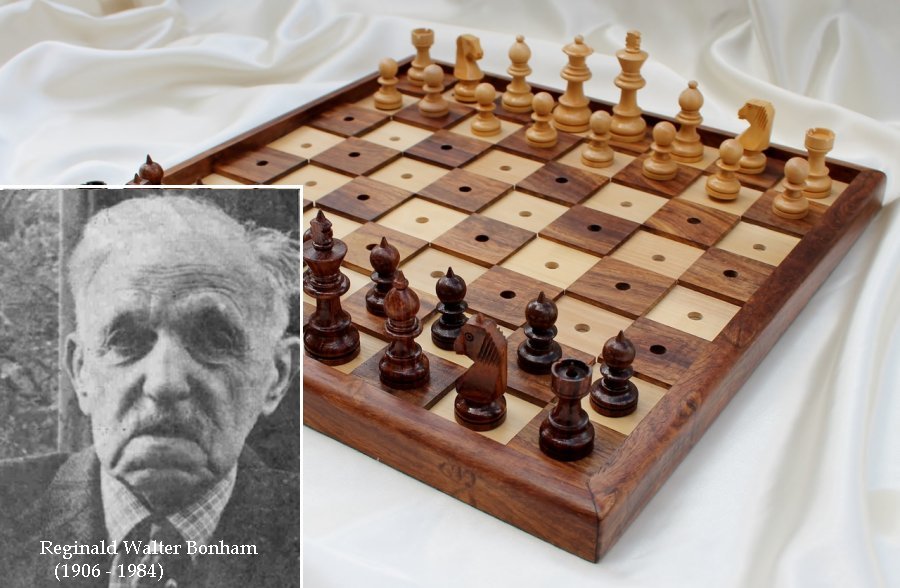
RW Bonham and a Braille chess set set-up incorrectly
Interestingly RWB in 1939 was an ARP (Air Raid Precautions) Warden and a St. John Ambulance volunteer for the College.
He was Worcester champion twenty times and four times Midlands champion winning the Birmingham Post Cup twice.
On June 6th 1947 Bonham played in Birmingham in a match between Great Britain and Czechoslovakia playing Ladislav Alster and won this attractive game :
He was Blind World Champion in 1958 and Correspondence Blind World Champion in 1957, 1959, 1961, 1964 (jointly) and 1966.
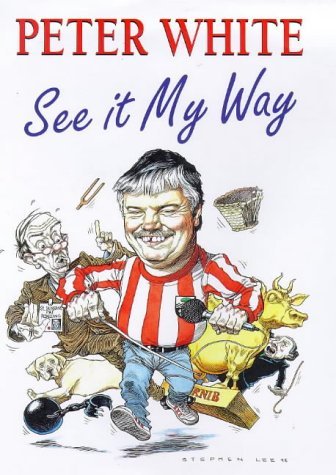
One of his students was broadcaster Peter White MBE who described Bon in his autobiography See it My Way
See it My Way, Peter White, 1994
From British Chess Magazine, Volume XCII (92, 1972) Number 6 (June), page 216 we have this item in News in Brief :
“At the closing ceremony of the 4th Chess Olympiad for the Blind at Pula, Yugoslavia (April 6-18) the International Braille Chess Association awarded the title of Correspondence Grandmaster of the Blind to R.W. Bonham of Worcester, for having won the Postal Championship more than three times.”
From British Chess Magazine, Volume CIV (104, 1984) Number 5 (May), page 194 we have this obituary :
“We regret to announce the death in March of two early winners of the grandmaster title (the other was Comins Mansfield MBE).
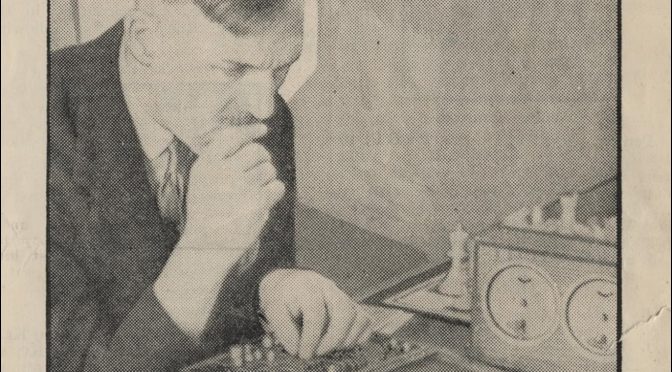
R.W.Bonham (31 i 1906 – 16 iii 1984) died at Worcester, where he had long served as a Master at the Royal Worcester College for the Blind. In the 1950s he took part in the British Championship with success. Many older players will remember him fingering his special board before announcing his move and checking his clock with its markers outside the glass face.
He was also active in postal play, taking part in international events in the decade after the war when few British players ventured “into Europe”. A note in the 1972 BCM (page 216) records the award of the title Correspondence GM of the Blind by the International Braille Chess Association, so his omission from the recent book British Chess seems rather unfortunate.
Among the titles won by Reginald Bonham were British Correspondence Championship, shared in 1947 with J. Cairncross and shared in 1951 with E. Brown) and Midland Champion (1947 and 1950).
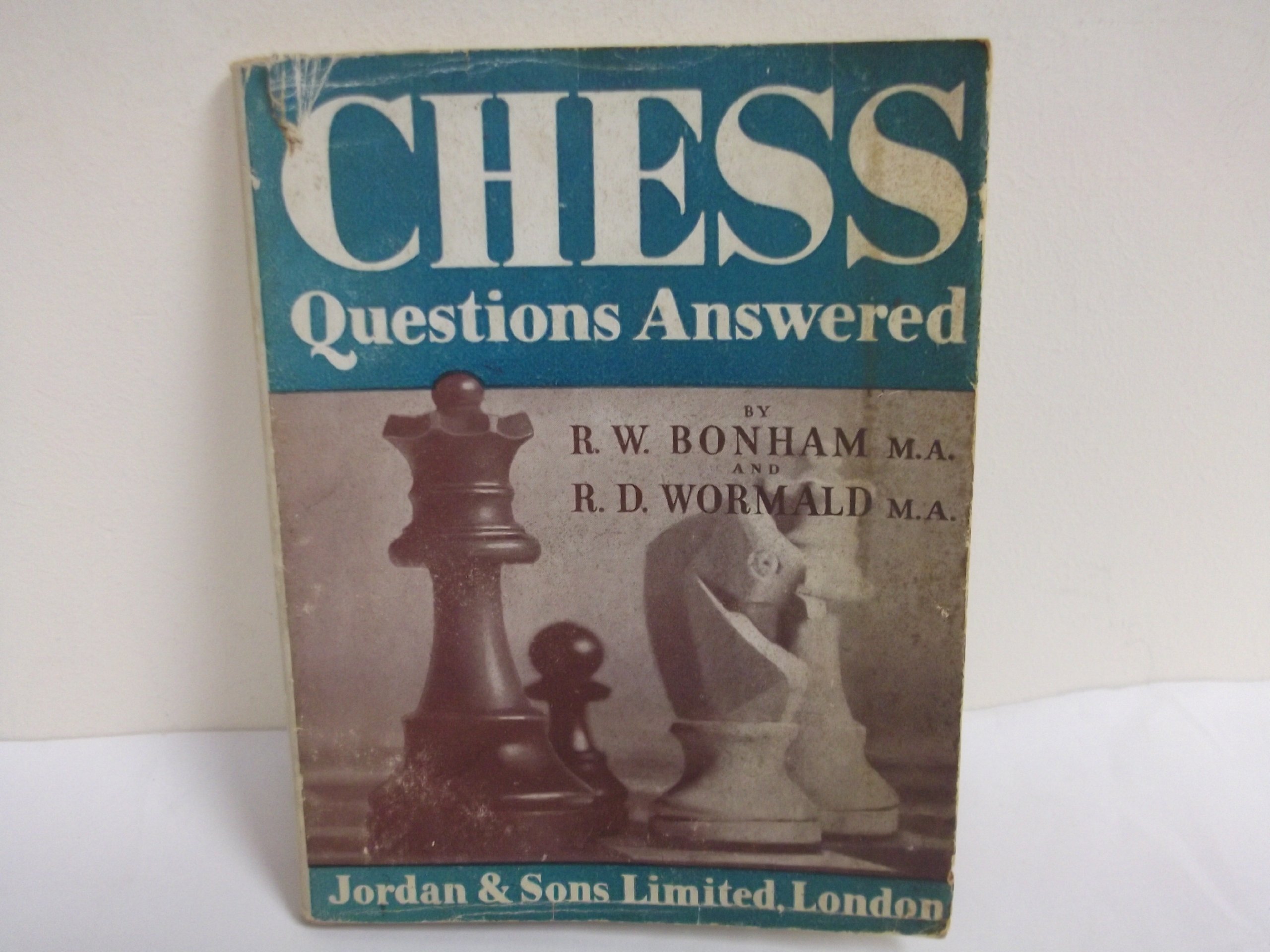
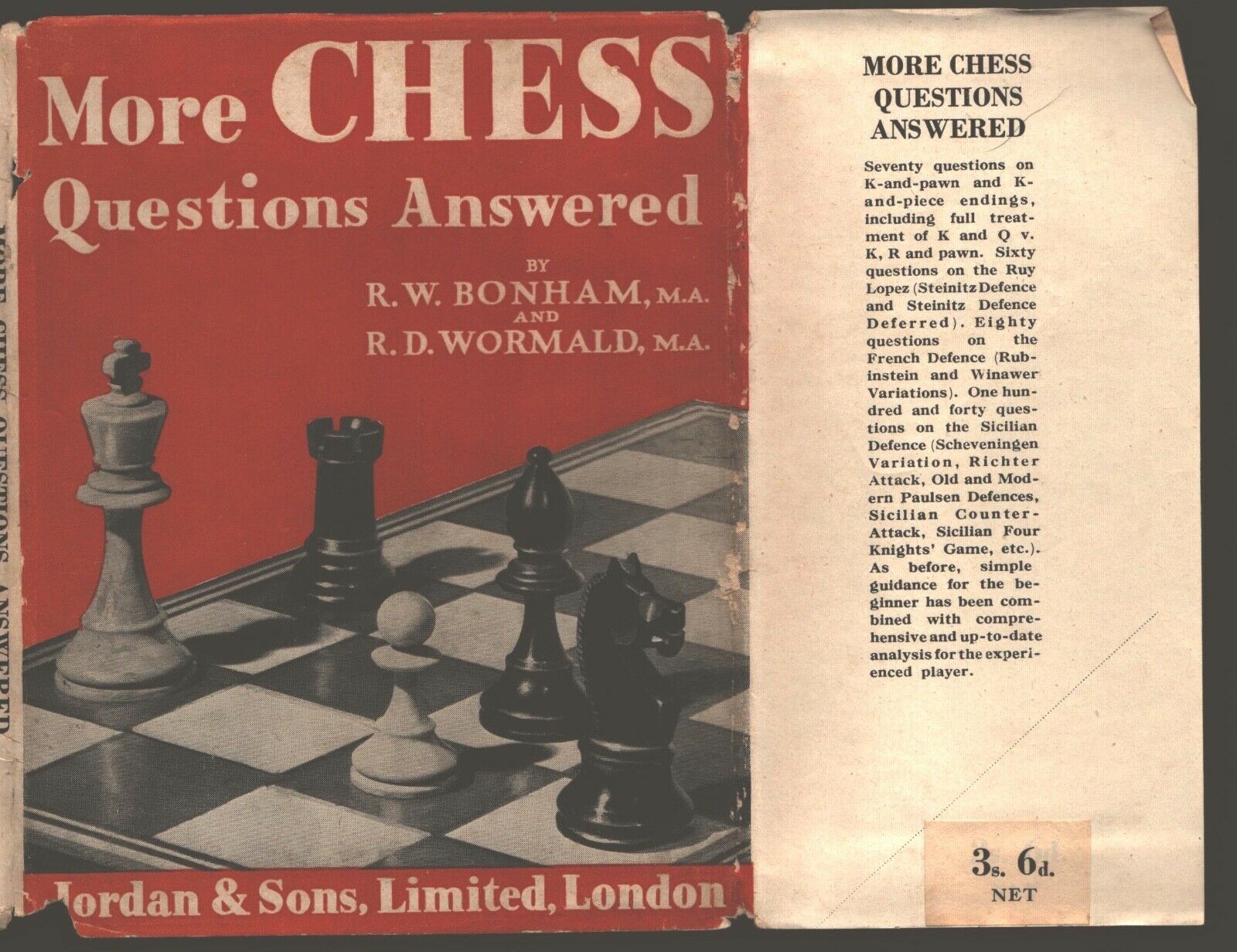
He was also (with Wormald) joint author of those fine little books Chess Questions Answered and More Chess Questions Answered.”
Sadly, RWB did not merit articles in Sunnucks or Golombek’s Encyclopedias or Hooper’s and Whyld’s Oxford Companion or, as mentioned previously, British Chess.
BCN remembers Reginald Bonham (known as “Bon”) who passed away, this day, March 16th in 1984 in Worcester, Worcestershire.
In 1970 New Years Honours, Civil Division he was awarded the MBE for “Services to the blind”. Interestingly, in 1992 his sister Mary also received an MBE for “Services to the blind” This is surely an unusual happening.
Reginald Walter Bonham was born on Wednesday, January 31st 1906 : the same day as the Ecuador–Colombia earthquake which measured 8.8 on the Richter Scale.
He was born in St. Neots, Huntingdonshire, Cambridgeshire.
In the 1911 census aged 5 he lived in the High Street, St. Neots with William R Bonham (father, master butcher, aged 45), Edith Mary Ann Bonham (mother, 38), Howard William Bonham (6), Maurice George Bonham (3) and Ernest Charles Bonham (1). The family had a servant / domestic duties assistant called Elise Annie Goss aged 18. The census did not record any disability for Reginald.
Reg, like others in his family, suffered from deficient eyesight and was therefore unable to attend a “mainstream” school.
From 1922 – 1925 he attended the Royal Worcester College for the Blind (originally Worcester College for the Blind Sons of Gentlemen) in Whittington Road, Worcester, WR5 2JX. The Headmaster (GC Brown) encouraged his chess and rowing talents and in 1926 he was sent up to St. Catherine’s College, Oxford to read mathematics.
Reginald was a highly competant rower, competing for his college and reaching the trial stage for the Oxford Varsity crew.
In 1934 Reg founded the Braille Chess Magazine.
In the 1939 census he was recorded as living at 4, St. Catherine’s Hill, Worcester, WR5 with his wife, Josephine Bonham (born 24th September 1904). Reginald was listed as being a Mathematics tutor at the Royal Worcester College for the Blind (originally Worcester College for the Blind Sons of Gentlemen) in Whittington Road, Worcester, WR5 2JX. The college is now named New College Worcester. Their home was around a mile from the College. Josephine was listed as carrying out “unpaid domestic duties”.
He taught a combination of Braille and mathematics and was an amateur thespian and keen bridge player.
RW Bonham and a Braille chess set set-up incorrectly
Interestingly RWB in 1939 was an ARP (Air Raid Precautions) Warden and a St. John Ambulance volunteer for the College.
He was Worcester champion twenty times and four times Midlands champion winning the Birmingham Post Cup twice.
On June 6th 1947 Bonham played in Birmingham in a match between Great Britain and Czechoslovakia playing Ladislav Alster and won this attractive game :
He was Blind World Champion in 1958 and Correspondence Blind World Champion in 1957, 1959, 1961, 1964 (jointly) and 1966.
One of his students was broadcaster Peter White MBE who described Bon in his autobiography See it My Way
See it My Way, Peter White, 1994
From British Chess Magazine, Volume XCII (92, 1972) Number 6 (June), page 216 we have this item in News in Brief :
“At the closing ceremony of the 4th Chess Olympiad for the Blind at Pula, Yugoslavia (April 6-18) the International Braille Chess Association awarded the title of Correspondence Grandmaster of the Blind to R.W. Bonham of Worcester, for having won the Postal Championship more than three times.”
From British Chess Magazine, Volume CIV (104, 1984) Number 5 (May), page 194 we have this obituary :
“We regret to announce the death in March of two early winners of the grandmaster title (the other was Comins Mansfield MBE).
R.W.Bonham (31 i 1906 – 16 iii 1984) died at Worcester, where he had long served as a Master at the Royal Worcester College for the Blind. In the 1950s he took part in the British Championship with success. Many older players will remember him fingering his special board before announcing his move and checking his clock with its markers outside the glass face.
He was also active in postal play, taking part in international events in the decade after the war when few British players ventured “into Europe”. A note in the 1972 BCM (page 216) records the award of the title Correspondence GM of the Blind by the International Braille Chess Association, so his omission from the recent book British Chess seems rather unfortunate.
Among the titles won by Reginald Bonham were British Correspondence Championship, shared in 1947 with J. Cairncross and shared in 1951 with E. Brown) and Midland Champion (1947 and 1950).
He was also (with Wormald) joint author of those fine little books Chess Questions Answered and More Chess Questions Answered.”
Sadly, RWB did not merit articles in Sunnucks or Golombek’s Encyclopedias or Hooper’s and Whyld’s Oxford Companion or, as mentioned previously, British Chess.
We remember Jacob Henry Sarratt who died 202 years ago today (November 6th) in 1819.
Chess historians will, of course, be familiar with JHS but the name is (probably) not well known outside these exalted circles.
Possibly his most obvious contribution to chess in England was in 1807 when he influenced the result of games that ended in stalemate. You may not know that in England prior to 1807 a game that ended in stalemate was recorded as a win for the party who was stalemated. JHS was able to encourage various major chess clubs so that the result be recorded as a draw. Much endgame theory would be different if it wasn’t for JHS !
“Jacob Henry Sarratt, born in 1772, worked primarily as schoolmaster but was much better known for his advocations which, of course, included chess.
After Philidor’s death, Verdoni (along with Leger, Carlier and Bernard – all four who co-authored Traité Théorique et Pratique du jeu des Echecs par une Societé d’ Amateurs) was considered one of the strongest players in the world, especially in England. Verdoni had taken Philidor’s place as house professional at Parsloe’s. He mentored Jacob Sarratt until he died in 1804. That year Sarratt became the house professional at the Salopian at Charing Cross in London and most of his contemporaries considered him London’s strongest player.
There he claimed the title of Professor of Chess while teaching chess at the price of a guinea per game.
By any measure Surratt was not a particularly strong player, but he was able to maintain the illusion that he was by avoiding the stronger players as he lorded over his students who didn’t know better.
Sarratt’s most important contribution to chess was that he mentored William Lewis who in turn mentored Alexander McDonnell.
Surratt had a strange notion that chess culminated in the 16th century and that everything since then had been a step backwards. This odd notion had a positive side. Philidor was the darling of the English chess scene. Almost all books at that time were versions of, or at least based on, Philidor’s book. Surratt at least kept open the possibility that there were ideas beyond those of Philidor.
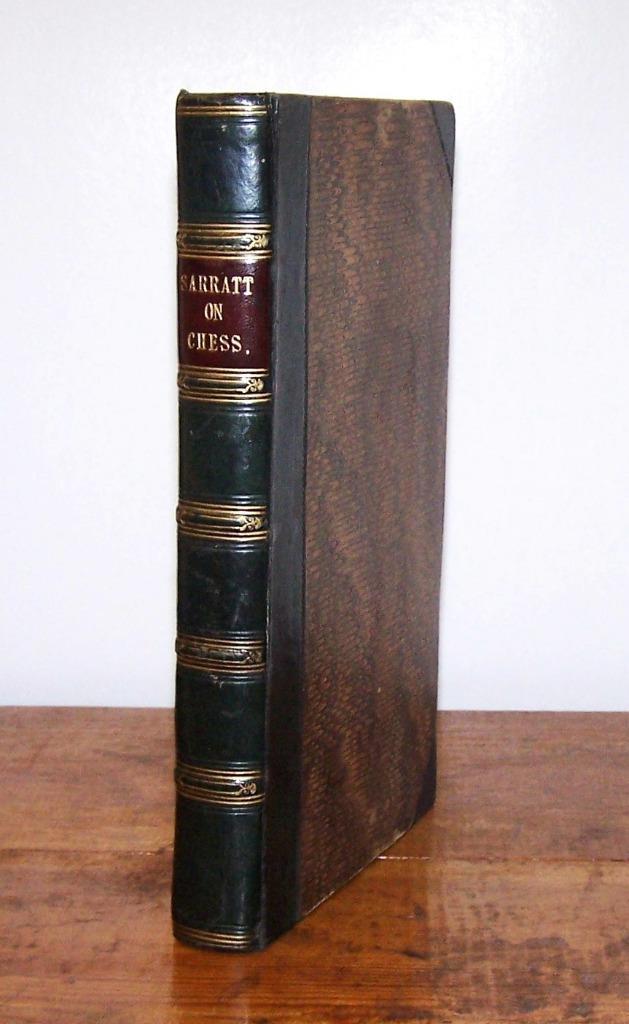
In 1808, true to his role as a teacher, Surratt published his Treatise on the Game of Chess, a book that mainly concentrated on direct attacks on the king which he lifted from the Modense writers.
He translated several older writers whom he admired (though his translations are not considered particularly good): The Works of Damiano, Ruy Lopez and Salvio in 1813. The Works of Gianutio and Gustavus Selenus in 1817.
In 1921 a posthumous edition of his Treatise, A New Treatise on the Game of Chess, was published. This copy covered the game of chess as a whole and was designed for the novice player. It also contained a 98 page analysis of the Muzio Gambit
In addition to his chess books, Surratt also published History of Man in 1802, A New Picture of London in 1803
He translated Three Monks!!! from French in 1803 and Koenigsmark the Robber from German in 1803.
His second wife, Elizabeth Camillia Dufour, was also a writer. In 1803 (before they were married, which was 1804), she published a novel called Aurora or the Mysterious Beauty.
They were married the following year. His first wife had died in 1802 at the age of 18. Both his wives were from Jersey.
Contrary to what one might expect, Sarratt has been described tall, lean and muscular and had even been a prize-fighter at one point. He had also bred dogs for fighting. He was regarded as a very affable fellow and very well-read but with limited taste (Ed : surely this applies to everyone ?)
William Hazlitt, in his essay On Coffee-House Politicians wrote:
[Dr. Whittle] was once sitting where Sarratt was playing a game at chess without seeing the board… Sarratt, who was a man of various accomplishments, afterwards bared his arm to convince us of his muscular strength…
Sarratt, the chess-player, was an extraordinary man. He had the same tenacious, epileptic faculty in other things that he had at chess, and could no more get any other ideas out of his mind than he could those of the figures on the board. He was a great reader, but had not the least taste. Indeed the violence of his memory tyrannised over and destroyed all power of selection. He could repeat [all] Ossian by heart, without knowing the best passage from the worst; and did not perceive he was tiring you to death by giving an account of the breed, education, and manners of fighting-dogs for hours together. The sense of reality quite superseded the distinction between the pleasurable and the painful. He was altogether a mechanical philosopher.”
Somewhere along the way there must have come about a complete reversal of his fortunes because Surratt died impoverished in 1819, leaving his wife destitute. But the resilient Elizabeth Sarratt was able to support herself by giving chess lessons to the aristocracy of Paris.
She must have been very well liked. In 1843 when she herself became old and unable to provide for herself, players from both England and France took up a fund to help her out. She lived until 1846.
From The Oxford Companion to Chess (OUP, 1984 & 1992) by Hooper & Whyld :
Reputedly the best player in England from around 1805 until his death. As a young man he met Philidor. Subsequently he developed his game by practice with a strong French player Hippolyte du Rourblanc (d. 1813), with whom he had a long friendship dating from 1798, and with Verdoni, Sarratt’s first important contribution to the game was in connection with the laws of chess: he persuaded the London club, founded in 1807, to accept that a game ending in stalemate should be regarded as a draw and not as a win for the player who is stalemated. He became a professional at the Salopian coffee house at Charing Cross, London,
Nos. 39-41, Charing Cross and the Timber Yard
and in 1808 wrote his Treatise on the Game of Chess.
Treatise on the Game of Chess by JH Sarratt, 1808
This, largely a compilation from the work of the Modenese masters, advocated that players should seek direct attack upon the enemy king, a style that dominated the game until the 1870s. An Oxford surgeon, W. Tuckwell, wrote that he learned chess ‘from the famous Sarratt, the great chess teacher, whose fee was as a guinea a lesson’. Lewis, who played many games with Sarratt from 1816, wrote in 1822 (after he had met both Deschapelles and Bourdonnais) that Sarratt was the most finished player he had ever met, Sarratt translated the works of several early writers on the game, making them known for the first time to English readers: The Works of Damiano, Ruy Lopez and Selenus (1813) and The Works of Gianutio and Gustavus Selenus (1817).
He died impoverished on 6 Nov. 1819 after a long illness during which he was unable lo earn a livelihood by teaching. Instead he wrote his New Treatise on the Game of Chess published posthumously in 1821, This is the first book to include a comprehensive beginner’s section: in more than 200 pages Sarratt teaches by means of question and answer. Another feature is a 98-page analysis of the Muzio gambit :
Had it been Sarratt’s ambition to become a chess professional there would have been scant opportunity during the lifetime of Philidor and Verdoni. A tall, lean, yet muscular man, sociable and talkative, he seems in his younger days to have had interests of a different kind, among them prize fighting and the breeding of fighting dogs. Hazlitt, who met Sarratt around 1812 wrote ‘He was a great reader, but had not the least taste. Indeed the violence of his memory tyrannised over and destroyed all power of selection. He could repeat Ossian by heart, without knowing the best passage from the worst.’
Sarratt’s early publications were History of Man (1802): translations of two Gothic novels, The Three Monks!!! (1803), from the French of Elisabeth Guénard (Baronne de Méré) , and Koenigsmark the Robber (1803), from the German of R. E. Raspe; A New Future of London (1803), an excellent guide that ran to several editions, the last in 1814, When war broke out with France in 1803 Sarratt became, for a short period, a lieutenant in the Royal York Mary-le-Bone Volunteers and published Life of Bonaparte * a propaganda booklet detailing Napoleon’s alleged war crimes, and warning of the desolation that would follow if he were to invade.
Not long after the birth of his second child in 1802 Sarratt’s wife died and in 1804 he married a Drury Lane singer, Elisabeth Camilla Du four. Tt would be difficult to find a more accomplished, a more amiable, or a happier couple than Mr and Mrs Sarratt’ – Mary Julia Young, Memoirs of Mrs Crouch (1806), Mrs Sarratt too was a writer contributing tales to various journals and publishing Aurora or the Mysterious Beauty (1803), a translation of a French novel. She survived her husband until 1846, ending her days giving chess lessons to the aristocracy in Paris. In 1843 Louis-Philippe and many players from England and France subscribed to a fund on her behalf. ”
From The Encyclopedia of Chess (Robert Hale, 1970 & 1976), Anne Sunnucks :
“Self-styled ‘Professor of Chess’, Sarratt was the first professional player to teach the game in England. He was the author of a A Treatise on the Game of Chess, The (1808), The Works of Damiano, Ruy Lopez and Salvio (1813), The Works of Gianutio and Gustavas Selenus (1817) and a New Treatise on the Game of Chess (1821).
There is no record of Sarratt’s date or place of birth, He began his career as a schoolmaster and later taught chess at Tom’s Coffee House, Cornhill, London, and at the London Chess Club, and was in his day considered to be the strongest player in London.”
From The Encyclopedia of Chess (Batsford, 1983), Harry Golombek OBE :
“Leading English player of the late eighteenth and early nineteenth century. Famed in his day as a teacher and author. Sarratt adopted the title of ‘Professor of Chess’, His writings include A Treatise on the Game of Chess, London 1808, The Works of Damiano, Ruy Lopez and Salvio (1813).
Sarratt is usually credited with introducing into England the Continental practise of counting a game ending in stalemate as a draw. (RDK)”
Gary became a FIDE Master in 1984 and an International Master in 1987 and won the Commonwealth Chess Championship in 1988. According to Felice and Megabase2020 his peak FIDE rating was 2464 in July 2001 aged 37.
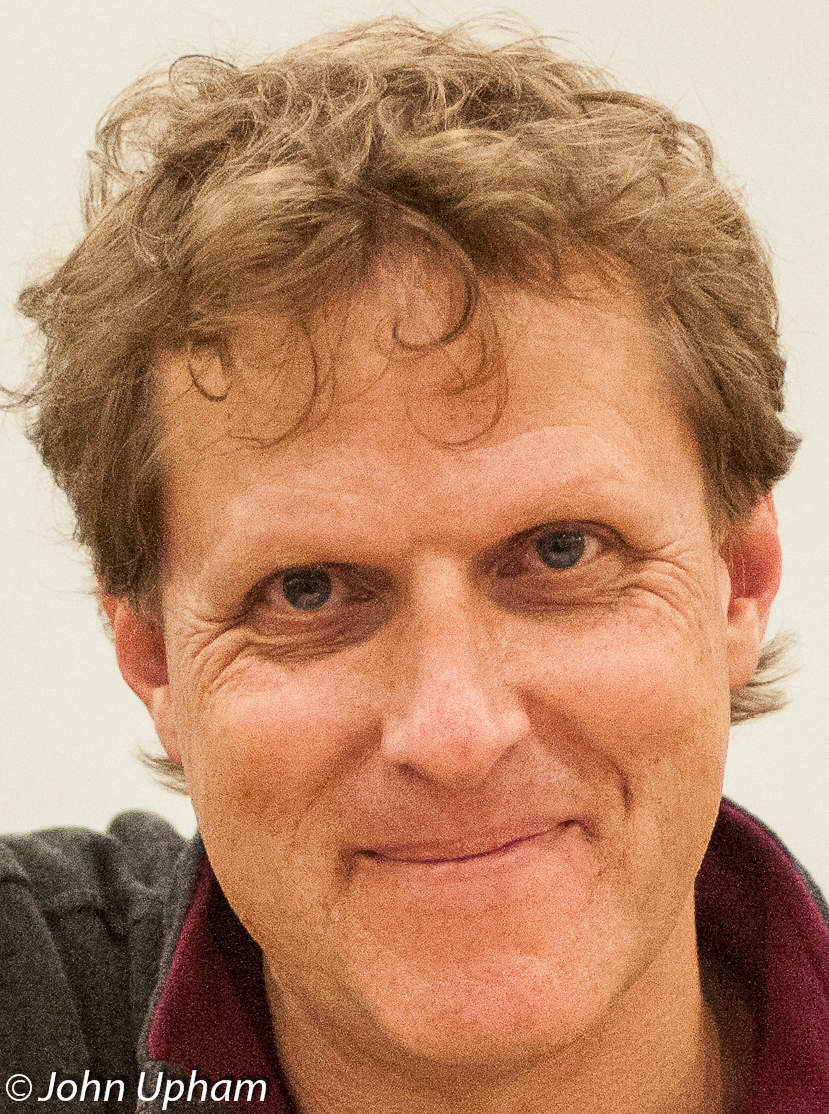
IM Gary Lane
This was written about Gary aged 14 prior to the 1979 Spassky vs the BCF Junior Squad simultaneous display :
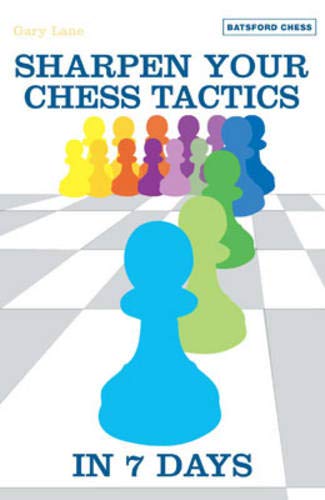
In 2004 won the Australian Championship and was voted Player of the Year. According to Sharpen Your Chess Tactics Gary is a well-known trainer, and has been involved in coaching some of England and Australia’s top junior players.
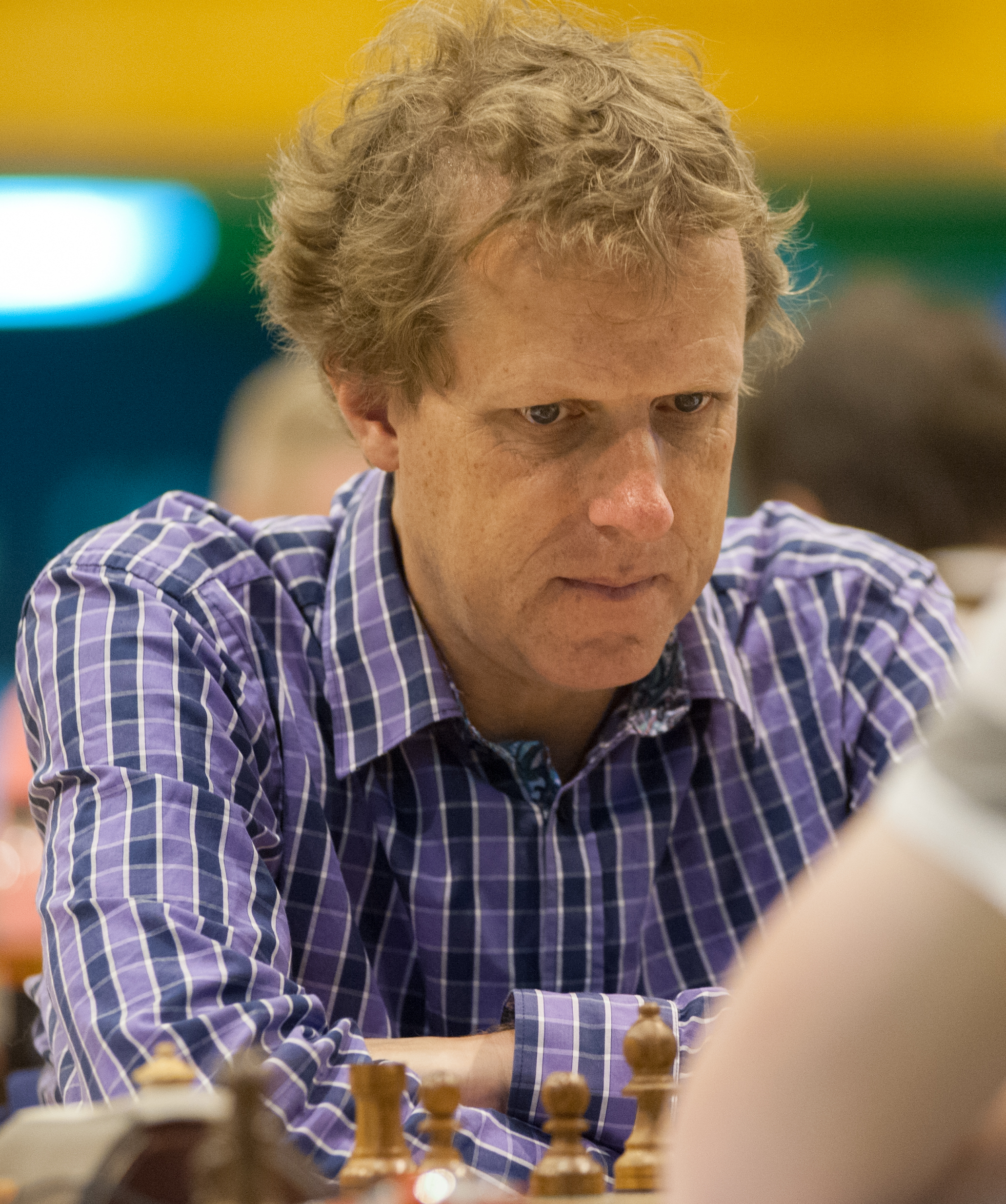
IM Gary Lane at British Chess Championships 2013, courtesy of John Upham Photography
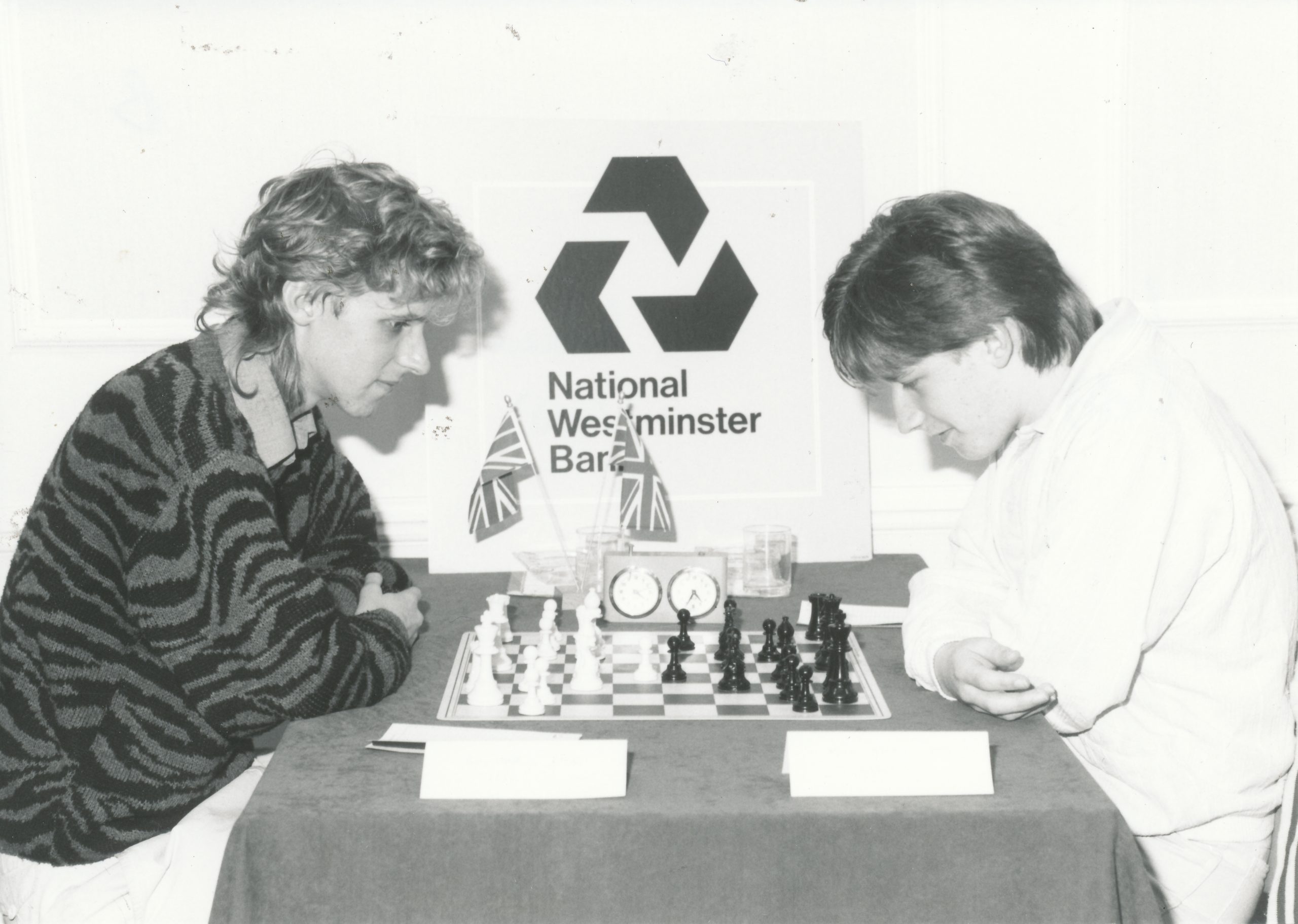
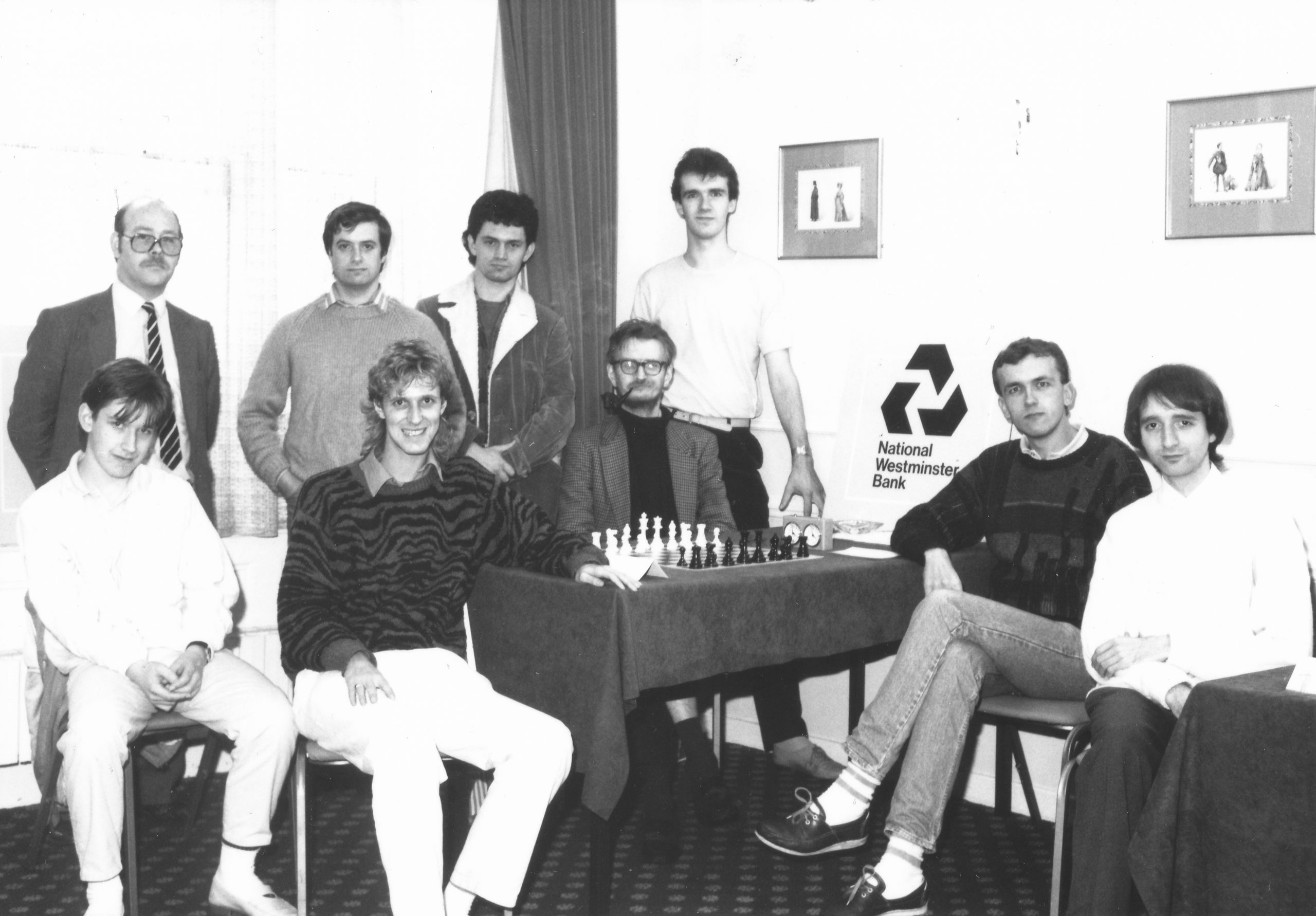
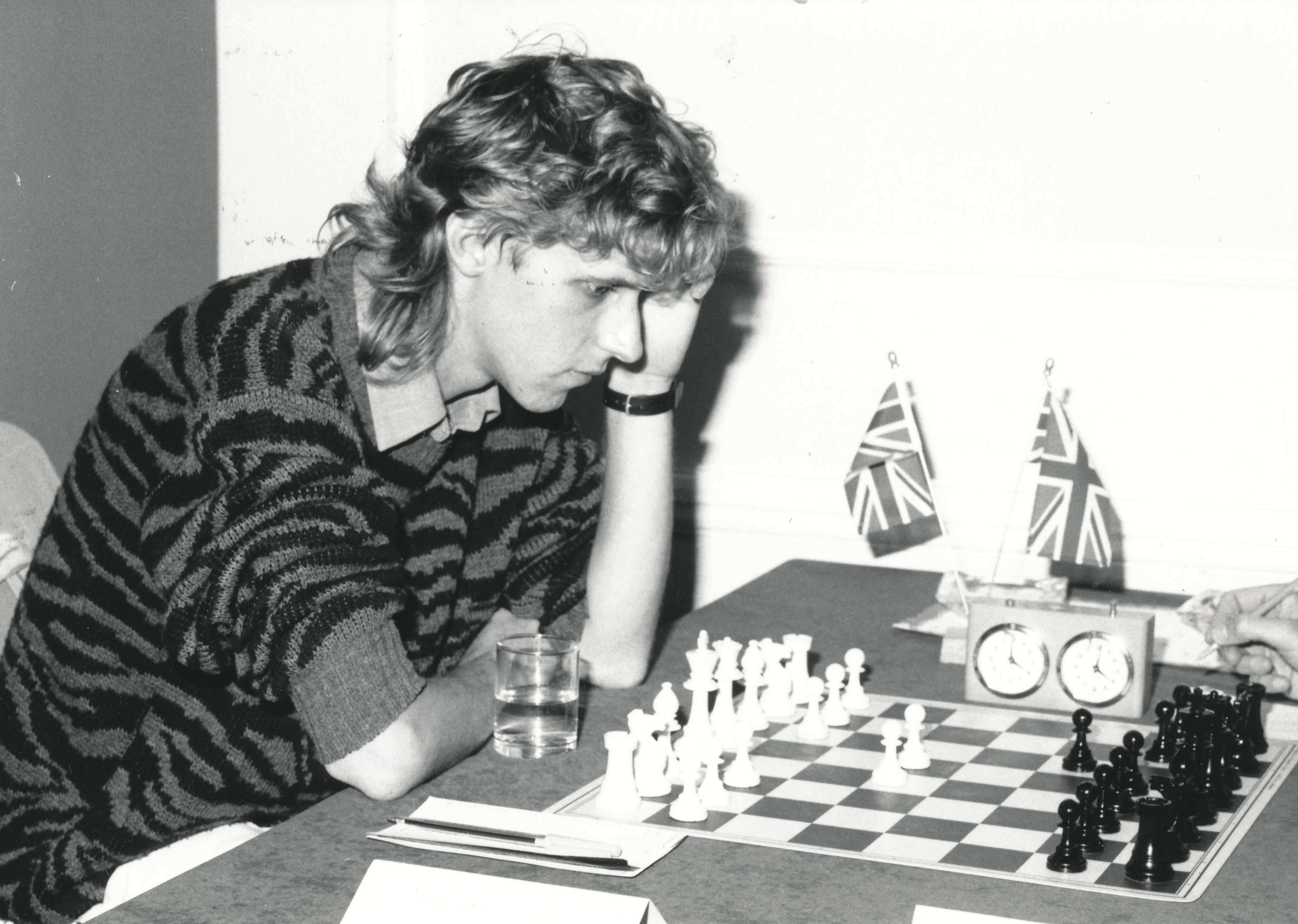
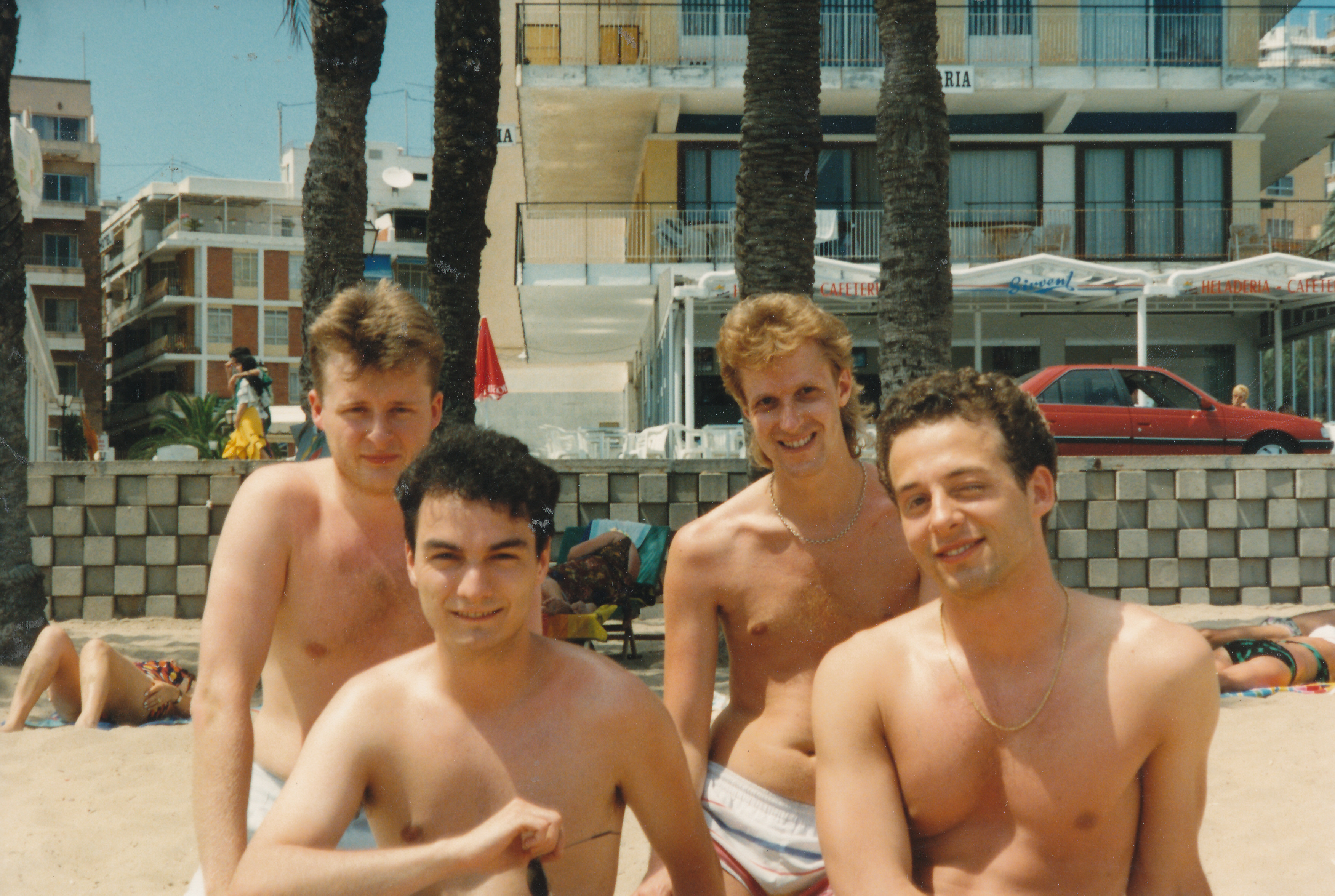
Gary and friends at the NatWest Bank Young Masters
From Wikipedia :
“Gary William Lane (born 4 November 1964) is a professional chess player and author. He became an International Master in 1987 and won the Commonwealth Chess Championship in 1988. He has written over thirty books on chess, including Find the Winning Move, Improve Your Chess in 7 Days and Prepare to Attack. There have been translations in French, Italian, Portuguese and Spanish. In the 1980s the ITV documentary “To Kill a King” was screened nationwide in Great Britain. It featured a young Michael Adams and Lane. This feature is shown regularly at chess film festivals.”
IM Gary Lane
“After his marriage to Woman International Master Nancy Jones, he moved to Australia, winning the Australian Chess Championship in 2004. He won the 2005 Oceania Chess Championship and represented Oceania at the Chess World Cup 2005.
He has also represented Australia in the 2002, 2004, and 2006 Chess Olympiads. In the 2004 Olympiad he helped Australia score a 2–2 draw with his former country England, scoring a decisive win over Nigel Short.[ He has been a chess coach for England or Australia at the World Junior and also European Junior championship for over a decade.”
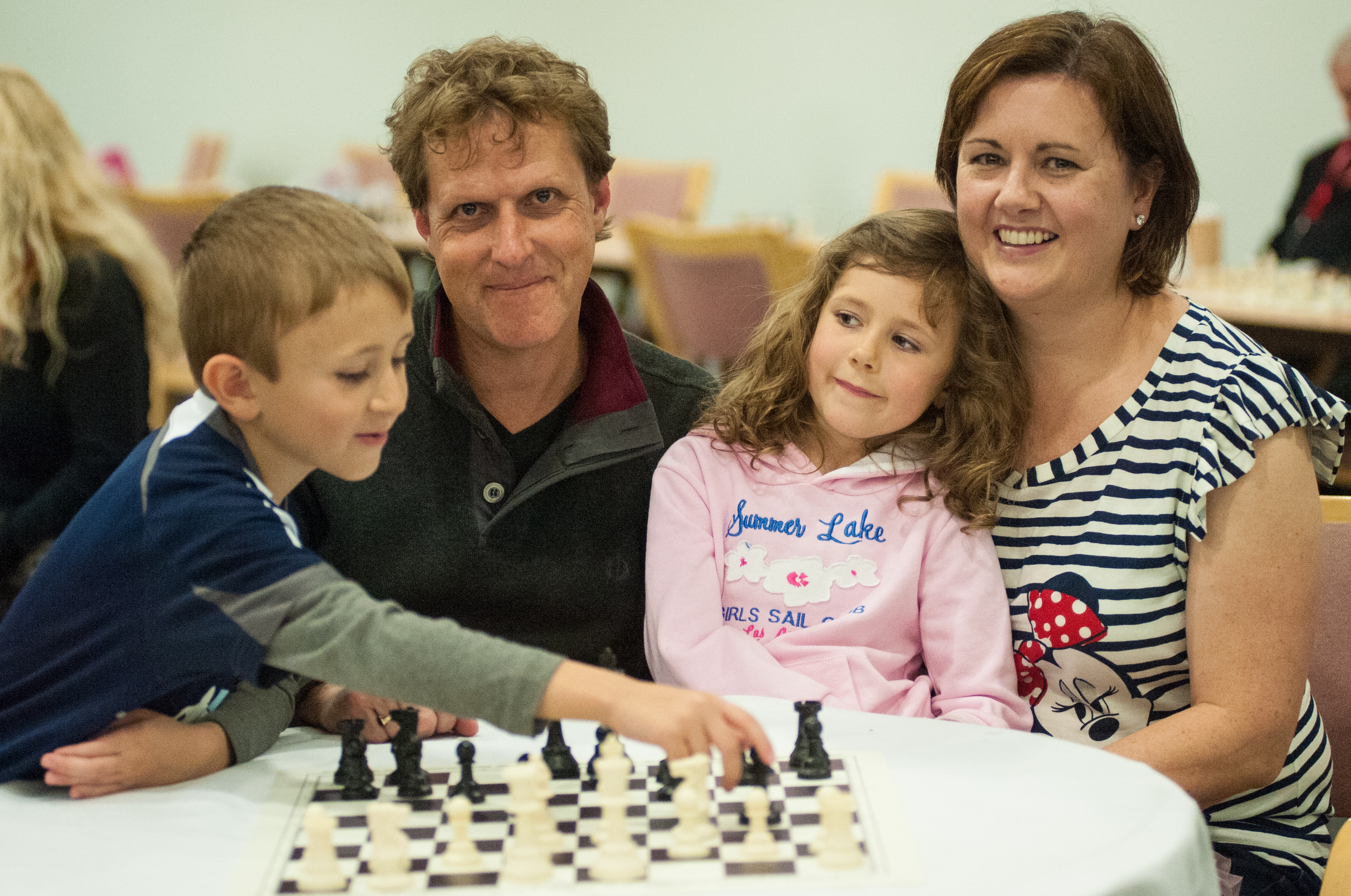
Gary Lane & family at the London Chess Classic, courtesy of John Upham Photography
“In 2012 he won the George Trundle Masters in Auckland, New Zealand with a score of 7/9,[4] and the NZ South Island Championships in Dunedin, with a score of 8/9.[5] He was unbeaten in both events.
In 2015 at the Australian tournament the Doeberl Cup he beat Loek van Wely the reigning Dutch Champion and one of the world’s leading players. He played the Closed Sicilian which he has also written about in two books. In 2016 he came =1st at George Trundle Masters in Auckland, New Zealand with a score of 7/9, and followed this up with =1st place scoring 8/9 at the NZ South Island Championships in Canterbury. He did not lose any games in the two events. At the 2nd Fiji International Open Chess Tournament Lane dominated the event winning with the perfect score of 7/7. A score of 9/9 and clear first place was the result at the 1st Fiji International Rapid Open.
Lane is a supporter of Torquay United F.C. ”
Peter Wells, Gary Lane, John Emms and David Norwood
Gary has written almost 30 chess books :
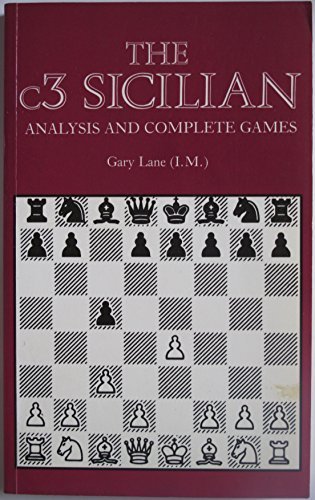
(1990) The C3 Sicilian: Analysis and Complete Games. The Crowood Press. ISBN 978-1-852233-18-1.
(1990) The C3 Sicilian: Analysis and Complete Games. The Crowood Press. ISBN 978-1-852233-18-1., Gary Lane
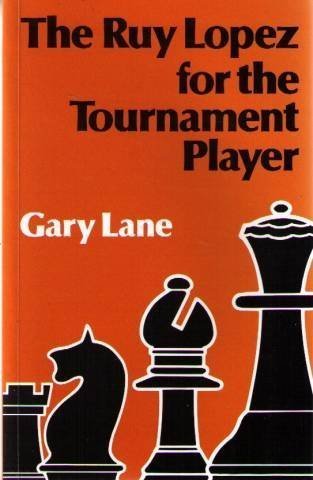
Lane, Gary (1991). The Ruy Lopez for the Tournament Player. Batsford. ISBN 978-0-713468-12-0.
Lane, Gary (1991). The Ruy Lopez for the Tournament Player. Batsford. ISBN 978-0-713468-12-0.
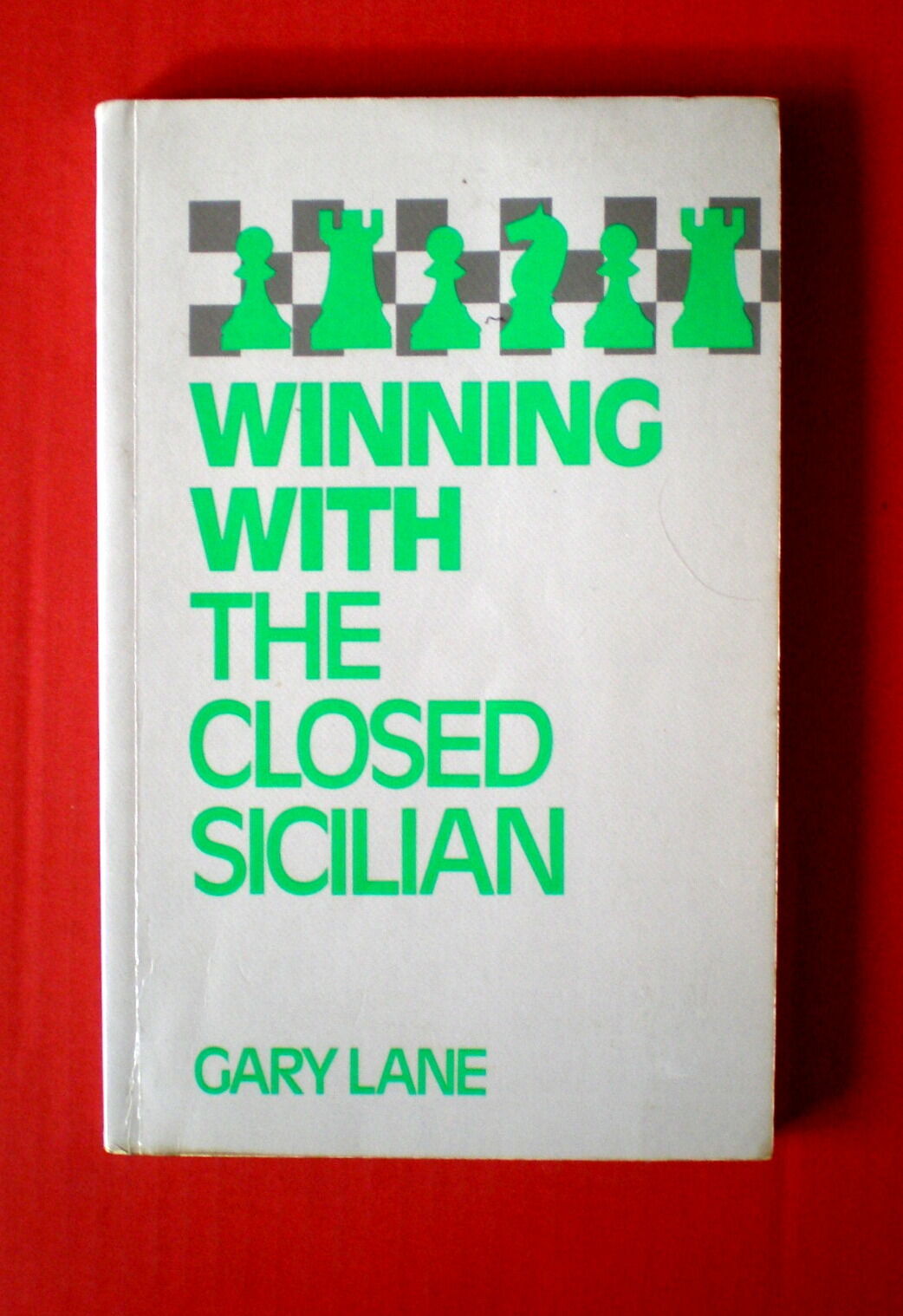
Lane, Gary (1992). Winning with the Closed Sicilian. Batsford. ISBN 978-0-713469-72-1.
Lane, Gary (1992). Winning with the Closed Sicilian. Batsford. ISBN 978-0-713469-72-1.
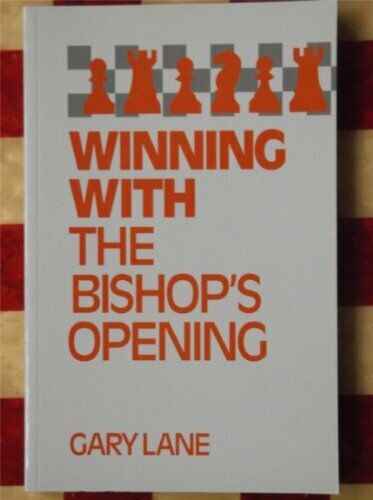
Lane, Gary (1993). Winning with the Bishop’s Opening. Batsford. ISBN 978-0-713471-13-7.
Lane, Gary (1993). Winning with the Bishop’s Opening. Batsford. ISBN 978-0-713471-13-7.
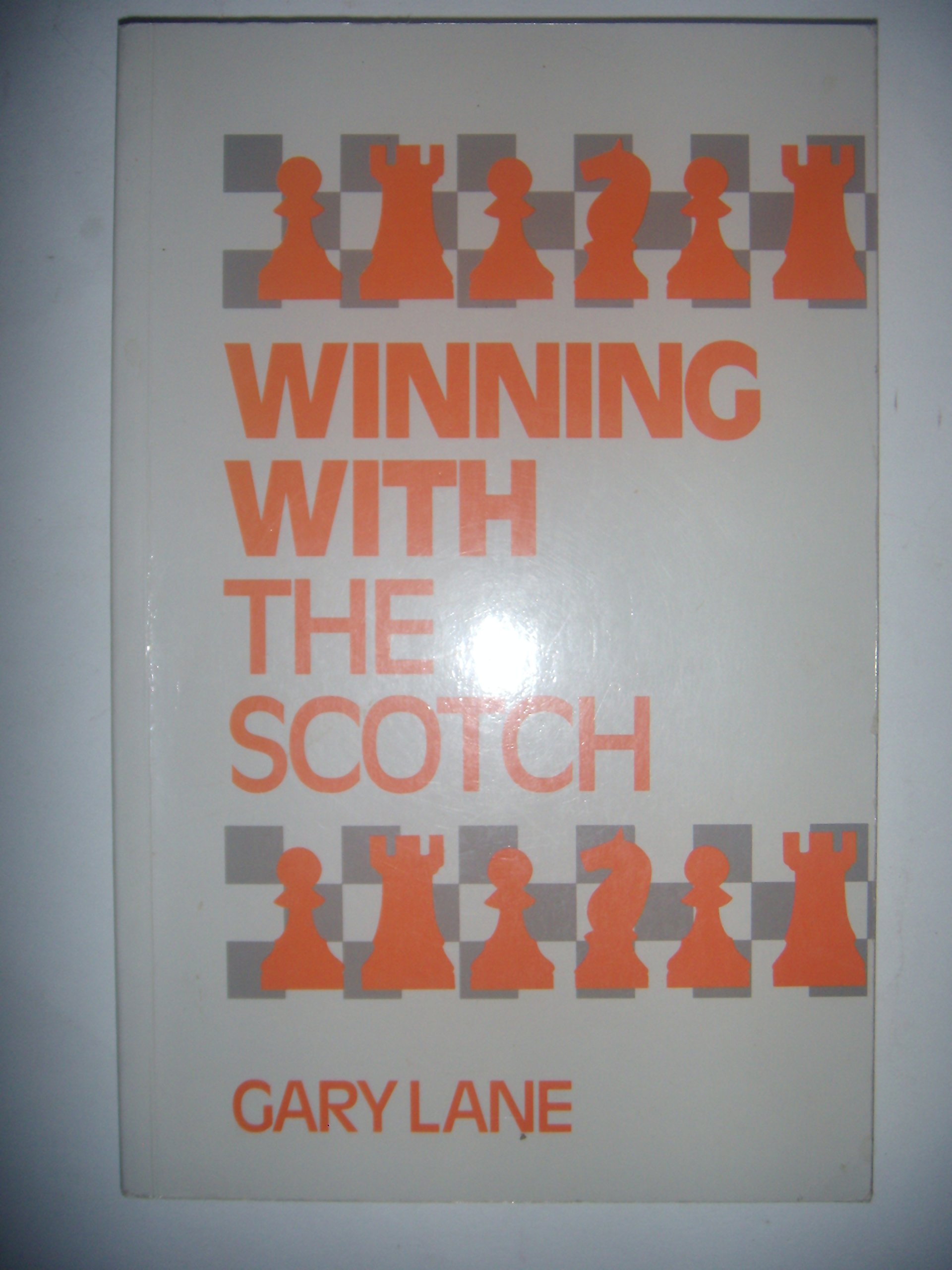
Lane, Gary (1993). Winning with the Scotch. Henry Holt. ISBN 0-8050-2940-0.
Lane, Gary (1993). Winning with the Scotch. Henry Holt. ISBN 0-8050-2940-0.
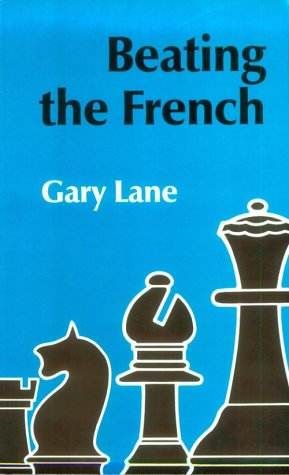
Lane, Gary (1994). Beating the French. Batsford. ISBN 978-0-713473-90-2.
Lane, Gary (1994). Beating the French. Batsford. ISBN 978-0-713473-90-2.
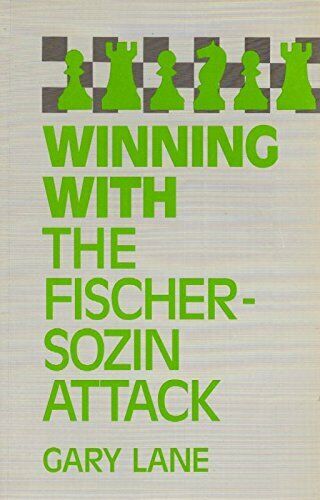
Lane, Gary (1994). Winning with the Fischer-Sozin Attack. Batsford. ISBN 978-0-713475-80-7.
Lane, Gary (1994). Winning with the Fischer-Sozin Attack. Batsford. ISBN 978-0-713475-80-7.
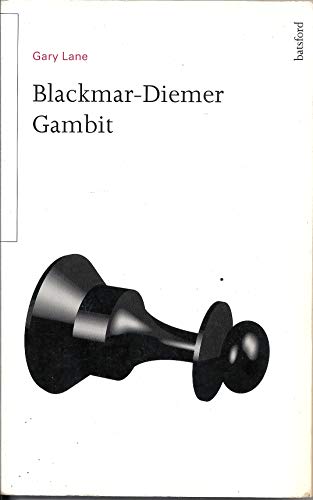
Lane, Gary (1995). Blackmar–Diemer Gambit. Batsford Chess Library / An Owl Book / Henry Holt and Company. ISBN 0-8050-4230-X.
Lane, Gary (1995). Blackmar–Diemer Gambit. Batsford Chess Library / An Owl Book / Henry Holt and Company. ISBN 0-8050-4230-X.
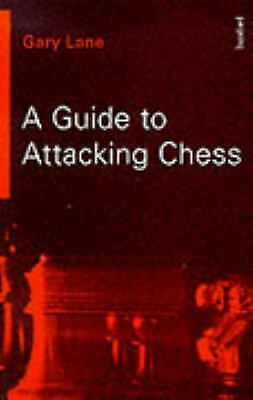
Lane, Gary (1996). A Guide to Attacking Chess. B.T.Batsford Ltd. ISBN 0-7134-8010-6.
Lane, Gary (1996). A Guide to Attacking Chess. B.T.Batsford Ltd. ISBN 0-7134-8010-6.
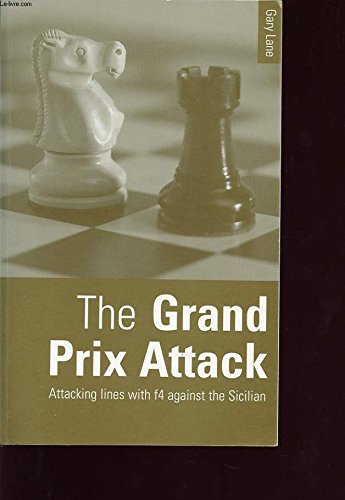
Lane, Gary (1997). The Grand Prix Attack: attacking lines with f4 against the Sicilian. Batsford. ISBN 0-8050-2940-0.
Lane, Gary (1997). The Grand Prix Attack: attacking lines with f4 against the Sicilian. Batsford. ISBN 0-8050-2940-0.
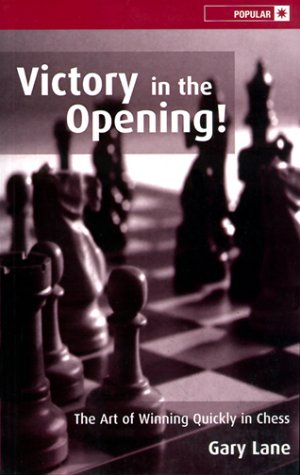
Lane, Gary (1999). Victory in the Opening. Sterling Pub Co Inc. ISBN 9780713484274.
Lane, Gary (1999). Victory in the Opening. Sterling Pub Co Inc. ISBN 9780713484274.
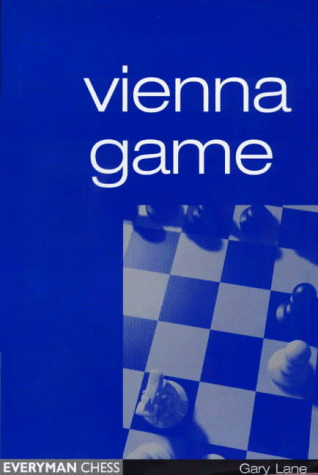
Lane, Gary (2000). The Vienna Game. Everyman Chess. ISBN 0-8050-2940-0.
Lane, Gary (2000). The Vienna Game. Everyman Chess. ISBN 0-8050-2940-0.
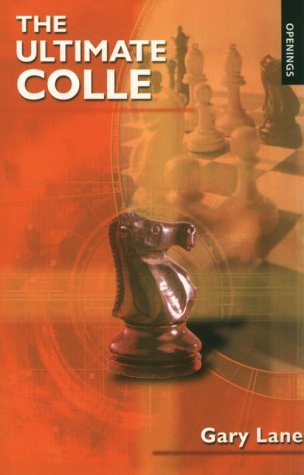
Lane, Gary (2001). The Ultimate Colle. Sterling Pub Co Inc. ISBN 9780713486865.
Lane, Gary (2001). The Ultimate Colle. Sterling Pub Co Inc. ISBN 9780713486865.
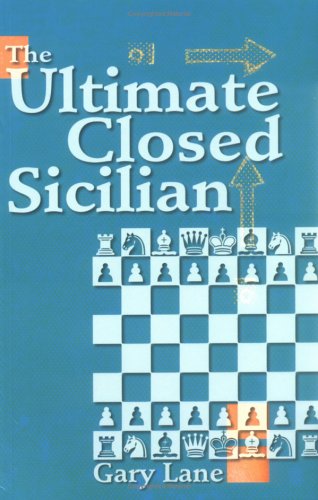
Lane, Gary (2001). The Ultimate Closed Sicilian. Batsford. ISBN 978-0-713486-87-2.
Lane, Gary (2001). The Ultimate Closed Sicilian. Batsford. ISBN 978-0-713486-87-2.
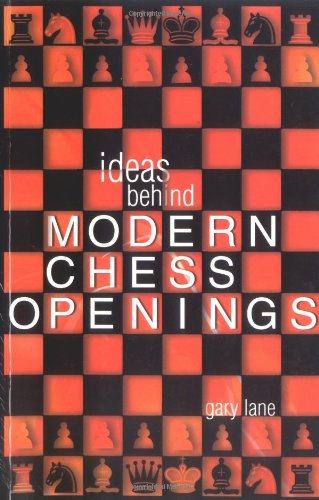
Lane, Gary (2003). Ideas Behind the Modern Chess Openings: Attacking With White. Batsford. ISBN 9780713487121.
Lane, Gary (2003). Ideas Behind the Modern Chess Openings: Attacking With White. Batsford. ISBN 9780713487121.
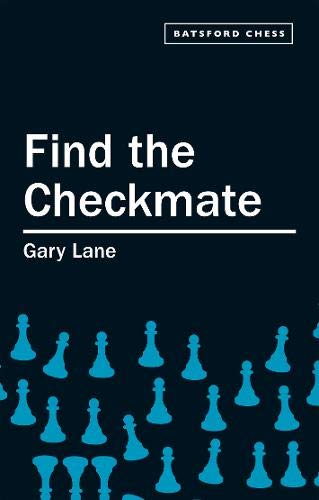
Lane, Gary (2003). Find the Checkmate. Batsford. ISBN 0-8050-2940-0.
Lane, Gary (2003). Find the Checkmate. Batsford. ISBN 0-8050-2940-0.
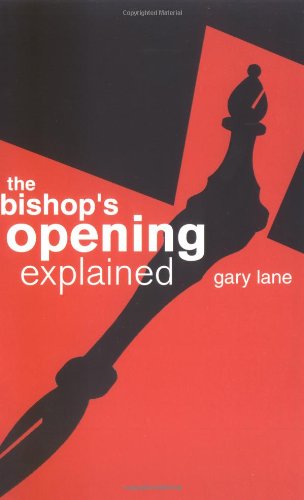
Lane, Gary (2004). The Bishop’s Opening Explained. Batsford. ISBN 0-7134-8917-0.
Lane, Gary (2004). The Bishop’s Opening Explained. Batsford. ISBN 0-7134-8917-0.
Lane, Gary (2004). ‘Find the Checkmate. Batsford. ISBN 978-0-713488-61-6.
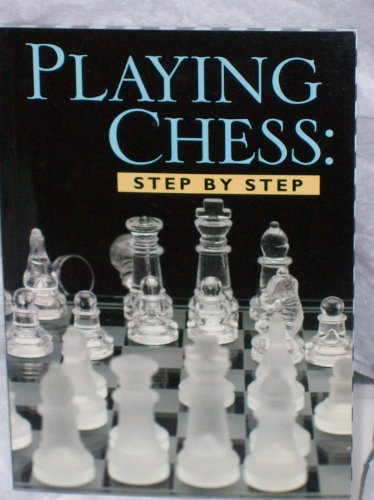
Lane, Gary (2004). Playing Chess: Step by Step. Mud Puddle Books. ISBN 978-1-594120-55-8.
Lane, Gary (2004). Playing Chess: Step by Step. Mud Puddle Books. ISBN 978-1-594120-55-8.
Lane, Gary (2005). Ideas Behind Modern Chess Openings: Black. Batsford. ISBN 9780713489507.
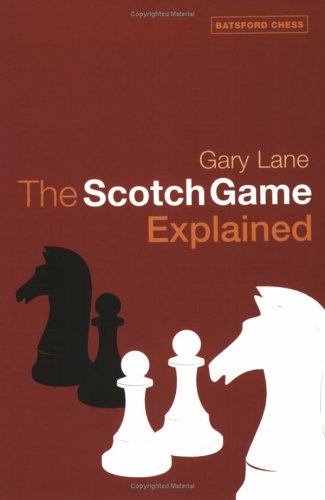
Lane, Gary (2005). The Scotch Game Explained. Batsford. ISBN 0-7134-8940-5.
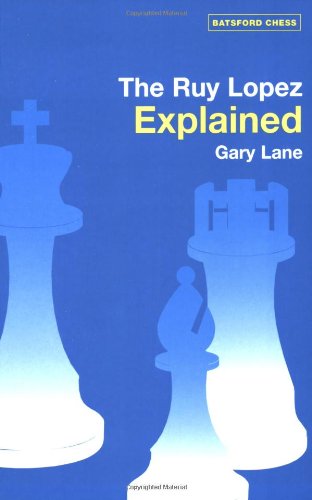
Lane, Gary (2005). The Scotch Game Explained. Batsford. ISBN 0-7134-8940-5.Lane, Gary (2006). The Ruy Lopez Explained. Batsford. ISBN 0-7134-8978-2.
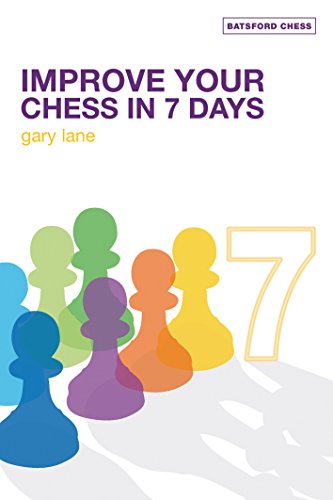
Lane, Gary (2007). Improve Your chess In 7 Days. Batsford. ISBN 978-0-7134-9050-3.
Lane, Gary (2007). Improve Your chess In 7 Days. Batsford. ISBN 978-0-7134-9050-3.
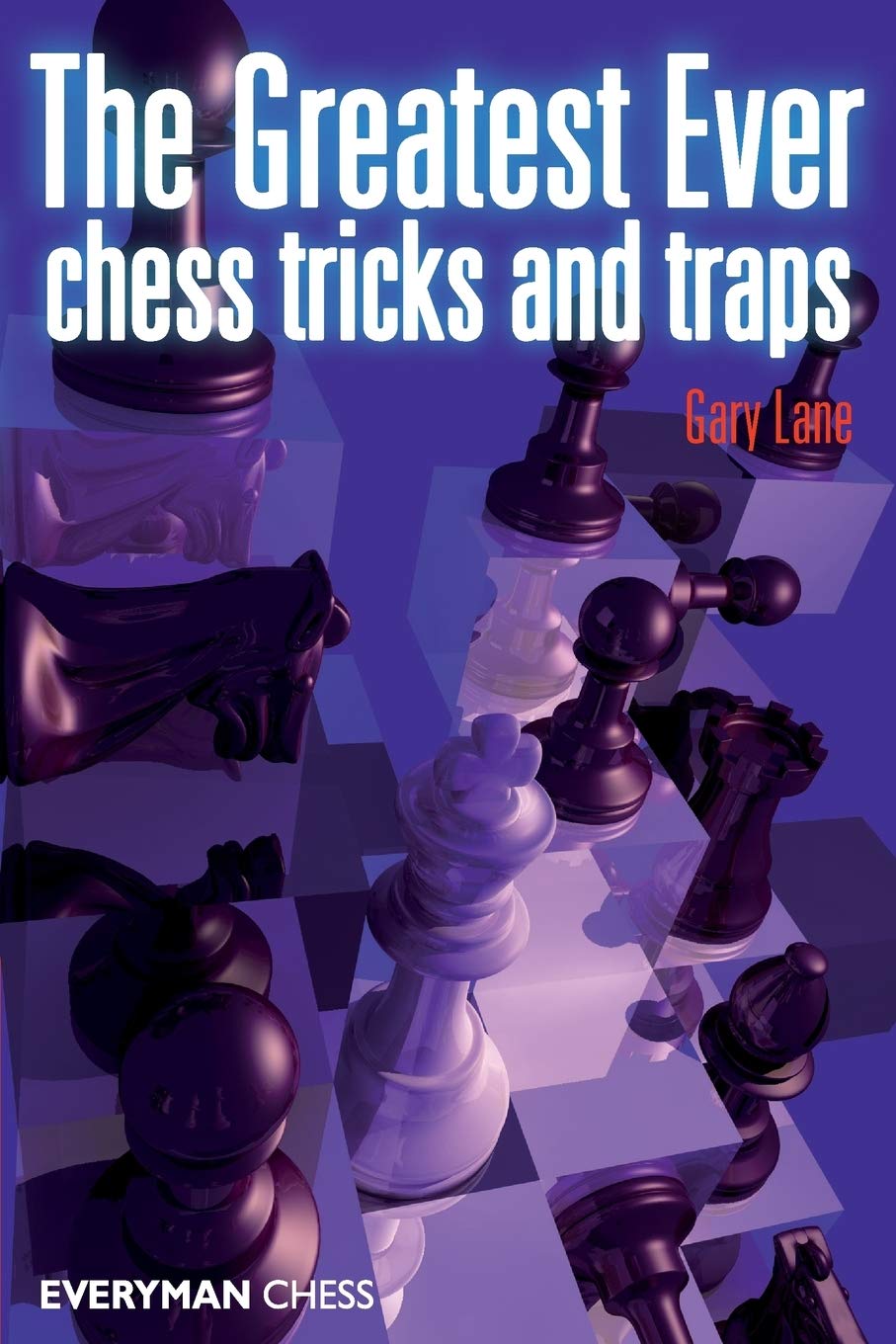
Lane, Gary (2008). The Greatest Ever Chess Tricks and Traps. Everyman Chess. ISBN 9781857445770.
Lane, Gary (2008). The Greatest Ever Chess Tricks and Traps. Everyman Chess. ISBN 9781857445770.
Lane, Gary (2009). Sharpen Your Chess Tactics in 7 Days. Batsford. ISBN 9781906388287.
Lane, Gary (2009). Sharpen Your Chess Tactics in 7 Days. Batsford. ISBN 9781906388287.
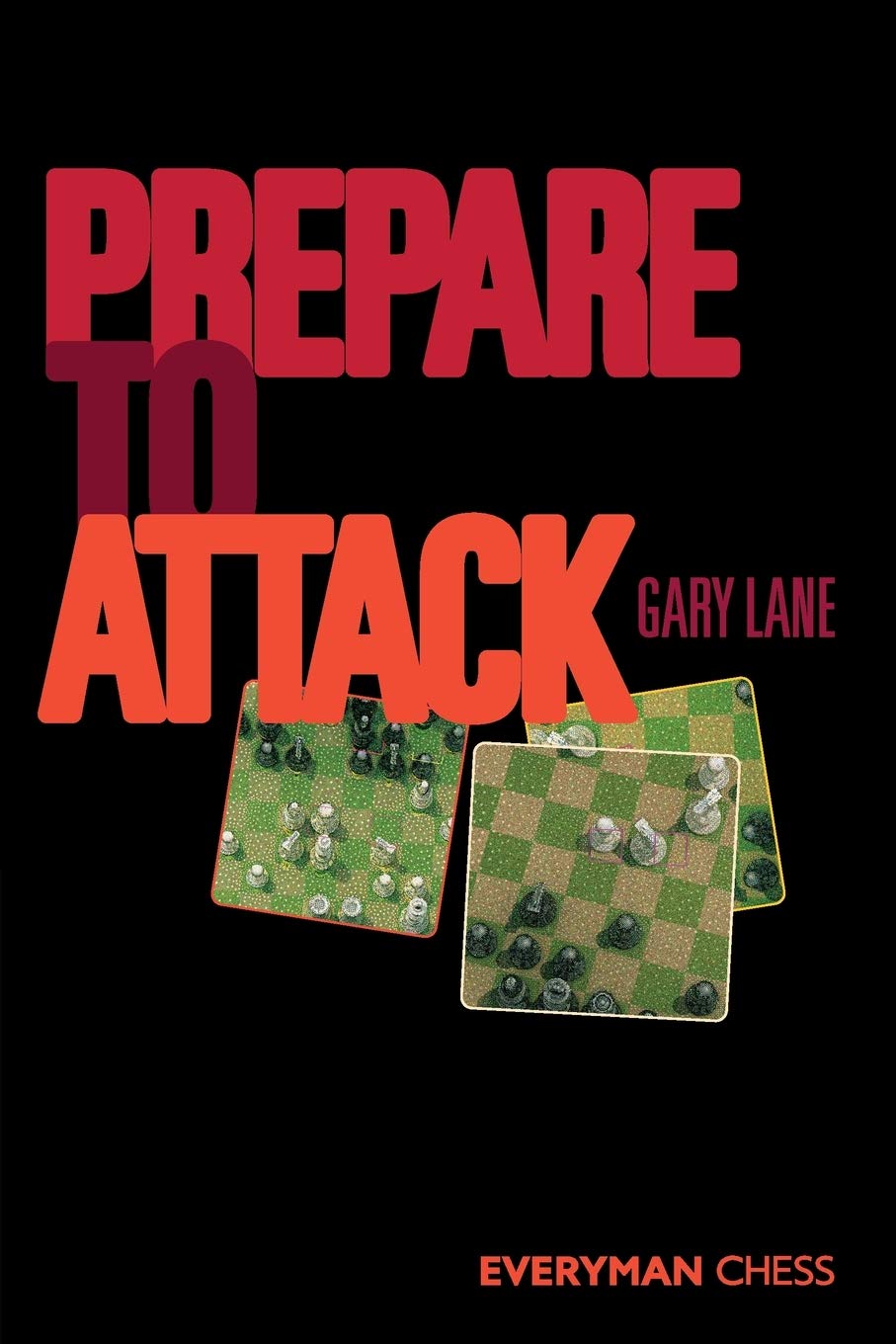
Lane, Gary (2011). Prepare to Attack. Everyman Chess. ISBN 978-1857446500.
Lane, Gary (2011). Prepare to Attack. Everyman Chess. ISBN 978-1857446500.
Lane, Gary (2013). Gary Lane’s Chess Puzzle Book. e+books. ISBN 978-1-927179-14-7.
Lane, Gary (2013). Gary Lane’s Chess Puzzle Book. e+books. ISBN 978-1-927179-14-7.IM Gary Lane, courtesy of John Upham Photography
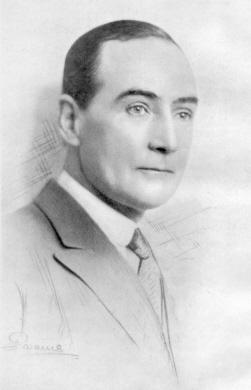
Philip Walsingham Sergeant from A Century of British Chess from a photograph by F.A. Swaine Ltd. (1934)
BCN remembers Philip Walsingham Sergeant who passed away on Monday, October 20th 1952.
PWS was born in Kensington on Saturday, January 27th, 1872 to Lewis Sergeant and Emma Louisa Sergeant (née Robertson) and was baptised at All Saints Church, Notting Hill. According to PWS’s baptism record Lewis was an author.
According to PWS in A Century of British Chess :
“When I was seven years of age – about the period, by the way, in which my father began to teach me Greek – he began also to initiate me into chess. Not that he designed it as a consolatory set-off to my application to Greek; for he loved the Classics well, though, going up to Cambridge with small classical exhibition, he had turned to Mathematics, and therein took his degree. ”
According to the 1881 census PWS (aged 9) lived with his parents and numerous siblings : Dorothy (aged 7), Winifred (6), Hilda (5), Bernard (2), John (his grandfather aged 76) and Mary (his grandmother aged 75). They had staff, Elizabeth Fraser and Sarah Martin. They lived at 10, Addison Road, North, Kensington.
According to “Joseph Foster. Oxford Men and Their Colleges, 1880-1892. 2 vols. Oxford, England: James Parker and Co, 1893″ :
PWS attended St. Paul’s School and then Trinity College, Oxford to read Classics where he attained Honour Moderations.
and here is the record from the above publication :
Entry for Philip Walsingham Sergeant in Joseph Foster. Oxford Men and Their Colleges, 1880-1892. 2 vols. Oxford, England: James Parker and Co, 1893
We do not know if PWS played in the Varsity matches of 1892 – 1895 : Britbase does not (yet) include player details for these matches.
PWS married Minnie Boundford (born 27th February 1889) in 1909 in Hampstead and they lived at 5, Dukes Avenue, Chiswick where PWS was listed as an author and Minnie as someone who carried out “unpaid domestic duties”. Minnie was 17 years younger than PWS. Minnie’s father was a joiner and a carpenter.
They had two daughters Margaret (born 1910) and Kathleen (born 1911).
In October 1946 Minnie and PWS remarried. Presumably this was rather unusual in that day and age.
According to The Oxford Companion to Chess (OUP, 2nd edition, 1996) by Hooper and Whyld :
PWS was an English author of biographical games collections for Charousek, Morphy and Pillsbury as well as other works of importance such as A Century of British Chess (1943) and Championship Chess (1938).
From The Encyclopedia of Chess (BT Batsford, 1977) by Harry Golombek :
“A professional writer on chess and popular historical subjects. Without any pretentions to mastership, he represented Oxford University in the years 1892 – 5 and assisted RC Griffith in preparing three editions of Modern Chess Openings.
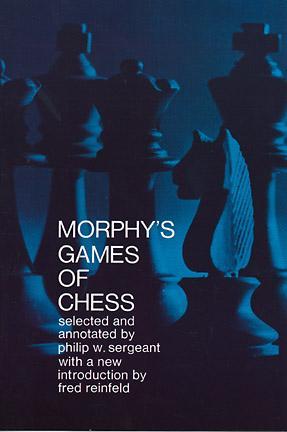
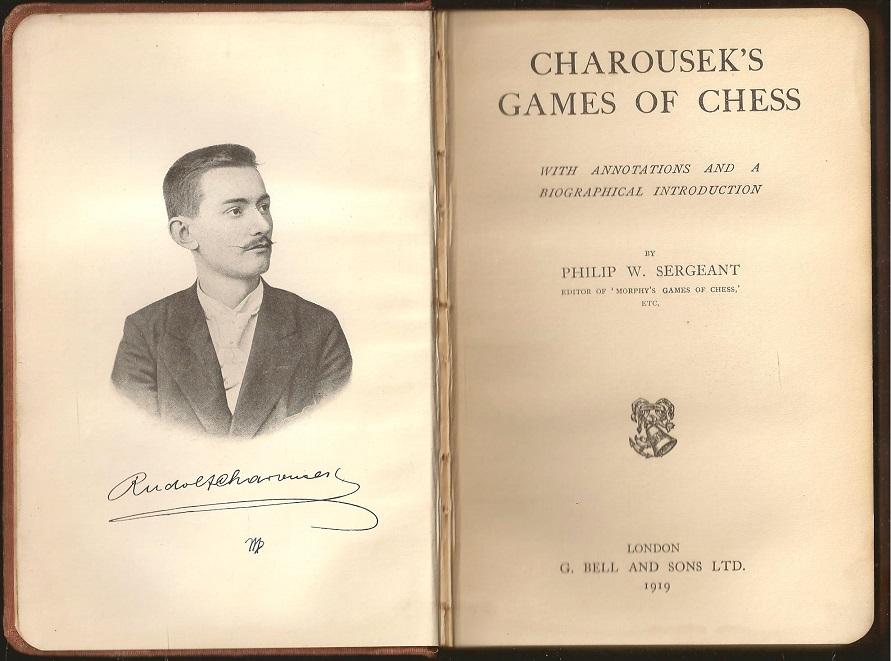
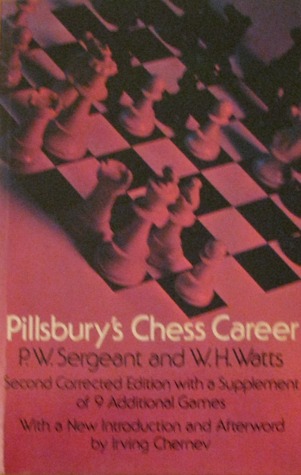
In chess he dealt with a number of important subjects : Morphy’s Games of Chess, London, 1916; Charousek’s Games of Chess, London, 1919; Pillsbury’s Chess Career (in collaboration with WH Watts), London, 1923; Championship Chess, London, 1938.
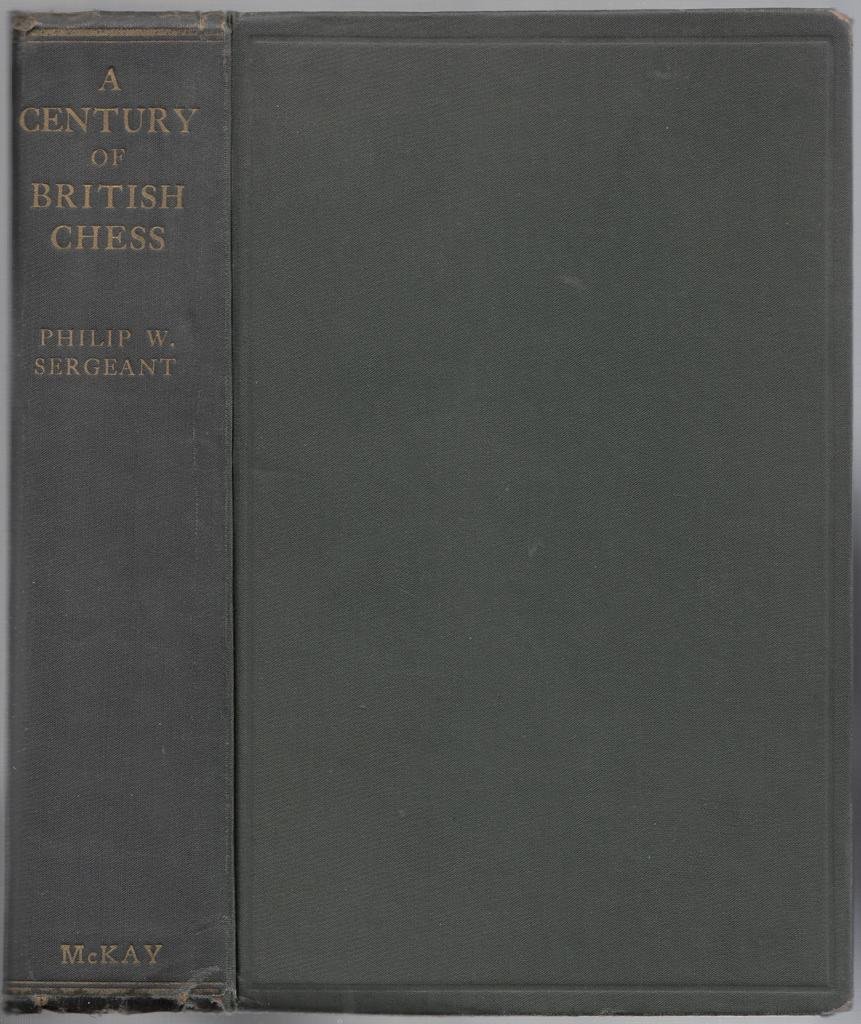
All these are lucidly and carefully written but suffer from the defect that, being neither a master player nor a professional annotator, he was not competent to deal with the annotational part of the work. Probably his best book on chess was A Century of British Chess, London, 1934.
From British Chess Magazine, Volume LXX11 (72), Number 11 (November), page 324 we have this rather brief obituary (presumably written by Brian Reilly):
“We regret to have to report the death, at the age of eighty-one of Philip W. Sergeant, the author of A Century of British Chess, which we imagine is in most chess libraries. He was the author of several well-known historical books – but we are only concerned here with his chess activities, which included representing Oxford University 1892-5; helping RC Griffith with two editions of Modern Chess Openings; playing for Middlesex, winning the chess championship of the authors’ club for several year, and latterly as an honoured member; and occasionally obtaining the championship of the Guildford Chess Club. Our sympathy with his widow and two daughters is sincere.”
”
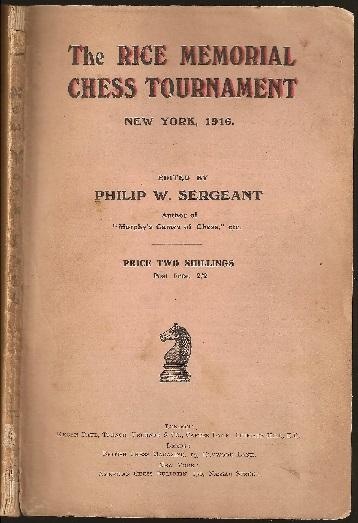
“Philip Walsingham Sergeant (27 January 1872, Notting Hill, London[1] – 20 October 1952)[2] was a British professional writer on chess and popular historical subjects.[3][4] He collaborated on the fifth (1933), sixth (1939), and seventh (1946) editions of Modern Chess Openings, an important reference work on the chess openings. He also wrote biographical game collections of Paul Morphy (Morphy’s Games of Chess (1916) and Morphy Gleanings), Rudolf Charousek (Charousek’s Games of Chess (1919)), and Harry Nelson Pillsbury (Pillsbury’s Chess Career, with W. H. Watts, 1922), and other important books such as A Century of British Chess (1934) and Championship Chess (1938).”
Harry Golombek writes that, “Without any pretensions to mastership, he represented Oxford University in the years 1892-5”.[3] Golombek considers A Century of British Chess probably Sergeant’s best chess book, but opines that although Sergeant’s chess books are lucidly written, they suffer from the defect that, as a non-master, he was not competent to deal with the annotational aspect of his work.
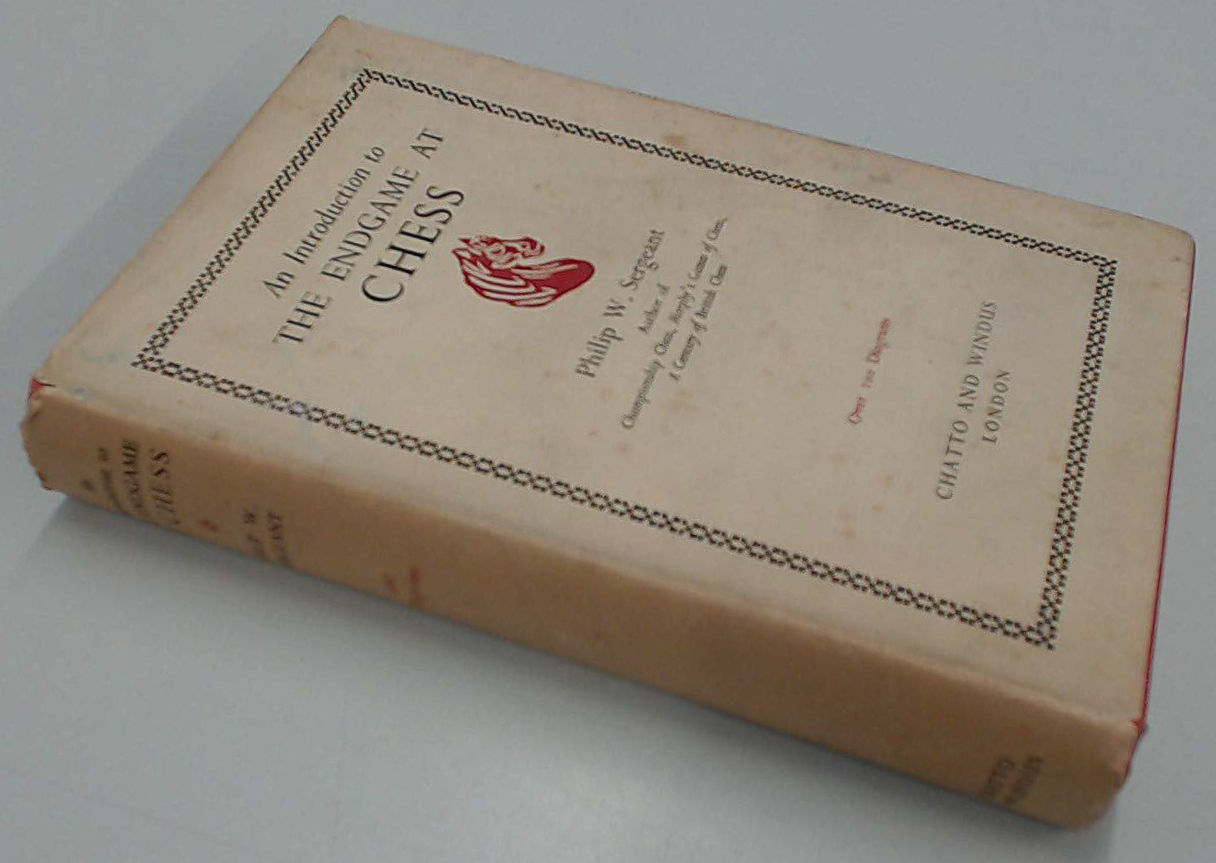
Philip Walsingham SergeantCharousek’s Games of ChessThe Rice Memorial Chess Tournament, 1916Pillsbury’s Chess Career, London, 1923A Century of British Chess, London, 1934An Introduction to the Endgame at Chess
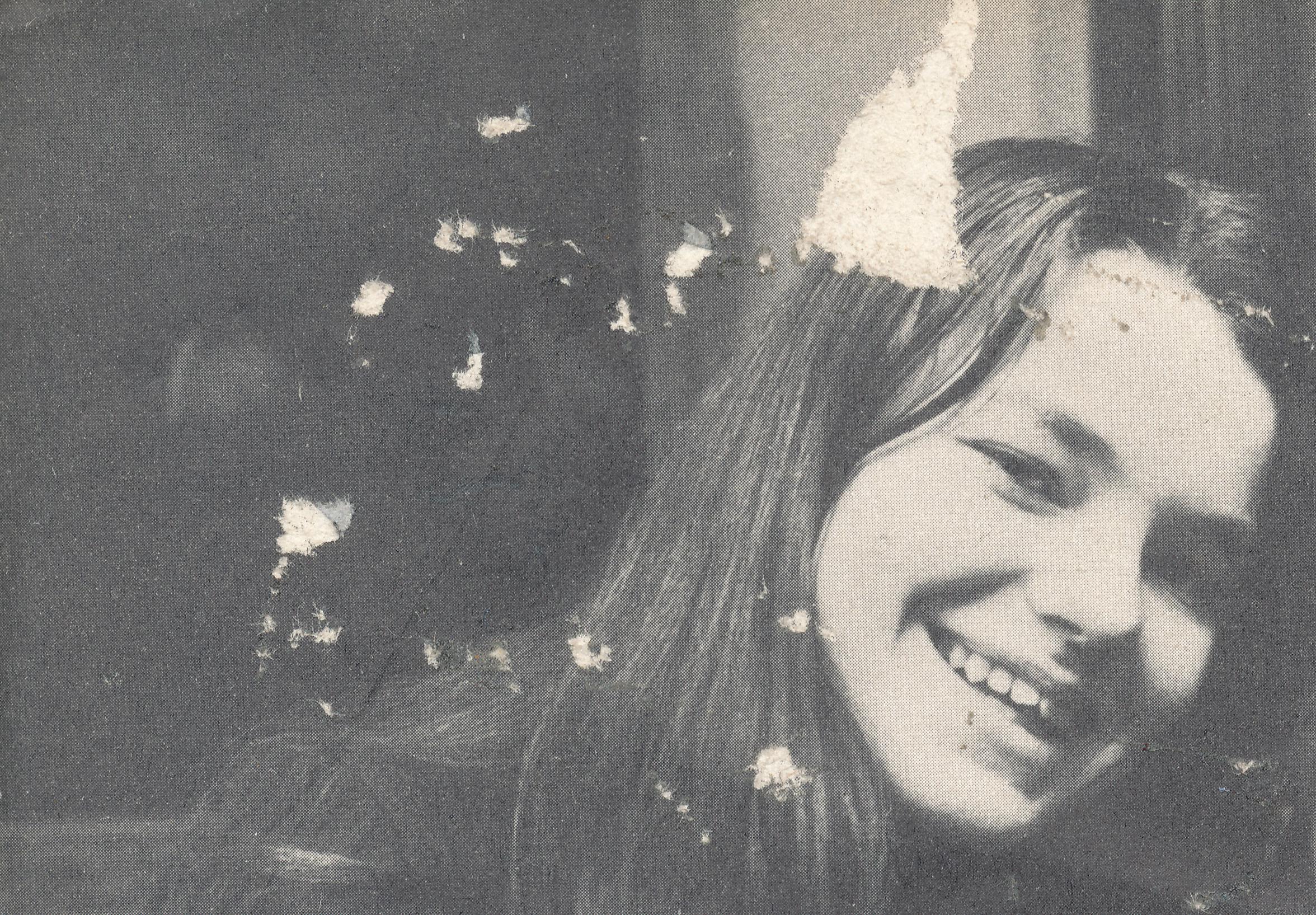
Susan is / was a director of the Hallas Foundation Ltd. and Larkham Printers and Publishers Ltd. and is a partner to former Scottish international Les SF Blackstock.
A few (11) of her games may be found on chessgames.com
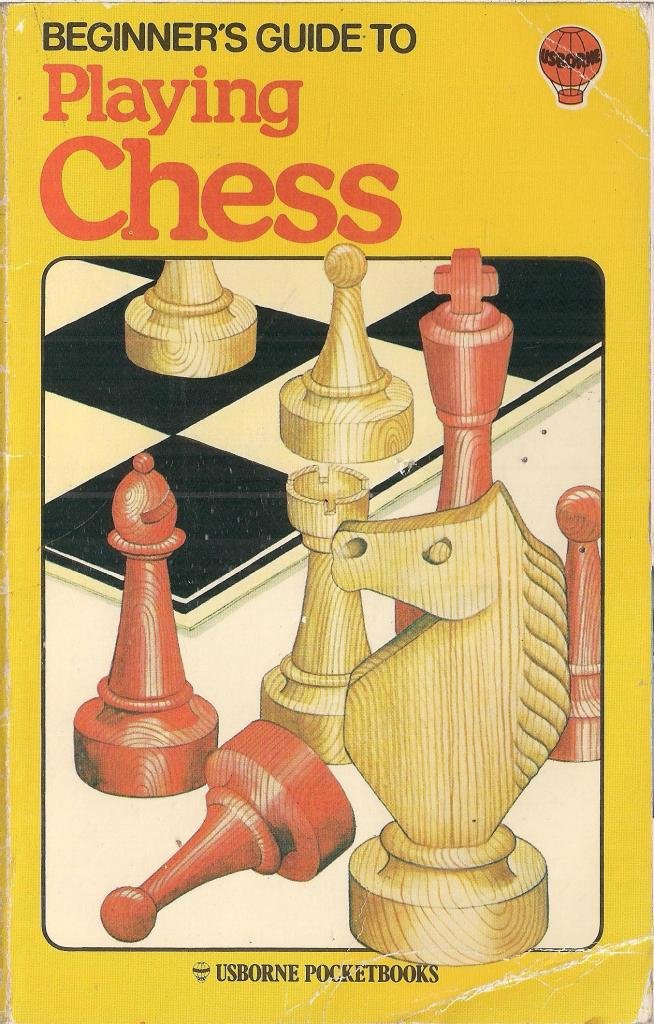
Susan Caldwell, from the CentYMCA Story by Jimmy AdamsBeginners Guide to Playing ChessBeginners Guide to Playing Chess
Thomas Edward Rendle was born on Monday, September 29th 1986. “Stuck with You” by Huey Lewis and the News was the UK’s number one single.
Tom was born in Hastings, East Sussex and his mother’s maiden name is Jefferies. Tom resides in Hastings.
Tom attended Bede’s School, Sussex and then St. Leonard’s College.
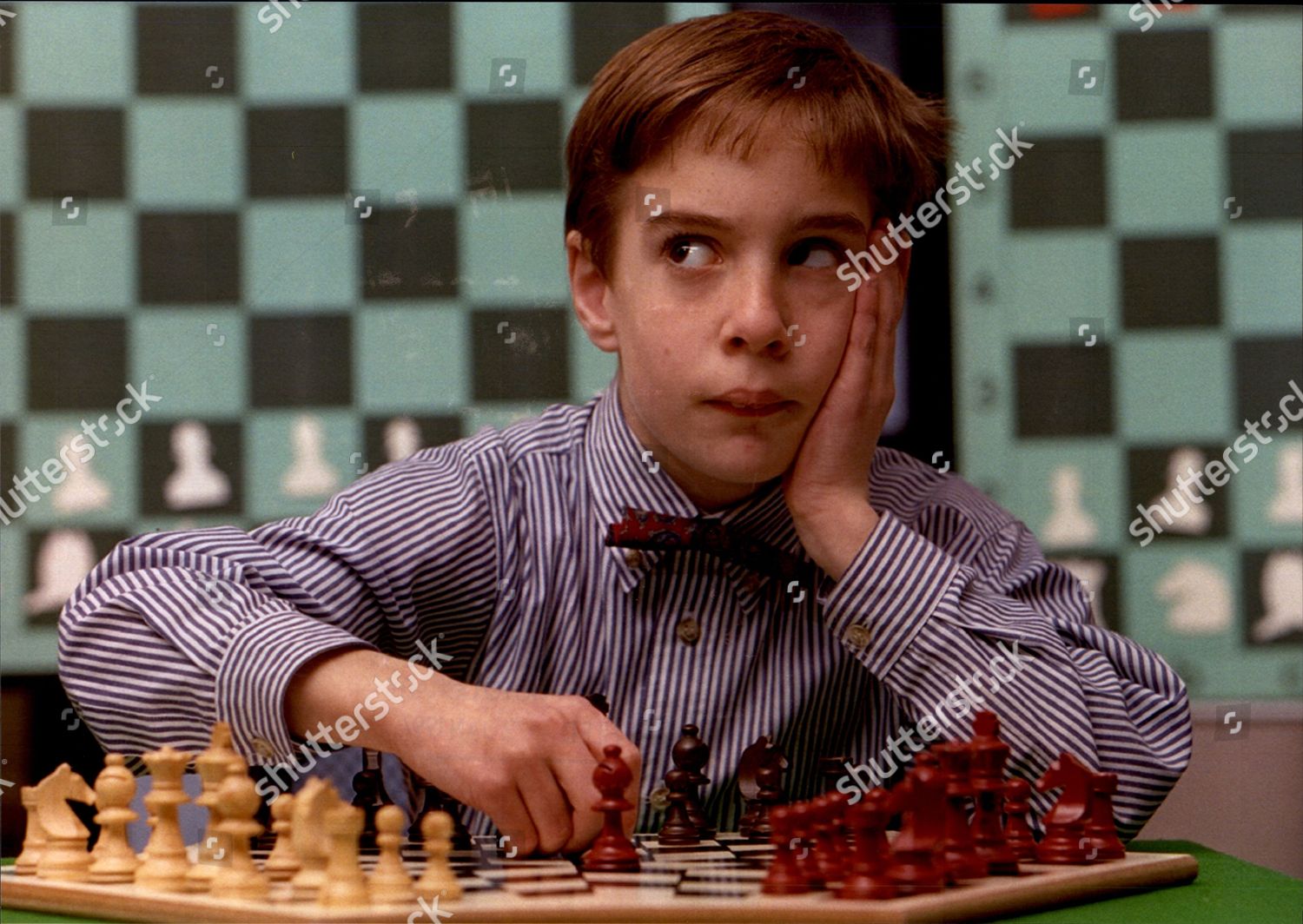
Tom Rendle aged 11 by David Crump
Tom studied physics at The University of Warwick and has two brothers, Tim and James and a sister Theresa.
Tom became a FIDE Master in 2004. In 2006 he became an International Master and achieved a peak rating (according to Felice) in July 2007 of 2416 at the age of 21. Tom has one Grandmaster norm.
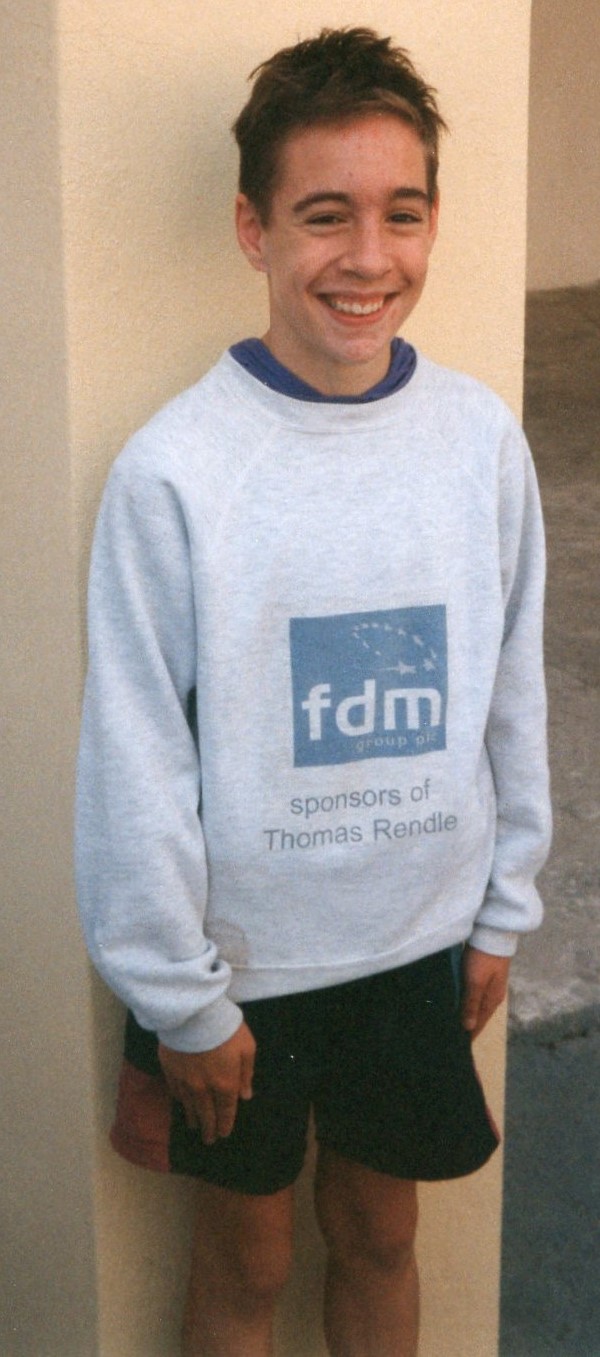
Tom Rendle, sponsored by local printing company, FDM. Courtesy of Gary Lane
Tom has played for 4NCL Grantham Sharks, Hammersmith (in the London League), Drunken Knights (in the London League), West London and Sandhurst (in the Surrey Border and Berkshire Leagues).
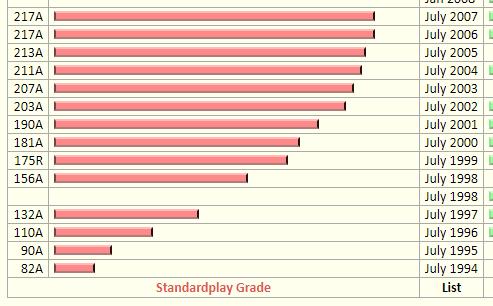
His first ECF grade to appear on the grading web site was 82A in July 1994 (however it could be earlier than that) at the age of 7 :
ECF Grading Progress of Tom Rendle
Tom played in the World U12 Championship won by Teimour Radjabov and his first major success was scoring 7.5/10 in the 2001 Smith and Williamson Young Masters. He became Hampshire Champion in 2001 with 5/6 and won the 2004 Rosny Sous Bois tournament with 7/9 and a TPR of 2568. He was runner-up in the Paignton Open of 2005 followed by runner-up in the Coulsdon Christmas tournament of 2005.
With the white pieces Tom is almost exclusively an e4 player but he has flirted with Bird’s Opening many times. Having shared accommodation with Gawain Jones there are signs of influence in the choice of the Grand Prix Attack.
As the second player Tom plays both the Winawer and the Classical French and is a noted expert on the Classical Dutch and Dutch in general.
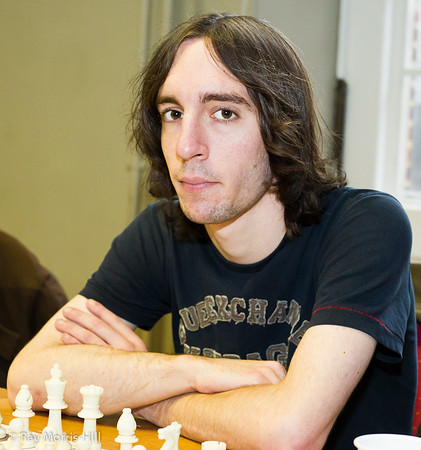
IM Tom Rendle at the King’s Place Rapidplay, 2013, Courtesy of John Upham Photography
From Wikipedia :
“Thomas Edward Rendle (born 29 September 1986) is a British FIDE International Master chess player and coach. Rendle became an International Master in June 2006 and is part way towards becoming a Grandmaster, with one GM Norm.
IM Tom Rendle
He gained an interest in chess at an early age, and soon entered chess tournaments, gaining success in his age categories (such as becoming Mini Squad Under 7s Champion, England Under 11 Champion).[citation needed] He was put on top board for the England under 11 team and won the Sussex Under 18 Championships, whilst still under 12.”
In 1998 Rendle played Garry Kasparov in the BT Wireplay Challenge 1998. In 2005 he was a coach for England’s team at the 1st FIDE World Schools Championship in Halkidiki, Greece and in 2006 he coached with the England Team at the European Youth Chess Championships in Montenegro.
Rendle currently works as a chess coach, both online and face-to-face. He is a regular coach of England Juniors.”
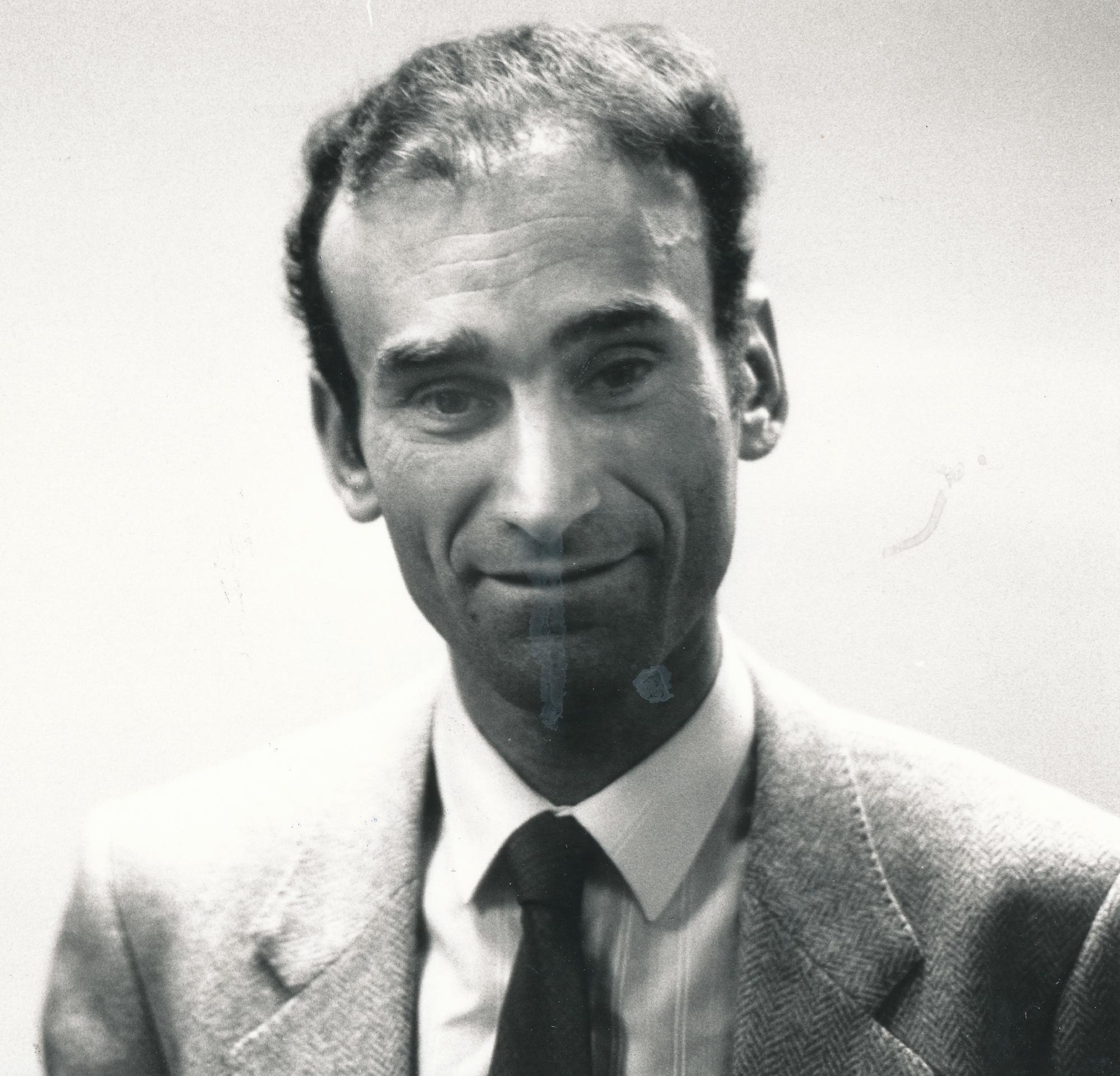
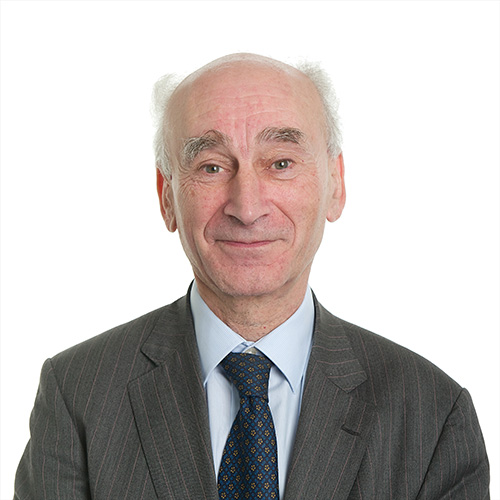
We send best wishes to GM Michael Stean on his birthday,
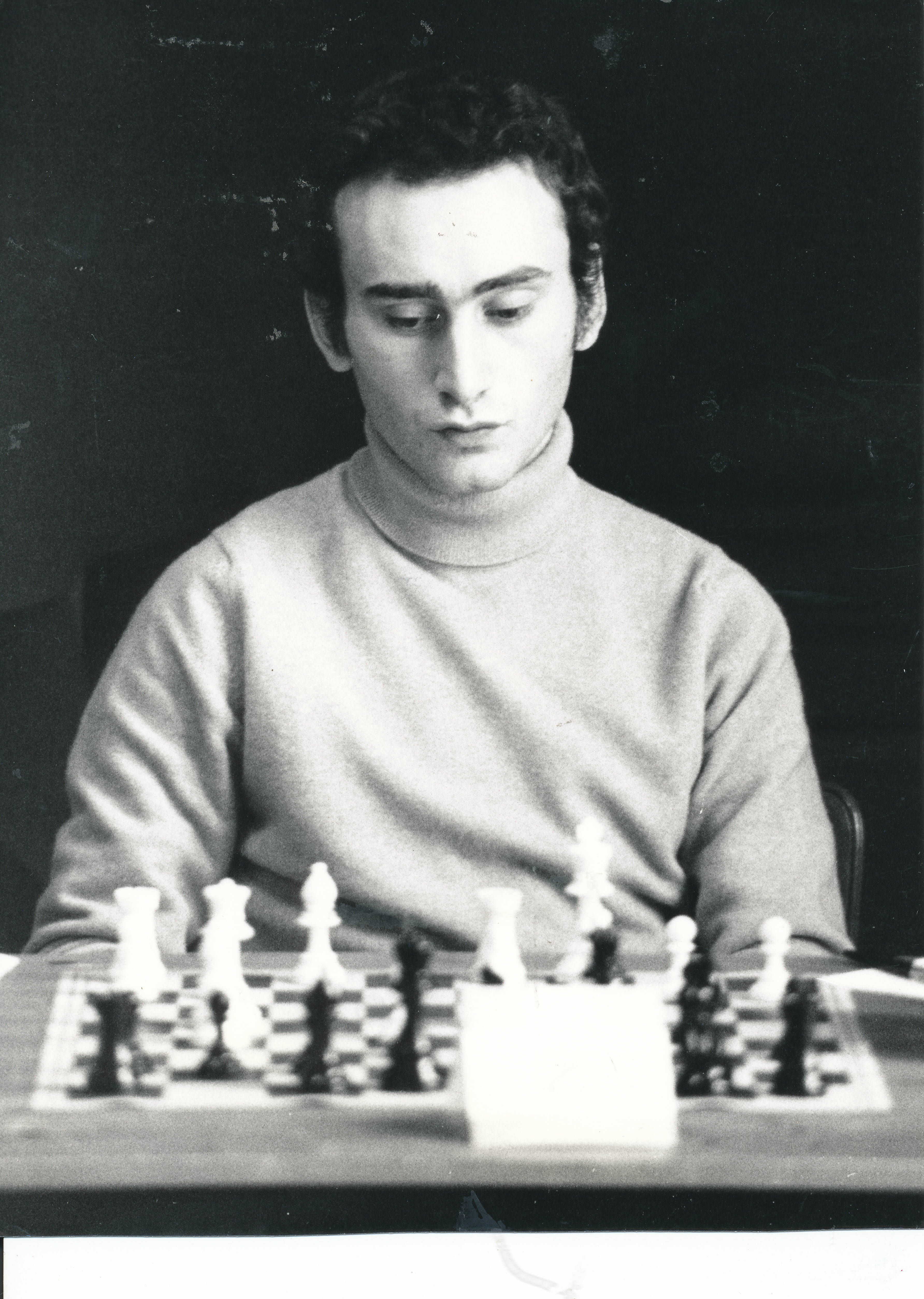
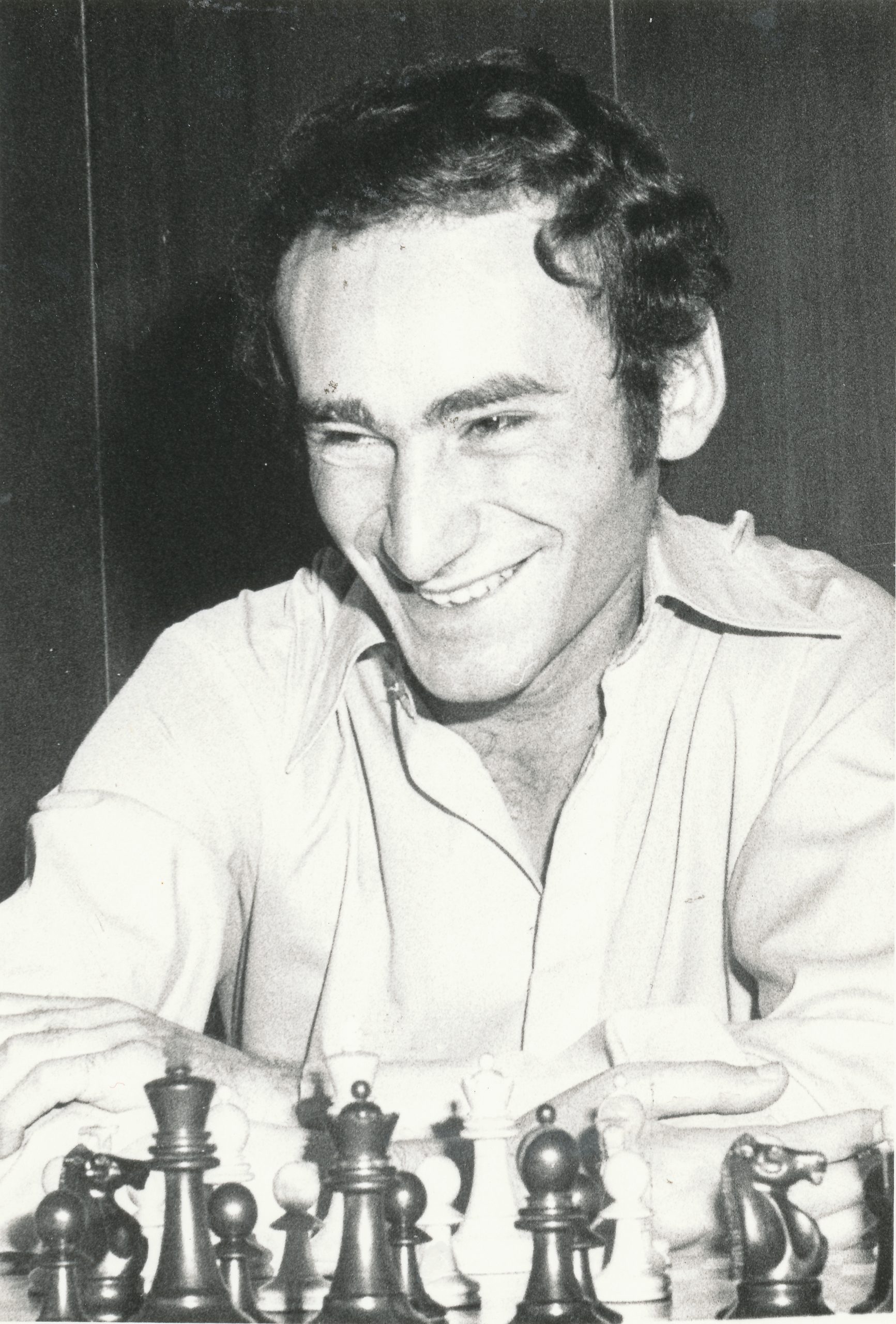
Michael Francis Stean was born Michael Francis (some say Frank) Stein on Friday, September 4th, 1953 in Pancras, London. His mother’s maiden name is / was Jean Feldman. Michael has a brother, Howard.
He attended Latymer Upper School and Cambridge University and his early chess days were spent at Richmond and Twickenham Chess Club.
He became an International Master in 1975 and England’s third (OTB) Grandmaster in 1977 winning £2,500 from the Jim Slater Foundation.
He was the chess correspondent of The Observer.
Some notable opponents that he has a plus score against include:
John Nunn: 3.5/5
Jonathan Speelman: 2.5/4
Gert Ligterink: 2.5/3
Robert Bellin: 2.5/3
Brian Eley: 2.5/3
Vladimir Liberzon: 2/3
and others.
With the white pieces Michael played 1.e4, 1.c4 and 1.Nf3 but rarely 1.d4 preferring the Ruy Lopez, Exchange Variation.
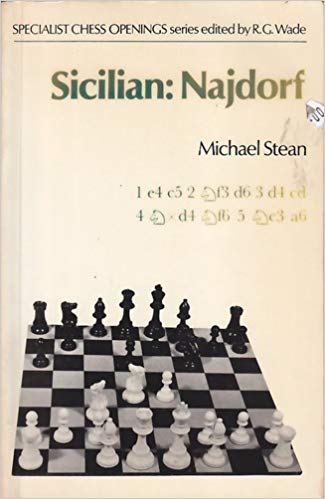
With the black pieces he played the Sicilian Najdorf (and was a leading expert), the Nimzo-Indian and the Queen’s Indian defences.
He has the dubious honour of being the first Grandmaster to lose a blitz game to a computer (Chess 4.6) in London, 1977. Stean exclaimed, “This computer is a genius!”
Michael Francis Stean
His peak FIDE rating was 2540 in January 1979.
His mother (Jean) presented a trophy to the Marlow Congress (now the Berks and Bucks Congress) which became the Mrs. Jean Stean Cup.
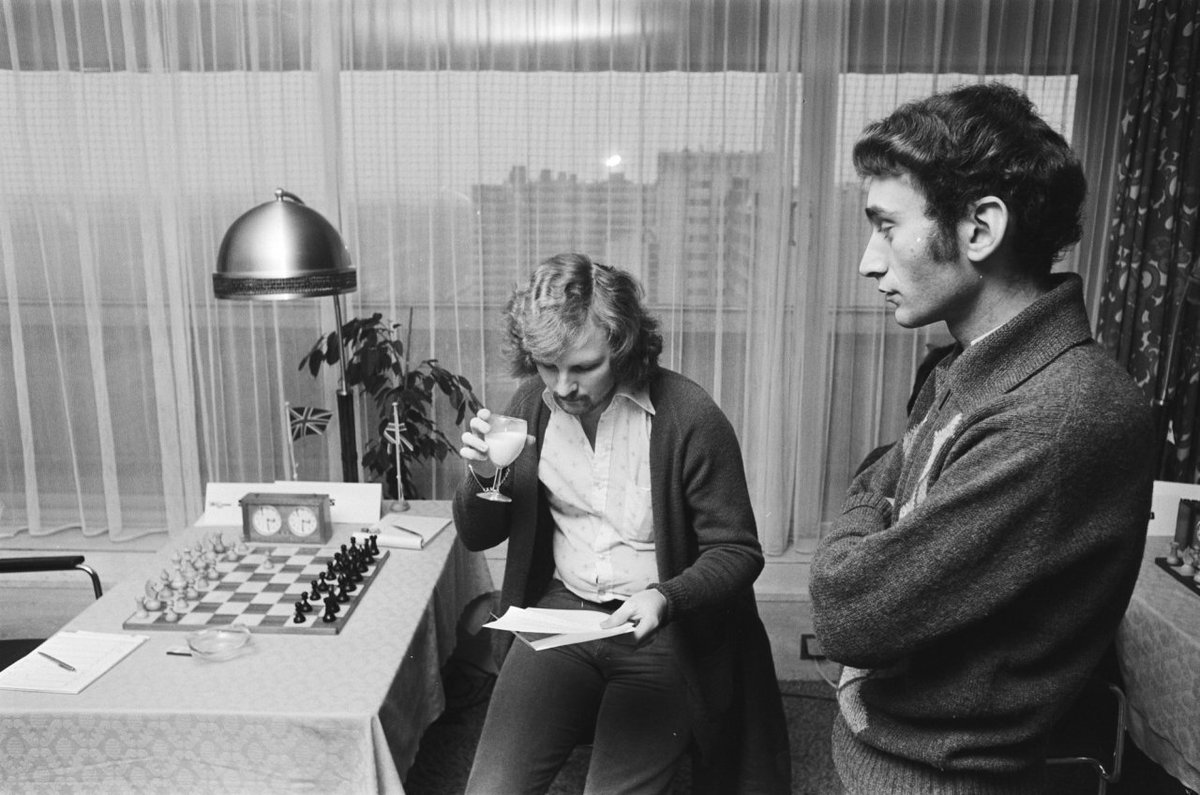
Tony Miles and Michael Stean at the FIDE Zonal in Amsterdam, 1978. (Source: http://gahetna.nl)
According to British Chess (Pergamon, 1983) by Botterill, Levy, Rice and Richardson :
“Stean was educated at Cambridge University, He was equal first in the British Championship, Clacton, 1974, although only 4th in the playoff. He has been an important member of Korchnoi’s team for the last 5 years, and this perhaps has been responsible more than anything for the rounding out and maturing of his style from the sharp tactical play of the early 1970s to the solid positional GM (especially with the White pieces) of today.
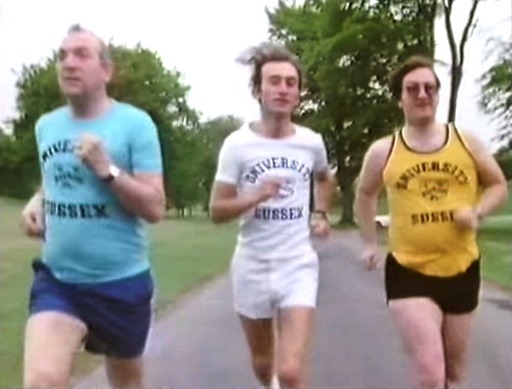
Korchnoi, Stean and Keene try out matching vests and T-shirts from The University of Sussex sports centre, Falmer, East Sussex. It is likely that the yellow one was only worn for this press photo shoot.
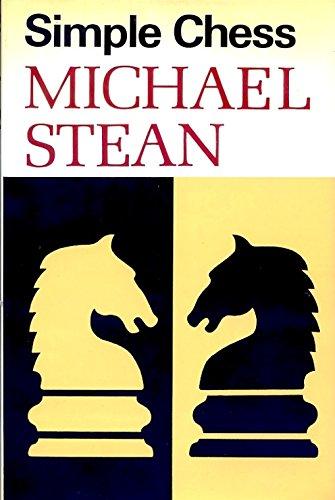
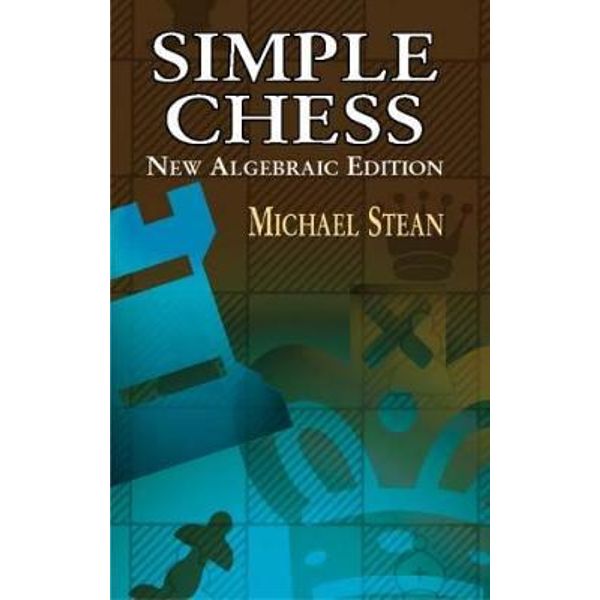
Stean is a fine author; Simple Chess and the Sicilian Najdorf are both excellent books.
Michael Stean at the 1977 Lord John Cup
Temperamentally he is generally pleasant, good humoured and self confident, although he suffers from intermittent poor health which might help to explain his at times erratic results.”
According to Chessgames.com :
“Michael Francis Stean was born on the 4th of September 1953 in London, England. He finished 3rd at the 1973 World Junior Chess Championships behind Alexander Beliavsky and Tony Miles. Awarded the IM title in 1975 and the GM title in 1977 (The third Englishman to attain the title after Miles and Keene).
He finished 1st= in the 1974 British Championship but lost the play-off. He played on 5 English Olympiad teams from 1974 – 1983 and has won 1st prizes at Vrsac 1979, Smederevska Palanka 1980 and Beer Sheba 1982.
A specialist in Opening Theory he served as one of Viktor Korchnoi’s seconds in the 1977 – 1981 period. He is the author of Simple Chess, an introduction to chess strategy.”
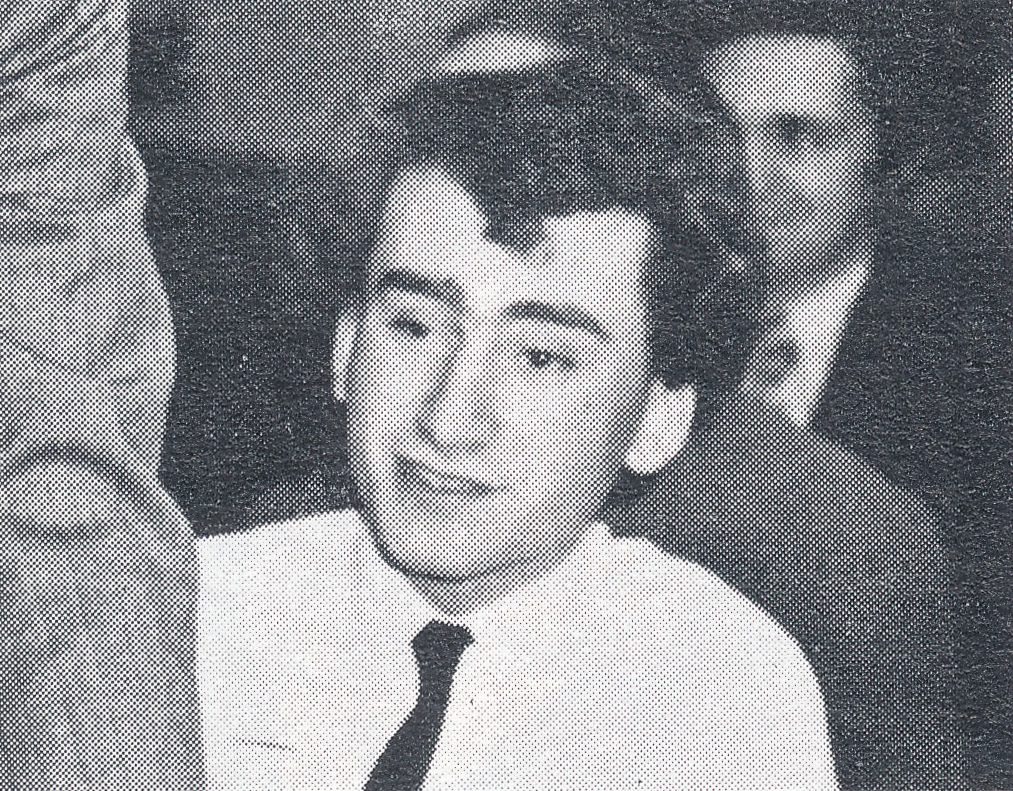
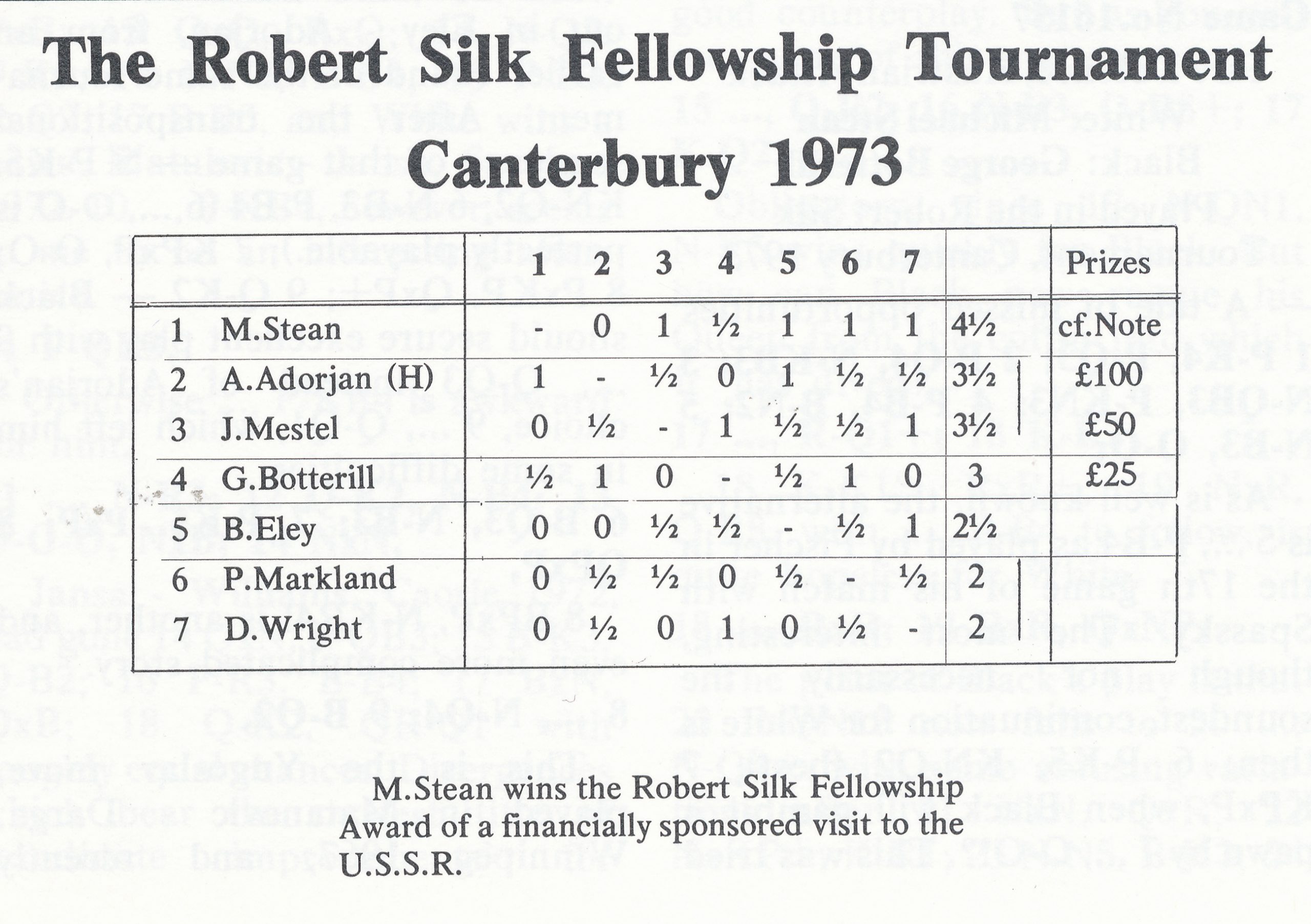
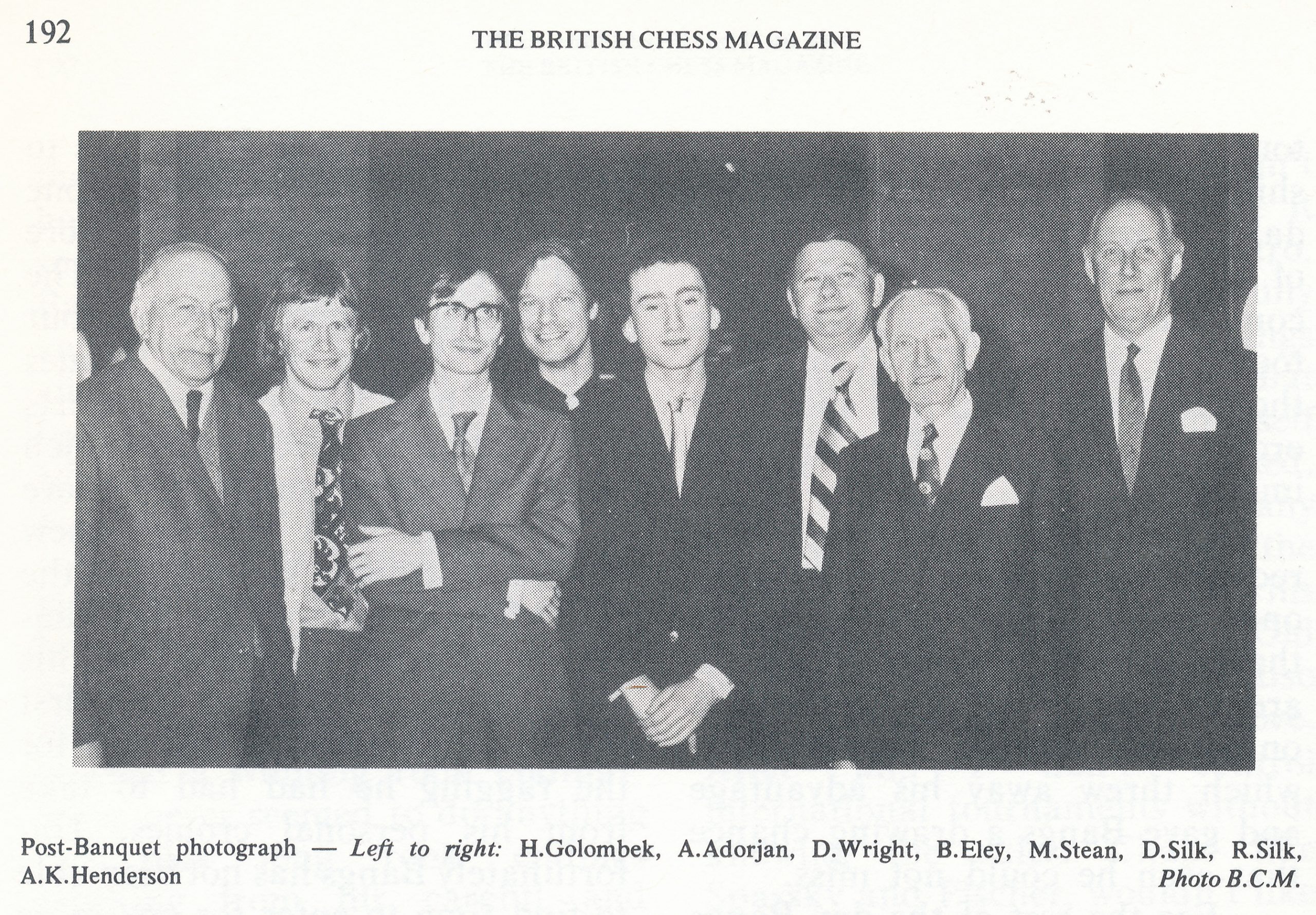
Mchael Stean, Hastings 1972-1973. Source : British Chess Magazine, Volume 93, Number 2, page 53The Robert Silk Fellowship Tournament, Canterbury, 1973. Source : British Chess Magazine, Volume 93, Number 5, page 192Post-banquet photograph – left to right : Harry Golombek, Andras Adorjan, Danny Wright, Brian Eley, Michael Stean, D. Silk, Robert Silk, AK Henderson. The Robert Silk Fellowship Tournament, Canterbury, 1973. Source : British Chess Magazine, Volume 93, Number 5, page 192
Harry Golombek wrote this about Michael in a 1980 Dataday chess diary :
“The fact that he has sprung up into second place among English players as regards Elo ratings demonstrates the considerable advance Michael Stean has made in the course of a year.
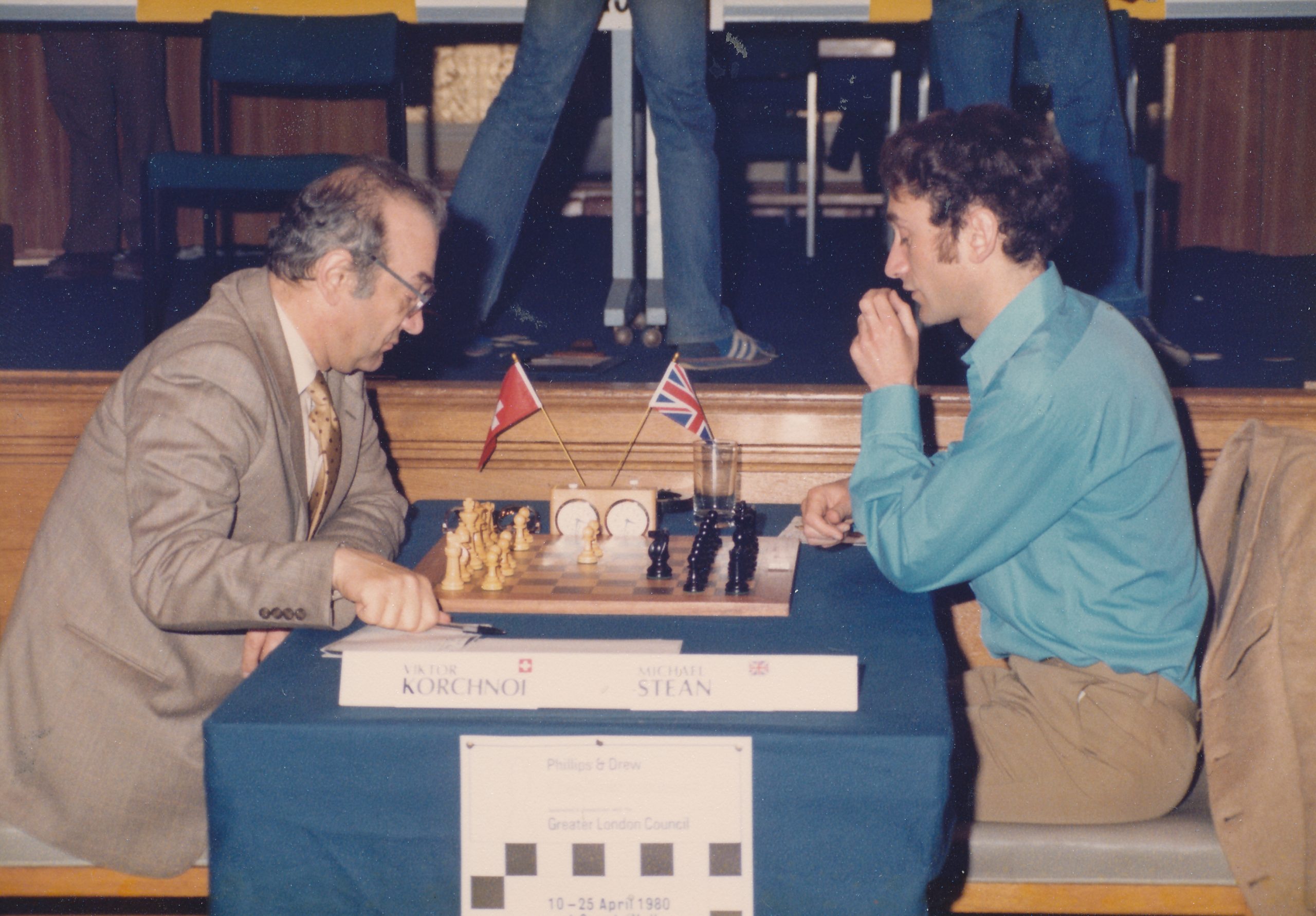
Korchnoi vs Stean at the Philips & Drew Masters of 1980. The game was drawn in 19 moves.
In the 1978 diary I wrote that it would not be long before he gained the grandmaster title since he already possessed one norm of the title. The forecast proved to be correct as he duly acquired the title a few months after I wrote the prophecy.
Michael Stean
He had though to take two more bites at the cherry before he managed to gain the required norms since the tournaments in which he played were not long events. They were Montilla in August 1977 where he came third below Gligoric and Kavalek and the Lord John Cup Tournament in London in September 1977 where he was equal 2nd with Quinteros and Mestel, first place being occupied by the Czechoslovak grandmaster, Hort.
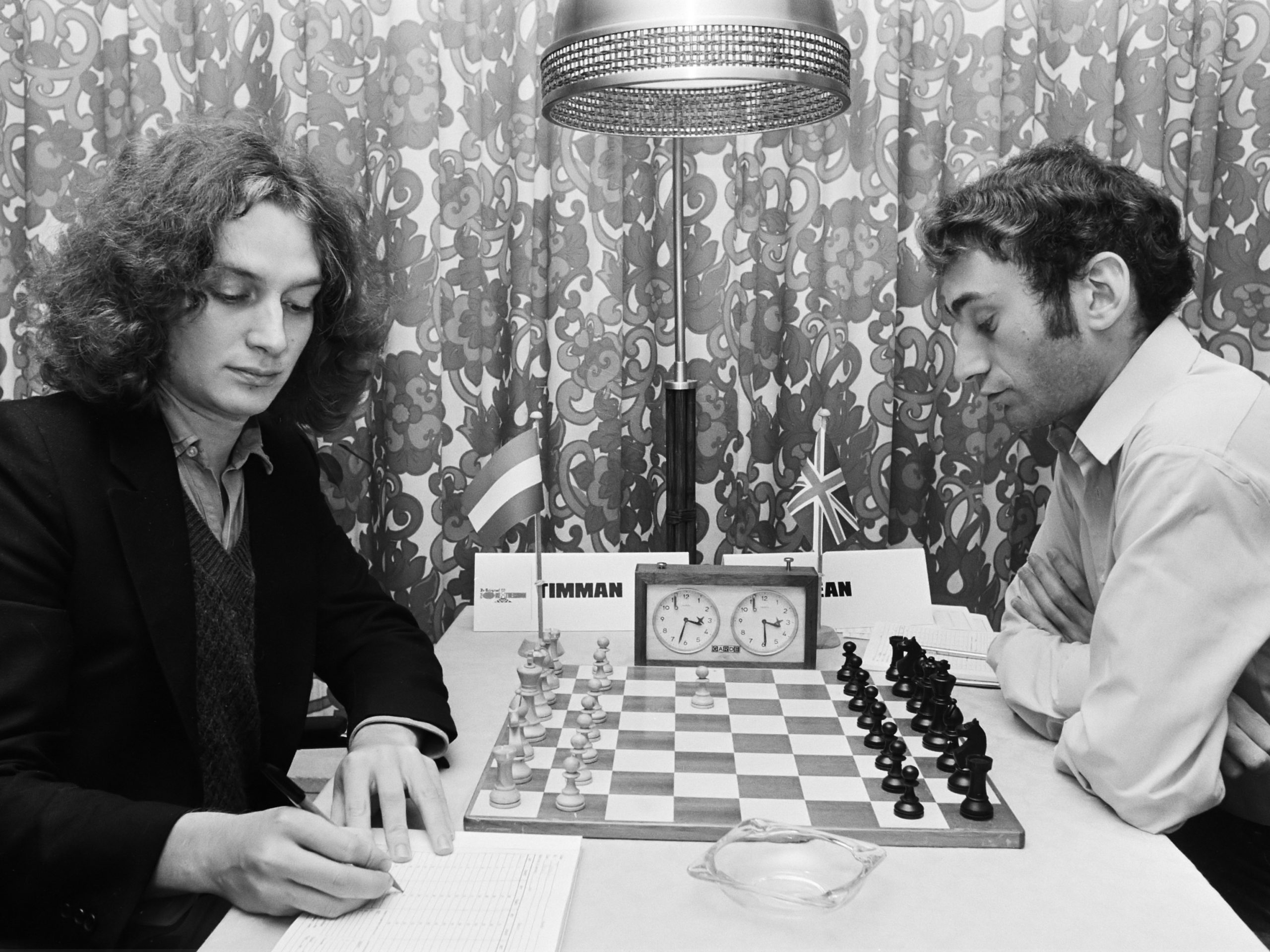
Jan Timman plays Michael Stean at the 1978 Amsterdam FIDE Zonal. The Dutch GM won in 39 moves.
Before that he had assisted Keene in seconding Korchnoi in his candidates match versus Polugayevsky and had done this to such effect that Korchnoi asked him and Keene to act as his seconds at his final match in the Candidates at Belgrade and later on still at the World Championship match against Karpov in the Philippines.
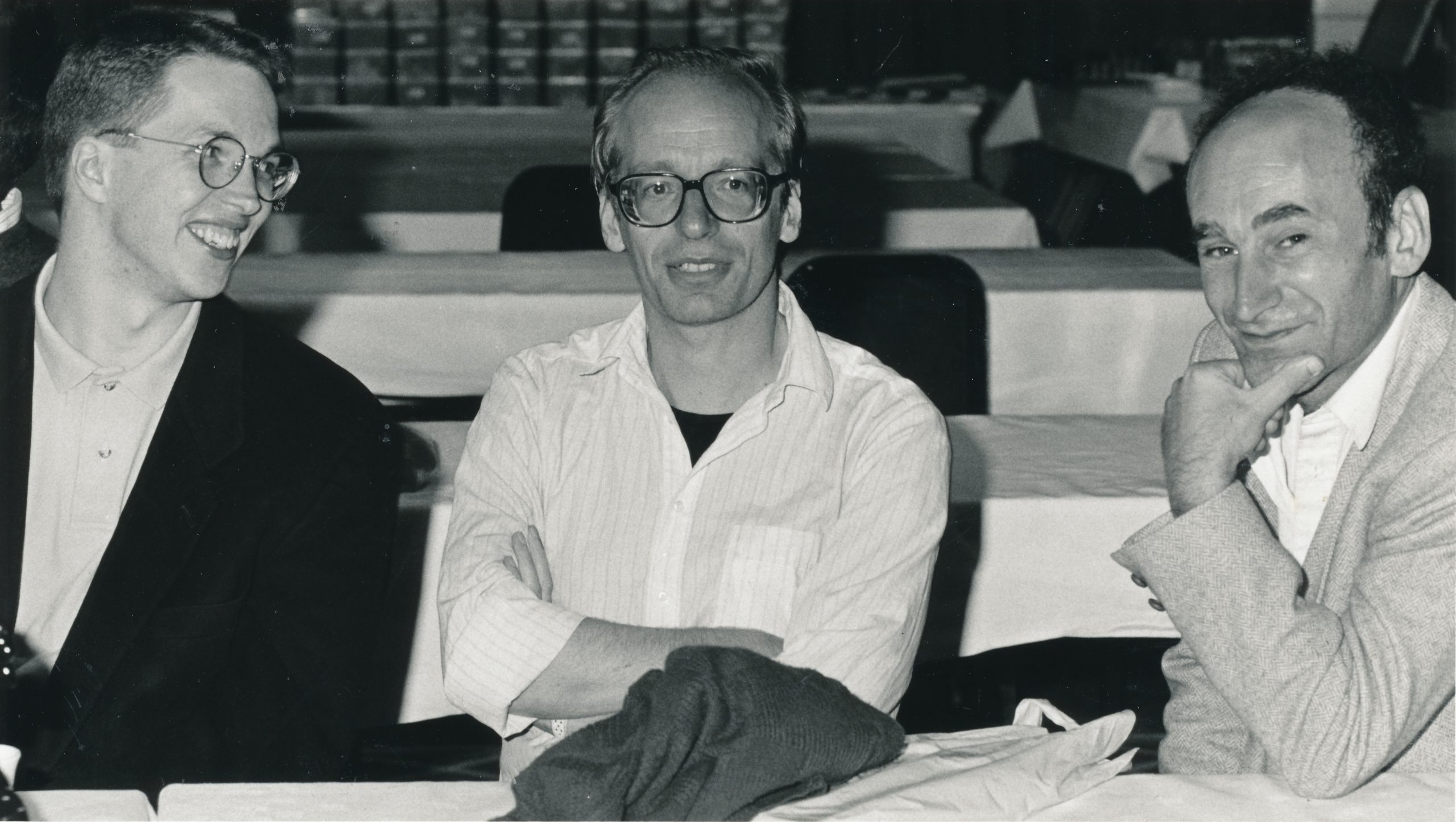
Nigel Short, Lubomir Kavalek and Michael Stean
He also played successfully in Yugoslavia in 1977 (equal 2nd at Virovitica and equal 2nd at Bar). In 1978 he was 3rd at Beersheba below Korchnoi but head of Keene. Five points out of nine at the very strong Swiss System tournament at Lone Pine was followed by an excellent equal 4th with Miles at the tournament at Las Palmas. He has shown that he not only possesses the title of grandmaster but also plays like one.
Michael Stean (far right) at an unknown event
A good example in the following game (Stean-Sax) against one of the joint first prize winners at the Las Palmas event. It was awarded the prize for the best game :”
From The Oxford Companion to Chess (OUP, 1984) by Hooper & Whyld :
“English player, International Grandmaster (1977). At Nice 1974, in the first of his several Olympiads, he won the brilliancy prize for his game against Browne.
Since then he has had several good results: Montilia 1976, equal second with Kavalek and Ricardo Calvo (1943— ) after Karpov; Montilia 1977, third (-1-3 = 6)after Gligoric and Kavalek ahead of R. Byrne, Taimanov, and Andersson; London 1977. second (+4=4—1) equal with Mestel and Quinteros after Hort ; Vrsac 1979, first (+ 8=5—1); Smederevska Palanka 1980, first (+7-6); Beersheba 1982, first, Stean was one of Korchnoi’s seconds in the world championship cycles of 1977-8 and 1980-1, and the two became close friends.
In particular Stean provided help with the openings, a subject on which he specialises. He published a book on the Najdorf variation of the Sicilian defence in 1976, and Simple Chess, a guide to the understanding of positional ideas, in 1978.”
GM Michael Stean
From Wikipedia :
“Michael Francis Stean (born 4 September 1953) is an English chess grandmaster, an author of chess books and a tax accountant.
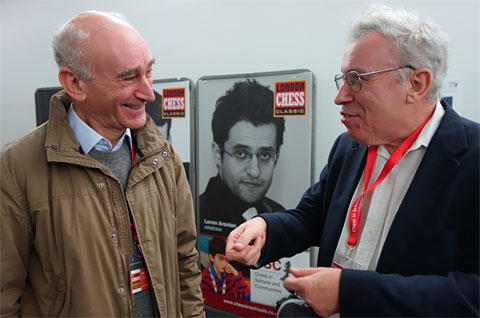
Michael Stean chats with David Levy at the London Chess Classic
The game below (Stean-Browne) was the first winner of the World Brilliancy Prize established in 1974 by Isador Samuel Turover. The value of the prize was $1,000.”
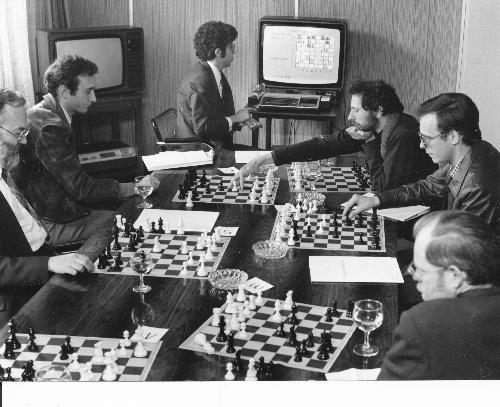
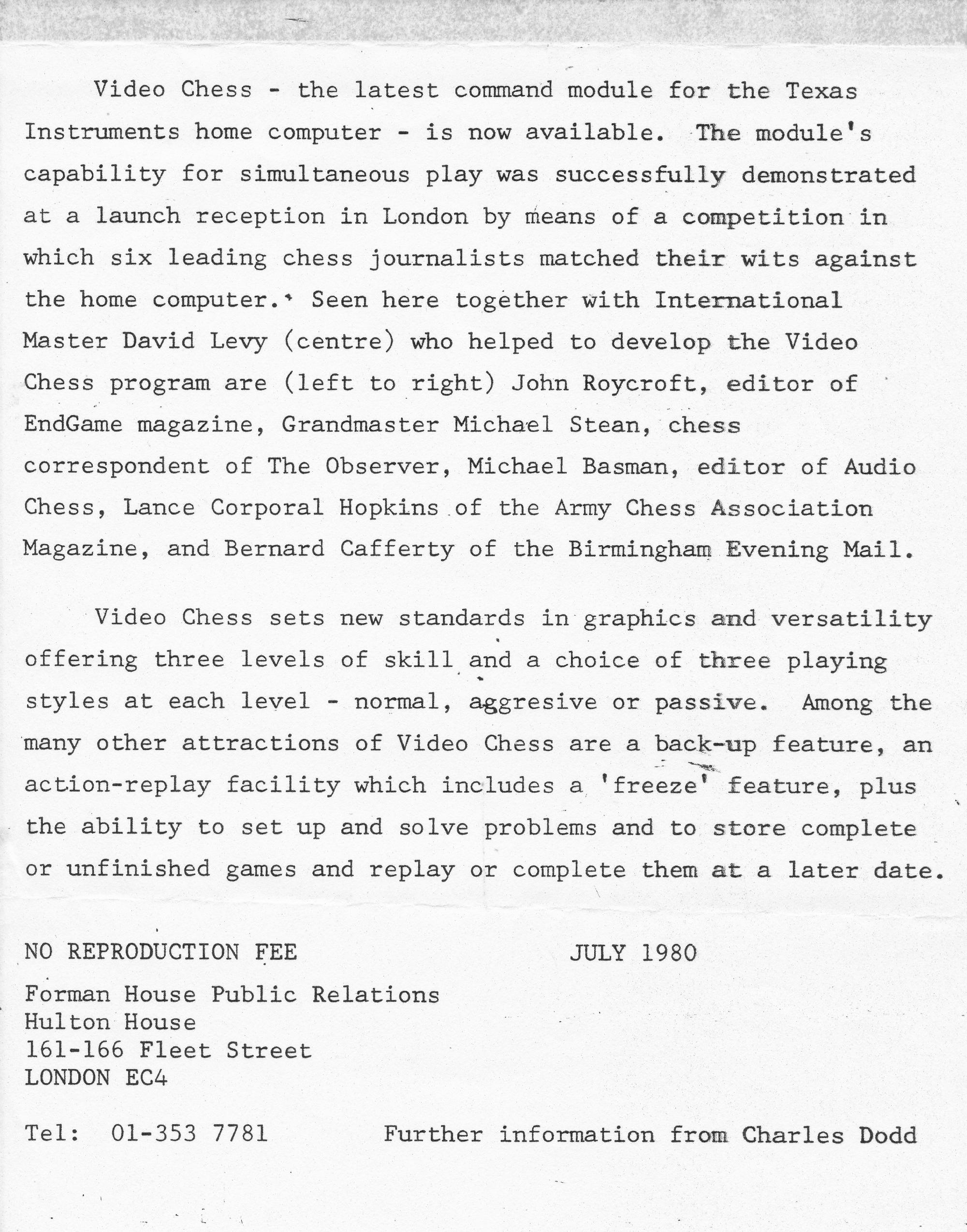
Video Chess Event (See caption below)Video Chess Caption
In 1983 at the height of his powers Michael left the chess work and became a tax accountant. He is now a senior partner at RSM UK.
Apparently :
“A cross disciplinary tax partner, Michael’s experience spans both corporate and non-corporate taxation for clients spanning a wide range of companies (listed and private) as well as high net worth individuals. Areas of activity include advice on transactions and structures, dealing with enquiries conducted by the tax authorities and forensic tax services in tax disputes.
As a member of the large business and international tax sub-committee of the tax faculty of the Institute of ICAEW, Michael was an active contributor to the consultation and development of the so-called ‘GAAR’ (general anti-abuse rule) law enacted in 2013.
Formerly a professional chess grandmaster, Michael brings an analytical approach to the field of tax.”
Mchael Stean, tax accountantSimple Chess by Michael SteanSicilian Najdorf by Michael SteanSimple Chess by Michael Stean
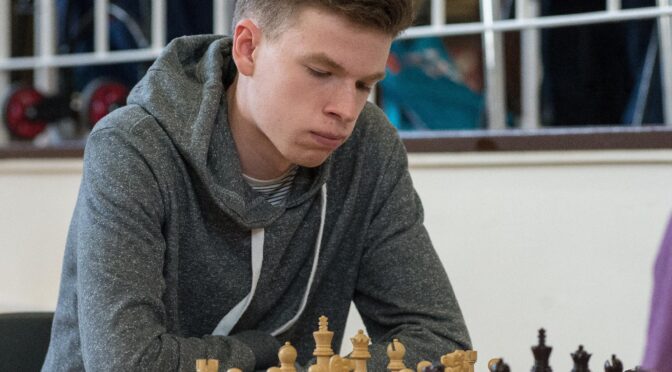
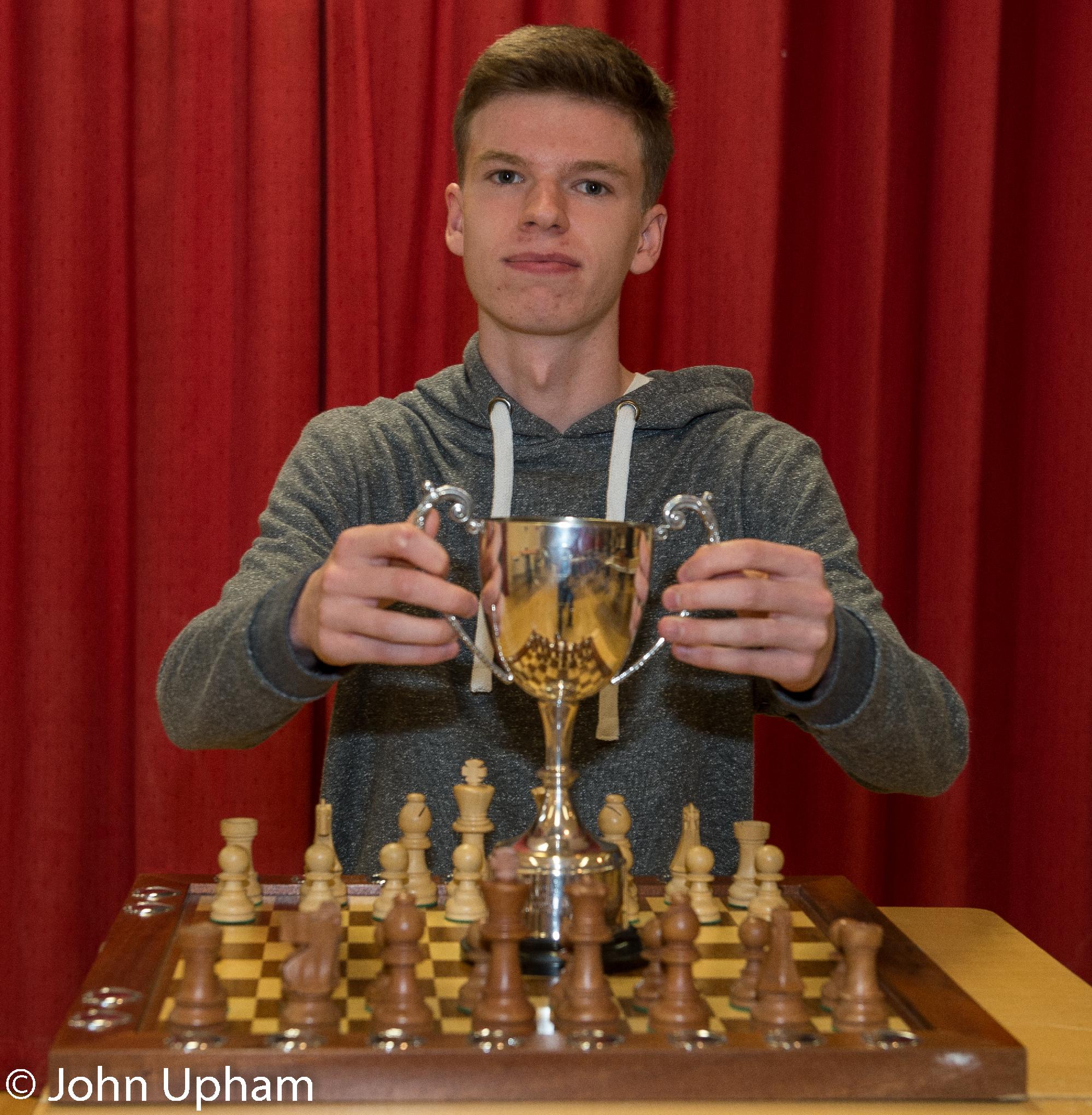
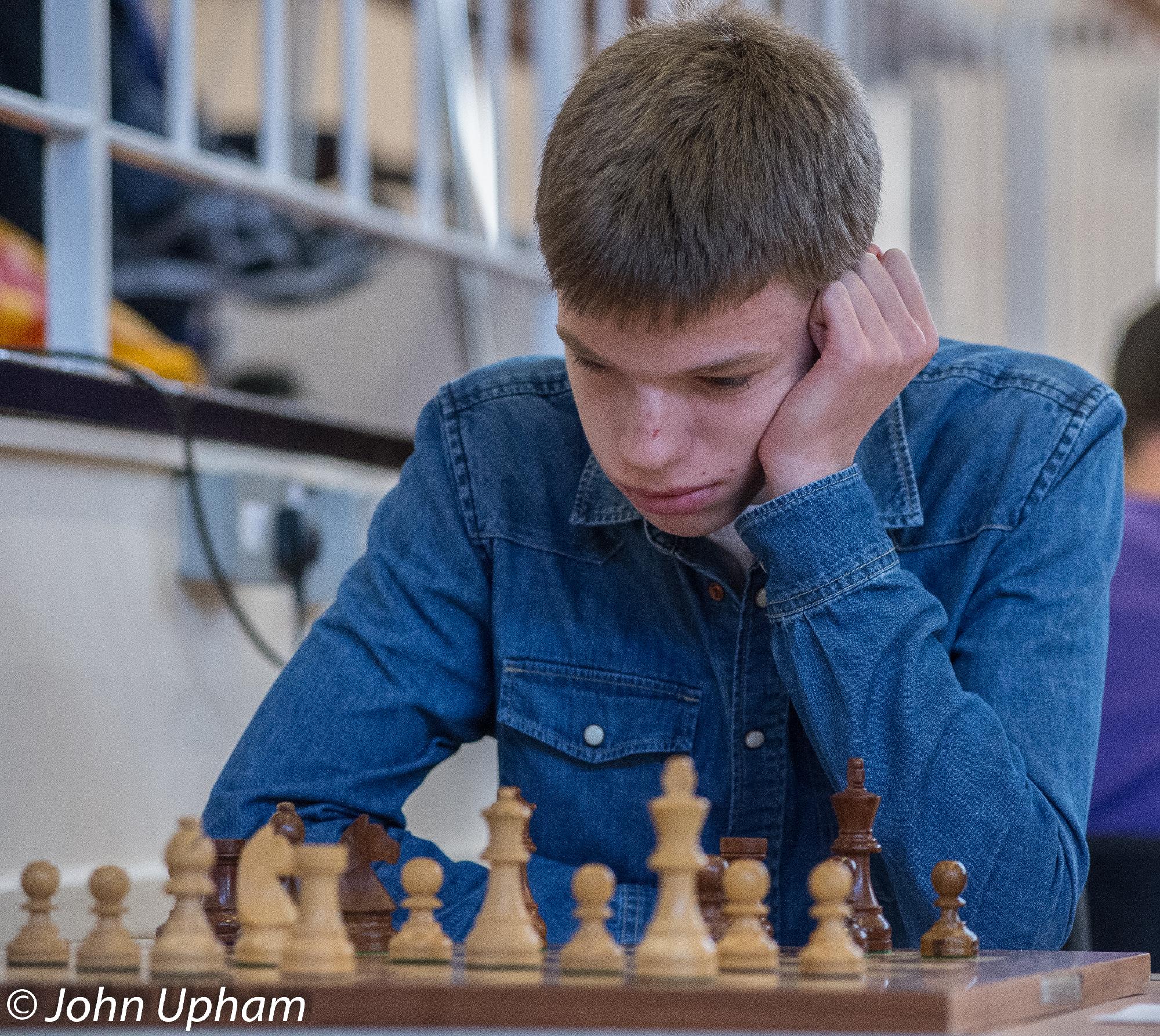
IM Joseph McPhillips, UKCC Terafinal 2016 Winner, courtesy of John Upham Photography
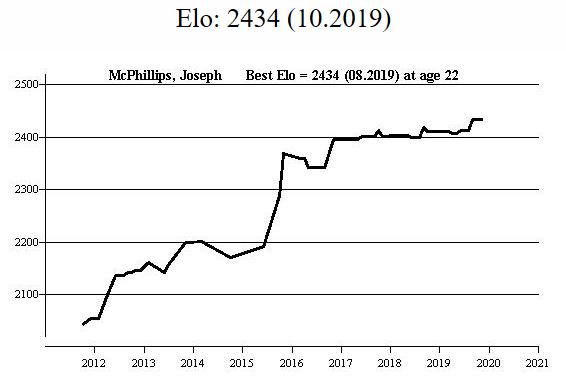
Joseph plays for Bolton and for Wood Green in the Four Nations Chess League.
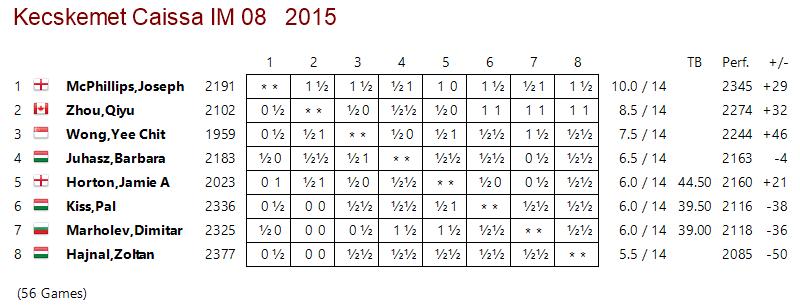
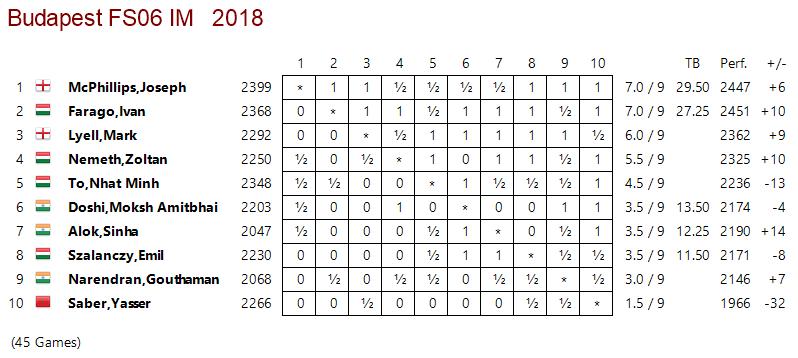
Joseph won outright the Budapest First Sunday IM tournament in 2018 :
Crosstable for Budapest First Sunday IM 2018
With the white pieces Joseph prefers a main line Ruy Lopez and the Open Sicilian and he has recently started dabbling with 1.d4
As the second player Joseph employs the Classical French and the Queen’s Indian Defences.
IM Joseph McPhillips, UKCC Terafinal 2014, courtesy of John Upham Photography
We focus on the British Chess Scene Past & Present!
This website uses cookies to improve your experience. We'll assume you're ok with this, but you can opt-out if you wish. Cookie settingsACCEPT
Privacy & Cookies Policy
Privacy Overview
This website uses cookies to improve your experience while you navigate through the website. Out of these cookies, the cookies that are categorized as necessary are stored on your browser as they are as essential for the working of basic functionalities of the website. We also use third-party cookies that help us analyze and understand how you use this website. These cookies will be stored in your browser only with your consent. You also have the option to opt-out of these cookies. But opting out of some of these cookies may have an effect on your browsing experience.
Necessary cookies are absolutely essential for the website to function properly. This category only includes cookies that ensures basic functionalities and security features of the website. These cookies do not store any personal information.