Birthday of FM Owen Mark Hindle (14-iii-1940)
Tag Archives: History
Death Anniversary of FM John Littlewood (25-v-1931 16-ix-2009)
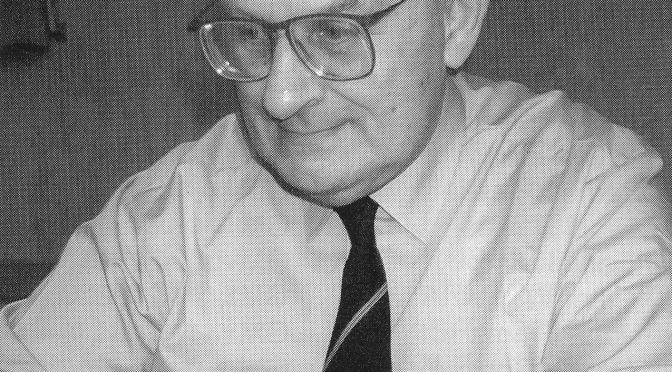
John Eric Littlewood was born in Sheffield on Wednesday, September 16th 1931. His mother’s maiden name was Wheeldon. He last resided in the WN8 postal area of Skelmersdale, Lancashire.
He became a FIDE Master in 1989 at the age of 58. According to Felice his peak FIDE rating was 2395 in January 1980. However, it is almost certain that it would have been higher than that, in the 1960s and 1970s.
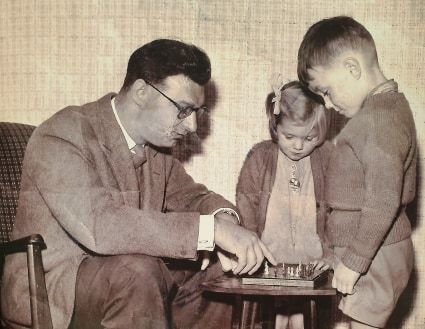
He coached his son Paul who became British Champion in 1981. His brother Norman was also a very strong player.
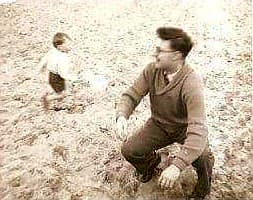
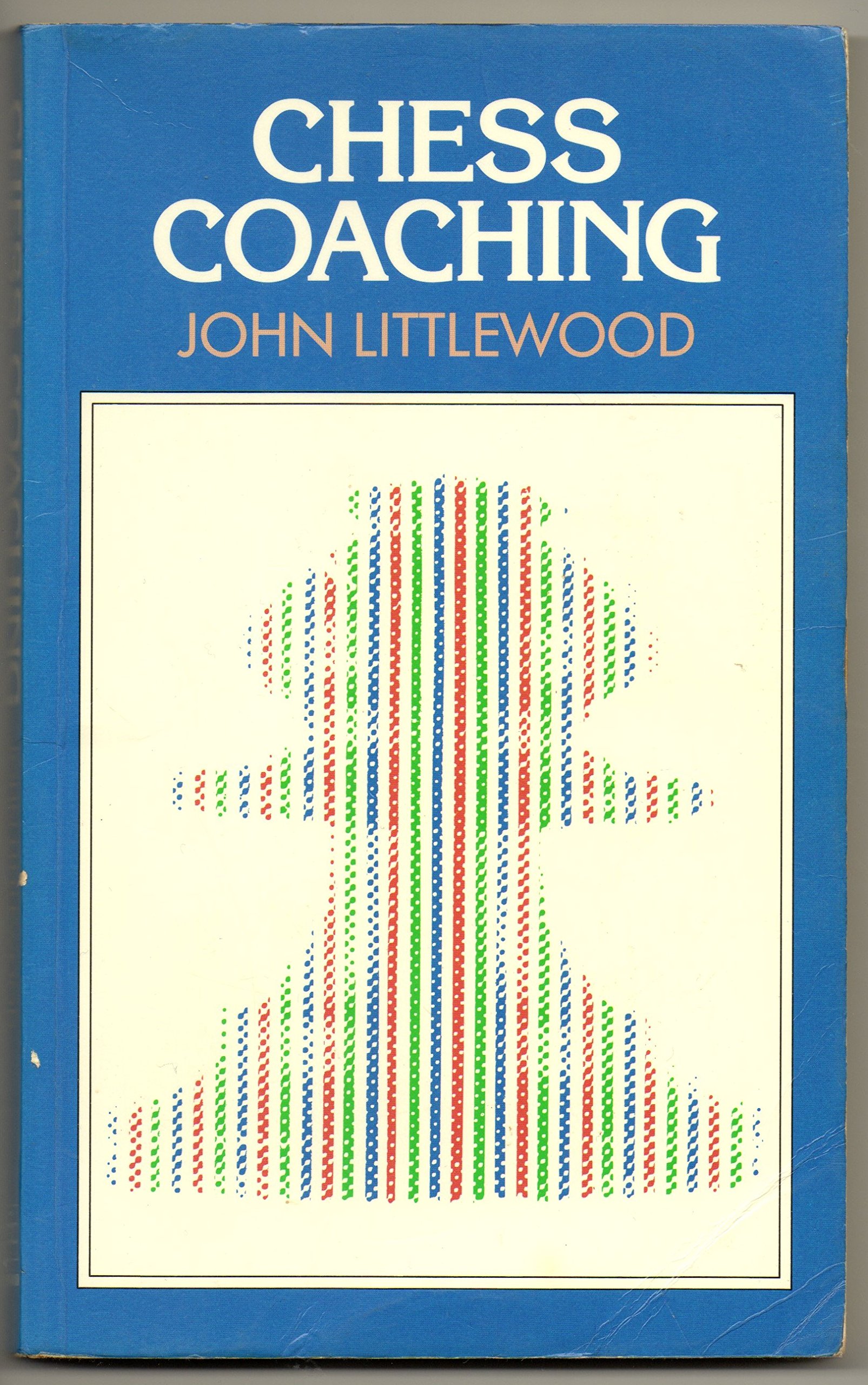
From “Chess Coaching” :
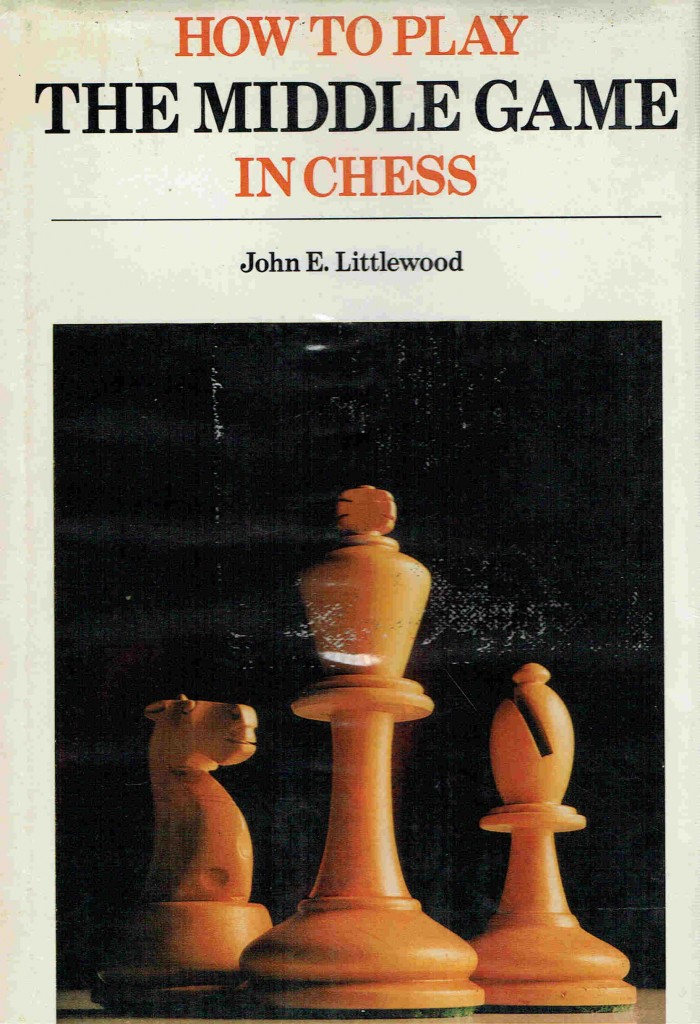
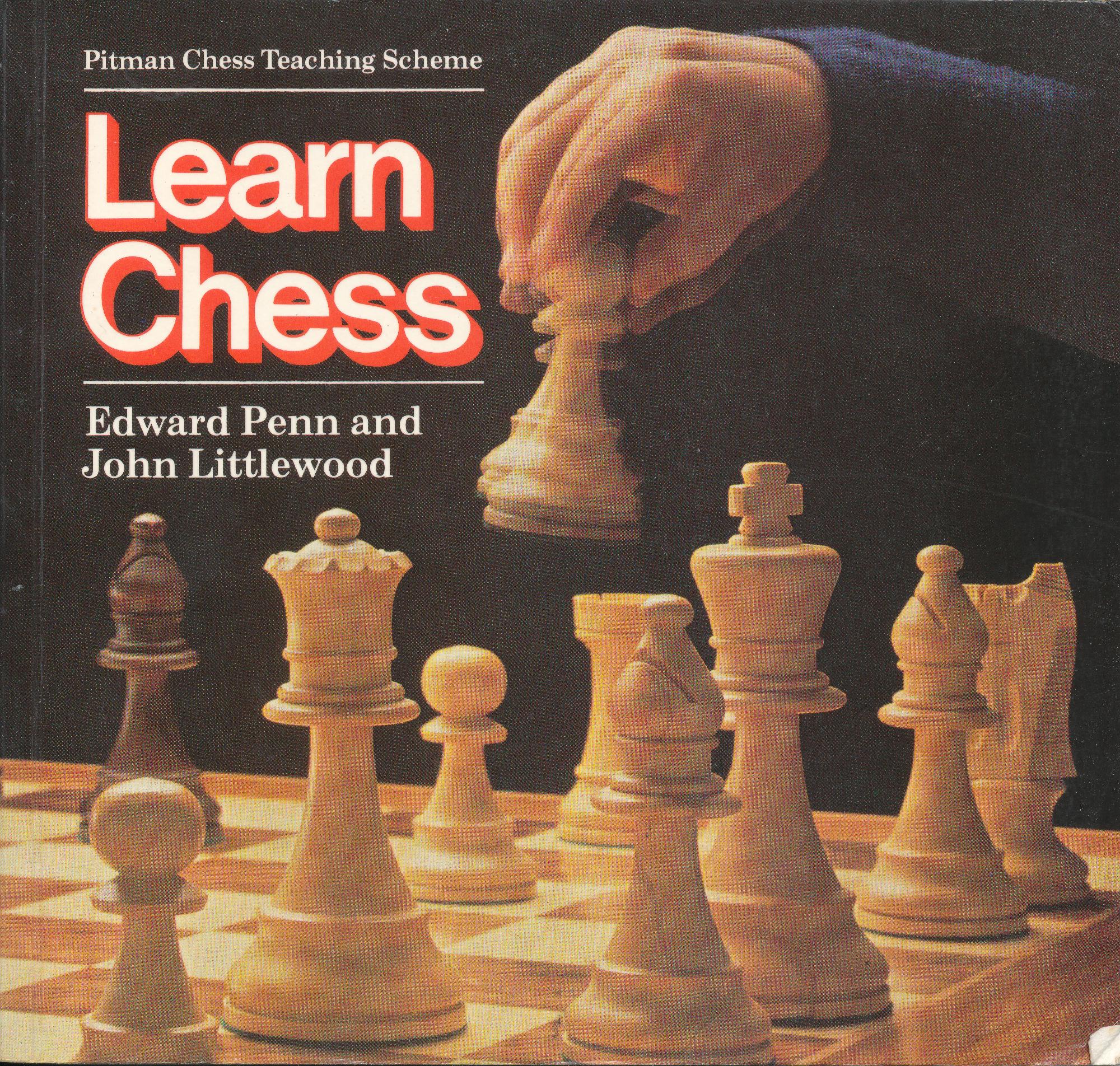
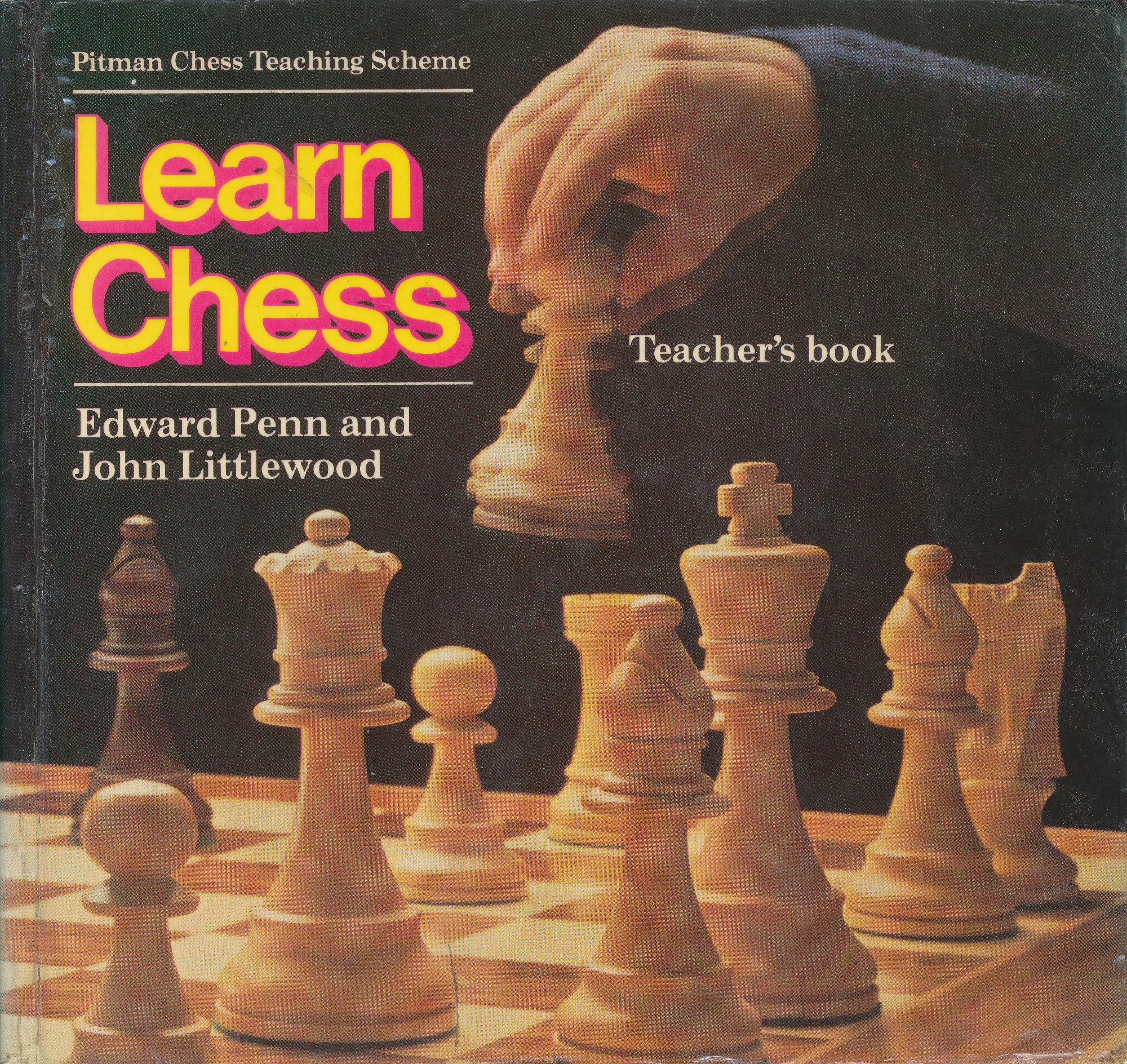
John Littlewood is a National Coach and the Director of Junior Chess to the British Chess Federation. He is a FIDE Master with national and international playing experience, and is an established chess write, translator and journalist.
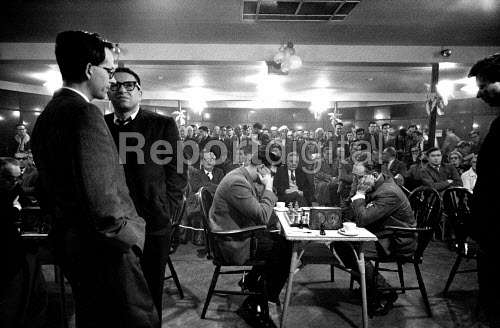
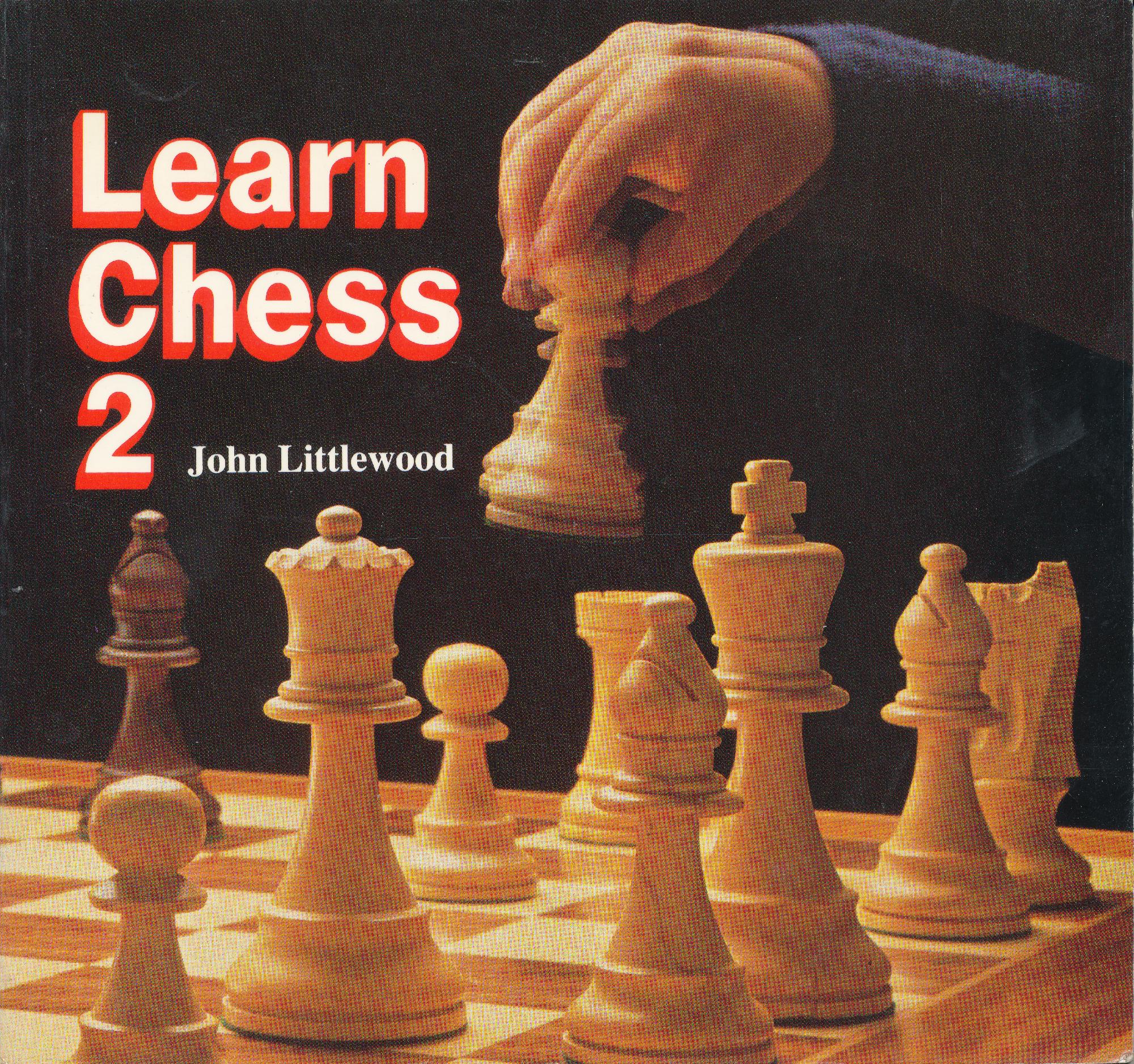
From “Learn Chess 2”
“A British Master, formerly Northern Counties Champion and currently (1984) a National Coach for the British Chess Federation. John Littlewood has played for England in several international tournaments, including two Olympiads”
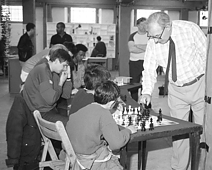
John Was Northern Counties Chess Union (NCCU) Champion in 1971, 1972, 1977, 1978, 1979, 1980 and 1981 : a record seven times !
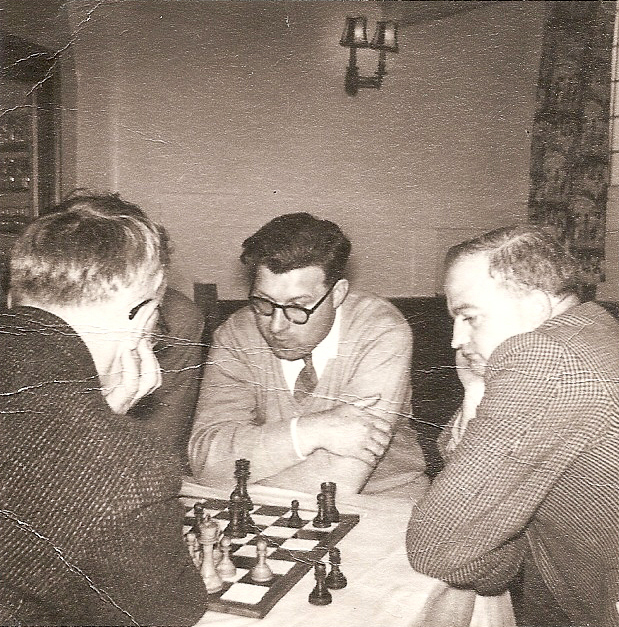
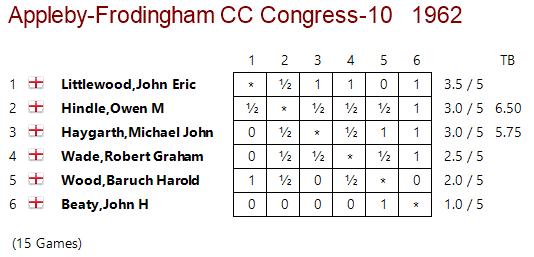
John won the Appleby-Frodingham Chess Club tournament in 1962 with 3.5/5 :
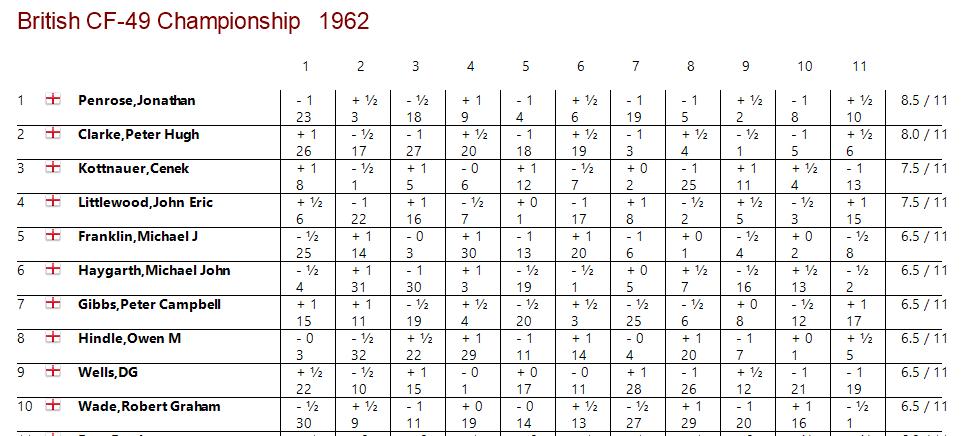
and then, in the same year came 3= in the British Championships with 7.5/11 :
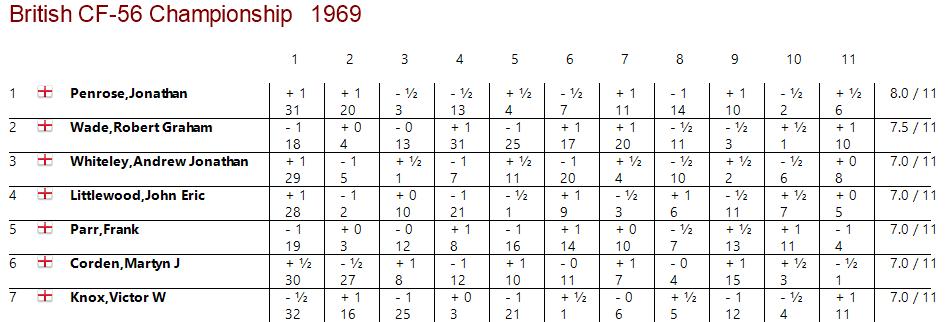
and in 1969 in Rhyl John was unfortunate not to share the title with Dr. Jonathan Penrose after losing to Frank Parr in the final round :
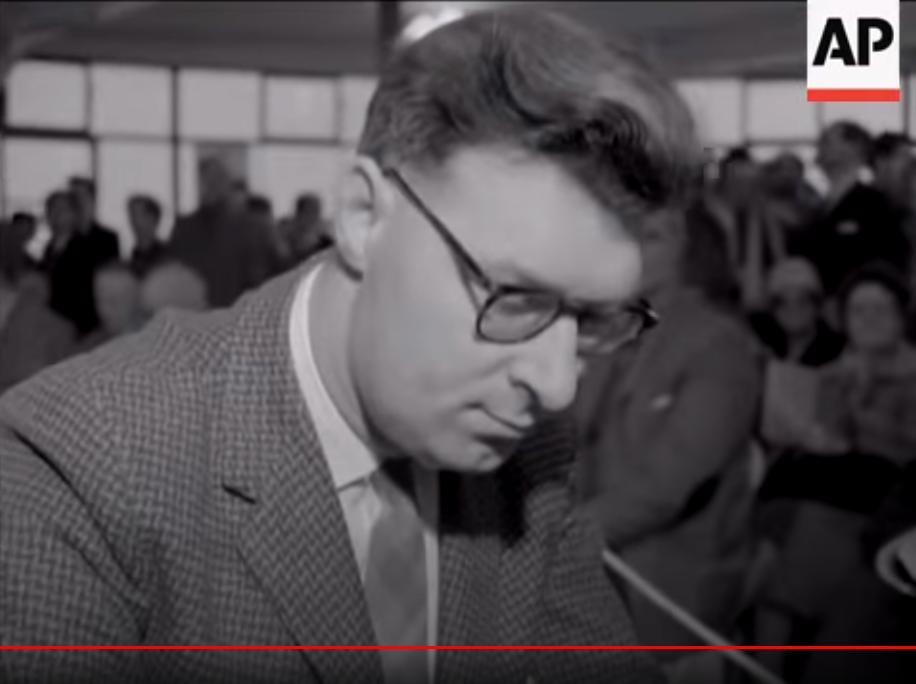
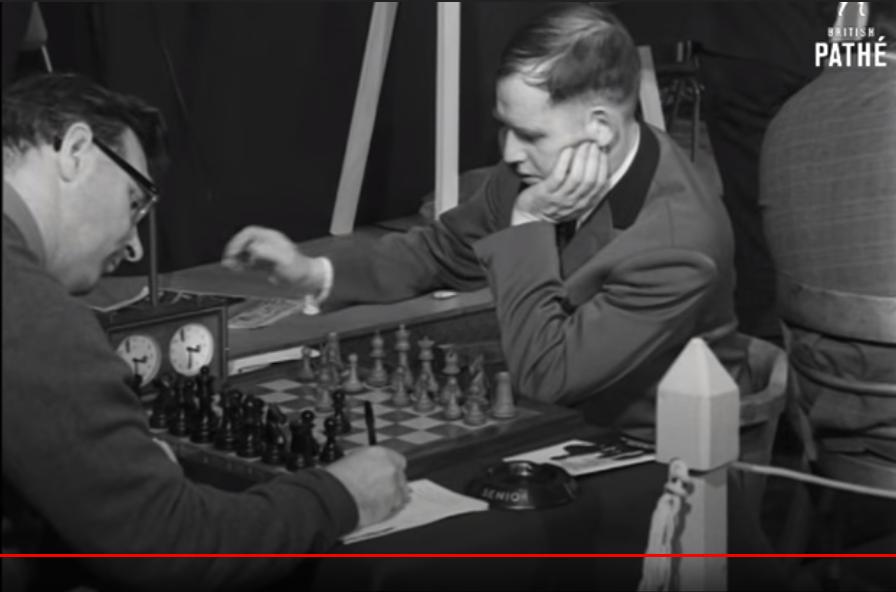
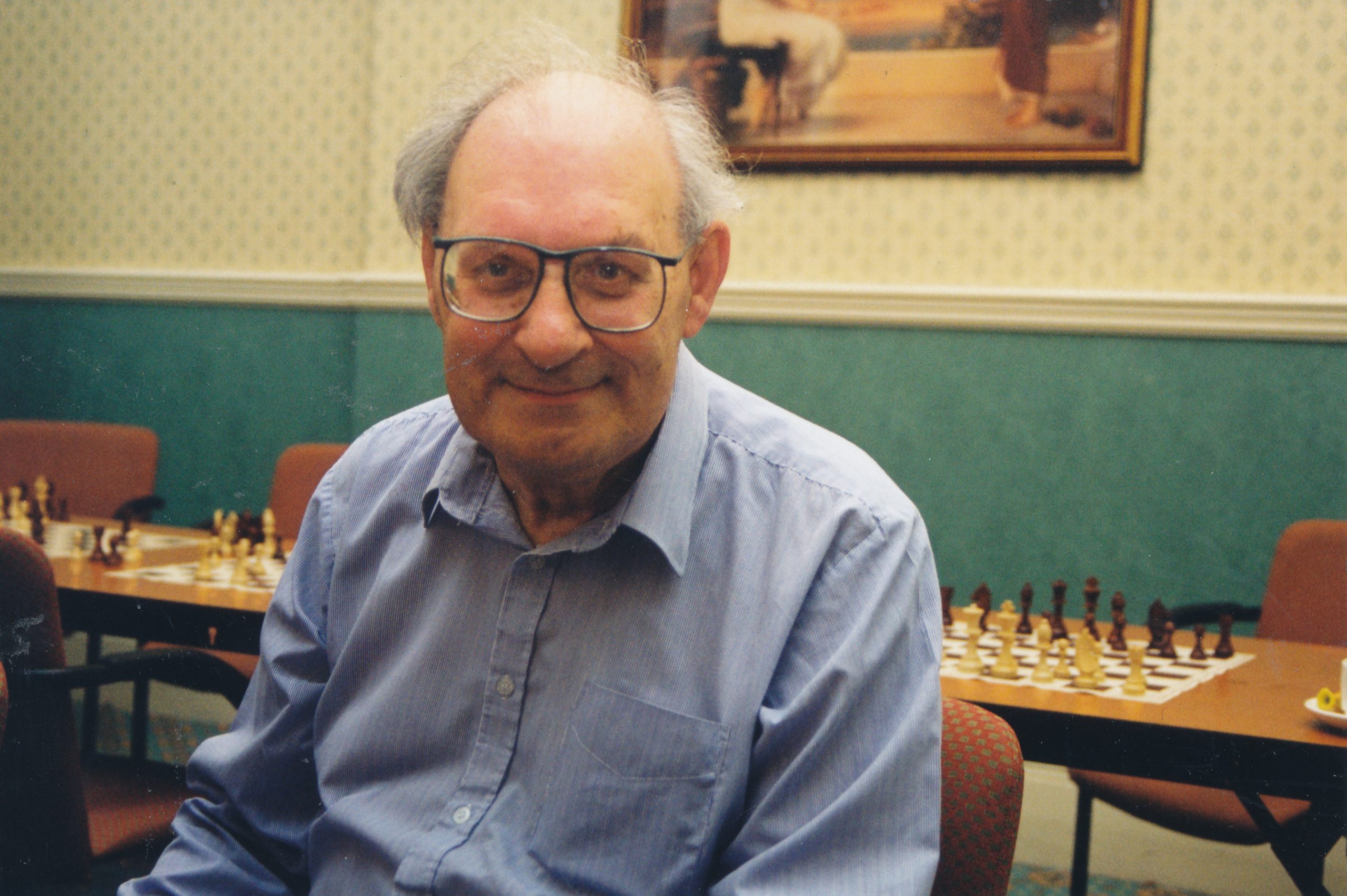
John won the Southport Open in 1972 and the picture below was taken shortly afterwards :
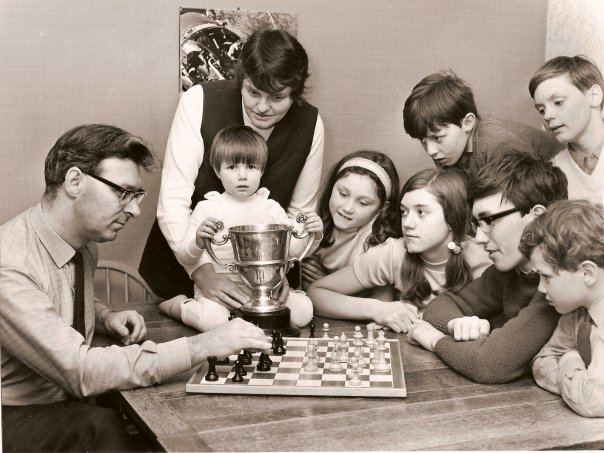
John won the Chorley tournament of 1977 with 7/9
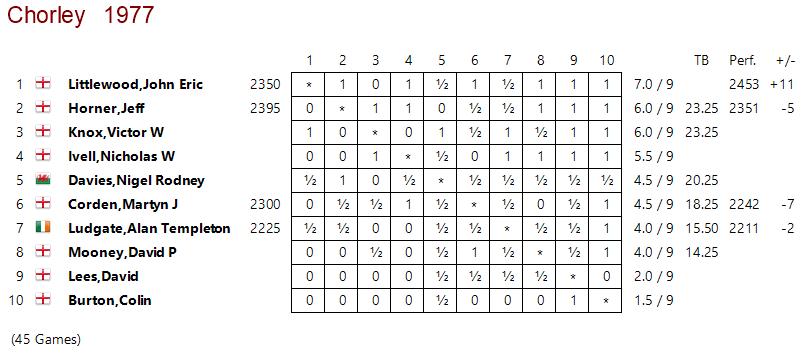
JEL won the British Chess Federation’s President’s Award in 2000.
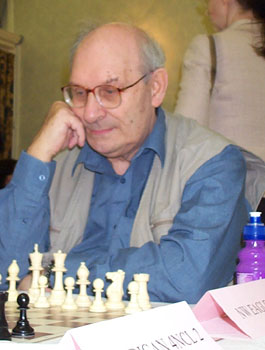
In 2006 John won the BCF Veterans / Seniors title for the first time repeating the feat in 2008 sharing with George Dickson.
With the White pieces John almost exclusively played 1.e4 favouring the Wormald Attack, Open Sicilians and the Rossolimo variation.
As the second player John played the Closed Ruy Lopez, the Sicilian Dragon and the Grünfeld defence.
In the following video IM Andrew Martin discusses the game Bisguier – Littlewood, 1962.
Rather than reinventing an already round wheel we reproduce the following ten page tribute in the October 2009 issue of British Chess Magazine. The tribute is by John Saunders :
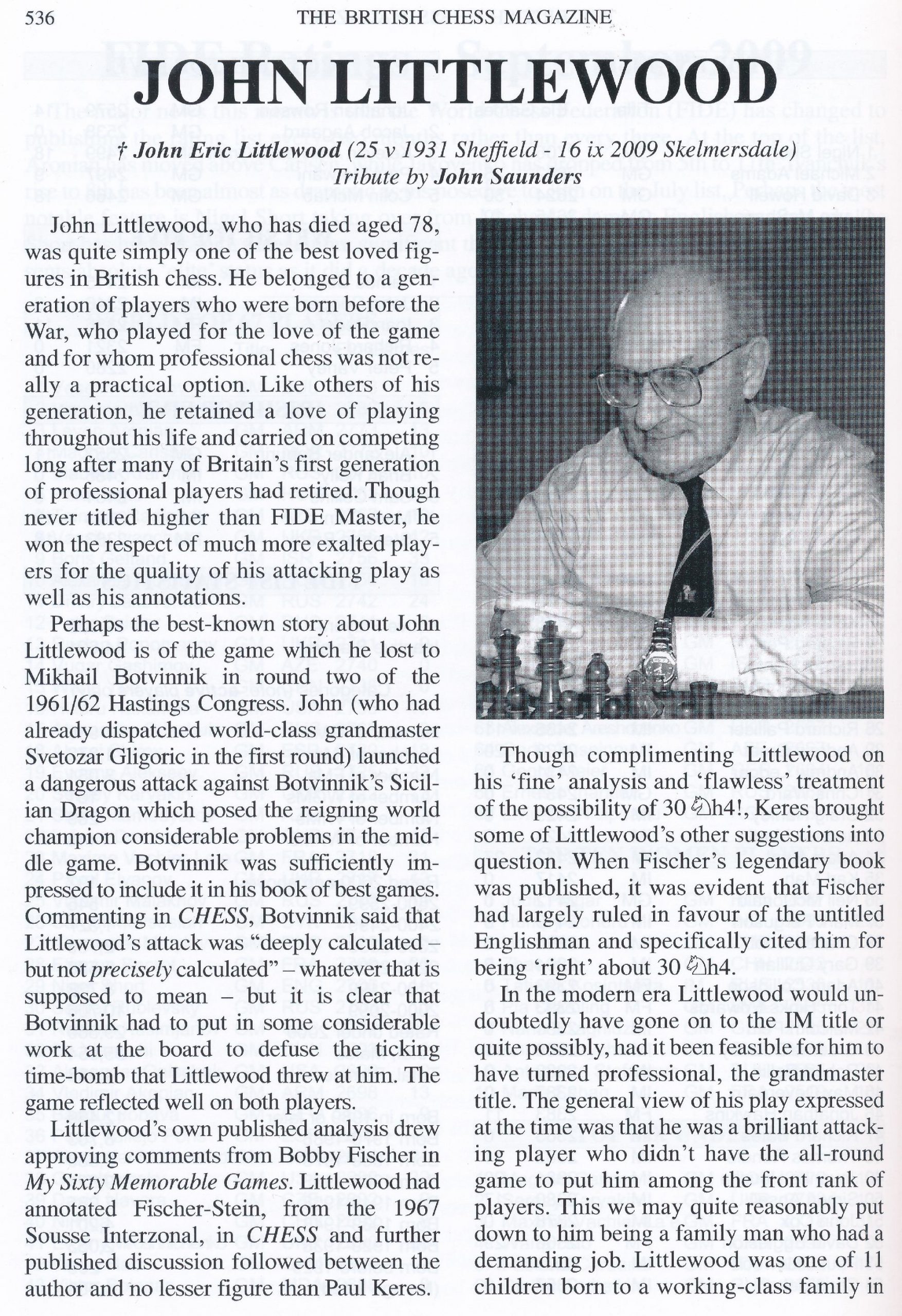
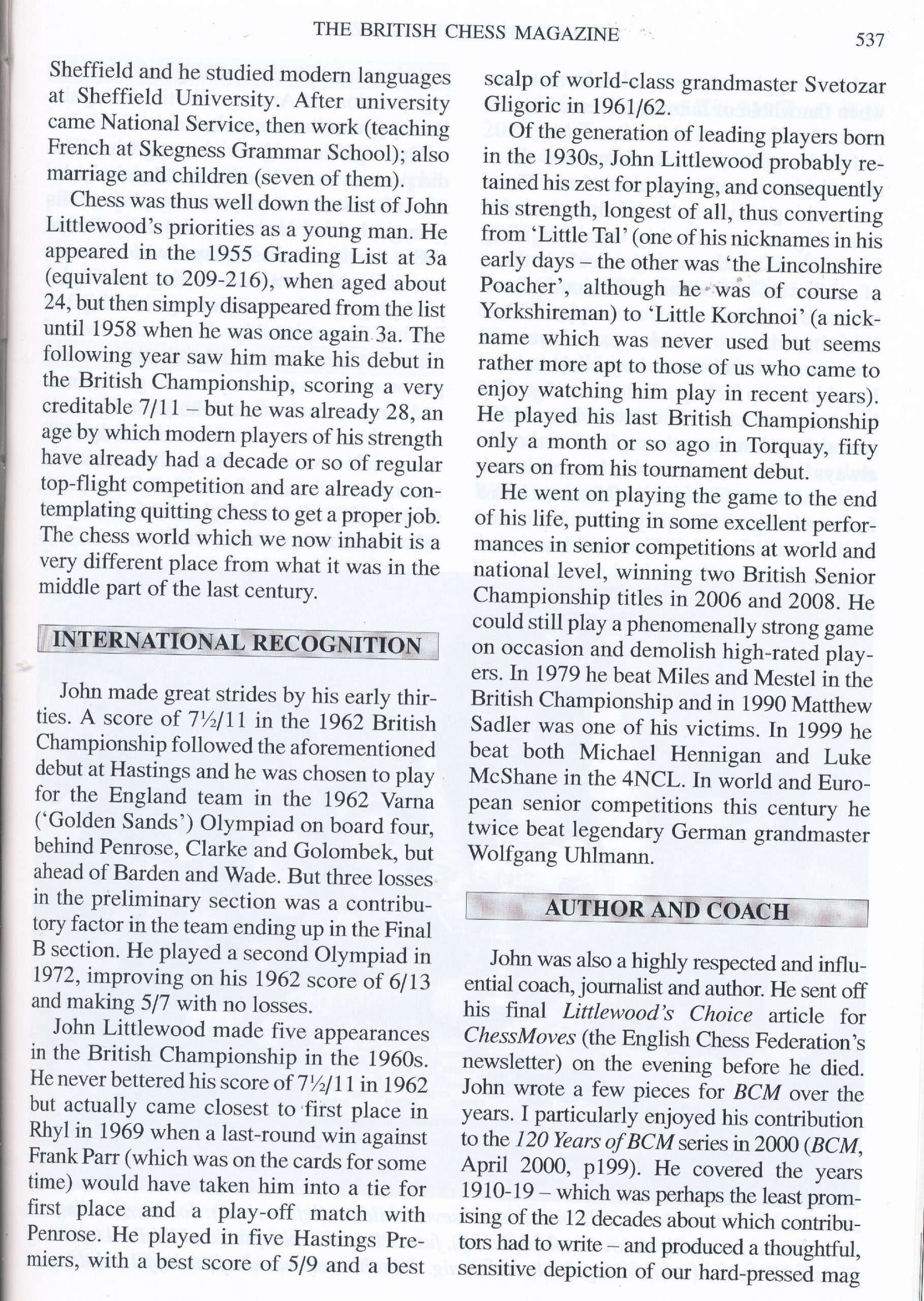
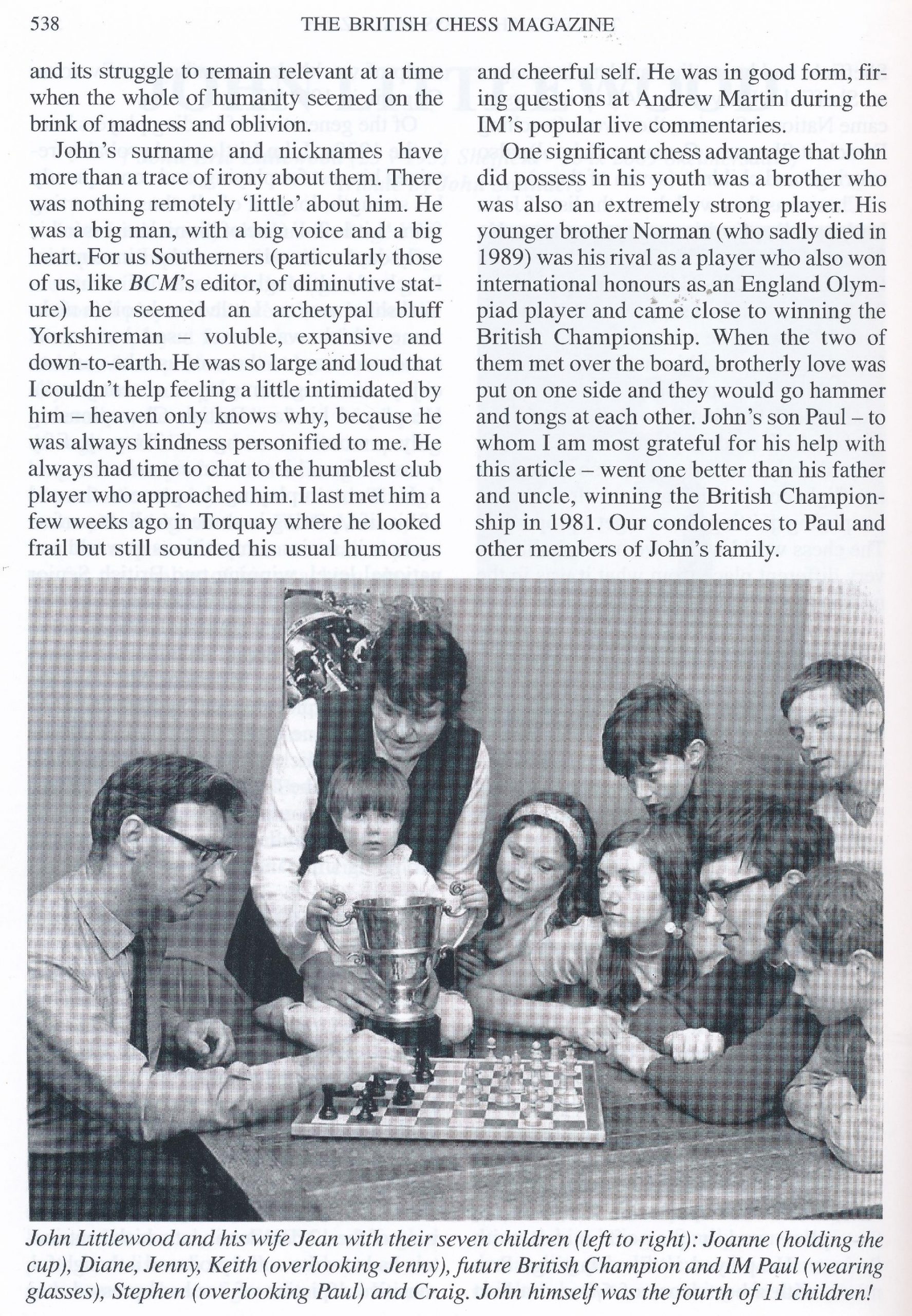
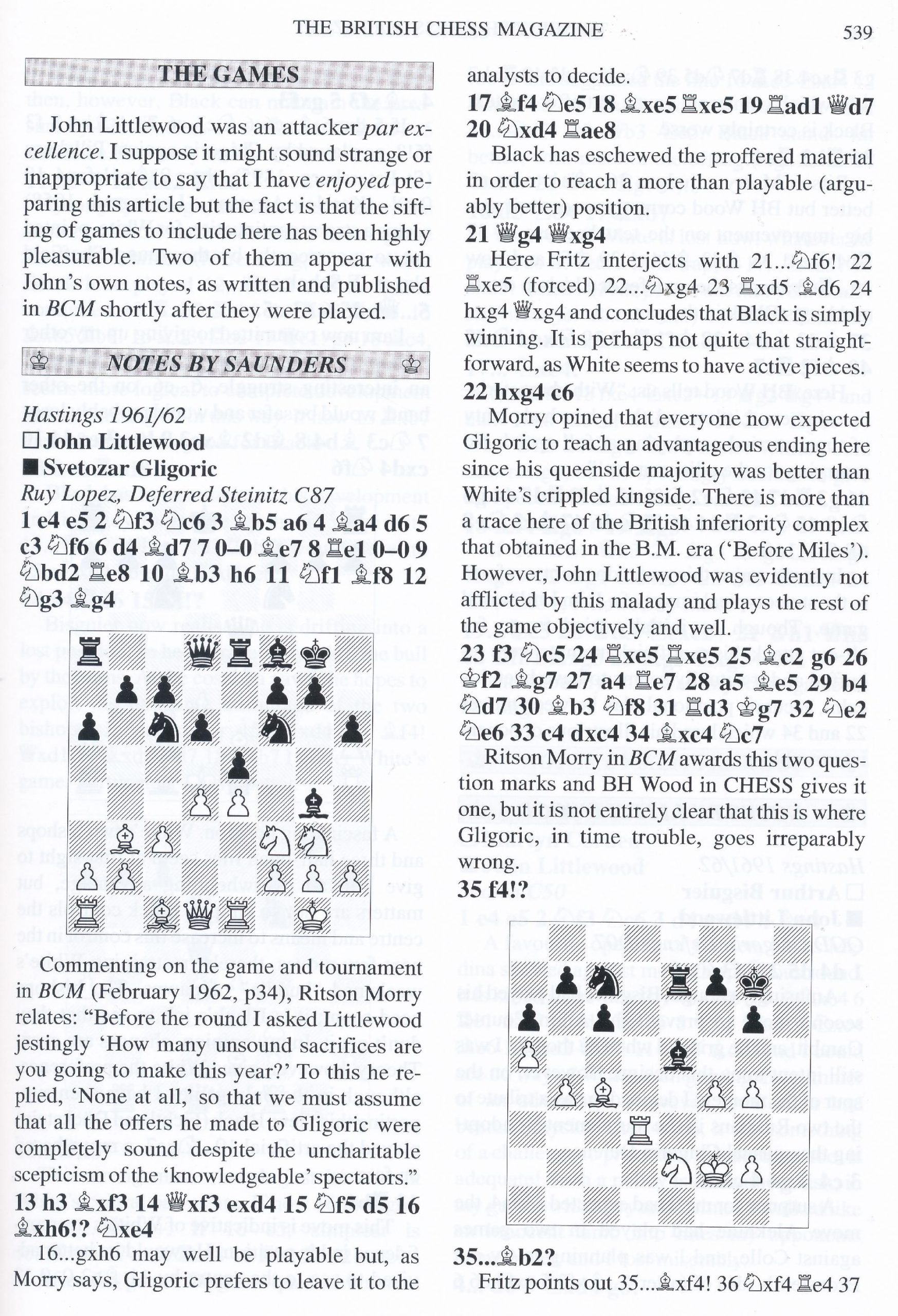

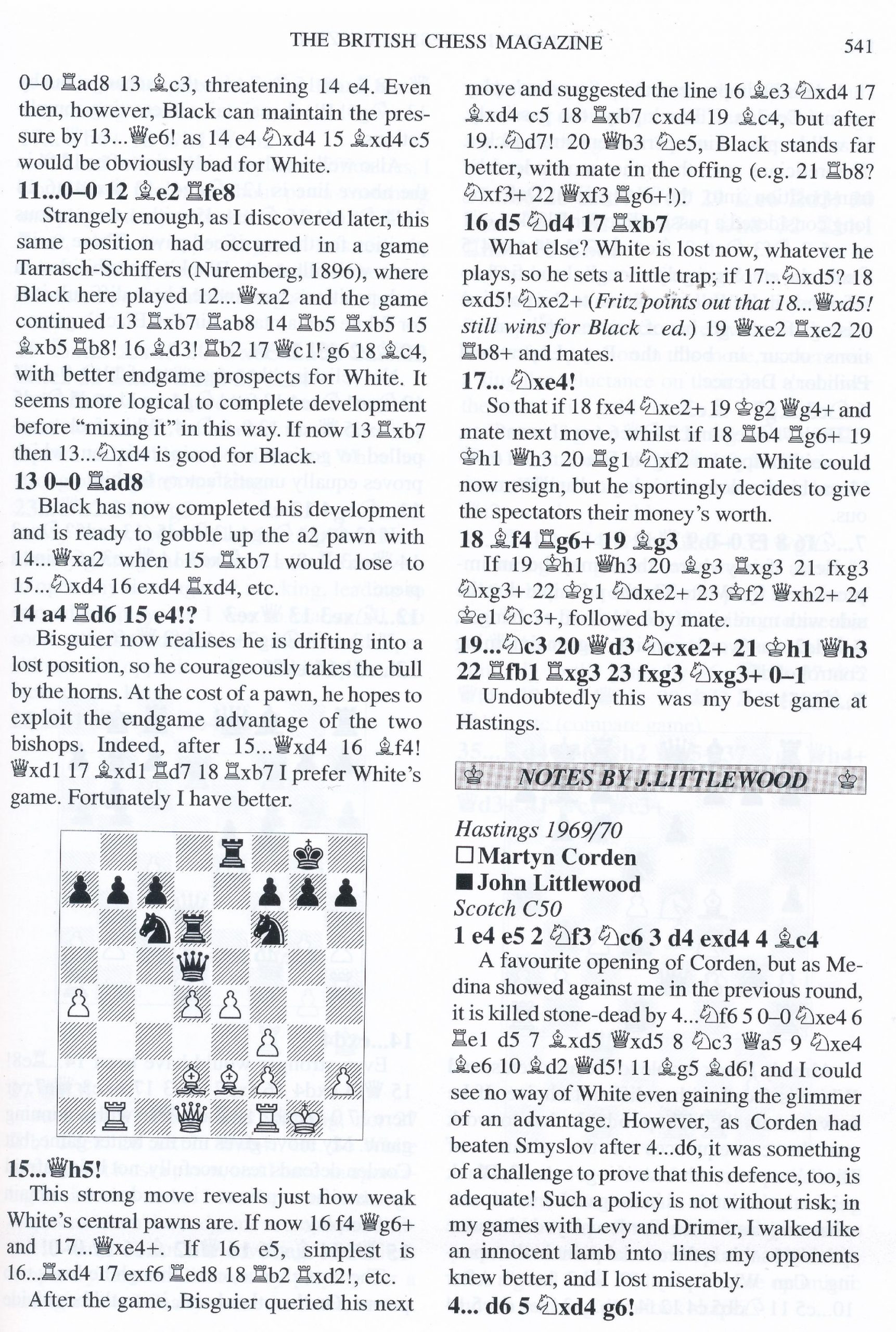
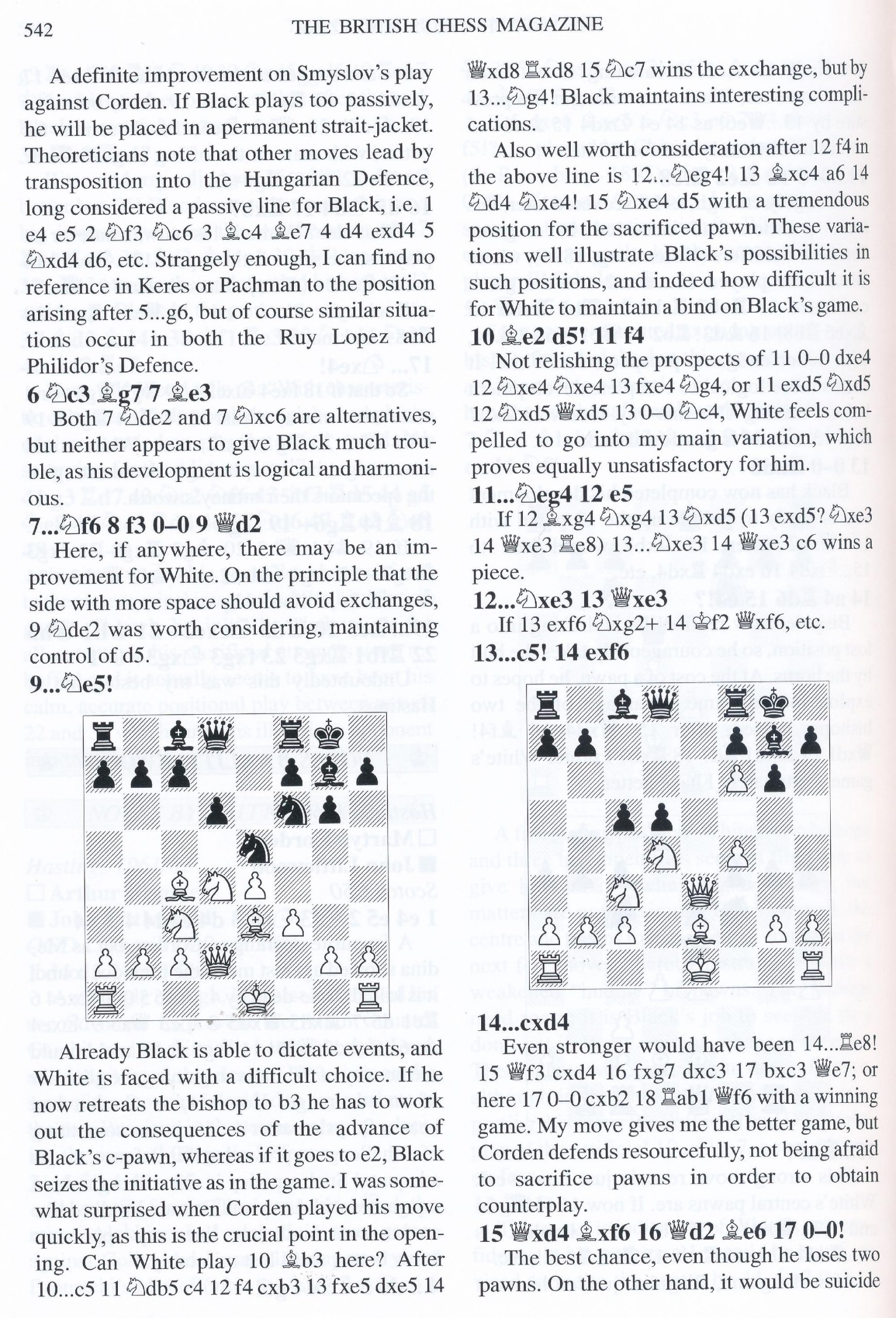
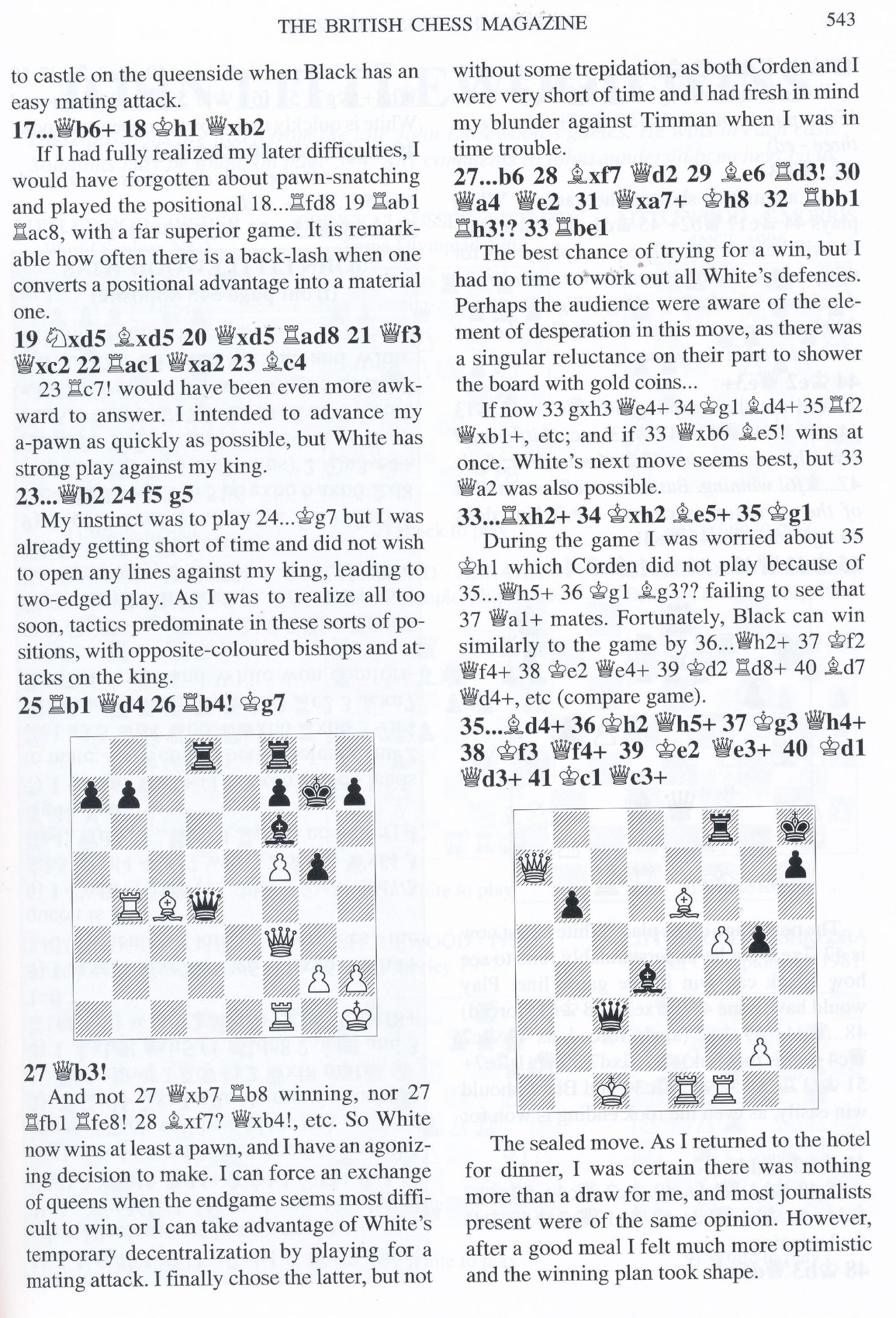
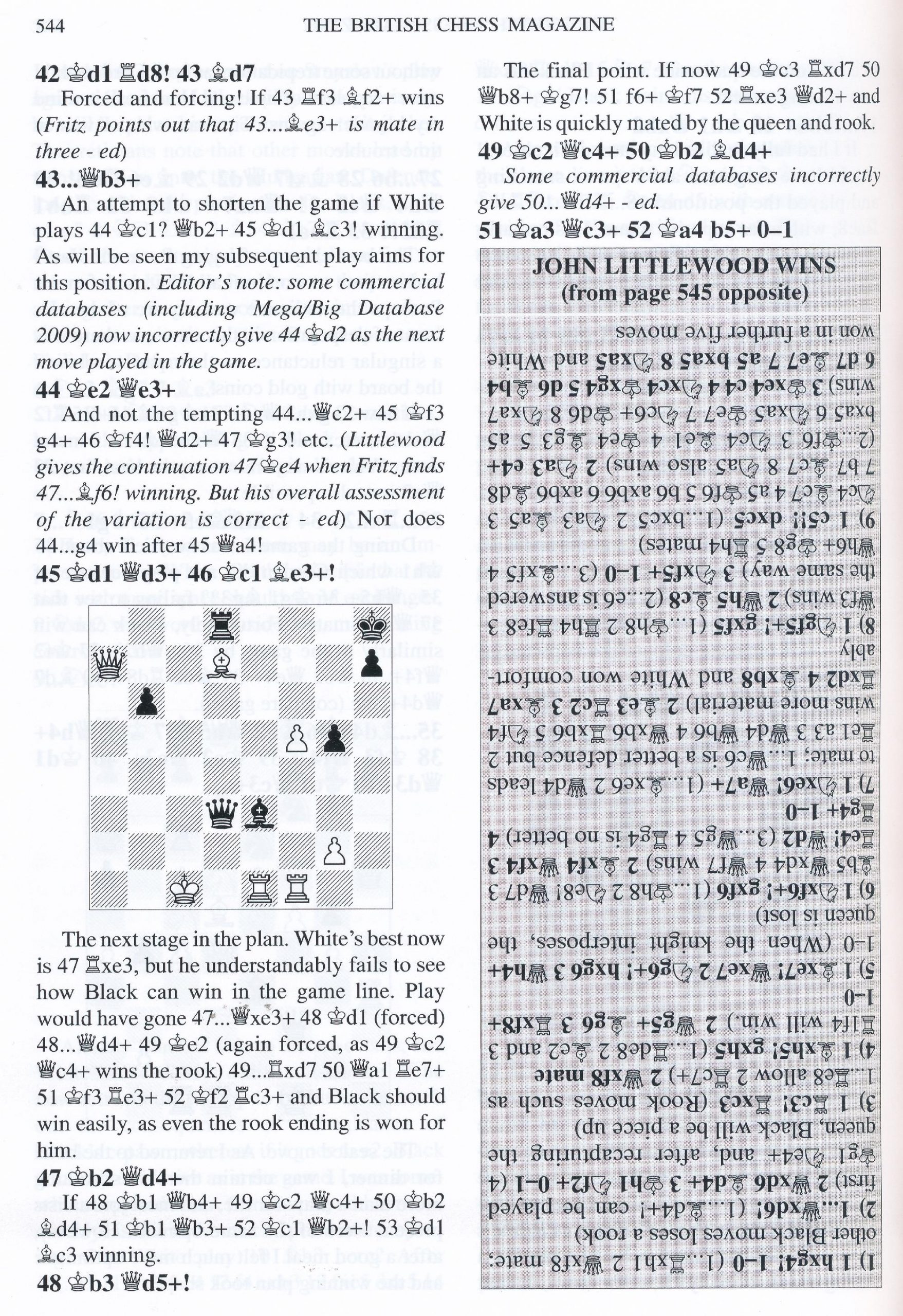
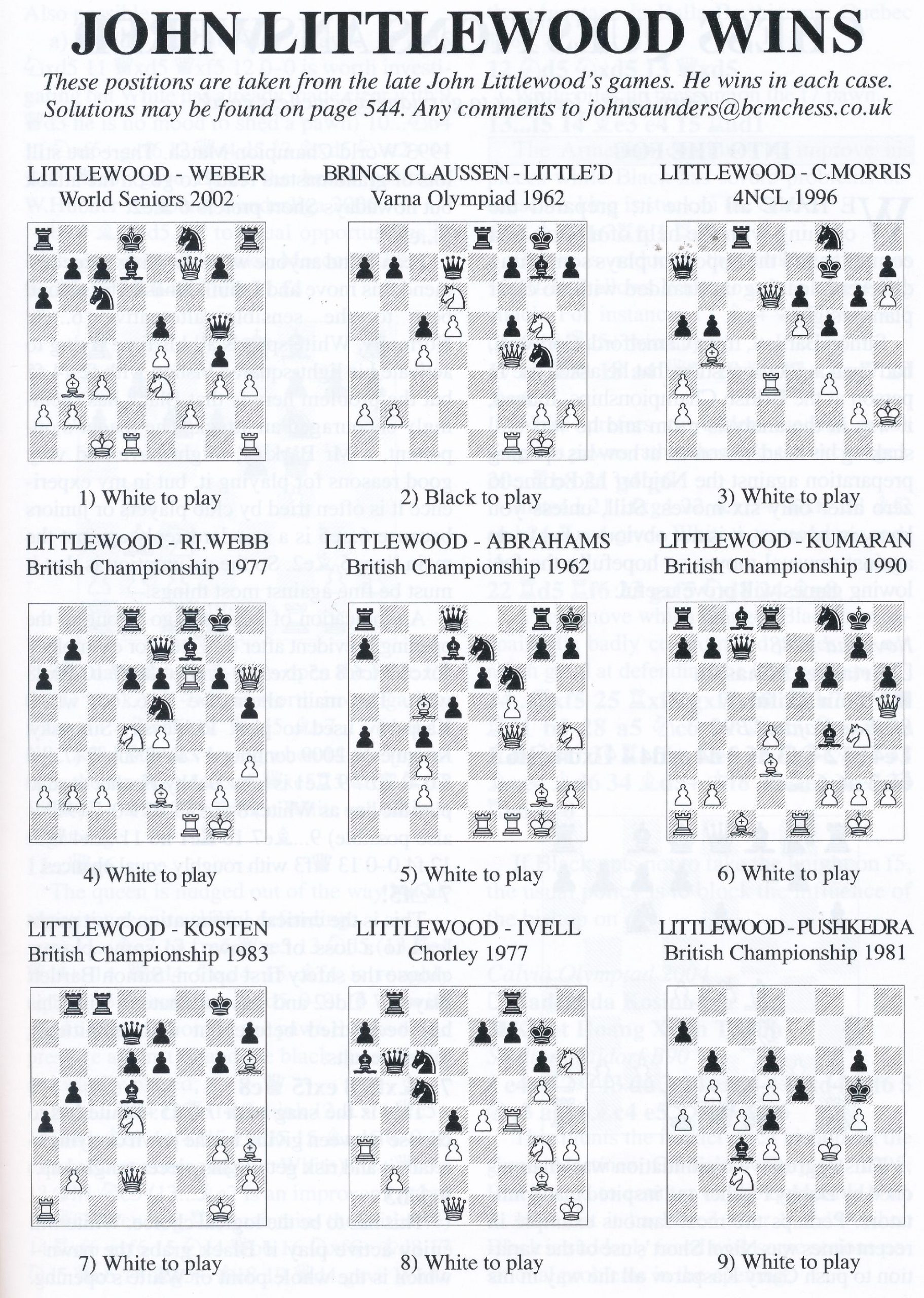
A rather detailed article from Tartajubow on Chess II
Here is how news of his passing was received on the English Chess Forum
Here is an obituary from Leonard Barden in The Guardian
Here is an obituary published in The Times of London
Farewell to John Littlewood : The Lincolnshire Poacher
and, finally a history of JEL from the Yorkshire Chess Archives
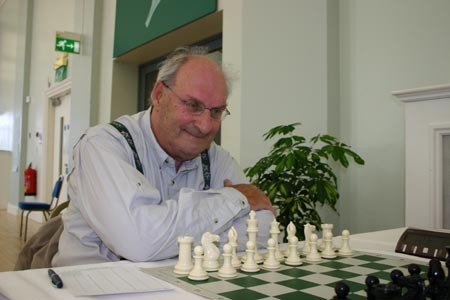
Here is John’s Wikipedia entry
Death Anniversary of FM John Littlewood (25-v-1931 16-ix-2009)
John Eric Littlewood was born in Sheffield on Wednesday, September 16th 1931. His mother’s maiden name was Wheeldon. He last resided in the WN8 postal area of Skelmersdale, Lancashire.
He became a FIDE Master in 1989 at the age of 58. According to Felice his peak FIDE rating was 2395 in January 1980. However, it is almost certain that it would have been higher than that, in the 1960s and 1970s.
He coached his son Paul who became British Champion in 1981. His brother Norman was also a very strong player.
From “Chess Coaching” :
John Littlewood is a National Coach and the Director of Junior Chess to the British Chess Federation. He is a FIDE Master with national and international playing experience, and is an established chess write, translator and journalist.
From “Learn Chess 2”
“A British Master, formerly Northern Counties Champion and currently (1984) a National Coach for the British Chess Federation. John Littlewood has played for England in several international tournaments, including two Olympiads”
John Was Northern Counties Chess Union (NCCU) Champion in 1971, 1972, 1977, 1978, 1979, 1980 and 1981 : a record seven times !
John won the Appleby-Frodingham Chess Club tournament in 1962 with 3.5/5 :
and then, in the same year came 3= in the British Championships with 7.5/11 :
and in 1969 in Rhyl John was unfortunate not to share the title with Dr. Jonathan Penrose after losing to Frank Parr in the final round :
John won the Southport Open in 1972 and the picture below was taken shortly afterwards :
John won the Chorley tournament of 1977 with 7/9
JEL won the British Chess Federation’s President’s Award in 2000.
In 2006 John won the BCF Veterans / Seniors title for the first time repeating the feat in 2008 sharing with George Dickson.
With the White pieces John almost exclusively played 1.e4 favouring the Wormald Attack, Open Sicilians and the Rossolimo variation.
As the second player John played the Closed Ruy Lopez, the Sicilian Dragon and the Grünfeld defence.
In the following video IM Andrew Martin discusses the game Bisguier – Littlewood, 1962.
Rather than reinventing an already round wheel we reproduce the following ten page tribute in the October 2009 issue of British Chess Magazine. The tribute is by John Saunders :
A rather detailed article from Tartajubow on Chess II
Here is how news of his passing was received on the English Chess Forum
Here is an obituary from Leonard Barden in The Guardian
Here is an obituary published in The Times of London
Farewell to John Littlewood : The Lincolnshire Poacher
and, finally a history of JEL from the Yorkshire Chess Archives
Here is John’s Wikipedia entry
Death Anniversary of FM John Littlewood (25-v-1931 16-ix-2009)
John Eric Littlewood was born in Sheffield on Wednesday, September 16th 1931. His mother’s maiden name was Wheeldon. He last resided in the WN8 postal area of Skelmersdale, Lancashire.
He became a FIDE Master in 1989 at the age of 58. According to Felice his peak FIDE rating was 2395 in January 1980. However, it is almost certain that it would have been higher than that, in the 1960s and 1970s.
He coached his son Paul who became British Champion in 1981. His brother Norman was also a very strong player.
From “Chess Coaching” :
John Littlewood is a National Coach and the Director of Junior Chess to the British Chess Federation. He is a FIDE Master with national and international playing experience, and is an established chess write, translator and journalist.
From “Learn Chess 2”
“A British Master, formerly Northern Counties Champion and currently (1984) a National Coach for the British Chess Federation. John Littlewood has played for England in several international tournaments, including two Olympiads”
John Was Northern Counties Chess Union (NCCU) Champion in 1971, 1972, 1977, 1978, 1979, 1980 and 1981 : a record seven times !
John won the Appleby-Frodingham Chess Club tournament in 1962 with 3.5/5 :
and then, in the same year came 3= in the British Championships with 7.5/11 :
and in 1969 in Rhyl John was unfortunate not to share the title with Dr. Jonathan Penrose after losing to Frank Parr in the final round :
John won the Southport Open in 1972 and the picture below was taken shortly afterwards :
John won the Chorley tournament of 1977 with 7/9
JEL won the British Chess Federation’s President’s Award in 2000.
In 2006 John won the BCF Veterans / Seniors title for the first time repeating the feat in 2008 sharing with George Dickson.
With the White pieces John almost exclusively played 1.e4 favouring the Wormald Attack, Open Sicilians and the Rossolimo variation.
As the second player John played the Closed Ruy Lopez, the Sicilian Dragon and the Grünfeld defence.
In the following video IM Andrew Martin discusses the game Bisguier – Littlewood, 1962.
Rather than reinventing an already round wheel we reproduce the following ten page tribute in the October 2009 issue of British Chess Magazine. The tribute is by John Saunders :
A rather detailed article from Tartajubow on Chess II
Here is how news of his passing was received on the English Chess Forum
Here is an obituary from Leonard Barden in The Guardian
Here is an obituary published in The Times of London
Farewell to John Littlewood : The Lincolnshire Poacher
and, finally a history of JEL from the Yorkshire Chess Archives
Here is John’s Wikipedia entry
Death Anniversary of FM John Littlewood (25-v-1931 16-ix-2009)
John Eric Littlewood was born in Sheffield on Wednesday, September 16th 1931. His mother’s maiden name was Wheeldon. He last resided in the WN8 postal area of Skelmersdale, Lancashire.
He became a FIDE Master in 1989 at the age of 58. According to Felice his peak FIDE rating was 2395 in January 1980. However, it is almost certain that it would have been higher than that, in the 1960s and 1970s.
He coached his son Paul who became British Champion in 1981. His brother Norman was also a very strong player.
From “Chess Coaching” :
John Littlewood is a National Coach and the Director of Junior Chess to the British Chess Federation. He is a FIDE Master with national and international playing experience, and is an established chess write, translator and journalist.
From “Learn Chess 2”
“A British Master, formerly Northern Counties Champion and currently (1984) a National Coach for the British Chess Federation. John Littlewood has played for England in several international tournaments, including two Olympiads”
John Was Northern Counties Chess Union (NCCU) Champion in 1971, 1972, 1977, 1978, 1979, 1980 and 1981 : a record seven times !
John won the Appleby-Frodingham Chess Club tournament in 1962 with 3.5/5 :
and then, in the same year came 3= in the British Championships with 7.5/11 :
and in 1969 in Rhyl John was unfortunate not to share the title with Dr. Jonathan Penrose after losing to Frank Parr in the final round :
John won the Southport Open in 1972 and the picture below was taken shortly afterwards :
John won the Chorley tournament of 1977 with 7/9
JEL won the British Chess Federation’s President’s Award in 2000.
In 2006 John won the BCF Veterans / Seniors title for the first time repeating the feat in 2008 sharing with George Dickson.
With the White pieces John almost exclusively played 1.e4 favouring the Wormald Attack, Open Sicilians and the Rossolimo variation.
As the second player John played the Closed Ruy Lopez, the Sicilian Dragon and the Grünfeld defence.
In the following video IM Andrew Martin discusses the game Bisguier – Littlewood, 1962.
Rather than reinventing an already round wheel we reproduce the following ten page tribute in the October 2009 issue of British Chess Magazine. The tribute is by John Saunders :
A rather detailed article from Tartajubow on Chess II
Here is how news of his passing was received on the English Chess Forum
Here is an obituary from Leonard Barden in The Guardian
Here is an obituary published in The Times of London
Farewell to John Littlewood : The Lincolnshire Poacher
and, finally a history of JEL from the Yorkshire Chess Archives
Here is John’s Wikipedia entry
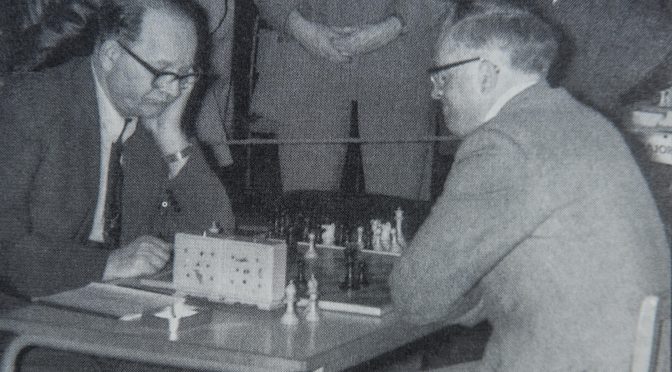
Death Anniversary of Dr. IM István (Stefan) Fazekas (23-iii-1898 03-v-1967)
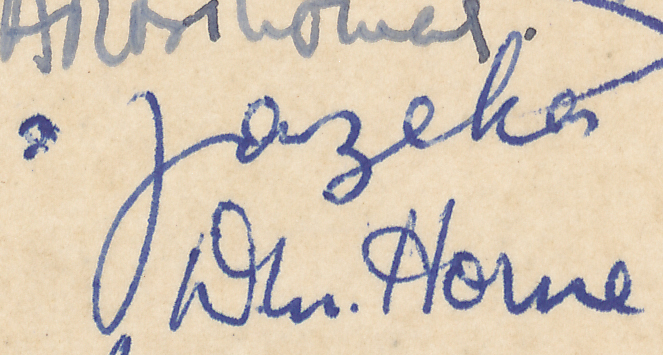
BCN remembers Dr. IM István (Stefan) Fazekas (23-iii-1898 03-v-1967)
From Chessgames.com :
“Dr Stefan (ne Istvan) Fazekas was born in Satoraljaujhely, Hungary. Awarded the IM title in 1953 and the IMC title in 1964, he was British Champion in 1957 and is the oldest player ever to have won the title. He passed away in 1967 in Buckhurst Hill, Essex, England.”
From British Chess Magazine, Volume LXXXVII, Number 7 (July), pages 195-6 we have an obituary written by Peter Clarke :
The death of Dr. Fazekas on May 3rd has deprived British chess of one of its leading and most colourful figures. Ever since he came to this country nearly thirty years ago he took an active part, in the game at all levels, from club to international, rarely missing the chance – even when not in the best of health- to test his strength in competition and express his ideas afresh.
Stefan Fazekas was born on March 23rd, 1898, at Sitoraljaujhely on the Hungarian-Czechoslovak border, but it was not until a few years after the Great War, in which he served and was wounded, that he got the opportunity to play serious tournament chess. By present-day standards, however, events were few and far between, and the game always had to take second place to his medical work. The Doctor’s best international performances, for which he was later awarded the master title by F.I.D.E., came in the ‘thirties. In 1931, for instance, he was 2nd at Kosice, 3rd at Brno and 3rd at Prague. As it remained throughout his career, his play was excessively variable: fine conceptions were always liable to be ruined by blunders or impetuosity. The following game, played at Munchentratz in 1933, shows all going well; it earned inclusion in Le Lionnais’ anthology Les Prix de beauté aux échecs.
In 1939 Dr. Fazekas brought his family to England and established himself as a successful and much loved G.P. at Buckhurst Hill, Essex. He soon took a dominating part in county chess and went on to win the championship eleven times. In national events his inconsistency seemed too great a handicap, but at Plymouth in 1957, after so many tries, he astounded everyone by winning the British Championship in front of, among others, Alexander and Penrose. The next year fate struck him a cruel blow when he was left out of the B.C.F. team
for the Munich Olympiad. Yet after returning the trophy in protest he overcame his bitterness and took his place once more in the championship tournament-he could not resist
the thrill of the struggle.
Knowing that his best over-the-board days were behind him, the Doctor decided to go in for correspondence chess in 1959, and he at once found himself surprisingly at home in it. Here his old weaknesses could be set aside and his vast experience put to good use. Moreover, his great love for chess enabled him to devote hours of work to the analysis of a single
move if necessary. His rapid successes in this field won him a place in the Semi-Finals of the 5th World Correspondence Championship (where he finished 4th out of 14) and led to his
being chosen as Board 1 for the British team in the 5th Olympiad. On the results of these events he was awarded the title of international C.C. master. That he deserved it may be
judged from this fine strategic win against a grandmaster (C.C.) opponent in the individual tournament.
At the time of his death Dr. Fazekas had made a score of 5 out of 7 in the Olympiad Final and was still engaged with Zagorovsky of the U.S.S.R., a performance which showed his correspondence play to be close to grandmaster standard. And to end one’s days actually playing a World Champion is a distinction which I am sure would have appealed to this Doctor’s rich sense of humour.
While Dr. Fazekas’ social work as a humanist was for the peace of the world, in chess he was noted as a great fighter, in some ways reminiscent of Lasker. There was no retirement
for him. At Ilford in 1965 and 1966 he eagerly took on and held his own with a generation fifty years his junior, and this year he had once again qualified to play in the British Champion-
ship. The tournament at Oxford will not seem quite the same without him. I and his many friends will miss his wit and ebullience, his generosity, his love of life and chess.-P. H. C.
Dr. Fazekas was Southern Counties (SCCU) Champion twice in 1951-2 and 1952-53.
In Edward Winter’s Chess Notes there is a note from Leonard Barden concerning SFs spoken English (under Chess Note #10361)
Here is his brief Wikipedia entry
Death Anniversary of Dr. IM István (Stefan) Fazekas (23-iii-1898 03-v-1967)
BCN remembers Dr. IM István (Stefan) Fazekas (23-iii-1898 03-v-1967)
From Chessgames.com :
“Dr Stefan (ne Istvan) Fazekas was born in Satoraljaujhely, Hungary. Awarded the IM title in 1953 and the IMC title in 1964, he was British Champion in 1957 and is the oldest player ever to have won the title. He passed away in 1967 in Buckhurst Hill, Essex, England.”
From British Chess Magazine, Volume LXXXVII, Number 7 (July), pages 195-6 we have an obituary written by Peter Clarke :
The death of Dr. Fazekas on May 3rd has deprived British chess of one of its leading and most colourful figures. Ever since he came to this country nearly thirty years ago he took an active part, in the game at all levels, from club to international, rarely missing the chance – even when not in the best of health- to test his strength in competition and express his ideas afresh.
Stefan Fazekas was born on March 23rd, 1898, at Sitoraljaujhely on the Hungarian-Czechoslovak border, but it was not until a few years after the Great War, in which he served and was wounded, that he got the opportunity to play serious tournament chess. By present-day standards, however, events were few and far between, and the game always had to take second place to his medical work. The Doctor’s best international performances, for which he was later awarded the master title by F.I.D.E., came in the ‘thirties. In 1931, for instance, he was 2nd at Kosice, 3rd at Brno and 3rd at Prague. As it remained throughout his career, his play was excessively variable: fine conceptions were always liable to be ruined by blunders or impetuosity. The following game, played at Munchentratz in 1933, shows all going well; it earned inclusion in Le Lionnais’ anthology Les Prix de beauté aux échecs.
In 1939 Dr. Fazekas brought his family to England and established himself as a successful and much loved G.P. at Buckhurst Hill, Essex. He soon took a dominating part in county chess and went on to win the championship eleven times. In national events his inconsistency seemed too great a handicap, but at Plymouth in 1957, after so many tries, he astounded everyone by winning the British Championship in front of, among others, Alexander and Penrose. The next year fate struck him a cruel blow when he was left out of the B.C.F. team
for the Munich Olympiad. Yet after returning the trophy in protest he overcame his bitterness and took his place once more in the championship tournament-he could not resist
the thrill of the struggle.
Knowing that his best over-the-board days were behind him, the Doctor decided to go in for correspondence chess in 1959, and he at once found himself surprisingly at home in it. Here his old weaknesses could be set aside and his vast experience put to good use. Moreover, his great love for chess enabled him to devote hours of work to the analysis of a single
move if necessary. His rapid successes in this field won him a place in the Semi-Finals of the 5th World Correspondence Championship (where he finished 4th out of 14) and led to his
being chosen as Board 1 for the British team in the 5th Olympiad. On the results of these events he was awarded the title of international C.C. master. That he deserved it may be
judged from this fine strategic win against a grandmaster (C.C.) opponent in the individual tournament.
At the time of his death Dr. Fazekas had made a score of 5 out of 7 in the Olympiad Final and was still engaged with Zagorovsky of the U.S.S.R., a performance which showed his correspondence play to be close to grandmaster standard. And to end one’s days actually playing a World Champion is a distinction which I am sure would have appealed to this Doctor’s rich sense of humour.
While Dr. Fazekas’ social work as a humanist was for the peace of the world, in chess he was noted as a great fighter, in some ways reminiscent of Lasker. There was no retirement
for him. At Ilford in 1965 and 1966 he eagerly took on and held his own with a generation fifty years his junior, and this year he had once again qualified to play in the British Champion-
ship. The tournament at Oxford will not seem quite the same without him. I and his many friends will miss his wit and ebullience, his generosity, his love of life and chess.-P. H. C.
Dr. Fazekas was Southern Counties (SCCU) Champion twice in 1951-2 and 1952-53.
In Edward Winter’s Chess Notes there is a note from Leonard Barden concerning SFs spoken English (under Chess Note #10361)
Here is his brief Wikipedia entry
Death Anniversary of Dr. IM István (Stefan) Fazekas (23-iii-1898 03-v-1967)
BCN remembers Dr. IM István (Stefan) Fazekas (23-iii-1898 03-v-1967)
From Chessgames.com :
“Dr Stefan (ne Istvan) Fazekas was born in Satoraljaujhely, Hungary. Awarded the IM title in 1953 and the IMC title in 1964, he was British Champion in 1957 and is the oldest player ever to have won the title. He passed away in 1967 in Buckhurst Hill, Essex, England.”
From British Chess Magazine, Volume LXXXVII, Number 7 (July), pages 195-6 we have an obituary written by Peter Clarke :
The death of Dr. Fazekas on May 3rd has deprived British chess of one of its leading and most colourful figures. Ever since he came to this country nearly thirty years ago he took an active part, in the game at all levels, from club to international, rarely missing the chance – even when not in the best of health- to test his strength in competition and express his ideas afresh.
Stefan Fazekas was born on March 23rd, 1898, at Sitoraljaujhely on the Hungarian-Czechoslovak border, but it was not until a few years after the Great War, in which he served and was wounded, that he got the opportunity to play serious tournament chess. By present-day standards, however, events were few and far between, and the game always had to take second place to his medical work. The Doctor’s best international performances, for which he was later awarded the master title by F.I.D.E., came in the ‘thirties. In 1931, for instance, he was 2nd at Kosice, 3rd at Brno and 3rd at Prague. As it remained throughout his career, his play was excessively variable: fine conceptions were always liable to be ruined by blunders or impetuosity. The following game, played at Munchentratz in 1933, shows all going well; it earned inclusion in Le Lionnais’ anthology Les Prix de beauté aux échecs.
In 1939 Dr. Fazekas brought his family to England and established himself as a successful and much loved G.P. at Buckhurst Hill, Essex. He soon took a dominating part in county chess and went on to win the championship eleven times. In national events his inconsistency seemed too great a handicap, but at Plymouth in 1957, after so many tries, he astounded everyone by winning the British Championship in front of, among others, Alexander and Penrose. The next year fate struck him a cruel blow when he was left out of the B.C.F. team
for the Munich Olympiad. Yet after returning the trophy in protest he overcame his bitterness and took his place once more in the championship tournament-he could not resist
the thrill of the struggle.
Knowing that his best over-the-board days were behind him, the Doctor decided to go in for correspondence chess in 1959, and he at once found himself surprisingly at home in it. Here his old weaknesses could be set aside and his vast experience put to good use. Moreover, his great love for chess enabled him to devote hours of work to the analysis of a single
move if necessary. His rapid successes in this field won him a place in the Semi-Finals of the 5th World Correspondence Championship (where he finished 4th out of 14) and led to his
being chosen as Board 1 for the British team in the 5th Olympiad. On the results of these events he was awarded the title of international C.C. master. That he deserved it may be
judged from this fine strategic win against a grandmaster (C.C.) opponent in the individual tournament.
At the time of his death Dr. Fazekas had made a score of 5 out of 7 in the Olympiad Final and was still engaged with Zagorovsky of the U.S.S.R., a performance which showed his correspondence play to be close to grandmaster standard. And to end one’s days actually playing a World Champion is a distinction which I am sure would have appealed to this Doctor’s rich sense of humour.
While Dr. Fazekas’ social work as a humanist was for the peace of the world, in chess he was noted as a great fighter, in some ways reminiscent of Lasker. There was no retirement
for him. At Ilford in 1965 and 1966 he eagerly took on and held his own with a generation fifty years his junior, and this year he had once again qualified to play in the British Champion-
ship. The tournament at Oxford will not seem quite the same without him. I and his many friends will miss his wit and ebullience, his generosity, his love of life and chess.-P. H. C.
Dr. Fazekas was Southern Counties (SCCU) Champion twice in 1951-2 and 1952-53.
In Edward Winter’s Chess Notes there is a note from Leonard Barden concerning SFs spoken English (under Chess Note #10361)
Here is his brief Wikipedia entry
Death Anniversary of Dr. IM István (Stefan) Fazekas (23-iii-1898 03-v-1967)
BCN remembers Dr. IM István (Stefan) Fazekas (23-iii-1898 03-v-1967)
From Chessgames.com :
“Dr Stefan (ne Istvan) Fazekas was born in Satoraljaujhely, Hungary. Awarded the IM title in 1953 and the IMC title in 1964, he was British Champion in 1957 and is the oldest player ever to have won the title. He passed away in 1967 in Buckhurst Hill, Essex, England.”
From British Chess Magazine, Volume LXXXVII, Number 7 (July), pages 195-6 we have an obituary written by Peter Clarke :
The death of Dr. Fazekas on May 3rd has deprived British chess of one of its leading and most colourful figures. Ever since he came to this country nearly thirty years ago he took an active part, in the game at all levels, from club to international, rarely missing the chance – even when not in the best of health- to test his strength in competition and express his ideas afresh.
Stefan Fazekas was born on March 23rd, 1898, at Sitoraljaujhely on the Hungarian-Czechoslovak border, but it was not until a few years after the Great War, in which he served and was wounded, that he got the opportunity to play serious tournament chess. By present-day standards, however, events were few and far between, and the game always had to take second place to his medical work. The Doctor’s best international performances, for which he was later awarded the master title by F.I.D.E., came in the ‘thirties. In 1931, for instance, he was 2nd at Kosice, 3rd at Brno and 3rd at Prague. As it remained throughout his career, his play was excessively variable: fine conceptions were always liable to be ruined by blunders or impetuosity. The following game, played at Munchentratz in 1933, shows all going well; it earned inclusion in Le Lionnais’ anthology Les Prix de beauté aux échecs.
In 1939 Dr. Fazekas brought his family to England and established himself as a successful and much loved G.P. at Buckhurst Hill, Essex. He soon took a dominating part in county chess and went on to win the championship eleven times. In national events his inconsistency seemed too great a handicap, but at Plymouth in 1957, after so many tries, he astounded everyone by winning the British Championship in front of, among others, Alexander and Penrose. The next year fate struck him a cruel blow when he was left out of the B.C.F. team
for the Munich Olympiad. Yet after returning the trophy in protest he overcame his bitterness and took his place once more in the championship tournament-he could not resist
the thrill of the struggle.
Knowing that his best over-the-board days were behind him, the Doctor decided to go in for correspondence chess in 1959, and he at once found himself surprisingly at home in it. Here his old weaknesses could be set aside and his vast experience put to good use. Moreover, his great love for chess enabled him to devote hours of work to the analysis of a single
move if necessary. His rapid successes in this field won him a place in the Semi-Finals of the 5th World Correspondence Championship (where he finished 4th out of 14) and led to his
being chosen as Board 1 for the British team in the 5th Olympiad. On the results of these events he was awarded the title of international C.C. master. That he deserved it may be
judged from this fine strategic win against a grandmaster (C.C.) opponent in the individual tournament.
At the time of his death Dr. Fazekas had made a score of 5 out of 7 in the Olympiad Final and was still engaged with Zagorovsky of the U.S.S.R., a performance which showed his correspondence play to be close to grandmaster standard. And to end one’s days actually playing a World Champion is a distinction which I am sure would have appealed to this Doctor’s rich sense of humour.
While Dr. Fazekas’ social work as a humanist was for the peace of the world, in chess he was noted as a great fighter, in some ways reminiscent of Lasker. There was no retirement
for him. At Ilford in 1965 and 1966 he eagerly took on and held his own with a generation fifty years his junior, and this year he had once again qualified to play in the British Champion-
ship. The tournament at Oxford will not seem quite the same without him. I and his many friends will miss his wit and ebullience, his generosity, his love of life and chess.-P. H. C.
Dr. Fazekas was Southern Counties (SCCU) Champion twice in 1951-2 and 1952-53.
In Edward Winter’s Chess Notes there is a note from Leonard Barden concerning SFs spoken English (under Chess Note #10361)
Here is his brief Wikipedia entry
Death Anniversary of Dr. IM István (Stefan) Fazekas (23-iii-1898 03-v-1967)
BCN remembers Dr. IM István (Stefan) Fazekas (23-iii-1898 03-v-1967)
From Chessgames.com :
“Dr Stefan (ne Istvan) Fazekas was born in Satoraljaujhely, Hungary. Awarded the IM title in 1953 and the IMC title in 1964, he was British Champion in 1957 and is the oldest player ever to have won the title. He passed away in 1967 in Buckhurst Hill, Essex, England.”
From British Chess Magazine, Volume LXXXVII, Number 7 (July), pages 195-6 we have an obituary written by Peter Clarke :
The death of Dr. Fazekas on May 3rd has deprived British chess of one of its leading and most colourful figures. Ever since he came to this country nearly thirty years ago he took an active part, in the game at all levels, from club to international, rarely missing the chance – even when not in the best of health- to test his strength in competition and express his ideas afresh.
Stefan Fazekas was born on March 23rd, 1898, at Sitoraljaujhely on the Hungarian-Czechoslovak border, but it was not until a few years after the Great War, in which he served and was wounded, that he got the opportunity to play serious tournament chess. By present-day standards, however, events were few and far between, and the game always had to take second place to his medical work. The Doctor’s best international performances, for which he was later awarded the master title by F.I.D.E., came in the ‘thirties. In 1931, for instance, he was 2nd at Kosice, 3rd at Brno and 3rd at Prague. As it remained throughout his career, his play was excessively variable: fine conceptions were always liable to be ruined by blunders or impetuosity. The following game, played at Munchentratz in 1933, shows all going well; it earned inclusion in Le Lionnais’ anthology Les Prix de beauté aux échecs.
In 1939 Dr. Fazekas brought his family to England and established himself as a successful and much loved G.P. at Buckhurst Hill, Essex. He soon took a dominating part in county chess and went on to win the championship eleven times. In national events his inconsistency seemed too great a handicap, but at Plymouth in 1957, after so many tries, he astounded everyone by winning the British Championship in front of, among others, Alexander and Penrose. The next year fate struck him a cruel blow when he was left out of the B.C.F. team
for the Munich Olympiad. Yet after returning the trophy in protest he overcame his bitterness and took his place once more in the championship tournament-he could not resist
the thrill of the struggle.
Knowing that his best over-the-board days were behind him, the Doctor decided to go in for correspondence chess in 1959, and he at once found himself surprisingly at home in it. Here his old weaknesses could be set aside and his vast experience put to good use. Moreover, his great love for chess enabled him to devote hours of work to the analysis of a single
move if necessary. His rapid successes in this field won him a place in the Semi-Finals of the 5th World Correspondence Championship (where he finished 4th out of 14) and led to his
being chosen as Board 1 for the British team in the 5th Olympiad. On the results of these events he was awarded the title of international C.C. master. That he deserved it may be
judged from this fine strategic win against a grandmaster (C.C.) opponent in the individual tournament.
At the time of his death Dr. Fazekas had made a score of 5 out of 7 in the Olympiad Final and was still engaged with Zagorovsky of the U.S.S.R., a performance which showed his correspondence play to be close to grandmaster standard. And to end one’s days actually playing a World Champion is a distinction which I am sure would have appealed to this Doctor’s rich sense of humour.
While Dr. Fazekas’ social work as a humanist was for the peace of the world, in chess he was noted as a great fighter, in some ways reminiscent of Lasker. There was no retirement
for him. At Ilford in 1965 and 1966 he eagerly took on and held his own with a generation fifty years his junior, and this year he had once again qualified to play in the British Champion-
ship. The tournament at Oxford will not seem quite the same without him. I and his many friends will miss his wit and ebullience, his generosity, his love of life and chess.-P. H. C.
Dr. Fazekas was Southern Counties (SCCU) Champion twice in 1951-2 and 1952-53.
In Edward Winter’s Chess Notes there is a note from Leonard Barden concerning SFs spoken English (under Chess Note #10361)
Here is his brief Wikipedia entry