Happy Birthday FM Peter Markland (13-iv-1951)

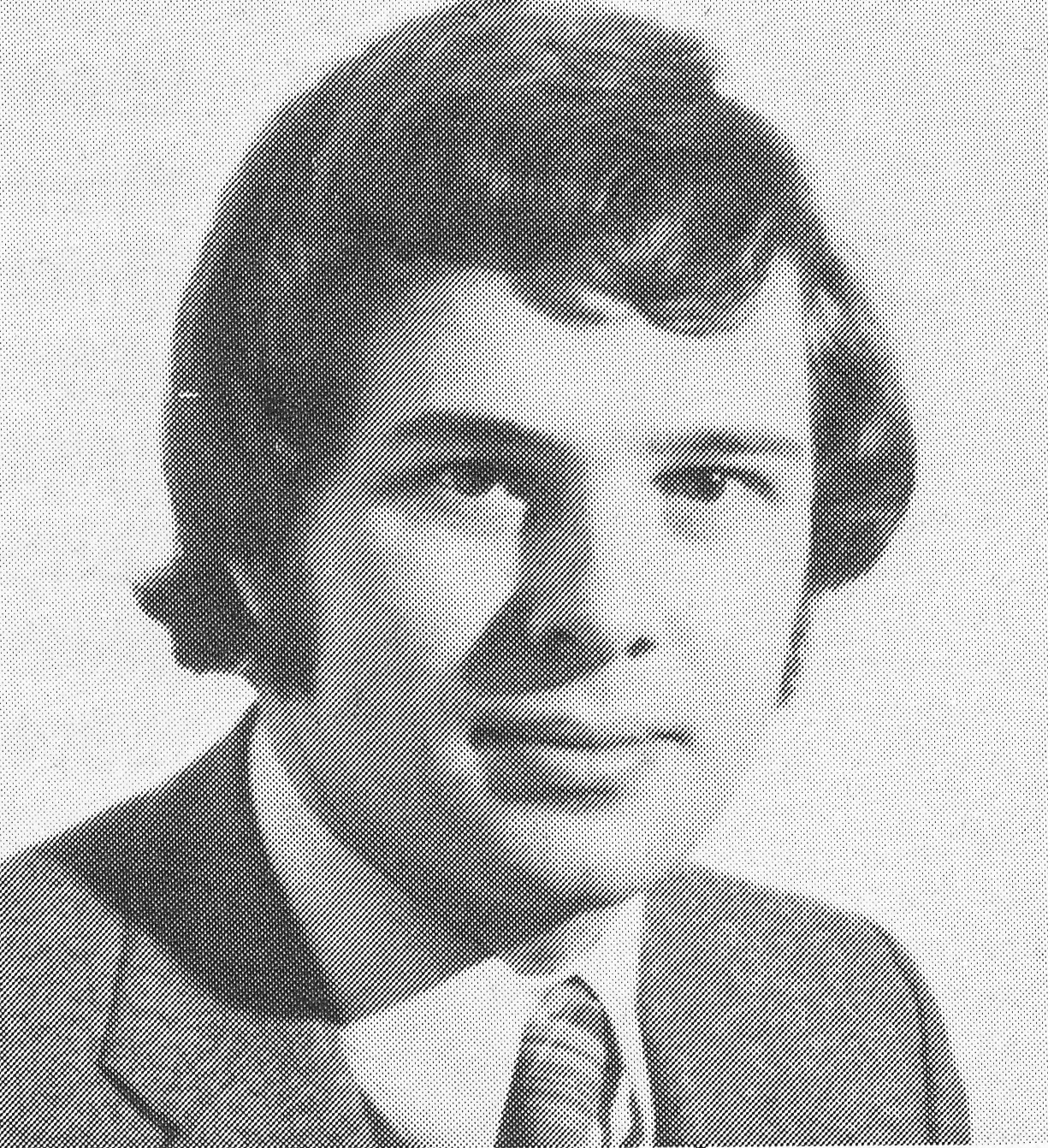
Peter Markland. Source: British Chess, Pergamon Press, 1983

BCN wishes a happy birthday to Peter Markland born on Friday, April 13th, 1951

From the rear cover of “Sicilian:…e5 :

“P.R. Markland is a British Master, and a member of many English international teams, including those at the 1972 and 1974 Olympiads, and is also a British correspondence international”

Peter first qualified to the British Championship in 1967 (Oxford) and obtained an IM and GM norm at Hastings 1971.

In 1984 he became a Grandmaster for correspondence chess (GMC).

Peter became a banker and lives in Woodbridge, Suffolk, IP13.

Following excellent recent work by Paul McKeown, the English Chess Federation made a request to FIDE to grant Peter the much overdue title of FIDE Master. This was awarded in 2021.

From British Chess (Pergamon Press, 1983) we have this contribution from Peter himself:

“1951 seems to have been a vintage year for chessplayers and although I cannot claim to count myself in the company of Andersson, Karpov, Ribli and Sax we do all share the same year of birth.

Although I learned the moves at the age of 5, I only took any real interest in the game at 13 when I began to play schools chess. Compared with such as Nigel Short I was a very late starter!

I was educated at Bolton School and played for Bolton and Lancashire in my early years. This was fortunate in that all three of these teams enjoyed great success in the late 1960s. In all three teams I played along side Martyn Corden who was to precede my rise to international level himself by playing in the Siegen Olympiad team in 1970. In 1967, I qualified for the British Championship at my first attempt and I was pleased to score 5/11. The following year the school team won The Sunday Times tournament playing without Martyn Corden in the finals.

Up to this time I had concentrated chiefly on junior teams and had won the NCCU junior titles. Over Christmas and New Year of both 1966-7 and 1967-8 I travelled down to play at the Devon Junior Congress at Plymouth but in 1968 I decided to try my luck at Hastings. This proved to be one of the turning points of my career.

I was placed in the Challengers Reserves for 1968-9 and after the first round loss (to the eventual winner) my play gained momentum and I qualified for the Challengers the following year. The intervening year passed quietly with a trip to Ireland in the Glorney Cup. I went up to Balliol College, Oxford in October 1969.
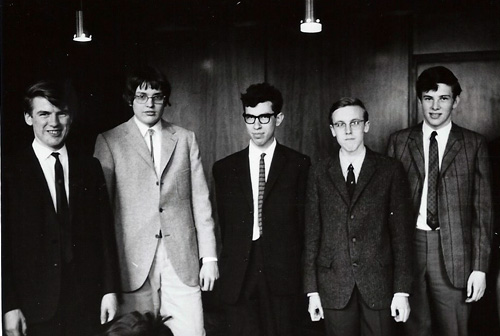
The Scottish Junior International, Glasgow, 1969. l-r: David Watt, Rene Borngässer, David Levy, Heinz Wirthensohn, Peter Markland. Courtesy of Chess Scotland

The Hastings Challengers tournament 1969-70 began when I met the same opponent as in the previous year in the first round. This time I managed to come out on top. By the time the last round came, I had played most of the leaders and had 6/8 including two pleasing wins with my favourite defence at the time – the Sicilian Pelikan variation.
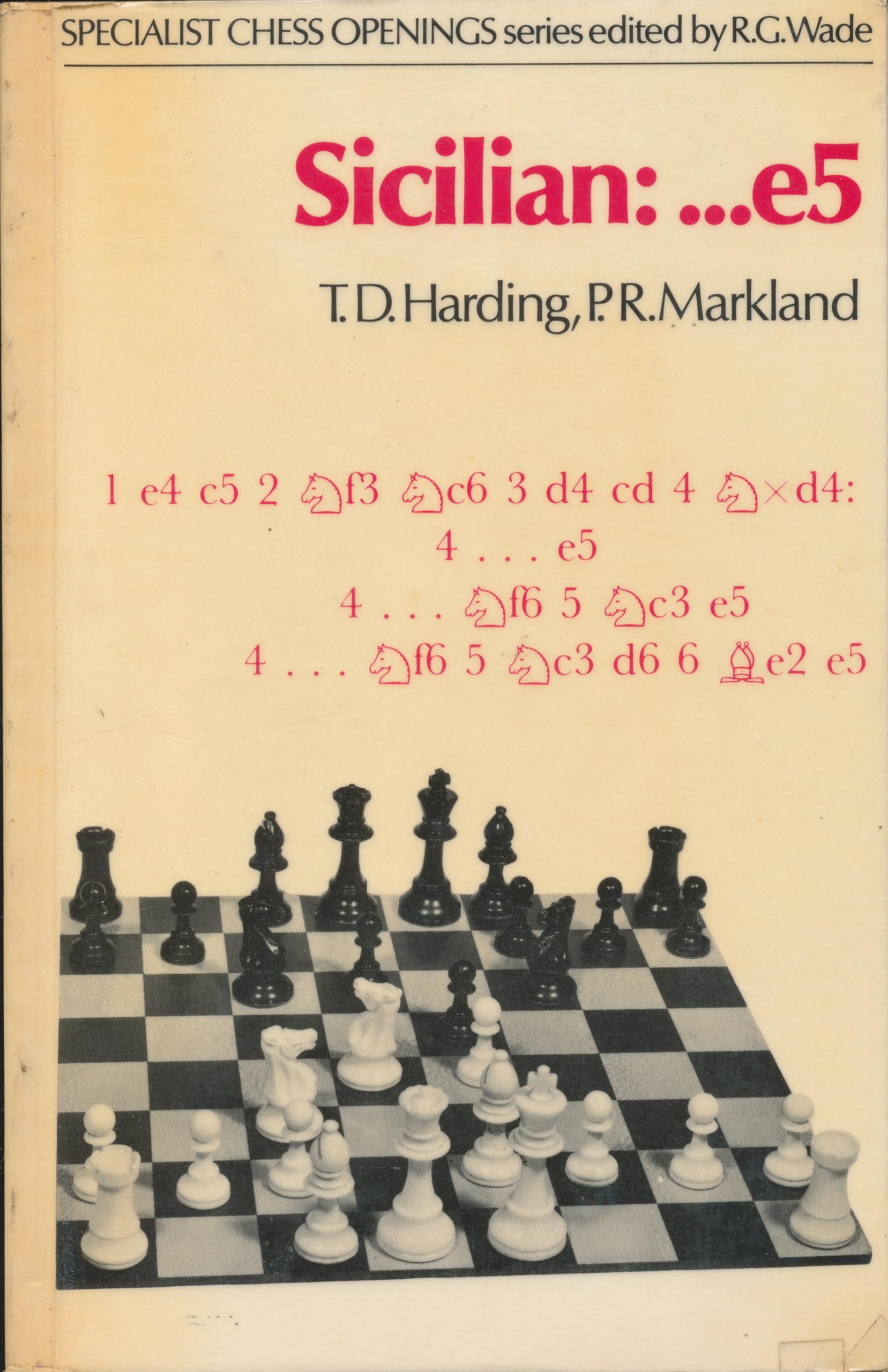
Sicilian:...e5 by TD Harding & PR Markland, Batsford, 1976, ISBN 0 7134 3209 8
Sicilian:…e5 by TD Harding & PR Markland, Batsford, 1976, ISBN 0 7134 3209 8

In the last round I was paired against de Veauce who had a reputation as a good strategist and whom I hoped to unsettle tactically. I had white and my plan failed. He outplayed me in the opening and middlegame and I sacrificed my isolated centre pawn to activate my pieces.

[pgn]
[Event “Christmas Congress 1969/70-Challenger”]
[Site “Hastings”]
[Date “1970.01.07”]
[Round “9”]
[White “Markland, Peter Richard”]
[Black “De Veauce, Louis”]
[Result “1-0”]
[ECO “C54”]
[Annotator “Peter Markland / British Chess News”]
[PlyCount “69”]
[EventDate “1969.12.29”]
[EventType “swiss”]
[EventRounds “9”]
[EventCountry “ENG”]
[SourceTitle “British Chess, page 158.”]
[Source “ChessBase”]
[SourceDate “2000.11.22”]
[SourceVersion “1”]
[SourceVersionDate “2000.11.22”]
[SourceQuality “1”]

{[%evp 0,69,19,28,23,19,22,4,4,2,-2,37,-6,-19,2,2,14,45,42,29,26,28,28,32,32,
23,60,33,67,43,37,30,11,6,84,13,13,-24,1,-3,3,13,0,0,0,-12,-14,-12,-19,-15,-21,
0,0,0,-55,-37,-23,-31,-8,-16,0,0,0,-41,0,-25,-46,0,29993,29994,29995,29996]} {
From British Chess (Pergamon Press, 1983), pp158: In the last round I was
paired against de Veauce who had a reputation as a good strategist and whom I
hoped to unsettle tactically. I had white and my plan failed. He outplayed me
in the opening and middlegame and I sacrificed my isolated centre pawn to
activate my pieces.} 1. e4 e5 2. Nf3 Nc6 3. Bc4 Bc5 4. c3 Nf6 5. d4 exd4 6.
cxd4 Bb4+ 7. Bd2 Bxd2+ 8. Nbxd2 d5 9. exd5 Nxd5 10. Qb3 Nce7 11. O-O O-O 12.
Rfe1 Nb6 13. Bd3 h6 (13… Bf5 14. Rxe7 Bxd3 15. Rae1 Bg6) 14. a4 $6 a5 {[#]}
15. h3 $146 Nc6 16. Rac1 Qd5 17. Qxd5 $6 (17. Be4) 17… Nxd5 18. Nb3 Ncb4 19.
Be4 b6 20. Na1 Bd7 21. Nc2 Ra7 22. Nxb4 Nxb4 $15 23. b3 Be6 24. Re3 Rc8 25. Ne5
Rd8 26. Rd1 c5 27. d5 Bxd5 28. Bxd5 Rxd5 29. Rxd5 Nxd5 30. Rd3 Nb4 31. Rd6 {[#]
} {In the diagrammed position it is clear that a draw should result although
perhaps white has some chances of advantage after the fall of black’s b-pawn.
Instead the game continued} Re7 32. f4 {[#]} f6 $2 33. Ng6 {Now white has a
clear edge.} Rb7 $4 34. Rd8+ Kf7 35. f5 {and Black resigned.} 1-0
[/pgn]

So I then had to wait had to wait to see the other results before I could confirm a somewhat lucky place in the Premier.

In 1970 I had the opportunity to travel with the student team to the Olympiad in Haifa. My score of 5.5/7 was reasonably pleasing but the standard of opposition was far from good.
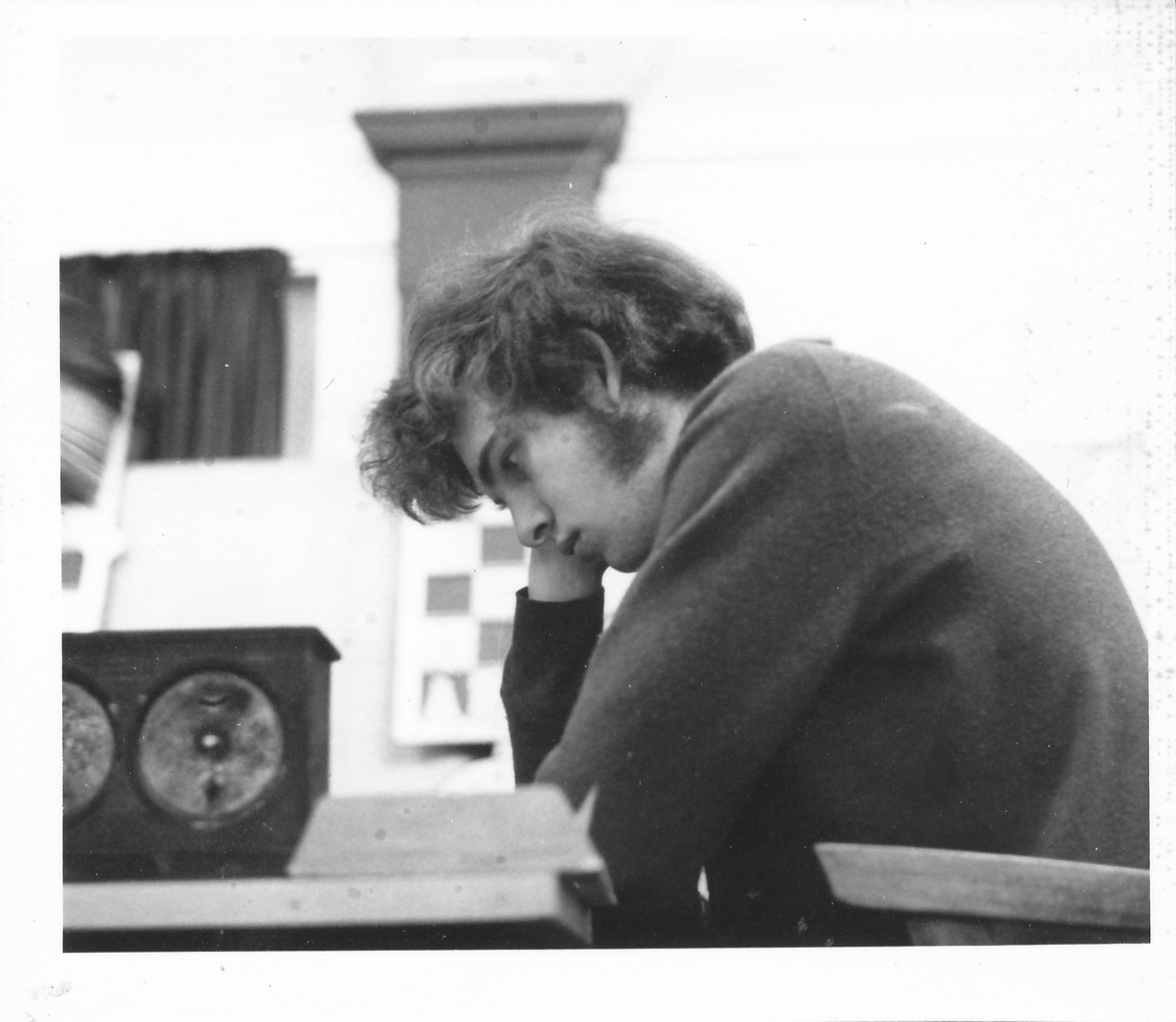
Peter Markland at Hastings 1970-71

At the end of the year came the Hastings Premier – a tournament which I can only describe as the highlight of my career. I began nervously and lost a nondescript game to Uhlmann in the first round. My confidence grew with two comfortable draws with Portisch (the eventual winner) and Keene. In round four I met the surprise leader, Mestrovic (who had 3/3) and perhaps partly due to the fact that this game was played on 1st January I won convincingly in 18 moves.
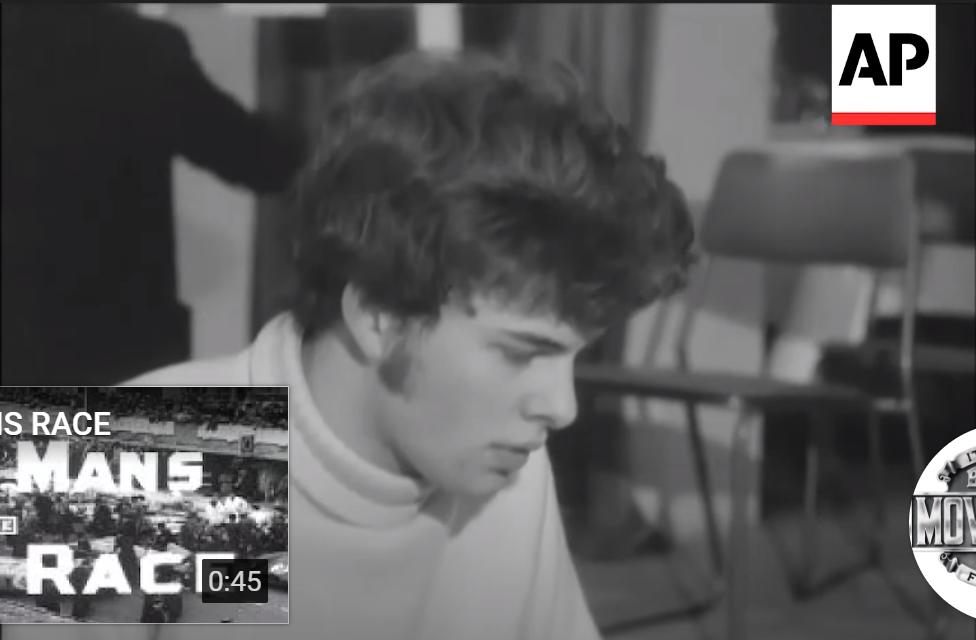
Peter Markland during his game with Portisch on December 30th 1970

[pgn]
[Event “Christmas Congress 1970/71-46 Premier”]
[Site “Hastings”]
[Date “1971.01.01”]
[Round “4”]
[White “Markland, Peter Richard”]
[Black “Mestrovic, Zvonimir”]
[Result “1-0”]
[ECO “B00”]
[Annotator “British Chess News”]
[PlyCount “35”]
[EventDate “1970.12.29”]
[EventType “tourn”]
[EventRounds “9”]
[EventCountry “ENG”]
[SourceTitle “EXT 1999”]
[Source “ChessBase”]
[SourceDate “1998.11.16”]
[SourceVersion “1”]
[SourceVersionDate “1998.11.16”]
[SourceQuality “1”]

{[%evp 0,35,19,29,72,-9,56,41,67,53,31,46,46,24,40,-8,-1,0,49,19,91,70,307,341,
444,451,486,486,580,688,754,767,1527,598,633,633,633,622]} {Possibly this game
was influenced by the previous nights celebrations?} 1. e4 c5 2. c3 b6 3. d4 e6
4. Nf3 Bb7 5. Bd3 Nf6 $6 (5… Ne7 6. O-O Ng6 7. Bg5 Be7 8. Bxe7 Qxe7 9. Re1
O-O $10 {Florian-Haag, Gyula 1965}) 6. Nbd2 (6. Qe2 Be7 7. O-O Nc6 8. a3) 6…
d5 (6… Nc6) 7. exd5 {A rare choice} (7. e5) 7… Qxd5 8. O-O Bd6 $6 $146 (
8… Be7 $142 {0-0}) 9. Re1 Qh5 $2 {Black will regret this…} 10. dxc5 $16 {
[#]} (10. Qa4+ Nbd7) 10… Bxc5 $4 ({Not much better is} 10… Qxc5 11. Ne4
Nxe4 12. Rxe4 $1 Nd7 (12… Bxe4 $4 13. Bxe4 $18 Nc6 14. Be3 {and Black can
resign})) 11. Re5 $1 $18 g5 {desperation} (11… Qg4 12. h3 Qf4 13. Ne4 $18)
12. Rxg5 Qh6 13. Ne4 (13. Rxc5 $1 bxc5 14. Ne4) 13… Nxe4 14. Bxe4 Bxe4 {[#]}
15. Rxc5 $1 Qg7 16. Qa4+ (16. Rc8+ Ke7 17. Rc7+ Ke8 18. Qd6) 16… Nd7 17. Qxe4
Rd8 18. Rg5 {and the tournament leader resigned.} 1-0
[/pgn]

The next four rounds brought an uneventful draw with Wade and three exciting encounters with Byrne, Krogius and Gligoric all of which after several reversals of fortune ended in draws.
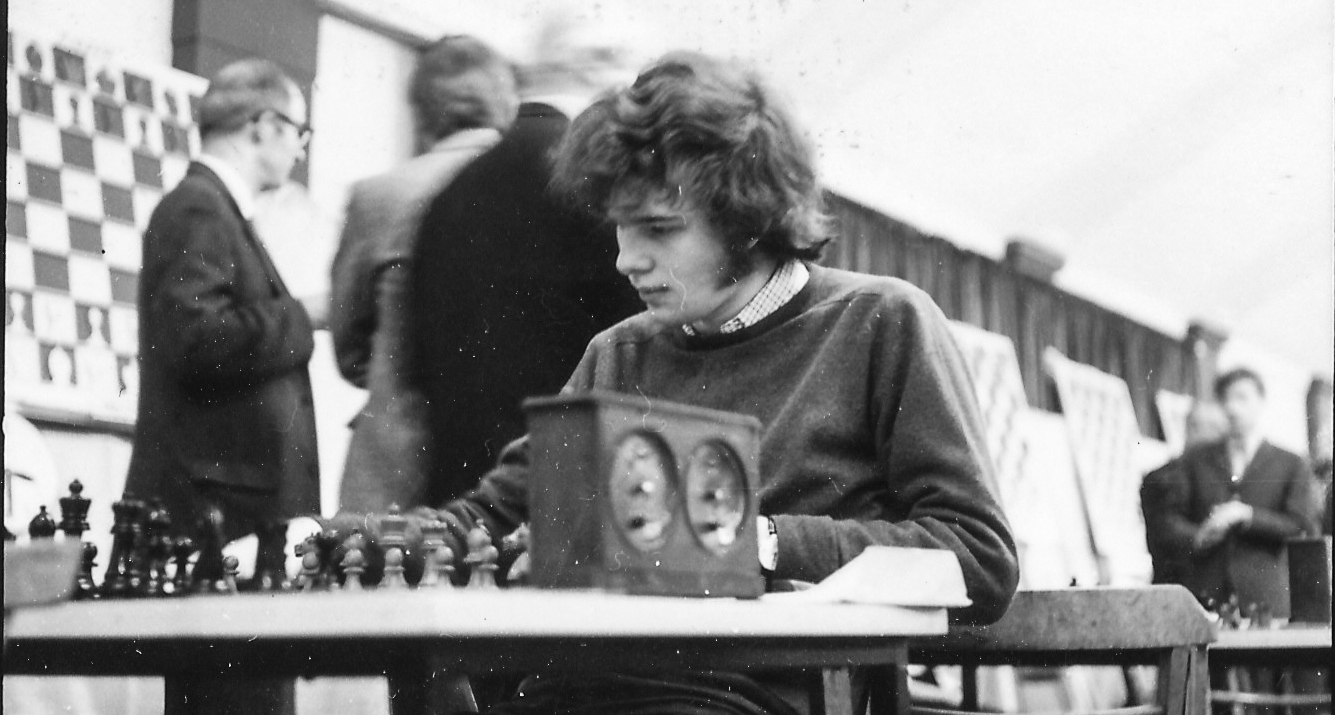
Peter Markland at Hastings 1970-71

In the last round I was to play Hort who needed to to win to gain a share of first prize. He played a horribly passive opening and by move 14 I was already well on top. To try to compensate he snatched a queenside pawn and gave me the chance to play the type of move one can only dream about!

[pgn]
[Event “Christmas Congress 1970/71-46 Premier”]
[Site “Hastings”]
[Date “1971.01.07”]
[Round “9”]
[White “Markland, Peter Richard”]
[Black “Hort, Vlastimil”]
[Result “1-0”]
[ECO “A24”]
[Annotator “Peter Markland / British Chess News”]
[PlyCount “59”]
[EventDate “1970.12.29”]
[EventType “tourn”]
[EventRounds “9”]
[EventCountry “ENG”]
[SourceTitle “British Chess, Pergamon P”]
[Source “ChessBase”]
[SourceDate “1998.11.16”]
[SourceVersion “1”]
[SourceVersionDate “1998.11.16”]
[SourceQuality “1”]

{[%evp 0,59,35,14,69,16,79,73,73,18,32,38,25,17,43,30,30,13,13,18,21,31,26,25,
66,55,79,54,99,70,93,58,82,75,141,147,149,144,153,103,106,106,85,130,100,-7,22,
-192,317,277,443,310,729,231,301,317,332,414,565,616,29993,29994]} 1. e4 c6 2.
c4 g6 3. Nc3 Bg7 4. g3 e5 5. Bg2 d6 6. Nge2 Nd7 7. O-O Ngf6 8. d3 O-O 9. h3 Nc5
10. Be3 {[#]} a5 (10… Ne6) 11. f4 exf4 $6 12. gxf4 Qe7 13. Qd2 Rb8 $146 14.
Rae1 $18 Ncd7 15. Ng3 Ne8 16. d4 $16 Nc7 17. e5 dxe5 18. fxe5 Qb4 (18… c5 19.
Bg5 Qe8 20. Nce4 $16) 19. Bh6 Qxc4 20. Bxg7 Kxg7 21. Re4 $1 Ne6 22. Rh4 {
Crude but effective!} h5 {[#] Now pause the video as the saying goes….} 23.
Bd5 $3 {PRM : I remember that as soon as I played this move Hort’s face fell.
There was an also an eerie silence in the spectators – no doubt some felt I
had taken leave of my senses. The move is basically a square clearance with
gain of tempo. The piece cannot be accepted. So, the queen is lost and with
it the game.} Qxf1+ ({The peice cannot be accepted as} 23… cxd5 {loses to}
24. Nxh5+ $1 gxh5 ({or} 24… Kh8 25. Nf6+ Kg7 26. Rh7#) ({or} 24… Kg8 25.
Qh6 $1 {wins} gxh5 26. Qxh5 $18) 25. Qg2+ Kh6 26. Rf5 $1 $18 (26. Qg4 $4 Qxd4+
$1 $19) 26… Ng7 27. Qxg7+ Kxg7 28. Rg5+ Kh8 29. Rhxh5# {so, the queen is
lost and with it the game.}) 24. Kxf1 cxd5 25. Nxd5 b6 26. Nf4 Nxf4 27. Qxf4
Ba6+ 28. Kg1 Bd3 29. Qg5 Kh8 30. Qh6+ {and Black resigned.} (30. Qh6+ Kg8 31.
Rxh5 $1 $18) 1-0
[/pgn]

This victory meant an equal second on 5/9 with Gligoric, Hort, Krogius and Uhlmann and both a GM and IM norm.

[embedyt] https://www.youtube.com/watch?v=5mZS5j-97hY[/embedyt]

As a result of this I became a regular member of the England side. During 1971 my results were erratic, possibly caused by too much play. I was pleased with my 3.5 score in my first Clare Benedict, although I lost my first game for England due to nervousness and I was first equal with George Botterill in the Slater Young Masters at Hastings (again). Here I declined a last round draw offer, blundered almost next move and lost to an up-and-coming junior by the name of Michael Stean! On the debit side my performances in the British Championship, The Oxford International Congress and the Robert Silk tournament left room for improvement.

Whilst playing with Bolton in the National Club Championship, we had never won the competition although we had reached the semi-finals many times. This year, 1971, playing for Oxford University, we won the tournament beating our old rivals Cambridge University in the final on board count.

The Hastings tournament of 1971-72 saw me firmly entrenched near the bottom. It is very difficult in this type of international tournament when one becomes marked as an out-of-form player. All the other players make extra efforts to beat you and this drains your strength further.

My main problem at Hastings was a lack of defence to 1.e4. I lost five games against this move. In the last round I had a very interesting struggle against Karpov who needed to win this game to tie first with Korchnoi who had beaten him in the previous round, but the strength of 1.e4 proved too much.

The summer of 1972 saw the advent of my University finals and thus I played very little for the first six months of the year – even I had to decline an invitation to the Teeside GM event. Later in the year I played in the student Olympiad in Graz and then in the Olympiad is Skopje.

In the preliminaries we had drawn Yugoslavia and Switzerland, who were the only other teams likely to qualify for the ‘A’ final. We missed qualification narrowly and I think that every team member had one poor result in the qualifying rounds – mine being a scraped draw against a Syrian team.

We won the ‘B’ final by beating the Israeli team in the last round and I felt pleased by my score of 11.5/16 with no losses. Indeed, in my last round game with Balshan I was quite rightly instructed to agree a draw in a winning position to secure the team’s first place.

I feel that this tournament from my point of view aptly demonstrates the difference in title norms in the early 1970s and today. I played five players who had no Elo ratings and only four titled players. Hence an IM norm would not have been available under any circumstances. The main reason for the lack of Elo ratings in 1972 was that the new system had only just been introduced and for many players this was their first Elo-rated tournament. In the last Elo list, all but one of the sixteen players are rated, there are now four GMs and five IMs amongst my opponents and the norm figures would be 10.5/16 and 12.5/16 for IM and GM respectively.

Here is my best game from the Olympiad. It is indicative of an early combination prevailing through into a winning ending.

[pgn]
[Event “Olympiad-20 Preliminaries B”]
[Site “Skopje”]
[Date “1972.09.22”]
[Round “4”]
[White “Markland, Peter Richard”]
[Black “Bhend, Edwin”]
[Result “1-0”]
[ECO “B10”]
[Annotator “Peter Markland”]
[PlyCount “133”]
[EventDate “1972.09.18”]
[EventType “team-tourn”]
[EventRounds “7”]
[EventCountry “YUG”]
[SourceTitle “EXT 2000”]
[Source “ChessBase”]
[SourceDate “1999.11.16”]
[SourceVersion “1”]
[SourceVersionDate “1999.11.16”]
[SourceQuality “1”]
[WhiteTeam “England”]
[BlackTeam “Switzerland”]
[WhiteTeamCountry “ENG”]
[BlackTeamCountry “SUI”]

{[%evp 0,133,14,14,69,26,20,13,40,7,7,-7,11,12,13,11,3,0,24,6,6,11,11,27,38,
-34,-41,-44,-40,11,45,-28,-34,-42,-50,-32,-29,53,53,137,150,144,122,148,131,
127,160,127,172,127,219,177,206,138,130,119,115,115,129,115,103,117,113,106,
102,95,109,80,66,66,65,-3,151,152,158,147,210,230,183,212,221,224,232,246,182,
182,188,166,176,178,174,176,176,176,126,120,154,248,248,248,0,0,0,0,0,0,0,0,0,
0,0,0,0,0,416,838,982,1012,1016,1002,1012,1022,1022,1032,1032,1032,1032,1032,
1032,1032,1687,1527,29971,1032,29993,29994]} 1. e4 c6 2. c4 d5 3. exd5 cxd5 4.
cxd5 Nf6 5. Nc3 Nxd5 6. Bc4 Nb6 7. Bb3 Nc6 8. Nf3 g6 9. a4 a5 10. d4 Bg7 11.
Be3 Nb4 12. d5 $1 $146 O-O 13. O-O Bf5 14. Bd4 Bh6 $6 15. Ne5 $1 N6xd5 16. Nxd5
Nxd5 17. Qf3 Nf6 {[#]} 18. Nxf7 $1 Qxd4 19. Nxh6+ Kh8 20. Nxf5 gxf5 21. Qxf5
Qxb2 22. Rab1 Qd2 23. Rfd1 Qh6 24. Be6 Ra6 25. Qe5 Qh4 26. Bd5 Qxa4 27. Qxe7
Re8 28. Qxb7 Rd6 29. Bb3 Rxd1+ 30. Rxd1 Qe4 31. Qxe4 Nxe4 32. Re1 Rc8 33. f3
Nc3 34. Re7 a4 35. Bc2 Nd5 36. Rxh7+ Kg8 37. Be4 Rc7 38. Rxc7 Nxc7 39. Bd3 a3
40. Bc4+ Kg7 41. Kf2 Nb5 42. g4 Nc3 43. h4 Kf6 44. Ke3 a2 45. Bxa2 Nxa2 46. Kf4
Nc3 47. g5+ Ke6 48. h5 Nd5+ 49. Ke4 Nc3+ 50. Kf4 Nd5+ 51. Kg4 Ne3+ 52. Kg3 Kf5
53. h6 Kg6 54. f4 Nf5+ {[#]} 55. Kf3 $1 Nd6 56. Kg4 Kh7 57. Kh5 Ne4 58. g6+ Kg8
59. f5 Nf6+ 60. Kg5 Ne4+ 61. Kf4 Nf6 62. h7+ Kg7 63. Ke5 Nd7+ 64. Ke6 Nf8+ 65.
Ke7 Kh8 66. g7+ Kxh7 67. Kxf8 1-0
[/pgn]

In 1973 I was once more plagued by too many invitations and played indifferently throughput the year. The only bright spots were my score of 3/7 on boards 3 and 4 of the European Team Finals and second place in the Woolacombe International.

1974 was once again an Olympiad year. The England team won the Clare Benedict for the first time in Menorca and I was able to contribute 5/6 winning both a board prize and the best score prize. I was drafted into the Olympiad team as a late replacement and although we qualified easily enough for the ‘A’ finals this was in no way due to my efforts as I had a 50% score in the preliminaries.

We had qualified for the ‘A’ final with one round to spare and our last group match against the USE (from which the score was to be carried forward) began the final matches. It had been decided, as a tactical measure and in our view of our differing styles, that I should take black whenever we had this colour on the fourth board, so that Whiteley and Stean could utilize a greater proportion of whites. This worked to a limited extent and indeed, Stean obtained an IM Norm. Also, as it worked out I played in matches against seven of the top eight teams (being rested against Yugoslavia) and only three teams below us. In the end, I was pleased with my +3 =1 -4 with black in the finals to give overall a 50& score.

During 1973 and 1974 I was co-author of two books in the Batsford opening series, both with Tim Harding on Sicilian Defence variations.
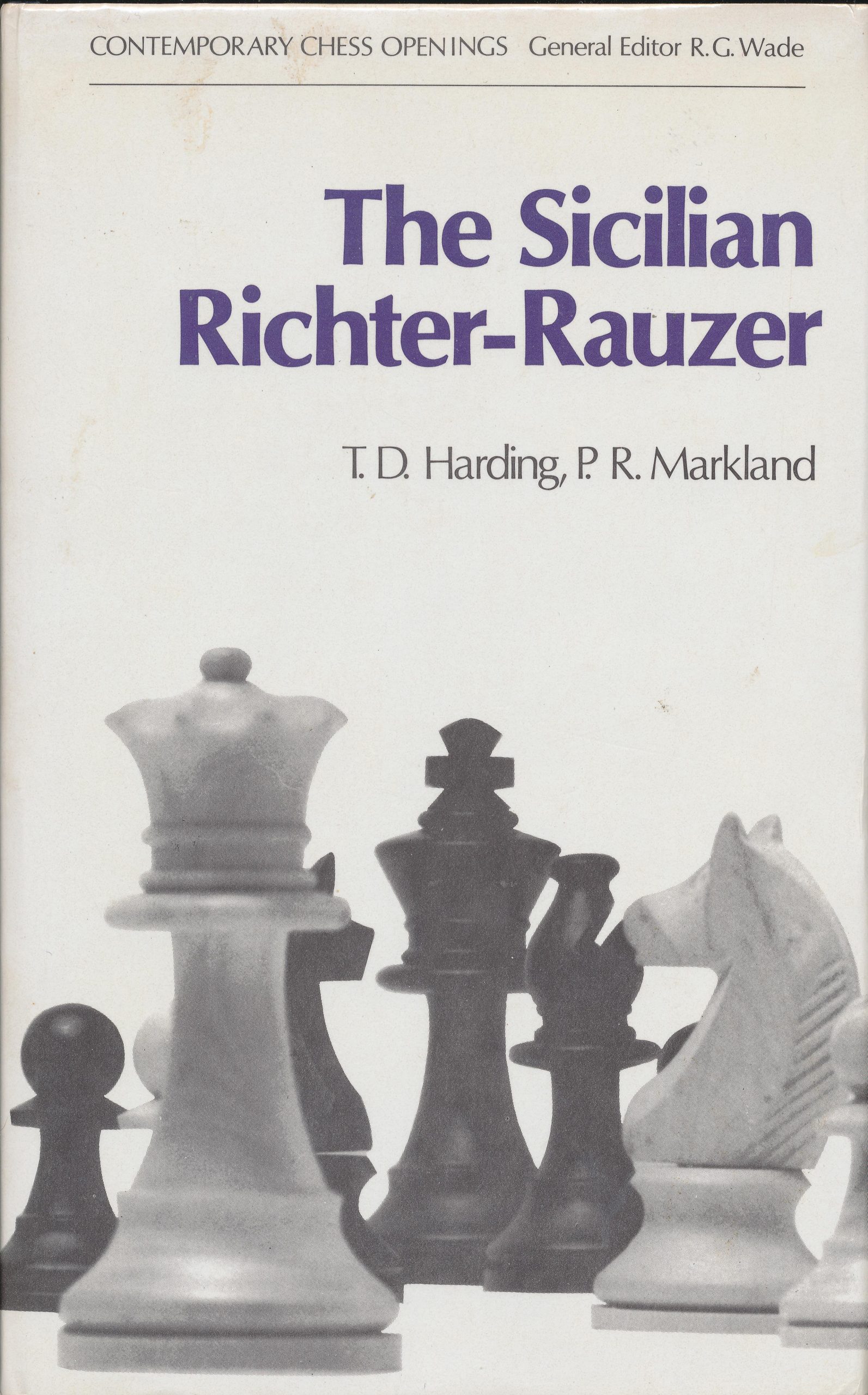
The Sicilian Richter-Rauzer, TD Hardign and PR Markland, Batsford, 975, ISBN 0 7134 2979 8
The Sicilian Richter-Rauzer, TD Harding and PR Markland, Batsford, 975, ISBN 0 7134 2979 8
Review Notice for The Sicilian Richter-Rauzer, TD Hardign and PR Markland, Batsford, 975, ISBN 0 7134 2979 8
Review Notice for The Sicilian Richter-Rauzer, TD Harding and PR Markland, Batsford, 975, ISBN 0 7134 2979 8

I also wrote a best game collection of Karpov which was by far the most interesting of the three books to write.
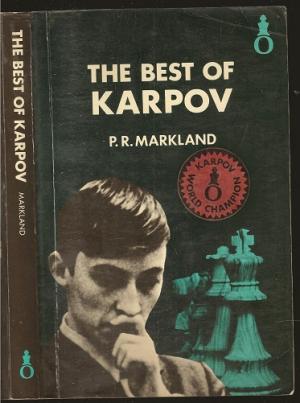
The Best of Karpov, PR Markland, Oxford University Press, 1975, ISBN 10: 0192175343

At about this time, I decided to embark upon a career in banking and to abandon that of a professional chessplayer. Since then I have concentrated on correspondence chess.

Having received  master certificate, I entered a European and World tournament in both of which I finished first. The second of these two results qualified me for the world Championship Semi-finals. But first attempt in the eleventh championship ended in failure to qualify.

As a result of an invitation received by the BPCF I played in the Eino Heilimo Memorial Grandmaster event. I have , however, qualified as a postal IM by scoring the required seven points and had an outside chance of trying for first place at one stage.

Here is my best game from this event.

[pgn]
[Event “Heilimo mem-B corr7782”]
[Site “Finland”]
[Date “1977.??.??”]
[Round “?”]
[White “Duenhaupt, Heinz Wilhelm”]
[Black “Markland, Peter Richard”]
[Result “0-1”]
[ECO “B25”]
[Annotator “Peter Markland”]
[PlyCount “80”]
[EventDate “1977.??.??”]
[EventType “tourn (corr)”]
[EventRounds “13”]
[EventCountry “FIN”]
[SourceTitle “Corr Nr. 1”]
[Source “ChessBase”]
[SourceDate “1997.09.01”]
[SourceVersion “2”]
[SourceVersionDate “2000.04.19”]
[SourceQuality “1”]

{[%evp 0,80,14,12,86,19,14,12,34,21,21,17,24,18,20,17,23,15,15,14,14,12,21,14,
34,58,52,48,65,0,38,9,0,-43,-72,-73,-24,-101,-84,-84,-24,-24,-52,-149,-153,
-153,-19,-127,-35,-52,-27,-27,-2,8,50,-167,-165,-202,-25,-20,-20,-7,-191,-252,
-244,-240,-252,-252,-262,-263,-279,-281,-279,-281,-288,-323,-315,-388,-422,
-421,-336,-309,-288]} 1. Nf3 g6 2. g3 Bg7 3. Bg2 c5 4. e4 Nc6 5. O-O e5 6. d3
Nge7 7. Nc3 O-O 8. Nd2 d6 9. Nc4 Be6 ({Doctor Dunhaupt used this set-up
against Shamkovich in the BdF Jubilee 1970-74, when Black preferred 9…Nd4?
with the result that after} 9… Nd4 $2 10. a4 Be6 11. Nd5 Qd7 12. c3 Ndc6 13.
a5 Rae8 14. Qa4 {White had a considerable advantage.}) 10. Nd5 f5 (10… Qd7 {
Playing Forintos in the Eino Heilimo White once again achieved a good game
after} 11. a4 Kh8 12. c3 Ng8 13. a5 Rae8 14. f4 Qc8 15. Be3) 11. c3 Qd7 12. a4
Rae8 13. a5 Kh8 14. Qa4 $2 {[#] In this position this move leaves the queen
exposed in the forthcoming attack. It is interesting to note that Doctor
Dunhaupt has had some success with this set-up.} f4 15. gxf4 {This capture is
forced to prevent 15…f3} (15. f3 {loses a pawn on d5}) ({If} 15. Nxe7 {
Black can prepare the doubling of rooks with} Rxe7 ({of transfer his queen to
the kingside after} 15… Qxe7)) 15… Bh3 16. f3 ({After} 16. Qd1 Bxg2 17.
Kxg2 exf4 18. Nxf4 d5 $1 {Black still has a strong attack.}) 16… Bxg2 17.
Kxg2 exf4 18. Nxf4 {[#]} d5 $1 {To capture this pawn would allow the black
rook on e8 access to the e2 square with fatal consequences for White.} 19. Na3
{The problem with the knight retreat is that both d2 and e3 are excluded
because of the hanging knight on f4 whilst the retreat chosen leaves the queen
cut off.} ({For example,} 19. exd5 Nxd5 20. Nxd5 Re2+ 21. Rf2 (21. Kh1 Qh3) (
21. Kg1 Qh3) 21… Qxd5) 19… g5 20. Nh5 Ng6 $1 {White must accept the second
pawn because otherwise the threat of 21…Nh4+ is too strong.} 21. Bxg5 h6 22.
Be3 $1 {The only chance. This bishop heads for g1 to defend the weak h2 square.
} d4 23. cxd4 cxd4 24. Bg1 ({A further point is that} 24. Bf2 {is met by} Rxf3
$1) 24… Nh4+ 25. Kh1 (25. Kg3 Be5+ 26. Kxh4 Rg8 {wins quickly.}) 25… Qh3
26. Qc2 Rxf3 27. Rf2 ({The alternative defence of} 27. Rfd1 {could be met by
either} Ref8 {threatening 28…Rf2} ({or} 27… Be5 {and 28…Rg8})) 27… Ref8
28. Raf1 {[#]} Qxf1 $1 {This temporary queen sacrifice wins by force.} 29. Rxf1
Rxf1 30. Qe2 {the best chance to prevent 30…Nf3} ({After} 30. Ng3 Re1 31. Nc4
Nf3 32. Ne2 Nxg1 33. Nxg1 Rff1) 30… Ne5 {preventing 31.Qg4. Now the threat
of 31…Rc1 and 32…Nef3 cannot be prevented even by White’s next move.} 31.
Nxg7 Rc1 $1 32. Nf5 Nhf3 {the most accurate.} 33. Qf2 ({If} 33. Kg2 Rxg1+ 34.
Kf2 Rh1 35. Kg3 Rg8+ {wins. The rest is easy.}) 33… Rg8 34. Ng3 Rxg1+ 35.
Qxg1 Nxg1 36. Kxg1 Nxd3 37. Nc4 Rc8 38. Nd6 Rc1+ 39. Kg2 Nxb2 40. e5 Nd3 {
and White resigned.} 0-1
[/pgn]

Here is his brief Wikipedia entry.

The English Chess Forum has discussed Peter.

Peter’s games are here.

[pgn]
[Event “Olympiad-21 Final A”]
[Site “Nice”]
[Date “1974.06.28”]
[Round “13”]
[White “Debarnot, Roberto Luis”]
[Black “Markland, Peter Richard”]
[Result “0-1”]
[ECO “B38”]
[Annotator “Keene,R”]
[PlyCount “42”]
[EventDate “1974.06.15”]
[EventType “team-tourn”]
[EventRounds “15”]
[EventCountry “FRA”]
[SourceTitle “EXT 2000”]
[Source “ChessBase”]
[SourceDate “1999.11.16”]
[SourceVersion “1”]
[SourceVersionDate “1999.11.16”]
[SourceQuality “1”]
[WhiteTeam “Argentina”]
[BlackTeam “England”]
[WhiteTeamCountry “ARG”]
[BlackTeamCountry “ENG”]

{[%evp 0,42,19,31,14,-14,43,-5,-20,-1,3,-6,41,32,20,23,23,19,28,32,39,39,47,32,
38,30,44,51,62,55,54,32,58,41,45,-95,-6,-169,-169,-162,-208,-233,-231,-280,
-285]} 1. d4 Nf6 2. c4 c5 3. Nf3 cxd4 4. Nxd4 Nc6 5. Nc3 g6 6. e4 d6 7. Be2 Bg7
8. Be3 O-O 9. O-O Nxd4 (9… Bd7) 10. Bxd4 Be6 11. Rc1 Qa5 12.
f4 Rfc8 13. b3 a6 14. f5 Bd7 (14… gxf5 $2 15. exf5 Bxf5 16. b4 $1 $16) 15.
Qe1 (15. Bxf6 Bxf6 16. Nd5 Bg5 17. f6 exf6 $1) 15… Bc6 16. Qh4 (16. fxg6 hxg6
17. Nd5 Qxe1 18. Nxe7+ Kf8 19. Nxg6+ fxg6 20. Rcxe1 Ke7 21. e5 $13) 16… b5
17. g4 $2 b4 18. g5 {[#]} Nxe4 $3 19. f6 (19. Bxg7 Qc5+ 20. Rf2 Qxf2+ $1) 19…
Qxg5+ 20. Qxg5 Nxg5 21. h4 Ne6 0-1
[/pgn]