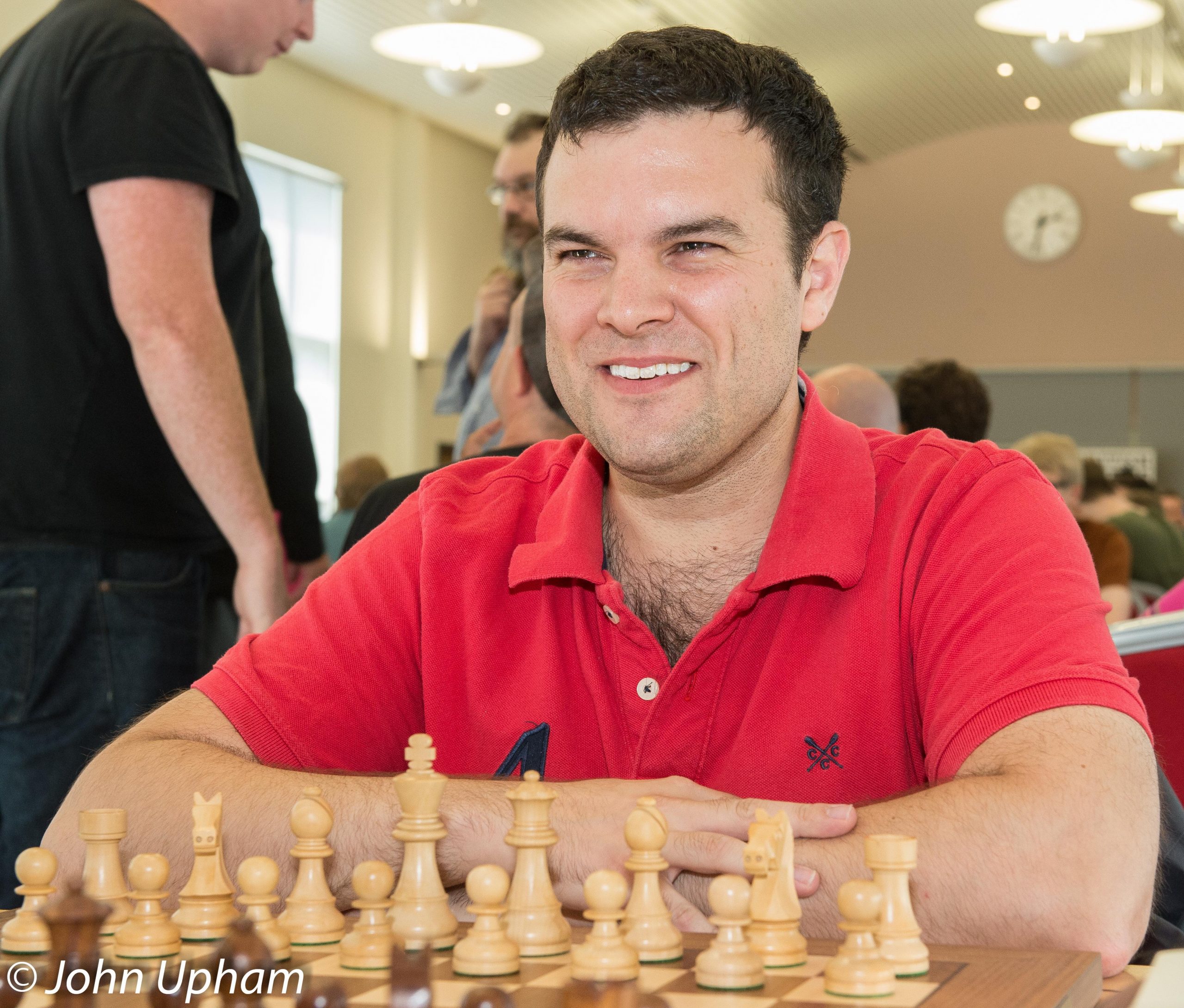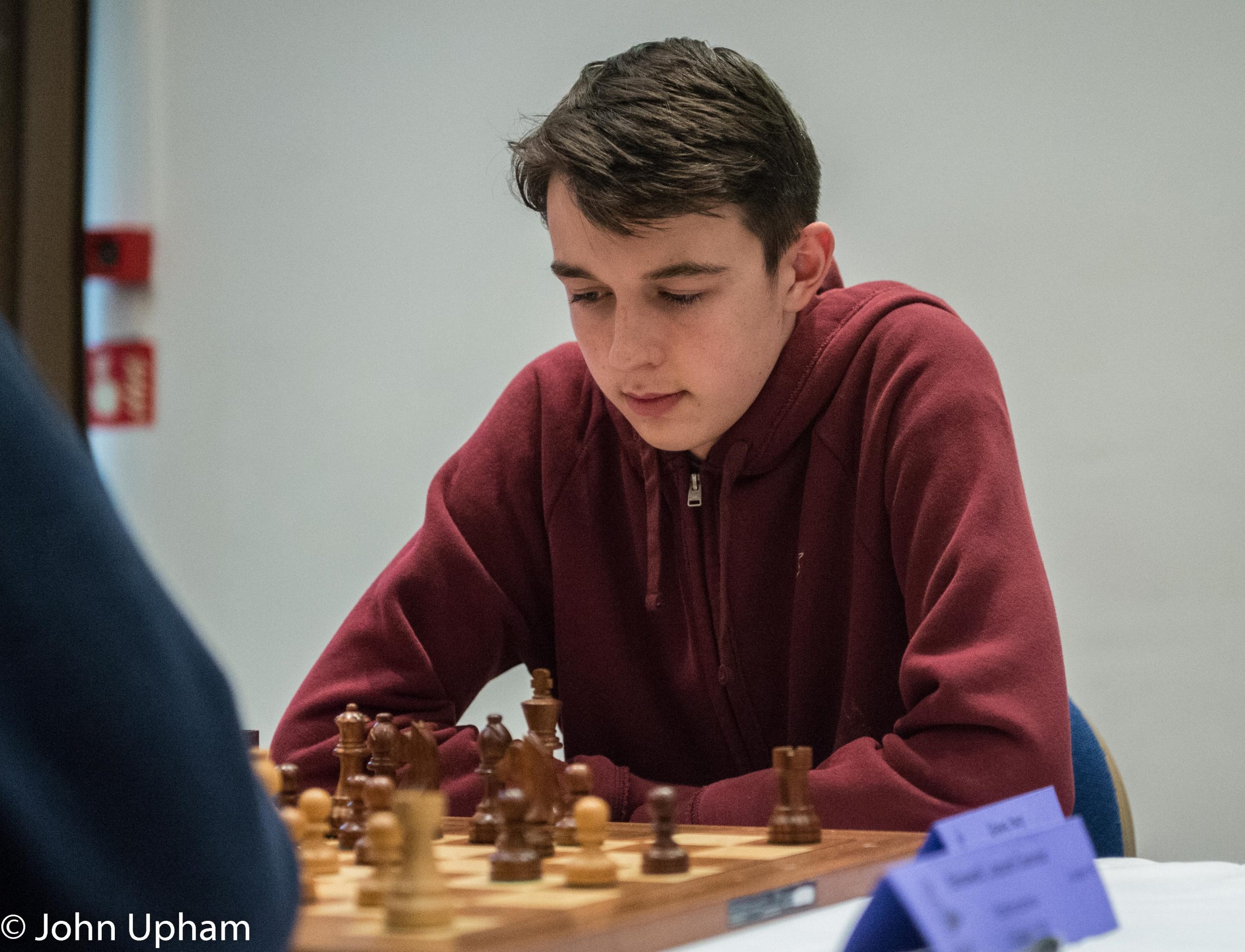
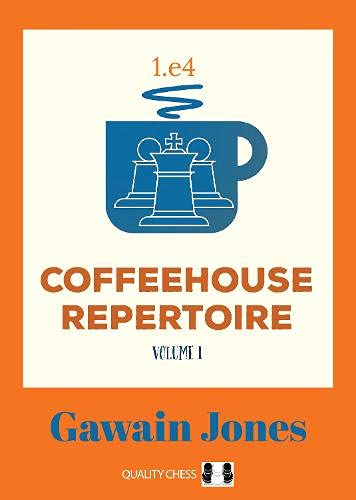
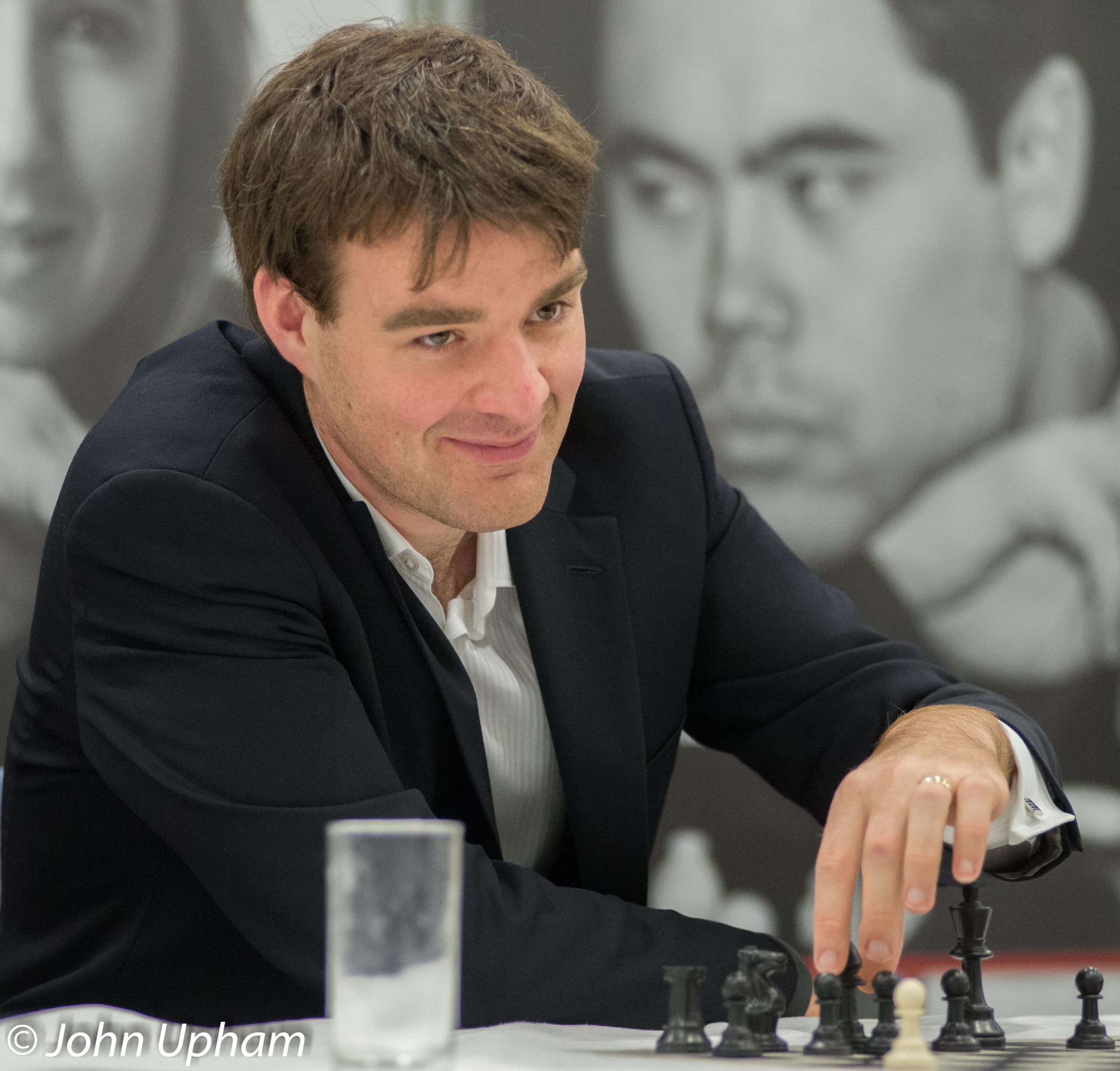
Gawain Jones is an English grandmaster, twice British Champion and winner of the 2020 European Blitz Championship.
From the publisher:
“Coffeehouse Repertoire is a 1.e4 player’s dream: an arsenal of ideas from a world-class grandmaster to surprise and confound your opponents, combining coffeehouse trickery with complete theoretical soundness.
In Volume 1, GM Gawain Jones shows how to put pressure on the Sicilian, Caro-Kann, Scandinavian and Alekhine’s Defences, using lines which feature a potent combination of surprise value, objective soundness and practical effectiveness.
The Coffeehouse 1.e4 Repertoire will be completed in Volume 2, which covers 1…e5, plus the French, Pirc, Modern, Philidor and other miscellaneous Defences.
Gawain Jones is an English grandmaster, twice British Champion and winner of the 2020 European Blitz Championship. He has defeated some of the world’s best players using the ideas recommended in this book.”
End of blurb…
Quality Chess live up to their name by being one of the few publishers who offer a hardback as well as softback version of all of their titles.
The production values are superb with a “McFarland-like” feel. Of course, you could save a few pence and go for the paperback version but we would definitely treat ourselves with an early Christmas present and savour the hardback. In addition, high quality paper is used and the printing is clear: excellent glossy paper has been used. The weight of this paper gives the book an even better feel to it!
The book can easily be laid flat next to the board and does not require weights to prevent it from “self-closing” (a particular bugbear of ours). Each diagram is clear and the instructional text is typeset in two column format, which, we find, enables the reader to maintain their place easily. Figurine algebraic notation is used throughout and the diagrams are placed adjacent to the relevant text.
A small (but insignificant) quibble: the diagrams do not have a “to move” indicator (but they do have coordinates). There is an Index of the Main Games section which is most welcome.
Before we take our first sip of coffee Quality Chess have provided a pdf excerpt.
As before, we are examining Volume 1 which provides a repertoire for White starting 1.e4 against the Sicilian, Caro-Kann, Scandinavian and Alekhine defences. Volume 2 is expected in September 2021 and will cover other replies to 1.e4
Gawain is a consistent 1.e4 player and has scored 67.1% according to MegaBase 2020. Having said that he has scored even more convincingly with other first moves!
This is his fifth book having written four previous volumes on the Sicilian Dragon and Grand Prix Attack.
The books main content is divided into two main sections, Sicilian Defence and Other Defences and these sections are further divided into eight chapters viz:
- Carlsen Variation (of the Sicilian)
- 2…Nc6 3.Bb5
- 2…Nc6 3.Nge2
- 2…e6 3.Nf3
- Move 2 Alternatives
- Caro-Kann
- Scandinavian
- Alekhine
followed by a useful Index of Variations.
Before we continue further we have a warning. If, for you, the book title suggests a feast of dodgy gambits, tricks and cheapos to take to the chess club and online platforms then look away now. You will be disappointed.
Most space in Volume 1 is dedicated to ideas for White versus the Sicilian Defence and no doubt most would predict a Grand Prix Attack based repertoire from the author. Well, not quite.
Gawain recommends
[fen cal=Gb1c3] rnbqkbnr/pp1ppppp/8/2p5/4P3/2N5/PPPP1PPP/R1BQKBNR b KQkq – 0 1 [/fen]
and against 2…d6 we have the interesting
[fen cal=Gd1d4] rnbqkbnr/pp2pppp/3p4/8/3QP3/2N5/PPP2PPP/R1B1KBNR b KQkq – 0 1 [/fen]
as favoured by Magnus Carlsen and Chapter 1 examines the less common positions that arise from this.
Here is an example:
[pgn]
[Event “Gashimov Memorial 5th”]
[Site “Shamkir”]
[Date “2018.04.23”]
[Round “5”]
[White “Carlsen, Magnus”]
[Black “Wojtaszek, Radoslaw”]
[Result “1-0”]
[ECO “B23”]
[WhiteElo “2843”]
[BlackElo “2744”]
[Annotator “Nielsen,Peter Heine”]
[PlyCount “61”]
[EventDate “2018.04.19”]
[EventType “tourn”]
[EventRounds “9”]
[EventCountry “AZE”]
[EventCategory “21”]
[SourceTitle “CBM 184”]
[Source “ChessBase”]
[SourceDate “2018.05.16”]
[SourceVersion “1”]
[SourceVersionDate “2018.05.16”]
[SourceQuality “1”]
{[%evp 0,61,17,25,57,31,81,61,55,57,61,29,36,1,11,-19,33,12,8,-10,25,14,20,16,
28,28,28,47,40,33,34,25,70,75,76,27,23,50,84,10,12,-82,0,-43,-43,-32,-31,-33,
-28,-28,-26,-26,-20,-29,-16,51,210,207,210,210,521,521,536,536]} {The
tournament in general, but for Magnus especially had a very quiet start with
Topalov’s win over Navara being the only decisive game. The pairings gave
Magnus 3 Blacks vs. the Azeri players not leaving much scope for creativity,
however in round 5 things were about to change:} 1. e4 {Quintiliano,R} c5 {
Radek stays loyal to his compatriot inviting his favourite Najdorf variation.}
2. Nc3 d6 {Najdorf players have to use this move order as e.g.} (2… Nc6 {
can be met by} 3. Nf3 $1 {intending 4.d4.}) 3. d4 cxd4 4. Qxd4 {A nice and
fitting touch, as this move order vs. the Sicilian was favoured by Vugar
Gashimov.} Nc6 5. Qd2 $5 {Magnus unleashes a rare and original concept,
completely novel at top level. During Wijk aan Zee 2017 I received an email
from Greek IM Ioannis Simeonidis suggesting this setup as an interesting
anti-Najdorf concept and offered it to Magnus to test his concept! At first it
reminded me of Greek hubris. After all how likely is it that you can come up
with a meaningful and new setup at move 5 in one of the most tested openings
historically in chess? GM, Khenkin, the commentator at the event formulated it
with classic Soviet iron chess logic: “Chess-wisdom suggests only moving each
piece once in the opening, especially the queen, however the World Champion
seem to have his own rules”. First sight however is deceptive: White has an
interesting concept in mind, and very similarly to Fischer-Random chess the
players now have to adapt to problems completely untested previously in
practice.} ({Relevant:} 5. Bb5 Bd7 6. Bxc6 Bxc6 7. Nge2 Nf6 8. Bg5 e6 9. O-O-O
Be7 10. Qd3 Qa5 11. Bd2 d5 12. e5 Ne4 13. Nxe4 dxe4 14. Qd7+ Bxd7 15. Bxa5 Bc5
16. Nd4 f6 17. exf6 gxf6 18. Rhe1 Bxd4 19. Rxd4 Bc6 20. Red1 Kf7 21. Rd8 Rhxd8
22. Rxd8 Rxd8 23. Bxd8 h5 24. g3 e5 25. Kd2 Ke6 26. c4 f5 27. Ke3 b5 28. cxb5
Bxb5 29. h4 Kd5 30. Bc7 a6 {1/2-1/2 (30) Zvjaginsev,V (2661)-Wang,H (2690)
China 2017}) 5… Nf6 {Logical and common-sense, but Ofitserian took a much
more concrete approach when facing Paravyan in the Russian Junior championship
4 days later harassing the white queen with} (5… g6 6. b3 Bh6 $5 {White
however did not budge and went} 7. f4 Nf6 8. Bb2 e5 {Quintiliano,R: ‘?!’} (8…
O-O $142 {Quintiliano,R} 9. O-O-O a5 10. Bb5 Qb6 $132) 9. g3 O-O 10. O-O-O {
and won a complex fight. This is what fascinates the most with Simeonidis
variation, that an oasis of creativity existed in territory believed to have
been long mapped out.}) 6. b3 e6 {On the same day in the Budapest Spring Open
but 3 hours later due to the time difference, Kotronias faced} (6… g6 {
but got an excellent position after} 7. Bb2 Bg7 8. O-O-O O-O 9. f3 Qa5 10. Kb1
Be6 11. Nge2 {As in the actual game it’s noteworthy that the surprised player
acts with typical Sicilian moves, while in the game played 4 days later,
Ofitserian most likely influenced by the computer, tried a setup aimed
specifically at the possible defects of White’s concept.}) 7. Bb2 a6 {Again
typical Sicilian style.} ({Quintiliano,R: ‘Knowing how the game goes,’} 7… d5
$5 {intending …Bb4 was a more concrete approach. Quintiliano,R: ‘maybe is a
worthy try’} 8. exd5 {Quintiliano,R} exd5 9. O-O-O Be6 10. Nge2 Qa5 {The point
is that despite the isolated pawn, Black has open lines and more freedom to
develop the pieces} 11. Kb1 Bc5 12. Nf4 O-O-O $13) 8. O-O-O {[#]} b5 $146 ({
Predecessor:} 8… Qa5 9. Kb1 Be7 10. f4 {1/2-1/2 (10) Fernandez de Bobadilla,
J (2106)-Fernandez de Bobadilla,G (2167) Granada 2015}) 9. f3 {The position
reminds one of a Rauzer, however the white bishop being on b2 and the knight
on g1 instead of d4! At first this sounds considerably more passive from
whites perspective, but the bishop on b2 not only attacks in the long diagonal
but also provides additional safety for the white king. While a knight on d4
would just be exchanged now on g1 it can consider various routes of attack.} h5
$6 {Preventing g4 makes perfect sense, but} (9… Be7 10. Kb1 {is the obvious
reply, but then after} (10. g4 Nxg4 $1 {is a nice trick as} 11. fxg4 Bg5 {
wins the white queen.}) 10… h5 {Black has a slightly improved version of the
game.} (10… O-O {Quintiliano,R} 11. g4 Bb7 {with typical and double-edged
Sicilian positions, despite there are some differences of normal lines, the
Bb2 being the most clear one, Black should have the usual counterplay ideas.}))
10. Nh3 $1 {Till this move, the general concept was mapped out in preparation,
but here the World Champion demonstrates his level, adopting to the specifics
of the position excellently. The g5-square very rarely being a relevant square
for a white knight in the Scheveningen style Sicilian is of no importance.
Like in chess 960 what matters is adapting to the new situation, and the
combination of Black’s last move weakening the g5-square and White’s knight
being on g1 prompted this unusual approach.} Be7 11. Ng5 h4 $6 {Again logical
and typical, however for this specific position just not very relevant.} 12. f4
Bb7 13. Kb1 Rc8 14. Be2 $1 Qc7 15. Rhe1 $1 {While White’s two last moves might
appear unimpressive, Be2 almost feeling passive, looks are again deceptive.
White quietly finishes his development in essence claiming he can improve his
position meaningfully before the eventual confrontation, while Black cannot.
Black’s position is much worse than it looks. Normally …Nb4 and …Qa5 would
create counterplay, exchange sacrifices on c3 being part of the equation, but
with the white bishop being on b2 such action by Black would be completely
pointless, and …Nb4 simply being answered by a white a3. Especially the
knight at c6 seems misplaced blocking both the bishop on b7 and the rook on c8.
The relevant question would be, why did Black put it there? But who could
resist free development harassing the opponent’s queen at move 4?} Nh7 16. Nxh7
Rxh7 17. g4 $6 {At the press conference Magnus explained that he saw the
indeed crushing 17.Nd5! but thought his position so dominating that sacrifices
were not even necessary.} (17. Nd5 $1 {Still the knight sacrifice was the best
way, as after} exd5 18. exd5 {Black’s position is close to hopeless as giving
back the piece is positional bankruptcy, but} Nb8 {loses instantly to} 19. Bd3
$1 {with} Rh5 20. Rxe7+ $1 {being the principal tactical point.}) 17… hxg3
18. hxg3 Bf6 19. Bd3 Rh8 20. g4 $6 {A strange coincidence. Magnus’ only
inaccuracy in the game was g4; unfortunately it was possible to play twice!
Unlike move 17 here simplicity was in order, fighting for the open file with} (
20. Rh1 $1 {would have given an overwhelming edge.}) 20… Nd4 21. Re3 Kf8 22.
Ne2 $1 Nxe2 23. Rxe2 {Despite the exchanges of minor pieces, the difference in
king safety still gives White the much more pleasant position.} Bc3 $2 (23…
Bxb2 24. Kxb2 Qc5 $1 {was Black’s best chance to minimise the damage, but in
time pressure Radek finally goes astray.} (24… Rh4 $1 {Quintiliano,R} 25. g5
Qc5 {[%cal Yc5d4]} 26. Kb1 (26. Rh2 Rxh2 27. Qxh2 Ke7 28. Kb1 Qe3 $132) 26…
d5 $5 27. exd5 Bxd5 28. Rh2 Rxh2 29. Qxh2 g6 $14 {despite White’s position
still looking easier, Black is fighting well and has real chances to equalise.}
)) 24. Bxc3 Qxc3 25. Qe3 Rc5 {Allows a tactical blow, but after} (25… Qc5 26.
Qg3 {Black is passive without counterplay while f5 and g5 follow for White
with an overwhelming edge.}) 26. e5 $1 dxe5 27. fxe5 Rh1 28. Rxh1 Bxh1 29. Rh2
Rxe5 ({If} 29… Bb7 {then} 30. Rh8+ Ke7 31. Qg5+ {mates.}) 30. Rh8+ $1 Ke7 31.
Qa7+ {And with 32.Rxh1 following next, Black being a piece down resigned.
Magnus’ shift of pace not only lasted to the upcoming free day’s soccer
tournament scoring all 6 six goals for the winning team, but also for the
remainder of the tournament with crucial wins over first the leader Topalov
and then with the black pieces against Anish Giri eventually securing overall
victory.} 1-0
[/pgn]
Should Black prefer 2…Nc6 then the author provides both the Rossolimo Variation, 3.Bb5 (also examined by IM Ravi Haria) and the clever move-order Chameleon, 3.Nge2:
[fen cal=Gg1e2] r1bqkbnr/pp1ppppp/2n5/2p5/4P3/2N5/PPPPNPPP/R1BQKB1R b KQkq – 0 1 [/fen]
3.Nge2 is also an annoying move order nuance against Najdorf and Dragon experts.
Against 2…e6 Gawain advocates the flexible 3.Nf3 followed by f1 bishop development to either b5 or g2 dependant on what Black plays. For example:
[fen cal=Gg2g3] rnbqkbnr/1p1p1ppp/p3p3/2p5/4P3/2N2NP1/PPPP1P1P/R1BQKB1R b KQkq – 0 1 [/fen]
For completeness Gawain devotes Chapter 5 to second move alternatives such as 2…a6, 2…g6 and even 2…b6.
Moving on to the Caro-Kann Gawain recommends the Exchange Variation but in really quite a novel way with an early jump of the f3 knight to e5. This is quite unusual and tricky to meet and CK players almost certainly will be quite surprised. He presents two related move orders:
[fen cal=Gg1f3] rnbqkbnr/pp2pppp/8/3p4/3P4/5N2/PPP2PPP/RNBQKB1R b KQkq – 0 1 [/fen]
and the more (according to GCBJ) outlandish:
[fen cal=Gf3e5] rnbqkbnr/pp2pppp/8/3pN3/8/8/PPPP1PPP/RNBQKB1R b KQkq – 0 1 [/fen]
breaking the “not moving the same piece twice in the opening guideline”.
An example game presented in the book is:
[pgn]
[Event “Tata Steel-A 80th”]
[Site “Wijk aan Zee”]
[Date “2018.01.27”]
[Round “12”]
[White “Kramnik, Vladimir”]
[Black “Caruana, Fabiano”]
[Result “1-0”]
[ECO “B13”]
[WhiteElo “2787”]
[BlackElo “2811”]
[Annotator “Marin,M”]
[PlyCount “103”]
[EventDate “2018.01.13”]
[EventType “tourn”]
[EventRounds “13”]
[EventCountry “NED”]
[EventCategory “20”]
[SourceTitle “CBM 183”]
[Source “ChessBase”]
[SourceDate “2018.03.14”]
[SourceVersion “1”]
[SourceVersionDate “2018.03.14”]
[SourceQuality “1”]
{[%evp 0,103,19,38,60,60,55,55,51,38,40,27,40,6,6,0,7,-22,-1,-9,-7,4,4,-12,-6,
-1,13,0,0,0,22,5,25,13,40,36,40,10,66,53,52,63,63,69,75,75,88,89,86,87,97,96,
78,93,107,93,95,29,77,79,99,71,116,107,107,123,123,106,109,95,174,174,166,204,
201,271,286,294,308,294,308,254,254,337,302,320,1024,1026,1071,963,1063,1069,
1090,1110,1112,937,937,1036,1094,1121,1179,1121,1165,1187,1229,1286]} 1. e4 c6
2. d4 d5 3. exd5 cxd5 4. Nf3 Nf6 5. Ne5 $5 {Kramnik,V (2787)-Svidler,P (2768)
80th Tata Steel GpA 2018 (4.3) 1-0 This rare move is in a way similar to
Kramnik’s early knight move to e5 in} ({The main lines were Fischer’s favourite
} 5. Bd3) ({and the Panov Attack.} 5. c4) 5… Nc6 ({Another game of a World
champion went} 5… e6 {Leaving the c8-bishop passive.} 6. Nd2 Nc6 7. c3 Bd6 8.
f4 {Starting an attack in the spirit of the Colle system.} g6 9. Qf3 Nh5 10. g4
Ng7 11. Qh3 h5 12. Bd3 Kf8 13. Ndf3 Kg8 14. Bd2 Bd7 15. O-O-O $36 {Anand,V
(2803)-Vallejo Pons,F (2684) Leon 2008 (1-0, 46) with consistent initiative.})
6. Bb5 Bd7 {In a way this is the most flexible move, parrying the threat by
developing a piece, but its drawback is giving up the bishops’ pair.} (6… Qb6
7. c4 {offers White some initiative in the spirit of the (reversed) Ragozin
system.}) (6… Qc7 {has been played only between lower rated players, but
looks sound enough. The point is that} 7. Bf4 {is not as threatening as it
looks:} e6 {[%cal Gf8d6]} 8. Nxc6 (8. Ng6 Qa5+ 9. Bd2 Qxb5 10. Nxh8 {[%csl Rh8]
} Qxb2 $5 $17) 8… Qxf4 9. Ne5+ Bd7 10. Nxd7 Qe4+ 11. Be2 Nxd7 12. O-O Bd6 {
and Black does not have much to fear.}) 7. Nxd7 Qxd7 8. c3 e6 9. O-O ({The
following game features a slightly different move order:} 9. Nd2 Bd6 10. Nf3
O-O 11. O-O Qc7 12. Re1 a6 13. Bd3 Bf4 {The reason why Black is interested in
exchanging these bishops can be found in a line from the comment to 12…e5
below.} 14. Bxf4 Qxf4 15. a4 g6 16. g3 Qc7 17. Kg2 Kg7 18. Qe2 Rfe8 19. h4 h5
20. b4 (20. Ne5 $14 {looks more natural.}) 20… Ne7 (20… Ng4 $5) 21. Rac1
Rac8 22. Ne5 a5 23. Bb5 Rf8 24. Qb2 b6 25. Ba6 Ra8 26. Bd3 $14 {Rapport,R
(2707)-Salgado Lopez,I (2644) Riadh 2017 (1-0, 52) with some slight pressure.})
({Relevant:} 9. Nd2 Bd6 10. Nf3 O-O 11. O-O Qc7 12. Re1 a6 13. Bd3 Bf4 14. Bxf4
Qxf4 15. a4 g6 16. g3 Qc7 17. Kg2 Kg7 18. Qe2 Rfe8 19. h4 h5 20. b4 Ne7 21.
Rac1 Rac8 22. Ne5 a5 23. Bb5 Rf8 24. Qb2 b6 25. Ba6 Ra8 26. Bd3 Qd6 27. b5 Rfd8
28. Re3 Rac8 29. Rf3 Rc7 30. Rc2 Nf5 31. Bxf5 exf5 32. Nc6 Re8 33. Re2 Rcc8 34.
Rfe3 Re4 35. Qc1 Ng4 36. Rxe4 fxe4 37. c4 dxc4 38. Rxe4 Nf6 {Rapport,R (2707)
-Salgado Lopez,I (2644) Riadh 2017 1-0}) 9… Bd6 10. Nd2 O-O 11. Re1 (11. Nf3
Qc7 (11… Ne4 $5) 12. Re1 {would transpose to the game above.}) 11… a6 ({
The plan of exchanging bishops is available after other white knight moves,
too, of course:} 11… Qc7 12. Nf1 Bf4 13. Bxf4 Qxf4 14. Qd2 (14. Nd2 {
planning Qe2, Nf3, Bd3 looks more active.}) 14… Qxd2 15. Nxd2 Rfc8 16. Bd3 {
½-½ Antipov,M (2584)-Mchedlishvili,M (2604) Izmir 2016}) 12. Bd3 e5 {Caruana
decides on switching to a French Isolani structure.} ({The main alternative is
starting the minority attack, typical for the Carlsbad structure (even if in
reversed form as here):} 12… b5 {but White’s kingside initiative is a bit
more effective:} 13. Nf3 b4 (13… Qc7 {does not manage exchanging the
dangerous bishop in time:} 14. Bg5 Nd7 15. Qc2 h6 {This weakening is more
important than it may look at fist sight, as it allows White to start an
effective attack.} 16. Be3 Nf6 17. h3 Rfc8 18. Qe2 Qb7 19. g4 $1 b4 20. g5 hxg5
21. Bxg5 bxc3 22. bxc3 Na5 23. Bxf6 gxf6 {Safarli,E (2639)-Esipenko,A (2564)
Riadh 2017 (1-0, 49)} 24. Nh4 $1 Rxc3 $140 25. Qg4+ Kf8 26. Qh5 $18 {planning
Nf5 with a decisive attack.}) 14. Bg5 bxc3 (14… Be7 15. Ne5 Qb7 16. Nxc6 Qxc6
17. cxb4 $16) {Puccini,J (2073)-Le,M (1927) Al Ain 2013 (½-½, 29)} 15. Bxf6
gxf6 16. bxc3 $14) 13. dxe5 Nxe5 14. Nf3 {[#]} Nfg4 $146 {Kramnik rightly
considered this “a strange move”.} (14… Rfe8 {is more natural, but since it
was played only between low rated players it is too early to draw any
conclusion.} 15. Bg5 Qg4 16. Nxe5 (16. Bxf6 Nxf3+ 17. Qxf3 Qxf3 18. gxf3 gxf6)
16… Qxg5 17. Nf3 Rxe1+ 18. Qxe1 Qf4 {Massironi,M (2193)-Rorato,G (2039)
Venice 2006 (½-½, 66)}) ({Exchanging the knight for any of White’s minor
pieces offer White pleasant play against the Isolani.} 14… Nxf3+ 15. Qxf3
Rfe8 16. Be3 $14) (14… Nxd3 15. Qxd3 h6 16. Be3 $14) ({Predecessor:} 14…
Rfe8 15. Bg5 Qg4 16. Nxe5 Qxg5 17. Nf3 Rxe1+ 18. Qxe1 Qf4 19. Qd2 Qxd2 20. Nxd2
Re8 21. Rd1 Rd8 22. Nf3 Ne4 23. Bc2 Bc7 24. Bb3 Nf6 25. Nd4 Bb6 26. Kf1 g6 27.
h3 h5 28. Nc2 Kf8 29. Rd3 Ke7 30. Ne3 d4 31. Nc4 dxc3 32. Rxc3 Bd4 33. Rc2 Rd7
34. Re2+ Kd8 35. Ne5 Bxe5 36. Rxe5 Re7 37. Rxe7 Kxe7 38. Ke2 Nd7 39. Bd5 b6 40.
Ke3 f6 41. Kd4 Kd6 42. Bc4 a5 43. Bf7 Ne5 44. Be8 {Massironi,M (2193)-Rorato,G
(2039) Venice 2006 1/2-1/2 (66)}) 15. Nxe5 Nxe5 {Caruana must have thought the
knight was active on this square but as will be clear soon it is rather
exposed.} 16. Bc2 Rfe8 (16… Bc7 17. Bf4 {is likely to transpose to the game.}
) (16… Qc6 17. Bf4 Nc4 18. Bxd6 Nxd6 (18… Qxd6 19. b3 Na3 20. Be4 Rad8 21.
Bf3 $14) 19. Qd4 $14) 17. Bf4 Bc7 18. g3 $3 {The most difficult move in the
game. White prepares for winning a pawn with Bxh7+ by avoiding back rank
problems.} ({Immediately carrying out this operation would offer Black
reasonable compensation:} 18. Bxe5 Bxe5 19. Bxh7+ Kxh7 20. Qh5+ Kg8 21. Rxe5
Qb5 $44) ({The purpose of the last move is clear, but the natural question is
why not} 18. h3 {? The answer is that} Nc4 {works better than in the similar
line below. What is really remarkable with Kramnik’s last move is that Black
cannot parry the initial threat under favourable circumstances.}) 18… Rad8 {
Practically turning 18.g3 into a gain of time as Black will soon have to play .
..Rd8-e8.} (18… g6 {weakens f6, which becomes relevant after} 19. Bb3 Rad8
20. Bg5 {Black has to launch the desperate attack with} Qh3 21. Bxd8 Rxd8 {
when White calms down the position to his favour with} 22. Rxe5 Bxe5 23. Bxd5
Qd7 24. c4 Bxb2 25. Rb1 Bg7 26. a4 {and the b-pawn will soon be lost.}) (18…
h6 {weakens g6, and also leads to the loss of the d-pawn:} 19. Bxe5 Bxe5 20.
Qd3 g6 21. Bb3 Rad8 22. Rad1 $16 d4 $2 23. Qxg6+) ({Or if} 18… Nc4 19. Rxe8+
Rxe8 20. Bxc7 Qxc7 21. Qxd5 Nxb2 22. Rb1 {we can notice the difference with
respect to the similar line with 18.h3: there is no back rank mating danger.}
Qxc3 23. Qb3 Re1+ 24. Rxe1 Qxe1+ 25. Kg2 Qe5 26. Qxb7 g6 27. Bb3 Qf6 {Black
has defended with only moves but loses a pawn anyway:} 28. Bxf7+ Qxf7 29. Qxb2
{With reasonable winning chances.}) 19. Bxh7+ Kxh7 20. Bxe5 Bxe5 21. Qh5+ Kg8
22. Rxe5 Rxe5 ({Due to the move g2-g3, White can meet} 22… Qb5 {with} 23.
Rae1 Rxe5 24. Rxe5 {for instance:} Qxb2 25. Re7 Rf8 26. Qxd5 Qxc3 27. Rxb7 $16)
23. Qxe5 Re8 24. Qd4 Qb5 25. b3 Re2 {Black has achieved some activity but
White will temporarily return the pawn to launch a new wave of initiative.} 26.
h4 b6 (26… Re4 27. Qd1 $5) 27. Rd1 Rxa2 28. Re1 {White has returned the pawn
but has gained the control over the open file. It is Black’s king now who
experiences problems.} Qc6 29. Re5 Qf6 30. Qe3 Ra1+ 31. Kg2 Ra5 32. h5 d4 33.
cxd4 $1 ({The rook ending resulting after} 33. Re8+ Kh7 34. Qd3+ Qf5 35. Qxd4
Qd5+ 36. Qxd5 Rxd5 37. g4 Rc5 38. Re3 a5 {offers Black reasonable drawing
chances.}) 33… Rxe5 34. Qxe5 Qd8 35. d5 {White is well centralised and his
d-pawn is dangerous. Besides, Black’s kingside is under pressure. His
queenside pawns are too slow to generate adequate counterplay so White should
win with a bit of technique.} a5 36. d6 Qd7 37. Qe7 Qc6+ 38. Kg1 Qc1+ 39. Kh2
Qc5 40. Qe8+ Kh7 41. Qe4+ g6 (41… Kg8 42. d7 Qxh5+ 43. Kg2 Qd1 44. Qe8+ Kh7
45. d8=Q) 42. hxg6+ Kg7 $5 (42… fxg6 43. Qe7+ Kg8 44. Qe8+ Kg7 45. Qd7+ Kh6
46. Kg1 Qd5 47. Qe7 Qd1+ 48. Kh2 Qf3 49. Qe3+) 43. Qd3 Qxf2+ 44. Kh1 Qf6 (44…
Qe1+ 45. Kg2 Qe8 46. d7 Qd8 47. Qd4+ Kxg6 (47… f6 48. Qg4 $18 Qe7 49. Qd1 Qd8
50. Qh5 $18) (47… Kg8 48. Qd5 $18) 48. Qg4+ {[%cal Gg4h4]}) 45. d7 Qd8 46.
Qc3+ $1 (46. gxf7 Kxf7 47. Qd6 b5 $5 {offers Black counterplay.}) 46… Kxg6
47. Qc6+ (47. Qc8 {also wins:} Qe7 48. d8=Q Qe1+ 49. Kh2 Qe2+ 50. Kh3 Qf1+ 51.
Kh4 Qh1+ 52. Qh3 $18) 47… Kh5 (47… f6 48. Qc8 Qe7 49. Qe8+) (47… Kg7 48.
Qc8 Qf6 49. d8=Q Qf1+ 50. Kh2 Qf2+ 51. Kh3 Qf1+ 52. Kh4 Qh1+ 53. Kg5 Qh6+ 54.
Kg4 $18) 48. Qf3+ Kh6 (48… Kg6 49. Qg4+ {[%cal Gg4h4]}) 49. Qxf7 Qh8 50. Kg2
Qa8+ 51. Kh2 Qh8 52. Qe8 1-0
[/pgn]
Next up is the Scandinavian Defence which quickly branches into 2…Qxd5 and 2…Nf6.
Against the former the author proposes the line in which White plays 3.Nf3 instead of 3.Nc3 and, at the right time, plays c4.
[fen cal=Gg1f3] rnb1kbnr/ppp1pppp/8/3q4/8/5N2/PPPP1PPP/RNBQKB1R b KQkq – 0 1 [/fen]
Here is a tough game in this variation:
[pgn]
[Event “Moscow Tal Memorial 7th Blitz”]
[Site “Moscow”]
[Date “2012.06.07”]
[Round “5”]
[White “Morozevich, Alexander”]
[Black “Grischuk, Alexander”]
[Result “1-0”]
[ECO “B01”]
[WhiteElo “2769”]
[BlackElo “2761”]
[Annotator “British Chess News”]
[PlyCount “113”]
[EventDate “2012.06.07”]
[EventType “tourn (blitz)”]
[EventRounds “9”]
[EventCountry “RUS”]
[EventCategory “22”]
[SourceTitle “CBM 148 Extra”]
[Source “ChessBase”]
[SourceDate “2012.06.22”]
[SourceVersion “1”]
[SourceVersionDate “2012.06.22”]
[SourceQuality “1”]
{[%evp 0,113,28,37,32,39,68,64,67,42,67,7,7,19,2,-3,0,0,13,13,16,16,-5,15,16,1,
11,18,14,17,24,23,16,-22,27,3,6,13,41,32,32,33,33,48,46,54,42,52,67,65,89,84,
97,77,85,97,75,88,88,75,80,32,24,39,32,35,49,32,34,16,0,0,45,47,78,86,105,149,
129,129,112,116,170,171,159,157,173,124,112,65,150,288,288,337,490,186,186,195,
197,204,304,302,304,304,439,455,507,507,507,527,527,547,547,558,547,547]} 1. e4
d5 2. exd5 Qxd5 3. Nf3 Bg4 4. Be2 Nc6 5. d4 O-O-O 6. Be3 e5 7. c4 Qa5+ 8. Bd2
Bb4 9. d5 Bxf3 10. Bxf3 Nd4 11. Nc3 Qa6 12. Be2 Nf6 13. a3 Bxc3 14. Bxc3 Nxe2
15. Qxe2 Rhe8 16. O-O-O ({Relevant:} 16. Rd1 c6 17. O-O cxd5 18. Bxe5 Nd7 19.
Rxd5 f6 20. f4 fxe5 21. fxe5 Qe6 22. Re1 Nb6 23. Rxd8+ Rxd8 24. b3 Nd7 25. Qf2
a6 26. h3 Re8 27. b4 Nxe5 28. b5 Nf3+ {0-1 (28) Movsesian,S (2723)-Nakamura,H
(2729) Banska Stiavnica 2010}) 16… Kb8 17. Rhe1 Nd7 18. Qg4 {[#]} Qg6 $146 ({
Predecessor:} 18… g6 19. Qh4 f6 20. Bb4 h5 21. Re3 g5 22. Qe4 Qb6 23. Rf3 a5
24. Be1 Nc5 25. Qg6 e4 26. Re3 Rg8 27. Qf5 Nd3+ 28. Rdxd3 exd3 29. Qxd3 Rge8
30. Bc3 Rxe3 31. fxe3 f5 32. Bd4 Qa6 33. a4 b6 34. Kd2 Qc8 35. Kc3 Qd7 36. b3
Re8 37. Bf6 Re4 38. h3 g4 39. h4 Qd6 40. Bg5 Qa3 41. Qf1 b5 42. axb5 Qb4+ 43.
Kb2 a4 44. Qd3 axb3 45. Qxb3 Rxc4 46. Qxb4 Rxb4+ 47. Kc3 Re4 48. Bf4 {Pinter,E
(2379)-Kreindl,H (2179) Austria 2010 0-1}) 19. Qxg6 hxg6 20. h4 f6 21. Kc2 Rh8
22. g3 Rh5 23. Bd2 Kc8 24. b4 Nb6 25. Kb3 Rf5 26. f4 exf4 27. g4 Re5 28. Bxf4
Ree8 29. a4 Nd7 30. c5 Ne5 31. Bxe5 Rxe5 32. Rxe5 fxe5 33. Kc4 Rf8 34. d6 Rf4+
35. Kd5 cxd6 36. cxd6 Kd7 37. Kxe5 Rxb4 38. Rc1 Rxg4 39. Rc7+ Kd8 40. a5 Rxh4
41. Rxb7 a6 42. Rxg7 Rh1 43. Ra7 g5 44. Rxa6 g4 45. Ra8+ Kd7 46. Ra7+ Kd8 47.
Rg7 Re1+ 48. Kd5 Rd1+ 49. Kc6 Rc1+ 50. Kb6 Rb1+ 51. Ka7 Rd1 52. a6 Rxd6 53. Kb7
Rd1 54. a7 Rb1+ 55. Kc6 Rc1+ 56. Kd5 Rd1+ 57. Ke4 1-0
[/pgn]
For some time Scandinavian experts have realised that the c4 idea is tough to meet and probably therefore fear 3.Nf3 more than the routine 3.Nc3 getting in the way of the c-pawn.
Against 2…Nf6 Gawain recommends the “Modern Treatment” as dubbed by 2…Nf6 expert David Smerdon in his Smerdon’s Scandinavian from 2015 and the detailed analysis commences after:
[fen cal=Gf1c4] rnbqk2r/ppp1ppbp/6p1/2Pn4/2BP4/2N2N2/PP3PPP/R1BQK2R b KQkq – 0 1 [/fen]
Finally, we turn to the hyper-modern Alekhine Defence in which a more conventional approach based on the Four Pawns Attack is discussed.
[fen cal=Gf2f4] rnbqkb1r/ppp1pppp/1n1p4/4P3/2PP1P2/8/PP4PP/RNBQKBNR b KQkq – 0 1 [/fen]
Here is a significant stem game that Jones considers:
[pgn]
[Event “Gibraltar Masters”]
[Site “Catalan Bay”]
[Date “2003.02.01”]
[Round “5”]
[White “Kotronias, Vasilios”]
[Black “Short, Nigel D”]
[Result “1-0”]
[ECO “B03”]
[WhiteElo “2573”]
[BlackElo “2690”]
[Annotator “British Chess News”]
[PlyCount “69”]
[EventDate “2003.01.28”]
[EventType “swiss”]
[EventRounds “10”]
[EventCountry “ENG”]
[SourceTitle “CBM 092 Extra”]
[Source “ChessBase”]
[SourceDate “2003.03.07”]
[SourceVersion “1”]
[SourceVersionDate “2003.03.07”]
[SourceQuality “1”]
{[%evp 0,69,19,38,89,89,79,48,44,33,26,0,9,39,14,18,27,31,50,31,76,57,64,56,55,
-16,-16,-3,69,0,1,-22,37,28,98,118,109,105,166,170,191,186,144,142,190,142,167,
58,153,207,141,159,161,162,162,162,125,130,130,143,143,155,191,158,223,223,240,
251,253,239,258,278]} 1. e4 Nf6 2. e5 Nd5 3. d4 d6 4. c4 Nb6 5. f4 dxe5 6. fxe5
Nc6 7. Be3 Bf5 8. Nc3 e6 9. Nf3 Qd7 10. Be2 O-O-O 11. O-O f6 {[#]} 12. d5 ({
Relevant:} 12. exf6 gxf6 13. d5 exd5 14. Bxb6 axb6 15. cxd5 Bc5+ 16. Kh1 Nb4
17. Bb5 c6 18. Nd4 Bg4 19. Qa4 Bxd4 20. Qxb4 Bxc3 21. Qxc3 Qxd5 22. Bc4 Qd4 23.
Rxf6 Qxc3 24. bxc3 b5 25. Bb3 Rd3 26. Rf4 Bd7 27. c4 bxc4 28. Bxc4 Rc3 {
1/2-1/2 (28) Aschenbrenner,R (2230)-Posch,W (2283) Oberpullendorf 2002}) 12…
Nxe5 13. Nxe5 fxe5 14. a4 a5 15. Nb5 Bb4 16. d6 {[#]} Na8 $6 $146 ({
Predecessor:} 16… c5 17. Bg5 Rdf8 18. Bd2 Kb8 19. Bxb4 cxb4 20. Qb3 Qc6 21.
Qe3 e4 22. Rfd1 {1-0 (22) Nolte,K-Lau,J Germany 1993}) 17. c5 $18 Kb8 18. Bf3
c6 19. Na3 e4 20. Be2 b6 21. cxb6 Qxd6 22. Qxd6+ Rxd6 23. Rad1 Rhd8 24. Rxd6
Rxd6 25. g4 Bd2 26. Bf2 Kb7 27. Nc4 Rd5 28. gxf5 exf5 29. Rd1 Bb4 30. Be3 g6
31. Kf2 Rxd1 32. Bxd1 c5 33. Bb3 Nxb6 34. Nxb6 Kxb6 35. Bg8 1-0
[/pgn]
For each of Black’s move one replies Gawain presents an overview of the ideas including a “What We’re Hoping for” section. This is the followed by detailed theory with a few illustrative games sprinkled in. The discussion and explanations are friendly, clear and pragmatic talking about the responses one is likely to face rather than a torrent of engine analysis and “best move” labelling.
It is not clear who chose to use the word “Coffeehouse” in the book’s title. The repertoire choices are most definitely not speculative or bordering on unsound. This is a extremely playable set of recommendations and most are used by elite players in the current decade.
Our overall impression can perhaps be best conveyed by likening the repertoire to a collection of choices from the well-known “Dangerous Weapons” series from Everyman brought together under one roof.
We are convinced that, despite the title, this book will be found to be extremely useful by the strongest and club players alike. If you are a Blackmar-Diemer or Latvian Gambit fan then this, perhaps, it not the book for you.
We look forward to Volume 2 in September 2021 when Gawain gets to grips with 1…e5, 1…e6, 1…d6, 1…g6 amongst the remainders.
An excellent fifth book from Gawain.
John Upham, Cove, Hampshire, 7th August, 2021
Book Details :
- Paperback : 432 pages
- Publisher: Quality Chess UK LLP (7 July 2021)
- Language: English
- ISBN-10:178483145X
- ISBN-13: 978-1784831455
- Product Dimensions: 17 x 2 x 24 cm
Official web site of Quality Chess