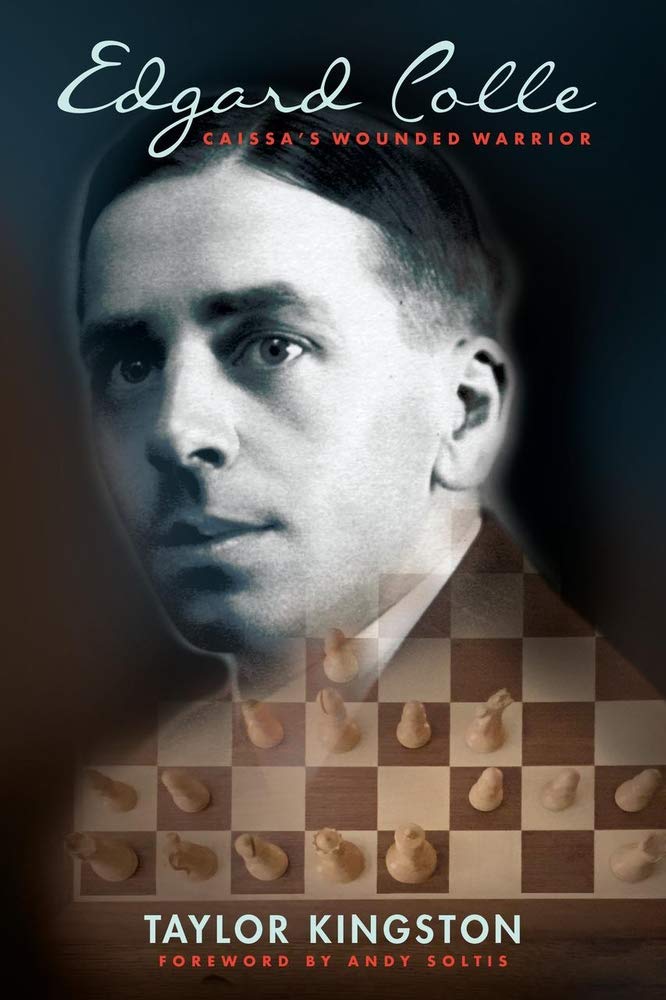
Edgard Colle: Caissa’s Wounded Warrior

Edgard Colle: Caissa's Wounded Warrior, Taylor Kingston. Russell Enterprises, 20th April 2021, ISBN-13 ‏ : ‎ 978-1949859270
Edgard Colle: Caissa’s Wounded Warrior, Taylor Kingston. Russell Enterprises, 20th April 2021, ISBN-13 ‏ : ‎ 978-1949859270

Edgard Colle: Caissa’s Wounded Warrior : Taylor Kingston

From the publisher:

“One of Caissa’s Brightest Stars!

Mention the name “Colle” and many if not most chessplayers think about an opening that is both easy to play as well as one with dynamic potential. Rarely is any thought given to the man himself.

Plug the word “Colle” into your favourite search engine, and, if you are lucky, you might find a reprint of the slim 1936 book by Fred Reinfeld, Colle’s Chess Masterpieces. Books on the Colle System – of which there are many – will be your main search results. However, Belgian master Edgard Colle is much more than a name connected to an opening system. He was one of the most dynamic and active chess players of the 1920s and early 1930s.

Though his international career lasted barely ten years, Colle played in more than 50 tournaments, as well as a dozen matches. Moreover, he played exciting and beautiful chess, full of life, vigour, imagination and creativity. As with such greats as Pillsbury and Charousek, it was a tragedy for the game that his life was cut short, at just age 34.

Author Taylor Kingston has examined hundreds of Colle’s games, in an effort to understand his skills and style, his strengths and weaknesses, and present an informed, balanced picture of him as a player.

Colle emerges as a courageous, audacious, and tenacious fighter, who transcended the limitations his frail body imposed, to battle the giants of his day and topple many of them. 110 of Colle’s best, most interesting, and representative games have been given deep and exacting computer analysis. This often revealed important aspects completely overlooked by earlier annotators, and overturned their analytical verdicts. But the computer’s iron logic is tempered always with a sympathetic understanding that Colle played, in the best sense, a very human kind of chess.

Though not intended as a tutorial on the Colle System, the book of course has many instructive examples of that opening. Additionally, there are several memorial tributes, biographical information about many of Colle’s opponents, his known tournament and match record, and all his available tournament crosstables. We invite the reader to get acquainted with this wounded but valiant warrior, whom Hans Kmoch called a “chess master with the body of a doomed man and the spirit of an immortal hero.” You are invited to explore the fascinating, fighting chess of one of the great tactical masters.”

Taylor Kingston
Taylor Kingston

“Taylor Kingston has been a chess enthusiast since his teens. His historical articles have appeared in many chess journals, including Chess Life, New In Chess, Inside Chess, and Kingpin. He is the editor of the recently released Emanuel Lasker: A Reader. In this book, he combines history and analysis in a new look at one of the early 20th century’s most variable but brightest stars.”

End of blurb

We recently reviewed the author’s first book, Emanuel Lasker: A Reader, A Zeal to Understand which has been well received.

Edgard (not Edgar) Colle’s name is well known to most chess players through his highly popular opening (of two main variants), The Colle System. You might argue that this was the club player’s opening of choice possibly usurped, in recent times, by the unfortunately ubiquitous London System.

However, rather unfairly, Colle himself is almost certainly not as well known as he deserves to be. Players of all levels really ought to take time to study his games with both colours since his attacking style is rather attractive and instructive.

The biographies section of the BCN library somewhat disappointingly only had one other book about Colle and that was the not-so-easy to obtain “Colle Plays The Colle System” by Adam Harvey published by Chess Enterprises in 2002.
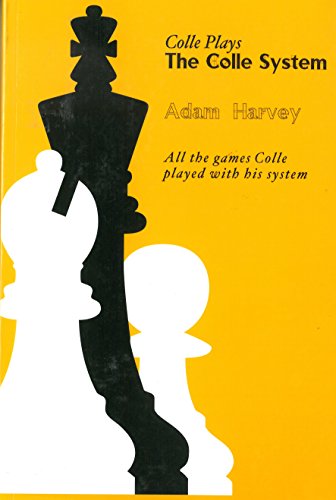
Colle Plays The Colle System, Adam Harvey, Chess Enterprises, 2002, ISBN 0-945470-88-6

but the above tome spends very little text on the master himself and only covers games with the white pieces and the Colle System.

Taylor Kingston’s book (also available as a Kindle eBook) is divided into two main parts as follows :

  1. Part I: Biographical Basics, Historical Background, Colleague’s Reminiscences and Memorial Tributes
  2. Part II: Annotated Games

and each of these is further sub-divided.

To see the extensive Table of Contents you may Look Inside the Kindle edition.

The book kicks off with a rather insightful Foreword from GM Andrew Soltis suggesting ECs lack of eminence stems from his premature early demise aged 34.

Pages 12 – 28 present biographical material from varied sources, some fairly obscure. We like obscure sources!

Fairly quickly (page 29) we find ourselves at Part II and the Annotated Games and this part, in turn, is divided into eleven sections with the following titles:

  1. Marvellous Miniatures
  2. An abundance of Brilliances
  3. Colle Lucks Out
  4. Follies, Failures, and Might-Have-Been
  5. Colle and the Endgame
  6. Colle and Positional Play
  7. Colle’s Fighting Games
  8. Salvaging the Draw
  9. Colle and Yates
  10. Colle’s Gem
  11. Swan Song

Each game is complete with historical background and context allowing one to learn more of Colle, his opponents and the tournaments they met at. The text is joyfully sprinkled with monochrome photographs of many opponents and potted biographies including that of Englishman George M. Norman (1880 – 1966) with whom we were unfamiliar until this book.

Follies, Failures, and Might-Have-Been” is particularly unusual since the author selects games where our hero goes astray and does not win in crushing fashion but loses himself providing a healthy balance. The opposition here includes players such as Euwe, Capablanca, Nimzovitsch, Vidmar and Tartakower so nothing to be ashamed of.

Colle and the Endgame” was another delightful chapter and perhaps not to be expected. Here is a game (here not annotated by TK but by Fred Reinfeld) from Budapest 1929 between Akiba Rubinstein and EC:

[pgn]
[Event “Budapest Szen Memorial”]
[Site “Budapest”]
[Date “1929.09.12”]
[Round “10”]
[White “Rubinstein, Akiba”]
[Black “Colle, Edgard”]
[Result “0-1”]
[ECO “E34”]
[Annotator “Fred Reinfeld & British Chess News”]
[PlyCount “92”]
[EventDate “1929.09.01”]
[EventType “tourn”]
[EventRounds “13”]
[EventCountry “HUN”]
[SourceTitle “HCL”]
[Source “ChessBase”]
[SourceDate “1999.07.01”]
[SourceVersion “2”]
[SourceVersionDate “1999.07.01”]
[SourceQuality “1”]

{[%evp 0,92,22,28,30,-10,-10,-3,4,-14,-14,-22,19,9,-1,-14,37,-14,-21,1,9,26,26,
26,21,17,22,17,25,26,15,2,17,21,21,24,61,-24,7,-35,-14,-117,-78,-78,-78,-102,
-110,-116,-113,-120,-116,-162,-123,-122,-103,-100,-103,-104,-65,-65,-64,-96,
-109,-118,-124,-125,-113,-123,-123,-126,-111,-119,-128,-130,-119,-119,-128,
-123,-123,-131,-128,-131,-167,-165,-158,-268,-268,-268,-355,-467,-312,-447,
-165,-576,-639]} 1. d4 {1)Reinfeld:Colles Chess Masterpieces, p.74 2)
Tartakower: Turnierbuch, S.77,89. Schönheitspreis für Colle.} Nf6 2. c4 e6 3.
Nc3 Bb4 4. Qc2 d5 ({Relevant:} 4… c5 5. a3 Bxc3+ 6. bxc3 Nc6 7. Nf3 d6 8. e4
e5 9. d5 Ne7 10. Nh4 Nd7 11. g3 Nf8 12. Bd3 Bh3 13. f4 exf4 14. Bxf4 Neg6 15.
Ng2 Bxg2 16. Qxg2 Nxf4 17. gxf4 Qh4+ 18. Qg3 Qxg3+ 19. hxg3 O-O-O 20. Kf2 Nd7
21. Kf3 Rde8 22. Rae1 Re7 23. Re2 Kc7 24. Rh5 h6 25. e5 Rhe8 26. Bf5 Nb6 27.
Bd3 Nd7 {1/2-1/2 (27) Koltanowski,G-Thomas,G Hastings Town Hall 1928}) 5. cxd5
{[#]} (5. Bg5 dxc4 6. Nf3 b5 7. a4 c6 8. Bxf6 gxf6 9. g3 a6 10. Bg2 Ra7 11. O-O
Rd7 {1/2-1/2 Capablanca,J-Nimzowitsch,A/Bad Kissingen 1928/HCL (39). (38)})
5… Qxd5 $146 ({Predecessor:} 5… exd5 6. Bg5 c6 7. e3 Nbd7 8. Bd3 c5 9. dxc5
Nxc5 10. Nge2 Be6 11. Bxh7 g6 12. Bxg6 Rg8 13. Nf4 Rxg6 14. Nxg6 d4 15. exd4
Qxd4 16. O-O Bxc3 17. bxc3 Qe4 18. Qxe4 Nfxe4 19. Be3 fxg6 20. f3 Nxc3 21. Bxc5
b6 22. Rfe1 Kf7 23. Bd4 Nb5 24. Bb2 Rc8 25. a4 Nd6 26. Bd4 Rc4 27. Bf2 Nb7 28.
Rec1 Na5 29. Rxc4 Nxc4 30. Rd1 Ke8 31. Bd4 Bd7 32. Ra1 Ke7 33. h4 Bc6 34. Kf2
Ke6 35. Bc3 {Hoenlinger,B-Mueller,H Vienna 1928 1-0}) 6. a3 (6. Nf3 c5) 6…
Bxc3+ 7. Qxc3 Ne4 $1 {Capablanca} (7… Na6 8. b4 $16 {Rubinstein-Thomas/
Budapest (4)/1929/}) (7… Nc6 8. e3 Ne4 9. Qc2 Qa5+ 10. Bd2 Nxd2 11. Qxd2
Qxd2+ 12. Kxd2 e5 $11) 8. Qd3 (8. Qxc7 Nc6 9. e3 e5 $44 10. Nf3 (10. f3 Nd6 11.
dxe5 Qxe5 12. Ba6 (12. Bd3 Bd7 $19) 12… O-O 13. Ne2 f5 $19) 10… exd4 11.
exd4 O-O (11… Nxd4 12. Nxd4 Qxd4 13. Bb5+ $16) 12. Be3 Qb3 13. Rb1 Qc2 14.
Rc1 Qxb2 $15) 8… Nc6 9. Nf3 e5 $1 10. dxe5 Qa5+ 11. Bd2 Nxd2 12. Qxd2 Qxd2+
13. Nxd2 (13. Kxd2 Bg4 14. Rc1 O-O-O+ 15. Ke3 Rhe8 $15) 13… Nxe5 $15 {
[%mdl 4096] Despite the foregoing simplification and the harmless-looking
aspect of the position, White has a difficult game.} 14. Rc1 $2 {Rubinstein
does not seem fully aware of the dangers in store for him} ({He cannot play}
14. O-O-O {because of} Ng4) ({while} 14. e3 {followed by Be2 and 0-0 would
cede Black command of the d-file and dangerously weaken the square d3.} Be6 15.
Be2 O-O-O 16. O-O-O $1 {was relatively best for White.}) 14… Bd7 $1 15. e3 (
15. Rxc7 Bc6 16. Nf3 $1 Kd8 (16… Nd7 17. Nd4 Kd8 18. Rxc6 bxc6 19. Nxc6+ Kc7
20. Nd4 $11) 17. Nxe5 Kxc7 18. Nxf7 Rhe8 $15) 15… Bc6 $1 16. Nc4 (16. f3
O-O-O 17. Rc3 Rd7 18. Be2 Rhd8 19. Nb3 (19. Nf1 Nd3+ 20. Bxd3 Rxd3 $17 {/\Bb5})
19… Ba4 20. Nd4 Nc6 21. Nxc6 Bxc6 22. Kf2 Rd2 23. b4 Bb5 24. Re1 Ra2 25. e4
Rdd2 26. Re3 Bxe2 27. R3xe2 Rxe2+ 28. Rxe2 Rxa3 $17) 16… Nxc4 17. Bxc4 O-O-O
18. Rc3 {Rubinstein is preparing a defensive line-up against black pressure in
the d-file, which has a serious tactical flaw.} ({White’s position is still
defensible} 18. O-O Rd2 19. Bxf7 $1 (19. b4 $6 Bd5 20. Bxd5 Rxd5 21. Rfd1 Rhd8
22. Rxd5 Rxd5 23. Kf1 Rd2 24. Ke1 Ra2 $15 25. Rc3 {White should be able to
hold the position.}) 19… Rxb2 20. Rfd1 Rf8 21. Be6+ Kb8 22. f3 Re8 23. e4 {
Weiß hat keine Probleme}) 18… Rd6 {Beretet doubling the rook and capturing
on g2.} 19. Bd3 $4 (19. Bxf7 $2 Bxg2 20. Rg1 Bf3 21. Bb3 Rhd8 22. Rc1 g6 $17
23. Rg3 Bh5 24. f3 (24. e4 Rd2 25. Rgc3 c6 26. R3c2 $4 Rd1+ 27. Rxd1 Rxd1#)
24… Rd3 25. Rc3 Rxc3 26. bxc3 Rd3 27. f4 Rxc3 28. e4 Rc1+ 29. Kd2 Rf1 $15) (
19. O-O $142 $1 $11 f5 20. Rd3 Rg6 21. g3 Be4 22. Rd2 Rd8 23. Rfd1 Rxd2 24.
Rxd2) 19… Rhd8 (19… Bxg2 20. Rg1 $14) 20. Be2 (20. Ke2 {That must have
been Rubinstein’s intention with 18.Rc3 and also with 19.Bd3.} Bxg2 21. Rg1 Bc6
22. Rxg7 (22. Bf5+ Kb8 23. Rxc6 Rd2+ 24. Kf3 bxc6 25. Rxg7 Rxb2 26. Rxh7 Rdd2
27. h3 Rxf2+ 28. Kg4 Rb3 $17) 22… Rxd3 {Had Rubinstein overlooked that?} 23.
Rxd3 Bb5 $19) 20… Bxg2 21. Rg1 Rg6 22. f4 (22. Bh5 Bf3 $1 $19) 22… Be4 23.
Rg3 Rdd6 24. Rc5 f5 25. Rg5 h6 $1 26. Rg3 Rxg3 27. hxg3 Rg6 $1 {Drive the
white king out of the center} 28. Kf2 Rc6 29. Rxc6 Bxc6 30. Ke1 Kd7 31. Kd2 Kd6
32. Kc3 Be4 33. Bc4 c5 34. a4 {/\g4,h5-h4} g5 35. fxg5 {White must give up the
e5-square} hxg5 36. b3 Bd5 37. Bd3 Ke5 38. a5 b6 39. axb6 axb6 40. Bf1 Be6 41.
Bg2 b5 42. b4 Bd5 43. Bf1 c4 44. Be2 g4 {Black wins through pressure to act.}
45. Bd1 Bf3 46. Bc2 Be4 (46… Be4 47. Bd1 Bd3 48. Kd2 Ke4 $19) 0-1
[/pgn]


You will need to buy the book to appreciate the authors fuller annotations.

From the chapter “Colle’s Gem” we could not resist giving you this game but, again, without TKs superb annotations:

[pgn]
[Event “Berlin”]
[Site “Berlin”]
[Date “1926.11.??”]
[Round “?”]
[White “Colle, Edgard”]
[Black “Gruenfeld, Ernst”]
[Result “1-0”]
[ECO “E14”]
[Annotator “British Chess News”]
[PlyCount “53”]
[EventDate “1926.11.17”]
[EventType “tourn”]
[EventRounds “9”]
[EventCountry “GER”]
[SourceTitle “HCL”]
[Source “ChessBase”]
[SourceDate “1999.07.01”]
[SourceVersion “2”]
[SourceVersionDate “1999.07.01”]
[SourceQuality “1”]

{[%evp 0,53,30,30,30,30,23,12,39,21,23,3,33,8,17,4,-6,-5,14,17,17,17,12,9,29,
18,45,46,52,35,31,10,23,69,60,32,-19,-17,37,26,113,204,204,204,373,814,1004,
1081,1043,1064,1064,1107,1104,1118,1110,1119]} 1. d4 Nf6 2. Nf3 e6 3. e3 b6 4.
Bd3 Bb7 5. Nbd2 c5 6. O-O Be7 7. b3 cxd4 8. exd4 d6 9. Bb2 Nbd7 10. c4 O-O 11.
Rc1 Re8 12. Re1 Qc7 13. Qe2 Rac8 14. Nf1 Qb8 15. Ng3 Qa8 16. Ng5 g6 {[#]} 17.
Nxf7 $1 Kxf7 18. Qxe6+ Kg7 19. d5 Nc5 20. Nf5+ $1 Kf8 21. Qe3 gxf5 22. Qh6+ Kf7
23. Bxf5 (23. Rxe7+ Rxe7 24. Qxf6+ Ke8 25. Bxf5 $18 {is also crushing}) 23…
Bxd5 24. Rxe7+ Rxe7 25. Qxf6+ Ke8 26. Qh8+ Kf7 27. Bxc8 1-0[/pgn]

Wonderful stuff indeed but please enjoy the full author annotations.

In summary, this is a delightful book that all in the BCN office wanted to take home. In many ways this volume could of easily been a McFarland publication with a hard cover to be found in a library and all the gravitas that publisher brings. Hats off to Russell Enterprises for landing this one.

If you haven’t realised by now this one of our favourite books of 2021.

John Upham, Cove, Hampshire 15th December 2021

John Upham
John Upham

Book Details :

  • Softcover : 272 pages
  • Publisher:  Russell Enterprises (20 April 2021)
  • Language: English
  • ISBN-10: 1949859274
  • ISBN-13: 978-1949859270
  • Product Dimensions: 15.24 x 1.27 x 22.86 cm

Official web site of Russell Enterprises

Edgard Colle: Caissa's Wounded Warrior, Taylor Kingston. Russell Enterprises, 20th April 2021, ISBN-13 ‏ : ‎ 978-1949859270
Edgard Colle: Caissa’s Wounded Warrior, Taylor Kingston. Russell Enterprises, 20th April 2021, ISBN-13 ‏ : ‎ 978-1949859270