Category Archives: 2020

Remembering Malik Mir Sultan Khan (1905 25-iv-1966)

Malik Mir Sultan Khan

Death Anniversary of Malik Mir Sultan Khan (1905 25-iv-1966)

From The Oxford Companion to Chess by Hooper & Whyld:

Perhaps the greatest natural player of modern times. Born in the Punjab, he learned Indian chess when he was nine, was taken into the household of Sir Umar Hay at Khan, and learned the international game in 1926, Two years later he won the All-India Championship and in the spring of 1929 his patron and master took him to London. Within a few months he won the British Championship, returning to India shortly afterwards. In Europe in May 1930 he began a brief career that included defeats of many leading players.

A striking figure, of dark complexion, with a lean face and broad forehead, his black hair usually turban tied, he sat at the board impassively, showing no emotion in positions good or bad. He did not believe he possessed any special skill, rather that the player applying the greater concentration should win. In events of about category 10 Sultan Khan came second to Tartakower at Liege 1930, third (+5=2-2) after Euwe and Capablanca at Hastings 1930-1, and third ( + 6=3—2) equal with Kashdan after Alekhine and Flohr at London 1932, In events of about category 9 he came fourth or equal fourth at Scarborough 1930, Hastings 1931-2, and Berne 1932 ( + 10=2-3). Sultan Khan won the British Championship again in 1932 and 1933 and played first board for the British Chess Federation in the Olympiads of 1930, 1931, and 1933. In match play he defeated Tartakower (+4=5—3) in 1931 and lost to Flohr ( + 1=3—2) in 1932. At the end of 1933 he went back to India at the bidding of his master. When Sir Umar died Sultan Khan was left a small farmstead near his birthplace, and there he lived out his days. Apparently he had few regrets, A friend visiting him in 1958 found him sitting quietly under the shade of a tree smoking his hookah, chatting with neighbouring farmers while the womenfolk did the work.

In the Indian game of his time the pieces were moved as in international chess but the laws of promotion and stalemate were different, castling was not permitted, and a pawn could not he advanced two squares on its first move. The game opened slowly with emphasis on positional play rather than tactics, and not surprisingly Sultan Khan became a positional player. He had few peers in the middle-game and was among the world’s best two or three endgame players, but he never mastered the openings which, by nature empirical, cannot be learned by the application of common sense alone*

When Sultan Khan first travelled to Europe his English was so rudimentary that he needed an interpreter. He suffered from bouts of malaria and, in the English climate, from continual colds and throat infections, often turning up to play with his neck swathed in bandages. Unable to read or write, he never studied any hooks on the game, and he was mistakenly put in the hands of trainers who were also his rivals in play. Under these adverse circumstances, and having known the international game for a mere seven years, only half of which was spent in Europe, Sultan Khan nevertheless became one of the world’s best ten players. This achievement brought admiration from Capablanca who called him a genius, an accolade he rarely if ever bestowed on anyone else.

R. N. Coles, Mir Sultan Khan (rev, edn, 1977) contains 64 games.

In the March issue of CHESS for 1963, (Volume 28, Number 427, pp.147-155)  William Winter wrote this:

A colourful figure from India

The most colourful figure of my time was unquestionably Mir Sultan Khan who appeared in the chess firmament in 1929, blazed like a comet for nearly five years, and then disappeared as suddenly as he had come.

His origins like his end were wrapped in mystery. As far as I could gather he came of generations of Indian peasants who played the native form of chess under a tree in some remote village in the Punjab. Taken under the protection of Sir Umar Hyat Khan he learned the European game, and scored an overwhelming victory in the first Indian championship in which he played. When his patron, Sir Umar, was appointed to an official position in England, he brought Sultan in his train with the object of pitting him against the leading players of the world.

Yates and I were engaged to put him through his paces. I remember vividly my first meeting with the dark skinned man who spoke very little English and answered remarks that he did not understand with a sweet and gentle smile. One of the Alekhine v Bogolyubov matches was in a progress and I showed him a short game, without telling
him the contestants. “l think” he said, “that they both very weak players.” This was not conceit on his part. The vigorous style of the world championship contenders leading to rapid contact and a quick decision in the middle-game, was quite foreign to his conception of the Indian game in which the pawn moves only one square at a time.

Yates and I soon discovered that although he knew nothing of the theory of the openings, his middle-game strategy showed great profundity and his endings were of real master class. In a small double-round tournament for him at the Gambit Café, in which the other players were Yates, Conde, and myself, he did badly, but his Indian record was sufficient to gain him entry to the British Championship held that year at Ramsgate. Few thought that he had a chance of reaching the top half of the table, particularly when he lost in the first round to the Rev. F. E. Hamond. Then however he had an astonishing run of successes and confounded his critics by coming in first. It must be confessed that he was extremely lucky. Drewitt, usually one of the steadiest players, put his queen en prise to a pawn; I allowed him to force a stalemate in an ending in which I was two pawns ahead, and other competitors made similar queer blunders.

A wit suggested that he exercised some oriental hypnotic powers over his rivals, only Hamond, as a parson, being superior to the malign influence. I certainly never remember a championship with so many blunders – probably due to the excessive heat. Sultan created a sensation at Ramsgate in other ways than his chess. He always appeared in flowing white robes and was accompanied by two attendants similarly clad, one to write down his score and the other to supply him with the lemonade which he drank continuously. The latter had to be withdrawn after spilling a glass of the noxious beverage over the trousers of one of the competitors.

Fascinated youngsters

The tournament was played in August when Ramsgate was filled with holiday-makers and it may be imagined that Sultan and his retinue were one of the centres of attraction, particularly to the juvenile element. Every day he was accompanied to the congress by a horde of yelling children who, unless the door-keepers were very vigilant, did not stop at the entrance. The noise occasioned by their expulsion from the playing room may have had something to do with the blunders.

On to still greater feats

Sultan soon showed that this was no flash in the pan for at the Hastings congress (1930-1931) he beat Capablanca, the first game the almost invincible Cuban lost in this country. At the Team Tournament at Hamburg (1930) he also did extremely well on the top board against the best continental opposition though his apparent lack of any intelligible language annoyed some rivals. “What language does your champion speak?” shouted the Austrian, Kmoch, after his third offer of a draw had been met only with
Sultan’s gentle smile. “Chess” I replied, and so it proved, for in a few moves the Austrian champion had to resign. (See a letter to CHESS from Han Kmoch at the end of this article).

From this time onward Sultan went from strength to strength. He won two more British championships and was also highly successful in international events, both in Team Tournaments and individual contests. His greatest achievement was probably his successful match against Tartakover. He soon put off his native dress in favour of more normal apparel but apart from that he remained to the end the inscrutable Oriental. What ideas, if any lay behind that dark impassive face? It was impossible to say, for all the time I knew him he never spoke of any subject but chess. He gradually acquired a knowledge of English and finally spoke quite well. In order to study the chess magazines he also learned to read, but writing was beyond him. I often wrote his letters for him including some to a girl friend whose acquaintance he had made in Hyde Park. The lady seemed to like them.

By 1933, when he won the championship for the last time, he must have been one of the first half dozen or so best players in the world. The highest honours seemed open to him and then ! – just as suddenly as he appeared, he vanished. His patron, Sir Umar, relinquished his post and returned to India taking Sultan with him, and nothing has been since heard of him. He may be dead, but in that case I think the news would have leaked out. I fancy myself that he can still be seen sitting under a tree in some remote village in the Punjab playing the game of his forefathers. If this is so I wonder if he ever dreams of his five years in the West.

and here is a letter from Hans Kmoch following Winter’s memoirs:

Not that it matters, nor that I would cast any blame on the later William Winter whom I knew as a perfect gentleman. It is only for the sake of curiosity that I ask permission to comment on Winter’s story concerning my game against Sultan Khan.

I never asked Winter or anybody else what language Sultan Khan spoke. Nor did I shout (I never do). Sultan Khan and I had met before.  What little conversation there was between us was done in English of which we both had a command sufficient for the purpose.

Winter, being not asked, had no opportunity to reply “Chess” or anything else.

I did not offer a draw three times, nor did Sultan Khan, who never smiled, meet my offers with a smile. Nor again did I resign a few moves later. And ! was not the Austrian Champion (contests have not been held at all in my active time).
Sultan Khan had White: we played a Giuoco Piano. After a small number of moves, probably 18 or so, a position was reached which I considered as fully satisfactory for Black.

I offered a draw so as to gain time for my work as a reporter. (I used to be very strict in never offering a draw to anybody unless my position, to the best of my understanding, was fully satisfactory).

Sultan Kahn accepted my offer outright. The game ending in a draw is a provable fact.

New York, 17th April 1963

Hans Kmoch

(we believe Mr. Kmoch! – Editor)


Sultan Khan-Flohr 3rd match game 1932 Caro-Kann
Defence, Exchange Variation

Here is his Wikipedia entry

Malik Mir Sultan Khan (right)

Here is an excellent article from chess.com

[embedyt] https://www.youtube.com/watch?v=PN84ePOEkKg[/embedyt]

[embedyt] https://www.youtube.com/watch?v=lsea5Uk82C4[/embedyt]

The King’s Indian According to Tigran Petrosian

The King's Indian According to Tigran Petrosian
The King’s Indian According to Tigran Petrosian

The King’s Indian According to Tigran Petrosian : Igor Yanvarjov

International Master Igor Yanvarjov is a professional chess coach. He has been a coach at the Moscow Chess Club “Spartak,” and has been on the coaching staff of a number of chess schools, including those of Petrosian, Geller, Karpov and Garry Kasparov. Grandmasters he has worked with include Lembit Oll, Rustem Dautov, Yury Piskov, among others. He currently teaches chess at the Anatoly Karpov Chess School in Moscow.

Igor Yanvarjov with Tigran Petrosian

Tigran Petrosian, the ninth world chess champion was born to Armenian parents on June 17, 1929 in Tiflis Georgia.  He was known as one of the deepest thinkers the chess world has ever seen. His handling of complex strategic positions was legendary. His play combined deft tactical awareness with an acute sense of prophylaxis, so that opponents had the greatest difficulty in laying a finger on him. For his own part, he often seemed content holding the margin of the draw  rather than undertaking any heroics in pursuit of a win. In the analysis room, and in blitz games, Petrosian’s abundant tactical skills were apparent to everyone, but to the spectator of his tournament games, these were far from obvious, and he was regarded as dull. Petrosian responded to this criticisms by saying: “They say my games should be more ‘interesting’. I could be more ‘interesting’—and also lose.” Petrosian still remains one of the greatest players in the history of chess and if you were to consult the now defunct Chessmetrics Website, Tigran Petrosian was listed in the top 20 players of all time and was ranked at No 8 in  the 20 year peak range category (1954 – 1973). He was an expert against the King’s Indian Defence and played the system that now bears his name (although he was far more successful with the Samisch variation).

This is the first book by Russian international master Igor Yanvarjov. He has put together a superb collection of virtually all the known games played by Tigran Petrosian – with both colours – in the King’s Indian Defence and other closely related Indian  structures. He does this with the presentation of almost 300 deeply annotated, complete games. Although the material is organised by variations and tabias  this is not an opening manual but it demonstrates the skill and nuanced handling of positions that Petrosian was known for. The author’s objective wasted reveal the richness of Petrosian’s chess world and to follow the strategic development of the King’s Indian Defence through the prism of Petrosian’s creative work.

The book is divided into three parts with each part being split into several chapters. preceded by a preface from Levon Aronian a forward from Igor Zaitsev and a note from the author.

They are as follows :

Part 1 Tabiyas (Tabia number in brackets)
Chapter 1 Classical Variation (A1 – A7)
Chapter 2 The Samisch System (B1 – B10)
Chapter 3 The Fianchetto Variation (C1 – C10)
Chapter 4 The Benoni (D1 – D10)
Chapter 5 Other Systems (E1- E10)
Part 2 Elements of Success
Chapter 6 Portrait of a Chess Player
Chapter 7 Lessons from Petrosian
Chapter 8 The Problem of the Exchange
Chapter 9 “Furman’s Bishop”
Chapter 10 “Pawns are the Soul of Chess”
Chapter 11 Playing by Analogy
Chapter 12 Manoeuvring Battle
Part III Experiments
Chapter 13 Realist or Romantic?
Chapter 14 The King’s Indian with Colours – and Flanks – Reversed

The bibliography in this book contains nearly 80 entries which will give the reader some idea of the amount of research that the author has carried out for the  preparation of this book.

The games are all annotated to varying degrees of depth. Some have only light notes, whereas others have very detailed analytical variations. It is in this area Yanvarjov has done an excellent job. Many of the games contain quoted historical analysis or comments, whether by Tigran himself or his contemporaries.  In addition the author goes into great analytical detail where it makes sense to do so. I also thought that IM Yanvarjov did an excellent job in getting the right balance between prose and variations to describe the action taking place within the positions. In some cases a verbal description is given which should be helpful to players of club level in particular.

The following game is considered to be one of Petrosian’s finest achievements

In my opinion this is a superb book, written as a labour of love to showcase the player who appears to have made the biggest impression on the author. It contains a splendid collection of annotated games that will have enormous appeal to King’s Indian players.  Not only will it appeal to anyone who wishes to increase their strategic understanding of the game but also to anyone who wants a superb games collection from which any reader will derive a great deal of benefit and enjoyment.

Tony Williams, Newport, Isle of Wight, 17th April 2020

Tony Williams
Tony Williams

Book Details :

  • Softcover : 424 pages
  • Publisher: Russell Enterprises, Inc. (June 17, 2019)
  • Language: English
  • ISBN-10: 1941270573
  • ISBN-13: 978-1941270578
  • Product Dimensions: 7 x 1.5 x 10 inches

Official web site of Russell Enterprises

The King's Indian According to Tigran Petrosian
The King’s Indian According to Tigran Petrosian

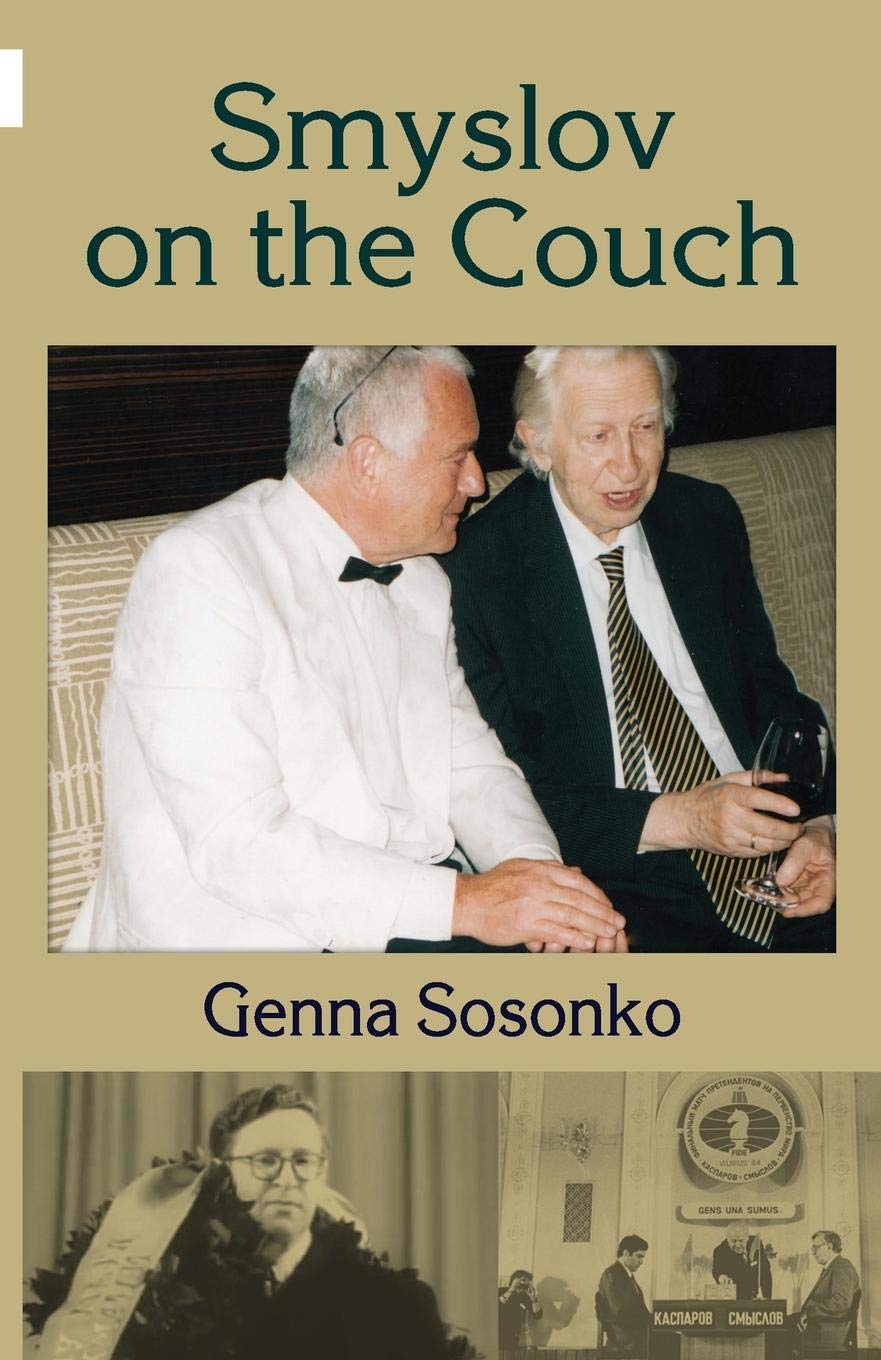
Smyslov on the Couch

Smyslov on the Couch

Smyslov on the Couch : Genna Sosonko
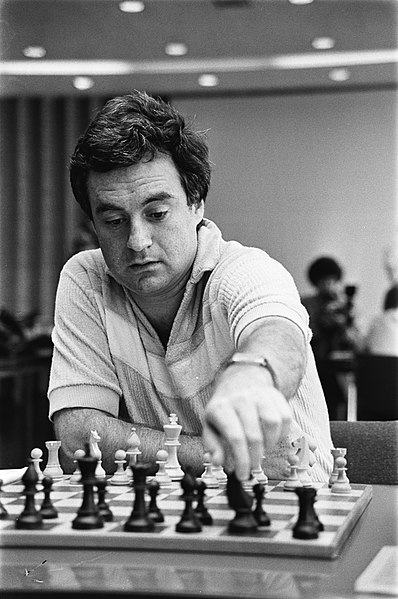
Gennadi Borisovich Sosonko


Genna Sosonko emigrated from the USSR to the Netherlands in 1972.  For the past 20 years or so he’s made a career out of writing essays and books about chess in the Soviet Union, and interviewing many of the leading players from that period.

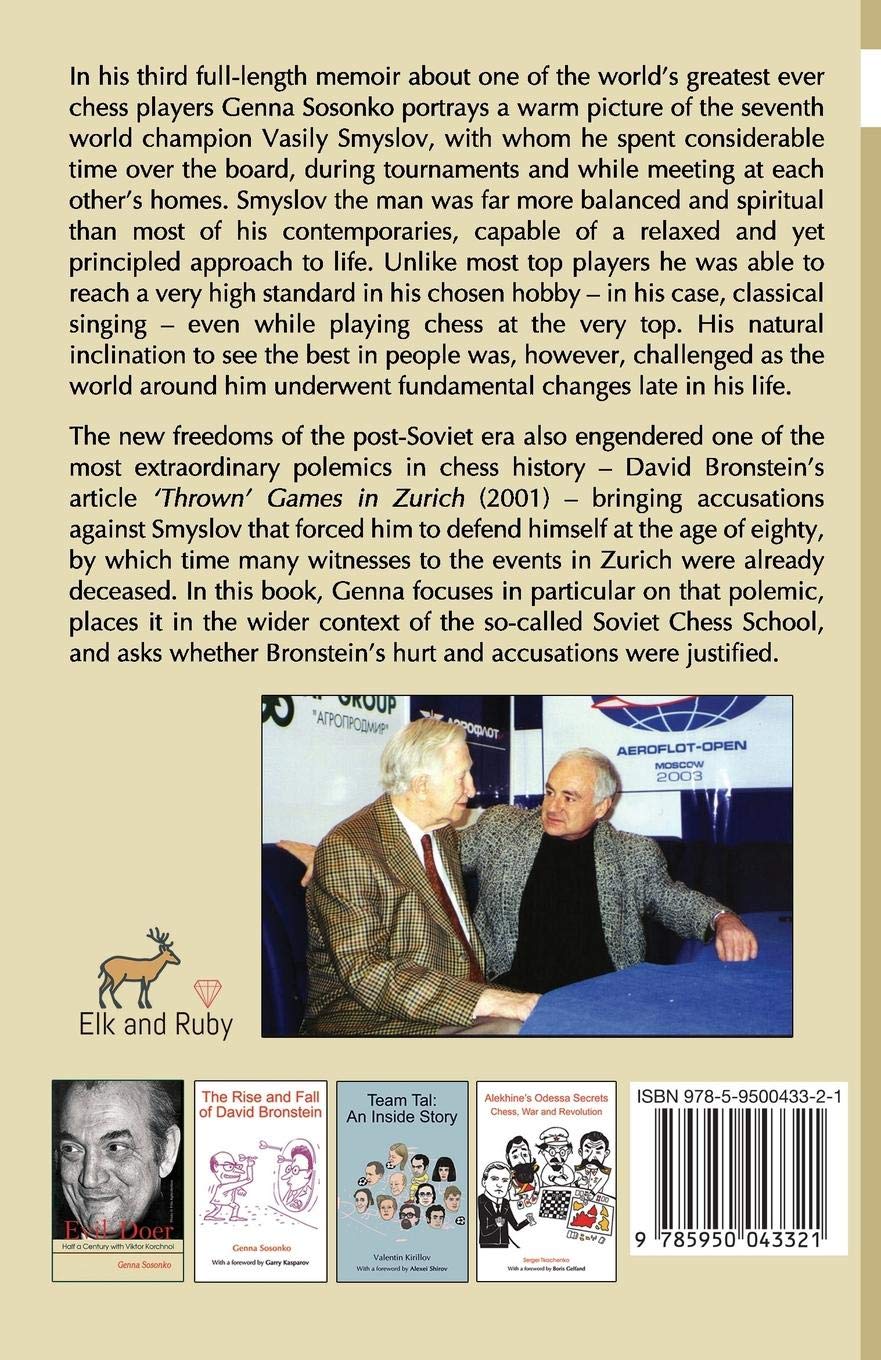
This, following on from books about Bronstein and Korchnoi, which will be reviewed later, is the third of a series of memoirs. Whereas Bronstein and Korchnoi were strong personalities who had controversial careers, Smyslov was a much more balanced character.

The word most associated with Smyslov is ‘harmony’. He sought harmony in his chess games, always seeking the most harmonious placing of his pieces. He was also a talented opera singer:  harmony again.

In the first part of this book, Sosonko introduces us to his friend. The life of a chess player in the Soviet Union must have been a mixed blessing. While you were living in a totalitarian regime, chess was valued and its exponents respected – as long as they toed the party line. Smyslov, we learn, was a man of profound and sincere religious convictions: a member of the Russian Orthodox church. Beyond that, he was also, rather unexpectedly, interested in all things paranormal. He seemed to believe in astrology and the prophecies of Nostradamus, and was convinced that chess originated on Atlantis. It always intrigues me how many strong chess players, who excel at thinking rationally over the chessboard, have totally irrational views on other subjects.

Perhaps it was this fatalism, the belief that everything in his life was pre-ordained, which enabled Smyslov to ‘go with the flow’ during his chess career.

At the end of this part, we have eight pages of photographs, before moving onto part 2

Now we turn the clock back to the 1953 Candidates Tournament, and, specifically, this game, from round 26.

The tournament was approaching its end: Smyslov was leading but Bronstein still had a chance to win the prize of a title match against Botvinnik. The Soviet authorities instructed Bronstein to play for a draw, which, as you can see, he did, choosing the Exchange Variation of the Ruy Lopez, long before Fischer rehabilitated it as a winning try.

Bronstein never forgot this, and, nearly half a century later, published an article about match fixing in the 1953 Candidates Tournament which angered the usually placid Smyslov. Bronstein’s article and Smyslov’s reply both appear here.

Sosonko then moves on to discuss, in more general terms, the Soviet Chess School, offering revealing insights as to what life was like for grandmasters from the USSR.

The final third of the book returns to Smyslov, and is based on conversations with the great man during the last eight years of his life: from 2002 to 2010. I’ll have a lot more to say about this when I review Sosonko’s memoirs of Bronstein and Korchnoi, but I’m not sure how much this adds to our knowledge of Smyslov, or how much he would have wanted to be remembered for his declining years.

If you’ve read any of Sosonko’s other writing you’ll know that he writes well, and, very often, poignantly. He tends to throw in a lot of cultural references, which you might find helpful, but, on the other hand, you might just think is showing off. Me: I enjoyed the musical references but mentions of Russian literature often mean nothing to me.

It’s not quite true that there’s no chess in the book: there’s just one game, played when he was 14, which, although Sosonko doesn’t mention it, is spookily similar to the Famous Game Rotlewi-Rubinstein.

If you’re looking for a book that will improve your rating, then, you’ll want to look elsewhere. If you want to know more about Smyslov as a person, you’ll probably enjoy the first third of the book. If you’re interested in the history of chess in the Soviet Union, particularly in the years following the Second World War, you might want to read the second part, but you’ll need to bear in mind that the author is an compiler of memoirs and anecdotes, not a historian. It’s the final section that leaves me with mixed feelings. A moving testimony of the final years of a much loved and respected champion, or just voyeurism? I’m in two minds: maybe you should read the book and decide for yourself.


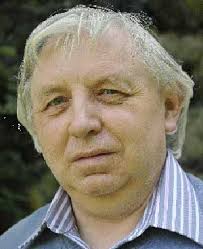
Richard James, Twickenham 15 April 2020
Richard James
Richard James

Book Details :

  • Paperback : 199 pages
  • Publisher: Limited Liability Company Elk and Ruby Publishing House (5 Nov. 2018)
  • Language: English
  • ISBN-10: 5950043324
  • ISBN-13: 978-5950043321
  • Product Dimensions: 12.9 x 1.1 x 19.8 cm

Official web site of Elk and Ruby
Smyslov on the Couch

Remembering Joseph Edmund Peckover (15-xi-1896 – 16-iv-1982)

We remember Joseph Edmund Peckover (15-xi-1896 – 16-iv-1982)

From The Encyclopedia of Chess by Anne Sunnucks :

Born in London on the 15th November 1896, Peckover has lived in New York since 1921. He has composed about 70 endgame studies :

JE Peckover , 1st Prize, Problem 1958 – 59 Award July 1960.

Here is his Wikipedia entry

Here is his entry on chesscomposers.com

Remembering Henry Bird (14-vii-1830 11-iv-1908)

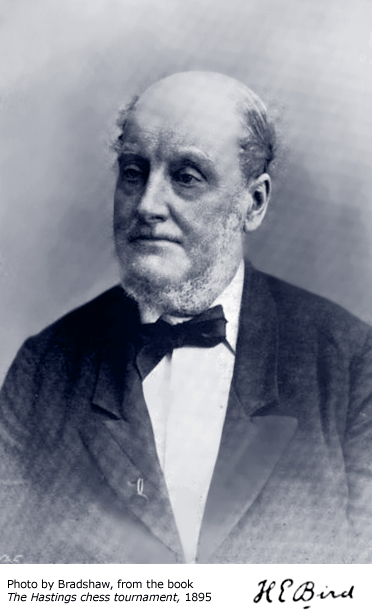
Henry Edward Bird
Henry Edward Bird

BCN remembers Henry Edward Bird who passed away this day, April 11th in 1908.

From The Oxford Companion to Chess by David Hooper & Ken Whyld :

“English player, accountant. He played in 13 strong tournaments, with erratic results; his best achievements were: Vienna 1873, a tie with L. Paulsen for fifth place; Paris 1878, fourth place shared with Mackenzie; Manchester 1890. third prize shared with Mackenzie after Tarrasch and Blackburne. He also played in numerous minor tournaments, notably tying with Gunsberg for first prize at London 1889. His most important match was against Steinitz in 1866 for the first to win eleven games. He was adjudged the loser when he was
called to the USA on business, the score standing +5 = 5—7 in favour of his opponent. This was a creditable result in the circumstances, for he played each game after a day’s work (Steinitz, however, was not so strong a player as he later became.) In 1886 Bird drew a match with Burn(+ 9—9). One of the most ingenious tacticians of his time, Bird played in the attacking style prevalent in his youth. He usually chose openings that were regarded as bizarre, although many of them, e.g. the Dragon Variation, have since gained acceptance.

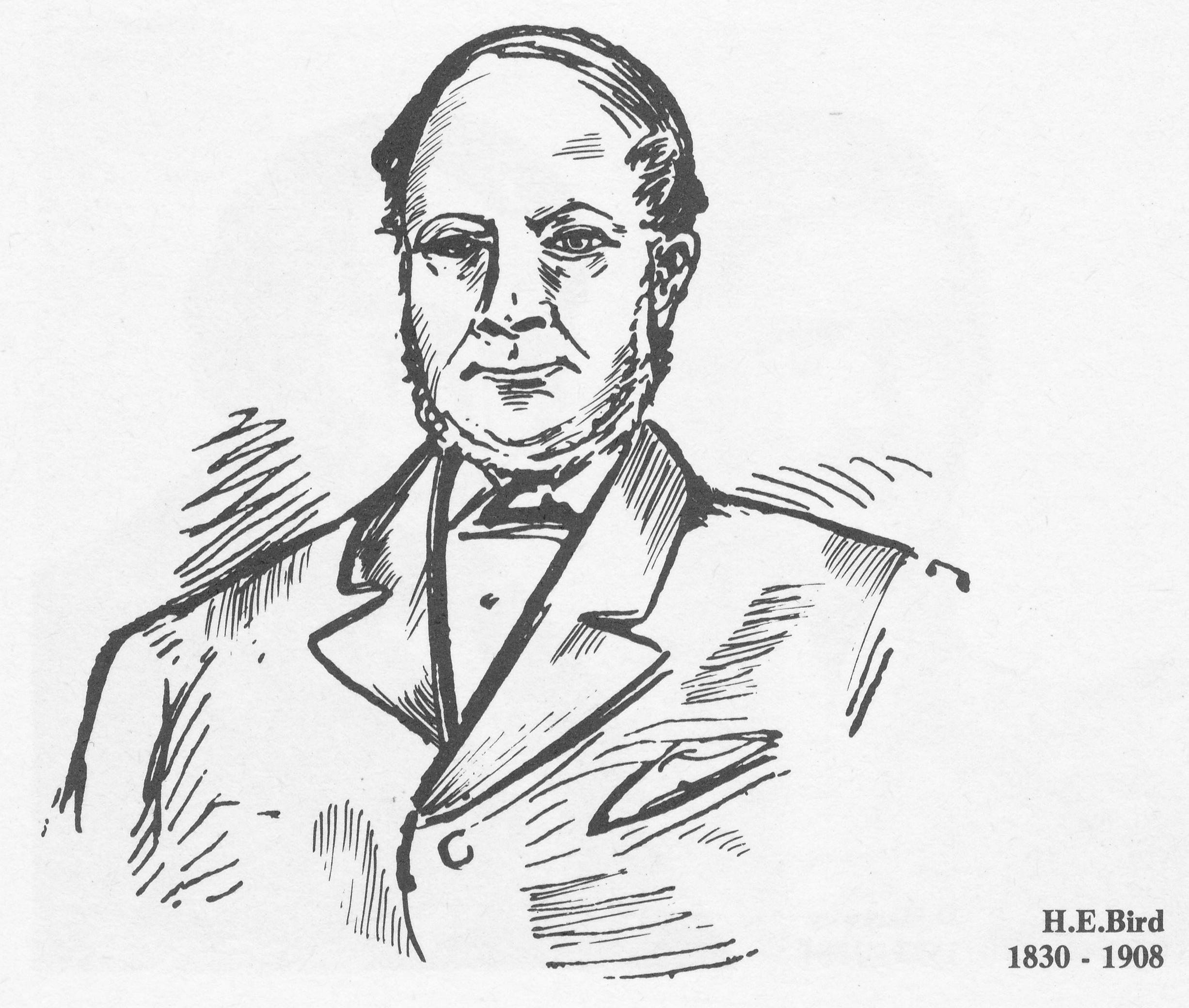
Henry Edward Bird (14-vii-1830 11-iv-1908)

Bird was probably the best known and longest serving habitue of the London coffee-house known as Simpson’s Divan. ‘A rosy-cheeked, blue-eyed, fair-headed boy’, he first attended around 1846 and was a constant visitor for more than 50 years, after which he was described as ‘majestic in stature, in girth, in the baldness of his great head, less majestic in the litter of tobacco ash upon his waistcoat … with a pleasant smiling countenance’. He suffered from gout which eventually so incapacitated him that he was largely confined to his home for the last years of his life.

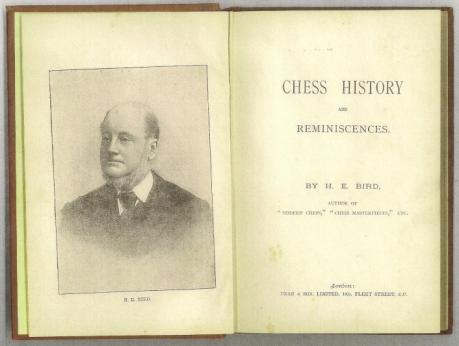
Besides writing booklets on railway finance he wrote several books on chess. They are not without interest although the content is sometimes inaccurate and often disorganized. Bird’s Modern Chess and Chess Masterpieces (1887) contains more than 200 games, about half of them his own. Chess History and Reminiscences (1893) contains an account of contemporary players and chess affairs.

Chess History and Reminiscences
Henry Edward Bird, from Megabase 2020

Bird-Mason New York 1876 French Defence, Exchange Variation :

For this game Bird was awarded the BRILLIANCY PRIZE.

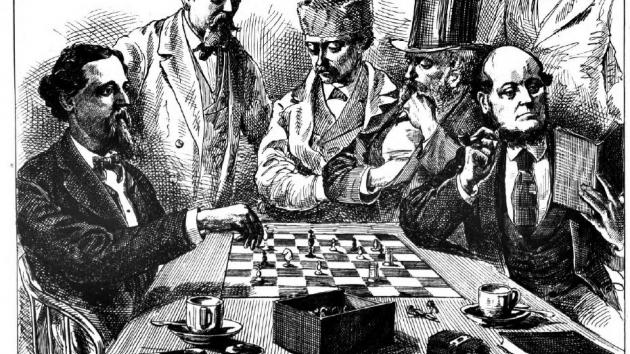
Bird (RHS, sitting) and contemporaries

The Bird Attack is variation in the Italian opening strongly advocated by Stamma and no less strongly by Biro. In May 1843 saint-Amant played it against Staunton in their first match and five years later Bird adopted the variation, playing it in many tournaments, notably with fair success at Vienna 1882, London 1883, and Nuremberg 1883.

The Bird Defence, a reply to the Spanish opening given in the first edition of Bilguer’s Handbuch, 1843. Pioneered by Bird, e.g. against Anderssen in 1854, and used on occasion by grandmasters such as Tarrasch, Spielmann, and Spassky, this defence has not gained wide acceptance.

The Bird Opening, sometimes called the Dutch Attack by analogy with the Dutch Defence. In 1873, after an absence of six years from chess, Bird played a match with Wisker. ‘Having forgotten familiar openings, I commenced adopting KBP for first move, and finding it led to highly interesting games out of the usual groove, I became partial to it. ’ Bird had also forgotten unfamiliar openings, for
1 f4 (given by Lucena) had been played by Bourdonnais, Williams, and others of that period. However Bird’s consistent adoption of the move led to its becoming a standard opening, although
never popular.

From Wikipedia :

Henry Edward Bird (Portsea in Hampshire, 14 July 1830 – 11 April 1908) was an English chess player, and also an author and accountant. He wrote a book titled Chess History and Reminiscences, and another titled An Analysis of Railways in the United Kingdom.

Although Bird was a practicing accountant, not a professional chess player, it has been said that he “lived for chess, and would play anybody anywhere, any time, under any conditions.”

At age 21, Bird was invited to the first international tournament, London 1851. He also participated in tournaments held in Vienna and New York City. In 1858 he lost a match to Paul Morphy at the age of 28, yet he played high-level chess for another 50 years. In the New York tournament of 1876, Bird received the first brilliancy prize ever awarded, for his game against James Mason.

In 1874 Bird proposed a new chess variant, which played on an 8×10 board and contained two new pieces: guard (combining the moves of the rook and knight) and equerry (combining the bishop and knight). Bird’s chess inspired José Raúl Capablanca to create another chess variant, Capablanca Chess, which differs from Bird’s chess only by the starting position.

It was Bird who popularized the chess opening now called Bird’s Opening (1.f4), as well as Bird’s Defense to the Ruy Lopez (1.e4 e5 2.Nf3 Nc6 3.Bb5 Nd4). Bird’s Opening is considered sound, though not the best try for an opening advantage. Bird’s Defense is regarded as slightly inferior, but “trappy”.

According to Edward Winter Bird lived at these addresses :

  • 5 Heygate Street, London SE, England (The Chess Monthly, October 1887, page 35).
  • 16 Chetwode Road, Upper Tooting, London SW, England (Chess Amateur, April 1908, page 190).
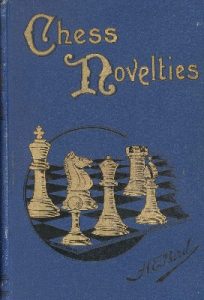
Chess Novelties
Chess Novelties
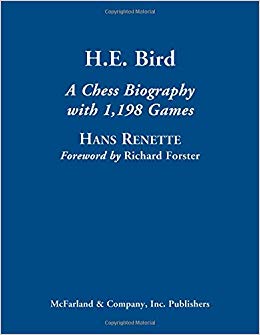
H.E. Bird : A Chess Biography with 1,198 Games

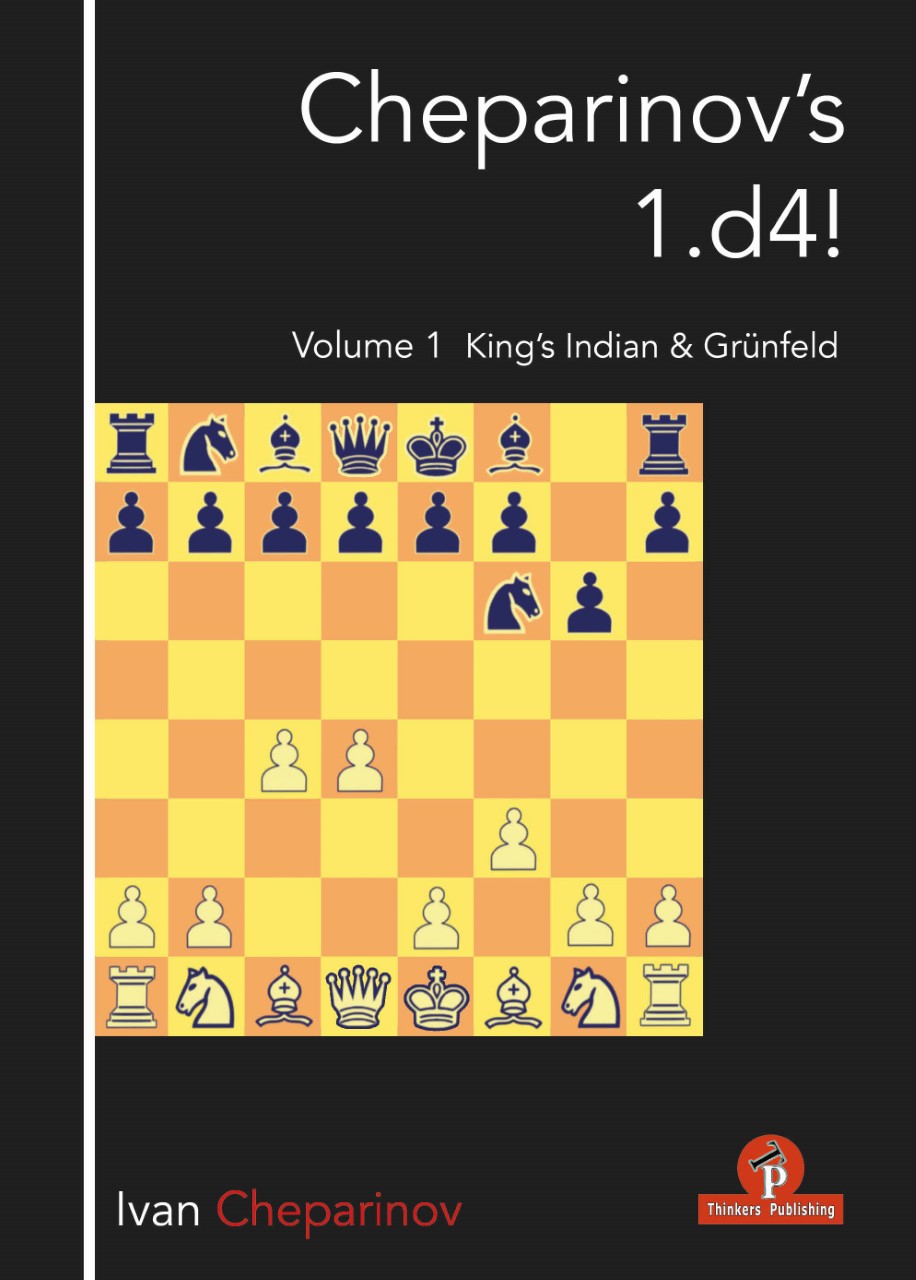
Cheparinov’s 1.d4!

Cheparinov's 1.d4!, Volume 1 : King's Indian & Grünfeld
Cheparinov’s 1.d4!, Volume 1 : King’s Indian & Grünfeld

Here is the author’s Wikipedia entry

GM Ivan Cheparinov
GM Ivan Cheparinov

From the rear cover :

“This book marks the start of a series of four on 1.d4 in which Ivan will share the secrets from two decades spent analyzing and playing it at the pinnacle of world chess. This volume in particular deals with two of the most popular replies Black can play after 1.d4: the King’s Indian Defense and Grünfeld Defense. Ivan presents the cutting-edge theory with his personal refinements as well as explanations of the deep strategical nuances that arise after his recommendations.”

Courtesy of New in Chess we have a sample of the content

The author has divided the content into four chapters as follows :

  1. Early Sidelines
  2. Benoni Structures
  3. The Grünfeld
  4. The King’s Indian Sämisch

As mentioned previously, this book is Volume 1 of a four volume series for White to play 1.d4 and 2.c4. Volume 1 presents a repertoire for White to play against the Kings’s Indian, Grünfeld and Benoni defences based around 3.f3, building (or attempting to) a strong centre as follows

The Early Sidelines chapter covers reasonable third move alternatives for Black such as a Benko Gambit style attempt, 3…e6, 3…Nc6 and some lesser alternatives. The author then spends some time on Benoni (but not Benko) type structures suggesting that this approach is one of the best for Black.

The main meat and potatoes of this book is naturally taken up with the Grünfeld and King’s Indian type responses from Black. Each of these are analysed exhaustively using a discursive style that compels the reader to look further into these interesting ideas.

This book will be of considerable interest not only to the White player but also to Grünfeld and King’s Indian players who are keen to stay on top of attempts to stop them doing their thing.

As with every recent Thinkers Publishing publication high quality paper is used and the printing is clear. The book can easily be laid flat next to the board and does not require weights to prevent it from “self-closing” (a particular bugbear of ours !). Each diagram is clear and the instructional text is typeset in two column format, which, we find, enables the reader to maintain their place easily. Figurine algebraic notation is used throughout and the diagrams are placed adjacent to the relevant text and each diagram has a “to move” indicator.

There is no index which, unfortunately, is a standard omission of Thinkers Publishing books. Also missing, as usual, is a bibliography.

However, despite these shortcomings this is an excellent addition to White’s armoury and Black players should take note. We look forward to volumes 2,3 and 4 in this series from Cheparinov !

John Upham, Cove, Hampshire, 4th April, 2020

John Upham
John Upham

Book Details :

  • Hardcover : 192 pages
  • Publisher:  Thinkers Publishing; 1 edition (19 Mar. 2020)
  • Language: English
  • ISBN-10: 9492510707
  • ISBN-13: 978-9492510709
  • Product Dimensions: 17 x 1 x 23.4 cm

Official web site of Thinkers Publishing

Cheparinov's 1.d4!, Volume 1 : King's Indian & Grünfeld
Cheparinov’s 1.d4!, Volume 1 : King’s Indian & Grünfeld

Happy Birthday IM Geoffrey Lawton (04-iv-1960)

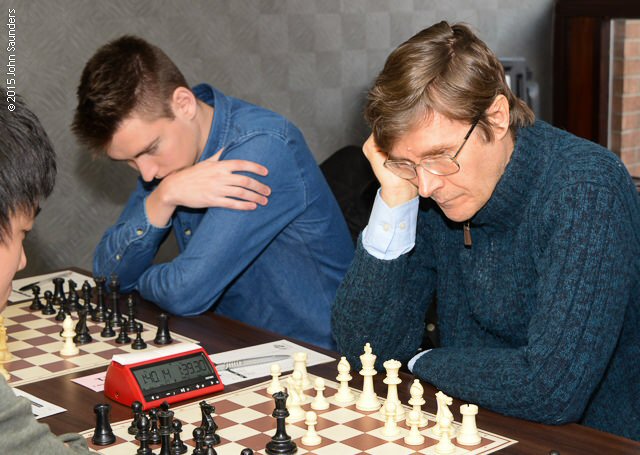
IM Geoffrey W Lawton, at 4NCL, photograph by John Saunders

Happy Birthday IM Geoffrey W Lawton (04-iv-1960)

Geoff became an International Master in 1984. His peak rating according to Felice was 2407 in July 2003 at the age of 43.

He won the Maidenhead Open in 1995 with 5/5 and TPR of 2685.

Here are his games from chessgames.com

He has plus scores with the following notable players : Stuart Conquest, Mark Condie, John Nicholson, Jon Cox, Colin McNab, Julian Hodgon, Paul Littlewood, David Cummins and Vaidyanathan Ravikumar amongst others.

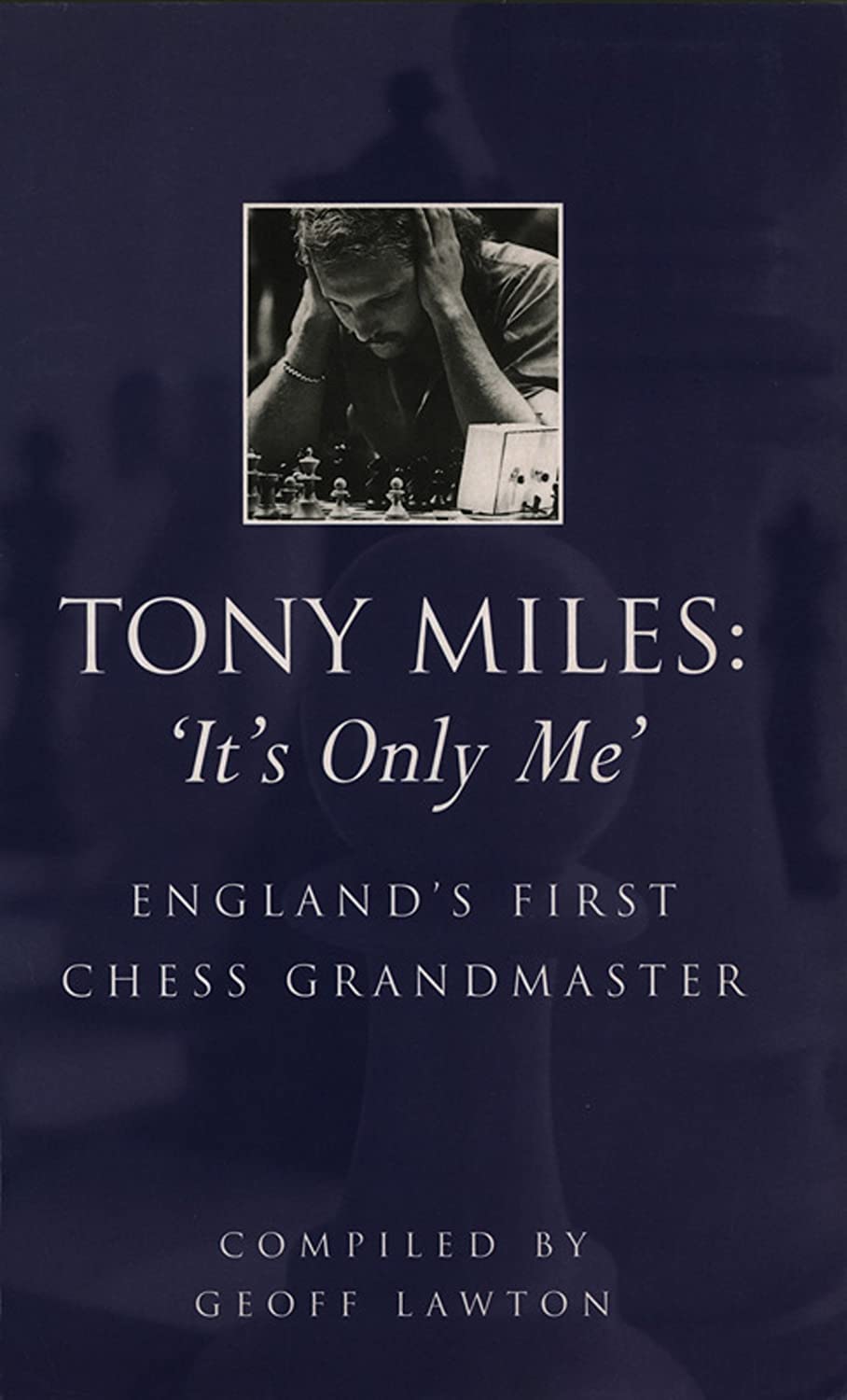
It's Only Me, edited by Geoff Lawton
It’s Only Me, edited by Geoff Lawton

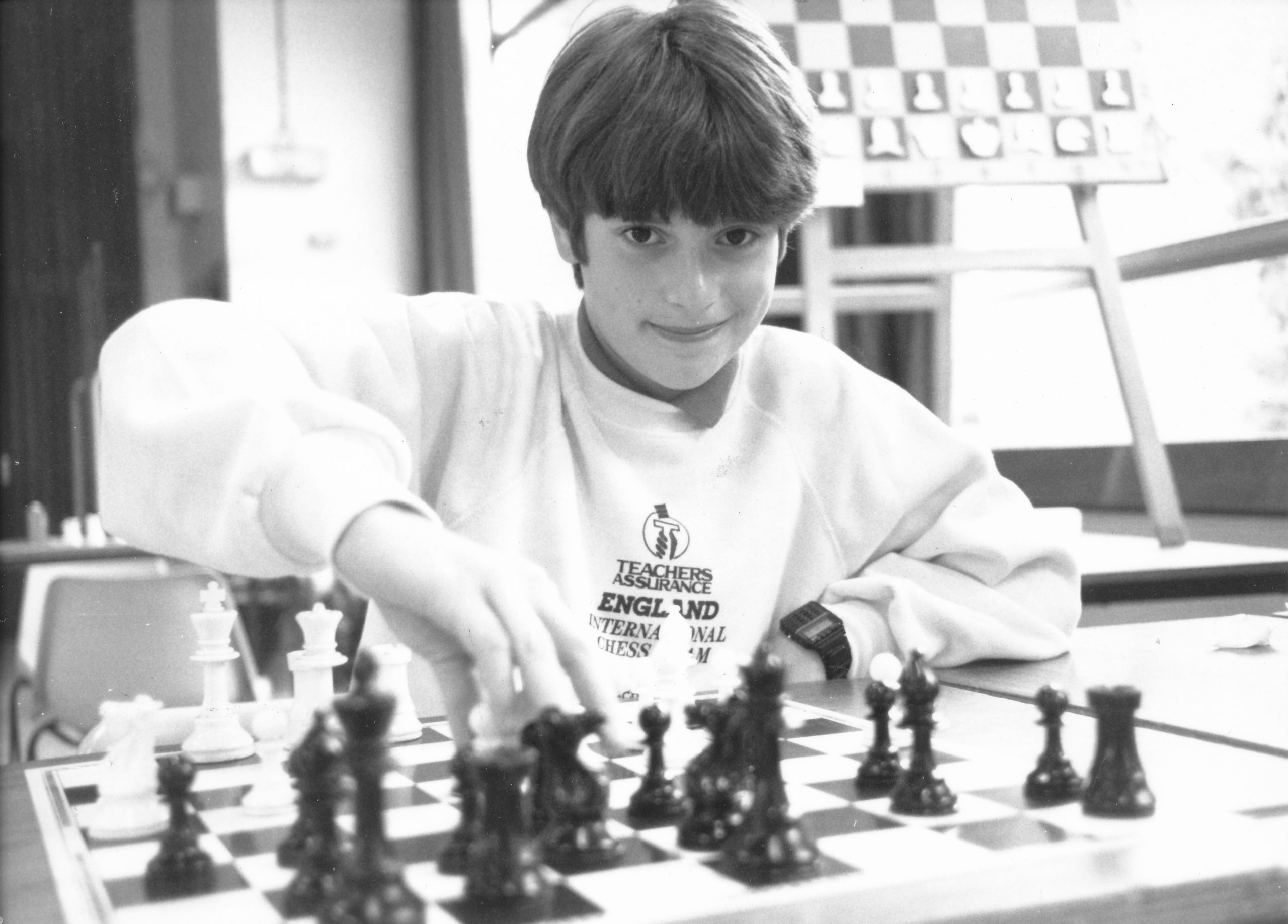
Happy Birthday IM Miroslav Houska (02-iv-1978)

Miroslav Houska
Miroslav Houska

Happy Birthday IM Miroslav Houska (02-iv-1978)

Miroslav Houska
Miroslav Houska

Miroslav gained his International Master title in 1998 and his peak rating according to Felice was 2385 in January of 1998, aged 20.

Here are his games on chessgames.com

IM Miroslav Houska, photograph by Jovan Petronic
IM Miroslav Houska, photograph by Cathy Rogers

Remembering Frederick Forrest Lawrie Alexander (13-XI-1879, 01-IV-1965)

Frederick Forrest Lawrie Alexander, photograph located by Richard James from Ancestry.co.uk

Remembering Frederick Forrest Lawrie Alexander (13-XI-1879, 01-IV-1965)

Interesting article from Woodseats Library

Here is an article from the Chess Composers Blog

He was seven times champion of Battersea Chess Club

The Surrey County Chess Association has The Alexander Trophy as one of its main awards : is it awarded for the top knockout competition.

Here is some history of the trophy from Surbiton Chess Club

Here are a handful of his games from chessgames.com and here is what chessgames.com has to say about FFLA :

“Frederick Forrest Lawrie Alexander played in the 1932 British Championship, but with little success. At age 70, playing at the 1950 Southsea tournament, he shocked the pundits by defeating Efim Bogoljubov and Harry Golombek.”

Here is more detail and photographs of the Alexander Cup from Britbase / John Saunders

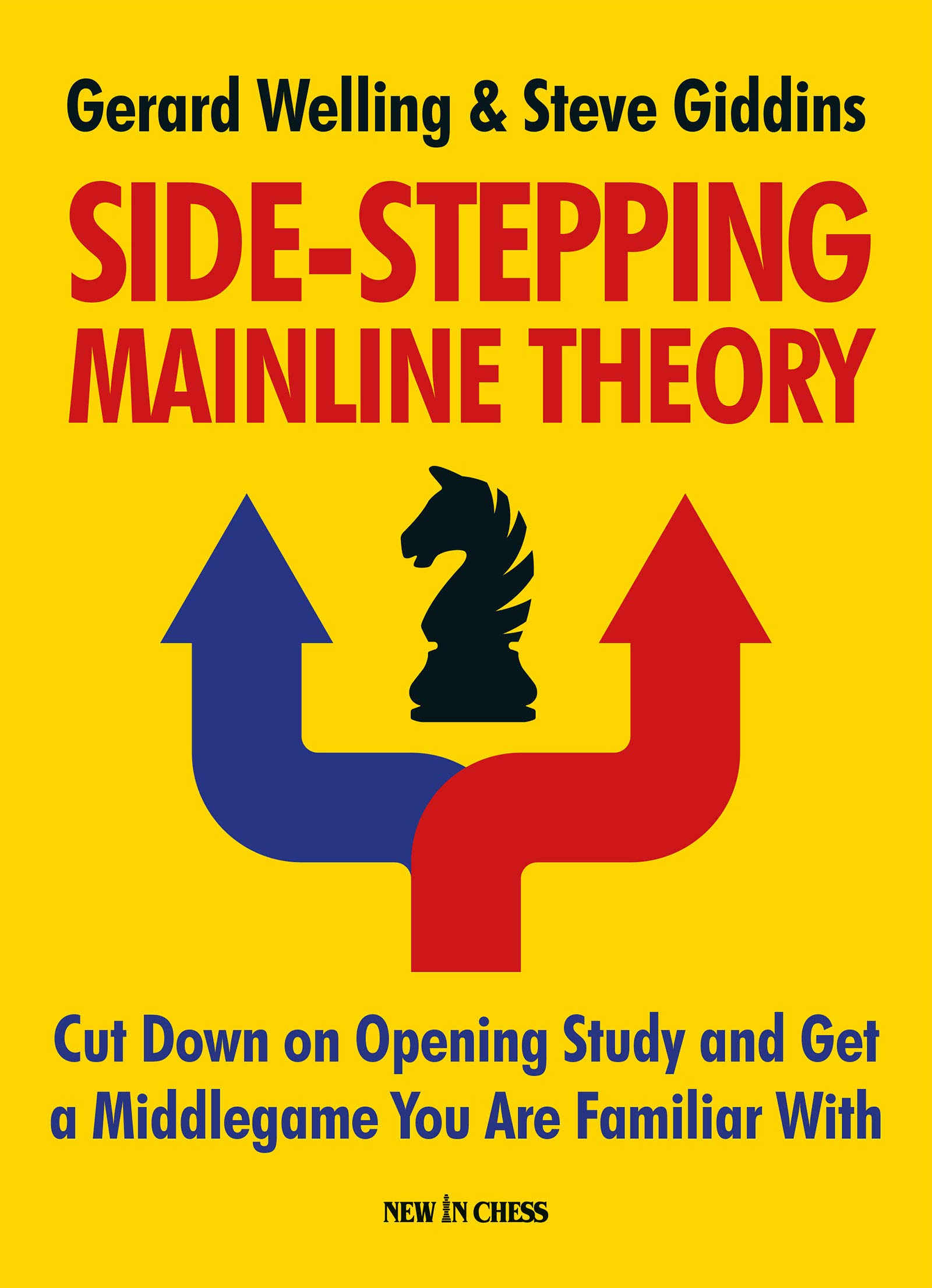
Side-Stepping Mainline Theory

Side-Stepping Mainline Theory : Gerard Welling and Steve Giddins

Side-Stepping Mainline Theory

From the book’s rear cover :

“Spend more study time on what’s really decisive in your games!
The average chess player spends too much time on studying opening theory. In his day, World Chess Champion Emanuel Lasker argued that improving amateurs should spend about 5% of their study time on openings. These days club players are probably closer to 80%, often focusing on opening lines that are popular among grandmasters.

Club players shouldn’t slavishly copy the choices of grandmasters. GMs need to squeeze every drop of advantage from the opening and therefore play highly complex lines that require large amounts of memorization. The main objective for club players should be to emerge from the opening with a reasonable position, from which you can simply play chess and pit your own tactical and positional understanding against that of your opponent.

Gerard Welling and Steve Giddins recommend the Old Indian-Hanham Philidor set-up as a basis for both Black and White. They provide ideas and strategies that can be learned in the shortest possible time, require the bare minimum of maintenance and updating, and lead to rock-solid positions that you will know how to handle. By adopting a similar set-up for both colours, with similar plans and techniques, you will further reduce study time.

[embedyt] https://www.youtube.com/watch?v=T6403hEafJI[/embedyt]

Side-stepping Mainline Theory will help you to focus on what is really decisive in the vast majority of non-grandmaster games: tactics, positional understanding and endgame technique.

Gerard Welling is an International Master and an experienced chess trainer from the Netherlands. He has contributed to NIC Yearbook and Kaissiber, the freethinker’s magazine on non-mainline chess openings.

IM Gerard Welling
IM Gerard Welling

Steve Giddins is a FIDE Master from England, and a highly experienced chess writer and journalist. He compiled and edited The New In Chess Book of Chess Improvement, the bestselling anthology of master classes from New In Chess magazine.”

FM Steve Giddins
FM Steve Giddins

The authors have divided up the content into six chapters as follows:

  1. The keys to successful opening play
  2. The Old Indian against 1.d4
  3. The Old Indian against Flank Openings
  4. The Philidor against 1.e4
  5. The System as White
  6. Tables of the main variations

So, what we have here is somewhat unusual : this is a complete repertoire book for the same player of both the Black and White pieces using essentially the same structure. Precedents have been previously set using similar approaches with a combination of the Pirc and King’s Indian Defences combined with the King’s Indian Attack or reversed King’s Indian Defence but, nonetheless, this is an unusual and welcome approach to building a repertoire.

So the structure for Black is essentially :

which could be so-called Modern Philidor when white plays 1.e4 and The Old Indian when White defers e4

and the structure for White is :

which is essentially a Reversed Modern Philidor / Old Indian or more correctly An Inverted Hanham.

All of these structures are sound, resilient and reward manoeuvring play where the better play will win. More importantly a player familiar with these structures will enjoy understanding of the plans and ideas is likely to enjoy a considerable advantage on the clock. This is particularly true for the first player based on the rarity of the Inverted Hanham.

The authors have organised their material very logically showing the reader firstly the way to play for Black against almost anything and only then (when the structures are familiar) do they demonstrate the way for the first player. I’m sure players will be more comfortable playing these lines for Black since it might seem somewhat unnatural to play 1.e4 and then play slowly after that.

The authors use a standard model to explain these systems : they take 92 high quality games and analyse each one in detail. Combined with this is a clear description of the themes and ideas contained within the Black and White structures. This is very much an ideas based opening book rather than based on rote memorisation. One of the issues analysing these lines is that they are very transpositional compared to say the sequential and forcing lines of the Sicilian Dragon or Slav Defence. Chapter six helps enormously the reader to navigate their way through the transpositions especially for the Inverted Hanham.

Here is a game from Istvan Csom, an expert on this system :

As with every recent New in Chess publication high quality paper is used and the printing is clear. The book can easily be laid flat next to the board and does not require weights to prevent it from “self-closing” (a particular bugbear of ours !). Each diagram is clear and the instructional text is (mostly !) typeset in two column format, which, we find, enables the reader to maintain their place easily. Figurine algebraic notation is used throughout and the diagrams are placed adjacent to the relevant text.

In summary, Welling and Giddins have produced an out-of-the-ordinary book which fills a gap in the market : complete opening book not based on rote memorisation. The middlegame starts very early in these lines and the ideas for White are particularly intriguing. if you adopt these suggestions then your middlegame play will benefit hugely. This is probably not a book for hackers or those who have no patience : highly recommended !

John Upham, Cove, Hampshire, March 31st 2020

John Upham
John Upham

Book Details :

  • Paperback : 272 pages
  • Publisher: New In Chess (16th August 2019)
  • Language: English
  • ISBN-10: 9056918699
  • ISBN-13: 978-9056918699
  • Product Dimensions: 16.9 x 1.8 x 23.6 cm

Official web site of New in Chess

Side-Stepping Mainline Theory