Category Archives: 2020

The Safest Grünfeld Reloaded

The Safest Grünfeld Reloaded : Alexander Delchev

The Safest Grünfeld Reloaded

From Wikipedia :

Aleksander Delchev (Bulgarian: Александър Делчев; born 15 July 1971) is a Bulgarian chess player and writer. He was awarded the title of Grandmaster by FIDE in 1997. Delchev won the Bulgarian Chess Championship in 1994, 1996 and 2001. He played for the Bulgarian national team in the Chess Olympiads of 1994, 2000, 2002, 2004, 2006, 2008, 2010 and 2012 with a performance of 64.6% (+36=34-12).[1]

Selected tournament victories include the European Junior Chess Championship (1991–1992), the 47th Reggio Emilia chess tournament (2004–2005),[2] the 4th Open Master at the Sixth International Chess Festival in Benidorm (2007),[3] the International Open Championship of Croatia (2007)[4] and the Open International Bavarian Chess Championship in Bad Wiessee (2005[5] and 2013).[6] In 2011 he tied for 2nd-7th with Julio Granda, Ivan Šarić, Pablo Almagro Llamas, Maxim Turov and Mihail Marin at the 31st Villa de Benasque Open.[7]
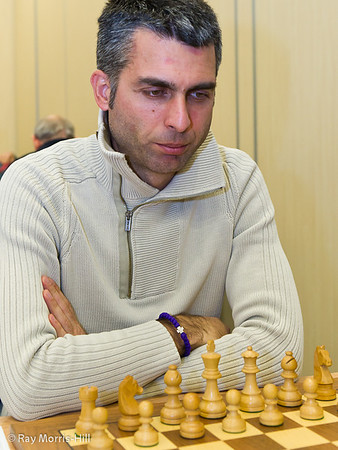
GM Aleksander Delchev by Ray Morris-Hill

This new book is an extensive rewrite and update of the original (2011) edition by GM Delchev going from 348 to 352 pages.

From the Foreword we have :

This book is a completely new edition of the original The Safest Grünfeld of 2011. I rechecked all the lines and changed my recommendations according to latest developments of theory and my new understanding. Especially the anti-Grünfeld chapters are basically new. In my opinion top players have long lost hope to find advantage in the main lines and try early deviations. Anand chose 3.f3 against Gelfand and 5.Bd2 against Carlsen. So I devoted special attention to the Sämish approach with two different propositions. 3…Nc6 is less studied and probably more rewarding from a practical standpoint, while 3…d5 is in perfect theoretical shape, but requires more memorization. Every too often White players try to avoid the Grünfeld by refraining from d4 or c4. I added an additional chapter on the very topical lately Trompowsky and Barry/Jobava attack. The 7.Bc4 system in the Exchange Variation, and the Russian System have also underwent a major reconstruction

According to the author “The material in this book is up to date to the end of July, 2019”.

Chess Stars publications have earned themselves a prestigious place amongst publishers of opening theory books and “The Safest Grünfeld Reloaded” reinforces this reputation for sure. Their books are definitely not for beginners and moreover they are for serious players who want to know an opening deeply and in much detail. You can be sure that the analysis is at the sharp end of tournament practice by an author that plays the opening rather then just writes about it.

We have a total of fourteen chapters as follows :

  1. The Fianchetto System
  2. The Bf4 System
  3. The Bg5 System
  4. The e3 System
  5. The Russian System 5.Qb3
  6. Rare Lines. Deviations on move 5
  7. Rare Lines. Deviations on move 7
  8. The Exchange System 7.Be3
  9. The Exchange System 7.Nf3
  10. The Exchange System 7.Bc4
  11. SOS Systems
  12. The Sämisch Anti-Grünfeld – 3.f3
  13. The English Anti-Grünfeld
  14. The Queen’s Pawn Anti-Grünfeld

(The “SOS Systems” chapter is coverage of somewhat speculative lines for White that have appeared in the New in Chess SOS series such as lines with h4, g4 and the like.)

For completeness there is a Bibliography, an Index of Variations, a Table of Contents but no Index or List of Games.

The treatment of each chapter more or less follows the same pattern and structure throughout : Each chapter is divided into sub-chapters as follows :

  • Main Ideas : Objectives, Move Orders, Basic Plans & Structures, and Typical Tactical Motifs
  • Step by Step : detailed analysis of the line(s)
  • Complete Games : a handful of high quality games are analysed in detail

and this is pretty much the pattern for each chapter.

As a taster we delved into Chapter 5 on the topical Russian System

since this includes some of the sharpest and most highly analysed positions. The first main starting position is :

at which point Black has sensible choices such as 7…a6 (The Hungarian Variation), 7…Na6 (The Prins Variation), 7…Bg4 (The Smyslov Variation), 7…c6 (Boleslavsky) and 7…Nc6 (un-named but first employed in 1957 by Donald Byrne versus Reshevsky). Out of these the author recommends The Hungarian Variation as the Black’s primary weapon and failing that Black should consider 7…Nc6 (the “fallback” line) and an implied pawn sacrifice giving Black huge activity whilst White’s centre is under siege. Indeed, 7…Nc6 is labelled as “Hot” in Megabase 2020 and features regularly in current GM practise by such Grünfeld specialists as Peter Svidler and Maxime Vachier-Legrave.

Here is one of the example games (annotations not included here) :

The author is quite candid about his recommendations giving their strengths and weaknesses and there is definitely no “Winning with the Grünfeld” flavour to this objective tome. Generally the student can make their own choices to suit their own style.

In summary, this second edition is a substantial update and improvement of a first edition and we recommend it heartily to the serious player who finds themselves on the White or Black side of one of the most interesting defences to d4 & c4.

John Upham, Cove, Hampshire, January 10th 2020

John Upham
John Upham

Book Details :

  • Hardcover : 352 pages
  • Publisher: Chess Stars ltd (2019)
  • Language: English
  • ISBN-10: 6197188252
  • ISBN-13: 978-6197188257
  • Product Dimensions: 14.5 x 2 x 21.5 cm

Official web site of Chess Stars Publishing

The Safest Grünfeld Reloaded
 Save as PDF

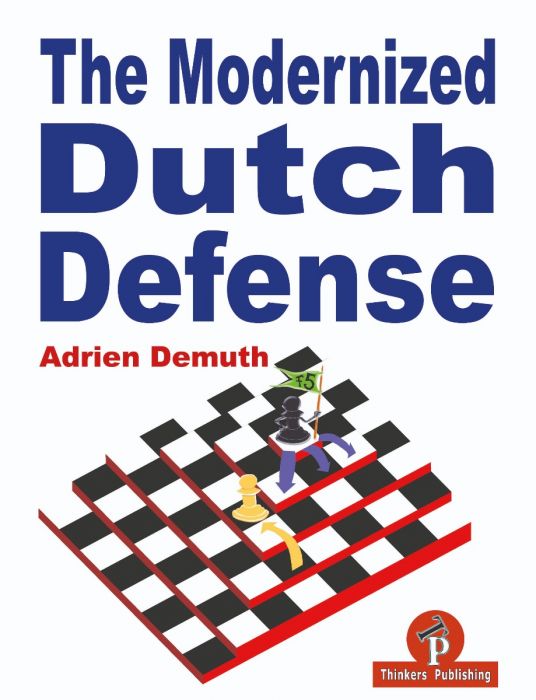
The Modernised Dutch Defense

The Modernised Dutch Defense : Adrien Demuth

The Modernised Dutch Defence by Adrien Demuth

Adrien Demuth is a French chess grandmaster. Born in 1991, Demuth earned his international master title in 2011 and his grandmaster title in 2015. He is the No. 14 ranked French player as of March 2018.

GM Adrien Demuth
GM Adrien Demuth

This is his second title in the “Modernized” series from Thinkers Publishing, and like his previous book The Modernized Reti, this is a complete repertoire book providing a complete repertoire for black based around the Leningrad variation (2 …g6) against 1.d4 but also against 1.c4 & 1.Nf3.  The Dutch Defence leads to dynamic and unbalanced positions which is ideally suited to players who want to play for a win with the black pieces.

The author is a recent convert to the Dutch defence and he describes how he took up the opening and had the confidence to use it in crucial games. And although the author now days prefers to play more positional openings he still retains the Dutch Defence in his repertoire.

The material is presented in three sections:

Part 1 – Early Sidelines after 1.d4 f5 (184 pages)

  1. The Staunton Gambit
  2. The System with 2.Nc3
  3. The Goring Attack 2.Bg5
  4. Minor Lines on the Second Move
  5. Systems including an early c3 and or Nh3

Part 2 – Classical Systems (210 pages)

  1. Sidelines for White on Move Three
  2. Lines with an early b4
  3. Systems with b3
  4. The aggressive 2.c4 Nf6 3.Nc3
  5. The Classical Leningrad

Part 3 – Reti and English Move Orders (69 pages)

  1. The Leningrad Dutch versus the Reti
  2. The Leningrad Dutch versus the Engish

Like all the previous Thinkers Publishing books I have reviewed the production quality is excellent. The layout of this book reminds me of the Batsford Series of opening books that many older readers will remember as the material is presented as a series of variations without any illustrative games. The focus is exclusively on the opening phase with no mention of middlegame plans or typical pawn structures. All the games referenced in the book recent, within the last 5 years and the author provides a lot of interesting  novelties backed up by his own analysis.

In part 1 the author provided a very detailed coverage of all the varied sidelines and gambits  where black opts to play the Leningrad with 2..g6 rather than the Classical move order 2…e6. This is an important consideration in Chapter 3 as the author recommends the lines with 2…g6 rather than the topical 2….h6 against 2.Bg5. Also there are a number of tricky lines in chapter 5 where white plays c3 & Qb3 to prevent black from castling or where white plays an early h4.

Part 2 contains the main lines of the Leningrad Dutch and covers all of whites main options as well as the various lines where white plays the plays Bf4 which is very popular nowdays.  One criticism that I do have in this section concerns the layout for Chapter 10 on p336 which doesn’t follow previous  layout of chapters and perhaps the material should have been be split into two chapters covering the main lines and sidelines separately. Also there are several move order transpositions that can occur where white plays b3 or b4 in the main lines. However this does not detract from the content but the book would have benefitted from some more thorough proof reading.

Part 3 covers the reply 1…f5 against 1.Nf3 and 1.c4. The second chapter covers blacks responses to all of whites options where white omits playing d4,

One of the problems black players have when  facing 1.d4 is that in most openings  that white can play have a number of safe drawing lines that make it very difficult to play for a win against or unambitious lines where white can easily play for a small edge. However those options are not available against the Dutch defence. There are of course a number of gambits and aggressive lines that are available to white however if you are well prepared then you can enter these lines with confidence.

The bibliography is up to date and the oldest reference is 2014.

In summary this is an excellent book providing a complete repertoire for black against 1.d4, 1.Nf3 & 1.c4 It contains a lot of original analysis and sound recommendations.  Although this opening may not be considered to be totally sound at GM level it is perfectly playable at Club level.  I do have a number of (minor) criticisms of this book, perhaps the author could have provided a better explanation of the move order transpositions that can occur in the main lines and there are no illustrative games in the book. Also as with all Thinkers Publishing books I have reviewed there is no index of variations.  But overall this would not stop me recommending the book if you want to take up the opening or of you already play the Dutch and wanted to add it to your library.

Tony Williams, January 5 2020

Tony Williams
Tony Williams

Book Details :

  • Paperback : 347 pages
  • Publisher: Thinkers Publishing; 1 edition (22 Sept. 2019)
  • Language: English
  • ISBN-10: 9492510553
  • ISBN-13: 978-9492510556
  • Product Dimensions: 17.1 x 3.2 x 23.5 cm

Official web site of Thinkers Publishing

The Modernised Dutch Defence by Adrien Demuth
 Save as PDF

Harry’s Game : 2020 Vision

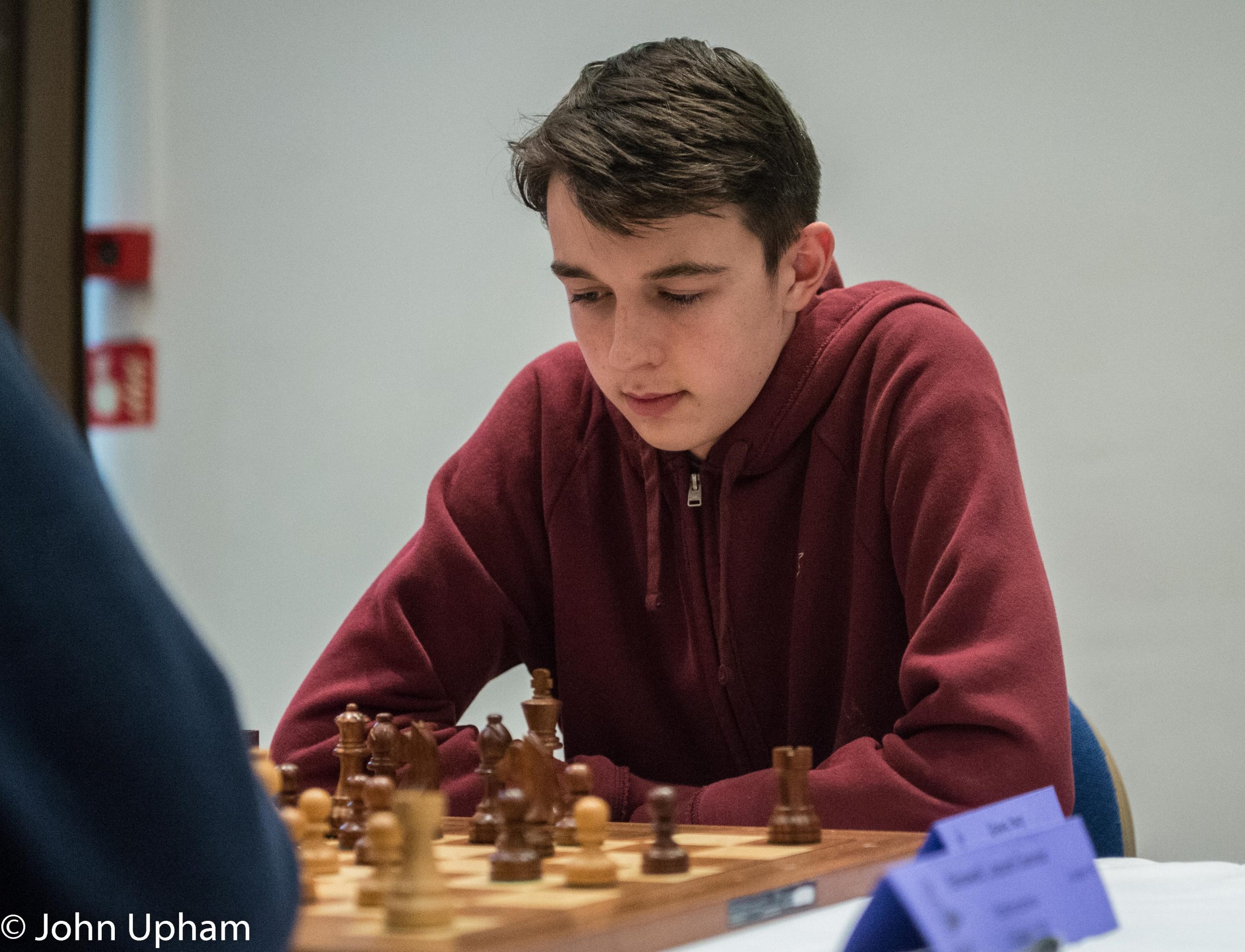
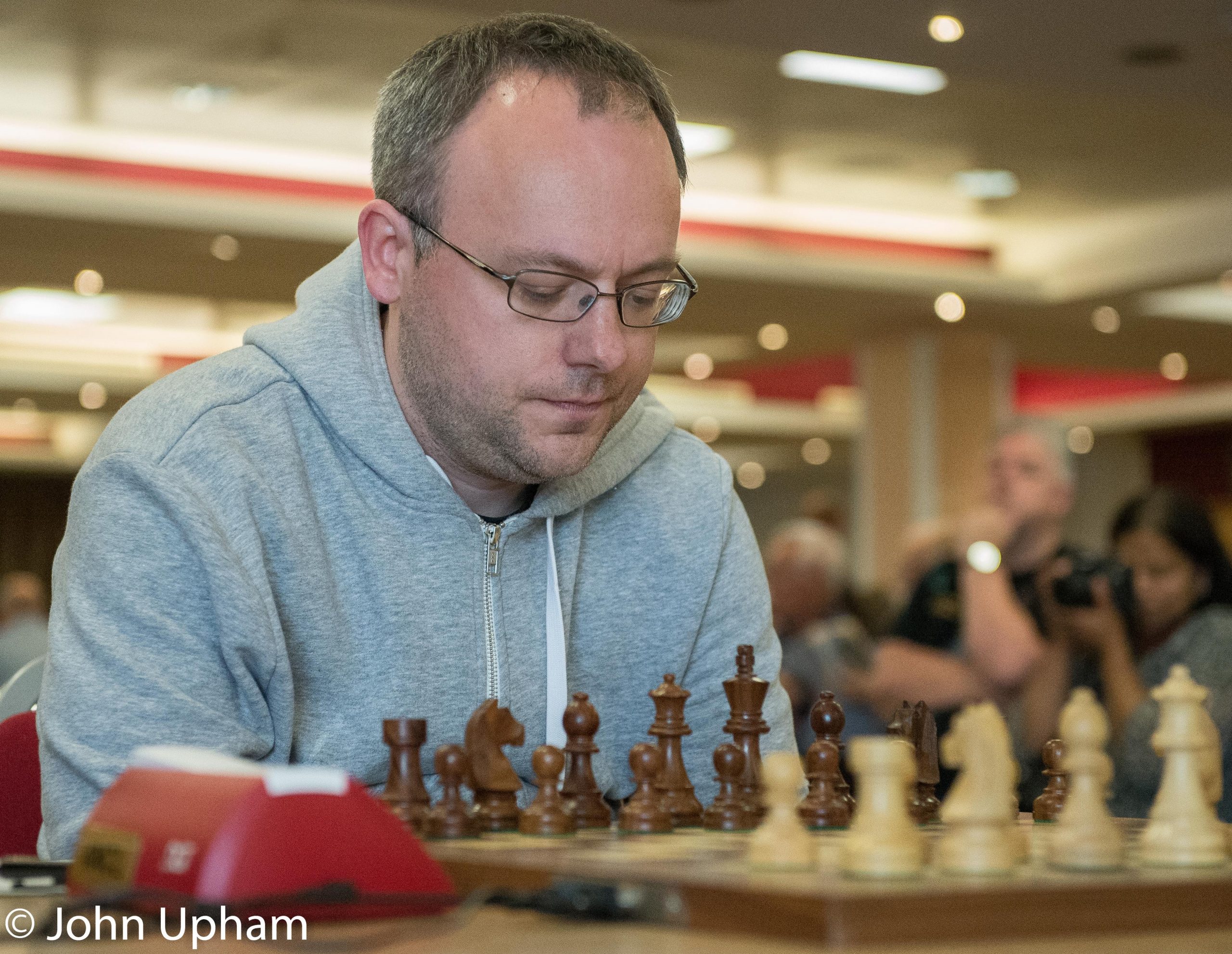
Round 5 of the Caplin Hastings International Chess Congress featured the board 10 clash between one of England’s stronger Grandmasters, Danny Gormally (2508) and FM Harry Grieve (2299).

FM Harry Grieve
FM Harry Grieve
GM Danny Gormally
GM Danny Gormally

Harry is studying mathematics at St. Catherine’s College, Cambridge having previously been a pupil and member of the very strong chess team of Royal Grammar School, Guildford. He started his league chess with Fleet & Farnborough Chess Club (same as Simon Williams !) and then transferred his allegiance to the very strong Farnham chess club playing top board in many matches.

Harry has the possibility of making an International Master norm at the Hastings Masters and a win with the black pieces versus Danny Gormally will certainly help !

Here is their game :

Following this game Harry needs 2.5/4 to obtain his first IM norm : Good luck !

Harry Grieve, 2014 Terafinal
 Save as PDF

Happy Birthday “Ginger” GM Simon Williams (30-xi-1979)

GM Simon Williams
GM Simon Williams

Best wishes to GM Simon Williams on his fortieth birthday, this day (November 30th) in 1979.

Simon was Southern Counties (SCCU) champion in the 2001-02 (shared with Simon Knott) and the 2006-07 season.

His Wikipedia entry is here

GM Simon Williams
GM Simon Williams
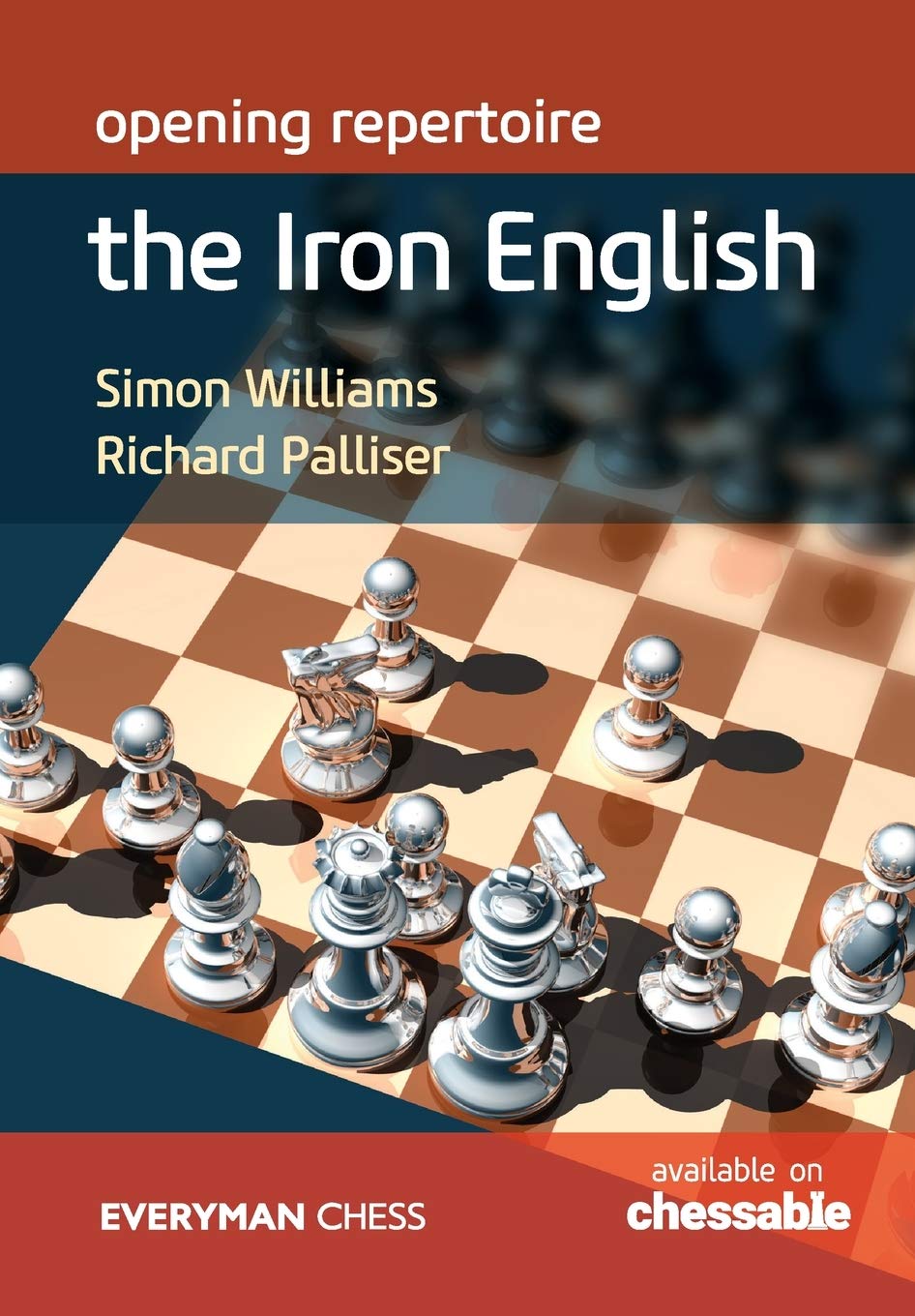
The Iron English, Richard Palliser & Simon Williams, Everyman Chess, 2020, ISBN-13 : 978-1781945803
 Save as PDF

Remembering Charles Kemp (18-xi-1901 09-xi-1986)

We remember Charles Edward Kemp who passed away, this day, November 9th, 1986

From The Encyclopaedia of Chess (Batsford, 1977), Harry Golombek OBE, John Rice writes:

“British problemist, specialist in fairy problems. Editor with D. Nixon of Fairy Chess Review, 1952-8. Co-author, with K. Fabel of Schach ohne Grenzen (Chess Unlimited) (1969), an anthology of T.R.Dawson’s work. International Judge (1964). ”

Using a Google translation from the Italian(!) wikipedia article we have

“Charles Edward Kemp ( Manchester , November 18, 1901 – Manchester , November 9, 1986 ) was a British chess composer .

He composed over 600 problems , many of which were of help and Fairy (with heterodox pieces ). He often collaborated with Thomas Rayner Dawson in editing the Fairy Chess Review , founded by the latter ..

Together with Karl Fabel he wrote the book Schach ohne Grenzen (“Chess Without Borders”), Walter Rau Verlag, Düsseldorf, 1969.

In the second problem reported below, the heterodox piece called Grillo (” Grasshopper ” in English, represented by an inverted Woman ) appears . Remember that this piece moves along the columns or diagonals, but only by skipping a piece (of both colors) and completing the move in the next house; if an opposing piece is found, it will be captured. In any case, even without moving, he acts on this house. The black cricket in c4, for example, can make only five moves: c4-c2, c4xe4, c4-c7, c4-f7 and c4-f1; in all the houses of arrival it does not check the white king.”

(From https://it.wikipedia.org/wiki/Charles_Edward_Kemp)

CEKs Compositions are given here.

 Save as PDF

Happy Birthday IM Chris Beaumont (28-x-1952)

IM Christopher R Beaumont

We send best wishes to IM Christopher R Beaumont on his birthday, 28th October 1952.

IM Chris Beaumont
IM Chris Beaumont
 Save as PDF

Remembering Charles Fox (09-xi-1866 11-x-1935)

BCN remembers Charles Fox (09-xi-1866 11-x-1935)

Charles Masson Fox was born on Friday, November 9th 1866 in Falmouth, Cornwall. his father, Howard, was 29 and his mother, Olivia Blanche Orme, was 22. He had one brother and two sisters.

His sister Olivia Lloyd was born on 5 February 1868 in Falmouth, Cornwall, when Charles Masson was 1 year old. His sister Stella was born on 11 December 1876 in Falmouth, Cornwall, when Charles Masson was 10 years old. In 1881 he was living in Sherborne, Dorset. In 1901 he was once more living in Falmouth and his profession was that of a timber merchant. His brother Howard Orme died on 7 June 1921 in Falmouth, Cornwall. His father Howard passed away on 15 November 1922 in Cornwall. His mother Olivia Blanche passed away on 12 March 1930 in Falmouth, Cornwall, at the age of 85.

Sadly, neither Hooper & Whyld, Sunnucks or Golombek mention Fox in their works.

Here is an extensive article from the British Chess Problem Society (BCPS) written by CJ Feather

From Wikipedia :

“Charles Masson Fox (9 November 1866 – 11 October 1935) was a Cornish businessman who achieved international prominence in the world of chess problems and a place in the gay history of Edwardian England.

Masson Fox was born into a Quaker family (although he was not related to the Quakers’ founder George Fox) and was a cousin of the fraudulent sinologist Sir Edmund Backhouse, 2nd Baronet. Living throughout his life in the Cornish seaside town of Falmouth, Fox in the early decades of his life was a senior partner of his family’s timber firm, Fox Stanton & Company, and was also on the Board of Messrs G C Fox & Company, a long-established firm of shipping agents.

C.M.Fox’s gravestone at Budock Quaker Burial Ground
Fox is described by chess historian Thomas Rayner Dawson (1889–1951) as “a friendly man, kind, mellow, lovable, bringing peace and comfort and serene joy with him”. He was also a discreet but active homosexual. In 1909 he visited Venice with his friend James Cockerton, meeting the writer Frederick Rolfe and becoming the reluctant recipient of Rolfe’s famous Venice Letters, in which the gay subculture of Venice is vividly described.

In 1912–13 Fox was blackmailed by a woman who accused him of seducing her 16-year-old son. Eventually Fox reported the matter to the police and the woman was sent to prison for five years and her son for one year, with hard labour.[1] However, Fox was profoundly affected by the publicity surrounding the case, which was reported in detail in the local press. The predictable result of his courageous action was the destruction of his reputation, and the compromise of his business and social life in Falmouth.

Although he continued to live in Cornwall, the focus of his social life shifted to London, and in the last two decades of his life, Fox became prominent in the world of chess. He was elected President of the Cornwall Chess Association, played a prominent part in the development of the British Chess Problem Society, and is still renowned as one of the greatest ever exponents of fairy chess (chess problems with variations in the rules).”

From The Problemist Fairy Chess Supplement, 1933 :

What is the shortest game
ending in this position?

Charles Masson Fox
Charles Masson Fox
 Save as PDF