Minor pieces for two reasons. These articles cover minor pieces of chess history. And, for the most part, they will concern minor players in our game’s history. Grandmasters are often described as the kings and queens of chess, in which case international masters, and perhaps also national masters, might be seen as rooks: lesser major pieces. Children playing at a low level in school clubs are the pawns, while the rest of us, from social players through to club and tournament players like me. They might not have produced brilliant games or enhanced the knowledge of chess, but, by just being there, each one of them has been a link in the chain. You won’t just meet players, though. You’ll encounter a few problemists, maybe study composers, and others who made their mark in chess in other ways.
Some of you will be aware that, as well as chess history, I’m also interested in both family and local history. None of my ancestors were, to my knowledge, chess players, although I almost certainly share a very small piece of DNA with an English international. However, some of them married into the families of chess players, and others might have encountered chess players as they went about their daily lives.
Some of these stories will take the form of a circular tour, where we travel through the ages, and, on occasion, round the world as well, to find connections.
I’m also researching chess in my area: Richmond and Twickenham, along with neighbouring areas such as Kingston and Surbiton. I’ll be looking at the stories of some of those who lived in, or represented chess clubs in this part of the world. Where they’re available, I’ll show you some of their games or problems as well. In parallel, wanting to consider other parts of the country, I’ll look at chess in Leicester, my father’s home city and also the city where I studied half a century ago.
I’ll try to contextualise the stories in terms of social history. Who were these people? What were their jobs? What about their families? When did they learn? Why did they play? What part did chess play in their lives? Understanding history of this nature might help us in considering the changing nature of chess as we emerge from the pandemic.
Some of the stories I tell will have no connection with either my family or my locations of interest: just stories I came across and wanted, often for sociological reasons, to investigate further.
A quick note on sources. Genealogy websites provide ready access to birth, marriage and death records from 1837 to date, as well as parish records often going back a further two or three hundred years. Census records from 1841 to 1911 are also online, with the 1921 census being released in January 2022. The 1939 Register is also available. Many of the families I’ll consider have already been researched, with extensive and (sometimes, but not always) accurate trees having been created by relatives or historians. Others, though, are not, in which case I’ll have a go myself.
I hope you enjoy these articles. If you have any corrections, suggestions for further research, or other comments, please get in touch.
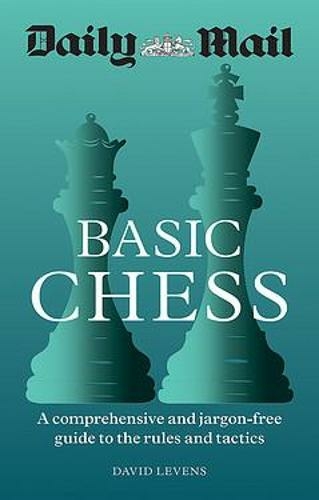
Basic Chess, David Levens, Hamlyn, 2021, ISBN 978-0-600-63718-9
From the publisher:
“Now anyone can play chess with this straightforward, jargon-free introduction. Written especially for beginners, it’s the most comprehensive manual available and includes everything from explanations of each piece to orchestrating endgames. In addition to expert advice, simple instructions, and more than 200 easy-to-follow diagrams, novices will find: basic tactical principles, aggressive openings, the top-ten traps and attacks, specimen games to learn and crib from, and a test your chess IQ section.
Basic Chess is the book you need to master the game.”
End of blurb.
The book provides no background about the well-known author (and neither does the Hamlyn web site) The book’s Amazon entry claims that David is the BCFs Director of Marketing (which David was in 2004).
David Levens, British Championships, Torquay, 2013, Round 11
“David Levens is a successful chess coach and experienced player.
Accredited by the English Chess Federation, and an experienced player, once ranked in the top 50 players in Britain, now an England Junior selector!
I am also Head Coach to Notts. Primary Schools Chess Association, who were NATIONAL CHAMPIONS in 2009 and 2010, and also England coach and manager for Glorney and Faber Cup U-18 teams, plus U14 and U12 teams, Glamorgan 2010.”
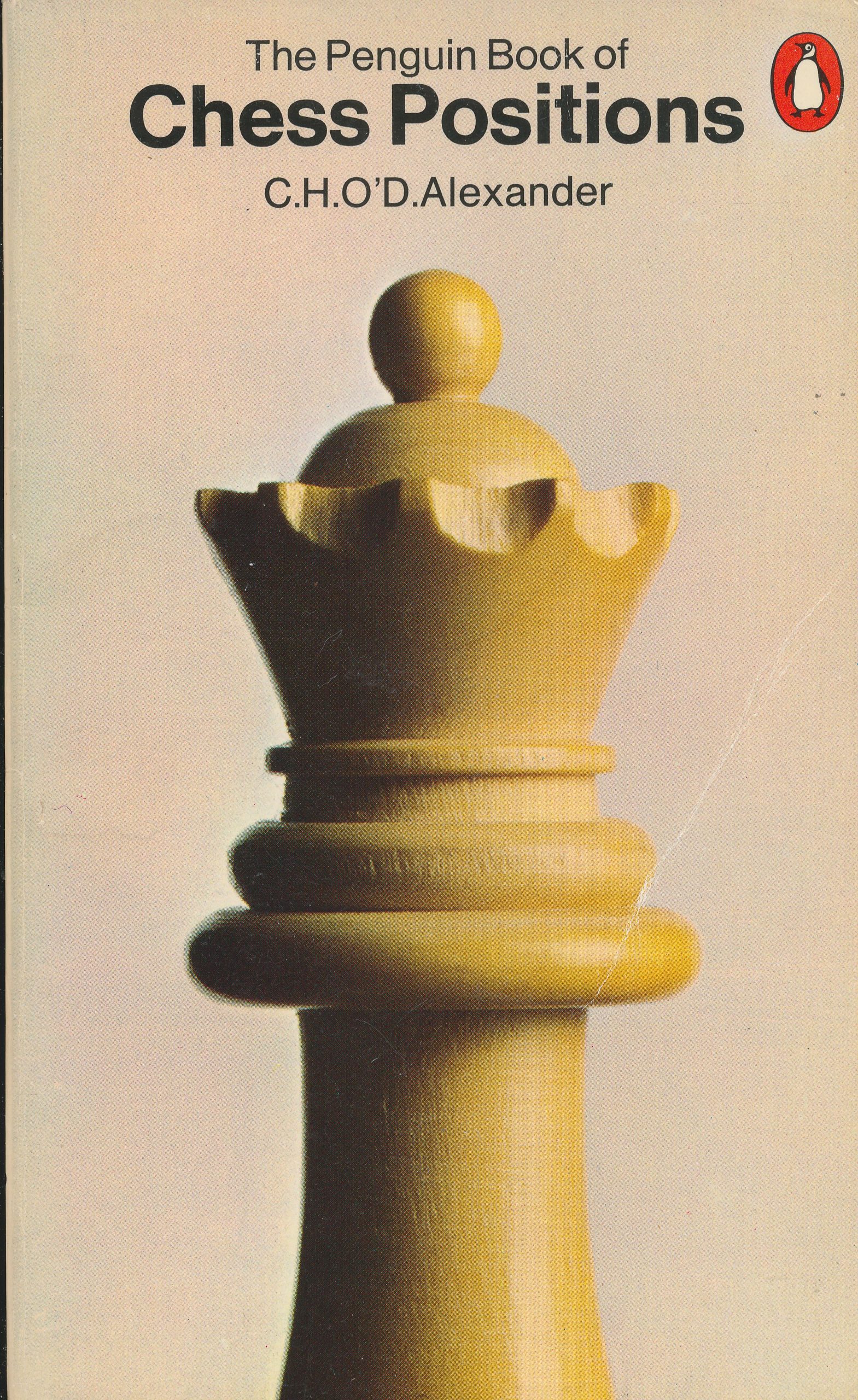
It is not often we receive a new chess book of “Penguin Paperback” dimensions. In fact some of our favourite chess books are of these handy measurements such as
The Penguin Book of Chess Positions, CHO’D Alexander, Penguin, 1973, ISBN 0 14 046 199X
In many ways Basic Chess reminds us of this BH Wood classic
Easy Guide to Chess, BH Wood, CHESS, Sutton Coldfield, 1945
Basic Chess, published in 2021, was originally published by Hamlyn (now an imprint of Octopus Books) in 2005 and reprinted as Basic Chess and Chess Basics since.
The 2021 edition has the branding of The Daily Mail at the head of the front cover. You might be forgiven forgiven for thinking “I was not aware of The Daily Mail’s interest in matters cerebral and least of all their interest in chess.” Do they have a regular chess columnist / feature or perhaps more modestly a chess puzzle to solve alongside their crossword and Sudoko puzzles?
We did our research (thanks Stephen Wright of Vancouver and Leonard Barden of The Guardian and The Financial Times) and it turns out The Daily Mail had a chess column from 14/11/1906 until 1908 edited by James Mortimer. From 08/10/1919 until 04/05/1920 the editor was R.C. Griffith and finally from 14/10/27 until 1935 it was edited by W. Hatton-Ward. Possibly in the 1970s Bill Hartston had a column but this is to be confirmed.
If The Daily Mail was to revive a chess column then this, of course, would be most welcome.
Maybe noticing that the various lockdowns plus the acclaimed “Queen’s Gambit” from Netflix has generated an extraordinary increase in on-line playing and sales of chess equipment and books the title has decided to derive some benefit?
Basic Chess is divided into twelve main sections as follows:
Introduction
Before You Start
Chess Tactics
Openings
The Middlegame
Endgames
Test Your Chess IQ
The Way Forward
Glossary
Index
Notes
Acknowledgements
It would seem that Basic Chess is most suitable for adults and in 2021 we have adults who want to
Start chess for the first time,
Restart chess after playing at school,
Restart chess to help their son or daughter.
However, this book is also appropriate for older children (13+) to supplement their school chess club experience or perhaps those who are home schooled: they’ve learnt a little and want to know more and perhaps value a physical book over yet more screen time and Zoom meetings.
The text is excellent and clearly written and does (as it says on the lid) take the reader from zero knowledge to a reasonable starting level. There are no assumptions of prior knowledge and the first few pages are really quite evangelical in style helping to create motivation.
At this point I feel obliged to report a fairly major mis-giving and it is this:
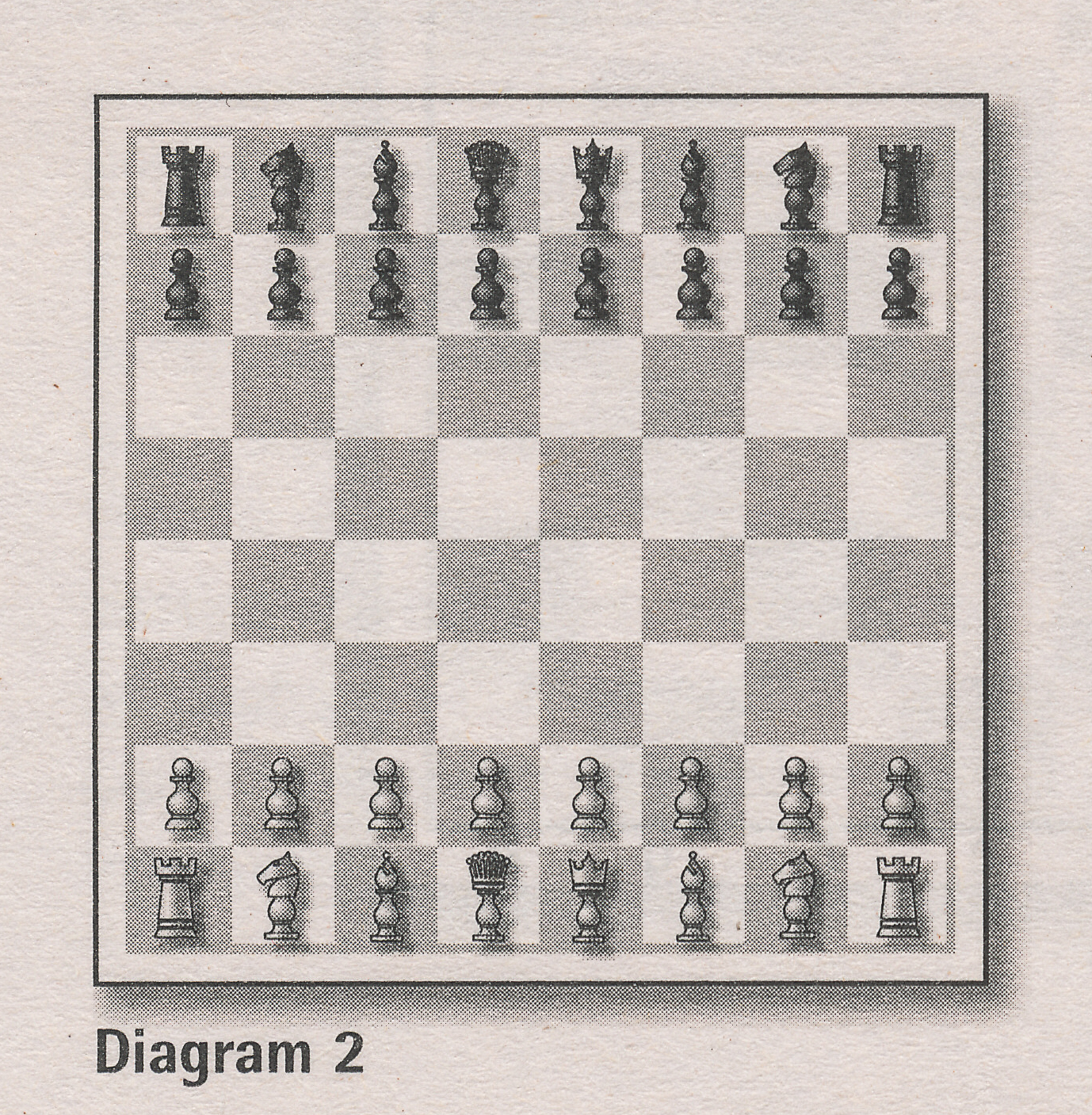
Diagram 2, Basic Chess, David Levens, Hamlyn, 2021
The above is a typical diagram. I have enlarged it for this article in the hope it will make it clearer. I really do not understand the need to use such terrible representations of the pieces, the king is particularly poor and Black pieces on dark squares are worse still.
In the book the King is described as having “a crown topped by a cross” Well, clearly the graphic designer did not read this text and neither were they a chessplayer. There are no crosses for the diagrammed kings.
The discussion on chess clocks could easily have included an image of a modern DGT timer and mentioned the older analogue models.
Since this book was published to ride on the back of lockdown chess I was looking forward to the advice on playing on-line. Surely this section would be slap-bang up-to-date listing many of the most useful resources? Sadly, you will be disappointed. The two best sites for online chess are, apparently, The Internet Chess Club and Freechess.org The latter (which became known as FICS) has not been updated for years and gives the impression that tumbleweed is breezing past its offices.
What of chess engines? well, the word “engine” does not get a mention (it did not exist in 2005 of course) and apparently one has to purchase a separate piece of dedicated hardware to play against a chess playing program. There is no installing software on a laptop, tablet or mobile telephone : these are not options whereas for some time they have been main stream.
I don’t want to be too harsh. The really important material is really rather good for a beginner or someone who has returned to chess after a long absence.
However, there was a golden opportunity with this book that was missed : sort out the appalling diagrams and update the content that was way past its use-by date. It really would not have been difficult to do these things had there been the will.
Since I knew David fairly well (he was the editor of the ill-fated Junior British Chess Magazine that he subsequently discovered he had “volunteered” to do) through British Chess Magazine during 2013 – 14 I made contact and asked him about the 2021 edition. He wanted to update the elderly content pertaining to computer use and online chess and he also wanted to see the diagrams improved. Sadly, the opportunity did not arise.
In summary, this is a good little book for beginners that will undoubtedly be stocked on the shelves on WH Smiths, Waterstones, motorway service stations and airports. It has missed an opportunity for an update in the light of Queen’s Gambit and lockdowns.
It will sell and I wish it good luck! PLEASE improve the diagrams!
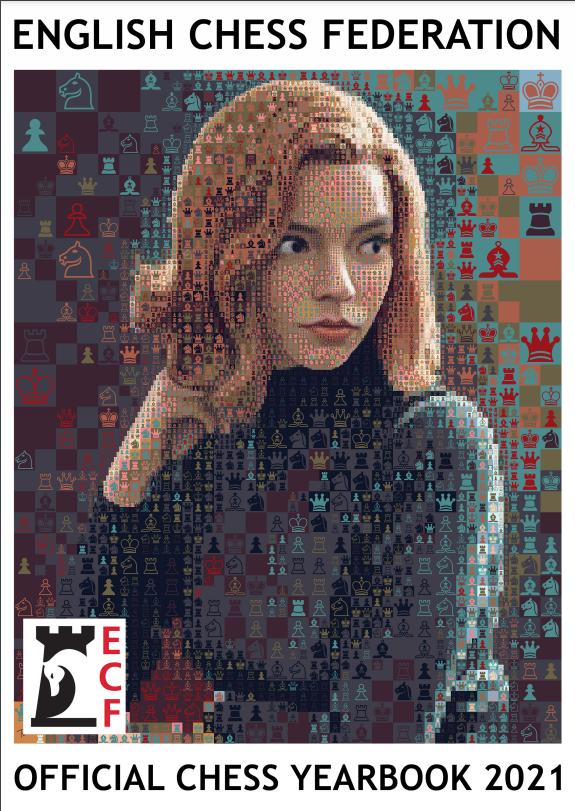
“Thanks to the efforts of a dedicated team of people within the English Chess Federation, the ECF Yearbook 2021 is now available in PDF form via this link – https://www.englishchess.org.uk/wp-content/uploads/2021/03/Yearbook-2021-complete-medres.pdf *
The printed version will follow in a little while; it will be free to Platinum members of the ECF and may be purchased (while stocks last) for £15.50 by ECF members in all other categories [online form to follow].
Special thanks go to IM Richard Palliser at CHESS Magazine, Dr John Upham at British Chess News, Director of Home Chess Nigel Towers, compiler Andrew Walker and to our determined team of proof readers – Dagne Ciuksyte, Roger Emerson, Stephen Greep, James Muir, Mike Truran and John Upham.”
End of blurb.
One thing I failed to predict for 2021 (amongst numerous others) was having a hardcopy of the ECF Yearbook to review. I was not sure there would be a yearbook of any kind based on a lack of material to report combined with an impending fear of the hardcopy version being deprecated.
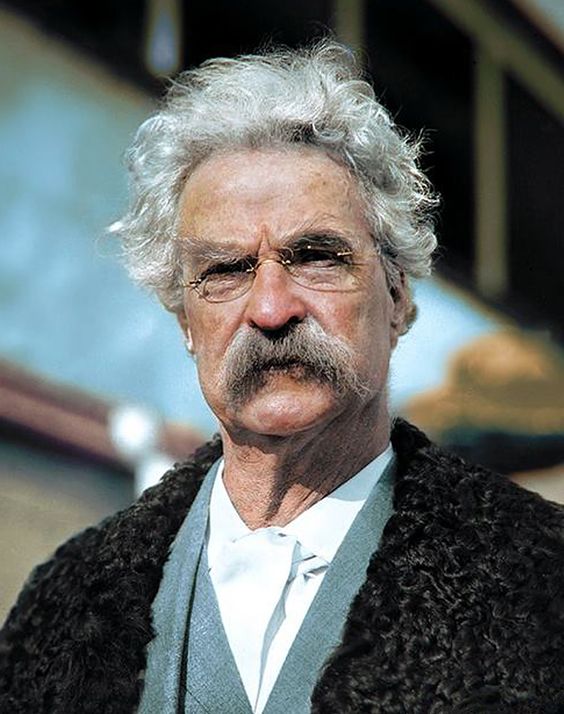
At this juncture I feel it appropriate for the Yearbook to (correctly) quote (but often misquoted) Samuel Langhorne Clemens (aka Mark Twain if you didn’t know otherwise) that
Samuel Langhorne Clemens (aka Mark Twain)
The report of my death was an exaggeration
A Yearbook of English chess was “first published sometime between 1904 and 1913” but not by the BCF. The first BCF Yearbook may well have appeared in the 1930s but the jury remains unclear. BCF Yearbooks continued up until 2005 and then became the ECF Yearbook in 2006 which suggests at least 90 odd editions. The events (or rather the lack of events!) after March 2020 led myself to believe we would not see an ECF Yearbook until 2022 if at all!
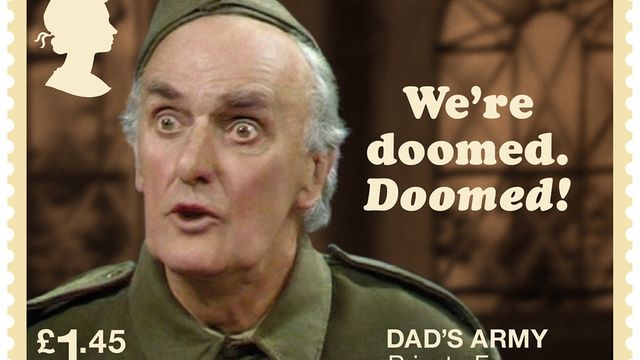
Despite all this Private Frazer style doom and gloom
Private Frazer : We’re doomed, Doomed!
and thanks to the good offices of Andrew Walker (ECF Webmaster) we not only have a Yearbook but, dare I say it, we have an excellent one with more pages than the previous year! So, (as they frequently say on television) how did they do that?
The Contents are divided into 15 sections viz:
Report of the Board to Council
Strategy and Business Plan
New Initiatives – GoMembership / Queen’s Gambit Scheme
Chess in Prisons
John Robinson Youth Chess Trust
The Chess Trust
The ECF Academy
ECF and Other Awards
Home News 2020 – from CHESS Magazine
Events around England
Nigel Tower’s Online Chess Report
Off the Wall
Mark Rivlin (and Tim Wall) – the interviews
Remembering -from British Chess News
Endgame Studies / Chess Problem News
Being a Yearbook the overall layout would normally include formal content that you might be forgiven for leaving for the ubiquitous “rainy day”. Perhaps we should update that and leave things for a “sunny day”?
ECF CEO, Mike Truran OBE kicks-off with the year’s positives and he immediately thanks those who carried largely unpaid work on behalf of English chess and the ECF.
Gone are the lengthy (dare I say tedious?) lists of officials, Title holders, Past Champions and all the other content which is largely unchanged year-on-year. Most of this information has been migrated on-line and may be found on the ECF’s satellite Resource web site. This makes complete sense since this location may be maintained throughout the year rather than being cast in stone (or rather paper).
This is followed by an itemised list of the ECFs Strategy and Business plan which contains many laudable and worthy statements of intent some of which, at least, will hopefully eventually be brought to fruition.
I won’t go through every section but I would like to pick out a few highlights. It was gratifying to read of a small army of volunteers whose efforts were recognised with various awards including Bude Chess Club and the Hull International Congress.
Winner of ECF Book of the Year was no surprise whatsoever and justly deserved. It was a pleasure to read of those who had become FIDE Arbiters : we badly need such persons if we are to run sufficient FIDE rated events to cater for the increasing demand especially since England has recently abandoned the Clarke Grading system and replaced it with an Elo style rating system. I could always mention the Netflix phenomenon of Walter Tevis’s Queen’s Gambit but I won’t. I mentioned it once(?) and I think I got away with it.
So, we have covered 8 out of 15 sections as we turn to page 27. Its going to be a thin one for 2021 surely? Not so. Thanks to CHESS Magazine we have reports covering 43 pages of home news reported by the much loved magazine launched in 1935 for 1/- (a shilling which is 5 new pence for those born post February 15th 1971) by BH Wood. Within these pages we have 16 annotated games from the pages of the aforesaid publication. BHW would have been most proud that his magazine was doing its bit for 2020 as it did during the Second World War.
Events Around England runs to 32 pages of more familiar content such as reports of the Four Nations Chess League (4NCL), the ECF Counties Championship, Hastings International Congress and so on and so forth with that well-known “English” event, Gibraltar making a welcome appearance thanks to the reporting of John Saunders.
Now at page 101 (and less than half-way through) you might think what else can there be to report?
Indeed and at this point the ECF’s new Director of Home Chess, Nigel Towers, steps up to the plate and offers 15 pages reporting of the largest growth sector for the English chess scene, (no not discussions of ratings versus gradings) but, chess played on-line (as some might call it The InterWeb) including the scores of eight games.
Tim Wall continues our journey adding a lighter and more humorous touch with a veritable potpourri of musings on various topics including absent minded cats, Vladimir Ilyich Ulyanov (aka Lenin), Arthur Ransome and a modern resurrection (with the joie de vivre) of Howard Staunton via HSs enjoyable Twitter feed. Who is the person behind the account? Answers on a postcard to….
Not to be outdone, the ECF’s Newsletter compiler and editor, Mark Rivlin conspired with the aforementioned young Timothy to bring us a gathering of lockdown interviews with the great and good including Danny Gormally, Shreyas Royal, Lorin D’Costa, James and Jake. If you want to know who James and Jake are (and I do now!) then purchase the Yearbook!
The largest (58 pages) section for 2020 could leave me facing charges of nepotism… British Chess News was delighted to be invited to provide content and twelve biographies of some of the most significant contributors to English chess. These names include Harry Golombek OBE, Hugh Alexander CBE, Vera Menchik, Tony Miles and Fred Yates. I won’t comment on the articles veracity but leave that for you to discover.
The final section, and one of my favourites, is that of the Studies Editor of British Chess Magazine, Kent based Ian Watson. Ian provides the best new studies of 2020 and reflects on the life of one of England’s foremost composers, Dr. Richard K Guy.
At 209 pages we have reached the end. The English Chess Federation have done a splendid job in getting this Yearbook produced and published in challenging circumstances. Long may the tradition continue!
John Upham, Cove, Hampshire, 20th April, 2021
John Upham
Book Details :
Hardcover : 209 pages
Publisher: English Chess Federation; 1st edition (1st April 2021)
Language: English
Product Dimensions: 30 x 21 x 1.5 cm
Cost of Hardcopy: £15.50 (ECF members), £17.50 (non-members)
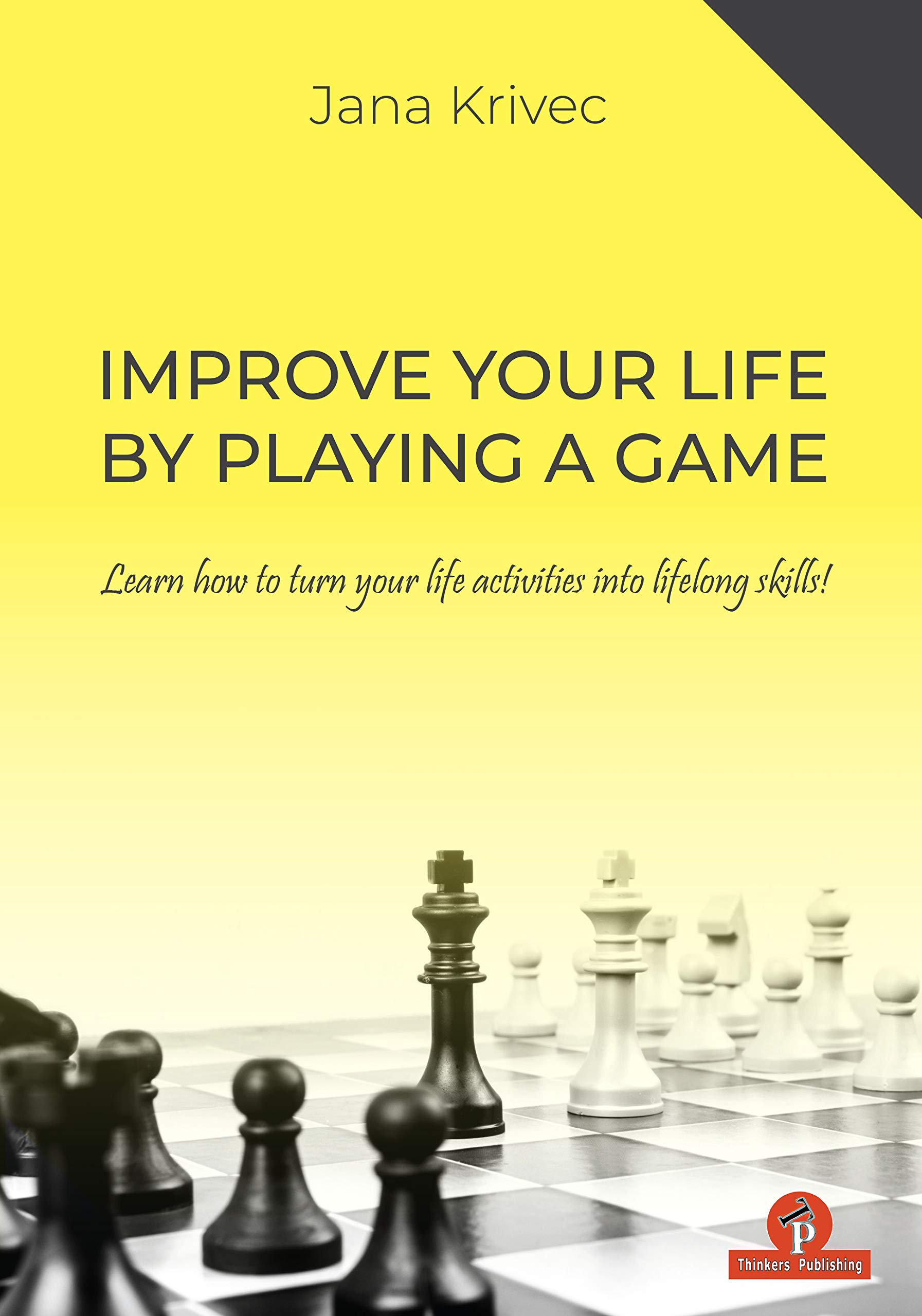
Improve Your Life by Playing a Game, Dr. Jana Krivec, Thinkers Publishing, 28 Jan. 2021, ISBN 9464201029
From the author’s introduction:
“This book is partly designed as an autobiographical experience focusing on the processes that arise in the life of a chess player that have be translated into everyday life. In part, the book incorporates psychological theories that generally explain these processes, but overall it can be seen as a guide on how to use any activity to learn skills that will enrich your life. There are several activities in life which can be seen in the same way if we know where and how to exploit the opportunities. The truth is that all aspirations are interconnected when we keep an eye on the thematic links. I believe that this book will give you a new insight into how any ability can be transferred from a particular activity to the universal wisdom of life. It will awaken your networking skills and teach you how to turn life activities into lifelong skills that will improve your well-being. The course of the book follows the typical process of playing chess, starting with training, followed by the tournament situation, the course of the game, the time after the game and the tournament. Since I am not a poet, I have often borrowed some quotations from famous, imaginative and clever people from all over the world. I believe that these valuable thoughts have enriched the book. One thing I ask you to do while reading this book is to open your mind and enjoy the inner journey. So let us go and try to become aware of the processes behind our life activities. Let us find out what and why we do what we do in our daily lives.”
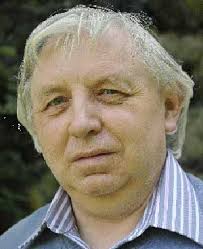
Dr. Jana Krivec at the Batumi Olympiad 2018
“Jana Krivec graduated from the Faculty of Psychology at the University of Ljubljana in 2004, where she successfully defended her doctoral thesis entitled “Cognitive Information Processing: the Case of Chess” in 2011. In 2004 she worked with the Faculty of Computer and Information Science on a project in which researchers developed a program for automatic annotation of a chess game. She was a researcher at the Department of Intelligent Systems at Jozef Stefan Institute, Ljubljana in the field of artificial intelligence. Her work was presented at several international conferences and published in scientific publications. She is a university professor of Psychology at the School of Advanced Social Studies in Nova Gorica. Jana Krivec is a Women’s Chess Grandmaster with a ELO rating peak of 2362 in 2008. She has been the Slovenian Women’s Champion seven times as well as a member of the Slovenian women’s chess team at eleven Chess Olympiads. At the 2006 Turin Olympics she and her teammates reached ninth place. She has won several international tournaments. Chess has been her passion and will probably remain explicitly or implicitly present throughout her life.”
The well deserved success of Barry Hymer and Peter Wells’ recent book Chess Improvement: it’s all in the Mindset, as well as The Moves that Matter, by Jonathan Rowson, two books which take very different, but essentially ‘serious’ approaches, suggests that there may be a hitherto untapped market for chess self-help books. A book which takes a more populist approach, then, should be welcomed.
What we have here is a book which can be read on two levels: as a self-help book for chess players, and as a book for general readers using chess as a metaphor. But the title: Improve your Life by Playing a Game: what exactly does this mean? By playing one game, by playing chess generally, by playing any game? Bridge? Noughts and crosses? Snakes and ladders?
First impressions are good: a colourful book using nice shiny paper, with copious photographs, illustrations and cartoons as well as callouts in tasteful pastel-shaded boxes. Green for ‘key takeaways’, pink for ‘a minute of self-reflection, and so on.
The chapters take us through a chess tournament. In Chapter 1 we have to train for the tournament. Chapter sections look at goal setting, motivation, self-examination and improvement, discipline, hard work and persistence, learning from the masters, memorization techniques, working with modern technology, delayed reward … and never stop exploring.
In Chapter 2 we’re playing a game. First, we have to prepare for our opponent, then, during the game, we have ‘Always find a meaning’, ‘Focus and concentration’, ‘Systematic thinking, problem solving and decision making’, ‘Activation, patience and responsibility’, Courage and optimistic thinking’, Creative thinking and flexibility’, ‘Being in control of your feelings’, ‘Never stop fighting’ and ‘Ethics’.
After the game, in Chapter 3, we might have to cope with stress and losses, using cognitive techniques, behavioural techniques and understanding that if you don’t fail, you don’t learn.
Chapter 4 suggests what we might do after the tournament. We’re offered ‘A will to change’, ‘Who are you?’, ‘Mind and body work together’, ‘Positivity’, ‘Do what you like’ and ‘Gens una sumus’.
Chapter 5 warns us about the potential negative aspects of chess. Only two pages here, so clearly there’s not much worth talking about.
Chapter 6, Theories and Studies on Benefits of Chess’, moves into rather different territory. We learn about chess and education, and about chess and health problems, though I for one would raise a very strong objection to describing ADHD and Autism Spectrum Disorder as health problems.
Sadly, it’s not the only issue I have with the book. It starts right at the beginning, with the author’s introduction. We start with a quote, ‘Chess is life in miniature’, from ‘Gary’ Kasparov, but in the third line of text underneath he’s granted the preferred spelling of his first name: Garry. Gary and Garry seem to appear fairly randomly throughout the book, as do, for example, Bobby Fisher and Bobby Fischer.
Then we come to the inspirational quotations. You may well find many of them valuable, but there are attribution problems.
Page 37, for instance tells us ‘The only way to get smarter is by playing a smarter opponent’, attributed to a book entitled Fundamentals of Chess, published in 1885, with www.reddit.com as the source. The use of the word ‘smarter’ didn’t sound like 1885 to me, and a quick google located a Kingpin article by Justin Horton, which explained that this was a fictional book mentioned in the Guy Ritchie movie Revolver, where, however, it was given a publication date of 1883.
Page 66 offers ‘One bad move nullifies 40 good ones’, attributed to Vladimir Horowitz, an outstanding pianist, but not noted for his chess mastery. A search revealed that my guess was correct: it was actually written by the chess master and prolific author IA Horowitz, although it has also been misattributed to Bernhard Horwitz. Horwitz, Harrwitz or Horowitz? Vlad, Al, or even Anthony? If you’re looking for inspiration or self-help you might not care, but some of us do.
The advice, while no doubt invaluable to many readers, incorporates a ragbag of ideas familiar to any reader of pop psychology books. We have the Big Five personality traits and de Bono’s Thinking Hats. There’s Kahneman’s Fast and Slow Thinking as well as the Stanford Marshmallow Experiment. All of which is fine and understandable, as they’ll be new to some readers, but they are often presented without criticism or adequate source references. Ericsson’s 10,000 hours is, of course, there, also quoting Malcolm Gladwell, but failing to mention any possible reservations (there are many) or that Gladwell failed to understand Ericsson’s research. Flow is also there, but mysteriously attributed to Alan Watts (or possibly Wats: both spellings appear at the top of page 68): Mihály Csíkszentmihályi, the originator of the concept, doesn’t get mentioned at all. Sometimes, but not always, sources are quoted. Page 25, for instance, offers us ‘Some studies have shown…’ and ‘In one study…’, without any further information. (This is about the possible dangers of external rewards, and I’m sure they’re all quoted by Alfie Kohn, so I can look them up myself, but not all readers will have this knowledge.)
The text is enlivened by many photographs, colourful illustrations and cartoons, taken, with brief acknowledgements, from online sources, but not always either relevant or fully explained.
There is a bit of chess here as well, although, bizarrely, the author uses long algebraic notation but without capture and check symbols.
While talking about marshmallows and instant gratification, Krivec presents us with this position which I’m sure you’ll recognise.
Coincidentally, this is something Joel Benjamin also mentions: “I believe that 8. Qxb7 is the best move. Bobby Fischer would have played it. Or, as you kids would say, Magnus would play it.” Krivec takes a different view: “(Qxb7) is not a good move because it follows the urge for immediate gratification and not the rules of good chess playing.” Far be it from me to argue with a WGM about the best move, but this seems a rather silly thing to say. My view is that both authors missed the opportunity to explain that both Qxb7 and Nc3 are excellent moves: your choice will be a matter of style.
If you want a chess example of the disadvantages of immediate gratification there are thousands of better examples to choose from, including one or two later in this book.
In some of the other chess ‘minutes for self-reflection’ you’re not told whose move it is: not very helpful, I think.
On page 110 we’re learning about creative thinking: thinking outside the box. An important topic, in life as well as in chess. To exemplify this we’re invited to solve the 9 dot puzzle.
A good example, I think, because you literally have to think outside the box to solve it. However, the ‘solution’ on the following page only connects seven of the nine dots and doesn’t go outside the box at all. Again, like so much of this book, unsatisfactory.
It’s all a great pity. I’m sure there’s a demand for a book of this nature, which should appeal to many players at all levels. Taking some well known ideas from psychology and applying them to both studying and playing chess is a great concept which will be inspirational to many readers. Jana Krivec’s passion both for chess and for helping people improve their lives comes through very well. If you can forgive the problems, you’ll probably enjoy and benefit from this book. It certainly contains a lot of valuable, although not especially original, advice about many aspects of both chess and life, as well as exercises in, for example, mindfulness, which many will find helpful.
However, the typos, errors, inadequate referencing and sourcing, amongst other reasons, preclude a general recommendation. It really needed a lot more editorial input, preferably from someone with specific subject knowledge, as well as better proof-reading.
Thinkers Publishing are well known for their high production qualities and excellent books, mostly on advanced chess subjects. It looks to me like, in a praiseworthy attempt to broaden their appeal, they stepped out of their comfort zone.
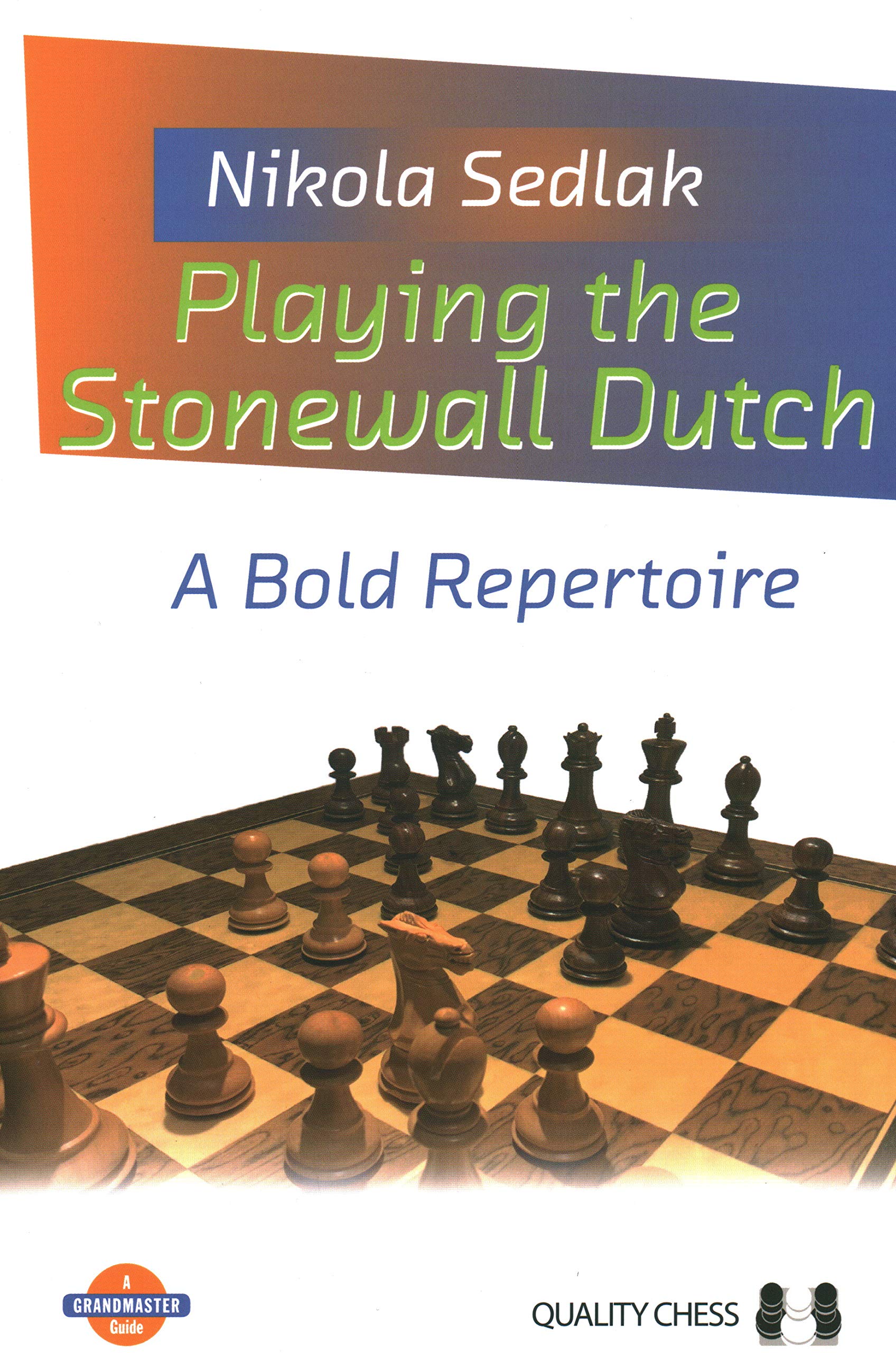
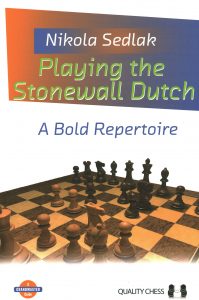
Playing the Stonewall Dutch, Nikola Sedlak, Quality Chess, July 2020, ISBN-10 : 1784831093
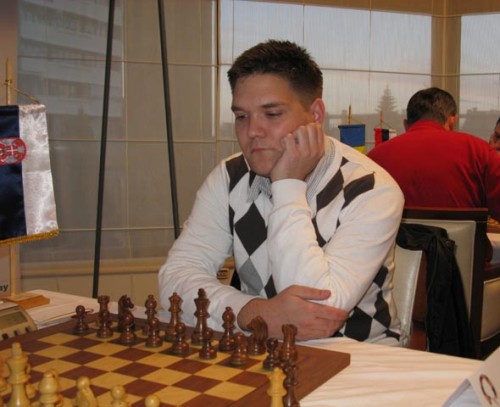
GM Nikola Sedlak is a former Serbian Champion who has won both the EU Individual Open Championship and an Olympiad gold medal.
GM Nikola Sedlak in 2010 at the 16th Bora Kostic Memorial
From the publisher:
“The Dutch Defense is one of Black’s most combative responses to 1.d4, and the Stonewall is the boldest version of this opening. Black immediately seizes space in the center and clamps down on the e4-square, laying the foundations for a complicated strategic battle. Many players believe the Stonewall to be a substandard opening, naively assuming that the e5-outpost and bad light-squared bishop must give White the advantage.
GM Nikola Sedlak disagrees, and in Playing the Stonewall Dutch he shares the insights that have helped him to rack up a healthy plus score from Black’s side. In addition to providing a complete repertoire in the main lines of the Stonewall, this book also offers useful guidance on dealing with Anti-Dutch variations and various move-order subtleties.”
End of blurb…
High quality paper is used and the printing is clear: excellent glossy paper has been used. The weight of this paper gives the book an even better feel to it!
The book can easily be laid flat next to the board and does not require weights to prevent it from “self-closing” (a particular bugbear of ours !). Each diagram is clear and the instructional text is typeset in two column format, which, we find, enables the reader to maintain their place easily. Figurine algebraic notation is used throughout and the diagrams are placed adjacent to the relevant text.
A small (but insignificant) quibble: the diagrams do not have a “to move” indicator (but they do have coordinates!). There is a full games index which is most welcome. This title is part of the Quality Chess Grandmaster Guide series.
The main content is divided into eleven chapters viz:
Avoiding the Fianchetto
Fianchetto with Bf4
7.Nbd2 & 7.Ne5
7.Nc3
7.b3
5.Nh3
The Flexible Stonewall
The Aggressive Stonewall
Move Orders
1.c4 and 1.Nf3
Exercises
Before we continue it is confession time…
Prior to reading this book I had little knowledge of the Stonewall Dutch from Black’s perspective although I did look at it briefly when studying the Triangle Variation and the Abrahams (Noteboom) Variation of the Semi-Slav. There are lines where Semi-Slav players have the option of transposing into a Stonewall Dutch and Gerald Abrahams did play this way on occasion. I am more familiar from White’s perspective but, nonetheless, to my chagrin, insufficiently so.
The Stonewall Dutch has not hitherto had many books published about it. Popularised by Botvinnik it has found most support by club players rather than by elite Grandmasters. The well known structure for Black is typically :
arrived at by numerous move orders.
and therefore comparison with this other book will be beneficial to the student.
The authors recommended move order of 1.d4 e6 clearly requires Black to be familiar with the French Defence (or the Franco-Sicilian as a matter of taste.) and is a very common mechanism among practitioners of the Classic / Stonewall Dutch. Lenningrad Dutch players have less flexibility at their disposal. 1…e6 has the virtue of avoiding some of White’s pesky so-called Anti-Dutch ideas such as 2. Bg5, 2.Nc3 and the Staunton Gambit (2.e4).
However, for completeness, the author provides ideas for Black to combat the above (and more) white tries after 1.d4 f5 in Chapter 9. In fact, the coverage of these move two tries is more comprehensive than most books on any line of the Dutch Defence.
Consulting Megabase 2020 we find that the author, Nikola Sedlak has recorded 2102 games which ranks him as one of the most active players. We find that against 1. d4 nowadays he plays both 1…f5 and 1…e6 with the latter being the modern move order choice. The Stonewall features in many of these games.
Apart from the move two alternatives I was curious to see the recommendations for dealing with the overly ubiquitous London System. Indeed, against the Stonewall and Classical Dutch is one of the rare occasions where I would consider playing
and 3.Bf4 is only eclipsed (as you’d expect) by 3.c4 or 3.g3 in popularity. There is extensive coverage in Chapter 9 of this club player favourite.
Before delving deeper it is worth knowing that Quality Chess have provided a pdf excerpt of the Preface and and the first twenty or so pages of Chapter 5 on 7.b3. This will give you an excellent feel for the style of presentation so please take a look!
The Introduction chapter is 13 pages of invaluable discussion of the overall strategy of the Stonewall structure interspersed with plans, strategic ideas, themes and motifs. Re-reading until you fully understand these ideas will be time well spent.
Each main content chapter comprises of a schematic of variations followed by a detailed introduction to the ideas and then a number of high quality model games many of which have the author playing the black pieces.
The analysis and recommendations are generous with explanations not spoilt by reams of tedious engine dumps. On average each page contains 3-4 diagrams giving the content a user friendly feel. It is clear that the author does his best to keep the reader engaged and “on-side”: this is not always easy for opening books which are generally harder work to stay with than say games collections or tactics primers.
As I mentioned earlier, my knowledge of the “main” lines (those where white plays g3) is superficial so I decided to conduct a “gedanken” experiment and use MegaBase 2020. Using the “most games” style of lookup I arrived at the following position to have been played the most up to 2020:
giving white a range of 7th move choices. Note that Black has opted for the more active …d6 development of the bishop as against the more conservative …e7. There is a considerable body of theory for both options.
By a considerably large margin the most popular move here is 7.b3:
and MegaBase 2020 has roughly 4,500 games between players of any strength and 1,000 games if you use the “Top Games” option. The author dedicates Chapter 5 and a full 40 pages to 7.b3. (The Pavlovic book also dedicates substantial space to this line.)
So having arrived here I asked Megabase 2020 to show me the most popular direction of travel from here :
7…Qe7; 8.Bb2, 0-0;9.Nbd2,b6;10.Ne5, Bb7;11.Rc1,a5; (various move orders are available as the saying goes) and then White is less clear about the next most popular move although 12.e3 is the standard recommendation.
Consulting the author we find ourselves in Chapter 5, variation B2), page 134 and the variation is considered over six pages in considerable depth. (Pavlovic also covers this position as you would expect.)
The first model game of this chapter to enjoy is this gem:
which is analysed in depth.
Unlike some reviewers I will not be revealing a list of spoilers of what the author recommends in positions x, y and z. Usually I like to point out important lines that have been missed out but I get the impression that coverage is comprehensive and devoid of such omissions.
The overall impression is of a superbly produced book suitable for someone considering adding the Stonewall Dutch to their repertoire as well as an excellent booster for someone who is experienced with it.
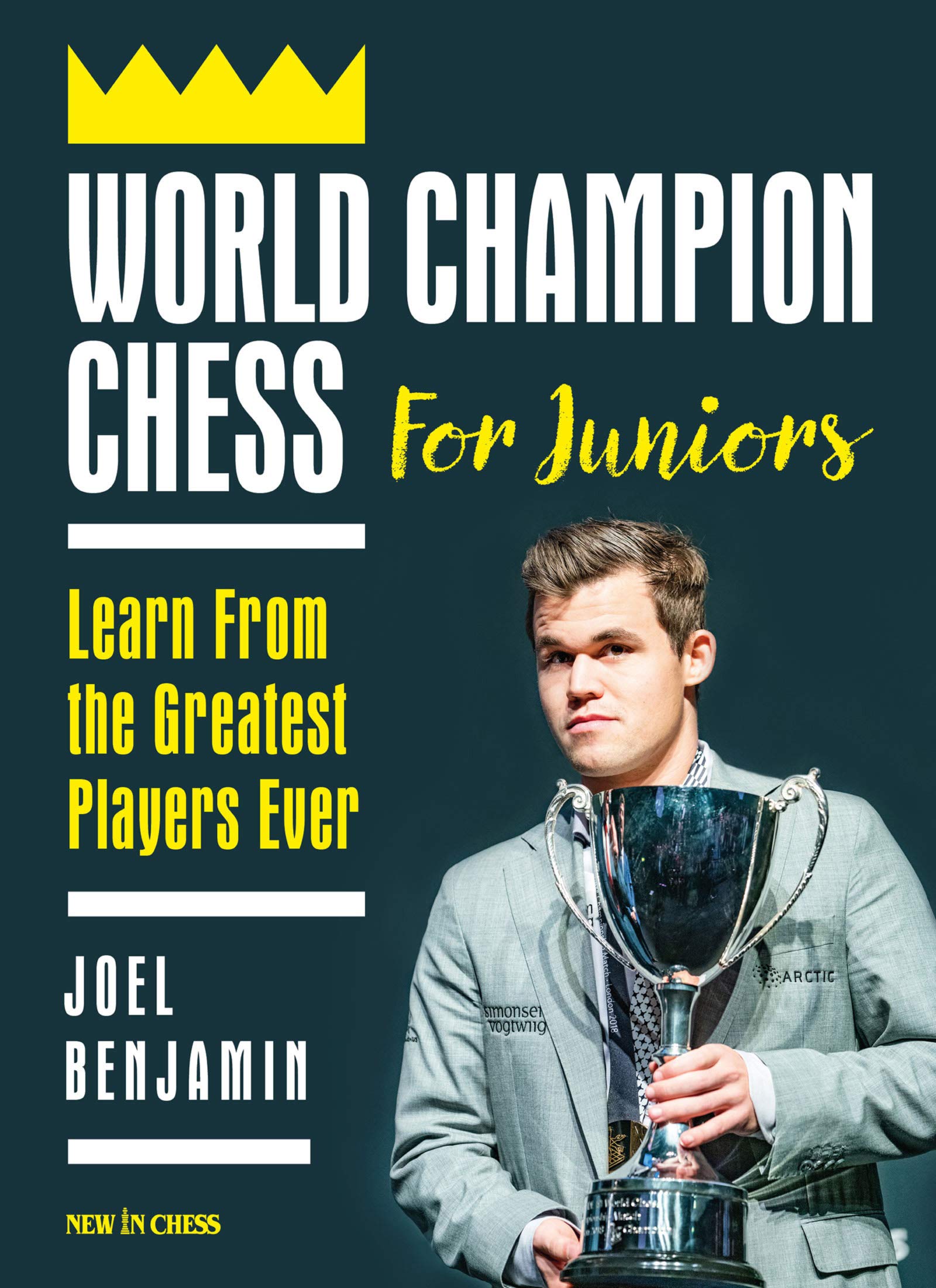
World Champion Chess for Juniors : Learn From the Greatest Players Ever : Joel Benjamin
World Champion Chess for Juniors: Learn From the Greatest Players Ever, Joel Benjamin, New in Chess, 2020, ISBN-10 : 9056919199
From the book’s rear cover :
“Grandmaster Joel Benjamin introduces all seventeen World Chess Champions and shows what is important about their style of play and what you can learn from them. He describes both their historical significance and how they inspired his own development as a player. Benjamin presents the most instructive games of each champion. Magic names such as Kasparov, Capablanca, Alekhine, Botvinnik, Tal, and Karpov, they’re all there, up to current World Champion Magnus Carlsen. How do they open the game? How do they develop their pieces? How do they conduct an attack or defend when necessary? Benjamin explains, in words rather than in chess symbols, what is important for your own improvement. Of course the crystal-clear style of Bobby Fischer, the 11th World Champion, guarantees some very memorable lessons. Additionally, Benjamin has included Paul Morphy. The 19th century chess wizard from New Orleans never held an official title, but was clearly the best of the world during his short but dazzling career. Studying World Champion Chess for Juniors will prove an extremely rewarding experience for ambitious youngsters. Trainers and coaches will find it worthwhile to include the book in their curriculum. The author provides many suggestions for further study.”
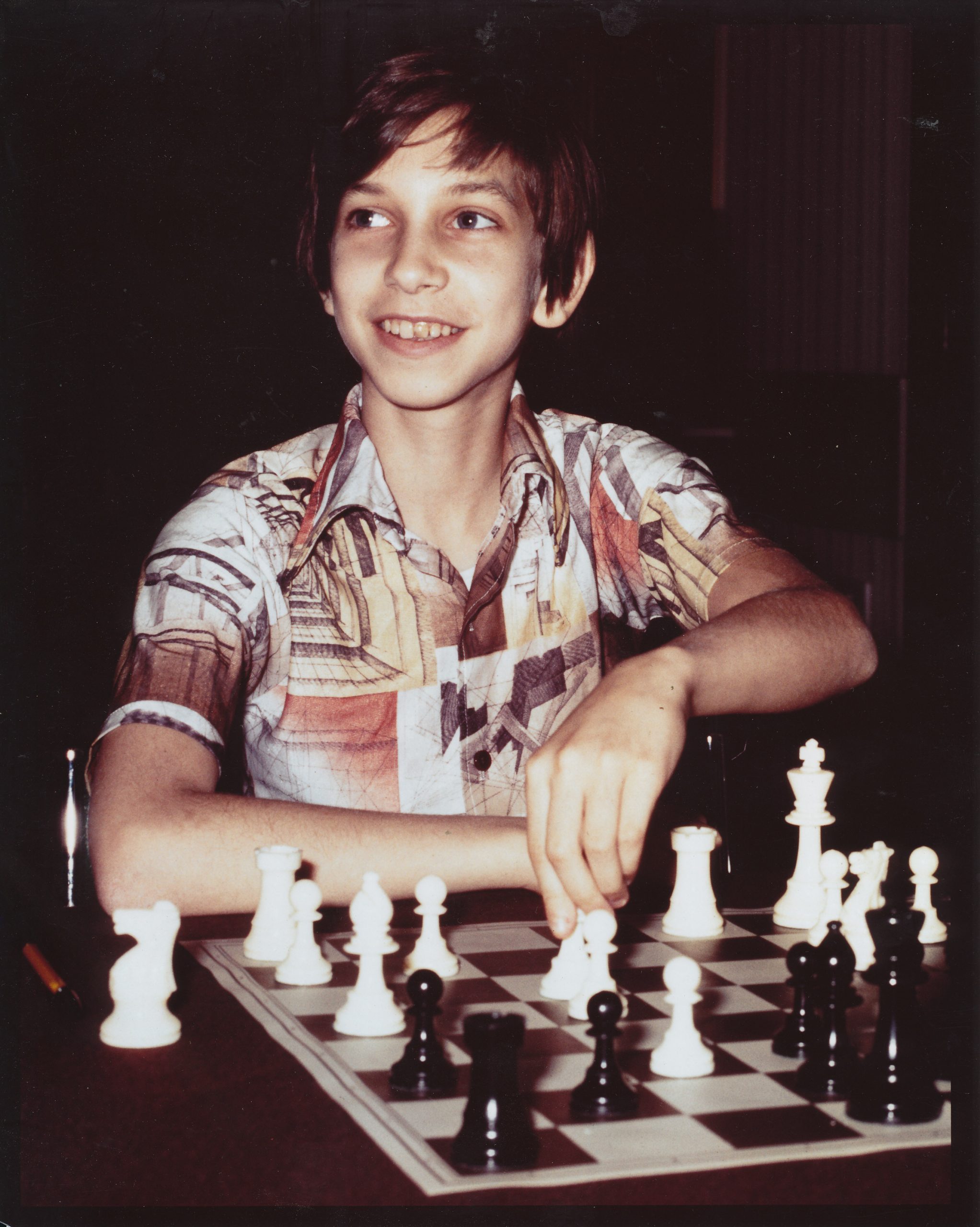
Joel Benjamin during the Lloyds Bank Masters
“Joel Benjamin won the US Championship three times and has been a trainer for almost three decades. His book Liquidation on the Chess Board won the Best Book Award of the Chess Journalists of America (CJA), and his most recent book Better Thinking, Better Chess is a world-wide bestseller.”
Naturally enough, given that I’ve been teaching chess to children since 1972, I’m always interested in reading chess books with ‘juniors’ or ‘kids’ in the title.
Let’s see what we have here.
From the introduction:
If you are not a junior, please don’t toss this book aside; there is still a lot of cool analysis and history in here for you. But I have written this book, primarily, to reach out to younger players. At any point in history, we see a ‘generation gap’, where young people see the world in a very different way than their elders. If you are, let’s say, a teen or a tween, you probably process most chess material from a computer. You follow recent events, work on tactics puzzles, practice against an engine, or whatever works for you. This may match your lifestyle of playing Minecraft or (worse) Fortnite on your I-pad instead of reading books.
A few years ago, I was horrified to learn that two of my (young) fellow instructors at a chess camp could not name the World Champions in order (or even place them roughly in their time periods). For someone of my generation, that fundamental lack of knowledge was unthinkable. And while I accept that kids today learn things in different ways, I feel that they are still missing out on their ignorance of knowledge provided by books.
I’m in complete agreement with Joel Benjamin here. I believe that, for all sorts of reasons, learning about the great champions of the past should be part of everyone’s chess education. This issue has been raised in the introduction of several books I’ve reviewed recently: some authors agree, but others, sadly, don’t.
And from the back cover (presumably written by the publishers):
So you want to improve your chess? The best place to start is looking at how the great champs did it!
I’m not in agreement with this, though. I’ve spent the past 45 years or so failing to understand why round about 90% of chess teachers consider it a good idea to demonstrate master games, usually with sacrificial attacks, to inexperienced players.
What does it mean to write a book for ‘juniors’, anyway? What do we mean by a junior? Perhaps we mean Alireza Firouzja (rated 2759 at age 17 as I write this)? Or do we mean Little Johnny who’s just mastered the knight move? There’s an enormous difference between writing for 7-year-olds, writing for 12-year-olds and writing for 17-year-olds. Benjamin mentions ‘teens and tweens’ in his introduction. How do you write for this age group? Do you try to appear ‘down with the kids’ by writing things like ‘Yay, bro! Morphy was a real sick dude!”? Maybe not, but you might, as he does, throw in a lot of ‘cools’ and a few ‘legits’, as well as a lot of exclamation marks at the end of sentences.
There’s also an enormous difference between writing for players rated, say 500, 1000, 1500 and 2000. The nature of this difference is something I’ve been thinking about for many years. I think the most helpful information I’ve found about teaching at different levels is from this article (apologies if you’ve seen it before), in particular the section entitled ‘experts learn differently’. I’d consider a novice (apprentice) to be someone with a rating of under 1000, an expert (guild member) to have a rating of 2000 plus, and everyone else (which includes the vast majority of adults who know the moves) to be journeymen/women.
Novices, then, learn best through explicit instruction and worked examples, while experts learn best through discovery and/or an investigative approach. If you’re writing for a readership between novices and experts, you’ll use a mixture of both methods. I’d also suggest that, given the relative inexperience and immaturity of younger children, you’d probably be well advised to add two or three hundred points onto your novice/expert split.
Top GM games these days are, of course, insanely complicated, and only an expert player could expect to learn anything from looking at, say, a Carlsen – Caruana game.
Let’s plunge into this book, then, and decide who would benefit most from reading it, in terms of both age and rating.
Before I go any further, I’d add that there are many reasons you might want to read a chess book: information, enjoyment, inspiration or instruction, for example, but this book, as you might expect from the 21st century Zeitgeist, nails its colours firmly to the flagpole labelled ‘instruction’. LEARN from the Greatest Players Ever.
Taking the reader on a journey through chess history, stopping off on the way to introduce us to each of the world champions in turn, it reminds me of two other books I’ve reviewed on these pages: this and this (also from New in Chess), neither of which impressed me, as a cynic with a pretty good knowledge of chess history, greatly.
We start off, not unreasonably, with Morphy (the greatest showman). In every chapter we get some brief biographical notes, a handful of annotated games and a couple of unannotated games. Here he is, crushing the Aristocratic Allies at the opera house, and sacrificing his queen against Louis Paulsen in New York. Yes, you’ve probably seen them hundreds of times before, but the target reader, a young player with little knowledge of chess history, might not have done. The notes at this point focus, understandably, on ideas rather than variations.
Next up is Steinitz (the scientist). We visit Hastings, of course, just in time to witness von Bardeleben disappearing from the tournament hall rather than resigning. We also see him daringly marching his king up the board in the opening and exploiting the advantage of the two bishops. He beats Chigorin in a game that starts 1. e4 e5 2. Nf3 Nc6 3. Bb5 Nf6 4. d3 when Benjamin points out that “With the rise of the Berlin endgame this move has become very popular in the 21st century”. Which is very true, but assumes that the reader knows something about the Berlin endgame. (It’s mentioned in slightly more detail later in the book, but you should describe it the first time you mention it.) Later on, though we’re advised not to forget the en passant rule. So this appears to be a book for readers who understand all about the Berlin endgame but might not remember en passant.
We move into the 20th century: Lasker (the pragmatist) beating Capa in an Exchange Lopez ending, Capablanca (the endgame authority) himself winning a rook ending against Tartakower, Alekhine (the disciplined attacker) winning complex encounters against Bogoljubov and Réti, Euwe (the professional amateur) in turn winning the Pearl of Zandvoort against Alekhine.
As we approach the present day, the games get more complicated and not so easy to use for specific lessons. The great Soviet champions all had their distinctive styles, though. There’s Botvinnik (the master of training), Smyslov (the endgame artist), Tal (the magician), Petrosian (the master strategist) and Spassky (the natural).
Then, of course, Fischer (the master of clarity), Karpov (the master technician) and Kasparov (the master of complications) are introduced as we approach the 21st century.
Today, all the top grandmasters excel in all areas of the game, and, with the aid of computer preparation, their games are often mind-boggling in their complexity. Kramnik is awarded the epithet ‘the strategic tactician’, but this could apply to any 21st century great.
It’s time to look at a few examples of Benjamin’s annotations, so that you can decide whether it’s a suitable book for you, your children or your students.
Here, at Linares in 1997, Topalov, the master of the initiative, has sacrificed the exchange for … the initiative.
White, Gelfand, is considering his 23rd move.
An exchange to the good, White has some leeway in defense. He must appreciate the need to give back to the community here.
Topalov points out that 23. Qd2 Ne5 24. Rxe5 Qxe5 25. Nxb7? is too dangerous (after almost any rook move, actually) but White can hold the balance with 25. b4 a5 26. Qe2!. White can play more ambitiously with 23. b4 Ne5 24. Rxe5 Qxe5 25. Nb2, though Topalov would likely pitch a pawn for good play after 25… d3 26. Nxd3 Qd4+. Finally, even the radical (and inhuman, I think) 23. Nc3!? dxc3 24. Qxc3 looks playable, as suddenly some black minor pieces look misplaced and the white rooks are working well. Chess players need a good sense of danger, but here Gelfand’s Spidey-sense fails to tingle.
An excellent note, I think, but it would, inevitably given the complexity of the position, be instructive for older and more experienced players.
For the record, the game continued 23. Ne4? Ne5 24. Qg5 Re8! 25. Rd2? when Topalov missed 25… Ng4+! 26. Kg1 Qxg5 27. Nxg5 Re1#. but his choice of Qc4 was still good enough to win quickly.
For another example of the style of annotation in this book, in this position Anand, the lightning attacker, has unleashed a TN against Kasparov’s Sicilian in the 1995 World Championship match. What will the champ play on his 20th move?
20… Bxb5
Anand had expected 20… Qa5, which has been played in subsequent practice. However, Kasparov would have had a lot to calculate and evaluate there. When you hit your opponent with an unpleasant opening surprise, they may hesitate to risk the most challenging lines.
20… Qa5!? 21. Nxd6 Bxa4 22. Bb6 Rxd6 and now Anand considered two lines:
A) 23. Qxd6 Rxd6 24. Bxa5 Bxf4 (24… Bxc2? 25. e5+-) 25. Rxb7 Bxc2 26 Rd8 Rxd8 27. Bxd8 Bxe4! 28. Rb4 Bxf3 29. Rxf4 Bd5 30. Bxf6 gxf6 31. Rxf6 and the position should be drawn;
B) Anand preferred 23. Bxa5! Rxd3 24. cxd3 Bxd1 25. Bxd1. White doesn’t win any material but keeps the potential for long-term pressure.
Well, I hope you followed all that.
The main part of the book concludes with Carlsen, the master of everything and nothing.
Here’s a position from a game which, according to Benjamin, displays his accuracy and brilliance in attacking play.
He’s playing the white pieces against Li Chao (Doha 2015) and is about to make his 24th move.
24. d5!!
Carlsen breaks down the defense with a beautiful interference tactic. By attacking the knight on b6, he enables the deadly push e5-e6.
White could easily go wrong here:
A) 24. gxf5 Nc4 25. Nxg6+ (25. e6?? a3 wins for Black) 25… Ke8 26. e6? a3! 27. exf7+ Kd7 28. f8N+! Ke8 29. bxa3 Rxa3+ 30. Kb1 Rda8 31. Na4! and White barely forces Black to take a perpetual. Instead 25. Ncd5!! wins for White. The idea is to kill the mate with Rc1xc4 and then proceed on the kingside;
B) Again the take-first mentality 24. Nxg8+? Ke8 loses ground. White can probably still win with 25 d5! but it’s a lot less clear.
Again, good analysis, although Benjamin’s notes do include rather a lot of ‘perhaps’ and ‘probably’, which you may or may not care for.
That’s not quite the end of the book. There’s some ‘fun stuff’ at the end, most usefully a 36 question tactics quiz: some easy and familiar but others more challenging.
This is a good book of its kind, although if you like the first half you might find the last few chapters too hard, and if, like me, you enjoyed Benjamin’s coverage of contemporary players, the first half will offer you nothing new.
But is it a book for juniors, though?
Little Johnny, aged 8, is doing well in his school chess club, playing at about 1000 strength. His parents, who know little about chess, would like to buy him a book so that he can learn more and perhaps play like Fischer, Kasparov or Carlsen. What could be better, they think, than learning from the world champions? Is this a suitable book for him? Definitely not: it’s much too hard in every respect. Instead, as a young novice, he requires a book with explicit instruction and worked examples.
Jenny is 12, has a rating of about 1500, and is starting to play in adult competitions. Perhaps this would be a good book for her. Well, it’s more suitable for her than for Johnny, but again it’s rather too hard: I think you’ll agree from the extracts you’ve seen that it’s really aimed at older and more experienced players. She’ll still need, for the most part, explicit instruction and worked examples, but pitched at a higher level than Johnny’s book.
Jimmy is an ambitious 16-year-old with a rating of 2000 who would like to reach master strength while finding out more about the history of the game he loves. This could be an ideal book for him: as a player approaching expert standard with perhaps a decade’s experience of chess, he’d benefit from discovery and/or an investigative approach, for which he can use annotated grandmaster games. But would he be seen dead carrying a book with ‘juniors’ in the title under his arm? And, at least here in the UK, there are very few ambitious 16-year-olds around to read this book.
It’s nothing personal to do with the author or the publishers, but my view is that many people buy books which are much too hard to be useful, either for themselves or for their children or students. On the other hand, books which really would be helpful don’t sell. And you can’t blame publishers for bringing out books they think people will buy.
You could write a great book for Little Johnny, I think. A colourful hardback with short chapters about each champion. Photographs and perhaps also cartoons of each. A few simple one-move puzzles in each chapter taken from their games: perfect novice-level tuition. Some historical background as well. Maps to show the champions’ countries of birth, and, perhaps, where else they lived. The word for chess and the names of the pieces in their native languages. Cross-curricular benefits: children will learn about history, geography and languages as well as chess. Age-appropriate in terms of chess, vocabulary and grammar as well. All primary schools would welcome a few copies for their school library.
You could also write a good book for Jenny. You could introduce each champion again, and then look how the different champions interpreted openings like the Ruy Lopez and the Queen’s Gambit, how they played kingside attacks or IQP positions, how they navigated rook endings. Perhaps also, where available, some simple games played when they were Jenny’s age. She’ll learn, at a fairly basic level, about the history of chess ideas as well as the champions. You’d probably also want to include some puzzles where you have to look two or three moves ahead. This is how you teach students who are neither novices (like Little Johnny) or budding experts (like Jimmy). A mixture of harder ‘novice’ material and easier ‘expert’ material.
I think both Johnny’s and Jenny’s books should include female as well as male champions: Jenny, as well as Johnny, would like role models she can relate to. You might think it remiss of Benjamin (or New in Chess) not to have included any Women’s World Champions in this book.
It’s a good book, then, although, by it’s nature it’s not going to be earth-shatteringly original. But it’s not a book for juniors. If it was called simply World Championship Chess, or Learn Chess from the Champions I wouldn’t really have a problem with it.
I really ought to add that the games are well chosen and expertly annotated (if you don’t mind the slightly casual style), and the author, unlike others ploughing the same field, doesn’t stray beyond the limits of his historical knowledge.
It’s also, as to be expected from this publisher, excellently produced, with, unusually for these days, a refreshing lack of typos.
I mentioned earlier the reasons why you might want to read a chess book. You may well find this book informative, especially if your knowledge of chess history is lacking. It’s certainly an entertaining read: the author’s lively style of writing and annotation shines through. You’ll probably also find it inspirational to be able to play through the greatest games of the greatest players of all time. But is it also instructional? I’m not really convinced that this is the most efficient method of teaching anyone below 2000. It’s certainly not an efficient method of teaching this very experienced, 1900-2000 strength, player.
Recommended, then, if you want to know more about the world champions, but not really a book for juniors.
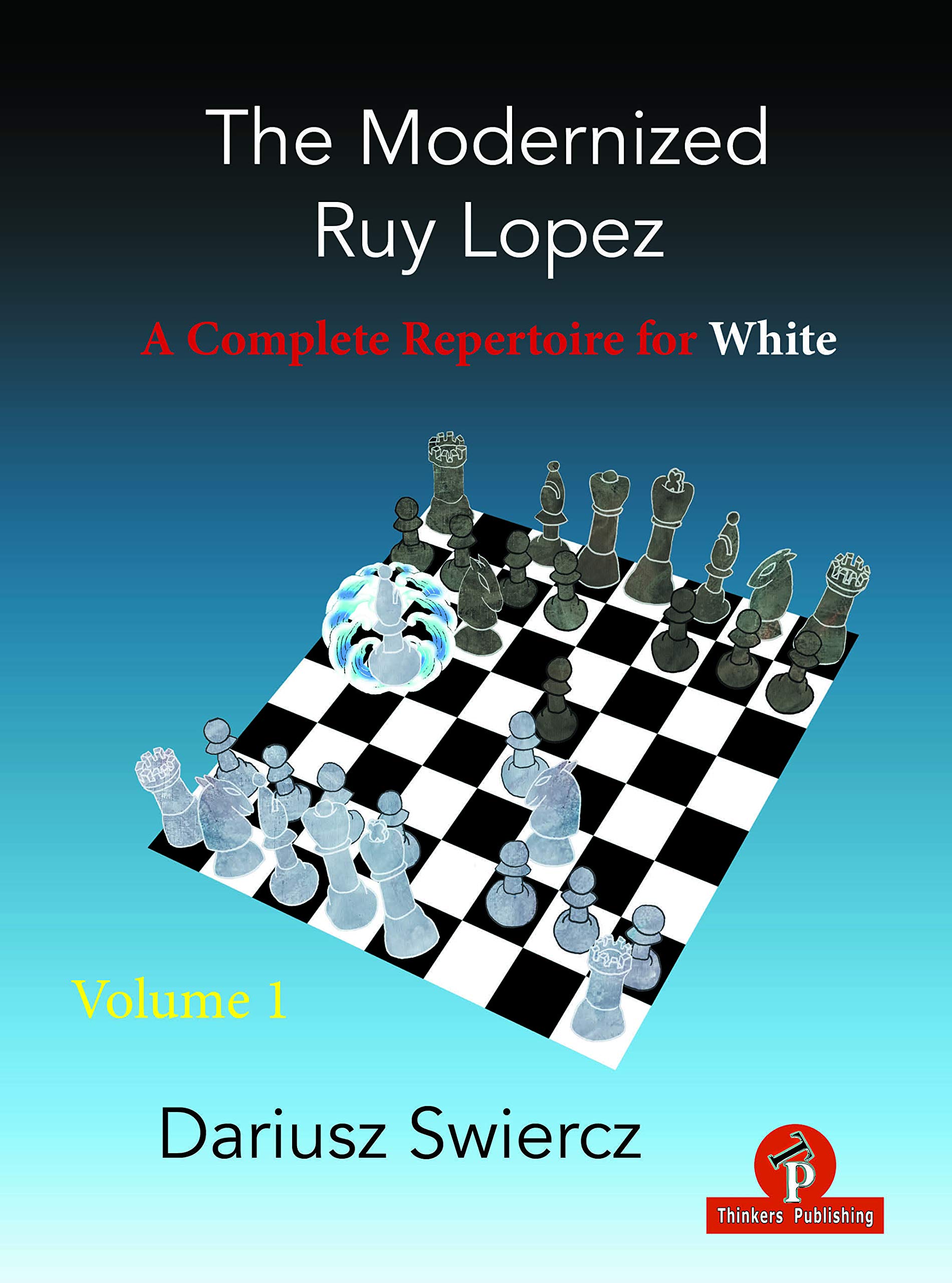
The Modernized Ruy Lopez – Volume 1 – A Complete Repertoire for White, Dariusz Swiercz, Thinkers Publishing, ISBN 9789464201031
“Dariusz Swiercz was born in 1994 in Tarnowskie Gory, Poland. His grandfather taught him to play chess at the age of three. During his junior career he won numerous National Championships as well as several European and World Championship medals. His highest successes include the bronze medal in 2010 at the World U20 Championship (Chotowa, Poland), gold medal in 2011 at the World U20 Championship (Chennai, India) and another gold medal in 2012 at the World U18 Championship (Maribor, Slovenia). He is one of the youngest to receive the Grandmaster title at the age of 14 years and 7 months. In 2016 he won the third edition of the “Millionaire Chess” held in Las Vegas, USA. Since 2018 he has represented the United States. Dariusz currently resides in Saint Louis, Missouri.”
GM Dariusz Świercz
From the book’s rear cover we have :
“The Ruy Lopez is one of the most popular openings of all time. It is a frequent guest in the games of players around the world from novice to Grandmaster. As a result of the increased power of analysis engines the theory of the Ruy Lopez has greatly expanded. Lines that did not exist years ago have been fully developed, supported with extensive analysis, and incorporated into the repertories of top players. Despite this exponential growth in theory, I believe that when armed with sound knowledge it is possible to pose certain practical problems for Black. The purpose of this book is to provide you with detailed and clear explanations of the intricacies of the Ruy Lopez.”
In this series (this is Volume 1) the author takes an in-depth look via 513 pages of how to play the Ruy Lopez (Spanish Opening) from Whites perspective giving many lines that he believes will leave White with some advantage after the opening .
Part 1 looks at opening lines that are slightly unusual and “off-beat” such as the Bird’s defence;
the Schliemann defence;
the Cozio defence;
the Smyslov defence;
the Classical defence;
the Steinitz defence;
the Norwegian defence (ed. the Taimanov defence for those with long memories!);
and Averbakh variations;
Unlike many recent opening books, unusually Dariusz does not analyse complete games but does provide copious amounts of analysis as to how to play against many different tries by black.
Having played the Schliemann a great deal both OTB and online I was interested to see what his recommendation was:
and 4. d3 fe4; 5. de4 Nf6; 6. 00 was his choice here
with both 6…d6 and the main line 6…Bc5 discussed in detail.
Against 6…Bc5 it is recommended that White goes pawn grabbing with 7.Bxc6 bxc6; 8.Ne5 00 9 Nc3 d6 10 Na4 with analysis that goes as far as move 25 showing that White has a clear advantage.
The delayed Schliemann 3…a6; 4. Ba4 f5 is also discussed but this has, for many years, been regarded as suspect concluding that 5.d4! is considered the “refutation”.
Part 2 deals solely with Kramnik’s favourite (and Kasparov’s anti-favourite!) the Berlin Defence 3…Nf6 which has caused even some of the top players in the world to switch (albeit temporarily) further south from the Spanish Opening to the Italian Game, 3.Bc4.
Both 4.00 and 4.d3 are examined closely and in the castles line he prefers variations for White that keep the Queens on: after 4…Ne4; 5.Re1 Nd6; 6.Ne5 Be7; 7.Bf1 Nf5; 8.Nf3 d5
both 9.d4 00; 10.c3 and 9 Nc3 are considered as alternatives.
The depth of Berlin analysis runs to nearly 100 pages and is aimed at players who are willing to look at openings well over 20 moves deep.
4.d3 is also studied when both 4…d6 and 4…Bc5 are looked at with much analysis again going to over 20 moves and showing that usually white has an advantage and can continue putting pressure on black .
Part 3 features the Open 5…Ne4 line when after 6 d4 b5 7 Bb3 d5 now both 8 Ne5 and the more popular 8 de5 Be6 9 Nbd2 the move that Karpov employed in his games against Korchnoi is discussed:
I played this variation for at least 30 years and came to the conclusion that White is always a bit better.
Essentially this is the coverage of Volume 1. To learn about the Closed Ruy Lopez we will be looking at Volume 2 in a future review.
In summary, this book is for players who are not frightened of looking at an opening in considerable depth that is sure to happen in a significant number of their games. It is a handy tool for “correspondence” players and I will, no doubt, be consulting it for good use in my future games!
Colin Lyne, Farnborough, Hampshire, 9th April, 2021
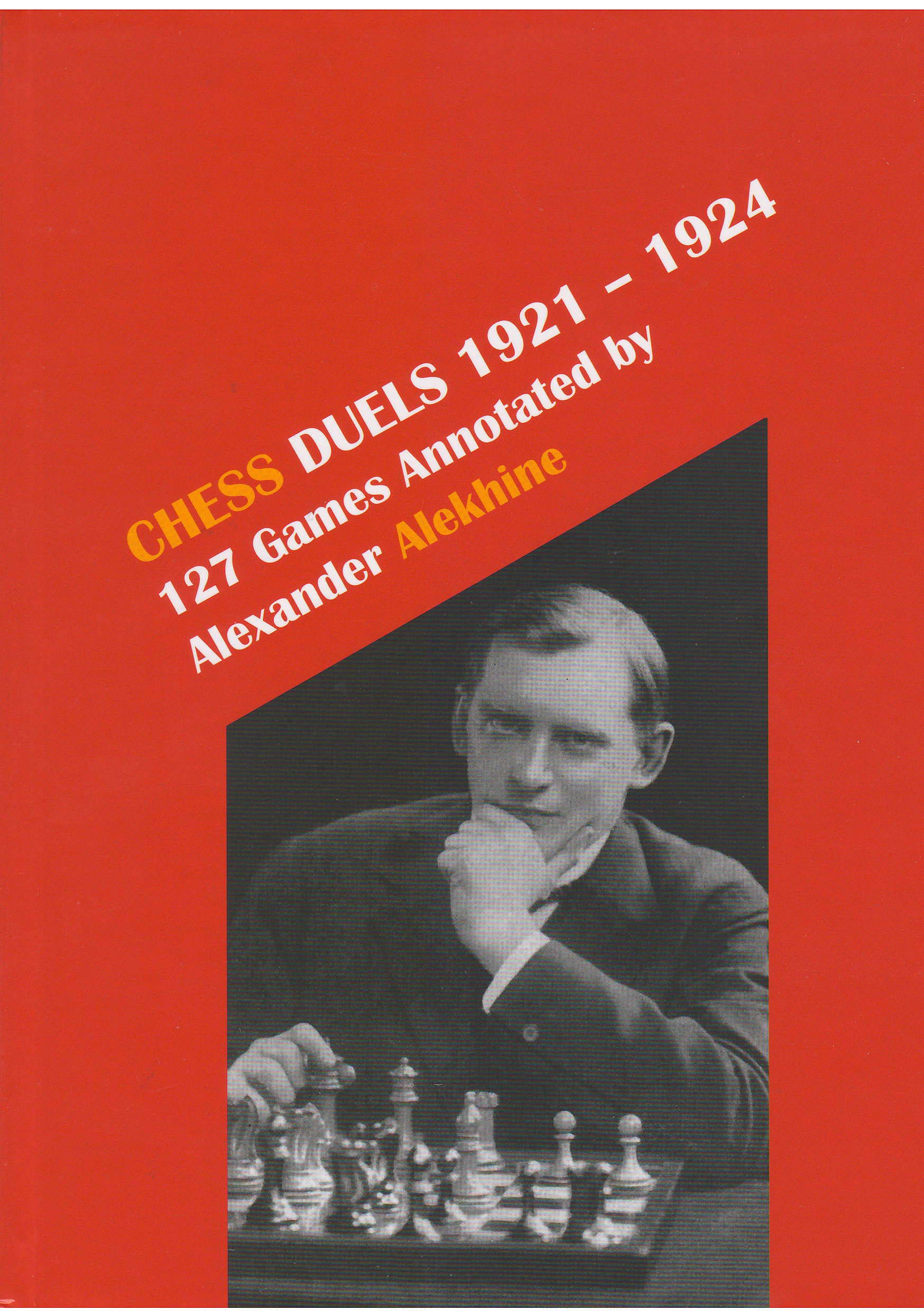
Chess Duels 1921 – 1924 : 127 Games Annotated by Alexander Alekhine
Chess Duels 1921 – 1924 : 127 Games Annotated by Alexander Alekhine, Vlastimil Fiala & Ken Neat, Moravian Chess, 2020, ISBN 978-80-7189-021-8
From the publisher:
The publication is a continuation of the project to publish all the available games annotated by the Fourth world chess champion Alexander Alekhine. These are not only his own games but also games played by other players for which he contributed notes in various publications. Covered here are several international tournaments in Europe from 1921-1923, as well as exhibition games in Britain and North America from 1923 and early 1924. An additional chapter gives a few early game annotations which were not included in the first volume. 312 pp. Researched by Vlastimil Fiala, translated and edited by Ken Neat.
Vlastimil Fiala is a professor of Political Science and distinguished academic and the main driving force behind the publishing house, Moravian Chess based in Olomouc in the Czech Republic. Fiala’s second love is chess history which he treats as a science. His publication portfolio is impressive : the web site of Moravian Chess provides a listing.
Vlastimil Fiala
Durham based Dr. Kenneth P. Neat (an expert on cosmic rays which he studied whilst at Moscow State University between 1968 and 1970) is one of the most experienced chess translators with a back-catalogue extending to almost fifty years. His earliest work was for BT Batsford and, by a pleasurable coincidence, was “Alexander Alekhine” by Alexander Kotov published in 1973. Ken translated many titles for Batsford and then became the in-house translator for Robert Maxwell and Pergamon Publishing with many works to his credit. Since then Ken has translated further titles for Moravian Chess.
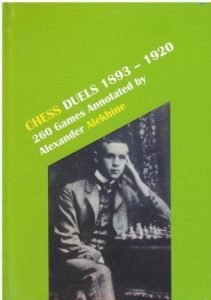
This is the second book in a series (“Chess Duels”) to collect together all games annotated by Alekhine regardless of who the players were. The first book by this team covered the period 1893 – 1920 and this book continues by covering the years 1921 – 1924.
Chess Duels 1893 – 1920, Moravian Press
The book is produced as a hardback of almost exactly A5 dimensions. The binding appears to be well executed and the cover hard wearing. There is a generous quantity of diagrams per game using figurine algebraic notation throughout. The book requires no weights to keep it open and the pages are printed in a double column format. The book even has a charming aroma and feel when flicking through the pages!
For each game we are given the original source of the annotations plus the details of the players, the event type and name and a basic modern description of the opening and its Rabar Index / ECO code.
The content of the book is divided into four parts, one for each year. Each Part is then further subdivided, for example:
Part One : Games Played in Europe I (1921)
Games played in Germany
Budapest 1921
The Hague 1921
Two Knights Opening
Staunton Gambit
Part Two : Games Played in Europe II (1922)
Bad Pistyan 1922
London 1922
Hastings 1922
Vienna 1922
Other Games 1922
Part Three : Games Played in Europe III (1923)
Karlsbad 1923
Margate and Portsmouth
Other Games 1923
Part Four : Games Played in Canada and USA (November 1923 – February 1924)
Supplement to First Volume, Early Games (1861 – 1920)
Appendices
Translator’s notes
Index of Sources
Index of Alekhine’s Opponents
Index of other Players
Index of Openings
So, the layout of material is clear and logical with a strong academic approach. One gets an impression of rigour and attention to detail. One detail missing that could have easily have been included was the exact date (where known) for each of the games. We found it interesting to compare the notes for games from a variety of sources and annotators and the date would have made these comparisons easier.
As stated, we have 127 complete games all with annotations from Alekhine himself. Of these 22 do not feature Alekhine but they are all top players of the period such such Rubinstein, Tarrasch, Yates, Thomas, Mieses etc.
One of the games that caught our eye was this lively encounter between Alekhine and Yates from Hastings in 1922:
The items titled “Two Knights Opening” and “Staunton Gambit” are theoretical articles written by Alekhine from the tournament book.
Of course, most (if not all) of the Alekhine games feature in previous games collections (nobody should be surprised by this). We compared the translation of the original annotations and the “feel” of the annotation has been retained. For example, from the well-known brilliancy prize winning game Tarrasch – Alekhine, Bad Pistyan, 1922, round one we have this translation by Julius du Mont and M. E. Goldstein (“My Best Games of Chess 1908 – 1923“, Alexander Alekhine, George Bell and Sons Ltd., London, 1927) of the note to after 1. d4 Nf6;2.Nf3 e6;3.c4 c5;
With the intention of investigating, on the next move, the gambit discovered by the Moscow amateur, Blumenfeld. Since then it has been shown that this Gambit is not favourable for Black if White should decline it
and our review book has
With the intention of introducing into international practise an interesting gambit, suggested by V.M. Blumenfeld. However it has now been shown that this continuation is more advantageous to White, if he does not accept the pawn sacrifice.
You might be worried that his book has been ruined with pages of modern analysis dumps from BabelFish XX (substitute the current, trendy engine of your choice). Have no fear : this book is choc full of pearls of wisdom from one of the greatest players to annotate games. No doubt there will be unfortunate souls who lives are brightened when “their engine” is able pick holes in analysis from a legend. Perhaps this is not the right book for them.
However…any serious student of chess will be delighted with this work and be able to relive these games through Alekhine’s eyes with much pleasure. The games annotated by Alekhine but not played by him are probably the icing on the cake.
We strongly recommend this and look forward to the next in the series.
John Upham, Cove, Hampshire, 7th April, 2021
John Upham
Book Details :
Hardback : 312 pages
Publisher: Publishing House Moravian Chess; 1st edition (1 Jan. 2020)
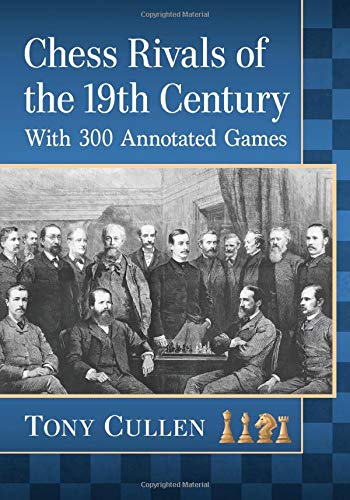
Chess Rivals of the 19th Century : With 300 Annotated Games, Tony Cullen, McFarland Publishing, March 2020
Chess Rivals of the 19th Century : With 300 Annotated Games : Tony Cullen
From the publisher’s blurb :
“Many historical chess books focus on individual 19th century masters and tournaments yet little is written covering the full scope of competitive chess through the era. This volume provides a comprehensive overview, with 300 annotated games analyzed by past masters and checked by powerful engines.
Players such as Max Lange and Cochrane, known to the chess public only by the name given to a fierce attack or gambit, are brought to life. Fifty masters are each given their own chapter, with brief biographies, results and anecdotes and an endgame section for most chapters.
Tony Cullen played chess for the strong London Central YMCA Chess Club and organized tours playing team matches against strong opposition in various European cities. He lives in London.”
I guess I should start with a declaration of interest. Tony Cullen’s son was, fairly briefly, a member of Richmond Junior Chess Club about 30 years ago, so I got to know him quite well at that time. We also faced each other over the board in an inter-club match in 2009.
From the introduction:
This book aims to give the reader an overview of competitive chess throughout the 19th century. The battle for supremacy amongst the elite 19th century chess masters is a theme running throughout the book, but the second-rank masters also produced great chess at times, even against the top players, and so their games and their contributions to chess in general are given more attention in these pages than is normally the case. The bulk of the book is naturally concentrated on the second half of the century, since there were no international tournaments before then and not too many players of the first rank either.
There is a chapter devoted to each of the 50 masters: brief biographies, best games, results and anecdotes sprinkled throughout. Many of the games are annotated by 19th century masters, but any significant errors in their analysis of critical positions have been corrected using powerful chess engines. All 300 games are annotated. Although several of the players featured continued their careers well into the 20th century, the selected games are restricted to those played in the 19th century in order to retain the flavor of the period.
Philidor, who, although mentioned in the first chapter, just missed out on this book, famously said that pawns were the soul of chess. In one sense, yes, but you might also think of the soul of chess as its history and heritage, its literature and personalities.
This book takes you on a journey through the world of 19th century chess, from the coffee houses and cafés of London, Paris and Berlin through to the great international tournaments of the 1890s, from McDonnell and la Bourdonnais through to Pillsbury and Lasker. From players born in the closing years of the 18th century, to those who, like Maroczy and Mieses, lived on into the second half of the twentieth century, overlapping with the lives of both your author and your reviewer. The players are introduced in roughly chronological order.
The biographical sections often start with an obituary, taken perhaps from the British Chess Magazine, or from another contemporary source. Contemporary pen pictures are also included, along with entertaining anecdotes which tell us more about their lives and personalities. The author has used both Chessmetrics and Edochess to detail their match and tournament performances.
The annotations are taken from a wide range of contemporary sources. As well as magazines and tournament books, Cullen has used some fairly obscure books such as Examples of Chess Master-Play 2nd and 3rd series by CT Blanshard, Chess Sparks by JH Ellis and Modern Chess Brilliancies by GHD Gossip.
These were the days of old, when knights were bold and openings such as the King’s Gambit and Evans Gambit, usually accepted as a matter of principle, ruled the day. Today, Stockfish will laugh in your face if you essay the Kings Gambit, and will have no trouble equalising against the Evans Gambit, but Morphy and Anderssen didn’t have computer assistance, defensive skills were not well honed, and opening theory, although it went surprisingly far in some lines of the Evans, for example, was nothing like it is today.
Cullen clearly enjoys games with dashing sacrificial attacks, so you’ll be entertained with a feast of exciting and brilliant, although not always either subtle or sound, chess if you read this book.
You’ll meet a few familiar, over-anthologised, friends, it’s true, but, by and large, the author has avoided the obvious and included games which will be unfamiliar to many readers.
Anyone with a knowledge of chess history will know a lot about the likes of Morphy, Steinitz and Lasker, but they may well be less familiar with some of the lesser lights of their period.
The Pleiades, for example, were a group of seven strong players active in Berlin in the 1830s and 1840s. They played an important part in the development of chess theory, but are mostly forgotten today. The one who is remembered is Bernard Horwitz, who would later move to London, competing in the great 1851 tournament.
Another of the Pleiades was Ludwig Erdmann Bledow, a professor of mathematics noted for his aggressive and brilliant play. In this game from 1839 he’s playing Paul Rudolf von Bilguer, a failed army officer who died shortly before his 25th birthday, but whose name is immortalised in the famous Bilguer’s Handbook, a precursor of the likes of MCO which, for the best part of a century, would provide instruction for generations of German speaking chess players.
Emil Schallopp is one of those names you see, if you read about 19th century chess, in the middle or lower reaches of tournament cross-tables, but he was still, in Cullen’s estimation, ‘an outstanding tactician who produced many beautiful games’. This was a brilliancy prize winning game from towards the end of his career. The notes in the book are taken from two sources: Gossip and The Chess-Monthly, with further authorial comments.
Another German player, Miksa (Max) Weiss, was possibly one of the strongest players you’ve never heard of. He had a short career at the top level in the 1880s, finishing 2nd= with Blackburne at Frankfurt in 1887 behind Mackenzie and 1st= with Chigorin at New York in 1889 before retiring to concentrate on a career in banking. He ‘preferred a positional approach to the game and never played gambits’ but, at the same time, was ‘a fine tactician who was not at all afraid of combinations’. His favourite opening was the Ruy Lopez, but he was equally adept on the other side of the board, as here against a strong American opponent. Cullen publishes the game with Steinitz’s notes from the tournament book.
The one feature which somewhat confused me was the ‘endings’ at the end of most chapters. Many of them are indeed endgames, and fascinating they are as well, but some of them are game finishes with plenty of pieces still on the board, while a few serve as a basis for anecdotes.
It is, as Cullen says, ‘unbelievable’ that Johann Berger, a renowned Austrian endgame theorist as well as being of Sonneborn-Berger tiebreak system fame, should have played the losing Ke4?? rather than the drawing Ke3 in this position. If you haven’t seen the idea before, play it out for yourself!
This book is particularly strong on German and Austrian players: good news for me as I knew little about many of them. On the other hand, there were plenty of English players who might have been included: Buckle, Wyvill, Williams, Boden, Owen and others off the top of my head. I’m not sure whether or not this was a deliberate policy. Anyway, there’s certainly plenty of material for a second volume, perhaps taking us up to the outbreak of the First World War in 1914. I, for one, would certainly welcome this.
Although it makes extensive use of contemporary secondary sources, this may not be a book for the serious chess historian. Many of the recent excellent biographies of Cullen’s subjects are missing from the bibliography. I’m also not sure what to make of this: ‘Steinitz and Anderssen went into their London match of 1866 unaware that they were effectively playing for the vacant world championship title.’ and ‘However, there is a consensus among chess historians that Steinitz’s lengthy reign as world champion really began with his match victory against Anderssen in 1866.’ Is there? Yes, he was certainly considered the strongest active player in the world from 1866, but was he, or anyone else, really thought of as World Champion before 1886? Wikipedia thinks not: There is some debate over whether to date Steinitz’ reign as world champion from his win over Anderssen in 1866, or from his win over Zukertort in 1886. The 1886 match was clearly agreed to be for the world championship, but there is no indication that Steinitz was regarded as the defending champion. There is also no known evidence of Steinitz being called world champion after defeating Anderssen in 1866.
I’m not the first reviewer to say that this book is clearly a labour of love. Tony Cullen has a passion for 19th century chess history and literature, and for the romantic style of chess popular in those days, and this passion is evident in every page. The annotations, whether from contemporary sources or written by the author, are pitched at the right level for a book of this nature, only giving the most important lines rather than long, engine-generated variations. Playing through the games won’t help your openings very much. Nor will it teach you a lot about modern middle-game strategy. On the other hand, it might just take your tactical play to a new level. It will also increase your knowledge and enjoyment of chess, which may then lead to better results.
The production is, as one would expect from McFarland, of a high standard. As this is more a popular work than an academic history book it comes in paperback rather than hardback. The layout is, inevitably, I suppose, given the amount of information contained, somewhat cluttered, with diagrams not always appearing adjacent to the correct position, and sometimes not even on the same page. I also noticed a few typos, notwithstanding the proofreading efforts of the late Steve Berry, to whom, along with the author’s wife and son, the book is dedicated.
I really enjoyed this book, and, whatever your rating, if you love, or would like to find out more about, chess history, I’m sure you will too. If we make the mistake of only thinking about chess in terms of its extrinsic benefits, or in terms of the likes of Carlsen and Caruana, we’re missing out on its true soul. Every time we play a game, whether it’s in a match or tournament, an online blitz game, or a friendly game in the pub, we’re part of the same continuum. Here, for instance, is Mieses, continuing to play as a refugee from Nazi Germany into my lifetime, and sharing at least one opponent (Leonard Barden) with me. We can follow him back into the 19th century, and then follow chess back to Philidor, Greco, Ruy Lopez and beyond. This is the golden braid that binds us all together, whether woodpushers or grandmasters, and, at a deeper level, what chess is all about.
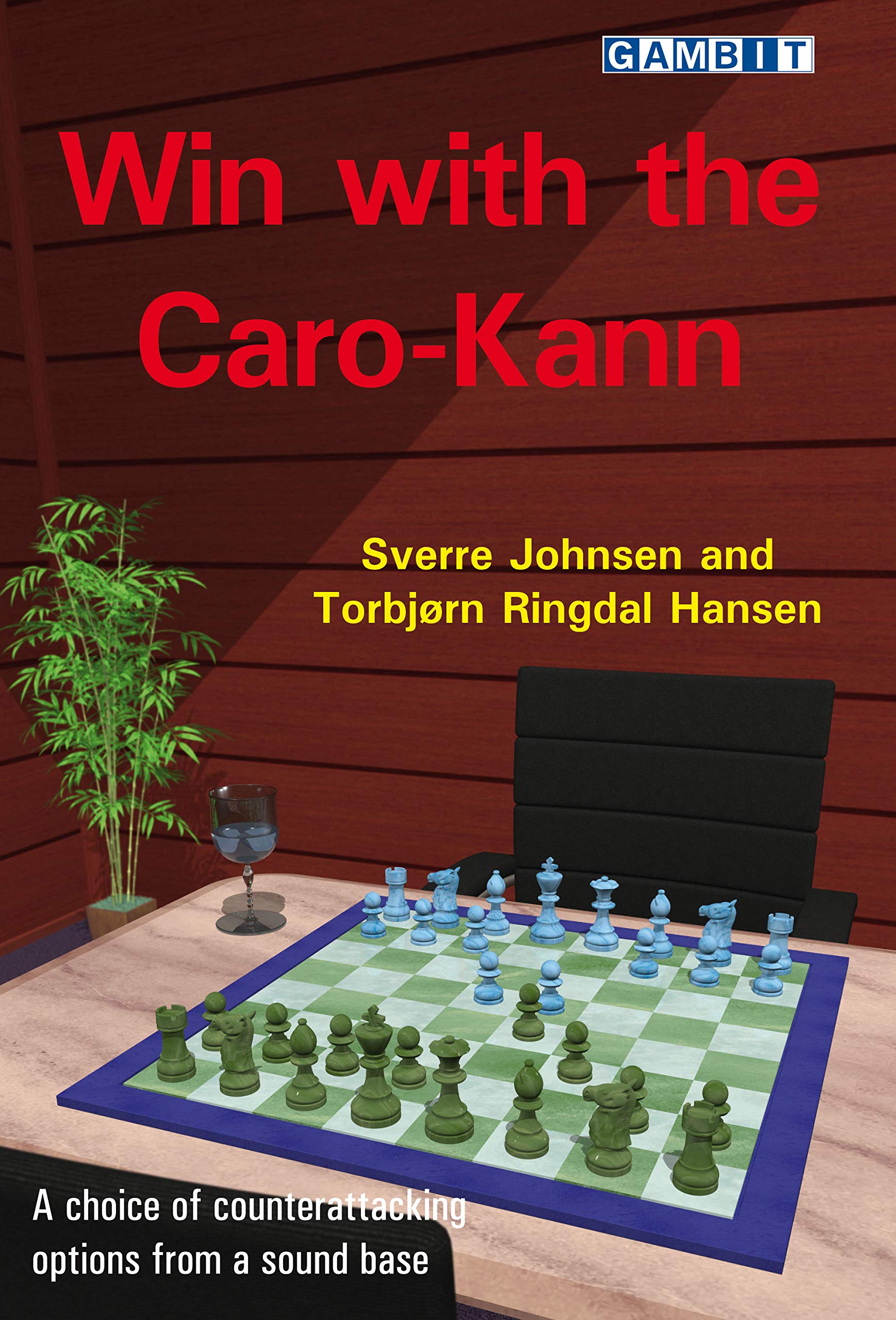
Win with the Caro-Kann : Sverre Johnsen and Torbjørn Ringdal Hansen
Win with the Caro-Kann, Sverre Johnsen and Torbjørn Ringdal Hansen, Gambit Publications, March 4th 2021, ISBN 1911465678
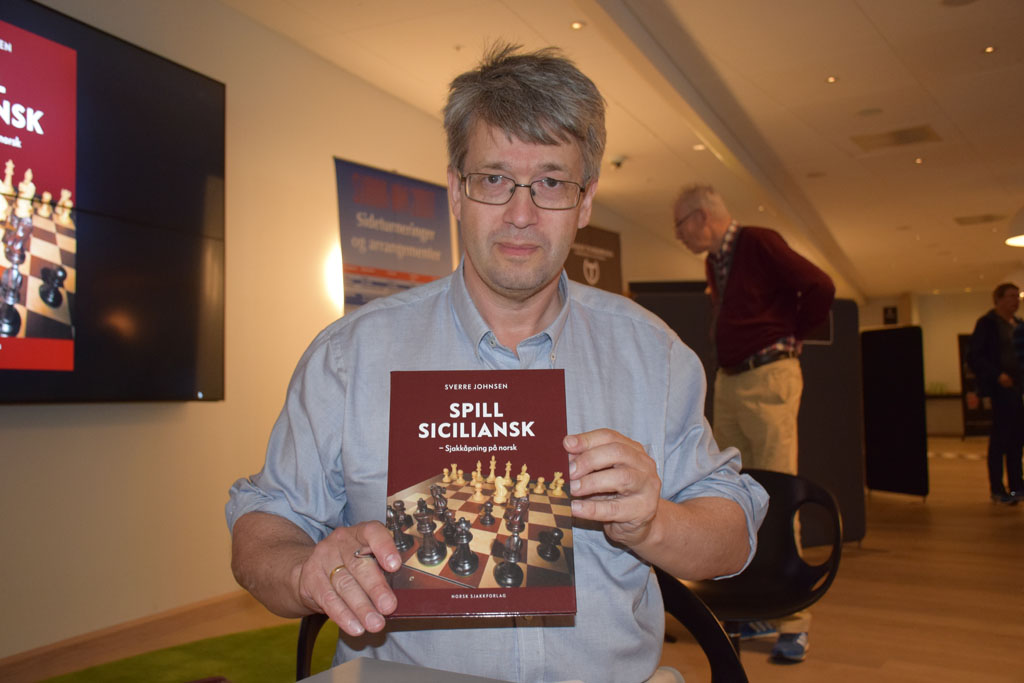
Sverre Johnsen is a chess analyst, researcher, organizer, trainer and writer from Norway. He is co-author of Win with the London System and Win with the Stonewall Dutch, two of the best-selling openings books of recent years.
Sverre Johnsen
Grandmaster Torbjørn Ringdal Hansen is from Norway. He is one of the founders of the chess retail business Sjakkhuset and works full-time as a chess trainer. He was the first coach of Magnus Carlsen (in 1999) and has worked with three other players who went on to become grandmasters.
Grandmaster Torbjørn Ringdal Hansen
Gambit Publications have their own YouTube channel to promote and publicise their products. Here we have GM John Nunn introducing this book :
The book is organised into the following five chapters followed by a highly useful Index of Variations:
Classical: Korchnoi Variation
Classical: Capablanca Variation
Advance Variation
Exchange Variation
Early Deviations
Hitherto books on the Caro-Kann extolling the virtues of the Korchnoi Variation are few and far between
Our current review book from Gambit is fully self-contained and forms the basis of a complete repertoire for black against 1.e4 after
offering the Korchnoi Variation for those needing to win with black (whilst risking a potentially difficult endgame) plus in Chapter Two the reliable Capablanca Variation:
whose endgame prospects are more attractive.
These two alternatives form the beating heart of this repertoire with brand new ideas and analysis to give white players problems to solve and spend time on the clock.
Prior to these chapters is an excellent Introduction which sets out the layout of the book, the philosophy of the repertoire, many strategic ideas and other useful words of wisdom and encouragement.
Each and every chapter is broken down into a series of Lessons (there are thirty Lessons in total) covering each variation in detail.
Consulting MegaBase it is clear that Torbjørn Ringdal Hansen favours the Caro-Kann and plays the Korchnoi Variation when permitted and as a past trainer of Magnus Carlsen he definitely knows what he is talking about!
Following on from the optional lines after
we have six lessons on how to face the Advance Variation. 3.e5 can cause more headaches for the Caro-Kann player than 3.Nc3 and the authors provide a repertoire based around the increasingly popular Arkell/Khenkin Variation:
Another six lessons then cover both the Exchange Variation and the Panov Attack:
and
and probably it is fair to say that the latter is the most common way of taking on the CK at club level.
Chapter 5 covers more or less everything else including the Fantasy Variation (which the authors call the Maróczy Variation)
followed by the Two Knights, the Pseudo-Panov (they call this the Steiner Variation, the King’s Indian Attack and the Hillbilly Attack plus some very rare beasts.
Curiously the Blackmar-Diemer Gambit
is not found in this chapter but in Chapter 1 as a fourth move alternative. All lines (including transpositions) are easily located via the Index of Variations.
It would be wrong to reveal all of the various innovations analysed in this book but to give a flavour I will mention that the twist the authors give to the Capablanca Variation is to to defer 7…Nd7 in favour of Dreev’s 7…e6!?
and the idea is for black to play a quick …c5 followed by …Nc6 at the right moment .
Each lesson comprises at least one model game plus what the authors term “Theory Magnifiers”. Essentially these are points in the model game where there are significant alternatives for white that require detailed study.
Liberally sprinkled throughout the text are multiple “fourth wall” type Question and Answer exchanges which worked so well for Matthew Sadler in his Slav and Semi-Slav books for Chess Press and Everyman Chess.
Cleverly, the authors have organised the material so that preparation of the material is in the most logical sequence eliminating the need for the student to create a preparation plan for themselves.
As a long time player of the Caro-Kann I can say that the repertoire presented here is thorough and instructive based on modern games. There are things I might disagree with but I’ve never known that not to be the case!
I suppose I am obliged to comment on the “Win with the” title. I’m not a huge fan of this style but a title is all that is it. If you can put this to one side and overcome it and focus on the content you will reap the rewards of not letting prejudice getting in the way.
So, in summary, this is an excellent repertoire trainer for black against 1.e4, which, after all, is the most important move of whites to prepare for.
Win with the Caro-Kann, Sverre Johnsen and Torbjørn Ringdal Hansen, Gambit Publications, march 4th 2021, ISBN 1911465678
Save as PDF
We focus on the British Chess Scene Past & Present!
This website uses cookies to improve your experience. We'll assume you're ok with this, but you can opt-out if you wish. Cookie settingsACCEPT
Privacy & Cookies Policy
Privacy Overview
This website uses cookies to improve your experience while you navigate through the website. Out of these cookies, the cookies that are categorized as necessary are stored on your browser as they are as essential for the working of basic functionalities of the website. We also use third-party cookies that help us analyze and understand how you use this website. These cookies will be stored in your browser only with your consent. You also have the option to opt-out of these cookies. But opting out of some of these cookies may have an effect on your browsing experience.
Necessary cookies are absolutely essential for the website to function properly. This category only includes cookies that ensures basic functionalities and security features of the website. These cookies do not store any personal information.

 Save as PDF