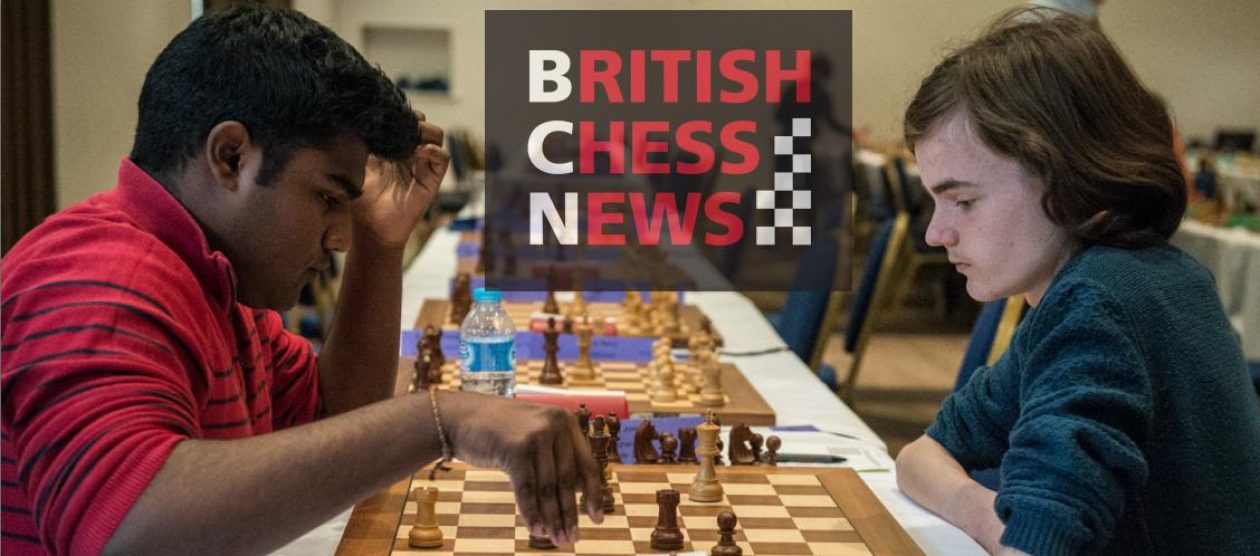
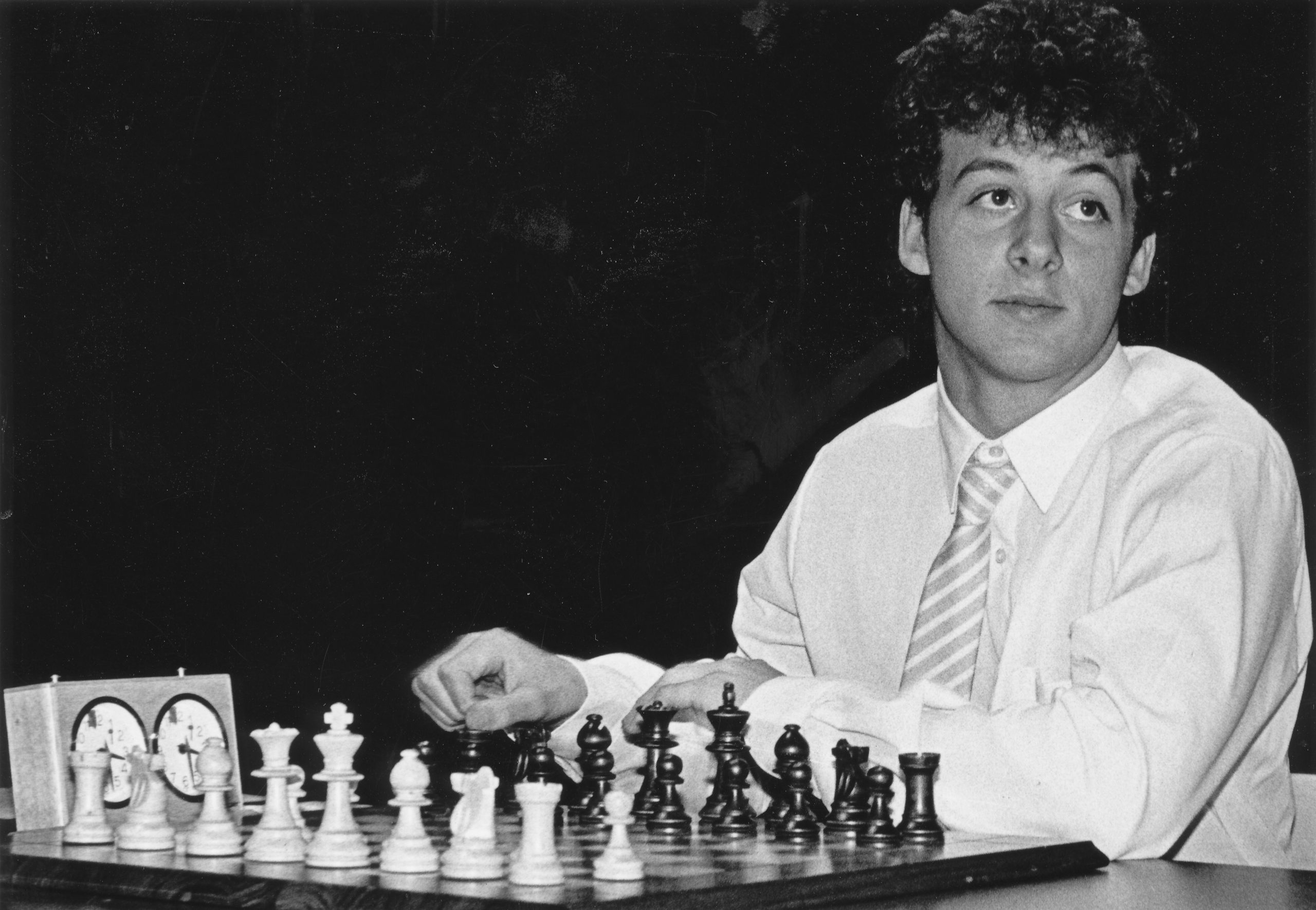
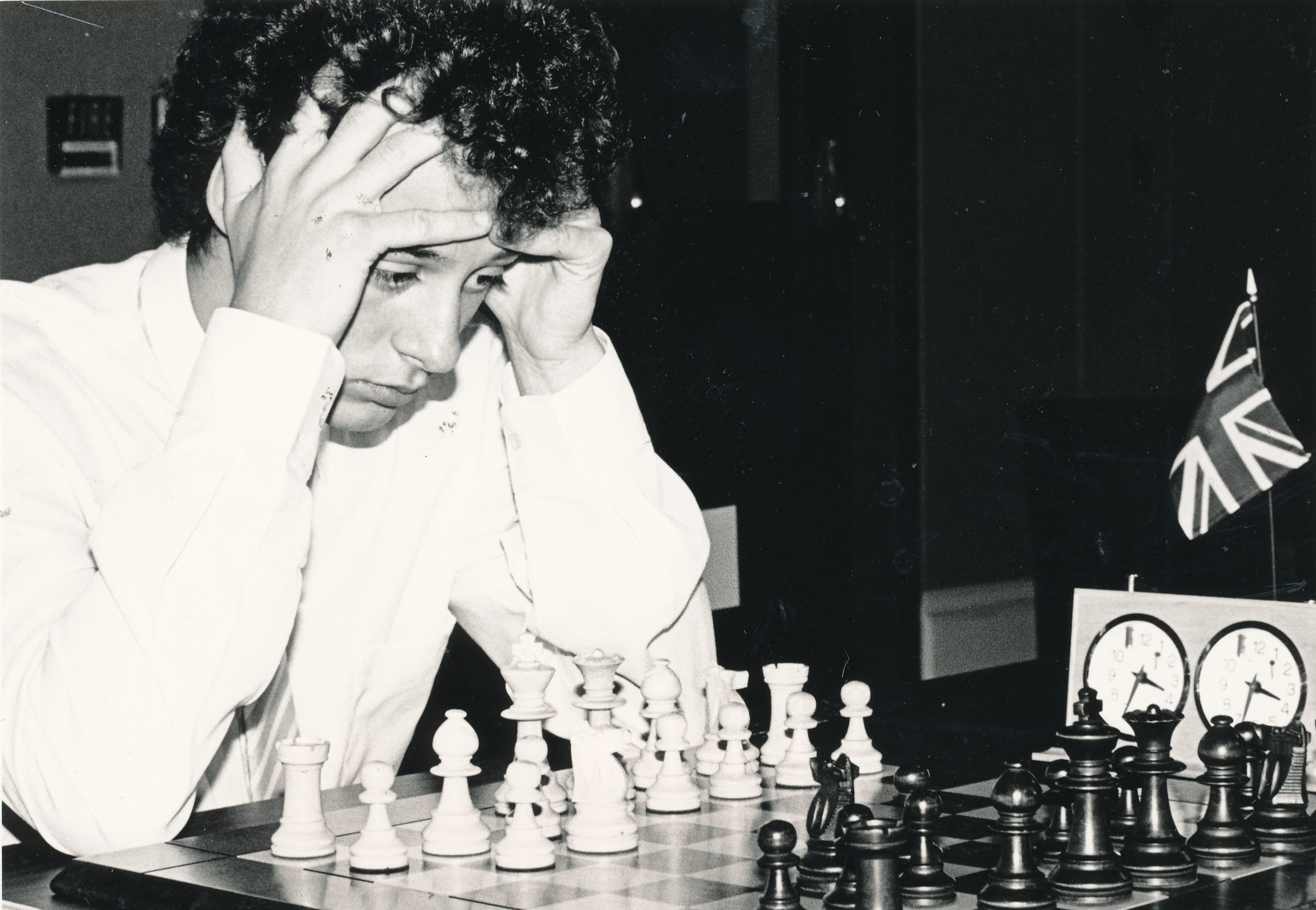
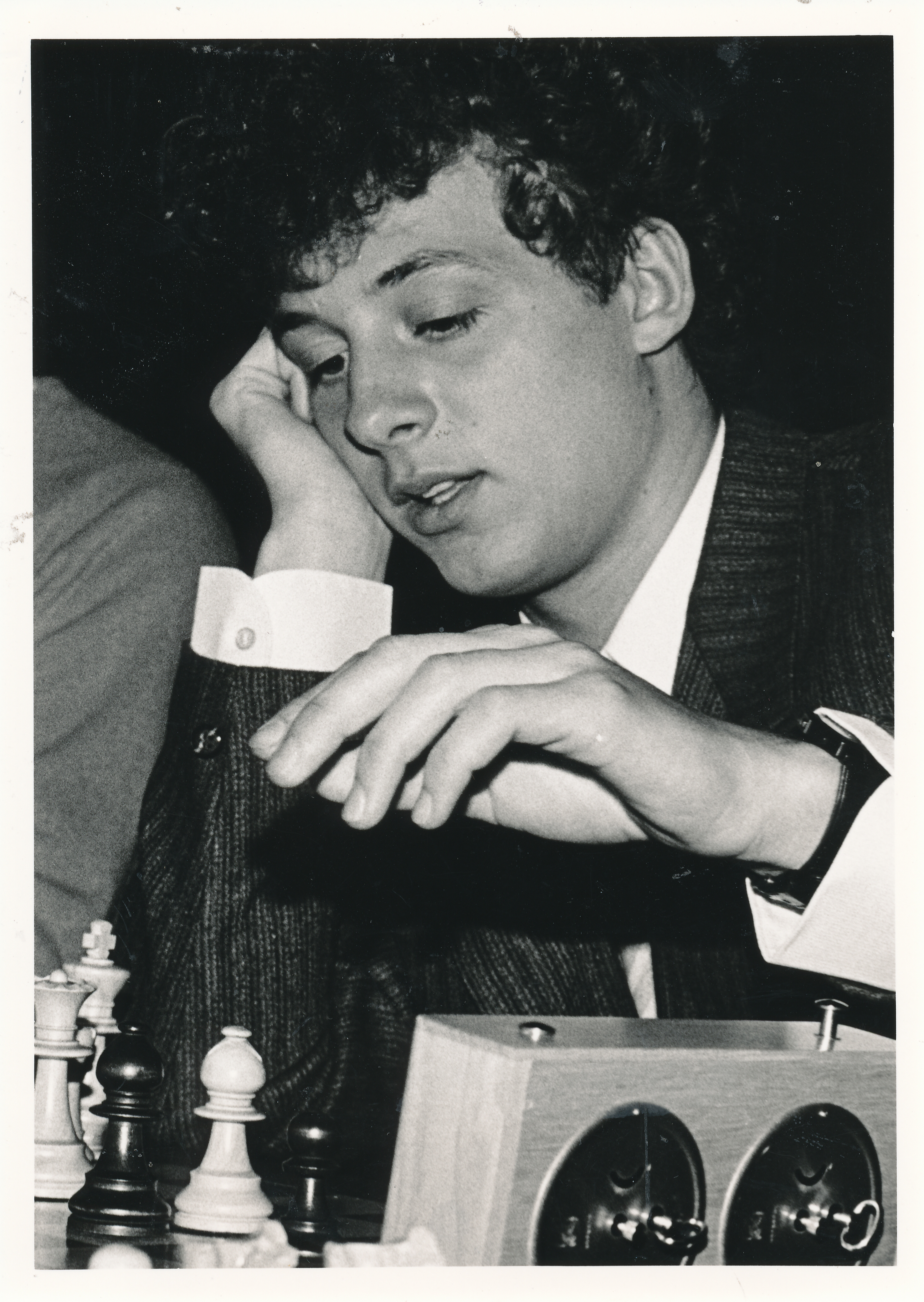
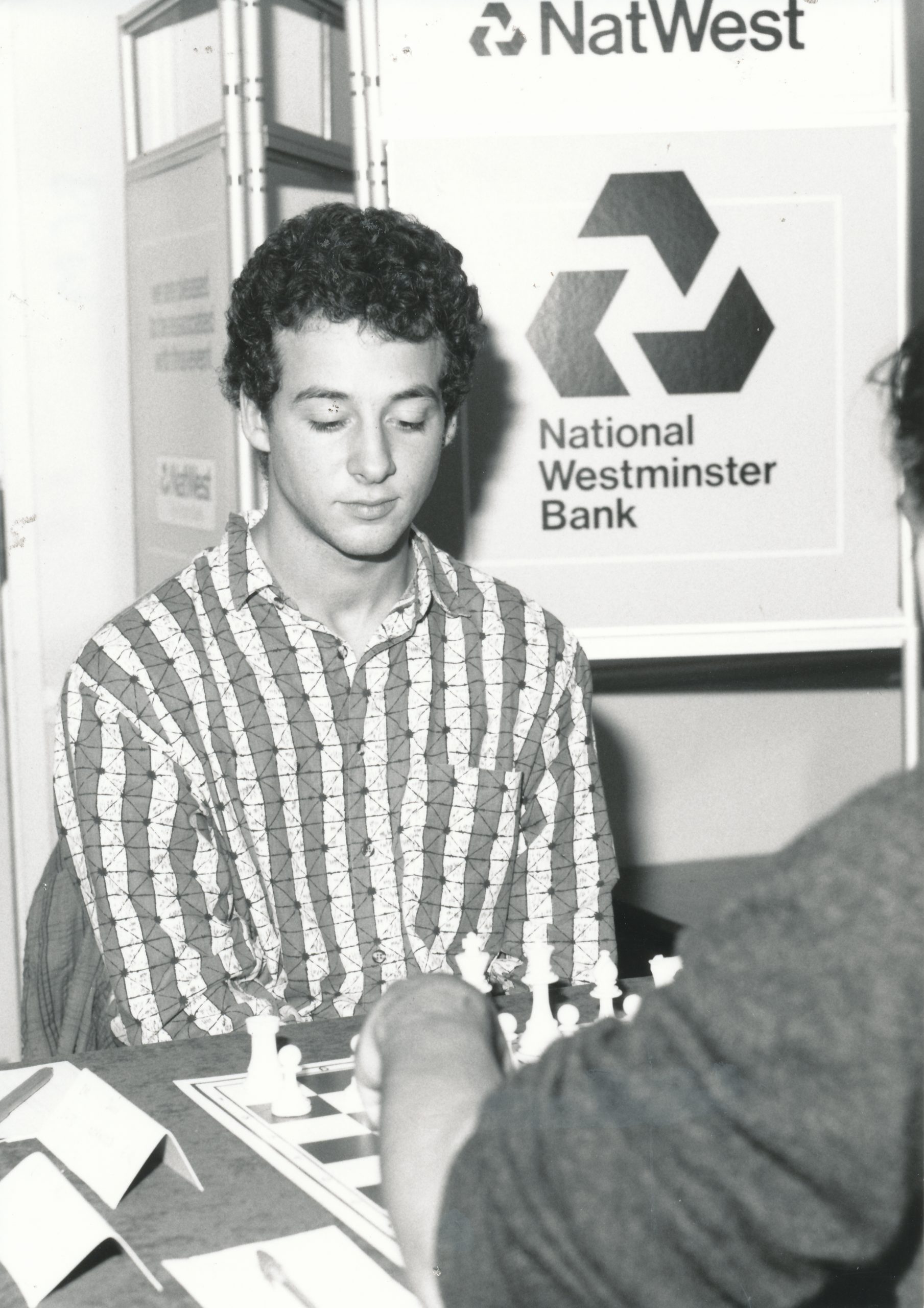
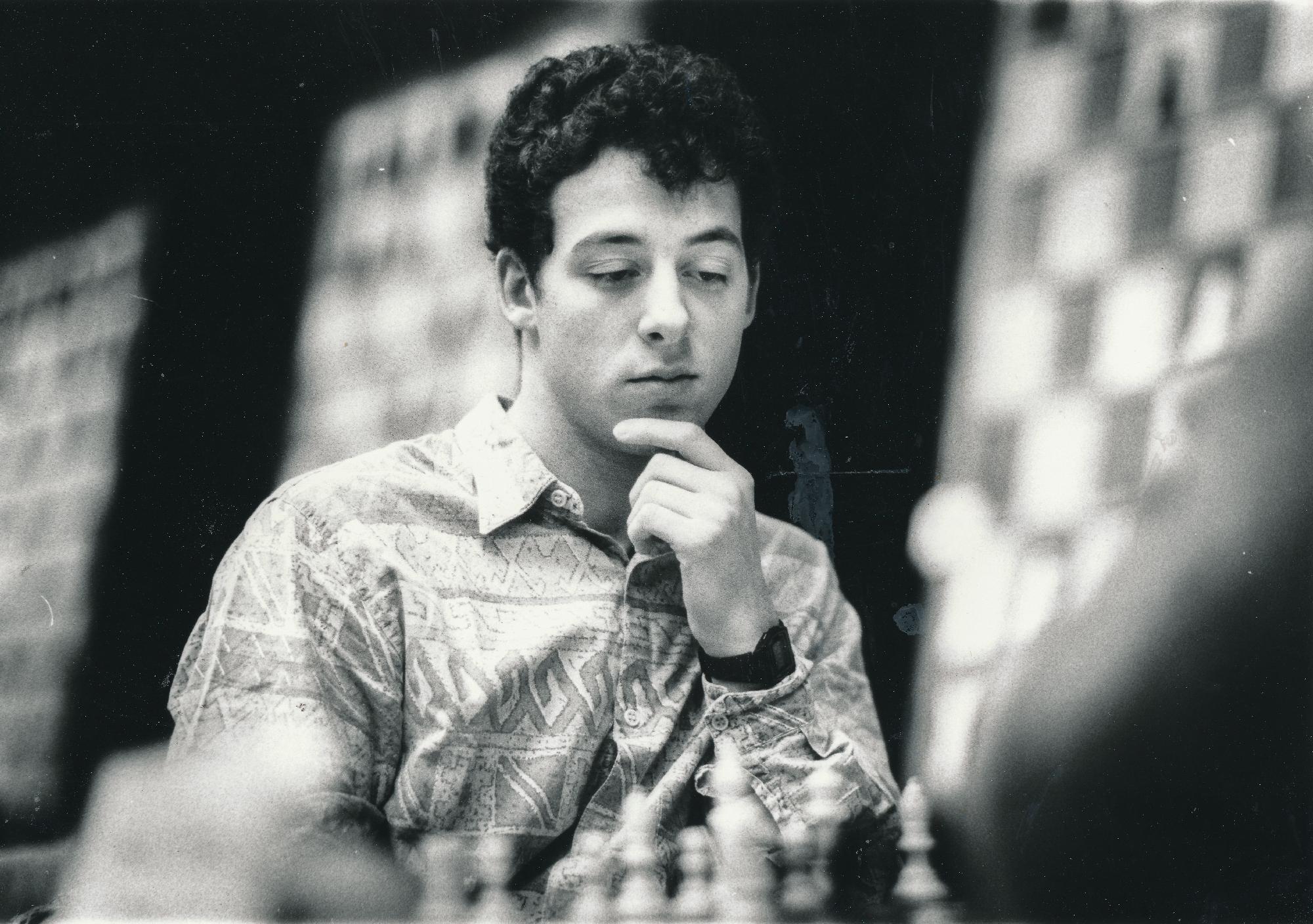
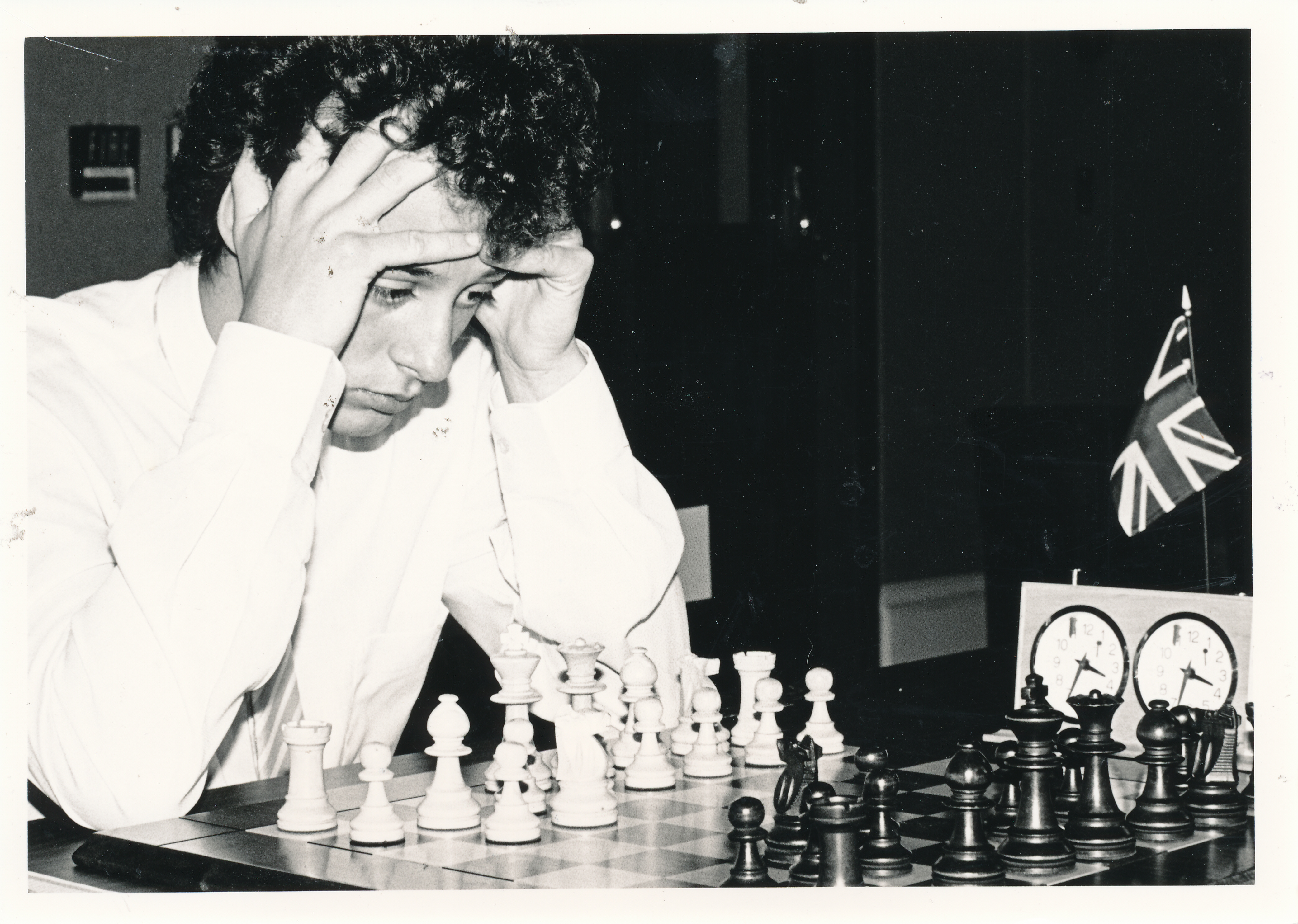
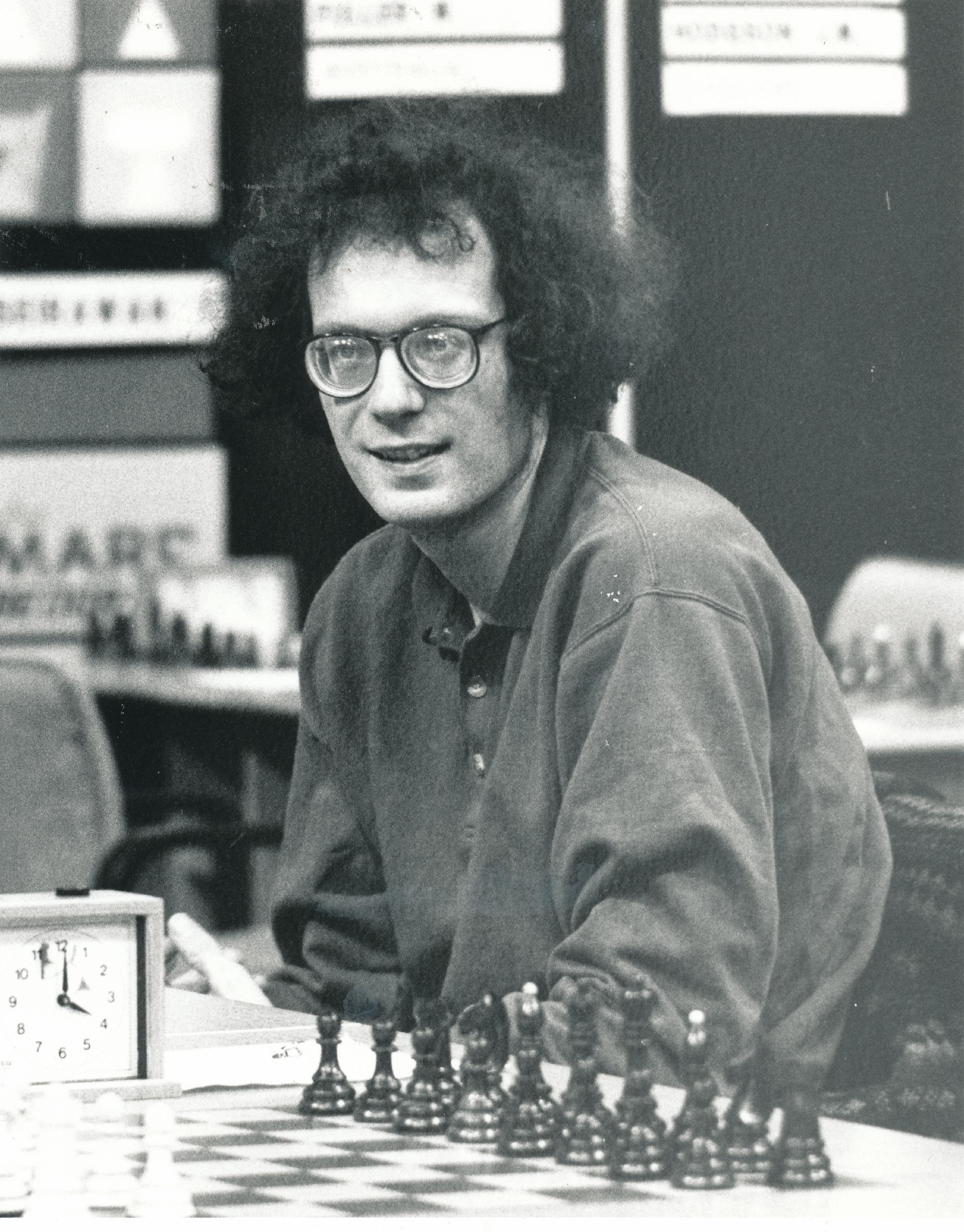
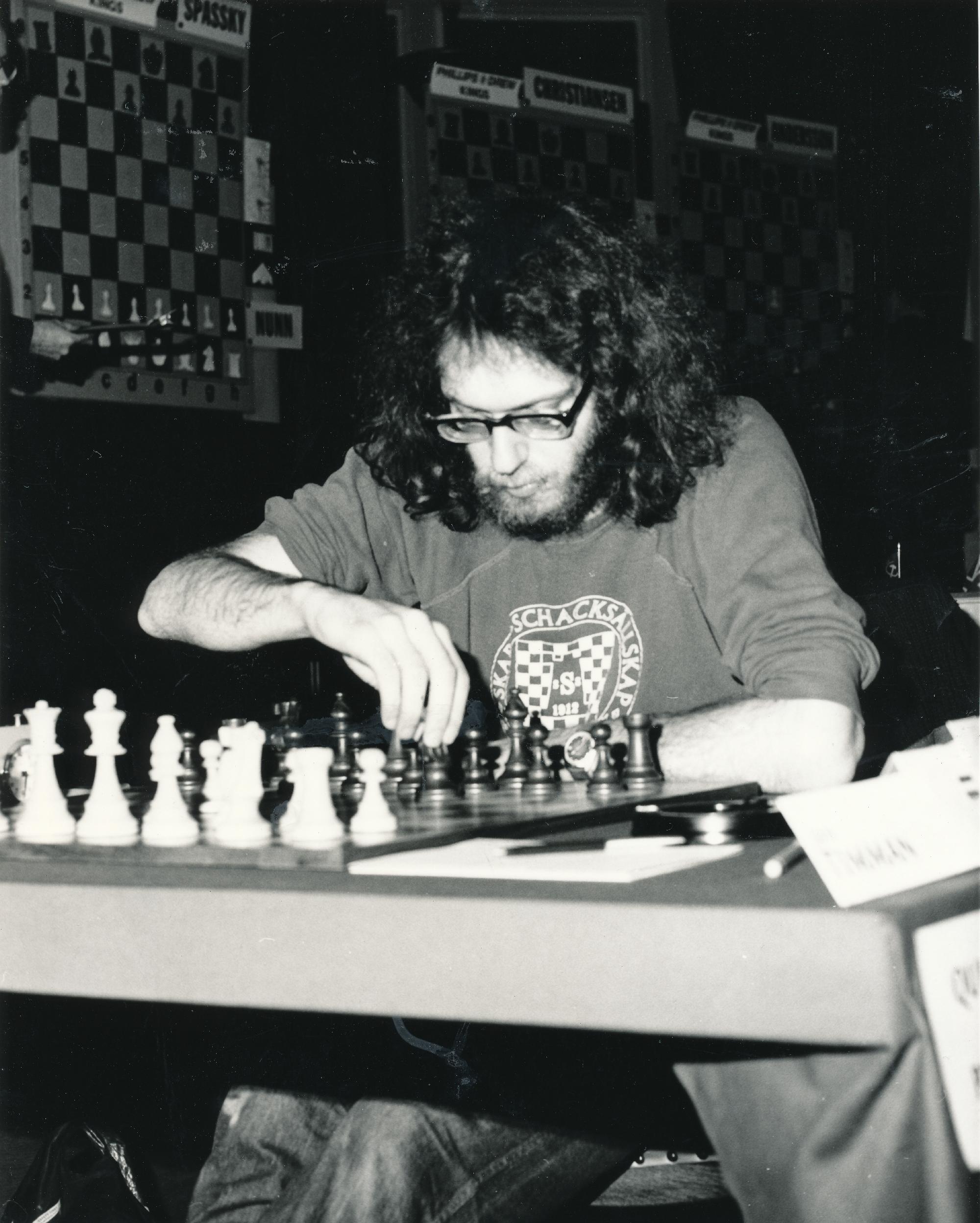
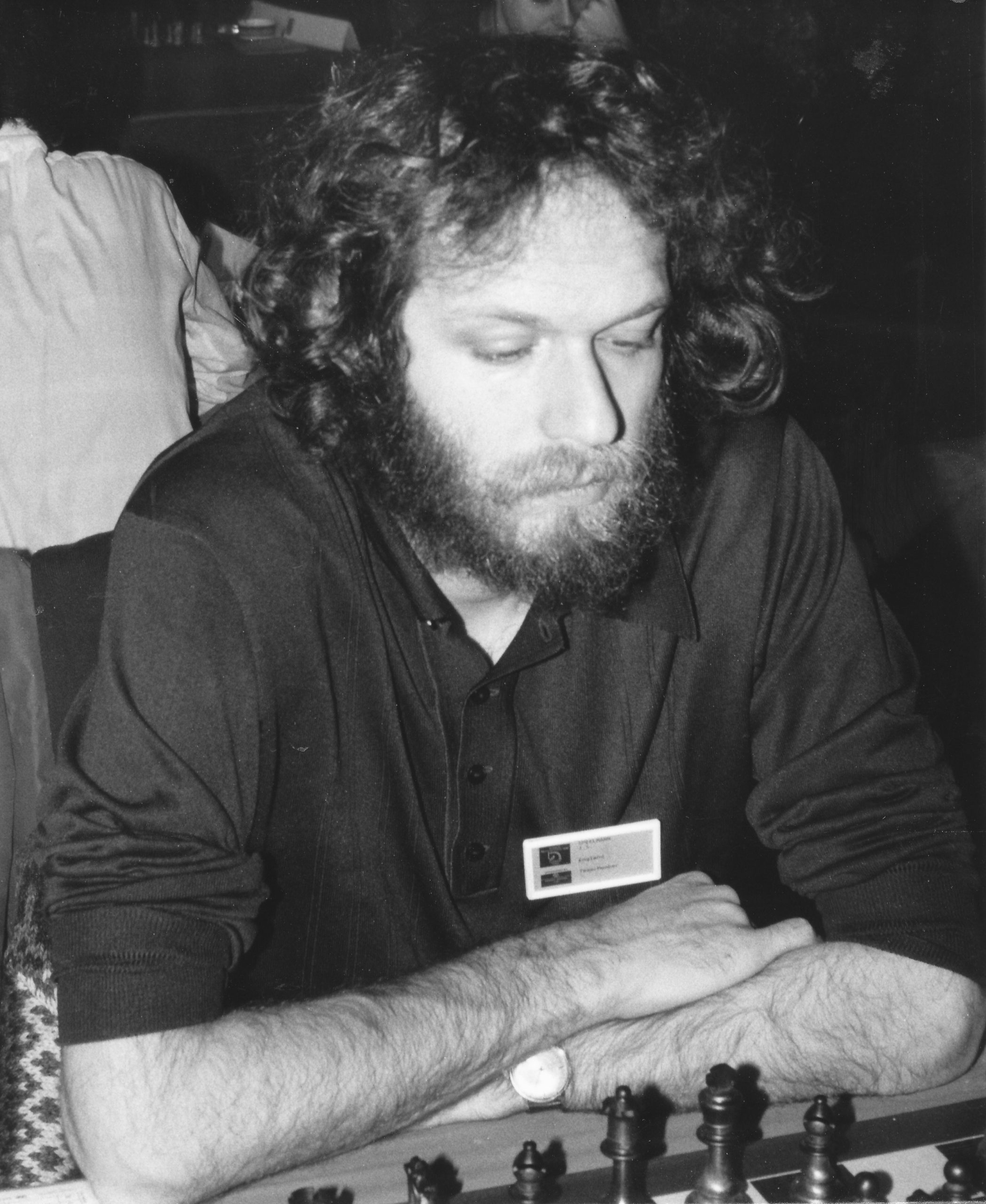
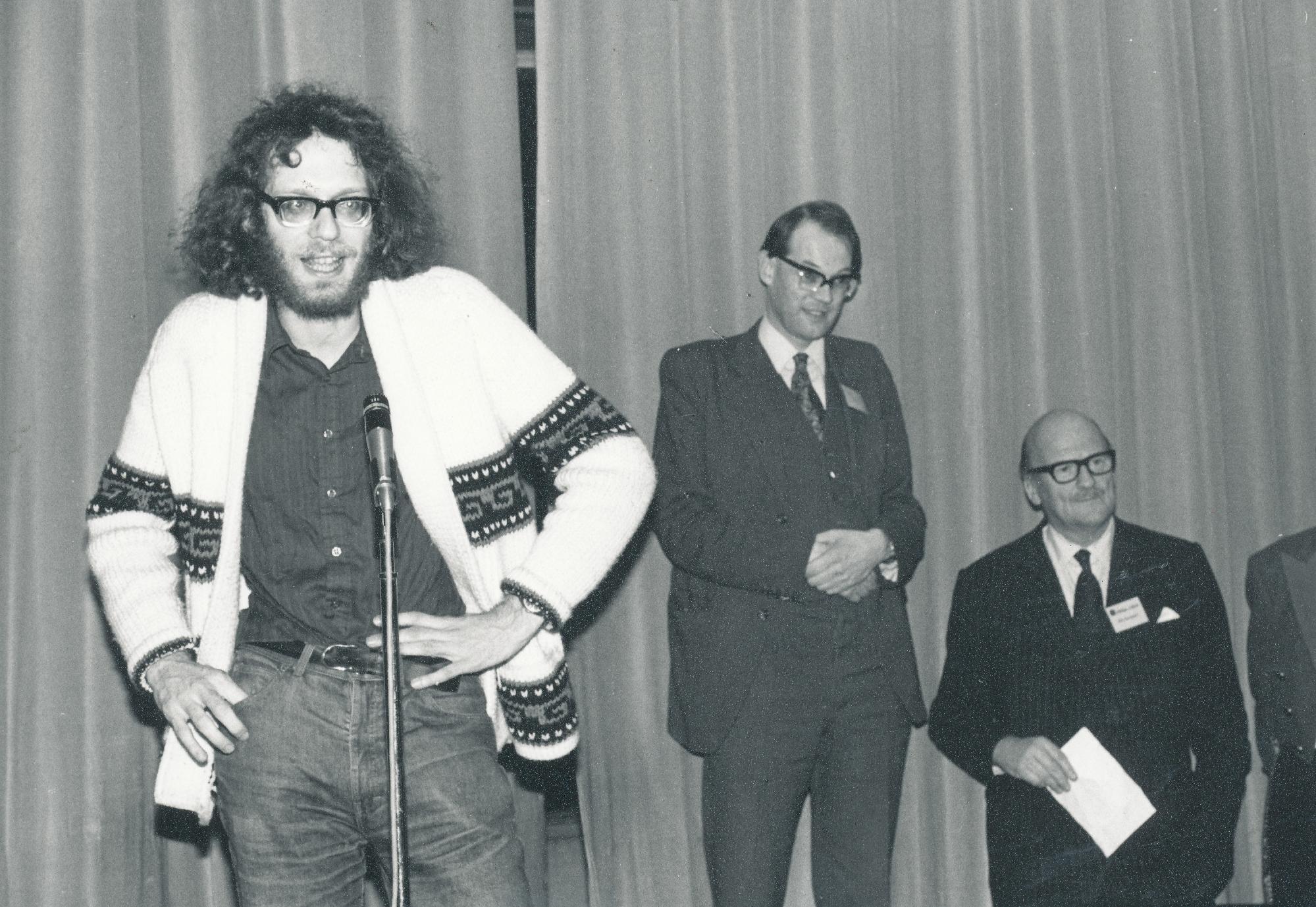
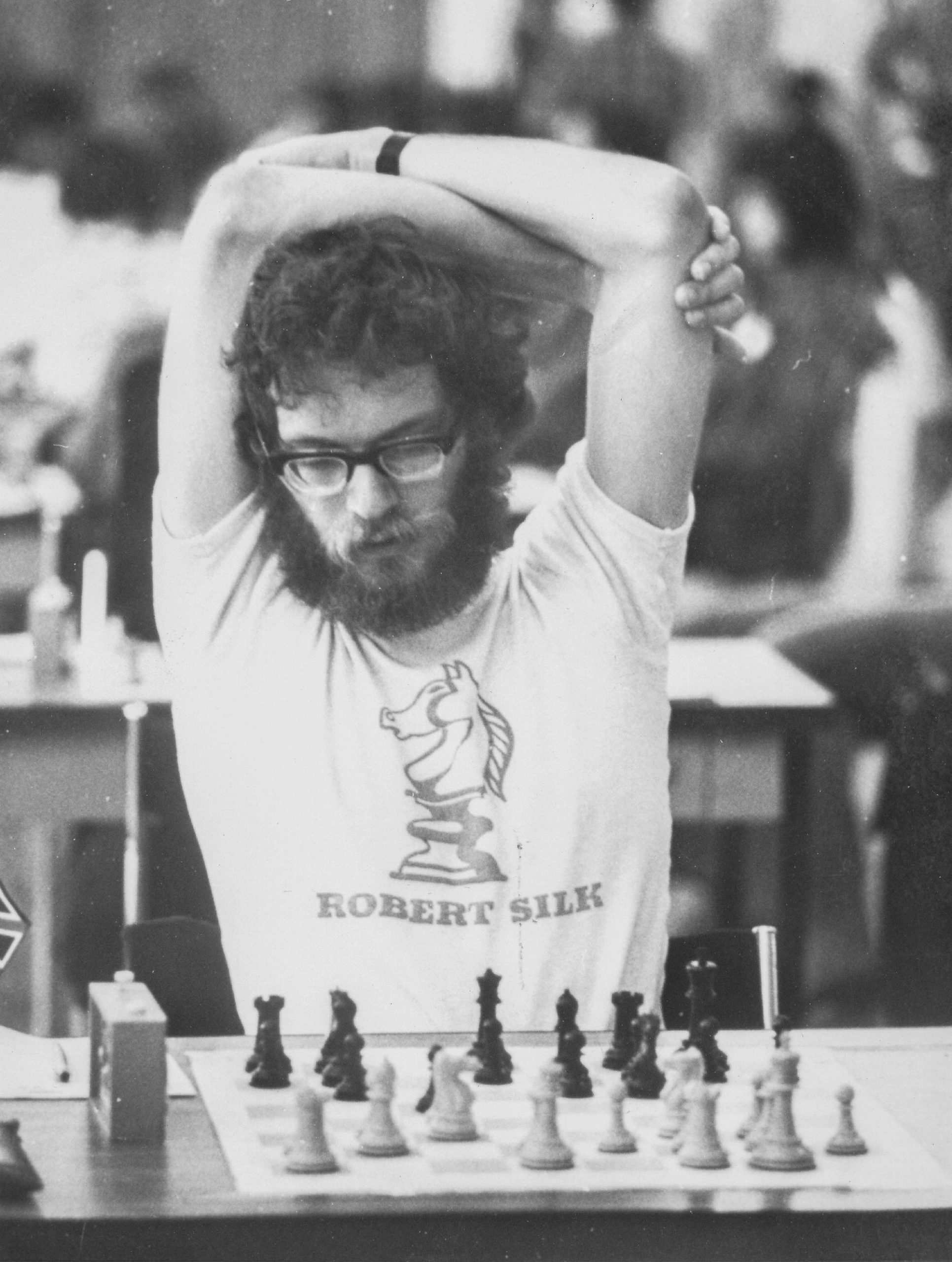
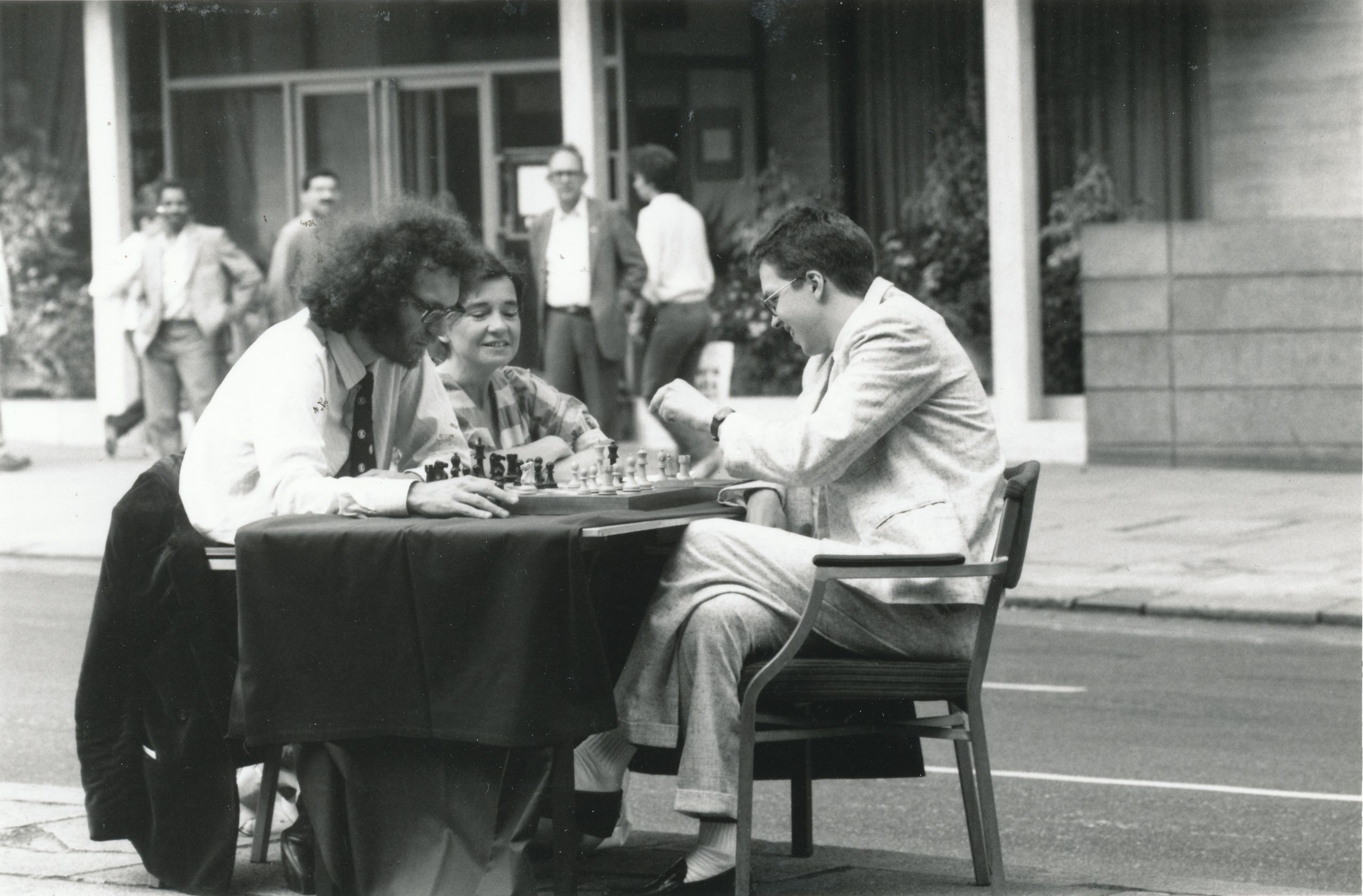
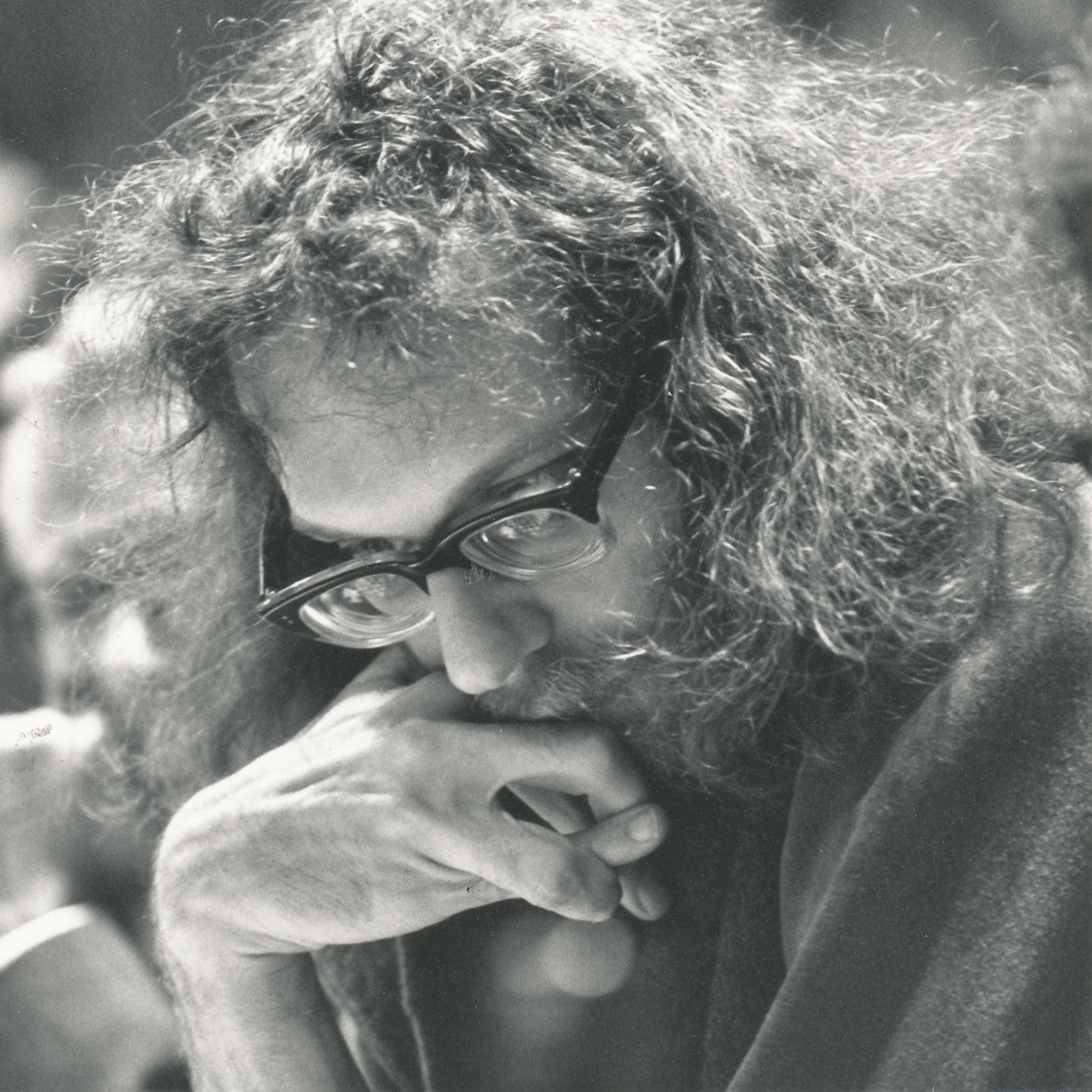
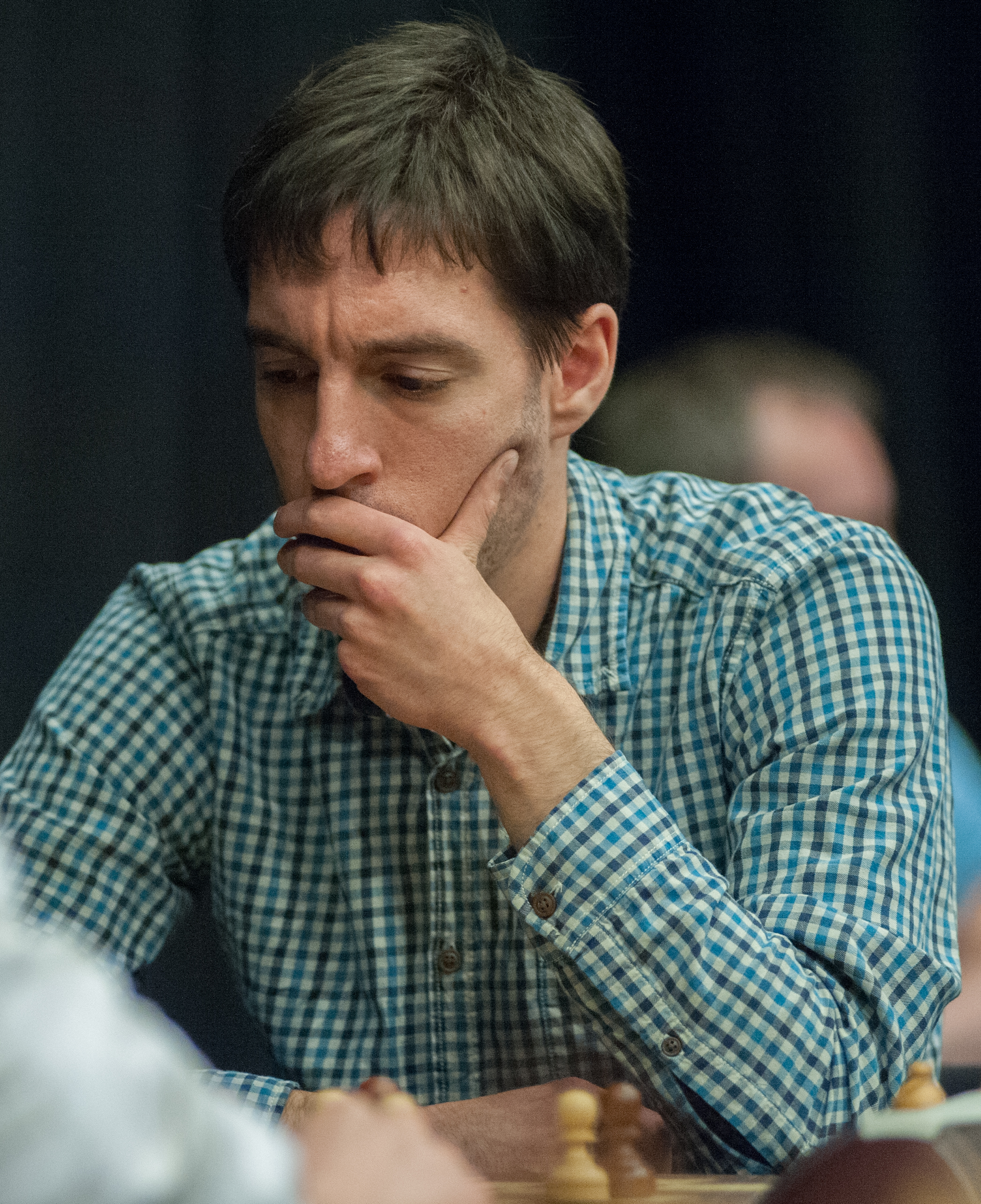
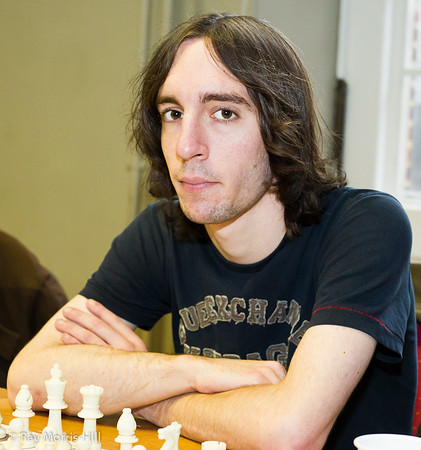
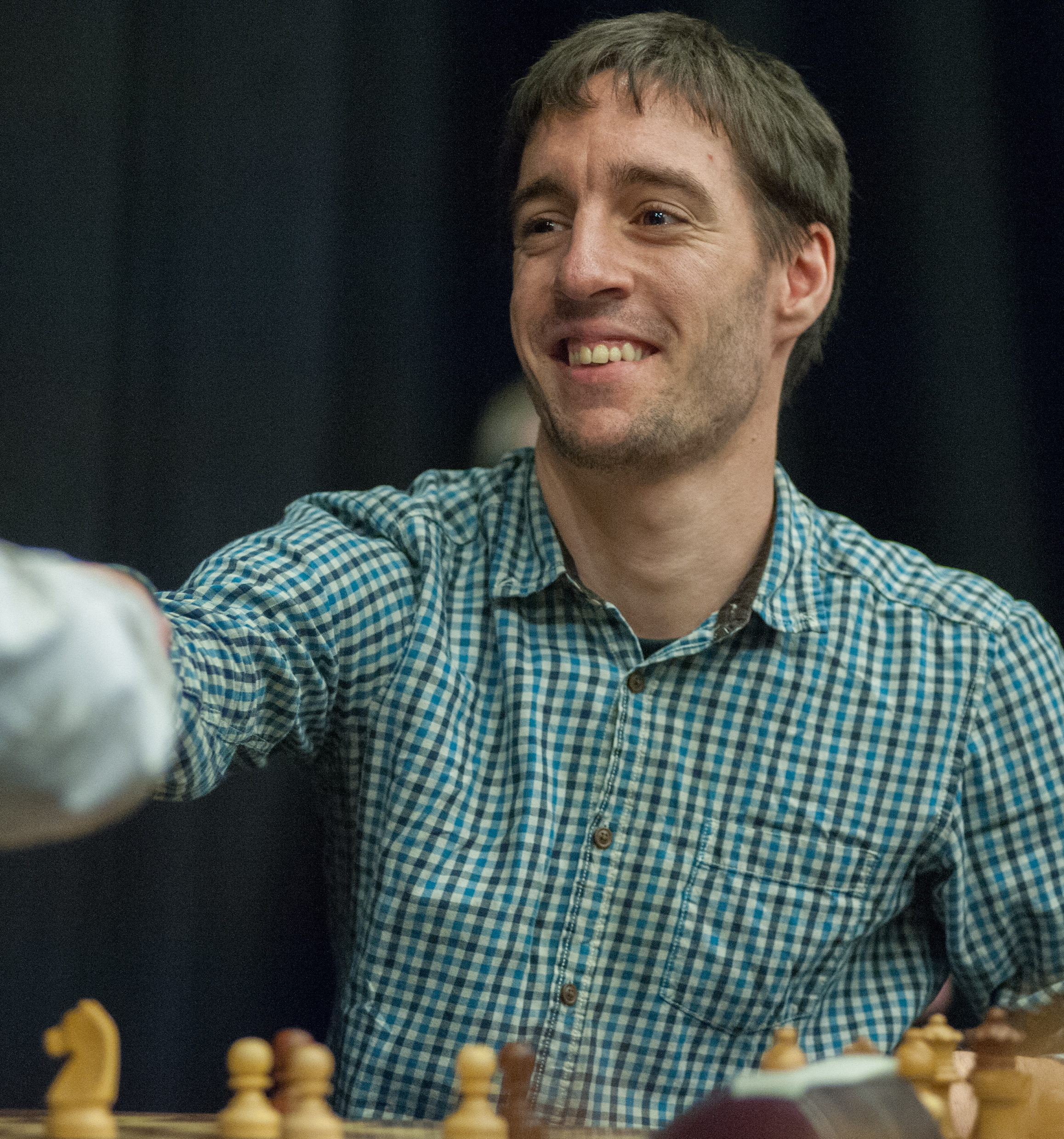
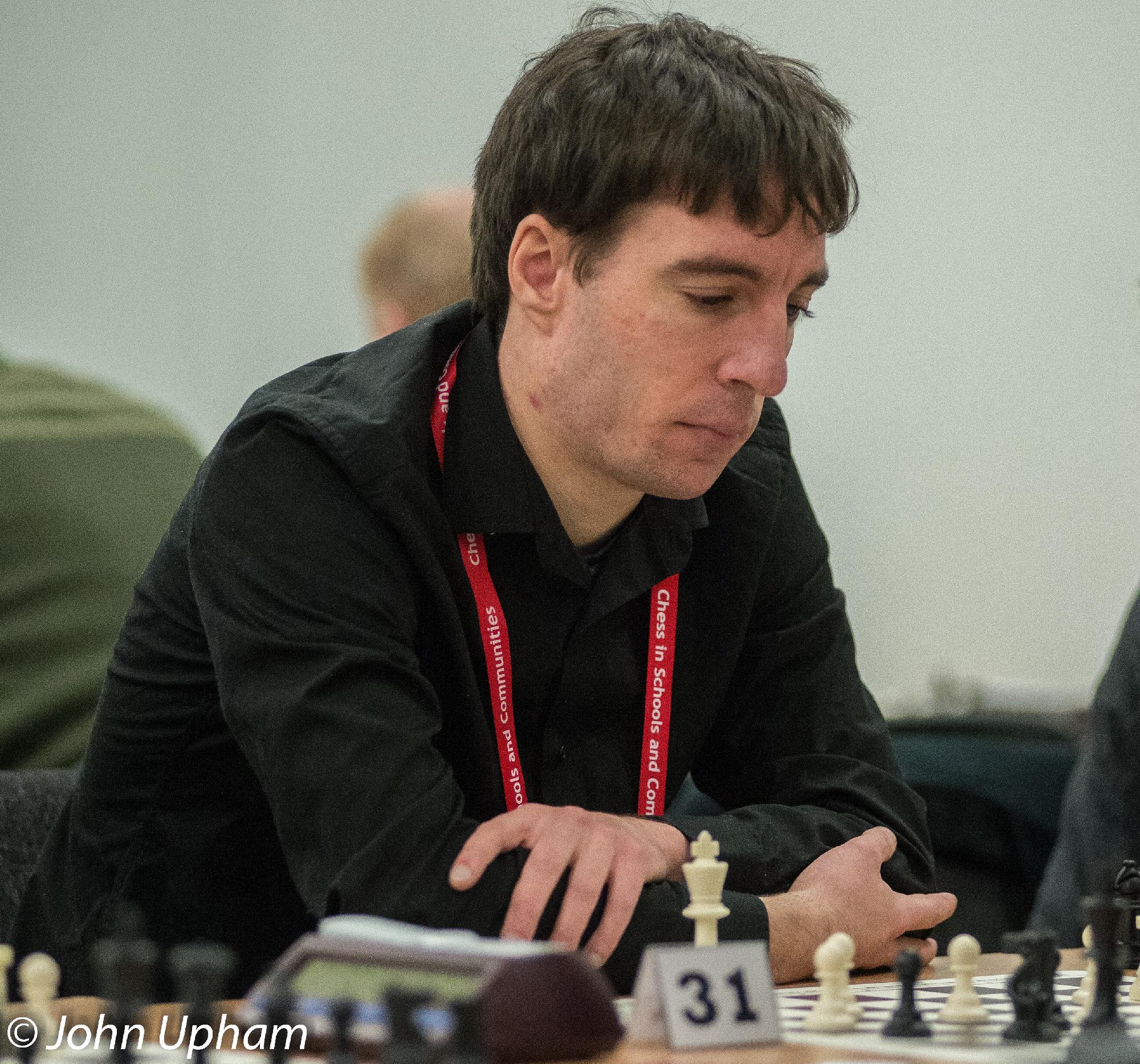
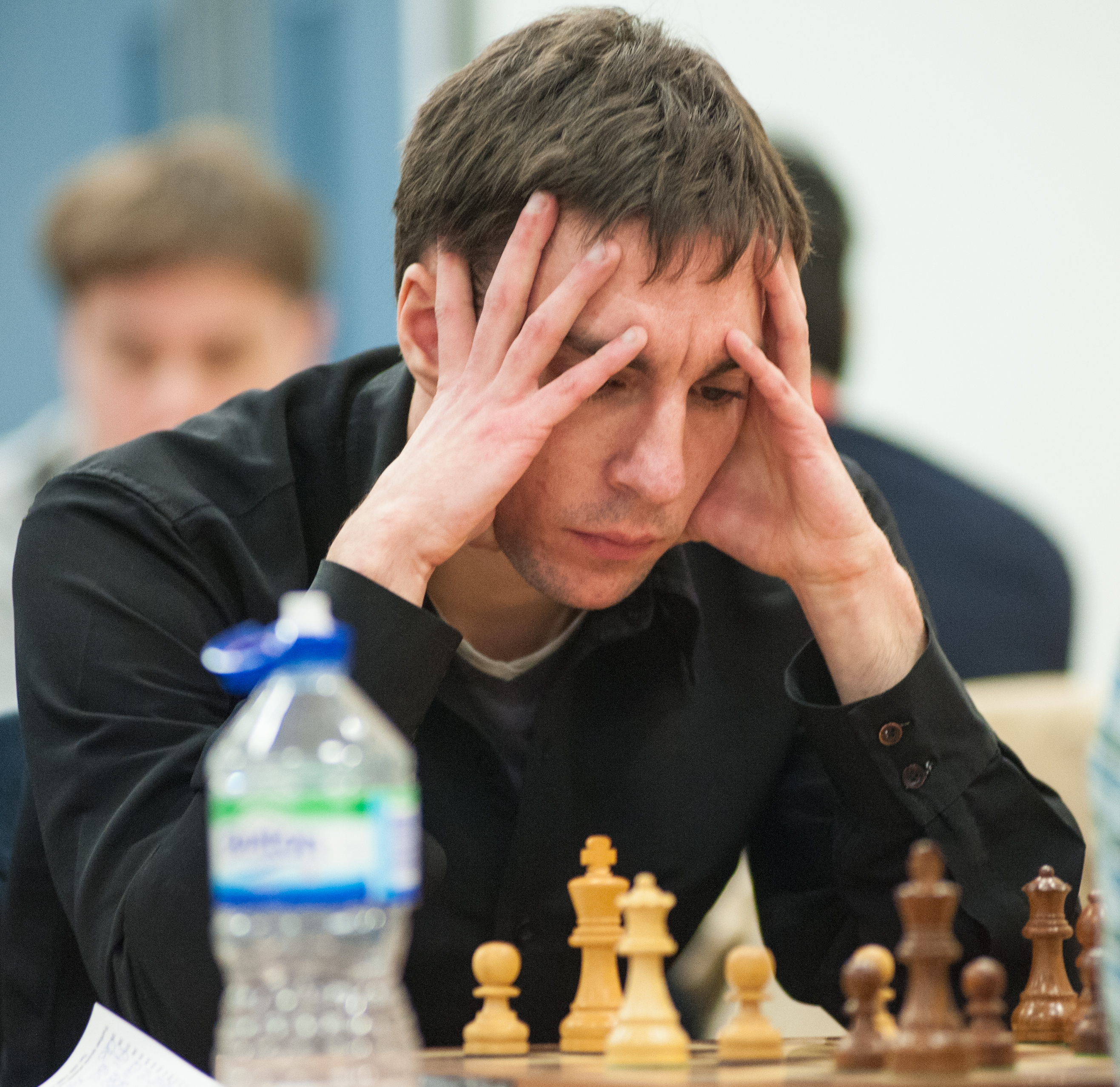
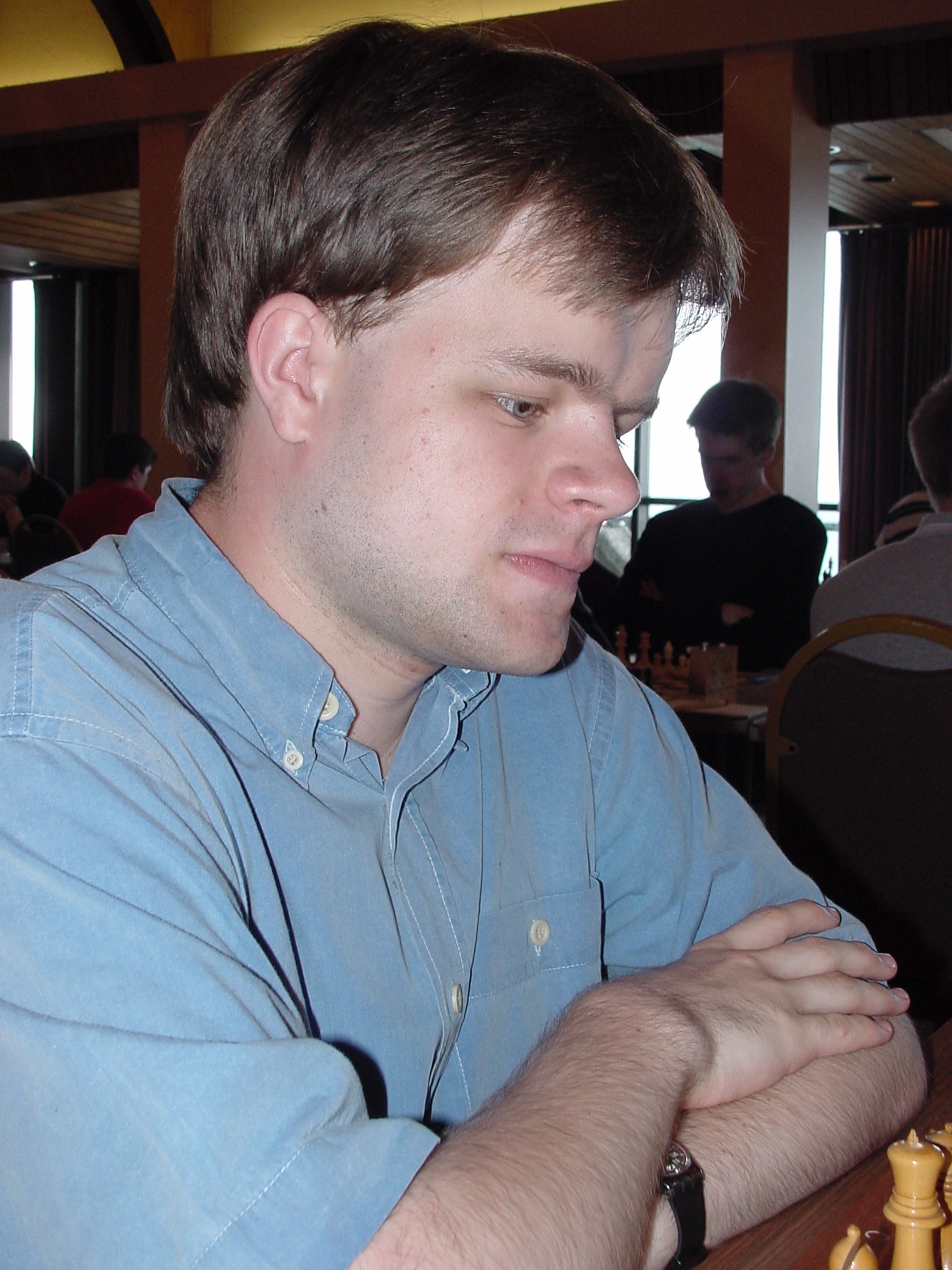
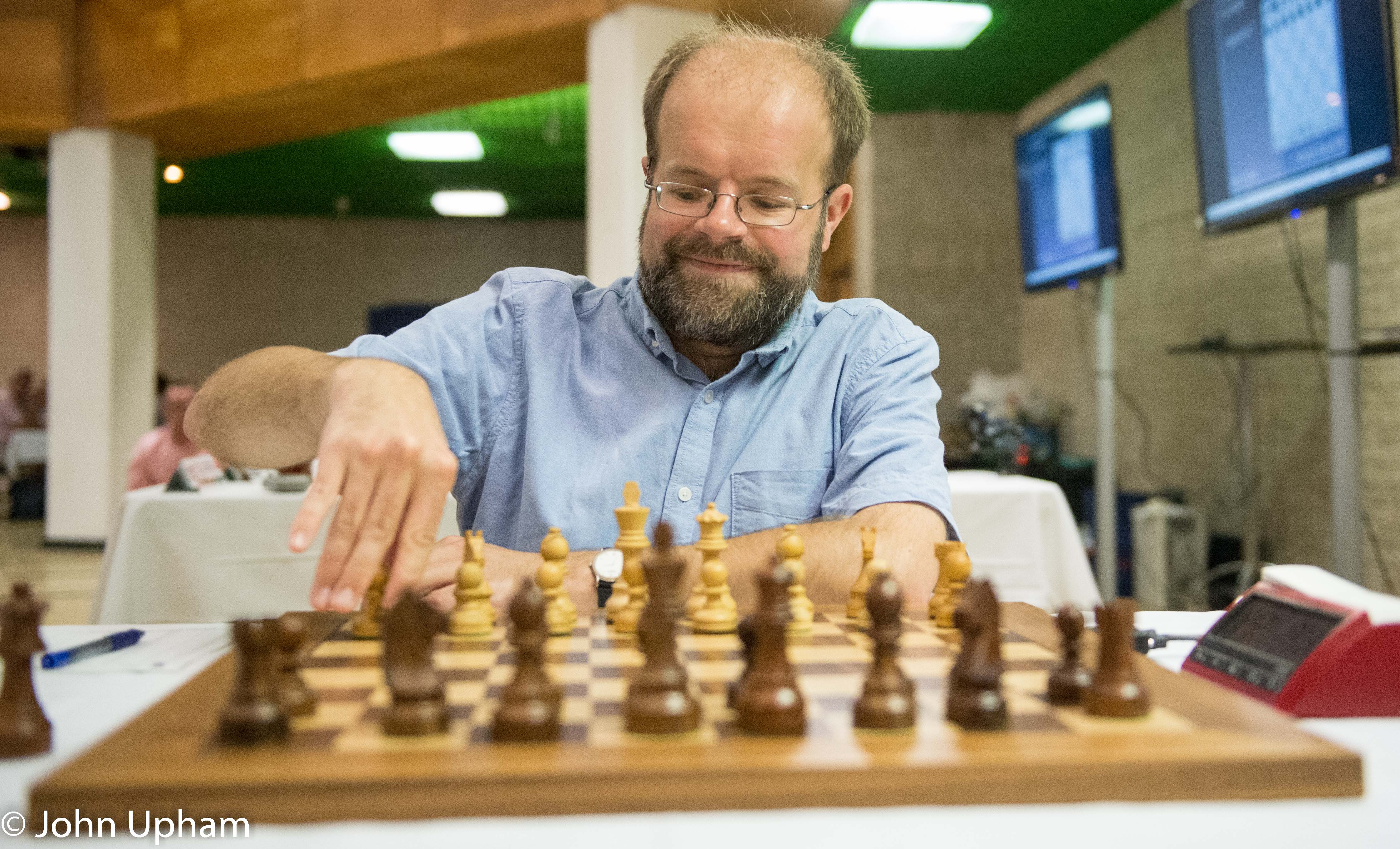
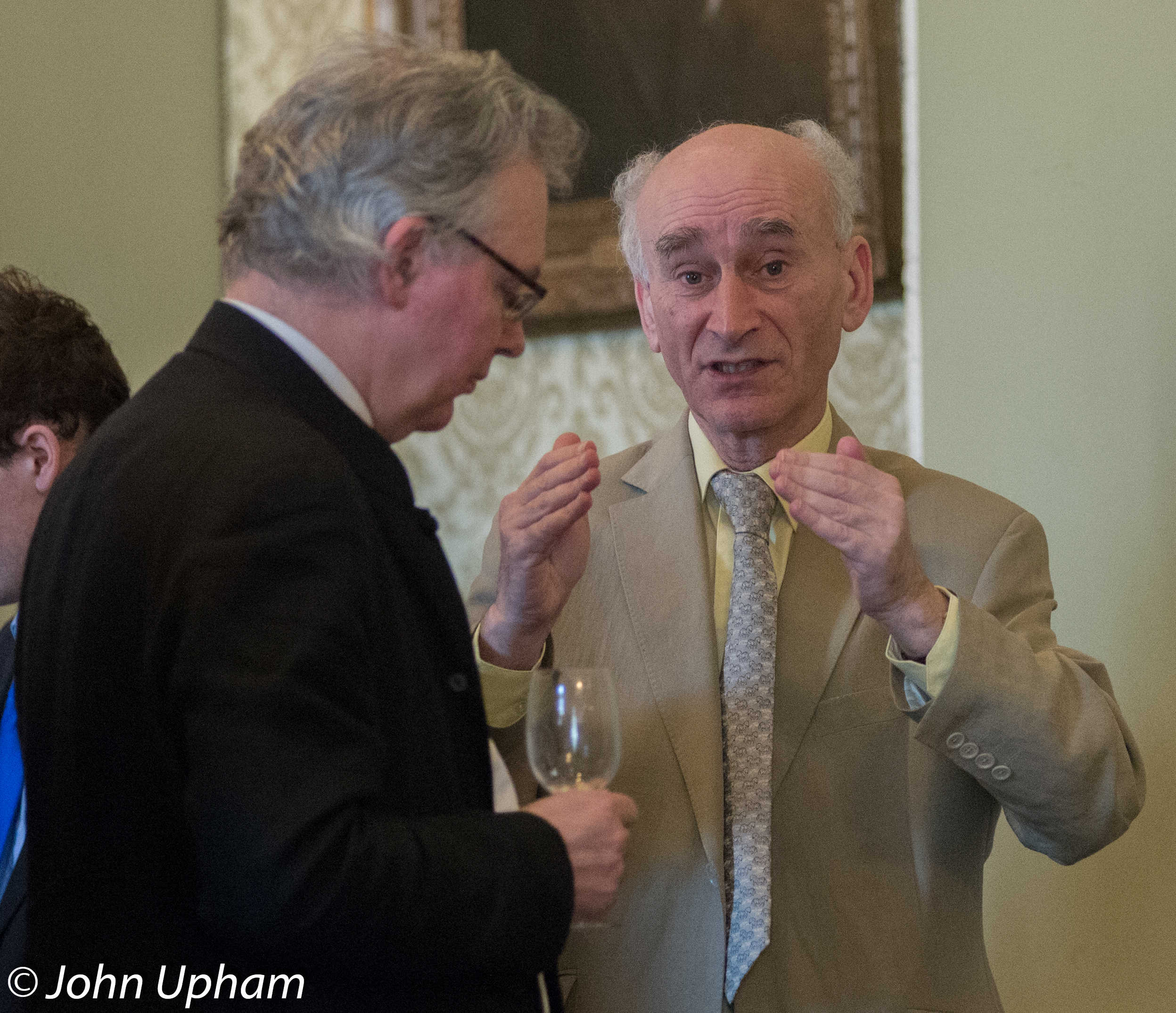
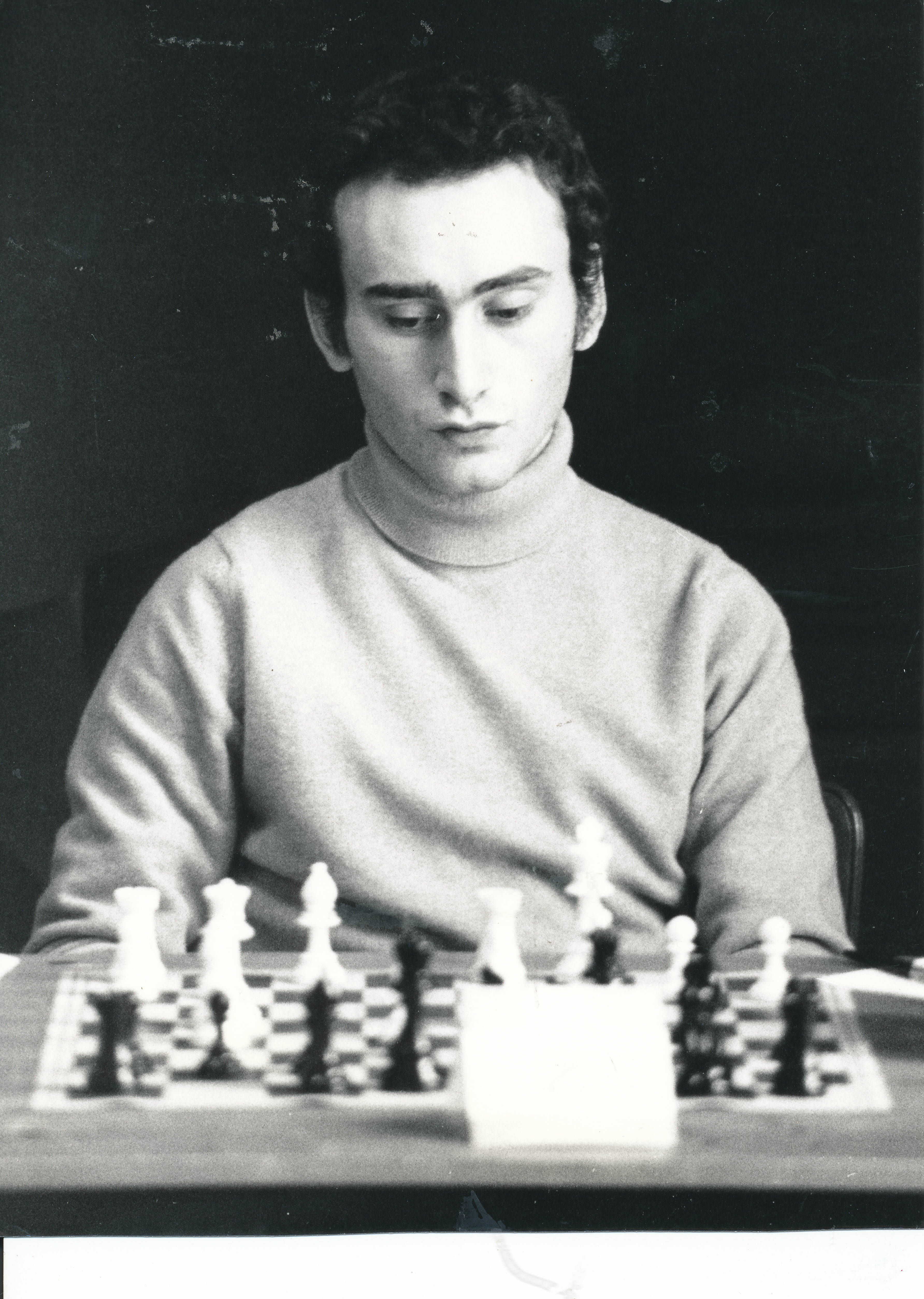
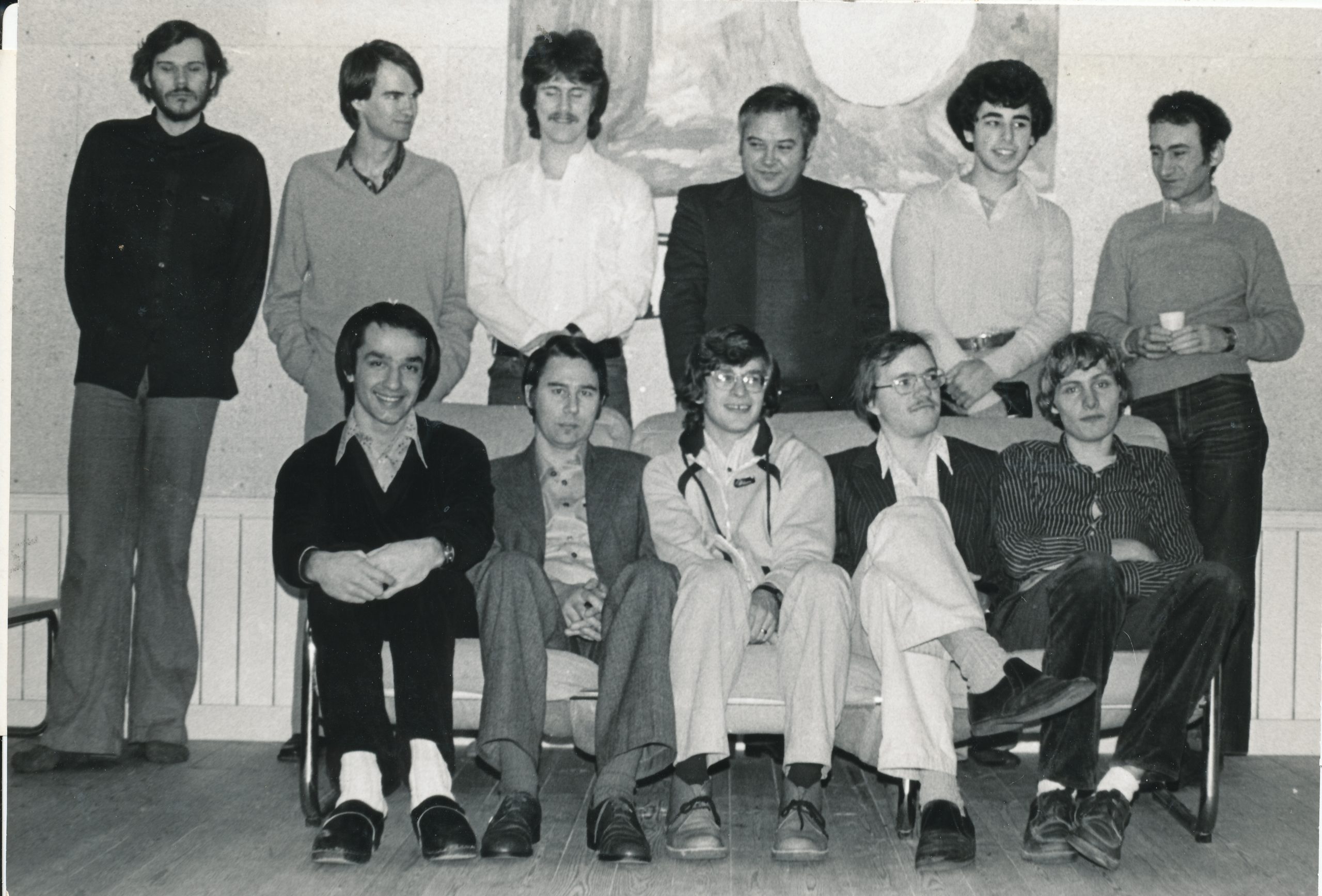
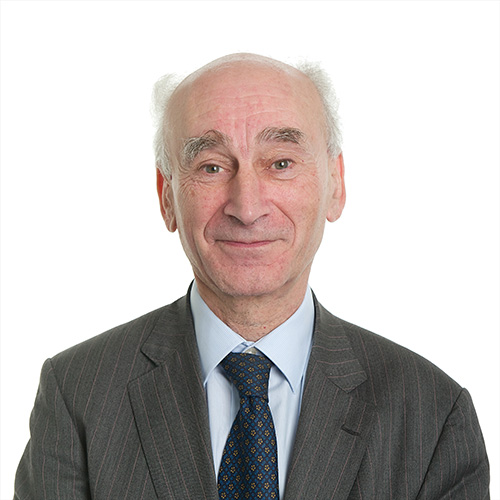
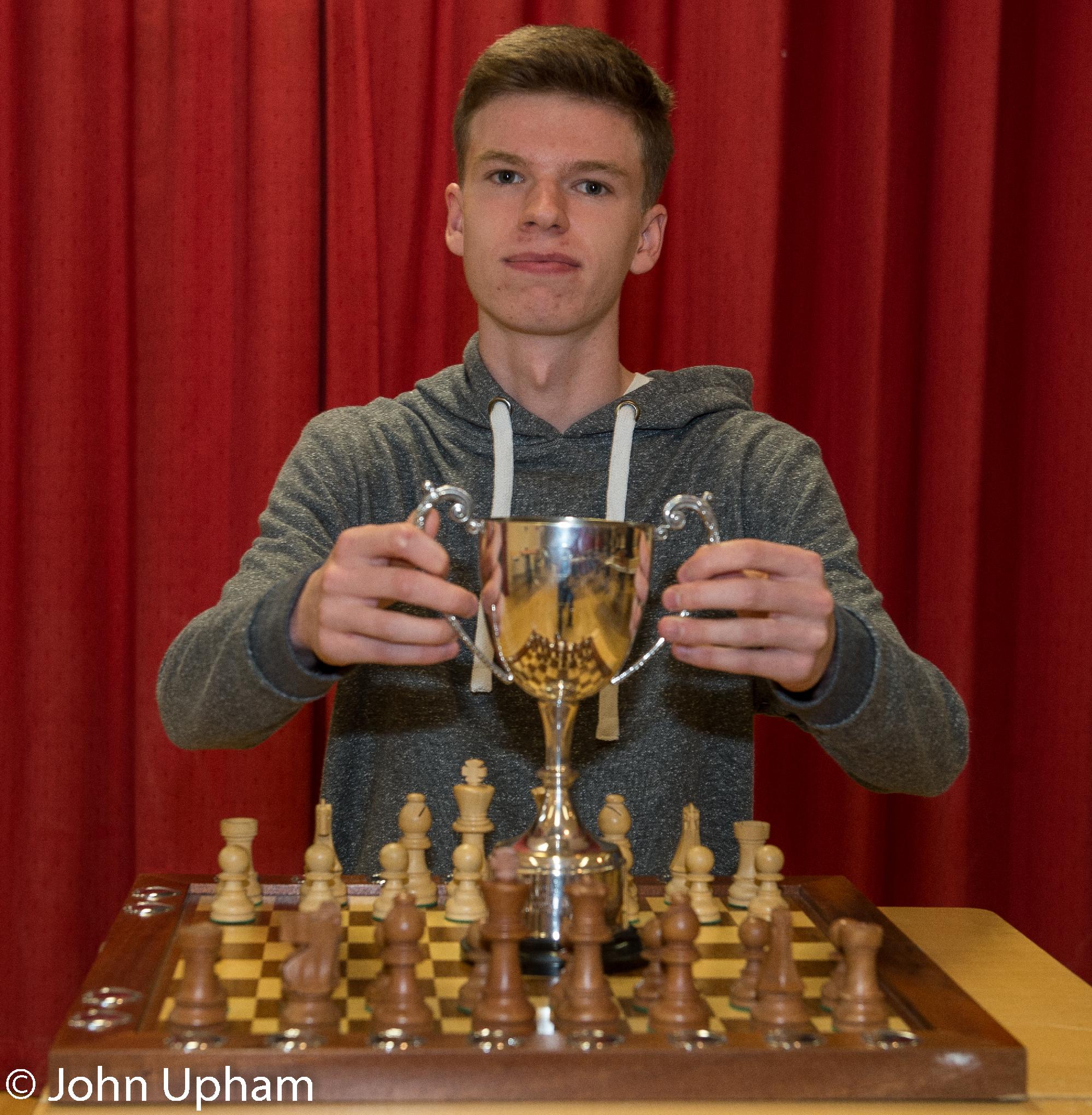
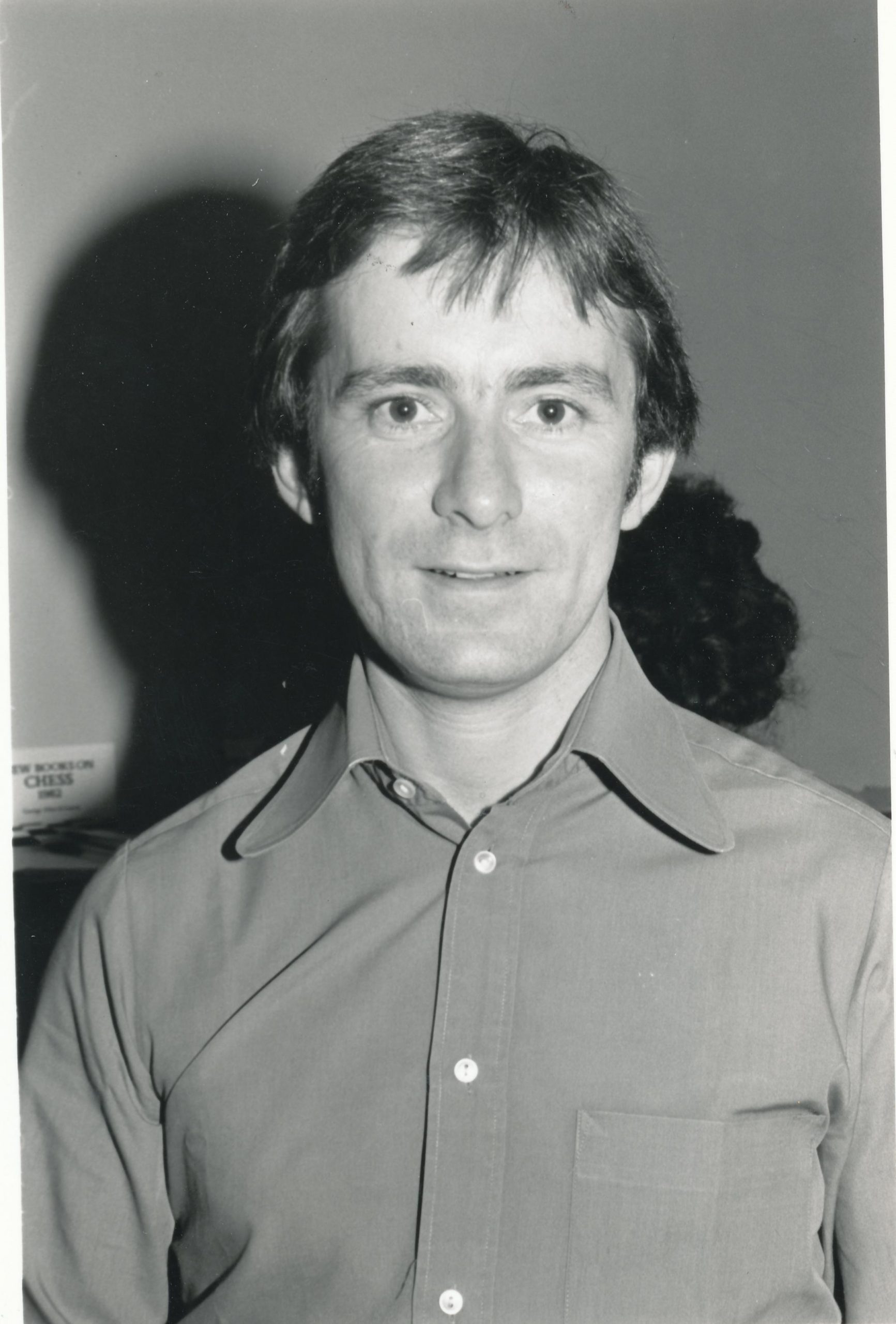
IM David Norwood at the 1988 Oakham Young Masters. Photo by Steven Stepak
We wish David Norwood all the best on his birthday,
David Robert Norwood was born in Farnworth, Bolton, Greater Manchester on October 3rd 1968. His mother’s maiden name was Mellor and his father was an electrician.
Mary Hopkin was still UK number one with “Those were the days” and would remain at number one for six weeks in total.
David Norwood
David read history at Keble College, Oxford before pursuing a successful business career (see below).
David became an International Master in 1985 and a Grandmaster in 1989 and his peak FIDE rating (Felice and Megabase 2020) was 2545 in July 1994 at the age of 26.
Preparing for David would have been fairly straightforward as he played almost the same opening with white and black playing 1.g3 (and less frequently, 1.d4) and the Modern Defence although his did flick the Modern Benoni into the mix every now and then.
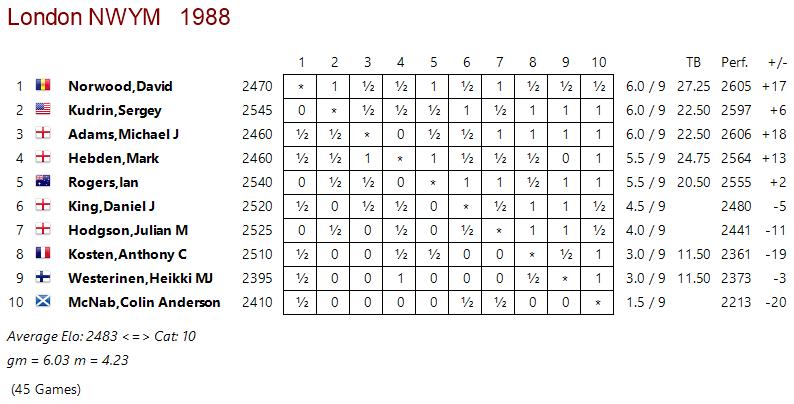
As well as moving to Oxford for University he was =1st at the 1988 (fifth) NatWest Young Masters with 6/9 (along with Adams and Kudrin) securing a GM norm :
Crosstable for 1988 NatWest Young MastersIM David Norwood at the 1988 NatWest Young Masters. Photo by Tom Elek
In 1990 David became the first Grandmaster to play in the annual Varsity match. This was the 108th such encounter and David played on board one against Jeremy P Sharp of Downing College, Cambridge. David first played in the 107th match in 1989 on board two below James Howell. David played one more time in 1991 scoring 2/3 from his three appearences.
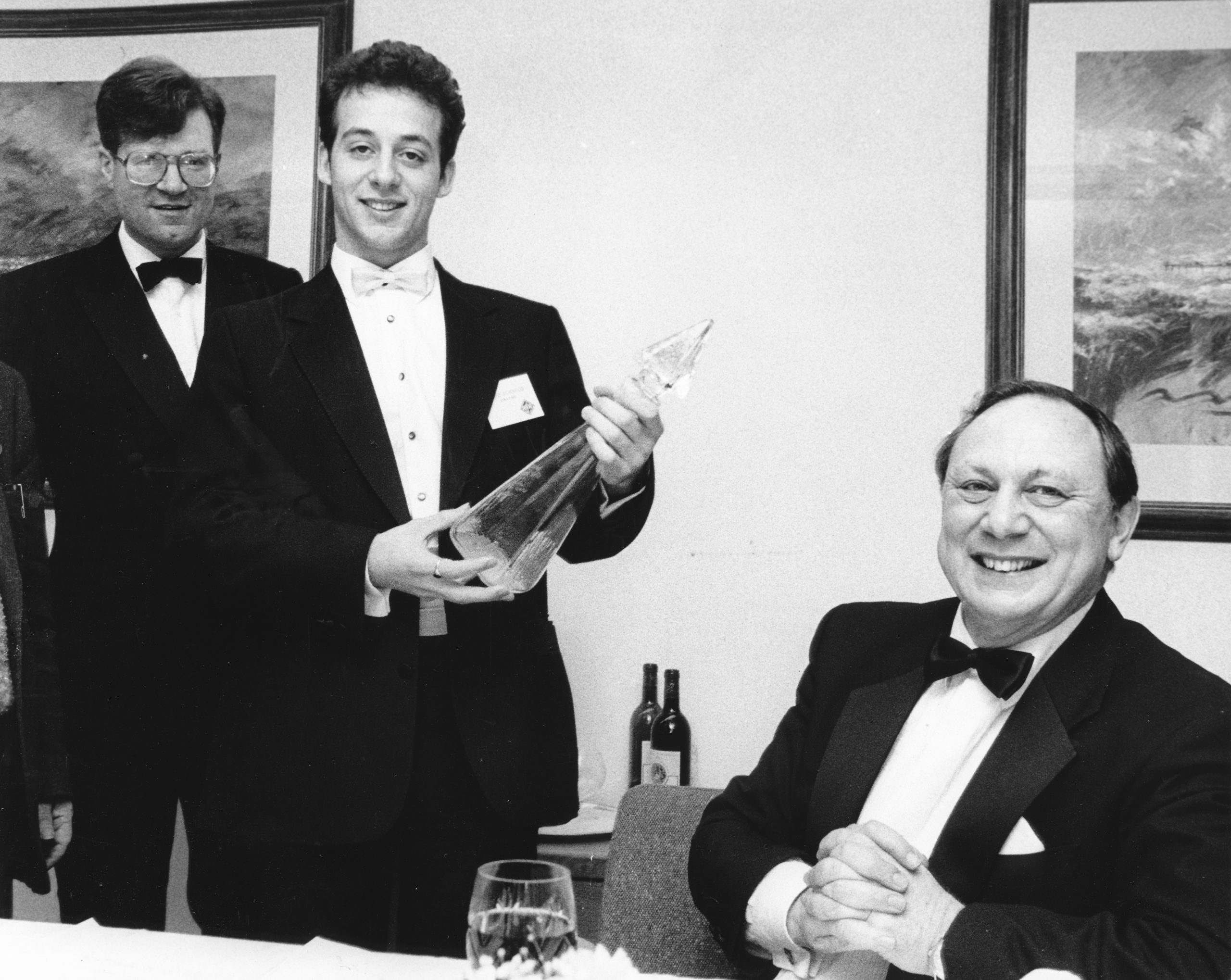
IM David Norwood at the 1991 Varsity Match. Henry Gerald Mutkin (organiser and sponsor) is seated.
According to FIDE David is registered with Andorra which appropriately (for DN) has Catalan as its national language. David has yet to win the Andorran Championship. He first played in the Andorran Open in 2011 and came close to winning in 2013 with 7/9. Since 2017 David has not played in a FIDE rated event.
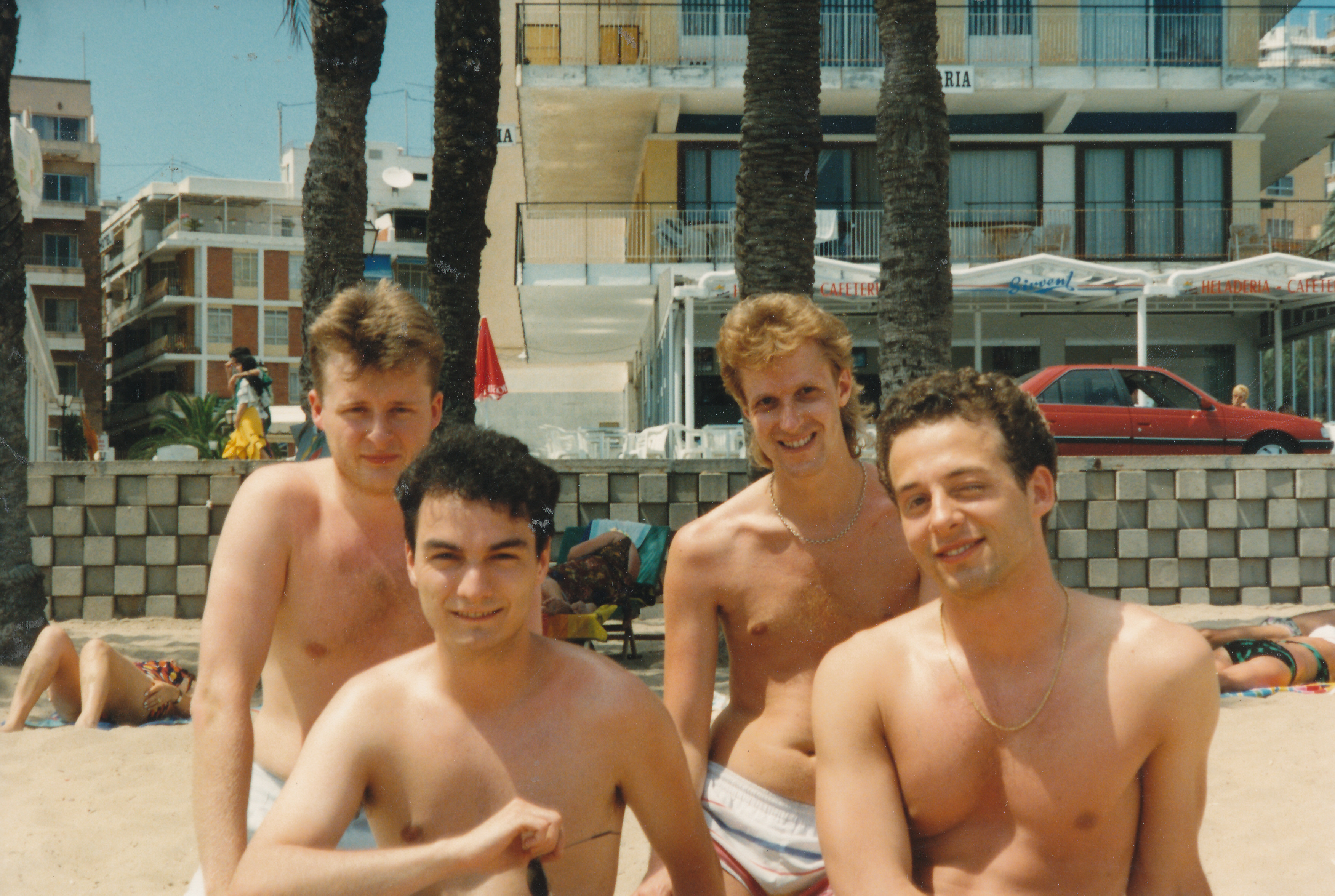
One of David’s most important claims to fame was being the Best Man at the wedding of Julian and Lizette Hodgson.
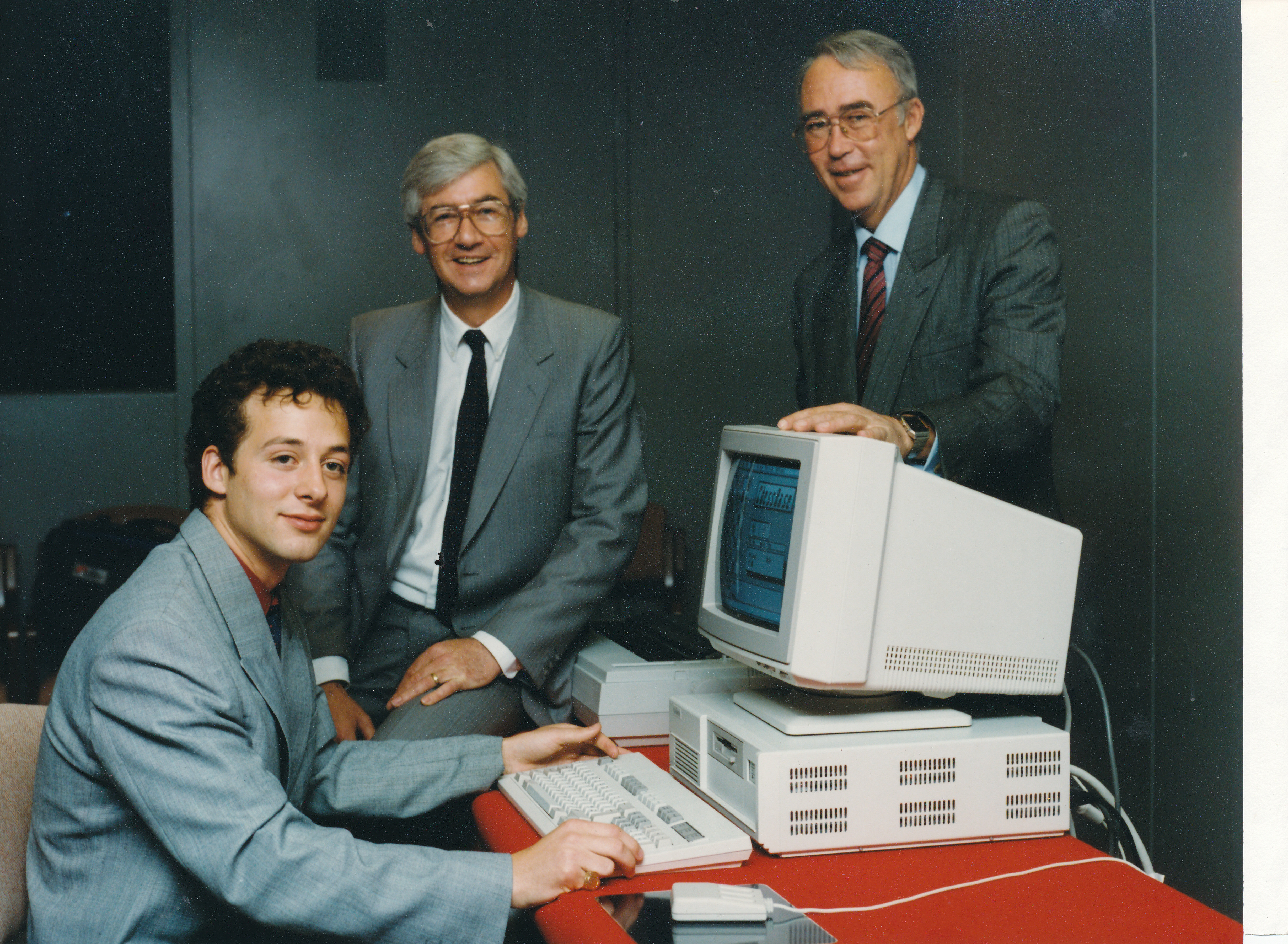
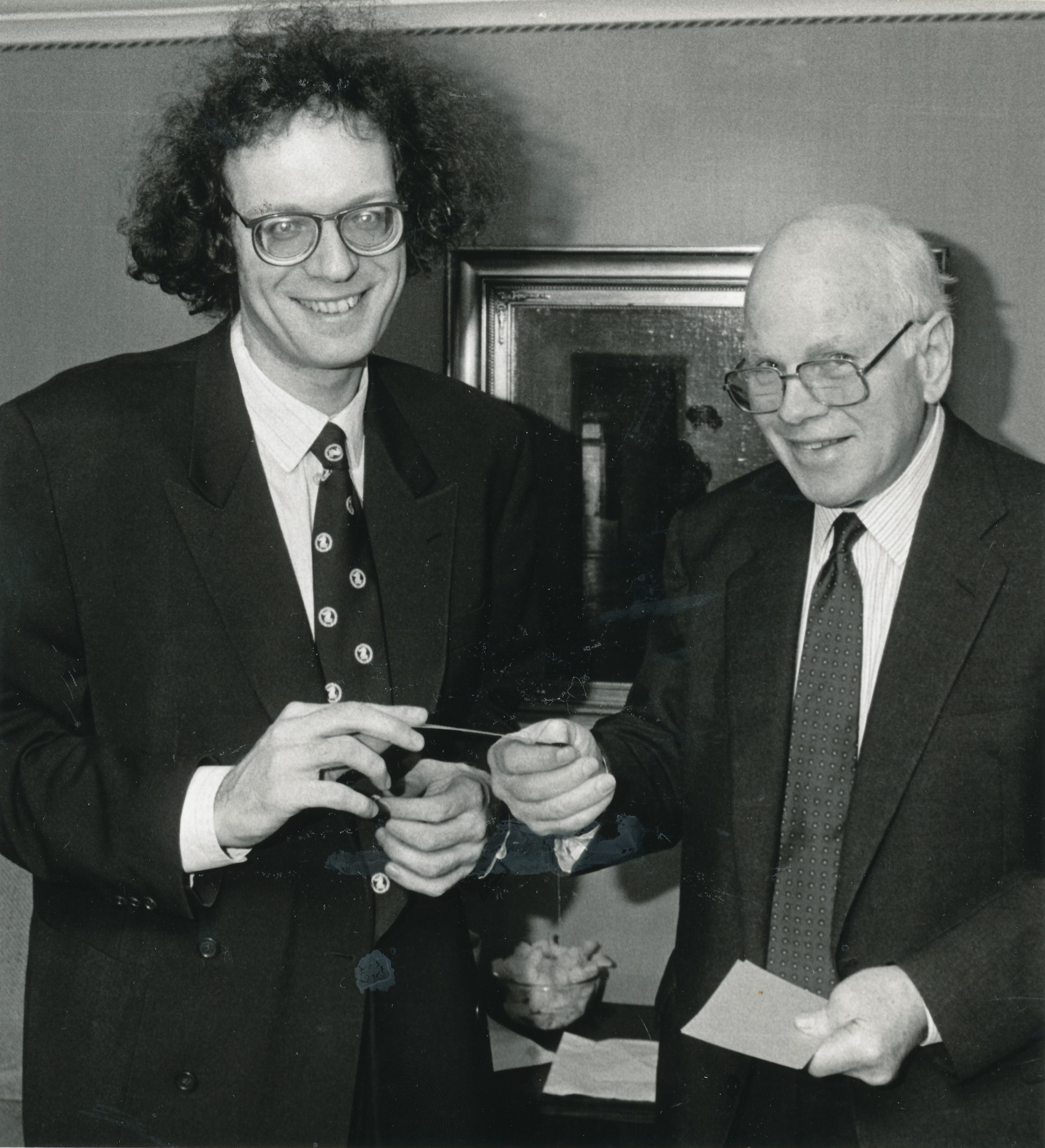
A powerful Unisys personal computer being present to Bolton-born GM David Norwood by Alva Rodger (centre), general manager of Unisys banking district ad Dr Brian Bailey, managing director of Infolink, a credit referencing agency.
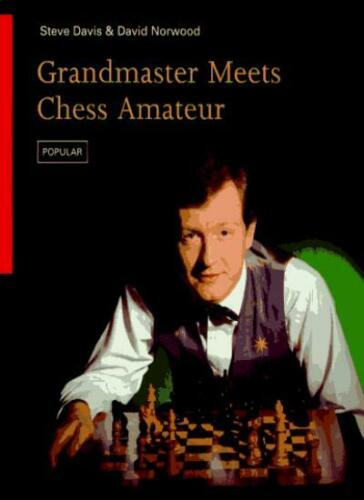
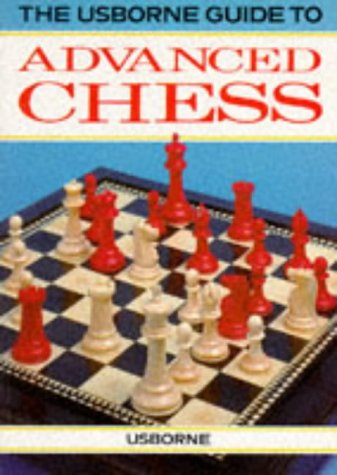
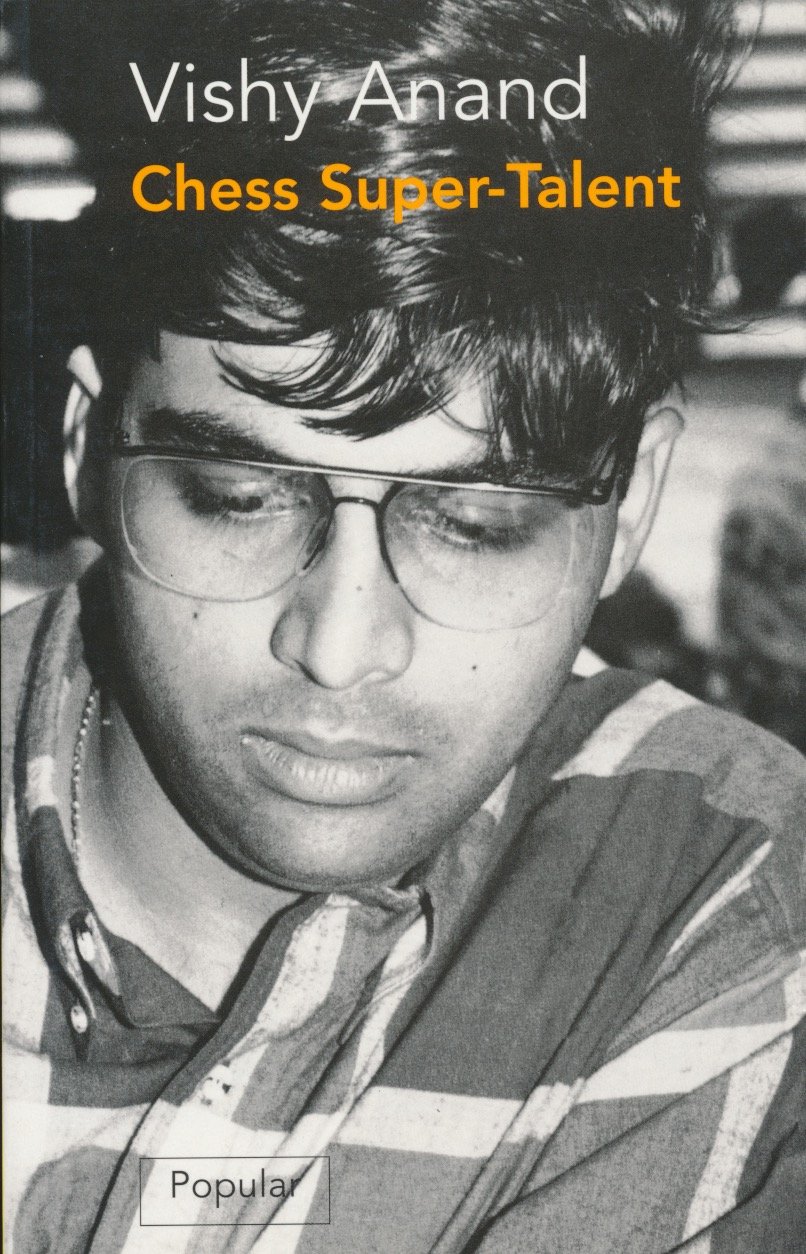
As a writer David wrote a chess column for The Daily Telegraph and The Economist (London) and he has written the following books :
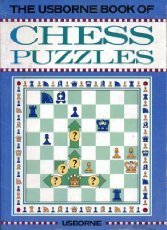
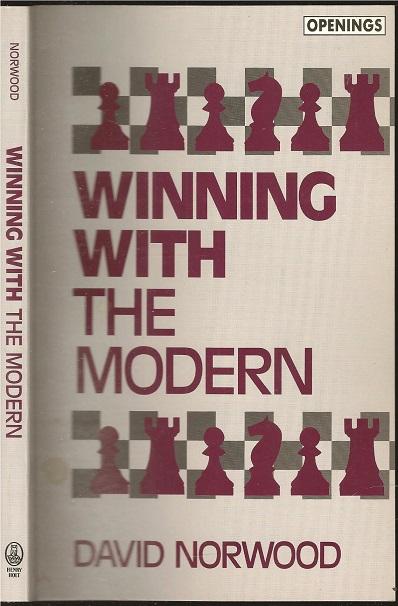
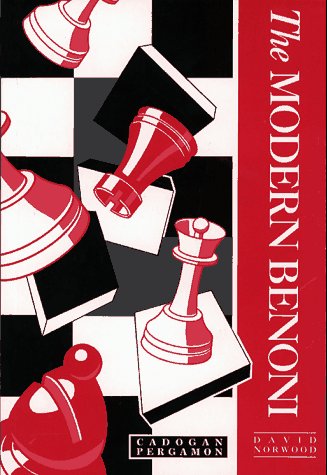
The Usbourne Book of Chess Puzzles, David Norwood, 1992Winning with the Modern, David Norwood, B.T. Batsford Ltd., London, 1994The Modern Benoni, David Norwood, Cadogan, 1994Grandmaster Meets Chess Amateur, Steve David and David Norwood, 1995The Usbourne Guide to Advanced Chess, David Norwood, 1995Chess Super-Talent, David Norwood, Batsford, September 1995, ISBN-13 : 978-0805042238
From Wikipedia :
“David Robert Norwood (born 3 October 1968) is an English businessman who runs an investment fund that finances spin-off companies from Oxford University science departments. He is also a chess grandmaster, chess writer, former captain of the English chess team and now represents Andorra at chess.”
“The son of an electrician, Norwood graduated with a history degree from Keble College, Oxford University in 1988 before joining city investment bank Banker’s Trust in 1991.”
Peter Wells, Gary Lane, John Emms and David Norwood
“Norwood cofounded Oxford Sciences Innovation, a £600m investment company dedicated to funding deep science from Oxford University, and was its CEO from 2015 to 2019. Formerly he was founder of IP Group plc, a fund that invested in spinoffs from Oxford University’s Chemistry department, in exchange for 50% of the revenues from the licensing of the department’s intellectual property.
In 2017, Norwood donated £1.9M to Keble College’s future hub for innovation at Oxford University.”
From The Times of London, November 20th, 2008 by Ian King, Business Editor :
“Entrepreneur David Norwood swaps City for sun, sea and writing
One of the City’s best-known entrepreneurs resigned all his directorships yesterday – to move to a desert island (in the Bahamas) where he plans to become a writer.
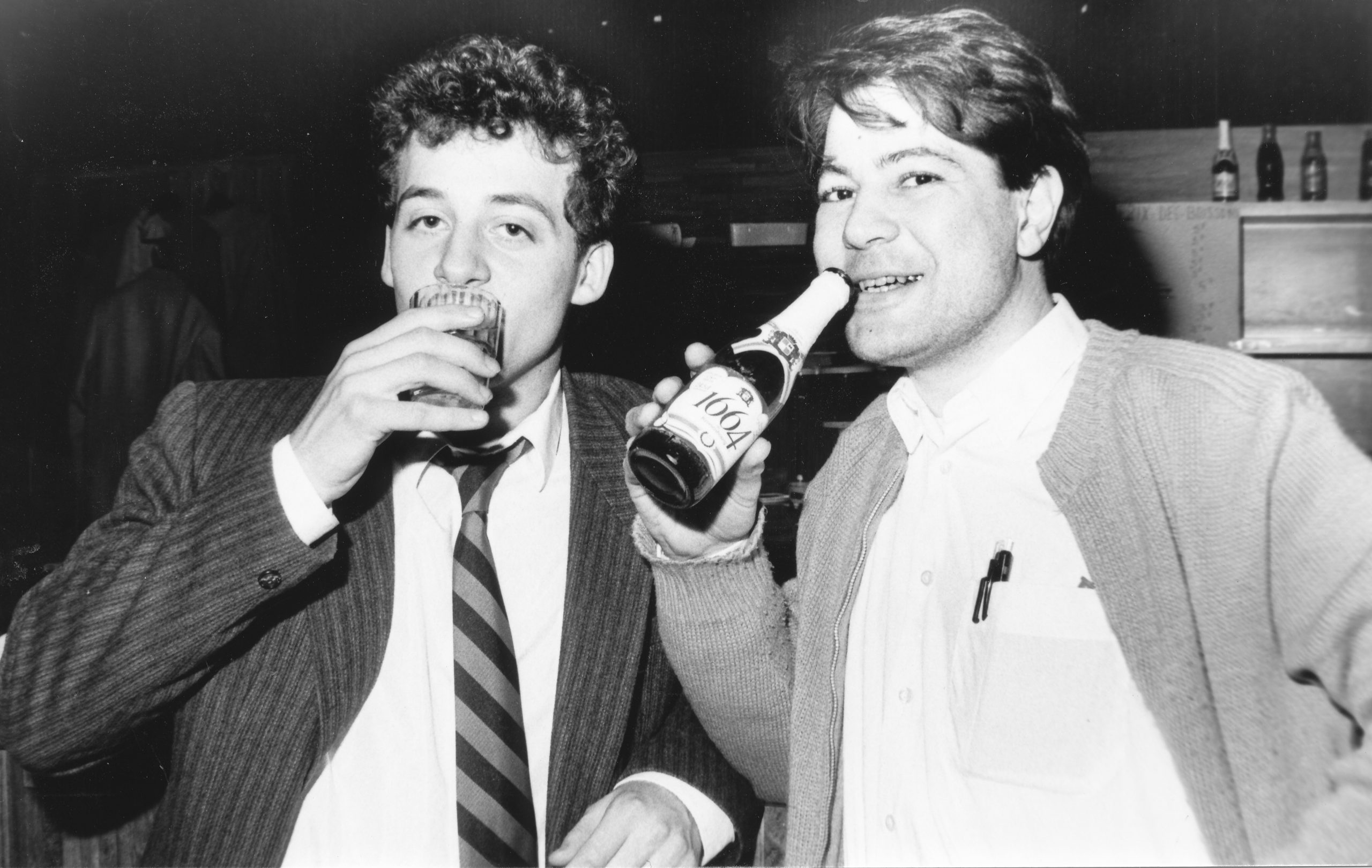
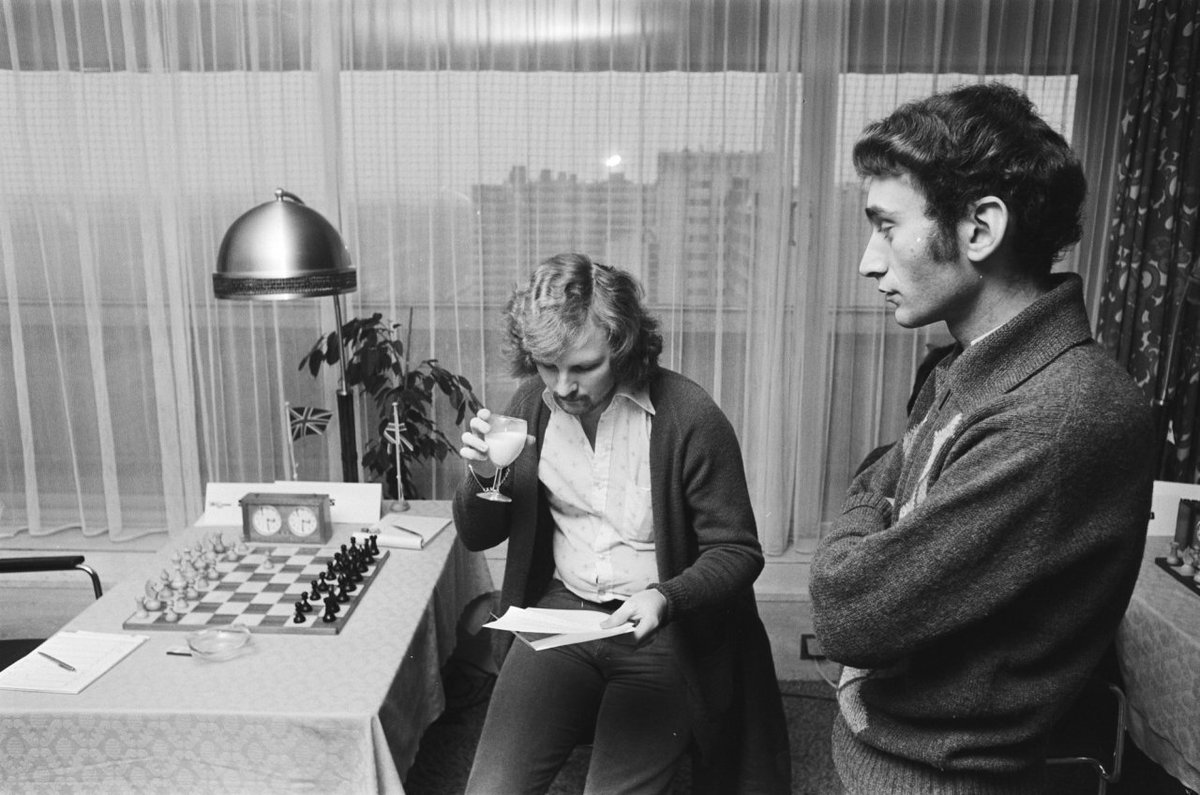
IM David Norwood and IM Aldo Haik (France) taking a drink at the bar during Cappelle-Le-Grande, 1988. Photograph by Caroline Winkler
David Norwood, a former chief executive of the stockbrokers Evolution and Beeson Gregory, resigned from the boards of a number of companies, including Oxford Advanced Surfaces, ORA Capital, Oxeco and Plus-listed Green Chemicals. He has also given up his role as special projects director at IP Group, the intellectual property commercialisation company, which he started eight years ago and floated on AIM in 2003. Shares of all five companies fell after the news was released.”
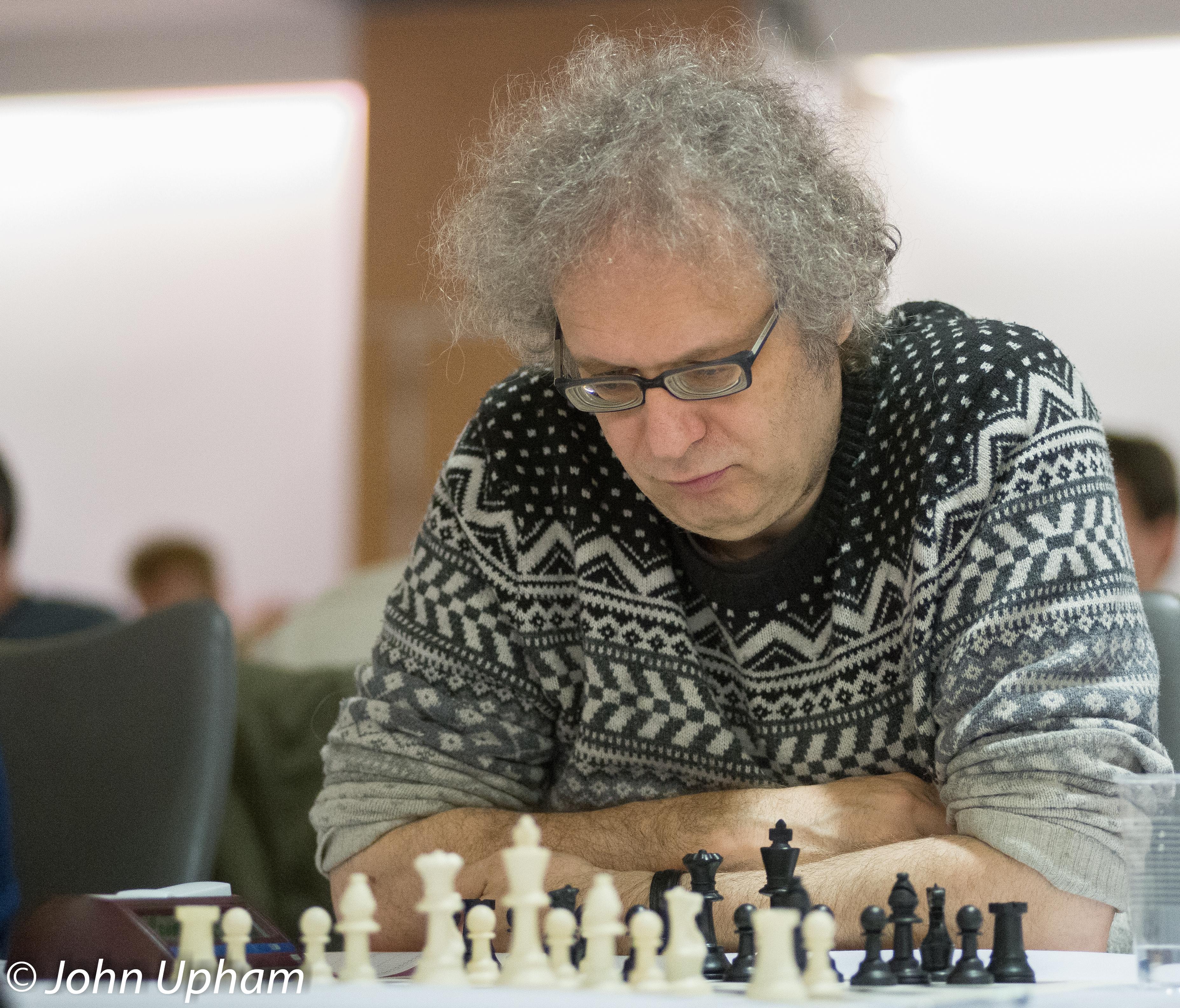
GM Jonathan Speelman at 4NCL in 2014, courtesy of John Upham Photography
We wish GM Jonathan Speelman all the best on his birthday.
Jonathan Simon Speelman was born on Tuesday, October 2nd, 1956 in Marylebone, London. His mother’s maiden name was Freeman. In March 2002 Jon and Lindsey Thomas were married in Camden, Greater London. They have a non-chess playing son, Lawrence who studied Ancient Languages at The University of Chicago.
Jonathan attended St. Paul’s School, London and then Worcester College, Oxford and read mathematics.
He became an International Master in 1978 (England’s tenth) and a Grandmaster in 1980 (England’s fifth) and achieved a peak FIDE rating of 2645 at the age of 32 in July 1988.
Jon is a Life Member of King’s Head Chess Club and has helped them organise a number of tournaments including the NatWest Young Masters where he has adjudicated the winner of the Best Game Prize.
Currently, Jon plays for Wood Green in Four Nations Chess League and in the London League and maintains an ECF grade of 245.
Jon is the chess correspondent for The Observer and The Independent.
With the white pieces Jon prefers 1.Nf3 and against 1…Nf6 to follow with c4 and d4. Interestingly, if black plays 1…d5 then Jon plays an early king-side fianchetto.
As the second player Jon prefers the Smyslov Caro-Kann, the Nimzo-Indian and Queen’s Indian defences.
His record against contemporary players is impressive :
Nigel Short : +5
Murray Chandler : +4
Jonathan Mestel : +4
John Nunn : +3
James Plaskett : +4
Mark Hebden : +7
Tony Miles : +1
Tony Kosten : +3
Daniel King : +2
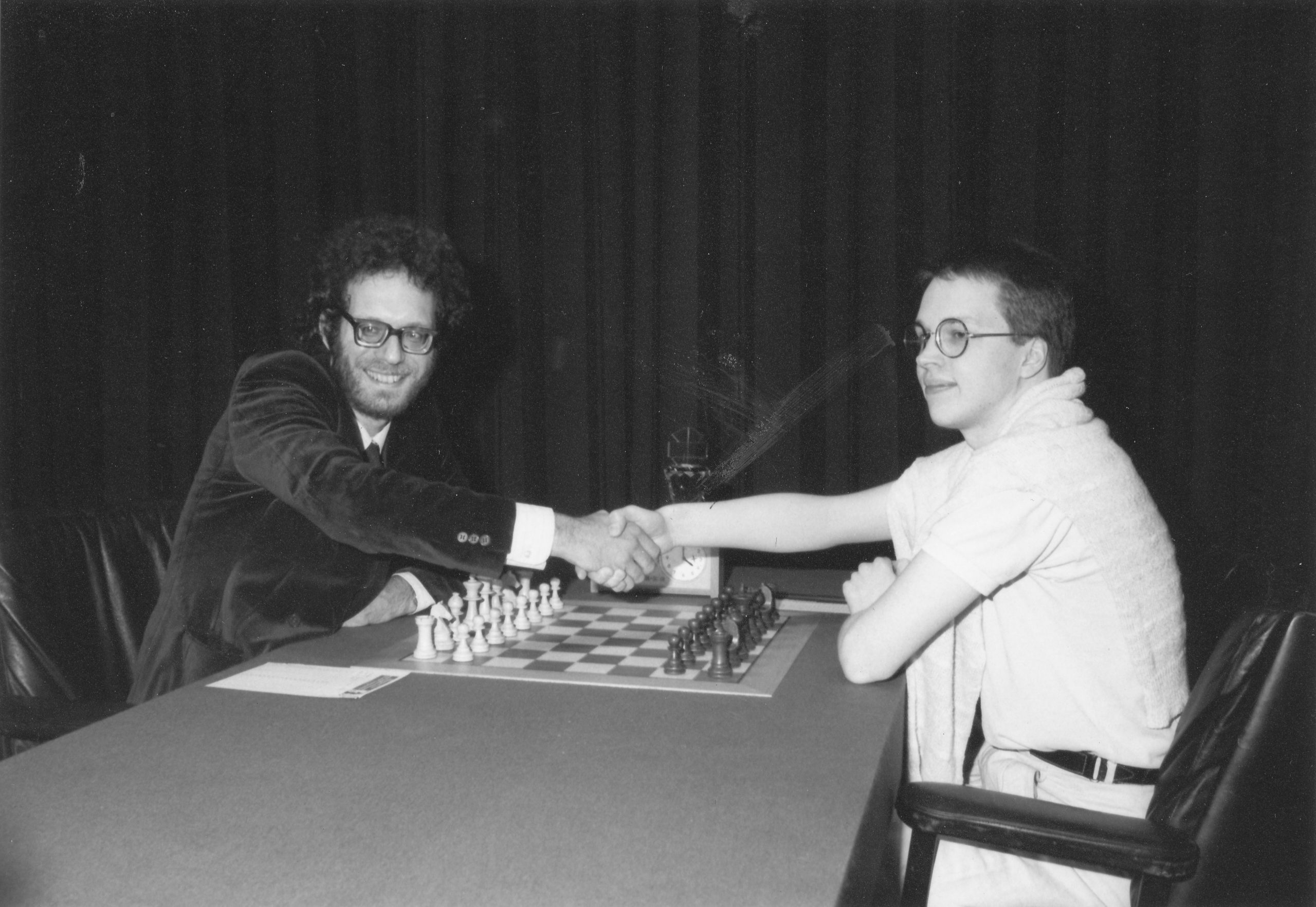
Jon Speelman and Nigel Short at the start of their 1989 Candidates match. Jon won 3.5 – 1.5
From British Chess (Pergamon Press, 1983) by Botterill, Levy, Rice and Richardson :
“Having been asked to contribute an article on myself to this book I have decided to concentrate almost exclusively on my ‘relationship with chess’, but first quickly summarize my life.
JS
Born on 2nd October 1956 I went to a ‘Nursery School’ whose name I forget. Then to Arnold House School followed by St. Paul’s School. I had a ‘Year off’ from January to October, 1976, when I went up to Worcester College, Oxford, where I studied mathematics. In 1977 I left Oxford with a 2nd degree. Since then I have been a professional chess player.
I was taught chess at the age of 6 by my cousin on Boxing Day, 1962. Then as now, I was an inquisitive person and the idea of a ‘complicated and difficult game’ interested me. Sadly my first game of chess ended in checkmate in four moves; but I persevered and soon became more competent.
JS at the London based Philips & Drew Kings tournament
I have always seen life to some in terms of barriers. There are things which one can do easily and which one finds difficult or almost impossible. For any given task the transition from one state to the other is not as smooth. One builds up energy and finally is able to succeed for the first time. After that the task becomes successively easier: Partly because one is aware that one can succeed.
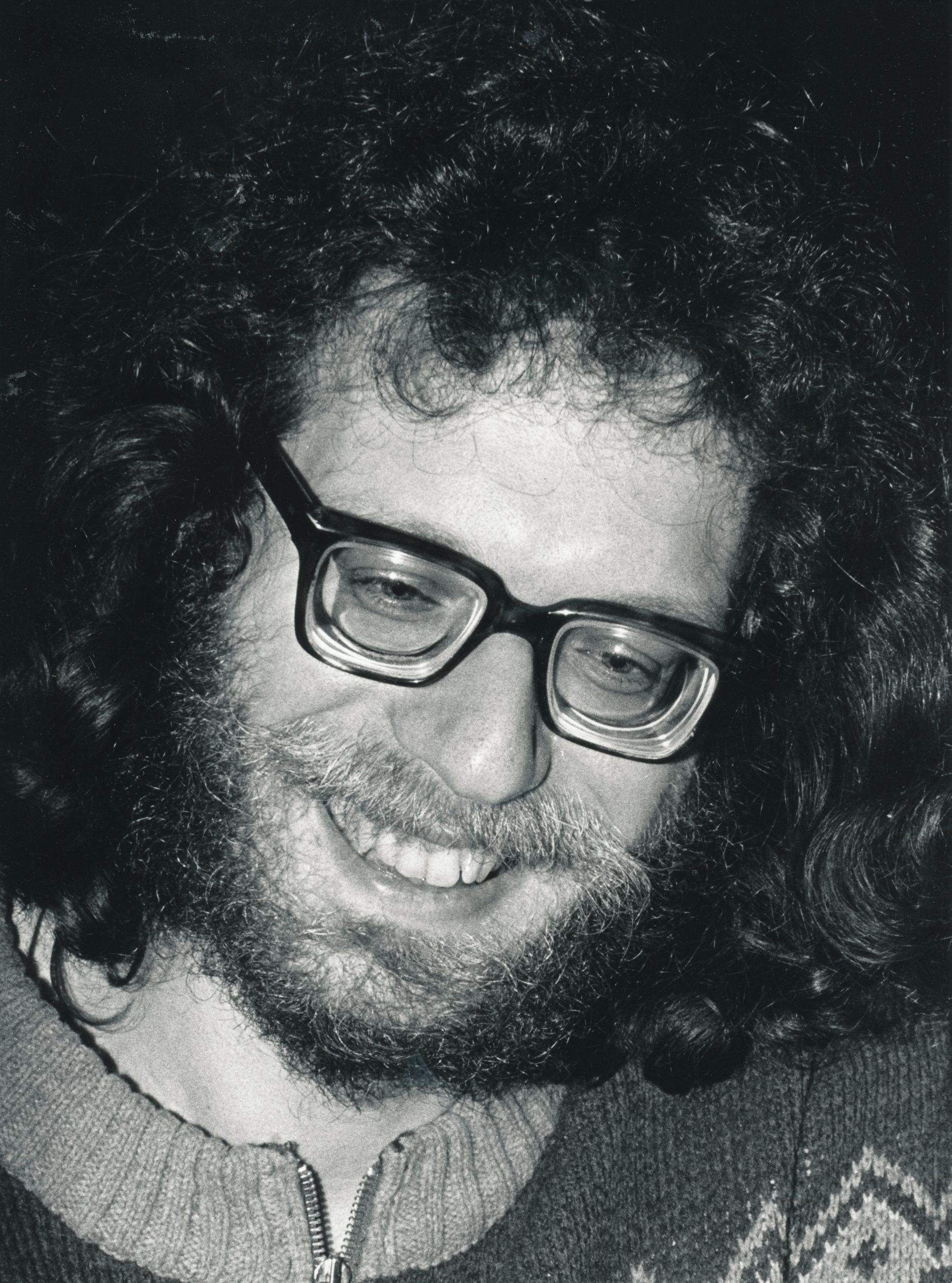
Jonathan Speelman without glasses
ln order to illustrate my chess career to date, I shall therefore pick out examples of barriers which I managed to break through.
Jonathan was an early follower of fashion
Until a few Years ago there were few titled players in Great Britain. But recently, thanks largely to a change of emphasis in organisation, several players have broken through to obtain international titles. This is not only because British players have become stronger – which they undoubtedly have – but also because they have received opportunities which were previously denied them.
JS at the London Robert Silk Fellowship invitational tournament
I first started seriously to contemplate becoming an international master in 1977. Previously, I had of course aspired to this but without really investigating the mechanics of obtaining norms. In August, 1977 England sent a team to the World Student Team Championships in Mexico City. We came third: a year later we were to win the event (though on that occasion it was a World Under 26 Team Championship). On our return there was an invitation tournament in London: the ‘Lloyds Bank Silver Jubilee’. Although I was rather tired after Mexico I decided to play and to my surprise, I obtained an IM norm with a round to spare. It all seemed rather easy. I drew with six strong players including GM Torre and four IM’s and beat three weaker ones.
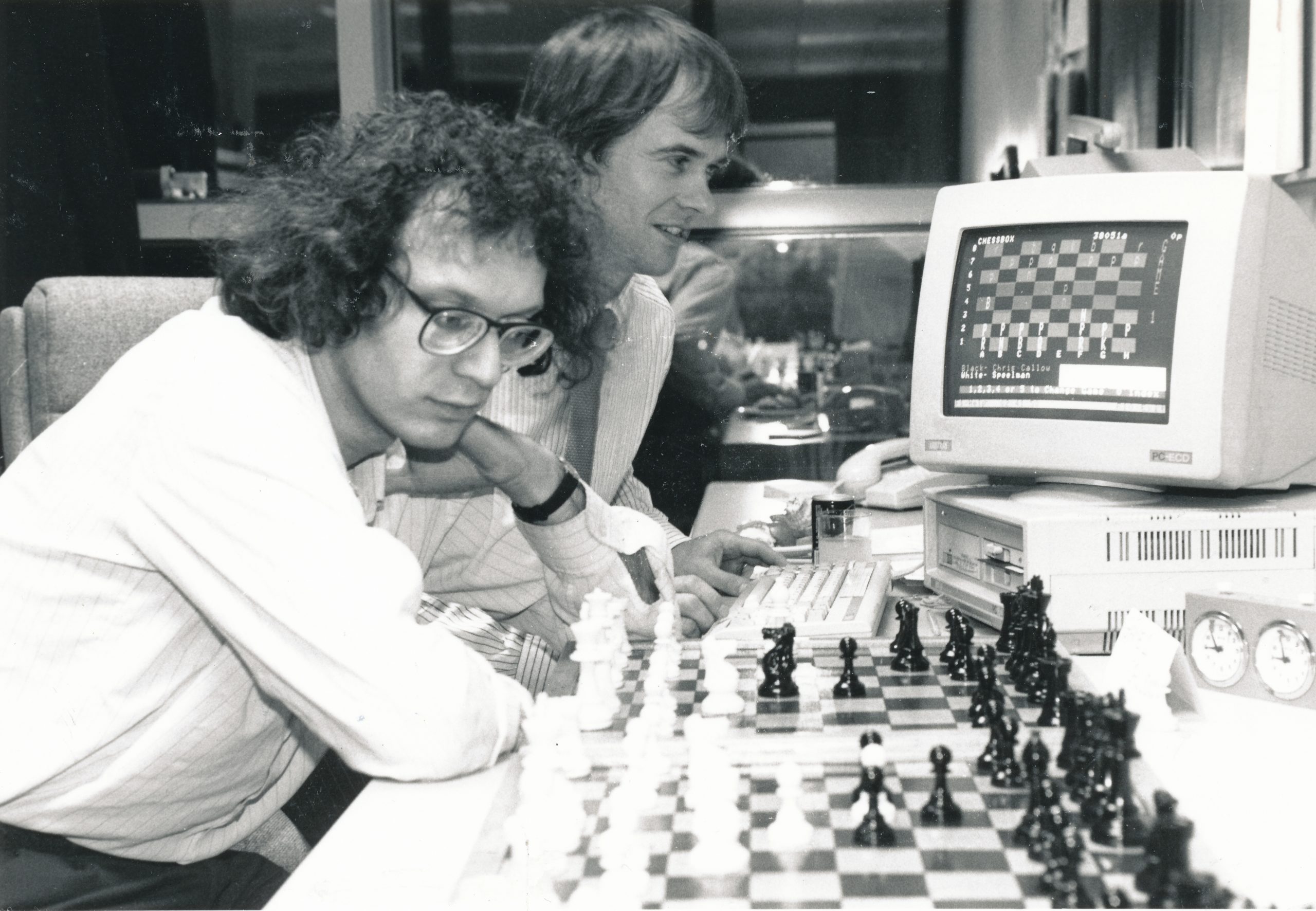
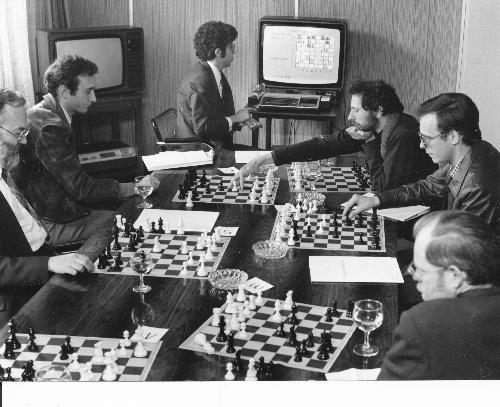
Grandmaster Uses PressTel Chessbox to Play Long Distance Chess. Jonathan Speelman the UK Grandmaster is pictured here deciding his next move in a computer chess game against five simultaneous opponents. Players exchanged moves online via the ChessBox club on PressTel, BTs videotex service.
In December, 1977 I played for the first time in the Annual Grandmaster Tournament at Hastings. I was very pleased to ‘shut up shop’, abandoning any pretensions to an exciting style to score one win, one loss and – wait for it – twelve draws; but 7/14 was sufficient for another international master norm.
These two events left me with twenty three games of norm, one less than the required minimum. Early in 1978 I played in a tournament in London but failed to get my final leg. It was in April that year that I had my next chance at the famous Lone Pine Tournament in California. I have already stressed the importance of barriers. It was in round one of the Lone Pine tournament that I broke through another important one – that of beating a grandmaster.
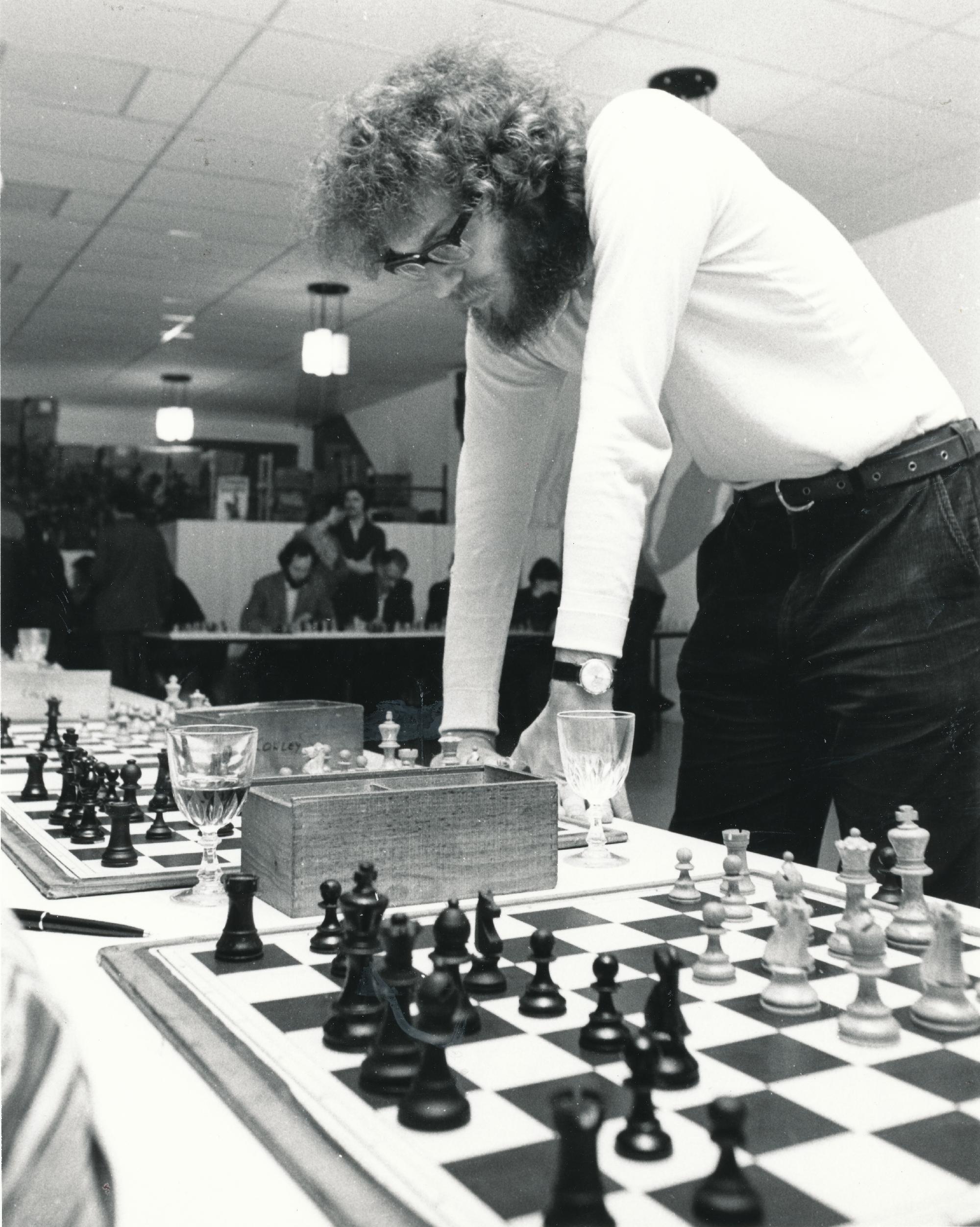
JS was a frequent giver of simultaneous displays
Nowadays (and here I hear myself sounding like an old man!) the strongest young players (under twenty-six) beat international masters quite regularly and indeed grandmasters from time to time. ‘In my day’ this was not so much the case. Titled foreign players could still come over to pillage weekend tournaments; and succeed much of the time! When one of them lost to homegrown talent it was news.
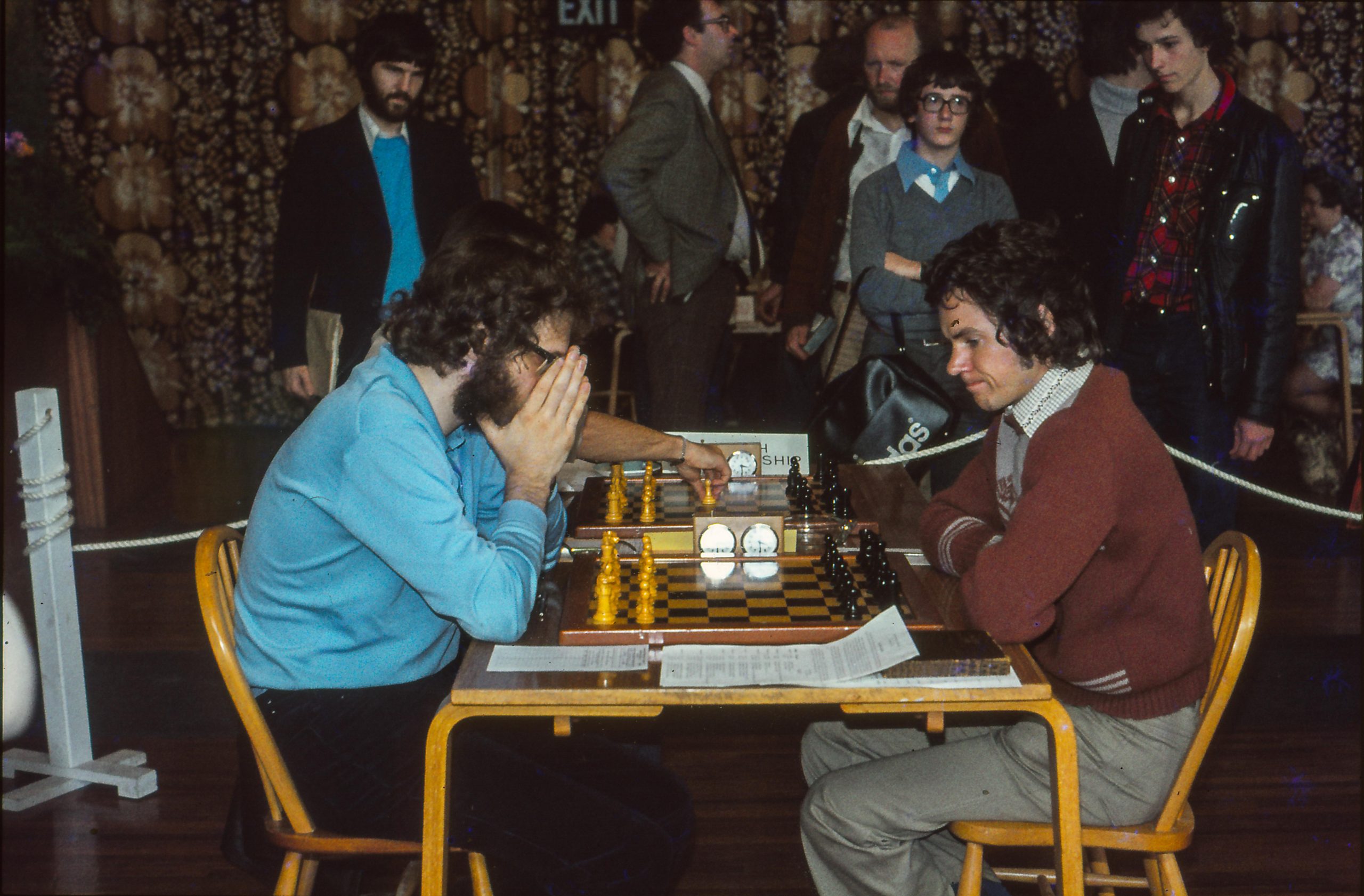
IM Jonathan Speelman vs IM Simon Webb at the 1978 British Championships in Ayr, Courtesy of John Upham
I first started to play regularly against grandmasters in my first Hastings tournament, which I mentioned previously. Of course, I had played grandmasters before, but at Hastings seven of the fourteen games were against them. I scored there six draws and a loss to the tournament winner, Dzindzihashvili.
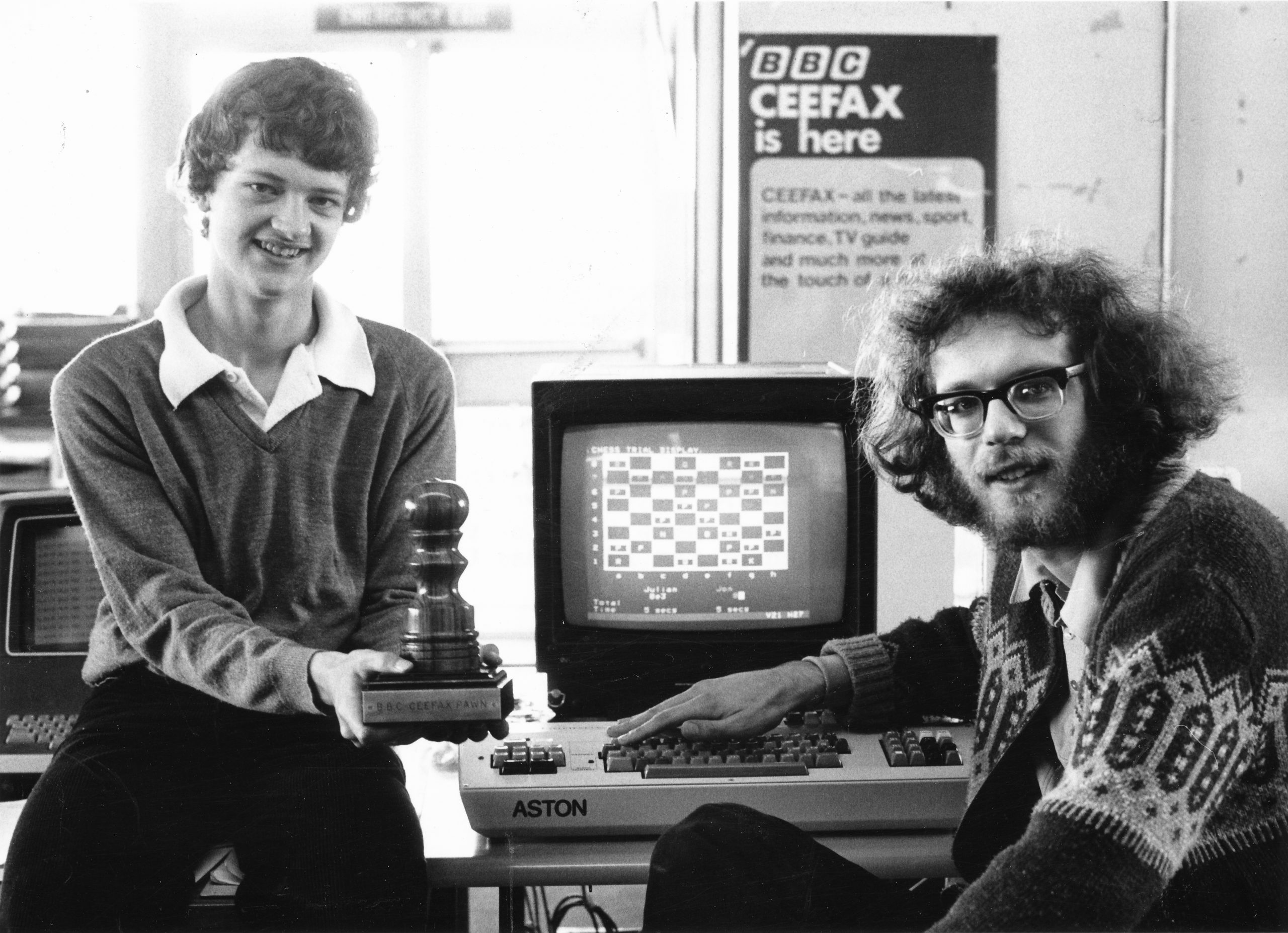
Julian Hodgson and Jonathan Speelman prepare to play each other at their own home via CEEEFAX. This was organised by Peter Andrews of BBC Chess Club and was the first match of its kind.
In round one of Lone pine I was White against Bent Larsen of Denmark. Given that one is going to beat a strong grandmaster (l hadn’t even beaten a weak one) then White against Larsen is quite a good chance. Although he is an extremely strong player, Larsen loses quite a lot of games to much weaker opponents and wins an enormous number against them as well, with not many draws. I was fortunate in obtaining a nice position from the opening and won a good game. That is one of the games I have chosen.
JS receives one of many awards
After beating Larsen the rest of the tournament was rather an anti-climax for me. I drew some games, then lost in successive rounds to Browne and Biyiasas. Needing a win to reach fifty per cent the chance of my final norm, I clawed my way to victory in a dreadful game against a young American P. Whitehead. Two short draws in the final two rounds brought me the title.
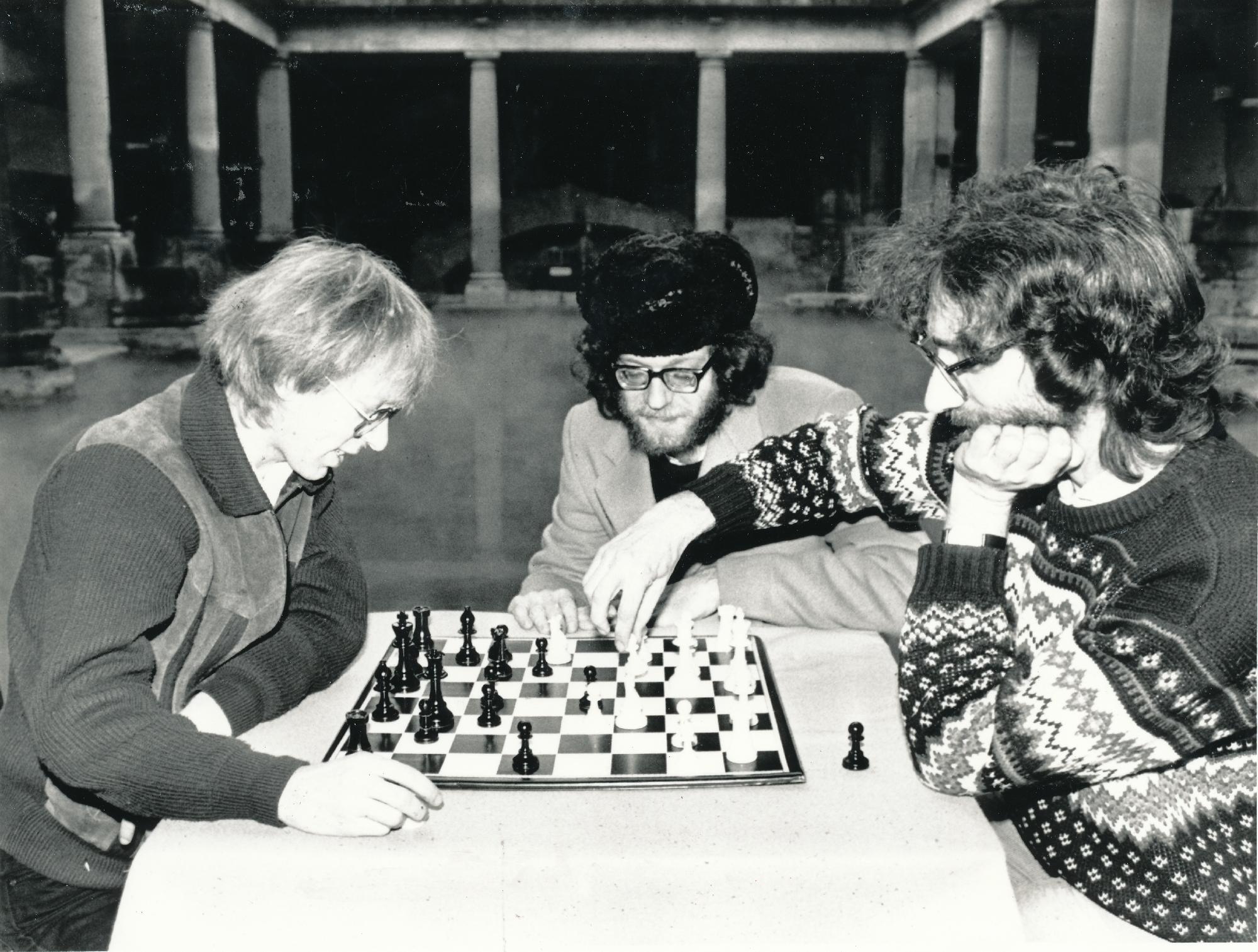
At the Praxis British Zonal in February 1987 here at the roman baths. Murray Chandler, Jonathan Speelman, and Jonathan Mestel
Some years ago the British Championship really was the Championship of Britain. But in the early seventies there was a decline as several of the strongest players did not enter. In the last two years the decline has been halted and then reversed by the sponsorship of stockbrokers Grievson Grant. In 1979 two of our four Grandmasters, Miles and Nunn, competed in the British Championship at Chester and there were no fewer than six International Masters; indeed Nigel Short succeeded in obtaining his first IM norm there.
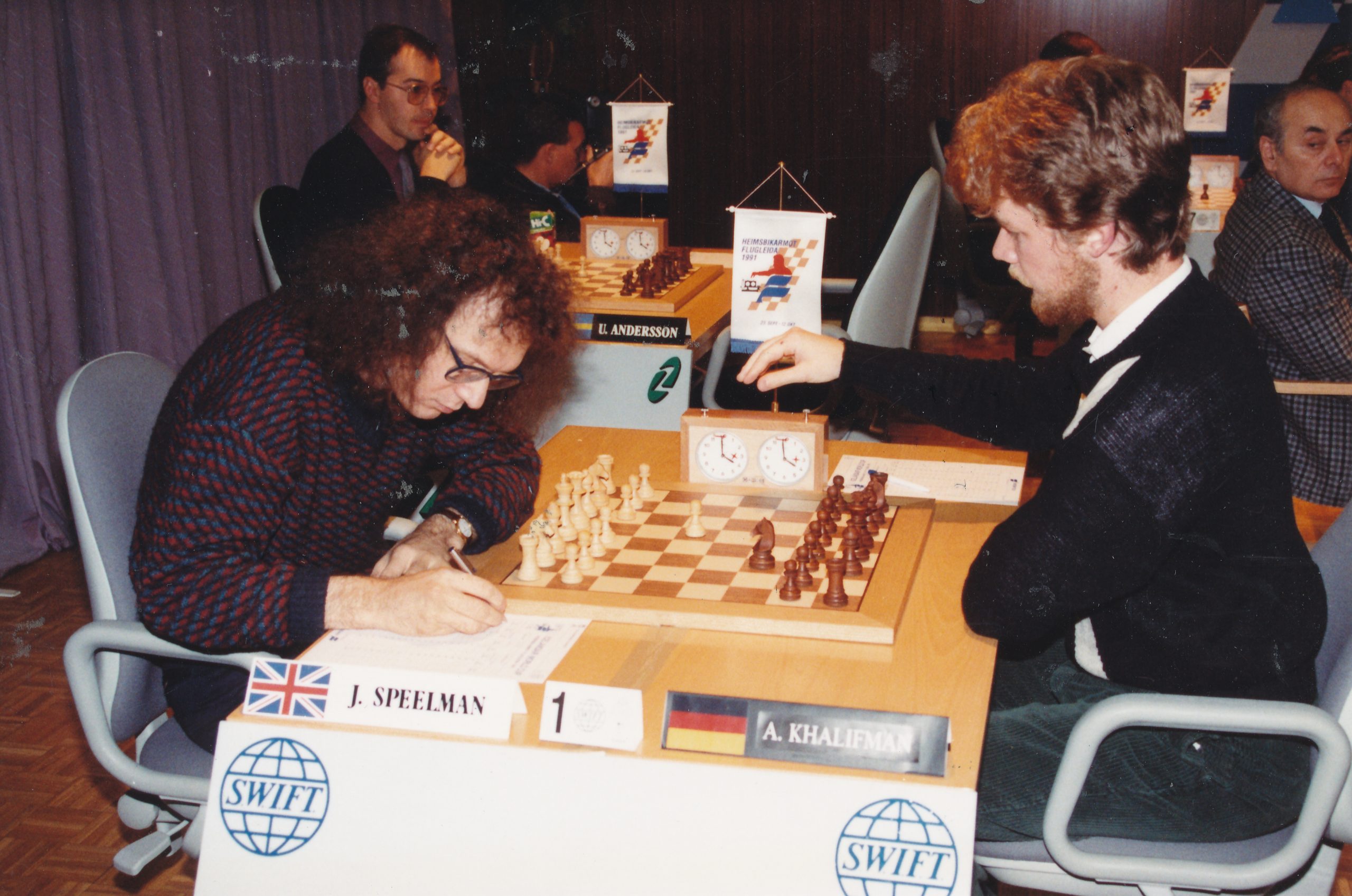
JS plays Alexander Khalifman during the SWIFT World Cup in Reykjavik, 1991. The game was drawn
I first competed in the British Championship at Brighton in 1972. After a good start, beating Michael Basman in the first round and drawing with Craig Pritchett in the second, I lost to Haygarth in round three. Thereafter, I found it incredibly difficult to win games. My old British Chess Magazine reminds me that I succeeded in winning in round nine, but that was the only one after round one. I finished with 4.5/11.
JS, Jana Bellin and Nigel Short in a publicity shoot outside Simpsons in the Strand
A year later at Eastbourne I was still finding it hard to win games. Again I finished with 4.5/11. By Clacton, 1974 I had improved. A loss in the last round to the eventual winner Botterill left me a point behind the seven (!) who had to play off for the title.
I competed at Morecambe, 1975 and Portsmouth, 1976, missing only Brighton, 1977 when the students team was in Mexico. By Ayr, 1978 I was probably one of the favourites along with Jonathan Mestel, who ran away with the tournament in Portsmouth,
1976, George Botterill, the defending champion, and some others.
Jonathan shows off his all seeing four eyes
In fact I won at Ayr. I played quite well throughout. ln the last round half a point ahead of Mestel I played a quick draw with Webb but was lucky when Mestel could only draw with Clarke. Of course winning the British was a big breakthrough for me. But I feel that the most important psychological change came in 1974 when I started to discover that it is possible to win games in the British Championship.
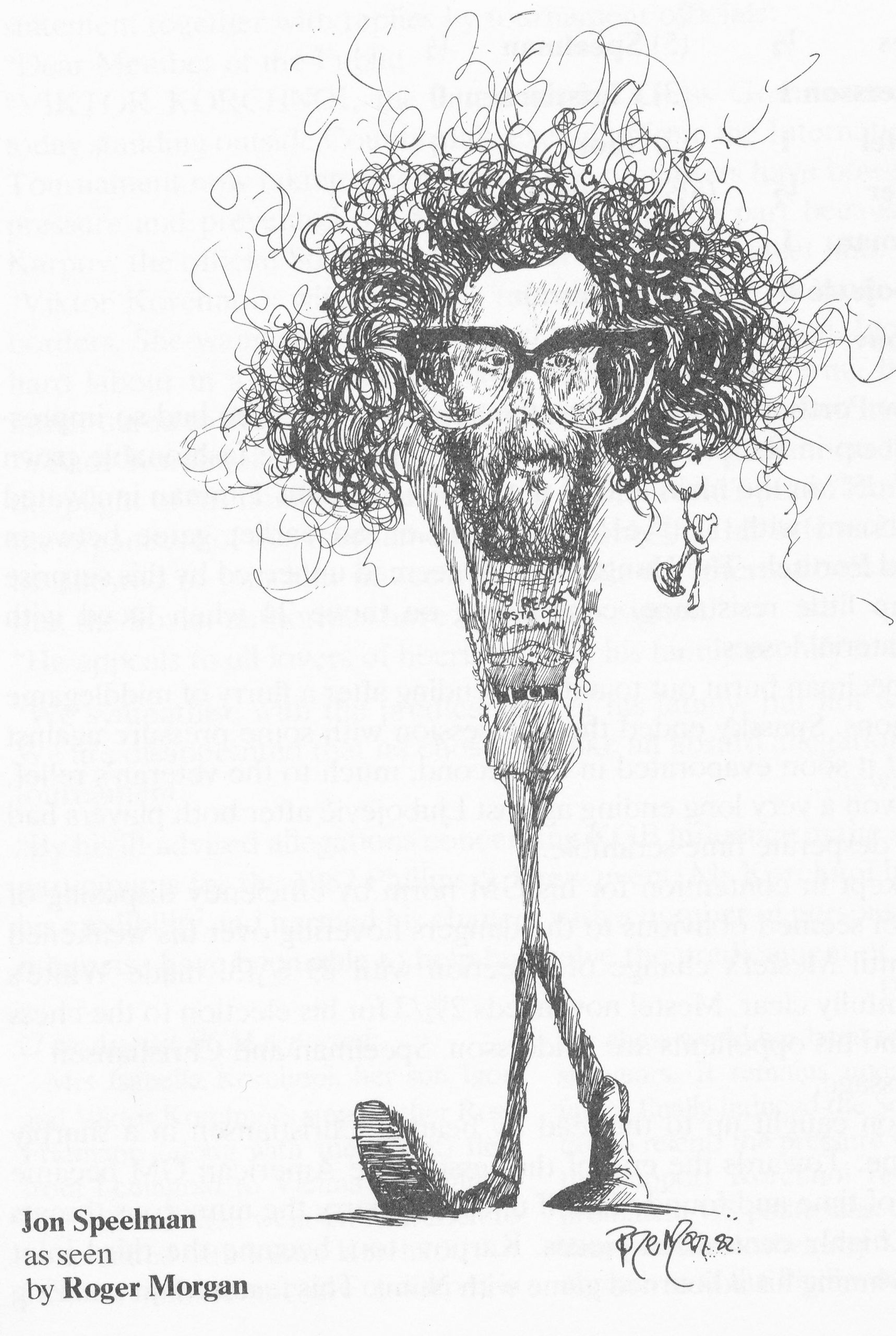
Jonathan Simon Speelman (02-x-1956) as imagined by Roger Morgan, 1982
Since late 1978 I have made no dramatic breakthrough but have, I believe, almost imperceptibly made the change from a ‘medium’ to a ‘strong’ international master.
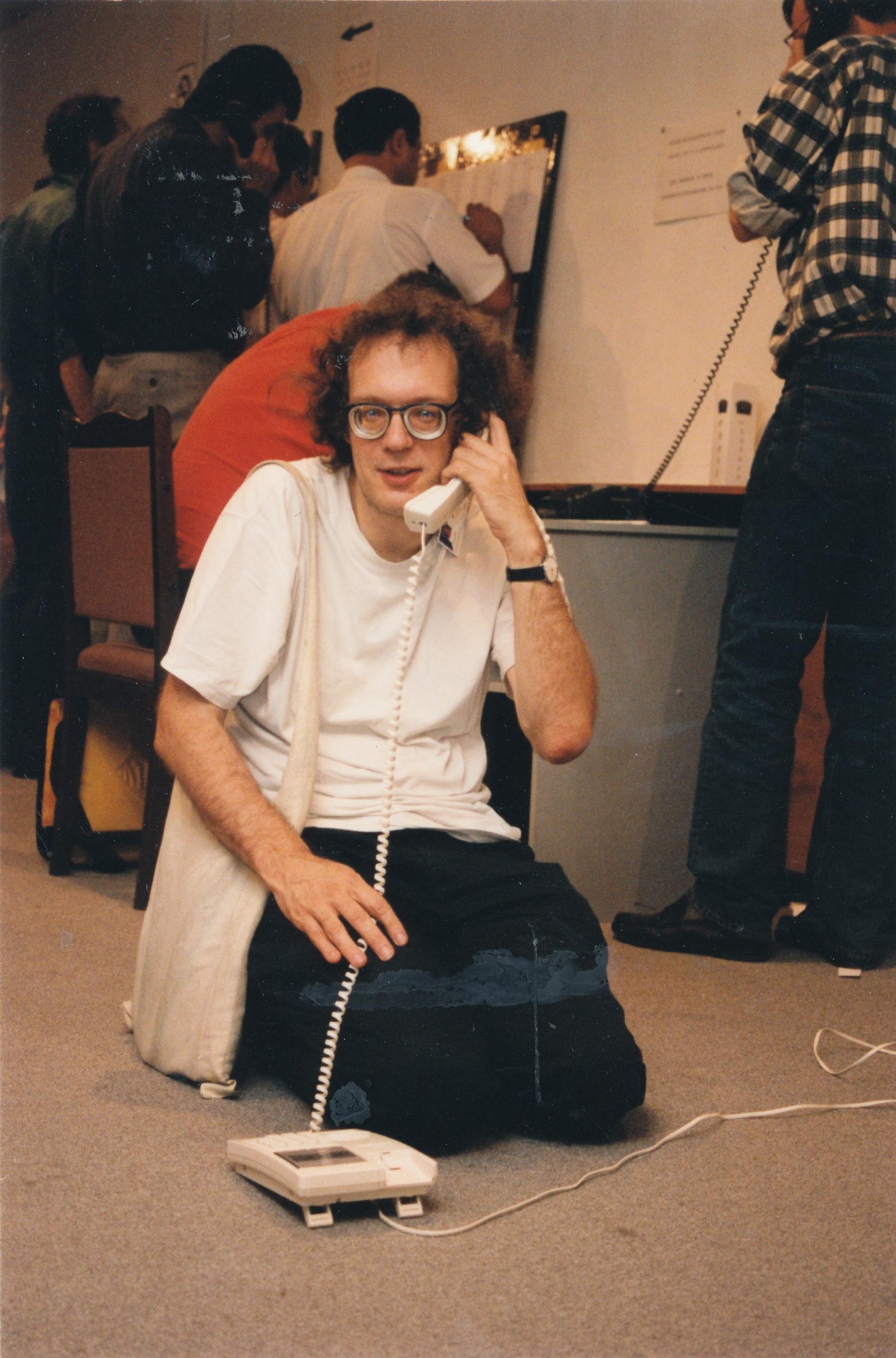
Jonathan Speelman telephones good news
I’ve selected three games to go with this article. The one with Larsen I’ve already mentioned. Mihaljcisin-Speelman I like as a game in which I played very actively as Black.
The game against Biyiasis is a good ‘rough and tumble’ not free from errors of course – but wouldn’t that be boring?
To find out more about JSs chess career we suggest you read his autobiography :
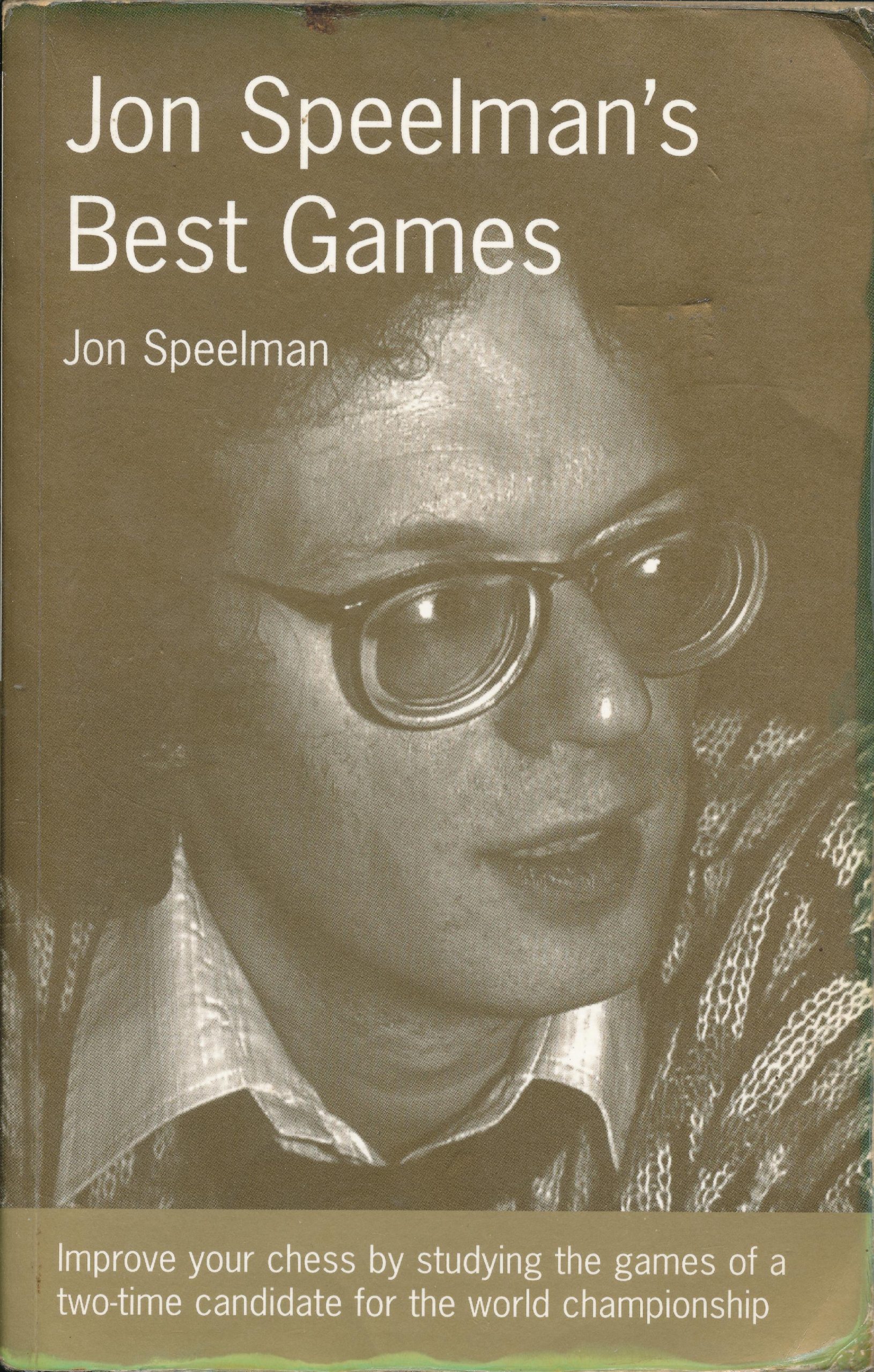
Speelman, Jon (1997). Jon Speelman’s Best Games. B.T. Batsford (London, England). 240 pages. ISBN 978-0-7134-6477-1.
which contains many heavily annotated games.
From The Oxford Companion to Chess (OUP, 1984) by Hooper & Whyld :
“British Champion in 1978, Speelman played at Mexico City later that year in the English team that won (ahead of the USSR) the world’s first youth teams (under-26) championship.
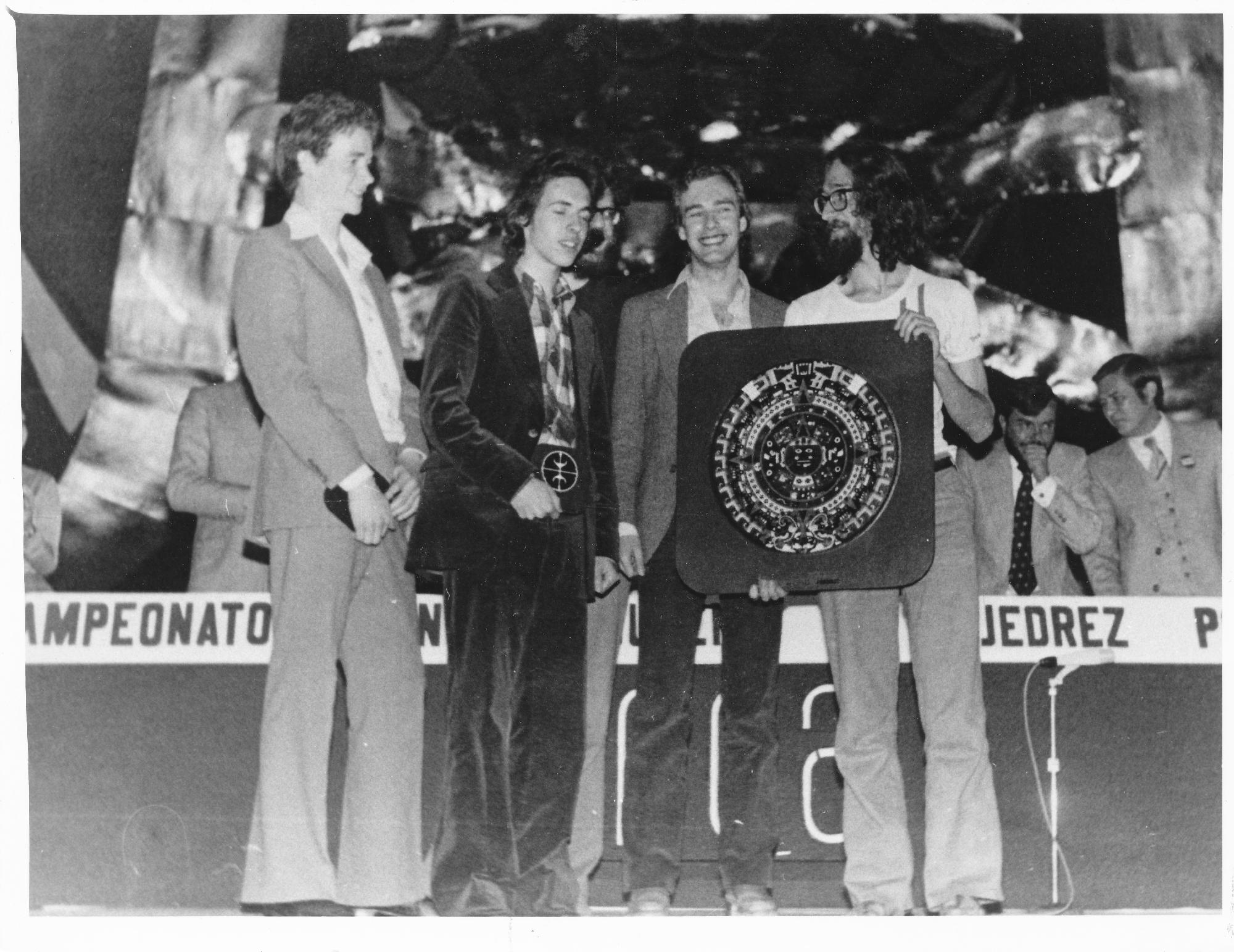
(from l-r) Jonathan Kinlay, Shaun Taulbut, Jonathan Speelman, David Goodman and Jonathan Mestel accepting 1st prize at the 1978 World U26 Student Olympiad in Mexico City
Two good performances in 1980, as score of +5=5-3 to share fourth place in the category 13 London tournament and a second place (+6=7) at Maribor, brought him the title of International Grandmaster (1980). His subsequent achievements include : Dortmund 1981, first (+5=6) equal with Ftacnik and Kuzmin; Hastings 1981-2, second equal with Smyslov after Kupreichik; and London 1982, category 14, +2=10-1 to share fourth place. An excellent analyst, Speelman has written several books, among them Best Chess Games 1970-1980 (1982).”
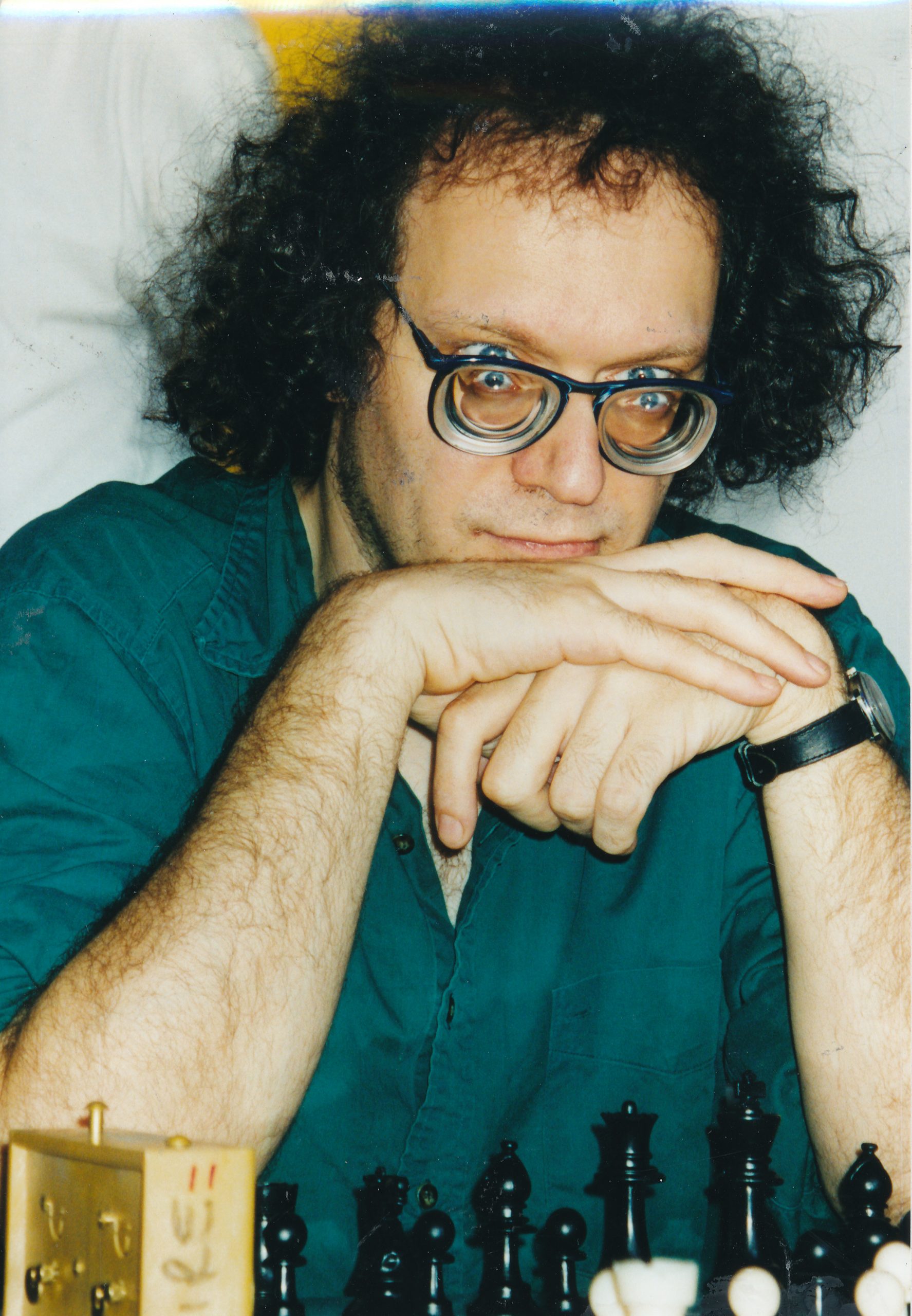
GM Jonathan Speelman
From Wikipedia :
A winner of the British Chess Championship in 1978, 1985 and 1986, Speelman has been a regular member of the English team for the Chess Olympiad, an international biennial chess tournament organised by FIDE, the World Chess Federation.
In 1989, he beat Kasparov in a televised speed tournament, and then went on to win the event.
In the April 2007 FIDE list, Speelman had an Elo rating of 2518, making him England’s twelfth-highest-rated active player.
In the 1989–1990 cycle, Speelman qualified by placing third in the 1987 interzonal tournament held in Subotica, Yugoslavia. After beating Yasser Seirawan in his first round 4–1, and Nigel Short in the second round 3½–1½, he lost to Jan Timman at the semi-final stage 4½–3½.
In the following 1990–93 championship cycle, he lost 5½–4½ in the first round to Short, the eventual challenger for Garry Kasparov’s crown.
Speelman’s highest ranking in the FIDE Elo rating list was fourth in the world, in January 1989.
Jonathan Speelman in happy mood
Writing
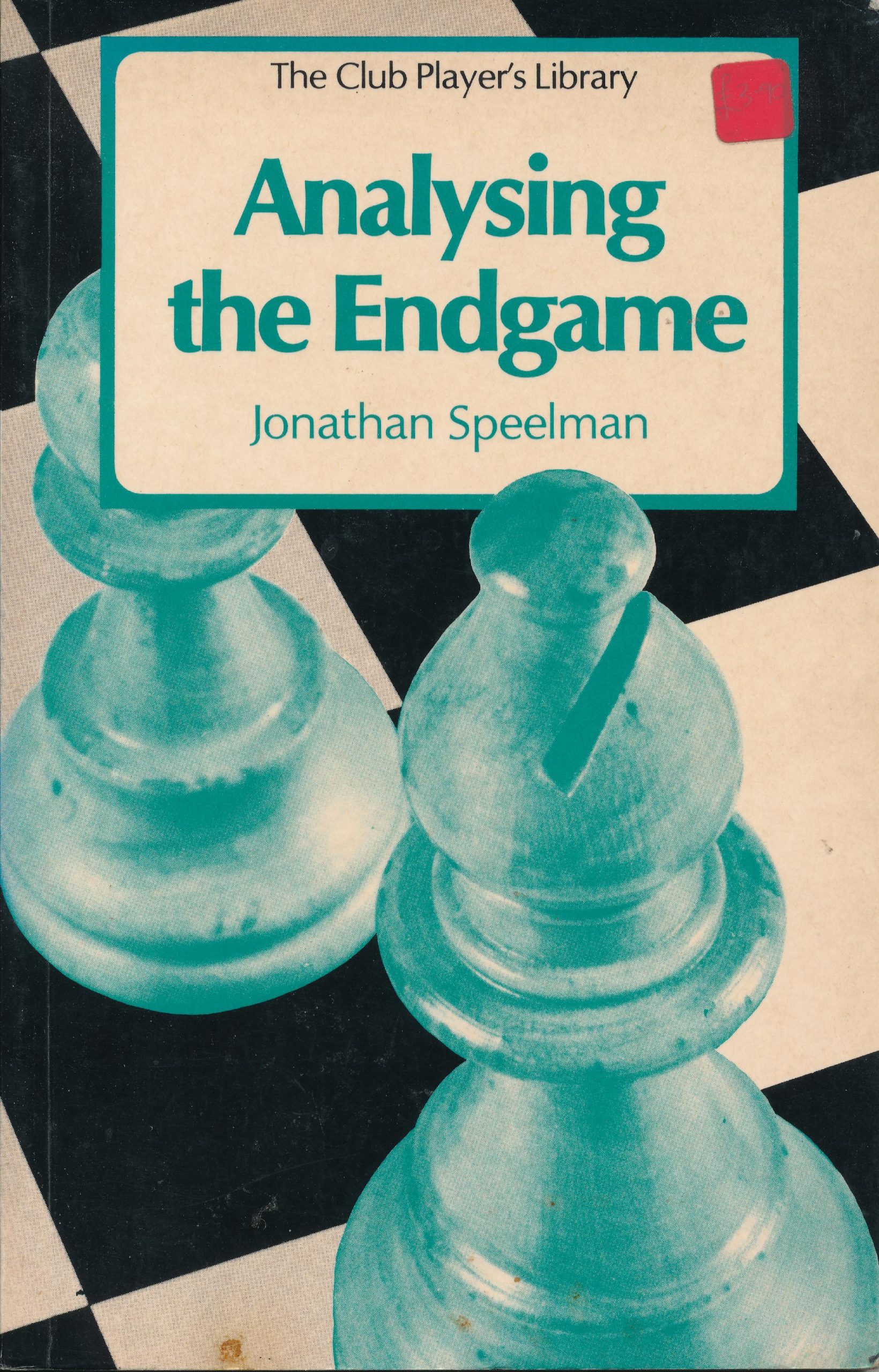
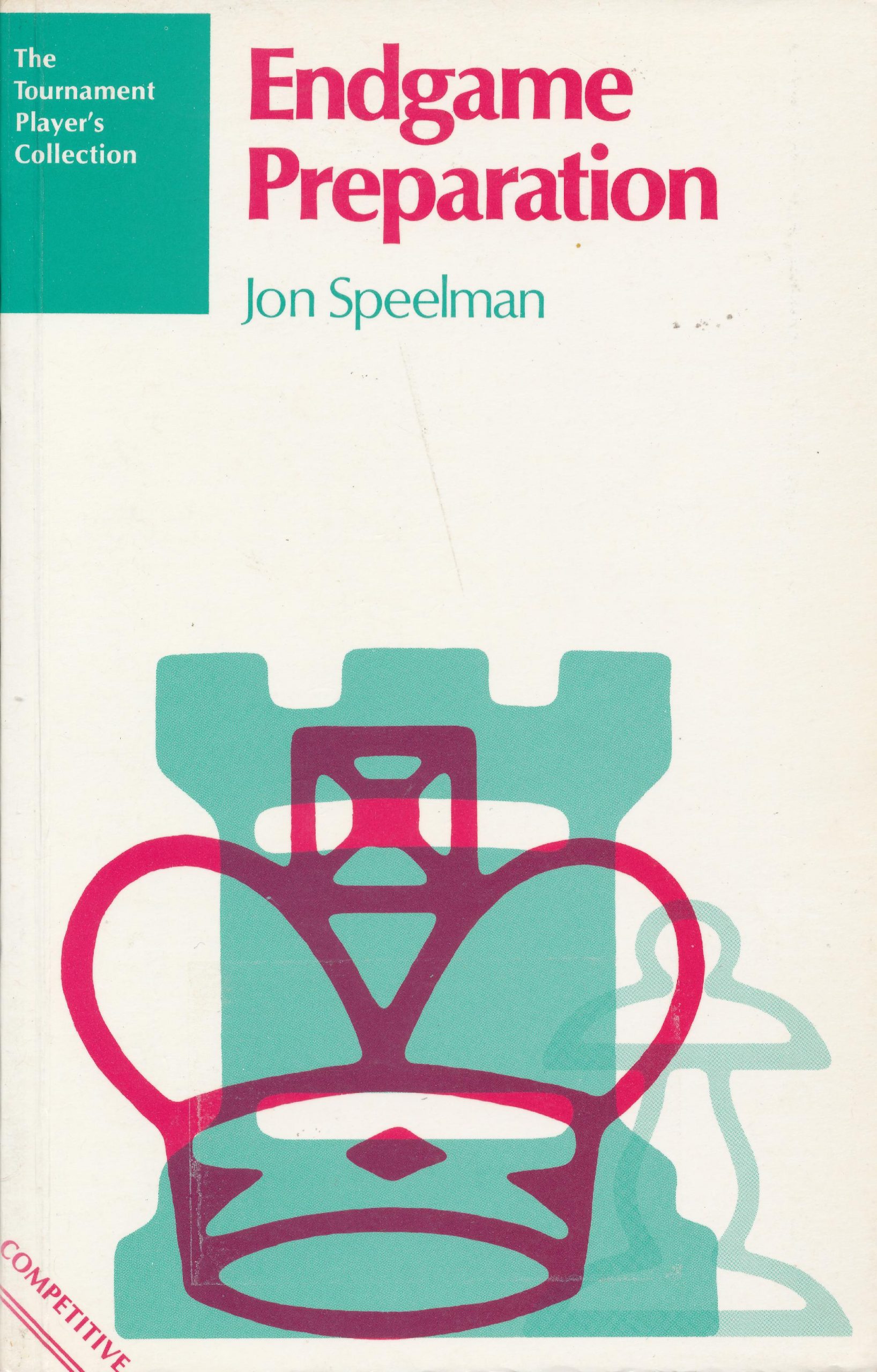
He has written a number of books on chess, including several on the endgame, among them Analysing the Endgame (1981), Endgame Preparation (1981) and Batsford Chess Endings (co-author, 1993).
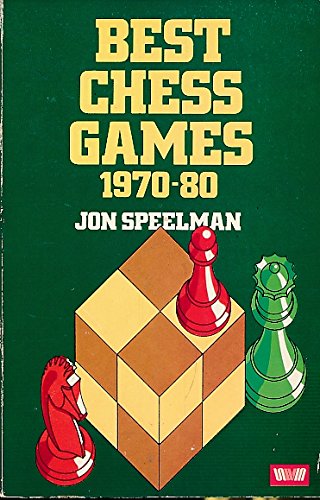
Among his other books are Best Games 1970–1980 (1982), an analysis of nearly fifty of the best games by top players from that decade, and Jon Speelman’s Best Games (1997). Today he is primarily a chess journalist and commentator, being the chess correspondent for The Observer and The Independent and sometimes providing commentary for games on the Internet Chess Club.
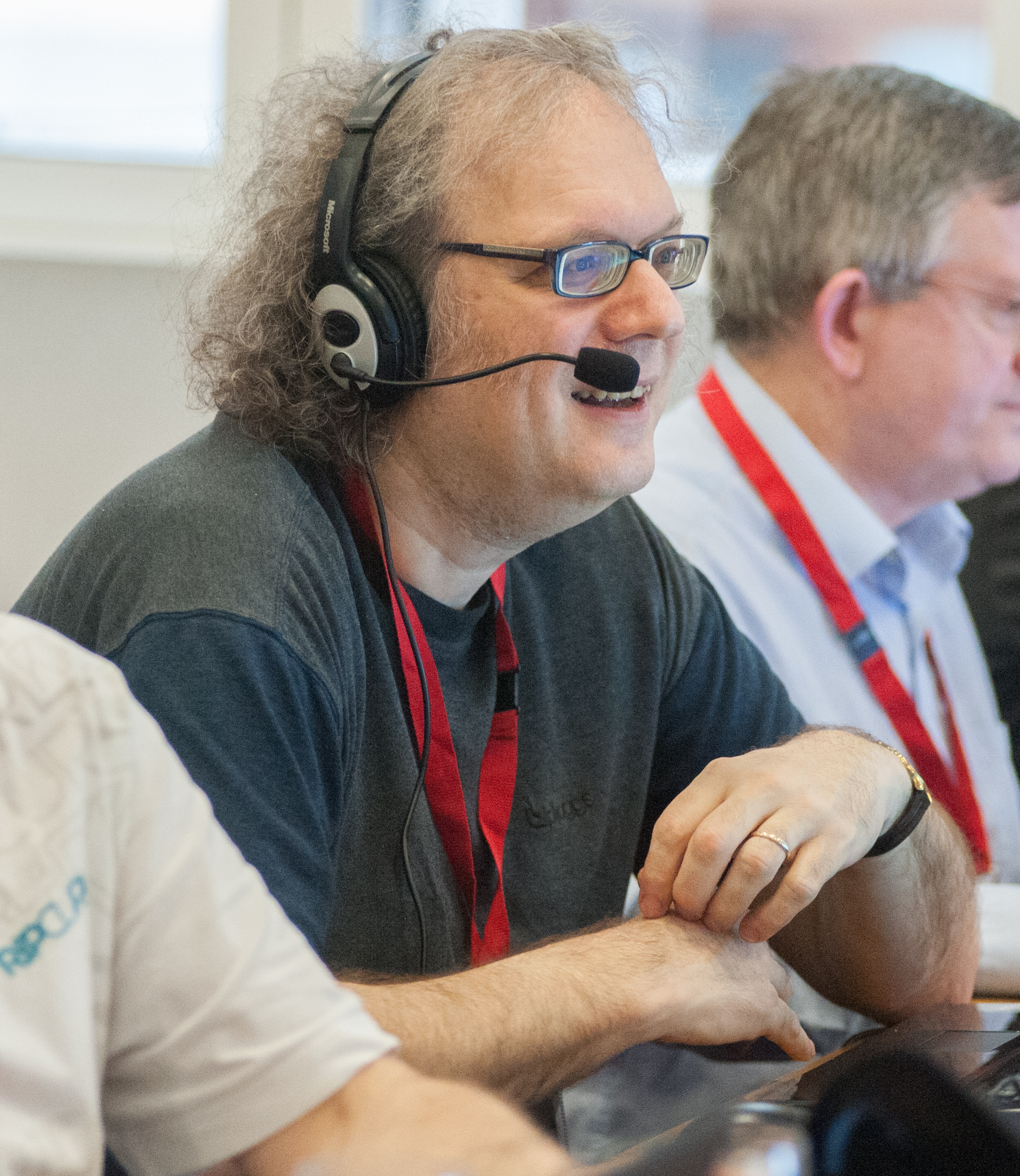
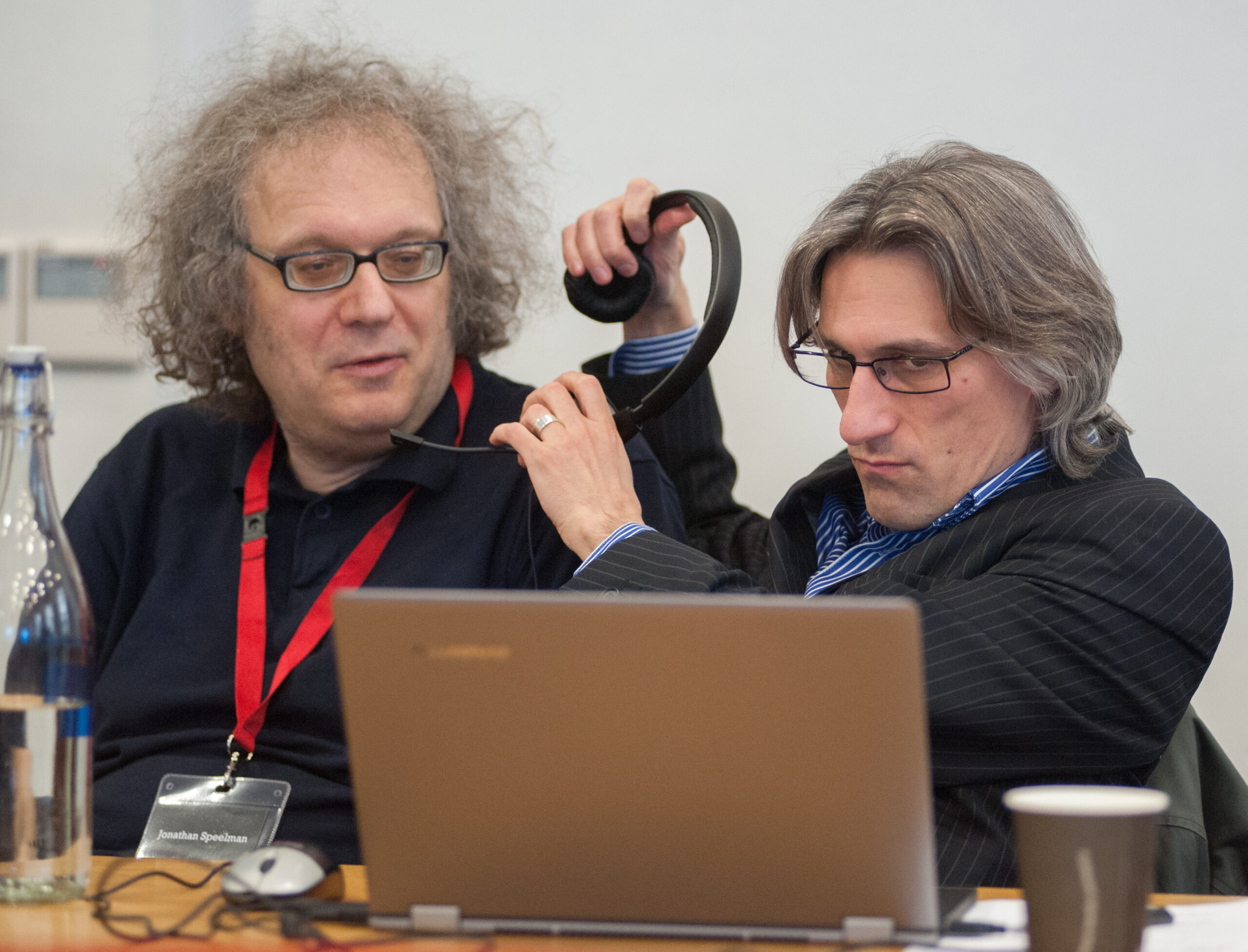
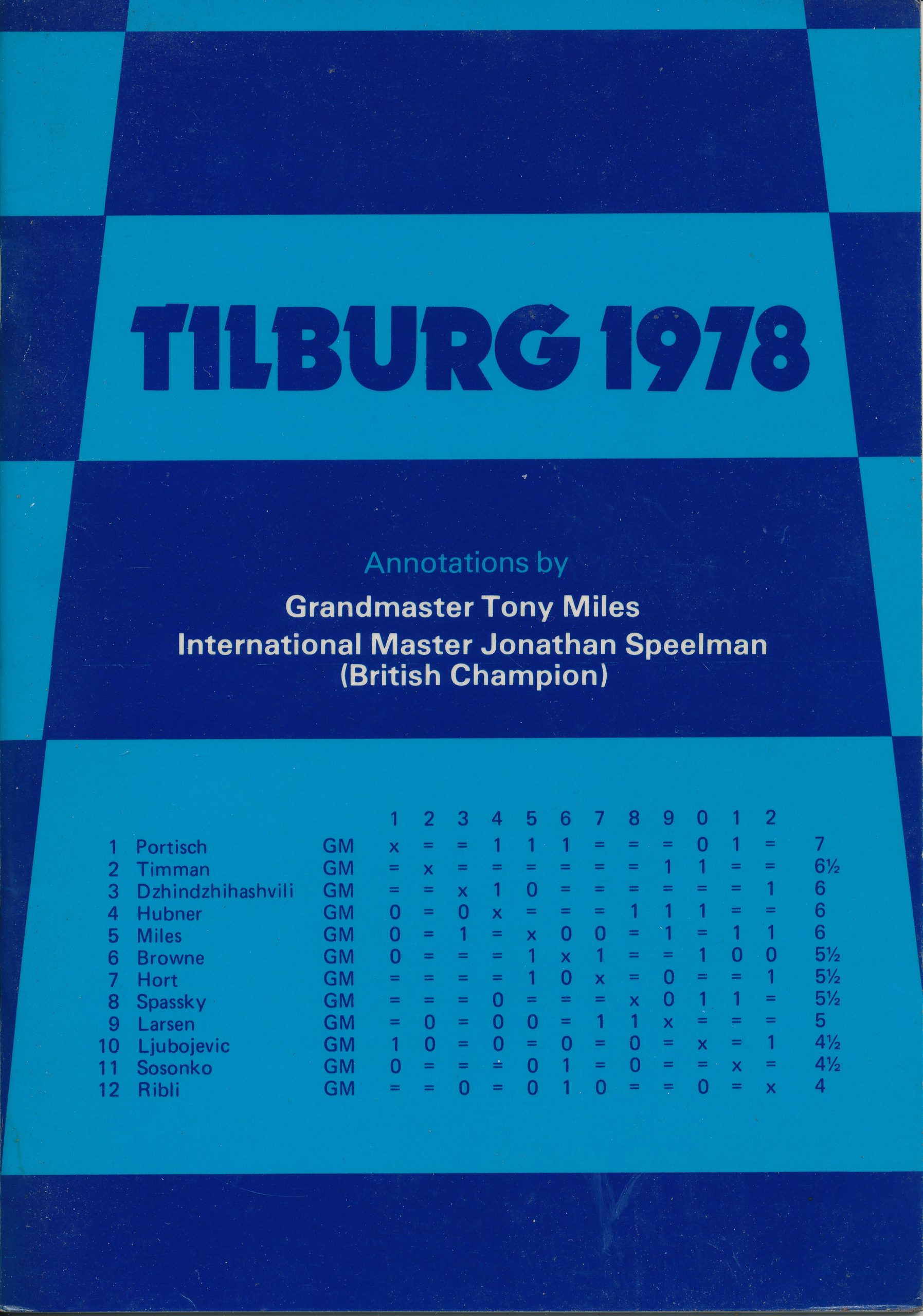
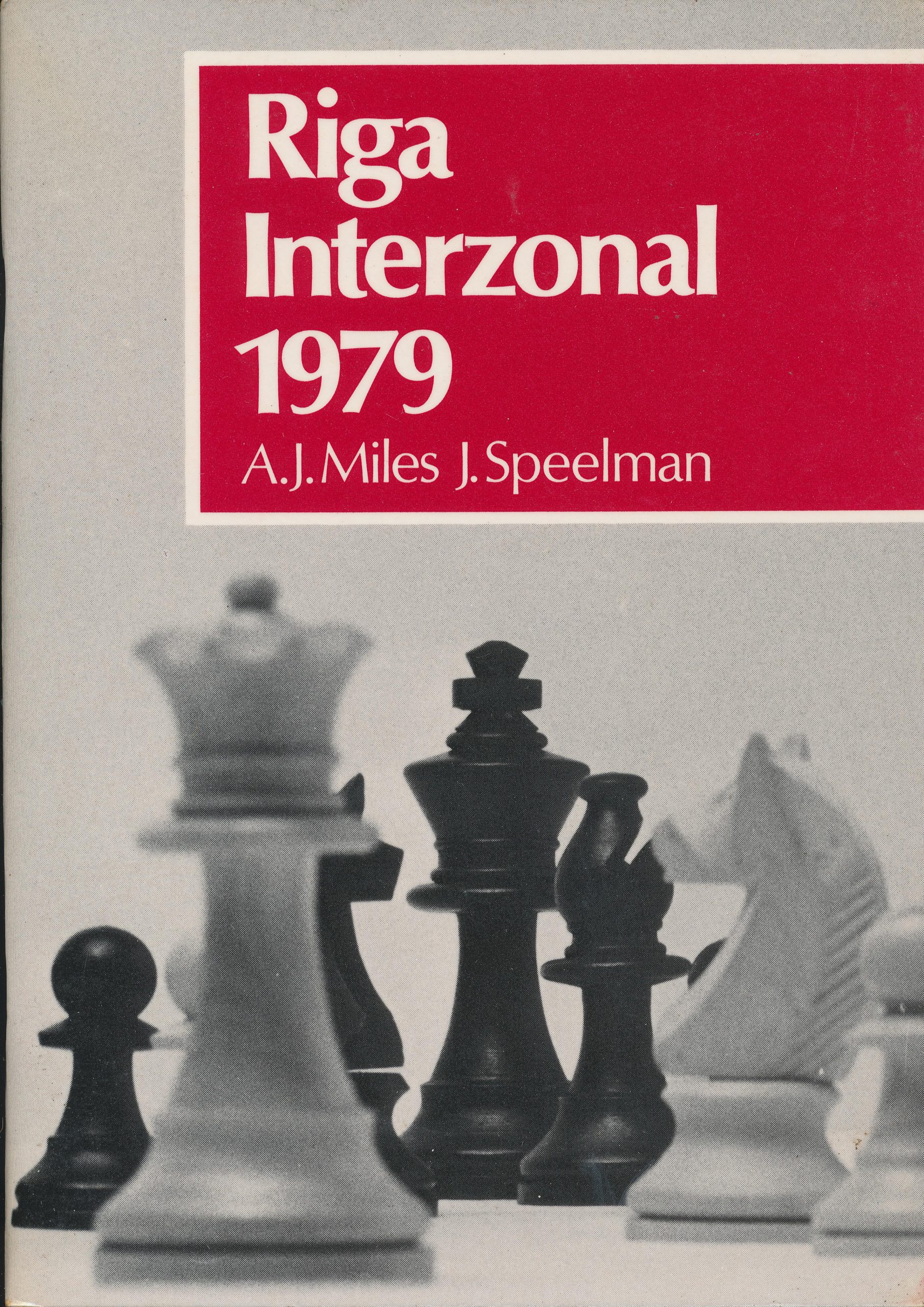
Jonathan Speelman and Daniel King share headphones at the 2013 FIDE Candidates event in LondonTilburg 1978, Tony Miles & Jonathan Speelman, Master Chess Publications, 1978Riga Interzonal 1979, AJ Miles & J Speelman, Batsford, 1979, ISBN 0 7134 3429 5
Speelman, Jonathan (1981). Analysing the Endgame. Batsford (London, England). 142 pages. ISBN 978-0-7134-1909-2.
Speelman, Jonathan (1981). Analysing the Endgame. Batsford (London, England). 142 pages. ISBN 978-0-7134-1909-2.
Speelman, Jonathan (1981). Endgame Preparation. B.T. Batsford (London, England). 177 pages. ISBN 978-0-7134-4000-3.
Speelman, Jonathan (1981). Endgame Preparation. B.T. Batsford (London, England). 177 pages. ISBN 978-0-7134-4000-3.
Speelman, Jon (1982). Best Chess Games, 1970-80. Allen & Unwin (London, England; Boston, Massachusetts). 328 pages. ISBN 978-0-04-794015-6.
Speelman, Jon (1982). Best Chess Games, 1970-80. Allen & Unwin (London, England; Boston, Massachusetts). 328 pages. ISBN 978-0-04-794015-6.
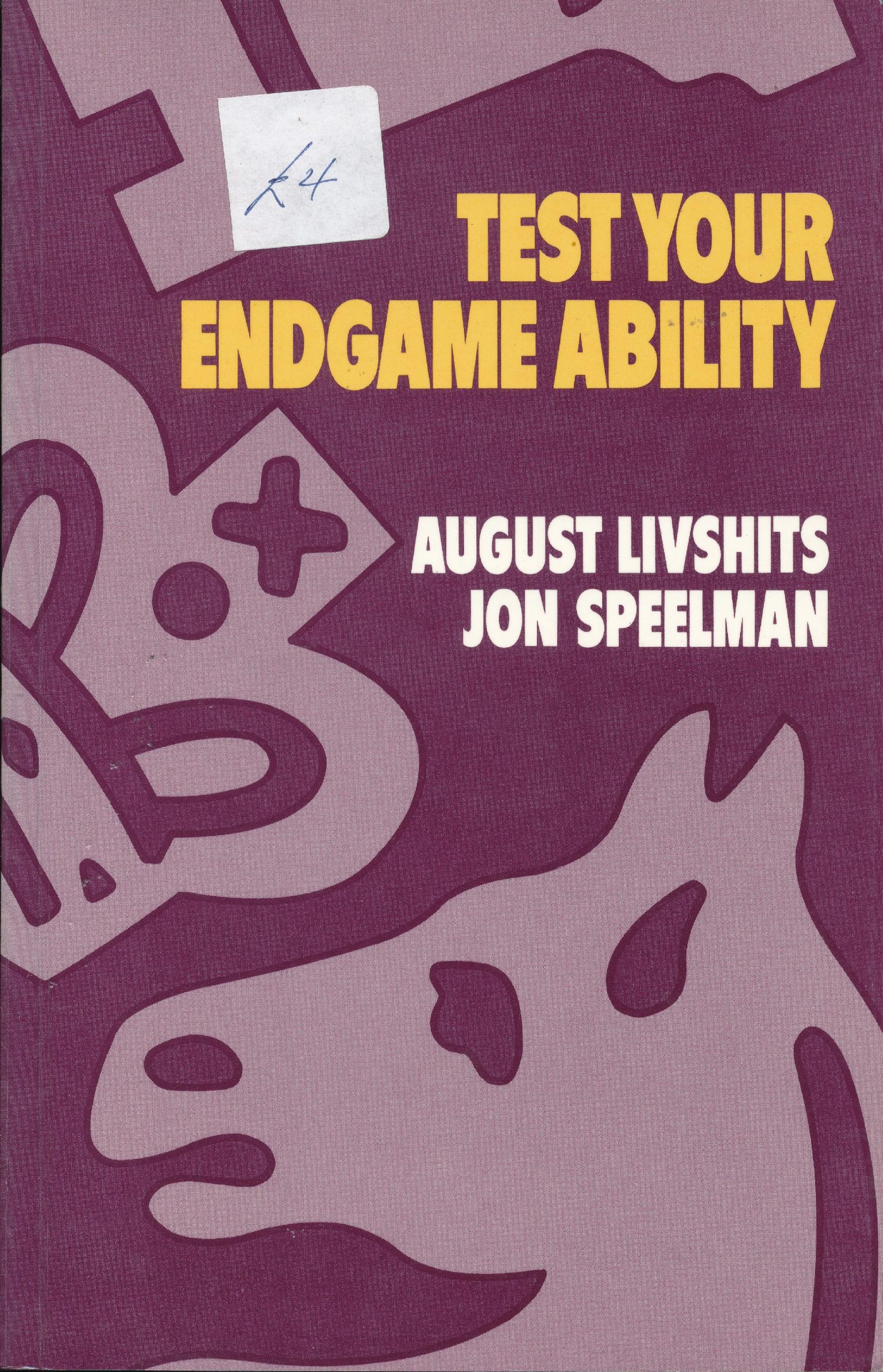
Speelman, Jon; Livshits, August (1988). Test Your Endgame Ability. BT Batsford (London, England). 201 pages. ISBN 0-7134-5567-5
Speelman, Jon; Livshits, August (1988). Test Your Endgame Ability. BT Batsford (London, England). 201 pages. ISBN 0-7134-5567-5
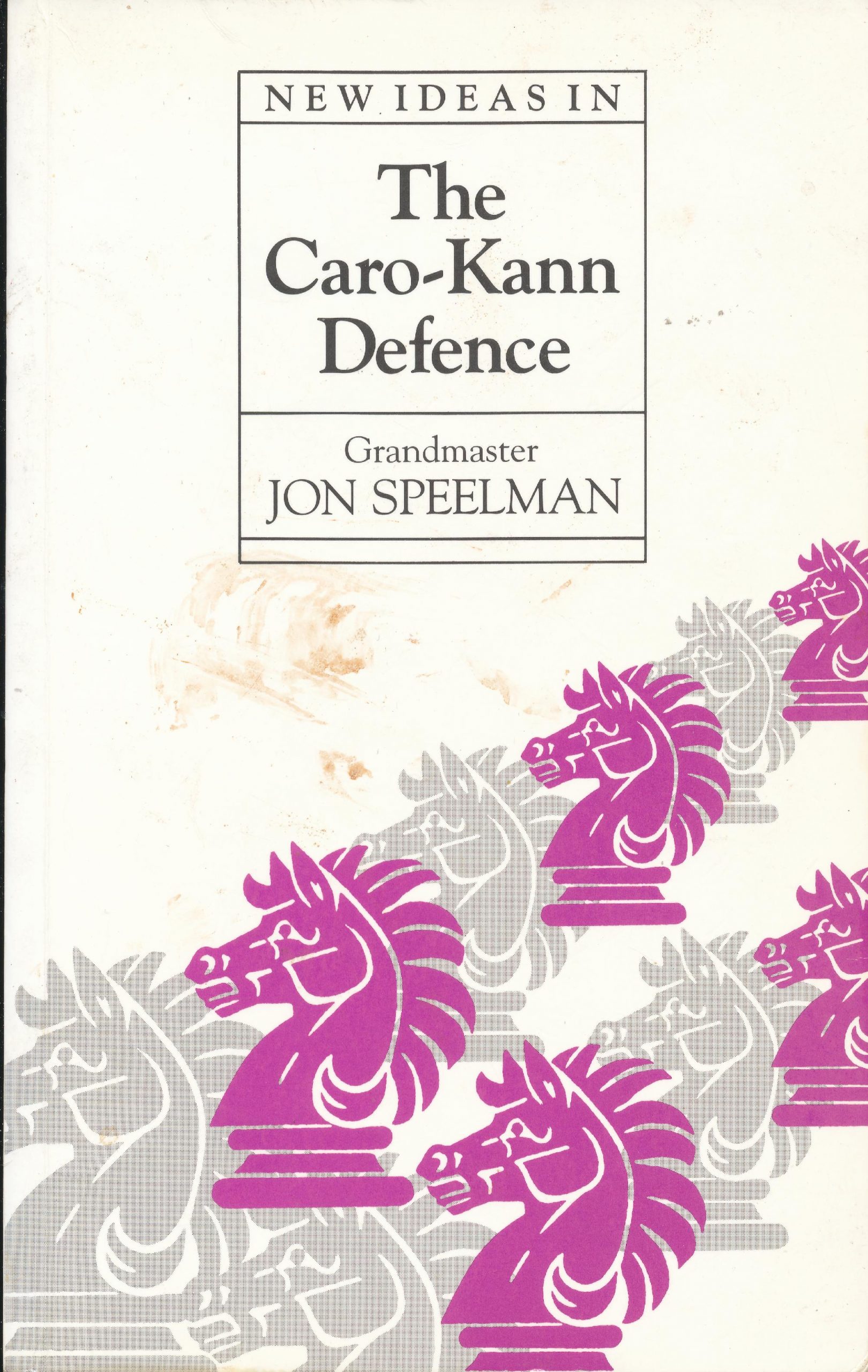
Speelman, Jon (1992). New Ideas in the Caro-Kann Defence. BT Batsford (London, England). 155 pages. ISBN 0-7134-6915-3.
Speelman, Jon (1992). New Ideas in the Caro-Kann Defence. BT Batsford (London, England). 155 pages. ISBN 0-7134-6915-3.
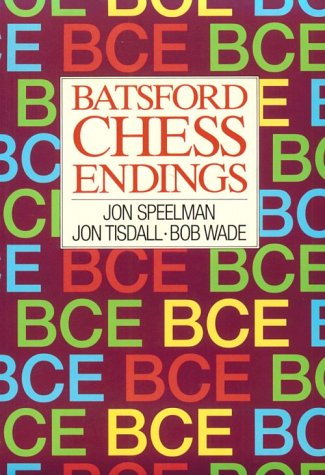
Speelman, Jonathan; Tisdall, Jon; Wade, Bob. (1993). Batsford Chess Endings. B.T. Batsford (London, England). 448 pages. ISBN 978-0-7134-4420-9.
Speelman, Jonathan; Tisdall, Jon; Wade, Bob. (1993). Batsford Chess Endings. B.T. Batsford (London, England). 448 pages. ISBN 978-0-7134-4420-9.
Speelman, Jon (1997). Jon Speelman’s Best Games. B.T. Batsford (London, England). 240 pages. ISBN 978-0-7134-6477-1.
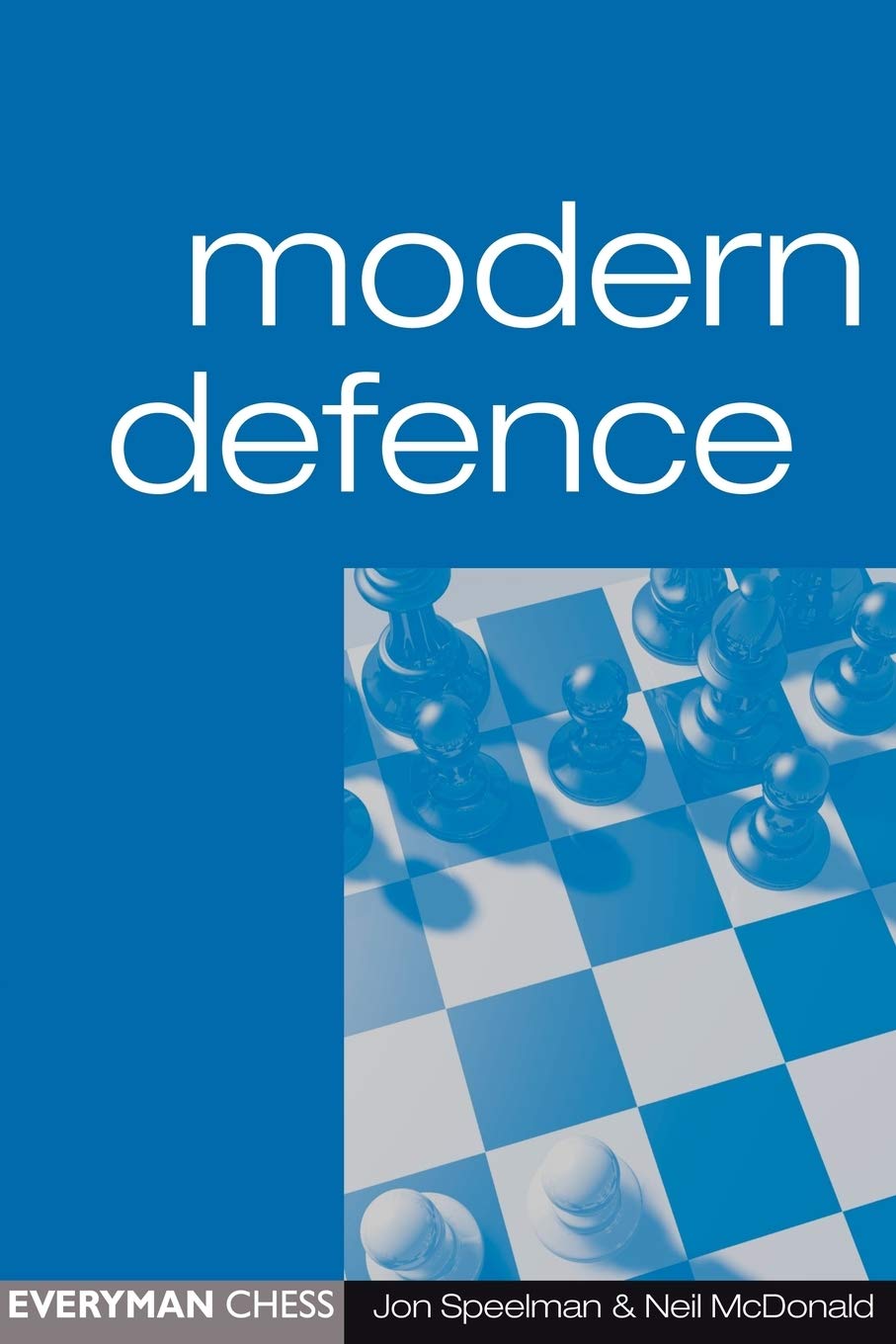
Modern Defence. Everyman, 2000
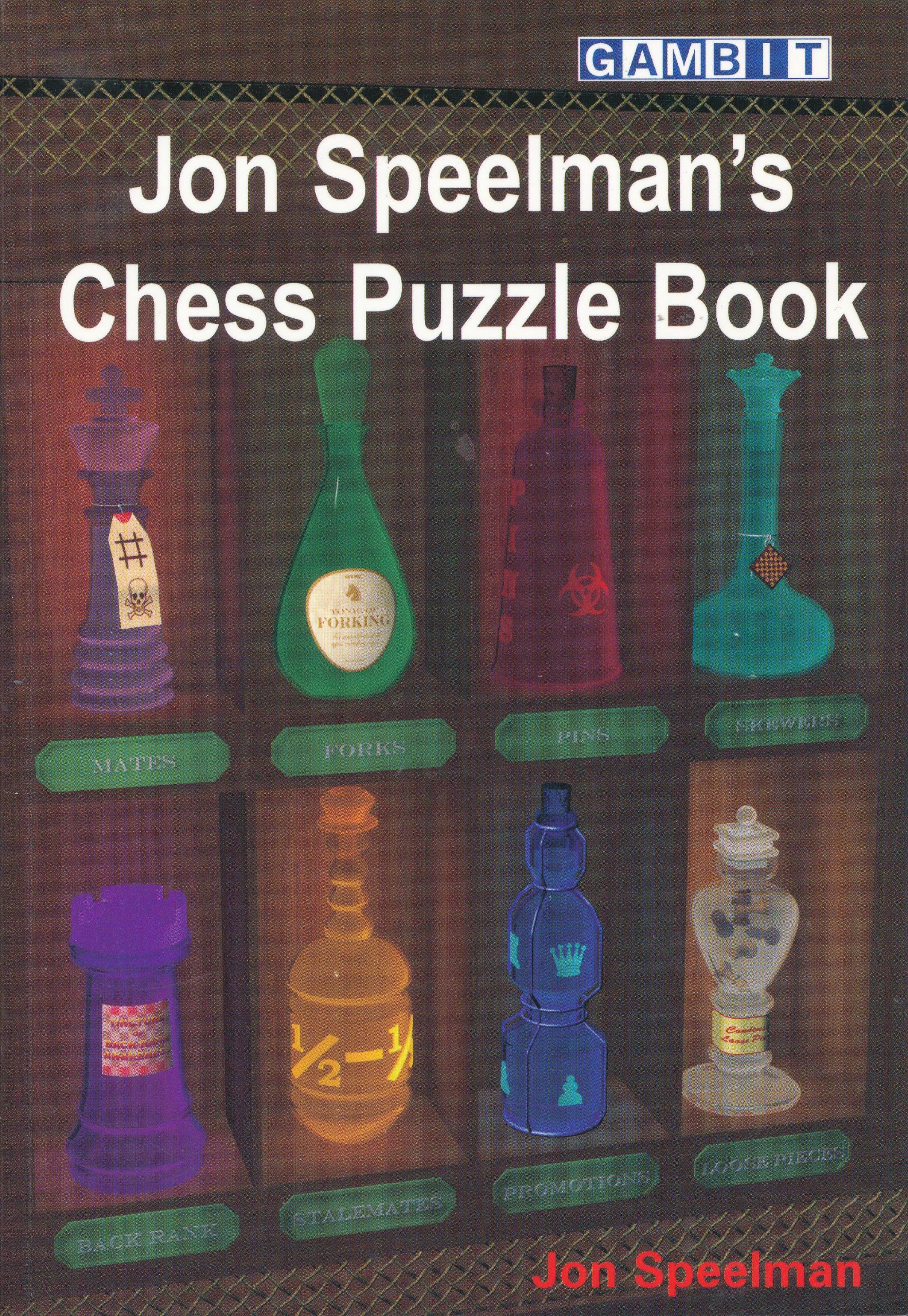
Speelman, Jon (2008). Jon Speelman’s Chess Puzzle Book. Gambit Publications Ltd. 143 pages. ISBN 978-1-904600-96-1.
Speelman, Jon (2008). Jon Speelman’s Chess Puzzle Book. Gambit Publications Ltd. 143 pages. ISBN 978-1-904600-96-1.Jonathan Speelman
Thomas Edward Rendle was born on Monday, September 29th 1986. “Stuck with You” by Huey Lewis and the News was the UK’s number one single.
Tom was born in Hastings, East Sussex and his mother’s maiden name is Jefferies. Tom resides in Hastings.
Tom attended Bede’s School, Sussex and then St. Leonard’s College.
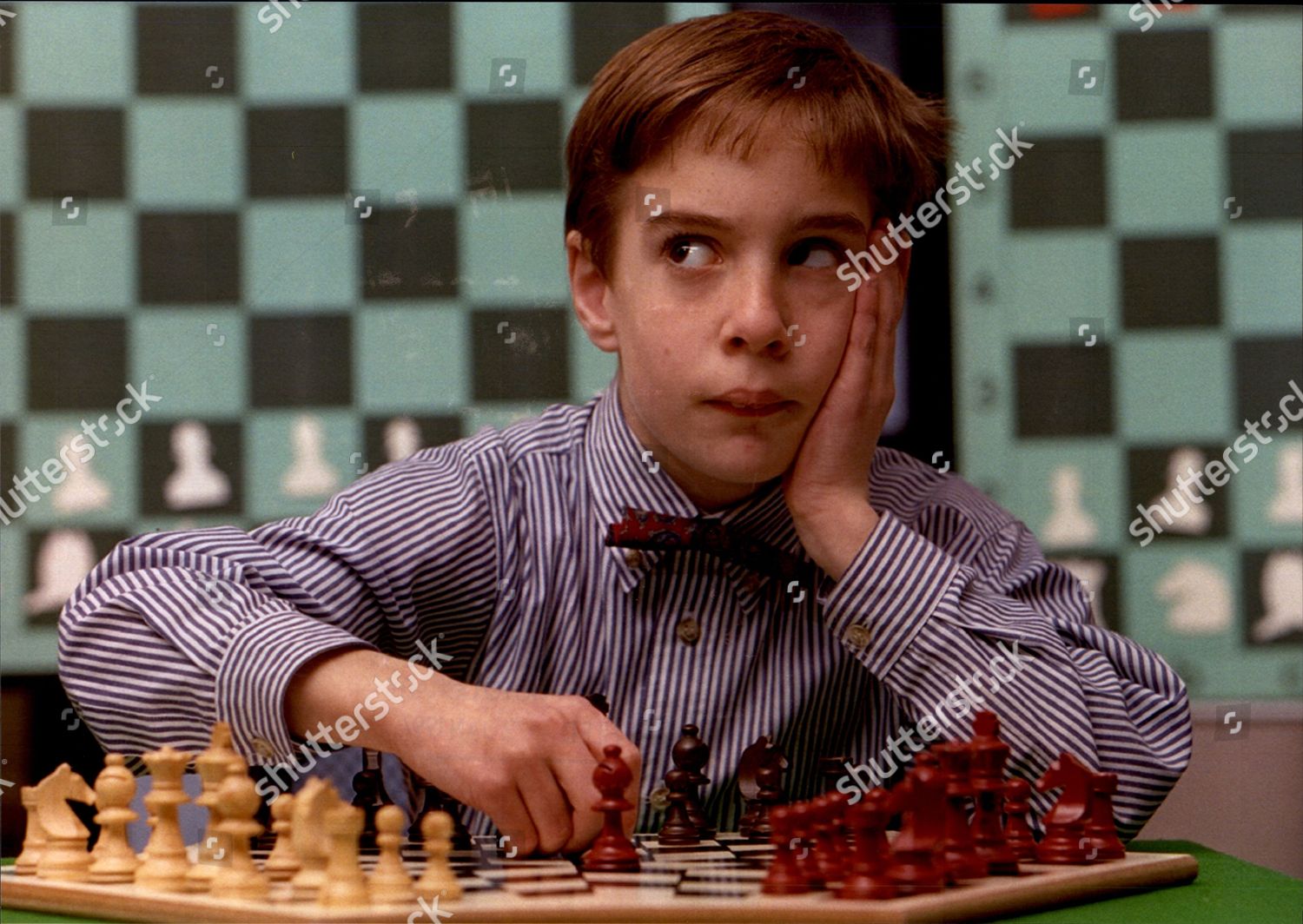
Tom Rendle aged 11 by David Crump
Tom studied physics at The University of Warwick and has two brothers, Tim and James and a sister Theresa.
Tom became a FIDE Master in 2004. In 2006 he became an International Master and achieved a peak rating (according to Felice) in July 2007 of 2416 at the age of 21. Tom has one Grandmaster norm.
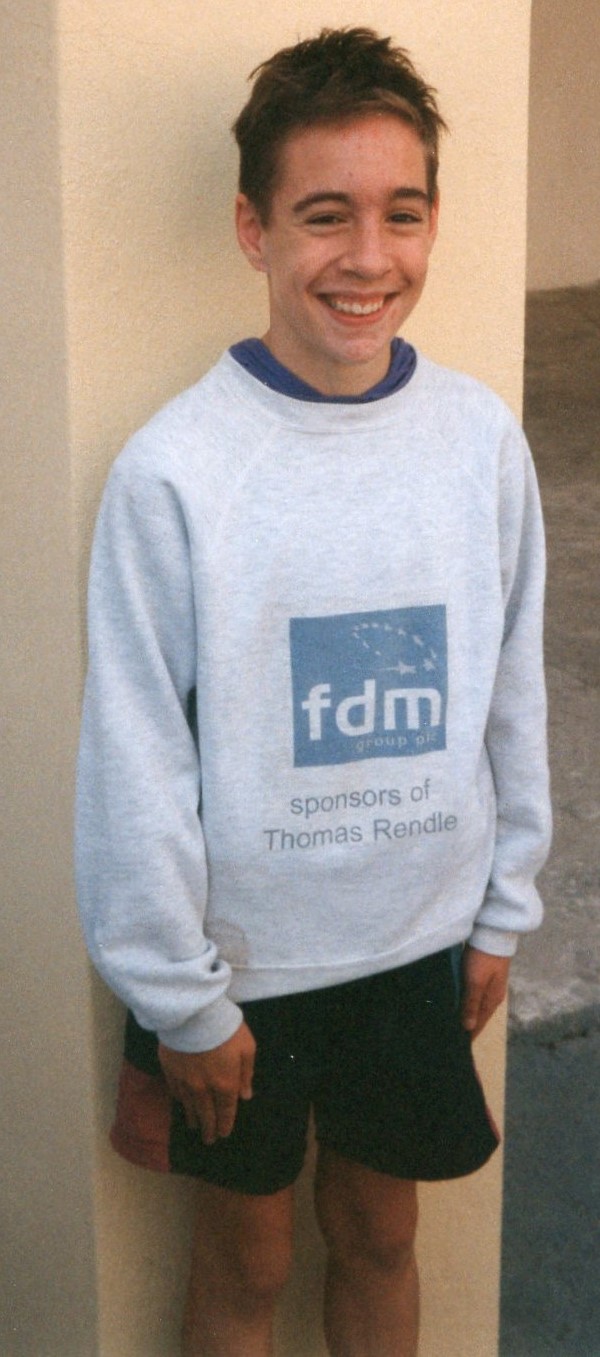
Tom Rendle, sponsored by local printing company, FDM. Courtesy of Gary Lane
Tom has played for 4NCL Grantham Sharks, Hammersmith (in the London League), Drunken Knights (in the London League), West London and Sandhurst (in the Surrey Border and Berkshire Leagues).
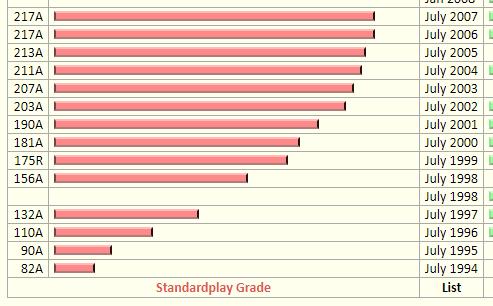
His first ECF grade to appear on the grading web site was 82A in July 1994 (however it could be earlier than that) at the age of 7 :
ECF Grading Progress of Tom Rendle
Tom played in the World U12 Championship won by Teimour Radjabov and his first major success was scoring 7.5/10 in the 2001 Smith and Williamson Young Masters. He became Hampshire Champion in 2001 with 5/6 and won the 2004 Rosny Sous Bois tournament with 7/9 and a TPR of 2568. He was runner-up in the Paignton Open of 2005 followed by runner-up in the Coulsdon Christmas tournament of 2005.
With the white pieces Tom is almost exclusively an e4 player but he has flirted with Bird’s Opening many times. Having shared accommodation with Gawain Jones there are signs of influence in the choice of the Grand Prix Attack.
As the second player Tom plays both the Winawer and the Classical French and is a noted expert on the Classical Dutch and Dutch in general.
IM Tom Rendle at the King’s Place Rapidplay, 2013, Courtesy of John Upham Photography
From Wikipedia :
“Thomas Edward Rendle (born 29 September 1986) is a British FIDE International Master chess player and coach. Rendle became an International Master in June 2006 and is part way towards becoming a Grandmaster, with one GM Norm.
IM Tom Rendle
He gained an interest in chess at an early age, and soon entered chess tournaments, gaining success in his age categories (such as becoming Mini Squad Under 7s Champion, England Under 11 Champion).[citation needed] He was put on top board for the England under 11 team and won the Sussex Under 18 Championships, whilst still under 12.”
In 1998 Rendle played Garry Kasparov in the BT Wireplay Challenge 1998. In 2005 he was a coach for England’s team at the 1st FIDE World Schools Championship in Halkidiki, Greece and in 2006 he coached with the England Team at the European Youth Chess Championships in Montenegro.
Rendle currently works as a chess coach, both online and face-to-face. He is a regular coach of England Juniors.”
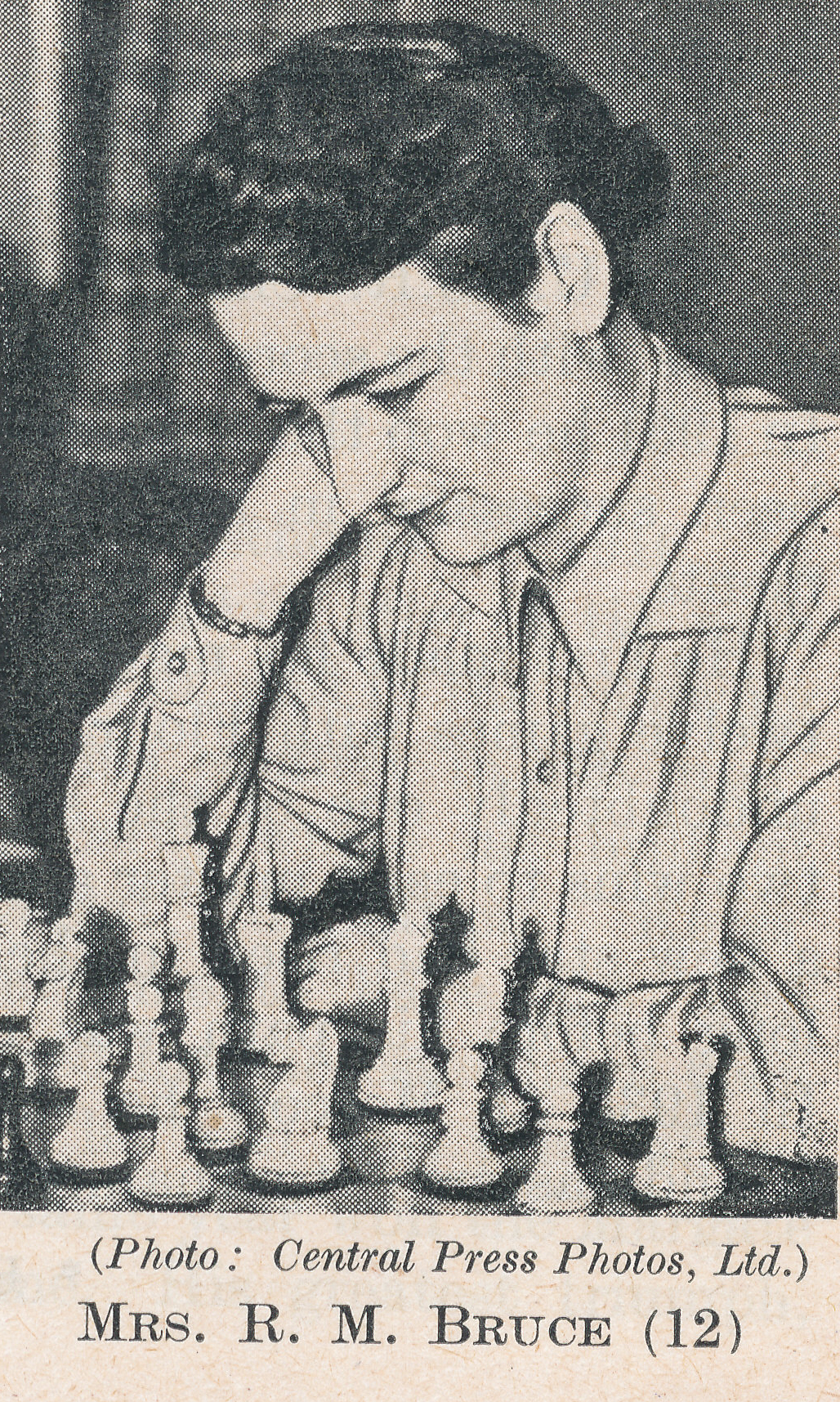
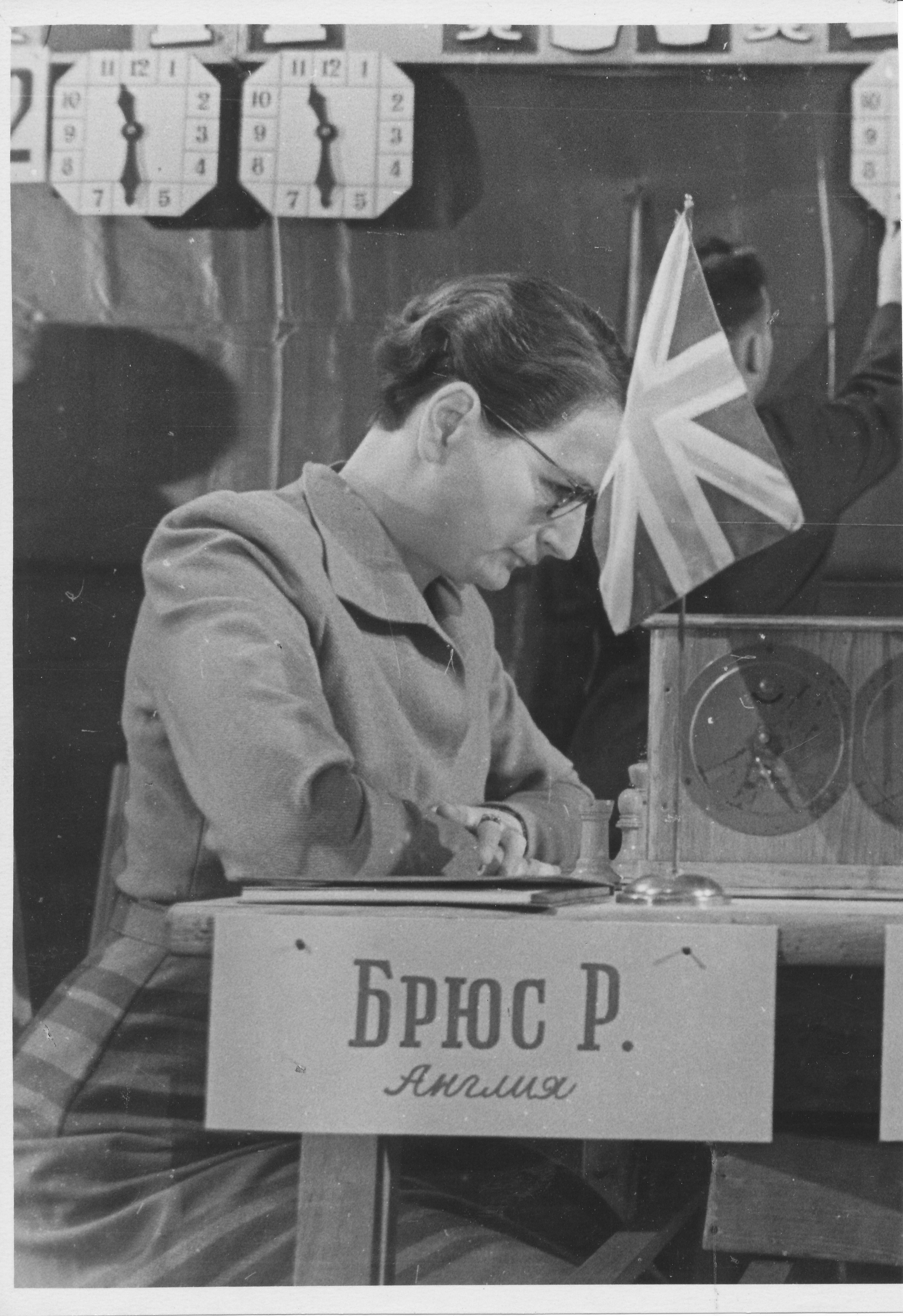
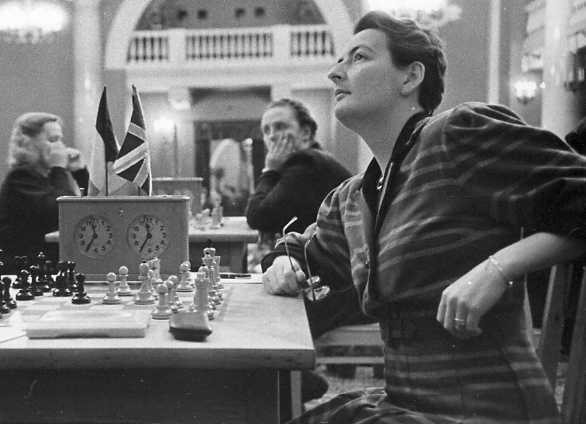
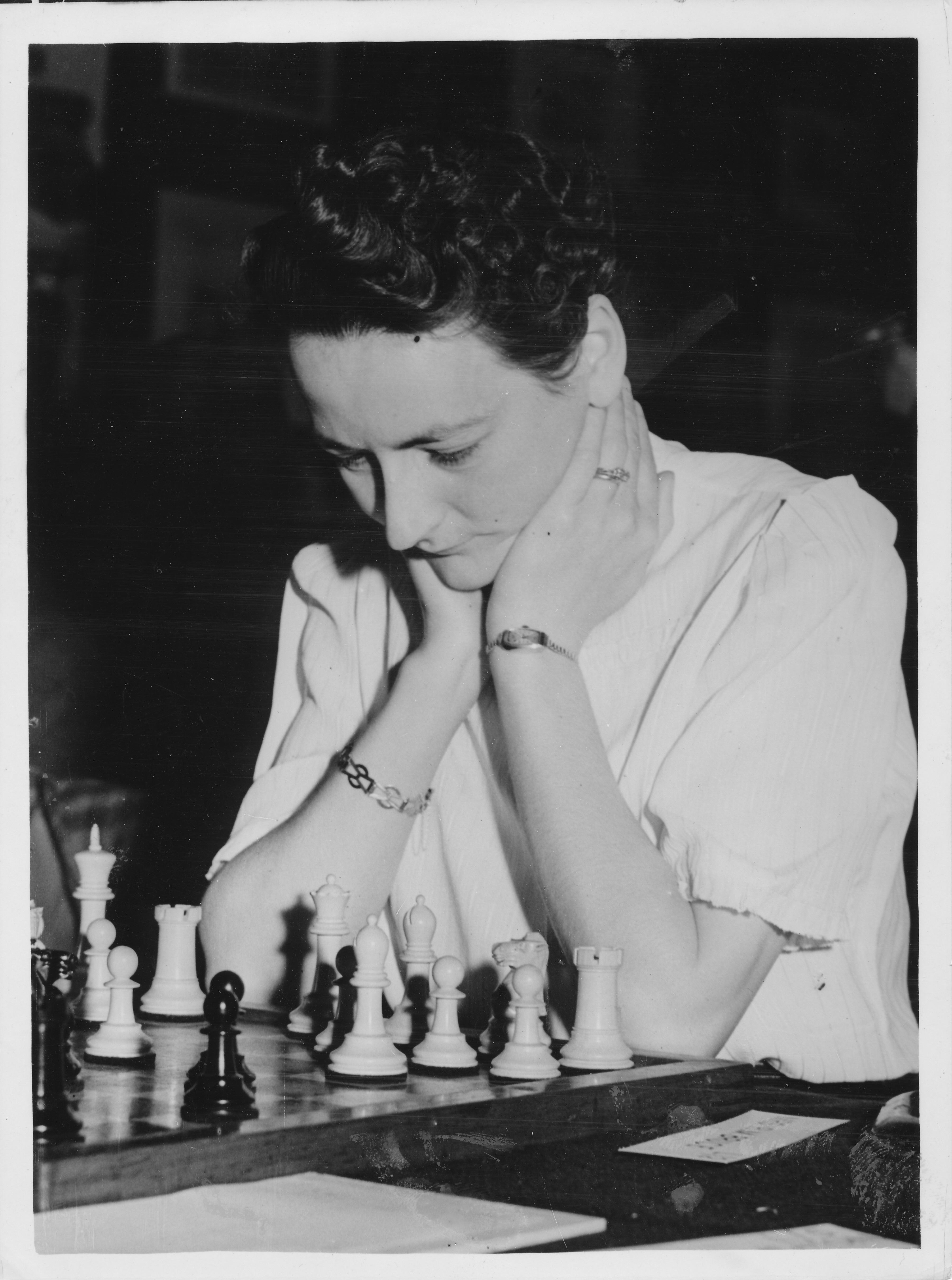
WIM Rowena Bruce (15-v-1919 24-ix-1999). Source : The Anglo-Soviet Radio Chess Match.
We remember WIM Rowena Bruce who died this day (September 24th) in 1999.
Rowena Mary Dew was born on Thursday, May 15th, 1919 in Plymouth, Devon. Her father was Clement Warner Harvey Dew and her mother was Mary Jane Rowe.
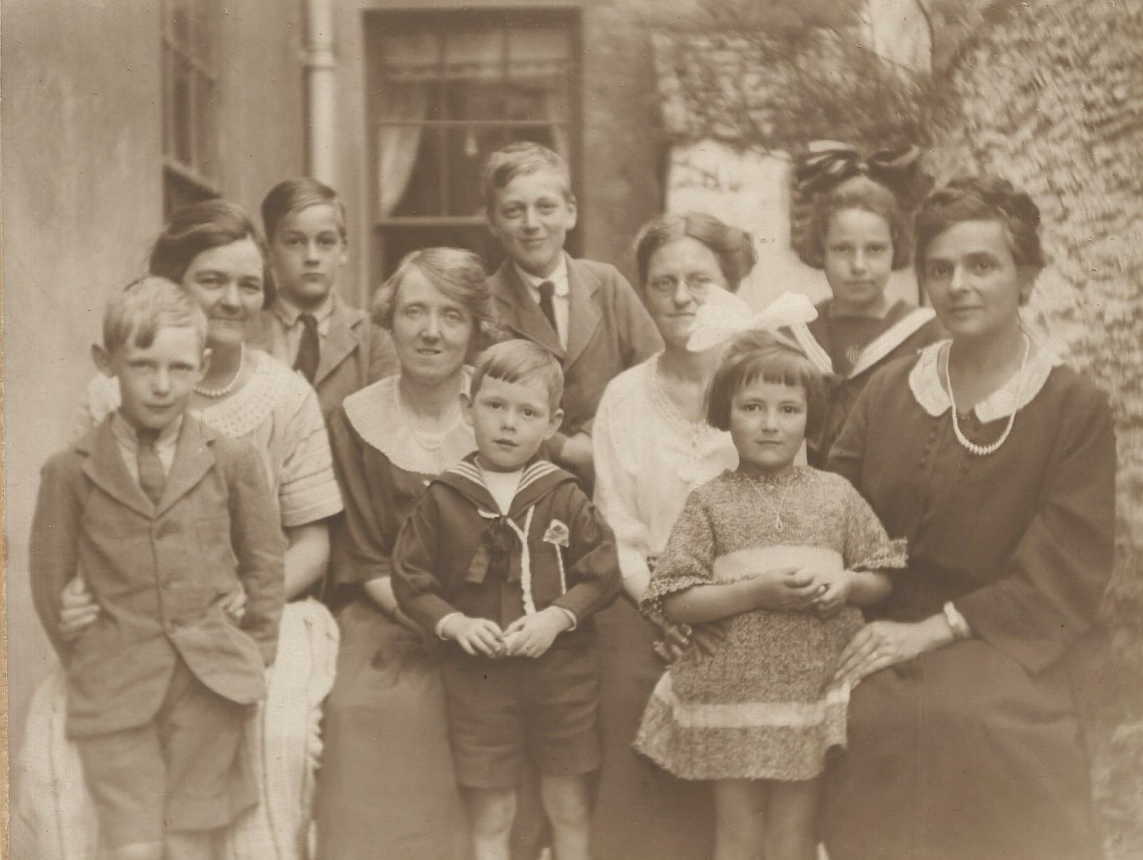
The Bruce and Dew families circa 1923. Rowena is at the front and on the right aged around four years. Source : ancestry.co.uk
She married Ronald Mackay Bruce in July 1940 when she was 21 years old.
Her father Clement Warner Harvey passed away on 7 October 1957 in Plymouth, Devon, at the age of 79. Her mother Mary Jane passed away on 3 August 1958 in Cornwall at the age of 73. Her husband Ronald Mackay passed away in April 1991 in Plymouth, Devon, at the age of 87. They had been married 50 years.
From The Anglo-Soviet Radio Chess Match by Klein and Winter :
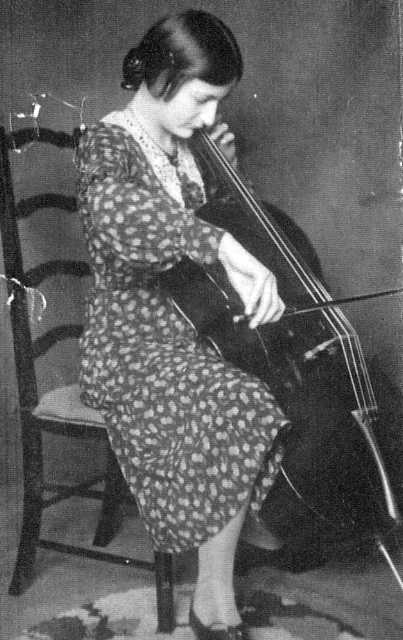
“Mrs RM Bruce was born in Plymouth in 1919, and learned chess at the age of twelve. She won the Girls’s World Championship in 1935 and the British Ladies Championship in 1937. During the war she served with the WVS in Plymouth. Apart from chess, she is interested in music and plays the cello.
Rowena practising the cello. Courtesy of Keverel Chess
She is married to RM Bruce, who is a well-known Plymouth player.”
In 1984 both Rowena and Ron received the BCF President’s Award for Services to Chess.
From British Chess (Pergamon Press, 1983) by Botterill, Levy, Rice and Richardson :
“I was taught by my Mother Mrs. May Dew, when recovering from a mastoid operation in 1930, and I joined Plymouth Chess Club on 5th November 1931, aged 12.5.
I started receiving chess tuition from the Plymouth Match Captain, Ronald Bruce in 1934. (Married him in 1940!).
I won the Girls’ World Championship in 1935. I won the British Ladies’ Championship for the first time in 1937, and again in 1950, 1951, 1954, 1959, 1960, 1962 and 1963. I tied for first place in 1955, 1967 and 1969.
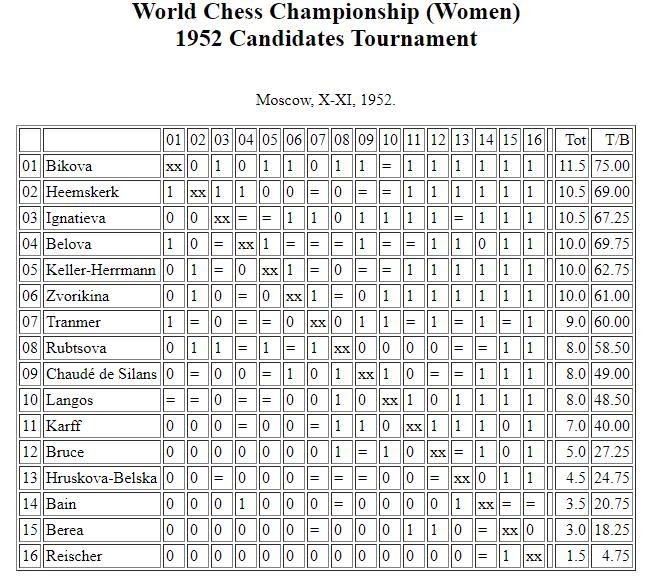
I represented Great Britain in the West European Zonal tournament held in Venice 1951, where I finished 2nd. This qualified me to represent Great Britain in the Candidates tournament held in Moscow in 1952. I finished 12th out of 16.
World Chess Championship (Women) 1952 Candidates Tournament
In 1952 we adopted a little girl – Rona Mary.
Other tournaments abroad included zonals in Italy, Yugoslavia and Germany, and Olympiads in Germany, Poland and Bulgaria.
This last-named ended in disaster because I collapsed with a stroke during my second game. Obviously my chess playing was affected, but I was indeed fortunate to make a fairly good recovery.
WIM Rowena Mary Bruce at the 1952 Moscow Candidates tournament
I returned to competitive chess playing a year later but, in the meantime, several young players have surged forwards, and that British Ladies’ Championship seems to have become much more difficult to win !
But I now have three grandchildren!
BCN is grateful to WCM Dinah Norman for sending us these memories :
“Rowena Mary Bruce (need Dew) was born on 15 May 1919 and died in Plymouth in 1999. Rowena was the youngest of 3 children born to Harvey and Mary Dew. Mary Dew was a member of the Plymouth Chess Club and tried unsuccessfully to get her 2 sons interested in the game but Rowena was the only child who was interested.
When Rowena was 10 her mother organised private lessons for her with the Plymouth Champion, Ron Bruce. At the age of 21 Rowena married Ron Bruce and it was a very successful and happy marriage. They had an adopted daughter Rona who had no interest in Chess. Rowena had to wait until she was 21 before she could marry Ron. Rowena lived in Plymouth all her life.
Rowena and Ron married in July 1940. Ron and Rowena cemented a formidable playing and organising partnership which benefited chess in Devon for almost half a century.
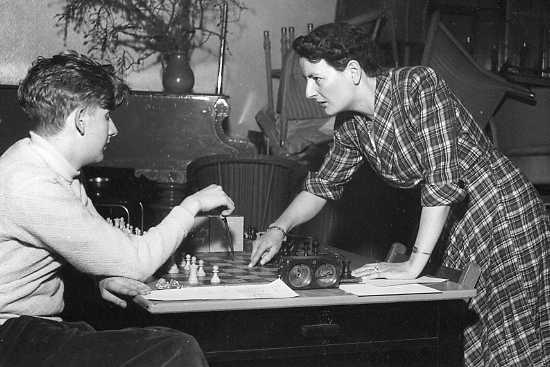
A stern-looking Rowena offers advice to one of the juniors at the WECU Congress, Easter 1951, in the analysis room at the Penolver Hotel, Newquay. Courtesy of Keverel Chess
After the War Rowena was one of the leading quartet of British Lady players which included Elaine Pritchard (née Saunders), Anne Sunnucks and Eileen Tranmer. In 1951 Rowena played in the Ladies Zonal in Venice and qualified for the Candidates in Moscow to be played the following year.
AT the age of 53 she qualified for the East European Zonal in Sofia, Bulgaria in 1972. Sadly in Round 2 of that event she collapsed at the board with a major cerebral haemorrhage which left her right side paralysed. By sheer force of will after many months of convalescence she taught herself to speak and walk again. She had to give up playing her cello which was awful for her.
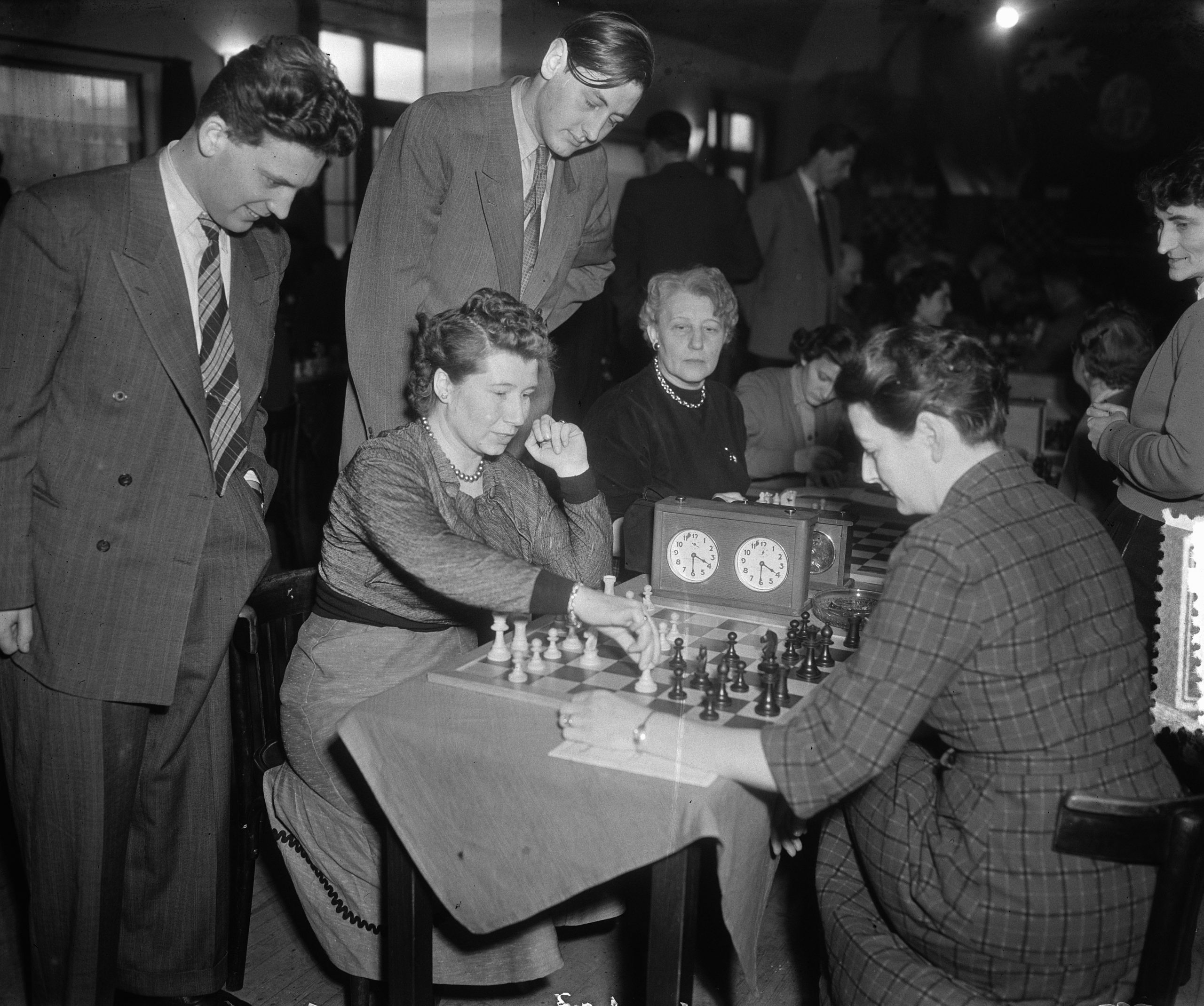
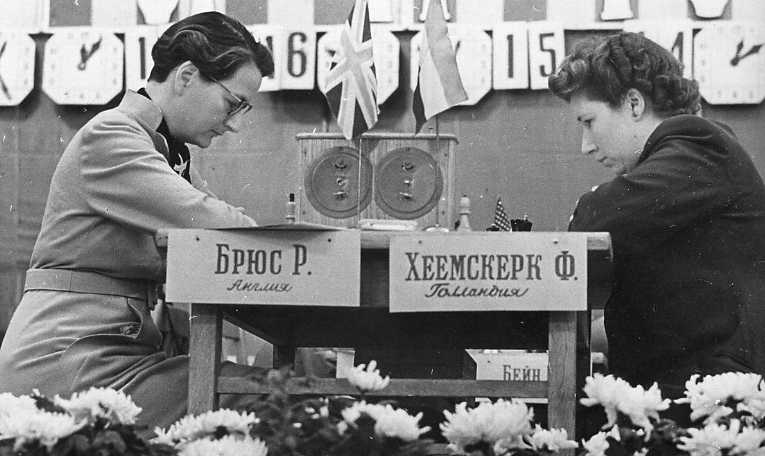
Ladies Chess Tournament Fenny Heemskerk, Rowena Mary Bruce (née Dew), Donner, Architect Date: January 12, 1953 Personal name: Architect, , Bruce, R., Donner, , Heemskerk, Fenny Institution name: Block Chess Tournament – Image ID: 2ARK3JK
The steely determination with which she followed her 75 year chess career and her recovery from serious illness belied her gentle nature. She was a modest, kind and gracious person who always thought the best of others.
She won the British Ladies title 11 times.
I shared the title with her in 1967 and 1969 after 2 play offs. She was a very pleasant and sporting opponent.”
From The Encyclopedia of Chess (Robert Hale, 1970 & 1976) by Anne Sunnucks :
“International Woman Chess Master and winner of the British Ladies Championship on 10 occasions.
She was taught to pay chess by her mother, who was the Devon Lady Champion, after a mastoid operation when she was 10. In 1931 she joined Plymouth Chess Club, where she met R. M. Bruce, the Devonshire Chess Captain, who coached her and was largely responsible for later success. She married him in 1940.
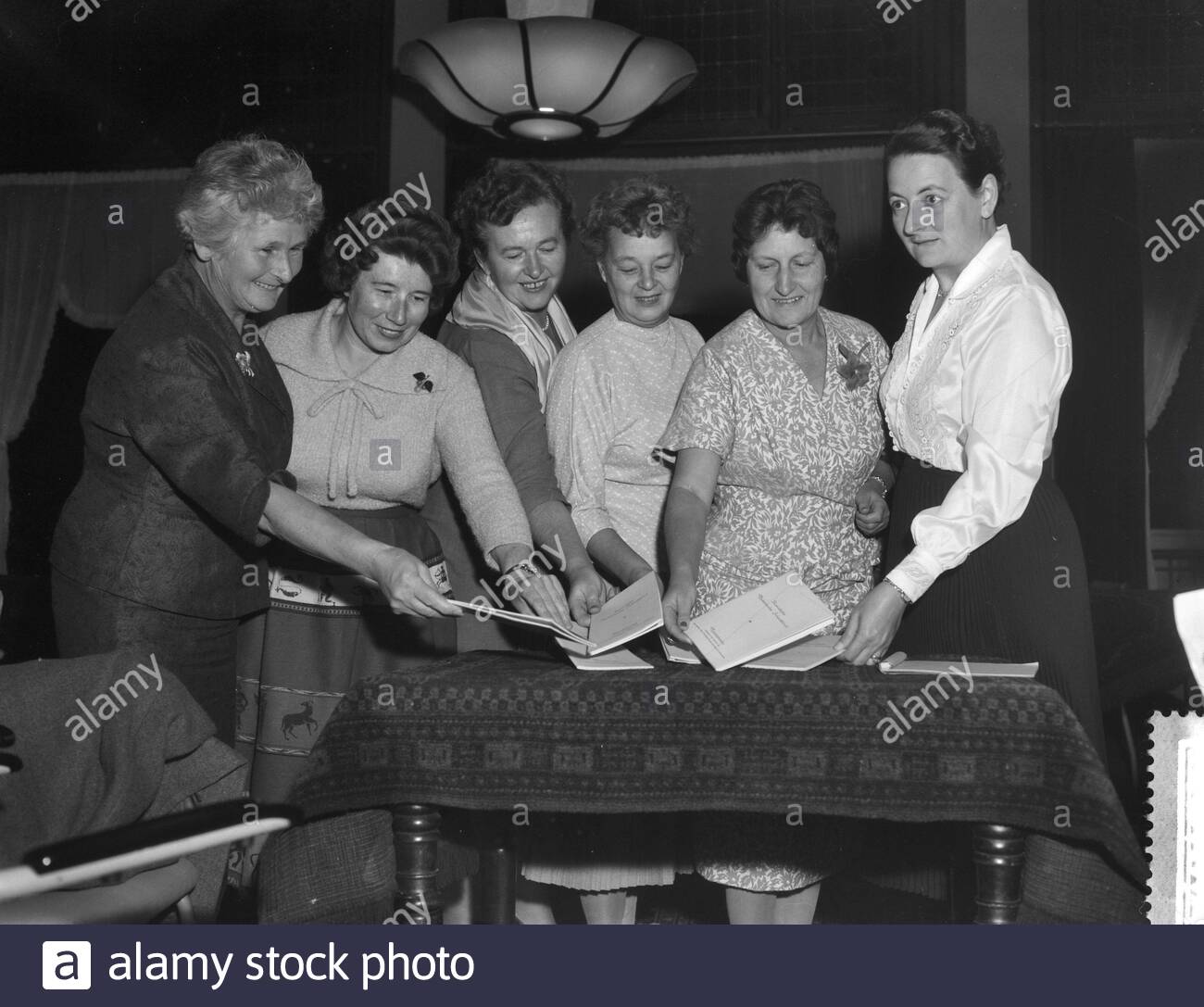
Opening Ladies Danlon chess tournament in Amsterdam, v.l.n.r. T. Roodzant, F. Heemskerk, I. Larsen, L. Timofeeva, E. Rinder, R. Bruce Date: October 21, 1959 Location: Amsterdam, Noord-Holland Keywords: group portraits, chess Person Name: Bruce, Rowena Mary, Heemskerk, Fenny , Larsen, I., Rinder, Elfriede, Roodzant, Toos, Timofeeva. Lidia – Image ID: 2AW6KHJ
In 1935 she won the Girls’ World Championship and two years later the British Ladies’ Championship for the first time. She has won the title outright or been joint holder on 10 occasions in 1937, 1950, 1951, 1954, 1955, 1959, 1960, 1962, 1963 and 1967.
Mrs Bruce has represented Great Britain in matches against the USSR and the Netherlands and the British Chess Federation in qualifying tournaments for the Women’s World Championship. In Venice in 1951 she came 2nd in the Western European Qualifying Tournament for the Women’s World Championship and thereby qualified for the Candidates tournament in 1952, when she came 12th out of 16.
Rowena at the 1952 Moscow Zonal tournament. Courtesy of Keverel Chess
Apart from chess, her hobbies are music, gardening and bridge.
She is principal ‘cellist in the Plymouth Orchestral Society.”
An obituary (presumably written by John Saunders) appeared in the British Chess Magazine, Volume CXIX (119, 1999), Number 11 (November), page 584 :
“Rowena Bruce died peacefully at home on 23 September following a long illness. Rowena Mary Dew was born in Plymouth on 15 May 1919, and she was taught the game at the age of 10, while she was convalescing from surgery, by here mother Mary Dew, herself a very able player who had been Devon Ladies’ Champion.
Rowena joined the Plymouth Chess Club, where she met her future husband, Ron Bruce, himself a strong player. She won the World Girls’ Championship in 1935 and the British Women’s title two years later. Rowena married Ron in 1940 and won the British title under her married name ten more times (seven outright and three jointly) between 1950 and 1969.
She represented Great Britain in matches against the USSR and the Netherlands. She qualified for the Women’s World Championship by coming 2nd in the Western European Zonal in Venice, and in the subsequent Candidates tournament in Moscow in 1952 she came 12th out of 16. She was awarded the women’s international master title in 1951.
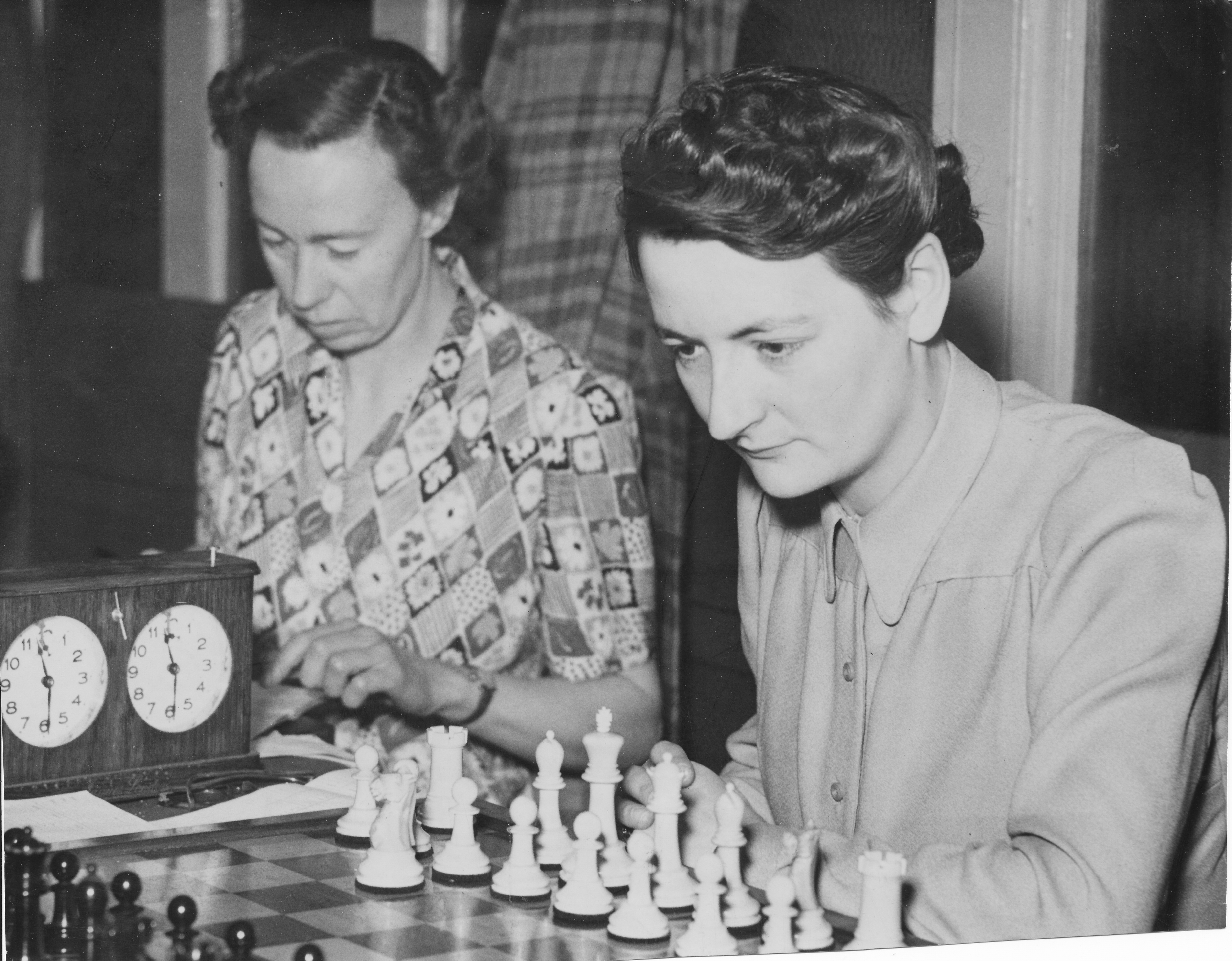
Rowena locking horns with her friend Fenny Heemskerk, who finished in a magnificent 2nd place. Courtesy of Keverel Chess
The contribution to chess that Rowena and Ron Bruce made to national, west country and Devon chess was well recognised at the highest level, and when the British Chess Federation instituted a new award in 1983, the President’s Award for Services to Chess, they won it jointly in only its second year. Ron died in 1991.
Rowena was a past president of the Devon County Chess Association and the West of England Chess Union and continued playing for Devon until about four years ago when her increasing frailty made it impossible for her to travel to away matches.
Her other accomplishments included music : she was a principal cellist in the Plymouth Orchestral Society. She also partnered husband Ron in strictly non-competitive bridge for many years. She leaves a daughter Rona and three grand-children.”
WIM Rowena Mary Bruce
From The Encyclopedia of Chess (Batsfords, 1977) by Harry Golombek :
“International Woman master and eleven times British Ladies champion or co-champion.
At the age of fifteen in 1935, Miss Dew won the girls World championship and two years later, still under he maiden name, se won the British Ladies championship at Blackpool. Thereafter she won the championship under her married name in 1950, 1951, 1954, 1955, 1959, 1960, 1962, 1963, 1967 and 1969.
Her best international result was a 2nd in the 1951 Western European Zonal tournament, qualifying for the Women’s Candidates tournament in Moscow 1952, where she came 12th/16. She has represented England in a number of team events, has excellent combinative powers, but lacks steadiness in strategy.”
Rowena (far left) during the 1952 Moscow Candidates tournament. Courtesy of Keverel Chess
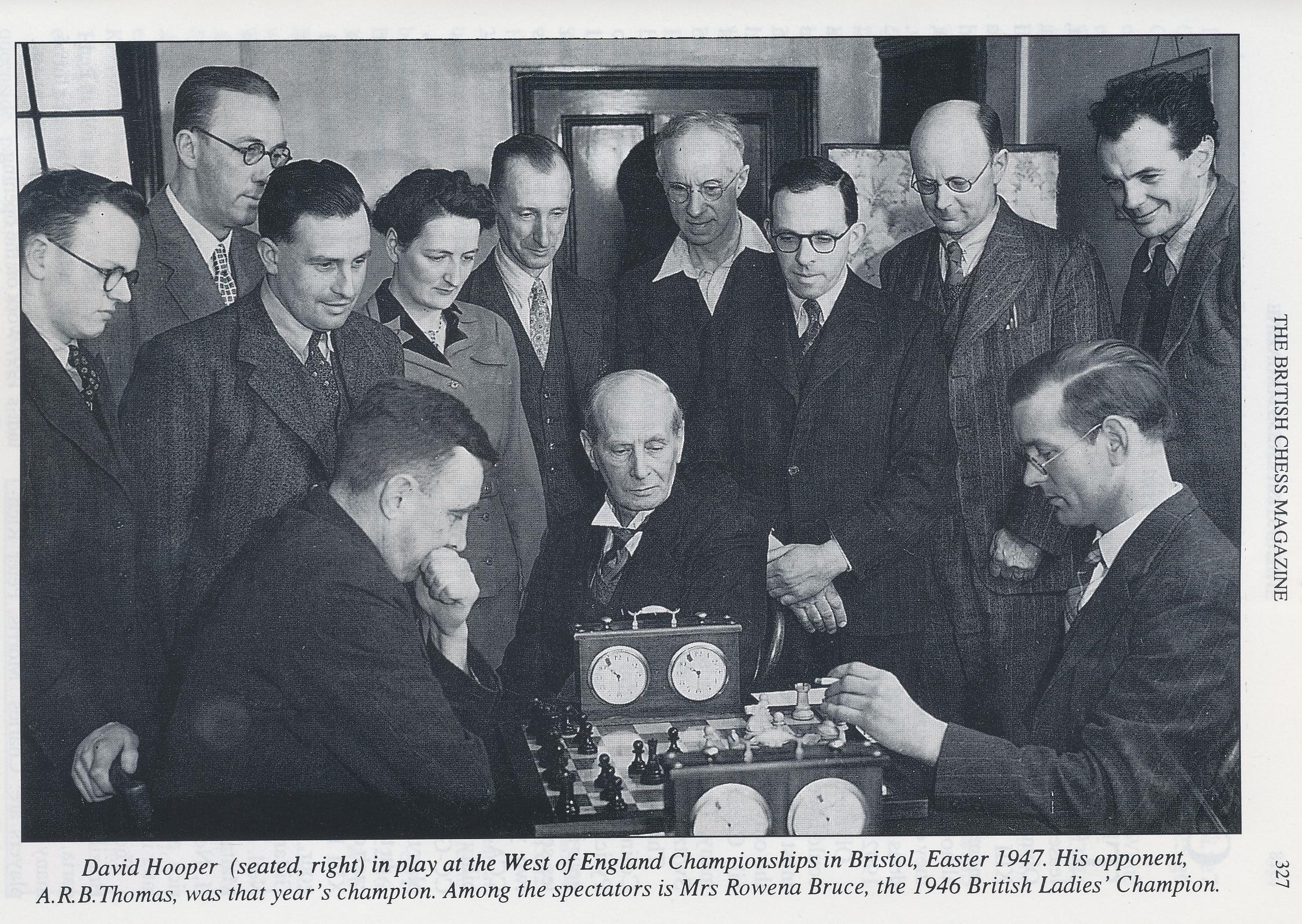
David Hooper (seated right) in play at the West of England Championships in Bristol, Easter, 1947. His opponent , ARB Thomas , was that year’s champion. Among the spectators is Mrs. Rowena Bruce, the 1946 British Ladies’ Champion. BCM, Volume 118, #6, p.327. The others in the photo are L – R: H. V. Trevenen; H. Wilson-Osborne (WECU President); R. A. (Ron) Slade; Rowena Bruce; Ron Bruce; H. V. (Harry) Mallison; Chris Sullivan; C. Welch (Controller); F. E. A. (Frank) Kitto.
“Rowena Mary Bruce (15 May 1919 – 24 September 1999), née Dew, was an English chess player who held the title of Woman International Master (WIM, 1951). She was an eleven-time winner of the British Women’s Chess Championship (1937, 1950, 1951, 1954, 1955, 1959, 1960, 1962, 1963, 1967 and 1969).
Biography
From the end of the 1930s to the end of the 1960s, she was one of England’s strongest women chess players. In 1935, she won the FIDE World Girls Championship. Rowena Mary Bruce won the British Women’s Chess Championship eleven times: 1937, 1950, 1951, 1954, 1955, 1959, 1960, 1962, 1963, 1967 and 1969[1]. In 1952, in Moscow, she participated in the Women’s Candidates Tournament where she took 12th place[2]. In 1951, she was awarded the FIDE Woman International Master (WIM) title.
On 21 June 1946, Bruce played (and lost) a “radio chess” match against Lydmilla Rudenko. Bruce was one of two women who were part of a twelve member British team who played in a four day tournament. The British team played their moves in London while the Russian team played their moves in Moscow.”
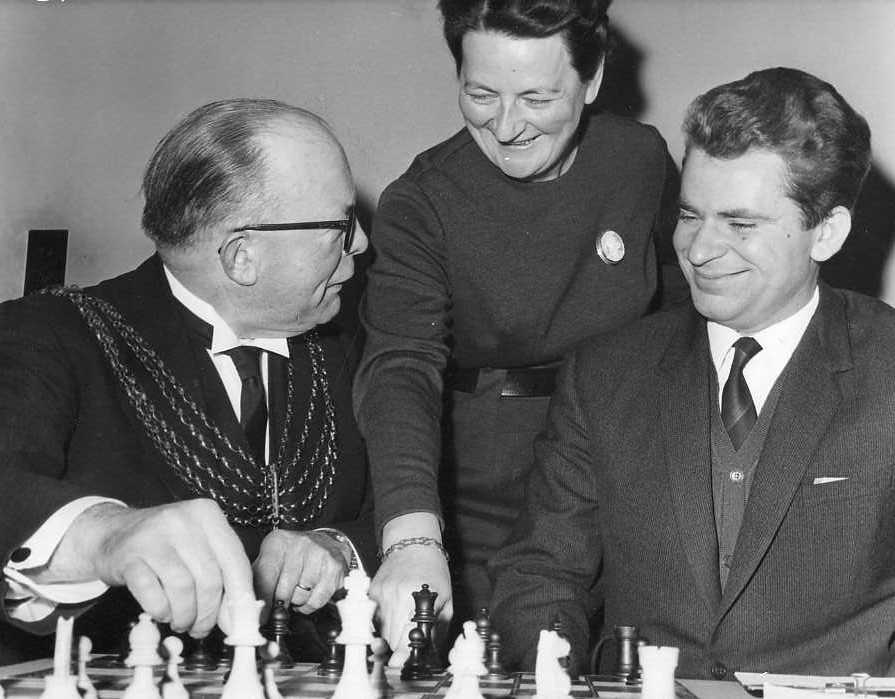
Rowena with Spassky and the Lord Mayor of Plymouth, Alderman Pascho.
“Rowena Mary Bruce played for England in the Women’s Chess Olympiads:
In 1966, at second board in the 3rd Chess Olympiad (women) in Oberhausen (+5, =5, -2) where she won an individual silver medal, and
In 1969, at second board in the 4th Chess Olympiad (women) in Lublin (+5, =3, -6).
From 1940 to 1991 she was married to Ronald Bruce (1903–1991)”
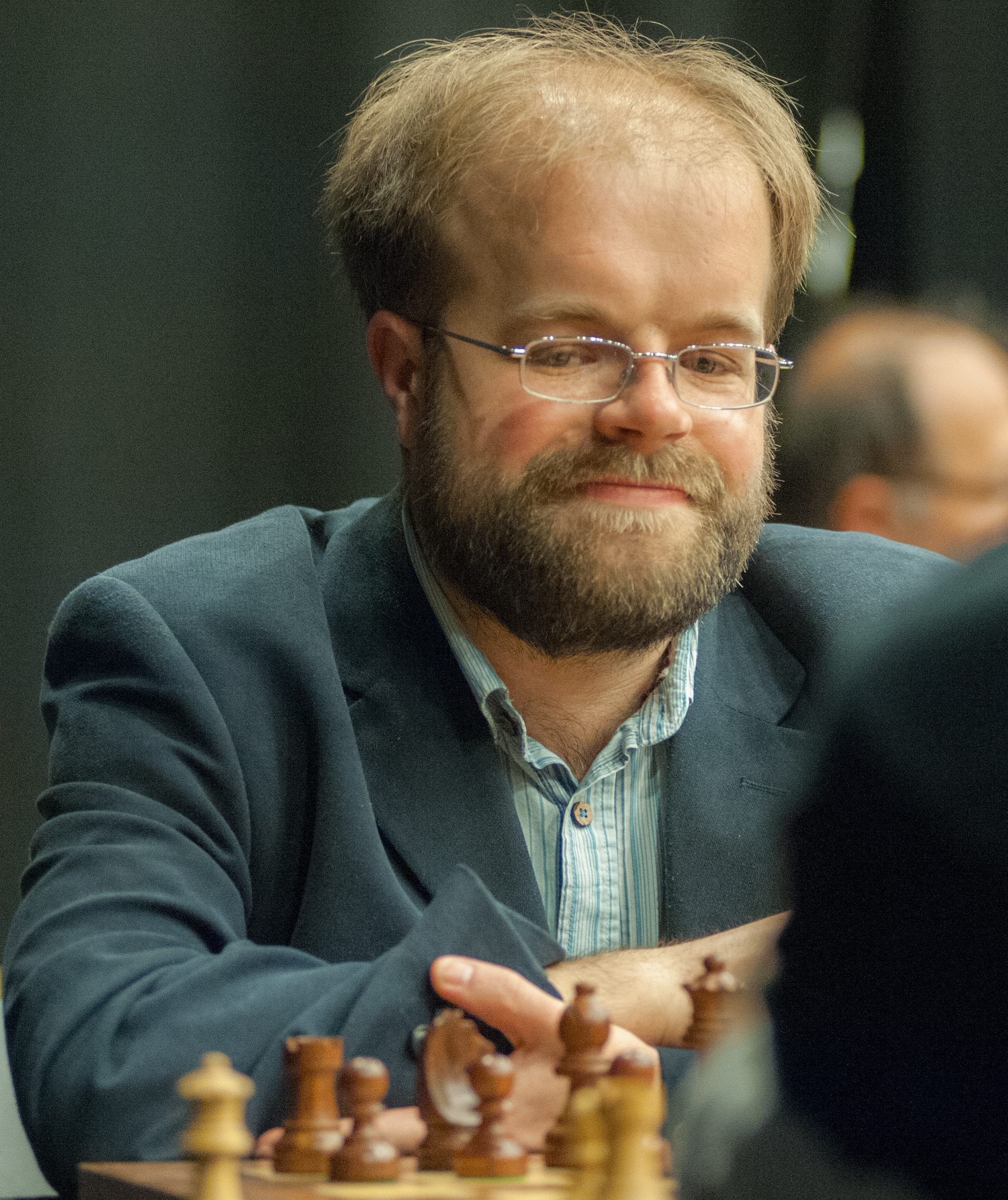
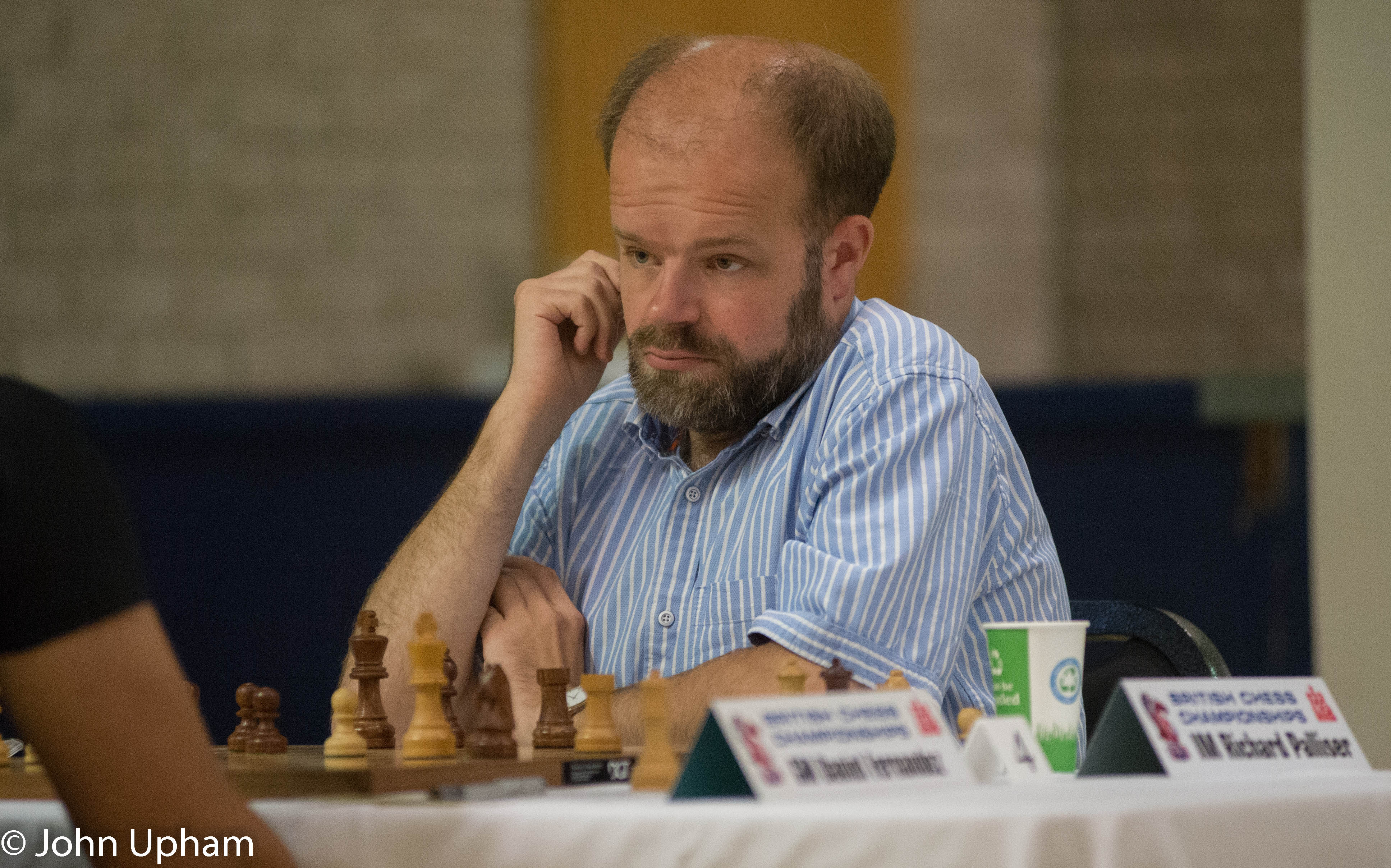
We wish IM Richard Palliser all the very best on his birthday
Richard Julian David Palliser was born September 18th in 1981 in Birmingham, West Midlands. His mother’s maiden name was Hyde.
He became a FIDE Master in 2000 and an International Master in 2001.
Richard Palliser
His peak FIDE rating (according to Felice and Megabase 2020) was 2482 in July 2012 at the age of 31.
In 1995 Richard was joint British U13 Champion together with David Hodge and Richard S. Jones.
Palliser was joint (with Danny Gormally) British Rapidplay Chess Champion in 2006. He writes regularly for ChessMoves and “Everyman Chess” who also employ him as an editor and advisor.
Richard represents in matches 4NCL White Rose, York RI, Yorkshire CA, and ‘Eagle and Child’
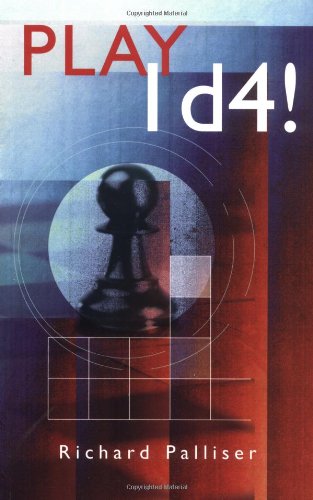
According to “Play 1.d4!” :
“is an international master and recipient of a special British Chess Federation young player’s award for achievement. In addition to being a very active tournament and match player he also writes regularly for CHESS magazine and other periodicals and is noted for his theoretical knowledge and analytical ability.”
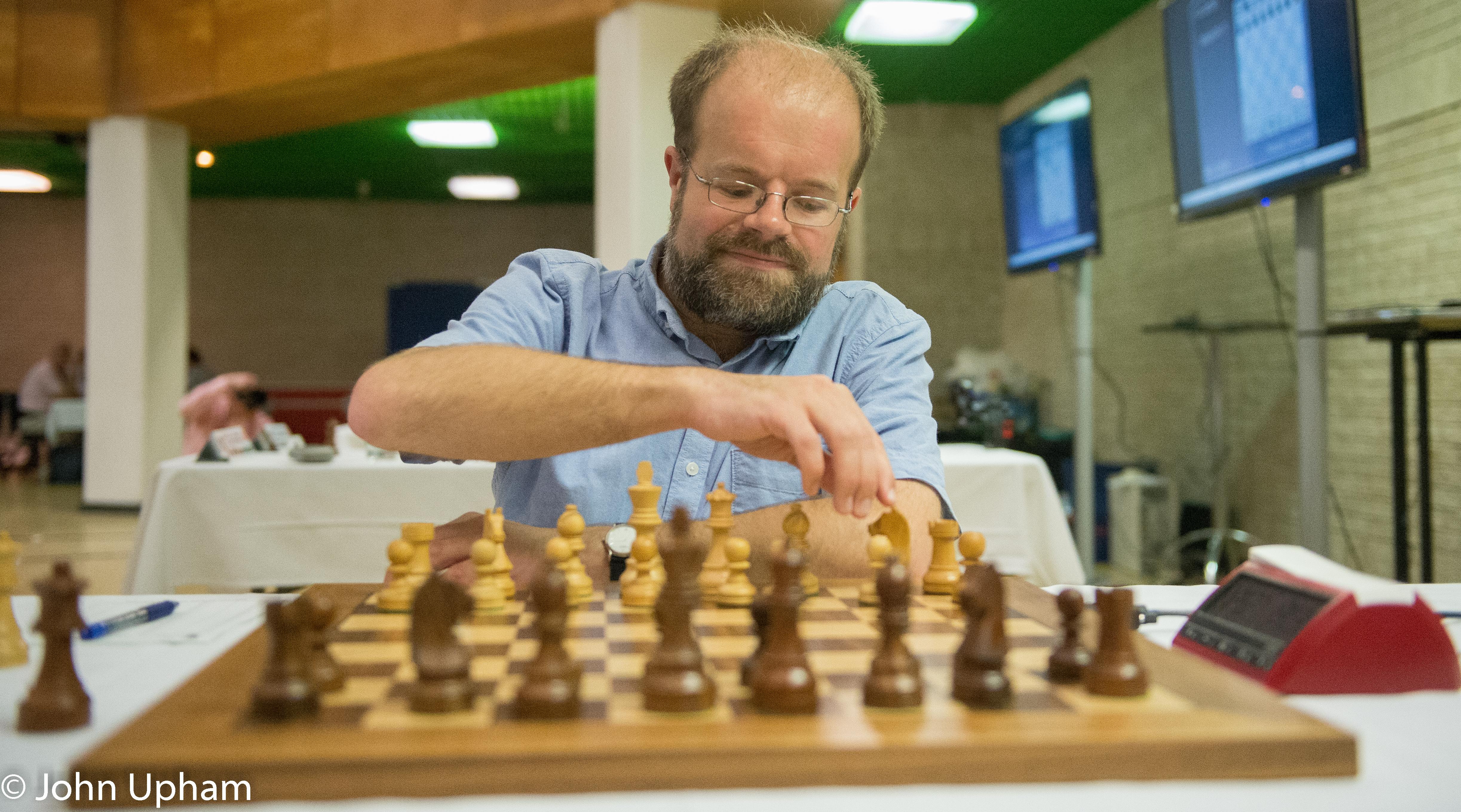
IM Richard Palliser at the King’s Place Rapidplay, 2013.
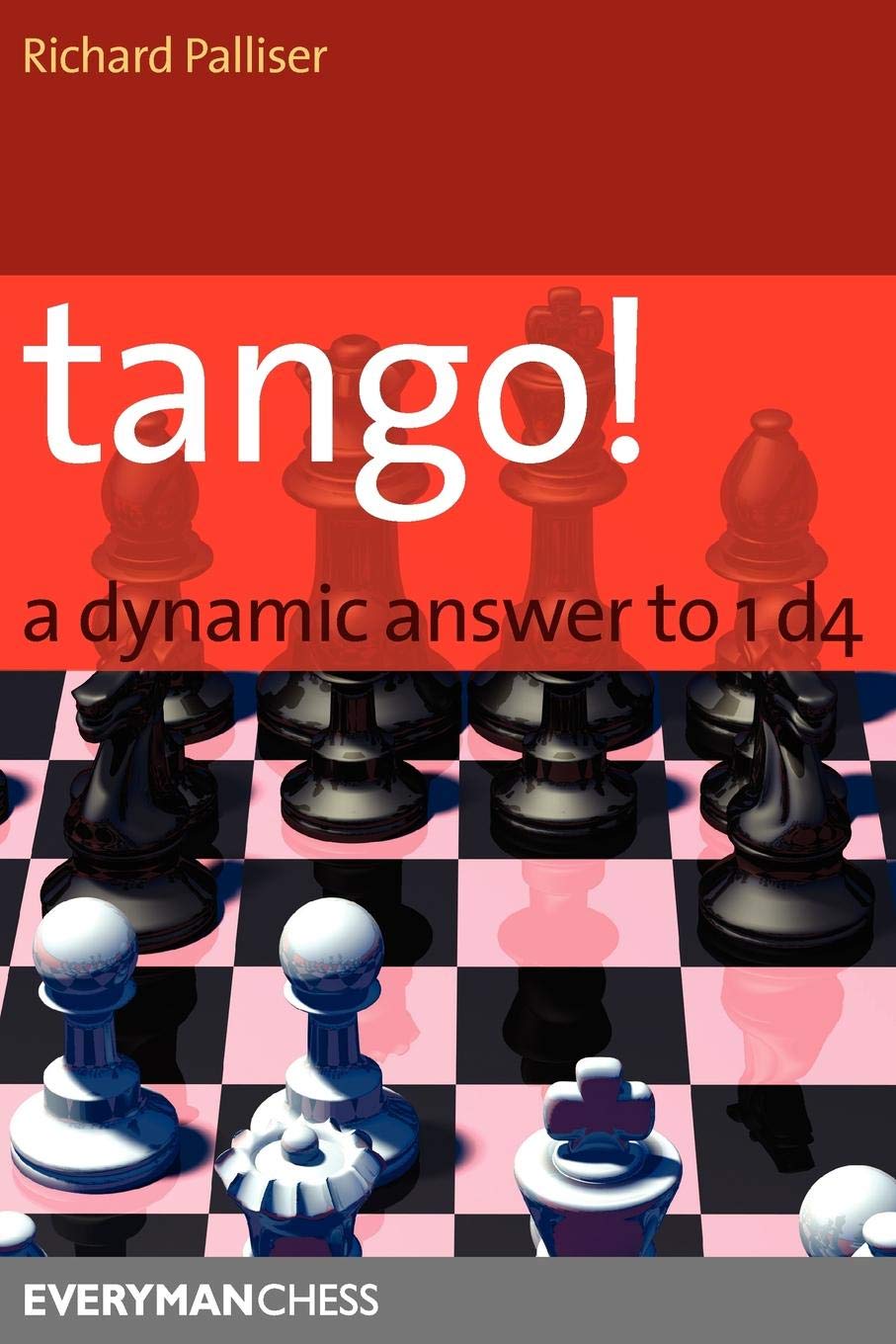
According to “tango!” :
“His debut book Play 1.d4! was very well received by critics and the chess public alike”
His handle on the Internet Chess Club is “worcester”.
IM Richard Palliser
With the White pieces Richard plays 1.d4(!) and the Queen’ Gambit, Exchange Variation is the main weapon of choice.
As the second player Richard plays the Sicilian Najdorf and the King’s Indian Defence.
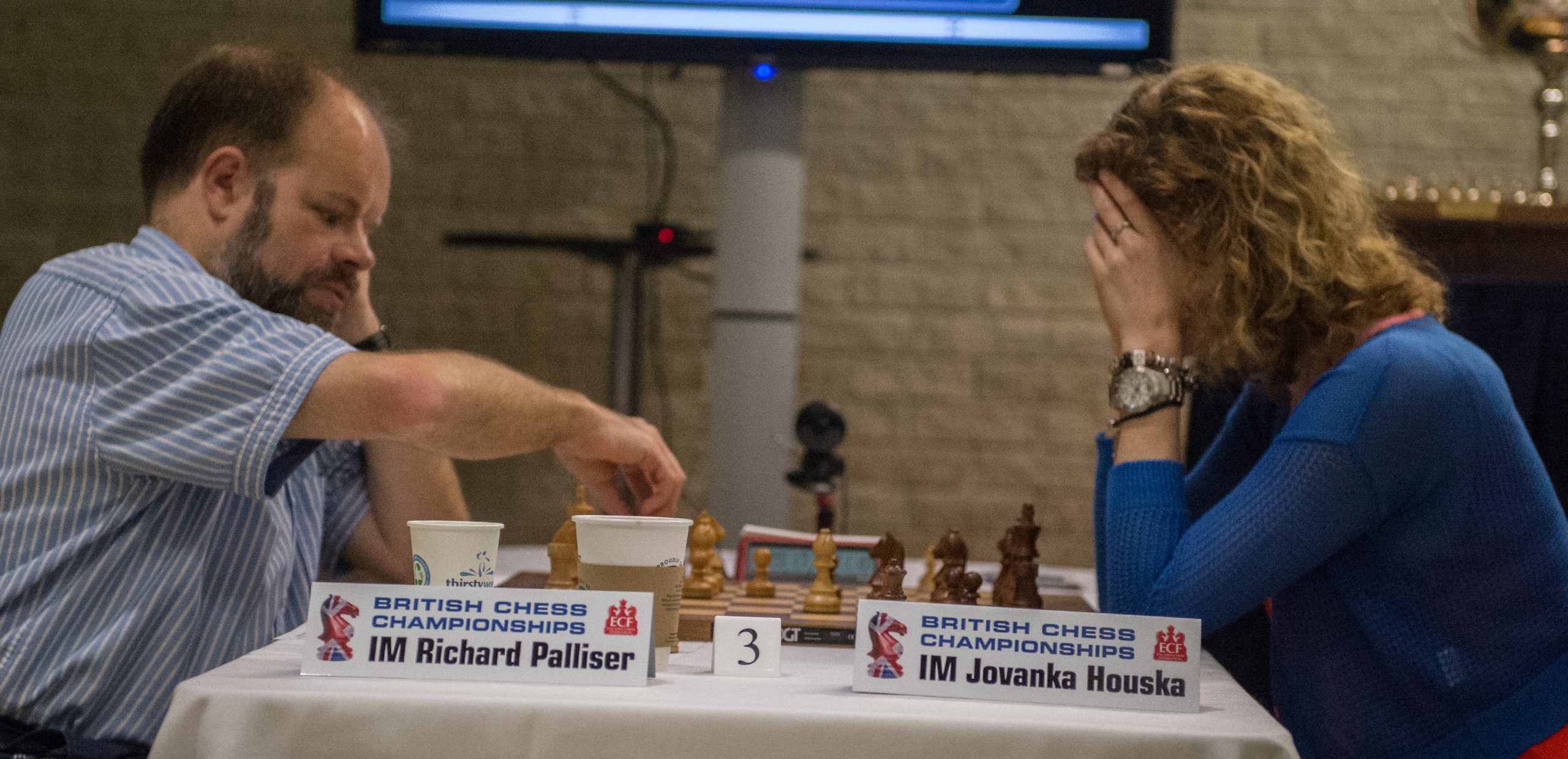
IM Richard Palliser and IM Jovanka Houska, British Championships, 2019
Richard is Editor of “CHESS” and has authored a number of publications :
Play 1.d4 !, Batsford, 2003
Palliser, Richard (2005). Tango! A Dynamic Answer to 1 d4. Everyman Chess. ISBN 1-85744-388-8.
Tango! A Dynamic Answer to 1 d4
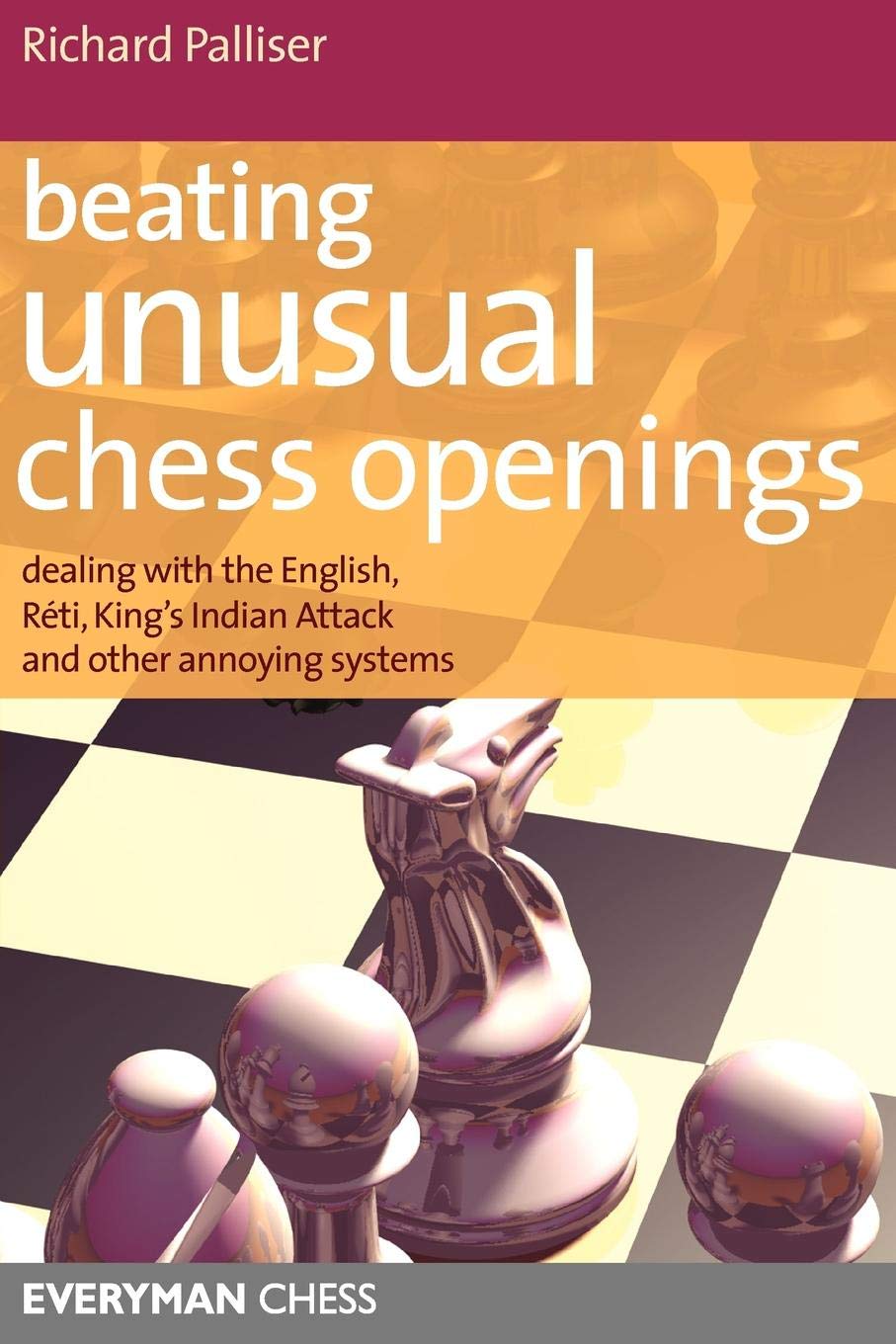
Palliser, Richard (2006). Beating Unusual Chess Openings. Everyman Chess. ISBN 1-85744-429-9.
Beating Unusual Chess Openings
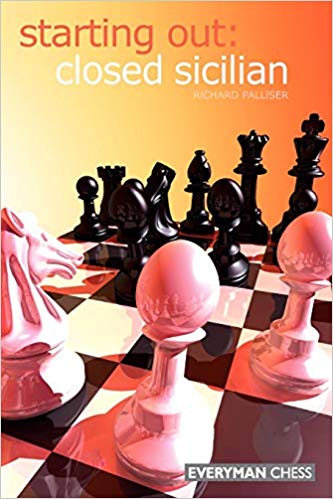
Palliser, Richard (2006). Starting Out: Closed Sicilian. Everyman Chess. ISBN 978-1-85744-414-8.
Starting Out: Closed Sicilian
Palliser, Richard (2007). Starting Out: Scilian Najdorf. Everyman Chess. ISBN 978-1-85744-601-2.
Starting Out: Scilian Najdorf
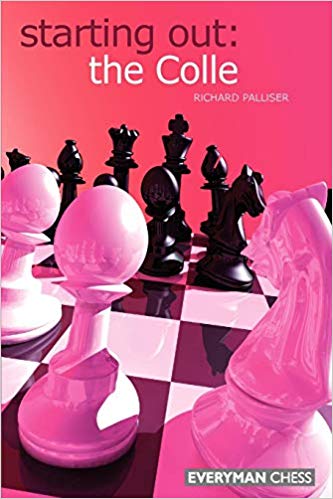
Palliser, Richard (2007). Starting out: the Colle. Everyman Chess. ISBN 978-1-85744-527-5.
Starting out: the ColleThe Complete Chess Workout, Everyman, 2007
Palliser, Richard; Kosten, Tony; Vigus, James (2008). Dangerous Weapons: Flank Openings. Everyman Chess. ISBN 978-1-85744-583-1.
Dangerous Weapons: Flank Openings
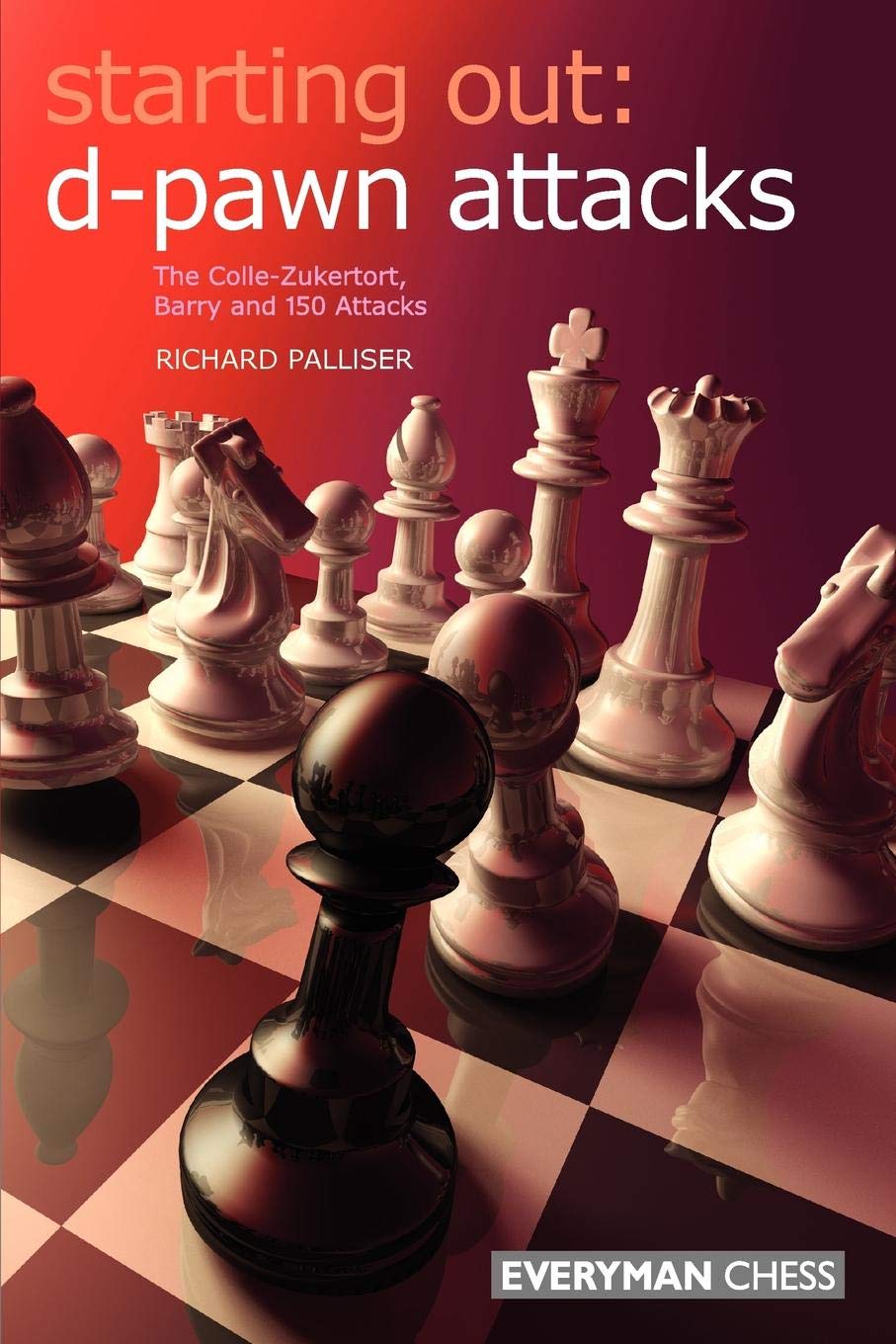
Palliser, Richard (2008). Starting out: d-pawn attacks. The Colle-Zukertort, Barry and 150 Attacks. Everyman Chess. ISBN 978-1-85744-578-7.
Starting out: d-pawn attacks
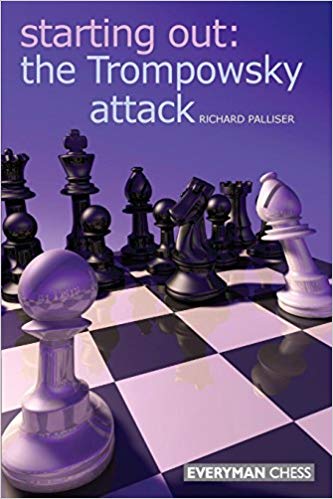
Palliser, Richard (2009). Starting Out: the Trompowsky Attack. Everyman Chess. ISBN 978-1-85744-562-6.
Starting Out: the Trompowsky Attack
Palliser, Richard; Williams, Simon; Vigus, James (2010). Dangerous Weapons: The Dutch. Everyman Chess. ISBN 978-1-85744-624-1.
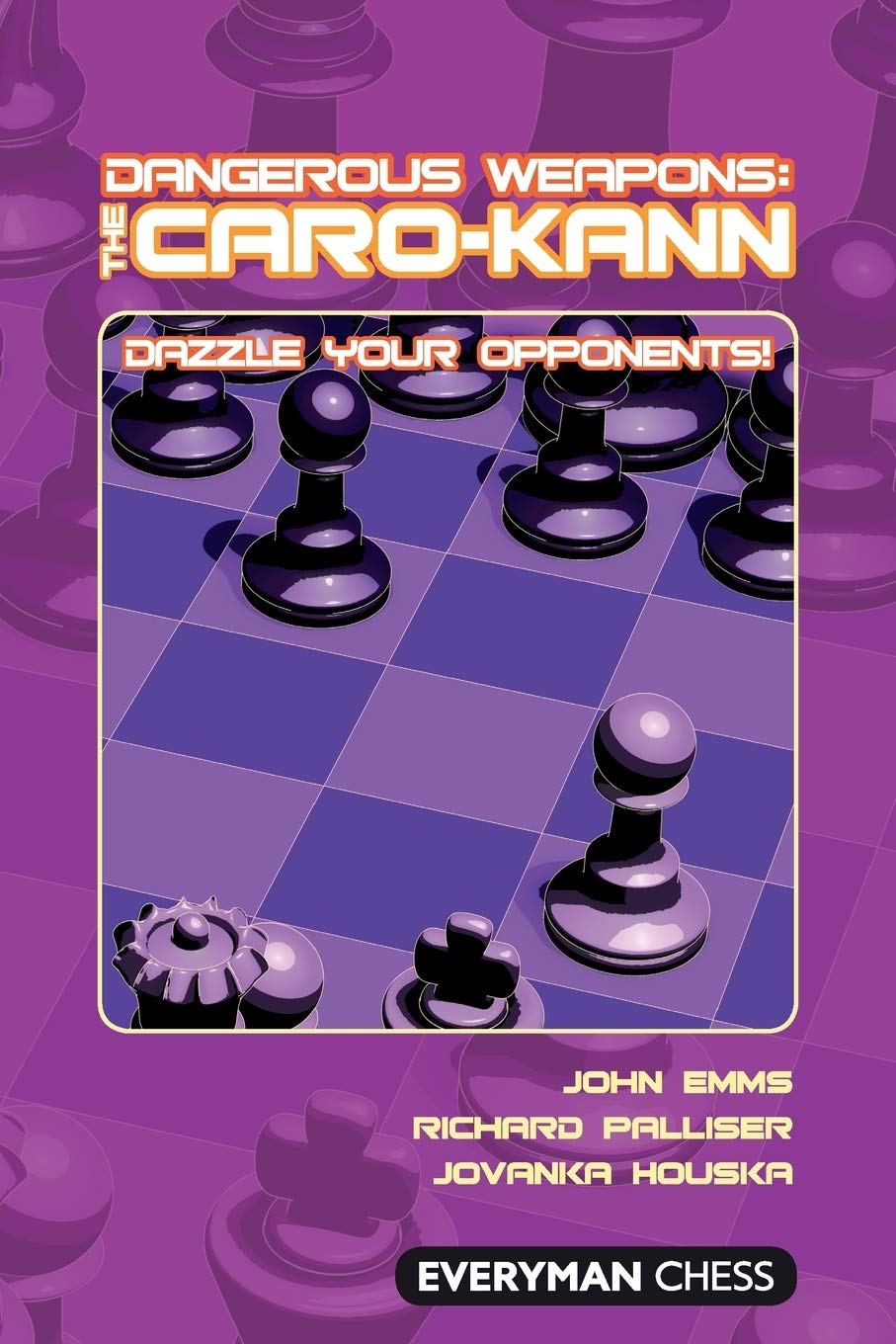
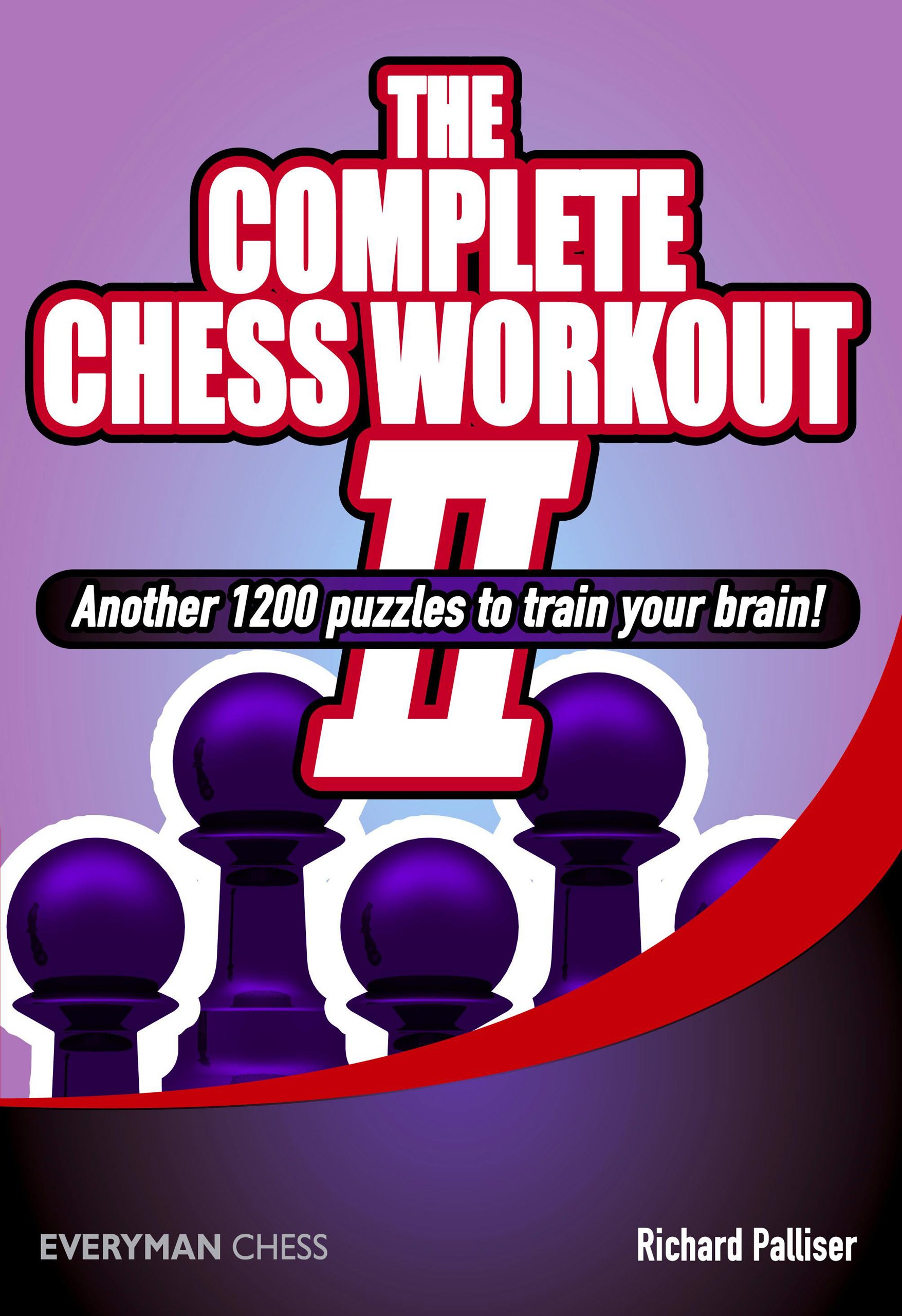
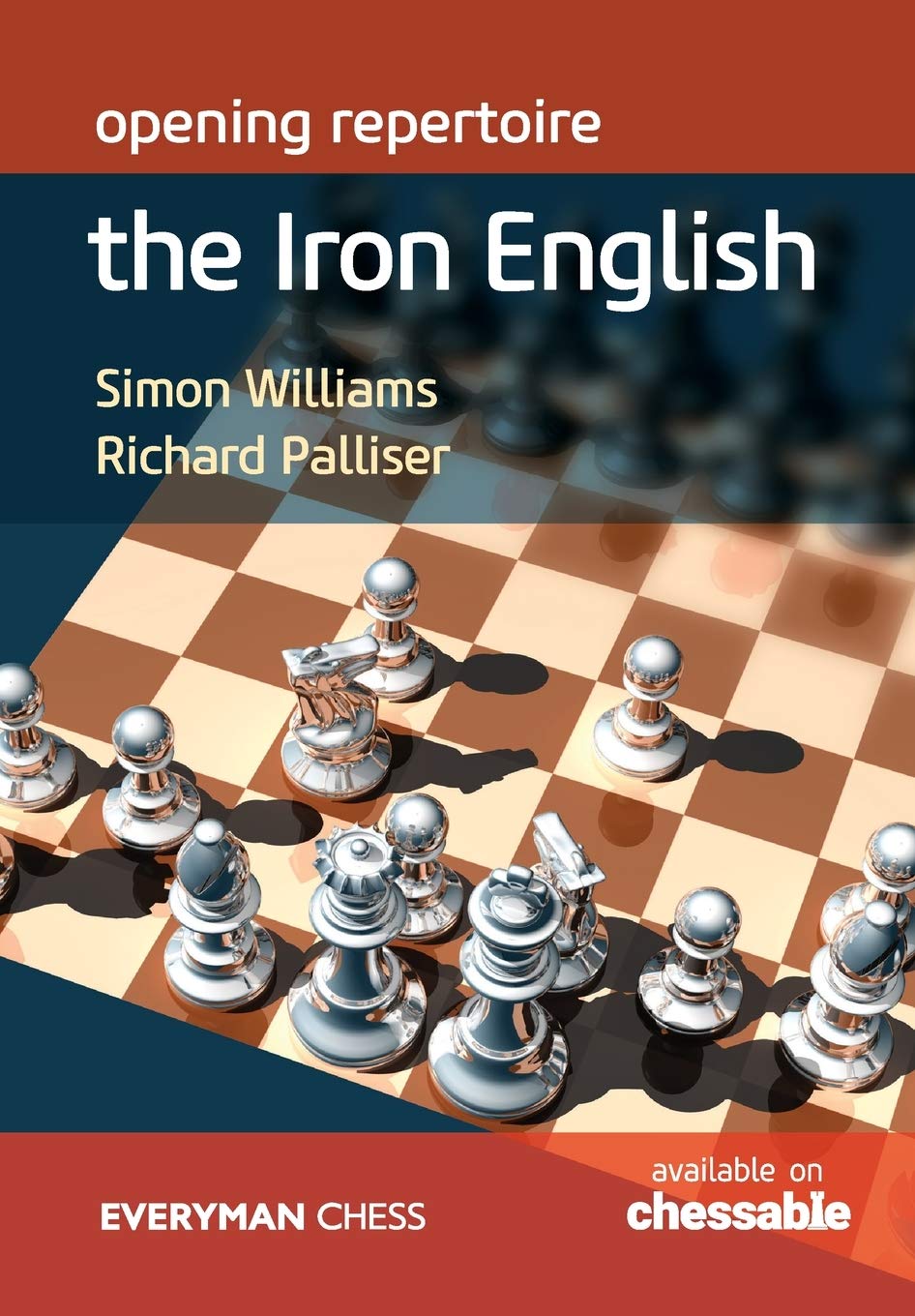
Dangerous Weapons: The DutchDangerous Weapons : The Caro-Kann, Everyman, 2010The Complete Chess Workout II, Everyman, 2012The Iron English, Richard Palliser & Simon Williams, Everyman Chess, 2020, ISBN-13 : 978-1781945803IM Richard Palliser
We wish happy birthday to WGM Anya Sun Corke on her birthday.
Anya Sun Corke was born in California, USA on Wednesday, September 12th 1990.
In 2013, Anya graduated from Wellesley College summa cum laude with a B.A. in Russian and Philosophy
She became a woman’s Grandmaster in 2004.
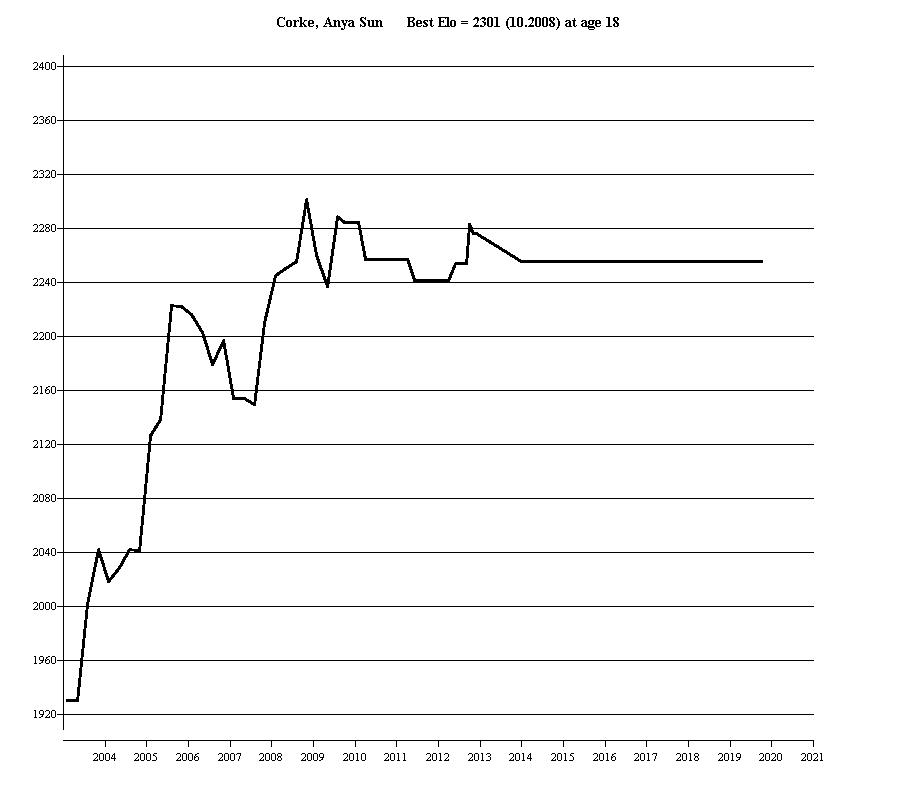
Her peak FIDE rating (according to Felice) was 2301 in October 2008.
FIDE rating profile of WGM Anya Sun Corke
With the white pieces Anya played the Queen’s Gambit and Trompowski Attack
As the second player Anya played the Sicilian Kan, French Rozentalis (3.Nc3 Nc6) and the Grünfeld Defence.
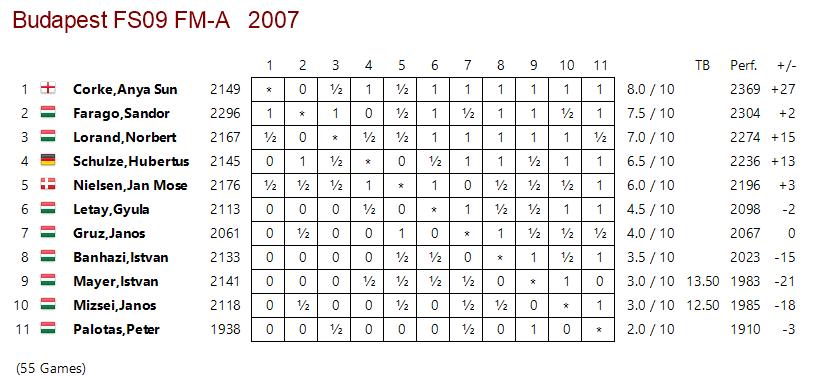
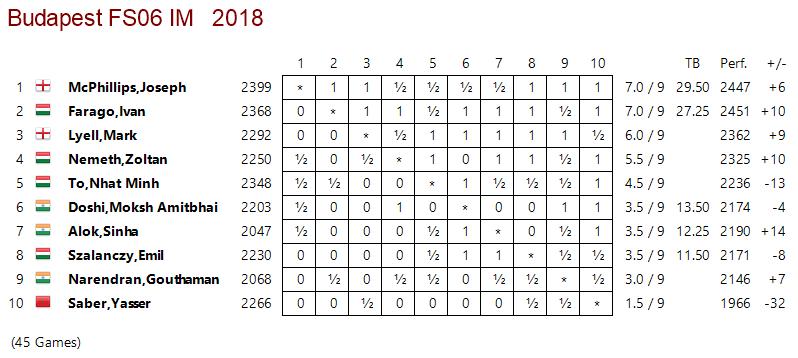
Anya won outright the 2007 Budapest First Saturday FM tournament :
Budapest First Saturday FM Tournament, 2007
She gave up competitive chess in 2014.
An almost miniature from the 2006 British Championship :
From Wikipedia :
“Anya Sun Corke (born 12 September 1990 in California, USA) is an English chess player holding the title of Woman Grandmaster (WGM). She played for Hong Kong, where she was the top ranked chess player, until 2009.[1]
Corke earned the WGM title with her performance in the 36th Chess Olympiad, playing for the Hong Kong men’s team.[2][3]
She was the 2004, 2005, 2006 and 2008 Hong Kong National Champion (for men and women), one of the youngest national champions ever at the age of 13 years and 9 months.
She was the British Junior Under-11 Champion in 2002[4] and the Under-12 Champion in 2003,[5] the first girl to win either of these age groups. In 2004, she became joint British U-14 Champion.[6]
In December 2004, she won the Asian Youth Girls U-14 Championship in Singapore.[7]
In August 2005, she jointly won with Alisa Melekhina and Abby Marshall the second annual Susan Polgar National Invitational for Girls under-19.[8]
Corke represented the England Women’s team at the 2012 Chess Olympiad in Istanbul, Turkey,[9][10] and the 2013 European Team Championship in Warsaw, Poland.[11]
In 2013, she graduated from Wellesley College summa cum laude with a B.A. in Russian and Philosophy.[12][13]
In 2014, she started a Ph.D. program in Slavic Languages and Literatures at Yale University.”
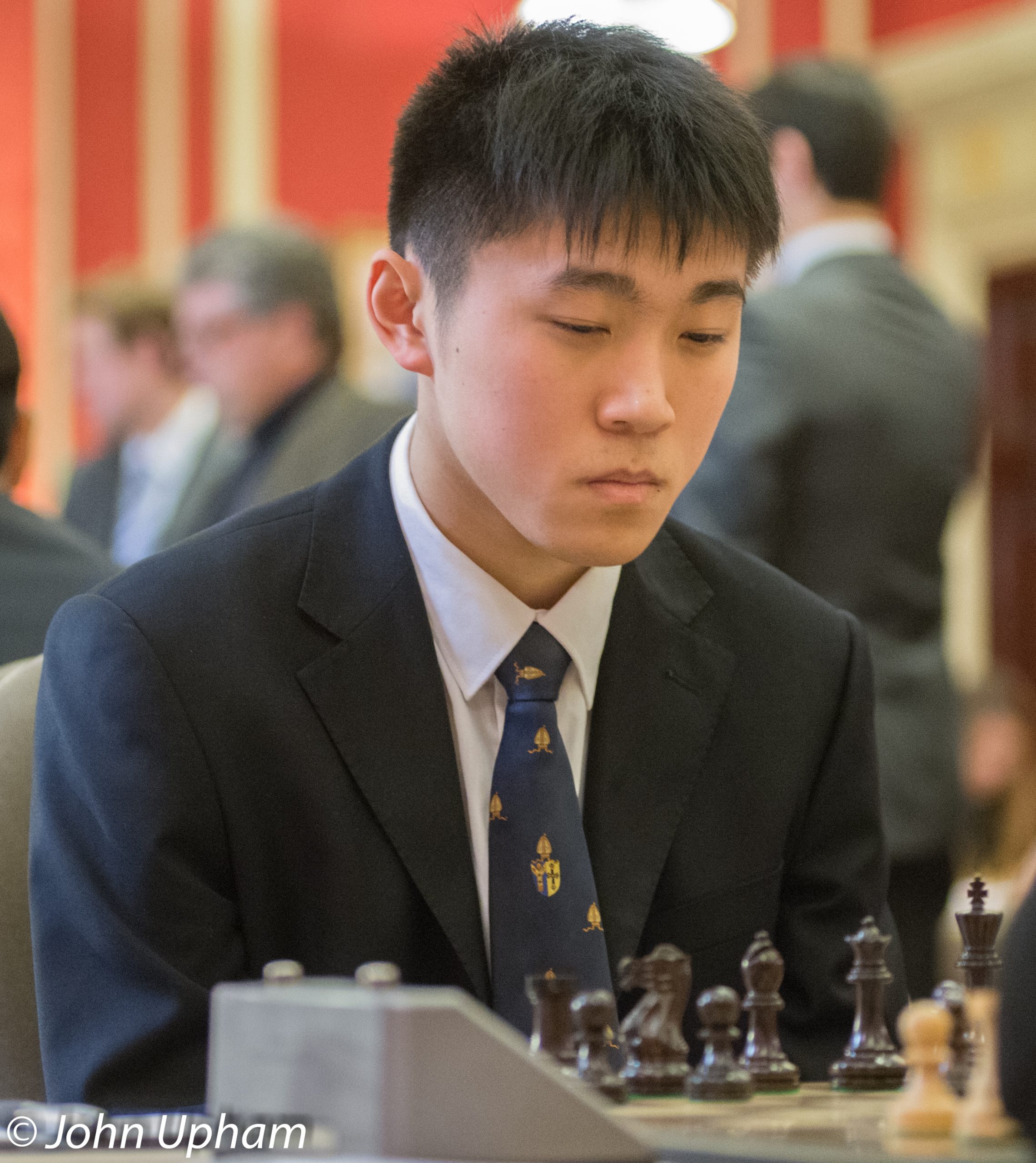
IM Yang-Fan Zhou, UKCC Terafinal 2013, courtesy of John Upham Photography
We send best wishes to IM Yang-Fan Zhou on his birthday.
Yang-Fan George Zhou was born on Thursday, September 8th, 1994 in Wandsworth, London. His mother’s maiden name was Yang. “Parklife” by Blur was number one in the UK Singles chart.
His brother, Yangjian Zhou, is also a strong player.
Yang-Fan attended Whitgift School, Croydon (founded by John Whitgift in 1596) and then Churchill College, The University of Cambridge where he studied Chemical Engineering (same subject as Malcolm Pein)
Yang-Fan works for The Hut Group and resides in Manchester.
Here is an article from the Guardian which included
“The Whitgift 13-year-old recently won the Coulsdon Premier with 8.5/9, gaining nearly 100 world rating points which will make him England’s highest ranked under-18 after Howell in the July FIDE list.”
He became a FIDE Master in 2009 and an International Master in 2011.
Yang-Fan claimed the title of UK Chess Challenge “Strat” in 2011 for winning the Terafinal outright. Only Mike Basman knows what “Strat” means.
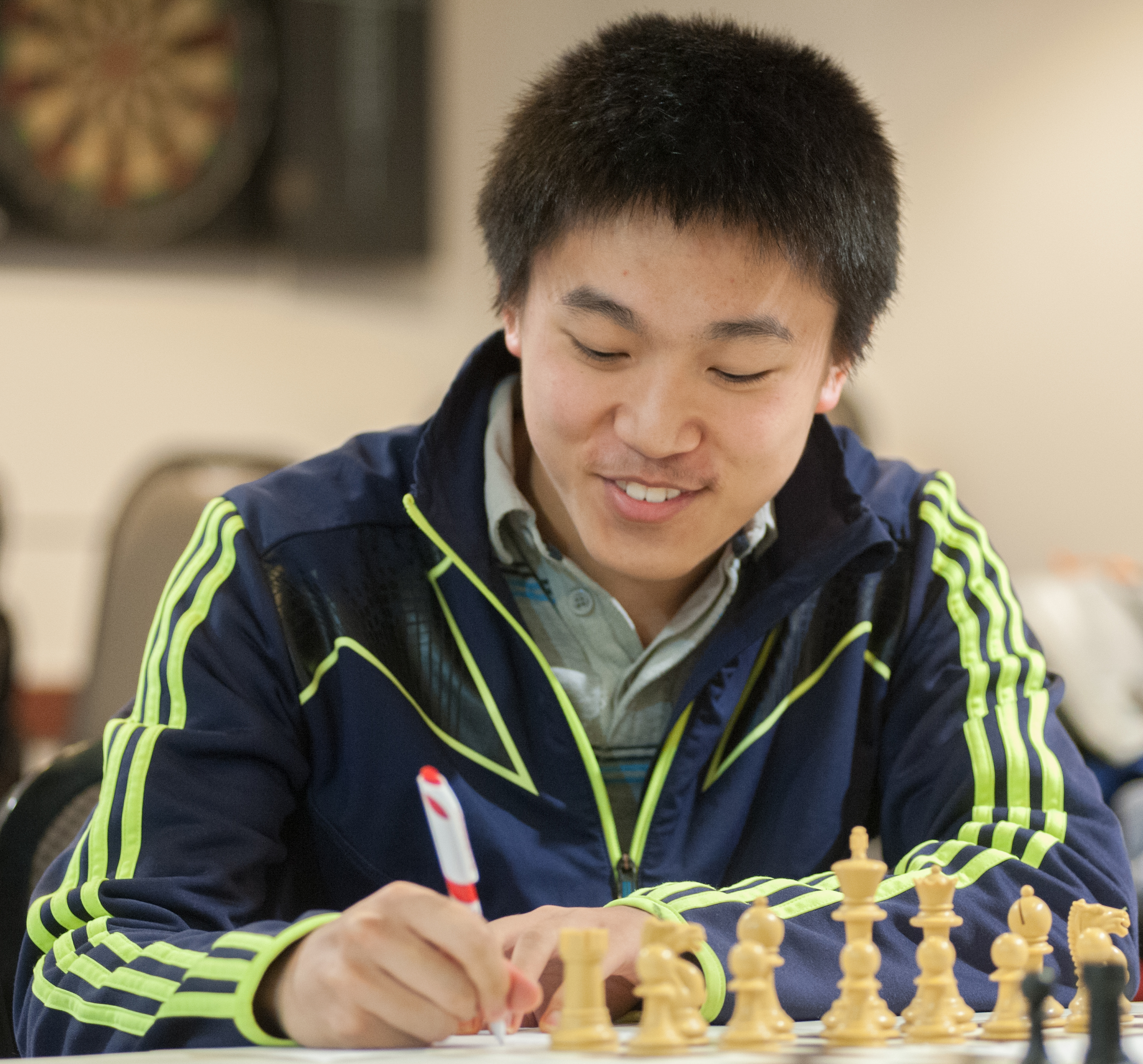
IM Yang-Fan Zhou at a Wellington College Training Event in 2014, courtesy of John Upham Photography
He scored 9/9 in the 2011 e2e4 Brighton Masters Closed tournament, including beating the two grandmasters (Keith Arkell and Alexander Cherniaev) in the tournament.
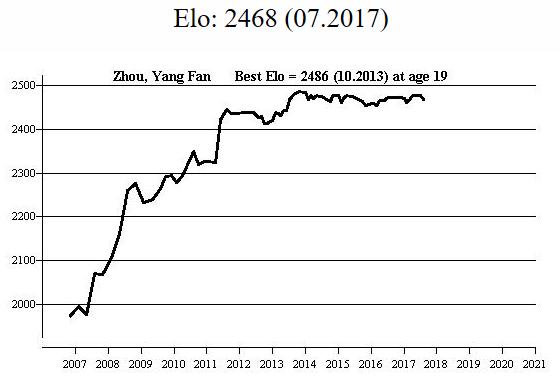
His peak FIDE rating was 2486 in October 2013 at the age of 19.
FIDE Rating Profile of IM Yang-Fan Zhou
In 2014 Yang-Fan Zhou represented Cambridge in the annual Varsity match (the 132nd) and played on top board drawing with David Zakarian.
Yang-Fan Zhou plays board one in the 2014 Varsity Match, courtesy of John Upham Photography
With the White pieces Yang-Fan is exclusively an e4 player using the Scotch Game as his main weapon playing open Sicilians and championing 6.h3 versus the Najdorf.
As the second player he employs the Sicilian Dragon and King’s Indian Defences.
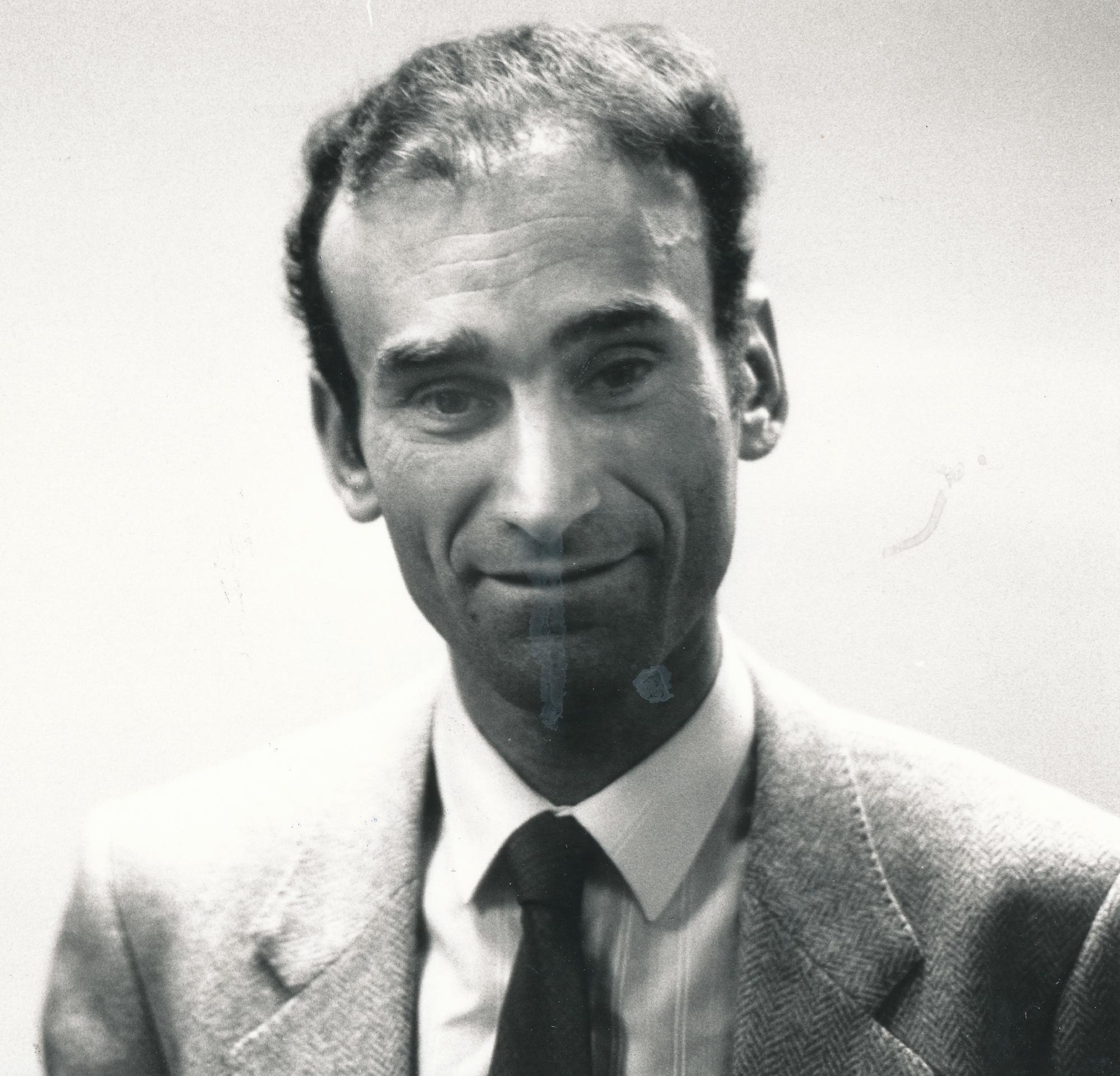
GM Michael Stean chats with ? at the 2014 Varsity Match. Courtesy of John Upham Photography
We send best wishes to GM Michael Stean on his birthday,
Michael Francis Stean was born Michael Francis (some say Frank) Stein on Friday, September 4th, 1953 in Pancras, London. His mother’s maiden name is / was Jean Feldman. Michael has a brother, Howard.
He attended Latymer Upper School and Cambridge University and his early chess days were spent at Richmond and Twickenham Chess Club.
He became an International Master in 1975 and England’s third (OTB) Grandmaster in 1977 winning £2,500 from the Jim Slater Foundation.
He was the chess correspondent of The Observer.
Some notable opponents that he has a plus score against include:
John Nunn: 3.5/5
Jonathan Speelman: 2.5/4
Gert Ligterink: 2.5/3
Robert Bellin: 2.5/3
Brian Eley: 2.5/3
Vladimir Liberzon: 2/3
and others.
With the white pieces Michael played 1.e4, 1.c4 and 1.Nf3 but rarely 1.d4 preferring the Ruy Lopez, Exchange Variation.
With the black pieces he played the Sicilian Najdorf (and was a leading expert), the Nimzo-Indian and the Queen’s Indian defences.
He has the dubious honour of being the first Grandmaster to lose a blitz game to a computer (Chess 4.6) in London, 1977. Stean exclaimed, “This computer is a genius!”
Michael Francis Stean
His peak FIDE rating was 2540 in January 1979.
His mother (Jean) presented a trophy to the Marlow Congress (now the Berks and Bucks Congress) which became the Mrs. Jean Stean Cup.
Tony Miles and Michael Stean at the FIDE Zonal in Amsterdam, 1978. (Source: http://gahetna.nl)
According to British Chess (Pergamon, 1983) by Botterill, Levy, Rice and Richardson :
“Stean was educated at Cambridge University, He was equal first in the British Championship, Clacton, 1974, although only 4th in the playoff. He has been an important member of Korchnoi’s team for the last 5 years, and this perhaps has been responsible more than anything for the rounding out and maturing of his style from the sharp tactical play of the early 1970s to the solid positional GM (especially with the White pieces) of today.
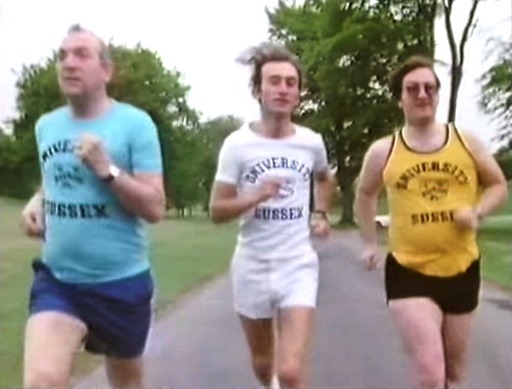
Korchnoi, Stean and Keene try out matching vests and T-shirts from The University of Sussex sports centre, Falmer, East Sussex. It is likely that the yellow one was only worn for this press photo shoot.
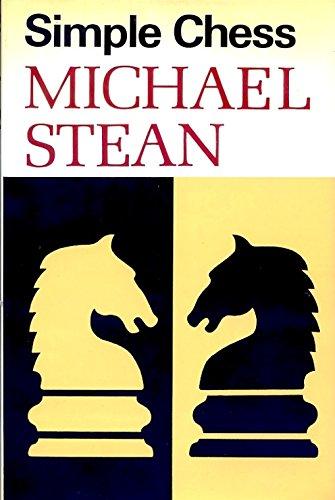
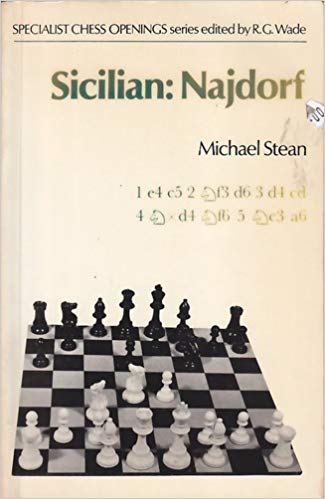
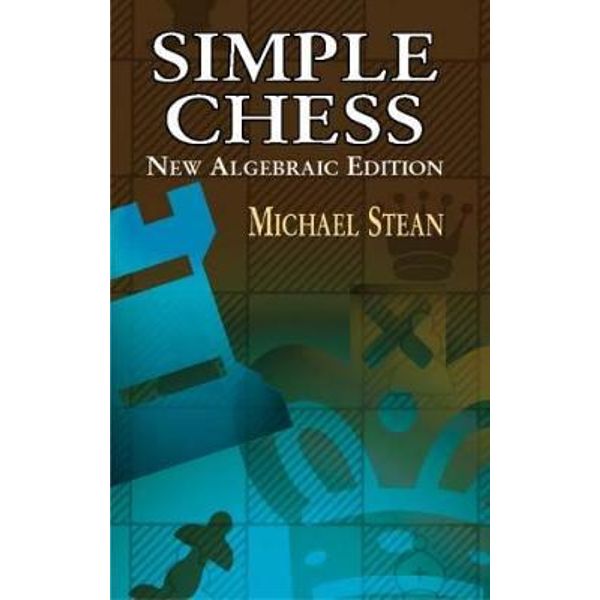
Stean is a fine author; Simple Chess and the Sicilian Najdorf are both excellent books.
Michael Stean at the 1977 Lord John Cup
Temperamentally he is generally pleasant, good humoured and self confident, although he suffers from intermittent poor health which might help to explain his at times erratic results.”
According to Chessgames.com :
“Michael Francis Stean was born on the 4th of September 1953 in London, England. He finished 3rd at the 1973 World Junior Chess Championships behind Alexander Beliavsky and Tony Miles. Awarded the IM title in 1975 and the GM title in 1977 (The third Englishman to attain the title after Miles and Keene).
He finished 1st= in the 1974 British Championship but lost the play-off. He played on 5 English Olympiad teams from 1974 – 1983 and has won 1st prizes at Vrsac 1979, Smederevska Palanka 1980 and Beer Sheba 1982.
A specialist in Opening Theory he served as one of Viktor Korchnoi’s seconds in the 1977 – 1981 period. He is the author of Simple Chess, an introduction to chess strategy.”
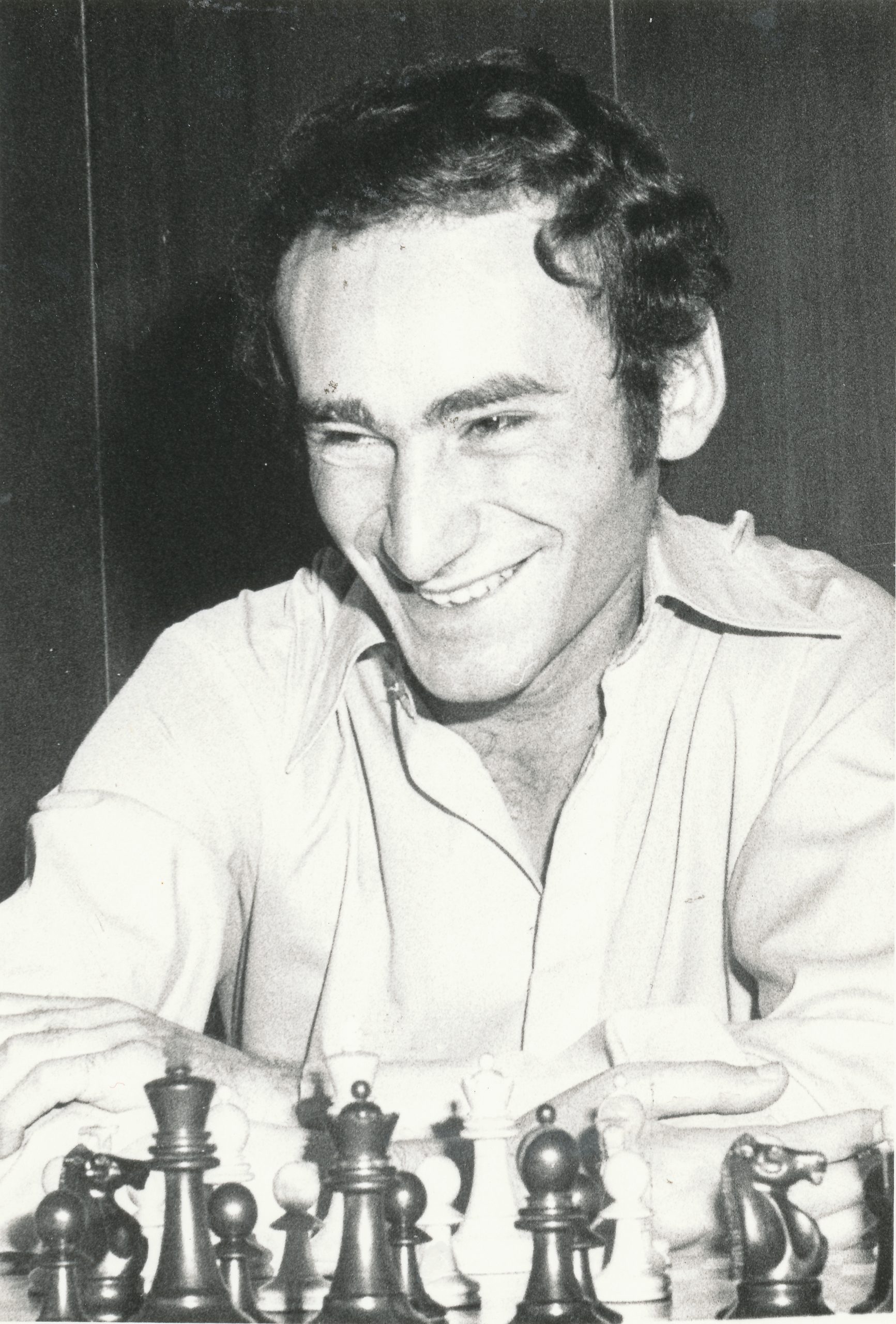
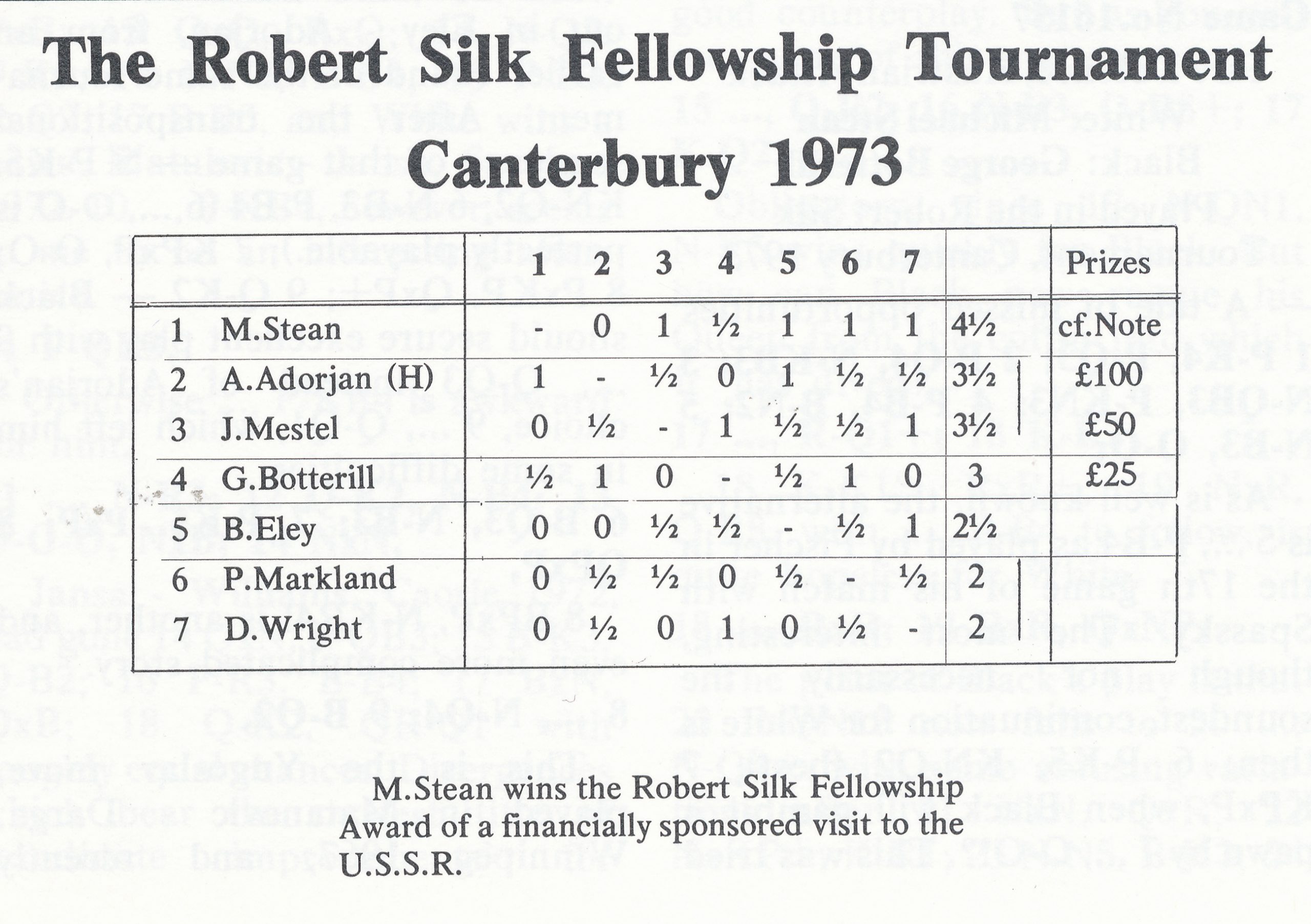
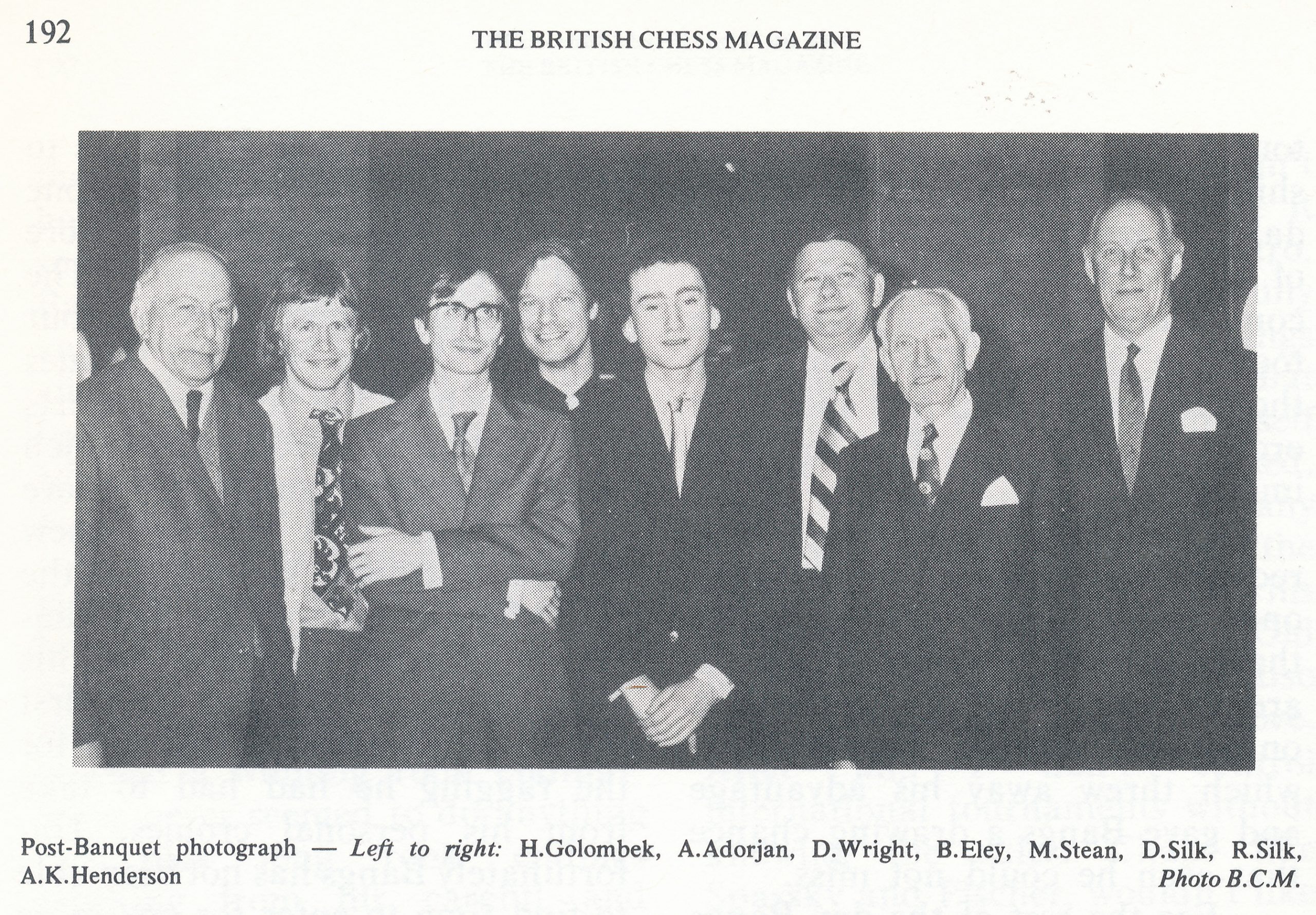
Mchael Stean, Hastings 1972-1973. Source : British Chess Magazine, Volume 93, Number 2, page 53The Robert Silk Fellowship Tournament, Canterbury, 1973. Source : British Chess Magazine, Volume 93, Number 5, page 192Post-banquet photograph – left to right : Harry Golombek, Andras Adorjan, Danny Wright, Brian Eley, Michael Stean, D. Silk, Robert Silk, AK Henderson. The Robert Silk Fellowship Tournament, Canterbury, 1973. Source : British Chess Magazine, Volume 93, Number 5, page 192
Harry Golombek wrote this about Michael in a 1980 Dataday chess diary :
“The fact that he has sprung up into second place among English players as regards Elo ratings demonstrates the considerable advance Michael Stean has made in the course of a year.
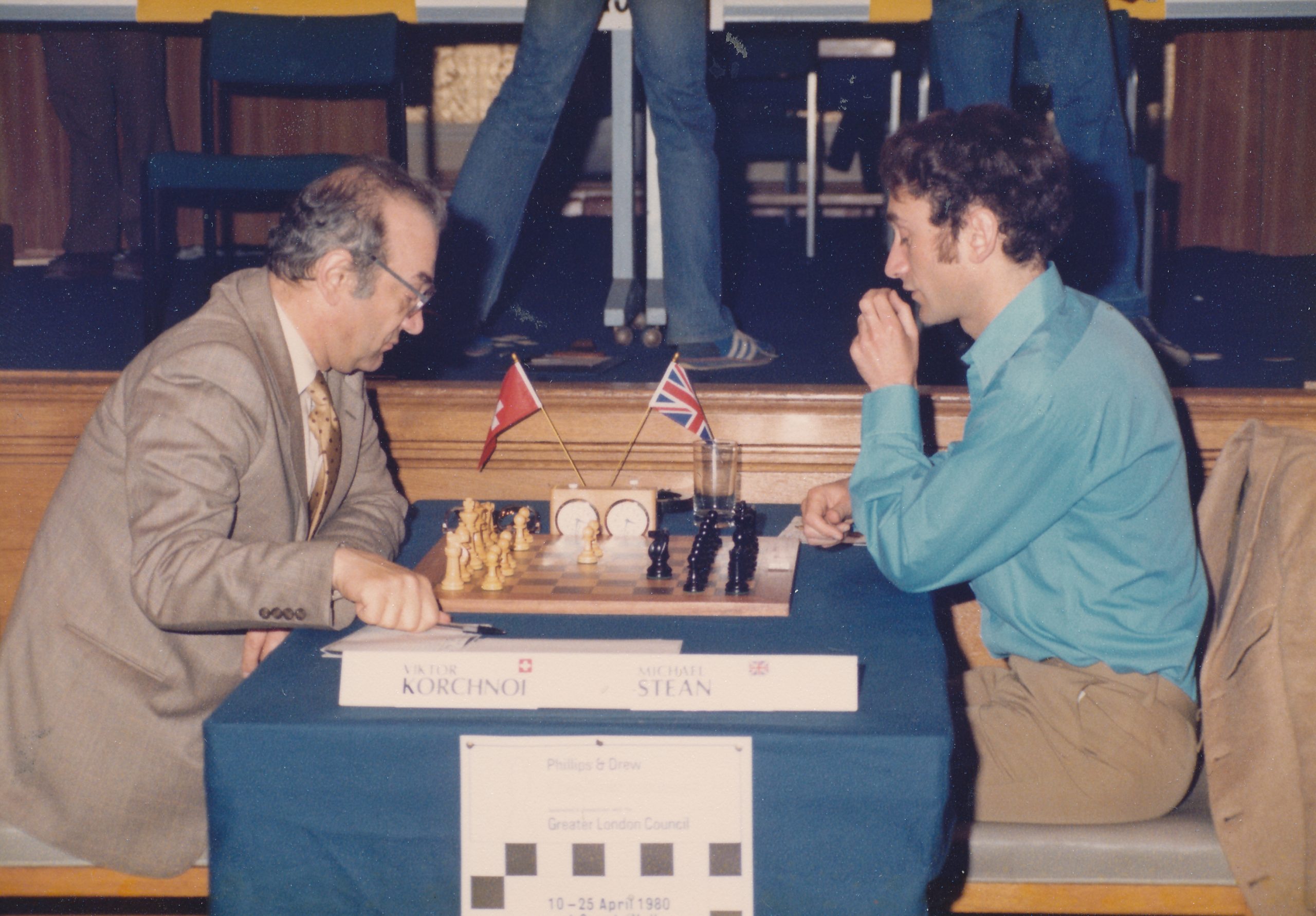
Korchnoi vs Stean at the Philips & Drew Masters of 1980. The game was drawn in 19 moves.
In the 1978 diary I wrote that it would not be long before he gained the grandmaster title since he already possessed one norm of the title. The forecast proved to be correct as he duly acquired the title a few months after I wrote the prophecy.
Michael Stean
He had though to take two more bites at the cherry before he managed to gain the required norms since the tournaments in which he played were not long events. They were Montilla in August 1977 where he came third below Gligoric and Kavalek and the Lord John Cup Tournament in London in September 1977 where he was equal 2nd with Quinteros and Mestel, first place being occupied by the Czechoslovak grandmaster, Hort.
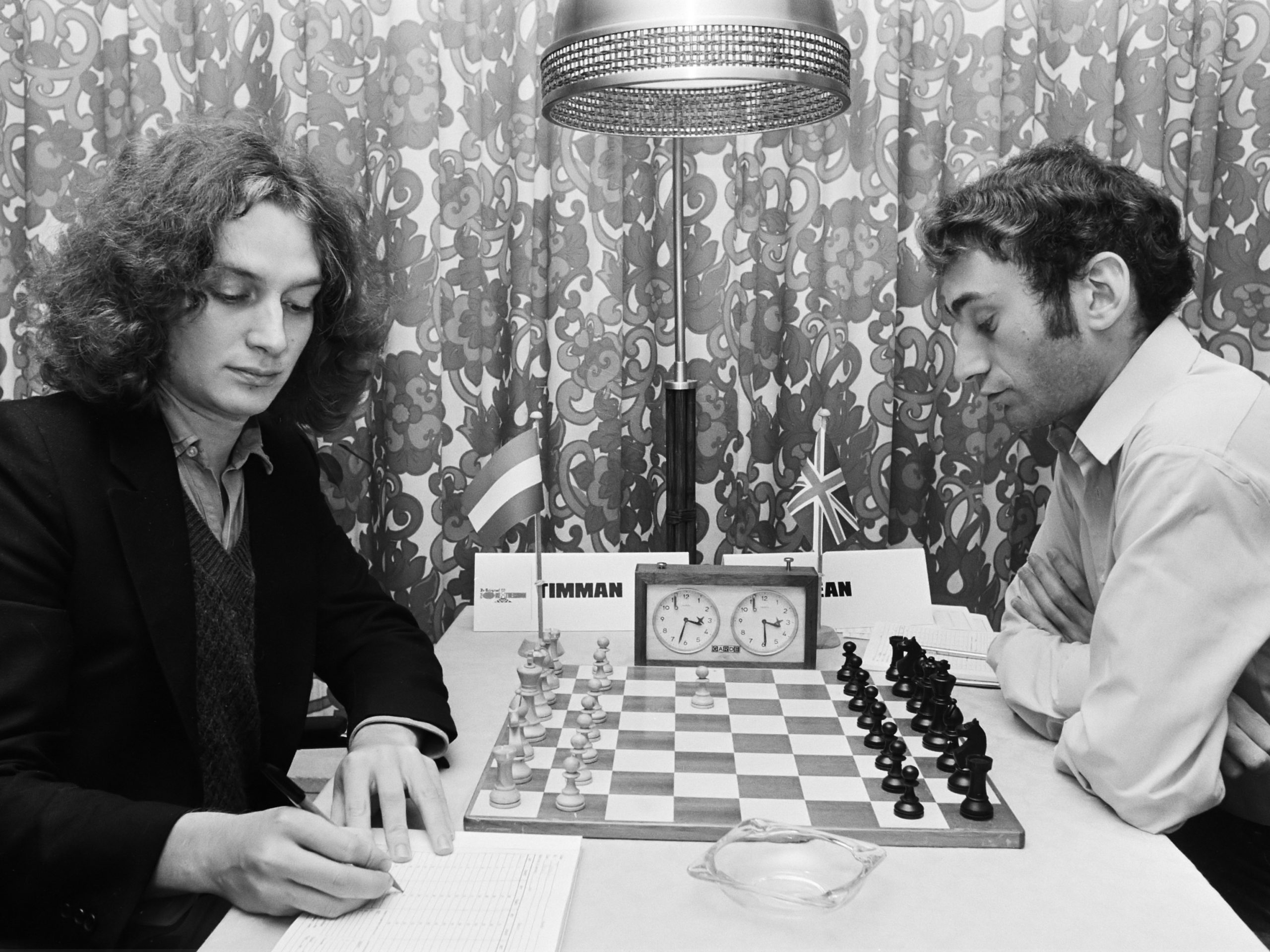
Jan Timman plays Michael Stean at the 1978 Amsterdam FIDE Zonal. The Dutch GM won in 39 moves.
Before that he had assisted Keene in seconding Korchnoi in his candidates match versus Polugayevsky and had done this to such effect that Korchnoi asked him and Keene to act as his seconds at his final match in the Candidates at Belgrade and later on still at the World Championship match against Karpov in the Philippines.
Nigel Short, Lubomir Kavalek and Michael Stean
He also played successfully in Yugoslavia in 1977 (equal 2nd at Virovitica and equal 2nd at Bar). In 1978 he was 3rd at Beersheba below Korchnoi but head of Keene. Five points out of nine at the very strong Swiss System tournament at Lone Pine was followed by an excellent equal 4th with Miles at the tournament at Las Palmas. He has shown that he not only possesses the title of grandmaster but also plays like one.
Michael Stean (far right) at an unknown event
A good example in the following game (Stean-Sax) against one of the joint first prize winners at the Las Palmas event. It was awarded the prize for the best game :”
From The Oxford Companion to Chess (OUP, 1984) by Hooper & Whyld :
“English player, International Grandmaster (1977). At Nice 1974, in the first of his several Olympiads, he won the brilliancy prize for his game against Browne.
Since then he has had several good results: Montilia 1976, equal second with Kavalek and Ricardo Calvo (1943— ) after Karpov; Montilia 1977, third (-1-3 = 6)after Gligoric and Kavalek ahead of R. Byrne, Taimanov, and Andersson; London 1977. second (+4=4—1) equal with Mestel and Quinteros after Hort ; Vrsac 1979, first (+ 8=5—1); Smederevska Palanka 1980, first (+7-6); Beersheba 1982, first, Stean was one of Korchnoi’s seconds in the world championship cycles of 1977-8 and 1980-1, and the two became close friends.
In particular Stean provided help with the openings, a subject on which he specialises. He published a book on the Najdorf variation of the Sicilian defence in 1976, and Simple Chess, a guide to the understanding of positional ideas, in 1978.”
GM Michael Stean
From Wikipedia :
“Michael Francis Stean (born 4 September 1953) is an English chess grandmaster, an author of chess books and a tax accountant.
Michael Stean chats with David Levy at the London Chess Classic
The game below (Stean-Browne) was the first winner of the World Brilliancy Prize established in 1974 by Isador Samuel Turover. The value of the prize was $1,000.”
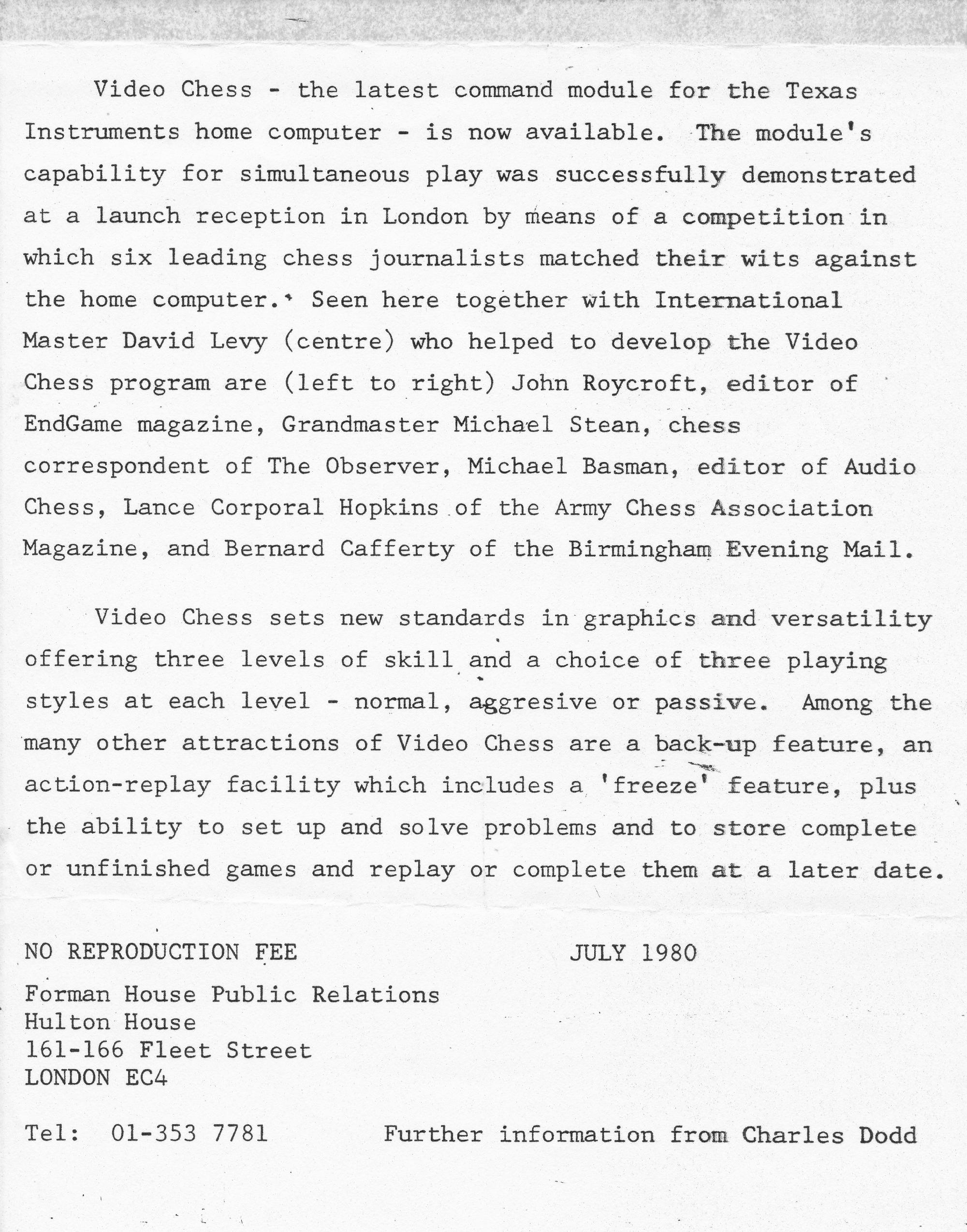
Video Chess Event (See caption below)Video Chess Caption
In 1983 at the height of his powers Michael left the chess work and became a tax accountant. He is now a senior partner at RSM UK.
Apparently :
“A cross disciplinary tax partner, Michael’s experience spans both corporate and non-corporate taxation for clients spanning a wide range of companies (listed and private) as well as high net worth individuals. Areas of activity include advice on transactions and structures, dealing with enquiries conducted by the tax authorities and forensic tax services in tax disputes.
As a member of the large business and international tax sub-committee of the tax faculty of the Institute of ICAEW, Michael was an active contributor to the consultation and development of the so-called ‘GAAR’ (general anti-abuse rule) law enacted in 2013.
Formerly a professional chess grandmaster, Michael brings an analytical approach to the field of tax.”
Mchael Stean, tax accountantSimple Chess by Michael SteanSicilian Najdorf by Michael SteanSimple Chess by Michael Stean
BCN wishes IM Jeff Horner, all the best on his birthday.
Jeffrey Horner was born in Bolton, Lancashire on Thursday, August 25th, 1949.
Jeff played for Poulton-le-Fylde Teacher Training College and is registered for Lancashire CA.
Jeff became a FIDE Master in 1989 (aged 40) and an International Master in 2008 (at the age of 58) and a gap of some 19 years!
(Compare this with John Pigott : John became a FIDE Master in 1984 and an International Master in 2017, a gap of some 33 years!)
He achieved a peak rating of 2450 in January 1975 at the age of 26.
His most recent ECF grading was 233E in January 2017. His last recorded game was played on June 30th 2018 and was a win with black versus Andrew Ledger graded 227.
Jeff played 1.e4 playing 1.g3 once against Graham Lee and winning and the Trompowski once against Murray Chandler and losing. In recent years he favoured the Wormald (Alapin) Attack in the Ruy Lopez.
With the black pieces Jeff defended the main line Ruy Lopez and the King’s Indian Defence.
Here is a comment from PQB4 from chessgames.com :
“A pity we don’t have more games here by this gifted attacking player, arguably the most respected amateur in the North of England. 220 BCF/2300+ for about 30 years, he’s beaten a string of grandmasters, but his best stuff probably occurs in weekend congresses, hence we don’t have enough recorded. I hope there are many such players in the world whose respect for the game and other players shows more of the quality of a true chess black belt than that of some of the more famous. Off the board he’s a schoolteacher, and presumably a pretty inspiring one, to judge by his infectious love of chess and the encouraging words he invariably has for opponents. I’ve had the pleasure of playing Jeff a few times and… let’s just say that The Day of My Revenge will surely come.”
“There have been so many headlines about Britain’s 12-year-old chess prodigy, David Howell, that it nice to turn our attention to someone at the other end of the spectrum. Perhaps few readers will have heard of 53-year-old Jeff Horner- unless, that is, you have played on the north of England chess circuit, where Jeff has been dominating events since before I was born. My first meeting with Jeff was at Bolton Chess Club at the age of six, but it was another ten years before I fancied my chances against him. And it wasn’t just me who feared him. Few indeed were the top players who travelled “Up North” and got the better of Horner.”
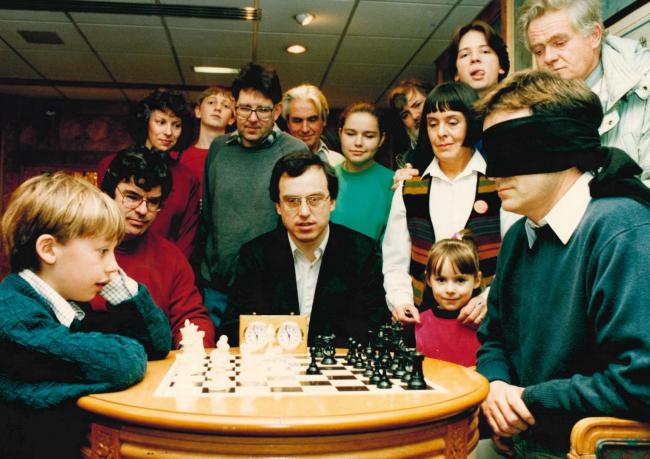
1993 : Jeff Horner takes on world under-10 chess champion Luke McShane blindfolded
“IT’S hard enough challenging a world champion to a game of chess, but to then say you’ll do it blindfold is bordering on the ridiculous.
But that’s exactly what Jeff Hormer from Radcliffe did back in 1993.
Teacher Jeff’s showdown with Luke McShane, the world under-10 chess champion from London was the main attraction at a two-day chess festival held at Bolton’s Moat House.
Jeff, 43, faced off against nine-year-old, Luke, with a thick black cloth placed over his eyes.
The youngster had full view of the board, but Mr Horner was forced to play with the aid of an assistant who placed his pieces and let him know the moves Luke was making
Jeff’s amazing memory and powers of concentration coupled with his greater experience proved too much for the young chess champion.
And despite the handicap of the blindfold, he beat the world champion relatively easily..
It ended up being one of the few matches that Luke McShane lost as he gained international recognition as a chess prodigy.
Jeff Horner, Isle of Man 2008, Photograph : John Saunders
Aged just 16 he became the youngest British chess player to be awarded the title of Grandmaster by the International Chess Federation in 2000 and now, although he works as a trader in the City of London, Luke is regarded as the best amateur chess player in the world.
Jeff Hormer was a long-standing member of Bolton chess club and was renowned for his ability on the board, often taking on – and beating – internationally-renowned players.
He famously beat British Grand Master Tony Miles, who himself had only recently defeated the reigning world champion Anatoly Karpov.
Jeff was awarded the title of International Master by the International Chess Federation.”
“I still remember Tony Miles, fresh from his historic victory against World Champion Anatoly Karpov, stopping off at the Blackpool Open. Miles had become a legend overnight but nobody bothered to tell Jeff, who calmly trounced him just as he would us. Two weeks ago David Howell had to play Jeff Horner in Blackpool. Both players needed two wins from their last two games to earn an international master (IM) result. Would it be Britain’s youngest new IM or our oldest new IM?”
Jeff Horner
Upcoming Events
Notice
There are no upcoming events.
We focus on the British Chess Scene Past & Present !