
Tag Archives: 2020

Gata Kamsky – Chess Gamer, Volume 2: Return 2004-2013

Gata Kamsky - Chess Gamer, Volume 2: Return 2004-2013
Gata Kamsky – Chess Gamer, Volume 2: Return 2004-2013
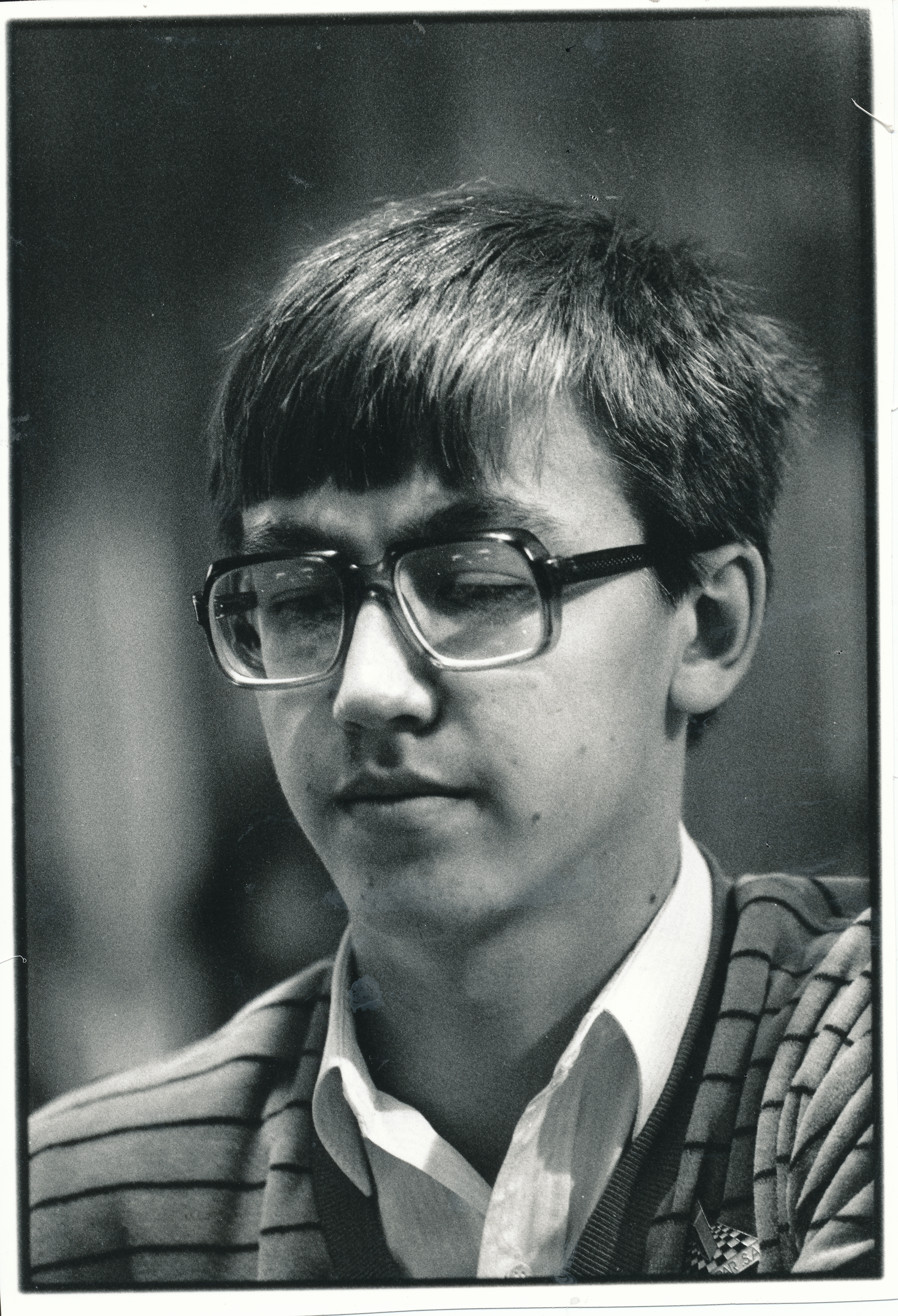
GM Gata Kamsky
GM Gata Kamsky

“Grandmaster Gata Kamsky, five times US champion, has one of the most extraordinary career trajectories of any chess player. In 1989 he arrived in New York, at the age of 15, with his father from his home country Russia. Just two years later he became for the first time US champion. He reached the top 10 at the very young age of 16 and played a World Championship match at the age of 22, losing to the reigning World Champion Anatoli Karpov. He then decided to stop playing chess for 8 years, studying Medicine and Law. In 2004 he reappeared as a full-time player, became again a world-elite player winning many international tournaments and supporting the US team for many successes.”

GM Gata Kamsky
GM Gata Kamsky

What we have here is 22 annotated games (mostly wins, but there are a few draws as well) played by Gata Kamsky between 2004 and 2013, during which period he harboured aspirations towards the world championship.

Kamsky had White in 18 of the 22 games: perhaps it would have been good to learn more about his approach to playing the black pieces. His opponents included the likes of Carlsen, Anand, Aronian, Topalov, Karjakin and Grischuk.

22 games in 450 pages? Yes, that’s an average of about 20 pages per game, often with two or three pages devoted to just one move. There are annotations almost every move: lots of words, and lots of variations as well. Bobby Fischer managed to cram 60 Memorable Games into a lot less space, but then he didn’t have computers to help him.

To give you some idea of what to expect, let’s take a fairly random example: this is Kamsky-Carlsen from the 2007 World Cup in Khanty-Mansiysk.

In this position Carlsen played 17… Re6?

Kamsky comments:

“Probably Black’s only big mistake, but one that costs him the game. The rook is not the best blockader, and once I have figured out how to remove it (by re-routing the knight from g3 to h5, it will only help White accelerate his initiative on the kingside.

“17… Qb3! was perhaps the only move to stop White’s ambitious plans. Black gives up his weak d-pawn in order to open up the position for the rest of his pieces, especially the blocked-in f8-bishop, thus making the rest of his pieces much more effective.”

He then goes on to explain that he was planning to meet 17… Qb3! with 18. Qd2! We then have three pages of notes on this position, with one line ending up with White a pawn ahead on move 42 and another where White wins with a queen sacrifice on move 33.

Eventually returning to the game, we reach this position.

Carlsen has just given up the exchange hoping to set up a fortress. Kamsky explains:

“Black is down a whole exchange, but his structure looks very solid, and if he somehow manages to re-route his knight to f5, while building a strong pawn blockade on the queenside, he might stand a chance. However, White is an exchange up, which means he only needs to open one file for his rooks to infiltrate to win the game. And that is something that Black cannot prevent.”

Kamsky eventually managed, with some help from his opponent, to open the h-file for his rooks, winning on move 46.

The verbal explanations of positions and plans are, as you can tell, models of clarity but you might well think there are too many variations. You’re going to need at least two, more likely three chess sets to find your way through some of the thickets.

The games are not all you get for your money, though. Each game is put into context, and, Kamsky warns us in the introduction: “I must also caution that some of the views and comments expressed on subjects other than chess will sometimes be found to be quite controversial and not ‘correct’, in which case I would invite the reader to draw his or her own conclusions.”.

We are, perhaps fortunately, spared Kamsky’s views on Donald Trump and Brexit, but we do get his opinions of his opponents along with some flashbacks to his childhood.

You may well be aware of the reputation of his father, Rustam Kamsky. Gata’s descriptions of their relationship doesn’t make comfortable reading:

“… I had no education and was under the complete domination, in both body and soul, of my father. He literally threatened to kill me many times, including chasing me with a knife on numerous occasions after a terrible tournament…

“When I came home from the one and only occasion I went to the authorities for help, my father burned my hand to the bone and told me that if I told the authorities about him again, he would kill me. Being physically beaten was an everyday occurrence; it was the psychological attack with his words that made me feel very old and not want to live.”

Given this background it’s perhaps understandable that he has a jaundiced view of some of his fellow grandmasters, even including the universally respected Vishy Anand. He has the rather strange habit of referring to some of them, particularly, it seems, those with whom he has come into conflict in the past, as, for example, Mr Topalov.

In some respects, then, this is a very personal book: much more than just a games collection.

Every one of the games is fascinating, the annotations are superb, but you probably need to be round about 2200 strength to gain full benefit from following all the variations. Below that level, you might find yourself shouting “too much information, Mr Kamsky” and perhaps prefer to spend your money on something with more games and fewer variations.

The production standards, as usual from this publisher, are excellent. I noticed very few typos (a redundant check sign and Jeffrey rather than Jeffery Xiong). If you’re looking for a collection of grandmaster games with exceptionally detailed annotations, along with some very personal insights into the world of top level chess, this is the book for you.


Richard James, Twickenham, 26th February 2020
Richard James
Richard James

Book Details :

  • Paperback : 454 pages
  • Publisher: Thinkers Publishing; 1 edition (7 Nov. 2019)
  • Language: English
  • ISBN-10: 9492510588
  • ISBN-13:  978-9492510587
  • Product Dimensions: 16.5 x 1.9 x 23.5 cm

Official web site of Thinkers Publishing
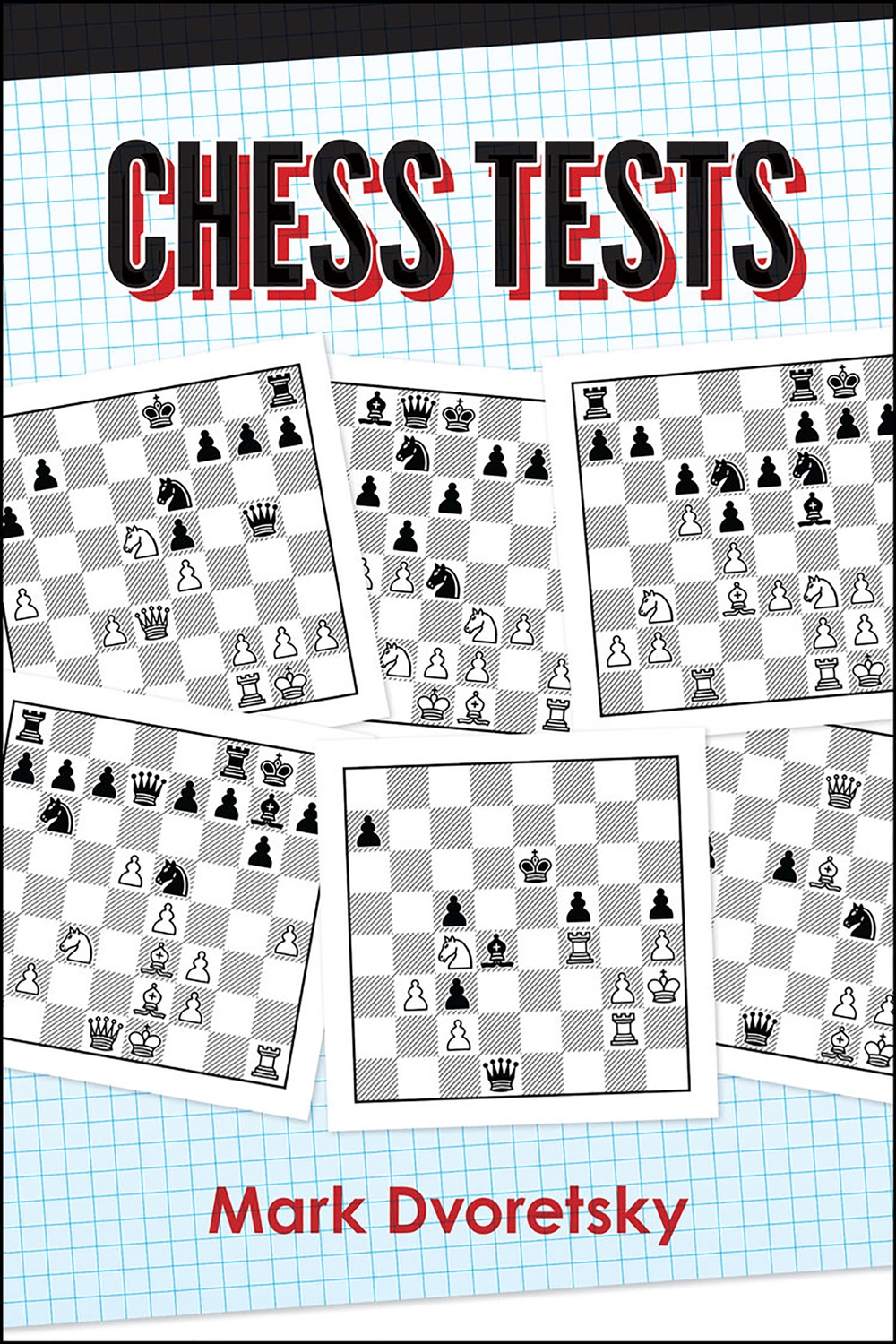
Gata Kamsky - Chess Gamer, Volume 2: Return 2004-2013
Gata Kamsky – Chess Gamer, Volume 2: Return 2004-2013

Chess Tests

Chess Tests
Chess Tests

Chess Tests : Mark Dvoretsky

From the rear cover :

“Mark Dvoretsky (1947-2016) is considered one of the greatest chess instructors in the modern era. He left behind a great legacy of many books and publications. At the time of his passing, there were two unpublished manuscripts he had finished (and one other co-authored with study composer Oleg Pervakov).”

IM Mark Izrailovich Dvoretsky

And from the Foreword by Artur Yusupov :

“Chess Tests offers chess players material of very high quality for working on various themes, from training combinative vision to techniques of realizing advantages. I recommend using those materials for in-depth work in the directions mentioned in the book. If you follow this advice, then this volume will become a valuable addition to your chess studies and will help you reinforce skills and knowledge you have already obtained. “And here is probably the most important point. Dvoretsky wanted to write a book that would not only teach some intricacies of chess, but would also be simply a pleasure to read for aficionados of the game, so he tried to amass the ‘tastiest’ of examples here. I hope that this last book by him is going to achieve this, presenting its readers with many chess discoveries and joy of communication with the great coach and author.”

IM Mark Izrailovich Dvoretsky holding forth with Jonathan Speelman, Jonathan Manley., Mihai Suba and Bernard Cafferty. Photograph : Mark Huba

This book (also available as an eBook) is divided into seven chapters as follows :

  1. Training Combinational Vision, 32 tests
  2. Candidate Moves, 38 tests
  3. Calculating Variations, 18 tests
  4. Attack and Defense, 28 tests
  5. Positional Play, 52 tests
  6. Realizing an Advantage, 24 tests
  7. Endgame Tests, 35 tests

and each of these is further sub-divided. Above we have indicated a number of tests for each chapter. Each of these tests comprises a position diagram with a whose move it is indicator.

Unusually, the tests sections comprise the first 62 pages and pages 63 – 206 are the solutions. So, this book is a little unusual for a standard “tactics” book in that the bulk of the text is in form of solutions and explanations.

So, this is much, much more than a routine tactics book. As you might expect from Dvoretsky the bonuses come from the solutions. It is clear that Dvoretsky had gone to great lengths to collect the test positions, and, as we found (in the BCN office), they were an absolute delight to work on. To whet your appetite here is a pleasing example from “Tasty Tactics #2 :

And here is the solution that you may wish to cover up for now :

6. Stern-Sanakoev, corr wch 1994-99

51…Ra5-a1!!

A fine queen deflection that prepares a mating attack.

52.Qb1xa1 Qd6xh2+1 53.Rh3xh2 Nf5-g3+ 54.Kh1-g1 Bc7-b6+ 55.Re1-e3 Bb6xe3#

52.Qe4 does not help..

The same combination leads to a won endgame : 52…Qxh2+ 53.Rxh2 Ng3+ 54. Kg1 Bb6+ 55.Qd4 Bxd4+ 56.cd Rxe1+ 57.Kf2 Nf1 (57…Re3!?;57…Rh1!?), but a quicker way to finish the game is 52…Qf4! (there is a threat of both 53…Qxe4 and 53…Qf1+) 53.Qe8+ Kg7 54.Rxa1 Qxh2+! 55.Rxh2 Ng3+ 56.Kg1 Bb6+.

and here is a beautiful example from Tasty Tactics #4 :

but we won’t give the solution here : you will either have to solve this yourself or buy the book or both !

The general standard of these tests is high : even the tests labelled as “not very difficult” are challenging to say the least. Particularly instructive was the “Realizing an Advantage” section which includes subsections labelled “Technique”.  Here is an example :

and here is a particularly tricky example :

In summary, this is a wonderful book and a great testament to the legend that is Mark Dvoretsky. We cannot recommend this book highly enough and claim that is it one of the best chess books of 2019. Please get it and enjoy it !

John Upham, Cove, Hampshire 24th February 2020

John Upham
John Upham

Book Details :

  • Softcover : 208 pages
  • Publisher:  Russell Enterprises (15 Nov. 2019)
  • Language: English
  • ISBN-10: 1949859061
  • ISBN-13: 978-1949859065
  • Product Dimensions: 15.2 x 0.6 x 22.9 cm

Official web site of Russell Enterprises

Chess Tests
Chess Tests

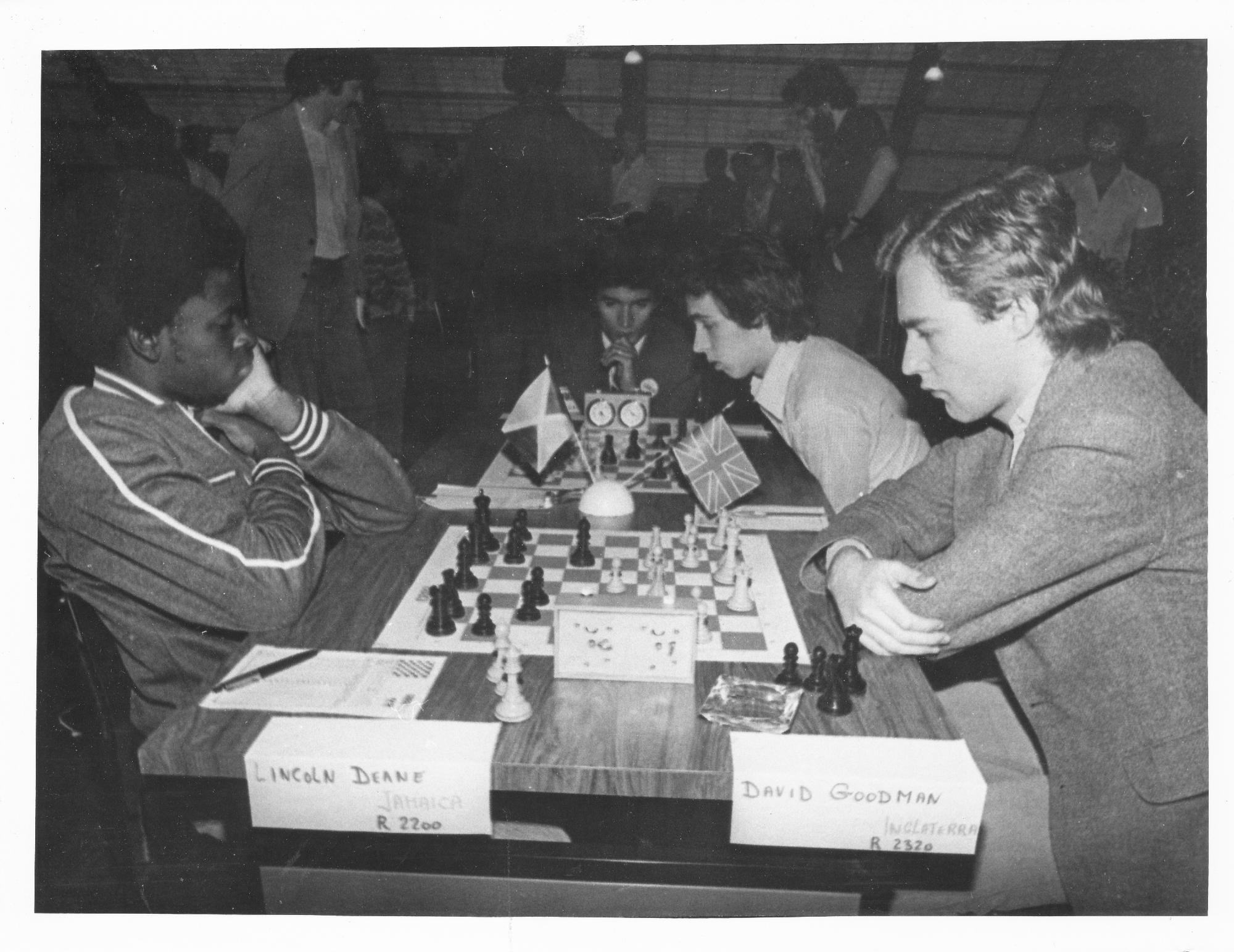
Birthday of IM David Goodman (25-ii-1958)

Birthday of IM David Simon Charles Goodman (25-ii-1958)

From Chessgames.com :

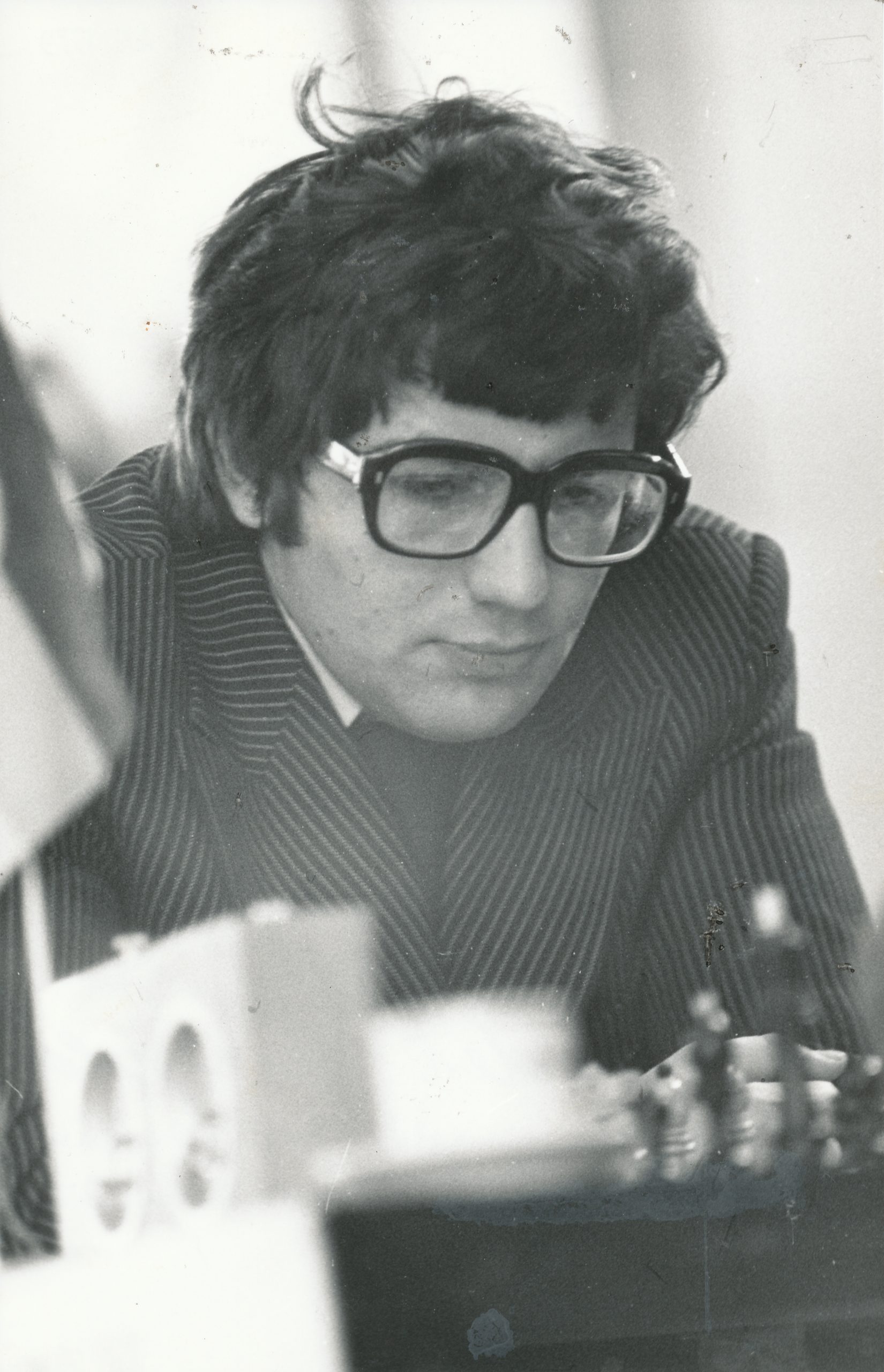
“David Simon Charles Goodman was awarded the IM title in 1983. He was World Under 18 Champion in 1975. He played #10 on the English national team in Moscow.
He currently resides in New York City where he is a chess trainer for promising young students.”

Here is his Wikipedia entry

IM David Goodman
IM David Goodman

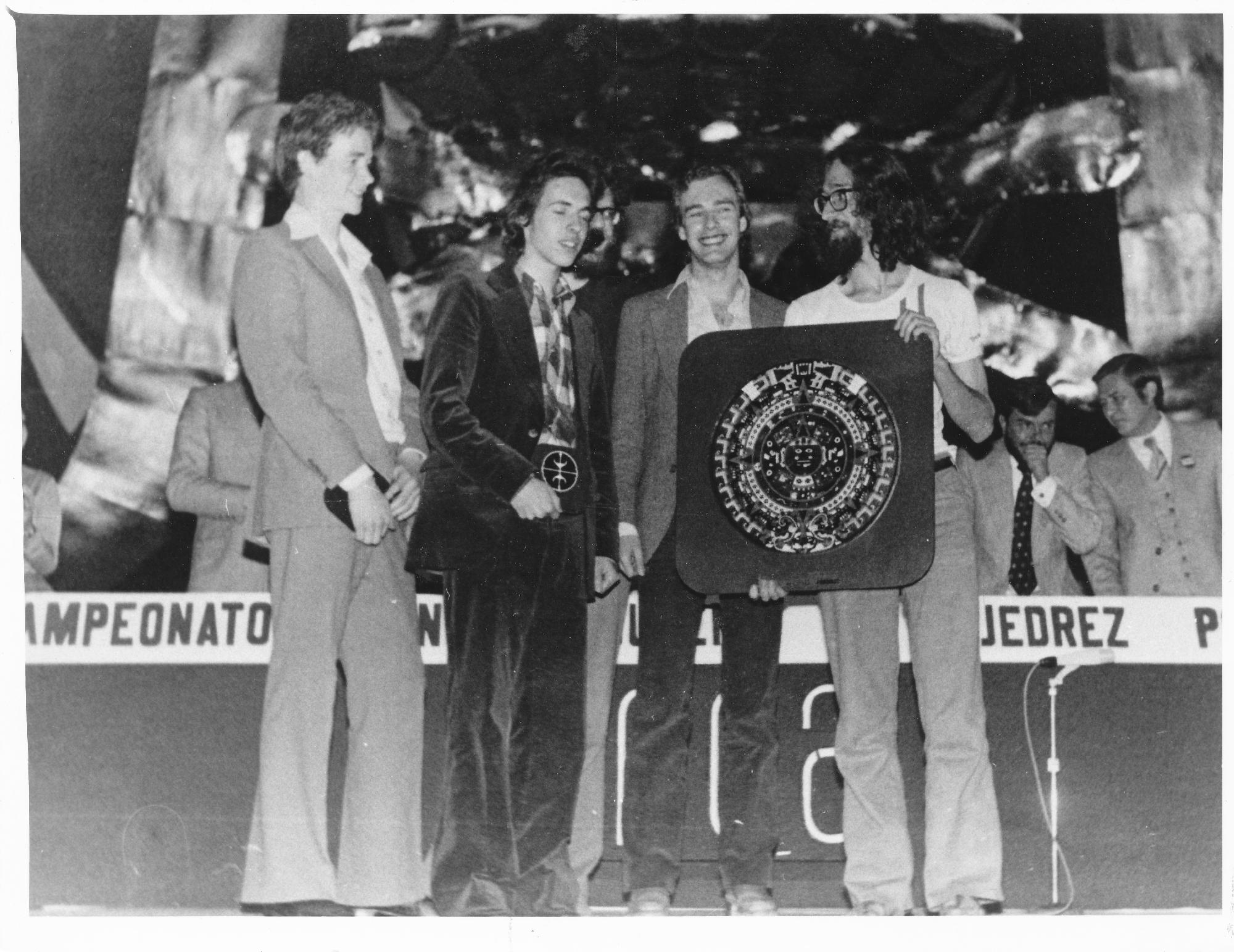
(from l-r) Jonathan Kinlay, Shaun Taulbut, Jonathan Speelman, David Goodman and Jonathan Mestel accepting 1st prize at the 1978 World U26 Student Olympiad in Mexico City
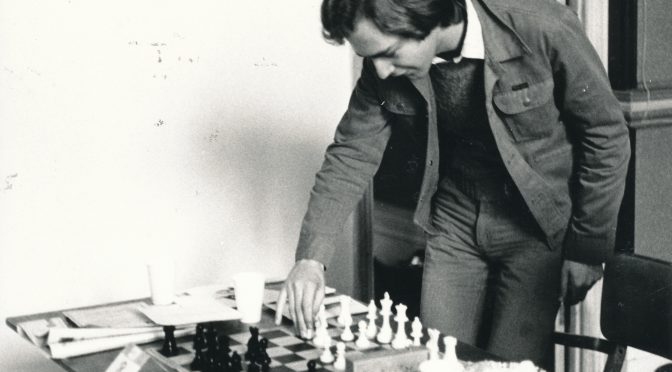
Shaun Taulbut (upper right) and David Goodman (lower right) from the 1978 U26 Olympiad

Birthday of IM David Goodman (25-ii-1958)

Birthday of IM David Simon Charles Goodman (25-ii-1958)

From Chessgames.com :

“David Simon Charles Goodman was awarded the IM title in 1983. He was World Under 18 Champion in 1975. He played #10 on the English national team in Moscow.
He currently resides in New York City where he is a chess trainer for promising young students.”

Here is his Wikipedia entry

IM David Goodman
IM David Goodman

(from l-r) Jonathan Kinlay, Shaun Taulbut, Jonathan Speelman, David Goodman and Jonathan Mestel accepting 1st prize at the 1978 World U26 Student Olympiad in Mexico City
Shaun Taulbut (upper right) and David Goodman (lower right) from the 1978 U26 Olympiad

Birthday of IM David Goodman (25-ii-1958)

Birthday of IM David Simon Charles Goodman (25-ii-1958)

From Chessgames.com :

“David Simon Charles Goodman was awarded the IM title in 1983. He was World Under 18 Champion in 1975. He played #10 on the English national team in Moscow.
He currently resides in New York City where he is a chess trainer for promising young students.”

Here is his Wikipedia entry

IM David Goodman
IM David Goodman

(from l-r) Jonathan Kinlay, Shaun Taulbut, Jonathan Speelman, David Goodman and Jonathan Mestel accepting 1st prize at the 1978 World U26 Student Olympiad in Mexico City
Shaun Taulbut (upper right) and David Goodman (lower right) from the 1978 U26 Olympiad

Birthday of IM David Goodman (25-ii-1958)

Birthday of IM David Simon Charles Goodman (25-ii-1958)

From Chessgames.com :

“David Simon Charles Goodman was awarded the IM title in 1983. He was World Under 18 Champion in 1975. He played #10 on the English national team in Moscow.
He currently resides in New York City where he is a chess trainer for promising young students.”

Here is his Wikipedia entry

IM David Goodman
IM David Goodman

(from l-r) Jonathan Kinlay, Shaun Taulbut, Jonathan Speelman, David Goodman and Jonathan Mestel accepting 1st prize at the 1978 World U26 Student Olympiad in Mexico City
Shaun Taulbut (upper right) and David Goodman (lower right) from the 1978 U26 Olympiad

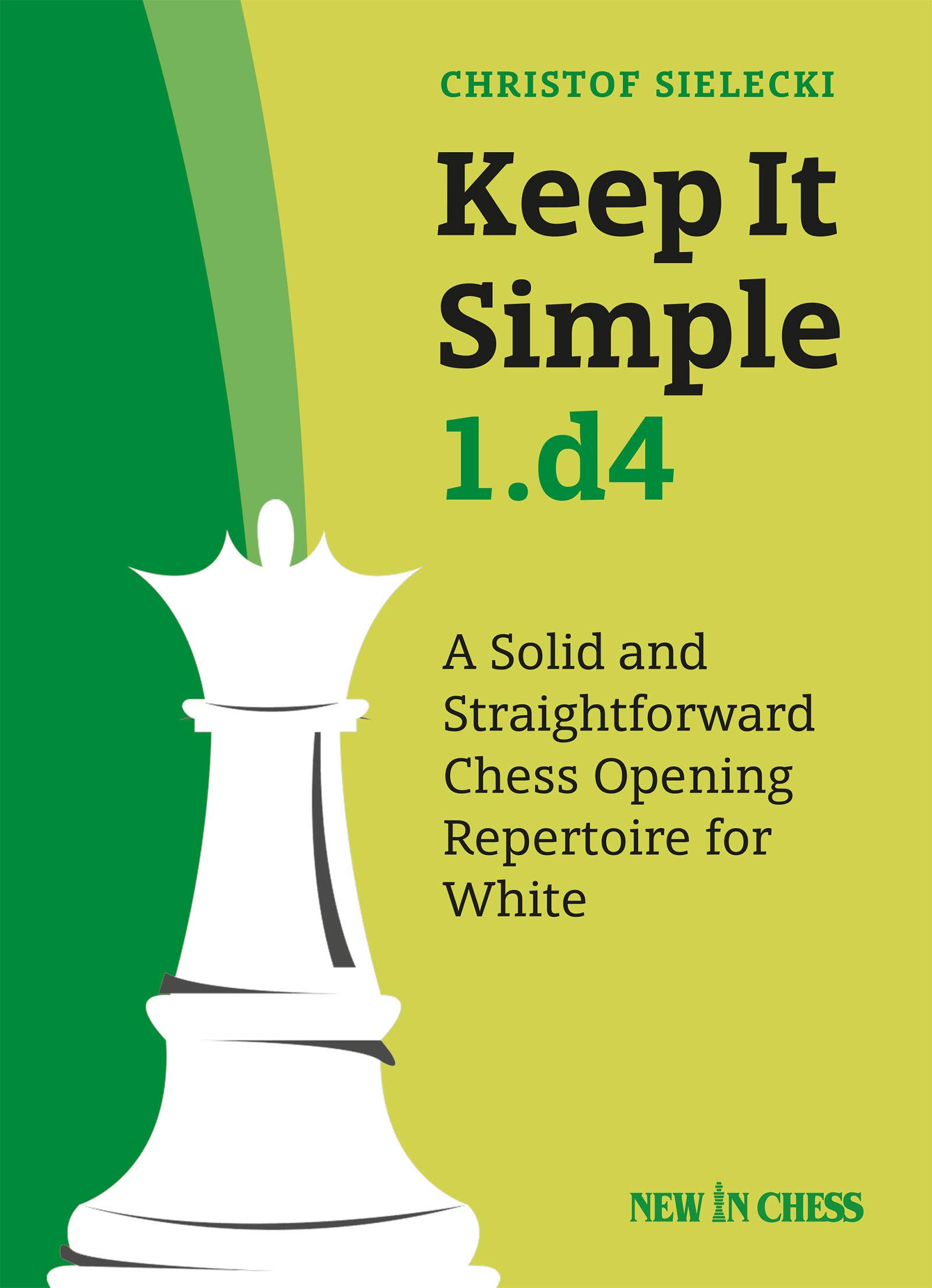
Keep it Simple 1.d4

Keep it Simple 1.d4 : Christof Sielecki

Keep it Simple 1.d4 by Christor Sielecki

“Half the variations which are calculated in a tournament game turn out to be completely superfluous. Unfortunately, no one knows in advance which half..” – Jan Timman

The value for any practising chess player of a coherent opening repertoire when playing with the white pieces is key to success, enjoyment and efficient use of study time.  Books with “Opening Repertoire” in the title are many and varied and we were intrigued to what the emphasis in this latest book from New in Chess would be.

From the books rear cover :

After the success of his award-winning book ‘Keep it Simple 1.e4’ International Master Christof Sielecki is back. His new repertoire based on 1.d4 has a similar profile: variations that are straightforward and easy to remember, and require little or no maintenance.

Sielecki has created a reliable set of opening lines for chess players of almost all levels. The major objective is to dominate Black from the opening, by simple means. You don’t need to sacrifice anything or memorize long tactical lines.

His main concept is for White to play 1.d4, 2.Nf3, 3.g3, 4.Bg2, 5.0-0 and in most cases 6.c4. Sielecki developed this repertoire while working with students who were looking for something that was easy to understand and easy to learn.

This new 1.d4 repertoire may be even easier to master than his 1.e4 recommendations, because it is such a coherent system. Sielecki always clearly explains the plans and counterplans and keeps you focused on what the position requires. Ambitious players rated 1500 or higher will get great value out of studying this extremely accessible book.

International Master Christof Sielecki

So, what is Keep it Simple 1.d4  about ?

This is a weighty (427 pages) tome advocating a repertoire for  white based on a “delayed Catalan” development approach against almost any line that black chooses.

Originally the content was provided on the popular training site Chessable. Its popularity caused New in Chess to publish in paper format.  See Chessable version

From the successful series by Boris Avrukh (and many others) we know that the conventional Catalan System (1.d4, 2.c4, 3.g3) is a highly respected opening system played at the very highest levels by the worlds top players. So, a normal Catalan would see

appear fairly promptly allowing Black various options that White might like to avoid.

By delaying c4 to say move 6 then White is denying Black some of these sharper continuations and maybe allowing White to focus more on middlegame plans rather than engaging in theoretical skirmishes at move 2, 3, 4, 5 or even.

This is the kind of opening philosophy that has encouraged the London System (and the Colle System before that) “pandemic” to dominate club chess : “We show a system that allows you to get your pieces onto sensible squares without allowing your opponent to distract you”. Of course this is a gross over simplification but many club players want an easy life !

So, something typical might be :

where White’s last move was 6.c4

which is covered in chapter 8 and 9 depending if Black captures on c4.

There is one major difference with the approach Sielecki suggests in that we get to a principled set-up via a slower move order.

The book is divided into four main parts as follows :

  1. Black’s classical / symmetrical set-ups : 1.d4 d5 2. Nf3
  2. Black’s …g7-g6 based set-ups : 1.d4 Nf6 2.Nf5 g6 3.g3
  3. Black’s flexible set-ups : 1.d4 Nf6 2.Nf3 e6 3.g3
  4. Black’s sharp and offbeat defences

The author states he has three “KIS” guidelines :

  • The chosen lines are simple to learn;
  • It must be possible to find your way if you forget your lines;
  • Choose lines that may not be most critical, but uncomfortable for the opponent

All the usual (and many unusual) structures from Black are given a detailed treatment :

Chigorin, Tarrasch, Grunfeld, King’s Indian, various forms of Benoni, Modern, Queen’s Indian, Benko b5 ideas, Dutch, Old Indian, Wade Defence and other odds and ends.

An interesting comment we noted elsewhere was from IM John Donaldson : “A worthy follow-up with the author achieving the near impossible in carving out a cohesive repertoire based on 1.d4 2.Nf3 and 3.g3 against all but a handful of Black replies. The most amazing magic trick is how the author makes the Slav and Queens Gambit Accepted disappear – namely by adopting the sequence 1.d4 d5 2.Nf3 Nf6 3.g3. This reviewer gives two thumbs up for for Keep It Simple 1.d4. It is full of interesting variations and ideas for players rated 2200 on up who are looking for a positionally oriented repertoire that is not overly theoretical.”

and “As promised, the repertoire is simple, but not so simple that it is not of practical value. IM Sielecki has taken great pains to research the material carefully and package it into a repertoire that is relatively consistent throughout.”–Carsten Hansen “American Chess Magazine ”

and “I like this particular repertoire very much as it’s one which could probably hold the reader in good stead for many years to come. His introductions, conclusions and textual explanations are instructive and ones that a human can readily appreciate, learn from and understand. As I think that I should keep my advice ‘simple’, then I would say ‘just get it’!”–Glenn Flear, Grandmaster “Yearbook 134”

So, who what is the most suitable audience for this book ? We would say that a club player of 2000 plus who wishes to upgrade their white opening into a Queen’s Gambit style structure would enjoy the content. Maybe they have been playing the London, Colle, Stonewall or Veresov systems and want to progress their chess : this book is ideal for that upgrade. It is also good for those who play a conventional move order looking for a more positional repertoire.

As a bonus for the observant, this book provides material for those wishing to kick-off with 1.Nf3 although you will need to deal with 1.Nf3 c5 of course !

As with every recent New in Chess publication high quality paper is used and the printing is clear. The book can easily be laid flat next to the board and does not require weights to prevent it from “self-closing” (a particular bugbear of ours !). Each diagram is clear and the instructional text is (mostly !) typeset in two column format, which, we find, enables the reader to maintain their place easily. Figurine algebraic notation is used throughout and the diagrams are placed adjacent to the relevant text.

At the rear is the customary detailed Index of Variations and following that there is an Index of Players where the numbers refer to pages.

In summary this book provides a pragmatic and positional repertoire for White against most of the all the commonly encountered responses to 1.d4 and 2.Nf3, 3.g3 and an eventual c4.  There is a host of interesting new and dangerous ideas that help you fight for the whole point with the white pieces : recommended !

John Upham, Cove, Hampshire, February 19th 2020

John Upham
John Upham

Book Details :

  • Hardcover : 432 pages
  • Publisher: New In Chess (1 Dec. 2019)
  • Language: English
  • ISBN-10: 9056918672
  • ISBN-13: 978-9056918675
  • Product Dimensions: 17.6 x 2.7 x 23.1 cm

Official web site of New in Chess

Keep it Simple 1.d4 by Christof Sielecki