Tag Archives: 2020

Death Anniversary of Brian Harley (27-x-1883 18-v-1955)

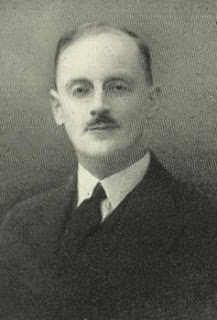
Brian Harley (27-10-1883 18-v-1955), from chesscomposers.com and Chess Notes

Death Anniversary of Brian Harley (27-x-1883 18-v-1955)

From chesscomposers.com :

“Brian Harley composed mostly two- or threemovers and wrote many books to make chess problems more popular: for instance his “Mate in Two Moves” inspired Geoff Foster’s first steps into problemdom.
Harley’s “The Modern Two-move Chess Problem” written in collaboration with Comins Mansfield is probably the best known of his efforts.

Brian Harley was the inventor of the term “mutate” for the block problems with changed mates. He was the president of the British Chess Problem Society from 1947 until 1949. In his honour, each year the British magazine “The Problemist” awards the best twomover problem with the “Brian Harley” award.”

and Edward Winter writes about Brian Harley (scroll down a little).

Here is BHs obituary from British Chess Magazine, Volume LXXV, Number 9, pages 284 – 287 written by S. Sedgwick :

“With the death of Brian Harley on May 18th,1955, the chess problem is the poorer by an authoritative exponent, and a writer of unusual clarity and popular appeal. His sudden passing at his home at Bognor Regis will be mourned. by a very wide circle of friends; to his wife and son, with whom he enjoyed an enduring happiness, we extend our deep-felt sympathy.

Born at Saffron-Walden, Essex, on October 27th,1883, Harley was educated at Wellingborough and Haileybury. Qualifying as an actuary he entered the National Provident Institution, in whose employment, apart from War Service, he passed his professional life, until his retirement in 1947.

As a player he had initially a considerable reputation, above that enjoyed as a problemist. Two books, Chess and its Stars and Chess for the Fun of it, reflect this aspect of his chess work. When playing was eventually renounced for problems he still retained his love of annotation, bringing to this a wide knowledge, larded by the apt witticism and an approach that was neither superficial yet avoided the pitfalls of pedantry.
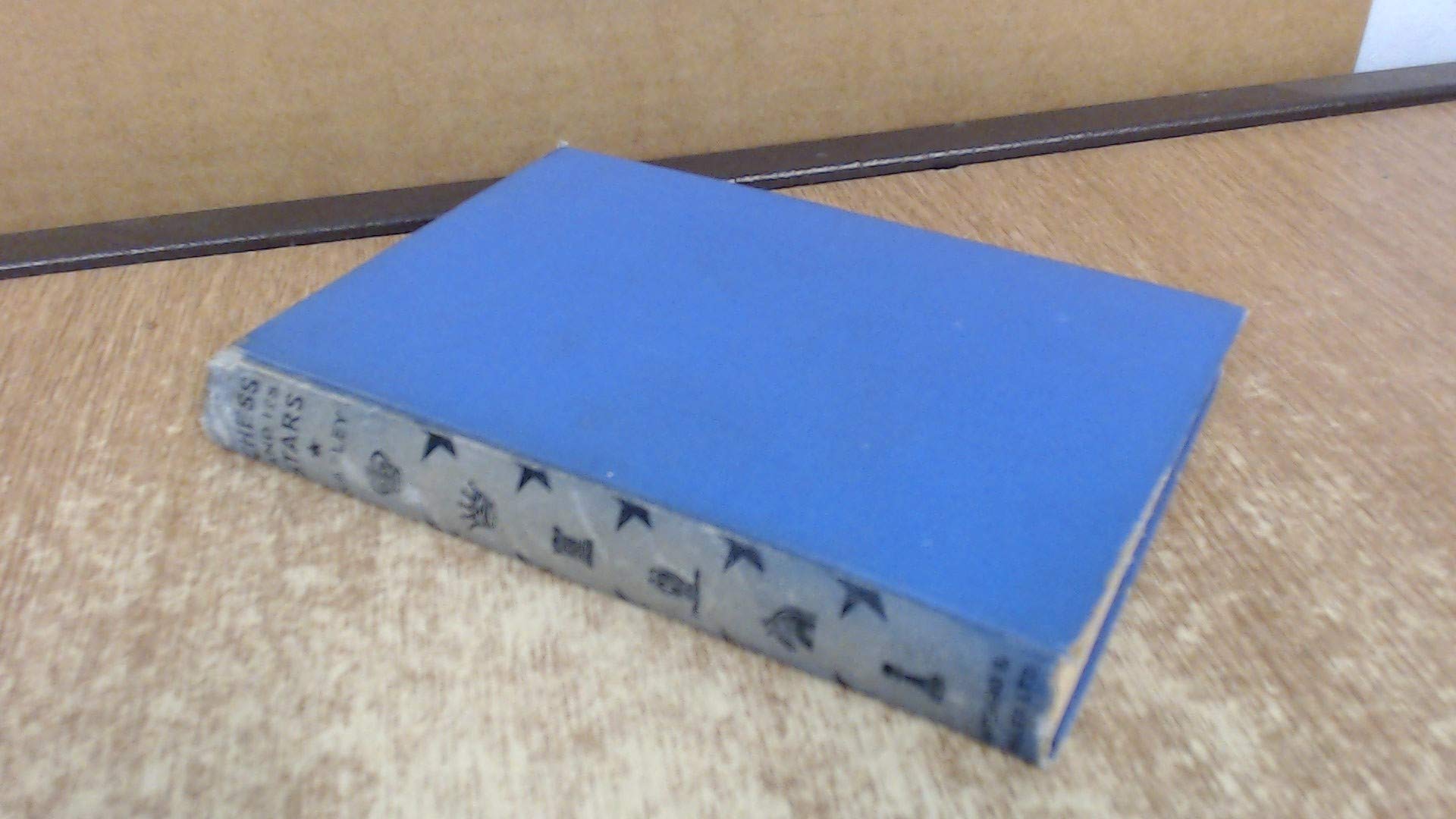
Chess and its Stars
Chess and its Stars

His first problem appeared at the age of fifteen, in 1898. Whilst Harley’s early period has some noteworthy items, it lacks the verve and distinction of his later output, following his awakening of interest in the mutate in 1916_and the fertile years following his appointment as Chess Editor of The Observer, London, in 1919. In England under the lead o[ Phillip Williams in the Chess Amateur, the mutate had sprung into,popularity during and after the Great War, with Harley among its ardent exponents. He continued the cult in his Observer column, where he did much to popularize it. It is possibly symbolic that when Williams died in 1922 his travelling board and men should pass to Harley; it would be difficult to find a comparable instrument that has witnessed the genesis of so much concentrated chess devilry, implicit in all mutates, as this board used first by Williams and then by Harley.

In July, 1919, Harley published his system in the Good Companion folder. This paper, the outcome of much thought, attempted to evaluate the constituent parts of a chess problem on a semi-mathematical basis. Point values were set down for the elements in White keys, Black defences thereto, and the resultant White mates, the summation giving values for comparison with other works similarly treated. In an accompanying paper on the block-change it was here that Harley introduced the term “mutate,” the word passing, without cavil, into the current idiom. Under the evocative power of Harley’s work and pen his Observer feature from 1919 onwards has come to rank with the great columns of the past. No composer of substance was absent from its pages and the result is a collection of works and descriptive criticism that has enriched the chess literature of the world. Early on, Harley came to know the late Godfrey Heathcote, and the welcome presence of the great composers name in the column gave it a sublimity possessed by no other comparable English journal. Harley’s comments on his contributors work was one of the many attractive features of his column. He kept the popular approach very much in mind without unduly over-weighting it; this, blended with a brand of humour all his own (often literary in character), and a grasp of essentials drove home the salient points of a problem to the uninitiated solver with a peculiar vividness. He could ‘be incisive when wanted, technical when he pleased, his gentle rebuke for the inferior production or undetected flaw could not be other than well taken, authoritative without ostentation, his succinct criticisms are now legendary to be treasured and repeated when the occasion demands. An incorrigible faddist in his regard for the short threat in the three-mover, Harley seldom admitted this type to his pages, pleading aversion by solvers. He conducted over one hundred solving contests during his column’s life; these weekly battles of wits affording enormous pleasure to all concerned.
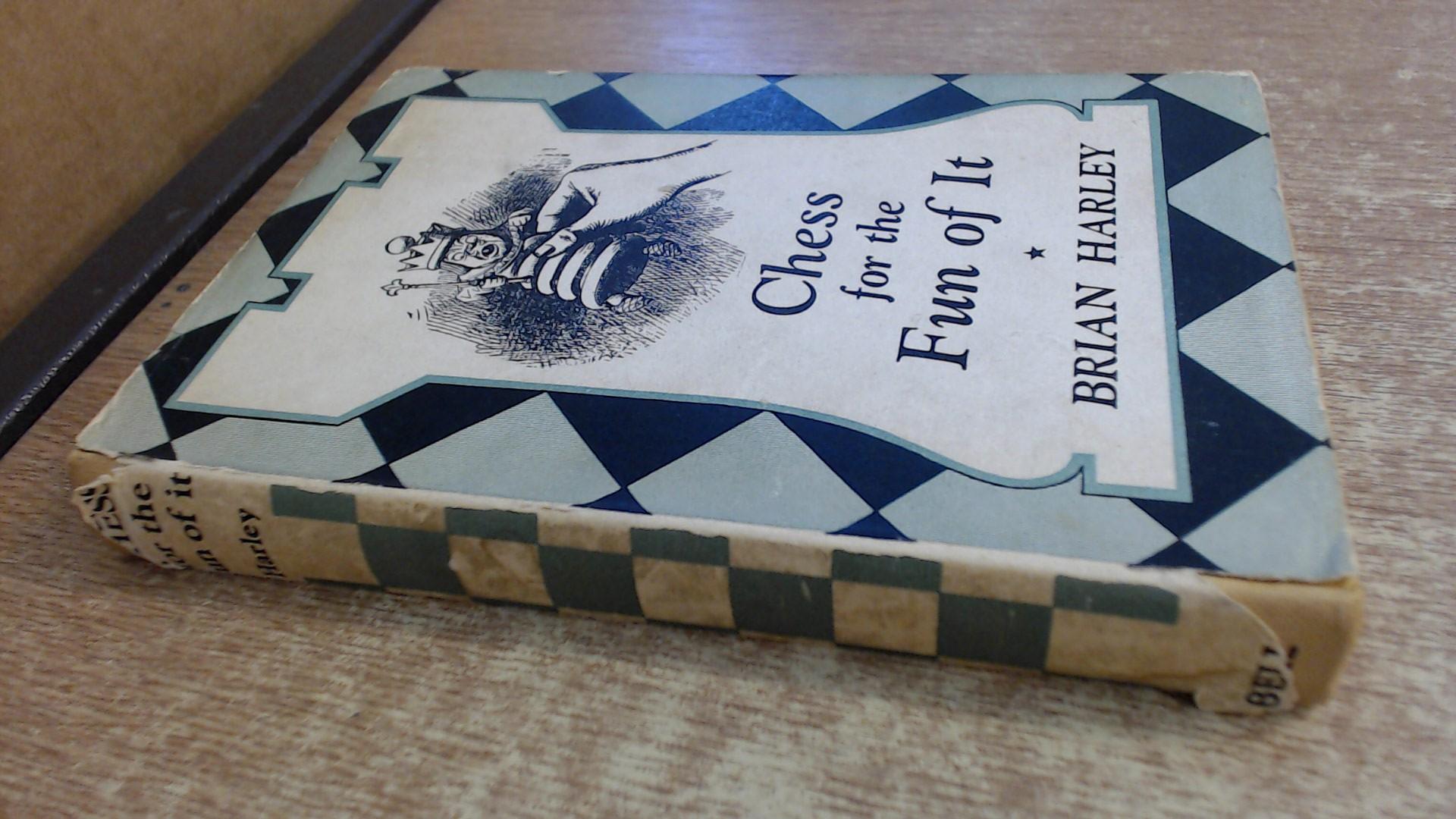
Chess for the Fun of It

To his column came the established composer and the hesitant, possibly young, beginner. To this last group Harley gave every encouragement and unreservedly of his advice and help. There must be few British composers who have not felt his benefit directly, through the medium of his wonderful letters, lit all the way through by the warm glow of an endearing personality.

Harley’s constructive powers brought him to the front rank of the world’s composers. His output of 450 includes long range work in four and five moves and in later years, sui-mates. In the chess-men he found a pliable medium for the realization of an unusual vision and creative gift. In the two-mover he gave to the mutate much substantial and classic work. He appears to have given to this type more specialized attention than any other in the two-move field. Elsewhere in this length his work covers a wide variety of themes with a strong liking for task renderings. A composer with few serious constructive foibles, his mode of expression, in consequence suffered little. His was not the temperament to linger with one theme and squeeze it dry. One or two renderings of the theme on hand and he would pass to the next. Hence the diversity of his work which imbues it with especial charm. To underline this point one could indicate, almost at random, Harley’s entries in the multimate tourney of the Cleveland Chess Bulletin. Certainty the theme had few attractions for him but his entries showed how superbly such problem ideas could be clothed.

In the three-mover Harley has graced both sides of the aesthetic fence, and that with distinction, giving equally to the strategic and model-mate.genre. His friendship with Heathcote however influenced him considerably here and one is inclined to the view, that in this length, Harley held firmly to the eternal values in chess art. In both types Harley attained especially in task renderings, rare heights of complexity and construction. His lighter mood showed to the full-to the incipient solver much of the low cunning of which the three-mover is capable.

He came to the sui in the late forties. When Heathcote was convalescing in London, following an operation, Harley took some specimens with him when he visited his friend The ensuing discussion stimulated Harley to further experiments and the authentic touch of the great master of technique is evident in his work here also. Harley gave many of his works to his own “Observer” column but did not neglect the other sources of publication. To quote his own words his ideal problem was “a mixture of art, science, humour, and puzzlement.” His best work shows brilliantly his love for the integration of the beautiful and the true inner essence and spirit of chess.

His contribution to the literary and technical side of chess problems outside his journalistic work is seen in his two books Mate in Two (1931) and Mate in Three (1943).
Mate in Two is stamped with all Harley’s inimitable style and remains a mine of information for all levels. Standing, as it does, mid-way between the old and the new, the book, apart from an absorbing chapter on changed play, reflects and even labours under the influence of the “Good Companion” period. Harley in later editions to a certain extent remedied this deficiency and the book, now long out of print, lies on our shelf, its fundamentals unimpaired, as one of the classic expositions in the art. Mate in Three, written from a’ narrower viewpoint, proved another successful publication. Here Harley entered more controversial ground, crossing swords. with hitherto established theory. The book, although not evoking absolute technical authority, gives a broad and eloquent outline, written from the artistic standpoint, of three-move work fundamentally, with few significant omissions. Made memorable by the inclusion of many works both by Harley and Heathcote, the book is that of a true artist, and is of great importance theoretically as the one modern work devoted to this length by an English author.

A further important contribution to chess problem theory was his thesis on “Black Correction” read before the British Chess Problem Society on November 29th, 1935. In the mid thirties, this thesis, more than anything else, was instrumental in precipitating a flood of work on correction and associated ideas. Readers of this magazine will recall this period, and I trust that this short recapitulation will still the tiresome arguments regarding the choice between “correction” and “continued defences.” Harley’s choice is at once apt and descriptive and it should not be forgotten that here, he touched upon White Correction, an esoteric aristocrat, greeted by ten years or so of utter silence before systematic investigation by the moderns.

Elected President of the British Chess Problem Society in 1947-1949 it so happened that I was its Secretary at the time. We exchanged hundreds of letters on problematic subjects, the scope of his knowledge always affording surprise. The Society benefited enormously from his advice and counsel, and during the somewhat delicate situation arising from the arbitration in the two-move section of the 1948 Olympic Tourney it was with alacrity that one turned to a mind of the calibre of Harley. Coming to the man he was widely read, a Latin scholar, and his knowledge of Dickens was above average; a keen bridge player, an instrumentalist (piano), all the varied facets of his character would come out at some time in his chess writings. His physical presence at any gathering gave it stature. Of medium height, lovable, somewhat dapper, the shrewd contemplative face of this chess Barrie with its ever present cigarette holder and fund of anecdote has enriched and enlivened many a dull Committee Meeting.
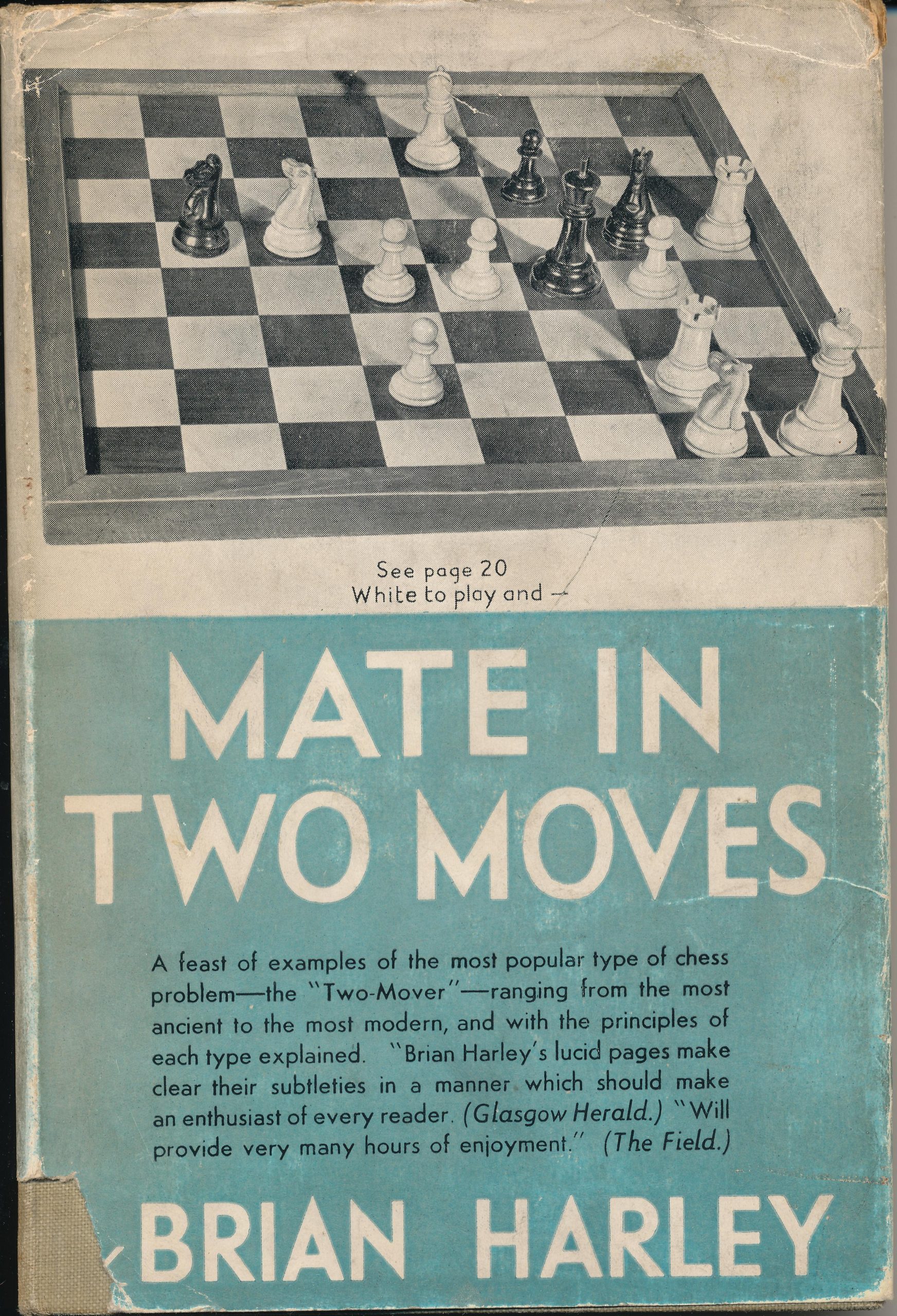
Mate in Two Moves
Mate in Two Moves

On the death of Anthony Guest in 1925, Harley succeeded as Problem Editor of the Morning Post until 1932. In addition he was Problem Editor of Empire Review, 1923-1926, and Time and Tide, from 1951 until his death. Lesser appointments included several technical journals where he acted under pseudonyms. Amusing were the anagrammatical pseudonyms used occasionally for composing in Hilary Bream and Harry Blaine.

Brian’s integrity and character endeared him to innumerable correspondents and solvers. Most of us nourish a characteristic Brian Harley story; one must suffice here. It concerns the time when Brian was introduced to the late Sir John Simon who made the delightful response “l need no introduction for I meet him every Sunday and for years hive wrestled with his problems, eventually solving them in the House of Commons.” For this weekly enrichment of our lives we have much to thank him for.

In middle life Brian married Ella Margaret Beddall; there is one son, Nigel. With his wife, Brian shared many problematic triumphs and it was to her that his various
books were dedicated.
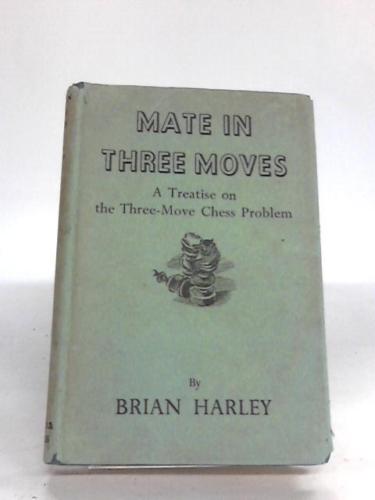
Mate in Three Moves
Mate in Three Moves

Before closing this brief review of Brian’s achievements a word should be said regarding the summary end of his work in the Observer and a tribute paid by one of his many solvers in this column. On the former it will be regarded with universal regret by all problemists that no arrangements have been made to continue Brian’s incomparable’work in the journal he served with such distinction. Regarding the latter am very grateful to Halford W. L. Reddish, Esq., for an appreciation that admirably epitomizes the feelings of us all on this melancholy occasion.

Mr. Halford Reddish writes-

“l am one of thousands of solvers, from the expert to the merest tyro, who will miss our weekly battle with Brian Harley in the Observer. In the world of chess and chess problems his name and fame are secure. His characteristically titled Chess for the Fun of It is a delightful exposition of the game: his Mate in Two Moves and Mate in Three Moves are classics in their particular field.

To those of us who knew Brian personally his passing leaves an unfillable gap. I had known him and admired him and loved his witty, cheery, kindly personality for many years. He was one of those rare beings who became a close friend even before our first meeting-for we had corresponded for a long time before we first came face to face. And although chess and chess problems were our primary link he had many other interests which kept him young and keen in mind after his retirement from business and which enlarged and enriched his correspondence. It is typical of him that no letter came from him without some mention of his dear wife, who shared to the full his varied interests. To her and to his only son to the deep sympathy of his many friends.”
Birthday of GM Stephen Gordon (04-ix-1986)

We wish Stephen Gordon all the best on his birthday, this day (September 4th) in 1986.

Stephen John Gordon was born on Thursday, September 4th 1986 in Oldham, Lancashire where he has lived since.

He attended The Blue Coat School in Oldham

He became a FIDE Master in 2004, an International Master in 2006 and a Grandmaster in 2009.

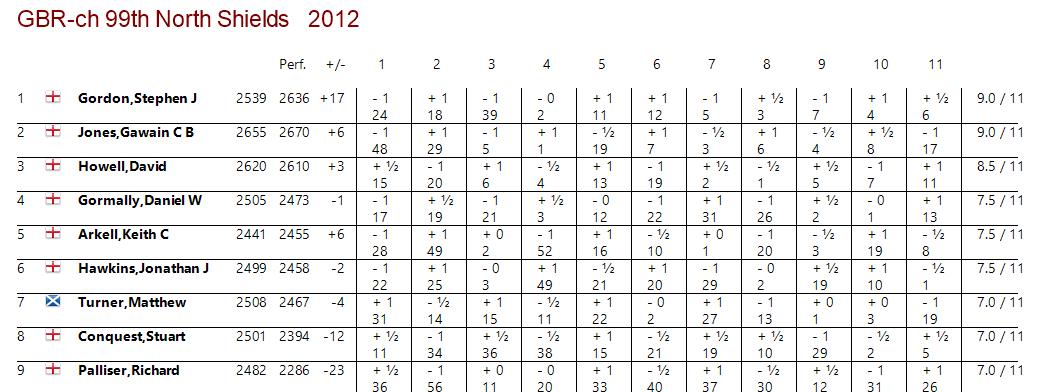
In 2012 he shared first place with Gawain Jones in the British Championships in North Shields.

2012 British Championships part crosstable

According to Felice his peak FIDE rating was 2556 in September 2012 at the age of 26.

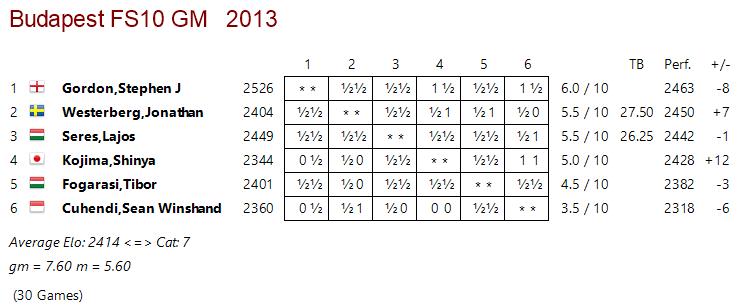
Crosstable from the 2013 Budapest First Saturday GM Tournament

Stephen plays for 3Cs in the Manchester Chess League and for Wood Green in the London League and for 4NCL 3Cs in the Four Nations Chess League.

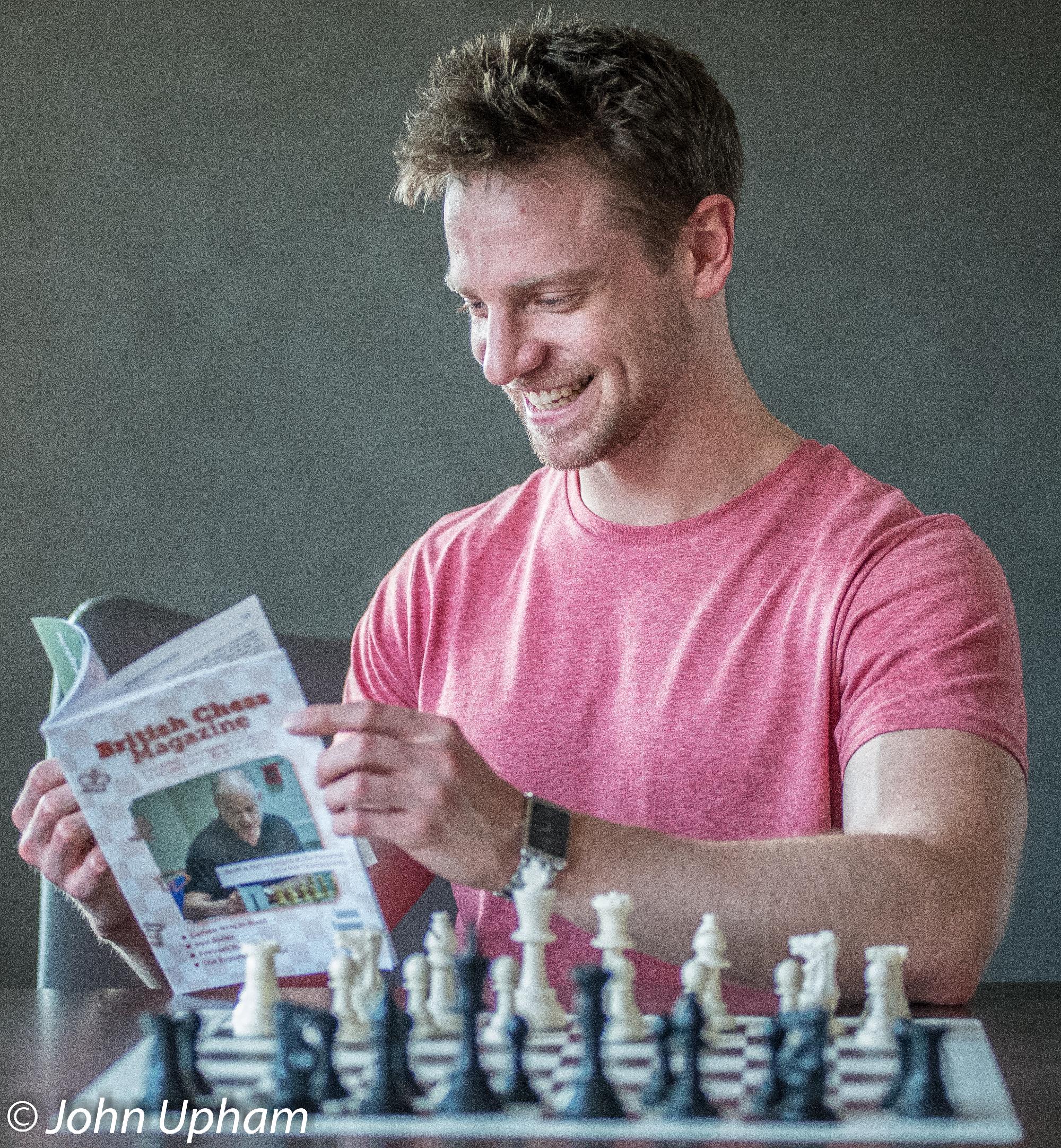
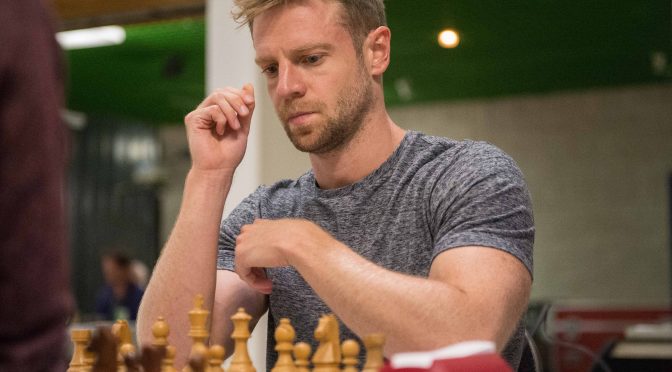
Stephen Gordon at the final 4NCL weekend in 2014. Courtesy of John Upham Photography

With the White pieces Stephen almost always plays 1.d4 aiming for a Queen’s Gambit and other main lines.

As the second player, Stephen plays the Sicilian Najdorf and the Nimzo-Indian Defence.

From Wikipedia :

“Stephen J. Gordon (born 4 September 1986) is an English chess grandmaster.

In September 2004 he took a break from his A-level studies at The Blue Coat School, Oldham to compete in the thirteenth Monarch Assurance Isle of Man International.

In 2005, while still a FIDE Master, he finished 6th in the British Championships ahead of a Grandmaster and several International Masters.

At the EU Individual Open Chess Championship held at Liverpool in 2006, he led the tournament after eight rounds and finished a very creditable (joint) second, a half point behind winner Nigel Short and level with Luke McShane among others.

Probably his best result to date however, was second place in the 2007 British Championship, narrowly losing his share of the lead in the final round. In previous rounds, he defeated both tournament victor Jacob Aagaard and previous champion Jonathan Rowson.

By 2008, his rating had reached grandmaster level, although the title itself had not yet been secured. At the British Championship in Liverpool, he almost repeated his performance of the previous year, by taking a share of third place. He was the British under-21 Champion each consecutive year between 2005 and 2008. He became a grandmaster on 1 August 2009.

He has been one of the co-presenters of the chess podcast The Full English Breakfast since its inaugural show in October 2010.”

Stephen Gordon at The Plough Public House in 2014 for the annual Drunken Knights vs Wood Green London League match. Courtesy of John Upham Photography

For more see Wiki Entry for Stephen Gordon

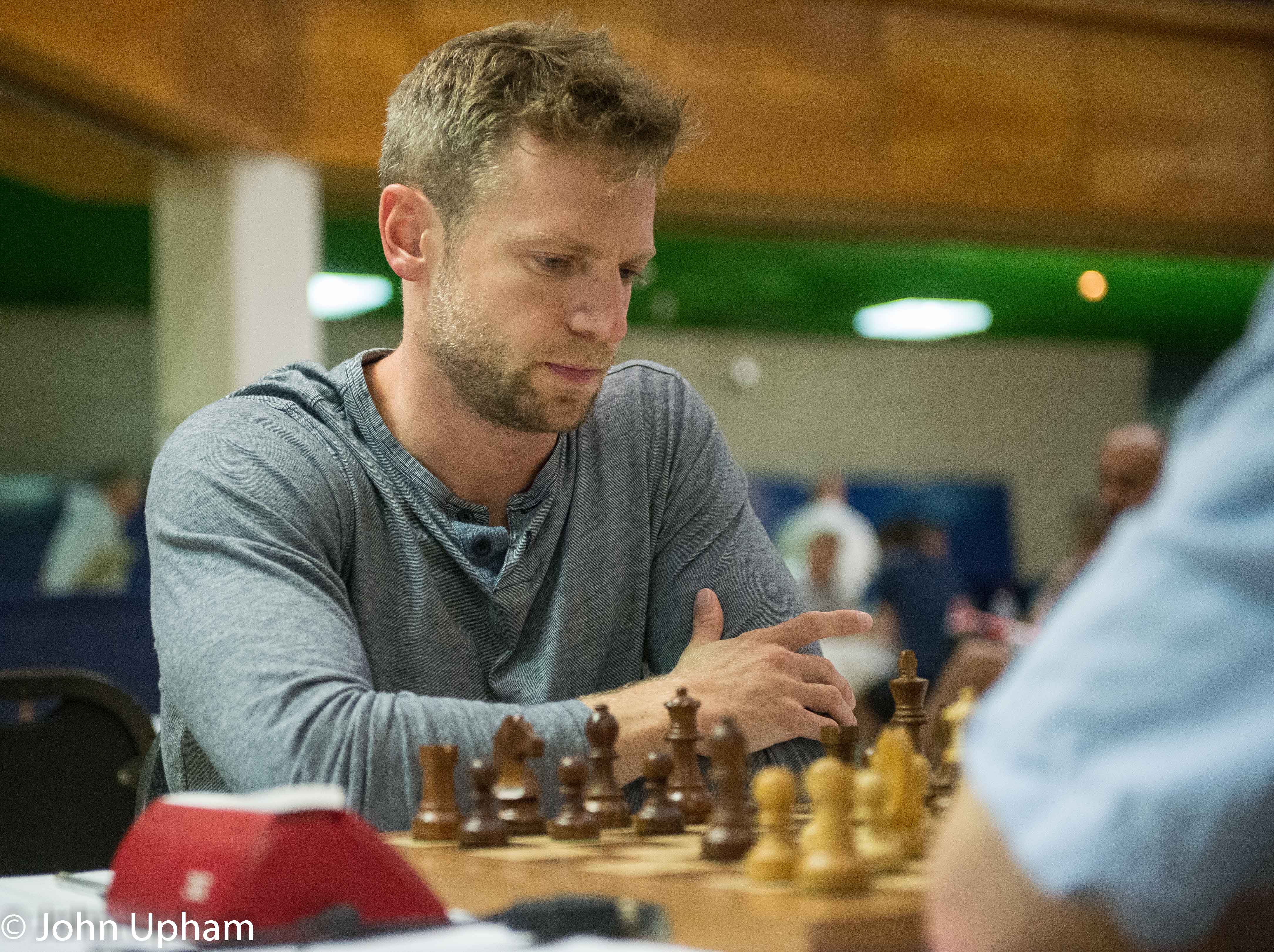
GM Stephen Gordon, courtesy of John Upham Photography

Birthday of GM Stephen Gordon (04-ix-1986)

We wish Stephen Gordon all the best on his birthday, this day (September 4th) in 1986.

Stephen John Gordon was born on Thursday, September 4th 1986 in Oldham, Lancashire where he has lived since.

He attended The Blue Coat School in Oldham

He became a FIDE Master in 2004, an International Master in 2006 and a Grandmaster in 2009.

In 2012 he shared first place with Gawain Jones in the British Championships in North Shields.

2012 British Championships part crosstable

According to Felice his peak FIDE rating was 2556 in September 2012 at the age of 26.

Crosstable from the 2013 Budapest First Saturday GM Tournament

Stephen plays for 3Cs in the Manchester Chess League and for Wood Green in the London League and for 4NCL 3Cs in the Four Nations Chess League.

Stephen Gordon at the final 4NCL weekend in 2014. Courtesy of John Upham Photography

With the White pieces Stephen almost always plays 1.d4 aiming for a Queen’s Gambit and other main lines.

As the second player, Stephen plays the Sicilian Najdorf and the Nimzo-Indian Defence.

From Wikipedia :

“Stephen J. Gordon (born 4 September 1986) is an English chess grandmaster.

In September 2004 he took a break from his A-level studies at The Blue Coat School, Oldham to compete in the thirteenth Monarch Assurance Isle of Man International.

In 2005, while still a FIDE Master, he finished 6th in the British Championships ahead of a Grandmaster and several International Masters.

At the EU Individual Open Chess Championship held at Liverpool in 2006, he led the tournament after eight rounds and finished a very creditable (joint) second, a half point behind winner Nigel Short and level with Luke McShane among others.

Probably his best result to date however, was second place in the 2007 British Championship, narrowly losing his share of the lead in the final round. In previous rounds, he defeated both tournament victor Jacob Aagaard and previous champion Jonathan Rowson.

By 2008, his rating had reached grandmaster level, although the title itself had not yet been secured. At the British Championship in Liverpool, he almost repeated his performance of the previous year, by taking a share of third place. He was the British under-21 Champion each consecutive year between 2005 and 2008. He became a grandmaster on 1 August 2009.

He has been one of the co-presenters of the chess podcast The Full English Breakfast since its inaugural show in October 2010.”

Stephen Gordon at The Plough Public House in 2014 for the annual Drunken Knights vs Wood Green London League match. Courtesy of John Upham Photography

For more see Wiki Entry for Stephen Gordon

GM Stephen Gordon, courtesy of John Upham Photography

Birthday of GM Stephen Gordon (04-ix-1986)

We wish Stephen Gordon all the best on his birthday, this day (September 4th) in 1986.

Stephen John Gordon was born on Thursday, September 4th 1986 in Oldham, Lancashire where he has lived since.

He attended The Blue Coat School in Oldham

He became a FIDE Master in 2004, an International Master in 2006 and a Grandmaster in 2009.

In 2012 he shared first place with Gawain Jones in the British Championships in North Shields.

2012 British Championships part crosstable

According to Felice his peak FIDE rating was 2556 in September 2012 at the age of 26.

Crosstable from the 2013 Budapest First Saturday GM Tournament

Stephen plays for 3Cs in the Manchester Chess League and for Wood Green in the London League and for 4NCL 3Cs in the Four Nations Chess League.

Stephen Gordon at the final 4NCL weekend in 2014. Courtesy of John Upham Photography

With the White pieces Stephen almost always plays 1.d4 aiming for a Queen’s Gambit and other main lines.

As the second player, Stephen plays the Sicilian Najdorf and the Nimzo-Indian Defence.

From Wikipedia :

“Stephen J. Gordon (born 4 September 1986) is an English chess grandmaster.

In September 2004 he took a break from his A-level studies at The Blue Coat School, Oldham to compete in the thirteenth Monarch Assurance Isle of Man International.

In 2005, while still a FIDE Master, he finished 6th in the British Championships ahead of a Grandmaster and several International Masters.

At the EU Individual Open Chess Championship held at Liverpool in 2006, he led the tournament after eight rounds and finished a very creditable (joint) second, a half point behind winner Nigel Short and level with Luke McShane among others.

Probably his best result to date however, was second place in the 2007 British Championship, narrowly losing his share of the lead in the final round. In previous rounds, he defeated both tournament victor Jacob Aagaard and previous champion Jonathan Rowson.

By 2008, his rating had reached grandmaster level, although the title itself had not yet been secured. At the British Championship in Liverpool, he almost repeated his performance of the previous year, by taking a share of third place. He was the British under-21 Champion each consecutive year between 2005 and 2008. He became a grandmaster on 1 August 2009.

He has been one of the co-presenters of the chess podcast The Full English Breakfast since its inaugural show in October 2010.”

Stephen Gordon at The Plough Public House in 2014 for the annual Drunken Knights vs Wood Green London League match. Courtesy of John Upham Photography

For more see Wiki Entry for Stephen Gordon

GM Stephen Gordon, courtesy of John Upham Photography

Birthday of GM Stephen Gordon (04-ix-1986)

We wish Stephen Gordon all the best on his birthday, this day (September 4th) in 1986.

Stephen John Gordon was born on Thursday, September 4th 1986 in Oldham, Lancashire where he has lived since.

He attended The Blue Coat School in Oldham

He became a FIDE Master in 2004, an International Master in 2006 and a Grandmaster in 2009.

In 2012 he shared first place with Gawain Jones in the British Championships in North Shields.

2012 British Championships part crosstable

According to Felice his peak FIDE rating was 2556 in September 2012 at the age of 26.

Crosstable from the 2013 Budapest First Saturday GM Tournament

Stephen plays for 3Cs in the Manchester Chess League and for Wood Green in the London League and for 4NCL 3Cs in the Four Nations Chess League.

Stephen Gordon at the final 4NCL weekend in 2014. Courtesy of John Upham Photography

With the White pieces Stephen almost always plays 1.d4 aiming for a Queen’s Gambit and other main lines.

As the second player, Stephen plays the Sicilian Najdorf and the Nimzo-Indian Defence.

From Wikipedia :

“Stephen J. Gordon (born 4 September 1986) is an English chess grandmaster.

In September 2004 he took a break from his A-level studies at The Blue Coat School, Oldham to compete in the thirteenth Monarch Assurance Isle of Man International.

In 2005, while still a FIDE Master, he finished 6th in the British Championships ahead of a Grandmaster and several International Masters.

At the EU Individual Open Chess Championship held at Liverpool in 2006, he led the tournament after eight rounds and finished a very creditable (joint) second, a half point behind winner Nigel Short and level with Luke McShane among others.

Probably his best result to date however, was second place in the 2007 British Championship, narrowly losing his share of the lead in the final round. In previous rounds, he defeated both tournament victor Jacob Aagaard and previous champion Jonathan Rowson.

By 2008, his rating had reached grandmaster level, although the title itself had not yet been secured. At the British Championship in Liverpool, he almost repeated his performance of the previous year, by taking a share of third place. He was the British under-21 Champion each consecutive year between 2005 and 2008. He became a grandmaster on 1 August 2009.

He has been one of the co-presenters of the chess podcast The Full English Breakfast since its inaugural show in October 2010.”

Stephen Gordon at The Plough Public House in 2014 for the annual Drunken Knights vs Wood Green London League match. Courtesy of John Upham Photography

For more see Wiki Entry for Stephen Gordon

GM Stephen Gordon, courtesy of John Upham Photography

Birthday of GM Stephen Gordon (04-ix-1986)

We wish Stephen Gordon all the best on his birthday, this day (September 4th) in 1986.

Stephen John Gordon was born on Thursday, September 4th 1986 in Oldham, Lancashire where he has lived since.

He attended The Blue Coat School in Oldham

He became a FIDE Master in 2004, an International Master in 2006 and a Grandmaster in 2009.

In 2012 he shared first place with Gawain Jones in the British Championships in North Shields.

2012 British Championships part crosstable

According to Felice his peak FIDE rating was 2556 in September 2012 at the age of 26.

Crosstable from the 2013 Budapest First Saturday GM Tournament

Stephen plays for 3Cs in the Manchester Chess League and for Wood Green in the London League and for 4NCL 3Cs in the Four Nations Chess League.

Stephen Gordon at the final 4NCL weekend in 2014. Courtesy of John Upham Photography

With the White pieces Stephen almost always plays 1.d4 aiming for a Queen’s Gambit and other main lines.

As the second player, Stephen plays the Sicilian Najdorf and the Nimzo-Indian Defence.

From Wikipedia :

“Stephen J. Gordon (born 4 September 1986) is an English chess grandmaster.

In September 2004 he took a break from his A-level studies at The Blue Coat School, Oldham to compete in the thirteenth Monarch Assurance Isle of Man International.

In 2005, while still a FIDE Master, he finished 6th in the British Championships ahead of a Grandmaster and several International Masters.

At the EU Individual Open Chess Championship held at Liverpool in 2006, he led the tournament after eight rounds and finished a very creditable (joint) second, a half point behind winner Nigel Short and level with Luke McShane among others.

Probably his best result to date however, was second place in the 2007 British Championship, narrowly losing his share of the lead in the final round. In previous rounds, he defeated both tournament victor Jacob Aagaard and previous champion Jonathan Rowson.

By 2008, his rating had reached grandmaster level, although the title itself had not yet been secured. At the British Championship in Liverpool, he almost repeated his performance of the previous year, by taking a share of third place. He was the British under-21 Champion each consecutive year between 2005 and 2008. He became a grandmaster on 1 August 2009.

He has been one of the co-presenters of the chess podcast The Full English Breakfast since its inaugural show in October 2010.”

Stephen Gordon at The Plough Public House in 2014 for the annual Drunken Knights vs Wood Green London League match. Courtesy of John Upham Photography

For more see Wiki Entry for Stephen Gordon

GM Stephen Gordon, courtesy of John Upham Photography

Birthday of GM Michael Stean (04-ix-1953)

We send best wishes to GM Michael Stean on his birthday,

Michael Francis Stean was born Michael Francis Stein on Friday, September 4th, 1953 in Pancras, London. His mother’s maiden name was Feldman. Michael has a brother, Howard.

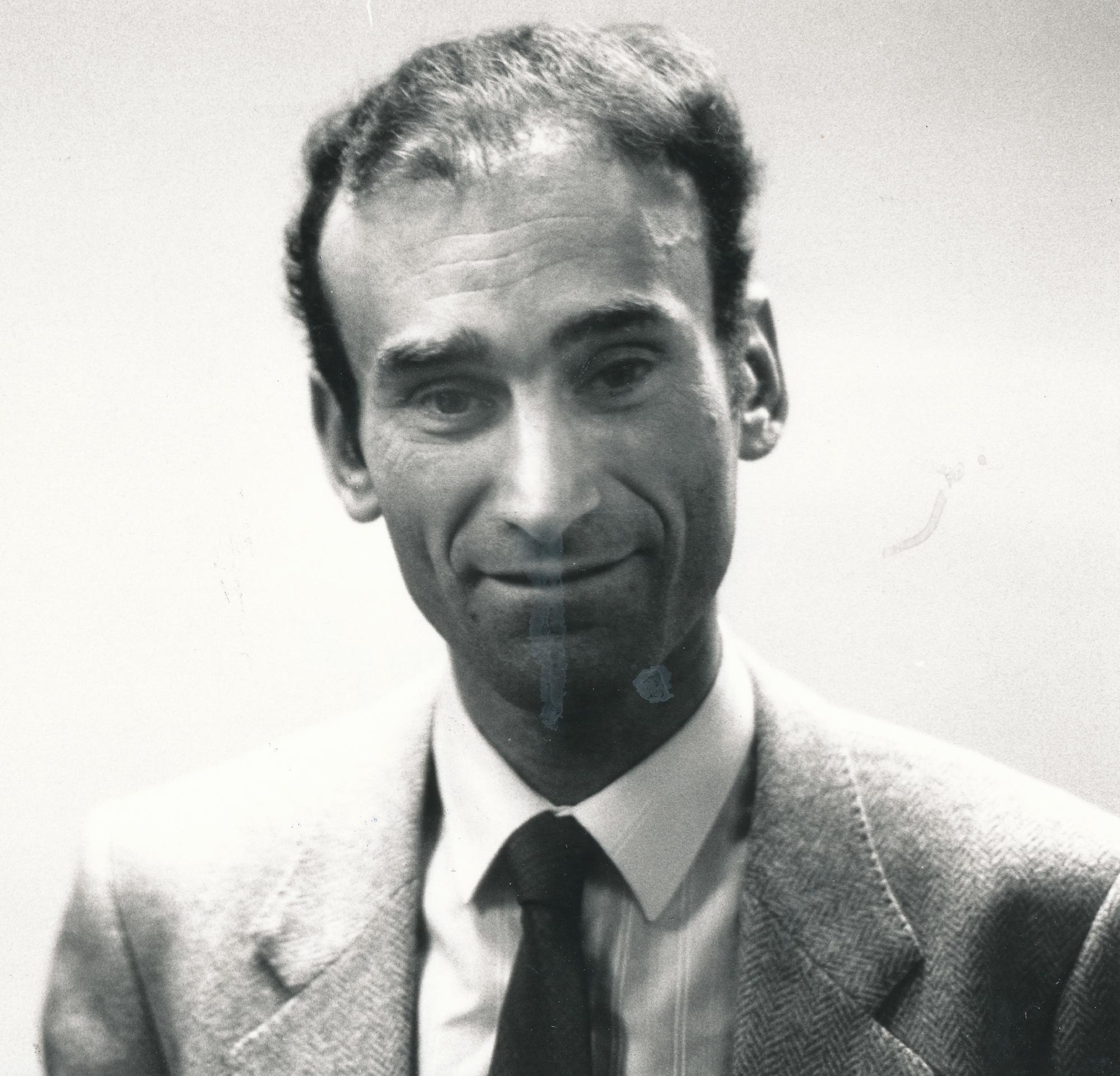
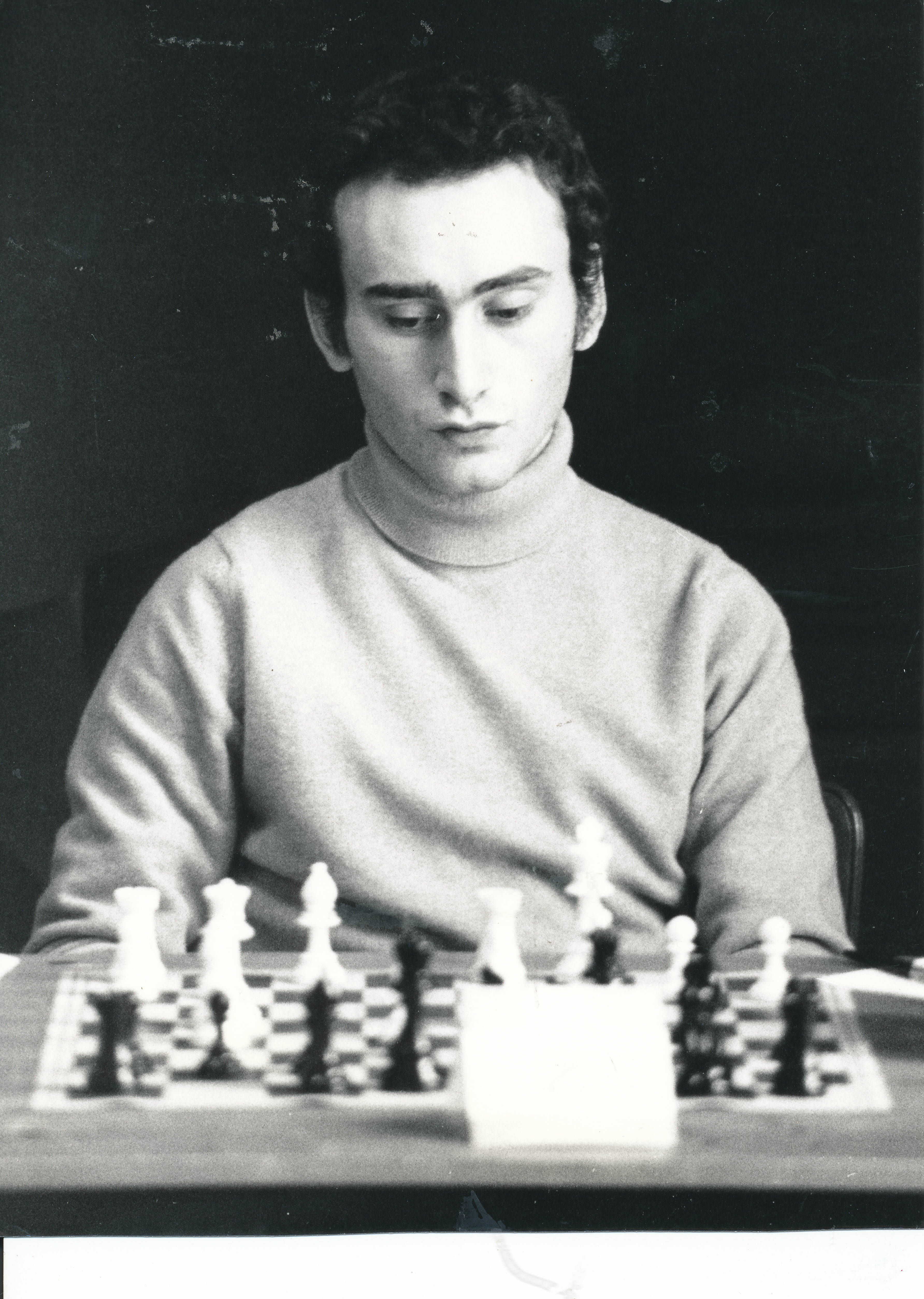
Michael Stean
Michael Stean

He attended Latymer Upper School and Cambridge University.

His early chess days were spent at Richmond Junior Chess Club.

He became an International Master in 1975 and England’s third (OTB) Grandmaster in 1977 winning £2,500 from the Jim Slater Foundation.

His peak FIDE rating was 2540 in January 1979.

His mother (Jean) presented a trophy to the Marlow Congress (now the Berks and Bucks Congress) which became the Mrs. Jean Stean Cup.

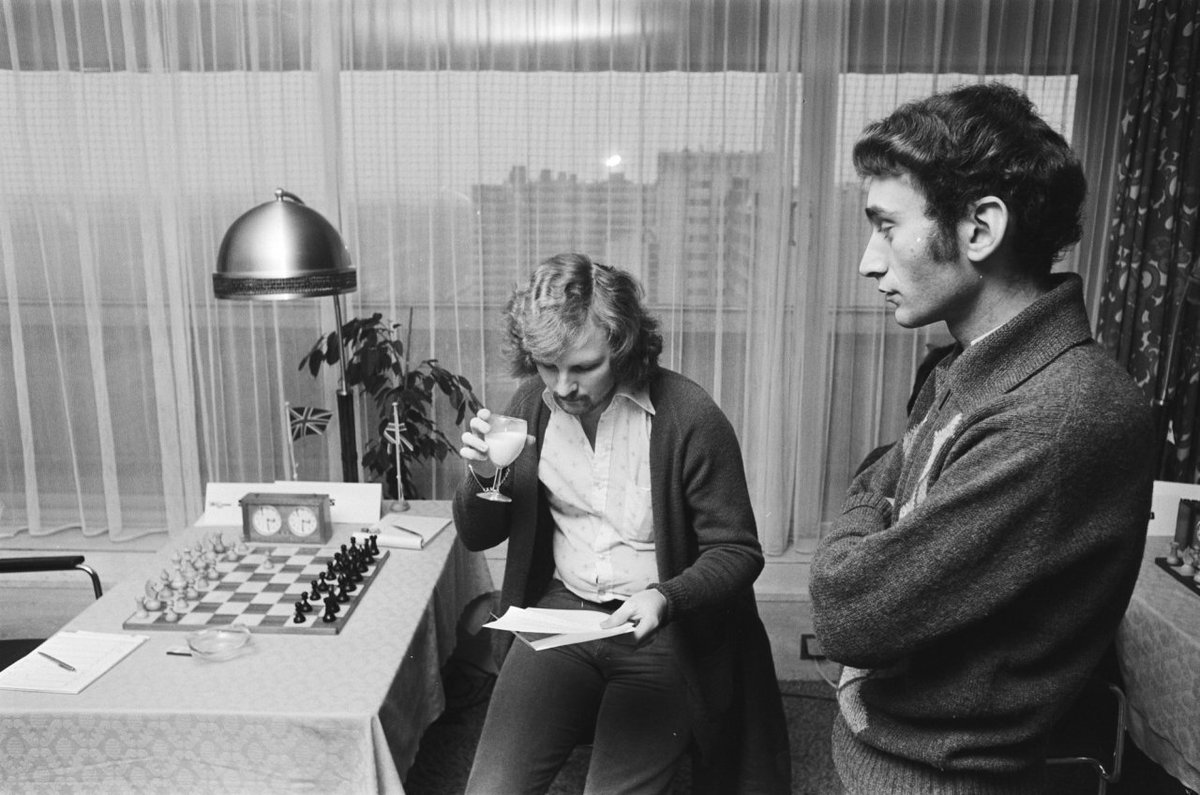
Tony Miles and Michael Stean at the FIDE Zonal in Amsterdam, 1978. (Source: http://gahetna.nl)

According to British Chess (Pergamon, 1983) by Botterill, Levy, Rice and Richardson :

“Stean was educated at Cambridge University, He was equal first in the British Championship, Clacton, 1974, although only 4th in the playoff. He has been an important member of Korchnoi’s team for the last 5 years, and this perhaps has been responsible more than anything for the rounding out and maturing of his style from the sharp tactical play of the early 1970s to the solid positional GM (especially with the White pieces) of today.

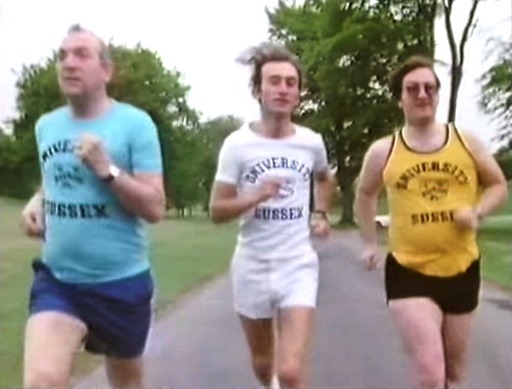
Korchnoi, Stean and Keene try out matching vests and T-shirts from The University of Sussex sports centre, Falmer, East Sussex. It is likely that the yellow one was only worn for this press photo shoot.

Stean is a fine author; Simple Chess and the Sicilian Najdorf are both excellent books.

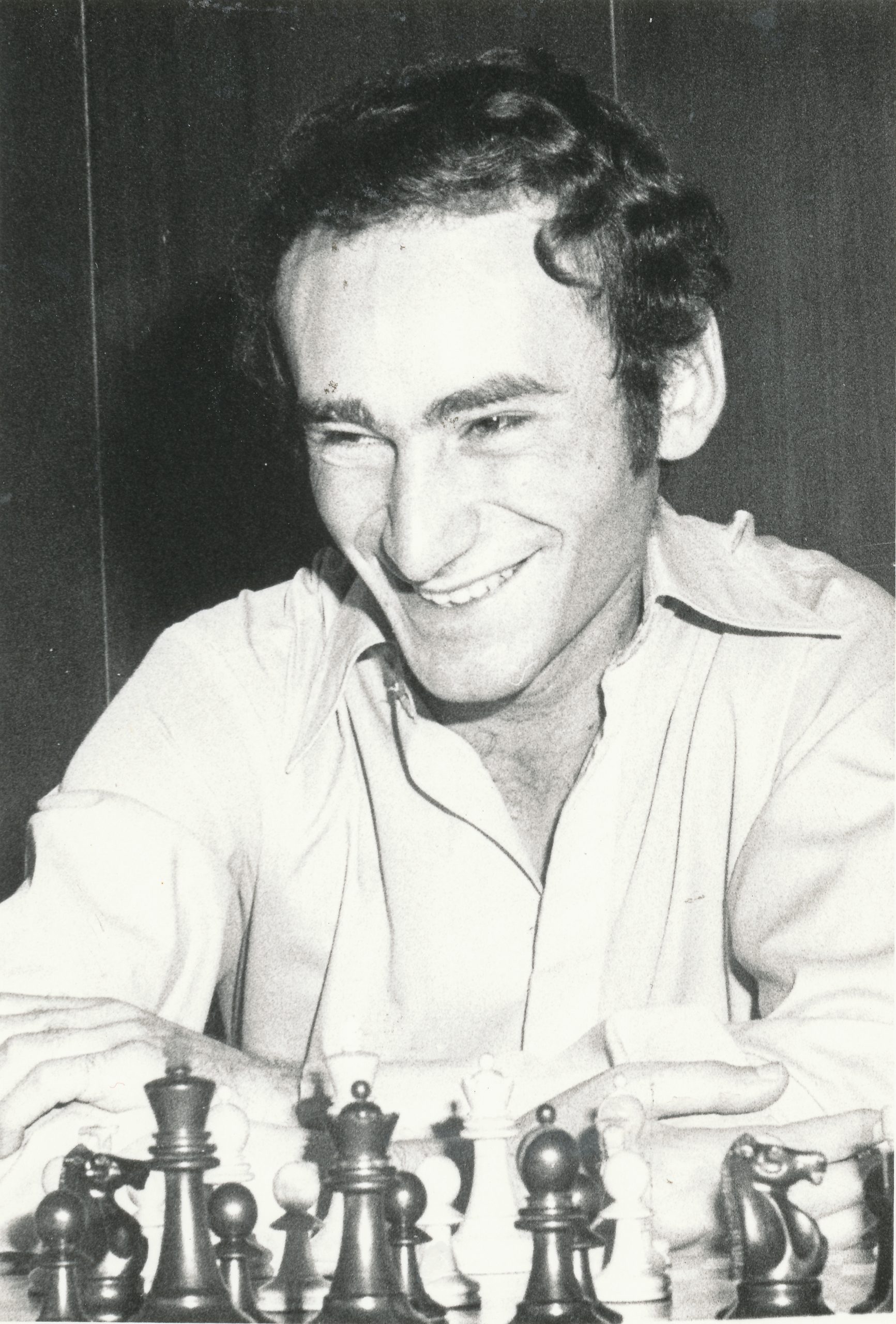
Michael Stean at the 1977 Lord John Cup

Temperamentally he is generally pleasant, good humoured and self confident, although he suffers from intermittent poor health which might help to explain his at times erratic results.”

According to Chessgames.com :

“Michael Francis Stean was born on the 4th of September 1953 in London, England. He finished 3rd at the 1973 World Junior Chess Championships behind Alexander Beliavsky and Tony Miles. Awarded the IM title in 1975 and the GM title in 1977 (The third Englishman to attain the title after Miles and Keene).

He finished 1st= in the 1974 British Championship but lost the play-off. He played on 5 English Olympiad teams from 1974 – 1983 and has won 1st prizes at Vrsac 1979, Smederevska Palanka 1980 and Beer Sheba 1982.

A specialist in Opening Theory he served as one of Viktor Korchnoi’s seconds in the 1977 – 1981 period. He is the author of Simple Chess, an introduction to chess strategy.”

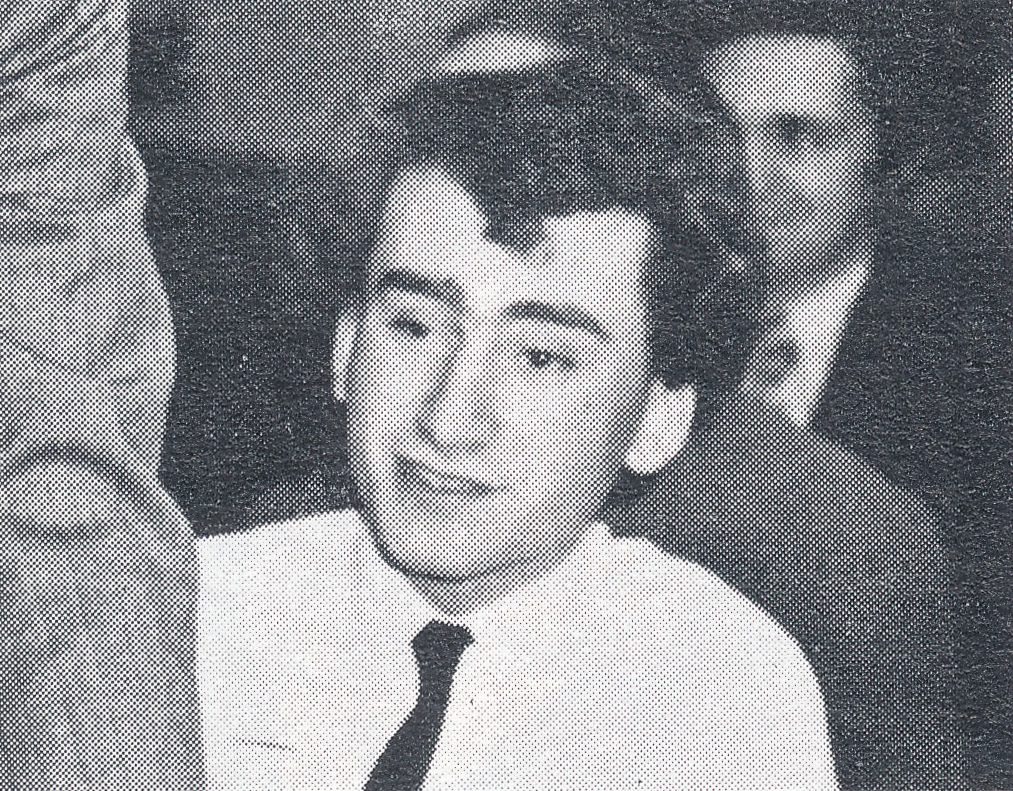
Mchael Stean, Hastings 1972-1973. Source : British Chess Magazine, Volume 93, Number 2, page 53
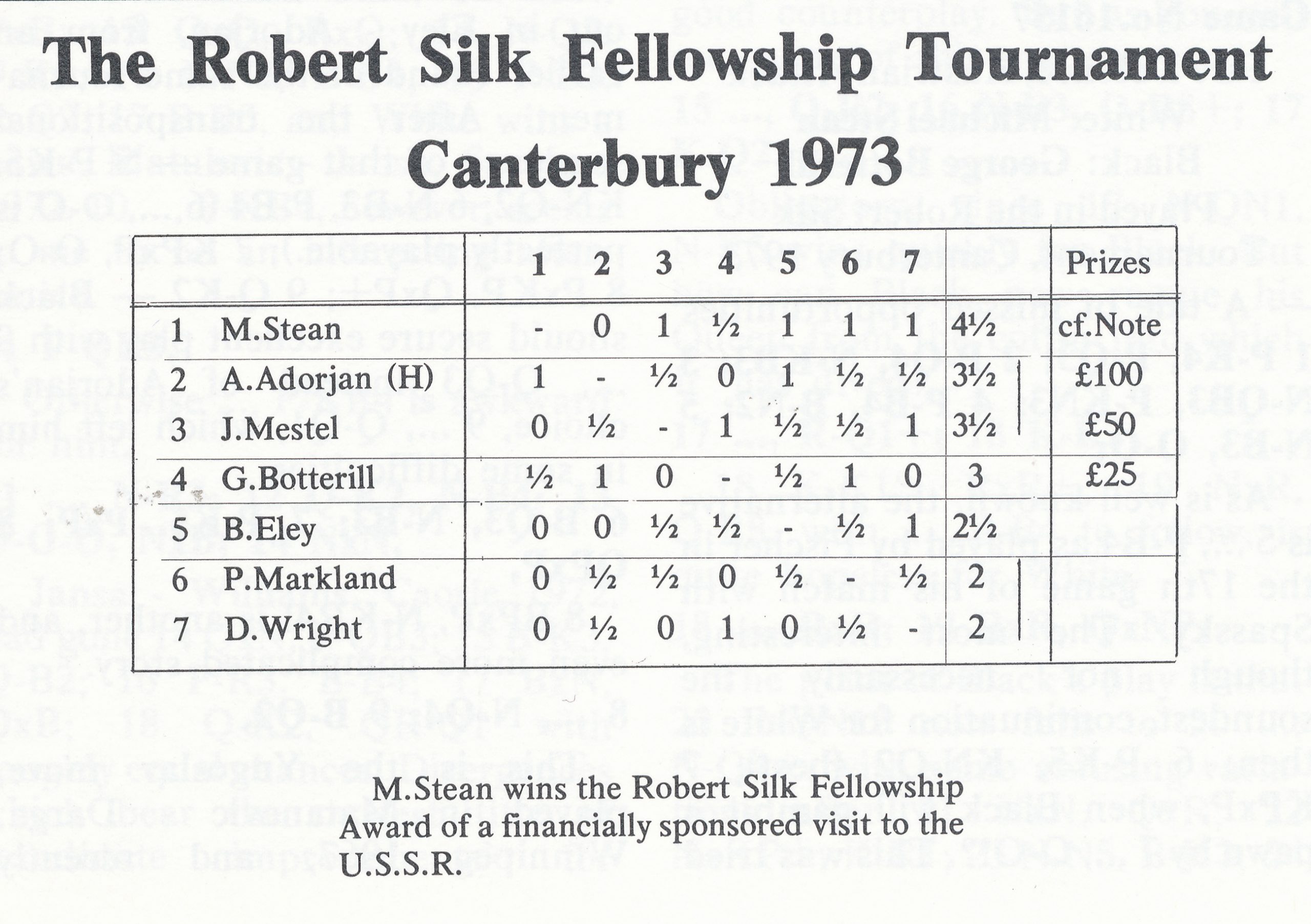
The Robert Silk Fellowship Tournament, Canterbury, 1973. Source : British Chess Magazine, Volume 93, Number 5, page 192
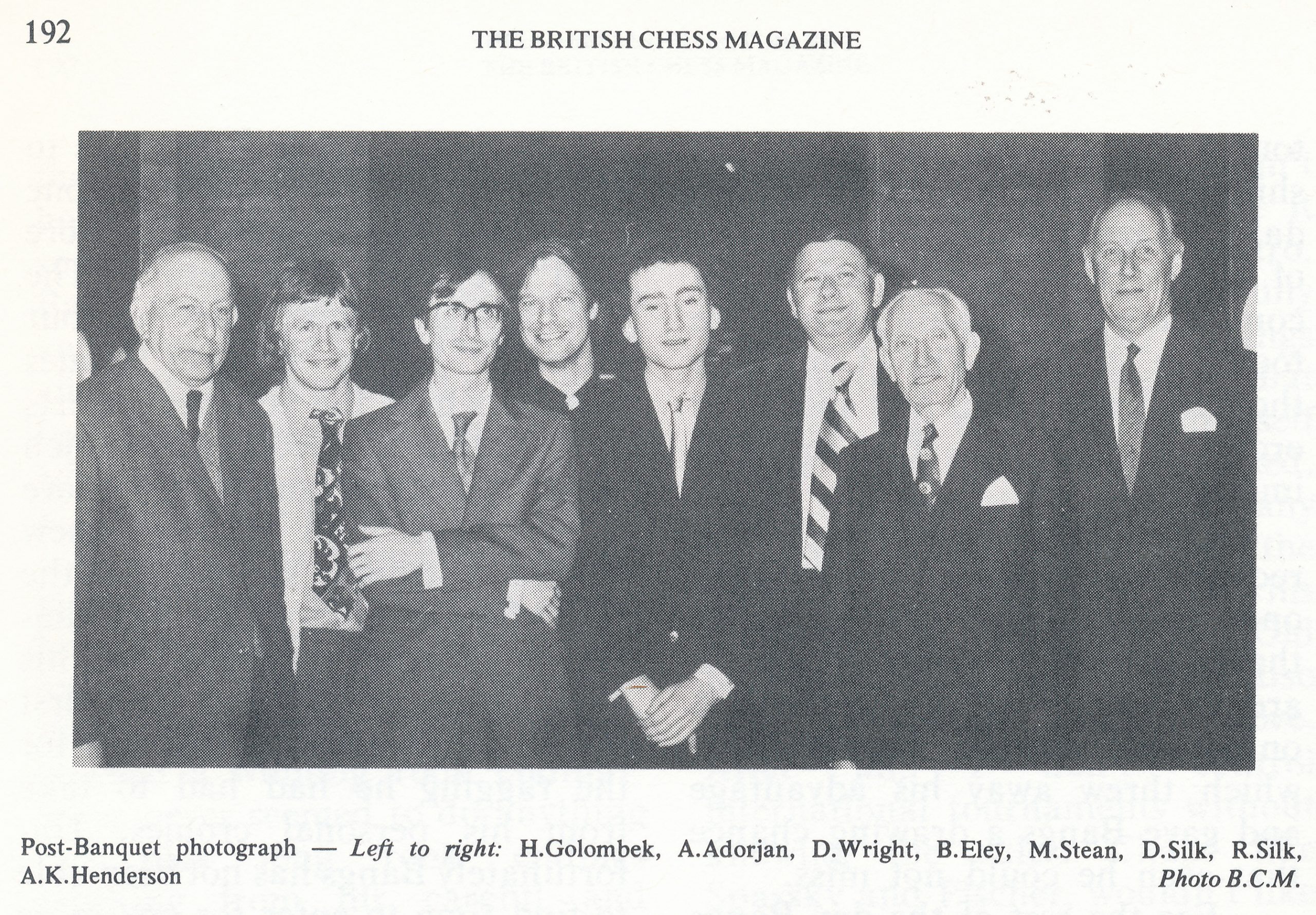
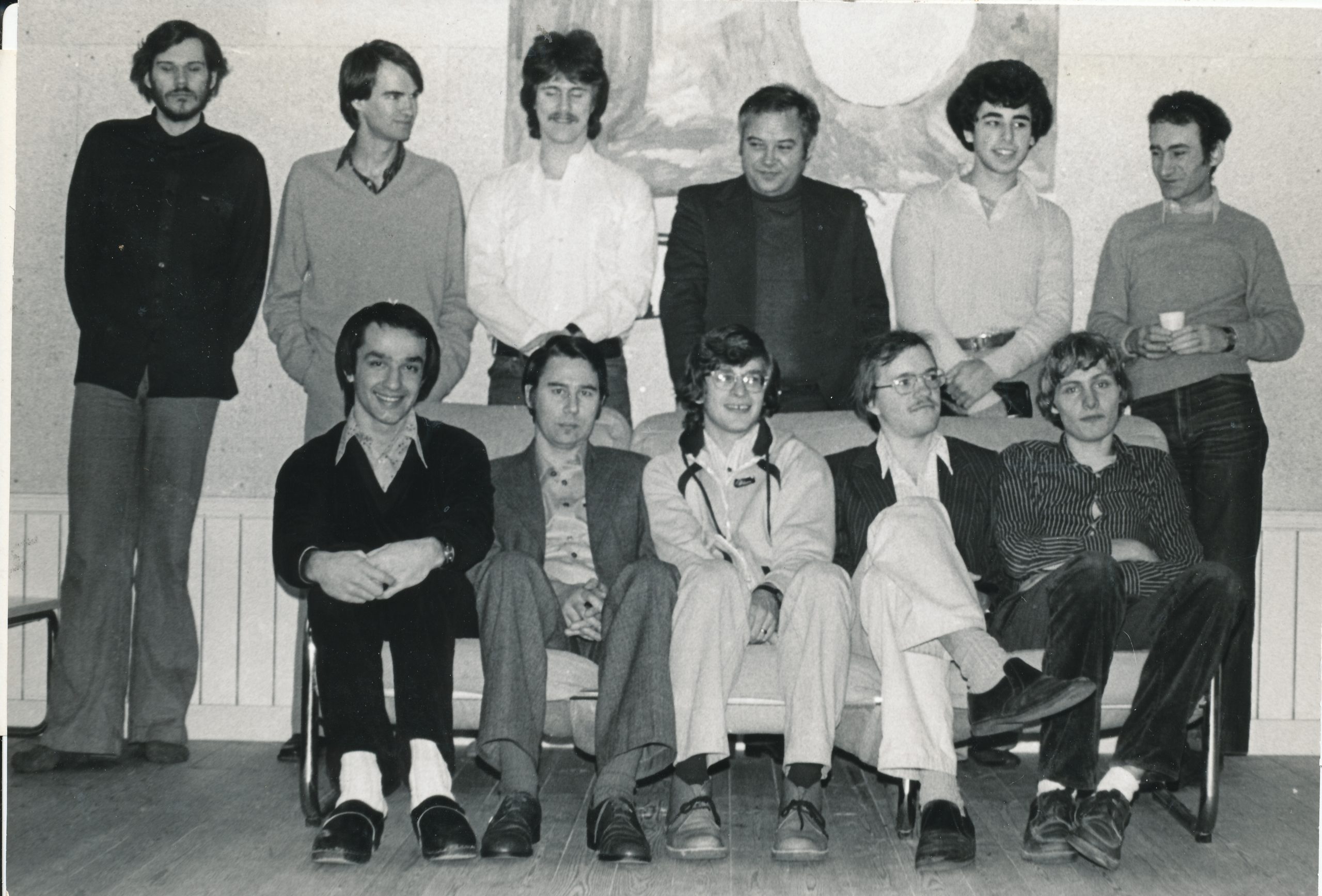
Post-banquet photograph - left to right : Harry Golombek, Andras Adorjan, Danny Wright, Brian Eley, Michael Stean, D. Silk, Robert Silk, AK Henderson. The Robert Silk Fellowship Tournament, Canterbury, 1973. Source : British Chess Magazine, Volume 93, Number 5, page 192
Post-banquet photograph – left to right : Harry Golombek, Andras Adorjan, Danny Wright, Brian Eley, Michael Stean, D. Silk, Robert Silk, AK Henderson. The Robert Silk Fellowship Tournament, Canterbury, 1973. Source : British Chess Magazine, Volume 93, Number 5, page 192

Harry Golombek wrote this about Michael in a 1980 Dataday chess diary :

“The fact that he has sprung up into second place among English players as regards Elo ratings demonstrates the considerable advance Michael Stean has made in the course of a year.

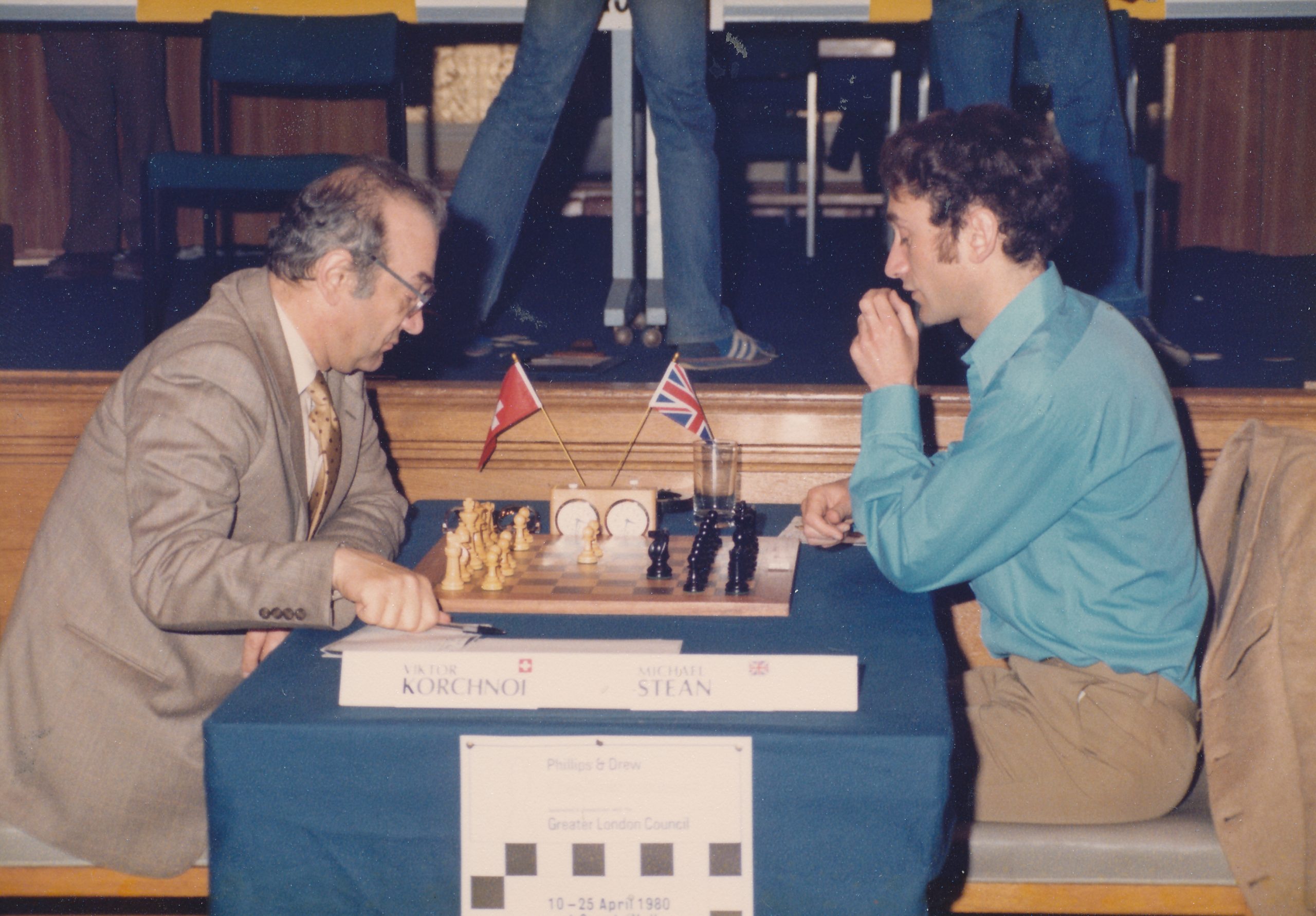
Korchnoi vs Stean at the Philips & Drew Masters of 1980. The game was drawn in 19 moves.

In the 1978 diary I wrote that it would not be long before he gained the grandmaster title since he already possessed one norm of the title. The forecast proved to be correct as he duly acquired the title a few months after I wrote the prophecy.

He had though to take two more bites at the cherry before he managed to gain the required norms since the tournaments in which he played were not long events. They were Montilla in August 1977 where he came third below Gligoric and Kavalek and the Lord John Cup Tournament in London in September 1977 where he was equal 2nd with Quinteros and Mestel, first place being occupied by the Czechoslovak grandmaster, Hort.

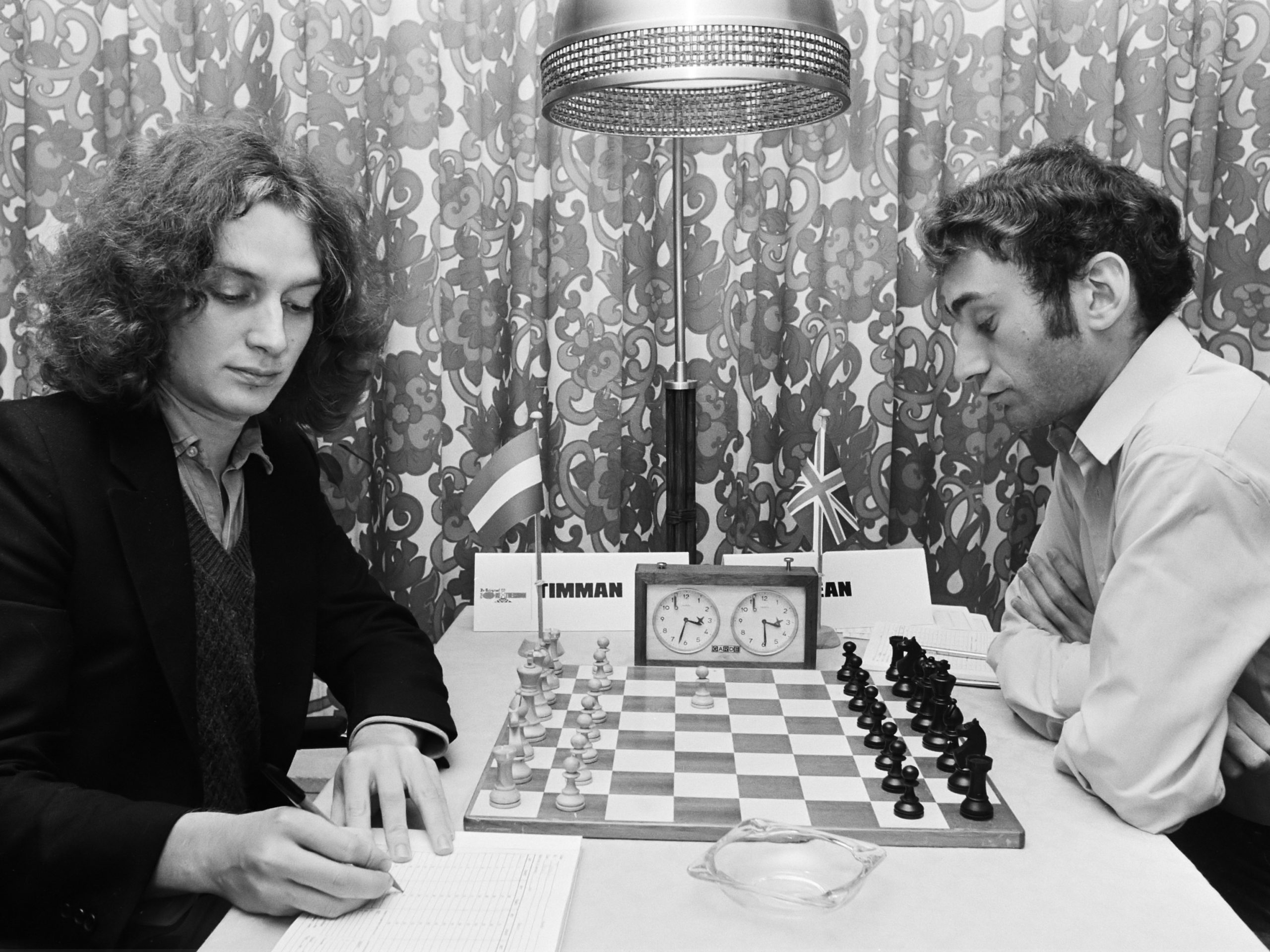
Jan Timman plays Michael Stean at the 1978 Amsterdam FIDE Zonal. The Dutch GM won in 39 moves.

Before that he had assisted Keene in seconding Korchnoi in his candidates match versus Polugayevsky and had done this to such effect that Korchnoi asked him and Keene to act as his seconds at his final match in the Candidates at Belgrade and later on still at the World Championship match against Karpov in the Philippines.

Nigel Short, Lubomir Kavalek and Michael Stean

He also played successfully in Yugoslavia in 1977 (equal 2nd at Virovitica and equal 2nd at Bar). In 1978 he was 3rd at Beersheba below Korchnoi but head of Keene. Five points out of nine at the very strong Swiss System tournament at Lone Pine was followed by an excellent equal 4th with Miles at the tournament at Las Palmas. He has shown that he not only possesses the title of grandmaster but also plays like one.

Michael Stean (far right) at an unknown event

A good example in the following game (Stean-Sax) against one of the joint first prize winners at the Las Palmas event. It was awarded the prize for the best game :”

From The Oxford Companion to Chess (OUP, 1984) by Hooper & Whyld :

“English player, International Grandmaster (1977). At Nice 1974, in the first of his several Olympiads, he won the brilliancy prize for his game against
Browne.

Since then he has had several good results: Montilia 1976, equal second with Kavalek and Ricardo Calvo (1943— ) after Karpov; Montilia 1977, third (-1-3 = 6)after Gligoric and Kavalek ahead of R. Byrne, Taimanov, and Andersson; London 1977. second (+4=4—1) equal with Mestel and Quinteros after Hort ; Vrsac 1979, first (+ 8=5—1); Smederevska Palanka 1980, first (+7-6); Beersheba 1982, first, Stean was one of Korchnoi’s seconds in the world championship cycles of 1977-8 and 1980-1, and the two became close friends.

In particular Stean provided help with the openings, a subject on which he specialises. He published a book on the Najdorf variation of the Sicilian defence in 1976, and Simple Chess, a guide to the understanding of positional ideas, in 1978.”

GM Michael Stean
GM Michael Stean

From Wikipedia :

“Michael Francis Stean (born 4 September 1953) is an English chess grandmaster, an author of chess books and a tax accountant.

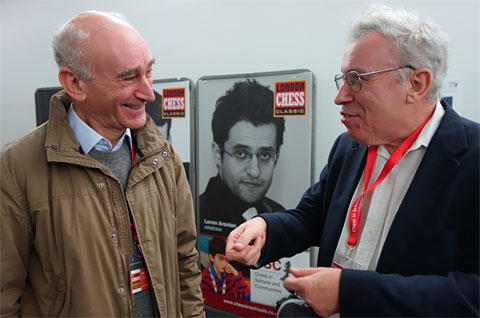
Michael Stean chats with David Levy at the London Chess Classic

The game below (Stean-Browne) was the first winner of the World Brilliancy Prize established in 1974 by Isador Samuel Turover. The value of the prize was $1,000.”

See Michael Stean’s Wikipedia entry for more

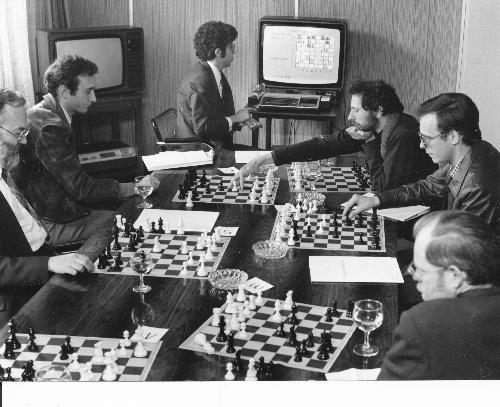
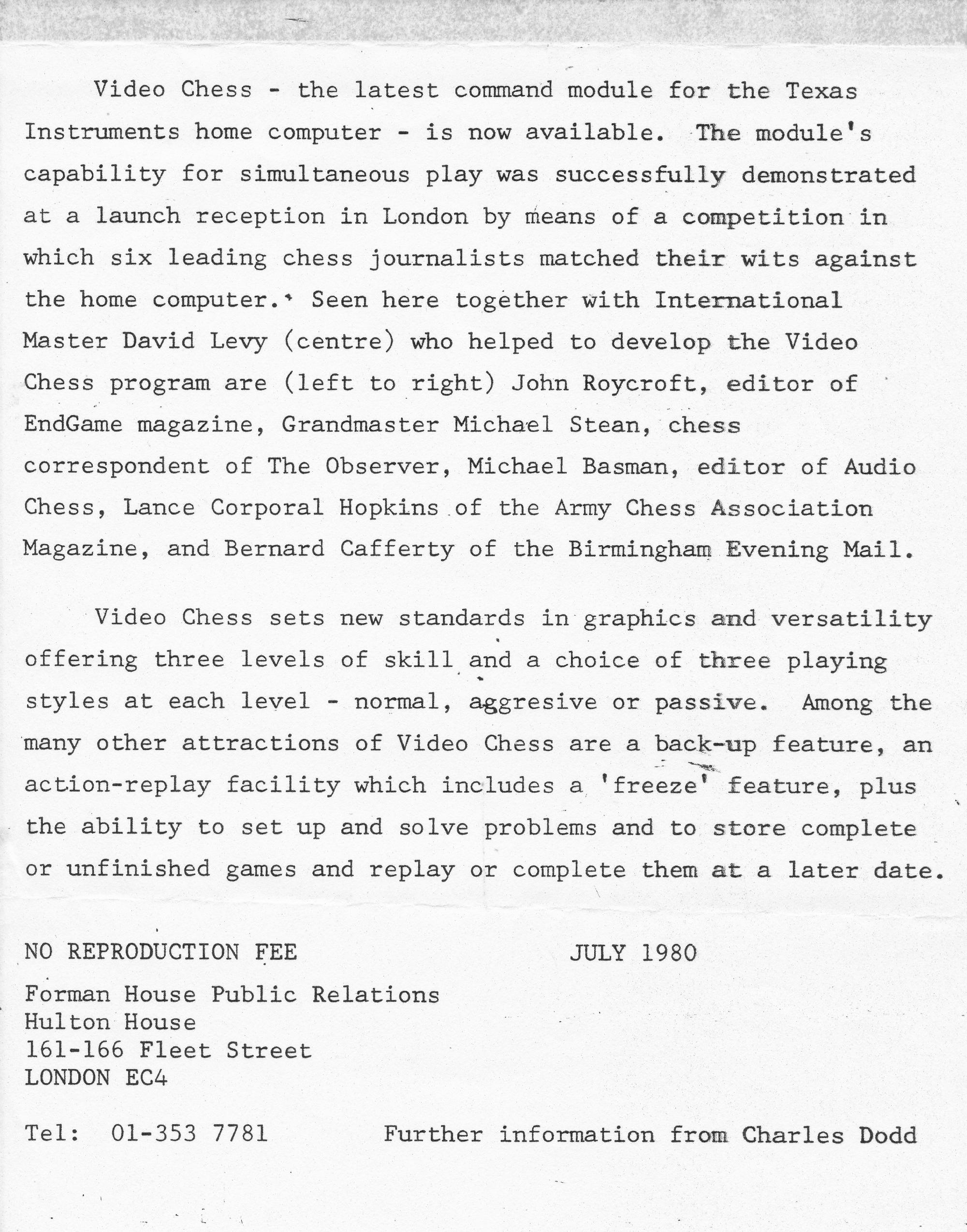
Video Chess Event (See caption below)
Video Chess Caption
Video Chess Caption

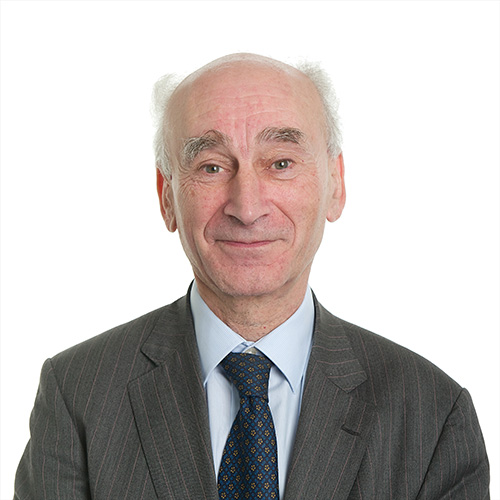
In 1983 at the height of his powers Michael left the chess work and became a tax accountant. He is now a senior partner at RSM UK.

Mchael Stean, tax accountant
Michael Francis Stean
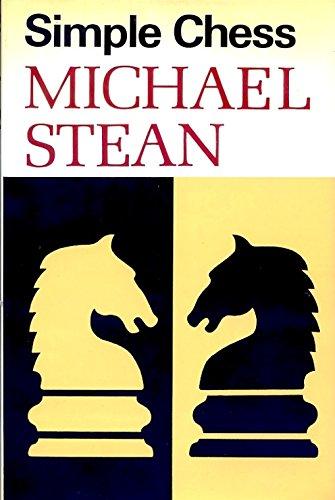
Simple Chess by Michael Stean
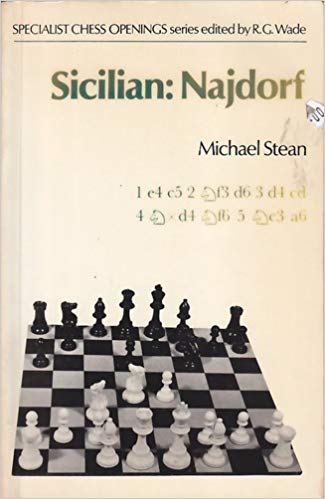
Sicilian Najdorf by Michael Stean
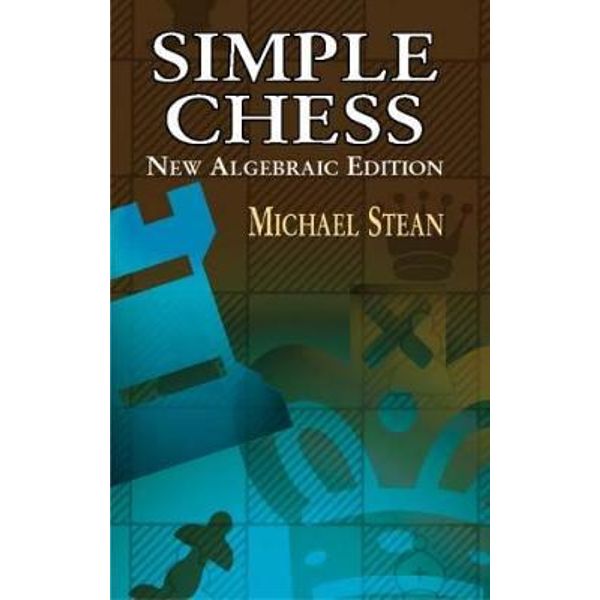
Simple Chess by Michael Stean

Birthday of GM Michael Stean (04-ix-1953)

We send best wishes to GM Michael Stean on his birthday,

Michael Francis Stean was born Michael Francis Stein on Friday, September 4th, 1953 in Pancras, London. His mother’s maiden name was Feldman. Michael has a brother, Howard.

Michael Stean
Michael Stean

He attended Latymer Upper School and Cambridge University.

His early chess days were spent at Richmond Junior Chess Club.

He became an International Master in 1975 and England’s third (OTB) Grandmaster in 1977 winning £2,500 from the Jim Slater Foundation.

His peak FIDE rating was 2540 in January 1979.

His mother (Jean) presented a trophy to the Marlow Congress (now the Berks and Bucks Congress) which became the Mrs. Jean Stean Cup.

Tony Miles and Michael Stean at the FIDE Zonal in Amsterdam, 1978. (Source: http://gahetna.nl)

According to British Chess (Pergamon, 1983) by Botterill, Levy, Rice and Richardson :

“Stean was educated at Cambridge University, He was equal first in the British Championship, Clacton, 1974, although only 4th in the playoff. He has been an important member of Korchnoi’s team for the last 5 years, and this perhaps has been responsible more than anything for the rounding out and maturing of his style from the sharp tactical play of the early 1970s to the solid positional GM (especially with the White pieces) of today.

Korchnoi, Stean and Keene try out matching vests and T-shirts from The University of Sussex sports centre, Falmer, East Sussex. It is likely that the yellow one was only worn for this press photo shoot.

Stean is a fine author; Simple Chess and the Sicilian Najdorf are both excellent books.

Michael Stean at the 1977 Lord John Cup

Temperamentally he is generally pleasant, good humoured and self confident, although he suffers from intermittent poor health which might help to explain his at times erratic results.”

According to Chessgames.com :

“Michael Francis Stean was born on the 4th of September 1953 in London, England. He finished 3rd at the 1973 World Junior Chess Championships behind Alexander Beliavsky and Tony Miles. Awarded the IM title in 1975 and the GM title in 1977 (The third Englishman to attain the title after Miles and Keene).

He finished 1st= in the 1974 British Championship but lost the play-off. He played on 5 English Olympiad teams from 1974 – 1983 and has won 1st prizes at Vrsac 1979, Smederevska Palanka 1980 and Beer Sheba 1982.

A specialist in Opening Theory he served as one of Viktor Korchnoi’s seconds in the 1977 – 1981 period. He is the author of Simple Chess, an introduction to chess strategy.”

Mchael Stean, Hastings 1972-1973. Source : British Chess Magazine, Volume 93, Number 2, page 53
The Robert Silk Fellowship Tournament, Canterbury, 1973. Source : British Chess Magazine, Volume 93, Number 5, page 192
Post-banquet photograph - left to right : Harry Golombek, Andras Adorjan, Danny Wright, Brian Eley, Michael Stean, D. Silk, Robert Silk, AK Henderson. The Robert Silk Fellowship Tournament, Canterbury, 1973. Source : British Chess Magazine, Volume 93, Number 5, page 192
Post-banquet photograph – left to right : Harry Golombek, Andras Adorjan, Danny Wright, Brian Eley, Michael Stean, D. Silk, Robert Silk, AK Henderson. The Robert Silk Fellowship Tournament, Canterbury, 1973. Source : British Chess Magazine, Volume 93, Number 5, page 192

Harry Golombek wrote this about Michael in a 1980 Dataday chess diary :

“The fact that he has sprung up into second place among English players as regards Elo ratings demonstrates the considerable advance Michael Stean has made in the course of a year.

Korchnoi vs Stean at the Philips & Drew Masters of 1980. The game was drawn in 19 moves.

In the 1978 diary I wrote that it would not be long before he gained the grandmaster title since he already possessed one norm of the title. The forecast proved to be correct as he duly acquired the title a few months after I wrote the prophecy.

He had though to take two more bites at the cherry before he managed to gain the required norms since the tournaments in which he played were not long events. They were Montilla in August 1977 where he came third below Gligoric and Kavalek and the Lord John Cup Tournament in London in September 1977 where he was equal 2nd with Quinteros and Mestel, first place being occupied by the Czechoslovak grandmaster, Hort.

Jan Timman plays Michael Stean at the 1978 Amsterdam FIDE Zonal. The Dutch GM won in 39 moves.

Before that he had assisted Keene in seconding Korchnoi in his candidates match versus Polugayevsky and had done this to such effect that Korchnoi asked him and Keene to act as his seconds at his final match in the Candidates at Belgrade and later on still at the World Championship match against Karpov in the Philippines.

Nigel Short, Lubomir Kavalek and Michael Stean

He also played successfully in Yugoslavia in 1977 (equal 2nd at Virovitica and equal 2nd at Bar). In 1978 he was 3rd at Beersheba below Korchnoi but head of Keene. Five points out of nine at the very strong Swiss System tournament at Lone Pine was followed by an excellent equal 4th with Miles at the tournament at Las Palmas. He has shown that he not only possesses the title of grandmaster but also plays like one.

Michael Stean (far right) at an unknown event

A good example in the following game (Stean-Sax) against one of the joint first prize winners at the Las Palmas event. It was awarded the prize for the best game :”

From The Oxford Companion to Chess (OUP, 1984) by Hooper & Whyld :

“English player, International Grandmaster (1977). At Nice 1974, in the first of his several Olympiads, he won the brilliancy prize for his game against
Browne.

Since then he has had several good results: Montilia 1976, equal second with Kavalek and Ricardo Calvo (1943— ) after Karpov; Montilia 1977, third (-1-3 = 6)after Gligoric and Kavalek ahead of R. Byrne, Taimanov, and Andersson; London 1977. second (+4=4—1) equal with Mestel and Quinteros after Hort ; Vrsac 1979, first (+ 8=5—1); Smederevska Palanka 1980, first (+7-6); Beersheba 1982, first, Stean was one of Korchnoi’s seconds in the world championship cycles of 1977-8 and 1980-1, and the two became close friends.

In particular Stean provided help with the openings, a subject on which he specialises. He published a book on the Najdorf variation of the Sicilian defence in 1976, and Simple Chess, a guide to the understanding of positional ideas, in 1978.”

GM Michael Stean
GM Michael Stean

From Wikipedia :

“Michael Francis Stean (born 4 September 1953) is an English chess grandmaster, an author of chess books and a tax accountant.

Michael Stean chats with David Levy at the London Chess Classic

The game below (Stean-Browne) was the first winner of the World Brilliancy Prize established in 1974 by Isador Samuel Turover. The value of the prize was $1,000.”

See Michael Stean’s Wikipedia entry for more

Video Chess Event (See caption below)
Video Chess Caption
Video Chess Caption

In 1983 at the height of his powers Michael left the chess work and became a tax accountant. He is now a senior partner at RSM UK.

Mchael Stean, tax accountant
Michael Francis Stean
Simple Chess by Michael Stean
Sicilian Najdorf by Michael Stean
Simple Chess by Michael Stean

Birthday of GM Michael Stean (04-ix-1953)

We send best wishes to GM Michael Stean on his birthday,

Michael Francis Stean was born Michael Francis Stein on Friday, September 4th, 1953 in Pancras, London. His mother’s maiden name was Feldman. Michael has a brother, Howard.

Michael Stean
Michael Stean

He attended Latymer Upper School and Cambridge University.

His early chess days were spent at Richmond Junior Chess Club.

He became an International Master in 1975 and England’s third (OTB) Grandmaster in 1977 winning £2,500 from the Jim Slater Foundation.

His peak FIDE rating was 2540 in January 1979.

His mother (Jean) presented a trophy to the Marlow Congress (now the Berks and Bucks Congress) which became the Mrs. Jean Stean Cup.

Tony Miles and Michael Stean at the FIDE Zonal in Amsterdam, 1978. (Source: http://gahetna.nl)

According to British Chess (Pergamon, 1983) by Botterill, Levy, Rice and Richardson :

“Stean was educated at Cambridge University, He was equal first in the British Championship, Clacton, 1974, although only 4th in the playoff. He has been an important member of Korchnoi’s team for the last 5 years, and this perhaps has been responsible more than anything for the rounding out and maturing of his style from the sharp tactical play of the early 1970s to the solid positional GM (especially with the White pieces) of today.

Korchnoi, Stean and Keene try out matching vests and T-shirts from The University of Sussex sports centre, Falmer, East Sussex. It is likely that the yellow one was only worn for this press photo shoot.

Stean is a fine author; Simple Chess and the Sicilian Najdorf are both excellent books.

Michael Stean at the 1977 Lord John Cup

Temperamentally he is generally pleasant, good humoured and self confident, although he suffers from intermittent poor health which might help to explain his at times erratic results.”

According to Chessgames.com :

“Michael Francis Stean was born on the 4th of September 1953 in London, England. He finished 3rd at the 1973 World Junior Chess Championships behind Alexander Beliavsky and Tony Miles. Awarded the IM title in 1975 and the GM title in 1977 (The third Englishman to attain the title after Miles and Keene).

He finished 1st= in the 1974 British Championship but lost the play-off. He played on 5 English Olympiad teams from 1974 – 1983 and has won 1st prizes at Vrsac 1979, Smederevska Palanka 1980 and Beer Sheba 1982.

A specialist in Opening Theory he served as one of Viktor Korchnoi’s seconds in the 1977 – 1981 period. He is the author of Simple Chess, an introduction to chess strategy.”

Mchael Stean, Hastings 1972-1973. Source : British Chess Magazine, Volume 93, Number 2, page 53
The Robert Silk Fellowship Tournament, Canterbury, 1973. Source : British Chess Magazine, Volume 93, Number 5, page 192
Post-banquet photograph - left to right : Harry Golombek, Andras Adorjan, Danny Wright, Brian Eley, Michael Stean, D. Silk, Robert Silk, AK Henderson. The Robert Silk Fellowship Tournament, Canterbury, 1973. Source : British Chess Magazine, Volume 93, Number 5, page 192
Post-banquet photograph – left to right : Harry Golombek, Andras Adorjan, Danny Wright, Brian Eley, Michael Stean, D. Silk, Robert Silk, AK Henderson. The Robert Silk Fellowship Tournament, Canterbury, 1973. Source : British Chess Magazine, Volume 93, Number 5, page 192

Harry Golombek wrote this about Michael in a 1980 Dataday chess diary :

“The fact that he has sprung up into second place among English players as regards Elo ratings demonstrates the considerable advance Michael Stean has made in the course of a year.

Korchnoi vs Stean at the Philips & Drew Masters of 1980. The game was drawn in 19 moves.

In the 1978 diary I wrote that it would not be long before he gained the grandmaster title since he already possessed one norm of the title. The forecast proved to be correct as he duly acquired the title a few months after I wrote the prophecy.

He had though to take two more bites at the cherry before he managed to gain the required norms since the tournaments in which he played were not long events. They were Montilla in August 1977 where he came third below Gligoric and Kavalek and the Lord John Cup Tournament in London in September 1977 where he was equal 2nd with Quinteros and Mestel, first place being occupied by the Czechoslovak grandmaster, Hort.

Jan Timman plays Michael Stean at the 1978 Amsterdam FIDE Zonal. The Dutch GM won in 39 moves.

Before that he had assisted Keene in seconding Korchnoi in his candidates match versus Polugayevsky and had done this to such effect that Korchnoi asked him and Keene to act as his seconds at his final match in the Candidates at Belgrade and later on still at the World Championship match against Karpov in the Philippines.

Nigel Short, Lubomir Kavalek and Michael Stean

He also played successfully in Yugoslavia in 1977 (equal 2nd at Virovitica and equal 2nd at Bar). In 1978 he was 3rd at Beersheba below Korchnoi but head of Keene. Five points out of nine at the very strong Swiss System tournament at Lone Pine was followed by an excellent equal 4th with Miles at the tournament at Las Palmas. He has shown that he not only possesses the title of grandmaster but also plays like one.

Michael Stean (far right) at an unknown event

A good example in the following game (Stean-Sax) against one of the joint first prize winners at the Las Palmas event. It was awarded the prize for the best game :”

From The Oxford Companion to Chess (OUP, 1984) by Hooper & Whyld :

“English player, International Grandmaster (1977). At Nice 1974, in the first of his several Olympiads, he won the brilliancy prize for his game against
Browne.

Since then he has had several good results: Montilia 1976, equal second with Kavalek and Ricardo Calvo (1943— ) after Karpov; Montilia 1977, third (-1-3 = 6)after Gligoric and Kavalek ahead of R. Byrne, Taimanov, and Andersson; London 1977. second (+4=4—1) equal with Mestel and Quinteros after Hort ; Vrsac 1979, first (+ 8=5—1); Smederevska Palanka 1980, first (+7-6); Beersheba 1982, first, Stean was one of Korchnoi’s seconds in the world championship cycles of 1977-8 and 1980-1, and the two became close friends.

In particular Stean provided help with the openings, a subject on which he specialises. He published a book on the Najdorf variation of the Sicilian defence in 1976, and Simple Chess, a guide to the understanding of positional ideas, in 1978.”

GM Michael Stean
GM Michael Stean

From Wikipedia :

“Michael Francis Stean (born 4 September 1953) is an English chess grandmaster, an author of chess books and a tax accountant.

Michael Stean chats with David Levy at the London Chess Classic

The game below (Stean-Browne) was the first winner of the World Brilliancy Prize established in 1974 by Isador Samuel Turover. The value of the prize was $1,000.”

See Michael Stean’s Wikipedia entry for more

Video Chess Event (See caption below)
Video Chess Caption
Video Chess Caption

In 1983 at the height of his powers Michael left the chess work and became a tax accountant. He is now a senior partner at RSM UK.

Mchael Stean, tax accountant
Michael Francis Stean
Simple Chess by Michael Stean
Sicilian Najdorf by Michael Stean
Simple Chess by Michael Stean

Birthday of GM Michael Stean (04-ix-1953)

We send best wishes to GM Michael Stean on his birthday,

Michael Francis Stean was born Michael Francis Stein on Friday, September 4th, 1953 in Pancras, London. His mother’s maiden name was Feldman. Michael has a brother, Howard.

Michael Stean
Michael Stean

He attended Latymer Upper School and Cambridge University.

His early chess days were spent at Richmond Junior Chess Club.

He became an International Master in 1975 and England’s third (OTB) Grandmaster in 1977 winning £2,500 from the Jim Slater Foundation.

His peak FIDE rating was 2540 in January 1979.

His mother (Jean) presented a trophy to the Marlow Congress (now the Berks and Bucks Congress) which became the Mrs. Jean Stean Cup.

Tony Miles and Michael Stean at the FIDE Zonal in Amsterdam, 1978. (Source: http://gahetna.nl)

According to British Chess (Pergamon, 1983) by Botterill, Levy, Rice and Richardson :

“Stean was educated at Cambridge University, He was equal first in the British Championship, Clacton, 1974, although only 4th in the playoff. He has been an important member of Korchnoi’s team for the last 5 years, and this perhaps has been responsible more than anything for the rounding out and maturing of his style from the sharp tactical play of the early 1970s to the solid positional GM (especially with the White pieces) of today.

Korchnoi, Stean and Keene try out matching vests and T-shirts from The University of Sussex sports centre, Falmer, East Sussex. It is likely that the yellow one was only worn for this press photo shoot.

Stean is a fine author; Simple Chess and the Sicilian Najdorf are both excellent books.

Michael Stean at the 1977 Lord John Cup

Temperamentally he is generally pleasant, good humoured and self confident, although he suffers from intermittent poor health which might help to explain his at times erratic results.”

According to Chessgames.com :

“Michael Francis Stean was born on the 4th of September 1953 in London, England. He finished 3rd at the 1973 World Junior Chess Championships behind Alexander Beliavsky and Tony Miles. Awarded the IM title in 1975 and the GM title in 1977 (The third Englishman to attain the title after Miles and Keene).

He finished 1st= in the 1974 British Championship but lost the play-off. He played on 5 English Olympiad teams from 1974 – 1983 and has won 1st prizes at Vrsac 1979, Smederevska Palanka 1980 and Beer Sheba 1982.

A specialist in Opening Theory he served as one of Viktor Korchnoi’s seconds in the 1977 – 1981 period. He is the author of Simple Chess, an introduction to chess strategy.”

Mchael Stean, Hastings 1972-1973. Source : British Chess Magazine, Volume 93, Number 2, page 53
The Robert Silk Fellowship Tournament, Canterbury, 1973. Source : British Chess Magazine, Volume 93, Number 5, page 192
Post-banquet photograph - left to right : Harry Golombek, Andras Adorjan, Danny Wright, Brian Eley, Michael Stean, D. Silk, Robert Silk, AK Henderson. The Robert Silk Fellowship Tournament, Canterbury, 1973. Source : British Chess Magazine, Volume 93, Number 5, page 192
Post-banquet photograph – left to right : Harry Golombek, Andras Adorjan, Danny Wright, Brian Eley, Michael Stean, D. Silk, Robert Silk, AK Henderson. The Robert Silk Fellowship Tournament, Canterbury, 1973. Source : British Chess Magazine, Volume 93, Number 5, page 192

Harry Golombek wrote this about Michael in a 1980 Dataday chess diary :

“The fact that he has sprung up into second place among English players as regards Elo ratings demonstrates the considerable advance Michael Stean has made in the course of a year.

Korchnoi vs Stean at the Philips & Drew Masters of 1980. The game was drawn in 19 moves.

In the 1978 diary I wrote that it would not be long before he gained the grandmaster title since he already possessed one norm of the title. The forecast proved to be correct as he duly acquired the title a few months after I wrote the prophecy.

He had though to take two more bites at the cherry before he managed to gain the required norms since the tournaments in which he played were not long events. They were Montilla in August 1977 where he came third below Gligoric and Kavalek and the Lord John Cup Tournament in London in September 1977 where he was equal 2nd with Quinteros and Mestel, first place being occupied by the Czechoslovak grandmaster, Hort.

Jan Timman plays Michael Stean at the 1978 Amsterdam FIDE Zonal. The Dutch GM won in 39 moves.

Before that he had assisted Keene in seconding Korchnoi in his candidates match versus Polugayevsky and had done this to such effect that Korchnoi asked him and Keene to act as his seconds at his final match in the Candidates at Belgrade and later on still at the World Championship match against Karpov in the Philippines.

Nigel Short, Lubomir Kavalek and Michael Stean

He also played successfully in Yugoslavia in 1977 (equal 2nd at Virovitica and equal 2nd at Bar). In 1978 he was 3rd at Beersheba below Korchnoi but head of Keene. Five points out of nine at the very strong Swiss System tournament at Lone Pine was followed by an excellent equal 4th with Miles at the tournament at Las Palmas. He has shown that he not only possesses the title of grandmaster but also plays like one.

Michael Stean (far right) at an unknown event

A good example in the following game (Stean-Sax) against one of the joint first prize winners at the Las Palmas event. It was awarded the prize for the best game :”

From The Oxford Companion to Chess (OUP, 1984) by Hooper & Whyld :

“English player, International Grandmaster (1977). At Nice 1974, in the first of his several Olympiads, he won the brilliancy prize for his game against
Browne.

Since then he has had several good results: Montilia 1976, equal second with Kavalek and Ricardo Calvo (1943— ) after Karpov; Montilia 1977, third (-1-3 = 6)after Gligoric and Kavalek ahead of R. Byrne, Taimanov, and Andersson; London 1977. second (+4=4—1) equal with Mestel and Quinteros after Hort ; Vrsac 1979, first (+ 8=5—1); Smederevska Palanka 1980, first (+7-6); Beersheba 1982, first, Stean was one of Korchnoi’s seconds in the world championship cycles of 1977-8 and 1980-1, and the two became close friends.

In particular Stean provided help with the openings, a subject on which he specialises. He published a book on the Najdorf variation of the Sicilian defence in 1976, and Simple Chess, a guide to the understanding of positional ideas, in 1978.”

GM Michael Stean
GM Michael Stean

From Wikipedia :

“Michael Francis Stean (born 4 September 1953) is an English chess grandmaster, an author of chess books and a tax accountant.

Michael Stean chats with David Levy at the London Chess Classic

The game below (Stean-Browne) was the first winner of the World Brilliancy Prize established in 1974 by Isador Samuel Turover. The value of the prize was $1,000.”

See Michael Stean’s Wikipedia entry for more

Video Chess Event (See caption below)
Video Chess Caption
Video Chess Caption

In 1983 at the height of his powers Michael left the chess work and became a tax accountant. He is now a senior partner at RSM UK.

Mchael Stean, tax accountant
Michael Francis Stean
Simple Chess by Michael Stean
Sicilian Najdorf by Michael Stean
Simple Chess by Michael Stean